1. Introduction
Driving is an inherently multimodal activity that integrates perception, cognition, emotion, and action. Drivers must continuously monitor traffic conditions, predict the behavior of surrounding road users, and control the vehicle to maintain safety. In such a dynamic environment, emotional regulation is an important component of safe driving. Among driving-related emotions, anger is widely recognized as a predictor of aggressive and unsafe driving behavior [
1,
2,
3]. Angry drivers are more likely to engage in tailgating, honking, abrupt acceleration, unsafe overtaking, and other risky behaviors [
3,
4,
5,
6]. Understanding how anger arises during driving therefore remains an important research topic in traffic psychology, human factors, and vehicle-safety design.
Previous studies have often emphasized external and social triggers of driving anger, such as discourteous behavior by other drivers, traffic congestion, and time pressure [
7,
8]. However, anger may also arise when drivers experience sudden changes in the traffic environment that require rapid control responses. Cut-in events are a typical example. When another vehicle suddenly enters the ego vehicle’s lane, the following driver may need to brake, adjust speed, or reappraise the situation under time pressure. Such events can be perceived as threatening, unfair, or uncontrollable, and may therefore elicit anger or stress.
Control demand is closely related to mental workload and stress. Driving in dense traffic, stop-and-go situations, or geometrically demanding road environments requires frequent braking, steering, and speed adjustments [
9,
10]. Cognitive-ergonomics and neurophysiological studies have suggested that increased driving complexity and control demand are associated with greater workload and prefrontal activation [
11]. Behavioral measures such as steering entropy, braking frequency, and lane-keeping variability have also been used as indicators of driver workload [
12,
13,
14]. When workload accumulates, drivers may experience tension, frustration, and mental fatigue [
15,
16]. From an affective-science perspective, anger can occur when a person appraises a situation as obstructing a goal and perceives insufficient coping resources [
17]. In driving, a sudden cut-in may threaten the driver’s safety goal and reduce the perceived sense of control.
Advanced driver-assistance systems (ADAS) can reduce the physical control burden on drivers. However, reducing physical workload does not necessarily eliminate emotional arousal. In assisted or automated driving contexts, drivers may still monitor the system, evaluate whether the system response is appropriate, and experience frustration when the behavior of surrounding vehicles or assistance systems differs from their expectations. Previous research has shown that explanatory feedback from automated vehicles can influence trust, anxiety, and workload [
18]. Recent studies have also suggested that anger in automated-driving contexts can arise from combinations of traffic events, system behavior, unpredictability, and mismatches between user expectations and system responses [
19]. These findings imply that emotional comfort in ADAS-equipped vehicles depends not only on vehicle-control performance but also on the driver’s perceived predictability and understanding of system behavior.
The present study focuses on driver affective responses during cut-in events under manual driving and braking-assistance conditions. In earlier descriptions of this experiment, the assistance condition was referred to as automated driving. However, the assistance implemented in the simulator was longitudinal, focusing on speed regulation and braking assistance, and did not support simultaneous lateral and longitudinal control. Therefore, the assistance condition is more appropriately described as an SAE Level 1 driver-assistance condition rather than SAE Level 2 partial driving automation [
20]. This clarification is important because the aim of the study is not to evaluate a complete partial-driving-automation system, but to explore whether braking assistance alone can alter affective responses to sudden cut-in events.
The contribution of this study is not to validate a production ADAS, a complete automated-driving system, or a specific HMI intervention. Instead, this study provides a preliminary examination of whether longitudinal SAE Level 1 braking assistance alone alters self-reported anger and salivary amylase responses during the same sudden cut-in event. From a vehicle-safety and driver-assistance perspective, the study addresses the gap between the vehicle system’s physical intervention and the driver’s cognitive-affective appraisal of sudden traffic events, while treating the results as exploratory and hypothesis-generating.
The purpose of this preliminary study is to examine psychophysiological changes in driver anger during cut-in scenarios under manual driving and SAE Level 1 braking-assistance conditions in a small homogeneous sample of young male drivers. Salivary amylase and the State Anger subscale of the State-Trait Anger Expression Inventory (STAXI) were used to assess stress and anger responses. In particular, we examine whether physical braking assistance alone appears sufficient to reduce anger-related responses. Possible HMI directions, such as anticipatory warnings or system-intent visualization, are discussed only as hypotheses for future controlled experiments rather than as interventions tested in the present study.
The remainder of this paper is organized as follows.
Section 2 reviews related work on driving anger, workload, assisted driving, and anger measurement.
Section 3 describes the experimental setup, driving scenarios, measurement indices, and procedure.
Section 4 presents the results.
Section 5 discusses the interpretation of the pilot findings and their implications for future HMI hypotheses.
Section 6 describes the limitations, and
Section 7 concludes the paper.
2. Related Work
2.1. Driving Anger and Its Psychological Foundations
Driving anger is one of the most influential emotions affecting driver behavior and traffic safety. Deffenbacher et al. proposed a state–trait model of driving anger, suggesting that anger in driving is influenced by both transient traffic situations and stable personality dispositions [
1]. Drivers with high trait anger are more prone to aggressive behaviors such as tailgating, honking, and abrupt acceleration [
2,
3]. Anger can also influence inhibitory control and risk appraisal, which may contribute to unsafe responses in demanding traffic situations [
21].
Lazarus’s cognitive-motivational-relational theory provides a useful affective-science basis for understanding driving anger [
17]. According to this theory, anger emerges when individuals appraise a situation as an obstruction to goal attainment and perceive insufficient coping resources. In driving, such appraisals can occur when another vehicle suddenly cuts in, when the driver’s expected path is interrupted, or when the driver feels that control over the situation has been reduced. Zhai et al. further showed that emotionality and private self-consciousness influence how drivers appraise anger-provoking situations [
7]. These studies indicate that anger is not simply a direct reaction to traffic events; it is also shaped by appraisal, expectation, and individual differences.
2.2. Control Demand, Workload, and Emotional Stress
A growing body of research connects control intensity, such as frequent braking, steering, and speed adjustment, with mental workload and stress. Cognitive-ergonomics studies indicate that elevated control demands are associated with prefrontal activation and subjective workload [
11]. Behavioral indices such as steering entropy, braking frequency, and lane-keeping variability have also been used as objective indicators of driver workload [
12,
13,
14].
Steering and braking behaviors have been particularly important in workload research. Nakayama et al. proposed the steering entropy method as an indicator of driver workload [
12]. Boyle et al. examined driver performance around microsleep episodes, highlighting the importance of moment-to-moment behavioral control [
22]. Li et al. also showed that steering behavior can reflect changes in driver state under curve-driving conditions [
23]. These studies indicate that vehicle-control behavior is not only a mechanical operation but also a useful window into driver workload and state.
When workload accumulates, drivers may experience increased tension, frustration, and mental fatigue [
15,
16]. Matthews and Desmond argued that stress and driving are reciprocally related: task complexity can raise stress, and stress can in turn degrade control precision [
9]. In this sense, frequent or sudden control demands during cut-in situations may act as both physical and emotional stressors.
2.3. Affective Responses in Automated and Assisted Driving Contexts
The rise of ADAS and automated driving technologies has prompted new questions about how vehicle assistance affects drivers’ emotions and perceived control. Du et al. showed that explanatory feedback from automated vehicles can enhance trust and reduce anxiety and workload [
18]. Maillant et al. proposed that anger in automated-driving contexts can arise from combinations of driving-related and external factors, including traffic events, system behavior, and environmental unpredictability [
19]. Their work suggests that automation does not necessarily eliminate affective reactions when the situation remains unpredictable or the system’s behavior is insufficiently transparent.
Similarly, Lv et al. showed that anger rumination mediates the relationship between moral disengagement and driving anger [
24]. Shangguan et al. emphasized that arousal level and personality traits can modulate emotional driving, especially among younger drivers [
8]. These findings collectively highlight that physical control support may reduce one source of workload but leave unresolved cognitive-affective processes related to appraisal, expectation, and trust.
Recent simulation-based studies on connected and automated vehicles have also emphasized the importance of heterogeneous simulation platforms and device-in-the-loop validation for evaluating CAV and V2X services [
25,
26]. Although the present study did not evaluate connected, cooperative, or V2X-based automation functions, this line of work highlights a broader methodological trend toward richer simulation environments for the evaluation of assisted and automated driving.
In contrast, the present study focuses specifically on a simpler but affectively relevant question: whether longitudinal braking assistance alone changes drivers’ anger and physiological stress responses during a sudden cut-in event.
2.4. Measuring Anger and Physiological Stress
Accurate assessment of anger and stress is essential for studying affective responses during driving. STAXI, developed by Spielberger, remains one of the most widely used instruments for measuring state anger, trait anger, and anger-expression tendencies [
27]. Its reliability and utility have been examined in various populations [
28]. Physiological indicators such as salivary amylase, heart-rate variability, and electrodermal activity have also been used to evaluate sympathetic activation and stress during driving-related tasks [
10,
13].
Multimodal measurement, combining self-report and physiological indices, is useful because anger is both a subjective and a physiological phenomenon. In the present study, STAXI State Anger was used to capture subjective anger, whereas salivary amylase was used as a physiological stress indicator. This combination was intended to provide a preliminary view of affective responses during cut-in events under manual and assisted driving conditions.
3. Materials and Methods
3.1. Experimental Setup
A driving simulator platform, MDS01-Sirius (Misaki Design LLC, Tokyo, Japan), was used in the experiment.
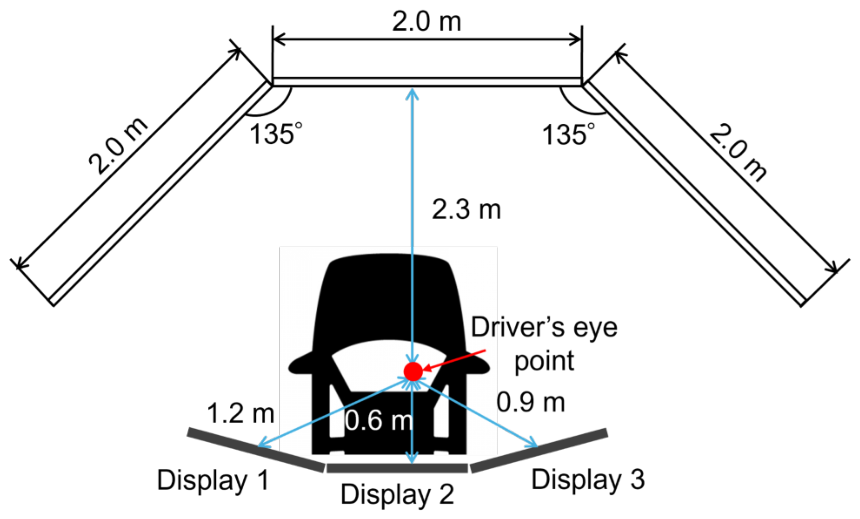
Figure 1 shows the simulator configuration. The simulator consisted of three 90-inch front screens and three rear-view displays. Three ViewSonic PX747-4K projectors (ViewSonic, Brea, CA, USA) were placed behind the simulator to project the forward driving scene. Rear and side views were displayed on 48-inch monitors and reflected through the actual side and rear-view mirrors of the simulator cabin. This configuration provided participants with an immersive driving environment resembling an actual vehicle cabin.
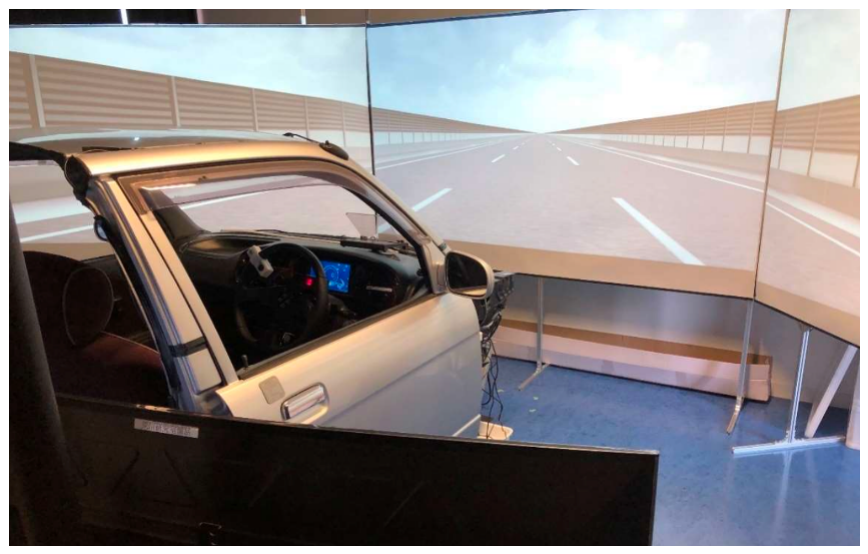
Figure 2 shows a photograph of the driving simulator setup.
3.2. Driving Scenario
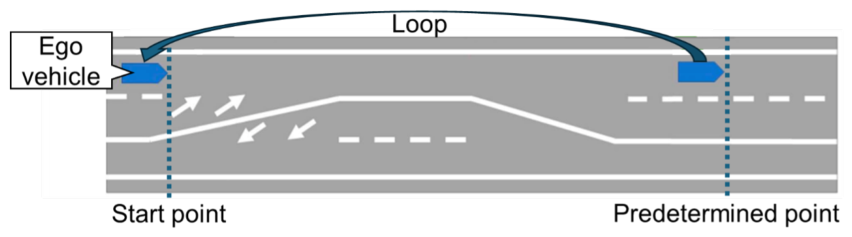
The experiment used a highway-like scenario in which a two-lane road narrowed to one lane and then widened again. The road unit consisted of a straight section, a merging point, and a widened section. The basic course structure is shown in
Figure 3.
At the merge point, a vehicle in the adjacent lane could merge into the participant’s lane. Three scenarios were prepared and denoted according to the experimental notation used in this study: (1)-(a) manual driving without a cut-in, (2)-(a) manual driving with a dangerous cut-in, and (2)-(b) SAE Level 1 braking assistance with a dangerous cut-in. In the present analysis, condition (1)-(a) was treated as the no-cut-in baseline condition, whereas conditions (2)-(a) and (2)-(b) were treated as dangerous cut-in conditions. In the manual cut-in condition, participants controlled acceleration, steering, and braking by themselves. In the braking-assistance cut-in condition, participants continued to monitor the driving environment, while the simulator provided longitudinal braking assistance by regulating vehicle speed and braking during the cut-in event. This condition did not correspond to SAE Level 2 partial driving automation, because simultaneous lateral and longitudinal control was not implemented. Rather, it was treated as a simplified SAE Level 1 braking-assistance condition focused on longitudinal braking assistance. Accordingly, the assistance condition should be interpreted as an experimental braking-assistance scenario for examining driver response, not as a performance evaluation of a production automated-driving system.
The dangerous cut-in scenarios, corresponding to conditions (2)-(a) and (2)-(b), were designed to create a sudden and potentially anger-provoking merging event.
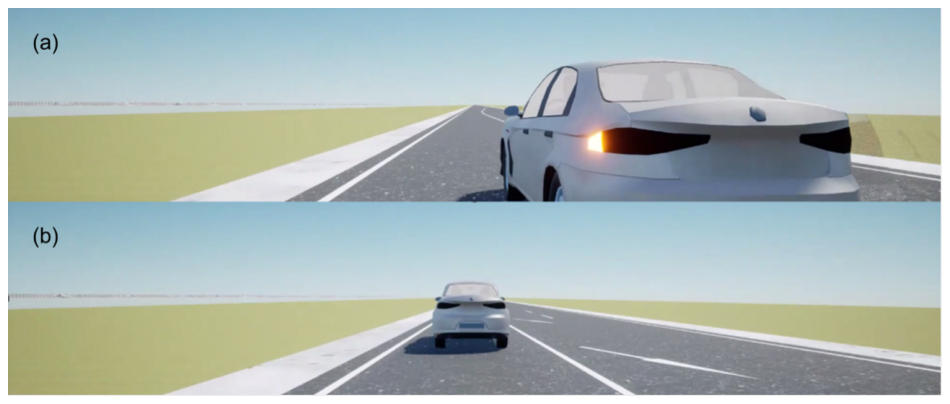
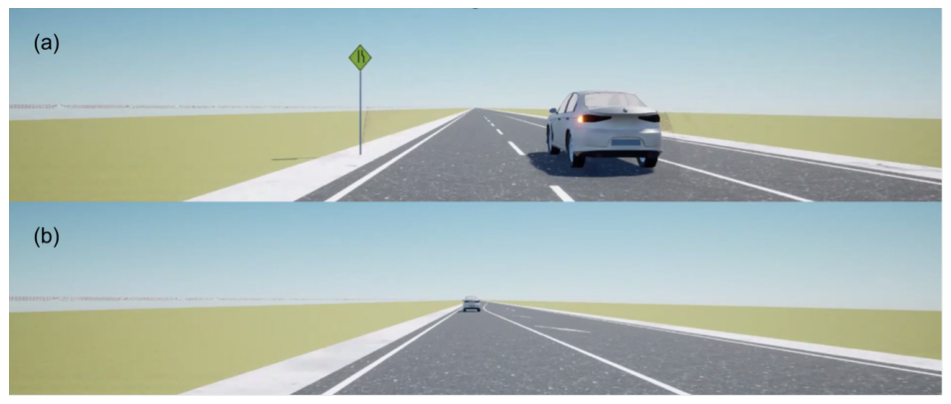
Figure 4 and
Figure 5 illustrate the cut-in situation before and after the merging maneuver. In the no-cut-in baseline condition, corresponding to condition (1)-(a), the merging vehicle did not enter the participant vehicle’s lane. Therefore, the present analysis compares the no-cut-in baseline condition with two dangerous cut-in conditions: manual driving and SAE Level 1 braking assistance.
The present analysis was restricted to psychophysiological and self-report responses. Detailed vehicle-dynamics logs suitable for quantitative analysis, including braking onset timing, deceleration profiles, relative speed, minimum time headway, and time-to-collision, were not available in the dataset used in this study. Therefore, the present study cannot directly evaluate the vehicle-response process by which the cut-in event may have influenced the driver’s affect.
3.3. Measurement of Anger and Stress
Participants’ emotional responses were measured using salivary amylase and STAXI. Salivary amylase was measured with a salivary amylase monitor (DM-3.1, Nipro Corp., Osaka, Japan) and was used as a physiological stress indicator. STAXI was used to assess anger [
27,
28]. STAXI includes subscales for State Anger, Trait Anger, Anger-in, Anger-out, and Anger Control. In this experiment, the focus was on the change in anger elicited by each driving scenario; therefore, only the State Anger subscale was used.
The State Anger subscale consists of 10 items rated on a four-point scale, where 1 indicates “not at all”, 2 indicates “somewhat”, 3 indicates “moderately”, and 4 indicates “very much so”. Participants rated each item based on their current emotional state, and the total score was calculated as the sum of the 10 item scores. STAXI and salivary amylase were measured before and after each driving scenario, and the change score was calculated as the post-driving value minus the pre-driving value.
3.4. Experimental Procedure
As a preliminary simulator study of young male drivers’ affective responses to cut-in events, ten participants took part in the experiment. All participants were male licensed drivers. Their mean age was 21.7 years, with a standard deviation of 0.46 years. The small and homogeneous sample reflects the exploratory nature of the study and the recruitment constraints within the university environment.
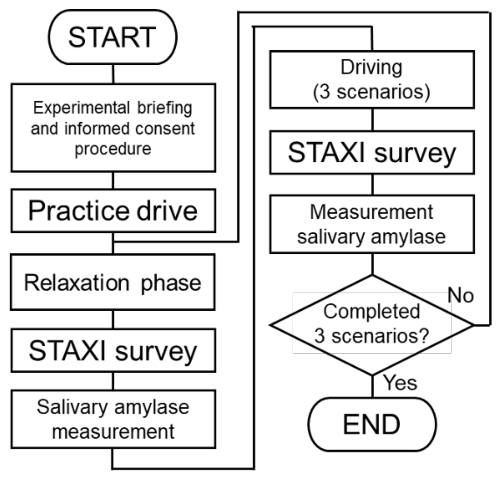
First, participants completed a practice drive for several minutes to become accustomed to controlling the simulator vehicle. They were instructed to drive at approximately 80 km/h. The practice drive was completed when the participant reported that he had become sufficiently accustomed to the driving simulator. No other vehicles appeared during the practice drive. Next, participants wore headphones, listened to relaxing music, and watched animal-therapy videos for approximately 10 min to stabilize their emotional state. After this relaxation period, baseline STAXI and salivary amylase measurements were obtained.
Participants then completed the three driving scenarios described above. They were instructed to continue driving in their lane at approximately 80 km/h and not to change lanes. In the SAE Level 1 braking-assistance condition, the simulator regulated vehicle speed and braking during the cut-in event, and participants did not need to operate the velocity control. After each driving scenario, STAXI and salivary amylase were measured again.
Figure 6 shows the experimental flow.
3.5. Statistical Analysis
Because the same participants completed all three scenarios, scenario effects were analyzed using the Friedman test. When an overall scenario effect was observed, post hoc pairwise comparisons were conducted using Wilcoxon signed-rank tests with Holm correction. This non-parametric approach was selected because the sample size was small and the STAXI change scores contained many zeros. Descriptive statistics are reported as mean, standard deviation (SD), median, interquartile range (IQR), minimum, and maximum values.
To address the magnitude and uncertainty of the observed effects, additional effect-size and confidence-interval analyses were conducted. For the Friedman tests, Kendall’s coefficient of concordance (W) was calculated as , where N is the number of participants and k is the number of scenarios. For paired scenario contrasts, mean paired differences, 95% confidence intervals, and Cohen’s were calculated from participant-level paired differences. Individual-level line plots were also added to visualize within-participant variation across scenarios. These analyses were intended to support the interpretation of the small preliminary dataset and not to make confirmatory population-level claims.
4. Results
Table 1 summarizes the descriptive statistics and 95% confidence intervals for changes in STAXI State Anger and salivary amylase. Positive values indicate increases after the driving scenario, whereas negative values indicate decreases.
Table 2 reports the pairwise contrasts, including paired mean differences, 95% confidence intervals, Cohen’s
, raw
p-values, and Holm-adjusted
p-values.
For STAXI State Anger change scores, the Friedman test showed an overall scenario effect,
,
, corresponding to Kendall’s
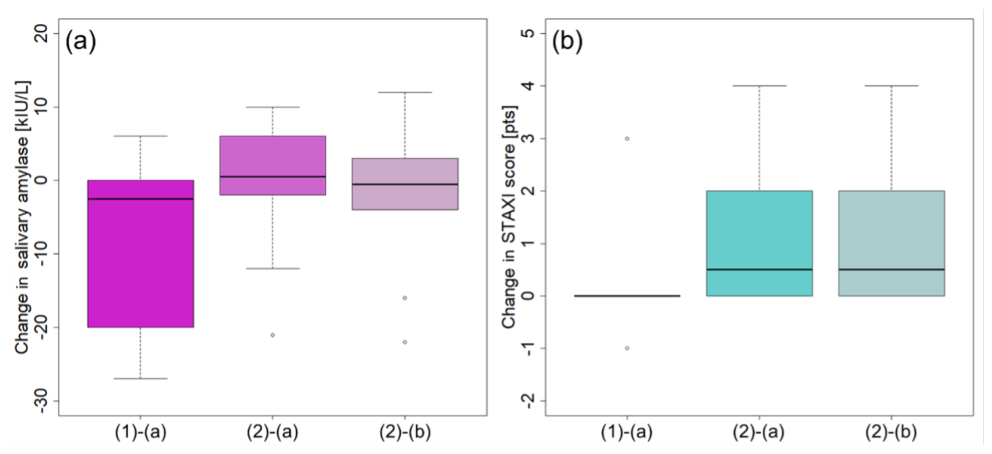
. This effect size suggests a non-negligible overall scenario-level difference in this preliminary sample. Descriptively, the mean STAXI State Anger change was higher in both cut-in conditions than in the no-cut-in baseline condition. As shown in
Table 2, the mean paired difference was 1.00 points for manual cut-in versus no cut-in and 1.00 points for braking-assistance cut-in versus no cut-in. However, these pairwise comparisons were no longer statistically significant after Holm correction. In addition, the mean paired difference between the manual cut-in and braking-assistance cut-in conditions was 0.00 points. Thus, the present small dataset did not indicate an anger-reducing effect of SAE Level 1 braking assistance relative to manual driving in the same dangerous cut-in scenario.
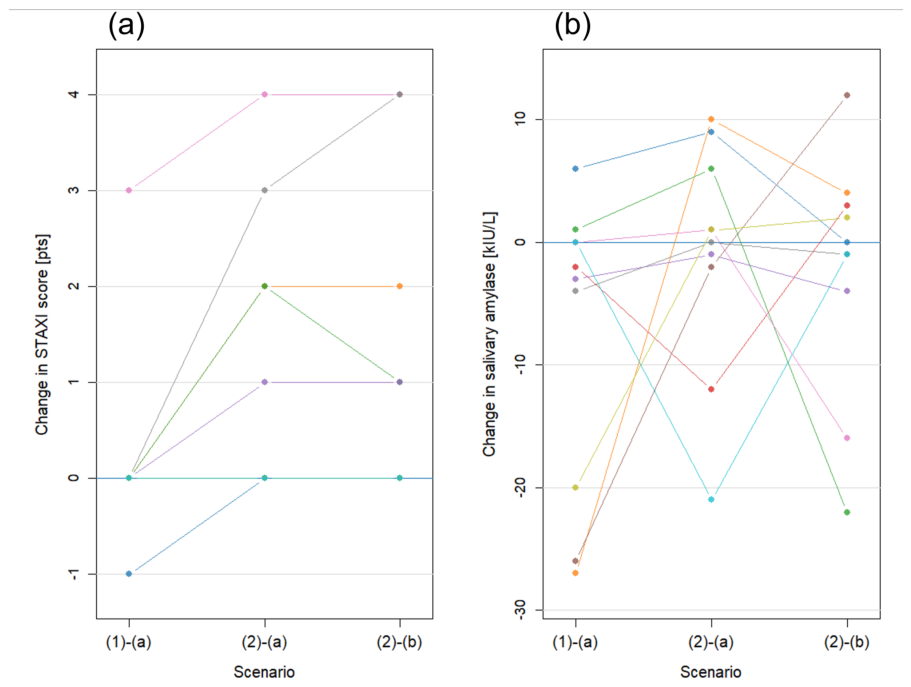
For salivary amylase change scores, the Friedman test did not show a significant scenario effect, , , corresponding to Kendall’s . The confidence intervals for the mean changes were wide and included zero in all three scenarios. The individual-level plot also showed substantial inter-individual variability. Therefore, the present data do not provide clear evidence that the cut-in scenarios or braking-assistance condition produced consistent physiological stress responses as measured by salivary amylase.
Figure 7 shows the distributions of changes in salivary amylase and STAXI State Anger scores before and after driving, and
Figure 8 shows individual-level changes across scenarios. Taken together, the results should be interpreted as inconclusive pilot evidence. The STAXI data suggest that dangerous cut-in scenarios may be associated with larger self-reported changes in anger than the no-cut-in baseline for some drivers, but the corrected post hoc tests were not significant. More importantly, the present dataset did not show any anger-reducing effect of SAE Level 1 braking assistance compared with manual driving during the same cut-in event.
5. Discussion
This preliminary study examined driver affective responses to cut-in events under manual driving and SAE Level 1 braking-assistance conditions. The STAXI results showed an overall scenario effect with Kendall’s , suggesting a non-negligible difference among scenarios in this small sample. However, the Holm-corrected post hoc comparisons were not statistically significant, and the manual cut-in and SAE Level 1 braking-assistance cut-in conditions showed the same mean STAXI change. Salivary amylase responses did not show a significant scenario effect and were highly variable across participants. Therefore, the findings should be interpreted as inconclusive pilot evidence rather than as confirmatory evidence of scenario-specific affective effects.
The most direct observation from the present dataset is that SAE Level 1 braking assistance did not reduce self-reported anger compared with manual driving in the same dangerous cut-in scenario. From the perspective of stress appraisal theory, a sudden cut-in can be interpreted as a threat to safety and as an obstruction to the driver’s goal of maintaining stable progress [
17]. Even when braking assistance is provided, the driver may still appraise the event as unexpected or difficult to control. In this sense, driver anger may not be determined solely by the amount of physical control effort required. Rather, anger may also depend on perceived predictability, perceived control, and trust in the assistance system.
The distinction between physical control assistance and cognitive support remains an important hypothesis for future ADAS research. Braking assistance can reduce the need for immediate manual braking, but it does not necessarily explain to the driver why the system is acting or what will happen next. Previous studies have shown that explanations and transparent feedback from automated vehicles can influence trust, anxiety, and workload [
18]. The present results are consistent with the possibility that physical assistance alone may leave cognitive-affective appraisal processes unresolved, but they do not demonstrate the effectiveness of any specific HMI intervention.
Accordingly, the HMI-related implications of this study should be treated strictly as hypotheses to be tested in future experiments. Future HMI prototypes could directly examine whether highlighting a potentially cutting-in vehicle several seconds before the maneuver, displaying the system’s intended response, or providing a brief explanation such as “slowing for merging vehicle” reduces perceived unpredictability and emotional arousal. Such design ideas were not tested in the present study and therefore should not be interpreted as conclusions directly supported by the present data.
In addition, physiological and behavioral monitoring may be useful for adaptive ADAS in future work. If stress or anger can be detected through physiological indicators, eye behavior, steering behavior, or pedal operation, the system could adjust the timing, modality, or intensity of warnings. However, the present study measured only salivary amylase and STAXI, did not implement real-time driver-state estimation, and did not include detailed vehicle-dynamics indicators. Therefore, the proposed HMI implications should be regarded as design hypotheses based on preliminary evidence rather than as direct conclusions.
The present study also highlights the importance of accurately describing the level of automation. Because the implemented assistance involved longitudinal braking rather than simultaneous lateral and longitudinal control, describing the condition as SAE Level 2 partial driving automation would overstate the experimental system’s capabilities. The condition is better interpreted as a simplified SAE Level 1 braking-assistance scenario. This distinction clarifies the scope of the findings: the present study does not evaluate fully featured automated driving, but rather explores whether braking assistance alone can alter anger-related responses to cut-in events.
6. Limitations
This study has several limitations that should be acknowledged. The most important limitation is the small, homogeneous sample of participants. Only 10 licensed male drivers participated in the experiment, and all were young adults with similar ages and driving experience. This homogeneity reflected the exploratory nature of the study and the practical constraints of recruiting participants within a university setting. Therefore, the findings should not be generalized directly to broader driver populations, including female drivers, older adults, professional drivers, or drivers with different levels of experience. Accordingly, non-significant pairwise comparisons should not be interpreted as evidence of no effect, but rather as indicating that this small study could only reveal large and consistent effects. Future studies should recruit larger and more diverse samples and examine whether demographic factors, driving experience, trait anger, and trust in driving assistance systems moderate affective responses to cut-in events.
Another limitation concerns the simplicity of the driving scenario. The experiment focused on a highway lane-reduction situation involving a cut-in event. Although this scenario was useful for controlling the experimental conditions, real-world traffic environments involve more dynamic and unpredictable interactions, including multiple surrounding vehicles, congestion, time pressure, weather conditions, pedestrians, and social interactions with other road users. Such factors may influence how anger and stress accumulate over time. Future studies should therefore introduce more complex and ecologically valid driving scenarios to examine how driver affective responses develop under realistic traffic conditions.
A related limitation is that the simulator task did not impose explicit time pressure or destination-related urgency. In real-world highway driving, drivers may experience stronger motivational pressure when they must arrive within a limited time or maintain progress under traffic constraints. The absence of such urgency may have reduced the ecological validity of the affective responses observed in this study. Future experiments should consider introducing controlled urgency manipulations, such as a time-to-destination constraint, while carefully maintaining participant safety and experimental control.
The measurement of anger and stress was also limited. This study used salivary amylase and the STAXI State Anger scale to evaluate psychophysiological and self-reported responses. Although these measures are established in psychological and human-factors research, they capture only limited aspects of affective processes during driving. Because salivary amylase was measured before and after each scenario, the measurement strategy may have missed short-lived physiological peaks occurring immediately during the cut-in event. Additional physiological indicators, such as heart rate variability, electrodermal activity, and facial expression measures, as well as behavioral indicators such as braking response, steering micro-movement, and time-to-collision, would provide a more comprehensive understanding of affective dynamics during cut-in events.
The present study did not analyze detailed vehicle-dynamics indicators such as deceleration profile, braking onset timing, relative speed, minimum time headway, or time-to-collision. Detailed vehicle-dynamics logs suitable for quantitative analysis were not available in the dataset analyzed in this revision. These indicators would be important for linking drivers’ affective responses to objective vehicle behavior during cut-in events. Therefore, the present findings should be interpreted as preliminary psychophysiological and self-report evidence, rather than as a complete evaluation of braking-assistance performance or of the vehicle-response process during cut-in events.
The braking-assistance condition implemented in this study was a simplified SAE Level 1 braking-assistance condition and did not reproduce the full functionality of production ADAS. The experiment did not include adaptive cruise control, lane-keeping assistance, system-intent visualization, predictive warning, or cooperative merging control. Therefore, caution is required when generalizing the present findings to real vehicles equipped with advanced ADAS or higher levels of driving automation.
It should also be noted that this study did not directly evaluate an HMI intervention. The implications regarding anticipatory HMI, explanatory feedback, and adaptive warning based on driver state should therefore be regarded as design hypotheses generated from preliminary evidence. Future research should conduct controlled experiments with concrete HMI prototypes to examine whether communicating system intent can reduce anger, stress, and perceived unpredictability during cut-in events.
7. Conclusions
This study investigated driver affective responses during cut-in events under manual driving and SAE Level 1 braking-assistance conditions in a small sample of young male licensed drivers. Salivary amylase and STAXI State Anger scores were measured before and after driving scenarios in a high-fidelity simulator. The STAXI results showed an overall scenario effect, but Holm-corrected post hoc comparisons did not reach statistical significance. No difference was observed between the manual cut-in and SAE Level 1 braking-assistance cut-in conditions. Salivary-amylase responses did not show a significant scenario effect and were characterized by wide confidence intervals and substantial individual variability.
These findings suggest that SAE Level 1 braking assistance alone did not show a clear anger-reducing effect during cut-in events in this preliminary simulator study. However, the findings should not be interpreted as definitive evidence about driver populations in general. Driver anger may be influenced not only by physical control demand but also by cognitive appraisal, perceived control, predictability, and trust in the assistance system. Therefore, future studies should directly test whether anticipatory cues, transparent system-intent communication, or adaptive driver-state support can reduce anger, stress, or perceived unpredictability during cut-in events.
A key methodological point is that the experimental assistance condition should be interpreted as SAE Level 1 braking assistance, not SAE Level 2 partial driving automation. This clarification aligns the interpretation of the results with the actual simulator implementation. Future studies should expand the participant sample, include richer driving scenarios, integrate vehicle-dynamics indicators such as deceleration profile, braking onset timing, relative speed, minimum time headway, and time-to-collision, and evaluate concrete HMI prototypes that communicate system intent during cut-in events. In this sense, the present study should be viewed as hypothesis-generating evidence for human-centered ADAS research rather than as a definitive evaluation of the effectiveness of braking assistance or ADAS HMI design.