


Abstract
Lane departure warning systems (LDWS) alert the driver, or intervene through steering, before an unintended lane departure occurs. Earlier reviews that covered lane tracking and warning predate deep learning-based lane detection, while recent reviews treat detection in isolation. Following PRISMA 2020, this systematic review covers the complete pipeline: searches of OpenAlex and IEEE Xplore, supplemented by Consensus, yielded 695 included studies published since 2018. It traces lane detection and its benchmarks across three methodological eras (classical, two-dimensional deep learning, and three-dimensional and transformer-based methods) and extends to tracking, warning decision logic, including current regulatory tests, and steering intervention. Two-dimensional detection has converged on established benchmarks with high reported accuracy, whereas the later stages remain less standardised in evaluation, and deployed systems behave differently from designs validated in simulation. The benchmarks come mainly from structured roads in North America, Europe, and East Asia. Evidence from Malaysia, where motorcycles account for 46 percent of registered vehicles and 63 percent of road deaths, suggests that mixed traffic, worn markings, and rain remain underrepresented, and that methods trained on these benchmarks lose accuracy on local roads. These gaps are priorities for research and regulatory tests.
1. Introduction
According to the World Health Organization (WHO), road traffic crashes kill approximately 1.19 million people each year and injure up to 50 million more, making road traffic injury the leading cause of death for people aged 5 to 29 [1]. Single-vehicle road departure crashes account for a substantial share of this toll, and unintended lane departure caused by driver inattention, drowsiness, or distraction remains one of the most common precursors to these crashes [2,3]. Lane departure warning systems (LDWS) and the closely related lane keeping assist (LKA) systems address this problem (Figure 1). Both estimate the position of the host vehicle relative to the lane boundaries in real time and either alert the driver or intervene through the steering system before an unintended departure occurs. Field studies of deployed systems report meaningful reductions in real-world lane departure crashes attributable to LDWS and LKA [4,5]. This evidence has led regulators and manufacturers to treat these systems as a transport safety priority, and it increasingly shapes decisions about mandating their deployment.
Figure 1.
Lane departure warning and lane keeping assist positioned among the lateral and longitudinal advanced driver assistance system (ADAS) functions of a typical production vehicle. Abbreviations: ADAS, advanced driver assistance system.
Lane detection, the computer vision problem underlying LDWS, has undergone two major methodological shifts since it was first studied in the 1990s. Early systems relied on hand engineered image features, such as edge operators, colour thresholds, and Hough transform voting, combined with a geometric model of the lane fitted to those features [2,6,7,8]. Beginning around 2017, convolutional neural networks (CNNs) trained end to end on large labelled datasets displaced hand-engineered pipelines, first through pixel-wise segmentation and later through anchor, keypoint, and curve parameterised detection heads that run in real time [9,10,11]. Most recently, transformer architectures operating in bird’s eye view (BEV) or in three-dimensional space have extended lane detection into a form suitable for the multi-camera, high definition (HD) mapping pipelines used in current production systems [12,13,14]. Each shift was accompanied by an expansion of public benchmark datasets and a rise in published output. Driver assistance functions such as these rely on sensors, and Figure 2 summarises the market drivers, challenges, and trends behind their development.
Figure 2.
Market drivers, key challenges, key trends, and benefits associated with advanced driver assistance sensor development, of which lane departure warning is one instance.
Earlier reviews of this field fall into three groups, compared in Table 1. The first group, published before or at the start of the deep learning era, treats lane detection as one part of a driver assistance system. McCall and Trivedi [2] (2006) surveyed lane position detection and tracking alongside their own VioLET system and its evaluation, and noted that departure warning requires a time-to-lane-crossing forecast. Bar Hillel et al. [15] (2014) decomposed road and lane perception into functional modules, including temporal integration, and discussed the false alarm requirements of warning applications. Narote et al. [16] (2018) gave a fuller account than the other reviews in this group, with dedicated sections on lane detection, lane tracking, and lane departure warning, including guard zones and time to lane crossing, but without lane keeping control or test standards. Xing et al. [17] (2018) reviewed detection algorithms, their integration with other sensors and vehicle systems, and evaluation methods. Chen et al. [18] (2020) described commercial LDWS and their departure decision rules, then reviewed image processing and semantic segmentation methods for lane line detection. Waykole, Shiwakoti, and Stasinopoulos [19] (2021) reviewed detection and tracking algorithms, including model predictive lateral control for lane keeping, with a qualitative comparison of reported results.
The second group documents the deep learning era of detection. Zhang et al. [20] (2022) catalogued deep learning based lane marking detection as a line of work separate from the classical era, and Al Mamun et al. [21] (2022), a review coauthored by the present author, organised the same literature by network architecture and loss function and compared reported TuSimple results. Tang, Li, and Liu [22] (2021) organised it by network type, loss function, and pre and post processing, also compared reported TuSimple accuracy, and treated temporal information only through a few multi-frame networks. He et al. [23] review monocular lane detection architectures spanning two-dimensional and three-dimensional formulations. Bi et al. [24], Teng et al. [25], and Luo et al. [26] each survey the same detection problem with attention to benchmark datasets, evaluation protocol, and open technical challenges, and Ma et al. [27] narrow the same exercise to monocular three-dimensional lane detection. Gamerdinger et al. [28] focus on the datasets used to compare detection methods, and Sun, Kong, and Paek [29] (2025) organise camera, light detection and ranging (LiDAR), and fusion-based detection by processing stage. Kou et al. [30] (2026) give a further comprehensive review of lane detection, Grün [31] (2026) surveys the public lane detection datasets and how well their annotations support driving tasks, and Keatmanee et al. [32] (2018) survey vision-based lane marking detection and tracking. Zakaria et al. [33] (2023) differ in method: they followed PRISMA and screened 435 records down to 102 included studies published from 2018 to 2021, but they also cover detection alone. These reviews give quantitative benchmark comparisons and detailed accounts of datasets and metrics, but each is limited to detection. Tracking appears in them only as temporal fusion inside detection networks, and warning decision logic and steering control are not reviewed. The third group addresses standards rather than methods: Wang et al. [34] (2025) review global LKA regulatory frameworks, including China’s recommended national standards (GB/T), United Nations (UN) Regulation No. 79 [35], and the European New Car Assessment Programme (Euro NCAP). They summarise the perception, decision, and execution chain at the level of detail needed for standards compliance, including the lateral control strategies that the standards constrain: proportional integral derivative (PID), preview, and model predictive control, in six pages and ten references. Their review surveys regulatory harmonisation across jurisdictions rather than the technical literature on each pipeline stage. Wei, Pfeffer, and Edelmann [36] (2024) review how lane keeping assistance systems are assessed, through objective metrics, subjective test drives, and methods that link the two, and compare the lane keeping tests of International Organization for Standardization (ISO) standard 11270 [37], UN Regulation No. 79, and Euro NCAP. They describe departure detection only through time and distance to line crossing and do not review detection methods. Qin et al. [38] (2021) give an overview of lane-keeping assistance based on human-machine cooperative control.
Table 1.
Coverage of earlier reviews of lane detection and lane departure warning, by pipeline stage and topic. Y, dedicated section or substantial treatment; P, brief or incidental treatment; –, not covered.
Table 1 shows the resulting gap. Each stage of the pipeline has been reviewed somewhere, but not together and not at the current state of the art. Apart from Wang et al. and Wei et al., who review standards and assessment rather than methods, the reviews that treat warning logic or steering control in any depth predate, or barely reach, deep learning-based detection, and the recent reviews cover detection alone. These two are also the only reviews that name a specific test procedure, such as ISO 17361 [39], UN Regulation No. 79, or the National Highway Traffic Safety Administration (NHTSA) and Euro NCAP protocols; Bi et al. refer to standards only in general terms. Wang et al. do not cover ISO 17361 or the NHTSA procedure and treat lane detection in a single subsection. Wei et al. review the assessment of lane-keeping assistance but not the detection, tracking, or warning methods that feed it. Mixed traffic and Southeast Asian conditions appear only in passing in Narote et al.’s mention of Indian road data and Zakaria et al.’s note on Malaysian data collection and monsoon rain. The present review covers all four stages using the literature published since 2018, compares reported results where common metrics exist, and relates them to the current test procedures. A review focused only on detection accuracy leaves open how improvements in detection translate into a system that warns or intervenes reliably, which largely determines whether an LDWS delivers the safety benefits described above once deployed at scale.
This paper addresses that gap. Its contributions are as follows.
- A review of the complete LDWS pipeline (detection, tracking, warning decision logic, and steering intervention), rather than the detection subproblem alone, using the literature published since 2018; Table 1 compares this scope with earlier reviews.
- A structured account of lane detection spanning three methodological eras (classical feature and model-based methods, two-dimensional deep learning methods, and three-dimensional, bird’s eye view, and transformer-based methods), together with a quantitative comparison of reported benchmark performance across TuSimple, CULane, BDD100K, and OpenLane.
- A summary of current regulatory test requirements, including NHTSA’s November 2024 lane keeping assist and lane departure warning confirmation test procedure [40], which partly addresses the lack of an established evaluation protocol, identified as an open problem in earlier lane detection literature.
- The identification of a research gap, separate from the synthesis in contributions 1 to 3 and supported by traffic, road marking, and method performance evidence from Malaysia. Mixed traffic with a high share of motorcycles, worn or missing lane markings, and monsoon rain, all characteristic of Southeast Asian roads, remain underrepresented in the lane detection literature and its benchmarks, which come mainly from structured roads in North America, Europe, and East Asia. Section 9.2 sets out this evidence and the requirements for a benchmark that would close the gap.
The remainder of this paper is organised as follows. Section 2 provides background on the advanced driver assistance system context in which LDWS operates. Section 3 reviews lane detection across the three methodological eras introduced above. Section 4 reviews the datasets and evaluation metrics used to compare detection methods, and Section 5 presents a quantitative benchmark comparison across representative methods from each era. Section 6, Section 7 and Section 8 review lane tracking, lane departure warning decision logic with the current regulatory test procedure, and steering intervention, respectively. Section 9 discusses open challenges and future directions, and Section 10 concludes the paper.
Review Methodology
This review followed the Preferred Reporting Items for Systematic Reviews and Meta-Analyses (PRISMA) 2020 statement [41]. The review protocol was not registered in advance, and the completed PRISMA 2020 checklist is provided in the Supplementary Materials. The review questions were: which methods have been proposed for each stage of the LDWS pipeline since 2018 (RQ1); how each stage is evaluated, with which metrics and datasets, and how comparable the reported results are (RQ2); how regulatory test procedures relate to the metrics used in research (RQ3); and which gaps remain across the pipeline (RQ4).
- Information sources and search.
Two databases were searched: OpenAlex, an open index of scholarly works, on 15 October 2026, and IEEE Xplore, which indexes the IEEE journals and conferences where much of this literature appears, on 16 October 2026. Both were searched for journal articles and conference papers published from January 2018 to the search date. Five searches were run in each database: one for each pipeline stage, lane detection (D), lane tracking (T), warning decision logic (W), and steering intervention (S), and one for earlier reviews (R), which supplied Table 1 and was not limited by date. The lane detection search was restricted to studies whose title or abstract names a public benchmark, since the detection synthesis in Section 5 compares reported benchmark results. The steering intervention search was restricted mainly to titles, since the term lane-keeping in abstracts returns a large body of general vehicle control work. The full search strings are given in Appendix A (Table A1). Records were also identified by other methods: thirteen fixed queries in Consensus. Consensus is a relevance ranked search engine over Semantic Scholar, OpenAlex, and PubMed; it returns a fixed number of top results per query and therefore cannot provide a reproducible count. The regulatory documents of NHTSA, Euro NCAP, the United Nations, and ISO, the public datasets, and foundational work published before 2018 are cited for context but were not part of the systematic selection.
- Eligibility criteria.
Studies were included if they proposed or evaluated a method for at least one pipeline stage for road vehicles (IC1); used camera input, alone or fused with other sensors, for detection and tracking, or any sensing for warning and steering (IC2); were peer-reviewed journal articles or conference papers (IC3); reported a quantitative evaluation on a benchmark, in simulation, on a test track, or on road (IC4); and were in English and published from January 2018 to the search date (IC5). Studies were excluded if they concerned vehicles other than road vehicles (EC1); treated lane detection or keeping as a minor component that was not evaluated separately (EC2); reported no quantitative evaluation (EC3); were duplicates or had been superseded by a more complete version (EC4); were not available in full text (EC5); were reviews or surveys, which were assessed separately for Table 1 (EC6); or were preprints that had not been peer reviewed (EC7).
- Selection process.
Records were deduplicated by DOI and then by normalised title and year. Titles and abstracts were screened against the criteria above, with a reason code recorded for every record, and full texts of the remaining reports were assessed in the same way. Every exclusion and every uncertain record was reviewed with its stated reason, and a random sample of one in ten full text inclusions was rechecked. All final decisions were made by the author. Reports that could not be obtained through institutional subscriptions or open access sources were recorded as not retrieved. Of the 41 records found through Consensus, 9 had also been found by the database searches and were counted there. The flow of records is shown in Figure 3. The searches identified 2568 records, 1760 from OpenAlex and 808 from IEEE Xplore (by block: lane detection 827, lane tracking 531, warning 621, steering 462, earlier reviews 127). After 780 duplicates were removed, 1788 records were screened by title and abstract and 484 were excluded. Of the 1304 reports sought, 415 could not be retrieved, and 889 were assessed in full, of which 210 were excluded. Other methods contributed 16 further studies. In total, 695 studies were included: 442 on lane detection, 46 on lane tracking, 44 on warning decision logic, and 163 on steering intervention. Of the included studies, 105 were published in 2025 and 51 in 2026 up to the search date. These comprise 125 on lane detection, 21 on steering intervention, 8 on lane tracking, and 2 on warning decision logic.
Figure 3.
PRISMA 2020 flow diagram of the identification, screening, and inclusion of studies. Abbreviations: PRISMA, Preferred Reporting Items for Systematic Reviews and Meta-Analyses.
Table 2 summarises the included studies by pipeline stage.
Table 2.
Studies included in the review, by pipeline stage. Evaluation sources count studies, and a study may use more than one dataset. Quality is the five item score of Section Review Methodology; studies scoring 3 or more enter the quantitative comparison tables. The full list with the extracted data is given in Supplementary Table S1.
- Quality appraisal and data extraction.
Each included study was appraised on five items: whether the method is described in enough detail to reproduce it (Q1); whether the evaluation uses a public dataset, a standard test procedure, or a clearly described real vehicle test (Q2); whether the evaluation metric is defined (Q3); whether results are compared with at least one baseline (Q4); and whether hardware and runtime, or test conditions, are reported (Q5). Studies scoring three or more enter the quantitative comparison tables; studies scoring below three are cited descriptively only. For each study, the pipeline stage, method family, dataset, metric, reported result, hardware and runtime, sensing, and the region where the evaluation data were collected were extracted. The values reported in the comparison tables of Section 5, Section 6, Section 7 and Section 8 were checked against the source papers.
- Limitations of the method.
The search used OpenAlex and IEEE Xplore rather than broader subscription databases such as Scopus or Web of Science and was limited to English language publications, so relevant work indexed elsewhere, or published in other languages, may be missed; the supplementary consensus queries were used to reduce this risk. Studies whose abstracts do not name a benchmark are not retrieved by the lane detection search; some widely used methods of this kind are discussed in Section 3 and Section 5 from the earlier literature but are not counted among the included studies. Of the reports sought, 415 could not be obtained, most of them subscription papers; this may bias the included set towards open access work. Restricting the detection search to studies that report public benchmark results favours methods evaluated on those benchmarks, and the steering search, being limited to titles, may miss studies that describe lane keeping control only in the abstract. Final screening decisions were made by a single reviewer, the author, so no inter-rater agreement statistic between two reviewers is available. Reported results were extracted as published and were not reevaluated under common conditions (Section 5).
2. Background
This section places LDWS among the driver assistance functions, outlines the sensing modalities available for lane position estimation, and sets out the four-stage pipeline that structures the rest of the paper.
2.1. ADAS Taxonomy and the Position of LDWS
Advanced driver assistance systems (ADAS) are conventionally divided into longitudinal functions, such as adaptive cruise control and automatic emergency braking, and lateral functions, which govern the vehicle’s position across the width of the road. LDWS and LKA belong to this second category, alongside blind spot detection and lane change assist, and Figure 1 situates them within that broader taxonomy. LDWS and LKA share their sensing and differ in authority: an LDWS alerts the driver through a visual, audible, or haptic signal and leaves the corrective action to the driver, while an LKA system applies a corrective steering torque. Many production vehicles implement both on a shared lane detection and tracking pipeline; the two differ only in the final stage, reviewed in Section 8.
This taxonomy is long established. Takahashi and Asanuma [42] (2000) documented Honda’s second phase Advanced Safety Vehicle programme, one of the earliest efforts to integrate camera- and radar-based lateral and longitudinal safety functions into a single vehicle platform under a Japanese Ministry of Transport research initiative. Shladover [43] (2007) reviewed twenty years of the California PATH programme’s automated highway research, tracing the field’s progression from lateral guidance embedded in the infrastructure towards camera-based sensing carried on the vehicle, which dominates the literature reviewed here. Moving an ADAS function from a research prototype into a mass-produced vehicle requires sustained interaction between manufacturers, regulators, and suppliers. As Section 7.2 shows, this process has only recently converged on a standardised confirmation test procedure for LDWS.
2.2. Sensing Modalities
The large majority of the literature reviewed in this paper, and most of Section 3, assumes a single forward-facing camera as the sensing modality. This is consistent with the well-documented shift towards look-ahead, camera-based sensing, which displaced earlier look-down schemes built into the infrastructure, such as magnets and electrified wires embedded along the highway, because it requires no modification to existing road infrastructure. Radar and LiDAR-based approaches, which appear briefly in Section 3.3, Section 6 and Section 8 as points of comparison, are alternatives that sense lane or obstacle position without relying on visible light. They therefore do not depend on the lighting and marking visibility conditions that limit a purely camera-based system, but they carry a higher hardware cost. Xu [44] studies millimetre wave radar point clouds and proposes a dedicated methodology and workflow for extracting lane geometry from radar returns, rather than treating radar only as a supplement to the camera. Viswanathan and Hussein [45] (2017) survey the image processing and embedded hardware techniques common to camera-based systems. Even within the camera-based literature that this review focuses on, the computational budget of embedded automotive hardware is a first-order design constraint, and it recurs in the embedded and edge deployment methods reviewed in Section 3.2.
Where a second sensor is available, the fusion strategy chosen affects both accuracy and computational cost. Early fusion combines raw or lightly processed camera and radar or LiDAR data before any lane-specific inference runs. In principle it preserves the most information, but it requires the two sensor streams to be tightly synchronised in time and spatially calibrated against each other, a calibration burden that grows with vehicle age and vibration. Late fusion instead produces an independent lane or obstacle estimate from each modality and combines only the resulting estimates. It trades some of early fusion’s theoretical accuracy ceiling for looser synchronisation requirements and the ability to fall back on a single modality if the other degrades or fails. Section 8 revisits the same sensor redundancy argument for LiDAR-based reinforcement learning (RL) control. The camera-only literature that this review otherwise surveys implicitly sets the fusion question aside, but Xu’s [44] radar-only formulation and the fused camera and radar or camera and LiDAR systems it compares against illustrate that this design choice remains open in the wider sensing literature.
2.3. The LDWS Pipeline
A deployed LDWS or LKA system is a pipeline of four stages (Figure 4), and the structure of this review follows that pipeline. Lane detection, reviewed in Section 3, estimates the lane boundary position in a single frame or a short window of frames. Lane tracking, reviewed in Section 6, propagates and smooths that estimate across a continuous driving sequence. Lane warning, reviewed in Section 7, converts the tracked position into a decision on whether and when to alert the driver, most commonly through some formulation of time to lane crossing, and then issues a visual, audible, or haptic alert. Steering intervention, reviewed in Section 8, applies an automated corrective steering action. This fourth stage exists only in LKA systems; a warning only LDWS ends at the warning stage. Section 4 and Section 5, which review datasets and benchmark performance, apply to the detection stage, since it is the only stage with large, well established, standardised public benchmarks. Section 6, Section 7 and Section 8 each note this disparity for their own stage. Vehicle lateral dynamics, the physical model connecting a steering command to an actual change in vehicle heading and position, is treated here as background; Rajamani [46] (2012) provides a standard reference treatment, which underlies the classical control methods reviewed in Section 8.
Figure 4.
The four stage LDWS pipeline reviewed in this paper and the section reviewing each stage. Abbreviations: LDWS, lane departure warning system.
3. Lane Detection
Lane detection estimates the position and shape of lane boundaries from sensor data, most commonly a single forward-facing camera. This section reviews the three methodological eras introduced in Section 1, treating classical methods (Section 3.1) as historical context and the three-dimensional, bird’s eye view, and transformer-based methods (Section 3.3) as the current state of the art.
3.1. Classical Feature and Model Based Methods
Classical lane detection methods are commonly divided into feature-based and model-based approaches [2], as Figure 5 illustrates. Feature-based methods localise the lane using low level image cues such as edges, colour, or intensity gradients, without an explicit geometric model of the road. Bertozzi and Broggi [6] developed GOLD, one of the earliest stereo vision-based systems, which remaps the image into a bird’s eye view before extracting lane edges (Figure 6). This 1998 GOLD system refined an earlier version [47] that had already used the same bird’s eye view remapping strategy two years earlier. Aly [48] combined oriented Gaussian filtering with random sample consensus line fitting and released the Caltech Lanes dataset with it as an early public benchmark (Figure 7). Broggi [49] addressed robust detection under heavy shadow, a narrower but persistent failure mode that continues to challenge purely camera-based systems. Labayrade et al. [50] ran three detection algorithms in parallel and fused their outputs for robustness against the failure of any single method.
Figure 5.
Classical lane detection methods are commonly divided into feature-based and model-based approaches.
Figure 6.
Representative processing flow of a feature-based lane detection pipeline, from preprocessing through postprocessing.
Figure 7.
Example output of a classical feature-based pipeline: original image, extracted edge features, and detected lane boundaries overlaid on the original image.
The Hough transform is among the most widely reused feature-based techniques of this classical era. It maps edge points detected in image space into a parameter space in which collinear points, such as the straight lane segments typical of the near field road surface, reinforce each other into a detectable peak. Aung and Zaw [51] (2014) built a complete LDWS on this principle, applying Hough line detection to a region of interest ahead of the vehicle and triggering a warning once the detected lane position crosses a fixed threshold. Bhati and Somani [52] (2013) partitioned the transform’s voting space to reduce the computational cost of a full image Hough transform. The Hough transform’s straight line assumption is also its principal weakness, since it matches curved lane geometry poorly; the model-based methods below address this.
Model-based methods instead fit a geometric model, commonly a straight line, parabola, or spline, to the extracted lane features, trading flexibility on unusual road geometry for robustness to noise (Figure 8). Pomerleau’s Rapidly Adapting Lateral Position Handler [7] (1995) and Kluge and Lakshmanan’s deformable template method [8] (1995) are representative early examples. Wang, Teoh, and Shen [53] (2004) proposed a B-snake formulation that handles both straight and curved lanes within one deformable spline model. Borkar et al. [54] combined inverse perspective mapping (IPM), random sample consensus outlier rejection, and Kalman filtering in one pipeline, the typical composition of feature extraction, model fitting, and temporal smoothing in this era.
Figure 8.
Classification of model-based lane detection methods by lane geometry complexity, distinguishing near-field, straight-line assumptions from far-field, curved lane models.
McCall and Trivedi’s VioLET system [2] (2006) is one of the more thoroughly evaluated classical systems, reporting mean absolute error and standard deviation of lateral position across a wide range of lighting and lane marking conditions using a purpose-built test vehicle. These classical methods share two limitations relative to the deep learning methods reviewed next. First, hand engineered features generalise poorly to conditions the designer did not anticipate, in particular heavy shadow, faded markings, and unusual lane geometry (Figure 9 and Figure 10). Second, evaluation was almost always conducted on small, privately collected datasets, which makes direct comparison between methods from this era unreliable.
Figure 9.
Examples of real-world driving conditions that challenge vision-based lane detection: clear structured road (a), roadworks with temporary barriers (b,d), a pedestrian near the carriageway (c), an overhead gantry sign structure (e), and an unmarked mixed-use campus road (f).
Figure 10.
Daytime (a) and night time (b) driving conditions illustrating the lighting variation a lane detection system must tolerate.
3.2. Two Dimensional Deep Learning Methods
CNNs reframed lane detection as a learned pattern recognition problem, overtaking classical methods. Once large labelled datasets, TuSimple and CULane in particular, became available around 2017. Early networks, including Lee et al.’s Vanishing Point Guided Network [55] (2017), framed lane detection as semantic segmentation, classifying each pixel as a lane or not. This approach is accurate but expensive, and it relies on a postprocessing step to convert a pixel mask into discrete lane instances. Pan et al.’s spatial convolutional neural network (SCNN) [56] (2018) kept the segmentation formulation but passed messages slice by slice across the rows and columns of the feature map, so that information propagates along thin, elongated markings. SCNN was released together with the CULane benchmark reviewed in Section 4.
Row anchor methods reformulate lane detection as classification over a fixed set of horizontal rows, selecting the most likely lane position per row rather than classifying every pixel. Qin, Wang, and Li’s Ultra Fast Structure Aware Deep Lane Detection (UFLD) [57] (2020) reported over 300 frames per second (fps) with this formulation and was later extended with a hybrid row and column anchor design for near vertical lanes [58]. Zheng et al.’s Recurrent Feature Shift Aggregator (RESA) [59] (2021) instead aggregated segmentation features recurrently to propagate context along thin, elongated markings. Abualsaud et al.’s LaneAF [60] (2021) addressed multi-lane instance separation within the same segmentation framework, predicting pixel-wise affinity fields that link each pixel to the correct lane instance without the fixed maximum lane count that row and column anchor methods assume. Anchor-based methods instead adapted line anchor representations from general object detection to lane geometry: Tabelini et al.’s LaneATT [9] (2021) added learned attention to aggregate global context per anchor, and Zheng et al.’s CLRNet [10] (2022) refined anchor predictions coarse to fine across feature pyramid levels, reporting state-of-the-art CULane accuracy at publication. Honda and Uchida’s CLRerNet [61] (2024) revisited the training loss with an intersection over union metric better aligned with human perception of lane shape, improving on CLRNet’s reported accuracy. Qi et al.’s CLRKDNet [62] (2024) favoured inference speed over the further accuracy gains that CLRerNet pursued: it used knowledge distillation from a larger CLRNet teacher to train a smaller student network that keeps most of the accuracy while running faster. Xiao et al. [63] revisited the anchor representation, decomposing each anchor into separate angle and starting point predictions rather than regressing a single fixed line, reporting accuracy competitive with CLRNet on CULane. Xie et al. [64] instead reencoded row position through a learned positional embedding layer, and Su et al. [65] added a structural loss term that encourages predicted lanes to preserve pairwise geometric relationships, a lightweight way to add some of the topology awareness that conditional architectures address more directly.
A separate line of work modelled lanes as continuous curves rather than discrete anchors or pixels. Tabelini et al.’s PolyLaneNet [66] (2021) regressed polynomial coefficients directly, and Feng et al. [11] proposed a Bezier curve parameterisation that achieves competitive accuracy with far fewer parameters than segmentation or anchor-based designs. Chen et al. [67] instead generated per-image dynamic convolution kernels through a transformer, so that the same architecture adapts its effective lane model to each scene. Wang et al.’s GANet [68] (2022) took a keypoint-based approach, regressing each keypoint to its lane’s starting point in parallel rather than point by point, which improves inference speed. Xu et al. [69] proposed a relay chain formulation that predicts a lane as a sequence of connected local segments, propagating a running estimate outward from a starting point. The video tracking methods reviewed in Section 6 later echo this forward propagation logic. Liu et al.’s CondLaneNet [70] (2021) addressed a limitation common to the methods above, namely difficulty with complex topology such as forks and densely packed lanes, through a conditional convolution head that adapts to instance-specific structure. More recent work has continued to refine this anchor and transformer design space along several independent axes. Qiu et al. [71] inject prior knowledge of typical lane shape into a transformer’s attention mechanism to reduce the training data such models otherwise require. Yang et al. [72] represent a lane as an anchor chain processed by a transformer rather than a single fixed anchor. Zhou and Zhou [73] predict a full lane set in a single one to several transformer pass rather than one anchor at a time. Zhou and Shao [74] apply a diffusion model to progressively refine an initially noisy lane estimate, and Zoljodi et al. [75] use contrastive learning across augmented views of the same scene to improve representation quality without additional labelled data.
A related family of methods performs lane detection jointly with other perception tasks within a single network to meet the real-time constraints of embedded automotive hardware. Liu et al. [76] (2024) survey the broader multitask environmental perception work in autonomous driving, of which the joint lane, object, and drivable area architectures below are one instance. Wu et al.’s YOLOP [77] (2022) combined object detection, drivable area segmentation, and lane detection in one You Only Look Once (YOLO)-based backbone at 23 fps on a Jetson TX2 platform. YOLOPv2 [78] (2022) and HybridNets [79], released in 2022 and published in 2025, followed with similar multitask designs but different efficiency trade-offs. Zhan et al.’s YOLOPX [80] (2024) later replaced YOLOP’s anchor-based detection head with an anchor-free design while keeping the same three-task structure. Most recently, Abdullah et al.’s LC-YOLO [81] (2025) adapted YOLOv8 for lane intrusion detection, the decision-relevant output for a warning system, an example of a possible shift towards architectures designed around the downstream warning task rather than detection accuracy alone. Other work targets efficiency. Hosseini et al.’s ENet-21 [82] (2024) redesigns the backbone as an optimised lightweight convolutional network, and Li and Hou [83] (2025) use wavelet enhanced context modelling with adaptive sampling to keep computational cost low without a full architectural redesign. Both are relevant to the cost-sensitive embedded deployment scenario discussed in Section 9.4. Table 3 groups the two-dimensional methods of this section by representation. Kazerouni et al. [84] (2023) argue for a modular vision-based perception pipeline under the same real-time constraint, with separate, individually replaceable stages for detection, tracking, and lane estimation, rather than a single jointly trained backbone. This trades some of the efficiency of multitask designs for easier maintenance and component-level validation in a deployed vehicle.
Table 3.
Representative two-dimensional lane detection methods grouped by representation, as reviewed in Section 3.2. Table 4 gives the corresponding three-dimensional methods.
3.3. Three Dimensional, Bird’s Eye View, and Transformer-Based Methods
The methods reviewed in Section 3.2 operate on the two-dimensional image plane and generally assume a flat road surface when converting a detected lane into a real-world position, an assumption that breaks down on sloped, banked, or undulating roads. Three-dimensional lane detection instead predicts lane geometry directly in three-dimensional space. Garnett et al.’s 3D-LaneNet [85] (2019) was among the first end-to-end networks to address this from a single image. Guo et al.’s Gen-LaneNet [86] (2020) followed, decoupling feature extraction from geometry regression to improve generalisation beyond the synthetic training data that both relied on at the time. Chang et al. [87] revisit the same monocular setting and rethink how individual lane points are grouped into complete lanes under the complex, densely intersecting geometries that challenge earlier anchor-based three-dimensional methods. Yan et al. [88] released ONCE-3DLanes, built from real rather than synthetic driving data, together with a dedicated monocular baseline. This extends the real-world benchmarking argument that OpenLane makes (below) to a second independent dataset.
Chen et al.’s PersFormer [12] (2022) introduced a learnable perspective transformer replacing the fixed IPM used in most prior work, and released OpenLane with it, which its authors describe as the first large-scale three-dimensional lane benchmark built from real-world footage rather than simulation. OpenLane has since become the standard benchmark for this era, occupying the same position TuSimple and CULane hold for two-dimensional methods. Subsequent methods explored several architectural directions: Anchor3DLane [89] regresses three-dimensional anchors directly, avoiding information loss from projecting into a bird’s eye view; LATR [90] dispenses with a bird’s eye view representation, querying three-dimensional lane points from front-view features through a transformer decoder; and BEV-LaneDet [91] (2023) takes the opposite position, arguing that a deliberately simple bird’s eye view projection matches more complex designs at lower computational cost, which bears on the real-time constraints under which a deployed LDWS operates.
In this era, lane detection has also converged with the broader bird’s eye view perception literature developed for scene understanding in autonomous driving. Li et al.’s BEVFormer [13] (2022) builds a unified bird’s eye view feature representation from multi-camera input using deformable spatial and temporal attention. It is not lane specific, but later lane- and map-focused work has adopted it as a backbone. Li et al.’s HDMapNet [92] (2022) and Liao et al.’s MapTR [14] (2023) reframe lane detection as one output of online HD map construction, predicting lane centrelines as part of a broader vectorised map. MapTR regresses map elements end to end, in a manner comparable to detection transformer architectures. Wang et al.’s OpenLane-V2 [93] (2023) established topology reasoning between lanes and traffic elements as a separately evaluated task (Section 4). Sensor fusion is a further route to three-dimensional accuracy: Luo et al.’s M2-3DLaneNet [94] (2022) fuses camera and LiDAR features into a shared representation, and the same group’s DV-3DLane [95] (2024) extends this with a dual-view design combining front view and bird’s eye view features. Zheng et al. [96] instead address monocular ambiguity through time, exploiting how a lane’s true three-dimensional shape becomes better constrained as the vehicle moves and observes it from multiple viewpoints across consecutive frames. Lyu et al. [97] distil depth priors from a separate monocular depth estimation model to improve three-dimensional accuracy without requiring LiDAR at inference time. Most recently, vision transformer architectures have targeted specific failure modes rather than general accuracy. For severe occlusion, Su et al. [98] embed lane slope and category priors in a vision transformer to reconstruct hidden markings, in a two-dimensional formulation. Bai et al.’s CurveFormer++ [99] infers three-dimensional lanes directly from front-view image features without a view transform, refining curve queries through curve cross attention and fusing them over time (Table 4).
Table 4.
Representative three-dimensional, bird’s eye view, and transformer-based lane detection methods grouped by representation, as reviewed in Section 3.3. Table 3 gives the corresponding two-dimensional methods.
This progression, from a fixed geometric assumption to a learnable bird’s eye view representation to architectures that bypass bird’s eye view construction, reflects the same tension between accuracy and computational cost that shaped the classical distinction between feature based and model based methods in Section 3.1.
4. Datasets and Evaluation Metrics
Each methodological era reviewed in Section 3 was enabled by, and evaluated against, a different generation of public benchmark datasets.
TuSimple, released in 2017, was one of the first widely adopted public lane detection benchmarks, consisting of highway driving footage collected in the United States under stable lighting and weather. It is scored using an accuracy metric defined as the fraction of correctly matched lane points within a fixed lateral tolerance, alongside separate false positive and false negative rates. Its narrow scope suited the early deep learning methods evaluated on it, but reported accuracy soon clustered near the ceiling, between about 93 and 97 percent for the representative methods in Section 5.1. The benchmark is now generally regarded as saturated [56,57].
CULane, introduced by Pan et al. [56] alongside the SCNN architecture, has since become the primary benchmark for two-dimensional lane detection. It contains urban and highway footage collected in Beijing, stratified into nine labelled scenario categories, including night, crowded traffic, no visible lane line, shadow, and curved road, which allows a method’s accuracy to be reported and compared per scenario rather than only in aggregate. CULane is scored using F1, the harmonic mean of precision and recall, computed after treating each predicted lane as a fixed-width strip and applying an intersection over union threshold against the ground truth. Because CULane has not saturated in the way TuSimple has, aggregate CULane F1 is among the most frequently reported numbers in the two-dimensional lane detection literature and is the basis for the comparison in Section 5. Its principal limitation for this review is geographic: CULane’s road markings, lane widths, and traffic density reflect Chinese urban and highway conditions.
BDD100K [102] is broader in scope than either TuSimple or CULane, spanning a wide range of weather conditions, times of day, and geographic locations across the United States. It provides object detection, drivable area segmentation, and lane detection annotations within the same clips. This multitask structure makes BDD100K the benchmark of choice for the joint detection architectures reviewed in Section 3.2, including YOLOP, YOLOPv2, and YOLOPX, which report lane and drivable area intersection over union from its labels. Fritsch, Kühnl, and Geiger’s KITTI-Road benchmark [103] (2013) predates both TuSimple and CULane and proposed one of the first behaviour-based, rather than purely pixel level, performance measures, but its small scale means it has been largely superseded. Liu et al. [104] released a dedicated benchmark for road marking detection and classification on Chinese urban roads, addressing the recognition of marking types such as arrows, text, and zebra crossings rather than lane line geometry.
The three-dimensional era has its own benchmark, OpenLane, which was released with PersFormer (Section 3.3) and is derived from the Waymo Open Dataset. It is scored using an F-score over matched three-dimensional lane points, together with lateral and z-axis positional errors. Wang et al.’s OpenLane-V2 [93] (2023) extends OpenLane with ground truth for lane-to-lane and lane-to-traffic element topology, introducing an OpenLane-V2 Score (OLS) metric that combines detection accuracy with topology reasoning correctness; TopoMLP [101] reports a representative result on this metric.
Because each era adopted its own dataset and metric, reported accuracy figures are comparable within an era but not directly across eras. TuSimple’s tolerance band accuracy, CULane’s fixed-width intersection over union F1, and OpenLane’s three-dimensional F-score each define a correct detection differently, and a method’s ranking on one metric does not guarantee the same ranking on another.
None of the benchmarks reviewed above was collected in Southeast Asia or under the mixed traffic conditions common on Malaysian roads, where motorcycles and heavier vehicles share lanes with inconsistent adherence to markings. Two recent datasets narrow this gap without closing it. DriveIndia [105] is a 2025 object detection dataset covering over 120 h and 3400 km of diverse Indian driving with dense mixed traffic and heterogeneous infrastructure, though its annotation depth for lane-specific tasks has not yet been independently verified for LDWS use. IDD-3D [106], a 2023 extension of the Indian Driving Dataset, provides three-dimensional annotation for unstructured roads that frequently lack consistent lane markings. It is among the closest available public analogues to the mixed traffic conditions that this review identifies as underexplored. A separate strand addresses the same generalisation problem through domain adaptation rather than data collection. Stuhr, Haselberger, and Gebele’s CARLANE [107] (2022) benchmarks unsupervised domain adaptation from simulation to real-world domains and finds that baseline methods still show substantially higher false positive and false negative rates than fully supervised training on matched data. Hu et al. [108] report a similar gap between simulated and real data for lane classification rather than detection alone. Bhardwaj et al. [109] target the same adaptation problem under a real-time constraint, which suggests that domain adaptation and embedded deployment cost are not independent design objectives. Lian et al. [110] approach generalisation from the training side instead, evaluating data augmentation strategies for their effect on the robustness of lane marking detection. Gamerdinger et al.’s SnowyLane [111] (2025) addresses a related generalisation axis, robustness on snow-covered rural roads where markings are physically absent, by using guard rails and road edges as detection cues instead. Public lane data from Malaysia are only now appearing [112,113], but to the author’s knowledge, no Southeast Asian benchmark with a common protocol and published baselines yet exists (Section 9.2).
5. Quantitative Benchmark Comparison
This section compares reported performance across representative methods from Section 3, using the datasets and metrics introduced in Section 4. The figures are each paper’s published results, not an independent reevaluation under common conditions. Even on the same benchmark, the methods differ in backbone network, input resolution, training schedule, and data augmentation, and in some cases in minor details of the train and test protocol. Inference speed is measured on different GPUs and with different software settings. In the papers reviewed here, changing only the backbone moves the CULane F1 of a single method by about one to two points (LaneATT [9] and CLRNet [10] each report several backbones), which is comparable to the gaps between successive methods in Table 5. The tables below therefore show broad trends only, and a difference of one or two points between two methods should not be read as evidence that one performs better under the same conditions.
Table 5.
Reported CULane F1 for representative two-dimensional lane detection methods, 2021 to 2024, as published (best reported variant).
5.1. Two Dimensional Methods on CULane and TuSimple
Table 5 lists reported CULane F1, in chronological order, for representative two-dimensional methods reviewed in Section 3.2. The progression shows a general but increasingly incremental improvement from 2021 to 2024: F1 rose by roughly five points between RESA (2021) and CLRNet (2022), but only about one further point from CLRNet to CLRerNet (2024). Chen et al.’s Sketch and Refine [114] (2024) reports a lower F1 than CLRerNet while prioritising inference speed. Within the limits stated above, this flattening is consistent with a benchmark approaching maturity, as TuSimple did several years earlier. It may be one reason why more recent work, reviewed in Section 3.3, has shifted towards three-dimensional and topology-aware formulations rather than further CULane optimisation. The included studies published in 2025 and 2026 fit this pattern: several report a CULane F1 just above 80, for example, 81.02 for ProposalLaneNet with a DLA-34 backbone [115], 80.64 for FGNet [116], and 80.53 for StaBle-MambaNet [117], all below CLRerNet, while MPDDNet reports a higher 83.03 with a ResNet-34 backbone [118].
Table 6 summarises reported TuSimple results. The methods report two different metrics: the TuSimple accuracy defined in Section 4, and F1. Because the two are defined differently, the table lists them in separate panels, and no comparison is made across panels. Of the four methods that report accuracy, three exceed 95 percent; the exception is PolyLaneNet at 93.36 percent. About one percentage point separates UFLD [57] from Xie et al. [64]. The two methods that report F1, He et al. [119] and GANet [68], both exceed 96 percent. These narrow margins are consistent with the saturation described in Section 4. Reported inference speed varies much more, from 35 frames per second for Xie et al. to over 300 frames per second for UFLD. However, each paper measured speed on its own hardware, so these figures indicate an order of magnitude rather than a ranking. With that caveat, the narrow spread in accuracy and the wide spread in speed are consistent with a benchmark near its ceiling.
Table 6.
Reported TuSimple results and inference speed for representative two-dimensional methods, as published. Panel (a) lists methods that report TuSimple accuracy, and panel (b) methods that report F1. The two metrics are defined differently and are not compared across panels. Where a paper reports several backbones, the variant is given in brackets. Speeds were measured on each paper’s own hardware.
5.2. Three Dimensional and Topology Aware Methods on OpenLane
Comparison of three dimensional methods is less standardised than in the two dimensional case above. Most papers reviewed in Section 3.3 report improvement relative to the immediately preceding method rather than a common absolute figure. This reflects OpenLane’s shorter history and continuing disagreement over the primary metric: F-score, lateral error, or, since OpenLane-V2, the combined OpenLane-V2 Score. Where a comparable difference is available, it can be large: Luo et al.’s DV-3DLane [95] (2024) reports an 11.2 point F1 improvement and a 53.5 percent reduction in positional error relative to the prior state-of-the-art on OpenLane, a considerably larger gain for a single paper than any reported in the two-dimensional CULane progression in Table 5. Anchor3DLane++ [100] reports state-of-the-art results on three separate three-dimensional benchmarks, OpenLane, ONCE-3DLanes, and ApolloSim. This suggests that the anchor-based, bird’s eye view-free design direction introduced in Section 3.3 is still being refined, and that the field has not converged on a single dominant architecture.
Unlike CULane F1 for two-dimensional methods (Table 5), no common figure yet allows a table of comparable rigour for three-dimensional methods; Section 9 returns to this limitation. None of the figures in this section, on either benchmark, measures anything beyond single-frame or short-clip detection accuracy: they say nothing about how stably a detected lane is tracked across a full driving sequence, how a false detection translates into a false alarm rate for the driver, or how smoothly a warning becomes a steering correction. These questions are addressed in Section 6, Section 7 and Section 8, respectively.
6. Lane Tracking
Detecting a lane independently in every frame discards information available from the immediately preceding frames. Lane tracking uses this temporal redundancy. It smooths noisy or momentarily missing detections, resolves ambiguity during brief occlusion by a leading vehicle or a shadow, and provides a stable lane position estimate for the warning decision logic reviewed in Section 7. This section treats tracking as a problem separate from detection: tracking takes a per-frame lane estimate, or a sequence of frames, as input and produces a temporally consistent lane position as output.
Classical lane tracking, consistent with the wider classical era reviewed in Section 3.1, relied on recursive Bayesian filtering. Apostoloff and Zelinsky [120] combined multiple visual cues (colour, edge, and texture) within a particle filter framework, so that the failure of any single cue did not immediately break tracking. Wang, Bai, and Fairhurst [121] (2008) applied the related condensation algorithm to maintain multiple simultaneous hypotheses about road shape rather than committing to a single estimate at each frame. Neither method has been benchmarked against the learned temporal fusion methods reviewed below; the video benchmarks needed did not exist when they were published. Sultana et al. [122] show that this filter-based approach is still being refined: their pipeline combines bilateral filtering, an optimised intensity threshold, and a geometric repositioning range tracking algorithm to address lighting, weather damage, occlusion, and confusing markings. They report robustness gains in each case without a learned temporal model.
The Kalman filter is the recursive Bayesian estimator on which most classical tracking methods build. A Kalman filter maintains a running estimate of lane position and its rate of change, predicts one time step forward using a simple motion model, and then corrects that prediction using the current frame’s detection. The prediction and the new measurement are weighted by their uncertainty. This gives the Kalman filter two properties suited to lane tracking. First, it degrades gracefully when a single frame’s detection is noisy or briefly missing, since the prediction step alone can carry the estimate forward for a short interval. Second, it is computationally cheap enough to run in real time on the embedded hardware that Section 2.2 identifies as a first-order constraint. Its limitation is the same constant motion assumption that underlies the time-to-lane-crossing calculation reviewed in Section 7.1: a Kalman filter tuned for gentle highway curvature can lag or overshoot on a sharper turn. This is part of why the learned, attention-based temporal fusion methods reviewed below were developed as an alternative.
The systematic search identified 46 lane tracking studies published since 2018 (Table 2). Many keep the filtering formulation above and differ mainly in what they track and on what hardware. Lee and Moon [123] track line segments with a Kalman filter on a dual-core ARM processor and report that tracking raises the per-frame detection rate by 14.2 percent on average over 48 clips from the United States and Korea. Chen et al. [124] run one particle filter per boundary on temporal slice images, and Akbari et al. [125] treat each marking as a target in clutter with integrated probabilistic data association and run at 6.5 frames per second. Two studies from the same group model lanes as dependent extended targets with spatio-temporal Gaussian processes [126,127]. Embedded implementations are common among these studies: Hough candidates are clustered between frames and tracked at 40 ms per frame on an NI CompactRIO real-time controller [128], and an embedded warning system tracks four lines in Hough parameter space within 41.67 ms per frame on an ARM Cortex A8 [129]. Most of these studies are evaluated on the authors’ own clips or on small subsets of Caltech and TuSimple, so their detection rates cannot be compared with each other.
A second group uses tracking to keep a lane estimate alive when the camera fails, since a warning cannot be issued for a lane that is not seen. Song et al. [130,131] predict the lane coefficients from ego motion during detection dropouts and report a maximum lateral offset error of 0.31 m over a simulated 14 s loss of detection, compared with 0.58 m for their earlier method. Kang et al. [132] predict the lane from a kinematic model during camera failures of up to 3 s injected into proving ground recordings and keep the lateral error below 0.15 m at 50 m ahead on a straight road. A confidence adaptive Kalman filter driven by an inertial unit holds lane-level localisation for up to 3 s without vision on urban highways in Iran [133]. Fusion with other sensors has the same purpose: Camarda et al. [134] fuse the outputs of a front camera and surround view cameras and lower the lateral error at 0 to 10 m on the right boundary from 0.142 m to 0.113 m on a French motorway, and Jeong et al. [135] mask vehicles tracked by camera and radar before extracting lanes in dense traffic.
Until recently, the lack of a public video benchmark was a major obstacle to evaluating learned temporal tracking methods on equal footing with the single-frame detection methods reviewed in Section 3. Zhang et al.’s VIL-100 [136] (2021) addresses this gap. It contains 100 videos and 10,000 frames of real traffic and was released with a baseline model that fuses the current frame’s features with those of several preceding frames through attention, to resolve occlusion ambiguity that a single frame cannot. VIL-100 became a standard benchmark for video lane detection and was joined in 2023 by OpenLane-V (below).
Two recent methods build on VIL-100. Jin et al.’s Recursive Video Lane Detection (RVLD) [137] (2023) propagates a curve or state representation recursively from one frame to the next, rather than redetecting the lane independently in each frame and only smoothing the result afterwards. This is closer to the classical filtering formulation above than most learned video methods, and its authors reported state-of-the-art results on VIL-100 at release. Its main limitation is that the recurrent state can drift or accumulate error over a long driving sequence without an explicit reinitialisation mechanism. The classical Bayesian filters above are, by design, somewhat more resistant to this failure mode. Zhou et al.’s LaneTCA [138] (2025) takes a different architectural route to the same problem. It pairs an accumulative attention module, which builds long-term context across a whole driving journey, with a separate adjacent attention module, which passes short-term information from frame to frame. Its authors report new state-of-the-art results on both VIL-100 and OpenLane-V, although Table 7 shows methods published before and after it with equal or higher F1 on both.
The learned temporal studies fall into two groups by benchmark. Several segment lanes from short frame sequences with convolutional recurrent units [139,140,141,142,143]. They are evaluated on sequence versions of TuSimple, CULane, or LLAMAS that each paper builds itself, or on the tvtLANE set, and they report pixel accuracy rather than the official TuSimple point accuracy. DRSTNet, built on the same kind of recurrent unit, is an exception and reports the standard CULane F1 [144]. The pixel accuracy figures of the other studies, often above 97 percent, therefore cannot be compared with the detection results in Section 5, although one of them compares its pixel accuracy with the official TuSimple results of other methods [143]. The second group evaluates video instance detection on VIL-100 and, since 2023, on OpenLane-V. OpenLane-V is a reannotated video version of OpenLane of about 90,000 frames, introduced with RVLD [137]; the RVLD paper also introduced flickering and missing rates as temporal metrics. Table 7 lists the results these studies report. An early example, TGC-Net, adds temporal and geometric consistency constraints to feature shift aggregation [145]. On VIL-100, F1 at an intersection over union of 0.5 has risen from 0.839 for the MMA-Net baseline [136] to 0.940 for SIGMA-Lane [146]. The stricter F1 at 0.8 lies between 0.58 and 0.63 for six of the ten methods that report it. For the same methods, OpenLane-V F1 at 0.5 is about 0.1 below the VIL-100 value, while F1 at 0.8 differs by less than 0.05. Eight of the thirteen methods report speed, on different GPUs, ranging from 12 frames per second for MLM-Net [147] to 228 for PolyLaneNet++ [148]. Jeon and Kim [149] have since extended OpenLane-V with 60,000 further frames.
Table 7.
Video lane detection results on VIL-100 and OpenLane-V reported by the included studies, as published. F1 is given at intersection-over-union thresholds of 0.5 and 0.8. Speeds were measured on each paper’s own GPU. –, not reported.
Lane tracking remains less standardised as a research problem than lane detection (Section 3). The public video benchmarks have existed only since 2021 (VIL-100) and 2023 (OpenLane-V), compared with CULane’s near-decade of continuous use, and 13 of the 46 tracking studies identified by the systematic search report results on VIL-100 (Table 7). Table 8 summarises the tracking methods discussed in this section.
Table 8.
Lane tracking methods reviewed in Section 6, from classical filtering to learned temporal fusion.
7. Lane Warning
7.1. Warning Decision Logic
Lane warning converts a tracked lane position into a decision: whether, and when, to alert the driver that an unintended departure is imminent. The central quantity in this literature is time to lane crossing (TLC), an estimate of how many seconds remain before the vehicle’s current lateral position and heading would carry it across the lane boundary. Godthelp, Milgram, and Blaauw [156] (1984) introduced TLC as a time-based measure of driving strategy, and Lin and Ulsoy [157] (1995) later formalised its calculation and analysed its frequency distribution. TLC assumes that velocity and heading remain constant over the prediction window. This assumption is also its main limitation, and much of the later literature can be read as attempts to relax it or to compensate for the false alarms it produces when it fails. Kwon and Lee [158] compared several decision strategies under the embedded hardware constraints of the time, and Dahmani et al. [159] (2013) proposed a Takagi Sugeno fuzzy observer to estimate road curvature, which reduces the false alarms that curvature misestimation causes in a constant heading TLC calculation. The observer was validated only in CarSim simulation, not on real roads.
False alarm rate, more than detection accuracy alone, weighs heavily in driver acceptance, since drivers tend to disable or ignore a system that warns too often, whatever its detection quality. Gao, Yin, and Zhang’s [160] 2020 method combines a residual network, an online extreme learning machine (ELM), and an epsilon-greedy long short-term memory (LSTM) network to predict driver self-correction before a boundary is crossed. It reduces the false warning rate from 14.1 percent for a conventional TLC baseline to 1.2 percent, with a 98.8 percent correct warning rate. The result shows that learned warning logic that models driver behaviour can outperform the constant heading TLC assumption on the false alarms that this assumption produces. Jin et al.’s [161] 2024 method pursues the same goal with a bidirectional LSTM (BiLSTM) that evaluates two horizontal zones around the lane boundary. It incorporates individual driving characteristics rather than applying one fixed threshold to every driver.
For warning, the systematic search identified 44 studies (Table 2). This group is older than the detection group: 35 of the 44 were published from 2018 to 2022 and only 9 since 2023, whereas 263 of the 442 detection studies date from 2023 or later. Nineteen of the 44 apply a threshold to TLC, lateral offset, or lane line slope computed from a camera. Most of these are evaluated on recorded video with a departure detection rate per frame or per event, often on the authors’ own clips without a baseline. Reported results range from a departure detection rate of 78.63 percent by day and 83.73 percent by night on Malaysian urban and highway video [162], through a per-frame warning accuracy of 91.56 percent by day and 85.86 percent by night at 32 frames per second on a Jetson Orin Nano [163], to a departure rate of 99.1 percent on KITTI images with ideal markings and 95.2 percent with non-ideal markings at 14.4 to 23.4 ms per image on a laptop [164]. Only some studies in this group report false warnings; MTSAN, for example, reports a 3.45 percent false alarm rate with a 98.31 percent detection rate on Taiwanese highway video in poor weather [165].
Thirteen studies learn the departure or the driver’s intention from vehicle signals, and these supply most of the evidence on false warnings. Wang et al. [166] fit a personalised driver model to naturalistic data from ten drivers and report a 3.07 percent false warning rate at a 1 s horizon, with about half the warning frequency of a basic TLC rule (0.1404 against 0.2747). Two studies on fleet data from professional drivers in Sweden, Germany, and China compare learned predictors with the constant velocity TLC model: a neural network improves the true positive rate by 7 percent in relative terms and lowers the false positive rate by about 22 percent [167], and a linear regression matches the neural network up to a 1 s horizon with 96 rather than 5200 multiplications [168]. On the same kind of fleet data, adding driver gaze lowers false interventions, mainly at horizons of 1 to 2 s [169], and modelling the uncertainty of the prediction makes the decision more robust to inconsistent sensor data [170]. A related strand infers lane change intention so that an intended crossing does not trigger a warning: an ensemble BiLSTM reaches 96.1 percent accuracy 0.5 s before the manoeuvre [171], and an analysis of 1375 naturalistic lane changes finds TLC, yaw rate, and lateral acceleration to be weak features for recognising them [172].
Four studies make the warning decision without a forward camera on the vehicle, which is relevant where markings are worn or absent. A method that compares the heading from a standard Global Positioning System (GPS) receiver with road headings detected all of about 200 lane changes on Minnesota roads [173], and a later version that builds the reference heading from past trajectories gave no false alarm in more than 10 trips [174]. Other studies predict the departure from closed-loop vehicle dynamics [175] or detect it from roadside cameras and radar [176]. A fifth study evaluates a bioinspired warning and control model only on simulated vehicle positions in MATLAB Simulink [177].
Three driving simulator studies examine warning timing and reliability rather than the decision rule, and their results bear on how a decision rule should be tuned. Navarro et al. [178] show that false warnings lengthen the lateral excursion of the next correctly warned departure, from 4.31 s after a missed warning to 5.05 s after a false one. In a study of 80 drivers on a high-fidelity simulator, warnings shortened the steering response mainly when drivers were distracted, and early warnings gave no benefit to attentive drivers [179]. Another study of 80 drivers found that an early warning cut the median departure duration of cautious drivers from 3.0 s to 1.8 s but helped aggressive drivers less, and recommended timing adapted to driving style [180]. Four further studies test existing warning systems. Commercial systems on a light truck and a passenger car, tested on a proving ground in UN Regulation No. 130 [181] and Euro NCAP scenarios, gave no warning in about 10 percent of trials [182]. A camera-based system in PreScan still warned with 80 percent marking wear in dry daylight and failed at 90 percent, with the warning light stuck on. With 50 percent wear, any rain suppressed the warning [183]. Field tests of production lane-keeping systems with a driving robot found that each system intervened at a different distance from the line for left and right departures (0.29 m and 0.76 m for one of them) [184]. The only test in the included set on Southeast Asian roads applied a protocol adapted from Euro NCAP and the procedure of Japan’s National Agency for Automotive Safety and Victims’ Aid to a production car on a state road in Melaka, in dry conditions and with a rain simulator. Both the lane departure warning and LKA functions activated in every scenario, but the outcome was recorded as pass or fail without synchronised measurement [185]. Table 9 gathers the warning results that the included studies report.
Table 9.
Warning results reported by included studies, grouped by evaluation source (as published). Metrics differ between rows and are not comparable across rows.
Alongside the false alarm literature, a separate strand continues to refine the geometric estimation that feeds the warning decision. Luo et al.’s [186] 2022 method estimates yaw angle and lateral distance from only one of the two lane markings, which is useful when one marking is degraded or absent. It reports 98.95 percent average detection accuracy with a calibration strategy that the authors describe as readily deployable. Zhang, Sun, and Shu [187] address the related lane change warning problem. An improved Mask R-CNN, with anchor ratios derived from K-means++ clustering, feeds a lane change warning algorithm at 94.5 percent detection accuracy. Anbalagan et al.’s [188] 2023 vision-based system follows the same pipeline from detection to warning. It uses generative adversarial and recurrent networks to reconstruct occluded lane markings before issuing a warning, and reports 98.2 percent detection and 96.5 percent departure warning accuracy. More recently, Jeong et al. [189] (2024) look at warning reliability from the side of the road infrastructure. They quantify how the retroreflectivity of physical road markings degrades under weather exposure and wear, and how that degradation reduces the LDWS recognition rate. They also propose a cost-effectiveness simulation framework for road marking maintenance policy.
Wang and Zhou’s LKAlert [190] (2025) is the most recent architectural change in this section. LKAlert is a supervisory layer built on a vision-language model (VLM). It forecasts an LKA failure one to three seconds in advance and issues both a predictive alert and a natural language explanation, using surrogate lane segmentation features to guide attention. Its authors report 69.8 percent failure prediction accuracy and a 58.6 percent F1 score at approximately 2 Hz. LKAlert explains, rather than corrects, the failures of the underlying system (Table 10).
Table 10.
Lane warning decision logic methods reviewed in Section 7.1, with reported accuracy or false alarm results as published.
7.2. Regulatory Test Procedures
ISO first published ISO 17361 [191] in 2007, specifying performance requirements and a test procedure for LDWS nearly two decades before NHTSA’s and Euro NCAP’s current protocols, and issued the current edition in 2017 [39]. ISO 17361 has continued to inform later national and regional test procedures. However, its first edition predates the deep learning era reviewed in Section 3 and was written for the classical, feature-based detection systems of its time, so the standard does not by itself resolve the more recent gap that this section describes.
NHTSA’s New Car Assessment Program published a lane-keeping assist and lane departure warning confirmation test procedure in November 2024 [40]. It sets out a test matrix of drift speed, roadway marking style, and departure direction that a vehicle’s LKA and lane departure warning (LDW) systems must satisfy for confirmation under the United States NCAP. Euro NCAP’s Lane Support Systems (LSS) test protocol [192], at version 4.3 as of December 2023, codifies a comparable scoring methodology for the European market. Together, these two procedures address the earlier absence of an established evaluation protocol: an LDWS or LKA system intended for either market can now be evaluated against a standardised, publicly documented procedure rather than an ad hoc, manufacturer specific protocol. The same November 2024 NCAP decision [193] also added blind spot warning, blind spot intervention, and pedestrian automatic emergency braking, which suggests that standardised confirmation testing is extending across ADAS functions beyond LDWS and LKA (Table 11).
Table 11.
Comparison of the two current LDWS and LKA regulatory confirmation test procedures reviewed in Section 7.2.
Table 12 sets the conditions and pass criteria of these procedures, alongside the metrics that the research literature reports for each pipeline stage. There are three differences. First, the procedures test lane detection only on clear, standard markings in good visibility. ISO 17361 excludes temporary and irregular markings such as roadwork zones [39], and its 2007 edition requires a horizontal visibility above 1 km [191]. Euro NCAP tests in daylight above 2000 lux without precipitation, on lanes 3.5 to 3.7 m wide marked to UN Regulation No. 130 [192]. The detection benchmarks of Section 4 and Section 5, by contrast, deliberately include night, rain, shadow, and crowded scenes. NHTSA’s procedure adds raised pavement markers [193], a marking type that the public benchmarks rarely contain. Second, every procedure judges a warning by where it occurs relative to the line: in the NHTSA test, the warning must come before the lane departure exceeds 0.3 m, at lateral velocities of 0.2 to 0.6 m/s and 72.4 km/h, and the 2007 edition of ISO 17361 sets the latest warning line 0.3 m outside the lane boundary for passenger cars [191]. The warning studies of Section 7.1 mostly report detection rates per frame or per event on recorded video, which cannot be converted into a warning position. Third, the steering procedures measure the lateral position after the intervention on a test track at one speed: Euro NCAP records the distance to the lane edge at 72 km/h, ISO 11270 limits the maximum offset to 0.4 m for light vehicles, and UN Regulation No. 79 adds a limit of 5 m/s3 on the half-second moving average of lateral jerk [36]. Most steering studies in Section 8 report root mean square (RMS) or maximum lateral error in simulation, and few report distance to the lane edge or jerk. Only a few included studies evaluate against a published procedure: commercial warning systems tested on a proving ground in UN Regulation No. 130 and Euro NCAP scenarios [182], a warning system for a light commercial vehicle tested to ISO 17361 and UN Regulation No. 130 in simulation and on a test site [194], an ISO 17361 lane change scenario in PreScan [183], an end-to-end lane-keeping system driven on a proving ground that meets ISO 11270 requirements [195], lane keeping by model predictive control in a Euro NCAP lane support scenario [196], production lane departure prevention systems tested in induced drifts at 80.5 km/h and judged against a threshold derived from the NHTSA criteria [197], and a test protocol adapted to Southeast Asian roads in Melaka [185]. Reporting the warning position and the lateral position after intervention, at the lateral velocities these procedures use, would allow research results to be compared with the regulatory pass criteria.
Table 12.
Conditions and pass criteria of the current test procedures, set against the metrics reported in the research literature, by pipeline stage.
Neither the NHTSA nor the Euro NCAP procedure addresses the mixed traffic and inconsistently marked roads that Section 4 identifies as underexplored, and neither references conditions specific to Southeast Asia.
8. Steering Intervention
Steering intervention is the final stage of the pipeline. It converts a tracked lane position and a warning decision into an automated steering correction and is present only in lane keeping assist systems. A warning only LDWS ends with the alert of Section 7, which may be a vibration of the steering wheel. Haptic shared control, in which the system applies a guiding steering torque that the driver can override, is included in this section because it acts on the steering.
Classical steering control treated lane keeping as a linear or formally verified control problem. Marino, Scalzi, and Netto [198] (2011) proposed a nested proportional integral derivative structure that separates yaw rate control from lateral offset control as two coupled loops rather than a single combined objective. Enache et al. [199] (2010) developed a hybrid automata and composite Lyapunov function framework that formally guarantees stability across authority transitions between the driver and assist system. As with most formal control guarantees, however, the analysis assumes a perfect lane position estimate and does not address the perception side uncertainty that Section 3 and Section 6 show persists in practice. A 2010 to 2012 series of hardware in the loop (HIL) validated studies by the present author and colleagues [200,201] developed a nested steering control design for lane keeping, double lane change, and sine steer manoeuvres on a rig coupled to CarSim, within the same nested outer loop and inner loop control tradition.
A second strand of classical and near-classical work treats authority sharing between driver and system as the central design problem rather than control accuracy alone. Merah et al. [202] applied a fuzzy sliding mode controller to shared lane-keeping control in an electric vehicle, and Liang, Yin, and Nie’s [203] 2021 multi-objective model predictive control (MPC) formulation balances lane-keeping and obstacle-avoidance objectives and weights driver authority within the same optimisation. Nakade et al.’s [204] 2023 study extends shared control into human factors, which are largely absent from the purely control theoretic literature above. It proposes a multilevel haptic authority sharing scheme between driver and automated steering assist and reports improvements in driver acceptance and perceived smoothness rather than tracking error alone. A lane-keeping assist system that a driver distrusts and disables is, from a road safety standpoint, equivalent to one that was never fitted. The classical control formulations above are validated mainly against a tracking error or stability criterion, whereas the shared control literature treats sustained driver acceptance as a design objective on the same footing as control accuracy.
End-to-end learned steering prediction, by contrast, removes the separation between lane detection and control law and predicts a steering angle directly from image input. Ye et al. [205] adapted a YOLOv5 backbone for this purpose, and Saleem et al.’s RPRP-SAP [206] (2024) applied a residual block convolutional predictor benchmarked on comma2k19, the Udacity steering benchmark, and the CARLA simulator, three widely used evaluation sources that are still mainly drawn from simulators or benchmarks. Both show a trade-off common to end-to-end formulations elsewhere in this review: removing the explicit detection stage can improve accuracy on the training distribution but sacrifices the interpretability of a system whose failure mode can be traced to a specific stage.
Reinforcement learning is the most recent strand of the steering intervention literature reviewed here. Kim et al. [207] trained a deep deterministic policy gradient (DDPG) agent that observes surrounding vehicle and object information from LiDAR rather than from camera-based lane detection. This sensor-redundant design maintains lane position even when the camera-based pipeline that is the focus of this review is degraded. Cheng et al.’s [208] 2023 method combines a soft actor-critic policy with a predictive safety filter that guarantees safe lane-keeping motion even when the learned policy alone would violate a safety constraint. The safety filter addresses a central objection to reinforcement learning in a safety-critical control loop, the absence of a formal guarantee. Hosseini Miangoleh, Aghdasian, and Abdollahi’s BLIP-FusePPO [209] (2025) fuses vision language model semantic embeddings, geometric LiDAR state, and PID feedback within a single proximal policy optimisation agent, with a hybrid reward covering semantic alignment, lane keeping, obstacle avoidance, and speed. The cost is the added runtime overhead that a vision language model introduces relative to classical control.
Model predictive control has continued to develop alongside the reinforcement learning strand above. Garcia Montoya et al.’s [210] 2023 comparative study evaluates multiple model predictive control schemes and quadratic programming (QP) solver configurations for real-time feasibility on lane-keeping assist hardware, and Hong, Moon, and Hwang [196] address a less-studied failure mode, the lateral jerk and hysteresis discomfort that occurs when authority switches abruptly between operational modes, with a softly switched formulation that smooths the transition. That this topic remained active in 2025 suggests that smooth authority transition is not yet solved within the well-established model predictive control tradition.
The systematic search identified 163 steering intervention studies (Table 2), the largest group after detection. Most were evaluated without a vehicle on the road: 76 in numerical simulation alone, usually CarSim, TruckSim, CarMaker, or MATLAB and Simulink; 50 in a driving simulator with human drivers; 11 on a hardware-in-the-loop bench without a driver; and 6 offline on recorded driving data. Only 20 closed the control loop on a real vehicle (Table 13). The robust control strand quantifies the trade offs of the classical designs: an design gives a larger stability radius than PID and linear quadratic Gaussian control at the same lateral tracking error [211], three linear parameter varying designs have been compared on a robotised Renault ZOE on a closed track [212], and a Takagi Sugeno fuzzy extension controller halves the peak lateral deviation of a PID controller on a hardware in the loop bench, 0.35 m against 0.68 m [213]. Heavy vehicles form a distinct subgroup with their own constraints, from keeping every unit of a multi-trailer combination inside the lane [214] to a Level 2 lane-keeping system on a Class 8 truck [215].
Shared control is the most frequent design theme in the steering literature found by the search, and most of it is tested with human drivers in a simulator. Haptic designs that adapt their authority to time to lane crossing keep the safety margin of a stiff controller with less conflict torque [216]. An MPC-based haptic system with an embedded driver model gave a lateral error of 0.29 to 0.33 m RMS, depending on the cost function setting, against 0.51 m for a commercial lane-keeping assist system in a study of 19 drivers [217]. Human-like intermittent steering that acts only when an inverse TLC threshold is crossed raises the time to lane crossing measure reported by the authors from 2.79 s to 4.91 s, at the cost of a larger lateral deviation [218]. Simulator studies also measure how drivers respond to imperfect assistance: a lateral offset error of 0.66 m in a lane-keeping system, of the kind a misaligned camera would cause, shifted the driver’s mean lane position by 0.1 m [219]. On a test track, 15 truck drivers departed the lane less often with any of the three haptic designs when distracted, and rated continuous assistance as most usable [220]. Counter-steering against an unsafe lane change initiated by the driver, tested with 80 drivers, avoided every collision when the intervention was automatic [221].
Learned controllers are fewer but recent. An action-robust reinforcement learning agent keeps the lateral error at 0.23 m RMS on snowy CARLA routes, against 0.42 m for a standard DDPG agent [222]. An uncertainty-aware planner reduces the lateral deviation that an adversarial road patch induces in OpenPilot by 55 to 91 percent [223]. A recurrent network trained to imitate MPC has been verified for robustness and reachable sets [224], and an end-to-end network trained with labels corrected by TLC kept a full-scale vehicle within a mean lateral displacement of 0.092 m at 40 km/h on an ISO 11270 proving ground route [195]. Few studies model perception error inside the steering loop. Hober et al. [225] measured a Mobileye camera against real-time kinematic (RTK) ground truth on an Austrian test highway and found a mean marking detection error of 0.15 to 0.2 m, and Wang and Bian [226] treated lane loss under glare as an intermittent sensor fault, cutting the maximum lateral offset on a highway from 0.55 m to 0.1 m.
Table 13.
Included steering intervention studies that closed the control loop on a real vehicle, with the lateral tracking result reported (as published).
Some of the strongest evidence in this section comes from an empirical study of deployed systems. Wang et al.’s OpenLKA [241] (2025) is described by its authors as the first open dataset of lane keeping assist behaviour recorded from mainstream production vehicles rather than from a research prototype in simulation. Using that dataset, Wang et al. [242] report what they describe as the first comprehensive empirical analysis of real-world lane-keeping assist performance. They categorise observed failures into perception, planning, and control errors, and report a behaviour that had not been documented before: production systems tend to follow a fixed lane centring strategy that produces outward drift that increases linearly with road curvature, whereas human drivers proactively steer slightly inward on the same curved segments. The finding is in tension with the curvature aware model predictive control and reinforcement learning formulations reviewed earlier, none of which reports this curvature drift behaviour. It is strong evidence that a gap remains between what the steering intervention literature optimises for in simulation and how deployed systems behave on real roads (Table 14).
Table 14.
Steering intervention control paradigms reviewed in Section 8, from classical control to empirical deployment evidence.
Further studies of production vehicles support the OpenLKA finding. In induced drifts on a public divided highway, four production lane departure prevention systems differed widely: the best kept every drift towards a solid marking from crossing it by more than 35 cm, while two did so in fewer than 20 percent of drifts, and owners activated the better systems more often [197]. On two routes of about 600 km in North Holland, a production lane-keeping system and a lane departure warning system detected both lane lines least often at night in rain with street lighting [243]. In a field test of Tesla Autosteer with 19 drivers on Dutch motorways, the drivers’ view of where the system could operate differed from the manufacturer’s in 68.7 percent of cases with no lane marking and 81.2 percent at off ramps [237]. Three production lane-keeping systems tested on worn and broken markings in Lithuania produced markedly skewed lateral acceleration on the poorest sections [239]. Together, they point to marking quality and visibility as limits on deployed lane keeping, the conditions that Section 9.2 examines for Southeast Asian roads.
Each stage reviewed in Section 6, Section 7 and Section 8 shows continued refinement, with learned temporal tracking, driver behaviour-aware warning logic, and reinforcement learning based control among the most recent developments. However, the deployment evidence above suggests that the literature on any single stage does not fully predict how the assembled pipeline behaves in a production vehicle, a gap to which Section 9 returns.
9. Future Directions
The preceding sections reviewed each stage of the LDWS pipeline largely on its own terms. Read together, they show three gaps that recur across several stages. Section 9.1, Section 9.2 and Section 9.3 discuss each as a direction for future research. Section 9.4 then outlines four emerging directions that do not yet form an established body of work.
9.1. Evaluation Standardisation Beyond Detection
Two-dimensional detection has converged on CULane and TuSimple and is approaching saturation (Section 5.1); no other stage of the pipeline has. Three-dimensional detection on OpenLane has not settled on a single primary metric (Section 5.2). Lane tracking has two public video benchmarks, VIL-100 since 2021 and OpenLane-V since 2023, on which only a minority of tracking studies report results (Section 6). Steering intervention is still evaluated mostly in simulation: 20 of the 163 included studies close the loop on a real vehicle, and OpenLKA is the only large open dataset of production behaviour identified in this review (Section 8). The most immediate opportunity is in tracking, where wider adoption of the video benchmarks and their temporal metrics would extend the comparison of Table 7 to the many tracking studies that still report results only on their own sequences.
9.2. Mixed Traffic and Southeast Asian Driving Conditions
The datasets underlying nearly all of the methods reviewed in Section 3 and Section 6, Section 7 and Section 8 were collected in North America, Europe, or East Asia, under consistent lane marking and largely homogeneous traffic. The systematic search confirms the imbalance: of the 695 included studies, 12 report evaluation data collected at least partly in Southeast Asia. Ten use the authors’ own recordings from Malaysia [162,185,244,245,246], Singapore [247,248], and Indonesia [249,250,251]. These range from about 60 sampled images to about 70,000 frames, but most contain a few hundred to a few thousand. The other two use data that only partly cover the region: OpenLane-V2 Subset-B, whose nuScenes data come from Boston and Singapore [252], and a test fleet driven in ten countries, including Malaysia [170]. Using Malaysia as the case with the most available evidence, this section covers four topics: traffic composition, lane marking condition, the performance of existing methods on local roads, and the data that would be needed to close the gap. Table 15 summarises the evidence.
- Traffic composition.
Motorcycles made up 46.2 percent of Malaysia’s 32.5 million registered vehicles in 2021 [253], and powered two- and three-wheelers accounted for 63 percent of the 4539 road deaths reported for the same year [254]. The pattern is regional: powered two- and three-wheelers make up about 52, 83, and 93 percent of the registered fleets of Thailand, Indonesia, and Viet Nam, respectively [1]. Motorcycles share lanes with cars and heavy vehicles and keep lateral clearances that depend on vehicle type [255], so a lane boundary is often partly occluded by a vehicle travelling within the same lane. Analysis of police crash data from 2012 to 2022 identifies motorcycles as the road user most involved in Malaysian crashes [256]. None of the benchmarks in Section 4 label motorcycles sharing a lane with the ego vehicle.
- Lane marking condition.
Field trials on Malaysian federal roads found that marking retroreflectivity fell steeply within about two months of laying. At the most heavily trafficked site, thermoplastic markings retained 101 mcd/m2/lx dry and 30.6 wet after the equivalent of four years, against the specification’s initial minimum of 300 dry and 75 wet [257]. The same study notes that the national road works specification sets only this initial minimum, with no in-service requirement [257]. Night drivers surveyed in Malaysia rated conventional markings as usually faded or worn [258]. Missing road markings raised the probability of single vehicle fatal motorcycle crashes in Malaysian police data [259], and rainfall raised-single vehicle crashes on rural highways, while delineation reduced them [260]. The link to machine vision has been measured elsewhere: camera detection quality rises with retroreflectivity [261], and at night in heavy rain, recognition of white lines fell to 70 and 50 percent at retroreflectivity of 142 and 104 mcd/m2/lx, respectively [189]. This review found no study that measures LDWS performance against marking retroreflectivity on Southeast Asian roads, so this link is inferred rather than shown for the region.
Table 15.
Evidence on Malaysian and Southeast Asian conditions relevant to LDWS, discussed in Section 9.2.
- Performance of existing methods on local roads.
The few evaluations on Malaysian footage point the same way. On 27 clips of urban roads and highways in Melaka, a classical vision-based framework detected 94.06 percent of lane markings by day and 95.36 percent at night, but only 81.18 percent of lane departures. Worn markings, wet surfaces, glare, and painted arrows were the main sources of false positives [162]. Teo et al. [245] also attribute false warnings on a Malaysian dataset to fading markings and shadows. When three segmentation networks trained on TuSimple were tested on frames from Malaysian roads, all three scored lowest on the rain category, and F1 was about 67 percent even though accuracy was about 96 percent [244]. The authors attribute the drop to dark, missing-lane, and rainy frames, which are absent from TuSimple. Yaamini et al. [262] report a similar loss of accuracy under mixed traffic and inconsistent marking on Indian roads. These are small studies, two of them by the present author and colleagues, and they do not share a common protocol. Even so, they consistently suggest that accuracy reported on the benchmarks of Section 4 does not transfer unchanged to Southeast Asian roads.
- Data needed.
Public lane data from Malaysia are beginning to appear. The present author has released the Melaka footage used in [162]: 27 clips and about 70,000 frames by day and at night, with a clip-level annotation table and automated lane boundary annotations generated with YOLOP [112,113]. This release comes from one city, one vehicle, and one low-resolution camera and contains no footage in active rain. Its geometric labels are machine-generated rather than verified. To evaluate the methods reviewed here under Southeast Asian conditions, a benchmark would need, at minimum: footage from several cities and road classes, including rural roads with missing or worn markings; monsoon rain by day and at night; verified geometric lane boundaries per frame, with marking condition and occluding motorcycles labelled; and synchronised vehicle signals, so that tracking stability, warning lead time, and false alarm rate can be measured against time to lane crossing as well as detection F1. Existing Malaysian data could seed such a benchmark, but none yet meets these requirements.
9.3. Bridging Simulation Based Design and Deployed Behaviour
The OpenLKA finding of outward curve drift in production systems (Section 8) does not show that the simulation-based literature is wrong on its own terms. It does suggest that validation in simulation alone, which most of the methods reviewed in Section 8 rely on, does not by itself predict deployed behaviour. Future work could validate proposed methods against real-world deployment data of the kind OpenLKA has begun to make available. Doing so would help narrow the clear gap identified in this review between the algorithmic literature and production reality.
9.4. Emerging Directions
- Topology reasoning.
Topology reasoning asks whether a detected lane connects to, forks from, or merges with another lane or traffic element. OpenLane-V2 introduced this task and TopoMLP advanced it, but it remains largely unaddressed in the LDWS literature, although it is relevant to lane change and lane merge warning beyond simple departure detection.
- Vision language supervisory systems.
Supervisory systems based on vision-language models and other large models, such as LKAlert (Section 7.1), are a warning approach that explains and supervises a black-box production system. Such systems are likely to become more relevant as more vehicles ship with proprietary lane-keeping assist systems that cannot be reviewed.
- Embedded and edge deployment cost.
The embedded results reviewed in Section 3.2, Section 6 and Section 7.1 range from multitask detection on a Jetson TX2 to tracking on ARM processors and warning on a Jetson Orin Nano. They suggest that computational cost is becoming a design objective alongside accuracy, for deployment in cost-sensitive markets as well as in flagship vehicles with dedicated accelerator hardware.
- Interpretability and certifiability.
Interpretability and certifiability remain largely unaddressed for the learned detection and control methods this review covers. The ISO 17361 standard and the current NHTSA and Euro NCAP protocols reviewed in Section 7.2 specify what a system’s output must achieve under test, not how a deep learning model arrived at that output. None of the methods reviewed in Section 3 or Section 8 reports the kind of evidence a functional safety case typically requires: that a specific failure can be traced to a specific, correctable cause within the model rather than treated as an opaque statistical error rate. A fuller explanation of why production lane-keeping assist systems drift outward on curved roads (Section 8) would plausibly require this kind of interpretability (Table 16).
Table 16.
Summary of the three gaps across stages (Section 9.1, Section 9.2 and Section 9.3) and the four emerging directions (Section 9.4) identified in this review.
10. Conclusions
This review has examined the four stages of a lane departure warning system (lane detection, lane tracking, warning decision logic, and steering intervention) together with the regulatory tests that now apply to them. Two-dimensional lane detection has converged on CULane and TuSimple and reports high accuracy on both, while three-dimensional detection has not yet settled on a common metric. The later stages have a smaller and less standardised body of evaluation: lane tracking has two public video benchmarks that only a minority of studies use, warning methods report different metrics, and steering intervention is validated mostly in simulation. Evidence from deployed lane-keeping assist systems shows that production behaviour can differ from what designs validated in simulation predict. The NHTSA confirmation test procedure of November 2024 and the Euro NCAP Lane Support Systems protocol now give a shared basis for assessing production systems, although neither addresses mixed traffic or degraded markings. Two limitations apply to these conclusions. First, the performance figures are taken from each paper’s own results rather than from a common reevaluation, so they show trends rather than a controlled ranking. Second, the literature reviewed, like the benchmarks it relies on, comes mainly from North America, Europe, and East Asia. The main needs that follow from this review are common evaluation for the stages after detection and evaluation under the road conditions of underrepresented regions.
Supplementary Materials
The following supporting information can be downloaded at: https://www.mdpi.com/article/10.3390/vehicles8110291/s1, Table S1: Studies included in the review, with the data extracted from each study; PRISMA 2020 checklist. References [263,264,265,266,267,268,269,270,271,272,273,274,275,276,277,278,279,280,281,282,283,284,285,286,287,288,289,290,291,292,293,294,295,296,297,298,299,300,301,302,303,304,305,306,307,308,309,310,311,312,313,314,315,316,317,318,319,320,321,322,323,324,325,326,327,328,329,330,331,332,333,334,335,336,337,338,339,340,341,342,343,344,345,346,347,348,349,350,351,352,353,354,355,356,357,358,359,360,361,362,363,364,365,366,367,368,369,370,371,372,373,374,375,376,377,378,379,380,381,382,383,384,385,386,387,388,389,390,391,392,393,394,395,396,397,398,399,400,401,402,403,404,405,406,407,408,409,410,411,412,413,414,415,416,417,418,419,420,421,422,423,424,425,426,427,428,429,430,431,432,433,434,435,436,437,438,439,440,441,442,443,444,445,446,447,448,449,450,451,452,453,454,455,456,457,458,459,460,461,462,463,464,465,466,467,468,469,470,471,472,473,474,475,476,477,478,479,480,481,482,483,484,485,486,487,488,489,490,491,492,493,494,495,496,497,498,499,500,501,502,503,504,505,506,507,508,509,510,511,512,513,514,515,516,517,518,519,520,521,522,523,524,525,526,527,528,529,530,531,532,533,534,535,536,537,538,539,540,541,542,543,544,545,546,547,548,549,550,551,552,553,554,555,556,557,558,559,560,561,562,563,564,565,566,567,568,569,570,571,572,573,574,575,576,577,578,579,580,581,582,583,584,585,586,587,588,589,590,591,592,593,594,595,596,597,598,599,600,601,602,603,604,605,606,607,608,609,610,611,612,613,614,615,616,617,618,619,620,621,622,623,624,625,626,627,628,629,630,631,632,633,634,635,636,637,638,639,640,641,642,643,644,645,646,647,648,649,650,651,652,653,654,655,656,657,658,659,660,661,662,663,664,665,666,667,668,669,670,671,672,673,674,675,676,677,678,679,680,681,682,683,684,685,686,687,688,689,690,691,692,693,694,695,696,697,698,699,700,701,702,703,704,705,706,707,708,709,710,711,712,713,714,715,716,717,718,719,720,721,722,723,724,725,726,727,728,729,730,731,732,733,734,735,736,737,738,739,740,741,742,743,744,745,746,747,748,749,750,751,752,753,754,755,756,757,758,759,760,761,762,763,764,765,766,767,768,769,770,771,772,773,774,775,776,777,778,779,780,781,782,783,784,785,786,787,788,789,790,791,792,793,794,795,796,797,798,799,800,801,802,803,804,805,806,807,808,809,810,811,812,813,814,815,816,817,818] are cited in the Supplementary Materials.
Funding
This research was funded by the Malaysian Ministry of Higher Education (MOHE) under the Fundamental Research Grant Scheme, grant number FRGS/1/2018/TK03/MMU/02/1, and by Multimedia University (MMU) through the MMU Mini Fund, grant number MMUI/180170.
Institutional Review Board Statement
Not applicable. This is a literature review and did not involve human participants, animals, or plants.
Informed Consent Statement
Not applicable. This is a literature review and did not involve human participants or their data.
Data Availability Statement
The search strings are given in Appendix A, and the list of included studies with the data extracted from each is provided as Supplementary Table S1. No other new data were created in this study.
Conflicts of Interest
The author declares no conflicts of interest.
Abbreviations
The following abbreviations are used in this manuscript:
| ADAS | Advanced Driver Assistance System |
| BEV | Bird’s Eye View |
| BiLSTM | Bidirectional Long Short Term Memory |
| CNN | Convolutional Neural Network |
| ELM | Extreme Learning Machine |
| fps | Frames Per Second |
| GB/T | Recommended National Standards (China) |
| HD | High Definition |
| HIL | Hardware in the Loop |
| IPM | Inverse Perspective Mapping |
| ISO | International Organization for Standardization |
| LDW | Lane Departure Warning |
| LDWS | Lane Departure Warning System |
| LiDAR | Light Detection and Ranging |
| LKA | Lane Keeping Assist |
| LSS | Lane Support Systems |
| LSTM | Long Short Term Memory |
| MPC | Model Predictive Control |
| NCAP | New Car Assessment Programme |
| NHTSA | National Highway Traffic Safety Administration |
| OLS | OpenLane-V2 Score |
| PID | Proportional Integral Derivative |
| PRISMA | Preferred Reporting Items for Systematic Reviews and Meta-Analyses |
| QP | Quadratic Programming |
| RESA | Recurrent Feature Shift Aggregator |
| RL | Reinforcement Learning |
| RVLD | Recursive Video Lane Detection |
| SCNN | Spatial Convolutional Neural Network |
| TLC | Time to Lane Crossing |
| UFLD | Ultra Fast Structure Aware Deep Lane Detection |
| UN | United Nations |
| VLM | Vision Language Model |
| WHO | World Health Organization |
| YOLO | You Only Look Once |
Appendix A. Search Strings
Table A1.
Search strings and records returned, by block and database (OpenAlex searched 15 October 2026; IEEE Xplore searched 16 October 2026).
References
- World Health Organization. Global Status Report on Road Safety 2023; World Health Organization: Geneva, Switzerland, 2023; Available online: https://www.who.int/publications/i/item/9789240086517 (accessed on 17 October 2026).
- McCall, J.C.; Trivedi, M.M. Video-based lane estimation and tracking for driver assistance: Survey, system, and evaluation. IEEE Trans. Intell. Transp. Syst. 2006, 7, 20–37. [Google Scholar] [CrossRef] [Scilit]
- Wegman, F. The future of road safety: A worldwide perspective. IATSS Res. 2017, 40, 66–71. [Google Scholar] [CrossRef] [Scilit]
- Sternlund, S.; Strandroth, J.; Rizzi, M.; Lie, A.; Tingvall, C. The effectiveness of lane departure warning systems-A reduction in real-world passenger car injury crashes. Traffic Inj. Prev. 2017, 18, 225–229. [Google Scholar] [CrossRef] [Scilit] [PubMed]
- Kusano, K.; Gorman, T.I.; Sherony, R.; Gabler, H.C. Potential Occupant Injury Reduction in the U.S. Vehicle Fleet for Lane Departure Warning-Equipped Vehicles in Single-Vehicle Crashes. Traffic Inj. Prev. 2014, 15, S157–S164. [Google Scholar] [CrossRef] [Scilit] [PubMed]
- Bertozzi, M.; Broggi, A. GOLD: A parallel real-time stereo vision system for generic obstacle and lane detection. IEEE Trans. Image Process. 1998, 7, 62–81. [Google Scholar] [CrossRef] [Scilit] [PubMed]
- Pomerleau, D. RALPH: Rapidly Adapting Lateral Position Handler. In Proceedings of the Intelligent Vehicles Symposium; IEEE: New York, NY, USA, 1995; pp. 506–511. [Google Scholar] [CrossRef] [Scilit]
- Kluge, K.; Lakshmanan, S. Deformable-template approach to lane detection. In Proceedings of the Intelligent Vehicles Symposium; IEEE: New York, NY, USA, 1995; pp. 54–59. [Google Scholar] [CrossRef] [Scilit]
- Tabelini, L.; Berriel, R.; Paixão, T.M.; Badue, C.; De Souza, A.F.; Oliveira-Santos, T. Keep your Eyes on the Lane: Real-time Attention-guided Lane Detection. In Proceedings of the 2021 IEEE/CVF Conference on Computer Vision and Pattern Recognition (CVPR); IEEE: New York, NY, USA, 2021; pp. 294–302. [Google Scholar] [CrossRef] [Scilit]
- Zheng, T.; Huang, Y.; Liu, Y.; Tang, W.; Yang, Z.; Cai, D.; He, X. CLRNet: Cross Layer Refinement Network for Lane Detection. In Proceedings of the 2022 IEEE/CVF Conference on Computer Vision and Pattern Recognition (CVPR); IEEE: New York, NY, USA, 2022; pp. 888–897. [Google Scholar] [CrossRef] [Scilit]
- Feng, Z.; Guo, S.; Tan, X.; Xu, K.; Wang, M.; Ma, L. Rethinking Efficient Lane Detection via Curve Modeling. In Proceedings of the 2022 IEEE/CVF Conference on Computer Vision and Pattern Recognition (CVPR); IEEE: New York, NY, USA, 2022; pp. 17041–17049. [Google Scholar] [CrossRef] [Scilit]
- Chen, L.; Sima, C.; Li, Y.; Zheng, Z.; Xu, J.; Geng, X.; Li, H.; He, C.; Shi, J.; Qiao, Y.; et al. PersFormer: 3D Lane Detection via Perspective Transformer and the OpenLane Benchmark. In Computer Vision—ECCV 2022; Lecture Notes in Computer Science; Springer: Cham, Switzerland, 2022; pp. 550–567. [Google Scholar] [CrossRef] [Scilit]
- Li, Z.; Wang, W.; Li, H.; Xie, E.; Sima, C.; Lu, T.; Qiao, Y.; Dai, J. BEVFormer: Learning Bird’s-Eye-View Representation from Multi-camera Images via Spatiotemporal Transformers. In Computer Vision—ECCV 2022; Lecture Notes in Computer Science; Springer: Cham, Switzerland, 2022; pp. 1–18. [Google Scholar] [CrossRef] [Scilit]
- Liao, B.; Chen, S.; Wang, X.; Cheng, T.; Zhang, Q.; Liu, W.; Huang, C. MapTR: Structured Modeling and Learning for Online Vectorized HD Map Construction. In Proceedings of the International Conference on Learning Representations (ICLR), Kigali, Rwanda, 1–5 May 2023; Available online: https://openreview.net/forum?id=k7p_YAO7yE (accessed on 29 September 2026).
- Bar Hillel, A.; Lerner, R.; Levi, D.; Raz, G. Recent progress in road and lane detection: A survey. Mach. Vis. Appl. 2014, 25, 727–745. [Google Scholar] [CrossRef] [Scilit]
- Narote, S.P.; Bhujbal, P.N.; Narote, A.S.; Dhane, D.M. A review of recent advances in lane detection and departure warning system. Pattern Recognit. 2018, 73, 216–234. [Google Scholar] [CrossRef] [Scilit]
- Xing, Y.; Lv, C.; Chen, L.; Wang, H.; Wang, H.; Cao, D.; Velenis, E.; Wang, F.Y. Advances in Vision-Based Lane Detection: Algorithms, Integration, Assessment, and Perspectives on ACP-Based Parallel Vision. IEEE/CAA J. Autom. Sin. 2018, 5, 645–661. [Google Scholar] [CrossRef] [Scilit]
- Chen, W.; Wang, W.; Wang, K.; Li, Z.; Li, H.; Liu, S. Lane departure warning systems and lane line detection methods based on image processing and semantic segmentation: A review. J. Traffic Transp. Eng. (Engl. Ed.) 2020, 7, 748–774. [Google Scholar] [CrossRef] [Scilit]
- Waykole, S.; Shiwakoti, N.; Stasinopoulos, P. Review on Lane Detection and Tracking Algorithms of Advanced Driver Assistance System. Sustainability 2021, 13, 11417. [Google Scholar] [CrossRef] [Scilit]
- Zhang, Y.; Lu, Z.; Zhang, X.; Xue, J.H.; Liao, Q. Deep Learning in Lane Marking Detection: A Survey. IEEE Trans. Intell. Transp. Syst. 2022, 23, 5976–5992. [Google Scholar] [CrossRef] [Scilit]
- Al Mamun, A.; Em, P.P.; Hossen, J.; Tahabilder, A.; Jahan, B. A Comprehensive Review on Lane Marking Detection Using Deep Neural Networks. Sensors 2022, 22, 7682. [Google Scholar] [CrossRef] [Scilit] [PubMed]
- Tang, J.; Li, S.; Liu, P. A review of lane detection methods based on deep learning. Pattern Recognit. 2021, 111, 107623. [Google Scholar] [CrossRef] [Scilit]
- He, X.; Guo, H.; Zhu, K.; Zhu, B.; Zhao, X.; Fang, J.; Wang, J. Monocular Lane Detection Based on Deep Learning: A Survey. arXiv 2024, arXiv:2411.16316. [Google Scholar]
- Bi, J.; Song, Y.; Jiang, Y.; Sun, L.; Wang, X.; Liu, Z.; Xu, J.; Quan, S.; Dai, Z.; Yan, W. Lane Detection for Autonomous Driving: Comprehensive Reviews, Current Challenges, and Future Predictions. IEEE Trans. Intell. Transp. Syst. 2025, 26, 5710–5746. [Google Scholar] [CrossRef] [Scilit]
- Teng, X.; Chen, Z.; Chen, S.; Zhang, Z.; Xu, S.; Hao, Z.; Guo, D.; Li, H. Deep Learning for 3-D Lane Detection in Autonomous Driving: A Survey. IEEE Internet Things J. 2026, 13, 10432–10453. [Google Scholar] [CrossRef] [Scilit]
- Luo, X.; Huang, Y.; Cui, J.; Zheng, K. Deep learning-based lane detection for intelligent driving: A comprehensive survey of methods, datasets, challenges and outlooks. Neurocomputing 2025, 650, 130795. [Google Scholar] [CrossRef] [Scilit]
- Ma, F.; Qi, W.; Zhao, G.; Zheng, L.; Wang, S.; Liu, Y.; Liu, M.; Ma, J. Monocular 3D Lane Detection for Autonomous Driving: Recent Achievements, Challenges, and Outlooks. IEEE Trans. Intell. Transp. Syst. 2025, 26, 7380–7400. [Google Scholar] [CrossRef] [Scilit]
- Gamerdinger, J.; Teufel, S.; Bringmann, O. Datasets for Lane Detection in Autonomous Driving: A Comprehensive Review. arXiv 2025, arXiv:2504.08540. [Google Scholar]
- Sun, M.H.; Kong, S.H.; Paek, D.H. A Survey on Deep Learning-Based Lane Detection Algorithms for Camera and LiDAR. IEEE Trans. Intell. Transp. Syst. 2025, 26, 7319–7342. [Google Scholar] [CrossRef] [Scilit]
- Kou, H.; Wang, Z.; Lv, Z.; Wang, C.; Guo, Z.; Zhang, Y. Lane detection for autonomous driving: A comprehensive review. Neurocomputing 2026, 673, 132864. [Google Scholar] [CrossRef] [Scilit]
- Grün, F. Reading Between the Lines: A Comprehensive Survey of Lane Detection Datasets for Autonomous Driving. IEEE Access 2026, 14, 58526–58552. [Google Scholar] [CrossRef] [Scilit]
- Keatmanee, C.; Jakborvornphan, S.; Potiwanna, C.; San-Uml, W.; Dailey, M.N. Vision-Based Lane Keeping—A Survey. In Proceedings of the 2018 International Conference on Embedded Systems and Intelligent Technology & International Conference on Information and Communication Technology for Embedded Systems (ICESIT-ICICTES); IEEE: New York, NY, USA, 2018; pp. 1–6. [Google Scholar] [CrossRef] [Scilit]
- Zakaria, N.J.; Shapiai, M.I.; Ghani, R.A.; Yassin, M.N.M.; Ibrahim, M.Z.; Wahid, N. Lane Detection in Autonomous Vehicles: A Systematic Review. IEEE Access 2023, 11, 3729–3765. [Google Scholar] [CrossRef] [Scilit]
- Wang, L.; Kong, L.; Wang, Z.; Ma, W. A Review and Outlook on Key Technologies for Lane Keeping Assist (LKA) Systems Towards Global Standard Harmonization. In Proceedings of the 2025 2nd Symposium on Big Data, Neural Networks, and Deep Learning (BDNNDL ’25); ACM: New York, NY, USA, 2025; pp. 268–273. [Google Scholar] [CrossRef] [Scilit]
- UN Regulation No. 79; Uniform Provisions Concerning the Approval of Vehicles with Regard to Steering Equipment. United Nations Economic Commission for Europe: Geneva, Switzerland, 2018.
- Wei, S.; Pfeffer, P.E.; Edelmann, J. State of the Art: Ongoing Research in Assessment Methods for Lane Keeping Assistance Systems. IEEE Trans. Intell. Veh. 2024, 9, 5853–5875. [Google Scholar] [CrossRef] [Scilit]
- ISO 11270:2014; Intelligent Transport Systems—Lane Keeping Assistance Systems (LKAS)—Performance Requirements and Test Procedures. ISO: Geneva, Switzerland, 2014. Available online: https://www.iso.org/standard/50347.html (accessed on 29 September 2026).
- Qin, Z.; Guo, L.; Ma, Y.; Yue, M. Overview of lane-keeping assist system based on human–machine cooperative control. Chin. J. Eng. 2021, 43, 355–364. [Google Scholar] [CrossRef]
- ISO 17361:2017; Intelligent Transport Systems—Lane Departure Warning Systems—Performance Requirements and Test Procedures. ISO: Geneva, Switzerland, 2017. Available online: https://www.iso.org/standard/72349.html (accessed on 29 September 2026).
- National Highway Traffic Safety Administration. Lane Keeping Assist and Lane Departure Warning System Confirmation Test Procedure; NCAP Test Procedure, Docket NHTSA-2024-0077, Attachment 13; U.S. Department of Transportation: Washington, DC, USA, 2024. Available online: https://downloads.regulations.gov/NHTSA-2024-0077-0002/attachment_13.pdf (accessed on 30 September 2026).
- Page, M.J.; McKenzie, J.E.; Bossuyt, P.M.; Boutron, I.; Hoffmann, T.C.; Mulrow, C.D.; Shamseer, L.; Tetzlaff, J.M.; Akl, E.A.; Brennan, S.E.; et al. The PRISMA 2020 statement: An updated guideline for reporting systematic reviews. BMJ 2021, 372, n71. [Google Scholar] [CrossRef] [Scilit] [PubMed]
- Takahashi, A.; Asanuma, N. Introduction of Honda ASV-2 (Advanced Safety Vehicle-Phase 2). In Proceedings of the IEEE Intelligent Vehicles Symposium; IEEE: New York, NY, USA, 2000; pp. 694–701. [Google Scholar] [CrossRef] [Scilit]
- Shladover, S.E. PATH at 20—History and Major Milestones. IEEE Trans. Intell. Transp. Syst. 2007, 8, 584–592. [Google Scholar] [CrossRef] [Scilit]
- Xu, Y. Methodology and workflow for road lane recognition based on millimeter-wave radar point clouds. Smart Constr. Sustain. Cities 2025, 3, 20. [Google Scholar] [CrossRef] [Scilit]
- Viswanathan, V.; Hussein, R. Applications of Image Processing and Real-Time Embedded Systems in Autonomous Cars: A Short Review. Int. J. Image Process. (IJIP) 2017, 11, 35–49. [Google Scholar]
- Rajamani, R. Vehicle Dynamics and Control, 2nd ed.; Springer: New York, NY, USA, 2012. [Google Scholar] [CrossRef] [Scilit]
- Bertozzi, M.; Broggi, A. Real-time lane and obstacle detection on the GOLD system. In Proceedings of Conference on Intelligent Vehicles; IEEE: New York, NY, USA, 1996; pp. 213–218. [Google Scholar] [CrossRef] [Scilit]
- Aly, M. Real-Time Detection of Lane Markers in Urban Streets. In Proceedings of the IEEE Intelligent Vehicles Symposium; IEEE: New York, NY, USA, 2008; pp. 7–12. [Google Scholar] [CrossRef] [Scilit]
- Broggi, A. Robust real-time lane and road detection in critical shadow conditions. In Proceedings of the International Symposium on Computer Vision (ISCV), Coral Gables, FL, USA, 21–23 November 1995; pp. 353–358. [Google Scholar] [CrossRef] [Scilit]
- Labayrade, R.; Douret, J.; Laneurit, J.; Chapuis, R. A reliable and robust lane detection system based on the parallel use of three algorithms for driving safety assistance. IEICE Trans. Inf. Syst. 2006, E89-D, 2092–2100. [Google Scholar] [CrossRef] [Scilit]
- Aung, T.; Zaw, M.H. Video Based Lane Departure Warning System using Hough Transform. In Proceedings of the International Conference on Advances in Engineering and Technology (ICAET), Singapore, 29–30 March 2014; pp. 85–88. [Google Scholar] [CrossRef] [Scilit]
- Bhati, A.; Somani, R. Partition based Hough Transformation for Real Time Road Lane Detection. Int. J. Electron. Comput. Sci. Eng. 2013, 2, 1117–1122. [Google Scholar]
- Wang, Y.; Teoh, E.K.; Shen, D. Lane detection and tracking using B-Snake. Image Vis. Comput. 2004, 22, 269–280. [Google Scholar] [CrossRef] [Scilit]
- Borkar, A.; Hayes, M.; Smith, M.T. Robust lane detection and tracking with Ransac and Kalman filter. In Proceedings of the International Conference on Image Processing (ICIP); IEEE: New York, NY, USA, 2009; pp. 3261–3264. [Google Scholar] [CrossRef] [Scilit]
- Lee, S.; Kim, J.; Yoon, J.S.; Shin, S.; Bailo, O.; Kim, N.; Lee, T.H.; Hong, H.S.; Han, S.H.; Kweon, I.S. VPGNet: Vanishing Point Guided Network for Lane and Road Marking Detection and Recognition. In Proceedings of the 2017 IEEE International Conference on Computer Vision (ICCV); IEEE: New York, NY, USA, 2017; pp. 1965–1973. [Google Scholar] [CrossRef] [Scilit]
- Pan, X.; Shi, J.; Luo, P.; Wang, X.; Tang, X. Spatial as Deep: Spatial CNN for Traffic Scene Understanding. Proc. AAAI Conf. Artif. Intell. 2018, 32, 7276–7283. [Google Scholar] [CrossRef] [Scilit]
- Qin, Z.; Wang, H.; Li, X. Ultra Fast Structure-Aware Deep Lane Detection. In Computer Vision—ECCV 2020; Lecture Notes in Computer Science; Springer: Cham, Switzerland, 2020; Volume 12369, pp. 276–291. [Google Scholar] [CrossRef] [Scilit]
- Qin, Z.; Zhang, P.; Li, X. Ultra Fast Deep Lane Detection With Hybrid Anchor Driven Ordinal Classification. IEEE Trans. Pattern Anal. Mach. Intell. 2024, 46, 2555–2568. [Google Scholar] [CrossRef] [Scilit] [PubMed]
- Zheng, T.; Fang, H.; Zhang, Y.; Tang, W.; Yang, Z.; Liu, H.; Cai, D. RESA: Recurrent Feature-Shift Aggregator for Lane Detection. In Proceedings of the AAAI Conference on Artificial Intelligence; AAAI Press: Palo Alto, CA, USA, 2021; Volume 35, pp. 3547–3554. [Google Scholar] [CrossRef] [Scilit]
- Abualsaud, H.; Liu, S.; Lu, D.B.; Situ, K.; Rangesh, A.; Trivedi, M.M. LaneAF: Robust Multi-Lane Detection with Affinity Fields. IEEE Robot. Autom. Lett. 2021, 6, 7477–7484. [Google Scholar] [CrossRef] [Scilit]
- Honda, H.; Uchida, Y. CLRerNet: Improving Confidence of Lane Detection with LaneIoU. In Proceedings of the 2024 IEEE/CVF Winter Conference on Applications of Computer Vision (WACV); IEEE: New York, NY, USA, 2024; pp. 1165–1174. [Google Scholar] [CrossRef] [Scilit]
- Qi, W.; Zhao, G.; Ma, F.; Zheng, L.; Ma, J.; Liu, M. CLRKDNet: Speeding up Lane Detection with Knowledge Distillation. In Proceedings of the 2024 IEEE 27th International Conference on Intelligent Transportation Systems (ITSC); IEEE: New York, NY, USA, 2024; pp. 679–686. [Google Scholar] [CrossRef] [Scilit]
- Xiao, L.; Li, X.; Yang, S.; Yang, W. ADNet: Lane Shape Prediction via Anchor Decomposition. In Proceedings of the 2023 IEEE/CVF International Conference on Computer Vision (ICCV); IEEE: New York, NY, USA, 2023; pp. 6381–6390. [Google Scholar] [CrossRef] [Scilit]
- Xie, J.; Han, J.; Qi, D.; Chen, F.; Huang, K.; Shuai, J. Lane Detection with Position Embedding. In Fourteenth International Conference on Digital Image Processing (ICDIP 2022); Proceedings of SPIE; SPIE: Bellingham, WA, USA, 2022; p. 102. [Google Scholar] [CrossRef] [Scilit]
- Su, J.; Chen, C.; Zhang, K.; Luo, J.; Wei, X.; Wei, X. Structure Guided Lane Detection. In Proceedings of the Thirtieth International Joint Conference on Artificial Intelligence (IJCAI-21), Montreal, QC, Canada, 19–27 August 2021; pp. 997–1003. [Google Scholar] [CrossRef] [Scilit] [PubMed]
- Tabelini, L.; Berriel, R.; Paixão, T.M.; Badue, C.; De Souza, A.F.; Oliveira-Santos, T. PolyLaneNet: Lane Estimation via Deep Polynomial Regression. In Proceedings of the 2020 25th International Conference on Pattern Recognition (ICPR); IEEE: New York, NY, USA, 2021; pp. 6150–6156. [Google Scholar] [CrossRef] [Scilit]
- Chen, Z.; Liu, Y.; Gong, M.; Du, B.; Qian, G.; Smith-Miles, K. Generating Dynamic Kernels via Transformers for Lane Detection. In Proceedings of the 2023 IEEE/CVF International Conference on Computer Vision (ICCV); IEEE: New York, NY, USA, 2023; pp. 6812–6821. [Google Scholar] [CrossRef] [Scilit]
- Wang, J.; Ma, Y.; Huang, S.; Hui, T.; Wang, F.; Qian, C.; Zhang, T. A Keypoint-based Global Association Network for Lane Detection. In Proceedings of the 2022 IEEE/CVF Conference on Computer Vision and Pattern Recognition (CVPR); IEEE: New York, NY, USA, 2022; pp. 1382–1391. [Google Scholar] [CrossRef] [Scilit]
- Xu, S.; Cai, X.; Zhao, B.; Zhang, L.; Xu, H.; Fu, Y.; Xue, X. RCLane: Relay Chain Prediction for Lane Detection. In Computer Vision—ECCV 2022; Lecture Notes in Computer Science; Springer: Cham, Switzerland, 2022; pp. 461–477. [Google Scholar] [CrossRef] [Scilit]
- Liu, L.; Chen, X.; Zhu, S.; Tan, P. CondLaneNet: A Top-to-down Lane Detection Framework Based on Conditional Convolution. In Proceedings of the 2021 IEEE/CVF International Conference on Computer Vision (ICCV); IEEE: New York, NY, USA, 2021; pp. 3753–3762. [Google Scholar] [CrossRef] [Scilit]
- Qiu, Q.; Gao, H.; Hua, W.; Huang, G.; He, X. PriorLane: A Prior Knowledge Enhanced Lane Detection Approach Based on Transformer. In Proceedings of the 2023 IEEE International Conference on Robotics and Automation (ICRA); IEEE: New York, NY, USA, 2023; pp. 5618–5624. [Google Scholar] [CrossRef] [Scilit]
- Yang, Z.; Shen, C.; Shao, W.; Xing, T.; Hu, R.; Xu, P.; Chai, H.; Xue, R. LDTR: Transformer-based lane detection with anchor-chain representation. Comput. Vis. Media 2024, 10, 753–769. [Google Scholar] [CrossRef] [Scilit]
- Zhou, K.; Zhou, R. End-to-End Lane Detection with One-to-Several Transformer. arXiv 2023, arXiv:2305.00675. [Google Scholar]
- Zhou, K.; Shao, Y. DiffusionLane: Diffusion Model for Lane Detection. arXiv 2025, arXiv:2510.22236. [Google Scholar]
- Zoljodi, A.; Abadijou, S.; Alibeigi, M.; Daneshtalab, M. Contrastive Learning for Lane Detection via cross-similarity. Pattern Recognit. Lett. 2024, 185, 175–183. [Google Scholar] [CrossRef] [Scilit]
- Liu, R.; Yang, S.; Tang, W.; Yuan, J.; Chan, Q.; Yang, Y. Multi-Task Environmental Perception Methods for Autonomous Driving. Sensors 2024, 24, 5552. [Google Scholar] [CrossRef] [Scilit] [PubMed]
- Wu, D.; Liao, M.-W.; Zhang, W.-T.; Wang, X.-G.; Bai, X.; Cheng, W.-Q.; Liu, W.-Y. YOLOP: You Only Look Once for Panoptic Driving Perception. Mach. Intell. Res. 2022, 19, 550–562. [Google Scholar] [CrossRef] [Scilit]
- Han, C.; Zhao, Q.; Zhang, S.; Chen, Y.; Zhang, Z.; Yuan, J. YOLOPv2: Better, Faster, Stronger for Panoptic Driving Perception. arXiv 2022, arXiv:2208.11434. [Google Scholar]
- Vu, T.D.; Ngo, V.H.B.; Phan, D.H. HybridNets: End-to-End Perception Network. Pattern Recognit. Image Anal. 2025, 35, 106–118. [Google Scholar] [CrossRef] [Scilit]
- Zhan, J.; Luo, Y.; Guo, C.; Wu, Y.; Meng, J.; Liu, J. YOLOPX: Anchor-free multi-task learning network for panoptic driving perception. Pattern Recognit. 2024, 148, 110152. [Google Scholar] [CrossRef] [Scilit]
- Abdullah, A.; Ling, G.; Al-Soswa, M.; Desbi, A. LC-YOLO: An Improved YOLOv8-Based Lane Detection Model for Enhanced Lane Intrusion Detection. IET Image Process. 2025, 19, e70065. [Google Scholar] [CrossRef] [Scilit]
- Hosseini, S.R.; Taheri, H.; Teshnehlab, M. ENet-21: An Optimized Light CNN Structure for Lane Detection. arXiv 2024, arXiv:2403.19782. [Google Scholar]
- Li, K.; Hou, M. Robust Lane Detection with Wavelet-Enhanced Context Modeling and Adaptive Sampling. In Advanced Intelligent Computing Technology and Applications; Lecture Notes in Computer Science; Springer: Singapore, 2025; pp. 30–41. [Google Scholar] [CrossRef] [Scilit]
- Kazerouni, A.; Heydarian, A.; Soltany Kadarvish, M.; Mohammadshahi, A.; Omidi, A.; Ebadollahi, S. An Intelligent Modular Real-Time Vision-Based System for Environment Perception. arXiv 2023, arXiv:2303.16710. [Google Scholar]
- Garnett, N.; Cohen, R.; Pe’er, T.; Lahav, R.; Levi, D. 3D-LaneNet: End-to-End 3D Multiple Lane Detection. In Proceedings of the 2019 IEEE/CVF International Conference on Computer Vision (ICCV); IEEE: New York, NY, USA, 2019; pp. 2921–2930. [Google Scholar] [CrossRef] [Scilit]
- Guo, Y.; Chen, G.; Zhao, P.; Zhang, W.; Miao, J.; Wang, J.; Choe, T.E. Gen-LaneNet: A Generalized and Scalable Approach for 3D Lane Detection. In Computer Vision—ECCV 2020; Lecture Notes in Computer Science; Springer: Cham, Switzerland, 2020; Volume 12366, pp. 666–681. [Google Scholar] [CrossRef] [Scilit]
- Chang, Y.; Huang, J.; Wang, X.; Ye, Y.; Liang, Z.; Shan, Y.; Du, D.; Wang, X. Rethinking Lanes and Points in Complex Scenarios for Monocular 3D Lane Detection. In Proceedings of the 2025 IEEE/CVF Conference on Computer Vision and Pattern Recognition (CVPR); IEEE: New York, NY, USA, 2025; pp. 6802–6811. [Google Scholar] [CrossRef] [Scilit]
- Yan, F.; Nie, M.; Cai, X.; Han, J.; Xu, H.; Yang, Z.; Ye, C.; Fu, Y.; Mi, M.B.; Zhang, L. ONCE-3DLanes: Building Monocular 3D Lane Detection. In Proceedings of the 2022 IEEE/CVF Conference on Computer Vision and Pattern Recognition (CVPR); IEEE: New York, NY, USA, 2022; pp. 17122–17131. [Google Scholar] [CrossRef] [Scilit]
- Huang, S.; Shen, Z.; Huang, Z.; Ding, Z.H.; Dai, J.; Han, J.; Wang, N.; Liu, S. Anchor3DLane: Learning to Regress 3D Anchors for Monocular 3D Lane Detection. In Proceedings of the 2023 IEEE/CVF Conference on Computer Vision and Pattern Recognition (CVPR); IEEE: New York, NY, USA, 2023; pp. 17451–17460. [Google Scholar] [CrossRef] [Scilit]
- Luo, Y.; Zheng, C.; Yan, X.; Kun, T.; Zheng, C.; Cui, S.; Li, Z. LATR: 3D Lane Detection from Monocular Images with Transformer. In Proceedings of the IEEE/CVF International Conference on Computer Vision (ICCV); IEEE: New York, NY, USA, 2023; pp. 7907–7918. [Google Scholar] [CrossRef] [Scilit]
- Wang, R.; Qin, J.; Li, K.; Li, Y.; Cao, D.; Xu, J. BEV-LaneDet: An Efficient 3D Lane Detection Based on Virtual Camera via Key-Points. In Proceedings of the 2023 IEEE/CVF Conference on Computer Vision and Pattern Recognition (CVPR); IEEE: New York, NY, USA, 2023; pp. 21611–21620. [Google Scholar] [CrossRef] [Scilit]
- Li, Q.; Wang, Y.; Wang, Y.; Zhao, H. HDMapNet: An Online HD Map Construction and Evaluation Framework. In Proceedings of the 2022 International Conference on Robotics and Automation (ICRA); IEEE: New York, NY, USA, 2022; pp. 4628–4634. [Google Scholar] [CrossRef] [Scilit]
- Wang, H.; Li, T.; Li, Y.; Chen, L.; Sima, C.; Liu, Z.; Wang, B.; Jia, P.; Wang, Y.; Jiang, S.; et al. OpenLane-V2: A Topology Reasoning Benchmark for Unified 3D HD Mapping. In Advances in Neural Information Processing Systems 36 (NeurIPS 2023); Neural Information Processing Systems Foundation, Inc. (NeurIPS): San Diego, CA, USA, 2023; pp. 18873–18884. [Google Scholar] [CrossRef] [Scilit]
- Luo, Y.; Yan, X.; Zheng, C.; Zheng, C.; Mei, S.; Kun, T.; Cui, S.; Li, Z. M2-3DLaneNet: Exploring Multi-Modal 3D Lane Detection. arXiv 2022, arXiv:2209.05996. [Google Scholar]
- Luo, Y.; Cui, S.; Li, Z. DV-3DLane: End-to-end Multi-modal 3D Lane Detection with Dual-view Representation. In Proceedings of the International Conference on Learning Representations (ICLR), Vienna, Austria, 7–11 May 2024; Available online: https://openreview.net/forum?id=l1U6sEgYkb (accessed on 29 September 2026).
- Zheng, H.; Han, W.; Yan, T.; Xu, C.Z.; Shen, J. Breaking Down Monocular Ambiguity: Exploiting Temporal Evolution for 3D Lane Detection. arXiv 2025, arXiv:2504.20525. [Google Scholar]
- Lyu, D.; Huang, H.; Tan, C.; Li, Z. Depth3DLane: Monocular 3D Lane Detection via Depth Prior Distillation. arXiv 2025, arXiv:2504.18325. [Google Scholar]
- Su, Y.; Shi, X.; Wang, R.; Zhang, H.; Li, Z.; Ti, Y.; Song, T.; Puig, V. Slope-embedded ViT-based model for lane line detection under occlusions. Mach. Vis. Appl. 2024, 35, 138. [Google Scholar] [CrossRef] [Scilit]
- Bai, Y.; Chen, Z.; Liang, P.; Song, B.; Cheng, E. CurveFormer++: 3D Lane Detection by Curve Propagation With Temporal Curve Queries and Attention. IEEE Trans. Intell. Transp. Syst. 2025, 26, 7909–7920. [Google Scholar] [CrossRef] [Scilit]
- Huang, S.; Shen, Z.; Huang, Z.; Liao, Y.; Han, J.; Wang, N.; Liu, S. Anchor3DLane++: 3D Lane Detection via Sample-Adaptive Sparse 3D Anchor Regression. IEEE Trans. Pattern Anal. Mach. Intell. 2025, 47, 1660–1673. [Google Scholar] [CrossRef] [Scilit] [PubMed]
- Wu, D.; Chang, J.; Jia, F.; Liu, Y.; Wang, T.; Shen, J. TopoMLP: A Simple yet Strong Pipeline for Driving Topology Reasoning. In Proceedings of the International Conference on Learning Representations (ICLR), Vienna, Austria, 7–11 May 2024; Available online: https://openreview.net/forum?id=0gTW5JUFTW (accessed on 29 September 2026).
- Yu, F.; Chen, H.; Wang, X.; Xian, W.; Chen, Y.; Liu, F.; Madhavan, V.; Darrell, T. BDD100K: A Diverse Driving Dataset for Heterogeneous Multitask Learning. In Proceedings of the 2020 IEEE/CVF Conference on Computer Vision and Pattern Recognition (CVPR); IEEE: New York, NY, USA, 2020; pp. 2633–2642. [Google Scholar] [CrossRef] [Scilit]
- Fritsch, J.; Kühnl, T.; Geiger, A. A new performance measure and evaluation benchmark for road detection algorithms. In Proceedings of the IEEE Conference on Intelligent Transportation Systems (ITSC); IEEE: New York, NY, USA, 2013; pp. 1693–1700. [Google Scholar] [CrossRef] [Scilit]
- Liu, X.; Deng, Z.; Lu, H.; Cao, L. Benchmark for road marking detection: Dataset specification and performance baseline. In Proceedings of the 2017 IEEE 20th International Conference on Intelligent Transportation Systems (ITSC); IEEE: New York, NY, USA, 2017; pp. 1–6. [Google Scholar] [CrossRef] [Scilit]
- Kumar, R.; Reddy, D.S.; Rajalakshmi, P. DriveIndia: An Object Detection Dataset for Diverse Indian Traffic Scenes. In Proceedings of the 2025 IEEE 28th International Conference on Intelligent Transportation Systems (ITSC); IEEE: New York, NY, USA, 2025; pp. 4249–4254. [Google Scholar] [CrossRef] [Scilit]
- Dokania, S.; Hafez, A.H.A.; Subramanian, A.; Chandraker, M.; Jawahar, C.V. IDD-3D: Indian Driving Dataset for 3D Unstructured Road Scenes. In Proceedings of the 2023 IEEE/CVF Winter Conference on Applications of Computer Vision (WACV); IEEE: New York, NY, USA, 2023; pp. 4471–4480. [Google Scholar] [CrossRef] [Scilit]
- Stuhr, B.; Haselberger, J.; Gebele, J. CARLANE: A Lane Detection Benchmark for Unsupervised Domain Adaptation from Simulation to Multiple Real-World Domains. In Advances in Neural Information Processing Systems 35 (NeurIPS 2022), Datasets and Benchmarks Track; Neural Information Processing Systems Foundation, Inc. (NeurIPS): San Diego, CA, USA, 2022; pp. 4046–4058. [Google Scholar] [CrossRef] [Scilit]
- Hu, C.; Hudson, S.; Ethier, M.; Al-Sharman, M.; Rayside, D.; Melek, W. Sim-to-Real Domain Adaptation for Lane Detection and Classification in Autonomous Driving. In Proceedings of the 2022 IEEE Intelligent Vehicles Symposium (IV); IEEE: New York, NY, USA, 2022; pp. 457–463. [Google Scholar] [CrossRef] [Scilit]
- Bhardwaj, K.; Wan, Z.; Raychowdhury, A.; Goldhahn, R. Real-Time Fully Unsupervised Domain Adaptation for Lane Detection in Autonomous Driving. In Proceedings of the 2023 Design, Automation & Test in Europe Conference & Exhibition (DATE); IEEE: New York, NY, USA, 2023; pp. 1–2. [Google Scholar] [CrossRef] [Scilit]
- Lian, F.; Huynh, D.Q.; Penades, H.; Berrio Perez, J.S.; Shan, M.; Worrall, S. Data Augmentation Strategies for Robust Lane Marking Detection. arXiv 2025, arXiv:2511.18668. [Google Scholar]
- Gamerdinger, J.; Wetzel, B.; Schulz, P.; Teufel, S.; Bringmann, O. SnowyLane: Robust Lane Detection on Snow-Covered Rural Roads Using Infrastructural Elements. In Proceedings of the 2025 IEEE 28th International Conference on Intelligent Transportation Systems (ITSC); IEEE: New York, NY, USA, 2025; pp. 3283–3290. [Google Scholar] [CrossRef] [Scilit]
- Em, P.P. Clip-level lane annotation table for the Malaysian urban and highway driving dataset. Mendeley Data 2026, V1. [Google Scholar] [CrossRef]
- Em, P.P. Automated lane boundary annotations for the Malaysian urban and highway driving dataset. Mendeley Data 2026, V2. [Google Scholar] [CrossRef]
- Chen, C.; Liu, J.; Zhou, C.; Tang, J.; Wu, G. Sketch and Refine: Towards Fast and Accurate Lane Detection. Proc. AAAI Conf. Artif. Intell. 2024, 38, 1001–1009. [Google Scholar] [CrossRef] [Scilit]
- Chen, B.; Tao, L.; Zhao, W.; Li, D. ProposalLaneNet: Sparse High-Quality Proposal-Driven Efficient Lane Detection. Appl. Sci. 2025, 15, 10803. [Google Scholar] [CrossRef] [Scilit]
- Zhou, Z.; Lu, X.; Liu, P.; Huang, H. FGNet: Robust lane detection for autonomous driving via frequency-guided feature enhancement. Inf. Sci. 2026, 724, 122694. [Google Scholar] [CrossRef] [Scilit]
- Zhang, X.; Huang, H.; Peng, X.; Zhang, X.; Xu, L.; Yang, Y. StaBle-MambaNet: Structure-aware and blur-guided lane detection with Mamba. Front. Artif. Intell. 2025, 8, 1687983. [Google Scholar] [CrossRef] [Scilit] [PubMed]
- Huang, S.; Zin, N.A.M.; Hamzah, M.H.I. MPDDNet: A Multi-Scale Parallel Network with Deformable Non-Local and Direction-Aware Fusion for Lane Detection in Complex Environments. Int. J. Basic Appl. Sci. 2025, 14, 263–275. [Google Scholar] [CrossRef] [Scilit]
- He, Y.; Chen, W.; Li, C.; Luo, X.; Huang, L. Fast and Accurate Lane Detection via Graph Structure and Disentangled Representation Learning. Sensors 2021, 21, 4657. [Google Scholar] [CrossRef] [Scilit] [PubMed]
- Apostoloff, N.; Zelinsky, A. Robust vision based lane tracking using multiple cues and particle filtering. In Proceedings of the IEEE IV2003 Intelligent Vehicles Symposium; IEEE: New York, NY, USA, 2003; pp. 558–563. [Google Scholar] [CrossRef] [Scilit]
- Wang, Y.; Bai, L.; Fairhurst, M. Robust road modeling and tracking using condensation. IEEE Trans. Intell. Transp. Syst. 2008, 9, 570–579. [Google Scholar] [CrossRef] [Scilit]
- Sultana, S.; Ahmed, B.; Paul, M.; Islam, M.R.; Ahmad, S. Vision-Based Robust Lane Detection and Tracking in Challenging Conditions. IEEE Access 2023, 11, 67938–67955. [Google Scholar] [CrossRef] [Scilit]
- Lee, C.; Moon, J.H. Robust Lane Detection and Tracking for Real-Time Applications. IEEE Trans. Intell. Transp. Syst. 2018, 19, 4043–4048. [Google Scholar] [CrossRef] [Scilit]
- Chen, S.; Huang, L.; Chen, H.; Bai, J. Multi-Lane Detection and Tracking Using Temporal-Spatial Model and Particle Filtering. IEEE Trans. Intell. Transp. Syst. 2022, 23, 2227–2245. [Google Scholar] [CrossRef] [Scilit]
- Akbari, B.; Thiyagalingam, J.; Lee, R.; Thia, K. A Multilane Tracking Algorithm Using IPDA with Intensity Feature. Sensors 2021, 21, 461. [Google Scholar] [CrossRef] [Scilit] [PubMed]
- Akbari, B.; Zhu, H. Tracking Dependent Extended Targets Using Multi-Output Spatiotemporal Gaussian Processes. IEEE Trans. Intell. Transp. Syst. 2022, 23, 18301–18314. [Google Scholar] [CrossRef] [Scilit]
- Akbari, B.; Zhu, H.; Pan, Y.J.; Tharmarasa, R. Nonparametric Spatio-Temporal Joint Probabilistic Data Association Coupled Filter and Interfering Extended Target Tracking. IEEE Access 2023, 11, 108792–108803. [Google Scholar] [CrossRef] [Scilit]
- Bisht, S.; Sukumar, N.; Sumathi, P. Integration of Hough Transform and Inter-Frame Clustering for Road Lane Detection and Tracking. In Proceedings of the 2022 IEEE International Instrumentation and Measurement Technology Conference (I2MTC); IEEE: New York, NY, USA, 2022; pp. 1–6. [Google Scholar] [CrossRef] [Scilit]
- Selim, E.; Alci, M.; Uğur, A. Design and implementation of a real-time LDWS with parameter space filtering for embedded platforms. J. Real-Time Image Process. 2022, 19, 663–673. [Google Scholar] [CrossRef] [Scilit]
- Song, M.; Kim, C.; Kim, M.; Yi, K. Robust lane tracking algorithm for forward target detection of automated driving vehicles. Proc. Inst. Mech. Eng. Part D J. Automob. Eng. 2019, 233, 1930–1949. [Google Scholar] [CrossRef] [Scilit]
- Song, M.; Kim, C.; Kim, M.; Yi, K. Enhanced Lane Tracking Algorithm Using Ego-Motion Estimator for Fail-Safe Operation. IEEE Access 2019, 7, 155158–155170. [Google Scholar] [CrossRef] [Scilit]
- Kang, C.M.; Lee, S.H.; Kee, S.C.; Chung, C.C. Kinematics-based Fault-tolerant Techniques: Lane Prediction for an Autonomous Lane Keeping System. Int. J. Control. Autom. Syst. 2018, 16, 1293–1302. [Google Scholar] [CrossRef] [Scilit]
- Shafieian, M.; Javadi, M.; Khodayari, A.; Tabatabaei Oreh, S.H.; Ghaffari, A. An Experimental Vision-Based Predictive Framework for Lane Detection and Vehicle Localization Under Low Visibility Conditions During Driving. Int. J. Eng. 2027, 40, 1180–1196. [Google Scholar] [CrossRef] [Scilit]
- Camarda, F.; Davoine, F.; Cherfaoui, V.; Durand, B. Multisensor Tracking of Lane Boundaries based on Smart Sensor Fusion. In Proceedings of the 2020 IEEE Intelligent Vehicles Symposium (IV); IEEE: New York, NY, USA, 2020; pp. 1649–1654. [Google Scholar] [CrossRef] [Scilit]
- Jeong, J.; Yoon, Y.H.; Park, J.H. Reliable Road Scene Interpretation Based on ITOM with the Integrated Fusion of Vehicle and Lane Tracker in Dense Traffic Situation. Sensors 2020, 20, 2457. [Google Scholar] [CrossRef] [Scilit] [PubMed]
- Zhang, Y.; Zhu, L.; Feng, W.; Fu, H.; Wang, M.; Li, Q.; Li, C.; Wang, S. VIL-100: A New Dataset and A Baseline Model for Video Instance Lane Detection. In Proceedings of the IEEE/CVF International Conference on Computer Vision (ICCV); IEEE: New York, NY, USA, 2021; pp. 15661–15670. [Google Scholar] [CrossRef] [Scilit]
- Jin, D.; Kim, D.; Kim, C.S. Recursive Video Lane Detection. In Proceedings of the 2023 IEEE/CVF International Conference on Computer Vision (ICCV); IEEE: New York, NY, USA, 2023; pp. 8439–8448. [Google Scholar] [CrossRef] [Scilit]
- Zhou, K.; Li, L.; Zhou, W.; Wang, Y.; Feng, H.; Li, H. LaneTCA: Enhancing Video Lane Detection with Temporal Context Aggregation. IEEE Trans. Circuits Syst. Video Technol. 2025, 35, 8574–8585. [Google Scholar] [CrossRef] [Scilit]
- Zhang, R.; Du, Y.; Shi, P.; Zhao, L.; Liu, Y.; Li, H. ST-MAE: Robust lane detection in continuous multi-frame driving scenes based on a deep hybrid network. Complex Intell. Syst. 2023, 9, 4837–4855. [Google Scholar] [CrossRef] [Scilit]
- Zhang, J.; Deng, T.; Yan, F. TARConvGRU: A Cross-dimension Spatiotemporal Model for Lane Detection. In Proceedings of the 2022 International Joint Conference on Neural Networks (IJCNN); IEEE: New York, NY, USA, 2022; pp. 1–7. [Google Scholar] [CrossRef] [Scilit]
- Dong, Y.; Patil, S.; van Arem, B.; Farah, H. A hybrid spatial–temporal deep learning architecture for lane detection. Comput.-Aided Civ. Infrastruct. Eng. 2023, 38, 67–86. [Google Scholar] [CrossRef] [Scilit]
- Li, R.; Dong, Y. Robust Lane Detection Through Self Pre-Training With Masked Sequential Autoencoders and Fine-Tuning With Customized PolyLoss. IEEE Trans. Intell. Transp. Syst. 2023, 24, 14121–14132. [Google Scholar] [CrossRef] [Scilit]
- Li, J.; Ma, C.; Han, Y.; Mu, H.; Jiang, L. Enhanced SCNN-Based Hybrid Spatial-Temporal Lane Detection Model for Intelligent Transportation Systems. IEEE Access 2024, 12, 40075–40091. [Google Scholar] [CrossRef] [Scilit]
- Zhang, J.; Deng, T.; Yan, F.; Liu, W. DRSTNet: A Robust Spatio-temporal Network with Dilated Residual Convolutions for Lane Detection. In Proceedings of the 2021 5th International Conference on Vision, Image and Signal Processing (ICVISP); IEEE: New York, NY, USA, 2021; pp. 49–54. [Google Scholar] [CrossRef] [Scilit]
- Wang, M.; Zhang, Y.; Feng, W.; Zhu, L.; Wang, S. Video Instance Lane Detection via Deep Temporal and Geometry Consistency Constraints. In Proceedings of the 30th ACM International Conference on Multimedia; Association for Computing Machinery: New York, NY, USA, 2022; pp. 2324–2332. [Google Scholar] [CrossRef] [Scilit]
- Zhang, T.; Gao, Y.; Kong, X.; Shen, G.; Du, J.; Wang, M. SIGMA-Lane: Scale-PyramId Gated MAmba for Temporally Consistent Video Lane Detection. In Computer Vision—ECCV 2026; Lecture Notes in Computer Science; Springer: Cham, Switzerland, 2026; pp. 594–611. [Google Scholar] [CrossRef] [Scilit]
- Wang, X.; Yin, Y.; Huang, F.; Bao, X. MLM-Net: Streamlined Multi-Lane Detection Network with Spatio-temporal Memory for Video Instance Lane Detection. In Proceedings of the 2023 IEEE 26th International Conference on Intelligent Transportation Systems (ITSC); IEEE: New York, NY, USA, 2023; pp. 704–709. [Google Scholar] [CrossRef] [Scilit]
- Yang, C.; Tian, Z.; You, X.; Jia, K.; Liu, T.; Pan, Z.; John, V. Polylanenet++: Enhancing the polynomial regression lane detection based on spatio-temporal fusion. Signal Image Video Process. 2024, 18, 3021–3030. [Google Scholar] [CrossRef] [Scilit]
- Jeon, H.; Kim, C.S. Openlane-V2: A Diverse Extension of Openlane-V Based On Low-Rank Representation of Road Lanes. In Proceedings of the 2025 IEEE International Conference on Image Processing Workshops (ICIPW); IEEE: New York, NY, USA, 2025; pp. 499–504. [Google Scholar] [CrossRef] [Scilit]
- Guo, L.; Xie, F.; Yang, B. Twin Non-local Attention Network with Frame-Similarity Loss for Video Instance Lane Detection. In Proceedings of the 2022 8th International Conference on Hydraulic and Civil Engineering: Deep Space Intelligent Development and Utilization Forum (ICHCE); IEEE: New York, NY, USA, 2022; pp. 651–655. [Google Scholar] [CrossRef] [Scilit]
- Tang, C.; Dai, X.; Liu, J.; Li, Y. SFED-Former: A Symmetrical Feature Enhanced DETR for Video Lane Detection. In Proceedings of the 2023 2nd International Conference on Artificial Intelligence, Human-Computer Interaction and Robotics (AIHCIR); IEEE: New York, NY, USA, 2023; pp. 121–125. [Google Scholar] [CrossRef] [Scilit]
- He, K.; Xie, J.; Dai, X.; Chang, K.; Chen, F.; Wang, Z. STADet: Streaming Timing-Aware Video Lane Detection. IEEE Trans. Circuits Syst. Video Technol. 2024, 34, 8644–8656. [Google Scholar] [CrossRef] [Scilit]
- Jin, D.; Kim, C.S. OMR: Occlusion-Aware Memory-Based Refinement for Video Lane Detection. In Computer Vision—ECCV 2024; Lecture Notes in Computer Science; Springer: Cham, Switzerland, 2024; pp. 129–145. [Google Scholar] [CrossRef] [Scilit]
- Liu, W.; Liu, Y.; Meng, W.; He, G.; Li, J. DiffLane: Diffusion Model-Based Lane Mask Generation for Accurate Video Lane Detection. In Proceedings of the 2025 IEEE International Conference on Multimedia and Expo (ICME); IEEE: New York, NY, USA, 2025; pp. 1–6. [Google Scholar] [CrossRef] [Scilit]
- Cheng, Z.; Wang, C.; Zhang, G.; Zhou, W. Parallel Heterogeneous Networks With Adaptive Routing for Online Video Lane Detection. IEEE Trans. Intell. Transp. Syst. 2025, 26, 5225–5235. [Google Scholar] [CrossRef] [Scilit]
- Godthelp, H.; Milgram, P.; Blaauw, G.J. The development of a time-related measure to describe driving strategy. Hum. Factors J. Hum. Factors Ergon. Soc. 1984, 26, 257–268. [Google Scholar] [CrossRef] [Scilit]
- Lin, C.F.; Ulsoy, A.G. Calculation of the time to lane crossing and analysis of its frequency distribution. In Proceedings of the American Control Conference; IEEE: New York, NY, USA, 1995; Volume 5, pp. 3571–3575. [Google Scholar] [CrossRef] [Scilit]
- Kwon, W.; Lee, S. Performance evaluation of decision making strategies for an embedded lane departure warning system. J. Robot. Syst. 2002, 19, 499–509. [Google Scholar] [CrossRef] [Scilit]
- Dahmani, H.; Chadli, M.; Rabhi, A.; El Hajjaji, A. Road curvature estimation for vehicle lane departure detection using a robust Takagi-Sugeno fuzzy observer. Veh. Syst. Dyn. 2013, 51, 581–599. [Google Scholar] [CrossRef] [Scilit]
- Gao, Q.; Yin, H.; Zhang, W. Lane Departure Warning Mechanism of Limited False Alarm Rate Using Extreme Learning Residual Network and ϵ-Greedy LSTM. Sensors 2020, 20, 644. [Google Scholar] [CrossRef] [Scilit] [PubMed]
- Jin, X.; Wang, Q.; Yan, Z.; Yang, H.; Wang, J.; Yin, G. A learning-based evaluation for lane departure warning system considering driving characteristics. Proc. Inst. Mech. Eng. Part D J. Automob. Eng. 2024, 238, 1201–1218. [Google Scholar] [CrossRef] [Scilit]
- Em, P.P.; Hossen, J.; Fitrian, I.; Wong, E.K. Vision-based lane departure warning framework. Heliyon 2019, 5, e02169. [Google Scholar] [CrossRef] [Scilit] [PubMed]
- Qureshi, H.A.; Hussain, D.; Hassan, A.; Safdar, A.; Aqeel, A.B.; Rafique, M.; Riaz, Z.; Hussain, F. Edge deployable lightweight framework for real-time driver safety system with integrated lane departure and traffic sign recognition. Mach. Vis. Appl. 2026, 37, 61. [Google Scholar] [CrossRef] [Scilit]
- Chen, Y.; Sun, P.; Boukerche, A. LEHA: A novel lightweight efficient and highly accurate lane departure warning system. Multimed. Tools Appl. 2023, 83, 26307–26332. [Google Scholar] [CrossRef] [Scilit]
- Lai, C.Y.; Wu, B.X.; Shivanna, V.M.; Guo, J.I. MTSAN: Multi-Task Semantic Attention Network for ADAS Applications. IEEE Access 2021, 9, 50700–50714. [Google Scholar] [CrossRef] [Scilit]
- Wang, W.; Zhao, D.; Han, W.; Xi, J. A Learning-Based Approach for Lane Departure Warning Systems With a Personalized Driver Model. IEEE Trans. Veh. Technol. 2018, 67, 9145–9157. [Google Scholar] [CrossRef] [Scilit]
- Dahl, J.; Jonsson, R.; Kollmats, A.; de Campos, G.R.; Fredriksson, J. Automotive Safety: A Neural Network Approach for Lane Departure Detection using Real World Driving Data. In Proceedings of the 2019 IEEE Intelligent Transportation Systems Conference (ITSC); IEEE: New York, NY, USA, 2019; pp. 3669–3674. [Google Scholar] [CrossRef] [Scilit]
- Dahl, J.; Rodrigues de Campos, G.; Fredriksson, J. Performance and Efficiency Analysis of a Linear Learning-Based Prediction Model Used for Unintended Lane-Departure Detection. IEEE Trans. Intell. Transp. Syst. 2022, 23, 9115–9125. [Google Scholar] [CrossRef] [Scilit]
- Dahl, J.; de Campos, G.R.; Fredriksson, J. Intention-Aware Lane Keeping Assist Using Driver Gaze Information. In Proceedings of the 2023 IEEE Intelligent Vehicles Symposium (IV); IEEE: New York, NY, USA, 2023; pp. 1–7. [Google Scholar] [CrossRef] [Scilit]
- Dahl, J.; de Campos, G.R.; Fredriksson, J. Prediction-Uncertainty-Aware Threat Detection for ADAS: A Case Study on Lane-Keeping Assistance. IEEE Trans. Intell. Veh. 2023, 8, 2914–2925. [Google Scholar] [CrossRef] [Scilit]
- Xing, Y.; Lv, C.; Wang, H.; Cao, D.; Velenis, E. An ensemble deep learning approach for driver lane change intention inference. Transp. Res. Part C Emerg. Technol. 2020, 115, 102615. [Google Scholar] [CrossRef] [Scilit]
- Li, X.; Wang, W.; Zhang, Z.; Rötting, M. Effects of feature selection on lane-change maneuver recognition: An analysis of naturalistic driving data. J. Intell. Connect. Veh. 2019, 1, 85–98. [Google Scholar] [CrossRef] [Scilit]
- Faizan, M.; Hussain, S.; Hayee, M.I. Design and Development of In-Vehicle Lane Departure Warning System using Standard Global Positioning System Receiver. Transp. Res. Rec. J. Transp. Res. Board 2019, 2673, 648–656. [Google Scholar] [CrossRef] [Scilit]
- Chowdhury, S.; Hossain, M.; Hayee, M. Generation of Road Reference Heading using GPS Trajectories for Accurate Lane Departure Detection. In Proceedings of the 7th International Conference on Vehicle Technology and Intelligent Transport Systems; SciTePress: Setúbal, Portugal, 2021; pp. 584–593. [Google Scholar] [CrossRef] [Scilit]
- Li, D.; Lin, S.; Liu, G. Lane departure prediction based on closed-loop vehicle dynamics. Proc. Inst. Mech. Eng. Part I J. Syst. Control Eng. 2022, 236, 913–926. [Google Scholar] [CrossRef] [Scilit]
- Liu, P.; Yu, G.; Zhou, B.; Li, D.; Wang, Z. A Method of Lane Departure Identification Based on Roadside Multi-Sensor Fusion. In Proceedings of the CICTP 2020; ASCE: Reston, VA, USA, 2020; pp. 190–201. [Google Scholar] [CrossRef] [Scilit]
- Wakode, R.A.; Mohod, S.W. Design of Hybrid Bioinspired Model For Multilane Departure Warning & Control System. In Proceedings of the 2023 International Conference on Emerging Smart Computing and Informatics (ESCI); IEEE: New York, NY, USA, 2023; pp. 1–6. [Google Scholar] [CrossRef] [Scilit]
- Navarro, J.; Deniel, J.; Yousfi, E.; Jallais, C.; Bueno, M.; Fort, A. Does False and Missed Lane Departure Warnings Impact Driving Performances Differently? Int. J. Hum.–Comput. Interact. 2019, 35, 1292–1302. [Google Scholar] [CrossRef] [Scilit]
- Gaspar, J.G.; Brown, T.L. Matters of State: Examining the effectiveness of lane departure warnings as a function of driver distraction. Transp. Res. Part F Traffic Psychol. Behav. 2020, 71, 1–7. [Google Scholar] [CrossRef] [Scilit]
- Zhang, M.; Zhao, X.; Wang, Z.; Zhang, T. Investigating Lane Departure Warning Utility with Survival Analysis Considering Driver Characteristics. Appl. Sci. 2024, 14, 9317. [Google Scholar] [CrossRef] [Scilit]
- United Nations Economic Commission for Europe. Regulation No 130 of the Economic Commission for Europe of the United Nations (UN/ECE)—Uniform provisions concerning the approval of motor vehicles with regard to the Lane Departure Warning System (LDWS); United Nations Economic Commission for Europe: Geneva, Switzerland, 2014; Available online: http://data.europa.eu/eli/reg/2014/130/oj (accessed on 29 September 2026).
- Re, F.; Kriston, A.; Broggi, D.; Minarini, F. Testing the Robustness of Commercial Lane Departure Warning Systems. Transp. Res. Rec. J. Transp. Res. Board 2021, 2675, 385–400. [Google Scholar] [CrossRef] [Scilit]
- Gaevskiy, V.V.; Popov, N.V.; Kristalniy, S.R.; Toporkov, M.A.; Andreev, A.N. Virtual Advanced Driver-Assistance Systems Tests. In Proceedings of the 2023 Systems of Signals Generating and Processing in the Field of on Board Communications; IEEE: New York, NY, USA, 2023; pp. 1–6. [Google Scholar] [CrossRef] [Scilit]
- Yan, Y. Analysis of Human Machine Interaction Program in Lane Keeping Assist System Based on Field Test; SAE Technical Paper; SAE International: Warrendale, PA, USA, 2018. [Google Scholar] [CrossRef] [Scilit]
- Mansor, M.; Nurfaizey, A.; Masripan, N.; Salim, M.; Saad, A.; Tamaldin, N.; Omar, G.; Akop, M.; Majid, M.; Maamor, M.; et al. Lane Departure Warning and Lane Keep Assist Assessment based on Southeast Asian Environmental Conditions: Preliminary Investigation. J. Soc. Automot. Eng. Malays. 2020, 4, 119–134. [Google Scholar] [CrossRef] [Scilit]
- Luo, Y.; Li, P.; Shi, G.; Liang, Z.; Chen, L.; An, F. Lane Departure Assessment via Enhanced Single Lane-Marking. Sensors 2022, 22, 2024. [Google Scholar] [CrossRef] [Scilit] [PubMed]
- Zhang, Q.; Sun, Z.; Shu, H. Research on Vehicle Lane Change Warning Method Based on Deep Learning Image Processing. Sensors 2022, 22, 3326. [Google Scholar] [CrossRef] [Scilit] [PubMed]
- Anbalagan, S.; Srividya, P.; Thilaksurya, B.; Senthivel, S.G.; Suganeshwari, G.; Raja, G. Vision-Based Ingenious Lane Departure Warning System for Autonomous Vehicles. Sustainability 2023, 15, 3535. [Google Scholar] [CrossRef] [Scilit]
- Jeong, S.; Ko, J.; Lee, S.; Kang, J.; Kim, Y.; Park, S.Y.; Mun, S. Optimizing Lane Departure Warning System towards AI-Centered Autonomous Vehicles. Sensors 2024, 24, 2505. [Google Scholar] [CrossRef] [Scilit] [PubMed]
- Wang, Y.; Zhou, H. Bridging Human Oversight and Black-box Driver Assistance: Vision-Language Models for Predictive Alerting in Lane Keeping Assist Systems. arXiv 2025, arXiv:2505.11535. [Google Scholar]
- ISO 17361:2007; Intelligent Transport Systems—Lane Departure Warning Systems—Performance Requirements and Test Procedures. ISO: Geneva, Switzerland, 2007. Available online: https://www.iso.org/standard/41105.html (accessed on 29 September 2026).
- European New Car Assessment Programme (Euro NCAP). Test Protocol—Lane Support Systems, Version 4.3; Euro NCAP: Leuven, Belgium, 2023; Available online: https://cdn.euroncap.com/cars/assets/euro_ncap_lss_test_protocol_v43_f2ddd5f6d6.pdf (accessed on 30 September 2026).
- National Highway Traffic Safety Administration. New Car Assessment Program Final Decision Notice—Advanced Driver Assistance Systems and Roadmap. Fed. Regist. 2024, 89, 95916–96083. Available online: https://www.federalregister.gov/documents/2024/12/03/2024-27447/new-car-assessment-program-final-decision-notice-advanced-driver-assistance-systems-and-roadmap (accessed on 30 September 2026).
- Tumasov, A.V.; Yu Tyugin, D.; Porubov, D.M.; Filatov, V.I.; Gladyshev, A.A. Research of algorithms for road marking recognition in the lane departure warning system. J. Phys. Conf. Ser. 2021, 2061, 012130. [Google Scholar] [CrossRef] [Scilit]
- Jung, C.; Seong, H.; Shim, D.H. Time-to-Line Crossing Enhanced End-to-End Autonomous Driving Framework. In Proceedings of the 2020 IEEE 23rd International Conference on Intelligent Transportation Systems (ITSC); IEEE: New York, NY, USA, 2020; pp. 1–7. [Google Scholar] [CrossRef] [Scilit]
- Hong, Y.; Moon, J.-S.; Hwang, Y. Lane-Keeping Assistance System Based on Model Predictive Control With Smooth Transitions Between Operational Modes. IEEE Access 2025, 13, 73709–73721. [Google Scholar] [CrossRef] [Scilit]
- Reagan, I.J.; Cicchino, J.B.; Montalbano, C.J. Exploring relationships between observed activation rates and functional attributes of lane departure prevention. Traffic Inj. Prev. 2019, 20, 424–430. [Google Scholar] [CrossRef] [Scilit] [PubMed]
- Marino, R.; Scalzi, S.; Netto, M. Nested PID steering control for lane keeping in autonomous vehicles. Control Eng. Pract. 2011, 19, 1459–1467. [Google Scholar] [CrossRef] [Scilit]
- Minoiu Enache, N.; Mammar, S.; Netto, M.; Lusetti, B. Driver steering assistance for lane-departure avoidance based on hybrid automata and composite Lyapunov function. IEEE Trans. Intell. Transp. Syst. 2010, 11, 28–39. [Google Scholar] [CrossRef] [Scilit]
- Em, P.P.; Hudha, K.; Jamaluddin, H. Hardware-in-the-loop simulation of automatic steering control for lanekeeping manoeuvre: Outer-loop and inner-loop control design. Int. J. Veh. Saf. 2010, 5, 35–59. [Google Scholar] [CrossRef] [Scilit]
- Jamaluddin, H.; Em, P.P.; Hudha, K. Hardware-in-the-loop simulation of automatic steering control for double lane change and sine steer manoeuvres. Int. J. Veh. Auton. Syst. 2012, 10, 67–104. [Google Scholar] [CrossRef] [Scilit]
- Merah, A.; Hartani, K.; Draou, A. A new shared control for lane keeping and road departure prevention. Veh. Syst. Dyn. 2016, 54, 86–101. [Google Scholar] [CrossRef] [Scilit]
- Liang, Y.; Yin, Z.; Nie, L. Shared Steering Control for Lane Keeping and Obstacle Avoidance Based on Multi-Objective MPC. Sensors 2021, 21, 4671. [Google Scholar] [CrossRef] [Scilit] [PubMed]
- Nakade, T.; Fuchs, R.; Bleuler, H.; Schiffmann, J. Haptics based multi-level collaborative steering control for automated driving. Commun. Eng. 2023, 2, 2. [Google Scholar] [CrossRef] [Scilit]
- Ye, C.; Wang, Y.; Wang, Y.; Tie, M. Steering angle prediction YOLOv5-based end-to-end adaptive neural network control for autonomous vehicles. Proc. Inst. Mech. Eng. Part D J. Automob. Eng. 2021, 236, 1991–2011. [Google Scholar] [CrossRef] [Scilit]
- Saleem, S.; Asim, M.N.; van Elst, L.; Schichtel, P.; Dengel, A. RPRP-SAP: A Robust and Precise ResNet Predictor for Steering Angle Prediction of Autonomous Vehicles. IEEE Access 2024, 12, 21472–21490. [Google Scholar] [CrossRef] [Scilit]
- Kim, J.; Park, S.; Kim, J.; Yoo, J. A Deep Reinforcement Learning Strategy for Surrounding Vehicles-Based Lane-Keeping Control. Sensors 2023, 23, 9843. [Google Scholar] [CrossRef] [Scilit] [PubMed]
- Cheng, Y.; Wang, H.; Chu, H.; Yu, L.; Gao, B.; Chen, H. Lane-keeping Control of Autonomous Vehicles Using Reinforcement Learning and Predictive Safety Filter. In Proceedings of the 2023 7th CAA International Conference on Vehicular Control and Intelligence (CVCI); IEEE: New York, NY, USA, 2023; pp. 1–6. [Google Scholar] [CrossRef] [Scilit]
- Miangoleh, S.A.H.; Aghdasian, A.J.; Abdollahi, F. BLIP-FusePPO: A Vision-Language Deep Reinforcement Learning Framework for Lane Keeping in Autonomous Vehicles. arXiv 2025, arXiv:2510.22370. [Google Scholar]
- Montoya, J.D.G.; Teixeira, E.L.S.; Murilo, A.; Silva, R.R.D. A Comprehensive Analysis of Model Predictive Control for Lane Keeping Assist System. IEEE Access 2023, 11, 140216–140228. [Google Scholar] [CrossRef] [Scilit]
- Lee, K.; Li, S.E.; Kum, D. Synthesis of Robust Lane Keeping Systems: Impact of Controller and Design Parameters on System Performance. IEEE Trans. Intell. Transp. Syst. 2019, 20, 3129–3141. [Google Scholar] [CrossRef] [Scilit]
- Atoui, H.; Sename, O.; Milanes, V.; Martinez, J.J. LPV-Based Autonomous Vehicle Lateral Controllers: A Comparative Analysis. IEEE Trans. Intell. Transp. Syst. 2022, 23, 13570–13581. [Google Scholar] [CrossRef] [Scilit]
- Wang, H.; Cui, W.; Xia, Z.; Jiang, W. Vehicle lane keeping system based on TSK fuzzy extension control. Proc. Inst. Mech. Eng. Part D J. Automob. Eng. 2020, 234, 762–773. [Google Scholar] [CrossRef] [Scilit]
- Han, S.; Yoon, K.; Park, G.; Huh, K. Robust Lane Keeping Control for Tractor With Multi-Unit Trailer Under Parametric Uncertainty. IEEE Trans. Intell. Veh. 2024, 9, 2333–2347. [Google Scholar] [CrossRef] [Scilit]
- Ward, J.W.; Pierce, J.D.; Brown, L.; Bevly, D.M. Design and Implementation of an SAE Level-2 Lane Keeping System for Class 8 Trucks Using Nonlinear Model Predictive Control. In Proceedings of the 2023 IEEE Conference on Control Technology and Applications (CCTA); IEEE: New York, NY, USA, 2023; pp. 841–846. [Google Scholar] [CrossRef] [Scilit]
- Zwaan, H.M.; Petermeijer, S.M.; Abbink, D.A. Haptic shared steering control with an adaptive level of authority based on time-to-line crossing. IFAC-PapersOnLine 2019, 52, 49–54. [Google Scholar] [CrossRef] [Scilit]
- Lazcano, A.M.; Niu, T.; Carrera Akutain, X.; Cole, D.; Shyrokau, B. MPC-Based Haptic Shared Steering System: A Driver Modeling Approach for Symbiotic Driving. IEEE/ASME Trans. Mechatron. 2021, 26, 1201–1211. [Google Scholar] [CrossRef] [Scilit]
- Cheng, S.; Song, J.; Fang, S. A Universal Control Scheme of Human-Like Steering in Multiple Driving Scenarios. IEEE Trans. Intell. Transp. Syst. 2021, 22, 3135–3145. [Google Scholar] [CrossRef] [Scilit]
- Romano, R.; Maggi, D.; Hirose, T.; Broadhead, Z.; Carsten, O. Impact of lane keeping assist system camera misalignment on driver behavior. J. Intell. Transp. Syst. 2021, 25, 157–169. [Google Scholar] [CrossRef] [Scilit]
- Roozendaal, J.; Johansson, E.; de Winter, J.; Abbink, D.; Petermeijer, S. Haptic Lane-Keeping Assistance for Truck Driving: A Test Track Study. Hum. Factors J. Hum. Factors Ergon. Soc. 2021, 63, 1380–1395. [Google Scholar] [CrossRef] [Scilit] [PubMed]
- Muslim, H. Design and Evaluation of Lane-Change Collision Avoidance Systems in Semi-Automated Driving. IEEE Trans. Veh. Technol. 2023, 72, 7082–7094. [Google Scholar] [CrossRef] [Scilit]
- Aghdasian, A.J.; Abdollahi, F.; Eigoli, A.K. Tackling Snow-Induced Challenges: Safe Autonomous Lane-Keeping With Robust Reinforcement Learning. IEEE Trans. Intell. Veh. 2026, 11, 1075–1084. [Google Scholar] [CrossRef] [Scilit]
- Jiao, R.; Liang, H.; Sato, T.; Shen, J.; Chen, Q.A.; Zhu, Q. End-to-end Uncertainty-based Mitigation of Adversarial Attacks to Automated Lane Centering. In Proceedings of the 2021 IEEE Intelligent Vehicles Symposium (IV); IEEE: New York, NY, USA, 2021; pp. 266–273. [Google Scholar] [CrossRef] [Scilit]
- Quan, Y.S.; Kim, J.S.; Chung, C.C. RNN Controller for Lane-Keeping Systems with Robustness and Safety Verification. In Proceedings of the 2024 American Control Conference (ACC); IEEE: New York, NY, USA, 2024; pp. 4913–4918. [Google Scholar] [CrossRef] [Scilit]
- Hober, M.; Nalic, D.; Eichberger, A.; Samiee, S.; Magosi, Z.; Payerl, C. Phenomenological Modelling of Lane Detection Sensors for Validating Performance of Lane Keeping Assist Systems. In Proceedings of the 2020 IEEE Intelligent Vehicles Symposium (IV); IEEE: New York, NY, USA, 2020; pp. 899–905. [Google Scholar] [CrossRef] [Scilit]
- Wang, Y.; Bian, N. Fault-Tolerant Lane-Keeping Control of Autonomous Vehicles Subject to Intermittent Malfunctions of Vision Sensors. In Proceedings of the 2023 7th CAA International Conference on Vehicular Control and Intelligence (CVCI); IEEE: New York, NY, USA, 2023; pp. 1–6. [Google Scholar] [CrossRef] [Scilit]
- Abualhoul, M.Y.; Munoz, E.T.; Nashashibi, F. The Use of Lane-Centering to Ensure the Visible Light Communication Connectivity for a Platoon of Autonomous Vehicles. In Proceedings of the 2018 IEEE International Conference on Vehicular Electronics and Safety (ICVES); IEEE: New York, NY, USA, 2018; pp. 1–6. [Google Scholar] [CrossRef] [Scilit]
- Kang, C.M.; Lee, S.H.; Chung, C.C. Multirate Lane-Keeping System With Kinematic Vehicle Model. IEEE Trans. Veh. Technol. 2018, 67, 9211–9222. [Google Scholar] [CrossRef] [Scilit]
- Raffone, E.; Rei, C.; Rossi, M. Optimal look-ahead vehicle lane centering control design and application for mid-high speed and curved roads. In Proceedings of the 2019 18th European Control Conference (ECC); IEEE: New York, NY, USA, 2019; pp. 2024–2029. [Google Scholar] [CrossRef] [Scilit]
- Solmaz, S.; Nestlinger, G.; Stettinger, G. Improvement of Lane Keeping Assistance ADAS Function utilizing a Kalman Filter Prediction of Delayed Position States. In Proceedings of the 2019 IEEE International Conference on Connected Vehicles and Expo (ICCVE); IEEE: New York, NY, USA, 2019; pp. 1–8. [Google Scholar] [CrossRef] [Scilit]
- Zhao, J.; Fu, H.; Liu, D.; Wang, G.; El Kamel, A. Integrated Longitudinal and Lateral Control System Design and Case Study on an Electric Vehicle. Math. Probl. Eng. 2019, 2019, 3916917. [Google Scholar] [CrossRef] [Scilit]
- Tominaga, K.; Takeuchi, Y.; Tomoki, U.; Kameoka, S.; Kitano, H.; Quirynen, R.; Berntorp, K.; Cairano, S. GNSS Based Lane Keeping Assist System via Model Predictive Control; SAE Technical Paper; SAE International: Warrendale, PA, USA, 2019. [Google Scholar] [CrossRef] [Scilit]
- Jin, L. Lane Keeping of Intelligent Vehicle with Man-Machine-Coordination. In Proceedings of the 2019 11th International Conference on Measuring Technology and Mechatronics Automation (ICMTMA); IEEE: New York, NY, USA, 2019; pp. 74–78. [Google Scholar] [CrossRef] [Scilit]
- Xu, S.; Peng, H.; Lu, P.; Zhu, M.; Tang, Y. Design and Experiments of Safeguard Protected Preview Lane Keeping Control for Autonomous Vehicles. IEEE Access 2020, 8, 29944–29953. [Google Scholar] [CrossRef] [Scilit]
- Chen, W.; Zhao, L.; Wang, H.; Huang, Y. Parallel Distributed Compensation /H∞ Control of Lane-keeping System Based on the Takagi-Sugeno Fuzzy Model. Chin. J. Mech. Eng. 2020, 33, 61. [Google Scholar] [CrossRef] [Scilit]
- Tominaga, K.; Takeuchi, Y.; Kitano, H.; Tomoki, U.; Quirynen, R.; Cairano, S. GNSS-Based Lane Keeping Assist System Using Model Predictive Control and Time Delay Compensation; SAE Technical Paper; SAE International: Warrendale, PA, USA, 2020. [Google Scholar] [CrossRef] [Scilit]
- Farah, H.; Bhusari, S.; van Gent, P.; Mullakkal Babu, F.A.; Morsink, P.; Happee, R.; van Arem, B. An Empirical Analysis to Assess the Operational Design Domain of Lane Keeping System Equipped Vehicles Combining Objective and Subjective Risk Measures. IEEE Trans. Intell. Transp. Syst. 2021, 22, 2589–2598. [Google Scholar] [CrossRef]
- Cheng, S.; Li, L.; Liu, Y.G.; Li, W.B.; Guo, H.Q. Virtual Fluid-Flow-Model-Based Lane-Keeping Integrated With Collision Avoidance Control System Design for Autonomous Vehicles. IEEE Trans. Intell. Transp. Syst. 2021, 22, 6232–6241. [Google Scholar] [CrossRef] [Scilit]
- Surblys, V.; Žuraulis, V.; Tinginys, T. Research on Reliability of Vehicle Line Detection and Lane Keeping Systems. Sustainability 2025, 17, 10222. [Google Scholar] [CrossRef] [Scilit]
- Sarabia, J.; Marcano, M.; Diaz, S.; Rastelli, J.P.; Zubizarreta, A. Evaluating Shared Control in Real-World Conditions. IEEE Open J. Veh. Technol. 2026, 7, 418–431. [Google Scholar] [CrossRef] [Scilit]
- Wang, Y.; Alhuraish, A.; Yuan, S.; Wang, S.; Zhou, H. OpenLKA: An open dataset of lane keeping assist from market autonomous vehicles. arXiv 2025, arXiv:2501.03287. [Google Scholar]
- Wang, Y.; Alhuraish, A.; Wang, S.; Zhou, H. Empirical Performance Evaluation of Lane Keeping Assist on Modern Production Vehicles. arXiv 2025, arXiv:2505.11534. [Google Scholar]
- Reddy, N.; Farah, H.; Huang, Y.; Dekker, T.; Van Arem, B. Operational Design Domain Requirements for Improved Performance of Lane Assistance Systems: A Field Test Study in The Netherlands. IEEE Open J. Intell. Transp. Syst. 2020, 1, 237–252. [Google Scholar] [CrossRef] [Scilit]
- Al Mamun, A.; Em, P.P.; Hossen, M.J.; Jahan, B.; Tahabilder, A. A deep learning approach for lane marking detection applying encode-decode instant segmentation network. Heliyon 2023, 9, e14212. [Google Scholar] [CrossRef] [Scilit] [PubMed]
- Teo, T.Y.; Sutopo, R.; Lim, J.M.Y.; Wong, K.S. Innovative lane detection method to increase the accuracy of lane departure warning system. Multimed. Tools Appl. 2021, 80, 2063–2080. [Google Scholar] [CrossRef] [Scilit]
- Sutopo, R.; Yau, T.T.; Lim, J.M.Y.; Wong, K. Computational Intelligence-based Real-time Lane Departure Warning System Using Gabor Features. In Proceedings of the 2019 Asia-Pacific Signal and Information Processing Association Annual Summit and Conference (APSIPA ASC); IEEE: New York, NY, USA, 2019; pp. 1989–1992. [Google Scholar] [CrossRef] [Scilit]
- Baek, S.W.; Kim, M.J.; Suddamalla, U.; Wong, A.; Lee, B.H.; Kim, J.H. Real-Time Lane Detection Based on Deep Learning. J. Electr. Eng. Technol. 2022, 17, 655–664. [Google Scholar] [CrossRef] [Scilit]
- Zhou, H.; Wang, H.; Zhang, H.; Hasith, K. LaCNet: Real-time End-to-End Arbitrary-shaped Lane and Curb Detection with Instance Segmentation Network. In Proceedings of the 2020 16th International Conference on Control, Automation, Robotics and Vision (ICARCV); IEEE: New York, NY, USA, 2020; pp. 184–189. [Google Scholar] [CrossRef] [Scilit]
- Indrabayu, I.; Prayogi, A.A.; Areni, I.S.; Bustamin, A.; Azqalani, N. Real-time lane departure warning with cascade lane segmentation. Indones. J. Electr. Eng. Comput. Sci. 2023, 32, 994. [Google Scholar] [CrossRef] [Scilit]
- Erwin, I.M.; Prajitno, D.R.; Prakasa, E. Detection of Highway Lane using Color Filtering and Line Determination. Khazanah Inform. J. Ilmu Komput. Dan Inform. 2022, 8, 81–87. [Google Scholar] [CrossRef] [Scilit]
- Alamsyah, S.A.; Purwanto, D.; Attamimi, M. Lane Detection Using Edge Detection and Spatio-Temporal Incremental Clustering. In Proceedings of the 2021 International Seminar on Intelligent Technology and Its Applications (ISITIA); IEEE: New York, NY, USA, 2021; pp. 364–369. [Google Scholar] [CrossRef] [Scilit]
- Kalfaoglu, M.E.; Öztürk, H.İ.; Kilinc, O.; Temizel, A. TopoBDA: Towards Bezier deformable attention for road topology understanding. Neurocomputing 2026, 670, 132360. [Google Scholar] [CrossRef] [Scilit]
- Department of Statistics Malaysia; Road Transport Department Malaysia. Number of Cumulative Motor Vehicles Registered by Type, Malaysia, 2000–2021 [Dataset]; Department of Statistics Malaysia: Putrajaya, Malaysia, 2023. Available online: https://archive.data.gov.my/data/dataset/number-of-cumulative-motor-vehicles-registered-by-type-malaysia (accessed on 15 October 2026).
- World Health Organization. Global Status Report on Road Safety 2023: Country and Territory Profiles. Malaysia; World Health Organization: Geneva, Switzerland, 2023; Available online: https://cdn.who.int/media/docs/default-source/country-profiles/road-safety/road-safety-2023-mys.pdf (accessed on 15 October 2026).
- Matcha, B.N.; Sivanesan, S.; Ng, K.C.; Noum, S.Y.E. Mixed traffic driver behavioral modeling at urban merge section: An experimental study. Transp. Lett. 2022, 14, 752–777. [Google Scholar] [CrossRef] [Scilit]
- Azami, M.F.A.M.; Misro, M.Y.; Hamidun, R. Road crash dynamics in Malaysia: Analysis of trends and patterns. Heliyon 2024, 10, e37457. [Google Scholar] [CrossRef] [Scilit] [PubMed]
- Harun, M.H.; Rosdi, S.; Rosmani, M. High performance thermoplastic and cold applied plastic road markings: How long do they last? IOP Conf. Ser. Mater. Sci. Eng. 2019, 512, 012002. [Google Scholar] [CrossRef] [Scilit]
- Semadi, H.F.; Ayob, M.F. Improving road safety at accident-prone areas: A comparison between glow-in-the-dark and conventional road marking. Plan. Malays. 2024, 22, 510–526. [Google Scholar] [CrossRef] [Scilit]
- Abdul Manan, M.M.; Várhelyi, A.; Çelik, A.K.; Hashim, H.H. Road characteristics and environment factors associated with motorcycle fatal crashes in Malaysia. IATSS Res. 2018, 42, 207–220. [Google Scholar] [CrossRef] [Scilit]
- Rusli, R.; Haque, M.M.; King, M.; Voon, W.S. Single-vehicle crashes along rural mountainous highways in Malaysia: An application of random parameters negative binomial model. Accid. Anal. Prev. 2017, 102, 153–164. [Google Scholar] [CrossRef] [Scilit] [PubMed]
- Babić, D.; Babić, D.; Fiolić, M.; Eichberger, A.; Magosi, Z.F. Impact of Road Marking Retroreflectivity on Machine Vision in Dry Conditions: On-Road Test. Sensors 2022, 22, 1303. [Google Scholar] [CrossRef] [Scilit] [PubMed]
- Gowri Yaamini, H.S.; Swathi, J.K.; Manohar, N.; Ajay Kumar, G. Lane and Traffic Sign Detection for Autonomous Vehicles: Addressing Challenges on Indian Road Conditions. MethodsX 2025, 14, 103178. [Google Scholar] [CrossRef] [Scilit] [PubMed]
- Yuan, C.; Chen, H.; Liu, J.; Zhu, D.; Xu, Y. Robust Lane Detection for Complicated Road Environment Based on Normal Map. IEEE Access 2018, 6, 49679–49689. [Google Scholar] [CrossRef] [Scilit]
- Liu, P.; Yang, M.; Wang, C.; Wang, B. Multi-Lane Detection via Multi-Task Network in Various Road Scenes. In Proceedings of the 2018 Chinese Automation Congress (CAC); IEEE: New York, NY, USA, 2018; pp. 2750–2755. [Google Scholar] [CrossRef] [Scilit]
- Neven, D.; De Brabandere, B.; Georgoulis, S.; Proesmans, M.; Van Gool, L. Towards End-to-End Lane Detection: An Instance Segmentation Approach. In Proceedings of the 2018 IEEE Intelligent Vehicles Symposium (IV); IEEE: New York, NY, USA, 2018; pp. 286–291. [Google Scholar] [CrossRef] [Scilit]
- Zhang, J.; Xu, Y.; Ni, B.; Duan, Z. Geometric Constrained Joint Lane Segmentation and Lane Boundary Detection. In Computer Vision—ECCV 2018; Lecture Notes in Computer Science; Springer: Cham, Switzerland, 2018; Volume 11205, pp. 502–518. [Google Scholar] [CrossRef] [Scilit]
- Li, Q.; Zhou, J.; Li, B.; Guo, Y.; Xiao, J. Robust Lane-Detection Method for Low-Speed Environments. Sensors 2018, 18, 4274. [Google Scholar] [CrossRef] [Scilit] [PubMed]
- Jiang, L.; Li, J.; Jiang, Z.; Zhang, J. Research on the Optimization Algorithm of Urban Road Recognition System based on DM6437. In Proceedings of the 2018 IEEE 3rd Advanced Information Technology, Electronic and Automation Control Conference (IAEAC); IEEE: New York, NY, USA, 2018; pp. 157–161. [Google Scholar] [CrossRef] [Scilit]
- Andrade, D.C.; Bueno, F.; Franco, F.R.; Silva, R.A.; Neme, J.H.Z.; Margraf, E.; Omoto, W.T.; Farinelli, F.A.; Tusset, A.M.; Okida, S.; et al. A Novel Strategy for Road Lane Detection and Tracking Based on a Vehicle’s Forward Monocular Camera. IEEE Trans. Intell. Transp. Syst. 2019, 20, 1497–1507. [Google Scholar] [CrossRef] [Scilit]
- Liu, S.; Lu, L.; Zhong, X.; Zeng, J. Effective Road Lane Detection and Tracking Method Using Line Segment Detector. In Proceedings of the 2018 37th Chinese Control Conference (CCC); IEEE: New York, NY, USA, 2018; pp. 5222–5227. [Google Scholar] [CrossRef] [Scilit]
- Wang, J.; Hong, W.; Gong, L. Lane detection algorithm based on density clustering and RANSAC. In Proceedings of the 2018 Chinese Control And Decision Conference (CCDC); IEEE: New York, NY, USA, 2018; pp. 919–924. [Google Scholar] [CrossRef] [Scilit]
- Li-Yong, M.; Chun-Sheng, H.; Yu-Qing, H.; Yun-Jing, L.; Pei-Lun, Y. A Lane Detection Technique Based on Adaptive Threshold Segmentation of Lane Gradient Image. In Proceedings of the 2018 4th Annual International Conference on Network and Information Systems for Computers (ICNISC); IEEE: New York, NY, USA, 2018; pp. 182–186. [Google Scholar] [CrossRef] [Scilit]
- Huang, Y.; Li, Y.; Hu, X.; Ci, W. Lane Detection Based on Inverse Perspective Transformation and Kalman Filter. KSII Trans. Internet Inf. Syst. 2018, 12, 643–661. [Google Scholar] [CrossRef] [Scilit]
- Xiao, J.; Luo, L.; Yao, Y.; Zou, W.; Klette, R. Lane Detection Based on Road Module and Extended Kalman Filter. In Image and Video Technology; Lecture Notes in Computer Science; Springer: Cham, Switzerland, 2018; pp. 382–395. [Google Scholar] [CrossRef] [Scilit]
- Zhang, X.; Yang, W.; Tang, X.; He, Z. Estimation of the Lateral Distance between Vehicle and Lanes Using Convolutional Neural Network and Vehicle Dynamics. Appl. Sci. 2018, 8, 2508. [Google Scholar] [CrossRef] [Scilit]
- Zarbakht, N.; Zou, J.J. Lane Detection Under Adverse Conditions Based on Dual Color Space. In Proceedings of the 2018 Digital Image Computing: Techniques and Applications (DICTA); IEEE: New York, NY, USA, 2018; pp. 1–5. [Google Scholar] [CrossRef] [Scilit]
- Zhang, X.; Yang, W.; Tang, X.; Wang, Y. Lateral distance detection model based on convolutional neural network. IET Intell. Transp. Syst. 2019, 13, 31–39. [Google Scholar] [CrossRef] [Scilit]
- Wu, C.B.; Wang, L.H.; Wang, K.C. Ultra-Low Complexity Block-Based Lane Detection and Departure Warning System. IEEE Trans. Circuits Syst. Video Technol. 2019, 29, 582–593. [Google Scholar] [CrossRef] [Scilit]
- Mongkonyong, P.; Nuthong, C.; Siddhichai, S.; Yamakita, M. Lane detection using Randomized Hough Transform. IOP Conf. Ser. Mater. Sci. Eng. 2018, 297, 012050. [Google Scholar] [CrossRef] [Scilit]
- Hashimoto, N.; Thompson, S.; Takinami, Y. Evaluation Experiments for Lane Keeping Assistance System under Several Conditions. In Proceedings of the 2018 International Conference on Computational Science and Computational Intelligence (CSCI); IEEE: New York, NY, USA, 2018; pp. 442–445. [Google Scholar] [CrossRef] [Scilit]
- Gupta, T.; Sikchi, H.S.; Charkravarty, D. Robust Lane Detection Using Multiple Features. In Proceedings of the 2018 IEEE Intelligent Vehicles Symposium (IV); IEEE: New York, NY, USA, 2018; pp. 1470–1475. [Google Scholar] [CrossRef] [Scilit]
- Xu, H.; Li, L.; Fang, M.; Hu, L. A Method of Real Time and Fast Lane Line Detection. In Proceedings of the 2018 Eighth International Conference on Instrumentation & Measurement, Computer, Communication and Control (IMCCC); IEEE: New York, NY, USA, 2018; pp. 1665–1668. [Google Scholar] [CrossRef] [Scilit]
- Sun, Y.; Wang, L.; Chen, Y.; Liu, M. Accurate Lane Detection with Atrous Convolution and Spatial Pyramid Pooling for Autonomous Driving. In Proceedings of the 2019 IEEE International Conference on Robotics and Biomimetics (ROBIO); IEEE: New York, NY, USA, 2019; pp. 642–647. [Google Scholar] [CrossRef] [Scilit]
- Piao, C.; Lu, C. Lane Detection of Unstructured Roads Based on WS-P2PNet. In Proceedings of the 2019 International Conference on Intelligent Computing, Automation and Systems (ICICAS); IEEE: New York, NY, USA, 2019; pp. 596–599. [Google Scholar] [CrossRef] [Scilit]
- Zhu, H.; Yin, H.; Wang, Z. A Faster Semantic Segmentation Method for Lane Detection. In Proceedings of the 2019 Chinese Automation Congress (CAC); IEEE: New York, NY, USA, 2019; pp. 3310–3314. [Google Scholar] [CrossRef] [Scilit]
- Cheng, Z.; Wang, Z.; Huang, H. DCLane for Real-time Understanding of Lane Markings. In Proceedings of the 2019 IEEE Intelligent Transportation Systems Conference (ITSC); IEEE: New York, NY, USA, 2019; pp. 3387–3392. [Google Scholar] [CrossRef] [Scilit]
- Hou, Y.; Ma, Z.; Liu, C.; Loy, C.C. Learning Lightweight Lane Detection CNNs by Self Attention Distillation. In Proceedings of the 2019 IEEE/CVF International Conference on Computer Vision (ICCV); IEEE: New York, NY, USA, 2019; pp. 1013–1021. [Google Scholar] [CrossRef] [Scilit]
- Kim, S.; Woo, R.; Yang, E.J.; Seo, D.W. Real Time Multi-lane Detection Using Relevant Lines Based on Line Labeling Method. In Proceedings of the 2019 4th International Conference on Intelligent Transportation Engineering (ICITE); IEEE: New York, NY, USA, 2019; pp. 301–305. [Google Scholar] [CrossRef] [Scilit]
- Cao, J.; Song, C.; Song, S.; Xiao, F.; Peng, S. Lane Detection Algorithm for Intelligent Vehicles in Complex Road Conditions and Dynamic Environments. Sensors 2019, 19, 3166. [Google Scholar] [CrossRef] [Scilit] [PubMed]
- Philion, J. FastDraw: Addressing the Long Tail of Lane Detection by Adapting a Sequential Prediction Network. In Proceedings of the 2019 IEEE/CVF Conference on Computer Vision and Pattern Recognition (CVPR); IEEE: New York, NY, USA, 2019; pp. 11574–11583. [Google Scholar] [CrossRef] [Scilit]
- Sarrabezolles, L.; Manzanera, A.; Hueber, N. Bio-Inspired Perception Sensor (BIPS) Concept Analysis for Embedded Applications. In Progress in Pattern Recognition, Image Analysis, Computer Vision, and Applications; Lecture Notes in Computer Science; Springer: Cham, Switzerland, 2019; pp. 428–435. [Google Scholar] [CrossRef] [Scilit]
- Ghafoorian, M.; Nugteren, C.; Baka, N.; Booij, O.; Hofmann, M. EL-GAN: Embedding Loss Driven Generative Adversarial Networks for Lane Detection. In Computer Vision—ECCV 2018 Workshops; Lecture Notes in Computer Science; Springer: Cham, Switzerland, 2019; Volume 11129, pp. 256–272. [Google Scholar] [CrossRef] [Scilit]
- Yang, W.J.; Cheng, Y.T.; Chung, P.C. Improved Lane Detection With Multilevel Features in Branch Convolutional Neural Networks. IEEE Access 2019, 7, 173148–173156. [Google Scholar] [CrossRef] [Scilit]
- Zhang, Z.; Ma, X. Lane Recognition Algorithm Using the Hough Transform Based on Complicated Conditions. J. Comput. Commun. 2019, 07, 65–75. [Google Scholar] [CrossRef]
- Chao, F.; Yu-Pei, S.; Ya-Jie, J. Multi-Lane Detection Based on Deep Convolutional Neural Network. IEEE Access 2019, 7, 150833–150841. [Google Scholar] [CrossRef] [Scilit]
- Chen, Y.; Du, W.; Xiang, Z.; Zou, N.; Chen, S.; Qiao, C. Self-supervised Homography Prediction CNN for Accurate Lane Marking Fitting. In Pattern Recognition and Computer Vision; Lecture Notes in Computer Science; Springer: Cham, Switzerland, 2019; pp. 418–429. [Google Scholar] [CrossRef] [Scilit]
- Manoharan, K.; Daniel, P. Autonomous lane detection on hilly terrain for perception-based navigation applications. Imaging Sci. J. 2019, 67, 453–463. [Google Scholar] [CrossRef] [Scilit]
- Jiao, X.; Yang, D.; Jiang, K.; Yu, C.; Wen, T.; Yan, R. Real-time lane detection and tracking for autonomous vehicle applications. Proc. Inst. Mech. Eng. Part D J. Automob. Eng. 2019, 233, 2301–2311. [Google Scholar] [CrossRef] [Scilit]
- He, X.; Duan, Z.; Chen, C.; You, F. Video-Based Lane Detection and Tracking during Night. In Proceedings of the CICTP 2019; ASCE: Reston, VA, USA, 2019; pp. 5794–5807. [Google Scholar] [CrossRef] [Scilit]
- Liu, W.; Gong, J.; Ma, B. Research on Lane Detection Method with Shadow Interference. In Proceedings of the 2019 Chinese Control Conference (CCC); IEEE: New York, NY, USA, 2019; pp. 7704–7709. [Google Scholar] [CrossRef] [Scilit]
- Chen, Z.; Liu, Q.; Lian, C. PointLaneNet: Efficient end-to-end CNNs for Accurate Real-Time Lane Detection. In Proceedings of the 2019 IEEE Intelligent Vehicles Symposium (IV); IEEE: New York, NY, USA, 2019; pp. 2563–2568. [Google Scholar] [CrossRef] [Scilit]
- Küçükmanisa, A.; Akbulut, O.; Urhan, O. Robust and real-time lane detection filter based on adaptive neuro-fuzzy inference system. IET Image Process. 2019, 13, 1181–1190. [Google Scholar] [CrossRef] [Scilit]
- Pai, N.S.; Chen, P.Y.; Chen, S.A.; Chen, S.X. Realization of Internet of vehicles technology integrated into an augmented reality system. J. Low. Freq. Noise Vib. Act. Control 2020, 39, 704–719. [Google Scholar] [CrossRef] [Scilit]
- Vats, A.; Nair, B.B. An Improved Driver Assistance System for Detection of Lane Departure Under Urban and Highway Driving Conditions. In Information, Communication and Computing Technology; Communications in Computer and Information Science; Springer: Singapore, 2019; pp. 31–43. [Google Scholar] [CrossRef] [Scilit]
- Yang, J.H.; Choi, W.Y.; Lee, S.H.; Chung, C.C. Autonomous Lane Keeping Control System Based on Road Lane Model Using Deep Convolutional Neural Networks. In Proceedings of the 2019 IEEE Intelligent Transportation Systems Conference (ITSC); IEEE: New York, NY, USA, 2019; pp. 3393–3398. [Google Scholar] [CrossRef] [Scilit]
- Lou, L.; Liu, J.; Zhang, Q.; Huang, D.; Zhou, C.; Han, J. Fast Detection of Lane Based on Convolutional Neural Networks and Connected Components Constraints. In Proceedings of the 2019 IEEE 8th Data Driven Control and Learning Systems Conference (DDCLS); IEEE: New York, NY, USA, 2019; pp. 1033–1038. [Google Scholar] [CrossRef] [Scilit]
- Li, J.; Wang, J.; Cui, G. Multilane Detection and Tracking Based on Binocular Vision Stixel World Estimation and IPM. In Proceedings of the 2019 Chinese Control Conference (CCC); IEEE: New York, NY, USA, 2019; pp. 4602–4607. [Google Scholar] [CrossRef] [Scilit]
- Zhang, W.; Mi, Z.; Zheng, Y.; Gao, Q.; Li, W. Road Marking Segmentation Based on Siamese Attention Module and Maximum Stable External Region. IEEE Access 2019, 7, 143710–143720. [Google Scholar] [CrossRef] [Scilit]
- Dai, X.; Xie, J.; Qian, J.; Yang, J. Lane Detection Combining Details and Integrity: An Advanced Method for Lane Detection. In Proceedings of the 2020 3rd International Conference on Algorithms, Computing and Artificial Intelligence; ACM: New York, NY, USA, 2020; pp. 1–6. [Google Scholar] [CrossRef] [Scilit]
- Chen, H.B.; Pan, L.; Lin, L.J.; Huang, L.Q. Non-local Spatial Information Based Lane Detection. In Proceedings of the 2020 Cross Strait Radio Science & Wireless Technology Conference (CSRSWTC); IEEE: New York, NY, USA, 2020; pp. 1–3. [Google Scholar] [CrossRef] [Scilit]
- Zhang, H.; Xie, J.; Qian, J.; Yang, J. Guided Dual Network Based Transfer with an Embedded Loss for Lane Detection in Nighttime Scene. In Proceedings of the 2020 IEEE 6th International Conference on Computer and Communications (ICCC); IEEE: New York, NY, USA, 2020; pp. 1219–1223. [Google Scholar] [CrossRef] [Scilit]
- Liu, W.; Yan, F.; Tang, K.; Zhang, J.; Deng, T. Lane detection in complex scenes based on end-to-end neural network. In Proceedings of the 2020 Chinese Automation Congress (CAC); IEEE: New York, NY, USA, 2020; pp. 4300–4305. [Google Scholar] [CrossRef] [Scilit]
- Gad, G.M.; Annaby, A.M.; Negied, N.K.; Darweesh, M.S. Real-Time Lane Instance Segmentation Using SegNet and Image Processing. In Proceedings of the 2020 2nd Novel Intelligent and Leading Emerging Sciences Conference (NILES); IEEE: New York, NY, USA, 2020; pp. 253–258. [Google Scholar] [CrossRef] [Scilit]
- Liu, T.; Chen, Z.; Yang, Y.; Wu, Z.; Li, H. Lane Detection in Low-light Conditions Using an Efficient Data Enhancement: Light Conditions Style Transfer. In Proceedings of the 2020 IEEE Intelligent Vehicles Symposium (IV); IEEE: New York, NY, USA, 2020; pp. 1394–1399. [Google Scholar] [CrossRef] [Scilit]
- Liao, J.; Cao, L.; Li, W.; Luo, X.; Feng, X. UnetDVH-Linear: Linear Feature Segmentation by Dilated Convolution with Vertical and Horizontal Kernels. Sensors 2020, 20, 5759. [Google Scholar] [CrossRef] [Scilit] [PubMed]
- Yu, Z.; Ren, X.; Huang, Y.; Tian, W.; Zhao, J. Detecting Lane and Road Markings at A Distance with Perspective Transformer Layers. In Proceedings of the 2020 IEEE 23rd International Conference on Intelligent Transportation Systems (ITSC); IEEE: New York, NY, USA, 2020; pp. 1–6. [Google Scholar] [CrossRef] [Scilit]
- Ge, Y.; Chen, Y.Y.; Zhang, F. Spatial Pooling Network For Lane Line Segmentation. In Proceedings of the 2020 5th International Conference on Automation, Control and Robotics Engineering (CACRE); IEEE: New York, NY, USA, 2020; pp. 531–537. [Google Scholar] [CrossRef] [Scilit]
- Lv, H.; Liu, C.; Zhao, X.; Xu, C.; Cui, Z.; Yang, J. Lane Marking Regression From Confidence Area Detection to Field Inference. IEEE Trans. Intell. Veh. 2021, 6, 47–56. [Google Scholar] [CrossRef] [Scilit]
- Zhao, Z.; Wang, Q.; Li, X. Deep reinforcement learning based lane detection and localization. Neurocomputing 2020, 413, 328–338. [Google Scholar] [CrossRef] [Scilit]
- Li, Y.; Lu, X. Efficient Dense Spatial Pyramid Network for Lane Detection. J. Phys. Conf. Ser. 2020, 1575, 012099. [Google Scholar] [CrossRef] [Scilit]
- Yoo, S.; Lee, H.S.; Myeong, H.; Yun, S.; Park, H.; Cho, J.; Kim, D.H. End-to-End Lane Marker Detection via Row-wise Classification. In Proceedings of the 2020 IEEE/CVF Conference on Computer Vision and Pattern Recognition Workshops (CVPRW); IEEE: New York, NY, USA, 2020; pp. 4335–4343. [Google Scholar] [CrossRef] [Scilit]
- Wen, T.; Yang, D.; Jiang, K.; Yu, C.; Lin, J.; Wijaya, B.; Jiao, X. Bridging the Gap of Lane Detection Performance Between Different Datasets: Unified Viewpoint Transformation. IEEE Trans. Intell. Transp. Syst. 2021, 22, 6198–6207. [Google Scholar] [CrossRef] [Scilit]
- Khan, H.U.; Ali, A.R.; Hassan, A.; Ali, A.; Kazmi, W.; Zaheer, A. Lane detection using lane boundary marker network with road geometry constraints. In Proceedings of the 2020 IEEE Winter Conference on Applications of Computer Vision (WACV); IEEE: New York, NY, USA, 2020; pp. 1823–1832. [Google Scholar] [CrossRef] [Scilit]
- Xiao, D.; Yang, X.; Li, J.; Islam, M. Attention deep neural network for lane marking detection. Knowl.-Based Syst. 2020, 194, 105584. [Google Scholar] [CrossRef] [Scilit]
- Xu, H.; Wang, S.; Cai, X.; Zhang, W.; Liang, X.; Li, Z. CurveLane-NAS: Unifying Lane-Sensitive Architecture Search and Adaptive Point Blending. In Computer Vision—ECCV 2020; Lecture Notes in Computer Science; Springer: Cham, Switzerland, 2020; pp. 689–704. [Google Scholar] [CrossRef] [Scilit]
- Pizzati, F.; Allodi, M.; Barrera, A.; García, F. Lane Detection and Classification Using Cascaded CNNs. In Computer Aided Systems Theory—EUROCAST 2019; Lecture Notes in Computer Science; Springer: Cham, Switzerland, 2020; Volume 12014, pp. 95–103. [Google Scholar] [CrossRef] [Scilit]
- Wang, B.; Wang, Z.; Zhang, Y. Polynomial Regression Network for Variable-Number Lane Detection. In Computer Vision—ECCV 2020; Lecture Notes in Computer Science; Springer: Cham, Switzerland, 2020; pp. 719–734. [Google Scholar] [CrossRef] [Scilit]
- Perng, J.W.; Hsu, Y.W.; Yang, Y.Z.; Chen, C.Y.; Yin, T.K. Development of an embedded road boundary detection system based on deep learning. Image Vis. Comput. 2020, 100, 103935. [Google Scholar] [CrossRef] [Scilit]
- Xiao, J.; Xiong, W.; Yao, Y.; Li, L.; Klette, R. Lane Detection Algorithm Based on Road Structure and Extended Kalman Filter. Int. J. Digit. Crime Forensics 2020, 12, 1–20. [Google Scholar] [CrossRef] [Scilit]
- Marzougui, M.; Alasiry, A.; Kortli, Y.; Baili, J. A Lane Tracking Method Based on Progressive Probabilistic Hough Transform. IEEE Access 2020, 8, 84893–84905. [Google Scholar] [CrossRef] [Scilit]
- Chen, Y.; Boukerche, A. A Novel Lane Departure Warning System for Improving Road Safety. In Proceedings of the 2020 IEEE International Conference on Communications (ICC); IEEE: New York, NY, USA, 2020; pp. 1–6. [Google Scholar] [CrossRef] [Scilit]
- Pappalardo, G.; Cafiso, S.; Di Graziano, A.; Severino, A. Decision Tree Method to Analyze the Performance of Lane Support Systems. Sustainability 2021, 13, 846. [Google Scholar] [CrossRef] [Scilit]
- Liu, Y.; Huang, T.; Chen, H.; Zhang, Y.; Sun, C.; Li, X. Lane Structure Fitting via Row-wise Grid Classification. In Proceedings of the 2021 7th International Conference on Computer and Communications (ICCC); IEEE: New York, NY, USA, 2021; pp. 599–604. [Google Scholar] [CrossRef] [Scilit]
- Jayasinghe, O.; Anhettigama, D.; Hemachandra, S.; Kariyawasam, S.; Rodrigo, R.; Jayasekara, P. SwiftLane: Towards Fast and Efficient Lane Detection. In Proceedings of the 2021 20th IEEE International Conference on Machine Learning and Applications (ICMLA); IEEE: New York, NY, USA, 2021; pp. 859–864. [Google Scholar] [CrossRef] [Scilit]
- Guo, L.; Shi, Z.; Qin, Z. An Effective Module CA-HDC for Lane Detection in Complicated Environment. In Proceedings of the 2021 5th CAA International Conference on Vehicular Control and Intelligence (CVCI); IEEE: New York, NY, USA, 2021; pp. 1–5. [Google Scholar] [CrossRef] [Scilit]
- Chen, L.; Xu, X.; Pan, L.; Cao, J.; Li, X. Real-time lane detection model based on non bottleneck skip residual connections and attention pyramids. PLoS ONE 2021, 16, e0252755. [Google Scholar] [CrossRef] [Scilit] [PubMed]
- Li, X.; Huang, Z.; Sun, X.; Liu, T. A Fast Detection Method For Polynomial Fitting Lane With Self-attention Module Added. In Proceedings of the 2021 International Conference on Control, Automation and Information Sciences (ICCAIS); IEEE: New York, NY, USA, 2021; pp. 46–51. [Google Scholar] [CrossRef] [Scilit]
- Zhang, J.; Yan, F.; Liu, W.; Deng, T. A Robust Lane Detection Model via Vertical Spatial Convolutions. In Proceedings of the 2021 IEEE International Intelligent Transportation Systems Conference (ITSC); IEEE: New York, NY, USA, 2021; pp. 2835–2840. [Google Scholar] [CrossRef] [Scilit]
- Zhang, L.; Jiang, F.; Kong, B.; Yang, J.; Wang, C. Real-Time Lane Detection by Using Biologically Inspired Attention Mechanism to Learn Contextual Information. Cogn. Comput. 2021, 13, 1333–1344. [Google Scholar] [CrossRef] [Scilit]
- Wai, K.; Yu, M. Lane Detection Based on Block-wise Hough Based Features and ANN. Int. J. Intell. Eng. Syst. 2021, 14, 67–77. [Google Scholar] [CrossRef] [Scilit]
- Jin, Y.; Ren, X.; Chen, F.; Zhang, W. Robust Monocular 3D Lane Detection With Dual Attention. In Proceedings of the 2021 IEEE International Conference on Image Processing (ICIP); IEEE: New York, NY, USA, 2021; pp. 3348–3352. [Google Scholar] [CrossRef] [Scilit]
- Lin, Y.; Pintea, S.L.; van Gemert, J. Semi-Supervised Lane Detection With Deep Hough Transform. In Proceedings of the 2021 IEEE International Conference on Image Processing (ICIP); IEEE: New York, NY, USA, 2021; pp. 1514–1518. [Google Scholar] [CrossRef] [Scilit]
- Al Mamun, A.; Em, P.P.; Hossen, J. An efficient encode-decode deep learning network for lane markings instant segmentation. Int. J. Electr. Comput. Eng. 2021, 11, 4982–4990. [Google Scholar] [CrossRef] [Scilit]
- Alajlan, A.M.; Almasri, M.M. Automatic lane marking prediction using convolutional neural network and S-Shaped Binary Butterfly Optimization. J. Supercomput. 2022, 78, 3715–3745. [Google Scholar] [CrossRef] [Scilit]
- Guo, Z.; Huang, Y.; Wei, H.; Zhang, C.; Zhao, B.; Shao, Z. DALaneNet: A Dual Attention Instance Segmentation Network for Real-Time Lane Detection. IEEE Sens. J. 2021, 21, 21730–21739. [Google Scholar] [CrossRef] [Scilit]
- Long, J.; Yan, Z.; Peng, L.; Li, T. The geometric attention-aware network for lane detection in complex road scenes. PLoS ONE 2021, 16, e0254521. [Google Scholar] [CrossRef] [Scilit] [PubMed]
- Zhu, D.; Huang, Y.; Wang, S.; Chen, S.; Nan, Z.; Zheng, N. MPR-Net: Multi-Scale Key Points Regression for Lane Detection. In Proceedings of the 2021 IEEE Intelligent Vehicles Symposium (IV); IEEE: New York, NY, USA, 2021; pp. 1457–1463. [Google Scholar] [CrossRef] [Scilit]
- Wang, P.; Xue, J.; Dou, J.; Wang, D.; Zhao, H. PCRLaneNet: Lane Marking Detection via Point Coordinate Regression. In Proceedings of the 2021 IEEE Intelligent Vehicles Symposium (IV); IEEE: New York, NY, USA, 2021; pp. 1332–1338. [Google Scholar] [CrossRef] [Scilit]
- Ko, Y.; Lee, Y.; Azam, S.; Munir, F.; Jeon, M.; Pedrycz, W. Key Points Estimation and Point Instance Segmentation Approach for Lane Detection. IEEE Trans. Intell. Transp. Syst. 2022, 23, 8949–8958. [Google Scholar] [CrossRef] [Scilit]
- Song, S.; Chen, W.; Liu, Q.; Hu, H.; Huang, T.; Zhu, Q. A novel deep learning network for accurate lane detection in low-light environments. Proc. Inst. Mech. Eng. Part D J. Automob. Eng. 2022, 236, 424–438. [Google Scholar] [CrossRef] [Scilit]
- Haris, M.; Glowacz, A. Lane Line Detection Based on Object Feature Distillation. Electronics 2021, 10, 1102. [Google Scholar] [CrossRef] [Scilit]
- Lu, P.; Cui, C.; Xu, S.; Peng, H.; Wang, F. SUPER: A Novel Lane Detection System. IEEE Trans. Intell. Veh. 2021, 6, 583–593. [Google Scholar] [CrossRef] [Scilit]
- Lv, Z.; Huang, X.; Liang, Y.; Cao, W.; Chong, Y. An improved efficient model for structure-aware lane detection of unmanned vehicles. Proc. Inst. Mech. Eng. Part D J. Automob. Eng. 2021, 235, 2496–2508. [Google Scholar] [CrossRef] [Scilit]
- Ren, K.; Hou, H.; Li, S.; Yue, T. LaneDraw: Cascaded lane and its bifurcation detection with nested fusion. Sci. China Technol. Sci. 2021, 64, 1238–1249. [Google Scholar] [CrossRef] [Scilit]
- Liu, Z.; Zhu, L. Label-guided Attention Distillation for lane segmentation. Neurocomputing 2021, 438, 312–322. [Google Scholar] [CrossRef] [Scilit]
- Chng, Z.M.; Lew, J.M.H.; Lee, J.A. RONELD: Robust Neural Network Output Enhancement for Active Lane Detection. In Proceedings of the 2020 25th International Conference on Pattern Recognition (ICPR); IEEE: New York, NY, USA, 2021; pp. 6842–6849. [Google Scholar] [CrossRef] [Scilit]
- Liu, R.; Yuan, Z.; Liu, T.; Xiong, Z. End-to-end Lane Shape Prediction with Transformers. In Proceedings of the 2021 IEEE Winter Conference on Applications of Computer Vision (WACV); IEEE: New York, NY, USA, 2021; pp. 3693–3701. [Google Scholar] [CrossRef] [Scilit]
- Garnett, N.; Uziel, R.; Efrat, N.; Levi, D. Synthetic-to-Real Domain Adaptation for Lane Detection. In Computer Vision—ACCV 2020; Lecture Notes in Computer Science; Springer: Cham, Switzerland, 2021; pp. 52–67. [Google Scholar] [CrossRef] [Scilit]
- Sultana, S.; Ahmed, B. Lane Detection and Tracking under rainy weather challenges. In Proceedings of the 2021 IEEE Region 10 Symposium (TENSYMP); IEEE: New York, NY, USA, 2021; pp. 1–6. [Google Scholar] [CrossRef] [Scilit]
- Gong, J.; Chen, T.; Zhang, Y. Complex lane detection based on dynamic constraint of the double threshold. Multimed. Tools Appl. 2021, 80, 27095–27113. [Google Scholar] [CrossRef] [Scilit]
- Zhu, D.; Song, R.; Chen, H.; Klette, R.; Xu, Y. Moment-based multi-lane detection and tracking. Signal Process. Image Commun. 2021, 95, 116230. [Google Scholar] [CrossRef] [Scilit]
- Tian, J.; Liu, S.; Zhong, X.; Zeng, J. LSD-based adaptive lane detection and tracking for ADAS in structured road environment. Soft Comput. 2021, 25, 5709–5722. [Google Scholar] [CrossRef] [Scilit]
- Andrei, M.A.; Boiangiu, C.A.; Tarbă, N.; Voncilă, M.L. Robust Lane Detection and Tracking Algorithm for Steering Assist Systems. Machines 2021, 10, 10. [Google Scholar] [CrossRef] [Scilit]
- Franco, F.; Santos, M.M.D.; Yoshino, R.T.; Yoshioka, L.R.; Justo, J.F. ROADLANE—The Modular Framework to Support Recognition Algorithms of Road Lane Markings. Appl. Sci. 2021, 11, 10783. [Google Scholar] [CrossRef] [Scilit]
- Spoljar, D.; Vranjes, M.; Nemet, S.; Pjevalica, N. Lane Detection and Lane Departure Warning Using Front View Camera in Vehicle. In Proceedings of the 2021 International Symposium ELMAR; IEEE: New York, NY, USA, 2021; pp. 59–64. [Google Scholar] [CrossRef] [Scilit]
- Anak Undit, H.J.; Abu Hassan, M.F.; Zin, Z.M. Vision-Based Unmarked Road Detection with Semantic Segmentation using Mask R-CNN for Lane Departure Warning System. In Proceedings of the 2021 4th International Symposium on Agents, Multi-Agent Systems and Robotics (ISAMSR); IEEE: New York, NY, USA, 2021; pp. 1–6. [Google Scholar] [CrossRef] [Scilit]
- Ghanem, S.; Kanungo, P.; Panda, G.; Satapathy, S.C.; Sharma, R. Lane detection under artificial colored light in tunnels and on highways: An IoT-based framework for smart city infrastructure. Complex Intell. Syst. 2023, 9, 3601–3612. [Google Scholar] [CrossRef] [Scilit]
- Storsæter, A.D.; Pitera, K.; McCormack, E. Using ADAS to Future-Proof Roads—Comparison of Fog Line Detection from an In-Vehicle Camera and Mobile Retroreflectometer. Sensors 2021, 21, 1737. [Google Scholar] [CrossRef] [Scilit] [PubMed]
- Lee, S.H.; Lee, S.B. Test Evaluation Method for Lane Keeping Assistance System Using Dual Cameras. Machines 2021, 9, 310. [Google Scholar] [CrossRef] [Scilit]
- Khan, M.A.M.; Haque, M.F.; Hasan, K.R.; Alajmani, S.H.; Baz, M.; Masud, M.; Nahid, A.A. LLDNet: A Lightweight Lane Detection Approach for Autonomous Cars Using Deep Learning. Sensors 2022, 22, 5595. [Google Scholar] [CrossRef] [Scilit] [PubMed]
- Abdigapporov, S.; Miraliev, S.; Alikhanov, J.; Kakani, V.; Kim, H. Performance Comparison of Backbone Networks for Multi-Tasking in Self-Driving Operations. In Proceedings of the 2022 22nd International Conference on Control, Automation and Systems (ICCAS); IEEE: New York, NY, USA, 2022; pp. 819–824. [Google Scholar] [CrossRef] [Scilit]
- Merugu, K.; Adarsh, S. Multi lane detection, curve fitting and lane type classification. In Proceedings of the 2022 IEEE 19th India Council International Conference (INDICON); IEEE: New York, NY, USA, 2022; pp. 1–6. [Google Scholar] [CrossRef] [Scilit]
- Song, Y.; Wang, L.Y.; Wang, H.D.; Li, M.L. Lane detection based on IBN deep neural network and attention. Connect. Sci. 2022, 34, 2671–2688. [Google Scholar] [CrossRef] [Scilit]
- Yang, H.; Lin, S.; Cheng, L.; Lu, Y.; Wang, H. SCINet: Semantic Cue Infusion Network for Lane Detection. In Proceedings of the 2022 IEEE International Conference on Image Processing (ICIP); IEEE: New York, NY, USA, 2022; pp. 1811–1815. [Google Scholar] [CrossRef] [Scilit]
- He, Y.; Jiang, M.; Ye, X.; Du, L.; Zou, Z.; Zhang, W.; Tan, X.; Ding, E. Repainting and Imitating Learning for Lane Detection. In Proceedings of the 30th ACM International Conference on Multimedia; ACM: New York, NY, USA, 2022; pp. 5508–5516. [Google Scholar] [CrossRef] [Scilit]
- Al Mamun, A.; Em, P.P.; Hossen, M.J. A Deep Learning Instance Segmentation Approach for Lane Marking Detection. Int. J. Comput. Digit. Syst. 2022, 12, 813–822. [Google Scholar] [CrossRef] [Scilit] [PubMed]
- Yang, Y.; Peng, H.; Li, C.; Zhang, W.; Yang, K. LaneFormer: Real-Time Lane Exaction and Detection via Transformer. Appl. Sci. 2022, 12, 9722. [Google Scholar] [CrossRef] [Scilit]
- Waykole, S.; Shiwakoti, N.; Stasinopoulos, P. Performance Evaluation of Lane Detection and Tracking Algorithm Based on Learning-Based Approach for Autonomous Vehicle. Sustainability 2022, 14, 12100. [Google Scholar] [CrossRef] [Scilit]
- Yang, J.; Zhang, L.; Lu, H. Lane Detection with Versatile AtrousFormer and Local Semantic Guidance. Pattern Recognit. 2023, 133, 109053. [Google Scholar] [CrossRef] [Scilit]
- Qiu, Z.; Zhao, J.; Sun, S. MFIALane: Multiscale Feature Information Aggregator Network for Lane Detection. IEEE Trans. Intell. Transp. Syst. 2022, 23, 24263–24275. [Google Scholar] [CrossRef] [Scilit]
- Zheng, S.; Xie, Y.; Li, M.; Xie, C.; Li, W. A Novel Strategy for Global Lane Detection Based on Key-Point Regression and Multi-Scale Feature Fusion. IEEE Trans. Intell. Transp. Syst. 2022, 23, 23244–23253. [Google Scholar] [CrossRef] [Scilit]
- Garg, T.; Bachu, S.; Panda, D.; Reddy, M.; Ibrahim, S.; Bhat, B. Multi-Stage Pyramid Parsing Network For Lane Marking Detection. In Proceedings of the 2022 International Conference on Innovations in Intelligent Systems and Applications (INISTA); IEEE: New York, NY, USA, 2022; pp. 1–6. [Google Scholar] [CrossRef] [Scilit]
- Zhang, L.; Jiang, F.; Yang, J.; Kong, B.; Hussain, A.; Gogate, M.; Dashtipour, K. DNet-CNet: A novel cascaded deep network for real-time lane detection and classification. J. Ambient Intell. Humaniz. Comput. 2023, 14, 10745–10760. [Google Scholar] [CrossRef] [Scilit]
- Yang, X.; Yu, Y.; Zhang, Z.; Huang, Y.; Liu, Z.; Niu, Z.; Chai, H.; Wu, C.; Du, Z.; Li, S. Lightweight lane marking detection CNNs by self soft label attention. Multimed. Tools Appl. 2023, 82, 5607–5626. [Google Scholar] [CrossRef] [Scilit]
- Danso, J.M.; Fengli, Z.; Gyamfi, E.O.; Botchey, F.E.; Adu-Gyamfi, D.; Kwabena, S.; Affum, E. Harnessing Keypoints with Deep Metric Learning for Lane Line Instance Segmentation. In Proceedings of the 2022 3rd International Conference on Pattern Recognition and Machine Learning (PRML); IEEE: New York, NY, USA, 2022; pp. 159–166. [Google Scholar] [CrossRef] [Scilit]
- Nie, X.; Xu, Z.; Zhang, W.; Dong, X.; Liu, N.; Chen, Y. Foggy Lane Dataset Synthesized from Monocular Images for Lane Detection Algorithms. Sensors 2022, 22, 5210. [Google Scholar] [CrossRef] [Scilit] [PubMed]
- Zhang, Y.M.; Lin, S.W.; Chou, T.H.; Jhong, S.Y.; Chen, Y.Y. Robust Lane Detection via Filter Estimator and Data Augmentation. In Proceedings of the 2022 IEEE International Conference on Consumer Electronics - Taiwan; IEEE: New York, NY, USA, 2022; pp. 291–292. [Google Scholar] [CrossRef] [Scilit]
- Jiang, Y.; Dong, Q.; Deng, L. Robust 3D lane detection in complex traffic scenes using Att-Gen-LaneNet. Sci. Rep. 2022, 12, 11077. [Google Scholar] [CrossRef] [Scilit] [PubMed]
- Ren, F.; Zhou, H.; Yang, L.; Liu, F.; He, X. ADPNet: Attention based dual path network for lane detection. J. Vis. Commun. Image Represent. 2022, 87, 103574. [Google Scholar] [CrossRef] [Scilit]
- Han, J.; Deng, X.; Cai, X.; Yang, Z.; Xu, H.; Xu, C.; Liang, X. Laneformer: Object-Aware Row-Column Transformers for Lane Detection. Proc. AAAI Conf. Artif. Intell. 2022, 36, 799–807. [Google Scholar] [CrossRef] [Scilit]
- Yang, S.; Yunpeng, L.; Yu, L. Lane Detection Based on Instance Segmentation of BiSeNet V2 Backbone Network. Appl. Artif. Intell. 2022, 36, 2085321. [Google Scholar] [CrossRef] [Scilit]
- Zuo, C.; Zhang, Y. Focus on Point: Parallel Multiscale Feature Aggregation for Lane Key Points Detection. Appl. Sci. 2022, 12, 5975. [Google Scholar] [CrossRef] [Scilit]
- Bachu, S.; Garg, T.; Panda, D.; Reddy, M.; Ibrahim, S.; Bhat, B. Multi-stage Attention-Pooling Network for Lane Marking Detection. In Proceedings of the 2022 12th International Conference on Pattern Recognition Systems (ICPRS); IEEE: New York, NY, USA, 2022; pp. 1–7. [Google Scholar] [CrossRef] [Scilit]
- Wang, S.; Yue, W.; Xue, N.; Chen, Y.; Ji, X.; Li, C. Mining Image Semantics via Deep Learning: A Robust Lane Detection Approach for Autonomous Driving. In Proceedings of the 2022 IEEE 95th Vehicular Technology Conference (VTC2022-Spring); IEEE: New York, NY, USA, 2022; pp. 1–6. [Google Scholar] [CrossRef] [Scilit]
- Li, C.; Zhang, B.; Shi, J.; Cheng, G. Multi-level Domain Adaptation for Lane Detection. In Proceedings of the 2022 IEEE/CVF Conference on Computer Vision and Pattern Recognition Workshops (CVPRW); IEEE: New York, NY, USA, 2022; pp. 4379–4388. [Google Scholar] [CrossRef] [Scilit]
- Zhang, X.; Hu, Z.; Guo, S.; Zhong, Z.; Li, K. SimLane: A Risk-Orientated Benchmark for Lane Detection. In Proceedings of the 2022 52nd Annual IEEE/IFIP International Conference on Dependable Systems and Networks—Supplemental Volume (DSN-S); IEEE: New York, NY, USA, 2022; pp. 9–12. [Google Scholar] [CrossRef] [Scilit]
- Sato, T.; Chen, Q.A. Towards Driving-Oriented Metric for Lane Detection Models. In Proceedings of the 2022 IEEE/CVF Conference on Computer Vision and Pattern Recognition (CVPR); IEEE: New York, NY, USA, 2022; pp. 17132–17141. [Google Scholar] [CrossRef] [Scilit]
- Huu, P.N.; Pham Thi, Q.; Tong Thi Quynh, P. Proposing Lane and Obstacle Detection Algorithm Using YOLO to Control Self-Driving Cars on Advanced Networks. Adv. Multimed. 2022, 2022, 1–18. [Google Scholar] [CrossRef] [Scilit]
- Al Mamun, A.; Em, P.P.; Hossen, M.J.; Tahabilder, A.; Jahan, B. Efficient lane marking detection using deep learning technique with differential and cross-entropy loss. Int. J. Electr. Comput. Eng. 2022, 12, 4206–4216. [Google Scholar] [CrossRef] [Scilit]
- Zhao, Q.; Peng, Q.; Zhuang, Y. Lane line detection based on the codec structure of the attention mechanism. J. Real-Time Image Process. 2022, 19, 715–726. [Google Scholar] [CrossRef] [Scilit]
- Deng, T.; Wu, Y. Simultaneous vehicle and lane detection via MobileNetV3 in car following scene. PLoS ONE 2022, 17, e0264551. [Google Scholar] [CrossRef] [Scilit] [PubMed]
- Pang, G.; Zhang, B.; Teng, Z.; Ma, N.; Fan, J. Fast-HBNet: Hybrid Branch Network for Fast Lane Detection. IEEE Trans. Intell. Transp. Syst. 2022, 23, 15673–15683. [Google Scholar] [CrossRef] [Scilit]
- Chen, Y.; Xiang, Z.; Du, W. Improving lane detection with adaptive homography prediction. Vis. Comput. 2023, 39, 581–595. [Google Scholar] [CrossRef] [Scilit]
- Haris, M.; Hou, J.; Wang, X. Lane line detection and departure estimation in a complex environment by using an asymmetric kernel convolution algorithm. Vis. Comput. 2023, 39, 519–538. [Google Scholar] [CrossRef] [Scilit]
- Lee, M.; Lee, J.; Lee, D.; Kim, W.; Hwang, S.; Lee, S. Robust Lane Detection via Expanded Self Attention. In Proceedings of the 2022 IEEE/CVF Winter Conference on Applications of Computer Vision (WACV); IEEE: New York, NY, USA, 2022; pp. 1949–1958. [Google Scholar] [CrossRef] [Scilit]
- Sato, T.; Chen, Q.A. WIP: On Robustness of Lane Detection Models to Physical-World Adversarial Attacks. In Proceedings of the Fourth International Workshop on Automotive and Autonomous Vehicle Security; Internet Society: Reston, VA, USA, 2022. [Google Scholar] [CrossRef] [Scilit]
- Lee, Y.; Park, M.K.; Park, M. Improving Lane Detection Performance for Autonomous Vehicle Integrating Camera with Dual Light Sensors. Electronics 2022, 11, 1474. [Google Scholar] [CrossRef] [Scilit]
- Arianto, I.R.; Yuniarno, E.M.; Rachmadi, R.F. Lane Departure Warning based on Road Marking Detection using Mask Region-based Convolutional Neural Networks. In Proceedings of the 2022 International Conference on Electrical Engineering, Computer and Information Technology (ICEECIT); IEEE: New York, NY, USA, 2022; pp. 60–64. [Google Scholar] [CrossRef] [Scilit]
- M, G.; R, S.; Kalaiselvi, A.; V, U.M.; A, M. Implementation of Lane detection in Autonomous vehicle using FPGA. In Proceedings of the 2022 International Conference on Emerging Trends in Engineering and Medical Sciences (ICETEMS); IEEE: New York, NY, USA, 2022; pp. 141–147. [Google Scholar] [CrossRef] [Scilit]
- Liu, L.; Tian, M.Z.; Cheng, Y. Research on Lane Detection of Intelligent Vehicle Based on Single Camera. J. Phys. Conf. Ser. 2022, 2303, 012045. [Google Scholar] [CrossRef] [Scilit]
- Kortli, Y.; Gabsi, S.; Voon, L.F.C.L.Y.; Jridi, M.; Merzougui, M.; Atri, M. Deep embedded hybrid CNN–LSTM network for lane detection on NVIDIA Jetson Xavier NX. Knowl.-Based Syst. 2022, 240, 107941. [Google Scholar] [CrossRef] [Scilit]
- Shao, M.E.; Haq, M.A.; Gao, D.Q.; Chondro, P.; Ruan, S.J. Semantic Segmentation for Free Space and Lane Based on Grid-Based Interest Point Detection. IEEE Trans. Intell. Transp. Syst. 2022, 23, 8498–8512. [Google Scholar] [CrossRef] [Scilit]
- Wang, Q.; Han, T.; Qin, Z.; Gao, J.; Li, X. Multitask Attention Network for Lane Detection and Fitting. IEEE Trans. Neural Netw. Learn. Syst. 2022, 33, 1066–1078. [Google Scholar] [CrossRef] [Scilit] [PubMed]
- Upadhyay, P.; Srivastava, S.; Pandey, S.S.; Goel, A. Lane Line Detection Using Machine Learning. In Proceedings of the 2022 3rd International Conference on Issues and Challenges in Intelligent Computing Techniques (ICICT); IEEE: New York, NY, USA, 2022; pp. 1–6. [Google Scholar] [CrossRef] [Scilit]
- Shunmuga Perumal, P.; Wang, Y.; Sujasree, M.; Tulshain, S.; Bhutani, S.; Suriyah, M.K.; Kumar Raju, V.U. LaneScanNET: A deep-learning approach for simultaneous detection of obstacle-lane states for autonomous driving systems. Expert Syst. Appl. 2023, 233, 120970. [Google Scholar] [CrossRef] [Scilit]
- Tang, X.; Yang, M.; Jiang, K.; Wen, T.; Wijaya, B.; Yang, D. SGPLane: Efficient lane detection via sampled grid points for autonomous driving. Fundam. Res. 2025, 5, 1659–1667. [Google Scholar] [CrossRef] [Scilit] [PubMed]
- Yang, Z.; Gao, Y.; Guo, W. Robust Lane Detection with Knowledge Distillation. In Proceedings of the 2023 4th International Conference on Computer, Big Data and Artificial Intelligence (ICCBD+AI); IEEE: New York, NY, USA, 2023; pp. 655–660. [Google Scholar] [CrossRef] [Scilit]
- Tong, G.; Zu, C. AR-NET: Lane detection model with feature balance concerns for autonomous driving. Neural Comput. Appl. 2024, 36, 3997–4012. [Google Scholar] [CrossRef] [Scilit]
- Deng, L.; Liu, X.; Jiang, M.; Li, Z.; Ma, J.; Li, H. Lane Detection Based on Adaptive Cross-Scale Region of Interest Fusion. Electronics 2023, 12, 4911. [Google Scholar] [CrossRef] [Scilit]
- Ye, M.; Zhang, J. Mobip: A lightweight model for driving perception using MobileNet. Front. Neurorobot. 2023, 17, 1291875. [Google Scholar] [CrossRef] [Scilit] [PubMed]
- Wang, H.; Ang, Y.; Kang, Y.; Tian, S.; Zheng, L.; Wang, A. The lane detection algorithm based on multiscale aggregated attention fusion network. ITU J. Future Evol. Technol. 2023, 4, 619–630. [Google Scholar] [CrossRef] [Scilit]
- Luo, Y.; Zhang, Y.; Wang, Z. Lane line detection algorithm based on improved UNet network. In Proceedings of the 2023 8th International Conference on Intelligent Informatics and Biomedical Sciences (ICIIBMS); IEEE: New York, NY, USA, 2023; pp. 105–110. [Google Scholar] [CrossRef] [Scilit]
- Fan, S.; Zhang, Y.; Lu, S.; Bi, X. Efficient spatial and channel net for lane marker detection based on self-attention and row anchor. Sci. Rep. 2023, 13, 20310. [Google Scholar] [CrossRef] [Scilit] [PubMed]
- Wang, T.; Chen, Z.; Wang, J.; Shen, H. Research on Optimization of Lane Detection Algorithm under Complex Road Background. In Proceedings of the 2023 5th International Conference on Frontiers Technology of Information and Computer (ICFTIC); IEEE: New York, NY, USA, 2023; pp. 211–216. [Google Scholar] [CrossRef] [Scilit]
- Ziryawulawo, A.; Mduma, N.; Lyimo, M.; Mbarebaki, A.; Madanda, R.; Sam, A. An Integrated Deep Learning-based Lane Departure Warning and Blind Spot Detection System: A Case Study for the Kayoola Buses. In Proceedings of the 2023 First International Conference on the Advancements of Artificial Intelligence in African Context (AAIAC); IEEE: New York, NY, USA, 2023; pp. 1–8. [Google Scholar] [CrossRef] [Scilit]
- Yao, X.W.; Zhang, K.J.; Yang, Y.; Pu, G.Y.; Li, Q. RepATT: Re-parameterization and Attention-guided Hybrid Anchor Classification for Real-time Lane Detection. In Proceedings of the 2023 International Conference on Artificial Intelligence of Things and Systems (AIoTSys); IEEE: New York, NY, USA, 2023; pp. 178–185. [Google Scholar] [CrossRef] [Scilit]
- Kaushal, R.K.; R, A.; Giri, K.K.B.; Sindhu, M.; L, N.; Ronald, B. Deep Learning Based Segmentation Approach for Automatic Lane Detection in Autonomous Vehicle. In Proceedings of the 2023 International Conference on Self Sustainable Artificial Intelligence Systems (ICSSAS); IEEE: New York, NY, USA, 2023; pp. 268–273. [Google Scholar] [CrossRef] [Scilit]
- Xie, T.; Yin, M.; Zhu, X.; Sun, J.; Meng, C.; Bei, S. A Fast and Robust Lane Detection via Online Re-Parameterization and Hybrid Attention. Sensors 2023, 23, 8285. [Google Scholar] [CrossRef] [Scilit] [PubMed]
- Che, Q.H.; Nguyen, D.P.; Pham, M.Q.; Lam, D.K. TwinLiteNet: An Efficient and Lightweight Model for Driveable Area and Lane Segmentation in Self-Driving Cars. In Proceedings of the 2023 International Conference on Multimedia Analysis and Pattern Recognition (MAPR); IEEE: New York, NY, USA, 2023; pp. 1–6. [Google Scholar] [CrossRef] [Scilit]
- Rahman, Z.; Morris, B.T. LVLane: Deep Learning for Lane Detection and Classification in Challenging Conditions. In Proceedings of the 2023 IEEE 26th International Conference on Intelligent Transportation Systems (ITSC); IEEE: New York, NY, USA, 2023; pp. 3901–3907. [Google Scholar] [CrossRef] [Scilit]
- Li, A.; Zhang, Z.; Sun, S.; Feng, M.; Wu, C. MultiNet-GS: Structured Road Perception Model Based on Multi-Task Convolutional Neural Network. Electronics 2023, 12, 3994. [Google Scholar] [CrossRef] [Scilit]
- Cheng, X.; Sun, Z.; Zhou, J. Lane Detection with the Fusion of CBAM Attention Mechanism and Channel Shuffle Module. In Proceedings of the 2023 7th International Conference on Transportation Information and Safety (ICTIS); IEEE: New York, NY, USA, 2023; pp. 1914–1922. [Google Scholar] [CrossRef] [Scilit]
- Cheng, J.; Zhu, Y.; Zhang, Z.; Huang, C.; Pan, X.; Zhang, C.; Song, C. Lane Detection Network with Direction Context. J. Phys. Conf. Ser. 2023, 2560, 012004. [Google Scholar] [CrossRef] [Scilit]
- Lam, D.K.; Du, C.V.; Pham, H.L. QuantLaneNet: A 640-FPS and 34-GOPS/W FPGA-Based CNN Accelerator for Lane Detection. Sensors 2023, 23, 6661. [Google Scholar] [CrossRef] [Scilit] [PubMed]
- Tian, W.; Yu, X.; Hu, H. Interactive Attention Learning on Detection of Lane and Lane Marking on the Road by Monocular Camera Image. Sensors 2023, 23, 6545. [Google Scholar] [CrossRef] [Scilit] [PubMed]
- Zhao, J.; Wu, D.; Yu, Z.; Gao, Z. DRMNet: A Multi-Task Detection Model Based on Image Processing for Autonomous Driving Scenarios. IEEE Trans. Veh. Technol. 2023, 72, 15341–15355. [Google Scholar] [CrossRef] [Scilit]
- Guo, J.; Wang, J.; Wang, H.; Xiao, B.; He, Z.; Li, L. Research on Road Scene Understanding of Autonomous Vehicles Based on Multi-Task Learning. Sensors 2023, 23, 6238. [Google Scholar] [CrossRef] [Scilit] [PubMed]
- Zhan, J.; Yang, Y.; Jiang, W.; Jiang, K.; Shi, Z.; Zhuo, C. Fast Multi-Lane Detection Based on CNN Differentiation for ADAS/AD. IEEE Trans. Veh. Technol. 2023, 72, 15290–15300. [Google Scholar] [CrossRef] [Scilit]
- Qi, D.; Xie, J.; Yang, G.; Liu, D.; Qiu, Y.; Lu, Y.; Jiang, X.; Shuai, J. CaT: Cyclic-Accumulation Transformer for Lane Detection. In Proceedings of the 2023 International Joint Conference on Neural Networks (IJCNN); IEEE: New York, NY, USA, 2023; pp. 1–8. [Google Scholar] [CrossRef] [Scilit]
- Yang, X.; Ji, W.; Zhang, S.; Song, Y.; He, L.; Xue, H. Lightweight real-time lane detection algorithm based on ghost convolution and self batch normalization. J. Real-Time Image Process. 2023, 20, 69. [Google Scholar] [CrossRef] [Scilit]
- Ganeriwala, P.; Bhattacharyya, S.; Muthalagu, R. Cross Dataset Analysis and Network Architecture Repair for Autonomous Car Lane Detection. In Proceedings of the 2023 IEEE Intelligent Vehicles Symposium (IV); IEEE: New York, NY, USA, 2023; pp. 1–6. [Google Scholar] [CrossRef] [Scilit]
- Liu, B.; Feng, L.; Zhao, Q.; Li, G.; Chen, Y. Improving the Accuracy of Lane Detection by Enhancing the Long-Range Dependence. Electronics 2023, 12, 2518. [Google Scholar] [CrossRef] [Scilit]
- Liang, X.; Niu, M.; Han, J.; Xu, H.; Xu, C.; Liang, X. Visual Exemplar Driven Task-Prompting for Unified Perception in Autonomous Driving. In Proceedings of the 2023 IEEE/CVF Conference on Computer Vision and Pattern Recognition (CVPR); IEEE: New York, NY, USA, 2023; pp. 9611–9621. [Google Scholar] [CrossRef] [Scilit]
- Ai, J.; Ding, W.; Zhao, J.; Zhong, J. WS-3D-Lane: Weakly Supervised 3D Lane Detection With 2D Lane Labels. In Proceedings of the 2023 IEEE International Conference on Robotics and Automation (ICRA); IEEE: New York, NY, USA, 2023; pp. 5595–5601. [Google Scholar] [CrossRef] [Scilit]
- Wang, J.; Ge, Y.; Han, C.; Ye, G.; Zhao, J.; Chang, T. Nighttime Lane Detection Based on Retinex Theory and Self-Attention Distillation. In Proceedings of the 2023 35th Chinese Control and Decision Conference (CCDC); IEEE: New York, NY, USA, 2023; pp. 1801–1806. [Google Scholar] [CrossRef] [Scilit]
- Ke, C.; Xu, Z.; Zhang, J.; Zhang, D. Combining Low-Light Scene Enhancement for Fast and Accurate Lane Detection. Sensors 2023, 23, 4917. [Google Scholar] [CrossRef] [Scilit] [PubMed]
- Yao, X.; Wang, Y.; Wu, Y.; He, G.; Luo, S. MLP-Based Efficient Convolutional Neural Network for Lane Detection. IEEE Trans. Veh. Technol. 2023, 72, 12602–12614. [Google Scholar] [CrossRef] [Scilit]
- Guo, R. Research and Exploration of Lane Line Detection Based on Deep Learning. In Proceedings of the 2022 International Conference on Image Processing and Computer Vision (IPCV); IEEE: New York, NY, USA, 2023; pp. 96–99. [Google Scholar] [CrossRef] [Scilit]
- Özen, S.; Kaya, U.; Semiz, A.; Çelebi, A.T. Multi-Lane Detection System Based on Segmentation Model for Autonomous Vehicles. In Proceedings of the 2023 10th International Conference on Electrical and Electronics Engineering (ICEEE); IEEE: New York, NY, USA, 2023; pp. 18–23. [Google Scholar] [CrossRef] [Scilit]
- Liu, J.; Deng, B.; Zou, C.; Zeng, B.; Zhang, W.; Tan, J. Multi-lane detection by combining line anchor and feature shift for urban traffic management. Eng. Appl. Artif. Intell. 2023, 123, 106238. [Google Scholar] [CrossRef] [Scilit]
- Lou, J.; Liang, F.; Qu, Z.; Li, X.; Chen, K.; He, B. Lane Detection Method under Low-Light Conditions Combining Feature Aggregation and Light Style Transfer. Autom. Control Comput. Sci. 2023, 57, 143–153. [Google Scholar] [CrossRef] [Scilit]
- Song, Y.; Huang, T.; Fu, X.; Jiang, Y.; Xu, J.; Zhao, J.; Yan, W.; Wang, X. A Novel Lane Line Detection Algorithm for Driverless Geographic Information Perception Using Mixed-Attention Mechanism ResNet and Row Anchor Classification. ISPRS Int. J. Geo-Inf. 2023, 12, 132. [Google Scholar] [CrossRef] [Scilit]
- Ge, Z.; Ma, C.; Fu, Z.; Song, S.; Si, P. End-to-end lane detection with convolution and transformer. Multimed. Tools Appl. 2023, 82, 29607–29627. [Google Scholar] [CrossRef] [Scilit]
- Zeng, X.; Qi, Y.; Liu, M. Multi-task panoramic driving perception algorithm based on improved YOLOv5. Highlights Sci. Eng. Technol. 2023, 34, 314–325. [Google Scholar] [CrossRef] [Scilit]
- Tan, X.; Li, S.; Yan, H. Fast lane detection for extracting spatial location information. Multimed. Tools Appl. 2023, 82, 21743–21756. [Google Scholar] [CrossRef] [Scilit]
- Wang, Q.; Wang, L.; Chi, Y.; Shen, T.; Song, J.; Gao, J.; Shen, S. Dynamic Data Augmentation Based on Imitating Real Scene for Lane Line Detection. Remote Sens. 2023, 15, 1212. [Google Scholar] [CrossRef] [Scilit]
- Chen, Z.; Yang, Z.; Li, W. LaneTD: Lane Feature Aggregator Based on Transformer and Dilated Convolution. IEEE Sens. J. 2023, 23, 7371–7380. [Google Scholar] [CrossRef] [Scilit]
- Chen, P.; Liu, D.; Gao, S. Non-residual unrestricted pruned ultra-faster line detection for edge devices. Pattern Recognit. 2023, 137, 109321. [Google Scholar] [CrossRef] [Scilit]
- Pan, H.; Chang, X.; Sun, W. Multitask Knowledge Distillation Guides End-to-End Lane Detection. IEEE Trans. Ind. Inform. 2023, 19, 9703–9712. [Google Scholar] [CrossRef] [Scilit]
- Nguyen, H. Deep Feature Fusion Network for Lane Line Segmentation in Urban Traffic Scenes. Int. J. Adv. Comput. Sci. Appl. 2023, 14, 430–435. [Google Scholar] [CrossRef] [Scilit]
- Li, S.; Wu, X.; Wu, Z. Efficient Multi-Lane Detection Based on Large-Kernel Convolution and Location. IEEE Access 2023, 11, 58125–58135. [Google Scholar] [CrossRef] [Scilit]
- Alzubaidi, L.H.; Almoussawi, Z.A.; Jagadish, S.; Madhavan, S.; Alassedi, Z. Autonomous Vehicle Lane Detection Using Hyperbolic Neural Network with Bi-Directional Long Short-Term Memory. In Proceedings of the 2023 3rd International Conference on Mobile Networks and Wireless Communications (ICMNWC); IEEE: New York, NY, USA, 2023; pp. 1–6. [Google Scholar] [CrossRef] [Scilit]
- Formosa, N.; Quddus, M.; Man, C.K.; Singh, M.K.; Morton, C.; Masera, C.B. Evaluating the Impact of Lane Marking Quality on the Operation of Autonomous Vehicles. J. Transp. Eng. Part A Syst. 2024, 150, 04023126. [Google Scholar] [CrossRef] [Scilit]
- Pahk, J.; Shim, J.; Baek, M.; Lim, Y.; Choi, G. Effects of Sim2Real Image Translation via DCLGAN on Lane Keeping Assist System in CARLA Simulator. IEEE Access 2023, 11, 33915–33927. [Google Scholar] [CrossRef] [Scilit]
- Mészáros, R.; Sergyán, S. Lane detection and traffic sign recognition. In Proceedings of the 2023 IEEE 17th International Symposium on Applied Computational Intelligence and Informatics (SACI); IEEE: New York, NY, USA, 2023; pp. 000745–000748. [Google Scholar] [CrossRef] [Scilit]
- Kanchana, M.; Kakarla, K.P.; Kiran, D.C.S. Car Lane Detection using Deep Learning Techniques. In Proceedings of the 2023 International Conference on Recent Advances in Science and Engineering Technology (ICRASET); IEEE: New York, NY, USA, 2023; pp. 1–6. [Google Scholar] [CrossRef] [Scilit]
- Sang, I.C.; Norris, W.R. A Robust Lane Detection Algorithm Adaptable to Challenging Weather Conditions. IEEE Access 2024, 12, 11185–11195. [Google Scholar] [CrossRef] [Scilit]
- Ren, H.; Wang, M.; Lei, X.; Zhang, M.; Li, W.; Liu, C. Refinement Bird’s Eye View Feature for 3D Lane Detection with Dual-Branch View Transformation Module. In Proceedings of the 2024 IEEE International Conference on Acoustics, Speech and Signal Processing (ICASSP); IEEE: New York, NY, USA, 2024; pp. 5930–5934. [Google Scholar] [CrossRef] [Scilit]
- Ge, Q. Lane detection in complex environments: Performance comparison between UNet and VGG16 transfer learning models. In Proceedings of the 2024 IEEE 2nd International Conference on Electrical, Automation and Computer Engineering (ICEACE); IEEE: New York, NY, USA, 2024; pp. 207–211. [Google Scholar] [CrossRef] [Scilit]
- Jing, Y.; Li, Z.; Wang, S. A Lightweight Lane Detection Network Based on Adaptive Anchor Generation. In Proceedings of the 2024 4th International Conference on Electronic Information Engineering and Computer Communication (EIECC); IEEE: New York, NY, USA, 2024; pp. 1474–1478. [Google Scholar] [CrossRef] [Scilit]
- Ataş, M.S.; Doğan, Y.; Özdemir, C. Performance Comparison of Deep Learning Lane Detection Models for Autonomous Vehicles. Çukurova Üniversitesi Mühendislik Fakültesi Dergisi 2024, 39, 861–871. [Google Scholar] [CrossRef] [Scilit]
- Gu, X.; Huang, Q.; Du, C. Lane Detection Based on ECBAM_ASPP Model. Sensors 2024, 24, 8098. [Google Scholar] [CrossRef] [Scilit] [PubMed]
- Vidya Sagar, S.D.; Prabhakar, C.J. Scalable and Efficient SSD-Based Lane Detection Model for Autonomous Vehicle Systems. In Proceedings of the 2024 Fourth International Conference on Multimedia Processing, Communication & Information Technology (MPCIT); IEEE: New York, NY, USA, 2024; pp. 337–342. [Google Scholar] [CrossRef] [Scilit]
- Guo, A.; Li, M.; Liu, D.; Wang, S. Lane Detection in Complex Scenes based on Ultra-Fast Structure-aware. Highlights Sci. Eng. Technol. 2024, 119, 783–791. [Google Scholar] [CrossRef] [Scilit]
- Hong, Q.; Dong, K.L.; Wu, D.; He, J.; Bao, J.; Zhang, H. Fast lane detection by fusing multi-scale contour feature extraction and weight mean normalization. Signal Image Video Process. 2025, 19, 110. [Google Scholar] [CrossRef] [Scilit]
- Benny, R.V.; Santhiya, P.; Stewart Kirubakaran, S.; Leelipushpam Paulraj, G.J.; Jebadurai, I.J. Lane Detection on Structured Roads using Ternaus-Net Architecture. In Proceedings of the 2024 International BIT Conference (BITCON); IEEE: New York, NY, USA, 2024; pp. 1–6. [Google Scholar] [CrossRef] [Scilit]
- Peng, X.; Yang, Y.; Zhang, X.; Zhang, X. A Lane Detection Method for Advancing Sustainable Energy Internet. In Proceedings of the 2024 IEEE 8th Conference on Energy Internet and Energy System Integration (EI2); IEEE: New York, NY, USA, 2024; pp. 318–323. [Google Scholar] [CrossRef] [Scilit]
- Xu, K.; Hao, Z.; Zhu, M.; Wang, J. An Efficient Lane Detection Network with Channel-Enhanced Coordinate Attention. Machines 2024, 12, 870. [Google Scholar] [CrossRef] [Scilit]
- Li, C.; Han, W.; Yin, J.; Zhao, S.; Shen, J. RepVF: A Unified Vector Fields Representation for Multi-task 3D Perception. In Computer Vision—ECCV 2024; Lecture Notes in Computer Science; Springer: Cham, Switzerland, 2024; pp. 273–292. [Google Scholar] [CrossRef] [Scilit]
- Sheng, X.; Zhang, J.Z.; Wang, Z.; Duan, Z.T. EdgeUNet: Edge-Guided Multi-Loss Network for Drivable Area and Lane Segmentation in Autonomous Vehicles. IEEE Trans. Intell. Transp. Syst. 2025, 26, 2530–2542. [Google Scholar] [CrossRef] [Scilit]
- Tian, W.; Han, Y.; Huang, Y.; Yu, X. Refinecurvelane: Lane detection with B-spline curve in a layer-by-layer refinement manner. Multimed. Syst. 2024, 30, 343. [Google Scholar] [CrossRef] [Scilit]
- Zhang, H.; Song, J.; Hu, J.; Zeng, J. Lane Line Detection Algorithm Based on Global Attention and Reconstruction of Spatial Pyramid Pooling. In Proceedings of the 2024 4th International Conference on Electronic Information Engineering and Computer (EIECT); IEEE: New York, NY, USA, 2024; pp. 373–377. [Google Scholar] [CrossRef] [Scilit]
- Wei, K.; Guo, Y.; Zhang, J.; Chu, Y.; Wei, W.; Gan, H. Lane Line Detection Algorithm Based on Image Binary Semantic Segmentation. In Proceedings of the 2024 5th International Symposium on Computer Engineering and Intelligent Communications (ISCEIC); IEEE: New York, NY, USA, 2024; pp. 658–664. [Google Scholar] [CrossRef] [Scilit]
- Zhang, X.; Zhang, S.; Xie, L. A Cross-Layer Feature Aggregation and Distribution Method for Lane Detection. In Proceedings of the 2024 China Automation Congress (CAC); IEEE: New York, NY, USA, 2024; pp. 1207–1212. [Google Scholar] [CrossRef] [Scilit]
- Chen, Y.; Wu, Q.; Su, X. UFLD enhancements: New loss function and image masking. Appl. Comput. Eng. 2024, 95, 190–198. [Google Scholar] [CrossRef] [Scilit]
- Ji, Y.; Ge, H.; Meng, Y.; Li, S. 3DLMF: Monocular 3D Lane Detection Based on MetaFormer. In Proceedings of the 2024 3rd International Conference on Cloud Computing, Big Data Application and Software Engineering (CBASE); IEEE: New York, NY, USA, 2024; pp. 521–525. [Google Scholar] [CrossRef] [Scilit]
- Shi, J.; Zhao, J.; Wang, D.; Tang, H. Lane Detection by Variational Auto-Encoder With Normalizing Flow for Autonomous Driving. IEEE Trans. Intell. Transp. Syst. 2024, 25, 21757–21768. [Google Scholar] [CrossRef] [Scilit]
- Li, Z.; Han, C.; Ge, Z.; Yang, J.; Yu, E.; Wang, H.; Zhang, X.; Zhao, H. GroupLane: End-to-End 3D Lane Detection With Channel-Wise Grouping. IEEE Robot. Autom. Lett. 2024, 9, 10487–10494. [Google Scholar] [CrossRef] [Scilit]
- Zhang, X.; Ren, S.; Zhao, F. An Improved Lane Detection Algorithm Based on Hybrid Model. In Proceedings of the 2024 2nd International Conference on Signal Processing and Intelligent Computing (SPIC); IEEE: New York, NY, USA, 2024; pp. 725–729. [Google Scholar] [CrossRef] [Scilit]
- Yang, S.; Liu, R.; Yuan, J.; Tang, W. Multitask Driving Perception Method Based on Improved YOLOv8. In Proceedings of the 2024 3rd International Conference on Artificial Intelligence and Computer Information Technology (AICIT); IEEE: New York, NY, USA, 2024; pp. 1–4. [Google Scholar] [CrossRef] [Scilit]
- Li, S.; Yao, S.; Wang, Z.; Wu, J. FFCANet: A frequency channel fusion coordinate attention mechanism network for lane detection. Vis. Comput. 2025, 41, 3663–3678. [Google Scholar] [CrossRef] [Scilit]
- Maddiralla, V.; Subramanian, S. Effective lane detection on complex roads with convolutional attention mechanism in autonomous vehicles. Sci. Rep. 2024, 14, 19193. [Google Scholar] [CrossRef] [Scilit] [PubMed]
- Zheng, J.; Guo, Y. Low-light Lane Detection Based on Instance Feature Association. In Proceedings of the 2024 4th International Conference on Internet of Things and Machine Learning; ACM: New York, NY, USA, 2024; pp. 205–210. [Google Scholar] [CrossRef] [Scilit]
- Zhang, R.; Peng, J.; Gou, W.; Ma, Y.; Chen, J.; Hu, H.; Li, W.; Yin, G.; Li, Z. A robust and real-time lane detection method in low-light scenarios to advanced driver assistance systems. Expert Syst. Appl. 2024, 256, 124923. [Google Scholar] [CrossRef] [Scilit]
- Zhuang, L.; Jiang, T.; Qiu, M.; Wang, A.; Huang, Z. Transformer Generates Conditional Convolution Kernels for End-to-End Lane Detection. IEEE Sens. J. 2024, 24, 28383–28396. [Google Scholar] [CrossRef] [Scilit]
- Kao, Y.; Che, S.; Zhou, S.; Guo, S.; Zhang, X.; Wang, W. LHFFNet: A hybrid feature fusion method for lane detection. Sci. Rep. 2024, 14, 16353. [Google Scholar] [CrossRef] [Scilit] [PubMed]
- Xing, Y.; Xu, J. Anchor Query based Transformer for Lane Detection. In Proceedings of the 2024 International Joint Conference on Neural Networks (IJCNN); IEEE: New York, NY, USA, 2024; pp. 1–8. [Google Scholar] [CrossRef] [Scilit]
- Yuchang, Z.; Nanfeng, X. Lane Detection Method Based on Deformable Linear Convolution. In Proceedings of the 2024 International Joint Conference on Neural Networks (IJCNN); IEEE: New York, NY, USA, 2024; pp. 1–6. [Google Scholar] [CrossRef] [Scilit]
- Lin, Z.; Ye, P.; Chen, T.; Tang, S. Multi-dimensional Search with Strip Convolution and R-Squared Loss for Lane Detection. In Proceedings of the 2024 International Joint Conference on Neural Networks (IJCNN); IEEE: New York, NY, USA, 2024; pp. 1–8. [Google Scholar] [CrossRef] [Scilit]
- Kim, J.; Choi, H. PolyLaneDet: Lane Detection with Free-Form Polyline. Int. J. Fuzzy Log. Intell. Syst. 2024, 24, 105–113. [Google Scholar] [CrossRef] [Scilit]
- Deng, L.; Cao, H.; Lan, Q. Dynamically Enhanced lane detection with multi-scale semantic feature fusion. Comput. Electr. Eng. 2024, 118, 109426. [Google Scholar] [CrossRef] [Scilit]
- Nie, S.; Zhang, G.; Yun, L.; Liu, S. A Faster and Lightweight Lane Detection Method in Complex Scenarios. Electronics 2024, 13, 2486. [Google Scholar] [CrossRef] [Scilit]
- Luo, Y.; Wen, F. Augmented Cross Layer Refinement Network-Based Lane Detection in Adverse Weather Conditions. In Proceedings of the 2024 IEEE 99th Vehicular Technology Conference (VTC2024-Spring); IEEE: New York, NY, USA, 2024; pp. 1–5. [Google Scholar] [CrossRef] [Scilit]
- Zhou, J.; Zhang, C.; Beyerer, J. Towards Weakly-Supervised Domain Adaptation for Lane Detection. In Proceedings of the 2024 IEEE/CVF Conference on Computer Vision and Pattern Recognition Workshops (CVPRW); IEEE: New York, NY, USA, 2024; pp. 3553–3563. [Google Scholar] [CrossRef] [Scilit]
- Zhou, K. Lane2Seq: Towards Unified Lane Detection via Sequence Generation. In Proceedings of the 2024 IEEE/CVF Conference on Computer Vision and Pattern Recognition (CVPR); IEEE: New York, NY, USA, 2024; pp. 16944–16953. [Google Scholar] [CrossRef] [Scilit]
- Çaldıran, B.E.; Acarman, T. Late sensor fusion approach with a designed multi-segmentation network. Neural Comput. Appl. 2024, 36, 17125–17143. [Google Scholar] [CrossRef] [Scilit]
- Wu, W.; Liu, C.; Zheng, H. A panoramic driving perception fusion algorithm based on multi-task learning. PLoS ONE 2024, 19, e0304691. [Google Scholar] [CrossRef] [Scilit] [PubMed]
- Zhou, H.; Zhou, H.; Chang, J.; Lu, T.; Ma, J. 3D Lane Detection From Front or Surround-View Using Joint-Modeling and Matching. IEEE Trans. Intell. Veh. 2024, 9, 8122–8135. [Google Scholar] [CrossRef] [Scilit]
- Zhou, X.; Zhang, P. FF-HPINet: A Flipped Feature and Hierarchical Position Information Extraction Network for Lane Detection. Sensors 2024, 24, 3502. [Google Scholar] [CrossRef] [Scilit] [PubMed]
- Liu, T.; Cao, G.Z.; He, Z.; Xie, S.; Deng, X. Multimodal Fusion Network for 3-D Lane Detection. IEEE Trans. Neural Netw. Learn. Syst. 2025, 36, 6054–6066. [Google Scholar] [CrossRef] [Scilit] [PubMed]
- Yang, J.; Gu, Y.; Hu, Y.; Li, Y.; Nian, F. Lane Detection via Sparse Instance Activation. In Proceedings of the 2024 3rd International Conference on Image Processing and Media Computing (ICIPMC); IEEE: New York, NY, USA, 2024; pp. 305–312. [Google Scholar] [CrossRef] [Scilit]
- Zhan, J.; Liu, J.; Wu, Y.; Guo, C. Multi-Task Visual Perception for Object Detection and Semantic Segmentation in Intelligent Driving. Remote Sens. 2024, 16, 1774. [Google Scholar] [CrossRef] [Scilit]
- Nguyen Viet, B.; Pham Xuan, T. Lane detection using hough transformation and Yolov8. Transp. Commun. Sci. J. 2024, 75, 1659–1672. [Google Scholar] [CrossRef] [Scilit]
- Xu, W.; Meng, X.; Du, X.; Hu, Y. Cascaded-LaneAFA: A single-stage traffic lane line detection network. Multimed. Tools Appl. 2025, 84, 9241–9256. [Google Scholar] [CrossRef] [Scilit]
- Wang, H.; Wang, J.; Xiao, B.; Jiao, Y.; Guo, J. Drivable Area and Lane Line Detection Model based on Semantic Segmentation. In Proceedings of the 2024 IEEE 3rd International Conference on Computing and Machine Intelligence (ICMI); IEEE: New York, NY, USA, 2024; pp. 1–7. [Google Scholar] [CrossRef] [Scilit]
- Sukumar, N.; Sumathi, P. An Improved Lane Detection and Lane Departure Warning Framework for ADAS. IEEE Trans. Consum. Electron. 2024, 70, 4793–4803. [Google Scholar] [CrossRef] [Scilit]
- Zhu, X. GaussianLaneNet: Enhancing Lane Instance Generation through Gaussian Curve Representation and Adaptive Threshold Method. In Proceedings of the 2024 5th International Seminar on Artificial Intelligence, Networking and Information Technology (AINIT); IEEE: New York, NY, USA, 2024; pp. 579–584. [Google Scholar] [CrossRef] [Scilit]
- Zhou, X.; Zhang, P. RBCANet: Recursive and Bidimensional Context Aggregation Network for Lane Detection. In Proceedings of the 2024 5th International Seminar on Artificial Intelligence, Networking and Information Technology (AINIT); IEEE: New York, NY, USA, 2024; pp. 563–567. [Google Scholar] [CrossRef] [Scilit]
- Chai, Y.; Wang, S.; Zhang, Z. A Fast and Accurate Lane Detection Method Based on Row Anchor and Transformer Structure. Sensors 2024, 24, 2116. [Google Scholar] [CrossRef] [Scilit] [PubMed]
- Zheng, Z.; Zhang, X.; Mou, Y.; Gao, X.; Li, C.; Huang, G.; Pun, C.M.; Yuan, X. PVALane: Prior-Guided 3D Lane Detection with View-Agnostic Feature Alignment. Proc. AAAI Conf. Artif. Intell. 2024, 38, 7597–7604. [Google Scholar] [CrossRef] [Scilit]
- Fan, Y.; Wei, X.; Gong, R.; Ma, Y.; Zhang, X.; Zhang, Q.; Liu, X. Selective Focus: Investigating Semantics Sensitivity in Post-training Quantization for Lane Detection. Proc. AAAI Conf. Artif. Intell. 2024, 38, 11936–11943. [Google Scholar] [CrossRef] [Scilit]
- Xu, H.; Xu, Y.; Shen, S. Exploring key modules in lane detection through comparing two updated models. Appl. Comput. Eng. 2024, 43, 237–243. [Google Scholar] [CrossRef] [Scilit]
- Guo, L.; Ge, P.; Shi, Z. Multi-Object Trajectory Prediction Based on Lane Information and Generative Adversarial Network. Sensors 2024, 24, 1280. [Google Scholar] [CrossRef] [Scilit] [PubMed]
- Hui, J.; Lian, G.; Wu, J.; Ge, S.; Yang, J. Proportional feature pyramid network based on weight fusion for lane detection. PeerJ Comput. Sci. 2024, 10, e1824. [Google Scholar] [CrossRef] [Scilit] [PubMed]
- Zhang, D.; Zhu, G.; Lu, S.; Li, C. Lane Detection Based on Improved RESA in Power Plant. In Proceedings of the 2024 IEEE 4th International Conference on Power, Electronics and Computer Applications (ICPECA); IEEE: New York, NY, USA, 2024; pp. 108–112. [Google Scholar] [CrossRef] [Scilit]
- Li, Z.; Lan, P.; Zhang, Q.; Yang, L.; Nie, Y. Lane Line Detection Network Based on Strong Feature Extraction from USFDNet. In Proceedings of the 2024 IEEE 4th International Conference on Power, Electronics and Computer Applications (ICPECA); IEEE: New York, NY, USA, 2024; pp. 229–234. [Google Scholar] [CrossRef] [Scilit]
- Kumar, S.; Pandey, A.; Varshney, S. Exploring the Impact of Deep Learning Models on Lane Detection Through Semantic Segmentation. SN Comput. Sci. 2024, 5, 139. [Google Scholar] [CrossRef] [Scilit]
- Gu, Y.; Ma, C.; Li, Q.; Yang, X. 3D Lane Detection With Attention in Attention. IEEE Signal Process. Lett. 2024, 31, 1104–1108. [Google Scholar] [CrossRef] [Scilit]
- Radwan, A.M.; Haikal, A.Y.; Gad, H.E.; Abdelsalam, M.M. An Enhanced Lane Detection Technique based on Active Learning. Mansoura Eng. J. 2024, 49, 8. [Google Scholar] [CrossRef] [Scilit]
- Li, C.; Liu, Z.; Zhou, M.; Sun, Y.; Ding, Z. CNN-Based Lane-Level Positioning with Only On-Board Camera. Int. J. Sens. Netw. 2025, 47, 1–10. [Google Scholar] [CrossRef] [Scilit]
- Yu, Z.; Liu, Q.; Wang, W.; Zhang, L.; Zhao, X. DALNet: A Rail Detection Network Based on Dynamic Anchor Line. IEEE Trans. Instrum. Meas. 2024, 73, 5018214. [Google Scholar] [CrossRef] [Scilit]
- Liu, Y.; Ma, H.; Zhu, J.; Zhang, Q. GDMNet: A Unified Multi-Task Network for Panoptic Driving Perception. Comput. Mater. Contin. 2024, 80, 2963–2978. [Google Scholar] [CrossRef] [Scilit]
- Zhang, M.L.; Wang, M.W.; Deng, Y.Y.; Lei, X.Y. Position Encoding for 3D Lane Detection via Perspective Transformer. IEEE Access 2024, 12, 106480–106487. [Google Scholar] [CrossRef] [Scilit]
- Huang, B.; Wang, S.; Fei, Z.; Xiang, X.; Tian, S.; Tang, F.; Yuan, T. Recurrent Cross Attention Mechanism for Improved Robustness and Real-Time Performance in Lane Detection. IEEE Access 2024, 12, 126376–126388. [Google Scholar] [CrossRef] [Scilit]
- Guo, W.; Li, C.; Li, K.; Lv, P.; Xu, M. CaliFree3DLane: Calibration Free Spatio-Temporal BEV Representation for Monocular 3D Lane Detection. IEEE Trans. Intell. Transp. Syst. 2025, 26, 990–1001. [Google Scholar] [CrossRef] [Scilit]
- Yun, H.; Park, D. Low-Power Lane Detection Unit With Sliding-Based Parallel Segment Detection Accelerator for FPGA. IEEE Access 2024, 12, 4339–4353. [Google Scholar] [CrossRef] [Scilit]
- Wei, Z. Research on lane detection algorithms based on GTNs. Appl. Comput. Eng. 2024, 103, 33–38. [Google Scholar] [CrossRef] [Scilit]
- Yang, J.H.; Choi, W.Y.; Chung, C.C. StrikeNet: Deep Convolutional LSTM-Based Road Lane Reconstruction With Spatiotemporal Inference for Lane Keeping Control. IEEE Access 2024, 12, 97500–97514. [Google Scholar] [CrossRef] [Scilit]
- Pachpol, S.; Vignesh, C.C.; Jeslin, J.G.; Kumar, B.V.P.; Viswanathan, C.; Srinivasan, C. Enhanced Lane Keeping Assistance through IoT Sensor Fusion and Deep Learning. In Proceedings of the 2024 Second International Conference on Intelligent Cyber Physical Systems and Internet of Things (ICoICI); IEEE: New York, NY, USA, 2024; pp. 419–424. [Google Scholar] [CrossRef] [Scilit]
- Kadav, P.; Sharma, S.; Fanas Rojas, J.; Patil, P.; Wang, C.; Ekti, A.R.; Meyer, R.T.; Asher, Z.D. Automated Lane Centering: An Off-the-Shelf Computer Vision Product vs. Infrastructure-Based Chip-Enabled Raised Pavement Markers. Sensors 2024, 24, 2327. [Google Scholar] [CrossRef] [Scilit] [PubMed]
- Miraliev, S.; Abdigapporov, S.; Kakani, V.; Kim, H. Real-Time Memory Efficient Multitask Learning Model for Autonomous Driving. IEEE Trans. Intell. Veh. 2024, 9, 247–258. [Google Scholar] [CrossRef] [Scilit]
- Wang, S.; Wang, Y.; Li, Y. Robust Lane Detection Method Based on Dynamic Region of Interest. IEEE Sens. J. 2024, 24, 14943–14951. [Google Scholar] [CrossRef] [Scilit]
- Segu, G.S.P.K.; Sivannarayana, A.D.S.N.; Ramesh, S. Real Time Road Lane Detection and Vehicle Detection on YOLOv8 with Interactive Deployment. In Proceedings of the 2024 IEEE 16th International Conference on Computational Intelligence and Communication Networks (CICN); IEEE: New York, NY, USA, 2024; pp. 267–272. [Google Scholar] [CrossRef] [Scilit]
- Sang, I.C.; Norris, W.R. Improved generalizability of CNN based lane detection in challenging weather using adaptive preprocessing parameter tuning. Expert Syst. Appl. 2025, 275, 127055. [Google Scholar] [CrossRef] [Scilit]
- Acharya, A.; Shetty, D.N.; Gour, A.; Nayak, N.S.; Gadag, A.A.; Sunil Kumar, S. ROADCEPTION: Intelligent Lane Identification and Object Detection for Enhanced Road Safety in Autonomous Vehicles. In Proceedings of the 2025 International Conference on Knowledge Engineering and Communication Systems (ICKECS); IEEE: New York, NY, USA, 2025; pp. 1–7. [Google Scholar] [CrossRef] [Scilit]
- Hu, Y.; Wei, B.; Zhang, Y.; Cheng, Y.; Kang, Y.; Ren, Y.; Chen, H. ASO-ERFNet: An Adaptive Structural Optimization and Enhanced Receptive Field Network for Lane Detection in Vehicle Tracking. Symmetry 2025, 18, 34. [Google Scholar] [CrossRef] [Scilit]
- Jain, S.; Indu, S.; Goel, N. SmartDriveNet: An integrated approach for robust driving perception in unstructured environments and adverse weather conditions. Sādhanā 2025, 50, 344. [Google Scholar] [CrossRef] [Scilit]
- Ge, Y.; Zhang, J.; Zhang, J.; Ma, Z.; Liu, Y.; Wang, L. Lane Line Detection Method for Complex Road Scenes Based on DeepLabv3+ and MobilenetV4. Comput. Mater. Contin. 2026, 87, 55. [Google Scholar] [CrossRef] [Scilit]
- Shaikh, M.S.; Faraz, S.M. SegViT: Hybrid Convolutional and Vision Transformer Network for Semantic Segmentation-Based Lane Detection. Arab. J. Sci. Eng. 2026, 51, 11221–11242. [Google Scholar] [CrossRef] [Scilit]
- Zhang, J.; Le, Y.; Zhang, S.; Li, Y. Asymmetric Strip Transformer With Position Vectors Embedding for Lane Detection. IEEE Trans. Intell. Transp. Syst. 2026, 27, 1093–1104. [Google Scholar] [CrossRef] [Scilit]
- Liu, Y.; Liu, R. CASM-UFLD: An Improved UFLD Lane Detection Algorithm Based on Curvature-Aware Sequence Modeling. In Proceedings of the 2025 10th International Conference on Intelligent Informatics and Biomedical Sciences (ICIIBMS); IEEE: New York, NY, USA, 2025; pp. 1–9. [Google Scholar] [CrossRef] [Scilit]
- de Carvalho, R.S.; Gracioli, G. Lane Detection with Centerline Calculation and Temporal Tracking for Autonomous Driving. In Proceedings of the 2025 XV Symposium on Computing Systems Engineering (SBESC); IEEE: New York, NY, USA, 2025; pp. 1–6. [Google Scholar] [CrossRef] [Scilit]
- Jiang, Y.; Zhang, Y.; Bi, J.; Dong, H.; Liu, D.; Gao, K.; Fei, B. Graph attention-driven relation network for 3D lane detection. Sci. Rep. 2025, 15, 40670. [Google Scholar] [CrossRef] [Scilit] [PubMed]
- Yang, J.; Li, K.; Yang, B.; Zhang, Y.; Liu, C. Enhancement of UFLD by Improving Global Dependencies. In Proceedings of the 2025 IEEE 102nd Vehicular Technology Conference (VTC2025-Fall); IEEE: New York, NY, USA, 2025; pp. 1–7. [Google Scholar] [CrossRef] [Scilit]
- Shaw, A.K.; Sah, C.K.; Lian, X.; Baig, A.S.; Wen, T.; Jiang, K.; Yang, M.; Yang, D.; Zhang, L. SafeRoute: Enhancing Traffic Scene Understanding via a Unified Deep Learning and Multimodal LLM. In Proceedings of the 2025 IEEE/CVF International Conference on Computer Vision Workshops (ICCVW); IEEE: New York, NY, USA, 2025; pp. 4606–4615. [Google Scholar] [CrossRef] [Scilit]
- Bolla, S.R.; Bandaru, R.R.; Narsepalle, K.R.; Aitha, B. Scalable Deep Learning Architectures for Lane Tracking, Road Segmentation, and Collision Alerts in ADAS. In Proceedings of the 2025 2nd Asian Conference on Intelligent Technologies (ACOIT); IEEE: New York, NY, USA, 2025; pp. 1–4. [Google Scholar] [CrossRef] [Scilit]
- Yao, X.W.; Liu, L.; Zhang, Y.; Li, Q.; Pan, Y. Dual Weighting Attention Feature Fusion Network for Lane Detection. In Proceedings of the 2025 IEEE International Conference on Systems, Man, and Cybernetics (SMC); IEEE: New York, NY, USA, 2025; pp. 3825–3832. [Google Scholar] [CrossRef] [Scilit]
- Vajak, D.; Vranješ, M.; Grbić, R.; Vranješ, D. SMPPALD—Segmentation Mask Post-Processing Algorithm for Improved Lane Detection. Sensors 2025, 25, 6057. [Google Scholar] [CrossRef] [Scilit] [PubMed]
- Zhao, X.; Wu, W. Enhancing lane line detection transformer with frequency-assisted attention. Clust. Comput. 2025, 28, 932. [Google Scholar] [CrossRef] [Scilit]
- Ning, Q.; Zhang, J.; Xie, Y.; Liu, K.; Gao, K.; Chen, B.; Chen, G.; Fan, Q.; Liu, H.; Du, R. Multiresolution Context Augmentation and Dual-Channel Attention for 3-D Lane Detection. IEEE Internet Things J. 2025, 12, 52860–52872. [Google Scholar] [CrossRef] [Scilit]
- Agrawal, A.; Sivakumar, A.J.; Kaif, I.; Banerjee, C. LOID: Lane Occlusion Inpainting and Detection for Enhanced Autonomous Driving Systems. Mach. Vis. Appl. 2025, 36, 120. [Google Scholar] [CrossRef] [Scilit]
- Ge, R.; Shi, P.; Dong, X.; Chakir, C.; Liang, T.; Yang, A. Navigate, extract, and optimize: A multi-stage framework for 2D lane detection. Signal Image Video Process. 2025, 19, 1186. [Google Scholar] [CrossRef] [Scilit]
- Cap, R.M.; Popa, C.A. Hybrid MambaVision and Transformer-Based Architecture for 3D Lane Detection. Sensors 2025, 25, 5729. [Google Scholar] [CrossRef] [Scilit] [PubMed]
- Wu, Y.; Zhang, Z.; Chen, H.; Jian, L. OTVLD-Net: An Omni-Dimensional Dynamic Convolution-Transformer Network for Lane Detection. Sensors 2025, 25, 5475. [Google Scholar] [CrossRef] [Scilit] [PubMed]
- Yao, Q.; Cao, Y.; Liu, L.; Wan, Q. Research on Lane Recognition and Path Planning of Autonomous Vehicles Based on Improved YOLOv8. In Proceedings of the 2025 IEEE 7th International Conference on Power, Intelligent Computing and Systems (ICPICS); IEEE: New York, NY, USA, 2025; pp. 1190–1193. [Google Scholar] [CrossRef] [Scilit]
- Rosli, A.A.; Shapiai, M.I.; Zakaria, N.J. Enhancing Lane Detection Systems by Leveraging Segment Anything Integrated with Dual Attention Mechanism. In Proceedings of the 2025 International Conference on Artificial Intelligence for Sustainable Innovation (AI-SI); IEEE: New York, NY, USA, 2025; pp. 1–6. [Google Scholar] [CrossRef] [Scilit]
- Zhu, Y. The Lane Detection Model Based on Data Augmentation and Deep Learning. Appl. Comput. Eng. 2025, 179, 9–18. [Google Scholar] [CrossRef] [Scilit]
- Wang, Q.; Li, L. Lane Detection and Target Tracking Algorithm for Vehicles in Complex Road Conditions and Dynamic Environments. Int. J. Intell. Transp. Syst. Res. 2025, 23, 1691–1703. [Google Scholar] [CrossRef] [Scilit]
- Ma, N.; Pang, G.; Cheung, Y.M. Exploiting the Complementarity of Bilateral Domains for Fast Lane Detection. IEEE Trans. Intell. Transp. Syst. 2025, 26, 20109–20121. [Google Scholar] [CrossRef] [Scilit]
- Lian, G. Robust Lane Detection Based on Informative Feature Pyramid Network in Complex Scenarios. Electronics 2025, 14, 3179. [Google Scholar] [CrossRef] [Scilit]
- Zhang, M.; Yi, X.; Li, J.; Wang, X.; Yao, B. Research on the Curved Lane Detection Method Based on Comprehensive Lane IOU. Int. J. Automot. Technol. 2026, 27, 701–711. [Google Scholar] [CrossRef] [Scilit]
- Bashree, N.; Ovi, T.B.; Zahid, S.B.; Aabira, S.; Nyeem, H.; Wahed, M.A. Efficient MobileNet Backbone and Cascade Fusion in CFRNet for Robust Lane Detection. In Proceedings of the 2025 International Conference on Quantum Photonics, Artificial Intelligence, and Networking (QPAIN); IEEE: New York, NY, USA, 2025; pp. 1–6. [Google Scholar] [CrossRef] [Scilit]
- Csato, A.; Mariasiu, F. Effects of Hybridizing the U-Net Neural Network in Traffic Lane Detection Process. Appl. Sci. 2025, 15, 7970. [Google Scholar] [CrossRef] [Scilit]
- Na, H.; Kim, D.G.; Kang, J.M.; Lee, C. The Development of a Lane Identification and Assessment Framework for Maintenance Using AI Technology. Appl. Sci. 2025, 15, 7410. [Google Scholar] [CrossRef] [Scilit]
- Zeng, Z.; Wu, L.; Wang, X.; Yan, F.; Huang, H. Continuous Lane Detection Network with Hybrid Feature Fusion and Differential Aggregation. In Proceedings of the 2025 IEEE International Conference on Multimedia and Expo (ICME); IEEE: New York, NY, USA, 2025; pp. 1–6. [Google Scholar] [CrossRef] [Scilit]
- Ge, Y.; Ji, Z.; Zhang, M.; Li, X.; Wang, G.; Wang, L. BSCNNLaneNet: A Novel Bidirectional Spatial Convolution Neural Network for Lane Detection. Electronics 2025, 14, 2604. [Google Scholar] [CrossRef] [Scilit]
- Chen, P.T.; Yang, W.J. Query-Based Lane Detection with Mixed Supervision. In Proceedings of the 2025 Seventh International Symposium on Computer, Consumer and Control (IS3C); IEEE: New York, NY, USA, 2025; pp. 1–4. [Google Scholar] [CrossRef] [Scilit]
- Chi, Y.; Li, L.; Wang, J.; Sun, Y. Enhanced lane detection via connectivity and boundary refinement for real-time applications. Vis. Comput. 2025, 41, 10873–10882. [Google Scholar] [CrossRef] [Scilit]
- Zhou, M.; Zhu, G.; Feng, Z.; Lian, H.; Huang, S. CTLane: An end-to-end lane detector by a CNN transformer and fusion decoder for edge computing. ITU J. Future Evol. Technol. 2025, 6, 149–161. [Google Scholar] [CrossRef] [Scilit]
- Hu, N.; Wang, J.; Nie, L. Fast and Accurate Adaptive Lane Detection via Curve Modeling. In Proceedings of the 2025 IEEE International Conference on Pattern Recognition, Machine Vision and Artificial Intelligence (PRMVAI); IEEE: New York, NY, USA, 2025; pp. 1–5. [Google Scholar] [CrossRef] [Scilit]
- Bo, L.; Siaw, F.L.; Thio, T.H.G.; Bo, L. An Improved UFLD-V2 Lane Line Recognition Method. Int. J. Electr. Electron. Res. 2025, 13, 277–286. [Google Scholar] [CrossRef] [Scilit]
- Csato, A.; Mariasiu, F.; Csiki, G. Analysis of the Influence of Image Resolution in Traffic Lane Detection Using the CARLA Simulation Environment. Vehicles 2025, 7, 60. [Google Scholar] [CrossRef] [Scilit]
- Öztürk, H.İ.; Kalfaoğlu, M.E.; Kilinc, O. GLane3D: Detecting Lanes with Graph of 3D Keypoints. In Proceedings of the 2025 IEEE/CVF Conference on Computer Vision and Pattern Recognition (CVPR); IEEE: New York, NY, USA, 2025; pp. 27508–27518. [Google Scholar] [CrossRef] [Scilit]
- Zhao, L.; Liu, X.; Li, L. DCRnet: An effective 2D and 3D lane detection method on highway. Pattern Anal. Appl. 2025, 28, 109. [Google Scholar] [CrossRef] [Scilit]
- Bing, Y.; Niu, H.; Zhang, H.; Jiang, N.; Zhou, Z.; Geng, Q. 3D Lane Detection Based on Projection-Consistent Reference Points and Intra- & Inter-lane Context. In Proceedings of the 2025 IEEE International Conference on Robotics and Automation (ICRA); IEEE: New York, NY, USA, 2025; pp. 7298–7304. [Google Scholar] [CrossRef] [Scilit]
- Liu, S.; Xu, Z.; Fang, J.; Wu, S.; Zeng, J. Lane Detection Based on Multi-Dimensional Collaborative Attention and Feature Aggregation. In Proceedings of the 2025 3rd International Conference on Intelligent Perception and Computer Vision (CIPCV); IEEE: New York, NY, USA, 2025; pp. 53–59. [Google Scholar] [CrossRef] [Scilit]
- Jia, L.; Gao, C. Lane Detection Method Based on Multiple Receptive Fields and Median Enhancement Attention. In Proceedings of the 2025 37th Chinese Control and Decision Conference (CCDC); IEEE: New York, NY, USA, 2025; pp. 4079–4085. [Google Scholar] [CrossRef] [Scilit]
- Liu, B.; Sun, H.; Chen, Z. CCCNet: Criss-cross attention enhanced cross layer refinement network for lane detection in complex scenarios. PLoS ONE 2025, 20, e0321966. [Google Scholar] [CrossRef] [Scilit] [PubMed]
- Wen, J.; Zhao, Z.; Wang, C.; Sun, Z.; Xu, C. Lane line detection based on cross-convolutional hybrid attention mechanism. Sci. Rep. 2025, 15, 16172. [Google Scholar] [CrossRef] [Scilit] [PubMed]
- Wang, S.; Liu, J.; Cao, X.; Song, Z.; Sun, K. Polar R-CNN: End-to-End Lane Detection With Fewer Anchors. IEEE Trans. Intell. Transp. Syst. 2025, 26, 13967–13979. [Google Scholar] [CrossRef] [Scilit]
- V, G.; J, A.P. Stacking CNN-Based Deep Networks for Lane Detection on CULane: A performance-driven approach. In Proceedings of the 2025 2nd International Conference on Research Methodologies in Knowledge Management, Artificial Intelligence and Telecommunication Engineering (RMKMATE); IEEE: New York, NY, USA, 2025; pp. 1–6. [Google Scholar] [CrossRef] [Scilit]
- Yan, D.; Zhang, T. MHFS-FORMER: Multiple-Scale Hybrid Features Transformer for Lane Detection. Sensors 2025, 25, 2876. [Google Scholar] [CrossRef] [Scilit] [PubMed]
- Zhang, J.; Ru, T.; Cai, C. SmartAnchor3DLane: Towards monocular 3D lane detection with anchor proposal. Frankl. Open 2025, 11, 100244. [Google Scholar] [CrossRef] [Scilit]
- Wang, H.; Wang, S.; Zhang, Z. Enhanced 3D Lane Detection via Dual-Stage Attention and Multi-Scale Dilated Residual Learning. In Proceedings of the 2025 4th International Conference on Artificial Intelligence, Internet and Digital Economy (ICAID); IEEE: New York, NY, USA, 2025; pp. 255–259. [Google Scholar] [CrossRef] [Scilit]
- Li, Z.; Yuan, X.; Sun, B.; Xia, Y.; Jiang, T.; Wang, C.; Ma, W.; Yang, S.; Liu, S.; Gu, L. MtpNet: Multi-Task Panoptic Driving Perception Network. IEEE Trans. Intell. Transp. Syst. 2025, 26, 7600–7609. [Google Scholar] [CrossRef] [Scilit]
- Lin, H.Y.; Li, J.Y.; Su, M.W. Incorporating Onboard Visual Sensing and Geographic Information for Lane-Level Vehicle Localization. IEEE Sens. J. 2025, 25, 21867–21877. [Google Scholar] [CrossRef] [Scilit]
- Oussouaddi, M.; Bouazizi, O.; El Mourabit, A. Edge-Embedded Ensemble Model for High Accuracy and Real-Time Lane Detection. Int. J. Intell. Eng. Syst. 2025, 18, 482–495. [Google Scholar] [CrossRef] [Scilit]
- Rajesh, R.; Manivannan, P.V. Robust lane detection algorithm with dynamic thresholding and adaptive confident road region estimation techniques for lane centering assist systems. Int. J. Intell. Robot. Appl. 2025, 9, 1509–1534. [Google Scholar] [CrossRef] [Scilit]
- Chen, X.; Xia, C.; Chen, X. Lane Boundary Detection for Intelligent Vehicles Using Deep Convolutional Neural Network Architecture. World Electr. Veh. J. 2025, 16, 198. [Google Scholar] [CrossRef] [Scilit]
- Ren, S. Occluded Lane Line Detection with Deep Polynomial Regression in Global View. Inf. Technol. Control 2025, 54, 32–43. [Google Scholar] [CrossRef] [Scilit]
- Wang, P.; Luo, Z.; Zha, Y.; Zhang, Y.; Tang, Y. End-to-End Lane Detection: A Two-Branch Instance Segmentation Approach. Electronics 2025, 14, 1283. [Google Scholar] [CrossRef] [Scilit]
- Nie, M.; Cai, X.; Xu, H.; Zhang, L. LaneCorrect: Self-Supervised Lane Detection. Int. J. Comput. Vis. 2025, 133, 4894–4908. [Google Scholar] [CrossRef] [Scilit]
- Dai, Y.; Wang, Q. End2end vehicle multitask perception in adverse weather. Robot. Auton. Syst. 2025, 188, 104945. [Google Scholar] [CrossRef] [Scilit]
- Park, C.; Seo, E.; Lim, J. HeightLane: BEV Heightmap Guided 3D Lane Detection. In Proceedings of the 2025 IEEE/CVF Winter Conference on Applications of Computer Vision (WACV); IEEE: New York, NY, USA, 2025; pp. 1692–1701. [Google Scholar] [CrossRef] [Scilit]
- Ovi, T.B.; Bashree, N.; Chowdhury, D.; Subah, A.; Wahed, M.A.; Nyeem, H. Advancing Road Lane Detection in Autonomous Driving through Multistage Attention Network. In Proceedings of the 2025 International Conference on Electrical, Computer and Communication Engineering (ECCE); IEEE: New York, NY, USA, 2025; pp. 1–6. [Google Scholar] [CrossRef] [Scilit]
- Siddaiyan, J.; Poonusamy, K. Identify the Driving Space for Vehicle Movement by Lane Line and Road Object Detection Using Deep Learning Technique. J. New Mater. Electrochem. Syst. 2025, 28, 68–75. [Google Scholar] [CrossRef] [Scilit]
- Liu, Y.; Li, S.; Lu, T.; Zou, X.; Zhang, X. AFLaneNet: An attention-fused instance segmentation network for real-time lane detection. Signal Image Video Process. 2025, 19, 247. [Google Scholar] [CrossRef] [Scilit]
- Pandian, J.A.; Thirunavukarasu, R.; Mariappan, L.T. Enhancing lane detection in autonomous vehicles with multi-armed bandit ensemble learning. Sci. Rep. 2025, 15, 3198. [Google Scholar] [CrossRef] [Scilit] [PubMed]
- Jeon, H.; Seo, J.; Kim, T.; Son, S.; Lee, J.; Choi, G.; Lim, Y. RainSD: Rain style diversification module for image synthesis enhancement using feature-level style distribution. Robot. Auton. Syst. 2025, 186, 104922. [Google Scholar] [CrossRef] [Scilit]
- Wan, H.; Jiang, Y.; Yang, Y.; Gong, K. Global Context-Aware Framework for Accurate Lane Detection and Appearance Classification. In Proceedings of the 2025 IEEE 17th International Conference on Computer Research and Development (ICCRD); IEEE: New York, NY, USA, 2025; pp. 149–154. [Google Scholar] [CrossRef] [Scilit]
- Feng, Q.; Chi, C.; Chen, F.; Shen, J.; Xu, G.; Wen, H. Grid Anchor Lane Detection Based on Attribute Correlation. Appl. Sci. 2025, 15, 699. [Google Scholar] [CrossRef] [Scilit]
- Deng, Y.; Wang, M.; Zhang, M.; Zhou, M. A Hybrid Network of CNN and Transformer for 3D Lane Detection. IEEE Access 2025, 13, 164237–164248. [Google Scholar] [CrossRef] [Scilit]
- Ding, L.; Tang, C.; Fang, Y. HGLFNet: Hybrid Global Semantic and Local Detail Feature Network for Lane Detection. IEEE Access 2025, 13, 72314–72328. [Google Scholar] [CrossRef] [Scilit]
- Hu, Z.; Shen, Y. Lane detection based on boundary feature enhancement and information interaction. Acad. J. Comput. Inf. Sci. 2025, 8, 57–63. [Google Scholar] [CrossRef] [Scilit]
- Chen, M.; Jia, Q.; Yang, J.; Liu, S. SR-LMamba: A lane detection model for complex scenes integrating curvelet transform with Mamba architecture. PLoS ONE 2025, 20, e0332873. [Google Scholar] [CrossRef] [Scilit] [PubMed]
- Vignesh, S.; Tamilarasi, M.; Sathiyapriya, N.; Karthikeyan, K.; Hemalatha, S.; Divya, K. Vision-based Lane Detection System using CNN and Sliding Window Polynomial Fitting for Autonomous Vehicle. In Proceedings of the 2025 3rd International Conference on Self Sustainable Artificial Intelligence Systems (ICSSAS); IEEE: New York, NY, USA, 2025; pp. 233–238. [Google Scholar] [CrossRef] [Scilit]
- Feilong, Q.; Khan, N.A.; Jhanjhi, N.Z.; Ashfaq, F.; Hendrawati, T.D. Improved YOLOv5 Lane Line Real Time Segmentation System Integrating Seg Head Network. Eng. Proc. 2025, 107, 49. [Google Scholar] [CrossRef] [Scilit]
- Harish, G.; Parvathi, P.; Chakri, P.S.; Vasu, T.G.; Lalitha, Y. Road Lane Detection and Obstacle Recognition using YOLO and OpenCV. In Proceedings of the 2025 Third International Conference on Augmented Intelligence and Sustainable Systems (ICAISS); IEEE: New York, NY, USA, 2025; pp. 1386–1392. [Google Scholar] [CrossRef] [Scilit]
- Anoop, B.N.; Abhilash, S.K.; Nookala, V.M.; Prita, S.; Raghavendra, S. YLOMF: You Look Once for Multi-Feature—A Multi-Feature Multi-Task Network for Intelligent Real-Time Perception in Autonomous Driving. IEEE Access 2025, 13, 110867–110881. [Google Scholar] [CrossRef] [Scilit]
- Tiwari, N.; Shivhare, R.; Kumar, V.; Kashyap, M.; Aahad, M.; Verma, A. Road Lane Detection System Using OpenCV By Enhancing Input Quality. In Proceedings of the 2025 IEEE 1st International Conference on Recent Trends in Computing and Smart Mobility (RCSM); IEEE: New York, NY, USA, 2025; pp. 1–6. [Google Scholar] [CrossRef] [Scilit]
- Manikandababu, C.S.; Jagadeeswari, M.; Deepak, M.; Kumaran, S. Enhanced Lane Detection Algorithm Using Scharr-Based Canny Edge Detection and Hough Transform. In Proceedings of the 2025 International Conference on Sensors and Related Networks (SENNET) Special Focus on Digital Healthcare; IEEE: New York, NY, USA, 2025; pp. 1–6. [Google Scholar] [CrossRef] [Scilit]
- Mahmoud, M.; Alakkad, H.T.; Fouad, M.; Mohamed, Z.; Nagy, O.M.; Girgis, B.; Khalil, H.A.; Maged, S.A. Lane Detection Using Hybrid Hough Transform for ADAS. In Proceedings of the 2025 International Conference Automatics, Robotics and Artificial Intelligence (ICARAI); IEEE: New York, NY, USA, 2025; pp. 1–6. [Google Scholar] [CrossRef] [Scilit]
- Li, Y.; Wang, C.; Wang, Y.; Ren, M.; Niu, J.; Zhao, J.; Du, K. Lane Detection on Rainy Nights Based on Memory and Discretization Mechanisms. IEEE Trans. Intell. Transp. Syst. 2025, 26, 9529–9541. [Google Scholar] [CrossRef] [Scilit]
- Sail, S.; Daddimani, S.; Patil, B.; Sail, S. Advanced Machine Learning Methodologies for Semantic Understanding and Continuous Localization of Lane Boundaries in Driver Assistance Systems. In Proceedings of the 2025 International Conference on Emerging Technologies in Electronics and Green Energy (ICETEG); IEEE: New York, NY, USA, 2025; pp. 1–6. [Google Scholar] [CrossRef] [Scilit]
- Zeng, Z.; Wu, L.; Wang, X.; Yan, F.; Chen, Y.; Li, W. Structure-guided feature fusion and geometric angle supervision for robust lane detection. Discov. Comput. 2026, 29, 678. [Google Scholar] [CrossRef] [Scilit]
- Yocam, E.; Vaidyan, V.; Ngotonie, M.; Ruganuza, D.; Mwakalonge, J.L.; Comert, G. Architectural robustness in lane detection systems: Geometric constraints and adversarial stability. Transp. Res. Interdiscip. Perspect. 2026, 40, 102232. [Google Scholar] [CrossRef] [Scilit]
- Zheng, K.; Jiang, J.; Liang, Z.; Youngjae, Y.; Wang, Y. Lane Detection Algorithm Based on Improved YOLOv8. Computers 2026, 15, 561. [Google Scholar] [CrossRef] [Scilit]
- Zarbakht, N.; Zou, J.J.; Fang, G. Lane marking detection based on vertical noise mitigation modules. Multimed. Tools Appl. 2026, 85, 709. [Google Scholar] [CrossRef] [Scilit]
- Cui, Z.; Wang, W.; Liu, Y.; Song, Y. CLRDFNet: Enhancing Cross-Layer Refinement Network with deep feature fusion for lane detection. J. Supercomput. 2026, 82, 646. [Google Scholar] [CrossRef] [Scilit]
- Hong, C.; Li, B. R-A3D: Frequency-Aware Riemannian Anchor Learning for Monocular 3D Lane Detection. Electronics 2026, 15, 3534. [Google Scholar] [CrossRef] [Scilit]
- Wang, S.; Guo, B.; Gu, W.; Zhang, X.; Sigama, A.; Bassir, D. A Topology-Aware Lane Instance Segmentation Network Based on Dynamic Snake Convolution and High-Resolution Feature Pyramid. Electronics 2026, 15, 3213. [Google Scholar] [CrossRef] [Scilit]
- Han, Q.; Feng, S.; Gao, Y.; Li, M.; Meng, T.; Li, K.; Yang, Y. Fast-CenLaneNet: A Lightweight Instance Segmentation-Based Network for Real-Time Lane Detection. J. Imaging 2026, 12, 320. [Google Scholar] [CrossRef] [Scilit] [PubMed]
- Selvarajan, N.P.; Megalingam, R.K.; Shehsaath, V.S. Safety-aware transformer-enhanced unified multi-task perception for road anomaly detection, drivable area segmentation and lane estimation. Sci. Rep. 2026, 16, 31040. [Google Scholar] [CrossRef] [Scilit] [PubMed]
- Dong, D.; Zhang, Q.; Zhan, Y.; Su, T.; Su, Q.; Mao, S.S.; Xiang, Y. Topology-Aware Lane Detection with Relational Reasoning and Consistency Constraints. Sensors 2026, 26, 4278. [Google Scholar] [CrossRef] [Scilit] [PubMed]
- Lai, X.; Li, L.; Zhang, Y. PolarNet: Enhanced polar-coordinate lane detection via feature fusion and geometry-aware adaptive weighting. Vis. Comput. 2026, 42, 403. [Google Scholar] [CrossRef] [Scilit]
- Bai, X.; Dong, P.; Xia, W.; Zhu, T.; Cheng, M.; Yu, H.; Ren, Y. A multi-dimensional collaborative strategy for Robust lane detection under AI safety consideration. Multimed. Syst. 2026, 32, 362. [Google Scholar] [CrossRef] [Scilit]
- Wu, M.; Wang, J.; Li, L.; Deng, H.; Ma, Q.; Li, Q. An Improved Lane Detection Network Integrating Deformable Dilated Convolution and Feature Pyramid. Int. J. Automot. Technol. 2026, 1–12. [Google Scholar] [CrossRef] [Scilit]
- Zhang, J.; Wang, B.; Si, S. LRNet: A lightweight and robust network for instance lane detection. Evol. Syst. 2026, 17, 85. [Google Scholar] [CrossRef] [Scilit]
- Ning, X.S.; Li, A.J.; Chen, J.Q.; Wang, L.W.; Zheng, Q. An Improved Canny–Hough Algorithm for Lane Detection. Sci. Insights 2026, 2, 003. [Google Scholar] [CrossRef] [Scilit]
- Belhadri, Y.; Dahmani, M.; Alshaqaqi, B.; Baquhaizel, A.S. Lane boundary detection in dynamic environments. Rev. Roum. Sci. Tech. Sér. Électrotech. Énerg. 2026, 71, 299–304. [Google Scholar] [CrossRef] [Scilit]
- Hu, N.; Wang, J.; Nie, L. Adaptive lane detection with Bézier curve modeling: Enhancing accuracy and efficiency. Vis. Comput. 2026, 42, 309. [Google Scholar] [CrossRef] [Scilit]
- Zhu, Y.; Lai, S.; Chai, L.; Kang, R.; Bai, M.; Yang, H. ACL-Net: A Lane Detection Method Based on Coordinate Attention and Multi-Scale Context Enhancement. Appl. Sci. 2026, 16, 5098. [Google Scholar] [CrossRef] [Scilit]
- Song, S.; Zou, B.; Yan, Y.; Lv, H.; Zhang, C.; Zhang, Z. Multi-lane line detection algorithm based on feature point instance segmentation. J. Eng. Appl. Sci. 2026, 73, 146. [Google Scholar] [CrossRef] [Scilit]
- Yang, Y.; Zhang, X.; Liu, Y. Efficient monocular 3D lane detection via Mamba-enhanced CM-3DLane framework. Sci. Rep. 2026, 16, 15074. [Google Scholar] [CrossRef] [Scilit] [PubMed]
- Luo, X.; Huang, Y.; Zheng, K. Adaptive Lane Angle Prior and Feature Enhancement for Robust Lane Detection. IEEE Sens. J. 2026, 26, 13457–13466. [Google Scholar] [CrossRef] [Scilit]
- Zhou, Y.; Jiang, Y.; Hong, W. Efficient Edge-Aware Multi-Task Network With Hybrid Attention for Autonomous Driving Perception. In Proceedings of the 2026 9th International Conference on Advanced Algorithms and Control Engineering (ICAACE); IEEE: New York, NY, USA, 2026; pp. 985–989. [Google Scholar] [CrossRef] [Scilit]
- Zhu, R.; Wang, X.; Liu, H.; Wang, Y. Enhanced PolyLaneNet: A robust lane detection model with geometric prior embedding and curvature-aware learning. Evol. Intell. 2026, 19, 50. [Google Scholar] [CrossRef] [Scilit]
- Wang, Z.; Sun, J.; Sun, H.; Zhang, S.; Wang, H.; Zhu, B. 3DLaneDT: 3D lane detection via reliable depth and temporal fusion for autonomous driving. Expert Syst. Appl. 2026, 318, 131931. [Google Scholar] [CrossRef] [Scilit]
- Deng, F.; Chen, H. UniBEV-Lane: A Unified End-to-End Framework for Multi-Modal 3D Lane Detection. Appl. Comput. Eng. 2026, 219, 99–105. [Google Scholar] [CrossRef] [Scilit]
- Tsai, S.E.; Yang, S.M.; Hsieh, C.H. Real-Time Deterministic Lane Detection on CPU-Only Embedded Systems via Binary Line Segment Filtering. Electronics 2026, 15, 351. [Google Scholar] [CrossRef] [Scilit]
- Zhao, C.; Shao, L. An Efficient Visual Lane Detection Method for Complex Road Scenes. J. Electron. Inf. Sci. 2026, 11, 84–94. [Google Scholar] [CrossRef] [Scilit]
- Waheed, A.; Yin, Y.; Noor, A.F.M.A.; Ahasan, M.I.; Goh, K.O.M.; Mahmud, S.M.H.; Rashid, U. Direction-Curvature Aware Feature Integration for Robust Lane Detection. Comput. Mater. Contin. 2026, 89, 48. [Google Scholar] [CrossRef] [Scilit]
- Boo, J.; Joung, B.; Yang, H.; Yoon, K.J. HSDF-Lane: Height-Aligned Signed Distance Field with Semantic Lane Prior for 3D Lane Detection. In Computer Vision—ECCV 2026; Lecture Notes in Computer Science; Springer: Cham, Switzerland, 2026; pp. 240–258. [Google Scholar] [CrossRef] [Scilit]
- Zainuddin, Z.; Rahmat, M.A.; Warni, E.; Alimuddin, A.A.P. Enhancing anomaly lane detection accuracy using feature cross attention in U-Net architecture. Int. J. Adv. Intell. Inform. 2026, 12, 319–332. [Google Scholar] [CrossRef] [Scilit]
- Wang, Y. An Improved Anchor-Classification-Based Lane Line Detection Algorithm. In Proceedings of the 2026 7th International Conference on Artificial Intelligence and Electromechanical Automation (AIEA); IEEE: New York, NY, USA, 2026; pp. 553–557. [Google Scholar] [CrossRef] [Scilit]
- Huang, S.; Zin, N.A.M.; Rahmat, H.B. DGANet: Direction- and Geometry-Aware Spatial Feature Modeling for Lane Detection in Complex Environments. In Proceedings of the 2026 7th International Conference on Artificial Intelligence and Electromechanical Automation (AIEA); IEEE: New York, NY, USA, 2026; pp. 673–677. [Google Scholar] [CrossRef] [Scilit]
- Sujatha, C.; Divya Dharshini, J.; Jeevitha, J.; Rohini, M. Enhanced Road Lane Segmentation using DeepLabV3+ Architecture. In Proceedings of the 2026 International Conference on Computer Networks and Inventive Communication Technologies (ICCNCT); IEEE: New York, NY, USA, 2026; pp. 1192–1197. [Google Scholar] [CrossRef] [Scilit]
- Ke, X.; Fang, J.; Chen, C.; Wu, H. MDANet: A Lightweight Multi-Task Dynamic Adaptive Network for Real-Time Visual Perception in Autonomous Driving. IEEE Trans. Intell. Transp. Syst. 2026, 27, 5877–5890. [Google Scholar] [CrossRef] [Scilit]
- Chon, Z.K.; Connie, T.; Goh, M.K.O. An Integrated Vision-Based ADAS Framework for Robust Lane and Vehicle Detection Under Varying Weather and Lighting Conditions. In Proceedings of the 2026 9th International Conference on Artificial Intelligence and Big Data (ICAIBD); IEEE: New York, NY, USA, 2026; pp. 203–208. [Google Scholar] [CrossRef] [Scilit]
- Li, Y.; Sun, J. Lane Detection and Warning Based on Curvature-Adaptive Sliding Window. In Proceedings of the 2026 5th International Conference on Electronic Information Engineering, Big Data and Computer Technology (EIBDCT); IEEE: New York, NY, USA, 2026; pp. 159–165. [Google Scholar] [CrossRef] [Scilit]
- Nguyen, T.P.; Tran, V.H.; Huang, C.C. Lane Detection and Tracking Based on Fully Convolutional Networks and Probabilistic Graphical Models. In Proceedings of the 2018 IEEE International Conference on Systems, Man, and Cybernetics (SMC); IEEE: New York, NY, USA, 2018; pp. 1282–1287. [Google Scholar] [CrossRef] [Scilit]
- Li, Y.; Ding, S. Fast Lane Filtering for Autonomous Vehicle. In Proceedings of the 2019 IEEE National Aerospace and Electronics Conference (NAECON); IEEE: New York, NY, USA, 2019; pp. 169–172. [Google Scholar] [CrossRef] [Scilit]
- Shapovalov, I.; Maximychev, E.; Gafurov, S.; Ostankovich, V.; Fedorenko, R. Robust Localization of a Self-Driving Vehicle in a Lane. In Proceedings of the 2020 4th Scientific School on Dynamics of Complex Networks and their Application in Intellectual Robotics (DCNAIR); IEEE: New York, NY, USA, 2020; pp. 210–213. [Google Scholar] [CrossRef] [Scilit]
- Zhang, J.; Deng, T.; Yan, F.; Liu, W. Lane Detection Model Based on Spatio-Temporal Network With Double Convolutional Gated Recurrent Units. IEEE Trans. Intell. Transp. Syst. 2022, 23, 6666–6678. [Google Scholar] [CrossRef] [Scilit]
- Kumar, S.; Jailia, M.; Varshney, S. An efficient approach for highway lane detection based on the Hough transform and Kalman filter. Innov. Infrastruct. Solut. 2022, 7, 290. [Google Scholar] [CrossRef] [Scilit]
- Lee, S.H.; Kwon, H.J.; Lee, S.H. Enhancing Lane-Tracking Performance in Challenging Driving Environments through Parameter Optimization and a Restriction System. Appl. Sci. 2023, 13, 9313. [Google Scholar] [CrossRef] [Scilit]
- Peng, S. Robust Lane Detection via Spatial and Temporal Fusion. In Proceedings of the 20th International Conference on Intelligent Computing, Poster Volume I, Tianjin, China, 5–8 August 2024; pp. 107–118. [Google Scholar] [CrossRef] [Scilit]
- Ziou, D.; Nacereddine, N.; Goumeidane, A.B. Road Lane Tracking Using Constrained Scale Space Radon Transform. In Proceedings of the 2024 11th International Conference on Soft Computing & Machine Intelligence (ISCMI); IEEE: New York, NY, USA, 2024; pp. 357–362. [Google Scholar] [CrossRef] [Scilit]
- Luo, M. Enhancing Lane Detection from Multi-Frame Continuous Driving Scenes Using Deep Neural Networks. In Proceedings of the 2024 5th International Conference on Artificial Intelligence and Computer Engineering (ICAICE); IEEE: New York, NY, USA, 2024; pp. 910–915. [Google Scholar] [CrossRef] [Scilit]
- Zhu, G.; Liu, Y.; Wang, J. Multi-frame network feature fusion model and self-attention mechanism for vehicle lane line detection. Comput. Sci. Inf. Syst. 2024, 21, 1699–1723. [Google Scholar] [CrossRef] [Scilit]
- Udayavani, V.; Soman, N.R.; Dhayanandh, K.; S, S.; Sharvika, C.; Sidtharthan, V. LaneGuardMapper: A Framework for Real-Time Lane Detection and Tracking in Challenging Driving Conditions. In Proceedings of the 2025 7th International Symposium on Advanced Electrical and Communication Technologies (ISAECT); IEEE: New York, NY, USA, 2025; pp. 1–6. [Google Scholar] [CrossRef] [Scilit]
- Gurrapu, O. Real-Time Lane Detection and Tracking Using Hybrid CNN-LSTM Models for Smart Transportation. In Proceedings of the 2026 Third International Conference on Innovations in Cybersecurity and Data Science (ICICDS); IEEE: New York, NY, USA, 2026; pp. 1172–1177. [Google Scholar] [CrossRef] [Scilit]
- Alekseenko, A.; Dang, H.Q.; Bansal, G.; Sanchez-Medina, J.; Miyajima, C.; Hirayama, T.; Takeda, K.; Ide, I. ITS+DM Hackathon (ITSC 2017): Lane Departure Prediction With Naturalistic Driving Data. IEEE Intell. Transp. Syst. Mag. 2019, 11, 78–93. [Google Scholar] [CrossRef] [Scilit]
- Yin, X.; Zhang, J.; Wu, X.; Huang, J.; Xu, Y.; Zhu, L. An improved lane departure warning algorithm based on fusion of F-Kalman filter and F-TLC. Multimed. Tools Appl. 2019, 78, 12203–12222. [Google Scholar] [CrossRef] [Scilit]
- Wang, Z.; Wang, X.; Zhao, L.; Zhang, G. Vision-Based Lane Departure Detection Using a Stacked Sparse Autoencoder. Math. Probl. Eng. 2018, 2018, 1–15. [Google Scholar] [CrossRef] [Scilit]
- Kamble, A.; Potadar, S. Lane Departure Warning System for Advanced Drivers Assistance. In Proceedings of the 2018 Second International Conference on Intelligent Computing and Control Systems (ICICCS); IEEE: New York, NY, USA, 2018; pp. 1775–1778. [Google Scholar] [CrossRef] [Scilit]
- Petwal, A.; Hota, M.K. Computer Vision Based Real Time Lane Departure Warning System. In Proceedings of the 2018 International Conference on Communication and Signal Processing (ICCSP); IEEE: New York, NY, USA, 2018; pp. 0580–0584. [Google Scholar] [CrossRef] [Scilit]
- Huang, S.T.; Chan, Y.C.; Lin, Y.C.; Lin, C.L. Time to Lane Crossing Estimation Using Deep Learning-Based Instance Segmentation Scheme. In Proceedings of the 2019 3rd International Conference on Advances in Artificial Intelligence; ACM: New York, NY, USA, 2019; pp. 29–34. [Google Scholar] [CrossRef] [Scilit]
- Gamal, I.; Badawy, A.; Al-Habal, A.M.W.; Adawy, M.E.K.; Khalil, K.K.; El-Moursy, M.A.; Khattab, A. A Robust, Real-Time and Calibration-Free Lane Departure Warning System. In Proceedings of the 2019 IEEE International Symposium on Circuits and Systems (ISCAS); IEEE: New York, NY, USA, 2019; pp. 1–4. [Google Scholar] [CrossRef] [Scilit]
- Assuncao, A.; Aquino, A.; Câmara de M. Santos, R.; Guimaraes, R.; Oliveira, R. Vehicle Driver Monitoring through the Statistical Process Control. Sensors 2019, 19, 3059. [Google Scholar] [CrossRef] [Scilit] [PubMed]
- Liu, X.T.; Zou, Y.; Guo, H.W. An Improved Vision-Based Lane Departure Warning System under High Speed Driving Condition. J. Phys. Conf. Ser. 2019, 1267, 012053. [Google Scholar] [CrossRef] [Scilit]
- Vijay, G.; Ramanarayan, M.N.; Chavan, A.P. Design and Integration of Lane Departure Warning, Adaptive Headlight and Wiper system for Automobile Safety. In Proceedings of the 2019 4th International Conference on Recent Trends on Electronics, Information, Communication & Technology (RTEICT); IEEE: New York, NY, USA, 2019; pp. 1309–1315. [Google Scholar] [CrossRef] [Scilit]
- Ma, X.; Mu, C.; Wang, X.; Chen, J. Projective Geometry Model for Lane Departure Warning System in Webots. In Proceedings of the 2019 5th International Conference on Control, Automation and Robotics (ICCAR); IEEE: New York, NY, USA, 2019; pp. 689–695. [Google Scholar] [CrossRef] [Scilit]
- Riera, L.; Ozcan, K.; Merickel, J.; Rizzo, M.; Sarkar, S.; Sharma, A. Detecting and Tracking Unsafe Lane Departure Events for Predicting Driver Safety in Challenging Naturalistic Driving Data. In Proceedings of the 2020 IEEE Intelligent Vehicles Symposium (IV); IEEE: New York, NY, USA, 2020; pp. 238–245. [Google Scholar] [CrossRef] [Scilit] [PubMed]
- Zhang, J.; Si, J.; Yin, X.; Gao, Z.; Moon, Y.S.; Gong, J.; Tang, F. Lane departure warning algorithm based on probability statistics of driving habits. Soft Comput. 2021, 25, 13941–13948. [Google Scholar] [CrossRef] [Scilit]
- Zheng, X.; Wang, Z.; Zhang, Y.; Zhuang, S. Lane Departure Warning Model Based on Slope. In Proceedings of the 2021 International Conference on Information Technology and Biomedical Engineering (ICITBE); IEEE: New York, NY, USA, 2021; pp. 110–114. [Google Scholar] [CrossRef] [Scilit]
- Dragas, S.; Grbic, R.; Brisinello, M.; Lazic, K. Development and Implementation of Lane Departure Warning System on ADAS Alpha Board. In Proceedings of the 2021 International Symposium ELMAR; IEEE: New York, NY, USA, 2021; pp. 53–58. [Google Scholar] [CrossRef] [Scilit]
- Ahadi-Sarkani, A.; Elmalaki, S. ADAS-RL: Adaptive Vector Scaling Reinforcement Learning For Human-in-the-Loop Lane Departure Warning. In Proceedings of the First International Workshop on Cyber-Physical-Human System Design and Implementation; ACM: New York, NY, USA, 2021; pp. 13–18. [Google Scholar] [CrossRef] [Scilit]
- Vidya Sagar, S.D.; Prabhakar, C.J. Revolutionary Enhanced Lane Departure Detection Techniques for Autonomous Vehicle Safety using ADAS. Int. J. Electron. Commun. Eng. 2024, 11, 22–35. [Google Scholar] [CrossRef] [Scilit]
- S D, V.S.; Addepalli, L.; Addepalli, P.; Che Ghani, S.A.; Sawangsri, W.; Lloret, J. Uncertainty Calibrated Time-to-Lane-Violation Forecasting with Lane Integrity Scoring. In Proceedings of the 2026 2nd International Conference on Human-AI Interaction and Experience Design (HAXD); IEEE: New York, NY, USA, 2026; pp. 220–227. [Google Scholar] [CrossRef] [Scilit]
- Wang, Z.; Zheng, R.; Kaizuka, T.; Nakano, K. A Driver-Automation Shared Control for Forward Collision Avoidance While Automation Failure. In Proceedings of the 2018 IEEE International Conference on Intelligence and Safety for Robotics (ISR); IEEE: New York, NY, USA, 2018; pp. 93–98. [Google Scholar] [CrossRef] [Scilit]
- Wang, Z.; Zheng, R.; Kaizuka, T.; Nakano, K. Influence of haptic guidance on driving behaviour under degraded visual feedback conditions. IET Intell. Transp. Syst. 2018, 12, 454–462. [Google Scholar] [CrossRef] [Scilit]
- Rath, J.J.; Senouth, C.; Popieul, J.C. Personalised lane keeping assist strategy: Adaptation to driving style. IET Control Theory Appl. 2019, 13, 106–115. [Google Scholar] [CrossRef] [Scilit]
- Osman, K.; Ghommam, J.; Mehrjerdi, H.; Saad, M. Vision-based curved lane keeping control for intelligent vehicle highway system. Proc. Inst. Mech. Eng. Part I J. Syst. Control Eng. 2019, 233, 961–979. [Google Scholar] [CrossRef] [Scilit]
- Amodio, A.; Savaresi, S.M. A Dual-Level Lane Departure Avoidance System Based on Differential Torque. In Proceedings of the 2018 21st International Conference on Intelligent Transportation Systems (ITSC); IEEE: New York, NY, USA, 2018; pp. 105–110. [Google Scholar] [CrossRef] [Scilit]
- Rath, J.J.; Sentouh, C.; Popieul, J.C. Robust Lane Keeping Control in Automated Vehicles: A Driver-in-the Loop Approach. In Proceedings of the 2018 21st International Conference on Intelligent Transportation Systems (ITSC); IEEE: New York, NY, USA, 2018; pp. 3327–3332. [Google Scholar] [CrossRef] [Scilit]
- Kang, C.M.; Kim, W.; Chung, C.C. Observer-based backstepping control method using reduced lateral dynamics for autonomous lane-keeping system. ISA Trans. 2018, 83, 214–226. [Google Scholar] [CrossRef] [Scilit] [PubMed]
- Sentouh, C.; Nguyen, A.; Rath, J.J.; Floris, J.; Popieul, J. Human–machine shared control for vehicle lane keeping systems: A Lyapunov-based approach. IET Intell. Transp. Syst. 2019, 13, 63–71. [Google Scholar] [CrossRef] [Scilit]
- Sentouh, C.; Nguyen, A.T.; Benloucif, M.A.; Popieul, J.C. Driver-Automation Cooperation Oriented Approach for Shared Control of Lane Keeping Assist Systems. IEEE Trans. Control Syst. Technol. 2019, 27, 1962–1978. [Google Scholar] [CrossRef] [Scilit]
- Saracoglu, K.; Ules, B.; Schmidt, K.W. A lane keeping system with a weighted preview measurement. In Proceedings of the 2018 26th Signal Processing and Communications Applications Conference (SIU); IEEE: New York, NY, USA, 2018; pp. 1–4. [Google Scholar] [CrossRef] [Scilit]
- Kang, T.; Kim, D.; Soh, M.; Jang, H.; Jo, H.S.; Park, K. Development of the Lane Keeping Control System Using State-Varying Surface for Vulnerable Road Users. Int. J. Automot. Technol. 2018, 19, 489–498. [Google Scholar] [CrossRef] [Scilit]
- Wu, Y.; Chen, Z.; Liu, R.; Li, F. Lane Departure Avoidance Control for Electric Vehicle Using Torque Allocation. Math. Probl. Eng. 2018, 2018, 1–10. [Google Scholar] [CrossRef] [Scilit]
- Nguyen, A.T.; Sentouh, C.; Popieul, J.C. Sensor Reduction for Driver-Automation Shared Steering Control via an Adaptive Authority Allocation Strategy. IEEE/ASME Trans. Mechatron. 2018, 23, 5–16. [Google Scholar] [CrossRef] [Scilit]
- Guo, J.; Luo, Y.; Hu, C.; Tao, C.; Li, K. Robust Combined Lane Keeping and Direct Yaw Moment Control for Intelligent Electric Vehicles with Time Delay. Int. J. Automot. Technol. 2019, 20, 289–296. [Google Scholar] [CrossRef] [Scilit]
- Li, Y.; Nan, Y.; He, J.; Feng, Q.; Zhang, Y.; Fan, J. Study on Lateral Assisted Control for Commercial Vehicles. In Proceedings of the 2019 14th IEEE Conference on Industrial Electronics and Applications (ICIEA); IEEE: New York, NY, USA, 2019; pp. 567–572. [Google Scholar] [CrossRef] [Scilit]
- Sherif, M.M.; Ahmed, A.M.; Moustafa, A.M.; Moness, M. Optimal Control of Lane Keeping System Using Simulated Annealing and Linear Quadratic Regulator. In Proceedings of the 2019 15th International Computer Engineering Conference (ICENCO); IEEE: New York, NY, USA, 2019; pp. 1–5. [Google Scholar] [CrossRef] [Scilit]
- Cumali, K.; Armagan, E. Steering Control of a Vehicle Equipped with Automated Lane Centering System. In Proceedings of the 2019 11th International Conference on Electrical and Electronics Engineering (ELECO); IEEE: New York, NY, USA, 2019; pp. 820–824. [Google Scholar] [CrossRef] [Scilit]
- Zhang, W.; Zhao, Y.; Zhang, X.; Lin, F. Shared control for lane keeping assistance system based on multiple-phase handling inverse dynamics. Control Eng. Pract. 2019, 93, 104182. [Google Scholar] [CrossRef] [Scilit]
- Hongbo, W.; Li, C.; Weihua, Z. Lane-keeping control based on an improved artificial potential method and coordination of steering/braking systems. IET Intell. Transp. Syst. 2019, 13, 1832–1842. [Google Scholar] [CrossRef] [Scilit]
- Wang, Z.; Yan, Z.; Nakano, K. Comfort-oriented Haptic Guidance Steering via Deep Reinforcement Learning for Individualized Lane Keeping Assist. In Proceedings of the 2019 IEEE International Conference on Systems, Man and Cybernetics (SMC); IEEE: New York, NY, USA, 2019; pp. 4283–4289. [Google Scholar] [CrossRef] [Scilit]
- Yang, J.H.; Choi, W.Y.; Chung, C.C. Recurrent End-to-End Neural Network Design with Temporal Dependencies for Model-Free Lane Keeping Systems. In Proceedings of the 2019 19th International Conference on Control, Automation and Systems (ICCAS); IEEE: New York, NY, USA, 2019; pp. 551–556. [Google Scholar] [CrossRef] [Scilit]
- Hu, C.; Wang, Z.; Qin, Y.; Huang, Y.; Wang, J.; Wang, R. Lane Keeping Control of Autonomous Vehicles With Prescribed Performance Considering the Rollover Prevention and Input Saturation. IEEE Trans. Intell. Transp. Syst. 2020, 21, 3091–3103. [Google Scholar] [CrossRef] [Scilit]
- Wang, X.; Cheng, Y. Lane departure avoidance by man-machine cooperative control based on EPS and ESP systems. J. Mech. Sci. Technol. 2019, 33, 2929–2940. [Google Scholar] [CrossRef] [Scilit]
- Bian, Y.; Ding, J.; Hu, M.; Xu, Q.; Wang, J.; Li, K. An Advanced Lane-Keeping Assistance System With Switchable Assistance Modes. IEEE Trans. Intell. Transp. Syst. 2020, 21, 385–396. [Google Scholar] [CrossRef] [Scilit]
- Kalabic, U.; Cairano, S.D. Smooth Transitions in Shared Control Using Constraint-Admissible Sets. In Proceedings of the 2019 IEEE Conference on Control Technology and Applications (CCTA); IEEE: New York, NY, USA, 2019; pp. 21–26. [Google Scholar] [CrossRef] [Scilit]
- Benloucif, A.; Nguyen, A.T.; Sentouh, C.; Popieul, J.C. Cooperative Trajectory Planning for Haptic Shared Control Between Driver and Automation in Highway Driving. IEEE Trans. Ind. Electron. 2019, 66, 9846–9857. [Google Scholar] [CrossRef] [Scilit]
- Kamat, S. Model Predictive Control Approaches for Lane Keeping of Vehicle. IFAC-PapersOnLine 2020, 53, 176–182. [Google Scholar] [CrossRef] [Scilit]
- Sun, H.; Yang, L.; Chen, Y.; Zhang, X. Controlling tractor-semitrailer vehicles in automated highway systems: Adaptive robust and Lyapunov minimax approach. Asian J. Control 2021, 23, 2642–2656. [Google Scholar] [CrossRef] [Scilit]
- Samuel, M.; Mohamad, M.; Hussein, M.; Saad, S.M. Lane Keeping Maneuvers Using Proportional Integral Derivative (PID) and Model Predictive Control (MPC). J. Robot. Control 2021, 2, 78–82. [Google Scholar] [CrossRef] [Scilit]
- Wang, H.; Zhao, L.; Chen, W.; Liang, X. Segmented Coordinated Control Based on Active Steering and Differential Braking for Lane Departure Prevention. In Proceedings of the 2020 4th CAA International Conference on Vehicular Control and Intelligence (CVCI); IEEE: New York, NY, USA, 2020; pp. 163–168. [Google Scholar] [CrossRef] [Scilit]
- An, Q.; Cheng, S.; Li, L.; Peng, H. Novel dual-layer-oriented strategy for fully automated vehicles’ lane-keeping system. IET Intell. Transp. Syst. 2020, 14, 1778–1787. [Google Scholar] [CrossRef] [Scilit]
- Hou, S.; Zhang, C.; Gao, Y.; Jiang, G.; Guo, J.; Gao, J. Design of Lane Keeping Assisted System Based on Improved-Predictive Control Algorithm. In Proceedings of the 2020 IEEE 3rd International Conference of Safe Production and Informatization (IICSPI); IEEE: New York, NY, USA, 2020; pp. 56–60. [Google Scholar] [CrossRef] [Scilit]
- Li, Z.; Cui, G.; Li, S.; Zhang, N.; Tian, Y.; Shang, X. Lane Keeping Control Based on Model Predictive Control Under Region of Interest Prediction Considering Vehicle Motion States. Int. J. Automot. Technol. 2020, 21, 1001–1011. [Google Scholar] [CrossRef] [Scilit]
- Wang, H.; Wang, Q.; Chen, W.; Tan, D.; Zhao, L. Multi-mode human–machine cooperative control for lane departure prevention based on steering assistance and differential braking. IET Intell. Transp. Syst. 2020, 14, 578–588. [Google Scholar] [CrossRef] [Scilit]
- Perozzi, G.; Sentouh, C.; Floris, J.; Popieul, J.C. On Nonlinear Control for Lane Keeping Assist System in Steer-By-Wire Road Wheeled Vehicles. IFAC-PapersOnLine 2020, 53, 15332–15337. [Google Scholar] [CrossRef] [Scilit]
- Li, R.; Li, Y.; Li, S.E.; Zhang, C.; Burdet, E.; Cheng, B. Indirect Shared Control for Cooperative Driving Between Driver and Automation in Steer-by-Wire Vehicles. IEEE Trans. Intell. Transp. Syst. 2021, 22, 7826–7836. [Google Scholar] [CrossRef] [Scilit]
- Ko, S.; Langari, R. Shared control between human driver and machine based on game theoretical model predictive control framework. In Proceedings of the 2020 IEEE/ASME International Conference on Advanced Intelligent Mechatronics (AIM); IEEE: New York, NY, USA, 2020; pp. 649–654. [Google Scholar] [CrossRef] [Scilit]
- Wang, Z.; Suga, S.; Nacpil, E.J.C.; Yang, B.; Nakano, K. Effect of Fixed and sEMG-Based Adaptive Shared Steering Control on Distracted Driver Behavior. Sensors 2021, 21, 7691. [Google Scholar] [CrossRef] [Scilit] [PubMed]
- Choi, W.Y.; Lee, S.H.; Chung, C.C. Horizonwise Model-Predictive Control With Application to Autonomous Driving Vehicle. IEEE Trans. Ind. Inform. 2022, 18, 6940–6949. [Google Scholar] [CrossRef] [Scilit]
- Kapsalis, D.; Sename, O.; Milanes, V.; Martinez, J.J. A Reference Governor approach for Lateral Control of Autonomous Vehicles. In Proceedings of the 2021 IEEE International Intelligent Transportation Systems Conference (ITSC); IEEE: New York, NY, USA, 2021; pp. 580–585. [Google Scholar] [CrossRef] [Scilit]
- Perozzi, G.; Rath, J.J.; Sentouh, C.; Floris, J.; Popieul, J.C. Lateral Shared Sliding Mode Control for Lane Keeping Assist System in Steer-by-Wire Vehicles: Theory and Experiments. IEEE Trans. Intell. Veh. 2023, 8, 3073–3082. [Google Scholar] [CrossRef] [Scilit]
- Kapsalis, D.; Sename, O.; Milanes, V.; Martinez, J.J. LPV/LFT Control Design Equipped with a Command Governor for Different Steering Scenarios. IFAC-PapersOnLine 2021, 54, 142–147. [Google Scholar] [CrossRef] [Scilit]
- Zhang, S.; Zhuan, X.; Fang, Y.; Cheng, J. Model-Predictive Optimization for Lane Keeping Assistance System with Exponential Decay Smoothing. In Proceedings of the 2021 IEEE International Conference on Robotics and Biomimetics (ROBIO); IEEE: New York, NY, USA, 2021; pp. 713–718. [Google Scholar] [CrossRef] [Scilit]
- Li, W.; Xie, Z.; Zhao, J.; Gao, J.; Hu, Y.; Wong, P.K. Human-Machine Shared Steering Control for Vehicle Lane Keeping Systems via a Fuzzy Observer-Based Event-Triggered Method. IEEE Trans. Intell. Transp. Syst. 2022, 23, 13731–13744. [Google Scholar] [CrossRef] [Scilit]
- Liang, J.; Yang, Y.; Zhu, X.; Sheng, K. Realization of Emergency Lane Keeping System by Adaptive Control based on the Finite State Machine. In Proceedings of the 2021 5th CAA International Conference on Vehicular Control and Intelligence (CVCI); IEEE: New York, NY, USA, 2021; pp. 1–6. [Google Scholar] [CrossRef] [Scilit]
- Ge, Z.; Wang, Z.; Bai, X.; Wang, X. Robust Sliding Mode-Based Learning Control for Lane-Keeping Systems in Autonomous Vehicles. In Proceedings of the 2021 IEEE 16th Conference on Industrial Electronics and Applications (ICIEA); IEEE: New York, NY, USA, 2021; pp. 1856–1861. [Google Scholar] [CrossRef] [Scilit]
- Meng, Q.; Zhao, X.; Hu, C.; Sun, Z.Y. High Velocity Lane Keeping Control Method Based on the Non-Smooth Finite-Time Control for Electric Vehicle Driven by Four Wheels Independently. Electronics 2021, 10, 760. [Google Scholar] [CrossRef] [Scilit]
- Osman, K.; Ghommam, J.; Saad, M. Active steering control-based trucks lane-keeping system. Int. J. Cybern. Cyber-Phys. Syst. 2021, 1, 33–51. [Google Scholar] [CrossRef] [Scilit]
- Hamdan, A.; Talj, R.; Cherfaoui, V. A Fuzzy Logic Shared Steering Control Approach For Semi-Autonomous Vehicle. In Proceedings of the 2021 20th International Conference on Advanced Robotics (ICAR); IEEE: New York, NY, USA, 2021; pp. 83–90. [Google Scholar] [CrossRef] [Scilit]
- Marcano, M.; Tango, F.; Sarabia, J.; Castellano, A.; Pérez, J.; Irigoyen, E.; Díaz, S. From the Concept of Being “the Boss” to the Idea of Being “a Team”: The Adaptive Co-Pilot as the Enabler for a New Cooperative Framework. Appl. Sci. 2021, 11, 6950. [Google Scholar] [CrossRef] [Scilit]
- Nguyen, A.T.; Rath, J.J.; Lv, C.; Guerra, T.M.; Lauber, J. Human-Machine Shared Driving Control for Semi-Autonomous Vehicles Using Level of Cooperativeness. Sensors 2021, 21, 4647. [Google Scholar] [CrossRef] [Scilit] [PubMed]
- Jiang, Y.; Zhang, X.; Xu, X.; Zhou, X.; Dong, Z. Event-triggered shared lateral control for safe-maneuver of intelligent vehicles. Sci. China Inf. Sci. 2021, 64, 172203. [Google Scholar] [CrossRef] [Scilit]
- Tomar, A.S.; Gull, M.S.; Penmetsa, S.R.; Tillema, F. Towards A Human-centric Design Solution for Automated Systems to Enhance Driver’s Comfort and Acceptance. In Proceedings of the 2021 International Conference on Electrical, Computer, Communications and Mechatronics Engineering (ICECCME); IEEE: New York, NY, USA, 2021; pp. 1–6. [Google Scholar] [CrossRef] [Scilit]
- Yan, Z.; Yang, K.; Wang, Z.; Yang, B.; Kaizuka, T.; Nakano, K. Intention-Based Lane Changing and Lane Keeping Haptic Guidance Steering System. IEEE Trans. Intell. Veh. 2021, 6, 622–633. [Google Scholar] [CrossRef] [Scilit]
- Perozzi, G.; Oudainia, M.R.; Sentouh, C.; Popieul, J.C.; Rath, J.J. Driver Assisted Lane Keeping with Conflict Management Using Robust Sliding Mode Controller. Sensors 2022, 23, 4. [Google Scholar] [CrossRef] [Scilit] [PubMed]
- Tang, B.; Hu, Z.; Jiang, H.; Yin, Y.; Yang, Z. Dynamic Lane Tracking Control of the Commercial Vehicle Based on RMPC Algorithm Considering the State of Preceding Vehicle. Machines 2022, 10, 534. [Google Scholar] [CrossRef] [Scilit]
- Atoui, H.; Sename, O.; Milanes, V.; Martinez, J.J. Intelligent Control Switching for Autonomous Vehicles based on Reinforcement Learning. In Proceedings of the 2022 IEEE Intelligent Vehicles Symposium (IV); IEEE: New York, NY, USA, 2022; pp. 792–797. [Google Scholar] [CrossRef] [Scilit]
- Maggi, D.; Romano, R.; Carsten, O. The effect of inconsistent steering guidance during transitions from Highly Automated Driving. Accid. Anal. Prev. 2022, 167, 106572. [Google Scholar] [CrossRef] [Scilit] [PubMed]
- Jeong, Y. Interactive Lane Keeping System for Autonomous Vehicles Using LSTM-RNN Considering Driving Environments. Sensors 2022, 22, 9889. [Google Scholar] [CrossRef] [Scilit] [PubMed]
- Meng, Q.; Sun, Z.; Shen, Z.; He, H. Homogeneous domination-based lane-keeping control method for intelligent vehicle. Nonlinear Dyn. 2023, 111, 6349–6362. [Google Scholar] [CrossRef] [Scilit]
- Yazar, M.N.; Erbudak, Z.A.; Bay, A.; Dost, İ.; Semiz, A. Path Tracking Methods Employed in Lane Centering Systems. In Proceedings of the 2022 7th International Conference on Mechanical Engineering and Robotics Research (ICMERR); IEEE: New York, NY, USA, 2022; pp. 13–17. [Google Scholar] [CrossRef] [Scilit]
- Chang, J.; Li, C.; Jing, H.; Wang, G.; Qin, J.; Zhao, C. Research on Lane Keeping Control of Commercial Vehicle Based on Model Predictive Control. In Proceedings of the 2022 IEEE 5th International Conference on Automation, Electronics and Electrical Engineering (AUTEEE); IEEE: New York, NY, USA, 2022; pp. 96–101. [Google Scholar] [CrossRef] [Scilit]
- Ding, F.; Shan, H.; Han, X.; Jiang, C.; Peng, C.; Liu, J. Security-Based Resilient Triggered Output Feedback Lane Keeping Control for Human–Machine Cooperative Steering Intelligent Heavy Truck Under Denial-of-Service Attacks. IEEE Trans. Fuzzy Syst. 2023, 31, 2264–2276. [Google Scholar] [CrossRef] [Scilit]
- Li, W.; Zhao, J.; Liang, Z.; Wong, P.K.; Xie, Z.; Wang, Y. Driver Assistance Fuzzy Control for Vehicle Lane Keeping Systems Based on Road Frequency Range. In Proceedings of the 2022 4th International Conference on Industrial Artificial Intelligence (IAI); IEEE: New York, NY, USA, 2022; pp. 1–6. [Google Scholar] [CrossRef] [Scilit]
- Quan, Y.S.; Kim, J.S.; Chung, C.C. Linear Parameter Varying Models-Based Gain-Scheduling Control for Lane Keeping System With Parameter Reduction. IEEE Trans. Intell. Transp. Syst. 2022, 23, 20746–20756. [Google Scholar] [CrossRef] [Scilit]
- Quan, Y.S.; Kim, J.S.; Chung, C.C. Robust Control for Lane Keeping System Using a Linear Parameter Varying Approach with Scheduling Variables Reduction. Int. J. Control. Autom. Syst. 2022, 20, 2097–2106. [Google Scholar] [CrossRef] [Scilit]
- Liu, Y.; Xu, Q.; Guo, H.; Zhang, H. A Type-2 Fuzzy Approach to Driver-Automation Shared Driving Lane Keeping Control of Semi-Autonomous Vehicles Under Imprecise Premise Variable. Chin. J. Mech. Eng. 2022, 35, 46. [Google Scholar] [CrossRef] [Scilit]
- Wang, H.; Liu, B.; Qiao, J. Advanced High-Speed Lane Keeping System of Autonomous Vehicle with Sideslip Angle Estimation. Machines 2022, 10, 257. [Google Scholar] [CrossRef] [Scilit]
- Jeong, Y. A personalized lane keeping system for autonomous vehicles based on recurrent neural network with temporal dependencies. J. Mech. Sci. Technol. 2022, 36, 565–574. [Google Scholar] [CrossRef] [Scilit]
- Ngoc, H.T.; Quach, L.D. Adaptive Lane Keeping Assist for an Autonomous Vehicle based on Steering Fuzzy-PID Control in ROS. Int. J. Adv. Comput. Sci. Appl. 2022, 13, 725–731. [Google Scholar] [CrossRef] [Scilit]
- Wang, Q.; Meng, Q.; Chen, L.; He, H. Homogeneous Domination-Based Lateral Stability Control Method for Electric Vehicle Lane Keeping System. IEEE Access 2022, 10, 125564–125575. [Google Scholar] [CrossRef] [Scilit]
- Zhou, X.; Shen, H.; Wang, Z.; Wang, J. Individualizable Vehicle Lane Keeping Assistance System Design: A Linear-Programming-Based Model Predictive Control Approach. IFAC-PapersOnLine 2022, 55, 518–523. [Google Scholar] [CrossRef] [Scilit]
- Oudainia, M.R.; Sentouh, C.; Nguyen, A.T.; Popieul, J.C. Online driver model parameter identification using the Lyapunov approach based shared control. Front. Control Eng. 2022, 3, 1055915. [Google Scholar] [CrossRef] [Scilit]
- Zhou, S.; Ju, Z.; Liu, Y.; Zhang, H.; Karimi, H.R. Driver state detection for driver-automation shared control with fuzzy logic. Control Eng. Pract. 2022, 127, 105294. [Google Scholar] [CrossRef] [Scilit]
- Oudainia, M.R.; Sentouh, C.; Nguyen, A.T.; Popieul, J.C. Dynamic Conflict Mitigation for Cooperative Driving Control of Intelligent Vehicles. In Proceedings of the 2022 IEEE Intelligent Vehicles Symposium (IV); IEEE: New York, NY, USA, 2022; pp. 1445–1452. [Google Scholar] [CrossRef] [Scilit]
- Hamdan, A.; Talj, R.; Cherfaoui, V. Transition Management Between an Autonomous Vehicle and a Real Human Driver, in a Context of Take-Over Request. IFAC-PapersOnLine 2022, 55, 65–70. [Google Scholar] [CrossRef] [Scilit]
- Benariba, H.; Boumediene, A. Lane Keeping SOSM Controller with an Adaptive Automation Authority in Shared Driving Control. In Proceedings of the 2022 2nd International Conference on Advanced Electrical Engineering (ICAEE); IEEE: New York, NY, USA, 2022; pp. 1–7. [Google Scholar] [CrossRef] [Scilit]
- Chen, J.; Sun, D.; Zhao, M.; Li, Y.; Liu, Z. A New Lane Keeping Method Based on Human-Simulated Intelligent Control. IEEE Trans. Intell. Transp. Syst. 2022, 23, 7058–7069. [Google Scholar] [CrossRef] [Scilit]
- Li, W.; Wang, X.; Zhao, J.; Gao, C.; Xie, Z. Fuzzy Output Feedback Steering Control of Lane Keeping Assistance Systems With Aperiodic Sampling. IEEE/ASME Trans. Mechatron. 2024, 29, 1726–1737. [Google Scholar] [CrossRef] [Scilit]
- Li, W.; Zhang, Y.; Zhao, J.; Xie, Z.; Wong, P.K. Driver-Automation Shared Control for Vehicle Lane Keeping Systems via Steering Torque Estimation. In Proceedings of the 2023 7th CAA International Conference on Vehicular Control and Intelligence (CVCI); IEEE: New York, NY, USA, 2023; pp. 1–6. [Google Scholar] [CrossRef] [Scilit]
- Zheng, J.; Pan, J.; Lu, J.; Lai, W. Human-Machine Shared Steering Control For Vehicle Lane Keeping System: An Observer-Based Model Prediction Control Method. In Proceedings of the 2023 7th CAA International Conference on Vehicular Control and Intelligence (CVCI); IEEE: New York, NY, USA, 2023; pp. 1–6. [Google Scholar] [CrossRef] [Scilit]
- Sahal, M.; Hidayat, Z.; Putra, R.A.; Rizqifadiilah, M.A.; Saputra, F.D. Lane Keeping System using Convolutional Neural Network for Autonomous Car. In Proceedings of the 2023 14th International Conference on Information & Communication Technology and System (ICTS); IEEE: New York, NY, USA, 2023; pp. 205–210. [Google Scholar] [CrossRef] [Scilit]
- Zhuang, G.; Bing, Z.; Zhou, Z.; Yao, X.; Huang, Y.; Huang, K.; Knoll, A. An Energy-Efficient Lane-Keeping System Using 3D LiDAR Based on Spiking Neural Network. In Proceedings of the 2023 IEEE/RSJ International Conference on Intelligent Robots and Systems (IROS); IEEE: New York, NY, USA, 2023; pp. 4763–4769. [Google Scholar] [CrossRef] [Scilit]
- Oudainia, M.R.; Sentouh, C.; Nguyen, A.T.; Popieul, J.C. Adaptive Cost Function-Based Shared Driving Control for Cooperative Lane-Keeping Systems With User-Test Experiments. IEEE Trans. Intell. Veh. 2024, 9, 304–314. [Google Scholar] [CrossRef] [Scilit]
- Liu, H.; Liu, C.; Hao, L.; Zhang, D. Stability Analysis of Lane-Keeping Assistance System for Trucks under Crosswind Conditions. Appl. Sci. 2023, 13, 9891. [Google Scholar] [CrossRef] [Scilit]
- Chen, Y.; Chen, D.; Wang, H.; Han, K.; Zhao, M. Confidence-Based Federated Distillation for Vision-Based Lane-Centering. In Proceedings of the 2023 IEEE International Conference on Acoustics, Speech, and Signal Processing Workshops (ICASSPW); IEEE: New York, NY, USA, 2023; pp. 1–5. [Google Scholar] [CrossRef] [Scilit]
- Ran, W.; Chen, H.; Xia, T.; Nishimura, Y.; Guo, C.; Yin, Y. Online Personalized Preference Learning Method Based on In-Formative Query for Lane Centering Control Trajectory. Sensors 2023, 23, 5246. [Google Scholar] [CrossRef] [Scilit] [PubMed]
- Zhou, X.; Shen, H.; Wang, Z.; Ahn, H.; Wang, J. Driver-Centric Lane-Keeping Assistance System Design: A Noncertainty-Equivalent Neuro-Adaptive Control Approach. IEEE/ASME Trans. Mechatron. 2023, 28, 3017–3028. [Google Scholar] [CrossRef] [Scilit]
- Santos, M.F.; Victorino, A.C.; Pousseur, H. Model-based and machine learning-based high-level controller for autonomous vehicle navigation: Lane centering and obstacles avoidance. IAES Int. J. Robot. Autom. 2023, 12, 84–97. [Google Scholar] [CrossRef] [Scilit]
- Zhou, X.; Shen, H.; Wang, Z.; Ahn, H.; Kung, Y.C.; Wang, J. Personalized Ground Vehicle Lane-Keeping Assist System Design: An Adaptive Sliding Mode Control Formulation With L1+α Reachability. IFAC-PapersOnLine 2023, 56, 361–366. [Google Scholar] [CrossRef] [Scilit]
- Wang, Y.; Huang, A.; Yang, F.; Zhang, J.; Bian, N.; Guo, L. Systematic assessment of cyber-physical security of lane keeping control system for autonomous vehicles. Secur. Saf. 2023, 2, 2023027. [Google Scholar] [CrossRef] [Scilit]
- He, X.; Li, J.; Zhou, Q.; Xu, H. Human-Road Dual Trust Mechanism in Adaptive Distributed Shared Control Framework under Lane Keeping Scenario. In Proceedings of the 2023 7th CAA International Conference on Vehicular Control and Intelligence (CVCI); IEEE: New York, NY, USA, 2023; pp. 1–6. [Google Scholar] [CrossRef] [Scilit]
- Fang, Z.; Wang, J.; Liang, J.; Yan, Y.; Pi, D.; Zhang, H.; Yin, G. Authority Allocation Strategy for Shared Steering Control Considering Human-Machine Mutual Trust Level. IEEE Trans. Intell. Veh. 2024, 9, 2002–2015. [Google Scholar] [CrossRef] [Scilit]
- Choi, W.Y.; Chung, C.C. Optimizing Look-Ahead Distance for Vehicle Lateral Control: A Controller-Adaptive Approach. IEEE Trans. Intell. Veh. 2025, 10, 4583–4594. [Google Scholar] [CrossRef] [Scilit]
- Abougarair, A.J.; Attawil, I.B. Enhancing Lateral Control of Autonomous Vehicles through Adaptive Model Predictive Control. In Proceedings of the 2024 IEEE 4th International Maghreb Meeting of the Conference on Sciences and Techniques of Automatic Control and Computer Engineering (MI-STA); IEEE: New York, NY, USA, 2024; pp. 148–155. [Google Scholar] [CrossRef] [Scilit]
- Tang, B.; Yang, Z.; Jiang, H.; Lin, Z.; Xu, Z.; Hu, Z. Stability-Considered Lane Keeping Control of Commercial Vehicles Based on Improved APF Algorithm. Chin. J. Mech. Eng. 2024, 37, 19. [Google Scholar] [CrossRef] [Scilit]
- Wei, H.; Tong, W.; Jiang, Y.; Li, J.; Vatambeti, R. Adaptive Lane Keeping Assistance System with Integrated Driver Intent and Lane Departure Warning. Acadlore Trans. AI Mach. Learn. 2024, 3, 11–23. [Google Scholar] [CrossRef] [Scilit]
- Ding, F.; Zhu, K.; Liu, J.; Peng, C.; Wang, Y.; Lu, J. Adaptive Memory Event-Triggered Output Feedback Finite-Time Lane-Keeping Control for Autonomous Heavy Truck With Roll Prevention. IEEE Trans. Fuzzy Syst. 2024, 32, 6607–6621. [Google Scholar] [CrossRef] [Scilit]
- Hu, G.; Wan, Y.; Zheng, Y.; Han, Y. Research on Adaptive Model Prediction of Lane Keeping Control Based on Different Grades of Roads. In Proceedings of the 2024 7th International Conference on Mechatronics and Computer Technology Engineering (MCTE); IEEE: New York, NY, USA, 2024; pp. 541–545. [Google Scholar] [CrossRef] [Scilit]
- Abarghooei, A.; Ahmadi, M. An Intelligent Emotional Real-Time Learning Controller for High-Speed Lane Keeping Assist System in Autonomous Vehicles. In Proceedings of the 2024 IEEE Canadian Conference on Electrical and Computer Engineering (CCECE); IEEE: New York, NY, USA, 2024; pp. 764–768. [Google Scholar] [CrossRef] [Scilit]
- Wei, S.; Becker, M.; Pfeffer, P.E.; Edelmann, J. Investigation of the Suitability of a Static Driving Simulator for the Characterization of Lane Departure Avoidance Systems. IEEE Trans. Intell. Veh. 2025, 10, 1771–1789. [Google Scholar] [CrossRef] [Scilit]
- Glida, H.E.; Sentouh, C.; Chelihi, A.; Floris, J.; Popieul, J.C. Event-Triggered Adaptive Fault-Tolerant Control Based on Sliding Mode/Neural Network for Lane Keeping Assistance Systems in Steer-by-Wire Vehicles. IEEE Trans. Intell. Veh. 2025, 10, 1597–1608. [Google Scholar] [CrossRef] [Scilit]
- Shahi, G.; Saha, S.; Rath, J.J. Comparative Analysis of Fuzzy based Controller for Lane Keeping Assistance. In Proceedings of the 2024 11th International Conference on Reliability, Infocom Technologies and Optimization (Trends and Future Directions) (ICRITO); IEEE: New York, NY, USA, 2024; pp. 1–7. [Google Scholar] [CrossRef] [Scilit]
- Chen, J.; Chen, H.; Lan, X.; Zhong, B.; Ran, W. A Method to Develop the Driver-Adaptive Lane-Keeping Assistance System Based on Real Driver Preferences. Sensors 2024, 24, 1666. [Google Scholar] [CrossRef] [Scilit] [PubMed]
- Mallik, D.; Ghosh, S. An Efficient Neural Network Controller for Autonomous Lane-Keeping Assist System. In Proceedings of the 2024 37th International Conference on VLSI Design and 2024 23rd International Conference on Embedded Systems (VLSID); IEEE: New York, NY, USA, 2024; pp. 360–365. [Google Scholar] [CrossRef] [Scilit]
- Glida, H.E.; Oudainia, M.R.; Sentouh, C.; Popieul, J.C. A New Model-Free Shared Control for Lane-Keeping Assist System: Theory and Experimental Validation. IEEE Trans. Intell. Veh. 2024, 1–11, Early Access. [Google Scholar] [CrossRef] [Scilit]
- Rojas, J.F.; Patil, P.; Masterson, A.M.; Bradley, T.H.; Ekti, A.R.; Asher, Z.D. Automated Vehicle Lane Centering System Requirements Informed by Resilience Engineering and a Solution Using Infrastructure-Based Sensors. IEEE Access 2024, 12, 97605–97620. [Google Scholar] [CrossRef] [Scilit]
- Shi, S.; Chen, G. Lane Keeping Assistance for Electric Power Steering Systems based on the Robust Sliding Mode Observer. J. Eng. Sci. Technol. Rev. 2024, 17, 171–180. [Google Scholar] [CrossRef] [Scilit]
- Seong, J.; Park, S.; Huh, K. Robust Lane Keeping Control with Estimation of Cornering Stiffness and Model Uncertainty. In 16th International Symposium on Advanced Vehicle Control; Lecture Notes in Mechanical Engineering; Springer: Cham, Switzerland, 2024; pp. 272–278. [Google Scholar] [CrossRef] [Scilit]
- Kremer, P.; Gingell, D.; Park, S. Fuzzy Shared-Control for Digital Twin-Based Teleoperated Driving Under Network Delay. In Proceedings of the 2024 IEEE 27th International Conference on Intelligent Transportation Systems (ITSC); IEEE: New York, NY, USA, 2024; pp. 3667–3672. [Google Scholar] [CrossRef] [Scilit]
- Zhang, J.; Guo, X.; Fu, Z.; Liu, Y.; Ding, Y. Noncooperative-Game-Theory-Based Driver-Automation Shared Steering Control Considering Driver Steering Behavior Characteristics. IEEE Internet Things J. 2024, 11, 28465–28479. [Google Scholar] [CrossRef] [Scilit]
- Qin, Z.; Guo, L.; Guan, L.; Wu, J.; Ge, P.; Liu, X. Research on Cooperative Driving Steering Control for Intelligent Vehicles Based on Lateral Deviation Prediction. Int. J. Automot. Technol. 2025, 26, 545–558. [Google Scholar] [CrossRef] [Scilit]
- Ertürk, O.; Ünel, M. Online Dynamic Mode Decomposition Based Adaptive Control for Lane-Keeping System. In Proceedings of the 2025 IEEE Intelligent Vehicles Symposium (IV); IEEE: New York, NY, USA, 2025; pp. 1648–1653. [Google Scholar] [CrossRef] [Scilit]
- Roy, L.; Sharma, A. Neural Network-based Lane-Keeping Control System for Autonomous Vehicles. In Proceedings of the 2025 4th International Conference on Applied Artificial Intelligence and Computing (ICAAIC); IEEE: New York, NY, USA, 2025; pp. 1083–1091. [Google Scholar] [CrossRef] [Scilit]
- Boudaoud, M.; Sentouh, C.; Cappelle, C.; El Najjar, M.E.B.; Popieul, J.C. Fault Tolerant Shared Control for Cooperative Lane-Keeping Systems of Highly Automated Steer-by-Wire Vehicle. SN Comput. Sci. 2025, 6, 867. [Google Scholar] [CrossRef] [Scilit]
- Lee, D.H. Lane-Keeping Control of Autonomous Vehicles Through a Soft-Constrained Iterative LQR. IEEE Trans. Veh. Technol. 2025, 74, 5610–5623. [Google Scholar] [CrossRef] [Scilit]
- Montoya, J.D.G.; Murilo, A.; Teixeira, E.L.S.; Rodrigues da Silva, R.; Angélico, B.A. Design and Implementation of Parameterized MPC Strategies for Lane Keeping Assist Systems in Real-Time HIL Architecture. IEEE Access 2025, 13, 109883–109893. [Google Scholar] [CrossRef] [Scilit]
- Tian, C. Model-Based Control of Lane-Keeping Assist System Using GA-BP Neural Network. In Mechanical Design and Simulation: Exploring Innovations for the Future; Lecture Notes in Mechanical Engineering; Springer: Singapore, 2025; pp. 1353–1363. [Google Scholar] [CrossRef] [Scilit]
- Wang, Y.; Yan, M.; Huang, C. Human-Machine Hybrid Enhanced Driving for Collision Avoidance and Lane Keeping. In Proceedings of the 2025 IEEE Gaming, Entertainment, and Media Conference (GEM); IEEE: New York, NY, USA, 2025; pp. 1–6. [Google Scholar] [CrossRef] [Scilit]
- Swain, S.K.; Lee, S.; Veluvolu, K.C. Reinforcement Learning-Based Human Like Shared Control for Driver Vehicle Interactions. IEEE Trans. Intell. Transp. Syst. 2025, 26, 13452–13465. [Google Scholar] [CrossRef] [Scilit]
- Cheng, S.; Liu, N.; Fang, Z.; Wang, J.; Chu, D.; Yin, G. Hierarchical Reinforcement Learning Shared Steering Control Strategy Considering Driver-Vehicle-Road Risk Assessment. IEEE Trans. Intell. Transp. Syst. 2026, 27, 785–799. [Google Scholar] [CrossRef] [Scilit]
- Biad, S.; Kennouche, A.; Saifia, D.; Boulkroune, A.; Chadli, M. Vision-Based Robust Lane-Keeping via Non-PDC T-S Fuzzy Control with Actuator Saturation and Disturbance Rejection. Iran. J. Sci. Technol. Trans. Electr. Eng. 2026, 1–28, preview. [Google Scholar] [CrossRef] [Scilit]
- Liu, L.; Ni, A.; Gao, L.; Zhu, Y.; Zhang, Y. A Novel Human–Machine Shared Control Strategy with Adaptive Authority Allocation Considering Scenario Complexity and Driver Workload. Actuators 2026, 15, 51. [Google Scholar] [CrossRef] [Scilit]
- Dam, Q.T. Model Predictive Control-Based Lane Keeping Assist: Design, Validation, and Comparative Analysis for ADAS and Autonomous Driving. J. Electron. Electr. Eng. 2026, 5, 15–29. [Google Scholar] [CrossRef] [Scilit]
- Zhang, S.; Zuo, Z.; Wang, Y.; Wang, Y.; Wu, Y. Meta game-centric driver-automation shared control with driver neuromuscular dynamics for autonomous vehicles. Int. J. Dyn. Control 2026, 14, 177. [Google Scholar] [CrossRef] [Scilit]
- Boudaoud, M.; Arezki, H.; Sentouh, C.; Cappelle, C.; El Najjar, M.E.B. Derivative-Free Adaptive Fault Estimation and Shared Control for Steer-by-Wire Vehicles. In Proceedings of the 2026 IEEE/ASME International Conference on Advanced Intelligent Mechatronics (AIM); IEEE: New York, NY, USA, 2026; pp. 1–6. [Google Scholar] [CrossRef] [Scilit]
- Ju, S.; Zhu, K.; Chen, C.; Zhu, L.; Zhang, T.; Zhao, H. Data-Driven-Based Human-Machine Shared Path Tracking Control for Connected Vehicles with Transmission Delay. In Proceedings of the 2026 IEEE 27th China Conference on System Simulation Technology and its Applications (CCSSTA); IEEE: New York, NY, USA, 2026; pp. 175–181. [Google Scholar] [CrossRef] [Scilit]
- Yan, Z.; Xie, X.P. Dynamic Safety-Margin-Aware Shared Steering Control via a Memory Membership Fusion Gain Scheduling Scheme. IEEE Trans. Ind. Inform. 2026, 22, 4306–4317. [Google Scholar] [CrossRef] [Scilit]
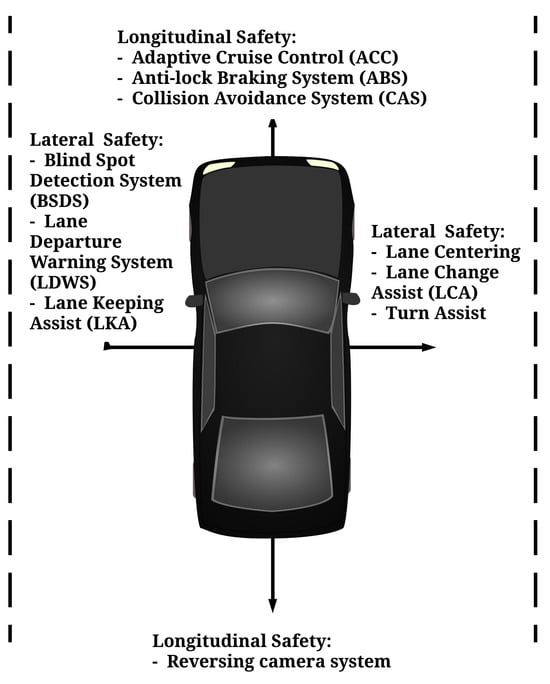
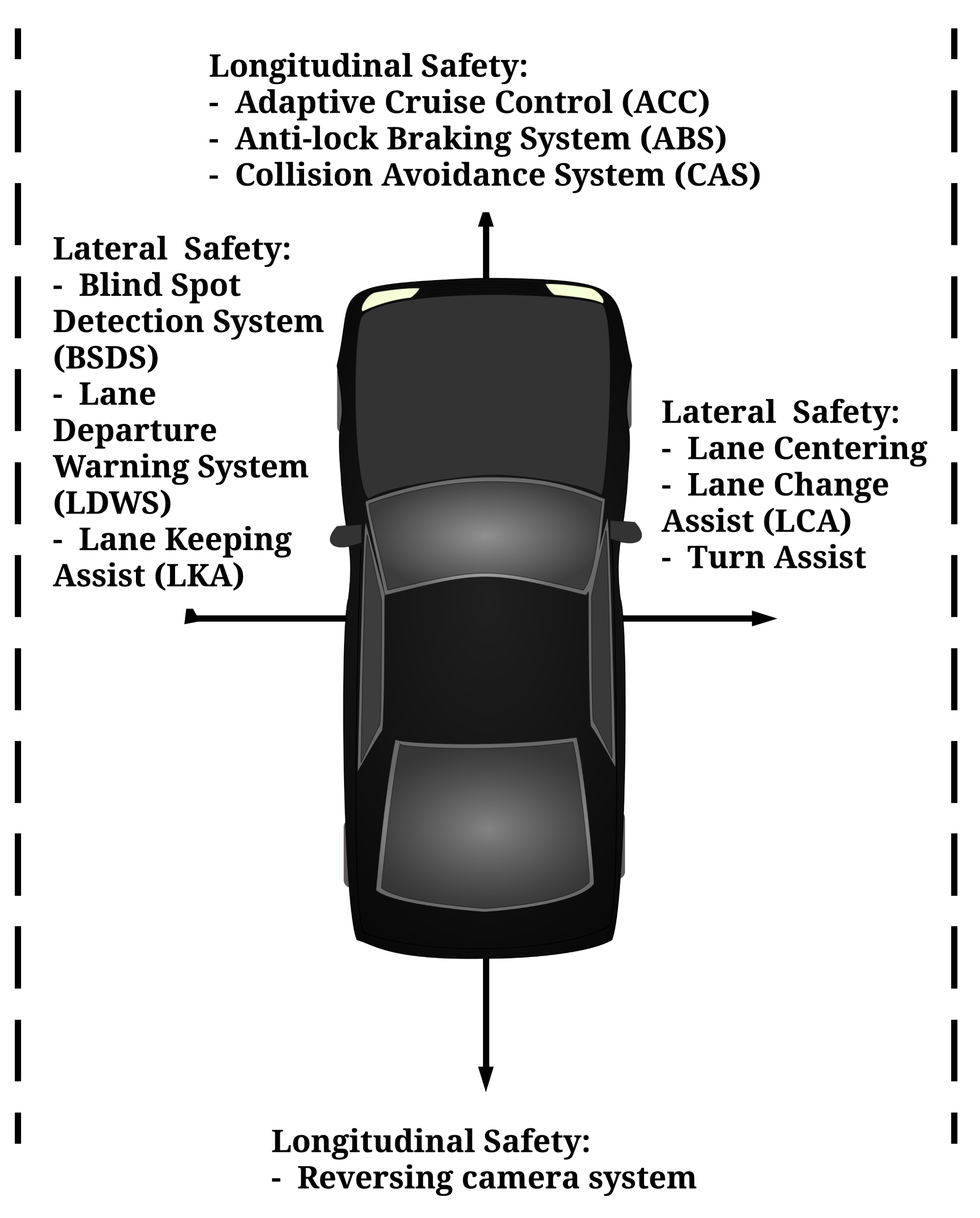
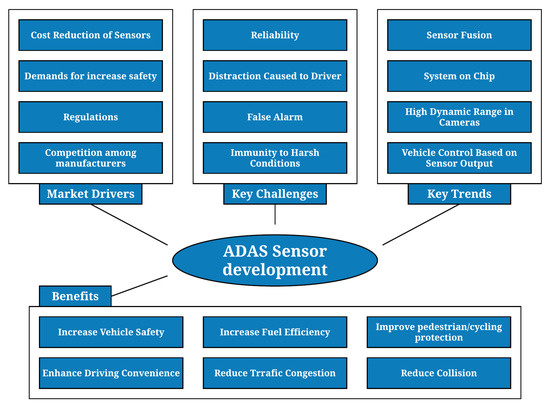
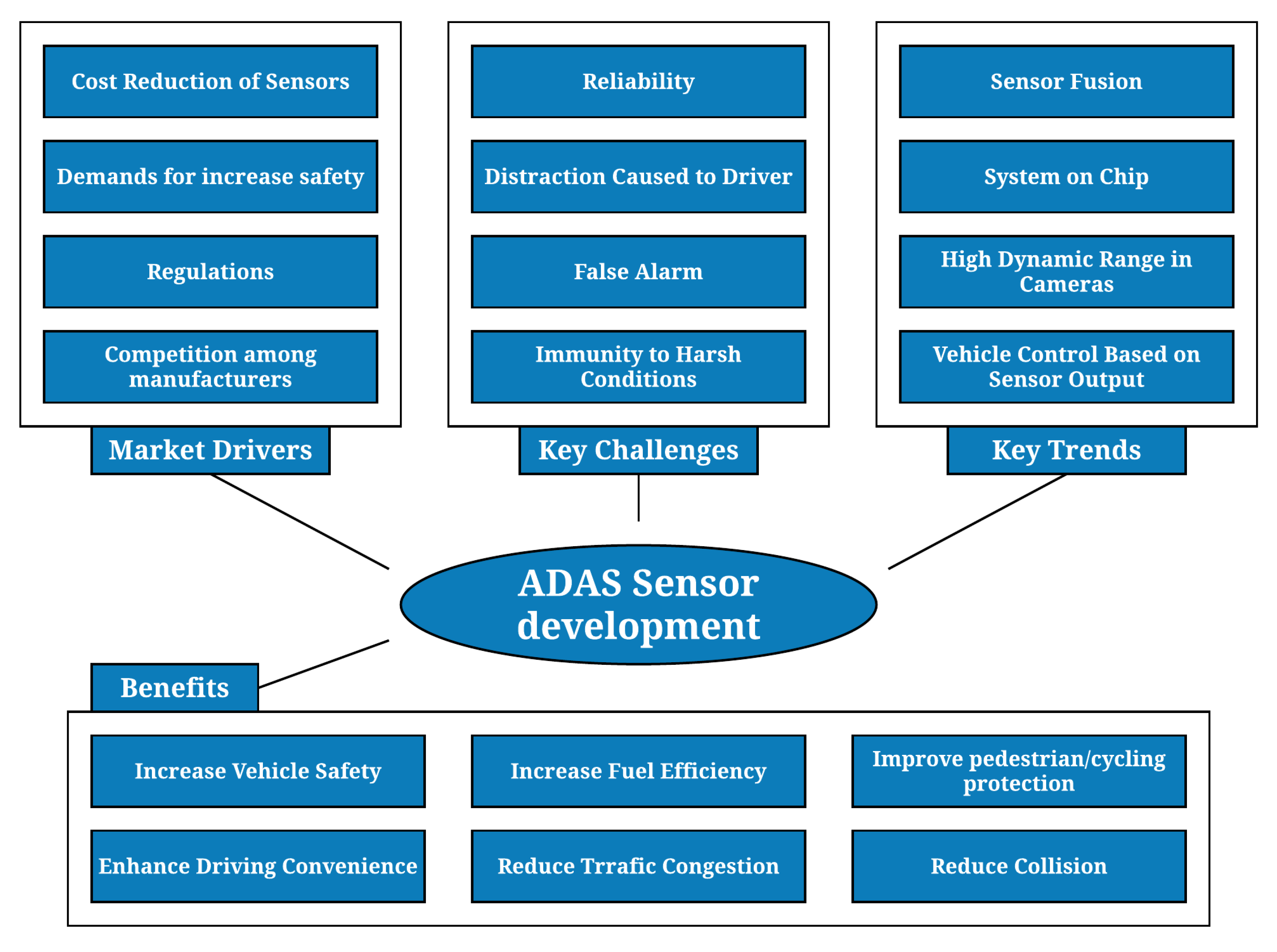
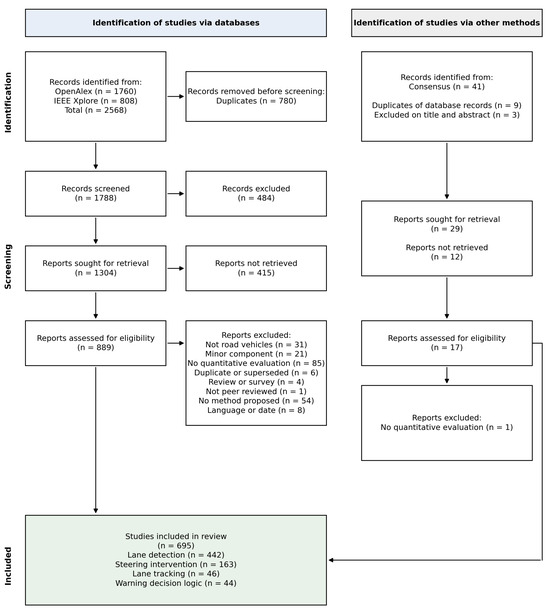
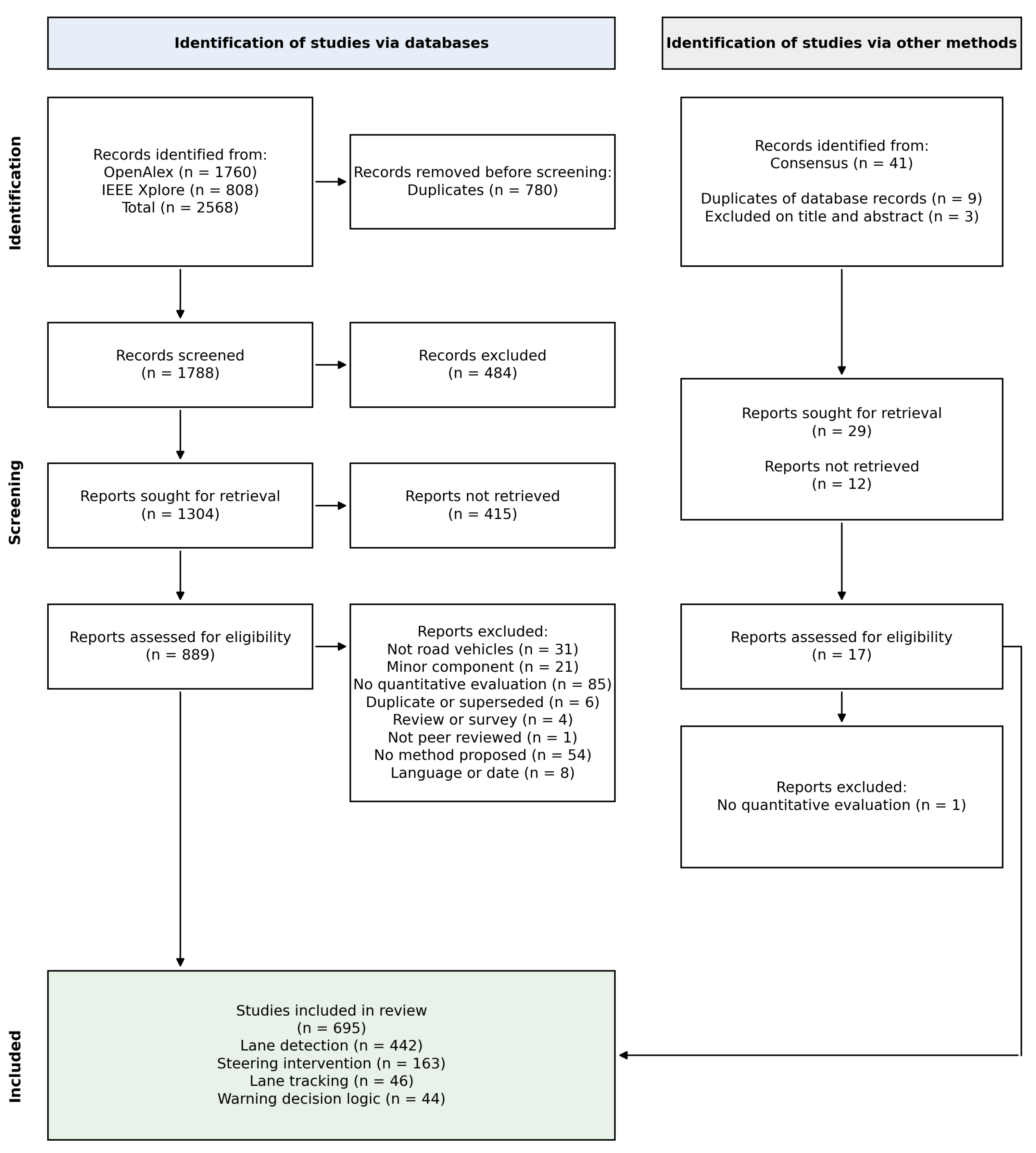


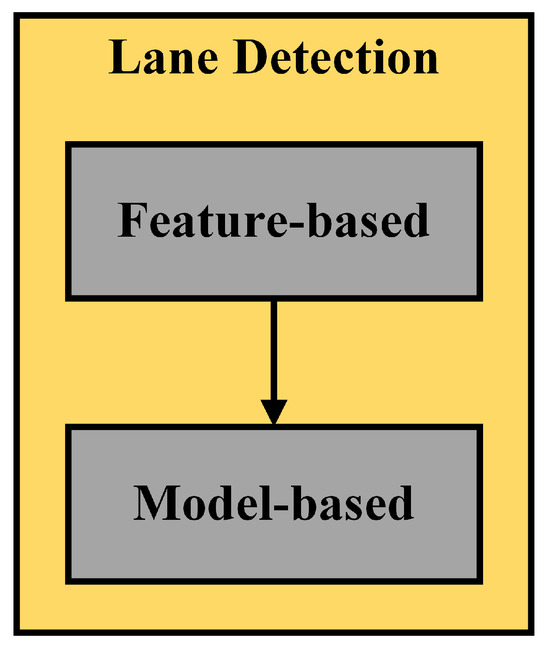
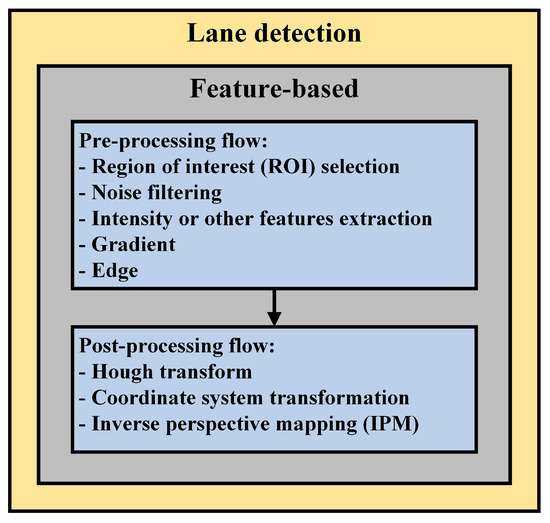
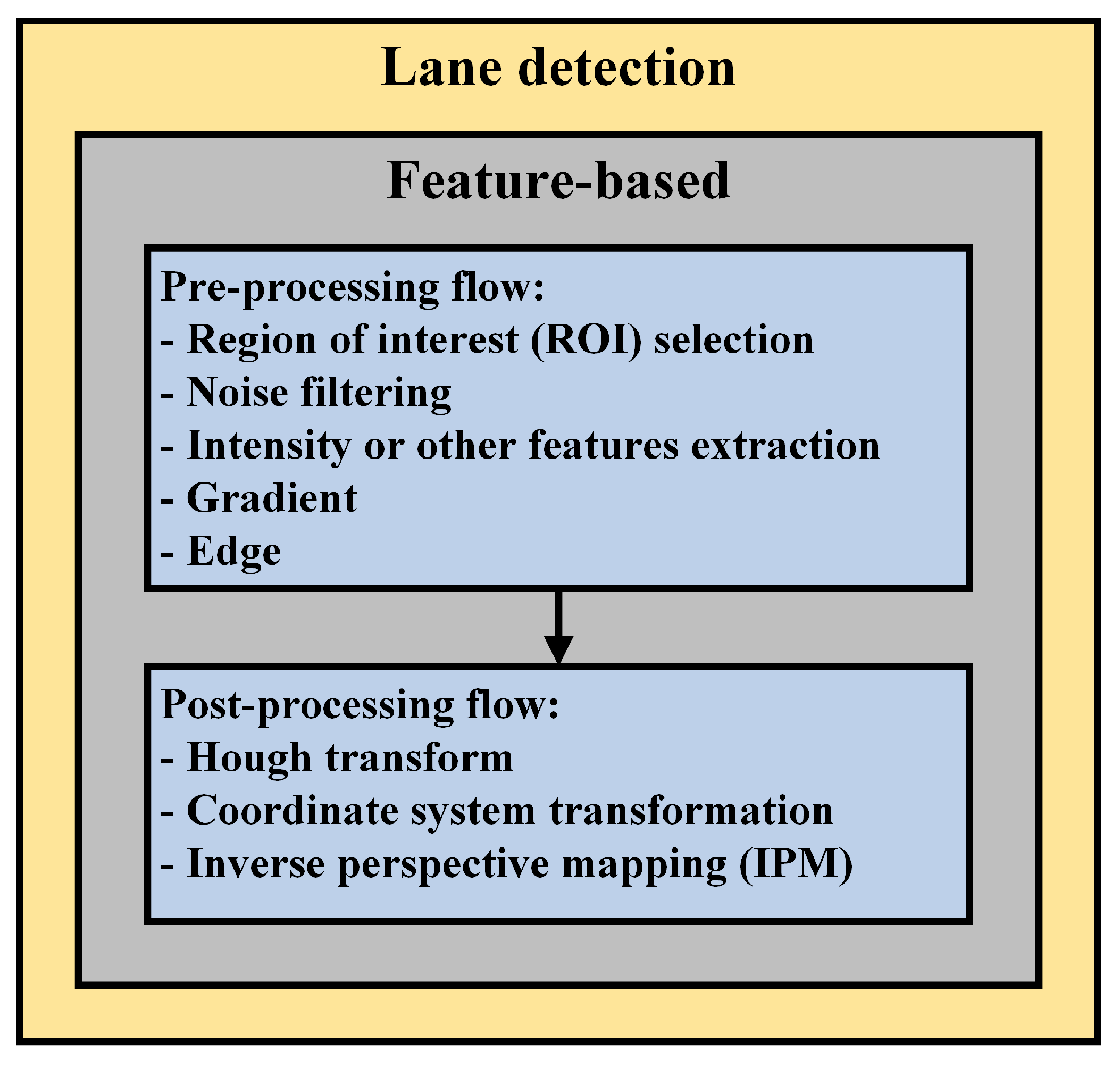
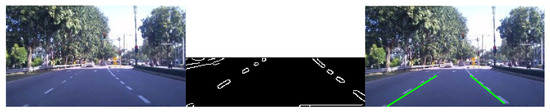
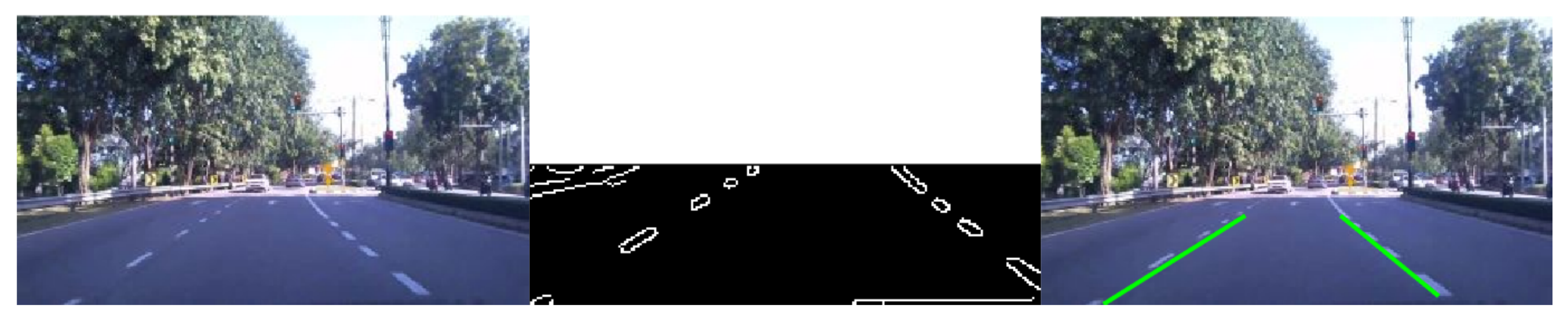
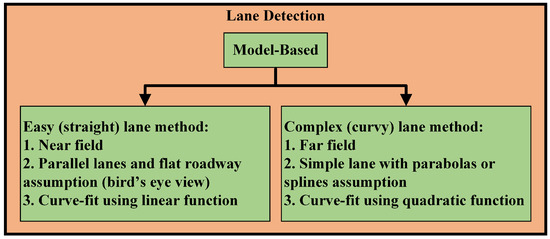
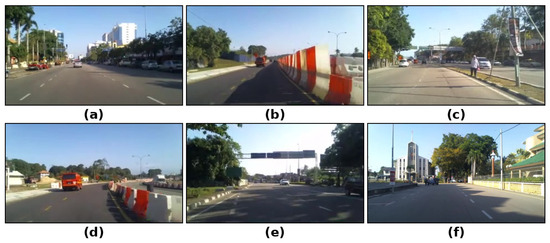
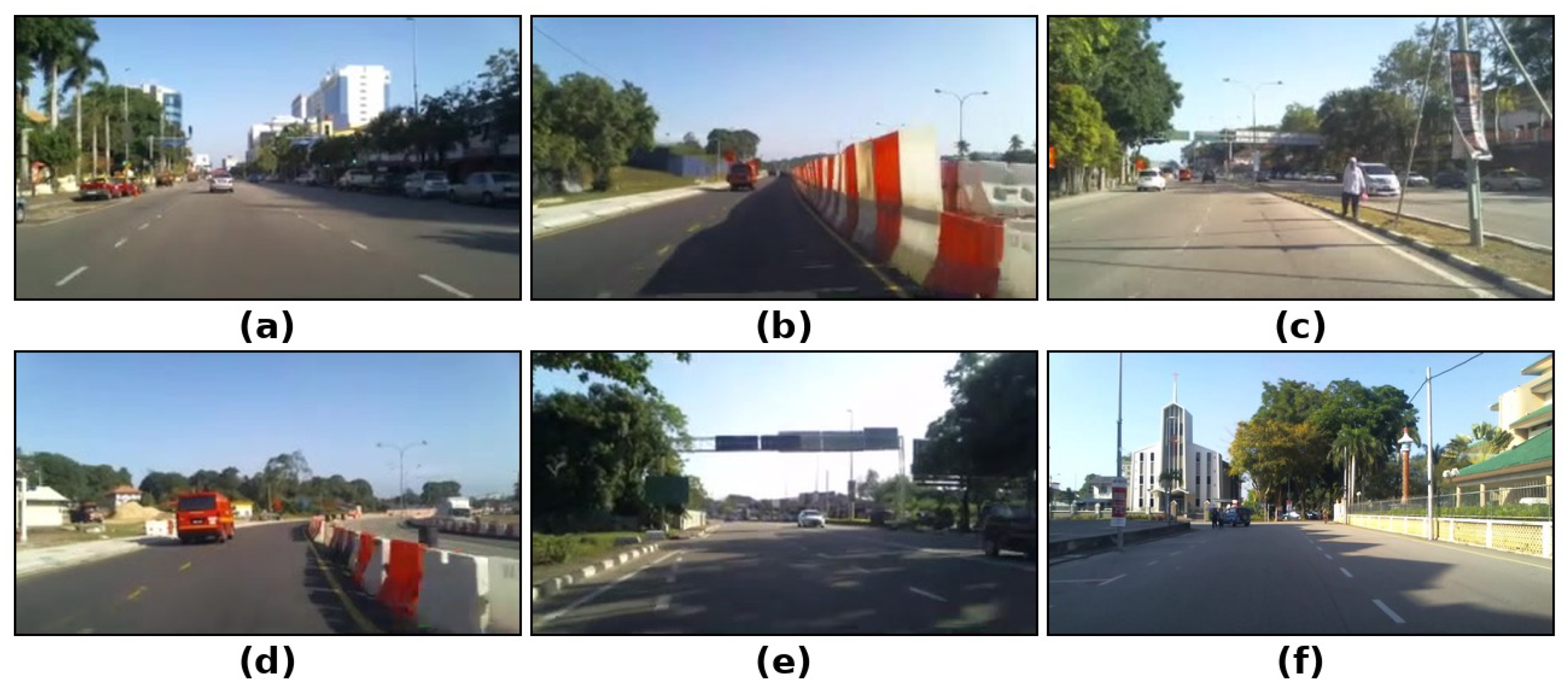
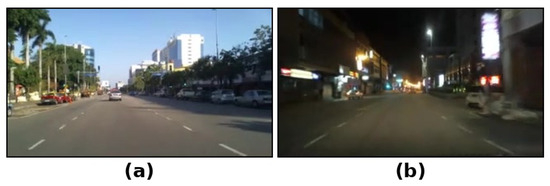
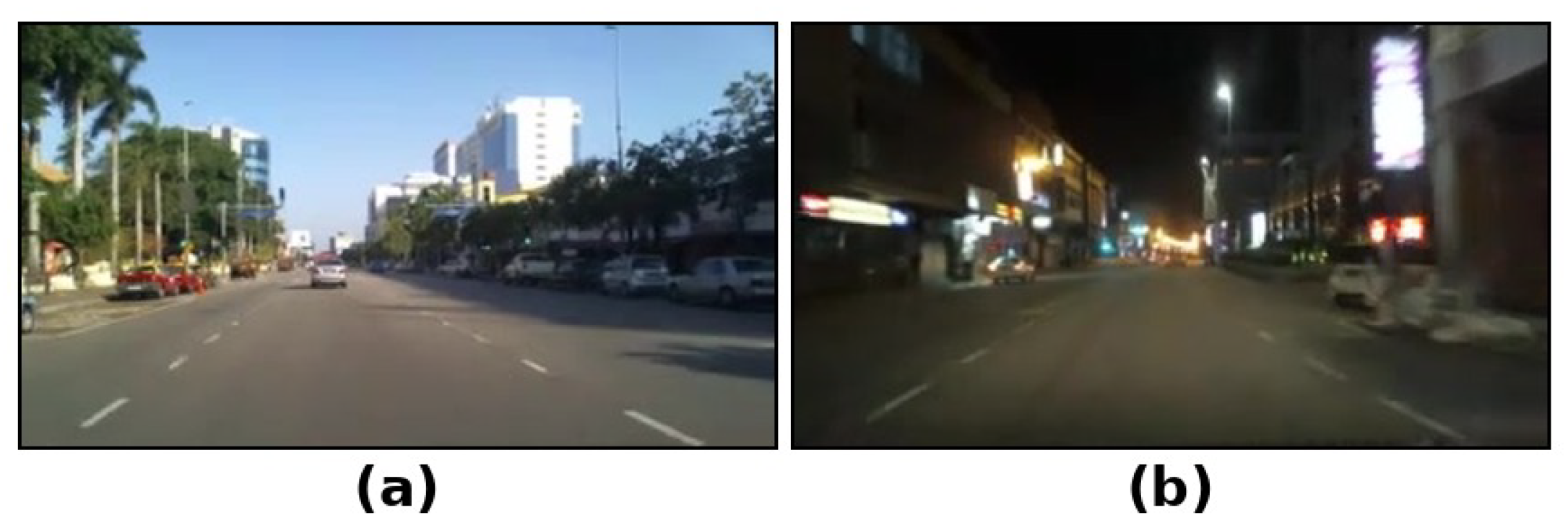

Disclaimer/Publisher’s Note: The statements, opinions and data contained in all publications are solely those of the individual author(s) and contributor(s) and not of MDPI and/or the editor(s). MDPI and/or the editor(s) disclaim responsibility for any injury to people or property resulting from any ideas, methods, instructions or products referred to in the content. |
© 2026 by the author. Licensee MDPI, Basel, Switzerland. This article is an open access article distributed under the terms and conditions of the Creative Commons Attribution (CC BY) license.