


Abstract
To address the issues of local optimum trapping and slow convergence speed of back propagation (BP) neural networks in the inter-turn short circuit (ITSC) fault diagnosis of permanent magnet synchronous motors (PMSMs), this paper proposes a novel fault diagnosis method integrating variational mode decomposition (VMD) and the artificial lemming algorithm (ALA)-optimized BP neural network. Firstly, stator current signals of PMSMs under diverse fault states are acquired, and the third harmonic components are extracted via VMD as fault features to achieve effective ITSC fault identification. On this basis, a fault feature dataset is established based on the extracted characteristic parameters, which is subsequently imported into the ALA-BP model for quantitative classification of ITSC fault severity. Simulation results verify that the proposed ALA-BP model achieves a diagnostic accuracy of 98.5%. Compared to the PSO-BP, NGO-BP and GWO-BP models, the proposed method improves diagnostic accuracy by 3.2%, 4.5% and 5.3%, respectively, and exhibits a substantially superior convergence performance.
1. Introduction
Permanent magnet synchronous motor (PMSM) serves as core power components in electric vehicles and industrial drives owing to its high control precision, reliable operation and low maintenance requirements [1,2]. Nevertheless, PMSMs are prone to multiple faults including inter-turn short circuit (ITSC) and demagnetization under complex operating conditions [3,4]. Among these failure modes, ITSC occurs most frequently. Without timely diagnosis, short-circuit damage will gradually propagate, degrading motor performance and efficiency and may even lead to irreversible motor failure under severe conditions. Accordingly, research on PMSM ITSC diagnosis carries substantial engineering significance for guaranteeing system safety and preventing catastrophic accidents [5].
Since stator current acts as the primary signal source for fault diagnosis, the adopted control strategy directly affects its baseline harmonic components and determines the distinguishability of subtle fault features. The dominant PMSM control schemes are field-oriented control (FOC) and direct torque control (DTC). DTC achieves rapid dynamic response but introduces high current harmonics and large torque ripple. Its intrinsic harmonics tend to mask tiny feature variations induced by incipient ITSC, which hinders weak fault detection. In contrast, FOC decouples torque and flux through coordinate transformation, yielding sinusoidal current waveforms with low inherent harmonics. Under FOC, harmonic increments triggered by faults are highly distinguishable. Hence, FOC is more suitable as the baseline control platform for early fault diagnosis. Additionally, FOC is the mainstream industrial solution for modern electric vehicle drive systems, endowing the derived conclusions with broader engineering applicability. Based on the above analysis, this paper builds a simulation framework under the FOC architecture to carry out ITSC diagnosis research.
Existing motor fault diagnosis approaches can be grouped into three categories: signal processing-based, analytical model-based, and artificial intelligence-based methods [6,7,8]. Signal processing-based methods extract fault features from measurable operational signals such as stator current and vibration for fault identification. Stator current is widely adopted because it can be acquired non-invasively and directly reflects the electrical status of motors. Typical signal processing algorithms, including Wavelet Transform (WT) and Empirical Mode Decomposition (EMD), have inherent drawbacks [9,10]. WT suffers from heavy subjectivity in wavelet basis selection, which impairs diagnostic accuracy. EMD is susceptible to mode mixing and end effects, limiting its capability to capture faint incipient fault features. As an adaptive signal decomposition technique, Variational Mode Decomposition (VMD) effectively suppresses mode aliasing and noise interference encountered in conventional decomposition algorithms [11]. It can stably separate weak fault characteristic components from stator current signals under variable working conditions, which provides a feasible solution for extracting incipient ITSC features of PMSMs. Therefore, embedding optimized VMD into PMSM fault diagnosis frameworks is promising to improve the accuracy and robustness of early ITSC identification. Analytical model-based methods achieve fault diagnosis and localization relying on mathematical models and parameter deviations. This category possesses solid theoretical foundations and supports quantitative analysis. However, PMSMs have intricate structures, and fault modeling remains challenging. Moreover, model parameters are sensitive to operating condition variations, which deteriorates model accuracy and restricts practical engineering deployment. AI-based methods exploit nonlinear mapping and adaptive learning capacities. They avoid complicated physical modeling and expert empirical knowledge, and can automatically mine fault correlations. The BP neural network is widely adopted in fault diagnosis tasks, yet it easily falls into local optima and exhibits slow convergence speed [12].
In summary, incipient ITSC features are faint and difficult to extract. Conventional BP neural networks suffer from local optimum traps when applied to such diagnosis tasks, and efficient hybrid methods combining signal decomposition and optimized neural networks for PMSM ITSC diagnosis remain insufficient. To tackle these challenges, this paper proposes a PMSM fault diagnosis method integrating VMD and ALA-BP. First, stator current signals are collected, and VMD is adopted to extract third-harmonic components as fault features. Second, the superiority of ALA over conventional optimization algorithms is validated using standard benchmark functions. Finally, the constructed fault feature dataset is fed into the ALA-BP model to implement fault diagnosis. Simulation results demonstrate that the proposed ALA-BP achieves a fault recognition accuracy of 98.5%, outperforming the compared algorithms.
2. Fault Models and Feature Extraction for PMSM Inter-Turn Short Circuits
2.1. Mathematical Formulas and Simulink Model
The severity of the inter-turn short circuit fault in the model is characterized by the shorted-turn ratio h, whose mathematical definition is given as,
where M is the number of shorted turns in the winding, and N is the total number of turns of the stator winding in the corresponding phase. The shorted-turn ratio h varies within the range [0, 1]. Specifically, h = 0 corresponds to the healthy operating condition of the motor, and a larger value of h indicates a more severe short-circuit fault. This mathematical definition provides the theoretical basis for building the subsequent Simulink-based ITSC fault simulation model. The simulation model was established using MATLAB R2024b, MathWorks, Natick, MA, USA.
When an ITSC occurs in a PMSM, the harmonic components of the stator current will increase. The formula for the frequency of the amplified harmonic component is,
where p, fs, ν, and z denote the number of pole pairs, power supply frequency, a positive integer, and the number of stator slots of the motor, respectively.
When an ITSC occurs in a PMSM, the third harmonic of the line current exhibits significant changes; therefore, it can be used as a fault feature for fault detection and diagnosis [13].
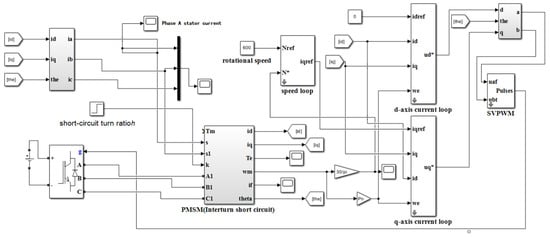
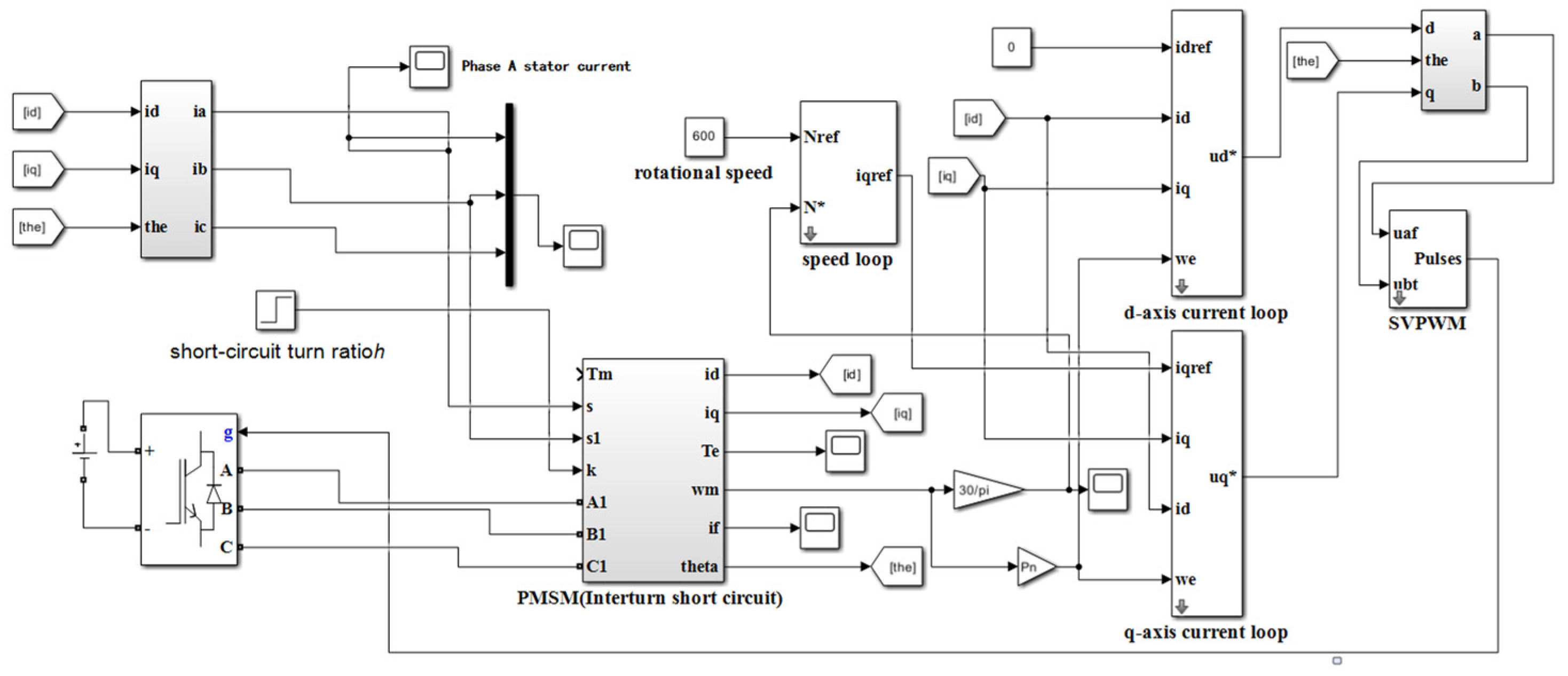
In this paper, the simulation is developed on the basis of the well-established field-oriented control strategy. Conceptually, a general FOC system consists of an outer speed loop, inner d-axis and q-axis current loops, PI regulators, Clarke/Park and inverse-Park coordinate transformations, and the SVPWM modulation unit. For surface-mounted PMSMs, the d-axis current reference is normally set to zero. The speed error is regulated by the outer-loop PI controller to generate the q-axis current reference. After closed-loop current regulation in the rotating d-q reference frame, the reference voltages are transformed back to the stationary frame to produce inverter driving pulses. Figure 1 in this manuscript is the concrete Simulink implementation derived from the above-described general FOC architecture, where an extra configurable ITSC fault module is embedded to inject different degrees of stator-winding short-circuit faults. Thanks to its satisfactory torque-flux decoupling capability and mature industrial implementation, FOC is the most widely used control method for PMSM in electric vehicle and industrial drive applications, providing a reliable baseline platform for fault diagnosis research [14].
Figure 1.
Simulink model of a PMSM interturn short circuit. * denotes a reference value.
The type of control strategy significantly affects the harmonic characteristics of the stator current, and further influences the amplitude and detectability of the third-harmonic fault features. FOC achieves sinusoidal drive through closed-loop current regulation, with low inherent harmonic content in the steady-state current. Therefore, the third-harmonic increment induced by inter-turn short circuit accounts for a high proportion, and the fault features present high distinguishability. In contrast, DTC adopts bang-bang control, where the current inherently contains abundant high-order harmonics. The fault-induced third harmonic will be submerged by the background harmonics, making it difficult to be effectively extracted. Accordingly, the third-harmonic-based diagnosis method proposed in this paper is more applicable to FOC-controlled PMSM systems.
The model can set the short-circuit turn ratio k and obtain physical quantities such as current and speed under the ITSC condition. The parameters of the PMSM are listed in Table 1.
Table 1.
Key Parameters of PMSMs.
It should be noted that the fault current harmonic signatures extracted by VMD—especially the third harmonic component exploited in this study—may exhibit quantitative differences under alternative control strategies such as direct torque control or high-frequency signal injection methods, due to their distinct switching logic and current regulation mechanisms. Therefore, the findings of this paper are primarily applicable to FOC-driven PMSM systems. Future work will extend the comparative analysis to multiple control schemes to enhance the generalizability of the proposed diagnostic method.
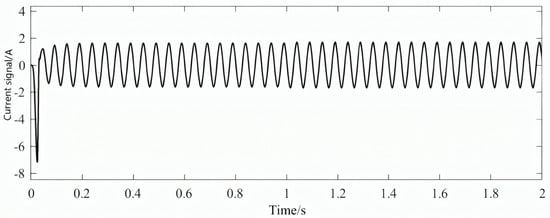
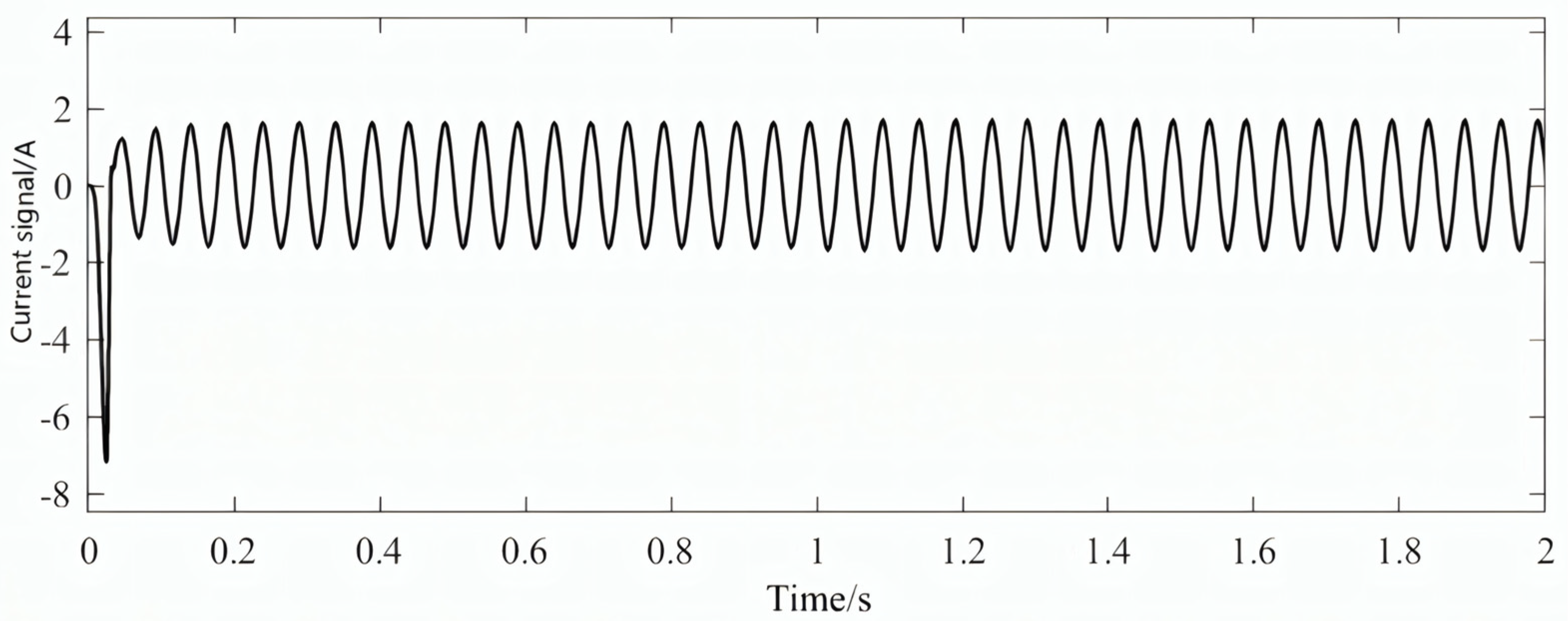
With the short-circuit turn ratio set to h = 0.05, the fault was initiated after 1 s. The simulation model was executed, and the resulting phase-A stator current waveform is presented in Figure 2:
Figure 2.
Phase A stator current waveform (h = 0.05).
Figure 2 shows the phase A stator current waveforms under healthy and faulty conditions (h = 0.05), with the fault occurring at t = 1 s. Upon close inspection, a slight amplitude decrease and a subtle phase shift can be observed in the post-fault current. However, the overall time-domain waveform remains largely similar to the healthy case, making these early-stage fault indicators barely noticeable via direct visual comparison. This observation highlights a critical limitation: in the early stage of ITSC faults, relying solely on conventional time-domain waveform comparison is insufficient for effective fault identification, as the fault-induced signatures are too subtle to be distinguished reliably from normal fluctuations or measurement noise.
2.2. Extraction of Fault Features Using the VMD Algorithm
To extract fault features, this paper employs the VMD algorithm [14]. The VMD algorithm is a signal decomposition algorithm. VMD mainly achieves this through multiple iterative searches to find the optimal modal components and obtain the intrinsic mode function (IMF). The variational constraint model is expressed by the following formula,
where f(t) denotes the raw signal, * represents the convolution operator, δ(t) stands for the Dirac delta function, {uk} and {ωk} are the k-th modal component and the corresponding central frequency, respectively.
Second, introduce the Lagrange multiplier λ and quadratic penalty factor α to compute the optimal predictive solution to the equation,
By adopting the quadratic optimization of the multiplicative algorithm alternating direction method, the IMF components are obtained as shown in Equation (4), and the corresponding central frequencies are given in Equation (5),
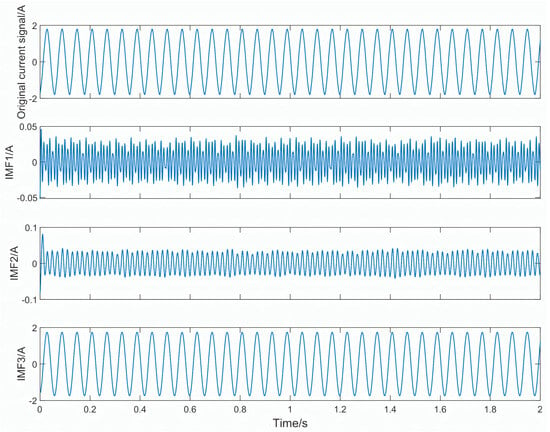
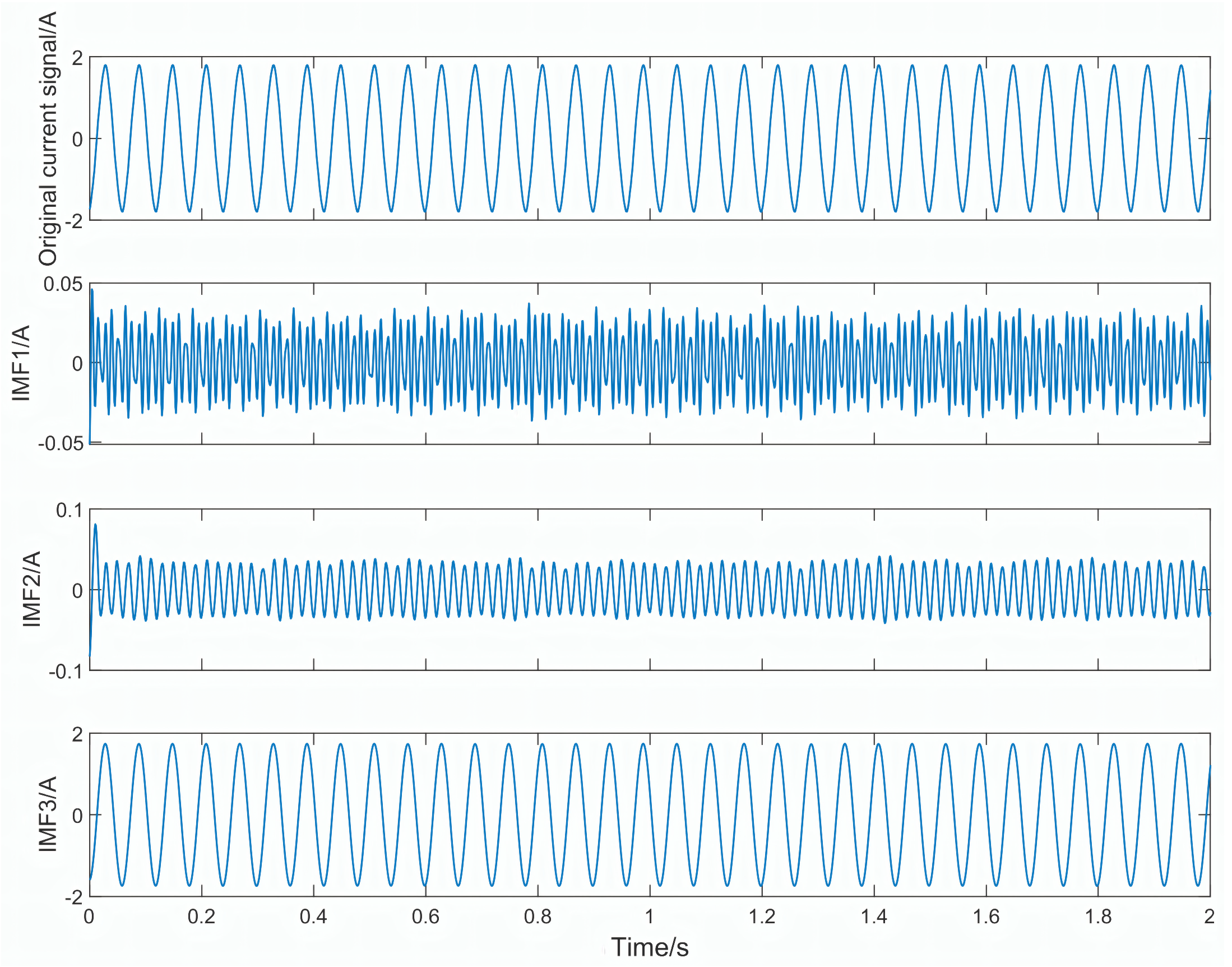
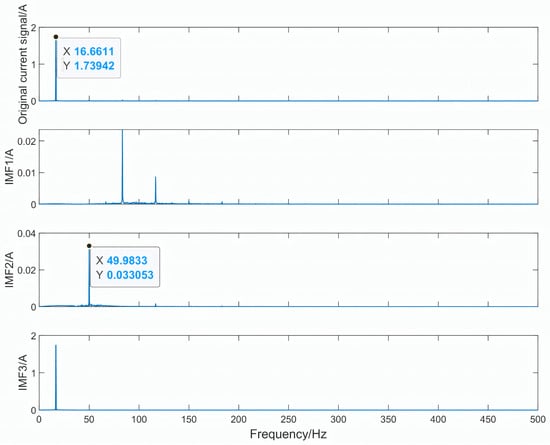
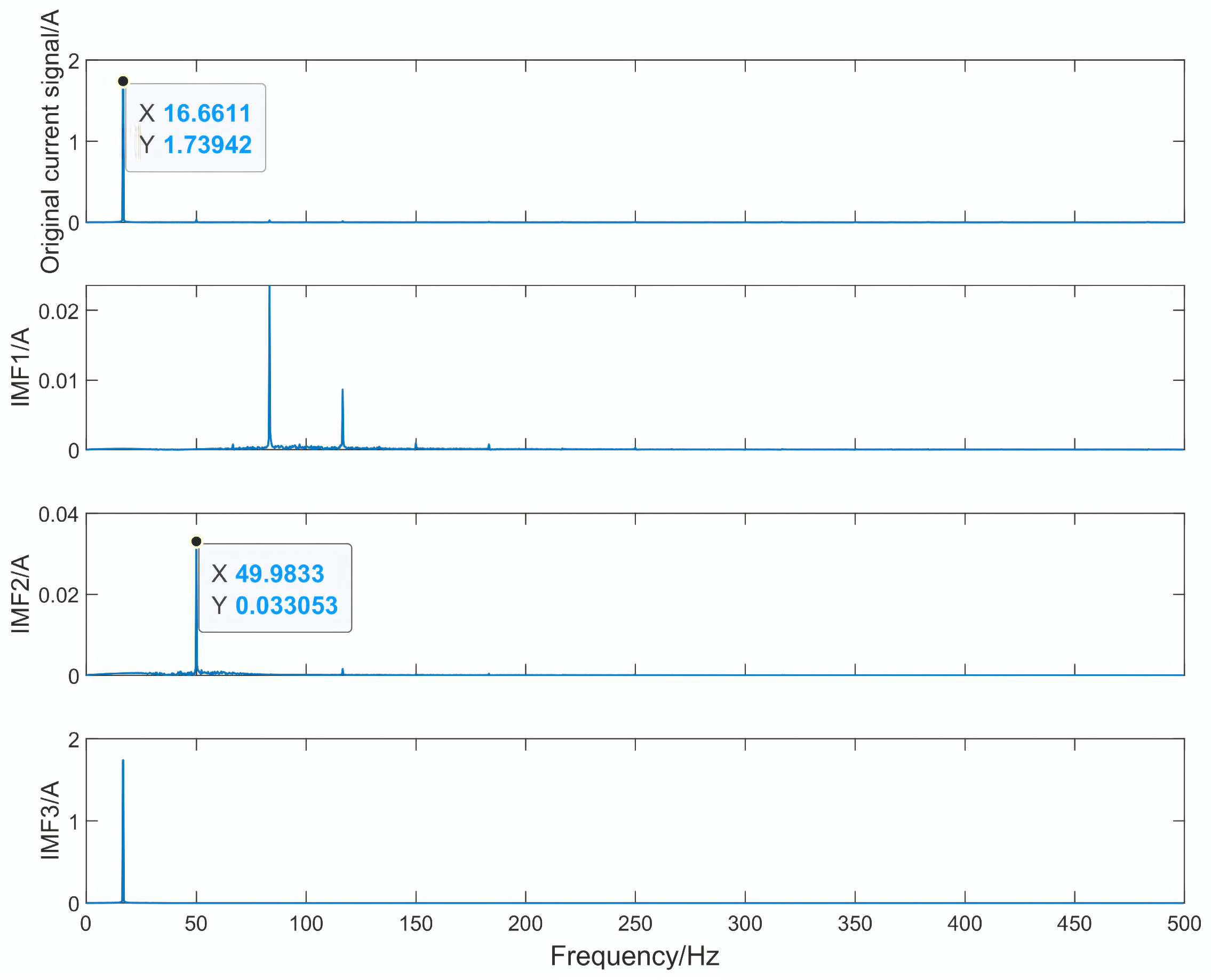
The VMD algorithm is adopted to decompose stator current signals. By analyzing the center frequency distribution of each IMF component, no modal aliasing occurs when K = 3, and the algorithm can effectively isolate the frequency components related to fault characteristics. A penalty factor α = 200 guarantees modal convergence and avoids over-decomposition of signals. Therefore, the decomposition number is set as K = 3 with penalty factor α = 200. The obtained IMF components are shown in Figure 3, and the FFT-based spectrum analysis results are illustrated in Figure 4. The IMF2 component exhibits an obvious third harmonic amplitude, which verifies that the VMD algorithm can successfully extract fault features. In comparison, the third harmonic in the original current spectrum is negligible; it is almost buried in background noise and difficult to identify.
Figure 3.
VMD results (h = 0.05).
Figure 4.
Results of the FFT decomposition.
3. The ALA and Its Performance Testing
3.1. ALA
ALA is a novel bio-inspired metaheuristic optimization algorithm. Its inspiration stems from four core behavioral patterns of Arctic lemmings [15]. The mathematical models of these four behaviors are as follows:
1. Long-distance migration,
where Zi(t) represents the position vector, Zbest(t) denotes the optimal solution, F is the direction flag, BM refers to the Brownian motion vector, R is a random vector, and Za(t) indicates the individual position randomly selected from the population.
Zi(t + 1) = Zbest(t) + F × BM × (R × (Zbest(t) − Zi(t)) + (1 − R) × (Zi(t) − Za(t))),
2. Burrowing behavior,
where L is the dynamically adjusted step size factor, and Zb(t) denotes an individual randomly selected from the population.
Zi(t + 1) = Zi(t) + F × L × (Zbest(t) − Zb(t)),
3. Foraging behavior,
where spiral refers to a spiral search path, and radius is the radius of the helix.
Zi(t + 1) = Zbest(t) + F × spiral × rand × Zi(t),
4. Predator avoidance,
where G is the escape coefficient, and Levy(λ) represents the Lévy flight step, Energy Decay Mechanism,
where T is the current iteration number, Tmax is the maximum number of iterations, rand1 is a random number between 0 and 1, When E(t) > 1, exploratory behaviors (foraging or burrowing) are prioritized. When E(t) ≤ 1, behavioral responses (foraging or predator avoidance) are triggered.
Zi(t + 1) = Zbest(t) + F × G × Levy(Dim) × (Zbest(t) − Zi(t)),
3.2. Performance Testing of the ALA
To verify the optimization performance of the ALA, four commonly used standard benchmark test functions are selected, and a comparative study is conducted between the proposed ALA algorithm and three well-established metaheuristic algorithms, namely Particle Swarm Optimization (PSO), Northern Goshawk Optimization (NGO), and Grey Wolf Optimizer (GWO). For a fair comparison, all algorithms adopt the same population size N = 30 and maximum number of iterations Tmax = 200, and each algorithm runs independently 30 times on each test function. The parameter settings of each comparative algorithm are described as follows. For PSO, the inertia weight is set to w = 0.7, and the two acceleration coefficients are C1 = C2 = 2. For GWO, the convergence factor a decreases linearly from 2 to 0 during the iteration process. For NGO, the escape probability parameter is set to R = 0.2, and the remaining parameters follow the settings in the original literature. For the proposed ALA, the sign parameter F is randomly assigned as either −1 or 1, and the energy factor E(t) is dynamically calculated during iterations without manually predefined hyperparameters. Four evaluation indicators are adopted, including the optimal fitness value, mean fitness value, standard deviation, and convergence curve. The experimental results aim to verify the advantages of the ALA algorithm in optimization accuracy, solution stability and convergence speed. The definitions of the four test functions, including their mathematical expressions, search domains, and global optima, are summarized in Table 2.
Table 2.
Test Functions.
3.3. Analysis of ALA Test Results
The statistical results of the four benchmark functions, including the optimal value, mean, and standard deviation achieved by each comparison algorithm, are summarized in Table 3.
Table 3.
Test Function Results.
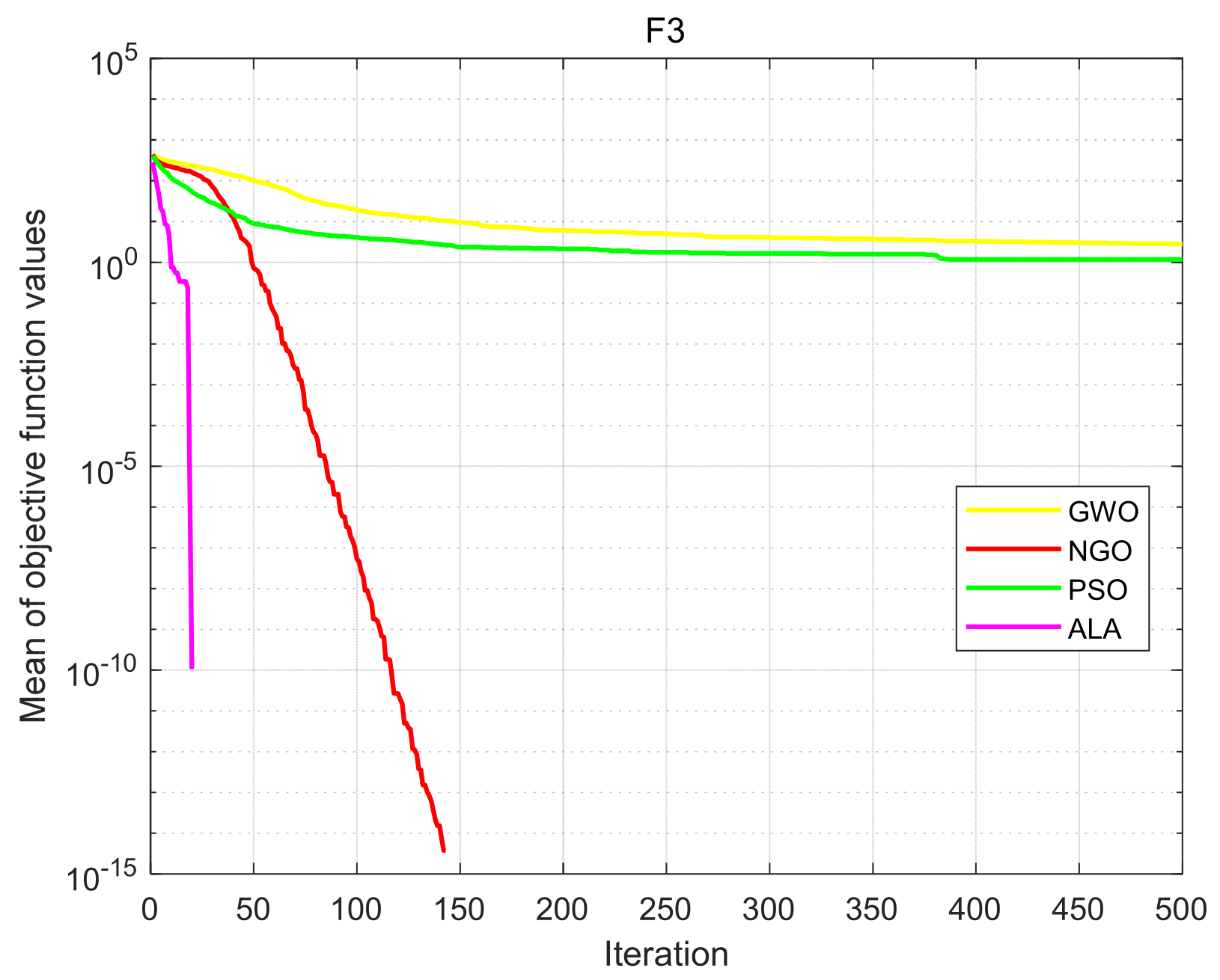
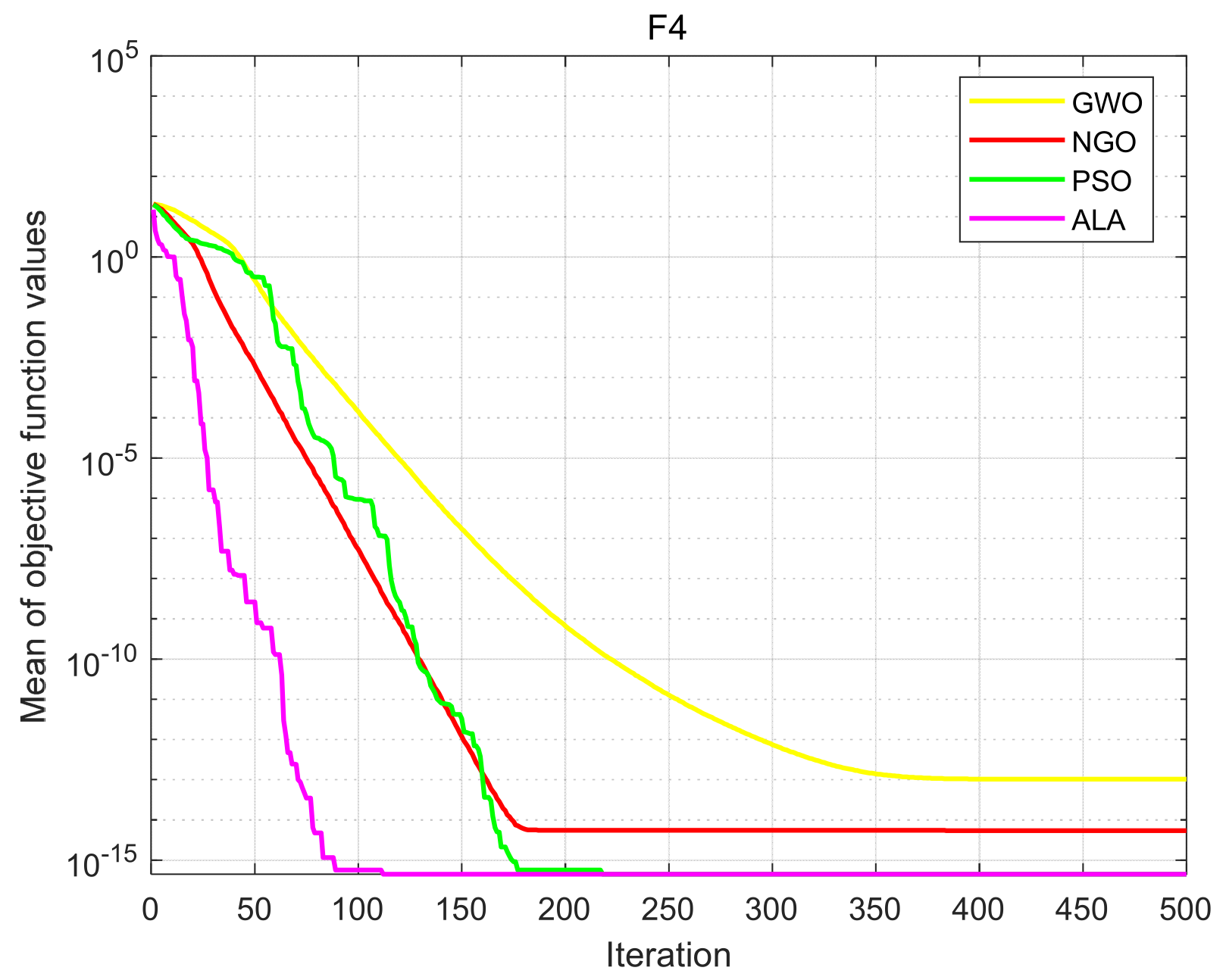
As can be seen from the simulation results: For test functions F1 and F2, only the ALA converges to the theoretical global optimum, which verifies its excellent search capability. For test function F3, both ALA and NGO obtain the ideal global optimum. For test function F4, none of the algorithms reach the theoretical optimum. Nevertheless, ALA achieves a standard deviation of 0, which demonstrates its superior stability.
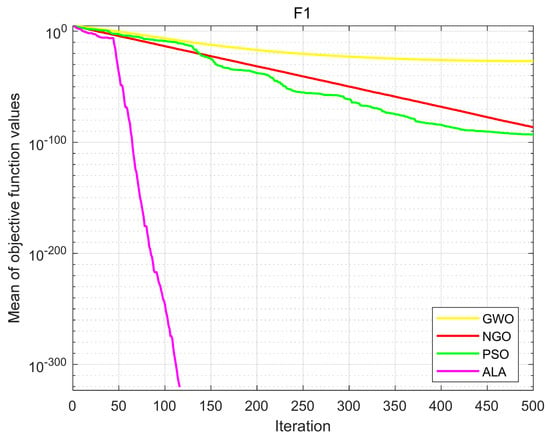
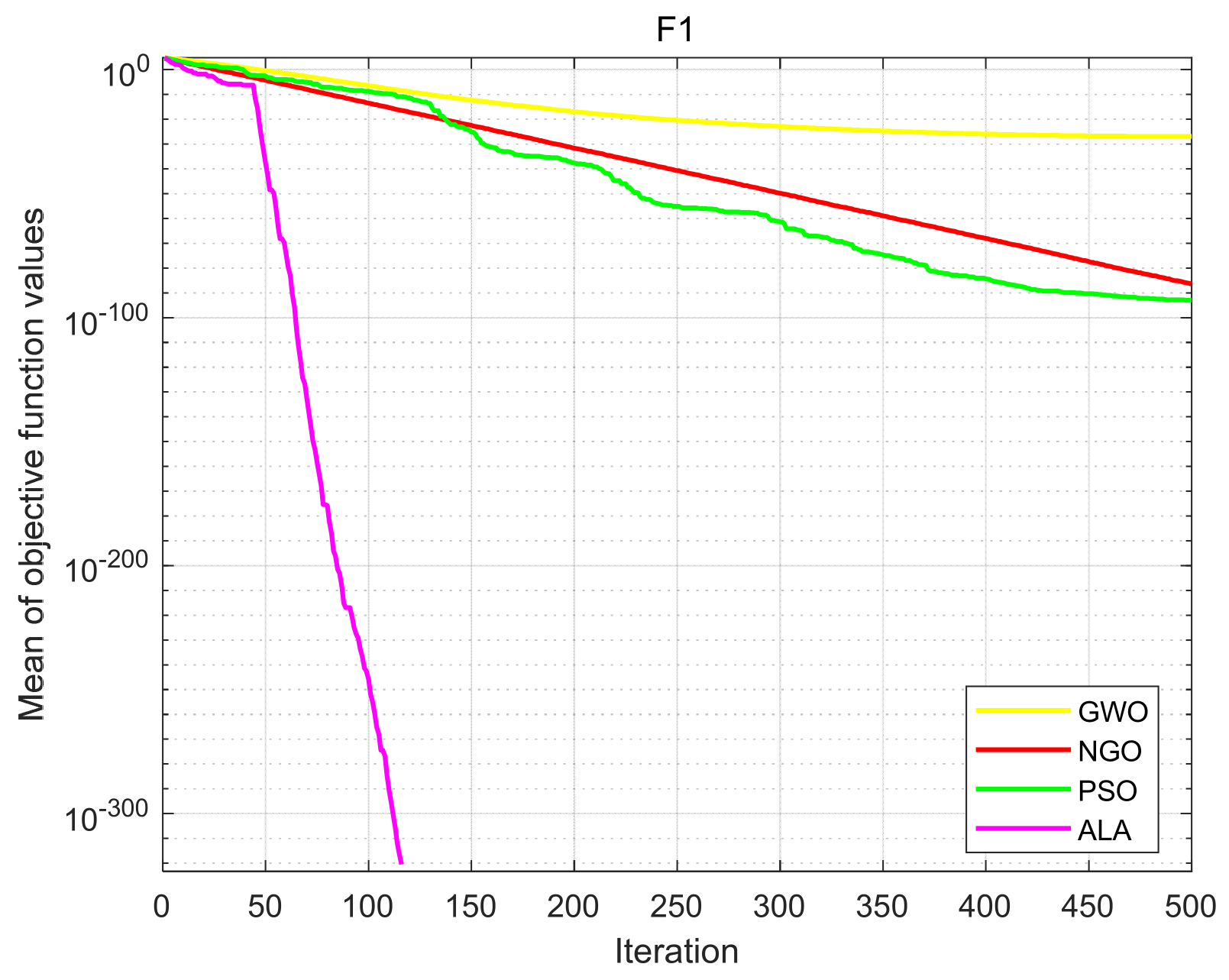
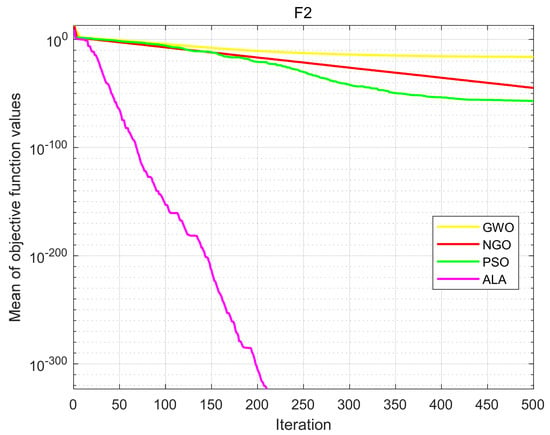
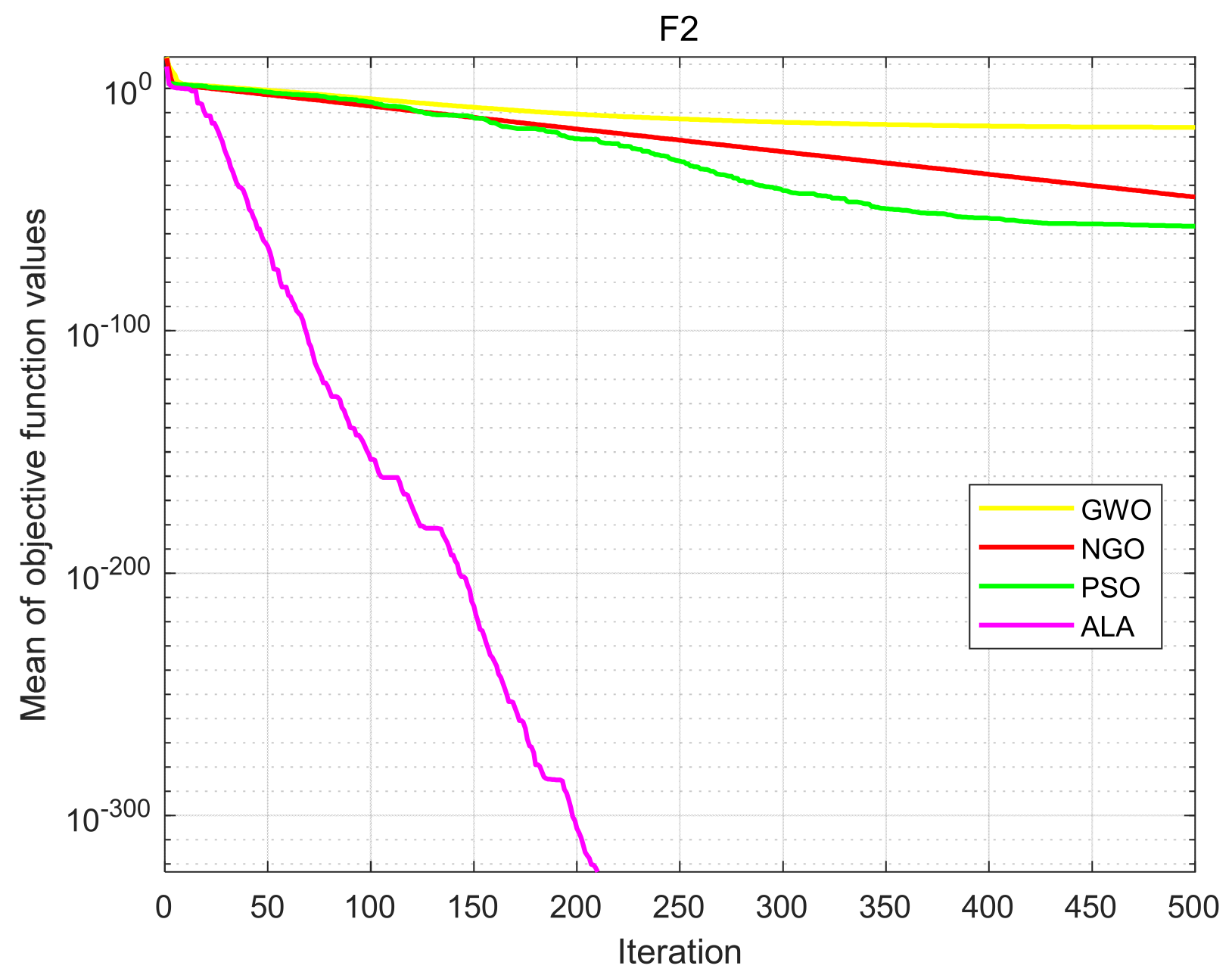
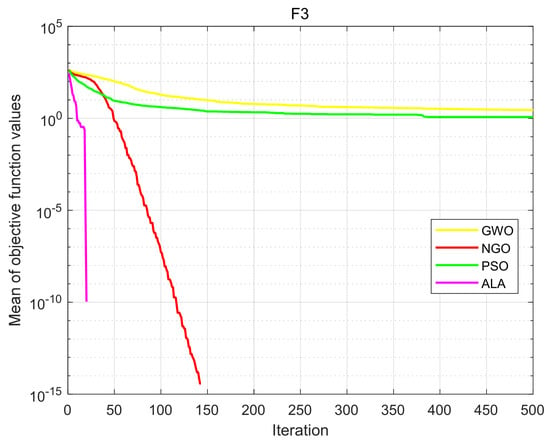
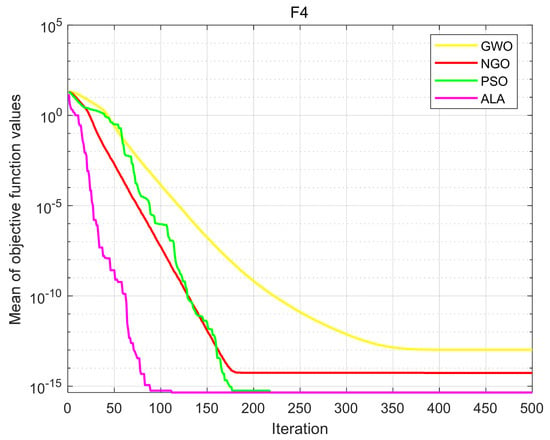
The following are the convergence plots for each test function. Figure 5, Figure 6, Figure 7 and Figure 8 show the convergence curves for F1, F2, F3, and F4, respectively. As can be seen from the figures, ALA achieves the fastest convergence rate. In summary, the ALA offers the best optimization performance and stability.
Figure 5.
Convergence curve of the F1 function.
Figure 6.
Convergence curve of the F2 function.
Figure 7.
Convergence curve of the F3 function.
Figure 8.
Convergence curve of the F4 function.
4. Optimizing the BP Algorithm
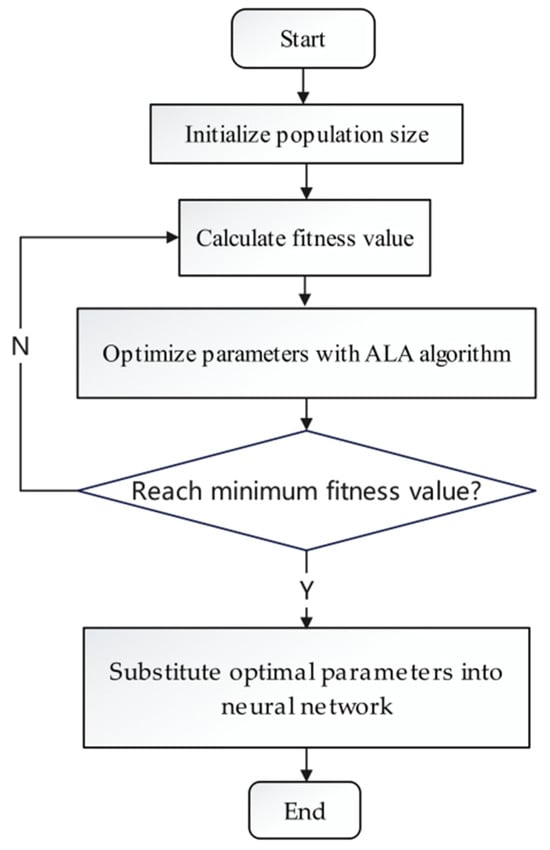
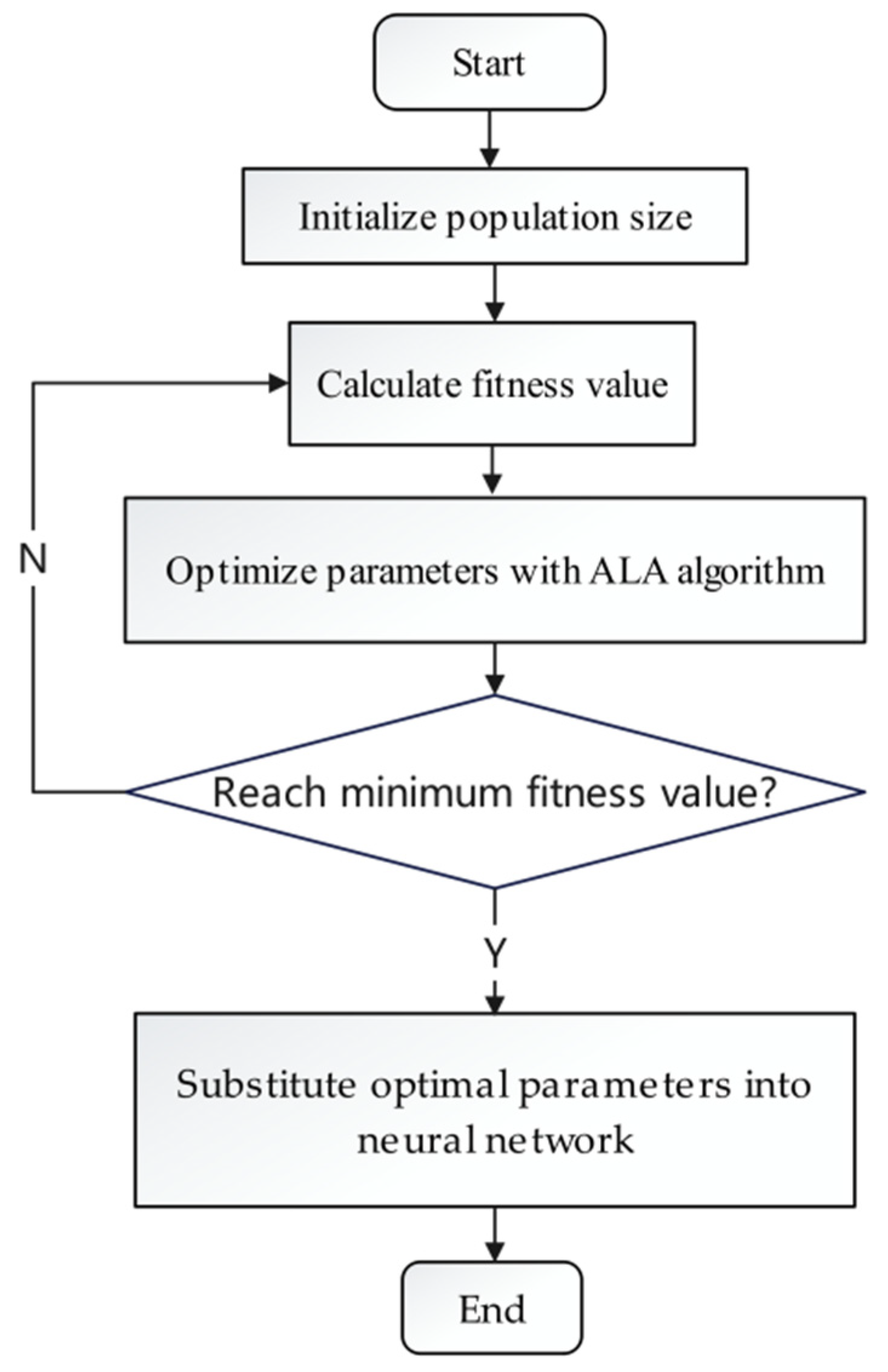
In this paper, ALA is employed to optimize the initial weights and thresholds of the BP neural network, leveraging its proven optimization performance to overcome the inherent drawbacks of BP networks, namely being trapped in local optima and slow convergence [16]. The BP neural network completes pattern classification through forward signal propagation and backward error propagation. Equations (12)–(18) describe the complete mathematical calculation flow of a standard BP neural network training iteration, and these formulas also form the core calculation logic of the neural network training module in the flowchart of Figure 9. Its mathematical principles and implementation steps are as follows:
Figure 9.
Flowchart of ALA-optimized BP Network.
1. Parameter Initialization and Determination of Learning Rate and Activation Function: Determine the number of input nodes n, the number of hidden layer nodes 3, and the number of output nodes m of the BP neural network. Initialize the weights Wjk and Wij.
2. Hidden Layer Output
The output value of each hidden layer node is calculated via the activation function, input weights and hidden layer thresholds,
where f is the activation function, hj is the output value of the hidden layer, and a is the hidden layer threshold.
3. Neural network prediction output computation:
The final prediction output of the network is obtained by weighted summation of hidden layer outputs combined with output layer thresholds,
where parameter b denotes the output layer threshold.
4. Calculation of network prediction error: The error between the network prediction output and the expected output is calculated as the basis for subsequent parameter update,
ek = yk − Ok, j = 1, 2,…, l,
5. Update network weights: According to the back-propagated error, the connection weights of the output layer and the hidden layer are adjusted respectively,
where η represents the learning rate.
Wjk = Wjk + ηHjek, j = 1, 2,…, l, k = 1, 2,…, m,
6. Update biases: Correspondingly, the thresholds of the hidden layer and the output layer are updated synchronously,
bk = bk + ek, k = 1, 2, …, m.
7. Determine whether the termination condition is reached. If the error falls within the permissible range, the training process is terminated; otherwise, return to Step 2.
The BP neural network tends to fall into local optima when its weights and biases are randomly initialized. Therefore, this paper adopts the ALA to optimize these parameters. By leveraging the global search capability of the ALA algorithm, the optimal parameter combination is determined to improve the model efficiency and prediction accuracy.
The specific optimization flowchart is presented in Figure 9, which corresponds to the calculation process described above. First, the ALA population is initialized, and the weights and thresholds of the BP network are encoded as individual position vectors. Then, the training error calculated by Equations (12)–(14) is adopted as the fitness function to evaluate each individual, and the population is iteratively updated by the ALA. When the minimum fitness value is reached, the optimal individual is decoded into the optimal initial weights and thresholds of the BP network. Finally, the optimal parameters are substituted into the neural network, and the training is completed through the iterative process described by Equations (12)–(18).
The BP neural network adopted in this paper has a single hidden layer structure. The number of neurons in the input layer, hidden layer and output layer is 1, 10 and 4, respectively. The Sigmoid function is used as the activation function of the hidden layer, and the Softmax function is adopted for the output layer. The learning rate is set to 0.01, and the training terminates when the maximum number of iterations reaches 1000 or the mean squared error on the training set is less than 1 × 10⁻⁴. For the ALA optimization algorithm, the population size is 30 and the maximum iteration number is 100. The search range for weights and thresholds is set to [−1, 1]. All comparative models employ the identical network architecture and optimization parameters, with differences only in the iterative mechanisms of the algorithms.
5. A VMD-ALA-BP-Based Process for Assessing the Severity of Interturn Short-Circuit Faults in PMSMs and Related Simulations
5.1. Decision-Making Process
1. Signal preprocessing: Perform a VMD on the PMSM stator current to obtain the IMF components.
2. Feature extraction: Calculate energy features based on the IMF group to form feature vectors.
3. Dataset Construction: Divide the energy feature vectors into training and test sets.
4. Fault Categories: Use an ALA-BP neural network to learn features and classify fault severity.
5. Output: Output the type and severity of the fault to complete the diagnosis.
5.2. Simulation and Analysis
All fault signals and data samples used in this paper were generated by the Simulink model, rather than physical signals collected from a real motor test bench. Four operating conditions were configured in the simulations, including the healthy state and three fault states with fault severity levels of h = 0.05, h = 0.15, and h = 0.25, which were numbered 1 to 4 in sequence. For each fault condition, 240 sets of current signals were selected as the fault analysis signals.
To ensure sample independence, the 240 signal sets corresponding to each operating condition were obtained through independent simulation runs. Each sample corresponds to a unique set of initial conditions and an independent operating process, thereby eliminating the data correlation induced by continuous sampling. The variational mode decomposition was employed to decompose the stator current signals, yielding three intrinsic mode functions. The normalized energy of each IMF was then calculated, producing 240 sets of normalized energy data for each fault condition, which served as the analysis samples. Among the 240 sample sets, 192 were selected as training samples, and the remaining samples were used as test samples.
To ensure the fairness of the comparative experiments, the three benchmark models (PSO-BP, GWO-BP, and NGO-BP) adopted exactly the same BP neural network architecture and training hyperparameters as the proposed ALA-BP model. The network consists of a single hidden layer with 10 neurons. The input and output dimensions, activation function, learning rate, and stopping criteria were all consistent with those described in Chapter 4. For all optimization algorithms, the population size was set to 30, the maximum number of iterations was 100, and the parameter search range was restricted to [−1, 1]. The algorithms differ only in their internal optimization mechanisms.
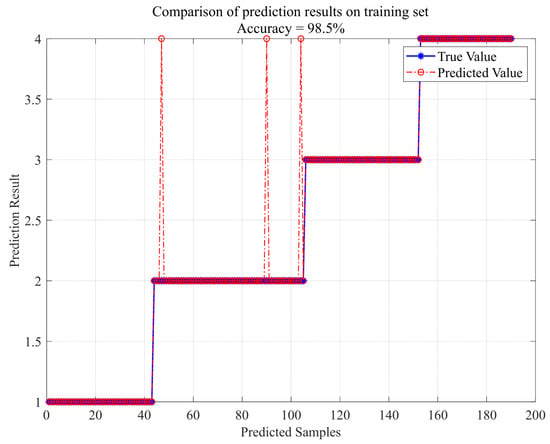
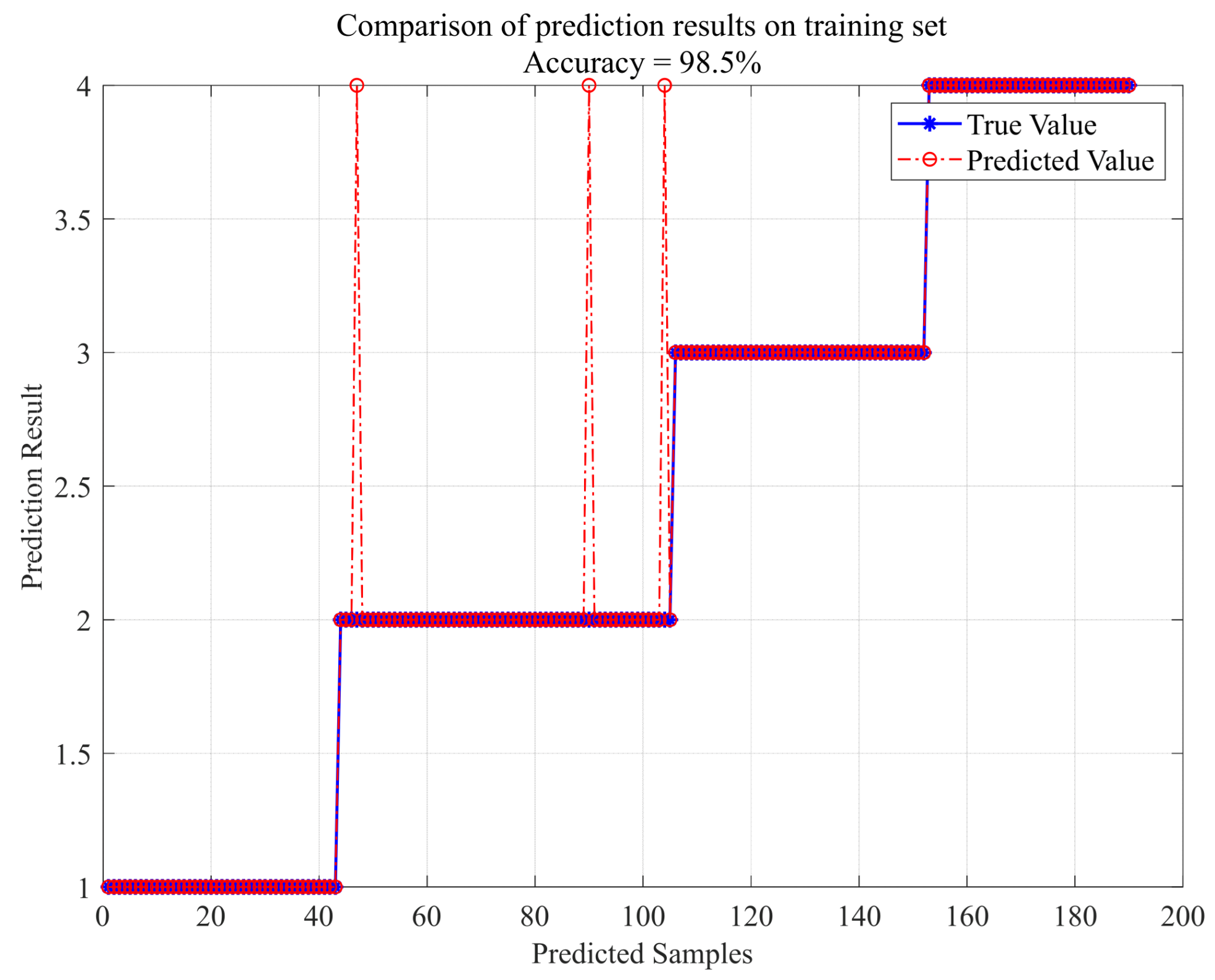
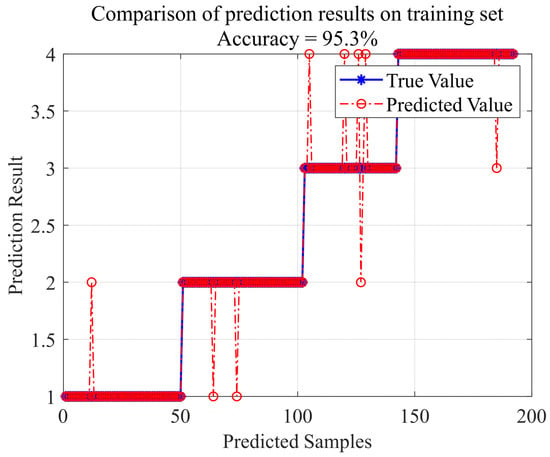
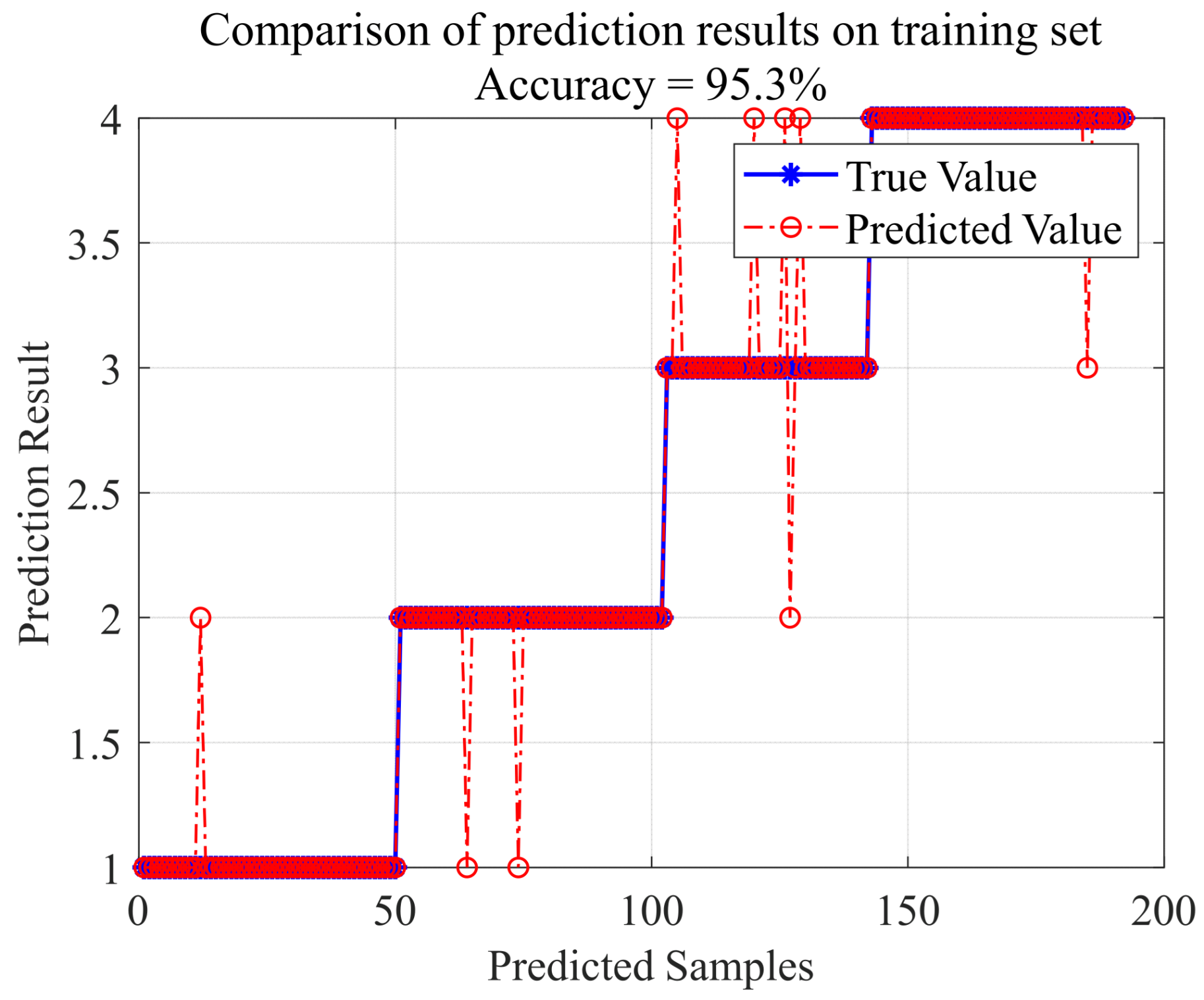
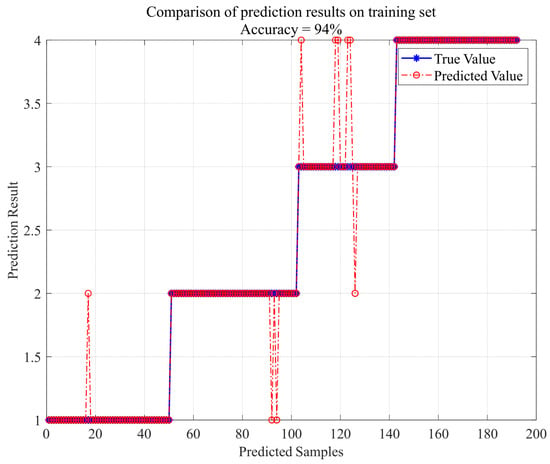
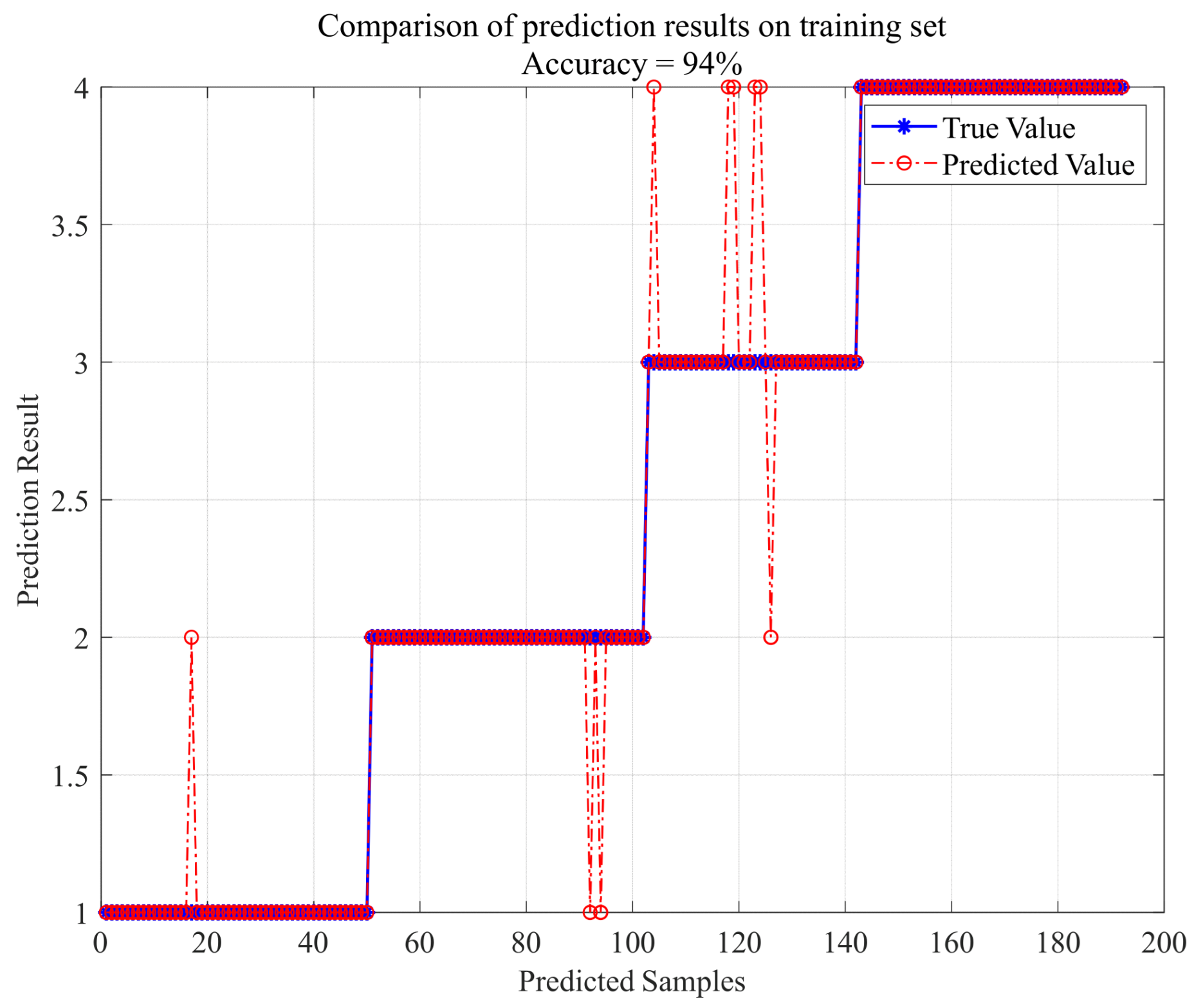
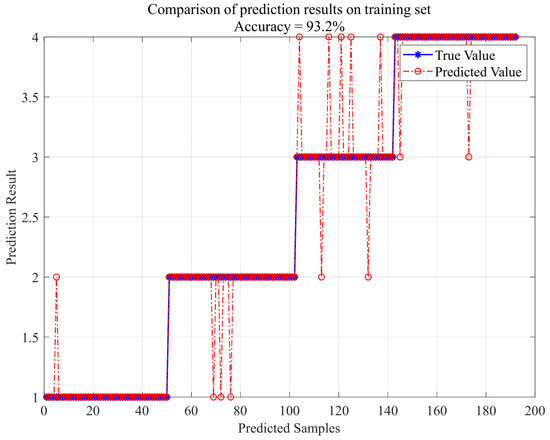
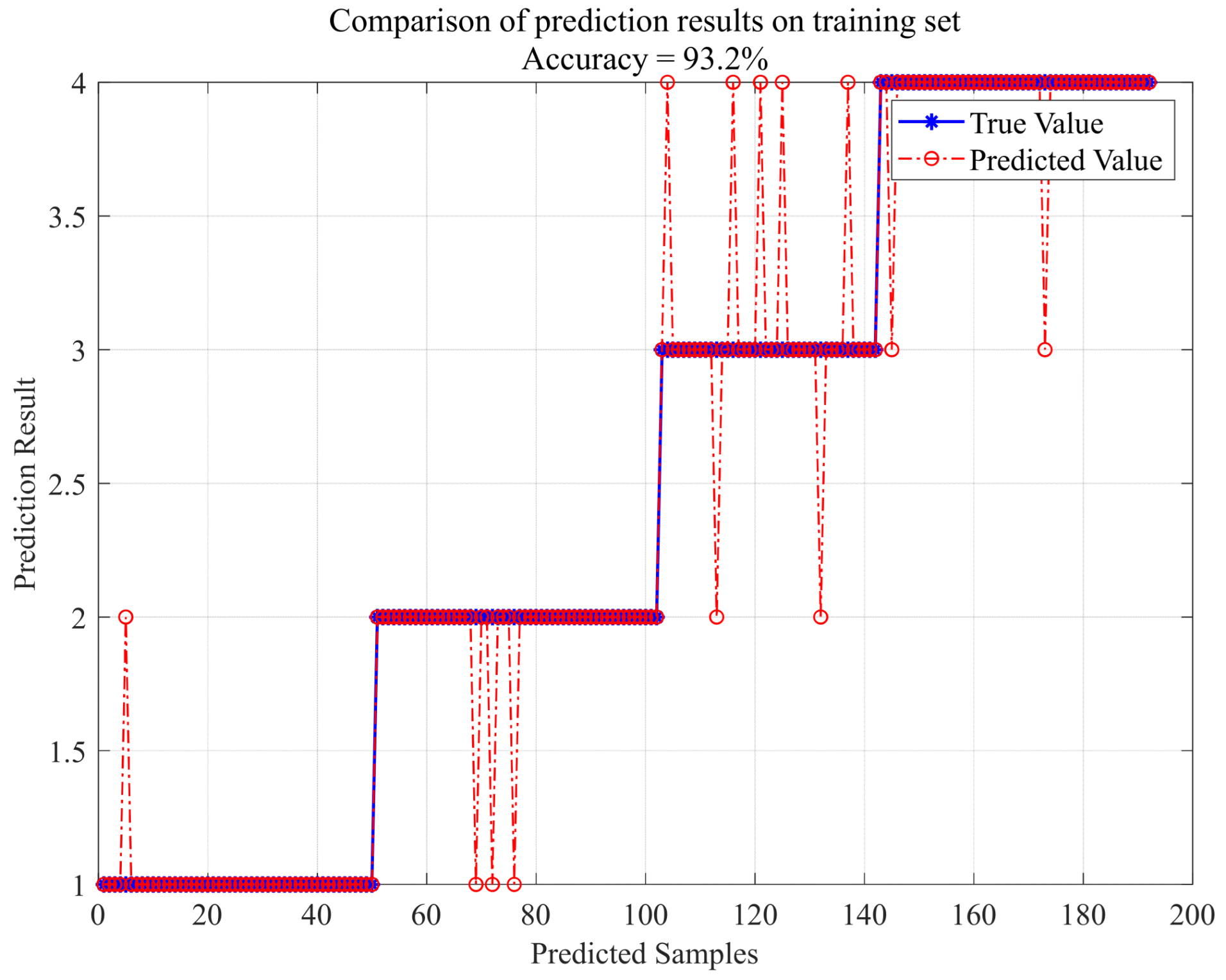
Fault diagnosis simulations were conducted using the ALA-BP, PSO-BP, NGO-BP, and GWO-BP models, and the corresponding simulation results are shown in Figure 10, Figure 11, Figure 12 and Figure 13. The results indicate that the ALA-BP model achieves superior diagnostic performance, with a diagnostic accuracy of up to 98.5%, demonstrating a stronger fault identification capability.
Figure 10.
Diagnostic Results of the ALA-BP Model.
Figure 11.
Diagnostic results of the PSO-BP model.
Figure 12.
NGO-BP Model Diagnostic Results.
Figure 13.
Diagnostic Results of the GWO-BP Model.
To verify the generalization ability of the proposed method toward unseen fault severities, additional tests are carried out on intermediate fault levels h = 0.1 and h = 0.2, which are not involved in model training. The corresponding diagnostic accuracies reach 95.8% and 97.1%, respectively, verifying the favorable generalization performance of the model for untrained fault severities.
To validate the robustness of the proposed method under varying operating conditions, further simulations are conducted to test the diagnostic performance at different speeds and loads, as listed in Table 4. Within the range of 70–120% rated speed and 50–100% rated load, the diagnostic accuracy remains above 95%, which indicates that the proposed method possesses strong adaptability to operating condition fluctuations.
Table 4.
Diagnostic accuracy under different operating conditions.
To verify the noise immunity of the proposed method, Gaussian white noise with different signal-to-noise ratio (SNR) is added to the stator current signals to simulate real measurement interference. The test results are presented in Table 5. The diagnostic accuracy remains above 95% at an SNR of 20 dB, demonstrating that the method has favorable anti-interference capability.
Table 5.
Diagnostic accuracy under different noise levels.
6. Conclusions
This paper proposes a PMSM inter-turn short-circuit fault diagnosis method combining variational mode decomposition and artificial lemming algorithm-optimized BP neural network, targeting the inherent drawbacks of the standard BP neural network such as proneness to local optimum and slow convergence in motor fault diagnosis scenarios. It must be clearly stated that all verification work in this study is carried out based on simulation signals from the established Simulink model, and no real physical test signals are involved.
Simulation results show that the VMD algorithm can accurately decompose non-stationary stator current signals, and the extracted third-harmonic component can effectively capture subtle fault information to realize reliable identification of inter-turn short-circuit faults. By introducing the ALA to optimize the initial weights and thresholds of the BP neural network, the proposed method overcomes the defects of slow convergence and susceptibility to local optimum of the standard BP network, and achieves a diagnostic accuracy of 98.5% under simulation settings. Compared with PSO-BP, NGO-BP and GWO-BP comparison models, the accuracy is improved by 3.2%, 4.5% and 5.3%, respectively, and its convergence speed is also significantly better than each comparison model. The method exhibits excellent robustness under simulation scenarios with different short-circuit turn ratios, which lays a preliminary foundation for subsequent physical verification studies and engineering application.
Notably, the diagnostic results obtained in the simulation environment represent the theoretical upper performance limit under ideal operating conditions. In real-world scenarios, numerous complex factors including inverter switching harmonics, sensor measurement noise, temperature-induced motor parameter drift, load fluctuations, and mechanical vibration interference will exert a non-negligible impact on the diagnostic accuracy. Accordingly, the 98.5% diagnostic accuracy reported in this paper is derived under ideal simulation conditions, and the actual performance will decline to a certain extent in engineering applications. Nevertheless, the VMD feature extraction and ALA-BP diagnosis framework proposed in this study possesses clear theoretical validity. The adaptive decomposition capability of VMD for non-stationary signals and the improvement effect of the ALA on the local optimum problem of BP networks still retain essential engineering reference value in practical scenarios.
Benefiting from its outstanding performance in optimization accuracy, stability and convergence speed, the ALA shows broad application potential in engineering optimization scenarios. The optimization framework adopted in this study is not only suitable for BP neural network optimization in PMSM fault diagnosis, but can also be extended to other engineering optimization fields such as rotating machinery fault diagnosis and industrial process controller parameter tuning, providing an efficient solution approach. In addition, since early-stage faults often present subtle symptoms that are easily masked by background noise, the VMD-ALA-BP method proposed in this paper achieves precise identification of early weak fault features under simulation conditions, which offers a feasible technical idea for condition monitoring and early fault warning of PMSMs and similar motor equipment.
Future work will focus on building a physical motor test platform to verify the practical performance of the proposed method under real operating conditions, so as to further improve the robustness and engineering adaptability of the diagnosis framework.
Author Contributions
Conceptualization, C.Z.; methodology, C.Z. and J.Y.; software, C.Z.; validation, Y.C. and T.L.; formal analysis, L.L. and Z.Z.; investigation, J.N.; data curation, J.N.; writing—original draft preparation, C.Z. and J.Y.; writing—review and editing, J.Y. and J.T. All authors have read and agreed to the published version of the manuscript.
Funding
The research is supported by: National Key Research and Development Program of China (2024YFB2505200); Hunan Provincial Education Department Scientific Research Project (24B0685, 23A0543, 24C0392); Shaoyang Science and Technology Plan Project (2024GZ2010, 2025GZ3029); Enterprise Horizontal Project (2024HX295); Shaoyang University Graduate Research Innovation Project (CX2025SY045).
Data Availability Statement
The data presented in this study are available on request from the corresponding authors due to privacy and commercial confidentiality restrictions.
Conflicts of Interest
Author Zhaoying Zeng was employed by Hunan Baodong Agriculture & Animal Husbandry Technology Co., Ltd., Shaoyang, China. The remaining authors declare that the research was conducted in the absence of any commercial or financial relationships that could be construed as a potential conflict of interest.
Abbreviations
| VMD | Variational mode decomposition |
| BPNN | Back Propagation Neural Network |
| ALA | Artificial Lemming Algorithm |
| EMD | Empirical Mode Decomposition |
| PMSM | Permanent Magnet Synchronous Motor |
| WT | Wavelet Transform |
References
- Liang, D.; Zhu, Z.Q.; Dey, A. High-fidelity Lumped-parameter Thermal Models for Assessing Cooling Techniques of PMSMs in EV Applications. CES Trans. Electr. Mach. Syst. 2025, 9, 1–14. [Google Scholar] [CrossRef] [Scilit]
- Zhao, H. Optimal Design of an Interior Permanent Magnet Synchronous Motor for Electric Vehicle Applications Using a Machine Learning-Based Surrogate Model. Energies 2024, 17, 3864. [Google Scholar] [CrossRef] [Scilit]
- Stavrou, A.; Sedding, H.G.; Penman, J. Current Monitoring for Detecting Inter-turn Short Circuits in Induction Motors. IEEE Trans. Energy Convers. 2001, 16, 32–37. [Google Scholar] [CrossRef]
- Zhang, Q.; Cui, J.; Xiao, W.; Mei, L.; Yu, X. Demagnetization Fault Diagnosis of a PMSM for Electric Drilling Tools Using GAF and CNN. Electronics 2024, 13, 189. [Google Scholar] [CrossRef] [Scilit]
- Gamage, U.A.M.; Kuruppu, S. Position Sensor Offset Fault Diagnosis in Speed-Regulated PMSM Drives. IEEE Access 2025, 13, 100572–100586. [Google Scholar] [CrossRef] [Scilit]
- Wang, B.; Wang, J.B.; Griffo, A.; Sen, B. Stator Turn Fault Detection by Second Harmonic in Instantaneous Power for a Triple-Redundant Fault-Tolerant PM Drive. IEEE Trans. Ind. Electron. 2018, 66, 1130–1134. [Google Scholar] [CrossRef] [Scilit]
- Nadarajan, S.; Panda, S.; Bhagnu, B.; Gupta, A.K. Online Model-Based Condition Monitoring for Brushless Wound-Field Synchronous Generator to Detect and Diagnose Stator Windings Turn-to-Turn Shorts Using Extended Kalman Filter. IEEE Trans. Ind. Electron. 2016, 63, 3228–3241. [Google Scholar] [CrossRef] [Scilit]
- Quiroga, J.; Liu, L.; Cartes, D.A. Fuzzy Logic Based Fault Detection of PMSM Stator Winding Short under Load Fluctuation Using Negative Sequence Analysis. In Proceedings of the 2008 American Control Conference, Seattle, WA, USA, 11–13 June 2008; pp. 4262–4267. [Google Scholar]
- Zhao, M.; Fu, X.; Zhang, Y.; Meng, L.; Tang, B. Highly Imbalanced Fault Diagnosis of Mechanical Systems Based on Wavelet Packet Distortion and Convolutional Neural Networks. Adv. Eng. Inform. 2022, 51, 101535. [Google Scholar] [CrossRef] [Scilit]
- Zhang, M.; Yu, Y.Q. Demagnetization Fault Diagnosis of Permanent Magnet Synchronous Motor Based on Empirical Mode Decomposition. J. Phys. Conf. Ser. 2022, 2395, 012031. [Google Scholar] [CrossRef] [Scilit]
- El-Dalahmeh, M.; Al-Greer, M.; Bashir, I.; El-Dalahmeh, M.A.; Demirel, A.; Keysan, O. Autonomous fault detection and diagnosis for permanent magnet synchronous motors using combined variational mode decomposition, the Hilbert-Huang transform, and a convolutional neural network. Comput. Electr. Eng. 2023, 110, 108894. [Google Scholar] [CrossRef] [Scilit]
- Ye, M.; Gong, R.; Wu, W.; Peng, Z.; Jia, K. Fault Diagnosis of Permanent Magnet Synchronous Motor Based on Wavelet Packet Transform and Genetic Algorithm-Optimized Back Propagation Neural Network. World Electr. Veh. J. 2025, 16, 238. [Google Scholar] [CrossRef] [Scilit]
- Ferhat, C.; Arkan, M.; Gumus, B. Detection of Stator Winding Inter-Turn Short Circuit Faults in Permanent Magnet Synchronous Motors and Automatic Classification of Fault Severity via a Pattern Recognition System. J. Electr. Eng. Technol. 2016, 11, 416–424. [Google Scholar] [CrossRef] [Scilit]
- Dragomiretskiy, K.; Zosso, D. Variational Mode Decomposition. IEEE Trans. Signal Process. 2014, 62, 531–544. [Google Scholar] [CrossRef] [Scilit]
- Wang, R.; Huang, W.; Wu, J.; Chen, C.; Song, Y.; Wang, H. An Improved Artificial Lemming Algorithm Integrating Non-Uniform Mutation and Q-Learning Adaptation for Underwater Manipulator Controller Tuning. Biomimetics 2026, 11, 168. [Google Scholar] [CrossRef] [Scilit] [PubMed]
- Zhang, K.; Yao, Z. Identification of Load Categories in Rotor System Based on Vibration Analysis. Sensors 2017, 17, 1676. [Google Scholar] [CrossRef] [Scilit] [PubMed]

Disclaimer/Publisher’s Note: The statements, opinions and data contained in all publications are solely those of the individual author(s) and contributor(s) and not of MDPI and/or the editor(s). MDPI and/or the editor(s) disclaim responsibility for any injury to people or property resulting from any ideas, methods, instructions or products referred to in the content. |
© 2026 by the authors. Licensee MDPI, Basel, Switzerland. This article is an open access article distributed under the terms and conditions of the Creative Commons Attribution (CC BY) license.