


Abstract
Mycotoxins are toxic fungal secondary metabolites that can contaminate the feed of dairy animals and can be transferred into milk and dairy products. This study aims to assess the occurrence of major mycotoxins in 190 samples of milk-based infant foods commercially available in São Paulo, Brazil, and characterize the associated risks. Aflatoxins (AFs) M1 (AFM1), B1 (AFB1), B2 (AFB2), G1 (AFG1) and G2 (AFG2), fumonisins (FBs) B1 (FB1) and B2 (FB2), ochratoxin A (OTA), zearalenone (ZEN), deoxynivalenol (DON), and T-2 toxin were analyzed using ultra-performance liquid chromatography coupled with tandem mass spectrometry (UPLC–MS/MS). Ninety-eight samples (51.6%) were contaminated with at least one mycotoxin, while the co-occurrence of two to four mycotoxins was observed in 32 samples (16.8%). ZEN was the most prevalent mycotoxin (60 samples; 32%), followed by FBs (FB1 and FB2) (42 samples; 22%), OTA (11 samples; 5.8%), DON (8 samples; 4.2%), and T-2 toxin (2 samples; 1.1%). AFs were quantified in only two samples (1.1%), one milk-based product containing 0.630 μg/kg of AFM1 and one flavored milk powder with AFB1 at 5.850 μg/kg. The analyzed flavored milk powder samples showed the highest maximum concentrations of DON, FBs, and OTA (165.5, 93.79, and 86.77 μg/kg, respectively), while unflavored milk powder contained the highest concentration of ZEN (17.40 μg/kg). Infant formula provided the highest estimated daily intake (EDI) value of DON (1.226 μg/kg bw/day) for infants aged ≤one year. Hazard quotient (HQ) values > 1 revealed a potential health concern for DON in only one sample of infant formula intended for infants up to six months of age. Margin of exposure (MoE) values for AFs and OTA were <10,000, emphasizing the need for continuous monitoring due to their potential toxic effects. These findings emphasize the need for stringent preventive measures and regulatory compliance to prevent mycotoxin contamination in milk-based infant foods in Brazil.
1. Introduction
Mycotoxins are toxic secondary metabolites produced by fungi such as Aspergillus, Fusarium, and Penicillium during growth in several types of foods [1,2]. Dietary exposure to these contaminants represents a global health threat, especially to infants, due to their immature immune systems and higher intake relative to body weight. Major mycotoxins include aflatoxins (AFs), ochratoxin A (OTA), zearalenone (ZEN), fumonisins (FBs), and trichothecenes, such as deoxynivalenol (DON) and T-2 toxin. Among the AFs, aflatoxin B1 (AFB1) is the most toxic compound in its group found in food and feedstuffs, and is classified as a Group 1 carcinogen by the International Agency for Research on Cancer (IARC) [1,3]. After ingestion, AFB1 is primarily biotransformed in the liver by cytochrome P450 enzymes into aflatoxin M1 (AFM1), which can be excreted into the milk of lactating animals [4]. AFM1 is heat-resistant and binds to casein, thus remaining stable in pasteurized or sterilized milk and being transferred to other dairy products [2]. OTA is also commonly found in cereal products and is classified as Group 2B (possible human carcinogen) by the IARC [3]. OTA affects the kidneys and possesses teratogenic, embryotoxic, genotoxic, neurotoxic, and immunosuppressive characteristics [5]. Regarding FBs, FB1 causes hepatotoxic and nephrotoxic effects in several animal models and is classified in Group 2B [3,6]. ZEN is primarily found in corn and other cereals and causes estrogenic effects, hepatotoxicity, genotoxicity, and immunosuppression, which significantly impact lactating animals [7,8]. ZEN is biotransformed in the intestine or liver, thus generating α-zearalenol and β-zearalenol metabolites [9]. DON and T-2 toxin are primarily found in wheat and corn, resulting in gastrointestinal issues and immunosuppression [10]. However, ZEN, DON, and T-2 toxins are classified as Group 3 (unclassifiable as carcinogens to humans) by the IARC [3]. These toxins contaminate cereals, milk, and infant foods due to fungal growth, posing serious health risks to certain populations [2,11]. All these parent compounds or related metabolites can be excreted in milk, although information on their occurrence in milk-based products is scarce.
Milk is highlighted as a key food source for human nutrition, especially for infants and young children, as it provides essential macro and micronutrients, along with high-quality proteins and essential amino acids [12]. Whenever medically indicated, infant formulas made from modified cow’s milk or other animal milks are suitable alternatives to breast milk for fulfilling infants’ nutritional requirements until complementary feeding starts [13]. Follow-up formulas cater to infants from 6 to 36 months and include both animal- and plant-based ingredients, which are processed to ensure safety against spoilage and contamination [14]. Given their composition, these formulated infant foods are highly susceptible to mycotoxin contamination, which may arise from milk via carryover from contaminated animal feed or from plant-based ingredients. Contaminated milk and milk-based infant formulas can severely impact children’s health, leading to health issues such as hindered growth and development, immune suppression, and liver dysfunction [15]. Moreover, early exposure to certain mycotoxins, such as the AFs, significantly increases the risk for children under five years of age due to their lower body weight, limited detoxification ability, restricted diets, and immature metabolism, alongside their rapid growth and development [16].
To ensure global food safety from farm to finished products, including the prevention of mycotoxin contamination, the effective implementation of Good Agricultural Practices (GAP) and Good Manufacturing Practices (GMP) is essential throughout the food production chain [17]. These practices can act as the first line of defense in controlling contamination by minimizing fungal growth and toxin production during cultivation, harvesting, storage, processing, and manufacturing of food products [2,18]. Based on the toxicity profiles and occurrence data of major mycotoxins, several regional and international agencies have established maximum levels (MLs) for these contaminants in milk and processed foods intended for infants and young children. In Brazil, the ML values for AFM1 in milk and milk powder are 0.5 µg/L and 5.0 µg/kg, respectively [19]. However, there are no Brazilian regulations for other mycotoxins potentially found in milk and milk products, such as milk-based infant foods. Regarding cereal-based infant foods, MLs of 1.0, 2.0, 20.0, and 200 µg/kg were adopted in Brazil for AFs (sum of AFB1, AFB2, AFG1, and AFG2), OTA, ZEN, and DON, respectively, while 200 μg/kg was also set for FBs (sum of FB1 and FB2) specifically in maize-based infant foods [19]. Similarly, the European Commission (EC) has established MLs of 0.1, 0.5, and 20 μg/kg for AFs, OTA, and ZEN, respectively, and 200 μg/kg for FBs and DON [20]. Despite these regulations, quantifiable levels of mycotoxins in commercial infant foods have been frequently reported in several countries [21,22,23,24,25,26,27,28]. In Brazil, the mycotoxin occurrence data in milk products have focused on AFM1 in raw and heat-treated milks [29,30]. In contrast, there is very little information available on the occurrence of these contaminants in infant and follow-on formulas, as well as milk-based foods intended for young children [31,32]. Therefore, this study aimed to evaluate the occurrence levels of major mycotoxins in infant foods commercially available in the cities of Pirassununga and Ribeirão Preto in the Brazilian state of São Paulo and to characterize the associated risks.
2. Materials and Methods
2.1. Reagents and Solutions
Mycotoxicological determinations were performed by using analytical-grade reagents, including Milli-Q water (Millipore, Bedford, MA, USA), HPLC-grade acetonitrile, and methanol (JT Baker, Xalostoc, Mexico). Mycotoxin standards such as AFM1, AFB1, AFB2, AFG1, AFG2, OTA, FB1, FB2, ZEN, DON, and T-2 toxin were obtained from Sigma–Aldrich (Sigma, St. Louis, MO, USA). Isotopically labeled standards, used as internal standards (IS), included [13C17]-AFB1 (Sigma–Aldrich, St. Louis, MO, USA), [13C20]-OTA, [13C34]-FB1, [13C18]-ZEN, [13C15]-DON, and [13C24]–T2 toxin (Romer Labs, Tulln, Austria). Stock solutions of IS were prepared in acetonitrile/water (1:1, v/v) at the following concentrations of: 5.0 ng/mL for [13C17]-AFB1, [13C20]-OTA, [13C34]-FB1, and [13C24]-T-2 toxin; 250 ng/mL for [13C18]-ZEN; and 500 ng/mL for [13C15]-DON.
2.2. Sample Collection
Sampling procedures were conducted in the cities of Ribeirão Preto and Pirassununga, located in the northeastern region of São Paulo state in Brazil. A total of 190 commercially available infant formulas, follow-on formulas, and milk-based products were purchased from supermarkets and pharmacies over three years, in May and October 2023, February and May 2024, and May 2025. The sampling criteria were based on the availability of infant formulas and milk-based products intended for infants and young children, including those containing milk as the main ingredient. The selected samples included the major brands commercially available in the study region during the sampling period. Samples were collected at different periods, aiming to prevent the possibility of obtaining repeated product batches. The collected samples represented 15 commercial brands, including 12 national Brazilian brands and 3 international brands; however, all products were manufactured in Brazil. The collected samples were divided into seven groups as follows: G1, composed of infant formula intended for infants aged 0–6 months (N = 21); G2: infant formula intended for infants aged 7–12 months (N = 26); G3: follow-on formula intended for children aged 1–3 years (N = 29); G4: toddler formula intended for children aged above 3 years (N = 15); G5: flavored milk powder containing cereals, chocolate, and fruits (N = 32); G6: unflavored milk powder (N = 47); G7: milk-based products, with milk powder as the main ingredient (N = 20). Following collection, the samples were transferred to the laboratory and preserved at −20 °C prior to analysis.
Regarding product composition, it was identified according to the ingredient information provided on product labels. All formula samples (G1–G4) were mainly composed of dairy-derived ingredients, including whole and skimmed milk powder, demineralized whey, whey protein concentrate, milk proteins, and lactose. These formulations also contained carbohydrates (e.g., maltodextrin), vegetable oils (palm, canola, sunflower, and corn), prebiotic fibers (galacto-oligosaccharides and fructo-oligosaccharides), essential fatty acids, vitamins, minerals, and other micronutrients. Flavored milk powders (G5) consisted of milk-derived ingredients combined with sugar, maltodextrin, cocoa/chocolate, cereal-derived components, and fruit flavoring ingredients. Unflavored milk powders (G6) were mainly composed of whole milk powder, with some products containing skimmed milk powder. Milk-based products (G7) mainly consisted of milk powder, whey powder, and milk proteins, with additional carbohydrates, vegetable fat, vitamins, and minerals depending on the formulation.
2.3. Sample Preparation
Samples were extracted strictly following the methodology as described by Flores–Flores and González–Peñas [33] and validated in our laboratory in accordance with Coppa et al. [34], who described mean recovery and relative standard deviation values in the range of 78–108% and 6.0–12.2%, respectively, for AFM1, OTA, FB1, FB2, DON, and ZEN. Formula milk samples (powder form) were reconstituted at a 1:8 ratio by dissolving 1.0 g of powder in 7.0 mL of water. Then, 1.0 mL of this reconstituted solution was mixed with 4.0 mL of acetonitrile acidified with formic acid in a 15 mL Falcon tube, followed by shaking for 15 min on an orbital shaker. The mixture was centrifuged at 5000 rpm for 10 min, and 4.0 mL of the resulting supernatant was added to a new Falcon tube containing 60 mg of sodium acetate. After additional agitation and centrifugation under the same conditions, 3.2 mL of the upper phase was transferred to a 4 mL vial, where it was dried under N2 flow at 55 °C. Finally, 200 μL of a water: acetonitrile (95:5) solution containing 5 mM ammonium acetate and 0.1% acetic acid was added to the vial, and the solution was vortexed for 2 min to dissolve any residue. The solution was filtered, and 80 µL of the final extracts were combined with 20 µL of the mixed IS solution prepared as described in Section 2.1. Five μL of the final extract was injected for chromatographic analysis. The final concentrations of IS in the sample extracts were 1.0 ng/mL for [13C17]-AFB1, [13C20]-OTA, [13C34]-FB1, and [13C24]-T-2 toxin, while [13C18]-ZEN and [13C15]-DON were present at 50 ng/mL and 100 ng/mL, respectively.
2.4. Mass Spectrometry Analysis
For the analysis of the final extract, a Waters Acquity I-Class Ultra-Performance liquid chromatography (UPLC) system (Waters, Milford, MA, USA) coupled to a Xevo TQ-S mass spectrometer (MS/MS) (Waters, Milford, MA, USA) was utilized. The system employed a BEH C18 column, and the mass spectrometer was operated in multiple reaction monitoring (MRM) mode with electrospray ionization. Both positive and negative ion modes were used, with instrumental parameters (capillary voltage, source temperature, desolvation, and gas flow) set in accordance with previously established parameters reported by [35]. Five 5 μL of the extracts and standards were injected using gradient elution in a mobile phase made up of water (eluent A) and acetonitrile (eluent B), both containing 5 mM ammonium acetate and 0.1% acetic acid, and maintained at 0.6 mL/min [34].
Five-point calibration curves were constructed using mycotoxin working solutions prepared in water/acetonitrile (9:1, v/v). The calibration range was 1.5–16 ng/mL for AFM1, AFB1, AFB2, AFG1, AFG2, OTA, FB1, FB, ZEN, and T-2 toxin, while DON was calibrated over a concentration range of 2.8–30 ng/mL. Prior to UPLC analysis, calibration standards were prepared according to the same procedure as the sample extracts by combining 80 µL of standard solution with 20 µL of the mixed IS solution. Each IS was used to normalize sample responses, which compensated for both recovery losses during sample processing and matrix effects. For accurate quantification, all solutions were stored at −20 °C until analysis. The quantification and confirmation of MRM transitions, alongside optimized LC-MS/MS parameters, including mass, molecular ion, and collision energy values for each analyzed mycotoxin, are detailed in Table 1. The limits of detection (LOD) and quantification (LOQ) for all studied mycotoxins are also indicated in Table 1, while data acquisition and analysis were carried out using MassLynx software (v4.1).
Table 1.
Analytical parameters of the mass spectrometer for mycotoxin determination in infant food products.
Differences between mycotoxin levels among milk-based food categories were evaluated using the Kruskal–Wallis test followed by Dunn’s multiple-comparison test. Data analysis was performed using the R software, version 4.5.1, and statistical significance was set at p < 0.05.
2.5. Exposure Assessment and Risk Characterization
The estimated daily intake (EDI) of each analyzed mycotoxin through the consumption of each food category was calculated for the exposure assessment. Concentrations below the LOQ were treated as zero when calculating the EDI, and results were expressed in µg/kg body weight (bw)/day. Mycotoxin concentrations of each sample (mean of duplicate values), food ingestion rate, and individual body weight were used to calculate the EDI according to Equation (1). Since each sample was analyzed in duplicate, the average concentration obtained from the two measurements was considered the final concentration for each positive sample. When one of the duplicate values was below the LOQ, the concentration detected in the positive replicate was used as the final value.
Representative body weights for children aged up to 5 years were derived from the WHO Child Growth Standards (2006) [36], by calculating the average at the 50th percentile for male and female children across four age ranges: 0–12, 13–24, 25–36, and 36–60 months. The mean weights for infants and children in these groups were 7.1, 10.6, 13.1, and 16.2 kg, respectively. The EDI was calculated using the final mycotoxin concentration (mean of duplicate values) obtained for each positive sample and the average consumption of infant foods derived from the feeding recommendations provided on the product labels. Thus, daily food consumption was estimated as 112 g for infants aged 0–6 months, 105 g for infants aged 7–12 months, 85 g for children aged 1–3 years, and 30 g for children aged 3 to 5 years. Regarding milk-based products, the estimated daily intake of flavored milk powder was 27 g, while both milk powder and other dairy products had an estimated daily intake of 25 g each.
For non-carcinogenic health risk assessment, the EDI values were compared with established toxicological tolerable daily intake (TDI) thresholds of 0.25 µg/kg bw/day for ZEN [37], 0.016 µg/kg bw/day for OTA [38], 0.02 μg/kg bw/day for T-2 [39], 2.0 µg/kg bw/day for FBs [40], and 1.0 µg/kg bw/day for DON [41]. The hazard quotient (HQ) approach was used for FBs, DON, ZEN, and T-2, based on their respective EDI and TDI values. The HQ was calculated individually for each sample according to Equation (2), and values < 1 indicate no adverse health effect for the exposed population, while HQ ≥ 1 represents a potential health risk [42].
For carcinogenic risks associated with AFs and OTA intakes, the margin of exposure (MoE) approach was applied across different age groups. The MoE value was determined individually for each positive sample as the ratio of the benchmark dose lower confidence limit (BMDL10) to the EDI, according to Equation (3), using values of 0.4 and 14.5 μg/kg bw/day for AFB1/AFM1 and OTA, respectively [42,43]. MoE values ≥ 10,000 represent minimal or no risk, whereas MoE < 10,000 indicates potential health risks.
3. Results and Discussion
3.1. Occurrence of Mycotoxins in Milk-Based Infant Foods
The frequencies and levels of mycotoxins in the evaluated groups of infant foods (G1, G2, G3, G4, G5, G6, and G7) collected in the Brazilian cities of Pirassununga and Ribeirão Preto are presented in Table 2. Ninety-eight samples (51.6%) contained quantifiable levels of at least one type of mycotoxin, while the co-occurrence of two to four mycotoxins was observed in 32 samples (16.8%). Among several infant food categories, higher mycotoxin frequencies were found in G5, composed of milk powder flavored with cereals, fruits, or chocolate, followed by milk powder (G6), follow-on formula (G3), infant formulas (G1 and G2), and toddler formula (G4). ZEN was the most frequently detected mycotoxin in 60 samples (32%), followed by FBs in 42 samples (22%), OTA in 11 samples (5.8%), and DON in 8 samples (4.2%). In contrast, lower contamination frequencies were observed for T-2 toxin (two samples; 1.1%) and AFs, which were quantified in only two samples (1.1%), one milk-based product containing 0.630 μg/kg of AFM1 and one flavored milk powder with AFB1 at 5.850 μg/kg. AFB2, AFG1, and AFG2 were not detected in any of the analyzed samples, with concentrations remaining below the analytical method’s LOQ. Although the occurrence of AFs in the analyzed samples of infant foods was low, the contamination levels reported in one sample were above the ML of 1.0 μg/kg set by the Brazilian regulations [19], while the two samples containing AFs had concentrations higher than the ML of 0.1 μg/kg established in Europe [20].
Table 2.
Occurrence and concentration of mycotoxins in infant foods commercially traded in Pirassununga and Ribeirão Preto, São Paulo, Brazil.
The differences observed in mycotoxin occurrence among the analyzed milk-based infant food categories may be associated with complex formulations and ingredient composition. Although milk-derived ingredients represent the major components of these processed milk products, several formulations also contain plant-based ingredients (cereals and fruits), flavoring agents, maltodextrin, and vegetable oils, which may contribute to the occurrence of different mycotoxins. The presence of DON, ZEN, and FBs in some samples may be related to the use of contaminated cereal-derived ingredients, as these mycotoxins are mainly produced by Fusarium species that frequently contaminate cereal crops such as maize and wheat, as well as their derived products [2,44]. Despite this, high levels of DON, ZEN, and FBs contamination in dairy cattle feed have been associated with increased transfer of residues of these mycotoxins into milk [45]. In contrast, AFM1 contamination in milk-based products is primarily associated with the carryover of AFB1 from contaminated feed consumed by dairy animals, followed by its metabolic conversion and secretion into milk [46]. Other mycotoxins, such as roquefortine, enniatins, and beauvericin, have also demonstrated their capacity to be transferred from animal feed to milk at variable rates [47].
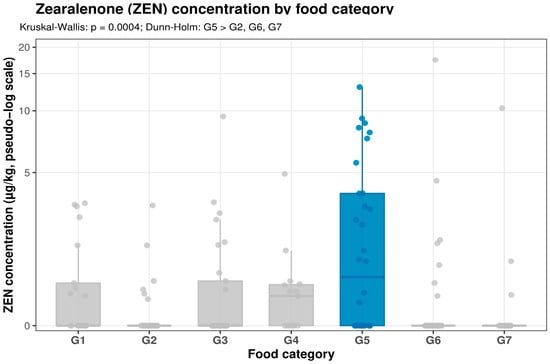
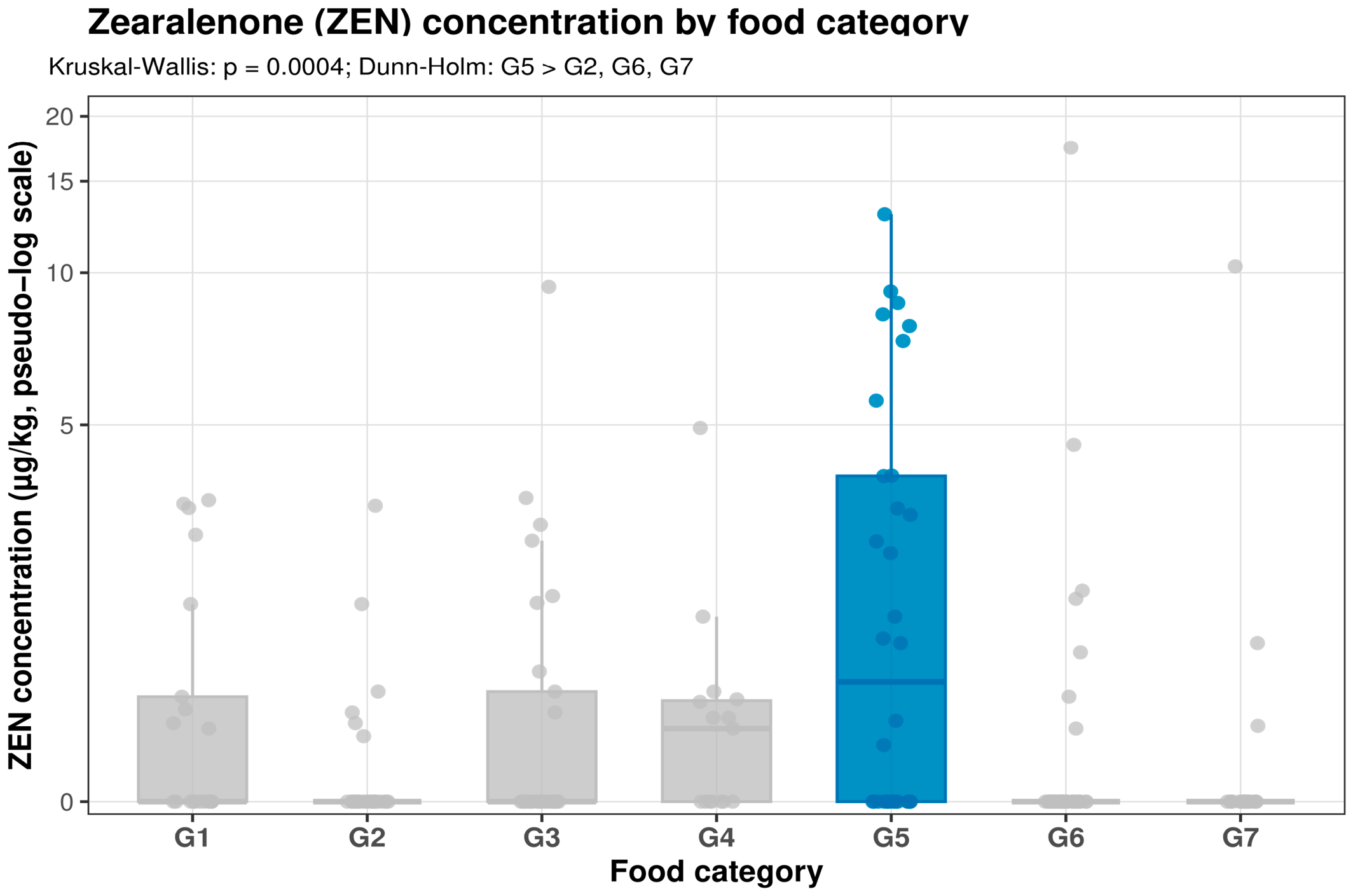
In this study, flavored milk powders showed higher contamination levels for some mycotoxins, which may be related to their complex formulations containing cereals, fruits, flavoring agents, and other plant-derived ingredients compared with unflavored milk powders. Most analyzed products were manufactured and commercially available in Brazil; however, the geographical origin of individual raw ingredients could not be determined from the information provided on product labels. These differences in ingredient sources and supply chains may also influence the observed contamination patterns. Statistical analysis using the Kruskal–Wallis test revealed no significant differences (p > 0.05) in the contamination distribution of most investigated mycotoxins (AFs, OTA, DON, FBs, and T-2 toxin) among the analyzed milk-based food categories. In contrast, ZEN concentrations showed significant differences among product groups, as statistically supported by the Kruskal–Wallis test applied across food categories (H = 24.738, df = 6, p = 0.0004). Dunn’s post hoc test with Holm correction indicated that the flavored milk powder category (G5) had significantly higher ZEN distribution compared with G2, G6, and G7, as shown in Figure 1.
Figure 1.
Distribution of zearalenone (ZEN) concentrations across milk-based infant food categories. The y-axis is shown on a pseudo-log scale to accommodate zero values and high-concentration samples. Kruskal–Wallis analysis indicated significant differences among food categories, and Dunn’s post hoc test with Holm correction showed that G5 had significantly higher ZEN distribution than G2, G6, and G7.
Previous research has shown variable frequencies and levels of AFs in infant food products around the world. Similar to our results, Ojuri et al. [42] reported AFB1 contamination in one sample (5.9%) of infant formulas in Nigeria, containing 4.2 μg/kg and total AFs of 4.6 μg/kg. In Burkina Faso, Yacine Ware et al. [48] reported higher levels of AFB1 (range: 0–87.4 μg/kg) in 199 samples of infant formulas, of which 83.9% exceeded the ML of 0.1 μg/kg set by the EU. Higher AFB1 frequencies were also reported in 55/63 (87%) of Turkish infant and follow-on formula samples at a mean value of 0.89 ± 1.10 μg/kg (range: 0.10–6.04 μg/kg) [49]. In Portugal, Alvito et al. [50] described AFB1 and AFM1 contamination in infant and follow-on formulas below their respective European MLs [20]. In contrast, none of the 49 analyzed samples of infant and follow-on formula from Italy showed quantifiable levels of AFB1 or AFM1 [51]. Regarding the occurrence of AFs in infant foods previously evaluated in Brazil, the only two available studies indicated much higher frequencies of AFM1 than described here, although at similar levels. In 2016, Conteçotto et al. [52] reported AFM1 in one sample of infant formula (N = 16) collected in the Brazilian state of Paraná, at 0.32 µg/kg, while Ishikawa et al. [32] found 55.6% of national samples and 28.6% of imported samples of infant formula milks contaminated with AFM1 (mean level: 0.024 ± 0.01 µg/kg).
Compared with the previously reported data in Brazil, the low frequencies of AFB1 and AFM1 in infant foods reported in this study may indicate improved mycotoxin control procedures adopted by Brazilian industries. However, differences in analytical performance among studies, particularly variations in parameters such as LOD and LOQ, can influence occurrence data, as higher detection limits may lead to differences in reported contamination frequencies. The fact that one sample had an AFB1 level above the ML of 1.0 μg/kg set by the Brazilian regulations [19] highlights the importance of continuous monitoring due to the carcinogenic potential of AFs, especially for infants and young children [53]. AFs are among the most studied mycotoxins, produced by some Aspergillus species [54], which can induce carcinogenic, hepatotoxic, mutagenic, and teratogenic effects in humans and animals, even at very low concentrations [55]. Based on their toxicity, the IARC has classified AFB1 as a Group 1 carcinogen, whereas AFM1 is categorized as Group 2B, owing to its carcinogenic potential, which is nearly tenfold lower than that of AFB1 [3,56].
OTA in the analyzed infant food samples across all categories (Table 2) was the third most common mycotoxin, being detected in two samples of each infant formula group (G1 and G2) at concentrations of 1.640–1.690 μg/kg and 1.150–1.635 μg/kg, respectively. Three samples (10%) of follow-on formula (G3) and four samples (13%) of flavored milk powder (G5) presented levels ranging from 1.0 to 86.77 μg/kg. Importantly, two samples in G5 had concentrations higher than the Brazilian ML for OTA in cereal-based infant foods (2.0 μg/kg) [19], while nine samples contained OTA levels exceeding the ML of 0.5 μg/kg established by the EU [20]. The highest contamination level (86.5 µg/kg) was observed in a flavored milk powder sample that was formulated with chocolate and cereals, which may indicate the use of cereal-derived ingredients susceptible to mycotoxin contamination. Compared with our findings, other studies have reported variable results regarding OTA occurrence. In Burkina Faso, Yacine Ware et al. [48] reported that 7.5% of 199 infant formulas were contaminated with OTA at levels ranging from 0–3.2 μg/kg (mean: 0.1 μg/kg). All positive samples violated the ML of 0.5 μg/kg set by the EU. Alvito et al. [50] reported OTA in 10 baby food samples (67%) from Portugal containing OTA at concentrations of 0.034–0.212 μg/kg. In contrast, no OTA contamination was reported in milk-based infant formula powder in the United States by Cappozzo et al. [57], in Brazil by Sartori et al. [58], and in Turkey by Kabak [59]. However, OTA was detected in 5.6% of follow-on formula and 50% of toddler formula samples at levels ranging from 0.017 to 0.029 µg/kg and 0.024 to 0.184 µg/kg, respectively [59]. In Turkey, 24% of infant formulas were also positive for OTA with a maximum level of 4.50 µg/kg (mean: 0.5 µg/kg) [49]. OTA is a phenylalanine derivative of a substituted isocoumarin, primarily produced by Aspergillus and Penicillium species in food and feed [60], especially in regions having warm climates and high humidity [61]. The occurrence of OTA at levels above the ML can pose a health concern as it has the potential to cause nephrotoxicity and carcinogenicity in both animals and humans [62]. OTA consumption has also been reported to have embryogenic, teratogenic, and immunotoxic effects if ingested at concentrations higher than those that induce nephrotoxicity [62]. Based on its nephrotoxic potential, the IARC classified OTA as a Group 2B human carcinogen [3]. Therefore, its presence in various infant foods as reported in this study is a health concern for infants and young children due to their greater sensitivity to its toxic effects.
In this study, FB1 and FB2 were the second most frequently occurring mycotoxins, being quantified in 42 (22%) samples (Table 2). Higher incidences of FBs were observed in 14 samples of flavored milk and 10 samples of milk powder, with concentrations ranging from 0.750 to 7.493 and 0.850 to 93.79 μg/kg, respectively. Our results also revealed FBs in 25% of dairy products (G7) and 24% of infant formula (G1), with maximum concentrations of 10.18 and 18.61 μg/kg, respectively. All samples had FB levels (sum of FB1 and FB2) below the Brazilian and EU regulatory ML of 200 μg/kg for cereal-based infant foods [20]. This is the first report on the occurrence of FBs in milk-based infant foods in Brazil. Regarding FB occurrence in infant foods from other countries, Yacine Ware et al. [48] in Burkina Faso found higher FB levels, ranging from up to 672.9 μg/kg (mean: 30.3 μg/kg) in infant formulas. In Tanzania, 31% (N = 67) of maize-based baby flour tested positive for FBs (FB1 + FB2) with a range value of 48.40–1224 μg/kg [25]. In contrast to our findings, FB levels below the LOQ of 7.0 μg/kg were reported in the Czech Republic and Austria by Braun et al. [26] in infant formula. Yacine et al. [43] and Magoha et al. [25] observed detectable levels of FBs in 1.5 and 47% of infant formula samples above the MPL of 200 μg/kg in Burkina Faso and Tanzania, respectively. FBs are produced by Fusarium species such as F. verticillioides and F. dlamini, especially in regions with warm climates [6,63]. FB1 is the most prominent analog, known for its toxic nature and association with liver and kidney damage [6,27]. Therefore, strict control of this mycotoxin in raw materials intended for the manufacture of infant foods is essential to avoid health risks.
ZEN was the most prevalent mycotoxin in this study, quantified in 60 (32%) out of 190 samples (Table 2). All infant food groups were contaminated with ZEN, with the highest occurrence found in 18 samples of flavored milk (G5) at concentrations ranging from 0.500 to 12.96 µg/kg. Maximum concentrations of 17.40, 10.29, and 9.390 µg/kg were found in milk powder (G6), milk-based products (G7), and follow-on formula (G3), respectively. Regarding infant formula, ZEN was detected in nine (G1) and six (G2) samples (range levels: 0.650–3.468 and 0.580–3.373 μg/kg, respectively), while eight samples of toddler formula (G4) had levels ranging from 0.650 to 4.928 μg/kg. None of the analyzed samples had ZEN concentrations above the ML of 20 μg/kg set by the EU and Brazil for cereal-based infant foods [19,20], indicating compliance with regulatory standards. Although there is no previous study on the occurrence of ZEN in Brazilian infant foods, some comparisons can be made with data reported in other countries. Ul Hassan et al. [64] found lower ZEN incidence (2%) in baby food samples from Qatar, while in South Korea, ZEN was quantified in 16 samples of infant formula, snacks, and noodles at levels ranging from 3.1 to 17.6 μg/kg [28]. Similarly, ZEN was not reported in Chilean infant milk formula [65] or in cereal-based foods in Italy [51]. Despite the low levels of ZEN reported in this study, the high frequencies observed stress the need for continuous monitoring of this mycotoxin in Brazilian infant foods.
Regarding DON occurrence in the evaluated samples, only seven samples had quantifiable levels varying from 18.00 to 165.5 μg/kg (Table 2), thus conforming to the ML of 200 μg/kg established in Brazil and the EU for cereal-based infant foods [19,20]. These data are the first in Brazil to demonstrate adherence to regional and international regulatory limits for this mycotoxin, which are crucial to prevent DON exposure in the young population. Similar to our results, Ojuri et al. [66] found low levels of DON in Nigerian infant formula and milk powder, ranging from 27.2 to 36.0 μg/kg. However, higher concentrations were reported in samples of infant foods in Turkey, with DON ranging from 59.4 to 342.4 μg/kg and only one sample violating the Turkish ML for this mycotoxin [25]. In Chile, DON was quantified in 34% (N = 41) of infant formula samples [65], whereas Braun et al. [26] found no evidence of DON contamination in similar products in Europe. The main molds responsible for DON production are F. graminearum and F. culmorum, which pose immunosuppressive and gastrointestinal effects in animals and humans [67,68]. Moreover, DON contamination risk in food is associated with its physicochemical property of resistance to higher temperatures. It is heat-stable and can survive at temperatures of 170–350 °C; however, due to its water solubility, some evidence revealed a reduction in DON levels during processing, particularly in boiling water [69]. Based on its persistence in industrial processing, its presence is also possible in raw materials, particularly those widely used for infants and young children [68].
In our study, T-2 toxin was also quantified in only two (1.1%) samples, one of infant formula (G2) and one of flavored milk powder (G5), at concentrations of 1.0 and 1.290 μg/kg, respectively. Although no ML has been established for T-2 toxin in Brazil for any type of food, none of these two samples had concentrations above the ML of 10 μg/kg set by the EU for infant food products [70]. Data on the occurrence of T-2 toxin in milk-based foods remain scarce, although several studies have evaluated its prevalence in cereal-based infant foods [26,51,64,71], indicating no HT-2 contamination in the analyzed samples. Similarly, a Portuguese study also reported no contamination of T-2 and HT-2 in infant formula, snacks, cookies, and breakfast cereals [66,72]. However, in comparison to the present findings, higher concentrations of T-2 (59.6 μg/kg) and HT-2 (18.8 μg/kg) toxins were reported in Nigeria in infant formulas at frequencies of 5.9 and 11.8%, respectively [42]. In Europe, T-2 toxin was quantified in 26% of infant cereal samples and in 5% of maize flour samples, at levels of 0.8–3.0 μg/kg and 0.9 μg/kg, respectively [21,26]. T-2 and HT-2 are Fusarium toxins classified as type A trichothecenes produced primarily by F. sporotrichioides and F. langsethiae [73], causing nausea and emesis upon consumption of contaminated grains [74].
3.2. Co-Occurrence of Mycotoxins in Milk-Based Infant Foods
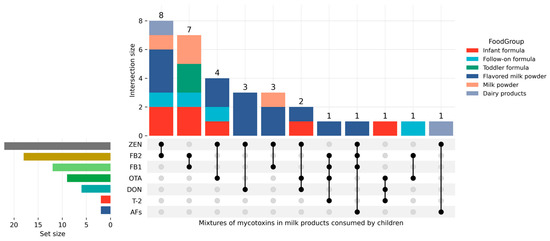
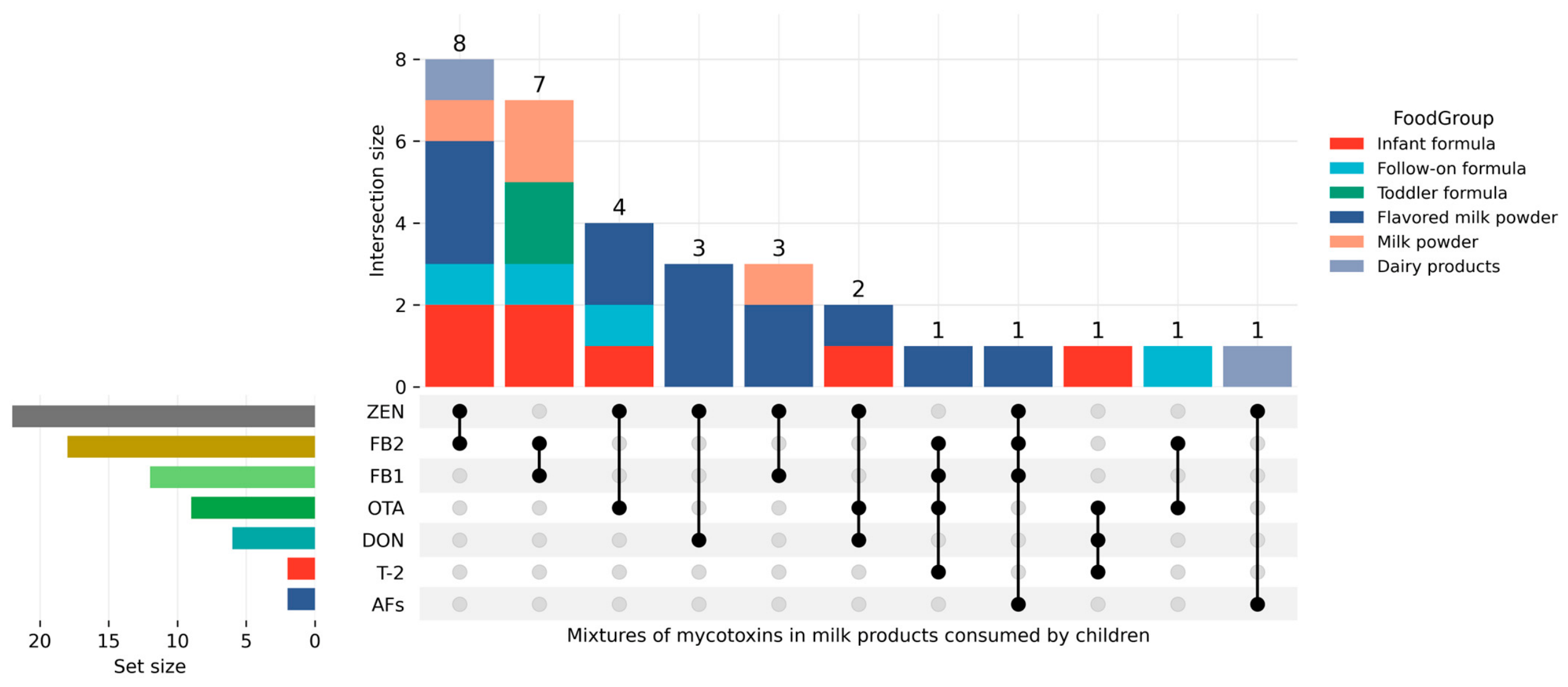
Co-occurrence of two or more mycotoxins was identified in 32 samples (16.8%) out of 190 samples analyzed, as shown in Figure 2. Twenty-seven samples were co-contaminated with two types of mycotoxins, while three samples exhibited the simultaneous presence of three mycotoxins, and two samples had four mycotoxins. A higher incidence of co-occurring mycotoxins was found in 13 (40.6%) samples of flavored milk powder, with 2 samples containing OTA+FB1+FB2+T-2 toxin or AFB1+ZEN+FB1+FB2, and 3 samples contaminated with DON+ZEN or ZEN+FB2. ZEN and FB2 were the most frequent co-occurring mycotoxins, followed by FB1, which co-occurred with other mycotoxins in 11 samples. The implications of multi-toxicosis are concerning, as exposure to a single mycotoxin at a detected concentration may not pose a significant risk; however, toxic effects can increase when exposure occurs through a mixture of multiple mycotoxins [75]. AFM1 is associated with milk contamination through the carryover of AFB1 from contaminated animal feed. Several other mycotoxins and their modified metabolites can increase toxicity during combined exposure to mycotoxin mixtures [46]. Corcuera et al. [76] showed that the combination of AFB1 and OTA resulted in higher cytotoxicity in hepatocellular carcinoma epithelial (Hep G2) cells compared with exposure to each toxin individually. In [77], it was also reported that increased cytotoxicity of AFB1 in human intestinal (Caco-2) and HepG2 cell lines was observed through interaction with a very low level of OTA (20 nM). The combined toxicity of OTA and FB1 showed increased cytotoxicity by reducing cell viability in C6 glioma cells (53–55%), Caco-2 cells (59–71%), and Vero cells (72–86%) compared with exposure to each toxin individually [78]. Similarly, OTA metabolites such as OTα, OTB, open-ring OTA (OP-OTA), quinone (OTQ), and hydroquinone (OTHQ) forms were not analyzed in this study; their coexistence with OTA may contribute to the biological effects associated with OTA exposure [79,80]. The interaction between other mycotoxins commonly found in infant food products, such as AFB1 and citrinin (CIT), sterigmatocystin (STG), and CIT, as well as STG and cyclopiazonic acid (CPZ), has also demonstrated synergistic interactions across various dosage levels, increasing cytotoxicity in human SH-SY5Y neuronal cells [81]. In contrast, the combination of FB1 and ZEN demonstrated antagonistic interactions, presenting a higher IPEC-J2 cellular viability in comparison with FB1 or ZEN alone. This effect was hypothesized by the authors to be associated with the anti-estradiol properties of FB1, which may antagonize the estrogenic effects of ZEN [82]. Future studies regarding the metabolic pathways and toxicological effects of different mycotoxins and their derivatives can significantly help in supporting food safety evaluations.
Figure 2.
Co-occurrence patterns of mycotoxins in infant formula, follow-on formula, toddler formula, flavored milk powder, milk powder, and other dairy products commercially traded in Pirassununga and Ribeirão Preto, São Paulo, Brazil. The horizontal bar plot on the lower left represents the set size, indicating the total number of samples in which each mycotoxin was quantified. The upper stacked vertical bars represent the intersection size, showing the frequency of each mycotoxin combination stratified by type of sample. Black dots and connecting lines in the matrix indicate the specific mycotoxins involved in each co-occurrence pattern.
Compared to the data reported here, higher co-occurrence of AFs+OTA was reported in 88 (36.7%) samples of infant cereal and infant formula from Nigeria, while AFs+FBs occurred in 170 (70.8%) samples, and 75 (31.3%) showed AFs+OTA+FBs [43]. Similar results were reported by Juan et al. [46] in Italy, with 92% of positive samples of infant cereal and formula co-contaminated with several mycotoxins, of which 24% contained three to four mycotoxins. In Spain, Serrano et al. [23] reported 8.8% of infant formula samples co-contaminated with different Fusarium mycotoxins, while Ojuri et al. [66] observed AFs co-occurring with moniliformin in infant formula from Burkina Faso. Lower frequencies of co-occurring mycotoxins were reported in Turkey, including only one toddler formula sample co-contaminated with AFM1 and OTA [59], and three mycotoxins (AFB1, AFM1, and OTA) detected in infant formula and baby foods [49]. The simultaneous occurrence of mycotoxins described in this study indicates potential health risks to infants, as co-contamination can lead to combined toxic effects even at lower threshold levels [83].
3.3. Exposure Assessment and Risk Characterization
The dietary exposure to the mycotoxins quantified in milk-based infant foods (AFs, OTA, DON, ZEN, FBs, and T-2) was assessed using EDIs across all food categories, as shown in Table 3. The exposure assessment was stratified into four age categories (≤1 year, 1–2 years, 2–3 years, and ≥3 years) to evaluate potential exposure variations in consumption patterns and body weights. Thus, the EDIs were calculated based on the daily consumption data (kg/day) of the specific food type, the mycotoxin concentration (µg/kg) in that food sample, and the body weight of each age group. Infant formula contributed to the highest exposure, particularly in the youngest group (≤1 year of age), while milk powder, followed by milk-based products, showed the lowest exposure across all age categories. OTA exposure was primarily due to infant formula and flavored milk powder. Although AFs were not detected in any infant formula or milk powder, EDI values of 0.015 and 0.001 µg/kg bw/day were observed regarding the consumption of flavored milk and milk-based products, respectively, by infants aged 1–2 years. Despite the low AFs exposure through the consumption of the analyzed infant foods in this study, the observed EDIs may represent a health concern due to the carcinogenic potential of AFs. A similar pattern was observed for T-2 toxin, with EDI values of 0.011 and 0.003 µg/kg bw/day for infant formula (G2) intended for the ≤1 year age group, and for the flavored milk powder consumed by the 1–2 year age group, respectively.
Table 3.
Estimated daily intake (EDI) of mycotoxins from consumption of infant foods commercially traded in Pirassununga and Ribeirão Preto, São Paulo, Brazil.
In comparison, lower AFB1 and T-2 intakes of 0.005 and 0.038 µg/kg bw/day, respectively, were reported in infant food products traded in Europe by Braun et al. [26]. However, Magoha et al. [25] in Tanzania showed EDI values for AFs ranging from 0.00014 to 0.12 µg/kg bw/day in complementary foods. In contrast to our results, Ojuri et al. [66] reported higher EDI values of 0.0025–51.192 µg/kg bw/day for AFB1 and 0.0257–54.892 µg/kg bw/day for total AFs in food for infants and young children in Nigeria.
Among the analyzed mycotoxins, DON showed the highest exposure in the ≤1-year age group, with EDI values ranging from 0.114 to 1.226 µg/kg bw/day for infant formula, followed by 0.174–0.421 µg/kg bw/day for flavored milk samples in the 1–2-year age group, respectively. The highest DON exposure of 1.226 µg/kg bw/day found in this study exceeded the respective TDI (1.0 μg/kg bw/day) [41], thus indicating a potential health concern for Brazilian infants aged ≤1 year. By comparison, these values were lower than the 1.6 µg/kg bw/day reported in a study by Braun et al. [26] in Europe. In this study, the EDI for OTA was 0.221 µg/kg bw/day in flavored milk powder consumed by infants aged 1–2-years, which is higher than the values reported in formula samples intended for children aged 9 months (0.00031 µg/kg bw/day) and 12 months (0.0015 µg/kg bw/day) in Turkey [54]. Similar results for OTA were reported in Europe by Braun et al. [26] in infant food (0.005 µg/kg bw/day), and by Baydar et al. [44] in infant formula (0.0173 μg/kg bw/day) in Turkey. In Nigeria, Ojuri et al. [66] described an EDI of 0.29 µg/kg bw/day for OTA in infant foods. In the present work, FBs showed a maximum EDI value of 0.293 µg/kg bw/day in infant formula (G1) for infants aged ≤1 year, followed by 0.239 µg/kg bw/day for infants aged 1–2 years, while the maximum EDI for ZEN was 0.061 µg/kg bw/day in milk powder for infants aged ≤1 year. Lower EDIs, below the TDI for FBs (2.0 µg/kg bw/day), have also been reported in Tanzania, ranging from 0.005 to 0.88 µg/kg bw/day [25], while a maximum FB1 intake of 0.49 µg/kg bw/day was reported by Braun et al. [26] in European complementary foods. In contrast, a much higher EDI of FBs (138.6 µg/kg bw/day) was reported by Ojuri et al. [66] in Nigerian infant foods, including infant formula, which is approximately 69 times higher than the TDI (2.0 µg/kg bw/day). Our study found the higher EDI for ZEN (0.061 µg/kg bw/day) in milk powder consumed by infants aged ≤1 year, which is comparatively higher than the value of 0.029 µg/kg bw/day reported in the study of Braun et al. [26]. In the present study, the EDIs for non-carcinogenic mycotoxins (FBs, DON, ZEN, and T-2 toxin) in all age categories were found below the respective TDIs (2.0, 1.0, 0.25, and 0.02 μg/kg bw/day, respectively), except for DON regarding infant formula for children ≤ 1 year (1.226 µg/kg bw/day).
Considering all age categories, the children aged ≥3 years showed the lowest EDI values across all food types, followed by younger age groups (1–3 years). In the age groups of ≥3 years and 2–3 years, maximum EDI values were 0.341 and 0.276 µg/kg bw/day for DON, respectively. Thus, taken together, our findings showed a decreasing trend in EDI values with age, with EDI values lower in children ≥ 3 years, reflecting diversification in dietary habits and reduced reliance on formula-based nutrition.
Risk characterization for AFs and OTA, as well as for FBs, DON, ZEN, and T-2 toxin, in foods consumed by the studied age groups was also performed in this study using the MoE and HQ approaches, as presented in Table 4. MoE values equal to or greater than 10,000 represent minimal or no risk, whereas MoE values less than 10,000 may pose health risks requiring rigorous monitoring actions [21]. Although no AF contamination was reported in infant formula (G1–G4) and milk powder, the MoE values obtained in this study for AFs from two positive samples ranged from 26.84 to 411.4 across all age groups, indicating a potential health risk. In Nigeria, MoE values ranging from 0.003 to 70 and 0.12 to 0.7 were described for AFs in infant foods [66] and maize-based foods [84]. The MoEs obtained in this study were higher than the values reported for AFB1 in Somalia (0.06–1.49) [85] and Brazil (24.6) [86], but lower than the MoE of 2982 reported by Sakin et al. [87] in Turkey and 1273 by Ding et al. [88] in China. As for OTA quantified in this work, low MoE values ranging from 543.9 to 3724 were observed for infant formula samples consumed by all age groups, except for toddler formula, which had no OTA contamination. These findings indicate that Brazilian infants aged ≤1 year are at higher risk due to OTA dietary exposure, as reflected by lower MoE values observed and higher exposure relative to body weight. MoE values of 5995, 9081, and 33,176 were also reported by El and Şengül [22] for Turkish infant formula, follow-on formula, and toddler formula, respectively.
Table 4.
Margin of Exposure (MoE) and Hazard Quotient (HQ) for mycotoxins in infant foods commercially traded in Pirassununga and Ribeirão Preto, São Paulo, Brazil.
Regarding HQ, values below 1 (HQ < 1) represent negligible health risk or dietary exposure within tolerable limits, whereas HQ > 1 indicates potential health concerns. As shown in Table 4, DON had HQ > 1 in one sample of infant formula (G1) consumed by infants at ≤1 year of age. HQ values for FBs, DON, ZEN, and T-2 across all food categories and age groups remained below 1. FBs showed a maximum HQ value of 0.147 in infant formula for infants aged ≤1 year, while ZEN and T-2 toxin exhibited HQ values of 0.301 and 0.555, respectively, in infant formula for infants in the ≤1 year age group. These findings consistently indicated HQ < 1 for the non-carcinogenic mycotoxins evaluated, indicating minimal risk. However, the co-occurrence of mycotoxins observed in this study raises potential health concerns because of possible synergistic effects [75,89]. The majority of previous studies have focused on the toxicity profiles and risk assessments of individual mycotoxins, thus emphasizing the need for integrated risk assessment approaches to characterize real-world health risks posed by dietary mycotoxins.
4. Limitations of the Study
This study presents the occurrence, co-occurrence, and risk assessment of major mycotoxins in milk-based infant foods; some limitations should also be acknowledged. Firstly, the exposure assessment was performed using mean body weight values obtained from the WHO Child Growth Standards and daily intake values based on manufacturer recommendations provided on product labels. Variations in individual dietary habits, feeding practices, and actual consumption patterns among infants and young children may affect estimated exposure levels. Most products analyzed in this study were commercially available and manufactured in Brazil; however, the geographical origin of individual raw ingredients could not be determined from product labels. These differences in raw material sourcing may also contribute to variations in contamination patterns. Similarly, homemade infant food, which was not analyzed in this study, also represents an essential part of the diet of children aged 1–5 years. Although this study evaluated 190 commercial samples collected in São Paulo, the findings may not fully represent the dietary exposure to mycotoxins among the younger population in Brazil.
The simultaneous co-occurrence of multiple mycotoxins in the same product can enhance the toxicological effects, as interactions among different toxins can induce additive or synergistic effects. The co-occurrence was reported in this study; however, the risk characterization was performed on individual mycotoxins, emphasizing the need for future studies assessing toxicity induced by mycotoxin mixtures to improve national public health relevance. The deterministic approach applied in this study provides a useful estimation of dietary exposure and is widely used in risk assessment; however, it relies on fixed values for exposure parameters [90]. It does not fully account for variability and uncertainty related to individual consumption patterns, body weight differences, and variations in mycotoxin contamination among products [91]. Therefore, deterministic estimates may provide a limited representation of real exposure scenarios compared with probabilistic approaches, which provide a more comprehensive assessment of exposure distribution [92]. Finally, mycotoxins undergo biotransformation in lactating animals, converting the parent compound into different metabolites, which can lead to underestimated contamination levels in milk-based products [45]. Further studies, including mycotoxin metabolites as well as emerging mycotoxins, might reduce uncertainties in occurrence level estimates.
5. Conclusions
The occurrence of major mycotoxins such as AFs, OTA, FBs, DON, ZEN, and T-2 toxin in some infant formula and milk-based products may pose a potential health risk to infants and young children due to their greater vulnerability. Ninety-eight samples (51.6%) analyzed in this study contained at least one type of mycotoxin, highlighting the importance of the continuous implementation and improvement of Good Agricultural Practices (GAP) and Good Manufacturing Practices (GMP) as preventive strategies to reduce mycotoxin contamination in milk and plant-based ingredients used in the manufacture of infant foods. This is the first study reporting the occurrence of Fusarium mycotoxins in milk-based infant foods in Brazil. ZEN was the most prevalent mycotoxin, followed by FBs, OTA, and DON, while T-2 toxin and AFs were quantified in only two samples. Among all types of infant foods analyzed, flavored milk powders had the highest mean levels of DON, OTA, and FBs, while unflavored milk powders contained the highest concentration of ZEN. However, infant formula provided the highest EDI value, and DON exposure resulted in HQ > 1 for infants aged ≤1 year, including those aged up to 6 months. In addition, the MoE values obtained for AFs and OTA (<10,000) indicated potential health risks. These results reinforce the need for strict GAP improvements to prevent mycotoxin contamination in the field and during storage of milk and other raw materials used as ingredients in milk-based infant foods. Although most of the contamination levels reported were below the Brazilian MLs adopted for mycotoxins in cereal-based products intended for children’s consumption, the co-occurrence of two to four mycotoxins was observed in 32 samples (16.8%), suggesting potential health risks to infants due to combined toxic effects. Therefore, routine quality management and long-term monitoring programs for major mycotoxins in milk-based infant foods are required in the country. In addition, the inclusion of specific regulations for major mycotoxins in milk-based infant foods in Brazil should be considered to ensure the safety of these essential dairy products for children.
Author Contributions
Conceptualization, S.U., S.A. and C.A.F.d.O.; methodology, S.U., A.R.P. and R.E.R.; software, S.U.; validation, S.U., S.A. and U.N.; formal analysis, S.U. and M.U.; investigation, S.U., A.R.P. and R.E.R.; resources, C.A.F.d.O.; data curation, S.U.; writing—original draft preparation, S.U.; writing—review and editing, S.A., U.N., A.R.P., R.E.R., M.U. and C.A.F.d.O.; visualization, S.U.; supervision, C.A.F.d.O. and S.A.; project administration, C.A.F.d.O.; funding acquisition, C.A.F.d.O. All authors have read and agreed to the published version of the manuscript.
Funding
This research was funded by Fundação de Amparo à Pesquisa do Estado de São Paulo (FAPESP) grant numbers: 2019/21603-1, 2022/03952-1, 2023/00508-6 and 2023/05989-2.
Institutional Review Board Statement
Not applicable.
Informed Consent Statement
Not applicable.
Data Availability Statement
The data related to this work are within the manuscript.
Conflicts of Interest
The authors declare no conflicts of interest. The funders had no role in the design of the study; in the collection, analyses, or interpretation of data; in the writing of the manuscript; or in the decision to publish the results.
References
- Giomo, P.P.; Neuenfeldt, N.H.; Braga, P.A.D.C.; Bragotto, A.P.A.; Rocha, L.D.O. Assessment of Mycotoxin Contamination in Cereal-Based Baby Foods Destined for Infant Consumption in Brazil. Food Control 2024, 164, 110561. [Google Scholar] [CrossRef] [Scilit]
- Ullah, S.; Ali, S.; Rezende, V.T.; Nabi, G.; Tonin, F.G.; Oliveira, C.A.F.d.O. Global Occurrence and Levels of Mycotoxins in Infant Foods: A Systematic Review (2013–2024). Food Control 2025, 171, 111135. [Google Scholar] [CrossRef] [Scilit]
- IARC Agents Classified by the IARC Monographs, 1–134—IARC Monographs on the Identification of Carcinogenic Hazards to Humans. IARC Monographs. 2023. Available online: https://monographs.iarc.who.int/agents-classified-by-the-iarc/ (accessed on 27 March 2026).
- Min, L.; Fink-Gremmels, J.; Li, D.; Tong, X.; Tang, J.; Nan, X.; Yu, Z.; Chen, W.; Wang, G. An Overview of Aflatoxin B1 Biotransformation and Aflatoxin M1 Secretion in Lactating Dairy Cows. Anim. Nutr. 2021, 7, 42–48. [Google Scholar] [CrossRef] [Scilit] [PubMed]
- Yang, Z.; Xue, H.; Han, Y.; Ding, H.; Zhang, Y. Research Progress and Management Strategies for the Common Mycotoxin Contamination of Traditional Chinese Medicines. J. Fungi 2025, 11, 411. [Google Scholar] [CrossRef] [Scilit] [PubMed]
- Marin, S.; Ramos, A.J.; Cano-Sancho, G.; Sanchis, V. Mycotoxins: Occurrence, Toxicology, and Exposure Assessment. Food Chem. Toxicol. 2013, 60, 218–237. [Google Scholar] [CrossRef] [Scilit] [PubMed]
- Zhang, Z.; Qi, X.; Wang, Y.; Li, Y.; Cheng, L.; Yang, Q.; Yan, X.; Li, X.; Luo, J. Fungi and Mycotoxin Types, Toxicity, Mechanisms, and Control of Mycotoxin Contamination: A Review. Food Addit. Contam. Part A 2025, 42, 1692–1716. [Google Scholar] [CrossRef] [Scilit] [PubMed]
- Lv, Q.; Xu, W.; Yang, F.; Wei, W.; Chen, X.; Zhang, Z.; Liu, Y. Reproductive Toxicity of Zearalenone and Its Molecular Mechanisms: A Review. Molecules 2025, 30, 505. [Google Scholar] [CrossRef] [Scilit] [PubMed]
- Yu, H.; Zhang, J.; Chen, Y.; Zhu, J. Zearalenone and Its Masked Forms in Cereals and Cereal-Derived Products: A Review of the Characteristics, Incidence, and Fate in Food Processing. J. Fungi 2022, 8, 976. [Google Scholar] [CrossRef] [Scilit] [PubMed]
- Haidukowski, M.; Somma, S.; Ghionna, V.; Cimmarusti, M.T.; Masiello, M.; Logrieco, A.F.; Moretti, A. Deoxynivalenol and T-2 Toxin as Major Concerns in Durum Wheat from Italy. Toxins 2022, 14, 627. [Google Scholar] [CrossRef] [Scilit] [PubMed]
- Long, N.; Peng, H.; Wang, Y.; Zhou, C.; Wang, Z. Effects of Mycotoxins in Foods on Human Health and Strategies for Prevention and Control: A Review. J. Future Foods 2025, in press. [Google Scholar] [CrossRef] [Scilit]
- Pereira, P.C. Milk Nutritional Composition and Its Role in Human Health. Nutrition 2014, 30, 619–627. [Google Scholar] [CrossRef] [Scilit] [PubMed]
- Kariyawasam, K.P.; Somaratne, G.; Dillimuni, S.D.; Walallawita, U. Comparative Analysis of Breastfeeding and Infant Formulas: Short- and Long-Term Impacts on Infant Nutrition and Health. Food Sci. Nutr. 2025, 13, e70788. [Google Scholar] [CrossRef] [Scilit] [PubMed]
- Venter, C.; Shamir, R.; Fleischer, D.M. Early Introduction of Novel and Less-Studied Food Allergens in the Plant-Based Era: Considerations for US and EU Infant Formula Regulations. Nutrients 2023, 15, 4530. [Google Scholar] [CrossRef] [Scilit] [PubMed]
- Açar, Y.; Akbulut, G. Evaluation of Aflatoxins Occurrence and Exposure in Cereal-Based Baby Foods: An Update Review. Curr. Nutr. Rep. 2024, 13, 59–68. [Google Scholar] [CrossRef] [Scilit] [PubMed]
- Nasir, U.; Naeem, I.; Asif, M.; Ismail, A.; Gong, Y.Y.; Routledge, M.N.; Amjad, A.; Fazal, A.; Ismail, Z. Assessment of Aflatoxins Exposure through Urinary Biomarker Approach and the Evaluation of the Impacts of Aflatoxins Exposure on the Selected Health Parameters of the Children of Multan City of Pakistan. Food Control 2021, 123, 107863. [Google Scholar] [CrossRef] [Scilit]
- Nada, S.; Nikola, T.; Bozidar, U.; Ilija, D.; Andreja, R. Prevention and Practical Strategies to Control Mycotoxins in the Wheat and Maize Chain. Food Control 2022, 136, 108855. [Google Scholar] [CrossRef] [Scilit]
- Agriopoulou, S.; Stamatelopoulou, E.; Varzakas, T. Advances in Occurrence, Importance, and Mycotoxin Control Strategies: Prevention and Detoxification in Foods. Foods 2020, 9, 137. [Google Scholar] [CrossRef] [Scilit] [PubMed]
- Brasil Minist’ Erio Da Saúde/Agˆ Encia Nacional de Vigilˆ Ancia Sanit’ Aria/Diretoria Colegiada. Instruç˜ Ao Normativa—IN n° 160, de 1° de Julho de 2022. Brasília: Estabelece Os Limites M’ Aximos Tolerados (LMT) Para Micotoxinas em Alimentos. 2022. Available online: https://www.gov.br/agricultura/pt-br/assuntos/inspecao/produtos-animal/plano-de-nacional-de-controle-de-residuos-e-contaminantes/instrucao-normativa-anvisa-2022_160-1.pdf (accessed on 28 March 2026).
- European Union (EU). Commission Regulation (EU) No 915/2023 of 25 April 2023 on Maximum Levels for Certain Contaminants in Food and Repealing Regulation (EC) No 2006/1881. Off. J. Eur. Union 2023, 119, 109–148. [Google Scholar]
- Hooshfar, S.; Khosrokhavar, R.; Yazdanpanah, H.; Eslamizad, S.; Kobarfard, F.; Nazari, F.; Kokaraki, V.; Kokkinakis, M.; Goumenou, M.; Tsitsimpikou, C.; et al. Health Risk Assessment of Aflatoxin M1 in Infant Formula Milk in IR Iran. Food Chem. Toxicol. 2020, 142, 111455. [Google Scholar] [CrossRef] [Scilit] [PubMed]
- El, Ç.; Şengül, S.A. Occurrence, Dietary Risk Assessment and Cancer Risk Estimates of Aflatoxins and Ochratoxin A in Powdered Baby Foods Consumed in Turkey. Toxins 2025, 17, 366. [Google Scholar] [CrossRef] [Scilit] [PubMed]
- Serrano, A.B.; Meca, G.; Font, G.; Ferrer, E. Risk Assessment Associated to the Intake of the Emerging Fusarium Mycotoxins BEA, ENs and FUS Present in Infant Formula of Spanish Origin. Food Control 2012, 28, 178–183. [Google Scholar] [CrossRef] [Scilit]
- Oueslati, S.; Berrada, H.; Mañes, J.; Juan, C. Presence of Mycotoxins in Tunisian Infant Foods Samples and Subsequent Risk Assessment. Food Control 2018, 84, 362–369. [Google Scholar] [CrossRef] [Scilit]
- Magoha, H.; Kimanya, M.; De Meulenaer, B.; Roberfroid, D.; Lachat, C.; Kolsteren, P. Risk of Dietary Exposure to Aflatoxins and Fumonisins in Infants Less than 6 Months of Age in Rombo, Northern Tanzania. Matern. Child Nutr. 2016, 12, 516–527. [Google Scholar] [CrossRef] [Scilit] [PubMed]
- Braun, D.; Eiser, M.; Puntscher, H.; Marko, D.; Warth, B. Natural Contaminants in Infant Food: The Case of Regulated and Emerging Mycotoxins. Food Control 2021, 123, 107676. [Google Scholar] [CrossRef] [Scilit]
- Kirimker, S.E.; Turksoy, S.; Kabak, B. Assessment of Dietary Exposure to Deoxynivalenol and Fumonisin in the Population of Infants and Toddlers in Turkey. Food Chem. Toxicol. 2020, 140, 111304. [Google Scholar] [CrossRef] [Scilit] [PubMed]
- Ok, H.E.; Choi, S.W.; Kim, M.; Chun, H.S. HPLC and UPLC Methods for the Determination of Zearalenone in Noodles, Cereal Snacks and Infant Formula. Food Chem. 2014, 163, 252–257. [Google Scholar] [CrossRef] [Scilit] [PubMed]
- Frey, M.; Rosim, R.; Oliveira, C. Mycotoxin Co-Occurrence in Milks and Exposure Estimation: A Pilot Study in São Paulo, Brazil. Toxins 2021, 13, 507. [Google Scholar] [CrossRef] [Scilit] [PubMed]
- Toniciolli Rigueto, C.V.; Rosseto, M.; Basso, C.; Costa da Cunha, A.; Silva Cordeiro, M.W.; Sonza Pinto, V.; Inês Kaufmann, A.; Sousa Gomes, K.; Regina Pizzutti, I.; Pereira dos Santos Richards, N.S.; et al. Aflatoxin M1 in Milk and Dairy Products in Brazil: A Review of Characteristics, Contamination, Human Exposure and Health Risks. Rev. Ciênc. E Nat. 2024, 46, 1. [Google Scholar] [CrossRef] [Scilit]
- Tonon, K.M.; Savi, G.D.; Scussel, V.M. Application of a LC–MS/MS Method for Multi-Mycotoxin Analysis in Infant Formula and Milk-Based Products for Young Children Commercialized in Southern Brazil. J. Environ. Sci. Health B 2018, 53, 685–691. [Google Scholar] [CrossRef] [Scilit] [PubMed]
- Ishikawa, A.T.; Takabayashi-Yamashita, C.R.; Ono, E.Y.S.; Bagatin, A.K.; Rigobello, F.F.; Kawamura, O.; Hirooka, E.Y.; Itano, E.N. Exposure Assessment of Infants to Aflatoxin M1 through Consumption of Breast Milk and Infant Powdered Milk in Brazil. Toxins 2016, 8, 246. [Google Scholar] [CrossRef] [Scilit] [PubMed]
- Flores-Flores, M.E.; González-Peñas, E. An LC–MS/MS Method for Multi-Mycotoxin Quantification in Cow Milk. Food Chem. 2017, 218, 378–385. [Google Scholar] [CrossRef] [Scilit] [PubMed]
- Coppa, C.F.S.C.; Cirelli, A.C.; Gonçalves, B.L.; Barnabé, E.M.B.; Petta, T.; Franco, L.T.; Javanmardi, F.; Khaneghah, A.M.; Lee, S.H.I.; Corassin, C.H.; et al. Mycotoxin Occurrence in Breast Milk and Exposure Estimation of Lactating Mothers Using Urinary Biomarkers in São Paulo, Brazil. Environ. Pollut. 2021, 279, 116938. [Google Scholar] [CrossRef] [Scilit] [PubMed]
- Franco, L.T.; Petta, T.; Rottinghaus, G.E.; Bordin, K.; Gomes, G.A.; Alvito, P.; Assunção, R.; Oliveira, C.A.F. Assessment of Mycotoxin Exposure and Risk Characterization Using Occurrence Data in Foods and Urinary Biomarkers in Brazil. Food Chem. Toxicol. 2019, 128, 21–34. [Google Scholar] [CrossRef] [Scilit] [PubMed]
- WHO World Health Organization (WHO). Child Growth Standards: Weight-for-Age. Available online: https://www.who.int/tools/child-growth-standards/standards/weight-for-age (accessed on 22 April 2026).
- EFSA. Appropriateness to Set a Group Health-Based Guidance Value for Zearalenone and Its Modified Forms. EFSA J. 2016, 14, e04425. [Google Scholar] [CrossRef] [Scilit]
- Food and Agriculture Organization of the United Nations/World Health Organization (FAO/WHO). Evaluation of Certain Food Additives and Contaminants: Sixty-Eighth Report of the Joint FAO/WHO Expert Committee on Food Additives. Available online: https://www.who.int/publications/i/item/9789241209472 (accessed on 27 March 2026).
- European Food Safety Authority (EFSA); Arcella, D.; Gergelova, P.; Innocenti, M.L.; Steinkellner, H. Human and Animal Dietary Exposure to T-2 and HT-2 Toxin. EFSA J. 2017, 15, e04972. [Google Scholar] [CrossRef] [Scilit] [PubMed]
- Joint FAO/WHO Expert Committee on Food Additives. Evaluation of Certain Food Additives and Contaminants: Seventy-Fourth [74th] Report of the Joint FAO/WHO Expert Committee on Food Additives; Meeting (74th: 2011: Rome, Italy) (2011); World Health Organization: Geneva, Switzerland, 2011; pp. 55–70. [Google Scholar]
- FAO/WHO WHO Technical Report Series; No. 959. Food and Agriculture Organization/World Health Organization Evaluation of Certain Contaminants in Food: Seventy-Second Report of the Joint FAO/WHO Expert Committee on Food Additives. Available online: https://www.who.int/publications/i/item/9789241209595 (accessed on 27 March 2026).
- EFSA. International Frameworks Dealing with Human Risk Assessment of Combined Exposure to Multiple Chemicals. EFSA J. 2013, 11, 3313. [Google Scholar] [CrossRef] [Scilit]
- Schrenk, D.; Bignami, M.; Bodin, L.; Chipman, J.K.; del Mazo, J.; Grasl-Kraupp, B.; Hogstrand, C.; Hoogenboom, L.; Leblanc, J.C.; Nebbia, C.S.; et al. Risk Assessment of Aflatoxins in Food. EFSA J. 2020, 18, e06040. [Google Scholar] [CrossRef] [Scilit] [PubMed]
- Flores-Flores, M.E.; Lizarraga, E.; López de Cerain, A.; González-Peñas, E. Presence of Mycotoxins in Animal Milk: A Review. Food Control 2015, 53, 163–176. [Google Scholar] [CrossRef] [Scilit]
- Borowsky, A.M.; Rosim, R.E.; Tonin, F.G.; de Oliveira, C.A.F.; Corassin, C.H. Co-Occurrence of Mycotoxins in the Diet and in the Milk of Dairy Cows from the Southeast Region of Brazil. Toxins 2024, 16, 492. [Google Scholar] [CrossRef] [Scilit] [PubMed]
- Fink-Gremmels, J. Mycotoxins in Cattle Feeds and Carry-over to Dairy Milk: A Review. Food Addit. Contam. 2008, 25, 172–180. [Google Scholar] [CrossRef] [Scilit] [PubMed]
- González-Jartín, J.M.; Rodríguez-Cañás, I.; Alvariño, R.; Alfonso, A.; Sainz, M.J.; Vieytes, M.R.; Gomes, A.; Ramos, I.; Botana, L.M. Occurrence of Mycotoxins in Total Mixed Ration of Dairy Farms in Portugal and Carry-over to Milk. Food Control 2024, 165, 110682. [Google Scholar] [CrossRef] [Scilit]
- Yacine Ware, L.; Durand, N.; Nikiema, P.A.; Alter, P.; Fontana, A.; Montet, D.; Barro, N. Occurrence of Mycotoxins in Commercial Infant Formulas Locally Produced in Ouagadougou (Burkina Faso). Food Control 2017, 73, 518–523. [Google Scholar] [CrossRef] [Scilit]
- Baydar, T.; Erkekoglu, P.; Sipahi, H.; Sahin, G.; Baydar, T.; Erkekoglu, P.; Sipahi, H.; Sahin, G. Aflatoxin B1, M1 and Ochratoxin A Levels in Infant Formulae and Baby Foods Marketed in Ankara, Turkey. J. Food Drug Anal. 2007, 15, 11. [Google Scholar] [CrossRef] [Scilit]
- Alvito, P.C.; Sizoo, E.A.; Almeida, C.M.M.; van Egmond, H.P. Occurrence of Aflatoxins and Ochratoxin A in Baby Foods in Portugal. Food Anal. Methods 2008, 3, 22–30. [Google Scholar] [CrossRef] [Scilit]
- Juan, C.; Raiola, A.; Mañes, J.; Ritieni, A. Presence of Mycotoxin in Commercial Infant Formulas and Baby Foods from Italian Market. Food Control 2014, 39, 227–236. [Google Scholar] [CrossRef] [Scilit]
- Conteçotto, A.C.T.; Pante, G.C.; Castro, J.C.; Souza, A.A.; Lini, R.S.; Romoli, J.C.Z.; Abreu Filho, B.A.; Mikcha, J.M.G.; Mossini, S.A.G.; Machinski Junior, M. Occurrence, Exposure Evaluation and Risk Assessment in Child Population for Aflatoxin M1 in Dairy Products in Brazil. Food Chem. Toxicol. 2021, 148, 111913. [Google Scholar] [CrossRef] [Scilit] [PubMed]
- Awuchi, C.G.; Ondari, E.N.; Nwozo, S.; Odongo, G.A.; Eseoghene, I.J.; Twinomuhwezi, H.; Ogbonna, C.U.; Upadhyay, A.K.; Adeleye, A.O.; Okpala, C.O.R. Mycotoxins’ Toxicological Mechanisms Involving Humans, Livestock and Their Associated Health Concerns: A Review. Toxins 2022, 14, 167. [Google Scholar] [CrossRef] [Scilit] [PubMed]
- Ismail, A.; Gonçalves, B.L.; de Neeff, D.V.; Ponzilacqua, B.; Coppa, C.F.S.C.; Hintzsche, H.; Sajid, M.; Cruz, A.G.; Corassin, C.H.; Oliveira, C.A.F. Aflatoxin in Foodstuffs: Occurrence and Recent Advances in Decontamination. Food Res. Int. 2018, 113, 74–85. [Google Scholar] [CrossRef] [Scilit] [PubMed]
- Gong, Y.Y.; Watson, S.; Routledge, M.N. Aflatoxin Exposure and Associated Human Health Effects, a Review of Epidemiological Studies. Food Saf. 2016, 4, 14–27. [Google Scholar] [CrossRef] [Scilit] [PubMed]
- IARC. Some Traditional Herbal Medicines, Some Mycotoxins, Naphthalene and Styrene; IARC Monographs on the Evaluation of Carcinogenic Risks to Humans; IARC Press: Lyon, France, 2002; Volume 82, pp. 1–556. [Google Scholar]
- Cappozzo, J.; Jackson, L.; Lee, H.J.; Zhou, W.; Al-Taher, F.; Zweigenbaum, J.; Ryu, D. Occurrence of Ochratoxin A in Infant Foods in the United States. J. Food Prot. 2017, 80, 251–256. [Google Scholar] [CrossRef] [Scilit] [PubMed]
- Sartori, A.V.; de Moraes, M.H.P.; dos Santos, R.P.; Souza, Y.P.; Candido, F.S.; da Nóbrega, A.W. Determination of Aflatoxins M1, M2, B1, B2, G1, G2 and Ochratoxin A in Infant Formulas from Brazil Using a Modified QuEChERS Method and UHPLC-MS/MS. Food Anal. Methods 2023, 16, 841–849. [Google Scholar] [CrossRef] [Scilit]
- Kabak, B. Aflatoxin M1 and Ochratoxin A in Baby Formulae in Turkey: Occurrence and Safety Evaluation. Food Control 2012, 26, 182–187. [Google Scholar] [CrossRef] [Scilit]
- Khoshnamvand, Z.; Nazari, F.; Mehrasebi, M.R.; Hosseini, M.J. Occurrence and Safety Evaluation of Ochratoxin A in Cereal-Based Baby Foods Collected from Iranian Retail Market. J. Food Sci. 2019, 84, 695–700. [Google Scholar] [CrossRef] [Scilit] [PubMed]
- Wang, G.; Li, E.; Gallo, A.; Perrone, G.; Varga, E.; Ma, J.; Yang, B.; Tai, B.; Xing, F. Impact of Environmental Factors on Ochratoxin A: From Natural Occurrence to Control Strategy. Environ. Pollut. 2023, 317, 120767. [Google Scholar] [CrossRef] [Scilit] [PubMed]
- Reddy, L.; Bhoola, K. Ochratoxins—Food Contaminants: Impact on Human Health. Toxins 2010, 2, 771–779. [Google Scholar] [CrossRef] [Scilit] [PubMed]
- EFSA. Opinion of the Scientific Panel on Contaminants in the Food Chain [CONTAM] Related to Arsenic as Undesirable Substance in Animal Feed. EFSA J. 2005, 3, 180. [Google Scholar] [CrossRef] [Scilit]
- Ul Hassan, Z.; Al Thani, R.; Atia, F.A.; Al Meer, S.; Migheli, Q.; Jaoua, S. Co-Occurrence of Mycotoxins in Commercial Formula Milk and Cereal-Based Baby Food on the Qatar Market. Food Addit. Contam. Part B Surveill. 2018, 11, 191–197. [Google Scholar] [CrossRef] [Scilit] [PubMed]
- Foerster, C.; Monsalve, L.; Ríos-Gajardo, G. Infant Exposure to Ochratoxin A, Zearalenone, and Deoxynivalenol from the Consumption of Milk Formula and Baby Cereal in Chile. Food Res. Int. 2024, 187, 114389. [Google Scholar] [CrossRef] [Scilit] [PubMed]
- Ojuri, O.T.; Ezekiel, C.N.; Sulyok, M.; Ezeokoli, O.T.; Oyedele, O.A.; Ayeni, K.I.; Eskola, M.K.; Šarkanj, B.; Hajšlová, J.; Adeleke, R.A.; et al. Assessing the Mycotoxicological Risk from Consumption of Complementary Foods by Infants and Young Children in Nigeria. Food Chem. Toxicol. 2018, 121, 37–50. [Google Scholar] [CrossRef] [Scilit] [PubMed]
- Sobrova, P.; Adam, V.; Vasatkova, A.; Beklova, M.; Zeman, L.; Kizek, R. Deoxynivalenol and Its Toxicity. Interdiscip. Toxicol. 2010, 3, 94–99. [Google Scholar] [CrossRef] [Scilit] [PubMed]
- Sumarah, M.W. The Deoxynivalenol Challenge. J. Agric. Food Chem. 2022, 70, 9619–9624. [Google Scholar] [CrossRef] [Scilit] [PubMed]
- Kushiro, M. Effects of Milling and Cooking Processes on the Deoxynivalenol Content in Wheat. Int. J. Mol. Sci. 2008, 9, 2127–2145. [Google Scholar] [CrossRef] [Scilit] [PubMed]
- EFSA. Commission Regulation (EU) 2024/1038 of 9 April 2024 Amending Regulation (EU) 2023/915 as Regards Maximum Levels of T-2 and HT-2 Toxins in Food. 2024. Available online: http://data.europa.eu/eli/reg/2024/1038/oj (accessed on 28 March 2026).
- Er Demirhan, B.; Demirhan, B. The Investigation of Mycotoxins and Enterobacteriaceae of Cereal-Based Baby Foods Marketed in Turkey. Foods 2021, 10, 3040. [Google Scholar] [CrossRef] [Scilit] [PubMed]
- de Sá, S.V.M.; Fernandes, J.O.; Faria, M.A.; Cunha, S.C. Assessment of Mycotoxins in Infants and Children Cereal-Based Foods: Dietary Exposure and Potential Health Risks. Expo. Health 2024, 17, 425–444. [Google Scholar] [CrossRef] [Scilit]
- Pernica, M.; Kyralová, B.; Svoboda, Z.; Boško, R.; Brožková, I.; Česlová, L.; Benešová, K.; Červenka, L.; Běláková, S. Levels of T-2 Toxin and Its Metabolites, and the Occurrence of Fusarium Fungi in Spring Barley in the Czech Republic. Food Microbiol. 2022, 102, 103875. [Google Scholar] [CrossRef] [Scilit] [PubMed]
- Knutsen, H.K.; Barregård, L.; Bignami, M.; Brüschweiler, B.; Ceccatelli, S.; Cottrill, B.; Dinovi, M.; Edler, L.; Grasl-Kraupp, B.; Hogstrand, C.; et al. Appropriateness to Set a Group Health Based Guidance Value for T2 and HT2 Toxin and Its Modified Forms. EFSA J. 2017, 15, e04655. [Google Scholar] [CrossRef] [Scilit] [PubMed]
- Alassane-Kpembi, I.; Schatzmayr, G.; Taranu, I.; Marin, D.; Puel, O.; Oswald, I.P. Mycotoxins Co-Contamination: Methodological Aspects and Biological Relevance of Combined Toxicity Studies. Crit. Rev. Food Sci. Nutr. 2017, 57, 3489–3507. [Google Scholar] [CrossRef] [Scilit] [PubMed]
- Corcuera, L.A.; Arbillaga, L.; Vettorazzi, A.; Azqueta, A.; López de Cerain, A. Ochratoxin A Reduces Aflatoxin B1 Induced DNA Damage Detected by the Comet Assay in Hep G2 Cells. Food Chem. Toxicol. 2011, 49, 2883–2889. [Google Scholar] [CrossRef] [Scilit] [PubMed]
- Halbin, K.J.; Kouakou, B.; Dago, G. Low Level of Ochratoxin A Enhances Aflatoxin B1 Induced Cytotoxicity and Lipid Peroxydation in Both Human Intestinal (Caco-2) and Hepatoma (HepG2) Cells Lines. Int. J. Nutr. Food Sci. 2013, 2, 294–300. [Google Scholar] [CrossRef] [Scilit]
- Creppy, E.E.; Chiarappa, P.; Baudrimont, I.; Borracci, P.; Moukha, S.; Carratù, M.R. Synergistic Effects of Fumonisin B1 and Ochratoxin A: Are in Vitro Cytotoxicity Data Predictive of in Vivo Acute Toxicity? Toxicology 2004, 201, 115–123. [Google Scholar] [CrossRef] [Scilit] [PubMed]
- Heussner, A.H.; Bingle, L.E.H. Comparative Ochratoxin Toxicity: A Review of the Available Data. Toxins 2015, 7, 4253–4282. [Google Scholar] [CrossRef] [Scilit] [PubMed]
- Pfohl-Leszkowicz, A.; Manderville, R.A. Ochratoxin A: An Overview on Toxicity and Carcinogenicity in Animals and Humans. Mol. Nutr. Food Res. 2007, 51, 61–99. [Google Scholar] [CrossRef] [Scilit] [PubMed]
- de Sá, S.V.M.; Sousa Monteiro, C.; Fernandes, J.O.; Pinto, E.; Faria, M.A.; Cunha, S.C. Evaluating the Human Neurotoxicity and Toxicological Interactions Impact of Co-Occurring Regulated and Emerging Mycotoxins. Food Res. Int. 2024, 184, 114239. [Google Scholar] [CrossRef] [Scilit] [PubMed]
- Wan, L.Y.M.; Turner, P.C.; El-Nezami, H. Individual and Combined Cytotoxic Effects of Fusarium Toxins (Deoxynivalenol, Nivalenol, Zearalenone and Fumonisins B1) on Swine Jejunal Epithelial Cells. Food Chem. Toxicol. 2013, 57, 276–283. [Google Scholar] [CrossRef] [Scilit] [PubMed]
- Vejdovszky, K.; Hahn, K.; Braun, D.; Warth, B.; Marko, D. Synergistic Estrogenic Effects of Fusarium and Alternaria Mycotoxins in Vitro. Arch. Toxicol. 2016, 91, 1447–1460. [Google Scholar] [CrossRef] [Scilit] [PubMed]
- Adetunji, M.C.; Atanda, O.O.; Ezekiel, C.N. Risk Assessment of Mycotoxins in Stored Maize Grains Consumed by Infants and Young Children in Nigeria. Children 2017, 4, 58. [Google Scholar] [CrossRef] [Scilit] [PubMed]
- Wielogorska, E.; Mooney, M.; Eskola, M.; Ezekiel, C.N.; Stranska, M.; Krska, R.; Elliott, C. Occurrence and Human-Health Impacts of Mycotoxins in Somalia. J. Agric. Food Chem. 2019, 67, 2052–2060. [Google Scholar] [CrossRef] [Scilit] [PubMed]
- Bol, E.K.; Araujo, L.; Veras, F.F.; Welke, J.E. Estimated Exposure to Zearalenone, Ochratoxin A and Aflatoxin B1 through the Consume of Bakery Products and Pasta Considering Effects of Food Processing. Food Chem. Toxicol. 2016, 89, 85–91. [Google Scholar] [CrossRef] [Scilit] [PubMed]
- Sakin, F.; Tekeli, İ.O.; Yipel, M.; Kürekci, C. Occurrence and Health Risk Assessment of Aflatoxins and Ochratoxin a in Sürk, a Turkish Dairy Food, as Studied by HPLC. Food Control 2018, 90, 317–323. [Google Scholar] [CrossRef] [Scilit]
- Ding, X.; Li, P.; Bai, Y.; Zhou, H. Aflatoxin B1 in Post-Harvest Peanuts and Dietary Risk in China. Food Control 2012, 23, 143–148. [Google Scholar] [CrossRef] [Scilit]
- Vejdovszky, K.; Warth, B.; Sulyok, M.; Marko, D. Non-Synergistic Cytotoxic Effects of Fusarium and Alternaria Toxin Combinations in Caco-2 Cells. Toxicol. Lett. 2016, 241, 1–8. [Google Scholar] [CrossRef] [Scilit] [PubMed]
- García-Moraleja, A.; Font, G.; Mañes, J.; Ferrer, E. Analysis of Mycotoxins in Coffee and Risk Assessment in Spanish Adolescents and Adults. Food Chem. Toxicol. 2015, 86, 225–233. [Google Scholar] [CrossRef] [Scilit] [PubMed]
- WHO. Dietary Exposure Assessment of Chemicals in Food. In Principles and Methods for the Risk Assessment of Chemicals in Food; WHO: Geneva, Switzerland, 2009; pp. 1–95. [Google Scholar]
- Rivera-Velasquez, M.F.; Fallico, C.; Guerra, I.; Straface, S. A Comparison of Deterministic and Probabilistic Approaches for Assessing Risks from Contaminated Aquifers: An Italian Case Study. Waste Manag. Res. 2013, 31, 1245–1254. [Google Scholar] [CrossRef] [Scilit] [PubMed]

Disclaimer/Publisher’s Note: The statements, opinions and data contained in all publications are solely those of the individual author(s) and contributor(s) and not of MDPI and/or the editor(s). MDPI and/or the editor(s) disclaim responsibility for any injury to people or property resulting from any ideas, methods, instructions or products referred to in the content. |
© 2026 by the authors. Licensee MDPI, Basel, Switzerland. This article is an open access article distributed under the terms and conditions of the Creative Commons Attribution (CC BY) license.