


Abstract
Water purification by adsorption of various pollutants using carbon adsorbents with different characteristics has proven to be an effective method that is often used in purification technologies. In this work, a new method for obtaining a carbon adsorbent with a wide pore size and high surface area has been developed, particularly for the adsorption of bacterial cells. The characterization of the porous texture, the chemical nature of the surface, the structure, and the chemical composition of the obtained adsorbent is studied. The study demonstrates that the hierarchical macroporous structure of the macroporous carbon adsorbent (MCA) is highly effective for the physical sequestration of Escherichia coli from aqueous solutions. The high removal efficiency (86.4%) suggests that this material is a promising candidate for water purification and point-of-use filtration systems, where physical immobilization of pathogens is required.
1. Introduction
Escherichia coli (E. coli) is a Gram-negative (Gram-) microorganism inhabiting the lower parts of the digestive system in humans and other mammals. Infection occurs by the fecal–oral mechanism, but it is also possible in domestic conditions, with insufficient personal and intimate hygiene. Infection can also occur through contaminated pools, as well as through close contact with an infected person or from unclean surfaces of objects that are used in the household.
Infections with E. coli cause severe gastrointestinal symptoms that can progress to sepsis or renal complications (HUS). Antibiotic treatment carries risks due to the potential for increased Shiga toxin release.
The possibility of applying activated carbon to remove bacteria from aqueous solution has been established. The application of a suitable carbon adsorbent for the removal of bacteria will contribute to solving the problem of contamination with E. coli and other microorganisms.
The relevance and actuality of the problem and the worldwide demand for activated carbons are confirmed by the extensive investigations connected with carbon adsorbents, obtained from different raw materials and under various processing conditions, and their applicability in different fields. Many scientific groups have published studies on carbon adsorbents, confirming their efficiency in various fields, including cosmetics, medicine, and ecology [1,2].
One of the most important properties of carbon adsorbents is their ability to remove toxins [3]. It is well known that carbon adsorbents obtained from raw materials with different chemical compositions and physical properties, such as oil, coconut shells, wood, peat, coal, and agricultural waste [4,5,6,7], can be used effectively for medical purposes [8].
Various raw materials and methods for obtaining adsorbents with different properties are presented in the literature. It has been found that the production of carbon adsorbents is most often carried out by the treatment of raw material at a high temperature. This process is called carbonization, since the material obtained after thermal treatment contains mainly carbon. The resulting product is then subjected to a thermochemical treatment/activation, where the porous texture of the material is formed, and its surface area is significantly increased. The activation process is usually carried out in the presence of gases, weak oxidizing agents such as water vapor and CO2, and it is called physical activation. Other methods for obtaining carbon adsorbents by conducting chemical activation are also published, and they are carried out using phosphoric acid, sulfuric acid, nitric acid, FeCl3 (ferric chloride), CaCl2 (calcium dichloride), NaOH (sodium hydroxide), KOH (potassium hydroxide), and ZnCl2 (zinc chloride) [9,10,11].
The method that is most often used includes a number of procedures, such as impregnation of the precursor with a suitable chemical reagent, drying, and further heat treatment at a relevant temperature. As a result of the evaporation of the used chemical reagents and reaction products, at a certain temperature, the porous texture of the carbon adsorbent is formed, and its surface area significantly increases.
It is important to note that for each product, for a certain field of application, a material with specific characteristics is required. Therefore, special preparation methods are developed by various scientific groups, with a selection of suitable raw material and processing conditions such as final temperature, rate of temperature rise, duration time at the final temperature, and selection of activating reagent. In some cases, additional treatment of already obtained carbon adsorbent is included [12,13,14].
An important characteristic of the resulting carbon adsorbent is pore size distribution, which corresponds to the size of the adsorbates, allowing them to penetrate inside the pores. The aim is to maximize the efficiency of the surface area during the adsorption process. Adsorption tests of Gram- bacteria, such as E. coli, on commercially available activated carbons have shown that the sorption capacity towards bacteria was enhanced with increasing macropore volume and hydrophobicity of the carbon [14]. Due to the presence of bacteria or adsorbate molecules with large dimensions, it is necessary to develop a method for obtaining a carbon adsorbent that has a dominant macroporous texture.
There are available data on the contamination of the Black Sea and various drinking water sources with E. coli [15]. In this context, the main objective of the study is to develop a method for the synthesis of a carbon adsorbent with characteristics suitable for the removal of E. coli from aqueous solutions. In this connection, a carbon adsorbent with pore sizes in a wide range (macro-, meso-, and micro-) from 0.5 to 5000 nm, with a high surface area, has been developed.
Despite the extensive research on activated carbons, there is still a lack of straightforward and efficient methods to produce adsorbents with a high volume of macropores suitable for microbial decontamination. The novelty of the present work lies in the development of a simplified synthesis route using coal tar pitch and furfural, and sulfuric acid pre-treatment, to obtain a macroporous carbon adsorbent (MCA) without the use of complex templating agents. In contrast to traditional microporous carbons, which primarily adsorb small molecules, the MCA produced in this study is specifically engineered to have a pore architecture that facilitates the mechanical entrapment and immobilization of E. coli cells. This study provides new insights into how chemical pre-treatment influences the formation of macropores and surface chemistry, offering an effective and accessible solution for rapid water disinfection.
2. Materials and Methods
2.1. Preparation of Precursor
The carbon adsorbent was synthesized using a mixture of coal tar pitch (obtained from the Kremikovtzi Metallurgical Plant, Sofia, Bulgaria, with a softening temperature of 72 °C) and furfural (as a biomass-derived liquid component, CAS 98-01-1, molar mass 96.08 g/mol, Merck company, Darmstadt, Germany) in a 1:1 weight ratio. Furfural is a well-known platform chemical produced via the dehydration of pentose sugars from agricultural lignocellulosic biomass. The mixture was treated with concentrated sulfuric acid (H2SO4, 98 wt%, CAS No: 7664-93-9, Chempur company, Piekary Slaskie, Poland) at room temperature to promote oxidative condensation, leading to a solid product (about 10 min), which was subsequently carbonized and activated with water vapor at 750 °C for 90 min to produce the final macroporous structure.
2.2. Method for Producing a Carbon Adsorbent with a Predominant Content of Macropores
The preparation was carried out in three distinct stages:
- -
- Chemical modification: The precursors (coal tar pitch and furfural) were treated with concentrated H2SO4 (98 wt.%, CAS No.: 7664-93-9, Chempur company, Piekary Śląski, Poland) at a specific ratio. Concentrated sulfuric acid is added to the mixture until it hardens, usually in an amount of 2–3 volume percent compared to the starting mixture. Before activation, the resulting solid product is washed with distilled water until neutral. The role of H2SO4 is critical for establishing the pre-carbonized framework. By catalyzing the condensation of furfural and pitch, the acid facilitates the formation of a rigid, infusible polymer network. This prevents the collapse of the macroporous structure during high-temperature activation, effectively ‘locking’ the desired geometry and influencing the final distribution of oxygen-containing surface groups.
- -
- Carbonization: The mixture was heated in a covered silica crucible at a rate of 10 °C/min to the activation temperature. This slow heating rate ensures the gradual release of volatile substances, which contributes to the initial development of the pore system.
- -
- Physical Activation: The solid residue was activated with water vapor at 750 °C for 1 h. Water vapor acts as a mild oxidant that selectively gasifies the more reactive carbon atoms, clearing the pores and significantly increasing the BET surface area and pore volume.
The choice of 750 °C and 1 h was optimized to achieve a balance between high specific surface area (driven by micropores) and the large macropores necessary for bacterial entrapment (Macro Carbon Adsorbent—MCA).
2.3. Methods of Carbon Characterization
To determine the concentrations of C, H, N, and S, a Vario Macro Cube apparatus (CHNS Elementar Analysensysteme GmbH, Langenselbold, Germany) was employed. This analytical procedure involved the measurement of carbon as dioxide, hydrogen as water vapor, and sulfur as sulfur dioxide. The remaining mass fraction was attributed to oxygen, determined by difference.
The surface oxygen-containing functional groups were analyzed via the Boehm titration technique [16]. In a typical procedure, 0.5 g of the carbon material was suspended in 50 mL of four distinct 0.05 N basic solutions: NaHCO3 (≥99.5%), Na2CO3 (≥99.8%), NaOH (98–99%, pellets), and C2H5ONa (96% ethanol, NaOH 98–99%); Valerus Ltd., Sofia, Bulgaria. These mixtures were stirred for 16 h at ambient temperature to ensure that the adsorption equilibrium was attained. Following filtration, the residual base in each solution was quantified through back-titration using a 0.05 N HCl standard.
The distribution of acidic sites was derived as follows:
- -
- Carboxylic groups were determined based on NaHCO3 consumption;
- -
- Lactones were calculated by the difference in uptake between Na2CO3 and NaHCO3;
- -
- Phenolic groups were identified from the difference between NaOH and Na2CO3 neutralization.
To estimate the total basicity, a parallel procedure was conducted using 0.05 N HCl as the titrant. To ensure reproducibility, all analyses were carried out in triplicate, and the resulting values were averaged [17,18].
The IR spectra are recorded on a Bruker Tensor 27 FTIR Spectrometer (Bruker GmbH, Denkendorf, Germany) in the range 4000–400 cm−1, with a resolution of 1 cm−1 by means of reflection technique using an MIRacle-Diamond/ZnSe Crystal Plate ATR accessory (Pike technology, Fitchburg, WI, USA).
The crystalline structure and phase composition of the synthesized carbon adsorbents were analyzed by X-ray diffraction (XRD) using a Bruker D8 Advance diffractometer (Bruker GmbH, Denkendorf, Germany) with Cu-Kα radiation (λ = 1.5406 Å). Patterns were recorded in the 2θ range from 5° to 90° with a step size of 5°.
The thermal stability and phase transitions of the samples were investigated via a STA 449 F3 Jupiter thermal analyzer (NETZSCH, Selb, Germany). The apparatus, equipped with a high-sensitivity microbalance, enabled combined TG/DSC measurements. All experiments were performed using a sample mass of 12 mg in an inert argon environment.
The morphological characteristics of the synthesized composites were investigated using an FEI Quanta 250 FEG scanning electron microscope (2016, FEI Company, Thermo Fisher Scientific, Hillsboro, OR, USA). Imaging was performed under high vacuum conditions with beam deceleration, utilizing an accelerating voltage of 15.0 kV. This versatile SEM system is equipped with a BF/DF STEM detector and offers extended vacuum capabilities (up to 1000 Pa) along with precise temperature control within the 25–55 °C range.
The textural properties of the carbon adsorbents were evaluated through N2 physisorption at −196 °C using a Quantachrome Autosorb iQ-C-XR/MP system (Quantachrome Inc., Boynton Beach, FL, USA). Prior to the measurements, samples underwent vacuum outgassing at 350 °C. From the resulting isotherms, the specific surface area (SBET), total pore volume (Vtotal), and micropore volume (Vmicro) were calculated [19,20,21,22,23,24,25,26].
2.4. Adsorption of Bacteria E. coli
The ability of active carbon to adsorb bacteria of the Gram-negative E. coli 3548, E. coli 8432, E. coli BL21DE3, and the Gram-positive B. subtilis, all obtained from the Bulgarian National Bank for Industrial Microorganisms, was assessed. Bacterial strains were cultured in sterile Muller–Hinton broth (MHB) (HiMedia Laboratories Pvt. Ltd., Mumbai, Maharashtra, India), incubated aerobically overnight at 37 °C. Overnight cultures of the tested bacteria were diluted 200-fold with fresh MHB media and incubated at 37 °C until the OD600 reached 0.3. Then, 1 mL of appropriate bacteria was added to 4 sterile Eppendorf tubes, each containing 1, 3, 5, or 10 mg of powdered AC1. Eppendorf tubes containing 1 mL of appropriate bacteria with no added AC were used as a control. The investigated sample and control sample were stirred by vortexing for 2 min and then filtered through Syringe filters Minisart® NML with CE marking sterile (EtO-sterilized), 5 µm, Male Luer Lock. The absorbance was measured at 600 nm using an MRX A2000 Microplate Reader (KLAB Inc. Daejeon, South Korea) to determine the reduction in bacterial cells. To determine the percentage of adsorption, the following equation was used: A% = 100% − [(OD600 of AC-treated sample/OD600 of Control) × 100%]. All experiments and measurements were performed in triplicate (n = 3) to ensure reproducibility. Results are expressed as the mean percentage of adsorbed bacteria ± standard deviation (SD) [14,27]. Statistical significance was determined by one-way ANOVA using the Excel Analysis ToolPak, with a p-value < 0.05 considered statistically significant.
The contact time of 2 min was selected to simulate a rapid filtration/decontamination process. High-speed vortexing was employed to maximize the mass transfer between the bacterial cells and the adsorbent surface, overcoming the diffusion limitations typically observed in static or slow-stirring systems. Given the macroporous nature of the carbon adsorbent (pore size > 50 nm), the large bacterial cells (1–2 µm) have immediate access to the active surface sites, allowing for rapid attachment through electrostatic and hydrophobic interactions.
3. Results and Discussion
The main aim of the research is to synthesize a carbon adsorbent with suitable properties that would be applicable to the removal of E. coli from water and to many other areas of medicine. In order to fulfill the main aim, the following tasks should be completed:
- -
- Determining the nature of chemical reactions and phase transformation processes during the thermochemical treatment of some organic raw materials.
- -
- Selection of raw materials with appropriate chemical composition for the synthesis of macroporous carbon material.
- -
- Determining the optimal processing conditions of the raw material, allowing the production of an adsorbent containing pores with sizes in a very wide range.
- -
- Determination of the adsorption capacity of the obtained adsorbent towards bacteria (E. coli).
- -
- Establishing the role of porous texture for the applicability of carbon adsorbent for the removal of E. coli.
3.1. TG—DSC Analysis
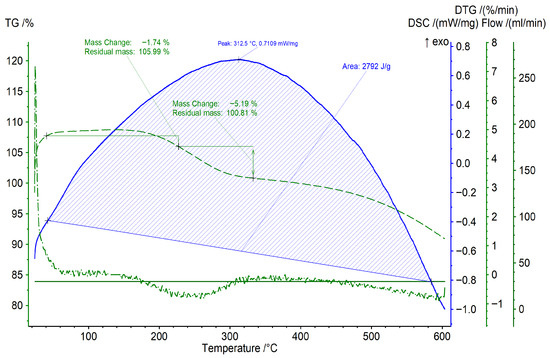
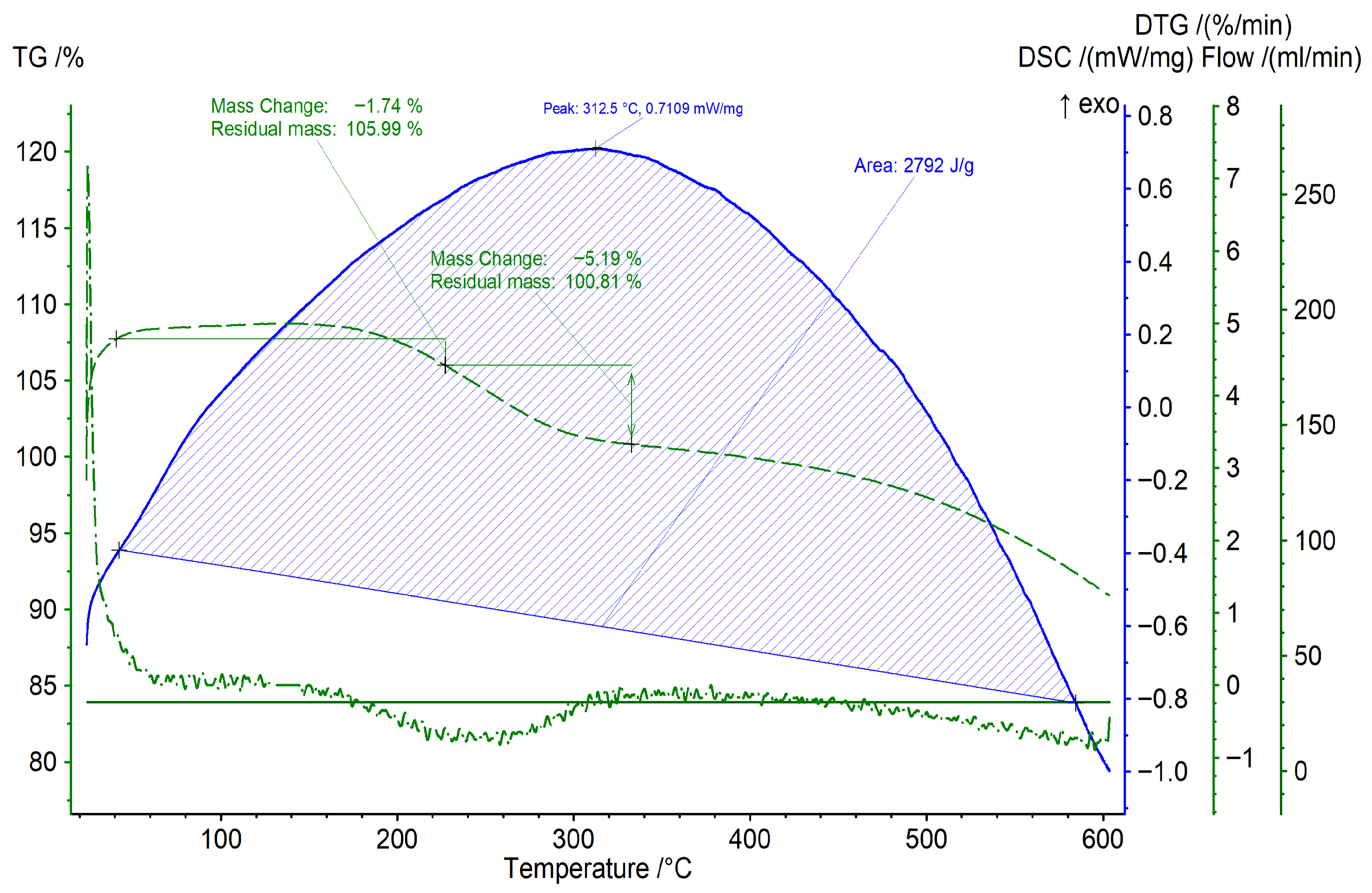
Differential thermogravimetry (TG) and differential scanning calorimetry (DSC) of carbon samples provide useful data on the type of processes that occur during thermal treatment (Figure 1). DSC and TG profiles show that different processes occur during thermal treatment (20–900 °C) of the samples. Most likely, the presence of aromatic hydrocarbon structures leads to higher thermal stability of the materials, which is confirmed by the lower weight loss with increasing temperature. Thermogravimetry and differential scanning calorimetry of the materials provide valuable data on the type of processes that occur during thermal treatment. DSC and TG profiles show different processes that occur during thermal treatment of the macroporous carbon material (Figure 1). The exo-effects at 250 to 700 °C in macroporous carbon material are due to the synthesis reactions (occurring with the release of heat) involving radicals produced by the destruction of the organic mass. In the case of MCA, these peaks are not so pronounced due to the smaller amount of free radicals produced during the destruction of inorganic mass, which decomposes more slowly and at a higher temperature. The results obtained from TG and DSC analysis are very valuable for obtaining information about the nature of the processes that occur during the thermal treatment of carbonizates. Based on them, an appropriate temperature increase regime can be determined, allowing the formation of a product with suitable properties. The thermal destruction process has been studied in detail, and important hypotheses and conclusions have been made. Taking into account the presented concepts, it can be considered that some of the main factors determining the reactions occurring with the organic mass during the heating process are the chemical composition of the material and the rate of temperature increase. Carbon materials obtained during the first stage of thermal oxidative treatment of the raw material with the use of an oxidant differ in their chemical composition. This is due to the use of sulfuric acid, which catalyzes the polycondensation processes. The sample taken for analysis is too small, and the process occurs in a gas stream. The results of the analysis are useful because they give an idea of the dynamics of the ongoing destruction, which allows the selection of appropriate conditions for the subsequent thermal treatment after the synthesis of the materials [28].
Figure 1.
TG and DSC analysis (endo-effects are downwards, exo-effects are upwards) of macropore carbon samples, synthesized by treatment with H2SO4 of the mixtures, containing 50% pitch and 50% furfural. (dashed green—TG, blue line—DSC).
3.2. Porous Texture of the Obtained Carbon Adsorbents
The iodine adsorption results and the yield of the final product—the synthesized carbon sample—are shown in Table 1. The iodine number results obtained are important information, as they indicate the fraction of the surface area of the carbon materials accessible to iodine, which is determined by the number of pores accessible to adsorbates with a size larger than 1.5 nm.
Table 1.
Dependence of the iodine number and carbon yield on the activation temperature.
Based on the iodine number results and the yield of the carbon adsorbent, the activation temperature was optimized (750 °C) to obtain a macroporous carbon material with an acceptable yield and moderately high iodine capacity.
The low content of mineral components in the raw material used and the leaching effect determine the low ash content after acid treatment; a lower ash content is a desirable characteristic for carbon adsorbents, as it increases chemical purity, improves thermal and oxidative stability, and minimizes interference in adsorption processes, especially in sensitive applications such as aqueous-phase pollutant removal and gas purification.
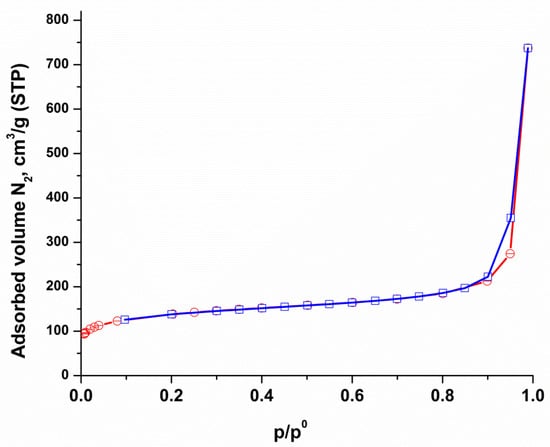
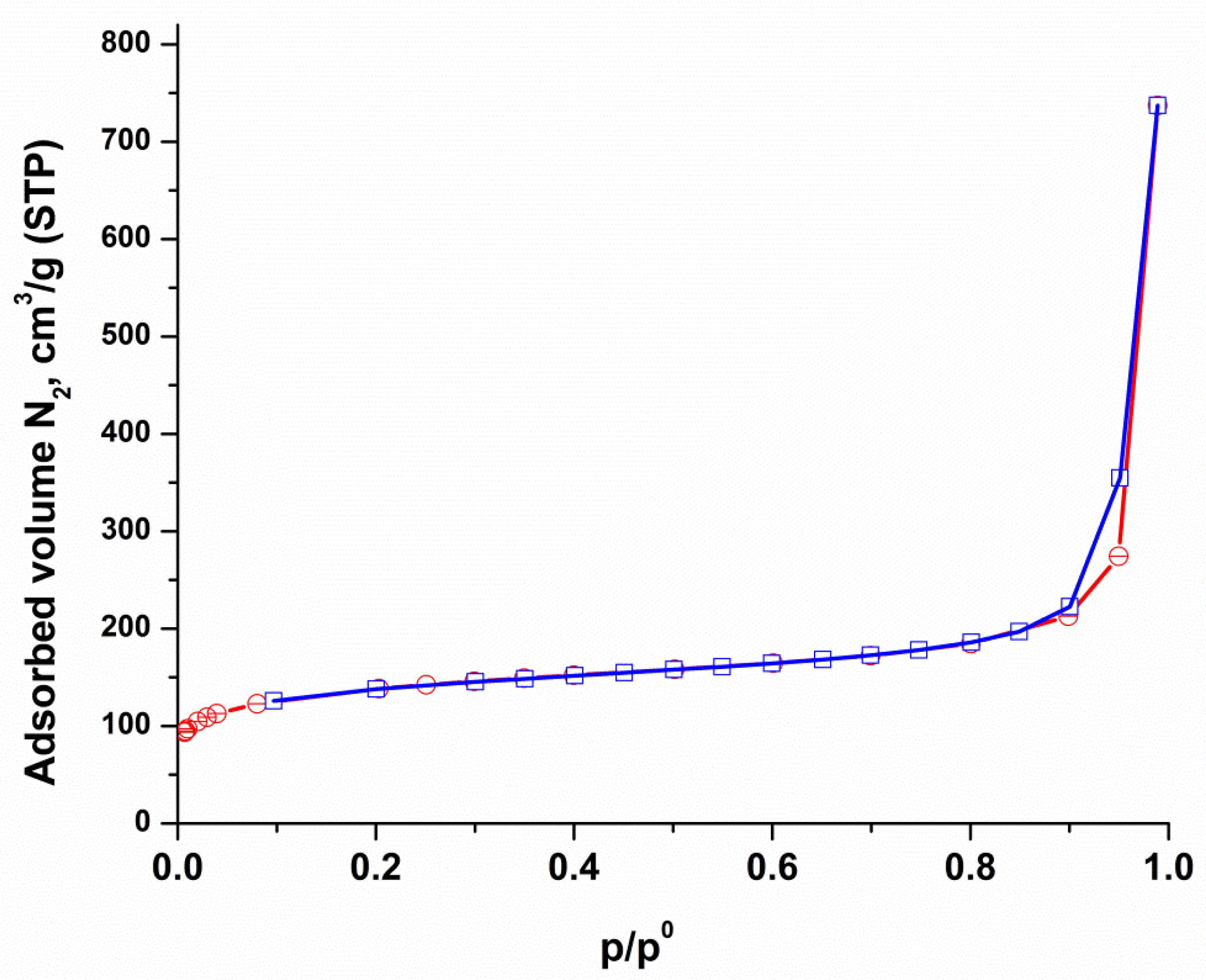
Figure 2 (MCA) and Table 2 present data from experiments on the physisorption of nitrogen at −196 °C. The isotherm of MCA is close to type II, indicating the presence of macropores in the low-pressure region, according to the IUPAC classification [22,23,24,25,26].
Figure 2.
N2 adsorption isotherms at −196 °C of the carbon sample synthesized by treatment with H2SO4.
Table 2.
Main textural parameters of the obtained activated carbons derived from N2 adsorption isotherms at −196 °C.
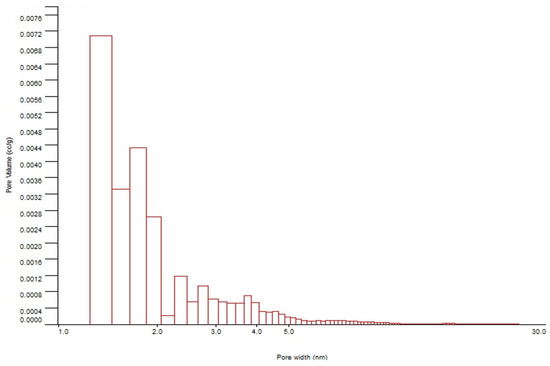
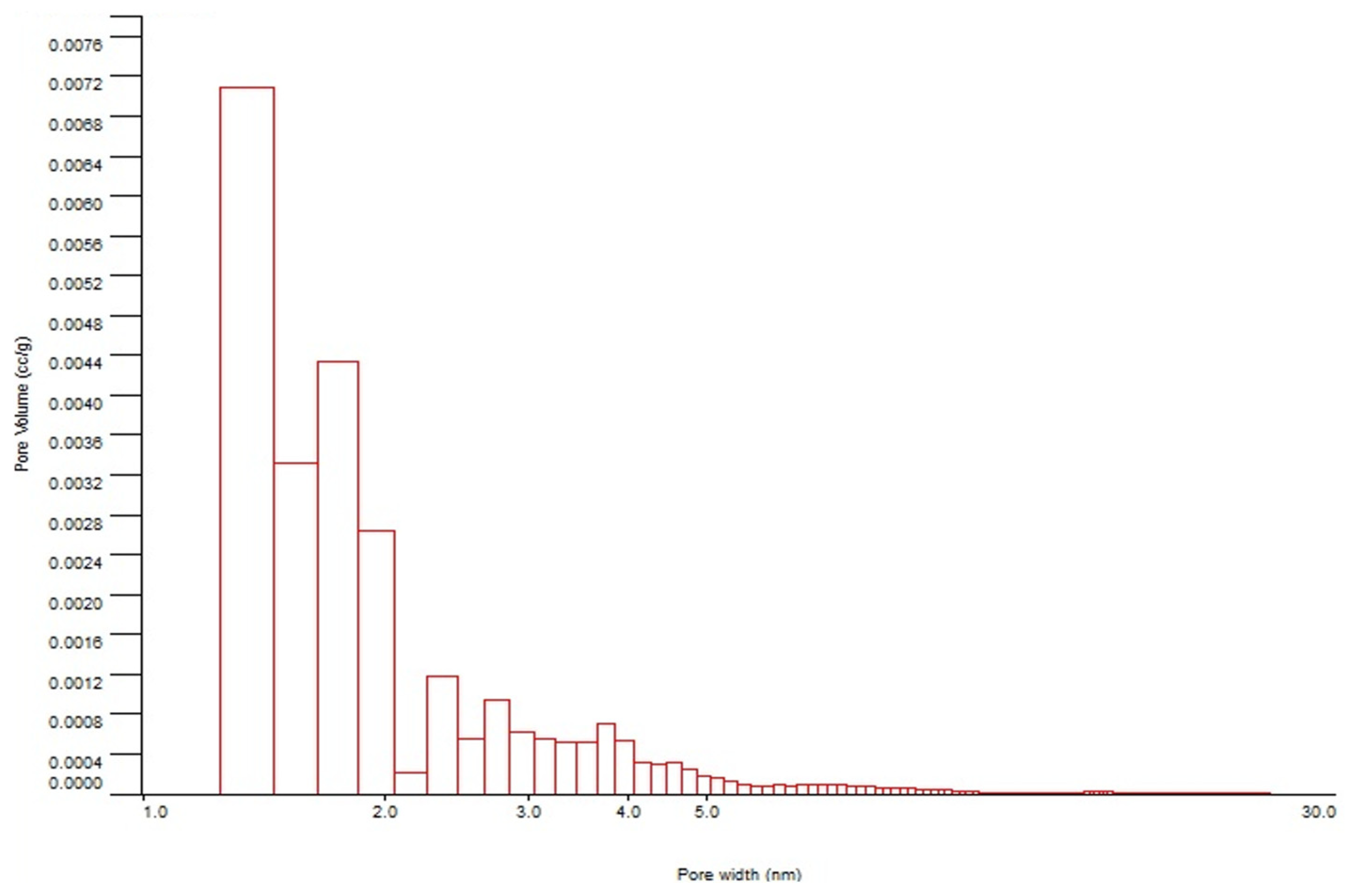
DFT Pore size distribution data [26] are presented in Figure 3 (MCA), which shows the presence of micropores in the range of 1.5–2.0 nm and small mesopores in the range of 2.0–5.0 nm (Table 2).
Figure 3.
Pore size distribution of MCA.
The macropore volume of the carbon adsorbent was calculated by the difference V total − V meso − Vmicro using the result of the total pore volume calculated using the result of helium pycnometry by the following formula: Total Pore Volume = Bulk Volume − He Volume.
The results in Table 2 show that the carbon adsorbent contains a large amount of macropores. Considering that the E. coli molecule has a relatively large size, carbon adsorbents are suitable for use as adsorbents for the extraction of these bacteria from aqueous solution, as this allows greater access of the adsorbate molecules to the adsorbent surface.
While the BET surface area of MCA is lower compared to some high-performance activated carbons reported in the literature, it is important to note that the target adsorbate in this study is E. coli. High BET surface area is typically a result of extensive microporosity, which is inaccessible to bacteria due to size exclusion. The synthesis parameters were intentionally chosen to favor the development of macropores, providing sufficient space for the docking and entrapment of bacterial cells, which is the primary mechanism of action for this specific application.
To further justify the focus on the synthesized MCA, a comparative analysis with standard microporous activated carbons was conducted. Conventional activated carbons typically exhibit high BET surface areas and high micropore volumes (Vmicro > 0.4 cm3/g), but very limited macroporosity (Vmacro < 0.1 cm3/g). In contrast, our MCA (as shown in Table 2) features a significantly higher macropore volume (e.g., 0.568 cm3/g), despite its lower specific surface area (501.6 m2/g). This difference is critical for the target application. While microporous carbons are efficient for adsorbing small molecules, their pores are physically inaccessible to E. coli cells (approx. 1–2 µm). The high Vmacro of our material provides the necessary spatial volume for the effective entrapment and immobilization of bacteria, explaining the high removal efficiency observed in our experiments. This justifies why the development of a macroporous texture is more significant for antibacterial applications than simply achieving a high surface area.
3.3. SEM Analysis
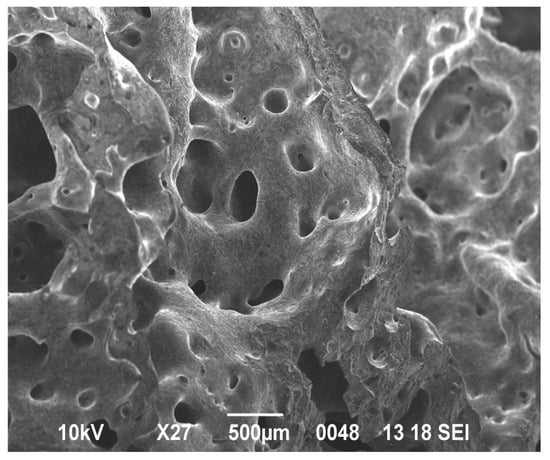
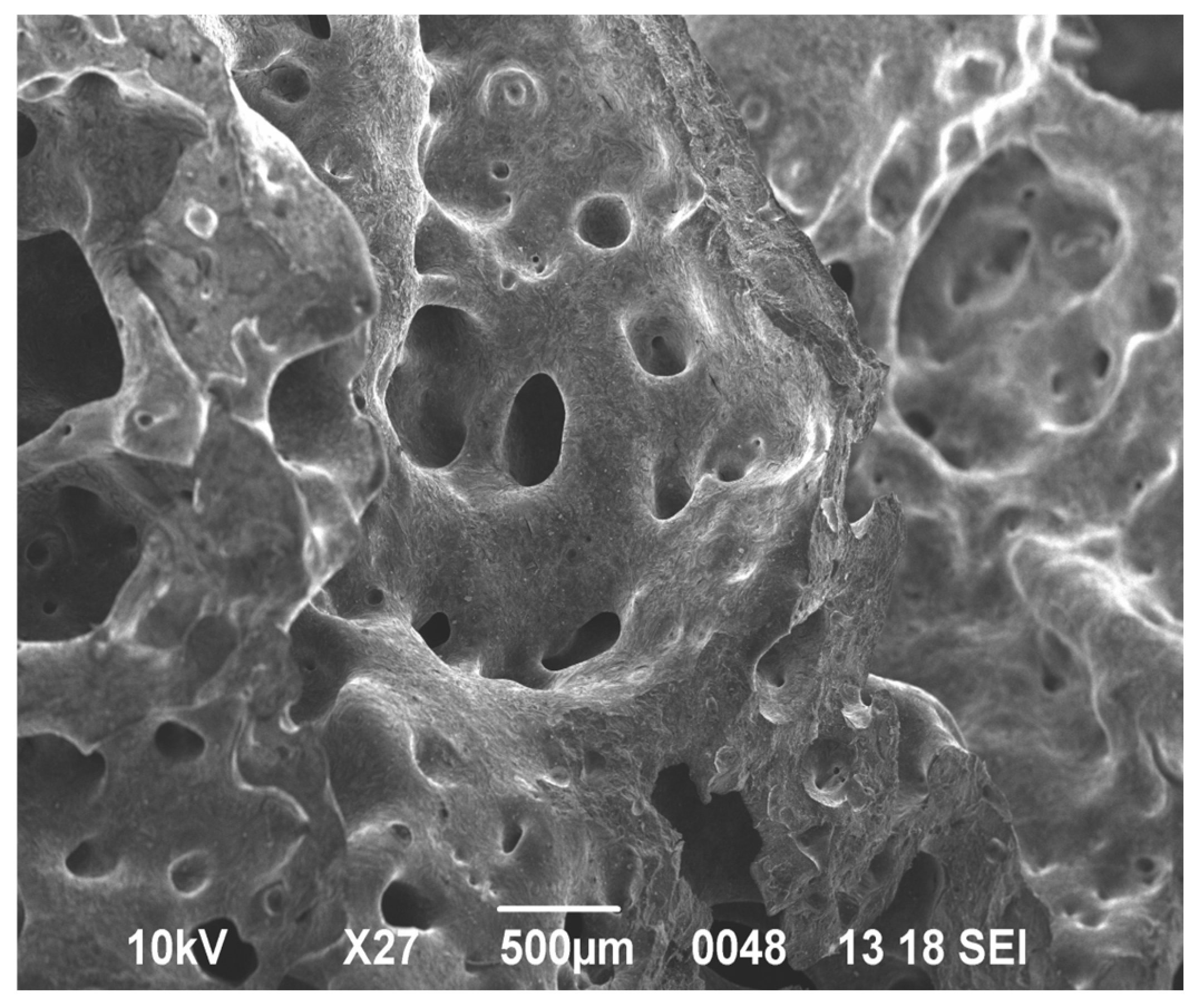
Figure 4 shows SEM micrographs of the macroporous carbon material (MCA) obtained from the mixture of pitch and furfural. The carbon adsorbent possesses a hierarchical network of macropores of various sizes. The SEM images clearly reveal the presence of micro-cracks within the sample, which are characteristic of well-developed macroporous carbon architectures.
Figure 4.
SEM micrograph of macropore carbon adsorbent (MCA).
These cracks appear mainly between the carbon layers arranged parallel to the pore surface, particularly in the cell junction zones. The formation of these micro-cracks is attributed to the anisotropic shrinkage of the carbon matrix during the cooling phase of the carbonization process. As the aromatic layers align parallel to the curvature of the macropores during the mesophase stage, the resulting differential thermal stresses are relieved through fissuring. This occurs most prominently in the junction zones, where the density of interconnected pore walls is highest, and stress concentration is maximized. These structural defects are beneficial, as they further contribute to the accessibility of the internal surface area for the bacterial cells.
Notably, no large cracks were found on the cell membranes of the obtained samples, indicating the structural integrity of the macropore walls. The MCA is characterized by small anisotropic domains, a feature resulting from the use of concentrated sulfuric acid as a catalyst for polycondensation and polymerization. The acid treatment promotes these processes to a greater extent in the starting mixture, leading to a rapid change in the rheological properties of the raw material. This ‘chemical locking’ of the structure facilitates the formation of larger macropores. Furthermore, the solid intermediate obtained from the sulfuric acid treatment is characterized by a denser and less reactive framework, which restricts the formation of smaller pores (micropores) during the subsequent steam activation, effectively tailoring the material for microbial immobilization.
3.4. Elemental Analysis of Carbon Samples
Table 3 presents the data from the elemental analysis of the obtained carbon sample in mixtures containing furfural. The results show that the samples, when treated with sulfuric acid, have a higher carbon content and a lower hydrogen and oxygen content, which is the result of a higher number of condensation reactions. These reactions lead to the formation of a higher number of aromatic and higher-molecular-weight compounds, which leads to different rheological properties of the reaction mixtures. At the same time, the higher number of condensation reactions during the treatment with concentrated sulfuric acid leads to the release of water, and therefore, the hydrogen and oxygen contents in the final products are reduced. Acid treatment increases the sulfur content in the obtained carbon samples and leads to an increased softening point.
Table 3.
Elemental analysis of raw material and synthesized macroporous carbon adsorbent.
3.5. Oxygen Functional Group Content
The main active adsorption centers on the surface of carbon materials are the various functional groups and paramagnetic centers (unpaired electrons). These centers play an important role in the chemical interaction between the carbon adsorbent and the adsorbate. In the present work, the amount of oxygen groups (with acidic and alkaline character) on the surface of the obtained carbon adsorbent has been determined. Oxygen-containing functional groups are extremely important specific characteristics of carbon adsorbents, since they have a strong influence on the adsorption properties as active centers for chemical adsorption.
Table 4 represents the type and quantitative determination of oxygen groups in the synthesized carbon material. On the surface of the activated carbon, various oxygen-containing groups with different chemical properties are found by titration using the Boehm method.
Table 4.
Quantification of oxygen groups on activated carbon surface (mmol/g).
A large amount of carbonyl groups and a small amount of strong acids (lactone-like bonding structures) are found on the surface of the sample obtained by steam activation. Steam activation leads to the formation of a larger amount of basic groups on the surface of MCA, which is consistent with the basic pH value.
3.6. FTIR Spectra of MCA
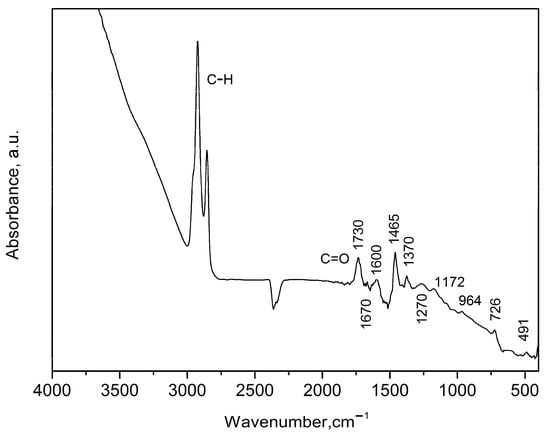
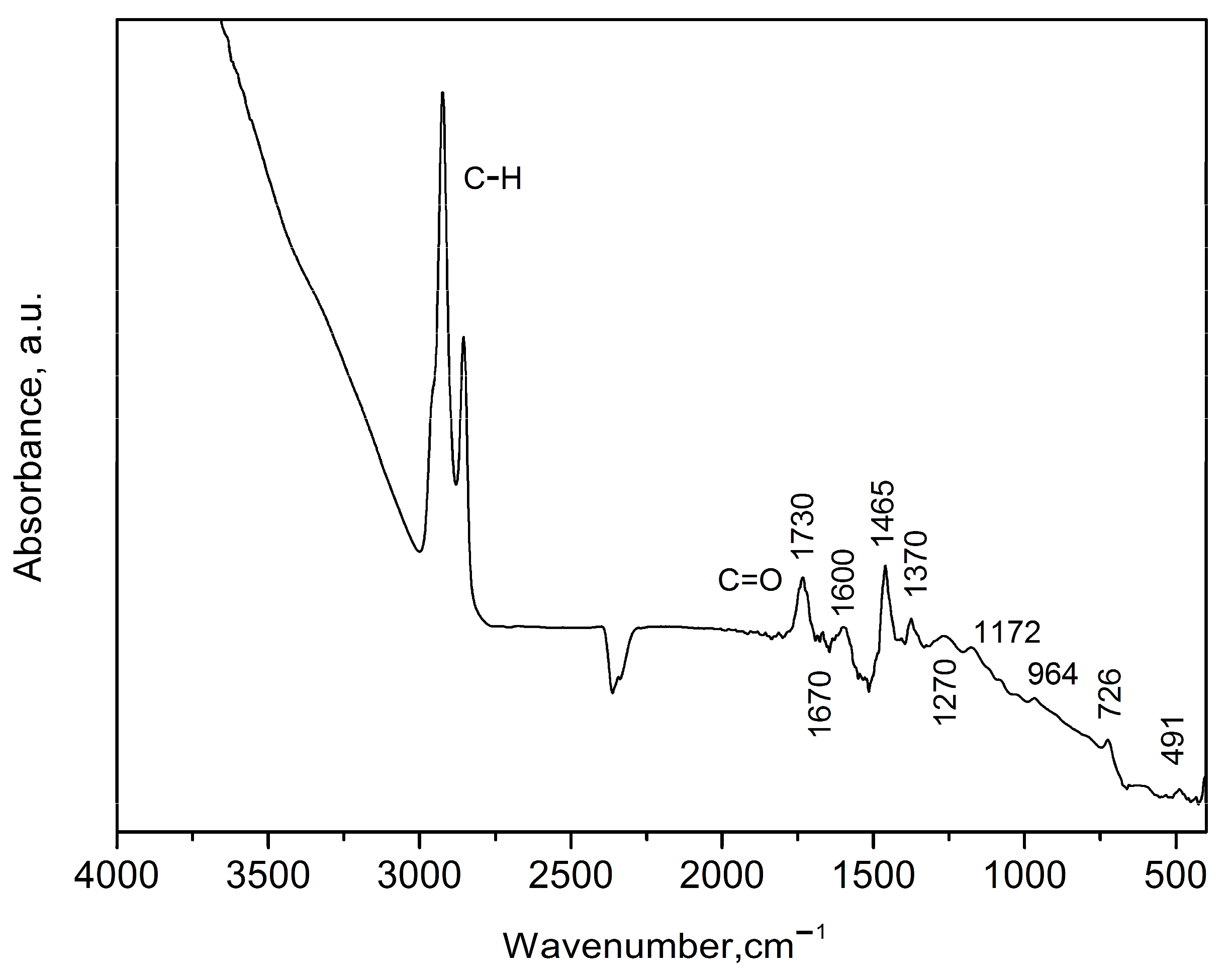
The surface chemistry of the MCA was qualitatively analyzed by IR spectroscopy (Figure 5) to support the quantitative results obtained from the Boehm titration. These results confirm the presence of various oxygen-containing groups on the surface, which play a crucial role in enhancing the adsorption properties of the activated carbon and its interaction with bacterial cells. The IR spectra reveal several characteristic absorption bands that correlate well with the identified functional groups. Specifically, stretch vibrations of associated –OH groups were detected around 3400–3230 cm−1, confirming the presence of phenolic and carboxylic sites measured by the Boehm method. The bands at 3000–2800 cm−1 are attributed to aliphatic C-H stretching vibrations. A distinct peak at approximately 1709 cm−1 corresponds to the stretching of C=O in linear aliphatic aldehydes, ketones, and carboxyls [29,30]. The bands around 1660 cm−1 cannot be interpreted unequivocally and could be due to: (1) aromatic ring stretching coupled to highly conjugated carbonyl groups (C=O); (2) stretching vibrations of C=C bonds in aromatic structures; or (3) OH groups [31,32]. Additionally, the bands in the region of 1200–1000 cm−1 are associated with C–O stretching in complex ethers, ring structures, acids, or alcohols. The presence of these oxygen-containing moieties qualitatively validates the quantitative data from the Boehm titration, which indicated a significant concentration of acidic surface groups. This strong agreement between the spectroscopic and chemical methods provides a comprehensive characterization of the surface functionality, confirming that the MCA surface is enriched with specific oxygen states that are instrumental for its performance as an antibacterial agent.
Figure 5.
IR spectrum of macropore carbon adsorbent (MCA).
3.7. XRD Structure Analysis of Macropore Carbon Material (MCA)
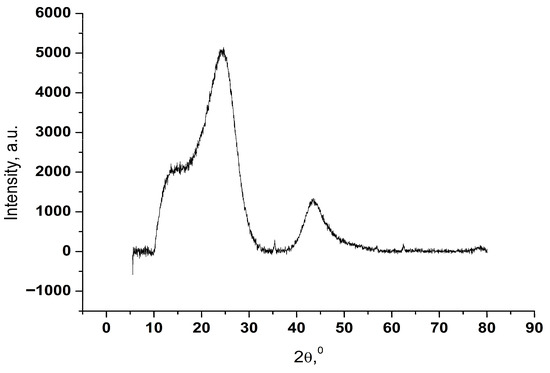
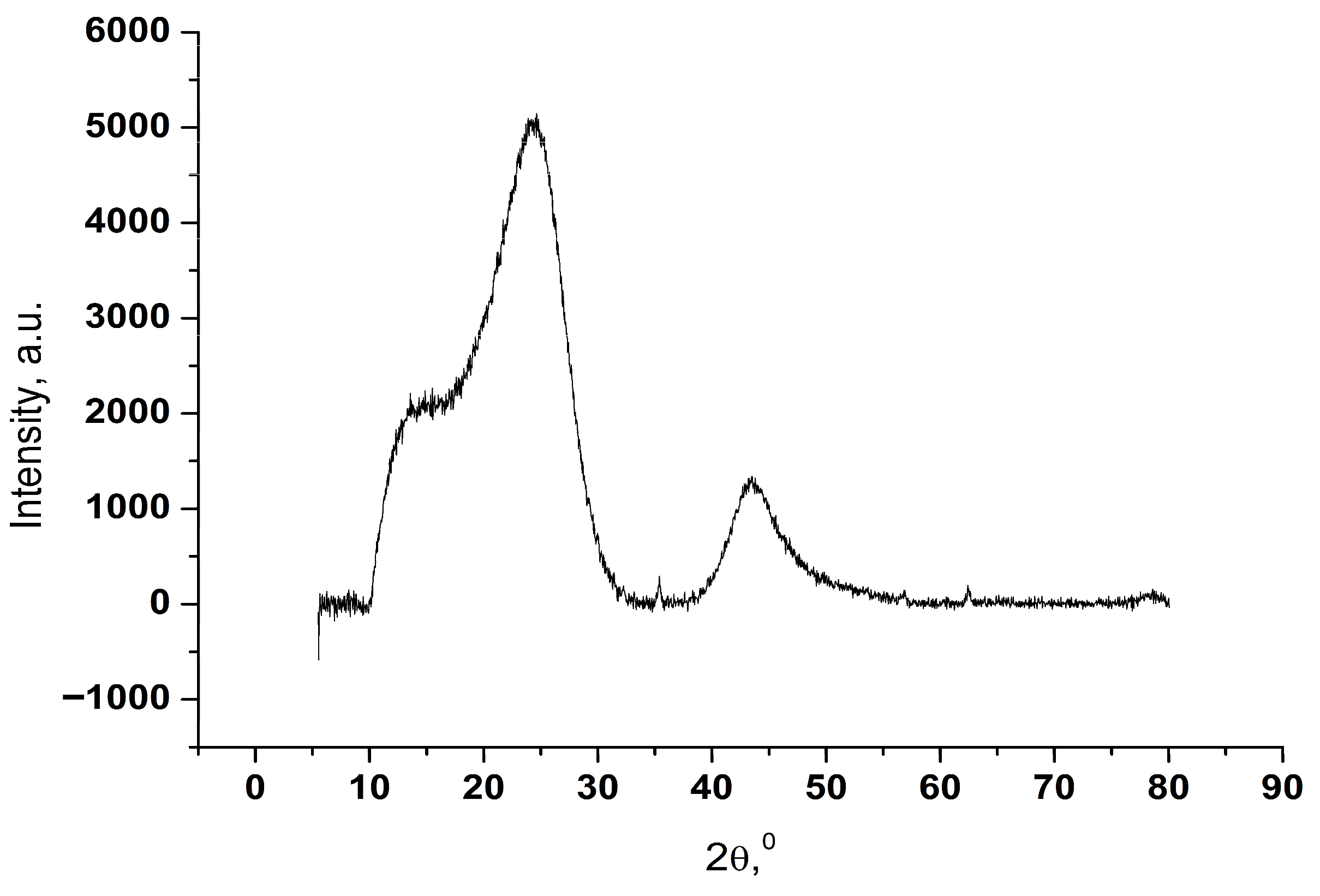
The structural characteristics of the MCA sample were investigated using X-ray diffraction, as shown in Figure 6. The XRD pattern demonstrates a moderate degree of structural ordering (carbonization), characterized by the presence of two broad reflections at approximately 24° and 43°. These peaks correspond to the (002) and (100) reflexes of 2H-hexagonal crystalline graphite [33]. The position and width of these peaks are directly connected to the average crystallite size (Lc and La). While the obtained MCA sample is amorphous on a macro scale, it is composed of microcrystallites (turbostratic structures) formed by small stacks of graphene sheets on a micro scale. Although the carbonization temperature of 750 °C is insufficient for full graphitization, the data demonstrate that MCA exhibits a significant degree of carbonization and local aromatic ordering for this temperature range. This enhanced structural development is likely due to the propensity of sulfuric acid to catalyze polycondensation and polymerization processes during the pre-treatment stage. While these crystallite parameters describe the internal carbon matrix and ensure mechanical stability, the adsorption of bacterial cells is primarily governed by the developed macroporous architecture and surface functional groups, which operate at a much larger scale than the individual carbon microcrystals [34].
Figure 6.
XRD pattern of obtained carbon adsorbent (treated with H2SO4).
3.8. Adsorption Investigations
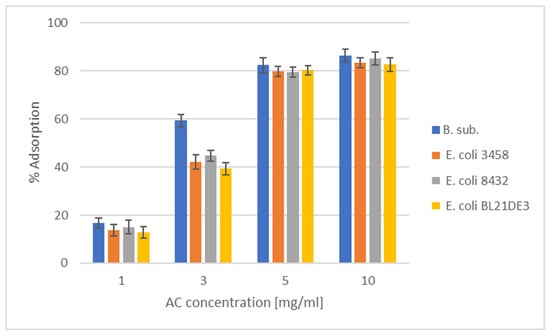
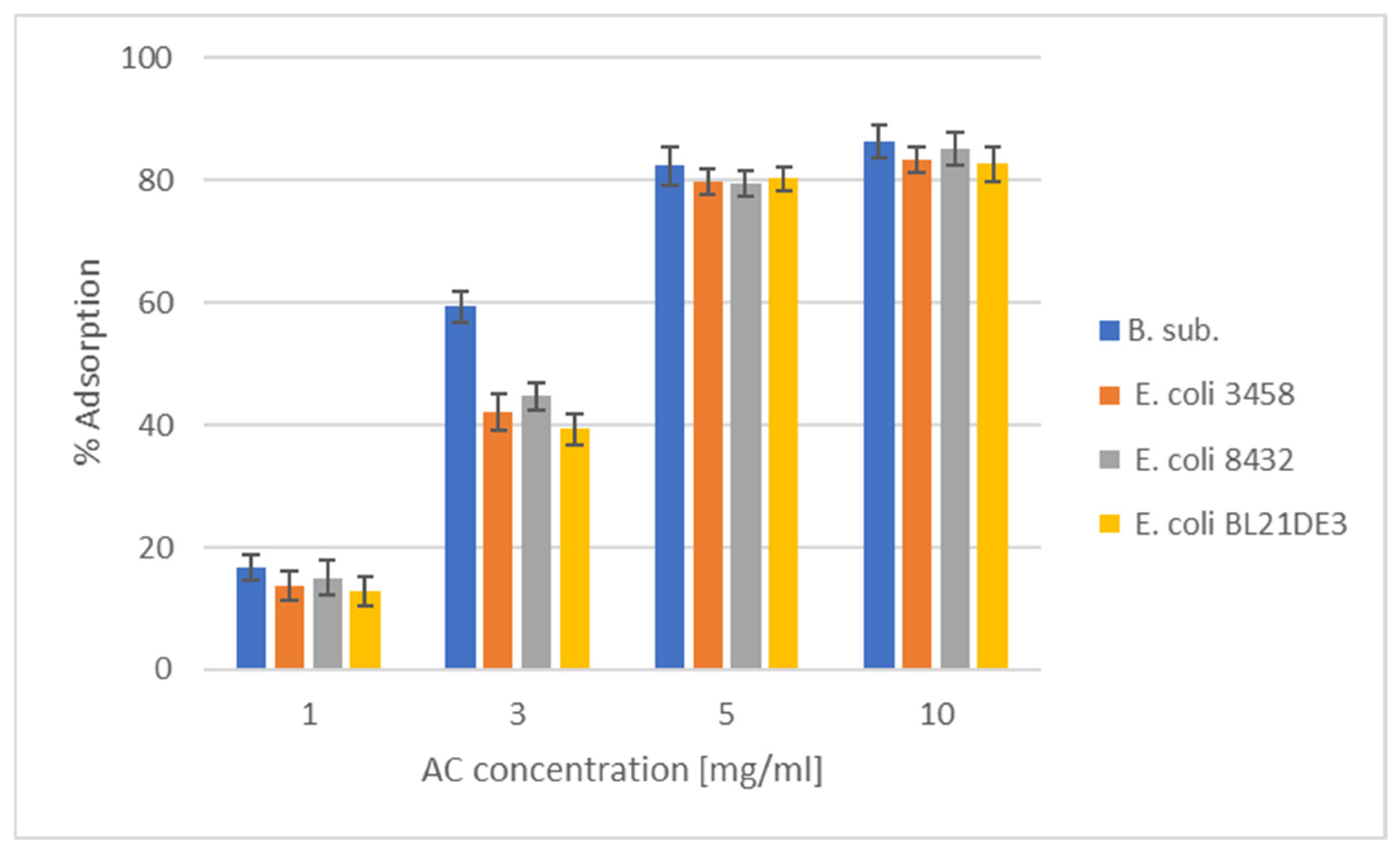
The data in Table 5 show that at a low concentration of bacteria, the percentage of adsorption (removal, purification) is small, which is due to the low concentration of bacteria, and as a result, a small portion of the surface of the adsorbent is involved in the purification process. With an increase in the concentration of bacteria from 1 to 5 mg/mL, the percentage removal of the solution increases significantly, reaching values > 80%. Further enhancement in the concentration of bacteria does not lead to a significant increase in the percentage removal. This is due to saturation of the surface of the adsorbent.
Table 5.
Adsorption measurements of bacterial strain into carbon adsorbent.
Results about bacteria extraction (Figure 7) show that there is a tendency for saturation of the activated carbon after a certain concentration is observed. A subsequent increase in the concentration of activated carbon in the same amount of sample does not result in a significant increase in the percentage of adsorption. This leads to the conclusion that the optimal concentration of MCA in 1 mL of bacterial suspension with OD600 = 0.3 (≈2.4 × 10⁸ CFU) for the tested strains of E. coli is 5 mg/mL, and for B. subtilis it is 3 mg/mL.
Figure 7.
Percentage adsorption on MCA.
The adsorption efficiency was rigorously confirmed using the standard plate count method, which provides direct quantitative evidence of bacterial removal. The sharp decrease in Colony Forming Units (CFUs) from the initial suspension compared to the supernatant after treatment (Figure 7) demonstrates the effectiveness of the MCA.
The removal efficiency (R, %) was calculated using the equation:
where C0 and Ce are the initial and equilibrium bacterial concentrations (CFU/mL), respectively.
The comparison presented in Table 6 clearly justifies the structural design of our MCA. While the materials studied by the other authors cited in Table 6 [14,35,36,37] exhibit lower removal efficiency for E. coli due to the “size exclusion” effect—the micropores are inaccessible to large bacterial cells. Our MCA overcomes this limitation by providing a massive macropore volume (0.568 cm3/g) that serves as a specialized host matrix for bacterial capture. This shows that for biological applications, hierarchical porosity is a far more important performance indicator than total surface area.
Table 6.
Comparison of textural properties and bacterial removal efficiency.
4. Conclusions
Carbon adsorbents for bacterial removal are widely studied; however, the novelty of this work lies in the tailored synthesis of a hierarchical pore structure specifically designed to match the dimensions of E. coli. In contrast to conventional activated carbons, which are primarily microporous, our method uses a unique precursor mixture (coal tar pitch and furfural) and a specific acid-catalyzed condensation step. This results in an adsorbent with a dominant macropore volume, which is crucial for the physical entrapment of bacteria. Furthermore, our study demonstrates how industrial waste products can be transformed into a high-value antibacterial agent through a simplified activation process, providing a significant advantage over more complex templating techniques described in the literature.
Although this study focuses on a specific macroporous carbon architecture, the results provide a fundamental basis for the design of biomass-derived adsorbents tailored for large biological entities. Future research will expand upon these findings by investigating the influence of ionic strength and competing ions in complex wastewater matrices to further establish the practical versatility of MCA.
Author Contributions
Conceptualization, I.S., B.T., A.K., B.P., P.D. and N.P.; methodology, I.S., B.T., A.K., B.P., P.D. and N.P.; investigation, I.S., P.P., A.K., B.T., B.P., J.K. and L.V.; writing—original draft preparation, I.S., A.K., B.P., B.T., P.D., L.V., J.K. and N.P.; writing—review and editing, I.S., B.T., P.D. and N.P.; funding acquisition, I.S., B.T., P.D. and N.P. All authors have read and agreed to the published version of the manuscript.
Funding
The authors gratefully acknowledge the financial support for this work from the Bulgarian Science Fund, grant number KP-06-M77/2. This research was funded by project No. BG16RFPR002-1.014-0015: “Clean Technologies for Sustainable Environment—Water, Waste, Energy for Circular Economy”, funded by the European Regional Development Fund through the Bulgarian program “Research, Innovation and Digitalization for Smart Transformation”, and funded under project BG-RRP-2.017-0006 from the Recovery Plan for Europe (NextGenerationEU).
Institutional Review Board Statement
The study was conducted in accordance with the European Code of Conduct for Research Integrity and the Declaration of Helsinki, and approved by the Ethics Committee of the Institute of Organic Chemistry with Centre of Phytochemistry (protocol code IOCCP-005 and date of approval 23 April 2019).
Informed Consent Statement
Informed consent was obtained from all subjects involved in the study.
Data Availability Statement
The data presented in this study are available on request from the corresponding author.
Conflicts of Interest
The authors declare no conflicts of interest.
References
- Cooney, D. Activated Charcoal: Antidote, Remedy and Health Aid; TEACH Services, Inc.: Brushton, NY, USA, 2016. [Google Scholar]
- Carballa, M.; Omil, F.; Lema, J.; Llompart, M.; Garcia, C.; Rodriguez, I.; Ternes, T. Behavior of pharmaceuticals, cosmetics and hormones in a sewage treatment plant. Water Res. 2004, 38, 2918–2926. [Google Scholar] [CrossRef] [Scilit] [PubMed]
- Ramos, A.; Fink, J.; Hernandez, E. Prevention of toxic effects of mycotoxins by means of nonnutritive adsorbent compounds. J. Food Prot. 1996, 59, 631–641. [Google Scholar] [CrossRef] [Scilit]
- Promdee, K.; Chanvidhwatanakit, J.; Satitkune, S.; Boonmee, C.; Kawichai, T. Characterization of carbon materials and differences from activated carbon particle (ACP) and coal briquettes product (CBP) derived from coconut shell via rotary kiln. Renew. Sustain. Energy Rev. 2017, 75, 1175–1186. [Google Scholar] [CrossRef] [Scilit]
- Togibasa, O.; Mumfaijah, M.; Allo, Y.; Dahlan, K. The Effect of Chemical Activating Agent on the Properties of Activated Carbon from Sago Waste. Appl. Sci. 2021, 11, 11640. [Google Scholar] [CrossRef] [Scilit]
- Tarikuzzaman, A.M. Review On Activated Carbon: Synthesis, Properties And Applications. Eur. J. Adv. Eng. Technol. 2023, 10, 114–123. [Google Scholar]
- Ho, S.M. Removal of Dyes from Wastewater by Adsorption onto Activated Carbon: Mini Review. J. Geosci. Environ. Prot. 2020, 8, 120–131. [Google Scholar] [CrossRef]
- Festi, D.; Montagnani, M.; Azzaroli, F.; Lodato, F.; Mazzella, G.; Roda, A.; Colecchia, A. Clinical efficacy and effectiveness of ursodeoxycholic acid in cholestatic liver diseases. Curr. Clin. Pharmacol. 2007, 2, 155–177. [Google Scholar] [CrossRef] [Scilit]
- Pistocchi, A.; Alygizakis, N.; Brack, W.; Boxall, A.; Cousins, I.; Drewes, J.; Finckh, S.; Gallé, T.; Launay, M.; McLachlan, M.; et al. European scale assessment of the potential of ozonation and activated carbon treatment to reduce micropollutant emissions with wastewater. Sci. Total Environ. 2022, 848, 157124. [Google Scholar] [CrossRef] [Scilit] [PubMed]
- Azam, K.; Nasir, S.; Park, Y.; Murid, H.; Akhter, P.; Shafiq, I.; Farid, A.; Jamil, F. A review on activated carbon modifications for the treatment of wastewater containing anionic dyes. Chemosphere 2022, 306, 135566. [Google Scholar] [CrossRef] [Scilit] [PubMed]
- Liu, X.; Fu, M.; Zheng, H.; Lu, J. Activated carbon induced hydrothermal carbonization for the treatment of cotton pulp black liquor. J. Water Process Eng. 2022, 47, 102733. [Google Scholar] [CrossRef] [Scilit]
- Bohringer, B.; Fichtner, S.; Giebelhausen, J.-M. High-Performance Adsorbents Based on Activated Carbon Having High Meso- and Macropososity. U.S. Patent 2012/0172216, 5 July 2012. [Google Scholar]
- Yoshizaki, M.; Lida, H.; Obikawa, T.; Yamada, S.; Tabata, S.; Usami, K.; Mitsugi, M.; Ishihara, H.; Yamanoi, S.; Minatoya, M. Porous Carbon Material, Adsorbent, Oral Adsorbent, Medical Adsorbent, Filler for Blood Purification Column, Water Purification Adsorbent, Cleansing Agent, Carrier, Sustained Release Pharmaceutical, Cell Culture Scaffold, Mask, Carbon/Polymer Composite, Adsorbent Sheet and Functional Food. U.S. Patent 2014/0011666, 9 January 2014. [Google Scholar]
- Rivera-Utrilla, J.; Bautista-Toledo, I.; Ferro-Garca, M.A.; Moreno-Castilla, C. Activated Carbon surface modifications by adsorption of bacteria and their effect on aqueous lead adsorption. J. Chem. Technol. Biotechnol. 2001, 76, 1209–1215. [Google Scholar] [CrossRef] [Scilit]
- Janelidze, N.; Jaiani, E.; Lashkhi, N.; Tskhvediani, A.; Kokashvili, T.; Gvarishvili, T.; Jgenti, D.; Mikashavidze, E.; Diasamidze, R.; Narodny, S.; et al. Microbial water quality of the Georgian coastal zone of the Black Sea. Mar. Pollut. Bull. 2011, 62, 573–580. [Google Scholar] [CrossRef] [Scilit]
- Stoycheva, I.; Tsyntsarski, B.; Vasileva, M.; Petrova, B.; Georgiev, G.; Budinova, T.; Szeluga, U.; Pusz, S.; Kosateva, A.; Petrov, N. New method for synthesis of carbon foam on the base of mixture of coal tar pitch and furfural without using pressure and stabilization treatment. Diam. Relat. Mater. 2020, 109, 108066. [Google Scholar] [CrossRef] [Scilit]
- Boehm, H.P. Chemical Identification of Surface Groups. Adv. Catal. 1966, 16, 179–274. [Google Scholar] [CrossRef] [Scilit]
- Papirer, E.; Li, S.; Donnet, J.-B. Contribution to the study of basic surface groups on carbons. Carbon 1987, 25, 243–247. [Google Scholar] [CrossRef] [Scilit]
- Brunauer, S.; Emmet, P.H.; Teller, E. Adsorption of gases in multimolecular layers. J. Am. Chem. Soc. 1938, 60, 309–319. [Google Scholar] [CrossRef] [Scilit]
- Rouquerol, F.; Rouqueol, J.; Sing, K. Adsorption by Powders and Porous Solids—Principles, Methodology and Applications; Elsevier: Amsterdam, The Netherlands, 1999. [Google Scholar] [CrossRef] [Scilit]
- Marsh, H.; Rodríguez-Reinoso, F. Activated Carbon; Elsevier Ltd.: Amsterdam, The Netherlands, 2006. [Google Scholar] [CrossRef] [Scilit]
- Chen, S.G.; Yang, R.T. Theoretical basis for the potential theory adsorption isotherms: The Dubin-Radushkevich and Dubinin-Astakhov equation. Langmuir 1994, 10, 4244–4249. [Google Scholar] [CrossRef] [Scilit]
- Gomez-Serrano, V.; Gonzalez-Garcia, C.; Gonzalez-Martin, M. Nitrogen adsorption Isotherms on carbonaceous materials. Comparison of BET and Langmuir surface areas. Powder Technol. 2001, 116, 103–108. [Google Scholar] [CrossRef] [Scilit]
- Thommes, M.; Kaneko, K.; Neimark, A.V.; Olivier, J.P.; Rodriguez-Reinoso, F.; Rouquerol, J.; Sing, K.S.W. Physisorption of gases, with special reference to the evaluation of surface area and pore size distribution (IUPAC Technical Report). Pure Appl. Chem. 2015, 87, 1051–1069. [Google Scholar] [CrossRef] [Scilit]
- Bansal, R.C.; Goyal, M. Activated Carbon Adsorption; Taylor & Francis CRC Press: Boca Raton, FL, USA, 2005. [Google Scholar] [CrossRef] [Scilit]
- Groen, J.C.; Peffer, L.A.A.; Pérez-Ramı, J. Pore size determination in modified micro- and mesoporous materials. Pitfalls and limitations in gas adsorption data analysis. Microporous Mesoporous Mater. 2003, 60, 1–17. [Google Scholar] [CrossRef] [Scilit]
- Benjedim, S.; Romero-Cano, L.A.; Pérez-Cadenas, A.F.; Bautista-Toledo, M.I.; Lotfi, E.M.; Carrasco-Marín, F. Removal of emerging pollutants present in water using an E-coli biofilm supported onto activated carbons prepared from argan wastes: Adsorption studies in batch and fixed bed. Sci. Total Environ. 2020, 720, 137491. [Google Scholar] [CrossRef] [Scilit]
- Sandu, T.; Chiriac, A.L.; Tsyntsarski, B.; Stoycheva, I.; Caprarescu, S.; Damian, C.M.; Iordache, T.V.; Patroi, D.; Marinescu, V.; Sarbu, A. Advanced hybrid membranes for efficient nickel retention from simulated wastewater. Polym. Int. 2021, 70, 866–876. [Google Scholar] [CrossRef] [Scilit]
- Petrov, N.; Budinova, T.; Razvigorova, M.; Ekinci, E.; Yardim, F.; Minkova, V. Preparation and characterization of carbon adsorbents from furfural. Carbon 2000, 38, 2069–2075. [Google Scholar] [CrossRef] [Scilit]
- Miguel, G.S.; Fowler, G.D.; Sollars, C.J. A study of the characteristics of activated carbons produced by stream and carbon dioxide activation of waste tyre rubber. Carbon 2003, 41, 1009–1016. [Google Scholar] [CrossRef] [Scilit]
- Zawadzki, J.; Azambre, B.; Heintz, O.; Krzton, A.; Weber, J. IR study of the adsorption and decomposition of methanol on carbon surfaces and carbon-supported catalysts. Carbon 2000, 38, 509. [Google Scholar] [CrossRef] [Scilit]
- Zawadzki, J.; Wisniewski, M.; Weber, J.; Heintz, O.; Azambre, B. IR study of adsorption and decomposition of propan-2-ol on carbon and carbon-supported catalysts. Carbon 2001, 39, 187. [Google Scholar] [CrossRef] [Scilit]
- Puech, P.; Dabrowska, A.; Ratel-Ramond, N.; Vignoles, G.L.; Monthioux, M. New insight on carbonisation and graphitisation mechanisms as obtained from a bottom-up analytical approach of X-ray diffraction patterns. Carbon 2019, 147, 602–611. [Google Scholar] [CrossRef] [Scilit]
- Barnakov, C.N.; Khokhlova, G.P.; Popova, A.N.; Sozinov, S.A.; Ismagilov, Z.R. XRD Characterization of the Structure of Graphites and Carbon Materials Obtained by the Low-Temperature Graphitization of Coal Tar Pitch. Eurasian Chem.-Technol. J. 2015, 17, 87–93. [Google Scholar] [CrossRef] [Scilit]
- Chung, J.; Edewi, O.C.; Foppen, J.W.; Gerner, G.; Krebs, R.; Lens, P.N.L. Removal of Escherichia coli by Intermittent Operation of Saturated Sand Columns Supplemented with Hydrochar Derived from Sewage Sludge. Appl. Sci. 2017, 7, 839. [Google Scholar] [CrossRef] [Scilit]
- Al-Gaashani, R.; Aktar, M.W.; Jabbar, K.A.; Tong, Y.; Abutaha, A.; Mroue, K.; Kochkodan, V.; Lawler, J. Comparative study on antibacterial activities and removal of iron ions from water using novel modified sand with silver through the hydrothermal technique. Sci. Rep. 2025, 8, 16097. [Google Scholar] [CrossRef] [Scilit]
- Ogbeh, G.O.; Ogunlela, A.O.; Akinbile, C.O.; Iwar, R.T. Adsorption of organic micropollutants in water: A review of advances in modelling, mechanisms, adsorbents, and their characteristics. Environ. Eng. Res. 2025, 30, 230733. [Google Scholar] [CrossRef] [Scilit]

Disclaimer/Publisher’s Note: The statements, opinions and data contained in all publications are solely those of the individual author(s) and contributor(s) and not of MDPI and/or the editor(s). MDPI and/or the editor(s) disclaim responsibility for any injury to people or property resulting from any ideas, methods, instructions or products referred to in the content. |
© 2026 by the authors. Licensee MDPI, Basel, Switzerland. This article is an open access article distributed under the terms and conditions of the Creative Commons Attribution (CC BY) license.