


Abstract
Brassica crops, including collard greens, are economically important vegetable crops cultivated worldwide. Among the major pests affecting these crops, the aphids Brevicoryne brassicae (Linnaeus) and Myzus persicae (Sulzer) (Hemiptera: Aphididae) are particularly relevant due to the direct and indirect damage they cause. Increasing consumer demand for sustainable agricultural practices and pesticide-free produce has intensified the search for environmentally friendly pest management alternatives. In this context, plant-derived insecticides have emerged as promising sources of bioactive compounds because of their biodegradability, selectivity, and generally low toxicity to non-target organisms and mammals. Likewise, agro-industrial residues such as avocado seeds have attracted attention as sustainable raw materials with potential bioactive and insecticidal properties. In the present study, biopolyols produced from avocado and neem seeds through a liquefaction process based on green chemistry and waste valorization principles were evaluated for their insecticidal activity against B. brassicae and M. persicae. A series of laboratory and field bioassays were conducted to assess toxicity and repellency effects on aphids. Among the tested formulations, the AAA avocado seed biopolyol (2:1/30 min) showed the highest insecticidal activity, possibly due to better preservation of bioactive compounds under the liquefaction conditions tested. Dose–response and lethal-dose (LD) analyses estimated an LD50 of 64 mg/mL and an LD90 of 429 mg/mL (p < 0.001) for the AAA biopolyol. In addition to its lethal effects, the LD90 concentration of the AAA biopolyol exhibited significant repellency against aphids and outperformed Azamax®applied at the recommended field rate. Field bioassays further demonstrated that both the AAA biopolyol at LD90 and Azamax® significantly reduced aphid abundance in collard greens of the ‘Manteiga’ cultivar under field conditions, compared to the control. Nonetheless, there was no difference in the efficacy of the AAA biopolyol and Azamax® in the field study. Altogether, these findings demonstrate the potential of seed-derived biopolyols as sustainable bioinsecticides for aphid management in Brassica crops, while also highlighting the value of agro-industrial waste as a source of novel bioactive compounds for integrated pest management programs.
1. Introduction
Brassica crops play an important role in agriculture due to their high nutritional value, rapid economic return, and relatively low production costs [1,2]. Among the most widely cultivated and consumed Brassica vegetables are cabbage (Brassica oleracea var. capitata L.), cauliflower (B. oleracea var. botrytis), broccoli (B. oleracea var. italica), and collards (B. oleracea var. acephala). These crops are produced by both small- and large-scale growers, particularly in regions surrounding major urban centers, where proximity to consumer markets enhances their economic viability [3].
In Brazil, collards are one of the most economically important leafy Brassica crops. Although it is typically cultivated during the autumn and winter seasons, the crop also exhibits good adaptation to high-temperature conditions, allowing for broader seasonal production in several regions [4]. Among the insect pests affecting this crop, aphids are considered one of the most important groups because of their frequent occurrence and potential to cause significant yield losses. The cabbage aphid, Brevicoryne brassicae (Linnaeus, 1758), and the green peach aphid, Myzus persicae (Sulzer, 1776) (Hemiptera: Aphididae), are particularly important pests of Brassica crops and are widely distributed across both temperate and tropical regions [5,6].
Under tropical climatic conditions, aphids exhibit accelerated development, completing the nymphal stage within approximately 7–8 days. Their high reproductive potential enables populations to increase rapidly, often resulting in severe infestations within a short period. Both nymphs and adults possess piercing–sucking mouthparts that penetrate the phloem to extract sap, preferentially from young leaves, thereby depriving plants of nutrients and photoassimilates [7,8]. Aphids also excrete honeydew, which promotes the development of sooty mold fungi (e.g., Capnodium spp.), reducing photosynthetic activity and further impairing plant health. Moreover, aphids are efficient vectors of several plant viruses, including Turnip mosaic virus (TuMV), thereby increasing the economic impact of infestations [9,10].
In general, insecticides remain the primary strategy for aphid management because of their rapid knockdown effect and high efficacy in reducing pest populations. However, the indiscriminate or excessive use of these compounds has raised growing concerns due to their adverse effects on human health, environmental quality, and non-target organisms, including pollinators and natural enemies [11,12,13]. Furthermore, repeated insecticide applications exert strong selection pressure on aphid populations, accelerating the evolution of insecticide resistance and compromising long-term pest management [7]. Residues of pesticide active ingredients have also been detected in collard samples at concentrations exceeding the maximum residue limits established by regulatory agencies, highlighting potential food safety concerns [14]. Lastly, the use of conventional insecticides for managing aphids also has important limitations, including variable efficacy among active ingredients, the potential formation of toxic transformation products, and the relatively high costs associated with their application [15,16].
Increasing consumer demand for food produced with reduced pesticide inputs has stimulated the adoption of biological control and reduced-risk insecticides, including insect growth regulators and botanical insecticides. Consequently, alternative pest management approaches have received increasing attention because they seek to maintain crop productivity and product quality while minimizing environmental impacts and risks to human health. In this context, Isman [17] emphasized that both biological control and plant-derived insecticides have become increasingly important components of sustainable pest management. In particular, botanical insecticides represent a promising source of novel bioactive compounds that may provide effective alternatives to conventional synthetic insecticides. These compounds originate from plant secondary metabolism, which produces a wide diversity of metabolites in response to biotic and abiotic interactions [18]. Many of these secondary metabolites function as chemical defenses against herbivores or as semiochemicals involved in plant–insect interactions, exhibiting insecticidal, antifeedant, repellent, or attractant properties [19].
Plant secondary metabolites are commonly classified into three major groups: nitrogen-containing compounds, phenolic compounds, and terpenoids. Nitrogen-containing metabolites, including alkaloids, cyanogenic glycosides, glucosinolates, and non-protein amino acids, are primarily associated with anti-herbivore and antifungal defenses. Phenolic compounds perform multiple ecological functions, including protection against ultraviolet radiation, attraction of pollinators and seed dispersers, allelopathic interactions, and antimicrobial and insecticidal activities. Likewise, terpenoids, including mono-, sesqui-, di-, and triterpenes, participate in diverse plant defense mechanisms by exhibiting insecticidal, fungicidal, bactericidal, herbicidal, and anti-herbivore activities, while also mediating ecological interactions such as pollinator attraction [20,21,22].
Consequently, botanical insecticides have received increasing scientific attention, particularly regarding the identification of bioactive compounds from plant extracts and essential oils obtained from roots, stems, leaves, flowers, fruits, and seeds. These naturally derived products have demonstrated promising efficacy against a wide range of agricultural pests and have been recognized as valuable components of Integrated Pest Management (IPM) programs [23]. Compared with conventional synthetic insecticides, botanical insecticides offer several potential advantages, including rapid environmental degradation, reduced toxicity to humans and non-target organisms, and production from renewable plant resources [24]. Furthermore, the relatively low cost and broad availability of plant materials have encouraged continued research aimed at identifying and validating bioactive compounds with potential agricultural applications [25].
Among botanical insecticides, neem (Azadirachta indica A. Juss.; Meliaceae) is one of the most extensively studied and widely used in agriculture. Its principal bioactive compound, azadirachtin, exhibits broad-spectrum insecticidal activity while maintaining relatively low toxicity to mammals, high selectivity toward natural enemies, and rapid degradation in soil and plant tissues [17,26,27]. The success of neem-derived products has stimulated the search for novel insecticidal compounds from other plant species. However, as emphasized by Stone (1992) [28], the commercial development of plant-derived pesticides largely depends on identifying and characterizing the specific constituents responsible for the observed bioactivity. In many countries, including Brazil, neem-based insecticides are currently recommended for the management of numerous agricultural pests, including mites, whiteflies, aphids, psyllids, thrips, caterpillars, fruit flies, scale insects, grasshoppers, and crickets [29,30,31].
Among the numerous plant species with insecticidal potential, avocado (Persea americana Mill.; Lauraceae) has emerged as a promising source of bioactive compounds. Previous studies have demonstrated that avocado tissues contain abundant secondary metabolites stored in specialized oil cells [32,33,34]. Extracts and oils obtained from avocado leaves, bark, pulp, and seeds have exhibited a wide range of biological activities, including nutritional, pharmacological, and insecticidal properties [35,36,37,38,39,40,41,42]. In particular, Carvalho et al. (2020) [42] demonstrated that seed extracts from the avocado cultivars ‘Breda’ and ‘Margarida’ were effective against the whitefly Bemisia tabaci (Gennadius) (Hemiptera: Aleyrodidae), highlighting the insecticidal potential of avocado-derived products. These findings also support the valorization of agro-industrial by-products, such as avocado seeds, by identifying value-added applications for materials that are otherwise considered processing waste. This approach is considered particularly innovative because avocado seed-derived biopolyols may offer advantages over conventional botanical extracts by combining insecticidal potential with the valorization of an abundant agro-industrial residue. Their production through green liquefaction also provides an alternative approach for recovering diverse bioactive compounds while reducing waste, thereby integrating pest management with principles of circular economy and sustainable production.
Building upon the promising insecticidal potential of avocado and neem seed-derived compounds, we previously developed biopolyols from seeds of the avocado cultivar ‘Margarida’ and neem using a liquefaction process [43] (Santos 2023), and assessed their potential insecticidal activity against aphids. The encouraging results motivated the present study, which aimed to further investigate the insecticidal potential of avocado seed-derived biopolyols against two major aphid pests of collards, Brevicoryne brassicae and Myzus persicae, under both laboratory and field conditions. Additionally, the insecticidal efficacy of the avocado seed biopolyol was compared to the commercial neem-based insecticide Azamax®.
Specifically, laboratory bioassays were conducted to evaluate the dose-dependent toxicity and repellency of the biopolyols in order to identify the most promising formulation. The selected biopolyol was subsequently compared with Azamax® in laboratory assays and further evaluated for its efficacy in suppressing aphid infestations under field conditions in collard production. We hypothesized that avocado seed-derived biopolyols contain bioactive compounds capable of inducing dose-dependent mortality in aphid nymphs, as well as eliciting repellent effects. Additionally, we hypothesized that the avocado seed biopolyol formulations would be as efficacious as the commercial neem-based botanical insecticide Azamax®.
2. Methods
2.1. Rearing of Aphids
Colonies of the cabbage aphid, Brevicoryne brassicae, and the green peach aphid, Myzus persicae, were simultaneously maintained in organza mesh cages throughout the experimental period (September 2021 to September 2022). To establish the colonies, two metal-framed cages (1.0 × 0.5 × 0.5 m) were constructed and enclosed with custom-fitted organza fabric. Each cage was equipped with a zippered side opening to facilitate access. Collards (Brassica oleracea var. acephala, cv. ‘Manteiga’) were grown in 2.8 L plastic pots containing a 4:1 (v/v) mixture of commercial substrate (Bioplant Garden®, Nova Ponte, MG, Brazil) and sieved soil (12-mesh). Approximately 60 potted plants were regularly maintained inside a greenhouse covered with transparent polyethylene film and fitted with 50% shade cloth on the sidewalls, located in the Vegetable Crops Sector of the Federal University of Viçosa, Florestal Campus, Brazil. Seedlings purchased from a local commercial supplier were transplanted into the pots (two to three plants per pot) and maintained separately from the aphid colonies until they reached four to six fully expanded leaves, or were at least 20 days old. At this stage, the plants were used either for colony maintenance inside cages or for laboratory and field bioassays.
To establish the aphid colonies, 20 collards (10 per cage) were transferred to the mesh cages and infested with approximately 1000 aphids collected from commercial collard fields. Field collections contained mixed populations of B. brassicae and M. persicae, the two aphid species commonly found on collards in the region. Because the objective of this study was to evaluate the insecticidal activity of the tested products against naturally occurring aphid infestations, the two species were maintained together throughout colony establishment and subsequent bioassays rather than being separated. To ensure a continuous supply of insects, both the aphid colonies and collards were maintained in a staggered production system throughout the study. Young, uninfested plants were periodically introduced into the cages and inoculated with aphids by placing infested leaves collected from older plants onto the new plants. Once aphid colonization was established, the older infested plants were removed and discarded. Colonies were routinely inspected to detect and eliminate parasitoids, predators, or other arthropods that could interfere with colony.
2.2. Bioassays
2.2.1. Preliminary Screening of the Insecticidal Activity of Biopolyols
The insecticidal activity of the biopolyols produced through the liquefaction process was initially evaluated against mixed populations of the cabbage aphid, B. brassicae and M. persicae. In addition, the insecticidal activity of avocado seed-derived biopolyols was compared with that of neem-derived biopolyols produced under the same liquefaction conditions [43]. More specifically, avocado seeds were first dehydrated, pulverized, and characterized. The biomass was then subjected to thermochemical liquefaction in an autoclave at 120 ± 2 °C and 1.98 ± 0.2 atm. Three solvent-to-biomass ratios (2:1, 3:1, and 5:1, w/w) and three reaction times (30, 60, and 90 min) were evaluated. The combination of a 2:1 solvent-to-biomass ratio and 30 min produced the highest biopolyol yield (60.3 ± 0.9% w/w). The resulting biopolyol had a viscosity of 116 mPa and a pH of 5.01. FT-IR analysis was used to characterize its functional groups and indicate potential bioactive constituents [43]. Furthermore, the biopolyol treatment solutions were prepared by adding the required mass of biopolyol to the stock solution (water, 1:1, v/v, containing 0.075 mL/100 mL adjuvant) for the following bioassays.
A total of 18 biopolyols were evaluated, comprising nine avocado seed-derived biopolyols and nine neem-derived biopolyols obtained using different biomass-to-solvent ratios and reaction times during the liquefaction process [43]. Each biopolyol was considered an independent treatment and evaluated using 10 replicates. Each replicate consisted of a 35 × 10 mm Petri dish containing six first- or second-instar aphid nymphs collected from the laboratory colony. Because the objective of this study was to evaluate insecticidal activity against naturally occurring aphid infestations, B. brassicae and M. persicae nymphs were not separated before the bioassays. Therefore, the results should not be interpreted as evidence that the two aphid species have identical susceptibility or repellency responses. Rather, the observed responses represent the overall response of the mixed aphid population to each biopolyol under the experimental conditions evaluated. Species-specific differences in susceptibility or repellency would require separate bioassays with each aphid species. The experiment followed a completely randomized design.
The preliminary screening was conducted in two independent experiments: (i) avocado seed-derived biopolyols and (ii) neem-derived biopolyols. For each experiment, a control treatment consisting of distilled water, acetone (1:1, v/v), and a nonionic adjuvant (Regulux Plus®, São Paulo, SP, Brazil, 0.075 mL per 100 mL solution) was included. Stock solutions of each biopolyol were prepared by dissolving the respective material in the water–acetone mixture supplemented with the adjuvant to obtain a final concentration of 15% (w/w). Neem biopolyols were produced from commercial neem powder (SKYRUNBR®, China) using the same liquefaction methodology described in [44].
Young collard leaves were collected from the greenhouse, and leaf discs (35 mm diameter) were excised using a circular punch. Each leaf disc was immersed in the corresponding treatment solution for 20 s, air-dried on filter paper for 10–30 min, and subsequently placed with the abaxial surface facing upward on a 1% (w/w) agar layer prepared in accordance with the IRAC Method No. 019 (Insecticide Resistance Action Committee) [45]. The layer of agar maintained the leaf turgidity throughout the experimental period. Six first- or second-instar aphid nymphs were carefully transferred onto each treated leaf disc using a fine camel-hair brush under a stereomicroscope. Petri dishes were sealed with transparent lids and maintained in a climate-controlled chamber at 25 ± 1 °C, 16:8 h (L:D) photoperiod, until evaluation. Aphid mortality was assessed at 24 and 48 h after treatment. Individuals showing no movement after gentle stimulation with a fine brush were considered dead.
Mortality data were analyzed using generalized linear models (GLMs) with a binomial error distribution. Separate analyses were performed for each biopolyol source (avocado or neem) and evaluation time (24 or 48 h). When significant treatment effects were detected, mean comparisons were conducted using Tukey’s multiple comparison test implemented in the multcomp package. All statistical analyses were performed in R version 4.0.0 [46]. Based on the results of this preliminary screening, the avocado seed-derived biopolyol exhibiting the highest insecticidal activity was selected for subsequent laboratory and field evaluations (see below).
2.2.2. Finding the Lethal Doses
The most promising avocado seed-derived biopolyol identified in the preliminary screening was subsequently evaluated to determine the lethal doses of de 50% (LD50) and 90% (LD90). Dose–response bioassays were conducted using 11 biopolyol concentrations selected to encompass a mortality range of approximately 10–90%. For the dose–response assays, the selected avocado-seed biopolyol was prepared at different nominal concentrations by weighing the required amount of biopolyol and adding it to the stock solution (water, 1:1, v/v, containing 0.075 mL/100 mL adjuvant). The concentrations were initially prepared based on the mass of biopolyol added to the treatment solution and were subsequently expressed as mg mL−1 for the dose–response analysis. For example, 0.2 g of biopolyol added to 10 mL of treatment solution corresponds to 20 mg mL−1. Accordingly, LD50 and LD90 values are reported as nominal concentrations in mg mL−1.
The concentration series was established on a logarithmic scale according to the following equation:
where k is the logarithmic interval between consecutive concentrations, Upper and Lower correspond to the upper and lower concentrations, respectively, and n is the total number of concentrations tested.
The concentration of each treatment was subsequently calculated as:
Preliminary assays indicated that concentrations of 2% (w/w) and 26% (w/w) produced approximately 10% and 90% aphid mortality, respectively. These concentrations were therefore used as the lower and upper limits for constructing the logarithmically spaced concentration series.
The experiment followed a completely randomized design with 11 concentrations plus an untreated control, each replicated 10 times. Each replicate consisted of a Petri dish containing six first- or second-instar aphid nymphs. Biopolyol solutions were prepared from the same stock solution described previously, consisting of distilled water, acetone (1:1, v/v), and a nonionic adjuvant (Regulux Plus®, 0.075 mL per 100 mL solution). Leaf-disc preparation, treatment application, aphid infestation, incubation conditions, and mortality assessments were conducted following the procedures described for the preliminary bioassays in the previous section.
Mortality data obtained for each concentration were used to construct concentration–response curves and estimate the LD50 and LD 90 values by Probit regression analysis using the ecotox package (version 1.4.4) [47] in R version 4.0.0 [46]. Control mortality was monitored throughout the bioassays and remained low under the experimental conditions. Because mortality in the untreated controls was low, no correction was applied to mortality observed in the biopolyol treatments prior to Probit analysis. Accordingly, LD50 and LD90 estimates were based on the observed mortality data.
2.2.3. Repellency Bioassays Using LD90
The repellency of the selected avocado seed-derived biopolyol was evaluated under laboratory conditions using a dual-choice leaf-disc bioassay. The experimental procedures for solution preparation, leaf-disc treatment, drying, Petri dish preparation, incubation conditions, and environmental settings were identical to those described for the preliminary bioassays, except that aphid preference was evaluated instead of mortality.
The selected avocado seed biopolyol was tested at its estimated LD90, as determined in the previous experiment. Additionally, its repellency was compared with that of the commercial neem-based insecticide Azamax® (UPL Ltd., Ituverava, SP, Brazil), applied at the manufacturer’s recommended field concentration (3.0 ML/L) for aphid control.
Young collard leaves were collected from the greenhouse, and circular leaf discs were excised and subsequently divided into two complementary semicircular halves. Each Petri dish contained one treated and one untreated semidisc positioned side by side to reconstruct the original leaf surface. For the avocado biopolyol assay, the treated semidisc received the LD90, whereas the untreated semidisc received the corresponding control solution consisting of distilled water, acetone (1:1, v/v), and a nonionic adjuvant (Regulux Plus®, 0.75 mL/L). For the Azamax® assay, the treated semidisc received the commercial formulation at the recommended field concentration, while the corresponding control consisted of distilled water supplemented only with the adjuvant, following the manufacturer’s application recommendations. In all assays, semidiscs were placed with the abaxial surface facing upward on a 1% agar layer to maintain leaf turgidity throughout the experimental period.
Each treatment (avocado seed-derived biopolyol and Azamax®) was evaluated using 170 independent replicates. Each replicate consisted of a 35 × 10 mm Petri dish containing a single first- or second-instar aphid nymph obtained from the laboratory colony. Aphids were transferred to the leaf discs using a fine camel-hair brush under a stereomicroscope. To eliminate potential positional bias, half of the aphids (n = 85) were initially released onto the treated semidisc, whereas the remaining half were released onto the untreated control semidisc. Petri dishes were sealed with transparent plastic film perforated with fine holes to prevent aphid escape while allowing adequate air exchange. Dishes were then randomly arranged inside a climate-controlled chamber maintained at 25 ± 1 °C under a 16:8 h (L:D) photoperiod. Aphid position (treated or untreated semidisc) and survival were recorded every 2 h over a 12 h observation period, resulting in six consecutive observations per individual. Aphids that died during the assay were excluded from the repellency analysis.
For the repellency assays, the repeated observations collected at 2 h intervals over the 12 h experimental period were aggregated within each replicate to obtain the cumulative number of observations in which the aphid occupied the treated and untreated semidiscs. Thus, each Petri dish represented a single experimental unit, and the cumulative counts for the treated and control semidiscs were paired within each replicate. Differences in aphid preference between treated and untreated semidiscs were evaluated separately for the avocado seed-derived biopolyol and Azamax® using paired t-tests. Statistical analyses were performed in R version 4.0.0 [46].
A limitation of the repellency assay is that aphid positioning was monitored over a relatively short 12 h period, without quantifying feeding damage or fecundity. Thus, the assay was designed to detect short-term behavioral avoidance but cannot determine whether the observed response resulted from true repellency, feeding inhibition, or a combination of both. Likewise, the experiment does not establish the persistence of the response over longer periods. Future studies incorporating feeding damage, fecundity, and extended observation periods would help clarify the underlying mechanism and duration of the observed behavioral response.
2.2.4. Efficacy of LD90 Against Aphids in the Field
The field experiment was conducted in the vegetable production sector of the UFV Campus Florestal during the months of September to November 2022. The experimental area was prepared through soil harrowing, mechanized bed formation (with manual adjustment using hoes), fertilization with cattle manure, installation of a drip irrigation system, covering of the beds with plastic mulch, and transplanting of collard seedlings (cultivar manteiga). The average minimum (night) and maximum (day) temperatures recorded during the experimental period were 17 °C and 27 °C, respectively.
The experimental design consisted of 3 treatments and six replicates per treatment. The treatments were (A) negative control (water only), (B) Azamax® (field dose for aphid control in collard cultivation), and (C) avocado biopolyol (LD90). Each replicate consisted of one raised bed (4.0 m × 1.8 m). Each bed received 40 collard seedlings on 25 September 2022, arranged with a spacing of 40 cm between rows and 40 cm between plants within each row, totaling 4 rows per bed with 10 plants per row.
Field applications were performed using a Jacto XP 12 L manual backpack sprayer (Máquinas Agrícolas Jacto S.A., Pompeia, São Paulo, Brazil), equipped with a manual pressure system and a spray lance. The sprayer was calibrated before each application to ensure the required spray volume was uniformly applied. The order of application was water (control), biopolyol (LD90), and, after washing the sprayer, Azamax® (field dose). The spray duration on each plant was determined until complete coverage was achieved, i.e., just before surface runoff on the leaves. On average, approximately 300 mL of solution was used per replicate (applied to all plants toward their canopies).
Thirty days after seedling transplanting (25 October 2022), the first assessment of natural aphid infestation on plants was performed using a manual counter. For this purpose, six plants from the central rows of each plot were selected, and the number of aphids was counted. These plants were then marked with yellow tape for subsequent evaluations. On the same day of this assessment (6–8 h later), the first application of the treatments was carried out in the respective plots (i.e., replicates). The application time was kept constant for the subsequent application (afternoon period).
Two days after this first treatment application, the six previously selected collard plants (as described above) were infested with 10 aphids (first/second instar) from the laboratory colony using a soft-bristled brush. Seven days after this infestation (3 November 2022), two central plants from each plot (from the pre-marked set of plants) were collected and taken to the laboratory for aphid counting (destructive sampling). This counting was performed by examining the leaves of each plant under a stereomicroscope. On the same day (3 November 2022), after plant collection, a second application of the experimental treatments was performed as described above.
Twenty-one days after this second application (24 November 2022), two more plants per plot were collected and aphids were counted in the laboratory as previously described. Because natural and introduced aphids could not be distinguished during the final assessment, counts represented the combined aphid population from both sources. Thereafter, this field experiment was subjected to intermittent exposure to rainfall events.
The field experiment was conducted at a single experimental location during one growing season. Therefore, the study was designed to provide an initial assessment of biopolyol efficacy under field conditions rather than to evaluate treatment performance across multiple locations, seasons, or environmental conditions. Further multi-location and multi-season evaluations will be necessary to assess the consistency of treatment effects under broader environmental variability.
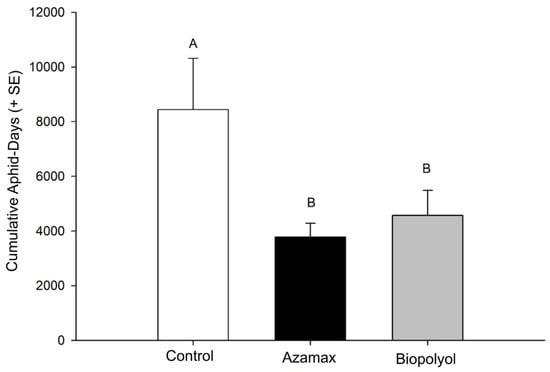
For data analysis, cumulative aphid-days were calculated for each treatment across the three aphid abundance assessment dates (25 October, 3 November, and 24 November). The cumulative aphid-days were calculated using the following formula:
where Di and D(i+1) are adjacent observation dates (in days), and Yi and Y(i+1) are the aphid counts on those dates [48]. The count data for each date represent the number of aphids recorded per replicate. The data were then subjected to statistical analysis using Generalized Linear Models (GLM) with a quasi-poisson error distribution to account for overdispersion, followed by a means comparison test (emmeans). All analyses were performed using the statistical software R 4.0.0 [46].
During the preparation of this manuscript/study, the author(s) used ChatGPT (GPT-5.6 Luna) for the purposes of improving the graphical abstract illustration, which was originally created on PowerPoint. The prompts used were “Improve the attached figure for use as a graphical abstract in a scientific journal.” The authors have reviewed and edited the output and take full responsibility for the content of this publication.
3. Results
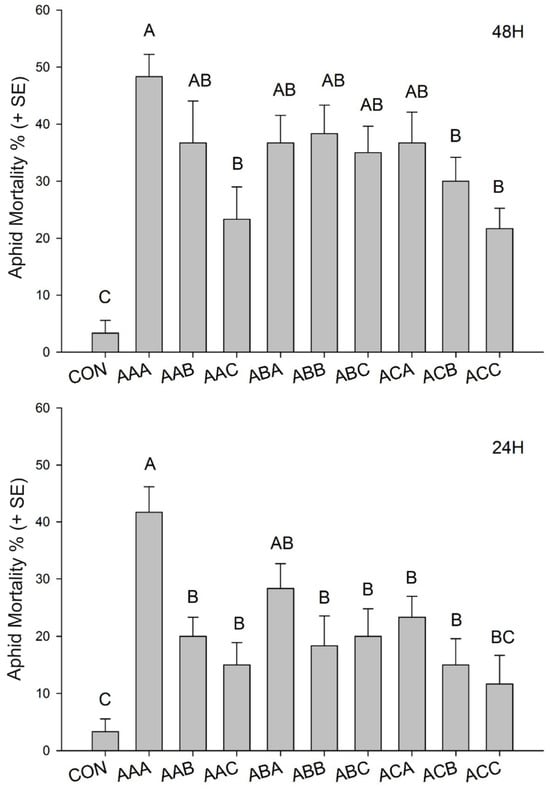
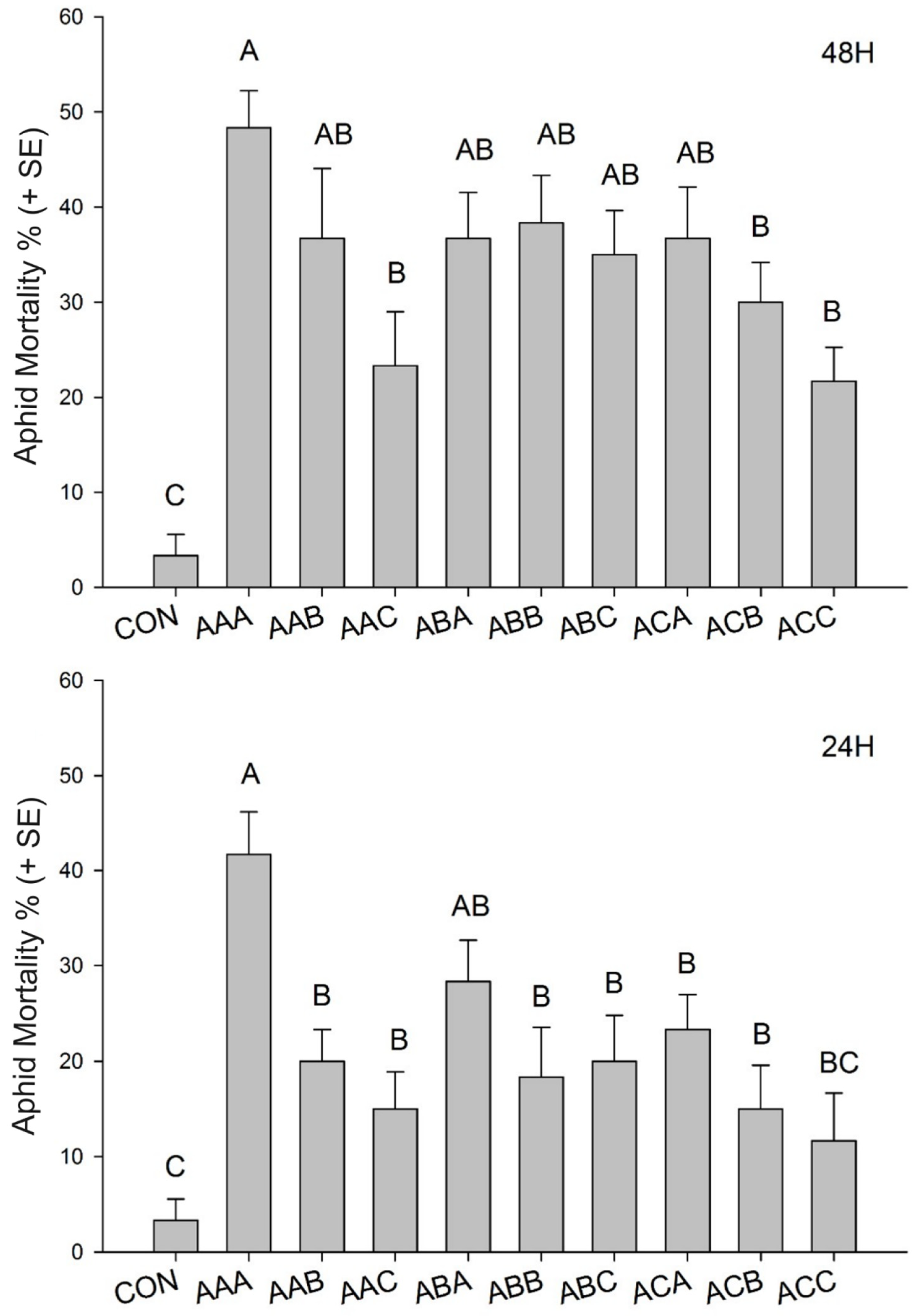
All avocado seed biopolyols caused significantly higher mortality than the control treatment, regardless of evaluation time (Figure 1), 24 h (Chisq = 36.49, DF = 9, p < 0.001) and 48 h (Chisq = 51.14, DF = 9, p < 0.001). Mortality ranged from 15% to 40% and 23% to 48% at 24 h and 48 h of exposure, respectively. Among treatments, the avocado biopolyol AAA showed the highest relative mortality, particularly after 24 h of exposure (Figure 1).
Figure 1.
Mean percentage (%) (±SE) mortality of first/second-instar aphid nymphs on collard leaf discs (cv. manteiga) exposed to a 15% (w/w) solution of avocado seed biopolyols (AAA, AAB, AAC, ABA, ABB, ABC, ACA, ACB, ACC) and control stock solution (CON) (water + acetone (1:1 v/v) + adjuvant (0.075 mL/L). Conditions: 25 ± 1 °C, 70 ± 5% relative humidity, and a 16 h photophase. Evaluations were performed at 24 and 48 h. Biopolyol liquefaction combinations (solvent:biomass/time): CON (stock solution); AAA (2:1/30 min); AAB (2:1/60 min); AAC (2:1/90 min); ABA (3:1/30 min); ABB (3:1/60 min); ABC (3:1/90 min); ACA (5:1/30 min); ACB (5:1/60 min); ACC (5:1/90 min). Bars with different letters are significantly different (p < 0.05; Tukey’s pairwise comparison test).
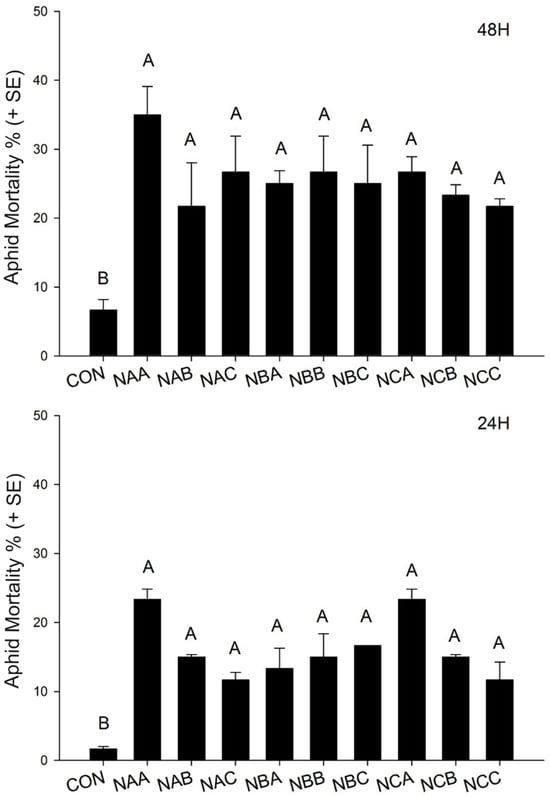
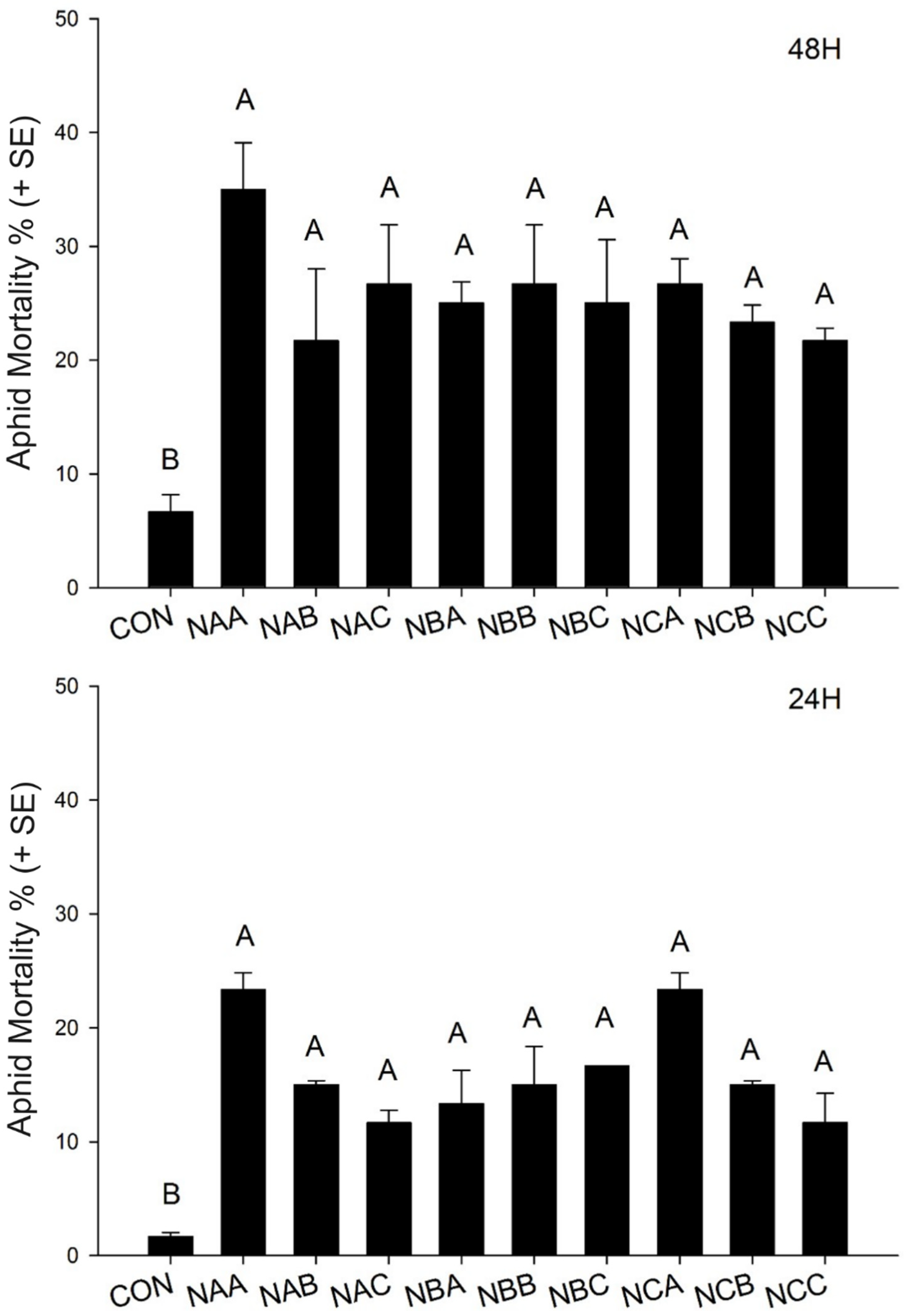
All biopolyols derived from neem biomass also caused significantly higher aphid mortality than the control, regardless of evaluation time (Figure 2), 24 h (Chisq = 19.88, DF = 9, p = 0.0186) and 48 h (Chisq = 17.24, DF = 9, p = 0.0449). However, no significant differences were observed among the different neem biopolyols in terms of aphid mortality (Figure 2).
Figure 2.
Mean percentage (%) (±SE) mortality of first/second-instar aphid nymphs on collard leaf discs (cv. manteiga) exposed to a 15% (w/w) solution of neem biomass biopolyols (NAA, NAB, NAC, NBA, NBB, NBC, NCA, NBC, NCC) and control stock solution (CON) (water + acetone (1:1 v/v) + adjuvant (0.075 mL/L). Conditions: 25 ± 1 °C, 70 ± 5% relative humidity, and a 16 h photophase. Evaluations were performed at 24 and 48 h. Biopolyol liquefaction combinations (solvent:biomass/time): CON (stock solution); NAA (2:1/30 min); NAB (2:1/60 min); NAC (2:1/90 min); NBA (3:1/30 min); NBB (3:1/60 min); NBC (3:1/90 min); NCA (5:1/30 min); NCB (5:1/60 min); NCC (5:1/90 min). Bars with different letters are significantly different (p < 0.05; Tukey’s pairwise comparison test).
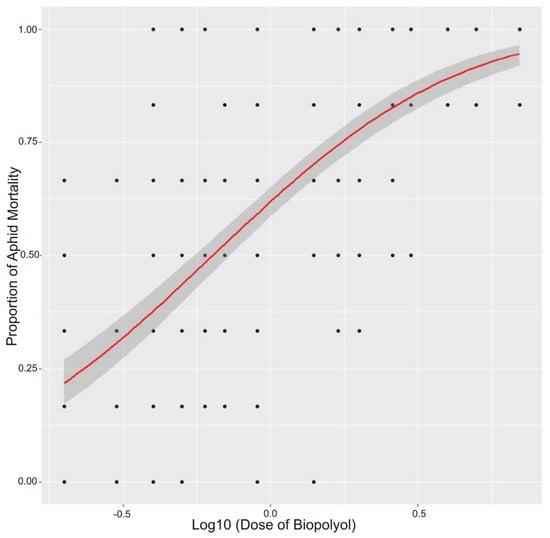
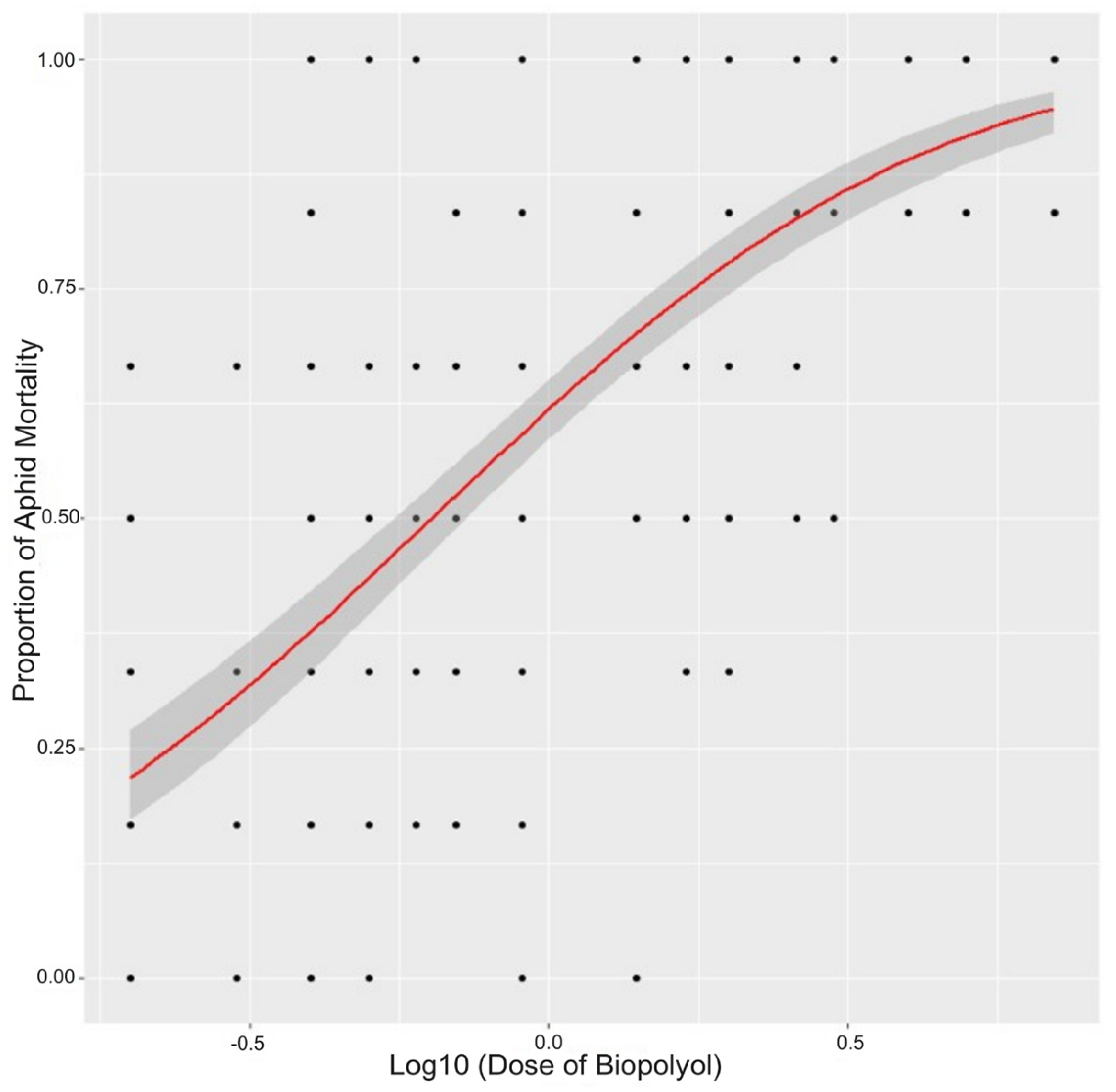
The lethal doses estimated through PROBIT analysis for the most promising avocado biopolyol (AAA) were LD50 = 63.68 mg/mL and LD90 = 429.53 mg/mL (Table 1, Figure 3). The results indicate a clear dose-dependent response in aphid mortality.
Table 1.
Estimated LD50 and LD90 of the AAA (2:1/30 min) biopolyol against aphid nymphs based on PROBIT analysis.
Figure 3.
Dose-mortality relationship for aphid nymphs (Brevicoryne brassicae/Myzus persicae) exposed to the AAA (2:1/30 min) avocado seed biopolyol, based on Probit analysis. The shaded area surrounding the curve represents the 95% confidence interval.
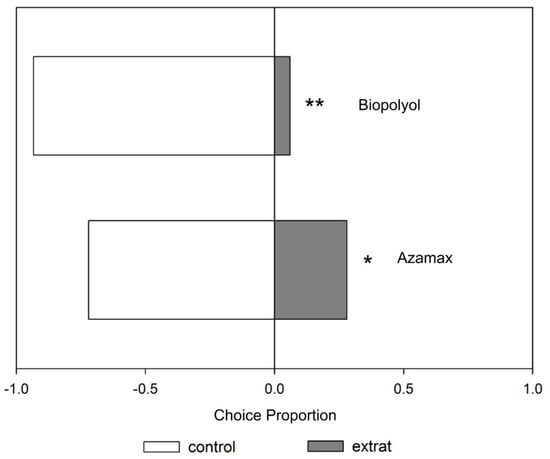
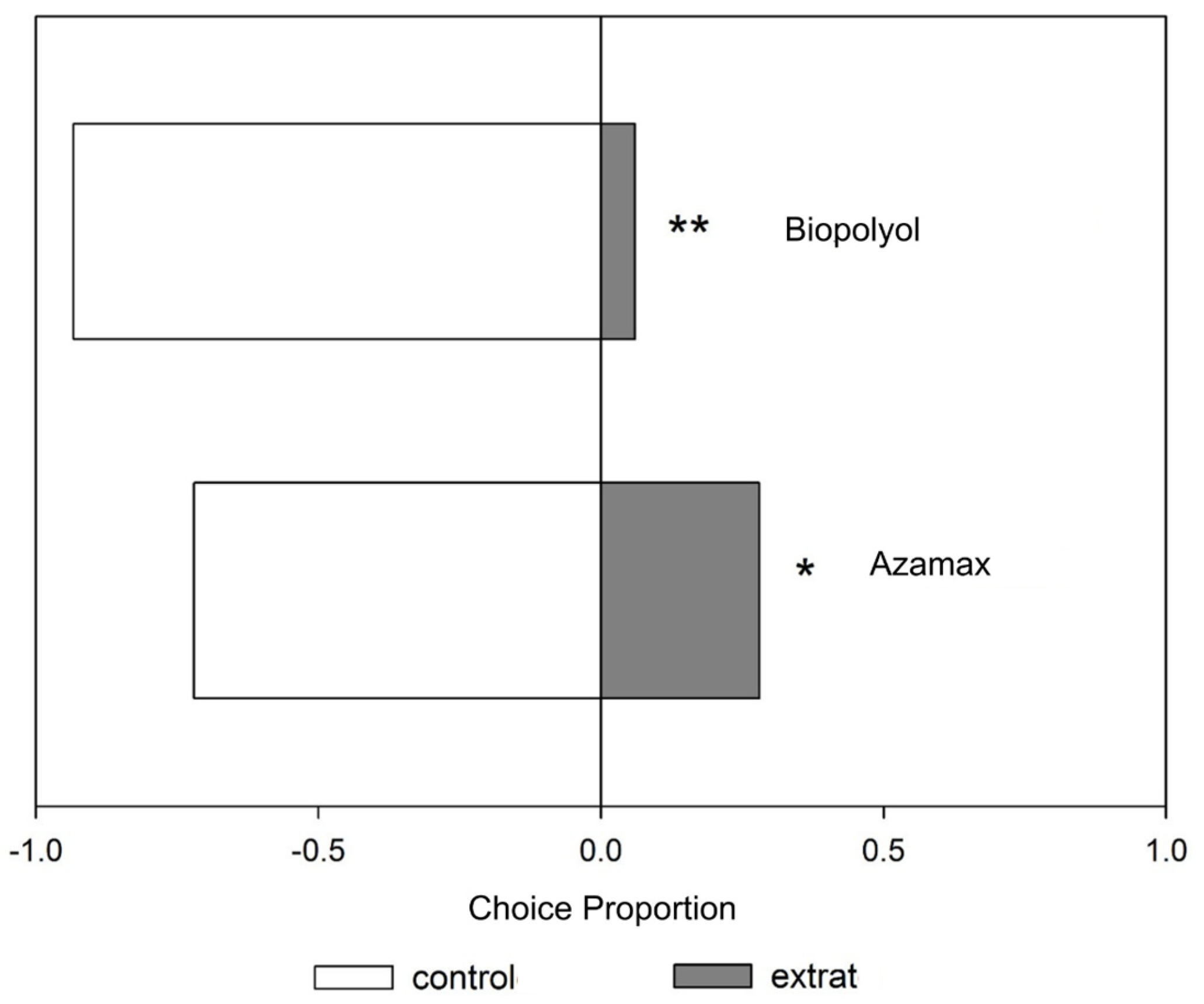
Both the LD90 of the avocado biopolyol (AAA) and the commercial insecticide Azamax® (field dose) showed significant repellency to aphids (Figure 4). However, the avocado biopolyol induced a higher proportion of repellency compared to Azamax® (Figure 4).
Figure 4.
Proportional choice preference test of first/second-instar aphid nymphs between untreated collard leaf discs (control: water + acetone (1:1 v/v) + adjuvant (0.75 mL/L)) and leaf discs treated with the LD90 of AAA (2:1/30 min) avocado seed biopolyol (n = 170). A second comparison was conducted between untreated leaf discs (control: water + acetone (1:1 v/v) + adjuvant (0.75 mL/L)) and leaf discs treated with AZAMAX® (field dose: 3.0 mL/L) (n = 170). (*) indicates significant differences at the 5% probability level. (**) indicates significant differences at the 1% probability level. Conditions: 25 ± 1 °C, 70 ± 5% relative humidity, and a 16 h photophase. Evaluations were performed every 2 h over a 12 h period.
In the field bioassay, both the avocado biopolyol (AAA) (LD90) and Azamax® significantly reduced aphid abundance on collard plants compared with the control treatment (Figure 5) (F = 3.6075, DF = 2, p = 0.0305). There was no significant difference in efficacy between avocado biopolyol and Azamax® (Figure 5). Additionally, there were no visible signs of biopolyol phytotoxicity on the collard plants after spraying.
Figure 5.
Cumulative aphid population (±SE) on collard plants (cv. manteiga) under field conditions, exposed to the LD90 of AAA (2:1/30 min) biopolyol (n = 24 plants), the field dose of AZAMAX® (3.0 mL/L) (n = 24 plants), and water (n = 24 plants). Bars with different letters are significantly different (p < 0.05; T pairwise comparison test using the emmeans package in R).
4. Discussion
The consistent increase in aphid mortality across all avocado biopolyols indicates that avocado seed-derived liquefaction products contain bioactive compounds with insecticidal properties. The higher performance of the AAA biopolyol, particularly at 24 h of exposure, suggests that specific extraction conditions strongly influence biological activity. In particular, biopolyols obtained under a 30 min liquefaction time (including AAA, ABA, and ACA treatments) showed comparatively greater efficacy, especially during early exposure periods [43]. These results suggest that shorter liquefaction times may favor the preservation or extraction of thermolabile bioactive compounds responsible for aphid mortality.
Conversely, biopolyols subjected to longer heating times were less effective, supporting the hypothesis that excessive thermal exposure may degrade insecticidal constituents. This reinforces the importance of process optimization in liquefaction systems to maximize biological activity. The chemical characterization of these products remains essential and may be further addressed using techniques such as high-performance liquid chromatography (HPLC) and 1H NMR spectroscopy.
Previous studies provide support for the presence of bioactive metabolites in avocado-derived matrices. Rodrigues-Saona and Trumble [49] identified avocadofurans and triolein triglycerides in avocado leaf extracts using 1H NMR, associating these compounds with insecticidal activity against Spodoptera exigua. Similarly, Carvalho et al. [42] reported aliphatic acetogenin derivatives, avocadofurans, and fatty acids in avocado seed extracts, linking them to toxicity against B. tabaci. Rodriguez-Saona et al. [50] further reported insecticidal properties of avocadofurans and triolein derivatives. Together, these findings support the hypothesis that avocado seed biopolyols may contain a complex mixture of bioactive compounds, including avocadofurans, triglyceride derivatives, Lauraceae acetogenins, and fatty acids, which likely contribute to aphid mortality. However, definitive chemical characterization is still required, since these assertions are based only on previous literature.
Neem-derived biopolyols also demonstrated significant insecticidal activity, with no differences among formulations. The lack of variation among neem treatments suggests a relatively stable expression of bioactivity across the tested liquefaction conditions. The overall effectiveness of both avocado and neem biopolyols indicates that the liquefaction process used in the previous study [43] is a viable approach for producing bioactive insecticidal products at the tested preliminary concentration (15% w/w).
The time-dependent nature of neem activity may also explain the observed results. Several neem-derived compounds exhibit delayed toxicity, with effects increasing over time. For example, Soares et al. [51] reported delayed mortality effects of neem extracts, with significant responses occurring after 24 h in Nasutitermes corniger. This is consistent with the well-established mode of action of azadirachtin, which disrupts the insect endocrine system by interfering with ecdysone regulation and may also affect the central nervous system by inhibiting neurophysiological signaling [26,52,53].
Dose–response analysis confirmed that aphid mortality induced by avocado biopolyol AAA is concentration-dependent, as indicated by LD50 and LD90 values. Similar patterns have been reported by Carvalho [42], who observed concentration-dependent toxicity of avocado seed extracts against B. tabaci.
Both the avocado LD90 and Azamax® also exhibited significant repellency effects, with the avocado biopolyol showing a stronger response. This difference may be related to higher concentrations of low-molecular-weight terpenoids in the AAA biopolyol. Such compounds are known to play key roles in insect attraction and repellency, particularly in plant families such as Lauraceae, which are rich in secondary metabolites [19]. In contrast, neem-based repellency is primarily associated with azadirachtin, which is widely recognized for its feeding deterrent effects in Hemiptera [54,55,56].
Finally, field results confirmed that both avocado biopolyol (AAA) and Azamax® significantly reduced aphid abundance under natural conditions. The comparable performance of AAA biopolyol to the commercial product is notable, particularly given the environmental variability in field conditions. However, despite these promising results, further work is required before practical application can be recommended. As emphasized by Isman [17], reliable pest control products must be chemically standardized and their active ingredients fully characterized to ensure efficacy, reproducibility, and safety, particularly with regard to non-target organisms and ecological impacts.
An important limitation of the present study is that the avocado seed-derived biopolyol was not chemically characterized beyond the analyses reported during its preparation. Consequently, the specific compounds responsible for the observed insecticidal activity cannot be identified from the present data. Although previous studies of avocado seed extracts have reported bioactive compounds that may potentially contribute to insecticidal effects, these associations remain hypothetical for the biopolyol evaluated here. The present study was intended as an initial assessment of insecticidal efficacy, and future research should combine chemical characterization with bioassay-guided fractionation to identify the active constituents and elucidate their mode of action. Furthermore, the present study evaluated the insecticidal activity of the biopolyol against first- and second-instar aphid nymphs only. Consequently, the observed efficacy cannot be directly extrapolated to later nymphal stages or adult aphids, which may differ in susceptibility. Future studies should evaluate the biopolyol across multiple developmental stages to determine whether its efficacy varies throughout the aphid life cycle. Lastly, the effects of the biopolyol on aphid natural enemies and other beneficial arthropods should also be evaluated in future studies to determine its compatibility with biological control programs.
5. Conclusions
This study demonstrates the potential of seed-derived biopolyols produced through a green liquefaction process as sustainable alternatives for aphid management in Brassica crops. Among the formulations evaluated, the avocado seed biopolyol AAA showed the greatest insecticidal activity against Brevicoryne brassicae and Myzus persicae, with mortality increasing in a concentration-dependent manner. At its LD90, AAA also exhibited significant repellency and performed better than Azamax® in laboratory assays in this regard. Importantly, both AAA and Azamax® significantly and equally reduced aphid abundance under field conditions, demonstrating the potential of the biopolyol under more realistic environmental conditions. These findings also highlight the value of avocado seeds, an agro-industrial residue, as a potential source of bioactive compounds for integrated pest management. However, chemical characterization, process standardization, and further evaluation of efficacy, persistence, and effects on non-target organisms are necessary to determine the consistency, safety, and practical applicability of these biopolyols as commercial bioinsecticides.
Author Contributions
Conceptualization, L.M.G.; Methodology, L.M.G. and B.S.L.; Data collection, E.F.d.S.; Formal analysis, L.M.G.; Data curation, E.F.d.S. and L.M.G.; Writing—original draft, L.M.G. and E.F.d.S.; Writing—review and editing, L.M.G., E.F.d.S. and B.S.L.; Funding acquisition, L.M.G. All authors have read and agreed to the published version of the manuscript.
Funding
This work was supported in part by CAPES (Coordenação de Aperfeiçoamento de Pessoal de Nível Superior) by providing a fellowship to the first author.
Institutional Review Board Statement
Not applicable.
Informed Consent Statement
Not applicable.
Data Availability Statement
The raw data supporting the conclusions of this article will be made available by the authors on request.
Acknowledgments
During the preparation of this manuscript/study, the author(s) used ChatGPT (GPT-5.6 Luna) for the purposes of improving the graphical abstract illustration, which was originally created on PowerPoint. The prompts used were “Improve the attached figure for use as a graphical abstract in a scientific journal.” The authors have reviewed and edited the output and take full responsibility for the content of this publication.
Conflicts of Interest
The authors declare no conflicts of interest.
References
- Traka, M.H.; Mithen, R. Glucosinolates, isothiocyanates and human health. Phytochem. Rev. 2009, 8, 269–282. [Google Scholar] [CrossRef] [Scilit]
- Cartea, M.E.; Francisco, M.; Soengas, P.; Velasco, P. Phenolic compounds in Brassica vegetables. Molecules 2011, 16, 251–280. [Google Scholar] [CrossRef] [Scilit]
- Aragão, F.A.S.; Feitosa, F.A.A.; Moraes, C.A.P.; Correa, M.C.M. Sistema de Produção de Repolho Utilizando TNT como Mulching e Manta; Embrapa: Fortaleza, Brazil, 2013. [Google Scholar]
- Empresa Brasileira de Pesquisa Agropecuária (EMBRAPA). Catálogo Brasileiro de Hortaliças; Embrapa Hortaliças: Brasília, Brazil, 2010; 60p.
- van Emden, H.F.; Harrington, R. (Eds.) Aphids as Crop Pests; CAB International: Wallingford, UK, 2007; 717p. [Google Scholar]
- Ahmad, M.; Akhtar, S. Development of insecticide resistance in field populations of Brevicoryne brassicae (Hemiptera: Aphididae) in Pakistan. J. Econ. Entomol. 2013, 106, 954–958. [Google Scholar] [CrossRef] [Scilit]
- Liu, T.X.; Sparks, A.N., Jr. Aphids on Cruciferous Crops: Identification and Management; Texas A&M AgriLife Extension Service: College Station, TX, USA, 2001. [Google Scholar]
- van Emden, H.F. Handbook of Agricultural Entomology; Wiley-Blackwell: Chichester, UK, 2013; 311p. [Google Scholar]
- Diaz, A.A.G.; Wang, F.; Feng, H. Aphid Management in Crop Systems: Current Strategies and Future Perspectives. Agriculture 2026, 16, 924. [Google Scholar] [CrossRef] [Scilit]
- Maringoni, A.C. Diseases of crucifers. In Manual de Fitopatologia: Doenças de Plantas Cultivadas; Kimati, H., Amorim, L., Rezende, J.A.M., Bergamin Filho, A., Camargo, L.E.A., Eds.; Agronômica Ceres: São Paulo, Brazil, 2005; pp. 297–306. [Google Scholar]
- Roubos, C.R.; Rodriguez-Saona, C.; Isaacs, R. Mitigating the Effects of Insecticides on Arthropod Biological Control at Field and Landscape Scales. Biol. Control 2014, 75, 28–38. [Google Scholar] [CrossRef] [Scilit]
- Margaritopoulos, J.T.; Kati, A.N.; Voudouris, C.C.; Skouras, P.J.; Tsitsipis, J.A. Long-term Studies on the Evolution of Resistance of Myzus persicae (Hemiptera: Aphididae) to Insecticides in Greece. Bull. Entomol. Res. 2020, 111, 1–16. [Google Scholar] [CrossRef] [Scilit]
- Ullah, R.M.K.; Gao, F.; Sikandar, A.; Wu, H. Insights into the Effects of Insecticides on Aphids (Hemiptera: Aphididae): Resistance Mechanisms and Molecular Basis. Int. J. Mol. Sci. 2023, 24, 6750. [Google Scholar] [CrossRef] [Scilit]
- Melo, R.A.C.; Vendrame, L.P.C.; Madeira, N.R.; Blind, A.D.; Vilela, N.J. Caracterização e Diagnóstico da Cadeia Produtiva de Brássicas nas Principais Regiões Produtoras Brasileiras; Embrapa Hortaliças, Documentos 157; Embrapa Hortaliças: Brasília, Brazil, 2017; 100p.
- Kho, J.-W.; Kim, J.-Y.; Jung, M.; Lee, Y.S.; Lee, D.-H. Control Efficacy of Eight Insecticides on Myzus persicae (Hemiptera: Aphididae) and Insecticide Resistance Development of Aphid Populations Collected from Kimchi Cabbage in South Korea. J. Asia-Pac. Entomol. 2024, 27, 102340. [Google Scholar] [CrossRef] [Scilit]
- Ogwal, G.; Wasswa, P.; Ocimati, W.; Omondi, B.A.; Tazuba, A.F.; Otim, M.H.; Blomme, G. Screening for the Efficacy of Botanicals and Soaps in Controlling the Banana Aphid Pentalonia nigronervosa (Hemiptera: Aphididae) Under Laboratory and Screenhouse Conditions. Insects 2026, 17, 23. [Google Scholar] [CrossRef] [Scilit]
- Isman, M.B. Botanical insecticides, deterrents, and repellents in modern agriculture and an increasingly regulated world. Annu. Rev. Entomol. 2006, 51, 45–66. [Google Scholar] [CrossRef] [Scilit]
- Wink, M. Plant secondary metabolism: Diversity, function and its evolution. Nat. Prod. Commun. 2008, 3, 1205–1216. [Google Scholar] [CrossRef] [Scilit]
- Saito, M.L.; Lucchini, F. Substâncias Obtidas de Plantas e a Procura por Praguicidas Eficientes e Seguros ao Meio Ambiente; Embrapa-CNPMA, Documento 12; Embrapa-CNPMA: Jaguariúna, Brazil, 1998; 46p.
- Castro, P.R.C.; Kluge, R.A.; Perez, L.E.P. Manual de Fisiologia Vegetal; Agronômica Ceres: Piracicaba, Brazil, 2005; p. 640. [Google Scholar]
- Taiz, L.; Zeiger, E. Plant Physiology, 5th ed.; Artmed: Porto Alegre, Brazil, 2013; 954p. [Google Scholar]
- Evert, R.F.; Eichhorn, S.E. Raven: Biologia Vegetal, 8th ed.; Guanabara Koogan: Rio de Janeiro, Brazil, 2014; 876p. [Google Scholar]
- Salerno, R.A.; Sobrinho, T.G.; Cocarelli, V. Evaluation of the insecticidal effect of ethanolic black pepper (Piper nigrum L.) extract against Brevicoryne brassicae (Homoptera: Aphididae). Acad. Insecta 2002, 2, 9–12. [Google Scholar]
- Dayan, F.E.; Cantrell, C.L.; Duke, S.O. Natural products in crop protection. Bioorg. Med. Chem. 2009, 17, 4022–4034. [Google Scholar] [CrossRef] [Scilit]
- Rondelli, V.M.; Pratissoli, D.; Gonçalves dos Santos Junior, H.J.; Zago, H.B.; Contarini Machado, L.; Rodrigues, H.S.; Valbon, W.R. Insecticidal activity of Beauveria bassiana and castor oil against Plutella xylostella under greenhouse conditions. Biosci. J. 2013, 29, 1187–1193. [Google Scholar]
- Júnior, C.V. Terpenes with insecticidal activity: An alternative for insect chemical control. Quim. Nova 2003, 26, 390–400. [Google Scholar]
- Boeke, S.J.; Boersma, M.G.; Alink, G.M.; van Loon, J.J.A.; van Huis, A.; Dicke, M.; Rietjens, I.M.C.M. Safety evaluation of neem (Azadirachta indica) derived pesticides. J. Ethnopharmacol. 2004, 94, 25–41. [Google Scholar] [CrossRef] [Scilit]
- Stone, R. A biopesticidal tree begins to blossom: Neem seed oil has insect toxicologists buzzing about its potential as a source of natural insecticides. Science 1992, 255, 1070–1071. [Google Scholar]
- Souza, A.P.; Vendramim, J.D. Ovicidal activity of aqueous extracts of Meliaceae species against Bemisia tabaci (Gennadius) biotype B on tomato. Sci. Agric. 2000, 57, 403–406. [Google Scholar]
- Martinez, S.S.; van Emden, H.F. Growth disruption, abnormalities and mortality of Spodoptera littoralis (Boisduval) (Lepidoptera: Noctuidae) caused by azadirachtin. Neotrop. Entomol. 2001, 30, 113–124. [Google Scholar] [CrossRef] [Scilit]
- Cox, C. Pyrethrins/Pyrethrum. J. Pestic. Reform 2002, 22, 14–20. [Google Scholar]
- Duke, S.O.; Dayan, F.E.; Romagni, J.G.; Rimando, A.M. Natural products as sources of herbicides: Current status and future trends. Weed Res. 2000, 40, 99–111. [Google Scholar] [CrossRef] [Scilit]
- Gobbo-Neto, L.; Lopes, N.P. Medicinal plants: Factors influencing secondary metabolite production. Quim. Nova 2007, 30, 374–381. [Google Scholar]
- Solórzano, F.; Miranda, M.G. Essential oils from aromatic herbs as antimicrobial agents. Curr. Opin. Biotechnol. 2012, 23, 136–141. [Google Scholar] [CrossRef] [Scilit]
- Stein, U.; Klingauf, F. Insecticidal effect of plant extracts from tropical and subtropical species: Traditional methods are good as long as they are effective. J. Appl. Entomol. 1990, 110, 160–166. [Google Scholar]
- Abe, F.; Nagafuji, S.; Okawa, M.; Kinjo, J.; Akahane, H.; Ogura, T.; Martinez-Alfaro, M.A.; Reyes-Chilpa, R. Trypanocidal constituents in plants. V. Evaluation of some Mexican plants for their trypanocidal activity and active constituents in the seeds of Persea americana. Biol. Pharm. Bull. 2005, 28, 1314–1317. [Google Scholar] [CrossRef] [Scilit]
- Leite, J.J.G.; Brito, E.H.S.; Cordeiro, R.A.; Brilhante, R.S.N.; Sidrim, J.J.C.; Bertini, L.M.; Morais, S.M.; Rocha, M.F.G. Chemical composition, toxicity, larvicidal and antifungal activities of Persea americana (avocado) seed extracts. Rev. Soc. Bras. Med. Trop. 2009, 42, 110–113. [Google Scholar] [CrossRef] [Scilit]
- Chia, T.W.R.; Dykes, G.A. Antimicrobial activity of crude epicarp and seed extracts from mature avocado fruit (Persea americana) of three cultivars. Pharm. Biol. 2010, 48, 753–756. [Google Scholar] [CrossRef] [Scilit]
- Carvalho, G.H.F. Insecticidal Activity of Ethanolic Crude Extract of Persea americana (Lauraceae) on Larvae and Pupae of Aedes aegypti (Diptera: Culicidae). Master’s Thesis, Universidade Federal de Goiás, Goiânia, Brazil, 2011. [Google Scholar]
- Adesina, J.M.; Jose, A.R.; Rajashekar, Y.; Ileke, K.D. Persea americana (Mill.) seed extracts: Potential herbal larvicidal control measure against Anopheles gambiae Giles, 1902 (Diptera: Culicidae), malaria vector. Int. J. Mosq. Res. 2016, 3, 14–17. [Google Scholar]
- Cardoso, P.; Scarpassa, J.; Pretto-Giordano, L.; Otaguiri, E.; Yamada-Ogatta, S.; Nakazato, G.; Perugini, M.; Moreira, I.; Vilas-Bôas, G. Antibacterial activity of avocado extracts (Persea americana Mill.) against Streptococcus agalactiae. Phyton 2017, 85, 218–224. [Google Scholar] [CrossRef] [Scilit]
- Carvalho, S.S.; Ribeiro, L.D.; Forim, M.R.; Silva, M.F.G.; Bicalho, K.U.; Fernandes, J.B.; Vendramim, J.D. Avocado kernels, an industrial residue: A source of compounds with insecticidal activity against silverleaf whitefly. Environ. Sci. Pollut. Res. 2020, 28, 2260–2268. [Google Scholar] [CrossRef] [Scilit]
- Santos, E.F. Síntese de Biopoliol a Partir de Sementes de Abacate e Sua Atividade Inseticida Sobre Afídeos. Master’s Thesis, Universidade Federal de Viçosa, Viçosa, Brazil, 2023. Available online: https://locus.ufv.br/items/1c354d3e-db60-4c93-bc62-ffdd27d97f67 (accessed on 10 February 2026).
- Lee, J.-H.; Lee, J.H.; Kim, D.-K.; Park, C.-H.; Yu, J.-H.; Lee, E.Y. Crude glycerol-mediated liquefaction of empty fruit bunches saccharification residues for preparation of biopolyurethane. J. Ind. Eng. Chem. 2016, 34, 157–164. [Google Scholar] [CrossRef] [Scilit]
- IRAC. Susceptibility Test Methods Series. Method nº 19. Version: 3.4. Available online: https://irac-online.org/test-methods/ (accessed on 14 July 2022).
- R Core Team. R: A Language and Environment for Statistical Computing; R Foundation for Statistical Computing: Vienna, Austria, 2020; Available online: https://www.R-project.org/ (accessed on 1 May 2023).
- Gama, J. Ecotoxicology: Methods for Ecotoxicology. R Package Version 1.0.1. 2015. Available online: https://CRAN.R-project.org/package=ecotoxicology (accessed on 1 May 2023).
- Ruppel, R.F. Cumulative insect-days as an index of crop protection. J. Econ. Entomol. 1983, 76, 375–377. [Google Scholar] [CrossRef] [Scilit]
- Rodriguez-Saona, C.; Millar, J.G.; Trumble, J.T. Isolation, identification, and biological activity of isopersin, a new compound from avocado idioblast oil cells. J. Nat. Prod. 1998, 61, 1168–1170. [Google Scholar] [CrossRef] [Scilit]
- Rodriguez-Saona, C.; Maynard, D.F.; Phillips, S.; Trumble, J.T. Avocadofurans and their tetrahydrofuran analogues: Comparison of growth inhibitory and insecticidal activity. J. Agric. Food Chem. 2000, 48, 3642–3645. [Google Scholar] [CrossRef] [Scilit]
- Soares, C.G.; Lemos, R.N.S.; Cardoso, S.R.S.; Medeiros, F.R.; Araújo, J.R.G. Effect of oils and aqueous extracts of Azadirachta indica A. Juss. and Cymbopogon winterianus Jowitt on Nasutitermes corniger Motschulsky (Isoptera: Termitidae). Rev. Ciênc. Agrár. 2008, 50, 107–116. [Google Scholar]
- Rembold, H. Botanical insecticides. In Insecticides of Plant Origin; Arnason, J.T., Philogène, B.J.R., Morand, P., Eds.; ACS Symposium Series 387; American Chemical Society: Washington, DC, USA, 1989; pp. 150–156. [Google Scholar]
- Mordue (Luntz), A.J.; Blackwell, A. Azadirachtin: An update. J. Insect Physiol. 1993, 39, 903–924. [Google Scholar] [CrossRef] [Scilit]
- Ruscoe, C.N.E. Growth disruption effects of an insect antifeedant. Nat. New Biol. 1972, 236, 159–160. [Google Scholar] [CrossRef] [Scilit]
- Rembold, H.; Sharma, G.K.; Czoppelt, C.; Schmutterer, H. Azadirachtin: A potent insect growth regulator of plant origin. Z. Angew. Entomol. 1982, 93, 12–17. [Google Scholar] [CrossRef] [Scilit]
- Martinez, S.S. O Nim (Azadirachta indica): Natureza, Usos Múltiplos, Produção; IAPAR: Londrina, Brazil, 2002; 142p.

Disclaimer/Publisher’s Note: The statements, opinions and data contained in all publications are solely those of the individual author(s) and contributor(s) and not of MDPI and/or the editor(s). MDPI and/or the editor(s) disclaim responsibility for any injury to people or property resulting from any ideas, methods, instructions or products referred to in the content. |
© 2026 by the authors. Licensee MDPI, Basel, Switzerland. This article is an open access article distributed under the terms and conditions of the Creative Commons Attribution (CC BY) license.