


Abstract
The proposed study investigates the key factors influencing UAV adoption and proposes an integrated educational–operational framework to enhance implementation in agricultural practice. A case study in Sibiu County, Romania, combined survey-based empirical analysis (n = 80), strategic environmental assessment and the deployment of a demonstration aerial crop monitoring system for educational purposes (ACMS-E). We integrated the Technology Acceptance Model (TAM) and Theory of Planned Behavior (TPB) to examine adoption intentions, revealing perceived usefulness (β = 0.355, p = 0.021) and positive attitudes (β = 0.382, p = 0.005) as the strongest predictors, explaining 44.1% of variance. Based on these findings, a modular training curriculum was designed, combining theoretical instruction, flight operation exercises, remote sensing techniques, data analytics and farm-management integration. ACMS-E provides hands-on training and promotes capacity-building, bridging the gap between technological availability and real-world adoption. By linking technological capabilities with structured training, ACMS-E bridges the gap between UAV availability and effective implementation, offering a scalable model for precision agriculture. This framework provides a pathway to accelerate UAV adoption, optimize field-level monitoring and support evidence-based, resource-efficient farm management in emerging and developed agricultural contexts.
1. Introduction
Precision agriculture is defined as a management strategy focused on the collection, processing, analysis and interpretation of temporal, spatial and individual data, integrating this information with other sources in order to apply variable rates in support of management decisions aimed at improving resource efficiency, productivity, quality, profitability and the sustainability of agricultural production [1]. Within this framework, smart farming technologies, including unmanned aerial vehicles (UAVs or drones), are increasingly recognized as critical tools for operational precision agriculture, enabling frequent, high-resolution field monitoring, rapid response to field conditions and the collection of actionable data to support informed decision-making [2].
Crop monitoring has a long tradition grounded in satellite-based remote sensing, which has been operationally used for decades to assess vegetation condition, estimate cultivated areas and forecast agricultural yields at regional to global scales [3]. Satellite remote sensing has been widely documented as an essential tool for agricultural applications, including crop growth and yield estimation, irrigation mapping and detection of crop losses [4,5,6]. Studies demonstrate how time-series data from sensors such as Landsat, MODIS and Sentinel enable repetitive monitoring of crop phenology and health across seasons and large areas, supporting both research and operational agricultural management [4,5]. A major contribution to this field has been made by the European Copernicus program through the Sentinel-1 and Sentinel-2 missions, which provide radar and optical data with high spatial and temporal resolution, essential for monitoring crop dynamics, soil moisture and vegetation stress [7,8]. These satellite missions have laid the foundation for modern agricultural monitoring systems by offering systematic, large-area and temporally consistent observations, whose importance and maturity are well documented in the scientific literature and recognized as fundamental for operational agricultural monitoring worldwide [9,10]. Lately, UAVs have emerged as a complementary tool to satellite observations, providing much higher spatial resolution, flexible data acquisition and enhanced capability to capture field-level variability that may not be detectable from spaceborne sensors [11,12]. The integration of UAVs into precision agriculture allows farmers to adopt a more responsive and data-driven approach, which improves management decisions at the farm level.
This study focuses specifically on the adoption of precision agriculture and smart farming concepts through UAV-based monitoring systems. It is grounded in the creation, access, use and promotion of knowledge to support the adoption of innovative agricultural technologies and practices. The design and implementation of new production models is a complex process and the present research aims to investigate the mechanisms and outcomes of educational interventions that enhance farmer knowledge, skills and adoption intentions regarding UAV technologies.
While the primary focus of the study is on technology adoption and educational outcomes at the farm level, these developments are relevant to broader challenges such as population growth, increasing demand for food, climate change and the degradation of land and ecosystems [2]. By facilitating informed adoption of UAV-based precision agriculture, the study contributes to more efficient resource use, improved crop yields, higher quality raw materials and ultimately to enhanced food security and agricultural resilience [13,14].
Initially, drones were used primarily for capturing aerial images to assess crop health and detect vulnerabilities within the agroecosystem, such as irrigation water leakage or pest infestations. In this early stage, farmers expressed satisfaction with the ability to quickly identify certain issues through aerial crop monitoring. Guebsi et al. [15] discuss how UAV-acquired multispectral data can be transformed into actionable intelligence by generating vegetation maps that enable farmers to identify zones at risk of yield loss and make informed management decisions.
One of the earliest and most widely used vegetation indices is the Normalized Difference Vegetation Index (NDVI), which is based on the normalized ratio between the reflectance values of near-infrared (NIR, 800 nm) and red (RED, 670 nm) spectral bands [16]. It is calculated as the difference between these two bands divided by their sum. NDVI serves as a “measurement unit” for vegetation development and density and is strongly correlated with biophysical parameters such as biomass (tons/ha), leaf area index (LAI)—often used in crop growth models—vegetation cover percentage and photosynthetic activity [17].
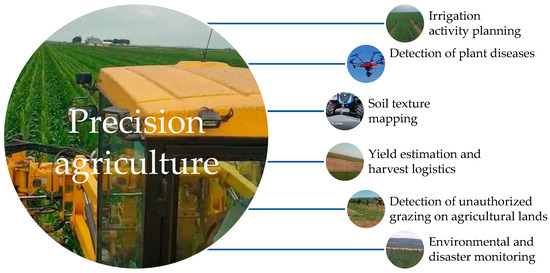
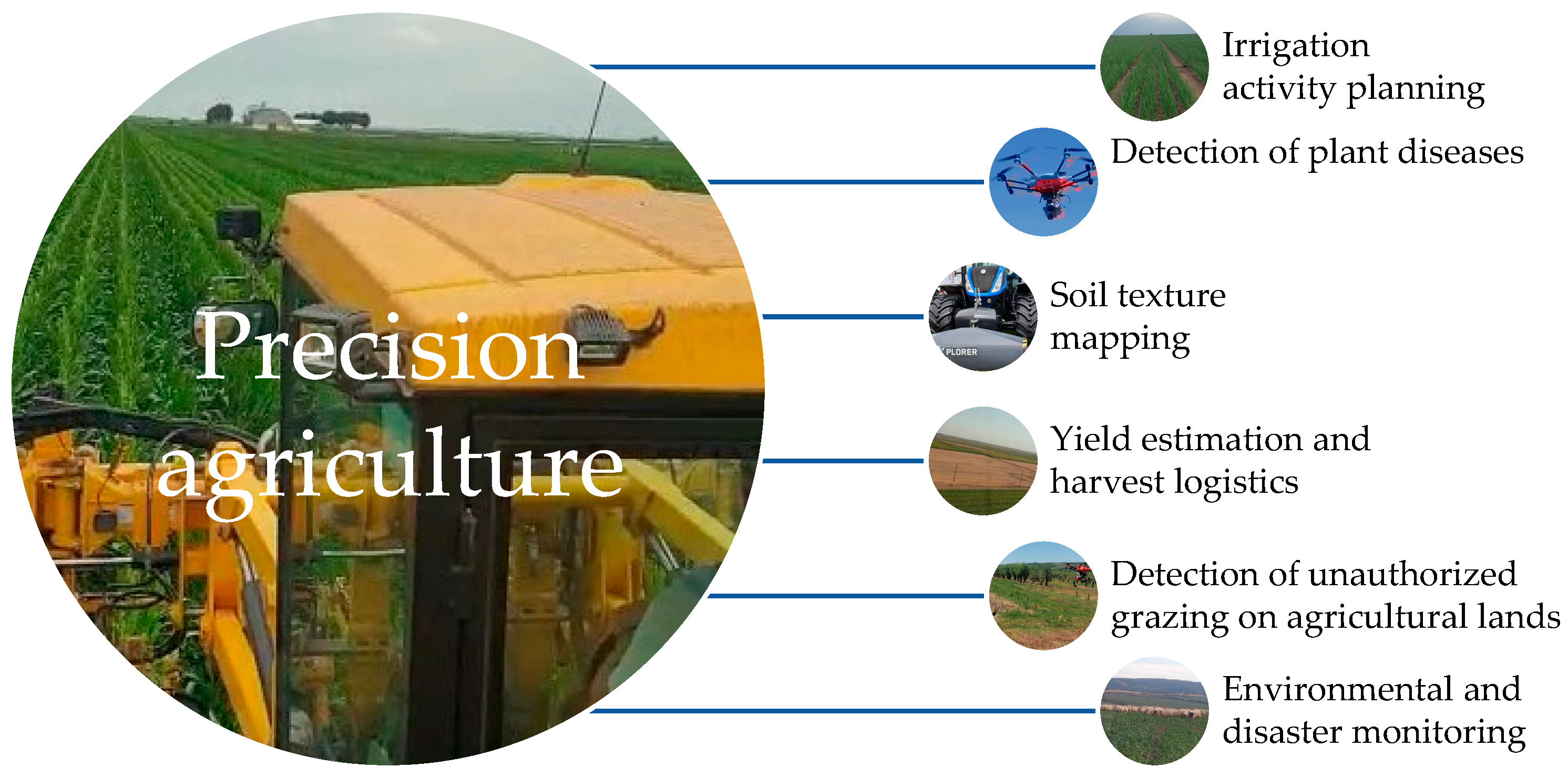
Currently, the use of unmanned aerial vehicles (UAVs) in agriculture has become increasingly complex, with drones acting as unmanned platforms equipped with multispectral, hyperspectral, or thermal sensors to support a wide range of precision agriculture applications, as presented in Figure 1. UAVs can significantly enhance irrigation and drought monitoring by estimating soil moisture and drought conditions through the integration of high-resolution multispectral data with machine learning models, thereby improving water-management decisions [18]. They also enable the early detection of plant diseases via vegetation indices such as NDVI and GNDVI, allowing farmers to assess disease severity at an early stage. Moreover, the combination of UAV technology with artificial intelligence facilitates the identification of pests and diseases, supporting more proactive and targeted crop protection strategies [19,20]. In addition, UAVs contribute to soil texture mapping by monitoring soil properties, which are essential for effective land management and crop planning [21]. Drone imagery can also be employed to estimate biomass and yield levels, aiding in the planning of harvest machinery, transportation and storage logistics [22,23]. Furthermore, UAV-based aerial monitoring allows for the detection of unauthorized grazing and overuse of pastures, contributing to improved land-management decisions [24,25]. Finally, UAVs are increasingly utilized for environmental and disaster monitoring, including the early detection of forest fires and other natural disasters, which enables rapid response through thermal and visual imaging [26,27].
Figure 1.
Overview of UAV-based platforms and sensor types used in precision agriculture applications.
Increasingly associated with the concept of precision agriculture is the term “smart”, referring to smart agricultural technologies and even AI-based agricultural technologies. The promotion of such technologies in farm management enables intelligent handling of production inputs—such as water, plant protection products, herbicides and labor—and contributes to maintaining and/or improving soil fertility, productivity, profitability and farm sustainability [28,29].
In recent years, the use of UAV systems in precision agriculture has experienced rapid growth, driven by advances in optical and multispectral sensors, low-cost flight platforms and advanced data processing techniques [30,31]. Recent studies confirm the high potential of drones for crop condition monitoring, water stress detection and optimization of agricultural inputs, particularly at local and field-scale levels [32,33].
Nevertheless, the literature highlights that the operational adoption of low-cost UAV systems remains limited, especially in emerging economies and markets, where barriers are not only technological but also managerial, institutional and organizational in nature [34]. Recent research emphasizes that successful implementation depends on the integration of technology into a functional agricultural ecosystem, encompassing digital skills, appropriate business models and collaboration among farmers, technology providers, public institutions and the academic community [35,36].
In this context, research on UAVs in agriculture is increasingly focusing on implementation efficiency and solution scalability, rather than solely on the technological performance of the platforms [37]. The present study aligns with this perspective by proposing a multidisciplinary approach, integrating both technological and educational dimensions, to explore how low-cost UAV systems can be effectively designed and implemented for crop monitoring in precision agriculture within emerging markets such as Romania, while considering managerial, organizational and stakeholder collaboration factors. The study further discusses the design of a modular UAV curriculum to support knowledge transfer and skill development in this context.
The adoption of digital technologies in agriculture is steadily increasing and aerial crop monitoring systems based on UAVs represent an emerging solution with high potential for precision agriculture. In the context of Romania, market research and experimental trials indicate significant interest among farmers in using such innovative tools, especially in areas with mixed or livestock based agricultural activities.
A previous study conducted in Sibiu County, Romania [38], based on a questionnaire completed by 80 farmers, examined knowledge and intentions regarding mini-UAV adoption for crop monitoring. The findings indicated a favorable trend toward adoption, with significant correlations between UAV knowledge, development intentions and willingness to collaborate. The present study builds on these results and advances the research in several directions. First, it applies an integrated TAM–TPB framework to identify the behavioral determinants influencing farmers’ intention to adopt UAV technologies. Second, the study integrates these findings into the development of the ACMS-E educational framework and a modular UAV curriculum aimed at strengthening technical and operational competencies in agricultural monitoring. Recognizing that early exposure to specialized training during academic formation represents a critical determinant of technology adoption among future professional farmers, the Department of Agricultural Sciences and Food Engineering at Lucian Blaga University of Sibiu developed and implemented an Aerial Crop Monitoring System for Educational purposes (ACMS-E) as a demonstrative and operational platform designed to bridge the gap between technological availability and effective field-level application.
Our research and initiatives in aerial crop monitoring are supported by projects and published studies [38,39], which converge toward the necessity of developing and implementing such a system. The main goal is to enhance the knowledge and training level of young people, students and farmers in operating modern technologies that form part of the system—namely drones and specialized software.
To better understand the mechanisms through which educational interventions influence farmers’ adoption intentions, the present study integrates the Technology Acceptance Model (TAM) and the Theory of Planned Behavior (TPB) into the analytical framework.
The TAM posits that when users believe that a technology will improve their performance and be easy to use, they are more likely to form positive attitudes and stronger intentions toward its adoption [40]. According to the TAM, adoption intention is primarily determined by perceived usefulness (PU) and perceived ease of use (PEU), constructs that have been shown to significantly influence farmers’ intentions to adopt precision agriculture technologies and drone systems [41,42,43,44]. At the same time, improved understanding of the agronomic and economic benefits of UAV-based monitoring systems strengthens perceived usefulness, a relationship supported by empirical studies applying the TAM to UAV and precision agriculture contexts [45,46].
Complementarily, the TPB perspective allows for a broader behavioral interpretation. Behavioral intention (BI) is shaped by attitude toward behavior, subjective norms and perceived behavioral control (PBC), constructs that have been widely applied to explain farmers’ adoption decisions in agricultural innovation studies [47,48].
The main research objective is to identify the factors influencing UAV adoption among farmers in order to inform the development of a modular UAV curriculum within a structured educational framework (ACMS-E) aimed at supporting technology adoption in agriculture. The secondary objective is to facilitate technical skill development, providing practical demonstration of UAV-based crop monitoring workflows.
The scientific contribution of this study lies in integrating precision agriculture and UAV technology within a structured educational framework, while providing empirical insights from Romanian participants regarding knowledge levels, behavioral determinants and adoption intentions. Unlike many UAV-based agricultural monitoring studies that focus primarily on platform development or algorithmic optimization, this work addresses the persistent gap between technological availability and effective real-world adoption. By combining UAV-based crop monitoring with targeted educational interventions, the ACMS-E framework is conceptualized as a system-level, adoption-oriented architecture that supports progressive skill acquisition, operational awareness and informed agronomic decision-making.
The proposed modular and platform-agnostic design enhances transferability across institutional and regional contexts, offering a structured methodology for assessing and facilitating UAV adoption. Rather than claiming immediate productivity gains, the framework provides an educational and operational foundation that may contribute to more efficient and sustainable farm management practices in emerging agricultural systems.
2. Materials and Methods
Starting from the certainty that we live in a world with limited resources and recognizing that ensuring food security and food safety is a core component of the Common Agricultural Policy [49], the research methodology incorporates analytical techniques specific to strategic management. The choice of methodology also reflects the understanding that achieving sustainable food security requires the application of a global strategy built on three pillars: agriculture, nutrition and the environment.
Methodologically, the research is designed as a demonstrative and exploratory case study conducted in Sibiu County, Romania. It builds on previous research reported in [38], which surveyed 80 farmers (mean age 40.2 ± 14.1 years) to capture baseline insights into UAV knowledge, adoption intentions, technical skills, perceived barriers and willingness to collaborate on aerial crop monitoring. The present study advances these findings by identifying cognitive, attitudinal and control-related factors shaping UAV adoption intentions and by developing the Aerial Crop Monitoring System for Educational Purposes (ACMS-E) with a modular UAV-based curriculum aimed at enhancing technical and practical competencies for effective UAV use in agriculture. The analytical framework integrates the Technology Acceptance Model (TAM) and the Theory of Planned Behavior (TPB) to examine cognitive, attitudinal and control-related factors shaping adoption intention. The quantitative survey analysis is combined with a strategic environmental analysis, a problem-tree and objective-tree approach, a technical development of an Aerial Crop Monitoring System for Educational Purposes (ACMS-E), which serves as the demonstrative operational component of the case study and the design of a modular UAV-based curriculum framework.
Primary data were collected through a structured questionnaire (Appendix A) administered to 80 farmers and captured respondents’ demographic characteristics, level of knowledge regarding agricultural monitoring technologies and orientation toward digital farm development. It further measured perceived benefits, perceived ease of use and technical complexity, social pressure, availability of resources, implementation capacity and behavioral intention to adopt UAV technology. Most attitudinal and perception-based variables were assessed using a five-point Likert scale (1 = strongly disagree; 5 = strongly agree), enabling quantitative analysis of the cognitive, attitudinal and control-related factors influencing UAV adoption intentions.
Secondary data were obtained from publicly available statistical databases, policy documents, institutional reports and prior studies on precision agriculture and UAV adoption, covering approximately the past decade. Statistical indicators were retrieved from official sources, including the National Institute of Statistics [50], the Eurostat regional database [51], the Romanian Government Open Data Portal [52], the Ministry of Agriculture and Rural Development [53] and the Romanian Civil Aviation Authority [54]. Data inclusion followed predefined criteria: official institutional origin, territorial relevance, methodological transparency and temporal coverage. Only variables available at the county (NUTS 3) or regional (NUTS 2) level with consistent time-series data were included. Indicators with methodological discontinuities, incomplete or outdated datasets, or redundant variables measuring the same phenomenon were excluded. The selected variables were integrated into the SWOT and PEST frameworks to contextualize the external environment and support the interpretation of survey-based findings, serving a complementary role to the primary empirical analysis.
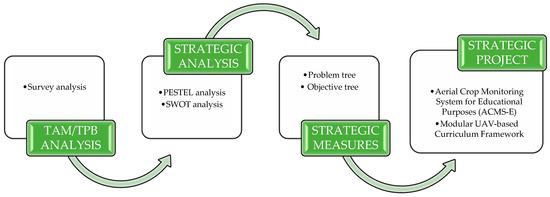
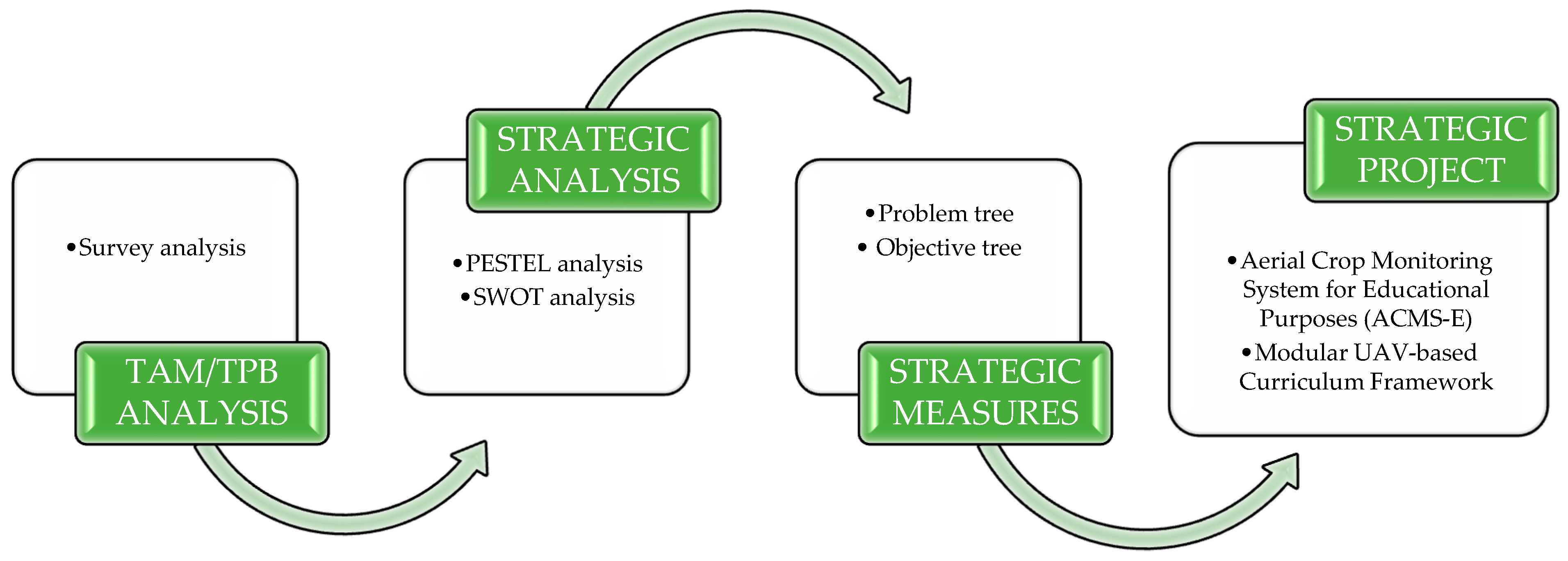
The research methodology is presented in Figure 2.
Figure 2.
Research methodology.
To mitigate potential sources of error, the questionnaire design included pre-testing, clear formulations and consistency checks to minimize response bias. Also, UAV sensors were calibrated prior to data acquisition, flight missions were standardized and replicated under consistent conditions and imagery processing followed a uniform workflow with ground-truth validation. These measures enhance the reliability of the demonstrative findings while acknowledging the inherent limitations of the study.
2.1. Participants and Data Analysis
The empirical study conducted in Sibiu County, Romania [38], involving 80 farmers (40.2 ± 14.1 years), indicated a favorable trend toward UAV adoption in precision monitoring. Participants were included if they were active farmers in Sibiu County with ownership of at least one agricultural plot. Most participants had completed high school (68.8%), 15% had higher-education degrees and the remainder had completed eight classes. Farm sizes ranged from under 5 ha (23.8%) to 5–50 ha (51%) to 51–100 ha (12.5%). Regarding farm type, 51.3% operated mixed farms, 36.3% specialized in livestock and 12.5% in crop production [38]. The present study builds on results previously obtained and advances them by identifying adoption determinants, as well as by developing ACMS-E and a modular UAV curriculum aimed at enhancing technical and practical competencies for effective UAV use in agriculture.
An integrated TAM–TPB framework was employed to examine farmers’ intention to adopt UAV technology. Perceived usefulness (PU) and perceived ease of use (PEU) represented TAM constructs, while attitude (A), subjective norms (SN) and perceived behavioral control (PBC) operationalized TPB dimensions.
The data analysis was performed using IBM SPSS Statistics for Windows, version 20.0 (IBM Corp., Armonk, NY, USA). Composite variables were computed as the mean of their respective Likert-scale items. Reliability was assessed using Cronbach’s alpha. Pearson correlations (r) were calculated to examine bivariate relationships. A correlational value above 0.5 was considered to be strong, values between 0.3 and 0.49 were considered moderate, and any value less than 0.29 was considered to be weak [55]. The significance level for all correlations was p < 0.05.
Regression analyses were conducted to examine the relationship between the factors related to participants’ intention to adopt UAVs. First, the TAM was estimated by entering PU and PEU as predictors of adoption intention (AI). Second, the TPB model was tested by introducing A, SN and PBC as explanatory variables. Finally, an integrated TAM–TPB model was estimated, including all constructs simultaneously, in order to assess their combined explanatory power and to evaluate the incremental variance explained beyond the individual theoretical models.
2.2. Strategic Analysis
To contextualize the adoption environment, a strategic analysis was conducted using the PESTEL and SWOT frameworks. The objective was to identify structural, institutional and contextual factors influencing the feasibility of UAV-based agricultural monitoring in Sibiu County, Romania.
The PESTEL analysis examined six dimensions: political, economic, social, technological, environmental (natural) and legal factors. The analysis focused on identifying elements relevant to agricultural digitalization, infrastructure availability, regulatory conditions, human capital and environmental constraints.
The SWOT analysis was subsequently conducted to synthesize internal strengths and weaknesses and external opportunities and threats relevant to the implementation of UAV-based monitoring systems in a regional agricultural context.
2.3. Strategic Measures
A strategic analysis was conducted using problem-tree and objective-tree methodologies, in order to identify the main barriers to UAV adoption in crop monitoring and to define corresponding objectives for intervention.
The problem tree was developed to map the core problem—limited adoption of UAV systems among farmers in Sibiu County, Romania—together with its underlying causes and resulting effects. The causes were classified into four main categories: educational and knowledge gaps, economic and resource constraints, technological and infrastructural barriers and behavioral and market-related factors.
The objective tree was constructed to define the main goal—enhancing UAV adoption for educational and economic purposes—and its specific objectives. These include improving knowledge and education through curriculum integration and training, increasing economic accessibility via funding and cooperative models, strengthening technological and infrastructural support through demonstration platforms and technical assistance, and addressing behavioral and market-related barriers through incentives and pilot projects.
2.4. Aerial Crop Monitoring System for Educational Purposes (ACMS-E) Development
The development of an Aerial Crop Monitoring System for Educational Purposes (ACMS-E) falls within global efforts to improve agricultural yields and support decision-making processes through the use of high-tech sensors and analytical tools that enhance precision agriculture [3,9,56]. This system is part of the precision agriculture concept and relies on large volumes of data and information to enhance the use of agricultural resources, increase yields and improve production quality [57,58].
ACMS-E is structured to provide theoretical and practical training in UAV operation, multispectral data acquisition and data analysis for students and farmers.
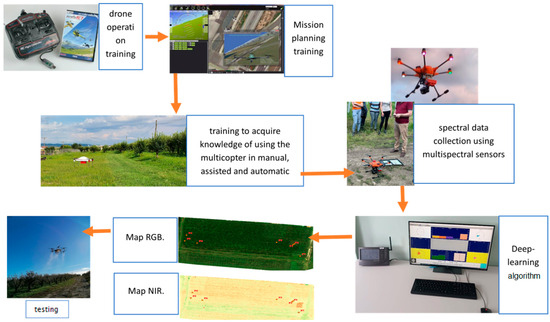
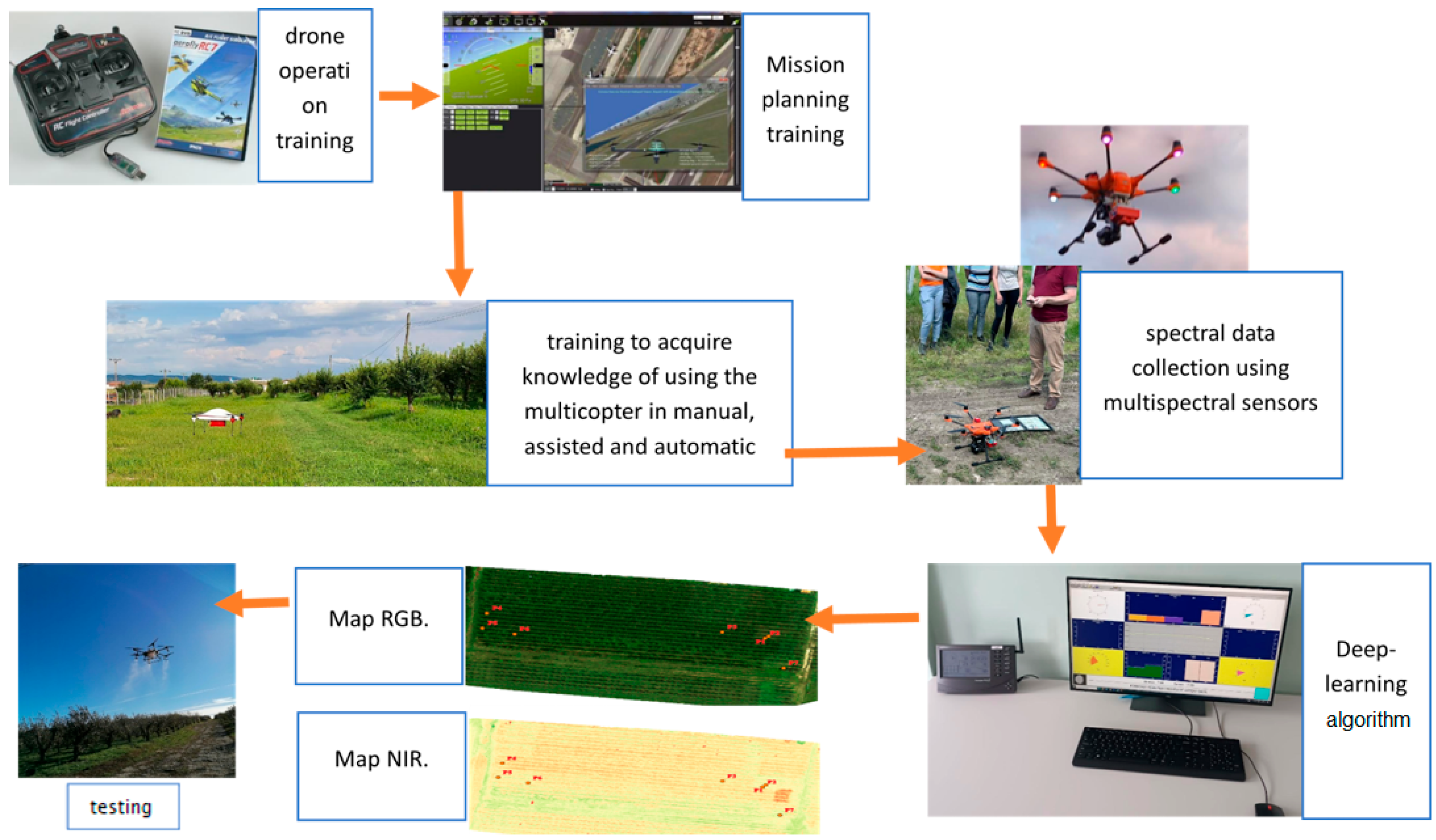
The system architecture comprises the following components: a flight simulator, a training quadcopter, a quadcopter equipped with a multispectral sensor, software for data analysis and interpretation and a multicopter designed for precision applications, as can be seen in Figure 3.
Figure 3.
ACMS-E architecture.
The functional model is based on the establishment of a specialist team responsible for designing and delivering structured UAV training programs. These programs develop competencies in multicopter UAV operation, aerial mission planning and execution, vegetation data acquisition and data processing using dedicated software applications.
The model also includes training in vegetation index calculation and in identifying optimal corrective interventions based on data-driven crop assessment.
3. Results
3.1. Empirical Study on Adoption Factors (Sibiu County)
The present study builds on the results previously obtained and reported in [38], which included 80 farmers from Sibiu County (40.2 ± 14.1 years), and advances the research by identifying the factors influencing participants’ intention to adopt UAVs, as well as by developing ACMS-E and a modular UAV curriculum aimed at enhancing technical and practical competencies for effective UAV use in agriculture.
As previously reported [38], 68.8% of respondents indicated familiarity with UAV systems and their operation. Regarding adoption intentions, 36.3% expressed a desire to develop their own UAV system, 33.8% intended to access specialized UAV services and 77.5% were open to forming partnerships to secure aerial monitoring capabilities.
Correlation analysis revealed that UAV monitoring knowledge was strongly associated with both development intent (r = 0.539, p ≤ 0.001) and partnership interest (r = 0.541, p ≤ 0.001), while development intent and partnership interest were also highly correlated (r = 0.663, p ≤ 0.001). These results indicate that farmers with greater UAV knowledge are more likely to pursue system development or collaborative arrangements for aerial monitoring. The strong link between development intent and partnership interest suggests that adoption willingness is influenced not only by individual capacity but also by openness to cooperative approaches. Additionally, age showed a moderate positive correlation with partnership interest (r = 0.32, p = 0.004), implying that more experienced farmers may feel more confident in managing the organizational and collaborative aspects of UAV integration [38].
The survey also collected information on participants’ perceived benefits of UAV use (increases productivity and decreases costs), technical complexity and ease of use, attitude, social pressure, available resources and implementation capacity, intention to use and adoption probability. These variables were mapped onto the constructs of the Technology Acceptance Model (TAM) and the Theory of Planned Behavior (TPB) to identify the key determinants of UAV adoption. Specifically, perceived usefulness (PU) and perceived ease of use (PEU) were included as TAM constructs; attitude toward UAV use (A), subjective norms (SN) and perceived behavioral control (PBC) represented the TPB constructs, while behavioral intention to adopt UAVs (BI) served as the dependent variable.
Composite variables were calculated as the mean scores of their respective Likert-scale items. PU (4.29 ± 0.8) was measured through items assessing whether UAVs increase productivity and reduce costs; PEU (4.31 ± 0.88) captured respondents’ perceptions regarding complexity and the effort required for system implementation; A (4.36 ± 0.97) was operationalized as the overall evaluative judgment of UAV implementation in agricultural practice; SN (4.09 ± 1) comprised items related to support for utilization and the perception that other farmers use UAVs; PBC (4.12 ± 1.14) was measured through self-assessment of resource availability and confidence in successfully operating UAV systems and BI (3.38 ± 1.3) was defined as the interest in implementing UAV-based monitoring technologies within a specified future time horizon.
Internal consistency analysis indicated a very good reliability for all constructs (Cronbach’s α = 0.925), suggesting strong coherence among the measured variables. Pearson correlation analysis revealed significant positive associations (≤0.001) among all variables, as can be seen in Table 1. BI was moderately correlated with A (r = 0.608), PU (r = 0.599) and PBC (r = 0.557), indicating that these factors are related to participants’ intention to adopt UAVs.
Table 1.
Correlation matrix.
Regression analyses were conducted to examine the predictive power of TAM and TPB constructs on BI. The results are presented in Table 2.
Table 2.
Regression results.
Within the TAM framework (PU and PEU predicting BI), PU emerged as a statistically significant predictor of farmers’ intention to adopt UAV technologies (β = 0.476, p < 0.001). In contrast, PEU did not reach statistical significance (β = 0.170, p = 0.193). The model explained 37.2% of the variance in BI (R2 = 0.372), suggesting that expected performance gains and cost reduction potential play a more decisive role than perceived technical simplicity in shaping adoption intentions.
Within the TPB framework (A, SN and PBC predicting BI), A was identified as a significant predictor (β = 0.425, p = 0.002). However, neither SN nor PBC demonstrated statistically significant effects. The TPB model accounted for 39.8% of the variance in BI (R2 = 0.398), highlighting the central role of evaluative judgment in the decision to adopt UAV-based agricultural technologies.
When all constructs were simultaneously included in the integrated model (PU, PEU, A, SN and PBC predicting BI), only PU (β = 0.355, p = 0.021) and A (β = 0.382, p = 0.005) remained statistically significant predictors. The integrated model demonstrated improved explanatory power, accounting for 44.1% of the variance in BI (R2 = 0.441), thus confirming that cognitive evaluations of utility and overall attitudinal orientation are the most robust determinants of UAV adoption intentions in the analyzed sample.
3.2. Strategic Analysis
The PESTEL analysis, based on the model proposed by [59], identified structural factors influencing the implementation of UAV-based agricultural monitoring systems in Sibiu County, Romania.
From a political and legal perspective, the regional environment is embedded within national and European policy frameworks that support agricultural digitalization and innovation, including instruments under the Common Agricultural Policy (CAP 2023–2027), as published on the Romanian Government Open Data Portal [52]. At the EU level, the CAP budget for 2023–2027 amounts to approximately €307 billion. Within this framework, Romania’s CAP Strategic Plan allocates around €15.8 billion, supporting direct payments, rural development, and investments in farm modernization, including digital and precision agriculture technologies such as UAVs [49,53].
The regulatory framework governing UAV operation, namely EU Regulations 2019/947 and 2019/945 [54], data protection (GDPR) and national digitalization policies (Law No. 264/2021 [60]) establishes formal conditions for system deployment, including authorization, registration and compliance requirements. In Romania, according to the Romanian Civil Aviation Authority, more than 25,000 drone operators and around 14,600 certified drone pilots are registered, indicating the growing institutional capacity for UAV deployment in sectors such as agriculture [54].
The economic context is characterized by a diversified regional economy in which agriculture remains significant in rural areas. Sibiu County has significant agricultural potential. The county’s agricultural area totals approximately 303,000 ha, representing 15.97% of the agricultural land recorded in the Central Region and 2.07% of the total agricultural area at the national level [50]. The presence of medium and large farms indicates potential operational capacity for adopting precision agriculture technologies, while smaller farms may face financial constraints related to investment and training costs. According to data from the National Institute of Statistics of Romania [50] in Sibiu County, there were 16,335 active enterprises in 2024, of which 91.6% were micro-enterprises (0–9 employees), 6.7% small enterprises (10–49 employees), and 1.3% medium enterprises (50–249 employees). In the agricultural sector, 368 firms were registered, the vast majority (89.4%) being micro-enterprises, highlighting the predominance of small-scale agricultural structures.
From a social perspective, rural areas exhibit demographic aging and migration of younger populations. In Sibiu County, the population reached 468,008 inhabitants in 2025, of which 163,215 (34.9%) live in rural areas [50], highlighting the continued socio-economic importance of rural communities. However, rural areas show lower levels of digital literacy and access to technological training compared with urban centers, which may influence farmers’ capacity to adopt smart agriculture technologies.
The technological environment shows developed digital infrastructure in urban areas, including access to universities, research laboratories and high-speed internet. Analyzed data [50,51] showed that, in 2024, 92.5% of households in urban areas were connected to the Internet, 9.3 percentage points more than the 83.2% share of households in rural areas. This urban–rural digital divide may affect the deployment of smart agricultural technologies. Academic and research institutions in the region and across Romania, including agricultural universities with dedicated research centers and field stations (e.g., those with farms and modern equipment for crop experiments) and technical universities with expertise in automation and sensors, provide technical expertise and access to UAV-related equipment such as multispectral drones and precision monitoring tools, supporting research and practical applications in precision agriculture
The environmental context is characterized by geographical and climatic diversity, including mountainous, hilly and plateau areas. Agricultural production is influenced by climatic variability, including periodic drought conditions in lowland zones, increasing the relevance of monitoring and resource optimization technologies.
Table 3 summarizes the key factors influencing UAV adoption in Sibiu County, highlighting political, economic, social, technological and environmental dimensions.
Table 3.
Key factors influencing UAV adoption.
The SWOT analysis further structured these findings. Identified strengths include agroecological diversity, academic expertise, openness to innovation among segments of the farming community and access to European funding mechanisms. Weaknesses include fragmented land ownership, uneven levels of technical competence, limited specialized personnel in rural areas and infrastructure disparities. Opportunities are associated with funding programs, cooperative networks and the expansion of agricultural digitalization initiatives. Threats include climate variability, potential resistance to technological change, dependency on external funding and regulatory constraints related to UAV operation and data management.
Overall, the combined PESTEL and SWOT analyses indicate the coexistence of institutional support and structural constraints shaping the regional environment for UAV adoption.
3.3. Strategic Measures
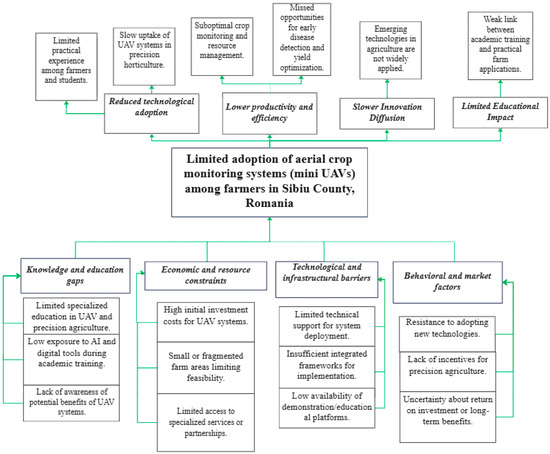
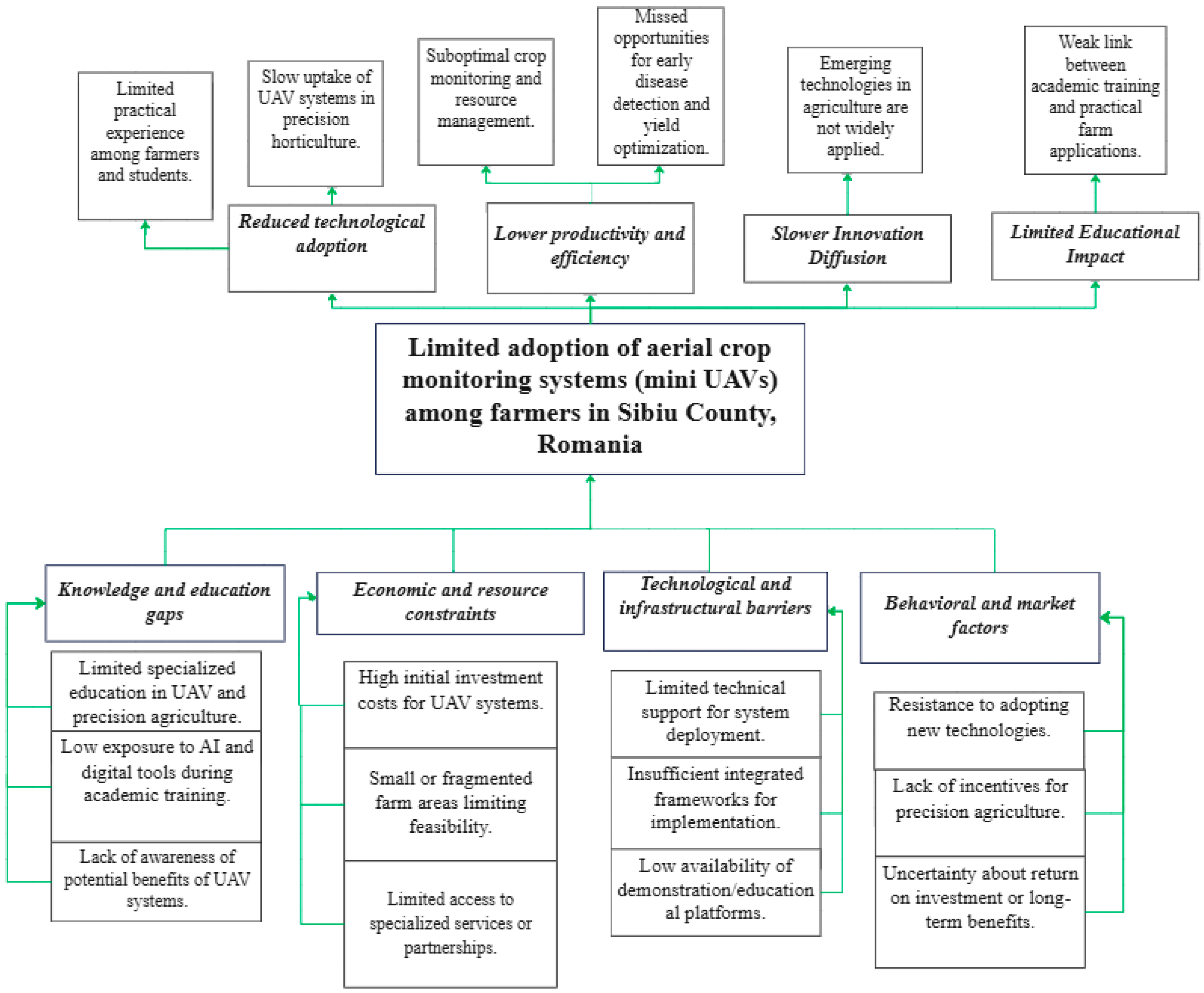
The problem-tree analysis identified limited adoption of UAV systems for crop monitoring among farmers in Sibiu County, Romania, as seen in Figure 4. This issue is driven by several underlying causes. First, there are knowledge and education gaps, as many farmers have limited specialized training in UAV technology and precision agriculture, low exposure to digital tools during their academic education and a lack of awareness about the potential benefits of UAV systems. Second, there are economic and resource constraints, including high initial investment costs, small or fragmented farm areas that reduce feasibility and limited access to specialized services or partnerships. Third, technological and infrastructural barriers play a role, since there is little technical support for UAV deployment, no integrated frameworks for implementation and a shortage of demonstration or educational platforms. Finally, behavioral and market-related factors slow down adoption, such as resistance to change, lack of incentives for precision agriculture and uncertainty about return on investment or long-term benefits.
Figure 4.
Problem tree.
One major identified effect is reduced technological adoption, meaning that UAV systems are introduced slowly into agricultural practice. This leads to lower productivity and efficiency, as farmers miss opportunities for optimized crop monitoring, early disease detection and better resource use. At the same time, there is a limited impact of education, because both students and future professionals gain little hands-on experience with advanced agricultural technologies. Ultimately, these factors contribute to slower innovation diffusion, where emerging technologies in agriculture are not widely applied, partnerships remain limited, and the competitiveness of local farming systems is reduced.
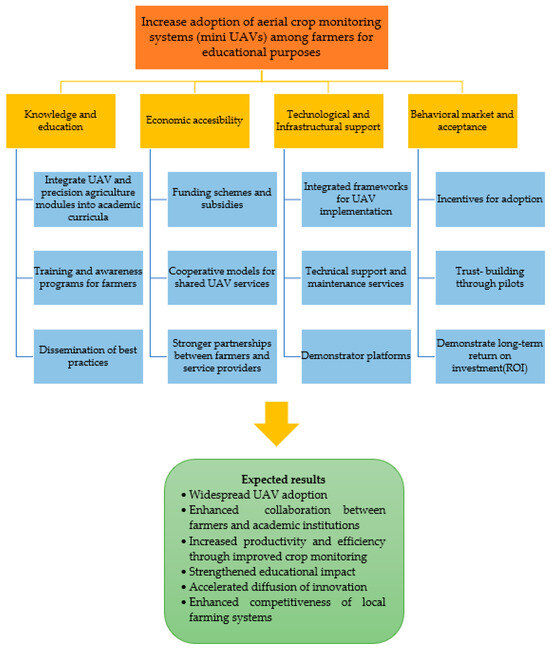
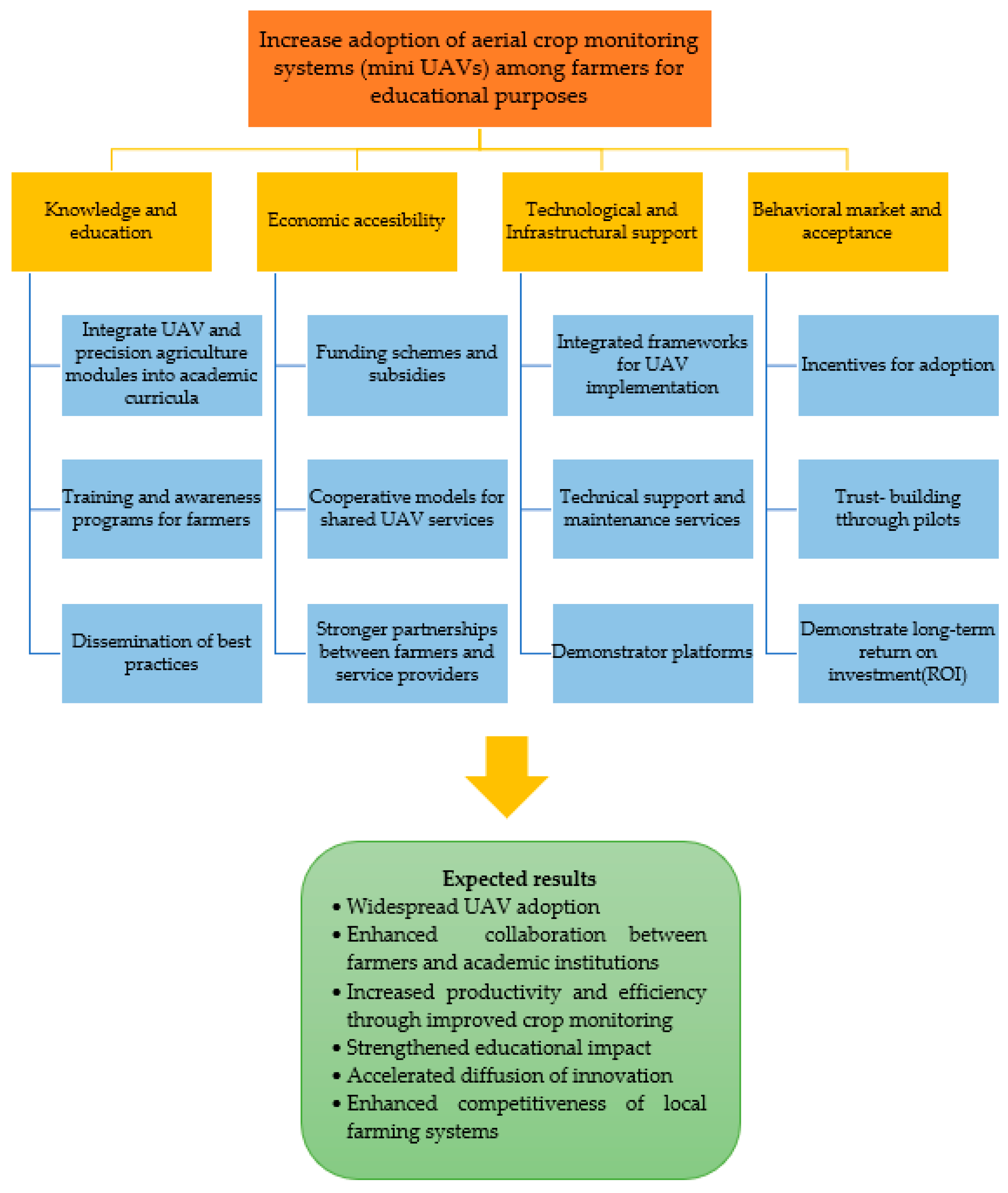
Building on the insights gained from the problem-tree analysis, an objective tree was subsequently developed to translate the identified challenges into targeted, actionable goals. The main objective was to promote increased adoption of aerial crop monitoring systems among farmers for both educational and economic purposes, as illustrated in Figure 5.
Figure 5.
Objective tree.
The objective tree specifies several interrelated goals corresponding to the root causes identified in the problem tree. Knowledge and education are addressed by integrating UAV and precision agriculture modules into curricula, organizing targeted training and awareness programs, and disseminating best practices to enhance farmer and student competencies. Economic accessibility can be improved through funding schemes, subsidies, cooperative models for shared UAV services, and stronger partnerships between farmers and service providers. Technological and infrastructural support is promoted by establishing integrated UAV implementation frameworks, providing technical assistance and maintenance services, and creating demonstrator platforms for hands-on learning. Finally, behavioral and market adoption is encouraged through incentive mechanisms, pilot projects, dissemination of success stories and clear demonstrations of the long-term agronomic and economic benefits of UAV technologies.
Together, these objectives provide a structured roadmap for addressing the multifaceted barriers identified in the problem tree and serve as the foundation for the design and implementation of the ACMS-E framework.
Achieving these objectives is expected to increase UAV adoption, enhance collaboration between farmers and academic institutions, improve crop monitoring efficiency, strengthen educational outcomes through hands-on experience and accelerate the diffusion of agricultural innovation. The integration of an educational and operational framework such as ACMS-E provides a structured approach to overcoming these constraints, building capacity and promoting sustainable technology uptake.
3.4. System Demonstration and Curriculum Proposal
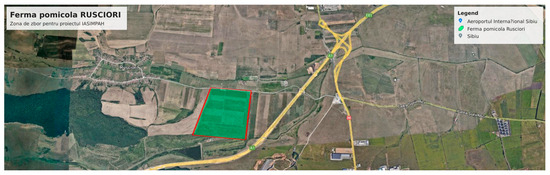
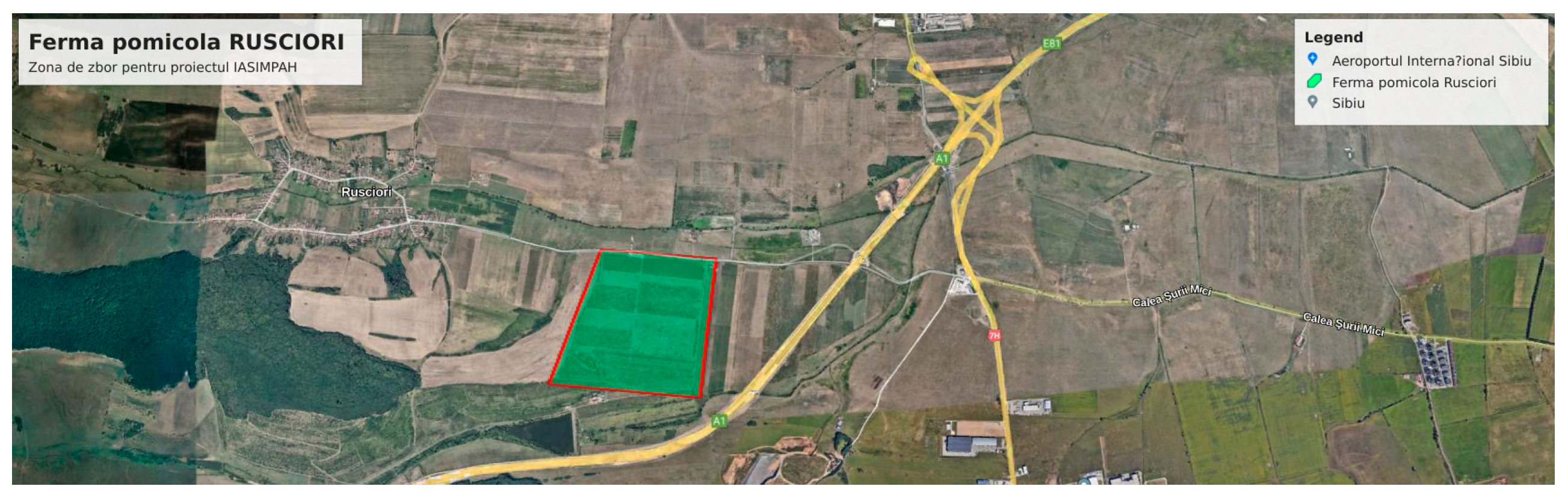
The functional model of ACMS-E was implemented at the Rusciori Didactic and Research Farm, following a structured, phased approach. The implementation stages included: defining the geographic boundaries of the flight area, collecting multispectral data, processing the data, planning precision flight missions and applying treatments to affected areas. The working area was digitized using a GIS application (Google Earth) to support spatial planning and mission design, as presented in Figure 6.
Figure 6.
Identifying the work area (marked with red box).
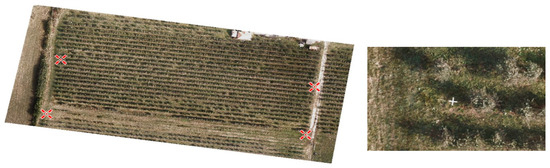
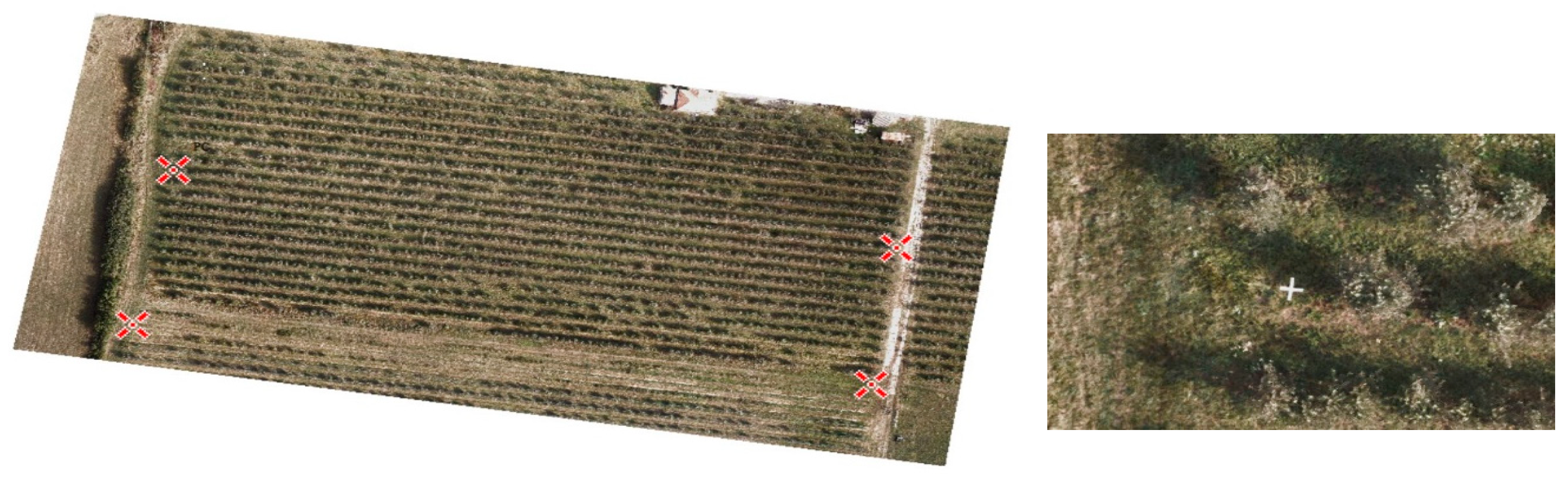
Following the definition of the flight area, applicable national airspace restrictions were identified and the required authorization procedures were completed in accordance with UAS regulations. Ground control points were installed and surveyed using an RTK GNSS positioning system (Emlid Reach series), ensuring centimeter-level accuracy and precise georeferencing of UAV imagery, as presented in Figure 7.
Figure 7.
The spatial distribution of the GCPs within the study area.
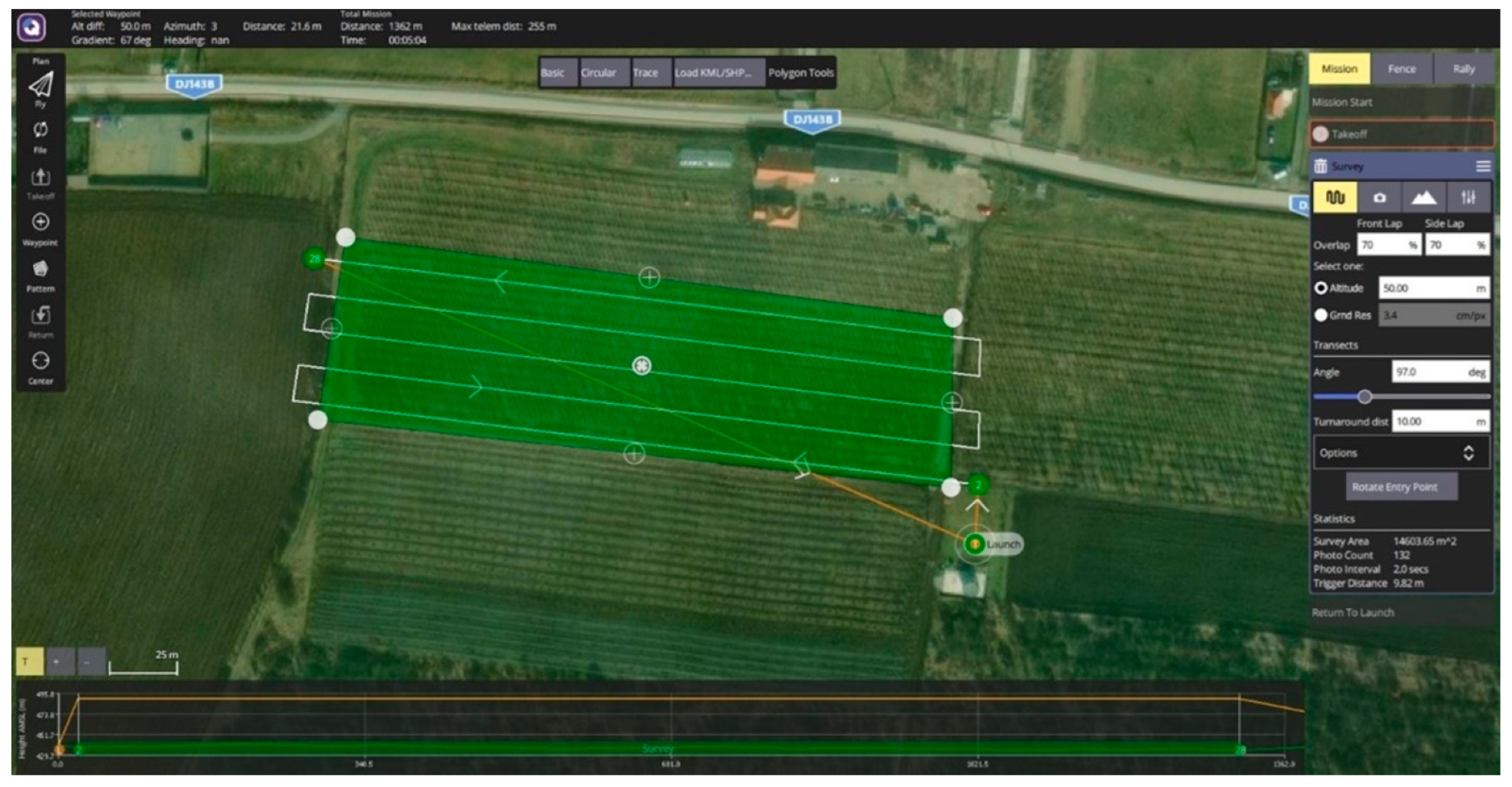
Mission planning included compliance with CTR Sibiu airspace restrictions, ensuring a minimum 70% forward image overlap and adequate lateral overlap and selecting unobstructed takeoff and landing zones. All operations were conducted in accordance with Regulation (EU) 2019/947, Regulation (EU) 2019/945 and applicable national UAS rules.
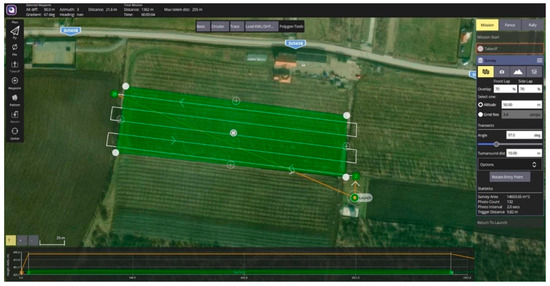
Image acquisition was performed in longitudinal and lateral directions, following standard photogrammetric practices to ensure reliable orthomosaic generation. Figure 8 presents flight mission planning in QGroundControl (v5.0) software.
Figure 8.
Flight mission planning in QGroundControl software.
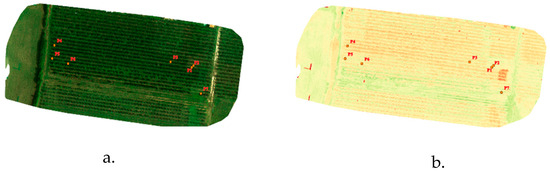
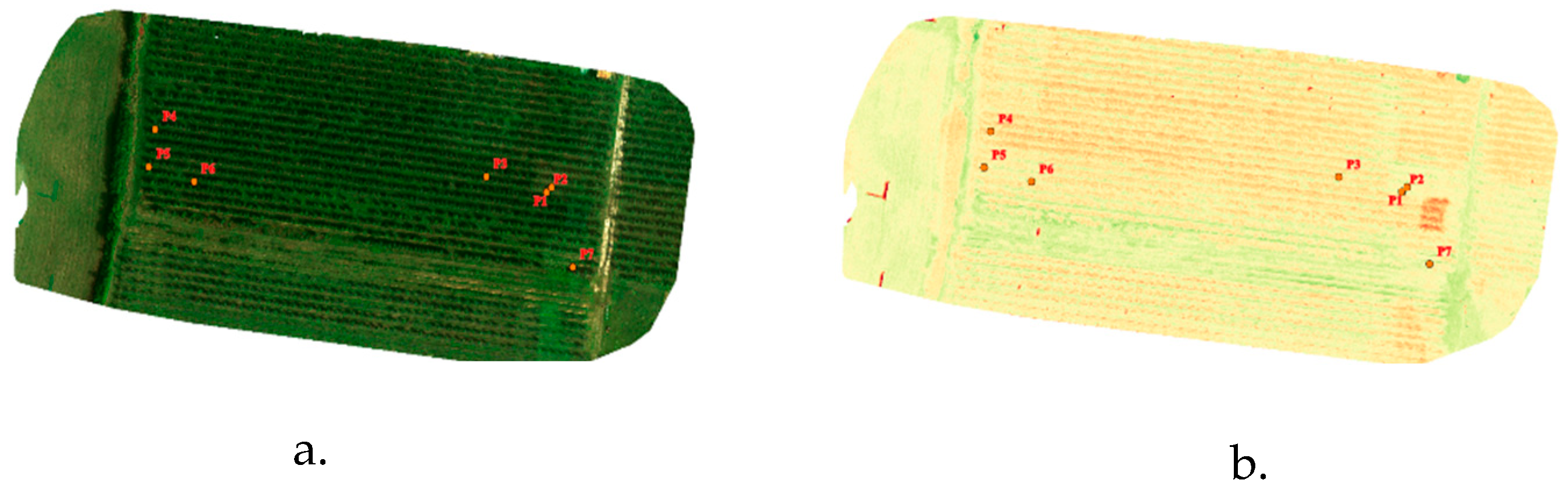
The collected data were processed using Pix4Dmapper (Pix4D S.A., Switzerland), which generated calibrated orthomosaics, digital surface models and vegetation indices required for analysis. Data processing resulted in the creation of RGB and NIR maps, presented in Figure 9, which include vegetation indices that are used to inform decisions for developing optimal solutions to address identified crop vulnerabilities.
Figure 9.
RGB (a) and NIR (b) maps.
Particular attention was given to NDVI ((NIR − Red)/(NIR + Red)) and NDRE indices. NDVI was used to assess crop vigor and vegetation health, while NDRE enabled earlier detection of physiological stress by incorporating the red-edge spectral band.
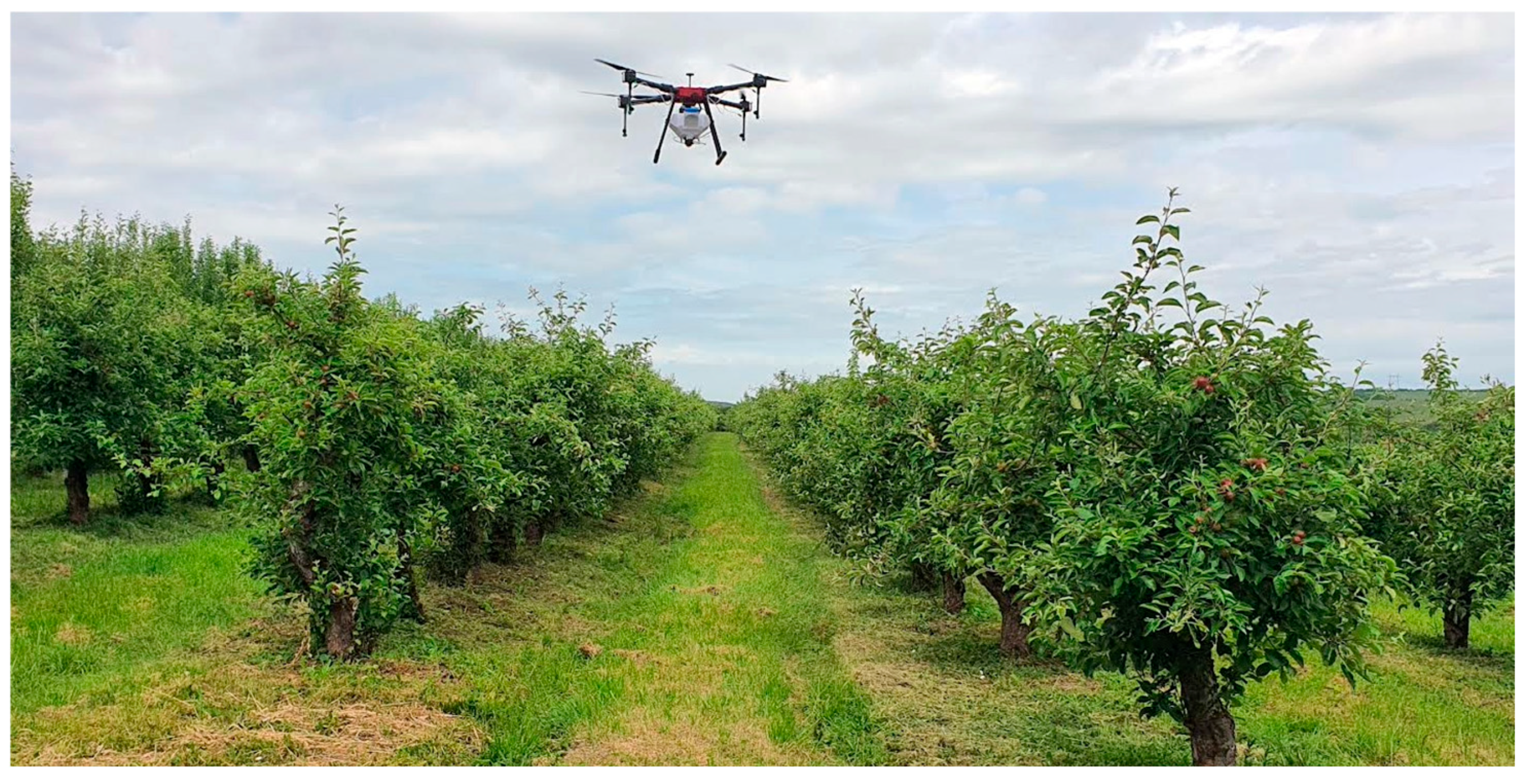
The resulting NDVI and NDRE maps supported spatial variability interpretation and decision-support processes in the educational framework. Precision interventions were applied exclusively in areas identified as vulnerable. An ACMS-E test flight is illustrated in Figure 10.
Figure 10.
ACMS-E testing.
Starting from the ACMS-E architecture and from the conclusions of the TAM–TPB analysis, the development of the modular curriculum is both theoretically grounded and empirically justified. The empirical results showed that perceived usefulness and attitudinal orientation are the most robust determinants of behavioral intention to adopt UAV technologies. Therefore, a modular curriculum aimed at increasing adoption should explicitly target these dimensions by demonstrating the concrete benefits of UAV applications and by fostering positive attitudes through practical engagement and experiential learning.
In this context, the proposed UAV curriculum for agricultural education, as presented in Table 4, begins with an introduction to UAV technology, including drone types, components, sensors, safety regulations, airspace rules, ethical considerations and applications in agriculture. This foundational module highlights the practical value and real-world relevance of UAV technologies, strengthening perceived usefulness. It is followed by training in flight operations and navigation, covering pre-flight planning, manual and automated flight techniques, checklist procedures and flight simulation exercises to build practical skills, thereby supporting both perceived usefulness and positive attitudes toward the technology.
Table 4.
ACMS-E curriculum.
Subsequent modules focus on aerial imaging and remote sensing, teaching image capture protocols, multispectral and thermal imaging and data management for crop monitoring. Participants then learn to analyze UAV-derived data for precision agriculture, including detection of crop stress, pests, or diseases, soil and vegetation assessment using indices such as NDVI and yield prediction to support irrigation and fertilization planning. Hands-on field exercises allow learners to conduct UAV flights on farms or experimental plots, monitor crops, assess plant health and map soil conditions. Through these practical applications, participants directly observe the agronomic and economic benefits of UAV technologies, reinforcing perceived usefulness while strengthening favorable attitudes toward adoption.
Finally, the curriculum emphasizes integration of UAV insights into farm management, supporting data-driven decision-making, combining UAV findings with traditional practices and fostering innovation through collaborative pilot projects and applied research.
Operational constraints, including battery endurance, flight-altitude trade-offs, weather sensitivity and regulatory limitations, are explicitly integrated into the ACMS-E curriculum. These factors are incorporated into pre-flight planning, field exercises and data collection workflows, allowing participants to understand how practical limitations affect data quality, spatial coverage, safety and compliance, while maintaining realistic expectations about UAV deployment in agricultural environments.
The proposed ACMS-E curriculum envisions a structured sequence of modules combining interactive lectures, hands-on UAV flight exercises, flight simulation sessions and collaborative field projects with farmers. This blended approach is intended to reinforce theoretical knowledge through practical application, fostering both cognitive understanding and technical proficiency in UAV-based crop monitoring.
The curriculum is designed to develop core competencies, including UAV operation, aerial imaging and data acquisition, multispectral image processing, crop stress and yield assessment and integration of UAV-derived insights into farm management decisions. It also aims to enhance critical thinking, problem-solving skills and the capacity to design and execute UAV-supported agronomic experiments.
To promote UAV adoption in Sibiu County, pilot implementation projects are planned on selected farms and educational institutions, demonstrating applications in crop monitoring, soil assessment and yield prediction. Participant feedback and measurable outcomes will be systematically collected to inform continuous refinement of training materials and instructional strategies.
Grounded in the empirical results of the TAM–TPB analysis, the curriculum translates the key determinants of behavioral intention—particularly perceived usefulness and attitudinal orientation—into structured educational interventions. The modules therefore focus on demonstrating measurable productivity gains, cost-efficiency and agronomic benefits of UAV-based monitoring, while integrating experiential learning, case studies and field applications that strengthen positive evaluations of the technology.
By operationalizing these behavioral drivers into practical training activities, the program functions as an applied framework for accelerating UAV adoption in agriculture. At the same time, it fosters collaboration among students, educators and farmers, creating a knowledge-sharing ecosystem that supports sustainable implementation, builds operational competence and stimulates innovation. Through this alignment between empirical evidence and instructional design, ACMS-E contributes to enhancing perceived usefulness, ease of use, favorable attitudes, subjective norms and perceived behavioral control, ultimately increasing the likelihood of sustained UAV adoption.
4. Discussion
The empirical findings provide strong support for the development of a structured UAV educational framework and dedicated curriculum in agricultural education. Compared with the exploratory analysis reported in [38], the present study provides a more comprehensive understanding of UAV adoption by identifying behavioral determinants through the TAM–TPB framework and translating these findings into an applied educational model for agricultural UAV training.
The study demonstrates that UAV adoption among farmers in Sibiu County is primarily driven by perceptions of usefulness and positive attitudes toward technology, as confirmed by the integrated TAM–TPB model, which explained 44.1% of the variance in behavioral intention. This indicates that adoption decisions are strongly influenced by perceived economic and operational benefits, consistent with prior TAM and TPB-based studies in agricultural technology adoption contexts [40,41,42,44].
In contrast, PEU, SN and PBC showed non-significant effects, suggesting that perceived value outweighs ease-of-use considerations or social pressure in shaping adoption intentions. Similar patterns have been reported in recent studies on drone and AI acceptance in agriculture, where perceived usefulness remains the dominant predictor of behavioral intention [41,44,61]. These findings emphasize that educational interventions should prioritize demonstrating measurable agronomic and economic benefits rather than focusing solely on technical operability.
These results justify the design of a UAV-oriented curriculum that integrates technical training, economic evaluation, data interpretation skills and decision-support applications. Strengthening perceived usefulness through applied demonstration aligns with the broader smart farming adoption literature emphasizing responsible innovation and human-centered digital transformation [35,36].
The strategic context also plays a critical role in adoption. PESTEL and SWOT analyses for Sibiu County revealed that regulatory frameworks and policy support mechanisms—such as the Common Agricultural Policy and Copernicus agricultural monitoring initiatives—act as enabling factors [10,49]. Prior research confirms that institutional support and governance structures significantly influence digital agriculture diffusion [36]. Furthermore, farm size and capital availability are associated with higher adoption likelihood, consistent with findings from UAV application reviews in precision agriculture [32,61].
Socio-educational determinants, including digital literacy and formal training exposure, also shape adoption behavior. Technology acceptance studies in agriculture underline the importance of human capital and access to information sources in strengthening adoption intention [41,42,47]. Although ACMS-E is developed within the Romanian context, its modular and platform-agnostic structure enhances adaptability across institutional and regional environments, in line with strategic management transferability principles [59].
Beyond adoption readiness, UAV systems integrated into educational programs serve operational purposes. The human-in-the-loop approach emphasizes structured mission planning, disciplined data acquisition and regulatory compliance. While the technical UAV literature largely focuses on sensing optimization, autonomous deployment and vegetation index performance [32,57,62,63], the present framework complements these advances by addressing the behavioral and capacity-building dimensions required for sustained implementation.
Previous studies suggest that targeted educational programs increase technology adoption rates, particularly in regions with limited prior exposure to precision agriculture tools [35,56].
The modular curriculum integrates theoretical instruction with applied UAV deployment, multispectral imaging and vegetation index interpretation, consistent with established remote sensing methodologies in precision agriculture [16,17,31]. Experiential learning components and field-based collaboration support skill acquisition and innovation capacity, factors recognized as critical for digital agriculture adoption [35,47]. Demonstrator platforms reduce uncertainty and increase trust—key determinants of technology acceptance identified in agricultural innovation studies [36,61].
Recent studies on UAV-based environmental monitoring emphasize structured mission planning, autonomous deployment strategies and optimized sensing architectures [62,63,64]. While such research primarily focuses on technical performance and system optimization, the present study complements this perspective by emphasizing adoption readiness and human-in-the-loop capacity building. By integrating educational pathways with socio-economic and behavioral dimensions, ACMS-E extends UAV deployment from data acquisition toward sustained real-world implementation.
Overall, the study confirms that UAV adoption depends on a coordinated integration of educational, economic, technological and behavioral factors. By linking technological innovation with human capital development and strategic planning, ACMS-E could exemplify a holistic approach to advancing smart agriculture in emerging and developed agricultural regions.
Several limitations in this research should be acknowledged. First, this study relies on a conceptual and planning-oriented framework rather than large-scale empirical deployment, which may limit the generalizability of certain findings. Second, the curriculum and implementation strategy were not tested across diverse agricultural regions where socio-economic, infrastructural and regulatory conditions may differ substantially. Third, the study does not assess long-term usage behavior or the sustainability of UAV integration at the farm level. Future research should explore longitudinal impacts of UAV adoption on farm productivity, resource efficiency and environmental sustainability, as well as the scalability of educational programs like ACMS-E in other regions. A longitudinal panel design involving multiple waves of data collection—for example, immediately after training, and again after 12/24 months—would enable the assessment of sustained use, actual application frequency, proportion of cultivated area monitored using UAV systems, and measurable economic outcomes. Such an approach would also allow the analysis of changes in perceived usefulness, perceived behavioral control, cost expectations, and risk perception over time, as well as the identification of retraining requirements triggered by technological upgrades or regulatory changes. Finally, evolving drone regulations, sensor capabilities, data governance frameworks and cybersecurity requirements may influence future implementation. Comparative cross-country studies could further clarify how educational structures, institutional environments and socio-economic conditions shape the transition from initial adoption intention to sustained long-term implementation.
5. Conclusions
The study investigated the determinants of UAV adoption in precision agriculture and proposed an integrated educational-operational framework (ACMS-E) designed to enhance adoption readiness among farmers and students. By combining the Technology Acceptance Model and the Theory of Planned Behavior, this study demonstrated that perceived usefulness and attitude toward UAV implementation are the most robust predictors of adoption intention, while perceived ease of use, subjective norms and perceived behavioral control showed no independent significant effects in the integrated model.
The empirical results indicate that adoption decisions are primarily driven by expected economic and operational benefits rather than by technical simplicity or social pressure. These findings highlight the central role of value perception and evaluative orientation in the diffusion of digital agricultural technologies.
Beyond behavioral modeling, the study contributes by translating adoption determinants into a structured educational architecture. The ACMS-E framework operationalizes this translation through a modular curriculum, demonstrator platform and human-in-the-loop deployment model, integrating technical training with economic evaluation, regulatory compliance and farm-management integration.
The research therefore advances the literature in three ways. First, it empirically validates the relative dominance of perceived usefulness and attitude in UAV adoption within an emerging agricultural market. Second, it bridges the gap between behavioral intention modeling and practical implementation by embedding adoption determinants into curriculum design. Third, it proposes a transferable, platform-agnostic educational framework that can support structured UAV integration in agricultural systems beyond the Romanian context.
Overall, the findings confirm that UAV adoption in agriculture represents not merely a technological shift but a socio-technical transition requiring coordinated educational, institutional and strategic interventions.
Author Contributions
Conceptualization, R.I. and M.B.; methodology R.I. and P.I.; software, I.M.P. and S.P.; validation, R.I., P.I., I.M.P., M.B. and S.P.; formal analysis, R.I. and I.M.P.; investigation, S.P.; resources, R.I. and S.P.; data curation, R.I. and I.M.P.; writing—original draft preparation, R.I., P.I. and I.M.P.; writing—review and editing, R.I. and I.M.P.; visualization, R.I., P.I., I.M.P., M.B. and S.P.; supervision, R.I.; project administration, R.I.; funding acquisition, R.I. and I.M.P. All authors have read and agreed to the published version of the manuscript.
Funding
This research was funded by Lucian Blaga of the University of Sibiu and Hasso Plattner Foundation research grants LBUS-IRG-2023-09.
Institutional Review Board Statement
Not applicable.
Informed Consent Statement
Not applicable.
Data Availability Statement
The original contributions presented in this study are included in the article. Further inquiries can be directed to the corresponding author.
Conflicts of Interest
The authors declare no conflicts of interest.
Appendix A
Table A1.
Questionnaire.
References
- International Society of Precision Agriculture. Precision Agriculture Definition. 2024. Available online: https://www.ispag.org/resources/definition (accessed on 21 November 2025).
- Istiak, M.A.; Syeed, M.; Hossain, M.S.; Uddin, M.F.; Hasan, M.; Khan, R.H.; Azad, N.S. Adoption of Unmanned Aerial Vehicle (UAV) imagery in agricultural management: A systematic literature review. Ecol. Inform. 2023, 78, 102305. [Google Scholar] [CrossRef] [Scilit]
- Becker-Reshef, I.; Justice, C.; Sullivan, M.; Vermote, E.; Tucker, C.; Anyamba, A.; Small, J.; Pak, E.; Masuoka, E.; Schmaltz, J.; et al. Monitoring Global Croplands with Coarse Resolution Earth Observations: The Global Agriculture Monitoring (GLAM) Project. Remote Sens. 2010, 2, 1589–1609. [Google Scholar] [CrossRef] [Scilit]
- Karthikeyan, L.; Chawla, I.; Mishra, A.K. A review of remote sensing applications in agriculture for food security: Crop growth and yield, irrigation, and crop losses. J. Hydrol. 2020, 586, 124905. [Google Scholar] [CrossRef] [Scilit]
- Priya, R.S.S.; Rahamathunnisa, U. A Comprehensive Study of Remote Sensing Technology for Agriculture Crop Monitoring. Nat. Environ. Pollut. Technol. 2024, 23, 1017–1027. [Google Scholar] [CrossRef] [Scilit]
- Segarra, J.; Buchaillot, M.L.; Araus, J.L.; Kefauver, S.C. Remote Sensing for Precision Agriculture: Sentinel-2 Improved Features and Applications. Agronomy 2020, 10, 641. [Google Scholar] [CrossRef] [Scilit]
- Drusch, M.; Del Bello, U.; Carlier, S.; Colin, O.; Fernandez, V.; Gascon, F.; Hoersch, B.; Isola, C.; Laberinti, P.; Martimort, P.; et al. Sentinel-2: ESA’s optical high-resolution mission for GMES operational services. Remote Sens. Environ. 2012, 120, 25–36. [Google Scholar]
- ESA SNAP Sentinel—1 Toolbox, European Space Agency. 2017. Available online: https://eoscience.esa.int/landtraining2017/files/materials/D2P11_P.pdf (accessed on 17 December 2025).
- Atzberger, C. Advances in Remote Sensing of Agriculture: Context Description, Existing Operational Monitoring Systems and Major Information Needs. Remote Sens. 2013, 5, 949–981. [Google Scholar] [CrossRef] [Scilit]
- European Commission. Copernicus and Agricultural Monitoring. Available online: https://www.copernicus.eu/sites/default/files/2021-06/Financing_Decision_C_2021_4316_final-Annex_2_Copernicus_Work_Programme.pdf (accessed on 18 December 2025).
- Zhang, C.; Kovacs, J.M. The application of small unmanned aerial systems for precision agriculture: A review. Precis. Agric. 2012, 13, 693–712. [Google Scholar] [CrossRef] [Scilit]
- Hunt, E.R., Jr.; Hively, W.D.; Fujikawa, S.J.; Linden, D.S.; Daughtry, C.S.T.; McCarty, G.W. Acquisition of NIR-Green-Blue Digital Photographs from Unmanned Aircraft for Crop Monitoring. Remote Sens. 2010, 2, 290–305. [Google Scholar]
- Avșar, D.; Avșar, G. Yeni Tarım Düzeninin Tarımsal Üretim Üzerindeki Etkileri ve Türkiye’deki Uygulamalar. Akad. Platf. 2014, 379–385. [Google Scholar]
- Ozdogan, B.; Gacar, A.; Aktas, H. Digital agriculture practices in the context of agriculture 4.0. J. Econ. Financ. Account. 2017, 4, 186–193. [Google Scholar]
- Guebsi, R.; Mami, S.; Chokmani, K. Drones in Precision Agriculture: A Comprehensive Review of Applications, Technologies, and Challenges. Drones 2024, 8, 686. [Google Scholar] [CrossRef] [Scilit]
- Rouse, J.W.; Haas, R.H.; Schell, J.A.; Deering, D.W. Monitoring Vegetation Systems in the Great Plains with ERTS. In Proceedings of the Third ERTS-1 Symposium, Washington, DC, USA, 10–14 December 1973; NASA SP-351; Fraden, S.C., Marcanti, E.P., Becker, M.A., Eds.; NASA: Washington, DC, USA, 1973; pp. 309–317. [Google Scholar]
- Pettorelli, N.; Vik, J.O.; Mysterud, A.; Gaillard, J.-M.; Tucker, C.J.; Stenseth, N.C. Using the satellite-derived NDVI to assess ecological responses to environmental change. Trends Ecol. Evol. 2005, 20, 503–510. [Google Scholar] [CrossRef] [Scilit]
- Yang, X.; Gao, F.; Yuan, H.; Cao, X. Integrated UAV and Satellite Multi-Spectral for Agricultural Drought Monitoring of Winter Wheat in the Seedling Stage. Sensors 2024, 24, 5715. [Google Scholar] [CrossRef] [Scilit]
- Kouadio, L.; El Jarroudi, M.; Belabess, Z.; Laasli, S.-E.; Roni, M.Z.K.; Amine, I.D.I.; Mokhtari, N.; Mokrini, F.; Junk, J.; Lahlali, R. A Review on UAV-Based Applications for Plant Disease Detection and Monitoring. Remote Sens. 2023, 15, 4273. [Google Scholar]
- Agrawal, J.; Arafat, M.Y. Transforming Farming: A Review of AI-Powered UAV Technologies in Precision Agriculture. Drones 2024, 8, 664. [Google Scholar] [CrossRef] [Scilit]
- Wang, D.C.; Zhang, G.L.; Pan, X.Z.; Zhao, Y.G.; Zhao, M.S.; Wang, G.F. Mapping soil texture of a plain area using fuzzy-c-means clustering method based on land surface diurnal temperature difference. Pedosphere 2012, 22, 394–403. [Google Scholar]
- Johansen, K.; Morton, M.J.L.; Malbeteau, Y.; Aragon, B.; Al-Mashharawi, S.; Ziliani, M.G.; Angel, Y.; Fiene, G.; Negrão, S.; Mousa, M.A.A.; et al. Predicting Biomass and Yield in a Tomato Phenotyping Experiment Using UAV Imagery and Random Forest. Front. Artif. Intell. 2020, 3, 28. [Google Scholar] [CrossRef] [Scilit]
- Geipel, J.; Bakken, A.K.; Jørgensen, M.; Korsaeth, A. Forage yield and quality estimation by means of UAV and hyperspectral imaging. Precis. Agric. 2021, 22, 1437–1463. [Google Scholar] [CrossRef] [Scilit]
- Santos, W.M.d.; Martins, L.D.C.d.S.; Bezerra, A.C.; Souza, L.S.B.d.; Jardim, A.M.d.R.F.; Silva, M.V.d.; Souza, C.A.A.d.; Silva, T.G.F.d. Use of Unmanned Aerial Vehicles for Monitoring Pastures and Forages in Agricultural Sciences: A Systematic Review. Drones 2024, 8, 585. [Google Scholar] [CrossRef] [Scilit]
- Tehseen, A.; Zafar, N.A.; Ali, T.; Jameel, F.; Alkhammash, E.H. Formal Modeling of IoT and Drone-Based Forest Fire Detection and Counteraction System. Electronics 2022, 11, 128. [Google Scholar] [CrossRef] [Scilit]
- Ivanova, S.; Prosekov, A.; Kaledin, A. A Survey on Monitoring of Wild Animals during Fires Using Drones. Fire 2022, 5, 60. [Google Scholar] [CrossRef] [Scilit]
- Kakani, V.; Nguyen, V.H.; Kumar, B.P.; Kim, H.; Pasupuleti, V.R. A critical review on computer vision and artificial intelligence in food industry. J. Agric. Food Res. 2020, 2, 100033. [Google Scholar] [CrossRef] [Scilit]
- Talaviya, T.; Shah, D.; Patel, N.; Yagnik, H.; Shah, M. Implementation of artificial intelligence in agriculture for optimisation of irrigation and application of pesticides and herbicides. Artif. Intell. Agric. 2020, 4, 58–73. [Google Scholar]
- Mohr, S.; Kühl, R. Acceptance of artificial intelligence in German agriculture: An application of the technology acceptance model and the theory of planned behavior. Precis. Agric. 2021, 22, 1816–1844. [Google Scholar] [CrossRef] [Scilit]
- Radoglou-Grammatikis, P.; Sarigiannidis, P.; Lagkas, T.; Moscholios, I. A compilation of UAV applications for precision agriculture. Comput. Netw. 2020, 172, 107148. [Google Scholar] [CrossRef] [Scilit]
- Maes, W.H.; Steppe, K. Perspectives for remote sensing with unmanned aerial vehicles in precision agriculture. Trends Plant Sci. 2019, 24, 152–164. [Google Scholar] [CrossRef] [Scilit] [PubMed]
- Tsouros, D.C.; Bibi, S.; Sarigiannidis, P.G. A Review on UAV-Based Applications for Precision Agriculture. Information 2019, 10, 349. [Google Scholar] [CrossRef] [Scilit]
- Yang, G.; Liu, J.; Zhao, C.; Li, Z.; Huang, Y.; Yu, H.; Xu, B.; Yang, X.; Zhu, D.; Zhang, X.; et al. Unmanned Aerial Vehicle Remote Sensing for Field-Based Crop Phenotyping: Current Status and Perspectives. Front. Plant Sci. 2017, 8, 1111. [Google Scholar] [CrossRef] [Scilit]
- Saiz-Rubio, V.; Rovira-Más, F. From Smart Farming towards Agriculture 5.0: A Review on Crop Data Management. Agronomy 2020, 10, 207. [Google Scholar] [CrossRef] [Scilit]
- Klerkx, L.; Jakku, E.; Labarthe, P. A review of social science on digital agriculture, smart farming and agriculture 4.0: New contributions and a future research agenda. NJAS-Wagening. J. Life Sci. 2019, 90, 100315. [Google Scholar] [CrossRef] [Scilit]
- Eastwood, C.; Klerkx, L.; Ayre, M.; Dela Rue, B. Managing socio-ethical challenges in the development of smart farming: From a fragmented to a comprehensive approach for responsible research and innovation. J. Agric. Environ. Ethics 2019, 32, 741–768. [Google Scholar] [CrossRef] [Scilit]
- Rosegrant, M.W.; Sulser, T.B.; Wiebe, K. Global investment gap in agricultural research and innovation to meet Sustainable Development Goals for hunger and Paris Agreement climate change mitigation. Front. Sustain. Food Syst. 2022, 6, 965767. [Google Scholar] [CrossRef] [Scilit]
- Boșcoianu, M.; Pop, S.; Iagăru, P.; Cioca, L.-I.; Iagăru, R.; Petre, I.M. An Innovative Management Framework for Smart Horticulture—The Integration of Hype Cycle Paradigm. Drones 2024, 8, 291. [Google Scholar] [CrossRef] [Scilit]
- Iagăru, P.; Boșcoianu, M.; Cioca, I.L.; Petre, I.M.; Pop, S.; Sârbu, F.A.; Iagăru, R. Critical analysis of mini unmanned aerial vehicles (UAV) development capabilities and perspectives of effective integration in horticultural agroecosystems in Romania. Sci. Pap. Ser. Manag. Econ. Eng. Agric. Rural. Dev. 2023, 23, 293–302. [Google Scholar]
- Davis, F.D. Perceived usefulness, perceived ease of use, and user acceptance of information technology. MIS Q. 1989, 13, 319–340. [Google Scholar] [CrossRef] [Scilit]
- Parmaksiz, O.; Cinar, G. Technology Acceptance among Farmers: Examples of Agricultural Unmanned Aerial Vehicles. Agronomy 2023, 13, 2077. [Google Scholar] [CrossRef] [Scilit]
- Caffaro, F.; Cremasco, M.M.; Roccato, M.; Cavallo, E. Drivers of farmers’ intention to adopt technological innovations in Italy: The role of information sources, perceived usefulness, and perceived ease of use. J. Rural. Stud. 2020, 76, 264–271. [Google Scholar] [CrossRef] [Scilit]
- Tümtürk, A.; Yılmaz, C. A Bibliometric Analysis of Using Technology Acceptance Model in Agriculture. J. Appl. Technol. Manag. 2024, 1, 9–20. [Google Scholar]
- Sufian, A.; Megat Sham, M.F.H.; Mohd Zamri, A.Z.; Pamungkas, L.S. Flying into the Future: Modelling Farmers’ Acceptance of Agricultural Drones in Kedah, Malaysia Using TAM and Economic Factors. J. Technol. Manag. Technopreneurship 2025, 13. [Google Scholar] [CrossRef] [Scilit]
- Ahmad, N.; Zainudin, I.F.; Abu Seman, N.A. Perceived Usefulness and Ease of Use Towards the Intention of Using Drone Technology among Micro Farmers in Malaysia. Res. Manag. Technol. Bus. 2023, 4, 225–240. [Google Scholar]
- Suvittawat, A. Investigating Farmers’ Perceptions of Drone Technology in Thailand: Exploring Expectations, Product Quality, Perceived Value, and Adoption in Agriculture. Agriculture 2024, 14, 2183. [Google Scholar] [CrossRef] [Scilit]
- Yang, X.; Zhou, X.; Deng, X. Modeling farmers’ adoption of low-carbon agricultural technology in Jianghan Plain, China: An examination of the theory of planned behavior. Technol. Forecast. Soc. Change 2022, 180, 121726. [Google Scholar] [CrossRef] [Scilit]
- Sun, Y. Research on the Willingness of Farmers to Adopt Green Agricultural Production Technologies and Its Influencing Factors. Adv. Econ. Manag. Political Sci. 2025, 189, 85–90. [Google Scholar]
- European Commission. Common Agricultural Policy. Available online: https://agriculture.ec.europa.eu/common-agricultural-policy_en (accessed on 18 December 2025).
- Statistical Data. TEMPO-Online Database. Available online: https://insse.ro/cms/en (accessed on 18 December 2025).
- Eurostat Regional Database. Available online: https://ec.europa.eu/eurostat/web/regions/database (accessed on 18 December 2025).
- Romanian Government Open Data Portal. Available online: https://data.gov.ro/en/ (accessed on 18 December 2025).
- The Ministry of Agriculture and Rural Development. Available online: https://www.madr.ro/en/rural-development.html (accessed on 18 December 2025).
- The Romanian Civil Aviation Authority. Available online: https://www.caa.ro (accessed on 18 December 2025).
- Cohen, J. Statistical Power Analysis for the Behavioral Sciences, 2nd ed.; Lawrence Erlbaum: Hillsdale, NJ, USA, 1988. [Google Scholar]
- Singh, P.; Pandey, P.C.; Petropoulos, G.P.; Pavlides, A.; Srivastava, P.K.; Koutsias, N.; Deng, K.A.K.; Bao, Y. Hyperspectral remote sensing in precision agriculture: Present status, challenges, and future trends. In Hyperspectral Remote Sensing; Elsevier: Amsterdam, The Netherlands, 2020; pp. 121–146. [Google Scholar] [CrossRef] [Scilit]
- Mulla, D.J. Twenty five years of remote sensing in precision agriculture: Key advances and remaining knowledge gaps. Biosyst. Eng. 2013, 114, 358–371. [Google Scholar] [CrossRef] [Scilit]
- Nigam, R.; Tripathy, R.; Dutta, S.; Bhagia, N.; Nagori, R.; Chandrasekar, K.; Kot, R.; Bhattacharya, B.K.; Ustin, S. Crop type discrimination and health assessment using hyperspectral imaging. Curr. Sci. 2019, 116, 1108–1123. [Google Scholar] [CrossRef] [Scilit]
- Garette, B.; Dussauge, P.; Durand, R. Strategor: Toute la Stratégie D’Entreprise, 5th ed.; Dunod: Paris, France, 2009. [Google Scholar]
- Law no. 264 of 5 November 2021 on Amending and Supplementing the Law on the Cadastre and Real Estate Advertising no. 7/1996, as well as on Amending Art. 121 of the Law on the Land Fund no. 18/1991, ISSUER PARLIAMENT OF ROMANIA, Published in the OFFICIAL GAZETTE no. 1065 of November 8, 2021. Available online: https://legislatie.just.ro/Public/DetaliiDocument/248294 (accessed on 18 December 2025).
- Degieter, M.; De Steur, H.; Tran, D.; Gellynck, X.; Schouteten, J.J. Farmers’ acceptance of robotics and unmanned aerial vehicles: A systematic review. Agron. J. 2023, 115, 2159–2173. [Google Scholar] [CrossRef] [Scilit]
- Bakirci, M. Efficient air pollution mapping in extensive regions with fully autonomous unmanned aerial vehicles: A numerical perspective. Sci. Total Environ. 2024, 909, 168606. [Google Scholar] [CrossRef] [Scilit] [PubMed]
- Bernier-Vega, A.; Barton, K.; Olson, I.; Rodriguez, J.; Cantu, G.; Ozcelik, S. Remote Data Acquisition Using UAVs and Custom Sensor Node Technology. Drones 2023, 7, 340. [Google Scholar] [CrossRef] [Scilit]
- Asawapaisankul, R.; Rattanapichai, W.; Sajjaphan, K.; Pitakdantham, R.; Sermsak, R.; Lukas, V.; Klem, K.; Tubana, B. Correlation of yield and vegetation indices from unmanned aerial vehicle multispectral imagery in Thailand rice production systems. Agrosystems Geosci. Environ. 2025, 8, e70107. [Google Scholar] [CrossRef] [Scilit]

Disclaimer/Publisher’s Note: The statements, opinions and data contained in all publications are solely those of the individual author(s) and contributor(s) and not of MDPI and/or the editor(s). MDPI and/or the editor(s) disclaim responsibility for any injury to people or property resulting from any ideas, methods, instructions or products referred to in the content. |
© 2026 by the authors. Licensee MDPI, Basel, Switzerland. This article is an open access article distributed under the terms and conditions of the Creative Commons Attribution (CC BY) license.