


Abstract
Arable land quality is of the essence for the sustenance of grain production and food security. The continuous monitoring of the physical and chemical properties of arable land is instrumental in facilitating a comprehensive understanding of the evolution patterns of soil quality. This, in turn, provides fundamental evidence that is crucial for the optimization of cultivation practices, the establishment of appropriate plough layers, and the enhancement of soil quality. The near-surface sensing methodologies facilitate the acquisition of soil data at reduced scales, thus signifying a pivotal research trajectory for the procurement of soil-related information. The present study undertakes an examination of the current state of research on acquiring key parameters of farmland soil and provides an overview of the fundamental ground-level techniques employed for the assessment of farmland soil parameters. These techniques encompass single-parameter fixed-point detection, encompassing Soil Moisture Content (SMC), Soil Electrical Conductivity (EC), and nutrient analysis, multi-parameter fusion detection, and dynamic parameter monitoring. The study systematically reviews field sensing methods for major soil physicochemical parameters (such as SMC, Soil Penetration Resistance (SPR), EC, and nutrients) while analyzing the current application of Artificial Intelligence (AI) in soil parameter detection. The present paper proposes a developmental trajectory that shifts from “single-parameter static” to “multi-parameter dynamic” monitoring. This trajectory is proposed as a building upon the analysis of existing research. This evolution emphasizes intelligent algorithm-driven data enhancement to improve detection accuracy, forming a closed-loop progression of “dynamic detection—precise modeling—decision support”. This framework provides a reference for the advancement of soil sensing monitoring technologies and the scaling of precision agriculture applications.
1. Introduction
Farmland is essential for grain production, and ensuring food security depends on the preservation of farmland. A granary requires fertile soil to thrive; therefore, protecting farmland is synonymous with safeguarding its quality. To achieve the goal of “storing grain in the land”, it is crucial to first secure the availability of high-quality farmland.
The accelerated development of agriculture has created an urgent need to increase grain production on limited arable land to address supply shortages. This has led to a dilemma in which the use of fertilizers and pesticides conflicts with the natural properties of field soil. The consequences have been numerous, resulting in issues such as soil eutrophication, compaction, and the degradation of arable land [1]. In light of the circumstances outlined above, the development of precise solutions founded upon the particular physical and chemical characteristics of field soil without compromising soil quality and cultivated land productivity has become a major research focus of significant concern in the agricultural sector. Smart agricultural technology employs intelligent measurement and control devices, in conjunction with agricultural sensors, to achieve precise management and monitoring of soil parameters. The generation of distribution maps incorporating longitude and latitude information is predicated on the detection of soil parameter data. Ultimately, optimal decision-making plans are formulated based on the field variability reflected in these distribution maps, thereby maximizing crop yields and economic benefits. This provides a robust scientific basis and technical support for sustainable agricultural development [2,3,4,5,6].
In the context of global food security and the development of smart and precision agriculture, soil quality monitoring is an inevitable requirement. Consequently, it is imperative to achieve rapid acquisition of the physical and chemical properties of farmland soil. Soil physicochemical parameter detection in agricultural systems encompasses four primary modalities: traditional laboratory analysis, near-source sensing, Low-Altitude Unmanned Aerial Vehicle (UAV)-based remote sensing, and satellite remote sensing. Conventional soil detection methodologies are predicated on the principle of periodic sampling, which is then subjected to laboratory analysis. The instruments’ high sensitivity and accuracy provide a reliable basis for the qualitative and quantitative analysis of soil parameters. However, the instruments have several disadvantages. These include high costs, time consumption, and labor intensity; cumbersome operations; environmental pollution; and limited sample sizes. Consequently, these sensors frequently prove incapable of adequately describing the spatial distribution characteristics of soil, thus hindering their applicability in the context of contemporary precision agriculture, which demands real-time dynamic monitoring [7,8]. Low-altitude UAV remote sensing addresses inherent limitations of ground-based sensing (e.g., constrained monitoring coverage, low data acquisition throughput), rendering it well-suited for rapid information retrieval across medium-scale field plots. However, this approach remains in the nascent stages of soil monitoring applications, with substantial opportunities for advancement in performance optimization, algorithmic refinement, and related domains. In addition, satellite remote sensing is primarily tailored to large-scale regional soil resource mapping. However, with the advent of microelectronic technology and sensing elements, advancements in in situ fixed-point online detection technology have emerged, enabling the acquisition of real-time soil single-parameter data in field conditions and thereby markedly enhancing the efficiency of detection. In recent years, in the face of technical challenges brought about by the spatiotemporal heterogeneity of soil parameters, there has been a shift in research focus towards the detection of soil multi-parameter fusion and vehicle-mounted dynamic continuous detection [9,10,11,12,13,14]. Figure 1 demonstrates the important practical significance of vehicle-mounted intelligent soil sensor detection technology in smart agriculture for promoting the precise and efficient implementation of agricultural machinery operations, improving cultivated land quality, and ensuring food security.
Figure 1.
Vehicle-mounted intelligent soil sensor detection technology realizes soil improvement, promotes crop yield increase, and ensures food security.
To delineate the scope of this review, near-source sensing (the core technology integrated with agricultural machinery operations, which constitutes the focal theme of this work) is defined as an in situ detection paradigm that operates via direct/indirect soil matrix contact or within a ≤1 m proximity to the soil surface (encompassing ground-based, portable, and on-board sensing systems). Its defining characteristics—centimeter-to-meter scale, high spatial resolution, and real-time in-field data acquisition—align precisely with the high-precision soil parameter detection demands of agricultural machinery operation scenarios. Accordingly, this review synthesizes the state-of-the-art in near-source sensing technologies; low-altitude UAV and satellite remote sensing modalities are excluded from the core analytical scope.
To enhance the transparency and reproducibility of this review, a literature identification and screening process compliant with the Preferred Reporting Items for Systematic Reviews and Meta-Analyses (PRISMA) guidelines was adopted (see Figure 2). Systematic searches were conducted in two major international core databases, Web of Science and Scopus, with the publication time restricted to 2000–2025. The search was centered on core keywords including “soil detection”, “soil information sensing”, “in situ soil detection”, “on-board soil detection”, “soil parameter detection”, “soil physical and chemical properties”, “soil moisture content detection”, “soil electrical conductivity detection”, “soil compaction detection”, “soil nutrient detection”, “total nitrogen detection in soil”, and “soil sensor”. The overall thematic distribution characteristics of the retrieved literature are intuitively presented in the keyword co-occurrence network shown in Figure 3. The study clearly states that two authors independently conducted the initial and secondary screening of the literature. Any discrepancies arising during the selection process were resolved through group discussions. A total of 3947 records were initially identified in the literature identification stage. After preliminary screening to exclude 259 non-English literature, 3688 records were obtained for further screening. Subsequently, 1160 non-core studies (including conference abstracts, preprints, correspondence, and retracted articles) were excluded, leaving 2528 papers entering the deduplication stage. Through database deduplication and manual verification, 1104 duplicate studies were removed, resulting in 1424 eligible for eligibility assessment. Finally, thematic adaptability screening was performed by manually reading titles, abstracts, and full texts (where necessary) to exclude irrelevant and low-quality literature. Specifically, 1217 studies were excluded based on three criteria: (1) Irrelevant background: studies focusing on low-altitude UAV remote sensing or satellite remote sensing technologies, which were outside the core scope of this review; (2) Low relevance: studies solely focusing on laboratory-based soil parameter detection instruments without any connection to soil parameter detection for smart agriculture scenarios; (3) Low quality: studies with insufficient academic rigor. After rigorous screening, studies focusing on the two key technical directions of this review—in situ soil parameter detection and intelligent on-board dynamic soil parameter detection—were selected, and ultimately, 207 studies were included for reference and analysis.
Figure 2.
PRISMA-style flow diagram reports the number of records retrieved from each database, duplicates removed, records excluded during title/abstract screening, full-text exclusions with reasons, and the final number of included studies used for qualitative synthesis and comparative analysis.
Figure 3.
Keyword co-occurrence network of the included studies. Nodes represent standardized keywords, and links indicate co-occurrence relationships within the same publication.
Existing near-surface soil sensing technologies are primarily classified by the number of detected parameters and the mobility of the sensors. The present review focused specifically on three core sensing approaches: fixed-point sensing (for single-parameter fixed-point detection), near-surface sensing (integrated into multi-parameter fusion systems), and vehicle-mounted dynamic sensing (for dynamic detection). The text provides a review of field sensing technologies and methods for key soil physicochemical parameters. It also summarizes the integration status of AI with soil parameter detection, and discusses current challenges and future research trends. The manuscript is structured as follows in order to clarify the research framework for readers: Section 2 and Section 3, respectively, review the technologies and methods for single-parameter fixed-point and multi-parameter fusion detection of farmland soil. Section 4 elaborates on vehicle-mounted dynamic continuous detection technology and its application in acquiring soil parameters. Finally, Section 5 provides a summary of the integration of AI with soil parameter detection, analyzes existing technical bottlenecks, and prospects future development trends. Figure 4 is the logical block diagram of this article.
Figure 4.
Logic diagram of the article.
2. Single-Parameter Soil Detecting at Designated Locations
In accordance with the evolutionary logic of soil sensing technology development and the cognitive law of academic review, single-parameter sensing is discussed first as the foundational form of soil in situ quasi-static detection, laying a theoretical and technical basis for the subsequent multi-parameter fusion and dynamic sensing technologies. The soil single-parameter fixed-point monitoring method involves the deployment of sensors at designated locations within the field, or alternatively, the transportation of sensors to the field with the objective of acquiring a solitary soil parameter in a quasi-static manner. Research on single-parameter fixed-point monitoring has been primarily focused on the assessment of Soil Moisture Content (SMC), Electrical Conductivity (EC), and the detection of nutrients.
2.1. SMC
It is evident that on the basis of the underlying sensing principles, point measurements of SMC in the field can be categorized into three distinct types: namely, capacitance-based methods, electromagnetic methods, and optical methods. The primary methods for in situ detection of SMC are outlined in Table 1.
2.1.1. Capacitance Method
The capacitance method is predicated on the significant difference in dielectric constant between moist and dry soil particles. This method is used for detecting SMC. Capacitive sensors are composed of two electrode plates that form a capacitor. The insertion of the object into the soil material results in alterations to the SMC, which in turn give rise to corresponding variations in the dielectric constant of the soil (a mixture of soil particles, water, and air). It is evident that these variations in the dielectric constant result in alterations to the sensor’s capacitance value. The establishment of a correlation between capacitance values and SMC facilitates the indirect measurement of moisture levels.
The adoption of capacitive sensors is primarily attributed to two key factors: their cost-effectiveness and extensive commercial availability. However, the accuracy of such detection is susceptible to factors such as soil type, salinity, and temperature, which limit its adaptability across diverse scenarios. Consequently, calibration or compensation is typically required prior to application in order to ensure measurement precision. Existing calibration methods primarily include: (1) Two-step calibration method: Zhang et al. proposed a two-step calibration method involving the calibration of the sensor output voltage and dielectric constant, as well as the calibration of SMC and dielectric constant. The introduction of differential capacitance, while acknowledging the negligible effect of conductivity on differential capacitance at zero potential, resulted in the establishment of distinct calibration models. These models facilitated the correlation of sensor outputs with SMC. For loess soil, they developed a conductivity-compensated calibration model. Following the calibration and compensation of the system, an online system was deployed. The maximum detection error for soil volumetric water content was found to be 0.0744 m3·m−3, and this was found to be true under various soil types, temperatures, humidities, and conductivities [15]. (2) Temperature and Conductivity Compensation Calibration: Zhang et al. explored the interactive effects of temperature and EC on the dielectric constant of soil. By establishing a relationship model between the soil dielectric constant and temperature, it was determined that under different EC conditions, the test results from EC-5 sensors exhibit upward and downward trends with temperature variation. A least-squares support vector machine was employed to establish a compensation function for the sensor’s temperature experimental data. In addition, a corresponding compensation algorithm was proposed, which resulted in a significant improvement in the sensor’s SMC testing accuracy [16]. Similarly, Gu et al. conceived a capacitance-based system for the measurement of SMC, incorporating a conductivity compensation mechanism. The incorporation of temperature, conductivity, and capacitance parameters was instrumental in rectifying the capacitance–moisture relationship. This was achieved through the utilization of temperature-calibrated conductivity parameters, thereby establishing a mathematical model for moisture detection. This development led to a substantial enhancement in the detection accuracy of capacitance-based moisture sensors [17]. (3) Calibration-Free Models: The majority of researchers have established independent calibration equations for specific soil types and improved the detection accuracy through the implementation of temperature and conductivity compensation algorithms. However, a universal SMC calibration model that is applicable to more soil types is yet to be developed. Deng et al. conceived a capacitive SMC sensor that is not subject to calibration and is well-suited to the sandy and loamy soil environments in northern China. The relationship between the capacitance-water model and sand content was utilized to propose a moisture detection model that does not require calibration. The model’s accuracy was evaluated through three replicate experiments and compared with the standard oven-drying method. The findings indicated that the model’s Mean Absolute Error (MAE) and Root Mean Square Error (RMSE) values were less than 3.8% and 2.0%, respectively. The development of simple, effective, and calibration-free models remains a key focus for capacitive sensor research [18].
As previously stated, despite the advantages of low cost and abundant commercial products, the detection accuracy of capacitive sensors is significantly affected by external factors such as soil type and salinity, resulting in poor cross-scenario adaptability. The primary research gap at present lies in the absence of universal calibration models applicable to diverse soil types. While calibration-free models have been developed for specific soil environments (e.g., sandy and loamy soils in northern China), their applicability to other soil types (e.g., clay and saline-alkali soils) remains to be validated. Furthermore, the long-term stability of capacitive sensors in complex field conditions (e.g., high humidity and salinity) requires further investigation.
2.1.2. Electromagnetic Methods
Electromagnetic-based moisture sensors primarily detect parameters such as signal attenuation, propagation velocity, and phase changes by transmitting electromagnetic signals—such as alternating magnetic fields or electromagnetic pulses—into the soil. These measurements are indirect indicators of the soil’s dielectric constant, which is known to correlate with SMC. The mainstream methods employed in this field include Time Domain Reflectometry (TDR), Frequency Domain Reflectometry (FDR), Ground Penetrating Radar (GPR), and electromagnetic induction techniques.
TDR is a method of calculating dielectric constants by measuring the propagation time difference of electromagnetic pulses in soil, thereby estimating the volumetric water content. It is now widely acknowledged that TDR is a standard method for SMC research. This is due to the technology’s high measurement accuracy, rapid speed, minimal soil disturbance, and low sensitivity to soil chemical and physical properties.
A considerable number of researchers across the globe have conducted in-depth studies on the measurement of SMC using the TDR method. Traditional TDR probes are generally characterized by a dual-pin or multi-pin configuration, which facilitates the detection of changes in the dielectric constant of the soil medium through the insertion of probes. Research in this area has indicated that factors such as probe length and material composition influence measurement accuracy. This suggests that improvements can be made to probes with a view to adapting them to diverse scenarios.
Qin et al. proposed a novel methodology for determining the spatial sensitivity of TDR. This methodology is based on three-dimensional weighting theory. This approach employs weighting methods and numerical simulations to determine the sampling area and optimize the dimensional parameters of microprobes [19]. In a theoretical and experimental study, Shi et al. investigated the impact of PVC insulation coating and impedance transformation on the measurement accuracy of TDR probes [20]. Majcher et al. conceived a dagger-shaped probe that incorporated three flat conductors, which formed a coplanar waveguide in a short-circuited configuration. The space between the conductors is then filled with mineral cold-curing resin. The resin filling the inter-rod space enhances the probe’s mechanical rigidity and ensures consistent electrical parameters, thereby improving measurement accuracy [21].
Recent studies have concentrated on the development of innovative TDR SMC testing systems and apparatus. Mangesh et al. developed a portable IITB_TDR SMC measurement system. In comparison with conventional oven drying techniques and commercial TDRs, the IITB_TDR system demonstrated maximum discrepancies of +2% and +3%, respectively [22]. Sulthoni et al. designed a low-cost SMC TDR system based on the M-4 ARM Cortex microcontroller [23]. Chen et al. were the first to apply frequency-stepping systems and vector reception technology to the measurement of SMC. Through the implementation of SMC tests on three distinct media—namely, deionized water, soil, and air—the validity of the TDR device’s novelty was substantiated [24].
The TDR method has the capacity to be integrated with other sensing technologies with a view to measuring SMC. For instance, Peng et al. developed a novel thermo-TDR sensor featuring a robust heater probe by combining TDR with thermal pulse methods. The sensor has been engineered to possess a sensing volume that is three times larger than that of previous sensors, thus enabling superior measurement accuracy [25].
FDR is an SMC measurement method developed on the basis of the positive correlation between soil dielectric constant and volumetric water content. The measurement of SMC is primarily dependent on alterations in electrolyte substances, utilizing a measurement approach analogous to TDR. FDR sensors offer a wide selectable frequency range, but measurement results are susceptible to factors such as temperature, salinity, EC, and clay content. The installation of sensors is an inconvenience, and calibration is required repeatedly when measuring different soil types.
In their study, Wu Yong et al. sought to ascertain the influence mechanisms of temperature and differing soil types on FDR sensors. The experimental methodology employed the use of tubular sensors to assess the properties of sandy soil, silty soil, and clay. The experimental findings demonstrated the necessity for recalibration of the sensors in different soil types and indicated a significant temperature-sensor reading relationship [26].
Guo et al. devised a structurally uncomplicated sensor that integrates SMC and bulk density, thereby incorporating soil bulk density into FDR measurements. The relationship between the output current of the four-pin FDR sensor and the actual SMC, temperature, and bulk density can be represented by a ternary quadratic equation, with a coefficient of determination of 0.9302. Additionally, he designed a tube-needle FDR SMC probe that addresses the challenge of measuring bulk density. Through conducting experiments that observed the effects of various influencing factors, such as frequency, temperature, bulk density, and SMC, on the probe’s measurements, the researcher fitted a regression model for soil mass moisture content versus the measured voltage ratio, temperature, and bulk density at a 150 MHz signal frequency. This resulted in a coefficient of determination (R2) of 0.8286 [27,28].
GPR constitutes another electromagnetic method for measuring SMC. The operating principle of GPR is based on electromagnetic wave theory: an antenna transmits electromagnetic waves, which reflect upon encountering media with distinct electromagnetic properties (i.e., dielectric constant, electrical conductivity, and magnetic permeability). These reflected waves are then captured by the antenna’s receiver, and subsequent data interpretation and processing enable the inference of the spatial location and physical properties of subsurface targets. Notably, the sensitivity of electromagnetic waves to soil moisture has facilitated the maturation of GPR as a technique for soil moisture detection. Water exhibits a significantly higher dielectric constant than other soil components, endowing GPR with enhanced sensitivity to variations in moisture content. As a result, the majority of GPR-related research in soil science has focused on soil moisture detection. Compared with sensor-based methods, GPR is not confined to point-scale measurements; instead, it enables continuous, efficient, and high-resolution monitoring with real-time data display capabilities. This technology overcomes the limitations of other approaches in mesoscale investigations, thereby offering unique advantages in soil property assessment. GPR has been recognized by scholars as a valuable tool for evaluating soil characteristics, and is regarded as a rapid, non-destructive in situ technique for determining SMC.
Xie et al. investigated the relationship between GPR power spectra and SMC using power spectral density analysis and principal component analysis. Their findings revealed a high correlation between radar power spectral characteristics and variations in SMC. Despite the fact that GPR facilitates quantitative monitoring of SMC at specific depths, it is important to note that differing soil types and tillage practices have the capacity to exert a significant influence on the inversion model [29]. Liu et al. utilized GPR to estimate SMC and its spatial distribution in no-till and deep-tillage farmland, thereby demonstrating the feasibility of the average envelope amplitude method based on GPR signals for estimating shallow SMC in farmland [30]. Song et al. proposed a pixel-level method for measuring SMC using GPR, capable of reproducing the spatial distribution of SMC with higher resolution and reduced error [31].
Soil layers are also a critical factor influencing SMC. Even minor variations between adjacent soil layers can markedly alter the spatial distribution patterns of SMC. Among the various GPR-based methods for detecting soil properties, the approach relying on signal velocity is the most widely applied, which makes GPR particularly suitable for flat sandy surfaces. In general, the resolution and penetration depth of GPR are significantly affected by soil type. It achieves excellent performance in sandy soils with low impurity content, minimal surface roughness, low electrical conductivity, and pronounced differences in dielectric constant. Conversely, the high electrical conductivity of clay and saline-alkali soils impairs radar signal penetration, rendering GPR less suitable for moist cohesive soils and saline-alkali soils.
It should be noted that the widespread application of GPR in routine agricultural field monitoring remains limited, primarily due to the high cost of equipment and its susceptibility to interference from soil texture variations.
Electromagnetic methods have been demonstrated to facilitate the large-scale, non-destructive acquisition of soil apparent EC data, with applications in inverting field water holding capacity and SMC. In their study, Stanley et al. collected Soil Apparent Electrical Conductivity (ECa) data at multiple elevations in clay agricultural fields. They then employed linear regression modeling to explore the prediction of soil volumetric water content at depths of 0–0.5 m using soil ECa [32]. Shaukat et al. utilized electromagnetic induction sensors to predict SMC levels at three distinct depths within the field based on the calibration relationship between resistivity tomography and volumetric water content [33]. Furthermore, certain researchers have developed sensors and probes based on the principle of electromagnetic induction. For instance, Tian Hao et al. designed a low-cost edge electromagnetic field induction (EEMFI) sensor and proposed a normalized calibration method involving two calibration steps to eliminate measurement errors during the process [34]. Woszczyk et al. conceived a probe with an antenna, the specifications of which permitted its use across a wide frequency range. The purpose of the probe was to measure SMC; this was achieved by enhancing the penetration depth of electromagnetic waves [35].
2.1.3. Optical Method
The fundamental principle of optical methods for measuring SMC is predicated on the interaction between soil water and light. As a fundamental component of soil, water influences the propagation characteristics of light, including reflection, absorption, scattering, and wavelength, thereby conveying moisture-related information. The aforementioned methods primarily include Near-Infrared (NIR) spectroscopy and fiber-optic grating techniques.
NIR spectroscopy is a rapid, non-contact technique for the detection of SMC. This technique is based on the molecular vibrational absorption characteristics of the soil. The 1450 nm and 1940 nm bands are considered to be the most significant for the purpose of SMC detection due to the strong correlation that has been demonstrated between these bands and the O–H bond stretching and bending vibrations of water molecules. The utilization of portable devices is a pivotal component of NIR sensing as it facilitates the acquisition of rapid measurements through direct capture of the reflected spectrum from the soil surface. Zhou et al. conceived a reflective NIR SMC sensor, the basis of which was Light-Emitting Diode (LED) light sources. The sensor utilizes eight distinct wavelengths of LEDs, meticulously arranged within an octagonal umbrella structure. When combined with components such as a collimator and photodetector, the detection system enables real-time field measurements of SMC [36]. Yang Liu et al. developed a compact SMC meter by designing specialized measurement circuits and corresponding software programs. These devices utilize LEDs as the instrument’s light source, employing light with a central wavelength of 1940 nm for measurement and 1800 nm as the reference light. The design is based on the absorption and reflection characteristics of SMC across different spectral ranges [37]. Lu et al. proposed a signal detection algorithm combining Fast Fourier Transform and Kalman filtering to counteract factors such as ambient light. For sand with an SMC ranging from 0.3% to 10%, the measurement exhibited an absolute error of ±0.3% [38]. In summary, NIR sensing relies on portable devices to achieve rapid measurements by directly capturing the reflected spectrum from the soil surface. This method is particularly well-suited to multi-point sampling across extensive plots, facilitating expeditious evaluation of moisture spatial distribution. At present, the majority of NIR spectrometers are expensive to manufacture, and most are restricted to laboratory settings.
The development of fiber-optic grating SMC sensors is predicated on the premise that the grating region exhibits sensitivity to stress and temperature. There are two primary methods of SMC sensing. The first of these employs fiber-optic grating temperature sensing, whereby both the soil and the grating are actively heated. The Active Heating Fiber-Optical (AHFO) method is based on the principle that the thermal conductivity of soil and water is different, and it is this difference that is utilized to detect SMC. The second method involves the preparation of a water-sensitive film in the grating region. The method senses moisture changes by detecting the stress effects on the grating region caused by the film’s water absorption and expansion properties, or by utilizing the film’s ability to alter its effective refractive index upon water absorption. This approach is more commonly applied to the monitoring of relative air humidity, with limited research on its application in the monitoring of agricultural SMC.
With the continuous refinement and advancement of fiber Bragg grating technology, Active Heated Fiber Bragg Grating (AH-FBG) sensing technology has found extensive application in the in situ measurement of SMC. Sun et al. developed an AH-FBG sensor cable suitable for deep SMC measurement. This cable was used to monitor SMC in a 29.56 m deep test pit on the Loess Plateau, revealing the spatiotemporal distribution of loess SMC [39]. Berruti et al. proposed a sophisticated non-optical self-heating sensing platform for highly sensitive and repeatable monitoring of soil volumetric water content [40]. Li et al. utilized AH-FBG to ascertain the in situ SMC of expansive soil [41]. In comparison with conventional moisture measurement techniques, AH-FBG sensing technology possesses several advantageous characteristics. These include ease of operation, minimal soil disturbance, and the capacity to adjust measurement point density.
Table 1.
Classification of In-Situ Point-Based Methods for SMC Detection.
2.2. EC
EC is a pivotal soil parameter. The extant research suggests that EC can be a reliable indicator of soil salinity, SMC, Soil Organic Matter (SOM), soil texture, and porosity, albeit to varying extents. Consequently, as an indicator of soil physicochemical properties related to crop yield, EC measurement has become an effective detection method for crop yield prediction. At present, three classic methods are internationally recognized for measuring EC: Current-Voltage Four-Terminal Method (CVFT), electromagnetic induction, and TDR. Table 2 summarizes the primary methods for the in situ point-measurement of EC.
Despite the wide application of EC-based sensing technologies, their inherent limitations—especially their indirect measurement nature and susceptibility to confounding effects—cannot be ignored. Critical analysis of these limitations is crucial for rational application and accuracy improvement. EC indirectly reflects multiple soil physicochemical properties (salinity, moisture, texture, etc.) rather than a single parameter, so inverting specific target parameters (e.g., soil salinity) from EC values inevitably introduces uncertainties, which may affect the reliability of crop yield prediction based on EC indicators.
Existing studies (e.g., Zhao et al. [42], Shanahan et al. [43]) have implied that EC measurements are affected by multiple confounding factors, including soil intrinsic properties (texture, bulk density, SOM content, salt type) and external environmental conditions (e.g., temperature). These factors interact to alter ion migration and conductivity response, interfering with target parameter inversion and limiting the universality and stability of EC-based sensing technologies across different soil and environmental conditions.
2.2.1. CVFT Method
The CVFT method offers relative flexibility for field applications by adjusting electrode spacing and length to measure soil conductivity at varying depths and across different ranges. Yang Fang et al. developed a solar-powered soil conductivity monitoring system based on this method, utilizing a Zigbee wireless transceiver module to transmit sensor readings wirelessly, thereby enabling real-time remote monitoring of soil conductivity [44]. Zhao et al. employed the CVFT method to measure EC, designing an online real-time soil conductivity monitoring system that achieved a detection error range of −2.2% to 2.4% [45]. The three common measurement configurations based on the CVFT method are critical factors influencing the conductivity measurement results, particularly as detection accuracy varies significantly across different soil conditions. Li et al. investigated the measurement accuracy of Wenner and Schlumberger configurations in soil conditions and found that detection signals exhibited consistent trends with EC. It is noteworthy that the Schlumberger configuration exhibited superior measurement precision [46]. Qi et al. investigated the performance of three configurations under different soil conditions and found that measurement accuracy varied across soil environments. The Wenner and Schlumberger configurations demonstrated superior performance. Utilizing Wenner and Schlumberger configurations, a dual-configuration fusion EC regression model was constructed on the basis of a BP neural network. A field performance comparison test was conducted, the results of which demonstrated that the RMSE of the device’s measurement data was 0.18 μS/mm. This finding indicates that the device exhibited a higher measurement accuracy and broader applicability [47].
It is imperative to acknowledge the CVFT method’s vulnerability to confounding factors, which significantly restricts its practical application. For instance, the research conducted by Li et al. [46] and Qi et al. [47] on various configurations (Wenner, Schlumberger) has demonstrated that measurement accuracy is subject to variation across diverse soil environments. This phenomenon can be attributed to the confounding effect of soil intrinsic properties (such as texture and moisture distribution) on the measurement method. In soil with uneven moisture or texture, the current distribution between electrodes is susceptible to distortion, resulting in deviations in current-voltage measurement results. Furthermore, the CVFT method is contingent on direct contact between electrodes and soil; compaction of the soil around the electrodes (caused by probe insertion) has the capacity to alter soil bulk density, thereby further affecting EC measurement accuracy. These limitations indicate that the CVFT method requires strict site selection and operation standardization in field applications, and may need to be combined with auxiliary measurements (e.g., soil texture, moisture) for data correction to ensure accuracy.
2.2.2. Electromagnetic Induction Method
EC is measured directly by the electromagnetic induction method through non-contact measurement methods. The majority of contemporary research in the field of EC measurement employing electromagnetic induction techniques is dependent on the EM38 conductivity instrument, which is manufactured by Geonics, a company based in Canada. The device is capable of detecting soil parameters, including EC and SMC, with an operational detection depth of up to 1.5 m and a high level of measurement accuracy. In the context of electromagnetic induction method research, Li et al. utilized the EM38 conductivity meter to undertake in situ field measurements of soil conductivity, subsequently employing a numerical inversion technique to calculate soil salinity content [48]. Zhao et al. measured EC in farmland using EM38 and compared and analyzed the results with values obtained through conventional methods. The experimental findings indicate that data measured by EM38 exhibit highly significant positive correlations with SMC, texture, temperature, salinity levels, and the instrument’s height above ground [42].
The aforementioned studies explicitly confirm the confounding effects of multiple factors on electromagnetic induction method-based measurements, which represent a core limitation of this technology. The non-contact measurement mode of the electromagnetic induction method renders it highly sensitive to the spatial distribution of soil properties: for example, a heterogeneous distribution of SMC or salinity within the detection depth range can induce an averaging effect of electromagnetic signals, making it challenging to accurately characterize the local EC status of the soil. Moreover, electromagnetic induction method measurement results are significantly affected by the instrument’s height above the ground and soil surface roughness; minor variations in height can cause substantial deviations in EC readings, necessitating strict control of measurement height during operation. Furthermore, the electromagnetic induction method exhibits poor adaptability to high-salinity or high-clay-content soils: in high-salinity soils, electromagnetic signal saturation may lead to loss of measurement sensitivity; in high-clay-content soils, the strong adsorption of ions by clay particles can alter electromagnetic responses, thereby reducing measurement accuracy. These limitations imply that the electromagnetic methods often require site-specific calibration based on local soil conditions to establish targeted inversion models, which increases the complexity and cost of practical applications.
A number of scholars have conducted research into the impact of soil salinity, SMC, and bulk density on EC measurements. They have also made a comparison of the accuracy of different methods for measuring EC. Shanahan et al. conducted a comparative analysis of changes in field EC during the growth cycle of winter wheat (inverted from measurements taken at depths determined by multi-coil, wide-frequency-domain electromagnetic induction method equipment) with measured variations in SMC, thereby confirming a positive correlation between EC and SMC [43]. Huang et al. utilized the electrical method (EM) to invert soil conductivity data obtained from the EM38 and EM31 devices along two closely spaced cross-sections. By establishing a linear regression between measured soil conductivity and calculated true conductivity generated by EM4soil, it was demonstrated that standalone EM38 conductivity data provided the optimal prediction for soil paste extracts [49]. Narjary et al. utilized both horizontal and vertical modes of the EM38 conductivity meter to evaluate soil salinity in farmland. To this end, a multiple linear regression model was established in order to predict the soil salinity content. This model was then used to compare prediction accuracy and deviation at different depth increments [50].
Furthermore, the synergistic interaction among multiple frequencies, multiple coils, and various models enables a more effective assessment of dynamic changes in soil properties. Mensah et al. conducted a comparative analysis of ECa measurements under varying land use conditions, utilizing multi-coil and multi-frequency sensors. The study investigated the spatial variation of soil physicochemical parameters, including apparent EC, texture, SOM, and bulk density, across diverse land use scenarios [51]. Xie et al. employed the dual-coil electromagnetic induction instrument EM38 for soil salinization sampling. Integration of regression models with geostatistical methods was employed to investigate the spatial variation of EC. The study demonstrated that the dual-coil EM38 effectively characterized soil salinity content at different depths, with correlation coefficients reaching statistically significant levels [52]. Li et al. employed the EM38 conductivity linear response model combined with Tikhonov regularization to invert conductivity values at different profile depths, serving as data sources for three-dimensional spatial variation studies [53]. Liu et al. devised a number of sampling schemes for the transmitter and receiver coils of the EM38-MK2 electromagnetic induction instrument. The impact of differing soil sampling protocols and SMC on the accuracy of apparent conductivity models was analyzed. A comparison was made between the inversion accuracy of local models based on single-period data and global models utilizing comprehensive data from six periods. The findings suggest that models constructed using soil samples collected at single points along the EM38-MK2 transmitter coil position exhibit higher accuracy and greater stability [54].
2.2.3. TDR
The measurement principle of TDR technology involves the calculation of the dielectric constant and EC of a medium by measuring the propagation time and amplitude of time-domain reflected waves. In 1984, F.N. Dalton et al. [55], from the U.S. Salinity Laboratory, were the first to demonstrate the practicality of TDR for measuring soil apparent EC. Castiglione et al. [56] conducted a study into multiplexers capable of detecting multiple TDR probes and automatically reading soil conductivity values multiple times. However, it should be noted that interference between probes is a possibility, with the potential to result in significant deviations in measured conductivity values.
Probe interference is a unique limitation of TDR technology in multi-probe application scenarios. Electromagnetic signals emitted by adjacent TDR probes may overlap and interfere with each other, distorting the reflected wave waveform and introducing errors in EC calculation. This limitation restricts the deployment density of TDR probes in large-scale monitoring, thereby affecting the spatial resolution of measurements. Similar to other EC sensing methods, TDR is also susceptible to confounding factors such as soil texture and moisture: in clayey soils, the high specific surface area of particles enhances the adsorption of water molecules, altering the dielectric constant and conductivity response and thus impairing the accuracy of EC inversion. Additionally, TDR technology relies on high-precision circuit design to measure the propagation time and amplitude of reflected waves, resulting in high instrument costs and complex maintenance requirements. As noted in the original text, most high-precision TDR-based EC instruments in China are dependent on foreign products, which further limits their popularization and application in large-scale agricultural fields.
Coppola et al. [57] undertook a study in which they calibrated electromagnetic induction sensors using TDR measurement data with a view to monitoring root zone conductivity under saline irrigation. TDR-based conductivity devices offer high measurement accuracy, capable of assessing both SMC and EC. Their wide conductivity measurement range renders them suitable for saline-alkali soils, i.e., soils with high EC.
Domestically developed equipment based on TDR is in short supply, with current research primarily relying on mature foreign products to analyze the effects of SMC and spatial variability on EC. Yang et al. conducted experiments on eight sandy loam soils with varying salinity levels using phase-detected TDR, establishing a EC prediction model with SMC and reflection coefficient as variables [58]. Tan Xiao et al. designed and developed a four-wire TDR insulated probe. Their research revealed that within the 97–138° angle range, the non-working rod enhances the polarization index (EPA). The four-wire probe, with a 120° angle, was found to be the most suitable option [59]. Du et al. conducted a study in which they monitored the soil liquid water content and conductivity in three soil textures (sandy soil, sandy loam, and clay) during constant-temperature freezing. This was achieved using a TDR conductivity meter, and the study took place under three initial SMC levels (10%, 15%, and 20%). During the freezing process, EC and liquid water content exhibited a strong correlation with a logarithmic function relationship, with loamy sand demonstrating the optimal fit, and all R2 values exceeding 0.945 [60]. At present, the majority of high-precision soil conductivity instruments in China that are based on TDR technology are subject to the influence of foreign markets. These instruments are costly, possess intricate circuit designs, and are challenging to replicate. Commercial TDR instruments are primarily utilized for the measurement of SMC. As handheld devices, they facilitate single-point measurements; however, they are not equipped to satisfy the real-time monitoring prerequisites for extensive agricultural domains.
Table 2.
Classification of Primary Methods for In Situ Point-Based EC Monitoring.
EC-based sensing technologies, widely used in soil quality monitoring and precision agriculture, quantify ECa to infer target parameters via ECa–soil property correlations. Despite merits like rapid, non-destructive, and simple measurement, their inherent limitations require critical scrutiny for rational application and accuracy improvement. Core limitations include indirect measurement (introducing uncertainties such as poor inversion model universality, empirical model errors, and ambiguous ECa variation interpretation) and high susceptibility to confounding factors (intrinsic soil properties and external conditions), which constrain detection accuracy. These limitations pose practical challenges, including frequent calibration in large-scale monitoring and difficulty in establishing stable inversion models in saline-alkali soils; potential optimizations involve multi-parameter fusion, site-specific calibration, AI algorithm integration, and sensor design optimization, providing feasible paths for wider application in precision agriculture.
2.3. Soil Nutrients
In recent years, with the continuous emergence of new technologies and methodologies, scholars both domestically and internationally have conducted in-depth and extensive research in the field of soil nutrient detection, driving the development and application of various detection techniques. These techniques can be roughly divided into two categories based on their practical application scenarios: laboratory-oriented detection methods (relying on sample collection and post-processing for indoor analysis) and true in situ field sensing technologies (enabling real-time detection directly in the field without complex sample pretreatment). Current research and application focus more on the latter, aiming to improve detection efficiency while ensuring environmental sustainability. At present, the most widely used technologies for developing and utilizing in situ, fixed-point detection equipment for field soil nutrients are NIR spectroscopy and electrochemical sensing. Table 3 categorizes and summarizes the main laboratory-oriented and in situ soil nutrient detection methods.
2.3.1. NIR Spectroscopy (In Situ Field Sensing Technology)
Domestic and international scholars have dedicated themselves to the development of cost-effective in situ field soil nutrient detection equipment, achieving phased results over the course of years of research. The primary focus of these efforts has been on the utilization of NIR spectroscopy technology for the development of portable, in situ soil nutrient detection devices. Shi et al. conceived a portable apparatus for the analysis of SOM and Total Nitrogen (TN). This apparatus was based on the principles of NIR diffuse reflectance, employing characteristic wavelengths of 850 nm and 940 nm. When utilized in the estimation of SOM in dried samples, the coefficients of determination (R2) for the actual versus calculated values were found to be 91.84% and 81.06%, respectively. Corresponding values for wet samples were 90.17% and 81.06% [61]. Li et al. developed a portable SOM spectrometer based on NIR diffuse reflectance. Experimental findings demonstrated that the device exhibited favorable predictive performance for natural soils (with approximately 20% SMC) and dried soils, particularly when the SOM content exceeded 2%, achieving an average relative error rate below 5% [62]. Niu et al. developed a portable device for the measurement of SOM content. This device utilizes LED light sources and was employed to analyze 10 soil samples without complex pretreatment, resulting in an average error of 6.64% [63]. Zhang et al. developed a portable in situ soil TN detector based on NIR spectroscopy. This detector utilizes wavelet decomposition and de-enveloping techniques to eliminate SMC interference in spectral data, thereby enabling real-time TN content prediction [64].
The enhancement of model prediction accuracy through the optimization of multiple sensitive wavelengths has been demonstrated. An et al. employed a backpropagation neural network algorithm to establish an estimation model for TN content based on absorbance data from six calibrated wavelengths (940, 1050, 1100, 1200, 1300, and 1550 nm). The raw spectral data were then subjected to standardization through the implementation of the water absorption correction method, thereby ensuring the elimination of any interference resulting from SMC [65]. Zhou et al. employed a laser light source with eight sensitive wavelengths (1260, 1330, 1360, 1430, 1530, 1580, 1660 nm, and 4450 nm) and utilized the SVN algorithm to establish an STN prediction model, achieving calibration and validation coefficients above 0.78 [36].
The development of portable soil nutrient sensors based on NIR spectroscopy has fundamentally changed the traditional laboratory-oriented detection mode. Conventional laboratory-based NIR detection requires collecting soil samples, transporting them to the laboratory, and performing complex pretreatment (such as drying, grinding, sieving) before analysis, which is characterized by low efficiency and cumbersome operational procedures. In contrast, in situ field sensing technologies can rapidly acquire soil parameters on-site. However, it should be noted that the detection accuracy of portable soil nutrient analyzers is susceptible to SMC, and achieving high detection accuracy in soils with varying SMCs (a common scenario in the field) remains a significant challenge, which is not a major issue for laboratory methods with controlled sample conditions.
2.3.2. Electrochemical Sensing Methods (In-Situ Field Sensing Technology)
Electrochemical techniques generally entail the application of electrodes to soil solutions or gases. By measuring changes in current, voltage, potential difference, conductivity, and other parameters resulting from the electrochemical reactions of target substances, electrical signals correlated with nutrient concentrations are generated, enabling the estimation of soil nutrient content. For instance, Liu et al. developed a graphene electrochemical sensor based on the correlation between electrochemical redox reactions of soil particles and SOM content, establishing a combined model for the electrochemical analysis of SOM at different locations within soil samples without sample extraction [66]. In addition to the fundamental soil properties, studies on the association between electrochemical characteristics and available nutrients such as Available Potassium (AK)and Available Phosphorus (AP) further validate this technology’s potential in soil analysis [67].
Due to the inherent uncertainties associated with the utilization of Ion-Selective Electrodes (ISE) as electrochemical sensors for the analysis of diverse soil samples, domestic researchers have undertaken comprehensive studies on the subject of rapid soil sample preparation. In their study, Kong Pan et al. investigated the potential of replacing conventional devices with microwave ovens, centrifuges, and high-speed vortex oscillators with a view to enhancing soil sample pretreatment processes. The findings indicated the vortex oscillator method to be highly accurate when operated under the following conditions: 9 min of microwave time, 40 s of oscillation time, 1000 r/min of centrifugal speed, and 60 s of centrifugation time. The utilization of high-speed vortex mixers as alternatives to conventional equipment was also demonstrated. In conditions involving 9-min microwave treatment, 40-s vertexing, 1000 r/min centrifugation speed, and 60-s centrifugation time, no statistically significant differences were observed between the electrode-based and optical detection values [68]. Building upon this, Lu et al. analyzed the impact of SMC on direct nitrate nitrogen measurement using ISE and established a wet-soil ISE direct measurement method [69]. Addressing the limitation of offline detection in the aforementioned methods, Du et al. developed an ISE-based multiparameter soil nitrate nitrogen analyzer using an embedded system. The integration of a BP neural network model enabled the real-time online monitoring of soil nitrate nitrogen [70]. Addressing the issue of the susceptibility of ISE-based soil nitrate nitrogen prediction to soil suspension components, Lu et al. investigated the concentration prediction performance of the Nernst, SAM, and BP-ANN models. The objective of their work was to enhance the accuracy of ISE-based soil nitrate nitrogen concentration prediction, and they provided theoretical foundations for the in situ prediction of soil nitrate nitrogen using ISEs [71].
Electronic noses, a significant branch of electrochemical sensing, have attracted considerable attention for their applications in agriculture due to their potential in machine olfaction. A number of studies have been conducted that explore the use of gas sensors in the detection of volatile gases in soil. These studies have established effective correlations between sensor output data and SOM content. A relationship model between soil pyrolysis gases under high-temperature conditions and the content of major soil nutrients was established by researchers including Xia [72] and Li [73]. This was achieved using gas sensor output signals. The prediction performance indicators R2 for fundamental nutrients such as SOM and TN reached as high as 0.90, demonstrating the efficiency and accuracy of gas sensors in soil nutrient analysis. However, extant research remains largely confined to volatile nutrients, with limited systematic studies on the direct or indirect characterization of non-volatile nutrients such as potassium (K) and phosphorus (P) [73,74].
The aforementioned in situ soil detection technology has, to a certain extent, overcome the time-consuming issues associated with sample collection, transportation, and pretreatment, thereby significantly improving monitoring efficiency in comparison with traditional laboratory analysis. Researchers have conducted systematic investigations into sensing principles, including dielectric, electromagnetic, and spectroscopic methods. This has led to a refinement of the fundamental theoretical framework for soil sensing detection. This theoretical framework subsequently informed the development of multi-parameter fusion and dynamic detection methodologies.
Table 3.
Classification of Primary Methods for In Situ Point-Based Soil Nutrient Monitoring.
3. Soil Multi-Parameter Sensing
Soil multi-parameter sensing enables the rapid acquisition of multiple soil indicators, which significantly improves acquisition efficiency. Relevant studies primarily focus on the simultaneous acquisition of multiple soil indicators via optical methods; additionally, integrating physical parameter monitoring with optical methods for multi-parameter acquisition is another key direction. Research on the rapid detection of multiple soil parameters has promoted the development of various instruments (see Table 4).
Table 4.
Performance Evaluation and Development Status of Multi-Parameter Soil Sensing and Monitoring Equipment.
The primary function of optical multi-parameter sensing technology is the precise detection of chemical parameters in soil. The utilization of spectral “fingerprint” characteristics facilitates the detection of nutrients and other parameters. The integration of multiple characteristic wavelength bands enables the simultaneous detection of multiple nutrients. For instance, portable devices incorporating visible-light and NIR bands have the capacity to estimate the content of SOM and the levels of Nitrogen (N), P, and K simultaneously. A significant number of scholars have conducted extensive research in this field, yielding favorable outcomes. Jia et al. conducted a screening of multiple characteristic wavelengths within the Visible and Near-Infrared Spectroscopy (VIS–NIR) range, with the objective of reducing spectral data redundancy. A portable system for the simultaneous measurement of SOM, TN, P, and K in soil was developed. The field validation process has demonstrated that this approach facilitates the real-time detection of soil nutrient content in farmland [75]. Shi et al. developed a portable soil SOM and TN analyzer utilizing 850 nm and 940 nm as characteristic wavelengths. The device acquires spectral data by inserting an optical fiber into the soil, thereby eliminating the need for manual soil disturbance. Testing confirmed that the instrument’s accuracy aligns closely with laboratory measurements, enabling the simultaneous determination of SMC and TN content [61]. Li Hao et al. developed a vehicle-mounted multimodal soil nutrient online monitoring system, proposing a soil nutrient content prediction model based on multimodal feature fusion. The integration of images, feature wavelength spectra, and thermal imaging through a lightweight deep learning network, in conjunction with an interactive attention mechanism to enhance deep interaction between different modalities, has enabled precise predictions of SOM, TN, and SMC (R2 > 0.8) [76,77].
The integration of physical and optical principles represents the prevailing research and development direction for high-end equipment, with the objective of achieving comprehensive coverage of “basic parameters and nutrient parameters” through the implementation of composite multi-parameter sensing technology. Researchers worldwide have consistently focused on developing cost-effective soil composite multi-parameter detection devices, achieving phased progress through years of research. Precision Planting exerts a considerable influence on the realm of agricultural production. The SmartFirmer, a near-surface soil information sensor, has been developed for the purpose of measuring parameters including SMC, SOM content, and soil temperature. The device under scrutiny is equipped with four optical sensors and one temperature sensor, utilizing distinct light wavelengths to detect soil information with a high degree of accuracy and expeditious response. However, its utilization is constrained by the necessity for compatibility with Precision Planting’s proprietary control system [78]. Veris, an American agtech company specializing in soil science and data analytics, developed the MSP3. This platform has been developed for the purpose of measuring SOM, pH, and EC at speeds of approximately 8–13 km/h. Furthermore, the generation of spatial variation maps of soil EC facilitates enhanced comprehension of soil characteristics among agricultural producers, thereby enabling informed decision-making [79]. In recent years, a Canadian enterprise has developed an NIR soil testing apparatus known as the SoilReader [80]. The apparatus can be mounted on other farming implements with a view to measuring parameters such as SOM, SMC, and EC in the soil along furrow sides. The combination disc plough is composed of three discs, which provide support for the entire device. An optical window is positioned circumferentially around the periphery of the plough. The light emitted by the 12 V light source and reflected soil light passes through this window. During operation, as the disc plough blades roll through the soil, the optical window maintains direct contact with the soil surface. The phenomenon of light reflected from the soil is captured by the window, and subsequently transmitted via fiber optics to a miniature spectrometer and computer for the purposes of data analysis and storage. Kodaira et al. integrated a halogen tungsten lamp with a spectrophotometer to create a real-time near-surface soil sensor equipped with a Differential Global Positioning System (DGPS). The development of a vehicle-mounted multi-parameter soil monitoring system was achieved by mounting the system on an agricultural tractor and integrating it with a touchscreen display, positioning antenna, and hydraulic power system. The system utilized for the study was designed to assess various parameters, including SMC, SOM, pH, EC, and nutrient levels. They established models linking soil properties to spectral data and demonstrated the ability to generate soil physicochemical property maps based on real-time sensor readings [81]. Mouazen et al. developed a vehicle-mounted soil parameter detection device by embedding a light source and spectrometer into a deep-tilling plow to ensure effective light signal transmission. The measurement range of the spectrometer is from 306.5 to 1710.9 nanometers, and it is capable of detecting various soil parameters, including Soil Organic Carbon (SOC), SMC, pH, and P [82].
Christy et al. developed a real-time soil parameter analyzer using an InGaAs array spectrometer module capable of measuring soil reflectance in the 920–1718 nm wave-length range. Principal component analysis was employed to model and predict multiple soil parameters. The coefficients of determination for SMC, SOM, SOC, P, Calcium (Ca), and pH were 0.65, 0.80, 0.92, 0.80, 0.82, and 0.80, respectively, yielding satisfactory results [83]. Furthermore, multi-sensor data fusion enhances prediction accuracy for soil parameters. In their study, Roodposhti et al. sought to integrate the EM38 system with a Vis–NIR spectrometer, with the aim of significantly improving prediction precision for soil texture, EC, pH, SOC, TN, and the carbon-to-nitrogen ratio (C/N) [84]. In recent years, the Beijing Academy of Agriculture and Forestry Sciences has successfully developed the world’s first vehicle-mounted rapid in situ soil testing system for farmland using laser-Induced Breakdown Spectroscopy (LIBS). This system facilitates rapid on-site measurement of key soil nutrients, heavy metals, and trace elements within 10 min, thereby significantly enhancing the efficiency of soil parameter detection [85].
4. Dynamic Monitoring Technology for Soil Parameters
4.1. SMC
The acquisition of precise and up-to-date information regarding SMC, in addition to a comprehensive understanding of its dynamic processes, is of paramount importance in the pursuit of precision agricultural management. The focus of contemporary research in the field of dynamic SMC measurement is twofold. Firstly, there is a concentration on electrical methods, whereby equipment is developed based on the electrical properties of the soil. Secondly, there is a focus on spectral methods, which enable real-time SMC measurement using vehicle-mounted spectrometers for dynamic monitoring. It is important to note that research in this field in China is still in its developmental stage, whereas some technologies have already been industrialized in Europe and the United States. The categorization of methods for the dynamic detection of SMC is presented in Table 5.
A number of scholars have conducted research on the development of vehicle-mounted sensing systems and devices that utilize soil electrical properties. The integration of in situ detectors with agricultural machinery has enabled the real-time monitoring of SMC conditions. Veris Corporation was responsible for the design of the Veris-3100 meter [86], which features a configuration that involves the towing of the device by a tractor and is equipped with six symmetrical disc electrodes. The primary function of this instrument is the measurement of soil apparent conductivity, with the secondary function being the generation of field SMC distribution maps. These maps are derived from the conductivity-to-volume water content equation. Zhang et al. developed a vehicle-mounted system for the purpose of monitoring the moisture levels in the furrows in which corn is sown. A novel methodology for the detection of SMC was proposed, with the approach being based on capacitance measurement and depth compensation. This approach employs capacitance to ascertain the numerical relationship between SMC and capacitance whilst utilizing soil pressure signals to indirectly derive a detection model that corrects SMC based on soil depth. The construction of a BP neural network-based SMC detection model was undertaken. The field test results demonstrated that the coefficient of determination R2 for the fitted curve between the detected and actual SMC values was 0.842. A number of studies employing probe-type sensors for the purpose of measuring dynamic SMC have also been reported [87]. Naderi-Boldaji et al. calibrated sensors using remolded loam soil, discovering a quadratic relationship between sensor output and volumetric water content. Accordingly, the design of a horizontal probe-type SMC sensor was undertaken. Mounting dielectric sensors on blade teeth and conducting dynamic tests in soil troughs resulted in the attainment of a satisfactory linear correlation between the measured values and the actual water content within the range of 0.29–0.41 volumetric water content [88]. Liu Jiang et al. employed the VMS-3000-TR probe sensor to measure the SMC. Following the enhancement of the data acquisition system and the calibration of the sensor, a series of tests were conducted on a dynamic platform in four mounting orientations. The findings of the study demonstrated that From The Side View (FVSI) orientation resulted in optimal performance, with static and dynamic measurements attaining linear R2 values greater than 0.80 at operating speeds not exceeding 4.8 km/h [89]. The dynamic measurement performance of probe sensors is influenced by mounting orientation and operating speed. Existing literature on the subject primarily discusses single orientations, such as the probe being perpendicular or parallel to the direction of travel. It is evident that further exploration is required into the various orientations to ascertain the optimal mounting configuration for vehicle-mounted applications.
The utilization of vehicle-mounted spectrometers has emerged as a contemporary focal point within the domain of dynamic SMC measurement. Mouazen et al. developed a fiber-optic NIR spectrophotometer sensor, mounting the fiber probe on a flattened trenching blade beneath a tractor. By means of partial least squares analysis, a correlation model was established that links soil spectra to gravimetric SMC ranging from 0.005 to 0.26 kg/kg. This enables real-time moisture measurement. The field prediction at a working speed of 1.2 km/h yielded an R2 value of 0.75 [82]. Liu et al. collated spectral data from soils at varying SMCs. A range of spectral analysis methods was employed to screen characteristic wavelengths and determine the sensor light source wavelength. The estimation of bulk SMC was based on soil reflection or absorption of Vis–NIR radiation, and an integrated Vis–NIR SMC sensor was prototyped. At speeds of up to 6 km/h, the calibrated model demonstrated a prediction R2 greater than 0.80. The integration of vehicle-mounted spectroscopy for soil parameter acquisition with production processes, such as seeding and irrigation, can facilitate the implementation of variable-rate field operations [90]. In order to achieve rapid single-point SMC measurement in precision seeding furrows, Zhang et al. analyzed the reflectance spectra of soils with different water contents in the 400–1000 nm band. The selection of characteristic wavelengths was achieved through the utilization of multiple data dimensionality reduction methods, leading to the development of combined models. Subsequently, a dual-wavelength light source sensor was designed, incorporating both VIS and short-wave NIR. The analysis of soil samples revealed a strong correlation (R2 = 0.82) between the observed and predicted values, as indicated by an RMSE of 1.23%. This finding suggests that the measurement process was adequately executed, demonstrating a satisfactory degree of precision and accuracy [91]. Furthermore, Zhu et al. developed a non-contact online SMC detection system based on a Fabry–Perot interference NIR sensor, which is mounted on agricultural machinery such as self-propelled transplanters. When combined with Beidou Real-Time Kinematic (RTK) positioning, the system generates water cut distribution maps to provide references for variable-rate irrigation [92].
Table 5.
Classification of Dynamic SMC Monitoring Methods.
4.2. SPR
In the dynamic monitoring of SPR, sensors such as pressure, strain, and EC are applied to measure the soil mechanical resistance. Table 6 summarizes the methods for dynamic SPR detection. Sirjacobs et al. installed strain-based pressure sensors between the tractor and the subsoiler support frame, measuring horizontal resistance, vertical resistance, and torque exerted on the support frame to reflect soil mechanical resistance [93]. Xia et al. attached strain-gauge pressure sensors to the surface of a subsoiler, thus designing a simplified system for the continuous measurement of soil mechanical resistance. This work initiated an exploratory investigation into the spatial variability and stepwise characteristics of soil mechanical resistance within the 0–20 cm soil layer [94]. Naderi-Boldaji et al. proposed a novel method integrating a single-probe horizontal penetrometer, a dielectric SMC sensor, and a γ-ray sensor. An investigation was conducted into the applicability of the method for the field measurement of soil compaction, resulting in the establishment of a four-parameter model relating bulk density to mechanical resistance, volumetric water content, and clay content (R2 = 0.71). Field tests demonstrated the effectiveness of the gamma ray sensor in measuring texture composition. In combination with the horizontal penetration meter, the gamma ray sensor provided a satisfactory description of compaction in different soils [95]. Zhao et al. developed a continuous soil resistance measurement system that utilizes an S-type force sensor and ultrasonic ranging, integrated with Arduino and GPS [96]. In their study, Meng et al. utilized disk plow/deep loosening plow hook electrodes to measure conductivity and resistance in a simultaneous manner. This was achieved through the implementation of the bridge and CVFT methods. Laboratory tests indicated errors in resistance measurement ranging from 0.2 to 2.7 N [97]. Existing research is largely confined to static or low-speed measurements at fixed depths, neglecting dynamic variations in soil layer resistance and predictions of tillage layer distribution.
Table 6.
Dynamic Testing Methods for SPR.
The focus of certain studies is multi-point sensors, which are utilized for the purpose of acquiring soil mechanical resistance at multiple depths. Chukwu et al. developed a three-depth sensor utilizing three sets of prismatic probes and load cells to simultaneously measure impedance at three depth points within a soil box. Laboratory validation confirmed its capacity to accurately measure depth-dependent variations, with results demonstrating a high correlation to cone penetrometer data [98]. Hemmat et al. developed a combined acoustic penetrometer with the objective of measuring resistance at 10, 20, and 30 cm depths. The equipment used for the study included microphones and signal processing devices. The results of the study revealed a significant correlation between the tip horizontal resistance index at 20 and 30 cm depths and the cone index. The acoustic signal power increased with depth [99]. Su et al. developed a multifunctional device based on torque transmission principles, integrating torque and infrared sensors to measure resistance and plow depth. The mean accuracy of the system was found to be 97.65%, with this figure being achieved across a range of center distances [100]. Zhang et al. proposed a dynamic soil mechanical resistance monitoring device based on flexible film pressure sensors. The system acquires real-time data at 5, 10, and 15 cm depths during dynamic operations and establishes a Kalman filter prediction model, achieving an R2 of 0.96 in soil trench tests [101]. The extant literature explores multi-depth resistance acquisition; however, there are no mature products that have been commercialized to date.
4.3. EC
At present, vehicle-mounted EC instruments developed internationally are principally based on the CVFT method (now extended to the six-terminal method) and the electromagnetic induction method. The primary methods for the dynamic monitoring of EC are outlined in Table 7.
Research on vehicle-mounted soil conductivity sensors commenced relatively early in other countries, with some products now being commercially available. Veris Technologies, a United States-based company, has developed a series of conductivity detection devices [102]. The Veris iScan is designed based on the CVFT method and is capable of measuring conductivity within a depth range of 0–60 cm. The instrument has been demonstrated to be suitable for the detection of conductivity, as well as the management of land use, in farmlands of a small to medium size. The CVFT method has been further developed by Veris, resulting in the creation of the Veris 3100 [103], a six-terminal soil conductivity measurement device. The device under consideration features six electrodes, of which one pair serves as AC constant-current source outputs, while the remaining two pairs function as voltage detection terminals. The outermost electrodes are responsible for measuring conductivity at depths ranging from 0 to 75 centimeters, while the innermost electrodes are tasked with measuring conductivity at depths ranging from 0 to 25 centimeters. Despite being classified as a contact-type, vehicle-mounted soil conductivity measurement device, the Veris 3100 has been shown to cause minimal disruption to the soil’s physical and chemical structure. Additionally, the instrument’s measurement accuracy remains constant across diverse crop growth stages. In comparison with non-contact measurement methods and devices, this instrument demonstrates superior adaptability to diverse environments and broader applicability, enabling the rapid dynamic detection of soil conductivity values across large areas. Furthermore, the Veris 3150 [104] was also developed based on the six-electrode current-voltage method, capable of detecting conductivity within a depth range of 0–90 cm. The Veris 3150 has been demonstrated to be suitable for a variety of scenarios related to farmland and land use management. However, it should be noted that this device is unable to eliminate the influence of SMC on conductivity. Consequently, it can only be used to measure ECa. It is evident that the relatively high cost of Veris EC detection devices has a substantial impact on their promotion and adoption within the domestic market. Domestic research in this field remains in its nascent stages, with considerable distance still to be covered before achieving technological maturity and commercial-scale production.
It is evident that a considerable number of Chinese scholars have achieved significant breakthroughs in the field of EC measurement technology. These advancements have been made possible by the implementation of the CVFT. Zhong et al. have developed a rapid detection sensor that can be mounted on agricultural machinery. This sensor is based on STM32 technology. The device has been shown to acquire conductivity and location data via GPS, transmit data via WiFi, and achieve an absolute error of −11.36 to 25.30 μS/cm and a relative error of −7.91% to 7.88% during field measurements at 20.6 °C [105]. Yang Wei et al. advanced the CVFT method by substituting the constant current source with a signal generator, thereby facilitating the generation of larger-amplitude, more stable sine waves. In an effort to resolve issues with voltage Root Mean Square (RMS) conversion and slow Analog-to-Digital (AD) conversion frequency, a digital oscilloscope was utilized as a substitute for the voltage source in feedback signal detection. This research resulted in the development of a digital oscilloscope-based soil conductivity detection system. Following the analysis and elimination of the impact of tractor vibration on the experimental data, the coefficient of determination R2 between the measured and experimental soil conductivity data improved to 0.8552–0.9066 [106]. Liang Dong et al. designed a vehicle-mounted online soil conductivity monitoring system for field applications based on the CVFT method. The effects of tractor vibration, sensor insertion depth, operating speed, and SPR on the system’s conductivity measurement accuracy were investigated [107]. Zeng et al. conceived a vehicle-mounted multi-parameter composite soil sensor capable of simultaneously measuring EC and SMC. The sensor utilizes a quadruple-ring electrode structure design. Subsequently, the performance of the sensor was validated using three samples (namely, a NaCl conductivity solution, a moist soil sample, and a mixed soil sample). The experimental results obtained demonstrated the feasibility of the sensor’s design and its satisfactory performance [108]. Pei et al. developed a vehicle-mounted soil conductivity detector. This detector is based on the CVFT method and NIR spectroscopy technology. The soil conductivity measurement system employs an advanced CVFT method principle, utilizing the tip of a deep-tilling plow as the electrode sensor, thereby concurrently executing soil loosening during measurement. A miniature spectral sensor is utilized for the purpose of collecting spectral reflectance data. The integration and calibration of soil conductivity data with spectral data enhance the system’s accuracy [109]. Han et al. developed a vehicle-mounted rapid field soil conductivity detection system based on the CVFT method. The experimental investigation sought to ascertain the impact of SMC, soil leachate conductivity, electrode penetration depth, and soil temperature on electrode output signals. A predictive model was derived from regression analysis of the experimental results, yielding a coefficient of determination R2 of 0.9961. The system was developed for the purpose of rapidly collecting soil conductivity sensor data during vehicle movement. It then calculates variations in soil conductivity in experimental plots using regression models based on soil leachate conductivity. The findings of the study indicate that when travel paths are similar, the average measurement error is less than 15% [110].
The CVFT has been further developed into a six-terminal method. Wei et al. conceived a system for measuring EC that is appropriate for utilization in vehicle-mounted applications. The traditional CVFT method was enhanced through the incorporation of a precision resistor within the output current circuit. By measuring the voltage across this resistor, the current value can be obtained in real-time. The system utilizes six electrodes: one pair for current measurement and the remaining two pairs for voltage sensing. The calibration tests yielded an R2 value of 0.960, thereby demonstrating that the enhanced circuit significantly enhances the system’s measurement accuracy [111]. Wang Dong et al. developed a vehicle-mounted soil conductivity detection system. This system is based on the current-voltage six-terminal method. The construction of a moisture-influenced correction conductivity prediction model, EC, was achieved by utilizing this method, yielding an R2 value of 0.8985 in field experiments. Furthermore, the conventional constant current source was substituted with a combination of a signal generator and a power amplifier, in order to address the issue of current fluctuations caused by soil loading [14].
At present, vehicle-mounted EC measurement devices in China that are based on the CVFT method are at a critical stage of technological development and performance refinement. However, further enhancement is required to optimize their functionality and adaptability to practical smart agriculture applications. During the collection of field conductivity data, existing operations are predominantly concentrated in the early stages of agricultural production. This process is contingent upon the utilization of specialized conductivity detection equipment, which is employed to collect extensive data across cultivated plots and generate spatial conductivity distribution maps. During periods of active agricultural production (e.g., sowing), operations rely on pre-generated distribution maps for guidance. This approach necessitates high continuity in operational workflows and is constrained by limited data collection windows. Consequently, discrepancies may arise between the pre-collected data and the actual soil conductivity conditions during production, making it difficult to fully align with dynamic production demands. It is evident that measurement devices based on the CVFT method encounter challenges in terms of accuracy in complex farmland environments. This is primarily due to the significant influence of key parameters, such as SMC, soil particle size, and soil compaction. Consequently, there is a necessity for in-depth research focused on “reducing environmental interference and enhancing measurement stability” to optimize core performance metrics in the field of domestic vehicle-mounted soil conductivity detection equipment.
Table 7.
Classification of Dynamic EC Monitoring Methods.
4.4. Soil Nutrients
The utilization of portable soil testing technology facilitates the in situ detection of soil properties, thereby enhancing operational efficiency in comparison with laboratory-based methods. However, this approach is static and reliant on manual sampling of individual specimens, a method that is inadequate for meeting the demands of dynamic, variable-rate operations in field conditions. In order to achieve in situ dynamic monitoring of soil nutrient information and enhance the efficiency of soil information detection, overseas researchers have undertaken the development of relevant nutrient dynamic monitoring devices. It is evident that a considerable number of scholars have developed vehicle-mounted soil nutrient detection equipment based on NIR spectroscopy technology, thereby achieving positive progress in this field. Table 8 provides a synopsis of these advancements.
Table 8.
Classification of Soil Nutrient Dynamic Monitoring Methods.
The utilization of NIR spectroscopy in the prediction of soil nutrients has emerged as a prominent method for the acquisition of soil fertility information. Research in the field of NIR soil detection has been underway for some time in international contexts, with a significant number of scholars actively exploring this area. Christy et al. developed a vehicle-mounted dynamic soil parameter detection device, which was installed at the rear of a trenching shovel handle and operated by tractor traction. The apparatus utilized in this study is capable of collecting data at a rate of 20 spectra per second, with a depth of 7 cm and a velocity of 6 km/h. The device periodically acquires dark spectra and reference spectra via an integrated shutter for calibration purposes. A series of trials conducted across eight farmlands in Kansas, USA, yielded a root mean square error of 0.52% in predicting SOM, accompanied by a coefficient of determination of 0.67, thus substantiating its efficacy for expeditious field detection [83]. Mouazen et al. developed a device for the detection of soil parameters based on Vis–NIR technology. The integration of a state-of-the-art spectrometer (305–2200 nm) with differential GPS facilitates the acquisition of spectral and positional data in real-time, with a depth of 15 cm and a velocity of 2 km/h. Furthermore, research was conducted to enhance the accuracy of soil nutrient predictions through optimized spectral processing methods and model development [82,112]. Kodaira et al. developed a real-time soil sensor detection device based on Vis–NIR technology. This device is capable of acquiring spectral data at 5 nm intervals across the 350–1700 nm range. Field trials were conducted on ten distinct agricultural plots in Japan at an operational speed of 0.56 m/s in order to measure the soil parameters in real-time. The sensor collected spectra at 4-s intervals with adjustable depth, yielding 144 measurements across an area of 31.48 hectares. A predictive model was established for various parameters, including SOM. The model’s coefficient of determination ranged from 0.45 to 0.93, indicating a satisfactory level of accuracy and reliability [81]. Kweon et al. developed a vehicle-mounted SOM sensor featuring two characteristic wavelengths. The field validation process demonstrated the efficacy of the equipment in predicting the content of SOM. The employment of characteristic wavelengths not only served to reduce development complexity but also effectively circumvented the challenges associated with full-spectrum band development and the high computational load inherent to modeling [113]. Furthermore, significant achievements and commercial products have emerged internationally in the field of developing instruments for dynamic soil nutrient monitoring, with many devices capable of measuring multiple parameters. These products, distinguished by their high precision and reliability, have already been deployed in specific agricultural operations.
Research in the field of NIR spectroscopy for soil detection commenced relatively late in China. Despite the advancement of methodologies and instrumentation, the development of techniques for the dynamic monitoring of soil nutrients remains in its nascent stage. To date, only a small number of universities and research institutions have developed portable detection instruments, and the number of dynamic monitoring studies remains limited. Hong et al. constructed a vehicle-mounted rapid soil property detection device. The device was based on the USB2000+ spectrometer from Ocean Optics (USA). The fiber-optic probe is mounted on agricultural vehicles via a three-point suspension system and is fixed to the ploughshare for direct soil contact during spectral acquisition. The device achieved prediction coefficients of 0.461 and 0.416 for SOM and TN, respectively [114]. Cao et al. conceived a vehicle-mounted SOM detection system integrating spectral and image information, which was mounted beneath a deep-tilling plough. The construction of a more robust fusion prediction model was achieved by fusing weights from 1D-Convolutional Neural Networks (CNNs) (spectral) and 2D-CNN (image) models. The findings from the field and laboratory tests yielded R2 values that were found to be comparable, with the final R2 reaching 0.835. This result met the requirements for agricultural detection accuracy [115]. Despite the acknowledged enhancement of real-time monitoring efficiency provided by vehicle-mounted detection systems, current research is constrained by limitations inherent to edge computing. The prevailing reliance on conventional models and single-spectral data in these systems engenders constrained predictive capabilities, thereby failing to capitalize on the full complement of multimodal data’s potential. Additionally, targeted optimization for field interference factors such as SMC remains inadequate.
5. Applications of AI in Soil Parameter Detection
It is evident that AI has become a primary catalyst for innovation and transformation in all sectors. Within the domain of agriculture, AI similarly demonstrates immense potential, particularly when integrated with soil parameter detection. This combination offers an innovative pathway to overcome traditional challenges in soil parameter monitoring, presenting fresh opportunities for agricultural modernization. The formidable capabilities of AI in data processing, pattern recognition, and machine learning algorithms enable the rapid and precise analysis of vast soil datasets, uncovering hidden information and underlying patterns within the data. Through integration with emerging technologies such as sensor systems, the Internet of Things, and big data analytics, AI enables the real-time, online monitoring of soil parameters, delivering timely and precise decision support for agricultural production. For instance, visual-based algorithms for soil parameter detection utilize soil imagery as the data carrier. By extracting visual features and deriving soil parameters through the implementation of AI algorithms, these systems provide an intuitive representation of the physical properties of soil and the surface conditions thereof. Conversely, spectral-based soil parameter detection utilizes the absorption and reflection characteristics of key soil components within specific wavelength bands. Through the utilization of spectral analysis and AI algorithms, it facilitates an expeditious evaluation of parameters such as soil nutrients and SMC. The employment of AI-driven detection methods has been demonstrated to enhance efficiency and accuracy whilst concomitantly reducing costs. This introduction of entirely new approaches and methodologies to soil parameter assessment is a significant development.
5.1. Using Visual-Based Algorithms
Visual algorithms employ soil imagery, encompassing surface photographs and microscopic section images, as the fundamental data carriers. The extraction of visual features is facilitated by the implementation of AI techniques, which in turn enables the subsequent inference of soil parameters. An examination of the evolution of AI applications in soil parameter detection reveals an initial reliance on traditional machine vision methods, subsequently transitioning towards a technical approach dominated by deep learning.
Conventional machine vision techniques predominantly utilize shallow machine learning algorithms for the purpose of soil parameter detection. The acquisition of soil images is typically accomplished through the utilization of high-definition cameras or microscopes. Subsequent to this, the images undergo a series of pre-processing steps, which include greyscaling, the implementation of noise reduction filters, and threshold segmentation. This is then followed by the manual extraction of features, such as the size of particles, the morphology of aggregates, and the mean color. These features are then modeled against parameters using algorithms such as Support Vector Machines (SVMs) or Random Forests (RFs). For instance, Ohm et al. analyzed the color and shape of particles in soil sediment images, employing image analysis algorithms to calculate the size distribution of the particles [116]. Guo Fei et al. utilized correlation analysis and modeling to extract fractal features from soil images, thereby demonstrating the representational value of visual features for physical parameters in predicting SMC characteristic curves [117]. Li et al. designed and developed a vehicle-mounted soil bulk density detector based on image analysis technology. The detection system utilizes a methodology for predicting bulk density. This methodology involves the capture of images of the soil surface using a camera. Subsequently, algorithms are employed for the extraction of features such as Tamura texture characteristics and fractal dimension from the soil images. These extracted features are subsequently fed into a predictive model, which enables a real-time estimation of soil bulk density [118]. In their study, Meng et al. utilized a greyscale co-occurrence matrix algorithm as a means of extracting soil texture features. The extracted texture features, when combined with EC, were utilized as inputs to establish a soil texture classification model. The trained classification model was then embedded into the developed vehicle-mounted soil texture detection system, achieving a final classification accuracy of 84.86% [119].
Furthermore, image-based methods have emerged as a focal point in the field of soil nutrient prediction research. In their study, Rossel et al. utilized digital cameras to capture high-resolution soil images within a laboratory setting. They then proceeded to extract the color characteristics of these images, with the objective of establishing a prediction model for SOC. The accuracy of the model was comparable to that of Vis–NIR spectral modeling, thus providing the first systematic validation of the potential of machine vision technology in the detection of soil nutrients [120]. Wu et al. further simplified the technical approach by acquiring solely red, green, and blue (RGB) soil images via digital cameras. A self-organizing map prediction model was constructed on the basis of red channel intensity values, resulting in a model determination coefficient R2 of 0.75. This method does not necessitate the development of sophisticated features and can be readily implemented [121]. In their study, Srivastava et al. utilized conventional machine vision feature extraction methodologies, encompassing greyscale co-occurrence matrices and color ratios, to extract color and texture features from multi-temporal soil images. The combination of these with a stepwise multiple linear regression model to predict SOM content yielded an R2 value of 0.67, further validating the representational capability of artificially designed visual features for nutrient content [122].
The utilization of deep learning in visionary contexts has been demonstrated to effectively circumvent the “man-made feature bottleneck” that is characteristic of conventional machine vision methodologies. The focus of this study was CNN, semantic segmentation models (U-Net), and object detection models (YOLO), with the autonomous learning of deep visual correlations through large-scale annotated images. This innovation enables end-to-end inversion from raw images to soil parameters without the need for human intervention, thereby significantly enhancing detection accuracy and automation levels. From a model application perspective, CNNs have become the mainstream architecture for soil image parameter inversion due to their local feature extraction capabilities. Azizi et al. conducted an evaluation of soil aggregate classification in cultivated soils. This evaluation was based on images of different aggregate types, which were used as training samples. The performance of three deep CNNs was compared: VggNet16, ResNet50, and Inception-v4. The results demonstrated overall accuracies of 96.2%, 97.1%, and 98.7%, respectively. Inception-v4 demonstrated superior performance in distinguishing subtle aggregate morphologies due to its multi-scale feature fusion capability [123]. Swetha et al. further advanced the field by developing a method for capturing soil images using smartphones. The researchers employed CNNs to automatically extract deep features and manually extracted local, color, and texture features. These were then combined with the Random Forest (RF) algorithm to predict soil texture. The findings indicated a high degree of prediction accuracy for both clay and sandy soils (R2 = 0.97–0.98), thereby substantiating the adaptability potential of deep learning on cost-effective devices [124].
Furthermore, the efficacy of semantic segmentation and object detection models has been demonstrated in specific scenarios. For instance, a method for calculating soil roughness was proposed by Chinese researchers, including Li Li. Utilizing a scale plate as a reference, the researchers employed image processing techniques to extract soil contour curves and elevation data. These were then entered into an algorithm for automated roughness calculation, achieving measurement errors within 5%. This development resulted in a substantial enhancement of automation and standardization in the domain of detection processes [125]. Furthermore, image data have been shown to be a reliable predictor of soil nutrient content. Changes in nutrient content have been shown to induce noticeable variations in soil characteristics, including but not limited to color and texture. The employment of color conversion and feature extraction techniques has been demonstrated to be an effective method of capturing relevant characteristics, thereby enabling the accurate prediction of soil nutrient levels.
In general, scholars both nationally and internationally have effectively employed machine vision technology to detect various parameters, including soil texture, particle size distribution, SMC, roughness, bulk density, and nutrients. The fundamental technical approach is predicated on the processing of soil images, with the objective of deriving soil parameters by extracting visual features. This approach effectively circumvents certain limitations of conventional detection methods. Nevertheless, extant research continues to encounter obstacles to widespread adoption. The majority of studies rely on costly image acquisition equipment, such as scanning electron microscopes, which results in significant hardware expenses that impede the implementation of large-scale, grassroots agricultural applications. Furthermore, traditional machine vision demonstrates inadequate resilience to interference from lighting and soil color variations, whilst deep learning vision is contingent on large-scale annotated samples. The enhancement of model prediction accuracy and generalization capabilities across a range of application scenarios remains a critical issue that demands urgent resolution. Future efforts should focus on the advancement of equipment miniaturization and cost reduction, the optimization of image acquisition and algorithm adaptation through mobile devices and other portable terminals, and the enhancement of the technology’s field applicability.
5.2. Based on Spectral-Class Algorithms
Key soil components, including but not limited to SOM, SMC, clay particles, and major ions, exhibit unique absorption and reflection characteristics at specific wavelengths. This enables the inversion of soil parameters based on these spectral signatures. The standard technical workflow for soil parameter detection using spectral algorithms typically encompasses several stages, namely: data preprocessing, feature dimensionality reduction, data fusion, and predictive model construction.
The efficacy of prediction accuracy is contingent upon the utilization of appropriate preprocessing methods for raw sensor output data. In the domain of spectral data analysis, particularly in the context of measurements such as Vis–NIR spectroscopy, data are frequently subjected to various disturbances. These disturbances may include noise, baseline drift, and scattering effects. The objective of data preprocessing is to enhance data quality and usability by applying techniques such as denoising, smoothing, and normalization to raw sensor signals. Li et al. proposed a novel wavelet threshold denoising method that separates signals from noise using wavelet decomposition. This method is effective in removing high-frequency noise while preserving signal details and improving feature separability. It is evident that a range of methodologies are employed during the preprocessing of spectral data. Such techniques include, but are not limited to, baseline correction, scatter correction, and Savitzky–Golay (S–G) smoothing. The employment of these techniques has been demonstrated to be effective in the elimination of noise, the smoothing of data curves, and the significant improvement in data quality and stability [126]. Vestergaard et al. established predictive models for soil indicators using VIS-NIR spectral data by comparing different preprocessing techniques, such as first-order reciprocals and SG smoothing filters. Their work demonstrated that preprocessing methods can effectively enhance data quality, thereby improving model predictive performance [127].
A significant body of research has been dedicated to the integration of various machine learning algorithms into soil parameter detection systems. A significant area of research focuses on feature reduction techniques, encompassing feature extraction and selection methodologies. The process of feature reduction involves the elimination of redundant information in the data, with the objective of extracting the most representative and discriminative features. This process serves to simplify the model and enhance its robustness. The application of feature extraction algorithms, including statistical parameter extraction, Principal Component Analysis (PCA), and Linear Discriminant Analysis (LDA), has been employed to reduce the dimensionality of datasets. For instance, Nie et al. successfully predicted SMC in the 0–20 cm and 20–40 cm soil layers by combining the PCA algorithm with a Support Vector Regression (SVR) model, achieving a prediction accuracy exceeding 92%. This finding serves to validate the efficacy of PCA in optimizing soil nutrient prediction models [128]. In contradistinction to the extraction of features, the selection of features can be regarded as an alternative approach to dimensionality reduction. The objective is to select the most representative and significant features from the original set while eliminating redundant or irrelevant ones, thereby enhancing the model’s generalization capability. For instance, features can be selected through recursive methods or optimization algorithms (such as genetic algorithms or particle swarm optimization). These approaches evaluate the performance of feature subsets under specific learning algorithms to select optimal feature combinations, typically yielding superior predictive performance. Vohland et al. conducted a study in which they examined soils in primary forests. In their research, they employed a genetic algorithm in combination with a Partial Least Squares Regression (PLSR) model to analyze the TN content. The findings demonstrated higher prediction accuracy than PLSR modeling alone [129].
The integration of data from multiple sensors, facilitated by data fusion technology, has been demonstrated to enhance model stability and reliability. Common fusion approaches include data acquisition-stage fusion, feature-level fusion, and decision-level fusion. With regard to feature-level fusion, Xu conducted low-level fusion (data acquisition-stage fusion), middle-level fusion (feature-level fusion), and high-level fusion (feature-level fusion) on Vis–NIR and Mid-Infrared Spectroscopy (MIR) data from soil samples. The findings of the research indicate that of the three fusion strategies, the Boruta-OPA-PLSR model within the high-level fusion algorithm achieved a high prediction accuracy for all six soil property contents [130]. Conversely, low-level fusion (i.e., the data acquisition stage fusion) yielded results that were comparable to or lower than those predicted by single-sensor models. Multi-sensor data fusion has been demonstrated to enhance the accuracy and stability of soil property estimation. However, general-purpose fusion algorithms for predicting parameters such as multi-type soil nutrients remain insufficient at present.
The construction and optimization of predictive models plays a crucial role in the detection of soil parameters. A significant proportion of research activity in this field has been focused on the development of predictive models based on sensor output data, the optimization of model algorithms, and the enhancement of model generalizability. This research has been conducted both domestically and internationally. The establishment of mapping relationships between soil parameters and sensor signals is the objective of these models, with the aim of achieving the precise identification of different soil samples and the accurate prediction of soil parameter content. In the field of research, a predominant approach entails the utilization of conventional statistical regression models and machine learning algorithms, encompassing SVM, RF, and Artificial Neural Networks (ANNs), for the development of soil parameter detection models. Research findings suggest that these models demonstrate a high level of proficiency in the capture of complex linear or nonlinear relationships within soil. Zhang et al. conducted a study in which they analyzed the real-time NIR spectra of soil samples without artificial drying or sieving. They established predictive models for total soil nitrogen content using PLSR and SVM, respectively. For the PLSR model, the calibrated coefficient of determination R2 was 0.602, and the predictive R2 was 0.634; for the SVM model, these values were 0.823 and 0.810, respectively. The SVM models demonstrated the most optimal applicability across the entire range of soil nutrient contents [64]. Zhang et al. proposed a methodology for integrating multiple soil spectral datasets and constructing an estimation model using the random forest method. The model demonstrated superior estimation performance in comparison to models that employed a solitary soil spectral input variable [131]. Zhou Peng et al. were the first to identify the characteristic spectral region for soil TN content. This was achieved using first-order differential spectroscopy and correlation analysis. The characteristic wavelengths for TN content were then determined via a grayscale correlation algorithm. In conclusion, the characteristic wavelengths were entered into a support vector machine in order to establish a prediction model for the TN content of soil. The modeling results indicate that the greyscale correlation-based support vector machine model demonstrated high accuracy, with a modeling coefficient of determination of 0.9134 and a prediction coefficient of determination of 0.8787 [132]. Conversely, the advent of technologies such as AI and big data has precipitated a paradigm shift towards the utilization of deep learning methodologies, which boast enhanced feature extraction capabilities. These methodologies have emerged as the prevailing trend in the realm of soil parameter detection research. These include CNN, Recurrent Neural Networks (RNNs), and Long Short-Term Memory (LSTM) Networks. The efficacy of these models has been demonstrated across a range of domains, attributable to their advanced feature extraction capabilities and the benefits of their nonlinear modeling. Padarian et al. investigated the potential of convolutional neural networks (CNNs) to be trained in a multi-task environment, thereby enabling a single model to predict six soil properties from a single spectral scan. The proposed method demonstrated a higher level of performance in comparison to traditional PLS regression and cubist models, which are frequently utilized in the field of soil spectroscopy. The multi-task approach led to a substantial reduction in prediction errors, particularly for organic carbon and TN, with reductions of 61.6% and 55.4%, respectively [133]. Furthermore, the utilization of ensemble learning algorithms has been demonstrated to exhibit superior predictive performance and broad applicability by weighting and aggregating predictions from multiple base learners, particularly in the context of complex soil data. Ji et al. applied Vis–NIR spectroscopy to model soil properties in paddy soils of Zhejiang Province, revealing that the PLSR-ANN ensemble algorithm substantially improved the predictive accuracy of the PLSR model [134].
6. Summary and Development Recommendations
The development of real-time monitoring of farmland soil parameters is a field attracting increasing attention and will continue to do so in the future. A review of extant research, both domestic and international, revealed the following:
(1) The transition from ‘single-parameter static’ to ‘multi-parameter dynamic’ monitoring has become the core development direction.
Current soil sensing technologies are undergoing two critical transformations. The first is the development of technologies that are able to function in field settings, thus obviating the limitations of traditional laboratory analysis. On the one hand, it is undergoing a transition from the utilization of “single indicators” to a more sophisticated approach involving “multi-parameter coupling”. Early soil sensing technologies were primarily concerned with the measurement of a single parameter, such as SMC or EC. This approach was found to be inadequate for conducting comprehensive farmland quality assessments, which necessitated the simultaneous monitoring of multiple parameters, including fertility and physical properties, among others. The advent of integrated sensing technologies has precipitated a paradigm shift in global research priorities, with multi-parameter coupling analysis emerging as a pivotal domain of research. In developed countries, there has been significant progress in the development of equipment capable of simultaneously measuring parameters such as nitrogen, phosphorus, potassium, EC, and SMC. Recent technological advancements have enabled certain devices to simultaneously generate multiple soil indicators, thereby markedly enhancing the information content of each individual test. Conversely, the detection model is undergoing a transition from the conventional “static laboratory” setting to a “dynamic, continuous field monitoring” approach. Conventional soil testing methods rely on manual sampling and subsequent laboratory analysis, which are subject to lengthy cycles and are limited in their capacity to reflect plot heterogeneity. The utilization of vehicle-mounted soil sensing technology enables dynamic, continuous, and efficient online data collection, thereby demonstrating significant potential for the acquisition of soil parameters. The future direction of development is represented by high-reliability, high-precision, multi-parameter combination sensors that are fully compatible with on-board mobile platforms, as such devices can directly feed real-time sensing data into agricultural decision-support systems for precision tillage operations (e.g., variable-rate deep loosening and fertilizer application).
(2) Recent developments in the field have been marked by a shift towards multi-parameter collaborative sensing and layered detection.
Soil sensing has seen significant advancements, yet considerable scope remains for the enhancement of efficiency in the acquisition of multiple parameters and the generation of more detailed data through layered sampling. The majority of mobile soil detection devices concentrate on a single indicator, necessitating multiple sampling sessions and instruments to obtain soil parameters. This approach is susceptible to data correlation biases resulting from variations in sampling location. It is imperative that efficient multi-parameter collaborative sensing is achieved while maintaining the portability of the device. Furthermore, the assessment of tillage layer quality, including parameters such as plow pan thickness and the analysis of root growth space, necessitates precise information regarding compaction and porosity distribution at varying depths. In the field of physical property detection, SPR and SMC are still limited by the “single-point, single-depth” constraint. It is not possible to capture layered information across different depths within the plow layer (typically 0–30 cm) simultaneously. The development of acquiring layered soil parameters would provide more reliable foundations for farmland diagnostics and yield forecasting; more importantly, it can support the decision-making of layered tillage and layered fertilization, which are critical for improving crop productivity and reducing resource waste. Future research should prioritize the integration of layered detection modules into portable on-board sensors and establish a standardized data fusion framework for multi-depth parameter characterization.
(3) Intelligent algorithms drive the deepening of data value, becoming the core support for technological breakthroughs and the key link for building soil sensing-decision support systems.
AI technology has precipitated the emergence of machine learning and deep learning as pivotal methodologies for confronting the predicaments inherent in soil sensing detection. These methodologies have been instrumental in addressing the dual challenges of “large data volume but low value density” and “multiple environmental disturbances but weak robustness”. Machine learning algorithms effectively integrate multi-source heterogeneous data at the levels of data processing and parameter inversion, thereby unveiling complex nonlinear relationships. Conventional soil parameter inversion is heavily dependent on linear models, such as partial least squares regression, which are incapable of effectively handling relationships among multi-source data that are inherently coupled. Conversely, algorithms such as random forests and artificial neural networks have been demonstrated to enhance inversion model accuracy through feature importance screening and nonlinear fitting. In the domains of feature extraction and robustness enhancement, the deployment of deep learning technology reduces the necessity for human intervention and allows for adaptation to complex field environments. Conventional parameter detection techniques depend on manually designed features such as spectral band selection and image texture extraction. These techniques are vulnerable to weak model generalization due to the presence of subjective biases. CNNs represent a different approach, capable of automatically extracting deep abstract features from soil images and hyperspectral data. LSTM networks, meanwhile, capture the temporal dynamics of soil parameters, thereby significantly enhancing model robustness across different soil types and climatic conditions. The integration of AI into soil sensing detection has been demonstrated to establish a closed-loop system of “dynamic monitoring—precise modeling—decision support”. This development is particularly significant as it overcomes the limitations of traditional methods, which heavily rely on experience and are susceptible to environmental interference. Moreover, the combination of edge computing and AI models will enable on-site real-time data processing and decision-making, eliminating the reliance on cloud computing and reducing transmission latency—a critical advancement for on-board intelligent soil sensing systems. This approach provides an efficient technical pathway for soil fertility assessment and degradation management, emerging as an inevitable trend in agricultural intelligence and precision ecological monitoring.
The development of technology for sensing and detecting soil parameters is currently at a critical stage. This is characterized by “rapid transformation, bottlenecks awaiting breakthrough, and AI-driven empowerment”. Technologically, multi-parameter and dynamic sensing have become core directions, with accelerated deployment both internationally and domestically. With regard to extant bottlenecks, there is a necessity for breakthroughs in multi-parameter collaborative sensing and layered detection capabilities within the tillage layer. In the context of empowerment, intelligent algorithms assume a pivotal role in enhancing technical performance and unlocking data value. Future research should focus on three key areas: (1) miniaturized integration of multi-parameter sensors with low power consumption and high anti-interference capability, suitable for on-board dynamic monitoring; (2) innovations in stratified detection technology for cultivated layers, including the design of adjustable-depth sensor arrays and standardized layered parameter calibration methods; (3) deep integration of AI algorithms with sensor data, especially the development of lightweight edge AI models for real-time decision support, and the construction of a unified data interface for seamless connection with precision agriculture management platforms. This will drive the evolution of soil sensing and detection technology from “single-point precision” to “holistic intelligence”, providing more robust technical support for the digital transformation of modern agriculture and the sustainable utilization of arable land resources.
Author Contributions
Conceptualization: H.Z., B.Q., Y.W. and T.W.; Methodology: H.Z., B.Q. and Y.W.; Software: Y.D. (Youqiang Ding) and Y.D. (Yue Deng); Validation: H.Z., B.Q. and Y.W.; Formal analysis: H.Z., B.Q. and Y.W.; Investigation: H.Z., B.Q. and Y.W.; Resources: B.Q.; Data curation: H.Z. and T.W.; Writing—original draft preparation: H.Z. and Y.W.; Writing—review and editing: H.Z., B.Q. and Y.W.; Visualization: H.Z. and B.Q.; Supervision: B.Q. and Y.W.; Project administration: B.Q., Y.W. and W.Z.; Funding acquisition: B.Q., Y.W. and W.Z. All authors have read and agreed to the published version of the manuscript.
Funding
This research was funded by the National Natural Science Foundation of China (52205274) and the Innovation Program of the Chinese Academy of Agricultural Sciences (CAAS-SAE-202301).
Institutional Review Board Statement
Not applicable.
Informed Consent Statement
Not applicable.
Data Availability Statement
No new data were created or analyzed in this study. Data sharing is not applicable to this article.
Acknowledgments
We would like to thank all the co-authors and the reviewers, whose valuable feedback, suggestions and comments significantly increased the overall quality of this review.
Conflicts of Interest
The authors declare that the research was conducted in the absence of any commercial or financial relationships that could be construed as potential conflicts of interest.
References
- Senthilraja, G.; Anand, T.; Govindaraj, M. Making Environmental Sustainability an Integral Part of Agricultural Research. Curr. Sci. 2023, 125, 475–476. [Google Scholar]
- Zhai, C.Y.; Yang, S.; Wang, X.; Zhang, C.F.; Song, J. Status and Prospect of Intelligent Measurement and Control Technology for Agricultural Equipment. Trans. Chin. Soc. Agric. Mach. 2022, 53, 1–20. [Google Scholar] [CrossRef]
- Brandoli, B.; Spadon, G.; Esau, T.; Hennessy, P.; Carvalho, A.C.P.L.; Amer-Yahia, S.; Rodrigues, J.F. DropLeaf: A Precision Farming Smartphone Tool for Real-Time Quantification of Pesticide Application Coverage. Comput. Electron. Agric. 2021, 180, 105906. [Google Scholar] [CrossRef] [Scilit]
- Patole, U.R.; Shrivastava, M. Soil Moisture Prediction and Crop Recommendation in IoT-Based Smart Agricultural Monitoring Using Intelligent Hunting Based Adaptive Light Gradient Boosting Ensemble Deep Neural Network. Model. Earth Syst. Environ. 2025, 11, 372. [Google Scholar] [CrossRef] [Scilit]
- Hu, Z.L.; Gao, Y.; Li, M.; Li, H.L.; Yang, X.J.; Ma, Z.R. An Agricultural Habitat Information Acquisition and Remote Intelligent Decision System Based on the Internet of Things. In Computer and Computing Technologies in Agriculture XI; Li, D., Zhao, C., Eds.; CCTA 2017, PT II; Springer International Publishing Ag: Cham, Switzerland, 2019; Volume 546, pp. 75–85. [Google Scholar]
- Zhao, J.; Tian, P.; Sun, J.; Wang, X.; Deng, C.; Yang, Y.; Zhang, H.; Qian, Y. A Predictive Method for Greenhouse Soil Pore Water Electrical Conductivity Based on Multi-Model Fusion and Variable Weight Combination. Agronomy 2025, 15, 1180. [Google Scholar] [CrossRef] [Scilit]
- He, D.J.; Yang, C.H.; Yang, Q.; Lan, Y.B.; Yang, F.Z.; Zhao, Y.L. Research progress of real-time measurement of soil attributes for precisionagriculture. Trans. Chin. Soc. Agric. Eng. 2012, 28, 78–85. [Google Scholar] [CrossRef]
- Li, D.L.; Li, Z. System Analysis and Development Prospect of Unmanned Farming. Trans. Chin. Soc. Agric. Mach. 2020, 51, 1–12. [Google Scholar] [CrossRef]
- Pallottino, F.; Antonucci, F.; Costa, C.; Bisaglia, C.; Figorilli, S.; Menesatti, P. Optoelectronic Proximal Sensing Vehicle-Mounted Technologies in Precision Agriculture: A Review. Comput. Electron. Agric. 2019, 162, 859–873. [Google Scholar] [CrossRef] [Scilit]
- Dou, H.; Hu, L.; Zhang, Y.; Zhai, C.; Li, S.; Chen, L. Precision Variable-Rate Fertilizer Application Method Based on Real-Time Field Soil Electrical Conductivity Sensing. Comput. Electron. Agric. 2026, 241, 111267. [Google Scholar] [CrossRef] [Scilit]
- Meng, C.; Yang, W.; Lan, H.; Ren, X.; Li, M. Development and Application of a Vehicle-Mounted Soil Texture Detector. Sensors 2020, 20, 7175. [Google Scholar] [CrossRef] [Scilit]
- Meng, C.; Yang, W.; Wang, D.; Hao, Z.; Li, M. Development and Testing of Vehicle-Mounted Soil Bulk Density Detection System. Measurement 2023, 211, 112604. [Google Scholar] [CrossRef] [Scilit]
- Zhou, P.; Li, M.; Yang, W.; Ji, R.; Meng, C. Development of Vehicle-Mounted in-Situ Soil Parameters Detector Based on NIR Diffuse Reflection. Spectrosc. Spectr. Anal. 2020, 40, 2856–2861. [Google Scholar]
- Wang, D.; Yang, W.; Meng, C.; Cao, Y.; Li, M. Research on Vehicle-Mounted Soil Electrical Conductivity and Moisture Content Detection System Based on Current-Voltage Six-Terminal Method and Spectroscopy. Comput. Electron. Agric. 2023, 205, 107640. [Google Scholar] [CrossRef] [Scilit]
- Zhang, X.L.; Xie, F.Y.; Sheng, Q.Y.; Ni, M.Y.; Zhang, J.Q.; Xu, Y.F. Calibration Method of Soil Moisture Capacitance Sensor Based on Compensation of Electrical Conductivity to Relative Permittivity. Trans. Chin. Soc. Agric. Mach. 2024, 55, 344–351. [Google Scholar] [CrossRef]
- Zhang, R.B.; Liu, J.; Zhang, L.; Yu, G.J. Temperature Effect Mechanism and Compensation Method of EC-5 Soil Moisture Sensor. Trans. Chin. Soc. Agric. Mach. 2010, 41, 168–172. [Google Scholar]
- Gu, H.N.; Yang, L.; Deng, X.; Lv, H.F.; Song, Z.Q.; Pan, L.H.; Zhang, L.; Cui, L.Q. Low Frequency Capacitive Soil Moisture Sensing System with Conductivity Compensation Characteristics. Sens. Actuators B Chem. 2019, 32, 784–789. [Google Scholar] [CrossRef]
- Deng, X.; Yang, L.; Fu, Z.; Du, C.; Lyu, H.; Cui, L.; Zhang, L.; Zhang, J.; Jia, B. A Calibration-Free Capacitive Moisture Detection Method for Multiple Soil Environments. Measurement 2021, 173, 108599. [Google Scholar] [CrossRef] [Scilit]
- Qin, P.; Deng, Y.; Cui, Y.; Ye, W. Development and Application of TDR Mini-Probes for Monitoring Moisture in Small-Scale Laboratory Tests. Int. J. Civ. Eng. 2023, 21, 905–914. [Google Scholar] [CrossRef] [Scilit]
- Shi, Q.L.; Wang, Y.M.; Wang, K.D.; Feng, L. Performance Study on the Soil Probe of Sensor Based on Time-Domain Reflectometry. J. Agric. Mech. Res. 2011, 33, 159–165. [Google Scholar] [CrossRef]
- Majcher, J.; Kafarski, M.; Wilczek, A.; Szypłowska, A.; Lewandowski, A.; Woszczyk, A.; Skierucha, W. Application of a Dagger Probe for Soil Dielectric Permittivity Measurement by TDR. Measurement 2021, 178, 109368. [Google Scholar] [CrossRef] [Scilit]
- Gurav, M.; Sarik, S.; Singh, K.; Pendharkar, G.; Baghini, M.S. IITB_TDR: A Portable TDR System with DWT Based Denoising for Soil Moisture Measurement. Sens. Actuators A 2018, 283, 317–329. [Google Scholar] [CrossRef] [Scilit]
- Sulthoni, M.A.; Rizqulloh, M.A. A Low Cost Microcontroller-Based Time Domain Reflectometer for Soil Moisture Measurement. In 2019 International Conference on Electrical Engineering and Informatics (ICEEI); IEEE: New York, NY, USA, 2019; pp. 197–200. [Google Scholar]
- Chen, R.P.; Chen, Z.; Lu, M.; Liu, H.B.; Wang, C.G.; Lu, Y. Development of TDR based on stepped-frequency principle and itsapplication in measurement of volumetric water content of soils. Chin. J. Geotech. Eng. 2019, 41, 1191–1199. [Google Scholar] [CrossRef]
- Peng, W.; Lu, Y.; Xie, X.; Ren, T.; Horton, R. An Improved Thermo-TDR Technique for Monitoring Soil Thermal Properties, Water Content, Bulk Density, and Porosity. Vadose Zone J. 2019, 18, 1–9. [Google Scholar] [CrossRef] [Scilit]
- Wu, Y.; Zhong, Y.H.; Du, S.; Yao, L.; Yue, H.F.; Meng, F.Y. Field performance test and analysis of FDR soil moisture sensor. Water Sav. Irrig. 2021, 41–46. Available online: https://kns.cnki.net/KCMS/detail/detail.aspx?dbcode=CJFQ&dbname=CJFDLAST2021&filename=JSGU202102008 (accessed on 4 November 2025).
- Guo, W.C.; Song, K.X.; Zhang, P.; Han, W.T. Effects of temperature and bulk density on measurement precision of soil moisture sensor based on frequency domain reflectometry. Trans. Chin. Soc. Agric. Eng. 2013, 29, 136–143. [Google Scholar]
- Guo, W.C.; Song, K.X.; Han, W.T. Tube-pin Type Soil Moisture Content Probe and Its Influence Factors. Trans. Chin. Soc. Agric. Mach. 2015, 46, 115–121. [Google Scholar]
- Xie, G.Q.; Chen, Z.Q. Analysis of the Relationship Between Ground Penetrating Radar Power Spectrum Characteristics and Soil Moisture Content. China Water Transp. 2022, 22, 156–158. [Google Scholar]
- Liu, K.X.; Lu, Q.; Zeng, Z.F. Estimation of Soil Moisture Content of Farmlands Based on AEA Method of GPR. J. Phys. Conf. Ser. 2023, 2651, 012036. [Google Scholar] [CrossRef] [Scilit]
- Song, W.; Lu, Y.; Wang, Y.; Lu, J.; Shi, H. A Pixel-Scale Measurement Method of Soil Moisture Using Ground-Penetrating Radar. Water 2023, 15, 1318. [Google Scholar] [CrossRef] [Scilit]
- Stanley, J.N.; Lamb, D.W.; Falzon, G.; Schneider, D.A. Apparent Electrical Conductivity (ECa) as a Surrogate for Neutron Probe Counts to Measure Soil Moisture Content in Heavy Clay Soils (Vertosols). Soil Res. 2014, 52, 373–378. [Google Scholar] [CrossRef] [Scilit]
- Shaukat, H.; Flower, K.C.; Leopold, M. Quasi-3D Mapping of Soil Moisture in Agricultural Fields Using Electrical Conductivity Sensing. Agric. Water Manag. 2022, 259, 107246. [Google Scholar] [CrossRef] [Scilit]
- Tian, H.; Gao, C.; Zhang, X.; Yu, C.; Xie, T. Smart Soil Water Sensor with Soil Impedance Detected via Edge Electromagnetic Field Induction. Micromachines 2022, 13, 1427. [Google Scholar] [CrossRef] [Scilit]
- Woszczyk, A.; Szerement, J.; Lewandowski, A.; Kafarski, M.; Szyplowska, A.; Wilczek, A.; Skierucha, W. An Open-Ended Probe with an Antenna for the Measurement of the Water Content in the Soil. Comput. Electron. Agric. 2019, 167, 105042. [Google Scholar] [CrossRef] [Scilit]
- Zhou, P.; Zhang, Y.; Yang, W.; Li, M.; Liu, Z.; Liu, X. Development and Performance Test of an In-Situ Soil Total Nitrogen-Soil Moisture Detector Based on near-Infrared Spectroscopy. Comput. Electron. Agric. 2019, 160, 51–58. [Google Scholar] [CrossRef] [Scilit]
- Yang, L.; Xu, R.; Lei, T.W.; Li, J.P.; Ouyang, T.Q. Design of near-infrared soil moisture measring instrument. Trans. Chin. Soc. Agric. Eng. 2015, 31, 1–9. [Google Scholar] [CrossRef]
- Lu, X.P. Development of Portable Near-Infrared Moisture Meter System. Master’s Thesis, Jilin University, Changchun, China, 2023. [Google Scholar]
- Sun, M.; Liu, J.; Liu, J.; Zheng, X.; Li, X.; Guo, J.; Wang, Y.; Tong, Y.; Shi, B. Development and in Situ Application of Actively Heated Fiber Bragg Grating Cable for Soil Water Content Measurement. J. Rock Mech. Geotech. Eng. 2025, 17, 4579–4590. [Google Scholar] [CrossRef] [Scilit]
- Berruti, G.M.; Leone, M.; Vaiano, P.; Persiano, G.V.; Consales, M.; Cusano, A. All-Optical Active Sensing Platform for Continuous and Sustainable Soil Water Content Monitoring. Opt. Lasers Eng. 2024, 178, 108209. [Google Scholar] [CrossRef] [Scilit]
- Li, J.; Zhu, H.-H.; Wu, B.; Hu, L.-L.; Liu, X.-F.; Shi, B. Study on Actively Heated Fiber Bragg Grating Sensing Technology for Expansive Soil Moisture Considering the Influence of Cracks. Measurement 2023, 218, 113087. [Google Scholar] [CrossRef] [Scilit]
- Zhao, J.W.; Jiang, P.A.; Sheng, J.D.; Li, R. Analysis of Factors Affecting the Measurement Results of EM38 Electromagnetic Instrument. Arid Land Geogr. 2005, 362–366. Available online: https://kns.cnki.net/KCMS/detail/detail.aspx?dbcode=CJFQ&dbname=CJFD2005&filename=GHDL200503019 (accessed on 4 November 2025).
- Shanahan, P.W.; Binley, A.; Whalley, W.R.; Watts, C.W. The Use of Electromagnetic Induction to Monitor Changes in Soil Moisture Profiles beneath Different Wheat Genotypes. Soil Sci. Soc. Am. J. 2015, 79, 459–466. [Google Scholar] [CrossRef] [Scilit]
- Yang, F. On Wireless Soil Electrical Conductivity Sensor Based on Current Voltage Four Terminal Methods. J. Southwest China Norm. Univ. (Nat. Sci. Ed.) 2014, 39, 59–63. [Google Scholar] [CrossRef]
- Zhao, Y.D.; Li, N.; Pi, T.T. Soil Electrical Conductivity Online Real-time Detection System Based on Four-electrode Method. Trans. Chin. Soc. Agric. Mach. 2015, 46, 299–307. [Google Scholar] [CrossRef]
- Li, M.Z.; Wang, Q.; Wang, M.H. Experimental Study on a Real-Time Soil Electrical Conductivity Analyzer. Trans. Chin. Soc. Agric. Eng. 2004, 51–55. Available online: https://kns.cnki.net/KCMS/detail/detail.aspx?dbcode=CJFQ&dbname=CJFD2004&filename=NYGU200401012 (accessed on 24 September 2025).
- Qi, J.T.; Wang, K.C.; Bao, Z.Y.; Zhang, W.R.; Guo, H.; Liu, X.N.; Li, N. Measuring soil electrical conductivity using dual-array fusion of Wenner and Schlumberger. Trans. Chin. Soc. Agric. Eng. 2024, 40, 90–99. [Google Scholar] [CrossRef]
- Li, S.M.; Li, H.; Zhou, L.D. Rapid Measurement of Soil Electrical Conductivity (EM38) and the Research Applications of the Data. Anhui Agric. Sci. 2009, 37, 14001–14004+14015. [Google Scholar] [CrossRef]
- Huang, J.; Mokhtari, A.R.; Cohen, D.R.; Monteiro Santos, F.A.; Triantafilis, J. Modelling Soil Salinity across a Gilgai Landscape by Inversion of EM38 and EM31 Data. Eur. J. Soil Sci. 2015, 66, 951–960. [Google Scholar] [CrossRef] [Scilit]
- Narjary, B.; Meena, M.D.; Kumar, S.; Kamra, S.K.; Sharma, D.K.; Triantafilis, J. Digital Mapping of Soil Salinity at Various Depths Using an EM38. Soil Use Manag. 2019, 35, 232–244. [Google Scholar] [CrossRef] [Scilit]
- Mensah, C.; Katanda, Y.; Krishnapillai, M.; Cheema, M.; Galagedara, L. Estimation of Soil Water Content Using Electromagnetic Induction Sensors under Different Land Uses. Environ. Res. Commun. 2023, 5, 085002. [Google Scholar] [CrossRef] [Scilit]
- Xie, W.P.; Yang, J.S. Study on the soil salinization characteristic of the Yangtze River estuary area with EM38 two-coiled electromagnetic induction. Water Resour. Hydropower Eng. 2022, 53, 85–89. [Google Scholar] [CrossRef]
- Li, H.Y.; Shi, Z.; Wu, C.F.; Li, F.H.; He, F.Y. EM38-Based In-Situ Determination of Electrical Conductivity of Coastal Saline Soil in Profile. Acta Pedol. Sin. 2013, 50, 1231–1235. [Google Scholar] [CrossRef]
- Liu, X.L.; Peng, J.; Feng, C.H.; Wu, J.L.; Luo, D.F.; Qi, W. Inversion Model for Soil Conductivity in Cotton Field in SouthXinjiang Based on EM38-MK2 Data. Acta Pedol. Sin. 2020, 57, 646–655. [Google Scholar] [CrossRef]
- Dalton, F.N.; Herkelrath, W.N.; Rawlins, D.S.; Rhoades, J.D. Time-Domain Reflectometry: Simultaneous Measurement of Soil Water Content and Electrical Conductivity with a Single Probe. Science 1984, 224, 989–990. [Google Scholar] [CrossRef] [Scilit]
- Castiglione, P.; Shouse, P.J.; Wraith, J.M. Multiplexer-Luduced Interference on TDR Measurements of Electrical Conductivity. Soil Sci. Soc. Am. J. 2006, 70, 1453–1458. [Google Scholar] [CrossRef] [Scilit]
- Coppola, A.; Smettem, K.; Ajeel, A.; Saeed, A.; Dragonetti, G.; Comegna, A.; Lamaddalena, N.; Vacca, A. Calibration of an Electromagnetic Induction Sensor with Time-Domain Reflectometry Data to Monitor Rootzone Electrical Conductivity under Saline Water Irrigation. Eur. J. Soil Sci. 2016, 67, 737–748. [Google Scholar] [CrossRef] [Scilit]
- Yang, W.Z.; Wang, Y.M.; Li, B.G.; Wang, K.D. Research of Soil Conductivity Measuring Technique with TDR Based on Phase Detecting Principle. Trans. Chin. Soc. Agric. Mach. 2010, 41, 183–187. [Google Scholar]
- Tan, X.; Wu, J.; Huang, J.; Wu, M.; Zeng, W. Design of a New TDR Probe to Measure Water Content and Electrical Conductivity in Highly Saline Soils. J. Soils Sediments 2018, 18, 1087–1099. [Google Scholar] [CrossRef] [Scilit]
- Du, X.Y.; Chen, J.F.; Zhai, X.Y.; Gao, X.G.; Du, Q. Indoor Experimental Study on the Change Characteristics of Soil Electrical Conductivity under Soil Freezing. Water Sav. Irrig. 2020, 56–61. Available online: https://kns.cnki.net/KCMS/detail/detail.aspx?dbcode=CJFQ&dbname=CJFDLAST2020&filename=JSGU202005012 (accessed on 9 October 2025).
- Shi, Y.; Yu, X.; Feng, Q.; Wang, Y. Design of Portable near Infrared Soil Nutrient Measuring Instrument. Optik 2015, 126, 230–233. [Google Scholar] [CrossRef] [Scilit]
- Li, M.Z.; Pan, L.; Zheng, L.H.; An, X.F. Development of a Portable Soil Organic Matter Analyzer Based on Near-Infrared Diffuse Reflectance Measurement. Spectrosc. Spect. Anal. 2010, 30, 1146–1150. [Google Scholar] [CrossRef]
- Niu, Y.L. Development of a Portable Soil Organic Matter Detector Based on LED. Master’s Thesis, Shanxi Agricultural University, Jinzhong, China, 2016. [Google Scholar]
- Zhang, Y.; Li, M.; Zheng, L.; Zhao, Y.; Pei, X. Soil Nitrogen Content Forecasting Based on Real-Time NIR Spectroscopy. Comput. Electron. Agric. 2016, 124, 29–36. [Google Scholar] [CrossRef] [Scilit]
- An, X.; Li, M.; Zheng, L.; Sun, H. Eliminating the Interference of Soil Moisture and Particle Size on Predicting Soil Total Nitrogen Content Using a NIRS-Based Portable Detector. Comput. Electron. Agric. 2015, 112, 47–53. [Google Scholar] [CrossRef] [Scilit]
- Liu, J.; Yang, T.; Xu, J.; Sun, Y. A New Electrochemical Detection Technique for Organic Matter Content in Ecological Soils. Front. Chem. 2021, 9, 699368. [Google Scholar] [CrossRef] [Scilit]
- Yu, T.R.; He, Q.; Jiang, B.F.; Xuan, J.X.; Xie, J.C. Study on the Electrochemical Characteristics of Soil—I. The Relationship Between the Electrical Conductivity of Paddy Soil and Its Fertility. Acta Pedol. Sin. 1959, 145–158. Available online: https://kns.cnki.net/KCMS/detail/detail.aspx?dbcode=CJFQ&dbname=CJFD7984&filename=TRXB1959Z2003 (accessed on 4 November 2025).
- Kong, P.; Zhang, M.; Ren, H.Y.; Li, Y.H.; Pu, P. Rapid Pretreament Method for Soil Nitrate Nitrogen Detection Based on Ion-selective Electrode. Trans. Chin. Soc. Agric. Mach. 2015, 46, 102–107. [Google Scholar] [CrossRef]
- Li, Y.H.; Zhang, M.; Zheng, J.; Pan, L.P.; Kong, P.; Lei, Z.M. Design and experiment of prototype soil pretreatment device for ISE-based soil nitrate-nitrogen detectio. Trans. Chin. Soc. Agric. Eng. 2017, 33, 120–125. [Google Scholar] [CrossRef]
- Du, S.F.; Pan, Q.; Cao, S.S. Development of Soil Nitrate-nitrogen Detection Device with Multiple Parameters Based on ISE. Trans. Chin. Soc. Agric. Mach. 2017, 48, 277–283, 301. [Google Scholar] [CrossRef]
- Lu, X.; Pan, L.P.; Li, Y.H.; Chen, M.; Liu, G.; Zhang, M. Comprison of Detection Models for Soil Nitrate Concentration Based on ISE. Trans. Chin. Soc. Agric. Mach. 2021, 52, 297–303. [Google Scholar] [CrossRef]
- Xia, X.; Li, M.; Liu, H.; Zhu, Q.; Huang, D. Soil Organic Matter Detection Based on Pyrolysis and Electronic Nose Combined with Multi-Feature Data Fusion Optimization. Agriculture 2022, 12, 1540. [Google Scholar] [CrossRef] [Scilit]
- Li, M.W. Research on Soil Organic Matter and Total Nitrogen Detection Method Based on Pyrolysis and Artificial Olfaction. Ph.D. Dissertation, Jilin University, Changchun, China, 2023. [Google Scholar]
- Liu, H.; Zhu, Q.; Xia, X.; Li, M.; Huang, D. Multi-Feature Optimization Study of Soil Total Nitrogen Content Detection Based on Thermal Cracking and Artificial Olfactory System. Agriculture 2022, 12, 37. [Google Scholar] [CrossRef] [Scilit]
- Jia, S.Y. Research on the Detection Methods and Instrumentation of Soil Properties Using Spectral Analysis Technology. Ph.D. Dissertation, Zhejiang University, Hangzhou, China, 2015. [Google Scholar]
- Li, H.; Ju, W.; Song, Y.; Cao, Y.; Yang, W.; Li, M. Soil Organic Matter Content Prediction Based on Two-Branch Convolutional Neural Network Combining Image and Spectral Features. Comput. Electron. Agric. 2024, 217, 108561. [Google Scholar] [CrossRef] [Scilit]
- Li, H.; Song, Y.; Wang, Z.; Li, M.; Yang, W. Development of an Online Prediction System for Soil Organic Matter and Soil Moisture Content Based on Multi-Modal Fusion. Comput. Electron. Agric. 2024, 227, 109514. [Google Scholar] [CrossRef] [Scilit]
- SmartFirmer|Precision Planting|Precision Agri Services. Available online: https://www.precisionagriservices.com/smartfirmer (accessed on 7 November 2025).
- Sensing—Soil Scanning Sensors for Agriculture. Available online: https://www.veristech.com/sensing (accessed on 7 November 2025).
- SoilReader. Available online: https://soilreadertech.com/ (accessed on 7 November 2025).
- Kodaira, M.; Shibusawa, S. Using a Mobile Real-Time Soil Visible-near Infrared Sensor for High Resolution Soil Property Mapping. Geoderma 2013, 199, 64–79. [Google Scholar] [CrossRef] [Scilit]
- Mouazen, A.M.; De Baerdemaeker, J.; Ramon, H. Towards Development of On-Line Soil Moisture Content Sensor Using a Fibre-Type NIR Spectrophotometer. Soil Tillage Res. 2005, 80, 171–183. [Google Scholar] [CrossRef] [Scilit]
- Christy, C.D. Real-Time Measurement of Soil Attributes Using on-the-Go near Infrared Reflectance Spectroscopy. Comput. Electron. Agric. 2008, 61, 10–19. [Google Scholar] [CrossRef] [Scilit]
- Roodposhti, H.R.; Hafizi, M.K.; Kermani, M.R.S. Ground Penetrating Radar for Water Content and Compaction Evaluation: A Laboratory Test on Construction Material. J. Environ. Eng. Geophys. 2020, 25, 169–179. [Google Scholar] [CrossRef] [Scilit]
- Zhitu—On-Site Rapid Testing System for Farmland Soil—New Product—Beijing Academy of Agriculture and Forestry Sciences. Available online: https://www.baafs.net.cn/kxyj/cxcg/xcp/49f6226283ff491c829d861d18fee4a1.htm (accessed on 7 November 2025).
- Towed Soil Sensor—v3100—Veris Technologies, Inc.—Conductivity. Available online: https://www.agriexpo.cn/prod/veris-technologies-inc/product-170537-14521.html (accessed on 4 November 2025).
- Zhang, A.Q.; Gao, N.; Wen, C.K.; Yang, X.H.; Mei, H.B.; Yan, B.X.; Wang, P.; Meng, Z.J. Design and Experiment of Airborne Online Soil Moisture Detection System Based on Capacitance Method and Depth Compensation. Trans. Chin. Soc. Agric. Mach. 2025, 56, 87–97. [Google Scholar] [CrossRef]
- Naderi-Boldaji, M.; Alimardani, R.; Hemmat, A.; Sharifi, A.; Keyhani, A.; Dolatsha, N.; Keller, T. Improvement and Field Testing of a Combined Horizontal Penetrometer for On-the-Go Measurement of Soil Water Content and Mechanical Resistance. Soil Tillage Res. 2012, 123, 1–10. [Google Scholar] [CrossRef] [Scilit]
- Jiang, L.; Dongxing, Z.; Li, Y.; Tao, C.; Xiantao, H.; Tiancheng, Y. The Research of Using Common Probe Sensors on Dynamic Soil Moisture Content Measurement during Furrow Opening. Measurement 2022, 192, 110825. [Google Scholar] [CrossRef] [Scilit]
- Liu, J.; Zhang, D.; Yang, L.; Ma, Y.; Cui, T.; He, X.; Du, Z. Developing a Generalized Vis-NIR Prediction Model of Soil Moisture Content Using External Parameter Orthogonalization to Reduce the Effect of Soil Type. Geoderma 2022, 419, 115877. [Google Scholar] [CrossRef] [Scilit]
- Zhang, D.X.; Liu, J.; Yang, L.; Cui, T.; He, X.T.; Zhang, T.L. Soil Moisture Measurement Sensor Research in Seeding Ditch Based on VIS NIR. Trans. Chin. Soc. Agric. Mach. 2021, 52, 218–226. [Google Scholar] [CrossRef]
- Zhu, W.J.; Feng, Z.K.; Wu, S.H.; Mei, H.Z.; Cui, B.B.; Wei, X.H.; Luo, J.L. Delopment of an airborne non-contact near-infrared soil moisture detection system. Trans. Chin. Soc. Agric. Eng. 2022, 38, 73–80. [Google Scholar] [CrossRef] [Scilit]
- Sirjacobs, D.; Hanquet, B.; Lebeau, F.; Destain, M.F. On-Line Soil Mechanical Resistance Mapping and Correlation with Soil Physical Properties for Precision Agriculture. Soil Tillage Res. 2002, 64, 231–242. [Google Scholar] [CrossRef] [Scilit]
- Xia, Y.J.; Ding, W.M. Measurement of Soil Mechanical Resistance on the go and Analysis of Its Spatial Variability. Trans. Chin. Soc. Agric. Mach. 2006, 70–73+79. Available online: https://kns.cnki.net/KCMS/detail/detail.aspx?dbcode=CJFQ&dbname=CJFD2006&filename=NYJX200611020 (accessed on 23 September 2025).
- Naderi-Boldaji, M.; Sharifi, A.; Alimardani, R.; Hemmat, A.; Keyhani, A.; Loonstra, E.H.; Weisskopf, P.; Stettler, M.; Keller, T. Use of a Triple-Sensor Fusion System for on-the-Go Measurement of Soil Compaction. Soil Tillage Res. 2013, 128, 44–53. [Google Scholar] [CrossRef] [Scilit]
- Zhao, Z.J.; Guo, H.; Yang, W.Z.; Zhao, X.W.; Han, C.Z. Design on continuous measurement of soil mechanical resistance. Chin. Agric. Mech. 2016, 37, 264–268. [Google Scholar] [CrossRef]
- Meng, C.; Yang, W.; Zhang, M.; Han, Y.; Li, M.Z. Development of Real-time Measurement System for Vehiclemounted Soil Conductivity and Mechanical Resistance. Trans. Chin. Soc. Agric. Mach. 2019, 50, 102–107. [Google Scholar] [CrossRef]
- Chukwu, E.; Bowers, C.J. Instantaneous Multiple-Depth Soil Mechanical Impedance Sensing from a Moving Vehicle. Trans. ASAE 2005, 48, 885–894. [Google Scholar] [CrossRef] [Scilit]
- Hemmat, A.; Rahnama, T.; Vahabi, Z. A Horizontal Multiple-Tip Penetrometer for on-the-Go Soil Mechanical Resistance and Acoustic Failure Mode Detection. Soil Tillage Res. 2014, 138, 17–25. [Google Scholar] [CrossRef] [Scilit]
- Su, Y.X. Study on Soil Tillage Resistance Characteristics in Dry Land of Sichuan Province. Master’s Thesis, Sichuan Agricultural University, Ya’an, China, 2022. [Google Scholar]
- Zhang, H.; Zhang, W.; Qi, B.; Wang, Y.; Ding, Y.; Deng, Y.; Amantayev, M. Research on a Soil Mechanical Resistance Detection Device Based on Flexible Thin-Film Pressure Sensors. Agronomy 2025, 15, 2041. [Google Scholar] [CrossRef] [Scilit]
- Veris ProScanTM Soil Sensor|Compaction, pH, Soil Health and Agronomy—Soil Scanning Sensors for Agriculture. Available online: https://www.veristech.com/proscan (accessed on 8 November 2025).
- Naderi-Boldaji, M.; Sharifi, A.; Hemmat, A.; Alimardani, R.; Keller, T. Feasibility Study on the Potential of Electrical Conductivity Sensor Veris® 3100 for Field Mapping of Topsoil Strength. Biosyst. Eng. 2014, 126, 1–11. [Google Scholar] [CrossRef] [Scilit]
- Maria Terron, J.; Mayoral, V.; Angel Salgado, J.; Antonio Galea, F.; Hurtado Perez, V.; Odriozola, C.; Mateos, P.; Pizzo, A. Use of Soil Apparent Electrical Resistivity Contact Sensors for the Extensive Study of Archaeological Sites. Archaeol. Prospect. 2015, 22, 269–281. [Google Scholar] [CrossRef] [Scilit]
- Zhong, X.J.; Yang, L.; Zhang, D.X.; Cui, T.; He, X.T.; Du, Z.H. Design and experiment of a sensor for in-situ rapid detection of soil electrical conductivity using four-electrode method. Trans. Chin. Soc. Agric. Eng. 2021, 37, 90–99. [Google Scholar] [CrossRef]
- Yang, W.; Han, Y.; Li, M.Z.; Meng, C. Vehicle Mounted Soil Conductivity Detection System Based on Digital Oscilloscope. Trans. Chin. Soc. Agric. Mach. 2020, 51, 395–401. [Google Scholar] [CrossRef]
- Liang, D.; Hu, L.N.; Wang, X.; Zhai, C.Y.; Zhang, Y.L.; Dou, H.J. Design and Experiment of Vehicle-mounted Field Soil Electrical Conductivity Online Detection System. Trans. Chin. Soc. Agric. Mach. 2022, 53, 274–285. [Google Scholar] [CrossRef]
- Zeng, Q.M.; Ma, D.K.; Lin, J.H.; Schulze Lammers, P.; Sun, Y.R. On-the-go Measurement Oriented Combined Sensor Design for Soil Moisture Content and Electrical Conductivity. Trans. Chin. Soc. Agric. Mach. 2010, 41, 163–167. [Google Scholar]
- Pei, X.S.; Sun, H.; Zheng, L.H.; Li, M.Z. Development of Movable Acquisition System for Soil Optical-electrical Parameters. Trans. Chin. Soc. Agric. Mach. 2015, 46, 90–95. [Google Scholar] [CrossRef]
- Han, C.J.; Yang, W.Q.; Dou, H.J.; Wang, X.; Hu, L.N.; Zhai, C.Y. Design and Experiment of Rapid Detection System for Field Soil Conductivity. Trans. Chin. Soc. Agric. Mach. 2022, 53, 301–310. [Google Scholar] [CrossRef]
- Wei, H.Y.; Meng, F.J. Soil Electrical Conductivity Measurement Based on Four-terminal Method and Time Domain Reflectometry Method. Trans. Chin. Soc. Agric. Mach. 2019, 50, 237–242. [Google Scholar]
- Mouazen, A.M.; Maleki, M.R.; De Baerdemaeker, J.; Ramon, H. On-Line Measurement of Some Selected Soil Properties Using a VIS-NIR Sensor. Soil Tillage Res. 2007, 93, 13–27. [Google Scholar] [CrossRef] [Scilit]
- Kweon, G.; Maxton, C. Soil Organic Matter Sensing with an on-the-go Optical Sensor. Biosyst. Eng. 2013, 115, 66–81. [Google Scholar] [CrossRef] [Scilit]
- Hong, W.B. Rapid Determination Methods and Equipment Developed for Field Soil Properties Using Visible-Near Infrared Spectroscopy. Master’s Thesis, Zhejiang University, Hangzhou, China, 2021. [Google Scholar]
- Cao, Y.; Yang, W.; Li, H.; Zhang, H.; Li, M. Development of a Vehicle-Mounted Soil Organic Matter Detection System Based on near-Infrared Spectroscopy and Image Information Fusion. Meas. Sci. Technol. 2024, 35, 045501. [Google Scholar] [CrossRef] [Scilit]
- Ohm, H.-S.; Sahadewa, A.; Hryciw, R.; Zekkos, D.; Brant, N. Sustainable Soil Particle Size Characterization through Image Analysis. Geotech. Geol. Eng. 2013, 31, 1647–1652. [Google Scholar] [CrossRef] [Scilit]
- Guo, F.; Xu, S.H.; Liu, J.L. Characteristics of pore profile fractal dimension of soil images and its application. Trans. Chin. Soc. Agric. Eng. 2005, 6–10. Available online: https://kns.cnki.net/KCMS/detail/detail.aspx?dbcode=CJFQ&dbname=CJFD2005&filename=NYGU200507001 (accessed on 5 November 2025).
- Li, M.Z.; Ren, X.J.; Yang, W.; Meng, C.; Wang, W.C. Soil Bulk Density Detection System of Farmland Topsoil Based on Raspberry Pi. Trans. Chin. Soc. Agric. Mach. 2021, 52, 329–335, 376. [Google Scholar] [CrossRef]
- Meng, C.; Yang, W.; Ren, X.; Wang, D.; Li, M. In-Situ Soil Texture Classification and Physical Clay Content Measurement Based on Multi-Source Information Fusion. Int. J. Agric. Biol. Eng. 2023, 16, 203–211. [Google Scholar] [CrossRef] [Scilit]
- Rossel, R.A.V.; Fouad, Y.; Walter, C. Using a Digital Camera to Measure Soil Organic Carbon and Iron Contents. Biosyst. Eng. 2008, 100, 149–159. [Google Scholar] [CrossRef] [Scilit]
- Wu, C.; Xia, J.; Yang, H.; Yang, Y.; Zhang, Y.; Cheng, F. Rapid Determination of Soil Organic Matter Content Based on Soil Colour Obtained by a Digital Camera. Int. J. Remote Sens. 2018, 39, 6557–6571. [Google Scholar] [CrossRef] [Scilit]
- Srivastava, P.; Shukla, A.; Bansal, A. Predictive Analysis of Soil Organic Matter and Moisture Content Using Image-Based Modeling. Trait. Signal 2024, 41, 1173–1182. [Google Scholar] [CrossRef] [Scilit]
- Azizi, A.; Gilandeh, Y.A.; Mesri-Gundoshmian, T.; Saleh-Bigdeli, A.A.; Moghaddam, H.A. Classification of Soil Aggregates: A Novel Approach Based on Deep Learning. Soil Tillage Res. 2020, 199, 104586. [Google Scholar] [CrossRef] [Scilit]
- Swetha, R.K.; Bende, P.; Singh, K.; Gorthi, S.; Biswas, A.; Li, B.; Weindorf, D.C.; Chakraborty, S. Predicting Soil Texture from Smartphone-Captured Digital Images and an Application. Geoderma 2020, 376, 114562. [Google Scholar] [CrossRef] [Scilit]
- Li, L.; Wang, D.; Wang, P.X.; Huang, J.X.; Zhu, D.H. Soil Surface Roughness Measurement Based on Color Operationand Chaotic Particle Swarm Filtering. Trans. Chin. Soc. Agric. Mach. 2015, 46, 158–165. [Google Scholar] [CrossRef]
- Li, H.Y.; Zhou, Y.L.; Tian, F.; Li, S.; Sun, T.B. Wavelet-based vibration signal de-noising algorithm with a newadaptive threshold function. Instrumentation 2015, 36, 2200–2206. [Google Scholar] [CrossRef]
- Vestergaard, R.-J.; Vasava, H.B.; Aspinall, D.; Chen, S.; Gillespie, A.; Adamchuk, V.; Biswas, A. Evaluation of Optimized Preprocessing and Modeling Algorithms for Prediction of Soil Properties Using VIS-NIR Spectroscopy. Sensors 2021, 21, 6745. [Google Scholar] [CrossRef] [Scilit] [PubMed]
- Nie, H.M.; Yang, L.A.; Li, X.Y.; Feng, Y.T.; Ren, L.; Zhang, B. Prediction of Soil Moisture of Winter Wheat by PCA-SVR. Soils 2018, 50, 812–818. [Google Scholar] [CrossRef]
- Vohland, M.; Michel, K.; Ludwig, B. Use of Near-Infrared Spectroscopy to Distinguish Carbon and Nitrogen Originating from Char and Forest-Floor Material in Soils: Usefulness of a Genetic Algorithm. J. Plant Nutr. Soil Sci. 2011, 174, 695–701. [Google Scholar] [CrossRef] [Scilit]
- Xu, D.Y. Rapid Acquisition of Soil Information and Management Zones Delineation Based on Multi-Source Data Fusion at Field Scale. Ph.D. Dissertation, Zhejiang University, Hangzhou, China, 2021. [Google Scholar]
- Zhang, X.H.; Meng, T.T.; Tang, H.T.; Liu, H.J.; Zhang, X.L.; Liu, Q. Ramdom forest prediction model for the soil organic matter with optimized spectral inputs. Trans. Chin. Soc. Agric. Eng. 2023, 39, 90–99. [Google Scholar] [CrossRef]
- Zhou, P.; Yang, W.; Li, M.Z.; Zheng, L.H.; Chen, Y.Q. Soil Total Nitrogen Content Prediction Based on Gray Correlation-extreme Learning Machine. Trans. Chin. Soc. Agric. Mach. 2017, 48, 271–276. [Google Scholar] [CrossRef]
- Padarian, J.; Minasny, B.; McBratney, A.B. Using Deep Learning to Predict Soil Properties from Regional Spectral Data. Geoderma Reg. 2019, 16, e00198. [Google Scholar] [CrossRef] [Scilit]
- Ji, W.; Li, X.; Li, C.; Zhou, Y.; Shi, Z. Using Different Data Mining Algorithms to Predict Soil Organic Matter Based on Visible-near Infrared Spectroscopy. Spectrosc. Spectr. Anal. 2012, 32, 2393–2398. [Google Scholar] [CrossRef]
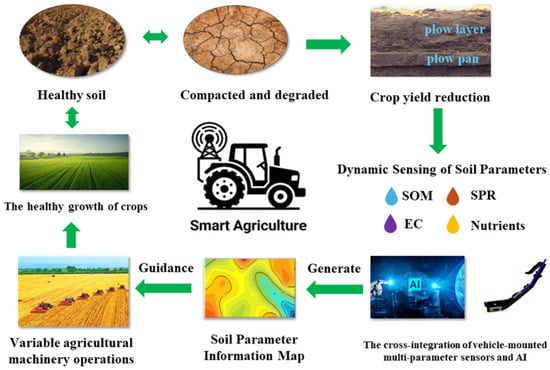
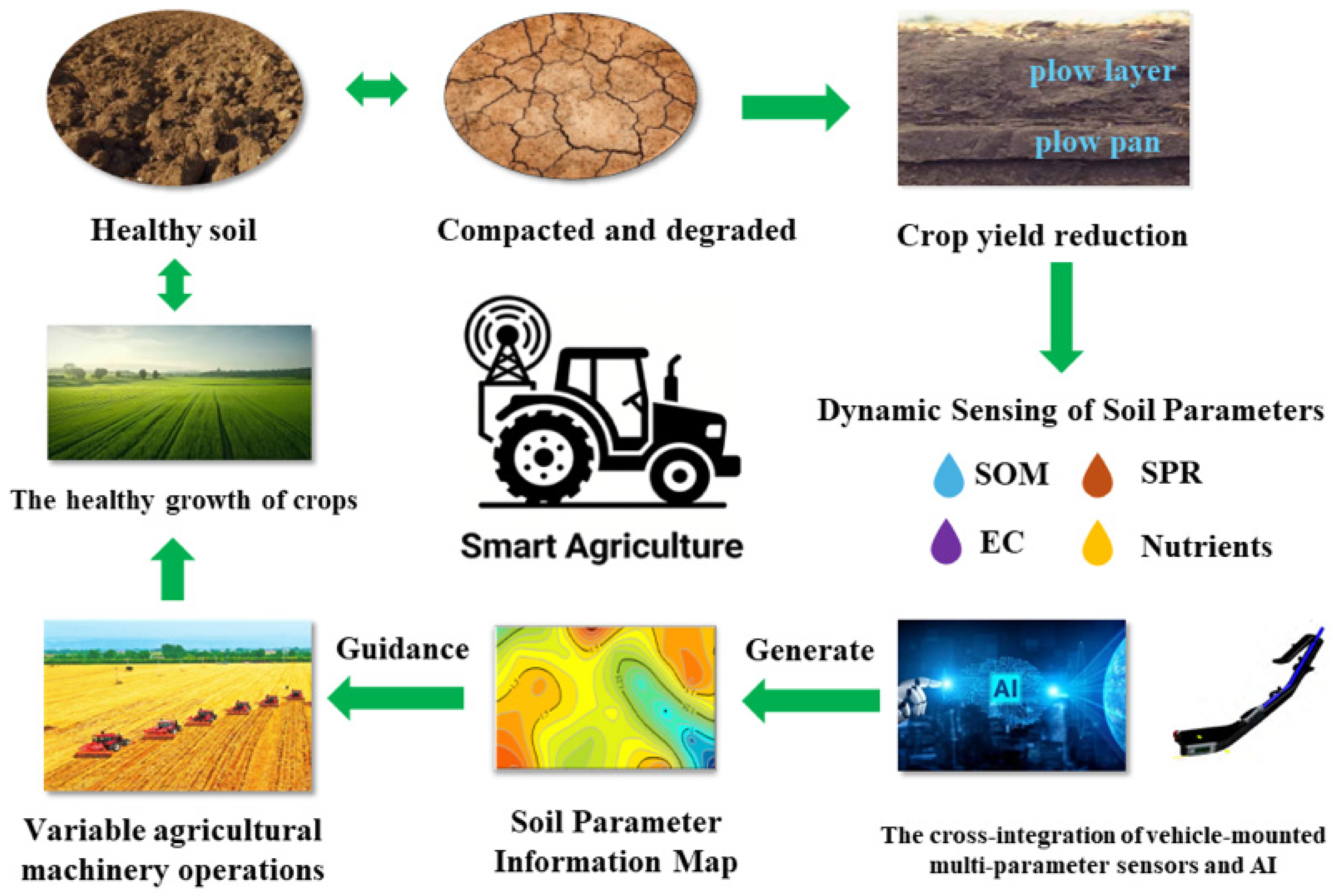
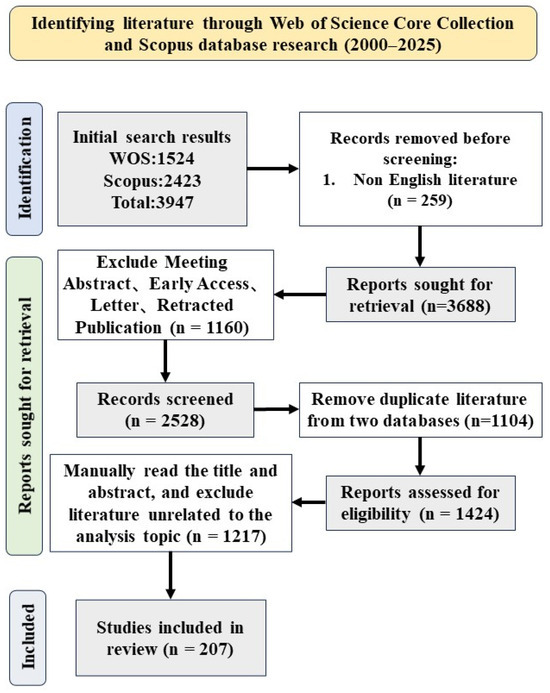
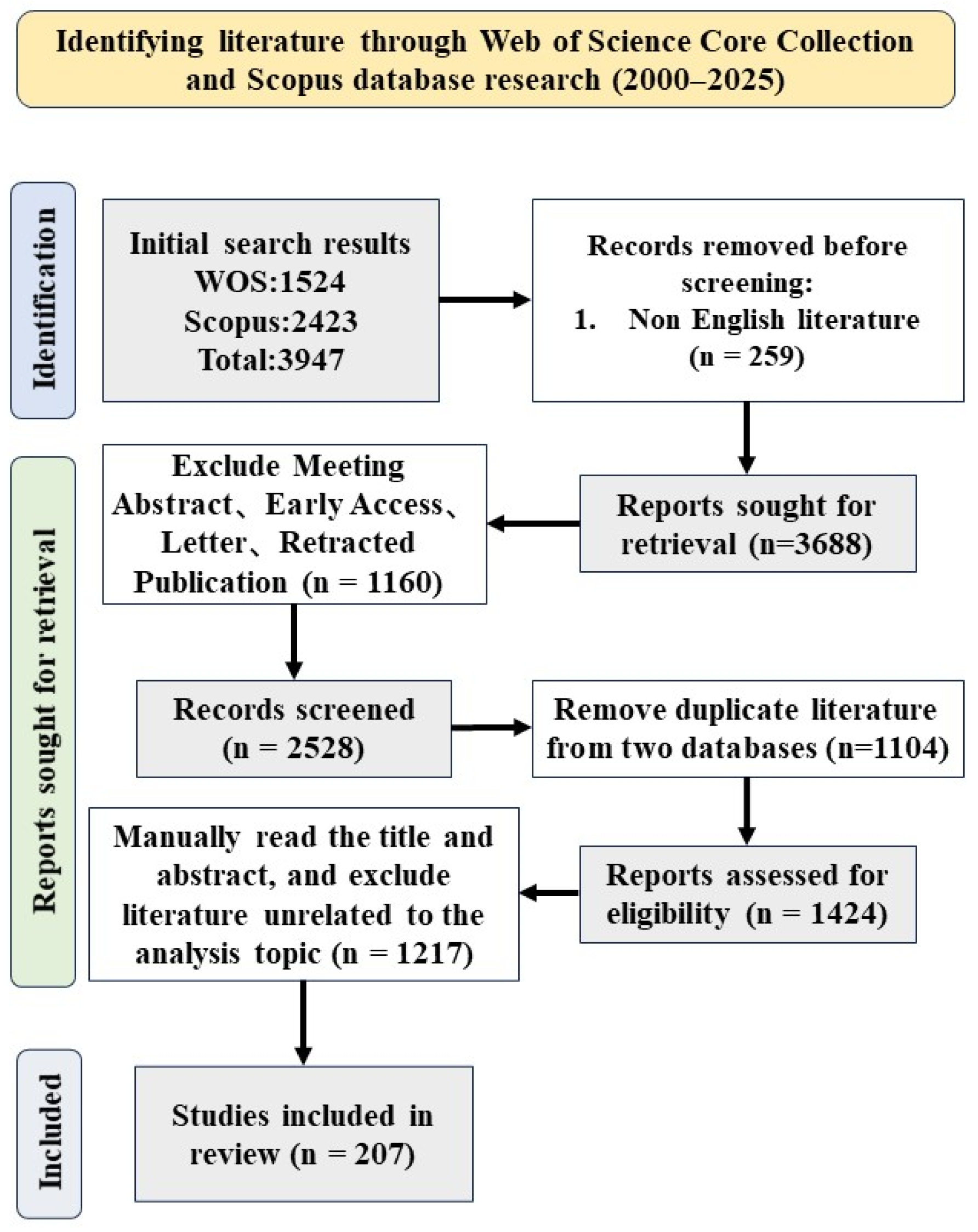
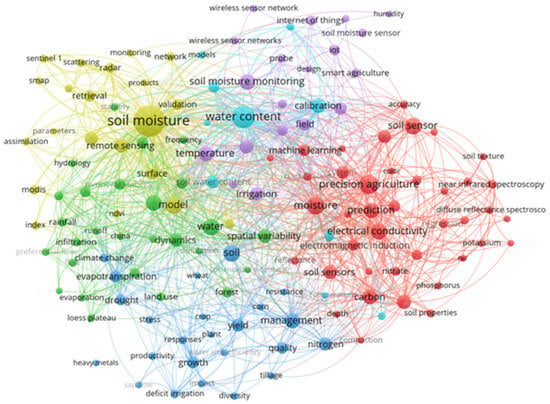
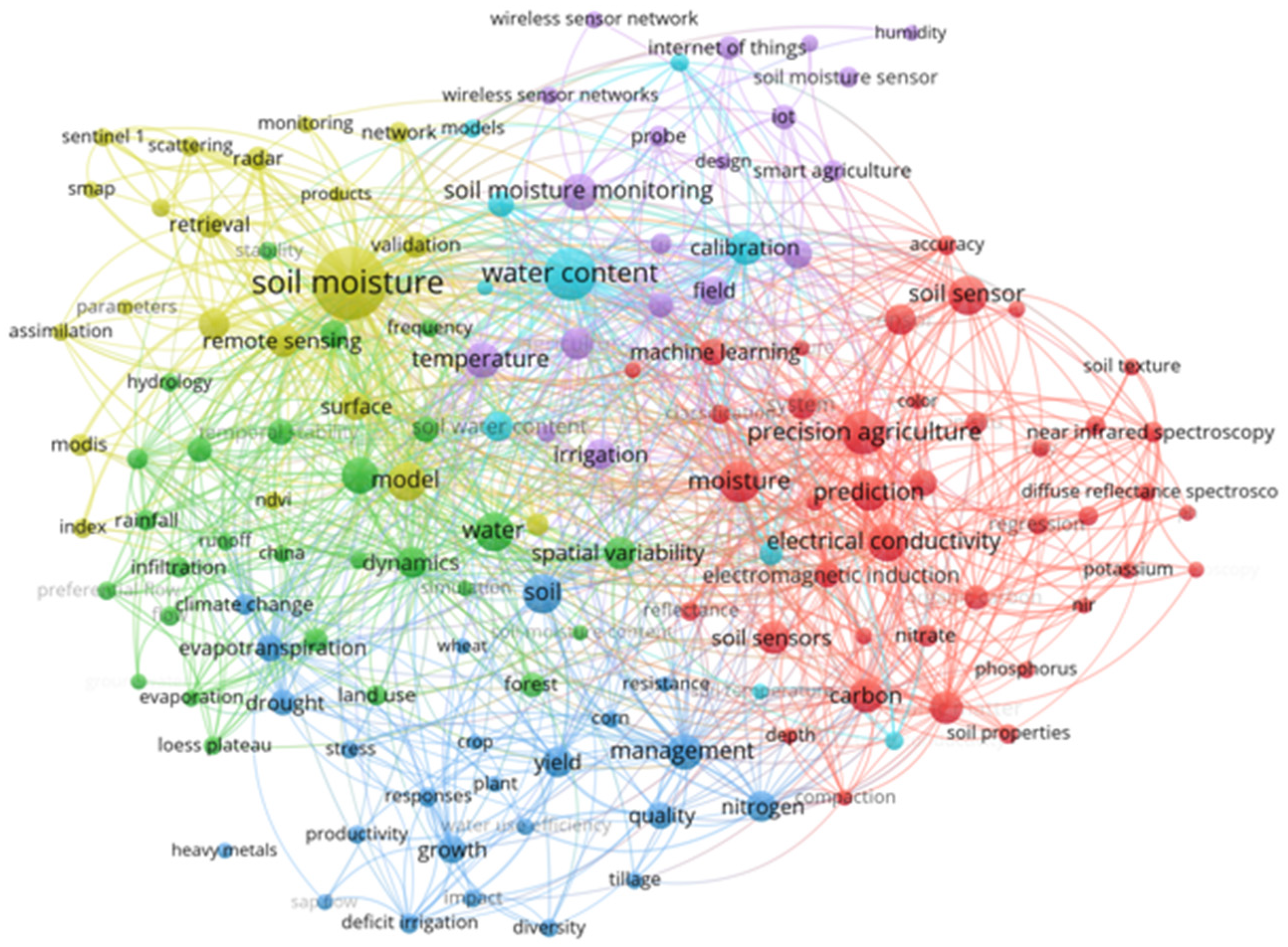
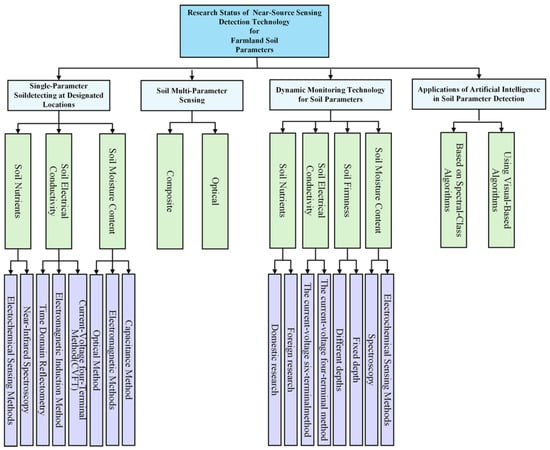
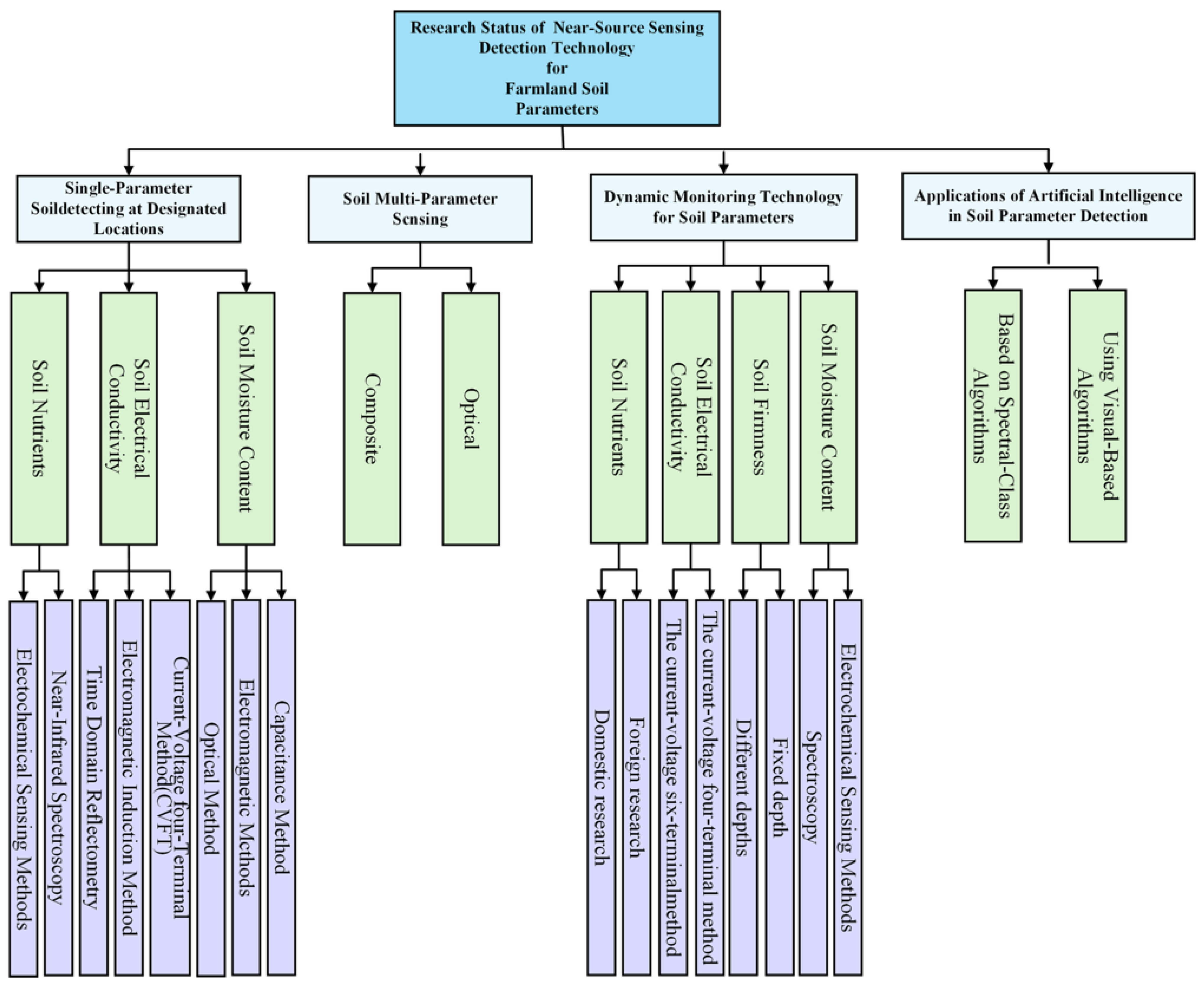

Disclaimer/Publisher’s Note: The statements, opinions and data contained in all publications are solely those of the individual author(s) and contributor(s) and not of MDPI and/or the editor(s). MDPI and/or the editor(s) disclaim responsibility for any injury to people or property resulting from any ideas, methods, instructions or products referred to in the content. |
© 2026 by the authors. Licensee MDPI, Basel, Switzerland. This article is an open access article distributed under the terms and conditions of the Creative Commons Attribution (CC BY) license.