


Abstract
The incorporation of agro-industrial residues as alternative aggregates in cement-based composites represents a promising strategy for reducing the consumption of natural mineral resources and promoting more sustainable construction materials. This study compared the frequency-domain behavior and damping characteristics of conventional concretes with nominal strength classes of 15, 20, 25, and 30 MPa and bioaggregate concrete (containing macauba palm (Acrocomia aculeata) endocarp). In the bioaggregate concrete, 25% of the coarse aggregate volume was replaced by macauba endocarp. Experimental Single Input–Single Output (SISO) modal analysis with impact-hammer excitation was performed with the specimens tested in two geometric orientations. Frequency Response Functions (FRFs) were analyzed over the 0–2000 Hz range, and the first three dominant resonance frequencies (, , and ) were identified. Valid damping ratios associated with the second and third resonance frequencies were estimated using the half-power bandwidth method. Linear mixed-effects models showed significant effects of concrete group, specimen position, and their interaction on all three resonance frequencies ( < 0.05). The bioaggregate concrete did not exhibit a uniform increase or decrease in resonance frequency relative to the conventional concretes; instead, its response varied according to the resonance region and specimen orientation. More pronounced differences were observed for damping. In Position 1, the bioaggregate concrete presented mean damping ratios of 0.0179 for and 0.0337 for , compared with ranges of 0.0055–0.0085 and 0.0166–0.0194, respectively, for the conventional concretes. In Position 2, the corresponding values for the bioaggregate concrete were 0.0302 and 0.0218, compared with conventional ranges of 0.0046–0.0084 and 0.0050–0.0065. These results demonstrate that macauba endocarp produces a distinct frequency-domain response and increases vibrational energy dissipation relative to the investigated range of conventional concretes. Experimental modal analysis therefore provides a promising non-destructive approach for characterizing cement-based materials containing plant-derived aggregates.
1. Introduction
The search for sustainable alternatives in engineering has intensified in recent decades, driven by the environmental impacts associated with Portland cement production, the principal binder used in conventional concrete [1,2]. Cement production contributes substantially to global CO2 emissions, encouraging the development of cementitious composites with lower environmental impacts and greater resource efficiency [3]. In this context, the incorporation of agro-industrial residues as alternative aggregates has emerged as a promising strategy for reducing the consumption of conventional mineral resources while promoting the valorization of by-products generated from agricultural activities.
Bioaggregate concrete comprises cement-based composites in which conventional mineral aggregates are partially or totally replaced by bioaggregates obtained from renewable or residual biological resources [4]. Depending on the type and proportion of the incorporated material, these composites may exhibit reduced density, adequate dimensional stability, advantageous thermal properties, and lower material costs [5]. The use of agro-industrial residues as alternative aggregates may also reduce the demand for natural mineral aggregates and the environmental impacts associated with their extraction and processing [6]. In Brazil, this approach has considerable potential because of the significant quantities of biomass residues generated annually [7].
Among the agro-industrial residues with potential for use in cement-based composites, macauba palm (Acrocomia aculeata) endocarp is particularly relevant because of its high hardness and wide availability in Brazil [8,9]. Macauba is a native palm widely distributed in Cerrado regions, and the processing of its fruits generates lignocellulosic by-products with potential for incorporation into sustainable construction materials [10]. The endocarp has a dense and rigid structure, which makes it a potential alternative for the partial replacement of conventional coarse mineral aggregates in cement-based composites [11].
The partial replacement of mineral aggregates with lignocellulosic residues can modify the physical and mechanical characteristics of cementitious composites and, consequently, their behavior under dynamic excitation. Refs. [12,13] reported changes in properties such as density, stiffness, and energy dissipation associated with the incorporation of plant-derived materials into cementitious composites. These changes may be reflected in the Frequency Response Function (FRF) through variations in the location and magnitude of resonance peaks and in the damping characteristics estimated from frequency-domain data. Ref. [14] further highlighted that cementitious composites incorporating agro-industrial residues can exhibit advantageous thermal and acoustic properties while contributing to the development of more sustainable construction materials.
Experimental modal analysis provides a non-destructive approach for characterizing cementitious materials from their FRFs. An FRF represents the relationship between an applied dynamic excitation and the corresponding measured output in the frequency domain, allowing resonance frequencies and damping characteristics to be estimated [15,16,17]. These parameters provide useful information for comparing materials with different compositions and for identifying changes in their frequency-domain characteristics and energy dissipation capacity. FRF-based approaches have been applied to structural integrity assessment and to the characterization of cementitious materials and structural systems [18,19,20].
Despite the growing interest in bioaggregate concrete, information concerning the FRFs and damping characteristics of cement-based composites containing macauba palm endocarp remains limited. In particular, the influence of partially replacing conventional coarse aggregate with this lignocellulosic residue on resonance behavior and vibrational energy dissipation has not been sufficiently explored. Therefore, the present study aims to compare the FRFs and damping characteristics of bioaggregate concrete containing macauba palm endocarp with those of conventional concretes with nominal strength classes of 15, 20, 25, and 30 MPa through experimental modal analysis with impact-hammer excitation. The bioaggregate concrete was produced by replacing 25% of the coarse aggregate volume with macauba endocarp, while the four conventional concrete groups provided a broad range of frequency-domain responses for comparison. The analysis focuses on the first three dominant resonance frequencies identified from the FRFs and on the damping ratios obtained for resonance regions satisfying the adopted half-power bandwidth acceptance criteria. The working hypothesis is that the partial replacement of coarse mineral aggregate with macauba endocarp modifies the frequency-domain response of the cementitious composite, particularly its resonance behavior and vibrational energy dissipation capacity.
2. Materials and Methods
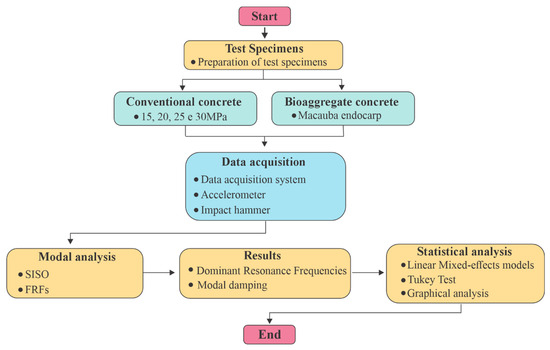
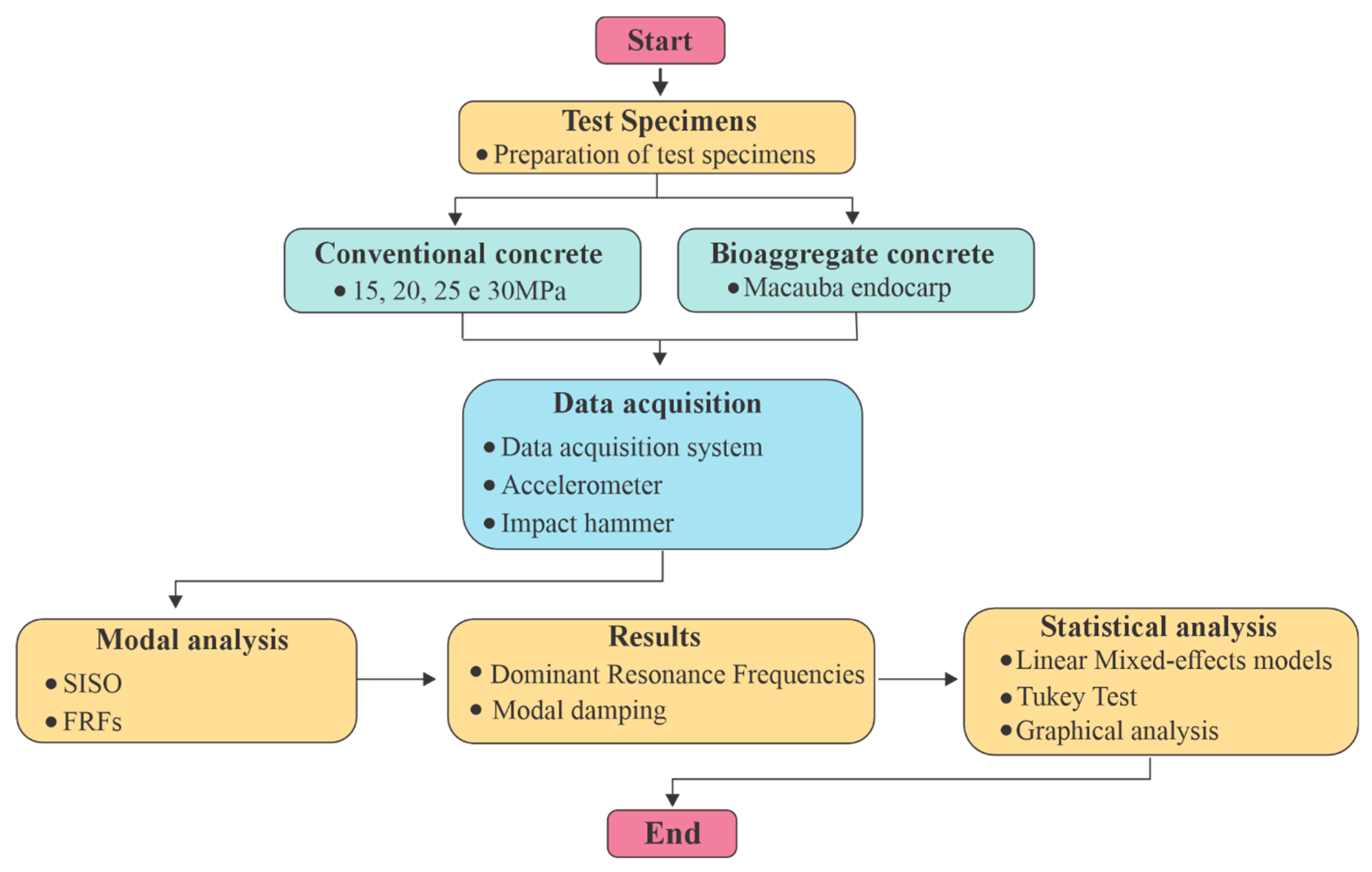
The experimental methodology comprised the preparation of conventional concrete specimens with nominal strength classes of 15, 20, 25, and 30 MPa and bioaggregate concrete specimens containing macauba palm (Acrocomia aculeata) endocarp, followed by SISO experimental modal analysis with impact-hammer excitation. In the bioaggregate concrete, 25% of the coarse aggregate volume was replaced by macauba endocarp, and its frequency-domain behavior was compared with that of the four conventional concrete groups across the investigated nominal strength range. After molding and 28 days of curing, each specimen was tested in two geometric orientations, designated Position 1 and Position 2. FRFs were obtained from the relationship between the applied impact force and the measured acceleration. The first three dominant resonance frequencies were identified from the FRF peaks, and damping ratios were estimated for the resonance regions that satisfied the acceptance criteria of the half-power bandwidth method. The experimental procedure, including specimen preparation, instrumentation, FRF acquisition, identification of dominant resonance frequencies, damping estimation, and statistical analysis, is summarized in Figure 1.
Figure 1.
Flowchart of the experimental procedure used for the preparation, modal testing, FRF acquisition, and data processing of conventional concrete and bioaggregate concrete containing macauba endocarp.
2.1. Preparation and Molding of Conventional Concrete Specimens
Conventional concrete specimens were produced for nominal compressive-strength classes of 15, 20, 25, and 30 MPa using CP II Portland cement (CAUÊ, Brazil), quartz sand, crushed granite as coarse aggregate, and water. Ten specimens were produced for each nominal strength class. The typical chemical composition of the cement used in the mixtures is presented in Table 1.
Table 1.
Chemical composition of CPII class Portland cement used in the production of test specimens.
The volumetric proportions adopted for the conventional concrete mixtures were based on previously reported mixture compositions [21] and are presented in Table 2. These mixtures correspond to the nominal compressive-strength classes of 15, 20, 25, and 30 MPa considered in the present study.
Table 2.
Proportions of concrete components for compressive strength classes equivalent to 15, 20, 25 and 30 MPa.
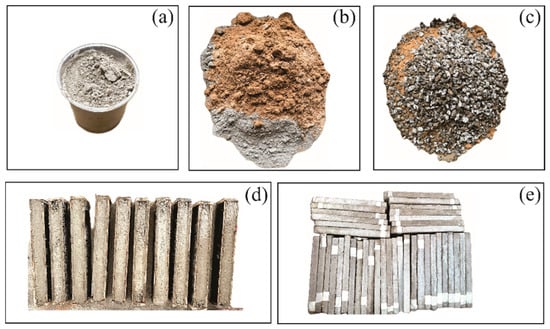
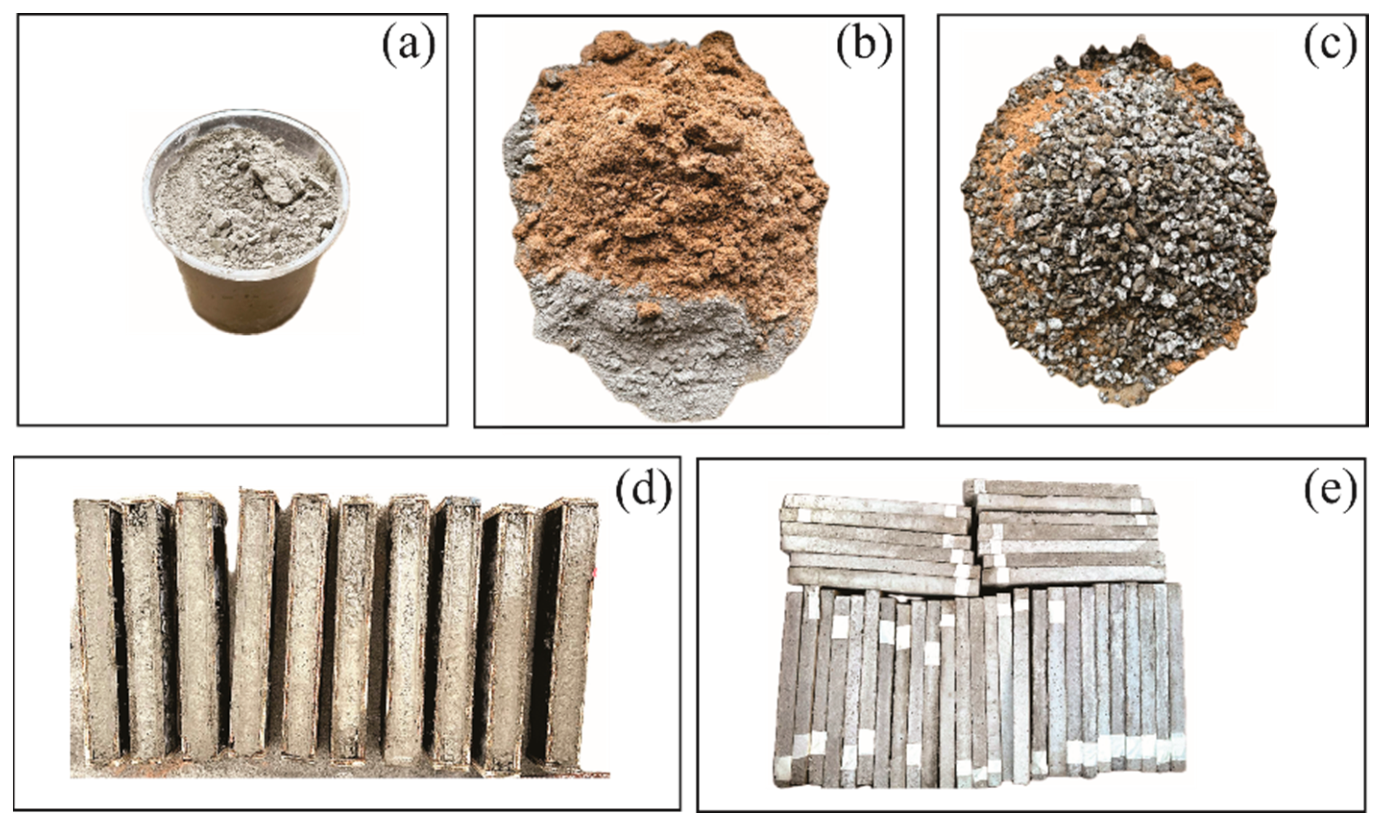
The molding procedure was kept identical for all conventional concrete groups. The plywood molds were cleaned and coated with a release agent before casting. Each mixture was placed in two layers, with each layer manually compacted using 12 strokes of a metal rod to promote consolidation and reduce entrapped air. All specimens had dimensions of 0.03 m × 0.06 m × 0.40 m and were subjected to the same curing conditions for 28 days before modal testing. The main stages of specimen preparation are illustrated in Figure 2.
Figure 2.
Preparation and molding of conventional concrete specimens: (a) volumetric container used for material batching; (b) mixing of cement and sand; (c) addition of the coarse aggregate; (d) specimens in the molds; and (e) specimens after 28 days of curing.
2.2. Preparation and Molding of Bioaggregate Concrete Containing Macauba Endocarp
Macauba palm (Acrocomia aculeata) endocarp was used as a partial replacement for the conventional coarse aggregate. The material was supplied by the Oilseed Plants, Oils, Fats and Biofuels Research Group (G-ÓLEO), Department of Engineering, Federal University of Lavras, Lavras, Minas Gerais, Brazil. Before incorporation into the concrete mixture, the macauba fruits were processed to obtain the endocarp, which was fragmented to remove the kernels. The resulting material was subsequently washed under running water and manually brushed to remove residual pulp and other material adhering to its surface.
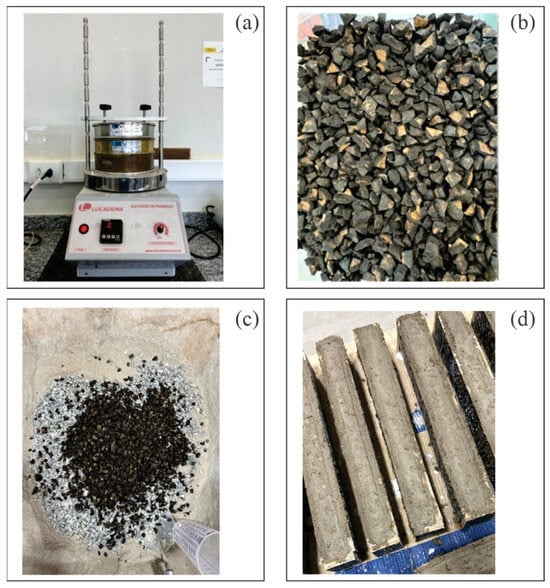
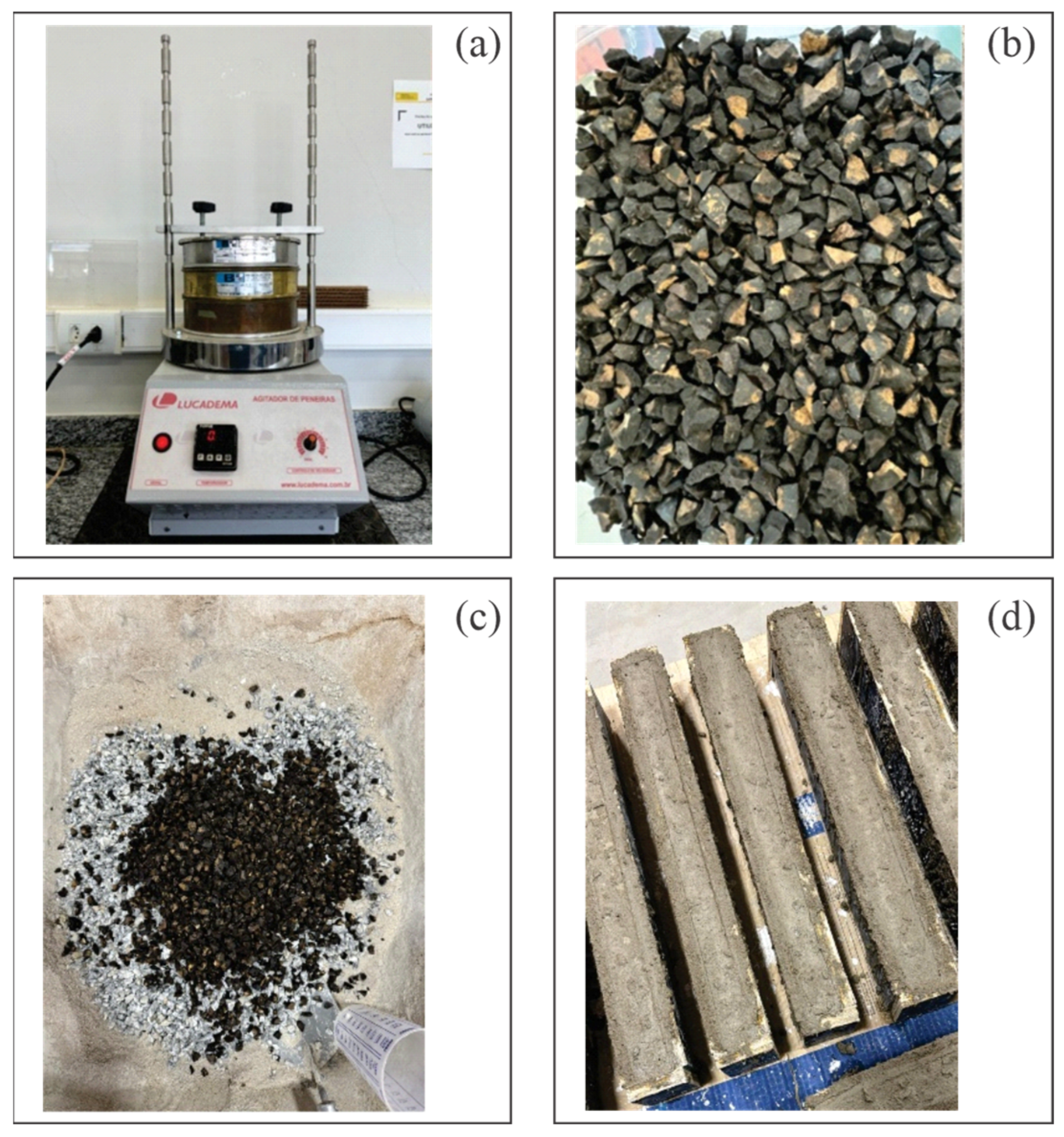
The resulting endocarp particles exhibited a range of sizes and were therefore subjected to sieving to obtain a particle-size range compatible with the conventional coarse aggregate used in the concrete mixtures. Sieves with openings ranging from 2.35 to 9.5 mm were used for particle selection. The same particle-size evaluation procedure was also applied to the crushed granite aggregate, allowing the mineral aggregate and macauba endocarp particles to be incorporated within comparable size ranges. The preparation of the macauba endocarp and its incorporation into the concrete mixture are illustrated in Figure 3.
Figure 3.
Preparation and incorporation of macauba endocarp into the concrete mixture: (a) sieving of the endocarp particles; (b) selected endocarp particles; (c) partial replacement of the conventional coarse aggregate with macauba endocarp; and (d) molded bioaggregate concrete specimens.
The 30 MPa conventional concrete mixture was used as the basis for defining the bioaggregate concrete mixture. This choice was related to the mixture formulation adopted for incorporating the macauba endocarp and does not restrict the subsequent comparison to this conventional concrete class, since the dynamic behavior of the bioaggregate concrete was evaluated relative to all conventional concrete groups investigated. In the bioaggregate mixture, 25% of the coarse aggregate volume was replaced by macauba endocarp. The replacement level was selected based on [22], who evaluated different proportions of coarse aggregate replacement with macauba endocarp and identified the 25% level as the proportion associated with the most favorable mechanical performance among the mixtures investigated.
The resulting bioaggregate concrete mixture contained 1.0 × 10⁻³ m3 of cement, 2.0 × 10⁻³ m3 of sand, 1.5 × 10⁻³ m3 of crushed granite, 0.5 × 10⁻³ m3 of macauba endocarp, and 2.0 × 10⁻³ m3 of water. The combined volume of crushed granite and macauba endocarp was therefore 2.0 × 10⁻³ m3, with macauba endocarp accounting for 25% of the total coarse-aggregate volume. This replacement procedure allowed the plant-derived aggregate to be incorporated while maintaining the same total coarse-aggregate volume adopted for the mixture used as the basis for its formulation.
Ten bioaggregate concrete specimens were produced with dimensions of 0.03 m × 0.06 m × 0.40 m. The same mold preparation, placement procedure, manual compaction, and 28-day curing conditions adopted for the conventional concrete specimens were maintained for the bioaggregate concrete. The experimental program therefore comprised five concrete groups: four conventional concrete groups corresponding to the nominal strength classes of 15, 20, 25, and 30 MPa, with 20 specimens per group, and one bioaggregate concrete group containing macauba endocarp, with 10 specimens. All groups were subsequently subjected to the same experimental modal-analysis procedure.
2.3. FRF Acquisition and Identification of Dominant Resonance Frequencies
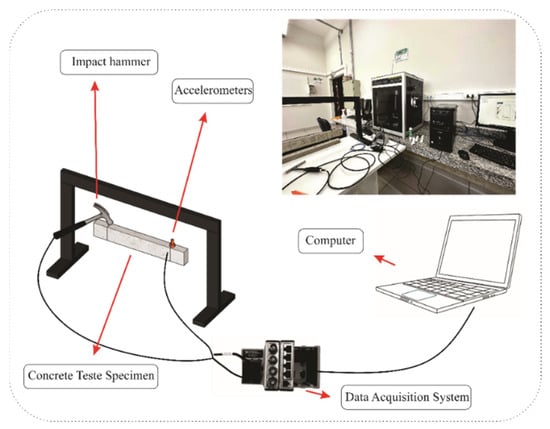
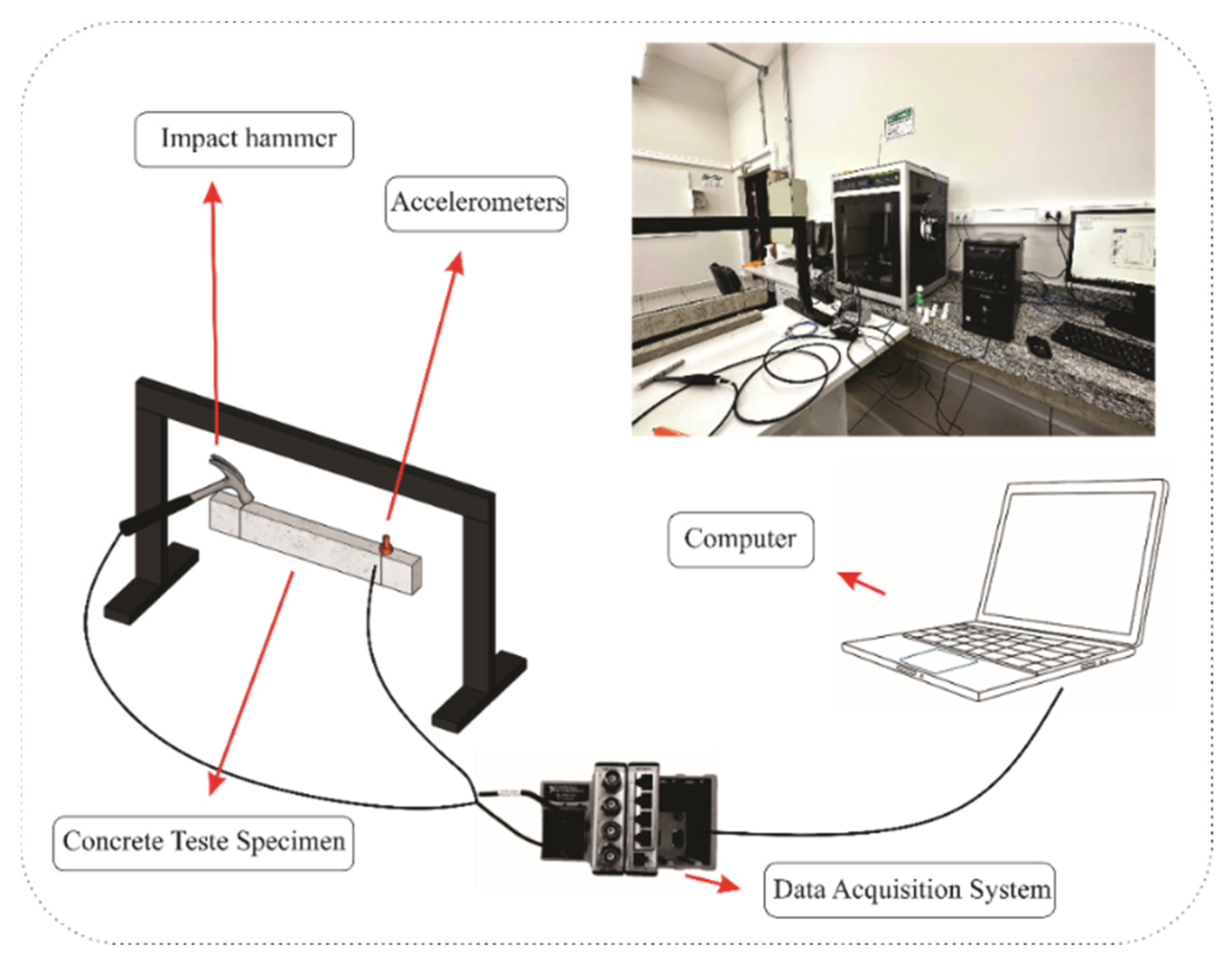
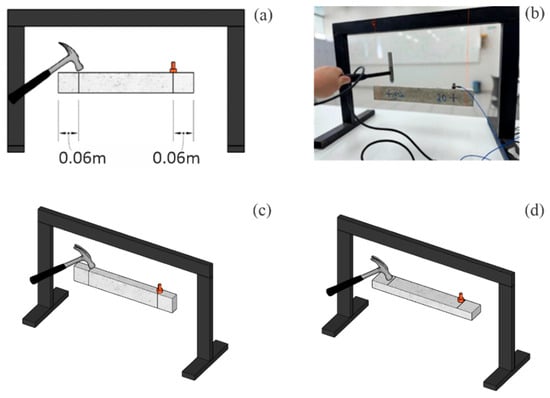
FRFs were obtained by SISO experimental modal analysis using impact-hammer excitation. For each test, the impact force was used as the input signal and the acceleration measured by the accelerometer as the output signal. The experimental arrangement and the two specimen orientations adopted during the tests are shown in Figure 4.
Figure 4.
Experimental arrangement for FRF acquisition.
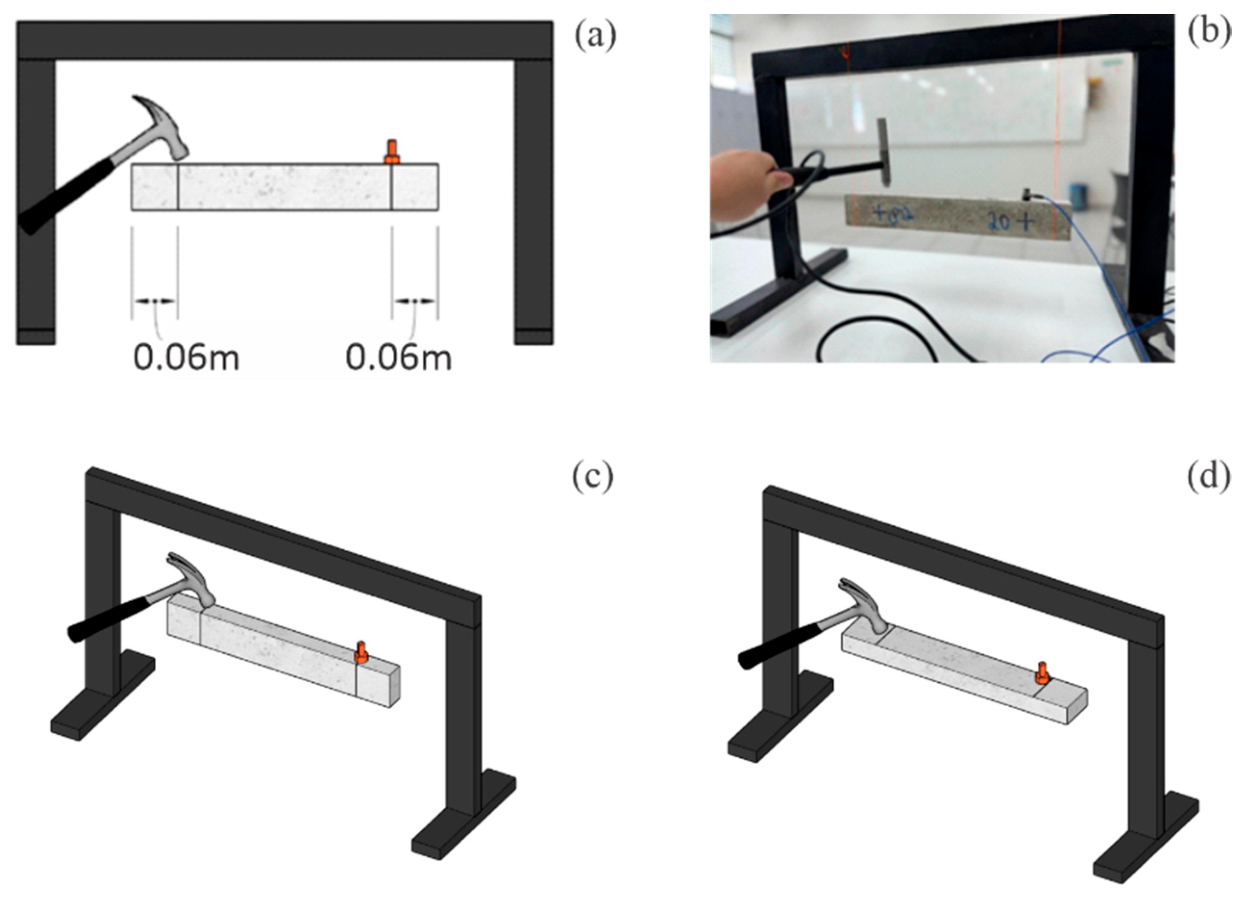
The same specimens were tested in two geometric orientations, designated Position 1 and Position 2. The specimens had a rectangular cross-section of 0.03 m × 0.06 m and a total length of 0.40 m. In Position 1, the 0.03 m cross-sectional dimension was aligned with the vertical impact and response direction, whereas in Position 2 the specimen was rotated by 90°, and the 0.06 m dimension was aligned with this direction. The impact was applied vertically from top to bottom on the upper surface of the specimen.
For a rectangular cross-section, the second moment of area about the axis associated with the vertical bending direction was calculated as
where is the cross-sectional width and is the dimension aligned with the impact and response direction. Accordingly, the second moments of area were for Position 1 and for Position 2. Thus, rotation of the specimen resulted in a fourfold difference in the geometric second moment of area between the two test orientations. These values characterize the geometric conditions associated with each orientation and were not used independently to estimate or infer material stiffness.
The specimens were suspended by two nylon threads to approximate free-free boundary conditions. Each suspension point was located 0.06 m from the corresponding specimen end, and the same suspension arrangement was maintained for all specimens and both orientations. The suspension locations were kept constant throughout the experimental program to provide repeatable boundary conditions among tests. The impact and response locations were also maintained consistently, as illustrated in Figure 5.
Figure 5.
Experimental setup used for FRF acquisition: (a) specimen suspension system and suspension-point locations; (b) photograph of the experimental setup; (c) Position 1; and (d) Position 2.
Five successive impacts were applied to each specimen in each orientation. A new impact was performed only after the motion produced by the preceding excitation had sufficiently decayed, thereby avoiding overlap between consecutive acquisitions. The five measurements were used to evaluate the repeatability of the response and were subsequently averaged to obtain a representative FRF for each specimen and orientation.
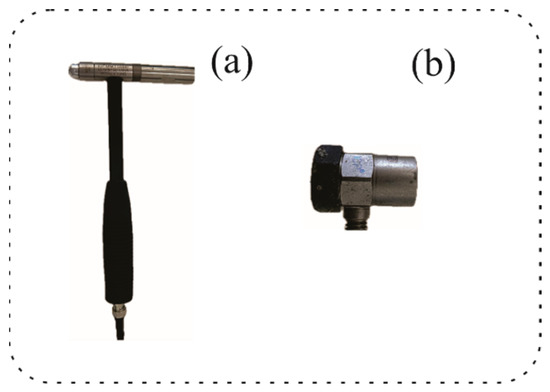
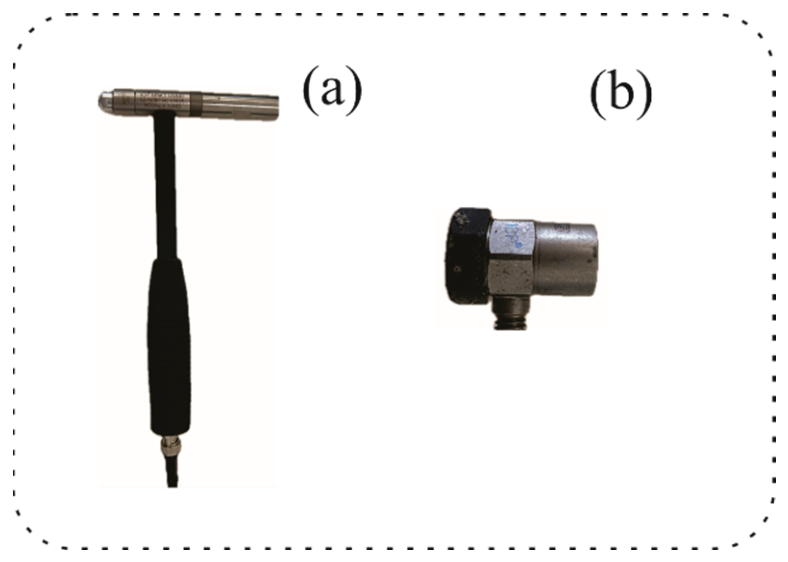
The excitation was applied using a PCB Piezotronics 086C03 instrumented impact hammer equipped with a metallic tip and configured with a sensitivity of 2.417 mV/N (PCB Piezotronics, 3425 Walden Avenue Depew, NY 14043, USA). The acceleration signal was measured using a PCB Piezotronics 352C33 accelerometer, with a mass of 5.8 g and configured with a sensitivity of 99.5 mV/g. The accelerometer was positioned 0.06 m from one end of the specimen and attached directly to the concrete surface. Its sensitive axis was aligned with the vertical impact direction, so that both excitation and measured acceleration were transverse to the longitudinal axis of the specimen. No correction for accelerometer mass loading was applied; consequently, a possible influence of the sensor mass on the measured frequency-domain response cannot be completely excluded. The impact hammer and accelerometer used in the experimental tests are shown in Figure 6.
Figure 6.
Instrumentation used for FRF acquisition: (a) PCB Piezotronics 086C03 impact hammer and (b) PCB Piezotronics 352C33 accelerometer.
Signal acquisition and processing were performed using a routine developed in LabVIEW with the Sound and Vibration package. The National Instruments acquisition system consisted of an NI cDAQ-9174 chassis and NI 9234 modules (National Instruments, 11500 North Mopac Expressway, Austin, TX 78759, USA). The frequency-domain analysis was performed over the 0–2000 Hz range with a spectral resolution of 0.5 Hz. The block duration was set to 0.1000 s. Excitation-triggered acquisition was performed using the impact-hammer channel as the trigger reference, with an analog software trigger, a trigger level of 1, rising slope, zero hysteresis, and a pretrigger setting of 20.
The FRFs obtained from the impact force and acceleration signals were stored for subsequent processing. Spectral coherence was monitored during acquisition as an indicator of signal quality and repeatability.
To provide consistent identification of the resonance regions among specimens and concrete groups, three frequency intervals were considered for each specimen orientation. For Position 1, the intervals adopted for identification of , , and were 5–200 Hz, 800–1400 Hz, and 1400–2000 Hz, respectively. For Position 2, the corresponding intervals were 5–300 Hz, 300–1200 Hz, and 1200–2000 Hz. Within each interval, the dominant resonance peak was identified from its spectral prominence and amplitude according to the processing criteria described in Section 2.4.
The three identified resonance frequencies were designated , , and and were used for comparison among the conventional concrete groups and the bioaggregate concrete in both specimen orientations. These quantities represent dominant resonance frequencies identified within the analyzed spectral regions. Because the SISO configuration used in this study did not include spatial measurements for reconstructing mode shapes, the identified resonance peaks were not assigned to specific structural mode shapes solely on the basis of their frequency values.
2.4. Estimation of the Damping Ratio
The damping ratio () associated with each identified resonance peak was estimated from the FRFs using the half-power bandwidth method. This approach is commonly applied in experimental modal analysis to estimate damping in lightly damped systems when the resonance peak is sufficiently isolated and the corresponding half-power points can be clearly identified [23].
For each resonance considered suitable for damping estimation, the resonance frequency was defined as the frequency corresponding to the local maximum of the FRF magnitude. The lower and upper half-power frequencies, denoted and , respectively, were determined on either side of the resonance peak at the frequencies where the FRF magnitude decreased to of the peak magnitude, corresponding to approximately 70.7% of the maximum amplitude or a reduction of approximately 3 dB.
Because the frequency-domain data were expressed in Hz, the damping ratio was calculated as
where is the resonance frequency (Hz), is the lower half-power frequency (Hz), is the upper half-power frequency (Hz), and is the dimensionless damping ratio.
The damping calculation was applied only when the resonance peak was sufficiently isolated and both half-power crossings could be identified within the corresponding resonance region. A damping estimate was considered valid only when one half-power crossing occurred below and the other occurred above , allowing an unambiguous determination of and . Estimates were not retained when one or both half-power crossings could not be identified within the analyzed resonance interval or when neighboring peaks interfered with the determination of the half-power bandwidth. These criteria were adopted to reduce unstable damping estimates associated with poorly defined or overlapping resonances [24].
The damping procedure was applied to the resonance regions associated with the three dominant frequencies identified for each specimen and orientation. Only damping estimates satisfying the acceptance criteria were retained for subsequent analysis. As a result, the number of valid damping estimates could differ among concrete groups, specimen orientations, and resonance regions. In particular, the first resonance region did not provide valid half-power bandwidth estimates under the adopted criteria; therefore, the damping analysis was based on the ratios associated with the second and third identified resonance frequencies, designated and .
The effective sample size () was defined as the number of specimens for which a valid damping ratio was obtained for a given concrete group, specimen orientation, and resonance frequency. The five successive impacts performed during FRF acquisition were used to obtain the representative FRF of each specimen and were not considered independent observations for the damping analysis. Accordingly, the effective sample size refers to independent specimens rather than individual impacts.
For each concrete group, specimen orientation, and resonance frequency, the damping results were summarized using the effective sample size, mean, standard deviation, minimum, and maximum values. The inferential statistical procedure used to evaluate the effects of concrete group, specimen orientation, and their interaction on the damping ratios is described in Section 2.5.
2.5. Statistical Analysis
Statistical analyses were performed separately for the three dominant resonance frequencies (, , and ) and for the valid damping ratios associated with the second and third resonance frequencies ( and ). Five concrete groups were considered: conventional concretes with nominal compressive-strength classes of 15, 20, 25, and 30 MPa and bioaggregate concrete containing macauba endocarp. All four conventional concrete groups were included in the statistical comparisons to evaluate the frequency-domain behavior of the bioaggregate concrete relative to the investigated range of conventional concretes.
Because the same specimen was tested in both Position 1 and Position 2, the observations obtained from the two orientations were treated as repeated measurements rather than as independent observations. Therefore, a linear mixed-effects model was fitted separately for each response variable. Concrete group, specimen position, and their interaction were included as fixed effects, whereas specimen identification was included as a random effect to account for the correlation between repeated measurements obtained from the same specimen. The general model was expressed as
where is the response variable, is the overall mean, is the fixed effect of the -th concrete group, is the fixed effect of the -th specimen position, is the interaction between concrete group and specimen position, is the random effect associated with the -th specimen, and is the residual error.
The resonance frequencies , , and were analyzed in their original scale. For damping, only valid estimates satisfying the acceptance criteria described in Section 2.4 were included. Because the damping ratios were positive variables and exhibited asymmetric distributions, the valid and values were logarithmically transformed before fitting the mixed-effects models. The same fixed- and random-effects structure adopted for the resonance frequencies was then applied separately to and . Descriptive damping statistics, including the mean, standard deviation, minimum, maximum, and effective sample size (), were reported on the original, untransformed scale.
The significance of concrete group, specimen position, and their interaction was evaluated using Type III F-tests with denominator degrees of freedom estimated by the Satterthwaite approximation. A significance level of 5% ( < 0.05) was adopted. When the interaction between concrete group and specimen position was significant, comparisons among concrete groups were performed separately within each position. When the interaction was not significant but a significant main effect was detected, comparisons were based on the corresponding estimated marginal means.
Post hoc comparisons among concrete groups were performed using estimated marginal means with Tukey adjustment for multiple pairwise comparisons, thereby controlling the family-wise error rate. All five concrete groups were included in these comparisons, allowing the bioaggregate concrete to be evaluated relative to each conventional concrete strength class within the investigated range. For damping, the pairwise inferential comparisons were performed on the logarithmically transformed scale, whereas the corresponding descriptive values were presented on the original scale to facilitate physical interpretation.
Model assumptions and residual behavior were evaluated for each fitted model. Residual distributions were examined using normal Q-Q plots and the Shapiro–Wilk test, while residual-versus-fitted-value plots were used to assess variance behavior and potential systematic patterns. For the damping variables, logarithmic transformation was adopted to reduce the strong asymmetry observed in the untransformed ratios and to improve residual behavior. Model singularity was also checked to verify the adequacy of the random-effects structure.
Linear mixed-effects models were fitted according to the framework described by [25]. Statistical procedures involving residual assessment and multiple comparisons were consistent with approaches applied to experimental modal data [26]. All statistical analyses were performed in the R environment, adopting a significance level of 5% [27].
3. Results (& Discussion)
3.1. Analysis of FRFs and Dominant Resonance Frequencies
The FRFs obtained for the conventional and bioaggregate concrete specimens were analyzed to characterize the location and magnitude of the dominant resonance peaks within the investigated frequency range. For each specimen and orientation, the representative FRF resulted from the averaging of five consecutive impact measurements. The analysis was performed separately for Position 1 and Position 2, corresponding to the two geometric orientations described in Section 2.3.
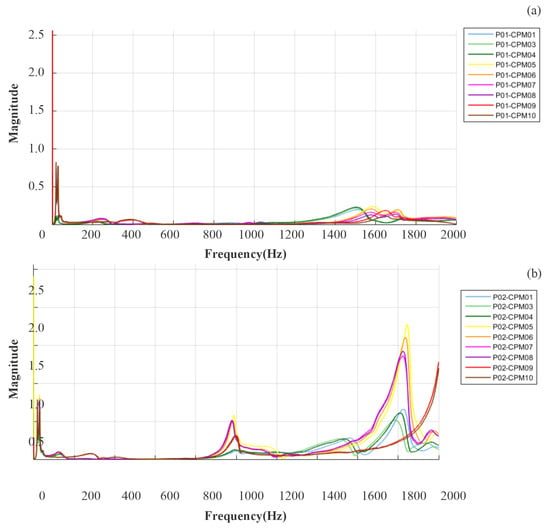
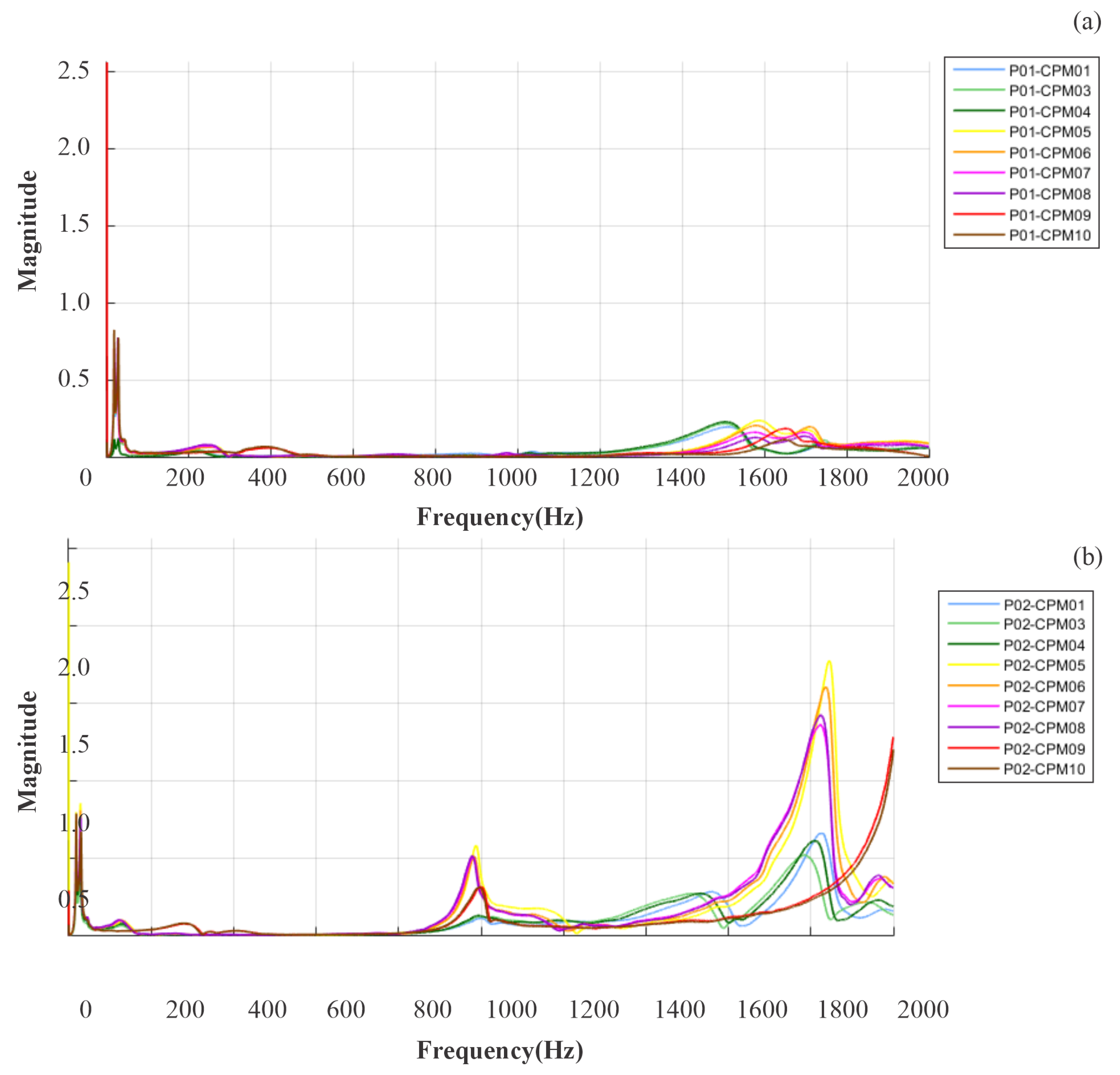
Figure 7 presents the FRFs obtained for the ten bioaggregate concrete specimens in both orientations. In Position 1, the first dominant resonance peaks were generally observed between approximately 20 and 60 Hz, followed by additional resonance regions at higher frequencies, particularly between approximately 1500 and 1750 Hz. Differences among specimens were observed in both peak frequency and magnitude, indicating variability in the frequency-domain response of the bioaggregate concrete.
Figure 7.
FRFs of the bioaggregate concrete specimens: (a) Position 1 and (b) Position 2.
In Position 2, the FRFs exhibited more pronounced peak magnitudes in several regions of the analyzed spectrum. The first dominant resonances were generally observed between approximately 20 and 80 Hz, while additional resonance regions occurred around 950–1150 Hz and 1700–2000 Hz. Compared with Position 1, Position 2 generally produced more prominent FRF peaks, demonstrating the influence of specimen orientation and cross-sectional geometry on the measured frequency-domain response.
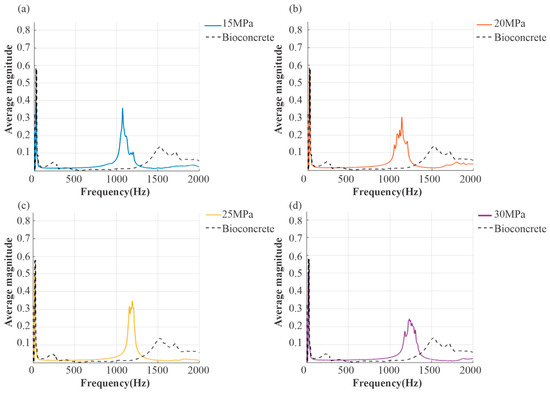
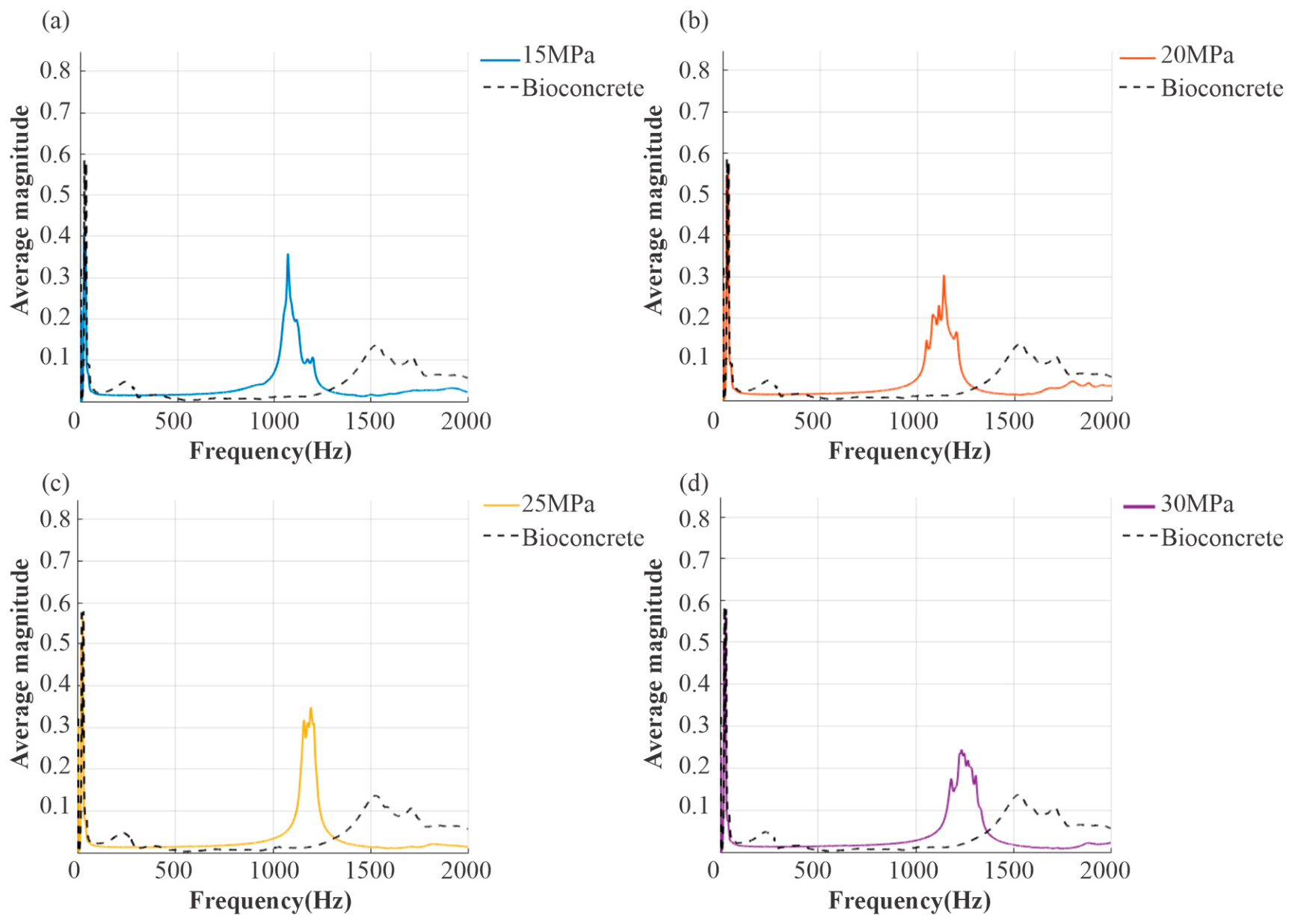
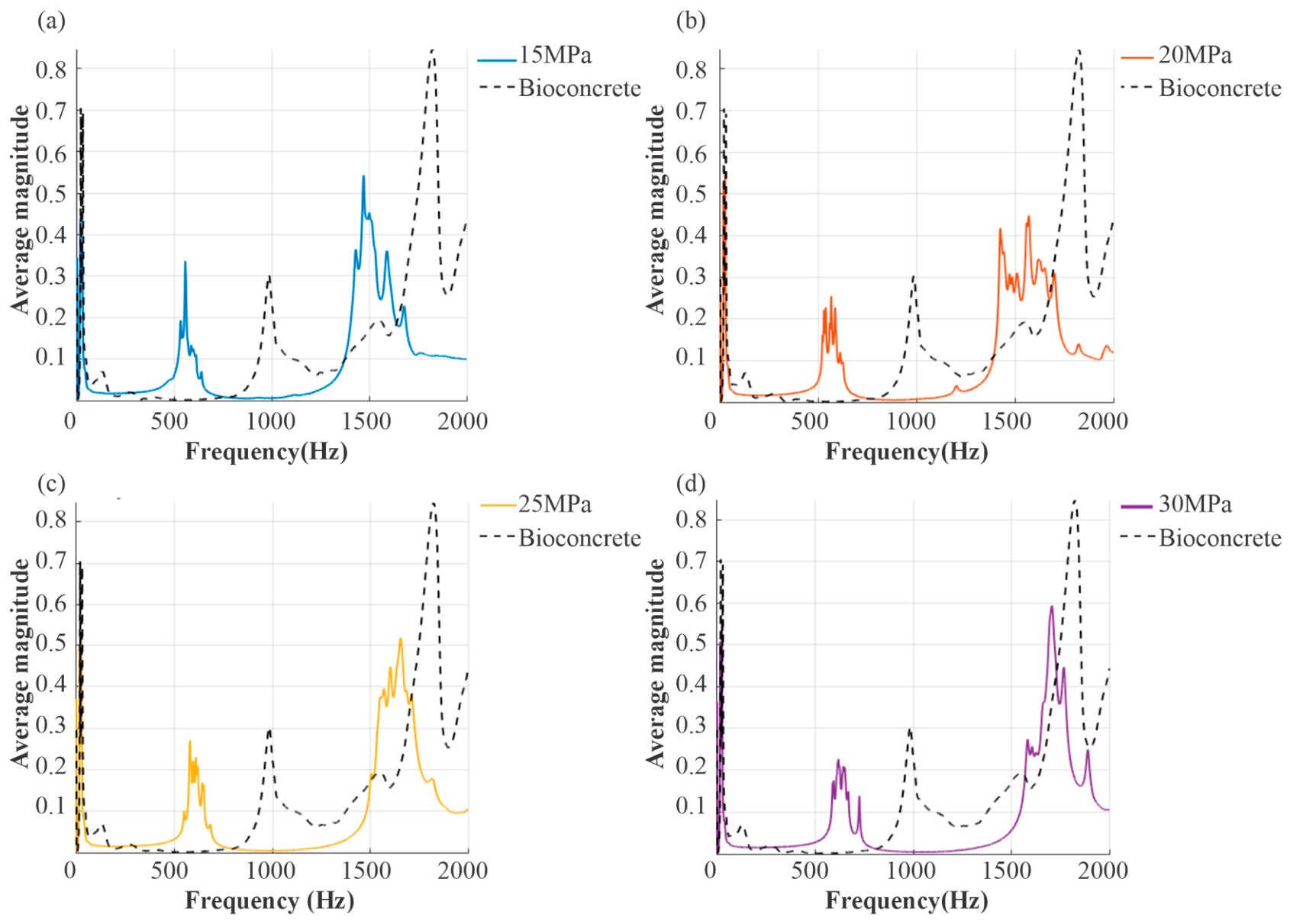
Figure 8 and Figure 9 compare the average FRF of the bioaggregate concrete with those obtained for the conventional concretes with nominal strength classes of 15, 20, 25, and 30 MPa. The four conventional concrete groups provide a broad range of frequency-domain responses against which the dynamic behavior of the bioaggregate concrete can be evaluated. This approach allows the bioaggregate concrete to be compared with conventional concretes presenting different mixture proportions and nominal strength classes rather than with a single conventional mixture.
Figure 8.
Comparison between the average FRFs of the bioaggregate concrete and the conventional concretes in Position 1: (a) 15 MPa; (b) 20 MPa; (c) 25 MPa; and (d) 30 MPa conventional concrete groups, each compared with the bioaggregate concrete.
Figure 9.
Comparison between the average FRFs of the bioaggregate concrete and the conventional concretes in Position 2: (a) 15 MPa; (b) 20 MPa; (c) 25 MPa; and (d) 30 MPa conventional concrete groups, each compared with the bioaggregate concrete.
The average FRFs reveal clear differences in the location and magnitude of the resonance peaks among the investigated concrete groups. In Position 1, the conventional concretes showed progressive changes in the location of the main resonance regions across the nominal strength classes, whereas the bioaggregate concrete exhibited its own characteristic spectral distribution. Differences were observed both in the frequencies at which the peaks occurred and in their corresponding magnitudes.
A similar behavior was observed in Position 2, although the separation among some resonance regions was more pronounced. The bioaggregate concrete exhibited resonance peaks that, depending on the frequency region considered, occurred within, above, or below the ranges observed for the conventional concrete groups. Therefore, the incorporation of macauba endocarp did not result in a uniform shift in the frequency spectrum. Instead, the bioaggregate concrete exhibited a distinct frequency-domain response whose relationship with the conventional concretes varied according to the resonance region and specimen orientation.
The comparison across the 15, 20, 25, and 30 MPa conventional concrete groups also demonstrates that the frequency-domain response varied throughout the investigated conventional concrete range. These variations provide a broader basis for evaluating the bioaggregate concrete and show that its dynamic behavior cannot be represented simply as an extension of the response of a single conventional concrete class.
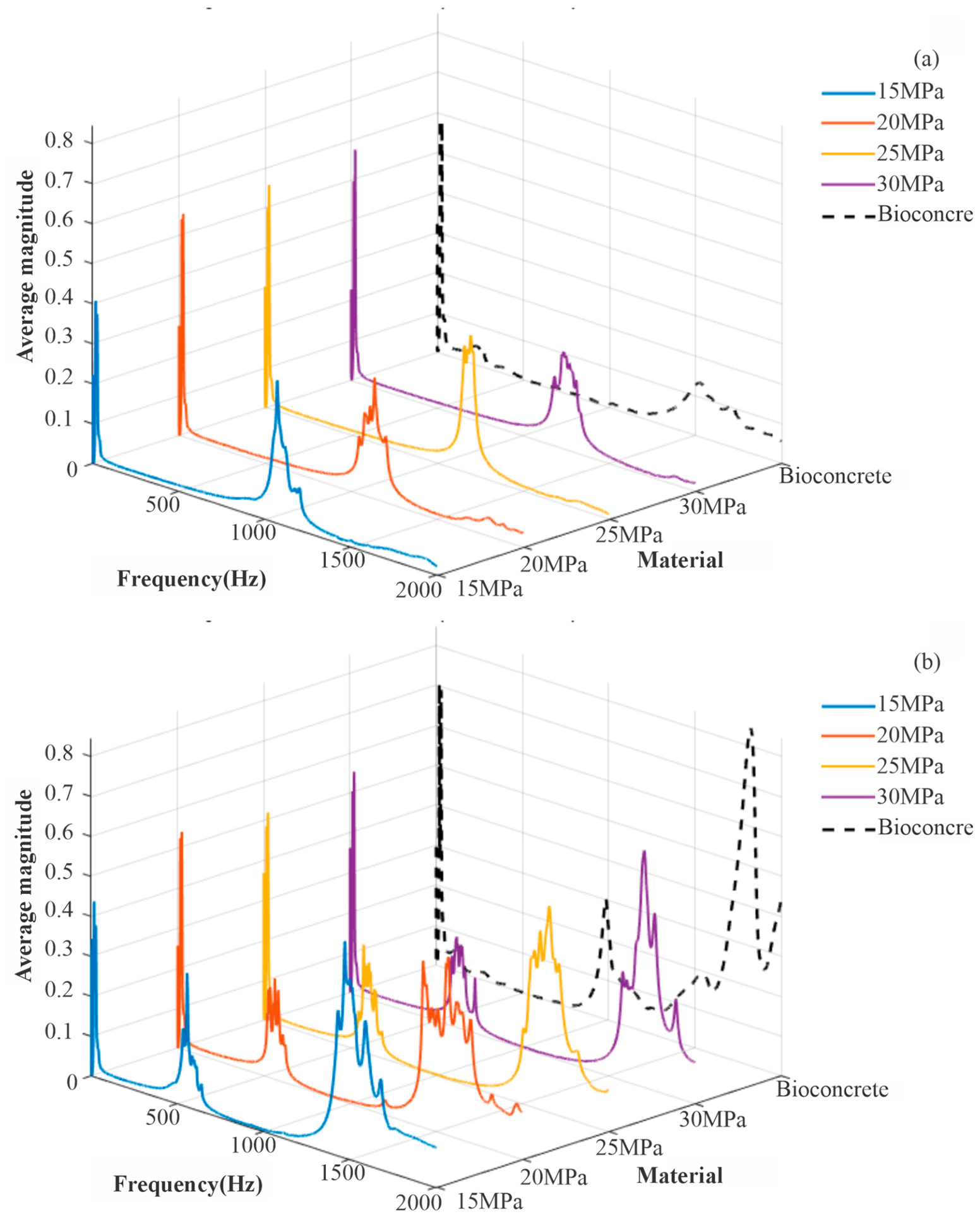
Figure 10 provides a three-dimensional representation of the average FRFs of the five concrete groups for both specimen orientations. This representation enables simultaneous visualization of the resonance regions, peak magnitudes, and frequency shifts across the four conventional concrete groups and the bioaggregate concrete.
Figure 10.
Three-dimensional representation of the average FRFs of the conventional and bioaggregate concretes: (a) Position 1 and (b) Position 2.
For quantitative analysis, the first three dominant resonance frequencies identified from each representative FRF were designated , , and . These frequencies were analyzed separately using the linear mixed-effects model described in Section 2.5, with concrete group and specimen position as fixed effects and specimen identification as a random effect. This statistical structure accounts for the repeated measurements obtained from the same specimen in Position 1 and Position 2.
The conventional concrete groups exhibited systematic differences in resonance frequency across the nominal strength classes, particularly for , and . However, the magnitude and direction of these differences depended on specimen orientation and on the resonance region considered. The bioaggregate concrete also occupied different positions relative to the conventional concrete range according to the resonance frequency and specimen orientation, confirming that its frequency-domain behavior cannot be represented by a uniform upward or downward shift in the resonance spectrum.
Table 3 presents the probability values associated with the fixed effects of concrete group, specimen position, and their interaction for the three identified resonance frequencies.
Table 3.
Probability values (-values) for the fixed effects of concrete group, specimen position, and their interaction on the first three identified dominant resonance frequencies.
Concrete group, specimen position, and the Group × Position interaction significantly affected all three identified resonance frequencies. The significant interaction demonstrates that the differences among the concrete groups depended on specimen orientation. Therefore, comparisons among the five concrete groups were performed separately for Position 1 and Position 2 using Tukey-adjusted pairwise comparisons.
For , the mean frequencies in Position 1 were 21.53, 22.83, 22.30, and 23.03 Hz for the 15, 20, 25, and 30 MPa conventional concretes, respectively, whereas the bioaggregate concrete exhibited a mean value of 22.50 Hz. No significant differences were observed between the bioaggregate concrete and any of the conventional concrete groups in this orientation ( > 0.05). Thus, the first resonance frequency of the bioaggregate concrete remained within the range observed for the conventional concretes in Position 1.
In Position 2, the mean values were 16.85, 21.53, 21.50, and 21.13 Hz for the 15, 20, 25, and 30 MPa conventional concretes, respectively, compared with 25.45 Hz for the bioaggregate concrete. The bioaggregate concrete exhibited a significantly higher than the 15 MPa ( < 0.001) and 30 MPa ( = 0.036) conventional concretes, whereas its differences from the 20 and 25 MPa groups were not significant after Tukey adjustment.
More pronounced differences were observed for . In Position 1, the conventional concrete groups exhibited mean frequencies of 1088.38, 1132.40, 1182.68, and 1242.83 Hz with increasing nominal strength class, while the bioaggregate concrete presented a mean value of 1069.50 Hz. The bioaggregate concrete did not differ significantly from the 15 MPa conventional concrete ( = 0.886) but exhibited significantly lower values than the 20 MPa ( = 0.020), 25 MPa ( < 0.001), and 30 MPa ( < 0.001) conventional concretes.
A different distribution was observed in Position 2. The conventional concretes presented mean values of 558.45, 576.30, 611.85, and 640.23 Hz for the 15, 20, 25, and 30 MPa classes, respectively, whereas the bioaggregate concrete reached 991.90 Hz. In this orientation, the of the bioaggregate concrete was significantly higher than that of all four conventional concrete groups ( < 0.001).
For , the conventional concrete groups in Position 1 presented mean values of 1691.45, 1748.55, 1779.70, and 1811.33 Hz, whereas the bioaggregate concrete exhibited a mean frequency of 1593.50 Hz. The bioaggregate concrete did not differ significantly from the 15 MPa group ( = 0.143), but exhibited significantly lower values than the 20 MPa ( = 0.003), 25 MPa ( < 0.001), and 30 MPa ( < 0.001) conventional concretes.
In Position 2, the mean values increased from 1504.98 Hz for the 15 MPa concrete to 1707.18 Hz for the 30 MPa concrete, while the bioaggregate concrete exhibited a mean value of 1747.70 Hz. The bioaggregate concrete showed significantly higher frequencies than the 15 MPa ( < 0.001), 20 MPa ( < 0.001), and 25 MPa ( = 0.045) conventional concretes, whereas no significant difference was observed relative to the 30 MPa group ( = 0.872).
Overall, the statistical results confirm the behavior observed in the FRFs. In Position 1, the bioaggregate concrete generally occupied the lower portion of the frequency range defined by the conventional concretes for and , while its remained within the conventional range. In Position 2, the bioaggregate concrete shifted toward the upper portion of the conventional range, particularly for , which exceeded the frequencies observed for all conventional concrete classes. For , its response approached that of the 30 MPa conventional concrete while remaining significantly higher than those of the 15, 20, and 25 MPa groups.
These results demonstrate that the incorporation of macauba endocarp produces a distinct frequency-domain response rather than a generalized reduction or increase in resonance frequency. The response depends on both the resonance region and specimen orientation, emphasizing the relevance of considering multiple resonance frequencies when comparing conventional and bioaggregate concretes. The sensitivity of resonance-based parameters to differences in cementitious materials and structural conditions has also been reported in previous vibration-based investigations [18,19,20,28,29,30,31].
3.2. Damping Ratio (ζ)
Modal damping analysis complements the interpretation of resonance frequencies by providing information on the vibrational energy dissipation capacity of the materials. Damping in cementitious composites may be influenced by characteristics such as pore structure, material heterogeneity, aggregate–paste interfaces, and interfacial friction. Therefore, the damping ratio provides an additional parameter for comparing the dynamic behavior of conventional concrete and bioaggregate concrete.
Damping ratios were calculated for the identified resonance peaks using the half-power bandwidth method. For the first identified resonance frequency (), the half-power crossings did not satisfy the adopted acceptance criteria, and consequently no valid values were retained. The damping analysis was therefore based on the ratios associated with the second and third identified resonance frequencies, designated and , respectively. Because the identification of valid half-power points varied among specimens, the effective sample size differed among groups and is reported in Table 4 and Table 5.
Table 4.
Damping statistics for the materials analyzed in Position 1.
Table 5.
Damping statistics for the materials analyzed in Position 2.
In Position 1, the conventional concrete groups presented mean values ranging from 0.0055 to 0.0085, whereas the bioaggregate concrete exhibited a mean value of 0.0179. For , the conventional concretes presented mean values between 0.0166 and 0.0194, compared with 0.0337 for the bioaggregate concrete. Thus, for both evaluated resonance regions, the bioaggregate concrete exhibited higher damping ratios than the range observed for the conventional concretes.
In Position 2, the differences between conventional and bioaggregate concretes were more pronounced. The mean values of the conventional concretes ranged from 0.0046 to 0.0084, whereas the bioaggregate concrete presented a mean value of 0.0302. Similarly, the conventional groups exhibited mean values between 0.0050 and 0.0065, while the bioaggregate concrete reached 0.0218. These results indicate a consistently greater vibrational energy dissipation capacity of the bioaggregate concrete across the two evaluated resonance regions.
The damping data exhibited a positive and asymmetric distribution; therefore, the inferential analysis was performed using the log-transformed damping ratios, while the descriptive values in Table 4 and Table 5 are presented on the original scale. The same linear mixed-effects structure adopted for the resonance frequencies was used, considering concrete group, specimen position, and their interaction as fixed effects and specimen identification as a random effect. The resulting probability values for the fixed effects are presented in Table 6.
Table 6.
Probability values (p-values) for the fixed effects of concrete group, specimen position, and their interaction on the damping ratios associated with the second and third identified resonance frequencies.
The statistical analysis confirmed a significant effect of concrete group on both and . The significant Group × Position interaction also indicates that the magnitude of the differences among the concrete groups varied according to specimen orientation. Therefore, comparisons among groups were performed separately within each position using Tukey-adjusted pairwise comparisons.
For , the bioaggregate concrete exhibited significantly higher damping than all four conventional concrete groups in both Position 1 and Position 2 (p < 0.001). The difference was particularly evident in Position 2, where the mean damping ratio of the bioaggregate concrete was approximately 3.6 to 6.6 times the mean values obtained for the conventional concretes.
A similar behavior was observed for . In Position 1, the bioaggregate concrete presented a mean damping ratio approximately 1.7 to 2.0 times those of the conventional groups and differed significantly from all four conventional concretes after Tukey adjustment (p < 0.01). In Position 2, the contrast became more pronounced, with the bioaggregate concrete presenting a mean approximately 3.3 to 4.4 times the values observed for the conventional concretes (p < 0.001 for all comparisons).
Overall, the damping results demonstrate a clear distinction between the dynamic behavior of the conventional and bioaggregate concretes. Across the conventional strength range of 15 to 30 MPa, the bioaggregate concrete consistently exhibited higher damping ratios at the second and third identified resonance frequencies. This greater energy dissipation may be associated with characteristics introduced by the plant-based aggregate, including differences in density, material heterogeneity, aggregate–paste interfacial behavior, and interfacial friction. However, identification of the specific mechanisms responsible for this behavior requires complementary microstructural investigation.
4. Conclusions
The main conclusions of this study are summarized as follows:
- Experimental modal analysis was able to distinguish the frequency-domain behavior of bioaggregate concrete containing macauba endocarp from that of conventional concretes with nominal strength classes of 15, 20, 25, and 30 MPa. The FRFs showed distinct resonance patterns among the investigated concrete groups and between specimen orientations.
- The first three identified dominant resonance frequencies (, , and ) were significantly influenced by concrete group, specimen position, and the Group × Position interaction. The bioaggregate concrete did not exhibit a uniform increase or decrease in resonance frequency relative to conventional concrete; instead, its response varied according to the resonance region and specimen orientation.
- In Position 1, the bioaggregate concrete generally occupied the lower portion of the frequency range observed for the conventional concretes for and , whereas remained within the conventional range. In Position 2, the bioaggregate concrete exhibited higher resonance frequencies in several regions, particularly for .
- Damping provided a clear distinction between the materials. For the valid estimates associated with the second and third identified resonance frequencies, the bioaggregate concrete consistently exhibited higher damping ratios than the conventional concretes across the investigated 15–30 MPa range. This indicates a greater capacity for vibrational energy dissipation in the concrete containing macauba endocarp.
- The combined use of FRFs, resonance frequencies, and damping ratios proved effective for the non-destructive characterization of conventional and bioaggregate concretes. The results support the potential use of macauba endocarp as a partial replacement for conventional coarse aggregate and provide a basis for future studies combining modal analysis with mechanical and microstructural characterization to better understand the mechanisms governing the observed dynamic behavior.
Science4Impact Statement: This study presents a non-destructive experimental approach for characterizing cement-based materials containing bioaggregates. Experimental modal analysis was used to compare conventional concrete with bioaggregate concrete containing macauba palm (Acrocomia aculeata) endocarp, focusing on resonance frequencies and damping characteristics obtained from FRFs. The incorporation of macauba endocarp resulted in marked differences in damping, indicating a greater capacity for vibrational energy dissipation. These findings demonstrate the potential of modal parameters for distinguishing cement-based materials with different aggregate compositions. The study also contributes to the valorization of an agro-industrial residue by assessing macauba endocarp as a partial replacement for conventional coarse aggregate. The results provide a basis for further investigations into the frequency-domain behavior and damping characteristics of sustainable cement-based materials containing bioaggregates.
Author Contributions
Conceptualization, C.H.L. and F.L.S.; methodology, C.H.L. and F.L.S.; formal analysis, C.H.L.; investigation, C.H.L.; resources, C.H.L. and F.L.S.; data curation, C.H.L.; writing—original draft preparation, C.H.L.; writing—review & editing, C.H.L. and F.L.S.; visualization, C.H.L.; supervision, F.L.S.; project administration, F.L.S. All authors have read and agreed to the published version of the manuscript.
Funding
This research received no external funding.
Data Availability Statement
The data that support the findings of this study are available from the corresponding author upon reasonable request.
Acknowledgments
We thank the Federal University of Lavras, Coordination for the Improvement of Higher Level Personnel (CAPES), Minas Gerais State Agency for Research and Development (FAPEMIG) and Brazilian National Council for Scientific and Technological Development (CNPq). No generative AI or AI-assisted technologies were used during the preparation of this work.
Conflicts of Interest
The authors declare no conflicts of interest.
Nomenclature
The symbols and abbreviations used throughout this study are defined in the table below:
| Symbol/Abbreviation | Definition | Unit |
| SISO | Single Input–Single Output | – |
| FRF | Frequency Response Function | – |
| f1 | First identified dominant resonance frequency | Hz |
| f2 | Second identified dominant resonance frequency | Hz |
| f3 | Third identified dominant resonance frequency | Hz |
| ζ | Damping ratio | – |
| ζ2 | Damping ratio associated with the second identified resonance frequency | – |
| ζ3 | Damping ratio associated with the third identified resonance frequency | – |
| fr | Resonance frequency | Hz |
| fL | Lower half-power frequency | Hz |
| fU | Upper half-power frequency | Hz |
| F | F-statistic | – |
| p | p-value (probability value) | – |
| SD | Standard deviation | – |
| n | Effective sample size | – |
References
- Amiri, M.; Hatami, F. Prediction of mechanical and durability characteristics of concrete including slag and recycled aggregate concrete with artificial neural networks (ANNs). Constr. Build. Mater. 2022, 325, 126839. [Google Scholar] [CrossRef] [Scilit]
- Haddad Kolour, H. An Investigation on the Effects of Cellulose Nanofibrils on the Performance of Cement Based Composites. Ph.D. Thesis, University of Maine, Orono, ME, USA, 2019. [Google Scholar]
- Marathe, S.; Nieświec, M.; Gronostajska, B. Alkali-activated permeable concretes with agro-industrial wastes for a sustainable built environment. Materials 2025, 18, 87. [Google Scholar] [CrossRef] [Scilit] [PubMed]
- Beraldo, A.L. Compuestos de biomassa vegetal y cemento. In Aprovechamiento de Residuos Agro-Industriales como Fuente Sostenible de Materiales de Construcción; Borrás, V.A., Savastano Junior, H., Arjona, S.D., Ramírez, A.M., Eds.; Universitat Politècnica de València: Valencia, Spain, 2011; Volume 1, pp. 301–326. [Google Scholar]
- Vo, L.T.T.; Navard, P. Treatments of plant biomass for cementitious building materials—A review. Constr. Build. Mater. 2016, 121, 161–176. [Google Scholar] [CrossRef] [Scilit]
- Tripathi, N.; Hills, C.D.; Singh, R.S.; Atkinson, C.J. Biomass waste utilisation in low-carbon products: Harnessing a major potential resource. npj Clim. Atmos. Sci. 2019, 2, 35. [Google Scholar] [CrossRef] [Scilit]
- Bentsen, N.S.; Felby, C. Technical Potentials of Biomass for Energy Services from Current Agriculture and Forestry in Selected Countries in Europe, The Americas and Asia; Working Papers/Forest & Landscape No. 55; Forest & Landscape, University of Copenhagen: Copenhagen, Denmark, 2010; 31p. [Google Scholar]
- Motta, P.E.F.; Curi, N.; Oliveira-Filho, A.T.; Gomes, J.B.V. Ocorrência da macaúba em Minas Gerais: Relação com atributos climáticos, pedológicos e vegetacionais. Pesqui. Agropecu. Bras. 2002, 37, 1023–1031. [Google Scholar] [CrossRef] [Scilit]
- Duarte, S.J.; Lu, P.; Almeida, G.; Rolón, J.C. Alteration of physico-chemical characteristics of coconut endocarp—Acrocomia aculeata—By isothermal pyrolysis in the range 250–550 °C. J. Anal. Appl. Pyrolysis 2017, 126, 88–98. [Google Scholar] [CrossRef] [Scilit]
- da Conceição, L.D.H.C.S.; Antoniassi, R.; Junqueira, N.T.V.; Braga, M.F.; Rogério, J.B.; Duart, I.D.; de Castro, P.R.; Bellon, G. Potencial da macaúba e avaliação de maciços. In Proceedings of the 1st Congresso Brasileiro de Macaúba: Consolidação da Cadeia Produtiva, Patos de Minas, Brazil, 19–21 November 2013; MAPA: Brasília, Brazil, 2013. [Google Scholar]
- Reis, S.B.; Mercadante-Simões, M.O.; Ribeiro, L.M. Pericarp development in the macaw palm Acrocomia aculeata (Arecaceae). Rodriguésia 2012, 63, 541–549. [Google Scholar] [CrossRef] [Scilit]
- da Gloria, M.Y.R.; Andreola, V.M.; dos Santos, D.O.J.; Pepe, M.; Toledo Filho, R.D. A comprehensive approach for designing workable bio-based cementitious composites. J. Build. Eng. 2021, 34, 101696. [Google Scholar] [CrossRef] [Scilit]
- Andreola, V.M.; Rajiv da Gloria, M.Y.; Justo dos Santos, D.O.; Toledo Filho, R.D. Partial replacement of cement by combination of fly ash and metakaolin in bamboo bioconcretes. Acad. J. Civ. Eng. 2019, 37, 102–106. [Google Scholar]
- Caldas, L.R.; da Gloria, M.Y.R.; Pittau, F.; Andreola, V.M.; Habert, G.; Toledo Filho, R.D. Environmental impact assessment of wood bio-concretes: Evaluation of the influence of different supplementary cementitious materials. Constr. Build. Mater. 2021, 268, 121146. [Google Scholar] [CrossRef] [Scilit]
- Sartorti, A.L.; Pinheiro, L.M.; Carrazedo, R.; Fraga, I.F.; Barboza, L.S.; Küster, L.D.; Christoforo, A.L. Dynamic behavior of lightweight concrete solid slabs with EPS beads. Matéria (Rio J.) 2024, 29, e20240029. [Google Scholar] [CrossRef] [Scilit]
- Aguilar, R.; Ramírez, E.; Haach, V.G.; Pando, M.A. Vibration-based nondestructive testing as a practical tool for rapid concrete quality control. Constr. Build. Mater. 2016, 104, 181–190. [Google Scholar] [CrossRef] [Scilit]
- Salawu, O.S. Detection of structural damage through changes in frequency: A review. Eng. Struct. 1997, 19, 718–723. [Google Scholar] [CrossRef] [Scilit]
- Rosso, M.M.; Cucuzza, R.; Marano, G.C.; Aloisio, A.; Pasca, D.P. Indirect estimate of concrete compression strength framework with FE model updating and operational modal analysis. In Proceedings of the IABSE Symposium Prague 2022: Challenges for Existing and Oncoming Structures, Prague, Czech Republic, 25–27 May 2022; IABSE: Zurich, Switzerland, 2022; Volume 118, pp. 1611–1618. [Google Scholar]
- Aras, F. Investigation of the concrete parameters of existing RC buildings by operational modal analysis. Bull. Earthq. Eng. 2023, 21, 5893–5914. [Google Scholar] [CrossRef] [Scilit]
- Castelli, S.; Labò, S.; Belleri, A.; Moaveni, B. Operational modal analysis, seismic vulnerability assessment and retrofit of a degraded RC bell tower. J. Civ. Struct. Health Monit. 2024, 14, 885–907. [Google Scholar] [CrossRef] [Scilit]
- Lima, C.H. Study of the frequency response of concrete specimens in different strength classes. Seven Editora 2025, 1862–1875. [Google Scholar]
- de Andrade, G.M.; de Andrade, R.G.M.; de Araujo, O.M.O.; Lopes, R.T.; Guimaraes, T.C.; Ferreira, S.R. Macauba (Acrocomia aculeata) endocarp as a coarse aggregate for bio-concretes. Constr. Build. Mater. 2024, 451, 138667. [Google Scholar] [CrossRef] [Scilit]
- Magalhães, F.; Cunha, Á.; Caetano, E.; Brincker, R. Damping estimation using free decays and ambient vibration tests. Mech. Syst. Signal Process. 2010, 24, 1274–1290. [Google Scholar] [CrossRef] [Scilit]
- Rainieri, C.; Fabbrocino, G. Operational Modal Analysis of Civil Engineering Structures: An Introduction and Guide for Applications; Springer: New York, NY, USA, 2014. [Google Scholar]
- Bates, D.; Mächler, M.; Bolker, B.; Walker, S. Fitting linear mixed-effects models using lme4. J. Stat. Softw. 2015, 67, 1–48. [Google Scholar]
- Pereira, M.R.; Santos, F.L.; Scinocca, F.; Tinoco, H.A.; Villibor, G.P. Determination of the modal properties of the coffee plant (Coffea arabica L.): A study under field conditions. AgriEngineering 2025, 7, 364. [Google Scholar] [CrossRef] [Scilit]
- R Core Team. R: A Language and Environment for Statistical Computing; R Foundation for Statistical Computing: Vienna, Austria, 2025. [Google Scholar]
- Sadeqi, A.; Esfandiari, A.; Sanayei, M. Automated operational modal analysis based on long-term records: A case study of Milad Tower structural health monitoring. Struct. Control Health Monit. 2022, 29, e3037. [Google Scholar] [CrossRef] [Scilit]
- Çeçen, F.; Özbayrak, A.; Aktaş, B. Experimental modal analysis of fly ash-based geopolymer concrete specimens via modal circles, mode indication functions, and mode shape animations. Cem. Concr. Compos. 2023, 137, 104951. [Google Scholar] [CrossRef] [Scilit]
- Abd Ghafar, N.H.; Goh, L.D.; Mohamad, N.; Seyed Hakim, S.J. A vibration and crack assessment on precast pre-stressed hollow-core floor. Int. J. Integr. Eng. 2024, 16, 399–408. [Google Scholar] [CrossRef] [Scilit]
- Gandelli, E.; Rossini, G.; Mantelli, S.G.; Minelli, F. Damage detection of prestressed concrete beams affected by shear and flexure cracks through vibration monitoring. Eng. Struct. 2024, 304, 117572. [Google Scholar] [CrossRef] [Scilit]

Disclaimer/Publisher’s Note: The statements, opinions and data contained in all publications are solely those of the individual author(s) and contributor(s) and not of MDPI and/or the editor(s). MDPI and/or the editor(s) disclaim responsibility for any injury to people or property resulting from any ideas, methods, instructions or products referred to in the content. |
© 2026 by the authors. Licensee MDPI, Basel, Switzerland. This article is an open access article distributed under the terms and conditions of the Creative Commons Attribution (CC BY) license.