


Highlights
What are the main findings?
- Off-grid electrification research in the Philippines focuses on techno-economic analyses, emphasizing solar, battery storage, and diesel technologies.
- Keywords in techno-economic and socio-economic studies overlap, yet environmental aspects remain separate from other research areas.
- Hybrid renewable energy systems (HRESs) face climate risks, with storm damages, component degradation, and a lack of skills in maintaining the systems all posing challenges to reliability.
What is the implication of the main finding?
- Rural electrification research should consider socio-political and environmental factors for a holistic understanding.
- Environmental factors must accompany socio-economic and techno-economic analyses to address energy security, equity, and sustainability.
- Strengthening consumer capacity, improving financing mechanisms, and promoting productive electricity use are vital for securing system resilience.
Abstract
Universal access to electricity is beneficial for the socio-economic development of a country and the development of smart communities. Unfortunately, the electrification of remote off-grid areas, especially in developing countries, is rather slow due to geographic and economic barriers. In the Philippines, specifically, many electrified off-grid areas are underserved, with access to electricity being limited to only a few hours a day. This is mainly due to the high dependence on diesel power plants (DPPs) for electrifying these areas. To address these problems, hybrid renewable energy systems (HRESs) have been considered good electrification alternatives and have been extensively studied for their techno-economic and financial feasibility for Philippine off-grid islands. In this work, articles published from 2012 to 2023 focusing on off-grid Philippine rural electrification were reviewed and classified based on their topic. The taxonomical analysis of collected studies shows that there is a saturation of works focusing on the technical and economic aspects of off-grid electrification. Meanwhile, studies focusing on environmental and socio-political factors affecting HRES off-grid electrification are lagging. A bibliographic analysis of the reviewed articles also showed that there is still a lack of a holistic approach in studying off-grid electrification in the Philippines. There are only a few works that extend beyond the typical techno-economic study. Research works focusing on environmental and socio-political factors are also mainly isolated and do not cross over with technical papers. The gap between topic clusters should be addressed in future works on off-grid electrification.
1. Introduction
Poverty is one of the more pressing problems faced by developing countries wherein the lack of energy access plays a significant role in the misery of the poor. More specifically, energy access is linked with the level of urbanization, including transportation, industry, infrastructure, consumption and production of goods, and gender equality [1]. This issue has attracted the most attention in the past and people realize that without universal access to energy, the communities in developing countries are forced to live in poverty and unsustainable living environments. Therefore, providing universal access to energy would allow these people to enjoy both short- and long-term improvements in their living standards [2]. Nevertheless, achieving universal access to energy has been challenging since most of the unserved population lives in rural off-grid communities where poor infrastructure and limited access to basic services are widespread. Limited access to electricity in these unserved areas is mainly due to the geographical difficulty of connecting these areas to the existing main power grid infrastructure [3]. Instead of connecting to the main grid, which is costly, it was determined that deploying small-scale off-grid generation decreases electrification costs by a factor of four and can significantly decrease the cost of fuel due to its lowered demands [4]. Global efforts to electrify rural areas, especially off-grid islands, through government-funded off-grid small-scale generation or microgrid projects, have shown a substantial decrease in unelectrified households but have failed to provide continuous access to electricity for a majority of newly electrified households in these communities, which are mainly powered by diesel generators [5]. While diesel generators are practical choices for off-grid areas due to their lower upfront cost compared to renewable energy (RE) technology, they are not reliable energy sources for poor communities due to the rising fuel prices and lack of maintenance training for locals. Therefore, RE systems can play an important role in increasing system reliability and lowering electricity costs. Technologies such as solar, wind, and biomass systems are known to reduce the levelized cost of electricity, carbon emissions, and operating costs despite the higher initial cost requirements [6]. Thus, off-grid small-scale generation incorporating RE sources and energy storage is expected to have a pivotal role in alleviating poverty by helping developing countries achieve universal access to energy.
In the Philippines, which is a developing country, about a million households, or 5% of the population, are still unelectrified [6]. This is mainly due to the challenge of connecting the country’s many remote islands to established main grids [7]. In fact, despite the establishment of the government-owned National Power Corporation’s (NPC) Small Power Utilities Group (SPUG) to handle the electrification of these off-grid island communities, the country’s national electrification rate has lagged behind the 2022 national goal of 100% electrification by 7% [8]. Additionally, the implementation of the Republic Act 9136, otherwise known as the Philippine Electric Power Industry Reform Act of 2001 (EPIRA), has halted the rollout of electrification projects in rural and off-grid areas in the country because funding, primarily from the private sector, is unappealing due to the economic unviability of these systems [9]. Although there are numerous electrification projects around the country, the majority of these have been unsustainable after years of operation [10]. This is mainly because of increasing fuel costs for diesel power plants [11]. Around 45% of the country’s total energy supply comes from fossil fuel imports, which therefore puts energy availability at risk whenever foreign sources fluctuate drastically [12]. To improve the country’s self-reliance, mitigate climate change, and promote socio-economic development in rural areas, the Renewable Energy Act of 2008 was implemented [13]. This aims to double the RE penetration in the total energy mix by tapping into the country’s RE resources such as solar and wind. Many sites in the country have highly available sources of solar and wind energy and have the potential to increase the total contribution to the RE mix from the current 1% to 20% [14]. The benefit of RE-based energy systems extends beyond the typical generation and distribution of electricity to consumers. Other industries in the locality can also utilize the electricity generated from HRESs for more productive uses. Communication between these sectors will be important if they are to cooperate effectively. This is possible through the development of smart cities. Smart cities allow different local sectors to operate more efficiently through the exchange of information using data-collecting technologies [15]. However, developing countries may find it harder to establish smart systems due to the lack of information technology infrastructure. This is more apparent in off-grid areas that lack infrastructure to address basic physiological needs. It is therefore crucial for energy developers and researchers to consider the adaptability of HRESs to smart city development. Thus, comprehensive sustainability studies are required to ensure the successful implementation of such systems [16].
In this work, a review of the literature relating to the application of RE for rural electrification in the Philippines is presented. This study provides an overview of the current state of rural and off-grid electrification in the Philippines, its existing problems, and the sustainable solutions being considered to achieve universal access to electricity and promote the development of smart grids in the country. Section 2 discusses the different factors affecting rural electrification, along with the consumption behaviors. A bibliographic analysis of different rural electrification studies is also presented in this work. These studies range from technology selection to policy recommendations to help drive RE penetration in the country. Section 3 discusses how the bibliographic analysis was performed using VOSviewer 1.6.18, an open-access software package. Section 4 discusses the research trends and topic categories of the literature considered for this work. Section 5 presents the bibliographic analysis of the surveyed works with the help of graphic results from VOSviewer 1.6.18. Section 6 discusses the outlook for smart cities in the reviewed corpus and the practices that future studies should adopt to steer the field of study toward smart cities’ development in the Philippines.
2. Electrification in the Philippine Islands
2.1. Factors Affecting the Interest in Rural Electrification
Since the first electrification in 1890, private entities have been in control of the generation and distribution of electricity in Metro Manila. During the Commonwealth era in the 1930s, the National Power Corporation (NPC) was created to develop the country’s hydropower potential. The Manila Electric Company (MERALCO) and several small generating systems of private operators generated the country’s electricity, but this was only available for highly dense urban areas where it was considered viable and profitable. This left a lot of rural areas in the country unelectrified and halted industrial development in these areas. Recognizing this issue, the Electrification Administration (EA) was created through the Republic Act (RA) 2717 in 1960 to carry out measures to progress the electrification of rural areas. Despite the technical feasibility in several areas prospected for electrification by EA, lack of funding has been the primary issue in pursuing these projects, as investors consider these to be unprofitable, especially in the sparsely populated countryside. In 1964, the United States National Rural Electric Cooperative Association (NRECA) signed a contract with the Philippine government to perform feasibility studies and aid in the establishment of the first electric cooperatives (ECs) in the country. Located in Visayas and Mindanao, these have been the model of the current electric cooperative systems that the country has today. In 1973, the National Electrification Administration (NEA) was vested with the power to grant and revoke franchises and control the rate of electricity. It has also been mandated to be the interested lender for viable ECs to pursue electrification in the countryside. In 1992, the Department of Energy was formally created to institutionalize the Philippine power sector and implement effective measures towards energy management of the country [13].
An increase in the efficiency of small-scale generation technologies and increasing consumer demand due to the presence of a highly reliable supply are some of the technological factors that favor rural electrification [3]. Different technologies and system configurations pose different advantages and disadvantages which can affect the efficiency, reliability, and environmental friendliness of a system [17]. For example, a smaller decentralized system (DS) has advantages over its traditional larger counterpart, as seen in the current trends, wherein DSs are easily deployable near the energy consumers and, therefore, can replace most larger generation systems [18].
Cost minimization has been the focus of economic factors in recent studies. This can be achieved by properly designing transmission and distribution systems, as well as pairing electricity generation with other energy sources such as heat. Combined techno-economic studies have also been increasingly conducted to tackle the risky nature of large-scale plant investment. The increasing awareness of the public regarding the environmental impacts of energy generation has been the driving force to pay more attention to the contributing factors when selecting energy generating systems [3]. Compared to centralized systems, implementing decentralized electricity generation in rural areas favors climate protection by reducing overall CO2 emissions [19]. It was also projected that clean energy systems of the future can be flexible enough to allow a wide range of hybrid operation and investment modes [20].
Socio-political factors have also been studied extensively in relation to rural electrification. With the efforts by the government to decrease the use of fossil fuels and the increasing desire of the public to shift towards the use of green technologies, there is an observed increase in the number of studies focusing on the effects of policies and societal behaviors on rural electrification [3]. Source diversification due to the vulnerable nature of centralized systems has been taken as a focus, which has led to building autonomous energy systems [21] such as those implemented in rural areas.
2.2. Rural Energy Use
Most households in rural off-grid areas depend on biomass fuel for energy used in cooking and lighting [22]. About 76% of the total energy demand of households in the Philippines still comes from biomass (fuel wood, charcoal, etc.) and other cooking fuels (LPG and kerosene). Biomass fuel is limited and can cause negative impacts on women and children’s health, well-being, and livelihood [23]. To solve this issue, conventional biomass and fossil fuels for these households have been replaced by solar photovoltaic (PV) systems [24]. However, this technology seems to be unaffordable to the rural masses and, even though available, it can only supply light fittings and low-voltage appliances [25]. Moreover, the locals’ lack of knowledge about this technology has made the implementation of these systems unsustainable since assemblies cannot be maintained properly [26]. As such, electricity is typically supplied by utilizing diesel generators for microgrid installations, especially in off-grid areas. In fact, about 67% of Philippine microgrids under NPC-SPUG cannot provide 24/7 access to electricity for the rural population. With rural communities being left out in terms of energy provision, the development of local industries and technological advances in agriculture [13] has slowed. Sustainable agriculture requires modern energy technologies to drive poverty reduction and food security in rural areas. These advanced energy technologies power transportation as well as production, manufacturing, and commercialization processes for agricultural products. These technologies include providing energy for pumping, providing treatment, and processing such as drying, milling, and grinding. The dual role of agriculture as an energy producer and consumer can also be made possible by utilizing biomass energy [27].
Hybridization has been extensively studied as a viable alternative to diesel-based microgrids to address energy poverty in rural and off-grid areas. Hybridization is the integration of renewable technologies with traditional diesel generators. Retrofitting microgrids with RE technologies leads to a more reliable energy system and has a net positive impact on the environment. In addition, utilizing RE technologies results in a lower system levelized cost of electricity (LCOE) compared to traditional gasoline generator sets, and can be cost-competitive with grid extension for sparsely populated areas [28]. It is also observed that there are several factors that led to the interest in prioritizing rural-based efforts to achieve total electrification in the Philippines as shown in Table 1.
Table 1.
Factors that affect interest in rural electrification are categorized as either techno-economic, environmental, or socio-political [1].
3. Rationale and Methodology
The progress of Philippine rural electrification depends not only on the barriers addressed by techno-economic studies, but also on challenges coming from a wider array of factors. There exists a knowledge gap regarding how these factors can be well identified and classified so that a more holistic approach can be provided by the research community, RE system deployment can be ramped up in the country, and the sustainability of such systems can be ensured.
The main objective of this review is to provide a comprehensive assessment of the present situation of electrification in rural off-grid areas in the Philippines by (i) analyzing current research trends using a taxonomic approach and (ii) identifying underlying networks among research works using bibliographic analysis. Most of the works considered in this review come from published papers from different universities in the Philippines, as well as from Filipino researchers abroad who have collaborated with international institutions to study the country’s current and future energy situation. The terms used to survey articles were Philippines, electricity, remote, rural, off-grid, island, and RE. To narrow down the search environment, only Scopus-indexed journals were considered, and articles were limited to those that were published from January 2012 to November 2023 to ensure that the findings in the corpus of papers would still be relevant.
This review was based on the taxonomy provided by Mandelli, et al. [3] wherein papers were aggregated using the following topic classifications: (i) technology, (ii) models and methods, (iii) techno-economic analyses, (iv) social and environmental case studies, and (v) policy analyses, and were further classified into (a) stand-alone systems, (b) microgrid systems, and (c) hybrid microgrid systems. These classifications are described in Table 1. The taxonomic analysis was conducted this way to capitalize on the identified main and fundamental methods of assessment usually used for rural electrification systems.
A bibliographic analysis of the surveyed papers was also presented to provide a network visualization based on the following relationships: (i) co-occurrence of author keywords, (ii) co-citation of journals where these works were published, (iii) co-citation of authors who published the papers, and (iv) bibliographic coupling of authors with the greatest number of common references. This type of analysis has the advantage of aiding the identification of network clusters depending on the type of relationship and determining the strength of relatedness among the elements being studied. This was implemented by processing bibliographic data obtained from Scopus using VOSviewer 1.6.18, a publicly available program for constructing and viewing bibliometric maps developed by van Eck and Walthman [29].
4. Discussion and Analysis of Research Trends and Topics
With the government’s efforts to pursue total electrification of the country, there has been a proliferation of studies regarding the electrification of off-grid Philippine islands via identifying and utilizing the available RE resources. It was found that, since 2013, 115 papers have been published on this topic, as shown in more detail in Figure 1. Despite the current progress in this research field, there is still a lack of a comparative assessment of how these studies can be related to each other and more comprehensively address the universal electrification problem.
Figure 1.
The number of published papers on off-grid electrification in the Philippines can be seen to have significantly increased since 2019 due to increased activity on techno-economic analyses of RE systems, and the development of more system models and methods of analysis and optimization.
As shown in Figure 1, the interest in RE and Philippine rural electrification only captured the attention of the research community in 2018 and has been growing significantly over the past five years. The sudden drop in the number of publications in 2020 can be associated with the sudden lockdowns due to the COVID-19 pandemic; however, the number of articles rebounded in the following year. Most of the published papers in this research field were composed of techno-economic studies and socio-economic case studies. There has also been a growing interest in the design of actual technology layouts and components in recent years, but this topic still needs to catch up in terms of the number of publications. These topics correspond to the classification provided by Mandelli et al., which was used in this review [1]. Their descriptions are provided in Table 2.
Table 2.
Reviewed articles are categorized based on classifications presented in [1].
A summary of the distribution of papers between stand-alone, microgrid, and hybrid microgrid among the five taxonomic classifications is shown in Figure 2. Stand-alone systems composed of solar and energy storage are usually the least studied among the three for all classifications. Other classifications are discussed in further detail in the following sections.
Figure 2.
Among the commonly studied technologies across various literature classifications and systems related to Philippine rural electrification, solar photovoltaics is the dominating technology of choice and is usually paired with a battery or linked to a peaking diesel generator. Note: “Others” is composed of biomass, geothermal, waste, tidal, and flywheels.
4.1. Systems and Technologies
The study of the development of new technologies, components, or designed models of electrical assemblies is crucial as the development is where simulation tools and further non-technical analyses can originate. Several technological innovations have been developed and assessed, with some of these being deployed in rural areas. The first literature taxonomy group was composed of these reviewed articles that focused on the technical analysis of off-grid RE systems’ layouts and components, as well as their other potential productive uses, as presented in Table A1, Table A2 and Table A3. As shown in the yearly number of publications in Figure 1, it is the youngest literature category among the five. In the surveyed papers, studies related to this classification only started in 2017, and a maximum of one to two papers have been published annually since then. Out of the twenty studies in this literature category, four of them focused on stand-alone systems, which are dominated by photovoltaic technology coupled with battery energy storage, as shown in Table A1 in the Appendix A. The capacity size for stand-alone applications based on the surveyed literature ranges from 10 watts to 700 watts. Examples of larger systems that have higher energy requirements, such as the work of Vergara [30] coupled with a stand-alone PV–battery system to provide power for a water pumping system paired with a storage tank. In their design, they considered an auxiliary PV–battery system providing 32–40 V, which was controlled by a pulse width modulator (PWM). Another example of this is the design by Taufik and Muscarella of a DC household system prototype that offers a low-power low-voltage system suited for stand-alone off-grid residential houses [31]. Designs with low energy consumption applications were also created by Cruz et al. [32] for rain monitoring applications of photovoltaic systems, and by Algara and Vallestero [33] for a 35-watt battery charging station powered by a small-scale gravitational water vortex.
Seven papers regarding the technology layout and components focused on microgrid applications, with six papers published since 2017, as shown in Figure 1 and tabulated in Table A2 in the Appendix A. Most of the papers in this category focused on pico-hydropower plant design and monitoring, with plant sizes ranging from 0.2115 watts [34] to 5.0 kilowatts [35]. Water monitoring systems in dams, which can aid in energy and water production, were also examined in the Agno River basin by Monjardin et al. [36]. The recovery of available energy from waste or biomass has also been a focus in this category. The design of waste incineration systems for energy production has also been undertaken to aid waste management, such as in the work of Andress et al. [37] which utilized municipal solid waste. Go and Conag [38], on the other hand, assessed the amount of recoverable energy from sugarcane biomass waste, which can be used for bio-methane production, in the Visayas region.
Seven published articles were collected under the hybrid microgrid category. Most of these studies focused on an integrated PV-BES-DG system for the purpose of energy production and desalinating seawater, as shown in Table A3 in the Appendix A. The size range for these systems varies from 13 kilowatts to 10,000 kilowatts due to the high energy requirement of desalination systems. Two papers by Castro et al. focused on a combined RE–desalination system, which looked at varying dispatch systems to produce energy and water [39]. A complex system consisting of a 223 kW biomass plant, a 122 kW solar PV plant, a 67 kW wind farm, and a 67 kW vanadium redox flow (VRB) battery energy storage system (BESS) was designed by Li et al. [40] for the co-production of electricity and biochar for household cooking use in Carabao Island.
4.2. Methods for Sizing and Technology Selection
As new technological innovations were produced and built, simulation models and tools were developed alongside them to allow the determination of optimal sizing and fine-tuning of specific design parameters. Novel or improved models and/or methods for systems simulation and sizing have been a topic of interest in a few studies included in this next literature category. In the context of this review of the Philippine off-grid communities, models for simulating RE systems have been in existence since 2012 and have seen a slight increase in the numbers of published papers from 2020 to the present, as tabulated in Table A4, Table A5 and Table A6. For stand-alone systems, only three of the fourteen published papers for this category were available. One of these presented a methodology to compare a residential solar photovoltaic system with a power line extension using break-even distance analysis. It highlighted the viability of PV systems over power line extension in remote communities. Two of the three papers focused on modeling photovoltaic systems while the other one modeled a generation controller for a small hydropower plant.
Stand-alone models of technologies can be improved by including additional parameters in the simulation and can be ramped up to higher capacities to simulate microgrid operations. This has been the case for hydropower plant models wherein even remote sensing has been a crucial part of simulating and specifying the parameters for microgrid-level energy generation. Six of the fourteen papers in the surveyed models and method category applied their methodologies to microgrid systems which are dominated by hydropower technology, as shown in Table A5 in the Appendix A. In a work on hydropower technology by Vallente et al. [41], the potential heads of the eight major river basins in Mindanao were estimated using a GIS method, while a technical optimization model for the design of micro-hydropower plants was proposed by Hernandez et al. [42]. For microgrids, the most common method used to size and design these systems starts with remote sensing and GIS assessment, as shown for hydropower plants [41,43] and biomass [44] feasibility studies.
On the other hand, hybrid microgrids have been the focus of most of the models and methods proposed in the past decade, and growth in the number of published works has been seen, with a significant increase since 2020. All five surveyed papers in this category contain a hybrid of PV-WT in their systems, with a size ranging from 95 kilowatts to 20,000 kilowatts, as shown in Table A6 in the Appendix A. As for microgrid systems, geospatial analysis was still used to assess available energy resources in this area, coupled with other methods such as cluster analysis [45] or multicriteria decision making such as Fuzzy AHP-TOPSIS [46]. Different energy models were also proposed, such as Model Predictive Control microgrid coordination [47] which was used to determine off-grid system reliability. Aside from technology-specific models, generation expansion models for grid-level modeling were also proposed by Nobleza et al. [48] based on the Long-Range Energy Alternatives Planning System (LEAP) model.
4.3. Techno-Economic Feasibility
One of the key factors affecting the feasibility of the deployment of a proposed technology layout or model is the potential economic benefits that it can produce. Thus, a techno-economic feasibility study is essential to aid stakeholders in making appropriate investment decisions regarding a specific project. Technical and economic feasibility analyses of microgrid systems and their components have been the primary focus in this field, with publications being very active since 2013 and a significant increase in number seen in 2019. There were 36 papers in this category, the majority of which compared the different available technologies and undertook cost assessments of these systems to determine their feasibility and profitability, as shown in Table A7, Table A8 and Table A9. Regarding the two surveyed papers for the techno-economic analyses of stand-alone systems, both were published recently, in 2021, and examined a combined PV-BES-DG hybrid system, as shown in Table A7 in the Appendix A. The work of Lemence and Tamayao [49] looked at the viability of using an HRES on Philippine rural health units in on-grid and off-grid areas considering different configurations of PV-BES-DG. Their study also used an intuitive approach utilizing exact hourly data from questionnaires and work sampling techniques. The load profile was obtained using the ITTC 1978 performance prediction method and the Holtrop and Mennen method. All of them used HOMER Pro to simulate and optimize their respective systems.
Ten of the thirty-six papers focused on the techno-economic feasibility of microgrid systems, as shown in Table A8 in the Appendix A. These studies performed a technological feasibility assessment using different tools, some of which were already mentioned in the previous literature category, methods, and models. The first article was a work conducted by Uy et al. [50] which applied the GIS-SWAT method to assess the hydropower potential in Samar Island. Madalipay et al. [51] used LandSat and thermal imaging across the Ilocos region to determine the effect of temperature variations on PV energy production. Militar et al. [52] reported the potential biomass energy via thermos-chemical conversion in Antique Island from actual data obtained from the island. Most of the systems of the surveyed papers in this category incorporate PV technology. To compare the investment advantages of PV over DG, Agaton, and Karl [53] applied the real options approach and Monte Carlo simulation to determine the effects of various case scenarios on the option values and trigger prices in RE project investments. This work also highlighted that shifting to RE is a better option than continuous diesel consumption.
The interest in the techno-economic analyses of hybrid microgrids gained traction in 2016 and increased significantly until 2019. Based on the surveyed articles, there have been 24 articles published since 2016, which make the largest contribution in terms of the number of published works among all literature categories; these are summarized in Table A9 in the Appendix A. Most of the papers incorporated the PV-BES-DG system in their analyzed configurations, with some incorporating WT, BM, and other RE technologies. In addition, techno-economic studies use various case scenarios and configurations whose size can vary from 10 kilowatts to 100 megawatts. Bertheau et al. [30] compared the feasibility of RE microgrids versus island interconnection through a combination of submarine and land cable lines. While interconnection is a more cost-effective option for certain island groups, RE microgrids show good potential for off-grid island electrification. In the works of Castro et al. [35,36], the techno-economic feasibility of an HRES for Philippine off-grid islands was studied on a larger scale compared to previous studies. It was determined that larger islands have higher RE penetration, which helped decrease costs in the long run. Meanwhile, diesel generators are still more cost efficient for smaller islands due to the high capital cost requirements associated with RE and storage technologies. Simplified comparisons between two or more islands with different characteristics and sizes can also be seen in the works conducted by Castro et al., who proposed various HRES alternatives [54] and RE–desalination configurations [55]. Studies have also focused on specific islands operated with conventional diesel systems. Most of the sizing and optimization of various configurations considered for the studies was implemented using numerical methods such as HOMER Pro [56,57,58,59,60,61,62,63,64,65] while a locally developed optimization tool called the Island Systems LCOEmin Algorithm (ISLA) has begun to be utilized more often in published papers since 2019 [54,55,59,66,67]. The feasibility of HRESs for diesel-powered Philippine islands under individual NPC-SPUG areas was studied in the works of Ocon et al. [67] and Pascasio et al. [62,64]. It was determined that some islands can utilize both solar and wind technologies to achieve reliable and continuous access to electricity. Although these works showed the viability of HRESs for Philippine off-grid islands, their scope is limited to several off-grid islands. It is also worth mentioning that despite the different numerical techniques used to optimize hybrid RE systems, an analytical non-predictive algorithm was also once used by Porter et al. [58] to design a combined BES-DG system for rural communities in Palawan.
4.4. Case Studies
Feasibility studies aim to provide a pre-assessment of the potential benefits and drawbacks of a proposed project, whereas a case study focuses on the analysis of the impacts of an actual system or its assembly on its environment and how it can sustainably operate in the future. While techno-economic benefits have been a significant determinant of the success and sustainability of microgrid systems in the context of rural electrification, there has also been an increasing interest in looking at a more comprehensive approach to the sustainability assessment of these systems, by including their environmental and social impacts, as summarized in Table A10, Table A11 and Table A12. Since 2012, 25 papers have been published in this literature category, with the number of published papers increasing significantly in 2018, as presented in Figure 1. Of the papers in this category, only three articles looked at a stand-alone system, as summarized in Table A10 in the Appendix A. One of these works, by Rabuya et al. [68] looked at a stand-alone system, more specifically, at rooftop PV technology. In their work, they investigated the transition of the community of Gilutongan Island, Cebu, to a higher electricity access tier by looking at various technical and social attributes.
Regarding the microgrid system level, 15 papers have been surveyed, and the leading technologies being considered in these case studies were PV, BES, and DG, as presented in Table A11 in the Appendix A. The most common topic of study in this category focused on determining the viability factors affecting the sustainability of existing DG systems and potential RE projects. Lozano et al., for example, worked on a framework to more comprehensively examine the various techno-economic factors and socio-economic impacts of RE systems on the consumers [69] and eventually incorporating ecological, geographical, political, and legal aspects [16]. Arnaiz et al. developed a pre-assessment tool that can be used by stakeholders to check the sustainability of HPP technology implementation [70] and eventually use that tool to assess different micro-hydro powerplant schemes. Others looked at the social impacts of improving the community’s electrification system by surveying communities and analyzing the data using different methodologies. Lozano and Taboada used exploratory factor analysis (EFA) on survey data to determine how various technical and social factors contribute to the overall sustainable development of a community [71]. Looking at factors affecting the electricity use behaviors of consumers, a simple exploratory data analysis based on household surveys was performed by Bertheau [72] while Hong and Abe implemented the multiple correspondence analysis (MCA) method [73]. In the work of Terrapon-Ptaff et al., a post-implementation evaluation was undertaken to determine underlying conditions that affect the success or failure of small-scale RE projects [74]. Structural equation analysis (SEM) was used by Supapo et al. to analyze unobserved latent socio-economic variable relationships with electricity consumption and appliance ownership [75] while an exploratory analysis using Pearson correlation and stepwise multiple regression was used by Reyes and Quevedo [76]. In another study, Lozano and Taboada used user-perceived value to determine the primary motivators that drive consumer electricity usage generated from solar photovoltaics [77]. Lastly, a few studies have examined the environmental and social impacts of small-scale generation systems using the real-life experience approach [78] and the life cycle impact assessment method [22].
Fewer published papers have explored non-technical case studies at a hybrid microgrid level compared to the microgrid level, and these are summarized in Table A12 in the Appendix A. Despite the growth in the number of microgrid studies in 2017, there seemed to be a halt in publication under this category in 2020. Islands were grouped based on various social, economic, and demographic factors and studied using different methods, such as the Household Electricity Poverty Matrix (HEPM) tool developed by Lozano and Taboada [5], which assigns the household electricity tier level, and the cluster analysis method used by Meschede et al. [79]. A multi-criteria decision-making tool was also eventually developed by Ocon et al. [80] to select an optimal hybrid RE configuration for the electrification of an off-grid island; this model considered technological, economic, ecological, and social factors. Life cycle assessment has also been applied by Aberilla et al. [81] to assess the environmental sustainability of various home- and community-scale hybrid RE installations. A planning paradigm based on the reliability and social impacts of RE systems was developed by Roxas and Santiago [82] to distinguish the utility of different RE technologies in off-grid and grid-connected areas in the Philippines.
4.5. Policy Assessment
Although the sustainability of rural electrification projects is evident based on its performance in delivering techno-economic, environmental, and social benefits, a strong political framework backing these factors is essential to ensure that these factors can work well together. Policy making and assessment have also been among the topics of interest in relation to off-grid electrification in the Philippines. However, the number of published works on policy assessment for rural electrification in the Philippines is the smallest among the five literature categories. Despite being studied since 2016, there has been a limited number of published papers for this group, i.e., around one to two papers per year. Three of the eight policy papers surveyed focused on the implementation of stand-alone PV systems in the Philippines, as shown in Table A13 in the Appendix A. Dellosa and Barocca [83] presented a guide for developing countries such as the Philippines to the technical and policy formulation for rural electrification, which highlighted stand-alone PV systems. Another study by Napao and Bergantinos [25] discussed the project framework and implementation of a rooftop PV distribution project in an island community in Batangas. For the microgrid level summarized in Table A14 in the Appendix A, Li et al. [84] looked at various RE microgrid systems and presented feasible schemes to ensure sufficient utilization of indigenous RE resources, especially in off-grid islands, through projects undertaken in cooperation between the Philippines and China.
Three papers regarding policy analyses focused on hybrid microgrid systems. As summarized in Table A15 in the Appendix A, three policy papers in this group covered a wider array of RE technologies compared to the previous categories. Analysis of current government policies on the expansion of the deployment of RE for off-grid power generation was conducted by Erdiwansyah et al. [85] while Mesina, et al. [86] examined how a private-sector-led electrification program responded to the government’s plan to electrify off-grid islands. These two studies used a nation-scale approach to the analysis. However, Bertheau et al. [87] analyzed the actual implementation of the first hybrid RE system in the Philippines implemented by the Romblon Electric Cooperative (ROMELCO). He highlighted how the present administration’s policy pronouncement and implementation practice failed to meet the project’s aims, by presenting actual challenges faced by the electric cooperative and the proposed potential solutions to these issues.
5. Bibliographic Analyses of Surveyed Literature
Progress in the research on Philippine off-grid electrification based on the taxonomic classification shown in the previous section has shown the topics and technologies most well-studied by the research community, and has summarized the latest methodologies, models, or programs used for analyses. In this section, bibliographic analyses of the corpus of research papers related to “renewable energy on Philippine off-grid electrification” were performed to show relationships or relatedness between current research works in terms of (i) co-occurrence of author keywords, (ii) co-citation of bibliographic references, and (iii) co-authorship between authors. The bibliographic data for the analyses were collected from Scopus-indexed articles published from 2012 to 2023 and related to the following keywords: Philippines, electrification, renewable, energy, off-grid, remote, rural, and islands. These analyses were performed using VOSviewer, a publicly available program for constructing and viewing bibliometric maps developed by van Eck and Walthman [29].
5.1. Co-Occurrence of Author Keywords
A bibliographic analysis based on the co-occurrence of author keywords in the surveyed articles was conducted; Figure 3 shows the cluster of topics studied together in the surveyed papers. In this analysis, the relatedness of each item (which in this analysis is a keyword), was determined based on the number of documents in which they appear together. Only author and index keywords occurring at least twice and connected to the largest network are considered in the analysis. A minimum of 35 elements per cluster was set to refine the clustering. The VOSviewer 1.6.18 algorithm identified four main clusters (in color), with those in grey having weaker relatedness to other items and thus non-clustered. The circle size shows the number of documents in which a keyword occurred relative to other keywords. In the clustering, three of these four clusters were identified to focus on the three factors in the energy trilemma, namely, equity (in green), reliability (in red), and environmental sustainability (in blue).
Figure 3.
This network visualization conducted using VOSviewer 1.6.18 on the co-occurrence of commonly used author and index keywords in the surveyed articles on “renewable energy on Philippine off-grid electrification” presents four major keyword clusters identified as (i) techno-economic—in red, (ii) socio-economic—in green, (iii) environmental sustainability—in blue, and (iv) GIS and decision science—in yellow.
The largest cluster, in red, was found to be composed mostly of keywords related to techno-economic analyses of hybrid microgrids, which ensure the reliability of energy through model optimization. The common terms that strongly refer to these kinds of studies are located at the center to the far left of this red region. The technical part, which is mostly composed of terms such as HOMER analysis, machinery, hybrid optimization, algorithm, and sensitivity analysis, was used along with the terms related to energy technologies used in optimization, such as wind generator systems, battery storage, diesel engine, and photovoltaic cells. The upper part of the red region is where technological model optimization, programming controllers, and monitoring systems overlap. Terms such as levelized cost of electricity, reliability, profitability, and carbon footprint, which are common keywords for the constraints or variables used in model optimization, and decision-making problems, which are part of the yellow region, were also found in this area. Terms related to economic feasibility, such as cost, cost effectiveness, investment, and cost–benefit analysis, can be found in the lower part of the region bordering the green cluster, whose upper region is mostly composed of socio-economic terms.
The region in green was identified to be composed of keywords mostly related to socio-economic factors of rural electrification, which aims to address energy equity. The term Philippines is more related to social studies of rural electrification. The upper part of this region is an overlap between the social and the economic aspects of electrification, wherein energy management, energy transition, economics, cost reduction, economic and social effects, and socio-economic development are common terms. It can also be seen that HOMER Pro is usually cited and used in energy social studies. Energy utilization and electricity consumption were terms located near the techno-socio-economic boundary since electricity demand is used during optimization, and consumption behaviors are dictated by social factors. The area at the right of this cluster on energy policy, which is a common overlap amongst all energy sustainability studies, was composed of terms such as energy poverty, multi-tier frameworks, and alternative solutions.
Environmental sustainability is identified to be the primary focus of the keywords in the blue region. Life cycle assessment terms commonly fall in this area and are usually related to environmental terms, such as greenhouse gas, climate change, and environmental impact. Papers in this cluster usually cite the terms biomass or biogas fuels, as well as other products such as fertilizers and other agricultural wastes. The overlap at the upper area of the environmental sustainability cluster with the region in yellow focuses on decision science, wherein terms such as holistic approach, framework, multicriteria decision analysis, and analytical hierarchy process were commonly cited.
The fourth and smallest cluster in yellow focuses on decision science, which was initially used for hydropower potential GIS studies and was eventually utilized to bridge the gap between the multi-faceted nature of rural electrification. Common terms in this cluster are those related to geographic information systems, surveying, and remote sensing and resource assessment of potential hydropower plant dam heads. Among the four identified clusters, topics related to smart systems were mostly found between the techno-economic and decision science regions, and the following keywords were used: controllers, voltage controllers, electric power system control, and Internet of Things (IoT). Keywords such as smart grids and smart power grids were found near the environment sustainability and socio-economic region.
Looking at the average publication year of the documents in which each keyword occurred, as shown in Figure 4, it can be observed that the majority of new research topics, as indicated by the keywords used, were located in the techno-economic and socio-economic areas and were lacking in the environmental sustainability area. It can be also seen that most items under the environmental sustainability cluster, in reference to the previous figure, were shifted towards the right, signifying a lack of co-occurrences of these keywords, along with those in the technological and socio-economic research areas of renewable off-grid electrification.
Figure 4.
The average publication year of the papers, in which the commonly used author and index keywords in the surveyed articles on “renewable energy on Philippine rural electrification” can be observed to have a higher density of new topics in the techno-economic and socio-economic region on the left.
5.2. Co-Citation of Bibliographic References
After performing a co-citation analysis of the documents frequently cited in the references of the surveyed literature, the clusters shown in Figure 5 emerged. In this analysis, the relatedness of each item (which in this analysis is a bibliographic reference) was determined by the number of times they are cited together. In the analysis, the minimum number of times that a reference should be cited was set to one and the minimum cluster size was set to 300. By analyzing the number of citations each bibliographic reference receives from the corpus of papers in this study, five major clusters were identified.
Figure 5.
A network visualization generated using VOSviewer 1.6.18 identified five major clusters on the co-citation of commonly cited bibliographic references in the surveyed articles on the application of renewable energy to Philippine rural electrification. These are (i) environmental sustainability and life cycle analyses—in blue, (ii) Analytical models for technology selection—in red, (iii) socio-economic analyses—in green, (iv) social and policy analyses—in purple, and (v) techno-socio-economic papers—in yellow.
The red cluster is a set of bibliographic references usually cited for papers on environmental sustainability and life cycle analyses. The highly cited papers in this cluster are “Resilient solar energy island supply to support SDG7 on the Philippines: Techno-economic optimized electrification strategy for small islands” by Bertheau and Blechinger (17 citations) [88], “Classification of global island regarding the opportunity of using RES” by Meschede et al. (9 citations) [89], “Design and environmental sustainability assessment of small-scale off-grid energy systems for remote rural communities” by Aberilla et al. (4 citations) [81], and “Evaluation of choices for sustainable rural electrification in developing countries: A multicriteria approach” by Rahman et al. (3 citations) [90]. Most of the papers in the upper area of this cluster were focused on environmental life cycle impact assessment of energy systems, while multi-criteria decision-making papers were located near the far right and bordered the green cluster of policy analysis. The lower area of this cluster is an overlap of environmental assessments with techno-economic modeling and optimization, where the paper by Bertheau et al. and other design and optimization papers commonly cited by environmental assessment studies were located.
Analytical models for technology selection, as well as their application for techno-economic analysis, are mostly cited in the cluster of papers in the blue region. The main references for this cluster are “The future cost of electrical energy storage based on experience rates” (eight citations) [91] and “Projecting the future levelized cost of electricity storage technologies” (four citations) by Schmidt et al. [92]. These Schmidt papers are commonly cited by analytical papers that use the provided techno-economic parameter projections for their analyses.
The cluster in purple comprises those references commonly cited by papers whose topics are a combination of techno-socio-economic analyses. The main references in this cluster are “Electricity sector planning for the Philippine islands: Considering centralized and decentralized supply options” by Bertheau and Cader (ten citations) [93] which is cited for its techno-economic parameter dataset, and “Techno-economic analysis of a cost-effective power generation system for off-grid island communities: A case study of Gilutongan Island, Cordova, Cebu, Philippines” by Lozano, et al. (nine citations) [63] whose insights and other works are focused on social factors of rural electrification. The far lower left area of this cluster includes papers cited in case studies such as “An assessment of rural electrification projects in Kenya using a sustainability framework” by Boliko and Ialnazov (three citations) [94] and “Roles of income, price and household size on residential electricity consumption: Comparison of Hawaii with similar climate zone states” by Yalcintas and Kaya (two citations) [95].
The cluster in green is composed of references usually cited by case study papers and policy analyses. The papers located in the left area of this cluster is an overlap with the techno-socio-economic cluster below, where most papers cite the “Sustainable Development Goals” of the United Nations General Assembly (13 citations) [96]. Those papers located at the right, especially those in the upper right corner, are policy papers on resiliency and renewable energy transition models. Some papers in this area are “Energy democracy in a continuum: Remaking public engagement on energy transitions in Thailand” by Delina (two citations) [97], “Act locally, transition globally: Grassroots resilience, local politics, and five municipalities in the United States with 100% renewable electricity” by Adesanya et al. (one citation) [98], “The role of EIA and weak assessments of social impacts in conflicts over implementation of renewable energy policies” by Larsen et al. (two citations) [99], and “Business models for model businesses: Lessons from renewable energy entrepreneurs in developing countries” by Gabriel and Kirkwood (two citations) [100]. The most cited references, which are found at the center area of the map, were colored yellow, as shown in Figure 6. These include “Sustainability assessment of renewable energy projects for off-grid rural electrification: The Pangan-an Island case in the Philippines” by Hong et al. (16 citations); “Global analysis of the techno-economic potential of renewable energy hybrid systems on small islands” by Blechinger et al. (10 citations); “A review of renewable energy utilization in islands” by Kuang et al. (8 citations) [73], and “The Philippines energy future and low-carbon development strategies” by Mondal et al. (6 citations) [101]. The region at the left includes the paper of Hong et al., which was commonly cited by socio-economic case studies, while at the right, where the paper of Blechinger et al. is located, are a combination of socio-economic and techno-economic studies.
Figure 6.
A magnification of the center region showing the most cited papers in the visual network mapping of the co-occurrence of commonly cited bibliographic references in the surveyed articles on the application of renewable energy to Philippine rural electrification.
5.3. Co-Authorship between Authors
A bibliographic analysis on co-authorship revealed four main clusters based on the surveyed literature, as shown in Figure 7. In this analysis, the relatedness of each item (which in this analysis in the author), is determined based on the number of their co-authored documents. Authors with at least one document were considered disregarding the number of citations their papers have received. The VOSviewer 1.6.18 algorithm identified (in color) 17 co-authorship clusters on Philippine renewable electrification, with 15 independently working cluster groups. Those in grey are authors with weak or inactive co-authorship activity. Items having the same circle color belong to the same clustering, as determined by the software. Relatedness between items or authors inside a cluster was also determined by the distance between them. The circle size indicates the total number of citations of an author in their corpus of papers considered in this study, compared to the other authors whose values will be indicated in the succeeding paragraph discussion. The line indicates the existence of co-authorship between authors, whose frequency is indicated by line thickness.
Figure 7.
A network visualization conducted using VOSviewer 1.6.18 identified 17 research groups of the co-authorships in the surveyed articles on “Renewable energy on Philippine off-grid electrification”, with the biggest network composed of groups from the University of the Philippines Diliman Laboratory of Electrochemical Engineering, De La Salle University, and Reiner Lemoine Institute.
The largest co-authorship cluster grouping, as shown in Figure 8, is a merger between the papers related to Joey Ocon (219 citations), Paul Bertheau (277 citations), Raymond Tan (24 citations), and Kathleen Aviso (24 citations). The cluster with the highest membership in red is that under Joey Ocon, from the Laboratory of Electrochemical Engineering (LEE), University of the Philippines Diliman, who was able to publish 22 papers primarily focusing on techno-economic analyses of hybrid energy systems. An attached cluster in purple under the group of Raymond Tan and Kathleen Aviso, along with Isidro Marfori (12 citations) and Aristotle Ubando (12 citations) of De la Salle University, published four papers, mostly undertaking the design and analysis of renewable systems for rural productive use utilizing fuzzy theory and looking at pico-hydropower systems. The third cluster, containing Paul Bertheau of Reiner Lemoine Institute and Henning Meschede (35 citations) of the Department of Sustainable Products and Processes, University of Kassel, published seven papers, which were mostly techno-economic and socio-environmental case studies of microgrids and hybrid microgrids. One of the clusters with the largest number of publications is the group of Evelyn Taboada (39 citations) and Lorafe Lozano (99 citations) from the University of San Carlos, which published 13 papers, mostly socio-economic case studies of various single source microgrid systems as well as hybrid microgrid systems. The second co-author cluster grouping was between Gillfred Allen Madrigal (2 citations) and Benedicto Fortaleza (12 citations) of the Technological University of the Philippines, Department of Electronics Engineering, which focused on developing automatic generation controllers for hydropower plants in remote areas.
Figure 8.
A zoomed-in photo of Figure 7. The largest cluster grouping was the co-authorship between a research group from De La Salle University, Philippines (in purple), and another research group from Reiner Lemoine Institute, Germany (in yellow) with the Laboratory of Electrochemical Engineering, University of the Philippines Diliman, Philippines (in red). Another significant independent cluster of a group from the University of San Carlos Cebu, Philippines (in green), can be seen at the left.
The most cited authors were found to be Paul Bertheau (277 citations), Joey Ocon (219 citations), and Jhud Mikhail Aberilla (211 citations) of the Sustainable Production and Responsible Consumption (SPaRC) Laboratory, University of the Philippines, focusing on energy system life cycle analysis; Eugene Esparcia (136 citations) and Michael Castro (107 citations) from the Laboratory of Electrochemical Engineering (LEE), University of the Philippines Diliman, performing techno-economic analysis of hybrid energy systems; Erdiwansyah (137 citations) of the Faculty of Mechanical Engineering, Universiti Malaysia Pahang, whose policy paper focused on ASEAN renewable energy; and Julia Terrapon-Pfaff (119 citations) of Wuppertal Institute for Climate, Environment and Energy, whose sustainability post-assessment paper examined established HRESs.
6. Resiliency in the Context of Philippine Off-Grid Electrification
With the Philippines being located at a hotspot of the world’s natural hazards, such as typhoons, floods, droughts, earthquakes, and volcanic eruptions [102], electrification systems deployed in the country must not only be sustainable but also resilient to sudden disturbances. The previous two sections summarized the advancement of the identified five topic taxonomies of the Philippines’ rural electrification and showed the relatedness of the research works. In this section, findings on the corpus of studies’ advancement and relatedness are extended to define the current resiliency status using the definition provided by Delina et al. [26] (Table 3).
Table 3.
Characteristics of resilient island energy systems as a system condition, set of processes, and a set of outcomes presented by Delina et al. [26].
Resiliency is defined as the ability of a system to easily bounce back, allowing it to adapt to sudden adversities. With a reliable electricity supply being a precursor of bringing reliable food and water supply, energy resiliency is essential to attain a resilient community. However, although the resiliency of these islands based on the infrastructure that supplies food and water for the community alone has been researched, relatively few studies have focused on reliable energy supply from a socio-technological point of view [27]. From a technological standpoint, infrastructure that aims to “storm harden” energy systems, such as elevating structures above flood level, burying power lines, and using sturdier construction materials, is needed to ensure that the generation and distribution system will have a lower chance of failing even during rough weather conditions. However, other economic and socio-political factors will also need to be considered before these solutions can be implemented. Insuring energy assets can also lessen the impact of financial loss due to [103] typhoon damage. Social factors such as shifting consumer behavior towards ownership of energy systems, along with innovative policies and regulatory support from the government, allow these systems to recover quicker due to the participation of a greater number of system stakeholders [26]. The definition of resiliency by Moser et al. views it based on three conditions, namely, (i) a condition of the system, (ii) a set of processes, and (iii) a set of outcomes. This was expanded further by Delina et al., by specifying the characteristics of a resilient energy system and viewing it as a socio-technical assembly. These characteristics will be explained in detail, along with the findings of the previous sections, in the next paragraphs.
Resiliency as a system condition is the adaptability of the system to external vulnerabilities such as natural disasters. Storm-hardening is a common example of making HRESs resilient to these types of vulnerabilities, which is especially important for studies of HRESs in the Philippine context. However, studies that consider storm-hardening for off-grid hybrid systems are lacking. Castro et al. [103] is the only reviewed article that extensively discusses the effect of different storm-hardening methods. Components of a microgrid system are typically reinforced using additional infrastructure, thereby protecting from severe damage during typhoons. This leads to increased capital costs and maintenance costs, which will affect the profitability of a system. Microgrid installations can also be protected from disasters through financial insurance to reduce the financial burden due to repairs. This type of resiliency is not just limited to the scenarios mentioned. Assessing the available fuel and resources on off-grid islands is also a form of this type of resiliency. Several studies have dealt with the assessment of resource availability on off-grid islands [57,65,66,67,104]. This also means that off-grid islands no longer need to rely on the importation of fossil fuels, which can cause electricity costs to rise (due to global demand for fossil fuels) but can also be subject to interruption during inclement weather. Most of the reviewed off-grid HRES studies relied on a hybrid system typically composed of solar PVs, wind turbines, storage, and diesel. Dejucos et al. [65] studied the feasibility of integrating biomass in an off-grid diesel system. This led to a lower LCOE and fuel reduction. The resiliency of off-grid hybrid systems is not solely dependent on the infrastructure of the system. The island community should be able to participate in and support microgrid installations. This is especially important for smaller microgrids such as the one presented in Rabuya et al. [68]. Due to the limited land area, solar PVs were installed on household rooftops. Since rooftop solar PVs are smaller microgrids compared to hybrid systems, they planned to train key persons on the island to lead in the community-based operation of the microgrid. However, the integrity of a hybrid system is not the only basis for a resilient system. The following sections discuss other aspects that account for system resiliency.
Resiliency as a set of processes is the ability of a system to stay functional by using organizational tools to adapt and recover [26]. This includes openness to new technologies, innovative business models, and new institutional arrangements. Shifting away from diesel-based generation has been the focus of most off-grid HRES studies. Although some studies discuss the policy changes necessary to support off-grid electrification, this is usually discussed at the end of the study. The discussion of financing the cost-optimal systems presented in off-grid microgrid studies is also lacking. Castro et al. [66] discussed the necessary policy changes for subsidies for off-grid systems. It was determined that the rationalization of the UCME will be necessary to support electrification projects for Philippine off-grid islands. More subsidies should be diverted to the less profitable small islands. Meanwhile, larger islands can be sustainably financed by the private sector without the need for subsidies due to their higher dependence on RE, but electricity rates may still be required to be increased to attract investors [54]. Although smaller islands are deemed unviable, partial financing is enough to allow competitive electricity rates. Meanwhile, grants and donations can pave the way for full financing in some areas. Incentives can also be provided for RE-based generation while lower subsidies are provided for excessive reliance on diesel fuel. Hopefully, this will drive more investors to deploy RE systems instead of DPPs.
Resiliency as a set of outcomes looks at the resulting changes and shifts that tackle all of the challenges and constraints of the system. It is measured and verified from evidence that allows vulnerable entities, in this case, off-grid communities, to survive, thrive, and improve their state at-risk [26]. In the case of the corpus of studies available on Philippine off-grid electrification, only a few papers have looked at the status of built RE systems in the country, with the majority focusing on the systems of Pangan-an Island in Cebu and Cobrador Island in Romblon. The documentation of the effects of renewable electrification on these communities is primarily led by Bertheau et al. [72,87] and Lozano, et al. [5,69,71,77] and can cover the HRES-community system as a socio-technical assembly. Papers on post-implementation analysis of HRES in a community were found mostly from the case study and policy analyses group, and with a single paper from the technology layout and components group. The lone paper from the latter group was written by Macabebe et al. which analyzed the declining performance of the technology components of a three-year-old PV system on an island in Palawan [105]. These papers were all based on a photovoltaic system tied to battery energy storage. Thus, it is necessary to have supporting frameworks to maintain a good operating condition of these systems. This can be achieved by educating the stakeholders about the proper handling and management of the technology, as well as educating them about the basics of the technological background of how these assemblies work.
In terms of reliability and robustness of built HRESs in the Philippines, it was found that an HRES-based system can provide a reliable supply [71] with some that are located conspicuously far from the power supply experiencing fewer than three power disruptions a week. This is usually due to voltage drops or power losses when there are technical issues in the generation. The duration of electricity usage has also been improved, wherein most users have been able to have more than 11 electrified hours, compared to those in diesel-powered islands with only two to four electrified hours per day. It was also shown that system reliability as perceived by the consumers was increased and a majority can confidently identify only a maximum of three power outages per month. This was compared to a diesel-powered community, where power outages and limited hours of electricity availability were usually indistinguishable from the consumers [5]. However, it is also worth noting that hybridized systems were observed to fail due to battery degradation [105] and lack of spare parts for replacement [87,105]. Battery degradation is inevitable due to its decreasing efficiency over time; however, the lack of replacement parts is due to insufficient funding [72]. Therefore, proper financing mechanisms to fund the replacement of degrading components of HRESs are necessary to ensure the reliability of electricity supply. Having insurance for expensive components such as batteries, as described earlier in this section, can be one scheme to minimize the financial burden of this challenge for consumers during procurement.
The independence of off-grid communities has been seen as local cooperatives were established to handle the deployed RE systems [69]. Community management models such as electric cooperatives have been one of the determining factors of the success of a resilient energy system [74]. Due to the establishment of these models, consumers are generally more satisfied with their system and regard electricity to be important to their daily lives [73]. This is also due to the “emotional labor” of these electric cooperatives, especially their managers and executives, who manage energy systems at the ground-roots level, which makes the transition to RE in these areas possible [87]. Thus, capacity building and spaces that enable experience sharing among ECs, communities, people, and leaders are necessary so that decisions can be made properly, and technical support can be provided. These efforts to make communities resilient through independence give consumers a more optimistic and motivated organizational environment and can promote decentralization, as consumers eventually become familiar with renewable technology and new funding schemes to support renewable transition are implemented. These have been found lacking and still serve as a challenge for some ECs who are still transitioning to renewables. As an example, a lack of management capacity and technical support has been an issue in the case of the Pangan-an Island solar PV system [73].
The government’s efforts in rural electrification have been questioned by several papers as projects became mere lighting programs that do not consider the quality of electricity being provided to the community [86]. This can be seen as Qualified Third Parties (QTPs) and donor agencies were first asked by the government to install free communal lighting facilities and stand-alone energy systems to entice the residents to buy their own systems. Unfortunately, however, the scheme never materialized as the people’s behavior in paying for electricity did not change even with the offer of high subsidies [87]. This is evident in poorer off-grid communities where people are accustomed to government handouts and are hesitant to adapt later to the privatization of electricity access [5]. Additionally, consumers are not motivated to consume more electricity whenever the cost is too high, or usage is limited to lighting and other household consumptive uses [69]. Islands were provided with lighting and the government’s figure for rural electrification increased. However, high electrification rates do not imply that all consumers experience the same levels of development and motivation to consume more electricity. In the case of the systems deployed on Cobrador Island and Gilutongan Island, whose electrification rates are both above 94%, and where all users were provided with electricity for lighting at a minimum, the affordability of electricity based on the perception of the consumers was not significantly different despite the increase in productive uses of electricity (PUEs) on Cobrador Island [5]. However, Cobrador Island’s decision to use renewables in its energy mix allowed the island to use more electricity and to engage with income-generating activities that promote PUE, compared to diesel-powered Gilutongan Island, which has fewer options in appliance electricity usage and has fewer electrified hours. It should be noted that the ability to engage with productive uses of electricity is the strongest motivator for the beneficiaries to consume electricity [77]. Examples of PUEs in the corpus of paper are refrigeration for vending and storing fish products, potable water production from desalination, and power line communication to provide increased access to telecommunications and information [69]. The presence of PUEs allows people to generate income while staying connected to the microgrid and increasing the electricity demand enough to increase the financial viability of the system and increase the equity of distribution.
7. Conclusions
This paper reviewed studies on RE technologies for off-grid electrification in the Philippines published between January 2012 to November 2023. The VOSviewer 1.6.18 software was used to generate bibliographic plots to show interrelatedness across the collected body of works. The insights and conclusion from this review paper are summarized as follows:
- Reviewed published articles were categorized based on the following topics of off-grid electrification: (i) systems and technologies, (ii) methods for sizing and technology selection, (iii) techno-economic feasibility, (iv) case studies, and (v) policy assessment. Articles under each major topic category were further grouped based on whether the energy system in the study is (i) stand-alone, (ii) a microgrid, or (iii) a hybrid microgrid.
- An overwhelming number of studies have focused on the design and evaluation of energy systems for off-grid areas. Most of these studies focused on the co-production of drinkable water through desalination and on the potential of indigenous biomass fuel for electricity production. Solar photovoltaics has been the most frequent technology of choice in the technical design simulation of systems, usually paired with energy storage systems and diesel generators.
- Articles under the case study category focused on understanding the social structures present in the studied off-grid islands, while policy assessment papers discussed the necessary policy changes that will be required to support off-grid electrification. However, the number of studies that discuss the environmental and socio-political aspects of off-grid electrification in the country is severely lagging compared to the number of available design and evaluation studies of off-grid systems.
- Bibliographic analysis of commonly cited keywords in the corpus of papers revealed that even though there has been a high activity relating to the techno-economic and socio-economic aspects of rural electrification, environmental sustainability still seems to be lacking in these studies. To respond to the challenge of addressing the energy trilemma, more environmental impact assessments should be studied, along with techno-economics and socio-political analyses.
- The bibliographic analysis of co-authorship revealed that the largest network of authors focused on technology modeling, generating new analysis tools and methods, and performing techno-economic analyses. Although groups have focused on socio-economic and environmental analyses, there has been a lack of collaboration among these groups. More networks of groups specializing in socio-economic, political, and environmental impact assessments, with a focus on techno-economic modeling and assessments, should be established.
- Energy system resiliency is commonly known as the ability to bounce back from sudden adversities. In the case of the Philippines, this mainly only considers efforts to storm-harden energy systems against typhoons and other natural disasters. However, other economic and socio-political factors should be considered to truly call an energy system resilient. Characteristics of resilient off-grid energy systems are categorized based on whether they describe a resilient energy system as (i) a system condition, (ii) a set of processes, or (ii) a set of outcomes.
This review paper was able to show the current situation of electrification in off-grid areas in the Philippines, where there is a need for more multidisciplinary studies of off-grid electrification. This is especially important for smart grid implementation and investigation of the multiple factors relevant to optimizing system operation and efficiency. Future works should also focus on the environmental and socio-political factors affecting the sustainability of off-grid energy systems to provide a more comprehensive approach to electrification studies. Moreover, the discussion on the resiliency of off-grid systems should go beyond the physical integrity of the system infrastructure. True resiliency considers the development of community management tools and the openness to new business models and policies that will support the sustainability of existing microgrids and increase electrification in off-grid areas in the Philippines.
Author Contributions
Conceptualization, methodology, formal analysis, A.C.S. and J.D.O.; investigation, resources, data curation, visualization, writing—original draft preparation, A.C.S. and J.D.C.S.; validation, writing—review and editing, M.T.C., M.F.D.-L., L.A.M.D. and J.D.O.; supervision, project administration, funding acquisition, M.T.C. and J.D.O. All authors have read and agreed to the published version of the manuscript.
Funding
This work is financially supported by the project “ElectriPHI: Systematic, Multi-disciplinary, and Data driven Electrification Planning in Off-Grid Islands” program (IntensiPHI project) funded through the Emerging Interdisciplinary Research Program (OVPAA-EIDR-C09-01) of the University of the Philippines Office of the Vice President for Academic Affairs (UP OVPAA) and the CIPHER Project (IIID 2018-008) funded by The Commission on Higher Education–Philippine California Advanced Research Institutes.
Data Availability Statement
The raw data required to reproduce the above findings are available to download from Scopus Document Searcher using the keywords specified at the methodology.
Conflicts of Interest
The authors declare no conflicts of interest.
Appendix A
Table A1.
Publications on Technology Layout and Components: Stand-Alone.
Table A2.
Publications on Technology Layout and Components: Microgrid.
Table A3.
Publications on Technology Layout and Components: Hybrid Microgrid.
Table A4.
Publications on Models and Methods for Simulation: Stand-Alone.
Table A5.
Publications on Models and Methods for Simulation: Microgrid.
Table A6.
Publications on Models and Methods for Simulation: Hybrid Microgrid.
Table A7.
Publications on Techno-Economic Feasibility Analyses: Stand-Alone.
Table A8.
Publications on Techno-economic Feasibility Analyses: Microgrid.
Table A9.
Publications on Techno-Economic Feasibility Analyses: Hybrid Microgrid.
Table A10.
Publications on Case Study: Stand-Alone.
Table A11.
Publications on Case Study: Microgrid.
Table A12.
Publications on Case Study: Hybrid Microgrid.
Table A13.
Publications on Policy Analyses: Stand-Alone.
Table A14.
Publications on Policy Analyses: Microgrid.
Table A15.
Publications on Policy Analyses: Hybrid Microgrid.
References
- Reddy, A.K.; Annecke, W.; Blok, K.; Bloom, D.; Boardman, B.; Eberhard, A.; Ramakrishna, J. Energy and Social Issues. Available online: https://stuff.mit.edu/afs/athena.mit.edu/course/other/d-lab/Readings/energy2.pdf (accessed on 18 August 2023).
- Bradbrook, A.J.; Gardam, J.G. Placing access to energy services within a human rights framework. Hum. Rights Q. 2006, 28, 389–415. [Google Scholar] [CrossRef] [Scilit]
- Mandelli, S.; Barbieri, J.; Mereu, R.; Colombo, E. Off-grid systems for rural electrification in developing countries: Definitions, classification and a comprehensive literature review. Renew. Sustain. Energy Rev. 2016, 58, 1621–1646. [Google Scholar] [CrossRef] [Scilit]
- Narula, K.; Nagai, Y.; Pachauri, S. The role of Decentralized Distributed Generation in achieving universal rural electrification in South Asia by 2030. Energy Policy 2012, 47, 345–357. [Google Scholar] [CrossRef] [Scilit]
- Lozano, L.; Taboada, E.B. Demystifying the authentic attributes of electricity-poor populations: The electrification landscape of rural off-grid island communities in the Philippines. Energy Policy 2020, 145, 111715. [Google Scholar] [CrossRef] [Scilit]
- World Health Organization. Tracking SDG 7. 2021. Available online: https://openknowledge.worldbank.org/handle/10986/38016 (accessed on 18 August 2023).
- La Viña, A.G.; Tan, J.M.; Guanzon, T.I.M.; Caleda, M.J.; Ang, L. Navigating a trilemma: Energy security, equity, and sustainability in the Philippines’ low-carbon transition. Energy Res. Soc. Sci. 2018, 35, 37–47. [Google Scholar] [CrossRef] [Scilit]
- World Bank. Access to Electricity (% of Population)—Philippines|Data. Available online: https://data.worldbank.org/indicator/EG.ELC.ACCS.ZS?locations=PH (accessed on 18 August 2023).
- World Bank. Philippines: Poor Families in Remote Areas to Benefit from Renewable Energy Grants. Available online: https://www.worldbank.org/en/news/press-release/2016/08/23/philippines-poor-families-in-remote-areas-to-benefit-from-renewable-energy-grants (accessed on 18 August 2023).
- Marquardt, J. How sustainable are donor-driven solar power projects in remote areas? J. Int. Dev. 2014, 26, 915–922. [Google Scholar] [CrossRef] [Scilit]
- Philstar.com. Napocor Mulls RE Shift for Small Diesel Plants. Available online: https://www.philstar.com/business/2023/02/19/2245939/napocor-mulls-re-shift-small-diesel-plants (accessed on 18 August 2023).
- Taniguchi, S. Securing Access to Electricity with Variable Renewable Energy in the Philippines: Learning from the Nordic Model. 2019. Available online: https://www.econstor.eu/handle/10419/222776 (accessed on 18 August 2023).
- About NEA. Available online: https://www.nea.gov.ph/ao39/about-us/about-nea (accessed on 18 August 2023).
- Irena. Accelerating Renewable Mini-Grid Deployment: A Study on the Philippines. 2017. Available online: www.irena.org (accessed on 18 August 2023).
- Mendoza, C.B.; Cayonte, D.D.D.; Leabres, M.S.; Manaligod, L.R.A. Understanding multidimensional energy poverty in the Philippines. Energy Policy 2019, 133, 110886. [Google Scholar] [CrossRef] [Scilit]
- Lozano, L.; Taboada, E.B. Elucidating the challenges and risks of rural island electrification from the end-users’ perspective: A case study in the Philippines. Energy Policy 2021, 150, 112143. [Google Scholar] [CrossRef] [Scilit]
- Pepermans, G.; Driesen, J.; Haeseldonckx, D.; Belmans, R.; D’haeseleer, W. Distributed generation: Definition, benefits and issues. Energy Policy 2005, 33, 787–798. [Google Scholar] [CrossRef] [Scilit]
- Alanne, K.; Saari, A. Distributed energy generation and sustainable development. Renew. Sustain. Energy Rev. 2006, 10, 539–558. [Google Scholar] [CrossRef] [Scilit]
- Karger, C.R.; Hennings, W. Sustainability evaluation of decentralized electricity generation. Renew. Sustain. Energy Rev. 2009, 13, 583–593. [Google Scholar] [CrossRef] [Scilit]
- Bouffard, F.; Kirschen, D.S. Centralised and distributed electricity systems. Energy Policy 2008, 36, 4504–4508. [Google Scholar] [CrossRef] [Scilit]
- Rae, C.; Bradley, F. Energy autonomy in sustainable communities—A review of key issues. Renew. Sustain. Energy Rev. 2012, 16, 6497–6506. [Google Scholar] [CrossRef] [Scilit]
- Aberilla, J.M.; Gallego-Schmid, A.; Azapagic, A. Environmental sustainability of small-scale biomass power technologies for agricultural communities in developing countries. Renew. Energy 2019, 141, 493–506. [Google Scholar] [CrossRef] [Scilit]
- Kaygusuz, K. Energy services and energy poverty for sustainable rural development. Renew. Sustain. Energy Rev. 2011, 15, 936–947. [Google Scholar] [CrossRef] [Scilit]
- Wahid, S.S.A.; Ramli, M.S.; Noorden, Z.A.; Hassan, K.K.; Azli, S.A. A review on highlights and feasibility studies on solar energy utilization in Malaysia. AIP Conf. Proc. 2017, 1875, 030014. [Google Scholar] [CrossRef] [Scilit]
- Napao, J.M.G.; Bergantinos, L.R.B. Sustainable Outreach and Lifelong Advocacy to Rekindle HOPE. In Proceedings of the 2018 IEEE International Conference on Environment and Electrical Engineering and 2018 IEEE Industrial and Commercial Power Systems Europe, EEEIC/I and CPS Europe, Palermo, Italy, 12–15 June 2018. [Google Scholar] [CrossRef] [Scilit]
- Delina, L.L.; Ocon, J.; Esparcia, E. What makes energy systems in climate-vulnerable islands resilient? Insights from the Philippines and Thailand. Energy Res. Soc. Sci. 2020, 69, 101703. [Google Scholar] [CrossRef] [Scilit]
- Modern Energy Services for Modern Agriculture A Review of Smallholder Farming in Developing Countries. 2011. Available online: www.giz.de (accessed on 18 August 2023).
- Nguyen, K.Q. Alternatives to grid extension for rural electrification: Decentralized renewable energy technologies in Vietnam. Energy Policy 2007, 35, 2579–2589. [Google Scholar] [CrossRef] [Scilit]
- Van Eck, N.J.; Waltman, L. Software survey: VOSviewer, a computer program for bibliometric mapping. Scientometrics 2010, 84, 523–538. [Google Scholar] [CrossRef] [Scilit] [PubMed]
- Vergara, J.J.O.; Vergara, T.L. PWM Speed Control of Brushless DC Motor for Inrush Current Regulation of Solar Water Pumping System. In Proceedings of the 2021 IEEE 13th International Conference on Humanoid, Nanotechnology, Information Technology, Communication and Control, Environment, and Management, HNICEM, Manila, Philippines, 28–30 November 2021. [Google Scholar] [CrossRef] [Scilit]
- Taufik, T.; Muscarella, M. Development of DC house prototypes as demonstration sites for an alternate solution to rural electrification. In Proceedings of the 2016 6th International Annual Engineering Seminar, InAES, Yogyakarta, Indonesia, 1–3 August 2016; pp. 262–265. [Google Scholar] [CrossRef] [Scilit]
- Cruz FR, G.; Chua, E.E.; Monteclaro, C.L.; Daquioag ML, N.; Zabate RK, L.; Binag, M.G.; Ga MR, G. Power Model of Rain Gauge Sensor Node with Solar Panel Power Source. In Proceedings of the IEEE Region 10 Annual International Conference, Jeju, Republic of Korea, 28–31 October 2018; pp. 2399–2402. [Google Scholar] [CrossRef] [Scilit]
- Algara, E.; Vallestero, G.C. Gravitational Water Vortex Power Source with Improved Power Output for Battery Charging Station. In Proceedings of the 2022 IEEE Region 10 Symposium, TENSYMP, Mumbai, India, 1–3 July 2022. [Google Scholar] [CrossRef] [Scilit]
- Diswe, J.N.; Dudas, K.A.C.; Padilla, A.J.A.; Roca, R.R.A.; Isla, I.F.; Gumasing, M.J.J. Installation of pico-hydro system to augment the electricity requirement of a rural community in Victoria Oriental Mindoro, Philippines. In Proceedings of the International Conference on Industrial Engineering and Operations Management, Harare, Zimbabwe, 7–10 December 2020; pp. 2157–2161. [Google Scholar]
- Fortaleza, B.N.; Juan, R.O.S.; Tolentino, L.K.S. IoT-based pico-hydro power generation system using Pelton turbine. J. Telecommun. Electron. Comput. Eng. 2018, 10, 189–192. [Google Scholar]
- Monjardin, C.E.F.; Uy, F.A.A.; Tan, F.J.; Cruz, F.R.G. Automated Real-time Monitoring System (ARMS) of hydrological parameters for Ambuklao, Binga and San Roque dams cascade in Luzon Island, Philippines. In Proceedings of the 2017 IEEE Conference on Technologies for Sustainability, SusTech, Phoenix, AZ, USA, 12–14 November 2017; pp. 1–7. [Google Scholar] [CrossRef] [Scilit]
- Andress, R.D.; Robin, J.J.V.; Somigao, J.F.A.; Tapada, J.R.P.; Poso, F.D.; Lopez, O.P.; Aniban, B.R.P. Waste-to-Energy Smale Scale Incinerator Designed with Air Filters for Municipal Rural Area. In Proceedings of the 2021 IEEE 13th International Conference on Humanoid, Nanotechnology, Information Technology, Communication and Control, Environment, and Management, HNICEM, Manila, Philippines, 28–30 November 2021. [Google Scholar] [CrossRef] [Scilit]
- Go, A.W.; Conag, A.T. Utilizing sugarcane leaves/straws as source of bioenergy in the Philippines: A case in the Visayas Region. Renew. Energy 2018, 132, 1230–1237. [Google Scholar] [CrossRef] [Scilit]
- Castro, M.T.; Esparcia, E.A.; Odulio, C.M.F.; Ocon, J.D. Technoeconomics of reverse osmosis as demand-side management for Philippine off-grid islands. Chem. Eng. Trans. 2019, 76, 1129–1134. [Google Scholar] [CrossRef] [Scilit]
- Li, L.; You, S.; Wang, X. Optimal Design of Standalone Hybrid Renewable Energy Systems with Biochar Production in Remote Rural Areas: A Case Study. Energy Procedia 2019, 158, 688–693. [Google Scholar] [CrossRef] [Scilit]
- Paduganan, A.A.O.; Vallente, J.R., Jr.; Tabanas, N.M.C.; Golez, R.C., Jr.; Aying, J.A.G. Determination of the Potential Heads for Hydropower Plants Using Geo-Spatial Technology: A Case Study for the 8 Major River Basin of Mindanao, Philippines. In Proceedings of the 42th Asian Conference on Remote Sensing (ACRS2021), Can Tho University, Can Tho City, Vietnam, 22–24 November 2021. [Google Scholar]
- Hernandez, J.C.; Peñas, C.J.; Tiu, A.R.; Sy, C. A Multi-period Optimization Model for the Design of an Off-Grid Micro Hydro Power Plant with Profitability and Degradation Considerations. Process Integr. Optim. Sustain. 2020, 5, 193–205. [Google Scholar] [CrossRef] [Scilit]
- Sarmiento, C.J.S.; Gonzalez, R.M.; Castro, P.M. Remote sensing and GIS in inflow estimation for reservoir operations—Magat Dam, Philippines. IAHS-AISH Publ. 2012, 352, 325–328. [Google Scholar]
- Galang, W.N.; Tabañag, I.D.; Loretero, M. RS-GIS Approach on Biomass Energy Potential Estimation of Sugarcane Residues in Medellin, Cebu. Appl. Environ. Res. 2022, 44, 67–79. [Google Scholar] [CrossRef] [Scilit]
- Bertheau, P. Supplying not electrified islands with 100% renewable energy based micro grids: A geospatial and techno-economic analysis for the Philippines. Energy 2020, 202, 117670. [Google Scholar] [CrossRef] [Scilit]
- Supapo, K.R.M.; Lozano, L.; Tabañag, I.D.F.; Querikiol, E.M. A Geospatial Approach to Energy Planning in Aid of Just Energy Transition in Small Island Communities in the Philippines. Appl. Sci. 2021, 11, 11955. [Google Scholar] [CrossRef] [Scilit]
- Morato, M.M.; Vergara-Dietrich, J.; Esparcia, E.A.; Ocon, J.D.; Normey-Rico, J.E. Assessing demand compliance and reliability in the Philippine off-grid islands with Model Predictive Control microgrid coordination. Renew. Energy 2021, 179, 1271–1290. [Google Scholar] [CrossRef] [Scilit]
- Nobleza, B.J.C.; Arriola, E.R.; Pedrasa, M.A.A. Baseline Model for Electricity Generation Expansion Planning for The Philippines: A Leap Model Application. Int. J. Adv. Sci. Eng. Inf. Technol. 2021, 11, 755–760. [Google Scholar] [CrossRef] [Scilit]
- Lemence, A.L.G.; Tamayao, M.M. Techno-Economic Potential of Hybrid Renewable Energy Systems for Rural Health Units in the Philippines. World Med. Health Policy 2021, 13, 97–125. [Google Scholar] [CrossRef] [Scilit]
- Uy, H.C.; Quebada, A.E.E.; Amante, M.L.P. Hydropower Generation Potential of Samar River System Based on GIS and SWAT Model. GMSARN Int. J. 2023, 17, 33–39. [Google Scholar]
- Madalipay, J.C.T. Using Landsat to study and map the effect of temperatures in renewable energy generation in Ilocos. In Proceedings of the ACRS 2015—36th Asian Conference on Remote Sensing: Fostering Resilient Growth in Asia, Quezon City, Philippines, 24–28 October 2015; pp. 1–8. [Google Scholar]
- Militar, J.G.; Ortwein, A.; Senorio, S.M.; Schade, J. Potential and demand for energy from biomass by thermo-chemical conversion in the province of antique, Philippines—Part 1, biomass availability analysis. Philipp J. Sci. 2014, 143, 137–145. [Google Scholar]
- Agaton, C.B.; Karl, H. A real options approach to renewable electricity generation in the Philippines. Energy Sustain. Soc. 2018, 8, 1. [Google Scholar] [CrossRef] [Scilit]
- Castro, M.T.; Ocon, J.D. Can Off-grid Islands Powered by Renewable Energy Microgrids be Operated Sustainably without Subsidies? A Techno-economic Case Study in the Philippines. Chem. Eng. Trans. 2021, 88, 427–432. [Google Scholar] [CrossRef]
- Castro, M.T.; Ocon, J.D. Techno-Economic Potential of Reverse Osmosis in Desalination Coupled-Hybrid Renewable Energy Systems in Off-Grid Islands. Chem. Eng. Trans. 2021, 88, 265–270. [Google Scholar] [CrossRef]
- Tsai, C.-T.; Molla, E.M.; Muna, Y.B.; Kuo, C.-C. Techno-economic analysis of microsystem based hybrid energy combination for island application. Microsyst. Technol. 2019, 27, 1507–1523. [Google Scholar] [CrossRef] [Scilit]
- Lin, C.E.; Phan, B.C.; Lai, Y.C. Optimal Design of Hybrid Renewable Energy System Using HOMER: A Case Study in the Philippines. In Proceedings of the Conference Proceedings—IEEE SOUTHEASTCON, Huntsville, AL, USA, 11–14 April 2019. [Google Scholar] [CrossRef] [Scilit]
- Porter, J.; Pedrasa, M.; Woo, A.; Poolla, K. Combining storage and generation for prepaid electricity service. In Proceedings of the 2015 IEEE International Conference on Smart Grid Communications, SmartGridComm, Miami, FL, USA, 2–5 November 2015; pp. 422–427. [Google Scholar] [CrossRef] [Scilit]
- Esparcia, E.A.; Castro, M.T.; Buendia, R.E.; Ocon, J.D. Long-discharge flywheel versus battery energy storage for microgrids: A techno-economic comparison. Chem. Eng. Trans. 2019, 76, 949–954. [Google Scholar] [CrossRef] [Scilit]
- Agua, O.F.B.; Basilio, R.J.A.; Pabillan, M.E.D.; Castro, M.T.; Blechinger, P.; Ocon, J.D. Decentralized versus Clustered Microgrids: An Energy Systems Study for Reliable Off-Grid Electrification of Small Islands. Energies 2020, 13, 4454. [Google Scholar] [CrossRef] [Scilit]
- Beura, C.P.; Beltle, M.; Tenbohlen, S.; Siegel, M. Quantitative Analysis of the Sensitivity of UHF Sensor Positions on a 420 kV Power Transformer Based on Electromagnetic Simulation. Energies 2019, 13, 3. [Google Scholar] [CrossRef] [Scilit]
- Pascasio, J.D.A.; Esparcia, E.A.; Castro, M.T.; Ocon, J.D. Comparative assessment of solar photovoltaic-wind hybrid energy systems: A case for Philippine off-grid islands. Renew. Energy 2021, 179, 1589–1607. [Google Scholar] [CrossRef] [Scilit]
- Lozano, L.; Querikiol, E.M.; Abundo, M.L.S.; Bellotindos, L.M. Techno-economic analysis of a cost-effective power generation system for off-grid island communities: A case study of Gilutongan Island, Cordova, Cebu, Philippines. Renew. Energy 2019, 140, 905–911. [Google Scholar] [CrossRef] [Scilit]
- Pascasio, J.D.A.; Esparcia, E.A.; Odulio, C.M.F.; Ocon, J.D. High Renewable Energy (Solar Photovoltaics and Wind) Penetration Hybrid Energy Systems for Deep Decarbonization in Philippine Off-grid Areas. Chem. Eng. Trans. 2019, 76, 1135–1140. [Google Scholar] [CrossRef] [Scilit]
- Dejucos, M.A.R.; Esparcia, E.A., Jr.; Ocon, J.D. Waste biomass integration to reduce fuel consumption and levelized cost of electricity in Philippine off-grid islands. Chem. Eng. Trans. 2019, 76, 1–9. [Google Scholar] [CrossRef] [Scilit]
- Castro, M.T.; Pascasio, J.D.A.; Delina, L.L.; Balite, P.H.M.; Ocon, J.D. Techno-economic and financial analyses of hybrid renewable energy system microgrids in 634 Philippine off-grid islands: Policy implications on public subsidies and private investments. Energy 2022, 257, 124599. [Google Scholar] [CrossRef] [Scilit]
- Ocon, J.D.; Bertheau, P. Energy Transition from Diesel-based to Solar Photovoltaics-Battery-Diesel Hybrid System-based Island Grids in the Philippines—Techno-Economic Potential and Policy Implication on Missionary Electrification. J. Sustain. Dev. Energy Water Environ. Syst. 2019, 7, 139–154. [Google Scholar] [CrossRef] [Scilit]
- Rabuya, I.; Libres, M.; Abundo, M.L.; Taboada, E. Moving Up the Electrification Ladder in Off-Grid Settlements with Rooftop Solar Microgrids. Energies 2021, 14, 3467. [Google Scholar] [CrossRef] [Scilit]
- Lozano, L.; Querikiol, E.M.; Taboada, E.B. The Viability of Providing 24-Hour Electricity Access to Off-Grid Island Communities in the Philippines. Energies 2021, 14, 6797. [Google Scholar] [CrossRef] [Scilit]
- Arnaiz, M.; Cochrane, T.; Ward, N.D.; Chang, T. Facilitating universal energy access for developing countries with micro-hydropower: Insights from Nepal, Bolivia, Cambodia and the Philippines. Energy Res. Soc. Sci. 2018, 46, 356–367. [Google Scholar] [CrossRef] [Scilit]
- Lozano, L.; Taboada, E.B. The Power of Electricity: How Effective Is It in Promoting Sustainable Development in Rural Off-Grid Islands in the Philippines? Energies 2021, 14, 2705. [Google Scholar] [CrossRef] [Scilit]
- Bertheau, P. Assessing the impact of renewable energy on local development and the Sustainable Development Goals: Insights from a small Philippine island. Technol. Forecast. Soc. Chang. 2020, 153, 119919. [Google Scholar] [CrossRef] [Scilit]
- Hong, G.W.; Abe, N. Sustainability assessment of renewable energy projects for off-grid rural electrification: The Pangan-an Island case in the Philippines. Renew. Sustain. Energy Rev. 2012, 16, 54–64. [Google Scholar] [CrossRef] [Scilit]
- Terrapon-Pfaff, J.; Dienst, C.; König, J.; Ortiz, W. A cross-sectional review: Impacts and sustainability of small-scale renewable energy projects in developing countries. Renew. Sustain. Energy Rev. 2014, 40, 1–10. [Google Scholar] [CrossRef] [Scilit]
- Supapo, K.R.M.; Lozano, L.; Tabañag, I.D.F.; Querikiol, E.M. Untangling the impact of socio-demographic factors on energy consumption: Why is energy access difficult to achieve in off-grid island communities? Energy Sustain. Dev. 2022, 70, 32–44. [Google Scholar] [CrossRef] [Scilit]
- Reyes, P.M.G.; Quevedo, V.C. An exploratory analysis for household energy consumption and conservation. In Proceedings of the International Conference on Industrial Engineering and Operations Management, Singapore, 7–11 March 2021; pp. 978–989. [Google Scholar]
- Lozano, L.; Taboada, E. Applying User-Perceived Value to Determine Motivators of Electricity Use in a Solar Photovoltaic Implementation in a Philippine Island. Sustainability 2021, 13, 8043. [Google Scholar] [CrossRef] [Scilit]
- Klaus, S. Financial and Economic Assessment of Tidal Stream Energy—A Case Study. Int. J. Financ. Stud. 2020, 8, 48. [Google Scholar] [CrossRef] [Scilit]
- Meschede, H.; Esparcia, E.A., Jr.; Holzapfel, P.; Bertheau, P.; Ang, R.C.; Blanco, A.C.; Ocon, J.D. On the transferability of smart energy systems on off-grid islands using cluster analysis—A case study for the Philippine archipelago. Appl. Energy 2019, 251, 113290. [Google Scholar] [CrossRef] [Scilit]
- Ocon, J.D.; Cruz, S.M.M.; Castro, M.T.; Aviso, K.B.; Tan, R.R.; Promentilla, M.A.B. Optimal multi-criteria selection of hybrid energy systems for off-grid electrification. Chem. Eng. Trans. 2018, 70, 367–372. [Google Scholar] [CrossRef] [Scilit]
- Aberilla, J.M.; Gallego-Schmid, A.; Stamford, L.; Azapagic, A. Design and environmental sustainability assessment of small-scale off-grid energy systems for remote rural communities. Appl. Energy 2019, 258, 114004. [Google Scholar] [CrossRef] [Scilit]
- Roxas, F.; Santiago, A. Alternative framework for renewable energy planning in the Philippines. Renew. Sustain. Energy Rev. 2016, 59, 1396–1404. [Google Scholar] [CrossRef] [Scilit]
- Dellosa, J.T.; Barocca, R.B. Techno-economics and programs of rural electrification using solar energy in South and Southeast Asia. In Proceedings of the 2021 IEEE International Conference on Environment and Electrical Engineering and 2021 IEEE Industrial and Commercial Power Systems Europe (EEEIC/I&CPS Europe), Bari, Italy, 7–10 September 2021. [Google Scholar] [CrossRef] [Scilit]
- Li, X.; Wang, H.; Lu, Y.; Li, W. A Critical Survey on Renewable Energy Applications in the Philippines and China: Present Challenges and Perspectives. Front. Energy Res. 2021, 9, 724892. [Google Scholar] [CrossRef] [Scilit]
- Erdiwansyah; Mamat, R.; Sani, M.; Sudhakar, K. Renewable energy in Southeast Asia: Policies and recommendations. Sci. Total Environ. 2019, 670, 1095–1102. [Google Scholar] [CrossRef] [Scilit]
- Mesina, A.J.F. Rethinking off-grid rural electrification in the Philippines. Energy Sources Part B Econ. Plan. Policy 2016, 11, 815–823. [Google Scholar] [CrossRef] [Scilit]
- Bertheau, P.; Dionisio, J.; Jütte, C.; Aquino, C. Challenges for implementing renewable energy in a cooperative-driven off-grid system in the Philippines. Environ. Innov. Soc. Transit. 2019, 35, 333–345. [Google Scholar] [CrossRef] [Scilit]
- Bertheau, P.; Blechinger, P. Resilient solar energy island supply to support SDG7 on the Philippines: Techno-economic optimized electrification strategy for small islands. Util. Policy 2018, 54, 55–77. [Google Scholar] [CrossRef] [Scilit]
- Meschede, H.; Holzapfel, P.; Kadelbach, F.; Hesselbach, J. Classification of global island regarding the opportunity of using RES. Appl. Energy 2016, 175, 251–258. [Google Scholar] [CrossRef] [Scilit]
- Rahman, M.; Paatero, J.V.; Lahdelma, R. Evaluation of choices for sustainable rural electrification in developing countries: A multicriteria approach. Energy Policy 2013, 59, 589–599. [Google Scholar] [CrossRef] [Scilit]
- Schmidt, O.; Hawkes, A.; Gambhir, A.; Staffell, I. The future cost of electrical energy storage based on experience rates. Nat. Energy 2017, 2, 17110. [Google Scholar] [CrossRef] [Scilit]
- Schmidt, O.; Melchior, S.; Hawkes, A.; Staffell, I. Projecting the Future Levelized Cost of Electricity Storage Technologies. Joule 2019, 3, 81–100. [Google Scholar] [CrossRef] [Scilit]
- Bertheau, P.; Cader, C. Electricity sector planning for the Philippine islands: Considering centralized and decentralized supply options. Appl. Energy 2019, 251, 113393. [Google Scholar] [CrossRef] [Scilit]
- Boliko, C.M.; Ialnazov, D.S. An assessment of rural electrification projects in Kenya using a sustainability framework. Energy Policy 2019, 133, 110928. [Google Scholar] [CrossRef] [Scilit]
- Yalcintas, M.; Kaya, A. Roles of income, price and household size on residential electricity consumption: Comparison of Hawaii with similar climate zone states. Energy Rep. 2017, 3, 109–118. [Google Scholar] [CrossRef] [Scilit]
- Sustainable Development Goals|United Nations Development Programme. Available online: https://www.undp.org/sustainable-development-goals?gclid=EAIaIQobChMI7_S_2ZOTgQMVutIWBR3ZLQK_EAAYAiAAEgJ_q_D_BwE (accessed on 5 September 2023).
- Delina, L.L. Energy democracy in a continuum: Remaking public engagement on energy transitions in Thailand. Energy Res. Soc. Sci. 2018, 42, 53–60. [Google Scholar] [CrossRef] [Scilit]
- Adesanya, A.A.; Sidortsov, R.V.; Schelly, C. Act locally, transition globally: Grassroots resilience, local politics, and five municipalities in the United States with 100% renewable electricity. Energy Res. Soc. Sci. 2020, 67, 101579. [Google Scholar] [CrossRef] [Scilit]
- Larsen, S.V.; Hansen, A.M.; Nielsen, H.N. The role of EIA and weak assessments of social impacts in conflicts over implementation of renewable energy policies. Energy Policy 2018, 115, 43–53. [Google Scholar] [CrossRef] [Scilit]
- Gabriel, C.-A.; Kirkwood, J. Business models for model businesses: Lessons from renewable energy entrepreneurs in developing countries. Energy Policy 2016, 95, 336–349. [Google Scholar] [CrossRef] [Scilit]
- Mondal, A.H.; Rosegrant, M.; Ringler, C.; Pradesha, A.; Valmonte-Santos, R. The Philippines energy future and low-carbon development strategies. Energy 2018, 147, 142–154. [Google Scholar] [CrossRef] [Scilit]
- Santos, G.D.C. 2020 tropical cyclones in the Philippines: A review. Trop. Cyclone Res. Rev. 2021, 10, 191–199. [Google Scholar] [CrossRef] [Scilit]
- Castro, M.T.; Delina, L.L.; Esparcia, E.A.; Ocon, J.D. Storm hardening and insuring energy systems in typhoon-prone regions: A techno-economic analysis of hybrid renewable energy systems in the Philippines’ Busuanga island cluster. Energy Strat. Rev. 2023, 50, 101188. [Google Scholar] [CrossRef] [Scilit]
- Castro, M.T.; Pascasio, J.D.A.; Ocon, J.D. Data on the techno-economic and financial analyses of hybrid renewable energy systems in 634 Philippine off-grid islands. Data Brief 2022, 44, 108485. [Google Scholar] [CrossRef] [Scilit]
- MacAbebe, E.Q.B.; Chapuis, A.; Chan, A.K.Y. Performance Analysis of a Community-Based Off-Grid PV System. In Proceedings of the 2020 IEEE Global Humanitarian Technology Conference, GHTC, Seattle, WA, USA, 29 October–1 November 2020. [Google Scholar] [CrossRef] [Scilit]
- Ibañez, V.P.; Manzanas, W.M.D.; Ubiña, T.D.; Agrupis, S.C. Development of Remote Monitoring and Control System for MMSU i4.0 Platform: Energy Self-sufficient Small-Scale Smart Laboratory Using MQTT Protocol. In Proceedings of Fifth International Congress on Information and Communication Technology. ICICT 2020; Advances in Intelligent Systems and Computing; Springer: Singapore, 2020; Volume 1183. [Google Scholar] [CrossRef] [Scilit]
- Marfori, I.A.V.; Gonzaga, J.A.; Era, M.D. Design and Testing of a Open Source Permanent Magnet Generator for Pico-Hydro Systems. In Proceedings of the 2022 IEEE 14th International Conference on Humanoid, Nanotechnology, Information Technology, Communication and Control, Environment, and Management (HNICEM), Boracay Island, Philippines, 1–4 December 2022. [Google Scholar]
- Mae, D.; Asiñero, M.; Sami, A.-A.; Magomnang, M.; Pabilona, L.L. Performance of Various Fuels: Gasoline, Liquefied Petroleum Gas and Biogas from Agricultural Biomass Waste in a Two-Stroke Internal Combustion Engine. Mindanao J. Sci. Technol. 2023, 21, 96–117. [Google Scholar]
- Rey, A.L.; Santiago, R.V.M.; Pacis, M.C. Modeling of a hybrid renewable power system for Calayan Island, Cagayan using the HOMER software. In Proceedings of the 2017IEEE 9th International Conference on Humanoid, Nanotechnology, Information Technology, Communication and Control, Environment and Management (HNICEM), Manila, Philippines, 1–3 December 2017; pp. 1–6. [Google Scholar] [CrossRef] [Scilit]
- Aviso, K.B.; Marfori, I.A.V., III; Tan, R.R.; Ubando, A.T. Optimizing abnormal operations of off-grid community utility systems with fuzzy P-graph. Energy 2020, 202, 117725. [Google Scholar] [CrossRef] [Scilit]
- Aberilla, J.M.; Gallego-Schmid, A.; Stamford, L.; Azapagic, A. Synergistic generation of energy and water in remote communities: Economic and environmental assessment of current situation and future scenarios. Energy Convers. Manag. 2020, 207, 112543. [Google Scholar] [CrossRef] [Scilit]
- Madrigal, G.A.; Apdujan, R.; Cortez, R.G.; Famini, P.; Morales, J.A.; Paquibulan, M.I.; Timbal, E.; Padilla, M.V.; Fernandez, E.; Hollman, G.; et al. Fuzzy Logic-Based Voltage Controller for Hybrid Off-Grid Pico-Hydropower and Solar Power Generation Systems. In Proceedings of the 2019 IEEE 11th International Conference on Humanoid, Nanotechnology, Information Technology, Communication and Control, Environment, and Management (HNICEM), Laoag, Philippines, 29 November–1 December 2019; pp. 1–6. [Google Scholar]
- Kazemi, M.; Siano, P.; Sarno, D.; Goudarzi, A. Evaluating the impact of sub-hourly unit commitment method on spinning reserve in presence of intermittent generators. Energy 2016, 113, 338–354. [Google Scholar] [CrossRef] [Scilit]
- Napao, J.M.; Yap, C.A.; Gallano, R.J. Break-even distance analysis of residential solar photovoltaic system and line extension for off-grid electrification methodology in the Philippines. In Proceedings of the 2017 17th IEEE International Conference on Environment and Electrical Engineering and 2017 1st IEEE Industrial and Commercial Power Systems Europe, EEEIC/I and CPS Europe, Milan, Italy, 6–9 June 2017. [Google Scholar] [CrossRef] [Scilit]
- Madrigal, G.A.M.; Capulong, T.J.F.; Lising, J.A.B.; Loyola, B.H.C.; Ramirez, A.L.; Simpliciano, J.E.; Tolentino, L.K.S.; Hollman, G.B.; Galido, E.A.; Fernandez, E.O.; et al. Implementation of ANFIS in an Automatic Generation Controller of the Pico-Hydro Power System for Off-grid Rural Areas. In Proceedings of the 2022 IEEE International Conference on Distributed Computing and Electrical Circuits and Electronics (ICDCECE), Ballari, India, 23–24 April 2022. [Google Scholar]
- Guno, C.S.; Agaton, C.B.; Villanueva, R.O.; Villanueva, R.O. Optimal investment strategy for solar PV integration in residential buildings: A case study in the Philippines. Int. J. Renew. Energy Dev. 2021, 10, 79. [Google Scholar] [CrossRef] [Scilit]
- Madalipay, J.C.; Utrera, R.; Alibuyog, N.; Yadao, R.D. Hydro Energy Resource Assessment in la Union, Region. Available online: https://scholar.google.com/scholar?hl=en&as_sdt=0%2C5&q=Hydro+energy+resource+assessment+in+la+union%2C+region+I%2C+Philippines+using+soil+and+water+assessment+tool+%28SWAT%29&btnG= (accessed on 5 September 2023).
- Ang, R. Development of Geospatial Tools for Tidal Current Energy Resource Assessment: A Case of Verde Island Passage, Philippines. Available online: https://www.researchgate.net/publication/289093242_Development_of_geospatial_tools_for_tidal_current_energy_resource_assessment_A_case_of_Verde_Island_Passage_Philippines (accessed on 5 September 2023).
- Tarife, R.; Nakanishi, Y.; Chen, Y.; Zhou, Y.; Estoperez, N.; Tahud, A. Optimization of Hybrid Renewable Energy Microgrid for Rural Agricultural Area in Southern Philippines. Energies 2022, 15, 2251. [Google Scholar] [CrossRef] [Scilit]
- Lemence, A.L.G.; Tamayao, M.-A.M. Energy consumption profile estimation and benefits of hybrid solar energy system adoption for rural health units in the Philippines. Renew. Energy 2021, 178, 651–668. [Google Scholar] [CrossRef] [Scilit]
- Prevedello, G.; Werth, A. The benefits of sharing in off-grid microgrids: A case study in the Philippines. Appl. Energy 2021, 303, 117605. [Google Scholar] [CrossRef] [Scilit]
- Pacaldo, J.C.; Bilgera, P.H.T.; Abundo, M.L.S. Nearshore Wave Energy Resource Assessment for Off-Grid Islands: A Case Study in Cuyo Island, Palawan, Philippines. Energies 2022, 15, 8637. [Google Scholar] [CrossRef] [Scilit]
- Marfori, I.A.V.; Culaba, A.B.; Ubando, A.T.; Almonares, R.A.; Chen, W.-H. Determining the Sustainability of a Community Micro Hydro Power System using Real Options Analysis. IOP Conf. Ser. Earth Environ. Sci. 2019, 268, 012108. [Google Scholar] [CrossRef] [Scilit]
- Badang DA, Q.; Sarip, C.F.; Tahud, A.P. Geographic information system (GIS) and multicriteria decision making (MCDM) for optimal selection of hydropower location in Rogongon, Iligan City. In Proceedings of the 2018 IEEE 10th International Conference on Humanoid, Nanotechnology, Information Technology, Communication and Control, Environment and Management (HNICEM), Baguio City, Philippines, 29 November–2 December 2018. [Google Scholar]
- Principe, J.A.; Takeuchi, W. Assessment of Solar PV Power Potential in the Asia Pacific Region with Remote Sensing Considering the Effects of High Temperature, Dust and Snow. Int. Arch. Photogramm. Remote Sens. Spat. Inf. Sci. 2019, 42, 339–346. [Google Scholar] [CrossRef] [Scilit]
- Rantael, R.; Bambase, M.; Pampolina, N.; Demafelis, R.; Detras, M.C.; Belonio, A. Utilization of Spiked Pepper (Piper aduncum L.) as Feedstock for Gasification. Philipp. J. Sci. 2022, 151, 465–485. [Google Scholar] [CrossRef] [Scilit]
- Ahmadi, A.; Pedrasa, M.A.A. Optimal design of hybrid renewable energy system for electrification of isolated grids. In Proceedings of the TENCON 2012 IEEE Region 10 Conference, Cebu, Philippines, 19–22 November 2012. [Google Scholar]
- Zhang, X.; Tan, S.-C.; Li, G.; Li, J.; Feng, Z. Components sizing of hybrid energy systems via the optimization of power dispatch simulations. Energy 2013, 52, 165–172. [Google Scholar] [CrossRef] [Scilit]
- Lin, C.E.; Phan, B.C. Optimal hybrid energy solution for island micro-grid. In Proceedings of the 2016 IEEE International Conferences on Big Data and Cloud Computing (BDCloud), Social Computing and Networking (SocialCom), Sustainable Computing and Communications (SustainCom) (BDCloud-SocialCom-SustainCom), Atlanta, GA, USA, 8–10 October 2016. [Google Scholar]
- Yap, C.M.F.; Bismark, K.M.K.C.; Caballa, L.G.C.; Peña, R.A.S.; Parocha, R.C.; Macabebe, E.Q.B. Feasibility Study of a Hybrid Renewable Energy System for a Remote Rural Community Using HOMER Pro. In Proceedings of the 2022 IEEE International Conference on Power and Energy (PECon), Langkawi, Kedah, Malaysia, 5–6 December 2022. [Google Scholar]
- Zeno, A.; Magallones, T.G.; Orillaza, J.R. Application of Flexibility in the Expansion of an Electrical Grid in the Philippines. In Proceedings of the 2020 International Conference on Smart Grids and Energy Systems (SGES), Perth, Australia, 23–26 November 2020. [Google Scholar]
- Tahud, A.P.; Estoperez, S.J.D.; Wayco, J.M.; Estoperez, N.R. Optimal Design of Barangay Rogongon Microgrid System. Energy Sources 2021, 58, 21–28. [Google Scholar] [CrossRef] [Scilit]
- Usara, A.M. Real-time Web-Based Monitoring and Measurement of Solar & Wind Energy for Feasibility of Source of Electricity. Int. J. Emerg. Technol. Adv. Eng. 2022, 12, 163–169. [Google Scholar] [CrossRef] [Scilit]
- Fajardo RR, M.; Mallari, E.V.; Vivo PJ, H.; Pacis, M.C.; Martinez, J. Impact Study of a Microgrid with Battery Energy Storage System (BESS) and Hybrid Distributed Energy Resources using MATLAB Simulink and T-test Analysis. In Proceedings of the 2020 IEEE 12th International Conference on Humanoid, Nanotechnology, Information Technology, Communication and Control, Environment, and Management (HNICEM), Manila, Philippines, 3–7 December 2020. [Google Scholar]
- Hong, G.W.; Abe, N.; Baclay, M.; Arciaga, L. Assessing users’ performance to sustain off-grid renewable energy systems: The capacity and willingness approach. Energy Sustain. Dev. 2015, 28, 102–114. [Google Scholar] [CrossRef] [Scilit]
- Balbin, J.R.; Chua, E.E.; De Leon, J.P.C.; Dolor, J.H.R.D.; Sese, R.L.A. Cloud-Based Remote Monitoring System for Photovoltaic Systems with Electrical Load Prioritization. In Proceedings of the 2020 IEEE 12th International Conference on Humanoid, Nanotechnology, Information Technology, Communication and Control, Environment, and Management (HNICEM), Manila, Philippines, 3–7 December 2020. [Google Scholar]
- Arnaiz, M.; Cochrane, T.; Calizaya, A.; Shrestha, M. A framework for evaluating the current level of success of micro-hydropower schemes in remote communities of developing countries. Energy Sustain. Dev. 2018, 44, 55–63. [Google Scholar] [CrossRef] [Scilit]
- Cañeda, J.D.; Calimpusan, R.A.C.O. Design and Development of IoT-based SMART Monitoring System for Hydro-Powered Generator. In Proceedings of the 2022 International Conference on Engineering and Emerging Technologies (ICEET), Kuala Lumpur, Malaysia, 27–28 October 2022. [Google Scholar]
- Dime, F.C.; Rogelio, J.P. Pico-Hydro Turbine and Pump for Small Scale Agricultural Electrification and Irrigation: A Review of Similar Ventures. In Proceedings of the 2022 IEEE 14th International Conference on Humanoid, Nanotechnology, Information Technology, Communication and Control, Environment, and Management (HNICEM), Boracay Island, Philippines, 1–4 December 2022. [Google Scholar]
- Aberilla, J.M.; Gallego-Schmid, A.; Stamford, L.; Azapagic, A. Environmental sustainability of cooking fuels in remote communities: Life cycle and local impacts. Sci. Total Environ. 2020, 713, 136445. [Google Scholar] [CrossRef] [Scilit]
- Supapo, K.R.M.; Lozano, L.; Tabañag, I.D.F.; Querikiol, E.M. A Backcasting Analysis toward a 100% Renewable Energy Transition by 2040 for Off-Grid Islands. Energies 2022, 15, 4794. [Google Scholar] [CrossRef] [Scilit]
- Hong, G.W.; Abe, N. Modeling and optimizing a sub-centralized LED lamps provision system for rural communities. Renew. Sustain. Energy Rev. 2012, 16, 4616–4628. [Google Scholar] [CrossRef] [Scilit]
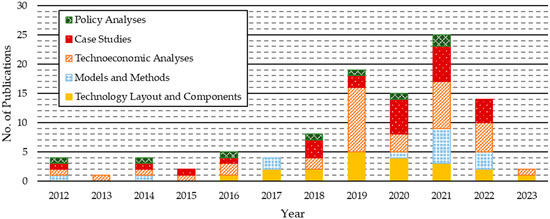
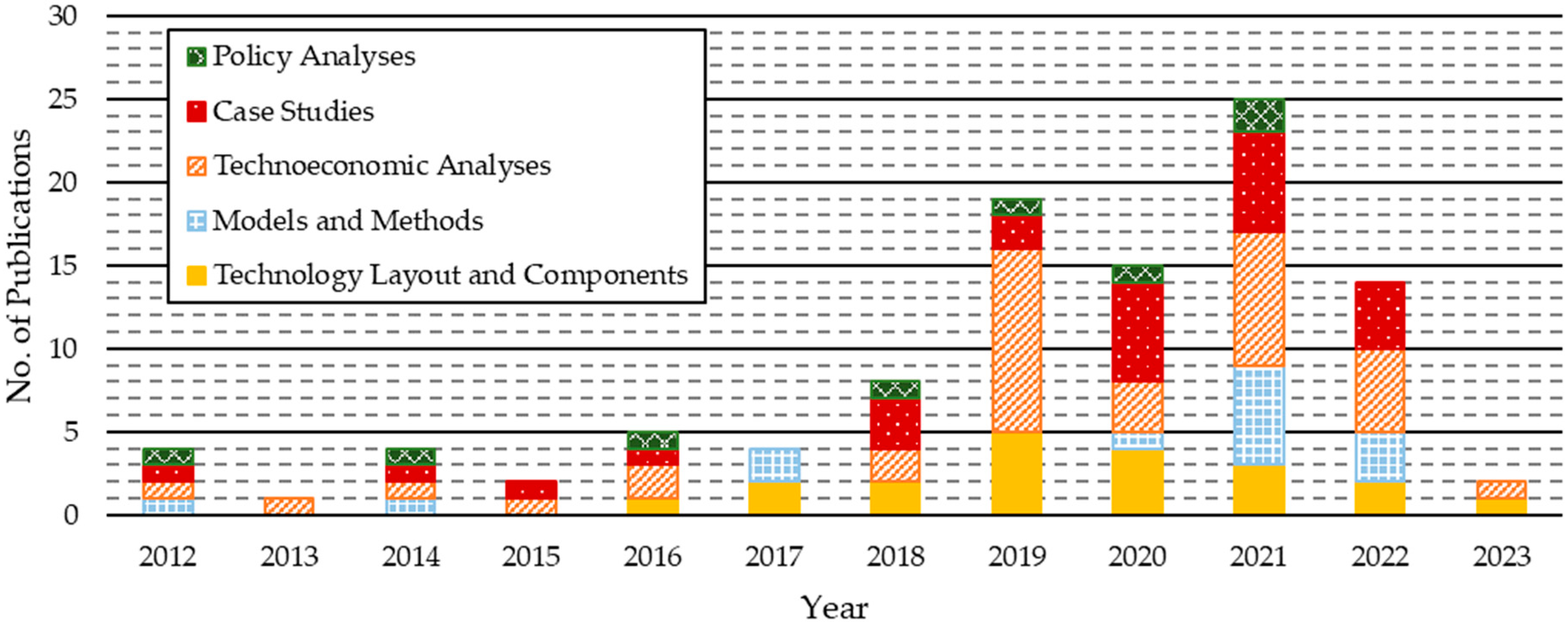
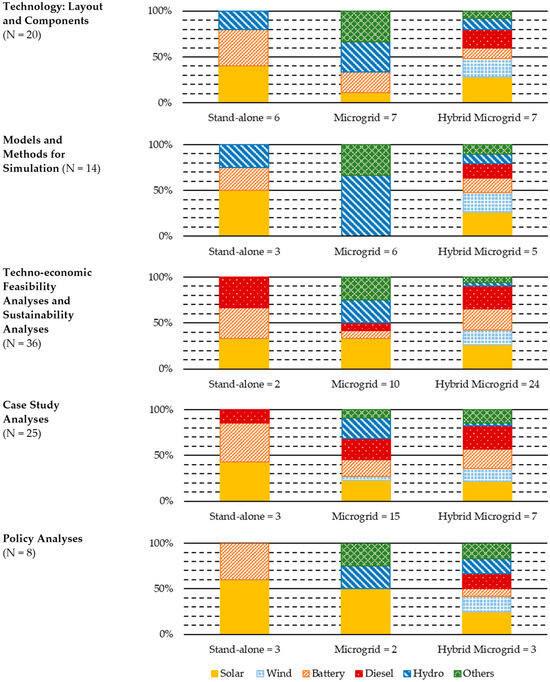
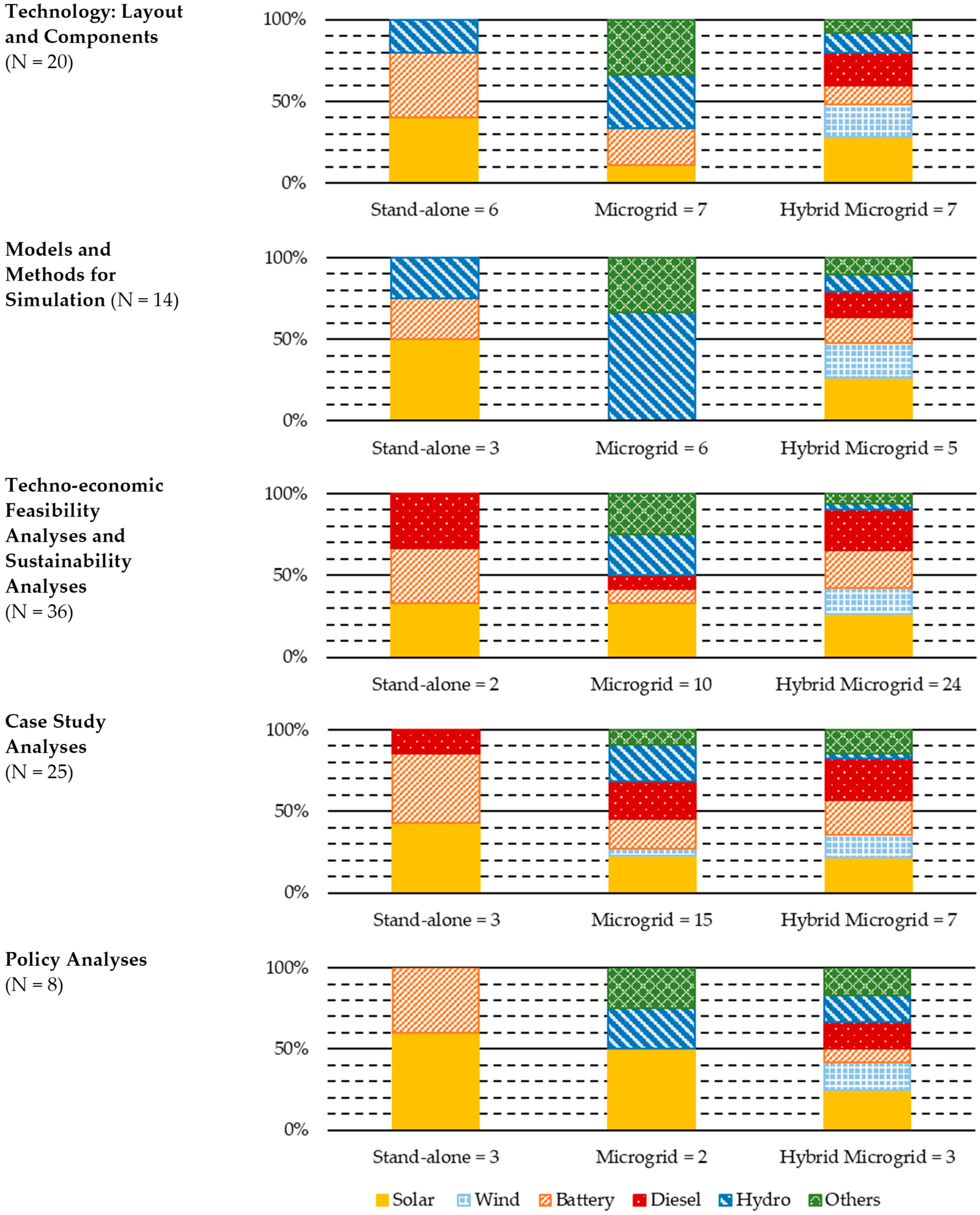
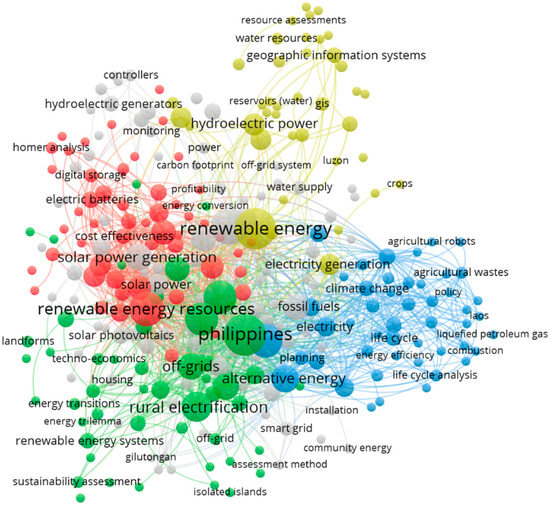
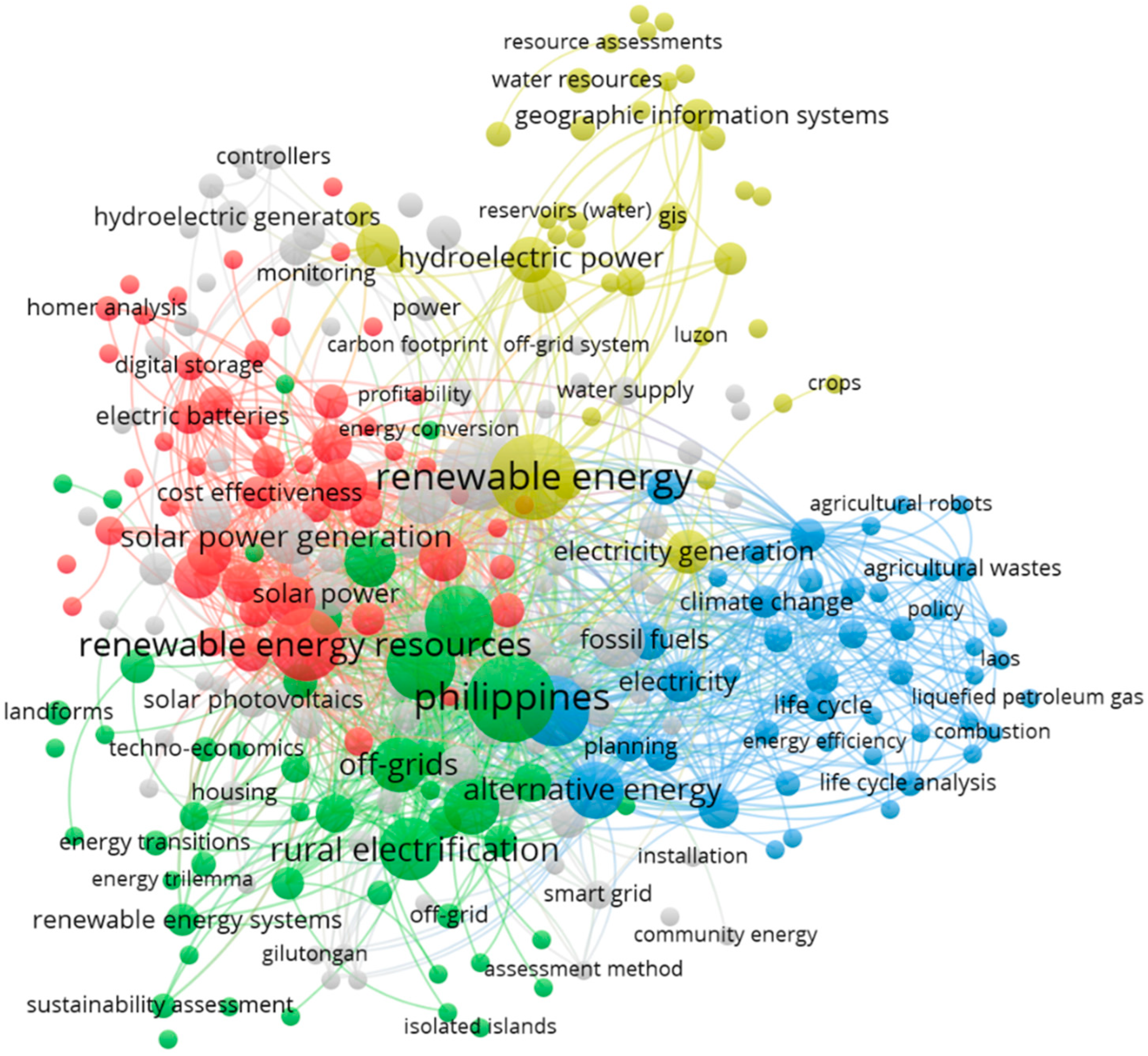
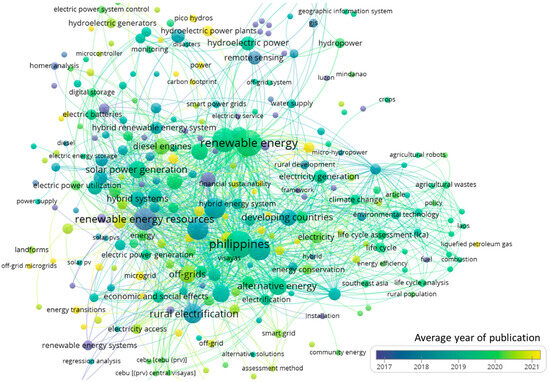
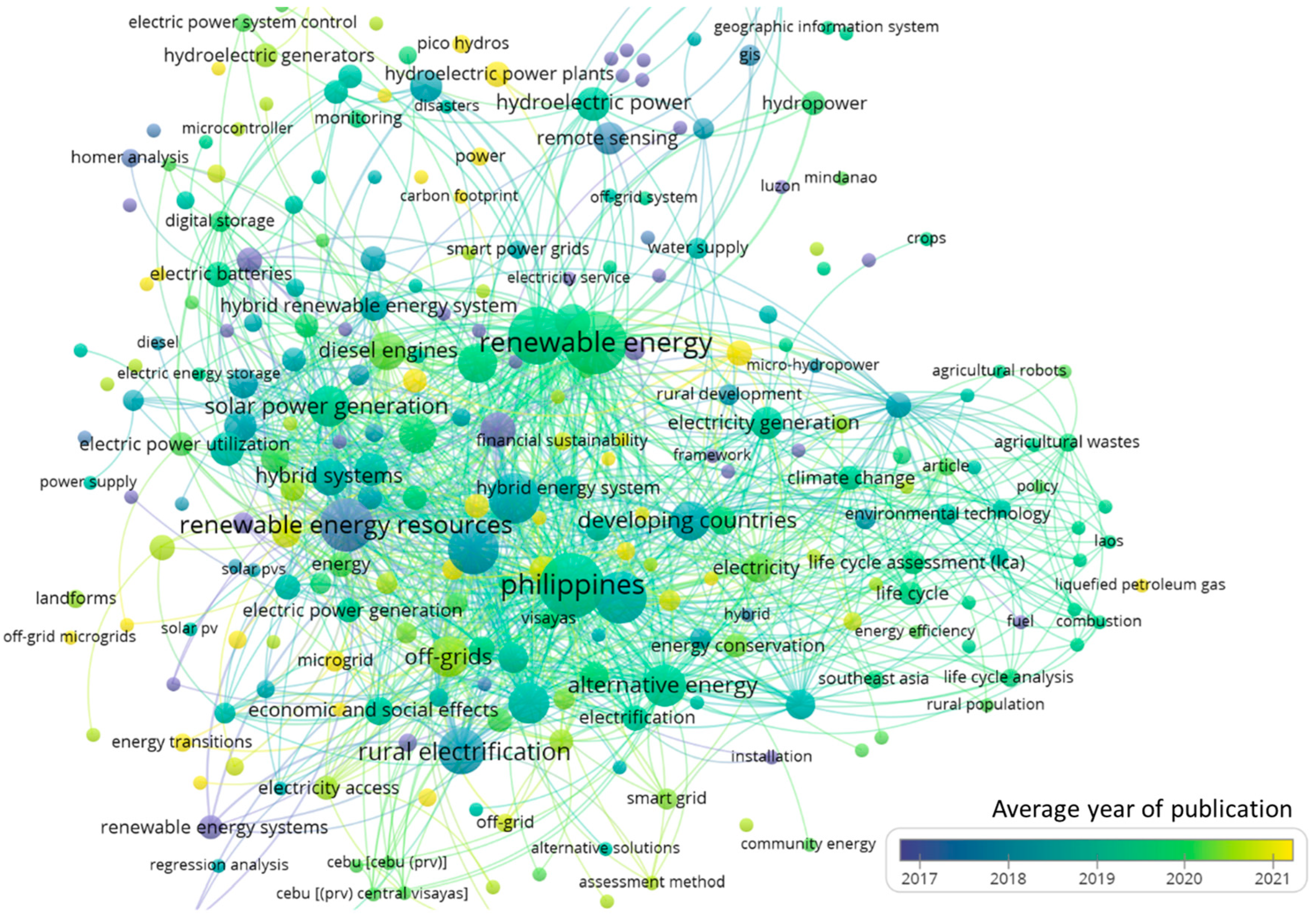
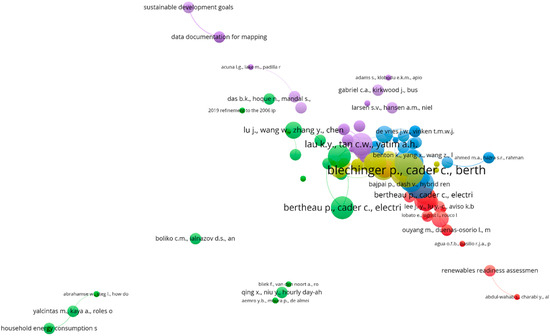
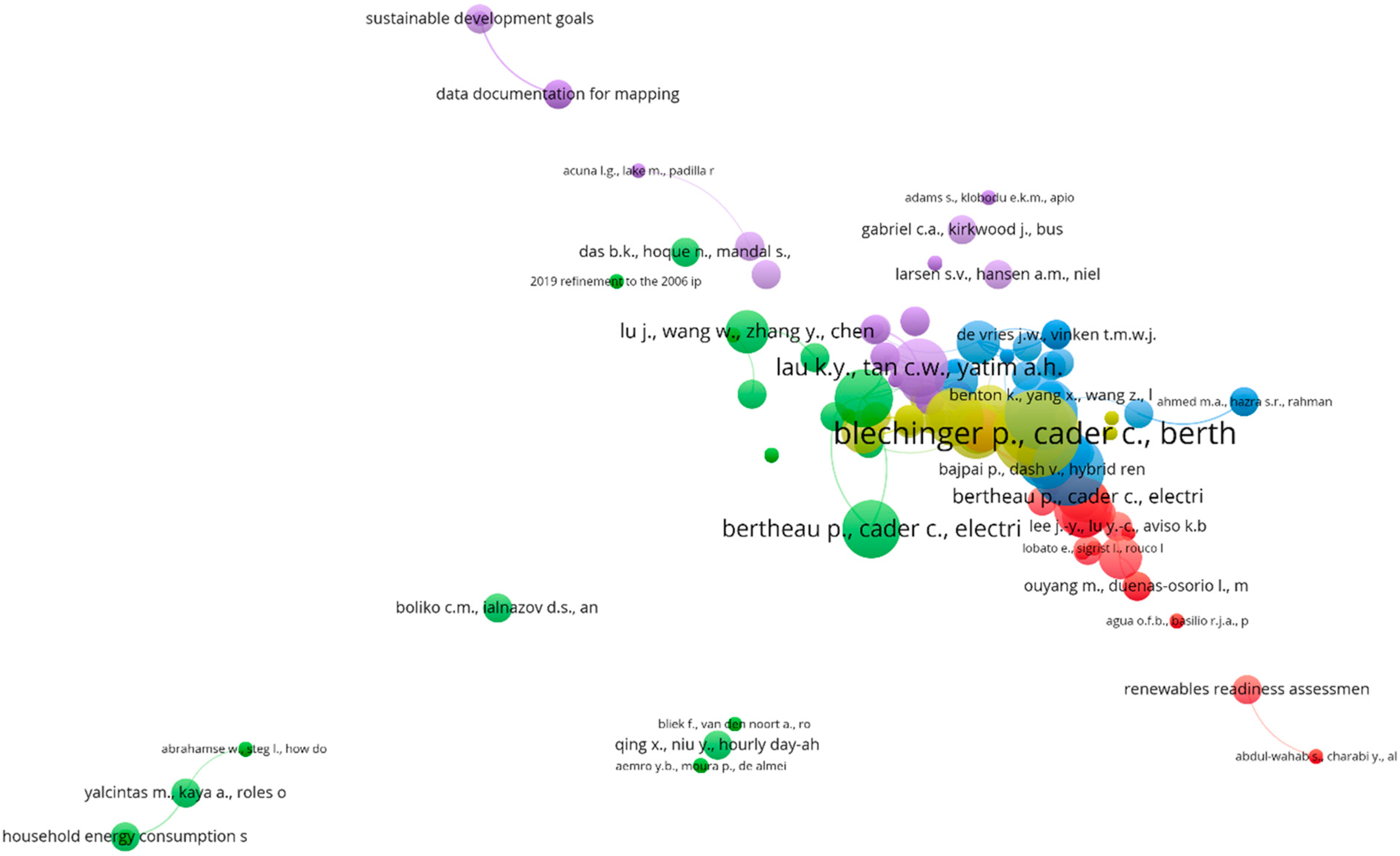
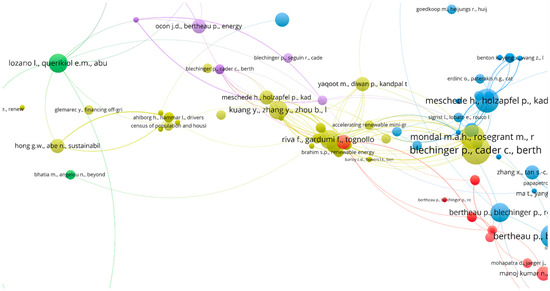
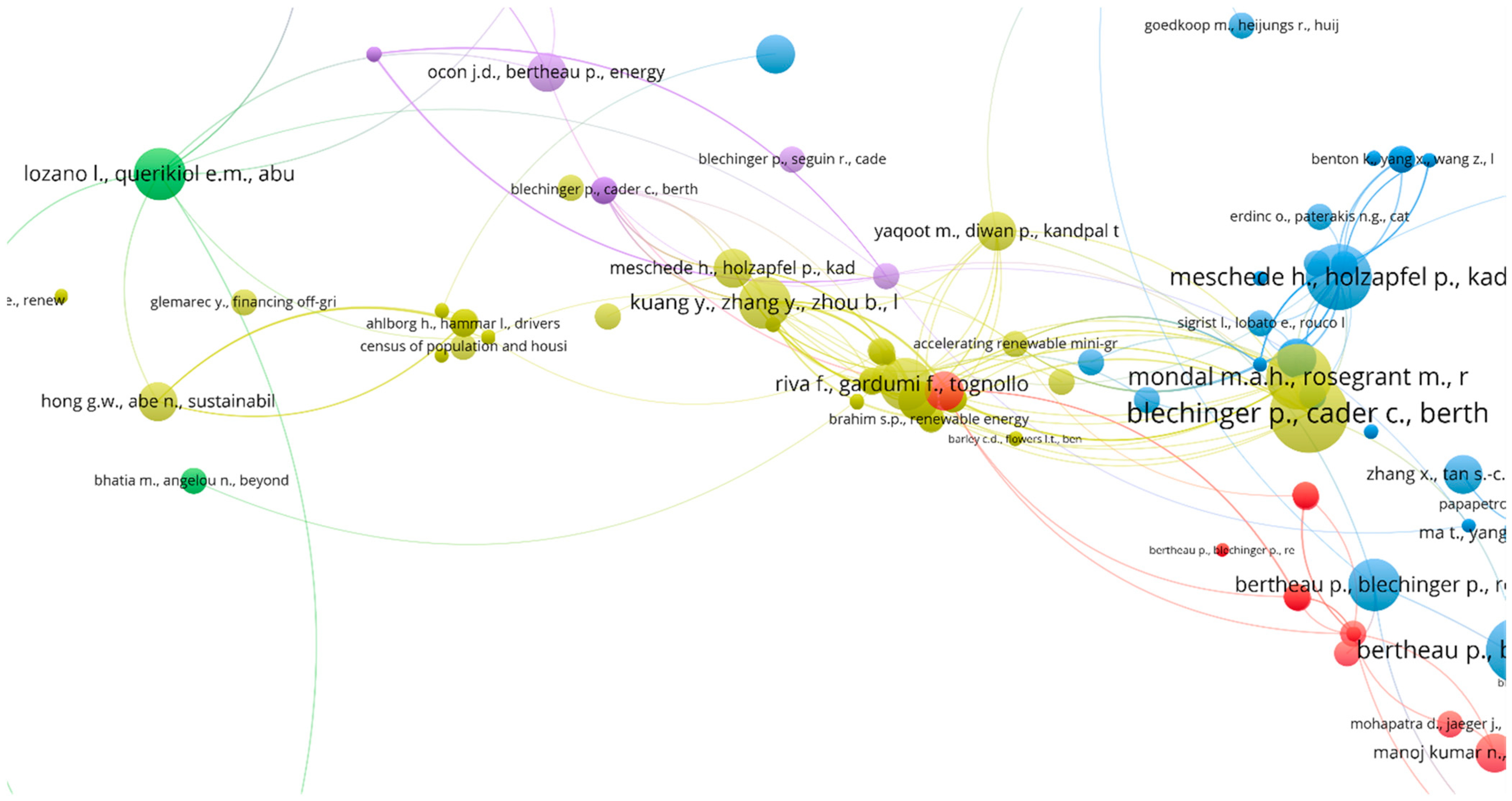
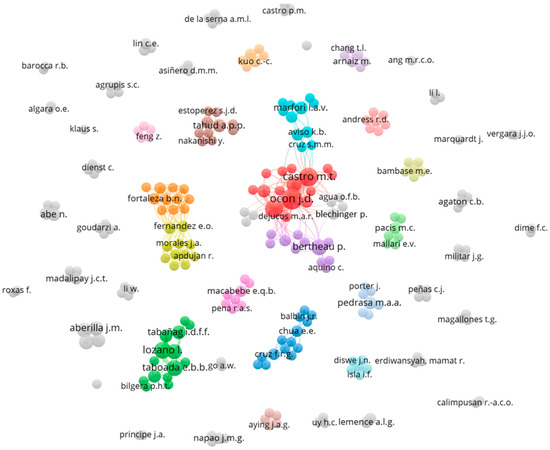
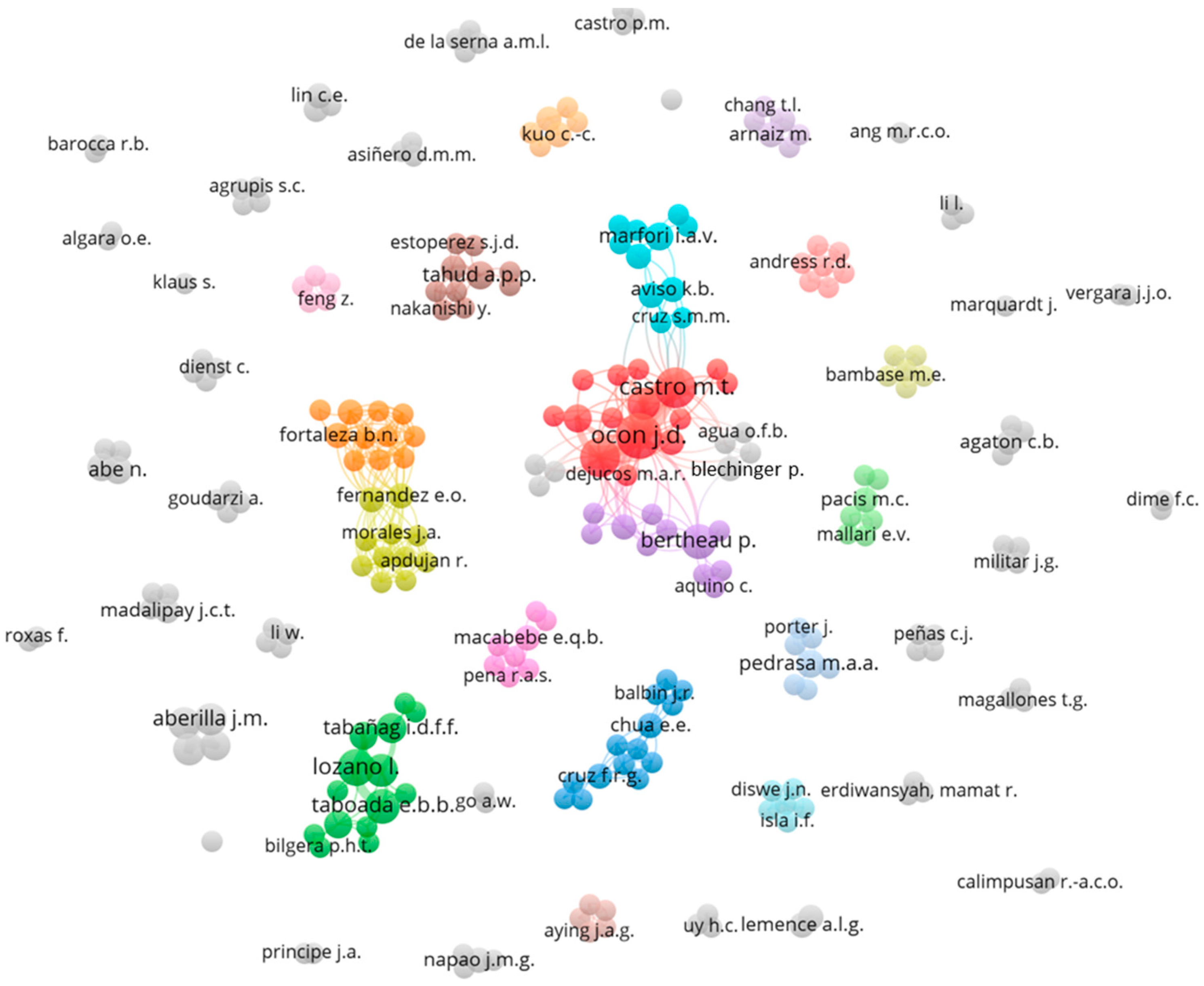
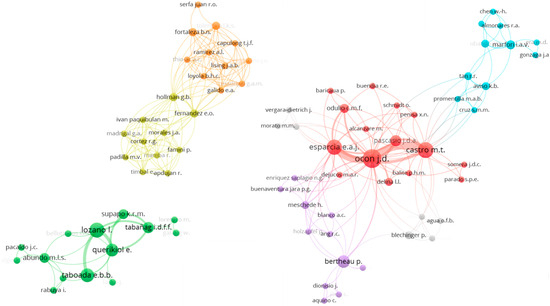
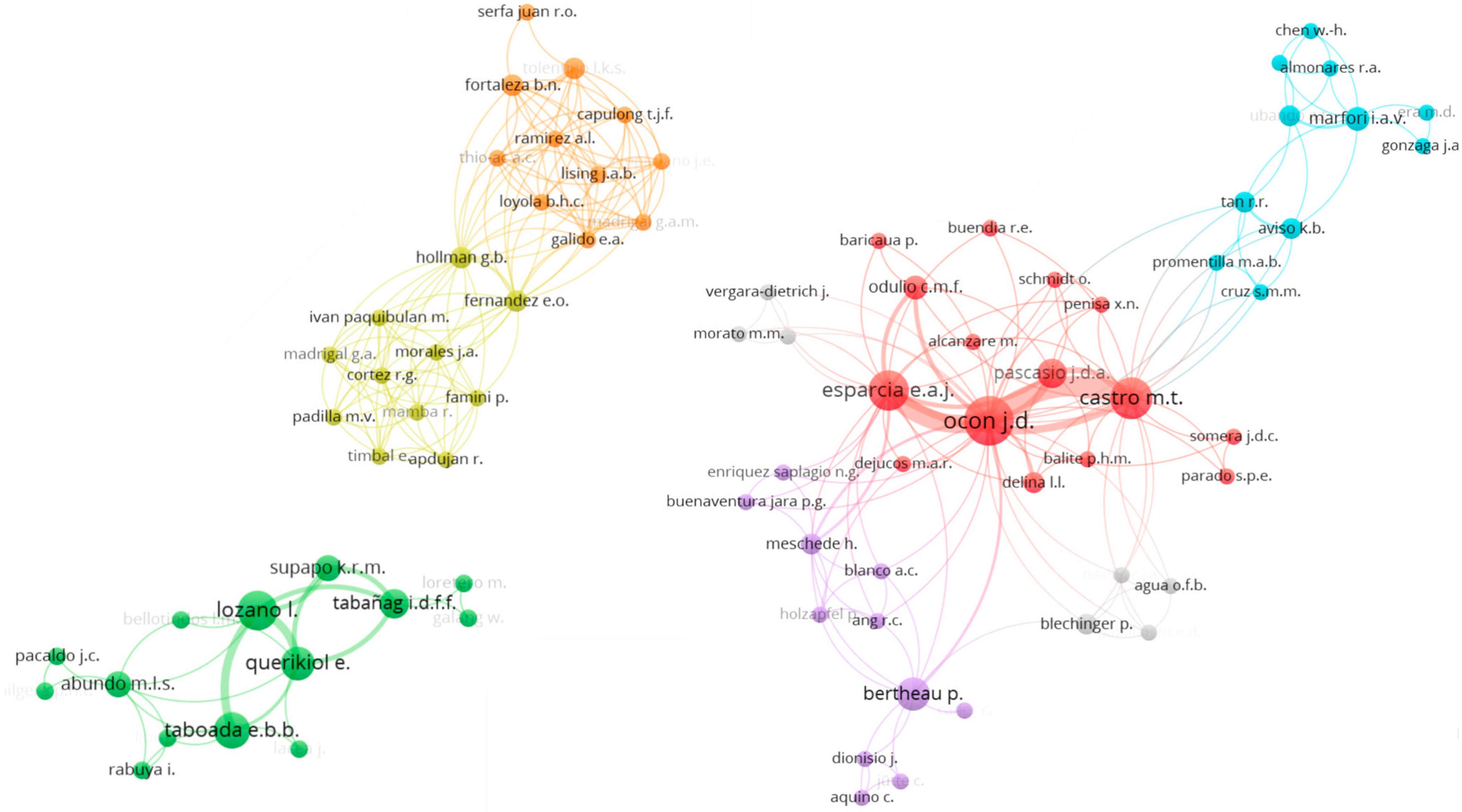

Disclaimer/Publisher’s Note: The statements, opinions and data contained in all publications are solely those of the individual author(s) and contributor(s) and not of MDPI and/or the editor(s). MDPI and/or the editor(s) disclaim responsibility for any injury to people or property resulting from any ideas, methods, instructions or products referred to in the content. |
© 2024 by the authors. Licensee MDPI, Basel, Switzerland. This article is an open access article distributed under the terms and conditions of the Creative Commons Attribution (CC BY) license (https://creativecommons.org/licenses/by/4.0/).