


Abstract
Spasticity is a common and disabling consequence of upper motor neuron lesions, and its follow-up relies largely on clinical scales that may not fully reflect daily-life mobility. This prospective single-arm exploratory pilot study examined wearable-derived daily-life mobility metrics around a scheduled botulinum neurotoxin type A (BoNT-A) injection cycle and assessed their associations with established clinical measures. Thirteen patients with focal spasticity secondary to stroke (n = 11) or multiple sclerosis (n = 2) underwent baseline and 6-week follow-up assessment using the Modified Ashworth Scale (MAS), Motricity Index (MI), the Timed Up and Go test (TUG) and a multi-sensor wearable monitoring system. Device-derived outcomes included gait impairment, gait speed, stride length, angular velocity, and lack of movement. Clinical scales generally changed in the expected post-treatment direction, with reduced MAS scores and descriptive or directional improvements in MI scores and TUG performance. Wearable metrics captured descriptive changes in daily mobility, notably a reduction in lack of movement. Furthermore, in exploratory pooled analyses, selected gait-related metrics tended to be associated with TUG performance and lower-extremity MAS. These findings highlight the potential of wearable telemonitoring to complement conventional clinical scales by providing objective, real-world data, supporting its further validation as a tool for longitudinal spasticity management and neurorehabilitation. These device-derived metrics should be interpreted as mobility-related digital biomarkers rather than direct surrogate measures of spasticity.
1. Introduction
Spasticity is a hallmark feature of the upper motor neuron syndrome (UMNS) characterized by a velocity-dependent increase in muscle tone and/or tonic stretch reflexes [1]. It can occur in various clinical contexts, including stroke and multiple sclerosis (MS) among others [1,2]. Approximately 35% of stroke patients and 37–78% of patients with MS experience spasticity [2,3]. Clinical findings vary from minor discomfort to severe disabilities and differ depending on the underlying disease [1]. In both stroke and MS, spasticity arises due to damage to the central nervous system (CNS), specifically to the upper motor neurons, thereby disrupting descending inhibitory signals that regulate muscle activity [1,2]. In MS, demyelination and axonal damage of the brain and spinal cord contribute to spastic symptoms, whereas in stroke patients descending motor pathways are disrupted by focal brain lesions [1,2,3]. Given its profound impact on quality of life, accurate evaluation and effective treatment of spasticity are therefore of major importance [4].
Chemodenervation with BoNT-A is a widely used treatment method for focal spasticity [1,3]. BoNT-A is a potent neurotoxin produced by Clostridium botulinum and is recognized for its therapeutic applications in treating muscle spasticity [3]. Its mechanism of action involves inhibiting acetylcholine release at the neuromuscular junction, which is critical for muscle contraction. Upon administration, the toxin binds to the presynaptic membranes of motor neurons, leading to the cleavage of SNARE proteins essential for neurotransmitter vesicle fusion. This blockage effectively prevents the release of acetylcholine, resulting in temporary muscle relaxation and reduced muscle tone [5]. The efficacy of BoNT-A in managing spasticity has been well-documented across various clinical studies. For instance, a randomized controlled trial highlighted its role in significantly improving walking ability and quality of life for patients with post-stroke lower limb spasticity [6]. Another comprehensive review underscored the effectiveness of BoNT-A in reducing spasticity scores and enhancing functional outcomes in patients with neurological conditions [7]. Overall, the use of BoNT-A represents a significant advancement in the management of spasticity, providing targeted relief from muscle overactivity and facilitating improved rehabilitation outcomes. The combination of its well-understood mechanism at the neuromuscular junction and robust clinical evidence establishes BoNT-A as a cornerstone treatment option in the multidisciplinary approach to spasticity management [8].
Clinical assessment of spasticity often relies on tools such as the Modified Ashworth Scale (MAS), a 6-point measure of muscle tone ranging from 0 (no resistance) to 4 (rigid contraction) [9]. Additional tools include the Motricity Index (MI), which assesses functional motor impairment, and the Timed Up and Go (TUG) test, which assesses functional mobility and dynamic balance [10,11]. However, the clinical scales used for the assessment of spasticity can be subjective, due to being prone to examiner bias and the Hawthorne effect [12]. Moreover, clinical assessments provide limited data on motor performance and may not fully capture mobility fluctuations, activity patterns and compensatory strategies occurring during patients’ daily life. To complement these assessments, we incorporated a wearable telemonitoring device that captures motor activity and gait parameters during patients’ daily routines, thereby providing ecological data about mobility and motor performance. Recent research supports this approach as wearable sensors have been reviewed as feasible and reliable tools for the quantification of spasticity on an outpatient basis, while integrated systems combining surface electromyography (sEMG) and inertial measurement units (IMUs) have been developed to monitor spasticity in real-life environments [13]. More specifically, in stroke rehabilitation, wearable sensors have been used to assess upper limb movement quality, gait characteristics and real-world activity, providing complementary data to conventional clinical scales [14]. In people living with spasticity, IMU-based approaches have also been investigated as tools for movement-related manifestations, although methodological heterogeneity and the lack of standardized protocols remain important challenges. More broadly, recent reviews emphasize that wearable sensors hold promise for neurological monitoring and rehabilitations assessment, but also highlight the need for disease-specific validation, transparent data-processing methods, and cautious interpretation before routine clinical implementation [13].
Despite the growing literature, evidence remains limited regarding the use of daily-life wearable telemonitoring in patients with focal spasticity undergoing routine BoNT-A treatment. In particular, few studies have examined whether wearable-derived mobility metrics collected in real-world settings are associated with conventional clinical measures of muscle tone, muscle strength, and functional mobility in this population. Therefore, the present study addresses a specific exploratory gap by combining wearable-derived daily-life mobility monitoring with established clinical assessments around a scheduled BoNT-A injection cycle [13,14,15].
The aim of this study was to examine wearable-derived daily-life mobility metrics in patients with focal spasticity around a BoNT-A injection cycle and to assess their associations with established clinical measures. Pre/post changes in clinical and digital outcome measures, including muscle tone, muscle strength, functional mobility, and walking-related parameters, were explored.
2. Materials and Methods
2.1. Study Design
This was an observational, prospective, single-arm, open-label exploratory pilot study of patients with focal spasticity due to central nervous system lesions. Clinical scale-derived outcomes and telemonitoring-derived mobility metrics were assessed at baseline and at 6-week follow-up around a BoNT-A injection cycle. In addition, associations between wearable-derived metrics and established clinical measures of muscle tone, muscle strength, functional mobility, and walking-related performance were also explored.
The study was conducted at the University Hospital of Ioannina between October 2023 and April 2025. Both patients and investigators were aware of the intervention, consistent with the open-label design. The study protocol was approved by the Institutional Review Board of the University Hospital of Ioannina, and all participants provided written informed consent prior to inclusion.
2.2. Patients
Participants were consecutively recruited from the outpatient neurology clinics at the University Hospital of Ioannina. Inclusion criteria were: (a) age ≥ 18 years, (b) diagnosis of spasticity secondary to stroke or multiple sclerosis, and (c) stable clinical status for at least three months prior to enrollment. Exclusion criteria included: (a) hypersensitivity to botulinum toxin, (b) pregnancy or breastfeeding, and (c) a diagnosis of a neuromuscular junction disorder (e.g., myasthenia gravis) that could increase the risk of adverse effects [16].
All participants had previously received BoNT-A as part of routine spasticity management and were evaluated in the context of their usual BoNT-A treatment cycle.
Patients were classified according to whether spasticity affected the upper limbs, lower limbs, or both. This classification was used to describe the anatomical distribution of spasticity and to guide the selection of target muscles for BoNT-A injections, in accordance with routine clinical practice.
The sample size was determined pragmatically, consistent with the exploratory pilot design of the study. No formal sample size calculation was performed.
2.3. Monitoring Device
In addition to clinical assessments, all 13 patients were equipped with a wearable device designed for telemonitoring. The PDMonitor® system was developed by PD Neurotechnology Ltd. (Ioannina, Greece) to enable continuous monitoring of Parkinson’s disease symptoms in patients’ everyday environments. It is a Class IIa CE-marked medical device consisting of a base unit (SmartBox), five (5) wearable monitoring devices (sensors), a set of mounting accessories, a mobile application, a physician web dashboard (PhysicianTool), and a cloud service. The PDMonitor® system is capable of remotely detecting most motor manifestations of Parkinson’s disease, including patients’ activity measures at home. It is also intended for long-term follow-up monitoring, providing an objective assessment of disease progression over time.
The PDMonitor® SmartBox is used to collect, process, and upload data to the cloud. In addition, it serves as a docking station for recharging the wearable monitoring devices after use. Communication between the wearable sensors and the data collection unit is performed via serial communication (no wireless transmission) when the devices are docked to the SmartBox.
Each monitoring device records raw measurements through its embedded inertial measurement unit (IMU) sensor. Data from all five devices are synchronized and uploaded to the cloud when the devices are docked to the SmartBox. The symptom evaluation process then converts the raw IMU signals into a unified set of movement features, which are subsequently translated into symptom estimates for 30-min intervals and mapped to corresponding items of the UPDRS or other relevant clinical scales. For the purposes of the present study, only general mobility metrics were analyzed. Parkinson’s disease-specific clinical outputs were not included in the analyses. According to the system’s intended use, patients should wear the five monitoring devices throughout their waking hours and dock them afterward for data transfer and charging. However, because the sensors provide a battery life of up to 50 h, this duration represents the maximum continuous recording period. Prior to each monitoring session, the sensors were assigned to their predefined anatomical locations and underwent the standard manufacturer initialization and synchronization procedure. No subject-specific calibration was required, as the device incorporates factory calibration of the inertial sensors and the device has an integrated algorithm to automatically identify sensor placement.
Through the PhysicianTool, physicians can access patients’ symptom reports at any time, obtaining detailed information on nearly all Parkinson’s disease-related motor symptoms, as well as generic mobility and physical activity metrics. For the current study, data extraction from the PhysicianTool was strictly limited to these generic mobility parameters. The PDMonitor® report includes a heatmap displaying symptom severity or other activity metrics for each 30-min interval, as well as a chart showing the average symptom intensity across different times of the day. For more information regarding device use and technical characteristics please refer to the work presented by Antonini and his colleagues [17].
Participants were instructed to wear the device throughout the day during the monitoring periods, except during sleep and bathing. A minimum daily wear time of 12 h was required for each valid monitoring day, and all participants fulfilled this requirement. Device use and data flow could be monitored through the PhysicianTool, and any interruption or technical problem in data transmission could be communicated to the investigator. No such problem was observed during the study. The correct application and use of the device were explained to the participants by specialized personnel, who provided detailed instructions and continuous support throughout the monitoring periods in case of questions or technical issues.
For consistency, device-derived metrics are referred to throughout the manuscript as gait impairment (dGait), gait speed (dGait Speed), stride length (dStride), lack of movement (dLoM), and angular velocity (dAngular velocity). These abbreviations are applied uniformly across the text, tables, and figures. The definitions, units, and directionality of these metrics are as follows: dGait is a cumulative index of multiple stride metrics computed by the PDMonitor® algorithm within each 30-min analysis window, expressed on a weighted 0–4 scale, with higher values indicating greater gait impairment; dGait speed is a normalized walking speed within detected walking regions, expressed in meters per second (m/s), with higher values indicating faster, less impaired gait; dStride length is a normalized stride length within detected walking regions, expressed in centimeters (cm), with higher values indicating longer strides; dAngular velocity is the raw gyroscope angular rate underlying the platform’s gait and tremor features, expressed in degrees per second (°/s), with higher values indicating faster movements; and dLoM is the percentage of each 30-min analysis window classified as “not moving” based on signal energy, ranging from 0–100%, such that higher values indicate greater immobility. All of the above are standard processed outputs generated by the PDMonitor® platform in fixed 30-min analysis windows, rather than quantities re-derived from raw sensor data. For each participant, these interval-level outputs were averaged across all valid recording intervals within a monitoring period to derive a single participant-level value at baseline and at follow-up.
2.4. Study Process
2.4.1. Baseline (T1)
At baseline, participants underwent clinical assessment and wearable monitoring before BoNT-A administration. Participants were instructed to wear the telemonitoring device for two to three consecutive days during the week preceding the injection session.
BoNT-A was administered to the muscle groups most affected by spasticity, according to routine clinical practice and established treatment protocols [18]. The selection of target muscles and dosing were individualized by the treating physicians. All injections were performed under real-time ultrasound guidance to improve injection accuracy and reduce the risk of complications [18,19].
Baseline clinical assessments were conducted immediately before BoNT-A administration to document muscle tone, muscle strength, and functional mobility. The following standardized tools were used:
Modified Ashworth Scale (MAS): Spasticity was assessed using the MAS, an ordinal scale that evaluates resistance during passive muscle stretching and grades muscle tone from 0 (no increase in tone) to 4 (rigid contraction), with an intermediate 1+ category [9,20,21]. In the present study, MAS grades were numerically recoded, with the 1+ category coded as 2, resulting in a 0–5 analytical scale. MAS was assessed in the clinically affected muscle groups examined at each visit. Scores were then summarized separately for the upper and lower extremities and used to derive an overall MAS measure. For reporting purposes, these outcomes were recorded as MAS-UE (upper extremity), MAS-LE (lower extremity), and MAS-ALL (overall MAS measure).
Motricity Index (MI): Muscle strength was evaluated according to the MI, which examines three key movements for each limb: shoulder abduction, elbow flexion, and pinch grip for the upper extremity; hip flexion, knee extension, and ankle dorsiflexion for the lower extremity. In the standard MI, these movements are graded and weighted to derive limb-specific scores commonly expressed on a 0–100 scale [10,22]. In the present study, a modified MI-based analytical score was used. Each assessed movement was graded on a 0–5 scale, similar to the Medical Research Council (MRC) muscle strength scale, with higher scores indicating greater muscle strength. Scores were averaged separately for the upper and lower extremities and used to derive an overall MI measure. For reporting purposes, these outcomes were recorded as MI-UE, MI-LE and MI-ALL.
Timed Up and Go (TUG) test: The TUG test was used to evaluate functional mobility and dynamic balance. Patients were timed while rising from a chair, walking three meters, turning, returning to the chair, and sitting down. The total completion time reflects functional mobility, ambulatory capacity, and fall risk. The TUG is frequently used to monitor functional changes in patients with spasticity [23,24].
To improve objectivity and minimize inter-rater variability, each clinical assessment was performed by two independent evaluators. Final scores were calculated by averaging the recorded measurements.
2.4.2. Follow-Up and Data Collection (T2)
Follow-up assessment was conducted six weeks after BoNT-A administration. This interval was chosen on pharmacodynamic grounds, as peak clinical effects of BoNT-A are typically observed four to five weeks after injection [25]. During this follow-up visit, the same standardized clinical tools used at baseline were reapplied under comparable conditions, including MAS-UE, MAS-LE, MAS-ALL, MI-UE, MI-LE, MI-ALL, and the TUG test. To ensure consistency and minimize inter-rater variability, each clinical assessment was again performed by two independent evaluators, and final scores were calculated by averaging the recorded measurements.
In addition to the clinical evaluations, participants were again equipped with the wearable monitoring device for two to three consecutive days. The same instructions and minimum daily wear-time requirement were applied during the follow-up monitoring period.
Device-derived metrics collected at baseline and follow-up included dGait, dGait speed, dStride, dLoM, and dAngular velocity. For each monitoring period, the device generated an average value for each selected metric based on the two or three valid recording days available for each participant. These measures were subsequently analyzed in relation to clinical scale-derived outcomes, as described in the statistical analysis section. All included participants completed the scheduled monitoring periods at baseline and follow-up and had analyzable device-derived recordings for the selected mobility metrics. No recordings were excluded because of missing or invalid device data.
The device provided precise information on daily wear time and the periods during which the sensors were worn or not. These data were available through the monitoring system; however detailed hour-by-hour wear-time summaries were not extracted for separate analysis in the present study.
2.5. Data Analysis Methods
All statistical procedures were performed using IBM SPSS Statistics version 29.0 (IBM Corp., Armonk, NY, USA).
Normality of participant-level differences between follow-up and baseline values was assessed using the Shapiro–Wilk test [26], an appropriate method given the small sample size. Descriptive statistics were reported as median and interquartile range (IQR), with mean values also provided for comparability. Differences were calculated at the participant level as follow-up minus baseline. Given the small sample size, the non-normal distribution of several outcomes, and the ordinal or derived nature of the MAS and MI analytical scores, paired baseline and follow-up comparisons were performed using two-tailed Wilcoxon signed-rank tests.
Associations between device-derived mobility metrics and clinical scale outcomes were assessed using Spearman’s rank correlation coefficients [27]. For these analyses, baseline and follow-up observations were pooled into a single dataset for each pair of variables. Thus, each participant could contribute up to two same-period paired observations: one baseline clinical/device-derived pair and one follow-up clinical/device-derived pair. Baseline clinical measures were paired with baseline device-derived measurements, and follow-up clinical measurements were paired with follow-up device-derived measurements. Correlation strength was interpreted according to commonly used thresholds based on the absolute value of the coefficient: negligible (<0.10), weak (0.10–0.39), moderate (0.40–0.69), strong (0.70–0.89), and very strong (≥0.90).
All statistical tests were two-sided. A p-value < 0.05 was considered statistically significant. No adjustment for multiple comparisons was applied, and the analyses were interpreted descriptively given the exploratory pilot design.
3. Results
3.1. Patient Characteristics
A total of 13 patients diagnosed with spasticity were included in the study. The mean age was 51.8 ± 12.7 years. Among them, 9 were male (69.2%) and 4 were female (30.8%). Concerning the etiology of spasticity, the predominant cause was stroke, either ischemic or hemorrhagic, in 11 patients (85%), while 2 patients (15%) had multiple sclerosis.
The mean duration since the initial diagnosis of the neurological condition was 57.8 ± 39.3 months and the mean duration of BoNT-A therapy was 40.5 ± 19.2 months. Regarding BoNT-A formulation, 10 patients (76.9%) received onabotulinumtoxinA and 3 patients (23.1%) received abobotulinumtoxinA.
Patients were further classified according to whether spasticity affected the upper limbs, lower limbs, or both. Nine out of thirteen patients (69.2%) had spasticity in both the upper and lower limbs. Three patients (23.1%) had spasticity restricted to the upper limbs, while one patient (7.7%) demonstrated isolated lower-limb involvement. Detailed demographic and clinical characteristics are presented in Table 1.
Table 1.
Demographic and clinical characteristics of patients included in the study. Each patient’s age, sex, underlying diagnosis, duration since diagnosis, type of botulinum toxin used, and anatomical distribution of spasticity are outlined in the table.
3.2. Clinical Scale Findings
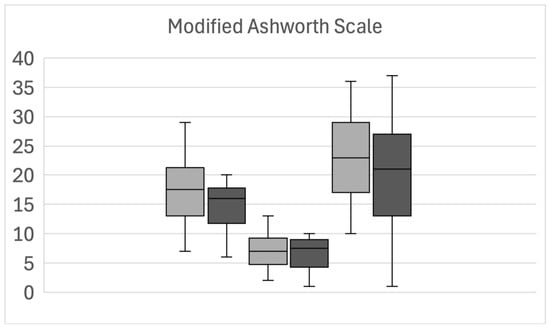
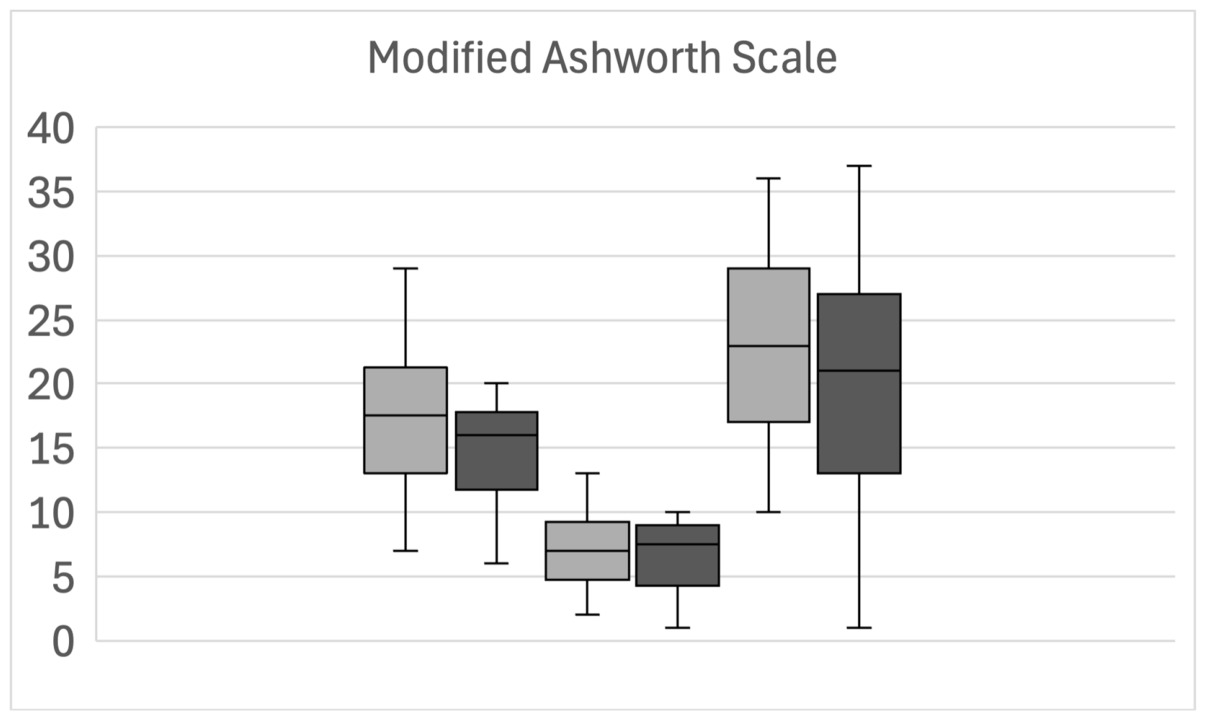
Clinical scale findings at baseline and follow-up are presented in Table 2 as mean values and median (IQR), together with baseline-to-follow-up differences and exact p-values. MAS scores decreased between baseline and follow-up. Specifically, upper extremity MAS scores (MAS-UE) decreased by a median of 2.5 units (IQR: 6.0; p = 0.046), while lower extremity scores (MAS-LE) decreased by a median of 0.5 units (IQR: 3.0; p = 0.209). Total MAS scores (MAS-ALL) decreased by a median of 4 units (IQR: 9.5; p = 0.049) (Figure 1). In total, 8 of the 13 patients demonstrated a reduction in muscle tone scores.
Table 2.
Clinical scale-derived and telemonitoring-derived findings at baseline and 6-week follow-up. Data are presented as mean; median (IQR). p-values were derived from two-tailed Wilcoxon signed-rank tests.
Figure 1.
Box Plot showcasing Upper Extremity, Lower Extremity and Total Modified Ashworth Scale Sum Scores before and after treatment. Light gray boxes represent baseline assessments, and dark gray boxes represent the 6-week follow-up assessments.
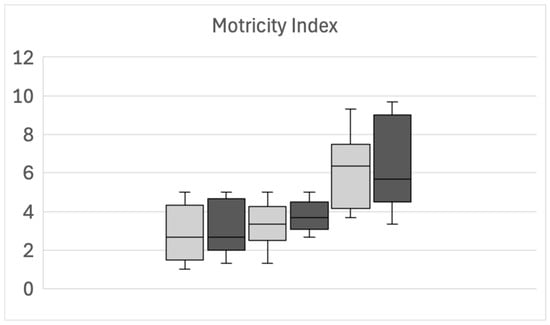
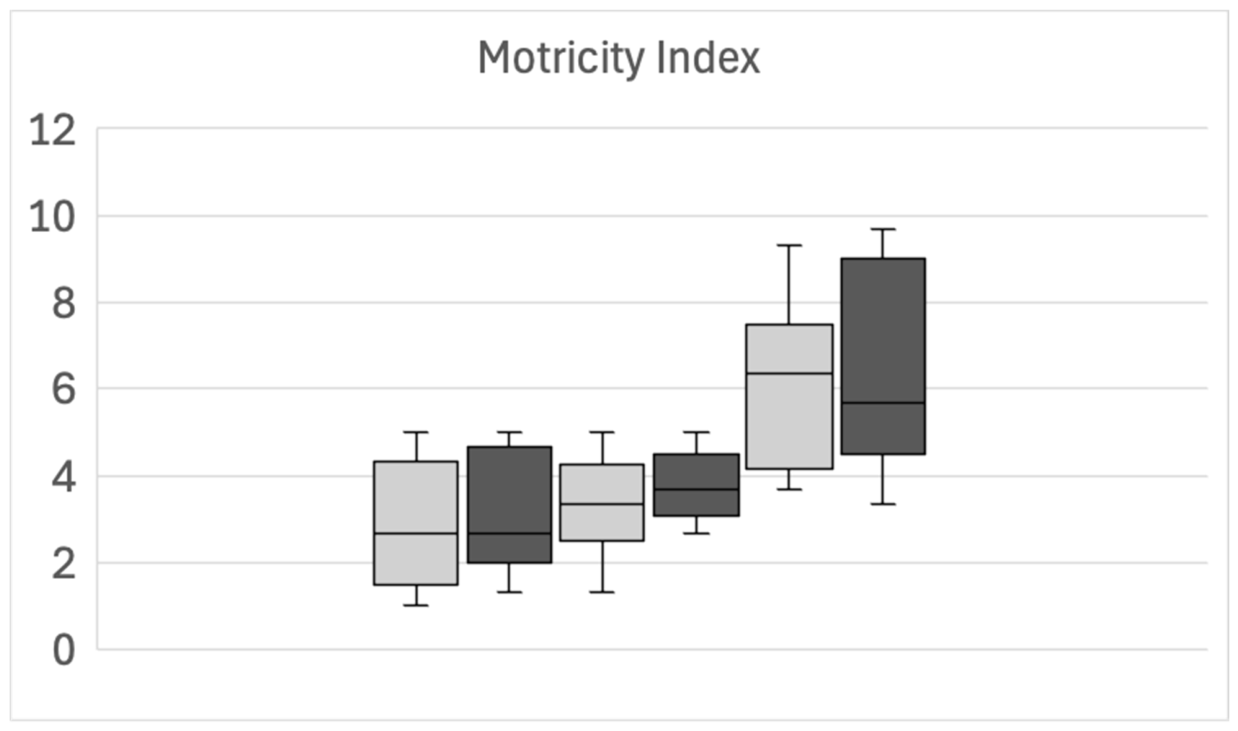
Regarding muscle strength, MI scores on the upper extremities (MI-UE) and lower extremities (MI-LE) increased at follow-up by a median of 0.33 units (IQR: 0.67; p = 0.111) and 0.17 units (IQR: 0.83; p = 0.339), respectively. Overall, MI-ALL scores increased by a median of 0.66 units (IQR: 1.66; p = 0.162) (Figure 2).
Figure 2.
Box Plot showcasing Upper Extremity, Lower Extremity and Total Motricity Index Scores before and after treatment. Light gray boxes represent baseline assessments, and dark gray boxes represent the 6-week follow-up assessments.
Additionally, 9 out of 12 patients who completed the TUG test at both time points showed decreased completion time at follow-up, with a median difference of −1.99 s (IQR: 5.88; p = 0.064). One patient was unable to complete the TUG test at follow-up and was therefore not included in the paired TUG comparison.
3.3. Telemonitoring Device Findings
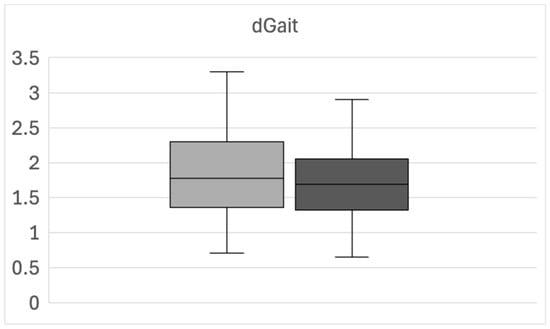
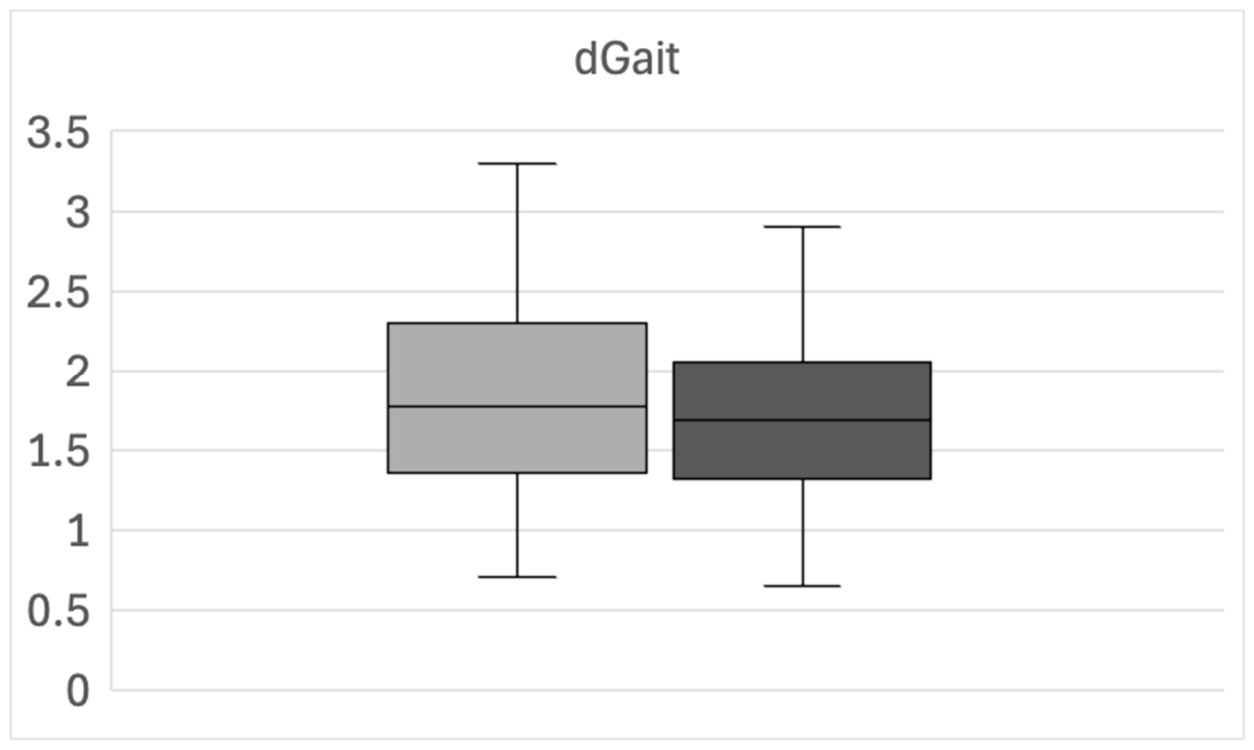
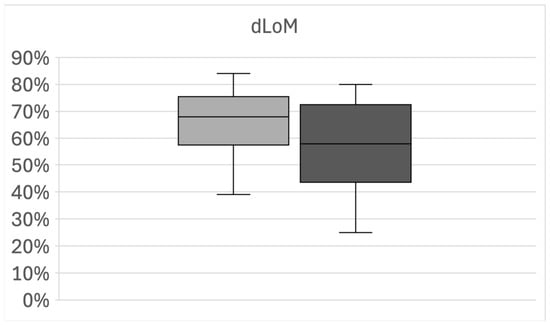
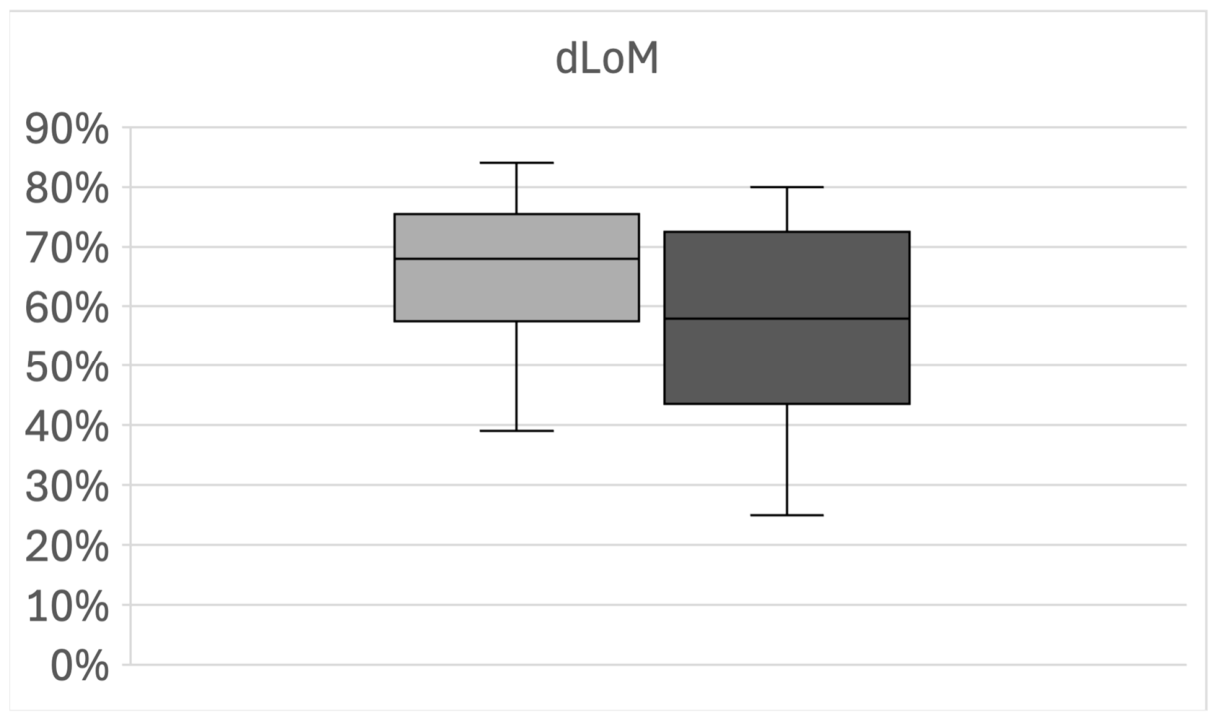
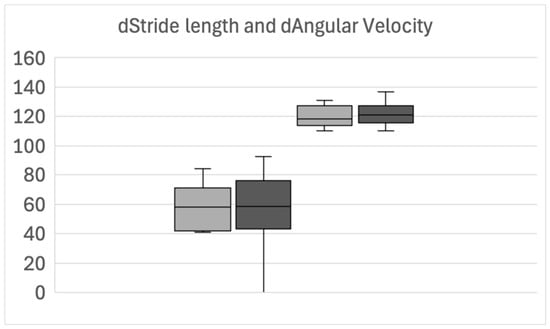
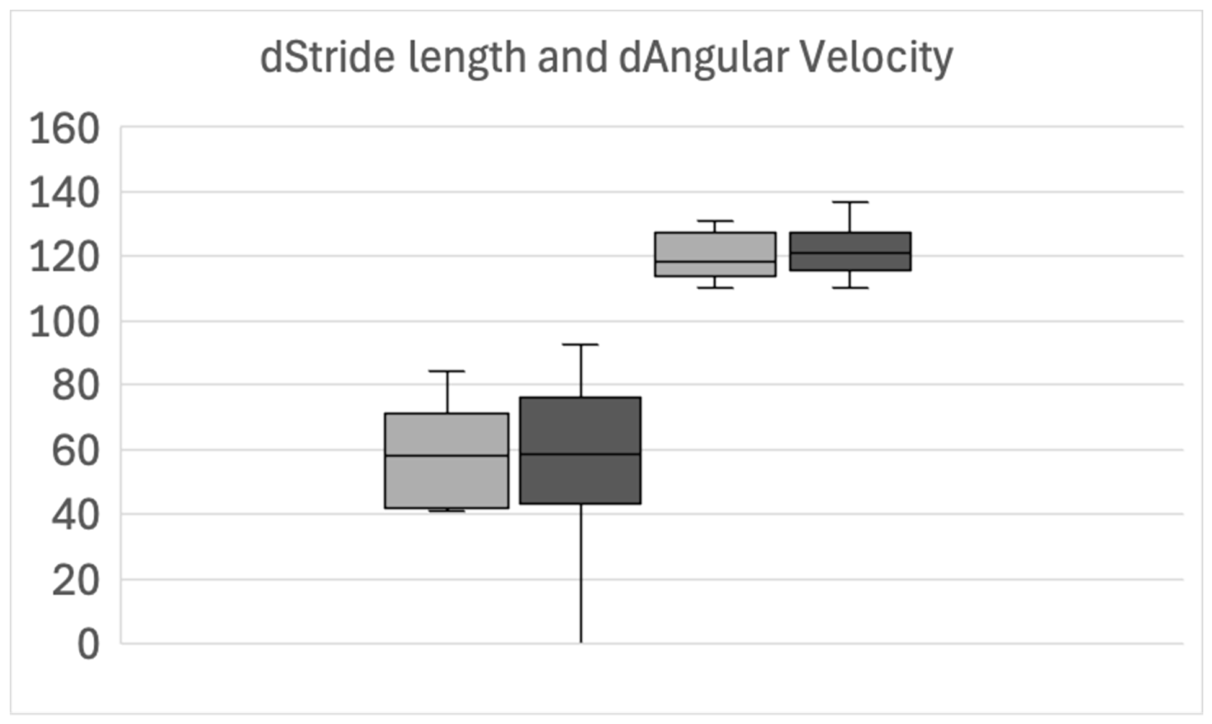
Regarding device-derived data, Figure 3 presents a decrease in dGait by a median of 0.13 points (IQR: 0.36; p = 0.204). Additionally, dLoM decreased by a median of 5 percentage points (IQR: 8 percentage points; p = 0.004) as depicted in Figure 4. Stride length increased by a median of 1.96 cm (IQR: 7.32; p = 0.129), and angular velocity increased by a median of 1.88°/s (IQR: 5.62; p = 0.110) (Figure 5). Detailed device-derived findings are presented in Table 2.
Figure 3.
Box plot exhibiting dGait Telemonitoring Device Score Before and After treatment (dGait= device-derived gait impairment metric; higher values indicate greater gait impairment). Light gray boxes represent baseline assessments, and dark gray boxes represent the 6-week follow-up assessments.
Figure 4.
Box plot exhibiting Lack of Movement Telemonitoring Device Score Before and After treatment (dLoM = device-derived lack-of-movement metric, expressed as the percentage of each 30-min analysis window classified as not moving; higher values indicate greater immobility). Light gray boxes represent baseline assessments, and dark gray boxes represent the 6-week follow-up assessments.
Figure 5.
Box plots exhibiting Stride Length (Left, cm; higher values indicate longer strides) and Angular Velocity (Right, °/s; higher value indicate faster movements) Telemonitoring Device Score Before and After treatment Light gray boxes represent baseline assessments, and dark gray boxes represent the 6-week follow-up assessments.
All 13 participants completed the wearable monitoring periods at baseline and follow-up and had analyzable device-derived recordings. No recordings were excluded because of missing or invalid device data.
3.4. Correlations Between Device-Derived Metrics and Clinical Scale Outcomes
Device-derived metrics were examined in relation to clinical scale outcomes using Spearman’s rank correlation analysis. Because these analyses pooled baseline and follow-up observations, the associations reported below are exploratory and the corresponding p-values should be interpreted descriptively. The full correlation matrix is presented in Table 3.
Table 3.
Correlations between clinical scale-derived measures and device-derived mobility metrics. Values are Spearman’s rank correlation coefficients (ρ), with corresponding two-tailed p-values shown below each coefficient. p-values were interpreted descriptively given the exploratory pilot design.
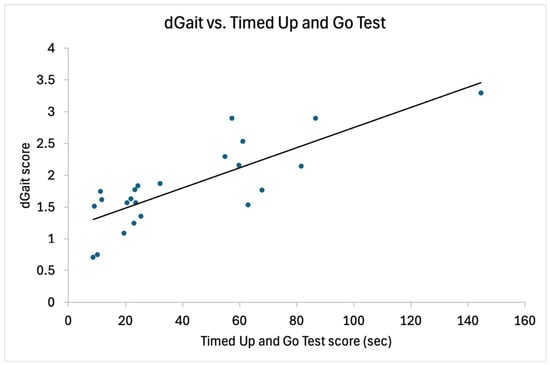
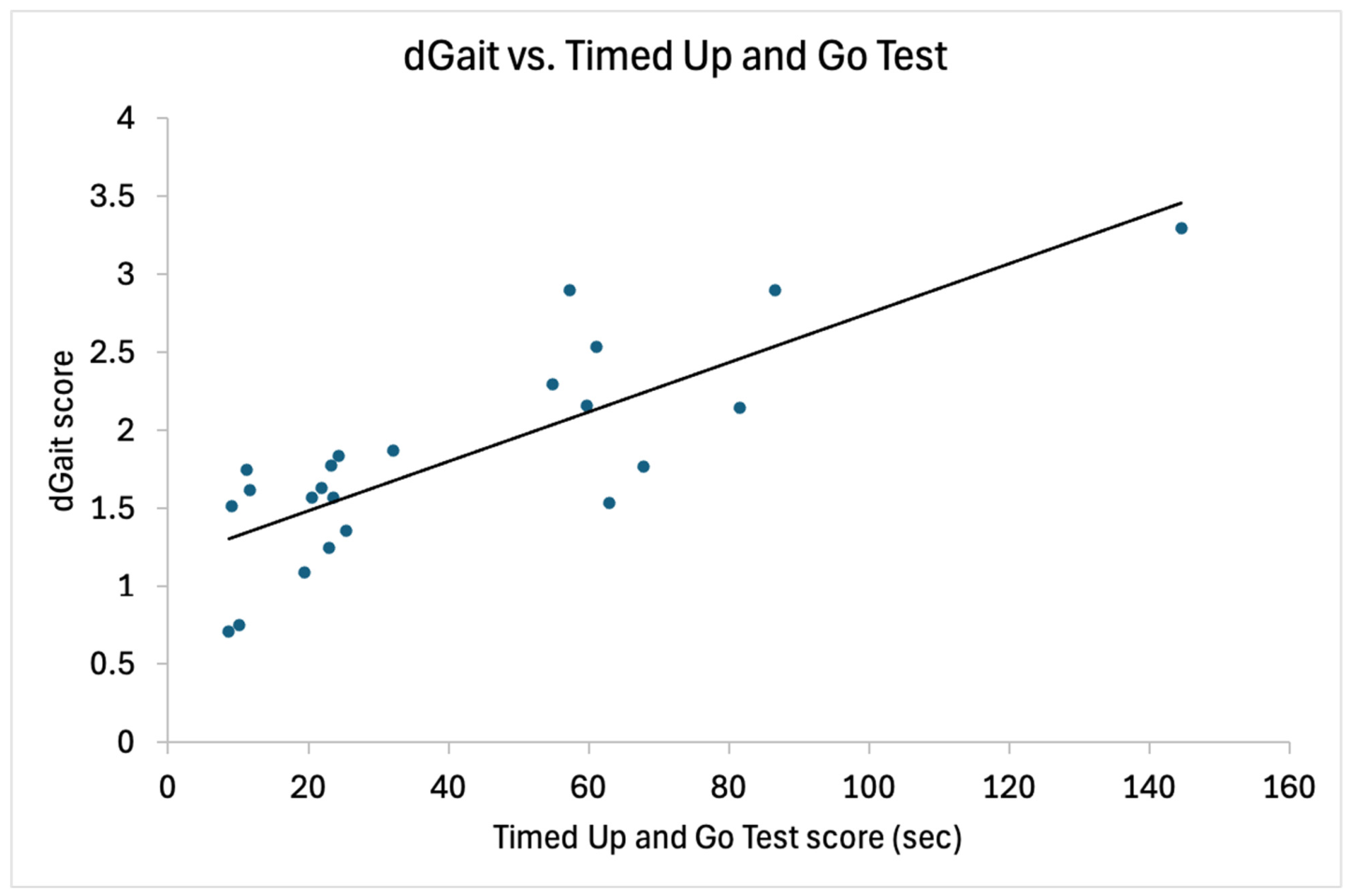
Overall, in these exploratory pooled analyses, stronger descriptive associations were observed between gait-related device-derived metrics and lower-limb clinical measures. dGait tended to be positively associated with MAS-LE (ρ = 0.83, p < 0.001), MAS-ALL (ρ = 0.71, p < 0.001), and TUG completion time (ρ = 0.75, p < 0.001) (Figure 6). Inverse descriptive associations were observed between dGait and MI-LE (ρ = −0.65, p < 0.001) and MI-UE (ρ = −0.53, p = 0.009).
Figure 6.
Scatter plot showcasing the comparison between dGait and Timed Up and Go Test Completion Time.
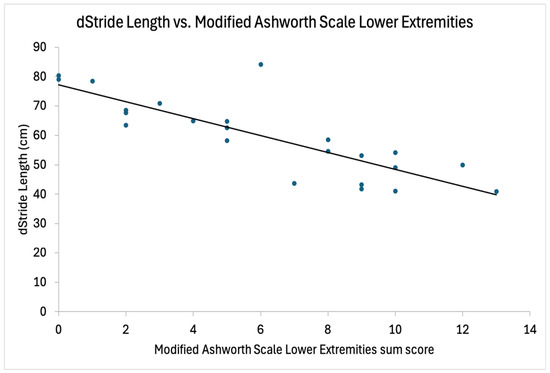
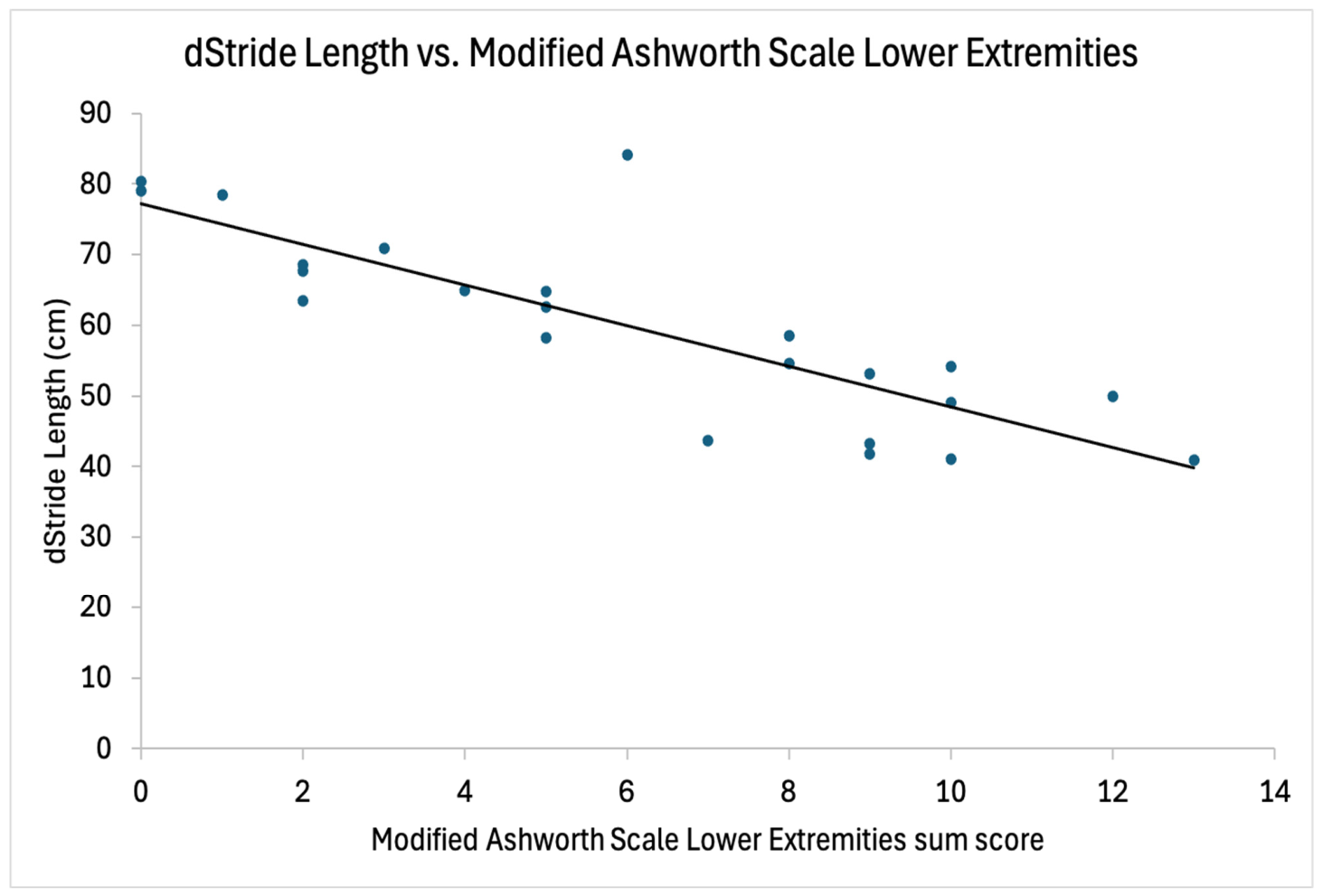
Stride length showed inverse descriptive associations with MAS-LE (ρ = −0.85, p < 0.001) (Figure 7), MAS-ALL (ρ = −0.53, p = 0.009), and TUG completion time (ρ = −0.80, p < 0.001), and positive descriptive associations with MI-LE (ρ = 0.62, p = 0.001), MI-UE (ρ = 0.64, p = 0.001), and MI-ALL (ρ = 0.44, p = 0.036). Gait speed tended to be inversely associated with MAS-LE (ρ = −0.71, p < 0.001) and TUG completion time (ρ = −0.64, p = 0.002), while positive descriptive associations were observed with MI-UE (ρ = 0.59, p = 0.004) and MI-ALL (ρ = 0.41, p = 0.050); this latter finding is close to the conventional significance threshold and should be interpreted with particular caution.
Figure 7.
Scatter plot showcasing the comparison between Stride Length and Lower Extremity Modified Ashworth Scale sum score.
dLoM tended to be positively associated with MAS-LE (ρ = 0.70, p < 0.001) and MAS-ALL (ρ = 0.51, p = 0.010), whereas its associations with MI measures and TUG completion time were weak and did not reach statistical significance. Angular velocity showed a descriptive positive association with TUG completion time (ρ = 0.49, p = 0.015), while its associations with MAS and MI measures were weaker or did not reach statistical significance.
4. Discussion
This prospective exploratory pilot study investigated whether wearable-derived daily-life mobility metrics could complement conventional clinical assessments in patients with focal spasticity undergoing routine BoNT-A treatment. The principal findings were that conventional clinical scales changed in the expected direction following treatment, wearable-derived mobility metrics demonstrated measurable changes in patients’ real-world motor behaviour, and several wearable-derived parameters tended to be associated with established clinical measures of muscle tone and functional mobility in exploratory pooled analyses. Spasticity remains a major disabling consequence of upper motor neuron syndromes, including stroke and multiple sclerosis, often leading to chronic detriment in patients’ quality of life [4]. Although BoNT-A treatment has proven to be one of the most established treatment options for the focal management of spasticity, its results are often difficult to interpret due to the subjectivity and inter-rater variability of the clinical scales used for symptom quantification [9,10,11]. Furthermore, the lack of data reflecting patients’ daily routine, together with the Hawthorne effect, may affect the reliability of follow-up monitoring [12]. Recent systematic reviews have demonstrated the growing potential of wearable inertial measurement unit (IMU)-based technologies to provide objective, continuous, and ecologically valid assessment of mobility in neurological rehabilitation while simultaneously emphasizing the need for standardized methodologies and disease-specific validation before widespread clinical implementation, particularly in people living with spasticity [13,28]. Within this context, the present study explored the integration of wearable telemonitoring with routine clinical assessment, aiming to determine whether objective mobility metrics collected under real-world conditions could provide clinically relevant information that complements, rather than replaces, conventional outcome measures during the BoNT-A treatment cycle.
The results suggested that clinical scale outcomes changed in the expected direction after BoNT-A administration. Muscle tone, as measured by MAS, decreased after injection, particularly in the upper limbs, as expected from the relevant literature [3]. Muscle strength and mobility outcomes, measured by MI and TUG respectively, also showed increases in MI scores and decreased TUG completion time. While not statistically significant, their consistent direction of change is compatible with the expected post-treatment evaluation window, during which BoNT-A effects are typically observed [25]. Although the present study was not powered to detect statistically significant differences across all clinical outcomes, the observed trends are biologically plausible and consistent with the established pharmacological mechanism of BoNT-A, which reduces excessive muscle activity and may facilitate voluntary movement and functional performance [5,7,16,18]. Given the single-arm exploratory design and the absence of a control group, these findings should not be interpreted as confirmatory evidence of treatment efficacy. Instead, they should be considered hypothesis-generating observations that support the potential value of integrating conventional clinical assessment with continuous wearable monitoring in routine clinical practice. Our findings are also in agreement with previous randomized controlled trials and systematic reviews reporting that BoNT-A consistently reduces muscle tone [6,7,25,29]. However, the translation of reduced muscle tone into functional improvement is known to be heterogeneous. This variability has been highlighted in the literature and may explain why improvements in functional measures such as the MI and TUG were observed in the expected direction without reaching statistical significance in the present cohort [7,18,25].
Wearable-derived mobility data provided additional information beyond conventional clinical assessment by objectively characterizing patients’ motor behaviour during daily activities. Device-derived metrics indicated changes in gait-related parameters and lack of movement, with decreases in dGait and dLoM and an increase in dStride following treatment. Although these parameters are not direct measures of spasticity, they may reflect changes in functional mobility resulting from the combined influence of muscle tone, muscle strength, motor control, compensatory movement strategies and physical activity levels. Consequently, wearable-derived metrics should be interpreted as mobility-related digital biomarkers rather than surrogate measures of spasticity itself. This distinction is particularly important because improvements in clinical spasticity do not necessarily translate into proportional improvements in real-world mobility, highlighting the complementary nature of continuous telemonitoring. Our findings agree with previous systematic reviews demonstrating that IMU-based wearable technologies can objectively quantify gait characteristics and mobility patterns while capturing aspects of motor performance that are difficult to evaluate using conventional clinical scales alone [13,28]. Similarly, Zhang et al. showed that wearable inertial and electromyographic sensors can objectively characterize movement abnormalities associated with spasticity, further supporting the potential of wearable technologies as complementary assessment tools [30]. However, existing studies also report substantial methodological heterogeneity regarding sensor placement, recording duration, data-processing pipelines, and outcome definitions, making direct comparison between studies challenging and emphasizing the need for standardized methodologies and disease-specific validation before routine clinical implementation [13,28]. Taken together, these findings support the concept that wearable telemonitoring may enrich conventional assessment by providing objective information on patients’ mobility under real-world conditions without replacing established clinical evaluation.
Although PDMonitor® was originally developed for Parkinson’s disease, the present study exclusively analyzed generic mobility measures derived from inertial sensor recordings rather than Parkinson’s disease-specific symptom classifications. These parameters quantify fundamental characteristics of gait and physical activity that are not inherently disease specific. Nevertheless, the complete processing pipeline has not yet been specifically validated in focal spasticity, and the present findings should therefore be interpreted as exploratory. Future studies should compare wearable-derived mobility measures with established gait laboratory assessments and clinical outcome measures in patients with focal spasticity.
The associations observed between selected wearable-derived mobility metrics and established clinical outcome measures further support the complementary role of wearable telemonitoring in the assessment of focal spasticity. However, these correlations should be interpreted cautiously. Correlation does not imply causation, and the observed associations indicate that wearable-derived mobility parameters are related to clinical measures of muscle tone or functional impairment, but do not directly quantify them. Furthermore, because of the exploratory nature of this pilot study and the relatively large number of correlation analyses performed, these findings should be regarded as hypothesis-generating and require confirmation in larger independent cohorts. Nevertheless, the consistency of the observed associations with established clinical measures, particularly the relationships between gait-related parameters and both MAS-LE and TUG, suggests that wearable-derived metrics may capture clinically meaningful aspects of mobility that extend beyond brief outpatient assessments.
To our knowledge, the present study differs from previous investigations by integrating continuous real-world wearable telemonitoring with conventional clinical assessment throughout a routine BoNT-A treatment cycle. Previous studies have primarily focused either on validating wearable technologies for movement analysis or on evaluating the clinical effects of BoNT-A using standardized clinical scales [13,28,30]. In contrast, our approach combines these complementary methodologies within a single prospective observational framework, allowing objective assessment of patients’ mobility during their daily lives while simultaneously relating wearable-derived parameters to established clinical measures. Rather than proposing wearable telemonitoring as a replacement for conventional assessment, our findings support its potential role as a complementary tool capable of providing additional objective information regarding patients’ functional mobility under real-world conditions.
From a clinical perspective, the findings of the present study suggest that wearable telemonitoring may provide additional objective information that complements conventional clinical assessment during the management of focal spasticity. Because routine outpatient evaluations represent only isolated time points, they may fail to capture day-to-day variability in patients’ mobility and functional performance. Continuous monitoring under real-world conditions may therefore offer clinicians a more comprehensive understanding of patients’ motor behavior throughout the BoNT-A treatment cycle [13,14]. Such information could potentially assist clinicians in evaluating treatment response, monitoring functional recovery between scheduled visits, identifying patients who may require earlier reassessment, and supporting individualized rehabilitation strategies. Importantly, wearable-derived metrics should not be regarded as surrogate measures of spasticity itself but rather as objective indicators of functional mobility that may complement established clinical scales and contribute to a more holistic assessment of patient status. Although the present findings are encouraging, larger prospective studies are required before wearable-derived mobility metrics can be incorporated into routine clinical decision-making. Future research should establish clinically meaningful thresholds for these parameters and determine whether their integration into routine follow-up improves treatment planning, rehabilitation outcomes, or the timing of subsequent BoNT-A injections.
The findings of the present exploratory study also identify several directions for future research. Larger multicenter prospective studies involving more homogeneous patient populations are required to validate the observed associations between wearable-derived mobility metrics and conventional clinical assessments. Future investigations should also evaluate the longitudinal performance of these wearable-derived parameters across multiple BoNT-A treatment cycles and determine whether they can reliably detect clinically meaningful changes over time. In addition, further work is needed to establish disease-specific validation of wearable-derived mobility metrics in patients with focal spasticity, as most currently available wearable systems have been primarily developed and validated in other neurological conditions [13,28]. Standardization of monitoring protocols, sensor placement, recording duration, data-processing methodologies, and clinically meaningful outcome thresholds will be essential to improve comparability between studies and facilitate future implementation in routine clinical practice. Finally, future studies should investigate whether integrating continuous wearable telemonitoring with conventional clinical assessment can improve individualized treatment planning, optimize the timing of BoNT-A reinjection, and enhance rehabilitation outcomes through more objective monitoring of patients’ mobility in their everyday environment.
5. Limitations
Several limitations should be considered when interpreting the present findings. This was a single-center exploratory study with a small sample size and a single-arm observational design without a control group. Therefore, the study was not intended to establish treatment effects or to provide confirmatory evidence for the clinical utility of wearable telemonitoring. The cohort also reflected the heterogeneity of routine spasticity practice, including different etiologies, anatomical distributions of spasticity, and BoNT-A formulations. Although this pragmatic design supports the real-world relevance of the observations, it limits subgroup interpretation and generalizability, particularly because most participants had post-stroke spasticity and only a small number had multiple sclerosis. In addition, rehabilitation exposure and other contextual factors that may influence daily-life mobility were not systematically recorded, no long-term follow-up was included, and consecutive recruitment from a single outpatient clinic may have introduced selection bias.
The statistical and device-related findings should also be interpreted cautiously. Multiple exploratory comparisons and correlation analyses were performed without adjustment for multiple comparisons. The pooled correlation approach was used as an exploratory assessment of the relationship between clinical status and wearable-derived mobility metrics. Because these analyses included baseline and follow-up observations from the same participants, they did not fully account for within-participant dependence; therefore, the corresponding p-values should be interpreted descriptively. The wearable system was originally developed for Parkinson’s disease monitoring; although Parkinson’s disease-related interpretive outputs were not used, the selected mobility metrics have not yet been formally validated as spasticity-specific endpoints. Moreover, while all participants completed the scheduled monitoring periods and met the minimum daily wear-time requirement, detailed hour-by-hour wear-time patterns and daily activity context were not analyzed separately. This is relevant for metrics that may reflect behavior, fatigue, motivation, or environmental context. Finally, the MAS and MI variables were transformed into study-specific analytical measures, which supported within-study comparisons but limit direct comparability with standard scale reporting. These findings should therefore be interpreted as preliminary observations that require confirmation in larger, controlled cohorts with standardized wearable-monitoring protocols.
6. Conclusions
In conclusion, this exploratory pilot study suggests that combining conventional clinical scales with wearable-derived mobility data may provide a more comprehensive view of functional status in patients with focal spasticity undergoing routine BoNT-A treatment. Clinical scales generally changed in the expected post-treatment direction, with reduced MAS scores and descriptive or directional improvements in MI scores and TUG performance, while wearable-derived metrics captured descriptive changes in daily mobility, notably a median reduction of 5 percentage points in lack of movement. In addition, in exploratory pooled analyses, selected gait-related metrics tended to be associated with lower-extremity MAS and TUG performance, including dGait with MAS-LE (ρ = 0.83) and TUG completion time (ρ = 0.75), and dStride with MAS-LE (ρ = −0.85) and TUG completion time (ρ = −0.80). These are exploratory, descriptive and hypothesis-generating findings, rather than evidence of treatment efficacy, and they support the further evaluation of wearable telemonitoring and digital kinematic data as part of multidimensional outcome frameworks in longitudinal spasticity management and neurorehabilitation. These device-derived metrics should be interpreted as mobility-related digital biomarkers rather than direct surrogate measures of spasticity.
Author Contributions
Conceptualization: T.S., S.V., F.K., K.I.T., F.S.K., S.K. and D.P. Methodology: T.S., S.V., F.K., K.I.T., F.S.K. and Y.V.S. Investigation: T.S., S.V., F.K., A.P.K., F.S.K., L.L. and V.K. Data curation: T.S., S.V., F.K., K.I.T., F.S.K., G.S.M. and G.R. Formal analysis: T.S., S.V., F.K., K.I.T., F.S.K. and A.P.K. Writing—Original draft preparation: T.S., S.V. and F.K. Writing—Review and editing: T.S., S.V., F.K., K.I.T., F.S.K., Y.V.S., L.L., G.S.M., V.K., S.K. and D.P. Supervision: K.I.T. and F.S.K. All authors have read and agreed to the published version of the manuscript.
Funding
This research received no external funding.
Institutional Review Board Statement
This study was conducted in accordance with the Declaration of Helsinki and the ICH-GCP guidelines. Ethical approval was obtained from the Institutional Review Board of the University Hospital of Ioannina (Approval ID: 28/22 November 2023).
Informed Consent Statement
Written informed consent was obtained from all participants prior to inclusion in the study. No identifying personal data (names, initials, hospital numbers, or photographs) are included in the submitted manuscript.
Data Availability Statement
The datasets generated during and/or analysed during the current study are available from the corresponding author on reasonable request.
Acknowledgments
During the preparation of this work, the authors used ChatGPT (GPT-5.6 Thinking; OpenAI, San Francisco, CA, USA) in order to perform limited language polishing and harmonize writing style across sections authored by different contributors. After using this tool, the authors reviewed, edited, and verified all content to ensure scientific accuracy and integrity, and take full responsibility for the content of the published article.
Conflicts of Interest
Author G.R. was employed by the company PD Neurotechnology Ltd. F.S.K. and G.R. have received salaries from the manufacturer of the telemonitoring system. K.I.T has served as a consultant for the manufacturer of the telemonitoring system. S.K. is a co-founder of the manufacturer of the telemonitoring system. The remaining authors declare that the research was conducted in the absence of any commercial or financial relationships that could be construed as a potential conflict of interest. Clinical assessments, clinical data extraction, and statistical analyses were performed by investigators without financial relationships with the manufacturer.
References
- Rivelis, Y.; Zafar, N.; Morice, K. Spasticity. In StatPearls [Internet]; StatPearls Publishing: Treasure Island, FL, USA, 2025. Available online: https://www.ncbi.nlm.nih.gov/books/NBK507869/ (accessed on 10 April 2026).
- Haselkorn, J.K.; Loomis, S. Multiple sclerosis and spasticity. Phys. Med. Rehabil. Clin. N. Am. 2005, 16, 467–481. [Google Scholar] [CrossRef] [Scilit] [PubMed]
- Chen, Y.T.; Zhang, C.; Liu, Y.; Magat, E.; Verduzco-Gutierrez, M.; Francisco, G.E.; Zhou, P.; Zhang, Y.; Li, S. The effects of botulinum toxin injections on spasticity and motor performance in chronic stroke with spastic hemiplegia. Toxins 2020, 12, 492. [Google Scholar] [CrossRef] [Scilit] [PubMed]
- Milinis, K.; Young, C.A. Systematic review of the influence of spasticity on quality of life in adults with chronic neurological conditions. Disabil. Rehabil. 2016, 38, 1431–1441. [Google Scholar] [CrossRef] [Scilit] [PubMed]
- Rempel, L.; Malik, R.N.; Shackleton, C.; Calderón-Juárez, M.; Sachdeva, R.; Krassioukov, A.V. From toxin to treatment: A narrative review on the use of botulinum toxin for autonomic dysfunction. Toxins 2024, 16, 96. [Google Scholar] [CrossRef] [Scilit] [PubMed]
- Datta Gupta, A.; Visvanathan, R.; Cameron, I. Efficacy of botulinum toxin in modifying spasticity to improve walking and quality of life in post-stroke lower limb spasticity: A randomized double-blind placebo-controlled study. BMC Neurol. 2019, 19, 96. [Google Scholar] [CrossRef] [Scilit] [PubMed]
- Otero-Luis, I.; Martinez-Rodrigo, A.; Cavero-Redondo, I.; Moreno-Herráiz, N.; Martínez-García, I.; Saz-Lara, A. Effect of botulinum toxin injections in the treatment of spasticity of different etiologies: An umbrella review. Pharmaceuticals 2024, 17, 310. [Google Scholar] [CrossRef] [Scilit] [PubMed]
- Esquenazi, A.; Jost, W.H.; Turkel, C.C.; Wein, T.; Dimitrova, R.M. Treatment of adult spasticity with Botox (onabotulinumtoxinA): Development, insights, and impact. Medicine 2023, 102, e32376. [Google Scholar] [CrossRef] [Scilit] [PubMed]
- Harb, A.; Margetis, K.; Kishner, S. Modified Ashworth Scale. In StatPearls [Internet]; StatPearls Publishing: Treasure Island, FL, USA, 2025. Available online: https://www.ncbi.nlm.nih.gov/books/NBK554572/ (accessed on 10 April 2026).
- Fayazi, M.; Dehkordi, S.N.; Dadgoo, M.; Salehi, M. Test–retest reliability of Motricity Index strength assessments for lower extremity in post-stroke hemiparesis. Med. J. Islam. Repub. Iran 2012, 26, 27–30. [Google Scholar] [PubMed]
- Barry, E.; Galvin, R.; Keogh, C.; Horgan, F.; Fahey, T. Is the Timed Up and Go test a useful predictor of risk of falls in community-dwelling older adults: A systematic review and meta-analysis. BMC Geriatr. 2014, 14, 14. [Google Scholar] [CrossRef] [Scilit] [PubMed]
- Sedgwick, P.; Greenwood, N. Understanding the Hawthorne effect. BMJ 2015, 351, h4672. [Google Scholar] [CrossRef] [Scilit] [PubMed]
- Weizman, Y.; Tirosh, O.; Fuss, F.K.; Tan, A.M.; Rutz, E. Recent state of wearable IMU sensors use in people living with spasticity: A systematic review. Sensors 2022, 22, 1791. [Google Scholar] [CrossRef] [Scilit] [PubMed]
- Kim, G.J.; Parnandi, A.; Eva, S.; Schambra, H. The use of wearable sensors to assess and treat the upper extremity after stroke: A scoping review. Disabil. Rehabil. 2022, 44, 6119–6138. [Google Scholar] [CrossRef] [Scilit] [PubMed]
- Porciuncula, F.; Roto, A.V.; Kumar, D.; Davis, I.; Roy, S.; Walsh, C.J.; Awad, L.N. Wearable movement sensors for rehabilitation: A focused review of technological and clinical advances. PM&R 2018, 10, S220–S232. [Google Scholar] [CrossRef] [Scilit] [PubMed]
- Padda, I.S.; Tadi, P. Botulinum toxin. In StatPearls [Internet]; StatPearls Publishing: Treasure Island, FL, USA, 2025. Available online: https://www.ncbi.nlm.nih.gov/books/NBK557387/ (accessed on 10 April 2026).
- Antonini, A.; Reichmann, H.; Gentile, G.; Garon, M.; Tedesco, C.; Frank, A.; Falkenburger, B.; Konitsiotis, S.; Tsamis, K.; Rigas, G.; et al. Toward objective monitoring of Parkinson’s disease motor symptoms using a wearable device: Wearability and performance evaluation of PDMonitor®. Front. Neurol. 2023, 14, 1080752. [Google Scholar] [CrossRef] [Scilit] [PubMed]
- Suputtitada, A.; Chatromyen, S.; Chen, C.P.C.; Simpson, D.M. Best practice guidelines for the management of patients with post-stroke spasticity: A modified scoping review. Toxins 2024, 16, 98. [Google Scholar] [CrossRef] [Scilit] [PubMed]
- Walter, U.; Dressler, D. Ultrasound-guided botulinum toxin injections in neurology: Technique, indications and future perspectives. Expert Rev. Neurother. 2014, 14, 923–936. [Google Scholar] [CrossRef] [Scilit] [PubMed]
- Bohannon, R.W.; Smith, M.B. Interrater reliability of a modified Ashworth scale of muscle spasticity. Phys. Ther. 1987, 67, 206–207. [Google Scholar] [CrossRef] [Scilit] [PubMed]
- Meseguer-Henarejos, A.B.; Sánchez-Meca, J.; López-Pina, J.A.; Carles-Hernández, R. Inter- and intra-rater reliability of the Modified Ashworth Scale: A systematic review and meta-analysis. Eur. J. Phys. Rehabil. Med. 2018, 54, 576–590. [Google Scholar] [CrossRef] [Scilit] [PubMed]
- Collin, C.; Wade, D. Assessing motor impairment after stroke: A pilot reliability study. J. Neurol. Neurosurg. Psychiatry 1990, 53, 576–579. [Google Scholar] [CrossRef] [Scilit] [PubMed]
- Podsiadlo, D.; Richardson, S. The Timed “Up & Go”: A test of basic functional mobility for frail elderly persons. J. Am. Geriatr. Soc. 1991, 39, 142–148. [Google Scholar] [CrossRef] [Scilit] [PubMed]
- Ng, S.S.; Hui-Chan, C.W. The Timed Up & Go test: Its reliability and association with lower-limb impairments and locomotor capacities in people with chronic stroke. Arch. Phys. Med. Rehabil. 2005, 86, 1641–1647. [Google Scholar] [CrossRef] [Scilit] [PubMed]
- Ojardias, E.; Ollier, E.; Lafaie, L.; Celarier, T.; Giraux, P.; Bertoletti, L. Time course response after single injection of botulinum toxin to treat spasticity after stroke: Systematic review with pharmacodynamic model-based meta-analysis. Ann. Phys. Rehabil. Med. 2022, 65, 101579. [Google Scholar] [CrossRef] [Scilit] [PubMed]
- Ghasemi, A.; Zahediasl, S. Normality tests for statistical analysis: A guide for non-statisticians. Int. J. Endocrinol. Metab. 2012, 10, 486–489. [Google Scholar] [CrossRef] [Scilit] [PubMed]
- Schober, P.; Boer, C.; Schwarte, L.A. Correlation coefficients: Appropriate use and interpretation. Anesth. Analg. 2018, 126, 1763–1768. [Google Scholar] [CrossRef] [Scilit] [PubMed]
- Guo, X.; Wallace, R.; Tan, Y. Technology-assisted assessment of spasticity: A systematic review. J. Neuroeng. Rehabil. 2022, 19, 138. [Google Scholar] [CrossRef] [Scilit] [PubMed]
- Yu, H.X.; Liu, S.H.; Wang, Z.X.; Liu, C.B.; Dai, P.; Zang, D.W. Efficacy on gait and posture control after botulinum toxin A injection for lower-limb spasticity treatment after stroke: A randomized controlled trial. Front. Neurosci. 2023, 16, 1107688. [Google Scholar] [CrossRef] [Scilit] [PubMed]
- Zhang, X.; Tang, X.; Zhu, X.; Gao, X.; Chen, X.; Chen, X. A regression-based framework for quantitative assessment of muscle spasticity using combined EMG and inertial data from wearable sensors. Front. Neurosci. 2019, 13, 398. [Google Scholar] [CrossRef] [Scilit] [PubMed]

Disclaimer/Publisher’s Note: The statements, opinions and data contained in all publications are solely those of the individual author(s) and contributor(s) and not of MDPI and/or the editor(s). MDPI and/or the editor(s) disclaim responsibility for any injury to people or property resulting from any ideas, methods, instructions or products referred to in the content. |
© 2026 by the authors. Licensee MDPI, Basel, Switzerland. This article is an open access article distributed under the terms and conditions of the Creative Commons Attribution (CC BY) license.