


Abstract
The aim of this study is to evaluate the effect of aerogel on Thermal Protective Performance (TPP) of fire fighter clothing. Specimens were treated by 5 wt% aerogel dispersed in acetone to obtain various add-on of aerogel and their TPP were evaluated by flame heat transmission test according to ISO 9151. The thermal degradation behavior, flame retardancy and water vapor permeability of aerogel treated specimens were also examined. Finally, the comparison of the burn injuries predicted by instrumented manikin testing of aerogel treated fire fighter clothing and existing fire fighter clothing were performed. The result showed that aerogel treated fire fighter clothing exhibited higher TPP than the existing firefighter clothing. This suggests that there application of aerogel in fire fighter clothing may be possible.
1. Introduction
Fire fighters’ lives are always under threat due to the hazardous working environments, therefore they need good protection against such environments. Dangerous thermal exposures fire fighters usually confront in hazardous environments include hot environment, high thermal radiation, contact with hot objects and different kinds of flame exposure among which flashover is the most extreme [1]. As an important part of turn out gear of fire fighters, fire fighter clothing must ensure the safety of the fire fighter under such hazardous environments. The main function of fire fighter clothing is to reduce the rate of heat build up inhuman skin so as to provide time for the wearer to react and avoid or minimize skin burn injury [2]. Therefore, to ensure the safety of the fire fighters, the Thermal Protective Performance (TPP) of fire fighter clothing must be regarded as an important factor in the design and development of fire fighter clothing.
Currently, most researches related to TPP of fire fighters’ clothing have been studied extensively using some testing equipment such as TPP tester, instrumented manikin system and modelling of fire fighter clothing which simulate the heat and moisture transfer in clothing subjected to intensive heat. These researches concluded that TPP of fire fighter clothing was mainly affected by several dominant factors including thermal conductivity, volumetric heat capacity of fabrics, and air gap between clothing and human skin. And the moisture presented in garment can significantly affect thermal physical properties and heat transfer in clothing. Air gap is also an important factor for evaluating TPP of clothing, with larger air gap resulting in higher TPP within a certain range. Assuming that natural convection may occur when the air gap becomes wide enough, for example more than 6 mm, this can lead to increased heat transfer and decreased insulating property. However the air gap is provided by the garment as a result of its design but is not dependent on the characteristic of fabrics themselves. Most of these studies related to TPP of firefighter clothing have mainly focused on assessing or exploring the protection mechanism but did not involve the improvement of TPP, therefore it is our intention to develop a new type of fabric combining aerogel to improve TPP of fire fighter clothing [3,4,5,6,7,8].
It is known that aerogel has the lowest thermal conductivity among all known solids in terms of unit weight and thickness. In general, aerogel is obtained from wet-gel, which is synthesized by sol-gel process, dried under supercritical or ambient pressure condition to keep the nano-pore structures [9,10,11]. Due to this property, aerogel is widely used in construction, aerospace and defense, and can also be applied to insulating clothing. However, regardless of the intensive applications of aerogel, application of aerogel in fire fighter clothing has never been explored until recently.
Hence, we came up with this idea that incorporating aerogel into fire fighter clothing to improve the TPP of fire fighter clothing. Furthermore, a series of experiments were conducted to examine how aerogel impacts thermal degradation behaviour, flame retardancy and water vapor permeability of the specimens. Finally we prepared a prototype fire fighter protective clothing using aerogel composite thermal barrier, and compared the TPP of aerogel treated fire fighter clothing and existing fire fighter clothing using the instrumented manikin. In conclusion, our data suggest that application of aerogel in firefighter clothing may be possible.
2. Experimental
2.1. Materials
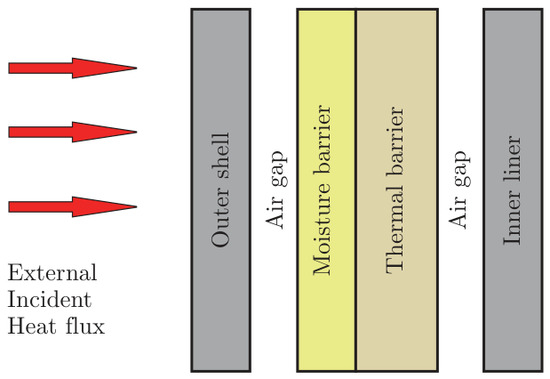
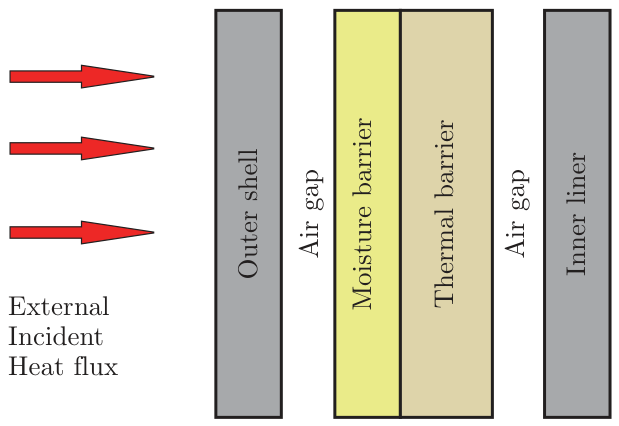
Usually, firefighter clothing is comprised of 3 layers including outer shell, thermal barrier and inner liner as illustrated in Figure 1.
Figure 1.
Configuration of firefighter clothing assemblies.
Outer shell and inner liner used in existing fire fighter clothing made of 100% meta-aramid woven fabrics were employed. And needle punched nonwovens made of 100% meta-aramid staple fibers were prepared to use as thermal barrier. The details of the fabrics are listed in Table 1. Aerogel with the trade name of D50 nanogel with particle size of 7-11 µm, specific surface area of 600-800 m2/g and density of 30-45 kg/m3 was purchased from Cabot Co. (USA).
Table 1.
Characteristics of needle punched nonwovens.
2.2. Treatment and Lamination
Since nonwovens have higher porosity than woven fabrics, we decided to add aerogel into the thermal barrier which consists of meta-aramid nonwoven. The nonwoven was treated with 5 wt% aerogel dispersed in acetone and padded through squeeze rollers to control aerogel add-on. The value of 5 wt% is approximately the maximum concentration which aerogel can be dispersed in acetone due to the light weight of aerogel. And the specimens were naturally dried for 12 hours at room temperature, followed by another 12 hours at 60 °C in vacuum drying oven. The calculation of aerogel add-on was given as follows:
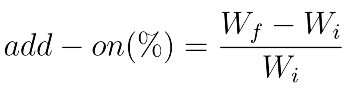 where Wf denotes the weight of final aerogel treated specimens, Wi denotes the weight of initial nonwoven.
Finally, the aerogel treated specimens were laminated on both sides by 25 µm thick of polytetrafluoroethene (PTFE) membrane to prevent dusting of aerogel powder.
2.3. Analysis
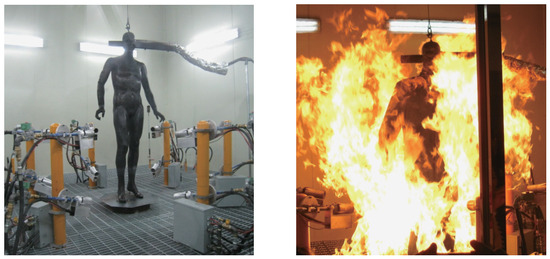
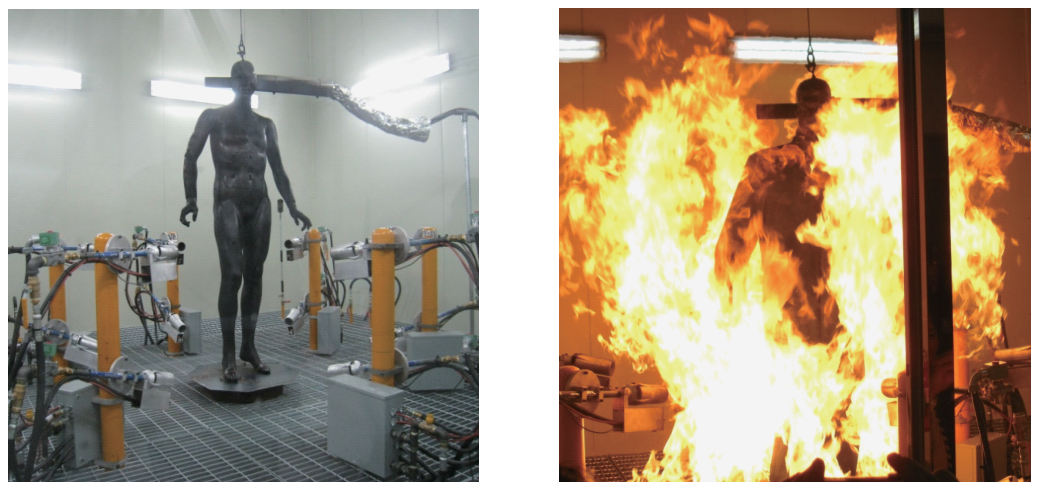
The configuration of test specimens is also the same as fire fighter clothing assembly shown in Figure 1, and aerogel treated nonwovens were chosen for the thermal barrier layer. The differences of TPPof aerogel treated specimens were evaluated by flame heat transmission test [12]. Subsequently, the effect of aerogel on the flame retardancy of aerogel treated specimens and water vapor permeability of laminated specimens were examined [13]. Finally, we prepared prototype firefighter clothing using aerogel treated specimen selected considering weight and flexibility.And an instrumented manikin systemwas used to assess the thermal protective performance [14]. The system used a size 40 regular manikin made with polyester resin, fiberglass and flame resistant paint. The manikin is suspended from the centre of the ceiling of a flame resistant burn chamber and surrounded by twelve industrial burners capable of producing a large volume, simulated flash fire that can fully engulf the manikin in flames. The manikin has 110 individual skin-simulant thermal sensors distributed over the manikin surface. Images of instrumented manikin system at Dankook University are showed in Figure 2.
Figure 2.
Instrumented manikin system; facilities at Dankook University, Korea.
3. Results and Discussion
3.1. Effect of Aerogel on TPP of Fabrics
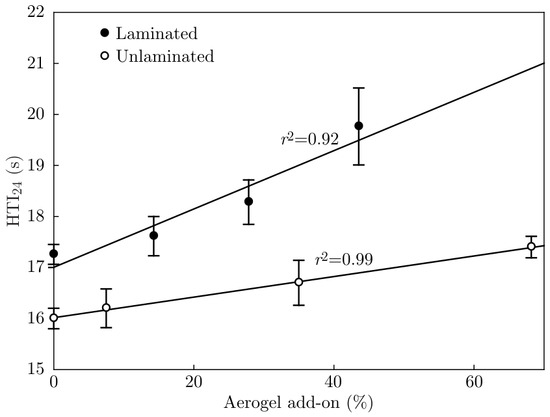
To evaluate the effect of aerogel on TPP of specimens, the nonwovens containing different concentrations of aerogel were prepared and the Heat Transfer Index (HTI) were determined by flame heat transmission test at a heat flux density of 80 kW/m2 according to ISO 9151 standard. HTI24 is defined in ISO 9151 standard as the time in seconds to achieve a sensor temperature rise of 24 °C from a starting temperature of around 25 °C. As shown in Figure 3, the HTI24 values of specimens increased in proportion to the amount of aerogel laminated in both sides of the specimens, and also in the unlaminated specimens. By comparing the laminated and the unlaminated data respectively, it was demonstrated that aerogel definitely affects the TPP of specimens. And we also observed that all of the HTI24 values of the laminated specimens were higher than unlaminated specimens, indicating PTFE membrane could also improve TPP of specimens. It may be that laminated specimens could prevent heat transfer by convection more than unlaminated specimens because the unlaminated specimens were deformed on flame heat transmission testing but the laminated ones were not. A linear correlation can be observed between the amount of aerogel and the HTI24 values and the slope of laminiated specimens is bigger than unlaminated ones indicating that the effect of aerogel on the TPP of laminated specimens is higher than those of unlaminated ones. It is because primary heat transfer in laminated specimens is heat conduction and aerogel contributes to prevent heat conduction and the combination of PTFE membrane can improve the effect of aerogel on the TPP by reducing convective heat transmission.
Figure 3.
HTI24 values of laminated (both sides) and unlaminated specimens containing various amounts of aerogel under 80 kW/m2 heat flux density; the tested specimens are comprised of three layers shown in Figure 1, with the thermal barrier replaced by different type of specimens.
3.2. Effect of Aerogel on the Thermal Degradation Behavior
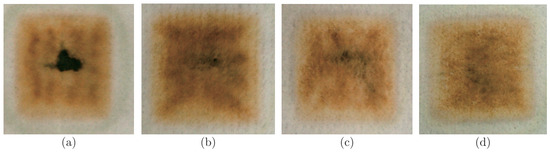
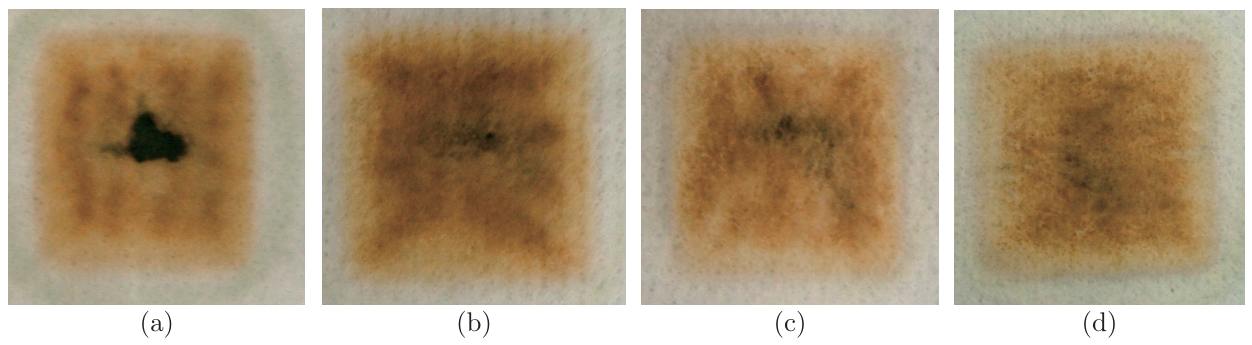
The thermal degradation behavior was also evaluated by flame heat transmission test according to the same as ISO 9151 standard. In this test we investigated the thermal degradation behavior rather than measured the HTI24 values of specimens, in other words we observed the damage level of specimen at the same condition of flame exposure. As shown in Figure 4a–d, the thermal degradation behavior of thermal barriers was examined after the flame heat transfer testing at 80 kW/m2 heat flux density for 20 seconds. Figure 4 displays that the thermal stability of the nonwovens increased as the amount of aerogel went up, indicating that aerogel treated sample has the ability of reducing heat damage. It is explained that aerogel distributed on the surface of fibers could delay the heat transfer into the inside of fibers to decrease the rate of decomposition due to the low conductivity of aerogel. This result can also be applied to other fibers, especially wool fiber which has a good flame retardency and low cost but the thermal stability is relatively lower than other non-flammable fibers [16].
Figure 4.
Pictures of the thermal barrier of unlaminated specimens after 20 s flame exposure; the tested specimens were comprised of 3 layers; (a) Untreated; (b) 7.5% aerogel add-on; (c) 35.0% aerogel add-on; (d) 68.2% aerogel add-on.
3.3. Effect of Aerogel on the Flame Retardancy
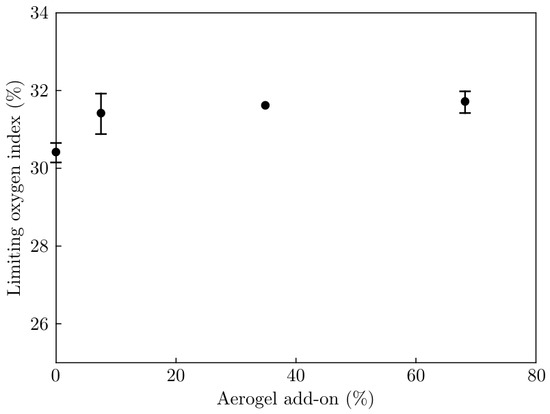
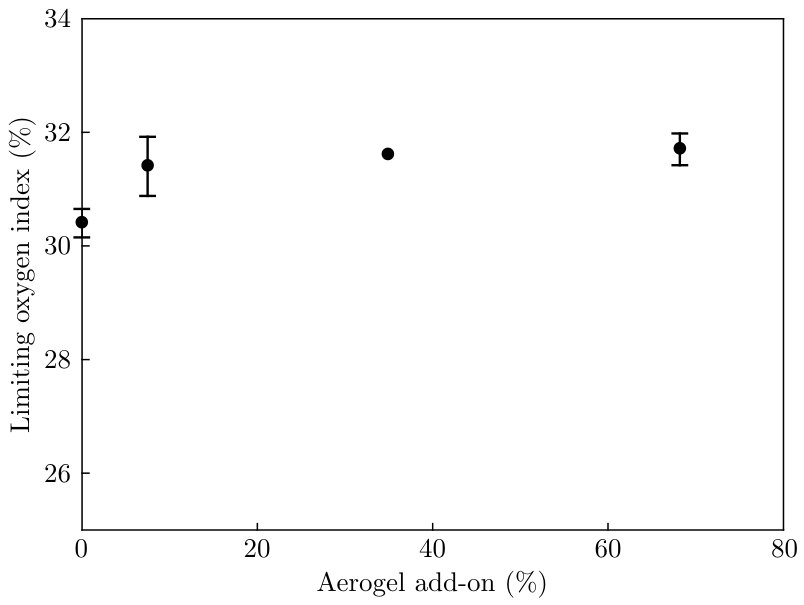
In order to evaluate the effect of aerogel on the flame retardancy of specimens, the Limiting Oxygen Indexes (LOI) of the aerogel treated nonwovens were measured with the LOI tester. The LOI is the minimum concentration of oxygen to support combustion of a polymer, expressed as a percentage. As can be seen from Figure 5, all of the specimens treated with aerogel had higher LOI value than the untreated one. However, when the concentration of aerogel is over 7.5 wt%, there is no further change in LOI values suggesting the point of aerogel add-on of around 7.5% shows maximal effect on the flame retardancy in this study. To determine the more accurate value of the maximal effect on the flame retardancy, further studies will be needed within less than 7.5%. These data provide evidence that the inorganic aerogel particles attached on the surface of the samples could help to increase the flame retardant property within a certain range, the effect of aerogel on the flame retardancy is not significant though.
Figure 5.
LOI values of unlaminated specimens containing various amounts of aerogel.
3.4. Effect of Aerogel on the Water Vapor Transmission
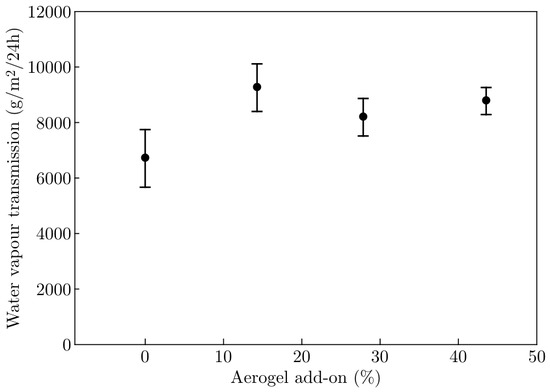
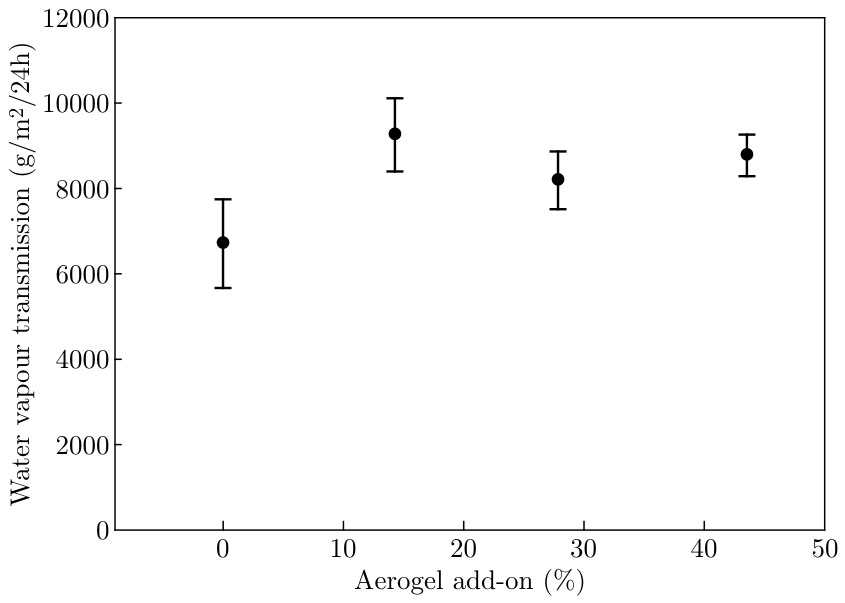
The water vapor permeability of the thermal barrier can directly affect the comfort level of the users. Thermal barrier laminated with PTFE membrane on both sides could improve the TPP and also eliminate the aerogel dust, but it reduces the Water Vapour Transmission (WVT) of the thermal barrier. The WVT of all specimens were measured according to potassium acetate method specified in KS K 0594 [13]. As shown in Figure 6, the WVT of the nonwoven laminated on both sides was about 7000 g/m2/24 h, but it was lower than aerogel treated specimen laminated on both sides whose WVT was over 8000 g/m2/24 h. The reason that aerogel treated samples showed higher WVT values may be explained by aerogel’s hydrophobic property so that it allow water to be better transferred. However all these values are significantly less than the water vapor permeability of commercial thermal barrier laminated on one side, which is 21, 000 g/m2/24 h, but a very high value of WVT can also lead to steam burn under high intensity of the thermal radiation [1]. All of the aerogel treated specimens pass the Korea Fire Industry standard, where the required WVT of the thermal barrier laminated with PTFE is at least 8000 g/m2/24 h.
Figure 6.
Water vapor transmission of nonwoven containing different amounts of aerogel; thermal barriers were laminated on both sides with PTFE membrane.
3.5. Effect of Aerogel on TPP of the Whole Firefighter Clothing
Quantitative evaluation of fire fighter clothing subjected to fire exposure represents an important step in the design of clothing for hazardous environments [15]. In this study, an instrumented manikin system for testing the whole garments under flash fire was employed. Compared with the flame heat transmission test (ISO 9151), instrumented manikin tests can provide more realistic information since they can simulate the real fire exposure situation. They can evaluative the effect of not only thermal properties of fibre and fabrics, but also design and fit of garment on the TPP of fire fighter clothing [17].
To evaluate the influence of aerogel on TPP of the whole fire fighter clothing, we made aerogel treated firefighter clothing using a thermal barrier containing 27 wt% aerogel and laminated on both sides. The reasons we selected this level of aerogel add-on are that if the add-on is over the point of 30 wt%, the aerogel will be solidified on the surface of nonwoven after being dried such that the specimen will become a bit stiff and it will be difficult to laminate PTFE membrane on the aerogel treated nonwoven because of the solidified aerogel. As aerogel has a very low density, the volume of aerogel corresponding to the value of 30 wt% of nonwoven fabrics is considerable large that can fill the entire pore of nonwoven. Therefore we found that the add-on of around 27 wt% was adequate for manufacturing a fire fighter clothing.
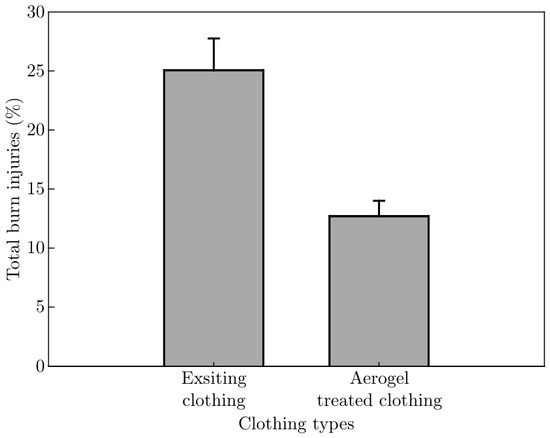
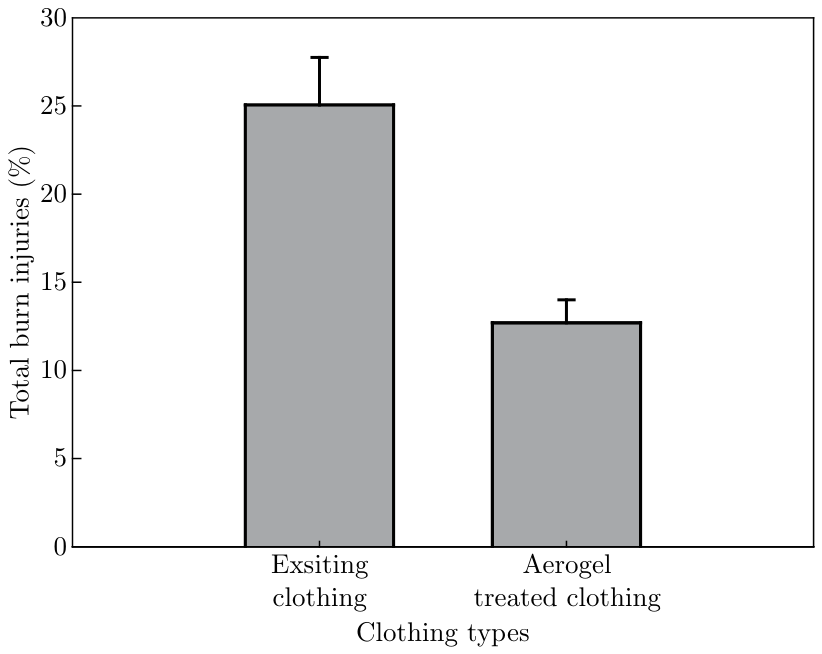
Figure 7 is the result of burn prediction by using the instrumented manikin system. The total burn injury in the case of the aerogel treated firefighter clothing was 12.7%, and this value is lower than that of existing clothing which was 25.1%. Therefore the developed aerogel treated firefighter clothing exhibits higher TPP than the existing clothing. This result was not attributed to individual effect of aerogel or PTFE membrane, but appears to be a combined effect of PTFE membrane lamination on both sides and the presence of aerogel. The existing firefighter clothing was also laminated on one side of the thermal barrier by PTFE membrane as shown in Figure 1; therefore it prevented convective heat as much as the thermal barrier lamented both sides. The effect of the second inner PTFE membrane appears to be limited because of the thin thickness of 25 µm in this study.
Figure 7.
Percentage of total burn injury predicted by the instrumented manikin system under 84 kW/m2 heat flux density, 8 seconds exposure.
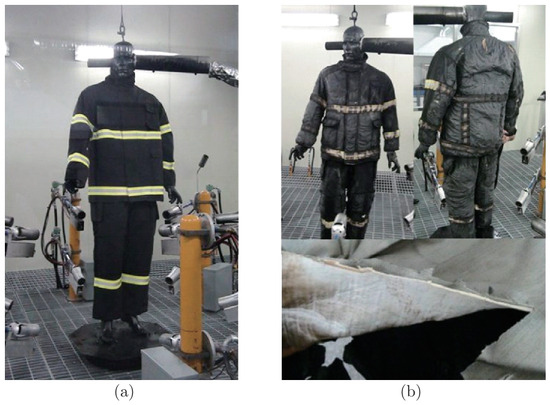
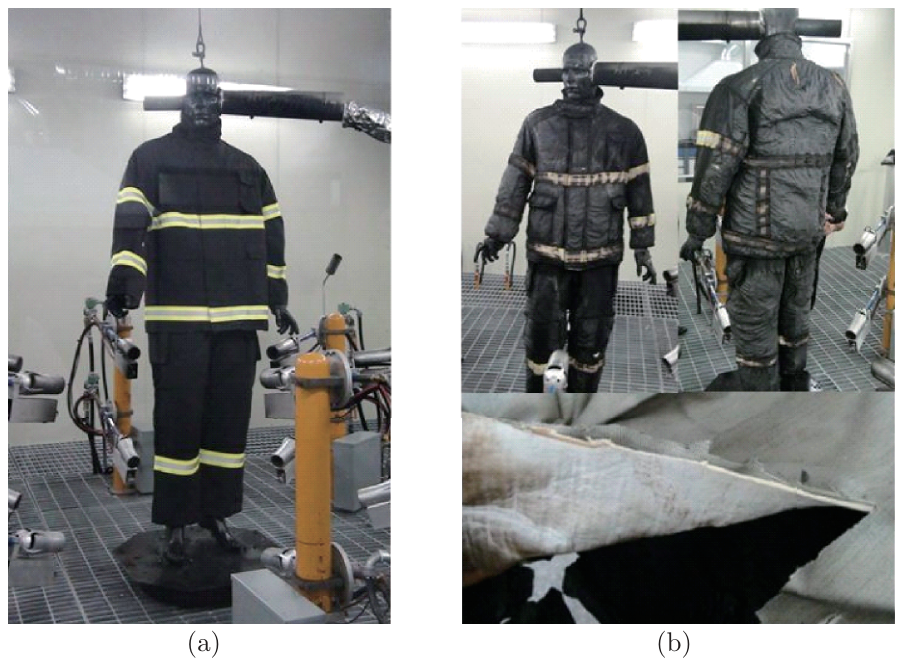
Figure 8 shows the aerogel treated clothing before and after manikin testing. We observed that the outer layer of garment made from meta-aramid woven fabric was destroyed extensively and the entre garment become stiff, but the thermal barrier was not damaged. It is because of the limitation of meta-aramid fabrics which shrink at high temperature and have relatively low thermal stability.
Figure 8.
Images of aerogel treated firefighter clothing (a) Before and (b) After instrumented manikin testing.
4. Conclusion
The potential incorporation of aerogel into firefighter clothing to enhance the protective performance was studied in this work. We found that the heat-insulating properties increase in proportion to the amount of aerogel contained in fabrics and the developed aerogel garment exhibits higher TPP than the existing fire fighter clothing in the instrumented manikin test. Except for the result of aerogel influence on the WVT, the effect of aerogel on TPP was positive with the thermal degradation resistance and flame retardancy being enhanced.
In the light of these results, development on firefighter clothing incorporating aerogel provides a new possibility, although some technical issue remain to be resolved. The main problem is that in the process of impregnation of nonwoven with aeogel dispersion we used acetone as a solvent in this study. It is difficult to treat nonwoven with aerogel uniformly and the processing time was very limited due to the high volatility of acetone. It appears that the method of easy and uniform impregnation of the thermal barrier with aerogel is the key point of development of aerogel fire fighter clothing.
From the result of manikin testing, outer layer of garment made by meta-aramid fabric was destroyed extensively, it can be concluded that the improvement of the heat dimensional stability of outer layer is also essential.
Finally in order to more comprehensively evaluate the developed aerogel fire fighter clothing, there are still further studies left such as thermal comfort testing.
References
- Keiser, C.; Rossi, R.M. Temperature analysis for the prediction of steam formationandtransfer in multilayer thermal protective clothing at lowlevel thermal radiation. Text. Res. J. 2008, 78, 10251035. [Google Scholar] [CrossRef] [Scilit]
- Bajaj; P. Sengupta, A.K. Protective Clothing. Text. Prog. 1992, 22, 9–43. [Google Scholar] [CrossRef] [Scilit]
- Song, G.W. Clothing air gap layers and thermal protective performance in single layer garment. J. Ind. Text. 2007, 36, 193–205. [Google Scholar] [CrossRef] [Scilit]
- Song, G.W.; Chitrphiromsri, P.; Ding, D. Numerical simulations of heat and moisturetransport in thermal protective clothing under flash fire conditions. Int. J. Occpu Saf. Ergon. 2008, 14, 89–106. [Google Scholar] [CrossRef] [Scilit]
- Lawson, L.K.; Crown, E.M.; Ackerman, M.Y.; Dale, J.D. Moisture effects in heat transfer throughclothing systems for wild land firefighters. Int. J. Occpu Saf. Ergon. 2004, 10, 227–238. [Google Scholar]
- Li, X.H.; Lu, Y.H.; Li, J.; Wang, Y.Y.; Zhou, L. A new approach to evaluate the effect of moisture on heat transfer ofthermal protective clothing under fashover. Fiber Polym 2012, 13, 549–554. [Google Scholar] [CrossRef] [Scilit]
- Shin, D.S.; Jeon, Y.H.; An, S.K.; Lee, E.S. Evaluation for thermal protective performance of protective clothing. Text. Sci. Eng. 2006, 43, 16–23. [Google Scholar]
- Zhu, F.L.; Zhang, W.Y.; Chen, M.Z. Investigation of material combinations for fire-fighter’s protective clothing on radiant protective and heat-moisture transfer performance. Fibre Test. East Eur. 2007, 15, 72–75. [Google Scholar]
- Dorcheh, A.S.; Abbasi, M.H. Silica aerogel: synthesis, properties and characterization. J. Mater. Process Tech 2008, 199, 10–26. [Google Scholar] [CrossRef] [Scilit]
- Smith, D.M.; Maskara, A.; Boes, U. Aerogel-based thermal insulation. J. Non-Cryst. Solids 1998, 225, 254–259. [Google Scholar] [CrossRef] [Scilit]
- Han, I.S.; Park, J.C.; Kim, S.Y.; Hong, K.S.; Hwang, H. J. Fabrication and Network Strengthening of Monolithic Silica Aerogel Using Water Glass. J. Korean Ceram. Soc. 2007, 44, 162–168. [Google Scholar] [CrossRef] [Scilit]
- Protective clothing against heat and °ame-determination of heat transmission on exposure to flame. ISO 9151, 2007.
- Test methods for water vapor permeability of textile fabrics. Korean Industrial Standard. KS K0594, 2008.
- Protective clothing against heat and flame-test method for complete garments-prediction of burn injury using an instrumented manikin. ISO 13506, 2008.
- Juricic, D.; Gasperin, M.; Musizza, B.; Mekjavic, I.; Vrhovec, M.; Dolanc, G. Evaluation of fire protective garments by using instrumented mannequin andmodel-based estimation of burn injuries. In Proceedings of the 15th Mediterranean Conference on Control and Automation, 2007. [Google Scholar]
- Cullis, C.F.; Hirschler, M.M. The significance of thermoanalytical measurements in the assessment of polymer flammability. Polymer 1983, 24, 834–840. [Google Scholar] [CrossRef] [Scilit]
- Song, G.W. Modeling thermal protection outfits for fire exposures. Doctoral Dissertation, North Carolina State University, Raleigh, NC, 2002. [Google Scholar]

© 2013 Textile Bioengineering and Informatics Society. This article is an open access article distributed under the terms and conditions of the Creative Commons Attribution (CC BY) license (https://creativecommons.org/licenses/by/4.0/).