


Abstract
In this paper, we investigated factors affecting movement restriction while wearing stab-resistant vests with the aim of improving their comfort. We measured the contact area and pressure between the vest and a dummy, and performed sensory tests for movement restriction in the wearer’s arms and upper body using four vests of different sizes, weight and types of stab-proof material. The pressure distribution of the vests on a dummy was measured and cross-sections of dummy-worn vests were obtained by 3D scan. For these measurements, we controlled the tightness value, the ratio between vest waist circumference and dummy. In order to check the influence of vests on the movement of the arm and upper body, subjects evaluated movement restriction and the feeling of pressure on the waist, chest, abdomen and back. We discovered that vests tend to hang on the neck point, shoulder, chest and back. The pressure on the chest increased with increasing tightness value, while the abdomen was under pressured to a forward bending position. Thus, shorter stab-resistant materials at the vest front have less movement restriction. In the arms, subjects reported less movement restriction when they felt that the shoulder area was softer. Therefore, we discovered that contact area and pressure should be considered in the design of stab-resistant vests to improve the comfort of the wearer.
1. Introduction
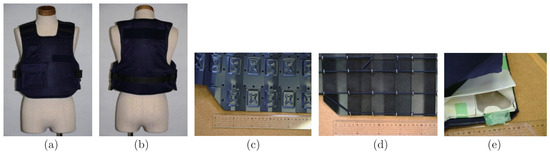
Stab-resistant vests that cover the chest, abdomen and back (Figure 1 (a) and (b)) are usually worn by police officers and security guards to protect their upper bodies against injury from knives and blades. In general the stab-resistant material, which is composed of a metal strip, is contained inside the vest as shown in Figure 1 (c)-(e). Because of the presence of this stab-resistant material, the vest does not tend to fit comfortably on the human body, and thus restricts the wearer’s movement, resulting in discomfort for the wearer [1]. There have been several studies on the efficiency of stab-resistant materials. Ping Wang et al. [2] investigated the stab failure behaviors of coated and uncoated woven fabric using experimental and finite element analysis approaches. Alpyildiz et al. [3] constructed a new double-face knitted structure that shows better stab test results. Levinsky [4] investigated the mechanical properties and puncture resistance of two types of layered composite structures based on an aramid fabric covered with alumina micro particles and on polycarbonate. Jacobs et al. [5] proposed a simple model that can be used to calculate the performance of Dyneemaarmour against deformable bullets. Rochery et al. [6] developed and investigated a new double-face knitted structure for stab and cut resistance of knitted structures which is composed of tuck stitches and has the same back and front faces. Debra et al. [7] investigated the fragment protective performance of fabrics packs containing a para-aramid woven fabric using laboratory testing. Boussu [8] investigated the different types of the warp interlock to be defined according to their performance on delamination and impact resistances.
Figure 1.
Stab-resistant vest. (a) Front, (b) Back and (c-e) Stab-resistant materials; (c) Rivet type, (d) Ring type and (e) Pocket type.
As described, most studies on stab-resistant vests are about stab-resistant tests measuring the mechanical properties of new stab-resistant materials so as to provide a better material for the vest. This approach is of course very important. However, the vest is a piece of clothing that is worn on a daily routine by wearers, so their comfort is also very important. In addition to the material properties of the stab-resistant vest, there are some requirements for making the vest both comfortable and safe. As a type of clothing, both the design of the vest and its flexibility has an effect on mobility and comfort. However, there have been insufficient studies on how comfortable it is to wear stab-resistant vests. How much a wearer’s movement is constrained by wearing such a vest is also unclear. In terms of clothing comfort, the space between body and clothing is considered as an important effective factor especially in thermal protective clothing [9,10]. Hadid et al. [11] evaluated whether physiological strain is alleviated by a new personal cooling system in a ballistic vest consisting of a layered vest and integrated blower that generate a flow of air. However, there are fewer studies about the space effect on the comfort of the stab vest. Huck et al. [12,13] investigated garment ease in protective clothing for their effects on mobility and wearer acceptance. Wearing and moving comfort of a ballistic vest was investigated by Barker et al. [14] They compared comparative comfort performance of ballistic panel fabrications by sensory test. They mainly showed differences of comfort among vests from different panels which are inserted into the vest. Lee et al. [15] proposed ways to distribute the weight of a ballistic vest more uniformly using three-dimensional technology, especially taking into account the pressure distribution when jumping. However, they did not investigate the effect of material properties on movement restrictions and the pressure distribution on the entire upper body.
Therefore, we investigated the comfort of wearing stab-resistant vests while considering the effects of the tightness of the vest and the space between vest and body on movement restrictions. We also investigated which factors caused the restriction of movement while wearing a stab-resistant vest to improve comfort and at the same time, taking into account the pressure distribution on the entire upper body.
2. Material and Method
2.1. Stab-resistant Vest Samples
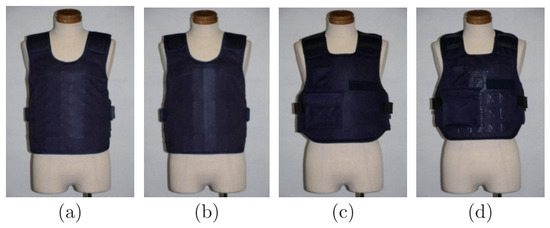
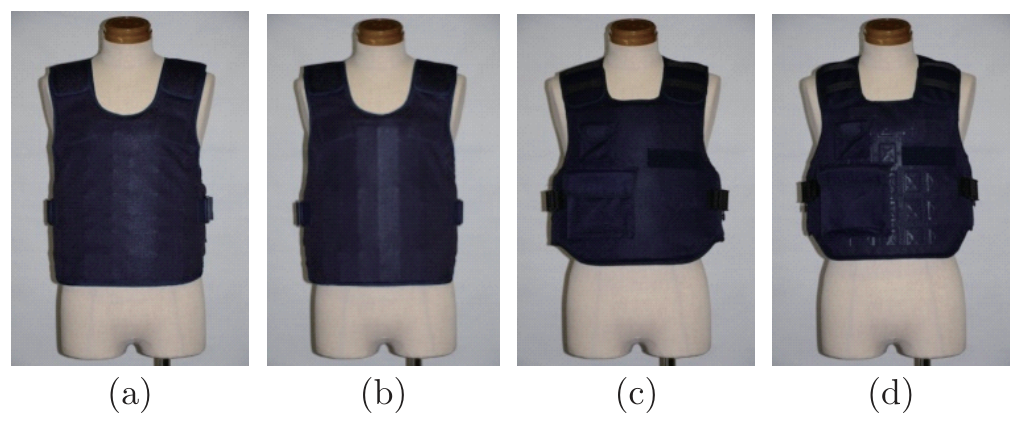
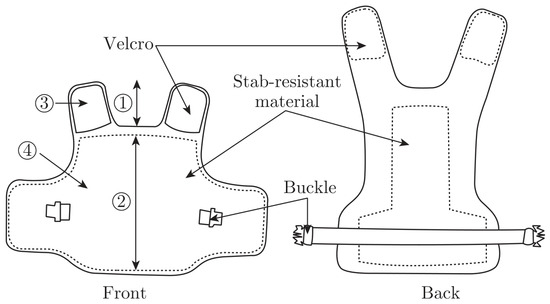
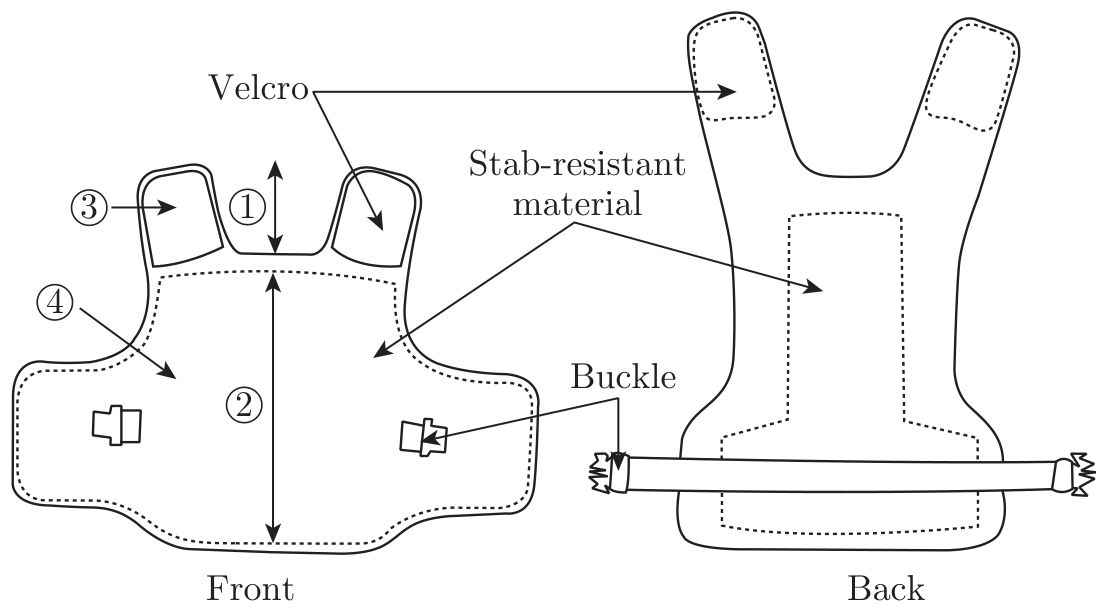
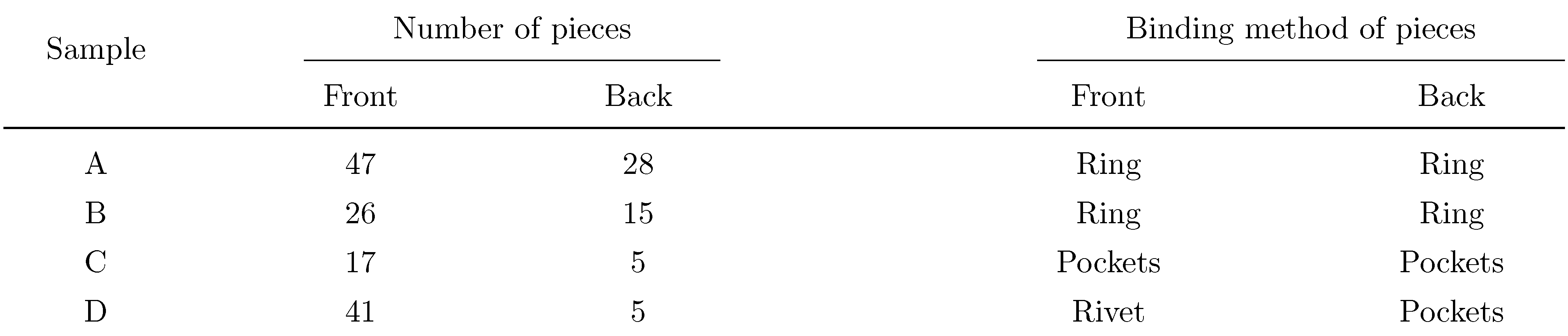
Four stab-resistant vests were prepared as experimental samples as shown in Figure 2. The main differences between them were their weight and the structure of their stab-resistant materials. The structure of a vest is shown in Figure 3. The specifications of the samples are shown in Table 1 and Table 2.
Figure 2.
Pictures of stab-resistant vest samples.
Figure 3.
Structure of stab-resistant vest.
Table 1.
Specification of vest samples.
Table 2.
Specification of structurefor stab-resistant material.
2.2. Movement Restrictions Depending on the Space between the Vest and Body
The movement restrictions for a vest were evaluated by subjects wearing the vest D while the space between the vest and body was varied. The subjects were seven male university students in their twenties. They performed ten movements (sitting, standing, walking, running, raising hands while sitting and standing, bending, twisting, bending forward, bending backward) wearing the vest and a dress shirt under it, and reported the existence or non-existence of movement restriction by the vests.
The tightness of fit for the stab-resistant vest was controlled using buckles on both side parts of the vest. Thus, we could constantly control the tightness of the belt using a ratio between the waist circumference of the body and the vest. We named this ratio ‘tightness value’.
2.3. Contact Area and the Pressure between the Vest and a Dummy
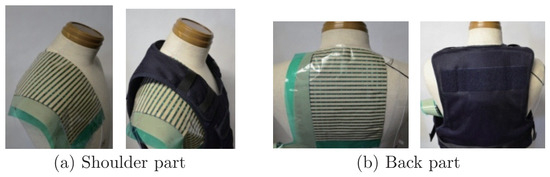
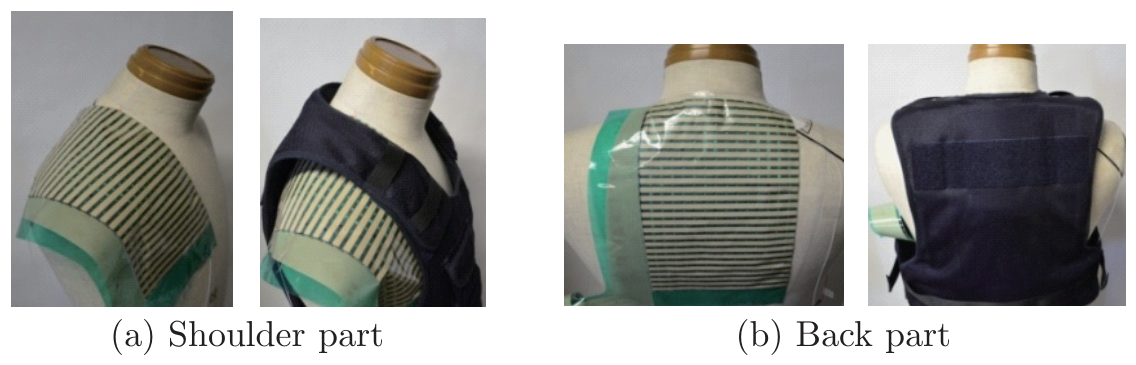
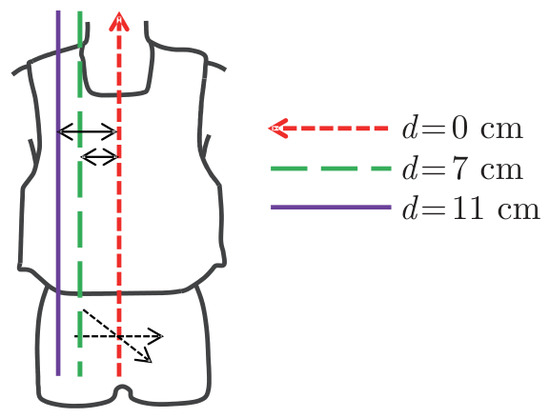
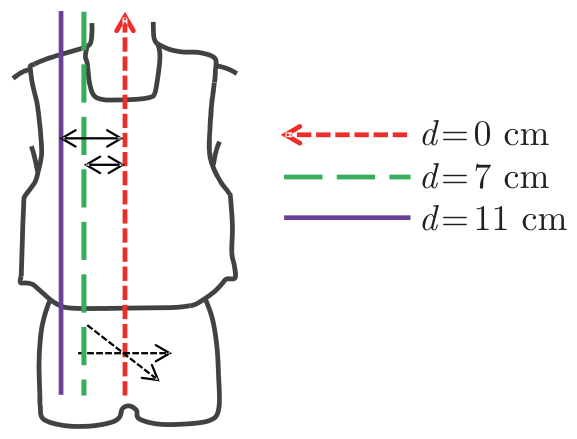
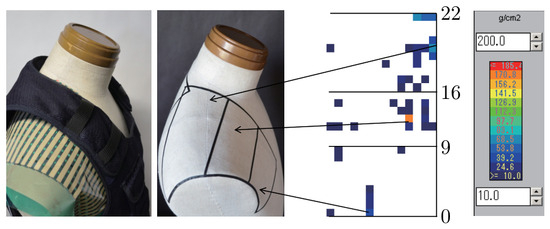
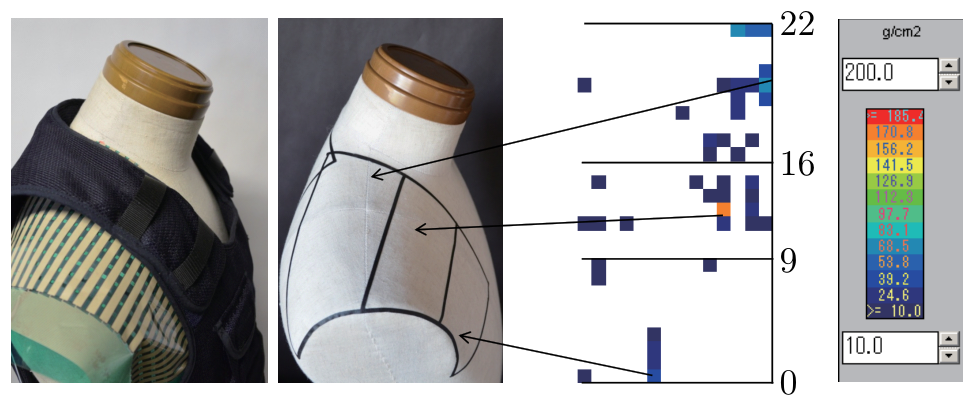
To clarify the effect of the vest on a wearer, we investigated the contact area and pressure between the vest and a dummy. For the contact area, the pressure distribution of the vests on the shoulder, the chest and the back of dummy (Kiiya Co., Ltd BG-733-02, MEN’S) were measured by using a tactile sensor sheet (BIG-MAT 2000, I-SCAN Ver 5.0 XP, Nitta Corporation) as shown in Figure 4. Furthermore, the contact area was investigated by measuring the cross-sections of the dummy that wore the vests. The cross-sectional data were obtained by 3D scanner (Voxelan3D scanner, Hamano Engineering Co. Ltd.). The cross-sections of the same placements (d=0, d=7 and d=11) were compared as shown in Figure 5. Here, d means the distance from the sagittal plane. For the scan and the pressure measurement, the tightness value was set at 0.77.
Figure 4.
Tactile sensor sheet and stab-resistant vest on dummy.
Figure 5.
Position of measured cross-sectional data.
2.4. Sensory Tests for Movement Restriction in the Arms and upper Body
2.4.1. Sensory Tests for Movement Restriction in the upper Body
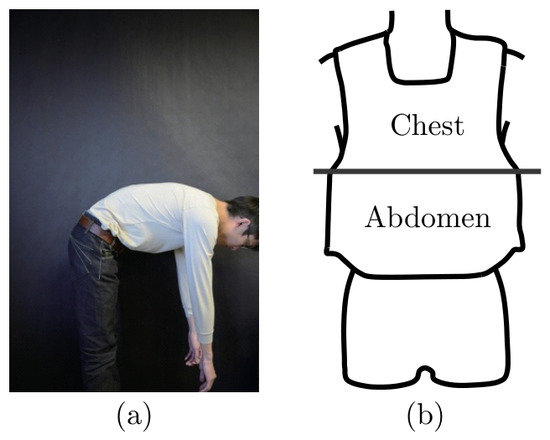
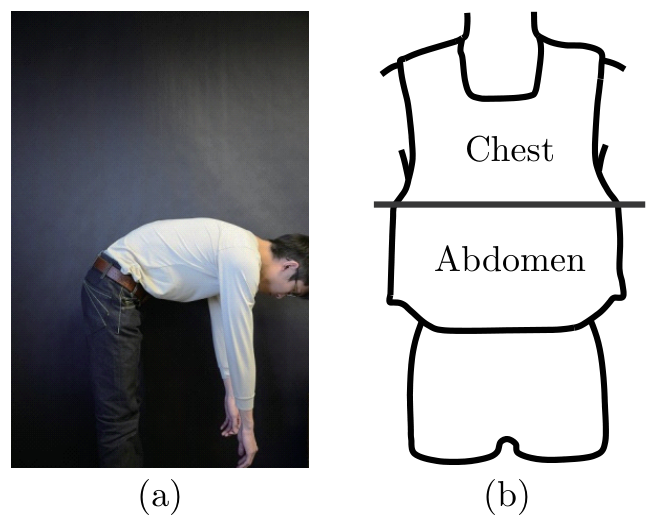
The sensory tests for restriction of upper body movement were carried out using Scheffe’s paired comparison (a 5-point scale). Ten male subjects, all university students in their twenties, participated in the sensory test. They wore the vest and a dress shirt under it. They bent their body forward and evaluated the vests as shown in Figure 6. The evaluation items were movement restriction and the feeling of pressure on the chest and abdomen. The tightness value was set at 0.77.
Figure 6.
Upper body movement (a) Forward bending and (b) Evaluated points.
2.4.2. Sensory Tests for Movement Restriction in the Arms
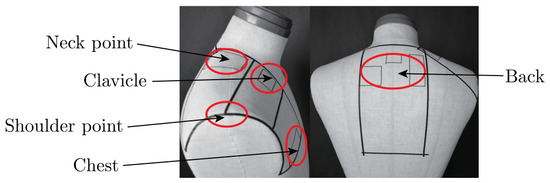
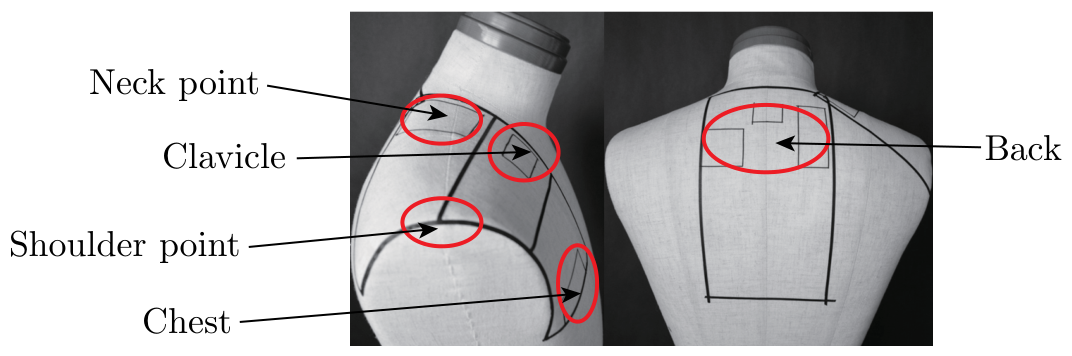
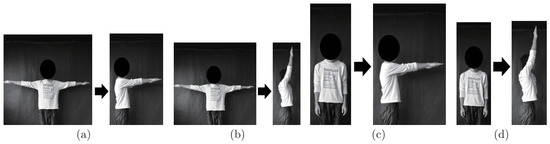
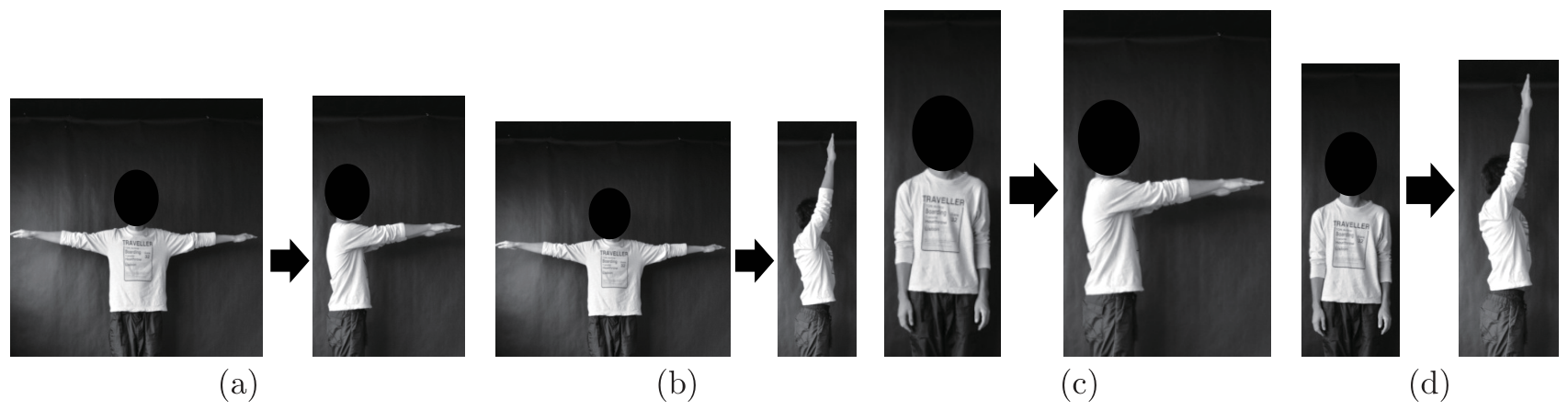
Five male subjects, who were university students in their twenties, participated in the arm movement experiment. Evaluation items were movement restriction and the feeling of pressure on the neck point, clavicle, shoulder point, chest and back as shown in Figure 7. Participants were also asked about softness of the parts of the vest at the edge of the armhole, the Velcro (clavicle), the shoulder point, the back and the chest. They performed four movements as shown in Figure 8: (a) Moving their arms forward from a horizontal state; (b) Raising their arms up overhead from a horizontal state; (c) Moving their arms forward from a standing state; and (d) Raising their arms up overhead from a standing state. Following this they answered the evaluation items. The tightness value was set at 0.77. The results were considered in the light of the contact area, the clothing pressure and the properties of the stab-resistant materials.
Figure 7.
Evaluation points.
Figure 8.
Arm movements: (a) Moving the arms forward from a horizontal state; (b) Raisingthe arms up overhead from a horizontal state; (c) Moving the arms forward from a standing state; and (d) Raising the arms up overhead from a standing state.
2.5. Measurement of the Flexural Rigidity of the Stab-resistant Material and the Shoulder Part with Velcro
2.5.1. Measurement of the Flexural Rigidity of the Stab-resistant Material
One factor that restricts body movement while wearing these vests is the difficulty of deforming the stab-resistant material. Therefore, the flexural rigidity of the stab-resistant material of each sample was measured. Since the same stab-resistant material is used on the back, only one of C sample was measured. The flexural rigidity of the pocket type was measured with the envelope.
The measurement method was as follows: 1) Fix one end of the stab resistant material; 2) Apply a load 100 gf (0.98 N) to the other end; 3) Measure the displacement of the free end; 4) Repeat measurement increasing the load by 100 gf (0.98 N).
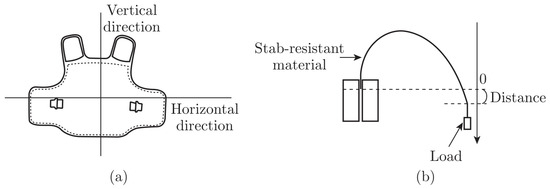
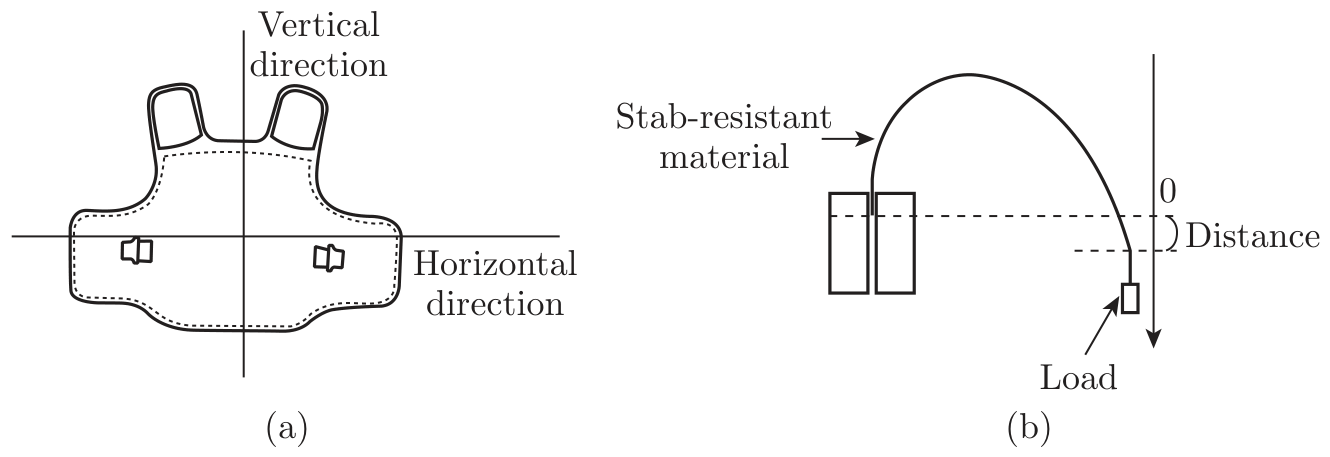
Vertical and horizontal directions were set as shown in Figure 9 (a). The flexural rigidities in both directions were measured, both in outside and inside (body side) bending. Figure 9 (b) shows the measurement method. As shown in Figure 9 (b), the deflection of free end from the fixed end was measured.
Figure 9.
Measurement method of flexural rigidity (a) Direction of measurement; (b) Method for flexural rigidity of stab resistant material.
2.5.2. Measurement of the Flexural Rigidity of the Shoulder Part with Velcro
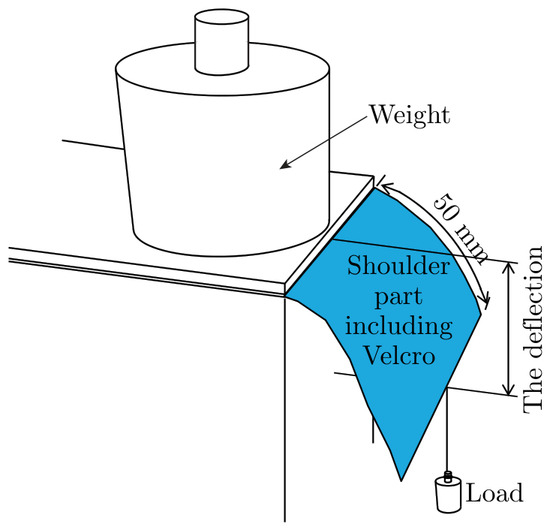
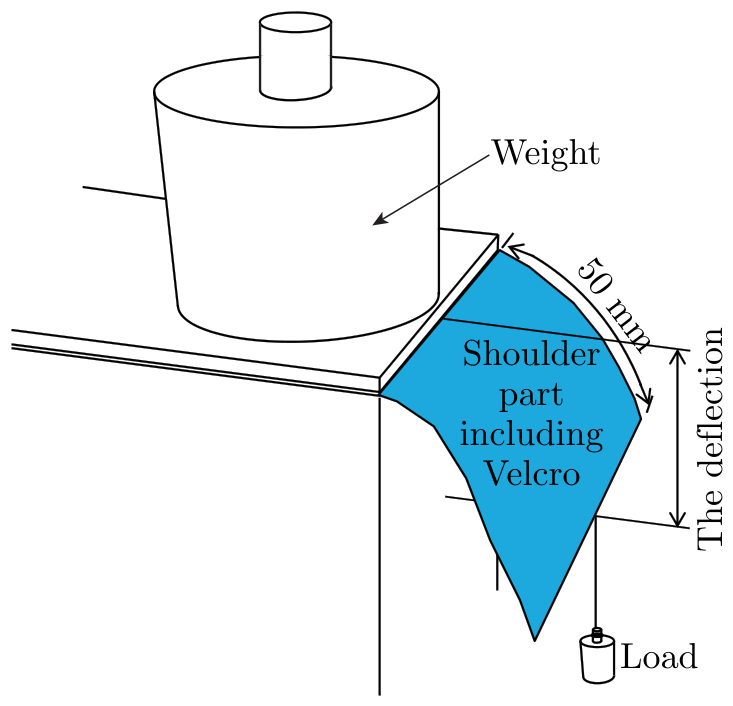
A method for measuring the flexural rigidity of the shoulder part is shown in Figure 10. The method is as follows: 1) Fix the body part of the vest; 2) Set the length as 50 mm between the free end of shoulder part and the fixed body part; 3) Apply a load of 10 gf (9.8 cN) to the free end; 4) Measure the deflection of the free end; 5) Divide the deflection by the length and use it as flexural rigidity. The average of five measurements was used. Flexural rigidities of a sample in vertical and horizontal direction, both in inside and outside directions were measured. Shoulder parts including Velcro of samples A and B were the same so only A was measured.
Figure 10.
Measurement method for flexural rigidity of shoulder part.
3. Results and Discussion
3.1. Sensory Tests for Movement Restriction Depending on the Space between the Vest and Body
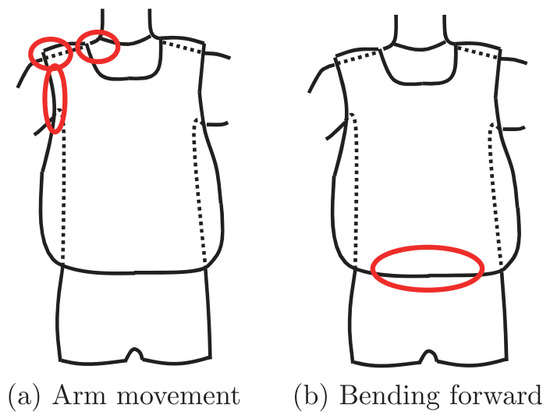
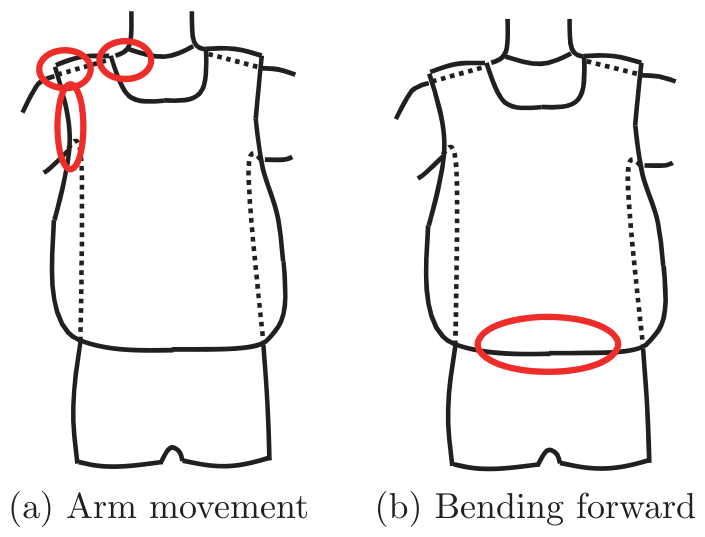
Figure 11 shows the evaluated parts of movement restriction by arm movement and forward bending. We mainly found arm movement restriction at the neck point, shoulder and the edge of the armhole. The abdomen was mainly restricted when bending the body forward. By changing the size of the gap between the body and vest by adjusting the tightness value, subjects felt changes to the feelings of restriction.
Figure 11.
Evaluated parts of movement restriction.
3.2. Contact Area and the Pressure between the Stab-resistant Vest and a Dummy
Figure 12 shows the contact area for the pressure measurement. We defined an area over 10 gf/cm2 of pressure as the contact area. As shown in Figure 12, we found that the vest is in partial contact with the neck, shoulder, chest and back, the same results as with the sensory test for movement restriction depending on the space between the vest and body. Thus, we found that the vest was mostly supported by the neck, shoulder and back.
Figure 12.
Contact area from pressure measurement.
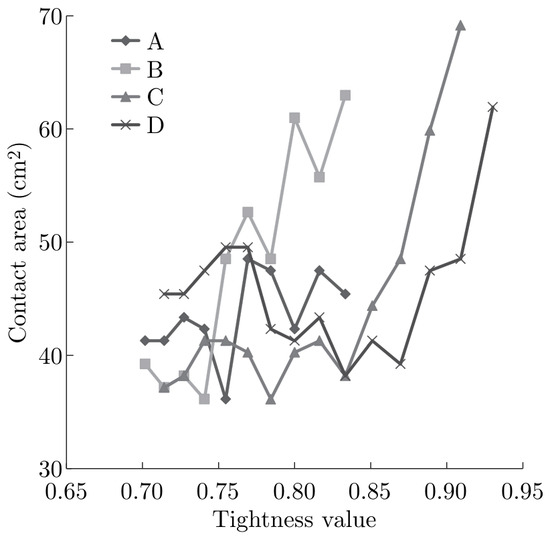
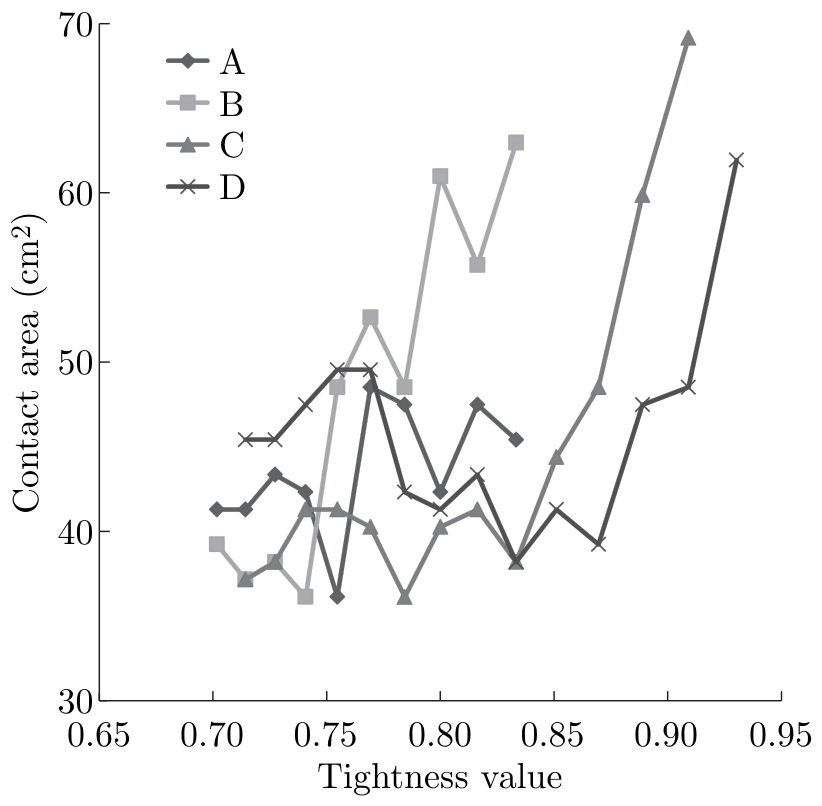
Figure 13 shows the relationship between contact area and tightness value. When the tightness value was greater than 0.77, the contact area increased. However, the changes under 0.77 were small. By bringing the vest in close contact with the body, it can be moved together with the body and arm movement, which reduces the vest vibrations that cause feelings of discomfort. Thus controlling the tightness value also reduces movement restriction. For this reason, it is necessary to allow the amount of contact with the body to be adjusted by using this technique.
Figure 13.
Relationship between contact area and tightness value.
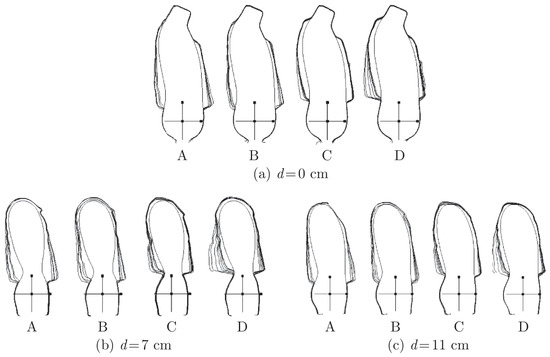
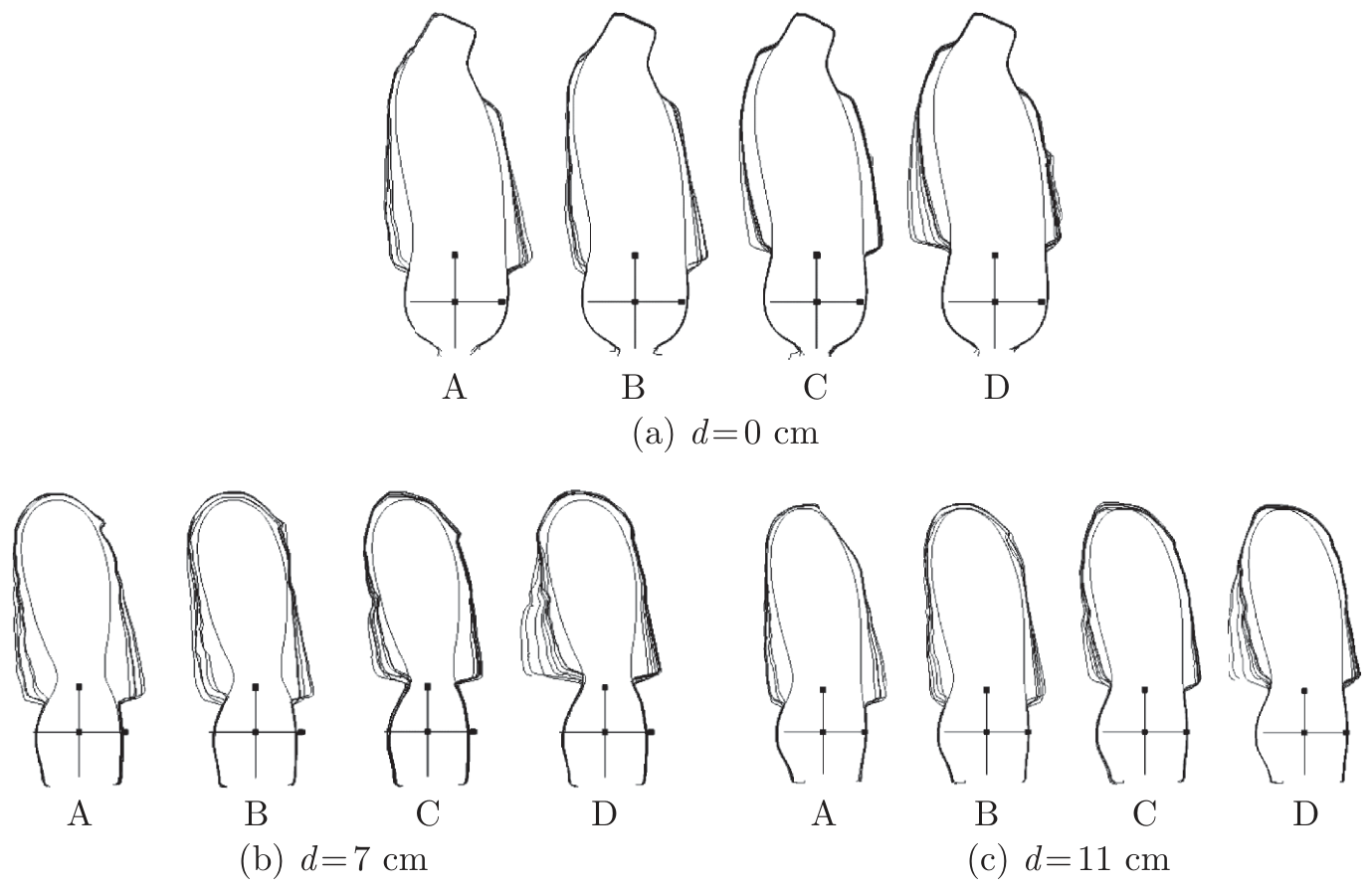
As shown in Figure 14 (a), in the sagittal plane, the back part of all the vest samples had the most physical contact. There were some gaps between the chest and waist parts of the vest. As shown in Figure 14 (b) at d=7, all vest samples had contact around the neck point. The contact places were not changed by changing the tightness value. Therefore, we discovered that the vest was supported by the shoulder and around the neck part in this cross-section. As shown in Figure 14 (c) at d=11, all vest samples had contact with the chest and there were some gaps between the abdomen and the vest.
Figure 14.
Comparison of cross-section data for each sample with different tightness values.
All results showed only small differences by controlling tightness values except sample D, which showed large gap changes depending on the tightness value. Thus, by investigating the pressure and the cross-sections, we found that the all vests were supported by the shoulder, the around-neck point, the chest and the back parts.
3.3. Sensory Tests for Movement Restriction in upper Body and Arms
3.3.1. Sensory Tests for Movement Restriction in upper Body in Forward Bending
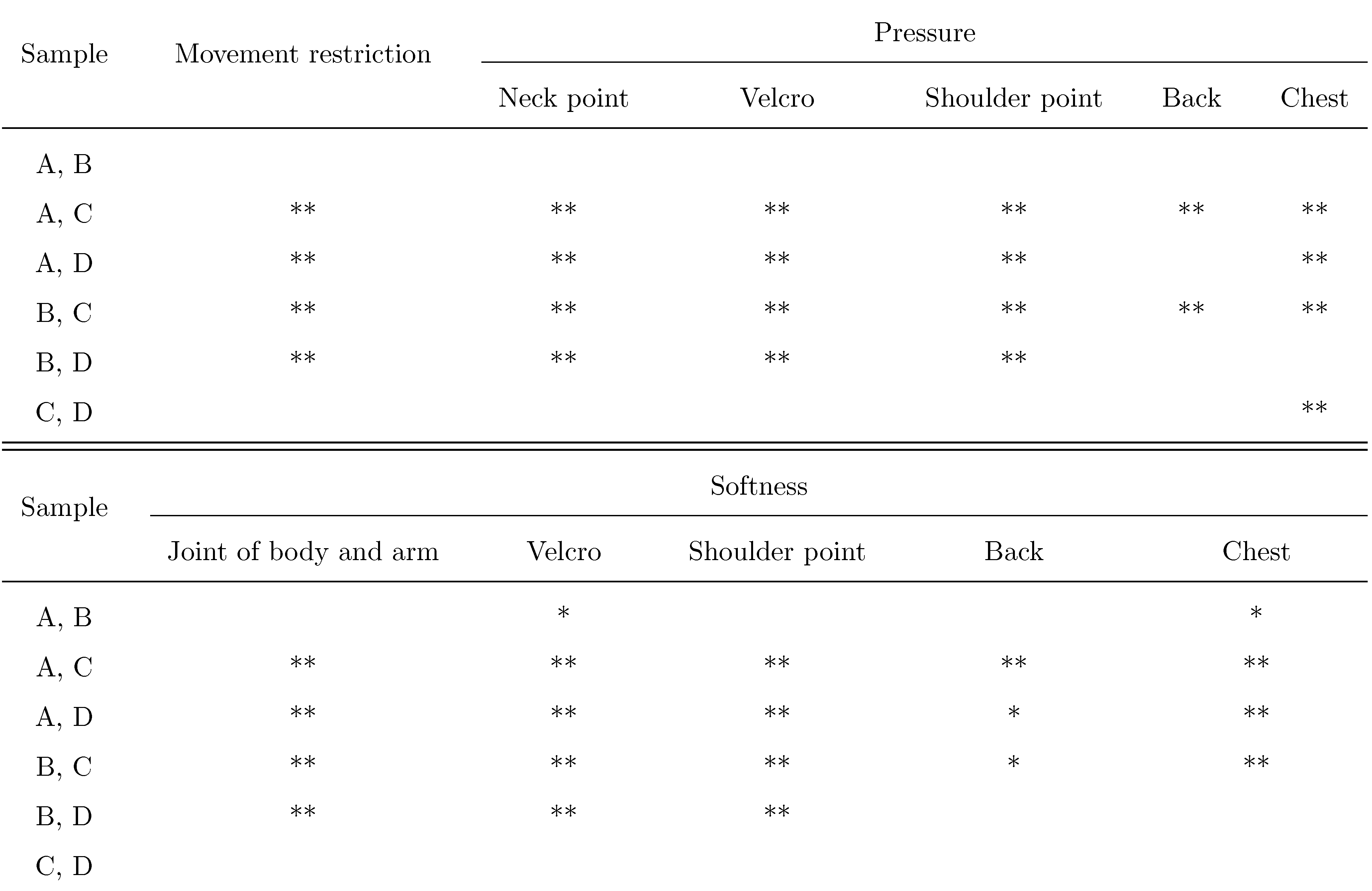
Table 3 shows significant differences between vests in movement restriction and pressure for forward bending movements. As shown in Table 3, 1% of significant differences between sample D and the other vests were shown in movement restriction and pressure at the abdomen as well. Thus, it was found that subjects felt differences in movement restriction between the vests.
Table 3.
Significant differences in movement restriction and pressure for forward bending movement.
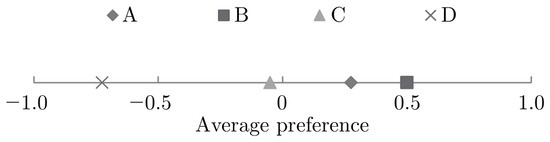
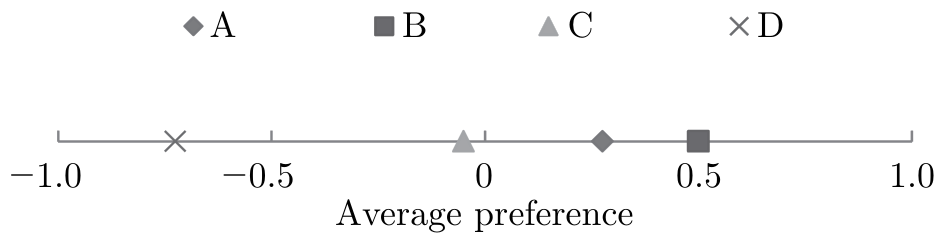
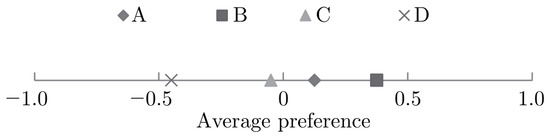
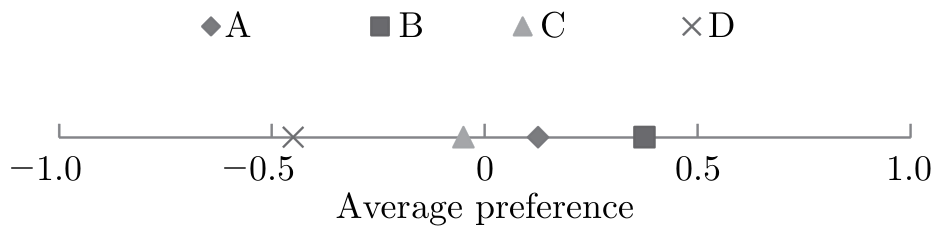
The average preference for movement restriction in forward bending is shown in Figure 15, and the average preference for pressure on the abdomen in forward bending is shown in Figure 16. As shown in Figure 15 and Figure 16, vest D was evaluated as the most restrictive vest. Aside from movement restriction and pressure on the abdomen, there were no significant differences in the average preferences of the other parts of the vest.
Figure 15.
Average preference of movement restriction for forward bending.
Figure 16.
Average preference of pressure on abdomen for forward bending.
3.3.2. Sensory Tests for Movement Restriction in Arms
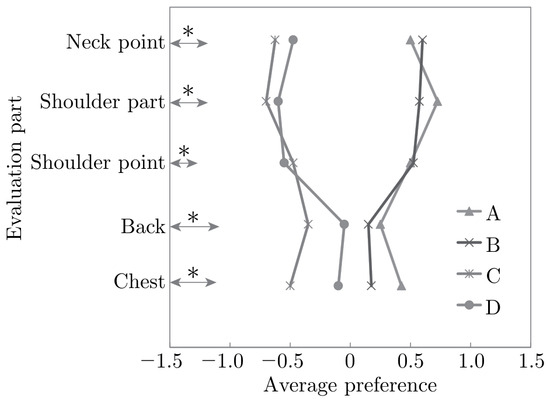
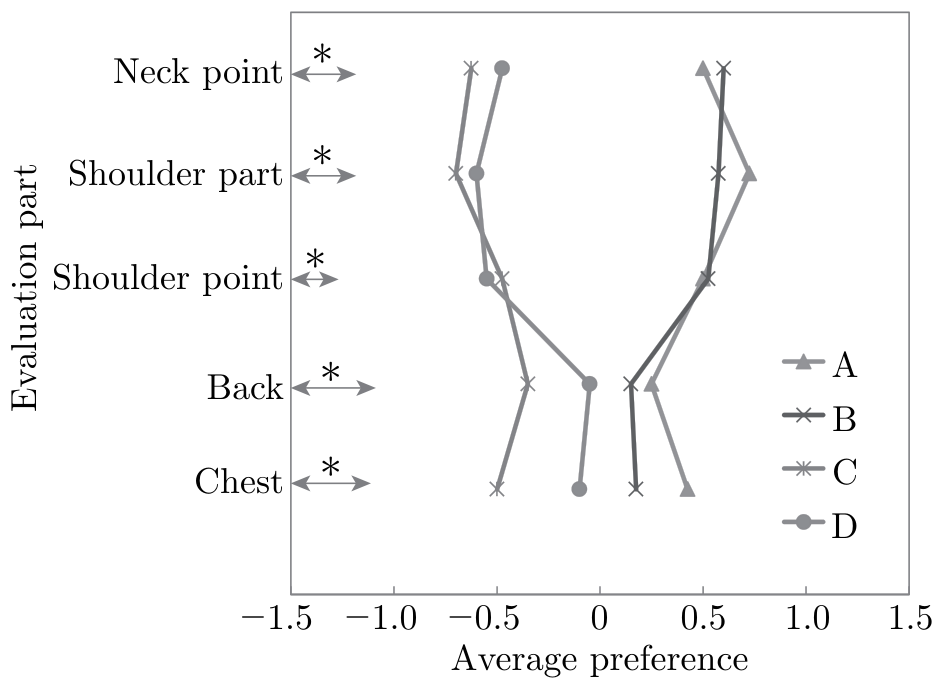
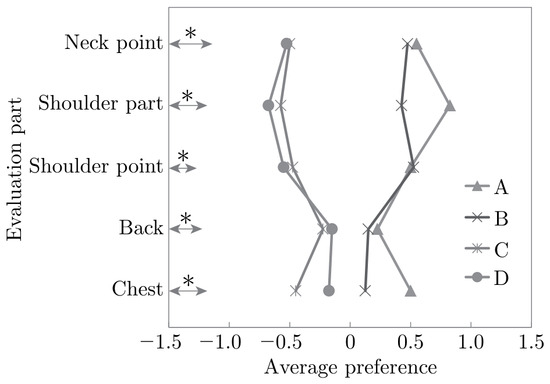
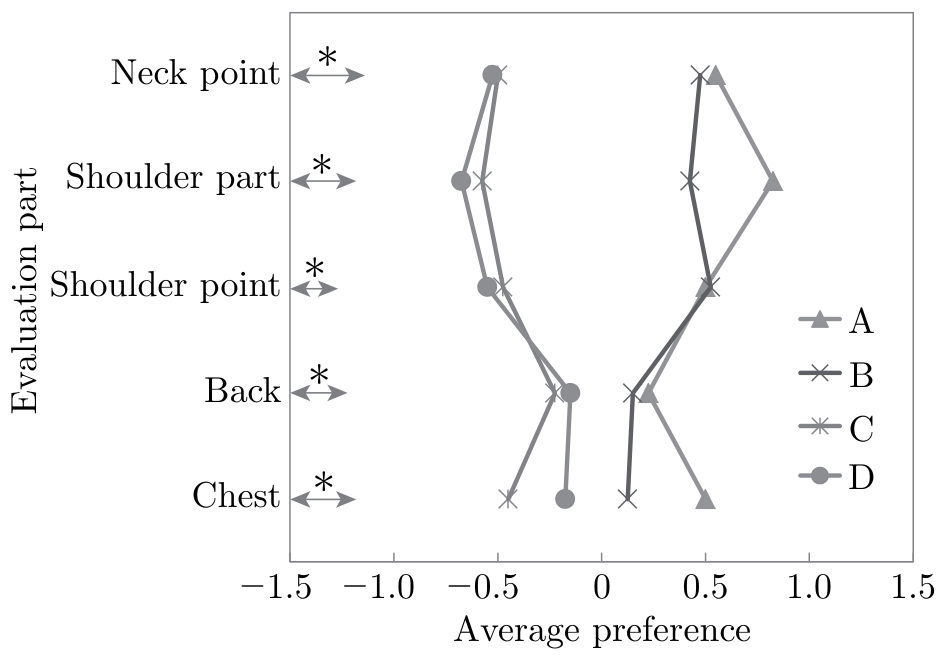
Significant differences in movement restriction, pressure and softness of the movement of the arms reaching forward from a horizontal state are shown in Table 4. The average preferences for the feeling of restriction for movement of the arms reaching forward from a horizontal state are shown in Figure 17, and the average preferences for softness in the forward movement of the arms from a horizontal state are shown in Figure 18.
Table 4.
Significant differences in movement restriction, pressure and softness for the movement of the arms forward from a horizontal state.
Figure 17.
Average preference for the feeling of movement restriction for moving the arms forward from a horizontal state (*=5% significant difference).
Figure 18.
Average preference for softness while moving the arms forward from a horizontal state (*=5% significant difference).
As shown in Figure 17 and Figure 18, vests A and B were mostly evaluated as less restrictive and vests C and D were considered to be more restrictive. Significant differences between these vests are shown in Table 4. The reason for the differences is the depth of the vest neckline. The distance from the jugular notch to the stab-resistant material for vests A and B was longer than those of vests C and D, as shown in Table 1.
When subjects moved their arm forward, the armhole edge of the vest makes contact with the body and the shoulder parts were compressed. Subjects felt a large pressure for vests C and D. Therefore, we found that the depth of neckline affects movement restriction and the pressure produced by stab-resistant vests.
3.4. Measurement of Flexural Rigidity of the Stab-resistant Material and Shoulder Part with Velcro
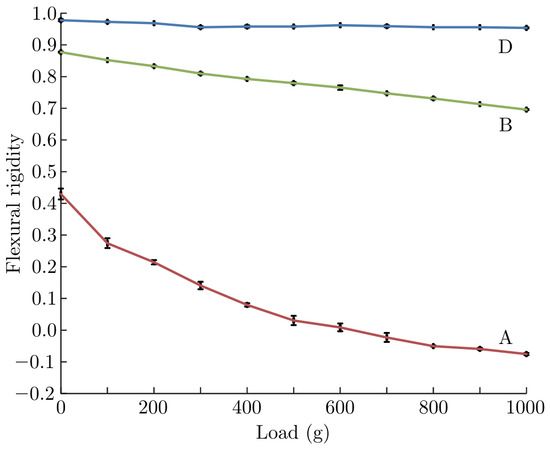
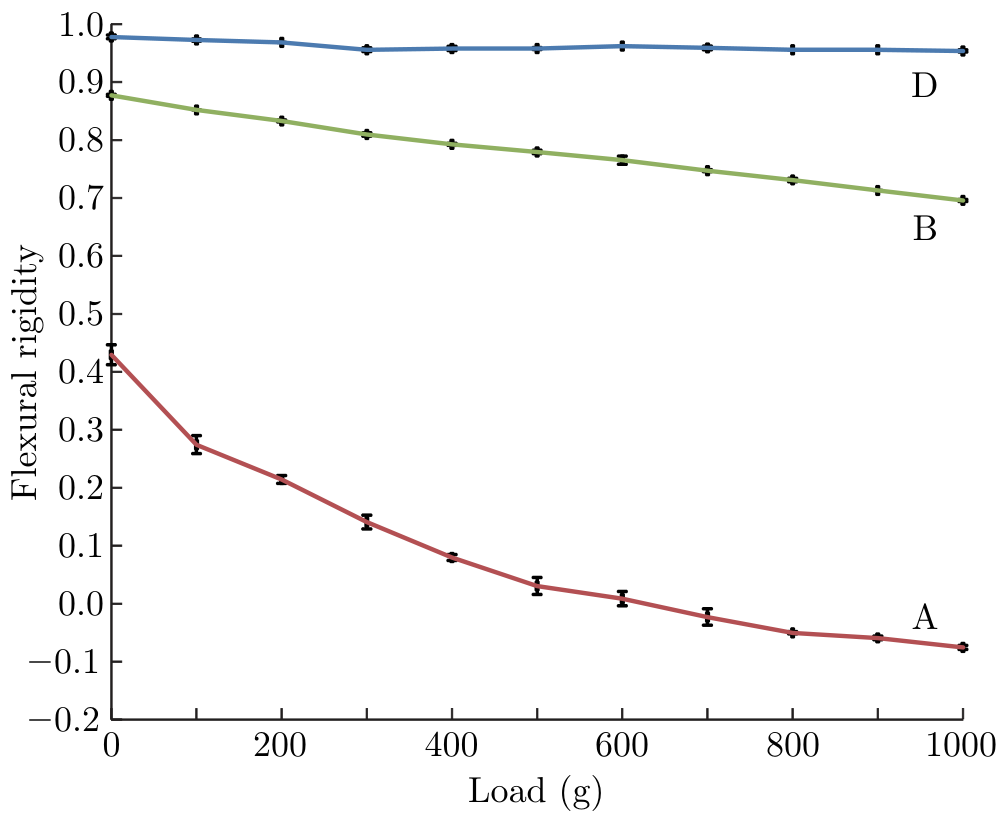
Figure 19 shows the relationship between the flexural rigidity of the stab-resistant material and the load at the outside of the vertical direction of the front part of the vest. Data from vest C was not shown because the material used in this vest did not bend.
Figure 19.
Relationship between the flexural rigidity of the stab-resistant material and load at the outside of the vertical direction of the front part (no data from sample C as it is impossible to bend it).
For forward bending movements, the ideal is for both materials to bend following the movement of the body. Sample A was the easiest to bend outside of the body and samples B, C and D were hard to bend. The same results were found with the back materials as with the front materials.
It is also important for the vests to be able to bend in the horizontal direction to fit around the shape of the body. Thus, it is also necessary for the material to be able to bend in both directions. However, not all of the materials can bend in both directions at the same time.
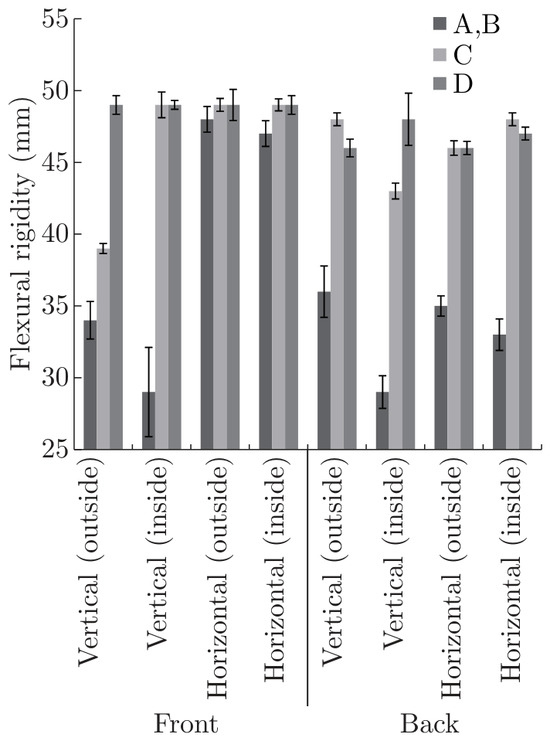
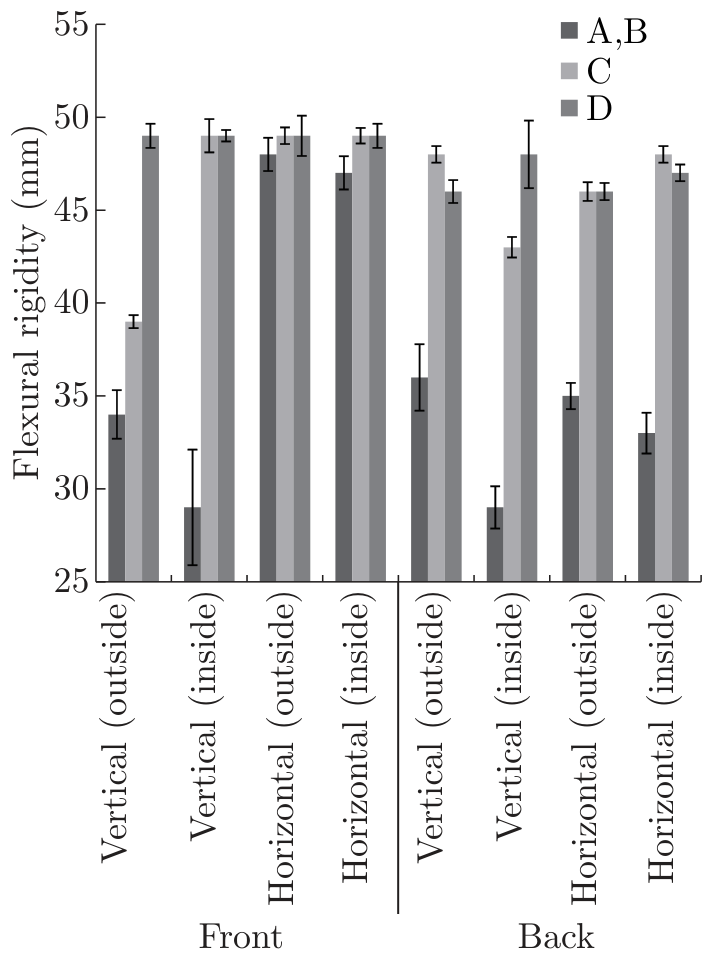
The flexural rigidities of shoulder part are shown in Figure 20. The flexural rigidities of vests A and B for the front part of the stab-resistant material in the horizontal direction were higher than in vests C and D. This result was also observed in the comparison of the cross-sectional data. Therefore, the deformation of the vests could be evaluated with the flexural rigidity of the stab-resistant material in both the vertical and horizontal directions.
Figure 20.
Flexural rigidity of the shoulder part.
3.5. Relationship between Movement Restriction and the Flexural Rigidity of the Stab-resistant Material
In the movement restriction results, vest D showed fewer restrictions than vests A, B and C. However, the flexural rigidities of vests A and B were smaller than the others. The reason is as follows: first, the front hemline positions of the front stab-resistant material for vests A and B are 4 cm lower than those in vests C and D, which made the abdomen uncomfortable. Second, there was a difference between the front lengths of the stab-resistant material for C (35 cm) and D (31.7 cm). D was shorter than C, which also affected movement restriction.
For the front stab-resistant material, the material in vest A was the easiest to bend while that in D was the hardest to bend. Vest A had the largest number of pieces for stab-resistant materials (47), which were bound using rings. Thus the stab-resistant materials of vest A had high flexibility. Conversely, vest D had 41 pieces for the stab-resistant material, which were bound using riveting leading to low flexibility.
For the sensory test of arm movement, the flexural rigidities of the shoulder parts for vests A and B were lower than those of the other vests. As a result, it became clear that the flexural rigidity of the shoulder part affects movement restriction. Thus, movement restriction will be reduced if softer material is used for the shoulder part. It was also found that the length of the vest front body affects movement restriction during a forward bending motion. For arm movement, flexural rigidity of the shoulder part is important. If the materials used to construct the shoulder part and the length of the vest front body are considered with these findings in mind, it will be possible to provide a more comfortable vest.
Factors contributing to the wearer’s movement restriction for stab-resistant vests were investigated to improve their comfort. Contact area and the pressure between the stab-resistant vest and a dummy were measured. The cross section of the dummy wearing the vest was also obtained and compared. Sensory tests for the wearer’s movement restriction in the arms and upper body were carried out with different vests.
From the obtained contact area and cross-sections, it was discovered that the vest tended to hang on the around-neck point, shoulder, chest and back. During a forward bending motion, because of the pressure on the abdomen, the shorter stab-proof materials produced less movement restriction. In the arm movements, when the subjects felt that the shoulder was softer, they felt less movement restriction.
Consequently, we argue that contact area and pressure should be considered in the design of stab-resistant vests to improve their comfort. A more comfortable vest can be made through the careful consideration of the materials used for the shoulder part, the flexibility and the length of the front vest body.
Acknowledgments
This work was supported by JSPS fellows and JSPS KAKENHI Grant number 24220012.
References
- Schutz, H.; Cardello, A.; Winterhalter, C. Perceptions of fiber and fabric uses and the factors contributing to military clothing comfort and satisfaction. Text. Res. J. 2005, 75, 223–232. [Google Scholar] [CrossRef] [Scilit]
- Ping, W.D.; Sun, B.; Gu, B. Comparison of stab behaviors of uncoated and coated woven fabrics from experimental and finite element analyses. Text. Res. J. 2012, 82(13), 1337–1354. [Google Scholar] [CrossRef] [Scilit]
- Alpyildiz, T.; Rochery, M.; Kurbak, A.; Flambard, X. Stab and cut resistance of knitted structures: a comparative study. Text. Res. J. 2011, 81(2), 205–214. [Google Scholar] [CrossRef] [Scilit]
- Levinsky, A.A.; Sapozhnikov, S.B.; Grass, T.S. Development of knife- and bullet-impact-resistant structures. Mech. Compos Mater. 2012, 48(4), 405–414. [Google Scholar] [CrossRef] [Scilit]
- Jacobs, M.J.N.; Dingenenand, J.L.J.V. Ballistic protection mechanisms in personal armour. J. Mater. Sci. 2001, 36(13), 3137–3142. [Google Scholar] [CrossRef] [Scilit]
- Rochery, M.; Kurbak, A.; Flambard, X. Stab and cut resistance of knitted structures: a comparative study Tuba Alpyildiz. Text. Res. J. 2011, 81(2), 205–214. [Google Scholar] [CrossRef] [Scilit]
- Debra, C.; Mark, H.; Liz, G.; Nicky, G. Degradation of military body armor due to wear: Laboratory testing Ryan Pinto. Text. Res. J. 2012, 82(11), 1157–1163. [Google Scholar] [CrossRef] [Scilit]
- Francois, B. The use of warp interlock fabric inside textile composite protection against ballistic impact. Text. Res. J. 2011, 81(4), 344–354. [Google Scholar] [CrossRef] [Scilit]
- Li, J.; Lu, Y.; Li, X. Effect of relative humidity coupled with air gap on heat transfer of flameresistant fabrics exposed to flash fires. Text. Res. J. 2012, 82(12), 1235–1243. [Google Scholar] [CrossRef] [Scilit]
- Li, X.; Wang, Y.; Lu, Y. Effects of body postures on clothing air gap inprotective clothing. J. Fiber Bioeng. Inform. 2011, 4(3), 277–283. [Google Scholar] [CrossRef] [Scilit]
- Hadid, A.; Yanovich, R.; Erlich, T.; Khomenok, G.; Moran, D. S. Effect of a personal ambient ventilation system on physiological strain during heat stress wearing a ballistic vest. Eur. J. ApplPhys 2008, 104(2), 311–319. [Google Scholar] [CrossRef] [Scilit]
- Huck, J.; Maganga, O.; Kim, Y. Protective overalls: Evaluation of garment design and fit. Int. J. Cloth. Sci. 1997, 9(1), 45–61. [Google Scholar] [CrossRef] [Scilit]
- Huck, J.; Kim, Y. Coveralls forgrass fire fighting. Int. J. Cloth. Sci. Tec. 1997, 9(5), 346–359. [Google Scholar] [CrossRef] [Scilit]
- Barker, J.; Black, C.; Cloud, R. Comfort comparison of ballistic vest panels for police officers. JTATM 2010, 6(3), 1–12. [Google Scholar]
- Lee, H.; Hong, K.; Kim, S.; Lee, Y. Effects of fit on pressure distribution and momentum of ballistic body armor vest in jump. Text. ResJ. published online 8 March 2013. [Google Scholar] [CrossRef] [Scilit]

© 2013 Textile Bioengineering and Informatics Society. This article is an open access article distributed under the terms and conditions of the Creative Commons Attribution (CC BY) license (https://creativecommons.org/licenses/by/4.0/).