


Abstract
The hollow microspheres containing monoclinic scheelite BiVO4 and anatase TiO2 nanocrystals were easily prepared through a simple one-step template-free method. Bi(NO3)3·5H2O and NH4VO3 were used as BiVO4 precursor and (NH4)2TiF6 as TiO2 precursor to produce the target products in the presence of glucose under the high temperature pyrolysis. The products were characterized with SEM, XRD, TEM and UV-vis DRS. The as-prepared hollow microspheres showed high photocatalytic activity, which was demonstrated by degradation of acetic acid solution under visible-light irradiation (λ>420 nm).
1. Introduction
TiO2 is a very important multifunctional material because of its peculiar and fascinating physicochemical properties, and its wide variety of potential uses in diverse fields such as solar energy conversion, environmental purification, water treatment and antibacterial materials [1,2,3,4]. However, the large band gap of pure TiO2 (Eg=3.0 eV for rutile, Eg=3.2 eV for anatase) limits its application as the electron–hole pairs can only be formed by UV light at wavelength shorter than 387 nm [5,6]. Thus, only a small portion of the solar spectrum can be utilized for photo-oxidation reaction under the presence of TiO2. The development of a general method for endowing TiO2 with visible-light response and concomitantly increasing their UV-light activity should dramatically expand their viability [7,8,9]. To this end, doping of various transition metals and anions has been extensively studied [9,10,11,12]. Amongst different studies of oxides with activity under visiblelight irradiation, BiVO4 has received special attention [13]. BiVO4 crystallizes in three different polymorphs, i.e. tetragonal zircon, monoclinic distorted scheelite and tetragonal scheelite. Due to its relatively narrow band gap (∼2.4 eV), the monoclinic form exhibits the higher photocatalytic activity for chemical reactions induced with visible-light irradiation [14,15].
On the other hand, there has been considerable interest in the synthesis of micrometer and nanometer sized hollow spheres because of their widespread potential applications in catalysis, drug delivery, chromatography separation, chemical reactors, controlled release of various substances, and protection of environmentally sensitive biological molecules [16,17]. Several micrometer and nanometer sized hollow spheres of transition metal oxides have been prepared due to researchers’ unremitting effort using soft templating methods [18,19] and mesoporous silica as hard template [20,21]. However, such methods have disadvantages. Soft templating methods usually lead to the formation of mesoporous structure with amorphous walls, while the hard templating methods usually involve multistep processes and sometimes lead to the damage of pore structures during the removal of hard templates [22,23,24].
Monodisperse nanocrystals display novel properties which stimulated intensive research on the synthesis of monodisperse nanocrystals for their fundamental and technological importance [25,26]. However, there are still problems with obtaining the mesoporous structure with monodisperse microspheres for the enhancement of the structural stability and photocatalytic property of BiVO4 and TiO2. With this in mind, we proposed one-step hydrothermal and pyrolysis treatment for the preparation of hierarchically nanoporous BiVO4/TiO2 hollow microspheres. One of the advantages of this method is that the nanoporous BiVO4/TiO2 hollow microspheres can be prepared without assistance of templates synthesized beforehand. High photocatalytic activity on the degradation of acetic acid is investigated for typical samples of BiVO4/TiO2 hollow microspheres under visible light.
2. Experimental
2.1. Materials
All chemicals were analytically graded and used as the starting materials without further purification. Glucose, Bi(NO3)3·5H2O, NH4VO3 and (NH4)2TiF6 were purchased from East of China Chemical Regent Co.
2.2. Preparation of BiVO4/TiO2 Hollow Composite Microshperes
In a typical synthesis of colloidal carbon spheres, 4 g of glucose and 0.84 g of (NH4)2TiF6 were dissolved in 35 mL of distilled water to form a clear solution. 0.5 g of Bi(NO3)3·5H2O and 0.7 g of NH4VO3 were dissolved in dilute HNO3 and NaOH aqueous solution respectively. After stirring for 0.5 h, the three solutions were mixed. The mixture was then sealed in a 100 mL Teflon-lined stainless steel autoclave and maintained at 160 °C for 24 h. The products were washed by distilled water and ethanol three times each and dried in air at 60 °C for 8 h. The final products were obtained through a heat treatment at 400 °C in air for 4 h with a heating rate of 2 °C min−1.
2.3. Characterization
The samples were characterized by powder X-ray Diffraction (XRD) performed on a Rigaku-Dmax 2500 diffractometer. Thermogravimetric Analysis and Differential Scanning Calorimetry (TGADSC) data were recorded with a thermal analysis instrument (SDT 2960, TA Instruments, New Castle, DE) at a heating rate of 10 °C min−1 in an air flow of 100 mL min−1. The morphology and composition of the samples were inspected using a scanning electron microscope (SEM, JSM-5610) and transmission electron microscopy (TEM, JSM-2100) equipped with an energy-dispersive Xray spectrum (EDX, Inca Energy-200) at an accelerating voltage of 200 kV. Diffuse Reflectance Spectroscopy (DRS) spectra were obtained with a UV-vis spectrometer (BWS003). The bandgap was calculated from the DRS of the samples.
2.4. Measurements of Photocatalytic Activity
Photocatalytic activity of the BiVO4/TiO2 hollow composite samples was evaluated by the degradation of acetic acid to produce carbon dioxide at atmospheric pressure under visible-light irradiation. The amount of CO2 evolved resulted from the photocatalytic decomposition of acetic acid was analysized by a gas chromatographic (GC, Hewlett-Packard 5890II). A 300 W xenon lamp cooled with a water jacket was used as the irradiation source and placed 30 cm apart from the reactor. 0.05 g of BiVO4/TiO2 hollow composite samples were added into 100 ml acetic acid solution with a concentration of 0.9 M (Ccatalyst=0.5 mg/mL). The 420 nm cutoff filter was placed under the reactor to completely remove all incoming wavelengths shorter than 420 nm to ensure irradiation occurs only with visible-light. Prior to irradiation, the suspensions were stirred in the dark for 1 h to reach an adsorption-desorption equilibrium between the pollutant and photocatalyst. Under irradiation, the suspensions were stirred continually and open to air. At irradiation time intervals of 20 min, 5 ml of the suspensions were collected, and then centrifuged (6000 rpm, 6 min) to remove the photocatalyst particles. In order to compare the photocatalytic activities, the equivalent weight of P-25 (pure TiO2) and solid microsphere sample was carried out under same conditions for photolysis of acetic acid.
3. Results and Discussion
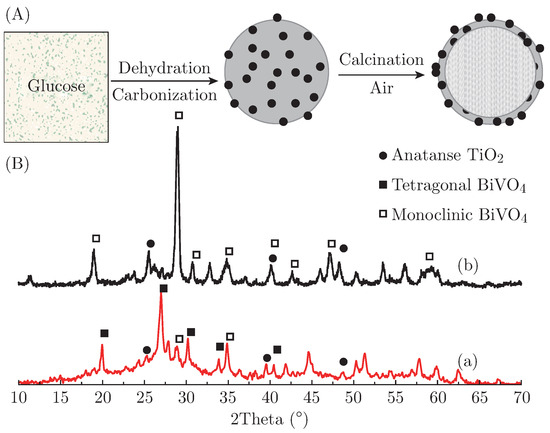
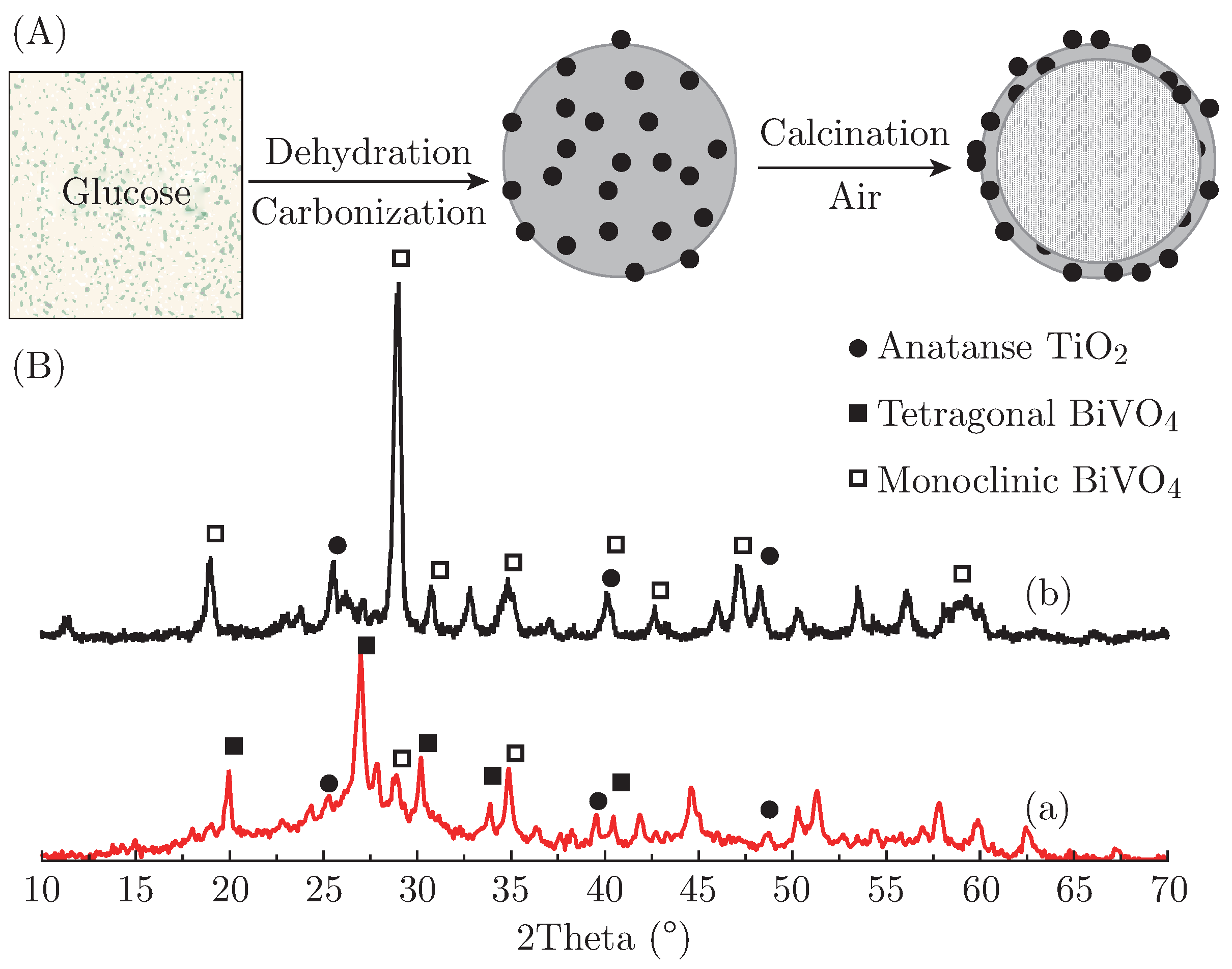
The formation of hierarchically nanoporous BiVO4/TiO2 hollow micro-spheres involves two steps (Figure 1 (A)). First, monodisperse BiVO4/TiO2/C composite microspheres are formed by hydrothermal method. Then, the microspheres with hollow structure are formed through aggregation and condensation of fine subunits under carbon pyrolysis. As shown in Figure 1 (B)-(a), the XRD pattern of the hybrid microspheres before calcination treatment indicates that the peaks are in good agreement with the JCPDS (Joint Committee on Powder Diffraction Standards) No. 14-0133 for tetragonal BiVO4 and No. 21-1272 for anatase phase of TiO2. However, the signals of monoclinic BiVO4 increased after high-temperature treatment, which indicates the tetragonal BiVO4 has transformed to a monoclinic structure (Figure 1 (B)-(b)). This indicates that BiVO4/TiO2 composites were successfully prepared.
Figure 1.
Schematic illustration of the formation process of hierarchically nanoporous BiVO4/TiO2 hollow microspheres (A) and XRD patterns of hybrid microspheres before (a) and after (b) calcination treatment (B).
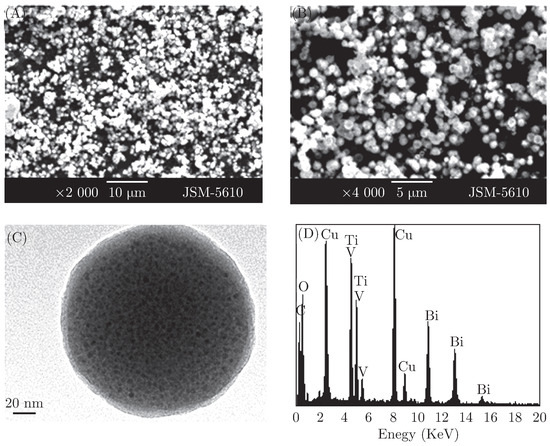
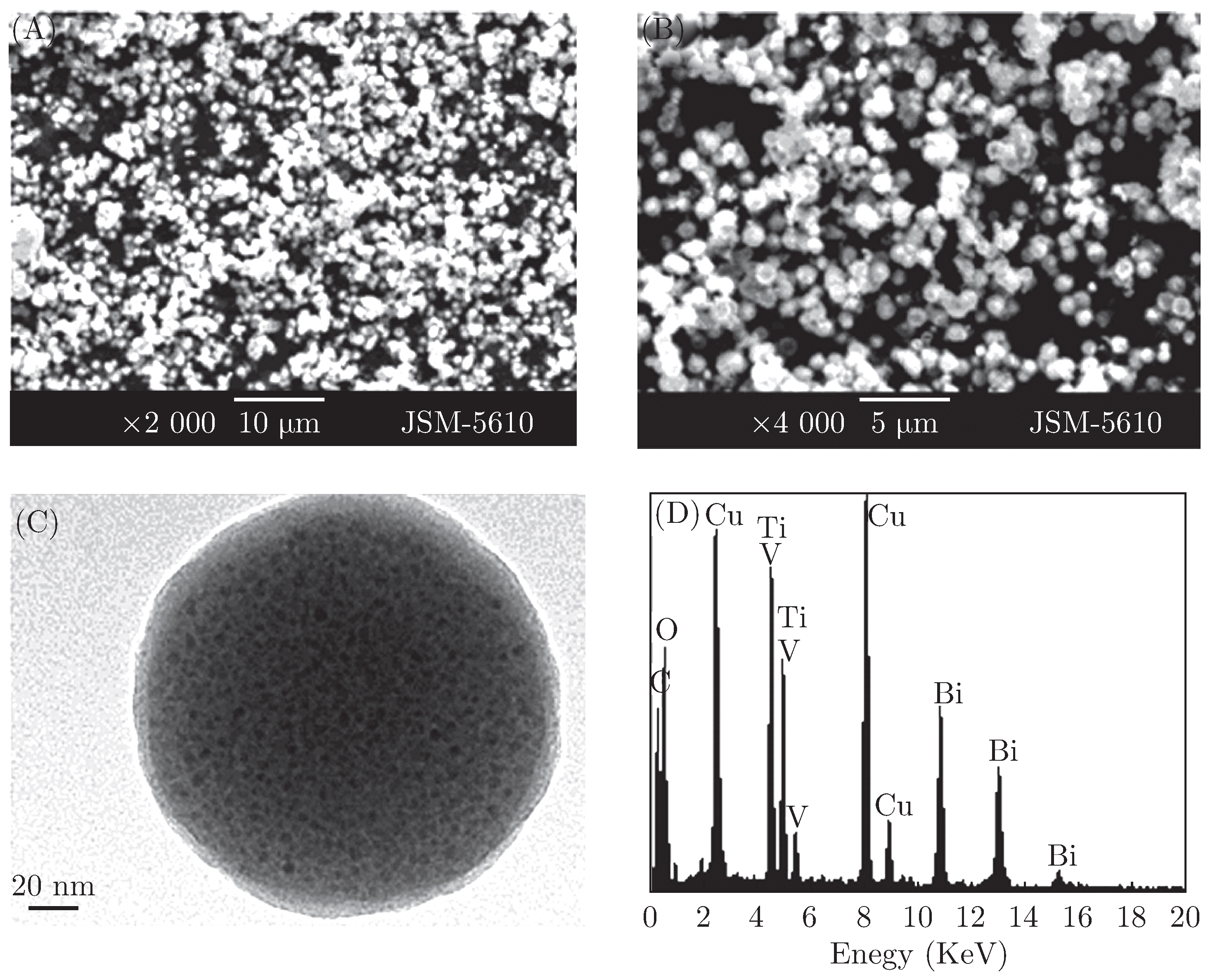
The structure and morphology of BiVO4/TiO2/C composites were characterized by their corresponding SEM and TEM images. As shown in Figure 2 (A), the majority of highly uniformed microspheres with diameters ranging from 400 to 600 nm can be found. Moreover, the formation of spherical structure is strongly depended on the molar ration of precursor. The TEM images (Figure 2 (C)) show that the surface of the as-prepared samples is relatively smooth. The EDS analysis spectrum (Figure 2 (D)) reveal that the as-prepared samples comprised of all the elements C, O, Bi, V and Ti from the precursor materials.
Figure 2.
SEM ((A) and (B)), TEM (C) images and EDX analysis spectrum (D) of as-prepared BiVO4/TiO2 hybrid microspheres.
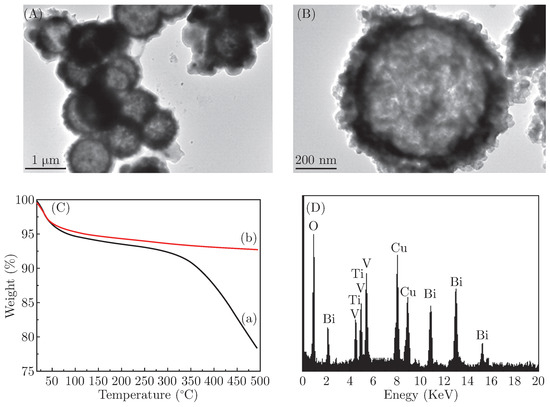
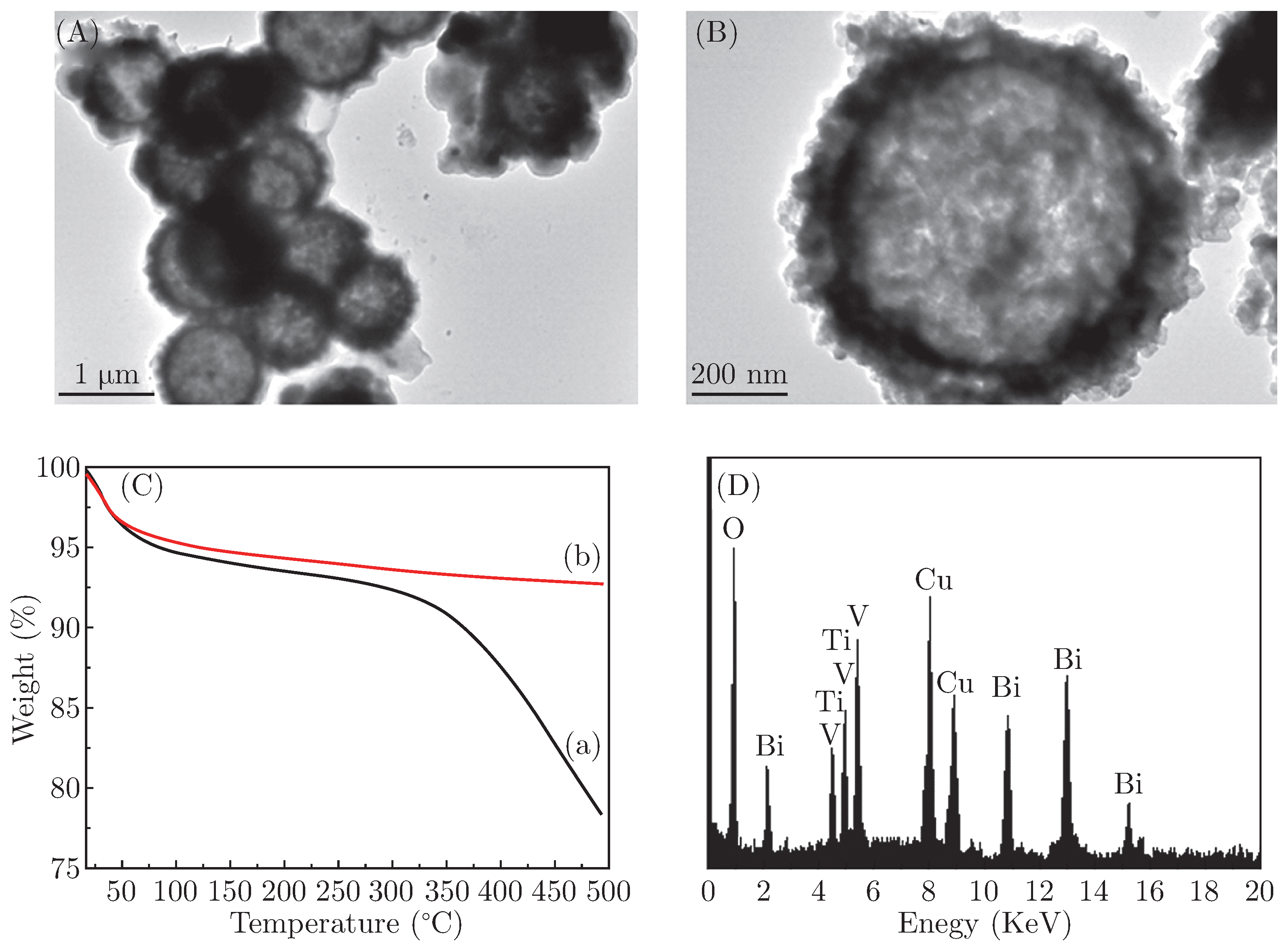
A high-temperature treatment of BiVO4/TiO2 solid microspheres was applied to obtain BiVO4/TiO2 with a hollow structure. The successful preparation of hollow BiVO4/TiO2 microspheres was confirmed by their corresponding TEM images. The hollow spheres with diameter around 0.5 µm was still preserved after calcinations at 400 °C for 2 h, which can be found from Figure 3 (A) compared to the SEM images (Figure 2 (B)). It is clearly seen that the as-prepared samples are hollow and the shell was formed from the aggregation of nanoparticles ranging 20 to 40 nm in thickness. The possible formation process of hollow microspheres interiors can be well explained by the Ostwald ripening process. Usually, the time needed for structural evolution from solid to hollow structure by Ostwald ripening process is longer than 24 h [27,28]. In the present work, we have obtained the hollow microspheres in a very short reaction time with calcination treatment. TGA curves reveal that these hollow microspheres show a high thermal stability. As shown in Figure 3 (C)-(a), the solid microsphere shows a cumulative weight loss of about 5 wt% up to 100 °C caused by the loss of moisture, and a weight loss of about 20 wt% from 300 to 500 °C was associated with the carbon pyrolysis. Compared with these solid microspheres, the hollow microspheres only shows a weight loss 5 wt% from 100 to 500 °C, as shown in Figure 3 (C)-(b), which indicates the carbon yielding for CO, CO2 and steam after calcination treatment. The EDS analysis of as-prepared sample composed of the elements O, Bi, V and Ti (Figure 3 (D)). The element of carbon disappeared, which is in alignment with the TGA results.
Figure 3.
TEM ((A) and (B)) images of BiVO4/TiO2 hollow microspheres, TGA curves of hybrid microspheres before (a) and after (b) calcination treatment (C) and EDX analysis spectrum (D) of as-prepared BiVO4/TiO2 hollow microspheres.
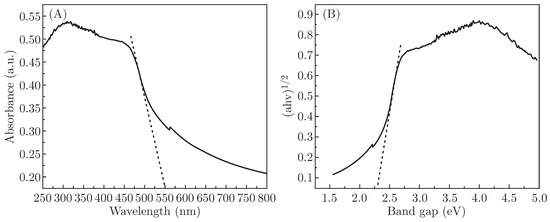
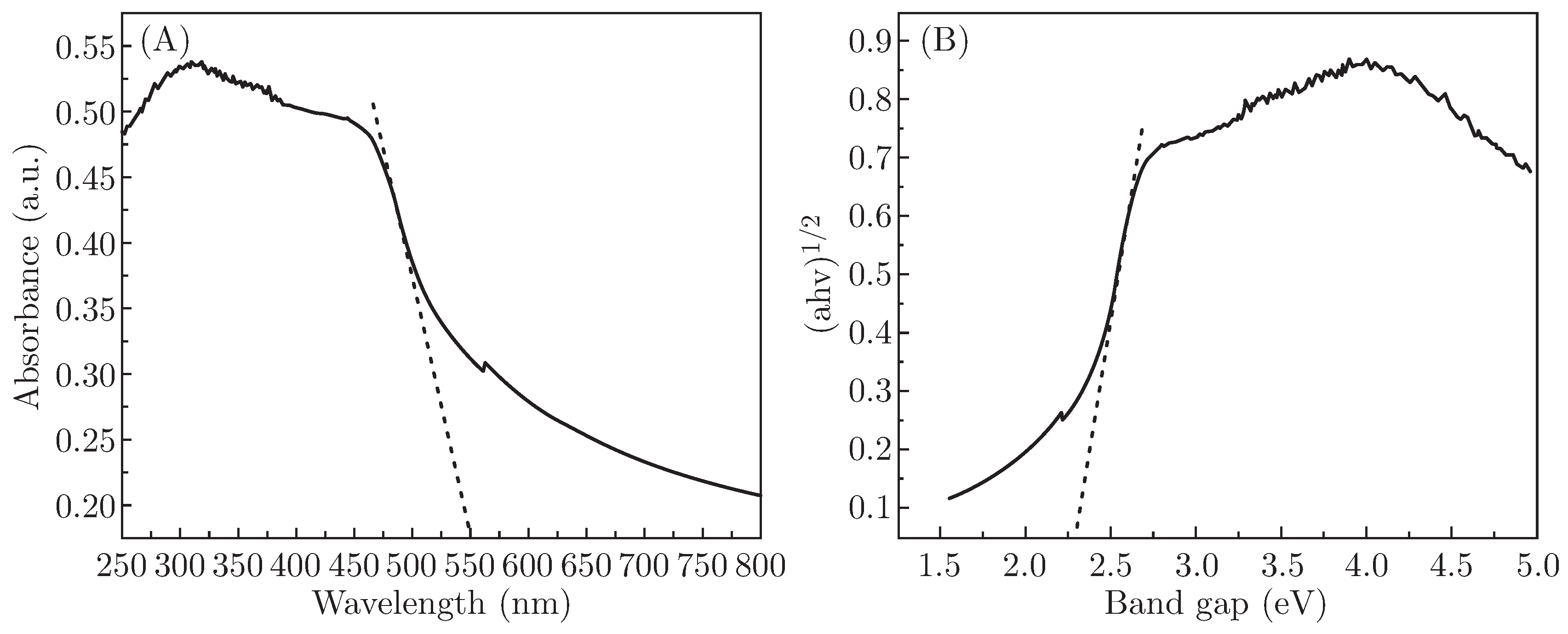
Diffuse Reflectance Spectroscopy (DRS) is a useful tool for characterizing the electronic states in semiconductor materials. Figure 4 (A) shows the UV/Vis diffuse reflectance spectrum of hollow microsphere sample which showed absorption bands in the visible-light region. The absorption onset edge was estimated to be at approximately 550 nm, corresponding to a band-gap of 2.25 eV (Figure 4 (B)), which is the characteristic absorption of monoclinic scheelite BiVO4 [29,30]. This result obviously reveals the band-gap of the hollow microsphere sample is narrower than that of the pure TiO2, which indicates that the hollow microspheres have a potential response to visible light.
Figure 4.
Diffuse reflectance spectrum (A) and band-gap energy (B) of hollow microsphere sample.
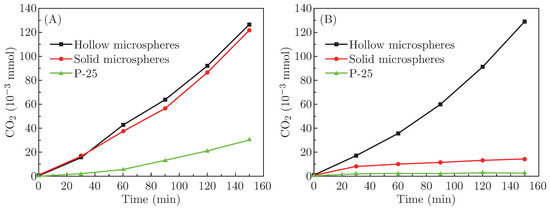
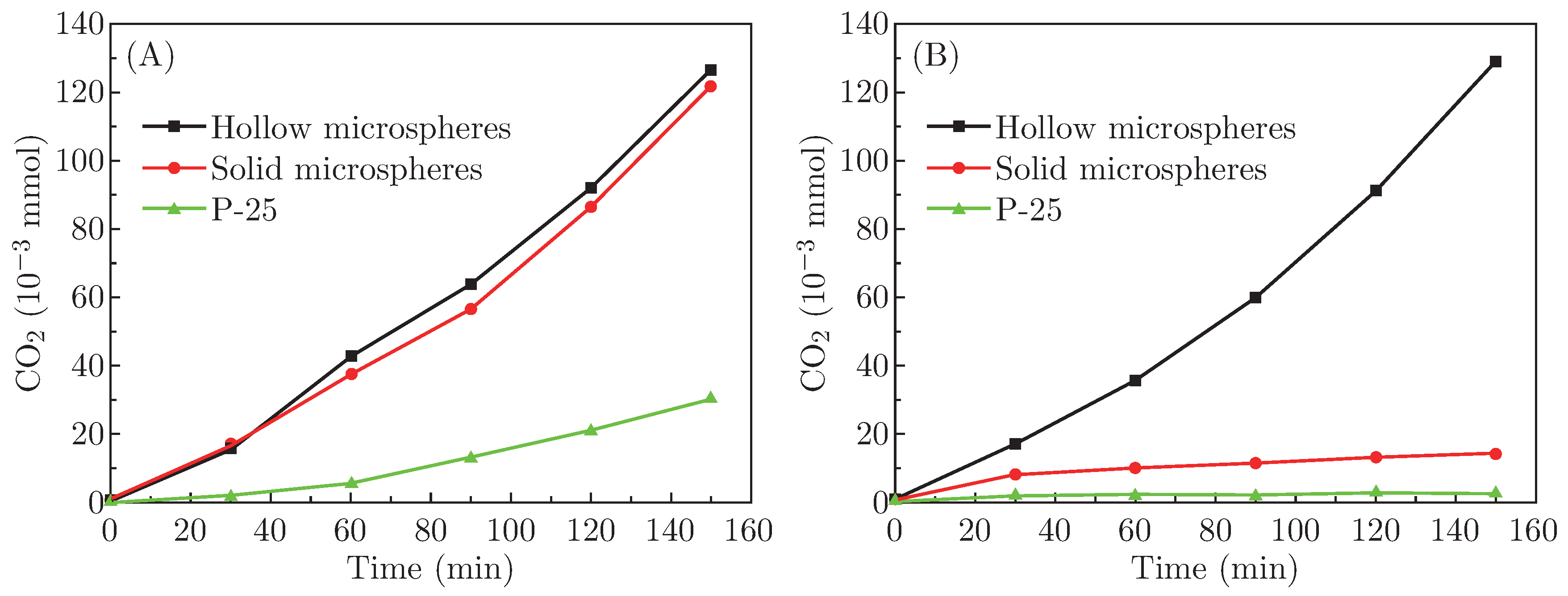
Photocatalytic activity of the as-prepared BiVO4/TiO2 hollow microspheres was evaluated by the degradation of acetic acid to produce CO2 at atmospheric pressure. As shown in Figure 5 (A), the amount of CO2 evolution increases linearly with irradiation time for the three samples under the UV irradiation. However, the BiVO4/TiO2 hollow microspheres exhibit superior photocatalytic activity, which is higher than BiVO4/TiO2 solid microspheres than P-25 due to its higher specific surface area and nanoporous properties which enables BiVO4/TiO2 hollow microspheres to have more accessible active sites for photocatalytic reaction [31]. And the irradiation light is extended into the visible light region (λ>420 nm), the rate of the CO2 production shows a very great variation for BiVO4/TiO2 solid microsphere sample, as shown in Figure 5 (B). Both P-25 and BiVO4/TiO2 solid microsphere show similar photocatalytic activity. However, BiVO4/TiO2 hollow microsphere is still more efficient for degradation of acetic acid most likely because acetic acid is anchored to the Bi3+ sites through a weak Bi-O bond so that they can efficiently receive the photo-generated electrons from the V 3d-block bands of BiVO4 [32]. The local environment around the Bi3+ ion is more strongly asymmetric in the monoclinic phase than in the tetragonal phase, so that the Bi3+ ion has a stronger lone pair character in the monoclinic phase and hence has a stronger tendency to form a Bi-O bond with acetic acid. It will lead to a more efficient transfer of photo-generated electrons from the V 3d-block bands to the anchored acetic acid in the case of BiVO4/TiO2 hollow microsphere.
Figure 5.
Photocatalytic acetic acid irradiated by Xe lamp (300 W) (A) and (B) equipped with optical cutoff filter (λ>420 nm).
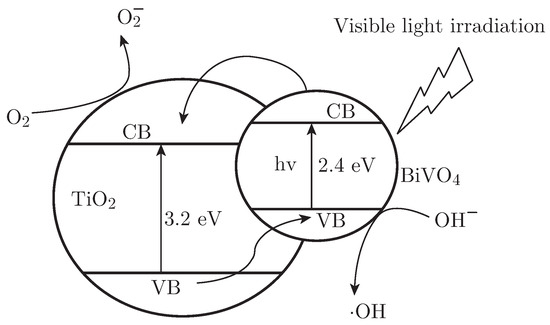
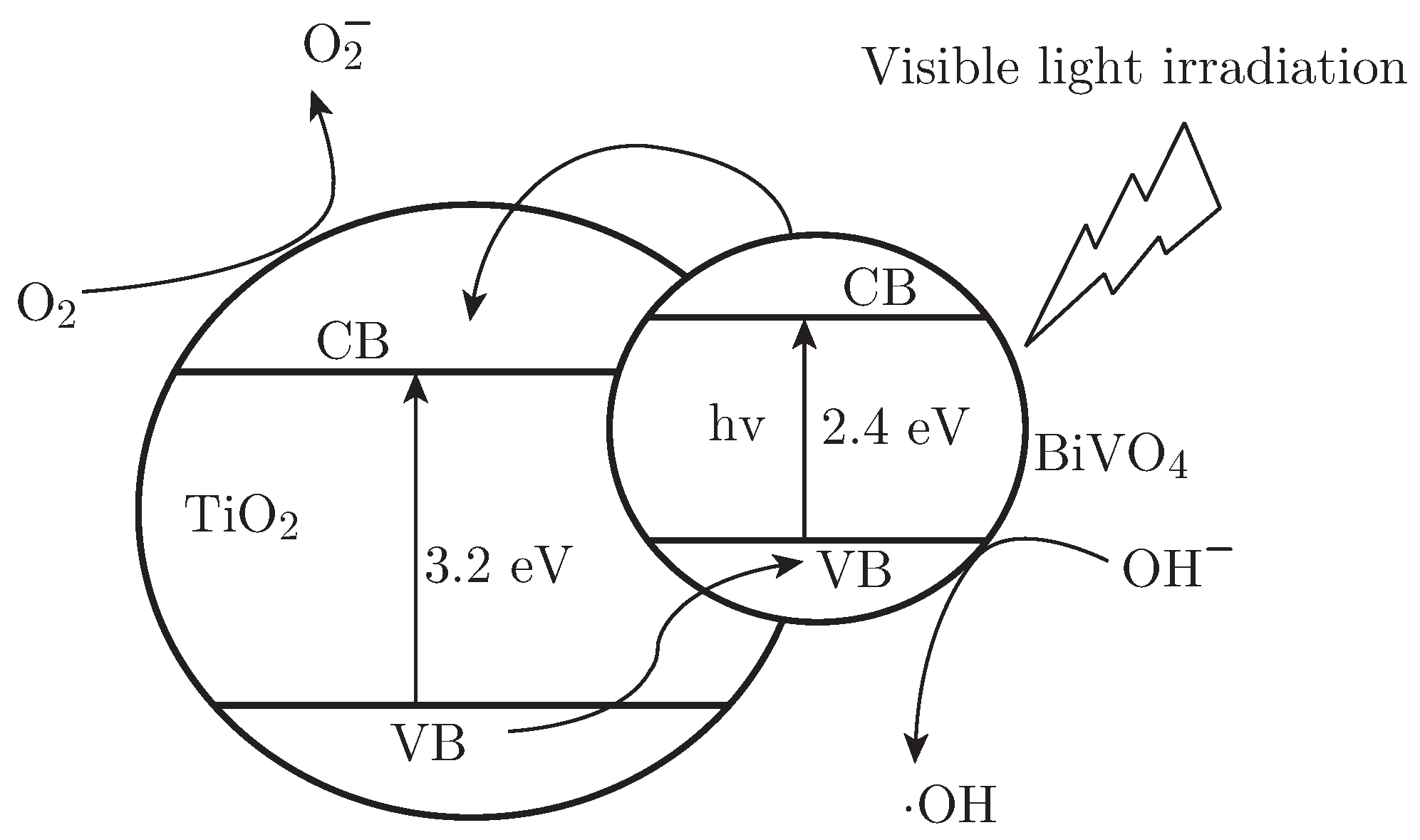
Using two semiconductors with different levels of redox energy of their corresponding conduction and valence band, and having them come in contact can actually be considered as one of the most promising methods for improving charge separations, increasing the lifetime of charge carriers, and enhancing the efficiency of the interfacial charge transfer to adsorbed substrate [16]. As the previous reported, the conduction band of BiVO4 was more cathodic than that of TiO2 [33]. In general, the difference in conduction bands between two semiconductors is the driving forces of electron injection. In the system of BiVO4/TiO2, the BiVO4 can be excited and the excited electrons generate the conduction band of BiVO4 which is quickly transferred to a TiO2 particle under visible-light irradiation, since the conduction band of BiVO4 is more negative than that of TiO2 as show in Figure 6. The anatase TiO2 is coupled by interparticle electron transfer from irradiated BiVO4 nanocrystals to its conduction band. The electrons are then scavenged by molecular oxygen O2 to yield the superoxide radical anion . Thus forming intermediates that can interreact to produce hydroxyl radical OH. In addition, the holes remaining in the BiVO4 valence band after migration of excited electrons can also react with the hydroxyl groups (OH−) to form OH. It is well known that the OH radical is a powerful oxidizing agent capable of degrading most pollutants. The transfer of charge should therefore enhance the photo-oxidation of the adsorbed organic molecules.
Figure 6.
Redox process of the valence and conduction bands of BiVO4/TiO2 hollow microsphere samples under visible-light irradiation.
4. Conclusion
In summary, a simple one-step template-free method was applied to prepare BiVO4/TiO2 solid microspheres. Furthermore, the hollow microspheres can be obtained by pyrolysis of solid microspheres under high temperature. One of the advantages of this method is that the nanoporous BiVO4/TiO2 hollow microspheres can be prepared without assistance of templates. The asprepared hollow microspheres exhibit hierarchically nanoporous structures and a high photocatalytic activity in the degradation of acetic acid under visible light. The hierarchically BiVO4/TiO2 hollow microspheres should find various potential applications in photocatalysis, catalysis, solar cells, and separation and purification processes.
Acknowledgments
This work was financially supported by the Qianjiang Talents Project of Zhejiang Province (2010R10023), the Scientific Research Foundation for the Returned Overseas Chinese Scholars, the State Education Ministry (1001603-C), the Natural Science Foundation of Zhejiang Province (Y4100045), the Key Bidding Project of Zhejiang Provincal Key Lab of Fiber Materials and Manufacturing Technology, Zhejiang Sci-Tech University (S2010002) and the Program for Changjiang Scholars and Innovative Research Team in University (PCSIRT: 0654).
References
- Yu, J.; Liu, W.; Yu, H. A one-pot approach to hierarchically nanoporous titania hollow microspheres with high photocatalytic activity. Cryst. Growth Des. 2008, 8, 930–934. [Google Scholar] [CrossRef] [Scilit]
- Jiang, G.; Zeng, J. Preparation of nano-TiO2/polystyrene hybride microspheres and their antibacterial properties. J. Appl. Polym. Sci. 2010, 116, 779–784. [Google Scholar] [CrossRef] [Scilit]
- Jiang, G.; Zheng, X.; Wang, Y.; Li, T.; Sun, X. Photo-degradation of methylene blue by multi-walled carbon nanotubes/TiO2 composites. Powder Technol. 2011, 207, 465–469. [Google Scholar] [CrossRef] [Scilit]
- Ryu, J.; Choi, W. Substrate-specific photocatalytic activities of TiO2 and multiactivity test for water treatment application. Environ. Sci. Technol. 2008, 42, 294–300. [Google Scholar] [CrossRef] [Scilit] [PubMed]
- Zhou, B.; Zhao, X.; Liu, H.; Qu, J.; Huang, C.P. Visible-light sensitive cobalt-doped BiVO4 (Co-BiVO4) photocatalytic composites for the degradation of methylene blue dye in dilute aqueous solutions. Appl. Catal. B Environ. 2010, 99, 214–221. [Google Scholar] [CrossRef] [Scilit]
- Choi, W.; Termin, A.; Hoffmann, M.R. The role of metal ion dopants in quantum-sized TiO2: Correlation between photoreactivity and charge carrier recombination dynamics. J. Phys. Chem. 1994, 98, 13669–13679. [Google Scholar] [CrossRef] [Scilit]
- Ge, L.; Xu, M.; Fang, H. Photo-catalytic degradation of methyl orange and formaldehyde by Ag/InVO4TiO2 thin films under visible-light irradiation. J. Mol. Catal. A Chem. 2006, 258, 68–76. [Google Scholar] [CrossRef] [Scilit]
- Chen, C.; Ma, W.; Zhao, J. Semiconductor-mediated photodegradation of pollutants under visiblelight irradiation. Chem. Soc. Rev. 2010, 39, 4206–4219. [Google Scholar] [CrossRef] [Scilit] [PubMed]
- Jiang, G.; Wang, R.; Jin, H.; Wang, Y.; Sun, X.; Wang, S.; Wang, T. Preparation of Cu2O/TiO2 composite porous carbon microspheres as efficient visible light-responsive photocatalysts. Powder Technol. 2011, 212, 284–288. [Google Scholar] [CrossRef] [Scilit]
- Tada, H.; Jin, Q.; Nishijima, H.; Yamamoto, H.; Fujishima, M.; Okuoka, S.; Hattori, T.; Sumida, Y.; Kobayashi, H. Titanium (IV) dioxide surface-modified with iron oxide as a visible light photocatalyst. Angew. Chem. Int. Ed. 2011, 50, 3501–3505. [Google Scholar] [CrossRef] [Scilit] [PubMed]
- Wang, H.; Lewis, J.P. Second-generation photocatalytic materials: anion-doped TiO2. J. Phys. Condens. Matter 2006, 18, 421–427. [Google Scholar] [CrossRef] [Scilit]
- Reyes-Gil, K.R.; Reyes-García, E.A.; Raftery, D. Photoelectrochemical analysis of anion-doped TiO2 colloidal and powder thin-film electrodes. J. Electrochem. Soc. 2006, 153, 12961301. [Google Scholar] [CrossRef] [Scilit]
- Pérez, U.M.G.; Guzmán, S.S.; Cruz, A.M.; Méndez, O.U. Photocatalytic activity of BiVO4 nanospheres obtained by solution combustion synthesis using sodium carboxymethylcellulose. J. Mol. Catal. A Chem. 2011, 335, 169–175. [Google Scholar] [CrossRef] [Scilit]
- Cruz, A.M.; Pérez, U.M.G. Photocatalytic properties of BiVO4 prepared by the co-precipitation method: Degradation of rhodamine B and possible reaction mechanisms under visible irradiation. Mater. Res. Bull. 2010, 45, 135–141. [Google Scholar] [CrossRef] [Scilit]
- Jiang, H.; Endo, H.; Natori, H.; Nagai, M.; Kobayashi, K. Fabrication and photoactivities of sphericalshaped BiVO4 photocatalysts through solution combustion synthesis method. J. Eur. Ceram. Soc. 2008, 28, 2955–2962. [Google Scholar] [CrossRef] [Scilit]
- Yu, J.; Yu, X.; Huang, B.; Zhang, X.; Dai, Y. Hydrothermal synthesis and visible-light photocatalytic activity of novel cage-like ferric oxide hollow spheres. Cryst. Growth Des. 2009, 9, 1474–1480. [Google Scholar] [CrossRef] [Scilit]
- Deng, Y.; Liu, X.; Shen, B.; Liu, L.; Hu, W. Preparation and microwave characterization of submicrometer-sized hollow nickel spheres. J. Magn. Magn. Mater. 2006, 303, 181–184. [Google Scholar] [CrossRef] [Scilit]
- Hu, C.Y.; Xu, Y.J.; Duo, S.W.; Li, W.K.; Xiang, J.H.; Li, M.S.; Zhang, R.F. Preparation of inorganic hollow spheres based on different methods. J. Chin. Chem. Soc. 2010, 57, 1091–1098. [Google Scholar] [CrossRef] [Scilit]
- Tsai, M.S.; Li, M.J.; Yen, F.H. Synthesis of nano grade hollow silica sphere via a soft template method. J. Nanosci. Nanotechnol. 2008, 8, 3097–3100. [Google Scholar] [CrossRef] [Scilit] [PubMed]
- Leidinger, P.; Popescu, R.; Gerthsen, D.; Feldmann, C. Nanoscale La(OH)3 hollow spheres and finetuning of its outer diameter and cavity size. Small 2010, 6, 1886–1891. [Google Scholar] [CrossRef] [Scilit] [PubMed]
- Meng, Y.; Chen, D.; Jiao, X. Synthesis and characterization of CoFe2O4 hollow spheres. Eur. J. Inorg. Chem. 2008, 11, 4019–4024. [Google Scholar] [CrossRef] [Scilit]
- Cao, S.W.; Zhu, Y.J. Monodisperse α-Fe2O3 mesoporous microspheres: One-step NaCl-assisted microwave-solvothermal preparation, size control and photocatalytic property. Nanoscale Res. Lett. 2011, 6, 1. [Google Scholar] [CrossRef] [Scilit] [PubMed]
- Bai, B.; Wang, P.; Wu, L.; Yang, L.; Chen, Z. A novel yeast bio-template route to synthesize Cr2O3 hollow microspheres. Mater. Chem. Phys. 2009, 114, 26–29. [Google Scholar] [CrossRef] [Scilit]
- Ai, P.F.; Liu, Y.L.; Xiao, L.Y.; Wang, H.J.; Meng, J.X. Synthesis of Y2O2S: Eu3+, Mg2+, Ti4+ hollow microspheres via homogeneous precipitation route. Sci. Technol. Adv. Mater. 2010, 11, 035002. [Google Scholar] [PubMed]
- Tian, B.Z.; Yang, H.F.; Liu, X.Y.; Xie, S.H.; Yu, C.Z.; Fan, J.; Tu, B.; Zhao, D.Y. Fast preparation of highly ordered nonsiliceous mesoporous materials via mixed inorganic precursors. Chem. Commun. 2002, 17, 1824–1825. [Google Scholar] [CrossRef] [Scilit] [PubMed]
- Wang, R.; Jiang, G.; Ding, Y.; Wang, Y.; Sun, X.; Wang, X.; Chen, W. Photocatalytic activity of heterostructures based on TiO2 and halloysite nanotubes. ACS Appl. Mater. Interfaces 2011, 3, 41544158. [Google Scholar] [CrossRef] [Scilit] [PubMed]
- Hu, P.; Yu, L.; Zuo, A.; Guo, C.; Yuan, F. Fabrication of monodisperse magnetite hollow spheres. J. Phys. Chem. C 2009, 113, 900–906. [Google Scholar] [CrossRef] [Scilit]
- Luo, B.; Xu, S.; Ma, W.F.; Wang, W.R.; Wang, S.L.; Guo, J.; Yang, W.L.; Hu, J.H.; Wang, C.C. Fabrication of magnetite hollow porous nanocrystal shells as a drug carrier for paclitaxel. J. Mater. Chem. 2010, 20, 7107–7113. [Google Scholar] [CrossRef] [Scilit]
- Khomenkova, L.; Fernandez, P.; Piqueras, J. ZnO nanostructured microspheres and elongated structures grown by thermal treatment of ZnS powder. Cryst. Growth Des. 2007, 7, 836–839. [Google Scholar] [CrossRef] [Scilit]
- Dong, F.; Wu, Q.; Ma, J.; Chen, Y. Mild oxide-hydrothermal synthesis of different aspect ratios of monoclinic BiVO4 nanorods tuned by temperature. Physica Status Solidi A 2009, 206, 59–63. [Google Scholar] [CrossRef] [Scilit]
- Cheng, H.F.; Huang, B.B.; Wang, Z.Y.; Qin, X.Y.; Zhang, X.Y.; Dai, Y. One-pot miniemulsion-mediated route to BiOBr hollow microspheres with highly efficient photocatalytic activity. Chem.-A Eur. J. 2011, 17, 8039–8043. [Google Scholar] [CrossRef] [Scilit] [PubMed]
- Liu, Y.; Huang, B.; Dai, Y.; Zhang, X.; Qin, X.; Jiang, M.; Whangbo, M.H. Selective ethanol formation from photocatalytic reduction of carbon dioxide in water with BiVO4 photocatalyst. Catal. Commun. 2009, 11, 210–213. [Google Scholar] [CrossRef] [Scilit]
- Sayama, K.; Wang, N.; Miseki, Y.; Kusama, H.; Onozawa-Komatsuzaki, N.; Sugihara, H. Effect of carbonate ions on the photooxidation of water over porous BiVO4 film photoelectrode under visible light. Chem. Lett. 2010, 39, 17–18. [Google Scholar] [CrossRef] [Scilit]
© 2012 Textile Bioengineering and Informatics Society. This article is an open access article distributed under the terms and conditions of the Creative Commons Attribution (CC BY) license (https://creativecommons.org/licenses/by/4.0/).