


Abstract
The effects of adhesive agent on shear stiffness of laminated fabrics bonded with adhesive interlining were investigated. The shear stiffness of face fabrics made of different weave density and adhesive interlinings made of different adhesive condition for mass, number and diameter were measured. As adhesive agent mass increases, shear stiffness values of adhesive interlining and laminated fabric is increased. Furthermore, as weave density of face fabric increases, shear stiffness of face fabrics is increased. The increasing rate (I.R.) of shear stiffness for face fabric by bonding adhesive interlining was obtained from the difference between shear stiffness of laminated fabric and pressed adhesive interlining. The relationship between fixed crossing points of warp and weft by adhesive agents per all crossing points of warp and weft (F.C. (%)), and adhesive agent mass and number was investigated. A prediction method was proposed using the increasing rate (I.R.) and F.C. (%). The predicted shear stiffness of laminated fabric showed good agreements with experimental ones.
1. Introduction
Nowadays, numerous subsidiary materials for clothing have appeared in the response to various necessities of fabrics. Among them, an interlining has been commonly used to give garments a suitable appearance and stability. The interlining is considered as the most important subsidiary material. An adhesive interlining which uses thermoplastic resin is a representative. Because the properties of a fabric were considerably changed by laminating adhesive interlining, and the changes of those properties have affected the garments’ properties, studies about the effect of adhesive interlining on laminated fabric are necessary. Especially, prediction for mechanical properties of laminated fabric is needed for a garment design. Among many of the mechanical properties, bending and shear stiffness are the few of the most important factors for garments.
There are some studies on prediction method of mechanical properties for laminated fabric with adhesive interlining. In regards to the prediction of bending rigidity for laminated fabric, Kanayama M. et al. [1] and [2] suggested a prediction method about the bending rigidity of a composite, based on mechanical theory for composite structure. In our previous study [3] and [4], we verified laminate theory and proposed a prediction method for the bending rigidity of laminated fabric with adhesive interlining, considering the tensile and compressive moduli of face fabric and adhesive interlining. Furthermore, we also proposed more precise prediction methods which consider the position of the neutral axis for face fabric [5]. However, studies on shear properties are insufficient.
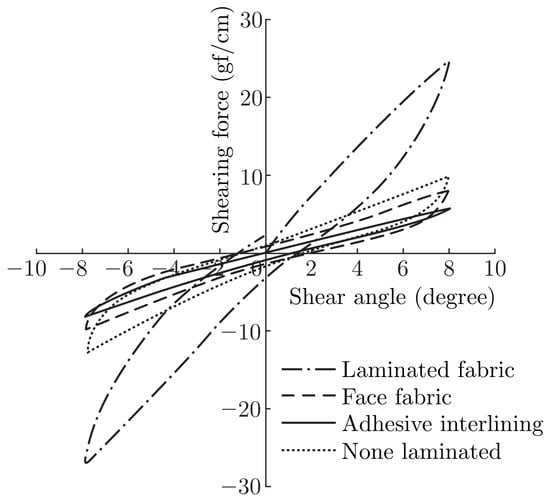
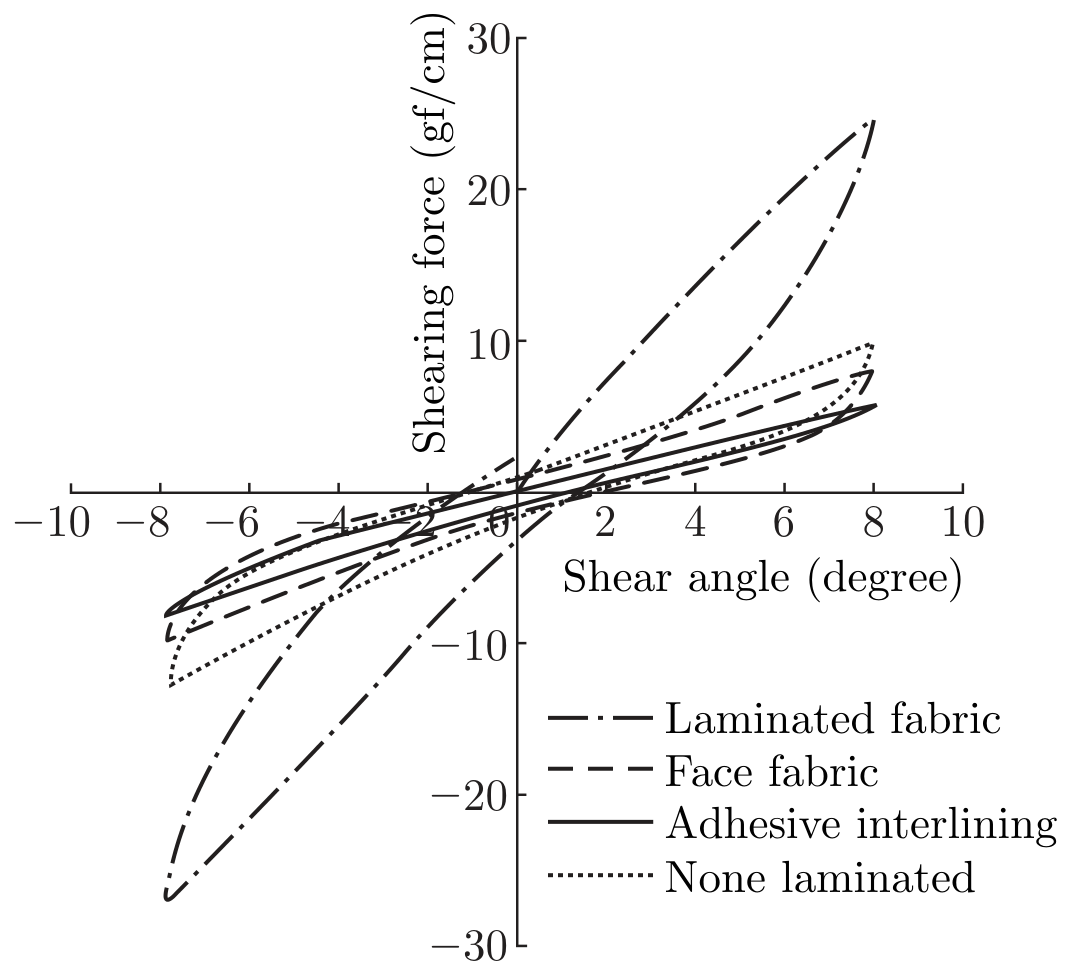
In the case of uniform material, shear stiffness of laminated plate with plate 1 and plate 2 is the sum of shear stiffness for two plates. However, as shown in Figure 1, the shear stiffness of laminated fabric is larger than the sum of the face fabric and adhesive interlining. Thus, it is clear that woven fabric and adhesive interlining show different properties than uniform material. Therefore, it is necessary to investigate related factors on shear stiffness of laminated fabric and a prediction method of shear stiffness for laminated fabric.
Figure 1.
Typical shear graph of face fabric, adhesive interlining, laminated fabric with face fabric and adhesive interlining, and none laminated fabric with face fabric and adhesive interlining.
In relation to the prediction of shear stiffness for laminated fabric, Shishoo R. et al. [6] investigated the relationship of mechanical properties experimentally and statistically. They introduced regression equations for shear stiffness. Fan J. et al. [7] considered shear properties as important factors. They suggested a set of equations to predict the low stress mechanical properties of fused composites from those of composed and fusible interlining fabrics. The studies were focused on proposing prediction equations of mechanical properties for laminated fabric, with adhesive interlining based on statistical analysis. However, the errors between predicted and calculated results were still large. Kanayama M. et al. [2] also mentioned the possibility of using the prediction method concept for shear properties, considering the rate of hard segment with adhesive and soft segment without adhesive agent. However, the practical results did not show in their study. Those studies are still not enough for practical usage, therefore more precise prediction method of shear stiffness for laminated fabric is necessary.
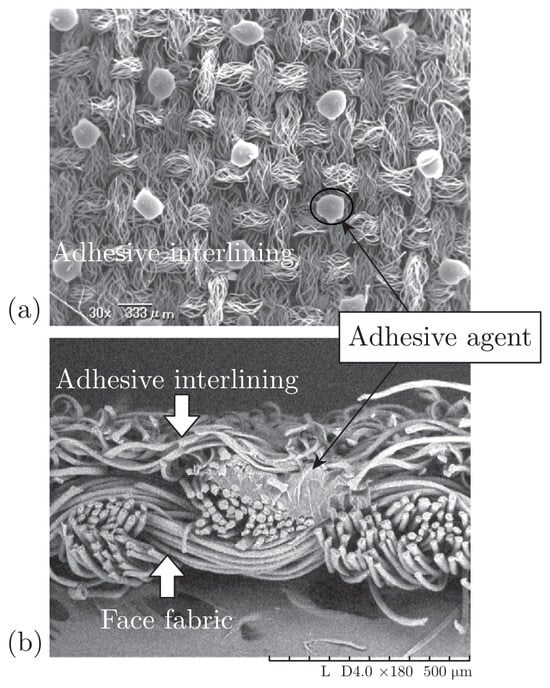
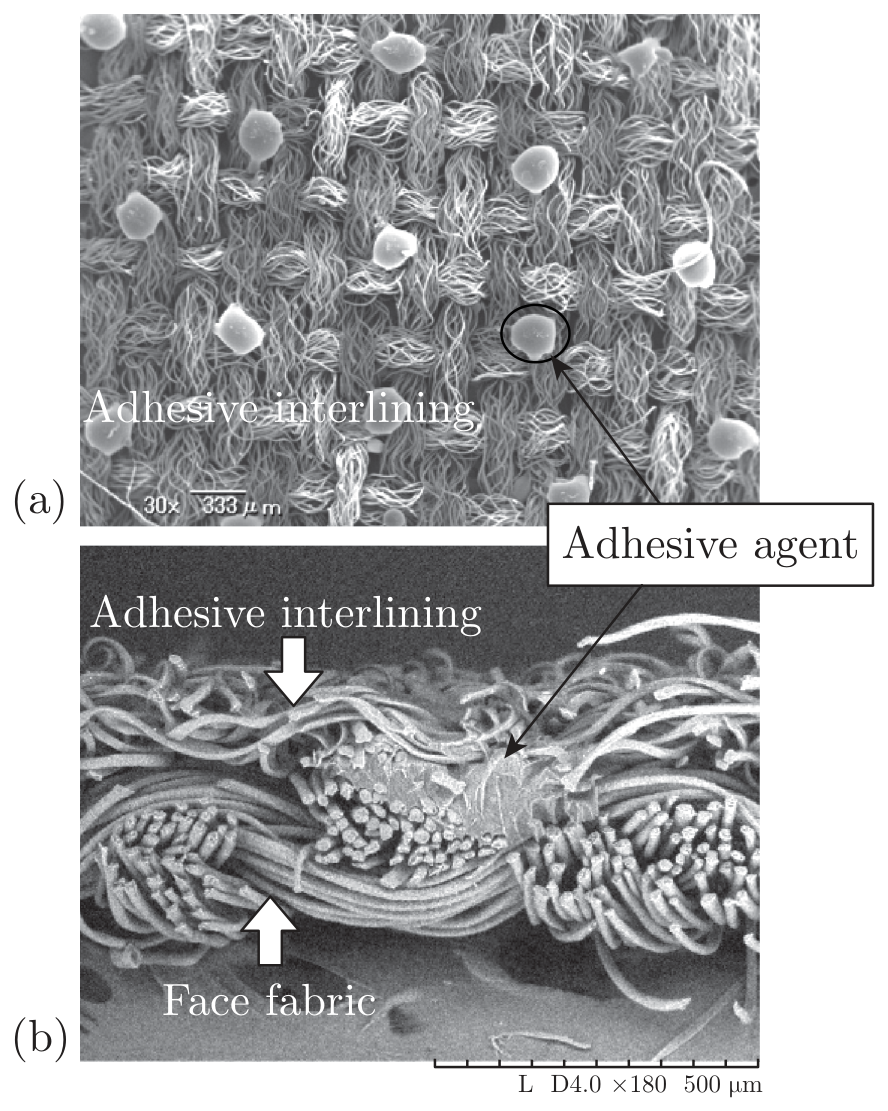
In this study, the effect of torque at crossing point of warp and weft and adhesive agent were considered as the factors on shear stiffness of laminated fabric. The yarn torque properties of warp and weft have effects on shear stiffness of a fabric [8]. Nowadays, most adhesive shape on interlining is dot type, which has a round shape so it is not a continuous layer as shown in Figure 2. Therefore, the adhesive agent will fix the movement of warp and weft partly. Hence according to this hypothesis, the relationships between torque at crossing points of warp and weft on a fabric, and adhesive agent conditions such as diameter, mass and number were investigated in this study.
Figure 2.
(a) Surface of adhesive interlining and (b) Cross section of laminated fabric with face fabric and adhesive interlining.
2. Model of Shear Stiffness for Laminated Fabric
In this paper we used specified shear stiffness with shear force per unit width instead of the stress as shear stiffness. If the shear properties of laminated fabric follow the laminate theory, the shear stiffness of laminated fabric with face fabric and adhesive interlining, will be the sum of shear stiffness of face fabric and adhesive interlining as follows:
where Gl is the shear stiffness of laminated fabric with face fabric and adhesive interlining, Gf is shear stiffness of face fabric and Gi is shear stiffness of adhesive interlining.
Gl = Gf + Gi
However, it is clear that laminated fabric with face fabric and adhesive interlining does not follow the laminate theory as shown in Figure 1. So, in this study, increasing rates (I.R.) of shear stiffness for face fabric, by bonding adhesive interlining were used to predict shear stiffness of laminated fabric. The I.R. can be obtained from the difference between experimental shear stiffness of laminated fabric, and experimental shear stiffness of pressed adhesive interlining, divided by the experimental shear stiffness of pressed face fabric. This is shown as follows:
where I.R. is an increasing rate of shear stiffness for face fabric by bonding adhesive interlining, Gpf is shear stiffness of pressed face fabric and Gpi is shear stiffness of pressed adhesive interlining. “Pressed adhesive interlining” and “pressed face fabric”, refer that the samples which were pressed respectively under the same pressing condition while making laminated fabrics.
If we can estimate the I.R. values for a combination of specific interlining and face fabric experimentally or theoretically, we can predict shear stiffness for laminated fabric as follows:
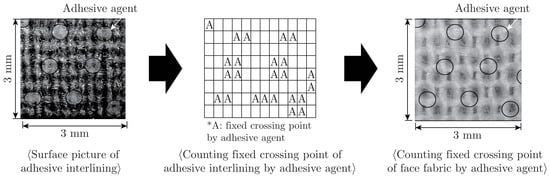
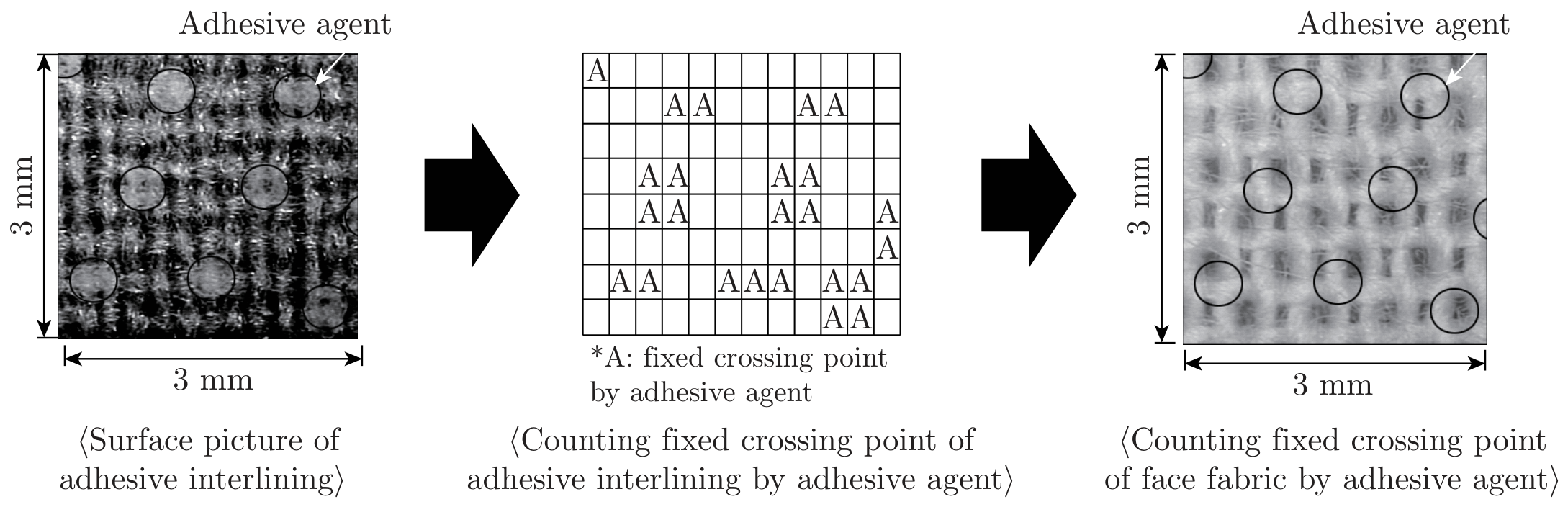
where Glcal is predicted shear stiffness of laminated fabric, the I.R. of shear stiffness was affected by adhesive agent which was used to bond interlining to face fabric. Adhesive agent has a dot shape, (Figure 2) and it has affected the crossing torque at the crossing points of warp and weft. Therefore, to obtain I.R., the torque at crossing point of warp and weft was considered. To investigate the relationship between torque at the crossing point of warp and weft, and shear stiffness, crossing point numbers were investigated. As shown in Figure 3, the crossing point numbers fixed by adhesive agent of adhesive interlining in unit area (F.C.) can be counted by image analysis. The adhesive agents are also supposed to stick to the surface of face fabric and to fix crossing points of warp and weft for face fabric. Therefore, F.C. numbers of face fabrics can be also counted by putting the adhesive agent layer, from adhesive interlining on surface picture of face fabric. The percentage of counted fixed crossing point numbers per all crossing point numbers of warp and weft at the same area, (F.C. (%)) will be calculated with this method. It is considered that I.R. and F.C. (%), F.C. (%) and adhesive mass and number are related to each other. Therefore, regression equations can be obtained from those relationships. With those regression equations and equation (3), shear stiffness for laminated fabric of the other samples with different combinations can be calculated.
Glcal = Gpi + (I.R. × Gpf)
Figure 3.
Process of counting fixed crossing point number (F.C.) by adhesive and face fabric by adhesive agent.
3. Experimental
The shear properties of face fabrics, adhesive interlinings and laminated fabrics were measured by KES-FB1 shear tester (Katotech Co. KES-FB) [10]. The G value (shear force per unit length / shear degree) is used as shear stiffness. Every test was carried out under standard condition (a temperature of 20±1 ℃ and a relative humidity of 65±5%). All samples were treated under standard condition for 24 hours. Every test was conducted for five times and the average was used.
The shear stiffness of laminated fabric bonded adhesive interlining was predicted with a proposed model. The relationship between torque at crossing point of warp and weft in unit area, and shear properties of face fabrics, adhesive interlining and laminated fabric with those composite was investigated by considering adhesive agent condition such as adhesive mass, number and diameter. The crossing point numbers fixed by adhesive agent of adhesive interlining (F.C.) were counted by image analysis. When counting the F.C. numbers, adhesive agent was considered as a round shape. The surface pictures of pressed adhesive interlining and pressed face fabric were taken by micro scope.The image analysis was carried out twice with pictures on different places because of the randomly distributed adhesive agent. The relationship between adhesive mass and number andF.C.(%) from laminated fabrics with one face fabric (F48), eight adhesive interlining (A1-1∼4 and A2-1∼4) and laminated fabrics with those samples was investigated. A regression equation was derived from the data of those samples. Also, the relationship between calculated F.C. (%) and I.R. of one face fabric (F48),eight adhesive interlining (A1-1∼4 and A2-1∼4) and laminated fabrics with those samples were investigated. A linear equation was also derived. With those regression equations and equation (3), shear stiffness of laminated fabric of the other samples were calculated. The shear stiffness values of pressed samples were used to predict bending stiffness of laminated fabrics.
Four plain face fabric made of different weave density of weft, and twenty four plain adhesive interlinings controlled the adhesive agent condition were prepared as experimental samples. The adhesive agent of all adhesive interlinings is dot type and randomly distributed on base cloth (polyester 100%). The adhesive dot numbers, diameter and mass were controlled under the same condition of cloths. Ninety six laminated fabrics by those combinations were examined. The specifications of face fabrics and adhesive interlining are shown in Table 1 and Table 2. Bonding interlining to face fabric was treated automatically by a press machine (KOBE DENKI KOGYOSYO, BP-V4812D) and the bonding condition was at 150 ℃, under 0.3 kgf/cm2 load and for 10 s.
Table 1.
Specifications of adhesive interlinings.
Table 2.
Specifications of face fabrics.
It was clear that the mechanical properties of laminate fabric after laminating procedure is changed and must be considered for predicting bending rigidity of laminated fabric in our previous study [3]. Therefore, samples which were pressed respectively under the same bonding condition of laminating adhesive interlining with face fabric were also prepared as samples in this study. Face fabric samples were pressed alone under the same condition of bonding interlining. To press adhesive interlining alone, polytetrafluoroethylene (PTFE) film (NITTO, No. 900, 0.05×300 mm) was prepared for bonding adhesive interlining. Adhesive interlinings were bonded to PTFE films and were removed the PTFE films from those composites. Those samples pressed alone were called as ‘pressed face fabric’, ‘pressed adhesive interlining’ and ‘pressed samples’ for both face fabric and adhesive interlining together. The condition for manufacturing pressed sample was same as bonding interlining.
4. Results and Discussion
4.1. Effect of Mass and Number of Adhesive Agent on Shear Stiffness of Samples
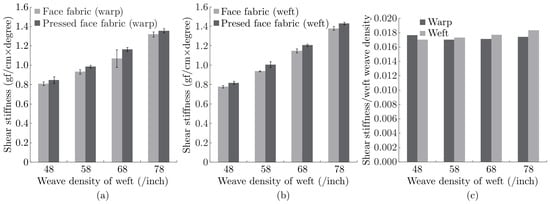
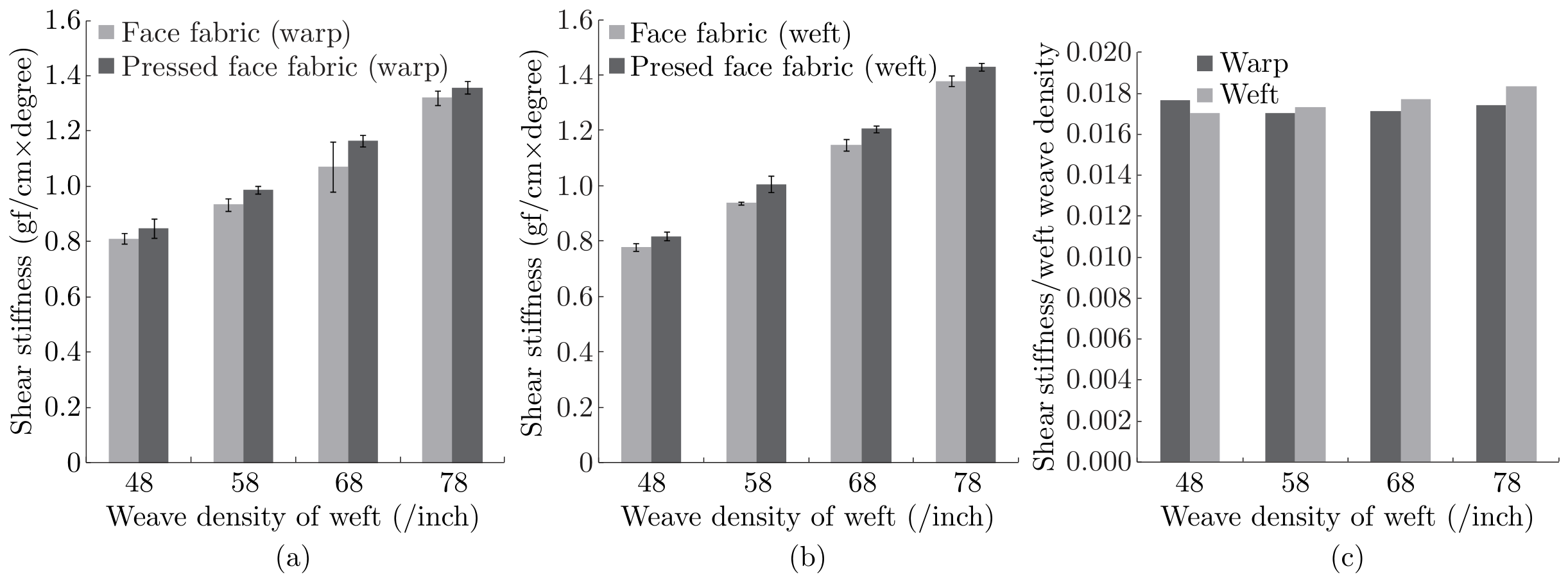
Shear stiffness of face fabrics before and after pressing are shown in Figure 4 (a) and 4 (b). As weave density of weft increases, shear stiffness values increase. After pressing process, the shear stiffness values of face fabrics increased so it was found that the pressure and heat have effects on shear stiffness of woven fabric. Therefore, the changes of shear stiffness of woven fabric by pressing will be necessary for considering the changes of shear properties for laminated fabric. The average of shear stiffness for pressed face fabric divided weft weave density was shown in Figure 4 (c). The divided shear stiffness were similar to each other. Thus, it is clear that shear stiffness is affected by the number of crossing point of warp and weft.
Figure 4.
Shear stiffness of face fabrics before and after pressing (a), (b), and (c) shear stiffness divided weft weave density of face fabric.
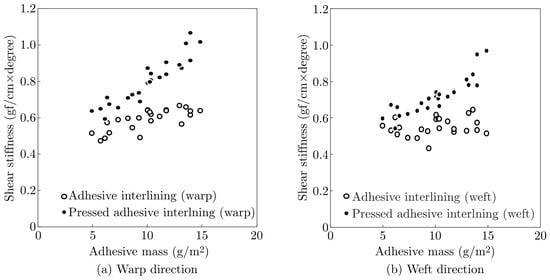
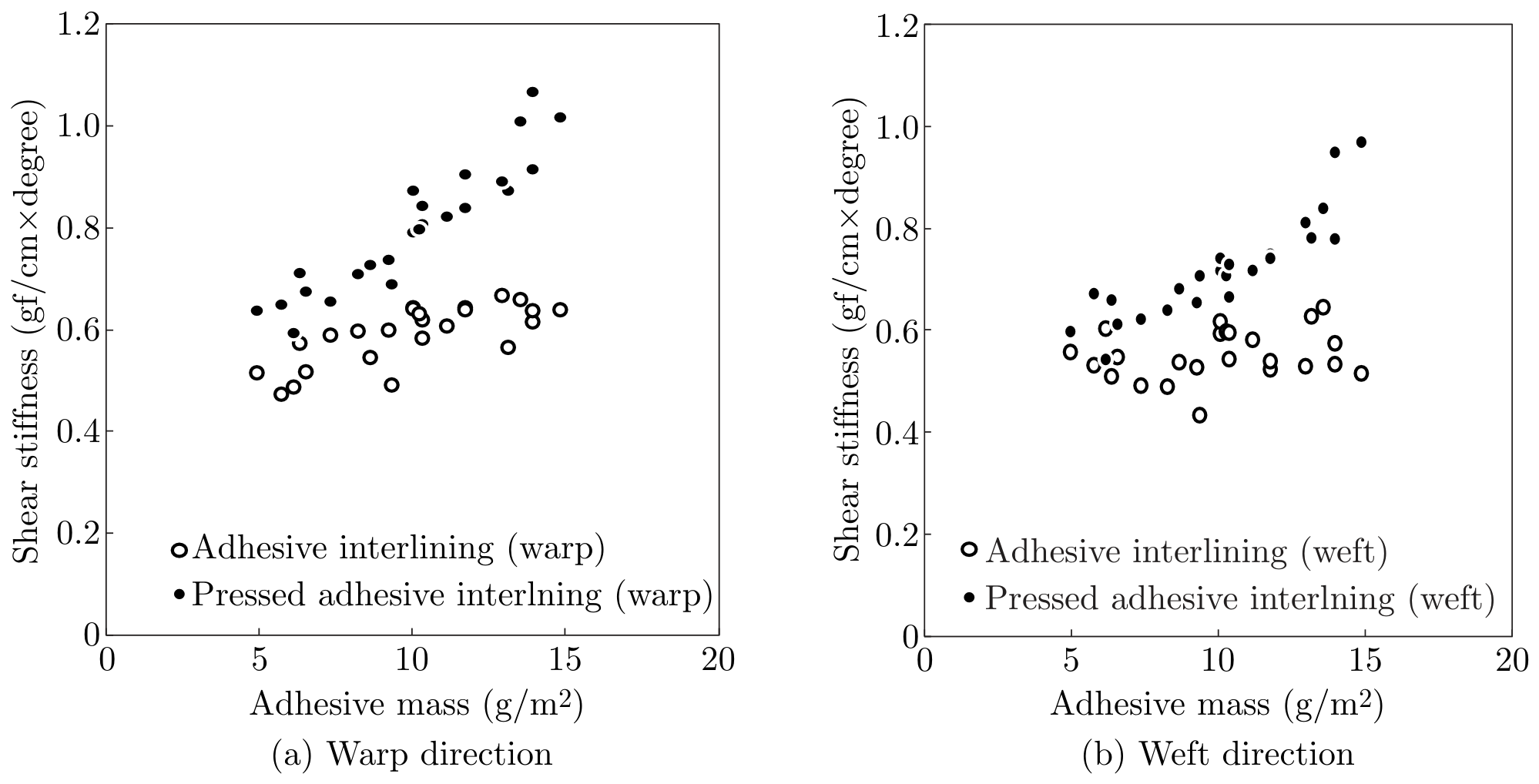
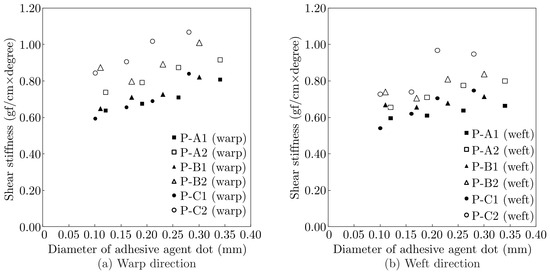
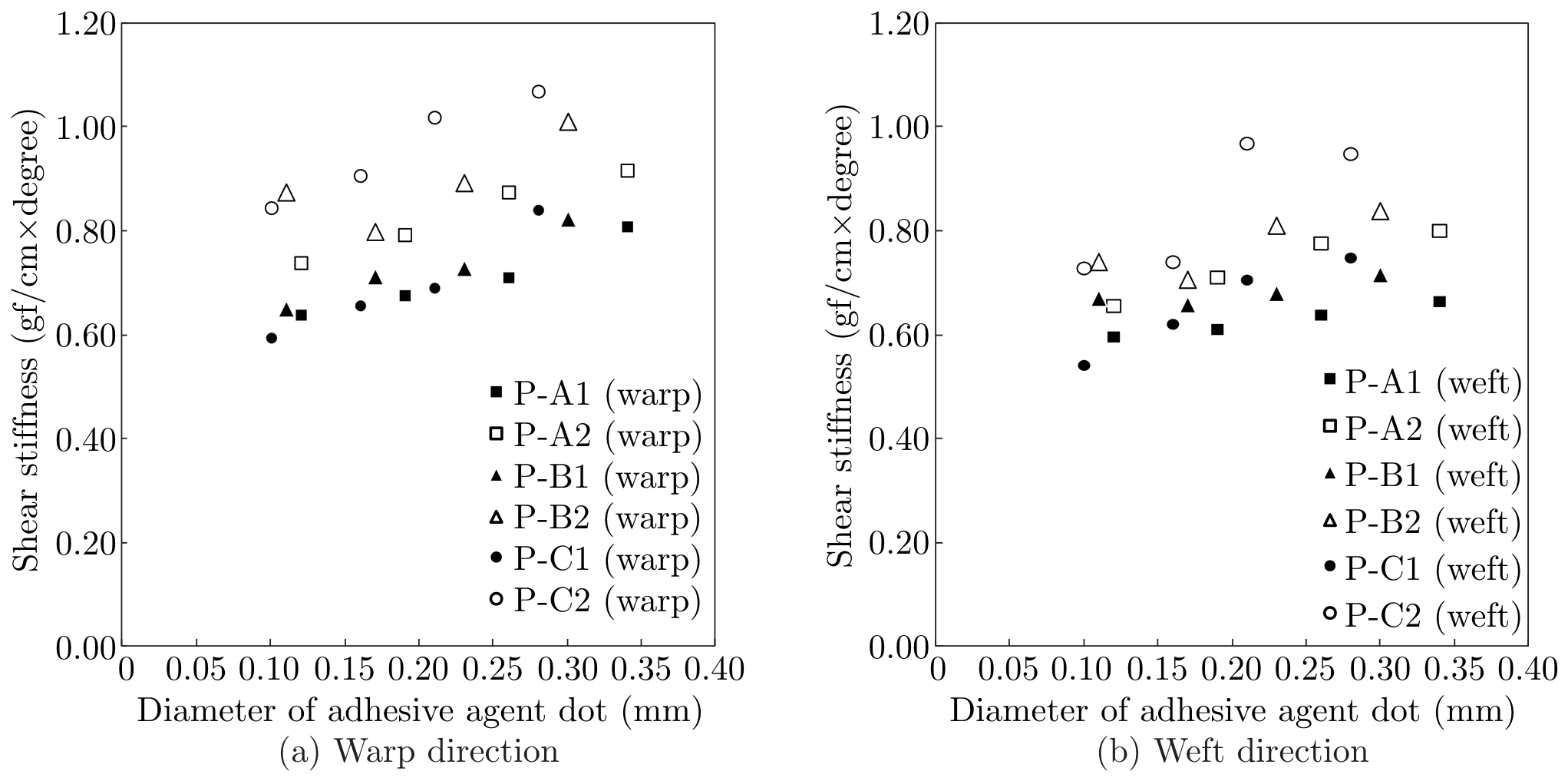
The relationships between shear stiffness of adhesive interlining before and after pressing, and adhesive mass of interlining were shown in Figure 5. As adhesive mass increases, shear stiffness of laminated fabric increases in both adhesive interlining before and after pressing. After pressing, shear stiffness of adhesive interlining significantly increased. The relationships between shear stiffness of adhesive interlining after pressing and adhesive diameter of interlining were shown in Figure 6. Even with same the diameter, adhesive interlining with much adhesive mass showed higher shear stiffness values than ones of adhesive interlining with less adhesive mass. With these results, it was found that the shear stiffness was affected by both mass and diameter of adhesive agent.
Figure 5.
Shear stiffness of adhesive interlinings before and after pressing.
Figure 6.
Shear stiffness of adhesive interlinings after pressing and adhesive diameter.
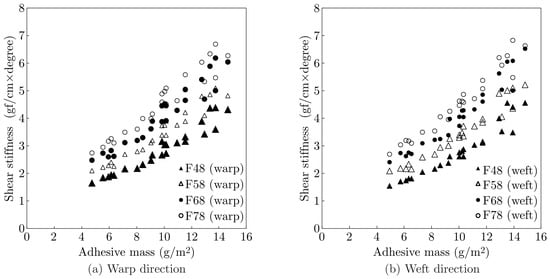
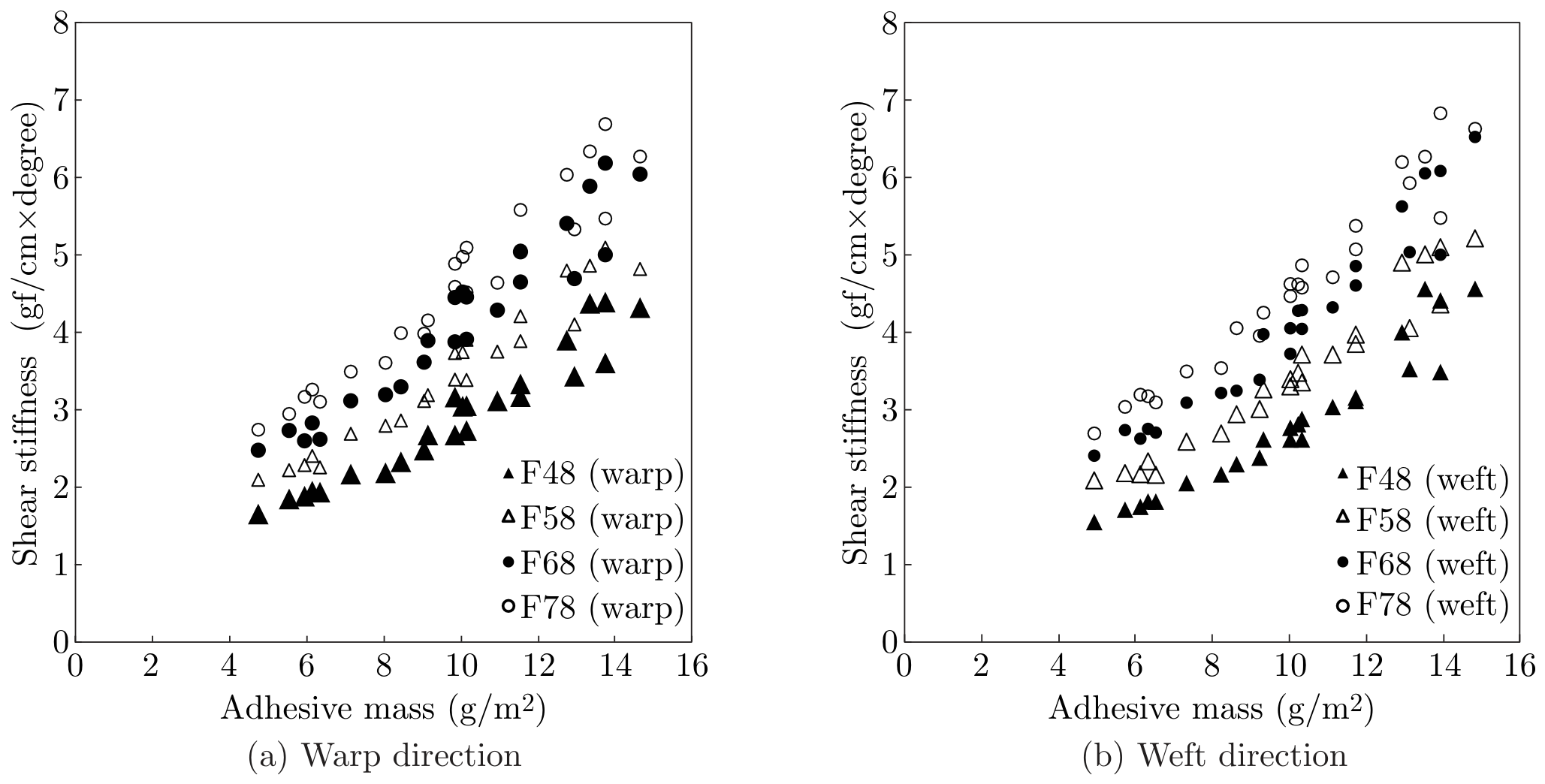
The relationship between shear stiffness of laminated fabrics and adhesive agent mass of interlinings is shown in Figure 7. As adhesive agent mass increases, shear stiffness of laminated fabric also increases due to adhesive interlining. As weft weave density increases, shear stiffness of laminated fabric increases both in warp and weft. Therefore, it was clear that the crossing points of warp and weft and adhesive agent mass have also effects on shear stiffness of laminated fabric.
Figure 7.
Relationship between shear stiffness of laminated fabrics and adhesive agent mass of interlinings.
4.2. Prediction of Shear Stiffness for Laminated Fabric
The I.R. values calculated from equation (2) and measured F.C. (%) values by image analysis are shown in Table 3. The average F.C. (%) which was measured twice was used due to the randomization of adhesive agent distribution. I.R. values were different depending on the face fabric even with the same adhesive interlining. As weave density of weft increases, I.R. increased.
Table 3.
Increasing rates (I.R.) of face fabrics from laminated fabrics.
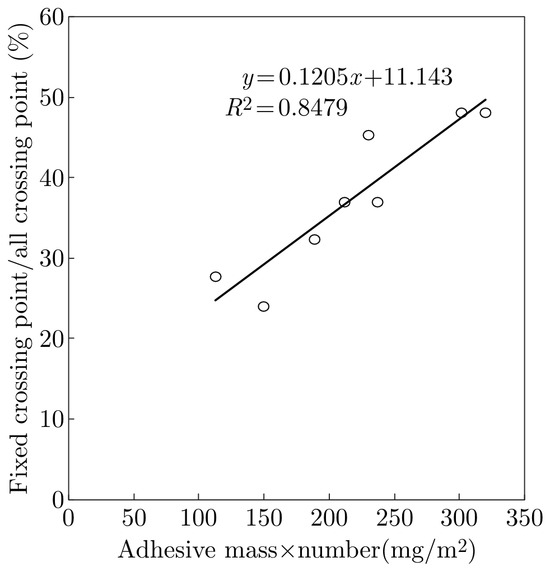
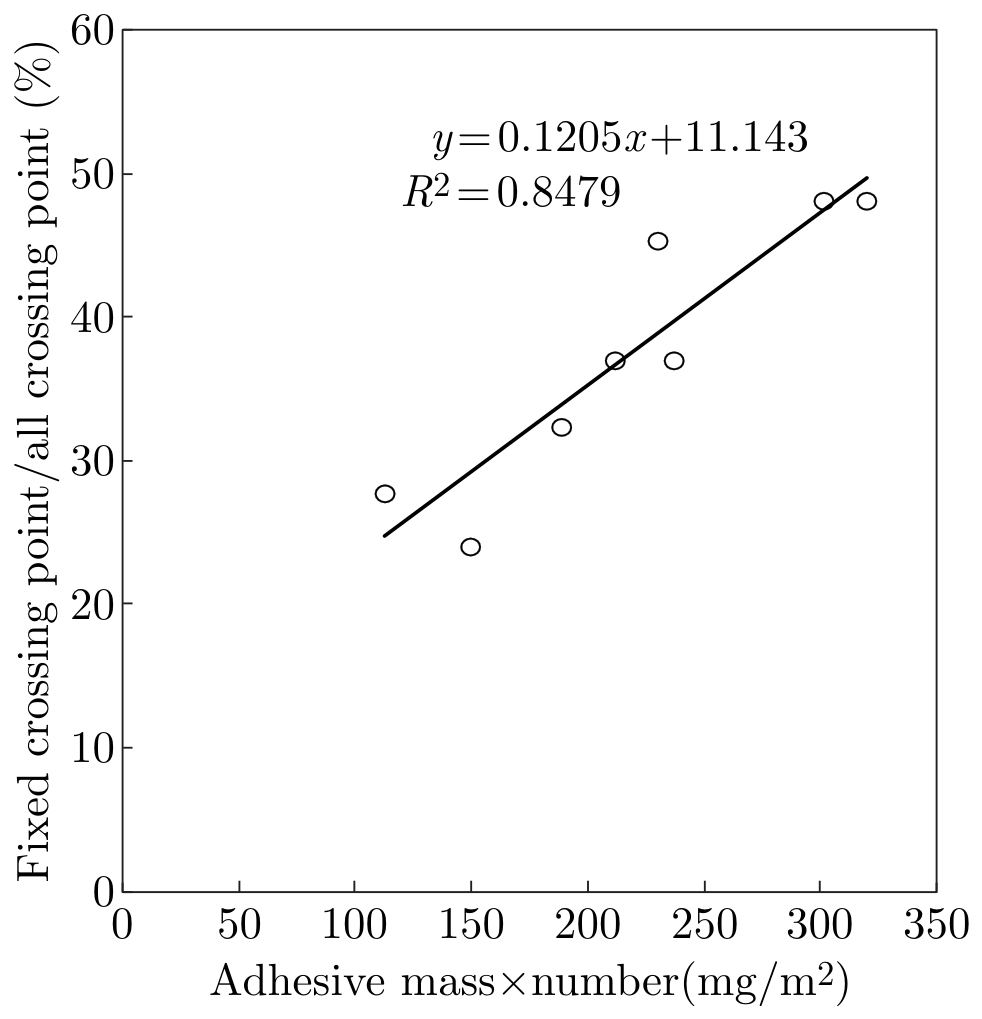
F.C. (%) increased as adhesive agent mass increases. With the relationships between adhesive agent mass multiplied adhesive agent number and F.C. (%) of laminated fabrics with F48 and A1-1∼4 and A2-1∼4 samples, the linear regression equation (4) was obtained as shown in Figure 8.
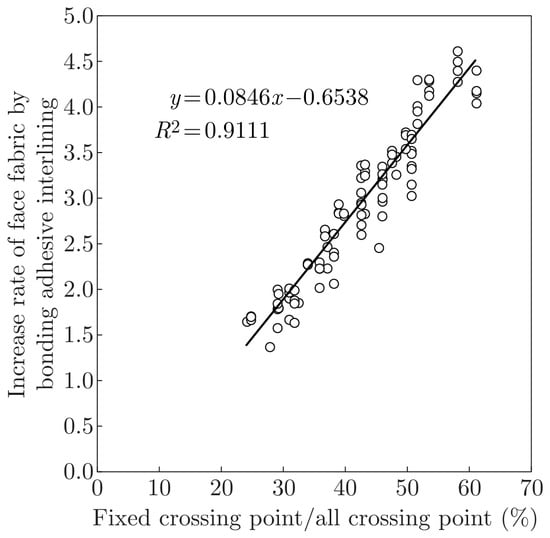
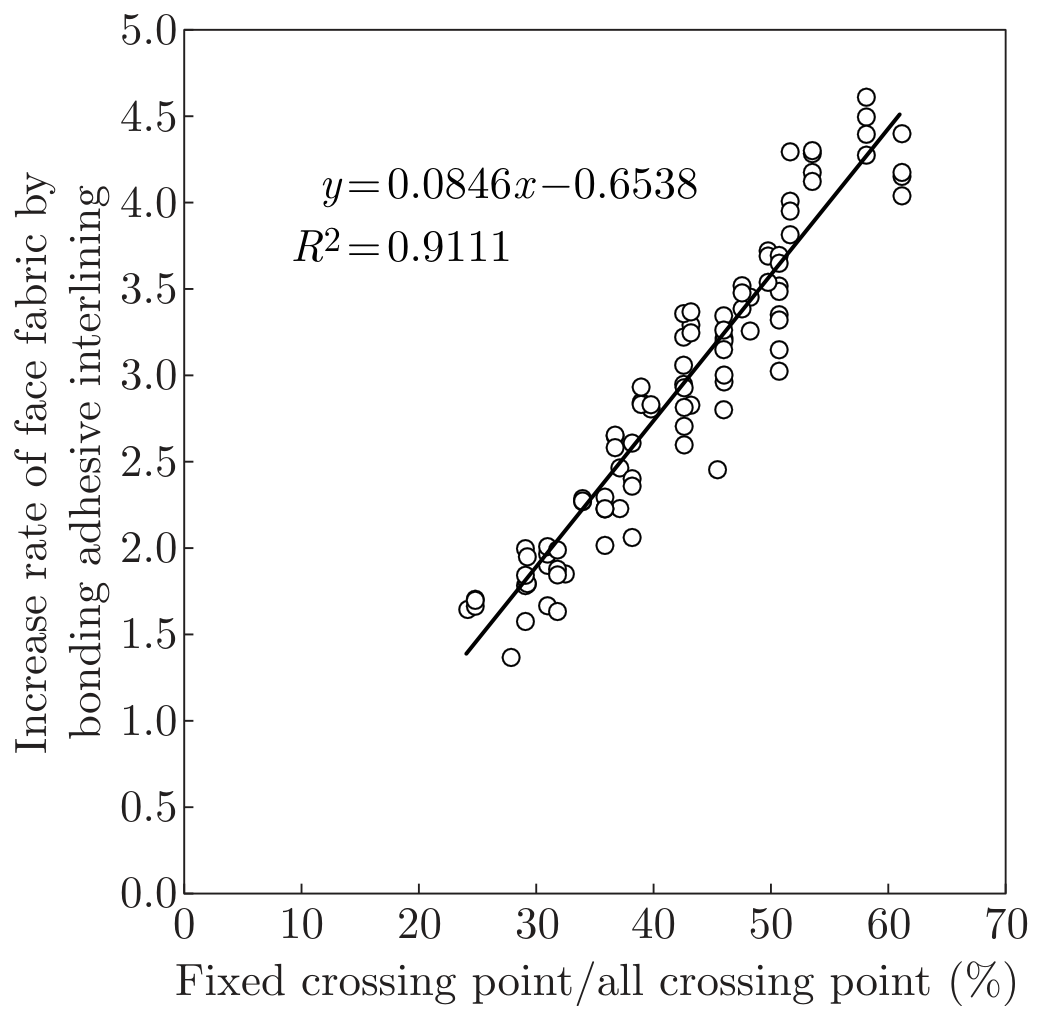
where y is calculated F.C. (%), and x is adhesive agent mass multiplied adhesive agent number. With the relationships between I.R. and calculated F.C. (%), the linear regression equation (5) was obtained as shown in Figure 9.
where y′ is calculated I.R. from calculated F.C. (%), and x′ is calculated F.C. (%). The regression equations (4) and (5), and equation (3) were used to predict shear stiffness of laminated fabric.
y = 0.1205x + 11.143
y′ = 0.0846x′ − 0.6538
Figure 8.
Relationships between adhesive agent mass multiplied number and F.C. of laminated fabrics F48 and A1-1∼4 and A2-1∼4 samples.
Figure 9.
Relationships between I.R. and F.C. (%) of laminated fabrics.
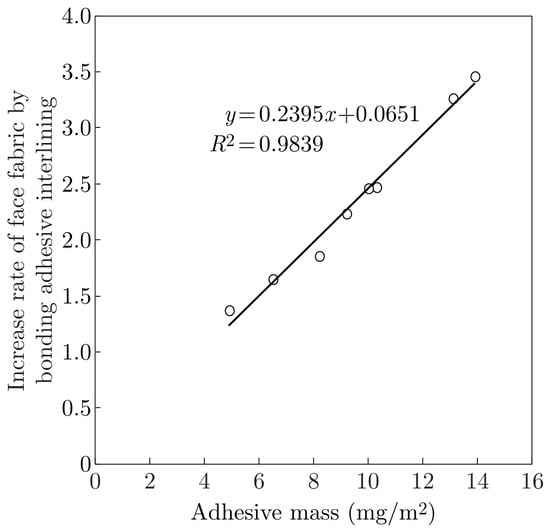
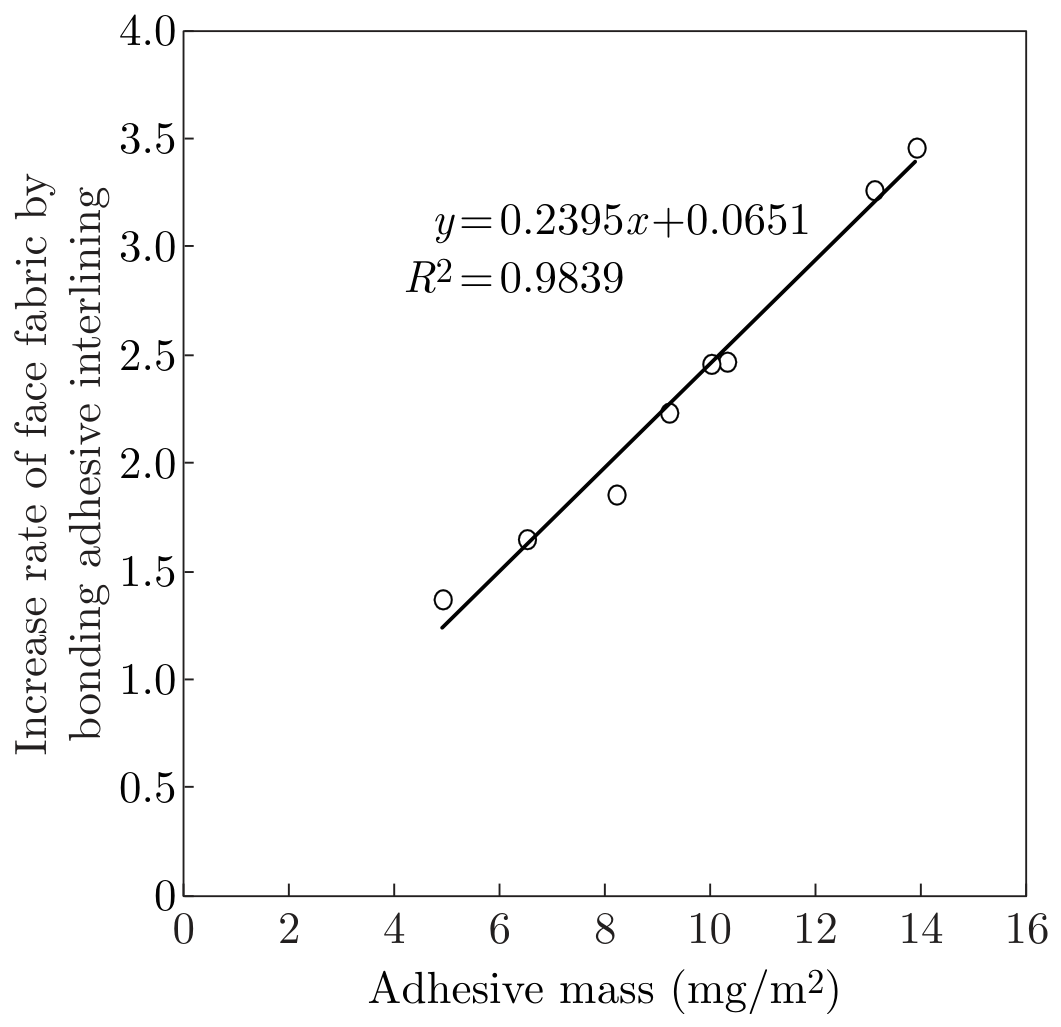
Furthermore, because I.R. showed linear relationship with adhesive agent mass, the relationship between I.R. and adhesive agent mass from laminated fabrics with F48 and A1-1∼4, and A2-1∼4 samples was also considered and the regression equations (6) was obtained as shown in Figure 10.
where y″ is calculated I.R. from adhesive agent mass and x″ is adhesive agent mass. The regression equations (6) and equation (3) were also used to predict shear stiffness of laminated fabric.
y″ = 0.2395x″ + 0.0651
Figure 10.
Relationships between I.R. and adhesive agent mass of laminated fabrics.
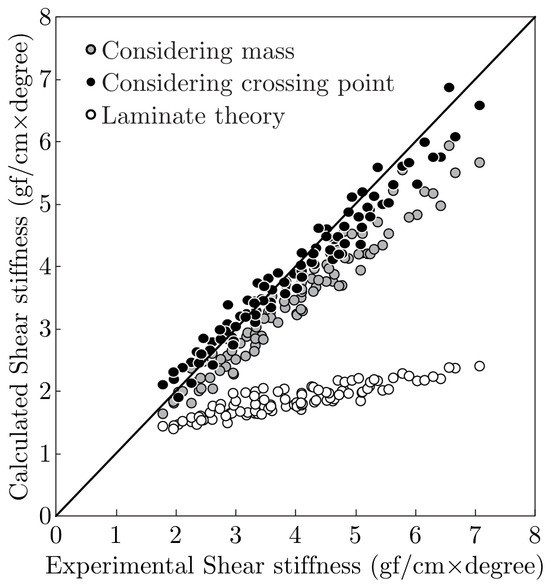
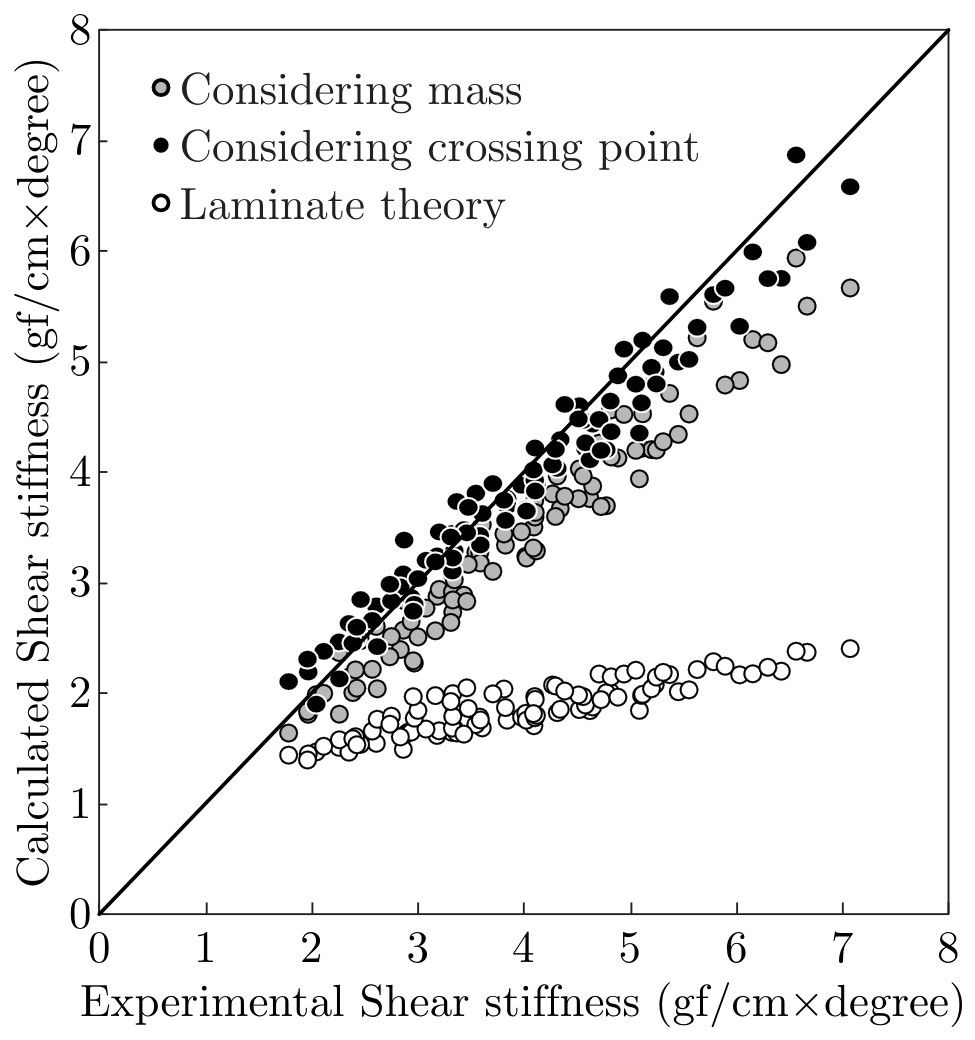
The three predicted results using equation (3), (4) and (5); equation (3) and (6); laminated theory are shown in Figure 11. The calculated shear stiffness values from laminate theory were significantly different with experimental ones as mentioned previously. The calculated shear stiffness derived from the values of adhesive agent mass and F.C. (%) showed better agreement with experimental ones than ones of laminate theory. The calculated shear stiffness considered F.C. (%) showed the closest agreement with experimental ones among the results from the three methods. Therefore, to predict shear stiffness was possible with the proposed method considered F.C. (%), and adhesive agent mass and number. So if the relationship among I.R., F.C. (%) and adhesive agent mass and number are investigated, the shear stiffness of laminated fabric with different adhesive agent condition will be predicted. The method considered the fixed crossing points by adhesive agent will be able to be proposed as a way of predicting shear stiffness of laminated fabric.
Figure 11.
Calculated and experimental shear stiffness values of laminated fabrics.
5. Conclusion
In this study, the relationships among adhesive agent and crossing point number of warp and weft, and shear stiffness of laminated fabric were investigated. It was found that mass and number of adhesive agent affected to the shear stiffness of adhesive interlinings and laminated fabrics. As adhesive agent mass and number increases, shear stiffness of adhesive interlinings and laminated fabrics increased. I.R. values of face fabrics were introduced to predict shear stiffness of laminated fabrics. Regression equations to calculate I.R. were proposed by considering F.C. (%), and adhesive mass and number. Calculated shear stiffness values with proposed equations showed good agreement with experimental ones. Therefore, it is able to predict shear stiffness of laminated fabric by the proposed method considered I.R. and F.C. (%).
However, it is still necessary to verify the practical usage for different weave and material samples by this method in the future. It is clear that I.R is different depending on face fabrics even with the same adhesive interlining. It is due to the fixed crossing points by adhesive agent and permeations of adhesive agent between face fabric and adhesive interlining. In this study, a plain cotton fabric which has a symmetric structure was used. If the face fabric is twill or satin with different material, the effects of adhesive agent mass on shear stiffness of laminated fabric will be different. Therefore, verification with twill and satin fabric will be necessary. This will be necessary to be considered in the future study.
Acknowledgments
This work was supported by Grant-in-Aid for Global COE Program by the Ministry of Education, Culture, Sports, Science, and Technology of Japan. The authors would like to express their appreciation to NITTOBOSEKI CO., LTD for providing the experimental samples.
References
- Kanayama M and Niwa M., Bending properties of composite fabrics reinforced with fusible interlinings. J. Text. Mach. Soc. Jpn. 1981, 35(1), 102–112.
- Kanayama M and Niwa M., Theoretical calculation of bending rigidity of fused fabric composite. J. Text. Mach. Soc. Jpn. 1984, 37(10), T161–T167. [Google Scholar] [CrossRef] [Scilit]
- K.O. Kim, S. Inui, and M. Takatera, Verification of Prediction for Bending Rigidity of Woven Fabric Laminated with Interlining by Adhesive Bonding. Text. Res. J. 2011, Vol. 81(Issue 6), 598–607. [Google Scholar] [CrossRef] [Scilit]
- K.O. Kim, S. Inui, and M. Takatera, Prediction of Bending Rigidity for Laminated Fabric With Adhesive Interlining by Laminate Model Considered Tensile and in-Plane Compressive Moduli. Text. Res. J. 2012, Vol. 82(Issue 4). [Google Scholar] [CrossRef] [Scilit]
- K.O. Kim and M. Takatera, Bending, rigidity of laminated fabric with adhesive interlining considering the placement of neutral axis for face fabric, 11th Asian Textile Conference (ATC-11), 1-4. Nov. 2011, Daegu, Korea.
- R. Shishoo, Per Henrik Klevermar, Margareta Cednas, and Bertul Olofsson, Multilayer Textile Structure. Text. Res. J. 1971, 669–679. [Google Scholar] [CrossRef] [Scilit]
- J. Fan, W. Leeuwner, and L. Hunter, Compatibility of Outer and Fusible Interlining Fabrics in Tailored Garments part 2: Relationship between mechanical properties of fused composites and those of outer and fusible interlining fabrics. Text. Res. J. 1997, Vol. 67(No. 3), 194–197. [Google Scholar] [CrossRef] [Scilit]
- M. Niwa, S. Kawabata and H. Kawai, Torque Required for Changing Intersecting Angle between Warp and Weft Yarns in Shear Deformation of Woven Fabrics. Sen-iGakkaishi 1970, 26(10), 461–474. [Google Scholar] [CrossRef] [Scilit]

© 2012 Textile Bioengineering and Informatics Society. This article is an open access article distributed under the terms and conditions of the Creative Commons Attribution (CC BY) license (https://creativecommons.org/licenses/by/4.0/).