


Abstract
Socks and underwear emit unpleasant odor, especially after they have been worn for long durations under certain conditions. This paper discusses the deodorizing properties of several typical fibers such as deodorizing acrylic, wool, line, cotton, Modal® and polyester fibers by instrumental testing. The odor from the socks made of these fibers after a one-day wear in summer is further evaluated by three testers using a human olfactory test. The molecular structure of the deodorizing acrylic fiber was confirmed by infrared spectroscopy. In terms of the deodorizing property of the various fibers with respect to ammonia, it is found that the deodorizing acrylic fiber had the best performance. This is attributed to the carboxyl groups in its molecular structure. Wool, Modal®, cotton, and linen fibers were worse in turn; polyester fibers had the worst performance. The absorption of acetic acid by wool, linen, and deodorizing acrylic fibers was better, followed by Modal® and cotton fibers. The polyester fibers, once again, had the worst performance. Thicker socks diffuse less odor than thinner socks made from the same fibers. The results of chemical analysis and sensory analysis show that the deodorizing performance of deodorizing acrylic fibers is superior.
1. Introduction
High humidity provides a favorable growth condition for bacteria. Many of the characteristic malodors associated with the human body are due to the presence of large populations of microorganisms [1,2]; the associated malodors are the result of micro-organisms digesting nutrients present in sweat and releasing volatile, pungent waste products. Textile products can absorb, retain, and output the sweat produced by the human body. Enhanced retention of sweat by the textile leads to a persistent increase in the metabolic activity of skin bacteria and an accumulation of the odor-causing products produced by bacterial metabolism [3]. The role of textiles in odor production has been studied from the 1950s. It has been suggested that textiles contribute to odor development because the odor is potentially more intense in the fabric substrate than in the adjacent axilla [4]. For this reason, it is important to choose the correct fiber type in deodorant textile design. The fact that natural fibers are better at reducing odor than synthetics was a generally held belief [5], but there has been little, if any, published reports supporting this fact.
People generally considered that the main component of body odor was the production of ammonia, acetic acid, and isovaleric acid [6], although this is still somewhat unsubstantiated.
The Japanese Society of Fibers has developed a related instrumental evaluation method to determine the deodorizing performance of textiles. This method includes chemical analysis and sensory analysis [7]. However, due to sensitivity limitations and the threshold of the main component of odor usually being very low (acetic acid: 0.01 ppm; isovalerate: 0.001 ppm), the instrumental evaluation method cannot on occasion accurately detect all the problem compounds. Nevertheless, the final evaluators of the textile performance are the wearers of textiles themselves, so the shortcomings of any chemical analysis method can be overcome to some degree through the use of sensory analysis [8].
In this work, deodorizing acrylic fibers, along with several typical fibers such as wool, cotton, Modal® linen, and polyester were analyzed. The fiber structure of the deodorizing acrylic fibers was confirmed by infrared spectroscopy (IR). Deodorizing performance was tested using chemical analysis. An additional test was performed on socks made of the different fibers; three participants wore each sock for one hot summer day, after which the odor was tested. The latter test was performed by sensory analysis. The results of both the chemical analysis and sensory analysis showed that the deodorizing performance of deodorizing acrylic fibers is superior.
2. Materials and Methods
2.1. Materials
Materials used for the tests were knitted fabrics made from cotton, wool, linen, Modal®, polyester, and deodorizing acrylic fibers. The properties of the various sock samples are listed in Table 1.
Table 1.
Description of samples.
All male sock samples used in the various tests were the same size; the women sizes were all small in size. The new socks were placed into a solution of sodium carbonate (2 g/L) and washing powder concentration (2 g/L) at 80 °C for 20–30 min before wearing.
2.2. Sample Preparation-human Wearing
Polyester socks were used as a blank sample. The three participants wore a treated sock (made with a specific fiber) and a blank sample sock for one workday; the sock was randomly assigned to the right or left foot. Furthermore, for the GT-962B socks, the three participants wore a thick and a thin sock randomly assigned to the right or left foot. A normal workday routine (approximately from 8:00 a.m. to 4:00 p.m.) was followed, after which the socks were exposed to air for approximately 30 min prior to a sensory evaluation performed by three people. Each sample was then placed in a separate plastic bag and sealed. The sensory evaluation was repeated after 18 hrs. The odor intensity for each sock type was taken as the mean of the sensory evaluations of each sock sample from the three participants. The one-day-wear experiments were conducted during the summer. The outside temperature was above 30 °C, and about 25 ± 2 °C in-doors.
2.3. Analytical Methods
2.3.1. Instrumental Testing of Adsorption Rate
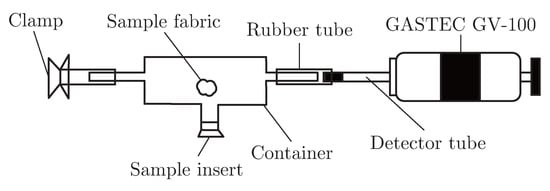
The adsorption rate of a specific compound by each sock sample was evaluated using a gas detector tube (GASTEC GV-100) as shown in Figure 1. Each 1 g fabric sample was placed in a 1 L glass container, and the container was filled with air and an odor substrate, namely ammonia and acetic acid. For ammonia, the concentration in the container was kept at 100 ppm. The ammonia was generated by a Model PD-1B, a standard gas generation system. The Permeater Model PD-1B is a dynamic standard gas generator capable of continuously generating low concentrations of gas and vapor using permeation and diffusion tubes. At each given sampling time, 100 mL of the gas in the container was drawn through the detector tube by suction. The concentration of residual ammonia was evaluated by reading the mark on the detector tube. The method followed for evaluating the adsorption rate of acetic acid of each fabric sample was the same as for ammonia. The initial concentration of acetic acid in the container was set at 50 ppm, which was once again achieved using a Model PD-1B.
Figure 1.
Measurement of odor concentration using detector tube.
2.3.2. Sensory Evaluation
Odors are volatile substances that enter a persons’ nasal cavity during inspiration. The interaction of these compounds with the olfactory cells within the cavity allows a person to perceive odor; this is the basis of the olfactory sense [9], which is used in the sensory evaluation method. Sensory evaluation is a scientific discipline used to measure, analyze, and interpret reactions to characteristic odors of foods and materials as they are perceived by the human olfactory sense. Sensory evaluation variables include odor concentration and odor intensity [10]. In this work, the odor intensity was categorized into six levels, as listed in Table 2.
Table 2.
A six stage classification of odor intensity.
3. Results and Discussion
3.1. The Structure of Deodorizing Acrylic Fibers
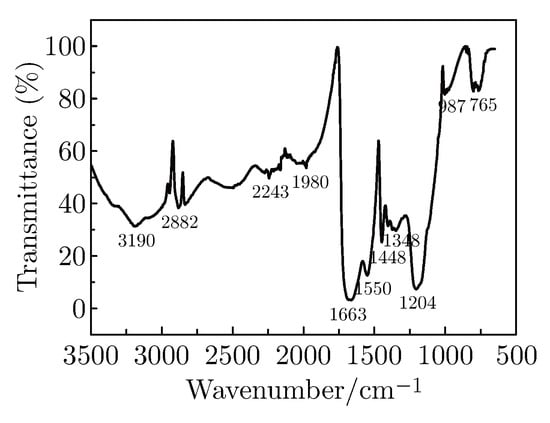
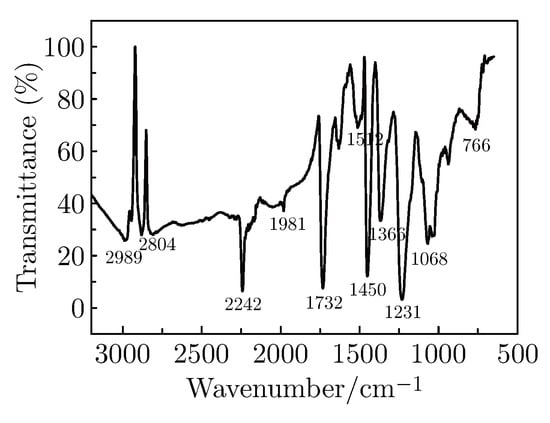
From the IR spectra given in Figure 2 and Figure 3, the significant differences between the deodorizing acrylic and common acrylic fibers are evident. Absorption bands for the carbonyl group at 1662.5 cm−1 and hydroxyl groups at 3189.59 cm−1 are evident in Figure 2. These groups can improve the absorption of ammonia by the deodorizing acrylic fiber. The presence of acylamino groups is confirmed by the presence of a band at 1550.28 cm−1. These groups can improve the absorption of acidic gases. From these observations, the theoretical deodorizing performance of modified deodorizing acrylic fibers should be improved significantly than the common acrylic fiber.
Figure 2.
IR spectra of deodorizing acrylic fiber.
Figure 3.
IR spectra of common acrylic fiber.
3.2. Ammonia Adsorption Rate
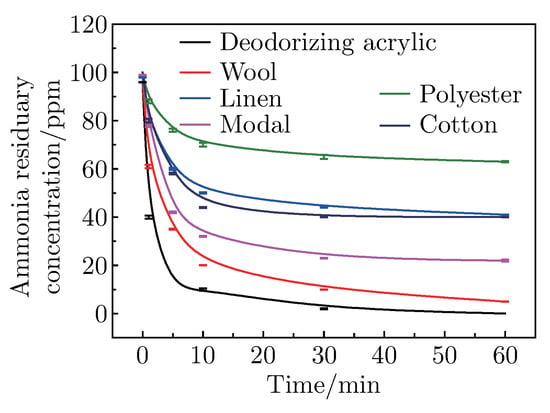
Data presented in Figure 4 and Table 3 show the excellent deodorizing performance of deodorizing acrylic fibers with ammonia. Then wool, Modal®, cotton, and linen are worse in turn. The polyester fibers exhibit the lowest deodorizing power.
Figure 4.
Ammonia adsorption rates for various fibers.
Table 3.
Ammonia residuary concentration.
Carboxyl groups present in the deodorizing acrylic fibers and wool fibers increase the adsorption of ammonia. Modal®, cotton, and linen fibers possess a cellulose structure that imparts a positive adsorption effect for ammonia. Polyester fibers have a high degree of crystallinity causing them to be poor absorbers of solvents; this results in a lower adsorption rate of ammonia. The adsorption rates of fibers for ammonia were high in the initial stages, and slowed down after 10 min. After 30 min, the rates remain unchanged.
3.3. Acetic Acid Adsorption Rate
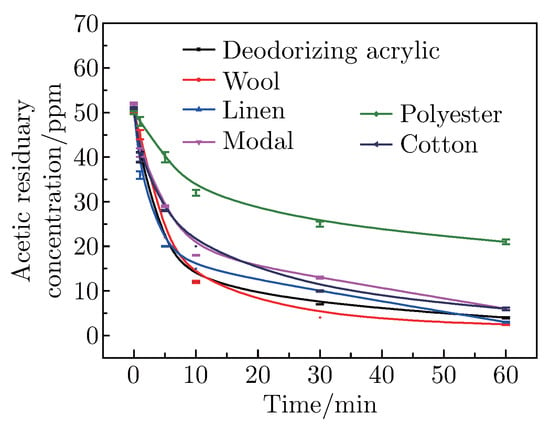
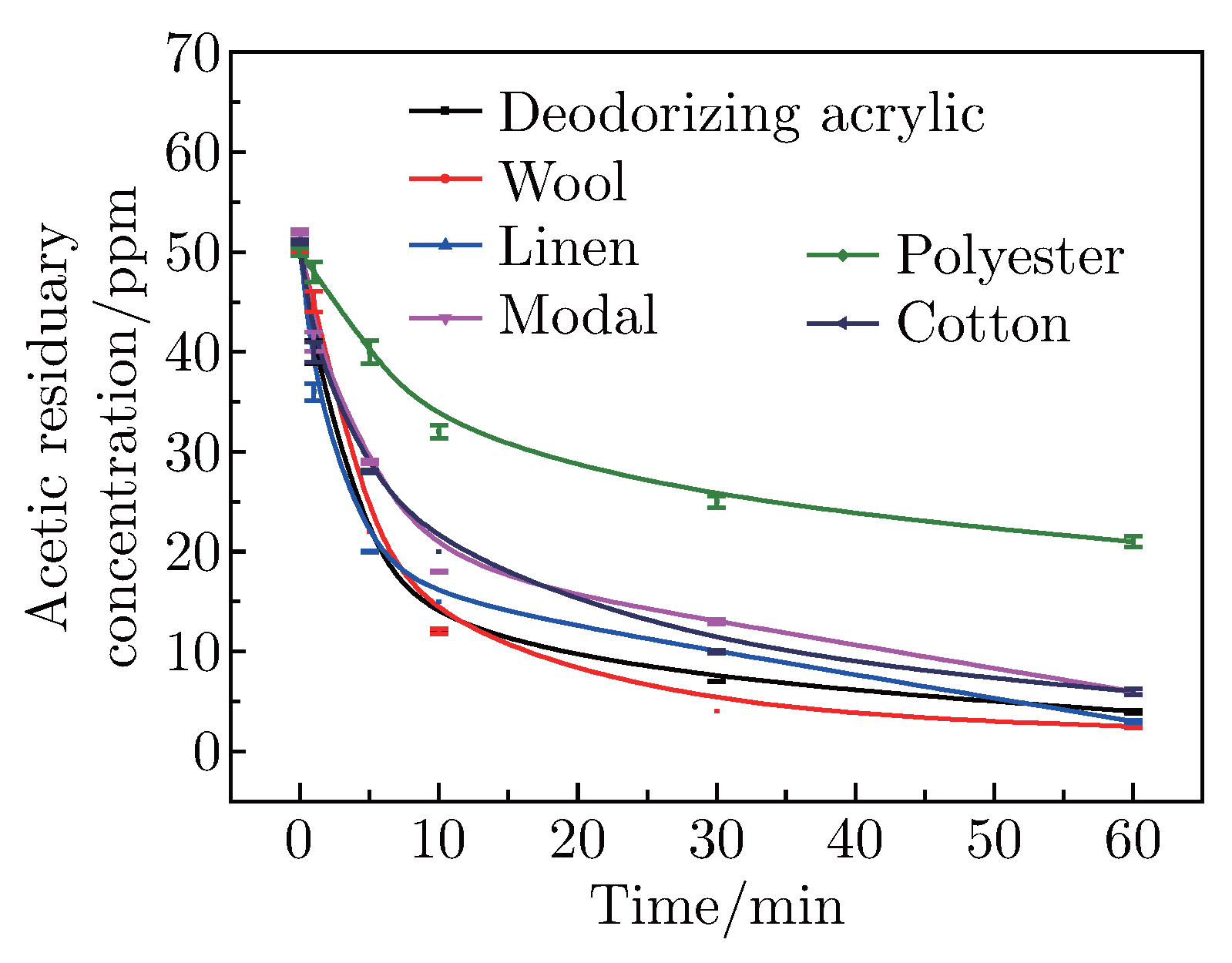
The adsorption of acetic acid by wool, linen, and deodorizing acrylic fibers was better, followed by Modal® and cotton fibers (Figure 5 and Table 4). Again, the polyester fibers performed the worst. Wool and deodorizing acrylic fibers have a basic group that can react with acid, therefore, eliminating odors. Linen, Modal®, and cotton fibers could adsorb acetic acid because they had free hydroxyl groups that undergo esterification and etherification reactions with acetic acid; good deodorizing properties result. The acetic acid adsorption rate of the various fibers was high in the initial stages and proceeded to become slower after 10 min. After 30 min, the values remained stable.
Figure 5.
Acetic acid adsorption rates for various fibers.
Table 4.
Acetic acid residuary concentration.
3.4. Human Wearing Experiments
3.4.1. Wearing Effect of Socks Made of Different Fibers
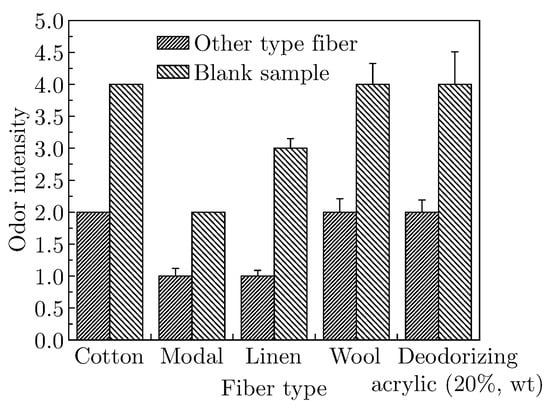
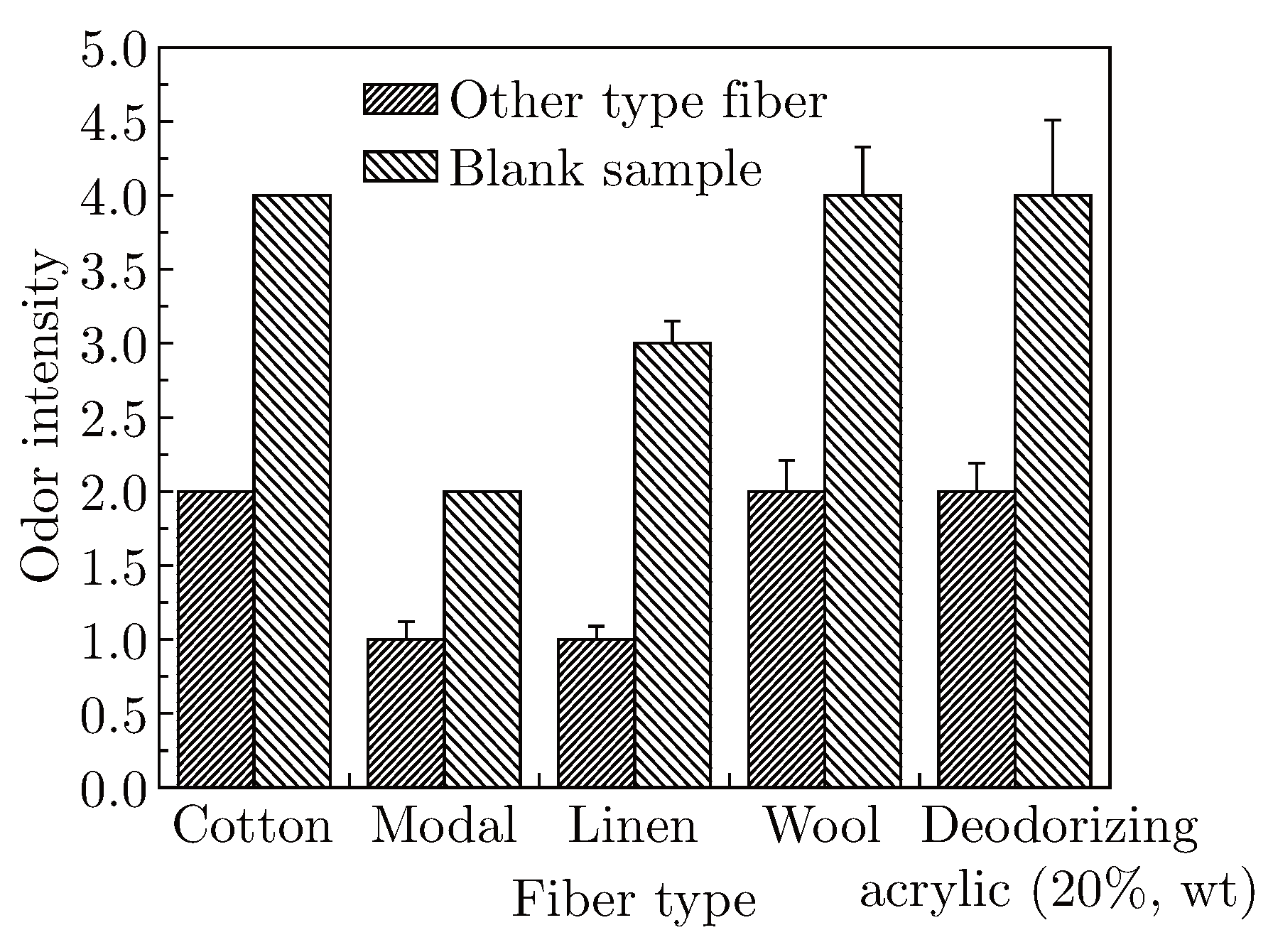
Polyester socks, used as the blank sample, had the highest odor intensity (Figure 6). For the wool, cotton, linen and deodorizing acrylic (20%, wt) fibers, the odor intensity grade was 2 less than that of the polyester socks. In addition, there was less ammonia measured in the shoes worn in combination with the deodorizing acrylic (20%, wt) socks than shoes worn with the blank polyester socks. The intensity grade for the Modal® fibers was 1 less than that of the polyester socks.
Figure 6.
Odor intensity for each fabric after exposure to air for 30 min (polyester socks were used as the blank sample).
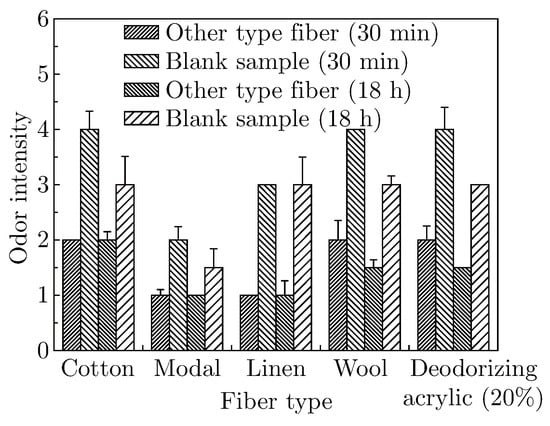
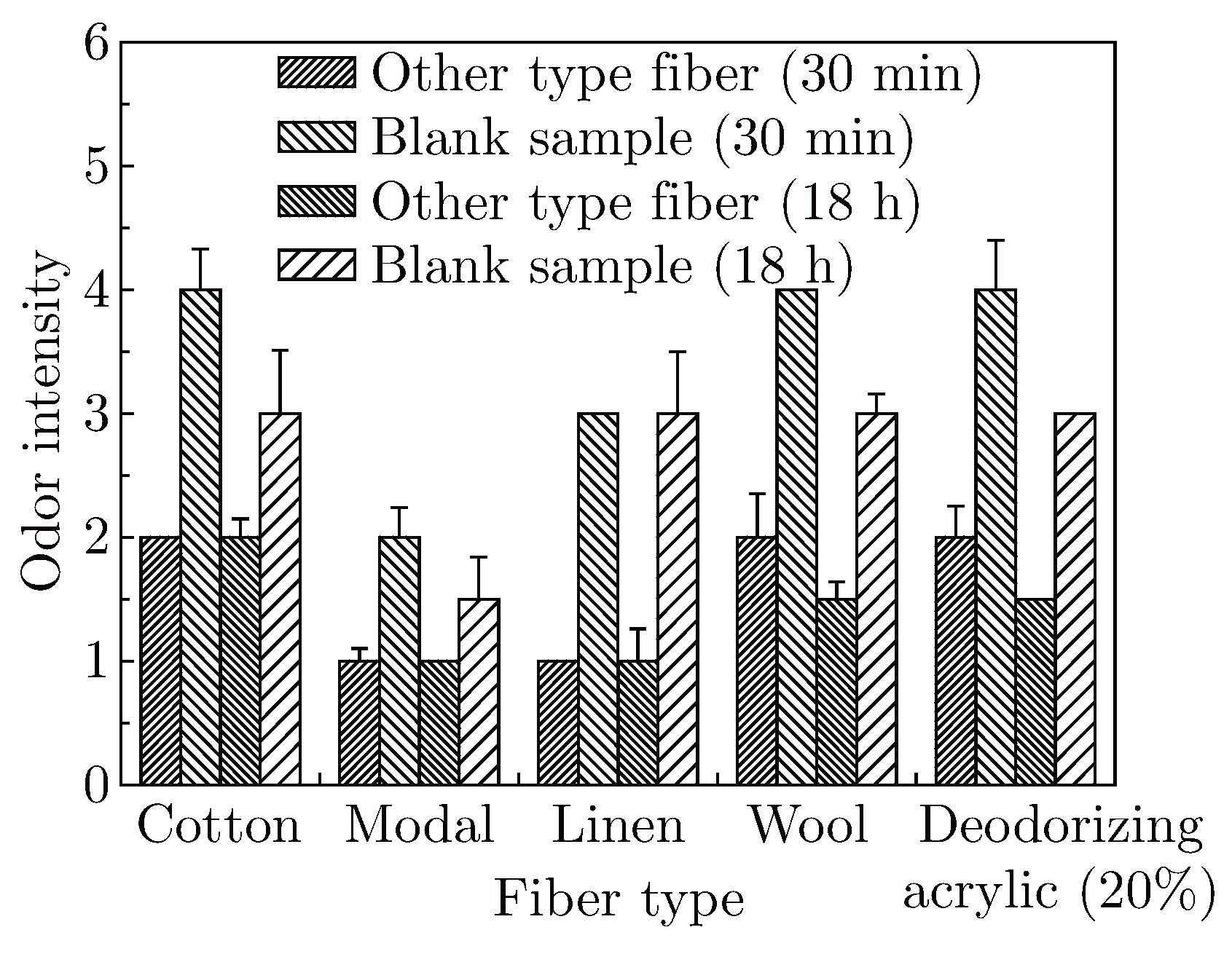
The mean degrees of odor intensity for each fabric at different times are given in Figure 7. After 18, the odor intensity of wool and deodorizing acrylic (20%, wt) socks dropped even though the odor intensity of some of the polyester socks also dropped (the relative means are still higher for polyester socks). The intensities for the other fibers change little over time. The result shows that there is less odor that emitted by wool and deodorizing acrylic (20%, wt) than other fibers after exposure to air for 18.
Figure 7.
Odor intensity of each fabric at different times (polyester socks were used as the blank sample).
Differences in the odor intensities for each of the participants were evident; the same general trends among the various fiber types were however observed. Although individuals differ from one another with respect to the odor intensities measured, the effect of the individual was less important than the effect of fiber type.
3.4.2. Wearing Effect of Socks of Different Weights
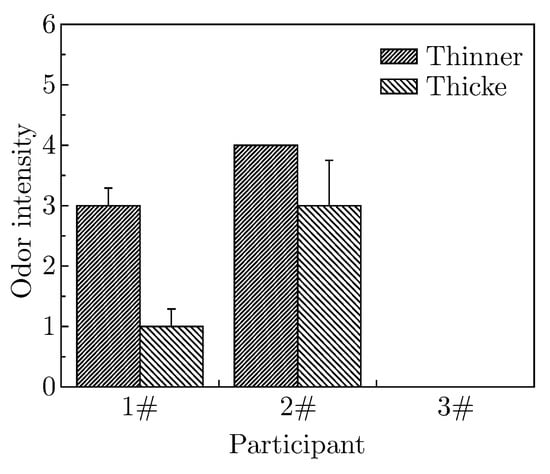
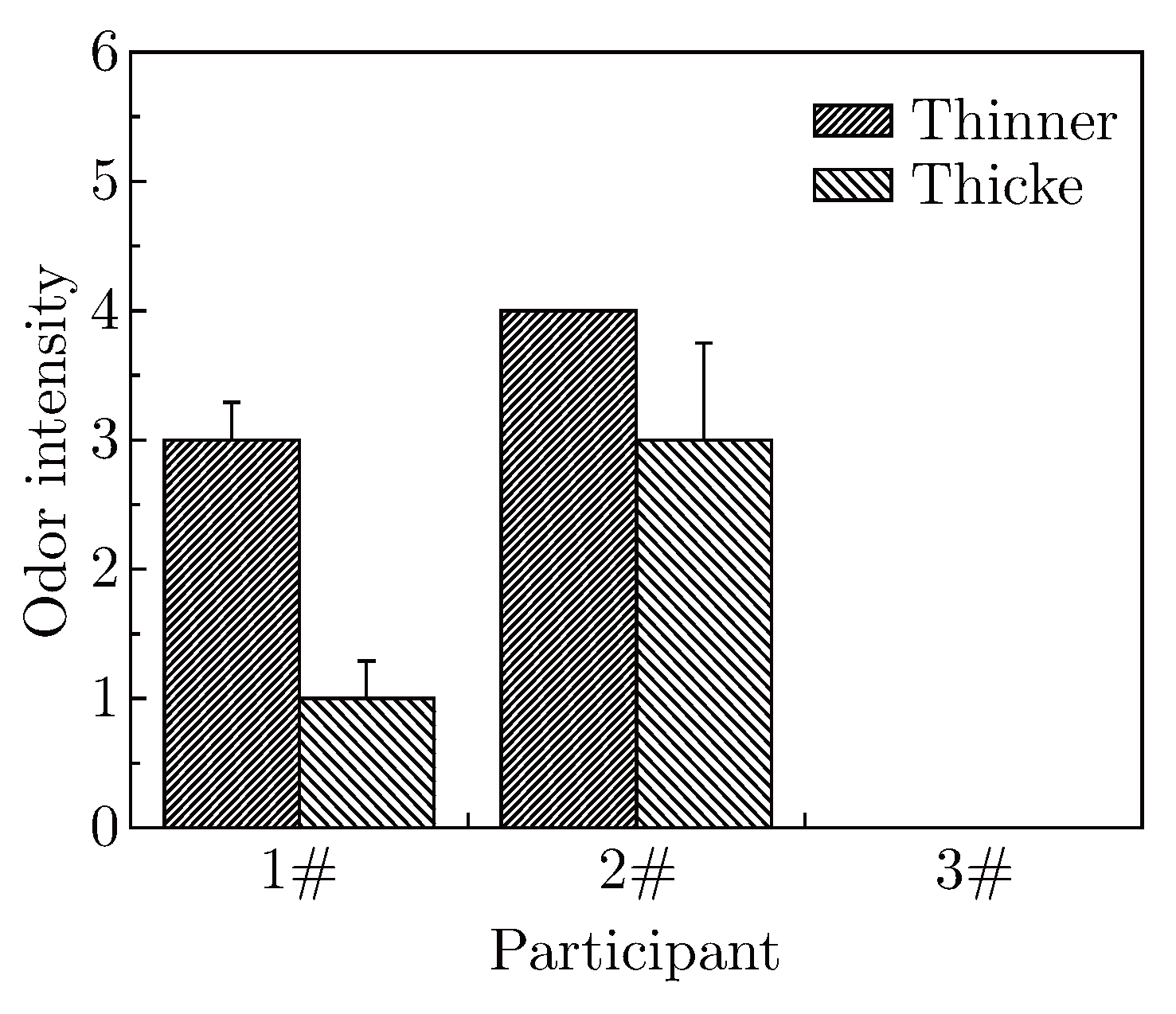
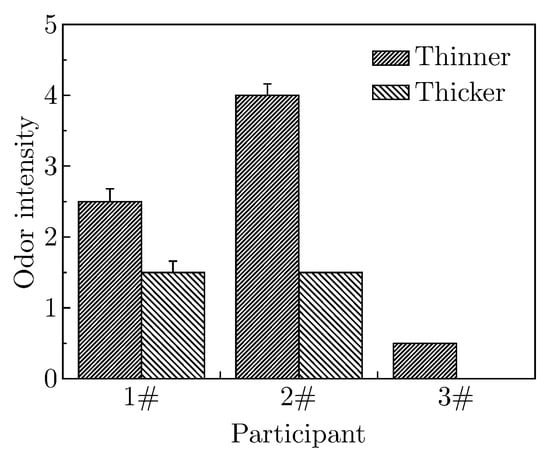
The results presented in Figure 8, Figure 9 and Table 5 show that the thicker socks tended to emit less odors than the thinner socks. This difference may result from an increase in the odor absorbed by the thicker socks. After storing for 18, the odor intensity of thicker socks changed very little. Thus, it is possible that thicker fabrics absorbed more odor leading to a less intense and persistent odor. Therefore, the deodorizing performance of fibers is related to the sock thickness.
Figure 8.
Odor intensity of socks with different weights. The socks were made of the same fiber and exposed to air for approximately 30 min prior to sensory evaluation.
Figure 9.
Odor intensity of socks with different weights. The socks were made of the same fiber and exposed to air for approximately 18 h prior to sensory evaluation.
Table 5.
Odor intensity of socks with different weights at different times.
4. Conclusions
The use of human participants is considered to be very important in studies of odor retention in apparel fabrics. In the present study, human participants were involved in sample preparation and acted as trained detectors of odor (analyzers).
The deodorizing property of deodorizing acrylic fibers, when measured using ammonia, was the best due to the carboxyl groups in its molecular structures. Wool, Modal®, cotton, linen, and polyester fibers were worst in turn. The adsorption of acrylic acid by wool, linen, and deodorizing acrylic fibers was better, and then was Modal® and cotton fibers. The polyester fibers had the worst performance. In conclusion, it can be stated that the deodorizing properties of deodorizing acrylic and wool socks were superior to others socks. The polyester socks were the worst. It was also found that the deodorizing performance of socks depended on the sock thickness. Thicker socks tended to release less odor than thinner ones.
References
- Leyden, J.J.; McGinley, K.J.; HOlzle, E.; Labows, J.; Kligman, A.M. The microbiology of the human¨ axilla and its relationship to axillary odour. J. Invest Dermatol. 1981, 77, 413–416. [Google Scholar] [CrossRef] [Scilit]
- Rennie, P.J.; Gower, D.B.; Holland, K.T. In vitro and in vivo studies of human axillary odour. and the cutaneous microflora. Br. J. Dermatol. 1991, 124, 596–602. [Google Scholar] [CrossRef] [Scilit]
- HOer, D. Antimicrobial textiles, skin-borne flora and odour. Curr. Probl. Dermatol. 2006, 33, 67–77¨. [Google Scholar] [CrossRef] [Scilit]
- Shelley, W.B.; Hurley, H.J.; Nichols, A.C. Axillary Odor, Arch. Derm. Syphilol 1953, 68, 430–446. [Google Scholar]
- Anon. Cotton incorporated. Nonwovens Ind. 1998, 29(5), 86. [Google Scholar]
- JED301; Deodorizing Performance of Textiles Certification Standards. Japan Textile Evaluation Technology Council, 2001.
- Huang, H.; An, S.h.Y. Development of deodorizing f inish. Dyeing 2004, 11, 39–41. [Google Scholar]
- He, ZhQ. Deodorant treating. Dye. Renditions 2001, 6, 73–94. [Google Scholar] [CrossRef] [Scilit]
- Shen, P.M.; Chen, ZhF; Zhang, D.P. Evaluation and analysis for deodorizing performance; Chemical Industry Press, 2005; p. 148. [Google Scholar]
- Wu, X.W. The test method of dynamic olfactory sense and accuracy. Environ. Sci. Trends 2003, 4, 16–19. [Google Scholar]

© 2011 Textile Bioengineering and Informatics Society. This article is an open access article distributed under the terms and conditions of the Creative Commons Attribution (CC BY) license (https://creativecommons.org/licenses/by/4.0/).