


Abstract
A series of novel superabsorbent nanocomposites based on 2-hydroxyethyl methacrylate (HEMA) and acrylamid (AM) were prepared via in situ free radical polymerization, using clay (Laponite XLS) as a crosslinker and ammonium persulfate (APS) as an initiator. The structure and surface morphology of the superabsorbent nanocomposites were characterized by Fourier transform infrared spectroscopy (FTIR), X-ray diffraction (XRD), thermogravimetric analysis (TGA) and scanning electron microscopy (SEM). The water absorbency was found to be 612.5 and 182.6 g H2O g-1 in distilled water and 0.2% NaCl solution, respectively. In addition, the superabsorbent nanocomposites reported here might be a potentially smart material in some range of applications including adsorption materials, superabsorbent fiber and drug-delivery devices.
1. Introduction
Hydrogel is a kind of three-dimensional crosslinked polymeric material and attracts much attention as functional soft materials. It not only absorbs hundreds to thousands times of its own mass of water to form a stable hydrogel, but also the absorbed water is hardly removed even under higher pressure [1]. Some hydrogels are found to reversibly change their volumes and shapes in response to external stimuli [2,3,4,5], such as pH, solvent composition, ionic strength, temperature, and electric field. Based on these environmentally responsive hydrogels, many biomedical and technological applications such as artificial implants, contact lens, pharmaceutical, and biosensors have been developed. However, these chemically crosslinked materials have low fracture toughness, which restricts their applications in biomedicine [6], organ engineering, and other fields [7,8,9]. Many efforts have been made to increase the mechanical strength of hydrogels by the introduction of inorganic nanoclay into organic polymer networks [10,11,12], in which the studies on mechanical and functional properties of hydrogels were highly significant.
In this study, a series of novel superabsorbent nanocomposites were designed and prepared by introducing a special kind of hectorite (Laponite XLS) into poly (2-hydroxyethyl methacrylate-acrylamide) network, in which the nanosized hectorite (Laponite XLS) worked as the cross-linker instead of conventional chemical cross-linker. The structure and morphology of the superabsorbent nanocomposites were characterized by scanning electron microscopy, Fourier transform infrared spectrometry and differential scanning calorimetry. The swelling properties of the superabsorbent nanocomposites in both distilled water and 0.2%NaCl were also investigated. In addition, the superabsorbent nanocomposites reported here might be a potentially smart material in some applications, including coatings, cosmetics, superabsorbent fiber and drug delivery devices.
2. Experimental
2.1. Materials
2-Hydroxyethyl methacrylate (HEMA, TCI Chemical Co. Tokyo, Japan), was purified by vacuum distillation and stored at -5 °C before use. Acrylamide (AM, chemically pure, Shanghai Fine Chemical Material Institute), Synthetic hectorite Laponite XLS (Clay-S) (Rockwood, USA, 92.32 wt % [Mg5.34Li0.66Si8O20(OH)4]Na0.66 and 7.68 wt % Na4P2O7), NMBA, Ammonium persulfate (APS, analytical grade, Shanghai Chemical Reagent Co.) were recrystallized from methanol and ethanol solvent, and N,N,N’,N’-tetramethyldiamine (TEMED) (analytical reagent; Shanghai Chemical Reagent) were used as received. Deionized water used for all experiments was bubbled with N2 gas for more than 3 h prior to use. All solutions used in the experiments were prepared in deionized water.
2.2. Preparation of poly (HEMA-AM)/clay superabsorbent nanocomposites
The novel superabsorbent nanocomposites based on 2-hydroxyethyl methacrylate (HEMA) and acrylamid (AM) were prepared via in situ free radical polymerization, using clay (Laponite XLS) as a crosslinker and ammonium persulfate (APS) as an initiator. A series of the samples were prepared by the following procedure:
Typically, powder clay-s (0.3 g) was added to 10 mL of deionized water in a four-neck flask equipped with a stirrer, a condenser, a thermometer and a nitrogen line, and then stirred on a water bath at room temperature for at least 10 h. Subsequently, the 2-hydroxyethyl methacrylate (HEMA, 0.4 g) and acrylamid (AM, 1.0 g) were added to the above mixture solution. Nitrogen was used to remove the dissolved oxygen from the reaction solution. To initiate the polymerization, 10 mL APS solution (5 wt% in deionized water) and 10 μmL TEMED were added into the reactive system as an initiator and accelerator, respectively. The water bath was then heated slowly to 70 °C with vigorous stirring after which the radical initiator APS was introduced to the mixed solution. The compositions of hydrogels are listed in Table 1.
Table 1.
Feed composition of the superabsorbent nanocomposites.
When the reaction completed, the product was cut into pieces of same size and immersed in deionized water repeatedly for 72 h to remove any residual monomer, and then dried in a vacuum oven at 70 °C to a constant weight. Thus the superabsorbent nanocomposites were prepared after the dried product was milled and screened. All samples used had a particle size in the range of 40-80 mesh.
2.3. Characterizations
2.3.1. Measurement of swelling properties
The swelling ratios of superabsorbent nanocomposites in distilled water and 0.2% NaCl were investigated. As-prepared product 0.05 g was immersed in excess distilled water or 0.2%NaCl solution at room temperature for 24 h to reach the swelling equilibrium. The swollen gels were filtered using a mesh sieve, and then drained on the sieve for 10 min until no free water remained. After weighing the swollen samples, the equilibrium water absorption was derived from the mass changes. The equilibrium swelling ratio (SR) was calculated using the following equation:
where Ws and Wd are the weight of the swollen and dry samples, respectively. In all cases an average was made over three parallel samples.
SR = (Ws − Wd)/Wd
2.3.2. Fourier Transform Infrared Spectroscopy (FTIR)
The infrared spectra of samples, which were ground into fine powder after being dried under atmospheric conditions (25 °C) for 72 h and in a vacuum oven at 80 °C for 24 h, was taken as KBr pellets with Nicolet 8700 (Thermo Electron Co., USA) FTIR spectrophotometer in the range of 400-4000 cm-1.
2.3.3. Thermo Gravimetric Analysis (TGA)
Thermogravimetric analyze was carried out using a STA409PC (Netzsch Co.) instrument, heating samples from 50 to 1000 °C at a heating rate of 10 °C/min in an air flow. The clay content in the dried hydrogel was evaluated from the residual weight at 800 °C.
2.3.4. Interior Morphology (SEM)
The SEM analysis of samples was recorded on a JSM-5600 LV scanning electron microscope (Jeol, Japan). The as-prepared samples were quickly frozen in liquid nitrogen and freeze-dried under vacuum at -48 °C for 48 h. Then the freeze-dried samples were fractured carefully and coated with gold before observation.
2.3.5. X-ray diffraction (XRD)
XRD patterns of the sample were measured using Rigaku DMAX-2000 X-ray diffractometer with the Cu Kα radiation (k = 1.54056 Å) at a scanning rate of 2°/S in 2θ ranging from 2 to 20°. The sample for XRD was supported on glass substrates.
3. Results and discussion
3.1. FTIR analysis
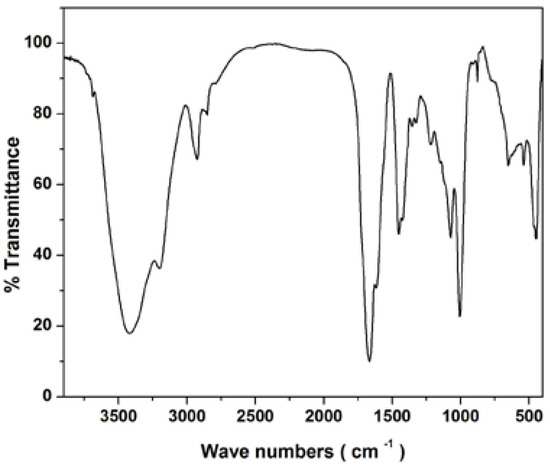
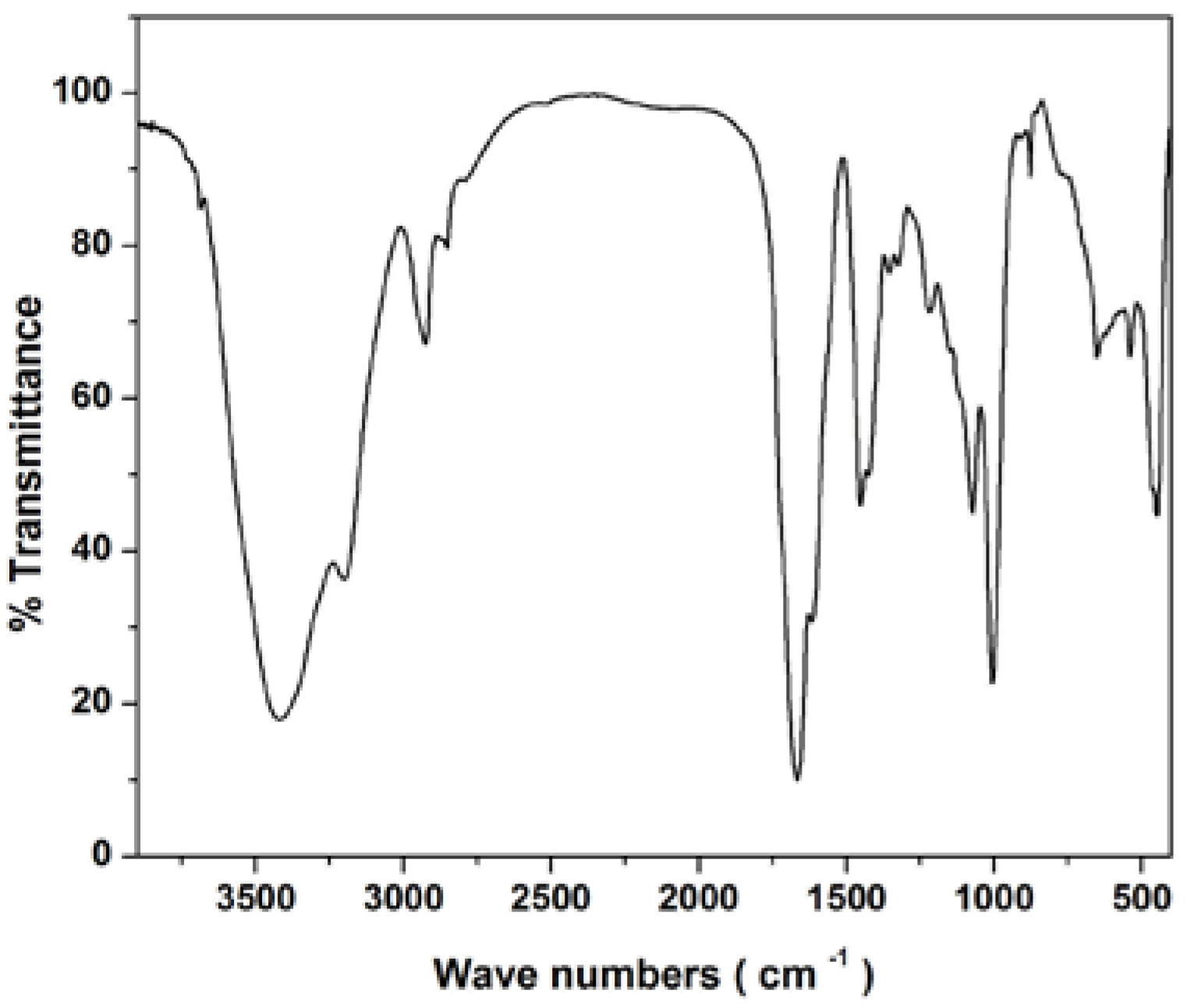
The chemical components of the superabsorbent nanocomposites prepared from HEMA, AM and Clay were characterized using FTIR (Figure 1). There was an absorption band with a weak shoulder at 2933cm−1 and a medium band at 1224 cm−1, which correspond to the stretching of aliphatic –CH2–, C–H and methyl groups of HEMA, respectively. In addition, two common distinctive absorption bands were observed at 3421 and 1662cm−1, which correspond to stretching of C–H and C=O groups of the two monomers, respectively. A band at 1005 cm−1 attributed to a Si–O stretching vibration could be found in the spectrum of the clay [13]. These results indicated that the copolymeric hydrogel contains the expected components.
Figure 1.
The infrared spectra of superabsorbent nanocomposites (C3H4).
3.2. XRD analysis
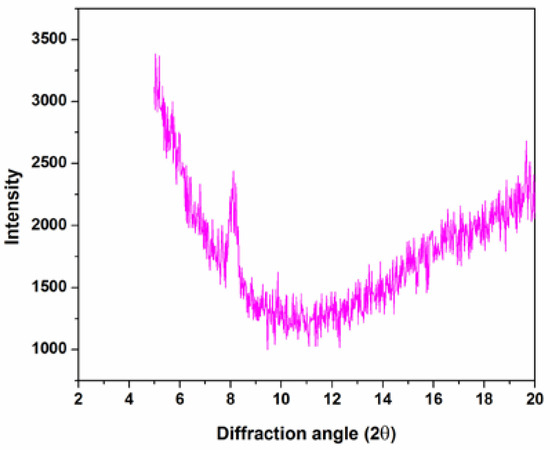
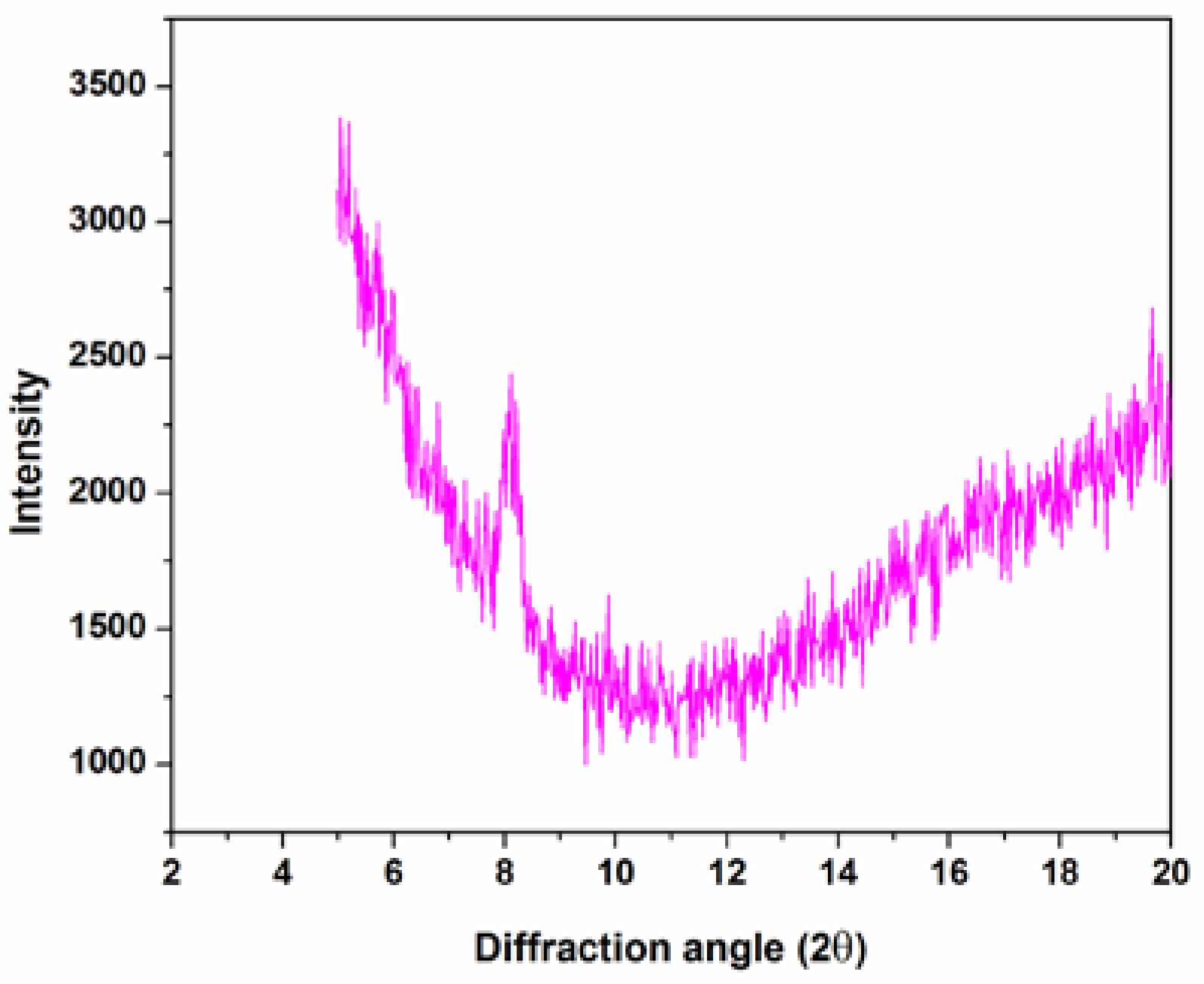
The dispersion of clay platelets in the superabsorbent nanocomposites was investigated by XRD. The clay powder showed a diffraction peak at 2θ=5.94° in the XRD pattern, corresponding to a basal spacing of 1.49 nm between clay sheets [13] whereas no distinct diffraction peak appeared at 2θ=5.94° in the range of 2 to 10° in the superabsorbent nanocomposites, but there was a distinct diffraction peak that appeared at 2θ=8.04° as shown in Figure 2. This meant that the regular crystal structures of clay were partly destroyed and the clay platelets were exfoliated and dispersed randomly in the superabsorbent nanocomposites.
Figure 2.
XRD patterns for dried superabsorbent nanocomposites (C3H4).
3.3. TGA analysis
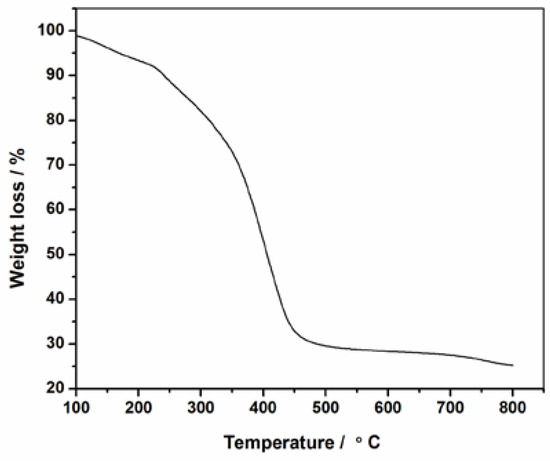
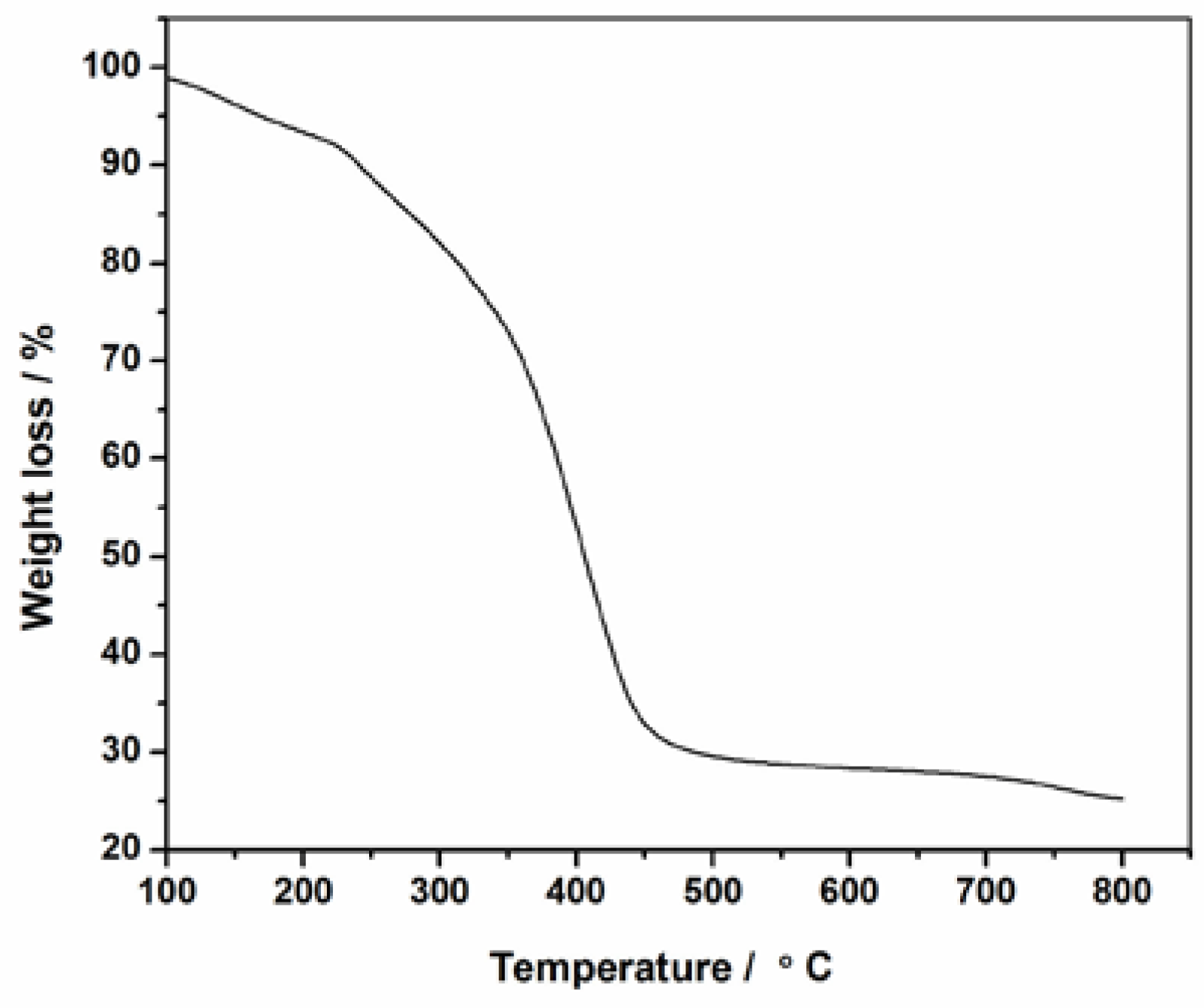
To evaluate thermal stability of the prepared samples, the TGA experiment was performed in the range of 50 to 800 °C and the results are shown in Figure 3. It was clear that about 70% of the sample was lost lastly with increase temperature in the given range.
Figure 3.
TGA curve of superabsorbent nanocomposites (C3H4).
Here initial weight loss from 50 to 200 °C may be due to the evaporation of surface adsorbed water. The weight loss from 200 to 300 °C may be due to the evaporation of low molecular compound. It was also revealed in that the weight loss mainly occurring between 300 to 430 °C may be due to the decomposition of P (HEMA-AM). Above 430 °C, only the clay was left.
3.4. SEM analysis
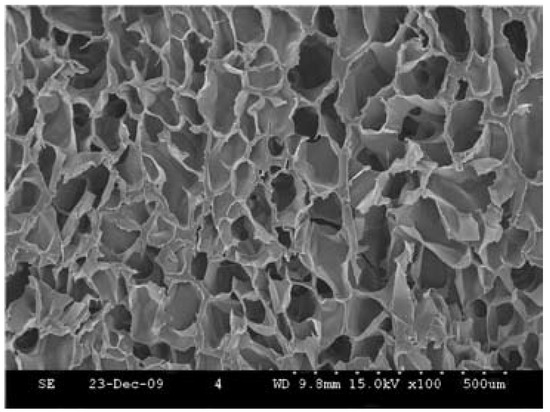
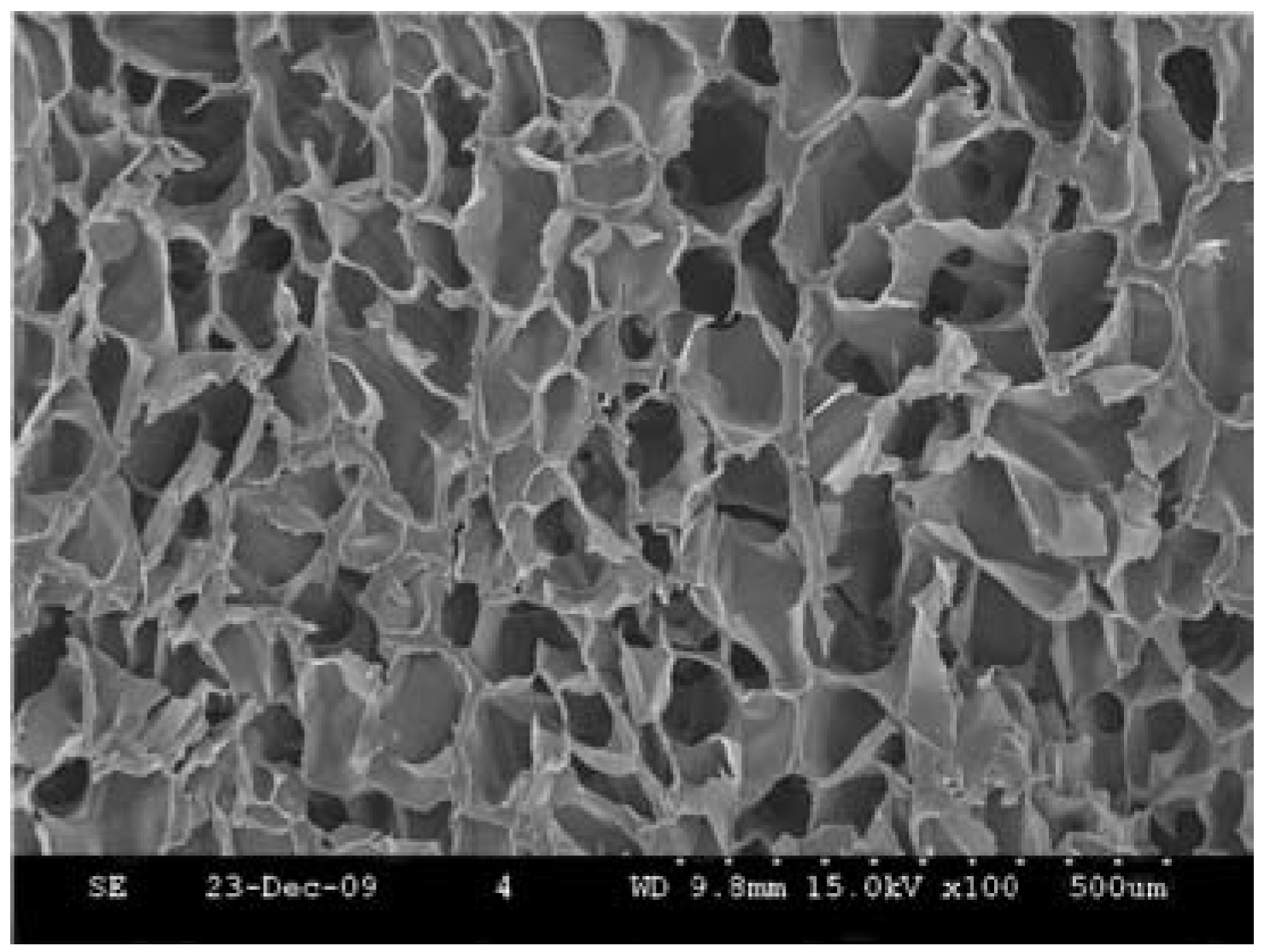
Figure 4 shows the SEM picture of superabsorbent nanocomposites. It is obvious that the materials have a porous structure. It is supposed that these pores are the regions of water permeation and interaction sites of external stimuli, with the hydrophilic groups of the graft copolymers. It can be seen from the picture that the superabsorbent nanocomposites have macropores with average diameter approximately 50 μm while the maximum pore size is only about 150 μm. Furthermore, the pores tend to be connected to each other and formed some open channels, which could remarkably facilitate the migration of water and other materials in and out of the superabsorbent nanocomposites.
Figure 4.
SEM micrographs of the superabsorbent nanocomposites (C3H4).
3.5. Swelling kinetics
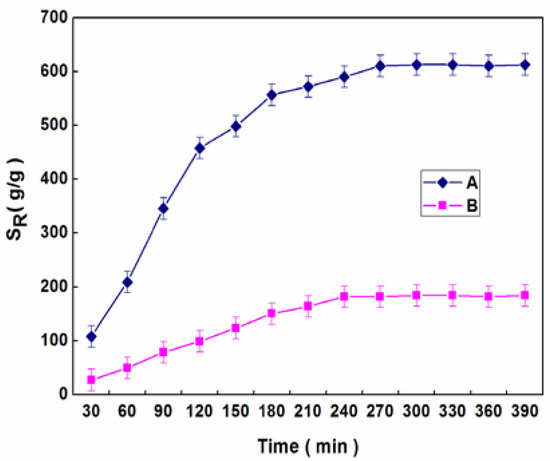
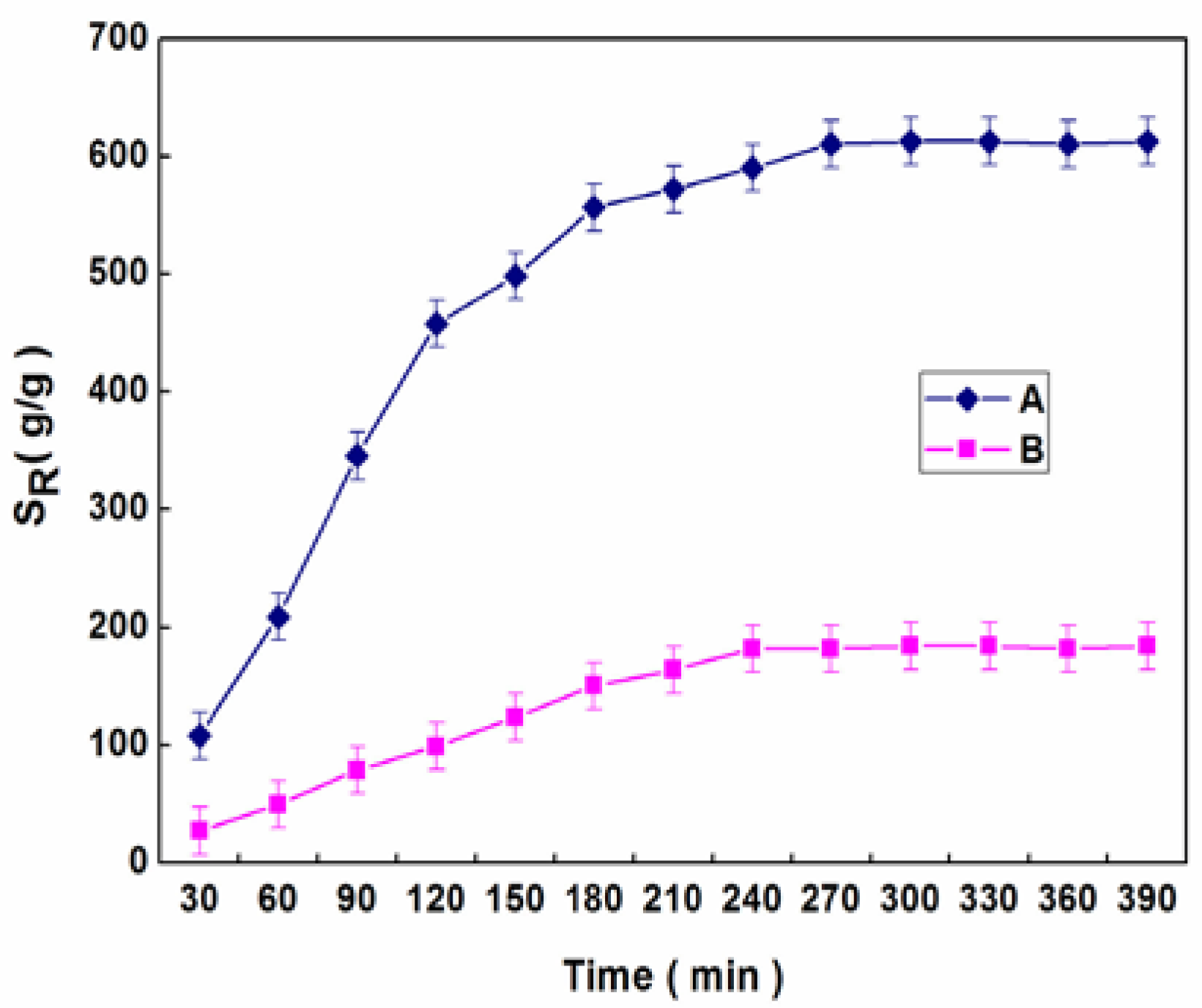
The samples swelled rapidly and reached equilibrium within about 260 min in water, and 240 min in 0.2% NaCl. The capacity of swelling is one of the most important parameters while evaluating the property of the materials.
Figure 5 shows the swelling ratio of superabsorbent nanocomposites sample in water and 0.2% NaCl, respectively, from which some differences can be observed. The superabsorbent nanocomposites swell faster in water than in 0.2% NaCl. The initial swelling rate can be calculated using equation (1). The water absorbency was found to be 612.5 and 182.6 g H2O g-1 in distilled water and 0.2% NaCl, respectively.
Figure 5.
Swelling kinetics of the optimized superabsorbent nanocomposites sample with certain particle sizes (40-80 mesh) (a) deionized water, (b) 0.2% NaCl.
4. Conclusion
A series of novel poly (HEMA-AM) / clay superabsorbent nanocomposites were prepared by in situ free-radical polymerization. Synthetic hectorite Laponite XLS (Clay-S) could work as a cross-linker instead of chemical cross-linker, and it could be well dispersed and effectively stabilized in nanosized-dispersed state by pretreatment method. FTIR analysis shows that the superabsorbent nanocomposites had the expected chemical components. The TGA results revealed that the decomposition occured mainly between 300 to 430 °C; at about 430 °C, only the clay is left. Moreover, the superabsorbent nanocomposites exhibited high equilibrium water uptake. It was found to be 612.5 and 182.6 g H2O g-1 in distilled water and 0.2% NaCl, respectively. The SEM photographs clearly show the pore structure of materials. On the basis of the above mentioned study, the superabsorbent nanocomposites reported here can be a potentially smart material in a wide range of applications including adsorption materials, superabsorbent fiber and drug-delivery devices.
Acknowledgements
The authors are grateful for the research support from the Natural Science Foundation (No. 50673017), the Shanghai Leading Academic Discipline Project (No. B603) and the Program of Introducing Talents of Discipline to Universities (No. 111-2-04) of People’s Republic of China.
References
- Buchholz, F.; Graham, A. Modern superabsorbent polymer technology; Wiley: New York, 1997; pp. 10–15. [Google Scholar]
- Kosik, K.; Wilk, E.; Geissler, E.; Laszlo, K. Interaction of phenols with thermoresponsive hydrogels. Colloids Surf. A. 2008, 319, 159–164. [Google Scholar] [CrossRef] [Scilit]
- Lee, S.; Ibey, B.L.; Cote, G.L.; Pishko, M.V. Measurement of pH and dissolved oxygen within cell culture media using a hydrogel microarray sensor. Sens. Actuators B Chem. 2008, 128, 388–398. [Google Scholar] [CrossRef] [Scilit]
- Seon, J.K.; Ki, J.L.; Sun, I.K.; Lee, Y.M.; Tack, D.C.; Sang, H.L. Electrochemical behavior of an interpenetrating polymer network hydrogel composed of poly (propylene glycol) and poly (acrylic acid). J. Appl. Polym. Sci. 2003, 89, 2301–2305. [Google Scholar] [CrossRef] [Scilit]
- Lin, S.B.; Yuan, C.H.; Ke, A.R.; Quan, Z.L. Electrical response characterization of PVA-P (AA/AMPS) IPN hydrogels in aqueous Na2SO4 solution. Sens. Actuators B Chem. 2008, 134, 281–286. [Google Scholar] [CrossRef] [Scilit]
- Bamford, C.H.; Al-Lamee, K.G. Studies in polymer surface modification and grafting for biomedical uses: 2. Application to arterial blood filters and oxygenators. Polymer 1996, 37, 4885–4889. [Google Scholar] [CrossRef] [Scilit]
- Loh, X.J.; Colin Sng, K.B.; Li, J. Synthesis and water-swelling of thermo-responsive poly(ester urethane)s containing poly(ε-caprolactone), poly(ethylene glycol) and poly(propylene glycol). Biomaterials 2008, 29, 3185–3194. [Google Scholar] [CrossRef] [Scilit] [PubMed]
- Ong, S.M.; Zhang, C.; Toh, Y.C.; Kim, S.H.; Foo, H.L. A gel-free 3D microfluidic cell culture system. Biomaterials 2008, 29, 3237–3244. [Google Scholar] [CrossRef] [Scilit] [PubMed]
- Tang, Q.W.; Wu, J.H.; Sun, H.; Fan, S.J.; Hu, D.; Lin, J.N. Superabsorbent conducting hydrogel from poly(acrylamide-aniline) with thermo-sensitivity and release properties. Carbohydr. Polym. 2008, 73, 473–481. [Google Scholar] [CrossRef] [Scilit]
- Mu, J.F.; Zheng, S.X. Poly(N-isopropylacrylamide) nanocrosslinked by polyhedral oligomeric silsesquioxane: Temperature-responsive behavior of hydrogels. J. Colloid Interface Sci. 2007, 307, 377–385. [Google Scholar] [CrossRef] [Scilit] [PubMed]
- Strachotov, B.; Strachota, A.; Uchman, M.; Slouf, M.; Brus, J. Super porous organic–inorganic poly(N-isopropylacrylamide)-based hydrogel with a very fast temperature response. Polymer 2007, 48, 1471–1482. [Google Scholar] [CrossRef] [Scilit]
- Chisholm, B.J.; Moore, R.B.; Barber, G.; Khouri, F.; Hempstead, A. Nanocomposites Derived from Sulfonated Poly (butylene terephthalate). Macromolecules 2002, 35, 5508–5516. [Google Scholar] [CrossRef] [Scilit]
- Ma, J.H.; Xu, Y.J.; Fan, B.; Liang, B.R. Preparation and characterization of sodium carboxymethylcellulose/poly(N-isopropylacrylami de)/clay semi-IPN nanocomposite hydrogels. Eur. Polym. J. 2007, 43, 2221–2228. [Google Scholar] [CrossRef] [Scilit]

Disclaimer/Publisher’s Note: The statements, opinions and data contained in all publications are solely those of the individual author(s) and contributor(s) and not of MDPI and/or the editor(s). MDPI and/or the editor(s) disclaim responsibility for any injury to people or property resulting from any ideas, methods, instructions or products referred to in the content. |
© 2011 Textile Bioengineering and Informatics Society. This article is an open access article distributed under the terms and conditions of the Creative Commons Attribution (CC BY) license (https://creativecommons.org/licenses/by/4.0/).