


Abstract
This study analyses the characteristics of PU/MWNT nanocomposite films. For this purpose, several kinds of PU/MWNT nanocomposite films were prepared with four kinds of MWNT, MWNT contents and two kinds of dispersion times. ESD (Electrostatic Dissipation) films composed of polyurethane (PU) block copolymer and selected multi-walled carbon nanotube (MWNT) were also prepared by disperse processing with various MWNT contents and dispersion times. Its mechanical and chemical properties were investigated with respect to electrical conductivity. The tensile properties and chemical properties of PU/MWNT nanocomposite films were measured using UV-visible spectrometer. These properties were also discussed according to the manufacturing conditions of nanocomposite films. Furthermore, PU/MWNT films were made by dispersing them in five kinds of CNT contents and six kinds of dispersion times under the DMF (dimethylformamide) solution. The mechanical properties of the PU/MWNT films were analyzed by Instron and discussed for various dispersion conditions.
1. Introduction
Since the industrial revolution of the last century, the use of modern machinery combined with the dry atmosphere produced by central heating has made discharges of this sort common [1]. Therefore, more electrostatic effects actually happened and eventually damages the machine. As a result, static control has become an area of critical concern for electronics manufacturers. Indeed, billions of dollars are lost every year from circuits damaged by static electricity surges during processing and packaging of electronics. The most effective way for eliminating the electrostatic hazard is to get rid of highly electrostatic materials and thus provide an anti-static environment [1].
There are metal fiber, metal flake, carbon fiber and carbon black with fillers to give ESD function until now. Recently, fundamental research on Carbon nanotube (CNT) and their applications have made rapid progress. CNT are long cylinders of covalently bonded carbon atoms with a diameter ranging from a few angstroms to several tens of nanometers across. CNT exhibit excellent mechanical, thermal and electrical properties. Moreover, CNT possess high flexibility, low mass density, and large aspect ratio (typically ca. 300~1000). For these reasons, they have been suggested as ideal materials for the mechanical reinforcement of various polymers while making composites [2,3]. But, cohesion phenomenon by Van der Waals force of CNT appears when distributed in matrix. This is the most difficult problem in CNT dispersion. In most of the cases homogeneous dispersion of nanotubes is hindered by both the synthesis induced ‘entangled’ and ‘aggregated’ structures of nanotubes. The aggregation problem presents a major challenge irrespective of the method of composite preparation [4]. To overcome this dispersion problem, melting polymerization, and chemical functionalization incorporated with ultrasonication was carried out [5].
In this paper, the characteristics of the nano-composite film for CVD-grown multi-walled carbon nanotube (MWNT)–Polyurethane are surveyed by analyzing its electrostatic dissipation (ESD) functions. For this purpose the films were made by dispersing MWNT in dimethylformamide (DMF) and combined with polyurethane. The dispersion property of PU/MWNT film was measured with a UV-Vis spectrometer. The mechanical property of film was measured with Instron. Finally, its characteristics according to manufacturing conditions were comparatively analysed and discussed under these conditions.
2. Experimental
2.1. Material
2.1.1. CNT preparation
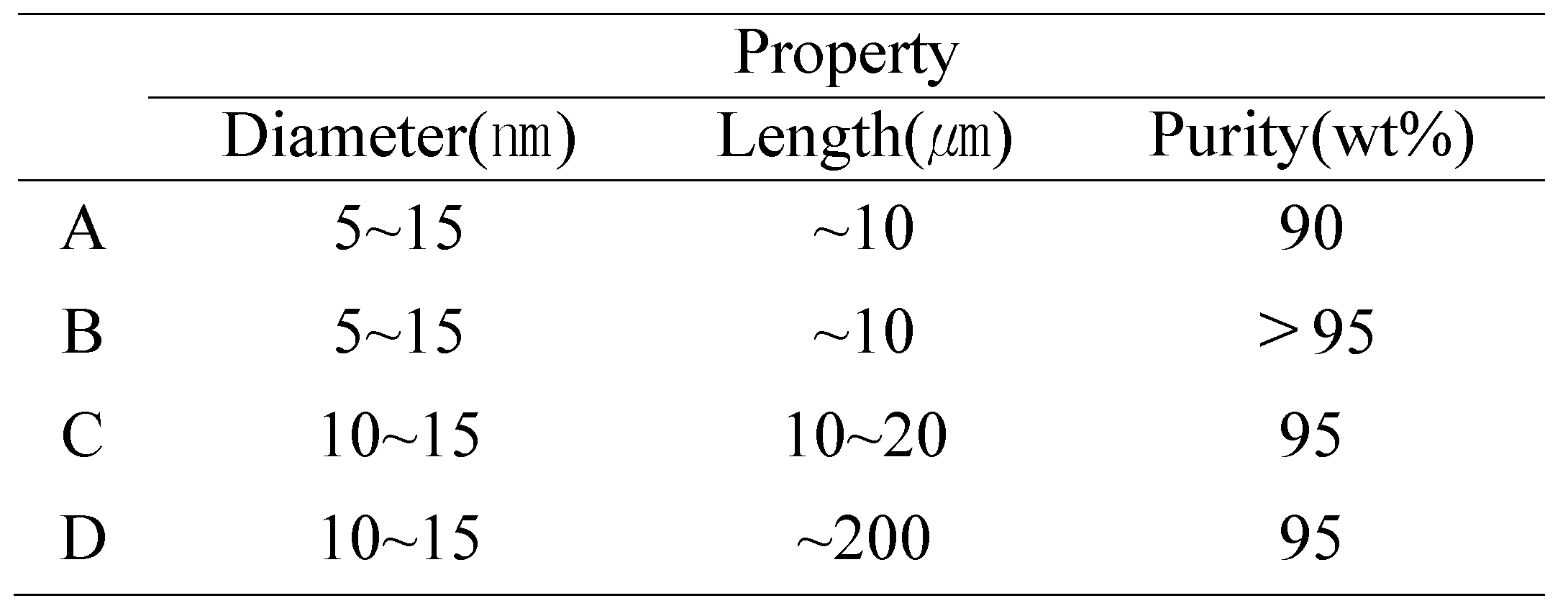
Table 1 shows the characteristics of MWNT used in this study. The four types of MWNT produced in three companies were prepared. They were all made by CVD method
Table 1.
Specification of MWNT.
2.1.2. Solvent and polyurethane preparation
The DMF was used for mixing with PU as a dispersion solvent. The PU resins used in this study are made by Cytec. Industries Inc. (HI-BON 972DF). PU resins consists of polyurethane 30%, DMF 38.5% (Dimethylformamide) and MEK (Mathyl-ethylketon) 31.5%. The molecular weight ranges from 100,000 to 200,000 and viscosity ranges from 85,000 to 110,000.
2.2. Preparation of dispersion solution
2.2.1. Dispersion conditions for selection of MWNT
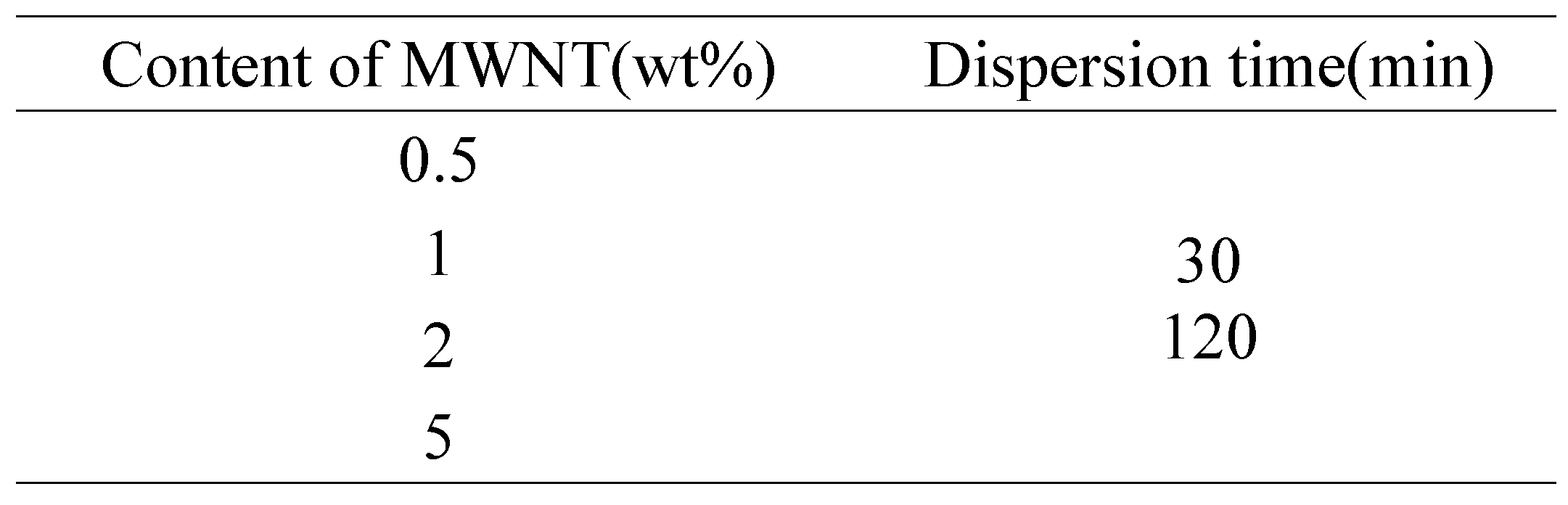
For selection of the best conditions for the MWNT dispersion, the experiments related to the dispersion were divided according to the MWNT weight content and dispersion treatment time. Table 2 shows the dispersion conditions for selecting good MWNT. SONICS company’s Ultrasonic processor was used for carrying out MWNT dispersion to DMF.
Table 2.
Dispersion conditions of MWNT.
2.2.2. Dispersion conditions for selected MWNT
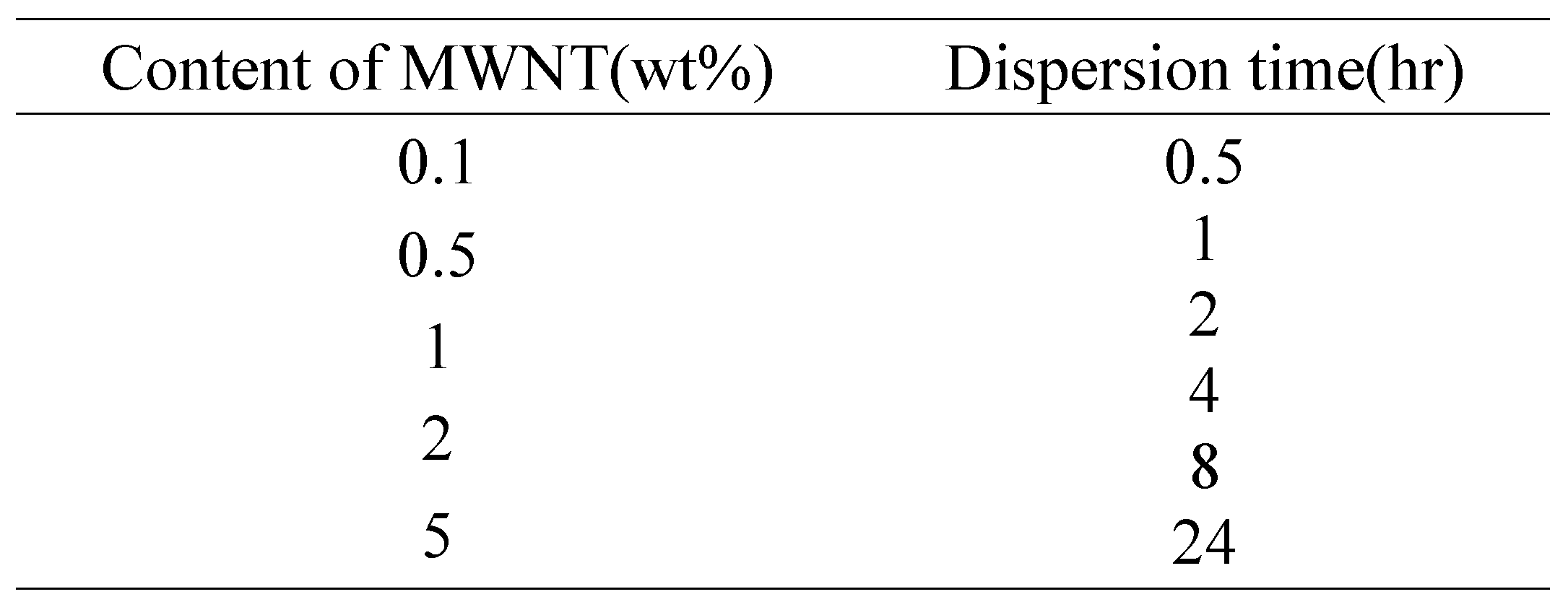
Table 3 shows the dispersion conditions of selected MWNT for the best electrostatic dissipation.
Table 3.
Dispersion conditions of selected MWNT.
2.3. Thermal and chemical modification of MWNT
For improving the dispersibility of MWNT, surface modification of MWNT was performed by thermal and acid treatments. Thermal treatment was carried out at 450℃ for 80 minutes in the air furnace. And acid treatment was carried out using nitric acid and sulfuric acid in the ratio 3:1 and impurities were removed.
2.4. Production of PU/MWNT film
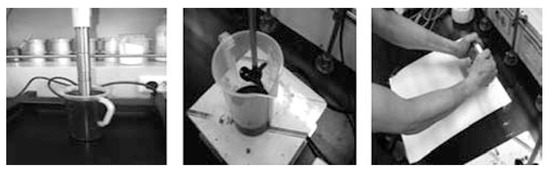
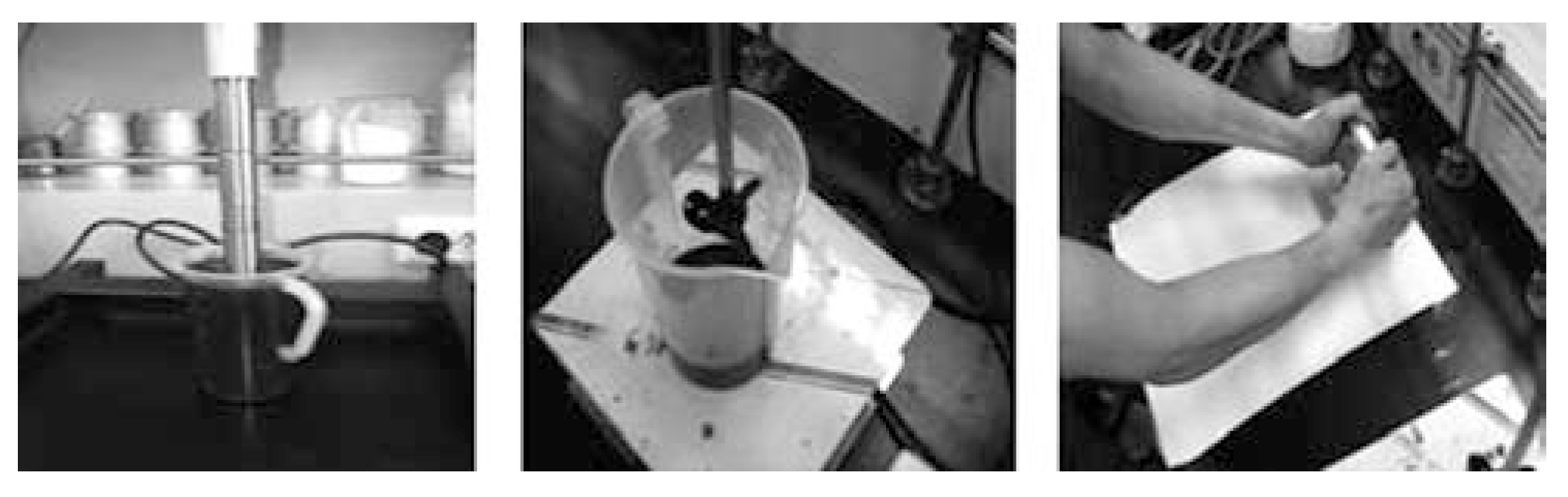
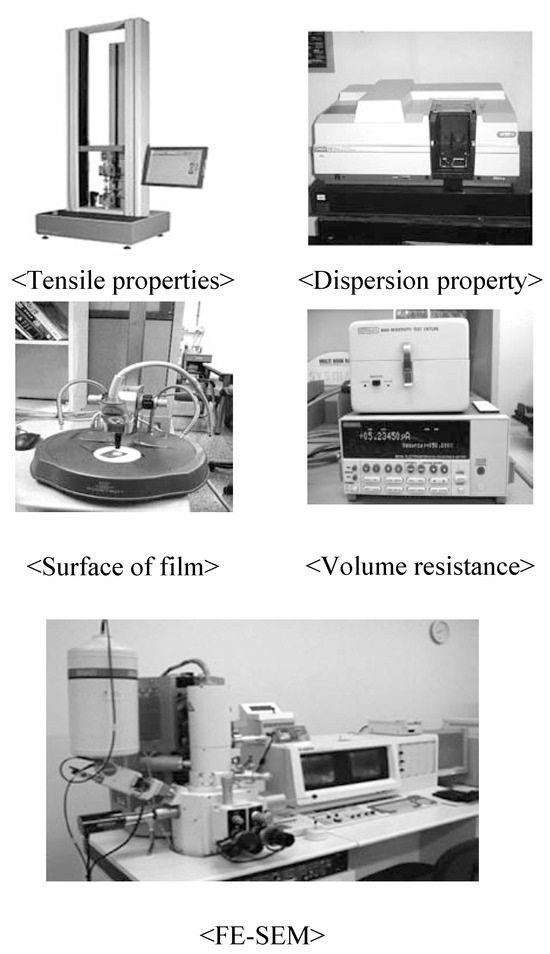
Figure 1 shows the manufacturing process of PU/MWNT film. Ultrasonic dispersion of MWNT into DMF was performed. And this dispersion solution and PU were mixed for 1 hour. This mixed solution was casted by Baker Applicator (YBA-4-inch) using a dryer at 150℃ for 120 seconds.
Figure 1.
Manufacturing process of PU/MWNT film.
2.5. Measurement of the characteristics of PU/MWNT film
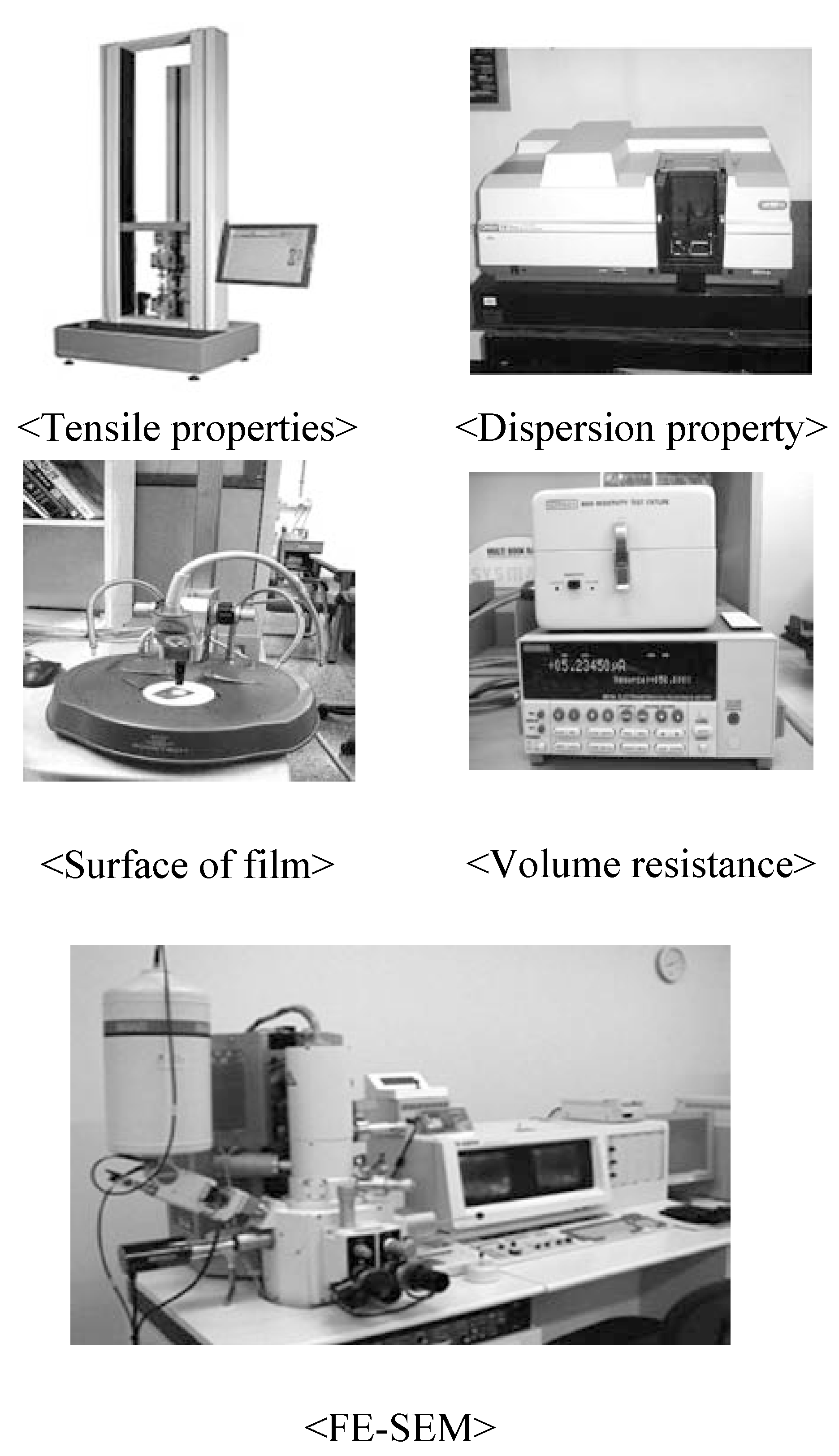
Figure 2 shows the apparatus used for analysis of PU/MWNT film characteristics. The dispersion extent of the PU/MWNT film was measured by the UV-Vis spectrometer, which measures the reflectivity. For the surface profile of the film, SOMETECH’s video microscope system (×500) was used. In addition, manufactured PU/MWNT film of mechanical property was measured using Testometric MICRO 350 tensile tester. Electrical properties of the film were measured using KEITHLEY8009 by accessing electrical resistance. The surface profile of PU/MWNT film was scanned using MWNT FE-SEM (S-4200, Hitachi, Ltd.).
Figure 2.
Measuring apparatus.
3. Results and discussions
3.1. The selection of MWNT
For the selection of MWNT with better dispersion in medium (DMF), optical and electrical properties of PU/MWNT films were analyzed.
3.1.1. SEM characteristic of MWNT
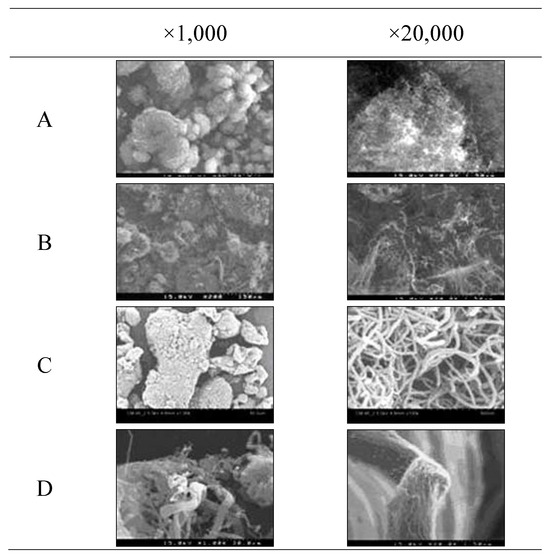
Figure 3 shows the SEM photographs of MWNT. MWNT shape and impurities are confirmed by FE-SEM. MWNT particle catalyst and impurities are confirmed by ×1000 magnification and ×20,000 magnifications as shown in Figure 3.
Figure 3.
MWNT’s SEM photograph.
Purity of specimen A is 90% as listed in Table 1. It has many impurities because its purity is lower than the other MWNT’s purity. Specimens B, C and D have 95% purity. Also specimen D is longer than others. MWNT’s impurities of Specimen C is less than A and B. Also its shape is clearer than others.
3.1.2. Dispersion characteristics of MWNT with naked eyes
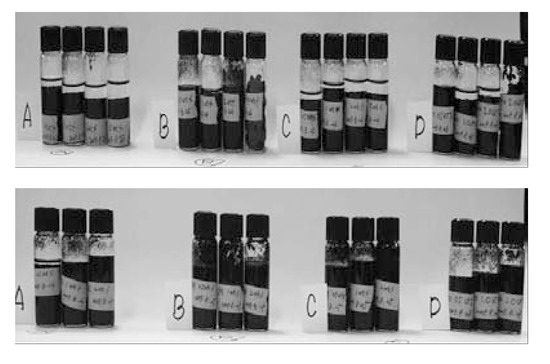
Figure 4 shows MWNT’s dispersion solutions. Ultrasonic dispersion solution of MWNT with DMF was made for measurement with naked eyes. Comparing the dispersion solutions between 30 minutes and 120 minutes, dispersion solutions (b) that were dispersed during 120 minutes have much clear dispersion than those of 30min. treated solutions (a) with naked eyes. It is shown that, the lesser the MWNT content is, the better the dispersion of MWNT/DMF. When the MWNT content is more than 2wt% results in lumps occuring in bundles after dispersion in B and D. The naked eye evaluation shows that DMF and MWNT are not mixed with each other by keeping a separating layer. In case of MWNT of above 5wt% weight content, severe coagulation symptoms were shown. It was shown that specimen C has the best dispersibility in the 120min. of dispersion treating time.
Figure 4.
MWNT/DMF dispersion solutions. (a) 30min, (b) 120min.
3.1.3. Reflectivity of PU/MWNT film
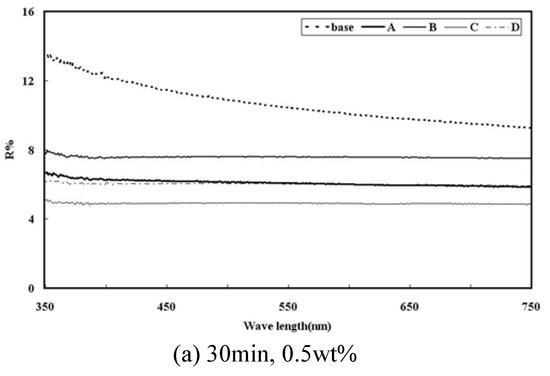
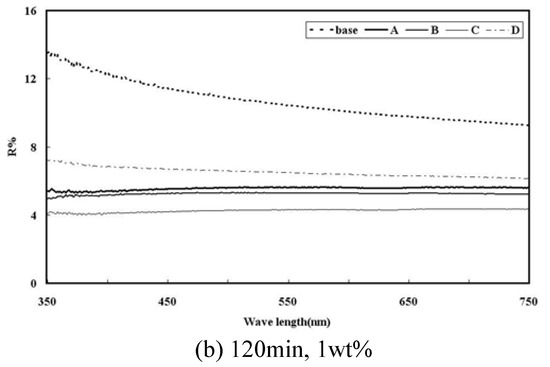
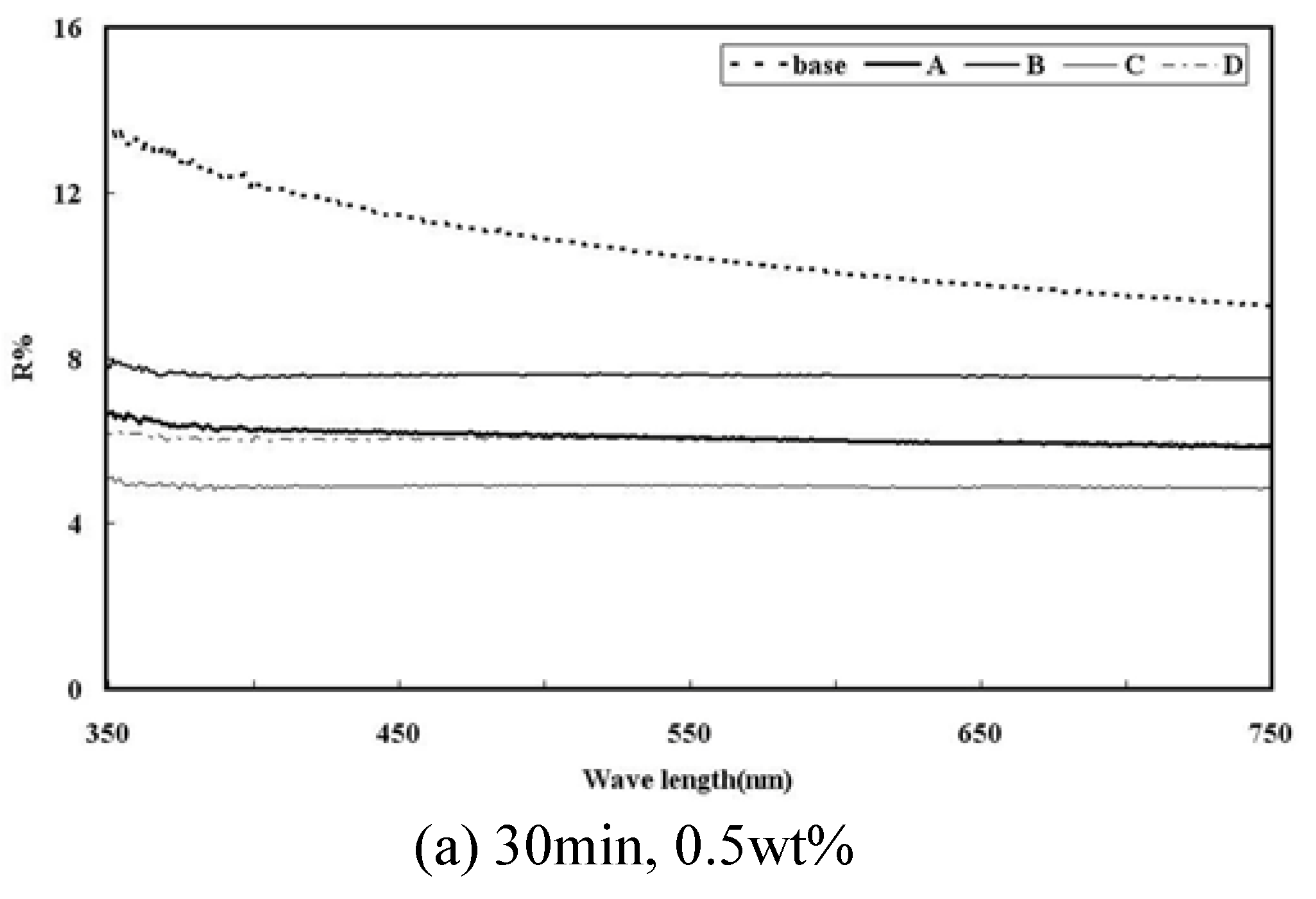
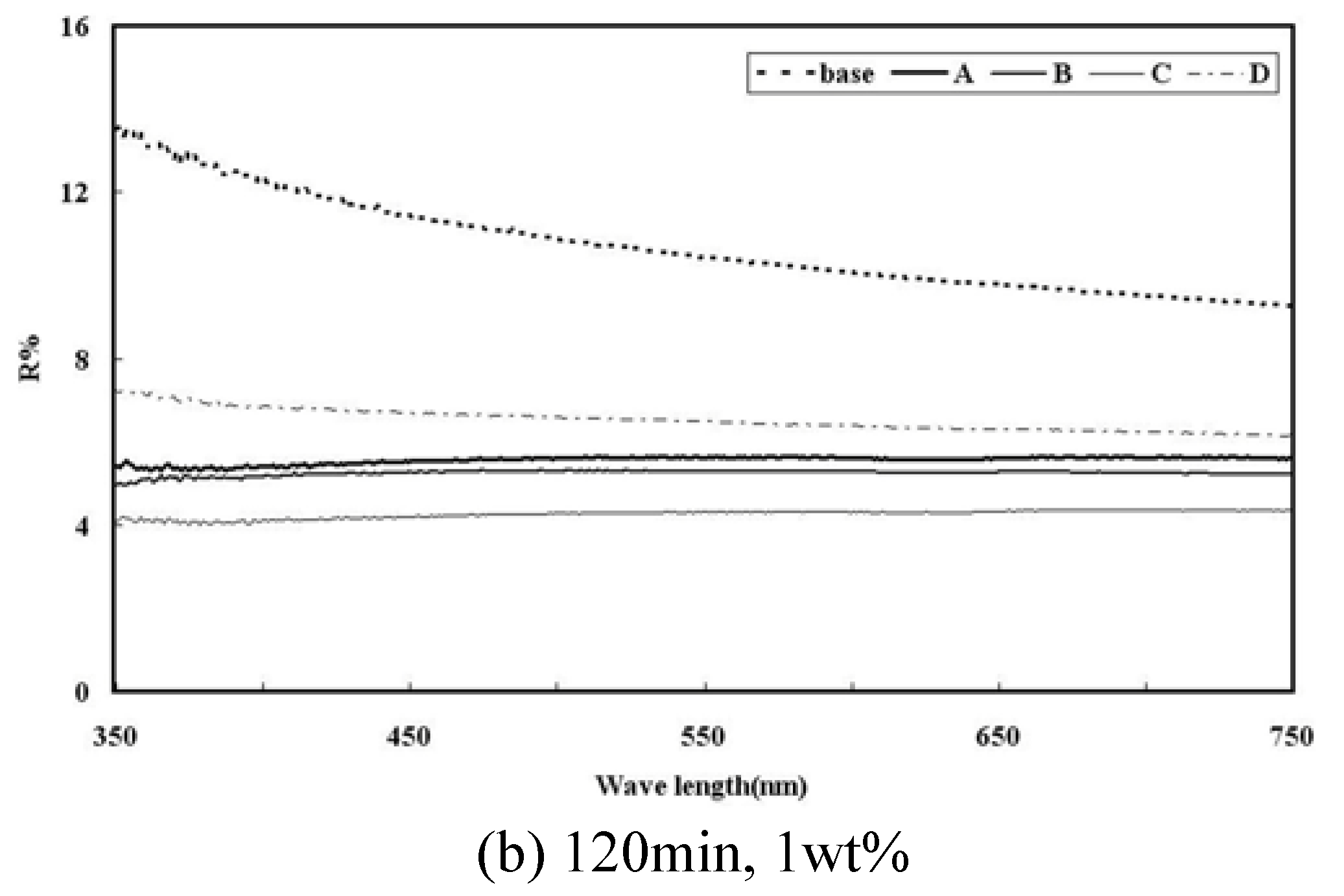
Figure 5 shows the measured reflectivity of PU/MWNT film manufactured according to dispersion conditions as listed in Table 1. The measurements were made using UV-Vis spectroscope. Figure 5 (a) shows the reflectance of non dispersion PU/MWNT film and the films with the contents (0.5wt%) of MWNT manufactured by ultrasonic dispersion for 30 minutes. Specimen C, as shown in Figure 5(a), shows the lowest reflectance. This is even from all wavelength and shows that reflexibility becomes low because of even dispersion, better than those of specimens A and B. Figure 5 (b) shows the reflectances of PU/MWNT films treated with 1% weight MWNT and the ultrasonic dispersion time of 120 minutes. The reflectance of specimens A, B and D, ranges from 6 to 7% and the reflectance of specimen C ranges from 4 to 5%. Reflexibility of specimen C is low, which means MWNT of specimen C has been evenly dispersed in the film.
Figure 5.
Reflectance of PU/MWNT film according to the dispersion conditions.
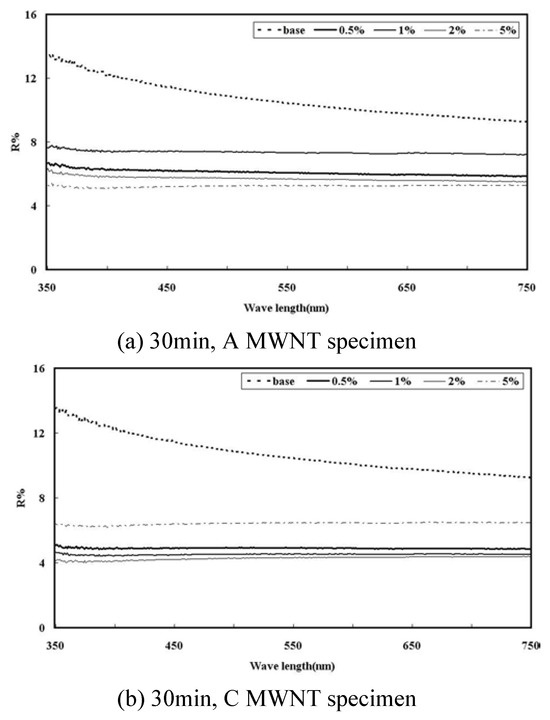
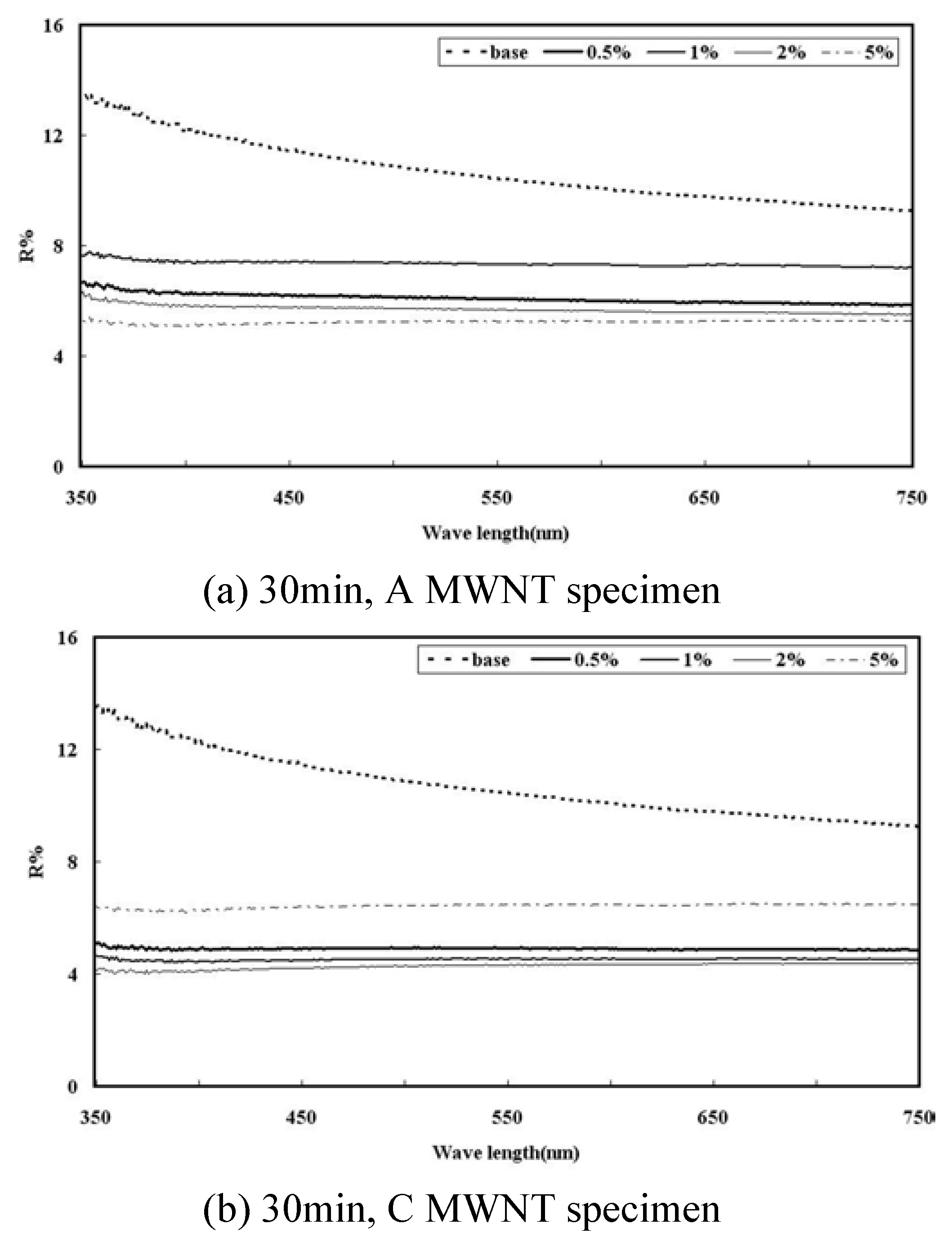
Figure 6 show the reflectance of PU/MWNT films treated for 30minute dispersion time according to the MWNT weight content of specimens A and C. As shown in Figure 6 (a), reflectance of the specimen A according to MWNT weight ranges from 5.5 to 7%. But, PU/MWNT films of C have reflectance value of 4 to 7%. Comparing the two specimens, specimen C has better dispersion characteristics than specimen A. This result was confirmed by naked eye estimation as well.
Figure 6.
Reflectance according to the weight content of MWNT (specimens A and C) with dispersion treating time, 30min.
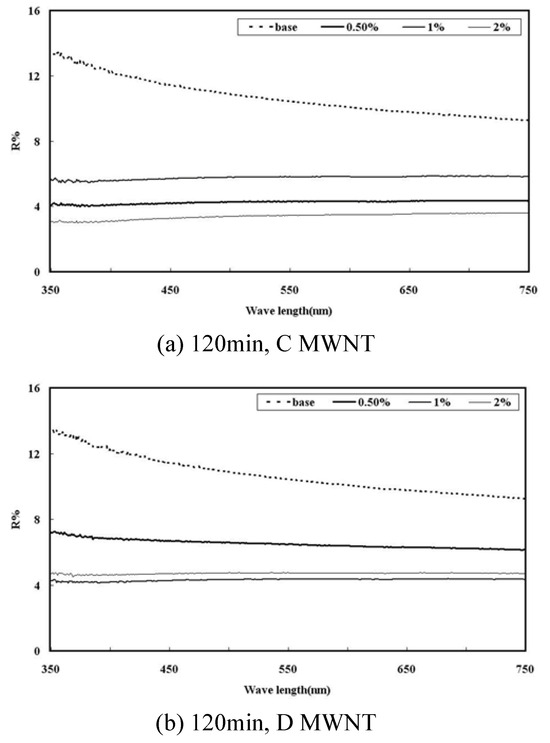
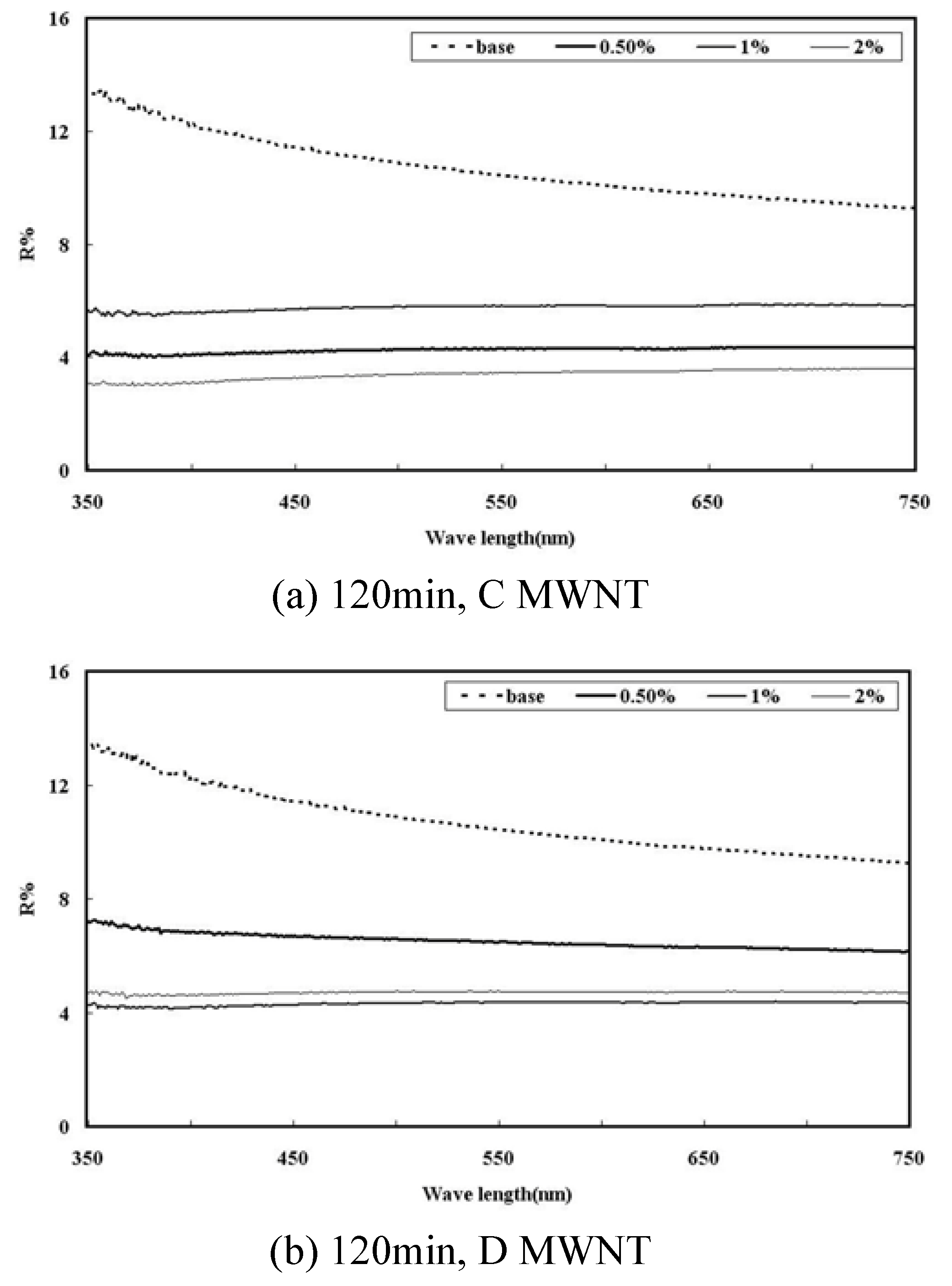
Figure 7 shows the reflectance according to the weight content of MWNT with dispersion treating time, 30min. As shown in Figure 7(a) and (b), the reflectances of MWNT in C (Figure 7(a)) are lower than those of D (Figure 7(b)), especially, much lower in case of 0.5% and 2% MWNT weight content. The values are as low as below 4% reflectance.
Figure 7.
Reflectance according to the weight content of MWNT (specimens C and D) with dispersion treating time, 120min.
3.1.4. Characteristics of electrical conductivity
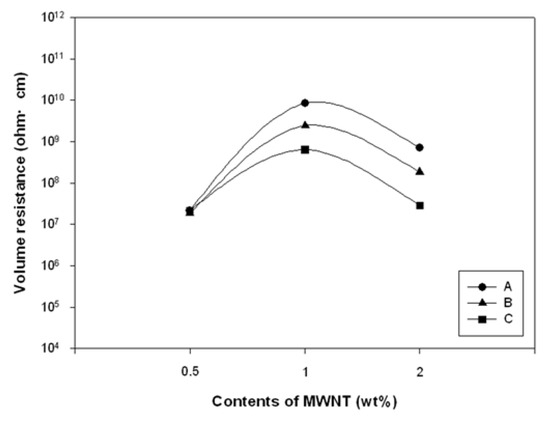
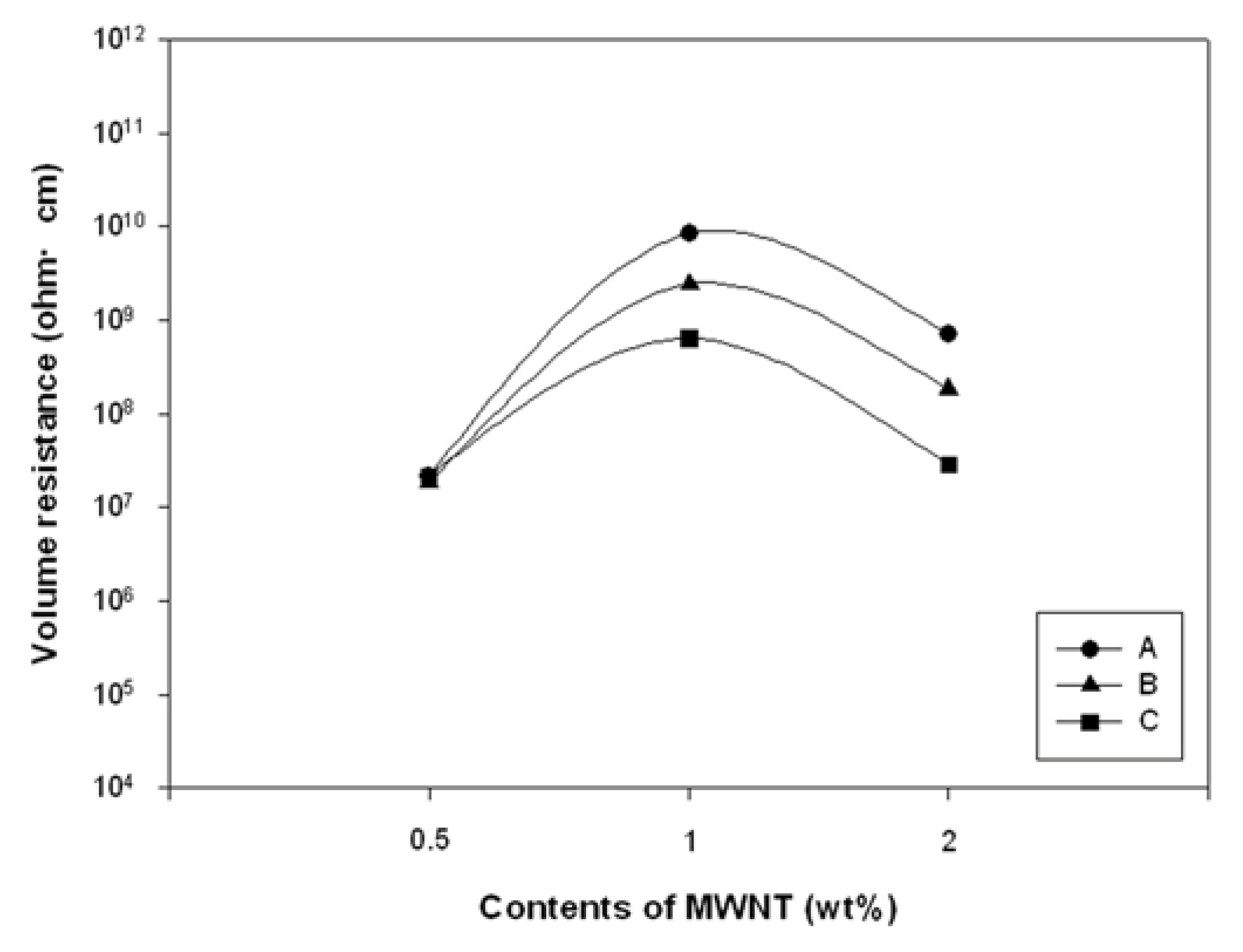
Figure 8 shows the volume resistance value of PU/MWNT film that was dispersed for 120 minutes according to different MWNT weight contents. As shown in Figure 8, according to MWNT weight contents, specimen C has low resistance value less than those of specimens A and B. Conductivity according to the weight content of MWNT shows that specimen C is the most superior. PU/MWNT film must have less than 107ohm.cm resistance value for electrostatic dissipation.
Figure 8.
Resistance values of the PU/MWNT film with 120min dispersion time.
3.1.5. Surface profile of the PU/MWNT film
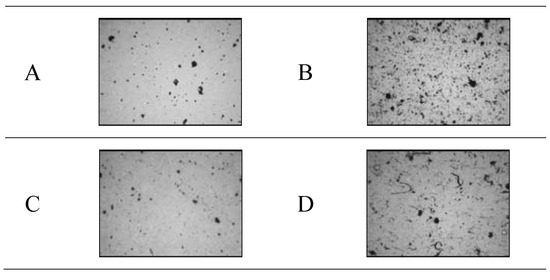
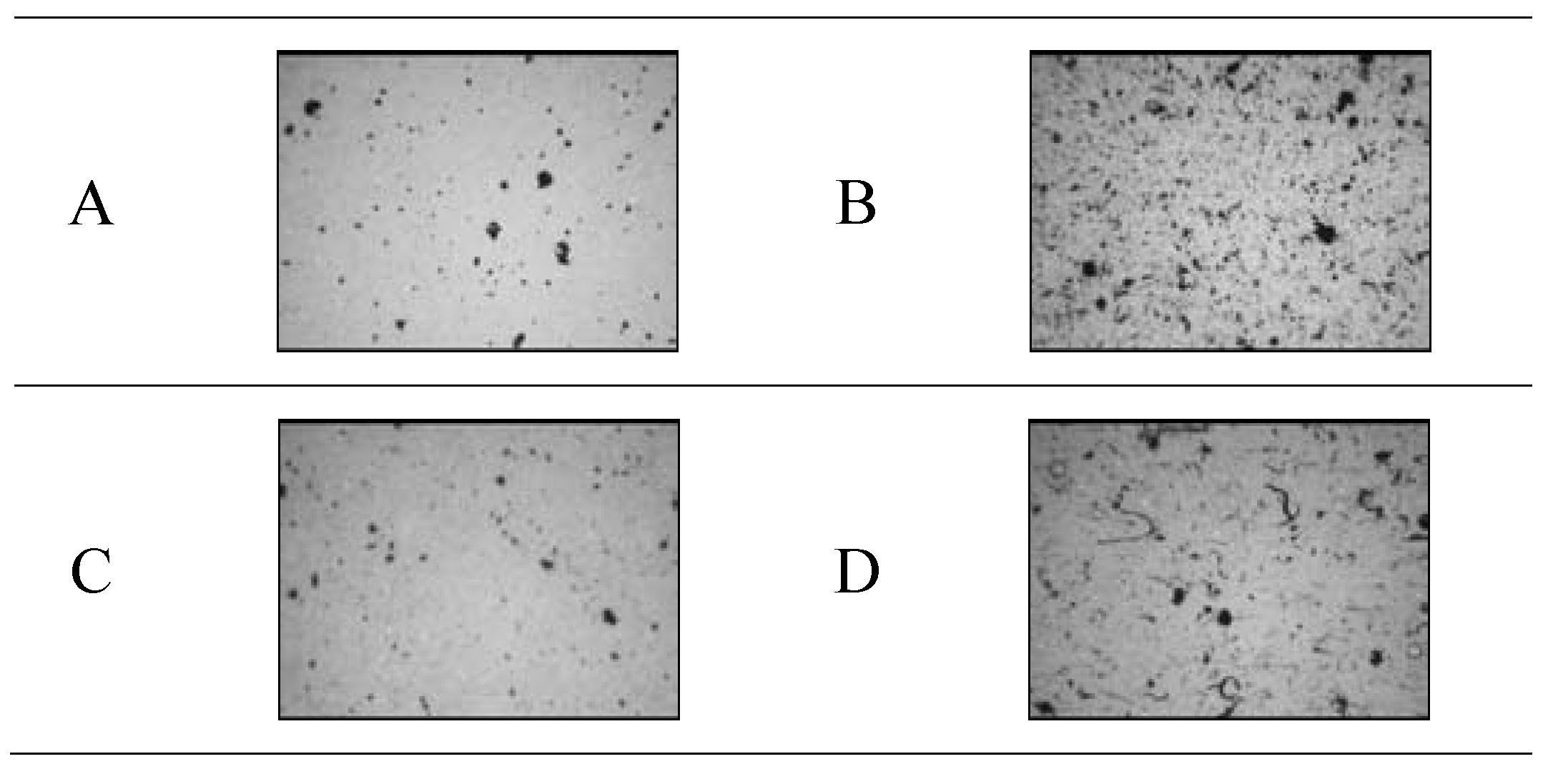
Figure 9 shows photograph of the surface profile of PU/MWNT film. Measured surface of film is by 500 magnifications. It is shown that specimen C is relatively less concentrated than the other specimens. Dispersed states of the MWNT shows the best one among the four specimens. From the figure it can be concluded that MWNT on A, B, C and D has not been dispersed and reflects cohesion on the film surface. It is due to the Van der Waals forces that occur as a result of high coherence of the MWNT. It can be concluded that MWNT of specimen C reveals good dispersion result, a similar result was witnessed in the experiment of reflectance, and naked eye estimation.
Figure 9.
Surface profile of the PU/MWNT film (×500). (disperson time 30minute, contents of MWNT 2wt%).
3.2. Tensile and dispersion characteristics of PU/MWNT film with selected MWNT (Specimen C)
Various PU/MWNT films according to the five kinds of MWNT weight content and six kinds of dispersion time listed in Table 3 were used with the selected MWNT (Specimen C) listed in Table 1. The tensile and dispersion characteristics of these films were analyzed.
3.2.1. Tensile properties
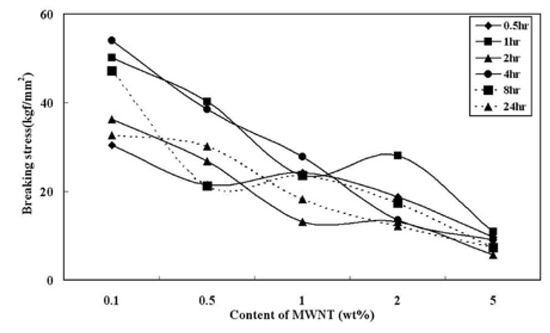
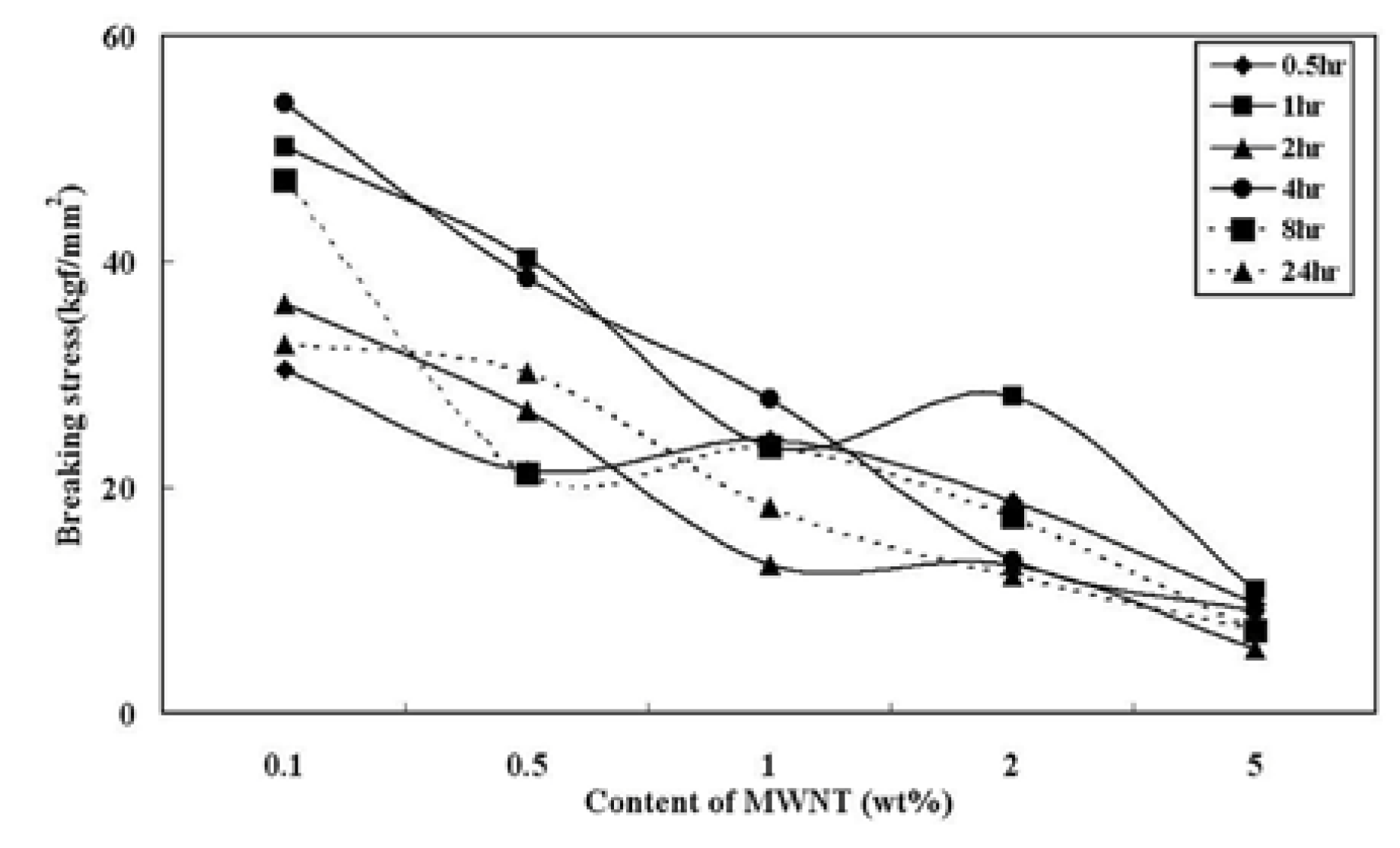
Figure 10 shows the breaking strength of PU/ MWNT films according to dispersion condition listed in Table 3. As shown in Figure 10, the breaking strength of the films is decreased with increasing weight content of MWNT. Considering breaking strength according to dispersion condition, with the content of 0.1wt% MWNT, breaking strength is 30~54 kgf/mm2, with the content of 0.5wt% MWNT, breaking strength is 21~40 kgf/mm2. When the content is 1wt% MWNT, breaking strength is 13~27 kgf/mm2, for 2wt% MWNT, it is 12~28 kgf/mm2. Finally, for the highest content of 5wt% MWNT, breaking strength ranges from 5 to 10 kgf/mm2. MWNT itself has a high strength. But, since ashes cohesion has happened, this part acts as a weak point in the film, and consequently is responsible for stress decline.
Figure 10.
Breaking strength of PU/MWNT films.
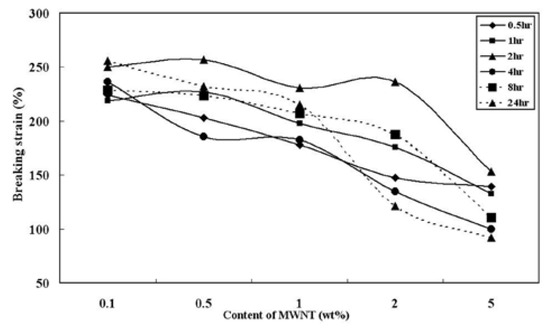
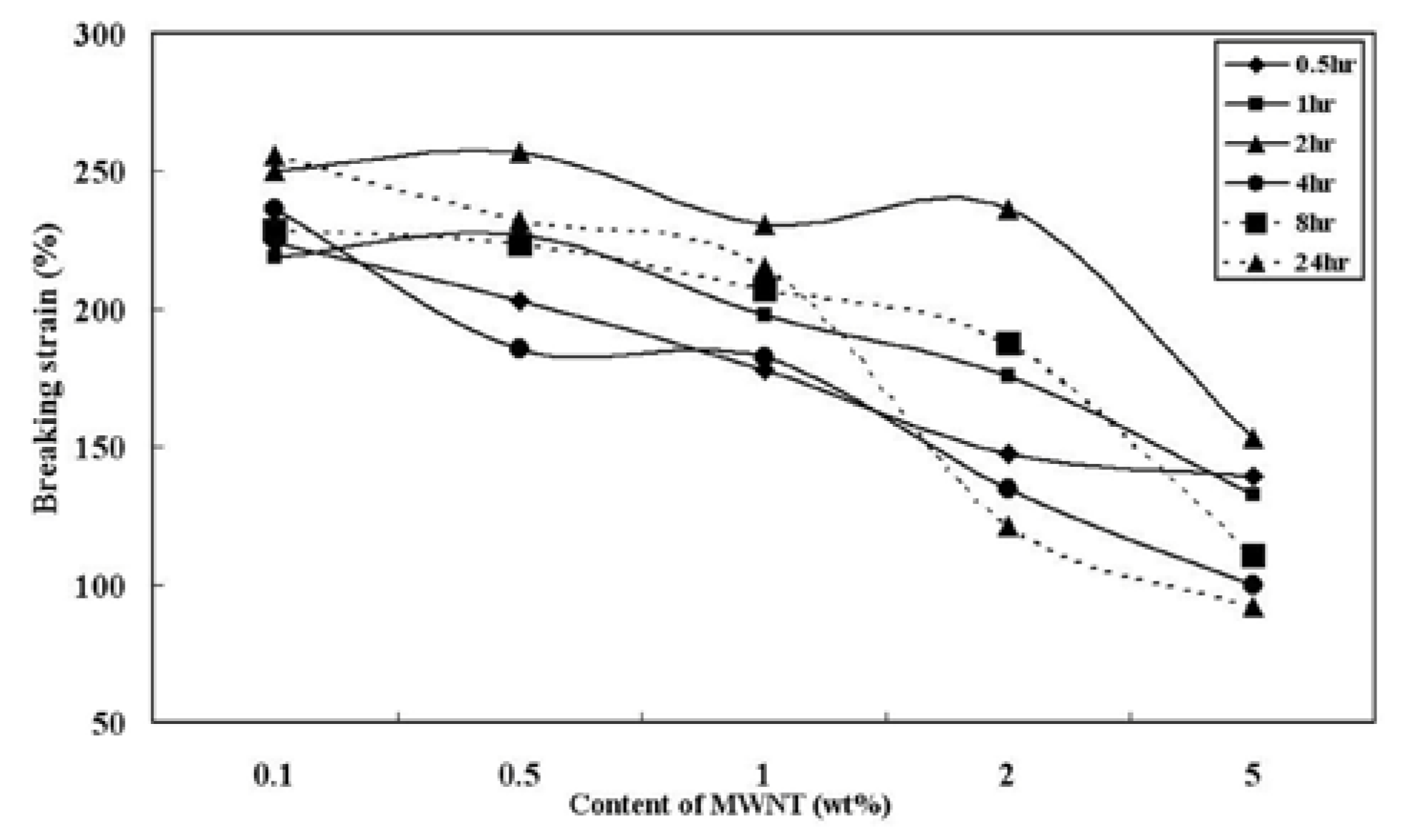
Figure 11 shows the breaking strain of PU/MWNT films according to dispersion conditions. As shown in Figure 10, the breaking strain of the film is decreased with increasing weight content of MWNT. The breaking strain values are as follows: for the content of 0.1wt%, it ranges between 218~255%, for the content of 0.5wt%, it ranges between 185~256%, for the content of 1 wt%, it ranges between 121~236%, and for the content of 5wt%, breaking strain was measured as 92~153%. When MWNT weight content was 2wt%, high deflection of breaking strain appeared at the 24hrs dispersion time. The breaking strain reached the highest value at 2 hrs dispersion time. As shown in Figure 10 and Figure 11, the reason for breaking stress and strain showing high values at high weight content of MWNT is the lump cohesion of MWNT at high content. The lump does not get dispersed at high content of MWNT.
Figure 11.
Breaking strain of PU/MWNT films.
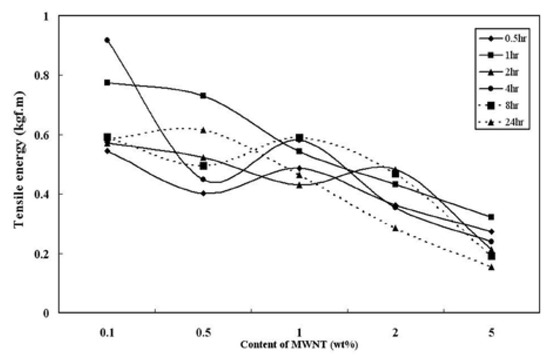
Figure 12 shows the tensile energy of PU/MWNT film according to dispersion conditions. As shown in Figure 12, the strain energy is decreased with increasing weight content of MWNT similar to breaking strength and strain. The values of tensile energy are as follows for the content of 0.1wt%, it was 0.54~0.91kgf·m and for content of 0.5wt%, it was 0.40~0.73kgf·m. For the content of 1wt%, it was 0.43~0.58kgf·m, for the 2wt%, it was 0.28~0.48kgf·m. Similar to breaking strength and strain, for the content of 5wt%, the tensile energy also shows the lowest value of 0.15~0.32kgf·m.
Figure 12.
Strain energy of PU/MWNT films.
3.2.2. Dispersion characteristics of PU/MWNT films
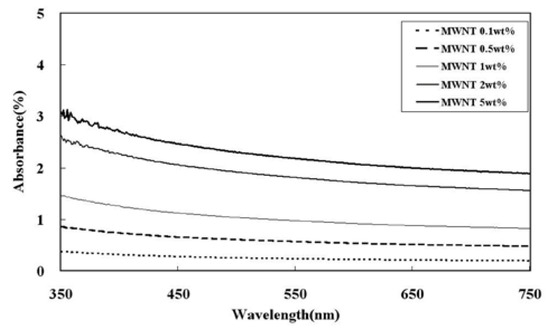
Figure 13 shows the absorbance coefficient according to the weight content of MWNT at 2 hours dispersion. As shown in Figure 13, the absorbance coefficient of PU/MWNT film is increased with increasing weight content of film. When weight content is increased from 1wt% to 2wt%, absorbance coefficient is rapidly increased. It is shown that augmentation of absorbance coefficient from 2wt% to 5wt% of increase of MWNT weight content is not so large although increase of weight content is large from 2wt% to 5wt%.
Figure 13.
Absorbance coefficient of PU/MWNT film according to the dispersion conditions.
4. Conclusions
For selecting MWNT and dispersion conditions for PU/MWNT nanocomposite films with good dispersion and electrostatic dissipation functions, the various characteristics of prepared PU/MWNT films were analysed. The films were prepared according to 4 kinds of MWNT, weight content of MWNT and dispersion time. The findings were measured and discussed. The results are as follows.
The reflectance of PU/MWNT film shows the lowest value with the MWNT of specimen C treated with both 0.5% weight content of MWNT and 30min. dispersion time and 1wt% weight content of MWNT and 120min. dispersion time.
The reflectance of PU/MWNT film made with MWNT (specimen C) according to the weight content of MWNT also shows the lowest value at the conditions of 2% weight content at both 30min. and 120min. dispersion time.
The volume resistance of PU/MWNT film shows the lowest value at the conditions of 0.5wt% weight content of MWNT with MWNT (specimen C) at the 120min. dispersion time.
Good breaking strength and strain of PU/MWNT film was witnessed at 2wt% weight content of MWNT and 2 hrs of dispersion time with MWNT of specimen C, so it seems that 2wt% weight content MWNT and 2hrs of dispersion time are the optimum dispersion conditions for a PU/MWNT film.
Acknowledgements
This research was financially supported by the Ministry of Education, Science Technology (MEST) and Korea Institute for Advancement of Technology (KIAT) the Human Resource Training Project for Regional Innovation.
References
- KALE, V.; MOUKWA, M. Electrostatic dissipation control with an organic flooring system. J. ELECTROSTAT 1996, 38, 239–248. [Google Scholar] [CrossRef] [Scilit]
- FU, S.Y.; CHEN, Z.K.; HONG, S.; CHARLES, C.H. The reduction of carbon nanotube(CNT) length during the manufacture of CNT/polymer composite and method to simultaneously determine the resulting CNT and interfacial strengths. CARBON 2009, 47, 3192–3200. [Google Scholar] [CrossRef] [Scilit]
- Wu, H.L.; Wang, C.H.; Ma, C.C.; Chiu, Y.C. Preparation and properties of maleic acid and maleic anhydride functionalized multiwall carbon nanotube/poly(urea urethane) nanocomposites. COMPOS SCI TECHNOL. 2007, 67, 1854–1860. [Google Scholar] [CrossRef] [Scilit]
- Petra, P.; Arup, R.; Bhattacharyya, Andreas J. Melt mixing of polycarbonate with multi walled carbonnanotubes: microscopic studies on the state of dispersion. EUR POLYM. J. 2004, 40, 137–148. [Google Scholar]
- Adi, I.; Amornwong, S.; Apinan, S.; Tawatchai, C. Dispersion of multi-walled carbon nanotubes in poly(p-phenylene) thin films and their electrical characteristics. Particuology 2009, 7, 403–407. [Google Scholar] [CrossRef] [Scilit]

© 2010 Textile Bioengineering and Informatics Society. This article is an open access article distributed under the terms and conditions of the Creative Commons Attribution (CC BY) license (https://creativecommons.org/licenses/by/4.0/).