


Abstract
Puerarin particles were prepared in the process of solution-enhanced dispersion by supercritical CO2 (SEDS), where the dichloromethane was employed as an organic non-solvent to increase the saturation ratio of the initial puerarin solution in ethanol. A 23 factorial experiment was designed to investigate and identify the relative significance of the processing parameters on the yield of puerarin. In the range of the parameters studied, the yield increased with an increasing non-solvent/solvent ratio, and decreasing puerarin concentration or flow rate. The anti-oxidative activities of puerarin prepared under different parameters were also investigated, and the results show that there is no significant difference. The results indicate that the SEDS process combined with non-solvent could produce puerarin nanoparticles with a higher yield.
1. Introduction
Bioavailability of poorly water-soluble pharmaceutical compounds is limited by their solubility and dissolution rate. The dissolution rate of these drugs can be improved by decreasing particle size to increase the surface area, and/or decrease crystallinity [1,2,3,4]. Another field where small drug particles are required is the pulmonary drug administration [5,6,7].
Various micronization methods have been developed to produce drug - micro-/nano-particles. Traditional micronization processes such as crushing, grinding, milling and spray drying can result in wide size distribution, thermal denaturing, excessive surface change or roughness and hence limit good control of properties of the active ingredients as well as the physical chemistry [8,9,10].
Supercritical fluids (SCF) have revealed great potential in particle engineering. The application of supercritical CO2 to micronize pharmaceutical compounds has proved to be an effective route due to its mild critical conditions (Tc=304.1K, Pc=7.38 MPa), non-toxicity, non-flammability, and lower price [11,12,13,14,15]. Especially, the Supercritical Anti Solvent process (SAS) can be considered as a most suitable one for pharmaceutical compounds, since it combines the high power solubility of the organic solvents and the low solubility of the drugs in supercritical CO2, to determine the precipitation of drugs from their organic solutions. It avoids most of the drawbacks of conventional micronization techniques and presents many advantages for drugs, like the mild operating temperature, very low/no solvent residue, efficient separation and being environmentally benign [16,17,18,19,20].
In a SAS process, generally the drugs were dissolved in organic solvents, and then contacted with supercritical CO2. Consequently the drugs are precipitated due to which a higher super-saturation is produced by the mutual diffusion between organic solvents and supercritical CO2.
Puerarin is an isoflavone isolated from a Chinese herbal medicine, Radix Puerariae Lobatae which is the dried root of Pueraria labata (Willd.) Ohwi. It has been reported to have comprehensive pharmacological action in treatment of diabetes and cardiovascular diseases, but its clinical applications have been hindered by its low solubility and dissolution rate [21,22].
In our previous study [23], an organic non-solvent, dichloromethane was employed in SEDS process to prepare puerarin fine particles, the effect of operating parameters on the surface morphology, particle size and particle size distribution were investigated. In this study, we attempt to study the effect of operating parameters on yield of puerarin in SEDS process, and also investigate the anti-oxidative activities of puerarin prepared under different conditions.
2. Experimental Part
2.1. Materials
Standard puerarin in HPLC grade (purity ≥ 99.0%) was purchased from the International Laboratory (USA). Puerarin, with a purity of 99.3%, was purchased from the Nanjing TCM Institute of Chinese Medical Material (Nanjing, China). CO2 with a purity of 99.9% was supplied by Hong Kong Specialty Gases Co., Ltd. (Hong Kong). All other compounds were of analytical purity.
2.2. Methods
2.2.1. Micronization of Puerarin by SEDS Process
Puerarin was dissolved in a certain volume of ethanol, and an organic non-solvent of puerarin, DCM, was added to the solution of puerarin in ethanol to obtain a homogeneous solution with a higher saturation ratio.
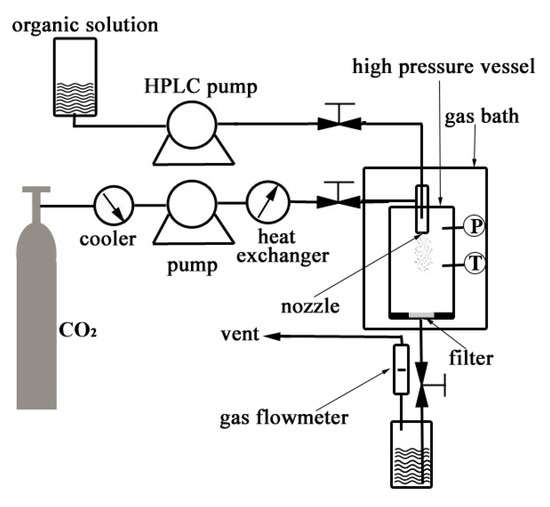
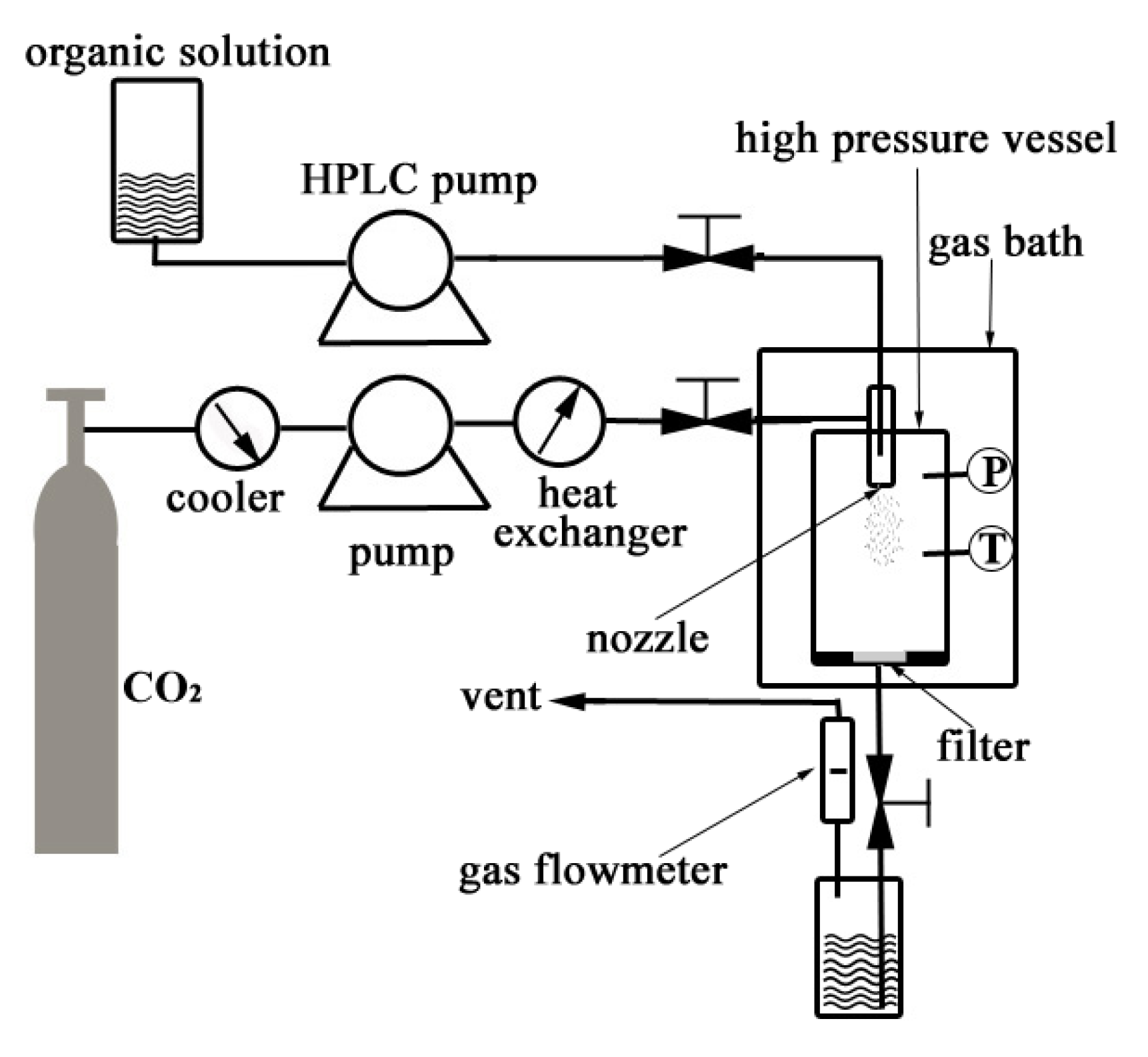
Figure 1 shows a schematic diagram of the apparatus used for the SEDS process, which consists of three major components: a CO2 supply system, an organic solution delivery system and a high pressure vessel with a volume of 1000 ml.
Figure 1.
Schematic diagram of Apparatus for SEDS process.
In the SEDS process [24,25,26,27,28,29,30,31], the CO2 fed from a CO2 cylinder was cooled down to around 0 °C by a cooler in order to ensure liquefaction of the gas and also to prevent cavitations. A high pressure meter pump was then used to deliver liquefied CO2 to the high pressure vessel, and a heat exchanger was used to preheat the liquefied CO2 to the desired operating temperature after it left the pump head. The high pressure vessel was incubated in a gas bath to keep the temperature constant during the experiment. When the desired pressure in the vessel was reached, a steady flow of CO2 was maintained, and the system pressure was controlled by adjusting a downstream valve and monitored by a pressure gauge to keep the pressure constant. When the desired pressure and temperature were stabilized, the puerarin solution was delivered into the high pressure vessel through a stainless steel coaxial nozzle using an HPLC pump. During the process, the pressure, temperature and flow rate of CO2 were kept at 12 MPa, 306 K and 25 standard liters per hour (NL⋅h-1), respectively. When the spraying was finished, fresh CO2 was used to wash the products for about 30 minutes in order to remove the residual organic solvent. During the process of washing, the operating conditions of the system were maintained as described before. After washing, the high pressure vessel was slowly depressurized and the products were collected for characterization.
2.2.2. Experimental Design
By analyzing the SEDS process, the key variables were identified as follows: ratio of non-solvent/solvent, puerarin concentration and flow rate of the solution. To investigate the influence and significance of the three variables and their interactions on the surface morphology and particle size, a 23 factorial experiment was designed and conducted, as shown in Table 1. The levels of the variables were determined on the basis of pilot experiments. In addition, three experiments at the central point were carried out to estimate the variances in the process. Analysis of variances was applied to the experimental data using the MINITAB software version 15. Additional experiment was carried out to confirm the experimental conditions that generated superfine particles identified in the above factorial experiments.
Table 1.
Experimental factors and levels.
2.2.3. Measurement of Yield
The yield of the product was calculated by the weight ratio between puerarin collected and puerarin pumped into the high pressure vessel.
2.2.4. Characterization of Surface Morphology and Particle Size Distribution
The surface morphological examination of the samples was performed using a scanning electron microscope (SEM, JEOL, JSM-6490, Japan). Before observation, the samples were directly adhered onto an aluminium stub with a thin self-adherent carbon film and then coated with a thin layer of gold. The particle size and particle size distribution of the samples were analyzed by Smileview from the SEM photographs, and the equivalent diameters of 300 particles were measured.
2.2.5. Measurement of anti-oxidative Activities of Puerarin
2.2.5.1. FRAP Assay
Reagent preparation: Reagents includes 300 mmol/L acetate buffer, pH3.6 (3.1g C2H3NaO2•3H2O (Riedel-de Haen, Germany) and 16ml C2H4O2 (BDH (Laboratory Supplies, England) per liter of buffer solution); 10 mmol/L TPTZ (Fluka Chemicals, Switzerland) in 40 mmol/L HCl (BDH); 20 mmol/L FeCl3•6H2O (BDH). Working FRAP reagent was prepared as required by mixing acetate buffer, TPTZ solution and FeCl3•6H2O solution (10: 1: 1 v/v/v).
Standard preparation: Aqueous solution of 1000 μmol/L Fe(II) ion (FeSO4•7H2O (Riedel de Haen)) was used as a calibrator. 27.8mg of FeSO4•7H2O was dissolved in 100ml of double deionized (DDI) water in a 100ml volumetric flask. 100, 250, 500 and 1000 μmol/L of ascorbic acid standard solutions were prepared from 10 mmol/L of ascorbic acid stock solution. The stock solution was freshly prepared by dissolving 17.6 mg ascorbic acid in exactly 10 ml DDI before use.
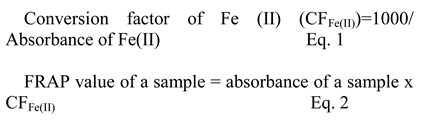
Automated FRAP assay: A Cobas Far centrifugal analyzer was used to perform the FRAP assay as follows: 300μl freshly prepared FRAP reagent was warmed to 37 °C and a reagent blank reading was taken (M1) at 593nm; 10μl of sample was then added. Absorbance (A) readings were taken at the 4th minute. The change in absorbance (ΔA593nm) between at the 4th minute reading and the M1 reading was calculated for each sample, and related to ΔA593nm of the 1000 μmol/L Fe(II) ion solution tested in parallel. Dividing 1000 by the Fe(II) absorbance was regarded as the conversion factor (Eq. 1), and the FRAP values of samples were converted by multiplying their absorbance by the conversion factor (Eq. 2).
2.2.5.2. DPPH Assay
DPPH reagent preparation: 0.025 mg/ml DPPH solution was prepared by dissolving 2.5 mg DPPH powder (Sigma-Aldrich, USA) in 100ml methanol (Tedia, USA) in-suit.
DPPH radical scavenging assay: When DPPH free radical reacts with an antioxidant compound, which can donate hydrogen, it is reduced. The changes in colour, from purple to pale yellow, were measured at 515 nm on a UV/ visible light microplate reader (Model 680 microplate read, Bio-Rad, USA). Absorptions of control solution (Acontrol), sample solution (Asample) and original solution (Aoriginal) were measured and the percentage free radical scavenging capacity (SR%) was calculated by the following equation:

Where Acontrol – absorption of DPPH solution at 0 min, Asample – absorption of DPPH mixed with sample solution at a certain time and Aoriginal – absorption of methanol mixed with sample solution.
195.0 μl of methanolic DPPH solution mixed with 5.0μl of sample solution in 96-well plate, the absorption of DPPH-sample solution (Asample) was measured at different time intervals (1, 2, 3, 4, 5, 10, 15, 20, 30 min etc.) until the reaction was completed (plateau in the plot) indicated by observing the absorbance change becoming equal or smaller than 0.003 units per minute. Absorption of DPPH solution (Acontrol) was measured for 2ml of DPPH methanolic solution. Absorption of MeOH-sample solution (Aoriginal) was measured from a solution of 195.0 μl of MeOH mixed with 5.0μl of sample solution. The experiment was carried out in triplicate.
3. Results and Discussion
3.1. Effect of Operating Parameters on Yield of Puerarin
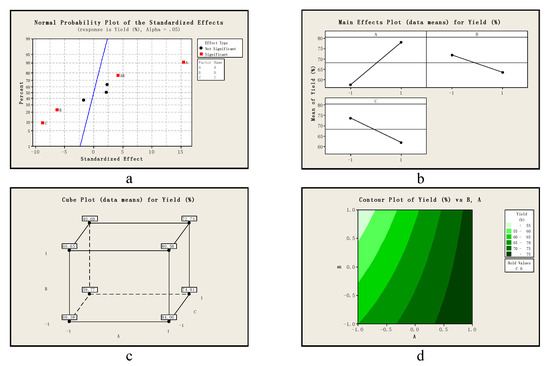
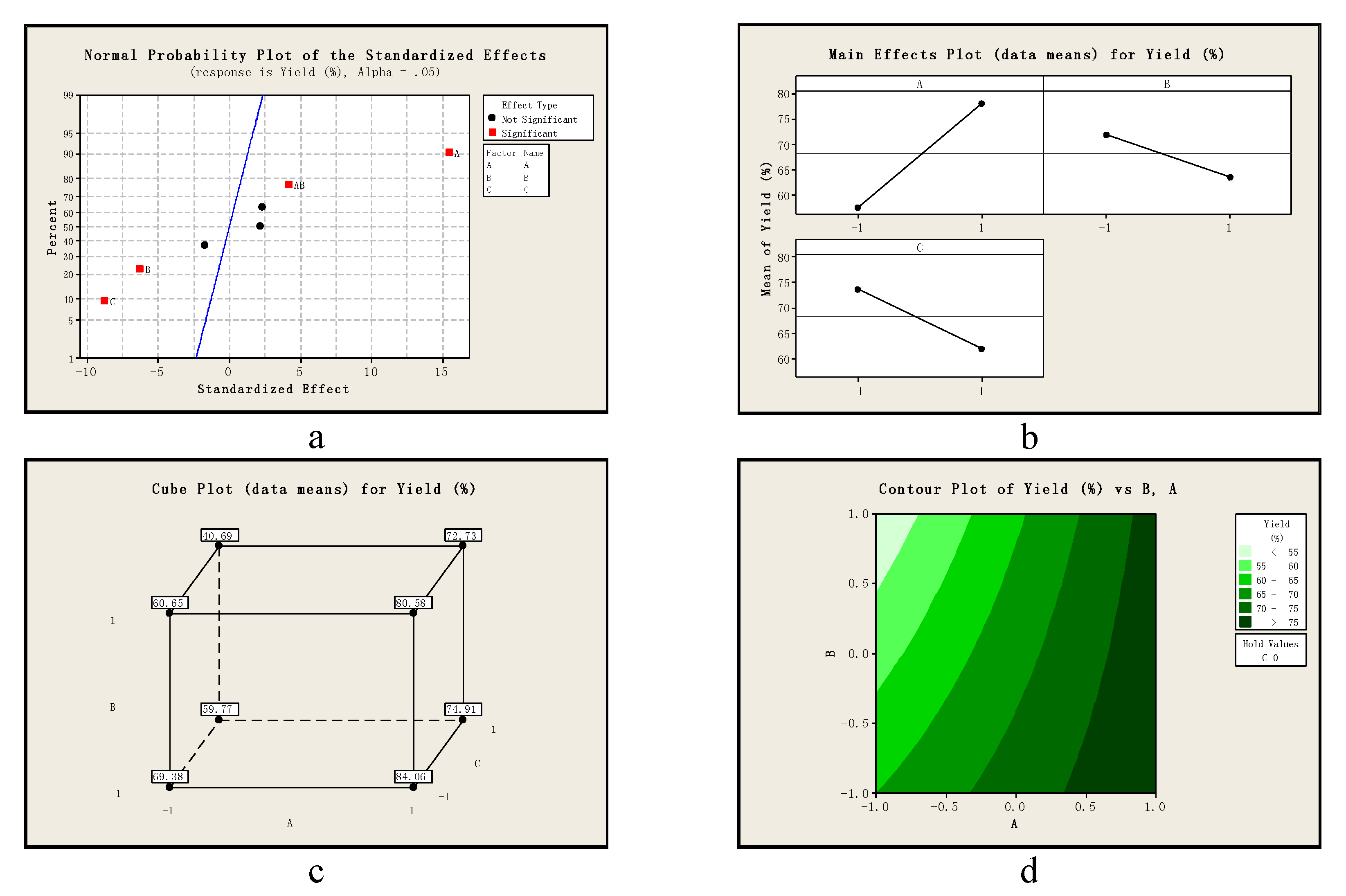
Table 2 shows the experimental results on yield. Figure 2a) shows standardized effect of the factors on yield, 2b) main effects plot for yield,2 c) cube plot of yield and 2d) contour plot of yield, which were obtained from the statistical analysis.
Table 2.
Minitab experimental design and results.
Figure 2.
a: Standardized effect of the factors on yield; b: Main effects plot of yield; c: Cube plot of yield and d: Contour plot of yield.
As shown in Figure 2a, factor A (P<0.002), factor B (P<0.01) and factor C (P<0.005) have a significant effect on yield, meanwhile, there are also strong interactions between the factors: AB (P<0.05). Figure 2b shows the main effects plot of yield; in the range of the parameters studied, the yield increased with an increasing non-solvent/solvent ratio, and with a decreasing puerarin concentration or flow rate. Figure 2c and Figure 2d show the cube plot of yield and contour plot of yield, respectively.When factor C was held at a centre level, the parameters in the darkest green area would produce the puerarin particles with a yield higher than 75%.
To confirm the above results for producing puerarin particles with higher yield, following Figure 2d, further experiments were carried out in the direction of the identified region with an initial pre-saturated solution with a higher non-solvent/solvent ratio of 4:1 (v/v), a lower puerarin concentration of 0.4% (wt/v) and a flow rate of 0.5 ml⋅min-1.
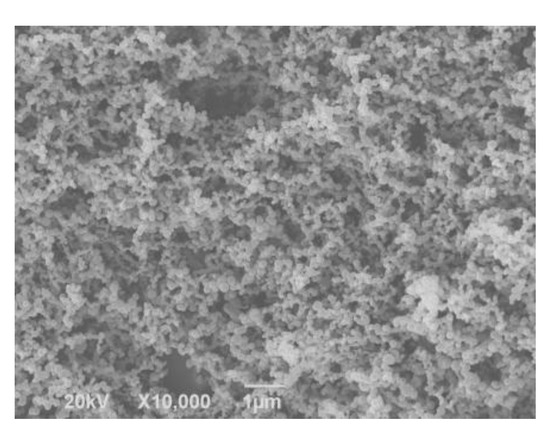
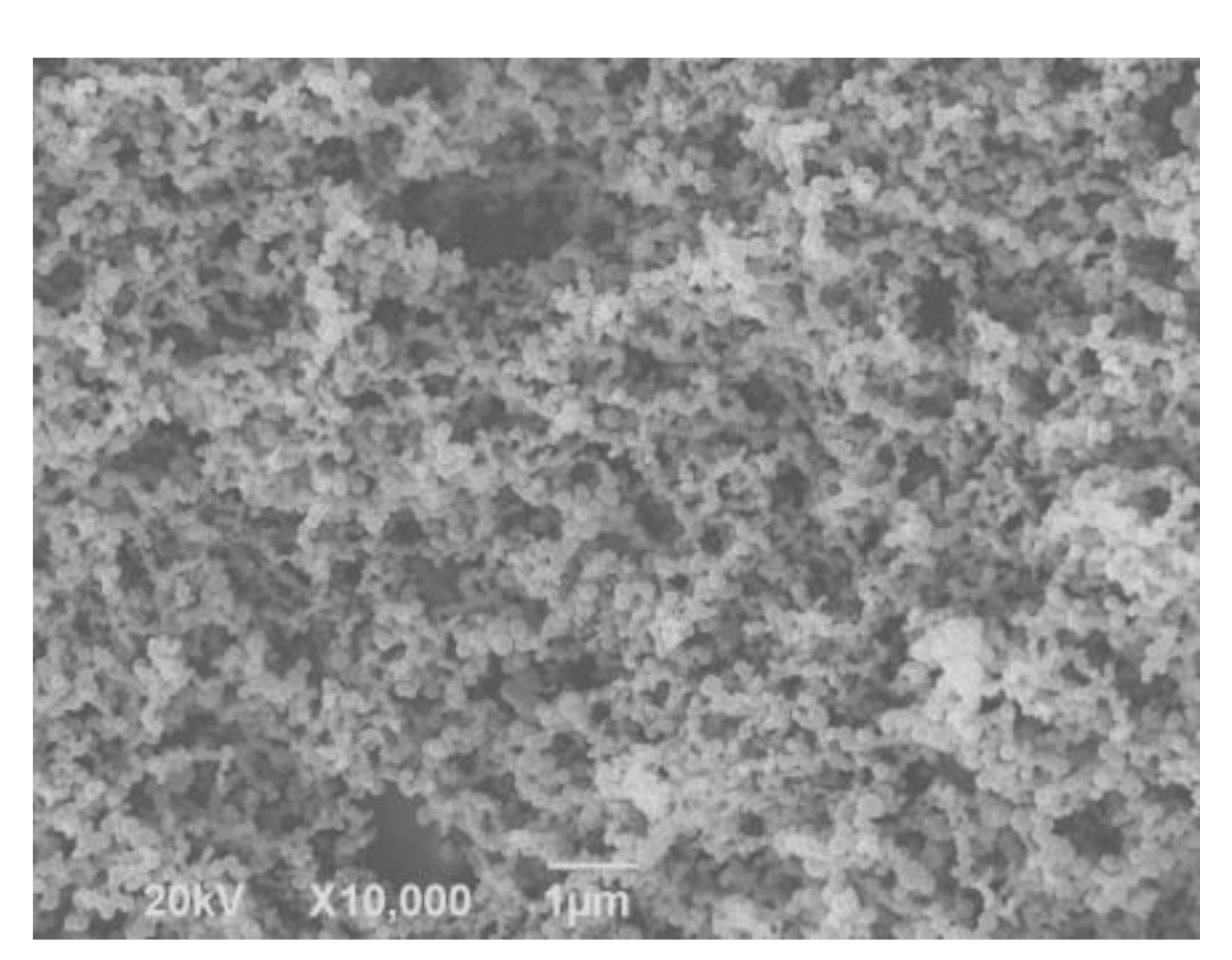
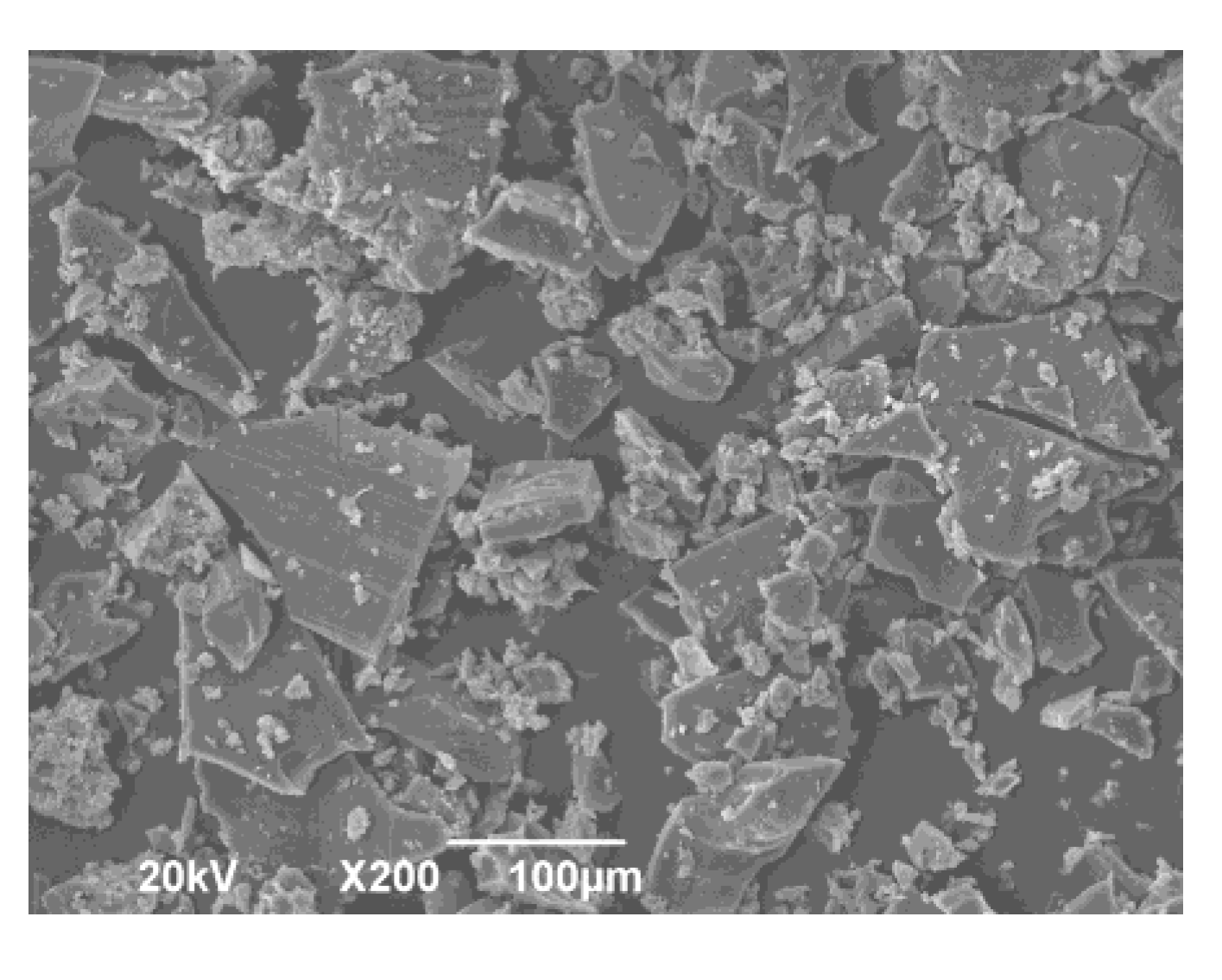
Under the above conditions, the puerarin particle with a high yield of 94.5% was obtained. The surface morphology of the resulting puerarin particles is shown in Figure 3. The resulting puerarin nanoparticles exhibited a spherical shape, a smooth surface, and a narrow particle size distribution with a mean particle size of 188 nm, which was much smaller than that of the original puerarin powder as shown in Figure 4. These experimental results confirm the experimental conditions that can produce super-fine puerarin particles with high yield.
Figure 3.
SEM of puerarin nanoparticles prepared under the following conditions: DCM/ethanol of 4:1(v/v), final puerarin concentration of 0.4% and flow rate of puerarin solution of 0.5 ml⋅min-1.
Figure 4.
SEM photograph of original puerarin powder.
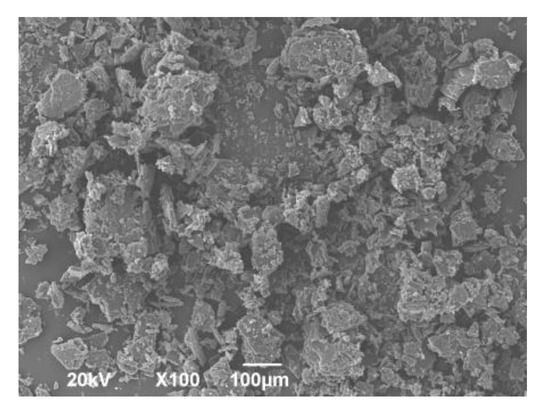
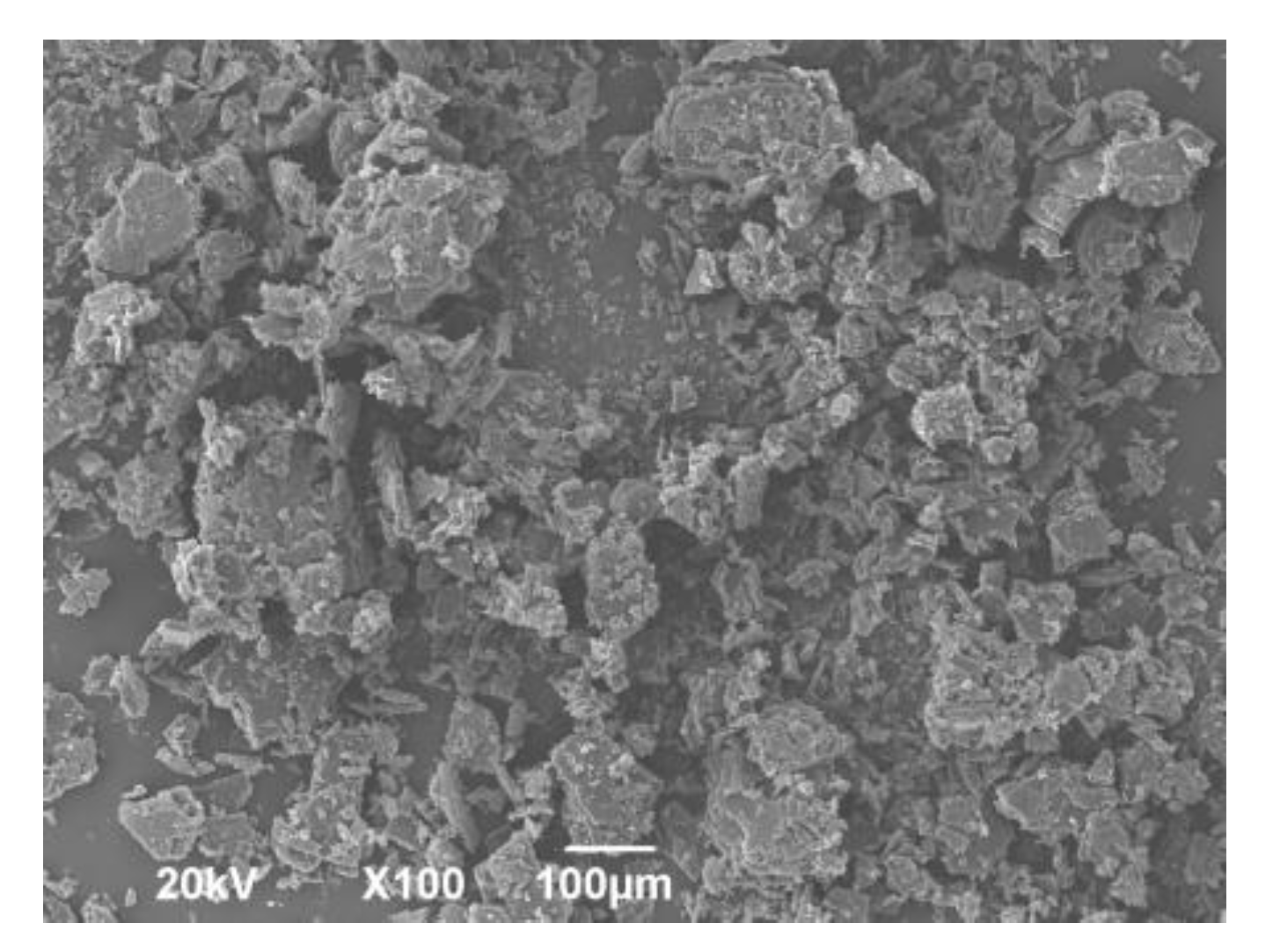
It is worth to mention that while no non-solvent was added into the puerarin solution in ethanol (low level of concentration and flow rate was used, and the other process parameters were kept same as above), the resulting precipitation formed was puerarin agglomeration with a low yield of 19.26%. In SEDS process, the sample was broken into powder during collection as shown in Figure 5. The results indicated that the nucleation and growth were not fast enough to form particles, and most of the solute was flushed out of the high pressure vessel by washing of supercritical CO2 during the SEDS process. It was because of the insufficient mutual diffusion between ethanol and supercritical CO2, the solvent was not expanded enough to achieve supersaturation quickly, since the CO2 flow rate was only 25 NL/h.
Figure 5.
SEM photograph of puerarin broken agglomeration prepared without non-solvent.
However, in the study of Li et al. [32], ethanol was used as solvent, the conditions optimized for preparing puerarin were as follows: temperature 35 °C, pressure at 10 MPa, flow rate of CO2 at 45 ml/min (equivalent to 1512 NL/h), flow rate ratio of solution to CO2 at 1%; with such a high flow rate of CO2 of 1512 NL/h, the puerarin was precipitated successfully and particles of mean size of 6.467μm was found. It indicated that in the SEDS process of preparation of puerarin particles, addition of the organic non-solvent would reduce consumption of CO2 significantly.
The above results confirm that an initial pre-saturated puerarin solution with a higher non-solvent/solvent ratio, a lower puerarin concentration and a lower flow rate could produce puerarin particles with a higher yield.
3.2. Effect of Particle Size on Anti-oxidative Activity of Puerarin
To study the effect of particle size on anti-oxidative activity of puerarin, the puerarin particle with different particle size scale, as shown in Table 3, which were prepared under different operating parameters, were selected and measured by two in-vitro assays, FRAP and DPPH assays.
Table 3.
Particle size of original puerarin and its micronized products.
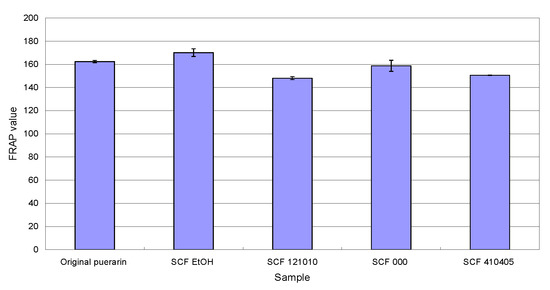
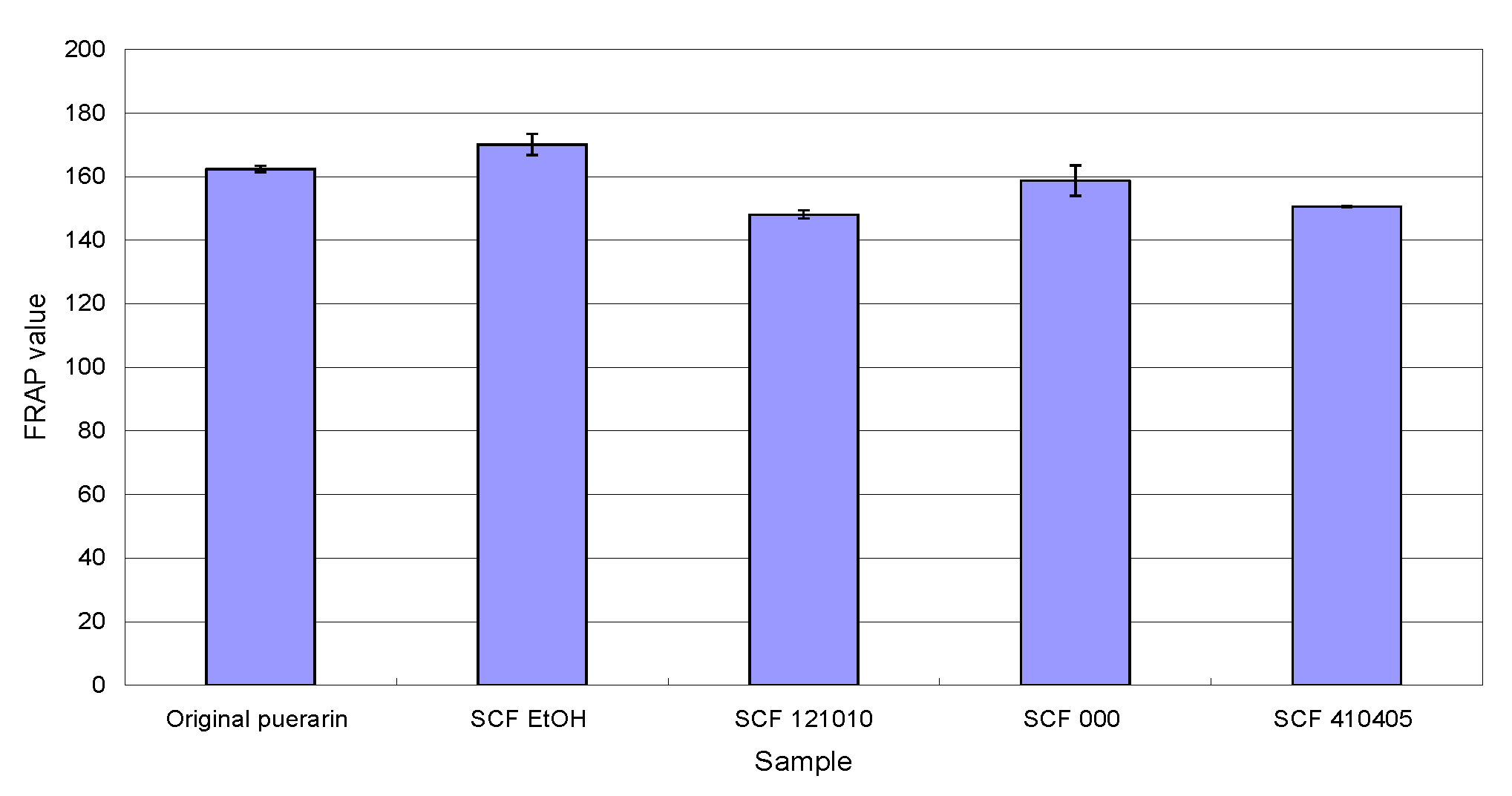
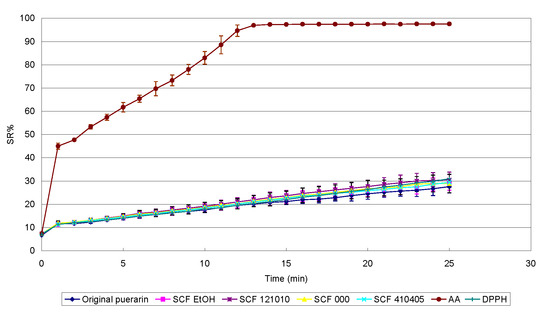
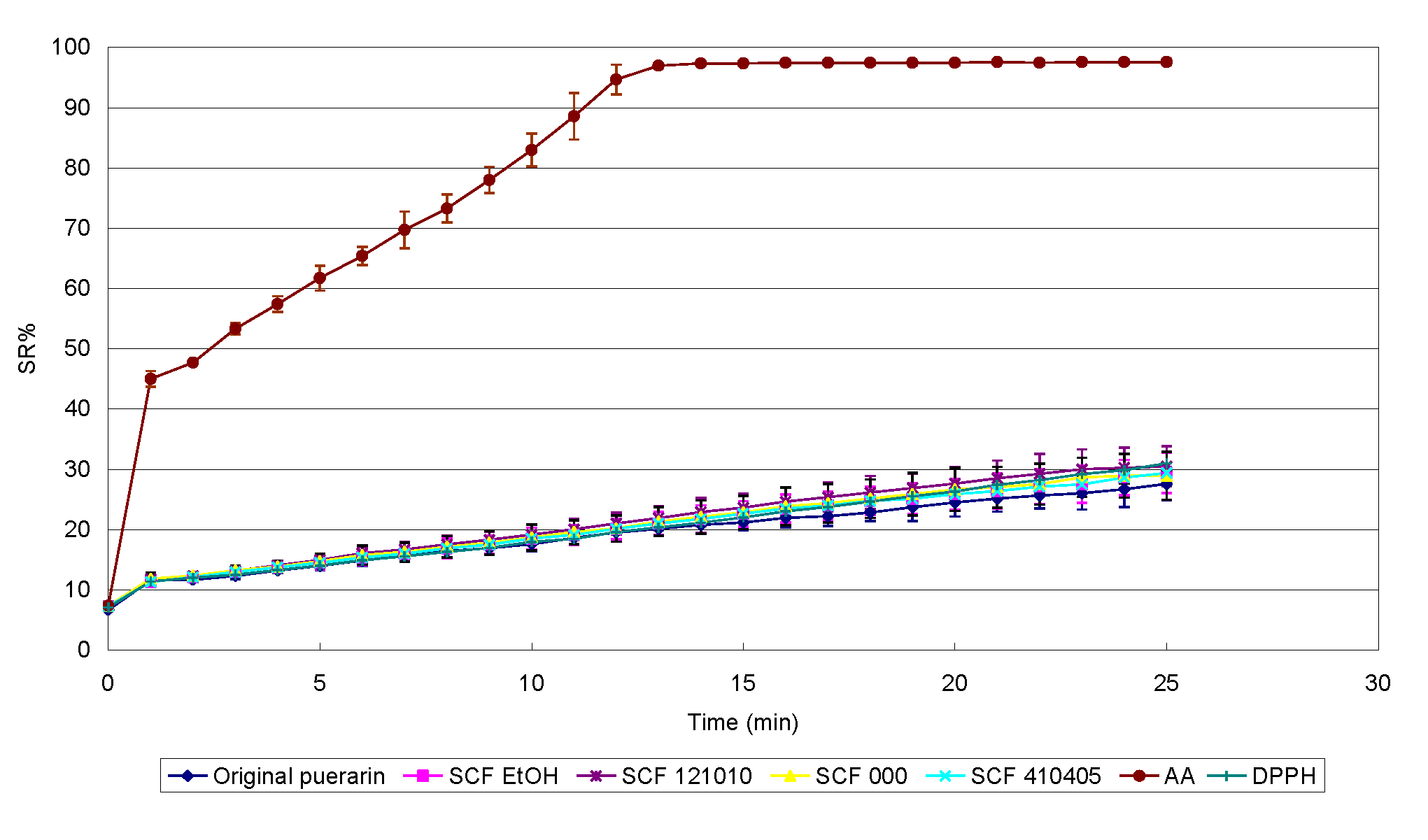
Figure 6 and Figure 7 show the FRAP value and percentage of free radical scavenging capacity (SR %) of puerarin and its micronized products, respectively.
Figure 6.
FRAP value of puerarin and its micronized products.
Figure 7.
Percentage of free radical scavenging capacity (SR %) of puerarin and its micronized products.
From the Figures, it is found that there is no significant difference between the puerarin of different particle size, before and after SEDS process. It is because the anti-oxidative activity of puerarin was measured in the form of aqueous solution with the same concentration. When there is no difference in the molecular level between the samples, there will be no significant difference in the anti-oxidative activity of puerarin, while it was already proved that puerarin samples before and after SEDS process were exactly the same in molecular level [23].
4. Conclusion
The puerarin nanoparticles with high yield were successfully prepared. An initial pre-saturated puerarin solution with a higher non-solvent/solvent ratio, a lower puerarin concentration and a lower flow rate could produce puerarin particles with a higher yield. The puerarin particles with different particle size, which were prepared under different operating parameters, had no significant difference in the antioxidative activity. The results in this study also demonstrate that adding an organic non-solvent in the SEDS process is effective in producing particles with a higher yield and reduce the usage of CO2.
Acknowledgments
We are grateful to HKRITA for providing funding & support to this research through project ITP/031/08TP, The Hong Kong Polytechnic University through projects BB6K and BB6R, and The Hong Kong Polytechnic University Grants Committee (UGC) for granting the Area of Excellence project CMRFD (AoE/B-10/01).
References
- Amidon, G.L.; Lennernas, H.; Shah, V.P.; Crison, J.R. A theoretical basis for a biopharmaceutical drug classification: the correlation of in vitro drug product dissolution and in vivo bioavailability. Pharm. Res. 1995, 12, 413–420. [Google Scholar] [CrossRef] [Scilit] [PubMed]
- Rasenack, N.; Muller, B.W. Dissolution rate enhancement by in situ micronization of poorly water-soluble drugs. Pharm. Res. 2002, 19, 1894–1900. [Google Scholar] [CrossRef] [Scilit] [PubMed]
- Kawashima, Y. Nanoparticulate systems for improved drug delivery. Adv. Drug Deliv. Rev. 2001, 47, 1–2. [Google Scholar] [CrossRef] [Scilit] [PubMed]
- Chaumeil, J.C. Micronization: a method of improving the bioavailability of poorly soluble drugs. Methods Find. Exp. Clin. Pharmacol. 1998, 20, 211–215. [Google Scholar] [CrossRef] [Scilit]
- Steckel, H.; Rasenack, N.; Muller, B.W. In-situ-micronization of disodium cromoglycate for pulmonary delivery. Eur. J. Pharm. Biopharm. 2003, 55, 173–180. [Google Scholar] [CrossRef] [Scilit] [PubMed]
- Kim, Y.H.; Shing, K.S. Supercritical fluid-micronized ipratropium bromide for pulmonary drug delivery. Powder Technol. 2008, 182, 25–32. [Google Scholar] [CrossRef] [Scilit]
- Rehman, M.; Shekunov, B.Y.; York, P.; Lechuga-Ballesteros, D.; Miller, D.P.; Tan, T.; Colthorpe, P. Optimisation of powders for pulmonary delivery using supercritical fluid technology. Eur. J. Pharm. Biopharm. 2004, 22, 1–17. [Google Scholar] [CrossRef] [Scilit] [PubMed]
- Rasenack, N.; Muller, B.W. Micron-size drug particles: common and novel micronization techniques. Pharm. Dev. Tech 2004, 9, 1–13. [Google Scholar] [CrossRef] [Scilit] [PubMed]
- Oh, D.M.; Curl, R.L.; Yong, C.S.; Amidon, G.L. Effect of micronization on the extent of drug absorption from suspensions in humans. Arch. Pharmacal Res. 1995, 18, 427–433. [Google Scholar] [CrossRef] [Scilit]
- Johnson, K.C.; Swindell, A.C. Guidance in the setting of drug particle size specifications to minimize variability in absorption. Pharm. Res. 1996, 13, 1795–1798. [Google Scholar] [CrossRef] [Scilit] [PubMed]
- Jung, J.; Perrut, M. Particle design using supercritical fluids: Literature and patent survey. J. Supercrit. Fluids 2001, 20, 179–219. [Google Scholar] [CrossRef] [Scilit]
- Hakuta, Y.; Hayashi, H.; Arai, K. Fine particle formation using supercritical fluids. Curr. Opin. Solid State Mater. Sci. 2003, 7, 341–351. [Google Scholar] [CrossRef] [Scilit]
- Fages, J.; Lochard, H.; Letourneau, J.J.; Sauceau, M.; Rodier, E. Particle generation for pharmaceutical applications using supercritical fluid technology. Powder Technol. 2004, 141, 219–226. [Google Scholar] [CrossRef] [Scilit]
- Kerc, J.; Srcic, S.; Knez, Z.; Sencar-Bozic, P. Micronization of drugs using supercritical carbon dioxide. Int. J. Pharm. 1999, 182, 33–39. [Google Scholar] [CrossRef] [Scilit] [PubMed]
- Martín, A.; Cocero, M.J. Micronization processes with supercritical fluids: Fundamentals and mechanisms. Adv. Drug Deliv. Rev. 2008, 60, 339–350. [Google Scholar] [CrossRef] [Scilit] [PubMed]
- Chang, Y.P.; Tang, M.; Chen, Y.P. Micronization of sulfamethoxazole using the supercritical anti-solvent process. J. Mater. Sci. 2008, 43, 2328–2335. [Google Scholar] [CrossRef] [Scilit]
- Cardoso, M.A.T.; Monteiro, G.A.; Cardoso, J.P.; Prazeres, T.J.V.; Figueiredo, J.M.F.; Martinho, J.M.G.; Cabral, J.M.S.; Palavra, A.M.F. Supercritical antisolvent micronization of minocycline hydrochloride. J. Supercrit. Fluids 2008, 44, 238–244. [Google Scholar] [CrossRef] [Scilit]
- Marco, I.D.; Reverchon, E. Supercritical antisolvent micronization of cyclodextrins. Powder Technol. 2008, 183, 239–246. [Google Scholar] [CrossRef] [Scilit]
- Tenorio, A.; Gordillo, M.D.; Pereyra, C.M.; de la Ossa, E.J.M. Screening design of experiment applied to supercritical antisolvent precipitation of amoxicillin. J. Supercrit. Fluids 2008, 44, 230–237. [Google Scholar] [CrossRef] [Scilit]
- Reverchon, E.; Porta, G.D.; Falivene, M.G. Process parameters and morphology in amoxicillin micro and submicro particles generation by supercritical antisolvent precipitation. J. Supercrit. Fluids 2000, 17, 239–248. [Google Scholar] [CrossRef] [Scilit]
- Xu, M.E.; Xiao, S.Z.; Sun, Y.H.; Zheng, X.X.; Ou-yang, Y.; Guan, C. The study of anti-metabolic syndrome effect of puerarin in vitro. Life Sci. 2005, 77, 3183–3196. [Google Scholar] [CrossRef] [Scilit] [PubMed]
- Sui, W.P.; Yin, C.Q.; Chen, Y.J.; Zhang, Z.G.; Kong, X.Z. Self-assembly of an amphiphilic derivative of chitosan and micellar solubilization of puerarin. Colloids Surf. B 2006, 48, 13–16. [Google Scholar] [CrossRef] [Scilit] [PubMed]
- Chen, A.Z.; Li, Y.; Chau, F.T.; Lau, T.Y.; Hu, J.Y.; Zhao, Z.; Mok, M.K.W. Application of organic non-solvent in the process of solution-enhanced dispersion by supercritical CO2 to prepare puerarin fine particles. J. Supercrit. Fluids 2009, 49, 394–402. [Google Scholar] [CrossRef] [Scilit]
- Chen, A.Z.; Pu, X.M.; Kang, Y.Q.; Liao, L.; Yao, Y.D.; Yin, G.F. Study of poly(L-lactide) microparticles based on supercritical CO2. J. Mater. Sci. Mater. Med. 2007, 18, 2339–2345. [Google Scholar] [CrossRef] [Scilit] [PubMed]
- Chen, A.Z.; Li, Y.; Chen, D.; Hu, J.Y. Development of core-shell microcapsules by a novel supercritical CO2 process. J. Mater. Sci. Mater. Med. 2009, 20, 751–758. [Google Scholar] [CrossRef] [Scilit] [PubMed]
- Chen, A.Z.; Kang, Y.Q.; Pu, X.M.; Yin, G.F.; Li, Y.; Hu, J. Y. Development of Fe3O4-poly(l-lactide) magnetic microparticles in supercritical CO2. J. Colloid Interface Sci. 2009, 330, 317–322. [Google Scholar] [CrossRef] [Scilit] [PubMed]
- Chen, A.Z.; Pu, X.M.; Kang, Y.Q.; Liao, L.; Yao, Y.D.; Yin, G.F. Preparation of 5-fluorouracil-poly (L-lactide) microparticles using solution-enhanced dispersion by supercritical CO2. Macromol. Rapid Commun. 2006, 27, 1254–1259. [Google Scholar] [CrossRef] [Scilit]
- Chen, A.Z.; Li, Y.; Chau, F.T.; Lau, T.Y.; Hu, J.Y.; Zhao, Z.; Mok, M.K.W. Microencapsulation of puerarin nanoparticles by poly(L-lactide) in a supercritical CO2 process. Acta Biomater. 2009. [Google Scholar] [CrossRef] [Scilit] [PubMed]
- Chen, A.Z.; Li, Y.; Chen, D.; Hu, J.Y. Preparation of 5-fluorouracil-SiO2-poly(L-lactide) microcapsules by a novel supercritical technique. Textile Bioengineering and Informatics Symposium Proceedings 2008, Hong Kong, China, 14-16 August; pp. 68–74.
- Chen, A.Z.; Kang, Y.Q.; Pu, X.M.; Yin, G.F.; Li, Y.; Hu, J.Y. Study of magnetic polymer microparticles based on supercritical CO2. Textile Bioengineering and Informatics Symposium Proceedings 2008, Hong Kong, China, 14-16 August; pp. 559–566.
- Chen, A.Z.; Li, Y.; Chau, F.T.; Lau, T.Y.; Hu, J.Y. Preparation of puerarin nanoparticles by supercritical fluid technology. Textile Bioengineering and Informatics Symposium Proceedings 2008, Hong Kong, China, 14-16 August; pp. 30–40.
- Li, Y.; Yang, D.J.; Chen, S.L.; Chen, S.B.; Chan, A.S.C. Process parameters and morphology in puerarin, phospholipids and their complex microparticles generation by supercritical antisolvent precipitation. Int. J. Pharm. 2008, 359, 35–45. [Google Scholar] [CrossRef] [Scilit] [PubMed]

© 2009 Textile Bioengineering and Informatics Society. This article is an open access article distributed under the terms and conditions of the Creative Commons Attribution (CC BY) license (https://creativecommons.org/licenses/by/4.0/).