


Abstract
This study is to address the lack of targeted research on accessible clothing for the visually impaired. In response to this gap, we conducted a mixed-methods study involving in-depth interviews, questionnaire surveys, real-world experiments with visually impaired participants to examine their specific clothing needs during meals, and Market investigation. Based on the analysis of over 70 sample cases, the main challenges were identified as color recognition, stain detection, garment cleaning, functional design, and personalization. Meanwhile, we identify core design requirements for accessible bibs, including stainresistant materials, ergonomic structures, and aesthetic considerations tailored to users preferences. This paper contributes empirical insights and practical guidelines to support inclusive design in sustainable fashion, offering a theoretical foundation for future development of accessible clothing for the visually impaired.
1. Introduction
Sustainable fashion and development have gained growing public attention. In this context, barrier-free design has emerged as a key trend in the development of China’s fashion industry, as well as globally. Wang Yingying [1] pointed out that solving the development problems of the fashion industry is the fundamental purpose of the research on sustainable fashion design methodology; Gu Yanqin [2] proposed that sustainable design is intended to guide and satisfy consumer demands and to maintain the continuous satisfaction of the demands. Based on demographic data from China’s sixth national population census (National Bureau of Statistics, 2011) and the second national sample survey of persons with disabilities (China Disabled Persons’ Federation, 2010), the proportion of persons with disabilities in the total population and the distribution of different disability categories were systematically analyzed. The results show that by the end of 2010, the total number of disabled individuals in China was approximately 85.02 million, accounting for 6.34% of the national population. The World Health Organization reported that the number of the visually impaired in China has reached more than 17 million [3]. According to the report, the number of visually impaired in China occupied 38 percent of the total number in the world, and still growing at a rate of 20 percent per year [4]. Secondly, in terms of legislation, the Law of the People’s Republic of China on the Construction of Barrier-Free Environments has been implemented to provide legal protection for the construction of barrier-free environments in the context of aging populations [5]. Accessibility, as a concrete implementation of sustainable fashion in adaptive clothing, has become urgent and crucial, while promoting the integration of sustainable fashion concepts and adaptive clothing design. This integration addresses the practical needs of the visually impaired reinforces, thereby driving industry-wide innovation.
Research related to accessible clothing mainly focused on the physically challenged group, while the needs of the inclusive design have not yet been adequately studied. Scholars such as Ding Hongyue [6] proposed the principle of pervasive design by analyzing the characteristics of the visually impaired population; Yuwen Taman [7] et al. initially explored the effects of clothing on the physiology and psychology of the people with disabilities; Luo Yimin [8] et al. systematically elaborated on the development of the national standard of Touch Graphic Design Guidelines and Legends as well as the content of the standard. Zhang Yannan et al. [9] conducted apparel design in terms of logos, colours, styles, and craftsmanship. He Jiatan further expanded the scope of accessible clothing design by introducing a framework that integrates functionality, aesthetics, and psychological comfort across instinctive, behavioural, and reflective levels [10]. All the above studies focused on the functionality, physiological, and psychological impact of clothing and logo designs. However, a significant gap remains in research on the needs of adaptive accessories for people with disabilities and their functionality in specific scenarios, such as dining, which constitutes a substantial portion of daily life (e.g., 7.2 hours on average). International studies have explored the general clothing needs of visually impaired individuals [11] and reviewed smart wearables for mobility and sensing support [12]. Although studies have been conducted on the life portraits of visually impaired individuals [13], research on clothing accessories in specific daily scenarios has received little attention. However, little attention has been paid to clothing accessories in specific daily scenarios. This study focuses on dining—an activity that involves frequent contact with garments and presents hygiene challenges—and, based on empirical needs analysis and observational insights, proposes user-centred design guidelines for accessible bibs while further extending previous research through product investigation and style analysis [14].
The purpose of this paper is to investigate the adaptive clothing accessory needs of individuals with visual impairments, with a specific focus on dining-related requirements. First of all, four types of research were conducted: in-depth interviews, questionnaire surveys, dining scenario experiments, and Market investigations, and it was found that the visually impaired had certain obstacles in the areas of color recognition and matching, detecting, and cleaning of dirty clothing in the dining scenes, and it still needs to make more efforts to develop the functional and practical designs of clothing, clothing marking and structure, and personalization and aesthetic expression, and so on. Then, based on the research results, we summarised the requirements of the visually impaired for accessible bibs in dining scenarios.
2. Methods
The research on accessible bibs for the visually impaired was conducted in four methods, namely, in-depth interviews, questionnaire surveys, dining scene experiments and Market investigations.
Based on the concept of sustainable fashion, both visually impaired and able-bodied groups are subjects of the research.
2.1. In-depth Interviews
Focus groups and in-depth interviews were used to conduct the interviews. The research was conducted from April to September 2024 to understand the potential demands and acceptance of clothing for the visually impaired. To ensure the universality of research samples among the visually impaired, 20 representative participants with diverse backgrounds were selected for the study. Participants in the study came from diverse backgrounds, including but not limited to individuals affiliated with organisations supporting people with visual impairments, such as blind massage centres, schools for the visually impaired, blind associations, blind art troupes, arts and public welfare organisations, as well as those experiencing unemployment or homelessness.
2.2. Questionnaire Surveys
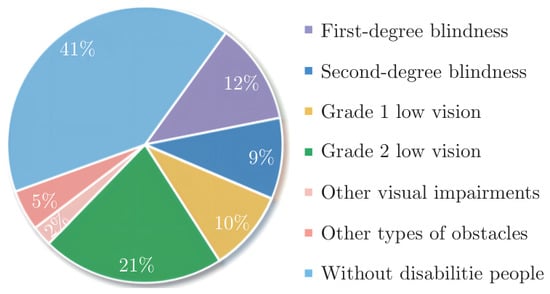
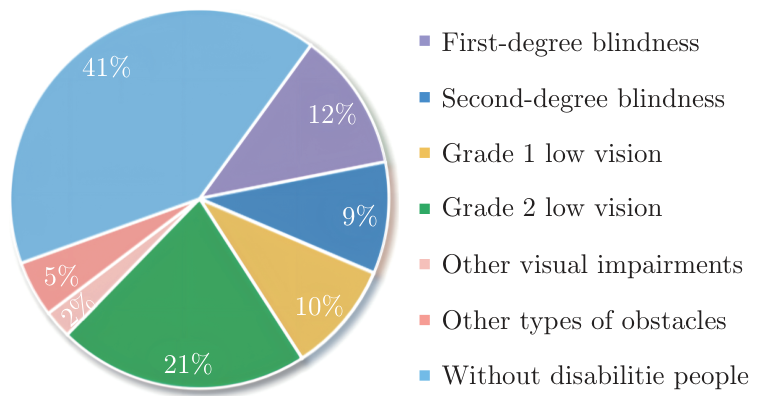
A random sampling method was used to distribute and collect the questionnaires through online research. To further analyse and verify the demands of the visually impaired for accessible bibs on a wider scale, based on interviews, an online questionnaire survey was conducted from August to September 2024 among visually impaired individuals with varying levels of visual impairment across the country. More than 50 questionnaires were collected, and the questionnaire surveys summarised the basic disability status of the respondents, and the distribution of disability status is shown in Figure 1.
Figure 1.
Distribution of barriers in the research sample.
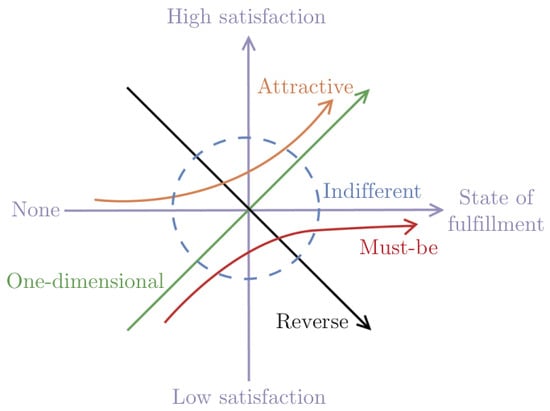
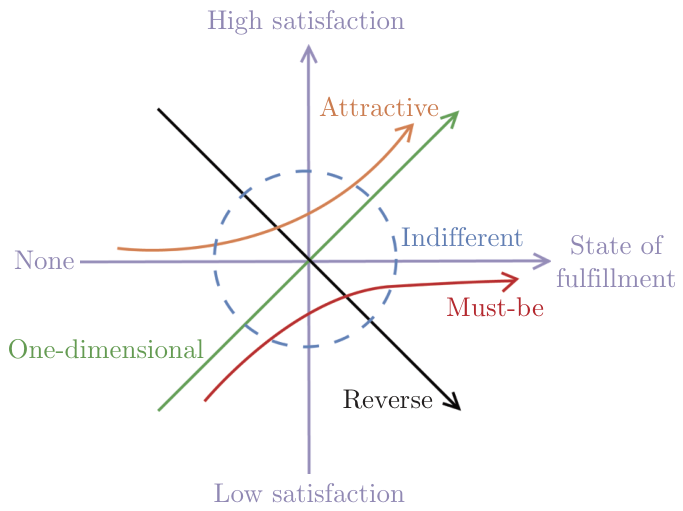
For the questionnaire design, first, we aim to further identify the specific user needs of the bibs and achieve an optimal design solution. The Kano model, which emerged in the 1 980 s, is notable for its simplicity and has become a valuable analytical tool for researchers and practitioners by helping them in their efforts to understand and anticipate customer expectations [15]. The study used the Kano model to refine and prioritise the demand attributes (Figure 2), and then, based on the barriers of the visually impaired, the study optimised the questionnaire setup in the questionnaire setting section (Table 1).
Figure 2.
Schematic diagram of the Kano model.
Table 1.
Points to note in the pre-release session of the questionnaire.
In summary, this questionnaire is finally divided into three main parts: (1) Kano questionnaire: set up positive and negative questions for product features and services to accurately capture the psychological feelings of the respondents; (2) basic information: coverage, gender, handicap, occupation, and residence status; (3) open feedback: collect suggestions for improvement of the questionnaire to improve the quality of the follow-up questionnaire. The specific questionnaire is attached.
2.3. Dining Scene Experiments
Questionnaires were distributed and collected through online research. To guide the functional design of the accessible meal bibs, from August to September 2024, five visually impaired individuals and one individual without a disability were invited to participate in the experiment. The experiment required subjects to wear full-frontal aprons for two days. Throughout this period, photographs were taken of their breakfast, lunch, and dinner meals, as well as of the aprons’ condition after each meal. This study recorded 18 meals across six participant groups to observe the distribution of stains and the protective effects of bibs in reducing food residue and liquid splashes, thereby providing empirical data for the subsequent development of accessible bib designs.
2.4. Product Investigation
Through research on major e-commerce platforms such as Taobao, JD.com, Amazon, Shopee, and eBay, this study systematically summarises the main user groups and typical application scenarios of current bib products (Table 2). These platforms cover a wide range of regions, including Mainland China, Southeast Asia, North America, and the global market, thus offering strong representativeness. Representative sample images were selected using keyword searches, tag classifications, and analysis of product descriptions.
Table 2.
Platforms for Product Market Research.
3. Results
3.1. In-depth Interview Results and Analysis
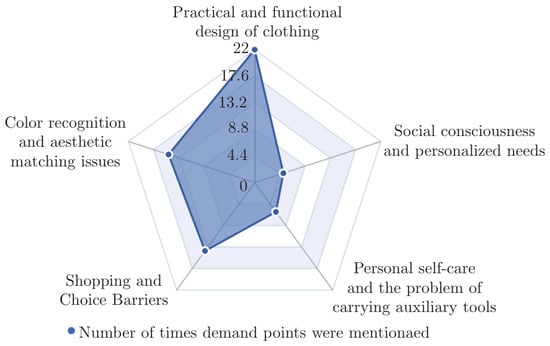
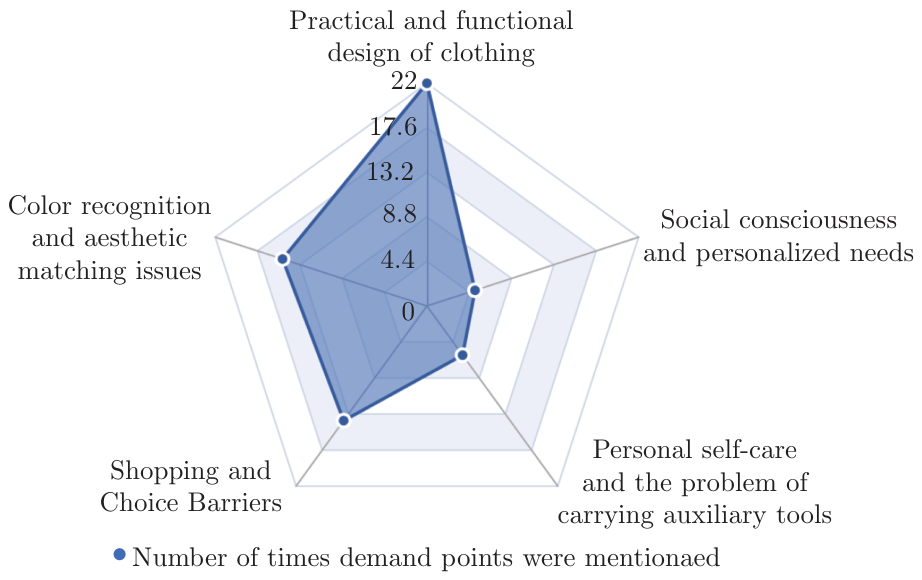
The surveys on the clothing needs of the visually impaired revealed more than 40 obstacles. Since the attributes of these needs showed strong interconnections and potential interactions with each other, to improve the efficiency of addressing these needs, these attributes were categorised into five main aspects. By focusing on each of these dimensions, comprehensive satisfaction of the needs in this area will be achieved (Table 3, Figure 3):
Table 3.
Analysis of the five demand attributes.
Figure 3.
Radar chart of the five needs.
Considering the quantity of identified demand points and feasibility constraints arising from functional limitations of garments and accessories, this study will prioritize the primary demands of the first two groups. Specifically, the obstacle points within Groups 1 and 2 will be re-extracted and reclassified to generate Table 4.
Table 4.
Ordering of specific obstacle points, drawn by the author.
3.2. Results of the Questionnaire and Analyses
3.2.1 Questionnaire Reliability and Validity
Firstly, the questionnaire was conducted online in August 2024, and 50 copies were collected. According to the pre-test results, one and a half minutes is a reasonable time to complete the questionnaire. Therefore, questionnaires with a duration of less than one and a half minutes or inconsistent options were deleted from the online survey. Ultimately, 42 valid responses were obtained, yielding a validity rate of 84%. Then, SPSS was used to analyse the reliability of the questionnaires, and Cronbach’s alpha coefficients for each dimension in the Kano research questionnaires all exceeded 0.6, indicating that the questionnaires’ reliability could be trusted. In SPSS validity analysis, the KMO test value of positive and negative questions is 0.755, and both p-values are less than 0.01, the cumulative variance explained after rotation is 68.205 > 50, which means that the amount of information of the research items can be extracted effectively and can be analyzed subsequently [16].
3.2.2. Demand Prioritization Analysis
Based on the method and calculation principle of the Kano model, the Kano statistics of 20 service elements are shown in Table 5.
Table 5.
Summary of Kano model analysis results for design and service functions (n = 42). Percentages represent the proportion of respondents classifying each item under the respective Kano category. “Better (%)” and “Worse (%)” indicate the improvement and deterioration coefficients, reflecting satisfaction changes when the function is present or absent. A: Attractive Attribute; O: One-dimensional (Desired) Attribute; M: Must-be (Mandatory) Attribute; I: Indifferent Attribute; R: Reverse Attribute; Q: Questionable Attribute.
To better understand how different attributes influence user satisfaction, this study calculated the questionnaire data using the Better and Worse coefficients, with the formulas as follows:
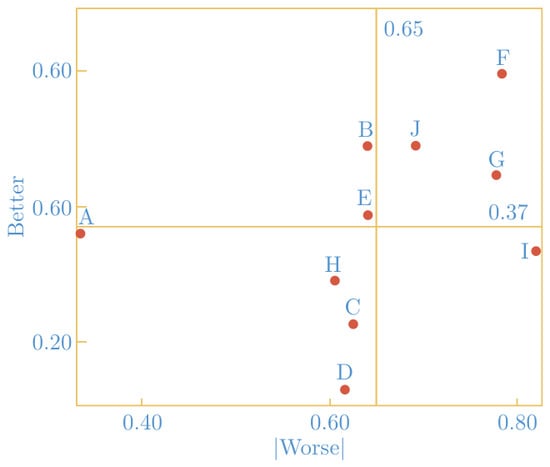
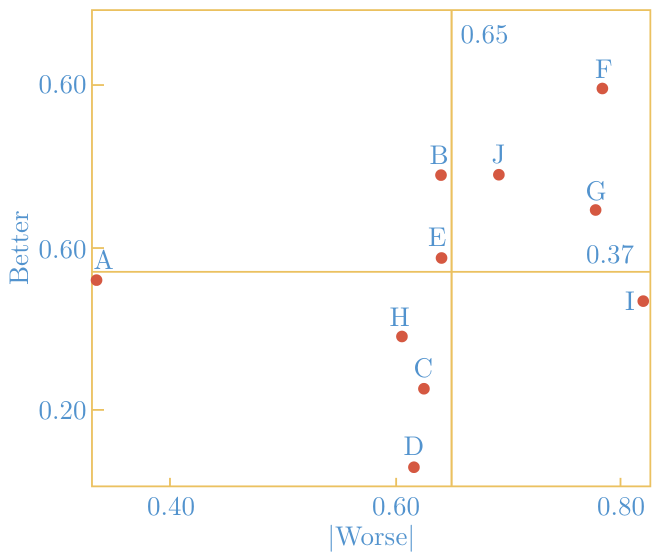
A, O, M, and I represent the proportions of Attractive, One-dimensional, Must-be, and Indifferent attributes, respectively. A higher Better value indicates a greater increase in satisfaction when the function is provided, while a larger |Worse| value reflects stronger dissatisfaction when the function is absent. Taking the horizontal coordinate as the absolute value of Worse and the vertical coordinate as the Better value, a Better-Worse coefficient diagram is made, as shown in Figure 4. The first quadrant represents the desired attribute, the second quadrant represents the glamour attribute, the third quadrant represents the non-differentiated attribute, and the fourth quadrant represents the must-have attribute.
Figure 4.
Better-Worse coefficient plots (A—J represent the ten evaluated design/service features: A—Braille and tactile signs; B—Clean and stain-resistant fabrics; C—Velcro or magnetic closures; D—Multi-functional pockets; E—Design complexity and use of trims/seams; F—Shopping platform for the visually impaired; G—Shopping guide service; H—Personalized service; I—Clothing matching seminars/workshops; J—Accessibility to assistive devices; corresponding to the ten features listed in Table 5). Drawn by the author.
According to the previous section, the study should focus on the three core attributes in the Kano model: essential attributes, desired attributes, and glamour attributes. From the table, it can be understood that clean and stain-resistant fabrics, Velcro or magnetic closures, multifunctional pockets, complex or simple designs, the degree of use of decorations and seams, personalised customisation services, and fashion matching seminars or workshops are essential attributes that should be addressed as primary design requirements. Shopping platforms for the visually impaired, shopping guide services, and the convenience of using assistive devices are considered desirable attributes and are positively correlated with user satisfaction. As for Braille and tactile signage, since they are considered non-differentiating attributes, they can be incorporated as needed, depending on the application context.
In comparison with the Better-Worse Coefficient Chart, the classification of some attributes has been adjusted, with clean and stain-resistant fabrics, complicated or simple designs, and the degree of decoration and seam usage becoming glamour attributes, which can greatly enhance user satisfaction. At the same time, Velcro or magnetic closures, multifunctional pockets, and personalised customisation services have been transformed into non-differentiated attributes, which have a weaker impact on end-user satisfaction.
In summary, based on the premise of enhancing user satisfaction, the study should conduct an in-depth research and innovation on the design aspects of shopping platforms for the visually impaired, shopping guide services, the convenience of using assistive devices, clothing matching seminars or workshops, clean and stain-resistant fabrics, complicated or simple design, and the degree of decoration and seam usage, while adopting a flexible strategy for the treatment of non-differentiated attributes to ensure the effective allocation and utilization of resources. The use of resources should be ensured by adopting a flexible strategy for treating non-differentiated properties.
3.3. Dining Scenario Experiments Results and Analysis
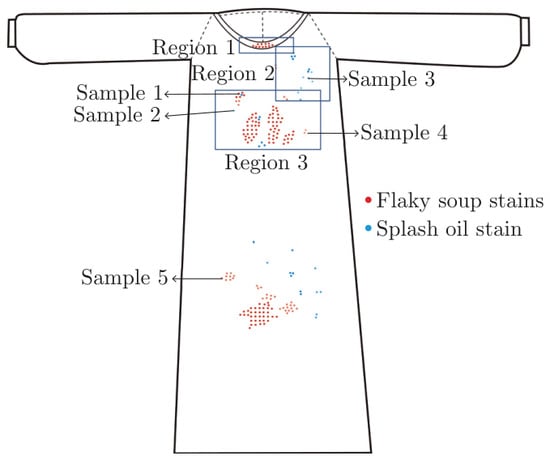
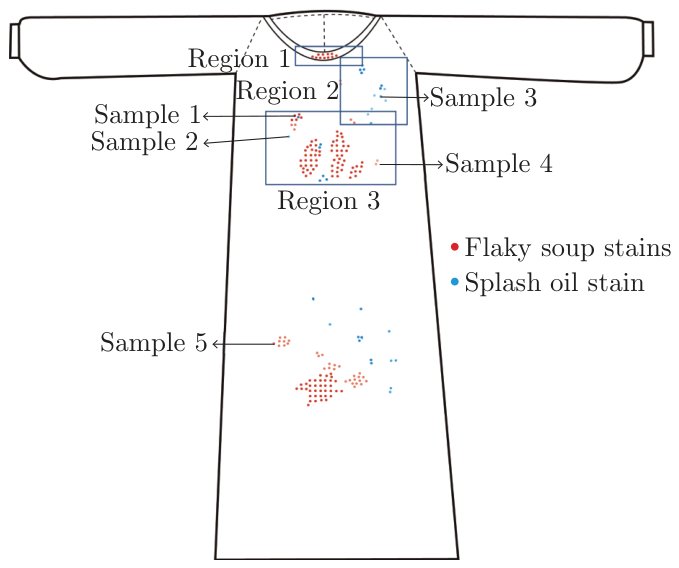
The results of the experiments are presented in Figure 5, where the bibs are mainly concentrated on the front chest and abdomen, effectively protecting these areas from food residues and liquids. Figure 5 provides an overall visualization of stain distribution, showing that food residues were primarily located at the neckline, central chest, and upper thigh regions of the bibs.
Figure 5.
Visualization of the experimental results of the bibs.
It was found that the appearance of stains during meals is usually related to (1) the splashiness of the food, (2) the technique of using cutlery, (3) the protective effects of the bib, and (4) individual eating habits. The analysis by region combined with the type of stains leads to design suggestions: region 1 needs anti-leakage and soft fabrics that fit the neck structure to prevent soup from entering; Region 2 needs to use waterproof and grease-proof fabrics so that splattered grease naturally slips and falls into the micro-arc structure; region 3 needs to be combined with ergonomics and structural adjustments, such as micro-arc modeling, to pocket the stains securely.
3.4. Results of Product Investigation
3.4.1. Usage Scenarios
To clarify the functional positioning and design priorities of bib products, this study conducted a category count of bib items listed on major e-commerce platforms. Using keyword searches and tag filtering, we collected data on product types categorized by functional attributes, structural configurations, and usage scenarios. The distribution is shown in Table 6.
Table 6.
Category dimension.
Among these, bibs categorized by functional attributes (e.g., waterproof, oil-resistant, disposable) accounted for the largest share at 46.11%, indicating that protective performance remains the core demand in bib design. Usage scenario-based bibs (e.g., for nail art, hairdressing, and kitchen use) ranked second, comprising 38.88%. Structurally categorized bibs (e.g., Velcro, tie-back, pullover) made up only 15.01%. These results reflect a market trend that prioritizes functionality, while structural adaptability and contextual fit still present opportunities for improvement in bib product design.
Category-Level Analysis, In terms of product categorisation, functionally attributed bibs (e.g., waterproof, oil-resistant, disposable) accounted for the largest proportion at 46.11%, indicating that protective performance remains the core design priority. Usage scenario-based bibs (e.g., for nail art, hairdressing, or kitchen use) followed at 38.88%. Structurally classified bibs (e.g., Velcro, tie-back, pullover) had a relatively low share of 15.01%. This distribution reflects a functionfirst market orientation, where there is still room for improvement in structural versatility and contextual adaptability of current bib products.
User Group-Level Analysis (Table 7): At the demographic level, bib products primarily target infants and toddlers, adults, the elderly, and users with special needs. Among them, bibs for infants and toddlers made up the highest share at 55.22%, identifying them as the dominant consumer group. Adult bibs ranked second at 29.37%, typically used for eating or stain prevention. Bibs for the elderly accounted for 7.05%, and care-related bibs comprised 5.79%. Notably, inclusive bibs designed for persons with disabilities, including the visually impaired, accounted for only 2.56%. This result reveals a clear market imbalance, with products predominantly serving general users and caregiving populations, while the needs of persons with disabilities remain significantly underserved.
Table 7.
Homo sapiens group dimensions.
3.5. Style Conclusions
Conduct a further analysis of the style design for prototypical products across diverse representative scenarios (Table 8).
Table 8.
Comparative analysis of bib products.
Based on a comprehensive review of existing literature, this study selected five leading ecommerce platforms—Taobao, JD.com, Amazon, eBay, and Shopee—as primary data sources. A representative sample of bib (apron) products available on these platforms was systematically investigated and analysed. The objective was to synthesise the prevalent design features and usage modalities of contemporary bibs, thereby identifying critical requirements in pattern design and user experience, and addressing a gap in current design research.
The analysis (Table 8) reveals that current bib product patterns predominantly focus on fixation methods and protection zones. Five methods—snap buttons, tie straps, hook-and-loop fasteners, pull-over styles, and ear loops—are utilised, each offering minor adjustability to accommodate different body types. Among these, hook-and-loop and snap-button designs have emerged as market-leading fixation solutions due to their pronounced convenience and low operational complexity. Regarding protection zones, the neckline and anterior chest are universally regarded as essential; notably, the abdomen is frequently identified as a critical protection area in specific dining contexts.
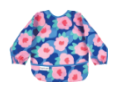
A key finding is the pronounced coupling between style design and pattern design. Previous studies have indicated that visually impaired users express a desire for aesthetically pleasing attire. Our findings demonstrate that creative pattern design effectively addresses this demand, enhancing the aesthetic value of bib products and enabling personalised aesthetic expression, while simultaneously mitigating negative psychological responses (e.g., resistance) among visually impaired users. This synergy consequently enhances acceptance and user experience.
In summary, the current bib design should prioritise the following areas:
(1) Functional optimisation remains dominant, focusing on the efficiency of fixation methods and the precision of protection coverage; however, adaptability across diverse body types remains underdeveloped.
(2) Insufficient coverage of accessibility needs, especially for disabled users: although there are products designed for users without mobility constraints, bibs that facilitate independent donning and doffing for disabled individuals are comparatively rare.
(3) Portability is inadequately addressed: most bibs are intended for direct wear or single use, with limited consideration of design solutions that meet mobile usage requirements.
(4) Psychological comfort and fashion ability are deficient: current products insufficiently leverage pattern or style design to foster users’ aesthetic identification, resulting in weak fashion appeal.
Therefore, future research and practice should deeply integrate user-centred design (UCD) and inclusive design principles into the bib development process. Innovations should be prioritised in areas such as personalised service models and cross-contextual adaptability, to overcome existing design constraints and deliver better solutions that meet the diverse needs of a broader user population.
4. Discussion
Based on the surveys and experiments, this study identifies the core clothing needs of visually impaired individuals in dining scenarios, including stain-resistant fabrics, ergonomic protective structures, and easy-to-wear garment designs. Unlike previous studies that have focused on general dressing or smart wearable technologies [11] [12], this research emphasises the functional optimisation of clothing accessories to address practical issues arising from frequent dining activities, thereby reducing reliance on external technologies. The findings not only expand the application scope of inclusive clothing but also provide the direction for more practical and accessible design solutions. Future bib designs should better adapt to users’ body features and operational habits while enhancing portability and comfort.
Overall, the bib design should evolve from a basic “adaptation” to an active “empowerment”—not only meeting fundamental caregiving needs but also integrating User-Centred Design (UCD) and inclusive design principles. Cross-scenario adaptability and structural innovation should be explored to enhance overall performance. For instance, reflective strips could be added for improved safety in dark environments. On this basis, fashion expression should also become a key component of inclusive clothing. Bibs should no longer be viewed as symbols of disability; instead, through the redesign of materials, colours, silhouettes, and styling, they can become expressive, visible fashion accessories that are integrated into daily dress culture. For example, incorporating appropriate fashion patterns can enhance both aesthetics and trend appeal. This transformation helps reduce the stigma associated with bibs, enhances the psychological security and social participation of visually impaired individuals in public, and more effectively responds to their functional and emotional needs in dining scenarios.
5. Conclusion
Through the in-depth interviews, questionnaires, dining scene experiments, and Market investigation. This paper researches the accessible clothing needs of the visually impaired, mainly focusing on accessory needs in the dining scene, and draws the following conclusions.
(1) The research study summarises five major demand aspects of the visually impaired: practicality and functional design, colour recognition and aesthetic matching, shopping and choice barriers, personal self-care, carrying of aids, social awareness, and personalised needs. Among them, the problems of practical and functional design, colour recognition, and aesthetic matching were particularly prominent. Further analysis revealed that difficulties in colour recognition and matching, problems in detecting and cleaning dirty clothes, and the insufficient functional and practical design of clothes were the primary barriers faced by the visually impaired.
(2) The questionnaire summary is divided into two directions for setting up and prioritising the needs. In terms of setting up needs, there are four main points: a universal platform, easy-to-operate topics, clear and concise topic content, and positive psychological feelings; in terms of prioritizing needs, shopping platforms for the visually impaired, shopping guide services, ease of use of assistive tools, clothing matching seminars or workshops, clean and stain-resistant fabrics, complicated or simple designs, and the degree of use of decorations and seams. In terms of need prioritisation, the seven needs of visually impaired shopping platforms include shopping guide services, ease of use of aids, clothing matching seminars or workshops, clean and stain-resistant fabrics, complicated or simple designs, and the degree of use of decorations and seams.
(3) In the scenario experiments, firstly, stains were concentrated on the neckline, chest, and front of the thighs in a dining environment. Then, in terms of design details, the designer needs to analyse and adjust the fabric and structure scientifically and rationally.
(4) Through Market investigation, this study finds that bibs should not be perceived merely as functional caregiving products. Still, it should be redefined through updated design language to become fashionable and socially accepted. Introducing fashion expression based on functional adaptability helps break the stereotypical association of bibs with disability and reframes them as common forms of aesthetic expression. This shift in design thinking—from adaptation to empowerment—marks a critical step in building an inclusive clothing system
(5) This study still has certain limitations. Due to multiple influencing factors, the number of visually impaired participants who agreed to participate was relatively limited, resulting in a sample size that does not fully meet the criteria for generalizability. As a result, the findings may be influenced by individual needs. Nevertheless, through data screening and variable control during the analysis process, the study minimised the impact of individual differences, allowing for a more objective identification of group-level issues and supporting the current conclusions.
In summary, this paper provides a systematic user research framework, empirical data support, and design strategy references for the development of accessible clothing for visually impaired individuals. It further highlights the critical role of fashion in promoting social inclusion, offering both a theoretical foundation and practical guidance for the future design of inclusive apparel products with greater emotional value and social acceptability.
Acknowledgement
The authors wish to acknowledge the programs below: (1) Universal apparel and accessories research and practice based on the body and sporting features of disabled people (2019YFF0303304, ZXKY03190418). (2) “Universal Beauty” reception hall (H2022-14).
References
- Wang, Y.Y. Research on the Design Method and Application Based on the Concept of Sustainable Development. PhD dissertation, Wuhan Textile University, 2020. [Google Scholar]
- Gu, Y.Q. Research on the Sustainable Repair Design of Clothing and Accessories. Charm China 2017, 25, 247. [Google Scholar]
- Information on http://www.cdpf.org.cn.
- Bourne, R.; Flaxman, S.; Braithwaite, T.; et al. Magnitude, temporal trends, and global Prevalence of Blindness and distance and near vision impairment: a systematic review and meta-analysis. Lancet Glob. Health 2017, 05. [Google Scholar] [CrossRef] [Scilit] [PubMed]
- Liu, W.J.; Cui, H.Y. Research on the Legal Incentive System for Barrier-Free Environment Construction in China. J. Tianjin Univ. (Social Science Edition) 2024, 26(04), 338–350. [Google Scholar]
- Ding, H.Y.; Yang, J. Research on the Synesthetic Design of Travel Wearable Devices Based on the Characteristics of Visually Impaired People. J. Shandong Univ. Art. Des. 2018, 01, 64–68. [Google Scholar]
- Yu, W.T.M.; Sun, S.C. Preliminary Exploration of the Psychological Impact of Fashion Design Elements on People with Disabilities. Pop. Lit. 2018, 07, 58. [Google Scholar]
- Luo, Y.M.; Yang, S.F. Development of the National Standard ’Touch Graphic Design Guide and Examples’. Stand. Sci. 2018, 07, 166–169. [Google Scholar]
- He, J.T. Emotion-Oriented Design of Accessible Clothing. J. Chem. Fibre Text. Technol. 2025, 54(1), 127–129. [Google Scholar]
- Zhang, Y.N.; Liu, C. Research on Fashion Design Based on the Characteristics of Visually Impaired People. Tianjin Text. Sci. Technol. 2022, 02, 23–27. [Google Scholar]
- Xiao, Y.K.; Ren, Y.T.; Ma, X.Y.; Li, J. Design for visually impaired people based on their functional and emotional requirements. J. Fibre Bioeng. Inform. 2021, 14(3). [Google Scholar]
- Li, J.J.; Shi, L.M.; Zhang, H. A review of smart wearable devices for visually impaired people. In Proceedings of the 17th Textile Bioengineering and Informatics Symposium, 2024; pp. 1–8. [Google Scholar]
- Pigeon, C.; Galiano, A.R.; Afonso-Jaco, A.; Valente, D.; Uzan, G.; Prestini, M.; Baltenneck, N. A participatory research to design a survey providing a portrait of the lives of people with visual impairments. Disabil. Soc. Vol. 2025, 40(Issue 2), 300–316. [Google Scholar] [CrossRef] [Scilit]
- Qin, Y.H.; Ji, Z.R.; Li, J.X.; Lin, J.Y.; Yu, K.Y.; Guo, J. Design requirements for accessible dining apparel for the visually impaired. In Proceedings of the 18th Textile Bioengineering and Informatics Symposium, 2025; pp. 1198–1205. [Google Scholar]
- J. Guido, G.; Ali, K.; John, E.S. Application of the Kano model for insights into business students’ sustainability transformation expectations from higher educational institutions: A cross-country study. J. Clean. Prod. 2024, 464. [Google Scholar] [CrossRef] [Scilit]
- Zhou, J.; Ma, S.P. SPSSAU research data analysis methods and applications; Publishing House of Electronics Industry: China, 2024. [Google Scholar]
- Huang, Lina. H¨aagen-Dazs: The Exclusive Bib for Bearded Gentlemen. Sales. Mark. (Management Edition) 2019, 08, 102. [Google Scholar]
- Xiong, Na; Lu, Wenhong; Wang, Tingting; et al. Production and Application of a Specialised Waterproof Bib for Fixation of Tracheal Medication Tubes and Wet Gauze in Tracheostomy Patients. Anhui Med. J. 2023, 44, 07: 882. [Google Scholar]
- Yi, Zhang. Development of a Novel Functional Bib for Children Based on an Improved Traditional Dudou Design. Text. Ind. Technol. 2011, 40(05), 70–72. [Google Scholar]
- Information on https://www.amazon.com.





© 2025 Textile Bioengineering and Informatics Society. This article is an open access article distributed under the terms and conditions of the Creative Commons Attribution (CC BY) license (https://creativecommons.org/licenses/by/4.0/).