


Abstract
During the middle and late stages of pregnancy, the foetus grows rapidly, and the movements of the expectant mother are restricted. Therefore, a method that can support a sagging abdomen to support movement and distribute the weight of the lower abdomen throughout the torso to reduce the burden on the lower back needs to be investigated. This study aimed to develop a maternity support garment (MSG) that would provide comfortable support for rapid abdominal changes during the later stages of pregnancy. Nine types of MSGs used in Japan and Australia were analysed in terms of their clothing pressure distribution with a pregnant mannequin. In addition, pressure sense was indexed by the sensory evaluation of Japanese nongravid women in their 20 s and 30 s, and clothing pressure values obtained via simulation were analysed. The clothing pressure distribution of Japanese MSG is either almost perfect or looser, and when used alone, the MSGs keep the abdomen warm, except when the attached belt is used. Conversely, the Australian MSG is used with three types of tightness recommended by maternity hospitals; however, when double-layered with soft and hard types, the soft type concentrates pressure on the abdomen, and even the single-layer hard type MSG was observed to have higher pressure than the tight-fit sensation. Although the Australian MSGs provide support rather than insulation, the pressure that they exert on the gravid abdomen can restrict the blood flow to the foetus. Therefore, a narrow belt was combined with a single MSG and measured. The overlapping angle of the narrow belt generated excessive clothing pressure on the back from the heavy abdomen, making 15° the most suitable. The Australian soft-type single-layer MSG provided a perfect fit of clothing pressure but proved inadequate for supporting the heavy abdomen. Therefore, combining a narrow belt yielded good results. It was found that the medium type of MSG was preferred either as a single or double layer according to the pregnant woman’s preference, rather than combined with the belt. These findings are expected to advance understanding of the effects of existing MSGs on the pregnant abdomen, thus propelling further development of MSGs.
1. Introduction
The participation of Japanese women in society still follows an ‘M-shaped curve’, as women take a leave of absence when they get married, give birth, or raise children. The labour force participation rate for women in their 20 s and 30 s is dropping [1]. To maintain Japan’s work- ing population, increasing the number of young women interested in entering the workforce and creating an environment that allows them to continue working during and after pregnancy are necessary. During the middle and late stages of pregnancy, the foetus grows rapidly, and the movements of the expectant mother are restricted. Therefore, a method that can support a sagging abdomen to support movement and distribute the weight of the lower abdomen through- out the torso to reduce the burden on the lower back needs to be investigated. According to a survey, 72% of the 891 Swedish gravid women experience lower back and pelvic pain during pregnancy [2] owing to the excessive weight gain during pregnancy that continues after child- birth [3]. The effectiveness of lifestyle interventions for overweight and obese pregnant women has been examined [4]. Studies were conducted in Ethiopia [5] and Saudi Arabia to evaluate knowledge, attitudes, and practices, as well as related factors, regarding exercise during pregnancy [6]. The study also investigated the potential for exercise to reduce the risk of pregnancy complications. Consequently, physical activity questionnaires for pregnant women have been developed [7], and Canada has formulated guidelines for physical activity throughout pregnancy, examining the significance of maternal physical activity for maternal, foetal and newborn health [8]. For example, Yoga is introduced to reduce lower back and pelvic pain and to help control weight during pregnancy [9]. In Japan, on the ‘Inu no hi: Prayer for safe delivery ceremony day’ after the fifth month of pregnancy, gravid women are instructed on correctly wrapping a cloth around their abdomen at maternity hospitals [10]. However, owing to the difficulty in handling the cloth [11], elastic maternity support garments (MSGs) are now commonly used [12], and instructions regarding their use are available [13]. However, the reports on their further development, including functionality, are almost non-existent both in Japan and overseas.
This study aims to advance the development of MSGs. Therefore, the MSGs currently used in Japan and Australia were analysed in this study regarding their clothing pressure distribution. Owing to the difficulty of the topic and the difficulty of recruiting gravid women as subjects [14], a substitute for gravid women was considered. Dr Rodriguez (RMIT University), who is currently studying MSGs recommended by Australian maternity hospitals, created a gravid mannequin. They reported poor comfort and support while wearing the MSGs during their pregnancy. The pressure was measured using a simple clothing pressure tester; however, the pressure values on the human body were not evaluated. Therefore, as a collaborative research project, we used a gravid mannequin from RMIT University [15]. A clothing pressure measurement system, based on the hydrostatic pressure-balanced method [16], has clarified the relationship with human sensory evaluation when wearing many types of clothing [17,18,19,20]. A gravid mannequin and this clothing pressure-measuring system were used to measure the clothing pressure distribution of MSGs and to obtain basic information for their development. By comparing MSG in both countries, the differences in its expected functions will become clear, as will the reasons why MSG in Australia is considered uncomfortable to wear and the problems with MSG in Japan. The final objective was to develop guidelines for MSG that support the foetus, correct the posture of pregnant women, increase daily activity, and prevent or reduce back and pelvic pain caused by pregnancy [21].
2. Method
2.1. Experimental Samples and Pregnant Mannequin
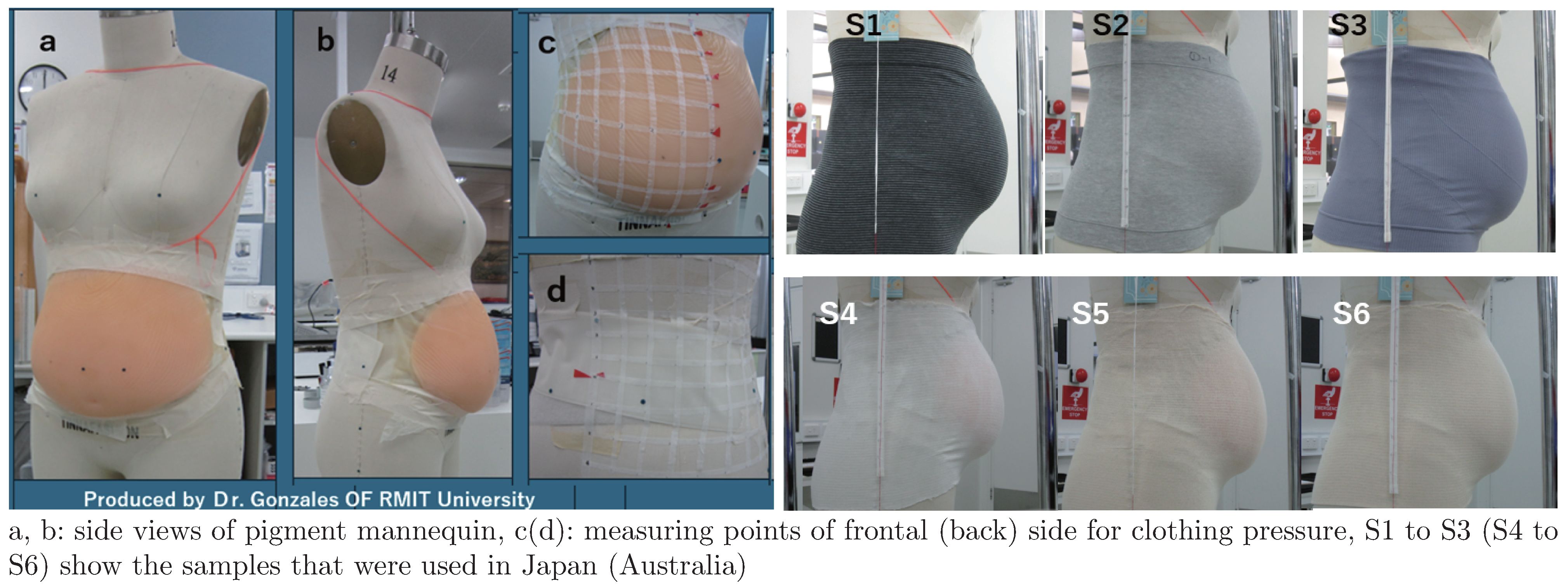
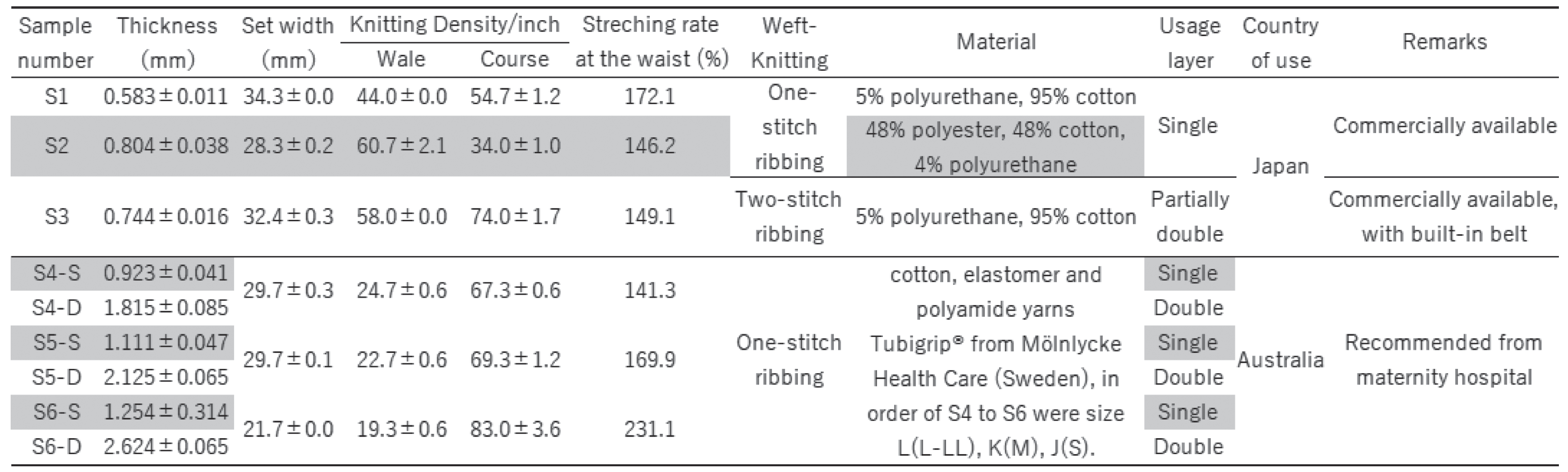
The MSGs used in this study are listed in Table 1. The six knitted tube-type MSGs (three each used in Japan and Australia) are shown in Figure 1. The three MSGs recommended by Australian maternity hospitals are used in double layers at the preference of pregnant women, so a total of six samples were used. These Australian samples were elastic bandages (Tubigrip, Sweden) commonly used for medical treatment in Europe, and we utilised three types of Japanese MSG with a similar design and structure. A rigid mannequin reflects the body’s surface curvature; however, the clothing pressure is either extremely high or extremely low. In areas with a small radius of curvature, the tension of the fabric is higher, and in areas with a gentle or concave curvature, a gap is created between the fabric and the body surface, thus the pressure is low or absent. However, in a living body, the subcutaneous tissue moves due to the tension of clothing worn on the bone ends or on a concave surface, and the pressure is equalised. Considering this, a soft mannequin that mimics the human body is needed, and a pregnant mannequin [10] (made by Dr Rodriguez of RMIT University) that can reproduce clothing pressure more closely to human wear conditions was used. The mannequin was the average Australian woman’s physique (larger than the average Japanese body type, so the Japanese-use MSG measured the circumference of the mannequin and used the appropriate size L to LL) and had the same softness and abdominal weight as the human body (Figure 1). The tensile force and strain in the wale, course, and diagonal directions were measured using a KES-FB1-A-AUTO (KatoTech, Kyoto, Japan) with a speed of 0.5 mm/s, chuck size of 5.0 cm, and maximum load of 50.0 gf/cm at 20 °C and 65% relative humidity at the Fii Research Centre at Shinshu University. When the samples were cut to a specific width of 10 cm.
Table 1.
Physical properties of MSG [21].
Figure 1.
Views of the pigment mannequin and measuring points for clothing pressure and experimental samples.
2.2. Measuring Method for Clothing Pressure and Its Measuring Points
A clothing pressure measurement device employing the hydrostatic pressure-balanced method was used to verify the relationship between human pressure sensation and pressure values in various types of clothing [17,18,19,20]. The gravid mannequins used and the measurement points for clothing pressure are shown in Figure 1. The pressure-measuring points were only on the right half of the mannequin, and a 5 mm wide surgical tape was attached horizontally to the body surface at 3 cm intervals based on the waistline of the mannequin. Five to six strips of surgical tape were placed above and below the waist, respectively. Vertically, the tape was attached at 3 cm intervals from the anterior-posterior midline toward the right side of the body, and eight strips were attached on each of the dorsal and ventral sides. A total of 158 squares were created, and the clothing pressure at each point within them was measured. Samples S1-S3 were used in Japan, and Samples S4-S6 were used in Australia, which were the same tube type MSGs.
2.3. Pressure Distribution Model of Just Right and Tight Fit Sensations
Because it is difficult to perform a sensory evaluation of pregnant women wearing MSG, the validity of the pressure value was not obtained. The clothing pressure measured by the hydrostatic pressure-balanced method when wearing various types of clothing is also obtained from non-pregnant female subjects; therefore, direct comparison is not possible. However, since no research has been conducted on pregnant women as subjects, we decided to use the sensory evaluation value [17] of non-pregnant adult women in their 20 s and 30 s as the standard for the comfort of wearing MSG. The measuring points for the non-pregnant subjects were 12×4 = 48 points on both sides of the body, including the under bustline, waistline, low waistline, and hipline. However, the mannequins’ measurement points were divided into 158 more detailed categories. Therefore, we first applied the values to 28 relevant points on the mannequin’s right half. For the remaining 130 points, values were filled in by averaging across the 28 points, and a model was created for the subjects’ sensations when they felt a perfect or tight fit (see Figure 4).
2.4. Statistics
The results of the tensile tests in the wale/course directions were compared for each sample, and significant differences were evaluated using the t-test. Differences were considered statistically significant at p < 0.05. The clothing pressure distribution diagram (Figure 4) was divided into eight blocks: under-bust (1st-3rd rows from the top), waist (4th-6th rows), low waist (7th and 8th rows), and hipline (9th-11th rows). Statistical analyses were performed using SPSS software (IBM, Ver. 27). The values obtained for the perfect-fit model (A), the tight-fit model (B), and each sample (C) were compared with the clothing pressure. The clothing pressure of a perfect or tight-fitting model was compared with that of a significantly different group using a paired analysis of variance, and significant differences were tested using the Bonferroni method. Differences were considered statistically significant at p < 0.05.
3. Result
3.1. Tensile Test for Experimental Samples
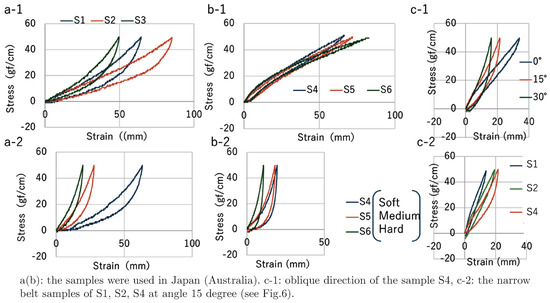
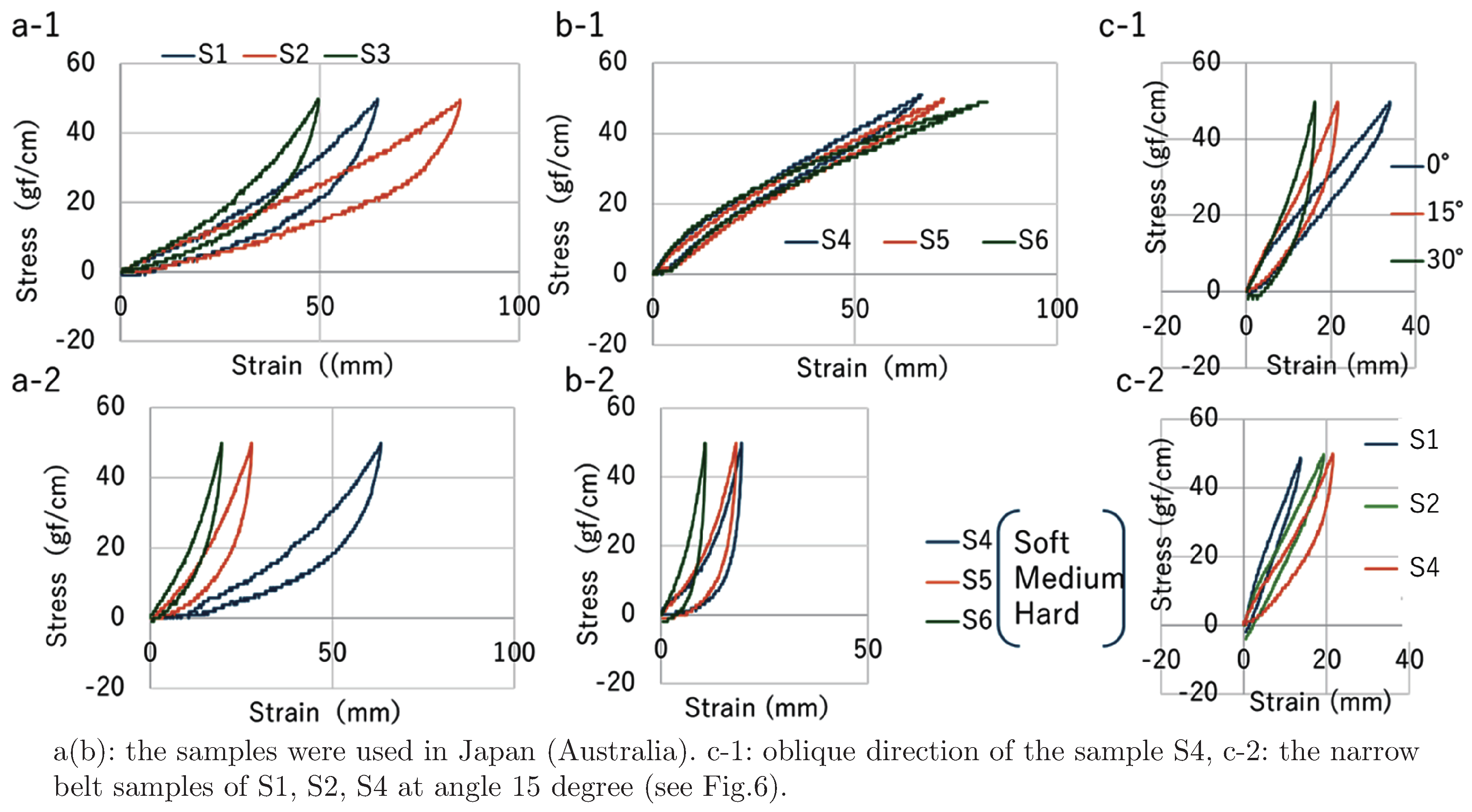
Typical examples of stress and strain curves are shown in Figure 2. As can be seen in Figure 2a and Figure 2b, the samples were easy to stretch in the course direction and difficult to stretch in the wale direction, except for S1. No hysteresis was observed in the S4-6 samples in the course direction, like rubber (Figure 2b-1). Figure 2c-1 shows the difference in wearing angles of the narrow belt with S4. As the angle increased, the strain also increased. The strain resulting from a 15-degree wearing angle of the narrow belt was nearly identical across all three samples.
Figure 2.
Typical examples of stress and strain curves at course (a, b-1)/wale (a, b-2)/oblique (c) directions.
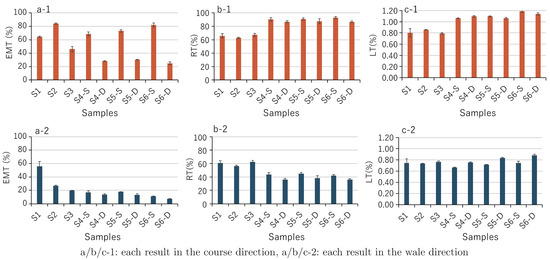
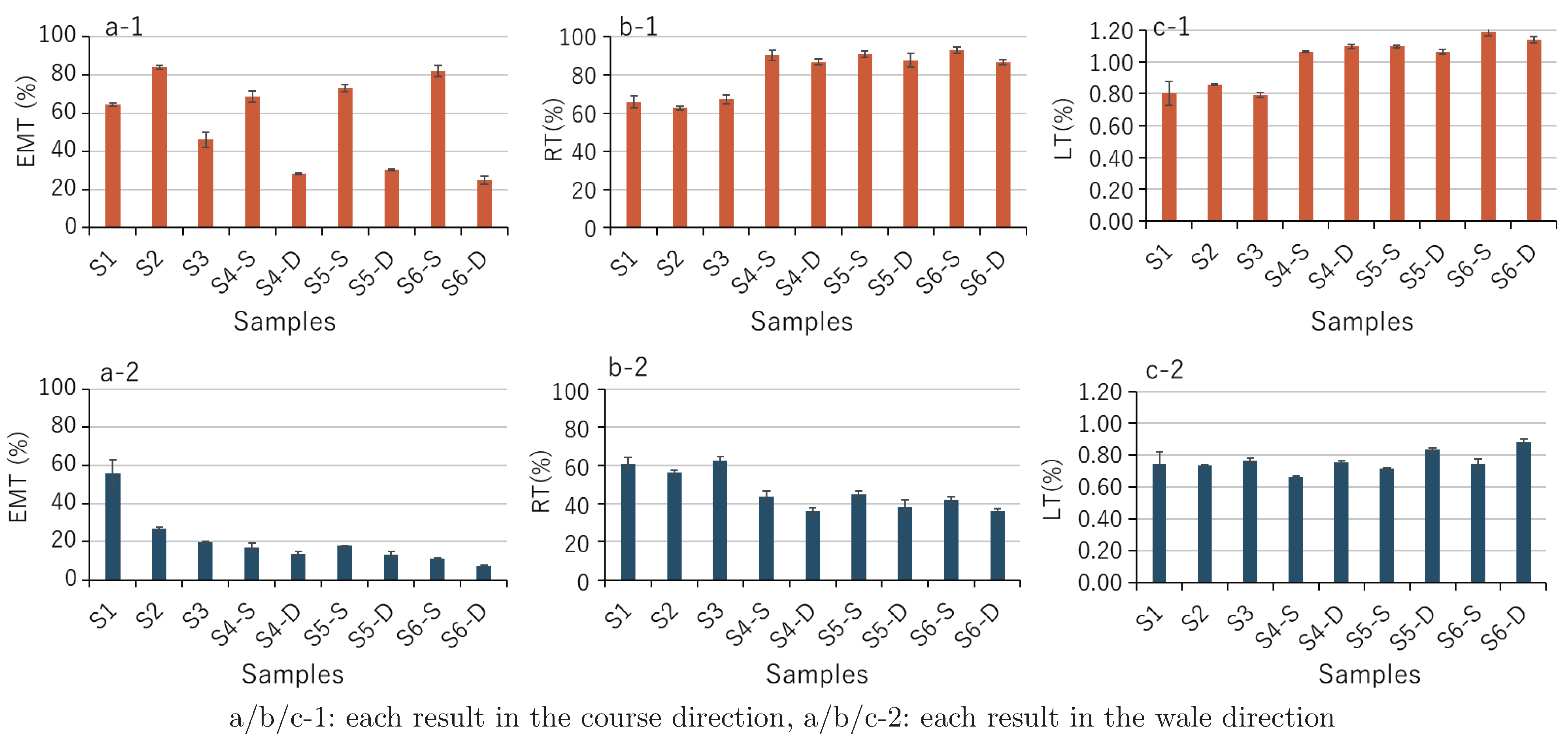
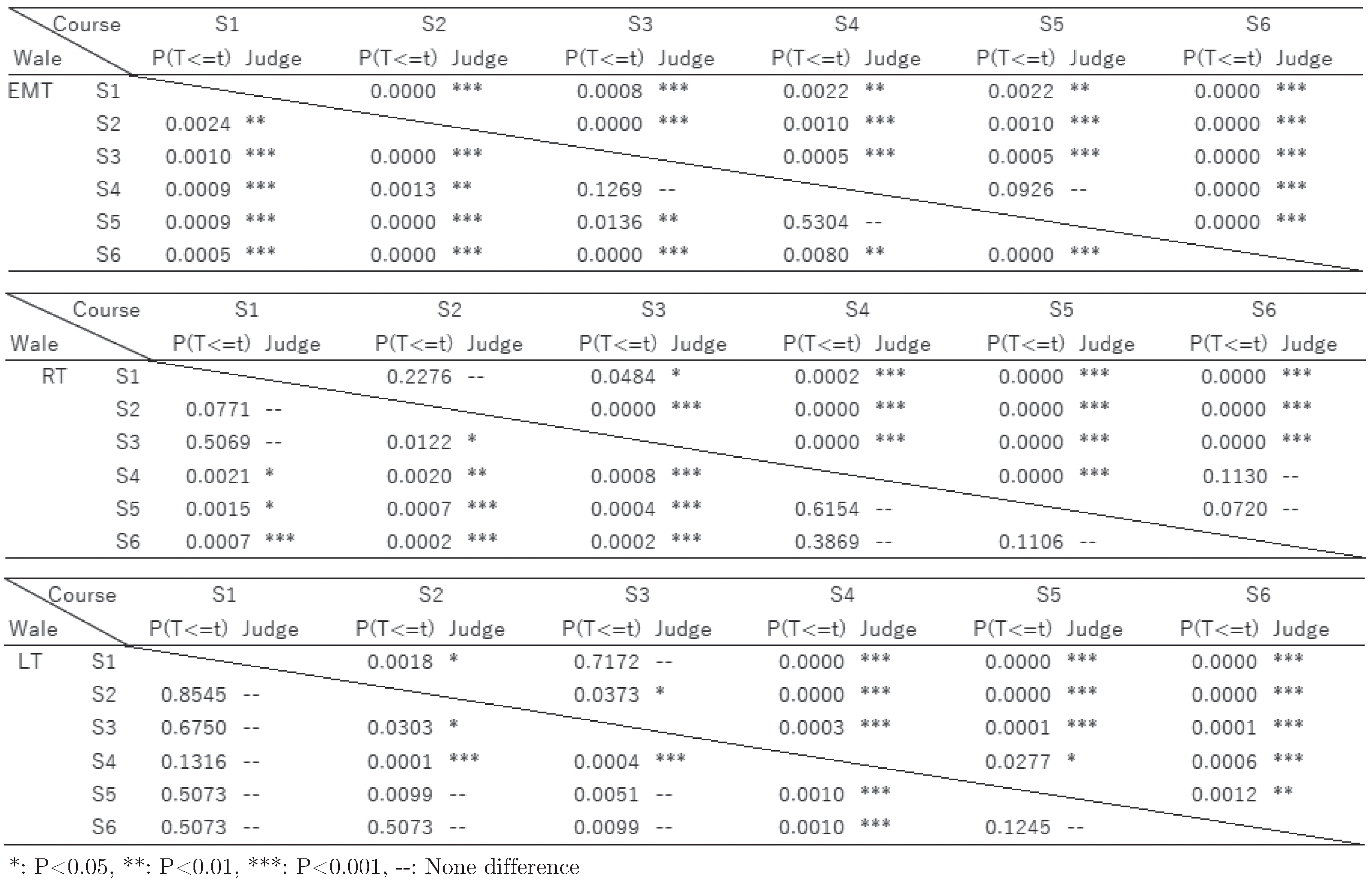
EMT, RT, and LT in the wale and course directions are shown in Figure 3, and the significant differences between each sample are shown in Table 2. EMT is an index of elongation at a load of 500 gf/cm: the larger the value, the easier the material is to stretch. LT is an index of straightness: the closer the value is to ’1’, the straighter the material is, such as rubber. RT indicates tensile recovery: the nearer the value is to 100%, the greater the recovery. The EMT in the course direction was the stretchability order: easier elongation than the double samples. In the wale direction, the order of stretchability was significantly higher for Japanese MSGs than for Australian MSGs (a-2). The LT of Australian MSGs in both directions was higher than that of Japanese MSGs, meaning that Australian MSGs had significantly higher LTs (S2 > S6 > S5 > S4 > S1 > S3). From S4 to S6, EMT of the single-layer samples was significantly higher than that of the double-layer samples (a-1). Therefore, the single samples had more consistent straight stretchability in the course direction (c-1). The RT of the Australian MSGs in the course direction was higher than that of the Japanese MSGs (b-1), but lower than that of the Japanese MSGs in the wale direction (b-2).
Figure 3.
EMT, RT, and LT in the course and wale directions.
Table 2.
Significant difference between each couple of samples at the wale and course directions.
3.2. Distribution Model of Clothing Pressure for Perfect and Tight-fit Sensations
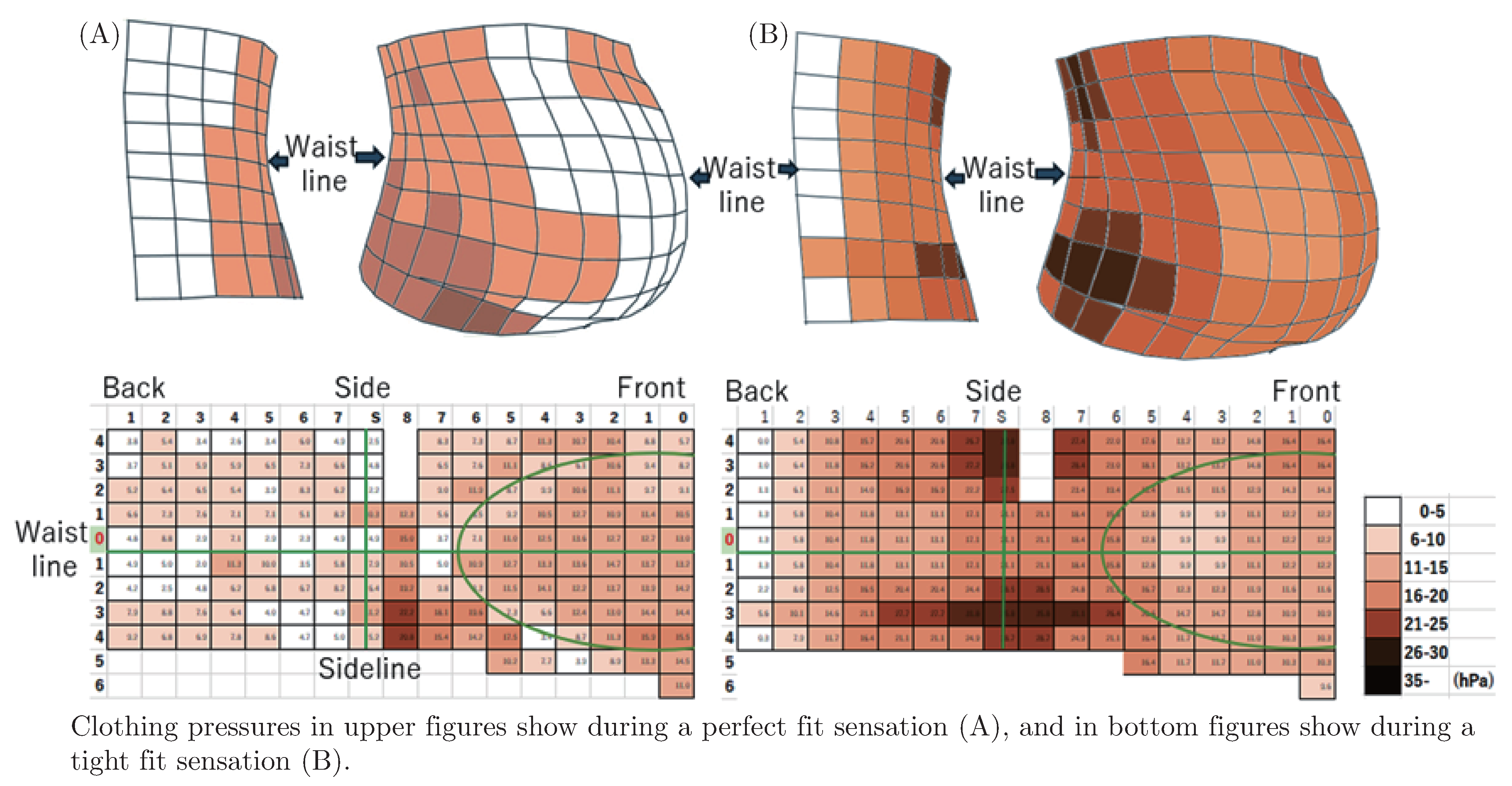
The clothing pressure of 3D and 2D models for MSG was developed to elicit a perfect fit sensation and a tight fit sensation. To measure the sensation of clothing pressure with MSG, we should apply clothing pressure to pregnant women wearing MSG; however, we could not measure this sensation in pregnant women. We therefore applied clothing pressure to women aged 20-30 years old, constricted with an elastic band [22], to the abdominal surface of a pregnant mannequin. Clothing pressure developments of 3D models with a perfect fit sensation and tight fit sensation are shown in Figure 4. Pressure distribution diagrams cut open from the front to the back midline with the right side of the body at the centre of the pressure distribution model for perfect fit (A) and tight fit (B) sensations [17,18,19,20]. The clothing pressure in the perfect-fit model A was low on the ventral protrusion, on the nipple line from the underline to the waist, and on the posterior midline. In contrast, the intersection of the hip and lateral lines showed high clothing pressure. When this was changed to tight model B, the clothing pressure was high across all areas, but particularly high in the lateral line, underline, and hip line areas.
Figure 4.
Clothing pressure developments of 3D models with perfect-fit and tight-fit sensations.
3.3. Comparison of Each Sample with Clothing Pressures with Perfect and Tight Fit Sensations
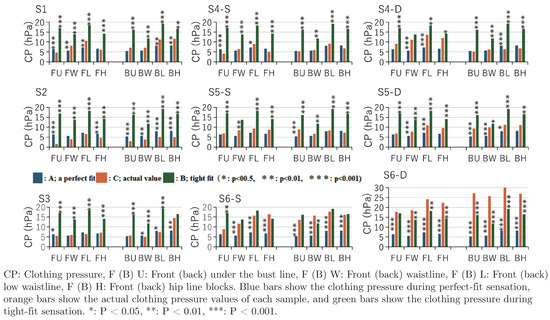
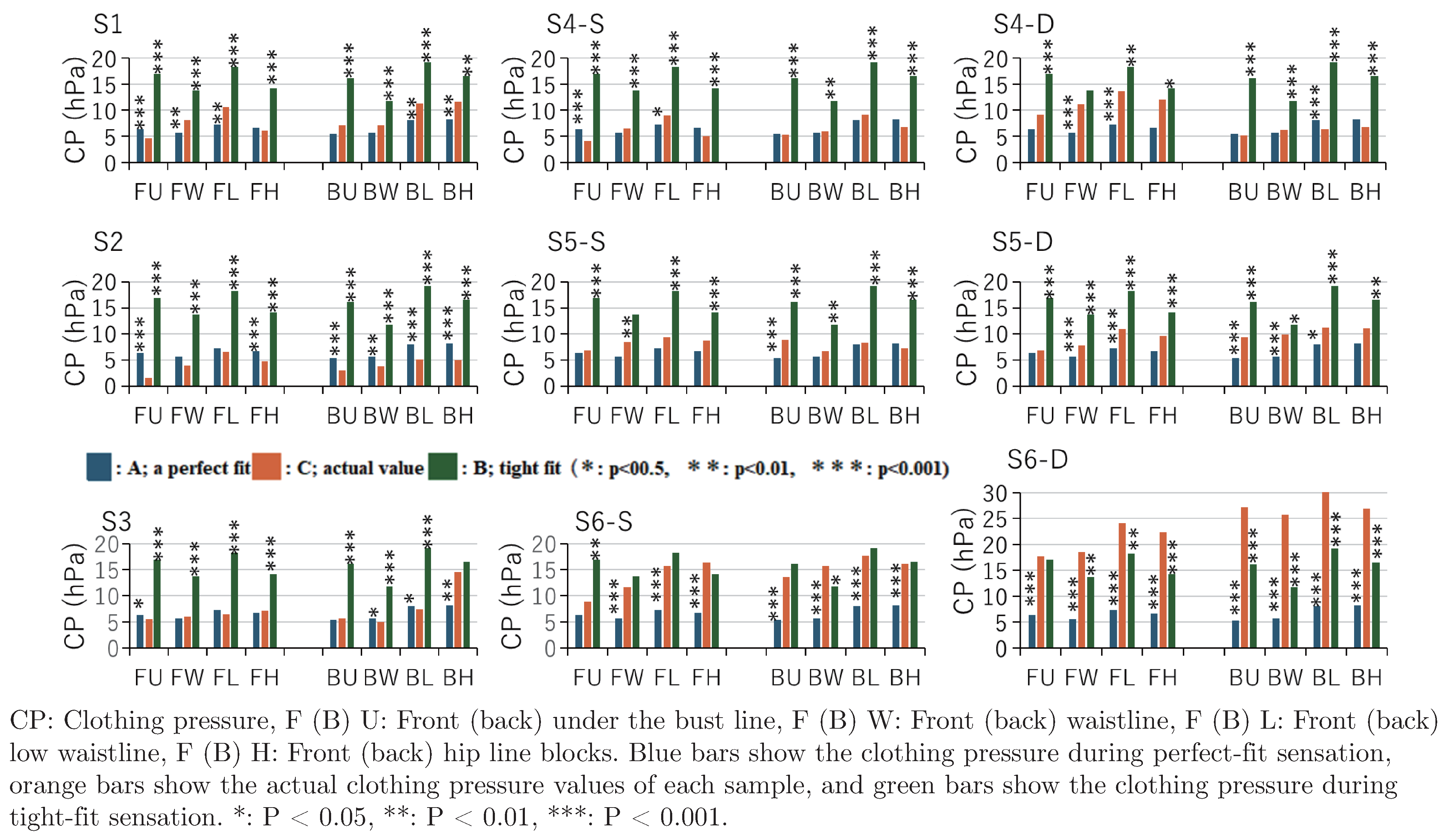
The measurement points were divided into eight blocks: ventral and dorsal underlines (blocks FU/BU: 1–3 in the top row), waist (blocks FW/BW: 4–6 in the top row), lower waist (blocks FL/BL: 7–8 in the top row), and hips (blocks FH/BF: 9–11 in the top row). A comparison of the clothing pressure values for each sample and with the perfect/tight fit sensation is shown in Figure 5. The clothing pressure values of each sample were compared with those for a perfect fit. The clothing pressure values of all the Japanese MSGs (S1-3), except for the back of the hipline for S2, were significantly lower than those for a perfect fit. In Australia, a single- or double-layered MSG is recommended, depending on the gravid woman’s preferences. No significant difference was observed between the clothing pressure of S4-S and the perfect fit. However, the clothing pressure of the double-layered MSG (S4-D) was significantly higher only on the ventral side. In addition, no significant difference was observed in the clothing pressure distributions between S5-S and perfect fit, except at the back hipline; furthermore, the clothing pressure of the double-layered MSG (S5-D) was significantly higher on the entire dorsal side and the lower ventral side. For S6, even with a single layer, the pressure was significantly higher than that for the perfect fit. The clothing pressure values of each sample were compared with those for a tight fit. The clothing pressure was higher for the double-layered (S4–6-D) than the single-layered MSG (S4–6-S) for all three samples. Even for S6-D, a pressure of ):30 hPa was observed. For S6-S, the values were high for the vertical hipline and dorsal waistline, and for S6-D, the values were significantly higher than those for the tight fit [21].
Figure 5.
A comparison between the clothing pressure for each sample and the perfect/tight fit sensation.
3.4. Effect of the Clothing Pressure Distribution Development Diagram of MSGs on the Attachment Belt
Sample S4-S produced the most favourable pressure sensation and the closest clothing pressure distribution. This made it the preferred pressure distribution for non-pregnant individuals. However, Australian pregnant women found this MSG too loose and did not prefer it. This was because the highly stretchable S4-S could not provide adequate support for a heavy abdomen, causing pregnant women to perceive this MSG as unreliable. Furthermore, while the dorsal section of the double-layered S4-D provided an appropriate pressure sensation, the abdominal pressure on the ventral side—which is sensitive to pressure stimulation—increased significantly (by a factor of two) and was perceived as too tight. Consequently, a method was devised to support the heavy abdomen. The S4-S was cut into a 15 cm wide attachment belt that covered the lower half of the abdomen.
3.5. Effect on the Angle of the Attachment Belt
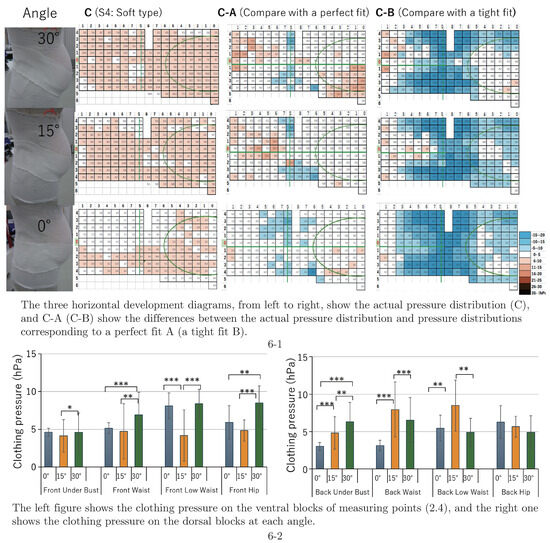
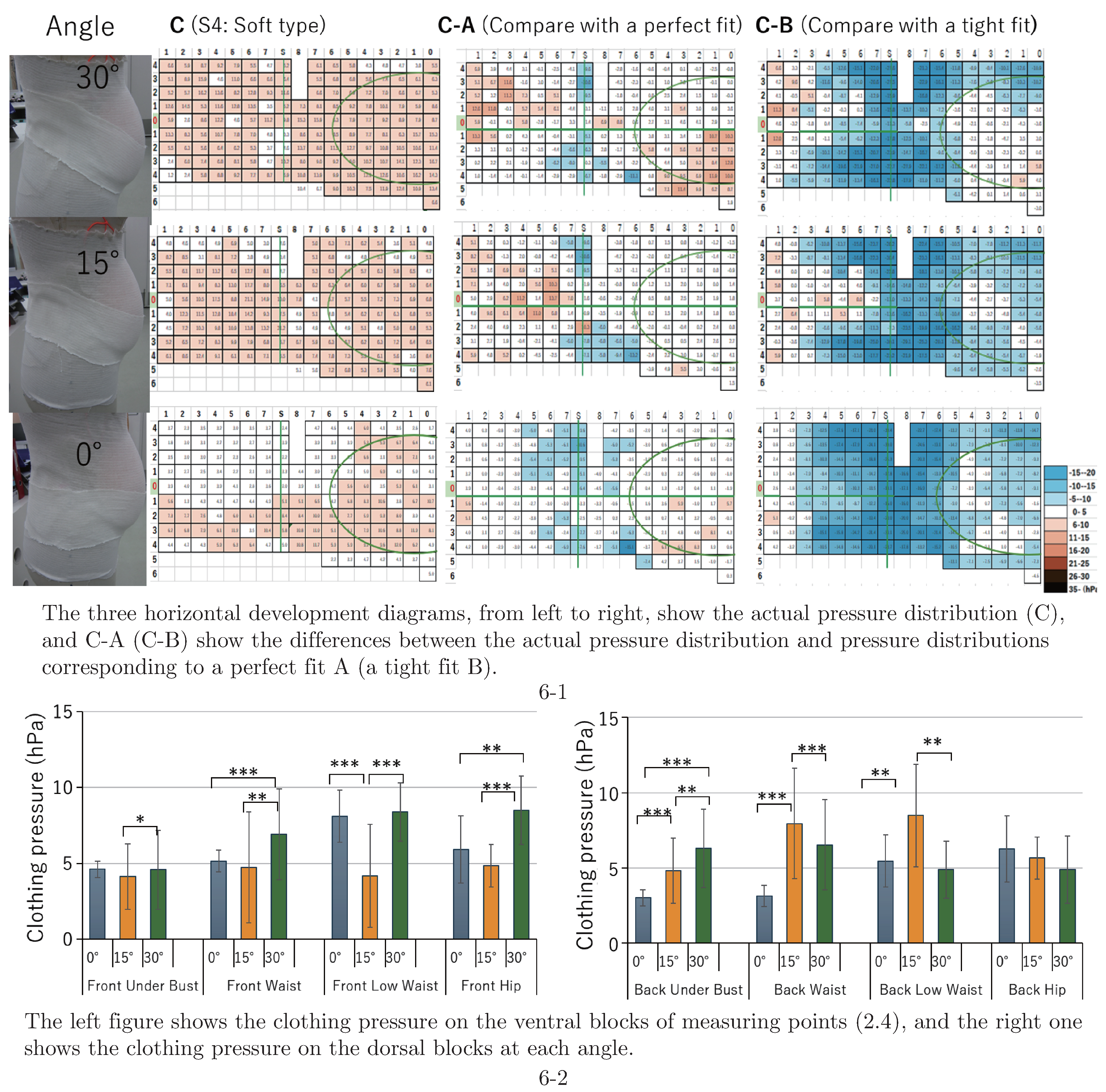
The differences between measurement points on the MSG sample and the development diagrams of Models A and B with the attachment of a belt are shown in Figure 6-1. In C, the darker the warm colour, the higher the pressure. The white measurement squares in C-A indicate areas of almost perfect fit; blue indicates areas of loose fit; and the warm colours indicate areas of tight fit. In C-B, white squares indicate tight-fit areas; blue indicates areas that are either perfectly or loosely fitted; and warm colours indicate areas that are even tighter than the tight-fit areas. The attachment belt angles on MSG S4-S are shown in the most left figures in Figure 6-1. The image of 0° shows the attachment angle of a belt worn parallel to the MSG (i.e., at 0° to the floor), and the image of 15° (30°) shows an angle of 15° (30°) to the floor. The C-A pressure distributions were compared; only at 15°, the abdominal distribution (green line) was almost entirely white, indicating a perfect fit sensation in the abdominal area. The clothing pressure at each angle in eight blocks was compared, and the results are shown in Figure 6-2. The pressure was significantly lower at 15° on the ventral side, an area with higher sensitivity than the dorsal side, when clothing pressure was measured at three angles. Therefore, the angle of the attachment belt was set at 15°.
Figure 6.
6-1 Clothing pressure distribution development diagram of MSGs with the attachment of a belt; 6-2 A comparison between the clothing pressure for each sample in eight blocks.
3.6. Clothing Pressure Distribution Development Diagram of Japanese MSGs with the Attachment Belt
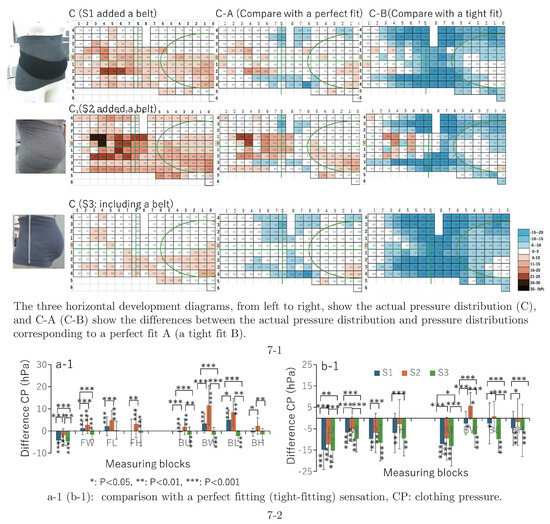
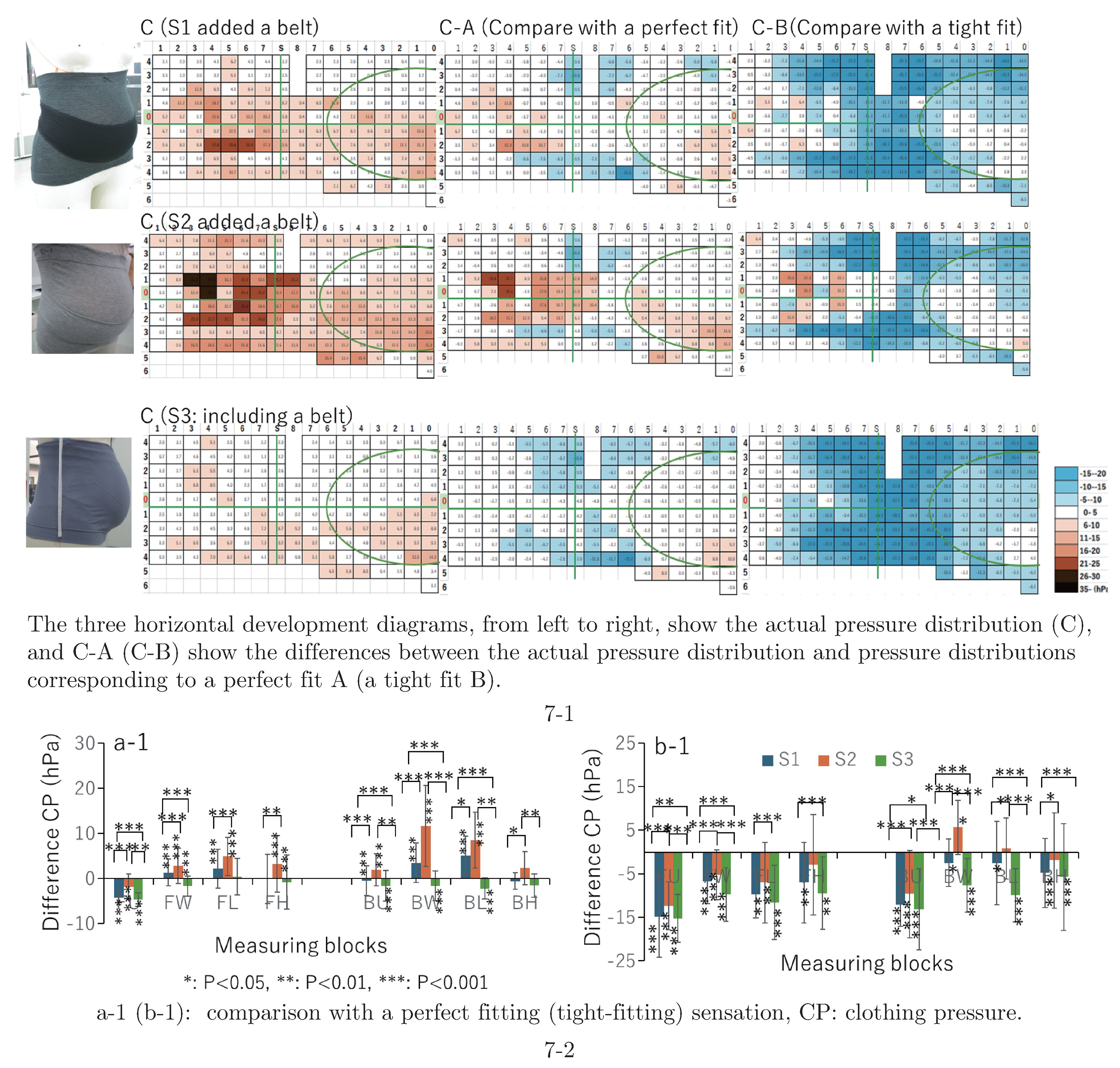
The pressure distributions on clothing when covered by the attachment belt supplied with Japanese MSGs are shown in Figure 7-1. The significant pressure differences across eight blocks are shown in Figure 7-2. S1 and S2 used the supplied belts, while S3’s belt was built into the product. When the belt was added to sample S1, the BW and BL were marginally higher than the perfect sensation pressure (a-1), although no area was found to be excessively tight (b-1). For S2, pressure was significantly higher than the perfect-fitting level at all sites except FU and BH (a-1), and was particularly high at BW (b-1). For S3, pressure was significantly below the optimal level at all sites except FW, FL, FH, and BH (a-1).
Figure 7.
7-1 Clothing pressure distribution development diagram from Japanese MSG S1 to S3 with the attachment belt; 7-2 Difference in clothing pressure from a perfect and tight-fitting sensation of Japanese MSGs with the attachment belt.
3.7. Clothing Pressure Distribution Development Diagram of Australian MSGs with the Attachment Belt
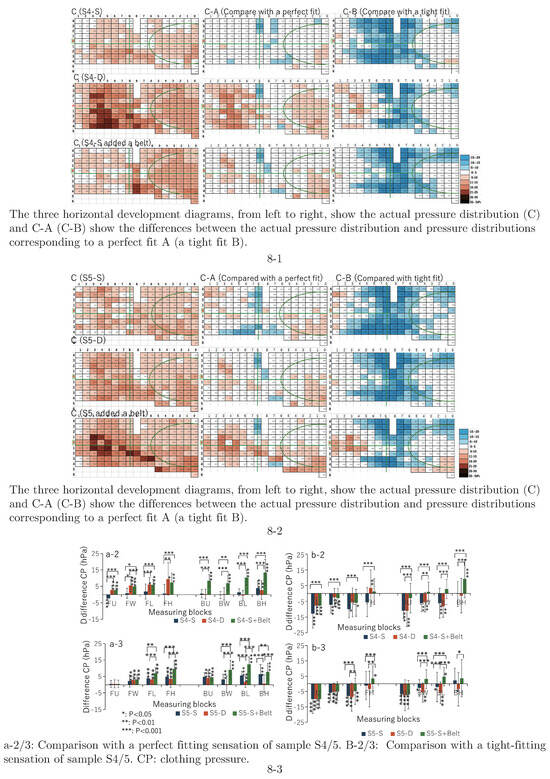
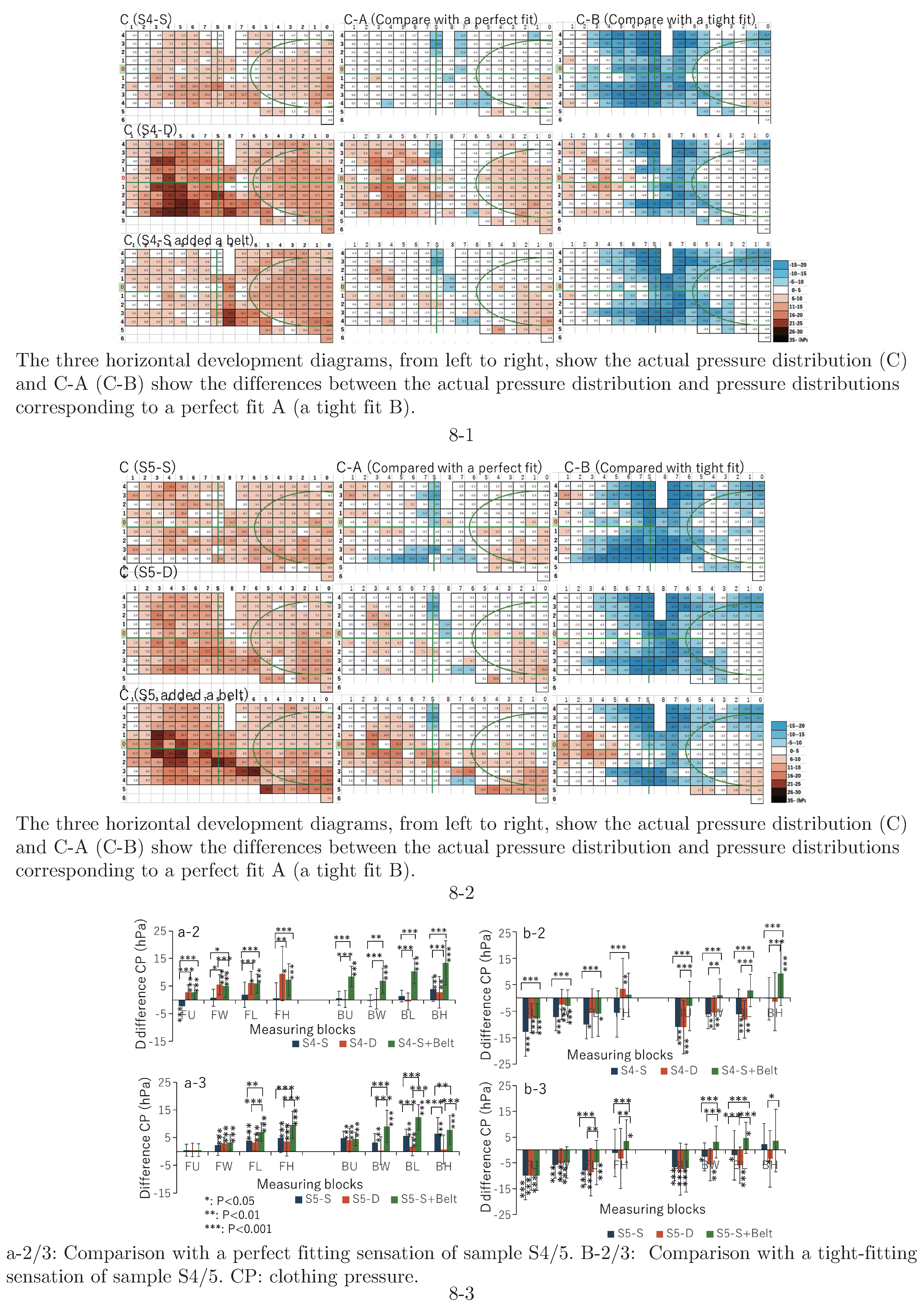
The pressure distribution over the Australian MSGs S4 and S5, when covered by a narrow attachment belt cut to a width of 15 cm, is shown in Figure 8-1 and 8-2, respectively. The significant pressure differences across the eight blocks in Figure 8-1 and 8-2 are shown in Figure 8-3. With the S4 as a single layer, the pressure distribution was almost ideal; however, dissatisfaction arose due to the lack of heavy abdominal support. Doubling the MSG resulted in significantly higher-than-perfect-fit pressure on the anterior abdomen (a-2). When the narrow belt was added, pressure was considerably higher than the perfect-fit pressure in all blocks except the FU block (a-2). For S5, there was no significant difference between single- and double-layered samples (a-3). When the narrow belt was applied, the pressure was significantly higher than with either the single or double layers. The pressure was also higher in the FH and BL blocks than when it was perceived as tight.
Figure 8.
8-1 Clothing pressure distribution development diagram of Australian MSG S4’s valuations; 8-2 Clothing pressure distribution development diagram of Australian MSG S5’s valuations; 8-3 Difference in clothing pressure from a perfect and tight-fitting sensation of Australian MSGs with the attachment belt.
4. Discussion
The focus of this study is the abdomen, whose surface contains a nerve plexus of the autonomic nervous system that is sensitive to pressure stimuli [22,23,24]. Furthermore, a gravid abdomen should not be tightened with an MSG. This is because the compression by an MSG activates the sympathetic nerves, constricts blood vessels, and restricts blood flow, which may prevent sufficient blood circulation to the foetus. Therefore, we considered the maximum pressure and the body parts that should be supported. The pressure distribution for all Japanese MSGs (S1–S3) in Figure 7 was lower than that of a perfect fit. However, this did not affect their MSG preferences provided to the abdominal region. The single-layer MSG that Japanese people prefer appears to be more about warmth than support.
The clothing pressure of a double-layered soft MSG (S4-D) was higher than medium MSG (S5-D) only on the ventral side, and not on the dorsal side. That is, owing to the thin and loose S4 thread, only the ventral abdominal thread, with a higher curvature than the dorsal side, was stretched, resulting in higher pressure. The abdomen is covered with muscle tissue, not bone, so clothing pressure when wearing the belt is higher on the dorsal side than on the ventral side [22]. This also applies to the MSG [21]. Thus, the Japanese tube-type MSG is mainly used to maintain warmth, and the sample provides no support. By contrast, the Australian tube-type MSG is expected to provide support. However, among the Australian MSGs, the double-layered hard MSG (S6-D) is extremely compressive and should not be used. The clothing pressure in the case of S6-D (Figure 5) was significantly higher than that for a tight fit in all parts; therefore, it should not be used. Because the pressure stimulus is consistently higher than it should be, the sympathetic nerves are constantly stimulated, and the blood vessels are constricted. For this reason, it is safer not to choose S6-S MSG either (Figure 5).
The Japanese MSG, which offers no support, gains the ability to support a heavy abdomen when combined with the attached belt. As shown in Figure 6, angles of 0° and 30° generated high pressure on the ventral of the abdomen, which is sensitive to tightening. Therefore, 15 degrees is preferable, as it places the weight of the supported abdomen on the dorsal side, which is less sensitive to pressure (Figure 6-1/2). At this angle, covering the single MSG with the belt revealed particularly high-pressure points on the dorsal side at S2. This is thought to be due to insufficient belt length, causing pressure to concentrate at the belt’s connection point (BW in Figure 7-1 and 7-2). Consequently, sufficient length was required when layering narrow belts. S1 in Figure 7-2 appeared satisfactory at first glance, but compared to Figure 7-1, an air gap occurred along the sideline on the under bust and hip girth.
Because the S1 belt’s poor stretch (see Figure 2, C-2) prevented it from conforming well to the abdominal relief. This suggests that elastic materials are desirable for narrow belts. The narrow belt in S3 was an internal type, but its positioning did not fit the abdominal contour, resulting in an air gap. As the abdominal contour changes with fetal growth and body movements commence, making constant adaptation increasingly difficult, commercialising MSG with a narrow belt, internal-type products for the late stages of pregnancy are considered challenging.
The Australian S6 used a material with limited stretch in wale and course directions (see Figure 2, a-2/b-2), resulting in naturally high garment pressure, making even single-layer use difficult. Therefore, the feasibility of using S4 and S5 was examined. S4 proved unsatisfactory when used singly, unable to support the abdominal weight. When doubled, the fine thread exerted pressure on the protruding abdomen more readily than on the back. Consequently, neither single nor double use of S4 was desirable. A single layer combined with a narrow belt, closer to the Japanese MSG concept, was preferable. Furthermore, combining S5 with a belt resulted in excessively high pressure (Figure 8 a-3/b-3). Consequently, when using S5, either single or double use would be preferable depending on the user’s preference.
In the future, we will propose a method for keeping the gravid abdomen warm without constricting it, thereby promoting blood circulation and providing moderate support to the foetus. If the inclusion of pregnant women in such experiments improves the analysis of existing MSGs, it will help develop MSGs that provide the required support to the gravid abdomen without restricting the movements of pregnant women. However, pregnant women were not included because this study was difficult, so we used a pregnant mannequin for the experiments. Thus, by combining the abdominal clothing pressure of pregnant mannequins with that of women in their 20 s to 30 s, we demonstrated that a useful MSG for women in late pregnancy can be proposed. This study employed an Australian average-stature pregnant manikin with clothing pressure values representing the perfect-fit and tight-fit pressure sensations for Japanese women in their 20 s to 30 s. Future work should involve creating a Japanese-sized pregnant manikin and investigating abdominal pressure sensation in Australian women. The results using MSG in each country should then be examined and compared with the present findings.
5. Conclusion
This study aimed to develop a maternity support garment (MSG) that would comfortably accommodate rapid abdominal changes during the later stages of pregnancy. As it was difficult to recruit pregnant women for this study, we used a pregnant mannequin for the experiments. Nine types of MSGs used in Japan and Australia were analysed for their pressure distribution on clothing using a pregnant mannequin. In addition, pressure sensation was assessed in a sensory evaluation of Japanese nongravid women in their 20 s and 30 s, and clothing pressure values obtained via simulation were analysed. The clothing pressure distribution of Japanese MSG is either almost perfect or looser, and when used alone, the MSGs keep the abdomen warm, except when the attached belt is used. Conversely, the Australian MSG is used with three levels of tightness recommended by maternity hospitals; however, when double-layered with soft and hard types, the soft type concentrates pressure on the abdomen, and the hard type feels even tighter than the tightest level.
The Japanese MSG offers no support on its own, but when combined with the attached belt, it can support a heavy abdomen. A 15-degree angle is preferable for the attached belt, as this places the weight of the supported abdomen on the dorsal side, which is less sensitive to pressure. One issue with the Japanese MSG is that pressure concentrates at the belt connection point due to insufficient belt length. Consequently, sufficient length is required when layering narrow belts. Furthermore, there was an air gap along the side of a sample on the under bust and hip girth. This was because the belt had poor elasticity, preventing it from conforming well to the abdominal relief. This suggests that narrow belts should be made of elastic materials. One sample included an internal narrow belt, but its positioning did not fit the abdominal contour, resulting in an air gap. As the abdominal contour changes with foetal growth and body movements commence, constant adaptation becomes increasingly difficult. Therefore, commercialising MSG products with an internal narrow-belt type for the late stages of pregnancy is considered challenging.
One of the hard types of Australian MSG used a material with limited stretch in wale and course directions, resulting in naturally high garment pressure, making even a single-layer garment difficult. Although the Australian MSGs provide support rather than insulation, the pressure that they exert on the gravid abdomen can restrict the blood flow to the foetus. Therefore, the feasibility of using soft- and medium-type MSGs was examined. The soft type of MSG proved unsatisfactory when used singly, unable to support the abdominal weight. When doubled, the fine thread exerted pressure on the protruding abdomen more readily than on the back. Consequently, neither single nor double use of the soft type of MSG was desirable. A single layer combined with a narrow belt, closer to the Japanese MSG concept, was preferable. Furthermore, combining a medium-grade MSG with a belt resulted in excessively high pressure. Consequently, when using medium one, either single or double use would be preferable depending on the user’s preference. These findings are expected to advance the understanding of the effect of existing MSGs on a gravid abdomen and, thus, propel their further development. In the future, we will propose a method for keeping the gravid abdomen warm without constricting it, thereby promoting blood circulation and providing moderate support to the foetus.
Acknowledgments
The Japanese Society for the Promotion of Science, KAKENHI Grant Number 22K02111, supported part of this work.
References
- Japan Gender Equality Bureau Cabinet Office, Gender Equality White Paper, Reiwa 6th Edition 2024. pp. 1–21. Available online: https://www.gender.go.jp/about danjo/whitepaper/r06/gaiyou/pdf/r06_gaiyou_en.pdf.
- Mogren, I.; Pohjanen, A.I. Low back pain and pelvic pain during pregnancy: Prevalence and risk factors. Spine 2005, 30, 983–91. [Google Scholar] [PubMed]
- Ohno, M.; Ebata, Y. Efficacy of weight management guidance for pregnant women using an individual weight gain curve. J. Int. Univ. Health Welf. 2016, 21, 82–91, English abstract and Japanese text. [Google Scholar]
- Oteng-Ntim; Varma, R.; Croker, H.; Poston, L.; Doyle, P. Lifestyle interventions for overweight and obese pregnant women to improve pregnancy outcome: systematic review and meta-analysis. BMC Med. 2012, 10, 47. Available online: http://www.biomedcentral.com/1741-7015/10/47. [CrossRef] [Scilit] [PubMed]
- Yimer, A.; Endris; Wossen, A.; Abate, M. Pregnant women’s knowledge, attitude, and practice to ward physical exercise during pregnancy and its associated factors at Dessie town health institutions, Ethiopia. Am. J. Obstet. Gynecol. Glob. Rep. 2024, 4, 100391. [Google Scholar] [CrossRef] [Scilit] [PubMed]
- Alnaeem, L.; Alkulaib, S.S.; Alatiyyah, Z.J.; Alrashed, N.R.; Alnaim, A.A. Pregnant Women’s Knowledge, Attitudes, and Associated Factors Toward Physical Exercise During Pregnancy in Al-Ahsa City, KSA. Cureus 2024, 16, e56063. [Google Scholar] [CrossRef] [Scilit] [PubMed]
- Chansan, T.L.; Schmidt, M.D.; Roberts, D.E.; Hosmer, D.; Markenson, G.; Freedson, P.S. Development and Validation of a Pregnancy Physical Activity Questionnaire. Med. Sci. Sports Exerc. 2004, 1750–1760. [Google Scholar] [CrossRef] [Scilit]
- Mottola, M.F.; Davenport, M.H.; Ruchat, S.M.; Davies, G.A.; Poitras, V.J.; Gray, C.E.; Jaramillo, G.A.; Barrowman, I.; Adamo, K.B.; Duggan, M.; Barakat, R.; Chilibeck, P.; Fleming, K.; Forte, M.; Korolnek, J.; Nagpal, T.; Slater, L.G.; Stirling, D.; Zehr, L. 2019 Canadian guideline for physical activity throughout pregnancy. Br. J. Sports Med. 2018, 52, 1339–1346. [Google Scholar] [CrossRef] [Scilit] [PubMed]
- Shilpa, B.; Agatha, P.S.; Suneet, P. Yoga during Pregnancy: A Review. Am. J. Perinatol. 2012, 29, 459–464. [Google Scholar] [CrossRef] [Scilit] [PubMed]
- Toyokura, S. Effect of maternity belt. Midwife J. 2016, 22, 343–351, Japanese text. [Google Scholar]
- Matsuyama, E.; Fujisawa, T. The effectiveness of maternity belts and their doubts. Midwife J. 1968, 22, 40–48, Japanese text. [Google Scholar]
- Tanaka, A.; Maruta, N.; Muraki, S. Survey Study on Clothing Choices and Movements for Work during Pregnancy. Jpn. J. Cloth. Res. 2019, 68, 11–21, Japanese text. [Google Scholar]
- Tada, T.; Kuno, T. Discussion for how to wear the maternity belts. J. Jpn. Acad. Nurs. Sci. 1985, 5, 84–85, Japanese text. [Google Scholar]
- Rodriguez, C.Q.; Troynikov, O. The Effect of Maternity Support Garments on Alleviation of Pains and Discomforts during Pregnancy: A Systematic Review. J. Pregnancy 2019, 2019, 2163790, e Collection 2019. [Google Scholar] [CrossRef] [Scilit] [PubMed]
- Tanaka, M. The Review of psychological studies about pregnancy women. Bull. Grad. Sch. Hum. Dev. Environ. Kobe Univ. 2016, 10, 1–6, English abstract and Japanese text. [Google Scholar] [CrossRef] [Scilit] [PubMed]
- Rodriguez, C.Q. Maternity Support Garments for Improved Comfort During Pregnancy. A thesis of PhD, 2019; pp. 63–297. [Google Scholar]
- Mitsuno, T.; Hibino, A. Which Support Pants are the Most Effective for Burning Body Fat? JFBI 2016, 9, 187–199. [Google Scholar] [CrossRef] [Scilit]
- Mitsuno, T.; Yoshida, A.; Watanabe, S. Effect of Leg Support on Body Fat Reduction: A Pilot Study on an Older Woman Undertaking Aerobic Exercise. In Advances in Industrial Design (AHFE 2021); Springer; pp. 622–631. Available online: https://link.springer.com/chapter/10.1007/978-3030-80829-7_77.
- Mitsuno, T.T.; Kondo, S. Clothing Pressure Gradient for Comfortable Pantyhose. JFBI 2022, 15, 243–257. [Google Scholar] [CrossRef] [Scilit]
- Mitsuno, T.T.; Kondo, S. Possibility of Pantyhose Design using Clothing Pressure and Myoelectric Potential as Indices. JFBI 2023, 16, 1–14. [Google Scholar] [CrossRef] [Scilit]
- Mitsuno, T.T.; Rodriguez, C.Q. Analysis of Different Japanese and Australian Maternity Support Garments. TBIS proceedings, 2025; pp. 226–234. [Google Scholar]
- Mitsuno, T.; Kai, A. Distribution of the preferred clothing pressure over the whole body. Text. Res. J. 2019, 89, 2187–2198. [Google Scholar] [CrossRef] [Scilit]
- Mitsuno, T.; Yanagisawa, A.K. Comfortable pressure feeling and clothing pressure on abdomen. IJCSlT 2017, 34, 110–118. [Google Scholar] [CrossRef] [Scilit]
- Mitsuno, T. Gradient of clothing pressure for comfortable support wear. JTEFT 2022, 9, 86–89. [Google Scholar] [CrossRef] [Scilit]

© 2025 Textile Bioengineering and Informatics Society. This article is an open access article distributed under the terms and conditions of the Creative Commons Attribution (CC BY) license (https://creativecommons.org/licenses/by/4.0/).