


Abstract
Based on the image and textual data, the characteristics of the style, structure and pattern of the costumes in the Tang tomb murals were analysed using garment engineering. The size of each part of the costumes was inferred using the proportion method, and a set of formulas was summarised. Based on comparing three kinds of pattern extraction algorithms, the Canny operator combined with the morphology algorithm was optimal for pattern extraction for costume restoration. 3D virtual technology was used to digitally restore the costumes of the tomb murals of YanFei. The effect of costume restoration was evaluated according to the rank sum operation method and questionnaire results.
1. Introduction
The costume of the Tang Dynasty was at its peak in history, reflecting the prosperous social life and elegant cultural temperament of the people of the Tang Dynasty, showing the cultural and artistic charm of Chinese traditional costume. Research on Tang Dynasty costumes has covered many fields, and many conclusions and achievements have been made. The research was mostly based on the field of garment engineering from the perspective of apparel restoration, comprehen-sively applying the theories and methods of related disciplines, analysing the characteristics of the style, structure and pattern of the tomb murals in the Tang Dynasty. 3D virtual software was used to restore them, further improving and enriching the research contents in the field of Tang Dynasty ladies’ costumes, and playing a certain role in inheriting and promoting the traditional clothing culture.
In the current information environment, combining cultural protection and digitalisation, in-formation, computers, and other research have become the current popular directions. There are many relevant research studies and theories on the digital restoration of clothing, but the focus and perspectives are different, as most of them are based on archaeology [1], art, culture, and other fields. Domestic and foreign clothing digital virtual software also has been developed, such as CLO 3D, DC suite, Style 3D, and Vstitcher, etc., and have been widely used in clothing design [2,3], garment pattern design [4,5], clothing comfort evaluation [6], and other fields. In recent years, it has also been used in clothing simulation and restoration research. For example, Liu K et al. used 3D interactive garment pattern-making technology and virtual simulation technology to realise the development and restoration of ancient tomb mural costume patterns [7,8]. Zhu C et al., through the research of traditional clothing, used CLO 3D to build 3D models of the digital restoration and display of the characters [9,10]. Vein K used 3D scanning technology to scan and restore historical clothing and conduct in-depth research from the perspective of digi-tisation of cultural heritage [11]. Meier C used clothing 3D technology to restore the clothing image of 16th-century Spain and created a virtual clothing museum [12]. These research studies are mostly about costume design based on garment engineering. This research focuses on the costumes’ structure analysis and size calculation and summarises a set of appropriate calculation formulas [13]. The extraction algorithm of costume patterns was valuable. The optical costume pattern extraction method was the image segmentation algorithm based on the Canny operator combined with mathematical morphology.
Very few costumes were left in the Tang Dynasty, and the research of related costumes mainly restored the style of Tang Dynasty costumes through the description of literature and images. The tomb murals in the Tang Dynasty were selected as the basic material of costume research by many scholars because of their unique advantages. They are of great research value to better reflect the social style of the current period. There are many costume images in the tomb murals of the Tang Dynasty, with rich and colourful images. Through the arrangement of the dress shape and style structure in the murals, they can be divided into three categories: “upper costume and skirt”, Hu robe, and men’s clothing. This research will restore the typical women’s clothes of “upper costume and skirt” in the tomb murals of the Tang Dynasty.
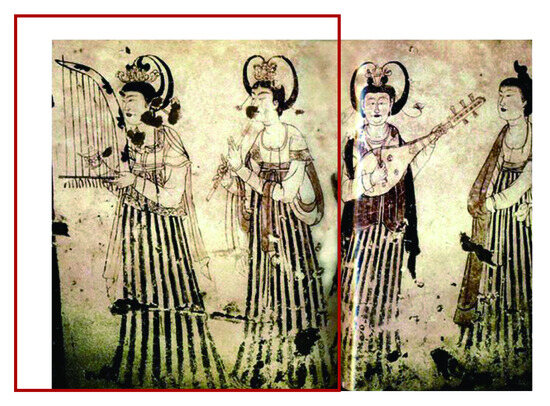
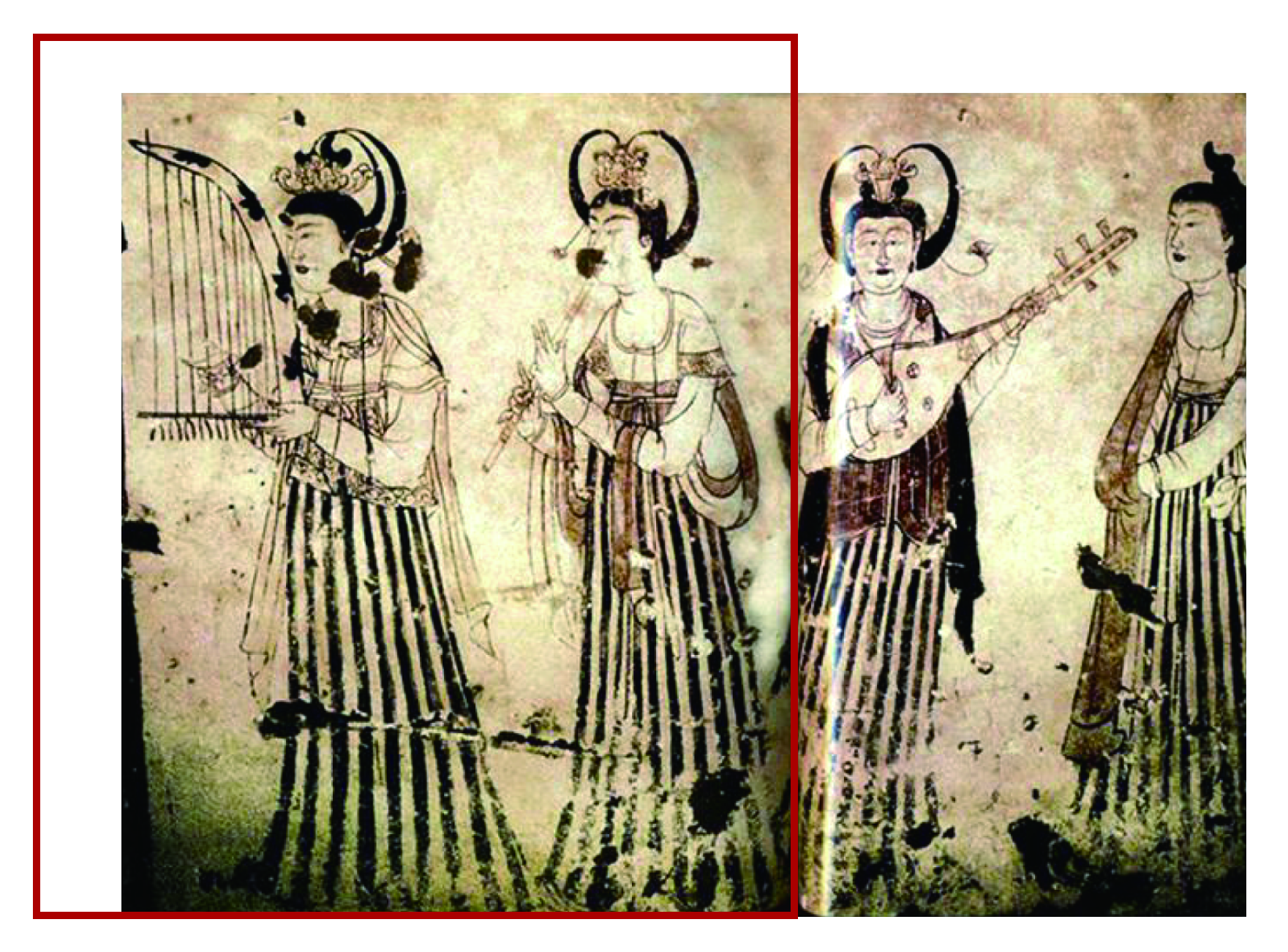
The tomb mural of YanFei (refer to Fig. 1) is one of the typical representations of tomb murals in the Tang Dynasty. The characters in the murals are clear, and the overall damage degree is relatively light, which has certain advantages in restoration. This paper reproduces the traditional women’s costumes of the Tang Dynasty through the digital restoration of the costumes of the mural and inherits and carries forward the traditional clothing culture.
Fig. 1.
The tomb mural of YanFei.
2. Experimental Methods
2.1. General Scheme
Based on the research of the tomb mural of Tang Taizong, the costume structures and patterns were studied and carried out in 3D virtual restoration. Through the research and analysis of the overall image and style structure of the tomb murals of YanFei, the size of each part of the costume was calculated by proportional method, the patterns of the costume were extracted by using image segmentation algorithms, the human body model was established using Vsticher software for 3D restoration. Finally, a comprehensive restoration evaluation was conducted based on the restoration effect of the tomb mural costumes. Four evaluation indicators and five-level scale standards were set, and the evaluation weight and evaluation were determined using the rank sum formula operation method.
2.2. Recovery Object Analysis
The Tang Dynasty ladies’ costumes were mainly composed of the combination of “Ru + Half-arm + Skirt + Silk”. Ru is a kind of short upper costume which ends at the waist. The sleeve shape could be divided into a narrow or large sleeve. The collar type can be divided into straight, cross, round, or other styles. Half-arm, also known as half sleeve, the clothing body style and collar type are the same as Ru; the cuffs are wide, and sleeves are long over the shoulder or to the elbow. The skirt is made of multiple pieces of cloth, tied in the knot in the middle or to the side, and can be divided into a high-waist skirt or a strapless skirt according to the height of the skirt’s waist. It can be divided into a solid-coloured skirt or an intercooler striped skirt according to the colour of the skirt’s body. The silk is a rectangular strip with printed fabric painted with gold and silver powder, which is used in various ways, falling either directly over the shoulder or on the chest and tied in a knot, etc.
The ladies’ costume in the tomb of YanFei is a typical women’s dress, composed of “Ru + Half-arm + Skirt”, with accessories such as silk and waist skirt, and the dress characteristics are more comprehensive. In this paper, two female figures from the tomb mural of YanFei were selected as the objects of restoration (as shown in Fig. 1). Among them, Ru is an upper costume with narrow sleeves and a bare collar; the collar shape is consistent with the half-arm. The skirt is high-waisted and inter-colour striped, and the waist skirt is a one-piece short skirt with decorative patterns and embroidered patterns on the outside of the skirt, originally popular in the Southern and Northern Dynasties. It was relatively common in the early Tang Dynasty as a costume culture left over from the previous dynasties [14]. This image also appears in the murals of the tomb of the XinCheng princess, which can prove its authenticity. Due to the scarcity of ladies’ costumes unearthed in the Tang Dynasty and the limited reference, it is difficult to restore the structure of the costume.
2.3. Pattern Extraction Objects Analysis
The subject of the costume pattern of the Tang Dynasty is rich, and the style is gorgeous. The subjects were divided into three categories: plant, animal, and geometric. The typical plant pattern includes the treasure phase pattern, the rolling grass pattern, the twig pattern, etc. The treasure phase pattern and the twig pattern are the most prominent, mainly popular in the costume pattern of the prosperous Tang Dynasty and the period after that; the shape is gorgeous, elegant and beautiful. Animal patterns are often attached to the auspicious meaning, among which is the most famous bead pattern. The pattern is regular and continuous symmetry, usually in the square continuous organisation to continue around. The geometric pattern has diamond patterns, strip patterns, scatter patterns, etc., and the main is composed of geometric patterns of regular decoration, symmetrical structure, and uniform arrangement.
By sorting out and summarising the costume patterns in Tang Dynasty tomb murals, com-mon patterns in various Tang Dynasty costume styles can be obtained [15]. Among them, the quadripartite continuous bead pattern, group pattern and treasure pattern are mostly half-arm patterns; Persimmon stalk pattern, curly grass pattern, curly moire pattern, etc., are mostly skirt cuffs, necklines, waist and other edge patterns, such as the half-arm neckline of the woman in the mural of Zhanghuai Prince Tomb is the curly grass pattern; Treasure pattern, group pattern, small cluster pattern and other patterns are mostly used in skirts or silks, such as the body pattern of the women’s costume in Tang Zhaoyi Cemetery mural.
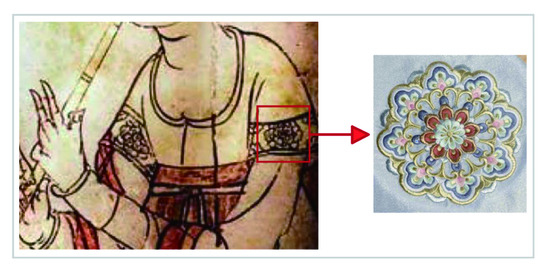
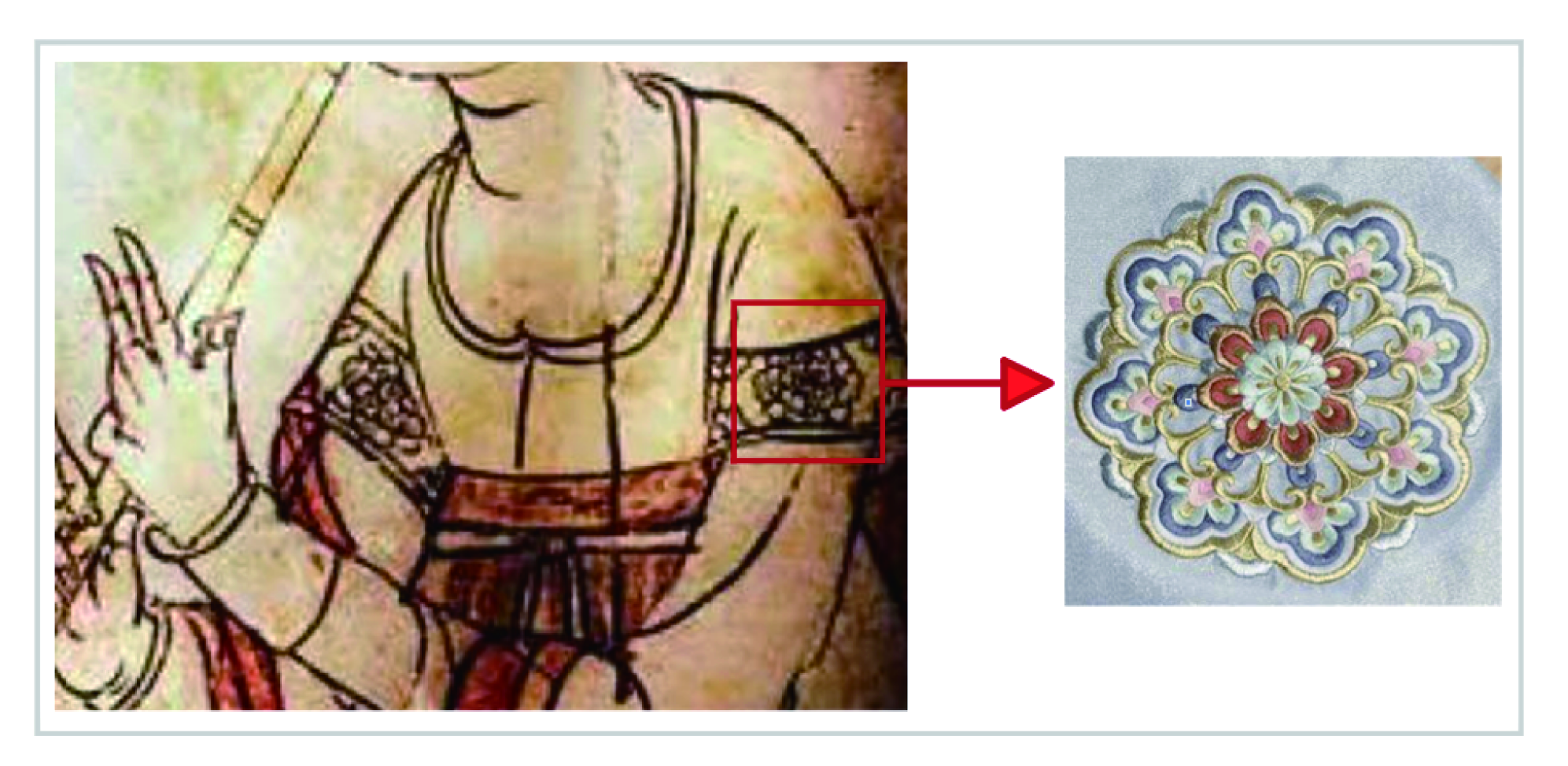
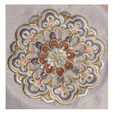
Based on the above research results, the reliability of the half-arm cuff pattern being a treasure phase pattern can be verified. However, due to the extremely rare and incomplete patterns of costume fabrics left over from the Tang Dynasty, this paper selects a jacquard white tapestry fabric imitating the Tang Dynasty coloured embroidery treasure pattern (refer to Fig. 2) as the pattern extraction object of the image segmentation algorithm.
Fig. 2.
Pattern extraction object.
3. Results and Discussion
3.1. Size Calculation of the Costume
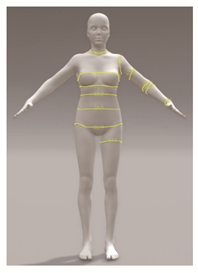
Due to the lack of data records of the costume size of the Tang Dynasty in the relevant historical materials, it is necessary to calculate the size by analysing the proportion of the dress structure in the image data. The size of the Tang Dynasty follows the Sui Dynasty’s size system [16]. Combined with the records of relevant historical data, this research proposes that one chi in the Tang Dynasty is about equal to 29.5 cm now [17]. As for the inference of the body size of the human body in the Tang Dynasty, the height can be inferred according to the remains of the Tang Dynasty. Referring to the relevant archaeological research of human bone measurement in the Tang Dynasty, the average height of women in the Tang Dynasty is 160.8 cm [18,19]. Therefore, this restoration will use the body shape data of a 160 cm female model in Vstitcher as a benchmark to calculate the size of each part of the restored costumes. The dimensions of each part are shown in the table (refer to Table 1).
Table 1.
Model size data of 160 cm in height (cm).
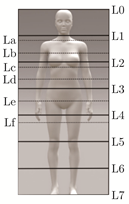
Through compiling and comparing the images of figures in Tang Dynasty tomb chamber murals, it was concluded that the head-to-body ratio of figures in Tang Dynasty tomb chamber murals is roughly 6.5-7.5 head-to-body, which conformed to the proportional standard of the Asian human body. Therefore, this text selected and set the middle value of the human head-to-body ratio as seven head-body, using it as the reference line for the proportional clothing size. Based on the model standing vertically, the proportional position of the costume is calculated by referring to the seven equal lines of the human body, and the vertical data of each part of the costume is obtained. Data in vertical directions based on height are shown in the table (refer to Table 2).
Table 2.
Data in vertical directions based on height.
Among them, H: The height of the dummy; L: The horizontal direction reference line is divided into seven copies for L0-L7.
La indicates the position of the shoulder line (1-2) H/5, Lb indicates the position of the upper bust (1-2) 2H/3, Lc indicates the position of the high waist under the breast (2-3) H/5, Ld indicates the position of the waistline (2-3) 2H/3, Le indicates the position of the wrist (3-4) H/2, Lf indicates the position of the arm length (4-5) H/4.
According to clothing style and structure characteristics, the horizontal dimension of clothing can be calculated using pi to calculate the relaxation amount of clothing [20]. The calculation formula is:
Girth size of the costume − girth size of the corresponding part of the model = 2π(R−r)
(R: the radius value of the clothing circumference, r: the circumference value measured on the corresponding part of the mannequin, R-r: Radius difference).
The smaller the radius difference value, the tighter the style of the costu+mes, and the larger the value, the looser the style. Therefore, the circumference size of the corresponding parts of the costumes in the horizontal direction can be calculated by setting the radius difference of the slack amount of the costumes.
3.2. Structural Restoration of the Costume
The characters’ costumes in the tomb murals of YanFei are mainly composed of “Ru + Half-arm + Skirt + Silk”. Among them, the Ru and Half-arm are in a cross-shaped planar structure, and the skirt is panelled with intercolor stripes. Due to the lack of specific data on the actual costume, the size data of each part needs to be calculated by analysing the wearing effect of the character and the body.
3.2.1. The Structure of the Upper Costume
The structural features of traditional costumes are “cross-shaped, integral, and flat”, which the Tang Dynasty also used. The cutting structure of the upper costume is a flat cross shape; the body parts are two symmetrical left and right parts in the middle line, and the sleeve parts are spliced separately. The width of the costume body is calculated according to one chi and eight inches of the Tang ruler, so the width is about 29.5×1.8 = 53.1 cm. By default, the hem of the Ru is roughly at the position of L3, and the length L of the costume is calculated as:
L = (H + 4H/5)/7 + 10 cm
The body circumference should be wider than the bust measurement with some looseness, calculated as:
B1 = Human bust circumference B ∗ +5 cm
The collar of the upper costume is “W” type, the horizontal neck width is about B1/6, and the collar depth is about above Lb, which is calculated as:
LD = (2H/3 − H/5)/7 + 5 cm
There are stacked folds in the middle of the sleeve, so the length of one sleeve is speculated to be longer than Le but not more than L4. The whole sleeve length SL1 is calculated as:
2 × (23H/10)/7 + shoulder breadth S ≤ SL1 ≤ 2 × (14H/5)/7 + shoulder breadth S
The sleeve hole can be calculated according to the human armpit girth, the setting difference of radius is about 1.2 cm, then the relaxation amount is 2π×1.2 cm, and the sleeve hole can be calculated as:
AH1 = 2.4π + armpit girth
The cuff is calculated according to the lower arm width, and the cuff CF1 is about:
CF1 = 2.4π + lower arm width
Set up the length of the half-arm to be equal to the Ru and the width to be wider than the Ru. It is calculated as:
B2 = Human bust circumference B ∗ +10 cm
The sleeve length of the half-arm is about L2 and calculated as:
SL2 = 2 × (4H/5)/7 + shoulder breadth S
If the sleeve of the half-arm is short and enlarged, the difference of radius is about 3 cm, and the relaxation amount is two π×3 cm, then the sleeve hole and cuff of the half-arm are calculated as:
AH2 = 6π + armpit girth circumference
CF2 = 6π + upper arm circumference
3.2.2. The Structure of the Skirt
The skirt body of the Tang Dynasty was made up of multiple cut pieces. The cutting of the skirt pieces was mostly slender right-angle trapezoids, and the splicing methods were roughly divided into three kinds: straight to straight edge, oblique to oblique edge, and straight to oblique edge [21]. During the Tang Dynasty, the colour skirt patchwork was more inclined to be straight edge to oblique edge, with two cut upper alignments in the straight seam, then trim skirt edge to smooth.
The lady was dressed in a black and white skirt in the mural. It can be seen that the skirt goes over the waist to the bust. The waist is in the Lc position, and the waist width is 5 cm, then the length of the skirt is calculated about:
SL3 = (4H + 4H/5)/7 − 5 cm
In the mural, the two women wore different coloured skirts with different stripes. There are 16 stripes on the left woman’s skirt and 11 on the right woman’s skirt. The skirt body is one piece. Considering the skirt wrapping, the waist length of the skirt is 1.5 times the length of the underbust. The left lady’s skirt is made of 16×2×1.5 = 48 pieces to the skirt, and the right lady’s skirt has 22×2×1.5 = 66 pieces to the skirt. According to the records, the colour skirt comprises many pieces, but the number of stripes is rarely more than 60 pieces. Therefore, the number of selected stripes will be 48 pieces. The length of the skirt is calculated about:
W = 1.5 × UBL
Set the waist width of the skirt as 48X, the hem width as 48Y, and the upper and lower ratio of the single skirt as X:Y = 1:2.
The short sides of the two ends of the waist skirt are crossed, and the overlapping length of the two ends is 5 cm. The transverse length of the waist skirt is calculated as:
TG = Under the bust length UBL + 2 cm looseness + 10 cm
The top of the waist skirt is located in Lc, the length of the front is about Ld and the short side length is calculated as:
LS = (2H/3 − H/5)/7
When the back length of the waist skirt is about 3-L, the long side length is calculated as:
LL = (H − H/5)/7
Among them, H is the height of the human, B* is the bust circumference of the human, S is the shoulder width, and UBL is the underbust length. Thus, the mural costume size is calculated using the following formula: Tables (refer to Table 3).
Table 3.
Size of the upper outer and skirt.
3.2.3. Draw the Structure Diagram
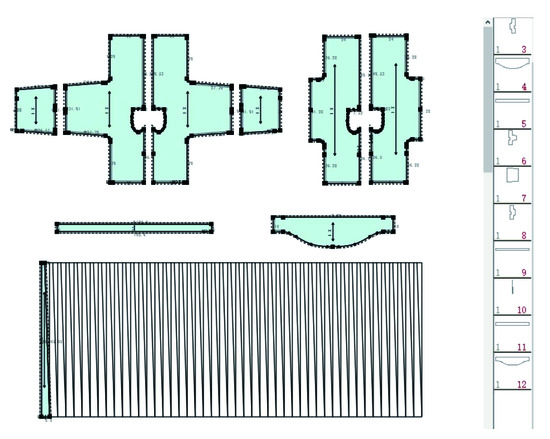
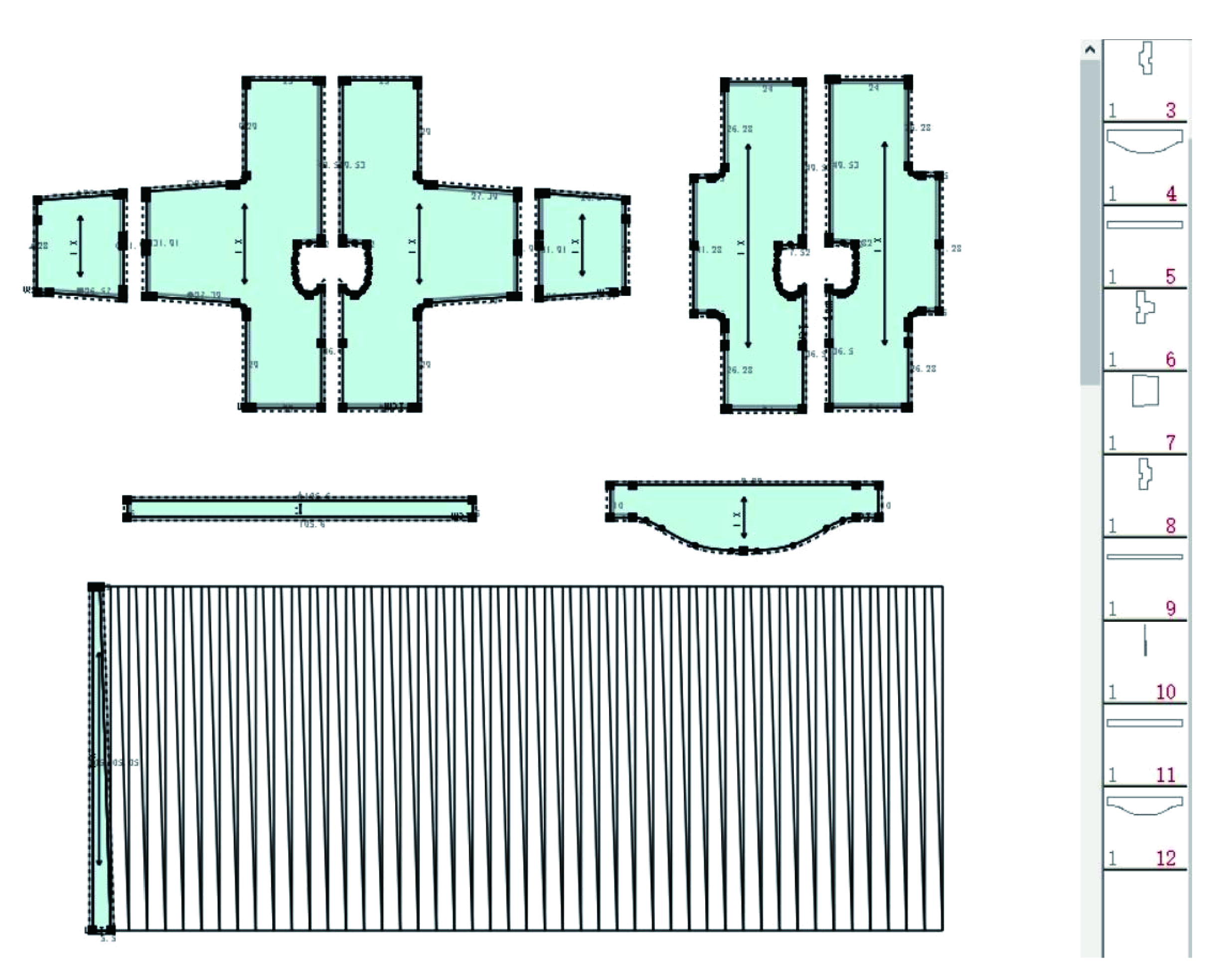
The upper costume and skirt construction are drawn according to the calculated size as follows (refer to Fig. 3).
Fig. 3.
Dimension and structure diagram of the upper costume and the skirt.
3.3. Pattern Extraction Experiment
An image segmentation algorithm is used to extract patterns in this paper. Many scholars have used image segmentation algorithms to achieve rich research results. Still, each method is pro-posed for specific segmentation images, and its segmentation effect will change due to the image’s composition, colour, noise, clarity and other differences. There are three main image segmenta-tion algorithms based on the K-means clustering algorithm, region growth algorithm, and canny operator combined morphology algorithm. This paper studied and analysed the above three al-gorithms and conducted segmentation extraction experiments on the same pattern restoration object. Compared with the experimental results, the image results with better segmentation effects were selected and applied to the subsequent 3D costume restoration.
The principle of the K-means algorithm is to divide a given sample set into K clusters according to the distance between samples so that the clusters’ points are connected as closely as possible, and the distance between clusters is as large as possible [22]. The average value of all data in each cluster subset is taken as the feature centre of this subset, and the effect of intra-class compactness and independence of each class is achieved through continuous iteration, which can be used for colour image segmentation. Since the implementation of this algorithm is to take the average value of each cluster, it is greatly affected by noise. Therefore, there may be situations where the image has a partial optimal solution, but the overall segmentation effect is not good.
The principle of the region growth algorithm is to merge pixels with similar features to seed pixels into a single region, classify the background and target patterns separately, and remove the image background to achieve pattern extraction [23]. Firstly, selecting a seed point as the starting point for region growth is necessary, comparing it with pixel points in the surrounding area, merging points with similar features, and continuing to grow outward until no pixels that meet the conditions are included and stop growing. The design of regional growth algorithms requires determining the seed points for growth, growth conditions, and stopping. The seed points are mostly determined through human-computer interaction. The condition for region growth is defined by some similarity criteria based on the continuity between pixel grayscales, while the condition for region growth to stop defines a termination rule. Stop growing when no pixels meet the conditions for adding regions, thus achieving the extraction of the target image [24]. The image segmentation algorithm based on region growth is an iterative method that can segment interconnected regions with the same features through continuous iteration. However, this algorithm is relatively sensitive to noise, and uneven noise and grayscale may lead to significant segmentation errors. Therefore, the selected value should not be too large or too small. If the value is too small, separating the background from the target pattern will be impossible. If the value is too large, it will cause excessive segmentation and damage the target pattern. In addition, the region growth algorithm does not perform well in processing shadow areas in images.
The Canny operator is the optimal stepped edge detection algorithm [25]. Its detection results contain more edge information about the image, which can achieve better detection results than traditional operators. The Canny edge detection operator is a multi-level detection algorithm that forms a comprehensive evaluation standard for edge detection [26]. When using the Canny operator to process complex images with textures and noise, it is difficult to form a region due to many small and fragmented edges in the high-detail area. Still, it is not advisable to fragment the high-detail area [27]. Therefore, this paper will use a composite image segmentation algorithm combining Canny operator edge detection with mathematical morphology to extract patterns. By utilising the advantages of the Canny operator’s high positioning accuracy, fast edge detection speed and good detection results, combined with operations such as dilation and smoothing in mathematical morphology, the segmented image will be filled to achieve good image segmentation results.
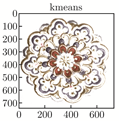
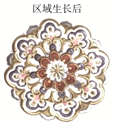
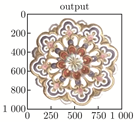
Three algorithms were used to segment and extract selected patterns, and the experimental results are as follows:
(1) The internal edge segmentation of the pattern image extracted based on the K-means clustering image segmentation algorithm is relatively clear. Still, the external edge is damaged, resulting in excessive, partial, incomplete, and incomplete segmentation of the pattern. This is because the light colour inside the pattern is similar to the background colour, causing this part to be clustered into the same class as the background and removed.
(2) The edge cutting of the pattern extracted by the image segmentation algorithm based on region growth is incomplete, and the internal pattern is excessively segmented. It can be seen that this algorithm is more suitable for processing patterns with simple patterns and clear edges.
(3) The Canny operator edge detection combined with mathematical morphology composite image segmentation algorithm can effectively achieve the segmentation of target patterns and background images, remove noise, and preserve edges. At the same time, it can fully and preserve the texture and texture of the patterns, and the overall segmentation effect is good.
By comparing the experimental results and the advantages and disadvantages of the algorithm (see Table 4), it can be seen that a single segmentation algorithm based on the K-means algorithm and the region growth algorithm has unstable image segmentation results and is prone to over-segmentation or incomplete segmentation. The combination of Canny operator edge detection and mathematical morphology has the advantage of high segmentation accuracy, resulting in better overall image extraction and more complete images. Therefore, the Canny edge detection algorithm combined with mathematical morphology is selected as the subsequent method for costume pattern extraction.
Table 4.
Comparison of three image segmentation algorithms.
3.4. Digital Restoration of Tang Tomb Mural Painting
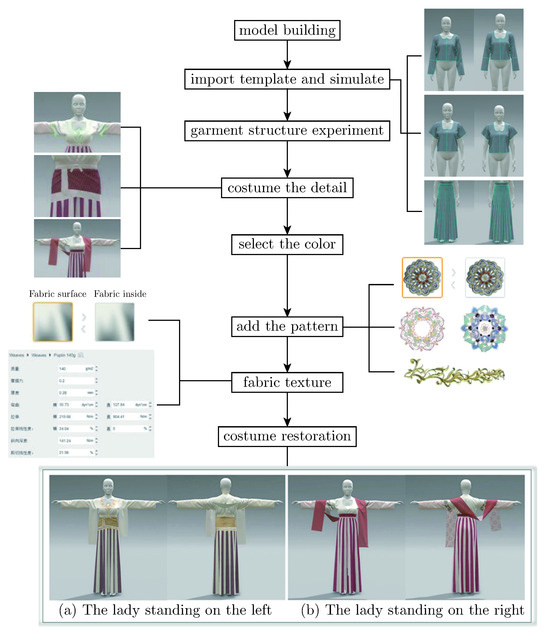
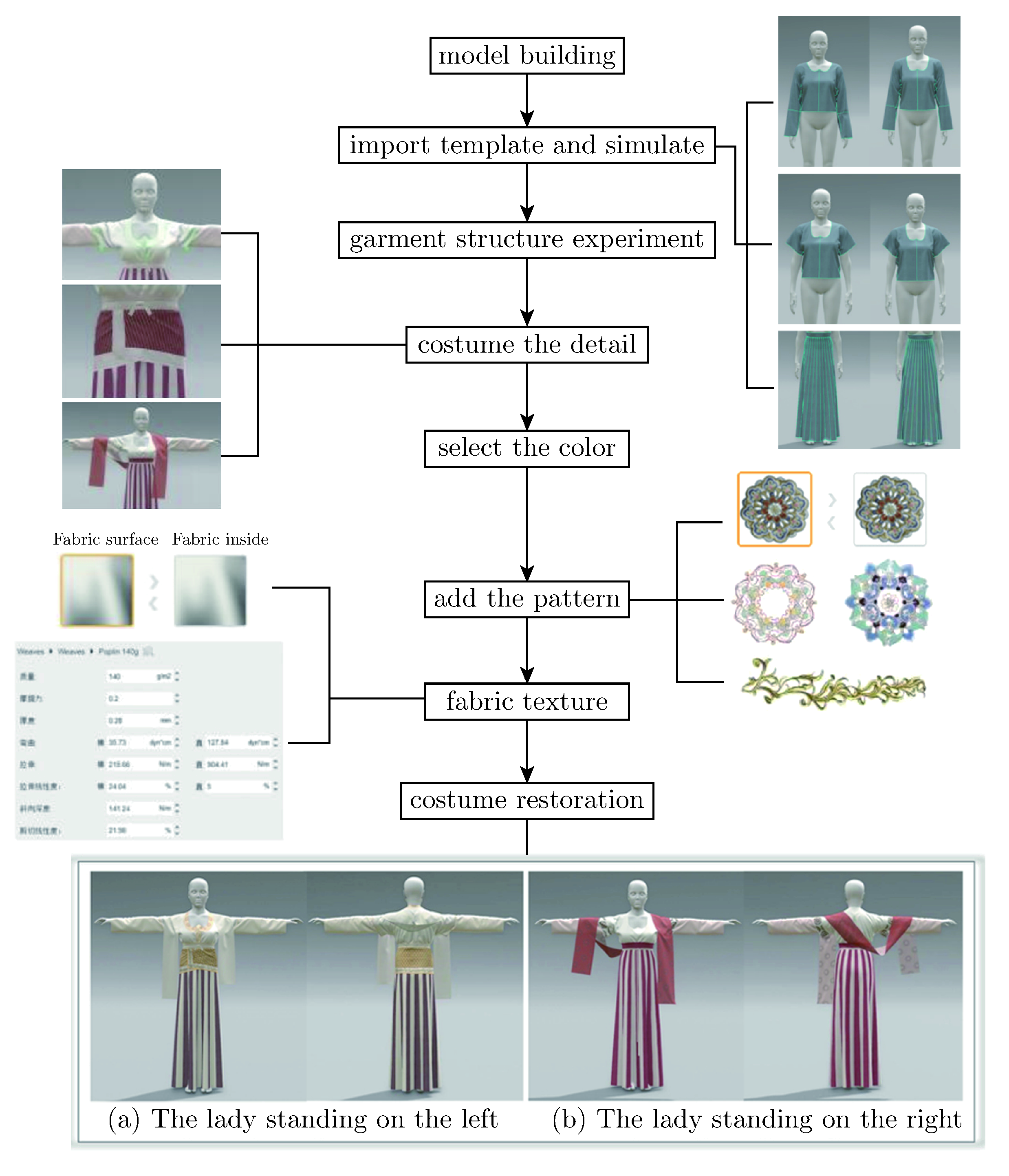
The research principles on clothing digital recovery are how to quickly build a 3D model and virtually sew the two-dimensional plates into three-dimensional clothing. In this paper, Vstitcher is mainly used in the 3D model construction of the tomb mural, which is a relatively advanced and mature 3D clothing virtual software with the function of clothing plate making, stitching, simulating the fabric, and virtual fitting and displaying, for the recovery of clothing production and provides more intuitive and convenient technical support. The basic recovery steps are as follows (refer to Fig. 4): Build a human model - Import the clothing sample plate and simulate - Add colour pattern and fabric texture - Show the virtual effects.
Fig. 4.
The process of costume restoration.
The first step is to build the human model, select the female model, and set the height of 160 cm. The second step is to import the clothing sample. Due to the large number of clothing layers, this should follow the order of the clothing stitching and simulation from the inside to the outside. The third step is to adjust the structure and size of costumes according to the clothing simulation effect and increase the details of costumes to fit the mural image. The next step is to increase the clothing fabric’s colour, pattern and texture to adjust the fabric parameters to achieve an effect similar to the image of the mural. Finally, it displays the virtual effects of the costumes.
3.5. Evaluation of the Restoration Effect of Costumes
According to the restoration effect of tomb mural costumes, the four evaluation indexes U = (u1, u2, u3, u4) were set up and expressed as four indexes: costume style and structure, costume colour, pattern and fabric texture. The five-level scale standard V = (v1, v2, v3, v4, v5) is set, indicating that the recovery effect of clothing is very poor, poor, general, good and very good, respectively. This paper uses the rank sum operation method to determine the weights of four evaluation indicators, determines the scores of each indicator through the survey questionnaire results, and finally obtains the overall effect of the mural ladies’ costume restoration through a comprehensive evaluation formula.
3.5.1. Determine the Weights of Evaluation Indicators
The rank sum operation method [28] was used to determine the weights of each evaluation in-dex. Eight judges related to clothing majors and familiar with costume digitalisation ranked the importance of the four evaluation indexes of restoration effect. Among them, “1” is the most important and “4” is the least important. The ranking results are shown in the following table (refer to Table 5).
Table 5.
Mural clothing restoration effect index importance ranking.
According to the above table, the judges tested the ranking results of the importance of the evaluation indicators of the restoration effect of mural women’s costumes, and the calculated
statistics were as follows:
Where: Rj represents the rank sum of the JTH evaluation index; m is the number of judges; n indicates the number of evaluation indicators.
S = Σ R2 − (Σ Rj)2/n
ω = S/[(12)−1m2(n3 − n)]
X2 = m(n − 1)ω
According to the content of the table and the above formula, it is calculated that S = 174, ω = 0.54375, X2 = 13.05. According to the Chi-square test critical value table, the significance level α = 0.01, and the degree of freedom is 3, then (3) = 11.345 < 13.05, indicating that the scale is effective and the judges’ opinions have reached a significant agreement.
The weight formula is as follows:
aj = 2[m(n + 1) − Rj]/[mn(n + 1)]
Four index weights can be calculated by the formula a1 = 0.3750, respectively, a2 = 0.2625, a3 = 0.2125, a4 = 0.1500, the index weight A = (0.3750, 0.2625, 0.2125, 0.1500).
3.5.2. Comprehensive Effect Evaluation
A questionnaire was established to evaluate the original image and the virtual restoration ren-derings of the women’s costume of the tomb mural of YanFei, and 153 valid questionnaires were recovered. According to the results of the questionnaire survey, the comprehensive score of the restoration of the style and structure of the mural clothing is 4.18, the comprehensive score of the colour restoration is 3.73, the comprehensive score of the pattern restoration is 3.43, and the comprehensive score of the fabric restoration is 3.54. The statistics of the evaluation data of the costume restoration effect are as follows:
According to Table 6, the evaluation matrix can be constructed:
Table 6.
Statistics of evaluation data of restoration effect of mural painting ladies’ costume.
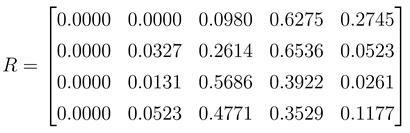
Calculated by the formula B = A · R, it can be obtained:
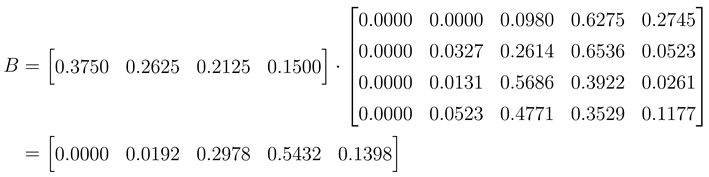
The comprehensive restoration effect evaluation results show that 68.3% of the respondents think the restoration effect is good or very good. According to the maximum membership principle of fuzzy mathematics, the overall restoration effect of the fresco ladies’ clothing is better.
4. Conclusions
In this research, the costumes of the tomb murals of YanFei was taken as the restoration object, and the structure and the pattern of the costumes were mainly researched and analysed. 3D virtual technology and image segmentation algorithms were used to restore it, and then the restoration effect was evaluated. The following conclusions were drawn:
(1) Based on the relevant literature and the murals, the authenticity of the murals of the YanFei tomb can be proven, and the style, structure, and characteristics of the costumes can be analysed. The image of “Ru + Half-arm + Skirt + Silk” is in line with the dress characteristics of ladies during the Tang Dynasty, and the restored objects have typical characteristics. Thus, the restored objects are typical.
(2) The scale method was used to calculate the size of the garments. The image data was transformed into specific values using the seven equal lines of the human body as the reference line of the costumes to calculate the size of the vertical direction of the costumes and summed up a set of size calculation formulas for Ru skirts in the Tang Dynasty tomb murals. The recovery effect of the final costumes proved the feasibility of calculating the costume size by the proportion method.
(3) A single segmentation algorithm based on the K-means and region growth algorithms has unstable image segmentation results, which can easily lead to excessive image segmentation or incomplete background segmentation. The Canny operator edge detection combined with mathe-matical morphology composite segmentation algorithm has higher image segmentation accuracy, better overall effect of target pattern extraction, a more complete image, and can better preserve the texture of embroidery patterns. Therefore, this algorithm suits image segmentation with rough and complex edges.
(4) The final 3D display renderings also proved the feasibility of the digital restoration of the costumes.
Acknowledgments
The authors wish to acknowledge the 2021 Shaanxi Higher Education & Teaching Reform Re-search Project (General items) “Study on the adjustment and optimisation of discipline and spe-ciality structure integration in provincial universities”, Project Number: 21BY088. 2021 Higher Education Science Research Project of Shaanxi Higher Education Association “Study on the Ad-justment and Optimization of the Integration of Disciplinary Structure in Provincial Universities” Project Number: XGH21142. 2021 Shaanxi Provincial Department of Education Information Construction Special Scientific Research Project “Research on Statistical Measurement Methods of Key Indicators of Provincial Education Development” Project Number: 21JX008. 2021 Xi ’an Polytechnic University “Clothing material Science course Ideology and Politics” demonstration course construction project (2021-10).
References
- Moskvin, A.; Wijnhoven, M. A. The equipment of a Germanic warrior from the 2nd-4th century AD: Digital reconstructions as a research tool for the behaviour of archaeological costumes. J. Cult. Herit. 2021, 49, 48–58. [Google Scholar] [CrossRef] [Scilit]
- Volino, P.; Cordier, F.; Magnenat-Thalmann, N. From early virtual garment simulation to interactive fashion design. Comput. AidedDes 2005, 37, 593–608. [Google Scholar] [CrossRef] [Scilit]
- Li, Z. Y. Knitwear design based on CLO3D technology. J. Mao Text. Technol. 2022, 50(10), 77–83. [Google Scholar]
- Haixia, L.; Yongrong, W. Structural optimisation of yoga top based on 3D virtual-reality technology. J. Text. Inst. 2020, 111, 916–923. [Google Scholar] [CrossRef] [Scilit]
- Deng, Y. Y. Application of digital technology in garment plate-making work. J. Text. Rep. 2022, 41(07), 17–19. [Google Scholar]
- Brubacher, K.; Tyler, D. Evaluation of the Accuracy and Practicability of Predicting Compression Garment Pressure Using Virtual Fit Technology. Cloth. Text. Res. J. 2021. [Google Scholar] [CrossRef] [Scilit]
- Liu, K.; Wu, H.; et al. Archaeology and restoration of costumes in Tang tomb murals based on reverse engineering and human-computer interaction technology. J. Sustain. 2022, 14(10), 6232. [Google Scholar] [CrossRef] [Scilit]
- Wu, H.; Zhu, C.; Liu, K.; et al. Archaeological and digital restoration of straight-front robe of Mawang-dui Han Dynasty Tomb based on 3D reverse engineering and man-machine interactive technologies. J. Ind. Textila 2022, 73(6), 635–644. [Google Scholar] [CrossRef] [Scilit]
- Zhu, C.; Liu, K.; Li, X.; et al. Research on archaeology and digital restoration of costumes in DaoLian painting. J. Sustain. 2022, 14(21), 14054. [Google Scholar] [CrossRef] [Scilit]
- Kuzmichev, V.; Moskvin, A.; Moskvina, M. Virtual reconstruction of historical men’s suit. Autex Res. J. 2018, 18(3), 281–294. [Google Scholar] [CrossRef] [Scilit]
- Vein, K.; Mouth, J.; Santos, F.; et al. Scanning of historical clothes using 3D scanners: Comparison of goals, tools, and methods. J. Appl. Sci. 2021, 11(12), 5588. [Google Scholar] [CrossRef] [Scilit]
- Meier, C.; Berriel, I. S.; Nava, F. P. Creation of a virtual museum for the dissemination of 3D models of historical clothing. J. Sustain. 2021, 13(22), 12581. [Google Scholar] [CrossRef] [Scilit]
- Deng, Y. M.; Xiang, P.; Lin, J. Q. Costume structure and 3D restoration of the tomb mural of YanFei. Textile Bioengineering and Informatics Symposium, Poland, 2023; pp. P123–130, ISSN 19423438. [Google Scholar]
- Lan, Y. A Study on Costume Culture in the Tang Dynasty; Shaanxi People’s Fine Arts Press: M. Xi’an, 2017. [Google Scholar]
- Xiang, P. Research on the Digital Restoration of Tang Tomb Mural Paintings of Beautiful Ladies and Dresses; Xi’an Polytechnic University, 2023. [Google Scholar]
- Fujita, Yuanchun. Comprehensive consideration of scale; M. Daojiang Academy: Chuan Bookstore, 1929. [Google Scholar]
- Luo, F. Y. Handed down to the ancient ruler map record; M. Cultural Relics Publishing House: Beijing Dongsi Toutiao No. 4; p. 1957.
- Shaanxi Provincial Institute of Archaeology; School of Wenbo; Northwest University. Sui and Tang tombs in the southern suburbs of Fengxiang; R. Cultural Relics Press, 2008; p. 326. [Google Scholar]
- Ningxia Institute of Cultural Relics and Archaeology; Wuzhong Municipal Cultural Relics Man-agement Institute. The Tang Tomb in the western suburbs of Wuzhong; R. Cultural Relics Press, 2006; p. 334. [Google Scholar]
- Liu, X.; Wang, R. M.; Xu, Q. Y. 3D virtual fitting structure restoration. J. Silk 2022, 59(02), 87–93. [Google Scholar]
- Kurihara, H.; Kawamura, I. The Formula of Times Clothing-Japanese Traditional Clothing Composition Techniques Centered on Restoration; M. Yuanliushe, 1989. [Google Scholar]
- Zhang, J. 5G terminal customer value analysis based on clustering algorithm. Telecommunica-Tions Inf. 2020, (09), 29–33. [Google Scholar]
- Yang, H. Y.; Zhao, J. X.; Xu, G. H.; Liu, X. Summary of color image segmentation methods. Softw. Guide 2018, 17(04), 1–5. [Google Scholar] [CrossRef] [Scilit]
- Mjiansun. (Python) Implementation of regionGrow [CP]. 2019-12-10. Available online: http://t.csdn.cn/2bIG2.
- Yang, X. F.; Wu, Y. Y.; Zhao, L. Tubing crack detection algorithm based on Canny improved operator. Comput. Eng. Des. 2018, 39(3), 798–803. [Google Scholar]
- Zhang, Y.; Rockett, P. I. The Bayesian operating point of the Canny edge detector. IEEE Trans. Image Pro-Cessing 2006, 15(11), 3409–3416. [Google Scholar] [CrossRef] [Scilit] [PubMed]
- He, X. Y.; Wang, J. Z. Tubing crack detection algorithm based on Canny improved operator. J. Comput. Appl. 2008, 28(2), 477–479. [Google Scholar]
- Cheng, S. X. Determination of the weight of various factors in educational evaluation. Theory Pract. Educ. 1989, 6, 31–32. [Google Scholar]

© 2023 Textile Bioengineering and Informatics Society. This article is an open access article distributed under the terms and conditions of the Creative Commons Attribution (CC BY) license (https://creativecommons.org/licenses/by/4.0/).