


Abstract
The pomelo peel, a by-product of pomelo processing, is predominantly discarded. To fully exploit the pomelo peel resources and contribute to environmental improvement and resource recycling, this study reports a green method for extracting cellulose nanofibrils (CNFs) from pomelo peel through hydrothermal-assisted alkali treatment. Lemon juice is employed for further ball milling treatment to purify the CNFs. The chemical structure, crystallinity, thermal stability, and microstructure of pomelo peel powder and CNFs are analyzed. The study results demonstrate that the combination of alkali treatment, hydrothermal processing, bleaching, and ball milling progressively eliminates hemicellulose, lignin, and other impurities from the pomelo peel, yielding high-quality CNFs. The CNFs retain the natural cellulose structure, with enhanced thermal stability and crystallinity. The diameters of the CNFs range from 2-30 nm. This method employs lower NaOH concentrations than previous studies, resulting in CNFs with higher crystallinity and smaller diameters. This study provides a promising method for enhancing the value-added of pomelo peel and increasing the volume of CNF production.
1. Introduction
In recent years, the continual advancement of science and technology has dramatically improved pomelo output. However, the disposal of pomelo peel as a byproduct has resulted in the wastage of resources and environmental contamination [1]. To address this issue, researchers have conducted numerous studies on the byproducts of pomelo peel, including the extraction of limonin analogs, flavonoids, dietary fiber, pectin and pigment [2]. However, the cellulose nanofibrils (CNFs) extraction from pomelo peel has received relatively lesser attention. Cellulose is a linear polymer comprising D-glucose as the basic unit and it is connected by β-1,4’ glycosidic bonds [3]. As cellulose is a component of plant cell walls, it exists widely in agricultural wastes. Obtaining cellulose from agricultural waste will be a meaningful way to transform waste into wealth. CNFs are widely used in various fields, such as papermaking [4], chlorine adsorption [5], food [6], conductive composite materials [7]. and more, which is due to their unique interwoven network structure, better biocompatibility, excellent mechanical properties, and larger specific surface area. In addition, due to their high dielectric constant, excellent puncture resistance, superior chemical stability, strong thermal stability, etc. CNFs are also employed in the field of battery diaphragm [8].
CNFs can be obtained through physical, chemical, and biological methods. Biological methods involve processes such as enzymatic hydrolysis [9] and bacterial synthesis [10]. Chemical methods include acid hydrolysis [11], alkali treatment [12,13], 2, 2, 6, 6-tetramethylpiperidine oxide (TEMPO) oxidation [14], deep eutectic solvent [15], and ionic liquid [16], etc. Physical methods include micro-jet [17], high-pressure homogenization [18,19], and ball milling [20,21], etc. However, each method has its limitations and drawbacks. Acid hydrolysis requires a high concentration of acid solution, which is difficult to recycle and can cause equipment corrosion. Biological methods produce pure CNFs but are expensive, time-consuming, and difficult to control. The TEMPO method is expensive and involves toxic reagents [22]. The ionic liquid method is highly selective but difficult to recover. Alkali treatment requires a high concentration of NaOH [23,24], leading to excessive alkali consumption and equipment corrosion. The steam explosion method can strip cellulose fibers and loosen the cellulose cell wall structure, facilitating nanofibrillation. However, this method produces non-uniform fiber sizes, requiring reagent waste, equipment corrosion, and high energy consumption. Overall, each method has its advantages and disadvantages, and further research is needed to develop more efficient and sustainable approaches for obtaining CNFs.
The hydrothermal method is commonly used to synthesise inorganic compounds due to its ability to create high pressure and tight seal. However, there has been little research on its applicability in cellulose extraction. In reality, during the hydrothermal process, water vapor permeate the biomass raw material and degrade the hemicellulose in the cell wall of the biomass raw material. At the same time, cellulose is minimally affected [25]. Ball milling is a mechanicalchemical process that utilizes mechanical energy to induce chemical and structural changes in materials [26]. Under the strong compression and shear force of ball milling, the connection among hemicellulose, lignin, and cellulose in the cell wall is damaged to a certain extent. Additionally, the structure of the pomelo peel fiber can be opened, allowing NaOH reagents to enter into the fiber and remove hemicellulose and lignin. Moreover, by controlling the parameters of the ball mill, the amorphous area of the cellulose can be destroyed, leaving the crystalline region intact. As a result, ball milling as a pretreatment method can reduce the concentration of NaOH reagents required and the size of the CNFs. Most of the fiber bonding materials are removed, and the cellulose is effectively refined, making it easier to obtain nano-sized cellulose fibers.
In this study, we extract CNFs from pomelo peel by hydrothermal auxiliary alkali treatment combined with ball-milling without using any chemical buffer to further reduced the use of chemical reagents and simplifies the extraction process. This study presented a more sustainable and effective extraction process for obtaining cellulose nanofibers from pomelo peel with higher crystallinity and smaller diameter.
2. Method
2.1. Materials
The pomelo peels were purchased from Daguan Orchard in Zhejiang Province (China). The lemons were purchased from Hainan Meili Orchard (China). Sodium hydroxide (NaOH) and sodium hypochlorite (NaClO) solutions were purchased from Shanghai McLean Biochemical Co., Ltd. (China). Other reagents and solvents used in this experiment were of analytical grade and ready for use.
2.2. Sample Preparation
After removing the yellow peel, the pomelo peel was washed with deionized water and dried in a hot oven at 70 °C for 36 hours. Then, the dried pomelo peel was ground into powder using a high-speed multifunctional grinder, resulting in pomelo peel powder raw materials (PP-R). The PP-R was weighed and added to a 1% NaOH solution. The mixture was stirred for 10 minutes, placed in a hydrothermal kettle, and heated at 100 °C for 3.5 hours. After heating, the mixture was washed with deionized water until the pH was neutral, and then dried at 80 °C. The resulting product was labeled as PP-A. After centrifugation, the obtained precipitate was immersed in lemon juice (1:1 V/V%) and then subjected to milling in a planetary ball mill (QM-QX2) for 40 minutes at 25 Hz with ball-to-material ratio of 1:18. The resulting mixture was treated with 1.7% sodium hypochlorite to bleach the samples, which were then washed and freeze-dried to obtain cellulose nanofibers (PP-CNFs).
2.3. Characterization
The chemical structure, crystallinity, thermal stability, microstructure of the samples were tested by FTIR spectroscopy (American Thermoelectric Company, model Nicolet 5700), an X-ray diffractometer (ARL XTRA, Switzerland), a thermogravimetric analyzer (BerkinElmer Company, USA, PYRIS 1), field emission scanning electron microscopy (SEM, Carl Zeiss SMT Pte Ltd., Germany, vltra55) and electron microscopy transmission (TEM, Japan Electronics/JEM-2100), respectively.
3. Results and Discussion
3.1. Chemical Structure Analysis
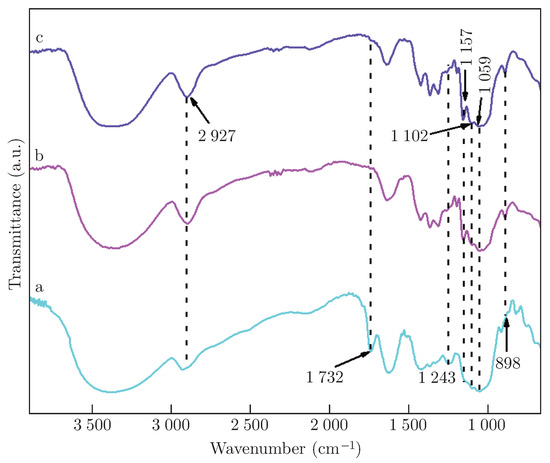
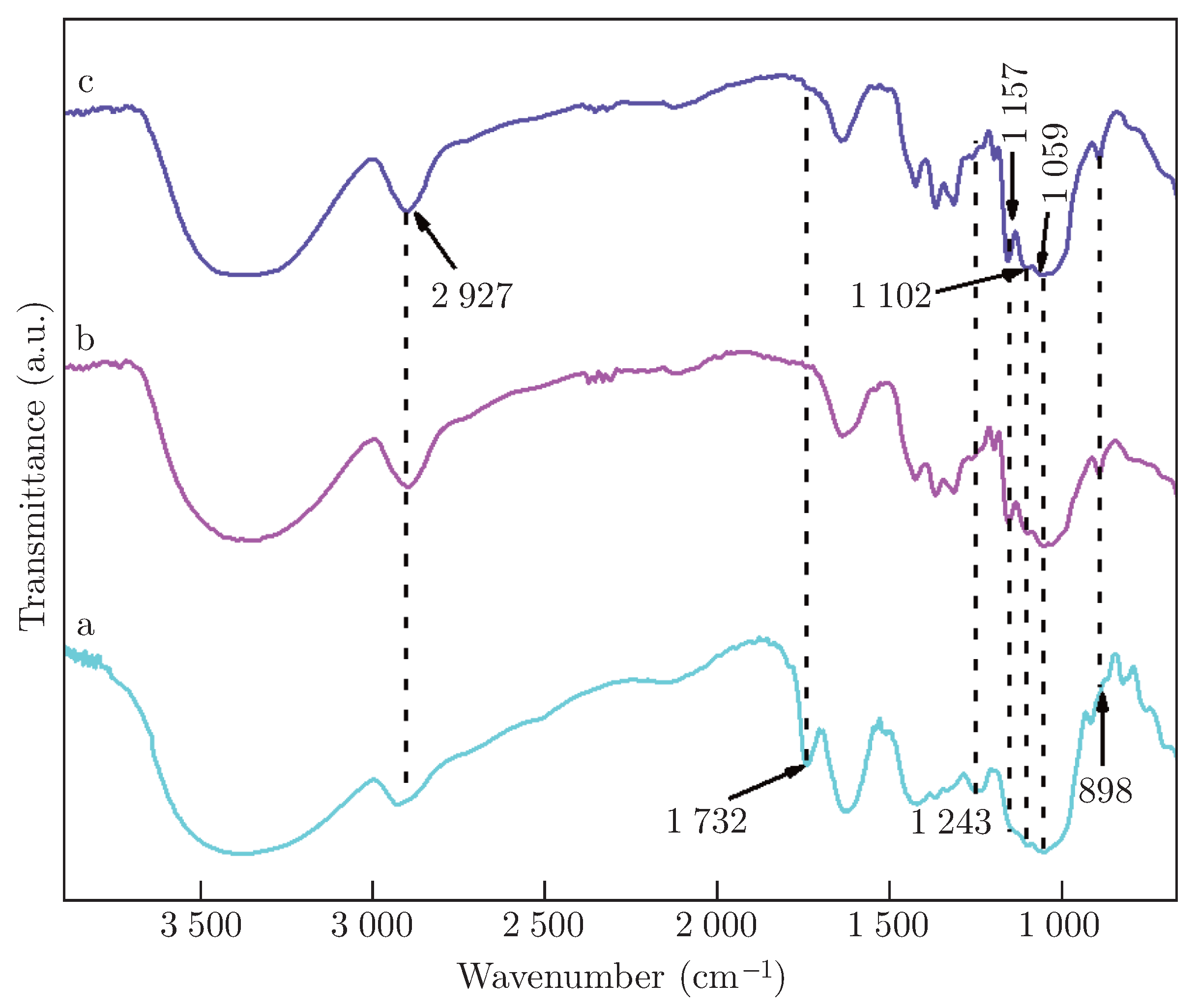
The spectra of PP-R (a), PP-A (b), and PP-CNFs (c) are shown in Figure 1. The positions of the absorption peaks are nearly similar in the FTIR spectra of PP-CNFs and PP-R; however, the intensities of the peaks differ. These findings indicated that the cellulose nanofibers extracted from PP-R maintained their distinctive chemical structure and that no derivatization reaction occurred during the extraction process.
Figure 1.
FTIR spectra of PP-R (a), PP-A (b), and PP-CNFs (c).
The peak at 2927 cm−1 in the infrared spectrum of cellulose is caused by the antisymmetric stretching vibration of CH2 in the β-glycosidic bond [27]. The peaks at 1157 cm−1 and 1102 cm−1 are caused by the stretching vibration of the ether bond and C-C single bond of the pyranose ring skeleton; The peak at 1059 cm−1 is due to the stretching vibration of the C-O-C bond of the pyranose ring. The three peaks are characteristic peaks of cellulose and they are used to identify the presence of cellulose in a sample [28]. In addition, the peaks at 1430 cm−1 and 898 cm−1 are caused by the shear vibration absorption of -CH2- of cellulose and the vibration peak of anomeric carbon (C1) of cellulose, respectively [29,30]. The two peaks are also the crystallization spectrum of cellulose, which are obvious characteristics of cellulose. The appearance or enhancement of these peaks confirms the CNFs extraction and purification process after hydrothermal and bleaching treatment. The peak at 750 cm−1 is due to the Iα crystalline region of cellulose, while the peak at 710 cm−1 is due to the Iβ crystalline region. The intensity of the Iβ peak is significantly stronger than that of the Iα peak, indicating that the nanocellulose extracted in this study contains both Iα and Iβ crystalline regions, but mainly the Iβ crystalline region [31,32].
The peak at 1732 cm−1 is related to the C=O stretching vibration of acetyl or carboxyl in hemicellulose [33]. However, this peak is hardly observed after hydrothermal treatment, suggesting that hemicellulose has been effectively removed. This may be due to the action of the alkali solution on the hydrogen bonds between cellulose and hemicellulose molecules during the hydrothermal process. The alkali solution dissolves hemicellulose, weakening the interaction between hemicellulose and ester bonds in other components [34]. Additionally, hemicellulose reacts with NaOH, acetyl groups in hemicellulose is broken down, and it is dissolved in water for removal.
The absorption peak at 1243 cm−1 is attributed to the stretching vibration of the C-O group of the lignin phenol [35]. The intensity of this peak gradually weakens after hydrothermal and bleaching treatment, which indicates that lignin is gradually removed, especially when alkali washing is carried out under hydrothermal conditions. The hydrothermal process can destroy the cell wall of PP-R and promote contact between the alkali solution and the internal structure of PP-R, leading to lignin removal. The covalent bonds among lignin, cellulose and hemicellulose in PP-R are sensitive to alkali solutions and destroyed by alkali treatment. NaOH solution can react with hemicellulose and lignin to dissolve them in water. Hydrophilic groups are introduced into the lignin, making lignin dissolve in alkali liquor and remove [36]. Bleaching further weakens the absorption peak, as NaClO solution reacts with lignin and removes residual lignin [37].
3.2. Crystallinity Analysis
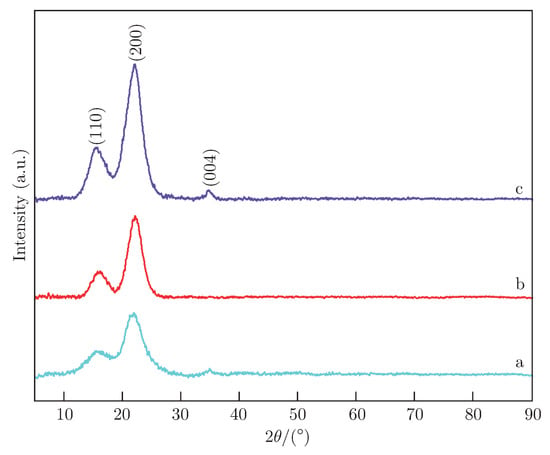
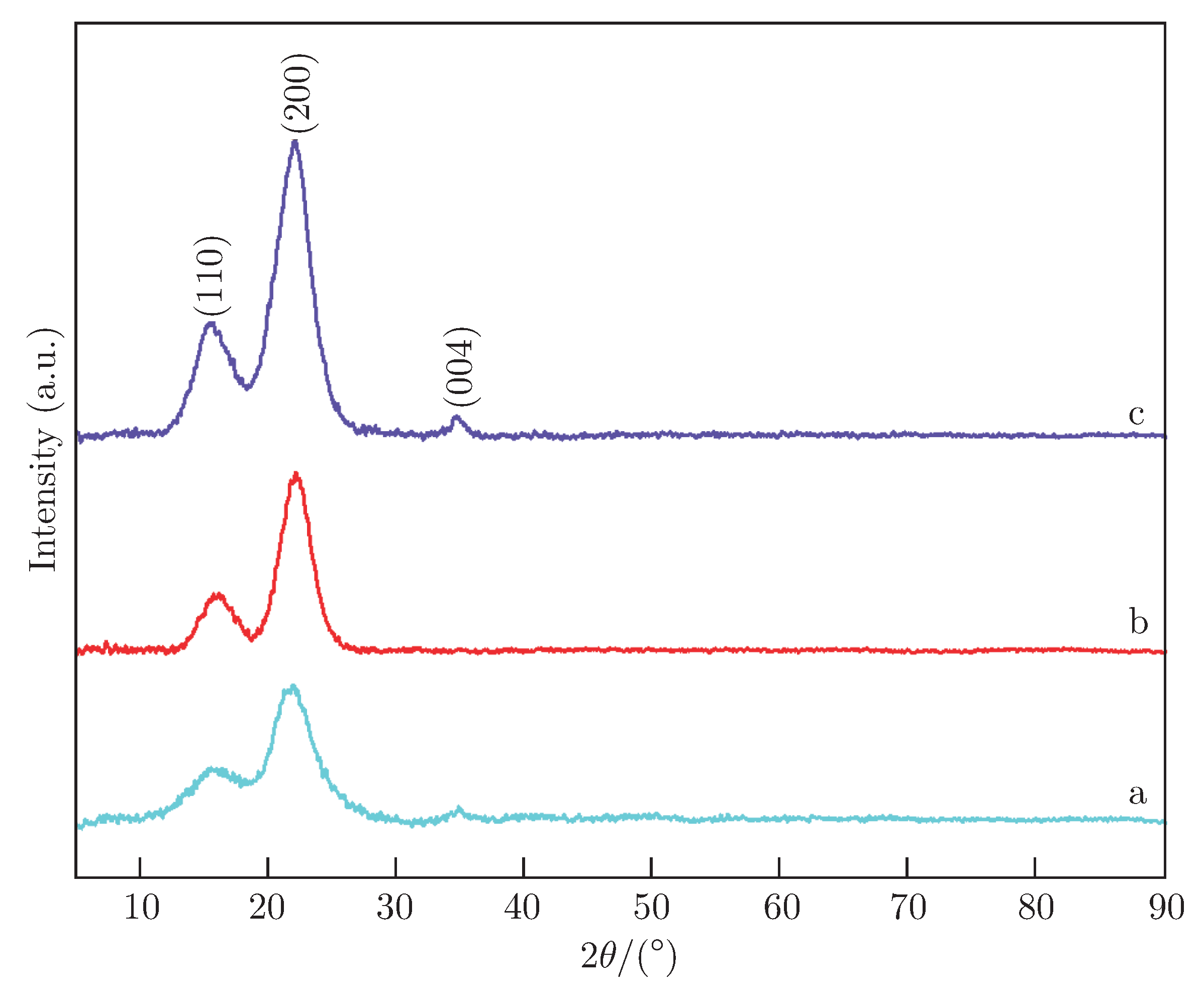
The XRD patterns (Figure 2) indicate that the crystal structure of CNFs in the treated samples is not change, but the crystallinity is improved. The peaks (at 2θ values of 15.8°, 22.6°, and 35°) are consistent with the characteristic diffraction peaks of cellulose Iβ [38]. It is further seen from the spectrum that the diffraction intensity of (110), (200), and (004) crystal face peaks all increase to varying degrees after treatments, which indicated that the crystallinity of cellulose materials increases after hydrothermal treatment and bleaching treatment, and lignin, hemicellulose and amorphous cellulose were effectively removed from fibers. The crystallinity of PP-R, PP-A, and PP-CNFs are 7.98%, 54.60% and 83.82% respectively (Table 1). The PP-A exhibits a comparable degree of crystallinity to our previous research [39], suggesting hydrothermal treatment is as effective as high temperature, water bath, and long-time treatments but with shorter duration, lower temperature, and significant energy and environmental benefits. The PP-CNFs shows very high crystallinity, which indicates that the purity of the sample improve greatly after further bleaching (with lemon juice) and ball milling.
Figure 2.
XRD patterns of PP-R (a), PP-A (b), and PP-CNFs (c).
Table 1.
Degree of crystallinity of the samples after different treatments.
3.3. Thermal Stability Analysis
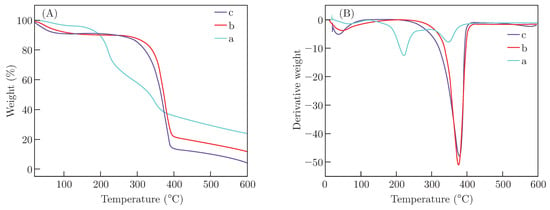
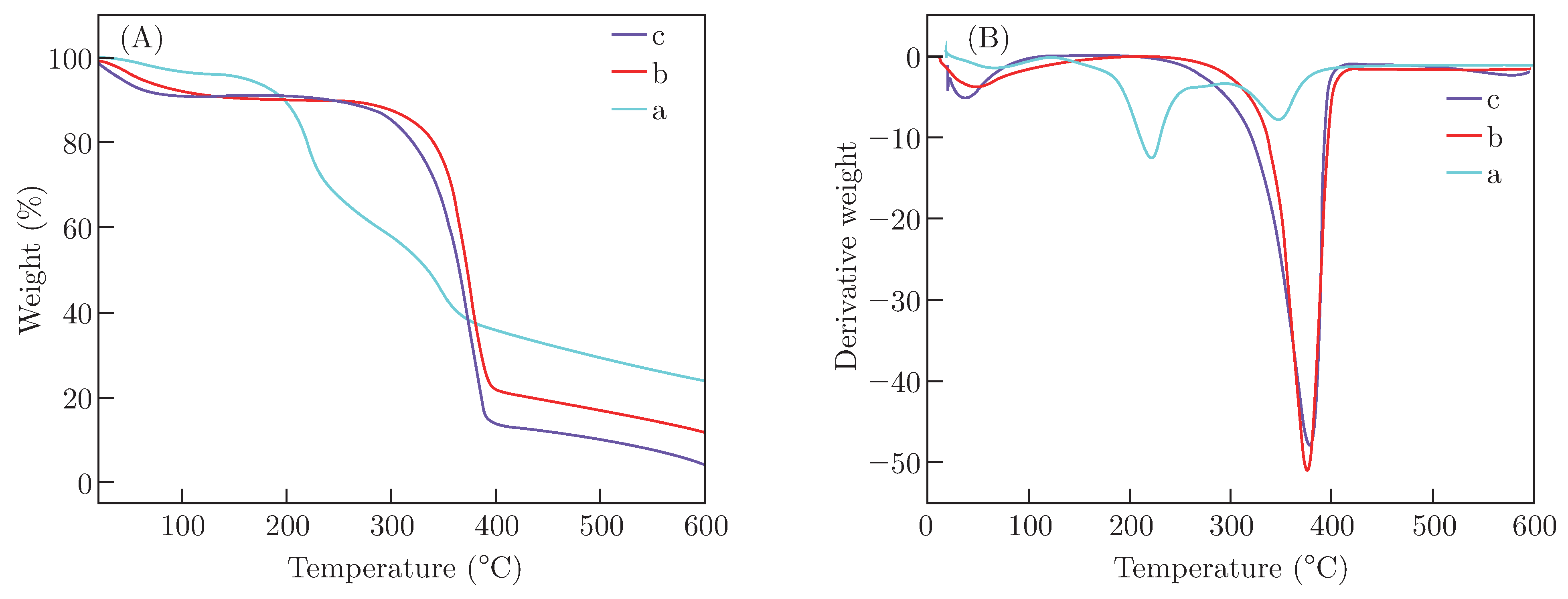
The TGA curves (Figure 3(A)) indicate that the residue remaining in the PP-R is higher than PP-A and PP-CNFs. The degradation temperature of PP-R is lower than that of PP-A and PP-CNFs. The main quality loss of the three samples occurs between 150-400 °C [40], but it is clear that the degradation temperature of PP-R is lower than that of PP-A and PP-CNFs. Hemicellulose and lignin are amorphous and begin to degrade before cellulose. Due to the presence of acetyl groups, the thermal stability of hemicellulose is poor, and its degradation range is between 220-315 °C [41]. Lignin contains a large number of aromatic rings and various branching structures. It is degraded in 160-900 °C [42]. The PP-R contains many amorphous substances with loose and porous structures, which result in a low initial degradation temperature. The TGA curve of the processed sample shows three main degradation stages. The first stage has a degradation temperature range of 30-120 °C [43]. During this stage, weight loss is mainly due to the evaporation of water molecules from the sample surface and the dehydration of some glucose in the sample, resulting in a reduction in mass [44,45,46]. The second stage has a degradation range of 200-395 °C. In this stage, the weight change of the three sample is the most significant, and two changes occur: the thermal decomposition of hemicellulose, partial lignin, and non-cellulose components occur between 275-315 °C [47], while the remaining lignin and high crystallinity cellulose undergo decomposition at a high temperature between 315-395 °C [48,49]. The third stage has a degradation range of above 400 °C, mainly due to the degradation of carbonaceous residues in the sample and the decomposition of monomeric D-glucose units into residues [50]. The trend of Iβ cellulose degradation observed here is similar to the previous study by KELLY et al. [51] on Brazilian white fescue nanocellulose.
Figure 3.
A) TGA and B) DTG curves of PP-R (a), PP-A (b), and PP-CNFs (c).
The DTG (Figure 3(B)) analysis of the samples reveal that PP-R underwent two degradation peaks between 200 °C and 400 °C. The first peak, with a valley of about 220 °C, is attributed to pectin degradation, while the second peak, with a valley of about 349 °C [52], is associated with cellulose degradation. However, no distinct degradation peak is observed for lignin due to its wide degradation temperature range. On the other hand, PP-A and PP-CNFs exhibit only one cellulose degradation peak with peak valleys at around 375 °C and 380 °C, respectively. The thermal stability of PP-CNFs is higher than that of PP-R and PP-A, which may be due to an increase in the crystallinity of cellulose after the final bleaching treatment [53], which is consistent with XRD data. This increase in crystallinity may lead to a higher maximum decomposition temperature [54,55]. The degradation peak of pectin only appear at 220 °C in the PP-R curve, indicating that pectin was removed after hydrothermal treatment [56]. Consequently, there is no such weight loss peak in the curves of PP-A and PP-CNF. DTG curves reveal that the degradation rate of cellulose in PP-A is higher than that in PP-R, likely due to the hydrothermal treatment reducing the protective layer on the cellulose surface. This exposed the extracted CNFs structure directly to the thermal environment, accelerating the degradation rate. After bleaching, the degradation rate of PP-CNFs relative to PP-A is further accelerated. This is because the NaClO solution, used as a strong oxidant during bleaching, reacted with lignin, removing residual lignin and making cellulose more easily degradable [57].
3.4. Microscopic Analysis
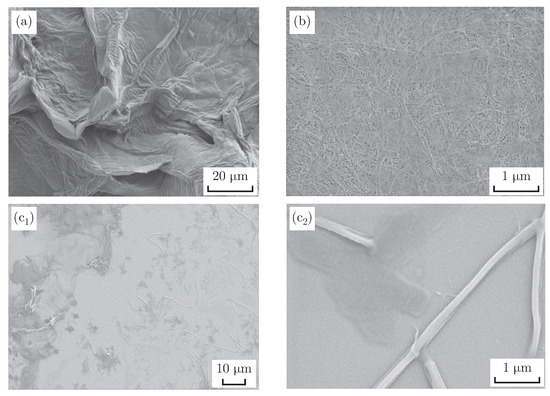
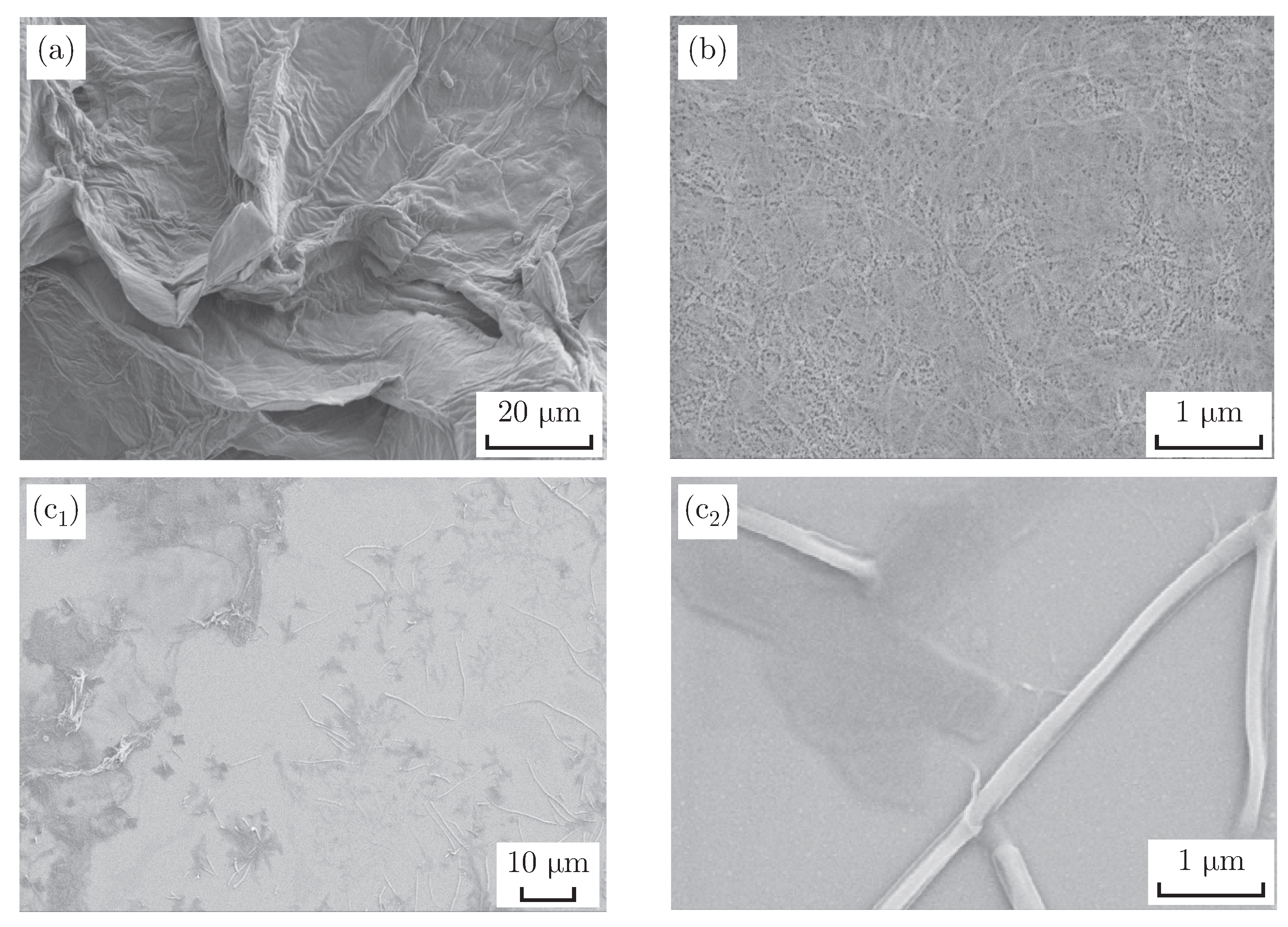
The surface of the PP-R is smooth and even, with a neat and tight combination of impurities and cellulose (Figure 4(a)). It is because lignin is a constituent of the outer cell wall in plant cells, and it is connected to cellulose through an ether bond [58]. Lignin fills in the gaps between the cellulose skeletons and improves the plant cell wall’s mechanical strength while protecting cellulose from degradation. Hemicellulose, which has an amorphous structure, is found within cellulose and between cellulose and lignin, and is connected to cellulose through hydrogen bonding [59].
Figure 4.
SEM micrographs of PP-R (a), PP-A (b), and PP-CNFs (c1, c2).
Cellulose, hemicellulose, pectin, and lignin are closely linked together, resulting in a relatively smooth surface in the SEM image of the pomelo peel material. After hydrothermal treatment, the dense structure of the PP-R material is destroyed, becoming porous and showing many holes (Figure 4(b)). This may be due to the effective removal of ash, oil esters, and other non-cellulose components that were wrapped on the surface of cellulose during the extraction process, exposing the internal structure of cellulose. This finding is consistent with the research results of Owolabi A F et al. [60]. The bleached sample shows many slender fiber structures (Figure 4(c1)), and the final cellulose nanofibers with smooth surfaces can be seen through the magnified image (Figure 4(c2)).
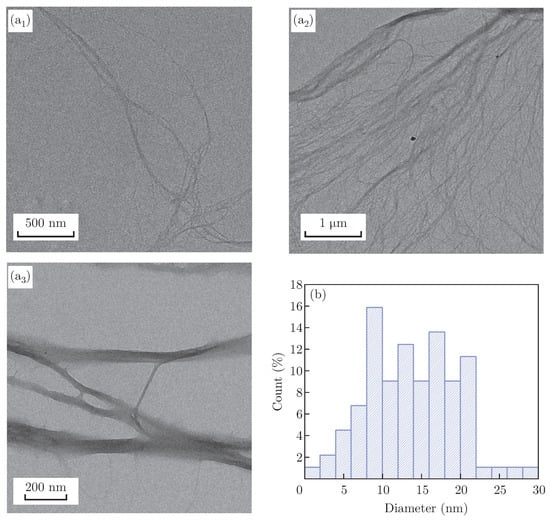
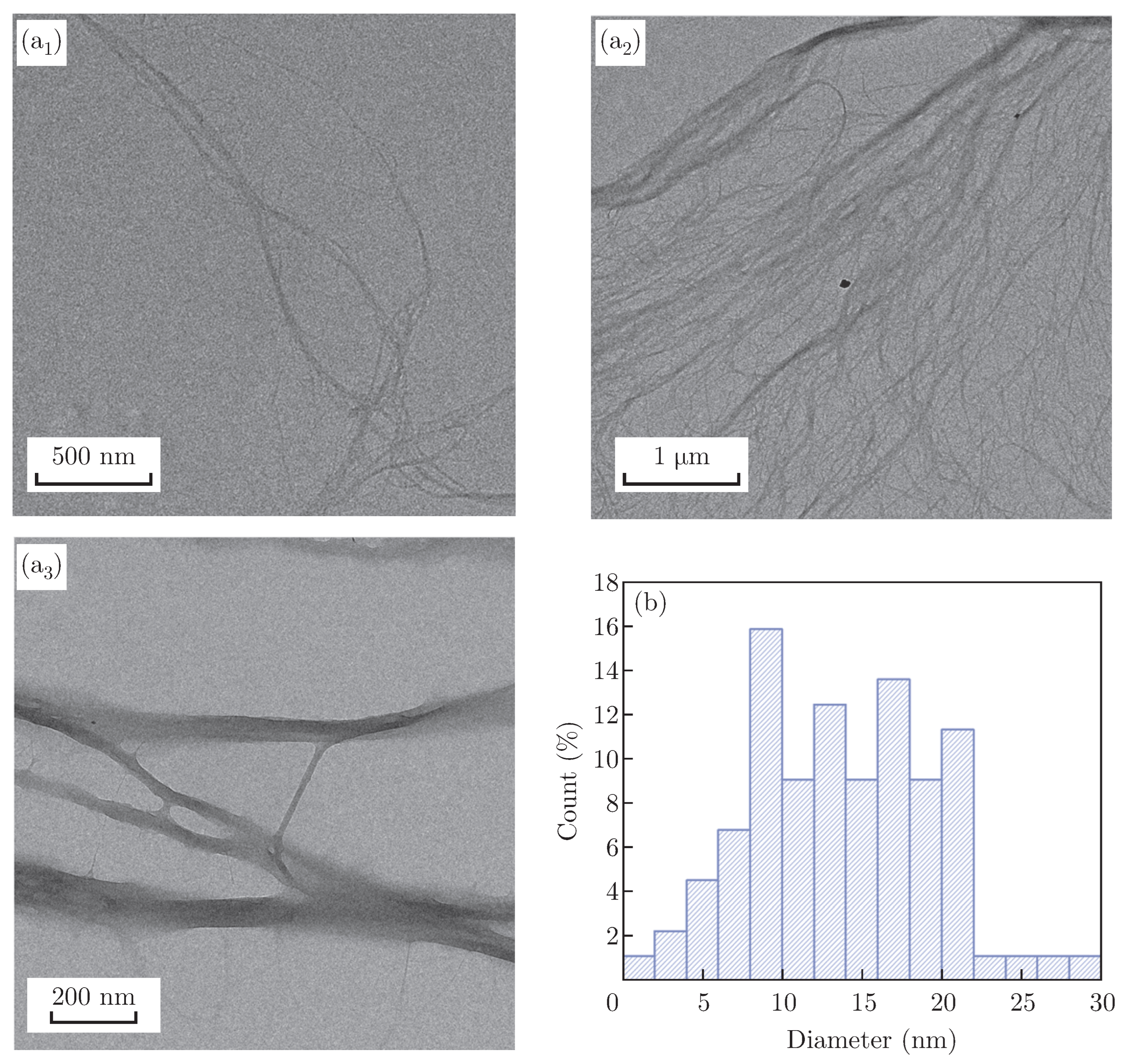
The bleached PP-CNFs display a single, slender, root-like fiber structure with interwoven fibers forming a network structure (Figure 5(a)). properties of the composite can be substantially improved [61]. The PP-CNFs produced in this study possess a unique porous network structure that improves materials’ wettability and liquid absorption rate, making them an excellent matrix for battery separator materials. The diameter of PP-CNFs obtained in this study ranges between 2-30 nm (Figure 5(b)), indicating that by using low-concentration chemical reagents and pomelo peel as raw materials, nano-scale cellulose fibers successfully prepared through a straightforward process. The morphology of the nanocellulose fiber obtained in this study is similar to that of the pomelo peel cellulose fiber obtained by Feng Tang et al. [62]. However, the diameter is smaller. Table 2 lists findings from this study with previous literature. Compared to commonly used methods of alkali treatment and acid hydrolysis where NaOH/KOH concentrations range from 10-17.5% and HNO3/H2SO4 concentrations range from 60-65%, the amount of alkali (1% NaOH) and acid (lemon juice, 1:1 V/V%) in this study were relatively low. Moreover, the diameter of the obtained CNFs is much lower than reported in the literature studies.
Figure 5.
TEM micrographs (a1, a2, a3) and diameter (b) of PP-CNFs (after bleaching).
Table 2.
Diameters of cellulose nanofibers obtained with different raw materials and treatment methods.
4. Conclusion
In this study, cellulose nanofibers (CNFs) were extracted from polypropylene reinforced (PP-R) materials using hydrothermal alkali treatment. The extraction process involved using a weak alkali solution and lemon juice, along with low-energy ball milling. The results demonstrated that the extracted CNFs retained the natural chemical and crystal structure of the original PP-R materials. The pre-treatment process effectively removed non-cellulose components, resulting in CNFs with high crystallinity and thermal stability. The CNFs obtained in this study were mainly of the Iβ type, with a crystallinity of 83.82%. Microscopic analysis revealed that the extracted CNFs exhibited an intertwined network structure, with a high aspect ratio and diameters ranging from 2-30 nm. The raw materials used in this study were simple and easily obtainable. Compared to commonly used 2-17.5% NaOH and 60%-65% H2SO4 solvents, the low concentration solvents and simple equipment utilized in this study offered environmental friendliness and efficiency. However, it should be noted that there was a reduction in the yield of CNFs due to the repeated transfer of samples during the extraction process. This study proposes an environmentally friendly and efficient approach to enhance the value and usage of pomelo peel by utilizing low-concentration chemical reagents and readily available equipment through easy-to-follow procedures.
Acknowledgement
This work was supported by The National Key Research and Development Program of China [2022YFF0903800]; Zhejiang Provincial Natural Science Foundation of China [LY19D030001]; Zhejiang Provincial Administration of Cultural Heritage [No. 2023001 and No. 2021015]; and Science and Technology Program of Gansu Province, China [No. 20JR5RA052].
References
- Ullah K, Sharma VK, Dhingra S, Braccio G, Ahmad M, Sofia S. Assessing the lignocellulosic biomass resources potential in developing countries: A critical review. Renew Sust Energ Rev Oxford: Pergamon-Elsevier Science Ltd; 2015; 51: 682-98.
- Liu, S.Z.; Jiang, X.B.; Jiang, Y.L.; Huang, Y.M.; Wei-Rong, H.U. Research Advance in Physiological Function of Fruit Extract and Comprehensive Utilization of Pomelo Fruits. Food Sci. 2012, 33, 280–6. [Google Scholar]
- Jalbert, J.; Gilbert, R.; Tétreault, P.; Morin, B.; Lessard-Déziel, D. Identification of a chemical indicator of the rupture of 1, 4-ß-glycosidic bonds of cellulose in an oil-impregnated insulating paper system. Cellulose 2007, 14, 295–309. [Google Scholar] [CrossRef] [Scilit]
- Laka M, Skute M, Filipova I, Fridrihsone V, Grinfelds U, Zoldners J, Spade M, Sivacovs I. Microand Nanoparticles from Hemp Shives and Hemp Cellulose in Papermaking. Cell Chem Technol Bucuresti: Editura Acad Romane; 2020; 54: 1031-6.
- Zhao J, Gong Z, Chen C, Liang C, Huang L, Huang M, Qin C, Wang S. Adsorption Mechanism of Chloropropanol by Crystalline Nanocellulose. Polymers Multidisciplinary Digital Publishing Institute; 2022; 14: 1746.
- Impoolsup T, Chiewchan N, Devahastin S. On the use of microwave pretreatment to assist zerowaste chemical-free production process of nanofibrillated cellulose from lime residue. Carbohydr Polym Oxford: Elsevier Sci Ltd; 2020; 230: 115630.
- Gabriel T, Belete A, Syrowatka F, Neubert RHH, Gebre-Mariam T. Extraction and characterization of celluloses from various plant byproducts. Int J Biol Macromol Amsterdam: Elsevier; 2020; 158: 1248-58.
- Wang, J.; Wang, C.; Wang, W.; Li, W.; Lou, J. Carboxymethylated nanocellulose-based gel polymer electrolyte with a high lithium ion transfer number for flexible lithium-ion batteries application. Chem. Eng. J. 2022, 428, 132604. [Google Scholar] [CrossRef] [Scilit]
- De Oliveira Junior SD, Asevedo EA, De Araujo JS, Brito PB, Dos Santos Cruz Costa CL, De Macedo GR, Dos Santos ES. Enzymatic extract of Aspergillus fumigatus CCT 7873 for hydrolysis of sugarcane bagasse and generation of cellulose nanocrystals (CNC). Biomass Convers Biorefinery Heidelberg: Springer Heidelberg; 2022; 12: 5515-26.
- Lee AC, Salleh MM, Ibrahim MF, Bahrin EK, Jenol MA, Abd-Aziz S. Pineapple peel as alternative substrate for bacterial nanocellulose production. Biomass Convers Biorefinery Heidelberg: Springer Heidelberg; 2022; 8: 213-21.
- Nahr FK, Mokarram RR, Hejazi MA, Ghanbarzadeh B, Khiyabani MS, Benis KZ. Optimization of the nanocellulose based cryoprotective medium to enhance the viability of freeze dried Lactobacillus plantarum using response surface methodology. LWT-Food Sci Technol Amsterdam: Elsevier; 2015; 64: 326-32.
- Penjumras, P.; Rahman, R.B.A.; Talib, R.A.; Abdan, K. Extraction and Characterization of Cellulose from Durian Rind. In 2nd International Conference on Agricultural and Food Engineering (cafe 2014)-New Trends Forward; Chin, N.L., Man, H.C., Talib, R.A., Eds.; Elsevier Science Bv: Amsterdam, 2014; pp. 237–43. [Google Scholar]
- Melikoglu AY, Bilek SE, Cesur S. Optimum alkaline treatment parameters for the extraction of cellulose and production of cellulose nanocrystals from apple pomace. Carbohydr Polym Oxford: Elsevier Sci Ltd; 2019; 215: 330-7.
- Ono Y, Takeuchi M, Zhou Y, Isogai A. Characterization of cellulose and TEMPO-oxidized celluloses prepared from Eucalyptus globulus. Holzforschung Berlin: Walter De Gruyter Gmbh; 2022; 76: 169-78.
- Liu W, Du H, Liu K, Liu H, Xie H, Si C, Pang B, Zhang X. Sustainable preparation of cellulose nanofibrils via choline chloride-citric acid deep eutectic solvent pretreatment combined with highpressure homogenization. Carbohydr Polym Oxford: Elsevier Sci Ltd; 2021; 267: 118220.
- Saher S, Saleem H, Asim AM, Uroos M, Muhammad N. Pyridinium based ionic liquid: A pretreatment solvent and reaction medium for catalytic conversion of cellulose to total reducing sugars (TRS). J Mol Liq Amsterdam: Elsevier; 2018; 272: 330-6.
- Wang, H.; Zhang, X.; Jiang, Z.; Li, W.; Yu, Y. A comparison study on the preparation of nanocellulose fibrils from fibers and parenchymal cells in bamboo (Phyllostachys pubescens). Ind. Crops Prod. 2015, 71, 80–8. [Google Scholar] [CrossRef] [Scilit]
- Fu, T.-K.; Li, J.-H.; Wei, X.-Y.; Wang, F.; Cui, L.-H.; Wang, Y.-H. Preparation and Characterization of Pineapple Leaf Nanocellulose by High Pressure Homogenization. In Proceedings of the 2nd Annual International Conference on Advanced Material Engineering (ame 2016); Bhatnagar, A.K., Dahai, R., Pandey, K.M., Haeri, H., Andrievskiy, R.A., Ziara, M., Feng, G., Eds.; Atlantis Press: Paris, 2016; pp. 713–20. [Google Scholar]
- Kawee N, Lam NT, Sukyai P. Homogenous isolation of individualized bacterial nanofibrillated cellulose by high pressure homogenization. Carbohydr Polym Oxford: Elsevier Sci Ltd; 2018; 179: 394-401.
- Song K, Ji Y, Wang L, Wei Y, Yu Z. A green and environmental benign method to extract cellulose nanocrystal by ball mill assisted solid acid hydrolysis. J Clean Prod Oxford: Elsevier Sci Ltd; 2018; 196: 1169-75.
- Seta FT, An X, Liu L, Zhang H, Yang J, Zhang W, Nie S, Yao S, Cao H, Xu Q, et al. Preparation and characterization of high yield cellulose nanocrystals (CNC) derived from ball mill pretreatment and maleic acid hydrolysis. Carbohydr Polym Oxford: Elsevier Sci Ltd; 2020; 234: 115942.
- Kuutti L, Pajari H, Rovio S, Kokkonen J, Nuopponen M. Chemical Recovery in TEMPO Oxidation. BioResources Raleigh: North Carolina State Univ Dept Wood & Paper Sci; 2016; 11: 6050-61.
- Guan, Y.; Li, W.; Gao, H.; Zhang, L.; Zhou, L.; Peng, F. Preparation of cellulose nanocrystals from deinked waste newspaper and their usage for papermaking. Carbohydr. Polym. Technol. Appl. 2021, 2, 100107. [Google Scholar] [CrossRef] [Scilit]
- Lu H, Liu S, Zhang M, Meng F, Shi X, Yan L. Investigation of the Strengthening Process for Liquid Hot Water Pretreatments. Energy Fuels Washington: Amer Chemical Soc; 2016; 30: 1103-8.
- Amusat SO, Kebede TG, Dube S, Nindi MM. Ball-milling synthesis of biochar and biochar-based nanocomposites and prospects for removal of emerging contaminants: A review. J Water Process Eng Amsterdam: Elsevier; 2021; 41: 101993.
- Liu Y, Liu A, Ibrahim SA, Yang H, Huang W. Isolation and characterization of microcrystalline cellulose from pomelo peel. Int J Biol Macromol Amsterdam: Elsevier Science Bv; 2018; 111: 717-21.
- Qiao, D.; Liu, J.; Ke, C.; Sun, Y.; Ye, H.; Zeng, X. Structural characterization of polysaccharides from Hyriopsis cumingii. Carbohydr. Polym. 2010, 82, 1184–90. [Google Scholar] [CrossRef] [Scilit]
- Dai H, Ou S, Huang Y, Huang H. Utilization of pineapple peel for production of nanocellulose and film application. Cellulose Dordrecht: Springer; 2018; 25: 1743-56.
- Beroual M, Boumaza L, Mehelli O, Trache D, Tarchoun AF, Khimeche K. Physicochemical Properties and Thermal Stability of Microcrystalline Cellulose Isolated from Esparto Grass Using Different Delignification Approaches. J Polym Environ New York: Springer; 2021; 29: 130-42.
- Czaja, W.; Romanovicz, D.; Brown, R.; malcolm. Structural investigations of microbial cellulose produced in stationary and agitated culture. Cellulose 2004, 11, 403–11. [Google Scholar] [CrossRef] [Scilit]
- Hu, Y.; Li, Z.; Ke, Q.; Yan, Z.; University, D.; University, J. Characterization of crystalline structure of natural cellulose. China Synth. Fiber Ind. 2018. [Google Scholar] [CrossRef] [Scilit]
- Athinarayanan, J.; Alshatwi, A.A.; Subbarayan Periasamy, V. Biocompatibility analysis of Borassus flabellifer biomass-derived nanofibrillated cellulose. Carbohydr. Polym. 2020, 235, 115961. [Google Scholar] [CrossRef] [Scilit] [PubMed]
- Ning, A.N.; Mao, N.; Chen, L.; Hua, Y.W.; Yang, H.M.; Zhong, Z.K.; Zhou, C.H. Extraction of Cellulose from Lignocellulose by Chemical Methods. Zhejiang Chem. Ind. 2015, 46, 29–34. [Google Scholar]
- Syafri, E.; Jamaluddin; Sari, N.H.; Mahardika, M.; Amanda, P.; Ilyas, R.A. Isolation and characterization of cellulose nanofibers from Agave gigantea by chemical-mechanical treatment. Int. J. Biol. Macromol. 2022, 200, 25–33. [Google Scholar] [CrossRef] [Scilit] [PubMed]
- BO, Z.; Yi, Z.; Hai-wei, R.E.N. Optimization of Nitric acid alcohol Method of Microcrystalline Cellulose from Distiller’s Grains by Response Surface Methodogy. J. Cellul. Sci. Technol. 2017, 23–30. [Google Scholar]
- Mzimela ZNT, Lingtutiso LZ, Revaprasadu N, Motaung TE. Comparison of Cellulose Extraction from Sugarcane Bagasse Through Alkali. Mater Res-Ibero-am J Mater Sao Carlos: Univ Fed Sao Carlos, Dept Engenharia Materials; 2018; 21: e20170750.
- Lu, Q.; Cai, Z.; Lin, F.; Tang, L.; Wang, S.; Huang, B. Extraction of Cellulose Nanocrystals with a High Yield of 88% by Simultaneous Mechanochemical Activation and Phosphotungstic Acid Hydrolysis. ACS Sustain. Chem. Eng. 2016, 4, 2165–72. [Google Scholar] [CrossRef] [Scilit]
- Wang X, Peng Z, Liu M, Liu Y, He Y, Liu Y, Li H, Huang J, Li M, Wan J, et al. Extraction of Cellulose Nanofibrils (CNFs) from Pomelo Peel via a Green and Simple Method. J Nat Fibers Philadelphia: Taylor & Francis Inc; 2022; 19: 8415-28.
- Meneguin, A.B.; Ferreira Cury, B.S.; dos Santos, A.M.; Franco, D.F.; Barud, H.S.; Da Silva Filho, E.C. Resistant starch/pectin free-standing films reinforced with nanocellulose intended for colonic methotrexate release. Carbohydr. Polym. 2017, 157, 1013–23. [Google Scholar] [CrossRef] [Scilit] [PubMed]
- Narendar, R.; Priya Dasan, K. Chemical treatments of coir pith: Morphology, chemical composition, thermal and water retention behavior. Compos. Part B Eng. 2014, 56, 770–9. [Google Scholar] [CrossRef] [Scilit]
- Brebu, M.; Vasile, C. THERMAL DEGRADATION OF LIGNIN - A REVIEW. Cellul. Chem. Technol. 2010, 44, 353–63. [Google Scholar]
- Soares, G.A.; Castro, A.D.D.; Cury, B.S.F.; Evangelista, R.C. Blends of cross-linked high amylose starch/ pectin loaded with diclofenac. Carbohydr. Polym. 2013, 91, 135–42. [Google Scholar] [CrossRef] [Scilit] [PubMed]
- Li, R.; Fei, J.; Cai, Y.; Li, Y.; Feng, J.; Yao, J. Cellulose whiskers extracted from mulberry: A novel biomass production. Carbohydr. Polym. 2009, 76, 94–9. [Google Scholar] [CrossRef] [Scilit]
- Karimi, S.; Tahir, PMd; Karimi, A.; Dufresne, A.; Abdulkhani, A. Kenaf bast cellulosic fibers hierarchy: A comprehensive approach from micro to nano. Carbohydr. Polym. 2014, 101, 878–85. [Google Scholar] [CrossRef] [Scilit] [PubMed]
- French, A.D. Idealized powder diffraction patterns for cellulose polymorphs. Cellulose 2014, 21, 885–96. [Google Scholar] [CrossRef] [Scilit]
- Yang W, Feng Y, He H, Yang Z. Environmentally-Friendly Extraction of Cellulose Nanofibers from Steam-Explosion Pretreated Sugar Beet Pulp. Materials Multidisciplinary Digital Publishing Institute; 2018; 11: 1160.
- Yang, H.; Yan, R.; Chen, H.; Lee, D.H.; Zheng, C. Characteristics of hemicellulose, cellulose and lignin pyrolysis. Fuel 2007, 86, 1781–8. [Google Scholar] [CrossRef] [Scilit]
- Yeganeh, F.; Chiewchan, N.; Chonkaew, W. Hydrothermal pretreatment of biomass-waste-garlic skins in the cellulose nanofiber production process. Cellulose 2022, 29, 2333–49. [Google Scholar] [CrossRef] [Scilit]
- Antal, MJJr; Varhegyi, G. Cellulose Pyrolysis Kinetics: The Current State of Knowledge. Ind. Eng. Chem. Res. 1995, 34, 703–17. [Google Scholar] [CrossRef] [Scilit]
- Coelho de Carvalho Benini KC, Cornelis Voorwald HJ, Hilario Cioffi MO, Milanese AC, Ornaghi HL. Characterization of a New Lignocellulosic Fiber from Brazil: Imperata brasiliensis (Brazilian Satintail) as an Alternative Source for Nanocellulose Extraction. J Nat Fibers Philadelphia: Taylor & Francis Inc; 2017; 14: 112-25.
- Abraham, E.; Deepa, B.; Pothan, L.A.; Jacob, M.; Thomas, S.; Cvelbar, U.; Anandjiwala, R. Extraction of nanocellulose fibrils from lignocellulosic fibres: A novel approach. Carbohydr. Polym. 2011, 86, 1468–75. [Google Scholar] [CrossRef] [Scilit]
- Xie, J.; Hse, C.-Y.; De Hoop, C.F.; Hu, T.; Qi, J.; Shupe, T.F. Isolation and characterization of cellulose nanofibers from bamboo using microwave liquefaction combined with chemical treatment and ultrasonication. Carbohydr. Polym. 2016, 151, 725–34. [Google Scholar] [CrossRef] [Scilit] [PubMed]
- Mishra, R.K.; Sabu, A.; Tiwari, S.K. Materials chemistry and the futurist eco-friendly applications of nanocellulose: Status and prospect. J. Saudi Chem. Soc. 2018, 22, 949–78. [Google Scholar] [CrossRef] [Scilit]
- Alotaibi, M.D.; Alshammari, B.A.; Saba, N.; Alothman, O.Y.; Sanjay, M.R.; Almutairi, Z.; Jawaid, M. Characterization of natural fiber obtained from different parts of date palm tree (Phoenix dactylifera L.). Int. J. Biol. Macromol. 2019, 135, 69–76. [Google Scholar] [CrossRef] [Scilit] [PubMed]
- Meng, X. Valorisation of Citrus Fruit Peel Wastes and Blackcurrant Pomace via Acid-free Microwave Hydrothermal Processes [Internet] [phd]. University of York; 2022 [cited 2023 May 25]. Available from: https://etheses.whiterose.ac.uk/31041/.
- Herrera, M.; Thitiwutthisakul, K.; Yang, X.; Rujitanaroj, P.; Rojas, R.; Berglund, L. Preparation and evaluation of high-lignin content cellulose nanofibrils from eucalyptus pulp. Cellulose 2018, 25, 3121–33. [Google Scholar] [CrossRef] [Scilit]
- Zhang J, Choi YS, Yoo CG, Kim TH, Brown RC, Shanks BH. Cellulose-Hemicellulose and CelluloseLignin Interactions during Fast Pyrolysis. ACS Sustain Chem Eng Washington: Amer Chemical Soc; 2015; 3: 293-301.
- Yue P, Genque FU, Yajie HU, Yanfei LI, Peng F, Sun R. Research Advance in Isolation of Lignocellulosic Biomass Hemicelluloses. China Pulp & Paper 2019;
- Owolabi AF, Ghazali A, Khalil HPSA, Hassan A, Arjmandi R, Fazita MRN, Haafiz MKM. Isolation and Characterization of Microcrystalline Cellulose from Oil Palm Fronds Using Chemomechanical Process. Wood Fiber Sci Madison: Soc Wood Sci Technol; 2016; 48: 260-70.
- Ghanbari, A.; Tabarsa, T.; Ashori, A.; Shakeri, A.; Mashkour, M. Thermoplastic starch foamed composites reinforced with cellulose nanofibers: Thermal and mechanical properties. Carbohydr. Polym. 2018, 197, 305–11. [Google Scholar] [CrossRef] [Scilit] [PubMed]
- Tang, F.; Yu, H.; Yassin Hussain Abdalkarim, S.; Sun, J.; Fan, X.; Li, Y.; Zhou, Y.; Chiu Tam, K. Green acid-free hydrolysis of wasted pomelo peel to produce carboxylated cellulose nanofibers with super absorption/flocculation ability for environmental remediation materials. Chem. Eng. J. 2020, 395, 125070. [Google Scholar] [CrossRef] [Scilit]
- Verma C, Chhajed M, Gupta P, Roy S, Maji PK. Isolation of cellulose nanocrystals from different waste bio-mass collating their liquid crystal ordering with morphological exploration. Int J Biol Macromol Amsterdam: Elsevier; 2021; 175: 242-53.
- Rashid S, Dutta H. Characterization of nanocellulose extracted from short, medium and long grain rice husks. Ind Crop Prod Amsterdam: Elsevier; 2020; 154: 112627.
- Kumar V, Pathak P, Bhardwaj NK. Micro-nanofibrillated cellulose preparation from bleached softwood pulp using chemo-refining approach and its evaluation as strength enhancer for paper properties. Appl Nanosci Heidelberg: Springer Heidelberg; 2021; 11: 101-15.
- Alila, S.; Besbes, I.; Vilar, M.R.; Mutjé, P.; Boufi, S. Non-woody plants as raw materials for production of microfibrillated cellulose (MFC): A comparative study. Ind. Crops Prod. 2013, 41, 250–9. [Google Scholar] [CrossRef] [Scilit]
- Tonoli, G.H.D.; Teixeira, E.M.; Corrêa, A.C.; Marconcini, J.M.; Caixeta, L.A.; Pereira-da-Silva, M.A.; Mattoso, L.H.C. Cellulose micro/nanofibres from Eucalyptus kraft pulp: Preparation and properties. Carbohydr. Polym. 2012, 89, 80–8. [Google Scholar] [CrossRef] [Scilit] [PubMed]
- Siqueira, G.; Abdillahi, H.; Bras, J.; Dufresne, A. High reinforcing capability cellulose nanocrystals extracted from Syngonanthus nitens (Capim Dourado). Cellulose 2010, 17, 289–98. [Google Scholar] [CrossRef] [Scilit]

© 2023 Textile Bioengineering and Informatics Society. This article is an open access article distributed under the terms and conditions of the Creative Commons Attribution (CC BY) license (https://creativecommons.org/licenses/by/4.0/).