


Abstract
Abdominal protrusion is increasingly common among middle-aged and elderly women, and the current standard sizing system fails to properly their body shape change. To improve the classification of abdominal bulge morphology in middle-aged and elderly women and enhance the garment fit, this paper screened 133 samples with abdominal bulge among 165 Chinese women aged 50-59 years old based on 3D anthropometric techniques and obtained abdominal morphological dimensions. Five main morphology parameters affecting abdominal convexity were summarized, and the abdominal morphology was classified into four types for simulation. The abdominal regression models and girth fitting models were established and validated by combining the feature indexes related to pants. Results showed that each abdominal convexity type has obvious and specific clustering characteristics, and the regression models are valid and practical for personalized clothing development.
1. Introduction
Various factors such as age, heredity and environment affect women’s body shape, resulting in body deformation and specific body types [1]. It has been found that abdominal convexity is common among middle-aged and elderly women and affects garment fit [2]. However, China’s standard sizing system does not reflect their body type characteristics [3]. The body type and garment aspects of middle-aged and elderly women have been studied at home and abroad. Some scholars have studied their body shape pattern and classification to systematically revise the current size standards [4,5,6]. There are also comparative studies on middle-aged and elderly body shapes that revealed the abdomen begins to protrude and the back curves with age, waist, abdominal and increase in hip circumferences [7,8,9]. The design and structural optimization of special body garments have also been studied using innovative techniques such as digital correction and surface flattening to meet the needs of middle-aged and elderly groups [10,11,12,13,14]. But fewer studies are focusing on the abdominal convexity morphology of middle-aged and elderly women, and the characterization and classification studies need to be further improved.
In this paper, we conducted body measurement experiments. The abdominal convexity samples were collected from Chinese women aged 50 to 59. The main abdominal feature parameters were obtained through morphological analysis to explore the abdominal convexity morphological classification rules of middle-aged and elderly women. Regression models based on abdominal bulge characteristics were established, which can provide data references for developing personalized clothing for middle-aged and elderly women.
2. Methodology
2.1. Body Measuring Experiments
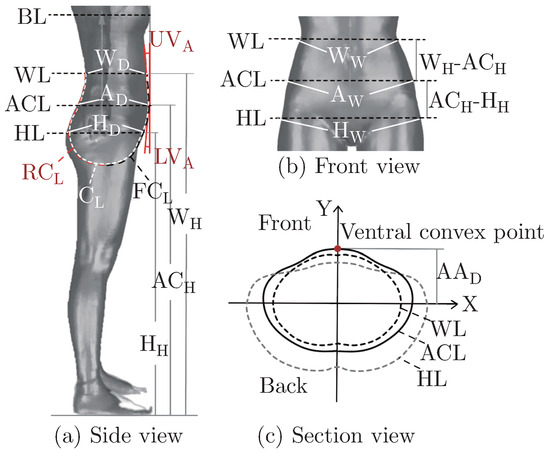
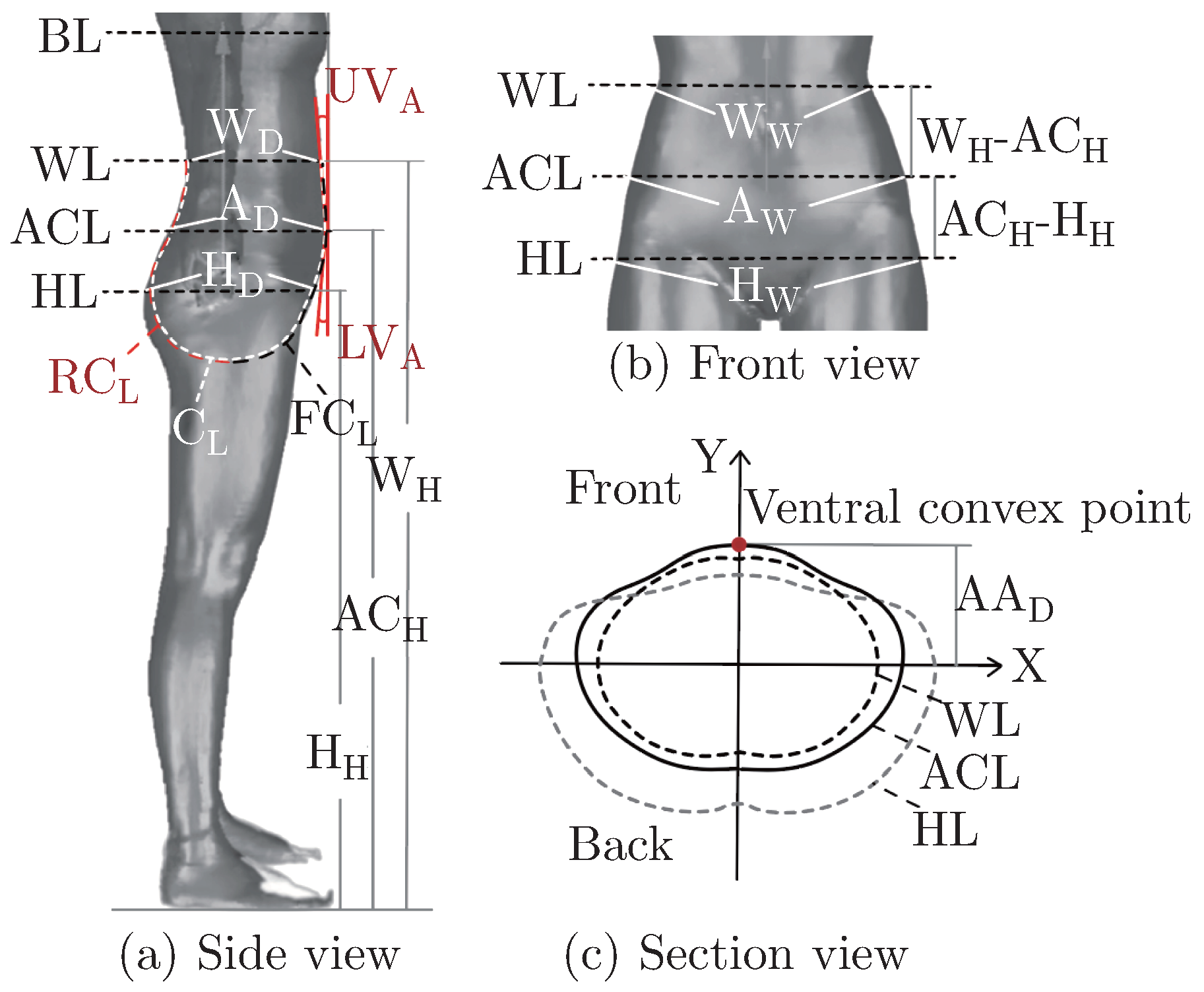
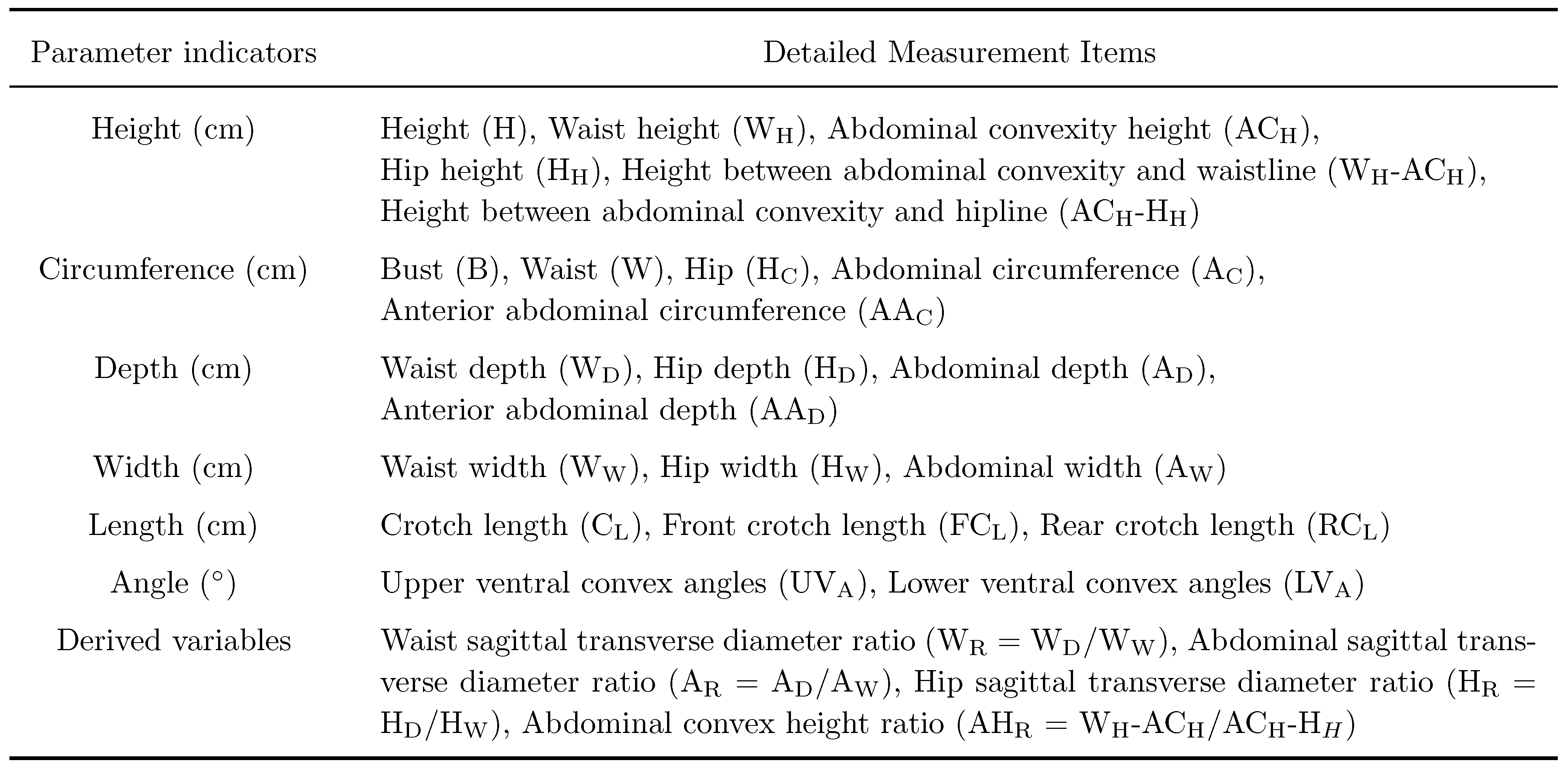
This experiment randomly selected 165 middle-aged and elderly women aged 50 to 59 years for body shape data collection and statistics, mainly using the Anthroscan 3D body scanner with manual measurements. 3D data can be used to acquire the length, circumference, area etc of the human body [15]. The sample 3D point cloud data were denoised and reduced using Geomagic Studio software, and then measured for waist, abdominal and hip dimensions that mainly affect the shape of the abdominal convexity. 23 measurements containing height, circumference, width and other feature parameters were obtained, and derived variables such as waist sagittal transverse diameter ratio were calculated, as shown in Table 1 and Figure 1.
Table 1.
Measurement items.
Figure 1.
Body measurement schematic.
2.2. Screen for Abdominal Convexity
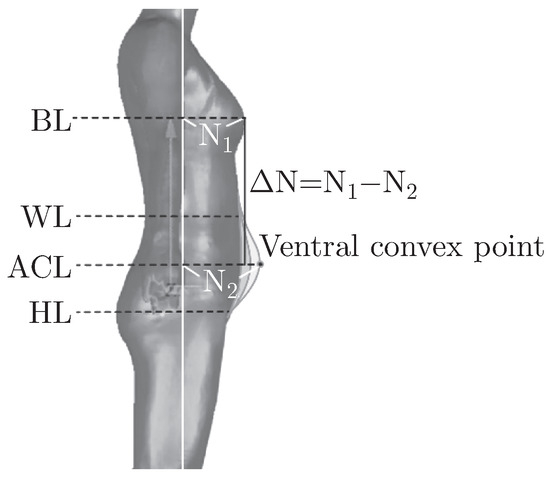
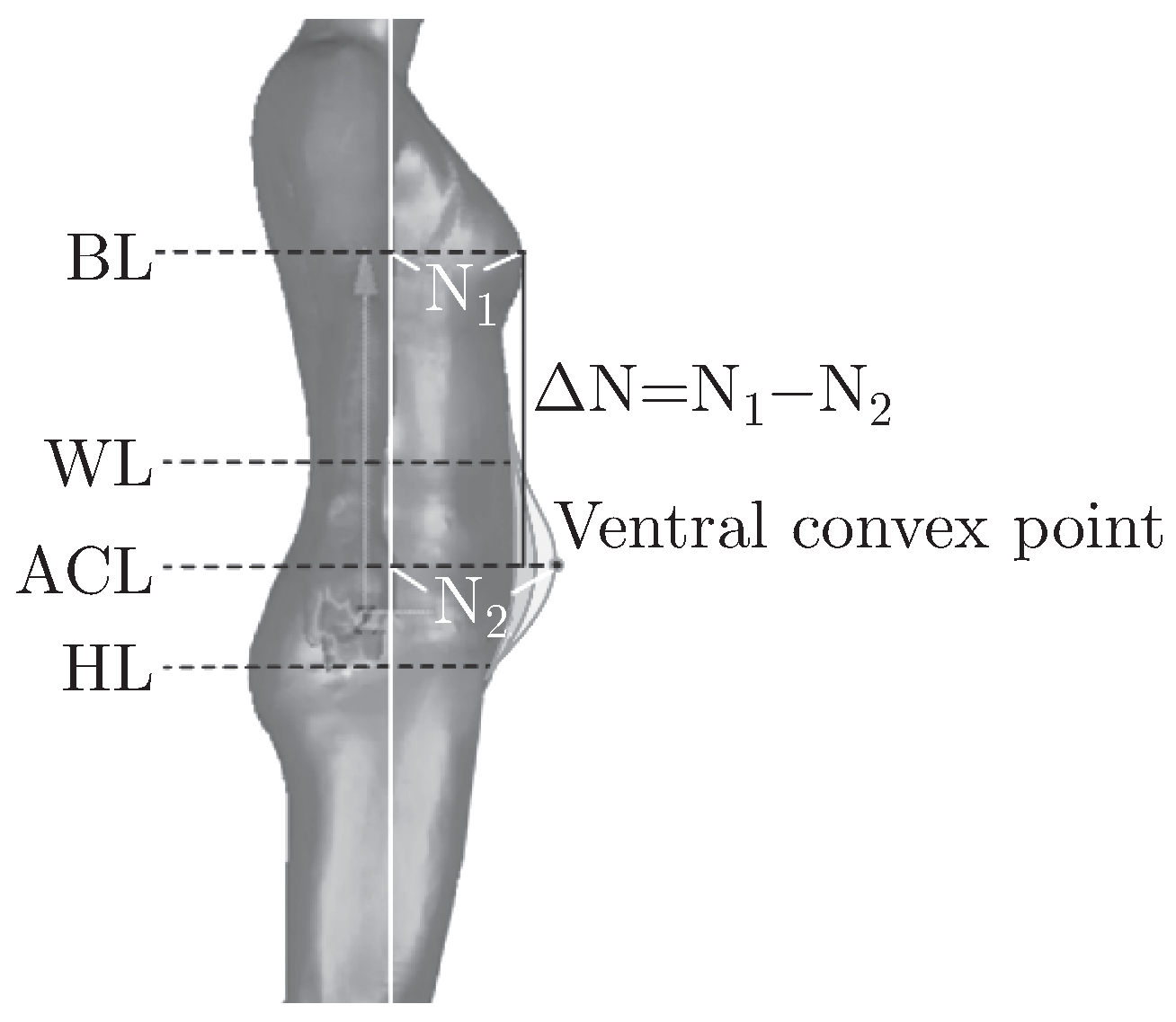
The main lateral feature of the abdominal convexity body type was a vertical line downward from the bust point tangent to the abdominal curve or into the protruding abdomen, which could be identified by the “chest-abdominal projection difference” [16]. N1, N2 denoted the projection of the chest and abdomen relative to the body’s central axis, ΔN denoted the difference between the two, as shown in Figure 2. Defined ΔN ≤ 0 as the ventral convexity.
Figure 2.
Body type screening schematic.
3. Results and Discussion
3.1. Preliminary Morphological Analysis
3.1.1. Data Preprocessing
From 165 total samples, 133 women with abdominal convexity were screened, representing 80.6%. The first 110 samples were taken for morphological study and the remaining 23 samples were taken to validate the findings. We performed a box plot test on 110 samples with SPSS software and used 3D scan data and other comprehensive judgments to eliminate outliers, resulting in 107 valid samples. By the normality test, the sample’s measurements all or almost followed a normal distribution. Bivariate correlation analysis showed that each circumference parameter indicator of waist, abdomen and hip was highly correlated with the corresponding width and depth. Compared to width, the correlation between circumference and depth parameter indicators were higher.
3.1.2. Analysis of Body Type Comparison
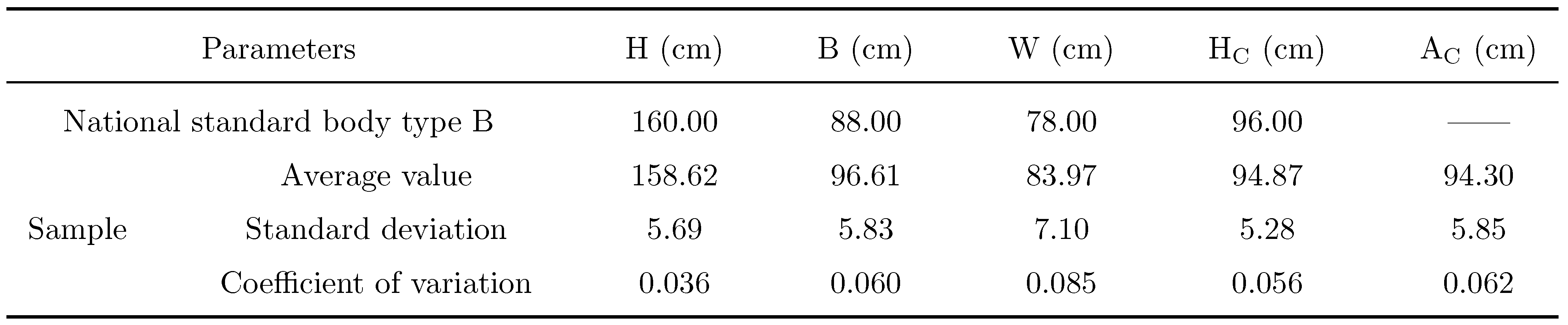
Average chest-waist circumference difference of the samples was 12.64 cm, which could be classified as body type B according to the national standard GB/T 1335.2-2008. Compared the average value of the sample measurements with the national standard body type B of 160 cm in height, as shown in Table 2. The samples’ chest and waist circumferences are larger than body type B, but the hip size is smaller. The average abdominal circumference of the sample is 94.30 cm, which is close to the hip. Compared to body type B, middle-aged and elderly women with abdominal convexity have obvious differences in chest, waist and abdomen, with projecting abdomens and flattened hips. In addition, the coefficient of variation of abdominal circumference is larger than that of chest in the sample, indicating that the current body type classification criteria, based on the difference between chest and waist circumference, do not adapt well to the changes in body types of middle-aged and elderly women, and could focus on adding abdominal circumference parameters.
Table 2.
Comparison of standard body type with sample.
3.1.3. Determination of Morphological Parameters
To investigate the main parameters influencing the morphology of abdominal convexity in middle-aged and elderly women, KMO and Bartlett’s tests as well as factor analysis were conducted using the SPSS software. The results showed that the KMO statistic was 0.776 and the significance level was less than 0.05, indicating that the parameter indicators of waist-abdomen-hip were suitable for factor analysis.
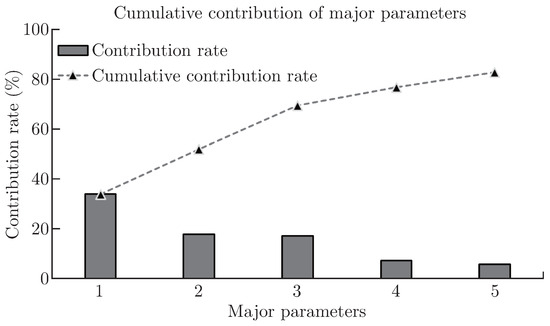
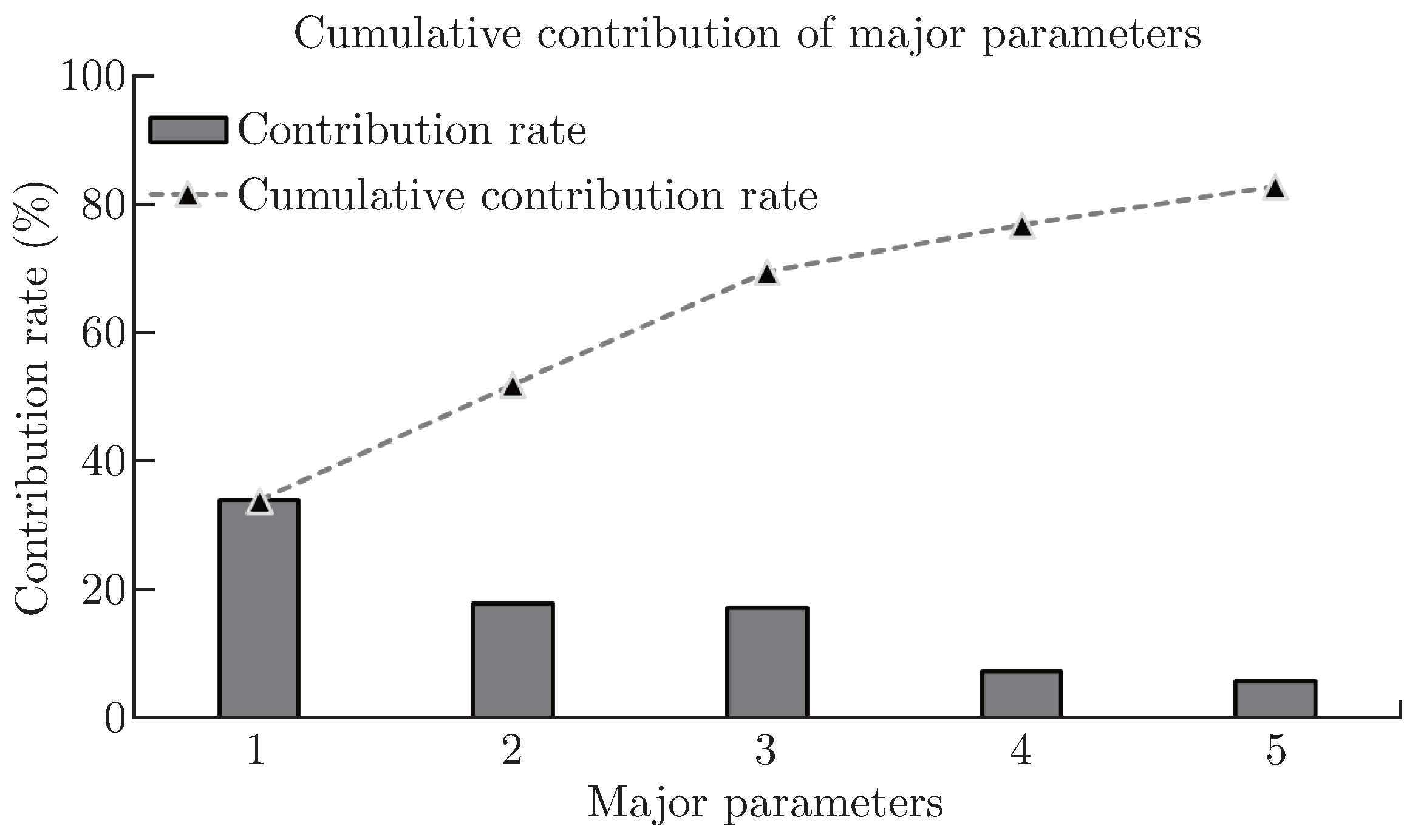
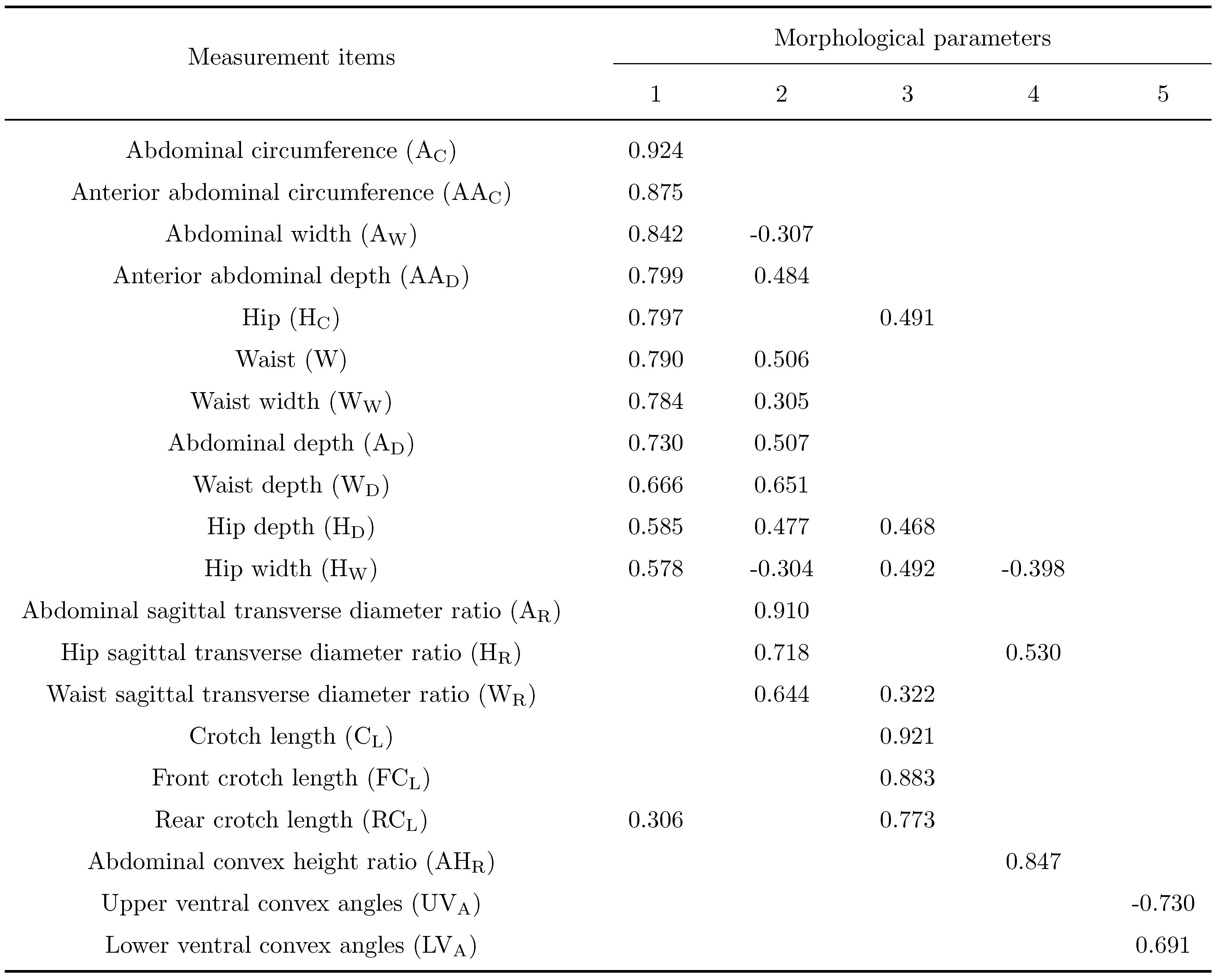
Figure 3 showed the cumulative contribution of abdominal convexity parameters. There were five morphological parameters with eigenvalues greater than 1 and the total cumulative contribution was 82.764%, indicating that these parameters can generally characterize the morphology of abdominal convexity. The load matrix was rotated using the maximum variance method to obtain the variable information included in each parameter, as shown in Table 3. The main parameter 1 affecting the abdominal convexity morphology could be defined as the circumference parameter, which loaded more on the circumference, width and depth, while the abdominal circumference accounted for the largest proportion. Main parameter 2, defined as the crotch parameter, contains the crotch length as well as the front and rear crotch length variables. Main parameter 3, defined as the roundness parameter, contains variables such as the abdominal sagittal transverse diameter ratio. Main parameter 4, defined as the abdominal convexity height parameter. Main parameter 5, defined as the abdominal convexity angle parameter.
Figure 3.
Cumulative contribution of abdominal convexity parameters.
Table 3.
Rotational component matrix.
3.2. Morphological Classification
There are three major categories of male abdominal convexity in the study of middle-aged and elderly body types [17]. However, the curves of females are more complex than males, and the analysis and classification of female abdominal convexity need to be further improved. Given the specificity of the abdominal convexity morphology and the accuracy of the clustering, the characteristic variables with large coefficients of variation in the descriptive statistics and representative of the 5 main parameters were selected as clustering indicators.
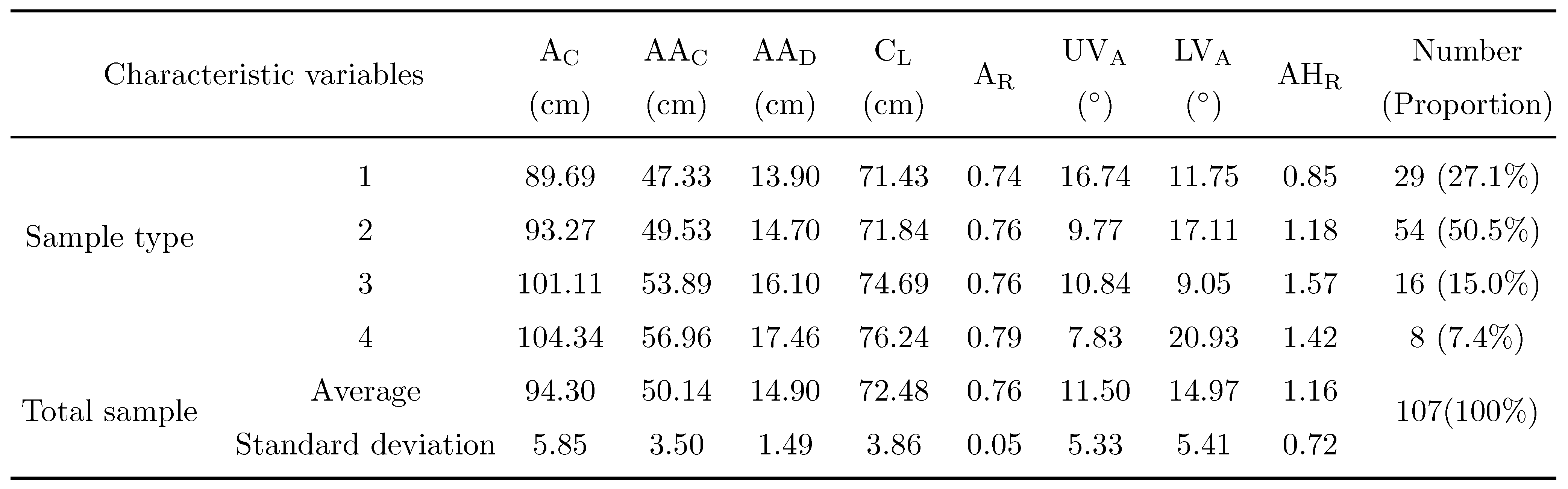
The clustering number was determined based on the spectral map in systematic clustering. After several K-means clustering experiments, the differences in abdominal convexity could be distinguished more clearly and precisely when the number of classifications was set to 4. The characterizations for each type of convexity morphology are shown in Table 4, and Type 2 has the maximum samples, with a proportion of 50.5%. The characteristic variables of Type 1 to 4 showed an increasing trend, with significant growth in variables such as abdominal circumference and depth, with an increase in the degree of abdominal convexity.
Table 4.
Morphological characterization variables for each type.
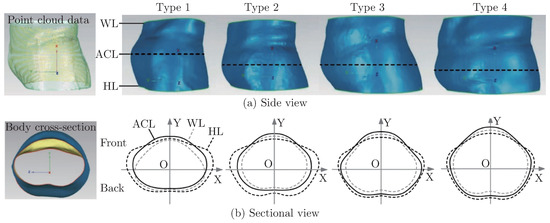
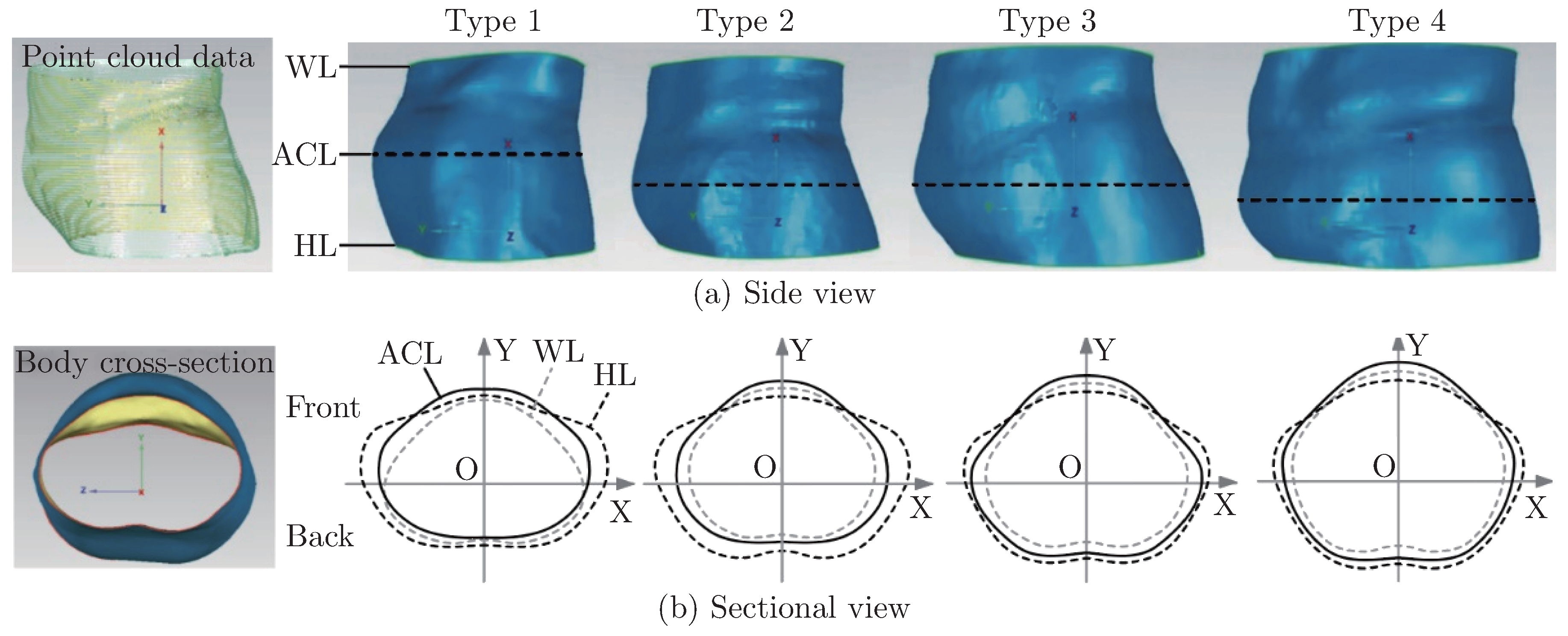
Type 1: Minimal circumference, crotch and roundness parameters with relatively flat cross-sectional shape. The abdominal convexity height parameter is small, and the abdominal projection is on the upper side. Combined with the large angle parameter and the upper angle of abdominal convexity is larger than the lower angle, the abdomen has an inverted teardrop-shaped lateral morphology, gradually changing from “round” to “flat”.
Type 2: The circumference, crotch and roundness parameters are relatively small, closest to the overall mean, and the degree of abdominal protrusion is smaller. The abdominal convexity height parameter is greater than 1, indicating the low position of abdominal protrusion. The upper angle of abdominal convexity is obviously smaller than the lower angle, showing a teardrop-shaped lateral morphology with a gradual change from “flat” to “round”.
Type 3: The circumference, crotch and roundness parameters are slightly greater than the overall mean. The abdominal circumference exceeds 100 cm, with more pronounced abdominal protrusion and fuller cross-sectional shapes. The height parameter is the largest with the lowest position of the abdominal protrusion. The angle parameter is small, and the upper and lower angles are closely similar, showing the same rounded abdominal convexity as the upper and lower parts.
Type 4: Maximum parameters of circumference, crotch and roundness. Maximal abdominal protrusion with rounded and full cross-section. The height parameter is large, and the abdominal projection is on the lower side. The lower angle is larger than the upper angle of abdominal convexity, and the abdomen has a teardrop-shaped lateral morphology with a flat top and round bottom.
Selected samples of each type with the smallest distance from the final clustering center as intermediates. The samples point cloud data from the waist to hip were intercepted for simulation using the Geomagic Studio software, to comprehensively and intuitively characterize the abdominal convexity morphology, as shown in Figure 4.
Figure 4.
Simulation of abdominal convexity morphological.
3.3. Regression Modeling
3.3.1. Regression Model of Abdominal Convexity Characteristics
In pants patterns, the front piece fits the body’s waist, abdomen and front crotch, while the back piece fits to the hips and rear crotch [14]. When designing pants for women with abdominal bulge, the variable parameters of width, depth and height must be determined based on the different abdominal types. The balance between the structure and the body curves is considered as well as the increment of the abdomen to obtain fitted and comfortable pants.
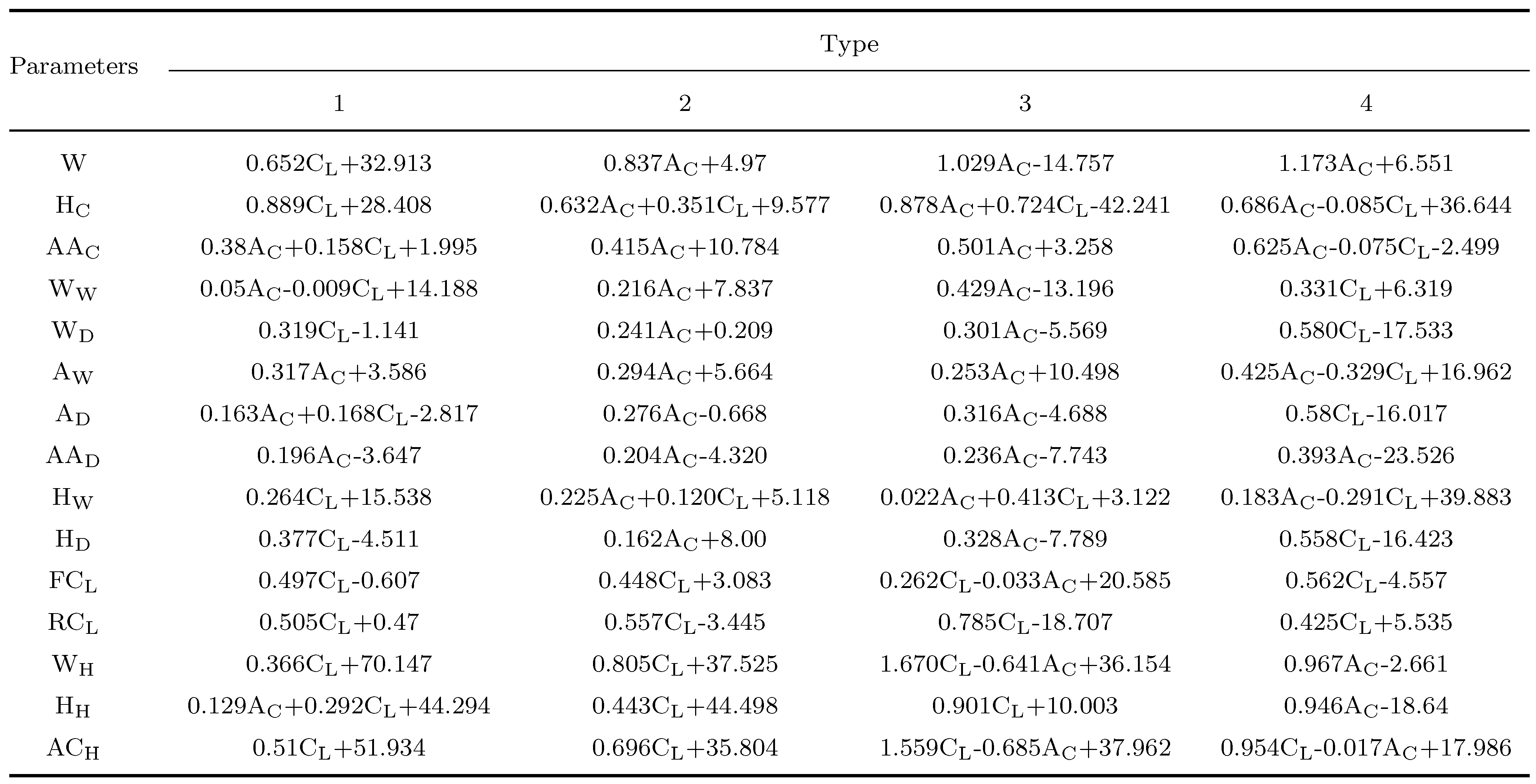
Regression analysis researches specific statistical analysis methods to determine the quantitative relationships between multiple groups of variables [18], and can be used for predictive analysis. Based on results of the previous correlation analysis and factor analysis, the abdominal circumference and crotch length of the circumference parameters as well as the crotch parameters were selected as independent variables for regression analysis. We conducted stepwise regression analyses on 12 characteristic indicators related to pants making and fitting, such as waist, hip and anterior abdominal circumference. The regression models of abdominal convexity characteristics of various types were constructed to investigate the functional relationship between the abdominal characteristics variables and abdominal circumference with crotch length, as shown in Table 5.
Table 5.
Regression model for abdominal morphological characteristics.
Taking waist and hips as examples, the waist regression models for Types 2, 3 and 4 were mainly affected by the abdominal circumference, with the hip regression models affected by both the abdominal circumference and crotch length. The waist and hip regression models for Type 1 are mainly affected by crotch length. This indicated that different body types correspond to different regression models, fully illustrating the variability of abdominal convexity, the specificity of abdominal types, and the importance of morphology classification in middle-aged and elderly women. Further significance tests and residual analysis verified that the models were satisfactory.
3.3.2. Regression Model of Girth Fit
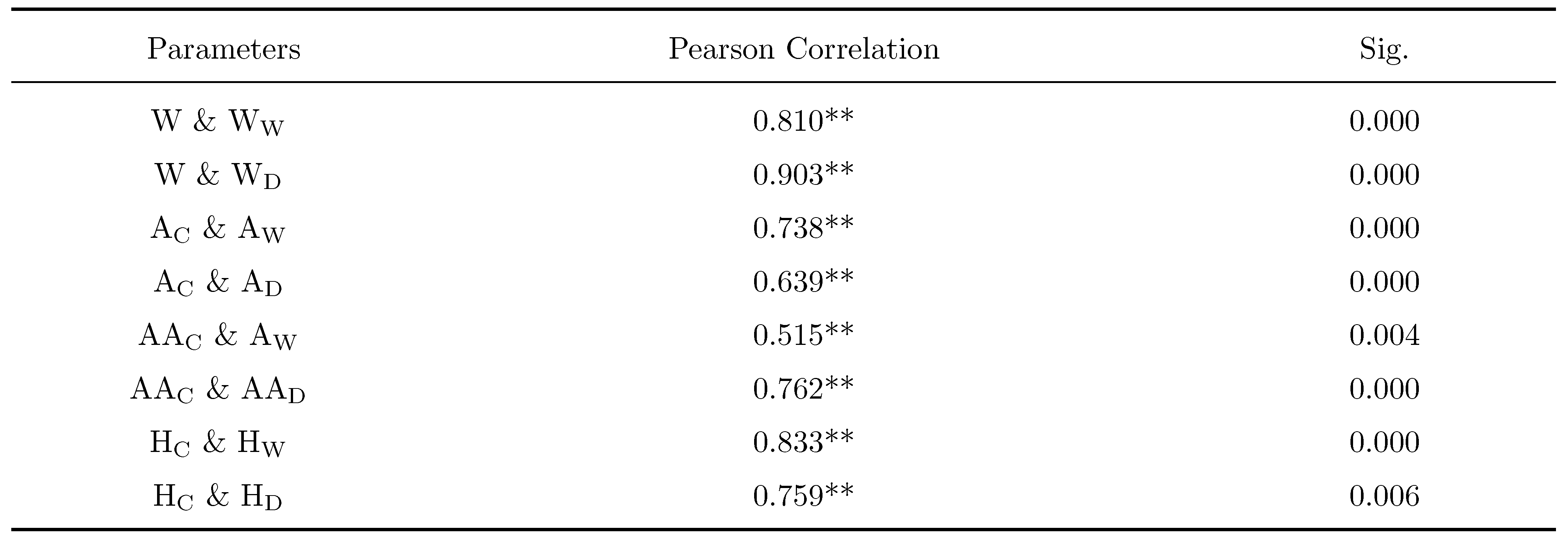
In middle-aged and elderly women with abdominal convexity, the circumferences of the waist, abdomen and hips are highly correlated with the corresponding widths and depths. Table 6 shows the correlation coefficients in Type 1. The fitted regression mode was developed using SPSS software and shown in Table 7, where circumference as the dependent variable and depth and width as the independent variables.
Table 6.
Correlation analysis of circumference with width and depth.
Table 7.
Fitting regression models.
3.3.3. Validation
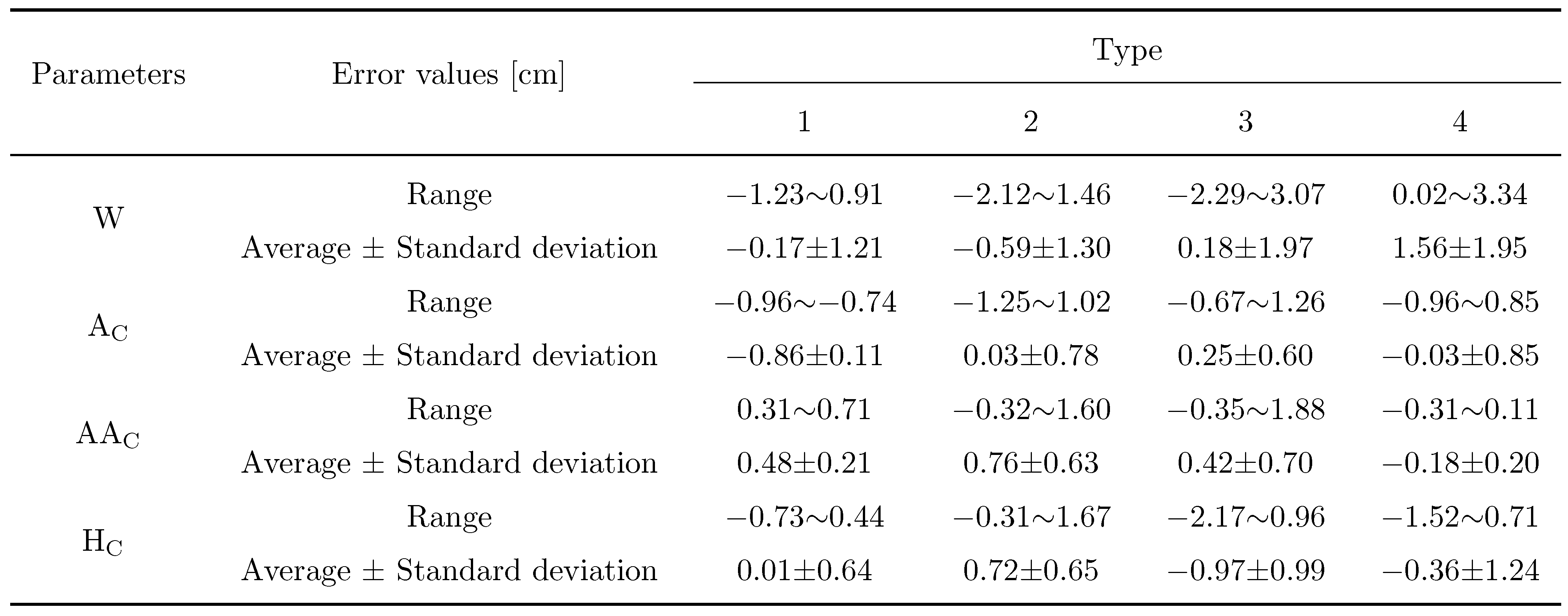
We categorized the reserved data of 23 samples according to the above characteristic variables, with Type 1 to 4 containing 3, 10, 6 and 4 samples, respectively. Then brought the corresponding parameter values into the fitted regression model by type for calculation, and compared the actual measured values with the fitted values, as shown in Table 8. The average error values of the hip and abdominal circumference fitting were within 1 cm, indicating that the model fits the hip and abdominal circumference dimensions well and meets the requirements of garment production. However, the waist circumference prediction error range for category 4 is larger, reaching a maximum of 1.56 cm. Due to the limited number of experimental samples, the prediction accuracy of the regression model still needs to be improved, posing limitations on current findings.
Table 8.
Error between measured and fitted values.
4. Conclusion
(1) Abdominal bulge samples accounted for many middle-aged and elderly women. The differences between them and the standard body type B are mainly in the larger bust, waist, and protruding abdomen.
(2) The parameters of circumference, crotch, roundness, abdominal convexity height and angle are the five main parameters affecting the abdominal convexity morphology. Among them, the representative characteristic variables with large coefficients of variation were selected as clustering indexes, and the abdominal convexity morphology was classified into four types, with obvious differences in the characteristics of each type. Based on the characteristic indexes related to the pants pattern, the regression model of abdominal convex morphology characteristics was established by taking abdominal circumference and crotch length as independent variables. After the residual analysis test, the clustering characteristics of various types of abdominal convex morphology were apparent, and the regression modelling was valid. Then the girth-fitting regression models for each type of morphology were constructed and validated, which was found to be able to predict the circumference of middle-aged and elderly women with abdominal convexity. In subsequent studies, it would be necessary to increase the experimental sample size to improve the accuracy of regression modeling.
(3) This paper verifies the variability of abdominal convexity morphology and the specificity of different abdominal type features in middle-aged and elderly women. This study has practical value for enriching and developing the database of special body types for middle-aged and elderly people, promoting personalized clothing, and improving clothing fit.
Acknowledgments
The authors wish to acknowledge the “Wuhan Textile University Discipline Funding Support Project (523004016)” program and the Innovation and entrepreneurship training program for college students in Hubei Province (S202010495025X).
References
- Yan YJ, Yao J, Zhang MX, et al. Analysis of the Shaping Function of Blouses for Middle Aged and Elderly Women with Convex Belly [J]. Fashion Guide: 2021; 10 (6): 82-86.
- Lu X, Mu H. The Structure of Fitted Pants in Different Abdominal Convex [C]//College of Textiles at Donghua University, College of Materials Science and Engineering at Donghua University. Proceedings of Textile Bioengineering and Informatics Symposium 2010. Textile Bioengineering and Informatics Society Limited Binary Information Press: 2010; 6.
- Liu YM, Dai H. Research on body build of middle-and-old-aged women in Chengdu area [J]. Journal of Textile Research: 2010; 31 (10): 110-115.
- Qian LL, Wang HF, Hu CJ. Research on the Body Size Classification of 50~75 Years Old Middle-aged and Old women from Jiangsu and Zhejiang Based on 3D Anthropometric [J]. Shandong Textile Science & Technology: 2014; 55 (02): 40-44.
- Yu XK, Hu F, Zhu DH, et al. Research on Body Shape of the Middle and old aged Women in Shanghai Area [J]. Journal of Beijing Institute of Clothing Technology: 2016; 36 (04): 9-17.
- Ling YL, Zhong AH. Classification of Middle-aged Females’ Body Shape Based on Three Dimensional Data [C]//Textile Bio-engineering and Informatics Society, State Key Laboratory for Modification of Chemical Fibers and Polymer Materials (SKLFPM), Donghua University, The University of Manchester. Textile Bioengineering and Informatics Symposium Proceed-ings (TBIS 2020): 2020; 7.
- Ellen G, Soyeon S, Naomi R. Women 55 Years and Older: Part II. Overall Satisfaction and Dissatisfaction with the Fit of Ready-to-Wear [J]. Clothing and Textiles Research Journal: 1996; 14 (2).
- Susan PA, Hyunshin N. Comparison of 3-D Body Scan Data to Quantify Upper-Body Postural Variation in Older and Younger Women [J]. Clothing and Textiles Research Journal: 2008; 26 (4).
- Liu H, Hao KR, Ding YS, et al. Digital correction for convex belly based on comfort of women’s model-body underpants [J]. Computer Engineering and Applications: 2012; 48 (33): 24-28.
- Song HK, et al. 3D Anthropometric Analysis of Women’s Aging Bodies: Upper Body Shape and Posture Changes [J]. Fashion Practice: 2022; 14 (1): 26-48.
- Masayuki T, Kyoungok K. Improvement of Individualized Pattern Making Using Surface Flattening Technique [J]. Journal of fiber bioengineering and informatics: 2013; 6 (4).
- Nam YJ. Analysis of Clothing Air Gap in a Protective Suit According to the Body Postures [J]. Journal of Fiber Bioengineering and Informatics: 2014; 7 (4).
- Jia JX, Zhong AH. A Study on the lower body shape analysis of middle-aged and old women in central china and their trousers prototype [J]. Fashion Guide: 2018; 7 (06): 53-58.
- Tuo W, Li MX, MA JJ. Structural optimization analysis of special body trousers for the protruding abdomen body female [J]. Shandong Textile Science & Technology: 2018; 59 (4): 32-34.
- Li JY. A Brief Discussion on the Current Situation and Design Concept of Chinese Middle-aged and Elderly Clothing [J]. West Leather: 2022; 44 (04): 20-22.
- Li J, Zhou J, Ma QR. Abdomen size prediction of beer belly based on grey neural network [J]. Journal of Xi’an Polytechnic University: 2018; 32 (03): 266-271.
- Li SL, Zhao JM, Yu H, et al. Classification of ventral protruding body of middle-aged and old men in Xinjiang of correction of trouser suit pattern [J]. Wool Textile Journal: 2021; 49 (03): 60-64.
- Wu Z. Statistical Prediction based on the Generalized Linear Regression Model and its Application [D]. Beijing: North China Electric Power University: 2009.


© 2023 Textile Bioengineering and Informatics Society. This article is an open access article distributed under the terms and conditions of the Creative Commons Attribution (CC BY) license (https://creativecommons.org/licenses/by/4.0/).