


Abstract
Built cultural heritage in East Africa is often interpreted and taught through monument-based, stylistic, or externally derived frameworks that insufficiently account for the region’s overlapping environmental, cultural, historical, and socio-spatial processes. Responding to this theoretical and pedagogical gap, this article develops a regionally grounded theoretical model of East African built heritage as a layered system, with particular attention to Kenya, Tanzania, and Uganda. Methodologically, the study adopts a qualitative, interpretive approach, combining a critical literature review, analysis of selected built heritage layers, and expert perspectives from East African and European/international respondents. The findings show that East African built heritage is shaped by five interrelated layers: environmental foundations, indigenous and vernacular systems, Swahili/coastal Indian Ocean urbanism, colonial reconfiguration, and postcolonial/contemporary transformation. These layers do not form a linear historical sequence; rather, they overlap, interact, are disrupted, and are reinterpreted through material practices, spatial transformation, memory, environmental knowledge, and everyday use. The article argues that East African built heritage is defined by a layered system that is hybrid, fragile, unevenly recognized, partly intangible, and negotiated. It concludes that architectural education must move beyond object-based conservation knowledge transfer toward competency building in historical interpretation, environmental understanding, community engagement, adaptive reuse, and critical design intervention.
1. Introduction
Globally, built cultural heritage is increasingly understood not only as a collection of monuments or historic buildings, but as a dynamic field shaped by social values, environmental conditions, historical change, and contemporary development pressures. Similarly, built cultural heritage in East Africa is shaped by the interaction of historical processes, cultural identities, environmental systems, and ongoing urban transformation. Across the region, historic towns, vernacular settlements, colonial infrastructures, and post-independence developments coexist within rapidly changing socio-spatial and environmental conditions. Despite this richness, built heritage is often interpreted and taught through fixed or externally derived frameworks that privilege monuments, isolated historic sites, or singular stylistic traditions, as reflected in the heritage classification principles embedded within the UNESCO World Heritage Convention [1] with critical reflections in heritage scholarship [2,3]. Such approaches risk overlooking East African built environments, where multiple historical processes, cultural exchanges, and environmental conditions interact within the same spatial context in overlapping, contested, and non-linear ways.
In this article, the term East Africa is used as a broad regional lens for examining shared historical, cultural, ecological, and architectural connections, rather than as a strictly institutional category. Contemporary East Africa is defined differently across geographical and institutional sources, with some geographical definitions treating it as a wider eastern African region [4], while institutional definitions, such as those of the East African Community (EAC), define it through the current Partner States [5]. The EAC currently comprises eight Partner States: Burundi, the Democratic Republic of the Congo (DRC), Kenya, Rwanda, Somalia, South Sudan, Uganda, and the United Republic of Tanzania [5]. However, the article does not examine the EAC as a political institution. Instead, it focuses on East Africa as a historically, culturally, ecologically, and architecturally connected region, with Kenya (KE), Tanzania (TZ), and Uganda (UG) forming the study’s empirical scope. These countries are selected because they share important colonial, postcolonial/contemporary, institutional, and educational histories, while also offering differentiated coastal, inland, vernacular, urban, and modern architectural contexts. This focus allows the article to examine East African built heritage as both a shared regional concern and a differentiated field of architectural knowledge and practice.
Recent developments in heritage theory have challenged static, object-based interpretations, emphasizing heritage as dynamic, socially constructed, and continuously reinterpreted over time [2,3,6,7]. However, these perspectives remain insufficiently grounded in East African contexts, where built environments have been shaped by long-term interactions among indigenous knowledge systems, environmental conditions, coastal urban networks, colonial interventions, and postcolonial/contemporary transformations. Existing studies address important dimensions of this field, including conservation practice in Kenya, vernacular and earth architecture in Uganda, Swahili coastal urban landscapes, architectural heritage vulnerability in Dar es Salaam, and modern/postcolonial heritage in Kampala [8,9,10,11,12]. African architectural discourse similarly emphasizes that the built environment cannot be reduced to formal or stylistic categories alone, but must be understood through environmental, cultural, and social processes [13]. Yet these contributions remain largely sectoral, and there is limited conceptual clarity regarding how environmental, cultural, historical, and external forces interact to produce layered, multidimensional patterns of heritage development, transformation, continuity, and disruption in East Africa.
This theoretical gap has direct implications for architectural education. In many East African contexts, heritage is addressed in fragmented or peripheral ways, often emphasizing documentation and conservation techniques without adequately engaging with the processes by which built environments are formed, transformed, and sustained. This reflects a broader tendency within heritage discourse to privilege technical and material approaches over more dynamic and socially embedded understandings [6,14]. Without a clearer conceptual framework, architects may struggle to interpret complex historic environments or respond critically to layered urban and settlement conditions shaped by rapid urbanization, environmental pressure, and socio-political change. For architectural education, this means that students require more than knowledge of conservation procedures; they need a framework for reading heritage environments as layered cultural, spatial, environmental, and social systems.
This article addresses both the theoretical and pedagogical gap by interpreting East African built cultural heritage as a layered system. It conceptualizes heritage not as a collection of discrete objects or bounded historical periods, but as a cumulative and evolving field shaped by the interaction of material, spatial, social, environmental, historical, and intangible dimensions, including environmental systems, vernacular practices, Swahili urbanism, colonial restructuring, and postcolonial/contemporary transformation. These are understood as interrelated and at times disrupted processes rather than sequential historical phases. In this context, East African built heritage is understood as hybrid, fragile, unevenly recognized, partly intangible, and negotiated. The term “negotiated” refers to the way heritage forms, meanings, and values are continually shaped through interactions among formal conservation systems, planning regulations, informal urban practices, community use, tourism, development pressures, and inherited historical layers. Drawing on theoretical literature and qualitative insights from East African and European/international experts, the study clarifies how these layers are constituted, how they relate to one another, and how they continue to shape contemporary built environments.
Methodologically, the study adopts a qualitative, interpretive approach that combines critical literature review with expert perspectives. Its intended contribution is twofold. First, it develops a regionally grounded theoretical model that brings together established perspectives from critical heritage studies, vernacular architecture, living heritage, and the Historic Urban Landscape approach, and engages them in dialogue with East African architectural conditions and expert interpretations. Its distinctive contribution lies in organizing these perspectives through five interrelated layers: environmental foundations, indigenous and vernacular systems, Swahili/coastal Indian Ocean urbanism, colonial reconfiguration, and postcolonial/contemporary transformation. Second, it shows how this framing can support more context-responsive architectural education by strengthening students’ capacity to interpret layered heritage environments, engage with local knowledge, and make informed design and conservation decisions. The sections that follow establish the theoretical framework, outline the methodology, examine the layered system of East African built heritage, and synthesize empirical insights into a theoretical model with implications for architectural education.
2. Literature Review and Theoretical Framework
This section reviews the theoretical perspectives that frame the study’s approach to built cultural heritage. It draws on critical heritage studies, vernacular architecture theory, urban heritage discourse, and African architectural scholarship to examine how built heritage may be understood as dynamic, socially embedded, environmentally situated, and historically layered. These bodies of literature were selected because they correspond to the main dimensions of the article’s layered interpretation: heritage as a socially constructed and contested field; vernacular and environmental knowledge as foundations of built form; urban heritage as a framework for reading historic towns and layered city fabrics; and African architectural scholarship as a basis for interpreting regional built environments beyond externally derived stylistic categories. The review is not intended to provide a general history of heritage theory. Rather, it identifies the concepts needed to interpret East African built heritage as a layered system shaped by environmental, material, historical, social, and intangible processes.
2.1. Environmental Foundations in Architectural Formation
The natural environment has long been recognized as a major force in architectural formation, although it is often treated as background context rather than as a structuring principle in heritage interpretation. Architectural studies show that built form emerges through the interaction of human needs, cultural practices, climate, resource availability, and construction knowledge [15,16]. Rapoport [15] argues that dwelling form and the wider built environment are inseparable from climate and culture, while Oliver [17] situates vernacular architecture within localized knowledge systems developed through long-term adaptation.
Environmental conditions such as climate, topography, material availability, and seasonal variation shape construction systems, spatial organization, and building performance. In tropical contexts, passive strategies such as ventilation, shading, thermal mass, and careful orientation reflect accumulated environmental knowledge rather than accidental design responses [18]. System-oriented interpretations of the built environment similarly recognize that spatial form develops through relationships among ecological, material, and social conditions rather than through isolated design acts [19].
In East African contexts, the relationship between natural systems, environmental governance, and built heritage is also institutional and legal. Heritage conservation has often been linked to natural resources, tourism, protected landscapes, and cultural heritage management rather than treated solely as an architectural matter. In mainland Tanzania, the Antiquities Act provides for the preservation and protection of sites and articles of archaeological, historical, or natural interest [20]. In Uganda, the Museums and Monuments Act consolidates and reforms the law relating to cultural and natural heritage [21]. In Kenya, the National Museums and Heritage Act defines heritage as both natural and cultural heritage [22]. Kenyan heritage scholarship similarly shows that cultural and natural heritage have often been addressed together through conservation, tourism, and indigenous knowledge frameworks [8]. This legal and institutional proximity suggests that, in East Africa, built heritage is often governed alongside natural heritage, including protected landscapes, ecosystems, and other valued natural environments, as well as environmental conservation and tourism-oriented heritage management.
Yet built heritage discourse has often prioritized material preservation and stylistic classification, giving less attention to the environmental processes through which built form is generated and transformed. Reframing the environment as a formative component of heritage supports a more relational reading of built environments, in which natural systems are not secondary to cultural meaning but part of architecture’s cultural production. This position is particularly relevant for understanding East African built heritage, where environmental adaptation, material availability, and ecological rhythms have shaped both vernacular and urban traditions [16,23,24].
2.2. Built Cultural Heritage Beyond Monumental and Static Conceptions
Built cultural heritage has often been framed through tangible artifacts, monuments, historic buildings, and formally recognized sites. Critical heritage scholarship has challenged this view by emphasizing heritage as a dynamic and socially constructed process rather than a fixed object inherited from the past [2,3]. Within this perspective, heritage is produced through changing relationships between people, place, memory, use, and value [6,7].
This shift is reinforced by UNESCO’s Historic Urban Landscape (HUL) approach, which understands historic cities as products of interacting natural, cultural, social, and economic processes rather than static ensembles of buildings [7]. The concept of living heritage also moves conservation away from freezing fabric in time and toward sustaining continuity of use, cultural meaning, community attachment, and social practice [6,14]. This is especially relevant in African contexts, where many historic and vernacular built environments continue to be inhabited, used, adapted, and maintained as part of everyday life, while also facing pressure from urbanization, migration, demographic growth, and climate-related change [7,25].
Critical heritage studies also draw attention to power and recognition. Heritage designation is never neutral; it often privileges monumental, colonial, or institutionally legible forms while marginalizing vernacular, ordinary, rural, and community-based environments [2,26]. In Kenya, for example, conservation frameworks have frequently been shaped by institutional and externally derived approaches, with limited integration of indigenous knowledge systems and vernacular traditions [8]. This raises a broader question for East Africa: which built environments are officially recognized as heritage, and which remain undervalued because they are informal, fragile, recent, or transmitted through practice rather than in durable fabric.
2.3. Vernacular Architecture, Culture, and Environmental Intelligence
Vernacular architecture is central to this discussion because it links cultural expression, environmental adaptation, and everyday practice. It is commonly understood as architecture produced through local knowledge systems, using available materials and responding to environmental and socio-cultural conditions [17,27]. Its significance lies not only in form but also in the knowledge embedded in the making, maintenance, inhabitation, and renewal of buildings.
Vernacular systems embody environmental intelligence. Passive cooling, cross-ventilation, shading, thermal mass, and the use of local materials demonstrate a close relationship among climate, construction, and social life [15,18]. These strategies emerge from empirical knowledge accumulated over generations and are shaped by cultural practices as much as technical necessity [17]. In this sense, vernacular architecture should not be treated merely as “traditional form”; it is also a knowledge system.
This point is important for East Africa, where vernacular traditions are often sustained through use, repair, rebuilding, and intergenerational transmission rather than fixed material permanence. Buildings may be repaired, renewed, rebuilt, or adapted to ensure their continuity. Lwamayanga’s study of Kagera vernacular architecture in Tanzania shows that built form cannot be separated from the skills, rituals, materials, and everyday practices through which it is produced and sustained [28]. Similar principles are reflected in coastal and inland traditions, where building practices respond to climate, available materials, social organization, and cultural meaning [29,30]. However, rapid urbanization, industrial materials, and imported design models increasingly threaten these systems, weakening climate-responsive and culturally grounded practices in many African cities [25,31].
2.4. Urban Heritage as a Layered and Dynamic System
Urban heritage theory provides another important basis for this study. The HUL approach understands cities as accumulated landscapes shaped by natural, cultural, social, and economic processes over time [7,32,33]. This view is useful because it moves away from treating historic cities as collections of isolated monuments. Instead, it reads urban form as cumulative, where different temporal layers coexist, overlap, and continue to influence present spatial conditions.
In this perspective, urban form is not a simple historical sequence. Older spatial practices, building types, infrastructure, social meanings, and later interventions may coexist within the same urban fabric. Contemporary development, tourism, real estate pressure, and infrastructure expansion introduce additional layers, making conservation a matter of managing change rather than protecting isolated fragments [7]. Soleri’s system-based interpretation of the city also supports this view by presenting urban environments as integrated socio-spatial systems in which physical, social, and environmental dimensions are interdependent [19].
The HUL approach further connects conservation with planning, governance, sustainability, and community participation [33,34]. Rodwell [34] argues that conservation and sustainability should be understood as mutually reinforcing processes in historic cities. This is relevant to East African contexts, where historic settlements, colonial infrastructures, vernacular practices, postcolonial developments, and informal urban adaptations often coexist within rapidly changing urban environments.
2.5. Colonial, Postcolonial/Contemporary Transformation, and Hybrid Architectural Identities
Colonial and postcolonial/contemporary transformations introduced new spatial orders, planning systems, infrastructures, and architectural typologies into African built environments. Colonial planning was closely tied to administrative control, economic extraction, racial segregation, and the reorganization of urban space [35,36]. These interventions did not simply add buildings; they altered relationships between land, movement, authority, labor, and public space.
After independence, modernist architecture became a major instrument of nation-building in several African contexts, including East Africa. In the three countries examined in this article, independence was achieved at different moments: Tanganyika in 1961, Uganda in 1962, and Kenya in 1963, followed by the Union of Tanganyika and Zanzibar to form Tanzania in 1964. Governments adopted modernist planning and architectural forms as expressions of progress, modernization, and postcolonial/contemporary identity [37,38]. Yet this was not only a transfer of international styles. In many cases, modernism was adapted to local climatic and political conditions, producing hybrid architectural forms. These transformations were particularly evident in capital cities and strategic coastal centers, where colonial administration, post-independence state-building, port economies, and international architectural influences intersected.
In East Africa, these dynamics are visible in Nairobi, Dar es Salaam, Kampala, Mombasa, and Zanzibar, where post-independence modernism became entangled with inherited colonial spatial structures, older Swahili urban fabrics, coastal trade histories, and local climatic responses [12,39,40]. More recent urban transformation has added further complexity through globalized architectural imagery, glass-fronted buildings, standardized construction, speculative development, and informal adaptation [25,41]. These processes show that heritage layers are not simply replaced by newer ones. They are reworked, obscured, extended, and sometimes devalued. This hybridity reflects both adaptation and loss, especially where vernacular knowledge and climatic responsiveness are weakened.
2.6. Toward an Understanding of East African Built Heritage as a Layered System
Taken together, the reviewed literature supports a view of built heritage as a layered system rather than static or object-bound [3,7,33]. Heritage emerges through interactions among environmental conditions, cultural practices, historical transformations, social meanings, and contemporary interventions. This distinction also clarifies the difference between heritage development and heritage management. Heritage development refers to the processes through which layers emerge, interact, and transform over time, while heritage management concerns how those layers are recognized, conserved, interpreted, or reconfigured in the present [2,14].
International frameworks reinforce this broader understanding. UNESCO’s urban conservation discourse emphasizes that historic cities should be understood as evolving systems rather than fixed entities [7]. The Nara Document on Authenticity [42] similarly argues that heritage value must be interpreted in relation to cultural context, social practice, and meaning, rather than solely the material fabric. These positions are useful for East Africa because many heritage values are carried through use, memory, craft, environmental knowledge, settlement practices, and community attachment.
Several studies address specific dimensions of East African built heritage, including conservation practice in Kenya [8], Swahili urban landscapes along the East African coast [10,43], colonial and postcolonial urban development in Tanzania [44], modern heritage in Uganda [12], and localized vernacular traditions [9,30]. However, these contributions remain largely sectoral, focusing on particular typologies, periods, or locations. They do not yet provide an integrated conceptualization of East African built heritage as a layered and evolving system.
In the remainder of the article, “layered system” is used as the principal term for the proposed model, while “heritage layers” refers to its constituent environmental, cultural, and historical dimensions, and “layered formation” refers to the processes through which they emerged and changed over time. Building on these perspectives, this study views East African built cultural heritage as a layered system composed of environmental, indigenous and vernacular, Swahili/coastal, colonial, and postcolonial/contemporary elements. Built environments are understood as the outcome of cumulative, sometimes disrupted interactions among environmental conditions, vernacular practices, coastal urban systems, colonial restructuring, and postcolonial/contemporary transformation. These layers are not treated as discrete historical stages. They are understood as interrelated dimensions that structure spatial, material, and cultural patterns across the region. This layered framing also provides the conceptual basis for the article’s later discussion of architectural education, in which heritage is approached not only as an object of conservation but as a complex system requiring historical, environmental, social, and design interpretations.
3. Materials and Methods
Building on the theoretical framework established in Section 2, this section outlines how the article combines literature, selected examples of East African built heritage, and expert interviews to develop a theoretical framework for interpreting East African built heritage as a layered system. It presents the research design, data sources, sampling strategy, data collection process, analytical procedure, researcher positionality, and ethical considerations.
3.1. Research Design
This article adopts a qualitative and interpretive approach. It does not seek to produce a statistical account of East African built heritage, but rather to develop a regionally grounded conceptual interpretation of how it is formed, transformed, and understood as a layered system. The study combines three components: a critical literature review, interpretive analysis of selected East African built heritage layers, and expert interviews. This approach was appropriate because the article addresses a conceptual problem: how to theorize East African built heritage in ways that account for environmental systems, vernacular practices, Swahili/coastal urbanism, colonial and postcolonial/contemporary transformations, and intangible processes, and how to define the implications for architectural education.
3.2. Data Sources and Case Scope
The study draws on three data sources. First, it engages literature on heritage theory, living heritage, authenticity, vernacular architecture, environmental design, Swahili/coastal urbanism, colonial and postcolonial/contemporary urban development, and architectural education. This literature established the conceptual basis for reading built heritage as layered, socially embedded, historically situated, and environmentally grounded.
Second, the study examines selected built heritage systems and historical layers across Kenya, Tanzania, and Uganda, while acknowledging wider cultural and historical connections across East Africa. As noted in the introduction, these three countries form the empirical scope of the article. The focus on these countries provides a historically coherent and methodologically manageable frame, rather than an exhaustive account of all countries in East Africa. The analysis is organized around the five analytical layers introduced above, which are used as interpretive categories rather than fixed historical periods.
Third, the study incorporates expert perspectives from East African and European/international respondents. The empirical material comprises 26 East African expert contributions, including 24 recorded interviews and 2 written responses, as well as 4 European/international expert interviews. The East African experts provided regionally grounded perspectives on heritage practice, architectural education, vernacular knowledge, conservation, and the transformation of the built environment. The European/international experts were included as comparative and critical voices, used to challenge and refine the emerging theoretical argument rather than to substitute for local knowledge.
Table 1 summarizes the respondents by country and broad professional category. Because several respondents held overlapping academic, professional, and heritage-related roles, the professional categories are presented descriptively rather than as mutually exclusive numerical groups.
Table 1.
Distribution of respondents by geographical group and broad professional category.
3.3. Expert Interviews and Sampling
Participants were selected through purposive sampling. The selection focused on individuals whose professional or academic experience could illuminate the relationship between built heritage, architectural systems, conservation, and architectural education in East Africa. The East African expert group included respondents with experience in architecture, heritage conservation, architectural education, curatorship, policy, documentation, vernacular knowledge, and cultural heritage practice. The European/international experts were selected because of their long-standing engagement with African architecture, heritage interpretation, architectural education, and conservation practice.
Sample adequacy was considered in terms of information power, particularly the relevance of participants’ expertise, the specificity of the study aim, and the use of established theory [45]. The study did not treat saturation as a fixed numerical threshold. Instead, thematic adequacy was considered reached when later interviews largely reinforced the principal themes while continuing to provide contextual and professional variations relevant to the theoretical synthesis [46].
The interviews were semi-structured. Questions focused on the definition of East African built heritage, historical layering, forms of knowledge and value embedded in built environments, and implications for architectural education. The article-specific semi-structured interview questions are provided in Supplementary File S1. Follow-up questions were used to clarify meanings and elicit examples related to intangible heritage, vernacular knowledge, environmental adaptation, contested recognition, colonialism, globalization, and urban transformation. Respondents were anonymized using codes such as KI-1-U, KI-11-K, and KI-19-T for East African experts, and KI-E1 to KI-E4 for European/international experts.
3.4. Data Collection and Analysis
Data were collected through online and in-person interviews, depending on participant availability and location. With permission, 24 East African interviews and four European/international interviews were recorded and transcribed. Two East African participants provided written responses, which were analyzed together with the interview transcripts. Following transcription, one European/international participant reviewed and confirmed the accuracy of the interview transcript. This participant-level verification provided an additional credibility check; however, transcript validation was not undertaken across the full interview sample.
The analysis followed a manual thematic approach informed by qualitative thematic analysis. It began with repeated reading of transcripts, written responses, and notes to identify recurring ideas, concepts, and examples. The first stage used deductive codes derived from the study’s conceptual framework, including environmental foundations, indigenous and vernacular systems, Swahili/coastal urbanism, colonial reconfiguration, postcolonial/contemporary transformation, and architectural education. A second inductive stage was used to identify ideas not fully captured by these initial categories. These included intangible construction processes, contested recognition, material fragility, sensory interpretation, hybridity, and the need to define architecture beyond monument-based frameworks.
The coding process moved between individual interviews, respondent groups, the literature, and selected built heritage examples. East African expert perspectives were analyzed to identify recurring regional themes, while European/international perspectives were read as complementary theoretical reflections, especially on non-linear layering, Western architectural categories, Swahili/coastal urbanism, and heritage education. Coding and theme development were undertaken by the lead author; therefore, formal inter-coder reliability testing was not conducted. Analytical consistency was supported by repeated comparisons among coded passages, themes, respondent groups, and the theoretical literature. No qualitative data analysis software was used. Digital tools supported transcription checking, draft organization, and language refinement, but coding decisions, theme development, and analytical synthesis remained the researcher’s responsibility. To support the presentation of selected heritage examples, composite photographic figures were prepared by juxtaposing separate images from different sites, dates, and sources for illustrative comparison. Each panel is clearly demarcated and labeled, and the source of each image is provided in the corresponding figure caption. No image manipulation was undertaken beyond cropping, resizing, and layout adjustment.
The final stage synthesized the literature, selected heritage layers, and interview findings into theoretical propositions. This synthesis informed the conceptualization of East African built heritage as a layered system characterized by non-linearity, intangible processes, environmental and material intelligence, Swahili/coastal Indian Ocean urbanism, fragility, contestation, and educational implications.
3.5. Researcher Positionality
The interpretation developed in this article is informed by the author’s position as a Tanzanian architect, researcher, and educator working within East African architectural education and built heritage research. This positionality provided contextual familiarity with regional architectural curricula, field conditions, and heritage debates, while requiring reflexive care in distinguishing between empirical evidence and theoretical interpretation.
3.6. Ethical Considerations and Limitations
Participation was voluntary. Participants were informed about the purpose of the study, the use of their data, confidentiality, and their right to decline questions or withdraw. Permission was obtained before recording interviews. Respondent codes were used to protect identity and maintain analytical traceability.
The study has three main limitations. First, its empirical focus is Kenya, Tanzania, and Uganda, and it does not claim to represent the full diversity of East Africa. Second, the interviews reflect selected professional and academic perspectives; the study does not include direct ethnographic engagement with artisans, residents, or indigenous knowledge holders. Third, the European/international interviews are used as complementary reflections, not as authoritative definitions of East African heritage. The proposed theoretical model should therefore be understood as a grounded conceptual contribution requiring further testing through fieldwork, curriculum analysis, and community-based research.
4. Results
This section presents the findings in two parts. First, it develops the layered system of East African built cultural heritage by examining five interrelated layers: environmental foundations, indigenous and vernacular systems, Swahili/coastal Indian Ocean urbanism, colonial reconfiguration, and postcolonial/contemporary transformation. Second, it presents expert perspectives from East African and European/international respondents, showing how the layered interpretation is supported, refined, and challenged through professional and academic experience.
4.1. The Layered System of East African Built Cultural Heritage
East African built cultural heritage can be understood as a layered system formed through cumulative relationships among environmental conditions, indigenous knowledge systems, coastal urban networks, colonial interventions, and postcolonial/contemporary transformations. These layers do not emerge in a simple linear sequence. They overlap, interact, and are sometimes disrupted by external forces such as colonization, globalization, socio-economic change, and rapid urban transformation. As a result, built heritage is not the product of a single tradition or historical moment, but a field in which earlier systems may remain visible, obscured, transformed, marginalized, or reinterpreted in contemporary landscapes.
The historical ordering used in the following subsections is therefore a device for analytical clarity, rather than an indication that one layer supersedes or replaces another.
Figure 1 presents this interpretation as an analytical model. It does not imply a simple hierarchy or chronological ladder. Instead, it shows how nature operates as the foundational environmental system within which the four heritage layers coexist, overlap, and interact. The surrounding environmental field emphasizes that climatic, ecological, and material conditions continue to influence all heritage layers simultaneously, while the overlaps among the heritage layers illustrate their reciprocal interaction and continual reworking over time. The model further distinguishes between cross-cutting contextual drivers and the mechanisms through which the heritage layers interact. The radiating bands represent cross-cutting contextual drivers, including colonization, globalization, conservation, urban transformation, and administrative change, that simultaneously influence multiple heritage layers. In contrast, the overlapping zones illustrate the principal mechanisms through which the layers interact, including hybridization, negotiation, adaptation, persistence, reinterpretation, and transformation. The outer light-green field further emphasizes that environmental conditions continue to influence all heritage layers rather than only selected elements within the system.
Figure 1.
Conceptual systems model of East African built heritage as a layered, overlapping, and interconnected system. Nature forms the foundational environmental system, while Indigenous Foundations, the Swahili Urban System, Colonial Reconfiguration, and Postcolonial/Contemporary Transformation coexist and interact non-linearly. The outer light-green field represents the shared environmental context within which all heritage layers coexist and interact; its overlap with particular labels is diagrammatic rather than selective. Radiating bands indicate cross-cutting contextual drivers, while overlapping zones and circular arrows represent inter-layer interaction and reciprocal relationships. Source: Author.
The discussion that follows draws on case studies from Kenya, Tanzania, and Uganda to illustrate the five analytical layers. For ease of geographical reference, Figure 2 shows the locations of the principal sites discussed throughout Section 4.1.
Figure 2.
Location of the principal East African built heritage case-study sites discussed in Section 4.1, classified according to their primary analytical layer. Source: Authors’ illustration.
4.1.1. Nature as the Foundational Layer: Environmental Determinants of Built Form
The first layer of East African built cultural heritage is the natural environment. Climate, topography, material availability, and ecological conditions have shaped settlement formation, building construction, and spatial organization across the region. Built form developed in close relation to available resources, climatic demands, and local construction knowledge, rather than as an independent formal exercise [15,17,18]. In East African heritage discourse, this relationship is also evident in the close connections among landscapes, ecosystems, and cultural practices [8].
Environmental diversity across East Africa produced different architectural responses. Along the Swahili coast, heat, humidity, and seasonal winds contributed to compact urban fabrics, thick masonry walls, shaded streets, and internal courtyards that moderated airflow and temperature. These strategies align with broader principles of tropical climatic design, in which orientation, ventilation, shading, and thermal comfort influence building form [18]. In inland regions, the use of earth, timber, grass, and thatch reflected both material availability and the need to respond to seasonal variation. Such practices show that local construction was closely tied to environmental knowledge.
This environmental knowledge was not only technical. In many indigenous and vernacular settings, knowledge of climate, materials, and landscape was transmitted through everyday building practice, maintenance, ritual, and community experience. Vernacular architecture, therefore, carried both practical and cultural knowledge, linking construction to social organization and ways of living [17]. Recent studies on African vernacular and climate-responsive architecture similarly show the continuing relevance of passive design, local materials, and environmental adaptation for sustainability and resilience [47,48].
Seasonal systems also shaped coastal settlement and urban life. Along the Indian Ocean coast, monsoon winds influenced not only trade and mobility but also patterns of habitation, orientation, and spatial organization. Built environments, therefore, responded to recurring environmental cycles and to fixed geographical conditions. This is particularly important for understanding Swahili/coastal settlements, where architecture, commerce, climate, and maritime movement were closely connected.
As a foundational layer, nature underlies later formations of East African built heritage. This natural layer is therefore not only ecological or material, but also institutional, since built heritage in East Africa has often been managed in close relationship with natural resources, tourism, and environmental conservation. Indigenous and vernacular systems emerged directly from local ecological conditions; Swahili/coastal urbanism developed through coastal climatic and maritime settings; and colonial and postcolonial/contemporary interventions continued to negotiate, alter, or sometimes weaken these earlier environmental relationships. Recognizing this layer helps explain why East African built heritage cannot be understood solely through style, period, or monumentality, but must also be read in relation to climate, materials, landscape, and environmental adaptation.
4.1.2. Indigenous Foundations: Vernacular and Living Heritage Systems
Indigenous and vernacular systems form a major layer of East African built cultural heritage. In these systems, architecture is closely tied to social organization, cultural practice, environmental adaptation, and everyday life. Built form is not only a physical structure; it is also a carrier of identity, belief, skill, and social relations [29]. In Tanzania, Lwamayanga’s study of Kagera vernacular architecture shows that indigenous built heritage is sustained through living processes, skills, material practices, and cultural meanings, rather than solely through physical form [28].
This relationship between built form and cultural meaning is evident in the Kasubi Tombs in Uganda. As a spiritual and cultural centre, the site embodies political authority, royal memory, and cosmological continuity. Its use of organic materials, including wood, thatch, reed, and earth, reflects a building tradition in which technical knowledge, craftsmanship, and symbolic meaning are closely connected [49]. The site also shows the vulnerability of such knowledge, especially where conservation, reconstruction, and contemporary building practices affect the transmission of traditional craft skills. Recent work in Uganda notes that formal teaching of traditional building crafts remains limited, while contemporary construction has often moved away from local building traditions [50].
Maasai homesteads in Kenya and Tanzania provide another example of how settlement form is shaped by social structure and cultural practice. The arrangement of dwellings, livestock enclosures, and communal spaces reflects kinship, gender roles, pastoral life, and collective identity. These settlements are functional, but they also carry symbolic and social meaning. At the same time, Maasai architecture is changing through tourism, modernization, and new economic pressures. These changes raise questions about continuity and transformation within indigenous heritage systems [30].
The Makumbusho Village Museum in Tanzania shows a different condition: the institutional documentation and presentation of vernacular heritage. By reconstructing traditional dwellings from different regions, the museum preserves and displays building knowledge that might otherwise become less visible. However, it also shifts living traditions into a curated setting. This makes the museum valuable for architectural education, but it also raises questions about how vernacular knowledge is selected, represented, and interpreted [51].
Taken together, these examples show that indigenous and vernacular systems are not simply earlier historical layers. They continue to shape East African built heritage through material practice, settlement organization, craft knowledge, ritual meaning, and everyday use. Their influence persists even when they are transformed, institutionalized, or marginalized by urban growth, tourism, modernization, and formal conservation systems. Figure 3 illustrates selected examples of indigenous and vernacular heritage systems in East Africa, showing how built form is connected to ritual, settlement organization, craft knowledge, and the institutional presentation of vernacular architecture.
Figure 3.
Indigenous and vernacular heritage systems in East Africa, illustrating material, spatial, and cultural dimensions across separate sites: (a) Kasubi Tombs, Kampala, Uganda, representing monumental indigenous construction and royal heritage; (b) Maasai homestead spatial organisation, functions, and cultural meanings; and (c) vernacular buildings at Makumbusho Village Museum, Dar es Salaam, Tanzania, illustrating the documentation and representation of traditional building forms. The panels are juxtaposed for analytical comparison and do not represent a single continuous site. Sources: (a) not not phil (2007), Wikimedia Commons, CC BY-SA 2.0; (b) Author’s interpretation based on Ayubu et al. [30]; (c) Author (2025).
4.1.3. The Swahili Urban System: Coastal Civilization and Hybrid Urbanism
The emergence of Swahili urbanism along the East African coast marks a major transformation in the region’s built environment. From the first millennium CE onward, coastal communities developed into mercantile towns connected to wider Indian Ocean networks. These links brought East Africa into sustained contact with Arabia, Persia, India, and other regions, shaping Swahili architecture as a coastal tradition formed through trade, Islam, local building knowledge, and cultural exchange [10,52]. Rather than replacing earlier indigenous systems, Swahili urbanism reworked them within a more urban, maritime, and trans-regional setting.
Stone Town, Zanzibar, offers a clear example of this layered coastal formation. Its urban fabric reflects the interaction of African, Arab, Indian, and later European influences, gradually absorbed into a distinctive architectural language. Coral-stone construction, internal courtyards, shaded streets, and dense urban form responded to climate, privacy, trade, and social life. The baraza, a raised masonry bench or threshold platform along the street edge, further illustrates how Swahili architecture mediated between domestic life and public social interaction. The UNESCO nomination dossier describes the town as a material expression of cultural fusion, where different traditions were integrated into a coherent urban form over time [53]. This process was selective and negotiated rather than uniform.
Lamu Old Town (KE) presents a more continuous expression of Swahili urbanism. Built largely with coral stone and mangrove timber, and organized through narrow streets and inward-looking houses, the town retains strong links between building tradition, social practice, and urban form. Its significance lies not only in preservation, but also in the way external influences were absorbed within an existing cultural framework [54,55]. Lamu (KE), therefore, demonstrates continuity without implying isolation from wider regional and maritime exchange.
Other coastal sites show the diversity and fragility of the Swahili urban system. Kilwa Kisiwani (TZ) demonstrates the scale and sophistication of coral-stone urbanism, while Songo Mnara (TZ) shows the role of domestic architecture in shaping economic and social life [56]. Bagamoyo (TZ) reveals how indigenous, Arab, Indian, German, and later postcolonial/contemporary layers became embedded within one historic townscape [57]. Gedi (KE) points to the vulnerability of coastal settlements, where environmental, economic, or political shifts could contribute to decline and abandonment [58]. Mombasa Old Town (KE), by contrast, shows a long-standing urban centre where Swahili and colonial layers remain visible in the postcolonial/contemporary fabric [41].
Taken together, these cases show that Swahili urbanism was not a single uniform tradition. It varied according to local conditions, trade relations, religious life, material availability, and political history. Its importance as a heritage layer lies in how it made East African architecture explicitly urban, coastal, and connected to wider Indian Ocean worlds, while remaining grounded in local materials and social practices. Today, this layer continues to be reshaped by tourism, urban expansion, conservation pressures, and the loss of traditional building knowledge [43,52]. Figure 4 illustrates selected examples of Swahili/coastal Indian Ocean urbanism, showing how coastal built heritage reflects maritime exchange, coral-stone construction, urban density, and layered cultural interaction.
Figure 4.
Swahili/coastal Indian Ocean urbanism across three sites, illustrating continuity, exchange, and urban adaptation: (a) Kilwa Kisiwani ruins, Tanzania, representing early coastal trade and stone-built settlement; (b) Lamu Old Town, Kenya, a UNESCO World Heritage Site, illustrating the continuity of Swahili urban form and domestic architecture; and (c) Stone Town, Zanzibar, showing the layered interaction of Swahili, Arab, Indian, and European influences. The panels are juxtaposed for analytical comparison and do not represent a single continuous site. Sources: (a) CosMapi (2021), Wikimedia Commons, CC BY-SA 4.0; (b) Almaddy2022 (2023), Wikimedia Commons, CC BY-SA 4.0; (c) Author (2024).
4.1.4. Colonial Reconfiguration: Imposed Spatial and Architectural Orders
The colonial period reconfigured East African built environments through new systems of governance, planning, infrastructure, and architecture. On the coast, this process followed earlier Portuguese and Omani influence and later formal European colonial rule in the late nineteenth and early twentieth centuries [59]. Portuguese, German, and British interventions introduced administrative centers, military structures, Christian churches, schools, railways, ports, and planning regulations that overlaid existing indigenous and Swahili spatial systems. These interventions did not completely replace earlier built environments, but they reordered them in light of new political, religious, economic, and social priorities [35,36].
Colonial urbanism introduced grid-based layouts, zoning, infrastructural corridors, and formal planning controls. These systems often reinforced racial and functional segregation, producing unequal urban areas with different standards of infrastructure, services, and regulation [36,60]. At the same time, colonial planning was commonly inserted into existing settlements rather than built on empty ground. Older spatial practices, therefore, continued to exist alongside imposed planning systems, producing towns marked by coexistence, tension, and uneven adaptation [59,60].
Institutional buildings became visible markers of colonial authority. Government offices, churches, schools, and military installations introduced imported architectural vocabularies, although these were often adjusted to local materials, climate, and building practices. On the Swahili coast, including Zanzibar, colonial architecture reflected this negotiated condition, in which imperial forms interacted with coral-stone traditions, climatic conditions, and existing urban fabrics [61]. Architecture, therefore, operated both as an instrument of control and as a field of local adaptation. Colonial-period transformations also affected local royal architecture, as seen in the Buganda Kingdom (UG), where new palace forms reflected changing political relations, elite aspirations, and the influence of colonial modernity on royal architectural expression.
Coastal towns such as Bagamoyo (TZ) and Mombasa (KE) illustrate how colonial layers were inserted into older Swahili urban settings. Their built environments show the coexistence of precolonial coastal forms, colonial administrative structures, trade-related infrastructures, and later postcolonial/contemporary additions. Inland expansion, especially through projects such as the Uganda Railway, also stimulated the development of new towns and trading centers. These developments introduced further cultural and architectural influences, including those associated with Asian migrant communities [62]. Railway heritage, ports, roads, and transport infrastructure constitute cross-cutting components of colonial reconfiguration, linking inland territories, administrative centers, resource zones, and coastal urban networks. In this article, industrial and infrastructural heritage is therefore positioned not as a separate layer, but as part of the wider colonial and postcolonial/contemporary transformation of East African built environments.
Colonial rule also introduced new construction materials, building technologies, and design approaches, including reinforced concrete, standardized components, and early forms of tropical architecture. These were connected to wider networks of knowledge exchange between colonial territories and metropolitan centres [38]. Over time, some of these techniques entered local building practice and were adapted to changing social and economic conditions.
The colonial layer is therefore visible both as rupture and as inheritance. It imposed new spatial hierarchies and altered earlier relationships between land, authority, movement, and public space. Yet it also became embedded within the region’s urban landscapes, where colonial infrastructures, planning patterns, and architectural forms continue to shape contemporary East African cities. Figure 5 illustrates selected colonial and colonial-period architectural layers, showing how military, administrative, and royal built forms became part of the wider reconfiguration of East African built environments.
Figure 5.
Colonial and colonial-period architectural layers in East Africa, illustrating conquest, institutional transformation, and administrative control across separate sites: (a) Fort Jesus, Mombasa, Kenya, a UNESCO World Heritage Site, representing Portuguese military architecture and coastal power; (b) Twekobe/Kabaka’s Palace, Mengo, Kampala, Uganda, illustrating the colonial-period transformation of Buganda royal architecture; and (c) Old German Boma, Bagamoyo, Tanzania, representing German colonial administrative architecture. The panels are juxtaposed for analytical comparison and do not represent a single continuous site. Sources: (a) Maingi030 (2020), Wikimedia Commons, CC BY-SA 4.0; (b) Author (2025); (c) Mbwana Habib (2017), Wikimedia Commons, CC BY-SA 4.0.
4.1.5. Postcolonial/Contemporary Transformation: Negotiation, Adaptation, and Urban Change
The postcolonial period added a further layer to East African built environments through nation-building, modernization, and accelerated urban change. After independence in the 1960s, governments in Tanzania, Kenya, and Uganda used architecture, planning, infrastructure, public works, and industrial development to express new national identities and development ambitions. Modernist buildings, civic institutions, universities, hospitals, and new urban extensions became associated with progress, public service, and state formation [37]. These interventions were introduced into landscapes already shaped by indigenous, Swahili, and colonial systems.
Several overlapping forms can be identified within this postcolonial/contemporary layer. These include post-independence modernism and tropical modernism in civic, educational, institutional, and commercial buildings; state-led planning experiments, including Tanzania’s Ujamaa-related settlement and rural development initiatives, associated with post-independence socialist policy and villagization; late twentieth-century international-style and corporate architecture; and recent real-estate developments shaped by imported imagery, glass façades, and speculative urban expansion [37,38,39,40]. Alongside these formal expressions, urban informality has become a major contemporary condition, visible in informal settlements, incremental housing, street economies, adaptive reuse, self-built extensions, and everyday negotiations over space [11,25,63]. Unlike vernacular architecture, which is often grounded in longer cultural, material, and ecological traditions, urban informality is more closely linked to rapid urbanization, land pressure, livelihood needs, regulatory gaps, and negotiated access to urban space [63].
Postcolonial/contemporary development did not erase earlier spatial layers. In Dar es Salaam, Nairobi, and Kampala, new development often extended colonial urban structures while redirecting them toward national priorities. Because colonial planning frameworks remained embedded in urban form and governance, postcolonial/contemporary transformation sometimes reproduced inherited spatial inequalities rather than fully restructuring them [44]. This shows how earlier layers continued to shape later urban change.
In Uganda, post-independence institutions such as Makerere University and Mulago Hospital illustrate how modernist architecture became linked to state formation and public service expansion [37]. In Tanzania, similar ambitions were expressed through modernist institutional and civic architecture in Dar es Salaam, including the University of Dar es Salaam campus and other landmark buildings associated with state-led development, tropical modernist design approaches, and post-independence professional networks [39,40]. In Kenya, Nairobi’s public spaces, monuments, civic buildings, and historic fabric became part of wider efforts to articulate national identity while negotiating colonial inheritances [8].
Contemporary urban growth has intensified pressure on historic environments across the region. Dar es Salaam, Nairobi, and Kampala have expanded rapidly in response to housing demand, infrastructure development, commercial investment, and population growth. In Dar es Salaam, large-scale construction and infrastructure projects have contributed to the alteration or demolition of heritage structures, often with limited integration of conservation strategies [11]. In Kampala, important post-independence buildings remain weakly protected, partly because many twentieth-century structures are still viewed as too recent to qualify as heritage, despite their architectural and political significance [12].
Heritage has also become tied to tourism, adaptive reuse, and heritage-led development. In Zanzibar (TZ) and Bagamoyo (TZ), historic environments are used as cultural and economic assets, creating new relationships between conservation, representation, and local livelihoods. Kenyan studies similarly show that heritage tourism can connect preservation with economic development, but requires careful management of historic resources [8]. In Bagamoyo (TZ), adaptive reuse has been used to keep historic buildings in use while supporting living heritage, although challenges remain around funding, regulation, technical expertise, and the balance between authenticity and modernization [64].
The postcolonial/contemporary layer, therefore, remains unfinished. It is produced through state projects, modernist architecture, informal urban practices, tourism, redevelopment, adaptive reuse, and contested recognition. It also exposes the vulnerability of earlier layers, especially where conservation frameworks are weak or where rapid development pressures historic buildings, traditional knowledge, and older urban fabrics. Figure 6 illustrates selected examples of postcolonial and contemporary architectural transformation, showing how modernist, institutional, and urban forms continue to reshape East African built environments.
Figure 6.
Postcolonial/contemporary architectural transformation in East Africa, illustrating national representation, tropical modernism, and continuing urban change across separate sites: (a) Kenyatta International Conference Centre, Nairobi, Kenya, representing post-independence monumentality and national identity; (b) National Insurance Corporation (NIC) Building, Dar es Salaam, Tanzania, illustrating modernist adaptation within a tropical urban context; and (c) an urban street scene in Kampala, Uganda, showing the coexistence of modernist-influenced building forms and contemporary urban transformation. The panels are juxtaposed for analytical comparison and do not represent a single continuous site. Sources: (a) Wing (2011), Wikimedia Commons, CC BY-SA 3.0; (b) Author (2025); (c) Emolot (2017), Wikimedia Commons, CC BY-SA 4.0.
4.1.6. Micro-Level Illustration: Stone Town, Zanzibar
Stone Town, Zanzibar, illustrates how the five layers may operate simultaneously within one urban landscape. Its coastal environment influenced settlement form, ventilation, material use, and construction, while indigenous and Swahili spatial practices developed through Indian Ocean exchange. Arab, Indian, and European influences were subsequently incorporated into its architecture and urban fabric, alongside colonial administrative interventions. Postcolonial conservation, tourism, adaptive reuse, property pressures, and contemporary redevelopment continue to reshape these inherited systems. Stone Town, therefore, represents not a sequence of separate layers but their continued coexistence, interaction, and renegotiation within a single place.
4.2. Empirical Insights: Defining East African Built Heritage
The expert interviews were used to examine how the layered interpretation of East African built heritage is understood, challenged, and refined by professional and academic perspectives. The findings are presented in two parts. The first examines perspectives from East African experts, whose responses are grounded in the regional experience of heritage practice, architectural education, conservation, vernacular knowledge, and urban transformation. The second presents perspectives from European/international experts, whose reflections offer comparative insights on architectural theory, historical layering, and the interpretation of East African built environments.
4.2.1. Perspectives from East African Experts
The East African experts approached built heritage as a layered, socially embedded field rather than a single architectural tradition, a fixed stylistic category, or a collection of preserved monuments. Across the interviews, five themes emerged most clearly: layered history, environmental and material intelligence, vernacular and communal knowledge, hybridity, and contested recognition. These themes provide empirical evidence of how regional experts understand East African built heritage through identity, memory, environmental knowledge, material practice, cultural continuity, and change. They also indicate why architectural education needs to engage built heritage as a layered field of knowledge, rather than as a narrow conservation specialism.
The first theme was the understanding of heritage through historical layers. Several respondents described East African built heritage in terms of precolonial, colonial, and postcolonial phases, while others referred to Arab, Indian, Persian, European, and local influences. KI-1-U framed this through “different epochs,” explaining that “the first epoch is the precolonial, then we have the colonial, and then we have the postcolonial.” KI-8-K similarly identified “three phases” in Kenya: precolonial, colonial, and contemporary. KI-19-T and KI-23-T also emphasized that built heritage in East Africa reflects layered historical phases rather than a single origin. In these accounts, history was not treated as background information, but as part of how heritage itself is defined.
The second theme concerned environmental and material intelligence. Many respondents highlighted local materials, climatic adaptation, and the relationship between form and environment as defining values of East African architecture. KI-2-U stated that “what stands out for me is materiality, materials, and choice of materials,” adding that “another thing which stands out is environmental design.” The same respondent contrasted older buildings with many contemporary ones, noting that one can “go into a building which was built in 1950” and find that “inside it’s cool and nice,” while many recent buildings are “done badly and poorly.” KI-11-K similarly argued that historical architecture in places such as Mombasa should be studied for its design intelligence, especially ventilation, humidity control, and thermal comfort. KI-20-T and KI-21-T emphasized tropical building elements such as baraza spaces, shaded corridors, courtyards, and ventilation devices, while KI-19-T referred to coral rag, lime, and thick walls in the coastal belt. These responses indicate that heritage was valued not only for age or symbolism, but also for practical knowledge about building with climate, materials, and everyday use.
The third theme was vernacular and community-based knowledge. Several respondents argued that heritage includes the cultural systems through which people build, inhabit, maintain, and transmit knowledge. KI-25-T expressed this directly: “The first thing is knowledge. The knowledge of doing things. That is heritage.” In this view, physical structures are outcomes of deeper cultural and technical inheritance, including construction techniques, communal labour, social roles, ritual meaning, and intergenerational learning. KI-5-U emphasized stories and memory, arguing that “the storytelling bit is actually very important.” KI-6-U described traditional houses as living environments sustained through use, while KI-18-K distinguished between permanent coastal urbanism and inland traditions that “need to be renewed… rebuilt.” These views indicate that heritage extends beyond permanence and includes forms of built knowledge that become vulnerable when they are no longer practiced.
The fourth theme was hybridity. Many experts rejected pure or singular definitions of East African built heritage. KI-10-K described East African architecture as a mixture of influences that can no longer be neatly separated into “ours” and “theirs,” while KI-16-K called East Africa “a mixed bag” and “a boiling pot of built heritage languages.” KI-3-U, KI-15-K, KI-20-T, and KI-23-T also referred to the coexistence of vernacular, Arab, Indian, colonial, modernist, and contemporary forms. For some respondents, hybridity was a legitimate part of regional identity. Others were more cautious. KI-3-U observed that “our architecture has a lot of copying, even currently,” while KI-15-K noted that “it is easier to just think and just use imitations.” Several experts extended this concern to newer forms of globalization, including glass-façade buildings, industrial materials, and copied international styles. KI-11-K noted that many contemporary buildings are “full of glass,” KI-17-K questioned the adoption of “buildings that are for temperate regions,” and KI-18-K described recent development as “monotonous,” adding that “they have internationalized everything.” These responses indicate that hybridity is both a historical condition and a contemporary challenge.
The fifth theme concerned recognition. Several respondents argued that officially recognized heritage often privileges permanence, colonial prestige, or foreign influence, while vernacular and indigenous traditions receive less attention. KI-4-U stated that “we are keeping their heritage on our soil,” referring to the visibility of European architecture in conservation systems. KI-24-T similarly argued that recognized heritage often privileges Persian, Arabian, Indian, and colonial “post-and-beam” traditions while indigenous architectures of “transience” are “forsaken.” KI-7-U and KI-9-K pointed to weak publicity, poor documentation, and limited investment in awareness and preservation. At the same time, respondents such as KI-11-K and KI-18-K argued that colonial and modern heritage should not be rejected, because these layers are also part of East African history. The concern, therefore, was not simply between foreign and local heritage, but rather unequal valuation. Table 2 summarizes the five themes that emerged from East African experts’ perspectives.
Table 2.
Emergent themes from East African expert perspectives on built heritage.
The analysis is based on 25 responses to this specific question. Approximate recurrence refers to respondents whose accounts were explicitly coded under each theme. Themes overlap, and individual respondents may contribute to more than one theme; the figures, therefore, indicate thematic recurrence rather than statistical prevalence. Respondent identifiers are illustrative rather than exhaustive.
All five themes were represented across the three national contexts, although their recurrence varied. Hybrid and trans-cultural interpretations appeared most frequently, while environmental and material intelligence, contested recognition, layered history, and vernacular and communal knowledge were also recurrent across the respondent groups. Because several participants held overlapping academic, professional, and heritage-related roles, the data did not support a reliable comparison based on mutually exclusive professional categories.
Taken together, the East African expert responses identify built heritage as historical, material, environmental, social, hybrid, and unevenly recognized. The five themes indicate that regional experts define heritage not only through buildings and monuments, but also through climatic knowledge, construction practice, communal memory, cultural continuity, and contested systems of recognition. For architectural education, these findings suggest that heritage learning must address interpretation, environmental understanding, vernacular knowledge, hybridity, and recognition, rather than focusing only on documentation or technical conservation.
The responses also revealed divergent interpretations. Some participants regarded hybridity as a legitimate outcome of historical cultural exchange, while others distinguished it from contemporary imitation of imported architectural forms. Views also differed on colonial and modernist heritage: some criticized its prominence in official recognition systems, whereas others considered it part of East Africa’s historical inheritance.
4.2.2. Perspectives from European/International Experts
The European/international experts approached East African built heritage less as a fixed category than as a question of definition, interpretation, context, and pedagogy. Across the four interviews, they questioned narrow architectural categories that privilege monuments, formal styles, and externally derived histories. KI-E1 framed this through the question of what is recognized as architecture, observing that in much Western architectural history teaching, “vernacular is not really addressed as part of an architectural tradition.” This points to a wider problem and the first insight: when architecture is defined mainly through authored, permanent, or monumental buildings, many East African built environments become difficult to recognize as heritage.
A second insight concerned the need to interpret East African heritage through concrete places rather than broad labels. KI-E2 distinguished between “pure layers” and “mixed layers,” referring to several Tanzanian examples, Kilwa, Zanzibar, Bagamoyo, Ng’ambo, Kariakoo Market, Almeida’s modernist work, and Fumba Town alongside Lamu (KE), as places where different historical and cultural forces overlap. KI-E3 similarly argued that places such as Kariakoo (TZ) are “not easily translated into a Western framework,” because their value lies not only in individual buildings but also in urban structure, typology, and patterns of use. These comments were grouped under the theme of place-based and layered interpretation, where heritage value was associated with places, practices, and transformations rather than isolated styles.
The experts also challenged linear accounts of architectural influence as a third insight. KI-E1 argued that tropical modernism should not be understood simply as a European idea transferred to Africa, because there was “a parallel current in Africa” in which African actors adapted external ideas into local building cultures. He stressed that modernity in Africa was “not just a one-way import.” KI-E4 made a related point through the idea of “creolization,” describing East African built heritage as the outcome of African origins interacting with Indian, Arab, Asian, European, religious, technological, and material influences. In this view, East African built heritage is produced through absorption, adaptation, and selective transformation, not through pure origin or direct imitation.
Fourthly, the Swahili/coastal Indian Ocean layer was identified as especially important. KI-E1 argued that Swahili architecture should be read “from a very broad perspective,” especially through urbanism, because “it is a city culture.” KI-E2 pointed to Kilwa (TZ), Lamu (KE), Zanzibar (TZ), Mombasa (KE), and Bagamoyo (TZ) as coastal formations shaped by Indian Ocean exchange, Omani influence, missionary activity, colonial intervention, modernism, and contemporary development. KI-E4 added that this heritage developed through materials such as earth, thatch, stone, lime, and mangrove, as well as through technologies and ideas moving across regions. These views were coded as emphasizing the Swahili/coastal Indian Ocean layer as an urban and trans-regional system rather than a single architectural style.
A sixth theme concerned material fragility and contemporary loss. KI-E1 noted that “much of Africa’s built heritage no longer exists because of its material,” pointing to the vulnerability of buildings made from organic or locally available materials. KI-E4 warned that contemporary urban development increasingly imitates external models, stating that “people are rebuilding Dubai,” while older knowledge of wind movement, privacy, courtyards, lime, stone, and coral-rag construction is being neglected. KI-E2 also observed that some low-income Swahili house typologies in Ng’ambo are disappearing as residents adopt newer villa-type aspirations. These reflections show that loss occurs not only through physical decay, but also through the displacement of the knowledge and values that sustained earlier built forms.
The interviews also highlighted intangible, mobile, and experiential dimensions of heritage as a seventh element. KI-E1 drew attention to settlement movement and “mobile settlements,” in which communities may occupy, leave, and re-establish elsewhere. He also argued that where “bricks and cement” are absent or limited, researchers and students need to attend to less tangible aspects of place, including sound, smell, cultural markers, and everyday practice. KI-E2’s reference to “people’s architecture” similarly emphasized ordinary housing and everyday environments rather than elite or monumental buildings alone. These perspectives broaden the interpretation of East African built heritage beyond fixed fabric toward use, memory, movement, and social meaning.
Finally, all four experts linked heritage interpretation to architectural education. KI-E1 argued that students should begin from African, East African, Tanzanian, and more local histories, including those of specific cultural groups such as the Sukuma and regions such as Kagera (TZ), and suggested that “the students themselves can become the researchers” who build local architectural knowledge. KI-E2 argued that heritage should be taught “from the very first year of architectural education” and connected to people’s housing, construction, and settlement studies. KI-E3 emphasized that historical study must be linked to “actual projects and actual transformation projects,” so that students learn how to use history in new architectural work. KI-E4 similarly argued that history, heritage, culture, anthropology, habitation, climate, and materials should be placed at the center of architectural education, while external examples should provide “inspiration, not copying.”
To complement the narrative findings, Table 3 summarises the principal themes identified through the thematic coding of the European/international expert interviews. Presented using the same analytical structure as Table 2, it provides a concise synthesis of the emergent themes, their principal insights, approximate thematic recurrence, and illustrative respondent identifiers, thereby facilitating comparison between the two expert groups.
Table 3.
Emergent themes from European/international expert perspectives on East African built heritage.
Taken together, the European/international expert responses emphasized broader interpretive categories for East African built heritage. Their accounts highlighted fragile materials, mixed histories, ordinary environments, mobile settlements, sensory experience, and knowledge transmitted through practice. They also identified architectural education as an important site for developing students’ ability to study African and East African histories, investigate local environments, and connect heritage interpretation with design and field-based inquiry.
5. Discussion
The findings show that East African built heritage cannot be adequately explained through monuments, isolated stylistic categories, or fixed historical periods alone. Across the layered analysis and expert interviews, built heritage emerged as a cumulative field shaped by environmental adaptation, vernacular and community knowledge, Swahili/coastal urbanism, colonial restructuring, postcolonial transformation, contemporary development, and unequal recognition. This section discusses the implications of these findings for heritage theory and architectural education. It first develops the theoretical argument for understanding East African built heritage as a layered system, then considers how this interpretation can inform architectural history, design studio, material knowledge, fieldwork, ethics, and competency-based heritage education.
5.1. Toward a Theory of East African Built Heritage as a Layered System
The preceding sections point to a central theoretical claim: East African built heritage is best understood as a layered system composed of environmental, material, social, historical, spatial, and intangible dimensions, rather than as a collection of isolated monuments, stylistic categories, or fixed historical periods. Its layers do not follow a simple chronological sequence in which one period replaces another. Environmental conditions, vernacular practices, coastal urban networks, colonial restructuring, postcolonial transformation, modernist aspirations, and contemporary globalization interact in uneven and overlapping ways [2,3,33].
The contribution of this article is to propose a regionally grounded theoretical model of East African built heritage as a cumulative and contested field in which material, spatial, environmental, social, and intangible dimensions are closely connected [6,7,42]. This does not suggest that layering is unique to East Africa. Built environments everywhere accumulate over time. What is distinctive in the East African case is the particular combination of ecological adaptation, indigenous and vernacular knowledge, Swahili/coastal Indian Ocean urbanism, colonial and postcolonial reconfiguration, uneven recognition, material fragility, and rapid contemporary transformation.
Some layers remain visible in buildings, urban fabrics, materials, and settlement patterns. Others survive through practices, skills, memory, craft knowledge, rituals, social attachment, and ways of inhabiting space. This was evident in the East African interviews, where respondents described heritage through knowledge, storytelling, renewal, community practice, material intelligence, and intergenerational transmission. It was also reinforced by the European/international experts, who argued that East African built heritage requires broader interpretive categories than those normally offered by monument-based or Western architectural histories.
5.1.1. Layering as a Non-Linear System
The first proposition is that East African built heritage is layered, but not linear. The categories used in this article, nature, vernacular, Swahili/coastal, colonial, postcolonial/contemporary, are analytically useful, but they become misleading if treated as separate historical blocks. In practice, these layers overlap, interrupt, and reshape one another. Vernacular systems persist within contemporary settlements; Swahili urban forms continue to structure coastal towns while being reshaped by tourism and real estate; colonial infrastructures remain embedded in postcolonial cities; post-independence modernist buildings are themselves becoming vulnerable heritage layers; and urban informality continues to reshape inherited urban fabrics through everyday adaptation, extension, occupation, and reuse [12,43,44]. Trade, transport infrastructure, and later industrial and public works should therefore be read as cross-cutting forces that connect the Swahili/coastal, colonial, and postcolonial/contemporary layers rather than as separate heritage categories.
This interpretation was supported by East African experts, who described the built heritage across precolonial, colonial, and postcolonial/contemporary phases, while also emphasizing hybridity, transformation, and uneven continuity. The European/international interviews added further clarification. KI-E1 argued that African modernity should not be read solely as a one-way import from Europe, since local and parallel forms of modernization were already present but were later suppressed or rendered less visible. KI-E4 similarly described East African built heritage through “creolization,” where African origins interacted with Indian, Arab, Asian, European, religious, technological, and material influences.
This non-linear reading matters because colonialism, postcolonial modernization, and globalization did not simply add new layers to an existing landscape. They also disrupted, obscured, or devalued earlier systems. Contemporary development continues this process through imported materials, glass-fronted buildings, villa-type aspirations, and standardized construction practices that often weaken older climatic, material, and vernacular logics [25]. East African respondents associated this shift with copying, internationalized imagery, and reduced attention to local building practices. A theory of East African built heritage must therefore read layers as active relationships rather than as a chronological stack.
To clarify how the layers interact, five recurring modes of inter-layer dynamics are identified. These modes are not mutually exclusive; several may operate simultaneously within the same building, settlement, or urban landscape. Table 4 summarizes these interaction mechanisms and their principal expressions in East African built heritage.
Table 4.
Principal modes of interaction within the layered system of East African built heritage.
These mechanisms show that inter-layer interaction involves both continuity and rupture. Environmental conditions remain active across the system, while colonial and postcolonial/contemporary transformations may reorder, reproduce, or reshape earlier spatial systems.
5.1.2. Intangible Processes as Heritage Layers
The second proposition is that East African built heritage is not only material; it is also sustained through processes, practices, and knowledge. If heritage is defined solely by durable structures, permanent monuments, or officially recognized sites, many East African architectural traditions become difficult to identify [2,14,42]. Much vernacular heritage has historically been made with earth, timber, thatch, reeds, coral rag, lime, mangrove poles, and other locally available materials. These materials decay, require renewal, or are periodically replaced. Their heritage value, therefore, cannot rest only on the survival of original fabric [9,17,28].
In this context, heritage also resides in making, repairing, renewing, inhabiting, and transmitting. Construction processes, craft activities, rituals, community labour, oral memory, settlement practices, and symbolic values become part of what is inherited. This is evident in traditions such as the Maasai boma, Kagera vernacular architecture, Ugandan earth-building systems, the Kasubi Tombs, and Swahili coastal construction [28,30,49,50,52]. East African experts reinforced this point: KI-25-T described heritage as “the knowledge of doing things,” while others emphasized storytelling, continued use, renewal, and rebuilding.
The European/international experts supported this wider interpretation. KI-E1 noted that much African-built heritage no longer exists physically due to its material conditions and argued that intangible components of place become essential where “bricks and cement” are limited. KI-E2 emphasized ordinary housing and “people’s architecture,” while KI-E4 linked built heritage to habitation, culture, anthropology, faith, and local ways of living. A layered theory of East African built heritage must therefore include buildings, as well as the skills, memories, practices, meanings, and social relationships through which built knowledge is carried forward.
5.1.3. Environmental and Material Intelligence as Heritage
The third proposition is that environmental and material intelligence should be understood as a form of heritage value. In East Africa, climate, topography, material availability, seasonal cycles, and ecological systems have shaped settlement patterns, construction techniques, spatial organization, and building performance [15,17,18]. This is visible in earth and thatch construction, wattle-and-daub systems, coral-rag masonry, lime plaster, shaded streets, courtyards, baraza spaces, thick walls, verandas, ventilation devices, and compact urban fabrics [9,10,52].
This point matters because environmental adaptation is often discussed in terms of sustainability but less often in terms of heritage. In East African built environments, climatic and material knowledge is part of accumulated cultural knowledge. It shows how communities used available resources, moderated heat and humidity, organized social space, managed privacy, and created comfort through passive strategies. East African experts identified materiality, environmental design, coral rag, lime, thick walls, courtyards, shading, baraza spaces, and ventilation as defining values of regional heritage. KI-E4 made the same point, noting that earlier builders understood wind, sun, privacy, materials, and spatial hierarchy, whereas many contemporary developments ignore these relationships. This environmental reading is increasingly relevant in the context of climate change, as rising heat, flooding, humidity, coastal exposure, and material vulnerability directly affect how East African heritage buildings and urban fabrics are conserved, reused, and taught.
A theory of East African built heritage as a layered system must therefore treat environmental responsiveness as one of the region’s core heritage values. Nature is not only the setting in which architecture occurs; it is part of how architecture is culturally formed. KI-E2’s discussion of Kariakoo Market reinforces this point: the building’s significance lies not only in its modernist expression, but also in its response to local conditions through ventilation, shade, water handling, and urban use. This provides environmental intelligence with direct relevance to conservation, adaptive reuse, and contemporary architectural design.
5.1.4. Swahili/Coastal Indian Ocean Urbanism as a Distinctive Layer
The fourth proposition is that Swahili/coastal Indian Ocean urbanism represents one of the most distinctive dimensions of East African built heritage. It brings together African settlement traditions, Indian Ocean trade, Islam, monsoon systems, mercantile exchange, coral-stone architecture, courtyard houses, narrow street networks, and long-distance cultural interaction [10,43,52,53]. It is neither purely local nor simply foreign, but an urban tradition produced through centuries of exchange, adaptation, and negotiation.
This layer, however, must be carefully framed. The term “Swahili architecture” is useful, but it can become too broad when applied to all coastal structures without historical or geographic precision. KI-E2 warned against using the term too loosely, while KI-E1 emphasized that Swahili architecture should be understood broadly through urbanism, because “it is a city culture.” KI-E4 similarly described East African built heritage through the movement of materials, techniques, religion, technology, and ideas across regions.
East African experts also emphasized the coastal layer as a major expression of regional heritage. KI-11-K identified Mombasa as an important source of architectural knowledge, particularly regarding ventilation, humidity, and thermal comfort. KI-19-T highlighted coral rag, lime, thick walls, and other coastal building practices, while KI-20-T and KI-21-T referred to baraza spaces, shaded corridors, courtyards, and ventilation devices as important tropical and cultural elements. Other respondents linked coastal heritage to Arab, Indian, Persian, European, and local influences, reinforcing the view that Swahili/coastal urbanism is both regionally grounded and historically mixed.
Kilwa (TZ), Lamu (KE), Stone Town (TZ), Bagamoyo (TZ), Mombasa (KE), Gedi (KE), and Songo Mnara (TZ) should therefore not be treated as expressions of one homogeneous style. They reveal different combinations of African, Arab, Persian, Indian, Omani, Islamic, mercantile, colonial, and postcolonial/contemporary influences [10,43,53,54,56]. Their significance lies in how external contacts became localized and embedded within urban form. Their vulnerability lies in how tourism, commodification, infrastructure, and real estate development are now reshaping older coastal fabrics and ways of life.
5.1.5. Fragility, Contestation, and Unequal Recognition
The fifth proposition is that East African built heritage is marked by unequal recognition. Not all layers are equally visible, valued, documented, or protected. Formal heritage systems have often privileged monumental, coastal, colonial, or externally legible forms, while vernacular, rural, ordinary, recent, mobile, and intangible layers remain under-recognized [2,8,65]. As shown in the empirical findings, several East African experts criticized this imbalance, particularly the continued prominence of colonial and externally framed heritage compared with the limited recognition of indigenous, vernacular, and transient architectural traditions. These views show that the problem is not simply the presence of colonial or foreign-influenced heritage, but the unequal valuation of different layers of heritage.
This unequal recognition is related to fragility. The layers most at risk are often those least protected: temporary structures, everyday dwellings, low-income urban typologies, vernacular construction skills, post-independence modernist buildings, and intangible practices associated with building and maintenance. Such layers may disappear before they are documented or understood [12,50]. KI-E1 stressed that much African built heritage is already difficult to recover materially. KI-E2 noted the gradual disappearance of some low-income Swahili house typologies as residents adopt newer villa-type aspirations. KI-E4 warned that contemporary coastal development increasingly copies external models, summarized in his observation that “people are rebuilding Dubai.” These examples suggest that heritage loss occurs through physical decay, redevelopment, imitation, weak documentation, and the gradual disappearance of knowledge.
Contestation is therefore not peripheral to East African built heritage; it is part of how heritage is produced and managed. Decisions about what should be preserved, transformed, abandoned, or allowed to decay are shaped by power, identity, development priorities, economic interests, community values, and institutional frameworks [2,3,65,66]. In this model, negotiation involves communities, property owners, public authorities, conservation professionals, architects, investors, tourism actors, and everyday users. What is negotiated includes heritage value, ownership, use, access, material intervention, authenticity, development priorities, and the representation of memory. These negotiations are often driven by tensions between formal regulation and informal practice, uneven enforcement, competing knowledge systems, and social or economic pressures. They may result in conservation, adaptation, hybridization, exclusion, demolition, reconstruction, or the continued coexistence of competing spatial claims.
5.1.6. From Theory to Architectural Education
The sixth proposition is that the proposed theory is not only interpretive but also pedagogical. If East African built heritage is understood as a layered system shaped by environmental conditions, vernacular knowledge, Swahili/coastal urbanism, colonial and postcolonial/contemporary restructuring, intangible practices, globalization, fragility, and contested recognition, then architectural education must train students to read heritage environments as complex cultural and spatial systems rather than as isolated historic objects. This requires a shift from treating heritage as a peripheral conservation topic toward positioning it as a core framework for architectural interpretation, design judgment, and professional responsibility.
5.2. Directional Implications for Architectural Education
The theoretical framework developed in the preceding section has direct implications for architectural education in the three countries examined in this article, Kenya, Tanzania, and Uganda, while also offering cautious relevance for wider East African debates. Here, architectural education is understood as university-based training for future architects, in which heritage knowledge may be addressed through history, theory, conservation, technology, design studio, and field-based learning. If built heritage is understood as layered, environmentally embedded, historically mixed, and partly intangible, then heritage education cannot remain limited to documentation, stylistic identification, or technical conservation. It must prepare students to interpret heritage environments, recognize different forms of value, and respond critically through design, conservation, reuse, and community engagement [6,14,42]. These pedagogical directions should therefore be understood as theoretically derived implications rather than as curriculum prescriptions. Because the present study did not undertake a systematic comparative analysis of architecture curricula in Kenya, Tanzania, and Uganda, the following proposals are presented as directional pedagogical considerations and possible points of integration within existing programs. A complementary empirical study by the authors, currently under review in Built Heritage, provides a detailed comparative analysis of architectural curricula and heritage competencies across the three countries.
5.2.1. Rebalancing Architectural History and Heritage Teaching
Local architectural history and heritage teaching need to be rebalanced so that East African built environments are not treated as marginal examples within a largely external historical narrative. Students should encounter regional architectural and heritage histories from the beginning of their education, including vernacular settlements, Swahili/coastal urbanism, colonial infrastructures, post-independence modernism, urban informality, and contemporary transformation. This does not require rejecting global architectural history. Rather, it requires positioning regional architectural and heritage histories as legitimate starting points for architectural interpretation.
This concern was raised by East African experts who emphasized vernacular knowledge, regional identity, and locally grounded histories. It was also reinforced by KI-E1, who argued that students should begin with African, East African, Tanzanian, region- and tribe-specific, and other local histories rather than relying solely on inherited Western architectural narratives. Such an approach would allow students to understand East African built heritage as part of a wider historical field shaped by exchange, adaptation, disruption, and continuity. This could be implemented through introductory history modules and comparative assignments addressing vernacular, Swahili/coastal, colonial, and postcolonial/contemporary architecture in East Africa.
5.2.2. Integrating Heritage with Design Studio and Urban Studies
Heritage education should be more closely integrated with design studio, urban studies, building technology, and professional practice. In East Africa, built heritage is often encountered not as a preserved object, but as part of living settlements, changing urban fabrics, informal adaptations, and contested development contexts. Students, therefore, need opportunities to work with real sites where conservation, reuse, new design, community needs, and urban transformation intersect [7,14,33].
Studio-based exercises in historic towns, vernacular settlements, postcolonial urban areas, informal contexts, and modernist buildings would help students move beyond abstract appreciation toward informed architectural judgment. This also reflects East African expert perspectives that heritage learning should be connected to actual places, local building knowledge, documentation, and community experience rather than remaining only a classroom-based subject. KI-E2 argued that heritage should be introduced from the first year of architectural education, while KI-E3 emphasized that historical study should be linked to actual projects and transformation processes rather than remaining separate from design. Possible applications include measured drawing, settlement analysis, and advanced studios addressing adaptive reuse or new interventions within layered heritage settings.
5.2.3. Teaching Material and Environmental Knowledge as Heritage Competency
Curricula should place greater emphasis on material and environmental knowledge. East African built heritage contains important lessons in local materials, passive cooling, earth construction, lime, coral rag, timber, thatch, ventilation, shading, courtyards, baraza spaces, and settlement orientation [9,18,52]. These should not be taught only as traditional techniques or sustainability precedents, but as heritage competencies. In the context of increasing heat, flooding, humidity, and coastal vulnerability, this knowledge also connects heritage education to climate-responsive design and adaptive reuse.
Students should learn how buildings are constructed, how materials age, how climatic strategies work, and how repair, adaptation, or new design can respect both technical performance and cultural meaning. This aligns with East African experts’ perspectives, which identified material choice, climate responsiveness, passive cooling, local craftsmanship, and tropical building elements as necessary knowledge for future architects. It also reflects KI-E4’s warning that contemporary design often copies external models without understanding wind, sun, privacy, topography, drainage, and local ways of inhabiting space. These competencies could be developed through material studies, building condition surveys, climatic analysis, and workshops with local craftspeople.
5.2.4. Fieldwork, Community Engagement, and Intangible Knowledge
Fieldwork and community engagement should become central to heritage learning. Because many heritage layers are not fully captured in formal archives or protected monuments, students need methods for learning from people, places, practices, and everyday environments. These methods include measured drawing, documentation, interviews, observation, oral histories, mapping of social practices, sensory reading of place, and engagement with artisans, elders, residents, and heritage practitioners [6,28,42].
Such approaches are especially important for vernacular, informal, and intangible heritage, where knowledge may survive through use, memory, construction practice, ritual, or everyday spatial negotiation rather than permanent fabric. East African experts emphasized storytelling, community knowledge, construction practice, and intergenerational transmission. KI-E1 similarly stressed that where material remains are limited, students must learn to read intangible components of place, while KI-E3 highlighted the value of investigation-based studio work. Such learning could be organized through field schools, documentation workshops, community-based studios, or assessed research exercises.
5.2.5. Cultivating Ethical and Culturally Sensitive Attitudes
Architectural education should cultivate attitudes as well as knowledge and skills. Working with layered heritage requires humility, patience, cultural sensitivity, and respect for existing knowledge systems. Students should be trained not to treat communities as passive sources of data, heritage sites as empty design opportunities, or imported images as ready-made solutions.
Instead, they should learn to ask what is already known locally, what communities value, what is at risk, and how architectural intervention can support continuity without freezing living environments. This concern aligns with the views of East African experts that vernacular knowledge, community memory, construction practice, and local identity must be taken seriously in architectural training. It is also consistent with the broader shift in heritage thinking toward cultural context, community meaning, and living heritage values [6,14,42]. KI-E4’s argument that external examples may inspire students, but should not replace careful understanding of habitation, culture, climate, and local realities, reinforces this ethical position. Students could be assessed on how their proposals respond to community values, local knowledge, and cultural and environmental conditions.
5.2.6. National and Geographical Variations in the Layered System
Although the five layers provide a common analytical structure, their relative prominence and interaction differ across Kenya, Tanzania, and Uganda. Kenya and Tanzania contain extensive Swahili/coastal heritage shaped by Indian Ocean exchange, while Uganda’s built heritage is more strongly represented through inland vernacular systems, kingdom traditions, mission and colonial institutions, and postcolonial urban development. Tanzania also differs from Kenya and Uganda because its colonial built environment reflects successive German and British administrations, whereas British colonial rule was more dominant in Kenya and Uganda.
These differences affect how the layers are expressed. In coastal settings, environmental adaptation, Swahili urbanism, colonial intervention, tourism, and contemporary redevelopment often overlap within the same historic fabric. In inland settings, indigenous political and settlement systems, vernacular materials, mission and colonial institutions, infrastructure, and postcolonial urbanization may be more prominent. The model, therefore, does not assume that the five layers are equally visible in every country or place; rather, it provides common categories through which their different combinations and interactions can be compared.
5.2.7. Toward Competency-Based Heritage Education
These implications point toward a competency-based approach to built heritage education. Future architects in East Africa need competencies in historical interpretation, material diagnosis, environmental understanding, community engagement, adaptive reuse, conservation ethics, and critical design intervention. They should be able to recognize visible and invisible layers, assess competing values, work across disciplines, and make context-sensitive decisions in environments shaped by both heritage and change.
These competencies align with empirical findings from East African experts, who identified historical interpretation, environmental understanding, vernacular knowledge, documentation skills, community engagement, and conservation ethics as necessary for architects working in layered heritage contexts. They should therefore be treated not as isolated course topics, but as a progressive curriculum pathway through which students develop knowledge, skills, and attitudes for interpreting, conserving, adapting, and designing within heritage environments. In this sense, architectural education becomes not only a means of transmitting heritage knowledge but also a mechanism for sustaining, interpreting, and renewing East African built heritage within contemporary practice. A possible pathway would introduce regional history and documentation in the early years, material and settlement analysis in intermediate years, and adaptive reuse, community engagement, and design intervention in advanced studios.
Table 5 summarises possible curriculum locations and learning activities through which the six directional implications may be integrated into architectural education.
Table 5.
Possible integration of layered built heritage learning into architectural education.
6. Conclusions
This article set out to develop a regionally grounded way of understanding East African built heritage and to clarify its implications for architectural education. It began with the observation that the built cultural heritage in East Africa is difficult to interpret fully within conventional heritage frameworks that privilege monuments, isolated historic sites, stylistic categories, or fixed historical periods [2,3]. Such frameworks are insufficient for contexts in which built environments have been shaped by long-term interactions among environmental systems, vernacular practices, coastal urban networks, colonial restructuring, postcolonial transformation, urban informality, and contemporary change. Although the article’s empirical focus is Kenya, Tanzania, and Uganda, the argument is situated within broader East African historical, cultural, and architectural contexts.
The article has developed a regionally grounded theoretical model for understanding East African built heritage as a layered system. The model builds on established perspectives in critical heritage studies, living heritage, vernacular architecture, and the Historic Urban Landscape approach, while contextualizing them through the historical, environmental, cultural, and socio-spatial conditions of East Africa. It understands heritage not as a static collection of objects, but as a cumulative field in which material, spatial, social, environmental, and intangible dimensions interact over time. Its central argument is that the distinctiveness of East African built heritage lies not simply in the presence of layers, but in the particular ways these layers are formed, disrupted, hybridized, negotiated, and unevenly recognized. Some layers remain visible in buildings, urban fabrics, construction materials, infrastructure, and settlement patterns; others are carried through skills, rituals, memory, oral transmission, environmental knowledge, and everyday practices [6,42].
The analysis showed that environmental adaptation forms a foundational dimension of East African built heritage. Vernacular and indigenous systems demonstrate how architecture has emerged through local materials, climatic responsiveness, social organization, and cultural meaning. Swahili/coastal Indian Ocean urbanism represents a major trans-cultural layer shaped by trade, Islam, monsoon systems, coral-stone construction, urban density, and long-distance exchange. Colonial and postcolonial transformations did not simply replace earlier systems; they reconfigured them through infrastructure, planning, institutional architecture, industrial development, and modernist aspirations. Contemporary urbanization, globalization, tourism, real estate development, climate-related vulnerabilities, and informal urban adaptation continue to generate new layers while placing older, more fragile ones at risk.
The expert perspectives reinforced this interpretation. East African experts emphasized layered history, environmental and material intelligence, vernacular knowledge, hybridity, and contested recognition. European/international experts further stressed the need to broaden the definition of architecture, to recognize intangible and process-based heritage, to interpret layered environments through concrete places, and to avoid rigid or externally imposed categories. Together, these insights support the view that East African built heritage must be interpreted as both material and immaterial, local and trans-cultural, continuous and disrupted.
The implications for architectural education are significant. If built heritage in East Africa is layered, environmentally embedded, historically mixed, negotiated, and partly intangible, architectural curricula must move beyond treating heritage as a peripheral conservation specialism [6,14]. Future architects need competencies in historical interpretation, material and environmental understanding, community engagement, fieldwork, adaptive reuse, conservation ethics, and critical design intervention. They must be able to read visible and invisible layers, understand how heritage is formed and transformed, and respond responsibly to contexts where conservation, development, identity, and everyday life intersect. This educational implication is central to the article because the way heritage is theorized directly affects how future architects are trained to recognize, interpret, and intervene in historic built environments.
The contribution of this article is therefore both theoretical and pedagogical. Theoretically, it offers a regionally grounded model that synthesizes established heritage perspectives through five interrelated layers specific to the formation and transformation of East African built environments. The model does not claim that layering is unique to East Africa; rather, it clarifies how environmental foundations, indigenous and vernacular systems, Swahili/coastal Indian Ocean urbanism, colonial reconfiguration, and postcolonial/contemporary transformation interact under the region’s particular historical and socio-spatial conditions. Pedagogically, it provides a basis for rethinking architectural education by enabling students to engage more critically with heritage environments in Kenya, Tanzania, Uganda, and the wider East African region. Rather than framing heritage as the preservation of isolated objects, the article positions it as a living field of knowledge, practice, material intelligence, environmental adaptation, and cultural meaning.
The study has limitations. Its empirical focus is primarily on Kenya, Tanzania, and Uganda, and its expert interviews represent selected professional and academic perspectives rather than the full range of community, artisan, institutional, and policy voices across the region. The illustrative cases are also unevenly distributed, with greater emphasis on coastal and urban heritage in Kenya and Tanzania than on inland, rural, and vernacular contexts, while the Ugandan examples are comparatively fewer. Further research could deepen the model by directly engaging local communities, craftspeople, conservation authorities, architecture schools, and heritage practitioners across different East African contexts, including a wider range of inland, rural, mobile, and vernacular environments. It could also examine other categories, such as transport infrastructure and production and consumption landscapes, more directly, since these components were not strongly foregrounded in the interviews but remain important for understanding colonial and postcolonial heritage formation in East Africa. Comparative studies with other African regions and global heritage contexts would also help clarify which features are region-specific and which reflect broader patterns in postcolonial/contemporary heritage systems.
Nevertheless, the article argues that a layered understanding of East African built heritage provides a necessary foundation for more context-responsive conservation and architectural education. By recognizing environmental intelligence, vernacular processes, coastal urban systems, colonial and postcolonial/contemporary reconfigurations, infrastructure, urban informality, intangible practices, and contested recognition as interconnected dimensions, the study offers a framework for more fully interpreting East African built environments. Such a framework can help architects, educators, and heritage practitioners move beyond narrow definitions of heritage and develop more grounded, critical, and responsive approaches to sustaining the region’s built cultural inheritance.
Supplementary Materials
The following supporting information can be downloaded at https://www.mdpi.com/article/10.3390/heritage9080321/s1, File S1: Article-Specific Semi-Structured Interview Questions and Their Relationship to the Broader PhD Study.
Author Contributions
Conceptualization, R.V.V.; methodology, R.V.V.; investigation, R.V.V.; formal analysis, R.V.V.; data curation, R.V.V.; writing—original draft preparation, R.V.V.; writing—review and editing, R.V.V., K.V.C., E.H., S.L.K. and S.P.; visualization, R.V.V.; supervision, K.V.C., E.H., S.L.K. and S.P. All authors have read and agreed to the published version of the manuscript.
Funding
This research was funded by VLIR-UOS, through the Institutional University Cooperation program between Hasselt University and Ardhi University, under Sub-Project 5: Cultural Heritage. The article processing charge (APC) was funded by the same program. Funding Number: TZ2022IUC042A104ARU.
Data Availability Statement
The interview data are not publicly available due to confidentiality and ethical restrictions. Anonymized excerpts relevant to the analysis are included in the article.
Acknowledgments
The authors acknowledge the experts who participated in the interviews and generously shared their time and insights. The authors also acknowledge the institutional support provided by Hasselt University and Ardhi University. During the preparation of this manuscript, ChatGPT (OpenAI, GPT-5.6 Sol) was used for language refinement, structural editing support, and formatting guidance, while Google Gemini (Flash) assisted in the initial drafting of the regional map (Figure 2). The authors subsequently reviewed, substantially revised, verified, and finalized all AI-assisted outputs and take full responsibility for the content of this publication.
Conflicts of Interest
The authors declare no conflicts of interest. The funders had no role in the design of the study, the collection, analysis, or interpretation of data, the writing of the manuscript, or the decision to publish the results.
Abbreviations
The following abbreviations are used in this manuscript:
| APC | Article Processing Charge |
| CC | BY-SA Creative Commons Attribution-Share Alike |
| CE | Common Era |
| DRC | Democratic Republic of the Congo |
| EAC | East African Community |
| HUL | Historic Urban Landscape |
| ICCROM | International Centre for the Study of the Preservation and Restoration of Cultural Property |
| ICOMOS | International Council on Monuments and Sites |
| KE | Kenya |
| KI | Key informant |
| KI-E | European/international key informant |
| NIC | National Insurance Corporation |
| SACEM | School of Architecture, Construction Economics and Management |
| TZ | Tanzania |
| UG | Uganda |
| UNESCO | United Nations Educational, Scientific and Cultural Organization |
| VLIR-UOS | Flemish Interuniversity Council—University Development Cooperation |
References
- UNESCO. Convention Concerning the Protection of the World Cultural and Natural Heritage; UNESCO: Paris, France, 1972.
- Smith, L. Uses of Heritage; Routledge: Oxfordshire, UK, 2006. [Google Scholar]
- Harrison, R. Heritage: Critical Approaches; Routledge: Oxfordshire, UK, 2013. [Google Scholar]
- Britannica, E. Eastern Africa. Available online: https://www.britannica.com/place/eastern-Africa (accessed on 29 June 2026).
- Community, E.A. EAC Quarterly Statistics Bulletin: October–December 2025; East African Community: Arusha, Tanzania, 2025. [Google Scholar]
- Court, S.; Wijesuriya, G. People-Centred Approaches to the Conservation of Cultural Heritage: Living Heritage; ICCROM: Rome, Italy, 2015. [Google Scholar]
- van Oers, R.; Haraguchi, S. (Eds.) Managing Historic Cities; UNESCO World Heritage Centre: Paris, France, 2010.
- Deisser, A.-M.; Njuguna, M. (Eds.) Conservation of Natural and Cultural Heritage in Kenya: A Cross-Disciplinary Approach; UCL Press: London, UK, 2016. [Google Scholar]
- Sanya, T. Living in Earth: The Sustainability of Earth Architecture in Uganda. Doctoral Thesis, The Oslo School of Architecture and Design, Oslo, Norway, 2007. [Google Scholar]
- UNESCO. Swahili Historic Urban Landscapes: Report on the Historic Urban Landscape Workshops and Field Activities on the Swahili Coast in East Africa 2011–2012; UNESCO: Paris, France, 2013.
- Swai, O.; Mbosha, D.; Mpyanga, S. Urbanization and vulnerability of architectural heritage: The case of Dar es Salaam CBD. Conservation 2021, 1, 216–227. [Google Scholar] [CrossRef] [Scilit]
- Ivković, M.; van der Hoeven, F. International Conference Centre and Nile Hotel: A faint memory of past geopolitical alliances and ideals in Kampala, Uganda. Docomomo J. 2023, 69, 70–75. [Google Scholar] [CrossRef] [Scilit]
- Meuser, P.; Dalbai, A. (Eds.) Theorising Architecture in Sub-Saharan Africa: Perspectives, Questions, and Concepts; DOM publishers: Berlin, Germany, 2021. [Google Scholar]
- Poulios, I. The Past in the Present: A Living Heritage Approach—Meteora, Greece; Ubiquity Press: London, UK, 2014. [Google Scholar]
- Rapoport, A. House Form and Culture; Prentice-Hall: Englewood Cliffs, NJ, USA, 1969. [Google Scholar]
- Fayez, H. From ‘Objects’ to ‘Sustainable Development’: The Evolution of Architectural Heritage Conservation in Theory and Practice. Buildings 2024, 14, 2566. [Google Scholar] [CrossRef] [Scilit]
- Oliver, P. Built to Meet Needs: Cultural Issues in Vernacular Architecture; Architectural Pr: Oxford, UK, 2006. [Google Scholar]
- Koenigsberger, O.H.; Ingersoll, T.G.; Mayhew, A.; Szokolay, S.V. Manual of Tropical Housing and Building: Climatic Design; Universities Press: Hyderabad, India, 1973. [Google Scholar]
- Soleri, P. Arcology: The City in the Image of Man; MIT Press: Cambridge, MA, USA, 1969. [Google Scholar]
- United Republic of Tanzania. Antiquities Act, Chapter 333 (Act No. 10 of 1964); Government Printer Dodoma: Dodoma, Tanzania, 1964.
- The Republic of Uganda. The Museum and Monuments Act, 2023; Parliament of Uganda: Kampala, Uganda, 2023.
- Republic of Kenya. National Museums and Heritage Act, Chapter 216 (Act No. 6 of 2006); National Council for Law Reporting (Kenya Law): Nairobi, Kenya, 2006. [Google Scholar]
- Bangstad, T.R.; Pétursdóttir, Þ. (Eds.) Heritage Ecologies; Routledge: Oxfordshire, UK, 2022. [Google Scholar]
- Harrison, R. Beyond “natural” and “cultural” heritage: Toward an ontological politics of heritage in the age of Anthropocene. Herit. Soc. 2015, 8, 24–42. [Google Scholar] [CrossRef] [Scilit]
- Watson, V. African urban fantasies: Dreams or nightmares? Environ. Urban. 2013, 26, 215–231. [Google Scholar] [CrossRef] [Scilit]
- Labadi, S. UNESCO, Cultural Heritage, and Outstanding Universal Value: Value-Based Analyses of the World Heritage and Intangible Cultural Heritage Conventions; AltaMira Press: Lanham, MD, USA, 2013. [Google Scholar]
- Asquith, L.; Vellinga, M. (Eds.) Vernacular Architecture in the Twenty-First Century: Theory, Education and Practice; Taylor & Francis: Oxfordshire, UK, 2006. [Google Scholar]
- Lwamayanga, C. Constancy and Change: The Living Processes and Skills in Vernacular Architecture of Kagera Region, Tanzania. Ph.D. Dissertation, Oslo School of Architecture and Design, Oslo, Norway, 2008. [Google Scholar]
- Ralwala, A.O. Vernacular architecture: A culturally motivated and interdisciplinary literature review. J. Kenya Natl. Comm. UNESCO 2022, 2, 1–19. [Google Scholar]
- Ayubu, G.; Van Cleempoel, K.; Kombe, W.J.; Janssens, B. Ambivalence of sustaining cultural heritage through Maasai architecture in cultural villages. In Proceedings of the 6th UNESCO UNITWIN Conference 2019, Leuven, Belgium, 8–12 April 2019; pp. 1–10. [Google Scholar]
- Ikudayisi, A.E.; Odeyale, T.O. Designing for cultural revival: African housing in perspective. Space Cult. 2019, 24, 617–634. [Google Scholar] [CrossRef] [Scilit]
- UNESCO. Recommendation on the Historic Urban Landscape; UNESCO: Paris, France, 2011.
- Bandarin, F.; van Oers, R. The Historic Urban Landscape: Managing Heritage in an Urban Century; Wiley-Blackwell: Chichester, UK, 2012. [Google Scholar]
- Rodwell, D. Conservation and Sustainability in Historic Cities, 1st ed.; Blackwell Publ.: Malden, MA, USA, 2007. [Google Scholar]
- Njoh, A.J. Colonial philosophies, urban space, and racial segregation in British and French colonial Africa. J. Black Stud. 2008, 38, 579–599. [Google Scholar] [CrossRef] [Scilit]
- Home, R.K. Of Planting and Planning: The Making of British Colonial Cities, 1st ed.; Spon: London, UK, 1997. [Google Scholar]
- Pottgiesser, U.; Tostões, A. (Eds.) Modernism in Africa: The Architecture of Angola, Ghana, Mozambique, Nigeria, Rwanda, South Africa, Sudan, Tanzania, Uganda; Birkhäuser: Basel, Switzerland, 2024. [Google Scholar]
- Le Roux, H. The networks of tropical architecture. J. Archit. 2003, 8, 337–354. [Google Scholar] [CrossRef] [Scilit]
- Lemmens, B.; van Tassel, D. Finding the fruits of modern architecture in urbanizing Dar es Salaam. In Proceedings of the ArchiAfrika Conference Proceedings: Modern Architecture in East Africa around Independence, Dar es Salaam, Tanzania, 27–29 July 2005; pp. 159–172. [Google Scholar]
- Mosha, L.H. Historical paradigms of architects Le Corbusier and Anthony Almeida on modern architecture and city planning with an overview of Dar es Salaam—Tanzania. Int. Res. J. Adv. Eng. Sci. 2018, 3, 323–331. [Google Scholar]
- Myers, G. African Cities: Alternative Visions of Urban Theory and Practice; Zed Books: London, UK, 2011. [Google Scholar]
- ICOMOS. The Nara Document on Authenticity; UNESCO, ICCROM, ICOMOS: Nara, Japan, 1994. [Google Scholar]
- Heathcott, J. Heritage in the dynamic city: The politics and practice of urban conservation on the Swahili Coast. Int. J. Urban Reg. Res. 2013, 37, 215–237. [Google Scholar] [CrossRef] [Scilit]
- Swai, O.; Deguchi, A. Influences of colonial policies to evolving process and growth of urban structure in Dar es Salaam, Tanzania. J. Archit. Urban Des. Kyushu Univ. 2007, 11, 1–11. [Google Scholar] [CrossRef] [PubMed]
- Malterud, K.; Siersma, V.D.; Guassora, A.D. Sample Size in Qualitative Interview Studies. Qual. Health Res. 2016, 26, 1753–1760. [Google Scholar] [CrossRef] [Scilit] [PubMed]
- Hennink, M.; Kaiser, B.N. Sample sizes for saturation in qualitative research: A systematic review of empirical tests. Soc. Sci. Med. 2022, 292, 114523. [Google Scholar] [CrossRef] [Scilit] [PubMed]
- Akpan, B.E.; Mobbolade-Solomon, T.D.; Abdullahi, Y.A. Evaluating vernacular and modern sustainable architectural strategies for climate change adaptation and disaster resilience in Shendam, Plateau State. UKR J. Multidiscip. Stud. 2025, 1, 73–83. [Google Scholar] [CrossRef]
- Mavuti, C.; Makofane, T.; Ndirangu, M.; Ngele, N.; Lekalakala, K. An architectural alchemy: Forging the future by bridging traditional architectural principles with modern innovations in Kenya and South Africa. Malays. Archit. J. 2025, 7, 210–242. [Google Scholar]
- Uganda. Nomination of Properties for Inclusion on the World Heritage List: Kasubi Tombs, Uganda; UNESCO: Paris, France, 2000.
- Espeland, M. A proposed school for traditional building arts & crafts in Kalongo, Uganda. J. Tradit. Build. Archit. Urban. 2024, 5, 258–269. [Google Scholar] [CrossRef] [Scilit]
- Vedasto, R.V.; van Cleempoel, K.; Hannes, E.; Kalugila, S.; Phoya, S. Enhancement of architecture curricula through practice-based knowledge of vernacular architectural heritage management: Case of Makumbusho Open-air Museum and Tanzanian architecture schools. In Proceedings of the African Conference on Resilient and Sustainable Cities, Dar es Salaam, Tanzania, 26–27 February 2025; pp. 200–2018. [Google Scholar]
- Sakr, M. Dwindling vernacular architecture of the Swahili Coast: A cosmopolitan enclave in East Africa. ISVS E-J. 2025, 12, 77–86. [Google Scholar] [CrossRef] [Scilit]
- United Republic of Tanzania. Application for the Inclusion on the World Heritage List: Stone Town, Zanzibar, United Republic of Tanzania; UNESCO: Paris, France, 1999.
- Kenya. Lamu Old Town Application for Nomination to World Heritage List; UNESCO: Paris, France, 2000.
- Wanderi, H. Lamu Old Town: Balancing economic development with heritage conservation. J. World Herit. Stud. 2019, 2019, 16–22. [Google Scholar] [CrossRef]
- Wynne-Jones, S. The public life of the Swahili stonehouse, 14th–15th centuries AD. J. Anthropol. Archaeol. 2013, 32, 759–773. [Google Scholar] [CrossRef] [Scilit]
- Swai, O. Complementarity of architecture in historical settings: Case of Bagamoyo Old Town, Tanzania. J. Afr. Hist. Cult. Arts 2025, 5, 15–37. [Google Scholar] [CrossRef]
- Bita, C.; Forsythe, W. An outport for Gedi? Archaeological survey in Mida Creek, Kenya. Heritage 2023, 6, 7366–7380. [Google Scholar] [CrossRef] [Scilit]
- Baumanova, M. Urban Public Space in Colonial Transformations; Springer Nature Switzerland AG: Cham, Switzerland, 2022. [Google Scholar]
- van Oostrum, M. Walkability and colonialism: The divergent impact of colonial planning practices on spatial segregation in East Africa. Cities 2024, 144, 1–12. [Google Scholar] [CrossRef] [Scilit]
- Longair, S. Visions of the global: The classical and the eclectic in colonial East African architecture. Les Cah. D’afrique De L’est 2016, 51, 161–178. [Google Scholar] [CrossRef] [Scilit]
- Wako, A.K.; Olweny, M. Hidden histories: Indian influence on architecture and urbanism across the East African interior. In Proceedings of the CAMEA Adelaide Congress 2021: Migrant Labour and Material Transfer: Politics of Construction in the Indian Ocean Rim, Adelaide, Australia, 7–9 November 2021; pp. 1–24. [Google Scholar]
- Nigar, R.F.; Selim, G. Informality in architectural heritage: A conceptual framework for inclusive conservation practice. Cities 2026, 168, 106438. [Google Scholar] [CrossRef] [Scilit]
- Swai, O. Adaptive reuse strategies for interior design: Promoting living heritage in Bagamoyo, Tanzania. Int. J. Anthropol. Ethnol. 2025, 9, 33. [Google Scholar] [CrossRef] [Scilit]
- Ojediran, O.I.; Nomishan, T.S. Cultural heritage management in Africa: Unravelling historical narratives and tackling contemporary challenges. J. Herit. Archaeol. Manag. 2025, 5, 87–108. [Google Scholar] [CrossRef]
- Lee, R.; Barbé, D.; Fenk, A.-K.; Misselwitz, P. (Eds.) Things Don’t Really Exist Until You Give Them a Name: Unpacking Urban Heritage; Mkuki na Nyota: Dar es Salaam, Tanzania, 2017. [Google Scholar]
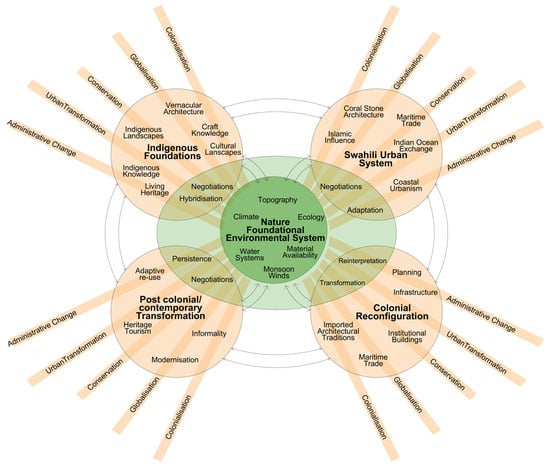
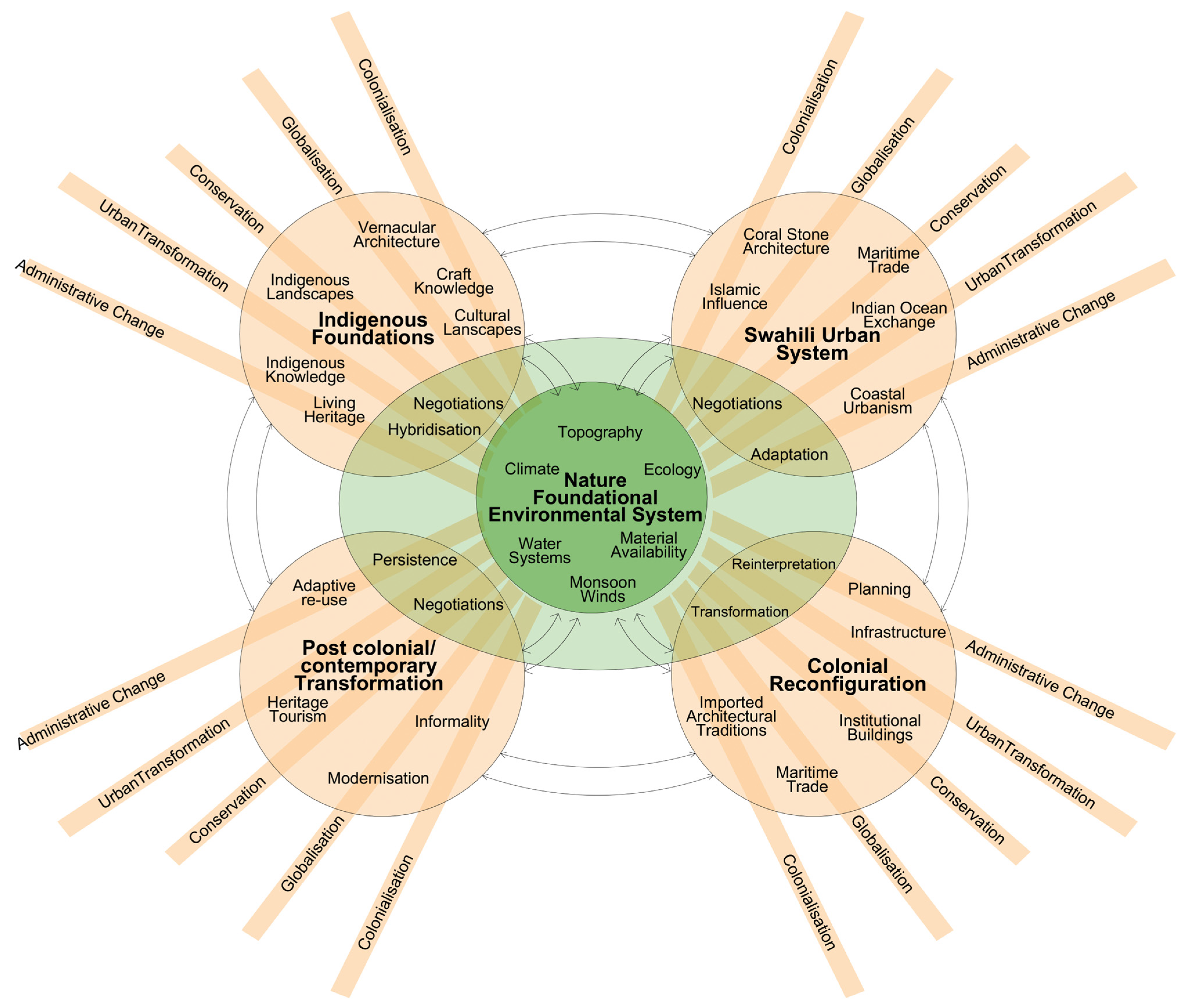
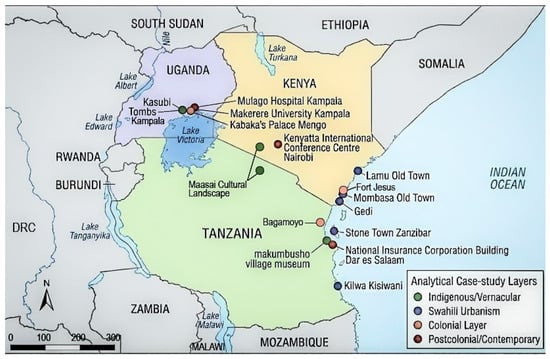
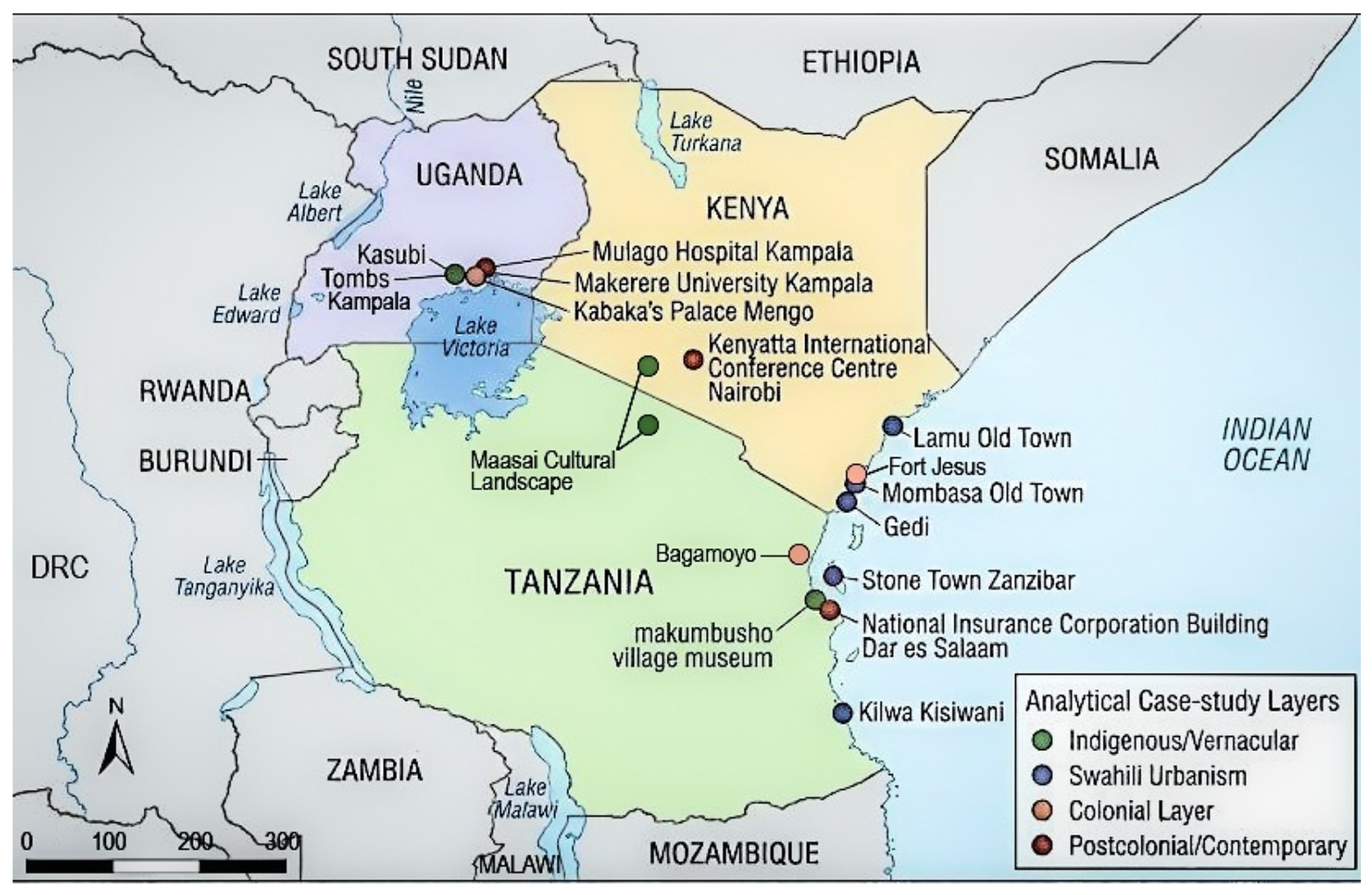
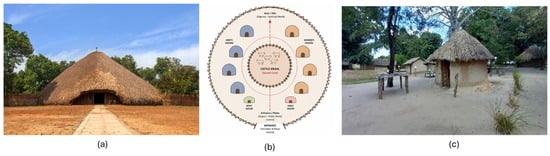
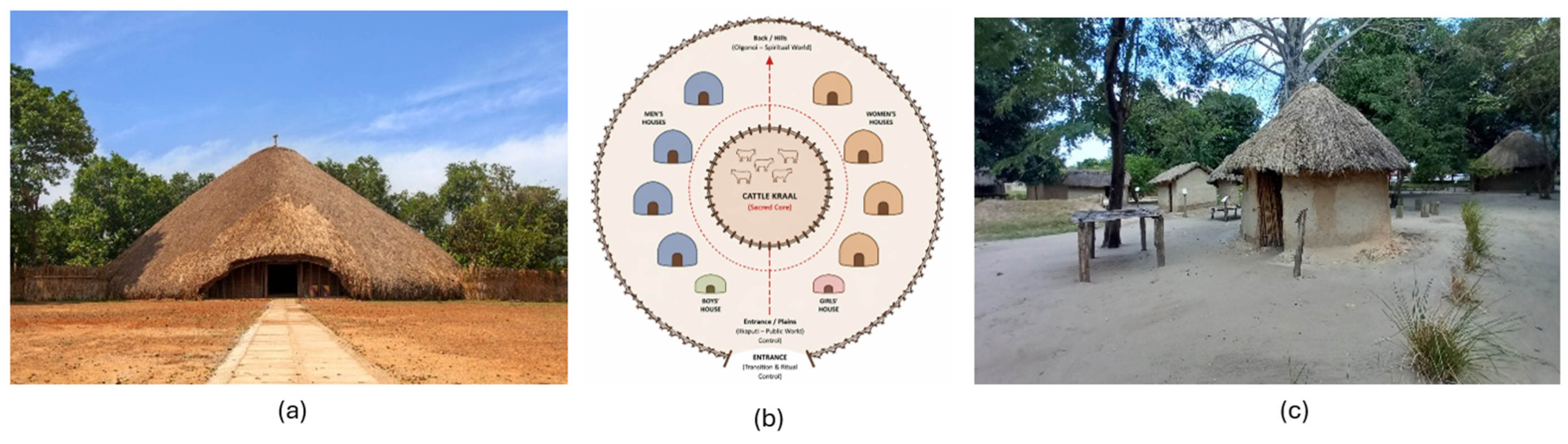
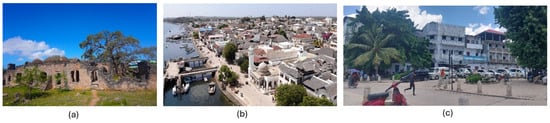
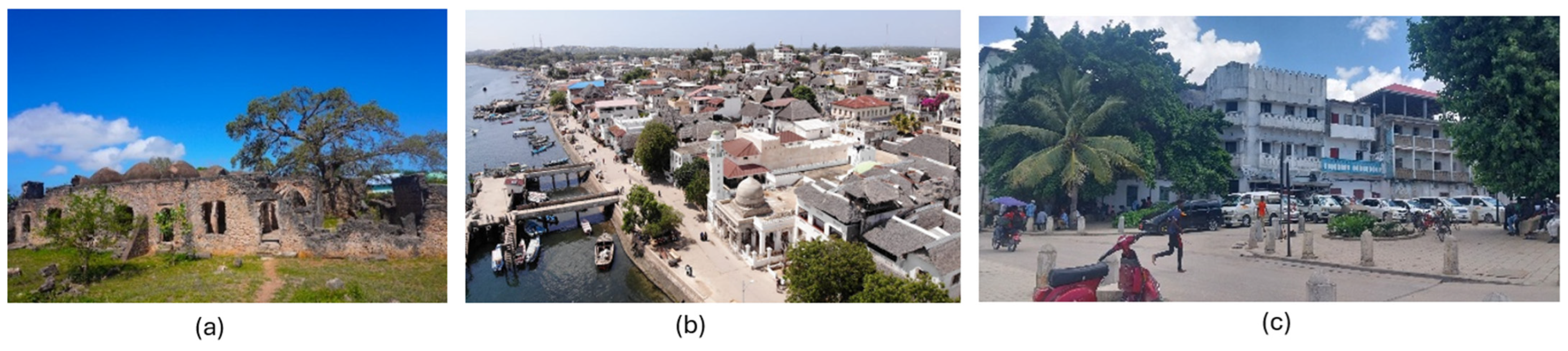
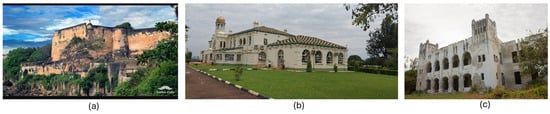
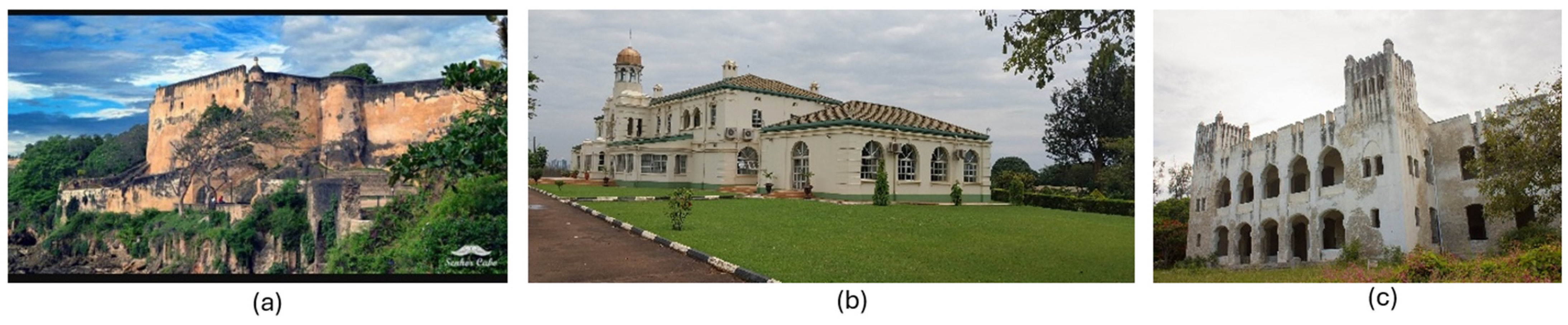
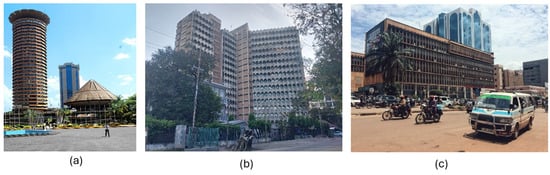
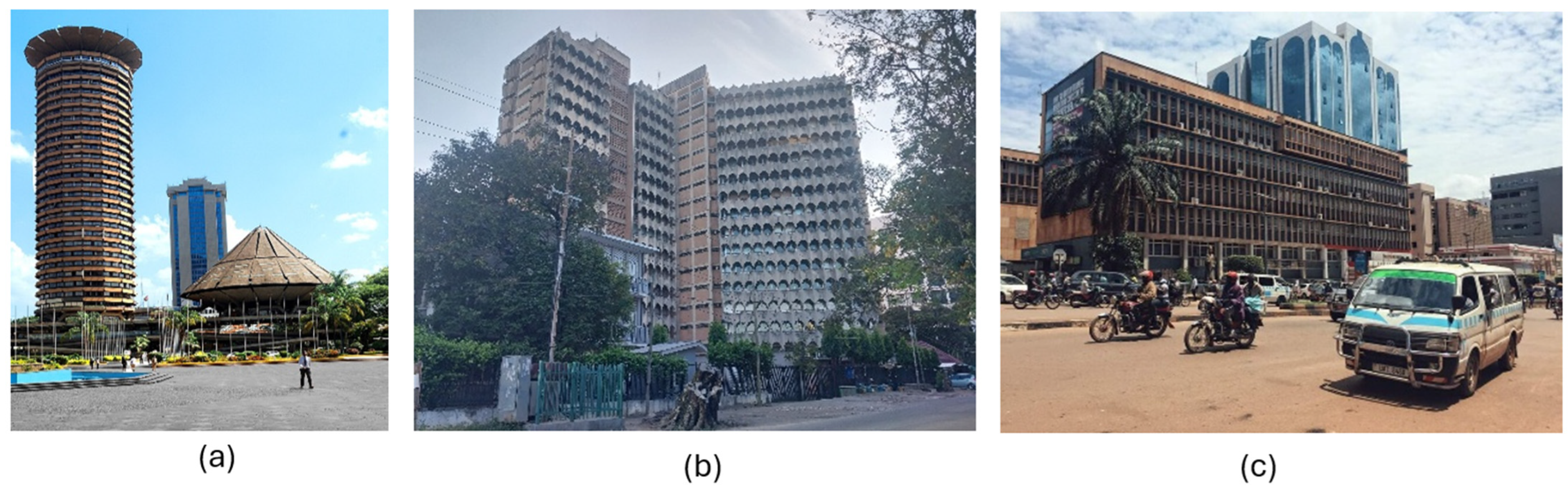

Disclaimer/Publisher’s Note: The statements, opinions and data contained in all publications are solely those of the individual author(s) and contributor(s) and not of MDPI and/or the editor(s). MDPI and/or the editor(s) disclaim responsibility for any injury to people or property resulting from any ideas, methods, instructions or products referred to in the content. |
© 2026 by the authors. Licensee MDPI, Basel, Switzerland. This article is an open access article distributed under the terms and conditions of the Creative Commons Attribution (CC BY) license.