


Abstract
HBIM (Historic Building Information Modelling) and Heritage Digital Twins (HDT) are increasingly used to organize geometric, historical, and conservation knowledge in digital environments. While research has advanced modelling accuracy, semantic enrichment, and interoperability, evaluation approaches remain largely focused on technical descriptors such as Level of Development/Detail (LOD), information completeness, and geometric reliability. Less attention is given to whether these digital outputs are effectively accessed, interpreted, used, and maintained within institutional practice. This paper examines how use is currently framed in HBIM and HDT literature and identifies a gap between technical performance metrics and the conditions required for sustained real-world adoption. Based on an interpretive review of recent research, it analyses existing evaluation paradigms and highlights their limitations in capturing operational and lifecycle dimensions of digital heritage initiatives. To address this gap, the paper introduces Level of Use (LOU) as a complementary evaluation dimension. LOU is defined as the extent to which digital heritage models are accessible, interpretable, actionable, and maintained over time within their organisational context. Positioned alongside LOD, Level of Information (LOI), and accuracy specifications, LOU links technical model quality with institutional adoption, long-term usability, and sustainable heritage management.
1. Introduction
Historic Building Information Modelling (HBIM) is widely used in digital heritage to integrate surveyed geometry with historical, material, and conservation knowledge within structured models and workflows. As the field has developed, HBIM research has broadened beyond survey-to-model pipelines toward themes such as interoperability, semantic enrichment, Extended Reality (XR)/visualisation, automation, and platform-oriented management, often framing HBIM as a long-term asset for heritage stewardship rather than a single documentation output [1,2,3,4,5]. In parallel, Heritage Digital Twin discourse has extended expectations toward systems that can support monitoring, preventive conservation, and policy-relevant decision-making over time [6,7]. This shift is increasingly reflected in applied implementations that couple HBIM with sensing and operational interfaces, where value depends not only on model content but also on deployment conditions such as accessibility, update processes, and institutional workflows [8,9].
A recurring issue in this evolving landscape is that evaluation and “quality” discussions tend to prioritise technical properties such as geometric reliability, information richness, semantic structuring, integration, and interoperability, while sustained uptake, accessibility beyond specialist users, and long-term operational embedding are less consistently treated as evaluation concerns [1,5,10]. Similar limitations are noted in the broader BIM-for-existing-buildings literature, where difficulties related to data capture, information updating, uncertainty management, and workflow integration can undermine post-delivery usability [11]. Industry specifications further reinforce a technical evaluation vocabulary: Level of Development/Detail (LOD), as defined by the international BIMForum LOD Specification on a numerical scale (LOD 100–500), is used to communicate expected development and reliability of model elements, and Level of Accuracy (LOA) guidance supports documentation of existing-conditions measurement and representation. More recently, the international information-management framework established by ISO 19650-1:2018 (Organization and digitization of information about buildings and civil engineering works, including building information modelling (BIM)—Information management using building information modelling—Part 1: Concepts and principles) [12] introduced the concept of Level of Information Need (LOIN) as the normative approach for specifying information requirements according to project purpose rather than model completeness. While this evolution strengthens the specification of information deliverables, it does not address whether those deliverables are subsequently adopted and sustained within institutional practice. While these instruments are essential for coordination, they do not by themselves determine whether a heritage model or Digital Twin is discoverable, interpretable for intended stakeholders, maintainable over time, or embedded in institutional decision processes [13,14].
Against this background, the paper is guided by two research questions:
(RQ1) How do current HBIM/HDT evaluation approaches treat use, and what do they overlook?
(RQ2) How can Level of Use (LOU) be conceptualised to complement existing evaluation constructs and support lifecycle-oriented digital heritage value?
To address these questions, the paper proposes Level of Use (LOU) as a complementary conceptual evaluation dimension focused on whether outputs are accessed, understood, applied, and maintained in real contexts of use. The proposal draws on established usability framing, effectiveness, efficiency, and satisfaction in a specified context [15,16], and is motivated by heritage workflow and implementation research emphasising that long-term value depends on post-delivery practices, including interdisciplinary handover, maintenance arrangements, and dissemination conditions [9,17].
The paper is organised as follows: Section 2 presents the interpretive review methodology; Section 3 reports the review results by situating HBIM and heritage Digital Twins between technical promise and practical uptake, examining how use is treated within prevailing evaluation approaches, and conceptualising Level of Use (LOU); Section 4 discusses why LOU matters for sustainability, governance capacity, and public value, together with implications and future research directions; and Section 5 concludes.
2. Materials and Methods
The review adopts an interpretative rather than systematic methodology. Literature was selected based on its relevance to HBIM evaluation constructs, Heritage Digital Twin operational framings, and documented implementation challenges, with emphasis on publications from 2014 to 2026 reflecting the maturation of HBIM and Heritage Digital Twin research. The objective was not exhaustive evidence aggregation but conceptual synthesis to identify recurring evaluation paradigms and under-specified dimensions related to use.
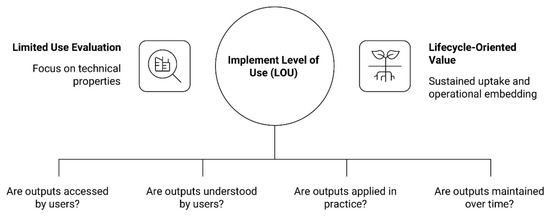
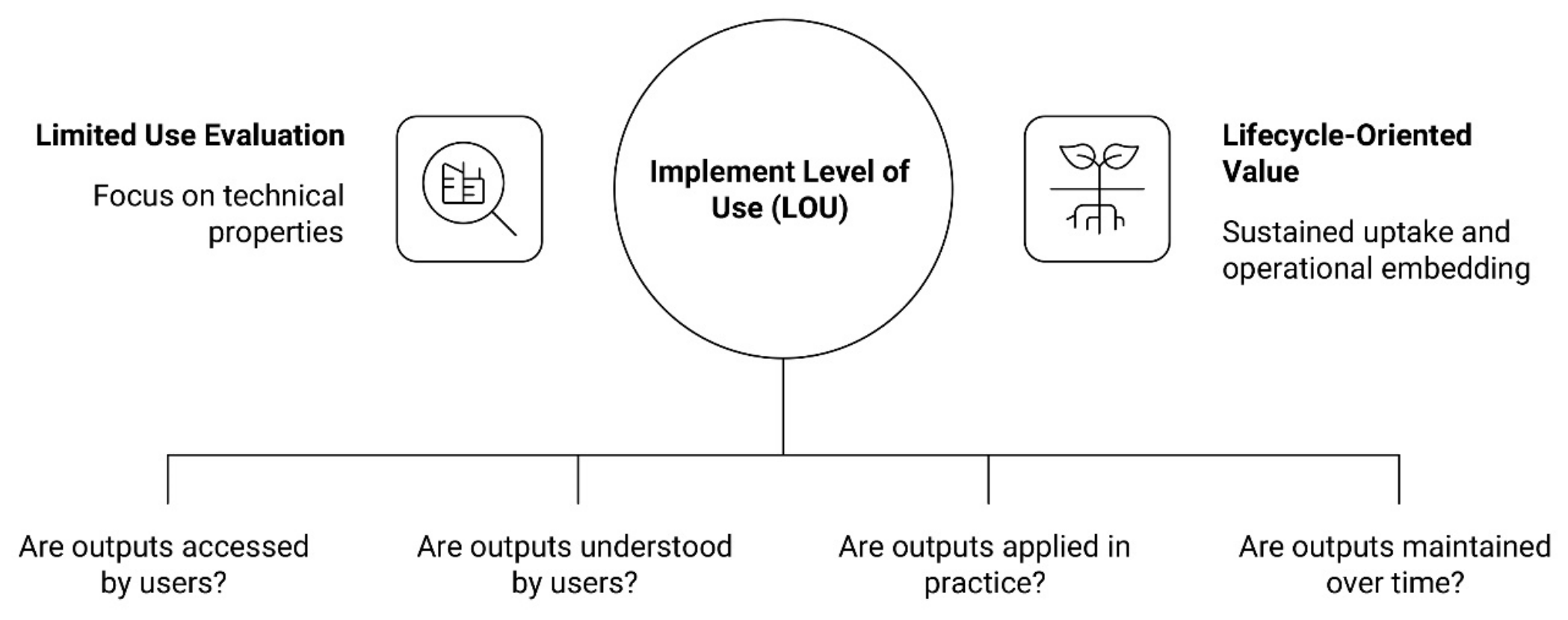
Literature searches were conducted primarily using Scopus, complemented by Google Scholar to identify recent publications and relevant standards, professional guidance, and conference contributions. The review considered peer-reviewed journal articles, review papers, conference proceedings, international and national standards, industry specifications, and policy documents where directly relevant to HBIM, Heritage Digital Twins, and digital heritage evaluation. Searches were conducted in English using combinations of keywords including HBIM, Historic Building Information Modelling, Heritage Digital Twin, Digital Twin, HBIM evaluation, Level of Development, Level of Information Need, Level of Accuracy, usability, interoperability, lifecycle management, preventive conservation, digital heritage, and heritage information management. Representative search strings included combinations such as (“HBIM” OR “Historic Building Information Modelling”) AND (“evaluation” OR “assessment” OR “usability”), (“Heritage Digital Twin” OR “Digital Twin”) AND (“conservation” OR “heritage management”), and (“Level of Development” OR LOD OR LOIN OR LOA) AND HBIM. Publications were selected according to their relevance to the research questions and their contribution to understanding how technical evaluation, operational use, and lifecycle implementation are conceptualised within the literature. Rather than quantitatively synthesising findings, the selected literature was analysed comparatively to identify recurring evaluation paradigms, conceptual gaps, and implementation challenges, which collectively informed the theoretical development of the proposed Level of Use (LOU) framework (Figure 1).
Figure 1.
The use of LOU for the enhancement of HBIM/Digital Twin value.
Consequently, the review should be interpreted as a conceptual synthesis intended to support theoretical development, rather than a comprehensive mapping of all available literature.
3. Results
3.1. HBIM and Heritage Digital Twins: From Technical Promise to Practical Use
HBIM has become an increasingly adopted approach for structuring built-heritage information linking surveyed geometry with historical, material, and conservation knowledge in a shared digital environment [10,17,18,19,20,21,22]. Recent critical reviews frame HBIM as a maturing digital heritage paradigm whose research agendas extend beyond survey-to-model workflows toward interoperability, semantic approaches, XR, AI/ML, and Digital Twin-related directions, reinforcing the need to evaluate not only technical outputs but also sustained value in practice [23]. A central technical promise of HBIM is its capacity to manage heritage complexity through explicit modelling logics and structured information. Work on generative HBIM has shown how projects attempt to formalise model reliability and richness through layered notions of development and information (e.g., LOD/LOI-related thinking), aiming to make heritage models more usable for multidisciplinary decision-making across surveying, intervention, and management contexts [5,24]. In parallel, knowledge-based enrichment and semantic-web approaches have pursued interoperability and queryability, treating semantic structuring as a pathway toward higher “model quality” and broader reusability [18]. At the national level, the Italian standard UNI 11337-4:2017 (Building and civil engineering works—Digital management of construction information processes—Part 4: Evolution and development of information within models, documents and objects) [25] formalises these constructs by composing the Level of Development from a Level of Geometry (LOG), covering graphic attributes, and a Level of Information (LOI), covering non-geometric attributes; notably, it also introduces development levels specific to restoration, an approach particular to the Italian heritage context [25]. It is important to note that UNI 11337-4:2017 and the international BIMForum LOD Specification (discussed in Section 3.2.1) use the same term, LOD, for two non-equivalent scales: the Italian standard expresses the overall Level of Development on an alphabetic scale from LOD A to LOD G, informed by two sub-components—LOG for geometric attributes and LOI for informational attributes—whereas the BIMForum specification expresses the same overall concept through a numerical scale (LOD 100–500). The two systems were developed for different normative contexts—Italian national standardisation versus international industry practice—and, despite sharing the same acronym, their respective classifications are not directly convertible or interchangeable. This national standardisation effort exists alongside a distinct regulatory threshold for mandatory BIM adoption: under Italy’s Public Contracts Code (Legislative Decree No. 36/2023, Art. 43 and Annex I.9, as amended by the Corrective Decree, Legislative Decree No. 209/2024), the use of BIM methodologies becomes mandatory for interventions on protected cultural heritage buildings only above a project value threshold of approximately €5.5 million (the EU procurement threshold), compared with a €2 million threshold for other public works [26,27]. This distinction illustrates that even at the regulatory level, the practical uptake of HBIM/BIM in the Italian heritage sector remains conditioned by project scale rather than applied uniformly across cultural heritage practice. Together, these strands underline a field-level pattern: evaluation and improvement efforts are often directed at technical robustness (structure, fidelity, semantics, integration), often treated as if improved technical outputs will translate into better real-world use.
Heritage Digital Twins extend the ambition further by introducing an explicitly temporal and operational framing. In cultural heritage contexts, Digital Twin literature has defined the twin as a research and policy support construct for preventive conservation, tying digital representation to ongoing monitoring and decision cycles rather than static documentation [7,28]. This trajectory is increasingly reflected in applied architectures that connect HBIM with monitoring streams and management interfaces. For instance, an “Open HBIM–IoT (Internet of Things)” monitoring platform for a heritage site and museum context illustrates how Digital Twin value depends on continuous data integration, accessibility of information, and the ability of institutions to operate and maintain the system [9,29,30]. Recent work proposing Digital Twin framings for heritage preservation at city/institution scale similarly reinforces that “twin” ambitions are entangled with sustainability and operational governance, not only modelling [31].
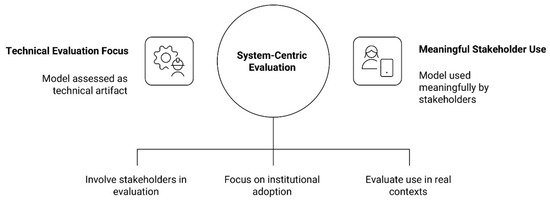
At the same time, the move from technical promise to practical use remains uneven. Evidence from the broader BIM-for-existing-buildings literature has long highlighted barriers that directly affect long-term usability: the effort of capturing existing conditions, uncertainty and incompleteness of information, and the challenge of keeping models up to date across lifecycle stages [11]. In HBIM-specific contexts, technical pipelines can become increasingly sophisticated, e.g., systematic approaches for generating HBIM for restoration. This progress does not automatically resolve downstream conditions of adoption, access, and maintenance [32]. This tension is also visible in the HBIM conservation literature’s synthesis of limitations: challenges in collaboration, communication, accessibility, and stakeholder coordination are repeatedly identified as structural constraints on real-world impact, alongside technical issues [10] (Figure 2).
Figure 2.
For the enhancement of HBIM use in Heritage context, it is fundamental to develop evaluation protocols on real case studies used by Institution and stakeholders.
Finally, the practical-use question becomes more explicit as HBIM outputs are extended to wider audiences through interaction and visualization. Work on HBIM with augmented/virtual information explicitly frames the goal as reaching broader user communities, highlighting that usability depends on the interaction environment and not only on the model’s internal richness [33]. Similarly, HBIM-and-virtual-tools contributions argue that immersive interfaces can support heritage preservation and access, but their effectiveness depends on how information is communicated and used in context [34]. More recent work focused on interactive digital models for inclusive VR (Virtual Reality) and web-based museums reinforces this direction by explicitly targeting accessibility and interaction design as prerequisites for value [35].
In summary, the literature shows a field with strong technical capabilities, advancing modelling, semantics, and integration, and a clear expansion toward Digital Twin ambitions through monitoring and platformisation [36]. Yet, it also consistently points to “use conditions” (access, interpretability for intended stakeholders, organizational routines, and governance capacity) as decisive for whether HBIM/HDT outputs deliver sustained value [7,9,10]. This motivates the next section’s focus on how use is currently addressed in evaluation and why a complementary dimension centred on real-world use becomes necessary.
3.2. How “Use” Is Currently Addressed in HBIM and Heritage Digital Twin Evaluation
3.2.1. Technical Evaluation Frameworks (LOD/LOI/LOA; Accuracy, Interoperability)
Across HBIM and heritage Digital Twin literature, “evaluation” is most consistently expressed through technical descriptors: the completeness and reliability of geometry, the richness and structure of associated information, and the accuracy of existing-conditions documentation. In industry practice, the Level of Development (LOD) specification—as formalised internationally by BIMForum on a numerical 100–500 scale, and distinct from the alphabetic LOD A–G scale used in the Italian UNI 11337-4:2017 standard (Section 3.1)—is designed to communicate how much a model element can be relied upon at a given stage, functioning as a coordination and expectation-management device. Level of Detail concerns graphical richness, whereas Level of Development refers to the maturity and reliability of geometric and non-geometric information attached to a model element. Within this framework, BIMForum LOD 500 is defined as a field-verified as-built condition reflecting what has actually been constructed and assumes particular relevance for HBIM. While LOD 500 is formally associated with post-construction updating to support operations and facility management, its consistent implementation remains uneven in practice, with many projects concluding at earlier development stages. For heritage assets, however, the verified as-built state is not simply a contractual milestone but a prerequisite for responsible conservation, lifecycle stewardship, and future intervention planning. Systematic updating toward BIMForum LOD 500 thus aligns HBIM not only with technical accuracy standards but with the long-term custodial logic inherent to heritage management.
In parallel, existing-conditions work is commonly framed through accuracy concepts, formalised in guidance such as the Level of Accuracy (LOA) specification, which distinguishes between what is measured and how it is represented and reported for downstream use. Unlike LOD and LOIN, which are defined within recognised BIM specification and ISO information-management frameworks, respectively, LOA is an industry-developed guidance document intended to standardise existing-conditions documentation rather than a formal international normative standard. Level of Information Need (LOIN), formally defined within the ISO 19650-1:2018 information-management framework, represents the current normative approach to specifying information requirements for BIM deliverables. It marks a shift from geometric completeness toward purpose-driven specification, defining the geometrical, alphanumerical, and documentation requirements of a deliverable relative to its intended use [12], a logic further developed in subsequent applications of the ISO 19650 framework to BIM information management [37]. Although LOD, LOIN, and LOU all influence project definition, they operate at different conceptual levels. LOD describes the maturity of model development, LOIN specifies the information required for a defined purpose within the ISO 19650 framework, whereas LOU evaluates whether technically compliant deliverables are ultimately accessed, interpreted, applied, and sustained in practice. LOIN and LOU both inform decisions at project inception, but they address different objects: LOIN specifies what information a deliverable must contain to serve a stated purpose, whereas LOU concerns the institutional conditions under which that deliverable is accessed, interpreted, applied, and sustained in practice. One scopes the deliverable; the other scopes the conditions of use around the deliverable. LOIN is satisfied by the delivery of conformant information; LOU remains an open question dependent on access structures, interpretive capacity, and governance continuity that lie outside any information requirement. LOU therefore does not refine the specification of the model, it evaluates the socio-technical translation of that model into sustained use. To further clarify the relationship between the established concept of Level of Information Need (LOIN) and the proposed Level of Use (LOU), Table 1 provides a comparative overview of their respective scope, purpose, and role within digital heritage information management.
Table 1.
Comparison between Level of Information Need (LOIN) and the proposed Level of Use (LOU).
While LOIN defines the information required for a given purpose, LOU frames the conditions of intended use and evaluates whether digital deliverables are subsequently translated into sustained operational use. Heritage-focused research mirrors these logics. HBIM scholarship frequently interprets model quality through combinations of development/detail and information constructs, sometimes extending or translating LOD/LOI-type concepts to accommodate irregular heritage geometry and heterogeneous knowledge conditions [38]. Brumana et al. [5], for example, explicitly connect heritage complexity to structured notions of development and information, demonstrating how such constructs coordinate surveying, modelling, and intervention requirements. This technical evaluation orientation is also evident in work prioritising semantic structuring and queryability: semantic-web enrichment approaches frame quality and reusability in terms of consistent knowledge structuring and computational accessibility [18]. An approach echoed in point-cloud semantization workflows for scan-to-HBIM modelling [19].
Recent contributions further extend this orientation from model-centric to system-centric perspectives. Morandotti and Doria [39], for example, frame 3D heritage models as components of structured information systems, arguing that operational value emerges when geometric data are embedded within queryable and protocol-defined information environments rather than remaining standalone outputs. This emphasis on data organisation, interoperability, and protocol structuring reinforces the importance of systemic integration. However, while such approaches strengthen the infrastructural robustness of digital heritage ecosystems, they continue to evaluate value primarily in terms of information architecture and exchange capability, leaving less explicit attention to sustained stakeholder engagement and long-term institutional adoption. A second dominant technical framing is interoperability, often treated as a proxy for usability and long-term value. Reviews and syntheses of HBIM research repeatedly highlight interoperability and integration (e.g., linking models to external data environments) as major research directions, reflecting the assumption that improved connectivity enables broader reuse [1]. Integration-focused contributions, such as HBIM–GIS (Geographic Information System) coupling and structured metadata alignment, similarly frame progress in terms of data exchange capability and multi-scale information coordination [40], a concern also raised in workflow-management studies addressing interoperability and open exchange formats for HBIM structural analysis [41]. Open standards such as IFC and structured information exchange frameworks (e.g., IDM (Information Delivery Manual) /MVD (Model View Definition) [42]) address interoperability and technical coordination in HBIM environments; however, they do not explicitly evaluate how models are used in practice [11]. Taken together, normative frameworks governing model development and information requirements (LOD/LOIN), alongside professional guidance for documenting existing-condition accuracy (LOA), constitute the principal technical evaluation vocabulary within HBIM and heritage Digital Twin practice. They are essential; however, they primarily assess the model as a technical artefact, what it contains, how reliable it is, and how effectively it exchanges data, rather than whether it is meaningfully used by intended stakeholders in real operational contexts.
Although the conceptual foundations of Level of Use (LOU) may ultimately be applicable to broader BIM contexts, HBIM and Heritage Digital Twins provide the most appropriate domain for its initial development. Heritage projects involve multidisciplinary stakeholder groups—including conservation professionals, historians, archaeologists, architects, public authorities, facility managers, and asset custodians—whose priorities extend beyond BIM production alone. Consequently, the value of a digital model depends not only on its technical quality but also on whether its information can be effectively accessed, interpreted, and integrated into long-term conservation and management workflows [7,9,17,39]. Moreover, compared with conventional BIM applications, HBIM requires substantially greater effort to document irregular geometries, heterogeneous historical evidence, varying levels of certainty, and evolving conservation knowledge [5,10,11]. These technical demands increase the resources, specialist expertise, and long-term investment required to develop and maintain HBIM models, reinforcing the importance of ensuring that such investments deliver sustained operational value throughout the asset lifecycle [5,9,10]. Accordingly, HBIM and Heritage Digital Twins provide a particularly appropriate context in which to establish the conceptual foundations of LOU. Future research should investigate how the proposed framework can be operationalised, empirically validated, and extended to conventional BIM workflows and other digital built-environment applications.
3.2.2. Current and Intended Use and Project-Based Logic
When use is addressed explicitly in HBIM and heritage Digital Twin discussions, it most often appears as intended use, a statement of purpose that guides scoping and frames why a model is being produced. In HBIM workflow research, intended use is commonly articulated across phases such as documentation, analysis, intervention planning, and transition to handover and maintenance [9,17,43,44]. In heritage Digital Twin discourse, use is similarly framed at the level of ambition: supporting preventive conservation [45,46] and iterative decision cycles over time, frequently linked to monitoring and policy-oriented objectives [7]. These framings are significant because they signal a shift from viewing HBIM as a static documentation output toward understanding digital heritage models as assets expected to remain actionable across extended temporal horizons. However, across much of the reviewed literature, use remains project-centred: it is typically satisfied by the successful delivery of a technical output (such as a model, enriched dataset, integration pipeline, or platform prototype) rather than demonstrated through evidence of sustained adoption after delivery. Reviews of HBIM research emphasise advances in interoperability [41], semantic enrichment [47], and automation [48], often under the assumption that improved technical quality enables reuse [1,18]. Yet, the existence of technically robust outputs does not necessarily translate into institutional embedding or continued usability beyond specialist teams, particularly where access pathways, training structures, and updating responsibilities are not developed alongside technical production [10].
Recent lifecycle-oriented HBIM protocols have extended modelling workflows beyond design and construction toward operational and dissemination [49,50]. For example, the BIMlegacy protocol structures heritage interventions across eight phases, explicitly including handover, maintenance, and culture dissemination [17]. Importantly, the authors recognise that overly complex “as-built” models may reduce practical usability for maintenance managers, thereby implicitly acknowledging that technical completeness does not necessarily translate into operational effectiveness. While such frameworks define indicative LOD targets and procedural responsibilities for each phase, they do not formalise criteria to evaluate whether digital models are effectively accessed, interpreted, institutionally integrated, or sustained over time. Lifecycle expansion does not in itself resolve the evaluation gap between technical specification and realised practice.
In this context, Level of Use (LOU) is proposed as a complementary evaluative dimension that becomes particularly observable in operational phases such as handover, maintenance, and dissemination, where technical modelling decisions intersect with governance routines and everyday institutional practice.
This project-based logic is further reinforced by constraints documented in existing-building BIM, where the effort required to capture and maintain up-to-date information, manage uncertainty, and coordinate workflows can limit post-delivery usability, even when initial modelling is successful [11,51]. Applied heritage Digital Twin implementations make this dependency visible: systems that integrate HBIM with monitoring streams and operational interfaces rely not only on model content but on deployment conditions, including access structures, interface design, and institutional capacity to operate and maintain the system over time [9,52,53,54]. Likewise, dissemination-oriented work employing interactive and immersive environments reframes intended use around access and engagement beyond specialist audiences, thereby shifting the evaluative question toward interpretability and contextual actionability.
Overall, the literature indicates that use is frequently articulated as a narrative of purpose, yet less consistently examined as a sustained and measurable outcome. Evaluation frameworks can confirm that a model is developed, information-rich, and technically integrated, while still leaving unresolved whether it is discoverable, adopted, maintained, and applied within real operational settings. This conflict establishes the conditions for the gap examined in Section 3.2.3.
3.2.3. Gaps and Limitations
The literature reviewed in this paper reveals a recurring gap between what HBIM and heritage Digital Twin evaluation most commonly measures and what ultimately determines whether digital heritage outputs deliver sustained value in practice. Syntheses of HBIM challenges further underline that organisational and communication constraints can limit impact even when technical production is successful [10,55]. There are limitations particularly relevant in motivating the introduction of Level of Use (LOU).
Use is frequently treated as an implicit outcome of technical quality rather than as an evaluative concern in its own right. Considerable effort is devoted to advancing modelling fidelity, semantic enrichment, and interoperability, often framed as pathways to reuse and value.
Evaluation is typically bounded by the project timeframe, whereas use and value unfold across the lifecycle. Protocol-oriented HBIM research emphasises continuity into handover and maintenance; however, post-delivery conditions, including updating responsibilities, software access, organisational capacity, and workflow integration, remain unevenly addressed as measurable evaluation outcomes [11,17]. This reflects broader findings in BIM for existing buildings, where challenges related to uncertainty, updating, and process coordination can undermine long-term usability even after successful model delivery.
In the end, governance conditions and stakeholder capacity remain under-specified within prevailing evaluation frameworks. Heritage Digital Twin discourse frequently positions the twin as supporting preventive conservation and iterative decision cycles over time, implicitly requiring stable governance arrangements and sustained operational capacity. Applied HBIM–IoT implementations similarly demonstrate that practical value depends on deployment conditions, including access structures, interface design, and ongoing management processes, rather than model content alone. Yet, these enabling conditions are not consistently formalised as evaluative dimensions alongside technical descriptors.
Taken together, these limitations do not diminish the importance of technical evaluation but they demonstrate that technical metrics alone cannot account for why sophisticated HBIM models and heritage Digital Twins may remain underused or short-lived. This gap supports the introduction of LOU as a complementary evaluation dimension focused explicitly on real-world use. LOU clarifies use conditions at project inception and enables systematic assessment of sustained access, interpretability, application, and maintenance across the lifecycle. Although empirical quantification of underuse remains limited in the literature, recurring documentation of collaboration barriers, updating discontinuities, and governance fragmentation suggests that the translation from technical delivery to sustained operational integration is uneven [9,10,11].
3.2.4. Why a Complementary Use-Oriented Dimension Becomes Necessary
Taken together, the reviewed literature indicates that introducing Level of Use (LOU) responds to four interrelated needs. It addresses the persistent gap between technical model production and institutional adoption, frequently noted in both HBIM and existing-building BIM research [56,57]. LOU moves evaluation beyond geometry and information-centric constructs (LOD/LOI/LOA), which assess representational reliability but not operational integration as expressed by BIMForum and USIBD (United States Institute of Building Documentation). It aligns Digital Twin ambitions—particularly those concerning preventive conservation—with the governance and lifecycle conditions required for sustained value. LOU formalises use as an evaluative concern in its own right, rather than treating it as an assumed outcome of technical sophistication [1]. These motivations collectively justify conceptualising LOU as a complementary dimension rather than a replacement of existing evaluation constructs.
3.3. Conceptualising Level of Use (LOU)
3.3.1. Terminology and Scope (Incl. Disambiguation)
Before elaborating the full definition of Level of Use (LOU) presented in Section 3.3.3, it is important to clarify terminology. In this paper, LOU denotes Level of Use—the extent to which HBIM models and Heritage Digital Twins are accessed, interpreted, applied, and sustained within their institutional context. The acronym LoU has previously been used in parts of the digital heritage and archaeological 3D reconstruction literature, however, to denote Level of Uncertainty (LoU), referring to the assessment and communication of uncertainty associated with reconstructed digital representations and their underlying evidence [58]. In the present study, LOU is introduced with a different meaning—Level of Use—referring to the extent to which HBIM models and Heritage Digital Twins are accessed, interpreted, applied, and sustained within their intended organisational context. The two concepts address distinct but complementary evaluative dimensions: Level of Uncertainty concerns the confidence and reliability associated with digital representations, whereas Level of Use concerns their operational adoption and long-term institutional utilisation. Rather than representing competing concepts, they should be understood as complementary perspectives for evaluating digital heritage assets.
In HBIM and heritage Digital Twin discussions, terms such as use, usability, adoption, uptake, value, and impact are often employed interchangeably, despite referring to distinct phenomena. In this paper, use denotes the actual application of an HBIM model or heritage Digital Twin in practice (e.g., within conservation planning, monitoring routines, maintenance decision-making, or communication activities), rather than the completion of a modelling deliverable. Intended use, by contrast, refers to purposes articulated during project scoping, frequently expressed through workflow narratives extending across intervention, handover, and maintenance phases or preventive conservation and policy-oriented decision cycles [7,59].
Usability is explained, in line with established human–system interaction literature, as the extent to which specified users achieve specified goals with effectiveness, efficiency, and satisfaction within a defined context of use [60,61,62]. While developed within Human–Computer Interaction (HCI) research, this framing is adopted here conceptually to clarify what is meant by “use in context” before extending the discussion to the institutional and lifecycle conditions specific to digital heritage. LOU does not reduce evaluation to interface usability; rather, it foregrounds the broader socio-institutional conditions shaping whether intended stakeholders can continuously apply the model or Digital Twin within routine practice.
The literature further indicates that practical use depends not only on usability but also on organisational and governance conditions, including access arrangements, update responsibilities, and institutional capacity [37,39,63,64].
Within this framing, Level of Use is proposed as a use-oriented evaluation construct for HBIM models and heritage Digital Twins. It does not replace technical evaluation (e.g., geometry, information content, accuracy, interoperability); rather, it formalises a domain inconsistently captured in prevailing frameworks: whether digital outputs are accessed, understood, maintained, and applied by intended stakeholders over time. Maintenance explicitly includes update processes and clearly assigned responsibilities.
3.3.2. LOU in Relation to LOD and LOI
Existing BIM constructs primarily communicate technical expectations regarding model content and reliability. The BIMForum LOD Specification describes Level of Development as a mechanism for communicating the degree to which model elements are developed and can be relied upon, using a numerical 100–500 scale. In the Italian context, UNI 11337-4:2017 (Section 3.1) uses the same term, LOD, for an alphabetically scaled formalisation (LOD A–G), informed by separate geometric (LOG) and informational (LOI) sub-components; despite the shared terminology, the alphabetic and numerical scales are not interchangeable and should not be treated as equivalent metrics. In heritage contexts, LOD/LOI-type constructs have been adapted to address irregular geometry, heterogeneous knowledge, and intervention-specific requirements [5,6,38,65,66].
Information-level constructs (often framed as LOI or equivalent concepts of information content and structure) clarify what non-geometric information is included and how it is organised for exchange and reuse. In HBIM research, semantic enrichment approaches exemplify this orientation by prioritising structured knowledge relationships to enhance queryability and interoperability [18].
Similarly, for existing-conditions documentation, the United States Institute of Building Documentation (USIBD) Level of Accuracy specification formalises how accuracy should be reported, distinguishing between measurement precision and representational clarity. Together, normative constructs governing model development and information requirements (LOD and LOIN), complemented by professional guidance for documenting existing-condition accuracy (LOA), strengthen technical transparency: what the model contains, how reliable it is, and how accurately it represents the physical asset. These constructs do not indicate whether models are effectively used in institutional settings. A technically detailed, information-rich model may remain underused if stakeholders cannot access, interpret, or integrate it into organisational routines. HBIM syntheses consistently identify collaboration challenges, communication barriers, stakeholder diversity, and accessibility limitations as persistent constraints [10,67].
LOU is positioned as a complementary and partially interdependent dimension. While LOD/LOI/LOA decisions influence conditions of use (e.g., interpretability, trust, reliability), they do not determine realised use outcomes. LOU captures the socio-technical translation of technical specification into operational integration. It operates not as a competing axis but as an evaluative layer connecting technical quality with institutional enactment.
3.3.3. Defining Level of Use
LOU is defined here as the extent to which HBIM models and heritage Digital Twins are translated from technical artefacts into operational instruments within their institutional context. This translation can be analytically examined across four interrelated dimensions:
- Accessibility: stakeholders can technically and procedurally access the model or Digital Twin.
- Interpretability: stakeholders can understand the information sufficiently to support their tasks.
- Actionability: model informs or shapes decisions, interventions, monitoring routines, or communication practices.
- Sustainment: update processes, stewardship responsibilities, and governance structures ensure continuity over time.
LOU is multidimensional rather than binary: it does not measure interface usability alone, but captures the extent to which technical assets become embedded within socio-institutional practice. Two observations motivate this definition: first, Heritage Digital Twin framings emphasise ongoing decision cycles and preventive conservation, indicating that value depends on continuity over time rather than one-time model delivery; second, while HBIM research has significantly advanced technical foundations, limitations related to collaboration, governance, and accessibility recur across challenge syntheses [5,10,18,35].
LOU is proposed at a conceptual level. Subsequent work may operationalise it through context-specific indicators aligned with particular heritage tasks (e.g., conservation management, monitoring, dissemination). LOU does not introduce a new concern into the field; it reorganizes fragmented issues such as usability, adoption, governance capacity, lifecycle continuity, into a formalised evaluative dimension positioned alongside technical descriptors. Its contribution lies not in identifying a new problem, but in providing a structured lens through which existing but fragmented concerns can be systematically examined.
3.3.4. LOU Across the Project Lifecycle
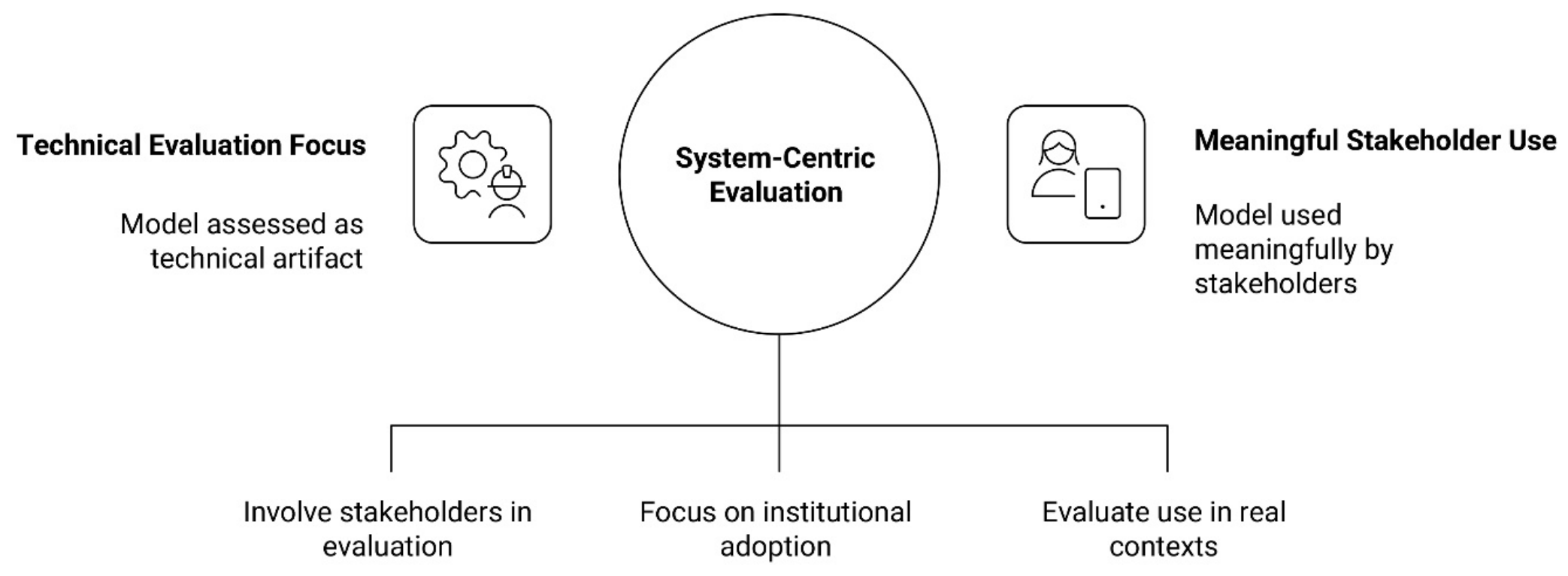
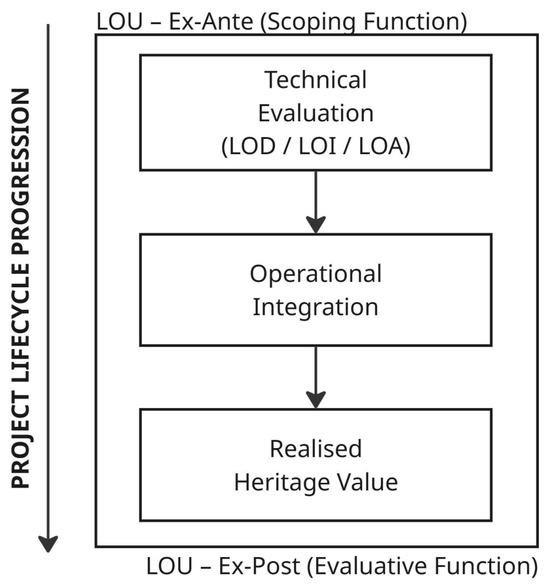
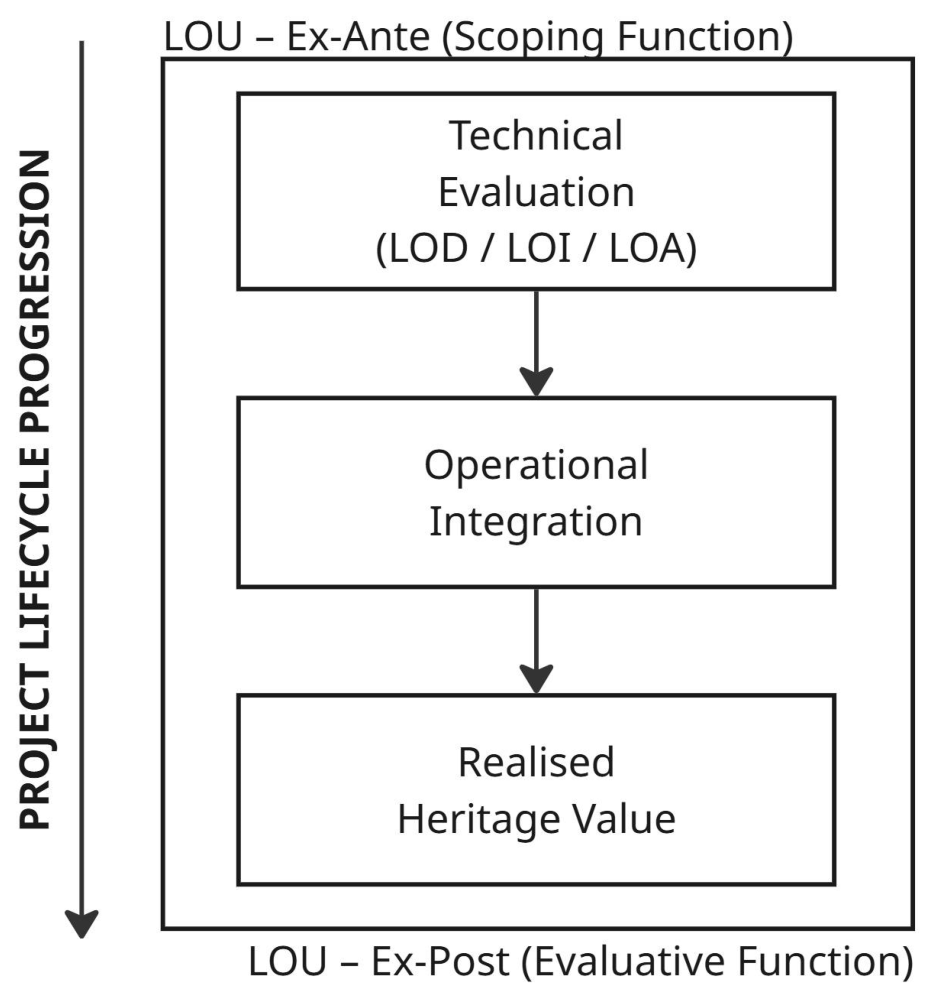
LOU operates across the lifecycle of HBIM and heritage Digital Twin initiatives in two complementary roles: pre-scoping and post (and in-use) evaluation. First, LOU clarifies user groups, tasks, and institutional conditions at project outset, informing proportionate technical choices. In this role, it supports early decisions regarding model development levels, information content, and accuracy requirements relative to anticipated use and organizational capacity [13,14]. Because modelling scope and accuracy levels carry financial and organisational implications, LOU provides a rationale for aligning technical ambition with realistic application conditions supporting proportionate LOD and LOIN decisions while helping avoid unnecessary model complexity and improving long-term maintainability and lifecycle usability. During and after operational phases, LOU offers an evaluation lens for whether HBIM models and heritage Digital Twins are adopted and sustained. Workflow-oriented research emphasises continuity into handover and maintenance, while applied monitoring platforms demonstrate that ongoing value depends on access structures, update routines, and institutional responsibility. In this capacity, LOU foregrounds governance and accessibility conditions shaping whether models remain usable over time (Figure 3).
Figure 3.
LOU as a complementary socio-technical evaluation dimension. Conceptual positioning of Level of Use (LOU) as a framing dimension that informs technical specification ex-ante and evaluates operational enactment ex-post.
Together, these lifecycle roles position LOU as a connective layer linking early modelling decisions (including LOD/LOI/LOA) to sustained institutional integration. In doing so, LOU supports a broader shift from technical promise toward durable, use-oriented digital heritage strategies.
4. Discussion
4.1. Why LOU Matters for Digital Heritage
4.1.1. Sustainability and Long-Term Value
HBIM and heritage Digital Twin initiatives often require substantial investment in surveying, modelling, semantic enrichment, and system integration. Yet, prevailing evaluation practices tend to prioritise what is delivered (such as model richness, documented accuracy, interoperability readiness) rather than what is sustained in practice. As a result, technically strong outputs may create limited long-term value if they are not actively embedded in post-handover routines. LOU addresses this sustainability challenge by reframing value around realised use rather than technical completion alone.
A persistent issue in existing-building BIM is that models can become outdated, misaligned, or underused when processes for updating information, managing uncertainty, and integrating workflows are not institutionalised. Heritage contexts intensify this challenge due to heterogeneous knowledge bases, distributed governance structures, and extended stewardship horizons. HBIM and Digital Twin implementations integrating monitoring systems or operational dashboards demonstrate that value depends on continuous management routines rather than static deliverables. LOU therefore prioritises maintainability, responsibility for updates and long-term usability as fundamental conditions for ensuring long-term value.
4.1.2. Governance and Institutional Capacity
The literature about ownership, responsibility, and decision integration consistently indicates that adoption and sustained use depend on institutional conditions that extend beyond technical evaluation: ownership structures, access permissions, updating responsibilities, and integration into decision-making routines. Even when intended use is clearly articulated in protocols and project documentation, realised use may remain limited if governance arrangements and workflow integration are misaligned with the model’s role. LOU incorporates institutional readiness into the definition of success for digital heritage initiatives, shifting evaluation from object-centred metrics toward operational capacity.
Heritage Digital Twin discourse increasingly positions digital heritage not as a static representational artefact but as an operational platform supporting preventive conservation and iterative policy cycles [7,68,69]. Understood as information systems for heritage memory and preservation, rather than static representations, HBIM models and heritage Digital Twins depend for their long-term value on the institutional capacity to keep them accessible, governed, and interpretable—conditions that data-modelling and semantic-structuring approaches for built heritage establish but do not by themselves guarantee [36,70], and which LOU is designed to make explicit. Similarly, platform-based HBIM deployments imply a service-oriented model in which access mechanisms, interfaces, and update processes are integral to continued relevance. This infrastructure orientation reinforces the necessity of LOU because if HBIM models and Digital Twins are expected to function as long-lived institutional assets, evaluation must extend beyond technical conformance to include whether they remain usable, governed, and sustained within real organisational contexts.
4.1.3. Communication and Public Value
Heritage digitisation increasingly positions HBIM and Digital Twins as tools intended to reach audiences beyond specialist modelling teams. Approaches employing AR (Augmented Reality) /VR and interactive environments explicitly aim to enhance access and interpretability for diverse stakeholders, including non-expert users. These contributions underscore that value depends not only on model completeness but on how information is encountered and understood in context.
When digital heritage outputs aim to support communication, education, or broader cultural engagement, evaluation based solely on model completeness or documented accuracy is insufficient to determine whether intended audiences can meaningfully use the outputs. Literature on immersive and interactive heritage experiences highlights accessibility, interpretability, and contextual framing as central to public-facing value. This is echoed in recent reviews of VR-assisted visual inspection for cultural heritage, where immersive tools have been used to extend engagement beyond specialist inspectors to include site visitors and non-expert audiences, alongside their core diagnostic function [71]. LOU is intended to provide a conceptual bridge between technical production and societal value by incorporating use conditions into the evaluative frame. In doing so, it expands digital heritage assessment beyond artefact quality toward lived, contextual impact.
4.2. Implications and Future Research Directions
Positioning LOU implies a shift in how HBIM and heritage Digital Twin initiatives are scoped. Rather than beginning from technical ambition and subsequently identifying use cases, future project definition may start from use conditions (users, tasks, contexts, and governance capacity) and derive proportionate technical requirements accordingly. This supports more defensible decisions regarding LOD/LOI choices and accuracy expectations and responds directly to the recurring tension between increasing technical sophistication and uneven practical uptake.
Adopting a LOU approach encourages a stronger lifecycle perspective on evaluation. Existing-building BIM research demonstrates that long-term usability is shaped by updating routines, uncertainty management, and workflow integration, while heritage Digital Twin framings emphasize continuity and iterative decision cycles over time. Future research can therefore examine how LOU evolves across phases of production, handover, operations, maintenance, and dissemination, through case studies assessing not only what is delivered, but what remains actively used. LOU opens a layer for operationalisation without reducing use to a single proxy indicator. Research can investigate which observable signals best represent access, understanding, application, and maintenance across diverse heritage contexts (e.g., conservation management versus public dissemination), and how these relate to established technical constructs such as LOD/LOI/LOA and interoperability priorities. In parallel, further inquiry can explore how usability principles, such as effectiveness, efficiency, and satisfaction in context, interact with institutional constraints and governance arrangements in shaping real-world adoption.
The LOU concept foregrounds responsibility and institutional capacity. If heritage models and digital twins are increasingly conceptualised as infrastructural assets, future research must examine governance arrangements and organisational practices necessary for sustained use, including ownership structures, access policies, update responsibilities, and decision integration. This complements technical work on semantic enrichment and interoperability by reframing success as a function of both object quality and sustained institutional use.
To support operationalisation and empirical validation, future research should address the following questions:
- Future research question (FRQ) 1: What implications does LOU have for pre-scoping, particularly in relation to related LOD/LOI/LOA choices and cost–benefit expectations?
- FRQ2: How can LOU be translated into context-sensitive indicators across different heritage scenarios without reducing use to a single metric?
- FRQ3: How does realised LOU evolve across lifecycle phases, and which organisational conditions most influence sustained use?
- FRQ4: How do mismatches between planned and realised LOU relate to technical decisions (LOD/LOI/LOA, interoperability) and governance arrangements, and how can these lessons inform future project planning?
5. Conclusions
HBIM and heritage Digital Twin research has advanced significantly in technical capability, with sustained emphasis on modelling precision, information structuring, documented accuracy, and interoperability. At the same time, the literature reviewed in this study indicates that practical uptake and sustained value are frequently mediated by conditions that fall outside prevailing technical evaluation framings, including accessibility, stakeholder coordination, governance responsibility, and maintenance capacity. This creates a persistent risk that technically sophisticated heritage models and Digital Twin systems deliver uneven long-term benefit relative to their investment.
This article introduced the Level of Use (LOU) as a complementary conceptual dimension for evaluating HBIM and Digital Twins of cultural heritage. Positioned as complementary to established technical constructs, LOU focuses on use in context, i.e., whether the results are accessible, understandable, applicable, and maintainable over time. Drawing conceptually on usability principles, the framework extends the assessment beyond the properties of artefacts to the conditions of adoption in the real world.
The principal contribution of this study is therefore structural rather than technical. It does not introduce new modelling constructs but formalises a missing evaluative layer within digital heritage discourse: the systematic assessment of how technical models become operationalised in institutional practice. By positioning Level of Use alongside established descriptors such as LOD, LOI, and LOA, the paper reframes evaluation as a socio-technical continuum linking model specification, governance capacity, and sustained lifecycle integration.
Author Contributions
Conceptualization, E.D. and M.M. (Maya Moussallieh); writing—original draft preparation, E.D. and M.M. (Maya Moussallieh); writing—review and editing, E.D. and M.M. (Maya Moussallieh); visualization, E.D.; supervision, M.M. (Marco Morandotti). All authors have read and agreed to the published version of the manuscript.
Funding
This research received no external funding.
Data Availability Statement
This paper is a conceptual review article and does not report original empirical data or generate new datasets. No primary data were collected, produced, or analysed in the course of this research. All sources cited are publicly available in peer-reviewed literature and are identified in the reference list. Accordingly, there are no underlying research data to share. Any further inquiries regarding the sources reviewed may be directed to the corresponding author.
Acknowledgments
During the preparation of this manuscript, the authors used Claude (Anthropic, Claude Opus 4.8) for the purposes of language and formatting. The authors have reviewed and edited the output and take full responsibility for the content of this publication.
Conflicts of Interest
The authors declare no conflicts of interest.
Abbreviations
The following abbreviations are used in this manuscript:
| Abbreviation | Definition |
| AI/ML | Artificial Intelligence/Machine Learning |
| AR | Augmented Reality |
| BIM | Building Information Modelling |
| GIS | Geographic Information System |
| HBIM | Historic Building Information Modelling |
| HCI | Human–Computer Interaction |
| HDT | Heritage Digital Twin |
| IDM | Information Delivery Manual |
| IFC | Industry Foundation Classes |
| IoT | Internet of Things |
| LOA | Level of Accuracy |
| LOD | Level of Development/Detail |
| LOG | Level of Geometry |
| LOI | Level of Information |
| LOIN | Level of Information Need |
| LOU | Level of Use |
| MVD | Model View Definition |
| USIBD | United States Institute of Building Documentation |
| VR | Virtual Reality |
| XR | Extended Reality |
References
- Banfi, F.; Liu, W. The State of HBIM in Digital Heritage: A Critical and Bibliometric Assessment of Six Emerging Frontiers (2015–2025). Appl. Sci. 2026, 16, 906. [Google Scholar] [CrossRef] [Scilit]
- Giuliani, F.; Gaglio, F.; Martino, M.; De Falco, A. A HBIM Pipeline for the Conservation of Large-Scale Architectural Heritage: The City Walls of Pisa. Herit. Sci. 2024, 12, 35. [Google Scholar] [CrossRef] [Scilit]
- Angelosanti, M.; Russo, M.; D’Amico, A.; Pugnaletto, M.; Paolini, C.; Quagliarelli, E.; Curra, E. BIM-Based Workflow for Managing Multi-Risk Factors of Open Spaces in Historical Built Environment. In Sustainability in Energy and Buildings 2022; Littlewood, J., Howlett, R.J., Jain, L.C., Eds.; Smart Innovation, Systems and Technologies; Springer: Singapore, 2023; Volume 336. [Google Scholar] [CrossRef] [Scilit]
- Fattore, C.; Buldo, M.; Priore, A.; Porcari, S.; Porcari, V.D.; De Fino, M. A Comprehensive Overview of Heritage BIM Frameworks: Platforms and Technologies Integrating Multi-Scale Analyses, Data Repositories, and Sensor Systems. Heritage 2025, 8, 247. [Google Scholar] [CrossRef] [Scilit]
- Brumana, R.; Della Torre, S.; Previtali, M.; Barazzetti, L.; Cantini, L.; Oreni, D.; Banfi, F. Generative HBIM Modelling to Embody Complexity (LOD, LOG, LOA, LOI): Surveying, Preservation, Site Intervention—The Basilica di Collemaggio (L’Aquila). Appl. Geomat. 2018, 10, 545–567. [Google Scholar] [CrossRef] [Scilit]
- Vuoto, A.; Funari, M.F.; Lourenço, P.B. Shaping Digital Twin Concept for Built Cultural Heritage Conservation: A Systematic Literature Review. Int. J. Archit. Herit. 2024, 18, 1762–1795. [Google Scholar] [CrossRef] [Scilit]
- Jouan, P.; Hallot, P. Digital Twin: Research Framework to Support Preventive Conservation Policies. ISPRS Int. J. Geo-Inf. 2020, 9, 228. [Google Scholar] [CrossRef] [Scilit]
- Savini, F.; Marra, A.; Fabbrocino, G.; Trizio, I. From a Multidisciplinary Analysis to HBIM: Tools for the Digital Documentation of Historical Buildings. In Diagnosis of Heritage Buildings by Non-Destructive Techniques; Woodhead Publishing: Cambridge, UK, 2024; pp. 337–360. [Google Scholar] [CrossRef] [Scilit]
- Martinelli, L.; Calcerano, F.; Adinolfi, F.; Chianetta, D.; Gigliarelli, E. Open HBIM-IoT Monitoring Platform for the Management of Historical Sites and Museums: An Application to the Bourbon Royal Site of Carditello. Int. J. Archit. Herit. 2025, 19, 153–170. [Google Scholar] [CrossRef] [Scilit]
- Penjor, T.; Banihashemi, S.; Hajirasouli, A.; Golzad, H. Heritage Building Information Modeling (HBIM) for Heritage Conservation: Framework of Challenges, Gaps, and Existing Limitations of HBIM. Digit. Appl. Archaeol. Cult. Herit. 2024, 35, e00366. [Google Scholar] [CrossRef] [Scilit]
- Volk, R.; Stengel, J.; Schultmann, F. Building Information Modeling (BIM) for Existing Buildings—Literature Review and Future Needs. Autom. Constr. 2014, 38, 109–127. [Google Scholar] [CrossRef] [Scilit]
- ISO 19650-1:2018; Organization and Digitization of Information about Buildings and Civil Engineering Works, Including Building Information Modelling (BIM)—Information Management Using Building Information Modelling—Part 1: Concepts and Principles. International Organization for Standardization (ISO): Geneva, Switzerland, 2018.
- BIMForum. LOD Specification 2025, Part I; BIMForum: Haverford, PA, USA, 2025; Available online: https://bimforum.org/resource/lod-level-of-development-lod-specification/ (accessed on 25 June 2026).
- United States Institute of Building Documentation (USIBD). Level of Accuracy (LOA) Specification Guide, Document C120, version 2.0; USIBD: Tustin, CA, USA, 2016; Available online: https://usibd.org/level-of-accuracy/ (accessed on 25 June 2026).
- Moumane, K.; Idri, A.; Abran, A. Usability Evaluation of Mobile Applications Using ISO 9241 and ISO 25062 Standards. SpringerPlus 2016, 5, 548. [Google Scholar] [CrossRef] [Scilit] [PubMed]
- Fazion, B.; Bocciarelli, M.; Lombardini, N.; Fregonese, L. Usability and Interoperability of an Accurate HBIM Architectural Model for Structural Analysis. Int. Arch. Photogramm. Remote Sens. Spat. Inf. Sci. 2025, XLVIII-M-9-2025, 465–471. [Google Scholar] [CrossRef] [Scilit]
- Jordan-Palomar, I.; Tzortzopoulos, P.; García-Valldecabres, J.; Pellicer, E. Protocol to Manage Heritage-Building Interventions Using Heritage Building Information Modelling (HBIM). Sustainability 2018, 10, 908. [Google Scholar] [CrossRef] [Scilit]
- Quattrini, R.; Pierdicca, R.; Morbidoni, C. Knowledge-Based Data Enrichment for HBIM: Exploring High-Quality Models Using the Semantic-Web. J. Cult. Herit. 2017, 28, 129–139. [Google Scholar] [CrossRef] [Scilit]
- Dell’Amico, A.; Sanseverino, A.; Albertario, S. Point Cloud Data Semantization for Parametric Scan-to-HBIM Modeling Procedures. In Beyond Digital Representation; Giordano, A., Russo, M., Spallone, R., Eds.; Digital Innovations in Architecture, Engineering and Construction; Springer: Cham, Switzerland, 2024. [Google Scholar] [CrossRef] [Scilit]
- Avena, M.; Patrucco, G.; Remondino, F.; Spanò, A. A Scalable Approach for Automating Scan-to-BIM Processes in the Heritage Field. Int. Arch. Photogramm. Remote Sens. Spat. Inf. Sci. 2024, XLVIII-2/W4-2024, 25–31. [Google Scholar] [CrossRef] [Scilit]
- Fatta, F. The Many Dimensions of the Digital Model. AGATHON 2020, 7, 16–25. [Google Scholar] [CrossRef]
- Parrinello, S.; Dell’Amico, A. From Survey to Parametric Models: HBIM Systems for Enrichment of Cultural Heritage Management. In From Building Information Modelling to Mixed Reality; Bolognesi, C., Villa, D., Eds.; Springer Tracts in Civil Engineering; Springer: Cham, Switzerland, 2021. [Google Scholar] [CrossRef] [Scilit]
- Ambrosio, V.; Cantatore, E.; Fatiguso, F. Investigating the Use of Augmented Reality and BIM for Architectural Heritage: A Systematic Review. In International Conference of Ar.Tec. (Scientific Society of Architectural Engineering); Springer Nature: Cham, Switzerland, 2025; pp. 40–64. [Google Scholar] [CrossRef] [Scilit]
- Santini, S.; Borghese, V.; Baggio, C. HBIM-Based Decision-Making Approach for Sustainable Diagnosis and Conservation of Historical Timber Structures. Sustainability 2023, 15, 3003. [Google Scholar] [CrossRef] [Scilit]
- UNI 11337-4:2017; Building and Civil Engineering Works—Digital Management of the Informative Processes—Part 4: Evolution and Information Development of Models, Drawings and Objects. Ente Nazionale Italiano di Unificazione (UNI): Milan, Italy, 2017.
- Italian Republic. Legislative Decree No. 36 of 31 March 2023, Public Contracts Code (Codice dei Contratti Pubblici), Article 43 and Annex I.9; Gazzetta Ufficiale della Repubblica Italiana: Rome, Italy, 2023.
- Italian Republic. Legislative Decree No. 209 of 31 December 2024, Corrective and Supplementary Provisions to the Public Contracts Code (Disposizioni Integrative e Correttive al Codice dei Contratti Pubblici); Gazzetta Ufficiale della Repubblica Italiana: Rome, Italy, 2024.
- Kong, X.; Hucks, R.G. Preserving Our Heritage: A Photogrammetry-Based Digital Twin Framework for Monitoring Deteriorations of Historic Structures. Autom. Constr. 2023, 152, 104928. [Google Scholar] [CrossRef]
- Cui, H.; Wu, J. How Architectural Heritage Is Moving to Smart: A Systematic Review of HBIM. Buildings 2025, 15, 2664. [Google Scholar] [CrossRef] [Scilit]
- Dave, B.; Buda, A.; Nurminen, A.; Främling, K. A Framework for Integrating BIM and IoT through Open Standards. Autom. Constr. 2018, 95, 35–45. [Google Scholar] [CrossRef] [Scilit]
- Serbouti, I.; Chenal, J.; Tazi, S.A.; Baik, A.; Hakdaoui, M. Digital Transformation in African Heritage Preservation: A Digital Twin Framework for a Sustainable Bab Al-Mansour in Meknes City, Morocco. Smart Cities 2025, 8, 29. [Google Scholar] [CrossRef] [Scilit]
- Moyano, J.; Carreño, E.; Nieto-Julián, J.E.; Gil-Arizón, I.; Bruno, S. Systematic Approach to Generate Historical Building Information Modelling (HBIM) in Architectural Restoration Project. Autom. Constr. 2022, 143, 104551. [Google Scholar] [CrossRef] [Scilit]
- Barazzetti, L.; Banfi, F.; Brumana, R.; Oreni, D.; Previtali, M.; Roncoroni, F. HBIM and Augmented Information: Towards a Wider User Community of Image and Range-Based Reconstructions. Int. Arch. Photogramm. Remote Sens. Spat. Inf. Sci. 2015, XL-5/W7, 35–42. [Google Scholar] [CrossRef] [Scilit]
- Osello, A.; Lucibello, G.; Morgagni, F. HBIM and Virtual Tools: A New Chance to Preserve Architectural Heritage. Buildings 2018, 8, 12. [Google Scholar] [CrossRef] [Scilit]
- Banfi, F.; Oreni, D. Unlocking the Interactive Potential of Digital Models with Game Engines and Visual Programming for Inclusive VR and Web-Based Museums. Virtual Archaeol. Rev. 2025, 16, 44–70. [Google Scholar] [CrossRef] [Scilit]
- Boeva, Y.; Braun, K.; Kropp, C. Platformization in the Built Environment: The Political Techno-Economy of Building Information Modeling. Sci. Cult. 2024, 33, 146–173. [Google Scholar] [CrossRef] [Scilit]
- Kaya, U.; Özener, O.Ö. A Strategic Evaluation of BIM-Driven Information Management in the Context of ISO 19650-2 Standard. Eng. Constr. Archit. Manag. 2025, 32, 7857–7886. [Google Scholar] [CrossRef] [Scilit]
- Brusaporci, S.; Maiezza, P.; Tata, A. A Framework for Architectural Heritage HBIM Semantization and Development. Int. Arch. Photogramm. Remote Sens. Spat. Inf. Sci. 2018, XLII-2, 179–184. [Google Scholar] [CrossRef] [Scilit]
- Morandotti, M.; Doria, E. Information System as Tool for Cultural Heritage Documentation and Preservation. Protocol Structuring and Testing on a Case Study. Int. Arch. Photogramm. Remote Sens. Spat. Inf. Sci. 2023, XLVIII-M-2-2023, 1081–1088. [Google Scholar] [CrossRef] [Scilit]
- Dionizio, R.F.; Dezen-Kempter, E. From Data and Metadata to HBIM–GIS Integration. Int. J. Archit. Herit. 2025, 19, 2443–2456. [Google Scholar] [CrossRef] [Scilit]
- Biagini, C.; Bongini, A.; Di Costanzo, E. Management of Information Workflows in HBIM Processes for Structural Analysis: Interoperability and Open Exchange Formats. In Structural Analysis of Historical Constructions. SAHC 2023; Endo, Y., Hanazato, T., Eds.; RILEM Bookseries; Springer: Cham, Switzerland, 2024; Volume 47. [Google Scholar] [CrossRef] [Scilit]
- Pinheiro, S.; Wimmer, R.; O’Donnell, J.; Muhic, S.; Bazjanac, V.; Maile, T.; Frisch, J.; van Treeck, C. MVD Based Information Exchange between BIM and Building Energy Performance Simulation. Autom. Constr. 2018, 90, 91–103. [Google Scholar] [CrossRef] [Scilit]
- Martinelli, L.; Calcerano, F.; Gigliarelli, E. Methodology for an HBIM Workflow Focused on the Representation of Construction Systems of Built Heritage. J. Cult. Herit. 2022, 55, 277–289. [Google Scholar] [CrossRef] [Scilit]
- Waqar, A. Performance Benchmarking of Scan-to-HBIM Workflows for Cultural Heritage (2012–2025). Autom. Constr. 2026, 184, 106848. [Google Scholar] [CrossRef] [Scilit]
- Mazzetto, S. Integrating Emerging Technologies with Digital Twins for Heritage Building Conservation: An Interdisciplinary Approach with Expert Insights and Bibliometric Analysis. Heritage 2024, 7, 6432–6479. [Google Scholar] [CrossRef] [Scilit]
- Colace, F.; Limongiello, M.; Lorusso, A.; Pellegrino, M.; Santaniello, D.; Santoriello, A. Digital Twin for Cultural Heritage: A Computational Approach to Predictive Conservation. Digit. Appl. Archaeol. Cult. Herit. 2026, 40, e00519. [Google Scholar] [CrossRef] [Scilit]
- Dinis, F.M.; Poças Martins, J.; Guimarães, A.S.; Rangel, B. BIM and Semantic Enrichment Methods and Applications: A Review of Recent Developments. Arch. Comput. Methods Eng. 2022, 29, 879–895. [Google Scholar] [CrossRef] [Scilit]
- Gil, A.; Arayici, Y. AI Implementation Roadmap for Automated HBIM: Toward Standardised Digital Workflows for UK Cultural Heritage. Buildings 2026, 16, 921. [Google Scholar] [CrossRef] [Scilit]
- Di Santo, N.; Guante Henriquez, L.; Dotelli, G.; Imperadori, M. Holistic Approach for Assessing Buildings’ Environmental Impact and User Comfort from Early Design: A Method Combining Life Cycle Assessment, BIM, and Active House Protocol. Buildings 2023, 13, 1315. [Google Scholar] [CrossRef] [Scilit]
- Scherz, M.; Wieser, A.A.; Passer, A.; Kreiner, H. Implementation of Life Cycle Assessment (LCA) in the Procurement Process of Buildings: A Systematic Literature Review. Sustainability 2022, 14, 16967. [Google Scholar] [CrossRef] [Scilit]
- El Barhoumi, N.; Hajji, R. HBIM and Extended Reality for Cultural Mediation of Historical Heritage: A Review. Int. Arch. Photogramm. Remote Sens. Spat. Inf. Sci. 2024, XLVIII-4/W9-2024, 125–132. [Google Scholar] [CrossRef] [Scilit]
- Bulut Dönmez, G. A Comparative Analysis on User Interface and User Experience Differences in Building Information Modeling Tools. Master’s Thesis, Middle East Technical University, Ankara, Turkey, 2024. [Google Scholar]
- Rehman, S.U.; Kim, I.; Hwang, K.-E. Advancing BIM and Game Engine Integration in the AEC Industry: Innovations, Challenges, and Future Directions. J. Comput. Des. Eng. 2025, 12, 26–54. [Google Scholar] [CrossRef] [Scilit]
- Hmidah, N.A.; Haron, N.A.; Alias, A.H.; Law, T.H.; Altohami, A.B.A.; Effendi, R.A.A.R.A. The Role of the Interface and Interface Management in the Optimization of BIM Multi-Model Applications: A Review. Sustainability 2022, 14, 1869. [Google Scholar] [CrossRef] [Scilit]
- Silva, F.B.; Cuperschmid, A.R.; Cerávolo, A.L.; Fabrício, M. A Technological Prospect for a Diagnostic Model in HBIM. J. Comput. Cult. Herit. 2022, 15, 79. [Google Scholar] [CrossRef] [Scilit]
- Tavallaei, R.; Mashayekhi, A.; Harrison, N.; Talebian, M.; Moser, R. BIM Adoption: A Case of Institutional Pressures and Top Management Support. J. Constr. Eng. Manag. 2022, 148, 04022084. [Google Scholar] [CrossRef] [Scilit]
- Hallen, K.O.; Forsman, M.; Eriksson, A. Interactions between Human, Technology and Organization in Building Information Modelling (BIM)—A Scoping Review of Critical Factors for the Individual User. Int. J. Ind. Ergon. 2023, 97, 103480. [Google Scholar] [CrossRef] [Scilit]
- Landes, T.; Grussenmeyer, P.; Guillemin, S.; Alby, E. Uncertainty Visualization Approaches for 3D Models of Castles Restituted from Archaeological Knowledge. Int. Arch. Photogramm. Remote Sens. Spat. Inf. Sci. 2019, XLII-2/W9, 409–416. [Google Scholar] [CrossRef] [Scilit]
- Lourenço, P.B.; Barontini, A.; Oliveira, D.V.; Ortega, J. Rethinking Preventive Conservation: Recent Examples. In Geotechnical Engineering for the Preservation of Monuments and Historic Sites III; CRC Press: Boca Raton, FL, USA, 2022; pp. 70–86. [Google Scholar]
- Nielsen, J. Web Usability; Apogeo Editore: Milan, Italy, 2000. [Google Scholar]
- Grier, R.A.; Bangor, A.; Kortum, P.; Peres, S.C. The System Usability Scale: Beyond Standard Usability Testing. Proc. Hum. Factors Ergon. Soc. Annu. Meet. 2013, 57, 187–191. [Google Scholar] [CrossRef] [Scilit]
- Jordan, P.W. An Introduction to Usability; CRC Press: Boca Raton, FL, USA, 2020. [Google Scholar]
- Schaffer, E. Institutionalization of Usability: A Step-by-Step Guide; Addison-Wesley Professional: Boston, MA, USA, 2004. [Google Scholar]
- La Placa, S.; Doria, E. Digital Documentation and Fast Census for Monitoring the University’s Built Heritage. Int. Arch. Photogramm. Remote Sens. Spat. Inf. Sci. 2024, 48, 271–278. [Google Scholar] [CrossRef] [Scilit]
- Sanseverino, A.; Messina, B.; Limongiello, M.; Guida, C.G. An HBIM Methodology for the Accurate and Georeferenced Reconstruction of Urban Contexts Surveyed by UAV: The Case of the Castle of Charles V. Remote Sens. 2022, 14, 3688. [Google Scholar] [CrossRef] [Scilit]
- Cruz, Y.; Cabaleiro, M.; Conde, B.; Barros, B.; Riveiro, B. Methodology for the Integration of Structural Health Assessment of Masonry Bridges into HBIM. Int. J. Archit. Herit. 2025, 19, 1362–1384. [Google Scholar] [CrossRef] [Scilit]
- Nieto-Julián, J.E.; Farratell, J.; Bouzas Cavada, M.; Moyano, J. Collaborative Workflow in an HBIM Project for the Restoration and Conservation of Cultural Heritage. Int. J. Archit. Herit. 2023, 17, 1813–1832. [Google Scholar] [CrossRef] [Scilit]
- Cespedes-Cubides, A.S.; Jradi, M. A Review of Building Digital Twins to Improve Energy Efficiency in the Building Operational Stage. Energy Inform. 2024, 7, 11. [Google Scholar] [CrossRef] [Scilit]
- Darwish, A.; Hassanien, A.E. IoHCT: Internet of Cultural Heritage Things Digital Twins for Conservation and Health Monitoring of Cultural Heritage in the Age of Digital Transformation. In Digital Twins for Digital Transformation: Innovation in Industry; Hassanien, A.E., Darwish, A., Snasel, V., Eds.; Studies in Systems, Decision and Control; Springer: Cham, Switzerland, 2022; Volume 423. [Google Scholar] [CrossRef] [Scilit]
- Giovannini, E.C.; Prati, D.; Nannei, V.M.; Mirabella Roberti, G. Interdisciplinarity for Architectural Heritage: An HBIM Data Modelling Approach for the Church of San Tomè in Almenno (BG). In ReUSO 2024. Documentation, Restoration and Reuse of Heritage, Bergamo, Italy, 29–31 October 2024; Pvblica Press: Alghero, Italy, 2024; pp. 796–807. [Google Scholar]
- Mishra, M.; Doria, E. Virtual Reality and Artificial Intelligence-Assisted Visual Inspections for Cultural Heritage Structures: A Review. Int. J. Archit. Herit. 2026, 1–25. [Google Scholar] [CrossRef] [Scilit]

Disclaimer/Publisher’s Note: The statements, opinions and data contained in all publications are solely those of the individual author(s) and contributor(s) and not of MDPI and/or the editor(s). MDPI and/or the editor(s) disclaim responsibility for any injury to people or property resulting from any ideas, methods, instructions or products referred to in the content. |
© 2026 by the authors. Licensee MDPI, Basel, Switzerland. This article is an open access article distributed under the terms and conditions of the Creative Commons Attribution (CC BY) license.