
Article

The Facial Heritage of the Canary Islands: Craniofacial Analysis of Fifty Skulls from a Pre-Hispanic Population

by
Maria Castañeyra Ruiz
* and
Caroline Wilkinson
Face Lab, Liverpool John Moores University, Liverpool L1 9DE, UK
*
Author to whom correspondence should be addressed.
Heritage 2026, 9(8), 306; https://doi.org/10.3390/heritage9080306
Submission received: 26 June 2026 / Revised: 29 July 2026 / Accepted: 30 July 2026 / Published: 6 August 2026
(This article belongs to the Section Cultural Heritage)

Abstract

This research project aimed to create a complete and representative picture of the facial heritage of the Canary Islands, by accommodating the interpretations of recent genome studies and explorations regarding the identity of the ancient Canarians, alongside facial anthropology and comparative analysis with a modern population. This project therefore represents an exciting combination of identity, migration, forensics and archaeology. Facial depictions were produced for fifty indigenous skulls housed at El Museo Canario of Gran Canaria, using the latest forensic technology along with well-established morphometrical standards. To our knowledge, this project represents the most extensive craniofacial analysis study of a single population from anywhere in the world. An exhibition at the El Museo Canario of Gran Canaria provided valuable public engagement in relation to anthropology and archaeology, while at the same time presenting the visualisation of people from the past. The research is timely and of global benefit within the wider cultural and social debate relating to identity, migration and nationality, demonstrating historical evidence for global migration as an ancient pattern rather than a recent phenomenon.

1. Introduction

The Canary Islands consist of an archipelago off the coast of Northwest Africa, which was invaded and conquered by Europeans more than five hundred years ago. However, radiocarbon dates for archaeological remains, such as charcoal, seeds, and domestic animal bones, suggest that people have inhabited the islands since at least the 1st century BCE [1,2,3,4], with written evidence of early inhabitants as early as AD 77–79 (Pliny the Elder’s Naturalis Historia) and evidence of a temporary settlement from the Early Roman Empire [5,6].
The Canary Islands consist of seven main islands: from west to east these are El Hierro, La Palma, La Gomera, Tenerife, Gran Canaria, Fuerteventura and Lanzarote. Though etymologically each island has a different name to refer to their pre-Hispanic ancestor, the Tenerife-specific term, Guanche, is more frequently used to encompass the inhabitants of the entire archipelago. There have been numerous investigations into these first inhabitants and their origins [7,8,9,10,11,12]. Recent DNA investigations suggest the arrival of at least two waves of inhabitants from Northwest Africa [2,13,14,15,16], confirming the origin of the ancient Canarian populations as North Africa [17,18,19,20], as well as providing evidence of medium skin tone, brown eyes, brown hair and lactose intolerance [21]. The current consensus seems to be that there were several colonisations [11,20] from Saharan Africa and NW Africa with a complex genetic heritage [19,22] and the closest relatives of ancient Canarians were the Kabyle and Shawia Berbers [23,24] and the Carthaginians [25]. By accommodating the interpretations of these recent genome studies and explorations regarding the identity of the ancient Canarians, this large-scale project aimed to discover the facial heritage of the Canarian population.
The pre-Hispanic Canary Islanders were devastated as a cultural entity during the conquest, although aspects of their material culture and genetic heritage persist in modern Canarian populations. Fregel et al. [2,13] estimate that the Guanches have contributed 16–31% autosomal ancestry to modern Canary Islanders, especially to females (36.2%), and determined that the current population of Canary Islanders is a mix of Europeans, Africans and Americans. Recent research [26] studied 896 islanders and determined aboriginal mtDNA 51–60% higher than the precedent studies, and a further mtDNA [22] found that the western and eastern islands differ from one another; the islands closest to the mainland have a higher affinity with ancient European people, whilst the western islands are more similar to prehistoric North African individuals.
The first descriptions of the physical appearance of the indigenous Canarians can be found in the chronicles of the conquest, but many of these are from ethnohistoric sources or are reliant on lost writings. Arnay de la Rosa [27] reviewed these physical descriptors in the earliest conquest chronicles (prior to the 19th century) and found discrepancies between authors, alternatively describing the population as enormous and powerful and the smallest of the archipelago. Some authors described the male islanders of Gran Canaria as enormous with golden blonde hair that covered their backs (Nicolosso de Recco, 14th century), whilst the female islanders are described with brown hair and brown eyes [28] and with almond-shaped eyes [29]. People from Tenerife have been described as having ‘striking good looks’ and ‘ideal’ facial characteristics, the Northern population as having blonde hair and pale skin, and the more southerly populations as having tanned skin [30]. On the island of El Hierro, the people have been described as shorter compared to those on the island of La Gomera [31]. However, contradictory texts exist, such as that of Torriani [32] in the 16th century, which describes them as large and strong, while Abreu Galindo, about the beginning of the 17th, describes them as the smallest peoples in the entire archipelago. Torriani states that on the island of La Palma, the inhabitants were white and thick set, whereas inhabitants of Lanzarote and Fuerteventura resembled Arabs. This idea is supported by Berthelot [33] who describes these inhabitants as extremely dark and descended from Arabs or Berber tribes.
The anthropological studies of the 19th century aimed to classify and compare populations. However, the facial features of the Guanches remained a mystery, as written descriptions did not mention the facial characteristics and instead concentrated on race classification and craniometrics [7,34,35,36]. Over time from the chronicles to the present day, the iconography of the Guanches has been idealised [37,38].
However, it was not until the 1980s that the first facial depiction was produced in wax from skeletal analysis at the Faculty of Fine Arts of the University of La Laguna [39] representing a 20–30-year-old man for the Archaeology Museum of the Cabildo de Tenerife. More recently there has been an increase in the number of representations of the islanders; a 2018 two-dimensional facial depiction of a Guanche woman aged 25–35 years [40] produced at the University of Dundee, the Humiaga 977 project [41] representing an aboriginal woman who inhabited the island of Gran Canaria in the 6th and 7th centuries, and the latest representation [42] shows the face of the best-preserved mummy from the Canary Islands at the Archaeological Museum of Madrid.
Facial depiction from skeletal remains is currently utilised in two principal contexts: forensic identification and archaeological investigation. In the forensic context, it is a powerful tool that significantly enhances the chances of identification of the deceased. In archaeology, it is used to create visual images of people from the past, from skeletal remains or preserved bodies [43,44].
The visualisation of this ancient population may assist in our understanding of migration and origins. The human face symbolises identity and can signify many aspects of biological profile, thus suggesting context and origins, whilst signs of age serve as clues to each individual life history. Researchers [45] recognise the importance of facial depiction to enable empathy and provide a humanistic connection between the audience and the subject. The depiction of archaeological remains can prevent us from classifying them as museum specimens [46], allowing the creation of a personal narrative that can be significant for the social interpretation of archaeological remains [47]. However, archaeological science is fundamentally interpretative, and therefore these facial depictions must be understood as hypotheses [48], a means of visualising the past, that may be part of an iterative process changing with new evidence and interpretation [45]. Although facial depiction from human remains may be rooted in an established body of historical and scientific knowledge, there can be a tendency to include subjective opinion when there is insufficient evidence to create a realistic visual appearance. In these cases, assumptions may be drawn from modern human appearance, and this may influence the facial depiction of ancient people. The genetic pairings of facial features seen today may not have always been fixed, as recent research relating to the eye and skin colour of Cheddar Man [49] has revealed, and facial depiction may therefore contribute to the perpetuation of confirmation bias. Facial depictions are seen to have communicative potency [50] and, therefore, they play an active part in academic and public debate.
Often museums and the media present super-realistic faces to the audience, even though there might not be any scientific evidence for the chosen textures (e.g., hair, skin, eye colours). Indeed, the interests of the museum visitor may influence curatorial decisions relating to the degree of realism depicted in ancient faces [51]. To mitigate this confirmation bias, some exhibitions have chosen a grayscale presentation style with the external features hidden or blurred [52,53] whilst not significantly lowering the level of realism. These exhibitions have explicitly exposed the lack of evidence for skin, eye and hair colour and hairstyle, and have provided justification for the decision not to estimate these elements in the exhibition [54].
Other forms of confirmation bias can be seen in the facial depictions exhibited in museums and galleries around the world. Female subjects are more frequently depicted as passive or anxious and male subjects are more likely to be depicted as active or aggressive [55]. In addition, racial bias has been common in museum and media representations of ancient people [51], and the case of Kennewick Man, a prehistoric Paleoamerican found in the USA, demonstrates how early assumptions relating to his ancestry informed the first facial depiction and contributed to the prolonged misconception that he was not the ancestor of living Native Americans.
With all these factors to consider, the facial depiction of ancient people must balance historical/scientific knowledge with curatorial design in order to avoid cognitive bias and still achieve the research objectives. This project was multidisciplinary, including experts in craniofacial identification, biological anthropology and digital art.
El Museo Canario in Las Palmas boasts one of the world’s largest collections of indigenous skulls, and almost 1000 skulls are displayed along with an archive specialising in Canarian artefacts, providing a level of originality rarely seen in other populations. This research takes a fresh approach and departs from traditional research patterns and boundaries by combining elements of genetic, craniofacial and anthropological interpretation, which have never before been applied to such a substantial population.
The exhibition of these faces offered the potential to be a visualisation of the research [56], not simply displaying materials, but being an active part of the way the materials communicate—or bear witness—and are made public, in keeping with the etymological roots of the term ‘forensic’ [57]. The innovation of this art–science investigation lies in the process of discovery to achieve a more comprehensive knowledge of the Guanches, and at the same time, bringing alive the past and connecting it with the present.

2. Methodology

Fifty-four skulls from El Museo Canario were analysed, along with one skull from the collection of the Cabildo of Lanzarote and one skull from the Cabildo of La Palma. Seven skulls were from Tenerife, four from Fuerteventura, two from La Gomera, three from El Hierro, one from La Palma, one from Lanzarote and thirty-eight from Gran Canaria. The date estimates for these skulls were based on the individual archaeological sites and all the remains date from between the 2nd and the 14th century AD [58,59,60].
An attempt was made to select at least one skull from each island to enable full representation. From the fifty-six skulls, similar numbers (n > 20) of male and female skulls were selected along with a small number of juvenile skulls (n > 10). The presence of a mandible was the most important selection criterion, as absence of a mandible will significantly reduce the accuracy of any depiction. However, in order to represent all the islands, some crania without mandibles were selected from La Palma (n = 1), La Gomera (n = 2) and El Hierro (n = 3). The most intact skulls with as many teeth as possible were selected. Mandible estimation was produced following the adapted 3D Sassouni method [61].
The skulls were assessed morphologically in relation to biological profile, craniofacial characteristics and details of pathology. The age and sex of the skulls were estimated using accepted anthropological methods [62,63] and the skulls were classified into four age groups: juveniles, young adults, middle-aged and elderly adults.
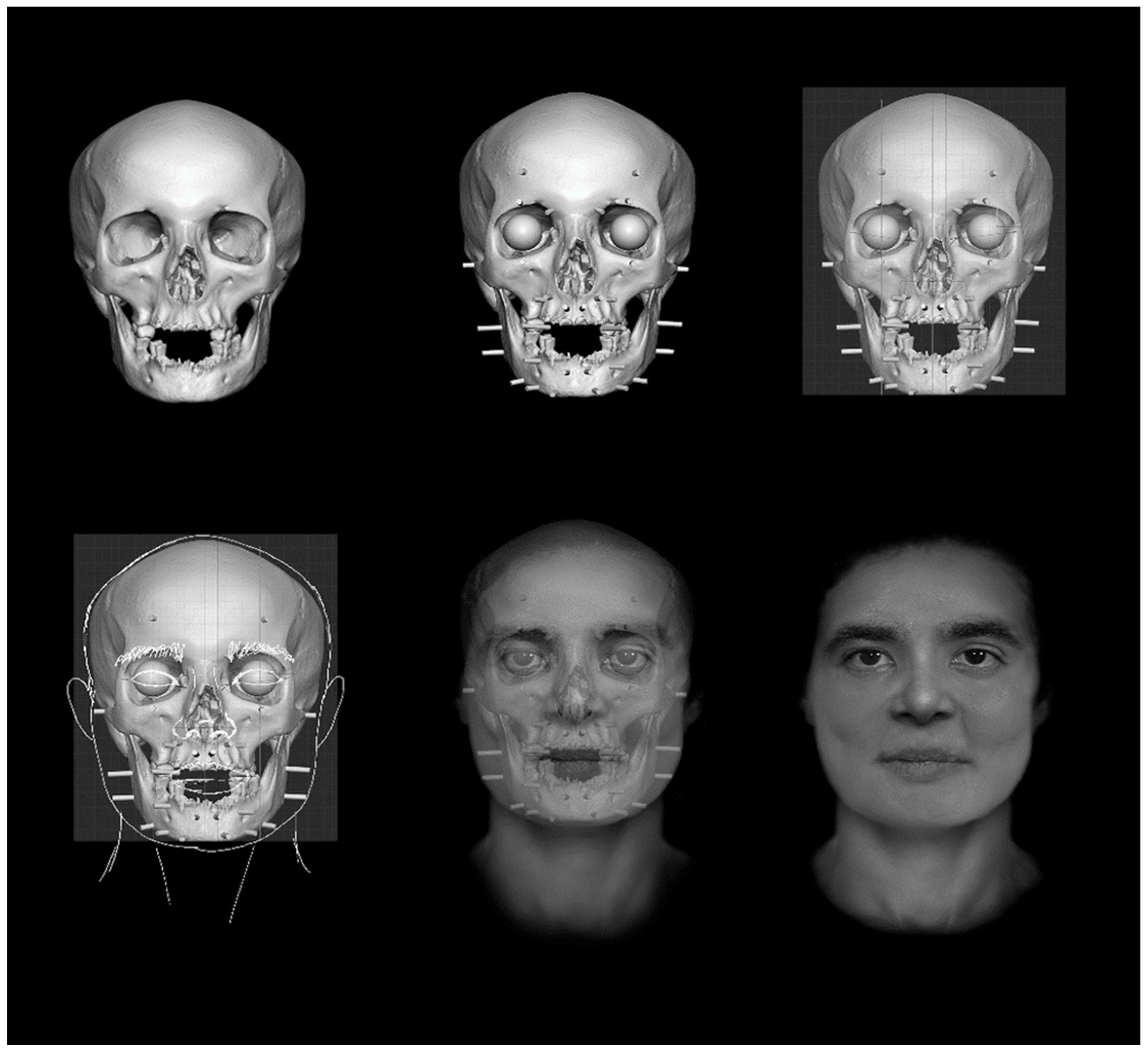
A 3D digital copy of each skull was produced by scanning the skulls with the Artec Spider 3D surface scanner and 2D facial depictions were created using the latest technology and following established methodology (see Figure 1) [64]. The jaw was repositioned in the anatomical or postural position [65,66] with approximately 3 mm occlusal distance, using Geomagic Freeform® 2017 software, and pegs were also placed on the skull to represent average soft tissue guides at key anatomical landmarks. There is no published tissue depth dataset specific to the Canary Islands, so the closest population dataset was chosen, North African [67] for the adult sample and indigenous American [68] for the juvenile sample, and the minimum ends of the tissue depth ranges were utilised to reflect BMI differences to modern populations. It is worth noting here that, although these datasets were used as guides throughout the reconstruction process, the skull was considered the main influence on face shape. A full assessment of skeletal details was carried out prior to any reconstruction process to estimate facial feature dimensions, location and shape using established craniofacial standards [63,68,69,70,71,72,73]. To note, the presence of an epicanthus was determined when the skull demonstrated an open orbit, strong anterior lacrimal crest, and flat nasal root [69]. In the 3D system, several measurements and location markers relating to nasal, mouth and eyelid dimensions [70,71,72] were annotated onto planes to facilitate the following 2D process. 3D eyeballs (24 mm diameter) were placed within the orbits following morphometrical standards [73], with the eyeball centre placed superioinferiorly at 44% orbital height and mediolaterally at 58% orbital breadth (see Figure 1). A frontal image of the skull was then created and imported into Adobe Photoshop CC 2015 where the overall face outline and facial features were sketched following the annotated planes (see Figure 1). Finally, photographic textures were added to the 2D frontal image of the facial reconstruction sketch using Face Lab’s photographic database [74,75]. The 3D visualisation provides optimal reliability for skeletal assessment, whilst the 2D depiction method allows realistic representation in grayscale where the skin/eye/hair colours are unknown (see Figure 1).
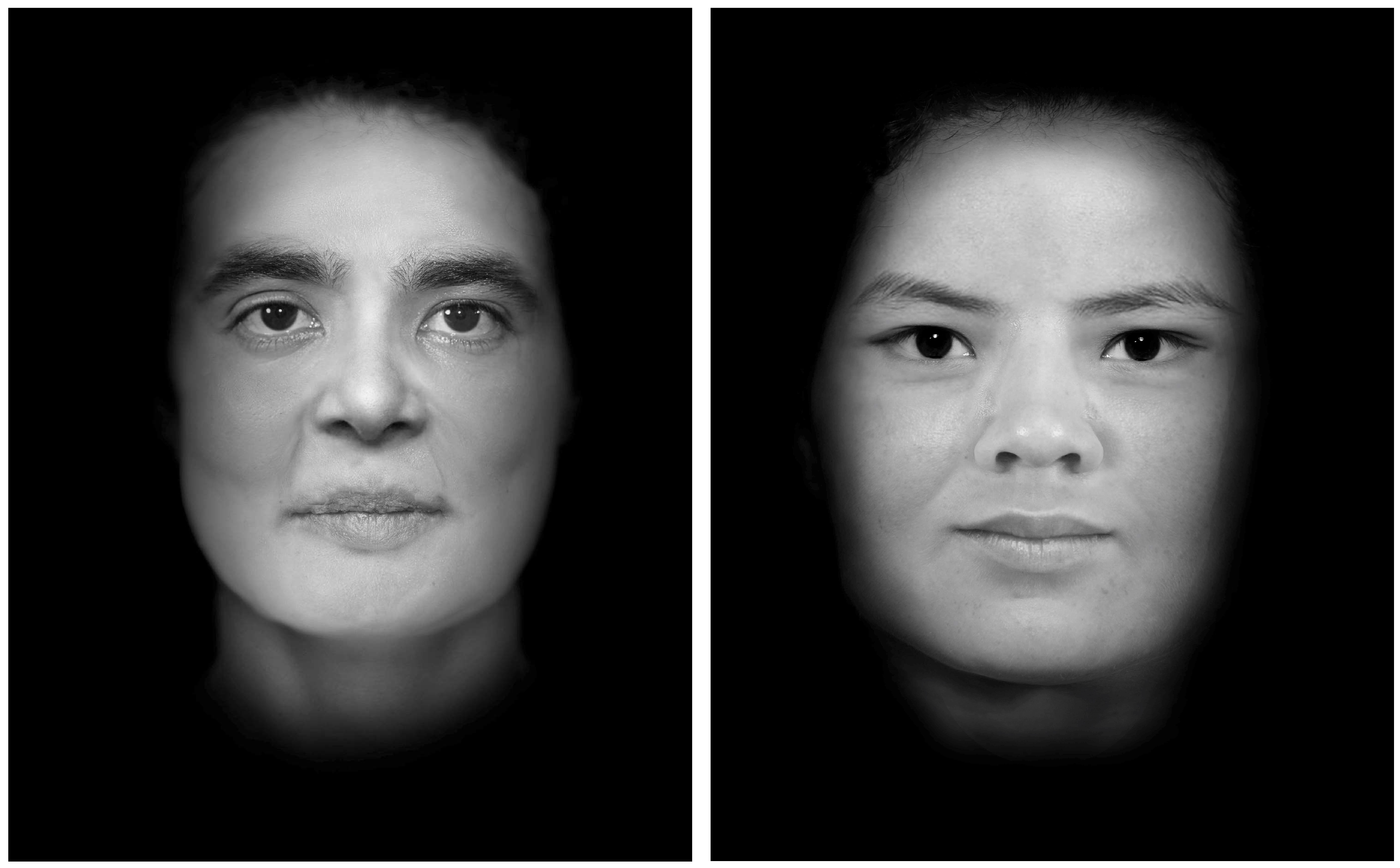
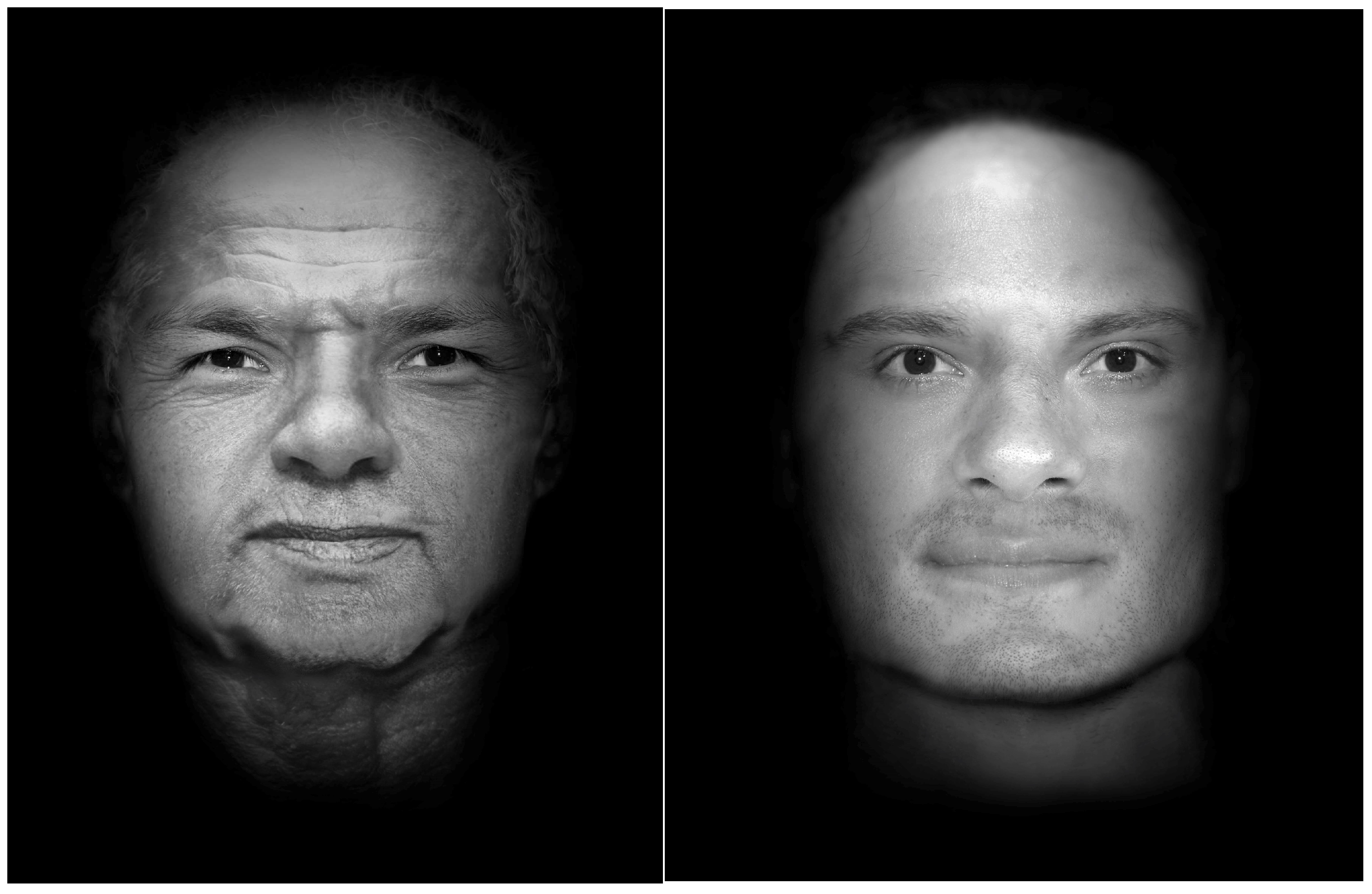
DNA analysis from these skulls was not possible and the eye, skin and hair colour and hair type were unknown for any single individual. Previous DNA research [21] suggests this population exhibited a medium skin tone, dark brown eyes and brown hair. The researchers decided to represent this population in grayscale images with the hair blended into the background, to produce a cautious depiction with a focus on the facial features. For the same reason, the men were not presented with facial hair, and no clothing was depicted (see Figure 2 and Figure 3).
The ancient adult faces were further utilised to create average male and female faces, using a method that generates averages from coordinates by warping the individual faces to the average shape. A minimum of 20 faces, standardised for size and resolution, contributed to each adult facial average. Each face was ‘annotated’ within Abrosoft Fantamorph5, delineating face shape and internal features to orient each face in relation to the next [76]. As a result, details falling outside these boundaries are open to algorithmic interpretation; this process eliminates asymmetry, as well as other irregularities and blemishes in form and feature, thus producing smooth, homogenous faces that are utterly benign. In contrast, external features such as necks, shoulders and hairstyles are rendered as misty, swirling layers that radiate from the edges of the face; the overall effect is spectral, with a concentration of detail centrally and a fading of detail peripherally.
Fifty facial depictions were exhibited in the ‘Quest for Ancestral Faces Exhibition1’ alongside fifty photographic facial portraits of contemporary Canarian people from all the islands (created by Francesca Phillips2). These contemporary Canarians were selected in the same ratio as the ancient faces (20 male, 20 female and 10 children) and all participants demonstrated a minimum of three Canarian family generations. Male and female average faces of the contemporary population were also created for comparison with the ancient averages, using the irises as alignment points. This exhibition allowed visitors to compare the same population centuries apart.

3. Results

Out of the fifty-six skulls, fourteen were classified as young adults, twenty-two were middle-aged, seven were elderly, and eleven were juvenile. Among them, twenty-five were classified as male, twenty as female, and nine as unclassified children.
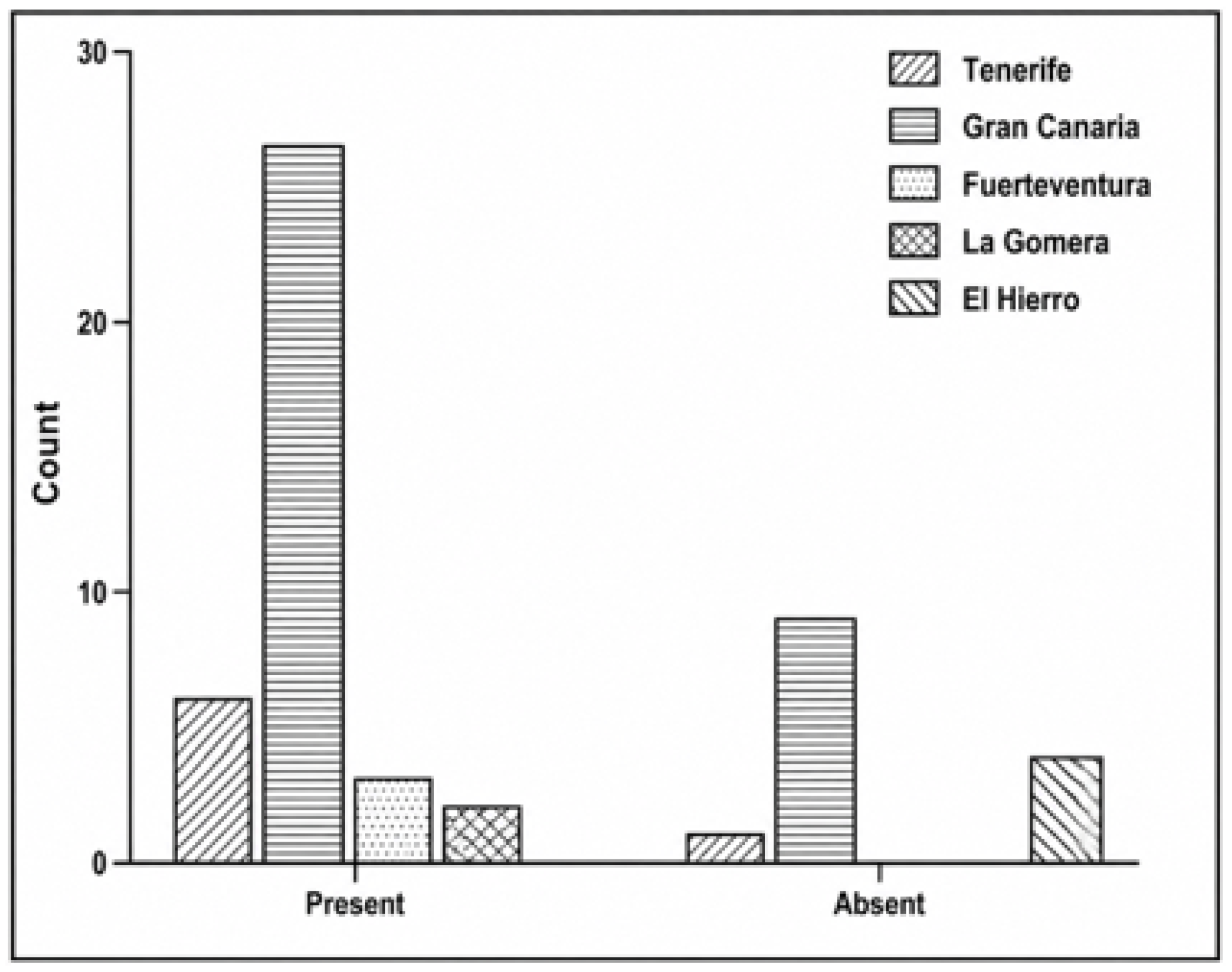
Some frequent characteristics were highlighted in the Canarian population. The cranial morphology suggested a greater probability (75%) of an epicanthus (upper eyelid covering the inner corner of the eye) indicated by a strong anterior lacrimal crest in combination with a low nasal root [64,77]. No significant (χ2) difference was found between male and female eyes. The island of El Hierro presented no skulls (n = 3) suggesting an epicanthus and the island of Fuerteventura presented all skulls (n = 4) with morphology consistent with an epicanthus (see Figure 4). Further study is needed to statistically compare all the islands.
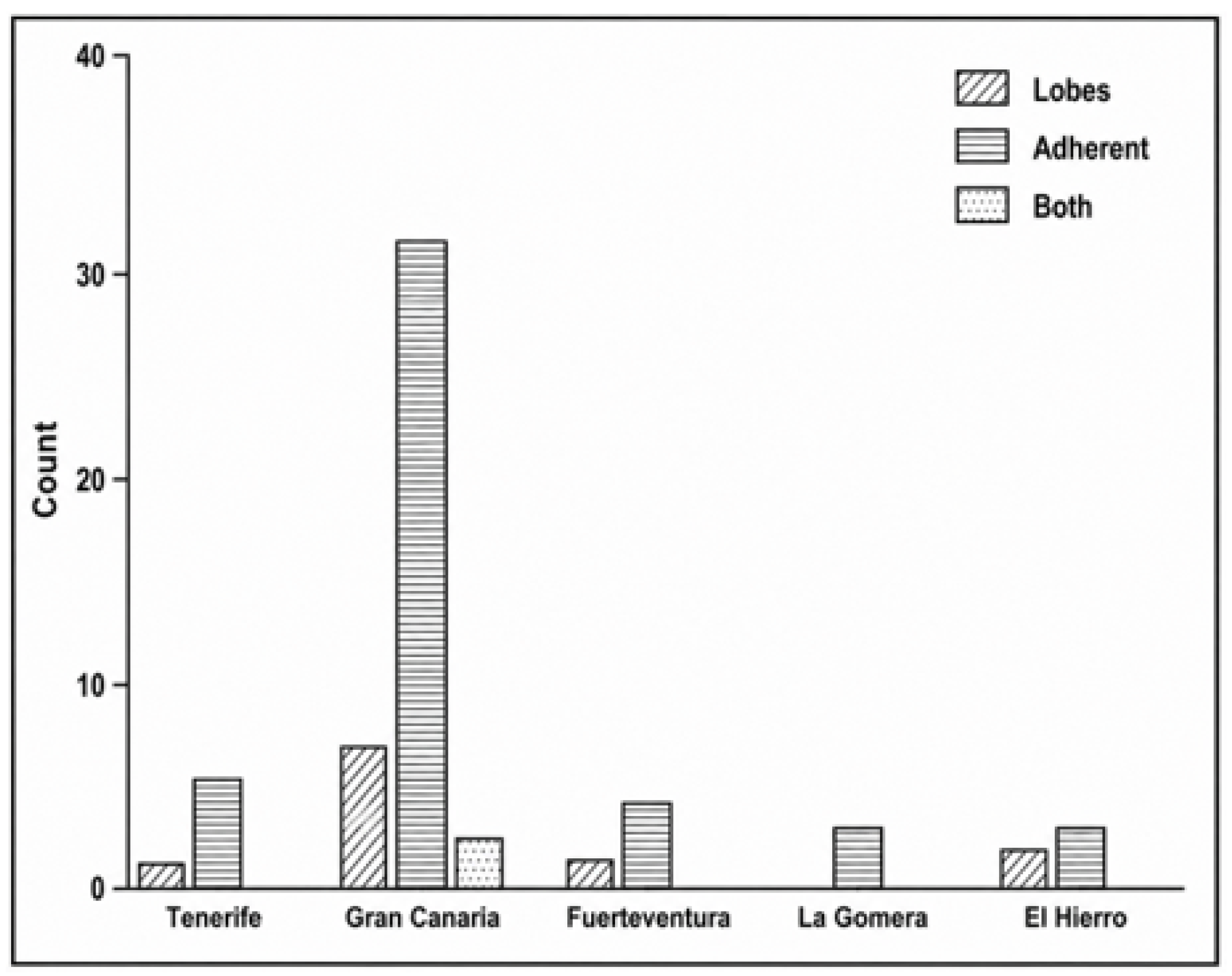
A total of 83% demonstrated adherent ears (without a separate lobe) as determined by the direction of the mastoid processes [78], and no significant (χ2) differences were seen between the male and female ears. The island of La Gomera (n = 2) demonstrated no cases of lobed ears (see Figure 5).
A total of 45% of the skulls recorded upward tilting eye fissures (where the lateral canthus is higher than the medial canthus) and 54% showed horizontal eye fissures. The chi squared test (χ2 = 4.018) suggested that the females demonstrated significantly (p = 0.045) more (70%) upturned eye fissures than the males (40%).
All the depictions demonstrated a variety of faces with individual characteristics and can be viewed on the ‘Ancestral Faces’ website (https://www.ljmu.ac.uk/microsites/ancestral-faces-canary-islands, accessed on 29 May 2024).
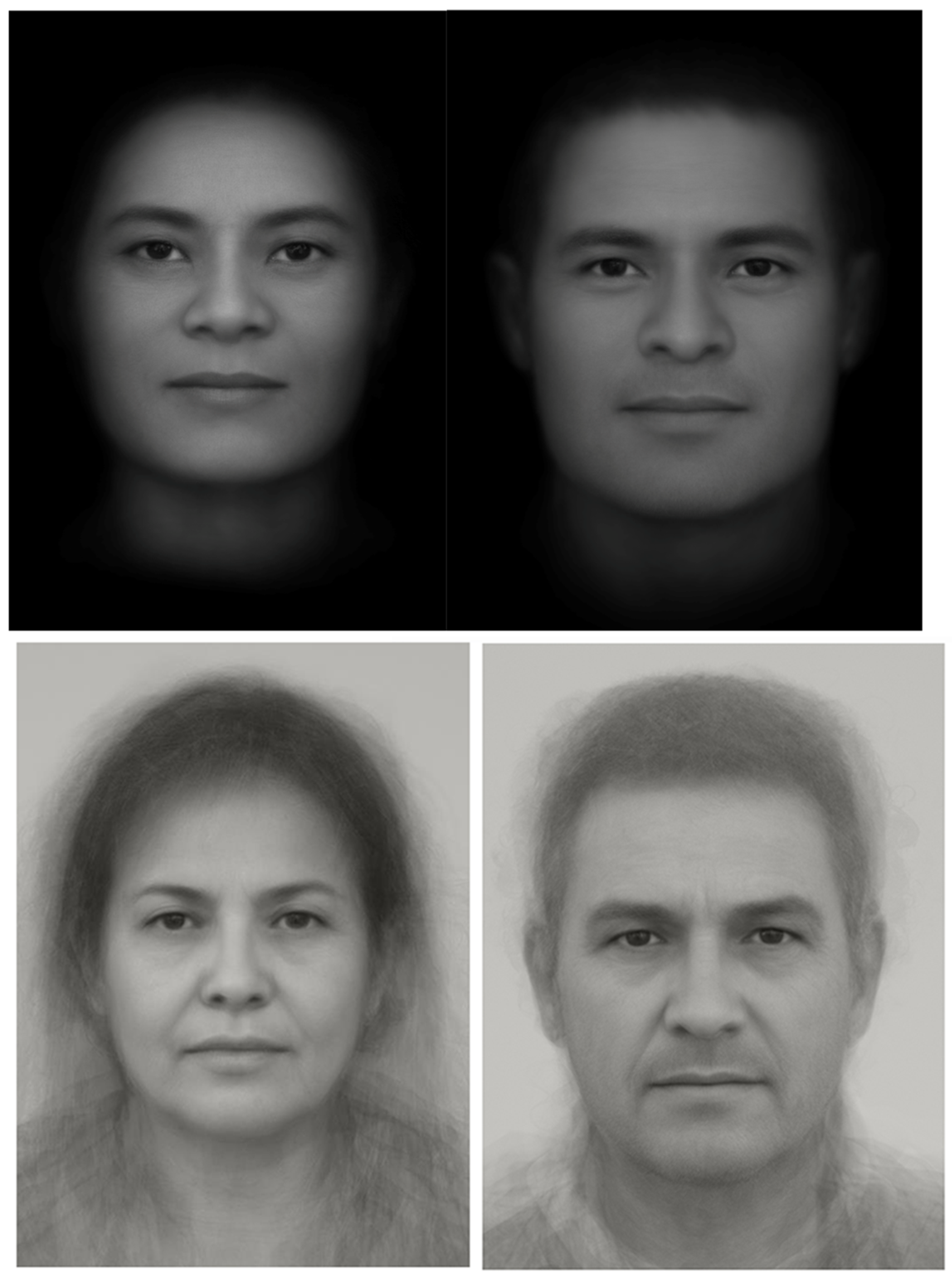
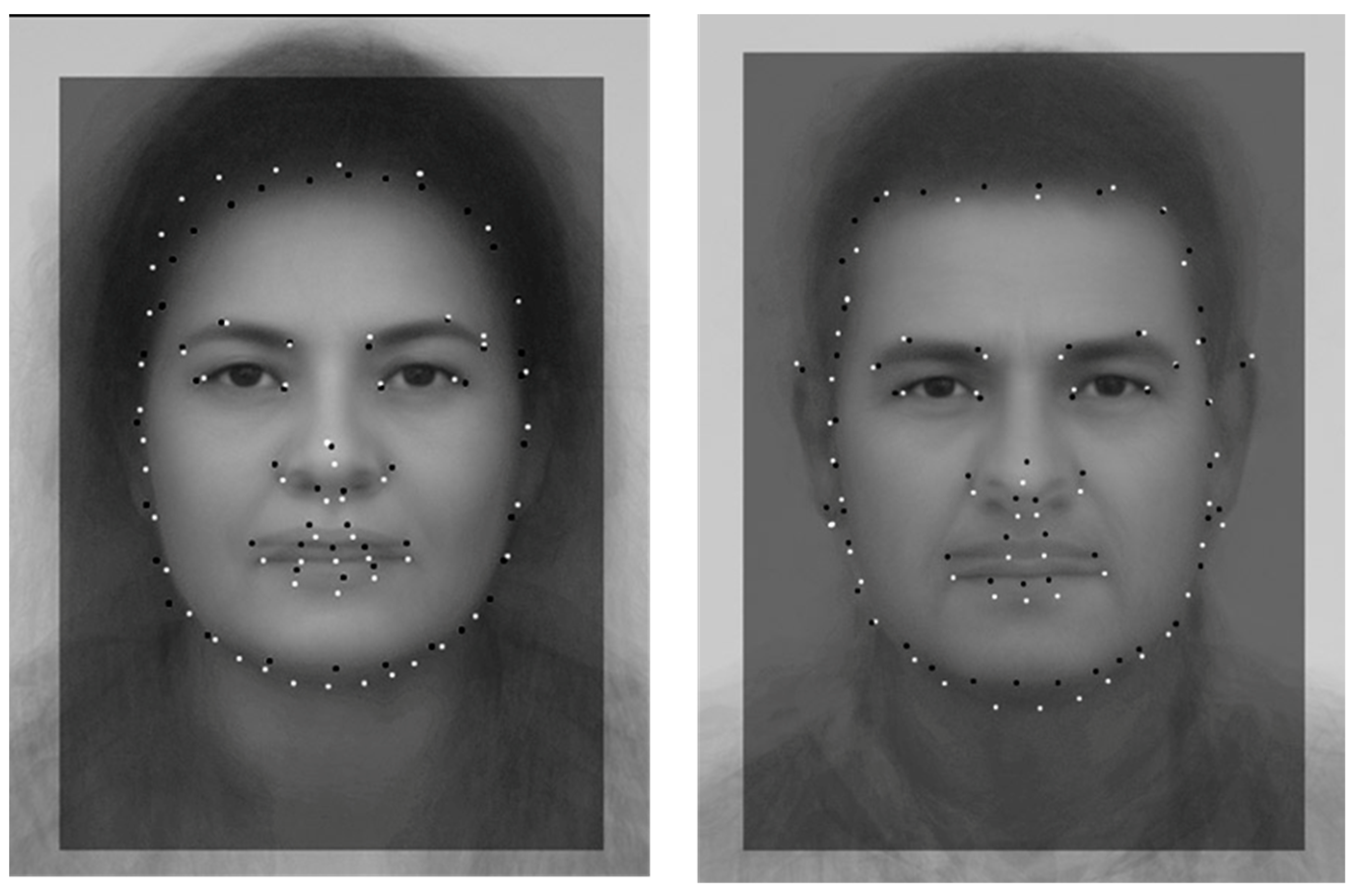
The abstraction of the population in average faces created the opportunity to compare the same population centuries apart (see Figure 6). When comparing the facial features of ancient and modern averages, we can observe several differences (see Figure 7). The ancient females have wider and shorter faces with square jawlines, while the modern faces are long and oval. The epicanthus was present in most of the ancient faces, and this is not apparent in the contemporary faces, although a distinct almond shape is present. The nasolabial crease is more defined in the contemporary population. The contemporary noses are narrower than in the ancient population, with a slightly more upturned columella and elongated nostrils. The mouth looks similar in size and shape for both populations.

4. Conclusions

To our knowledge, this study provides the most extensive collection of facial depictions from human remains of an ancient population to date anywhere in the world. We aimed to compare facial morphology over time for a community without ancestral representation by generating realistic images of those groups using facial reconstruction and depiction.
Due to the absence of chronology and an equitable number of samples per island, a comprehensive study of facial evolution during the pre-colonial periods of the islands cannot be conducted. However, analysing a representative sample has revealed common facial characteristics in the ancient population, some of which have become less common over time.
In summary, we can observe that the indigenous population has a shorter and wider face with a squarer jaw, while the modern population has a longer face with a more rounded jawline. The eyebrows and lips of both populations appear similar, but the modern population has a less common epicanthus at the eye. The nose appears narrower and slightly more upturned in the modern population than the ancient population. It is interesting to note that over the six centuries of distance, we can observe changing facial morphology. However, both populations still appear somewhat related.
These Guanche depictions cannot be considered portraits and must be viewed as hypotheses in the context of current knowledge.

Author Contributions

Conceptualization, M.C.R. and C.W.; methodology, M.C.R. and C.W.; software, M.C.R. and C.W.; validation, M.C.R. and C.W.; formal analysis, M.C.R. and C.W.; investigation, M.C.R. and C.W.; resources, C.W.; data curation, M.C.R. and C.W.; writing—original draft preparation, M.C.R.; writing—review and editing, C.W.; visualization, M.C.R. and C.W.; supervision, C.W.; project administration, M.C.R.; funding acquisition, M.C.R. and C.W. All authors have read and agreed to the published version of the manuscript.

Funding

Liverpool John Moores University financially supported Face Lab research along with a Postdoctoral Scholarship from the Fundacion Canaria Doctor Manuel Morales. The Canarian Government financially supported the exhibition.

Data Availability Statement

The original contributions presented in the study are included in the article, further inquiries can be directed to the corresponding author.

Acknowledgments

Francesca Phillips, as the instigator and producer of Canarii: The Quest for Ancient Faces project and lead curator of the related exhibition: Angélica Castellano Suárez, at the El Museo Canario of Gran Canaria, for access to the skull collection.

Conflicts of Interest

The authors declare no conflict of interest.

Notes

1
2
See Note 1.

References

  1. Poblamiento, Colonización y Primera Historia de Canarias: El C14 Como Paradigma/Settlement, Colonization and Early History of the Canary Islands: The C14 as a Paradigm|Anuario de Estudios Atlánticos. Available online: https://revistas.grancanaria.com/index.php/aea/article/view/10530 (accessed on 29 September 2023).
  2. Fregel, R.; Ordóñez, A.C.; Santana-Cabrera, J.; Cabrera, V.M.; Velasco-Vázquez, J.; Alberto, V.; Moreno-Benítez, M.A.; Delgado-Darias, T.; Rodríguez-Rodríguez, A.; Hernández, J.C. Mitogenomes Illuminate the Origin and Migration Patterns of the Indigenous People of the Canary Islands. PLoS ONE 2019, 14, e0209125. [Google Scholar] [CrossRef] [Scilit] [PubMed]
  3. Atoche Peña, P.; Ramírez Rodríguez, M.Á. Nuevas Dataciones Radiocarbónicas Para La Protohistoria Canaria: El Yacimiento de Buenavista (Lanzarote). Anu. Estud. Atlánticos 2011, 57, 139–170. [Google Scholar]
  4. Pardo-Gordó, S.; González Marrero, M.d.C.; Vidal Matutano, P.; Rodríguez Rodríguez, A. Dataciones de contextos aborígenes y coloniales de la isla de Gran Canaria: Una propuesta de protocolo de higiene radiocarbónica. Rev. Tabona 2022, 22, 217–242. [Google Scholar] [CrossRef] [Scilit]
  5. Aguilar, M.M.A.; Aguilar, M.C.A.; Mateo, C.B.; Adrián, M.C.R. Un Taller Romano de Púrpura En Los Límites de La Ecúmene: Lobos 1 (Fuerteventura, Islas Canarias): Primeros Resultados; Museo Arqueológico de Tenerife: Santa Cruz de Tenerife, Spain, 2016. [Google Scholar]
  6. Cebrian-Guimera, R.; Del-Arco-Aguilar, M.D.C.; del-Arco-Aguilar, M.; Bernal-Casasola, D.; Duarte, J.; Vargas Girón, J.M. Púrpura Romana en El Olivillo (Cádiz) y Lobos (Canarias): Comparativa de los Patrones de Fracturación y Arqueología Experimental; Universidad de Granada: Granada, Spain, 2020; pp. 109–117. [Google Scholar]
  7. Hooton, E.A. Los Primitivos Habitantes de Las Islas Canarias; Ediciones Idea: Santa Cruz de Tenerife, Spain, 2005. [Google Scholar]
  8. Rodríguez Martín, C.; González Antón, R.; Estévez González, F. Cranial Injuries in the Guanche Population of Tenerife (Canary Islands). A Biocultural Interpretation. In Biological Anthropology and the Study of Ancient Egypt; British Museum: London, UK, 1991; pp. 130–135. [Google Scholar]
  9. Eddy, M.R. Historical and Contemporary Perceptions of the Guanches of the Canary Islands. Maghreb Rev. 1992, 17, 124–140. [Google Scholar]
  10. Rodríguez-Martín, C. Guanche Mummies of Tenerife (Canary Islands): Conservation and Scientific Studies in the CRONOS Project. In Proceedings of the Human Mummies; Spindler, K., Wilfing, H., Rastbichler-Zissernig, E., zur Nedden, D., Nothdurfter, H., Eds.; Springer: Vienna, Austria, 1996; pp. 183–193. [Google Scholar]
  11. Flores, C.; Maca-Meyer, N.; Pérez, J.A.; González, A.M.; Larruga, J.M.; Cabrera, V.M. A Predominant European Ancestry of Paternal Lineages from Canary Islanders. Ann. Hum. Genet. 2003, 67, 138–152. [Google Scholar] [CrossRef] [Scilit] [PubMed]
  12. Santana, J.; Fregel, R.; Lightfoot, E.; Morales, J.; Alamón, M.; Guillén, J.; Moreno, M.; Rodríguez, A. The Early Colonial Atlantic World: New Insights on the African Diaspora from Isotopic and Ancient DNA Analyses of a Multiethnic 15th–17th Century Burial Population from the Canary Islands, Spain. Am. J. Phys. Anthropol. 2016, 159, 300–312. [Google Scholar] [CrossRef] [Scilit] [PubMed]
  13. Fregel, R.; Ordóñez, A.C.; Serrano, J.G. The Demography of the Canary Islands from a Genetic Perspective. Hum. Mol. Genet. 2021, 30, R64–R71. [Google Scholar] [CrossRef] [Scilit] [PubMed]
  14. Navarro Mederos, J.F. Arqueología de las islas Canarias. Espac. Tiempo Forma Ser. Prehist. Arqueol. 1997, 20, 447–478. [Google Scholar] [CrossRef] [Scilit]
  15. Donato, K.M.; Massey, D.S. Twenty-First-Century Globalization and Illegal Migration. Ann. Am. Acad. Pol. Soc. Sci. 2016, 666, 7–26. [Google Scholar] [CrossRef] [Scilit]
  16. Peña, P.A. Consideraciones en relación con la colonización protohistórica de las Islas Canarias / Considerations in relation with the Protohistoric colonization of the Canary Islands. Anu. Estud. Atlánticos 2013, 59, 521–564. [Google Scholar]
  17. Rando, J.C.; Pinto, F.; González, A.M.; Hernández, M.; Larruga, J.M.; Cabrera, V.M.; Bandelt, H.J. Mitochondrial DNA Analysis of Northwest African Populations Reveals Genetic Exchanges with European, near-Eastern, and Sub-Saharan Populations. Ann. Hum. Genet. 1998, 62, 531–550. [Google Scholar] [CrossRef] [Scilit] [PubMed]
  18. Bosch, E.; Calafell, F.; Comas, D.; Oefner, P.J.; Underhill, P.A.; Bertranpetit, J. High-Resolution Analysis of Human Y-Chromosome Variation Shows a Sharp Discontinuity and Limited Gene Flow between Northwestern Africa and the Iberian Peninsula. Am. J. Hum. Genet. 2001, 68, 1019–1029. [Google Scholar] [CrossRef] [Scilit] [PubMed]
  19. Maca-Meyer, N.; Arnay, M.; Rando, J.C.; Flores, C.; González, A.M.; Cabrera, V.M.; Larruga, J.M. Ancient mtDNA Analysis and the Origin of the Guanches. Eur. J. Hum. Genet. 2004, 12, 155–162. [Google Scholar] [CrossRef] [Scilit] [PubMed]
  20. Fregel, R.; Méndez, F.L.; Bokbot, Y.; Martín-Socas, D.; Camalich-Massieu, M.D.; Santana, J.; Morales, J.; Ávila-Arcos, M.C.; Underhill, P.A.; Shapiro, B.; et al. Ancient Genomes from North Africa Evidence Prehistoric Migrations to the Maghreb from Both the Levant and Europe. Proc. Natl. Acad. Sci. USA 2018, 115, 6774–6779. [Google Scholar] [CrossRef] [Scilit] [PubMed]
  21. Rodríguez-Varela, R.; Günther, T.; Krzewińska, M.; Storå, J.; Gillingwater, T.H.; MacCallum, M.; Arsuaga, J.L.; Dobney, K.; Valdiosera, C.; Jakobsson, M.; et al. Genomic Analyses of Pre-European Conquest Human Remains from the Canary Islands Reveal Close Affinity to Modern North Africans. Curr. Biol. 2017, 27, 3396–3402.e5. [Google Scholar] [CrossRef] [Scilit] [PubMed]
  22. Serrano, J.G.; Ordóñez, A.C.; Santana, J.; Sánchez-Cañadillas, E.; Arnay, M.; Rodríguez-Rodríguez, A.; Morales, J.; Velasco-Vázquez, J.; Alberto-Barroso, V.; Delgado-Darias, T.; et al. The Genomic History of the Indigenous People of the Canary Islands. Nat. Commun. 2023, 14, 4641. [Google Scholar] [CrossRef] [Scilit] [PubMed]
  23. Irish, J.D. Biological Affinities of Late Pleistocene Through Modern African Aboriginal Populations: The Dental Evidence; Arizona State University: Tempe, AZ, USA, 1993. [Google Scholar]
  24. Guatelli-Steinberg, D.; Irish, J.D.; Lukacs, J.R. Canary Islands-North African Population Affinities: Measures of Divergence Based on Dental Morphology. Homo 2001, 52, 173–188. [Google Scholar] [CrossRef] [Scilit] [PubMed]
  25. Irish, J.D.; Hemphill, B.E. An Odontometric Investigation of Canary Islander Origins. Dent. Anthropol. J. 2018, 17, 8–17. [Google Scholar] [CrossRef] [Scilit]
  26. García-Olivares, V.; Rubio-Rodríguez, L.A.; Muñoz-Barrera, A.; Díaz-de Usera, A.; Jáspez, D.; Iñigo-Campos, A.; Pérez, M.D.C.R.; de León, A.C.; Lorenzo-Salazar, J.M.; González-Montelongo, R. Digging into the Admixture Strata of Current-Day Canary Islanders Based on Mitogenomes. iScience 2023, 26, 105907. [Google Scholar] [CrossRef] [Scilit] [PubMed]
  27. Arnay-de-la-Rosa, M. Aproximación al Estudio de la Población Prehispánica Canaria. Unpublished Bachelor’s Thesis, Universidad de La Laguna, San Cristóbal de La Laguna, Spain, 1975. [Google Scholar]
  28. Chil y Naranjo, G. Estudios Historicos, Climatologicos y Patalogicos de Las Islas Canarias; Isidro Miranda: Las Palmas de Gran Canaria, Spain, 1876. [Google Scholar]
  29. Clavijo, V. Noticias de La Historia General de Las Islas Canarias; Juan N. Romero: Santa Cruz de Tenerife, Spain, 1860; Volume 3. [Google Scholar]
  30. de Espinosa, A. Del Origen y Milagros de la Santa Imagen de Nuestra Señora de Candelaria, Que Apareció en la Isla de Tenerife, con la Descripción de Esta Isla; Goya: Santa Cruz de Tenerife, Spain, 1980. [Google Scholar]
  31. Abreu de Galindo, J.d.; Cioranescu, A. Historia de la Conquista de las Siete Islas de Canaria; Goya Ediciones: Santa Cruz de Tenerife, Spain, 1977. [Google Scholar]
  32. Torriani, L. Descripción e Historia Del Reino de las Islas Canarias Antes Afortunadas, con el Parecer de Su Fortificaciones; Goya ediciones: Santa Cruz de Tenerife, Spain, 1959; Volume 2. [Google Scholar]
  33. Berthelot, S.; Cano, H.G.; Pérez, A.C. Antigüedades Canarias: Anotaciones Sobre el Origen de los Pueblos Que Ocuparon las Islas Afortunadas Desde los Primeros Tiempos Hasta la Época de Su Conquista; Goya: Santa Cruz de Tenerife, Spain, 1980. [Google Scholar]
  34. Verneau, R. Cinco Años de Estancia en las Islas Canarias; Lorenzo Perera, M.J., Hernández García, J., Eds.; J.A.D.L.: La Orotava, Spain, 1981. [Google Scholar]
  35. Schwidetzky, I. The Prehispanic Population of the Canary Islands. In Biogeography and Ecology in the Canary Islands; Springer: Berlin/Heidelberg, Germany, 1976; pp. 15–36. [Google Scholar]
  36. Fusté Ara, M. Algunas observaciones acerca de la Antropología de las poblaciones prehistórica y actual de Gran Canaria. El Mus. Canar. 1958, 19–20, 1–27. [Google Scholar]
  37. Abad, Á. La Identidad Canaria en el Arte; Centro de la Cultura Popular Canaria: La Laguna, Spain, 2001. [Google Scholar]
  38. Becerra Romero, D.; Miranda Valerón, J.J. La construcción del aborigen: Representación e imaginario del antiguo habitante de las Islas Canarias en la viñeta. In Proceedings of the XXI Coloquio de Historia Canario-Americana (2014); Acosta Guerrero, E., Ed.; Casa de Colón: Las Palmas de Gran Canaria, Spain, 2016; Volume 21, pp. 1–13. [Google Scholar]
  39. Hernández, M.J. Un Grupo de arqueólogos ha realizado la reconstrucción de la cara de un guanche. Canarias7, 8 February 1988.
  40. Younger, D. Student Reveals the Face of Ancient Canary Islander. University News, 22 August 2018.
  41. PAR Arqueología y Patrimonio Virtual Aborigen Canaria de la Fortaleza (Gran Canaria) (s.VI d.C.) [3D Image] 2018. Available online: https://sketchfab.com/3d-models/proyecto-humiaga-977-b98d9ac695ca43cebd441c0358627474 (accessed on 24 May 2024).
  42. Pérez, B. Desvelan el rostro de la momia guanche mejor preservada del mundo. Quo, 20 November 2020. Available online: https://quo.eldiario.es/ciencia/q2011367839/momia-guanche-rostro (accessed on 20 May 2024).
  43. Gerasimov, M.M. The Face Finder; Hutchinson: London, UK, 1971. [Google Scholar]
  44. Prag, J. Making Faces Using Forensic and Archaeological Evidence; British Museum Press: London, UK, 1997. [Google Scholar]
  45. Buti, L.; Gruppioni, G.; Benazzi, S. Facial Reconstruction of Famous Historical Figures: Between Science and Art. Stud. Forensic Biohist. 2017, 75, 191. [Google Scholar] [CrossRef] [Scilit]
  46. Charlier, P. Naming the Body (or the Bones): Human Remains, Anthropological/Medical Collections, Religious Beliefs, and Restitution. Clin. Anat. 2014, 27, 291–295. [Google Scholar] [CrossRef] [Scilit] [PubMed]
  47. Crossland, Z. Acts of Estrangement: The Post-Mortem Making of Self and Other. Archaeol. Dialogues 2009, 16, 102–125. [Google Scholar] [CrossRef] [Scilit]
  48. Moser, S. Ancestral Images: The Iconography of Human Origins; Cornell University Press: Ithaca, NY, USA; Sutton Publishing: Stroud, UK, 1998. [Google Scholar]
  49. Lotzof, K. Cheddar Man: Mesolithic Britain’s Blue-Eyed Boy; Natural History Museum Human Evolution: London, UK, 2018. [Google Scholar]
  50. Gifford-Gonzalez, D. The Real Flintstones: What Are Artists’ Depictions of Human Ancestors Telling Us? AnthroNotes Natl. Mus. Nat. Hist. Bull. Teach. 1995, 17, 1–9. [Google Scholar] [CrossRef] [Scilit]
  51. Johnson, H. Craniofacial Reconstruction and Its Socio-Ethical Implications. Mus. Soc. Issues 2016, 11, 97–113. [Google Scholar] [CrossRef] [Scilit]
  52. Swaney, M.; Balachandran, S. Who Am I? Remembering the Dead Through Facial Reconstruction; Johns Hopkins Archaeological Museum: Baltimore, MD, USA, 2018. [Google Scholar]
  53. Appleton, A. Faces from 2400 Years Ago. Johns Hopkins Mag. 2018, 70, 44–47. [Google Scholar]
  54. Wilkinson, C.M.; Smith, K.; Roughley, M. The Facial Reconstruction Process. In Who Am I? Remembering the Dead Through Facial Reconstruction; Johns Hopkins Archaeological Museum: Baltimore, MD, USA, 2018. [Google Scholar]
  55. Wilkinson, C.M. Cognitive Bias and Facial Depiction from Skeletal Remains. Bioarchaeol. Int. 2020, 4, 1–14. [Google Scholar] [CrossRef] [Scilit]
  56. O’Neill, P.; Wilson, M. Curating Research; O’Neill, P., Wilson, M., Eds.; Open Editions: London, UK; de Appel: Amsterdam, The Netherlands, 2014. [Google Scholar]
  57. Franke, A.; Weizman, E. Forensis: The Architecture of Public Truth; Sternberg Press/Haus der Kulturen der Welt: Berlin, Germany, 2014. [Google Scholar]
  58. Hernández Marrero, J.C.; Navarro Mederos, J.F. Arqueología del territorio en La Gomera (Islas Canarias). Tabona Rev. Prehist. Arqueol. 2012, 19, 25–58. [Google Scholar]
  59. Galván Santos, B.; Hernández Gómez, C.M.; Velasco Vázquez, J.; Alberto Barroso, V.; Borges Domínguez, E.; Barro Rois, A.; Larraz Mora, A. Orígenes de Buenavista del Norte: De los Primeros Pobladores a los Inicios de la Colonización Europea; Ayuntamiento de Buenavista del Norte: Santa Cruz de Tenerife, Spain, 1999. [Google Scholar]
  60. Gil Vega, M.d.C.; Delgado Darías, T.; Alberto Barroso, V.; Velasco Vázquez, J.; Betancor Pérez, F.; Vidal Matutano, P.; López Dos Santos, N.; Fregel Lorenzo, R.; Suárez Medina, I. Recuperando pasados desde los fondos arqueológicos y documentales de El Museo Canario (Gran Canaria, España). In XXIV Coloquio de Historia Canario-Americana; Acosta Guerrero, E., Ed.; Casa de Colón: Las Palmas de Gran Canaria, Spain, 2021. [Google Scholar]
  61. Omran, A.; Wertheim, D.; Smith, K.; Liu, C.Y.J.; Naini, F.B. Mandibular Shape Prediction Using Cephalometric Analysis: Applications in Craniofacial Analysis, Forensic Anthropology and Archaeological Reconstruction. Maxillofac. Plast. Reconstr. Surg. 2020, 42, 37. [Google Scholar] [CrossRef] [Scilit] [PubMed]
  62. Iscan, M.Y.; Steyn, M. The Human Skeleton in Forensic Medicine, 3rd ed.; Charles C Thomas Publisher: Springfield, IL, USA, 2013. [Google Scholar]
  63. White, T.D.; Folkens, P.A. The Human Bone Manual; Elsevier Academic Press: San Diego, CA, USA, 2005. [Google Scholar]
  64. Wilkinson, C.; Liu, C.Y.J.; Shrimpton, S.; Greenway, E. Craniofacial Identification Standards: A Review of Reliability, Reproducibility, and Implementation. Forensic Sci. Int. 2024, 359, 111993. [Google Scholar] [CrossRef] [Scilit] [PubMed]
  65. Preiskel, H.W. Some Observations on the Postural Position of the Mandible. J. Prosthet. Dent. 1965, 15, 625–633. [Google Scholar] [CrossRef] [Scilit] [PubMed]
  66. Murphy, W.M. Rest Position of the Mandible. J. Prosthet. Dent. 1967, 17, 329–332. [Google Scholar] [CrossRef] [Scilit] [PubMed]
  67. El-Mehallawi, I.H.; Soliman, E.M. Ultrasonic Assessment of Facial Soft Tissue Thicknesses in Adult Egyptians. Forensic Sci. Int. 2001, 117, 99–107. [Google Scholar] [CrossRef] [Scilit] [PubMed]
  68. Peckmann, T.R.; Manhein, M.H.; Listi, G.A.; Fournier, M. In Vivo Facial Tissue Depth for Canadian Aboriginal Children: A Case Study from Nova Scotia, Canada. J. Forensic Sci. 2013, 58, 1429–1438. [Google Scholar] [CrossRef] [Scilit] [PubMed]
  69. Balueva, T.; Veselovskaya, E.; Kobyliansky, E. Craniofacial Reconstruction by Applying the Ultrasound Method in Live Human Populations. Int. J. Anthropol. 2009, 24, 87–111. [Google Scholar]
  70. Rynn, C.; Wilkinson, C.M.; Peters, H.L. Prediction of Nasal Morphology from the Skull. Forensic Sci. Med. Pathol. 2010, 6, 20–34. [Google Scholar] [CrossRef] [Scilit] [PubMed]
  71. Wilkinson, C.M.; Motwani, M.; Chiang, E. The Relationship between the Soft Tissues and the Skeletal Detail of the Mouth. J. Forensic Sci. 2003, 48, JFS2002412. [Google Scholar] [CrossRef] [Scilit]
  72. Wolff, E. The Anatomy of the Eye and Orbit; H. K. Lewis and Co., Ltd.: London, UK, 1933. [Google Scholar]
  73. Guyomarc’h, P.; Dutailly, B.; Couture, C.; Coqueugniot, H. Anatomical Placement of the Human Eyeball in the Orbit—Validation Using CT Scans of Living Adults and Prediction for Facial Approximation. J. Forensic Sci. 2012, 57, 1271–1275. [Google Scholar] [CrossRef] [Scilit] [PubMed]
  74. Taylor, K.T. Forensic Art and Illustration; CRC Press: Boca Raton, FL, USA, 2001. [Google Scholar]
  75. Roughley, M.; Liu, C.Y.J. Digital 2D, 2.5D and 3D Methods for Adding Photo-Realistic Textures to 3D Facial Depictions of People from the Past. In Biomedical Visualisation: Volume 11; Rea, P.M., Ed.; Springer International Publishing: Cham, Switzerland, 2022; pp. 245–280. [Google Scholar]
  76. Wilkinson, C.M.; Mackenzie, S.; Smith, K. Faces of Merseyside: Exploring Cognitive Bias through Facial Averages. Leonardo 2020, 53, 498–503. [Google Scholar] [CrossRef] [Scilit]
  77. Fedosyutkin, B.A.; Nainys, J.V. The Relationship of Skull Morphology to Facial Features. In Forensic Analysis of the Skull; Iscan, M.Y., Helmer, R.P., Eds.; Wiley-Liss: New York, NY, USA, 1993; pp. 199–213. [Google Scholar]
  78. Angel, J.L. Restoration of Head and Face for Identification. In Proceedings of Meetings of American Academy of Forensic Science; American Academy of Forensic Sciences (AAFS): Colorado Springs, CO, USA, 1978; pp. 125–142. [Google Scholar]
Figure 1. Workflow from the 3D copy of the skull to the final 2D facial depiction. From left to right: (1) the 3D copy of the skull; (2) the skull with tissue-depth pegs added; (3) placement of tissue-depth pegs and craniofacial measurements; (4) prediction of facial features; (5) the reconstructed skull with a transparent skin texture applied; and (6) the final 2D facial depiction.
Heritage 09 00306 g001
Figure 2. Examples of 2 females faces, SK 1940 and SK 2131.
Heritage 09 00306 g002
Figure 3. Examples of 2 males faces, SK 1884 and SK1128.
Heritage 09 00306 g003
Figure 4. Epicanthus records across the Canary Islands sample.
Heritage 09 00306 g004
Figure 5. Ear lobe records across the Canary Islands sample.
Heritage 09 00306 g005
Figure 6. Average ancient (top) and modern (bottom) female (left) and male (right) faces.
Heritage 09 00306 g006
Figure 7. Superimposition of ancient (black dots) and modern (white dots) Canarian average faces for females (left) and males (right).
Heritage 09 00306 g007
Disclaimer/Publisher’s Note: The statements, opinions and data contained in all publications are solely those of the individual author(s) and contributor(s) and not of MDPI and/or the editor(s). MDPI and/or the editor(s) disclaim responsibility for any injury to people or property resulting from any ideas, methods, instructions or products referred to in the content.