


Abstract
The Socialist Yugoslav Second World War memorials, works of large-scale memorial sculpture scattered across former Yugoslavia’s successor states, have gained international artistic recognition yet deteriorated significantly since the 1990s dissolution of the country. This deterioration has been particularly severe in Bosnia and Herzegovina, where ethnic and political divisions have complicated their commemorative value. This study employs the concept of “dissonant landscape” to reframe these memorials as integral components of a larger Yugoslav modernist cultural landscape rather than isolated problematic structures. By situating memorials within broader contexts of everyday heritage and collective memory, the framework enables complex interpretations that transcend simplistic ideological readings. The memorials, as dissonant heritage, are invested with multiple meanings by different ethnic–religious groups, and may function as catalysts for cultural dialogue and reconciliation. Methodologically, this study relies on conceptual analysis in the realm of critical heritage studies, combined with a case study of the Monument to the Fallen Fighters of the National Liberation War from Drvar, a relatively understudied memorial recently prioritized by local conservation efforts, and it includes analysis of previously unpublished archival material, field observation, interviews with local authorities and survey with the citizens of Drvar. This study establishes a new perspective on the heritage potential of Yugoslav memorials that may serve as bases of innovative preservation policies, grounded in reconciliation and cultural tourism.
1. Introduction
On the green outskirts of the small Bosnian town of Drvar, one encounters a peculiar site: a long stairway built into the hill defines an axis around which are strung several clusters of stone and concrete blocks, overgrown by valley grasses and shrubs of the Bosnian Krajina region (Figure 1 and Figure 2).
Figure 1.
The stairway leading up to the top of the Šobić Hill in Drvar, where the Drvar Partisan Memorial used to stand: condition in December 2025 (© Boban Karanović).
Figure 2.
Scattered remnants of the demolished Drvar Partisan Memorial: photo taken in December 2025 (© Boban Karanović).
Despite the apparent unity of the surrounding natural setting, closer inspection reveals traces of disrupted man-made order: violated geometries, chipped and broken polygons, and elements in disarray, stained in graffiti. This is the present condition of the Monument to the Fallen Fighters of the National Liberation War from Drvar, one of the many Socialist Yugoslav Second World War memorials scattered across the territory of the successor states of former Yugoslavia.
While the state of ruin surrounded by rolling hills possesses a strange monumentality of its own, the effect is even more striking when it is used as a backdrop to the photographs of this monument’s original condition: gravity-defying tilted concrete columns used to define a formal culmination of the monument’s experiential sequence (Figure 3).
Figure 3.
The original condition of the Drvar Partisan Memorial in the Socialist Yugoslav era (© Marijan Kocković).
Powerful forms that merge sculpture, architecture and landscape are signature features of a specific genre of abstract plastic art in Yugoslavia [1] that has gained international expert and cultural recognition in recent decades, yet more than 30 years after the violent disintegration of this socialist state, there has been little progress in local, let alone systemic, conservation of this very specific genre of heritage. To the contrary, many processes of continuous degradation are at play, demonstrating a clear trend that has not yet been adequately theoretically framed in the realm of heritage studies.
The fragmented condition of the Monument to the Fallen Fighters of the National Liberation War from Drvar (hereafter referred to as the “Drvar Partisan Memorial” for brevity) is inseparable from a chain of conflicts that link the Second World War directly to the wars of Yugoslav dissolution in the 1990s. The Yugoslav Partisan antifascist movement that the memorials commemorate emerged from the resistance to Nazi and fascist occupation (1941–1945), and became the founding ideological pillar of Socialist Yugoslavia under Josip Broz Tito. The dissolution of Yugoslavia following Tito’s death (1980) and the descent into ethnic and nationalist conflict in the early 1990s radically disrupted the collective memory (Figure 4).
Figure 4.
A brief historical diagram of key events related to the recent history of Drvar and the Partisan Memorial.
The attitude towards heritage and its preservation largely depends on the values that a society recognizes in a particular type of cultural heritage. Very often, political turmoil or political attitudes, which have no direct connection with cultural heritage, directly affect whether a particular type of heritage will be preserved or not. A similar situation exists in the territory of former Yugoslavia, and this is particularly reflected in the territory of Bosnia and Herzegovina, which represented the central republic of the state union that ceased to exist when the Balkan wars of the 1990s began.
The wars ended with the signing of peace agreements that created new states that introduced very different political–economic order: the former socialist community was transformed in a short period of time and under dramatic circumstances into societies that functioned on completely different and often opposite principles. In some cases, the heirs of the defeated ideologies from the Second World War that were in direct armed conflict with the Partisan movement came to power. For this reason, it was of little surprise that the monuments or memorial complexes related to the National Liberation Struggle and the Partisan movement would have the same treatment as other monuments, historical buildings or complexes.
This situation is rendered even more troubling by the exceptional monumental, artistic and landscape value of the complexes in question. The four most prominent cases in Bosnia and Herzegovina illustrate a consistent pattern of institutional failure across different forms of neglect. The Partisan Cemetery in Mostar, designed by Bogdan Bogdanović and listed as a national monument since 2006 [2], has been repeatedly and systematically vandalized over many years—the scale of destruction indicating organized action by multiple perpetrators—while police investigations have yielded no results despite the complex’s location in a populated urban area. The Šušnjar Memorial Complex in Sanski Most, a national monument since 2003 [3], was partially demolished during the 1992–1995 war, with the names of fallen soldiers of certain nationalities deliberately destroyed; no restoration has since been carried out, and ideologically incongruent symbols have been introduced into the complex in direct contradiction of its original concept. In the Garavice area near Bihać, Bogdanović’s 1981 memorial complex for the victims of the Second World War, declared a national monument in 2011 [4], has not been demolished but has been left to deteriorate through graffiti and neglect, without any protection or conservation plan ever being developed. Finally, the Vraca Memorial Park in Sarajevo—a former Austro-Hungarian fortress converted into a fascist prison and execution ground, declared a national monument in 2005 [5]—remains functionally undefined, uncontrolled and degraded, its heritage significance further undermined by the presence of a commemorative plaque to a convicted war criminal in its immediate vicinity.
The above vignettes clearly demonstrate the systemic degradation of the Yugoslav Second World War memorials in Bosnia and Herzegovina, which consists of various processes: dilapidation through the lack of maintenance (like in Bihać and Sarajevo), transformation through re-signification (like in Sarajevo and Sanski Most) and vandalism (like in Sanski Most and Mostar). While the Drvar Partisan Memorial serves as the primary case study, additional Yugoslav memorials in Bosnia and Herzegovina are referenced in the Introduction to illustrate the broader systemic patterns of neglect and disintegration, offering contextual evidence and demonstrating how multiple temporal layers—Socialist Yugoslav memory, the violence of the 1990s wars, and contemporary re-signification—converge across the region, making any single memorial legible as part of a significant regional trend and heritage problem.
The challenge of preserving socialist-era commemorative heritage is not unique to the post-Yugoslav region. Similar tensions between ideological rupture and heritage value have been documented in relation to Soviet-era monuments in Eastern Europe and the Baltic states, and GDR-era memorials in reunified Germany [6] (p. 15). What distinguishes the Yugoslav case—and makes it of particular relevance to the international scholarly community—is the combination of exceptional artistic quality of the monuments, the ethnic complexity of the successor states, and the relative underdevelopment of heritage management frameworks capable of addressing this complexity [7]. The contribution of this discussion is therefore relevant not only to the Bosnian context, but also in other situations of post-conflict heritage management in comparable international settings. The artistic exceptionality of the Yugoslav Second World War memorials, however, has been most explicitly underscored in the 2018 exhibition of the Museum of Modern Art in New York entitled “Toward a Concrete Utopia, Architecture in Yugoslavia, 1948–1980,” an entire chapter of which was dedicated to the Yugoslav culture of revolutionary memory and its art, most prominently Second World War memorials [8].
During the last thirty years, scholarship in art and architectural history and cultural studies has documented the dilapidation of Yugoslav memorials outlined above. Yet little has been done to develop a comprehensive theoretical framework in heritage studies oriented toward their preservation. While architecture and art historians have focused on the histories of the Yugoslav Second World War memorials, situating them in the memorialization processes and memory politics of former Yugoslavia [1,9], scholars in cultural studies almost exclusively examined the memorials’ transformation in relation to re-signification processes, with the majority also seeking to situate them in the post-conflict social setting: from their instrumentalization in the ongoing “symbolic warfare” [9,10], over their objectification in the post-Yugoslav nation-building processes and entailed historic revisionism [11,12,13], to their general counterposition to contemporary memorialization strategies [14,15]. More significantly, the most recent scholarship started examining localized experiences of the memorials, seeking to understand individual and bodily encounters with their sites, as complementary or even subversive acts to the grand nation-building narratives [16,17]. The present study is closely aligned with this kind of understanding, aiming to translate this appreciation of memorials’ situatedness in the local reality into heritage preservation strategy. It asks the following question: how can the memorials be conceptually framed as heritage that has potential to be preserved and cared for in the ethnically divided post-conflict society? In order to answer this question, this study leans on recent conceptual work undertaken in the realm of critical heritage studies, particularly those related to heritage-making, cultural landscape and dissonance.
As a result, it coins the concept of “dissonant landscape,” an interpretative framework that implies a radical double inversion of optics on Yugoslav memorials. Firstly, it establishes that the memorials should be observed, not as individual and isolated structures, but as parts of a larger cultural landscape of Yugoslav modernism—a landscape that consists of both regional natural setting and a vast variety of structures, a great majority of them in continuous and intensive everyday usage for at least half a century. Here, the well-established notion of “cultural landscape” [18,19] is appreciated for its capability to channel the processes of “everyday heritage” [20] and structure collective memory. Secondly, it recognizes the Yugoslav modernist cultural landscape and the memorials, as its prominent elements, as “dissonant heritage”—heritage that is characterized by varied and conflicting meanings and interpretation and that therefore can be utilized to catalyze social dialogue and cultivate pluralist culture of memory [21] (pp. 292–296). The aim of this study is, therefore, to conceptually “ground” the Yugoslav memorials, by linking them to the local cultural landscape and pluralistic organic interpretation process, in order to open new perspectives on their heritage potential.
The interpretive framework defined in this study may be used to reframe not only the Drvar Partisan Memorial, but also other similar memorials in the territory of former Yugoslavia. Casting individual monuments as dissonant elements of a larger Yugoslav modernist cultural landscape is a first step toward innovative preservation policies and preservation strategies, grounded in reconciliation, with concrete social benefits, for example the development of cultural tourism.
The concept of “dissonant heritage” requires precise definitional grounding, particularly within the specific research context of Drvar. Ashworth and Tunbridge, in The Tourist-Historic City [22], identify two foundational characteristics of dissonant heritage—discrepancy and incongruity—drawing an analogy with musical harmony, in which movement toward consonance or balance remains perpetually possible [23] (p. 497).
Understood in these terms, the present research advances the argument that such balance, or harmony, is most productively sought within the broader framework of the “cultural” or “urban” landscape. Inherited monumental complexes, irrespective of the ideological conditions that render them controversial, may acquire positive connotations when situated within a coherently articulated urban landscape—thereby transforming social disharmony and spatial conflict into conditions of coexistence. The case of Drvar carries broader significance in this regard, demonstrating how heritage elements of divergent and contested meaning can coexist within a compact urban environment. This is evidenced by the sustained engagement of the local community in the maintenance and promotion of these monuments, as well as by the conspicuous absence of acts of vandalism—findings that lend empirical support to definitions of the “cultural landscape” in which the social dimension is accorded central importance.
The concept of “dissonant landscape” proposed here enters into dialogue with related notions in critical heritage studies. “Difficult heritage”—defined as heritage associated with painful, troubling, or contested historical events [24]—offers a complementary lens, foregrounding the affective and ethical dimensions of engaging with traumatic pasts. “Negative heritage,” a more radical concept, denotes the active rejection, suppression, or destruction of heritage by certain groups as a political act [25]. While both concepts are applicable to Yugoslav Second World War memorials, this study argues that “dissonant landscape” goes further: it situates the memorials not merely as objects of conflict or erasure, but as active constituents of a living landscape, whose very contestedness is a productive resource for heritage-making and reconciliation.
In this sense, it is clear that we must not interpret this “dissonant heritage” as “difficult” heritage, that is, as a burdensome heritage in the social and urban landscape context, but quite the opposite, as a starting point for harmonization, despite its complex meaning and associations. As for the understanding of the notion “cultural landscape”, the term was introduced in the first half of the 20th century and defined as a natural area that was changed over time by human action, with “urban landscape” representing a subtypology of built, anthropogenic territory characterized by continuous processes [19] (pp. 32, 35, 39). This definition is similar to the one by Reza Keshtkaran, who views landscape through the prism of the organic intertwining of the natural and cultural characteristics of an area [26] (p. 143). However, in the specific case, the notion “cultural landscape” is linked to the fact that such a landscape, in addition to the memory of the past, also contains the messages of the current inhabitants (organization of the area, architectural and construction forms), as an expression of their system of values and attitudes. Landscapes, among other things, can be observed through the prism of social and political ideologies in different physical forms. The landscape is thus a mental creation rather than a physical structure [19] (p. 37).
The hypothesized meaning and relevance of the concept are tested through the case study of the Drvar Partisan Memorial. The rationale for choosing the Drvar memorial is multilayered. While the above-listed complexes are relatively well-known and have been previously analyzed in both scientific and professional frameworks, the Drvar memorial has been overlooked, although it features exceptional ambiental, landscape and artistic values. In spite of its modest size, the town of Drvar bears dramatic history linked to the Partisan movement, with several other places that relate to it in close proximity to the memorial, the most prominent of which is the complex of Tito’s Cave. The revitalization of the mentioned complex would make it possible to think about a broader setting, i.e., active integral protection within the framework of urban planning, but also a strategy for the development of thematic cultural tourism. And the final, and perhaps most important, reason is the decision of the representatives of the local community, i.e., the city of Drvar, to initiate systematic activities for the restoration of the Partisan Memorial, starting with the search for original documentation and the consent of the author, which is a move contrary to the opportunistic practice of most local governments that are passive on this issue, carried by mundane political calculations and unwittingly countering the long-term interests of local communities but also of society in general.
1.1. Case Study Relevance
The Partisan Memorial on the Šobić Hill in Drvar was built in 1967, based on the design of the architect Lujo Šverer and sculptor Marijan Kocković in memory of the fallen Partisan fighters during the military operation called Rösselsprung of 1944, when the Nazi forces made a failed attempt to kill Tito and the Supreme Command of the Partisan movement. The memorial remained relatively undamaged during the war in Bosnia and Herzegovina (1992–1995), and was finally severely damaged in 1996 in the military operation called “Storm” [27].
The war conflict that unfolded in the period 1992–1995 can be better understood in light of the tragic events of the Second World War. After the forced migration of the population from Drvar in 1995, as well as the demolition of the Partisan Memorial in 1996, the defeated ideologies of the Second World War were revived in various warring factions of the 1990s, which is also visible in the example of the removal of symbols related to the Partisan movement in the urban landscape.
In 2022, the Mayor of Drvar announced the renovation of the Partisan Memorial, on the occasion of the opening of another monument—one commemorating the fallen fighters and civilian victims of Drvar in the 1990s war [28].
1.2. Yugoslav Memorials—Between Dissonant Heritage and Cultural Landscape
Dissonant heritage emerges in a situation when there is a lack of consensus on the presence and the type of values between different groups and communities [29]. While this original definition was meant to help distinguish “difficult” heritage related to traumatic and negative histories and experiences, recent scholarship started widening the scope of the concept to denote an inherent and essential feature of all heritage: the contingency and malleability of its interpretations [21] (p. 281). This kind of understanding is closely aligned with several other recent redefinitions of key concepts in heritage studies, including the understanding of memory as a process that superposes the individual and the collective dimensions, and the materiality of which is embedded in explanatory and interpretive discourses [30]. Similarly, heritage itself is progressively understood as “an act of communication” and something that “emerges” when a thing is narrated, defined, and/or treated as heritage in the “right” sociocultural context [31] (p. 8).
The “positive reading” of dissonance has been interpreted as a necessary precondition for building the “pluralistic culture of memory,” and aligned with “bottom-up” processes of heritage-making [21] (p. 282). Understanding dissonant heritage as resource of democracy-building and reconciliation in post-conflict societies also means being critical towards the “authorized heritage discourse (AHD)”—the unified top-down interpretation of heritage that mostly originates in governmental institutions and that flattens differences in order to impose one “correct” interpretation of heritage [32] (p. 29).
Author L. Smith defines the term authorized heritage discourse (AHD) as the selective determination of values and attitudes towards heritage, determined by political and cultural elites, which consequently leads to the determination of what is worth preserving and what is not. According to this logic, heritage-making is primarily an imposed process [32].
It is important to note that UNESCO-type definitions of heritage—including the concept of “cultural landscape” [18]—are themselves not neutral. They are grounded in an essentialist understanding of heritage as a stable, identifiable, and universally valuable entity, predating its social framing and waiting to be recognized and protected by authoritative institutions. Such definitions implicitly assume that dissonance is an anomaly—a problem to be resolved—rather than an inherent feature of all heritage. Critical heritage scholars have challenged this assumption, pointing out that the AHD ultimately serves the interest of those who hold institutional power, often silencing subaltern and minority voices [21,32].
It is, perhaps, not surprising that the heritage category that inherently resists this kind of interpretation imposed “from above” is the one of “cultural landscape.” The concept of “cultural landscape” has a theoretical genealogy that predates its institutional codification, and returning to its disciplinary origins in early-twentieth-century human geography helps clarify both its conceptual richness and the reasons it has proven so resistant to top-down definition. According to French human geographer Paul Vidal de la Blache, cultural landscape emerges as the process of cultural adaptation of the natural landscape, which results in a unique region [33]. American human geographer Carl O. Sauer proposes that the regional landscape can also be understood as a particular type, recognizable and associable with a particular culture [34]. This kind of definition can be associated with the notion of “urban landscape,” a subtype of “cultural landscape” that is a built, anthropogenic territory marked by continuous processes. However, it can also be defined as a visual perception of aesthetic spatial values: vistas of open spaces and built structures [19] (p. 39).
The earliest institutional definition, developed within the framework of UNESCO, is that cultural landscape represents “combined works of nature and men” [18] (p. 10), implying “layers of memory and heritage accumulated through the active engagement of communities in landscape and nature” [35] (p. 17). The notion of “cultural landscape” as employed in heritage studies is narrower than the geographic definition and often refers to a specific, limited area. Rather than cultural landscape as “type,” the cultural landscape as heritage refers to individual instances of cultural–natural assemblage, often with clearly defined historical, cultural, aesthetic and other values. In this sense, “cultural landscape” is often identified with “historical landscape,” which contains historical values associated with developmental historical layers, including other values [19] (p. 38). This study employs both of these definitions, seeking to situate the Drvar Partisan Memorial as a specimen of “cultural landscape as heritage” inside the broader urban landscape of Drvar.
UNESCO’s heritage definitions, including the one of cultural landscape as heritage, have been criticized for failing to account for the imposition of values that can run counter to the practices of local communities through which authentic cultural landscapes are shaped and sustained. This shortcoming was systematically addressed by Laurajane Smith through the concept of the authorized heritage discourse [32], which exposed the top-down character of institutional heritage frameworks. In recent years, UNESCO itself has begun responding to this critique by complementing its standard methodologies with approaches grounded in contextualization—adapting research frameworks to specific social and geographic conditions through transdisciplinary engagement [36].
The example of Drvar invites the question of how local settings may contradict those definitions and resist the practice of imposition, by both the nationalist ideologies, formed at higher political and administrative levels, and the international institutional heritage framework. Seen in this light, the initiative of Drvar’s local administration to restore the Partisan Memorial represents the first step towards precisely the kind of bottom-up heritage recognition that these revised approaches seek to encourage. It is an act of value attribution firmly rooted in the aspirations of the local community and the specificities of its environment—and one that anticipates, in practice, the direction that UNESCO’s own methodological evolution is now taking.
2. Materials and Methods—Analyzing and Framing Heritage
The methodology applied in this study combines archival research and direct observation of the Drvar Partisan Memorial, examined within its wider physical and institutional setting, with conceptual analysis in the domain of critical heritage studies.
Critical heritage studies emerged as a field precisely in response to the essentialist assumptions embedded in institutional heritage discourse. Scholars such as Laurajane Smith [32], Sharon Macdonald [24], and Višnja Kisić [21] have argued that heritage is not a fixed property of objects or places, but a dynamic social and political process. From this perspective, the selection, framing, and management of heritage always reflects power relations—it is never a neutral act of preservation. The UNESCO framework and the conventions of the World Heritage system have been critiqued for privileging Western European notions of authenticity, materiality, and universal value, marginalizing non-Western, intangible, and contested forms of heritage [32].
Crucially, such definitions tend to treat dissonance as an anomaly to be resolved rather than an inherent condition of all heritage, and they remain vulnerable to capture by political elites who determine which values are attributed to cultural heritage and what, consequently, is deemed worthy of preservation—as Smith’s concept of the authorized heritage discourse makes explicit [32]. In the post-Yugoslav context, this critique is especially pertinent: the institutional indifference to the Yugoslav Second World War memorials, despite their undeniable artistic and historical significance, reveals how local and national heritage discourses can remain structurally subordinate to, or misaligned with, broader international frameworks. Recent scholarship has, however, begun to demonstrate how these frameworks can be contextualized and adapted—notably in post-conflict settings where standard approaches must be renegotiated in response to specific social and geographic conditions through transdisciplinary engagement [36].
The notions of “cultural landscape” and “dissonant heritage” are employed in this study not descriptively, but as precise analytical categories that link the case of the Drvar Partisan Memorial to broader findings on heritage and landscape preservation, cultures of memory, and effective heritage management in post-conflict social settings. The coined concept of “dissonant landscape” is understood both as a contribution to the field of critical heritage studies and as a basis for defining heritage preservation strategies for Yugoslav Second World War memorials.
When analyzing cultural landscapes, special attention is paid to the relationship between people and the cultural and natural values they inhabit and sustain [37] (p. 24). The key concept in this context is authenticity, understood in relation to genius loci—the principle that each location, regardless of landscape typology or historical function, carries its own specificity conditioned by its unique context. Authenticity is assessed through the verification of information sources relating to relevant heritage values, and through the analysis of land patterns, understood as the relationships between landscape components including the natural environment and built fabric [37] (pp. 25, 45). Accordingly, the cultural landscape is analyzed through four factors directly related to authenticity and integrity: topography and spatial location; spatial articulation and relationships; applied materials; and state of preservation. Each prominent spatial element that defines the cultural landscape of Drvar—including the Drvar Partisan Memoria—will be examined through the prism of these four factors. This approach is consistent with Roberto Pane’s understanding of the synergy between the materialized architectural work and its environment or landscape, which he identified as the fundamental condition for any meaningful assessment of, and intervention in, the built heritage [38,39] (p. 2). It is also aligned with the understanding of the UNESCO Historic Urban Landscape Recommendation as a holistic, integrative, and value-based approach that must be implemented as an “assembled” vision—co-constituted by human and non-human aspects [40].
Alongside the physical aspects of the cultural landscape, this study explicitly incorporates a citizens’ component: the attitudes and perspectives of the residents of Drvar, including both those engaged in administrative and institutional roles and members of the wider local community. This dual engagement is consistent with the UNESCO World Heritage Cultural Landscapes Handbook, which recommends the active inclusion of key stakeholders—with the local community playing a particularly central role—across all phases of landscape assessment, planning, implementation, monitoring, and management [37] (p. 37). It is further supported by the Burra Charter [41] and by recent scholarship on the relationship between local communities and heritage practice [42].
The information on the position of the local government in relation to the preservation of Drvar’s cultural heritage was obtained through direct interviews with representatives of the local government in the period 2023–2025. The citizens’ survey was conducted with the help of local administration officials in March 2026. The questions were structured by the authors of the article, and were designed in such a way as to obtain a picture of the awareness and attitude of the local community towards the urban landscape of Drvar and the associated individual buildings or complexes. In this sense, it is necessary to take into account the limitations present in a specific community that still strongly feels the consequences of the war conflict that ended about three decades ago. There are no gathering places where spontaneous discussions could be held or a direct “face-to-face” survey could be conducted, so the online format, developed with the support of local administration members, was the only effective way to obtain results. The survey is anonymous and it is not possible to determine with certainty the structure of the respondents, although the local administration officials guaranteed that they recruited citizens of Drvar of different genders, ages, education and professions, while members of the local administration were also involved.
The operational definition of “dissonant heritage” employed in this study builds on the theoretical framing established in the Introduction, where dissonance is understood in terms of discrepancy, incongruity, or conversely consonance and balance, within an urban landscape that contains materialized architectural works of contested meaning. The measurement indicators of dissonant heritage therefore correspond to the degree of harmonization—or its absence—between a given heritage element and the broader urban landscape of which it forms a part. In the case of Drvar, this means examining the extent to which the Drvar Partisan Memorial is integrated into, estranged from, or actively contested within the modernist urban landscape that surrounds it.
The materials used in this study pertain to four groups: (1) archival materials related to the history of Drvar and the Drvar Partisan Memorial, including previously unpublished design drawings and photographic documentation held at the Municipality of Drvar; (2) documentary material produced during multiple field visits in 2025, comprising systematic photographic and cartographic documentation; (3) administrative documents related to heritage preservation initiatives and their outcomes; and (4) semi-structured interviews with the Mayor of Drvar and municipal heritage officers, and an online survey conducted among members of the local community, both carried out following standard qualitative research protocols.
3. Results—Mapping the Monument to the Fallen Fighters of the National Liberation War from Drvar in Its Physical and Institutional Setting
3.1. The Urban Landscape of Drvar
Drvar is a small town in Bosnia and Herzegovina that was founded at the turn of the 19th century as one of the Austro-Hungarian outposts for exploitation of Bosnian forests and production of cellulose. However, its early industrial and colonial origins have been all but subsumed by its Second World War history, when one of the most important covert bases of the Yugoslav Partisan antifascist movement was stationed near Drvar.
The post-war development of the town is tightly bound to the economic agency of Šipad, one of the most successful companies of Socialist Bosnia and Herzegovina, dedicated to cellulose and furniture production. The company ran a large production facility in the southern part of the urban area, while the socialist public housing program was developed in the northeastern part, along with the usual social infrastructure, including a primary school and local medical facility, as well as a large recreational zone adjacent to it. These elements are arranged along a clear axis, loosely parallel to the direction of the river Unac that delimits the northeastern edge of the urban area.
The two ends of this development axis are defined with two monumental places: the Workers’ Home—the socialist cultural and community center in the southeast, effectively linking the city with the industrial zone; the Drvar memorial park in the northwest, inside of which the Drvar Partisan Memorial is situated. The Sports Center Drvar, the centerpiece of the recreational zone, connects the city with the Museum of Tito’s Cave, dedicated to the presentation of Drvar’s historical importance for the Partisan movement, while the historic cave itself is positioned in close vicinity of the museum (Figure 5).
Figure 5.
The urban landscape of Drvar: 1. Partisan Memorial; 2. Temple of St. Sava; 3. Sokol Home; 4. Ninth House; 5. Savic House; 6. Worker’s House; 7. Sports Center; 8. Tito’s Cave.
The resulting urban landscape clearly reflects the modernist principles of urban planning and design—the functional zoning and the freestanding buildings in ample greenery: when observed from the outskirts, the town is revealed as an ensemble of formally reduced, geometrically disciplined structures immersed in treetops and with zones of work (factory chimneys in the back), dwelling (housing blocks in the middle) and recreation (Sports Center in the front) clearly distinguished (Figure 6). This urban landscape, which emerged through the post-Second-World-War development of Drvar, not only physically contains but is also historically associated with the Drvar Partisan Memorial—both pertain to the period of Socialist Yugoslav urban and social–economic development, which was culturally strongly associated with modernism and modernist architecture and urbanism.
Figure 6.
A view of the urban landscape of Drvar, taken from the northeast (© www.novi.ba).
3.2. Drvar Urban Landscape Landmarks
In the urban landscape of Drvar, several structures may be distinguished as landmarks, the most important of which are: the Drvar Partisan Memorial, the Workers’ Home, the Sports and Recreational Center, the Memorial Complex “25th of May,” the Savić and the Ninth Houses, the Temple of St. Sava and the Sokol Home. These are notable built structures or areas that contribute to the specificity of the urban landscape of Drvar, a place marked by dramatic events that unfolded during the Second World War. Outside the city center itself, but within the urban landscape of Drvar, there is the Memorial Complex Museum “25th of May” next to Tito’s Cave, the place where Josip Broz Tito, the foremost political leader of Yugoslavia, stayed when the Nazi forces landed on Drvar, with the aim of destroying the Partisan movement and its Supreme Commander. Within a radius of about 1300 m, within the city center itself, on Maršala Tita Street, looking from the east, there are the buildings of the Workers’ Home built after the end of the Second World War, the residential buildings “Ninth and Savić Houses” from the Austro-Hungarian period, and the Temple of St. Sava built in the period between the two World Wars. To the north of the Temple of St. Sava is the devastated Sports Center, consisting of a renovated stadium and a derelict facility that had a cultural and sports function, all built after the Second World War. Opposite the temple, on the south side of the street, the Drvar Partisan Memorial is situated (Figure 5).
The Workers’ Home was built in 1956 on the same site where a building with the same function stood before the Second World War. The new building was named after the Partisan revolutionary Đuro Pucar Stari [43]. It is located in the plains of the city, about 1300 m east of the Partisan Memorial complex and the municipal building. Across the street, the post office building was built in 1960 [43] (pp. 138–140), also in stone; it has been devastated and has not been restored to this day. To the south are devastated buildings built during the second half of the 20th century, the first of which served as an elementary school. The Workers’ Home appears to be disconnected from its immediate surroundings in a functional and urban-morphological sense. Between the area where the Partisan Memorial complex is located on the west side of Maršal Tita Street and the Workers’ Home building, there is a sparsely built area permeated with open spaces, where various buildings with predominantly residential, commercial or religious functions have been constructed.
In terms of materialization, the Workers’ Home is built out of marble specially delivered from the island of Brač [44]. This monumental stone cladding and ceremonial facade, with a subtle echo of socialist realism, are counterposed to the refined green surroundings (Figure 7). This building stands out in relation to its immediate urban setting through its complex and articulated floor plan composition and, accordingly, the complex form of the roof. Its state of preservation has considerably improved following the renovation carried out in the first decade of the 21st century, and it is currently in very good structural and overall condition.
Figure 7.
The Workers’ Home building: view of the back elevation with the adjacent garden (© www.vididrvar.com).
Further west, on the opposite (north) side of the street, collective housing buildings were constructed that are still in use today. The “Ninth” and “Savić” (Figure 8) Houses are particularly significant as they date to the Austro-Hungarian period, built to house the first workers moving to Drvar to work in its budding cellulose industry [44] (pp. 14–15). The uninterrupted industrial development unfolded over a century, with a dramatic increase in production after the Second World War, which drove the parallel expansion of housing within the framework of Socialist Yugoslav housing policy. By 1990, a total of 2525 housing units had been built in Drvar [43] (pp. 138–140), a significant part of them within the urban structure of the modernist housing estates. Both buildings are freestanding, positioned in a low-rise street row on Titova street (approximately 700 m to the west of the Workers’ Home). The buildings are rectangular in plan and covered with conventional pitched roofs. The “Savić” House is built of brick and plastered, while the “Ninth” House is distinctive in terms of its construction, having been built of exposed stone blocks, which makes it both different from and more architecturally valuable within the urban landscape of Drvar. Both residential buildings are in use and in relatively good structural condition following post-war reconstruction carried out after 1995.
Figure 8.
The Savić House (© Boban Karanović).
The strong modernist character of Drvar’s urban landscape also contains two important counterpoints: the Sokol Home, used as a substitute place of worship by the local Catholic community (Figure 9), and the Orthodox Temple of St. Sava (Figure 10). Both are positioned across the large green area of Šobić Hill, where the Drvar Partisan Memorial—the focal point of this study—is located. The original Catholic church was demolished during the Second World War, and today, the Sokol Home [43] (p. 192), a sports facility dating to the interwar period, is used as a temporary substitute. It is a low-rise structure of simple composition, with brick construction, plastered facades and an L-shaped footprint. Its temporary role is recognizable through an improvised church bell tower that has been erected next to it. In the same low-rise street row to the west stands the Temple of St. Sava, also from the interwar period, completely surrounded by greenery that connects to the green area of the Partisan Memorial on the opposite side of the street. Built in 1939, the temple was severely damaged in 1941 and subsequently used as a warehouse before regaining its original function in 1963; it was devastated again during a military operation in 1995 and rebuilt in 1998 [43] (p. 190). Built on a Greek cross plan with a dominant central dome, it makes a distinctive contribution to the urban landscape. Both structures are maintained and in relatively good structural condition.
Figure 9.
The Sokol Home, used as a substitute place of worship for the local catholic community: condition in December 2025 (© Boban Karanović).
Figure 10.
The Orthodox Temple of Saint Sava, last renovated in 1998: condition in December 2025 (© Boban Karanović).
Beyond this cluster of civic and religious buildings, the urban zone extends northeastward towards the Unac stream, where the recreational complex Radomir Kovačević lies approximately 400 m away. Set within an open area of lawns that mark the transition between the modernist neighborhoods and the city’s green outskirts, the complex completes their social and infrastructural provision while forming a striking presence in the urban landscape—mediating both formally and programmatically between the built city and its natural periphery (Figure 11).
Figure 11.
Sports Center Complex in Drvar, detail of the dilapidated zone: condition in December 2025 (© Boban Karanović).
Designed in the 1980s and situated outside the urban matrix of the city center, the complex originally comprised a swimming pool, tennis courts and a stadium [27] (Figure 12), constructed in reinforced concrete and other materials characteristic of Yugoslav modernist architecture. Today this ensemble is only partially intact: while the football pitch and stands remain in relatively good condition, the main building has fallen into disrepair and the remaining sports facilities are largely unmaintained.
Figure 12.
Sports Center Complex in Drvar, detail of the renovated zone: condition in December 2025 (© Boban Karanović).
Just across the river from the recreational complex, and forming a loose sports–cultural zone with it, stands the Museum “25th of May,” built in the 1950s to commemorate the dramatic events that unfolded in Drvar during the Second World War and elevated the town to national significance in Socialist Yugoslavia (Figure 13).
Figure 13.
A view of the Museum “25th of May” from the Sports Center Complex: condition in December 2025 (© Boban Karanović).
Drvar’s wartime importance stemmed from its role as a covert base of the Partisan resistance leadership, which maintained free territory there for more than a thousand days—longer than most other European territories under occupation [45]. This made it a strategic target for Nazi forces, who launched an airborne assault on 25 May 1944, known as the “Raid on Drvar.” The successful defense by Partisan fighters and the transfer of Josip Broz Tito and other members of the leadership from the cave near Drvar to the island of Vis in the Adriatic [46] (pp. 9, 18–22, 27, 73, 104) provided the basis for the triumphant historical narrative that the museum complex was built to embody.
That narrative is conveyed through an ensemble of structures spread across the site: the museum building (the former Mandić house), Tito’s Villa, the OZNA building—where the Department for the Protection of the People, a key institution of Socialist Yugoslav defense, was established—and, as the focal highlight, Tito’s hut within the cave itself [47] (Figure 14).
Figure 14.
A view of Tito’s Cottage, part of the Museum “25th of May” complex: condition in December 2025 (© Boban Karanović).
With the exception of Tito’s Villa and the wartime barracks inside the cave, all structures predate the Second World War. The buildings are constructed of brick and stone, while the barracks are of timber. None of the buildings carries particular formal architectural distinction, though their documentary value is considerable. The reconstructed barracks beside the cave entrance are a notable exception, forming an evocative element within the landscape—all the more so given the organic relationship between the complex and its natural surroundings: inside the cave lies a lake which, at high water, overflows as a waterfall beneath the barracks [47]. All structures are well maintained, are in very good condition, and remain in active use within the museum complex.
Assessed through the framework of the “dissonant landscape”—which situates individual monuments within the broader historical landscape—and taking into account topography and spatial location, spatial articulation and relationships, applied materials, and state of preservation, the cultural landscape of Drvar is authentic and possesses the characteristics of integrity. In the historical sense, it is a multilayered area whose built fabric dates predominantly to the Socialist Yugoslav period, while modernist architecture prevails in the architectural-historical sense. The topography allows for good connectivity and visual relationships, the materials are authentic, and most of the buildings are in good structural condition. The landscape therefore has internal consistency and should serve as a setting for the interpretation of the Drvar Partisan Memorial, which is its integral part.
3.3. The Drvar Partisan Memorial—Original Condition
The Monument to the Fallen Fighters of the National Liberation War from Drvar, a monumental sculptural–architectural–landscape composition, was built in the mid-1960s (officially inaugurated on 25 May 1967) to commemorate the military and civilian victims of the Second World War, particularly those who lost their lives during the 1944 Raid on Drvar. The commission was entrusted to Dubrovnik sculptor Marijan Kocković and architect Luj Šverer, who conceived a complex spatial sequence [27]. It is conceived as a monumental ensemble blended into the greenery that dominates with its shape but at the same time creates a harmonious visual communication with the overall urban landscape of Drvar.
As in most Yugoslav memorial designs, the Drvar Partisan Memorial consists of several elements—places that are arranged along carefully defined pathways. The sequence of the memorial begins at the bottom of the Šobić Hill, on the side of Drvar’s main urban axis, Titova street, with a long, arrow-straight stairway built into the hillside (Figure 15). The stairway is the main organizational axis of the sequence, to which are attached its two main elements: the Memorial Wall (Figure 16), bearing the names of the Second World War victims from the town’s region, and the main monument (Figure 3), located on the top of the hill, consisting of four 20 m long slanting pillars made of reinforced concrete, decorated with friezes representing war scenes (Figure 17). The dramatic composition of semi-levitating concrete elements pointing towards the sky symbolically depicted the transmigration of Drvar Partisans’ souls. The unnatural angle at which the pillars were placed represented a frequently used symbolic motif from that time of “defying gravity”, reminiscent of the Partisan myth of “defying the odds” [27,48].
Figure 15.
The beginning of the sequence of the memorial at the bottom of the Šobić Hill: the sight of a long, arrow-straight stairway built into the hillside: condition in December 2025 (© Boban Karanović).
Figure 16.
The original condition of the Memorial Wall, part of the Drvar Partisan Memorial, in the Socialist Yugoslav era: reliefs visible on the monument surfaces (© Marijan Kocković).
Figure 17.
The original condition of the Drvar Partisan Memorial in the Socialist Yugoslav era: reliefs visible on the monument surfaces (© Marijan Kocković).
Before the inauguration of the monument, in 1961, the unrealized project titled “Proposal for the arrangement of the cemetery on the sloping terrain” was created, that focused on the immediate surroundings (Figure 18) [49]. It envisaged the construction of four retaining walls parallel to the contour lines of the terrain slope, in front of which tombstones were placed. The landscape composition incorporated the shrubs, lawns, a flower garden and benches. The network of pathways was integrated into the remaining part of the site, along with gravestones and water fountains, all immersed in greenery (Figure 19).
Figure 18.
Part of the project “Proposal for the arrangement of cemeteries for a sloping terrain” by engineer Sakib Hadžihalilović (legend translation: 1. Entrance; 2. Public Stairs; 3. Stone Wall; 4. Tombstones/Grave Markers; 5. Pavement/Sidewalk; 6. Park Benches; 7. Flower Groups/Flower Beds; 8. Shrubs; 9. Lawns; 10. Trees) (© Municipality of Drvar).
Figure 19.
Part of the same project (legend translation: 1. Fountain; 2. Stone vase; 3. Relief or memorial plaque; 4. Resort; 5. Tombstone; 6. Park benches; 7. Hedge; 8. Groups of flowers; 9. Shrubs; 10. Stone slabs in the grass; 11. Trees) (© Municipality of Drvar).
In terms of materialization, the central monument on the hill was made of reinforced concrete, but in the overall composition of the complex, the dominant material is stone, harmoniously integrated into the green area.
3.4. Drvar Urban Landscape and Drvar Partisan Memorial Transformations: 1992–Today
The urban landscape of Drvar is characterized by traces of destruction that occurred as an intentional or collateral consequence of the 1990s Yugoslav wars. While the former industrial zone remains thoroughly destroyed and derelict, the urban center is punctuated with ruins. The facilities, such as the post office and the primary school, are still destroyed and testify to the dramatic war events from the end of the 20th century, but also to the general socio-economic stagnation of the area.
Most of the landmark structures of Drvar’s urban landscape described above have also been damaged. The urgency and priorities of their renovation are determined by political–social and economic factors that require careful analysis. The Museum “25th of May” and the Ninth House have both been renovated already in 2006 [47], while the renovation of the Workers’ Home and the attached garden was completed a few years later. Meanwhile, the Sports Center building, as well as all of its adjacent facilities, except for the stadium, remains in a state of disrepair.
In the case of the Drvar memorial, however, the processes of transformation that occurred on and around its site have been multilayered and complex. The most damaging assault was inflicted on the memorial in 1996, one year after the signing of the Dayton Peace Agreement, which ended the war in Bosnia and Herzegovina. Both the ensemble of four slanting concrete columns, the centerpiece of the memorial (Figure 20 and Figure 21), and the Memorial Wall have been destroyed (Figure 2).
Figure 20.
Fragments of the demolished main monument of Drvar Partisan Memorial laying in the meadow on the top of the Šobić Hill: condition in December 2025 (© Boban Karanović).
Figure 21.
Fragments of the demolished main monument of Drvar Partisan Memorial laying in the meadow on the top of the Šobić hill: condition in 2025 (© Adi Ćorović).
North of the ruins of the central part of the complex, there is a badly damaged Memorial Wall on which the names of those who died in the Drvar region are engraved (Figure 22, Figure 23 and Figure 24). The area around the Memorial Wall is heavily damaged and devastated by graffiti, with in some cases fascist content, but antifascist content can also be found [27]. Valuable reliefs with motifs are partially preserved on the wall: fairies, animal skulls and a hammer and sickle (Figure 25 and Figure 26).
Figure 22.
The damaged Memorial Wall of the Drvar Partisan Memorial: condition in December 2025 (© Boban Karanović).
Figure 23.
The damaged Memorial Wall of the Drvar Partisan Memorial: condition in 2025—view from the access plateau (© Adi Ćorović).
Figure 24.
The damaged Memorial Wall of the Drvar Partisan Memorial: condition in 2025—view from the slope (© Adi Ćorović).
Figure 25.
Commemorative Wall of the Drvar Partisan Memorial: preserved engraving representing bull skull—condition in 2025 (© Adi Ćorović).
Figure 26.
Commemorative Wall of the Drvar Partisan Memorial: preserved engraving representing hammer and sickle—condition in 2025 (© Adi Ćorović).
A complementary layer of transformations has been underway in the vicinity of the memorial. To the west of the Partisan Complex, a monumental memorial cross was erected in 2019 and dedicated to the soldiers of the Army of Republic of Srpska who died in the war in the 1990s (Figure 27). In addition to it, the construction of a monument to Golub Babić, a rebel against Ottoman rule in 1875, is also planned. The idea for this construction came from a neighboring country, namely citizens originally from Krajina who live in Belgrade, and not from the local community from Drvar [45].
Figure 27.
The monumental memorial cross, erected in 2019 in memory of the soldiers of the Army of Republic of Srpska, in the vicinity of the Drvar Partisan Memorial: condition in December 2025 (© Boban Karanović).
Soon after, in 2022, the Central Monument to Fallen Soldiers and Civilian Victims of the War in Drvar 1992–1995 (Yugoslav War Memorial in the below text) was erected. The marble slabs around the monumental orthodox cross contain the names of 258 fallen soldiers and 104 soldiers and civilians who died outside of combat [50] (Figure 28).
Figure 28.
The Central Monument to Fallen Soldiers and Civilian Victims of the War in Drvar, built in 2022, in the vicinity of the Drvar Partisan Memorial: condition in December 2025 (© Boban Karanović).
The conflation of religious–ethnic identity with memory and commemorative practices may be clearly recognized not only in the content of specific commemorative gestures, but also in their overall arrangement in the broader urban setting. The processes of destruction and construction, described above, have created a palpable semantic tension in and around the area of the Šobić Hill. A broader ideological conflict is clearly maintained within the urban landscape of Drvar, where monuments with a completely different message and ideological characteristics are placed opposite the cultural landscape of the Drvar Partisan Memorial, which dominates the central part of the city core.
Considered through the framework of the “dissonant landscape,” these seemingly contradictory elements find their place within a coherent historical landscape that has been shown to possess the characteristics of authenticity and integrity. This framework not only resolves the apparent tensions between individual sites but points towards the only viable approach to protecting this area of dense symbolic and memorial significance—one that would ensure its sustainability in social, planning and economic terms through an adequate management plan.
3.5. The Institutional Setting of the Drvar Urban Landscape
In the course of the last two decades, the local government and the citizens of Drvar have been engaged in heritage preservation practices, either through direct in situ activities, or through initiatives that aim for institutional protection on the national level. As outlined above, the Museum “25th of May,” the Ninth House and the Worker’s Home have been renovated, while the procedure for their listing as national monuments is still underway.
Already in 2003, the Municipal Council of the Union of the Societies of Fighters in the Yugoslav People’s Liberation War of Drvar initiated the proclamation of the “Museum 25th of May” as a national monument of Bosnia and Herzegovina. The nomination was sent to the Commission to Preserve the National Monuments of Bosnia and Herzegovina, which realized the official listing in November of 2011. The Museum “25th of May” was thereby proclaimed a national monument of Bosnia and Herzegovina, not as an individual structure, but as a “cultural landscape,” including several buildings and sites [47].
In the meantime, the Municipality of Drvar initiated proclamations for other sites: in January 2010 for the Ninth and Savić Houses, the Workers’ Home and the Drvar Partisan Memorial (the latter two bound with the Socialist Yugoslav history of the town). While the petition concerning the Ninth and Savić Houses was rejected in 2023, on the basis of “lack of criteria,” the petition for the Workers’ Home was withdrawn. In 2023, by amendments to the decision of the Commission to Preserve National Monuments of Bosnia and Herzegovina regarding the “Museum 25th of May” in Drvar, the Drvar Partisan Memorial was also protected and declared a national monument, regardless of the distance between the two complexes and the fact that they are not physically connected [47]. There is, therefore, an undeniable and continuous determination of local actors to preserve cultural heritage, with a particular emphasis on the buildings and places representing Socialist Yugoslav history. This agency and motivation of the domicile population, articulated by the activities of the present Mayor of Drvar Dušica Runić and local administration, is proof of the sense of pride and memory of the antifascist tradition of the town (also reflected in the fact that the principal local holiday of Drvar is celebrated on the day of the antifascist uprising in the Second World War).
This is confirmed by an online survey conducted among Drvar inhabitants in March 2026 [51]. On a scale of 1 to 5, 56.3% of respondents rated the Partisan Memorial as important for the identity of Drvar (score 5), with a further 15.6% giving it a score of 4. Taking the degree of harmonization of dissonant heritage within the urban landscape as a key indicator, these results support the conclusion that monuments and buildings are integrated into the landscape of Drvar (54.6% of responses with higher grades of 4 and 5), from which it follows that the memorial is a favorable case for researching heritage methods aligned with the notion of “‘inclusive heritage discourse”’—a concept central to the Faro Convention (2005) [52] —a notable finding given that the dominant Partisan Memorial complex remains in a dilapidated state.
When asked what interventions they considered necessary for the preservation of the memorial, the Museum “25th of May” and the Workers’ Home, the majority called for maintenance or renovation; one response captured the prevailing sentiment directly: “Rehabilitation of the monument itself, as well as better maintenance of the landscape architecture and space, because it is too neglected.”
Taken together, the survey responses indicate that the local community both recognizes the value of Drvar’s urban landscape and does not contest the rehabilitation of the Partisan Memorial—including its most potentially contentious elements—and that the initiatives of the local administration fairly reflect the wishes of the community itself.
This alignment is further evidenced by the statement of the Mayor of Drvar at the opening of the Yugoslav War Memorial in 2022, when she publicly announced the renovation of the Partisan Memorial. Although reported across several local and national media outlets, the commitment has been delayed by financial and other obstacles. Nevertheless, the local government has undertaken significant preparatory steps, including the collection of archival materials and contact with Mara Kocković, the son of sculptor Marijan Kocković—the author of the monument—who expressed willingness to assist the process.
A further institutional development underlines the case for integral protection of this area. The Museum “25th of May” was proclaimed a national monument as a “cultural landscape,” and in 2023, this designation was expanded by amendment to include the Drvar Partisan Memorial, despite the two sites not being physically connected. This precedent points clearly towards the framework advanced in the present study: the dissonant landscape of Drvar, understood as a historical urban landscape with inherently dissonant characteristics, should serve as a comparative case for the integral protection of Second World War memorials and their associated cultural landscapes across former Yugoslavia.
4. Discussion—Drvar Partisan Memorial as Dissonant Cultural Landscape
4.1. Dissonance, Landscape, and Heritage Discourse in Drvar
The Yugoslav Second World War memorials, including those located in Bosnia and Herzegovina, are synthetic works of visual arts, combining architecture, sculpture, and landscape, that possess exceptional aesthetic, historical, social and often also scientific–technological heritage values. They, without any doubt, merit institutional protection, and pertain to the category of “cultural landscapes,” as defined by 1992 World Heritage Committee definitions [18].
The Drvar Partisan Memorial is a typical representative of this heritage genre, specific to the post-Yugoslav region, featuring all of the above-mentioned values. It, however, as many other Yugoslav memorials, has been badly damaged in the aftermath of the Yugoslav wars of the 1990s, and remains in a derelict and devastated state to this day.
This ambivalent, stagnatory state of the Drvar Partisan Memorial, as well as of most other Yugoslav Second World War memorials, reflects a larger institutional limbo that results in the absence of the coherent national authorized heritage discourse (AHD) about the Yugoslav Partisan memorials. The resulting figurative discursive void is, however, being occasionally filled through interventions external to the region of former Yugoslavia, with often questionable and inadequate content. Researchers from the region have been critical towards these foreign discursive assaults on the Yugoslav memorials, exposing their non-scientific superficiality [7] and Orientalizing effect [53]. Recent attempts of the local government of Drvar to re-associate the Drvar memorial with the values of antifascism can be understood as a tendency towards definition of official interpretation of heritage. Lack of coherence between this “intermediate” level of interpretation and the non-position on the national level already creates one layer of dissonance associated with the Drvar memorial, but the more significant layer is surely created locally, when the interpretations of different social ethnic–national groups are counterposed [45]. The on-site condition of the memorial is certainly in line with the general preconception of “difficult” or “unwanted heritage,” both of which have been often understood as synonymous with “dissonant heritage”: it has been deliberately demolished and obviously subjected to assaulting and revisionist re-signification processes.
Yet the concept of dissonance has been recently recognized as a potential for creative heritage-making that counters hegemonic practices. Rather than an anomaly that prevents the embedded truth of the heritage meaning to be recognized and deciphered, dissonance is understood as an inherent trait of any heritage that may be more or less pronounced [21] (p. 281).
When it is exceptionally pronounced, as is the case of the Drvar Partisan Memorial (and other Yugoslav Second World War memorials, for that matter), dissonance may be understood as a resource, not only for heritage-making, but also as a catalyst of affirmative and progressive social processes. It can serve as a basis for development of “inclusive heritage discourse,” a concept implied already by the Faro Convention, a 2005 Council of Europe document focused on the value that cultural heritage holds for society [52]. In line with the convention, this kind of discourse is generated through participation of multiple social groups, as they are actively engaged in making and using heritage.
The tensions that arise between memory and cultural heritage, the de facto dissonance [31] (p. 8), are used productively, as a way for diverse understandings and memories, originating in diverse social groups, to intersect and acknowledge one another. This is why dissonant heritage has a particularly important role in post-conflict societies [21]. Based on the above discussion, the Drvar Partisan Memorial may be framed as a resource for the local communities to trigger dialogue, enhance mutual understanding and approximate different kinds of memory.
Affirmative and good-faith initiatives, such as the one of the Drvar local government, should therefore seek to support the creation of an inclusive heritage discourse about the Drvar Partisan Memorial. Researchers of the Yugoslav Second World War memorials have already pointed out the importance of including them in contemporary social practice [54] and bottom-up initiatives that engage local communities, often through the agency of dedicated and responsible heritage experts [7] (p. 113).
The notion of “cultural landscape,” in both of its definitions—as a heritage conservation category and as a geographic category—may be an important resource for this novel task of heritage expertise. The engagement of the local communities can surely be partially incentivized through interpretation of the values of the cultural landscape as a category in heritage conservation: aesthetic, social and historical values are all recognizable in the case of the Drvar Partisan Memorial. However, experts may also interpret the position of the Yugoslav Second World War memorials in the cultural landscape, understood geographically. The Drvar Partisan Memorial is a part of the larger cultural landscape—the urban landscape of Drvar. If the geographic definition is adopted, the “cultural adaptation of the natural landscape” in Drvar occurred under the strong influence of the post-Second-World-War culture of modernism: the clear formal demarcation of urban functional zones and the specific urban landmarks, such as the Workers’ Home and the Sports Center Complex, define the landscape of which the Drvar Partisan Memorial forms an integral part, both geographically and historically.
Interpreting the Drvar Partisan Memorial in relation to the urban landscape of Drvar has the potential of associating it with the cultural and collective memory related to the everyday life of groups and communities [33] (p. 15). The notion of “everyday heritage”, which has been moving into the spotlight of heritage studies recently, can be helpful in defining the importance that urban landscape and its landmarks hold for the cultivation of the shared culture of memory. The urban landscape of Drvar can be understood as “the shared experiential domain of habitual, emplaced practices and daily activities,” that result in bottom-up place-making and creation of a “sense of place” [20] (p. 197).
In Drvar, the urban landscape of Socialist Yugoslav modernism is not merely a backdrop to the Partisan Memorial but an everyday environment for its residents: the Workers’ Home, the Sports Center, and the housing blocks are familiar, inhabited places. Framing these as components of a shared heritage landscape creates the conditions for a bottom-up, community-driven engagement with dissonance, because the heritage in question is already embedded in daily life, not segregated in a museum or monument park.
How complex a concept “dissonant” heritage is, is shown by the example of Drvar, where there are certainly differences in understanding and in memories within the local community. The memorial itself remains devastated and marked by incongruent symbols, while in close vicinity, an Orthodox cross was placed in memory of those killed in the last war conflict 1992–1995, with significantly different ideological connotations. However, the fact is that members of the local community did not participate in the devastation of the Partisan Memorial complex, and today, based on an already developed project, they are planning its reconstruction. What is more, the citizens of Drvar, unable to fully restore the monument, have repeatedly carried out limited regular maintenance work on the Partisan Memorial in the past, demonstrating on a practical but also symbolic level their attitude towards this place.
Whether it will become heritage or not certainly depends on both the local community and the local government of Drvar. Framing the Drvar Partisan Memorial as “dissonant landscape” opens a clear strategic perspective for them to consider: it is a landscape entity of great heritage value, firmly bonded to a larger urban landscape that progressed and flourished in the period of Socialist Yugoslavia—these values and these bonds need to be clearly synthesized and offered to the local community as working material for a discussion of dissonance. The Yugoslav Second World War memorials, including the Drvar Partisan Memorial, are not a burden but a chance to create a discursive space for putting forth different interpretations of the past [21] (p. 276).
However, in spite of valuing the liberalism of this discursive space, certain ethical limitations apply. The presence of fascist graffiti at the site of the Memorial Wall is not merely another layer in the palimpsest of heritage contestation—it demands an explicit ethical response. Fascist content, unlike other forms of counter-memory or contested signification, is not a legitimate voice in a pluralistic heritage discourse: it is a direct incitement to violence and an attempt to desecrate the memory of antifascist victims. Its presence must be understood as vandalism in the criminal sense, and its elimination should be treated as a non-negotiable precondition of any heritage intervention. The framework of dissonant heritage, while embracing complexity and multiple interpretations, does not extend moral equivalence to ideologies that deny the humanity of others. The ethical management of this site requires active curatorial decisions about such fringe positions and their elimination from both the site and the discussion.
Certainly, this kind of approach would require experimental heritage practices that rely on the cooperation of the local community and government with heritage experts who possess detailed micro-historical knowledge on specific Yugoslav Second World War memorials. Some of these have already been described in recent research publications: public debates, town halls and discussions, as well as curated walks, artistic installations and performances, have been previously tested [7] (pp. 113–114) [21] (p. 282).
The additional work on the part of the local government required for the organization and implementation of these heritage techniques and strategies can be understood as an investment into the future development of the town. A local community that has been economically, politically, socially and culturally neglected in the post-socialist period can open up different development perspectives for itself through the rehabilitation of the urban landscape of Drvar. Neglected urban sites evoke social disorder and have a repulsive psychological effect. Un-renovated and unmaintained places, bearing signs of destruction, bring to life war memories and seem to maintain the tragic moment from the 1990s history, frozen in time.
Renovated buildings within the Drvar urban landscape, such as the Workers’ Home, an authentic socialist-realist architecture distinguished for valuable facade reliefs, the use of traditional materials and a luxuriously designed interior, represent a counterpoint suggesting a completely different reality. The Museum “25th of May” and its associated complex, already bearing the status of a national monument of Bosnia and Herzegovina, have proven to increase cultural tourism in Drvar after renovation. These established landmarks of the town’s urban landscape already define outlines of a certain cultural identity—the renovation of the Drvar Partisan Memorial would further reinforce this urban image, where the authentic values of the past are woven into a new reality and urban development strategy.
4.2. Potential Research Limitations
At first consideration, the case study of Drvar’s urban landscape might appear to be of limited generalizability, on the grounds that its particular historical and demographic circumstances preclude meaningful comparison with other contexts. Drvar is indeed distinctive in several respects: it served as the location of Tito’s Supreme Command during a critical phase of the Second World War; its post-war social structure was fundamentally transformed by the conflicts of the 1990s, after which the population became predominantly Serbian; and since the Dayton Peace Agreement of 1995, which divided Bosnia and Herzegovina into two entities, Drvar has occupied an anomalous administrative position as the only municipality with a Serbian majority located within the Federation of Bosnia and Herzegovina, the entity in which Bosniaks and Croats constitute the majority population.
However, a closer examination reveals that these specificities do not, in fact, render Drvar an exceptional case in a sense that would undermine the transferability of its findings. The deep-rooted antifascist tradition that characterizes Drvar is shared by numerous cities in the former Yugoslav space—Sarajevo and Mostar among the most prominent—where wartime resistance movements left an equally strong imprint on collective memory and urban symbolism. The situation regarding Yugoslav Second World War memorials is also far from unique to Drvar: in ethnically homogeneous municipalities across Bosnia and Herzegovina, memorials from this period that may be classified as dissonant heritage have similarly been subjected to deliberate destruction and have become focal points of social tension. The cases of Sarajevo and Mostar are illustrative in this regard: as noted above, the Vraca Memorial Park and the Partisan Cemetery—both singular symbols of the antifascist struggle—have been repeatedly vandalized and remain sites of ongoing commemorative conflict.
When considered alongside these comparable cases, Drvar emerges not as an anomaly but as a representative instance of a broader regional pattern. The analytical framework developed in this study—and the heritage management recommendations derived from it—therefore possesses a validity that extends beyond the specific conditions of Drvar, and is applicable to other urban contexts in Bosnia and Herzegovina, across the wider post-Yugoslav space, and potentially to comparable post-conflict heritage landscapes in Europe more broadly.
5. Conclusions—Toward New Strategies of Heritage-Making for the Yugoslav Second World War Memorials
The heritage related to the Second World War antifascist struggle, observed from the perspective of the third decade of the 21st century, in light of the changed social circumstances on the global level, and especially in the territory of former Yugoslavia, can be categorized as “dissonant heritage.” The devastation of such monuments is widespread—only in Bosnia and Herzegovina there are blatant examples, such as the continuous vandalization of the Partisan Cemetery in Mostar, the disrepair of the Partisan Monument Complex in Sanski Most, as well as the devastating neglect of the Vraca Memorial Park in Sarajevo or Garavice in Bihać, and many others.
While the social, political and cultural aspects of the memorials’ contemporary condition have been significantly researched, insufficient attention has been given to possible heritage strategies that could overcome the status quo and lead to their renovation and protection. This study combined conceptual analysis based on recent scholarship in the domain of critical heritage studies with a close case study of the Monument to the Fallen Fighters of the National Liberation War from Drvar (referred to as the Drvar Partisan Memorial throughout the text, for brevity), a Yugoslav Second World War memorial located in this small town of the Bosnian Krajina region.
Through analysis of the urban and natural setting of Drvar, undertaken through the lens of the geographic and heritage concept of cultural landscape, this study finds that the Drvar Partisan Memorial is a cultural landscape entity with a range of heritage values, while at the same time it forms a part of the wider cultural landscape: the urban landscape of Drvar, strongly marked by Socialist Yugoslav post-war modernism.
The Drvar Partisan Memorial complex exemplifies how an architectural ensemble that may initially appear to be in tension with the prevailing urban landscape and current socio-political currents can, in fact, function as a catalyst for social cohesion and as a stimulus for reimagining the possibilities of urban regeneration in a city that sustained severe destruction across two distinct phases of 20th-century conflict—the Second World War and the war in Bosnia and Herzegovina of 1992–1995.
Within this framework, “dissonant heritage” ceases to be a problem and becomes, instead, a condition of possibility—a resource for social and urban reconciliation within a broader urban landscape in which architectural layers ranging from the Austro-Hungarian period to the Socialist Yugoslav era of the second half of the 20th century are meaningfully interwoven. The concept of dissonance, as applied here, does not denote irreconcilable conflict but rather productive plurality: a landscape in which competing historical narratives coexist and, under the right institutional conditions, reinforce rather than negate one another.
This reframing acquires particular urgency in the current European context, in which monuments commemorating the victims of fascism and the fallen soldiers of the Second World War are being systematically targeted across the former Yugoslav space and beyond, their destruction driven by the association of such heritage with contested ideological legacies. In this climate, the initiative of Drvar’s local administration—actively supported by the local community—might appear, at first glance, to run counter to prevailing trends. It is important to note, however, that such trends are frequently driven by organized minorities whose positions do not reflect the genuine preferences of the broader population; the destruction of heritage elements is rarely a spontaneous communal act, but rather an imposed one. The survey evidence presented in this study lends empirical weight to this observation: the community of Drvar has consistently affirmed the identity value of the memorial, even in its ruined state.
From this analysis, a central recommendation emerges. The responsibility of local administrations during periods of social transition is considerable, and the capacity to create institutional conditions in which communities can articulate their genuine aspirations is of critical importance. The forthcoming renovation of the Drvar Partisan Memorial complex, supported by both the local government and the wider community, illustrates this principle in practice: it is not merely an act of heritage conservation but a generator of a broader process of urban landscape regeneration. Dissonant heritage, properly managed, becomes a resource through which local communities can initiate dialogue, affirm shared values, and unlock development potential—in ethical, cultural, social and ultimately economic terms—including through the revitalization of cultural tourism and other economic sectors that were effectively destroyed by the conflicts of the 1990s.
The broader recommendation that follows is therefore not primarily technical but political: effective heritage management in post-conflict urban contexts requires active and sustained dialogue between communities and governance structures. Where this condition is met, dissonant heritage can be transformed from a source of social tension into a foundation for urban and cultural renewal.
The empirical findings of the community survey [51] lend direct support to the theoretical argument advanced in this study. Over 60% of respondents rated the Partisan Memorial as highly important for the identity of Drvar, while 71.9% assigned the maximum score to the statement that the Museum “25th of May” and the Workers’ Home constitute a significant part of the city’s cultural landscape. These results indicate that the local community’s relationship to socialist-era heritage is affirmative, pragmatic and broadly consensual—cutting across the ideological divisions that characterize heritage discourse at higher political and administrative levels.
Understanding Yugoslav Second World War memorials as “dissonant landscapes” opens possibility for a richer, more complex interpretation that goes beyond simplistic ideological associations by linking them to the wider cultural memory and implicates a palette of policy tools based on the idea of dissonant heritage as an asset of the reconciliation process. The “landscape” part of the definition implies the possibility to interpret them as a part of the Drvar urban landscape, encompassing more and less monumental structures, related to the shared memory of everyday life. The “dissonant” part of the definition implies that the memorials, like other Yugoslav modernist places, are sites that are invested with many different kinds of content and meanings by different ethnic–religious groups, which makes them catalysts of cultural dialogue. The concept of “dissonant landscape” may assist scholars and policy-makers to invert the optics on the Yugoslav Second World War memorials and, instead of understanding them as problematic, reframe them as both reconciliation tools and cultural tourism assets.
Author Contributions
Conceptualization, M.Z. and A.Ć.; methodology, M.Z. and A.Ć.; literature review, M.Z.; field research, A.Ć. All authors have read and agreed to the published version of the manuscript.
Funding
This research received no external funding.
Data Availability Statement
Data related to the research of the Commission to Preserve National Monuments of Bosnia and Herzegovina that was used for this research can be found in the Documentation Centre of the Commission. Documentation provided by the Municipality of Drvar can be found in the Archives of the Municipality of Drvar on demand. Data related to the Survey—Monument Drvar Questionnaire (Spomenik NOB-a Drvar Upitnik—NOB Monument Drvar Questionnaire) are available on request to the owner of the Questionnaire—mr. Boban Karanović from the Municipality Drvar. Link to the Questionnaire: https://docs.google.com/forms/d/e/1FAIpQLScmQHuQshfB5RM_R61ds6BRzbjbM_Lwws5DPw_aMM5J_RdgXg/viewform?usp=sharing&ouid=107111503415774629408, accessed on 19 April 2026.
Acknowledgments
The authors are grateful to the Mayor’s Office of the Municipality of Drvar, particularly Dušica Runić and Boban Karanović, for their support in data collection and field research, as well as to Marijan Kocković for his general encouragement and provision of original archival documentation. This paper is dedicated to the memory and eternal glory of Nadžija Biser Taso, the Bosnian–Herzegovinian Second World War heroine, member of the Partisan movement and prominent antifascist who bore witness to the Raid on Drvar, fighting alongside her comrades. Nadžija passed away on 26 January 2026 at the age of 102.
Conflicts of Interest
The authors declare no conflicts of interest.
References
- Žerovc, B.; Horvatinčić, S. Shaping Revolutionary Memory: The Production of Monuments in Socialist Yugoslavia; IZA Editions: Ljubljana, Slovenia; Berlin, Germany, 2023. [Google Scholar]
- Commission to Preserve the National Monuments of Bosnia and Herzegovina. Decision on Proclamation of the Building Complex—Partisan Memorial Cemetery in Mostar as a National Monument of Bosnia and Herzegovina; Commission to Preserve the National Monuments of Bosnia and Herzegovina: Sarajevo, Bosnia and Herzegovina, 2006; Documentation Centre of the Commission to Preserve the National Monuments of Bosnia and Herzegovina. [Google Scholar]
- Commission to Preserve the National Monuments of Bosnia and Herzegovina. Decision on the Proclamation of the Building Complex—Memorial Complex Šušnjar in Sanski Most as a National Monument of Bosnia and Herzegovina; Commission to Preserve the National Monuments of Bosnia and Herzegovina: Sarajevo, Bosnia and Herzegovina, 2003; Documentation Centre of the Commission to Preserve the National Monuments of Bosnia and Herzegovina. [Google Scholar]
- Commission to Preserve the National Monuments of Bosnia and Herzegovina. Decision on the Proclamation of the Cultural Landscape—Memorial Park of the Victims of Fascist Terror Garavice, Municipality of Bihać as a National Monument of Bosnia and Herzegovina; Commission to Preserve the National Monuments of Bosnia and Herzegovina: Sarajevo, Bosnia and Herzegovina, 2011; Documentation Centre of the Commission to Preserve the National Monuments of Bosnia and Herzegovina. [Google Scholar]
- Commission to Preserve the National Monuments of Bosnia and Herzegovina. Decision on Proclamation of the Building Complex—Vraca Memorial Park in Sarajevo as a National Monument of Bosnia and Herzegovina; Commission to Preserve the National Monuments of Bosnia and Herzegovina: Sarajevo, Bosnia and Herzegovina, 2005; Documentation Centre of the Commission to Preserve the National Monuments of Bosnia and Herzegovina. [Google Scholar]
- Potz, P.; Scheffler, N. Integrated Approaches to Dissonant Heritage of the 20th Century with a Focus on Smaller Towns and Remote Areas in Europe—Orientation Paper, Experimental Housing and Urban Development (ExWoSt) Programme and Action 10 of the Partnership on Culture and Cultural Heritage in the Urban Agenda for the EU. 2022. Available online: https://journals.openedition.org/insitu/36614# (accessed on 10 February 2026).
- Horvatinčić, S. Between Memory Politics and New Models of Heritage Management: Rebuilding Yugoslav Memorial Sites ‘From Below’. Hefte Dtsch. Natl. 2020, 73, 108–115. [Google Scholar]
- Stierli, M.; Kulić, V. (Eds.) Toward a Concrete Utopia: Architecture in Yugoslavia, 1948–1980; The Museum of Modern Art: New York, NY, USA, 2018. [Google Scholar]
- Horvatinčić, S. Monument, Territory, and the Mediation of War Memory in Socialist Yugoslavia. Ziv. Umjet. 2015, 96, 32–59. [Google Scholar]
- Begić, S.; Mraović, B. Forsaken Monuments and Social Change: The Function of Socialist Monuments in the Post-Yugoslav Space. In Symbols That Bind, Symbols That Divide; Peace Psychology Book Series; Moeschberger, S., Phillips DeZalia, R., Eds.; Springer: Berlin/Heidelberg, Germany, 2014; pp. 13–37. [Google Scholar] [CrossRef] [Scilit]
- Ježernik, B. Monuments in the winds of change. Int. J. Urban Reg. Res. 1998, 22, 582–588. [Google Scholar] [CrossRef] [Scilit]
- Kirn, G. Transformation of Memorial Sites in the Post-Yugoslav Context. In Retracing Images—Visual Culture After Yugoslavia; Šuber, D., Karamanić, S., Eds.; Brill: Leiden, The Netherlands, 2012; pp. 251–281. [Google Scholar]
- Trošt, T.P.; David, L. Renationalizing Memory in the Post-Yugoslav Region. In Patriotic History and the (Re)Nationalization of Memory; Kończal, K., Moses, A.D., Eds.; Routledge: New York, NY, USA, 2023; pp. 74–85. [Google Scholar]
- Dizdarević, L.; Hudović, A. The lost ideology-Socialist Monuments in Bosnia. In Proceedings of the 1st International Conference on Architecture & Urban Design, Tirana, Albania, 19–21 April 2012. [Google Scholar]
- Kushinski, A. Non-commemoration and the Nation: Memory and Forgetting in the Former Yugoslavia. Univ. Buchar. Rev. 2013, 3, 68–76. [Google Scholar]
- Frykman, J. Locating Memorials: Transforming Partisan Monuments into Cultural Heritage. In Transforming Heritage in the Former Yugoslavia; Bădescu, G., Baillie, B., Mazzucchelli, F., Eds.; Palgrave Macmillan: London, UK, 2021; pp. 323–349. [Google Scholar] [CrossRef] [Scilit]
- Djordjević, M.; Krankenhagen, S. “Use me when needed again,” Performing Heritage at Monuments of the Yugoslav Era. In Museums, Narratives, and Critical Histories. Narrating the Past for the Present and Future; Barndt, K., Jaeger, S., Eds.; De Gruyter Brill: Berlin, Germany, 2024; pp. 289–302. [Google Scholar]
- Rössler, M. Linking Nature and Culture: World Heritage Cultural Landscapes. In Cultural Landscapes: The Challenges of Conservation; UNESCO World Heritage Centre: Paris, France, 2003; pp. 10–15. [Google Scholar]
- Bilušić, B.Đ. Landscape as Cultural Heritage. Methods of Recognition, Evaluation and Protection of Croatian Cultural Landscape (Krajolik Kao Kulturno Naslijedje. Metode Prepoznavanja, Vrjednovanja i Zaštite Kulturnih Krajolika Hrvatske); Ministry of Culture of Republic of Croatia, Department for the Protection of Cultural Heritage (Uprava za Zaštitu Kulturne Baštine): Zagreb, Croatia, 2015.
- Ireland, T.; Brown, S.; Bagnall, K.; Lydon, J.; Sherratt, T.; Veale, S. Engaging the everyday: The concept and practice of ‘everyday heritage’. Int. J. Herit. Stud. 2025, 31, 192–215. [Google Scholar] [CrossRef] [Scilit]
- Kisić, V. Governing Heritage Dissonance: Promises and Realities of Selected Cultural Policies; European Cultural Foundation: Amsterdam, The Netherlands, 2013. [Google Scholar]
- Ashworth, G.J.; Tunbridge, J.E. The Tourist-Historic City; Belhaven Press: London, UK, 1990. [Google Scholar]
- Hall, C.M. Dissonant heritage: The management of the past as a resource in conflict: By J. E. Tunbridge and G.J. Ashworth. Wiley (Baffins Lane, Chichester PO19 1UD, UK), 1996, xi + 314 pp. (tables, figures, references, indexes), £45.00 (cloth). ISBN 0471-94887-X. Ann. Tour. Res. 1997, 24, 496–498. [Google Scholar] [CrossRef] [Scilit]
- Macdonald, S. Is ‘Difficult Heritage’ Still ‘Difficult’? Why Public Acknowledgement of Past Perpetration May No Longer Be So Unsettling to Collective Identities. Mus. Int. 2016, 67, 6–22. [Google Scholar] [CrossRef] [Scilit]
- Meskell, L. Negative Heritage and Past Mastering in Archaeology. Anthropol. Q. 2002, 75, 557–574. [Google Scholar] [CrossRef] [Scilit]
- Keshtkaran, R. Urban Landscape: A Review of Key Concepts and Main Purposes. Int. J. Dev. Sustain. 2019, 8, 141–168. [Google Scholar]
- Niebyl, D. Monument to Fallen Fighters at Drvar. Spomenik Database. Available online: https://www.spomenikdatabase.org/drvar (accessed on 10 February 2026).
- Web Portal Klix.ba. Drvar Planira Obnoviti Porušeni Spomenik iz Drugog Svjetskog Rata. Available online: https://www.klix.ba/vijesti/bih/drvar-planira-obnoviti-poruseni-spomenik-iz-drugog-svjetskog-rata/230917057 (accessed on 26 October 2025).
- Ashworth, G.J.; Tunbridge, J.E. Dissonant Heritage: The Management of the Past as a Resource in Conflict; J. Wiley: New York, NY, USA, 1996. [Google Scholar]
- Brockmeier, J. After the Archive: Remapping Memory. Cult. Psychol. 2010, 16, 5–35. [Google Scholar] [CrossRef] [Scilit]
- Van Huis, I.; Kaasik-Krogerus, S.; Lähdesmäki, T.; Lahdesmaki, L.E. Introduction: Europe, Heritage and Memory—Dissonant Encounters and Explorations. In Dissonant Heritages and Memories in Contemporary Europe; Lähdesmäki, T., Passerini, L., Kaasik-Krogerus, S., Van Huis, I., Eds.; Palgrave Macmillan: London, UK, 2019; pp. 1–23. [Google Scholar]
- Smith, L. Uses of Heritage; Routledge: London, UK; New York, NY, USA, 2006. [Google Scholar]
- Warf, B. (Ed.) Cultural Landscape. In Encyclopedia of Geography; SAGE Publications: Los Angeles, CA, USA, 2010; pp. 641–644. [Google Scholar]
- Sauer, C.O. Morphology of Landscape. In Land and Life: A Selection from the Writings of Carl Ortwin Sauer; Leighly, J., Ed.; University of California Press: Berkeley, CA, USA; Los Angeles, CA, USA, 1969; pp. 315–350. [Google Scholar]
- Apaydin, V. (Ed.) The interlinkage of cultural memory, heritage and discourses of construction, transformation and destruction. In Critical Perspectives on Cultural Memory and Heritage: Construction, Transformation and Destruction; UCL Press: London, UK, 2020; pp. 13–29. [Google Scholar]
- Makhzoumi, J.; Al-Harithy, H.; Bazzi, M. Contextualizing UNESCO’s Historic Urban Landscape Approach: A Framework for Identifying Modern Heritage in Post-Blast Beirut. Land 2024, 13, 2241. [Google Scholar] [CrossRef] [Scilit]
- Mitchell, N.; Rössler, M.; Tricaud, P.-M. (Eds.) World Heritage Cultural Landscapes: A Handbook for Conservation and Management; UNESCO World Heritage Papers No. 26; UNESCO World Heritage Centre: Paris, France, 2009. [Google Scholar]
- Piccinno, G. Roberto Pane e la sua Lezione; Politecnico di Milano: Milan, Italy, 2016. [Google Scholar]
- Pane, R. Città Antiche, Edilizia Nuova; Edizioni Scientifiche Italiane: Naples, Italy, 1959. [Google Scholar]
- Ventre, S.; Cerreta, M. Assemblages for Cultural Heritage: A Methodological Approach of Heritage-Driven Enhancement. In Computational Science and Its Applications—ICCSA 2024 Workshops; Gervasi, O., Murgante, B., Garau, C., Taniar, D., Rocha, A.M.A.C., Faginas Lago, M.N., Eds.; Lecture Notes in Computer Science; Springer: Cham, Switzerland, 2024; Volume 14820, pp. 356–372. [Google Scholar] [CrossRef] [Scilit]
- Australia ICOMOS. The Burra Charter: The Australia ICOMOS Charter for Places of Cultural Significance; Australia ICOMOS: Burwood, Australia, 2013; Available online: https://australia.icomos.org/wp-content/uploads/The-Burra-Charter-2013-Adopted-31.10.2013.pdf (accessed on 10 February 2026).
- Kyriakidis, E. A Community Empowerment Approach to Heritage Management: From Values Assessment to Local Engagement; Routledge: Abingdon, UK, 2019. [Google Scholar]
- Bosnić, N. Drvar, Then and Now (Drvar, Nekad i Sad), 3rd ed.; Altra Sofija: Beograd, Serbia, 2014; p. 139. [Google Scholar]
- Trninić, D. Drvar, Fotomonografija; Grafopapir: Banjaluka, Bosnia and Herzegovina, 2022; pp. 77–78. [Google Scholar]
- Milojević, M. Udruženje Mreža za Izgradnju Mira. Available online: https://www.mreza-mira.net/vijesti/razno/rat-spomenicima-u-ustanickom-drvaru/ (accessed on 10 February 2026).
- Mišković, P. Raid on Drvar (Desant na Drvar); Zavod za Izdavanje Udžbenika: Sarajevo, Bosnia and Herzegovina, 1974. [Google Scholar]
- Commission to Preserve the National Monuments of Bosnia and Herzegovina. Decision on Amendments to the Decision on Proclamation of the Cultural Landscape—Memorial Complex of the Museum “25th of May” in Drvar as a National Monument of Bosnia and Herzegovina; Commission to Preserve the National Monuments of Bosnia and Herzegovina: Sarajevo, Bosnia and Herzegovina, 2023. Available online: http://old.kons.gov.ba/main.php?action=view&id=3358&id_struct=6&lang=1 (accessed on 10 February 2026).
- Kocković, M. (Archive of Maro Kocković, Split, Croatia). Documentation on the Project for the Monument to the Fallen Fighters of the National Liberation War from Drvar. Unpublished work. 1967. [Google Scholar]
- Hadžihalilović, S. (Archive of the Drvar Municipality, Drvar, Bosnia and Herzegovina). Proposal for the Arrangement of Cemeteries for a Sloping Terrain. Unpublished work. 1961. [Google Scholar]
- Web Nezavisne Novine. The Central Monument to Fallen Fighters and Civilian Victims of the War in Drvar Was Unveiled (Otkriven Centralni Spomenik Poginulim Borcima i Civilnim Žrtvama rata u Drvaru), Article. Available online: https://www.nezavisne.com/novosti/gradovi/Otkriven-Centralni-spomenik-poginulim-borcima-i-civilnim-zrtvama-rata-u-Drvaru/735608 (accessed on 26 October 2025).
- Karanović, B. Monument to the National Liberation War—Online Survey (Spomenik NOB—Online Upitnik). Municipality of Drvar Administration, Drvar, Bosnia and Herzegovina. 2026; unpublished.
- Council of Europe. Council of Europe Framework Convention on the Value of Cultural Heritage for Society (Faro Convention); Council of Europe Treaty Series No. 199; Council of Europe: Strasbourg, France, 2005; Available online: https://rm.coe.int/1680083746 (accessed on 10 February 2026).
- Kulić, V. Orientalizing Socialism: Architecture, Media, and the Representations of Eastern Europe. Archit. Hist. 2018, 6, 7. [Google Scholar] [CrossRef] [Scilit]
- Kirn, G.; Burghardt, R. Yugoslavian Partisan Memorials: Hybrid Memorial Architecture and Objects of Revolutionary Aesthetics. In Between Walls and Windows: Architecture and Ideology; Smith, V., Ed.; NODE: Berlin, Germany; Oslo, Norway, 2012; pp. 84–91. [Google Scholar]
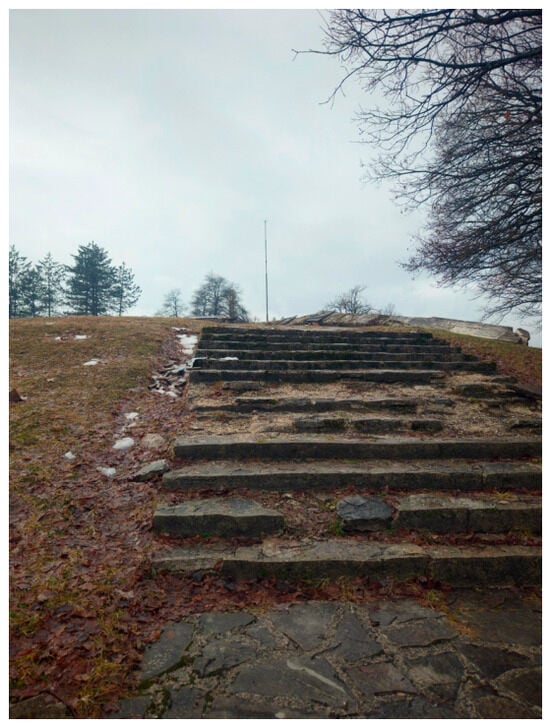
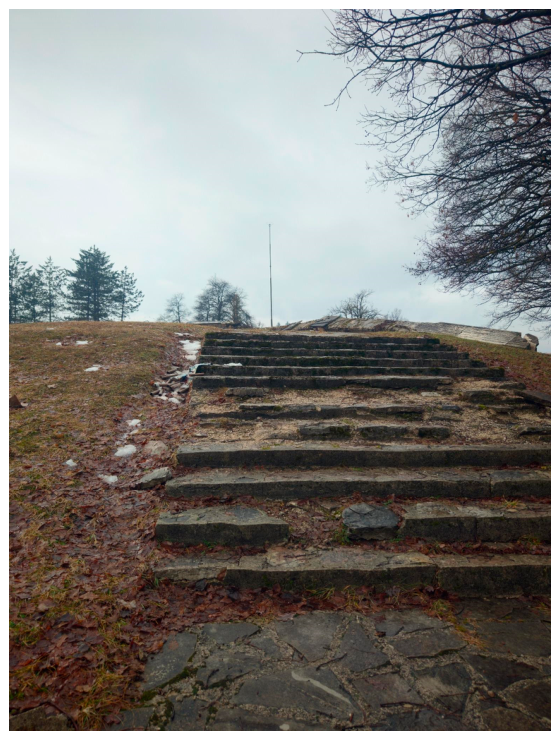
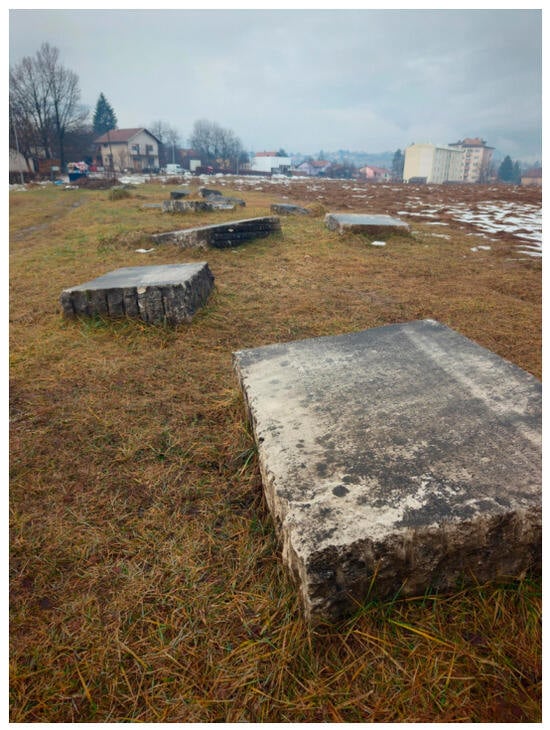
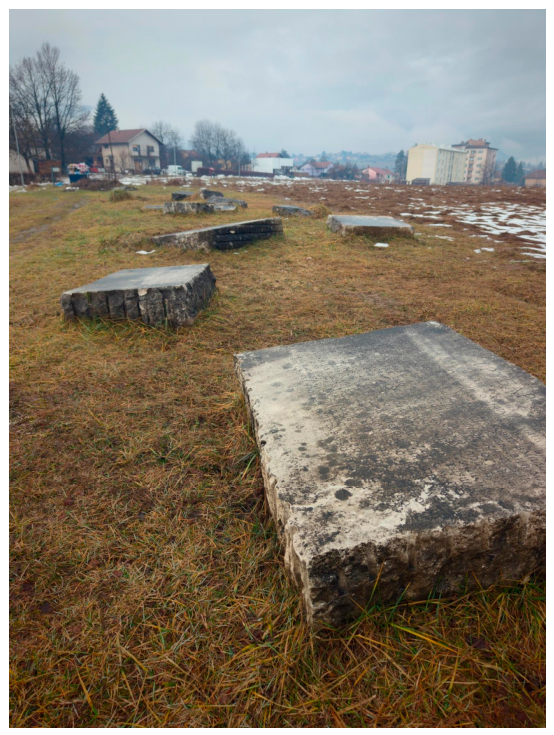
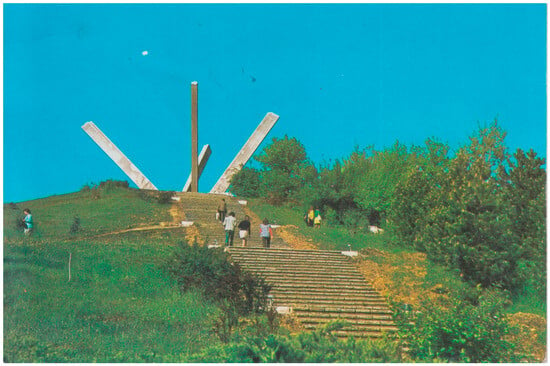
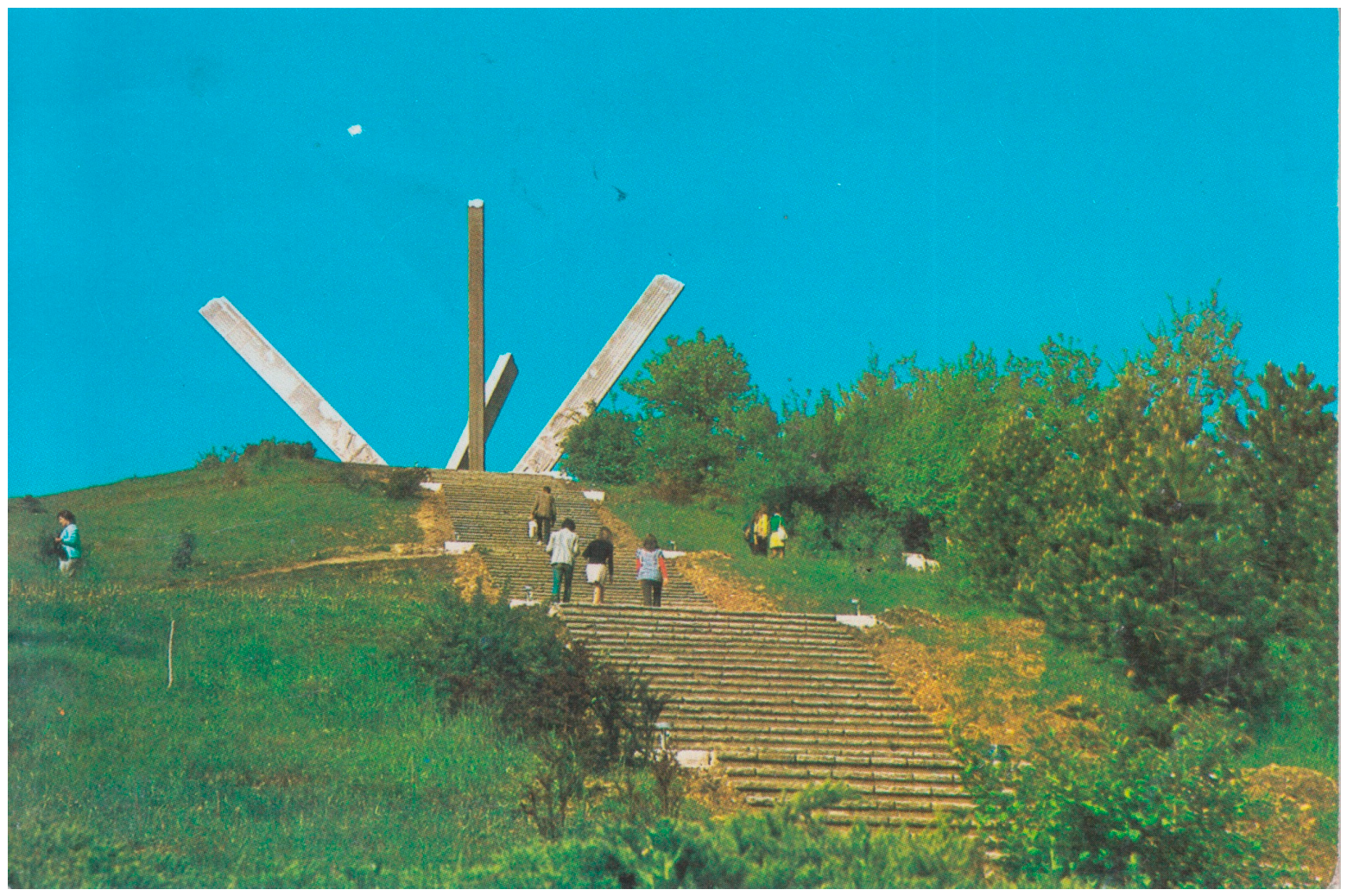
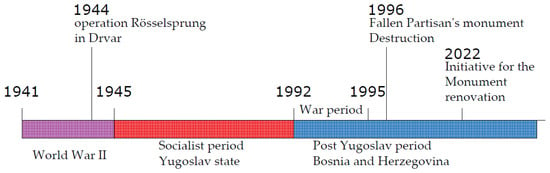
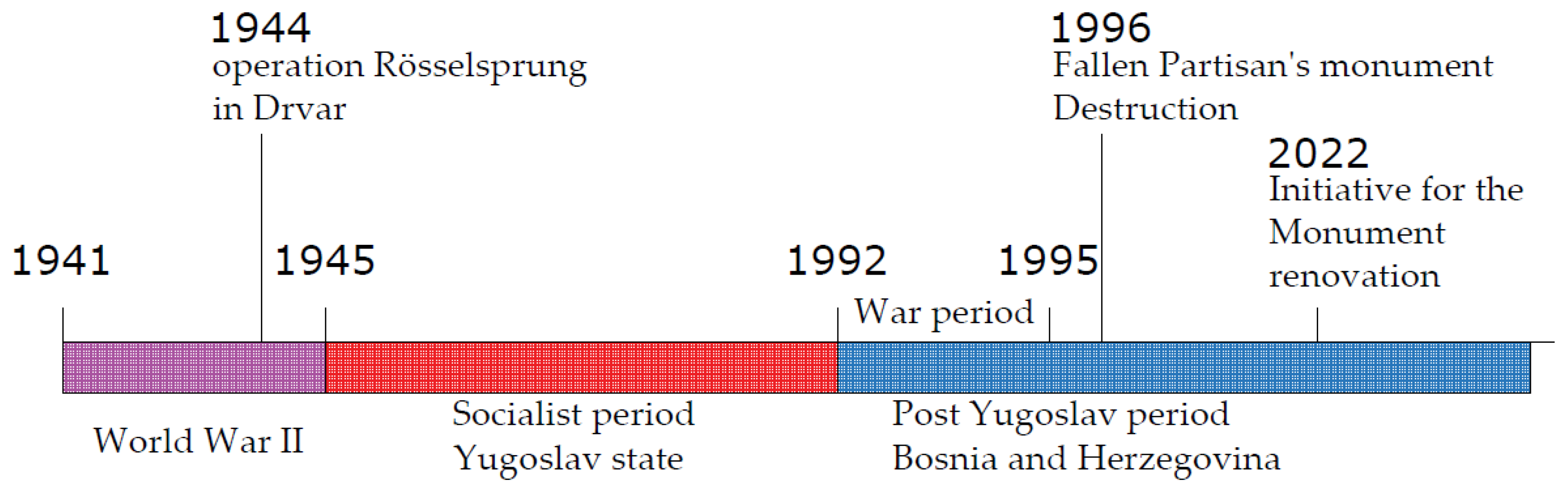
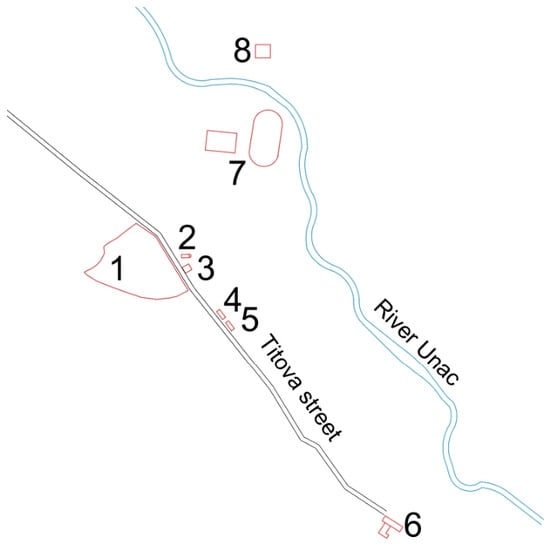
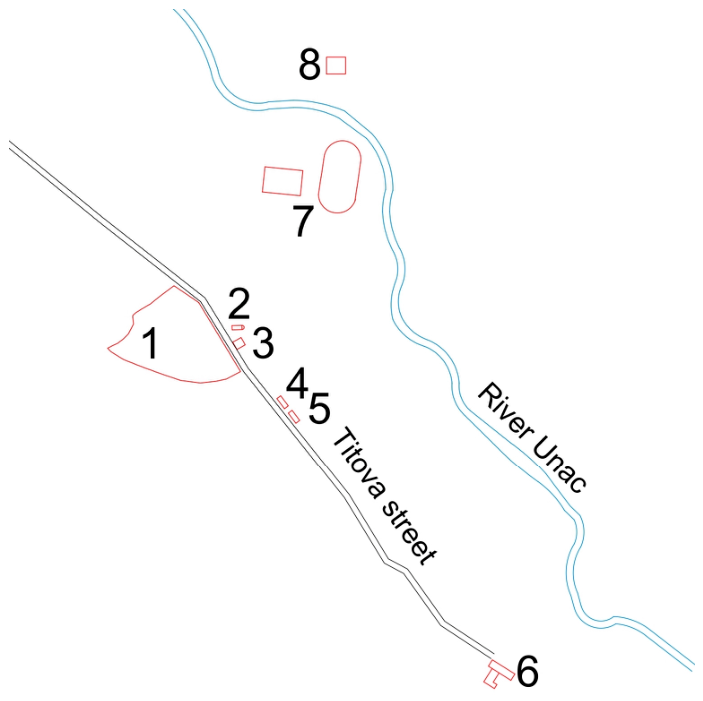
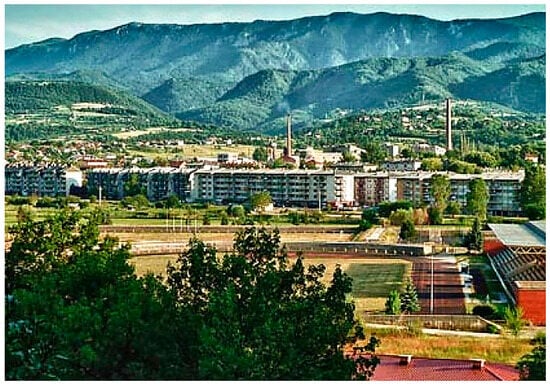
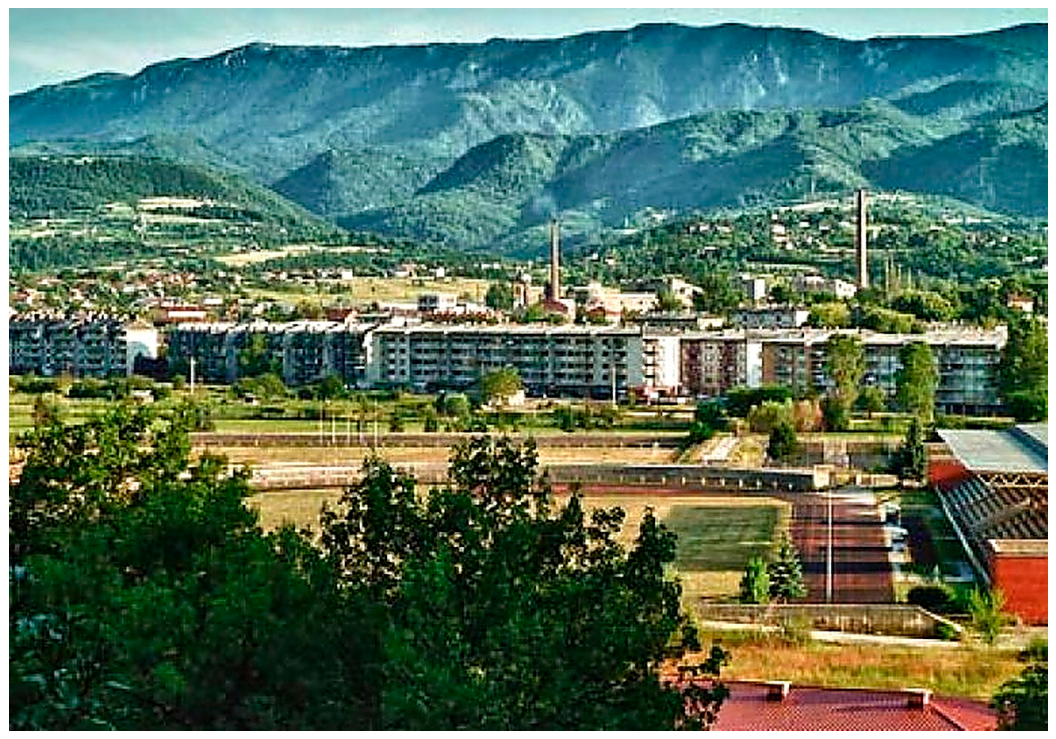
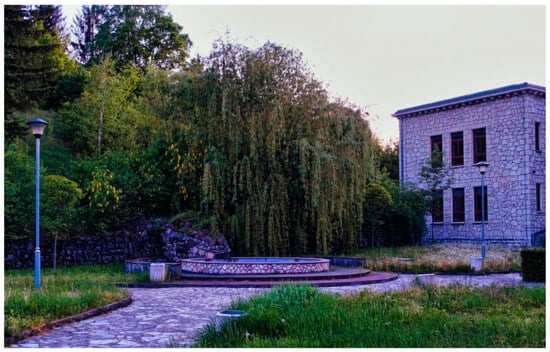
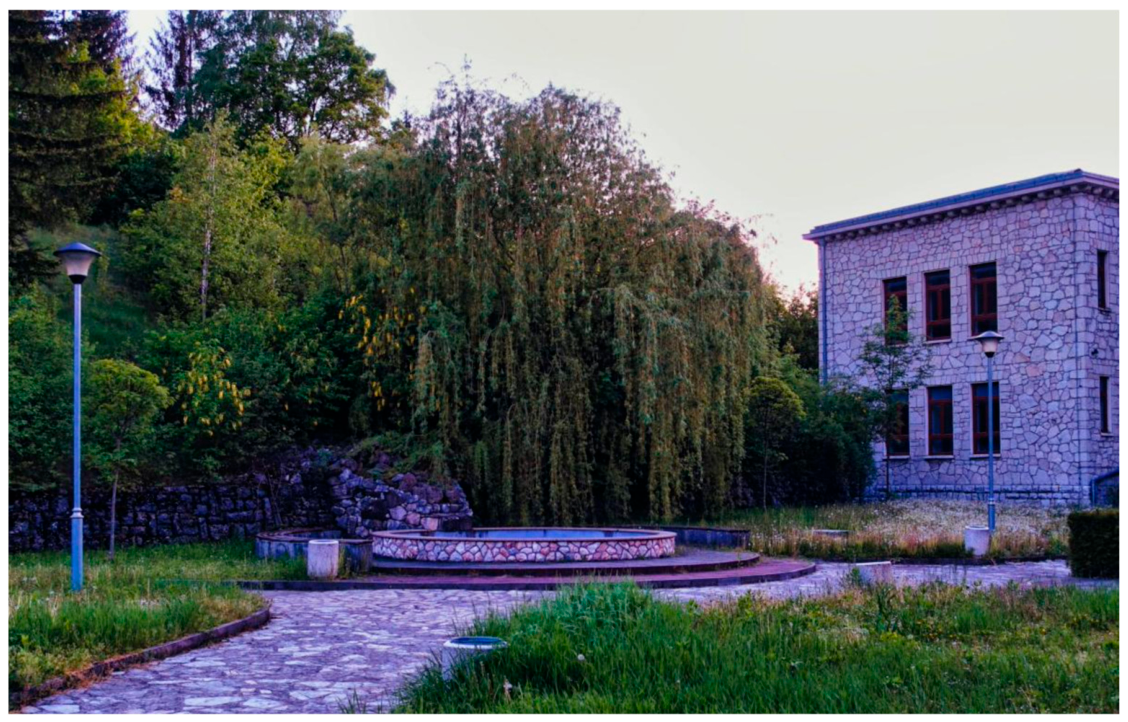
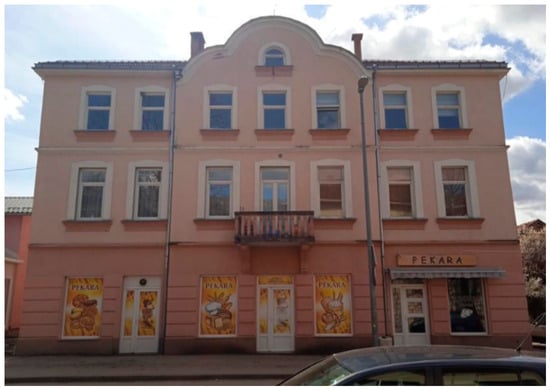
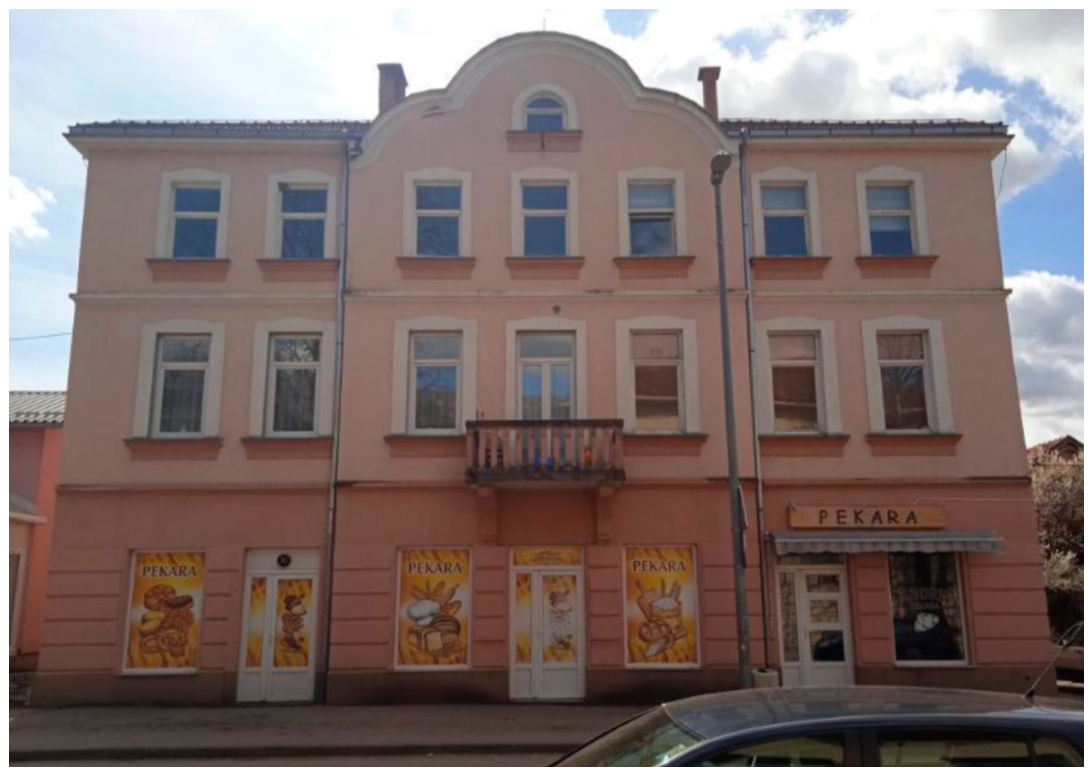
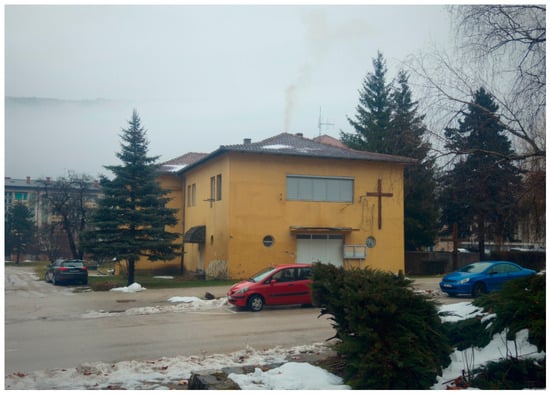
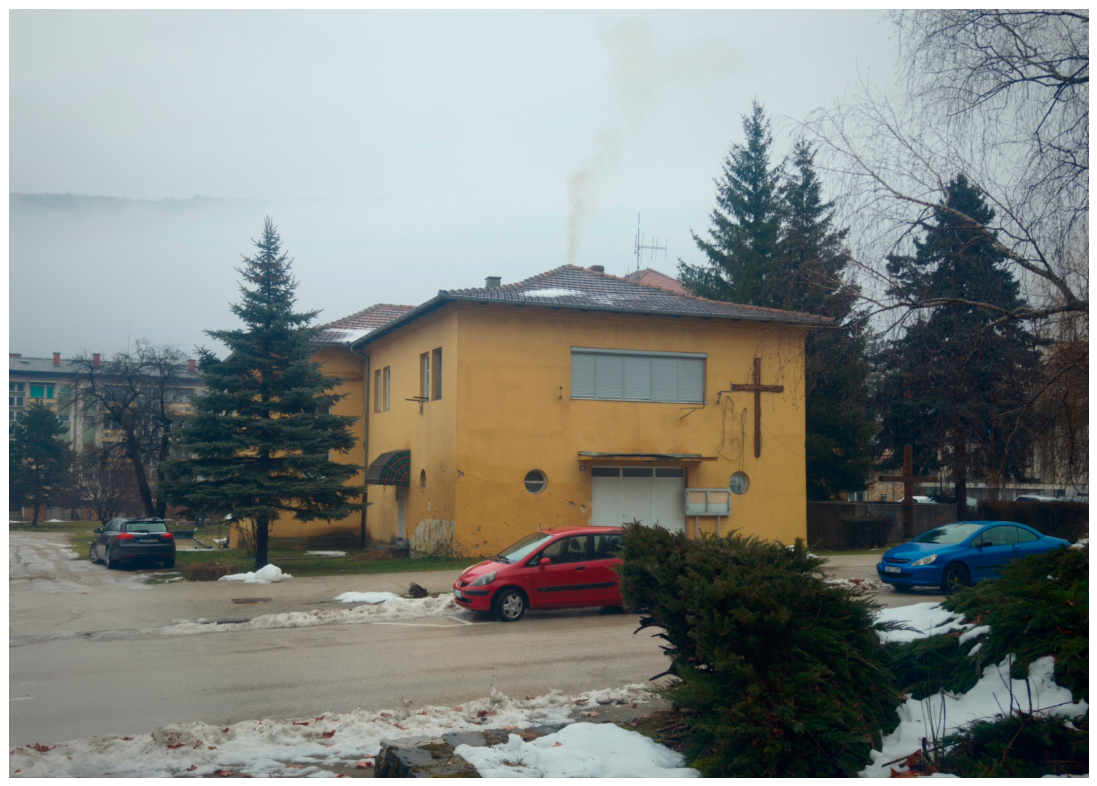
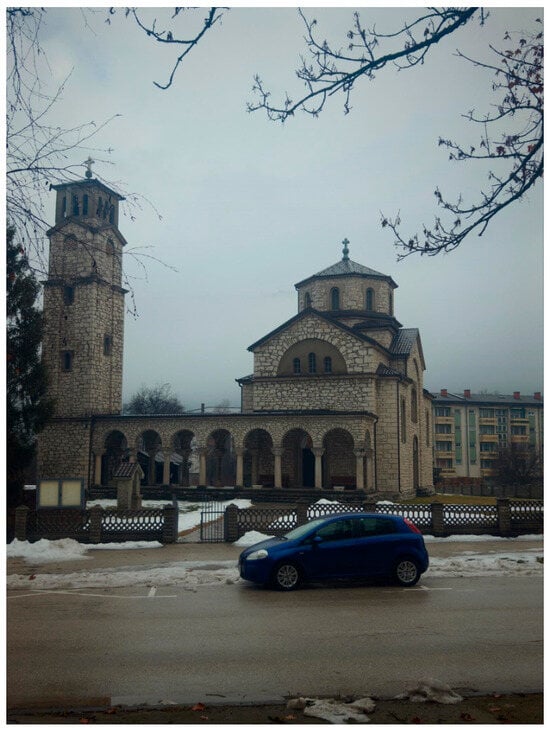
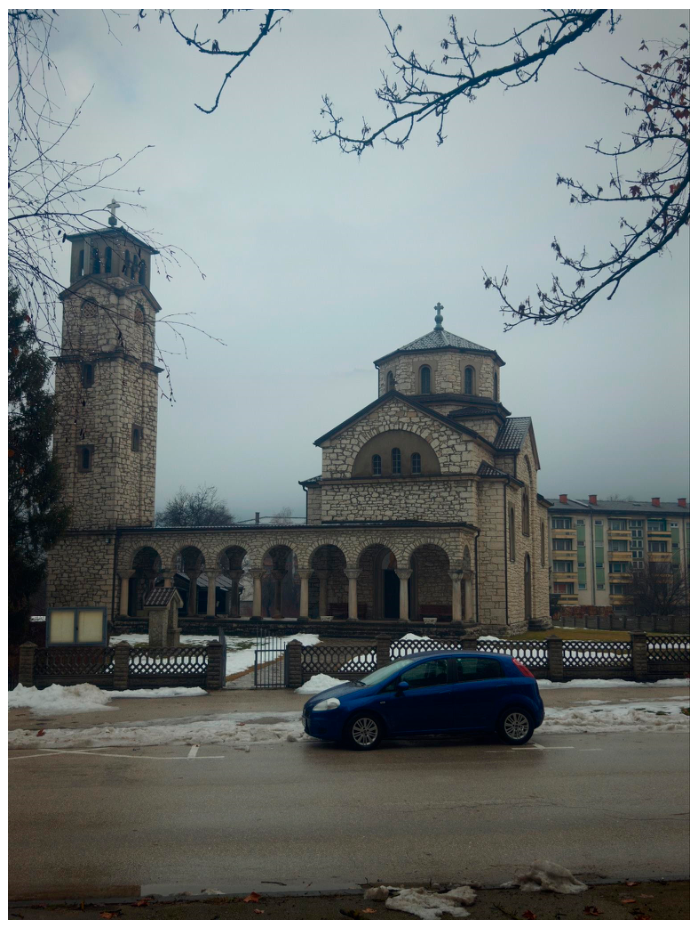
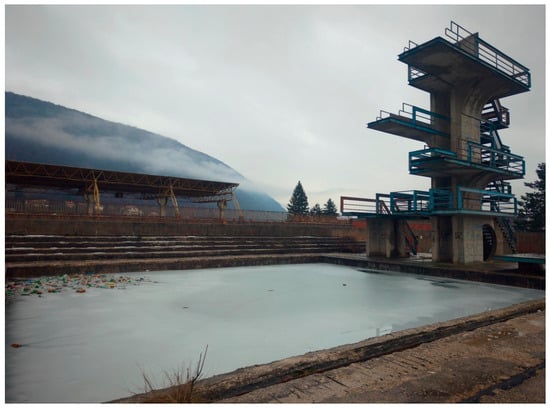
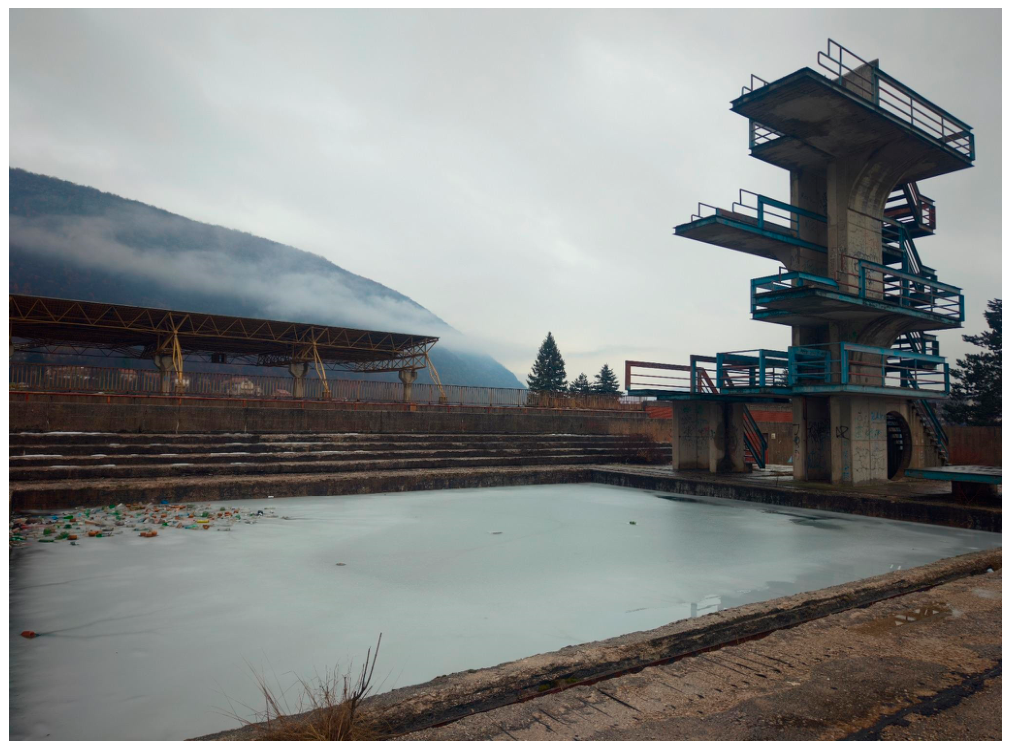
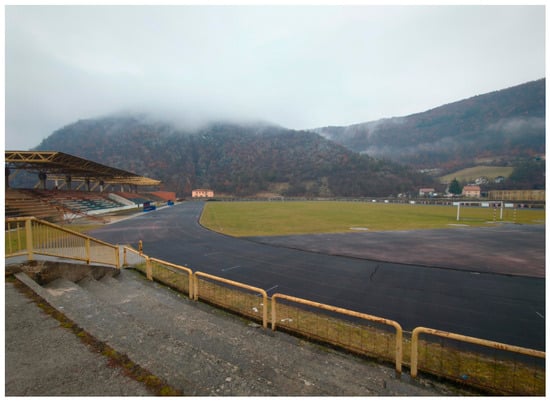
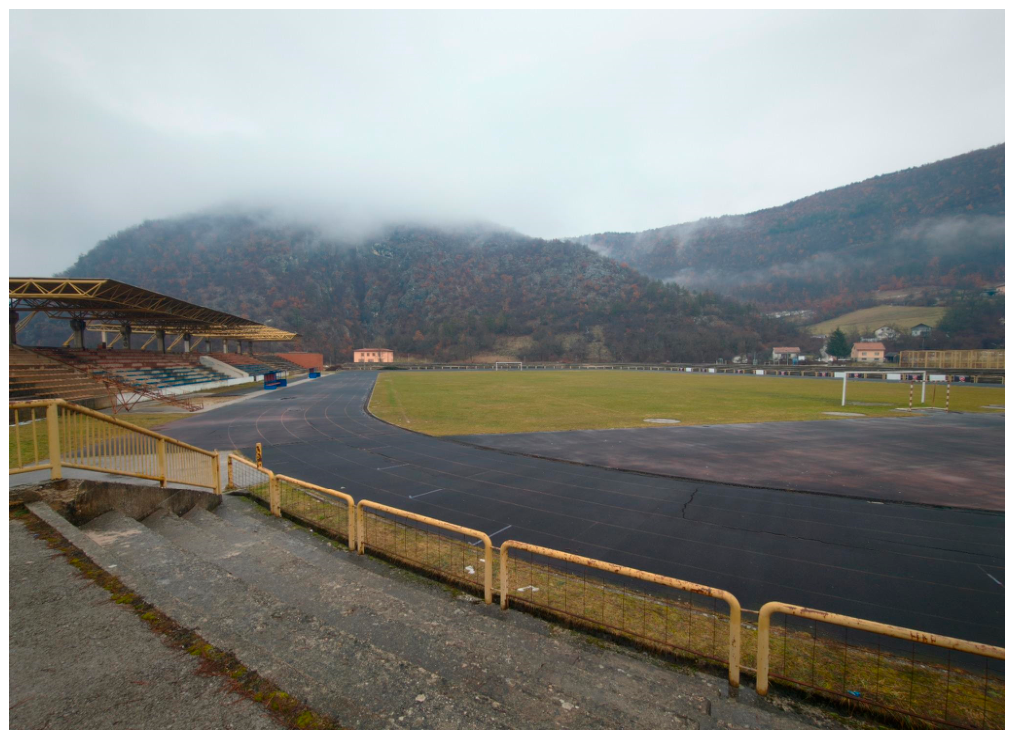
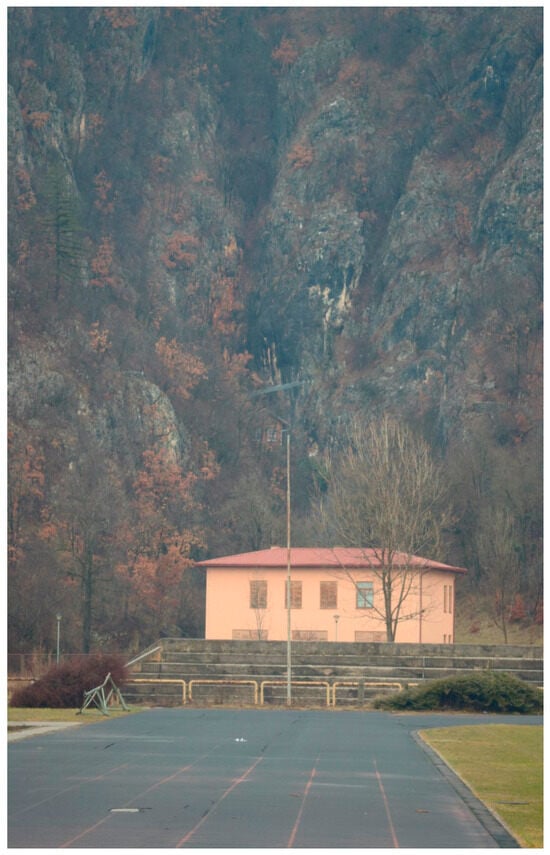
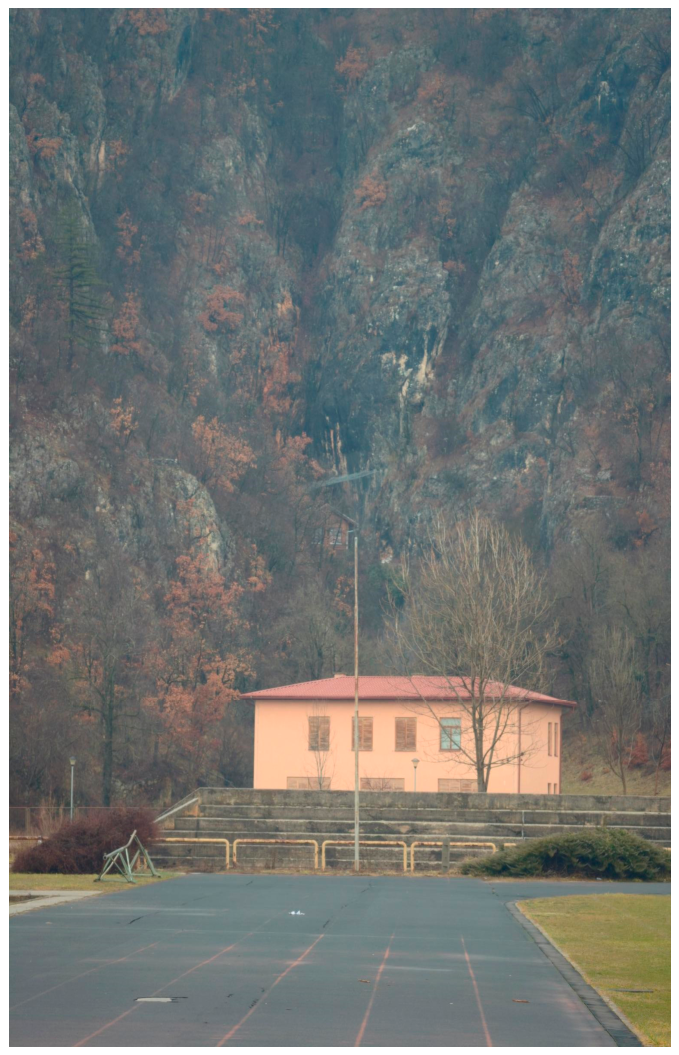
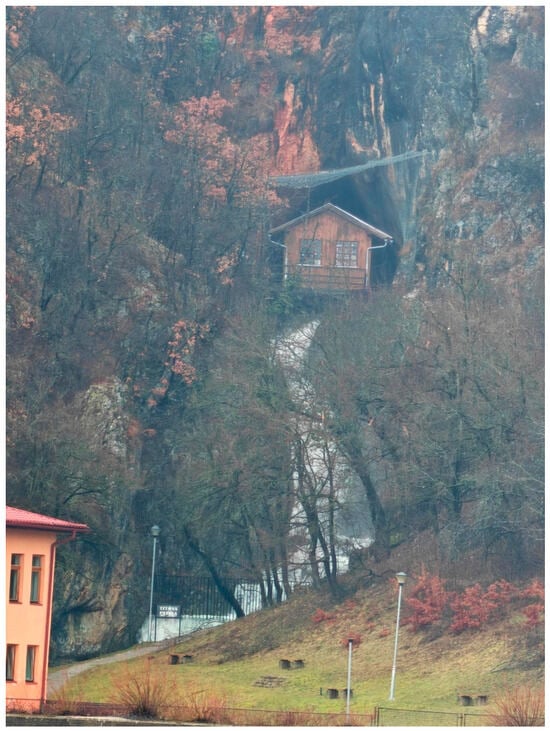
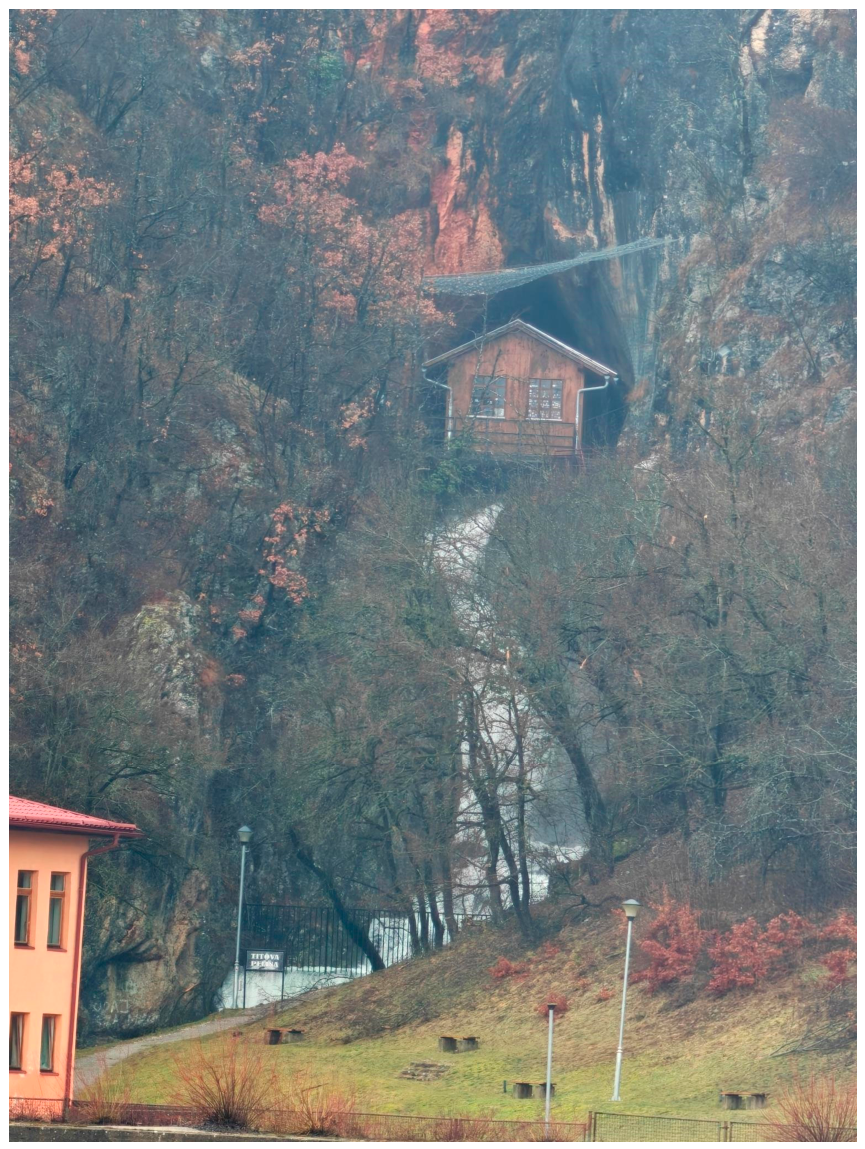
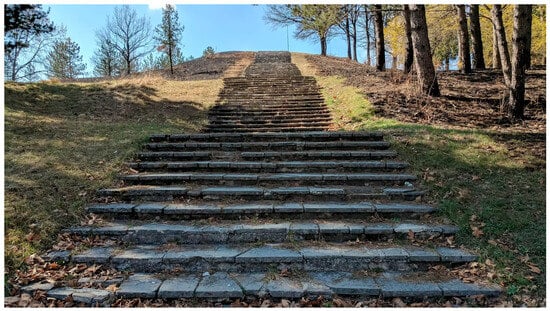
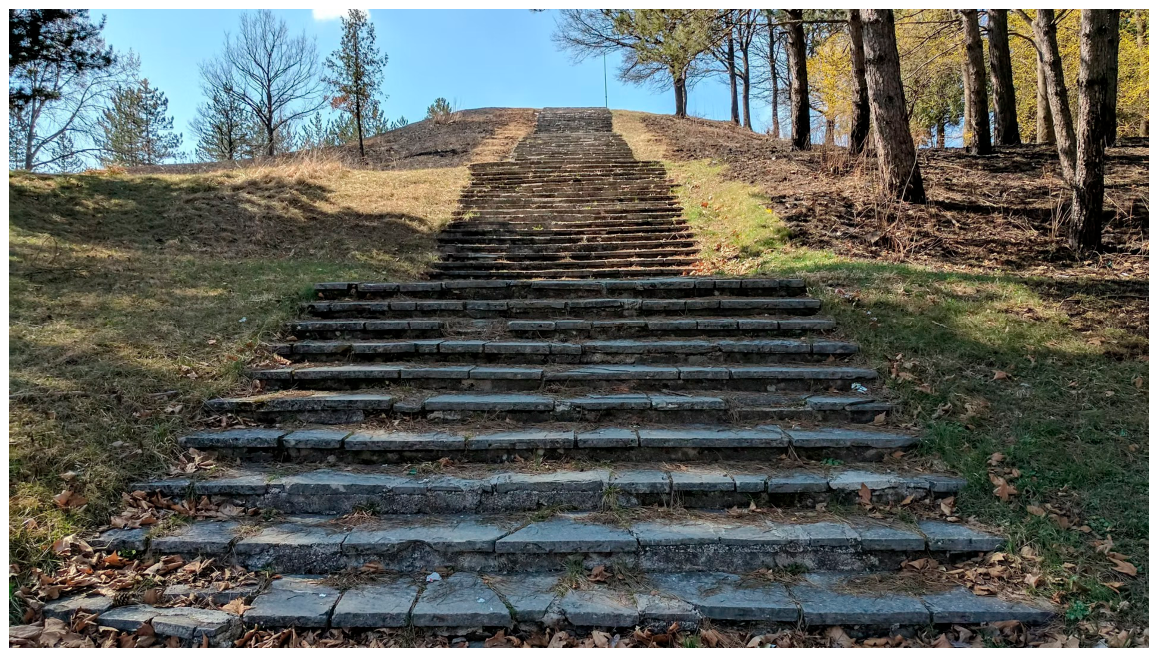
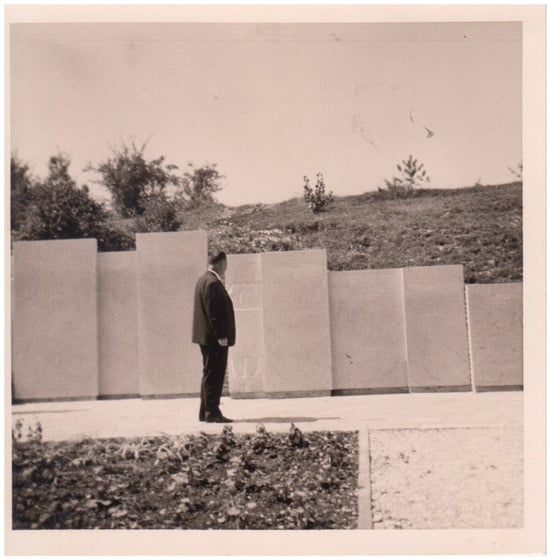
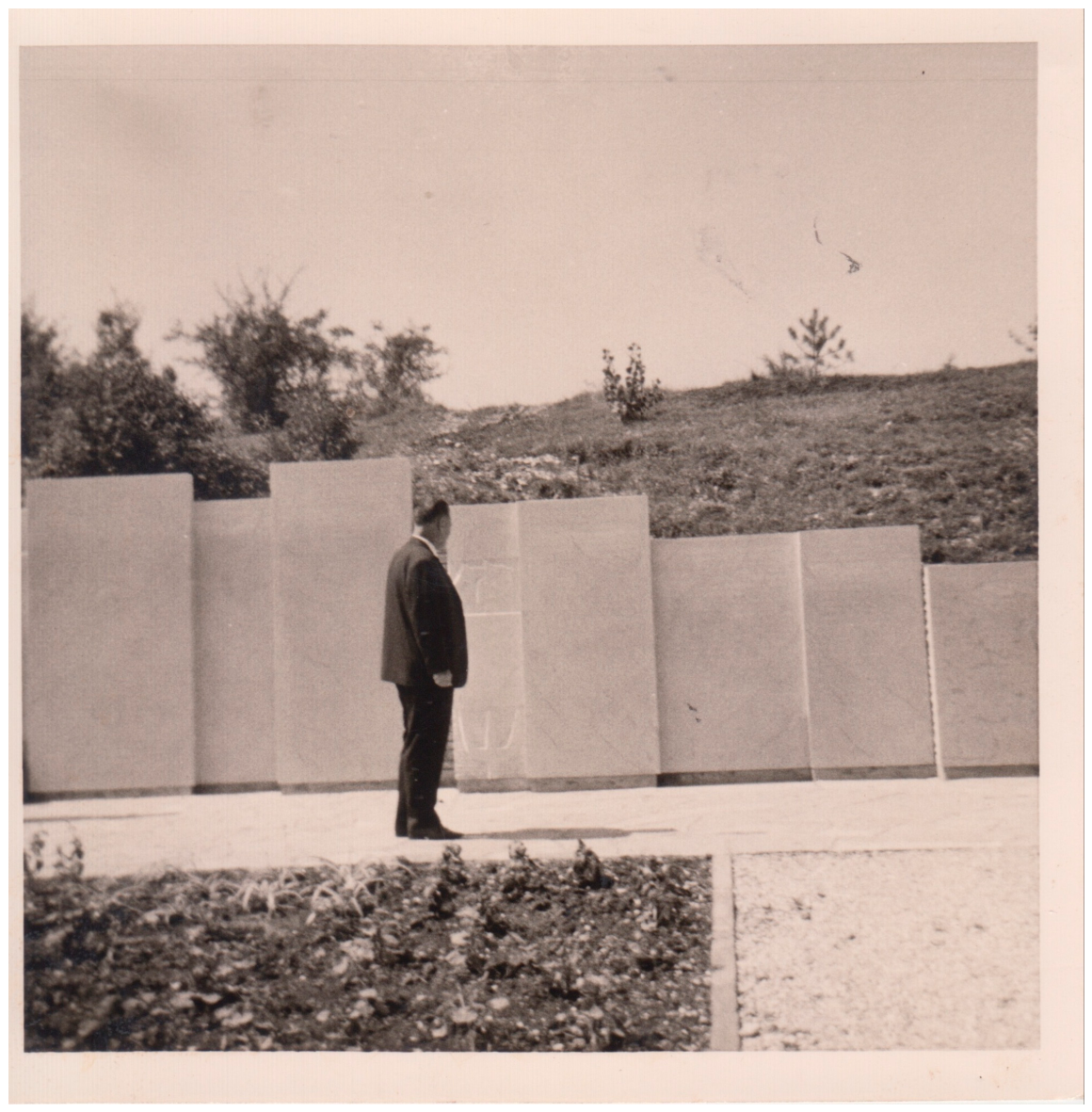
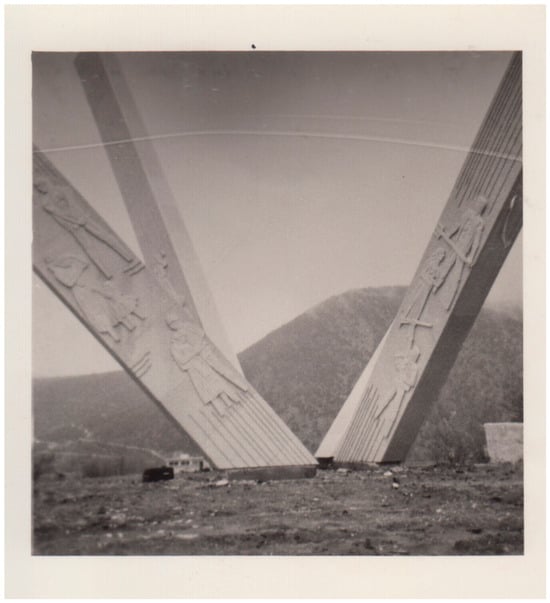
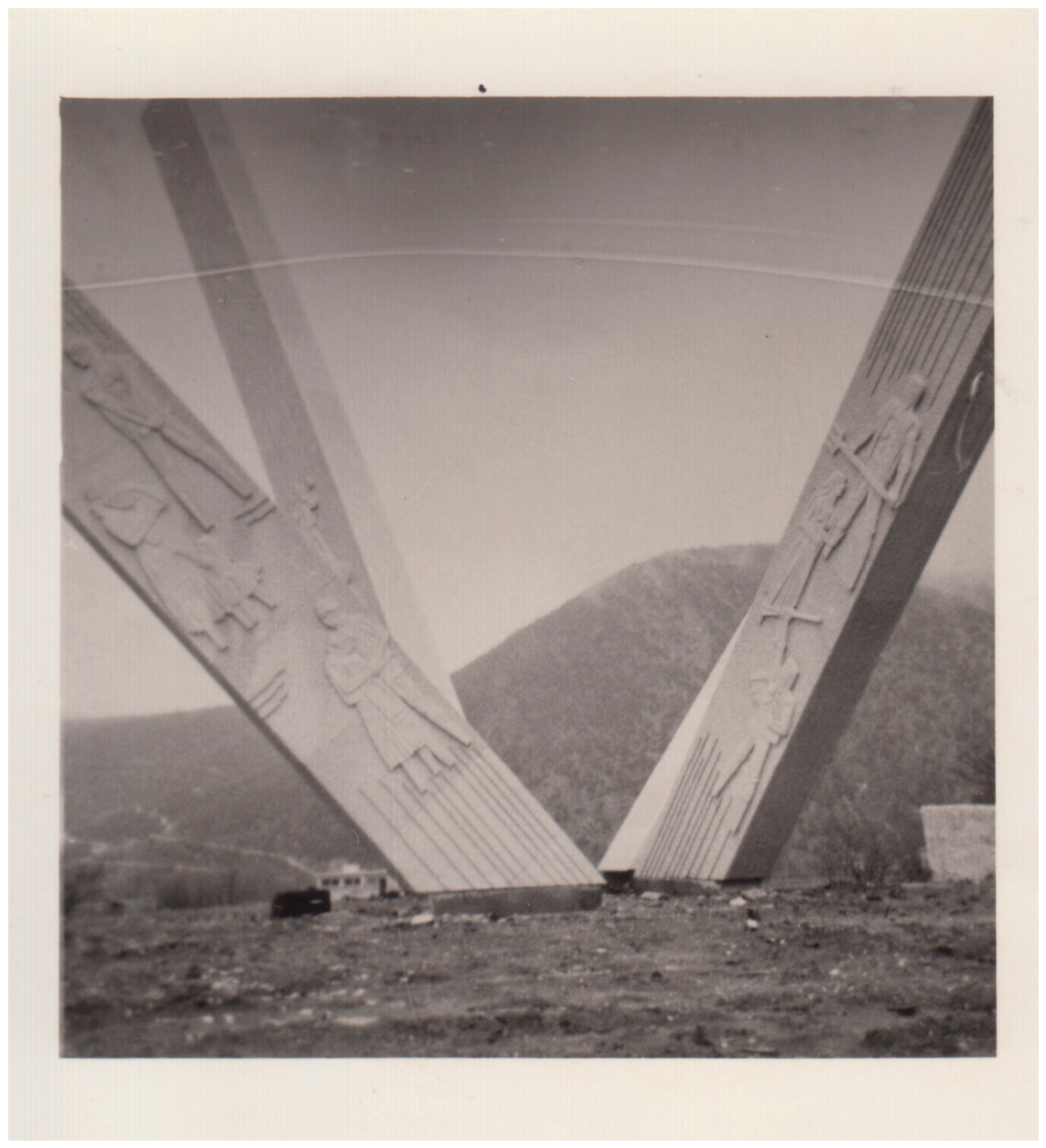
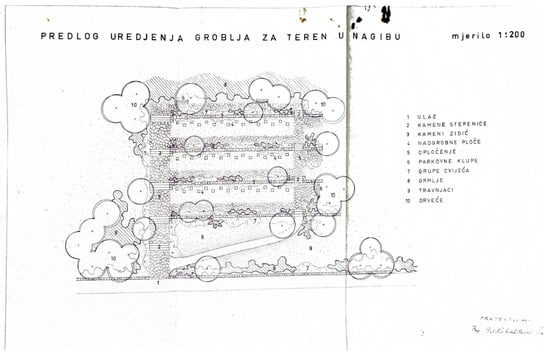
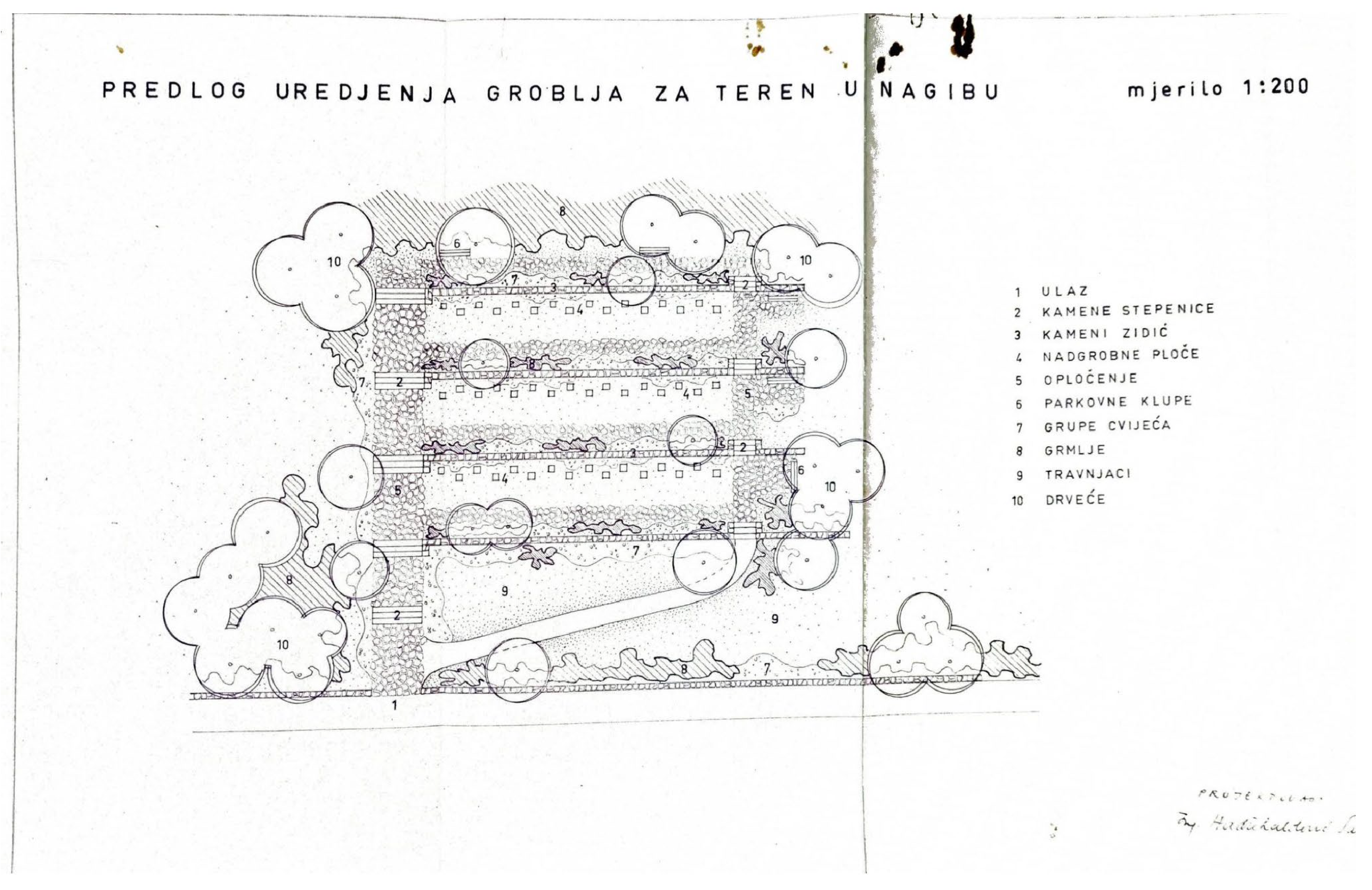
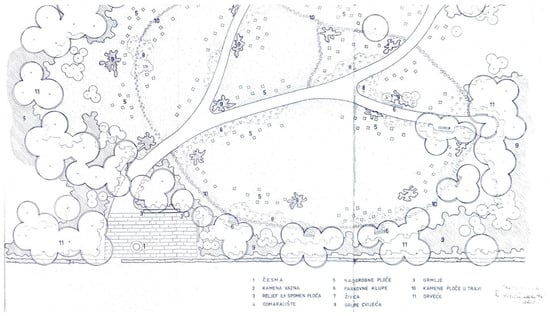
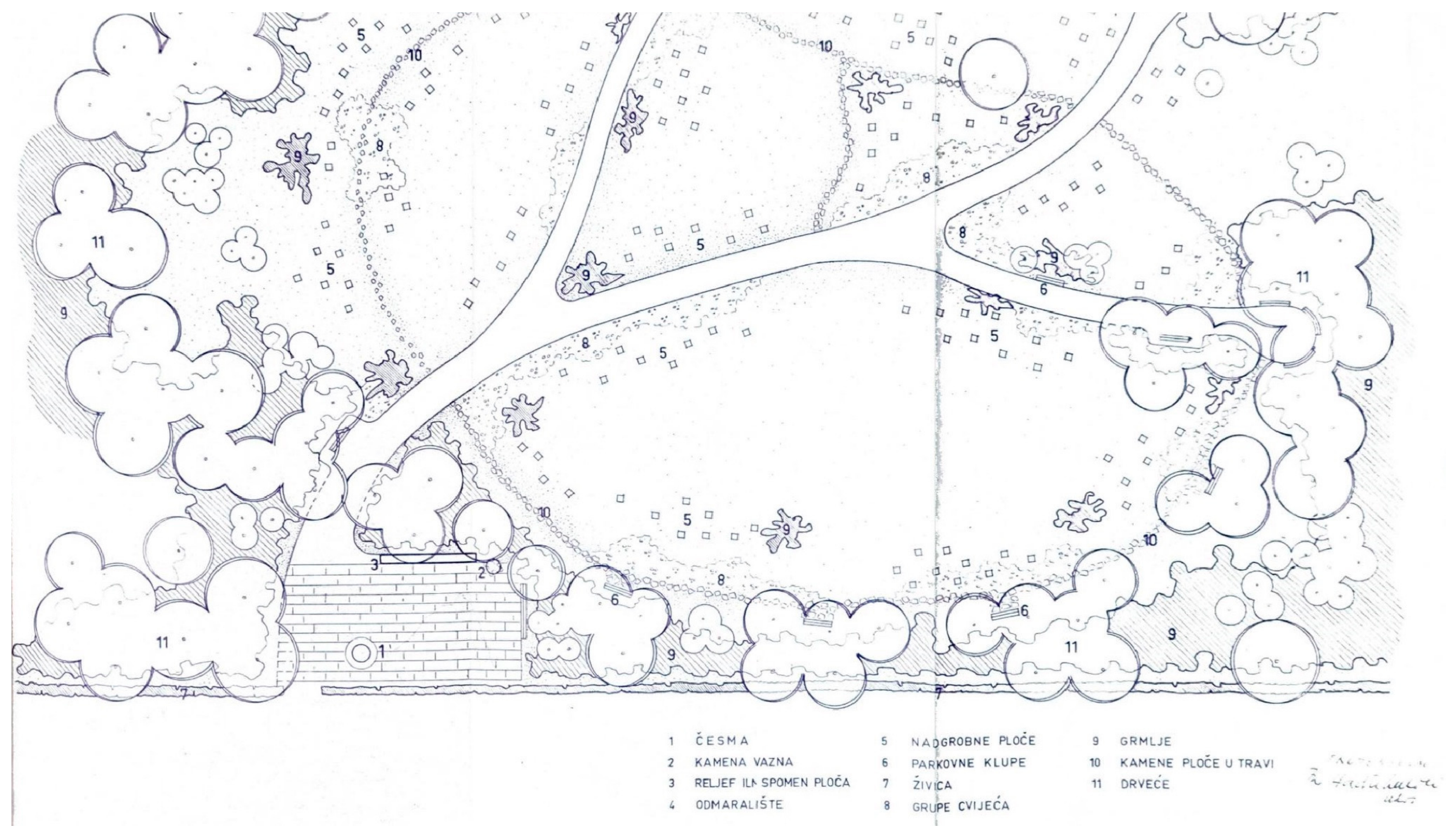
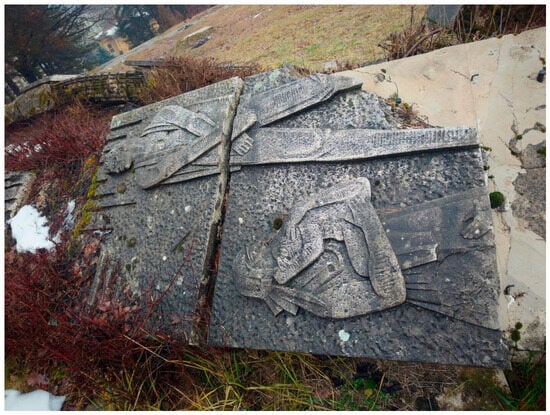
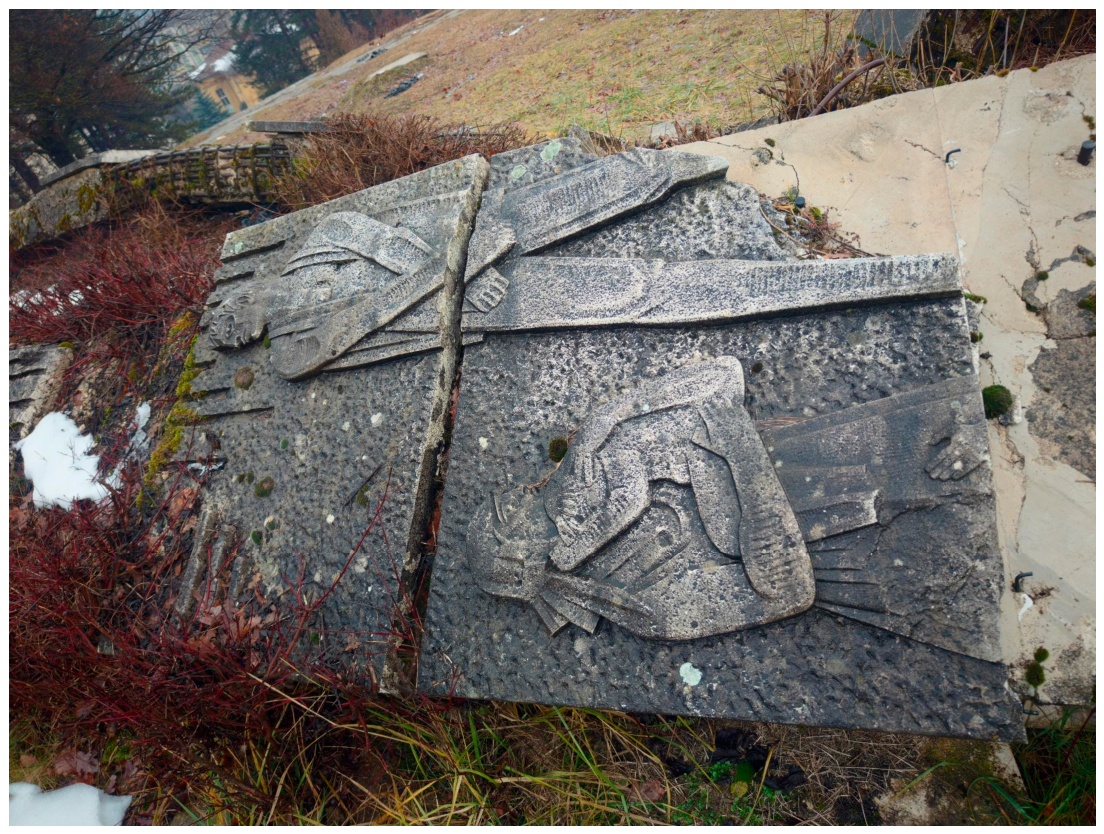
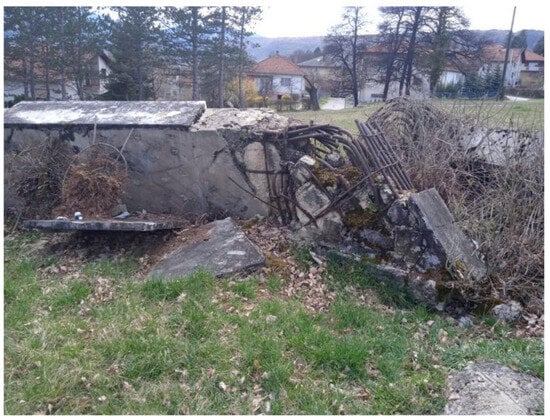
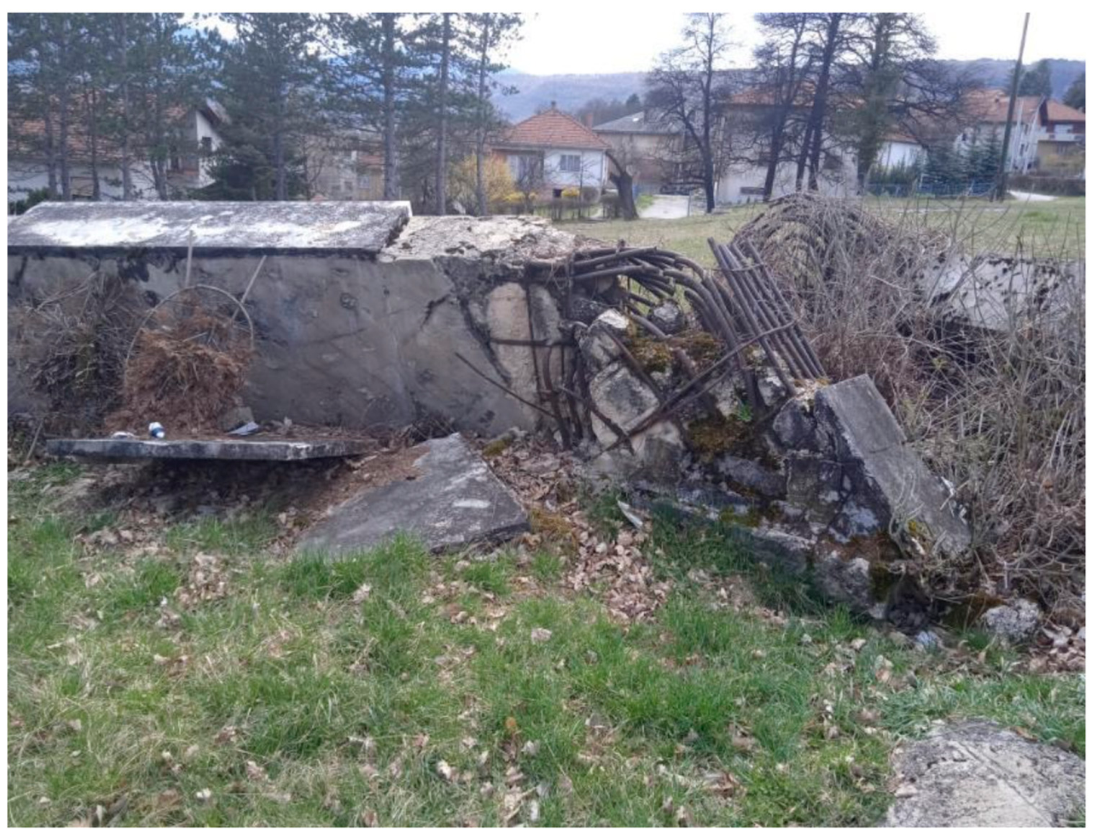
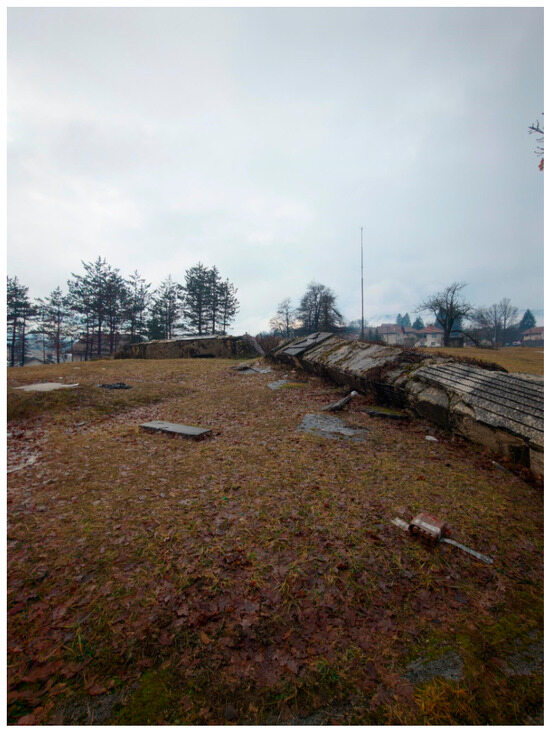
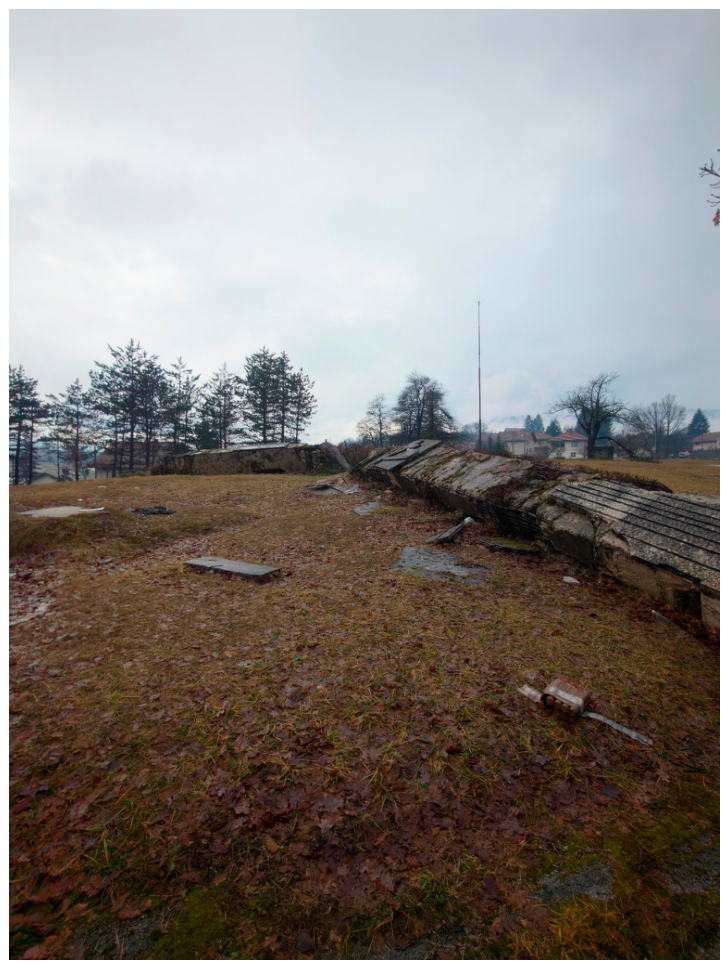
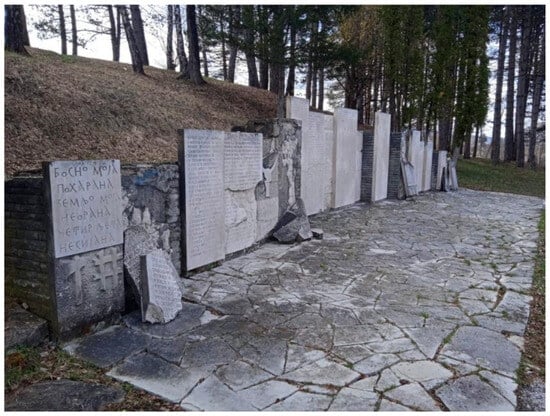
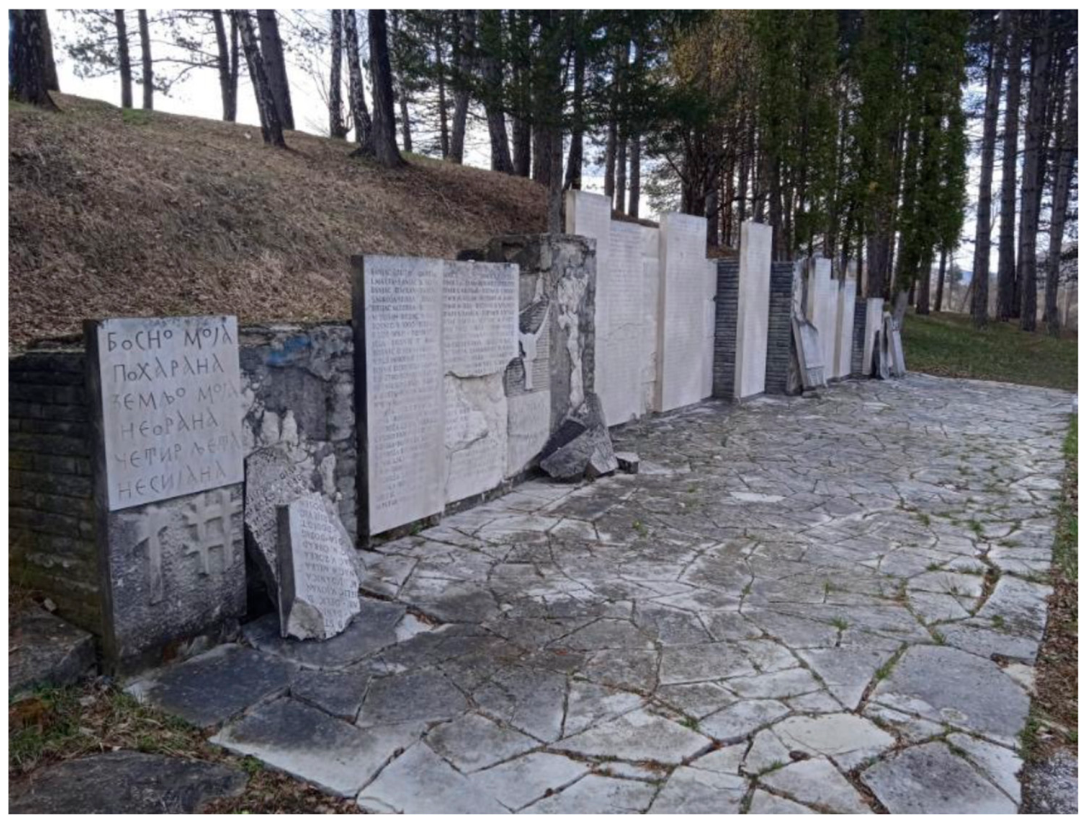
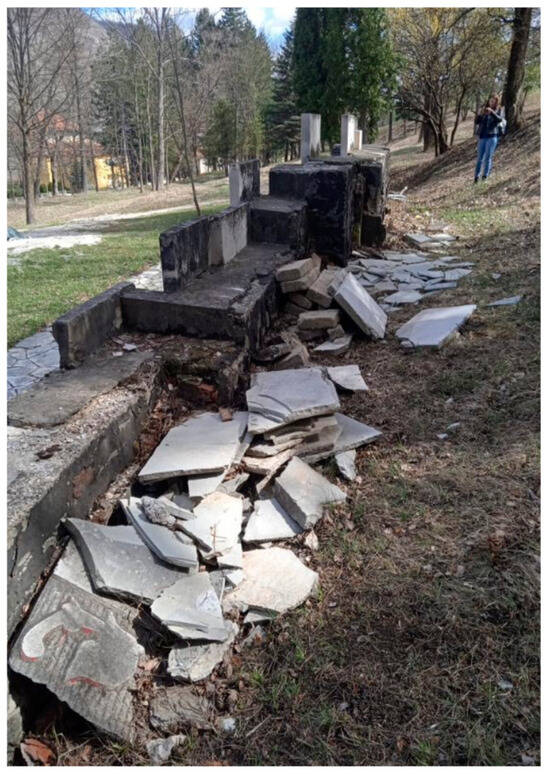
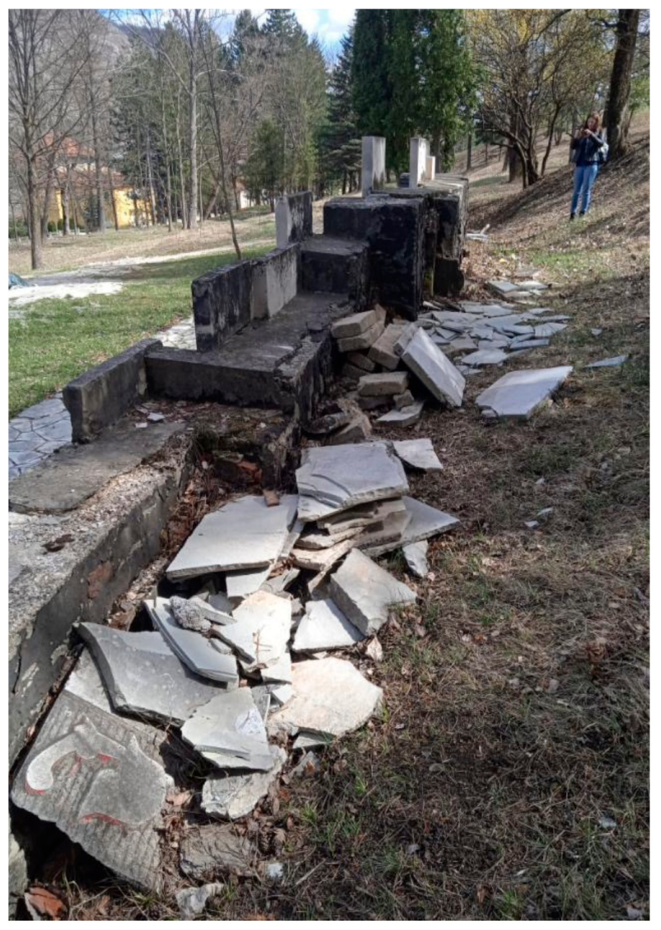
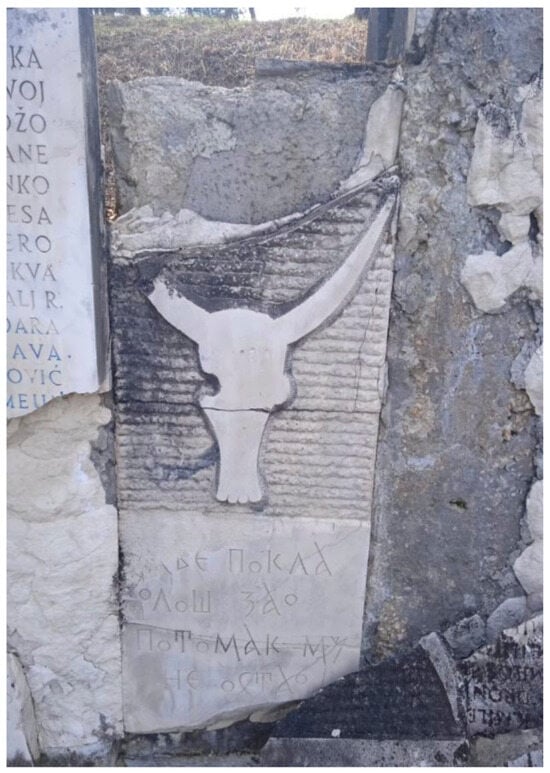
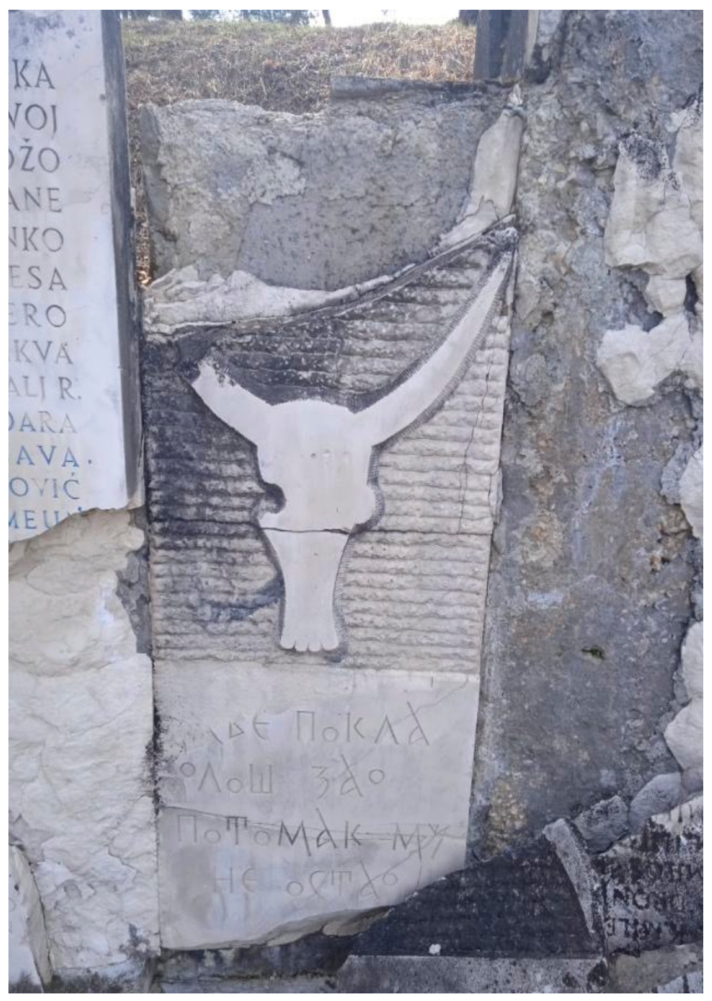
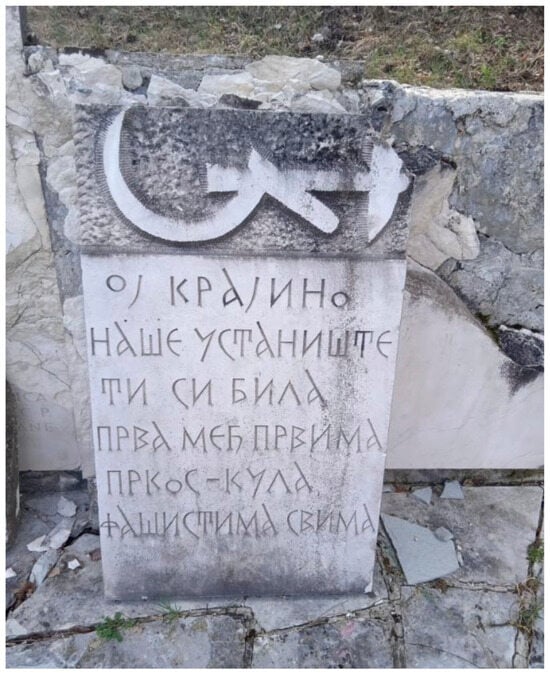
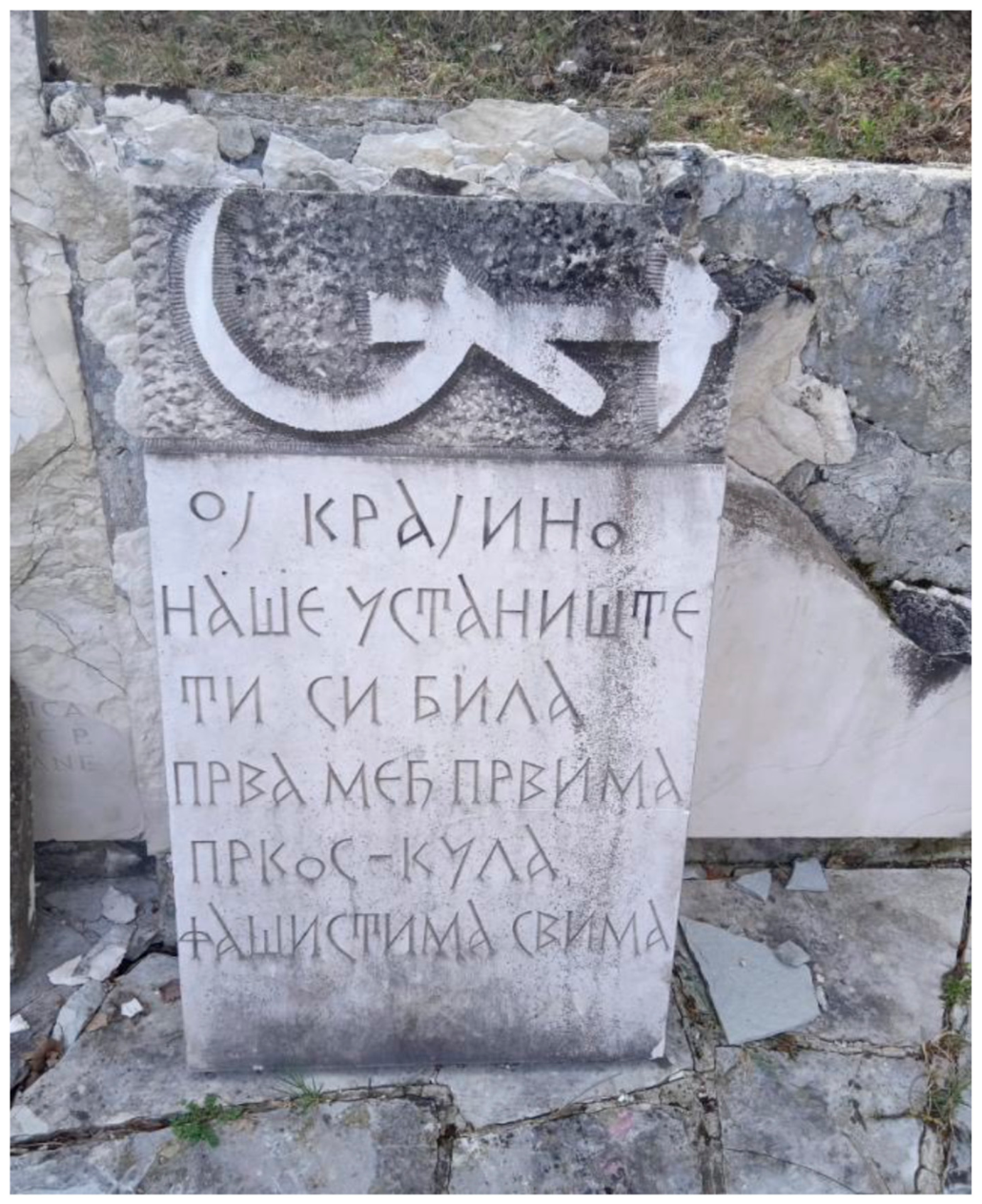
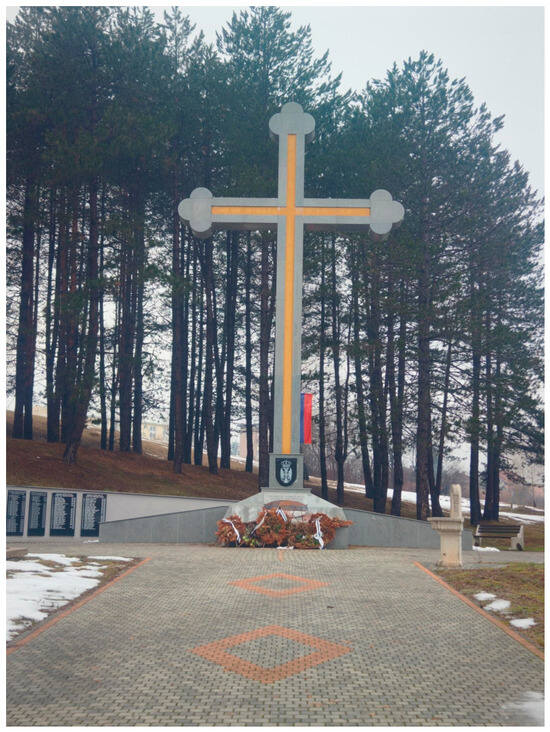
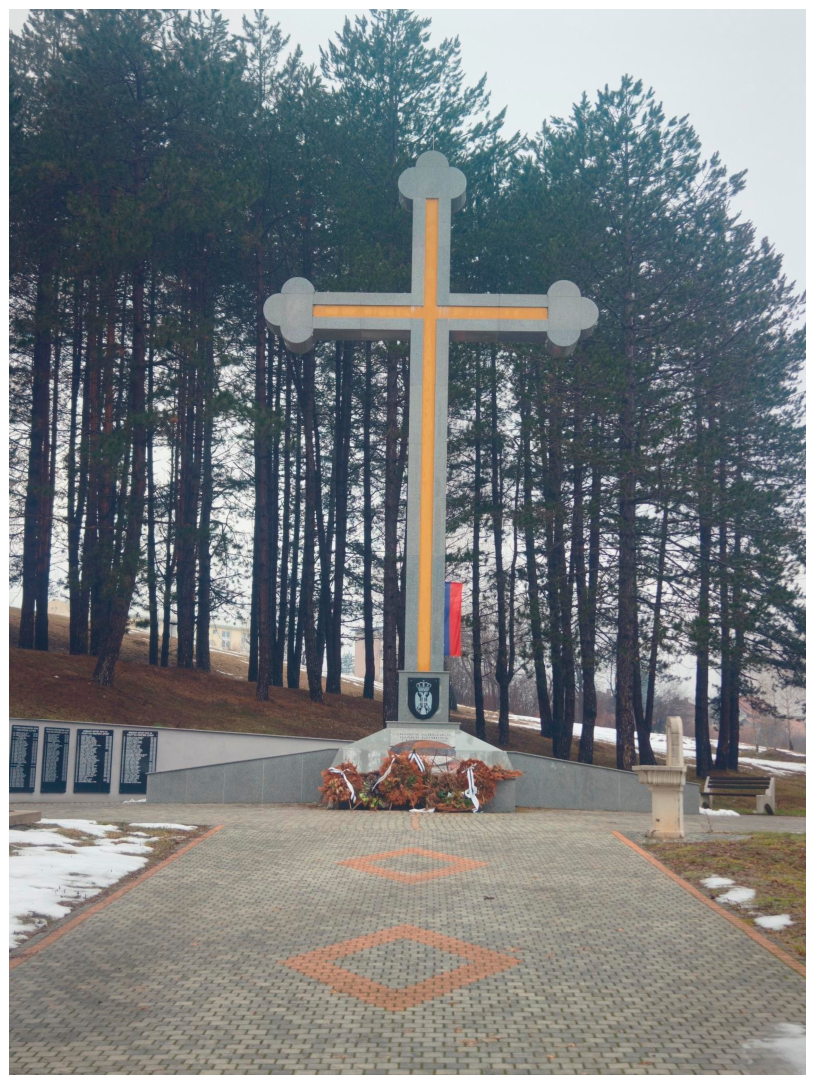
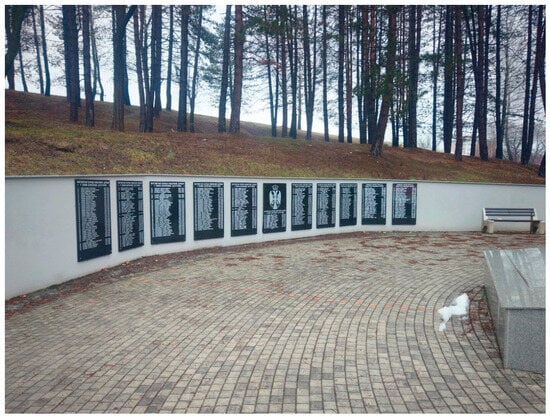
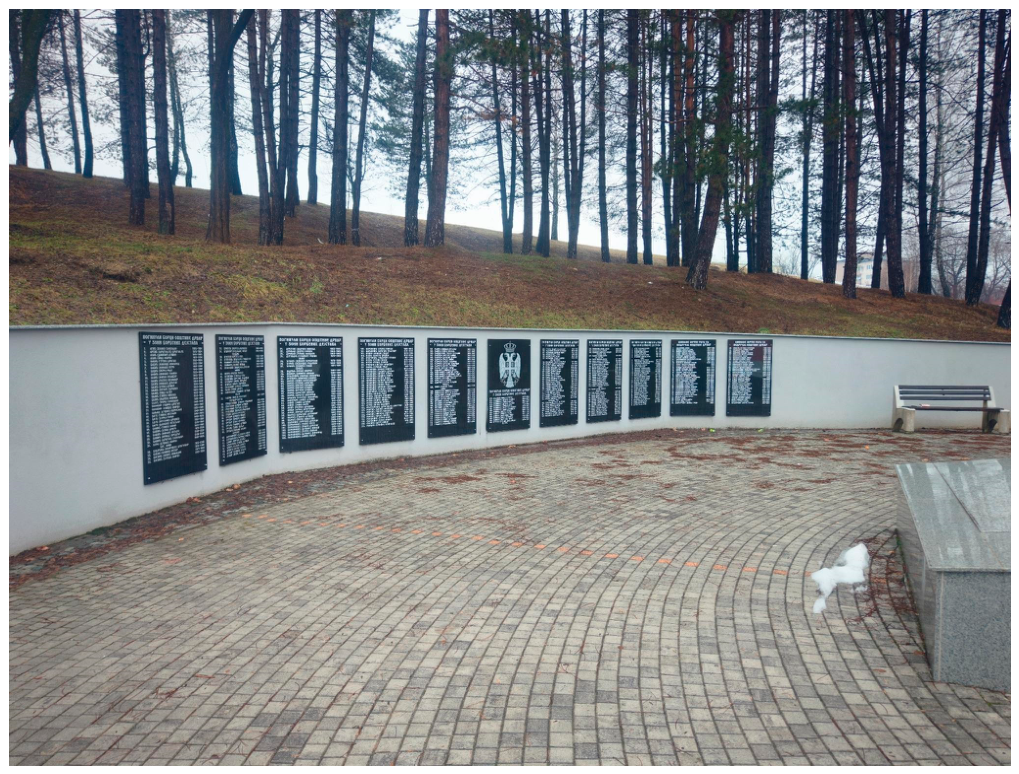
Disclaimer/Publisher’s Note: The statements, opinions and data contained in all publications are solely those of the individual author(s) and contributor(s) and not of MDPI and/or the editor(s). MDPI and/or the editor(s) disclaim responsibility for any injury to people or property resulting from any ideas, methods, instructions or products referred to in the content. |
© 2026 by the authors. Licensee MDPI, Basel, Switzerland. This article is an open access article distributed under the terms and conditions of the Creative Commons Attribution (CC BY) license.