


Abstract
Magic lantern slides are fragile objects consisting of transparent images depicted on thin glass plates to be projected by magic lanterns. Despite their widespread presence in archives and museums, these collections are often undervalued and understudied. The Portuguese Cinematheque holds the most extensive collection of slides in Portugal. This article presents the first preventive conservation case study focused on the collection of painted slides, reflecting on the general origins of this collection, examining the challenges faced by caretakers when adapting historical buildings to accommodate collections of this nature. Environmental monitoring of light and radiation, temperature, and relative humidity in storage and exhibition rooms was combined with ultraviolet-visible spectroscopy to measure the fading of one of the most light-sensitive colours identified in these slides in previous studies, the pink eosin-based lake, by comparing a slide exhibited under the measured light conditions with one kept in storage during the same period. The results identified damaging light exposure in display areas with illuminance values far above the recommended levels for these materials, and significant RH fluctuations in both spaces. These conditions are consistent with deterioration factors known to affect the material that composes these fragile media (e.g., light-sensitive painting materials and organic frames, and unstable glass). This study also showcases how raising awareness on the fragility of this heritage stimulated discussions and encouraged small and feasible changes that can positively impact its preservation.
1. Introduction
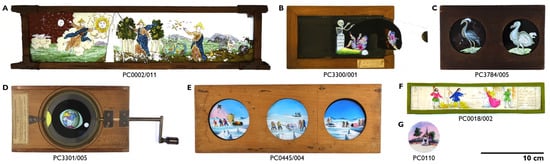
Magic lantern slides are fragile objects with positive transparent images depicted on thin glass plates, mounted in wooden or paper frames for projection using magic lanterns. Resorting to painting, printing, or photographic techniques, these images frequently had vibrant colours applied using mostly transparent watercolours, oils, and varnishes [1]. Metallic parts were often incorporated to secure the mountings or to create mechanisms that gave the illusion of movement to these images (Figure 1). Their composite nature makes them particularly vulnerable to environmental conditions, especially light exposure, temperature, and relative humidity.
Figure 1.
Examples of hand-painted slides (A–E) and hand-coloured printed outlines (F,G) from CPMC: (A) Religious panorama slide, 18th century, Italy (B) Burlesque single slipping slide, ca.1820–1835, England. (C) Zoological multiple slide by Philip Carpenter, ca.1822–1837, England. (D) Astronomical rackwork slide by Carpenter & Westley, ca.1838–1870, England. (E) Adventure multiple slide, ca.1880, England. (F) Tale panorama slide by Lapierre, ca.1890, France. (G) Topical single slide, 19th century, unknown origin.
Since their invention in the 17th century, magic lanterns played a significant role in the visual media culture, allowing, for the first time, the projection of enlarged colourful images for collective audiences in a wide range of settings, from private gatherings to public performances in fairs, churches, theatres, and educational contexts, frequently accompanied by narrations and music [2,3,4,5,6,7]. With their increasing popularity during the 18th and 19th centuries, large numbers of slides were produced and circulated internationally. In recent years, the historical and cultural significance of these objects has gained renewed attention, resulting in increased research into the magic lantern’s role and relevance in historical, social, and cultural contexts worldwide and on slides’ production, use, and material composition [8,9,10].
Previous studies, developed within the framework of Angela Santos’s PhD thesis “Lanterna Magica: Technology and Preservation of Painted Glass Slides for Projection with Magic Lanterns” and the Project MAGICA “Magic Lantern: Study and Safeguard Magic Lantern: Study, Safeguard, Uses and Reuses in 19th-Century Portugal” (PTDC/ART-PER/1702/2021, www.magica-project.com, accessed on 7 December 2022), have significantly advanced the understanding of the materials and techniques used in the production of 18th and 19th-century magic lantern slides, including the identification of high-quality glass support with distinct compositions, natural and synthetic pigments, and natural resins as binding components, as well as their associated degradation mechanisms [11,12,13]. These works not only discussed the correlations between historical written sources and original slides, and their production’s evolution, but also brought to light the fragility of painted and hand-coloured slides, particularly in relation to light-sensitive colourants [1,11,12,13].
In practice, many collections of magic lantern slides are housed in environments that present significant constraints for their preservation, including historic buildings with limited environmental control and modern facilities not specifically designed for multi-material heritage objects. There is therefore a need for case studies that connect environmental monitoring with the conservation challenges associated with these collections, contributing practical knowledge to support decision-making in similar contexts.
The Portuguese Cinematheque—Museum of Cinema (Cinemateca Portuguesa—Museu do Cinema, CPMC) holds the most extensive collection of magic lantern slides in Portugal, with over 1300 slides in its care. The present study is focused on the entire group of hand-painted and hand-coloured printed slides from this collection (369 slides), in which colour alterations and light-sensitive pigments have been detected (such as geranium-lakes, a bright pink eosin lake pigment widely known for having faded in Vincent Van Gogh paintings [14]) [11,12,15].
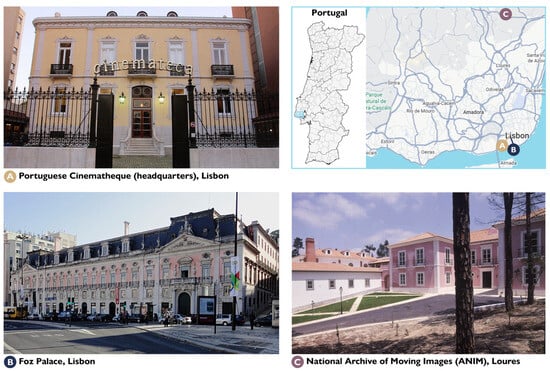
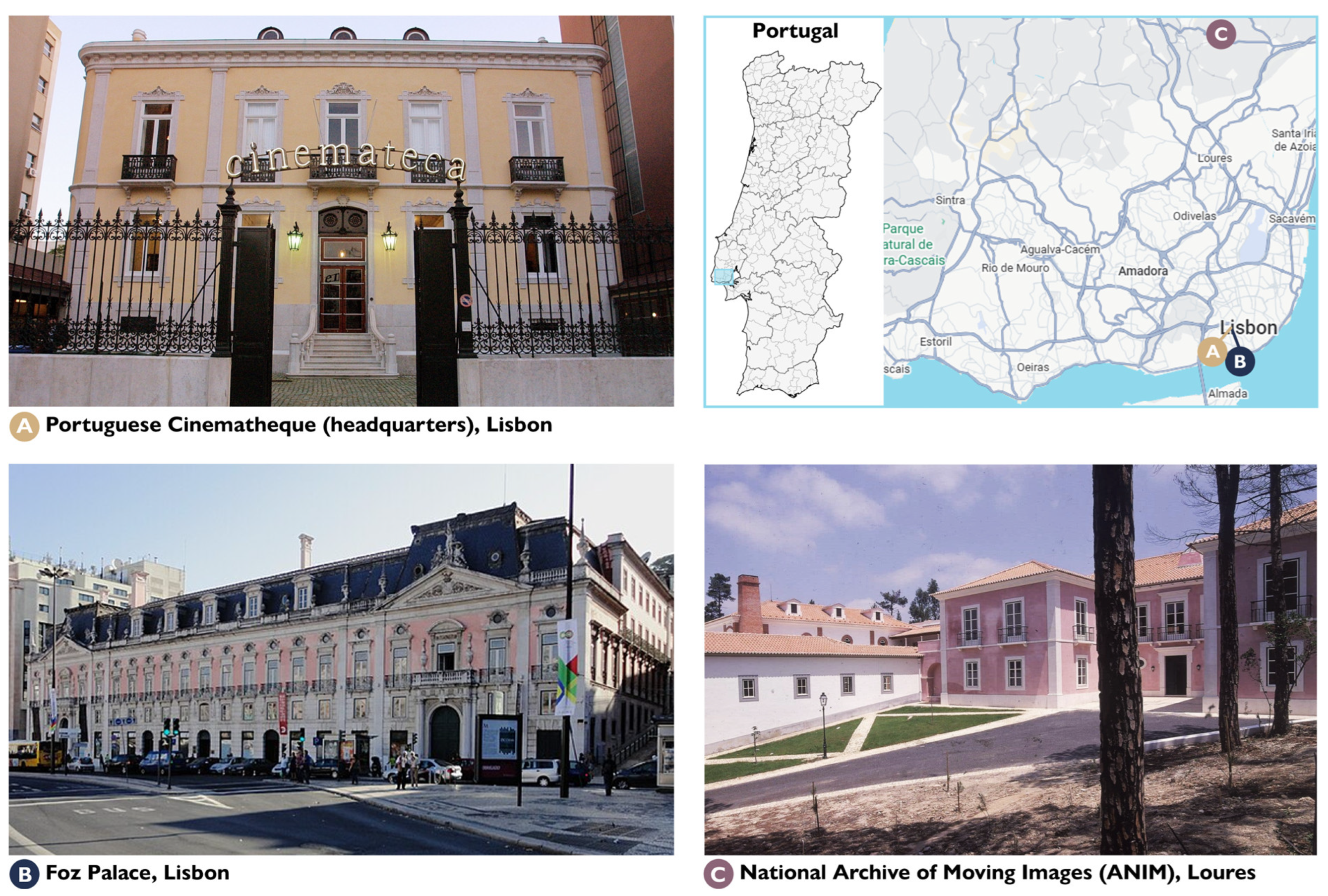
Their collection of magic lantern slides is divided into two of the three CPMC buildings: the exhibition is at Foz Palace (Palácio Foz, in Lisbon), a historical building from the end of the 18th century; and the storage room is located at National Archive of the Moving Image (Arquivo Nacional da Imagem em Movimento—ANIM, in Loures), built in the early 1990s. In the context of the beforementioned projects, the present research intends to reflect on the origins and characterise this collection of painted magic lantern slides, recognise the preventive conservation challenges associated with their storage and exhibition, and identify possible causes and potential risks for further damage by monitoring environmental conditions and presenting visual and quantitative measurements of colour alteration by comparing slides kept in storage with slides displayed under inappropriate conditions.
2. Methodology
2.1. Studying the Magic Lantern Slide Collection and Its Institutional Context
For this study, the authors had access to the CPMC storage and exhibition rooms at ANIM and Foz Palace, respectively. To study the collection, all hand-painted slides and hand-coloured printed outlines (369 slides) were observed. By having direct contact with CPMC, it was possible to recognise its history and part of the challenges faced by this institution in adapting these objects’ storage and display necessities to its designated spaces.
2.2. Environmental Monitoring
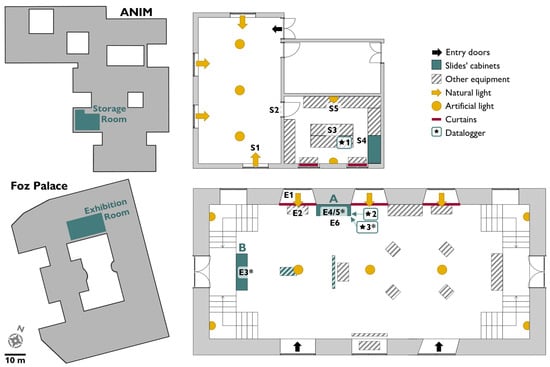
The monitoring strategy was designed to assess the most relevant environmental factors to the preventive conservation of hand-painted and hand-coloured magic lantern slides, following the conceptual framework developed by the Canadian Conservation Institute, which recognises the influence of 10 deterioration agents [16]. Considering their composite nature (frequently containing glass, paint and varnishes, wood, paper, and metal) and known material vulnerabilities based on previous material characterisation research, this study focuses on visible light and ultraviolet radiation, temperature, and relative humidity as priority parameters. The strategy intended to capture conditions in the two main spaces in which the collection was kept (storage and exhibition) using a combination of spot measurements using a calibrated handheld instrument for visible light and UV radiation, and dataloggers for continuous temperature and relative humidity recording. Within each room, measurement areas were selected to represent both the general ambient conditions and the microenvironments experienced by the collection. The approximate location of the storage and exhibition rooms within the ANIM and Foz Palace buildings is presented in Figure 2, as well as the mapping of locations where the measurements of light and radiation, temperature, and relative humidity were taken.
Figure 2.
Approximate location of the storage and exhibition rooms within the ANIM and Foz Palace buildings (left) and mapping of locations where measurements were taken. Light and radiation measurement locations are indicated through the codes S and E in storage and exhibition rooms, respectively, and the dataloggers registering temperature and relative humidity have the ★ symbol. All measurements acquired inside closed cabinets are marked with *.
While recent developments increasingly rely on distributed wireless sensor networks and Internet of Things (IoT)-based systems capable of providing continuous, real-time remote data integration and monitoring, the present study adopts a targeted monitoring approach, consistent with established preventive conservation practice developed and validated for institutions operating with limited budgets [17,18,19,20]. As the primary aim of this study’s monitoring strategy was not to provide a comprehensive spatial characterisation of the microclimate, but rather to document conditions representative of the environments experienced by the collection over time, and to support evidence-based preventive conservation decision-making within a real institutional context, the strategy adopted was deemed appropriate.
2.2.1. Instrumentation and Data Acquisition
The visible light intensity (lux) and ultraviolet radiation (µW/lumen) were manually recorded using an ELSEC 764 Environmental Monitor (Littlemore Scientific Engineering, Dorset, UK), as in situ spot measurements at selected locations under the lighting conditions in use at the time of the survey (natural and artificial light). Measurements were acquired in the storage room (S1–S5, Figure 2) on 21 April 2021 and the exhibition room (E1–E6, Figure 2) on 3 November 2021.
Temperature and relative humidity were automatically registered every two hours during 8 and 12 months (at the exhibition and storage rooms, respectively), using Humidity and Temperature dataloggers HL-1D/TL-1D (v2.0) by Rotronic Measurement Solutions (Bassersdorf, Switzerland). One device was placed on a shelf in the storage room (★1, Figure 2), and two were placed in the exhibition room, one outside the main display cabinet, Cabinet A (★2, Figure 2), and the other inside the cabinet (★3*, Figure 2). The storage data was recorded between 21 April 2021 and 21 April 2022. The exhibition data was recorded between 3 November 2021 and 6 July 2022.
2.2.2. Data Interpretation
The interpretation of environmental suitability was based on a previous preventive conservation study in which guidelines for painted magic lantern slides were developed (considering, e.g., material characterisation studies) as a complement to general preventive conservation standards currently established for the various materials and mixed-material heritage collections [15]. Temperature and relative humidity data were interpreted jointly; however, the study did not include the measurement of specific humidity or absolute moisture content. For this reason, the interpretation of the T/RH relationship was limited to the practical conservation implications of the recorded indoor fluctuations. Given that each material has distinct needs regarding environmental conditions, it is necessary to balance the appropriate conditions and propose ranges considering the lower and higher recommended values for each material [15].
2.3. Visual Assessment and Ultraviolet-Visible Spectroscopy (UV-VIS)
In addition to environmental monitoring, this study included visual observation of the slides and comparative examination of examples exhibiting apparent colour alteration. Two similar slides (one displayed at Foz Palace for two years before the present study, and one kept in storage during that period) with one of the most light-sensitive pigments identified in previous studies, eosin lake [12], were analysed through ultraviolet-visible spectroscopy (UV-VIS) to quantitatively measure the fading observed.
UV-VIS Instrumentation and Data Acquisition
Analyses were carried out in absorbance mode using an AvaSpec-2048-SPU spectrophotometer equipped with the light source AvaLight-HAL Deuterium Halogen (Avantes, Apeldoorn, Netherlands). The AvaSoft software (version 7) controlled the acquisition of the spectra directly on the objects in the 200–1100 nm range, and the measurements used a 10–80 ms integration time and 30 accumulations.
3. Results and Discussion
3.1. Institutional Context and Magic Lantern Slide Collection
The CPMC was founded in 1948 by one of the pioneers of European film libraries, Manuel Félix Ribeiro (1906–1982), with the primary mission of safeguarding and disseminating the cinematographic heritage [21]. The collection of non-film materials, in which the magic lanterns and glass slides are included, began around that time, thanks to the collecting spirit of its founder and director. Most slides were acquired by the institution at international auctions or donated by private owners through the years, and, for the great majority, little is known about their past before arriving at the CPMC. Although the origins of the earliest magic lantern slides remain to be uncovered, it is known that all the small pre-cinema and cinema-related objects were kept for years in boxes in the attic of the Cinematheque main building (Figure 3A). Several of those objects were inventoried in 1990, including a few magic lantern slides. The boxes remained there until 2000, when they were moved to the ANIM, a building inaugurated in 1996 in the outskirts of Lisbon (Loures) to house all activities concerning the preservation, technical research, and collections’ access, including the use of new technologies (Figure 3C) [21,22]. However, it was only in 2003 that the unattended boxes were opened, and the slides were included in the inventory known today. The Junior Cinematheque was inaugurated in 2007 at Foz Palace in Lisbon, a building from the end of the 18th century (Figure 3B), where the permanent exhibition featuring magic lantern slides was incorporated [21,22].
Figure 3.
Portuguese Cinematheque—Museum of Cinema (CPMC) spaces and their geographic locations: (A) headquarters of the CPMC (Lisbon); (B) Foz Palace (Lisbon); and (C) ANIM (Loures). © Photographs of the buildings by Bruno Rascão (2021), Manuel V. Botelho (2012), and Luis Pavão (1996), respectively.
According to their inventory information, the slides were mostly produced between the 18th and 20th centuries. The collection includes more than 1300 slides from England, France, Germany, Italy, the Netherlands, Portugal, and the United States of America from renowned producers such as Philip Carpenter, later Carpenter & Westley, Ernst Plank, Hachette et Cie., Lapierre, W.E. & F. Newton, Newton & Co., T.H. McAllister, W.C. Hughes, York & Son, and others. The techniques used to produce these magic lantern slides were hand-painting, hand-coloured printed outlines (e.g., lithography), chromolithography, photography, and hand-coloured photography.
Studying this collection allowed for the identification of 369 slides of interest, 107 entirely painted and 262 hand-coloured printed outlines. Regarding the subjects depicted, the great majority appear to have been used for entertainment purposes with burlesque, tale, topical, romance, and adventure being the most common discursive genres (classification defined by the research project “A Million Pictures” [23], and applied in online databases such as Linternauta [10], and LUCERNA—the Magic Lantern Web resource [24]); whereas the most common types of movement mechanisms identified are panorama slide, single slide, single slipping slide, and multiple slide (Barnes classification [25]), using various shapes of glass sheets (e.g., circular, rectangle and square-shaped glasses). Examples of slides with different classifications can be observed in Figure 1.
3.2. The Collection’s Spaces and Conservation Challenges
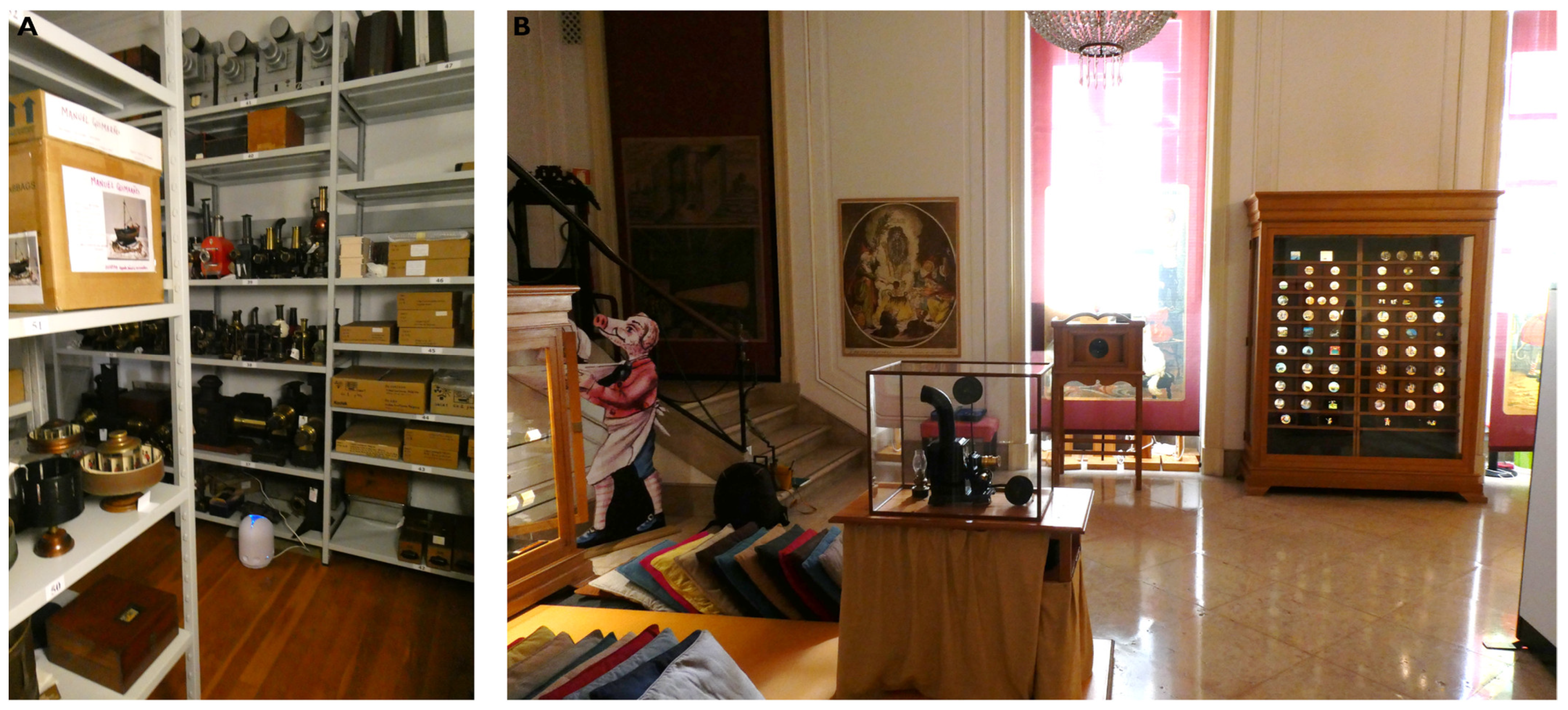
The great majority of the magic lantern slides (around 95%) are kept in a storage room at the ANIM dedicated to pre-cinema collections (Figure 4A). Although the ANIM facilities were constructed to archive and conserve film collections, they were never designed to accommodate collections of devices and objects, possibly due to the lack of knowledge about how diverse cinema collections could be. Consequently, the ideal conservation conditions were only easily achieved for film materials (e.g., cellulose nitrate and cellulose acetate films), whereas for the remaining multitude of devices and objects, those responsible for the collections had to design and adapt solutions for inadequate spaces, aiming to improve their conditions over time.
Figure 4.
Spaces dedicated to pre-cinema collections where the magic lantern slides are kept: (A) storage room at ANIM (Loures); (B) exhibition room at Junior Cinematheque, Foz Palace (Lisbon). Photographs taken in 2021.
The permanent exhibition dedicated to the pre-cinema collection, which displays magic lantern instruments and slides (around 5%, mostly hand-painted and coloured printed outlines), has been held since 2007 at Foz Palace (Figure 4B). This exhibition was designed to be in this space temporarily; however, it remained there until 2023, when rehabilitation works were initiated at the Foz Palace, forcing the exhibition to be moved to the ANIM.
Adapting this historical building to an exhibition that remained there for more than 15 years was challenging due to the limitations of funding through the government budget and the building restrictions (e.g., nothing could be built inside that space, and nothing could be placed or touch the walls). Besides the efforts to create this exhibition, the maintenance costs throughout the years were often very expensive due to the poor state of infrastructure, such as plumbing, electricity, and thermal insulation, fundamental to preventing risks and ensuring adequate conditions to preserve and display fragile collections. Additionally, maintenance and improvement work in institutions under the government tutelage depends on the approval from various authorities, which are often hindered by bureaucratic constraints.
On the other hand, CPMC holds numerous collections with different necessities that require a significant investment of time and effort, which requires allocating funds and personnel according to the priorities defined by this institution’s directors. Despite these restrictions and challenges, the curators for the collections of devices and objects, in which magic lantern slides are included, have been improving the storage and display conditions as much as possible.
Even though Foz Palace is currently undergoing rehabilitation works, this building is under the tutelage of the Ministry of Presidency and accommodates other institutions; and the curators of CPMC collections were not consulted to guarantee that these works will improve the conditions concerning museum activities, nor that the Junior Cinematheque activities and the pre-cinema exhibition will return to this building [26].
3.3. Environmental Monitoring: Light and Radiation
Considering that magic lantern slides contain light-sensitive materials (e.g., colourants, natural varnishes, wood and coloured paper) prone to fading and discolouration, it is recommended that the light levels for displaying do not exceed 50 lux, the light source should be artificial and not produce heat nor emit ultraviolet (UV) or infrared (IR) radiation, and the exposure time should be kept to a minimum [15,27,28]. Light-emitting diode (LED) lamps are widely available and have low levels of heat, UV, and IR emissions compared to other light sources; however, the intensity of light should be considered when choosing these lamps [15]. When transition to LED lamps is not immediately possible, measures such as moving the light source further away from the objects and implementing air circulation systems can help reduce the heat build-up [27,29,30]. Studies have also shown advantages in tuning the spectra of LED lamps, adapting the light source to the specific susceptibilities of certain light-sensitive materials, to significantly reduce photodegradation [31].
Both storage and exhibition rooms have curtains and UV filters on the windows, which protect the objects from natural light. Natural light varies according to time of day, weather, and season; nevertheless, measurements of the natural and artificial visible light intensity (lux) and UV radiation (µW/lumen) in both storage and exhibition rooms (Figure 2 and Table 1) intend to give an insight into this factor’s influence.
Table 1.
Spot measurements of visible (VIS) light intensity and ultraviolet (UV) radiation recorded in the CPMC storage and exhibition rooms. The correspondence between location codes and measurement locations is provided in Figure 2.
3.3.1. Storage Room
In the part of the storage room where the slides are kept, the windows have blackout curtains, the artificial lights are mostly turned off, and the slides are preserved in the dark inside conservation-grade card boxes. In this storage segment, objects on open shelves, such as the magic lantern projectors and illumination systems, are only occasionally exposed to approximate intensities between 30 and 100 lux (S3 and S4). In this area, there are two LED lamps on opposite walls pointing to the ceiling, emitting around 600 lux and 30 µW/lumen of UV radiation (S5); nevertheless, as the lamps are covered with glass, the objects on the shelves directly in front of them only receive around 100 lux and no UV radiation (S3).
The neighbouring area, mainly dedicated to cataloguing, has translucent curtains to protect the objects from intense natural light. At the main desk (S1), the objects are exposed to around 110 lux and 140 µW/lumen of UV radiation; however, the light that enters the magic lanterns and slides’ storage area when the door is open (S2) is significantly less intense (76 lux and 47 µW/lumen of UV radiation, measured at the door).
These values indicate that the storage environment is generally protective with respect to light exposure, except during temporary handling and work-related access.
3.3.2. Exhibition Room
In the exhibition room, translucent curtains and UV protective filters are applied to the two windows that are kept with the wooden shutters open to allow for natural light; however, the lights from the ceiling and display cabinets are permanently turned on during the Junior Cinematheque opening hours (around 8 h/day). The natural light that enters the room was measured without the curtain (E1) and with the curtain (E2) to understand their effectiveness in reducing the light intensity and UV radiation. The results revealed that the curtains are essential to protect the collection from natural light and radiation, reducing around 11× its intensity (from 39,838 to 3588 lux) and 4.5× the UV radiation (from 18 to 4 µW/lumen).
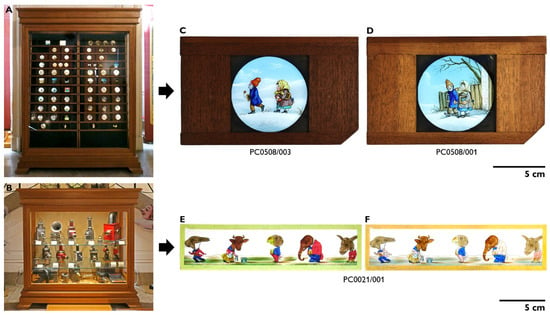
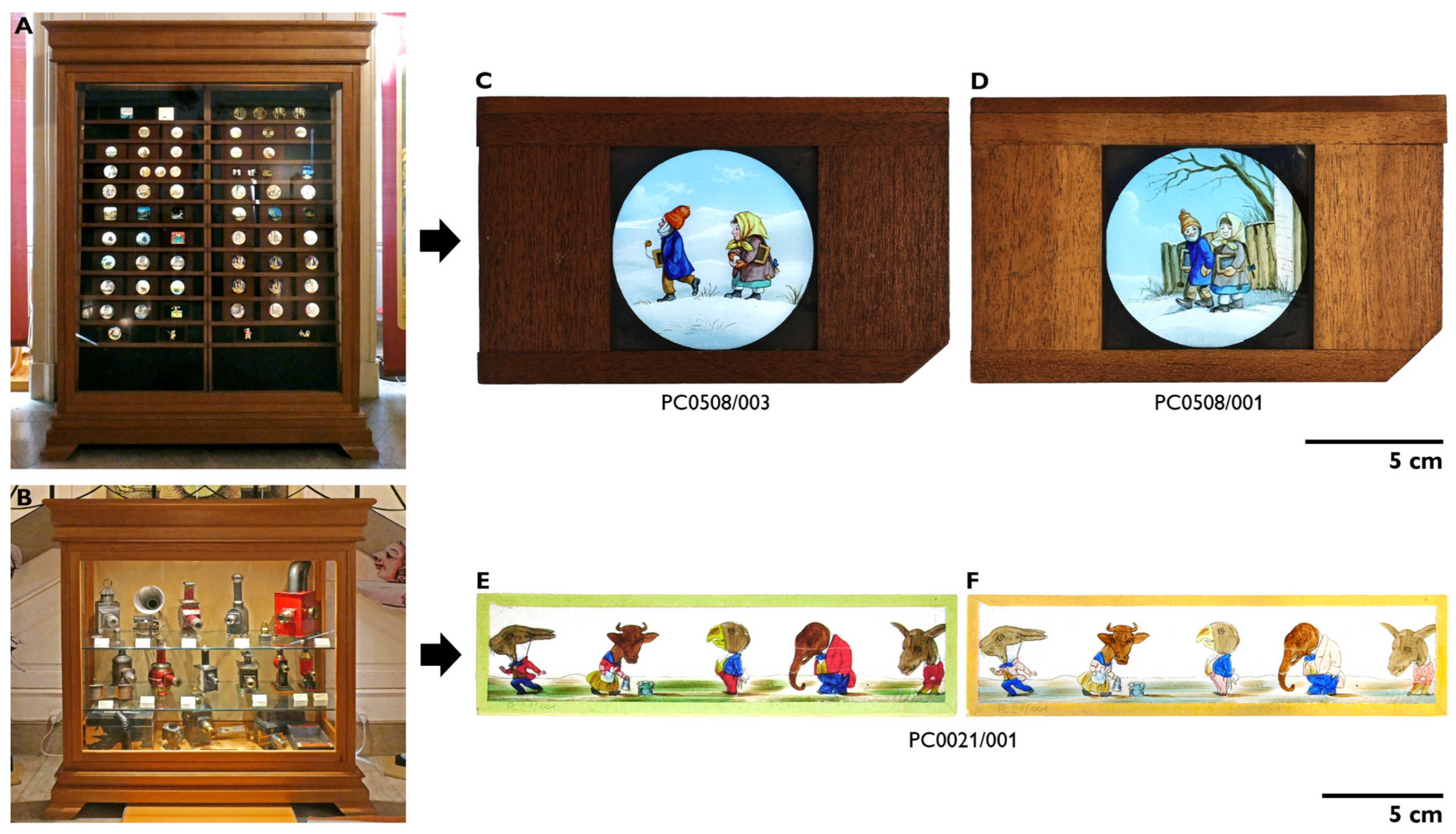
Measurements outside (E6) and inside (E3–5*) of the two closed cabinets containing painted magic lantern slides revealed that, although no UV radiation is received, the slides are exposed to highly damaging light from the lamps inside the cabinets. In 2021, several slides were returned to storage after around two years in the exhibition, showing severe visible colour alteration consistent with prolonged excessive light exposure (Figure 5), and this study allowed for identifying conditions that have probably contributed to the observed damage.
Figure 5.
Display cabinets (A,B) holding magic lantern slides in the exhibition room of Junior Cinematheque (Foz Palace, Lisbon). Examples of slides without and with visible colour fading: slide kept in the dark storage (C) compared to slide from the same set (D) after being displayed in Cabinet A; comparison of the same slide before (E) and after (F) being displayed in Cabinet B.
Cabinet A (Figure 5A) has two types of illumination systems, one behind the slides and the black paper that covers their non-painted areas (E4*) and another on top of the cabinet’s front glass, pointing to the slides (E5*). The light behind the slides was revealed to be too intense, and the slides received around 320 lux. The light mounted inside Cabinet B (Figure 5B) is by far the most concerning as it exposes the objects to more than 11,000 lux (E3*), more than 200× the intensity advised for light-sensitive materials such as the eosin-based lakes, commonly used by Lapierre to paint slides such as the PC0021/002.
No systematic instrumental analysis was conducted during the monitoring period to track possible changes; however, comparative visual observation of slides from the same sets that were kept in storage and institutional photographic documentation indicated visible colour alteration in some slides previously displayed under the same light conditions.
As can be observed by comparing Figure 5C,D, the painting of slide PC0508/001 suffered from fading, mainly visible in the yellow, brown, and red paints, which often contain organic colourants (e.g., gamboge, cochineal, and eosin) that ideally should not be submitted to more than 50 lux [15,27]. Additionally, although the wooden frame’s colour can vary slightly within the same set, besides the frame having a lighter colour than PC0508/003, the wood surrounding the picture that was not covered by the black paper has an even lighter colour. Furthermore, the excessive and prolonged light exposure in Cabinet B is strongly consistent with the colour loss observed on both the paper frame and painting of slides previously displayed there, such as PC0021/001 (Figure 5E,F).
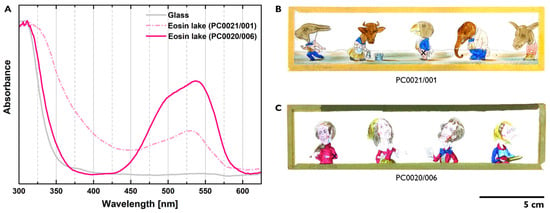
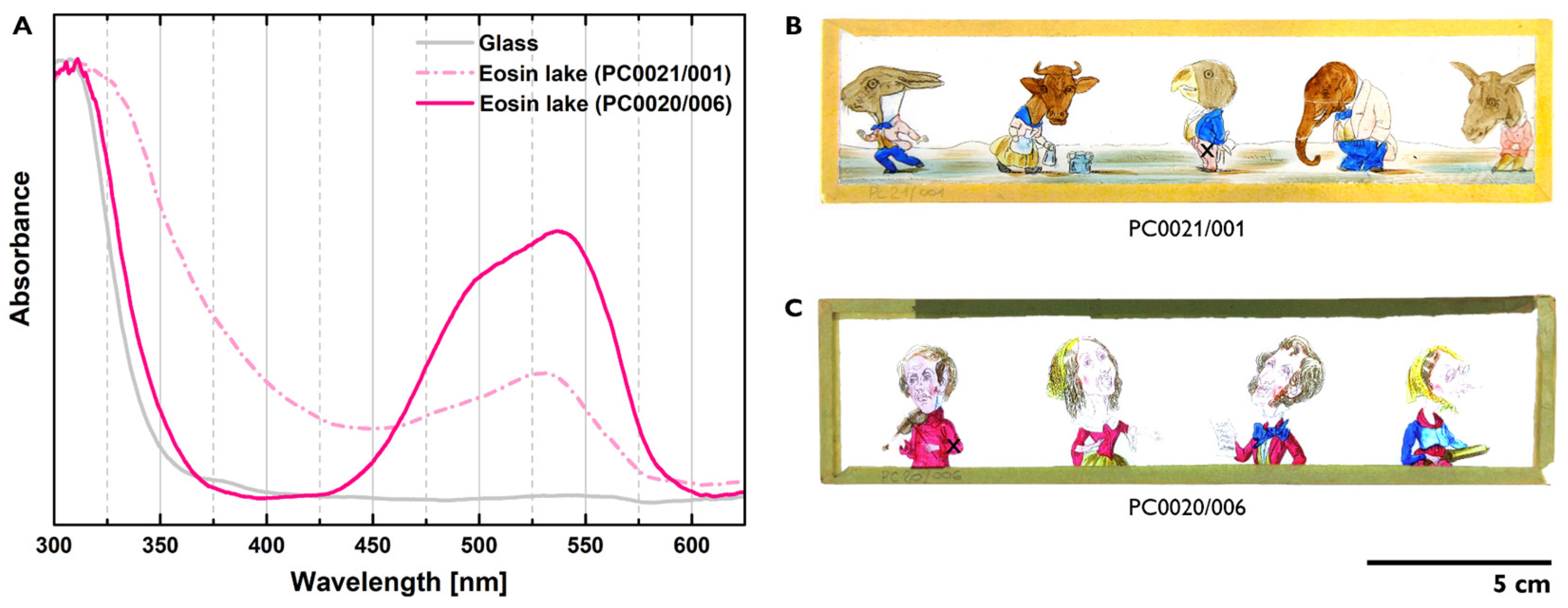
To quantitatively demonstrate how prolonged exposure to these light conditions can affect light-sensitive colours, the slide PC0021/001 was analysed in comparison with a similar slide that had been kept stored in the dark during the same period (slide PC0020/006, Figure 6C). The UV-VIS spectra of the pink areas of both slides show the characteristic bands of eosin lakes with maximum absorptions around 500 and 540 nm [32], with a decreased intensity in slide PC0021/001 when compared to PC0020/006 (Figure 6A). This significantly lower intensity correlates with the fading visible in slide PC0021/001 (Figure 6B).
Figure 6.
Comparison of pink areas with and without light exposure in Cabinet B during exhibition: (A) UV-VIS spectra of eosin lakes from the slides analysed showing the difference in colour intensity; (B) slide exhibited for around two years under the light conditions of Cabinet B; and (C) slide kept in the dark when stored during the same period. The analysis points are marked (x).
3.4. Environmental Monitoring: Temperature and Relative Humidity
3.4.1. Temperature
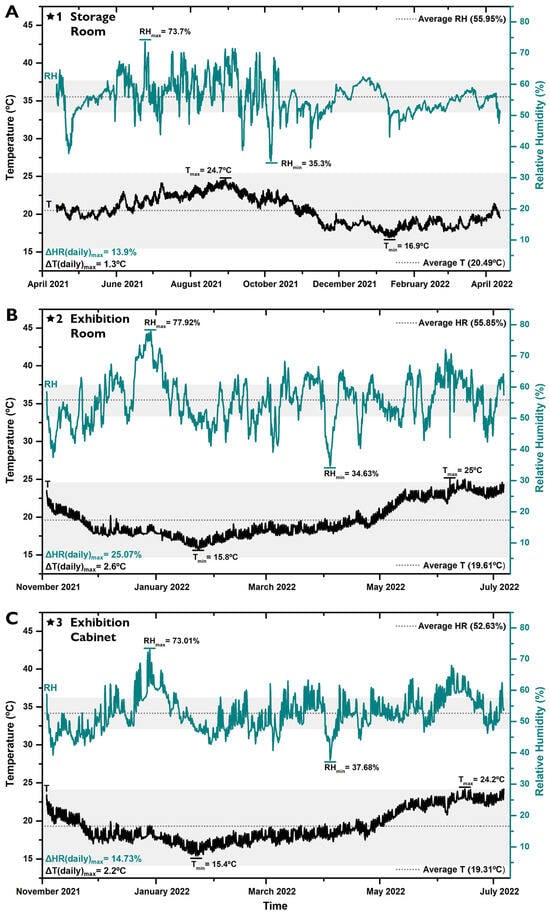
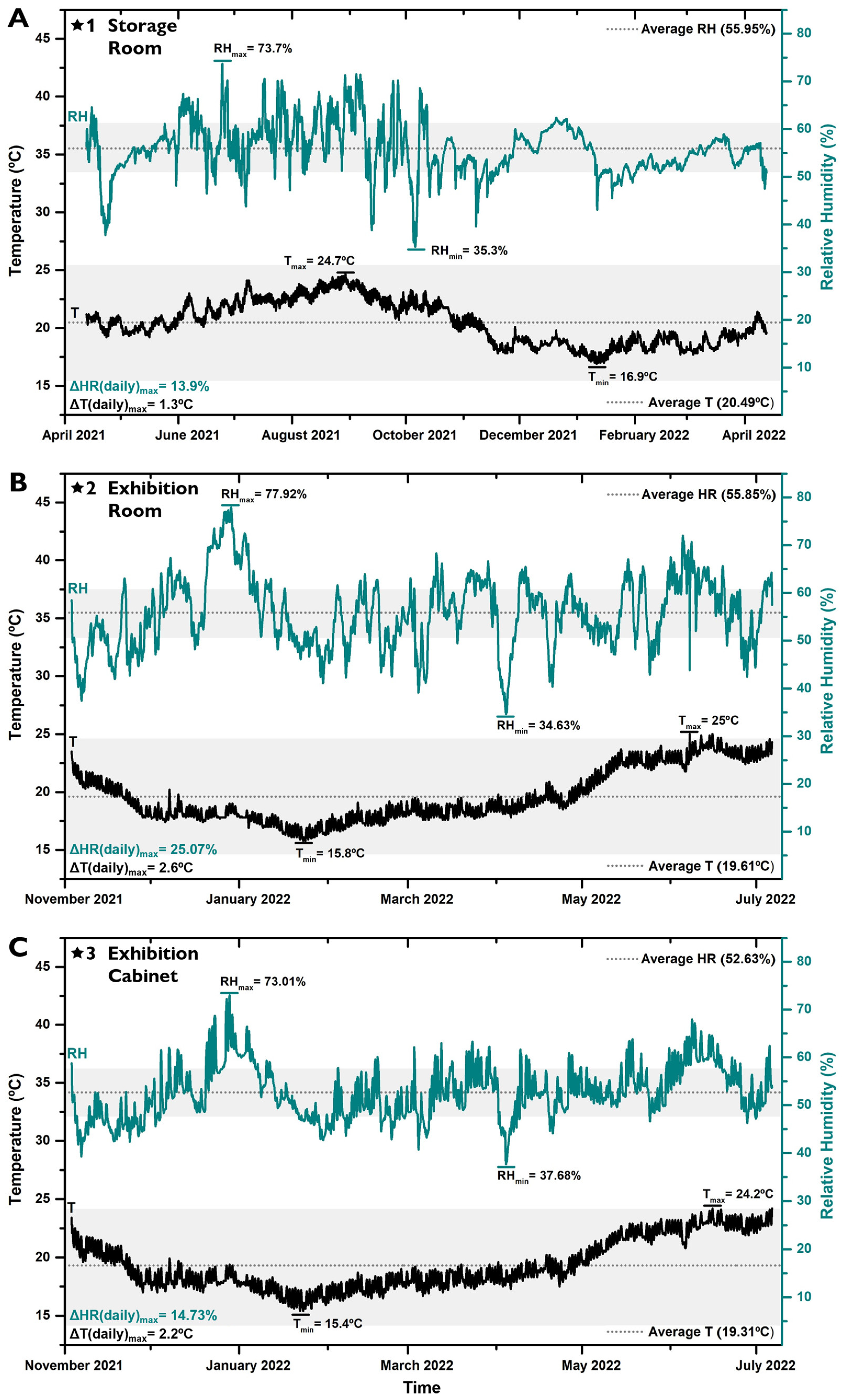
Painted magic lantern slides should be preserved in rooms where the temperature is kept stable at 20 ± 5 °C, being crucial to avoid fluctuations of more than 5 °C in 24 h [15,33,34]. In the ANIM storage room area where the magic lantern slide collection is preserved, although it was an uncontrolled environment, the temperature (T) ranged between 16.9 °C and 24.7 °C over 12 months (Figure 7A). These temperatures are adequate for this collection, given they stay in the advised range with minor daily fluctuations (max. of 1.3 °C). It is worth noting that these temperatures were measured in the room and not inside the boxes where the slides are kept, meaning that fluctuations may be less notorious inside them.
Figure 7.
Collected data for the temperature (T) and relative humidity (RH) measured in: (A) the storage room of ANIM for 12 months (21 April 2021–21 April 2022); (B) the exhibition room of Junior Cinematheque; and (C) inside Cabinet A (Figure 5A) for 8 months (3 November 2021–6 July 2022). The grey range of ± 5 °C and ± 5% represents the advised fluctuation limits for T and RH relative to the average values measured. The dataloggers (★) measuring locations are provided in Figure 2.
The magic lantern and slides’ exhibition room temperatures at the Junior Cinematheque ranged between 15.8 °C and 25 °C outside and between 15.4 °C and 24.2 °C inside Cabinet A from November 2021 to July 2022 (Figure 7B,C). Registered temperatures during these 8 months are within the advisable range; however, due to external factors, the measuring period of 12 months could not be completed, leaving the usually warmer months of August and September unmeasured. In this way, the possibility of the slides being exposed to temperatures above 25 °C cannot be excluded. In this room, daily fluctuations were higher compared to the ANIM storage room, reaching a maximum variation of 2.6 °C outside and 2.2 °C inside the display cabinet A.
Although maintaining these moderate temperatures should keep the glass slides in good condition, the storage boxes and display cabinets should have adequate air ventilation. It was also noted that, inside the cabinet, the temperature was higher in the area closer to the light source mounted behind the slides. The fact that the surface behind the slides heats rapidly when the lights are turned on may result in higher temperatures and fluctuations in contact with the slides than those measured by the datalogger, which was placed in front of the slides near the cabinet’s glass. Fluctuations can induce stress on the object due to the rapid expansion and contraction of certain materials, leading to several types of damage. For instance, higher temperatures may cause dehydration due to the consequent decrease in RH, accelerating the deterioration of the glass support and paints, and may increase the flexibility of natural resins, making them stickier and enabling them to hold dust easily [35].
3.4.2. Relative Humidity
The relative humidity (RH) and temperature are directly related, considering that when the temperature increases, the RH lowers and vice versa. Considering the various materials frequently present in painted magic lantern glass slides, RH should be kept stable at around 45%, avoiding daily fluctuations of more than 5% [15,33,34]. RH fluctuations are particularly damaging to both the organic and inorganic materials of slides.
Besides the average RH being around 53–56% in storage and exhibition rooms, slightly higher than advisable, it ranged between ~35% and ~78% (Figure 7). High fluctuations and a maximum of almost 80% is concerning, given the risk of promoting glass and metal corrosion and causing stress in all materials. These high RH, allied with temperatures of 25 °C, can encourage the growth of mould, fungi, and insects, create condensation between glass sheets, and increase the reaction of glass with atmospheric water, leading to the leaching, dissolution and deposition of alkali salts on the glass surface, which may result in the detachment of the paint layer from the glass support [36,37,38,39,40]. In contrast, low temperatures and/or RH may cause paint materials to shrink and crack, and increase microcracking in unstable glass [27,28,33,39]. These results demonstrate the need for taking measures to improve these environmental conditions.
Regarding fluctuations in RH, attention should also be paid to daily variations. In the storage room, the maximum daily variation was ~14%, and it is expected to have less fluctuation inside the boxes where the slides are kept (Figure 7A). In the exhibition room, these daily variations achieve 25%, which are reduced to a maximum of ~15% inside the cabinet (Figure 7B,C).
It is also noteworthy that during this study, it was possible to observe a considerable improvement in RH measurements in the storage room from November 2021 onwards, not only with the approximation of the lower and higher RH values to the advisable range for these materials, but also with the reduction of daily fluctuations. These improvements resulted from the acquisition of dataloggers for all storage rooms dedicated to the devices and objects collections, and the implementation of measures to control the RH, such as dehumidifiers. Despite the improvement observed after the introduction of dehumidifiers, it should be taken into consideration that although the reduction in RH peaks and fluctuations represents a positive development from a preventive conservation perspective, values falling within a target range do not in themselves guarantee the long-term safety of the collection. The effectiveness of this intervention depends not only on average RH values but also on stability over time, air circulation, local microclimates, object enclosure conditions, and the specific response of the materials involved. Continued monitoring and object condition assessment, therefore, remains necessary.
3.5. Preventive Conservation Implications
Within the monitored conditions, the light exposure represents the most critical and immediate risk factor. Based on the observed conditions, the preventive conservation priority measures identified are the removal of high-intensity illumination and the redesign of display lighting. For this collection, practical improvements include: maintaining light exposure approximately or below recommended levels for light-sensitive materials, particularly inside the display cabinets; reducing light exposure duration and implementing display-by-activation strategies (e.g., light activation with motion detectors); implementing object rotation plans to reduce cumulative light damage; and maintaining dark storage.
In relation to relative humidity, efforts should focus not only on achieving target average values but also on reducing fluctuations and improving overall environmental stability. The use of dehumidification systems can be beneficial, but their performance should be evaluated through continuous long-term environmental monitoring and assessment of the object’s condition.
These measures are especially relevant in adapted or historic buildings, where ideal environmental control may not be fully achievable, and risk mitigation must often rely on targeted, feasible interventions.
From a broader perspective, these results are consistent with current approaches that emphasise context-specific monitoring strategies in preventive conservation [17]. Although institutions housing fragile collections in adapted or historical buildings could benefit from recent technological developments in the field that can provide highly detailed datasets, this study demonstrates that targeted monitoring, combined with object-based knowledge, can effectively identify critical risk factors [18]. This is particularly relevant in historical contexts and in institutions operating on low budgets and limited personnel, where implementing more complex monitoring infrastructures may not be feasible [19].
4. Conclusions
Investigating the particular case study of the CPMC collection of magic lantern slides emphasised the importance of monitoring and controlling the environmental conditions in storage and exhibition rooms, particularly when those are held in historical buildings not designed for this purpose. Caretakers of this collection and other cinema objects often face many challenges and may experience difficulties in securing sufficient funding to improve the spaces’ conditions, as adaptations in these buildings are frequently costly.
By combining environmental monitoring with observational assessment and analytical comparison, it was possible to identify key risk factors affecting these fragile composite objects.
The parameter with the most critical risk identified was the light exposure in the exhibition context, especially inside illuminated display cabinets, where illuminance values greatly exceeded recommended levels for light-sensitive materials and were active for extended periods. These conditions are consistent with visible and irreversible colour alterations in several slides and with known photodegradation mechanisms affecting light-sensitive colourants and binding media. In contrast, temperature conditions remained generally within the acceptable ranges in both monitored spaces, although localised heating associated with the illumination systems may contribute to microclimatic variations. RH showed fluctuations and peak values in both spaces, which may increase the risk of deterioration in these composite objects.
It is worth noting that previous material characterisation studies on painted magic lantern slides have shown that even though deterioration signs are not always visible to the naked eye, the deterioration may already be progressing [11,12], reinforcing the extreme importance of implementing preventive conservation measures, such as the control of the environmental conditions of light, temperature, and relative humidity. Knowing the constituent materials of a collection is fundamental to determining the appropriate practices by finding a compromise between the best conditions for each material. In this case, preventive conservation guidelines specifically designed for collections of painted magic lantern slides are already available [15].
During this investigation, the gathered results already stimulated discussions within this institution, resulting in positive changes. Regarding the light conditions, slides were removed from the exhibition Cabinet A, its light bulbs were replaced, and the exhibition (currently at the ANIM building) is kept dark most of the time, with illumination systems switched on only when scheduled activities are taking place. Additionally, caretakers were also able to acquire dataloggers and dehumidifiers for every storage room to monitor and control their conditions.
This work should be understood as a preventive conservation case study rather than a fully quantitative deterioration analysis, having limitations that include the lack of tracking of deterioration indicators before and after the environmental monitoring, through in situ analytical techniques (e.g., microscopy, colourimetry, spectrophotometry, and Raman spectroscopy). Future work should therefore include quantitative methods to monitor damages, including cracking, detachment, colour alteration, and glass stability, to better correlate observed changes with environmental exposure over time.
Despite this being a case study focused on CPMC, studies of this nature show the value of environmental monitoring as a practical decision-making tool for heritage collections kept in adapted or historic buildings and contribute to raising awareness on the fragility of this heritage, which can encourage small and feasible changes that positively impact their preservation.
Author Contributions
Conceptualisation, Â.S.; methodology, Â.S. and M.V.; investigation, Â.S.; resources, Â.S. and T.P.; data curation, Â.S.; writing—original draft preparation, Â.S.; writing—review and editing, Â.S., T.P., V.O. and M.V.; supervision, V.O. and M.V.; funding acquisition, Â.S., V.O. and M.V. All authors have read and agreed to the published version of the manuscript.
Funding
This research was funded by the Portuguese Foundation for Science and Technology (FCT) through the Associate Laboratory for Green Chemistry (LA/P/0008/2020), Research Units VICARTE (UID/00729/2025) and LAQV-REQUIMTE (UID/50006/2025; UID/PRR50006/2025), projects MAGICA (PTDC/ART-PER/1702/2021; https://doi.org/10.54499/PTDC/ART-PER/1702/2021) and Ângela Santos’ PD/BD/136694/2018 within the doctoral program CORES PD/00253/2012.
Data Availability Statement
The data presented in this study are available on request.
Acknowledgments
The authors are grateful to the Portuguese Cinematheque—Museum of Cinema for facilitating access to their collections, particularly to Tiago Baptista(National Archive of Moving Images, ANIM).
Conflicts of Interest
The authors declare no conflicts of interest. The funders had no role in the design of the study; in the collection, analyses, or interpretation of data; in the writing of the manuscript; or in the decision to publish the results.
Abbreviations
The following abbreviations are used in this manuscript:
| CPMC | Portuguese Cinematheque—Museum of Cinema (Cinemateca Portuguesa—Museu do Cinema) |
| ANIM | Arquivo Nacional das Imagens em Movimento (Nacional Archive of Moving Images) |
| UV | Ultraviolet |
| VIS | Visible |
| LED | Light-emitting diode |
| T | Temperature |
| RH | Relative humidity |
References
- Santos, Â.; Otero, V.; Vilarigues, M. Production of hand-painted magic lantern glass slides: A literature review. Stud. Conserv. 2024, 69, 137–151. [Google Scholar] [CrossRef] [Scilit]
- Balzer, R. Optical Amusements: Magic Lanterns and Other Transforming Images. A Catalog of Popular Entertainments; Private Printing; R. Balzer: Cambridge, MA, USA, 1987. [Google Scholar]
- Mannoni, L. Le Grand art de la Lumière et de l’ombre—Archéologie du Cinéma; Nathan Université: Paris, France, 1994. [Google Scholar]
- Campagnoni, D.P. História da Lanterna Magalográphica vulgarmente dita Lanterna Mágica. In A Magia da Imagem: A Arqueologia do Cinema Através das Coleções do Museu Nacional de Turim; Bertetto, P., Campagnoni, D.P., Eds.; Centro Cultural de Belém, Galeria das Caravelas: Lisbon, Portugal, 1996; pp. 59–89. [Google Scholar]
- Robinson, D.; Herbert, S.; Crangle, R. (Eds.) Encyclopaedia of the Magic Lantern; The Magic Lantern Society: London, UK, 2001. [Google Scholar]
- Frutos, F.J. Un publico encantado. Las proyecciones audiovisuales mediante linterna magica al servicio de la divulgacion cientifica (A thrilled audience: Audiovisual projections using the magic lantern with a view to scientific divulgation). Cult. Educ. 2009, 21, 305–318. [Google Scholar] [CrossRef] [Scilit]
- Frutos, F.J. Los Ecos de Una Lámpara Maravillosa: La Linterna Magica En Su Contexto Mediatico; Ediciones Universidad de Salamanca: Salamanca, Spain, 2010. [Google Scholar]
- Heard, M. The Up-to-date Lanternist: Shows and Showpeople in the 21st Century. In Realms of Light: Uses and Perceptions of the Magic Lantern from the 17th to the 21st Century; Crangle, R., Heard, M., van Dooren, I., Eds.; Magic Lantern Society: London, UK, 2005; pp. 246–259. [Google Scholar]
- Kember, J. The magic lantern: Open medium. Early Pop. Vis. Cult. 2019, 17, 1–8. [Google Scholar] [CrossRef] [Scilit]
- San Segundo, C.L.; Frutos, F.J.; Therón, R. Linternauta: A web application for the interpretation of magic lantern slides according to discursive genre. Early Pop. Vis. Cult. 2019, 17, 361–385. [Google Scholar] [CrossRef] [Scilit]
- Santos, Â. Lanterna Magica—Technology and Preservation of Painted Glass Slides for Projection with Magic Lanterns. Ph.D. Thesis, NOVA School of Science and Technology (NOVA FCT), Lisbon, Portugal, 2024. Available online: http://hdl.handle.net/10362/171450 (accessed on 18 November 2024).
- Santos, Â.; Otero, V.; Vilarigues, M. Tracing the evolution of artists’ materials and manufacturers’ choices in painted magic lantern slides. J. Cult. Herit. 2025, 74, 236–245. [Google Scholar] [CrossRef] [Scilit]
- Vilarigues, M.; Rodrigues, A.; Santos, Â.; Machado, C.; Pires, S.; Pereira, G.; Otero, V. Through the limelight: Analysing the earliest collection of magic lantern glass slides in Portugal. npj Herit. Sci. 2025, 13, 650. [Google Scholar] [CrossRef] [Scilit]
- Fieberg, J.E.; Knutås, P.; Hostettler, K.; Smith, G.D. ‘Paintings Fade Like Flowers’: Pigment Analysis and Digital Reconstruction of a Faded Pink Lake Pigment in Vincent van Gogh’s Undergrowth with Two Figures. Appl. Spectrosc. 2017, 71, 794–808. [Google Scholar] [CrossRef] [Scilit] [PubMed]
- Santos, Â.; Rodrigues, B.; Otero, V.; Vilarigues, M. Defining the first preventive conservation guidelines for hand-painted magic lantern glass slides. Conserv. Património 2021, 37, 100–115. [Google Scholar] [CrossRef] [Scilit]
- Canadian Conservation Institute. Agents of Deterioration; Government of Canada, Canadian Conservation Institute: Ottawa, ON, Canada, 2017; Available online: https://www.canada.ca/en/conservation-institute/services/agents-deterioration.html (accessed on 19 February 2020).
- Lucchi, E. Review of preventive conservation in museum buildings. J. Cult. Herit. 2018, 29, 180–193. [Google Scholar] [CrossRef] [Scilit]
- Camuffo, D. Microclimate for Cultural Heritage: Measurement, Risk Assessment, Conservation, Restoration, and Maintenance of Indoor and Outdoor Monuments, 3rd ed.; Elsevier: Amsterdam, The Netherlands, 2019. [Google Scholar] [CrossRef] [Scilit]
- Laborda, J.; García-Castillo, A.M.; Mercado, R.; Peiró-Vitoria, A.; Perles, A. From concept to validation of a wireless environmental sensor for the integral application of preventive conservation methodologies in low-budget museums. Herit. Sci. 2022, 10, 197. [Google Scholar] [CrossRef] [Scilit]
- Perles, A.; Fuster-López, L.; Bosco, E. Preventive conservation, predictive analysis and environmental monitoring. Herit. Sci. 2024, 12, 11. [Google Scholar] [CrossRef] [Scilit]
- Cinemateca Portuguesa—Museu do Cinema. A Cinemateca—Apresentação. Available online: https://www.cinemateca.pt/Cinemateca/Apresentacao.aspx (accessed on 2 March 2019).
- Cinemateca Portuguesa—Museu do Cinema. A Cinemateca—História. Available online: https://www.cinemateca.pt/Cinemateca/Historia.aspx (accessed on 2 March 2019).
- AMP A Million Pictures: Magic Lantern Slide Heritage as Artefacts in the Common European History of Learning. 2018. Available online: https://a-million-pictures.wp.hum.uu.nl (accessed on 26 April 2019).
- LUCERNA—The Magic Lantern Web Resource; Lucerna Magic Lantern Web Resource Community Interest Company (CIC): Exeter, UK, 2016; Available online: http://lucerna.exeter.ac.uk (accessed on 27 May 2018).
- Barnes, J. Classification of Magic Lantern Slides for Cataloguing and Documentation. In Magic Images: The Art of Hand-Painted and Photographic Lantern Slides; Crompton, D., Henry, D., Herbert, S., Eds.; The Magic Lantern Society of Great Britain: London, UK, 1990; pp. 75–84. [Google Scholar]
- Lusa. Programa da Cinemateca Júnior Repartido Devido a Obras do Palácio Foz; Notícias ao Minuto: Lisbon, Portugal, 14 August 2023; Available online: https://www.noticiasaominuto.com/cultura/2380372/programa-da-cinemateca-junior-repartido-devido-a-obras-do-palacio-foz (accessed on 21 November 2025).
- Bacharach, J. Museums Collections Environment. The Museum Handbook Part I: Museum Collections; National Park Service: Washington, DC, USA, 2016; pp. 4:1–4:56.
- Preventive Conservation Guidelines for Collections; Canadian Conservation Institute: Ottawa, ON, Canada, 2018; Available online: https://www.canada.ca/en/conservation-institute/services/preventive-conservation/guidelines-collections.html (accessed on 15 May 2019).
- Keene, S. Managing Conservation in Museums, 2nd ed.; Butterworth-Heinemann: Oxford, UK, 2002. [Google Scholar]
- Davison, S. Conservation and Restoration of Glass, 2nd ed.; Butterworth-Heinemann: Oxford, UK, 2003. [Google Scholar]
- Lunz, M.; Talgorn, E.; Baken, J.; Wagemans, W.; Veldman, D. Can LEDs help with art conservation?—Impact of different light spectra on paint pigment degradation. Stud. Conserv. 2017, 62, 294–303. [Google Scholar] [CrossRef] [Scilit]
- Chieli, A.; Miliani, C.; Degano, I.; Sabatini, F.; Tognotti, P.; Romani, A. New insights into the fading mechanism of Geranium lake in painting matrix. Dye. Pigment. 2020, 181, 108600. [Google Scholar] [CrossRef] [Scilit]
- Brown, S.; Cole, I.; Daniel, V.; King, S.; Pearson, C. (Eds.) Guidelines for Environmental Control of Cultural Institutions; Heritage Collections Council: Canberra, Australia, 2002; Available online: https://aiccm.org.au/conservation/collection-care/ (accessed on 27 August 2022).
- Atkinson, J.K. Environmental conditions for the safeguarding of collections: A background to the current debate on the control of relative humidity and temperature. Stud. Conserv. 2014, 59, 205–212. [Google Scholar] [CrossRef] [Scilit]
- McKay, H. Care of Paintings on Ivory, Metal and Glass—CCI Notes 10/14; Canadian Conservation Institute: Ottawa, ON, Canada, 1993; Available online: https://www.canada.ca/en/conservation-institute/services/conservation-preservation-publications/canadian-conservation-institute-notes/care-paintings-ivory-metal-glass.html (accessed on 31 August 2022).
- Clark, D.E.; Zoitos, B.K. Corrosion of Glass, Ceramics and Ceramic Superconductors: Principles, Testing, Characterization and Applications; Noyes Publications, 1992. [Google Scholar]
- Tétreault, J. Airborne Pollutants in Museums, Galleries, and Archives: Risk Assessment, Control Strategies, and Preservation Management; Canadian Conservation Institute: Ottawa, ON, Canada, 2003. [Google Scholar]
- Kunicki-Goldfinger, J. Unstable historic glass: Symptoms, causes, mechanisms and conservation. Stud. Conserv. 2008, 53, 47–60. [Google Scholar] [CrossRef] [Scilit]
- Koob, S.P.; van Giffen, N.A.R.; Kunicki-Goldfinger, J.; Brill, R.H. Caring for Glass Collections: The Importance of Maintaining Environmental Controls. Stud. Conserv. 2018, 63, 146–150. [Google Scholar] [CrossRef] [Scilit]
- Corrêa Pinto, A.M.; Palomar, T.; Alves, L.C.; Marques da Silva, S.H.; Monteiro, R.C.; Macedo, M.F.; Vilarigues, M. Fungal biodeterioration of stained-glass windows in monuments from Belém do Pará (Brazil). Int. Biodeterior. Biodegrad. 2019, 138, 106–113. [Google Scholar] [CrossRef] [Scilit]

Disclaimer/Publisher’s Note: The statements, opinions and data contained in all publications are solely those of the individual author(s) and contributor(s) and not of MDPI and/or the editor(s). MDPI and/or the editor(s) disclaim responsibility for any injury to people or property resulting from any ideas, methods, instructions or products referred to in the content. |
© 2026 by the authors. Licensee MDPI, Basel, Switzerland. This article is an open access article distributed under the terms and conditions of the Creative Commons Attribution (CC BY) license.