You are currently viewing a new version of our website. To view the old version click .
Heritage
  • Systematic Review
  • Open Access

14 March 2024

Smart Glasses for Cultural Heritage: A Survey

,
and
Department of Cultural Technology and Communication, University of the Aegean, University Hill, 81100 Mytilene, Greece
*
Authors to whom correspondence should be addressed.

Abstract

This paper presents a comprehensive survey on the utilization of smart glasses in the context of cultural heritage. It offers a systematic exploration of prevailing trends, the latest state-of-the-art technologies, and notable projects within this emerging field. Through a meticulous examination of diverse works, this study endeavors to categorize and establish a taxonomy, thereby facilitating a structured analysis of the current landscape. By distilling key insights from this categorization, the paper aims to draw meaningful conclusions and provide valuable insights into the potential future trajectory of SGs technology in the realm of CH preservation and appreciation.

1. Introduction

Augmented reality (AR) technology is certainly not new and has found countless applications in the field of cultural heritage (CH) [1,2,3,4,5]. Smart Glasses (SGs) technology is also not new; thus, there are countless research projects on the use of SG in many fields of application, such as architecture, mechanical engineering, medicine, construction, electronic games, visual arts, etc. This research endeavors to compile a comprehensive collection of projects integrating AR SGs within cultural contexts. The search encompassed both implemented and tested projects and those existing solely in theoretical frameworks. These projects were categorized based on their targets and thoroughly analyzed. The aim is to equip readers with insights to initiate their own exploration in this field and potentially derive conclusions about emerging trends in technology use for the upcoming years.
But what are smart glasses? What categories of smart glasses do we target? The first construction of a head-mounted display dates back to 1968, under the name “The Sword of Damocles” [6,7,8,9] but the name Augmented Reality appeared in the 90’s by Thomas Caudell [10]. Without going into more details about the history of AR SGs, in this survey we are referring to autonomous computing devices that can display augmented content on top of the actual image. They have their own processor and memory, storage medium, power source, camera, and a range of sensors such as a gyroscope and an accelerometer. They also have transceivers for communication such as Bluetooth, WiFi, and GPS. They can be wired or wirelessly connected to a personal computer and execute developer-generated code based on some API. The complexity of the construction of such a device, which will resemble as much as possible the glasses we wear in our everyday lives, is obviously great. We also want the glasses to have energy autonomy. To be able to be charged with electricity and then be able, without connection to any source, to operate independently for as long as possible. Finally, they should not be confused with virtual reality glasses that completely cut off images from the real world. It is necessary to maintain contact with the real space. The present research aims to find and highlight projects that utilize this technology in cultural spaces or in applications related to culture and cultural heritage.
The rest of this paper is structured as follows: Section 2, related work, forms the core of this study, outlining and analyzing various research works. Section 3 encompasses the analysis of these works and a discussion on the subject. Section 4 presents a case study involving school students and finally, in Section 5 is the Conclusions.

3. Analysis and Discussion

It’s evident that different writing teams or individual authors perceive SGs through their distinct backgrounds. Some adopt sociological perspectives, while others delve into intricate technical details regarding sensors and capabilities. There are also approaches emphasizing cultural implementation. But all researchers, without exception, agree that AR SGs can be an integral part of a museum or other cultural space and can enrich the experience of a visit. They remain a not-so-widespread and probably still expensive technology, but slowly and with steady steps, they are finding their way and their place in cultural applications.
The weaknesses and strengths of the technology become apparent from the above research projects. The glasses may remain from their first manufacture until today bulky, relatively heavy, and therefore tiring for long periods of use, strange in appearance, expensive, with limited energy operation time, and especially in the post-COVID-19 era, in limited stock. Since 2020, when the global crisis in electronics production began, due to the pandemic, the production of SGs has naturally stopped. Researchers, professionals, and ordinary home users have found it very difficult—if not impossible—to get hold of any model of glasses. There were few manufacturers in the field anyway; production stopped and demand increased as the US military placed the largest order of SGs at the time with Microsoft. The situation caused a large increase in the prices of products, and to date, in 2023, the situation has not completely normalized. In addition, SGs tend to show privacy risks. However, on the other hand, the glasses remain a very attractive technological implementation for the user-visitor. They allow freedom of hands in any activity and focus on the things that really matter. There is no need for museum visitors to hold their smart phone, which can become quite tiring when somebody needs to hold it up or focus on certain points for a long time, and there is no need to spend time using apps and manipulating them, which can be complex. Glasses offer a larger field of view than a phone for augmented content and offer a more natural interaction through the use of hands, iris, head movement, or voice commands. With some familiarity, they function as an extension of human functions, which means ease and freedom.
Table 1 depicts the various AR SG platforms used for the analyzed projects. In some research works, there is no clear mention of the AR SG implementation platform; in others, the authors have only stayed within the theoretical framework and did not proceed with any project implementation. Some of these SGs are now obsolete. Starting with Google Glasses, they were the first commercially available device but very quickly withdrew from the market and created a myth around them. The reason is that the device received a great deal of criticism, as there were concerns that its use could violate existing privacy laws, and a large consumer party was opposed to their use in public spaces. Google came back with two variations of the original model, but they are no longer supported. Microsoft glasses went from their first version to a second one, with better technical features and capabilities, and became a model for professionals such as engineers and architects. They work as a standalone system with a capable processor and a full array of sensors, but they remain the bulkiest and most expensive glasses on the market. The rest of the platforms in Table 1 only appeared in certain markets worldwide and were never broadly available. Newer models from the same manufacturers have already replaced some (if not all) of them. They apply the next-generation design, which wants SGs to look as much as possible like eyeglasses. This is a big step on the way to completely replacing smartphones with AR glasses.
Table 1. AR SG platforms used.
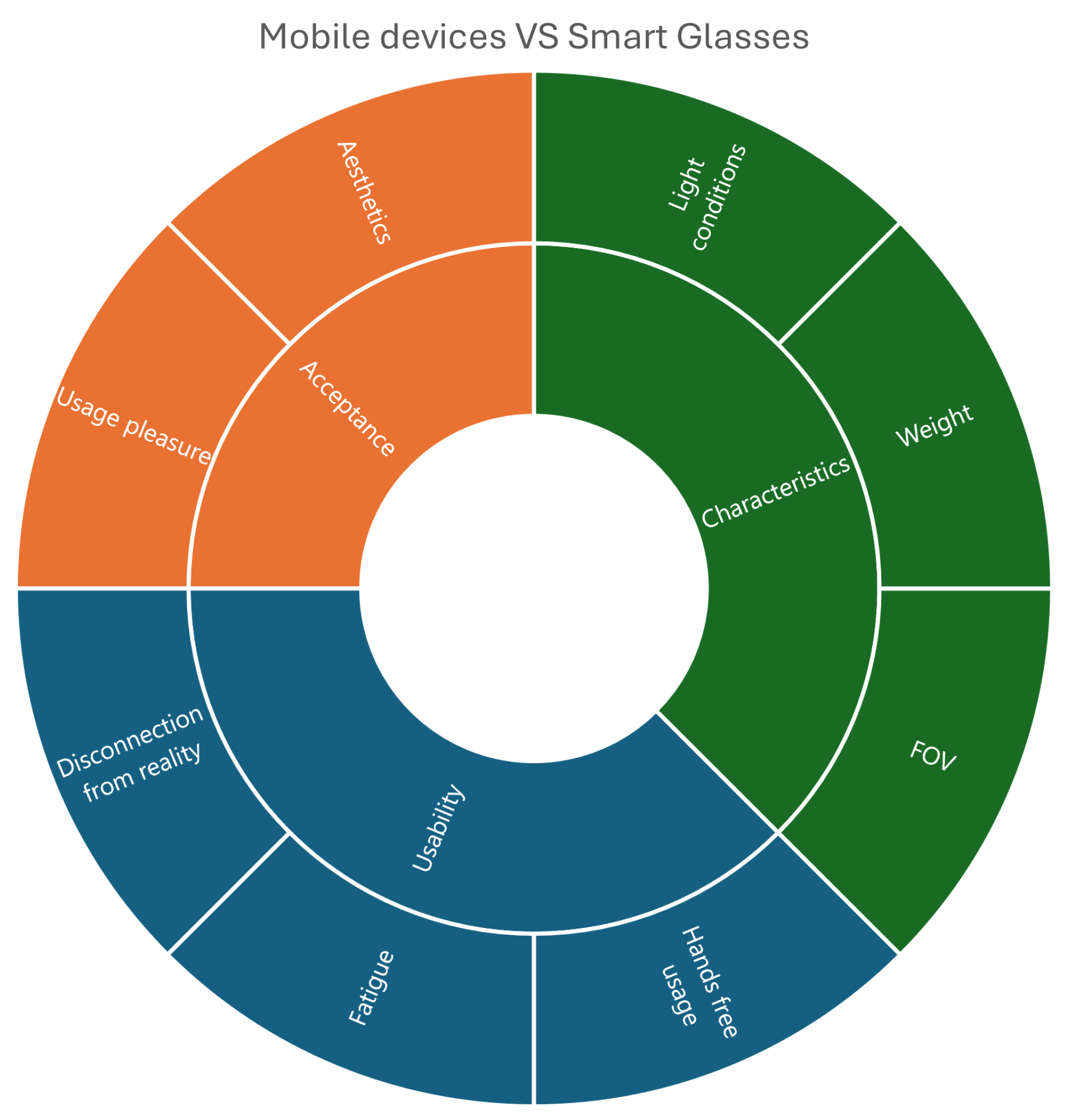
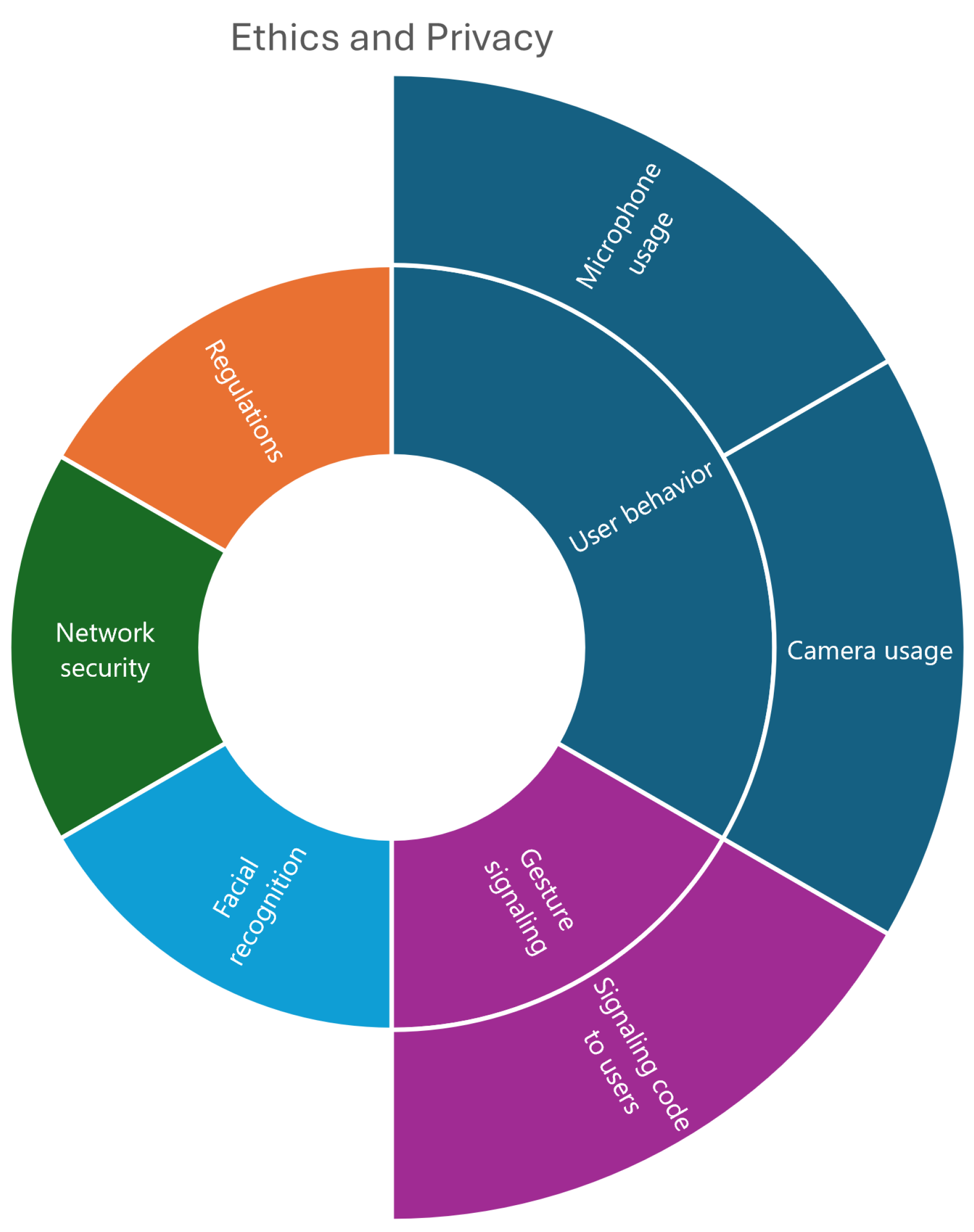
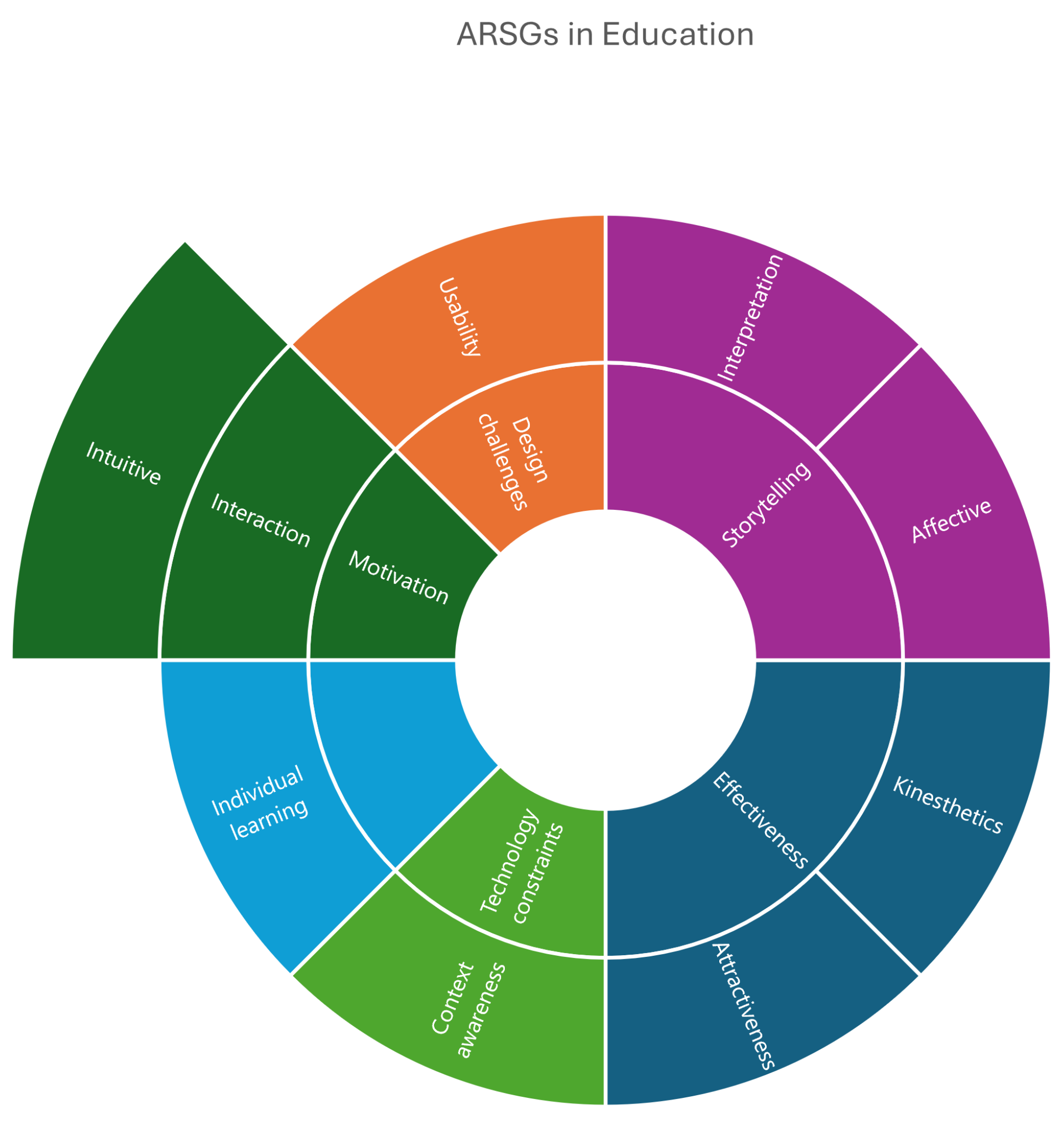
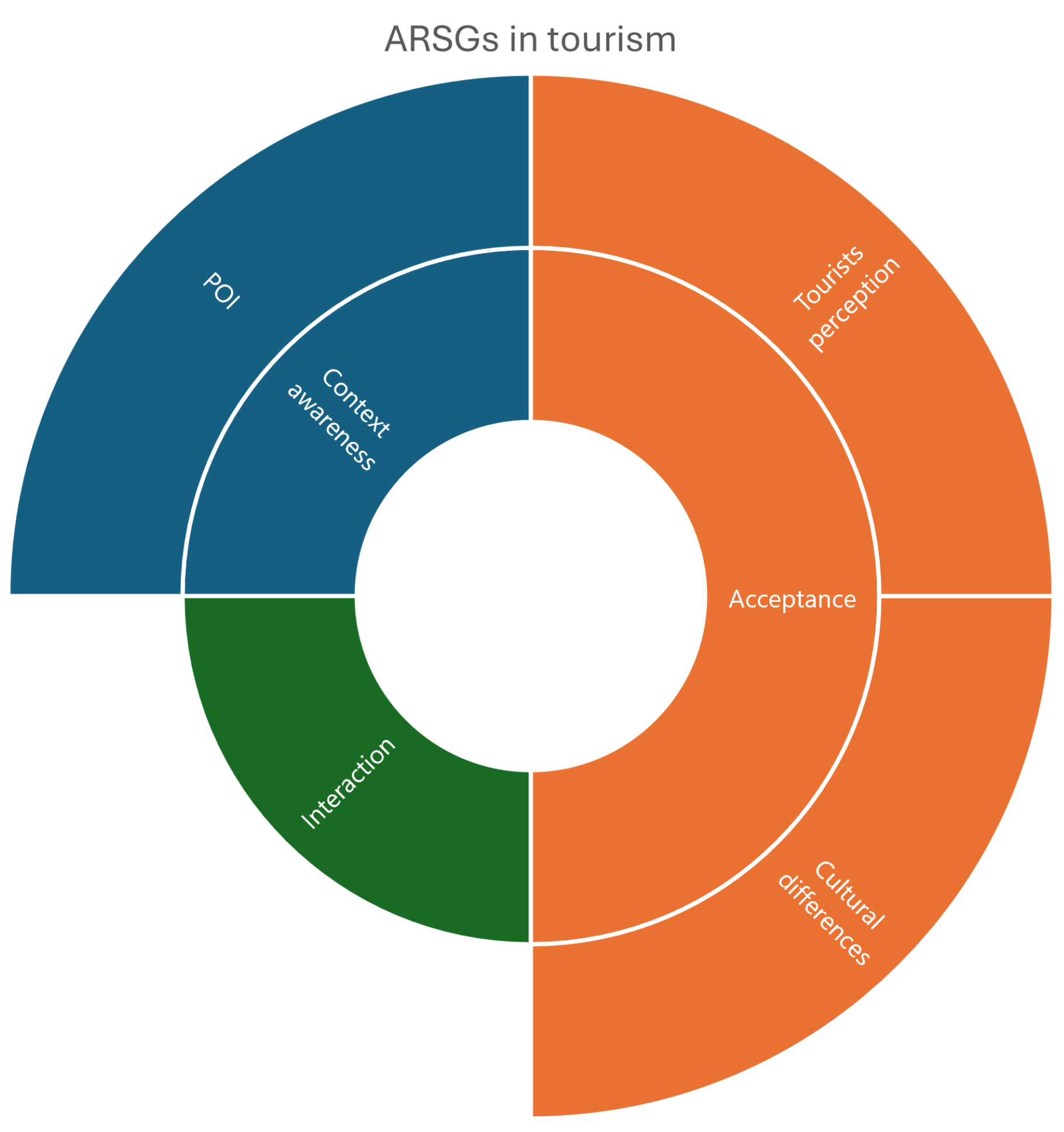
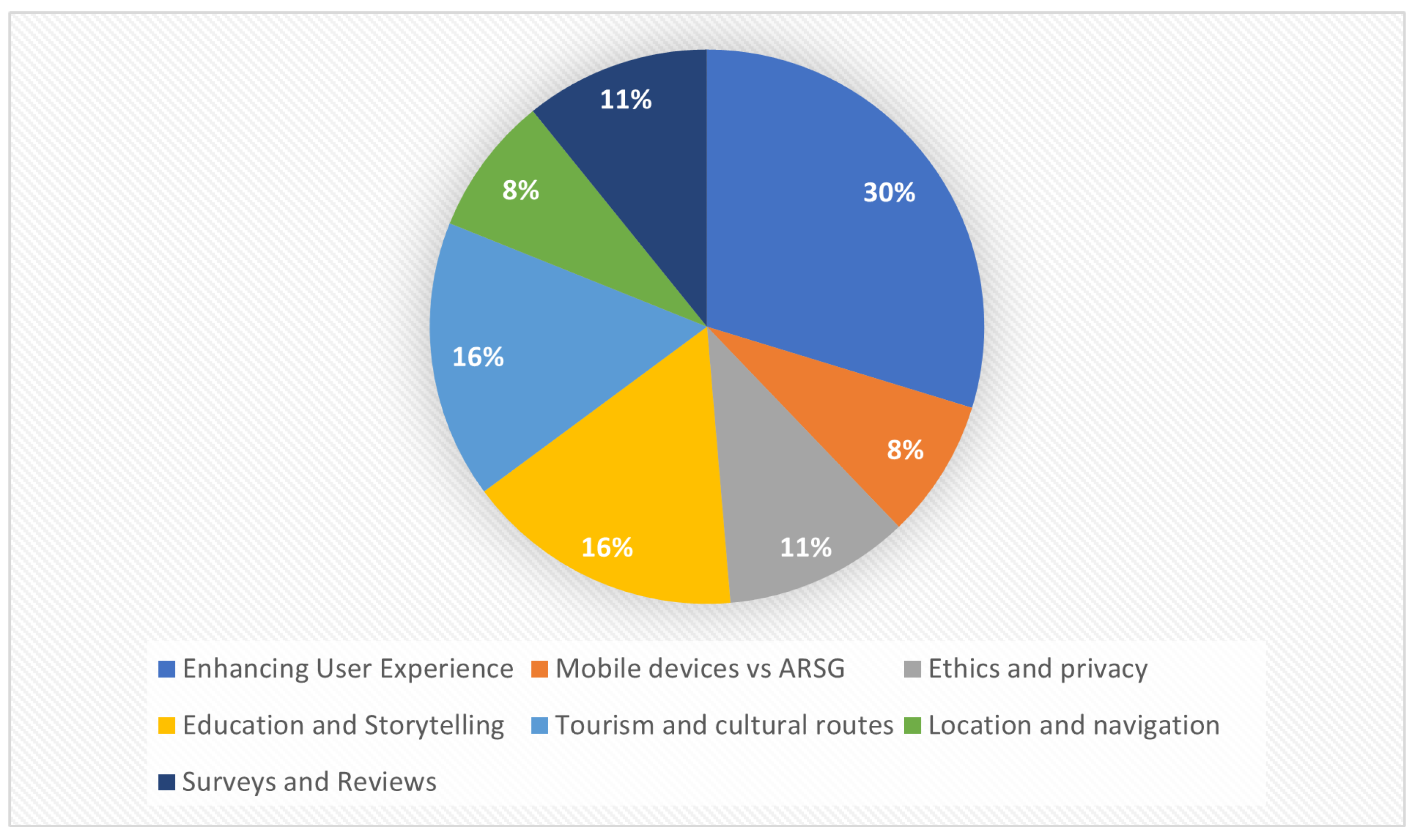
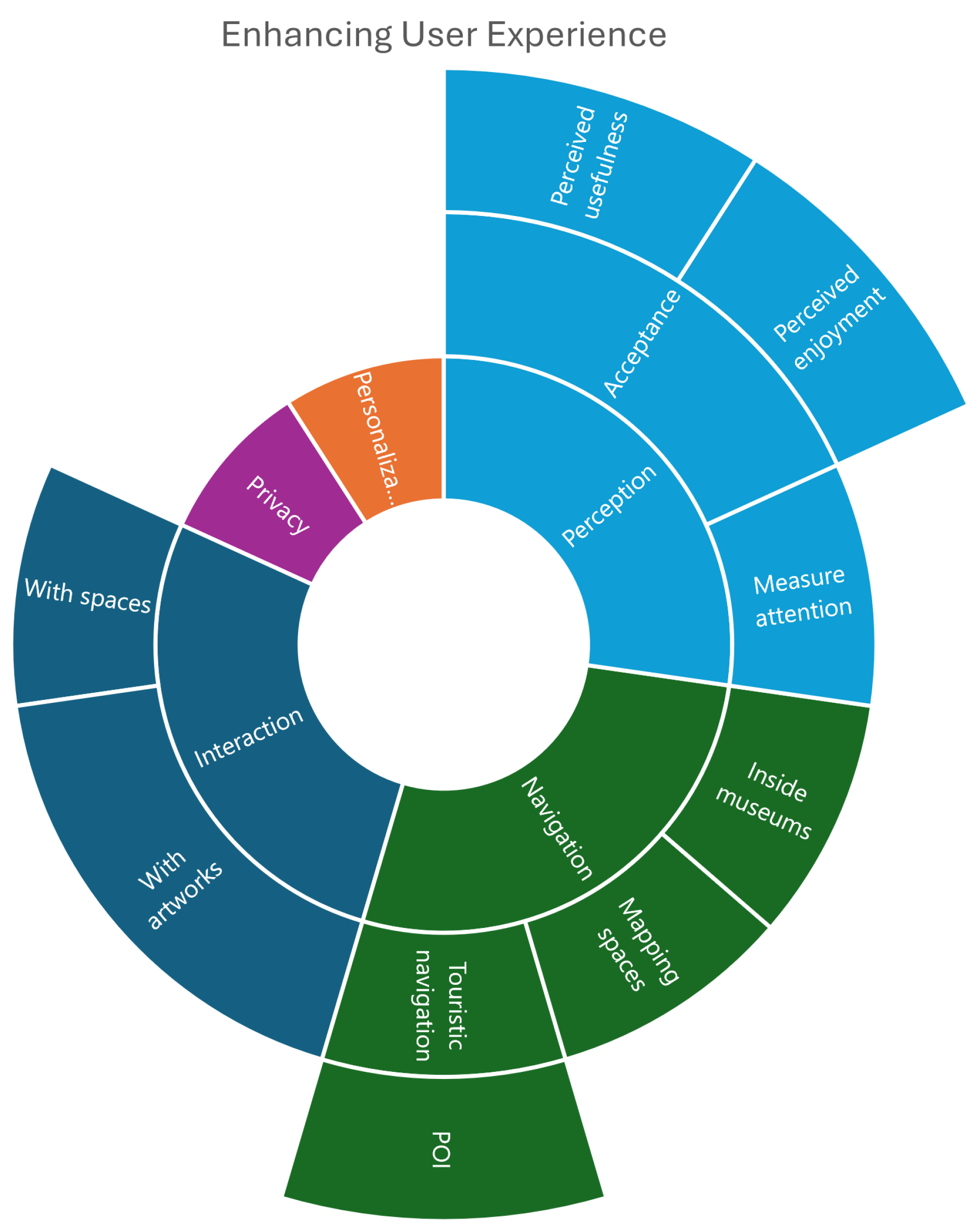
Figure 7 shows the percentage of research works found in each category. As already mentioned above, the enhancement of UX is the first priority for researchers on the field. 11 out of 37 projects are related to this topic and constitute 30% of all researches. There are also three projects comparing UXs between mobile devices and SGs. While these projects constitute 8% individually, their thematic similarity allows us to incorporate this percentage into the previous category, further emphasizing the significance of UX enhancement. Education and tourism-culture are the second priorities of the researchers, with equal importance. Having both categories from 6 works in the total of 37 research papers, they each occupy a percentage of 16%. Surveys and reviews on the topic of AR SG share the same percentage of 11% with the research papers on ethics and privacy concerns related to the use of AR SG. Specializing in exploiting the potential of SGs to provide location awareness in cultural spaces for visitors, 3 projects with a rate of 8% complete the total projects.
Figure 7. Percentage of works in each category.
In Table 2, projects—excluding Surveys and Reviews, which encompass a range of project types—are categorized based on their target content. The table columns were derived from text analyses, after identifying commonalities and distinctions among project contents. Three symbols are employed in the table to indicate the level of project involvement in specific categories. A solid black circle denotes the primary focus of the text, a half-black circle signifies moderate engagement, while a transparent circle indicates references to a particular category. The order of the works in the table is the same as the order in which they were mentioned in the text above, thus maintaining numbering and consistency, with the aim of making the text easier to read.
Table 2. Research categorization.
Thus, and starting from the most populous category, we observe that the largest percentage of projects have as their main objective or make clear references to research around the experience of using SGs in cultural spaces. It is a topic that is of particular concern to researchers and based on their texts, glasses offer a more natural interaction with the space and can enrich the visiting experience, but there are always privacy issues that need to be resolved [13,14,19]. This experience has been more specifically studied in educational settings [3,15,16,20] and in tourism applications [11,12,19,20]. The experience of using smart glasses has been compared to that of using smart phones [21,22,23], as the former technology aspires to replace, even partially, the latter.
The issue of privacy violations related to the use of smart glasses is highly significant and has been present since the inception of these glasses in the market. The built-in camera, capable of capturing photos and videos while the user is in motion, without always signaling its use since the user’s hands remain free, raises valid concerns. Ensuring compliance with ethical and legal standards is left to the user’s discretion, without effective monitoring. Thus, some researchers focus specifically on this topic, in a specialized way for cultural spaces [24,25,26,27].
AR technology in general contributes to a very large extent to the upgrading of educational processes and enriches the learning experience. This is something that has been studied for many years by a large number of researchers [47,48,49,50,51]. On this basis, specialized research on the use of SGs in museum education could not be lacking [28,29,30,31]. The impact of digital storytelling in education is also huge, in terms of student engagement and satisfaction, ease of learning and memory retention [52]. Thus, some research focuses on the application of digital storytelling methods for museum education, using augmented reality and smart glasses as tools for immersion and greater engagement [32,33].
An important share of projects deals with tourism and cultural routes. It is natural as people visiting cultural heritage sites is one of the foundations on which tourism around the world rests. The use of SGs in sightseeing routes or in the highlighting of monuments is something that is applied more and more, with the goals of impressing visitors, highlighting historical elements that may no longer exist, encouraging the interactive participation of tourists, creating richer experiences for them and boosting the revenue influx. In the present research, 6 research projects focusing on the use of SGs in tourism applications have been selected [34,35,36,37,38,39], but there are an additional 4 projects that are partially involved in this area [11,12,19,20].
A more specialized and technical issue is locating the visitor in a museum. This is useful in forming a profile for the visitor and providing personalized recommendations. As classic geolocation technologies cannot work in closed spaces—without communication with geospatial satellites—the issue has long been a concern of researchers. The SGs come to provide solutions, if the sensors they carry and the built-in camera are used properly. According to the above, in Table 2 three research projects have been placed that are specialized in position locating through SGs [40,41,42] and two more that refer more or less to the subject [21,31].

4. Case Study: Experimenting with School Students

In an exploration of emerging technologies, our study delved into the immersive realms of AR and VR by employing two cutting-edge AR glasses—the Microsoft HoloLens 2 and the Vuzix Blade—alongside the Oculus Rift S VR headset. The focus of our investigation was to introduce teenagers to these devices, allowing them to engage firsthand with the transformative capabilities of AR and VR. Through systematic tests and experiential interactions, we aimed to draw preliminary conclusions regarding the perceived satisfaction of the participants during the use of these technologies. By bridging the gap between curiosity and technological integration, our research contributes valuable insights into the evolving landscape of AR and VR, particularly in the context of teenagers’ experiences with these immersive devices.
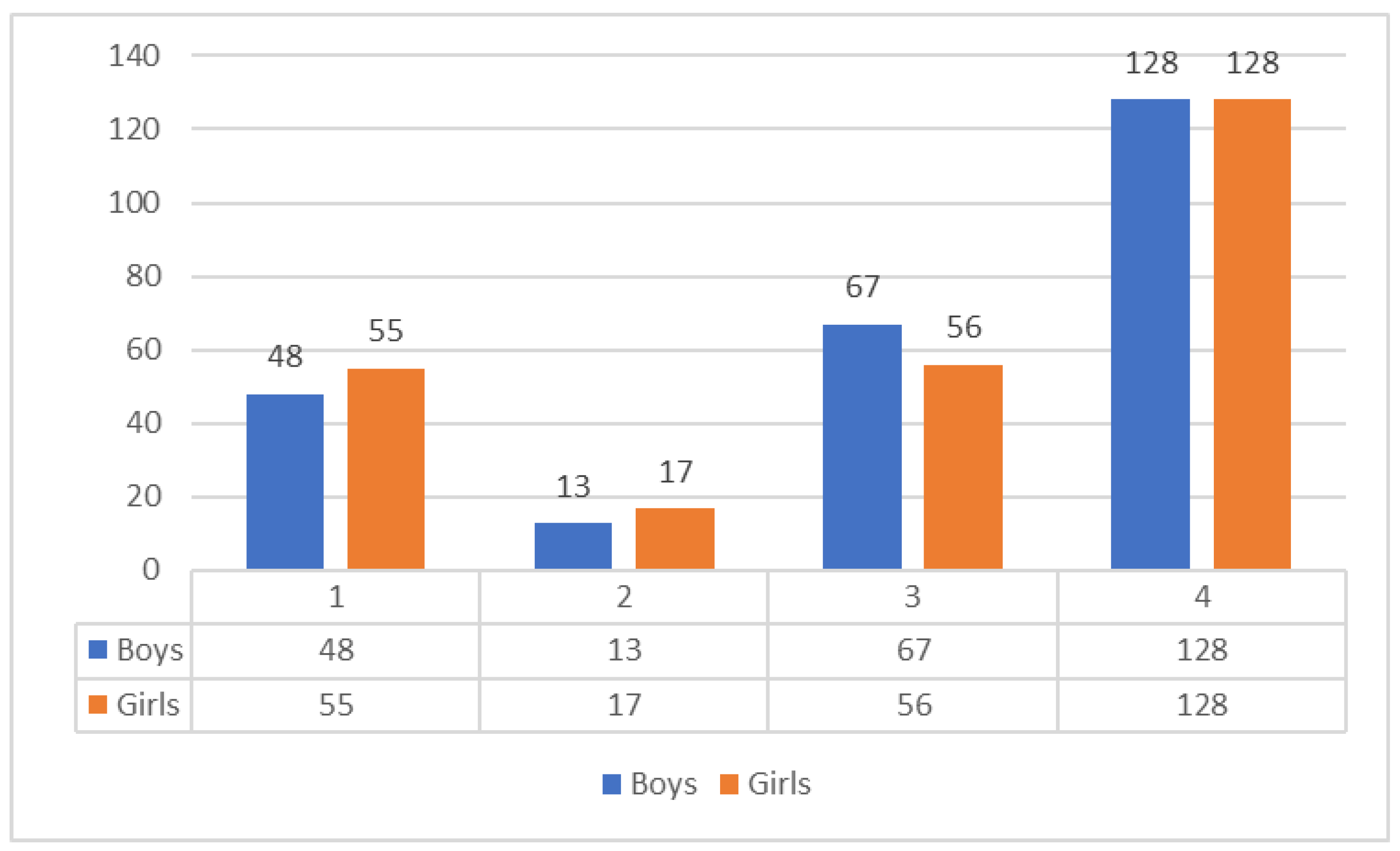
The tests were carried out in 3 phases, with different groups of teenagers. In the first phase, which lasted for four weeks in April and May 2022, students from the Music School of Mytilene on the island of Lesvos, Greece, were invited to test the AR devices Microsoft HoloLens 2 and Vuzix Blade, as well as the VR device Oculus Rift S. The devices were used by a total of 103 students, aged 12 to 18, of whom 55 were girls and 48 were boys. The second phase of the tests took place in October 2022, for two weeks, in the same school and with the same devices, with a group of 30 newly entering students, aged 12–13 years, of which 17 were girls and 13 were boys. The last phase of the test took place in a different school, in October 2023. 123 students of the Model General Lyceum of Mytilene, Greece, 67 boys and 56 girls, aged 15–17, tested the same devices over a period of 3 weeks. The above is summarized in the chart of Figure 8. There were 3 Vuzix devices, 2 Oculus devices and only one HoloLens available, 6 devices in total. All participants tested all devices for a time not exceeding the 7-min limit, and then had to pass the device to the next student. During the exchange of devices, the devices were cleaned and disinfected at the same time.
Figure 8. Number of students who participated in the tests.
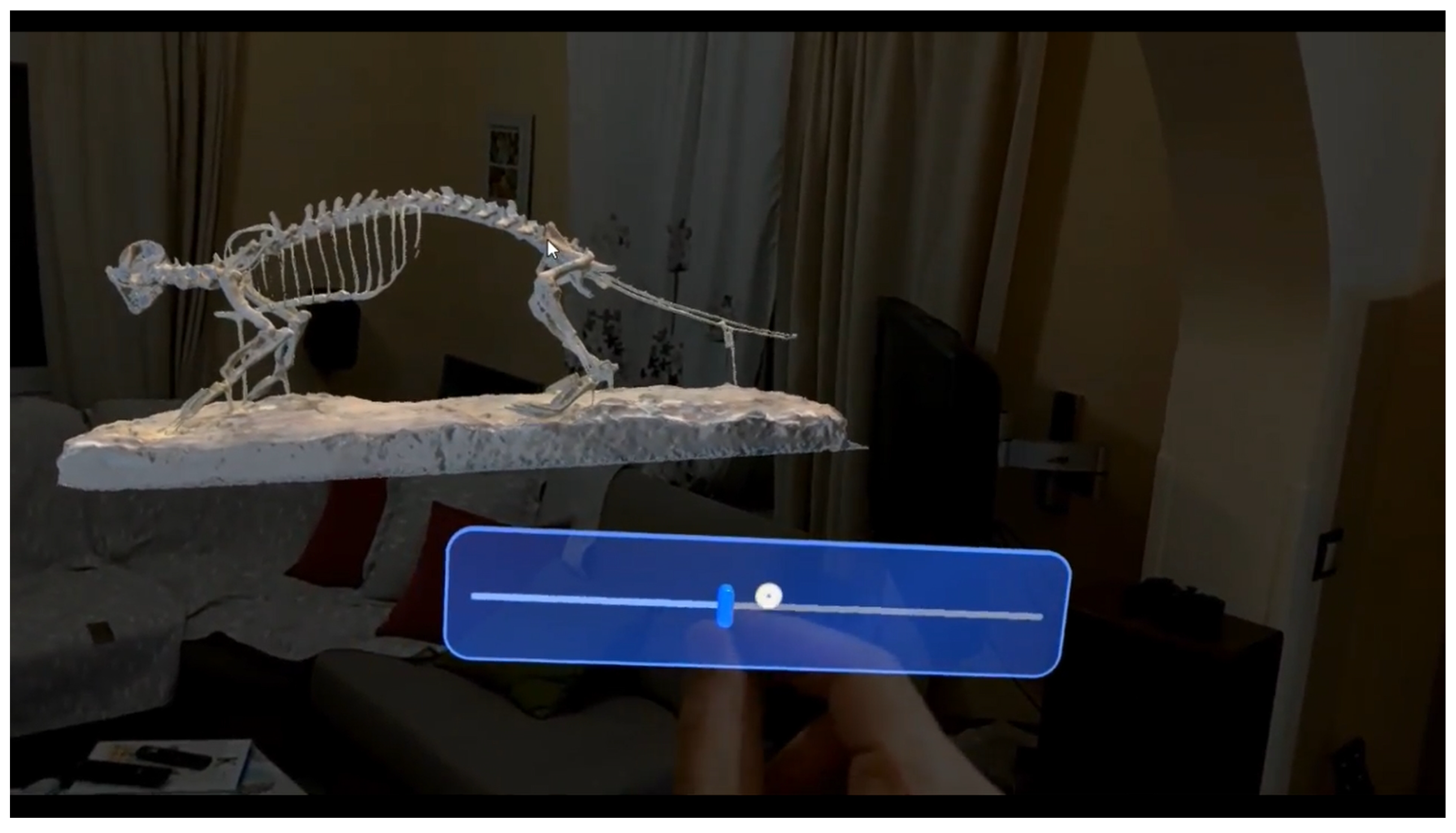
The tests were carried out during the Informatics class. The time available each time for each group of students was the 45 min of the lesson, and there was always preparation time, time to solve technical problems, time to disinfect the devices, and the last minutes were always devoted to discussions. Students who weren’t using the devices at any given time could watch the reactions of the students who were using them, since everyone was always together in the classroom. With the above devices students had to take specific steps that were common to all. In Microsoft HoloLens 2, they started with the Tips app which is pre-installed on all the devices [53], where they learned the basics of operating the device and then used a custom app titled Museum Guide. In this simple application, the 3D model of an animal skeleton (an otter or a mosasaur) is displayed in front of the user, and the user can grab it, move it, rotate it, zoom in or out, walk around of (or in) it and study details of the skeleton. At the same time, a short narration about the animal is heard and there is the possibility to increase or decrease the volume of the sound through a slider (Figure 9). These skeletons can be found inside the Museum of Paleontology and Geology of the National and Kapodistrian University of Athens and their 3D digital twins were created using photogrammetry and laser scanning, as part of another research project [54]. The Museum Guide app was built in Unity.
Figure 9. The Museum Guide app.
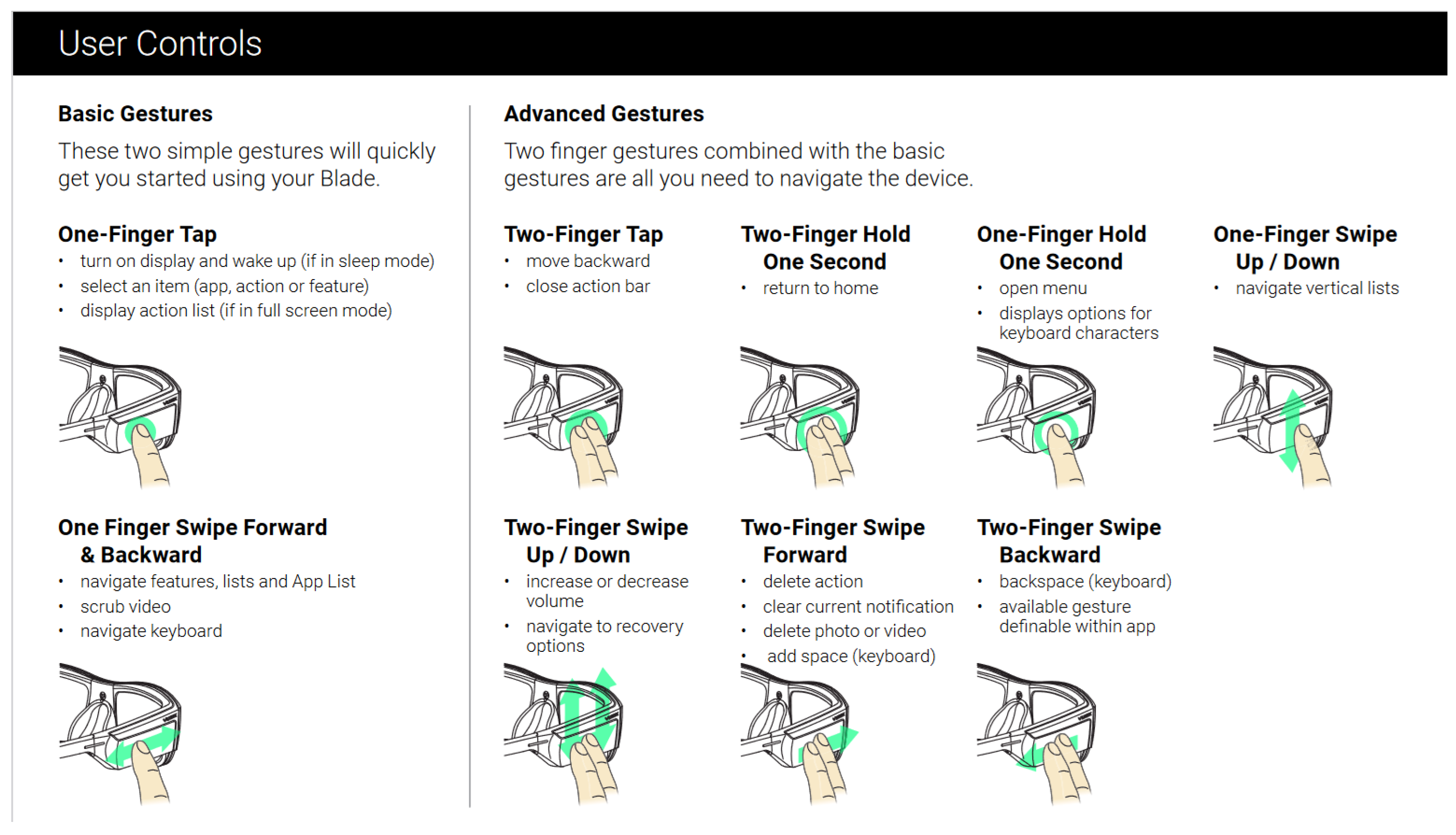
In the Vuzix Blade glasses, users had to navigate the device’s menus to get used to using it and then open the Dino Hunt game, which can be downloaded for free at the Vuzix App Store [55]. The device supports manipulation through its right arm, with taps and swipes. The basic supported gestures are one-finger tap and one finger swipe forward and backward but there are more advanced gestures that work with two fingers, as illustrated in Figure 10. The image is taken from the official user manual of the device [56]. The device also has a gyroscope which allows it to respond to the movement of the user’s head. This particular game was chosen because it is simple to use, requires no special instructions to get started, and takes advantage of the device’s gyroscope and control capabilities, exposing the player to all of the device’s interaction capabilities. Plus, it pushes the device to its processing limits and it’s fun!
Figure 10. The gestures supported by Vuzix Blade SGs. Image taken from the user manual [56].
The Art Plunge application was used on the Oculus Rift S device [57]. This is an application in which accurate VR interpretations of 5 famous works of art have been implemented. The user can be inside the space of the painting and experience its every detail. User interaction with the app is limited to entering and exiting a painting and is a sit-down experience in a confined space. During the first phase of testing, with the first group of students, another application that required movement within a larger space was also tested. For the safety of the students, a space 5 m long and 3 m wide, free of obstacles, had been prepared and demarcated. The application was the game called Richie’s Plank Experience [58], which is an intense experience for the user, since it can create intense feelings. The study of these feelings is not in the scope of this survey.
Starting with a comparison between the devices, the user experience is very different in each case. HoloLens is controlled by gestures in the air. The user can handle the augmented content as if it is real, and the focus of the gaze can be important. Voice instructions can also be combined along with the gestures for a more complete user engagement. In the Vuzix Blade, moving the head left and right is important in handling, but most actions require the user’s right hand to be placed on the device. Part of the functionality of the device relies on its interconnection with a smart phone and the corresponding application.
The assessment of the UX had an informal form and was done in three ways: (a) Observation. Reactions of the teenagers were noted, when they used the devices themselves and when they observed their classmates, (b) Discussion. Dialogues with students during the tests and at the end of each lesson helped to draw conclusions, (c) Quiz. The Kahoot application (https://kahoot.com/ (accessed on 13 March 2024)) was used to create a quiz game with questions related to the use of devices and ways of interacting with them. The answers to the questions showed, firstly, that the students had understood the way of operation and the capabilities of the devices, and secondly, that their experience was completely positive. In the comparison between the experience of VR and AR, they found VR more impressive but at the same time they did not like the idea of losing touch with the rest of the class. In these conditions where other students could interact with the user of the device, some students felt uncomfortable losing contact with the environment. In using AR glasses, participants enjoyed the ability to simultaneously observe the space around them and communicate with the rest of the class, and the freedom to walk around the space.
Comparing the AR devices to each other, the largest percentage of students (about 81%) found the experience of using HoloLens more interesting as they were impressed by the way it operated with gestures in the air. The rest chose Vuzix because “it’s easier to wear on the road”, “it connects to the mobile phone”, “it’s lighter and discreet”, “it’s very easy to use, just like operating a mobile phone”. The above are reflected numerically in the table of Figure 11.
Figure 11. Preference between the devices amongst students.
There were a few cases (about 2% of all attendees) who refused to use any of the devices, using feedback such as “I’ve done it before”, “I have a problem with my eyes” or “I don’t like it”. Teenagers who wore glasses due to myopia or other conditions faced substantial difficulties in using the AR devices. In Hololens the problem was not great as the headset, with a suitable adjustment, allowed the spectacles to be worn underneath. But in the case of Vuzix, the device was impossible to use, as users with a certain visual condition could not see the image clearly. In any case, the acceptance of the devices and technologies was great. A common question in the discussions was “how much do they cost?” and a common comment that followed was “they are very nice but also very expensive”.

5. Conclusions

Augmented content and physical interaction create greater user engagement and enhance the experience of visiting a museum or other cultural site. The glasses also offer more capabilities such as tracking and orientation in closed spaces—where GPS cannot work. So why haven’t we all abandoned our smart phones and been using SGs already? Let’s try to give some answers, not necessarily in order of importance. Some of the answers come from literature research, and some others from the authors’ experience, through experimentation and participation in previous research projects.
Though aesthetics might not hold significance at the research level, its role in a product’s commercial value is paramount. Drawing a comparison to the smartphone market, Apple’s introduction of the first smartphone in 2007 heavily emphasized the appealing design of the product. This approach, combined with the new capabilities of interacting with the device, sparked a major technological and commercial revolution, quickly gaining mass acceptance worldwide and putting smartphones in people’s hands on a global scale. The story with smart glasses is of course somewhat different. People have already been wearing glasses for centuries. They had already acquired a certain aesthetic of what beautiful glasses should look like. However, placing all these subsystems that smart glasses require, inside the thin frame that holds the lenses, is something that remains impossible to this day. There is great progress in this direction, but the final goal has not yet been technologically reached. An attempt is made, in a clever way, to fit a computing system into the infinitesimal space that can be offered by some cavity in the frame of the glasses. In addition, the battery has to fit in the same space and this is a separate challenge in itself.
So the issue of energy is also very important. Microsoft’s Hololens offer quite a long autonomy but in exchange for their large volume. Conversely, glasses that tried to maintain smaller proportions have a much lower ability to stay active. In experiments with Vuzix Blades, their operation could not last for more than 20 min, which is probably not enough time for a visit to a museum. As an extension of energy consumption, the devices show an increase in their temperature, mainly in the spots where the processor and the battery are located. During the case study, some students felt uncomfortable by the extreme heat of the device on their head. It is a device design problem that is under study [59].
The issue of weight also exists. Smart glasses are clearly heavier than eyeglasses. Thus, prolonged use can cause symptoms of fatigue in the support points, such as for example in the upper part of the nose. Hololens strap on top of the head and tighten at the back, so they feel more like a hat than glasses. At this point, we will also add the reflection on the risk to the health of the users. These are devices that emit frequencies in different bandwidths in order to communicate with the environment. So we have the microwave frequencies of 2.4 GHz and 5 GHz for WiFi, while Bluetooth also works in the same 2.4 GHz band. GPS satellites broadcast on at least two carrier frequencies between 1575.42 MHz, 1227.6 MHz and 1176 MHz. In fact, if the manufacturers proceed to install SIM cards for the mobile networks, then we will also add the frequency bands of the 4G and 5G networks which may differ in each continent and region. These transceivers are in contact with the user’s head during use of the device and the health burden rates of the users are being studied [60] and efforts are being made to redesign the devices with lower levels of radiation [61], but it is too early to draw any firm conclusions. What is certain is that the issue will have to be studied before SGs gain wider acceptance.
In addition, the SGs brought to the fore-again-the issue of the violation of privacy [14,24,62]. When mobile phones invaded our lives and our personal space this reflection started for the first time as our geographical location and the way and time in which we move every day became known. The users themselves broke down any form of privacy, self-posting photos that they could easily take from their phone and sharing their location constantly on social networks. The issue with SGs becomes more complex as it becomes easier to discreetly capture and share photos or videos of others without their consent. So if to all of the above, we add some safety issues that still exist with the use of these devices [62,63] but mainly, their cost which remains high and the availability which is low in relation to the demand, we can perhaps understand why not everyone has a device at home yet and why we don’t see people walking down the street wearing SGs.
During our tests, students who have an eye condition such as myopia, astigmatism or farsightedness and wear glasses or contact lenses every day, had difficulty using the SGs we had available. The manufacturers of the devices require users to order their own prescription lenses to fit their eyes exactly, which is another reason why the same glasses may not work for everyone. Beyond all the above concerns and difficulties, SGs remain an attractive technology for use in cultural and non-cultural spaces. Despite their existence for decades, they are still in development and it may be some time before we see perfected models. Nevertheless, our experiments showed that they brought teenagers joy, often excitement. The experience of using them was very positive and users got used to handle them without instructions, with gestures and voice commands (in Microsoft HoloLens) or operating from the arm of the glasses (in Vuzix Blade).
From the side of developers, it is found that developing apps for AR devices is not the easiest task. Documentation is often lacking, developer and forum communities are very small, so programming for these devices is still in an experimental stage. It is still a limited market and this can be seen from the very small amount of ready-made applications that a user-owner of such a device can download or buy from the official online stores. In addition, each manufacturer adopts a different programming language, a different programming environment, creates its own API, and there is no established design and implementation standard, which makes application development more complicated.

Author Contributions

Conceptualization, G.T.; methodology, G.T.; software, G.T.; validation, G.T. and M.K.; formal analysis, G.T.; investigation, G.T.; resources, G.T.; data curation, G.T.; writing—original draft preparation, G.T. and M.K.; writing—review and editing, G.T. and M.K.; visualization, G.T.; supervision, G.C.; project administration, G.T. and M.K.; funding acquisition, M.K. All authors have read and agreed to the published version of the manuscript.

Funding

This research received no external funding.

Conflicts of Interest

The authors declare no conflict of interest.

Abbreviations

The following abbreviations are used in this manuscript:
SGsSmart Glasses
ARAugmented Reality
AR SGsAugmented Reality Smart Glasses
APIApplication Programming Interface
CHCultural Heritage
VRVirtual Reality
GLAMsGalleries, Libraries, Archives and Museums
MRMixed Reality
UXUser eXperience

References

  1. Aliprantis, J.; Caridakis, G. A survey of augmented reality applications in cultural heritage. Int. J. Comput. Methods Herit. Sci. 2019, 3, 118–147. [Google Scholar] [CrossRef]
  2. Ntagiantas, A.; Konstantakis, M.; Aliprantis, J.; Manousos, D.; Koumakis, L.; Caridakis, G. An Augmented Reality Children’s Book Edutainment through Participatory Content Creation and Promotion Based on the Pastoral Life of Psiloritis. Appl. Sci. 2022, 12, 1339. [Google Scholar] [CrossRef]
  3. Trichopoulos, G.; Aliprantis, J.; Konstantakis, M.; Michalakis, K.; Mylonas, P.; Voutos, Y.; Caridakis, G. Augmented and personalized digital narratives for Cultural Heritage under a tangible interface. In Proceedings of the 2021 16th International Workshop on Semantic and Social Media Adaptation & Personalization (SMAP), Corfu, Greece, 4–5 November 2021; IEEE: New York, NY, USA, 2021; pp. 1–5. [Google Scholar]
  4. Kalatha, E.; Aliprantis, J.; Konstantakis, M.; Michalakis, K.; Moraitou, T.; Caridakis, G. Cultural heritage engagement via serious games: The ARCADE augmented reality, context-aware, linked open data personalized ecosystem. In Proceedings of the 1st International CICMS Conference, Kuşadası, Turkey, 4–5 May 2018; p. 309. [Google Scholar]
  5. Aliprantis, J.; Kalatha, E.; Konstantakis, M.; Michalakis, K.; Caridakis, G. Linked open data as universal markers for mobile augmented reality applications in cultural heritage. In Proceedings of the Digital Cultural Heritage: Final Conference of the Marie Skłodowska—Curie Initial Training Network for Digital Cultural Heritage, ITN-DCH 2017, Olimje, Slovenia, 23–25 May 2017; Revised Selected Papers. Springer: Cham, Switzerland, 2018; pp. 79–90. [Google Scholar]
  6. Azuma, R.T. A Survey of Augmented Reality. Presence Teleoperators Virtual Environ. 1997, 6, 355–385. [Google Scholar] [CrossRef]
  7. van Krevelen, D.W.F.; Poelman, R. A Survey of Augmented Reality Technologies, Applications and Limitations. Int. J. Virtual Real. 2010, 9, 1. [Google Scholar] [CrossRef]
  8. Baus, O.; Bouchard, S. Moving from Virtual Reality Exposure-Based Therapy to Augmented Reality Exposure-Based Therapy: A Review. Front. Hum. Neurosci. 2014, 8, 112. [Google Scholar] [CrossRef]
  9. Yu, M.; Su, J.; Hofmann, K. Augmented Reality in High School and Higher Education: How AR Is Changing Teaching and Learning. Foundations of Educational Technology-Situated Learning. 2020. Available online: https://educ3582020.pubpub.org/pub/zf07twhm/release/1 (accessed on 13 March 2024).
  10. Caudell, T.; Mizell, D. Augmented reality: An application of heads-up display technology to manual manufacturing processes. In Proceedings of the Twenty-Fifth Hawaii International Conference on System Sciences, Kauai, HI, USA, 7–10 January 1992; Volume 2, pp. 659–669. [Google Scholar] [CrossRef]
  11. Yoon, Y.S.; Kim, D.M.; Suh, J.W. Augmented Reality Services Using Smart Glasses for Great Gilt-bronze Incense Burner of Baekje. In Proceedings of the 2022 International Conference on Electronics, Information, and Communication (ICEIC), Jeju, Republic of Korea, 6–9 February 2022; pp. 1–4. [Google Scholar] [CrossRef]
  12. Brancati, N.; Caggianese, G.; Frucci, M.; Gallo, L.; Neroni, P. Experiencing touchless interaction with augmented content on wearable head-mounted displays in cultural heritage applications. Pers. Ubiquitous Comput. 2017, 21, 203–217. [Google Scholar] [CrossRef]
  13. Rauschnabel, P.A. A Conceptual Uses & Gratification Framework on the Use of Augmented Reality Smart Glasses. In Augmented Reality and Virtual Reality: Empowering Human, Place and Business; Springer International Publishing: Cham, Switzerland, 2018; pp. 211–227. [Google Scholar] [CrossRef]
  14. Rauschnabel, P.A.; He, J.; Ro, Y.K. Antecedents to the adoption of augmented reality smart glasses: A closer look at privacy risks. J. Bus. Res. 2018, 92, 374–384. [Google Scholar] [CrossRef]
  15. Trichopoulos, G.; Aliprantis, J.; Konstantakis, M.; Michalakis, K.; Caridakis, G. Tangible and Personalized DS Application Approach in Cultural Heritage: The CHATS Project. Computers 2022, 11, 19. [Google Scholar] [CrossRef]
  16. Tom Dieck, M.C.; Jung, T.; Han, D.I. Mapping requirements for the wearable smart glasses augmented reality museum application. J. Hosp. Tour. Technol. 2016, 7, 230–253. [Google Scholar] [CrossRef]
  17. Mason, M. The MIT Museum Glassware Prototype: Visitor Experience Exploration for Designing Smart Glasses. J. Comput. Cult. Herit. 2016, 9, 12. [Google Scholar] [CrossRef]
  18. Bekele, M.K. Walkable mixed reality map as interaction interface for virtual heritage. Digit. Appl. Archaeol. Cult. Herit. 2019, 15, e00127. [Google Scholar] [CrossRef]
  19. Sargsyan, N.; Seals, C. Using AR Headset Camera to Track Museum Visitor Attention: Initial Development Phase. In Proceedings of the Virtual, Augmented and Mixed Reality: Applications in Education, Aviation and Industry, Virtual, 26 June–1 July 2022; Chen, J.Y.C., Fragomeni, G., Eds.; Springer: Cham, Switzerland, 2022; pp. 74–90. [Google Scholar]
  20. Lee, H.; Kim, S.H.; Lee, H.W. Advanced technologies for smart exhibition guide services. In Proceedings of the 2015 International Conference on Information and Communication Technology Convergence (ICTC), Jeju, Republic of Korea, 28–30 October 2015; pp. 864–867. [Google Scholar] [CrossRef]
  21. Litvak, E.; Kuflik, T. Enhancing cultural heritage outdoor experience with augmented-reality smart glasses. Pers. Ubiquitous Comput. 2020, 24, 873–886. [Google Scholar] [CrossRef]
  22. Lee, L.H.; Hui, P. Interaction Methods for Smart Glasses: A Survey. IEEE Access 2018, 6, 28712–28732. [Google Scholar] [CrossRef]
  23. Serubugo, S.; Škantárová, D.; Kjærsgård Nielsen, L.; Kraus, M. Comparison of Wearable Optical See-through and Handheld Devices as Platform for an Augmented Reality Museum Guide. In Proceedings of the 12th International Joint Conference on Computer Vision, Imaging and Computer Graphics Theory and Applications, VISIGRAPP, Porto, Portugal, 27 February–1 March 2017; INSTICC. SciTePress: Setúbal, Portugal, 2017; pp. 179–186. [Google Scholar] [CrossRef]
  24. Koelle, M.; Ananthanarayan, S.; Czupalla, S.; Heuten, W.; Boll, S. Your Smart Glasses’ Camera Bothers Me! Exploring Opt-in and Opt-out Gestures for Privacy Mediation. In Proceedings of the 10th Nordic Conference on Human-Computer Interaction (NordiCHI ’18), Oslo, Norway, 29 September–3 October 2018; pp. 473–481. [Google Scholar] [CrossRef]
  25. Hofmann, B.; Haustein, D.; Landeweerd, L. Smart-Glasses: Exposing and Elucidating the Ethical Issues. Sci. Eng. Ethics 2017, 23, 701–721. [Google Scholar] [CrossRef]
  26. Iqbal, M.Z.; Campbell, A.G. Adopting smart glasses responsibly: Potential benefits, ethical, and privacy concerns with Ray-Ban stories. AI Ethics 2023, 3, 325–327. [Google Scholar] [CrossRef]
  27. Kumar, N.M.; Kumar Singh, N.; Peddiny, V.K. Wearable Smart Glass: Features, Applications, Current Progress and Challenges. In Proceedings of the 2018 Second International Conference on Green Computing and Internet of Things (ICGCIoT), Bangalore, India, 16–18 August 2018; pp. 577–582. [Google Scholar] [CrossRef]
  28. Leue, M.C.; Jung, T.; Tom Dieck, D. Google Glass Augmented Reality: Generic Learning Outcomes for Art Galleries. In Proceedings of the Information and Communication Technologies in Tourism 2015, Lugano, Switzerland, 3–6 February 2015; Tussyadiah, I., Inversini, A., Eds.; Springer: Cham, Switzerland, 2015; pp. 463–476. [Google Scholar]
  29. Alkhafaji, A.; Fallahkhair, S.; Cocea, M. Design Challenges for Mobile and Wearable Systems to Support Learning on-the-move at Outdoor Cultural Heritage Sites. In Human-Computer Interaction—INTERACT 2019, Proceedings of the 17th IFIP Conference on Human-Computer Interaction (INTERACT), Paphos, Cyprus, 2–6 September 2019; Part 3: Interaction in Public Spaces; Lamas, D., Loizides, F., Nacke, L., Petrie, H., Winckler, M., Zaphiris, P., Eds.; Springer: Cham, Switzerland, 2019; Volume LNCS-11748, pp. 185–207. [Google Scholar] [CrossRef]
  30. Chen, H.R.; Lin, W.S.; Hsu, T.Y.; Lin, T.C.; Chen, N.S. Applying Smart Glasses in Situated Exploration for Learning English in a National Science Museum. IEEE Trans. Learn. Technol. 2023, 16, 820–830. [Google Scholar] [CrossRef]
  31. Chin, K.Y.; Chang, H.L.; Wang, C.S. Applying a wearable MR-based mobile learning system on museum learning activities for university students. In Interactive Learning Environments; Routledge: London, UK, 2023; pp. 1–22. [Google Scholar] [CrossRef]
  32. Dima, M. A Design Framework for Smart Glass Augmented Reality Experiences in Heritage Sites. J. Comput. Cult. Herit. 2022, 15, 66. [Google Scholar] [CrossRef]
  33. Testón, A.M.; Muñoz, A. Digital avatars as humanized museum guides in the convergence of extended reality. In Proceedings of the MW21 Conference, Washington, DC, USA, 19–23 April 2021; Available online: https://mw21.museweb.net/paper/digital-avatars-as-humanized-museum-guides-in-the-convergence-of-extended-reality/ (accessed on 13 March 2024).
  34. Obeidy, W.K.; Arshad, H.; Yao Huang, J. TouristicAR: A Smart Glass Augmented Reality Application for UNESCO World Heritage Sites in Malaysia. J. Telecommun. Electron. Comput. Eng. 2018, 10, 101–108. [Google Scholar]
  35. Obeidy, W.; Arshad, H.; Huang, J. A Proposed Model of Acceptance for Smart Glasses based Outdoor Augmented Reality Applications at UNESCO World Heritage Sites. Int. J. Eng. Technol. 2018, 7, 354–360. [Google Scholar] [CrossRef]
  36. Obeidy, W.K.; Arshad, H.; Huang, J.Y. An acceptance model for smart glasses based tourism augmented reality. AIP Conf. Proc. 2017, 1891, 020080. [Google Scholar] [CrossRef]
  37. Han, D.I.D.; Dieck, M.C.T.; Jung, T. Augmented Reality Smart Glasses (ARSG) visitor adoption in cultural tourism. Leis. Stud. 2019, 38, 618–633. [Google Scholar] [CrossRef]
  38. Ueoka, R.; Iwasa, K. Godzilla Meets ‘F’ Museum: Case Study of Hand-On Museum Event with Augmented Reality Technology. In Proceedings of the Human Interface and the Management of Information: Information, Knowledge and Interaction Design, Vancouver, BC, Canada, 9–14 July 2017; Yamamoto, S., Ed.; Springer: Cham, Switzerland, 2017; pp. 301–312. [Google Scholar]
  39. Morandini, F. Brescia-Brixia (Italy). Travelling through Ancient Landscapes: The City Museum and Nearby Archaeological Areas, Research and Enhancement. Digital Pasts for the Present. In Proceedings of the 2nd Conference on Computer Applications and Quantitative Methods in Archaeology Greek Chapter (CAA-GR), Greek, Athens, 20–21 December 2016; p. 117. [Google Scholar]
  40. Kuflik, T.; Yagodin, P.; Sharon, O. Visual Cues for Cultural Heritage Urban Navigation with Smart Glasses. In Proceedings of the 14th AVI-CH Workshop on Advanced Visual Interfaces and Interactions in Cultural Heritage, AVI-CH 2022, Rome, Italy, 6 June 2022; Volume 3243. [Google Scholar]
  41. Vu, H.T.; Chang, W.C.; Lin, W.Y.; Cheng, H.S.; Chuang, Y.N.; Huang, C.C.; Manh, H.N. A Hybrid Method for Visitor Localization and Tracking in a Museum Environment. In Proceedings of the 9th IEEE International Conference on Ubi-Media Computing “UMEDIA-2016”, Moscow, Russia, 15–17 August 2016; pp. 228–233. [Google Scholar]
  42. Zhang, Y.; Hu, W.; Xu, W.; Wen, H.; Chou, C.T. NaviGlass: Indoor Localisation Using Smart Glasses. In Proceedings of the EWSN, Graz, Austria, 15–17 February 2016; pp. 205–216. [Google Scholar]
  43. Park, S.; Bokijonov, S.; Choi, Y. Review of Microsoft HoloLens Applications over the Past Five Years. Appl. Sci. 2021, 11, 7259. [Google Scholar] [CrossRef]
  44. Vlachos, A.; Economides, A.; Perifanou, M. Smart Glass Application Testing for Augmented Reality. In Proceedings of the 14th International Conference on Education and New Learning Technologies, Palma, Spain, 4–6 July 2022; pp. 9569–9577. [Google Scholar] [CrossRef]
  45. Kim, D.; Choi, Y. Applications of Smart Glasses in Applied Sciences: A Systematic Review. Appl. Sci. 2021, 11, 4956. [Google Scholar] [CrossRef]
  46. Zuidhof, N.; Ben Allouch, S.; Peters, O.; Verbeek, P.P. Defining Smart Glasses: A Rapid Review of State-of-the-Art Perspectives and Future Challenges From a Social Sciences’ Perspective. Augment. Hum. Res. 2021, 6, 15. [Google Scholar] [CrossRef]
  47. Cabero-Almenara, J.; Barroso-Osuna, J.; Llorente-Cejudo, C.; de Mar Fernández Martínez, M. Educational Uses of Augmented Reality (AR): Experiences in Educational Science. Sustainability 2019, 11, 4990. [Google Scholar] [CrossRef]
  48. Quintero, J.; Baldiris, S.; Rubira, R.; Cerón, J.; Velez, G. Augmented Reality in Educational Inclusion. A Systematic Review on the Last Decade. Front. Psychol. 2019, 10, 1835. [Google Scholar] [CrossRef]
  49. Garzón, J.; Pavón, J.; Baldiris, S. Systematic review and meta-analysis of augmented reality in educational settings. Virtual Real. 2019, 23, 447–459. [Google Scholar] [CrossRef]
  50. Kerr, J.; Lawson, G. Augmented Reality in Design Education: Landscape Architecture Studies as AR Experience. Int. J. Art Des. Educ. 2020, 39, 6–21. [Google Scholar] [CrossRef]
  51. Mystakidis, S.; Christopoulos, A.; Pellas, N. A systematic mapping review of augmented reality applications to support STEM learning in higher education. Educ. Inf. Technol. 2022, 27, 1883–1927. [Google Scholar] [CrossRef]
  52. Trichopoulos, G.; Alexandridis, G.; Caridakis, G. A Survey on Computational and Emergent Digital Storytelling. Heritage 2023, 6, 1227–1263. [Google Scholar] [CrossRef]
  53. Microsoft Hololens 2 Tips App. Available online: https://apps.microsoft.com/detail/9PD4CXKKLC47?hl=en-us&gl=US (accessed on 18 December 2023).
  54. Konstantakis, M.; Trichopoulos, G.; Aliprantis, J.; Michalakis, K.; Caridakis, G.; Thanou, A.; Zafeiropoulos, A.; Sklavounou, S.; Psarras, C.; Papavassiliou, S.; et al. An Enhanced Methodology for Creating Digital Twins within a Paleontological Museum Using Photogrammetry and Laser Scanning Techniques. Heritage 2023, 6, 5967–5980. [Google Scholar] [CrossRef]
  55. Dino Hunt in Vuzix App Store. Available online: https://apps.vuzix.com/app/dino-hunt (accessed on 18 December 2023).
  56. Vuzix Blade Online Manual. Available online: https://files.vuzix.com/Content/pdfs/Vuzix-BLADE-Safety-User-Manual-v1.pdf (accessed on 18 December 2023).
  57. Oculus Rift S Art Plunge. Available online: https://www.meta.com/en-us/experiences/pcvr/2803888673016355/ (accessed on 18 December 2023).
  58. Oculus Rift S Richie’s Plank Experience. Available online: https://www.meta.com/experiences/pcvr/1388204261277129/ (accessed on 18 December 2023).
  59. Matsuhashi, K.; Kanamoto, T.; Kurokawa, A. Thermal Model and Countermeasures for Future Smart Glasses. Sensors 2020, 20, 1446. [Google Scholar] [CrossRef] [PubMed]
  60. Jungk, P.; Wienke, M.; Schiefer, C.; Hartmann, U.; Harth, V.; Terschüren, C.; Alteköster, C.; Friemert, D. Investigation of the impact of electromagnetic fields emitted close to the head by smart glasses. Biomed. Eng. Biomed. Tech. 2022, 67, 219–226. [Google Scholar] [CrossRef] [PubMed]
  61. Choi, S.; Choi, J. Miniaturized MIMO antenna with a high isolation for smart glasses. In Proceedings of the 2017 IEEE-APS Topical Conference on Antennas and Propagation in Wireless Communications (APWC), Verona, Italy, 11–15 September 2017; pp. 61–63. [Google Scholar] [CrossRef]
  62. Delail, B.A.; Yeun, C.Y. Recent advances of smart glass application security and privacy. In Proceedings of the 2015 10th International Conference for Internet Technology and Secured Transactions (ICITST), London, UK, 14–16 December 2015; pp. 65–69. [Google Scholar] [CrossRef]
  63. Pierdicca, R.; Prist, M.; Monteriù, A.; Frontoni, E.; Ciarapica, F.; Bevilacqua, M.; Mazzuto, G. Augmented Reality Smart Glasses in the Workplace: Safety and Security in the Fourth Industrial Revolution Era, Proceedings of the Augmented Reality, Virtual Reality, and Computer Graphics, Lecce, Italy, 7–10 September 2020; De Paolis, L.T., Bourdot, P., Eds.; Springer: Cham, Switzerland, 2020; pp. 231–247. [Google Scholar]
Disclaimer/Publisher’s Note: The statements, opinions and data contained in all publications are solely those of the individual author(s) and contributor(s) and not of MDPI and/or the editor(s). MDPI and/or the editor(s) disclaim responsibility for any injury to people or property resulting from any ideas, methods, instructions or products referred to in the content.

Article Metrics

Citations

Article Access Statistics

Multiple requests from the same IP address are counted as one view.