


Highlights
What are the main findings?
- The technical, safety and environmental characteristics of modern refrigerants determine their suitability for the transition to more sustainable heating and cooling systems.
- The results show that regulatory requirements and climate goals are accelerating the phase-out of high-GWP refrigerants.
What is the implication of the main finding?
- Refrigerant selection requires balancing energy performance, safety, environmental impact and regulatory requirements.
- Low-GWP refrigerants such as R32, R290 and HFOs provide different pathways towards more sustainable heating and cooling systems.
Abstract
The growing use of heat pumps in the energy transition increases the importance of selecting refrigerants that simultaneously meet the requirements of energy efficiency, safety and environmental sustainability. The aim of the paper is to analyse the technical, safety and environmental characteristics of modern refrigerants and their role in the transition to more sustainable heating and cooling systems. The research is based on a review of scientific literature, international standards and European Union regulatory documents, with an emphasis on ODP and GWP indicators, refrigerant safety classification, and applicable environmental and safety requirements. The results show that regulatory requirements and climate goals are accelerating the phase-out of high-GWP refrigerants. R32 is identified as a relevant transitional solution, while R290 stands out because of its very low environmental impact and good thermodynamic properties, although it requires enhanced safety measures due to its flammability. HFO fluids provide low-GWP options for selected applications, although their long-term environmental and regulatory status requires further assessment. It is concluded that the assessment of the sustainability of refrigeration systems must include energy, safety, environmental and regulatory criteria, as well as life cycle indicators such as TEWI and LCCP.
1. Introduction
Refrigerants are a key component of refrigeration, air conditioning and heat pump systems because they enable the transfer of thermal energy and directly affect the energy efficiency, operational safety and environmental impact of the system. The development of refrigeration technology in recent decades has been characterised by a continuous effort to improve the thermodynamic performance of systems while simultaneously reducing their negative impact on the environment. Consequently, refrigerants are now regarded as an interdisciplinary topic that connects mechanical engineering, energy, environmental protection and regulatory policy [1].
Particular attention is paid to the environmental effects of refrigerants, primarily their ozone depletion potential (ODP) and global warming potential (GWP). The historical development of refrigerants shows a gradual transition from chlorofluorocarbons (CFCs) and hydrochlorofluorocarbons (HCFCs), which were progressively abandoned due to their negative impact on the ozone layer, to hydrofluorocarbons (HFCs) with zero ODP. However, due to the high global warming potential of many HFC compounds, modern refrigeration technology development is focused on a new generation of low-GWP refrigerants, including hydrofluoroolefins (HFOs) and natural refrigerants [2,3]. These changes are not solely the result of technological progress but also a response to international agreements and regulatory measures aimed at reducing greenhouse gas emissions and protecting the environment. Of particular importance in the global transition of refrigerants is the Kigali Amendment to the Montreal Protocol, adopted in 2016 [4]. It mandates a gradual reduction in the production and consumption of hydrofluorocarbons (HFCs), which, although not damaging the ozone layer, have a significant global warming potential. The Kigali Amendment is one of the key international drivers of the development of low-GWP refrigerants and has laid the foundation for subsequent regulatory measures in many countries, including the European Union. The evolution of refrigerants from CFC and HCFC compounds to HFC, HFO and natural refrigerants, together with the key regulatory drivers of these changes, is summarised in Table 1 and shown schematically in Figure 1.
Table 1.
Generational development of refrigerants.
Figure 1.
Schematic representation of the transition of refrigerants.
The modern energy and climate policy of the European Union is further accelerating the transition [5] towards refrigerants with a lower climate footprint. Regulation (EU) 2024/573 on fluorinated greenhouse gases [6] provides for the gradual restriction of the use of high-GWP refrigerants and encourages the development and application of alternative solutions. As a result, interest in natural refrigerants and new synthetic formulations that reduce direct emissions while maintaining satisfactory technical performance is growing.
However, the transition to new refrigerants is not a simple technological process. Refrigerants with more favourable environmental properties often introduce new challenges related to application safety, flammability, toxicity, operating pressures and system design requirements. Therefore, the choice of refrigerant cannot be based on a single criterion, but requires balanced consideration of technical, safety, environmental and economic factors [2].
Despite the large amount of available research, there is still no clear answer as to which refrigerant represents the optimal solution in terms of energy efficiency, safety and environmental performance. There is a particular need for an integrated assessment of the technical, regulatory and environmental aspects of modern refrigerants.
The aim of this paper is to analyse the technical, safety and environmental characteristics of modern refrigerants and to investigate their role in the transition towards more sustainable refrigeration and heat pump systems. The fundamental research question of the paper is: how do technical properties, safety requirements and the regulatory framework influence the choice of refrigerants in the transition towards more sustainable heating and cooling systems?
Special attention is paid to refrigerants that currently play a significant role in the European market for heating, cooling and heat pump systems, and to the impact of the regulatory framework on their development and application. By analysing the available scientific literature, technical sources and regulatory documents, the paper aims to identify the advantages, limitations and long-term prospects of individual refrigerants in the context of energy efficiency, safety, environmental sustainability, life-cycle assessment, market availability and regulatory compliance.
2. Research Methodology
2.1. Review Design and Information Sources
This study employed a structured integrative literature review combining reproducible searches of bibliographic databases, targeted searches of authoritative regulatory and institutional repositories, backward and forward citation chasing, and qualitative comparative synthesis. The review was designed to integrate heterogeneous scientific, technical, regulatory and standardisation evidence relevant to refrigerant selection and transition, rather than to provide an exhaustive systematic review of all publications in the field. This approach was chosen because the research question requires the integration of different types of evidence, including experimental and modelling studies, review papers, standards, regulatory documents and technical reports, rather than the estimation of a single pooled effect size. The review process was organised using a structured search and selection protocol, described in Section 2.2, Section 2.3, Section 2.4 and Section 2.5.
The bibliographic databases searched were the Web of Science (WoS), in the Topic field (TS), which covers the title, abstract, author keywords and Keywords Plus, and Scopus, in the corresponding TITLE-ABS-KEY field. Because a part of the regulatory and institutional evidence base is not indexed in these databases, the search was supplemented by targeted searching of the repositories of the European Union (EUR-Lex and the European Commission climate action portal), the United Nations Environment Programme (Ozone Secretariat and RTOC), ISO, IEA, OECD and NIST. No language restriction was applied. The last search was carried out on 1 September 2026. The review focused on refrigerants relevant to the current transition towards lower-GWP heating, cooling and refrigeration systems, with particular attention to applications in residential heat pumps, high-temperature heat pumps and industrial heating, and to environmental, safety, regulatory and life-cycle considerations. The purpose of the search was to establish a sufficiently broad and thematically relevant evidence base for the subsequent comparative analysis. It was not intended to identify and screen exhaustively every publication potentially related to the refrigerant transition.
2.2. Search Strategy
The search terms were derived from the research question and from the evaluation criteria later applied in the comparative analysis. They were grouped into seven thematic blocks covering the general refrigerant transition, refrigerant and heat-pump applications, individual refrigerants, high-temperature and industrial applications, performance and life-cycle evaluation, safety and regulation, and geographical scope. Terms within each block were combined using OR, while selected blocks were combined using AND to form the database-specific search strings shown in Table 2.
- A—Working fluid: refrigerant*, “working fluid*”, “cooling fluid*”, “refrigerant blend*”, “refrigerant mixture*”, “alternative refrigerant*”, “refrigerant selection”, “working fluid selection”.
- B—Environmental performance and degradation: “low-GWP”, “global warming potential”, GWP, “ozone depletion potential”, ODP, “F-gas*”, “fluorinated greenhouse gas*”, “natural refrigerant*”, hydrofluoroolefin*, HFO*, HCFO*, HFC*, “drop-in replacement”, “trifluoroacetic acid”, TFA, PFAS, “atmospheric degradation”.
- C—Application and system type: “heat pump*”, “high-temperature heat pump*”, “industrial heat pump*”, refrigeration, “air conditioning”, “heating and cooling”, “vapour compression”, “steam generation”, “process heat”.
- D—Individual refrigerants: R290, propane, R32, R744, “carbon dioxide”, R717, ammonia, R1234yf, R1234ze, “R1234ze(Z)”, R1233zd*, R1224yd*, R1336mzz*, R600a, isobutane, R410A, R134a, R513A, R450A, R152a.
- E—Performance and life-cycle evaluation: thermodynamic*, COP, exerg*, “energy efficiency”, TEWI, “total equivalent warming impact”, LCCP, “life cycle climate performance”, “life cycle assessment”, “total cost of ownership”, cost*, market, deployment.
- F—Safety and regulation: “ISO 817”, “safety classification”, flammability, “flammable refrigerant*”, A2L, A3, toxicity, “charge limit*”, “F-gas Regulation”, “Regulation (EU) 2024/573”, “Regulation (EU) 517/2014”, “Kigali Amendment”, “phase-down”, policy.
- G—Geographical scope: Europe, “European Union”.
Table 2.
Search strings executed in the Web of Science Core Collection and Scopus databases.
2.3. Eligibility Criteria, Screening and Source Appraisal
Two sets of eligibility criteria were applied. Scientific sources were included if they were peer-reviewed articles, review papers or indexed conference papers that described the method, the system analysed, the operating conditions, the working fluids and the relevant outcomes with sufficient clarity for the reported values to be interpreted. Regulatory, standardisation and institutional documents were included if they had been issued by a competent authority or organisation, if their version and date were verifiable, if they represented the version in force at the time of the search, and if they were directly related to the subject of the paper. Records were excluded if they were limited to chemical synthesis, food technology or mobile air conditioning without transferable conclusions, if they were duplicates, extended abstracts or editorials without a full text, if they were promotional material without verifiable technical data, or if they were published outside WoS and Scopus without a transparent peer-review procedure.
The searches described in Section 2.2 were used to establish the scope and thematic structure of the literature rather than to generate a record set for exhaustive screening. Sources were selected from the relevance-ranked results of these searches by one of the authors, on the basis of predefined eligibility criteria and their relevance to the review’s evaluation criteria. The resulting set was subsequently extended by backward and forward citation chasing and by targeted searches of the official repositories listed in Section 2.1. Particular attention was given to recent studies published in 2025 and 2026 that had not yet accumulated substantial citation links.
Because no complete record set was exported from the bibliographic databases, record-level deduplication was not performed. Sources retrieved by more than one search string or from both databases were identified as duplicates during the selection process, and the final corpus contains no duplicate entries. The selection was not conducted as a staged title/abstract/full-text screening process with record counts documented at each stage. Consequently, the review does not report a PRISMA-type selection flow and does not permit reconstruction of the complete path from all retrieved records to the final included corpus.
The final corpus comprises 47 sources: 30 papers in peer-reviewed journals, one paper in a professional journal, three conference papers, six legal acts, policy documents and standards, six institutional or technical reports and one item of manufacturer documentation. Of these, 42 carry a publication year between 2015 and 2026 and 24 of them are from 2023 or later; four are web resources without a fixed publication year, and the review by Calm from 2008 was retained as the only earlier foundational work. The corpus should therefore be understood as a targeted evidence base for an integrative review rather than an exhaustive or systematically enumerated sample of all publications on refrigerant transition. The 47 sources were selected because they provide directly relevant evidence for the technical, safety, environmental, regulatory and economic dimensions examined in this study. This approach enabled heterogeneous evidence types to be integrated within a common comparative framework, but it does not allow the completeness of the literature coverage to be quantified.
Sources were appraised and used according to their evidence type. Peer-reviewed experimental studies were treated as the primary basis for quantitative statements; simulation and modelling studies were reported as such; review papers were used for contextual information and for identifying relevant primary sources; and institutional reports, standards and regulatory documents were used for normative, regulatory and technical statements. Manufacturer technical documentation was used only for practical technical information, and safety classifications drawn from manufacturer documentation were verified against ISO 817 [7].
2.4. Citation Chasing and Citation-Network Visualisation
Backward citation chasing from the reference lists of the retrieved review papers and forward citation searching of the most frequently cited works were carried out in order to identify sources that the database strings had not returned, which was particularly relevant for the works published in 2025 and 2026 that had not yet accumulated citations. After the selection of sources had been completed, Litmaps was used to visualise the relationships among them. The maps in Figure 2 and Figure 3 display those sources of the corpus that the tool was able to resolve to a citation record, together with a small number of related records retrieved by the tool. Litmaps was used for visualisation only; it did not contribute sources to the corpus and did not influence the selection. The maps are interpreted descriptively as an indication of the temporal and citation-network position of the corpus, and are not treated as evidence that the search was exhaustive.
Figure 2.
Citation-network map of the resolved sources: year of publication (horizontal axis) in relation to the number of citations (vertical axis). Produced using Litmaps, September 2026. All displayed references are listed in the following text in the order that they follow the presented problem.
Figure 3.
The same set of records arranged by year of publication (horizontal axis) and by the number of references contained in each work (vertical axis). Produced using Litmaps, September 2026. All displayed references are listed in the following text in the order that they follow the presented problem.
The maps show a main connected cluster centred on the themes of low-GWP working fluids, heat pumps and the European regulatory framework, together with several weakly connected or isolated specialised and recent sources. In terms of publication year, the corpus combines a foundational review from 2008 with a substantially denser body of literature published from 2015 onwards, and a pronounced concentration of works from 2023 to 2026 that carry few citations on account of the short period since publication. In terms of reference intensity, the corpus combines sources with comparatively extensive reference lists, which served as the starting point for backward citation chasing, with narrowly specialised sources covering individual applications or classes of fluids.
2.5. Data Extraction and Comparative Synthesis
The data extracted from each source were entered into a structured auxiliary matrix whose rows correspond to the individual refrigerants and whose columns correspond to the source, the type of system, the operating conditions, the reported performance, the environmental indicators, the ISO 817 class, the regulatory status and the economic indicators. Where sources reported different values for the same quantity, priority was given to values obtained under clearly stated conditions and, for GWP, to the values stated in Annex I to Regulation (EU) 2024/573 [6].
The refrigerants were then compared across fourteen criteria covering energy efficiency and system exergy potential, environmental indicators (GWP, ODP and TEWI/LCCP potential), safety of application, regulatory perspective, applicability in residential heat pumps, in high-temperature heat pumps and in industrial steam production, decarbonisation potential, market maturity and availability, long-term sustainability and life-cycle economic perspective. These criteria were selected because they recurred throughout the reviewed literature and corresponded to the thematic blocks used in the search strategy. To improve the transparency and reproducibility of the comparative assessment, the refrigerant was rated on a five-point scale as follows: 1—very unfavourable, indicating substantial limitations relative to the other refrigerants considered; 2—unfavourable, indicating more pronounced limitations than advantages; 3—intermediate or condition-dependent performance; 4—favourable, indicating generally advantageous performance under the applications and conditions represented in the reviewed literature; and 5—very favourable, indicating consistently advantageous performance relative to the other refrigerants considered. These categories are ordinal and are not intended to represent equal quantitative intervals.
The ratings were assigned on the basis of the evidence identified in the reviewed literature and were interpreted relative to the applications represented in the evidence base. In particular, criteria such as TEWI/LCCP potential, decarbonisation potential, life-cycle economic perspective and long-term sustainability were not treated as intrinsic properties of the refrigerant. Their assessment considered the system and application context, including energy efficiency, operating conditions, refrigerant charge and leakage, equipment lifetime, electricity generation mix, investment and operating costs, regulatory conditions and, where relevant, environmental uncertainties associated with degradation products.
Three authors independently assessed each criterion. Their assessments were compared and disagreements were resolved according to the predefined consensus procedure. The resulting ratings therefore represent a structured expert synthesis of the reviewed evidence rather than measurements obtained under a single, common experimental condition.
Because the evidence base includes both numerical and experimental studies, particular attention was given to the extent to which modelling results were supported by experimental observations. Experimentally verified studies provide an important basis for interpreting numerical predictions and for assessing the magnitude of deviations that may arise from modelling assumptions. Bošnjaković et al. [8] report deviations of numerical simulation from experimental results of up to 7.4% for cooling capacity, 8.1% for thermal capacity, 7.2% for COP and 6.8% for compressor energy consumption, while Santa et al. [9] showed that a mathematical model of a tube evaporator can be used in the design of heat pumps, with the largest deviations in evaporator thermal capacity ranging from +9.39% to −6.31%. These findings provide experimental context for the interpretation of model-based results and indicate that heat exchanger design and system configuration can contribute appreciably to the performance observed at system level. Accordingly, numerical and modelling results were considered in conjunction with the experimental evidence available in the reviewed literature rather than as universally transferable values independent of operating conditions and system configuration.
2.6. Limitations of the Search and Selection Process
The review is based on secondary sources and does not include experimental measurements or the analysis of operating data. The search was restricted to two bibliographic databases, so works indexed exclusively elsewhere may not have been captured; citation chasing reduces but does not eliminate this risk, and the citation-network assessment in Section 2.4 cannot demonstrate that the search was exhaustive, since isolated works, very recent works without citations, standards and legal acts, and records with unresolved metadata are not represented in citation networks. Selection was carried out by a single author without a staged screening procedure and without a formal measure of inter-rater agreement, so the reproducibility of the review extends to the search strings, the eligibility criteria and the final corpus reported here, but not to intermediate record counts. Sources were appraised by evidence type rather than by a formal risk-of-bias instrument; some technical data originate from professional and manufacturer documentation and should be regarded as indicative, and the ratings described in Section 2.5 are a qualitative expert assessment.
3. Refrigerants: Classification, Selection Criteria and Regulatory Framework
3.1. Refrigerant Selection Criteria
Selecting a refrigerant is one of the most important steps in designing refrigeration, air-conditioning and heat pump systems, because it directly affects the energy efficiency, operational safety, environmental impact and economic viability of the system [2,10]. Since no refrigerant available today satisfies all ideal requirements simultaneously, selection always involves a compromise between several interrelated criteria.
In addition to energy and environmental criteria, the refrigerant must have appropriate physical and chemical properties to function effectively within the refrigeration cycle. Key requirements include a low boiling point to allow heat absorption at low temperatures, high thermal and chemical stability during operation, and low corrosiveness to protect system components and ensure long-term, reliable operation. These properties are one of the main reasons why the development of new refrigerants represents a complex compromise between thermodynamic performance, safety and environmental acceptability [2].
At the same time, environmental indicators, primarily ozone depletion potential (ODP) and global warming potential (GWP), are becoming increasingly important. Consequently, the development of refrigeration technology in recent decades has been directed towards fluids with ODP = 0 and the lowest possible GWP.
Natural refrigerants are substances that occur naturally in the environment and are often referred to in the literature as first-generation refrigerants, although in Figure 1 they are classified as fourth-generation. Their main advantage stems from their very low or negligible direct impact on the environment, as they have an ozone depletion potential of zero and a very low global warming potential. The most commonly used natural refrigerants include carbon dioxide (R744), ammonia (R717), propane (R290), isobutane (R600a), water (R718) and air (R729). Despite their favourable environmental properties, their application may be limited by increased operating pressures, flammability or toxicity, which require adapted design and safety solutions [11].
Safety criteria include the assessment of the toxicity and flammability of the refrigerant, and their importance is increasing further with the growing use of natural and low-GWP refrigerants. In addition to technical, environmental and safety requirements, regulatory restrictions and the economic justification of the application must also be taken into account when selecting refrigerants.
Due to increasingly stringent climate goals and regulatory requirements in the European Union, modern refrigerant development is based on finding a balance between energy efficiency, application safety and environmental sustainability. This balance is the fundamental criterion when selecting refrigerants in modern heating and cooling systems.
Recent research further confirms that the selection of a refrigerant can no longer be based solely on GWP and ODP values. Özçelik et al. [12] analysed 379 new binary and ternary refrigerant mixtures for use in water-source heat pumps and showed that optimal selection requires the simultaneous consideration of coefficient of performance (COP), exergy efficiency, critical temperature, temperature glide and safety classification. The results of the study showed that some mixtures with very low GWP can achieve better energy performance than currently widely used refrigerants, confirming the need for a multi-criteria approach to refrigerant selection. The relationship between energy efficiency, safety and environmental friendliness is schematically shown in Figure 4.
Figure 4.
Triangle of compromise in choosing a refrigerant.
3.2. Safety Classification of Refrigerants According to ISO 817
The safety classification of refrigerants is defined by the international standard ISO 817, which classifies refrigerants according to toxicity and flammability [7]. This system enables the assessment of safety risks and determines the conditions for their use in different types of systems.
The first designation refers to toxicity. Class A includes fluids of low toxicity, while class B indicates fluids of higher toxicity. Most refrigerants used in domestic air conditioning and heat pump systems belong to class A.
The second designation refers to flammability. Class 1 denotes non-flammable fluids; class 2L denotes low-flammable fluids with a low flame spread rate; class 2 denotes flammable fluids of medium intensity; and class 3 denotes highly flammable fluids.
The combination of these criteria results in safety classes such as A1, A2L, A3 and B2L. The fluid R410A belongs to class A1 and is considered non-flammable and of low toxicity. R32 is classified as A2L, which means it has low toxicity and low flammability. Propane (R290) is classified as A3 due to its high flammability, while ammonia (R717) is classified as B2L due to its increased toxicity and low flammability. The safety classification of refrigerants according to ISO 817, which combines toxicity and flammability criteria, is shown in Table 3.
Table 3.
Safety classification according to ISO 817 [7,13].
The ISO 817 safety classification combines toxicity and flammability in a two-character designation, with the first character indicating the toxicity group and the second indicating the flammability category. A1 refrigerants are characterised by lower toxicity and no flame propagation, A2L refrigerants by lower toxicity and lower flammability with low burning velocity, and A3 refrigerants by lower toxicity and higher flammability, while B2L refrigerants combine higher toxicity with lower flammability. These differences have direct practical implications for system design, installation and servicing. A1 refrigerants generally impose fewer additional requirements related to flammability, whereas A2L refrigerants require appropriate measures for refrigerant charge, leak prevention and ventilation. A3 refrigerants require more stringent measures because of their higher flammability, including charge limitation, prevention of ignition sources, adequate ventilation and appropriate system design. For B2L refrigerants, such as ammonia (R717), the lower flammability category is accompanied by higher toxicity, making leak detection, ventilation, charge management and professional training particularly important. In practice, the safety classification directly affects allowable refrigerant charge, system design, installation requirements, ventilation and service procedures.
This classification has a significant impact on the design of refrigeration systems. Fluids with a higher degree of flammability require additional safety measures, such as limiting the charge, installing leak detection systems and ensuring adequate ventilation of the space. Therefore, safety classification is one of the key criteria when selecting a refrigerant for a particular application.
The safety classification of refrigerants has significant practical implications for the design, production and operation of refrigeration and heat pump systems. Specifically, the choice of refrigerant determines not only the thermodynamic performance of the device, but also the design solutions, the required safety systems and the final costs of production and maintenance.
Of particular importance is the A2L class, to which R32 and most modern HFO fluids belong. This group of refrigerants has gained considerable market importance in recent years because it represents a compromise between safety and environmental acceptability [13]. Although A2L fluids are flammable, their flame spread rate is significantly lower than that of A3 fluids, which allows their relatively straightforward application in residential and commercial systems with limited additional safety requirements. This characteristic is one of the main reasons why R32 has become the dominant refrigerant in the new generation of air conditioners and heat pumps.
By contrast, class A3 fluids, such as propane (R290), require significantly stricter protection measures due to their high flammability. Their use often entails limiting the amount of refrigerant in the system, increased requirements for room ventilation and additional safety measures during installation and servicing. Consequently, manufacturers must develop specific design solutions that reduce the charge and minimise the risk of a flammable mixture forming in the event of a refrigerant leak.
Experimental studies of the behaviour of R290 in the event of a leak confirm that system safety depends not only on the safety classification according to ISO 817, but also on the actual installation conditions, room ventilation and the possibility of a flammable mixture accumulating [14]. Therefore, modern propane systems include additional safety measures such as charge limitation, leak detection and optimised component layout.
Safety classification also affects the training of professional personnel. The transition from non-flammable A1 fluids to A2L and A3 refrigerants requires additional training for designers, installers and service technicians to ensure safe handling, proper maintenance and compliance with prescribed safety procedures. In this sense, the transition between fluids represents not only a technological change, but also the need to adapt professional competencies and technical standards.
It can be concluded that safety classification according to ISO 817 [7] today has much broader significance than the mere categorisation of refrigerants. It directly affects device design, regulatory requirements, implementation costs and the market acceptability of individual refrigerants. This is precisely why safety properties are becoming one of the key factors in decisions about the future development of refrigeration and heat pump technologies.
3.3. Regulation (EU) 2024/573 on Fluorinated Greenhouse Gases
Regulation (EU) 2024/573 [6] is the European Union’s basic regulatory framework for reducing emissions of fluorinated greenhouse gases. Its main objective is to limit the use of refrigerants with a high global warming potential and to encourage the development and deployment of more sustainable alternative technologies. Regulation (EU) 2024/573 is largely aligned with the international obligations arising from the Kigali Amendment to the Montreal Protocol and represents one of the most ambitious regulatory frameworks for implementing the global reduction in the use of HFC refrigerants.
One of the key mechanisms of the regulation is a phase-down system [6,15] for the quantities of hydrofluorocarbons (HFCs) that may be placed on the market. The quantities are expressed in tonnes of CO2 equivalent, thereby limiting the availability of high-GWP refrigerants such as R410A. This has accelerated the transition towards lower-GWP fluids, including R32, HFO formulations and natural refrigerants. The practical effect of Regulation (EU) 2024/573 is therefore not limited to reducing the total quantity of HFCs placed on the market. By progressively tightening the HFC quota system and introducing GWP-based restrictions and prohibitions for specific categories of refrigeration, air-conditioning and heat pump equipment, the regulation reduces the availability of high-GWP refrigerants and increases regulatory pressure to adopt lower-GWP alternatives. This mechanism influences both refrigerant selection and equipment development, as manufacturers are encouraged to redesign systems around refrigerants with a lower climate impact. In this context, alternatives such as R32, HFO-based refrigerants and natural refrigerants, including R290, R744 and R717, become increasingly important, although their adoption depends on the specific thermodynamic, safety and application requirements of each system. The regulation therefore functions not only as an emissions reduction instrument but also as a market and technology driver that accelerates the transition towards lower-GWP refrigerants and encourages innovation in equipment design and alternative technologies. A comparison of GWP values for the most commonly analysed refrigerants is shown in Figure 5.
Figure 5.
Comparison of the global warming potential (GWP) of selected refrigerants.
The regulation also introduces gradual bans on placing on the market certain appliances that use refrigerants above the prescribed GWP limits. These measures have a significant impact on manufacturers of air conditioning and heat pump equipment and steer the development of new generations of systems.
In addition to restrictions on the use of refrigerants, the regulation sets out requirements for leakage control, refrigerant recovery, record-keeping and certification of personnel working on refrigeration systems. This is intended to reduce the overall environmental impact throughout the life cycle of the appliance. The key regulatory changes and restrictions introduced by Regulation (EU) 2024/573 are summarised in Table 4.
Table 4.
Comparison of the regulatory status of refrigerants [5,6,12,15].
The influence of the European F-gas Regulation is also evident in contemporary research on new refrigerant mixtures. Özçelik et al. [12] used the limits defined by the F-gas Regulation as one of the main selection criteria and classified the mixtures developed into groups with GWP < 150 and 150 < GWP < 750. This confirms that regulatory requirements now directly guide the development of new refrigerants and are an important driver of innovation in the field of heat pumps.
The analysis of the regulatory framework shows that the future development of refrigerants is no longer exclusively the result of technological innovation, but to a large extent a consequence of regulatory requirements. Regulation (EU) 2024/573 [6] accelerates the market transition towards fluids with lower GWP and significantly influences the development strategies of manufacturers of refrigeration and heat pump equipment. Regulatory factors are therefore as important as the thermodynamic properties of refrigerants, and the long-term market sustainability of a particular fluid is increasingly linked to its compliance with the future climate goals of the European Union.
The historical development of refrigerants can be understood as a sequence of successive generations driven primarily by the need to balance thermodynamic performance, safety and environmental protection. CFCs and HCFCs provided favourable thermodynamic properties and enabled the widespread expansion of refrigeration and air-conditioning technologies, but their ozone-depleting potential led to their phase-out under the Montreal Protocol. HFCs were subsequently introduced as alternatives because they have zero ozone depletion potential; however, many HFCs have relatively high global warming potential, which shifted the focus of refrigerant development towards climate protection. HFOs were developed as low-GWP synthetic alternatives that retain suitable thermodynamic performance, although some are mildly flammable and their long-term environmental implications, including degradation products, remain under investigation. Natural refrigerants such as hydrocarbons, carbon dioxide and ammonia offer very low or negligible GWP and zero ODP, but their application may involve specific safety or operational challenges, including flammability, toxicity or high operating pressures. Consequently, the transition between refrigerant generations has not been driven by a single factor but has resulted from the combined influence of ozone protection, climate-change mitigation, energy efficiency, safety requirements, technological development, international agreements and increasingly stringent regulatory frameworks. The current transition therefore represents a shift from selecting refrigerants primarily according to technical performance towards a multi-criteria approach in which environmental impact, safety and regulatory compliance are considered alongside thermodynamic suitability.
3.4. R32 Fluid—Thermodynamic Properties, Safety Aspects and Environmental Characteristics
Difluoromethane (R32) belongs to the group of HFC refrigerants and has become one of the dominant refrigerants in residential air conditioning and heat pumps in recent years, primarily as a replacement for R410A due to its favourable energy efficiency and lower global warming potential (GWP) [2,16]. Its popularity stems from the need to replace R410A while maintaining similar operating characteristics.
R32 exhibits favourable thermodynamic properties, including good thermal conductivity, high heat transfer coefficients and the ability to achieve high system energy efficiency. As it is a pure fluid without temperature glide, heat exchanger design and system control are relatively simple.
The global warming potential of R32 is approximately 675, significantly lower than that of R410A (2088), while its ozone depletion potential is zero. Despite this, R32 still belongs to the group of fluorinated greenhouse gases and is considered a transitional solution towards refrigerants with even lower GWP.
According to ISO 817 [7], it is classified as A2L, indicating low toxicity and low flammability. This classification allows relatively straightforward use in residential buildings with appropriate safety measures. Its GWP of approximately 675 represents a substantial reduction compared with R410A (GWP 2088), while its favourable thermodynamic properties allow high energy efficiency without major changes to the basic system concept. However, its GWP remains significantly higher than that of natural refrigerants such as R290 and some HFO refrigerants, and R32 is still subject to the regulatory framework applicable to fluorinated greenhouse gases. Under Regulation (EU) 2024/573, small self-contained air conditioning and heat pump systems (<12 kW) face a strict ban on fluorinated gases with GWP > 150 from 2027. This forces the market to move beyond R32 towards ultra-low-GWP options (GWP < 3, e.g., R290/propane or HFOs) in new equipment. Consequently, R32 provides an intermediate solution between high-GWP HFCs and refrigerants with very low GWP.
It should also be noted that R32 offers favourable thermodynamic performance:
- Higher volumetric capacity and efficiency: R32 has approximately 1.6 × the volumetric cooling capacity of R410A, allowing smaller compressor displacement and reduced heat exchanger surface area.
- Reduced charge mass: Systems using R32 typically require 20–30% less refrigerant charge mass than equivalent R410A units, directly reducing the potential for direct emissions.
The A2L classification also affects the practical application of R32. Its low flammability is considerably less restrictive than the A3 classification of hydrocarbons such as R290, but it nevertheless requires appropriate measures related to refrigerant charge, prevention of ignition sources, ventilation, system design and servicing procedures. These requirements can influence equipment design and installation conditions, but they remain compatible with widespread application in residential and commercial air conditioning and heat pump systems. Thus, the combination of favourable thermodynamic performance, a substantially lower GWP than conventional HFCs and manageable A2L safety requirements explains the current importance of R32, while its remaining climate impact and regulatory constraints limit its role as a long-term solution.
This classification allows relatively straightforward use in residential buildings with appropriate safety measures. Due to these characteristics, R32 currently occupies an important position in the European heat pump market, although a gradual increase in the share of natural refrigerants is expected in the long term.
In summary, R32 is a typical example of a transitional refrigerant that reduces environmental impact without requiring radical changes to existing technologies. Its strong market presence is the result of a favourable compromise between energy efficiency, safety and regulatory requirements. However, because it still belongs to the group of fluorinated greenhouse gases, the long-term outlook for its use remains limited, and its role will probably gradually be taken over by refrigerants with even lower climate impact.
3.5. R290 as a Natural Refrigerant with Low GWP
Propane (R290) is a natural hydrocarbon refrigerant and is currently considered one of the most promising working media for the future development of heat pumps and refrigeration systems. Its popularity stems from its highly favourable thermodynamic properties, high energy efficiency and extremely low environmental impact. Its global warming potential (GWP) is approximately 3, while its ozone depletion potential (ODP) is zero, which makes it one of the most acceptable refrigerants from the perspective of climate and environmental sustainability [16,17,18].
In addition to its highly favourable environmental profile, R290 has very good thermodynamic properties, including a high latent heat of vaporisation and favourable operating pressures. These properties enable high energy efficiency and higher heating water temperatures compared with many alternative refrigerants.
The main disadvantage of R290 is its high flammability. According to ISO 817 [7], it is classified in safety class A3, which requires special measures during system design, installation and maintenance. Modern design solutions aim to reduce safety risks.
The safety aspects of propane use have been the subject of numerous recent studies. In a study of an automotive heat pump system, the leakage and combustion characteristics of R290 were analysed under different operating conditions. The results showed that safety assessment depends not only on the flammability of the refrigerant, but also on the charge volume, space geometry, ventilation conditions and possible ignition sources. The authors concluded that, with appropriate design solutions and leak detection systems, the risks associated with the use of R290 can be significantly reduced, which further supports its use in modern heat pump systems.
The combination of very low GWP and favourable thermodynamic characteristics makes R290 a relevant option for residential heat pumps, particularly in applications requiring relatively high supply temperatures. Its broader adoption, however, depends on application-specific safety requirements, refrigerant charge limitations, system design, installation and servicing practices, regulatory conditions and market acceptance. Therefore, the available evidence supports R290 as an important candidate for the transition to lower-GWP residential heat pumps, but does not establish its future market dominance.
Ferrara et al. [19] showed that R290 heat pumps can provide efficient high-temperature heating in existing buildings and represent a promising solution for the decarbonisation of heating systems using radiator systems with higher temperature regimes.
Overall, the principal advantages of R290 are its very low global warming potential (GWP ≈ 3), zero ozone depletion potential, favourable thermodynamic properties, high energy efficiency and ability to achieve relatively high heating water temperatures. These characteristics make R290 particularly attractive for residential and high-temperature heat pump applications. The main safety challenge is its A3 classification under ISO 817 [7], which reflects its high flammability and consequently the increased risk associated with refrigerant leakage and the formation of a flammable mixture in the presence of an ignition source. The magnitude of this risk depends not only on the refrigerant charge but also on the installation geometry, room volume, ventilation conditions, location of potential ignition sources and system design. The risks can be reduced through appropriate charge limitation, effective leak detection, adequate ventilation, optimised component layout and design measures that minimise the possibility of a flammable concentration forming following a leak. In addition, safe installation and servicing require appropriately trained and qualified personnel, and compliance with applicable safety requirements. The use of R290 therefore involves a trade-off between its significant environmental and thermodynamic advantages and the additional design, installation and maintenance measures required to manage its flammability.
3.6. HFO Fluids as an Alternative to HFC Refrigerants
Hydrofluoroolefins (HFOs) represent the latest generation of synthetic refrigerants, developed to reduce the climate impact of refrigeration systems. Owing to the presence of a double bond in the molecule, HFO compounds have a significantly shorter atmospheric lifetime than hydrofluorocarbons (HFCs), which results in very low global warming potential (GWP) values. At the same time, they retain the favourable thermodynamic properties required for efficient use in refrigeration, air conditioning and heat pumps, which is why they are considered one of the key technologies for achieving greenhouse gas reduction targets [16,20].
The best-known representatives of this group are R1234yf and R1234ze. Both fluids have an ODP of zero and a GWP of less than 1, which makes them compliant with current European Union climate policy requirements [21].
Most HFO fluids belong to the A2L safety class, which means that they have low toxicity and low flammability. They therefore represent a compromise between safety and environmental acceptability.
HFO fluids represent an important class of low-GWP refrigerants used in refrigeration, air conditioning and heat pump systems. Their low GWP and favourable thermodynamic characteristics are well established, although performance depends on the specific refrigerant, system configuration and operating conditions. At the same time, questions concerning the atmospheric degradation products of some HFOs, including the formation and environmental fate of trifluoroacetic acid (TFA), remain an active area of research. The available evidence does not justify treating HFO refrigerants as environmentally unacceptable on the basis of TFA formation alone. Instead, the potential long-term environmental significance of TFA and other degradation products should be evaluated using measured emissions, exposure assessments, life cycle studies and ecotoxicological evidence. Consequently, the future role of HFO refrigerants should be regarded as conditional on further scientific evidence, technological development and regulatory decisions, rather than as a predetermined outcome.
Experimental tests of a water-cooled heat pump with refrigerants R1234yf and R1234ze(E) further confirm that the assessment of HFO fluids must be based on real operating conditions and not only on GWP values. Bošnjaković et al. [8] conducted 60 series of measurements at different evaporating and condensing temperatures and compared the performance of systems with and without an internal heat exchanger (IHX). The results showed that R1234ze(E) achieved a COP 4.77–10.73% higher than R1234yf, while the use of an IHX additionally increased the COP by 2.61–4.99% for both fluids analysed. These results suggest that design measures such as liquid-phase subcooling and vapour superheating in the IHX can significantly improve the efficiency of systems with low-GWP HFO fluids.
An additional development direction is the combination of HFO refrigerants with natural refrigerants to achieve a favourable compromise between environmental and energy requirements. Lombardo et al. [22] investigated a near-azeotropic mixture of R1234yf/R600a (0.85/0.15) as a replacement for R134a in a water-to-water heat pump. The results showed that the analysed blend achieves a lower compression ratio than R134a and maintains satisfactory performance characteristics over a wide range of operating conditions, confirming the potential of HFO/natural blends as promising refrigerants for future heat pump systems.
The very low GWP of HFO refrigerants such as R1234yf and R1234ze(E) is primarily due to the carbon–carbon double bond in their molecular structure, which results in a substantially shorter atmospheric lifetime than that of conventional HFC refrigerants. Whereas saturated HFCs (such as R134a) persist in the atmosphere for over a decade, the atmospheric lifetime of R1234yf is approximately 10–12 days, and that of R1234ze(E) is roughly 18 days. Consequently, both R1234yf and R1234ze(E) have an ODP of zero and a GWP of less than 1, while retaining favourable thermodynamic properties for refrigeration, air conditioning and heat pump applications. However, their long-term environmental sustainability remains uncertain because atmospheric degradation produces trifluoroacetic acid (TFA), a highly persistent and water-soluble compound. Although current evidence does not indicate significant environmental effects at currently measured concentrations, uncertainties remain regarding long-term ecosystem exposure and possible chronic effects. In addition, increasing regulatory attention to per- and polyfluoroalkyl substances (PFAS) creates uncertainty regarding the future regulatory treatment of certain HFO refrigerants. Therefore, the long-term sustainability of HFO refrigerants cannot be assessed solely on the basis of their very low GWP; it also requires consideration of degradation products, their environmental persistence and potential future regulatory developments.
3.6.1. PFAS and TFA Issues as a Challenge to the Long-Term Sustainability of HFO Refrigerants
Although HFO refrigerants have exceptionally low global warming potential (GWP) values and represent an important part of the transition to more sustainable refrigeration systems, issues related to their atmospheric degradation products have attracted increasing attention in recent years. In particular, the formation of trifluoroacetic acid (TFA), the end product of the degradation of most commercially important HFO compounds such as R1234yf and R1234ze(E), has become a focus of concern. As TFA is a very stable fluorinated organic compound, its accumulation in the environment has become the subject of intense scientific and regulatory debate [23,24].
Toxicological Aspects
Research to date shows that TFA does not have high acute toxicity for humans and most organisms at concentrations currently found in the environment. However, due to the limited number of long-term studies, there are still uncertainties regarding possible chronic effects and long-term ecosystem exposure. Of particular concern is the fact that TFA can accumulate in surface water and groundwater and is very difficult to remove with conventional drinking water treatment processes [24,25].
Some studies indicate that at currently measured concentrations no significant risk to human health has been identified, but at the same time they emphasise the need for continuous monitoring of concentrations due to the expected increase in the use of HFO refrigerants over the coming decades [24]. Because of the long-term nature of the climate transition and the expected increase in emissions of HFO compounds, assessment of the potential toxicological effects of TFA remains one of the most important unresolved questions in the field of refrigeration technologies.
Environmental Persistence
Unlike HFO compounds themselves, which have a relatively short residence time in the atmosphere, TFA is characterised by extreme persistence in the environment. After being formed by atmospheric oxidation of HFO compounds, TFA is washed out by precipitation and ends up in surface waters, soils and underground aquifers. Due to its high water solubility and chemical stability, it is considered practically non-degradable under natural conditions [23,26].
Numerous recent studies confirm that TFA concentrations are gradually increasing in stormwater, rivers and lakes on different continents. Although currently measured concentrations are mostly below levels that would pose an immediate ecological risk, the continued increase in concentrations raises concerns about possible long-term cumulative effects [24,26]. Precisely because of its exceptional persistence, TFA is often considered in the broader context of per- and polyfluorinated alkyl substances (PFAS), a group of compounds known as “forever chemicals”.
A particular challenge is that TFA, once released into the environment, is practically not removed by natural degradation processes, meaning that its total amount can only increase over time. This property distinguishes TFA from most other refrigerant degradation products and is one of the main reasons for the growing interest of regulatory authorities and the scientific community.
Possible Future Regulatory Bans
Growing concern about PFAS compounds has led to the launch of regulatory initiatives within the European Union aimed at limiting their production and use. In 2023, several European countries (Germany, the Netherlands, Denmark, Norway and Sweden) submitted a proposal for a comprehensive restriction of PFAS compounds under the REACH Regulation, which represents one of the most far-reaching regulatory initiatives in the field of chemical safety [27].
Although HFO refrigerants are not currently banned and play an important role in implementing the European Union’s climate goals, future regulatory developments related to PFAS compounds could affect their long-term market prospects. The expert community emphasises the need for a balanced approach that simultaneously takes into account the climate benefits of HFO technologies and the potential environmental risks associated with the formation of TFA [24,27].
For these reasons, the long-term sustainability of HFO refrigerants cannot be assessed solely on the basis of their very low GWP values. Life cycle assessments, analysis of degradation products and compliance with future regulatory requirements are of increasing importance. Therefore, the ultimate role of HFO refrigerants in the transition towards sustainable heating and cooling systems will largely depend on the results of future toxicological and environmental research and on the development of European regulations related to PFAS compounds.
3.7. Future Development of Refrigerants for High-Temperature Heat Pumps
High-temperature heat pumps (HTHPs) represent one of the most important pathways for the decarbonisation of industrial processes and heating systems. Unlike conventional heat pumps intended for space heating and domestic hot water production, high-temperature systems must operate reliably at heating medium temperatures that often exceed 80 °C and, in some industrial applications, can reach more than 120 °C. These operating conditions impose significantly stricter requirements on the thermodynamic properties of refrigerants, their thermal stability, application safety and compatibility with system components [28].
According to Sun et al. [28], the choice of refrigerant for high-temperature heat pumps depends not only on global warming potential (GWP), but also on the ability to achieve high condensation temperatures with acceptable operating pressures and satisfactory energy efficiency. Of particular importance are the critical temperature of the fluid, thermal stability at elevated temperatures and safety characteristics defined by the ISO 817 standard [7].
Refrigerant selection for high-temperature heat pumps is more demanding than for conventional heat pump applications because the refrigerant must operate reliably at substantially higher condensation and heating-medium temperatures, often above 80 °C and, in industrial applications, above 120 °C. These conditions impose greater requirements on the thermodynamic suitability and thermal stability of the working fluid and can lead to higher operating pressures and more demanding component and system designs. Operating at high discharge temperatures significantly increases the rate of chemical decomposition of both the refrigerant and the compressor synthetic lubricants. Thermal degradation can lead to acid formation, copper plating, sludge accumulation and compressor failure.
From a thermodynamic perspective, particularly important properties include a sufficiently high critical temperature to enable efficient condensation at the required temperature level, suitable operating pressures, favourable latent heat and enthalpy characteristics, and the ability to maintain satisfactory energy efficiency at high temperature lifts. To maintain high efficiency through subcritical operation, the refrigerant’s critical temperature (Tc) must be substantially higher than the target condensing temperature (Tcond) (ideally Tc ≥ Tcond + 20–30 °C). If Tcond approaches or exceeds Tc, the system is forced into a transcritical cycle, which requires specialised gas coolers and ultra-high operating pressures. From a safety perspective, flammability and toxicity, as classified according to ISO 817, are particularly important because higher temperatures and pressures increase the demands on system design, installation and operation. Consequently, refrigerants for high-temperature heat pumps must be selected by considering high-temperature thermodynamic performance, thermal stability, operating pressures, safety classification and compatibility with system components simultaneously, rather than solely on the basis of GWP.
Among the refrigerants currently considered most promising for high-temperature heat pumps, R1233zd(E), R1224yd(Z), R1234ze(Z) and R1336mzz(Z) stand out as low-GWP synthetic refrigerants. Their main advantage is the ability to achieve high outlet temperatures with relatively favourable coefficient of performance (COP) values. At the same time, natural refrigerants such as propane (R290), carbon dioxide (R744) and ammonia (R717) also have significant development potential and, thanks to their very low GWP values, represent long-term sustainable solutions for various applications in the heating and industrial sectors [28].
High-temperature heat pumps are of particular importance in the decarbonisation of industry. Arpagaus [29] states that high-temperature heat pumps are one of the key technologies for the decarbonisation of industrial processes because they enable efficient utilisation of waste heat and the production of useful heat at temperature levels above 100 °C in sectors such as the food, chemical and paper industries.
The additional potential of high-temperature heat pumps is supported by research into the production of industrial steam using natural refrigerants. According to [30], systems based on natural refrigerants can achieve the temperature levels required for the production of process steam, with a significant reduction in primary energy consumption and greenhouse gas emissions compared with conventional systems based on fossil fuels. These results confirm that natural refrigerants play an important role not only in the building heating sector, but also in the decarbonisation of industrial thermal processes.
Many industrial processes today use heat produced from fossil fuels, whereas HTHP systems enable the use of waste heat and renewable energy sources to produce useful heat at higher temperature levels. In this way, they can significantly reduce greenhouse gas emissions and increase the energy efficiency of industrial plants.
However, the future development of these technologies also faces certain challenges. Some synthetic refrigerants with very low GWP are associated with issues concerning the long-term environmental acceptability of their degradation products, especially in the context of PFAS compounds and trifluoroacetic acid (TFA). Increasing attention is therefore being directed towards natural refrigerants that do not pose such environmental concerns, although their application often requires additional safety and design measures [28]. Overall, the future development of high-temperature heat pumps will focus on refrigerants that allow high outlet temperatures while meeting requirements for energy efficiency, safety, regulatory compliance and environmental sustainability. In this context, the coexistence of natural refrigerants and new low-GWP synthetics is expected, with the final choice depending on the specific requirements of each application.
3.8. Comparative Assessment of the Thermodynamic, Safety and Environmental Properties of Refrigerants
A comparison of refrigerants shows that no fluid satisfies all technical, safety and environmental criteria simultaneously. R410A stands out for its ease of application and non-flammability, but has a very high GWP. R32 represents a compromise, combining good energy efficiency with moderate environmental impact. R290 achieves the best environmental indicators and very good thermodynamic performance, but requires the most stringent safety measures because of its high flammability. HFO fluids offer a very low GWP and good compatibility with existing technologies, but their long-term sustainability is still under investigation.
It follows from the above that the choice of refrigerant must be based on a multi-criteria assessment that includes energy efficiency, safety, environmental impact, regulatory compliance and the intended purpose of the system. A comparison of the basic thermodynamic, safety and environmental characteristics of the refrigerants R32, R290 and R410A is given in Table 5.
Table 5.
Comparison of the basic characteristics of the refrigerants R32, R290 and R410A [1,6,7,31].
The comparison of the analysed refrigerants clearly shows that there is no universally optimal solution for all applications. Fluids that achieve the best environmental indicators often require stricter safety measures, while agents with more favourable safety characteristics tend to have a less favourable climate profile. These results indicate that the future development of refrigeration technology will not be directed towards a single dominant refrigerant, but towards optimising different solutions depending on the application area and specific system requirements.
3.8.1. Life Cycle Environmental Impact Assessment
Traditional assessment of the environmental acceptability of refrigerants is most often based on indicators of ozone depletion potential (ODP) and global warming potential (GWP). Although these indicators are key to assessing the direct impact of a refrigerant on the environment, a modern approach to sustainability requires a broader analysis that encompasses the entire life cycle of a refrigeration system. The total climate impact of a system depends not only on the properties of the refrigerant, but also on the energy efficiency of the device, the method of electricity generation, the frequency of refrigerant leakage and disposal procedures at the end of the equipment’s life cycle.
In this context, the TEWI (Total Equivalent Warming Impact) and LCCP (Life Cycle Climate Performance) indicators have been developed, enabling a more comprehensive assessment of the environmental impact of refrigeration and heat pump systems. The TEWI method includes direct emissions resulting from refrigerant leakage during operation and disposal of the device, and indirect emissions related to energy consumption during operation [32,33]. In this way, it enables assessment of the total contribution of the system to global warming over its lifetime.
LCCP represents an even broader approach because, in addition to the emissions included in the TEWI analysis, it also includes emissions associated with the production, transport, installation, maintenance and recycling of equipment throughout the system’s life cycle [34]. This allows the environmental impact to be assessed across the entire life cycle of the product, from production to final disposal. This approach is increasingly used in assessing the sustainability of new heating and cooling technologies and in strategic decision-making related to refrigerant development.
Recent research further confirms the importance of an integrated approach to assessing the sustainability of heat pump systems. In analysing the use of a heat pump for a hotel facility, the authors [35] conducted a simultaneous energy, exergy and environmental assessment of the system and showed that genuine sustainability cannot be assessed solely on the basis of the environmental indicators of the refrigerant. The results showed that the exergy efficiency of the system is an important indicator of the quality of energy utilisation and allows more precise identification of thermodynamic losses within individual system components. The authors conclude that the optimal selection of heat pump technology requires simultaneous consideration of energy efficiency, exergy indicators and environmental impact during operation. These findings further confirm that the assessment of the sustainability of refrigeration and heat pump systems must encompass a broader set of criteria than GWP and ODP values alone and include actual operating conditions and overall system performance. The results are consistent with the TEWI and LCCP concepts, which consider the environmental impact of a system through a combination of direct refrigerant emissions, device energy efficiency and total emissions over the equipment’s life cycle.
The application of TEWI and LCCP indicators shows that a lower GWP of a refrigerant does not automatically mean a lower overall climate impact of the system. For example, a fluid with a very low GWP may result in higher total emissions if its use leads to lower energy efficiency and higher electricity consumption during operation. Conversely, a refrigerant with a slightly higher GWP may achieve a lower overall climate impact if it enables significantly higher system energy efficiency. Therefore, modern assessment of the sustainability of refrigeration technologies is based less on individual indicators and increasingly on integrated analysis of the entire life cycle.
A similar conclusion is supported by recent research on the optimisation of refrigerants for heat pumps. In the study [36], the authors showed that the selection of a refrigerant cannot be based solely on the GWP value, but requires simultaneous consideration of energy efficiency, environmental impact, technical feasibility and economic criteria. The results of the multi-criteria analysis showed that refrigerants with the lowest GWP do not necessarily achieve the best overall system performance, which further confirms the importance of an integrated approach to assessing the sustainability of refrigeration and heat pump technologies.
Further confirmation of the importance of an integrated approach to refrigerant assessment is provided by Hussain et al. [37], who analysed six ultra-low-GWP refrigerants (R450A, R1234yf, R513A, R516A, R152A and R1234ze(E)) as replacements for R134a in air-conditioning systems. The results showed that the refrigerant with the lowest environmental impact does not necessarily achieve the best overall system performance. For example, R1234ze(E) achieved the greatest reduction in total climate impact (TEWI) and the lowest annual energy consumption, while R152A delivered the highest cooling capacity. The authors therefore concluded that the sustainability of refrigerants must be assessed through the simultaneous evaluation of energy efficiency, environmental impact and system performance.
For the refrigerants analysed, it can be concluded that R290 and HFO compounds achieve highly favourable results in terms of direct emissions due to their extremely low GWP values, which are many times lower than those characteristic of traditional HFC refrigerants [2]. However, the final assessment of their environmental acceptability also depends on the actual energy efficiency of the system in which they are used. R32, although it has a higher GWP than the above alternatives, can achieve highly competitive TEWI and LCCP results in certain applications due to its good thermodynamic properties and high energy efficiency. These findings confirm that the sustainability of refrigeration systems must be assessed through a balanced consideration of direct and indirect emissions, and not solely on the climate potential of the refrigerant itself. For easier comparison of the most commonly used refrigerants, their key characteristics are presented in Table 6.
Table 6.
Comparison of environmental performance indicators [1,32,33,34,38].
Considering TEWI and LCCP indicators confirms that the sustainability of refrigeration systems cannot be assessed solely on the properties of the refrigerant. The energy efficiency of the device, the method of electricity generation and the total emissions over the life of the system are increasingly important. This approach underpins modern environmental impact assessment and confirms the need for an integrated view of the technical, energy and environmental aspects of refrigeration technology.
3.8.2. Economic Aspects and Market Availability of Refrigerants
In addition to technical, safety and environmental criteria, economic aspects and market availability are important factors in the selection of a refrigerant. The cost of the refrigerant itself often represents a relatively small proportion of the total cost of a system over its lifetime, but regulatory changes and the availability of individual fluids can significantly affect the overall economic viability of an application.
Natural refrigerants such as carbon dioxide (R744), ammonia (R717) and propane (R290) are generally widely available and produced in large quantities for various industrial applications, which often makes the price of the refrigerant itself competitive with, or lower than, many synthetic HFC and HFO fluids. However, the overall economic viability of their use also depends on the requirements of the system design, safety measures, installation costs and maintenance costs over the life of the equipment [16,20]. Their use often requires customised design solutions, materials with increased resistance or additional safety systems, which can increase the initial investment. This is particularly true for systems using flammable hydrocarbons or high-pressure CO2.
Synthetic refrigerants, on the other hand, have traditionally allowed simpler implementation and lower initial system adaptation costs, but are subject to regulatory restrictions and rising costs associated with the gradual reduction in the availability of fluorinated greenhouse gases. Consequently, when assessing the long-term sustainability of refrigeration technologies, it is necessary to consider the Total Cost of Ownership (TCO), which, in addition to the initial investment, includes the costs of energy, maintenance, servicing, refrigerant replacement and regulatory compliance throughout the system’s lifetime [39].
This perspective shows that the economic justification for a particular refrigerant does not depend solely on its price, but on the balance between investment costs, operating costs, energy efficiency and regulatory stability during system operation.
Recent research on residential heat pumps further confirms that the economic justification for a particular refrigerant cannot be assessed on the basis of initial investment costs alone. Analyses that include safety requirements, energy efficiency over the system’s lifetime, environmental impact and regulatory scenarios have shown that long-term cost-effectiveness depends largely on future regulatory constraints, energy costs and requirements related to the safe application of refrigerants [40].
3.8.3. Investment Cost, Life Cycle Cost (LCC) and Total Cost of Ownership (TCO) Analysis
The economic assessment of refrigeration and heat pump systems cannot be based solely on the price of the refrigerant or the initial investment. The modern approach to evaluating heating and cooling technologies is based on Life Cycle Cost (LCC) and Total Cost of Ownership (TCO) analysis, which allows a more comprehensive assessment of economic viability over the entire service life of the system.
The investment costs of a system depend on the type of refrigerant, safety requirements, equipment design and market maturity of the technology. Systems using R32 are currently among the most widespread technologies in the residential heat pump and air-conditioning sector, which enables economies of scale in production and often results in lower initial investment costs than comparable systems using R290 or newer HFO refrigerants [39,40,41].
Systems using propane (R290) often require additional design and safety features due to the A3 classification according to ISO 817 [7]. The need for charge limits, leak detection systems and additional safety measures can increase the initial investment costs compared with comparable systems with R32 refrigerant. However, studies show that the higher initial costs are often offset by greater energy efficiency and lower lifetime costs [14,40,42].
For HFO refrigerants, investment costs are associated with higher refrigerant prices and lower production volumes compared with established HFC technologies. According to refrigerant market analyses, the costs of HFO refrigerants are still significantly higher than those of conventional HFCs, which affects the overall cost of system implementation. An additional factor is the regulatory uncertainty associated with the PFAS issue, which may affect the long-term economic competitiveness of HFO technologies [27,43].
Life Cycle Cost (LCC) analysis is particularly important for assessing overall economic sustainability, as it includes the initial investment, energy costs, maintenance, servicing, component replacement and any costs associated with disposal of the system at the end of its useful life. In general, the largest share of total costs over the life cycle is energy consumption, which is why the energy efficiency of the system has a decisive influence on final economic profitability [43].
A similar approach is used in the Total Cost of Ownership (TCO) indicator, which allows comparison of different technological solutions over the entire operating period. Unlike a simple comparison of investment costs, the TCO approach also takes into account future regulatory costs, maintenance costs, energy costs and potential costs associated with the limited availability of individual refrigerants [44].
A comparison of the general economic characteristics of the refrigerants analysed is shown in Table 7.
Table 7.
Comparison of economic indicators of the analysed refrigerants.
From the comparison shown, it can be concluded that R32 currently offers a favourable investment cost–energy performance ratio and is an economically attractive transitional solution. Systems using R290 refrigerant require somewhat higher initial investments due to safety requirements, but thanks to their very low GWP, the absence of regulatory restrictions and high energy efficiency, they achieve very favourable LCC and TCO values over the system’s lifetime. HFO fluids offer excellent environmental properties, but their long-term economic competitiveness will depend on future regulatory developments and the production costs of new generations of refrigerants. These results confirm that the economic viability of refrigeration systems cannot be assessed solely on the basis of the initial investment; it requires an integrated consideration of investment, operational, energy and regulatory factors throughout the system’s life cycle.
3.9. Trends and Perspectives in Refrigerant Development
The development of refrigerants today is inextricably linked to the energy transition, decarbonisation and the reduction in greenhouse gas emissions. In contrast to previous development phases, when the key criteria were energy efficiency and operational safety, modern refrigeration technology development is increasingly directed towards achieving climate neutrality throughout the entire life cycle of the system. In this context, the refrigerant is no longer viewed only as the working fluid of the system, but as an important element of the overall strategy for reducing emissions in the heating and cooling sector [16].
The European Union, through the European Green Deal, Fit for 55 and REPowerEU initiatives, has set ambitious goals for the decarbonisation of buildings and for increasing energy efficiency [45,46]. Since heating and cooling account for a significant share of total energy consumption in buildings and industry, heat pumps have been recognised as one of the key technologies for achieving climate goals. Consequently, refrigerant development is becoming a strategic issue that extends beyond the technical level of designing an individual device.
Current regulatory trends show a continuous reduction in the use of high-GWP fluorinated greenhouse gases. Regulation (EU) 2024/573 further accelerates this process by gradually reducing the available quantities of HFC fluids and introducing new restrictions on equipment using high-GWP refrigerants [6]. This regulatory framework encourages manufacturers to develop systems using natural refrigerants or synthetic refrigerants with very low climate impact.
Recent research confirms that future refrigerant development will not focus solely on reducing GWP, but on optimising multiple interrelated criteria. Özçelik et al. [12] showed that energy efficiency, exergy efficiency, safety classification, critical temperature and temperature glide must be considered simultaneously when selecting new refrigerant mixtures. These results confirm that future refrigerants must meet a much broader set of requirements than the regulatory criterion of low GWP alone. Future refrigeration technology development will be based not only on new fluids but also on new cycle configurations [47].
At the same time, high-temperature heat pumps are gaining increasing importance for the decarbonisation of industrial processes. According to Sun et al. [28], the development of these systems is directed towards refrigerants that enable high output temperatures with acceptable operating pressures, high energy efficiency and low environmental impact. Natural refrigerants such as R290, R744 and R717, as well as certain HFO and HCFO fluids intended for high-temperature applications, stand out as particularly promising [28].
The development of high-temperature heat pumps is also directed towards applications that include the production of process steam and the utilisation of industrial waste heat. Recent research [30] shows that natural refrigerants can enable efficient electrification of industrial processes that traditionally rely on the combustion of fossil fuels, which further expands the scope of application of sustainable heat pump technologies.
According to Arpagaus [29], the market for high-temperature heat pumps is recording continuous growth due to increasingly stringent climate targets and the growing need for electrification of industrial thermal processes. Particularly promising refrigerants include R717, R290, R1233zd(E) and R1336mzz(Z), which enable high heating medium temperatures with acceptable energy efficiency.
In addition to the development of refrigerants themselves, advanced methods for assessing environmental performance are becoming increasingly important. Indicators such as TEWI and LCCP allow the assessment of the total climate impact of refrigeration and heat pump systems over the entire life cycle, including direct refrigerant emissions and indirect emissions related to energy consumption [32,33,34]. This means that the sustainability of the system is assessed less on the basis of individual indicators and more through an integrated analysis of energy, environmental and economic aspects. It can be expected that the future development of refrigeration will not be characterised by the dominance of a single refrigerant, but by the coexistence of multiple technological solutions adapted to different areas of application. The long-term competitiveness of a particular refrigerant will depend on its ability to simultaneously meet the requirements of energy efficiency, application safety, environmental sustainability and regulatory compliance. It is the balance between these criteria that will shape the further transition of refrigerants and the development of sustainable heating and cooling systems.
To summarise the results of the analysis, the multi-criteria assessment of the refrigerants examined is presented in Table 8. The ratings presented in Table 6 do not represent the outcome of a formal multi-criteria optimisation, but rather a qualitative expert assessment based on the results of the reviewed scientific literature, technical reports and regulatory documents [2,12,16,28]. The assessment was carried out by comparing the refrigerants against a set of technical, environmental, safety, regulatory and economic criteria that are most commonly used in the evaluation of refrigeration and heat pump systems.
Table 8.
Multi-criteria evaluation of the analysed refrigerants [2,12,16,28,31].
The rating scale is defined as follows: 1—very unfavourable, 2—unfavourable, 3—moderate, 4—favourable and 5—very favourable. The ratings were assigned based on a relative comparison of the analysed refrigerants within each criterion, with no weights used and no criterion given higher priority in advance. Therefore, Table 8 should be regarded as a tool for concise comparison of general trends and development prospects for refrigerants, rather than as an absolute or universally applicable ranking.
The comparative assessment should be interpreted as application-specific rather than as a universal ranking of refrigerants. For example, the climate performance indicated by TEWI or LCCP depends not only on the refrigerant’s GWP but also on system energy efficiency, refrigerant leakage, charge, equipment lifetime and the carbon intensity of the electricity supply. Similarly, the decarbonisation potential depends on the heat source, required temperature level, system efficiency and the conventional technology being displaced. The life-cycle economic perspective is affected by capital cost, energy consumption, maintenance, refrigerant cost, regulatory requirements and expected service lifetime. Consequently, the ratings in Table 8 indicate the relative position of each refrigerant within the evidence base considered in this review and should not be interpreted as transferable scores independent of system and operating conditions. Because the ratings are ordinal and partly dependent on application context, no overall numerical score is reported. The fourteen criteria are therefore retained as separate dimensions of comparison, so that the strengths and limitations of each refrigerant can be interpreted without implying a quantitative ranking or an unjustified level of precision.
Table 8 presents a multi-criteria assessment of refrigerants that takes into account energy, environmental, safety, regulatory and economic indicators. The results confirm that the future development of heat pump systems will not be based solely on reducing GWP, but on balancing energy efficiency, safety, costs and compliance with regulatory requirements throughout the system life cycle.
R290 achieves the highest overall rating among currently widely available refrigerants due to its very low GWP, high energy efficiency, favourable TEWI/LCCP profile and strong potential for application in residential and high-temperature heat pumps. Its main disadvantage remains its high flammability, which requires additional safety measures during system design and operation.
R32 retains an important role as a transitional refrigerant due to its good energy efficiency, high market availability and moderate reduction in environmental burden compared with R410A. HFO refrigerants represent an attractive alternative due to their very low GWP, but their long-term market prospects still depend on economic factors and on the results of research into their atmospheric degradation products.
Particularly high ratings are achieved by R1233zd(E) and R1336mzz(Z), which stand out as promising solutions for high-temperature heat pumps, industrial steam generation and the decarbonisation of industrial processes. Although their current market presence is limited, their combination of very low environmental impact and the ability to operate at high temperatures indicates a significant role in the future development of industrial heat pump systems.
By contrast, R410A shows the most unfavourable long-term prospects due to its high global warming potential and increasingly strict regulatory restrictions, despite its good safety record and wide market presence.
4. Discussion
4.1. Trade-Offs Between Energy Efficiency, Safety and Environmental Acceptability
The analysis confirms that refrigerant selection is a complex, multi-criteria engineering problem in which thermodynamic performance, energy efficiency, safety, environmental impact and regulatory requirements must be considered simultaneously. Although current climate policies and regulatory measures increasingly favour refrigerants with low global warming potential (GWP), reducing GWP alone is not sufficient to determine the overall sustainability of a refrigeration or heat pump system. Refrigerant selection therefore involves balancing environmental performance with safety requirements, system efficiency, operating conditions and the technical characteristics of the application.
One of the main challenges of the refrigerant transition is that improvements in one criterion may introduce constraints in another. R290 illustrates this trade-off particularly clearly. Its very low GWP and favourable thermodynamic characteristics make it an attractive option from an environmental and energy-efficiency perspective, but its A3 flammability classification affects permissible charge quantities, system design, ventilation requirements and other safety measures. In contrast, R410A offers well-established technology and relatively straightforward application from a safety perspective, but its high GWP limits its suitability in the long-term transition towards lower-impact refrigerants. R32 occupies an intermediate position, combining favourable energy performance with a substantially lower GWP than R410A, while its classification as an A2L refrigerant introduces additional safety requirements and its status as an F-gas constrains its long-term regulatory outlook. Thus, the transition cannot be interpreted simply as the replacement of one refrigerant with another, but rather as a continuous optimisation process involving several interconnected criteria.
The importance of system-level assessment is further demonstrated by recent experimental and numerical studies. The energy efficiency achieved by a refrigeration or heat pump system does not depend solely on the thermodynamic properties of the selected refrigerant. Experimental investigations of R290 condensation in plate heat exchangers under variable heat loads indicate that thermal–hydraulic performance depends strongly on refrigerant mass flux, inlet vapour quality and coolant flow rate, and requires a balance between enhanced heat transfer and pressure drop. These effects are particularly relevant to applications such as battery thermal management, where the thermal load may vary substantially during operation [48]. Similarly, studies of low-GWP refrigerant pairs in cascade refrigeration systems show that refrigerant selection, condenser and evaporator temperatures, and operating load can significantly influence the coefficient of performance and compressor work [49].
These findings indicate that refrigerant properties alone are insufficient to predict the performance of a complete system. Heat exchanger design, operating mode, system control and installation quality may influence the achieved coefficient of performance (COP) to a degree comparable to, or greater than, the influence of the refrigerant itself [8,9]. Consequently, refrigerants should be compared at the system level and under representative operating conditions rather than solely on the basis of individual thermodynamic parameters.
A further consideration is the difference between laboratory or simulation results and performance under real operating conditions. Controlled experiments and numerical studies provide valuable information about the technical potential of individual refrigerants, but they cannot fully reproduce the variability encountered during long-term operation. Outdoor conditions, part-load operation, defrost cycles, control strategies, component ageing, heat exchanger fouling, and installation and maintenance quality can all affect the seasonal performance of a system. Consequently, relatively small differences in COP observed under controlled conditions may become less significant in practical installations compared with the effects of system design and operating conditions.
This distinction is particularly important when assessing environmental performance. A lower refrigerant GWP does not necessarily result in a lower overall climate impact if the corresponding system operates with substantially lower energy efficiency. Conversely, a refrigerant with a somewhat higher GWP may, under specific operating conditions, result in a lower overall climate impact if its higher efficiency significantly reduces indirect emissions. Therefore, the environmental assessment of refrigerants should extend beyond direct GWP and encompass the complete life-cycle performance of the system. Indicators such as TEWI (Total Equivalent Warming Impact) and LCCP (Life Cycle Climate Performance) account for both direct refrigerant emissions and indirect emissions associated with energy consumption and are therefore more appropriate for comprehensive comparisons [1,32,33,34,38]. Overall, the evidence supports a system-oriented, application-specific approach to refrigerant selection. No refrigerant simultaneously offers the most favourable combination of environmental performance, energy efficiency and safety for all applications. The appropriate choice depends on the operating conditions, system configuration, required temperature range, safety constraints and expected equipment lifetime. The refrigerant transition should therefore be understood not as a search for a single universally optimal fluid, but as a shift towards multi-criteria selection in which the refrigerant and the system are evaluated as an integrated whole.
The key advantages and limitations of the analysed refrigerants are summarised in Table 9.
Table 9.
Advantages and limitations of key fluids [1,2,6,7,13,16,40].
4.2. The Role of the Regulatory Framework in the Refrigerant Transition
The regulatory framework is an important driver of refrigerant substitution because it increasingly favours solutions with lower direct greenhouse gas emissions. As discussed in Section 3, the regulatory position differs substantially among the refrigerants considered. The practical consequence is that refrigerant selection increasingly requires simultaneous consideration of GWP, safety classification, equipment requirements, availability, and the expected lifetime of the system.
For HFO refrigerants, regulatory and environmental assessment also extends beyond direct GWP because degradation products such as TFA remain subject to scientific and regulatory scrutiny. However, these issues should be distinguished from the established low-GWP characteristics of HFOs. Future regulatory developments may therefore affect the relative attractiveness of individual refrigerants, but their long-term implications cannot be determined solely from the current regulatory framework.
4.3. Long-Term Outlook for R32, R290 and HFO Fluids
The industrial application of low-GWP refrigerants is particularly relevant for high-temperature heat pumps and process-heat generation. The refrigerants identified in Section 3 as technically suitable for higher-temperature operation, including R290 and selected HFO/HCFO refrigerants, may provide options for replacing fossil-fuel-based heating in specific industrial processes. However, suitability depends strongly on the required supply temperature, temperature lift, heat-source conditions, cycle configuration, safety requirements and system efficiency.
Consequently, the potential contribution of refrigerants to industrial decarbonisation should be evaluated at the system level rather than inferred from refrigerant properties alone. Detailed comparisons of COP, operating limits, safety requirements, economic performance and indirect emissions are required for individual industrial applications.
4.4. Research Limitations and Directions for Future Development
This research is based on secondary data sources and does not include original experimental measurements or numerical simulations. Although the literature used provides a comprehensive overview of current trends in refrigerant development, some conclusions depend on the assumptions and methodologies applied in the studies examined.
Another limitation arises from the fact that the field of refrigerants is developing extremely rapidly. New regulatory requirements, the development of advanced refrigerant mixtures and changes in market conditions can alter the prospects of individual refrigerants within a relatively short period. Therefore, the results of this work should be regarded as a representation of the current state of technological development.
Future research should focus on experimental comparisons of refrigerants under real operating conditions, more detailed TEWI and LCCP analyses, and assessment of the safety aspects of using natural refrigerants in residential and industrial systems. A particularly important research direction is the assessment of the long-term environmental effects of HFO and HCFO compounds, and the development of new refrigerant mixtures that simultaneously satisfy requirements for energy efficiency, safety and sustainability.
An additional limitation concerns the heterogeneity of the evidence base. The reviewed studies address different refrigerants, system architectures, temperature ranges, operating conditions and application sectors, so their results cannot always be directly compared or generalised across all heating and cooling applications. In particular, conclusions concerning market development, industrial decarbonisation and long-term environmental sustainability involve a greater degree of uncertainty than conclusions based on established thermodynamic or safety characteristics. These aspects are therefore presented as application-dependent findings or future outlooks rather than established general conclusions.
5. Conclusions
This review examined how the thermodynamic properties of refrigerants, safety requirements and the regulatory framework influence refrigerant selection in the transition towards more sustainable heating and cooling systems. The evidence shows that refrigerant selection cannot be based on a single parameter such as GWP or energy efficiency. A meaningful assessment requires the concurrent consideration of thermodynamic performance, safety classification, direct and indirect environmental impacts, regulatory requirements and life-cycle performance. Consequently, no single refrigerant can be regarded as universally optimal across all applications.
The analysis indicates that the current transition is characterised by different refrigerants fulfilling different technological roles. R32 represents an important transitional option because it combines favourable thermodynamic performance with a substantially lower GWP than conventional high-GWP HFCs, although its continued use is constrained by the regulatory framework for fluorinated greenhouse gases. R290 combines very low GWP and favourable thermodynamic characteristics with the advantage of achieving relatively high heating temperatures, but its A3 classification requires additional measures related to charge limitation, ventilation, leak prevention and system design. HFO and HCFO refrigerants provide very low-GWP options for selected applications, while their long-term environmental implications, particularly those associated with atmospheric degradation products, and their future regulatory status require continued scientific assessment.
The results further demonstrate that refrigerant suitability is strongly application-dependent. Residential heat pumps, high-temperature heat pumps, refrigeration and industrial applications impose different requirements regarding operating temperature, efficiency, safety, charge limits and system configuration. Therefore, the transition should not be understood as a simple replacement of one refrigerant with another, but as a gradual redesign of refrigeration and heat pump technologies in response to environmental objectives, safety requirements and regulatory constraints.
An important finding of the review is that Regulation (EU) 2024/573 is not only reducing the availability of high-GWP HFCs but also influencing equipment design, refrigerant development and market adoption. Regulatory compliance is therefore becoming an integral part of refrigerant selection alongside thermodynamic and safety considerations. At the same time, environmental performance should increasingly be assessed using life-cycle approaches such as TEWI and LCCP rather than direct refrigerant GWP alone.
Overall, the evidence does not support a future scenario dominated by a single refrigerant or refrigerant family. Instead, different refrigerants are likely to remain relevant for different application sectors, depending on operating conditions, system design, safety requirements, regulatory constraints, costs and market conditions. Further research should focus on experimental comparisons under representative operating conditions, detailed TEWI/LCCP assessments, field validation of low-GWP refrigerants and long-term evaluation of the environmental implications of HFO and HCFO degradation products. Such an integrated approach is essential for assessing the sustainability of future heating, cooling and heat pump systems.
Author Contributions
Conceptualization, M.B.; methodology, M.B. and M.Č.Č.; software, M.B. and M.Č.Č.; validation, R.S. and M.S.; formal analysis, R.S. and M.S.; investigation, M.B. and R.S.; resources, R.S. and M.B.; data curation, M.B., M.Č.Č. and R.S.; writing—original draft preparation, M.B.; writing—review and editing, M.S., M.B. and M.Č.Č.; visualisation, M.B. and M.Č.Č.; supervision, R.S.; project administration, M.S. All authors have read and agreed to the published version of the manuscript.
Funding
This research paper was funded by the University of Slavonski Brod through the institutional research project “Zelena Tranzicija (ZeTra)”, financed by the European Union—NextGenerationEU.
Data Availability Statement
The original contributions presented in this study are included in the article. Further inquiries can be directed to the corresponding author.
Acknowledgments
Conflicts of Interest
The authors declare no conflicts of interest.
Abbreviations
The following abbreviations are used in this manuscript:
| A1 | Low toxicity, no flame propagation |
| A2L | Low toxicity, lower flammability |
| A3 | Low toxicity, higher flammability |
| B2L | Higher toxicity, lower flammability |
| CFC | Chlorofluorocarbons |
| CO2 | Carbon dioxide |
| COP | Coefficient of Performance |
| EER | Energy Efficiency Ratio |
| EU | European Union |
| F-gas | Fluorinated Greenhouse Gas |
| GWP | Global Warming Potential |
| HCFC | Hydrochlorofluorocarbons |
| HFC | Hydrofluorocarbons |
| HFO | Hydrofluoroolefins |
| IPCC | Intergovernmental Panel on Climate Change |
| ISO | International Organisation for Standardisation |
| LCA | Life Cycle Assessment |
| LCCP | Life Cycle Climate Performance |
| ODP | Ozone Depletion Potential |
| R290 | Propane |
| R32 | Difluoromethane |
| R410A | HFC refrigerant blend |
| R717 | Ammonia |
| R744 | Carbon dioxide |
| RTOC | Refrigeration, Air Conditioning and Heat Pumps Technical Options Committee |
| TCO | Total Cost of Ownership |
| TFA | Trifluoroacetic Acid |
| TEWI | Total Equivalent Warming Impact |
References
- Vuppaladadiyam, A.K.; Antunes, E.; Vuppaladadiyam, S.S.V.; Baig, Z.T.; Subiantoro, A.; Lei, G.; Leu, S.-Y.; Sarmah, A.K.; Duan, H. Progress in the Development and Use of Refrigerants and Unintended Environmental Consequences. Sci. Total Environ. 2022, 823, 153670. [Google Scholar] [CrossRef] [Scilit] [PubMed]
- McLinden, M.; Huber, M. The (R)Evolution of Refrigerants. J. Chem. Eng. Data 2020, 65, 4176–4193. [Google Scholar] [CrossRef] [Scilit] [PubMed]
- Calm, J. The next Generation of Refrigerants—Historical Review, Considerations, and Outlook. Int. J. Refrig. 2008, 31, 1123–1133. [Google Scholar] [CrossRef] [Scilit]
- United Nations Environment Programme (UNEP). The Kigali Amendment to the Montreal Protocol. Available online: https://ozone.unep.org/treaties/montreal-protocol/amendments/kigali-amendment-2016-amendment-montreal-protocol-agreed (accessed on 7 June 2026).
- European Commission. EU Rules—Fluorinated Greenhouse Gases. Available online: https://climate.ec.europa.eu/eu-action/fluorinated-greenhouse-gases/f-gas-legislation_en (accessed on 7 June 2026).
- European Union. Regulation (EU) 2024/573 of the European Parliament and of the Council of 7 February 2024 on Fluorinated Greenhouse Gases, Amending Directive (EU) 2019/1937 and Repealing Regulation (EU). Available online: https://eur-lex.europa.eu/legal-content/HR/TXT/?uri=CELEX:32024R0573 (accessed on 7 June 2026).
- ISO 817:2024; Refrigerants—Designation and Safety Classification. International Organization for Standardization: Geneva, Switzerland, 2024.
- Bošnjaković, M.; Santa, R.; Katinić, M. Experimental Testing of a Water-to-Water Heat Pump with and without IHX by Using Refrigerants R1234yf and R1234ze(E). Sustainability 2023, 15, 8625. [Google Scholar] [CrossRef] [Scilit]
- Santa, R.; Bošnjaković, M.; Čikić, A. Experimental and Numerical Testing of Heat Pump Evaporator. Appl. Sci. 2022, 12, 11973. [Google Scholar] [CrossRef] [Scilit]
- Domanski, P.; Motta, S.Y. Low-GWP Refrigerants: Status and Outlook; International Institute of Refrigeration: Paris, France, 2022. [Google Scholar]
- Bantillo, S.; Callejo, G.; Camacho, S.; Montalban, M.; Valderin, R.; Rubi, R.V. Future Trends of Natural Refrigerants: Selection, Preparation, and Evaluation. Eng. Proc. 2024, 67, 9. [Google Scholar] [CrossRef] [Scilit]
- Özçelik, M.; Devecioğlu, A.; Oruc, V. Assessment of the Usability of Low-GWP Blended Refrigerants for Water-Source Heat Pumps. Energies 2026, 19, 1534. [Google Scholar] [CrossRef] [Scilit]
- Bitzer. A2L and A3 Refrigerants: Flammable Substances with Future Potential. Available online: https://www.bitzer.de/ug/en/technical_articles/flammable-refrigerants.jsp (accessed on 7 June 2026).
- Guoqiang, W.U.; Guoyuan, M.A.; Shuxue, X.U.; Xiaoya, J.I.A.; Shuailing, L.; Yuexuan, G. Experimental Study of Leakage Safety of a Novel Integral-Type Air Conditioner Using R290. Int. J. Refrig. 2022, 144, 296–304. [Google Scholar] [CrossRef] [Scilit]
- Unife UNIFE. F-Gas Regulation Factsheet November 2024. Available online: https://www.unife.org/wp-content/uploads/2024/11/UNIFE-fact-sheet-F-Gas-Regulation-2024-11.pdf (accessed on 7 June 2026).
- United Nations Environment Programme (UNEP) 2022 Report of the Refrigeration, Air Conditioning and Heat Pumps Technical Options Committee (RTOC). Available online: https://ozone.unep.org/system/files/documents/RTOC-assessment%20-report-2022.pdf (accessed on 7 June 2026).
- Yadav, S.; Liu, J.; Kim, S. A Comprehensive Study on 21st-Century Refrigerants-R290 and R1234yf: A Review. Int. J. Heat Mass Transf. 2022, 182, 121947. [Google Scholar] [CrossRef] [Scilit]
- Wu, D.; Hu, B.; Wang, R.Z. Vapor Compression Heat Pumps with Pure Low-GWP Refrigerants. Renew. Sustain. Energy Rev. 2021, 138, 110571. [Google Scholar] [CrossRef] [Scilit]
- Ferrara, M.; Fabrizio, E.; Babuin, M.; Prendin, L.; Zanella, M.; Corgnati, S. Performance Assessment and Optimization of the Operation of R290 Heat Pumps for High-Temperature Heating Systems in Existing Buildings. In Proceedings of the 15th REHVA HVAC World Congress—CLIMA 2025; Springer: Berlin/Heidelberg, Germany, 2025; pp. 743–752. [Google Scholar]
- Mota-Babiloni, A.; Navarro-Esbrí, J.; Barragán-Cervera, Á.; Molés, F.; Peris, B. Analysis Based on EU Regulation No 517/2014 of New HFC/HFO Mixtures as Alternatives of High GWP Refrigerants in Refrigeration and HVAC Systems. Int. J. Refrig. 2015, 52, 21–31. [Google Scholar] [CrossRef] [Scilit]
- Mateu-Royo, C.; Navarro-Esbrí, J.; Mota-Babiloni, A.; Amat-Albuixech, M.; Molés, F. Thermodynamic Analysis of Low GWP Alternatives to HFC-245fa in High-Temperature Heat Pumps: HCFO-1224yd(Z), HCFO-1233zd(E) and HFO-1336mzz(Z). Appl. Therm. Eng. 2019, 152, 762–777. [Google Scholar] [CrossRef] [Scilit]
- Lombardo, G.; Menegazzo, D.; Vallese, L.; De Carli, M.; Poletto, F.; Bobbo, S. Exploring Low-GWP Alternatives for Heat Pumps: A Drop-in Comparative Study of R1234yf/R600a and R134a. Int. J. Thermophys. 2025, 46, 16. [Google Scholar] [CrossRef] [Scilit]
- OECD. Reconciling Terminology of the Universe of Per- and Polyfluoroalkyl Substances: Recommendations and Practical Guidance; OECD Series on Risk Management of Chemicals; OECD Publishing: Paris, France, 2021; Volume 61. [Google Scholar] [CrossRef] [Scilit]
- Elbir, A. Environmental Impacts of F-gases and Trifluoroacetic Acid: Potential Threats to Aquatic Ecosystems and Management Strategies. Environ. Prog. Sustain. Energy 2025, 44, e70040. [Google Scholar] [CrossRef] [Scilit]
- Glüge, J.; Scheringer, M.; Cousins, I.T.; DeWitt, J.C.; Goldenman, G.; Herzke, D.; Lohmann, R.; Ng, C.A.; Trier, X.; Wang, Z. An Overview of the Uses of Per- and Polyfluoroalkyl Substances (PFAS). Environ. Sci. Process. Impacts 2020, 22, 2345–2373. [Google Scholar] [CrossRef] [Scilit] [PubMed]
- Wang, Z.; Dewitt, J.; Higgins, C.; Cousins, I. A Never-Ending Story of Per-and Polyfluoroalkyl Substances (PFASs)? Environ. Sci. Technol. 2017, 51, 2508–2518. [Google Scholar] [CrossRef] [Scilit] [PubMed]
- Wollin, K.-M.; Batke, M.; Damm, G.; Freyberger, A.; Gundert-Remy, U.; Mangerich, A.; Hengstler, J.; Partosch, F.; Schupp, T.; Sonnenburg, A.; et al. PFASs–Restriction Proposal Commentary on ECHA’s Annex XV Restriction Report, Proposal for a Restriction, March 2023. Arch. Toxicol. 2023, 97, 3305–3312. [Google Scholar] [CrossRef] [Scilit] [PubMed]
- Sun, J.; Wang, P.; Gao, L.; Nawaz, K.; Vineyard, E. A Comprehensive Review of Working Fluids for High-Temperature Heat Pumps: History, Selection, and Evaluation. J. Therm. Sci. Eng. Appl. 2025, 18, 020801. [Google Scholar] [CrossRef] [Scilit]
- Arpagaus, C. High-Temperature Heat Pumps: Market Overview, State of the Art, and Application Potential. Clean Technol. Environ. Policy 2026, 28, 148. [Google Scholar] [CrossRef] [Scilit] [PubMed]
- Moreno-Bernal, D.; Gutiérrez-Santos, C.; Amaris, C. Potencial Energético y Ambiental de Una Bomba de Calor Para Producción de Vapor de Agua Usando Refrigerantes Naturales. Rev. UIS Ing. 2025, 24, 11–30. Available online: https://revistas.uis.edu.co/index.php/revistauisingenierias/article/view/16434/14512 (accessed on 11 October 2026).
- Domanski, P.; McLinden, M. Updating the Limited Options for Low-Global-Warming-Potential Refrigerants. Int. J. Refrig. 2025, 178, 410–417. [Google Scholar] [CrossRef] [Scilit]
- Troch, S.; Lee, H.; Hwang, Y.; Radermacher, R. Harmonization of Life Cycle Climate Performance (LCCP) Methodology. In The International Refrigeration and Air Conditioning Conference; Purdue University: West Lafayette, IN, USA, 2016. [Google Scholar]
- Lee, H.; Troch, S.; Hwang, Y.; Radermacher, R. LCCP Evaluation on Various Vapor Compression Cycle Options and Low GWP Refrigerants. Int. J. Refrig. 2016, 70, 128–137. [Google Scholar] [CrossRef] [Scilit]
- Andersen, S.O.; Wolf, J.; Hwang, Y.; Ling, J. Life-Cycle Climate Performance Metrics and Room AC Carbon Footprint. ASHRAE J. 2018, 60, 24–34. [Google Scholar]
- Singha, P.; Pattanayak, S.; Dasgupta, M.S. Energy, Exergy, and Environmental Analysis of Clean Refrigerant-Based Heat Pump for Hotel Application in India. J. Therm. Sci. Eng. Appl. 2025, 17, 111004. [Google Scholar] [CrossRef] [Scilit]
- Qiu, K.; Thomas, M. Assessment of the Performance of Ultralow-GWP Refrigerants in a Two-Stage Heat Pump System Using Simulation and MCMD. Environ. Prog. Sustain. Energy 2025, 45, e70132. [Google Scholar] [CrossRef] [Scilit]
- Hussain, Z.; You, N.; Cho, H. Performance and Energy Evaluation of R450A, R1234yf, R513A, R516A, R152A, and R1234ze(E) as Alternatives to R134A in an Air Conditioner. Appl. Therm. Eng. 2025, 271, 126319. [Google Scholar] [CrossRef] [Scilit]
- Bengui, E.; Pam, C.; Zubieta, A. Assessing the Opportunities for Low Global Warming Refrigerants at UBC; The University of British Columbia: Vancouver, BC, Canada, 2025. [Google Scholar]
- Mauro, A.W.; Passarelli, A.F.; Pelella, F.; Viscito, L. Sizing, Safety, Lifetime Performance, Environmental Impact and Costs of Residential A-to-A Heat Pumps: Current and Future Scenarios According to New F-GAS Regulation and EPBD. Energy Build. 2025, 343, 115896. [Google Scholar] [CrossRef] [Scilit]
- Mauro, A.; Passarelli, A.; Pelella, F.; Viscito, L. Life-Cycle Thermo-Economic-Environmental Analysis of a PV-Driven Heat Pump with and without Refrigerant Leakages. Energy 2025, 323, 135894. [Google Scholar] [CrossRef] [Scilit]
- International Energy Agency. The Future of Heat Pumps. Available online: https://www.iea.org/reports/the-future-of-heat-pumps#overview (accessed on 11 October 2026).
- Brudermueller, T.; Potthoff, U.; Fleisch, E.; Wortmann, F.; Staake, T. Estimation of Energy Efficiency of Heat Pumps in Residential Buildings Using Real Operation Data. Nat. Commun. 2025, 16, 2834. [Google Scholar] [CrossRef] [Scilit] [PubMed]
- Rosenow, J.; Barnes, J.; Galvin, R.; O’Mara, S.; Lowes, R. Total Cost of Ownership of Heat Pumps and Policy Choice: The Case of Great Britain. iScience 2025, 28, 111784. [Google Scholar] [CrossRef] [Scilit] [PubMed]
- Wei, M.; Ding, C.; Rosenquist, G.; Coughlin, K.; Cubero, E.; Burke, T.; Abdelaziz, O. Benefits and Challenges in Deployment of Low Global Warming Potential R290 Refrigerant for Room Air Conditioning Equipment in California. Sustain. Energy Technol. Assess. 2024, 70, 103937. [Google Scholar] [CrossRef] [Scilit]
- European Commission. The European Green Deal. COM(2019) 640 Final. Available online: https://www.consilium.europa.eu/media/47573/st_15051_2019_init_en.pdf (accessed on 11 October 2026).
- European Commission. REPowerEU Plan. COM(2022) 230 Final. Available online: https://eur-lex.europa.eu/resource.html?uri=cellar:fc930f14-d7ae-11ec-a95f-01aa75ed71a1.0001.02/DOC_1&format=PDF (accessed on 11 October 2026).
- Song, Y.; Cao, F.; Chang, T.; Yu, Q.; Li, S.; Zhang, Y.; Jiang, L.; Yin, X.; Ce, C.; Yang, X.; et al. Applications and Development of CO2-Based Reverse Rankine/Reverse Brayton Cycles in Novel Energy System Architectures. Chin. Sci. Bull. 2025, 71, 1667–1687. [Google Scholar] [CrossRef] [Scilit]
- Dhivagar, R.; Sathishkumar, A.; Dhamodharan, P.; Prabakaran, R.; Kim, S.C. Investigations of partial flow behavior on R290 condensation under variable heat loads in a plate heat exchanger for battery thermal management. Int. Commun. Heat Mass Transf. 2026, 172, 110377. [Google Scholar] [CrossRef] [Scilit]
- Kasi, P.; Sathishkumar, A.; Cheralathan, M.; Prabakaran, R.; Kim, S.C. Thermal performance evaluation of low-GWP refrigerant pairs in cascade refrigeration systems: An experimental and simulation study. Int. Commun. Heat Mass Transf. 2026, 174, 110930. [Google Scholar] [CrossRef] [Scilit]
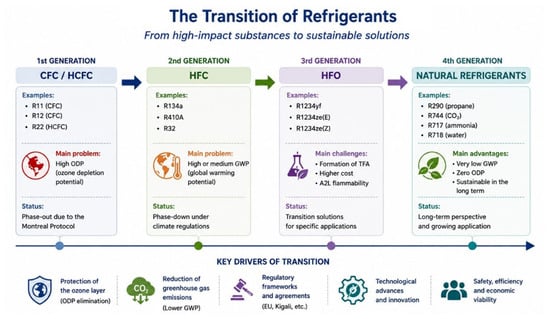
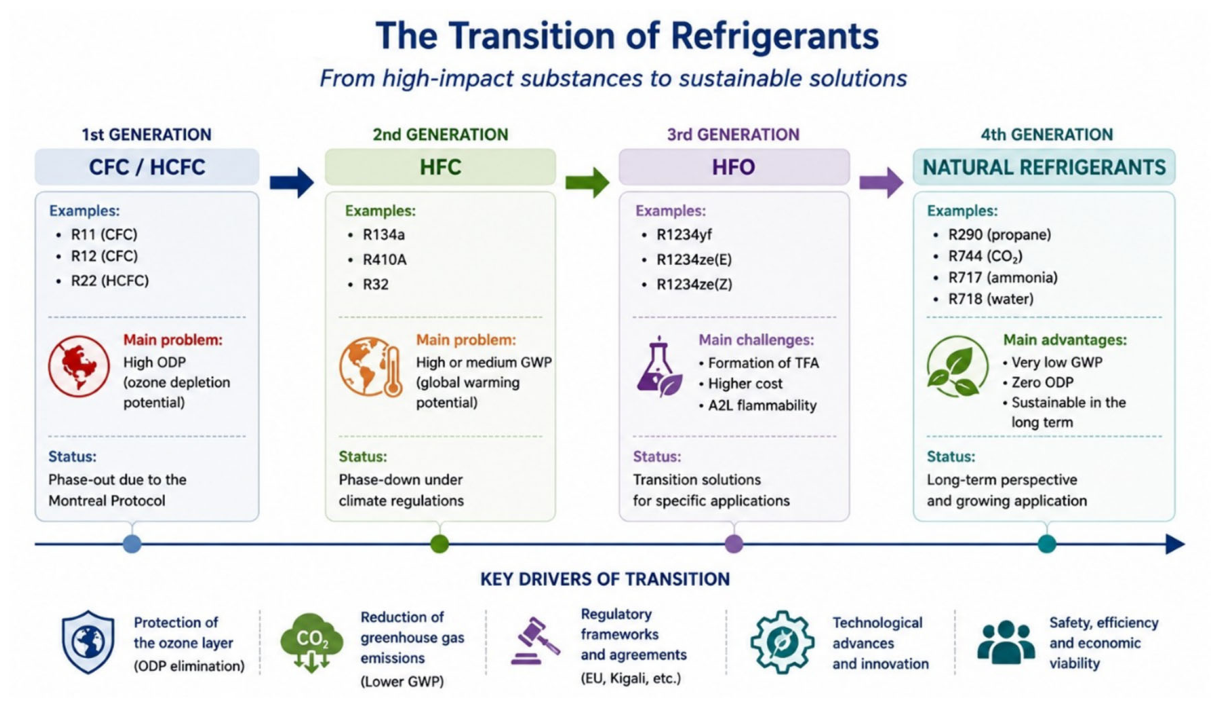
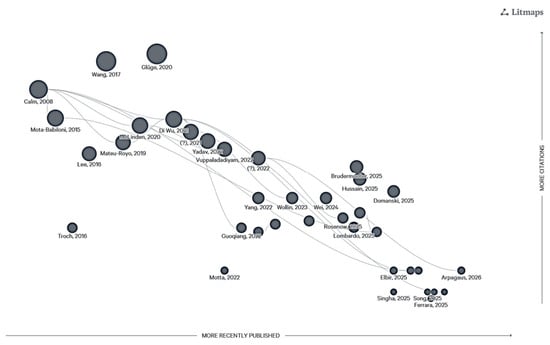
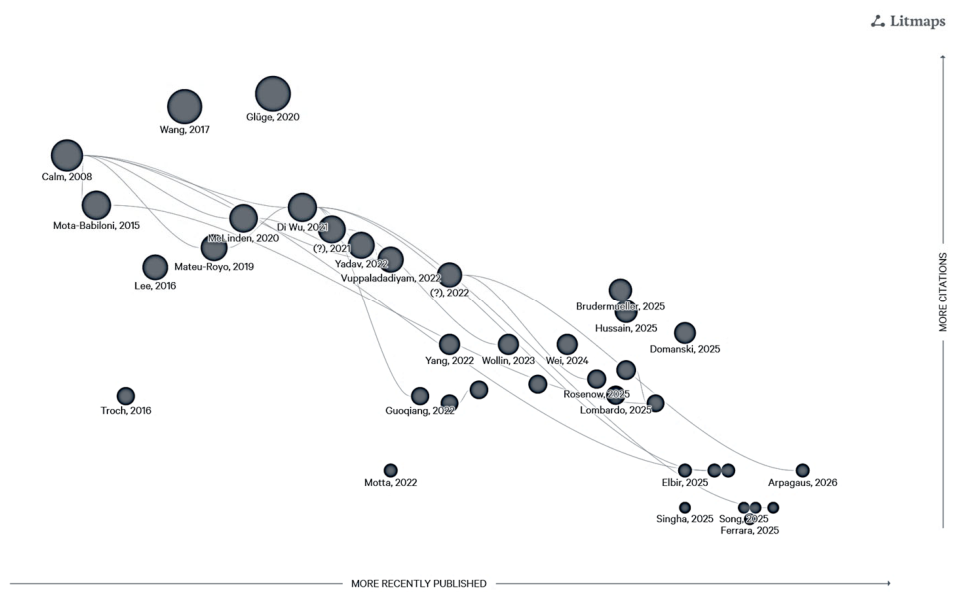
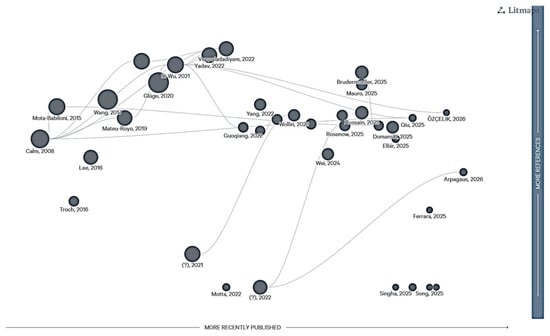
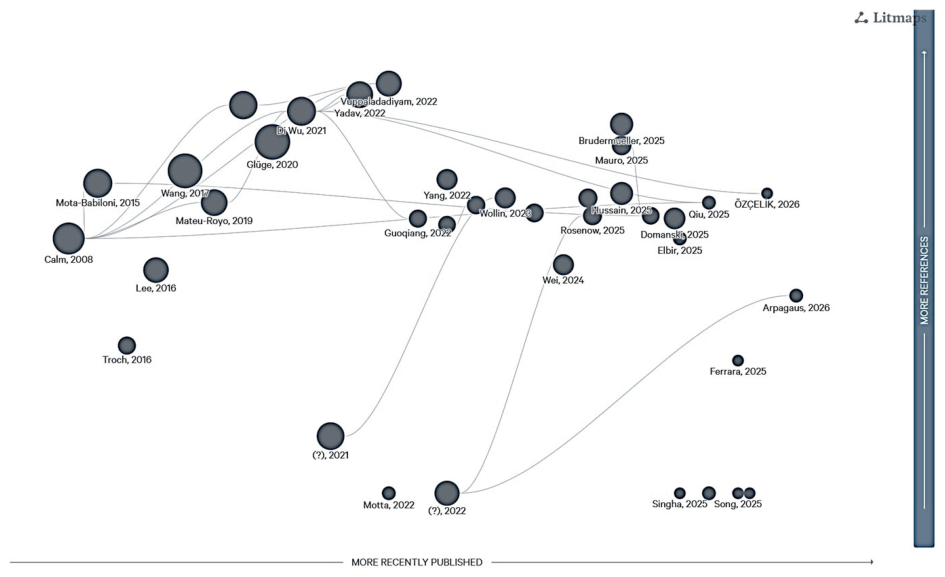
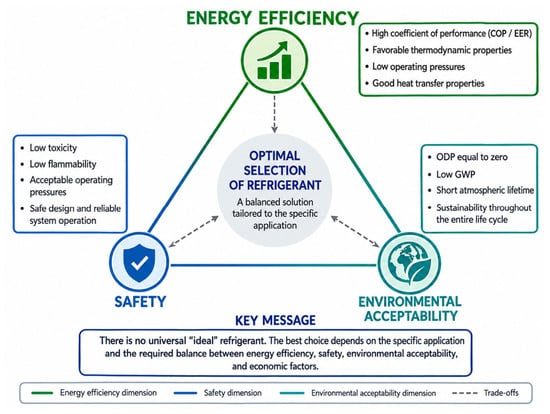
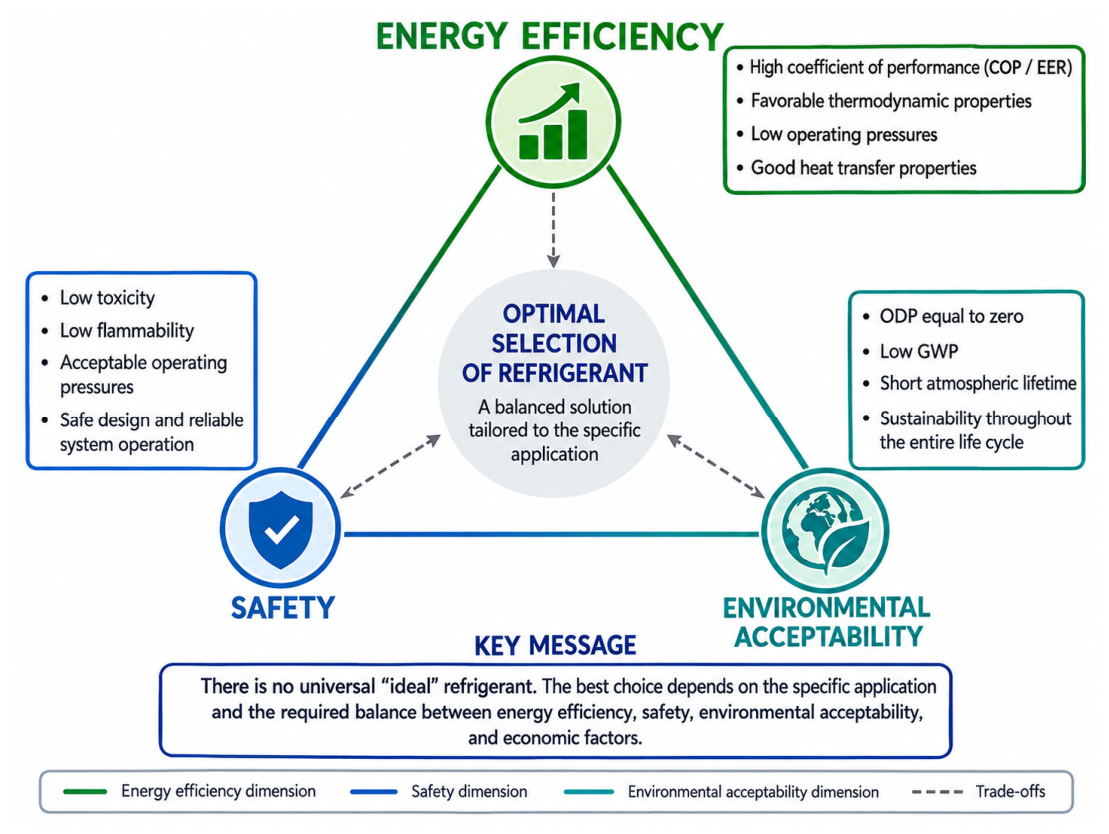
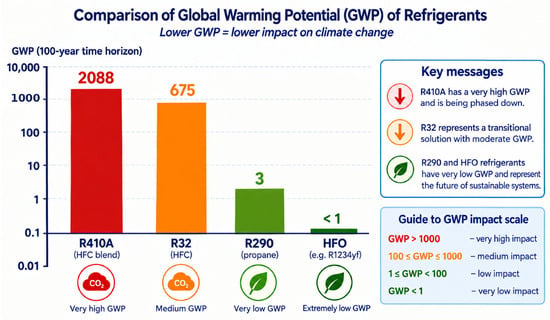
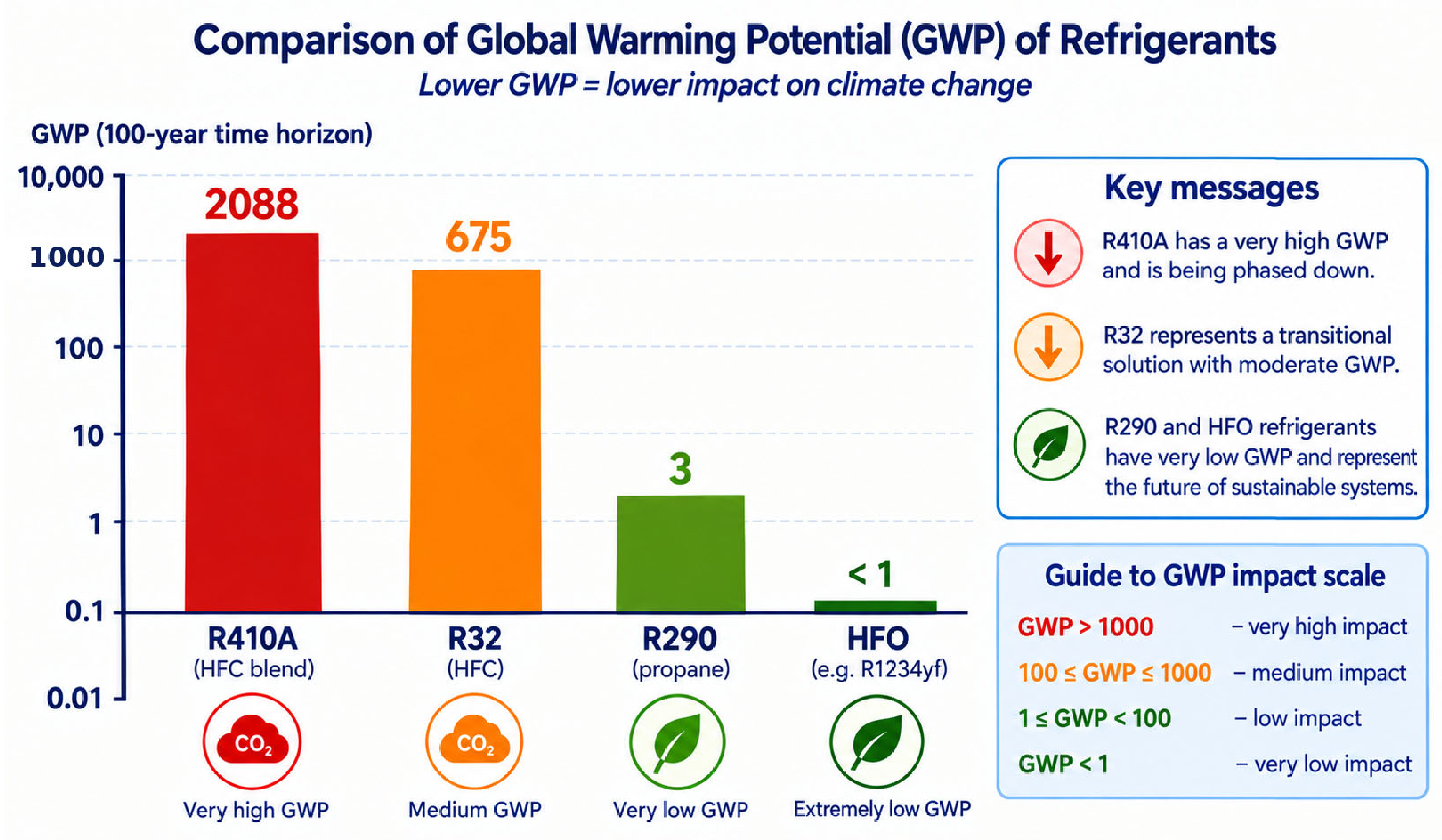

Disclaimer/Publisher’s Note: The statements, opinions and data contained in all publications are solely those of the individual author(s) and contributor(s) and not of MDPI and/or the editor(s). MDPI and/or the editor(s) disclaim responsibility for any injury to people or property resulting from any ideas, methods, instructions or products referred to in the content. |
© 2026 by the authors. Licensee MDPI, Basel, Switzerland. This article is an open access article distributed under the terms and conditions of the Creative Commons Attribution (CC BY) license.