


Abstract
Sand-based thermal energy storage (TES) has attracted increasing attention as a potential solution for storing renewable electricity and supplying heat over extended periods. This review examines operating principles, storage configurations, materials, thermal performance, economic aspects, environmental considerations, safety, reliability, optimisation, and the potential integration of sand-based TES with renewable energy and wider energy systems. Particular attention is given to the relationships and trade-offs among these aspects and to current technological limitations. The reviewed studies indicate that sand-based TES can provide high-temperature heat storage using abundant, relatively low-cost storage media, while its performance depends strongly on system configuration, operating temperature, charging and discharging conditions, heat losses, and integration strategy. Reported economic and environmental results vary considerably according to electricity prices, utilisation, system lifetime, efficiency, system boundaries, and other methodological assumptions. Although sand-based TES shows potential for large-scale, long-duration thermal storage, comprehensive life-cycle assessments, long-term operational data, and system-level reliability and safety evaluations remain limited. Hybrid configurations, advanced optimisation, artificial intelligence, and integration with renewable energy systems represent promising areas for further investigation. Future research should therefore focus on long-term experimental validation, consistent techno-economic and environmental assessment, system-specific safety and reliability analysis, and the development of robust control and optimisation strategies to support practical deployment.
1. Introduction
The global energy transition towards sustainable, low-carbon energy systems has led to the rapid development of technologies that enable the integration of renewable energy sources into electricity and heat systems. The increasing share of energy produced from solar radiation and wind contributes to the reduction of greenhouse gas emissions but also increases the need for efficient energy storage systems due to their inherent seasonal variability and the mismatch with current energy consumption [1]. In this context, energy storage systems are becoming one of the key elements of future sustainable energy systems [2].
Although discussions on the energy transition often focus on electricity storage, heat (space heating and industrial process heat) accounts for approximately 50% of the world’s total final energy consumption [3]. Thermal energy plays an important role in district heating systems, industrial processes, steam generation, material drying, and numerous other applications [4]. Since a large share of thermal energy is still produced from fossil fuels, the development of technologies for efficient heat storage is an important prerequisite for the decarbonisation of the energy and industrial sectors [2,4].
One of the most promising groups of technologies is thermal energy storage (TES) systems, which convert excess electricity into heat that can be stored for later use [5]. Among the various TES technologies, sand batteries, which use sand or other granular materials to store sensible heat at high temperatures, have attracted particular attention in recent years [6,7,8].
Recent reviews indicate that thermal energy storage systems will play a key role in the decarbonisation of the energy sector, increasing the flexibility of power systems and facilitating the integration of renewable energy sources. Current developments focus on advanced materials, intelligent control and integrated thermal storage systems (Amiri et al. [9]).
Sand batteries operate on a simple principle. Excess electrical energy is used to heat air or another heat carrier, which transfers heat to sand inside a thermally insulated tank. The heat stored in the tank can be used to heat buildings, support industrial processes or meet other energy needs during periods of reduced renewable energy production [6,10,11]. The main advantages of this technology are the high availability of the working medium, its low cost, high temperature stability, long service life and low environmental impact [6].
Despite their significant potential, the development of sand batteries is still associated with a number of technical challenges. Among the most important are the relatively low thermal conductivity of sand, the need to reduce heat losses during long-term energy storage, thermocline degradation and the optimisation of heat transfer within the tank [12,13]. To increase system efficiency, improved granular materials, better tank designs and the application of CFD modelling and numerical methods to optimise tank operation have recently been investigated [12,14].
At the same time, the development of digital technologies opens up new possibilities for managing thermal energy storage systems. Artificial intelligence, machine learning and the concept of digital twins are increasingly being used to predict system behaviour, optimise charging and discharging cycles and reduce energy losses [15]. The application of these technologies to further improve sand batteries is one of the key directions for future research and development.
Although previous reviews have examined sand-based thermal energy storage from various perspectives, including technology, economics, environmental sustainability, and deployment strategies [6], there remains a lack of comprehensive, system-oriented assessments that connect technical performance with operational, economic, environmental, safety, reliability, optimisation, and digitalisation aspects. This review therefore provides a multidimensional critical synthesis of sand-based thermal energy storage, with particular emphasis on the interrelationships and trade-offs among these aspects. In addition to operating principles, materials, configurations, and thermal performance, it examines charging and discharging behaviour, system optimisation, artificial intelligence and intelligent control, safety and reliability, techno-economic considerations, environmental implications, and integration with renewable energy and the wider energy system. Building on this integrated assessment, the review identifies key knowledge gaps and technology development barriers and proposes research directions to enhance the performance, reliability, economic viability, sustainability, and practical deployment of sand-based thermal energy storage.
2. Materials and Methods
The authors conducted a structured literature review to obtain up-to-date information on the designs and technical characteristics of thermal energy storage systems based on sand and other granular materials, the advantages and disadvantages of specific designs, and the prospects for their further development and application in the energy sector. The literature identification and selection process was conducted using the guidelines of the of the Preferred Reporting Items for Systematic Reviews and Meta-Analyses (PRISMA 2020) framework, with particular emphasis on transparent identification, screening, eligibility assessment and inclusion of relevant publications.
The selected literature comprises scientific papers published in international peer-reviewed journals, conference proceedings and review publications in the fields of thermal energy storage, renewable energy sources, numerical modelling and energy system optimisation. Particular emphasis was placed on papers published between 2016 and 2026.
The scientific literature was collected by searching relevant bibliographic databases and digital libraries, including Scopus, Web of Science, SpringerLink, MDPI, IEEE Xplore, ScienceDirect, and Google Scholar. Title, abstract and keywords were used to identify publications related to sand-based thermal energy storage, packed-bed and thermocline storage, computational modelling, digital twins, and associated optimisation methods. The main search terms and the corresponding numbers of identified and selected publications are shown in Table 1.
Table 1.
The main search terms and the corresponding numbers of identified and selected publications.
The literature selection process comprised four main stages: identification, screening, eligibility assessment, and final inclusion. During identification, records were retrieved from the selected databases using predefined keywords. During screening, publications were evaluated for relevance to the review scope, and, where appropriate, duplicate or clearly irrelevant records were excluded. Potentially relevant publications were then evaluated against the predefined eligibility criteria, and those meeting these criteria were retained for qualitative analysis.
The analysis included papers that met the following criteria:
- Peer-reviewed publications;
- Research related to thermal energy storage in sand or other granular materials;
- Papers that analyse technical, economic, environmental or operational aspects of the system;
- Publications that include experimental results, numerical models or reviews of existing technologies;
- Papers published in English.
Works not directly related to thermal energy storage, works without technical data, and literature sources lacking scientific credibility were excluded from the analysis.
The collected literature was analysed using qualitative content analysis. The papers were classified according to the main research areas:
- Operating principles and design features of sand batteries;
- Properties of thermal storage materials;
- Experimental research and system validation;
- Numerical modelling and CFD simulations;
- Thermal conductivity and heat transfer;
- Thermoclines and heat losses;
- Economic and environmental analyses;
- Applications of artificial intelligence, machine learning and digital twins;
- Future directions for technological development.
Newer references from the analysed literature, which were not found in the initial search, were additionally analysed and used.
The results of individual studies are compared to identify shared conclusions, differences in approach, and areas requiring further research. Special attention is given to recent research on improving the thermal conductivity of sand media, optimising systems using numerical methods, and integrating intelligent control systems. Potential limitations of this research should also be mentioned. This research is based on an analysis of scientific literature in English. The authors did not perform original experimental measurements or numerical simulations. Moreover, most of the numerical indicators mentioned in the paper refer to laboratory prototypes and pilot plants, while measurement results from commercial and industrial applications remain very limited. Nevertheless, the analysed literature provides a sufficiently reliable basis for assessing the current state of technological development and its future potential for improvement.
3. Results
Sand batteries are a subset of sensible heat storage (SHS) systems, in which energy is stored by increasing the temperature of the storage medium without changing its state of aggregation [6]. Compared with latent heat storage (PCM) and thermochemical systems, sand batteries are characterised by simpler construction, lower material costs and higher temperature stability but also lower stored energy density [6,9]. Ananth et al. [10] experimentally compared several types of sand for use in sensible heat storage systems and showed that granulometric and mineral composition significantly affect heat storage capacity and heat transfer rate. Experimental studies conducted by Yuan et al. [11] on sand thermal storage tanks showed good agreement between theoretical models and measured temperature profiles during charging and discharging cycles, confirming the suitability of sand as a medium for long-term thermal storage. Jurczyk et al. [16] argue that the choice of thermal storage technology largely depends on the temperature range, storage duration, and required energy density. In this context, sand batteries offer a highly competitive solution for the long-term storage of high-temperature heat due to the low cost and high availability of the storage medium. A systematic classification of the principal media and material modifications discussed in the reviewed literature is presented in Table 2.
Table 2.
Classification and comparison of granular heat storage media considered for sand-based thermal energy storage.
The granular materials investigated for high-temperature sensible thermal energy storage can be classified according to their origin and degree of processing into natural mineral materials, construction-derived materials, industrial by-products, rock or mineral materials, and engineered or composite granular media. Quartz sand is the most established natural granular storage medium, while construction sand and foundry sand offer potentially lower-cost, locally available alternatives. Industrial mineral residues and other recycled granular materials are of increasing interest because they support material reuse and reduce dependence on virgin resources. Rock-based materials and engineered granular media modified with materials of higher thermal conductivity represent alternative approaches aimed at improving thermal storage and heat-transfer characteristics. The suitability of each medium depends on its thermal stability, specific heat capacity, thermal conductivity, particle-size distribution, chemical stability, availability, cost, and compatibility with the operating temperature range.
3.1. Operating Principle
The operating principle comprises three phases: charging, storage and discharging of the battery. The efficiency of the system depends on the charging temperature, the thermal conductivity of the storage medium, the quality of the insulation and the preservation of the thermocline during storage. Contemporary research therefore mainly focuses on optimising heat transfer and reducing heat losses.
3.1.1. Charging
Surplus electricity from renewable energy sources (wind and solar) is used to power electric heaters that warm air or another heat-transfer medium passing through a container filled with sand, transferring heat to the sand. The sand temperature can reach 500–1000 °C [10,12,17], depending on the system design. Commercial high-temperature sand thermal energy storage systems currently deployed in Finland typically operate at approximately 500–600 °C [6]. In this process, the electrical energy is almost completely converted into heat:
Eel → Eth
3.1.2. Storage
Heat is accumulated in millions of sand particles. The stored energy is given by:
where:
Q = m∙cp∙ΔT
Q—stored heat [J];
m—mass of sand [kg];
cp—specific heat capacity of sand [J/(kg·K)];
ΔT—temperature change [K].
Heat is retained in the tank thanks to its thick thermal insulation. Heat losses are relatively small because the volume-to-surface-area ratio is more favourable in large tanks [7].
3.1.3. Discharging
When heat is required:
- Cooler air passes through hot sand;
- Absorbs heat;
- Then heats water, steam or process air via a heat exchanger.
The heat produced can be used for [6]:
- District heating;
- Industrial processes;
- Drying materials.
3.2. Types of Technologies
Sand battery configurations can be classified according to several complementary characteristics, including bed configuration, thermal stratification, storage mechanism, and heat-transfer enhancement. These characteristics are not mutually exclusive; therefore, the configurations described below should be understood as overlapping categories rather than as strictly separate system types.
- (a)
- Packed-bed with an immobile layer of sand;
- (b)
- Packed-bed with thermocline;
- (c)
- With a fluidised bed;
- (d)
- With a moving layer;
- (e)
- Hybrid sand batteries with PCMs;
- (f)
- Improved sand batteries with increased thermal conductivity.
3.2.1. Packed-Bed
This is the most common design in use today. The tank contains a fixed layer of sand (Figure 1), through which air flows via perforated pipes, channels, and heat exchangers incorporated into the sand layer.
Figure 1.
Design of a packed bed with an immobile layer of sand.
Experimental and numerical studies of packed-bed systems have shown that particle size, bed porosity and working fluid flow rate significantly affect the heat transfer rate and thermocline stability (Cascetta et al. [7], Cascetta et al. [8]). The advantages of this system are:
- Simple construction;
- Low cost;
- Low maintenance;
- High reliability.
The disadvantages of the design are related to the relatively low thermal conductivity of the sand and slower heat transfer. Commercial packed-bed sand thermal energy storage systems developed by Polar Night Energy in Finland currently represent the highest technology readiness level achieved with this approach [6].
3.2.2. Packed-Bed with Thermocline
Packed-bed thermocline thermal energy storage (TES) systems are an advanced form of conventional packed-bed storage in which both hot and cold regions are contained within a single storage tank. During charging, a distinct temperature gradient (thermocline) develops between the hot and cold zones. Maintaining a narrow, stable thermocline is essential because it directly determines the amount of useful thermal energy that can be recovered from the storage system. Compared with conventional two-tank sensible heat storage systems, thermocline storage offers several important advantages:
- Lower investment costs due to the use of a single storage tank;
- Reduced construction material requirements;
- A smaller installation footprint;
- Lower thermal losses owing to the reduced external surface area.
However, long-term operation gradually degrades the thermocline because of heat conduction, thermal dispersion and fluid mixing. As the thermocline thickens, the temperature difference between the hot and cold regions decreases, reducing both the recoverable energy and the overall storage efficiency. Consequently, recent research has focused on improving thermocline stability through optimisation of particle size distribution, airflow management, tank geometry and operating strategies [18,19].
Experimental and numerical investigations have shown that thermocline degradation is strongly affected by charging rate, flow distribution and the effective thermal conductivity of the packed bed. Appropriate control of these parameters can significantly improve long-term storage performance [7,8]. The operating principle of a packed-bed thermocline storage system is illustrated in Figure 2.
Figure 2.
Design of a packed bed sand battery with thermocline.
3.2.3. Fluidised-Bed
This design (Figure 3) differs from the fixed-bed configuration because the sand particles are not stationary. Air is introduced into the tank at high velocity, causing the sand particles to become suspended, mix continuously, and exhibit fluid-like behaviour.
Figure 3.
Design of a fluidised bed sand battery.
The advantages of this system are:
- Very intensive heat transfer;
- Rapid heat loading and unloading;
- More uniform temperature distribution.
The disadvantages are:
- More complex equipment;
- Higher fan power consumption;
- Particle abrasion.
Such systems are particularly relevant for very high temperatures and for solar thermal power plants [20].
3.2.4. Moving-Bed
In this design, sand slowly circulates through the system. The process involves the following steps:
- Cold sand enters the heating zone.
- The sand is heated.
- The sand is transferred to a tank.
- The heated sand passes through a heat exchanger, where it transfers heat.
The advantages of this system are improved temperature control and the potential for continuous operation. The disadvantages are associated with the transport system and mechanical complexity. Such concepts are developed for industrial heat requirements above 600 °C [20]. Figure 4 shows the design of one such system.
Figure 4.
Design of a moving-bed sand battery.
3.2.5. Hybrid Sand Batteries with PCMs
Recent research has examined hybrid thermal energy storage systems that combine sensible heat storage in sand with latent heat storage using phase change materials (PCMs). Such configurations can increase the effective energy storage density by combining the sensible heat capacity of the granular medium with the latent heat associated with PCM phase transitions [21]. The concept, operating principle and main components of the hybrid configuration are illustrated schematically in Figure 5.
Figure 5.
Conceptual design of a hybrid sand–PCM thermal energy storage system. The PCM region is assumed to be thermally managed or separated from the high-temperature sand region so that the PCM remains within its allowable operating temperature range.
It should be noted that the high operating temperatures reported for sand-based thermal storage systems (typically several hundred degrees Celsius) do not necessarily correspond to the temperature experienced by the PCM. The PCM must be selected according to its melting temperature and thermal stability, and its location within the system must ensure compatibility with the intended operating temperature. In a practical hybrid configuration, the PCM may therefore be placed in a thermally separated or locally controlled region or integrated through an appropriate heat exchange or encapsulation arrangement so that its temperature remains within its allowable operating range. Thermal separation between the high-temperature sand region and the PCM region is an important design consideration.
Figure 5 should therefore be interpreted as a conceptual schematic rather than as a representation of a single universal operating temperature. The feasibility of a sand–PCM hybrid system depends on the selection of a PCM with an appropriate phase transition temperature and thermal stability, compatibility with the containment and heat transfer materials, and a suitable thermal management strategy. These requirements become particularly important when the surrounding sand storage system operates at high temperatures. Further research is required to establish suitable PCMs, thermal separation arrangements and long-term compatibility for high-temperature sand–PCM systems.
3.2.6. Improved Sand Batteries with Increased Thermal Conductivity
Basis for performance comparison
Performance comparisons among thermal energy storage (TES), electrical energy storage, and other energy-storage technologies require a consistent functional basis and system boundary. In particular, thermal storage efficiency and electrical round-trip efficiency are not directly equivalent metrics because they describe different energy-conversion pathways and system functions. Thermal storage efficiency generally characterises the ratio between useful thermal energy recovered from the storage medium and the thermal energy supplied to the storage system, whereas electrical round-trip efficiency includes charging, storage, and electrical discharge through an electricity-to-electricity pathway.
Accordingly, the comparisons presented in Table 3 and Table 4 should be interpreted as technology-specific performance indicators rather than as directly comparable efficiency rankings. For sand batteries, the relevant boundary is the thermal storage subsystem, including charging, heat storage, and thermal discharge/recovery, unless otherwise stated. For electrical storage technologies, the reported values refer to their conventional electricity-to-electricity round-trip efficiency. Differences in boundary definition, auxiliary consumption, heat-to-electricity conversion, and end-use requirements can substantially affect the resulting efficiency. Therefore, the values are provided to establish the characteristic performance ranges reported in the literature rather than to identify a universally superior storage technology.
Table 3.
Comparison of advantages and disadvantages of individual technologies.
Table 4.
Typical operating parameters of sand batteries.
Where available, system-level indicators such as energy density, storage duration, operating temperature, and application-specific efficiency are considered alongside efficiency values. This approach avoids interpreting a high thermal-to-thermal storage efficiency as directly equivalent to a high electricity-to-electricity round-trip efficiency.
Table 3 and Table 4 summarise reported performance characteristics of sand-based thermal storage and selected alternative energy-storage technologies. Because these technologies perform different energy-storage functions and are commonly evaluated using different system boundaries, the reported efficiency values should not be interpreted as directly equivalent. For sand batteries, thermal storage efficiency describes the retention and recovery of thermal energy, while the efficiency values reported for electrochemical and other electrical storage technologies generally refer to electricity-to-electricity round-trip efficiency. The tables therefore provide a contextual comparison of reported performance ranges rather than a direct ranking of storage technologies.
In addition to efficiency, storage duration, energy density, operating temperature, scalability, and the intended energy service are relevant when comparing storage technologies. In particular, a sand battery designed to store electricity as high-temperature heat and subsequently supply heat to an industrial or district-heating application has a different functional objective from a battery designed to return electricity to the grid. Consequently, the suitability of each technology depends on the required energy form at discharge and on the system boundary adopted for the assessment.
To enable a more objective assessment of the potential of sand batteries, Table 4 presents the most important technical and economic indicators collected from the available literature.
The data show that sand batteries achieve very high thermal efficiency and have a long service life, with negligible degradation of the storage medium. Compared with electrochemical energy storage systems, their advantage is particularly evident in long-term thermal energy retention and in applications requiring a large number of operating cycles (Table 5). Long-term heat retention should be distinguished from continuous useful heat delivery. Although sand-based thermal energy storage can retain stored heat for periods of several days to months, the amount of energy that remains practically usable decreases during extended standby periods because of heat losses and thermocline degradation. Therefore, the ability to store heat for several months should not by itself be interpreted as demonstrating continuous useful heat supply over the same period. A meaningful assessment of seasonal-storage capability requires information on cumulative heat loss during the storage period, the minimum temperature at which the discharged heat remains useful for the intended application, the actual storage duration, and the expected annual number of charge–discharge cycles. Such long-term, full-scale operational data are currently limited for commercial sand-battery systems.
Table 5.
Comparison of sand batteries with other energy storage technologies.
For a sand thermal-storage system, the thermal energy density should be defined on a specified volume basis as the amount of stored sensible heat per unit storage volume:
where qth is the thermal energy density (J m−3 or kWh m−3), Qth is the stored thermal energy, m is the mass of the storage medium, cp is its specific heat capacity, ΔT is the usable temperature difference, V is the storage volume, and qβulk is the bulk density of the packed storage medium. For an electrical storage technology, the corresponding energy density is the electrical energy stored or delivered per unit system volume:
where eel is the electrical energy density (kWh m−3), Eel is the electrical energy stored or delivered, and Vsys is the defined system volume. The volume basis should therefore be stated explicitly (e.g., storage-medium volume, tank volume, or complete system volume), because different choices produce different numerical values.
If the comparison concerns the electrical energy required to charge a sand battery, the conversion efficiency should also be stated. With ηch defined as the fraction of electrical input converted into stored thermal energy:
and therefore:
Thus, a thermal energy density of a sand battery should not be directly interpreted as an equivalent electrical energy density. The comparison depends on whether the quantity represents stored thermal energy, electrical input during charging, or useful energy delivered during discharge, and on the volume boundary used for each technology.
The results show that sand batteries do not compete with electrochemical systems in terms of energy density, but they offer significant advantages in durability, safety, storage medium costs, and long-term energy storage potential. For this reason, they are considered particularly suitable for seasonal heat storage and for integrating large shares of renewable energy sources.
3.3. Technological Maturity of Individual Sand Battery Technologies (TRL)
Individual sand battery technologies have reached different levels of technological maturity. Based on the literature analysed, the highest level has been achieved by high-temperature sensible thermal energy storage systems based on a fixed sand bed (packed-bed thermal energy storage), while more advanced configurations, such as fluidised bed systems, moving sand beds and hybrid systems with latent heat storage materials, are still in the research or demonstration phase (Memon [27], Agyenim et al. [26]).
High-temperature sensible heat storage systems based on a fixed sand bed are already used in real power plants and district heating systems, which is why they are assessed at technology readiness level (TRL) 8–9. The main advantages of these systems are their simple construction, low investment cost, use of inexpensive and widely available materials, and the possibility of long-term thermal energy storage with relatively low heat losses (Akinyele and Rayudu [22]).
In recent years, attention has also focused on thermocline heat storage systems, in which temperature stratification is established within the tank during operation. Although there are larger demonstration projects, the number of fully commercial installations is still relatively small, so their technological maturity is estimated at TRL 7–8 (Xu et al. [18], Brosseau et al. [19]).
Moving-bed and fluidised-bed systems are more advanced solutions intended primarily for high-temperature industrial processes. Their advantages are improved heat transfer and the possibility of continuous operation. However, higher construction complexity, abrasion of materials by sand particles and the need for additional equipment limit their commercial application. Fluidised beds have long been used in the chemical and energy industries, but their application as large-scale thermal storage systems has not yet been developed commercially. Therefore, these technologies are mainly in the pilot plant and demonstration phase and are rated at TRL 4–7 (Pelay et al. [23]).
Significant research interest is also directed towards hybrid systems that combine sand with latent heat storage materials (phase change materials—PCM). The aim of such systems is to increase the density of stored energy while keeping the cost of the storage medium low. However, issues related to PCM degradation, thermal conductivity, temperature compatibility and long-term stability remain an obstacle to wider application, so these systems are mostly at technology readiness levels TRL 3–5 (Sharma et al. [24]; Alva et al. [25]).
An additional challenge is the development of systems that enable efficient conversion of stored heat back into electricity. To recover electricity, an additional cycle is required:
- Steam turbine;
- ORC system (Organic Rankine Cycle);
- Brayton cycle;
- Thermoelectric converters.
Although the efficiency of converting electricity to heat is very high and can exceed 95%, the overall cycle efficiency of the system is significantly reduced when converting the stored heat back into electricity, due to the limitations of thermodynamic cycles such as the Rankine and Brayton cycles. Therefore, such concepts are still regarded as technologies in their early stages of development (Steinmann [28]). Typical efficiency estimates are:
- Electricity → heat: >95%;
- Heat → electricity: 25–45%.
The overall round-trip efficiency therefore often falls below 40%.
It can be concluded that sand batteries for thermal energy storage have reached a high level of technological maturity when used for heating and industrial heat, whereas systems intended for the production of electricity from stored heat remain the subject of intensive research and technological development.
The high-temperature packed-bed sand battery with forced air circulation is predominant. This technology is used in commercial district heating projects in Finland and represents the most technologically mature solution. It is characterised by:
- A temperature of 500–600 °C;
- A heat storage efficiency of around 80–90%;
- The ability to store energy for weeks or months;
- Very low storage media costs [6].
An overview of the technological maturity of individual sand battery technologies is provided in Table 6. To assess the technological maturity of the individual sand battery configurations, the Technology Readiness Level (TRL) framework was used. TRL values were assigned on a scale from 1 to 9, where lower levels represent technologies demonstrated mainly through laboratory research, intermediate levels correspond to pilot and demonstration stages, and the highest levels indicate technologies demonstrated or deployed in relevant operational environments. As the reviewed literature does not provide a uniform TRL assessment for all sand battery configurations, the values in Table 6 represent an authorial assessment based on the reported development stage, experimental validation, pilot or demonstration activities, and evidence of commercial application.
Table 6.
Overview of the estimated Technology Readiness Level (TRL) of individual sand battery technologies based on the reviewed literature.
Analysis of technology readiness levels shows that commercial applications predominantly rely on high-temperature packed-bed systems. Other configurations are mainly at the laboratory or pilot development stages, indicating considerable scope for further research and technological optimisation.
Commercial Implementation of Sand Batteries
Although sand batteries are still at a relatively early stage of commercial development, several demonstration and commercial plants have been built in recent years, confirming the technology’s technical feasibility. On the basis of the positive experience from the first demonstration project, significantly larger thermal energy storage systems are being developed. One of the most significant commercial applications is the 1 MW/100 MWh high-temperature thermal energy storage system commissioned in Pornainen, Finland. Developed by Polar Night Energy for the district heating company Loviisan Lämpö, the installation serves as the primary heat production unit for the local district heating network. The storage unit contains approximately 2000 tonnes of crushed soapstone as the storage medium and is the largest commercial sand battery commissioned to date, demonstrating the technical feasibility of large-scale sensible heat storage for district heating [29]. The system is designed to meet the needs of a local district heating network and is one of the largest commercial sand battery systems in the world. Such systems are expected to significantly reduce the consumption of fossil fuels for heating buildings and increase the share of renewable energy sources in heat production.
Results to date show that sand batteries integrate well into district heating systems and industrial processes requiring medium- and high-temperature heat. However, since there are few commercial systems in operation, long-term data on system performance, which could be used to further improve the technology, are lacking. The challenges of optimising tank thermal insulation to minimise heat loss during long-term energy storage, while ensuring economic feasibility, remain unresolved. Nonetheless, current projects show that sand batteries have already moved beyond laboratory experiments and pilot projects and reached the stage of commercialisation.
4. Modelling and Optimisation
The application of computational fluid dynamics (CFD), artificial intelligence (AI), and digital twins to sand batteries should be distinguished according to the level of experimental evidence available. In the literature reviewed here, three categories can be identified. First, directly validated sand-battery studies are those in which a numerical or data-driven approach is applied to a sand-based thermal storage system and the results are compared with experimental measurements from the same or a closely corresponding system. Second, transferable results from related thermal energy storage (TES) systems are studies performed on packed-bed, thermocline, or other granular TES systems using sand, ceramic particles, rocks, or other storage media with similar heat-transfer mechanisms. These results provide methodological and physical insights that may be applicable to sand batteries, but their transferability should not be interpreted as direct validation of a sand battery. Third, proposed or prospective applications comprise AI, machine learning, physics-informed models, predictive-maintenance methods, and digital-twin concepts that have been proposed for sand batteries or inferred from applications in related TES and energy-storage systems but have not yet been experimentally demonstrated in an operating sand-battery system.
This distinction is particularly important because the commercial application of sand batteries is relatively recent, and the available experimental datasets remain limited. Consequently, the existence of a validated CFD model for a packed-bed TES system does not in itself constitute validation of an AI model or digital twin for a sand battery. Similarly, successful AI applications reported for other TES configurations should be regarded as transferable methodological evidence rather than direct experimental validation. The following sections therefore explicitly identify the level of evidence associated with each application.
4.1. CFD Simulations
Computational fluid dynamics (CFD) is one of the most established numerical approaches for analysing heat transfer and fluid flow in granular thermal energy storage. However, the available evidence should be separated into direct sand-battery validation and validation obtained from related packed-bed TES systems.
Directly validated sand-based studies.
Cascetta et al. [7] compared three-dimensional CFD simulations with experimental measurements from a packed-bed thermal storage system and reported good agreement for temperature profiles and thermocline development during charging and discharging. Cascetta et al. [8] subsequently investigated continuous operation and demonstrated that numerical modelling can predict temperature fields and storage tank efficiency during extended operation. Tetteh et al. [13] further showed that the correlation selected for the effective thermal conductivity of the granular bed has a substantial influence on model accuracy. Homa et al. [17] applied CFD to optimise a high-temperature storage prototype. These studies provide experimental or prototype-level evidence that CFD can reproduce important thermal phenomena in sand-based or closely related packed-bed storage systems.
Transferable evidence from related TES systems.
A substantial part of the CFD literature concerns packed-bed TES systems using sand, ceramic particles, rocks, or other granular materials. These systems share fundamental mechanisms with sand batteries, including forced convection between the heat-transfer fluid and particles, conduction within the granular medium, and thermocline formation and degradation. Consequently, their validated heat-transfer correlations, numerical formulations, and modelling strategies are potentially transferable to sand batteries. Nevertheless, such transferability should be regarded as methodological evidence rather than direct validation, because differences in particle properties, porosity, tank geometry, operating temperature, airflow distribution, and boundary conditions can affect model accuracy. The reviewed literature itself notes that many models have been developed for related granular systems because commercial sand-battery applications are comparatively recent [30].
Limitations and validation requirements.
CFD predictions remain sensitive to the turbulence model, heat-transfer correlations, and estimation of the effective thermal conductivity of the granular layer. Experimental validation under representative charging, discharging, and idle conditions is therefore necessary before a model can be considered validated for a particular sand-battery configuration. In particular, Schwarzmayr et al. [31] demonstrated the importance of experimental investigation during idle periods because thermocline degradation and standby heat losses cannot necessarily be inferred from charging and discharging experiments alone. Thus, CFD should currently be regarded as a well-established modelling methodology for granular TES, with a growing but configuration-dependent evidence base for sand batteries rather than as a universally validated model for all sand-battery designs. A comparison of different approaches to sand battery research is summarised in Table 7.
Table 7.
Comparison of different approaches to the study of sand batteries.
Despite their high accuracy, CFD models have certain limitations. The results depend on the choice of turbulence model, heat transfer correlations, and estimates of the effective thermal conductivity of the granular layer. In addition, simulations of large tanks require significant computing resources, which restricts their use in optimisation procedures involving a large number of iterations.
4.2. Application of Artificial Intelligence
The application of artificial intelligence (AI) to sand batteries is still at an early stage, and the number of studies specifically addressing sand-based thermal energy storage is considerably smaller than the broader body of research on packed-bed thermal energy storage (PBTES). Nevertheless, recent studies demonstrate that machine-learning (ML) and physics-informed neural-network (PINN) models can provide accurate surrogate models for thermal-storage systems while substantially reducing the computational burden associated with high-fidelity numerical simulations [32]. According to Mehraj et al. [33], artificial intelligence in thermal energy storage (TES) systems is primarily applied to performance prediction, system monitoring, operational optimisation, fault diagnosis and predictive maintenance. Darzi et al. [34] demonstrated the use of neural networks and genetic algorithms as surrogate modelling and optimisation tools for PCM-based thermal energy storage units with extended surfaces. Although their study does not concern sand batteries directly, it provides an example from the broader TES field showing how machine-learning-based surrogate models can reduce the computational burden associated with CFD-based analysis while maintaining satisfactory prediction accuracy. Therefore, these findings should be regarded as an analogy indicating the potential applicability of AI-based surrogate modelling to sand batteries rather than as direct experimental evidence of its effectiveness in sand-battery systems.
A particularly relevant example is the study by Ananth et al. [41], who developed a physics-informed neural network for predicting the transient three-dimensional temperature field in a manufactured-sand packed-bed thermal energy storage system. The model was trained using experimental temperature measurements obtained from five thermocouples under three volumetric flow rates (1.00, 1.88 and 2.66 L min−1). In addition to the measurement data, the governing transient heat-conduction equation was incorporated into the training process through a physics-informed loss function. The resulting model achieved (R2 = 0.9616), an RMSE of 1.493 °C and an MAE of 0.984 °C, while most predicted temperatures were within ±2 °C of the measured values. This demonstrates that PINNs can reconstruct the temperature field in regions where direct measurements are not available and can therefore serve as surrogate models for packed-bed sand storage systems.
Another relevant approach is the hybrid numerical–machine learning model developed for a packed-bed thermal energy storage system by [42]. In this approach, a computationally less demanding linearised numerical model was first solved on a coarse computational mesh, after which a machine learning model transformed the resulting low-resolution solution into an approximation of the high-resolution nonlinear solution. The model achieved an overall prediction error of approximately 0.16% and an R2 value of 0.99. In a packed-bed thermal energy storage system, a hybrid numerical–machine learning model reproduced the nonlinear solution approximately 350 times faster than the conventional nonlinear model. These results demonstrate the potential of hybrid physics–ML models to reduce the computational cost of repeated simulations, particularly in design optimisation, model-based control, and long-term operational analysis.
The source of training data is an important consideration when evaluating AI models for thermal energy storage. Existing studies use three main approaches: experimental measurements, numerical data generated by CFD or other validated models, and hybrid datasets combining both sources. Experimental datasets provide direct information about real system behaviour but are generally limited in size and operating range. CFD-generated datasets can cover a substantially larger parameter space but inherit the assumptions and uncertainties of the underlying physical model. Hybrid approaches can therefore combine the physical consistency of numerical models with the realism of experimental measurements.
For sand batteries, the limited availability of large experimental datasets is a significant barrier to the development of purely data-driven AI models. Consequently, physics-informed and hybrid approaches are particularly relevant because they can incorporate governing heat transfer equations or lower-order physical models while learning aspects of the behaviour that are difficult to represent accurately using simplified models alone. The recent PINN study on manufactured sand illustrates this approach, while the hybrid PBTES model demonstrates the potential computational advantages of combining numerical modelling with machine learning [42,43].
AI can also support the development of digital twins for thermal energy storage. In this approach, sensor measurements such as temperature, airflow rate and inlet conditions are continuously supplied to a reduced-order or ML-based model that estimates the internal thermal state and predicts future system behaviour. Recent work on packed-bed thermal storage has demonstrated the feasibility of digital-twin frameworks for real-time state tracking, while physics-informed digital twins have also been developed for other packed-bed thermal storage configurations [38]. For sand batteries, such systems could enable real-time monitoring of temperature distribution, thermocline development, state of stored energy, thermal losses and abnormal operating conditions.
It should nevertheless be emphasised that quantitative evidence for AI specifically applied to commercial sand batteries remains limited. The currently available results are predominantly derived from laboratory-scale sand or manufactured-sand packed beds and from related PBTES systems. Therefore, the reported prediction accuracy and computational speed-up should not be interpreted as universally applicable to commercial sand batteries. Further experimental validation using larger-scale systems, wider operating ranges and long-term operational datasets is required before AI-based surrogate models and digital twins can be considered fully validated for commercial sand battery applications.
4.2.1. Replacing Long-Running CFD Simulations
One of the biggest challenges in developing sand batteries is CFD simulation. High-resolution CFD models can contain millions of computational cells and require hours or even days of computing time, which makes it much more difficult to optimise a large number of design parameters. For this reason, surrogate models, or physics-informed machine learning models, have been intensively developed in recent years. Their operating principle is that an extensive database is first generated by CFD simulations, after which the machine learning model learns the relationships between input and output quantities. Once training is complete, the AI model can replace the CFD model during optimisation, significantly reducing the time required for calculations while maintaining a satisfactory level of accuracy.
Several recent primary studies demonstrate the potential of machine-learning-based surrogate and hybrid models to reduce the computational burden of high-fidelity TES simulations. For example, a physics-informed neural network developed for a manufactured-sand packed-bed thermal energy storage system achieved an R2 of 0.9616, an RMSE of 1.493 °C and an MAE of 0.984 °C when predicting the transient temperature field [41]. In a separate packed-bed TES study, a hybrid numerical–machine learning model achieved an overall prediction error of approximately 0.16% and an R2 value of 0.99, while reproducing the nonlinear solution approximately 350 times faster than the conventional nonlinear model [42]. These results provide quantitative evidence of the potential computational and predictive benefits of AI-based surrogate approaches for related TES systems. However, because these results were obtained for laboratory-scale or related packed-bed TES configurations rather than commercial sand batteries, they should be regarded as transferable evidence rather than direct validation of AI performance in commercial sand-battery systems.
4.2.2. Tank Design Optimisation
Designers must determine:
- Tank diameter;
- Tank height;
- Sand particle size;
- Air inlet and outlet layout;
- Insulation thickness;
- Operating temperatures.
Sand battery optimisation is a multi-criteria problem, as the design and operation of the system must simultaneously meet multiple, often conflicting, requirements such as increasing thermal efficiency and preserving thermocline stability, while reducing investment costs. Recently, much attention has been devoted to the application of artificial intelligence methods, such as genetic algorithms, Bayesian optimisation and reinforcement learning. These tools allow efficient exploration of a large solution space and optimisation of multiple design and operating parameters. The research has demonstrated that various artificial intelligence methods can find solutions yielding lower heat losses, more stable thermoclines, and better economic indicators than the classical optimising approach. They will be essential for more efficient design and management of sand batteries, contributing towards their future technical viability and economic competitiveness in energy systems.
4.2.3. Predicting Thermocline Degradation
The major problem associated with sand is that it tends to suffer from deterioration of the thermocline. Over time, the layer that separates the hot and cold regions inside the heat battery tank gradually thickens due to slight heating and discharging. The thicker this layer becomes, the smaller the temperature difference between the two zones in the tank, which leads to poor thermal energy quality and low overall system performance.
Computational fluid dynamics (CFD), alongside other numerical and empirical methods, is usually used to analyse the process of thermocline formation, but such analysis, although very accurate, is time-consuming and complex. Artificial intelligence-based approaches are much more flexible and effective. Models based on artificial intelligence can forecast changes in the thermocline and its effects on system performance, taking into account the current load, meteorological data, sensor networks, and the system’s operating history. This makes it possible to identify adverse changes in the tank’s temperature stratification and make the necessary adjustments to prevent heat losses and optimise the heat storage process, thereby extending the lifetime of the system.
4.2.4. Predictive Maintenance
The most common failures in sand-battery systems are expected to occur primarily in auxiliary components such as fans, heat exchangers, electric heaters and temperature sensors. In the broader field of thermal energy storage, artificial intelligence has been investigated for system monitoring, fault diagnosis and predictive maintenance [33]. These approaches include anomaly detection, prediction of maintenance requirements and estimation of the remaining useful life (RUL) of system components. Continuous monitoring based on sensor data can enable the identification of deviations from normal operating conditions and the early detection of component degradation. Such approaches may therefore be transferable to sand-battery systems, particularly for monitoring components such as fan bearings, electric heaters and thermal insulation. However, direct experimental validation of AI-based predictive-maintenance methods on commercial sand-battery systems remains limited. Accordingly, predictive maintenance should currently be regarded as transferable evidence from the broader TES field and as a prospective application for sand batteries requiring system-specific operational datasets and validation.
4.2.5. Charging and Discharging Management
The key purpose of sand batteries is to store excess energy generated from renewable sources. However, efficient use of this excess energy remains challenging because electricity production from wind farms and photovoltaic systems is intermittent, and, related to this, electricity prices on the wholesale energy market fluctuate. In such conditions, advanced management strategies are needed that charge batteries during periods of high electricity production from renewable sources or low electricity prices on the market and discharge batteries during periods of increased demand for thermal energy. Optimising the charging and discharging cycle is a complex multi-criteria problem that requires the simultaneous consideration of renewable energy generation forecasts, expected energy demand, market electricity price dynamics, and the current state of charge of the thermal energy storage system. In recent years, increasing attention has been paid to the application of machine learning methods.
In recent years, increasing attention has been paid to the application of machine-learning methods for the optimisation of charging and discharging strategies. Studies in the broader field of intelligent energy systems have investigated reinforcement learning and related data-driven approaches for forecasting renewable-energy generation, responding to electricity-price dynamics, and optimising energy-storage operation. However, these approaches should not be interpreted as direct evidence of AI effectiveness in sand batteries unless they have been specifically validated for sand-based thermal energy storage. For sand batteries, such methods therefore represent a promising research direction whose effectiveness requires further system-specific investigation and experimental validation. According to You et al. [35], two-level optimisation can be used to control charging and discharging operations in integrated energy systems incorporating sand-based thermal storage, improving system flexibility and supporting renewable-energy integration.
4.2.6. Digital Twins
One of the most promising developments is the application of digital twins—virtual system models that use real-time sensor data to monitor, analyse and optimise tank operation (Figure 6). A digital twin integrates CFD simulations, AI-based predictive models, sensor networks and control systems into a unified platform.
Figure 6.
Digital twins of a sand battery.
This enables continuous real-time management of the sand battery by monitoring its condition, assessing performance, predicting failures and optimising operation under changing conditions. As a result, system reliability is enhanced, energy storage utilisation is improved, and both operating costs and unplanned downtime are reduced.
According to Waseem et al. [38], digital twins enable more accurate prediction of thermal behaviour, early anomaly detection, and optimisation of thermal energy storage system operation through real-time monitoring and data-driven decision-making. Furthermore, Aghazadeh Ardebili et al. [39] identify digital twins as a key enabling technology for the large-scale deployment and industrial adoption of future smart energy systems, while recent reviews published in 2025 highlight their growing importance for the commercialisation of advanced energy storage technologies [40]. These findings provide a basis for considering digital twins in sand-battery development. However, they should be distinguished from direct experimental validation: the reviewed literature does not establish that a fully integrated digital twin has been experimentally validated on a commercial sand-battery installation. Accordingly, digital twins are classified here as a prospective application supported by transferable evidence from related TES and energy-system applications.
Future experimental work should couple a physical sand-battery prototype with distributed temperature and flow measurements and a continuously updated digital model. Such experiments would allow model predictions to be compared with measured charging, discharging, standby, and thermocline-degradation behaviour and would provide the data required for independent validation of AI and digital-twin models.
4.2.7. The Main Limitations of the Application of Artificial Intelligence
Despite the significant potential of artificial intelligence for the development and optimisation of sand batteries, its application still faces several challenges that limit wider implementation. One of the key problems is the lack of high-quality, extensive data sets, which directly reflects the relatively small number of commercially deployed systems [44]. As a result, opportunities for training models are often limited, and validating them under real operating conditions is difficult. Another challenge is the generalisation of models, as those developed for one system often do not achieve a satisfactory level of accuracy when applied to systems with different designs or operating conditions, and require additional adaptation and retraining. Another important limitation is the lack of interpretability, as conventional deep neural networks are often regarded as black-box models. This makes it difficult to explain the relationship between input variables and resulting predictions. This lack of transparency reduces user confidence and can hinder the deployment of AI models in safety-critical energy applications [45].
Given the limitations of conventional machine learning algorithms, there is now a growing need for Physics-Informed Neural Networks (PINNs) [36,37] and hybrid algorithms which combine artificial intelligence with numerical simulation methods such as CFD. Whereas purely data-driven algorithms do not account for physical principles, these approaches incorporate physical laws, including mass and energy conservation and heat transfer, into the learning process. By integrating both physics and data-driven learning, they deliver physically meaningful, robust, and generalisable solutions.
Although the use of artificial intelligence will not alter the fundamental concepts of sand batteries, its ability to accelerate the development and commercialisation of this technology is highly significant. The greatest contribution is expected to be in reducing the need for computationally demanding CFD simulations, optimising design and operating parameters, developing predictive maintenance systems, improving charging and discharging process management strategies, and implementing digital twins.
PINN models and digital twin systems are considered particularly promising because they allow the integration of physical models, experimental data and artificial intelligence methods within a single framework for the design, optimisation and management of thermal energy storage systems. Previous research has shown that machine learning models can successfully complement classical CFD simulations by enabling rapid prediction of temperature fields and other key operating parameters with significantly lower computational requirements [32]. This approach opens up the possibility of developing advanced real-time modelling and control tools, representing an important step towards the wider application of sand batteries in future low-carbon energy systems.
Future sand battery research and design are expected to increasingly rely on hybrid approaches that integrate physical models, experimental data and advanced machine learning methods. Such synergy enables higher predictive accuracy, improved model robustness and significantly greater computational efficiency compared with the application of individual methods. An overview of the main characteristics of the most important advanced approaches currently used in sand battery research and optimisation is provided in Table 8.
Table 8.
Main characteristics of some advanced sand battery research methods.
5. Sustainability of Application
It includes environmental, economic, safety and reliability aspects.
5.1. Environmental Aspects
It is important to emphasise that the environmental profile of sand batteries is significantly more favourable than that of most electrochemical energy storage systems, although they are not entirely free from environmental impact. A review of large-scale thermal storage systems shows that granular materials such as sand have among the lowest environmental burdens due to the absence of rare metals and their ease of recyclability (Jurczyk et al., [16]). Life Cycle Assessment (LCA) encompasses five main phases:
Phase 1—raw material supply and processing;
Phase 2—system production and construction;
Phase 3—operation;
Phase 4—end of life;
Phase 5—overall contribution to the decarbonisation of the energy system.
Phase 1
Recent reviews of sand batteries emphasise that most of the environmental burden arises not during system operation but from the production of the steel structure, insulation materials and electrical infrastructure. Sand itself accounts for a relatively small share of total greenhouse gas emissions [6]. It is one of the most abundant raw materials on Earth and, unlike lithium, cobalt or nickel, does not require energy-intensive ore-enrichment processes. Sand mining and processing mainly involve:
- Mining;
- Screening;
- Transport;
- And possibly drying.
As a result, CO2 emissions associated with material supply are relatively low compared with those from the production of battery cells or cement. A 2026 literature review states that the use of locally available sand significantly reduces emissions associated with transport and supply chains [6].
Phase 2
Some CO2 is emitted during the production of sand tanks. The majority of embodied carbon comes from:
- Steel production;
- Insulation production;
- Construction work;
- Fans and electric heaters.
A low level of emissions is characteristic of almost all thermal energy storage systems, including sand batteries. Unlike lithium-ion batteries, there are no emissions associated with lithium refining or the production of cathode materials, electrolytes and separators, which are significant sources of emissions during the production of electrochemical systems. As a result, total greenhouse gas emissions per unit of stored thermal capacity can be many times lower than for lithium-ion batteries, making sand batteries a more environmentally friendly solution for long-term thermal energy storage [6].
Phase 3
During operation, the sand battery has no:
- Direct CO2 emissions;
- NOx emissions;
- SO2 emissions;
- Particulate matter emissions.
The operational greenhouse gas emissions of sand batteries depend primarily on the source of electricity used to heat the sand. If surplus electricity generated by wind farms, photovoltaic power plants or hydroelectric power plants is used to charge the system, the operational greenhouse gas emissions are practically negligible. This enables almost carbon-neutral operation of the system, further confirming the potential of sand batteries as a sustainable solution for long-term thermal energy storage.
If the system is charged using electricity generated from fossil fuels, the total carbon footprint increases in proportion to the emission factor of the electricity grid [6]. Unlike thermal power plants, there are no pollutant emissions during operation:
- Sulphur dioxide (SO2);
- Nitrogen oxides (NOx);
- Carbon monoxide (CO);
- Volatile organic compounds (VOCs);
- Heavy metals.
There is also no risk of electrolyte leakage or ignition, as there is with lithium-ion batteries. This is one of the most important environmental advantages of sand batteries compared with chemical energy storage systems [6].
Phase 4
One of the key advantages of sand batteries is their favourable environmental performance at the end of their life cycle. The systems consist mainly of inert sand, steel structural elements and standard insulation materials, with the sand being reusable, the steel recyclable and some of the insulation materials recoverable or reusable, supporting the principles of the circular economy [6]. Unlike lithium-ion batteries, they involve:
- No hazardous electrolytes;
- No cobalt or nickel;
- No complex hydrometallurgical recycling processes.
Research [6] indicates that high recyclability and the use of local materials are among the main advantages of this technology. Important aspects of environmental impact that are usually assessed include water consumption, energy consumption, land use and effects on ecosystems.
Water consumption
Water consumption is an important, but often neglected, indicator of the sustainability of energy technologies. In sand batteries, water is used mainly during material production, including steel processing, the manufacture of insulating components, and sand processing and washing. However, the total water footprint of such systems is expected to be smaller than that of lithium-ion batteries, the production of which involves water-intensive mining and processing of raw materials. An additional advantage of sand batteries is that, during operation, they are practically free of process water requirements, unlike thermal power plants, nuclear power plants, and certain CSP systems, which use significant amounts of water for cooling. If the heat is used in a district heating system, the water circulates in a closed circuit, so only small losses need to be compensated [6].
Energy consumption during the life cycle
Energy analysis shows that most energy consumption occurs during system construction. After commissioning:
- The storage medium does not need to be replaced;
- Chemical regeneration is not required;
- No new cells need to be produced every few years.
The lifetime of the tank is estimated to be several decades, and the sand can remain in the system for practically the entire operating period of the plant [6]. The Energy Return on Energy Invested (EROEI) indicator expresses the ratio of the total useful energy delivered by the system during its lifetime to the energy required for its production, construction, maintenance and disposal. The higher the EROEI value, the more energy-efficient the system is from a life cycle perspective, because it delivers more energy than is used for its implementation [46]. The EROEI of sand batteries can be significantly more favourable than that of other types of batteries, as they use inexpensive, robust materials and do not require regular replacement of the storage medium. In contrast, electrochemical batteries need cell replacement and the production of new active material throughout their lifetime, whereas sand batteries incur most of their energy costs at the manufacturing stage. During operation, these initial energy costs are therefore spread across the large amount of energy delivered by the battery.
Land use and impact on ecosystems
Sand batteries have a significantly smaller footprint than many other energy storage systems [47,48]. The main factors contributing to their environmental impact are sand extraction and tank construction. Although sand is one of the most abundant resources, the United Nations Environment Programme [49] emphasises that uncontrolled sand use can cause negative environmental impacts, such as the destruction of riverbeds and coastlines. To reduce the environmental footprint of the system, it is advisable to use alternative sources of raw materials, such as industrial waste sand, foundry sand and construction industry by-products, making use of locally available materials to reduce the need for transportation. Such measures contribute to more efficient resource use and significantly reduce the overall environmental impact of sand batteries [6]. A comparison of sand batteries with other energy storage technologies from the perspective of environmental sustainability is presented in Table 9.
Table 9.
Comparison of sand batteries with other energy storage technologies from an environmental point of view.
Sand batteries and lithium-ion batteries do not serve the same purpose. Sand batteries primarily store heat, whereas lithium-ion batteries store electricity.
In conclusion, life cycle analysis shows that sand batteries have a highly favourable environmental profile due to the use of non-toxic, widely available materials, very low water consumption during operation, the absence of direct pollutant emissions, and their long lifespan. The greatest environmental impacts are associated with the production of the steel structure and insulation and with sand extraction, while the contribution of the storage medium itself is relatively small. When charged with electricity from renewable sources, sand batteries can significantly reduce greenhouse gas emissions in the heating and industrial heat sectors and represent one of the most environmentally friendly technologies for long-term thermal energy storage.
It is also important to note that the field is still relatively new and that the number of complete LCA studies specifically on sand batteries remains limited. Most of the conclusions are based on recent review papers on sand-TES systems and on the broader body of literature on high-temperature sensible heat storage [6].
5.2. Economic Aspects
If the economic aspect is analysed using the Life-Cycle Cost Analysis (LCCA) methodology, it is necessary to consider all costs from design and construction through to decommissioning of the plant. For sand batteries, it is particularly notable that most costs occur upfront (CAPEX), while operating costs during use are relatively low. This differs significantly from fossil heating systems, where the cost of fuel dominates throughout the entire life cycle [6]. The total life-cycle cost can be represented as:
LCC = CAPEX + OPEX + M + R + D
CAPEX—investment costs;
OPEX—operating costs;
M—maintenance costs;
R—component replacement costs;
D—decommissioning and disposal costs.
In sand batteries, capital expenditure represents the largest share of the total cost, while maintenance and equipment replacement costs remain low because the storage medium does not undergo chemical degradation [6].
5.2.1. Investment Costs (CAPEX)
One of the most important economic advantages of sand batteries is the use of sand as a heat storage medium. Sand is available worldwide, does not require complex processing, and is many times cheaper than the materials used in electrochemical batteries or advanced thermal storage systems, so the cost of the storage medium is a relatively small proportion of the total investment [6].
The storage media considered for sand-based thermal energy storage include natural mineral materials such as quartz sand, construction-derived sands, industrial by-products such as foundry sand, and other mineral or engineered granular materials. Their classification and principal characteristics are summarised in Table 2.
Therefore, the storage medium itself represents only a small part of the total investment. In many projects, the cost of the tank, insulation and heat transfer system is many times higher than the cost of the sand itself [6]. The main investment items for the tank are:
- Steel structure;
- Thermal insulation;
- Fans;
- Heat exchangers;
- Electric heaters;
- Control systems.
The literature shows that for large systems, economies of scale become very pronounced. As the volume grows faster than the surface area of the tank, the cost per unit of stored energy decreases as capacity increases.
5.2.2. Operating Expenses (OPEX)
The largest costs are the electricity required to charge the system, drive the fans, and operate the control and monitoring equipment. While many other forms of energy storage require the procurement of fuel, regeneration of chemicals, replacement of the electrolyte and periodic replacement of the heat-storing medium, sand batteries have minimal maintenance needs, so operating costs depend on the cost of electricity. According to Mink et al. [6], if excess renewable energy is harvested and used to charge the battery during periods when the price of electricity is low, profitability can be exceptionally high.
5.2.3. Maintenance Costs
Simple design is one of the key economic advantages of sand batteries. Unlike electrochemical energy storage systems, sand batteries do not rely on chemical reactions or suffer battery degradation. As a result, their maintenance costs are lower and are mainly limited to checking the condition of auxiliary devices. Low maintenance costs and straightforward management are key factors in the long-term competitiveness of sand batteries compared with other energy storage technologies [6].
5.2.4. Lifespan and Depreciation
One of the most important economic indicators is the lifetime of the system. For sand batteries, it is estimated that they provide:
- 20–40 years of tank operation;
- A very high number of charge and discharge cycles;
- Minimal degradation of the storage medium.
This means that the initial investment is spread over a much longer period than for most electrochemical batteries, which typically have lifetimes of 8–15 years. The long lifetime significantly reduces the levelised cost of energy storage [6].
5.2.5. Levelised Cost of Heat (LCOH)
For thermal energy storage technologies, the most important economic factor is the LCOH:
where:
(It)—investment;
(Ot)—operating cost;
(Mt)—maintenance;
(Qt)—produced heat;
(r)—discount rate.
The reported levelised cost of heat (LCOH) for sand-based thermal energy storage systems varies substantially depending on system configuration, operating conditions, financing assumptions, and the treatment of charging energy costs. In particular, the LCOH range of approximately 20–70 USD/MWh reported in the literature represents the storage-related cost of heat and, in some studies, excludes the cost of electricity used to charge the storage system [6]. This range should therefore not be interpreted directly as the total cost of delivered heat. For a consistent economic assessment, the total cost of delivered heat should distinguish between the storage-related component and the electricity input required for charging. The latter depends strongly on electricity price, charging efficiency, storage cycle frequency, capacity factor, and annual utilisation.
Comparisons between sand-based thermal energy storage and conventional heating technologies should clearly state whether the cost of charging electricity is included. When charging electricity is excluded, the resulting LCOH should be described as the storage-related cost of heat rather than the final cost of delivered heat. When sufficient information is available, the total cost of delivered heat should be evaluated by combining the annualised storage cost with the cost of electricity consumed during charging. Differences in reported economic performance should also be interpreted in relation to the assumed discount rate, electricity price, capacity factor or utilisation, annual number of cycles, system lifetime, and round-trip or charging/discharging efficiency. Because these parameters vary considerably among published studies, direct comparison of reported LCOH values should be approached with caution.
5.2.6. Economic Risks
The favourable characteristics of sand batteries are accompanied by certain risks that may affect their economic viability. The most important factor influencing their economic success is the price of electricity used for charging. If there is no surplus electricity generated from renewable energy sources, or if electricity prices remain high, the economic advantage of sand batteries may be significantly reduced. Under such conditions, operating costs increase, making this technology less competitive than alternative energy storage solutions.
Sand batteries require a relatively high utilisation factor. Too few cycles per year increase the LCOH because the large investment cost is spread over a smaller amount of heat delivered [6]. Although small, heat losses increase with storage duration and can affect the economics of seasonal storage. Therefore, the quality of the insulation and the size of the tank are key design parameters [50].
5.2.7. End-of-Life Costs
End-of-life costs are relatively low. The main reasons are:
- Sand can be reused;
- Steel can be recycled;
- There is no hazardous waste;
- No expensive recycling processes are required, unlike for lithium-ion batteries.
This further improves life cycle economics [6].
In conclusion, from an economic point of view, sand batteries represent one of the most promising technologies for long-term thermal energy storage. Their competitiveness stems from a very cheap storage medium, long lifespan, low maintenance costs and the possibility of using cheap surplus renewable electricity. Levelised cost of heat analyses show that the LCOH most often ranges between 20 and 70 USD/MWh of heat, which makes them competitive with conventional heating systems, especially in the context of rising CO2 emission prices and an increased share of renewable energy.
5.3. System Security
5.3.1. Fire Risk
Sand-based thermal energy storage generally uses a non-combustible granular storage medium, which reduces fire and combustion-related risks compared with storage technologies based on flammable materials. However, this does not mean that the complete system is free from hazardous conditions or failure scenarios. Potential risks may arise from electrical equipment, overheating, insulation failure, hot surfaces, thermal expansion, heat-transfer components, pressure accumulation where applicable, or failures of control and protection systems. The severity and likelihood of these events depend on the system configuration, operating temperature and pressure, materials, component design, and control strategy. Safety should therefore be assessed on a system-specific basis using appropriate temperature and pressure monitoring, over-temperature protection, electrical protection, thermal insulation, emergency shutdown procedures, and other safeguards appropriate to the design.
5.3.2. Risk of Explosion
Sand batteries typically operate at atmospheric or very low pressure, which reduces the risk of pressure-related failure compared with some high-pressure energy storage technologies. However, the low operating pressure of the storage medium does not mean that the overall system is free from hazardous or explosive failure scenarios. Unlike hydrogen tanks, high-pressure steam boilers or compressed air storage systems, sand-based TES generally does not rely on storing energy in a highly pressurised medium. Nevertheless, potential hazards may arise from associated electrical equipment, overheating, thermal expansion, insulation or component failure, and pressure build-up in system components where applicable. In the event of mechanical or component failure, the stored thermal energy may be released through heat transfer and hot surfaces, although the consequences depend on the system configuration, operating temperature, pressure and protective measures. Therefore, the safety of sand batteries should be assessed on a system-specific basis, taking into account appropriate temperature and pressure monitoring, over-temperature protection, emergency shutdown procedures and other relevant safeguards. Zeng et al. [51] identify low-pressure operation and the non-combustible nature of the storage medium as important safety-related characteristics of sand batteries and discuss their potential suitability for large-scale energy and industrial applications.
5.3.3. Safety at High Temperatures
The main safety issue associated with sand battery technologies arises from their extremely high operating temperatures. Commercial systems operate at about 500–600 °C, and research is under way to develop systems that operate at over 800 °C [17]. The main risks are:
- Local overheating;
- Thermal fatigue of materials;
- Damage to insulation;
- Burns to personnel during maintenance.
Therefore, the following are necessary:
- Multilayer insulation systems;
- Temperature sensors;
- Automatic heater shutdown;
- Safety procedures for maintenance.
The literature shows that managing temperature gradients is one of the most important aspects of the long-term safety of the tank [31].
5.3.4. End-of-Life Safety
One of the major benefits of the sand battery is the simplicity of the decommissioning process once its operational life comes to an end. Unlike conventional lithium-ion batteries, which contain chemicals that are harmful to the environment if disposed of improperly, sand batteries contain no electrolyte, metal, flammable material, or chemically unstable decomposed substances which require costly disposal practices. All the materials used in making the sand battery are sand, steel, insulators, and standard mechanical parts. This makes the disassembly process straightforward and safe, since all these materials can either be reused in construction or recycled through industrial processes. At the same time, the absence of hazardous substances significantly reduces safety and environmental risks during dismantling, transportation and final disposal of the system, making sand batteries one of the most environmentally favourable technologies for long-term thermal energy storage [6].
5.4. System Reliability
5.4.1. Storage Media Reliability
One of the key reasons for the high reliability and long service life of sand batteries is that sand, especially quartz sand, is a chemically very stable and inert material. During operation, there is no electrochemical degradation, corrosion of the storage medium itself, loss of active material, or significant change in its chemical composition. Unlike electrochemical batteries, in which capacity gradually decreases due to the degradation of the electrodes, electrolytes and other active components, sand can withstand thousands of heating and cooling cycles without any noticeable decrease in its thermal energy storage capacity. Its thermal properties remain largely unchanged during long-term operation, even at the elevated temperatures used in high-temperature thermal storage systems. This chemical and thermal stability reduces the need to replace the storage medium, increases system availability and contributes to low maintenance costs throughout the entire life of the plant. It is precisely because of this exceptional inertness and resistance to ageing that the long-term stability of sand is considered one of the most important advantages of sand batteries over many other energy storage technologies [6].
5.4.2. Thermal Reliability
The reliability of the system largely depends on its ability to retain heat during long-term storage. Experimental and numerical studies of packed-bed thermal energy storage have shown that the quality of insulation, tank geometry, airflow pattern, and thermocline preservation have a crucial impact on the available thermal capacity and the long-term efficiency of the system (Cascetta et al. [7], Cascetta et al. [8]).
Experimental studies of packed-bed systems have shown that, during storage for several days or weeks, the transition zone between the hot and cold parts of the tank expands (thermocline degradation). Schwarzmayr et al. [31] determined that thermocline degradation is one of the dominant mechanisms reducing available energy during the idle state and that its intensity depends on tank geometry, particle size, and heat losses through the walls. However, this process can be significantly reduced by appropriate insulation and airflow design [17]. The use of digital twins enables continuous monitoring of the thermocline position and width and timely adjustment of operating parameters to minimise degradation of temperature stratification during long-term energy storage [52]. Homa et al. [17] conducted a detailed numerical analysis of a prototype high-temperature sand thermal energy storage tank. The results showed that CFD models enable precise analysis of temperature fields, thermal gradients, and system efficiency and are an important tool for optimising tank design.
5.4.3. Mechanical Reliability
The mechanical reliability of sand batteries is primarily determined by the tank, heat exchangers, piping and fans. Although the sand itself is chemically stable and does not degrade during operation, its abrasive properties can cause wear on individual parts of the system over long periods of operation. This effect is particularly pronounced in designs with a fluidised or moving bed, where constant particle movement increases the mechanical load and component wear. For this reason, commercial systems are mainly developed as stationary packed-bed systems, in which sand movement is minimal. Such a configuration significantly reduces mechanical wear and increases plant availability [6].
Electric heaters operate under extremely demanding conditions. Potential failure mechanisms include:
- Oxidation of heating elements;
- Thermal fatigue;
- Local overloads.
However, these are technologically mature components that have been used in industrial furnaces for decades, so their reliability is not a significant limitation for system deployment [6].
Insulation is a critical safety component. Insulation degradation can cause:
- Increased heat losses;
- Overheating of the outer shell;
- Accelerated ageing of the structure.
For this reason, newer designs use multilayer systems of mineral wool, ceramic fibres and high-temperature insulation materials [6].
Fans and the air circulation system are statistically among the components that most often require maintenance. Their failure can cause uneven heating of the tank, reduced heat transfer and local thermal stresses, which can negatively affect the efficiency and reliability of the entire system. For this reason, redundant fan configurations are often used in large sand batteries, ensuring continuity of operation and increased system reliability even in the event of a single-fan failure [17].
5.4.4. Reliability During Extreme Events
Sand batteries are characterised by a high level of resistance to various operational disturbance, which further enhances their reliability as a system for long-term thermal energy storage. In the event of a power outage, unlike many other energy systems, there is no immediate loss of stored energy. Thermal energy remains accumulated in the sand for a long period—from several hours to several days, or even weeks—depending on the capacity of the tank and the quality of the thermal insulation. The device’s ability to retain heat enables it to cope with temporary disturbances in the power grid without reducing its energy storage capacity; therefore, sand batteries can be regarded as highly resilient to blackouts [6]. Another benefit of this technology is its resilience to climatic conditions. Because the thermal storage vessel is housed in an insulated facility, it is protected from external effects such as precipitation, freezing temperatures, and icing in the surrounding air. In contrast to many water-based systems, whose working medium can freeze and damage the equipment, sand batteries are far less likely to experience such problems. This operational stability in different climatic conditions enables their use in a wide range of geographical areas, including regions with very cold winters or pronounced temperature fluctuations throughout the year [53].
5.4.5. Critical Assessment
Analysis of the literature shows that the main risks associated with sand batteries are primarily thermal and mechanical rather than chemical. Compared with lithium-ion batteries, hydrogen systems or compressed air tanks, sand batteries are characterised by:
- Very low fire risk;
- Negligible risk of explosion;
- Absence of toxic or flammable materials;
- High long-term stability of the storage medium;
- Long service life with minimal capacity degradation.
The main challenges are controlling high temperatures, ensuring the long-term stability of insulation, managing wear on auxiliary equipment (fans and heat exchangers) and preserving the thermocline during long-term energy storage. However, according to the current state of development, the combination of simple construction, an inert storage medium and the absence of hazardous chemical processes places sand batteries among the safest technologies for long-term thermal energy storage [6].
6. Commercialisation Challenges
The technology is proven for heat storage but faces a number of technical, economic, infrastructural and market constraints that slow its wider adoption [6]. Ding et al. [12] identify heat transfer, thermocline preservation, heat exchanger optimisation and integration with renewable energy sources as key areas for further development of this technology.
6.1. Limited Scope of Application
The greatest structural disadvantage of sand batteries is that they primarily store heat rather than electricity. They are therefore most economically attractive in applications with direct heat demand, such as district heating systems, industrial heat processes, steam production and other high-temperature uses. When electricity is required, the stored heat must be converted back into electricity, which reduces the overall efficiency of the system and its economic viability. Consequently, the literature notes that the sand battery market is not universal but confined to thermal applications [6].
6.2. Relatively Low Energy Storage Density
Although sand is very cheap, its specific thermal storage capacity is relatively modest compared with chemical systems. The consequences are:
- Larger tanks;
- Greater space requirements;
- Higher construction costs;
- More complex integration into existing infrastructure.
For seasonal storage, tanks with volumes ranging from hundreds to thousands of cubic metres are required. Therefore, the technology is best suited to large-capacity municipal and industrial systems, while its application in urban areas and smaller facilities is often limited by space constraints [6].
6.3. Heat Transfer Problems
One of the technical challenges is the low thermal conductivity of sand. This leads to:
- Slower charging of the system;
- Slower system discharge;
- Temperature gradients inside the tank;
- Reduced utilisation of stored energy.
For this reason, many researchers aim to increase the effective thermal conductivity by adding:
- Metal inserts;
- Ribs;
- Graphite components;
- Improved heat exchangers.
Recent experimental research has shown that the effective thermal conductivity of the sand bed can be significantly increased by adding metal particles or shavings. Tetteh et al. [13] showed that a mixture of sand and aluminium shavings can increase the maximum heat transfer rate by about 70% compared with pure sand, thus accelerating the charging and discharging processes in the tank.
6.4. Thermocline Preservation and Heat Loss
Large, long-term storage tanks are prone to thermocline deterioration. In an experiment conducted by Schwarzmayr et al. [31], it was found that, even without any filling or draining of the tank, temperature stratification weakens over time as a result of internal heat exchange:
- The transition zone between the hot and cold parts of the tank expands;
- The available useful energy decreases;
- The need for additional heating increases.
These results highlight the importance of optimising tank insulation and geometry to maintain high standby efficiency during long-term energy storage.
Although the total heat losses are relatively small, they become significant when energy is stored for several months, which is why seasonal heat storage remains an active area of research [6].
6.5. High Initial Investment Costs
Although sand itself is a practically negligible cost, most of the investment relates to:
- Steel tanks;
- High-temperature insulation;
- Heat exchangers;
- Fans;
- Electric heaters;
- Network connection.
Investors are therefore not buying “sand” but a complex energy system. Recent research emphasises that financing the first commercial projects is one of the biggest obstacles to market expansion [6].
6.6. Dependence on Cheap Renewable Electricity
The economics of sand batteries depend largely on the availability of surplus electricity from renewable sources, primarily wind and photovoltaic power plants, and on low electricity prices during charging. If the battery is charged during periods of high market electricity prices, its competitiveness and economic viability are significantly reduced. For this reason, the most favourable markets for this technology are currently the Nordic countries and regions with a high share of wind energy, where very low or even negative electricity prices often occur due to frequent surplus production. This dependence on energy market conditions is one of the main reasons why sand battery technology is not being developed and deployed at the same pace in all countries [6].
6.7. Lack of Standardisation and Regulatory Framework
The thermal storage market is not yet as developed as the battery market. Challenges include:
- A lack of technical standards;
- Unclear regulatory frameworks;
- Limited financing models;
- Underdeveloped flexibility markets for heat.
Consequently, investors often struggle to assess project risks and profitability [6].
6.8. Insufficient Market Maturity and a Small Number of Reference Projects
Compared with lithium-ion batteries or thermal water storage tanks, the number of commercial sand batteries remains very small. This is due to:
- Limited operational data;
- Uncertainty about long-term reliability;
- Investor caution;
- Higher financing costs.
The available literature indicates that the technology is in a kind of “commercialisation gap” between successful pilot projects and widespread industrial application [6].
6.9. Competition from Other Technologies
Sand batteries do not compete only with lithium-ion batteries. Their competitors include:
- Hot water tanks;
- Molten salts;
- Concrete batteries;
- Ceramic thermal storage;
- Pit thermal storage;
- Hydrogen for industrial heat.
In many cases, users already have heat infrastructure in place, so switching to a new technology requires additional investment. This slows market adoption even when the technology is technically superior [6].
6.10. Sustainability of Sand Supply
Although sand is often regarded as an almost infinite natural resource, recent studies have highlighted the need for its sustainable use. Intensive exploitation of natural reserves can destroy riverbeds, disrupt coastal ecosystems, and increase building sand prices in certain areas. Consequently, the use of alternative sources, such as foundry sand, industrial waste products, and artificial granular materials, which can ensure the sustainability and stability of the supply chain for thermal storage systems, is increasingly important. Although these challenges do not currently represent a significant limitation for the development of sand batteries, their widespread commercial application could turn the issue of raw material availability into one of the key factors for the long-term sustainability of this technology [6].
In conclusion, the greatest obstacles to the faster commercialisation of sand batteries are not related to the availability of the basic material, but primarily to the technological, economic and infrastructural challenges that accompany the development, implementation and wider application of this technology.
7. Discussion
A review of the literature shows that research on sand batteries has increased markedly in recent years and that researchers’ focus has gradually shifted from the working principle to addressing the challenges that limit the wider commercial application of this technology [12]. On this basis, the authors identified several dominant research directions that currently represent key areas in the development of high-temperature thermal energy storage systems [32]. Particularly noteworthy are increasing tank thermal efficiency, developing new storage materials, applying advanced numerical methods, integrating artificial intelligence, and connecting the system with renewable energy sources and industrial processes.
The main drawback is the low thermal conductivity of sand (0.2–2.5 W m−1 K−1), which is several orders of magnitude lower than that of metal [19]. This limits the charging and discharging rates of the storage system and leads to larger temperature gradients within the storage container. Consequently, scientists are exploring various ways to enhance heat transfer, such as using metal fins, mixing sand with graphite, employing composite grains and developing sand–metal hybrid materials. Tetteh et al. [13] demonstrated experimentally that adding aluminium chips significantly increases the thermal conductivity of the working medium. The results suggest that it is possible to create composite sand–metal media which could be used as an improved form of sand battery, with only small increases in cost.
Interest in alternative granular materials that can replace natural sand is growing. The term “sand battery” is widely used, although many studies have used ceramic beads, aluminium oxide (alumina), bauxite, metallurgical slag, recycled foundry sand, geopolymer materials and other industrial by-products. These studies mainly focus on increasing the thermal capacity, thermal conductivity and temperature stability of the storage medium, especially in applications above 800 °C. Solutions that combine enhanced thermal properties with the use of recycled materials are attracting particularly strong interest, as they simultaneously increase system efficiency, reduce environmental impact, and support circular economy principles [54].
A large part of the present work is devoted to developing ultra-high-temperature energy storage systems. The first generation of commercial systems was designed to operate primarily at temperatures of about 500 °C to 600 °C. More recent projects aim for operating temperatures between 800 °C and 1200 °C. These developments extend the prospective application of sand batteries to energy-intensive industries, including steel, cement, chemical and hydrogen manufacturing. At the same time, the increase in operating temperature poses new technical challenges in terms of the stability of storage materials, oxidation of construction materials, and the long-term durability of thermal insulation. Despite these challenges, the field represents one of the key directions for future technological development due to the potential of sand batteries to decarbonise district heating systems and industrial thermal processes.
The high-temperature operating range, relatively low-cost storage medium, and ability to retain thermal energy for extended periods make sand-based thermal storage a potential option for long-duration energy storage. These characteristics are particularly relevant for applications in which thermal energy can be stored for days to weeks and subsequently supplied as process heat, district heat, or other thermal loads. However, the available evidence does not yet establish seasonal-scale operation of commercial sand batteries under representative annual operating conditions.
Therefore, seasonal storage should be regarded as a prospective application rather than as a demonstrated performance characteristic. Demonstrating true seasonal storage would require validation over substantially longer storage intervals and repeated charge–storage–discharge cycles under realistic boundary conditions, including quantified standing losses, environmental heat losses, auxiliary energy consumption, and the effects of repeated thermal cycling. System-level assessment would also be required to determine whether the retained thermal energy remains economically and operationally useful after the seasonal storage period.
The distinction is important because a material or storage system capable of retaining heat for several days does not, by itself, demonstrate economically viable seasonal storage. Future experimental campaigns should therefore report storage duration, standing-loss rates, recovered energy after defined storage intervals, and complete system boundaries so that seasonal-storage performance can be evaluated quantitatively. Consequently, an increasing number of studies are examining how these systems behave over storage durations of several months. In this context, the most relevant research challenges include maintaining a stable thermocline, reducing heat losses, and optimising tank geometry, according to Schwarzmayr et al. [31]. A significant part of current research is therefore dedicated to improving temperature stratification in the tank and developing structures that minimise heat losses in long-term energy storage.
The application of advanced numerical methods is one of the most dynamic areas of sand battery research. Operation at high temperatures requires detailed knowledge of the temperature fields inside the tank to prevent local overheating, reduce thermal stresses and extend the service life of the structural materials. Numerical analysis by Homa et al. [17] has shown that appropriate design of the tank and heating system can achieve a stable temperature distribution and ensure safe, efficient operation. Recent research has reported a marked increase in the use of computational fluid dynamics (CFD), multiphase flow models and digital twins, which enable more accurate prediction of thermal behaviour, design optimisation, reduced development costs and real-time operational monitoring. Integrated approaches that combine experimental measurements, numerical simulations and artificial intelligence methods are particularly promising, enhancing the reliability of modelling and the efficiency of optimisation.
Since 2023, there has been accelerated growth in research involving machine learning, neural networks, reinforcement learning and physics-informed neural networks. These methods are used to optimise charging and discharging processes, predict failures, manage the thermocline and reduce heat losses. Bibliometric analyses show that artificial intelligence, optimisation algorithms and digital twins are among the most recommended directions for future research on sand-based TES systems [32]. Particular attention is being directed towards the development of autonomous management systems that can adjust battery operation in real time to changes in energy production and consumption [33].
At the same time, interest in integrating sand batteries with renewable energy sources is growing. Numerous studies examine their application in combination with photovoltaic power plants, wind power plants, concentrated solar power plants and geothermal sources. In this context, the key question is no longer whether the system can efficiently store heat, but how to integrate it optimally into the wider energy system. The Power-to-Heat-to-Heat, Power-to-Heat-to-Power and Power-to-Heat-to-Hydrogen concepts, which enable the integration of the electricity, heat and hydrogen production sectors, are particularly relevant. Artificial intelligence plays an important role in predicting production from renewable sources, forecasting energy consumption and optimising system charging strategies [33].
There is considerable research potential in the field of industrial heat decarbonisation, as industrial processes currently account for approximately half of total industrial energy consumption. Current research particularly focuses on the application of sand batteries in the cement, steel, chemical, paper and glass industries. The available literature shows that industrial heat is considered the largest future market for this technology because it enables the replacement of fossil fuels with electricity generated from renewable sources.
As the number of demonstration and commercial projects grows, research is increasingly extending into the field of energy economics. Growing attention is being paid to financing models, flexibility markets, ancillary services in the electricity system, and the optimisation of operation in response to changing electricity prices. At the same time, there is increasing interest in assessing the sustainability of the technology through life cycle analysis and assessments of carbon footprint, water consumption, use of critical raw materials and recyclability. Although the number of available LCA studies is still relatively limited, the results to date indicate the significant potential of sand batteries for achieving a low environmental footprint. Particularly interesting are comparisons with lithium-ion batteries, hydrogen systems, molten salt tanks and conventional water tanks, which in the future could support a more comprehensive assessment of their technical, economic and environmental sustainability. When comparing the results of different sand battery studies, significant discrepancies are apparent in the reported thermal efficiency, stored energy density, heat losses and economic indicators. These differences do not necessarily indicate inconsistencies in the research but arise primarily from variations in system design, chosen materials and analytical methodologies.
One of the key factors is the operating temperature range: higher temperatures permit greater stored energy density but simultaneously increase heat losses and thermal insulation requirements. The use of different storage media, including quartz and foundry sand, mineral aggregate mixtures and industrial by-products, adds further complexity to such comparisons. Because their thermal properties differ, the choice of material directly affects the system’s heat capacity, thermal conductivity and long-term stability.
A significant source of variation is the geometry of the tank and the flow of the working fluid. Packed-bed systems exhibit different temperature profiles and heat losses compared with fluidised or moving-bed designs. In addition, particle size, bed porosity and air-flow velocity directly affect the intensity of heat transfer, which is reflected in the overall performance of the system. Further deviations arise from differing research approaches. Experimental systems are most often at laboratory scale and do not capture all phenomena characteristic of industrial plants, while the results of CFD simulations depend on the selected numerical models, finite-volume mesh, boundary conditions and assumed material properties. Furthermore, economic analyses often use different assumptions about the price of electricity, plant lifetime, discount rate and capital costs, so indicators such as LCOH can differ significantly between studies.
For these reasons, results reported in the literature should be viewed in the context of the specific operating conditions and design features of the analysed system. Despite differences in individual numerical values, most authors agree that sand batteries achieve high thermal efficiency, long lifetimes, low operating costs and significant potential for long-term thermal energy storage.
8. Conclusions
This review examined the operating principles, configurations, materials, performance characteristics, economic aspects, environmental considerations, safety, reliability, optimisation, and integration potential of sand-based thermal energy storage. The available literature indicates that sand-based TES is a technically promising approach for high-temperature and potentially long-duration thermal energy storage, particularly when coupled with renewable electricity or heat sources. However, its performance and economic feasibility depend strongly on system configuration, operating conditions, charging and discharging efficiency, utilisation, electricity price, lifetime, and other design and financial assumptions.
From an economic perspective, the reported LCOH values vary substantially among studies and are not directly comparable without careful consideration of their underlying assumptions and system boundaries. In particular, some reported values represent storage-related heat costs and may exclude the electricity required for charging; therefore, they should not be interpreted as the total cost of delivered heat or as direct evidence of competitiveness with conventional heating technologies. The overall economic performance of sand-based TES depends on the electricity price, charging and discharging efficiency, utilisation rate, annual cycling, system lifetime, financing assumptions, infrastructure requirements, and local prices of alternative heat sources. Harmonised techno-economic assessments using consistent assumptions are required to enable reliable comparisons with alternative heating and thermal-storage technologies.
The environmental characteristics of sand-based TES are potentially favourable because of the use of abundant storage media and the possibility of integration with renewable energy. Nevertheless, comprehensive life-cycle assessments specifically addressing sand-based TES remain limited. Therefore, the available evidence does not yet support a general conclusion of environmental superiority over competing technologies. Future assessments should apply consistent functional units, system boundaries, electricity mixes, lifetime assumptions, and environmental impact categories.
The safety characteristics of sand-based TES are influenced by its generally low-pressure operation and the non-combustible nature of the sand storage medium. Nevertheless, the complete system may involve thermal, electrical, mechanical, and, where applicable, pressure-related hazards. Safety should therefore be assessed according to the specific system configuration, operating conditions, failure scenarios, and protection measures rather than through absolute statements regarding the absence of catastrophic or explosive failure.
Similarly, reported lifetime, cycle numbers, reliability, and technology-readiness levels should be interpreted according to their evidence basis. Some values are derived from experimental or operational observations, whereas others may represent design targets, modelling assumptions, accelerated testing, or engineering estimates. Long-term field data remain necessary to establish degradation behaviour, reliability, maintenance requirements, and performance retention under realistic operating conditions.
Overall, sand-based TES represents a promising area of thermal-energy-storage research, but further validation is required before broad conclusions concerning environmental performance, full delivered-heat cost, economic competitiveness, lifetime, reliability, and large-scale deployment can be established. Future research should prioritise long-duration experimental and field testing, standardised techno-economic and life-cycle assessment methods, system-level safety and reliability analysis, improved thermal performance, and advanced optimisation and control. Hybrid sand–PCM systems, artificial-intelligence-assisted operation, and integration with renewable-energy and broader energy systems also warrant further investigation, particularly through system-specific modelling and experimental validation.
Author Contributions
Conceptualization, M.B.; methodology, M.B.; software, M.B.; formal analysis, M.B. and R.S.; investigation, M.B. and R.S.; resources, M.B. and R.S.; writing—original draft preparation, M.B. and R.S.; writing—review and editing, M.B. and R.S.; supervision, M.B.; project administration, M.B. All authors have read and agreed to the published version of the manuscript.
Funding
This research paper was funded by the University of Slavonski Brod through the institutional research project “Zelena Tranzicija (ZeTra)”, financed by the European Union—NextGenerationEU.
Data Availability Statement
No new data were created or analysed in this study.
Acknowledgments
Conflicts of Interest
The authors declare no conflicts of interest.
References
- Maruf, M.N.I.; Morales-España, G.; Sijm, J.; Helistö, N.; Kiviluoma, J. Classification, Potential Role, and Modeling of Power-to-Heat and Thermal Energy Storage in Energy Systems: A Review. Sustain. Energy Technol. Assess. 2022, 53, 102553. [Google Scholar] [CrossRef] [Scilit]
- Guelpa, E.; Verda, V. Thermal Energy Storage in District Heating and Cooling Systems: A Review. Appl. Energy 2019, 252, 113474. [Google Scholar] [CrossRef] [Scilit]
- IEA. Renewables 2025—Analysis and Forecasts to 2030; International Energy Agency: Paris, France, 2025. [Google Scholar]
- Sihvonen, V.; Ollila, I.; Jaanto, J.; Grönman, A.; Honkapuro, S.; Riikonen, J.; Price, A. Role of Power-to-Heat and Thermal Energy Storage in Decarbonization of District Heating. Energy 2024, 305, 132372. [Google Scholar] [CrossRef] [Scilit]
- Mabrouk, R.; Naji, H.; Benim, A.C.; Dhahri, H. A State of the Art Review on Sensible and Latent Heat Thermal Energy Storage Processes in Porous Media: Mesoscopic Simulation. Appl. Sci. 2022, 12, 6995. [Google Scholar] [CrossRef] [Scilit]
- Mink, G.; Killebrew, J.; Deibert, A.; Handy, E.; Haller, M.; Kittner, N. Sand Thermal Energy Storage: Technology, Economics, Environmental Sustainability, and Deployment Strategies. J. Energy Storage 2026, 149, 120166. [Google Scholar] [CrossRef] [Scilit]
- Cascetta, M.; Cau, G.; Puddu, P.; Serra, F. A Comparison between CFD Simulation and Experimental Investigation of a Packed-Bed Thermal Energy Storage System. Appl. Therm. Eng. 2016, 98, 1263–1272. [Google Scholar] [CrossRef] [Scilit]
- Cascetta, M.; Serra, F.; Cau, G.; Puddu, P. Comparison between Experimental and Numerical Results of a Packed-Bed Thermal Energy Storage System in Continuous Operation. Energy Procedia 2018, 148, 234–241. [Google Scholar] [CrossRef] [Scilit]
- Amiri, A.A.; Shams, A.; Mokheimer, E.M. Challenges and Future Perspectives in Thermal Energy Storage Systems: A Comprehensive Review. Arab. J. Sci. Eng. 2026, 51, 16465–16510. [Google Scholar] [CrossRef] [Scilit]
- Ananth, S.; Selvakumar, P. Experimental Investigation of Sand-Based Sensible Heat Energy Storage System. Appl. Therm. Eng. 2025, 264, 125390. [Google Scholar] [CrossRef] [Scilit]
- Yuan, P.; Huang, F.; Duanmu, L.; Wang, Z.; Zheng, H.; Gao, S.; Zhu, C.; Dong, G. Experimental and Theoretical Study on Thermal Storage Performance of Sand-Based Thermal Storage Floor in Rural Areas, Inner Mongolia, China. J. Energy Storage 2025, 106, 114906. [Google Scholar] [CrossRef] [Scilit]
- Ding, Q.; Zeng, L.; Zeng, Y.; Song, C.; Lei, L.; Cui, W. Sand-Based Thermal Storage System for Human-Powered Energy Generation: A Review. Energies 2025, 18, 5869. [Google Scholar] [CrossRef] [Scilit]
- Tetteh, S.; Juul, G.; Järvinen, M.; Santasalo-Aarnio, A. Improved Effective Thermal Conductivity of Sand Bed in Thermal Energy Storage Systems. J. Energy Storage 2024, 86, 111350. [Google Scholar] [CrossRef] [Scilit]
- Vyas, A.M.; Kushwah, G.S. Sand Battery: An Innovative Solution for Renewable Energy Storage (A Review). In Proceedings of the 2023 IEEE Renewable Energy and Sustainable E-Mobility Conference (RESEM), Bhopal, India, 17–18 May 2023; pp. 1–5. [Google Scholar]
- Arévalo, P.; Ochoa-Correa, D.; Villa-Ávila, E. Advances in Thermal Energy Storage Systems for Renewable Energy: A Review of Recent Developments. Processes 2024, 12, 1844. [Google Scholar] [CrossRef] [Scilit]
- Jurczyk, M.; Spietz, T.; Czardybon, A.; Dobras, S.; Ignasiak, K.; Bartela, Ł.; Uchman, W.; Ochmann, J. Review of Thermal Energy Storage Materials for Application in Large-Scale Integrated Energy Systems—Methodology for Matching Heat Storage Solutions for Given Applications. Energies 2024, 17, 3544. [Google Scholar] [CrossRef] [Scilit]
- Homa, M.; Sornek, K.; Goryl, W.; Papis-Frączek, K.; Żak, P.L.; Dańko, R. Numerical Analysis of the Prototype of the High-Temperature Thermal Energy Storage Based on Sand Bed. Energy 2025, 333, 137472. [Google Scholar] [CrossRef] [Scilit]
- Xu, C.; Wang, Z.; Li, X.; Sun, F. Energy and Exergy Analysis of Solar Power Tower Plants. Appl. Therm. Eng. 2011, 31, 3904–3913. [Google Scholar] [CrossRef] [Scilit]
- Brosseau, D.; Kelton, J.W.; Ray, D.; Edgar, M.; Chisman, K.; Emms, B. Testing of Thermocline Filler Materials and Molten-Salt Heat Transfer Fluids for Thermal Energy Storage Systems in Parabolic Trough Power Plants. J. Sol. Energy Eng. 2005, 127, 109–116. [Google Scholar] [CrossRef] [Scilit]
- Almendros-Ibáñez, J.A.; Fernández-Torrijos, M.; Díaz-Heras, M.; Belmonte, J.F.; Sobrino, C. A Review of Solar Thermal Energy Storage in Beds of Particles: Packed and Fluidized Beds. Sol. Energy 2019, 192, 193–237. [Google Scholar] [CrossRef] [Scilit]
- Ahmad, A.; Anagnostopoulos, A.; Navarro, M.E.; Maksum, Y.; Sharma, S.; Ding, Y. A Comprehensive Material and Experimental Investigation of a Packed Bed Latent Heat Storage System Based on Waste Foundry Sand. Energy 2024, 294, 130920. [Google Scholar] [CrossRef] [Scilit]
- Akinyele, D.O.; Rayudu, R.K. Review of Energy Storage Technologies for Sustainable Power Networks. Sustain. Energy Technol. Assess. 2014, 8, 74–91. [Google Scholar] [CrossRef] [Scilit]
- Pelay, U.; Luo, L.; Fan, Y.; Stitou, D.; Rood, M. Thermal Energy Storage Systems for Concentrated Solar Power Plants. Renew. Sustain. Energy Rev. 2017, 79, 82–100. [Google Scholar] [CrossRef] [Scilit]
- Sharma, A.; Tyagi, V.V.; Chen, C.R.; Buddhi, D. Review on Thermal Energy Storage with Phase Change Materials and Applications. Renew. Sustain. Energy Rev. 2009, 13, 318–345. [Google Scholar] [CrossRef] [Scilit]
- Alva, G.; Lin, Y.; Fang, G. An Overview of Thermal Energy Storage Systems. Energy 2018, 144, 341–378. [Google Scholar] [CrossRef] [Scilit]
- Agyenim, F.; Hewitt, N.; Eames, P.; Smyth, M. A Review of Materials, Heat Transfer and Phase Change Problem Formulation for Latent Heat Thermal Energy Storage Systems (LHTESS). Renew. Sustain. Energy Rev. 2010, 14, 615–628. [Google Scholar] [CrossRef] [Scilit]
- Memon, S.A. Phase Change Materials Integrated in Building Walls: A State of the Art Review. Renew. Sustain. Energy Rev. 2014, 31, 870–906. [Google Scholar] [CrossRef] [Scilit]
- Steinmann, W.-D. Thermo-Mechanical Concepts for Bulk Energy Storage. Renew. Sustain. Energy Rev. 2017, 75, 205–219. [Google Scholar] [CrossRef] [Scilit]
- Solution for Clean Energy’s Big Problem. Available online: https://polarnightenergy.com/reference/solution-for-clean-energys-big-problem/ (accessed on 6 August 2026).
- Liu, S.; Ahmadi-Senichault, A.; Levet, C.; Lachaud, J. Development and Validation of a Local Thermal Non-Equilibrium Model for High-Temperature Thermal Energy Storage in Packed Beds. J. Energy Storage 2024, 78, 109957. [Google Scholar] [CrossRef] [Scilit]
- Schwarzmayr, P.; Birkelbach, F.; Walter, H.; Hofmann, R. Standby Efficiency and Thermocline Degradation of a Packed Bed Thermal Energy Storage: An Experimental Study. Appl. Energy 2023, 337, 120917. [Google Scholar] [CrossRef] [Scilit]
- Odoi-Yorke, F.; Opoku, R.; Davis, F.; Obeng, G.Y. Employing Bibliometric Analysis to Identify the Trends, Evolution, and Future Research Directions of Sand-Based Thermal Energy Storage Systems. J. Energy Storage 2024, 94, 112343. [Google Scholar] [CrossRef] [Scilit]
- Mehraj, N.; Mateu, C.; Cabeza, L.F. Artificial Intelligence and Thermal Energy Storage: A Review of Design Techniques and Applications. J. Energy Storage 2025, 124, 116870. [Google Scholar] [CrossRef] [Scilit]
- Rabienataj Darzi, A.A.; Mousavi, S.M.; Razbin, M.; Li, M. Utilizing Neural Networks and Genetic Algorithms in AI-Assisted CFD for Optimizing PCM-Based Thermal Energy Storage Units with Extended Surfaces. Therm. Sci. Eng. Prog. 2024, 54, 102795. [Google Scholar] [CrossRef] [Scilit]
- You, G.; Chen, P.; Huo, Q.; Liu, Q.; Li, X.; Liu, W. Two-Stage Rolling Optimal Scheduling of an Integrated Energy System with Sand-Based Thermal Storage and Dual Demand Response. Electr. Power Syst. Res. 2026, 260, 113345. [Google Scholar] [CrossRef] [Scilit]
- Thawon, I.; Achariyaviriya, W.; Katongtung, T.; Wanison, R.; Syahputra, W.N.H.; Mona, Y.; Tippayawong, N.; Suttakul, P. Physics-Informed Neural Networks in the Energy Sector: Progress, Trends, and Future Directions. Energy Rep. 2026, 15, 109013. [Google Scholar] [CrossRef] [Scilit]
- Zhao, Z.; Wang, Y.; Zhang, W.; Ba, Z.; Sun, L. Physics-Informed Neural Networks in Heat Transfer-Dominated Multiphysics Systems: A Comprehensive Review. Eng. Appl. Artif. Intell. 2025, 157, 111098. [Google Scholar] [CrossRef] [Scilit]
- Waseem, M.; Ahmad, M.; Lakshmi, G.S.; Sushma, A.M.; Paul, S.; Afazal, M. Role of Phase Change Materials and Digital Twin Technology in Thermal Energy Storage System: A Review. Int. J. AI Mater. Des. 2024, 1, 50–65. [Google Scholar] [CrossRef] [Scilit]
- Aghazadeh Ardebili, A.; Zappatore, M.; Ramadan, A.I.H.A.; Longo, A.; Ficarella, A. Digital Twins of Smart Energy Systems: A Systematic Literature Review on Enablers, Design, Management and Computational Challenges. Energy Inform. 2024, 7, 94. [Google Scholar] [CrossRef] [Scilit]
- Ba, L.; Tangour, F.; El Abbassi, I.; Absi, R. Analysis of Digital Twin Applications in Energy Efficiency: A Systematic Review. Sustainability 2025, 17, 3560. [Google Scholar] [CrossRef] [Scilit]
- Ananth, S.; Selvakumar, P.; Gill, A.S. Physics Informed Neural Network Prediction of Heat Transfer Mechanisms in Manufactured Sand for Thermal Energy Storage Systems. Front. Energy Effic. 2026, 4, 1845713. [Google Scholar] [CrossRef] [Scilit]
- Padmanabhan, S.B.; Mabrouk, M.T.; Lacarrière, B. A Hybrid Model for Packed Bed Thermal Energy Storage System. J. Energy Storage 2024, 98, 113068. [Google Scholar] [CrossRef] [Scilit]
- Anand, P.; Tejes, P.K.S.; Naik, B.K.; Niyas, H. Design Analysis and Performance Prediction of Packed Bed Latent Heat Storage System Employing Machine Learning Models. J. Energy Storage 2023, 72, 108690. [Google Scholar] [CrossRef] [Scilit]
- Ejiyi, C.J.; Cai, D.; Thomas, D.; Obiora, S.; Osei-Mensah, E.; Acen, C.; Eze, F.O.; Sam, F.; Zhang, Q.; Bamisile, O.O. Comprehensive Review of Artificial Intelligence Applications in Renewable Energy Systems: Current Implementations and Emerging Trends. J. Big Data 2025, 12, 169. [Google Scholar] [CrossRef] [Scilit]
- Machlev, R.; Heistrene, L.; Perl, M.; Levy, K.Y.; Belikov, J.; Mannor, S.; Levron, Y. Explainable Artificial Intelligence (XAI) Techniques for Energy and Power Systems: Review, challenges and opportunities. Energy AI 2022, 9, 100169. [Google Scholar] [CrossRef] [Scilit]
- Hall, C.A.S.; Palmer, G. Improving Calculations of Energy Return on Investment. Nat. Energy 2025, 10, 149–150. [Google Scholar] [CrossRef] [Scilit]
- Hayatina, I.; Auckaili, A.; Farid, M. Review on the Life Cycle Assessment of Thermal Energy Storage Used in Building Applications. Energies 2023, 16, 1170. [Google Scholar] [CrossRef] [Scilit]
- Pellow, M.A.; Ambrose, H.; Mulvaney, D.; Betita, R.; Shaw, S. Research Gaps in Environmental Life Cycle Assessments of Lithium Ion Batteries for Grid-Scale Stationary Energy Storage Systems: End-of-Life Options and Other Issues. Sustain. Mater. Technol. 2020, 23, e00120. [Google Scholar] [CrossRef] [Scilit]
- UNEP. Sand and Sustainability: 10 Strategic Recommendations to Avert a Crisis; UNEP/GRID-Geneva: Geneva, Switzerland, 2022. [Google Scholar]
- Georgousis, N.; Diriken, J.; Speetjens, M.; Rindt, C. Comprehensive Review on Packed-Bed Sensible Heat Storage Systems. J. Energy Storage 2025, 121, 116516. [Google Scholar] [CrossRef] [Scilit]
- Zeng, G.; Hou, S.; Guo, Q.; Cai, Y.; Xu, M. Advances in Solid Particle Thermal Energy Storage: A Comprehensive Review. Sustainability 2025, 17, 7244. [Google Scholar] [CrossRef] [Scilit]
- Khurana, H.; Majumdar, R.; Saha, S.K. Improved Realistic Stratification Model for Estimating Thermocline Thickness in Vertical Thermal Energy Storage Undergoing Simultaneous Charging and Discharging. J. Energy Storage 2024, 82, 110490. [Google Scholar] [CrossRef] [Scilit]
- Szewerda, K.; Michalak, D.; Matusiak, P.; Kowol, D. Concept of Adapting the Liquidated Underground Mine Workings into High-Temperature Sand Thermal Energy Storage. Appl. Sci. 2025, 15, 3868. [Google Scholar] [CrossRef] [Scilit]
- Jafari, F.; Semprini, G.; Bonoli, A. Evaluating Thermal Storage Capability of Recycled Construction Materials: An Experimental Approach. Mater. Renew. Sustain. Energy 2025, 14, 25. [Google Scholar] [CrossRef] [Scilit]
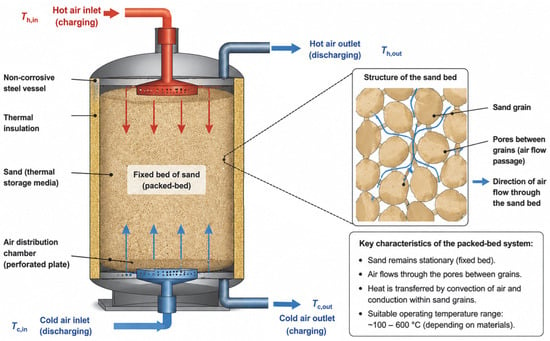
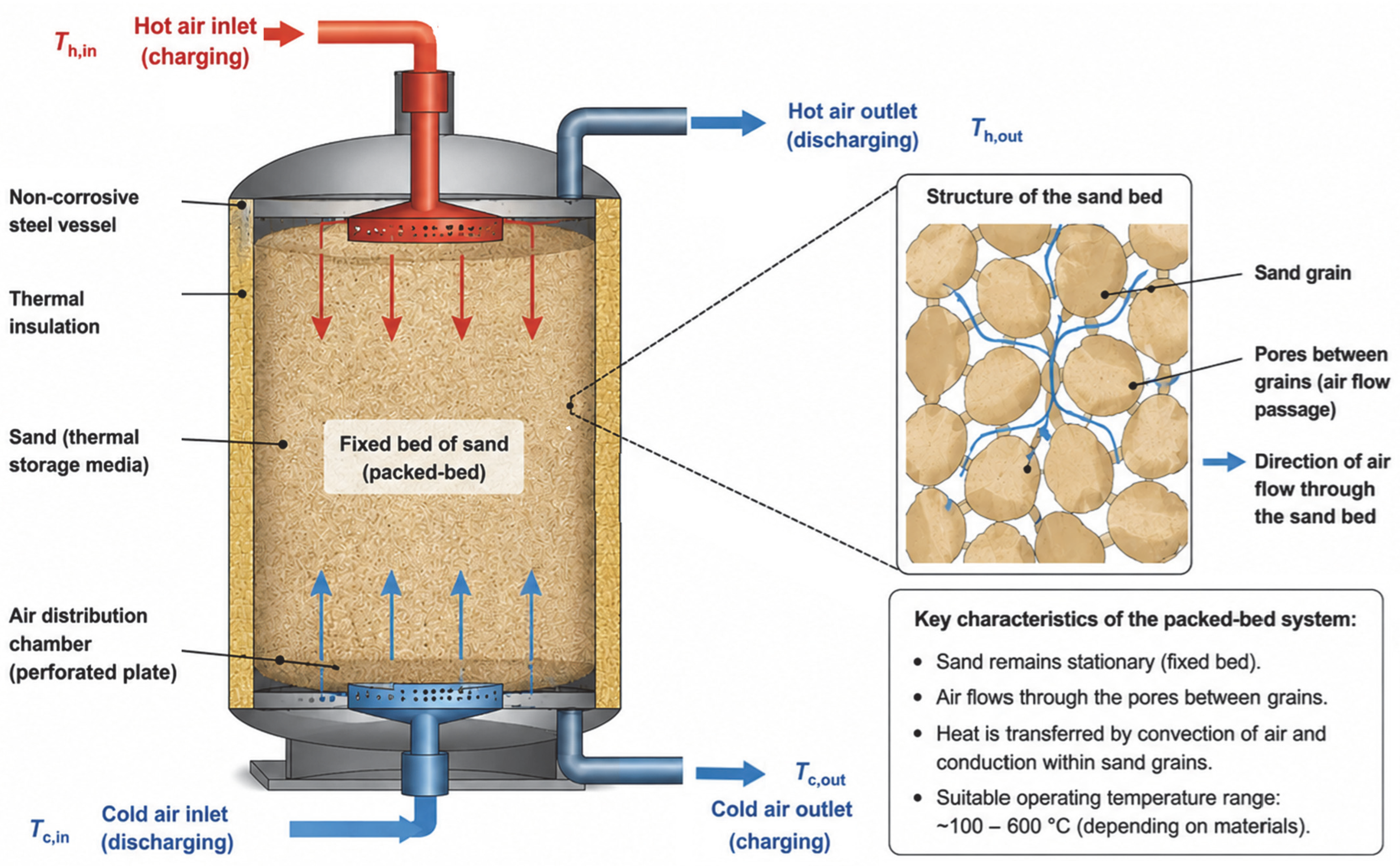
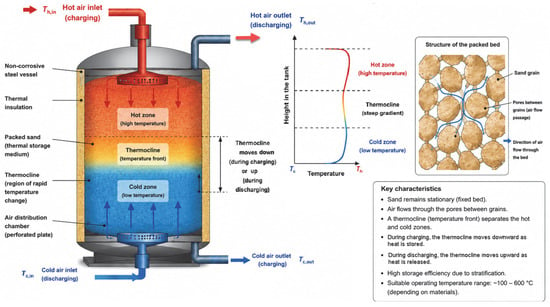
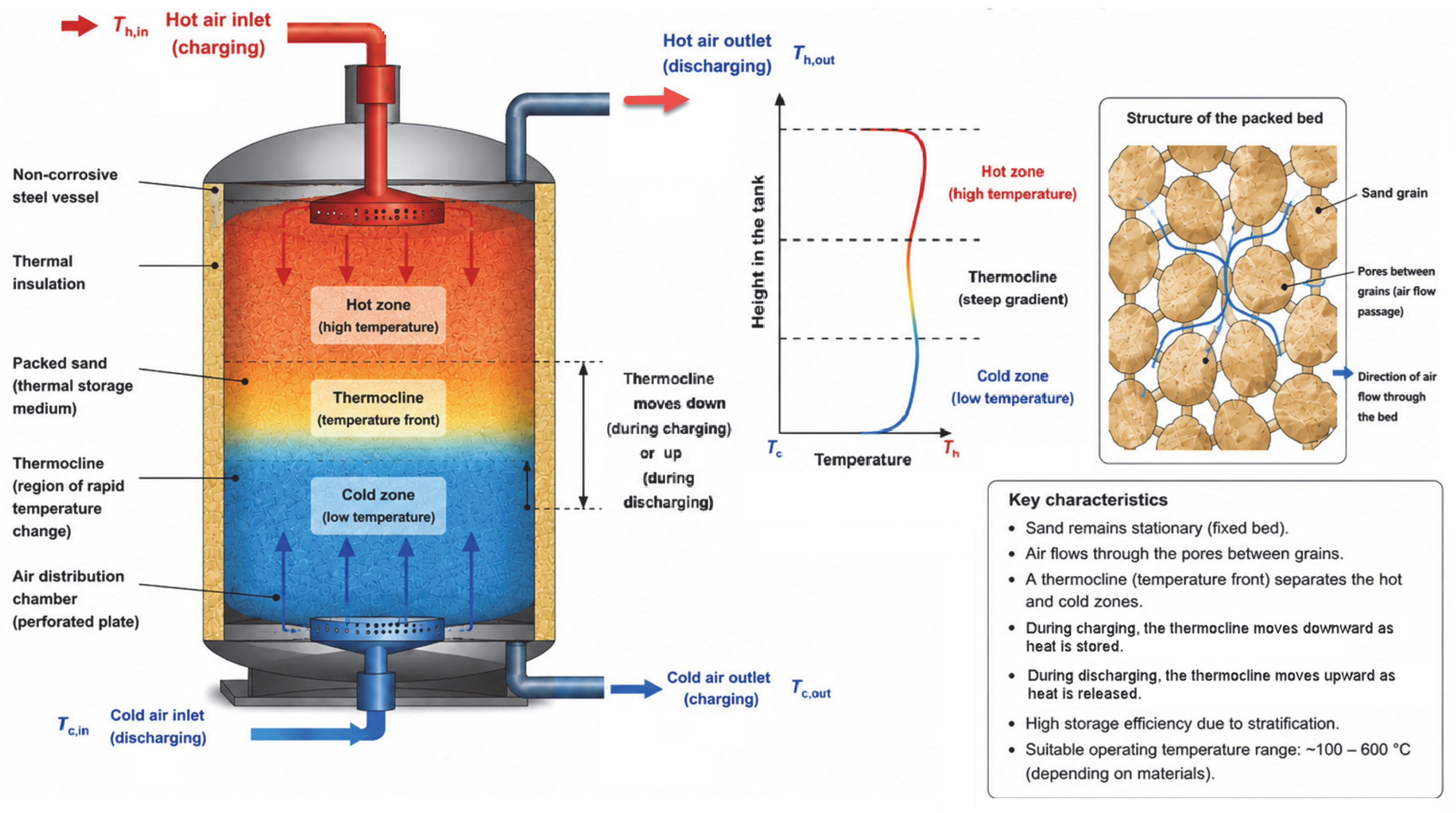
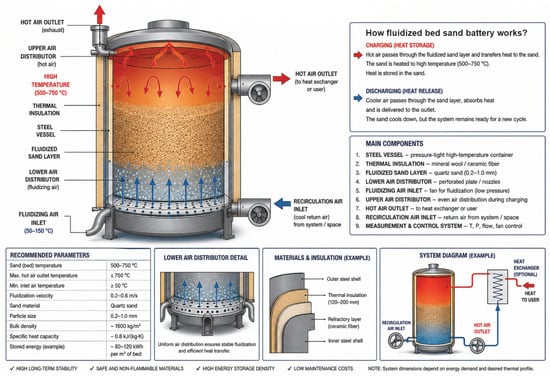
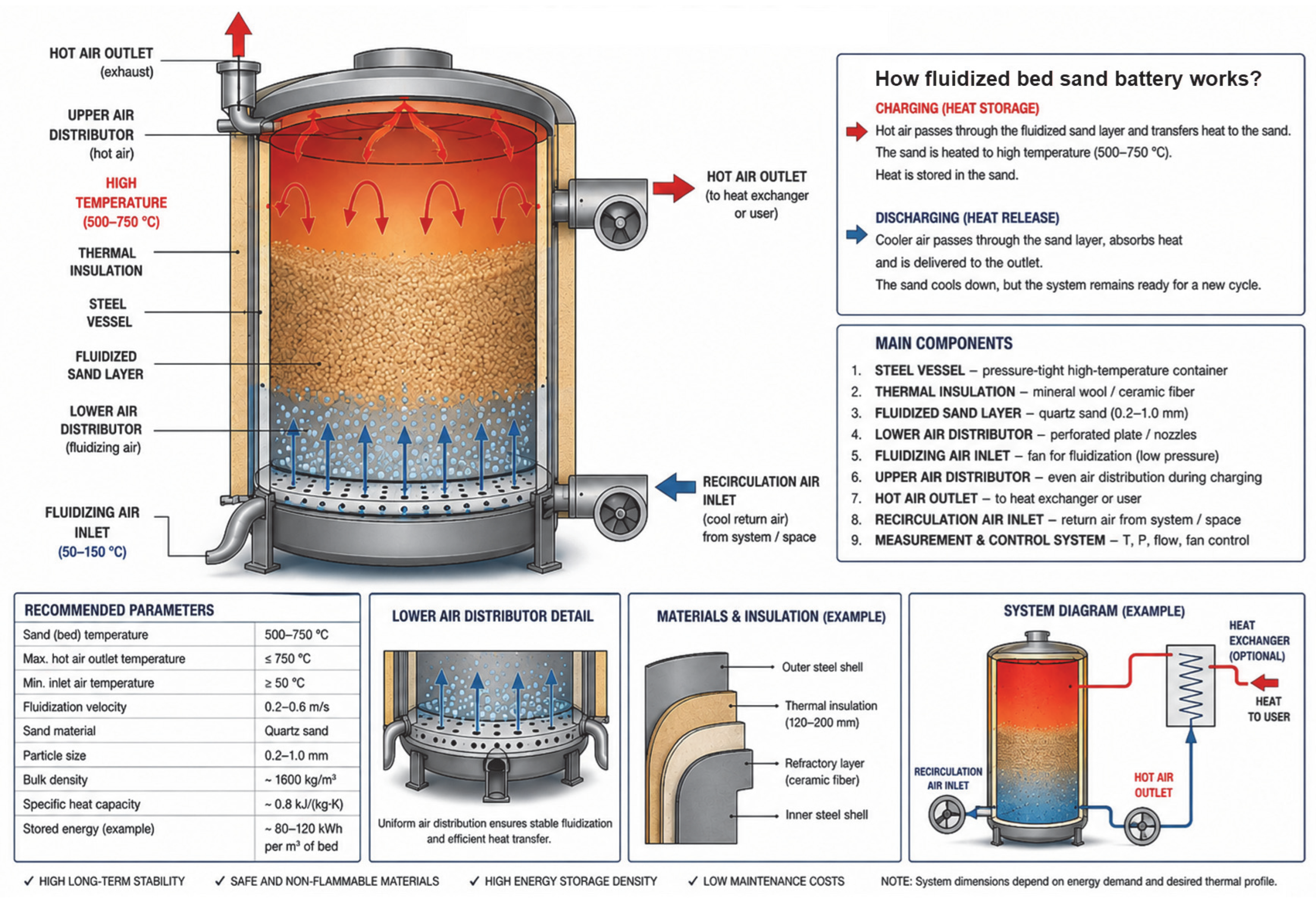
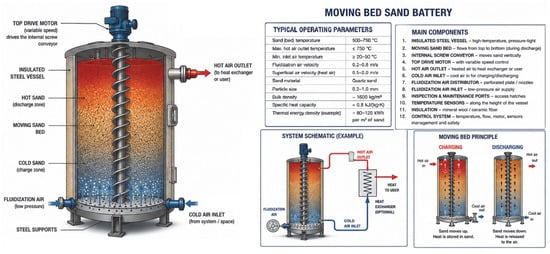
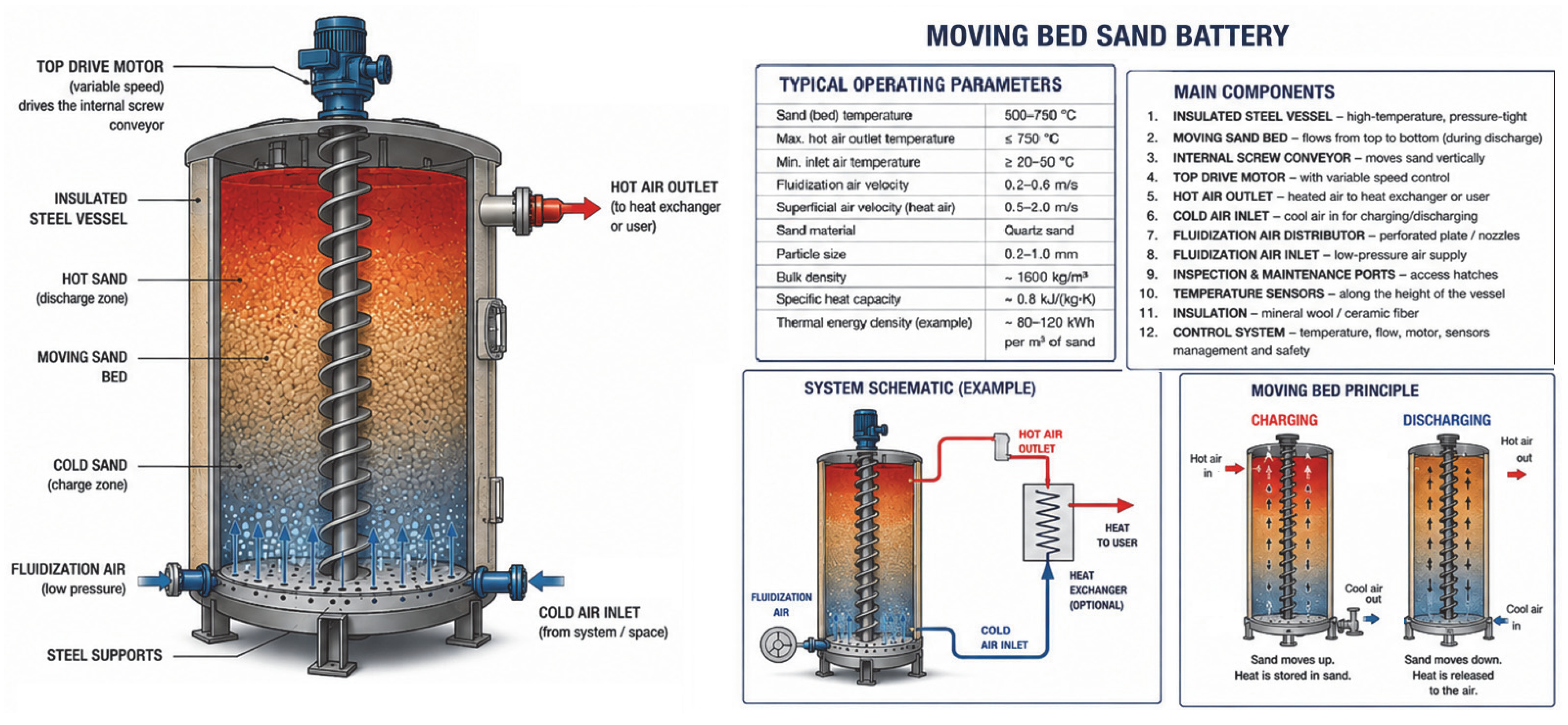
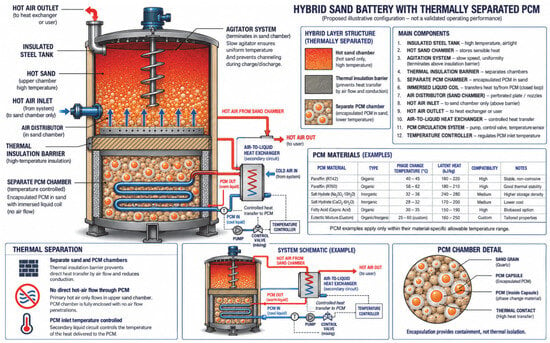
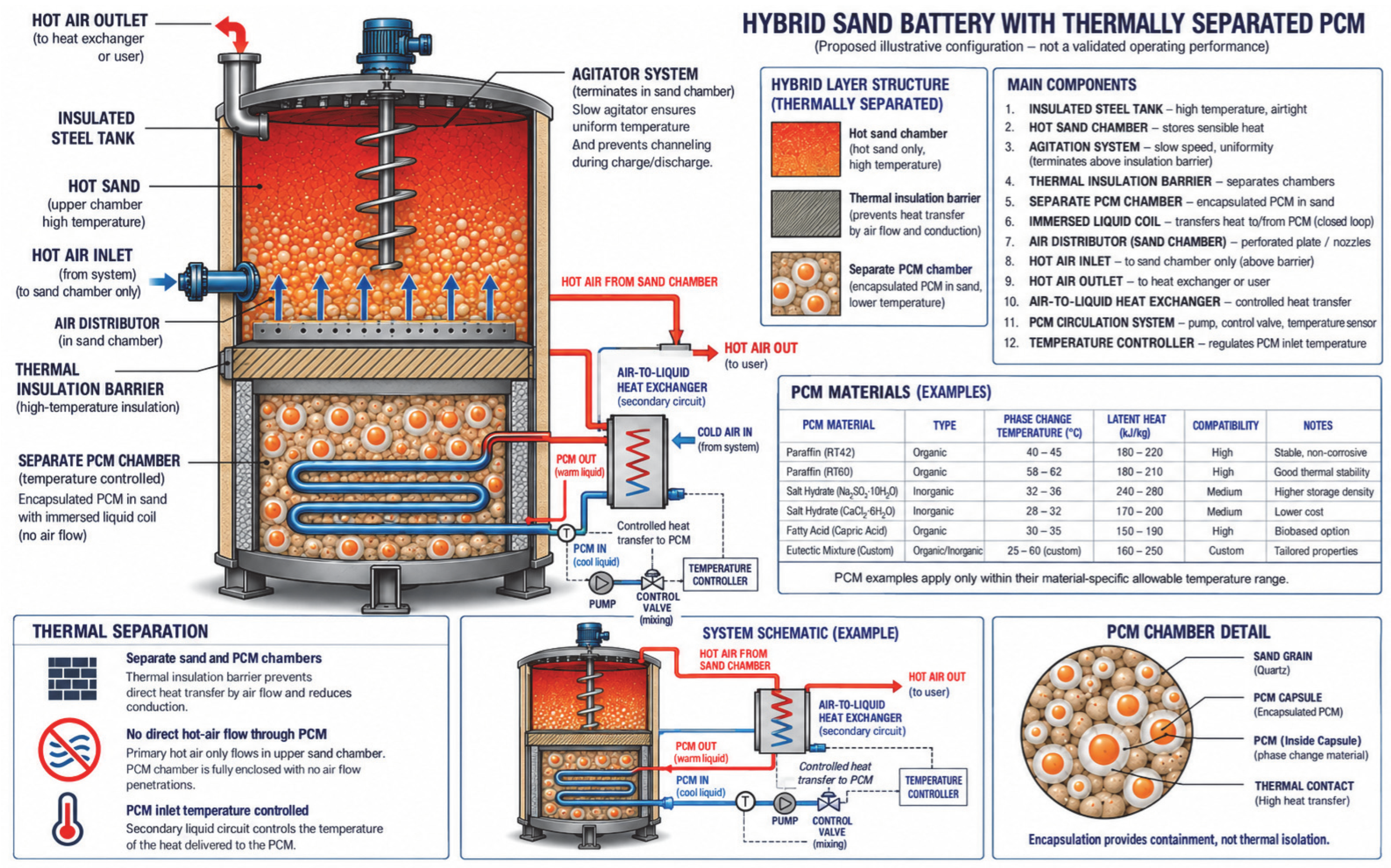
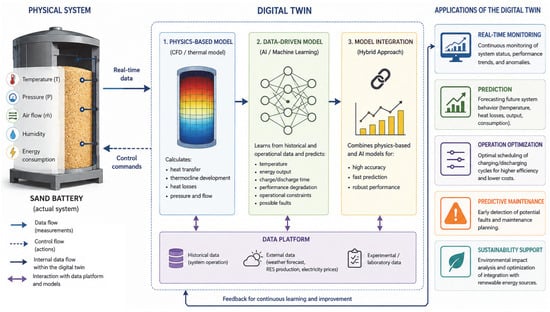
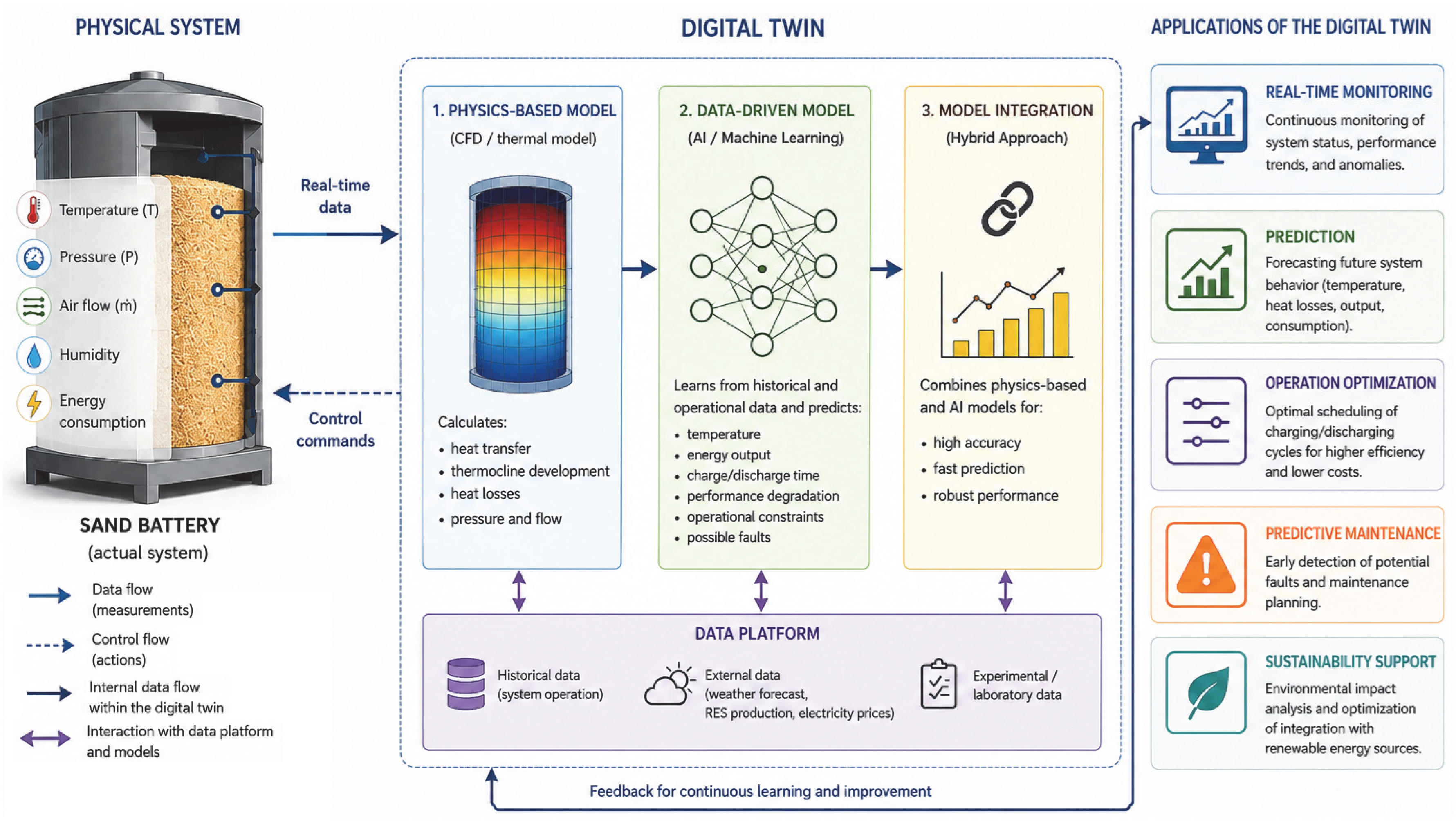

Disclaimer/Publisher’s Note: The statements, opinions and data contained in all publications are solely those of the individual author(s) and contributor(s) and not of MDPI and/or the editor(s). MDPI and/or the editor(s) disclaim responsibility for any injury to people or property resulting from any ideas, methods, instructions or products referred to in the content. |
© 2026 by the authors. Licensee MDPI, Basel, Switzerland. This article is an open access article distributed under the terms and conditions of the Creative Commons Attribution (CC BY) license.