


Abstract
Lead (Pb)-based paints and other metal-bearing phases sourced from home exteriors can be added to adjacent soils, which break down over time, altering potential bioaccessibility. However, data on how particle size and morphology influence metal bioaccessibility remains limited, which was investigated in this study by using a simulated gastric acid (GA) extraction and characterization at the sub-grain scale. Soil samples were collected along horizontal transects at ~1 m intervals from three homes within the Akron metropolis, OH (USA). Each home had Pb-based paint on its exterior before recent renovations (2, 11, and 25 years ago, respectively). Soils were fractionated into sand, silt, and clay–fine silt using sieving, sedimentation, and laser scattering techniques, and analyzed by ICP-OES, XRD, and SEM-EDS. Lead content peaked within 0–2 m from the homes and declined with distance (maxima: 14,583 mg/kg, 8503 mg/kg, 2393 mg/kg at Sites 1–3, respectively), and primarily in the clay-fine silt fraction. Physical speciation of Pb at each site was invariant across the transect, but the percent Pb in the clay–fine silt Pb increased from Site 1 to Site 2, then declined at Site 3, suggesting the loss of fine particles at Site 3. Across sites 1 to 3, the paint chip abundance and size decreased, and secondary Pb-bearing phases appeared as discrete grains and secondary coatings. A similar trend is exhibited by Cu, Cd, and Zn, over time and space. These results highlight the ongoing breakdown of paint and re-sequestration of metals, which may elevate exposure risk from fine particles after housing renovations.
1. Introduction
Lead (Pb) contamination in residential environments remains a pressing public health concern, with concentrations in soils from homes and parks often exceeding natural background levels [1,2]. A major source of this legacy contamination in the United States is Pb-based paint, which was widely applied to older housing stock due to its exceptional durability, rapid drying properties, resistance to moisture and mildew, and ability to produce bright, opaque colors unmatched by other pigments [3,4]. Despite these desirable qualities, the adverse health effects of Pb exposure, including neurological, developmental, and systemic impacts, have been extensively documented [5,6,7]. Growing evidence of these risks led to the eventual phase-out of Pb-based paint in the United States in 1978 [8]. Understanding the persistence and potential bioaccessibility of Pb in soils derived from legacy paint is critical for assessing ongoing exposure risks, which are dominated by inhalation and ingestion of soil particles. Soil ingestion represents a major route of Pb exposure for children, who are vulnerable due to non-dietary ingestion pathways, particularly hand-to-mouth activity [3,9]. Several studies have reported a strong correlation between elevated Pb levels in urban residential soils, largely stemming from the legacy use of Pb-based paints, and elevated blood lead level (BLL) in children [10,11]. Following the phase-out and ban of Pb-based pipes and paints, notable declines in blood lead levels (BLLs) have been observed among children aged 1–5 years [12]. Despite these reductions, ingestion of Pb-contaminated soil remains a critical exposure pathway in urban environments, with inner-city children disproportionately affected. Inhalation of Pb-laden dust and aerosols also contributes to exposure risk [3,13,14,15,16], particularly due to the mobility of fine mineral particles, but ingestion continues to be the most direct and widespread route of concern as older homes are increasingly going to lose paint or undergo renovations. This would increasingly remain problematic for older neighborhoods. Further, above-background concentrations of other toxic metals including Cu, Zn, and Cd are often correlated with Pb, due to similar emission sources (i.e., building materials on or in homes) and/or retention pathways, and strongly correlated Pb and Zn has been observed before [17]. Thus, although Pb content in homes may be highest due to the breakdown of leaded paint, understanding the spatial physical speciation of Cu, Zn, and Cd is also important indicators of how anthropogenic materials in the built environment can impact soil properties.
The risk of exposure to Pb and other metals in soil is controlled by both chemical and physical speciation. Most studies have focused more on chemical speciation, bonding environment, and mineralogical associations that control metal reactivity and stability [18,19,20]. While these approaches provide critical insight into metal speciation and potential bioavailability, they do not fully account for particle-scale heterogeneity. Physical speciation which is defined by particle size, morphology, and spatial distribution, directly influences reactive surface area, sorption capacity, and accessibility under environmentally relevant conditions [21]. Consequently, separating soil into distinct particle-size fractions allows each size class to be examined individually, since particle size controls surface area, mineral composition, and how contaminants are held, helping to evaluate how metal behavior varies with size. Physical speciation of metals in soils and sediments is commonly assessed by integrating particle-size separation with exposure-relevant extraction techniques [22,23]. Particle-size fractionation enables isolation of discrete soil fractions that differ in surface area, mineralogy, and contaminant associations, thereby providing a framework for evaluating size-dependent metal behavior. Both wet and dry sieving approaches have been widely applied to separate soils into operationally defined size classes [24,25,26]. Sequential wet sieving involves suspending soil in water and passing the slurry through a series of sieves with decreasing mesh sizes, yielding distinct particle-size fractions retained on each sieve [7]. While effective for dispersing aggregates and isolating fine particles, wet sieving can alter physical properties of soils and may result in the loss of ultrafine material, particularly in certain soil types [27,28]. In contrast, dry sieving relies on mechanical agitation of stacked sieves and minimizes contact with water, though it is less effective for separating cohesive fine particles [29]. Techniques such as wet dispersion followed by settling or centrifugation [30] exploit differences in particle density and settling velocity, allowing the controlled separation of silt- and clay-sized fractions that cannot be reliably isolated through mechanical sieving alone. Particle-size separation is often complemented by microscopic techniques to resolve the morphology, texture, and composition of metal-bearing phases within each fraction highlighting, for example, how the breakdown of Pb-paint residues can result in a disproportionate amount of Pb in finer fractions (≤50 μm) [22], or how weathering of automotive debris can result in heterogeneous metal distribution across particle size in contaminated sediments [31]. Together, particle-size fractionation and electron microscopy provide non-destructive, particle-scale insight into the physical form and distribution of metals across size classes.
To link physical speciation with the risk of potential exposure to human health, size-separated soils have been evaluated using in vitro bioaccessibility assays that simulate gastrointestinal conditions. These methods, which reproduce stomach acidity and intestinal fluids, are widely used to estimate the fraction of Pb and other metals that may be mobilized following ingestion [30,32]. Notably, bioaccessibility is not controlled by chemical speciation alone, with particle size, morphology, and texture exerting strong controls on dissolution kinetics, surface reactivity, and accessibility under acidic conditions [32]. Fine and ultrafine particles exhibit higher surface-area-to-mass ratios and greater proportions of soluble and exchangeable Pb, resulting in enhanced dissolution and increased bioaccessibility relative to coarser fractions [33,34]. Beyond particle size, secondary mineral surface coatings further modulate Pb behavior during simulated gastric extraction. These coatings formed through sorption, precipitation, dissolution, and biotic interactions commonly consist of nanoparticulate Fe- and Mn-(oxyhydr)-oxides mixed with clays, organic matter, and poorly crystalline aluminosilicates. Although they represent only a minor fraction of soil mass, secondary coatings host the majority of reactive surface areas and thus exert disproportionate control over metal sequestration. Depending on their composition, these coatings can enhance metal bioaccessibility by inhibiting precipitation or, alternatively, reduce solubility through redox reactions and surface complexation [35]. Recent work has shown that toxic metals preferentially accumulate within these fine-grained, porous coatings rather than on primary mineral grains, underscoring their role as dominant geochemical interfaces governing metal mobility, bioavailability, and long-term environmental fate [36].
Soils surrounding these homes were previously characterized through sequential extraction to determine the chemical speciation of Pb and other metals [37]. The concentration of Pb and other anthropogenically sourced metals were highest adjacent to the homes and decreased with distance, and a corresponding speciation shift from labile phases (e.g., clay-bound exchangeable forms and Fe-(oxy)hydroxide-associated reducible forms) to more recalcitrant phases (e.g., organic matter-bound and phosphate-associated residual forms) with increasing distance. Exterior weathering and renovation of the homes were identified as the dominant sources of Pb and Zn to the surrounding soils. This study focuses on how physical speciation (e.g., the size, texture, and morphology of metal-bearing phases) influences exposure risk to Pb and other potentially toxic metals in contaminated soils following ingestion. By fractionating soils into distinct particle size ranges and examining mineral surface coatings, we investigate how these attributes control the partitioning of Pb and other metals and their potential uptake in the human gastrointestinal tract. The speciation and distribution of Pb and other metals in three size fractions were determined by scanning electron microscopy with energy-dispersive spectroscopy (SEM-EDS) and X-ray diffraction (XRD) to determine particle morphology and identify mineral phases, thereby linking physical speciation (i.e., texture, morphology, particle size, and presence of metal-bearing secondary coatings versus discrete particles) to potential bioaccessibility outcomes. In doing so, we highlight the complex interplay between soil mineralogy, particle size, and surface chemistry in shaping the ingestion pathway of Pb, offering new insights into human health risk assessment for legacy contamination.
2. Materials and Methods
2.1. Site Description
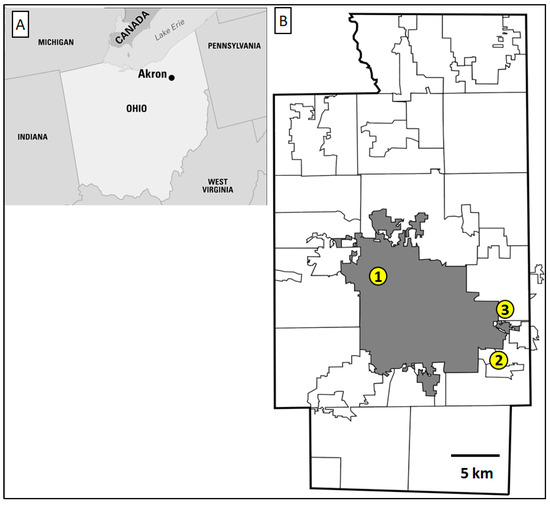
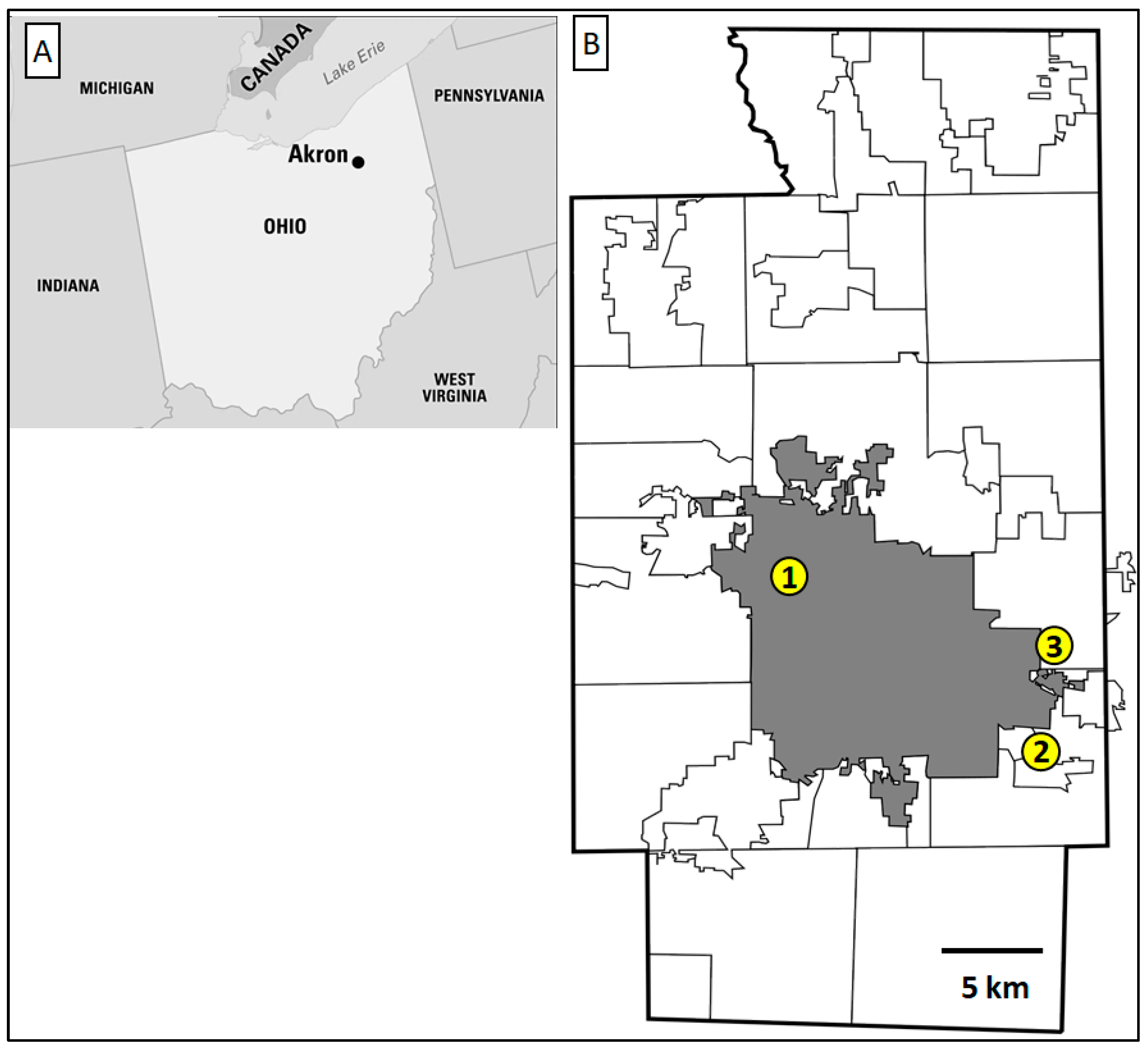
Sampling for this study was conducted in June 2021 at three peri-urban residential properties located in Summit and Portage counties, northeast Ohio (Figure 1). These counties are located in northeast Ohio, and their geology is primarily defined by the Paleozoic era, with bedrock stratigraphically overlain from the Devonian shale to the Mississippian sandstone, siltstone, and shale, and to the Pennsylvanian shale and sandstone [38]. The landscape of the Akron area is dominated by glacial deposits from the last glacial age consisting of clays, sands, gravels, and valley fill [39]. Each property was confirmed by the homeowner to have been constructed prior to the 1978 phaseout of Pb-based paint in the United States. At the time of soil sampling, the homes had undergone external renovations 2, 11, and 25 years ago for Sites 1, 2, and 3, respectively (Figure 1). Visible paint chips within the soil were confirmed to be Pb-based by SEM-EDS analyses (Figure S1), with compositions consistent with Pb-carbonates, which is characteristic of the primary pigment used in the mid-20th century [40]. To account for potential spatial variability, samples were collected along both horizontal (front and back) and vertical (depth) transects at each site. Akron, the principal metropolitan area of Summit County, underwent rapid industrial expansion during the late 19th and early 20th centuries, particularly with the growth of the rubber and tire manufacturing industries [41]. This period of economic and demographic growth coincided with the widespread use of Pb-based paint in residential construction, which was favored for its durability and protective qualities [42]. Consequently, many homes built during this industrial boom incorporated Pb-based paint, creating a legacy of potential Pb contamination that persists in older housing stock, particularly in peri-urban neighborhoods [43].
Figure 1.
(A) Location of Akron on the map of Ohio, shown in relation to neighboring states; (B) outline of Summit County, including the city of Akron (in black), and the location of the three sampling locations for this study.
2.2. Sample Collection and Processing
Soil sampling at these sites has been previously described [37]; in summary, near-surface soil samples were collected from Sites 1, 2, and 3 in June 2021 along horizontal transects extending from the front and back of the homes toward the access road. Sampling was conducted along a horizontal transect from the front of the homes to where the property ends at the street, at 1 m intervals. Surface samples were collected from the top 2 cm depth of the uppermost soil horizon, which is most relevant to assessments of metal bioavailability and potential human exposure. Front transect sampling yielded 15, 10, and 13 samples at Sites 1, 2, and 3, respectively. At Sites 1, 2, and 3, the front transects extended 18 m, 10 m, and 27 m, respectively. Vertical core samples were collected using a steel auger (rinsed with ethanol in between samples to prevent metal contamination) immediately adjacent to the front of the homes at Sites 1 and 3, to depths of 50 cm and 40 cm, respectively. Each core was sectioned into 10 cm intervals and stored at ambient temperature pending sieving. No vertical core was collected at Site 2.
2.3. Particle Size Separation and Bioaccessibility Assay
Soil samples were separated into operationally defined grain-size fractions: sand (63 µm to 2 mm), silt (average diameter 28 ± 19 µm), and clay–fine silt (average diameter 16 ± 9 µm) (Figure S2). Sand was separated using 2 mm and 63 µm sieves. The silt and clay–fine silt fractions were further separated via gravity sedimentation, and the resulting particle sizes were verified using laser diffraction. To determine the optimal settling time for separating the silt and clay–fine silt fractions, 12 g of soil was mixed in 30 mL of distilled deionized water (18.2 MΩ resistivity; Milli-Q Direct-Q 3UV-R, Millipore Sigma, Burlington, MA, USA) in a vial. The suspension was allowed to settle for 4 h, 3 h, 2 h, 1 h, 10 min and 1 min. Sediments were extracted from the upper layer (clay–fine silt) and the lower layer (silt) using a pipette, and particle size distributions were measured using a Malvern™ Mastersizer 2000 laser diffraction analyzer with a Hydro 2000MU manual inlet system (Malvern Panalytical Inc., Westborough, MA, USA). The most apparent separation was achieved after a 30 min settling period (Figure S2). Based on this, subsequent samples were collected at 30 min intervals from the defined depths. The separated fractions were oven-dried at 20 °C (68 °F) in a Binder ED-115 Oven (Binder Inc., Bohemia, NY, USA) until completely dry. Hence, the soil samples were separated into operationally defined grain fractions: sand (63 µm to 2 mm), silt (average diameter 28 ± 19 µm), and clay–fine silt (average diameter 16 ± 9 µm).
Simulated gastric fluid (0.4 M glycine adjusted to pH of 1.50 ± 0.05 at 37 2 °C using concentrated HCl) was prepared to evaluate the bioaccessibility of Pb and other metals in the soil fractions. It is noted that soil pH was previously measured and had average values of 5.98 ± 0.03, 5.60 ± 0.14, and 5.82 ± 0.06 for Sites 1, 2, and 3, respectively [37]. For the extractions, a mass of 0.11 g of soil and 5 mL of 0.4 M glycine solution were added to a centrifuge tube and shaken for 2 h at 130 rpm, modified from [44]. The solution was then centrifuged for 20 min at 5000 cpm and the supernatant filtered through 0.45 μm syringe filters. The filtered supernatants were analyzed using a Thermo Scientific iCAP PRO XP inductively coupled plasma optical emission spectrometer (ICP-OES, Thermo Fisher Scientific, Waltham, MA, USA) to quantify the following elements: Pb, Zn, Cr, Mn, Fe, Co, Cd, Cu, Al, Si, Mg, K, and Ca. A description of the experimental setup, including the use of an internal yttrium standard and external standards with detection limits, has been previously described [37]. The sum of the acid-extractable metal concentrations was compared to average background concentrations in regional soils as follows: Pb (23 mg/kg), Zn (92 mg/kg), Cu (37 mg/kg), and Cd (0.6 mg/kg) [45]. Although not directly comparable, the total acid-extractable metal concentrations for Pb, Zn, Cu, and Cd represent a dominant portion of the total metal content in anthropogenically impacted urban soils [46,47]. The enrichment factor (EF) for each metal was calculated by dividing the total acid-extractable metal concentration by the background metal concentration.
2.4. Solid Phase Characterization
Mineral identification and abundance of the clay–fine silt and silt fractions were determined by X-ray diffraction (XRD) using a Rigaku Miniflex 6G (Rigaku, The Woodlands, TX, USA) X-ray diffractometer (3–90°, 0.02° step size; 2° min−1) of milled powders. Phase identification was performed using Rigaku’s PDXL software v.2.9, with the Whole Pattern Powder Fitting (WPPF) method connected to the ICDD PDF-2 database. Scanning electron microscopy with energy-dispersive spectroscopy (SEM-EDS) was used to determine the composition and morphology of Pb-bearing particles in the silt and clay–fine silt fractions of the soils sampled near the homes using a Hitachi Benchtop Scanning Electron Microscope TM3030 equipped with Quantax70 Energy-Dispersive X-ray Spectrometry using dry powders deposited on carbon sticky tape (Hitachi USA, Santa Clara, CA, USA).
3. Results
3.1. Metal Distribution in Three Soil Size Fractions in Horizontal Transects and Depth Cores
The gastric-acid extractable concentrations of metals in the three soil size fractions will be presented first for Pb and Zn, as they exhibit the highest levels of contamination, and then for other industrial metals that potentially exhibit anthropogenically impacted distributions (Cu and Cd). Other elements less likely to be impacted by anthropogenic activity (including Al, Si, Mg, Ca, and K) are reported in the Supporting Information document (Figures S3–S6). Total gastric acid-extractable metal concentrations ([M]T-GA) are also reported, which is the sum of gastric acid extractable metals from the three size fractions for a given sample.
3.1.1. Lead (Pb)
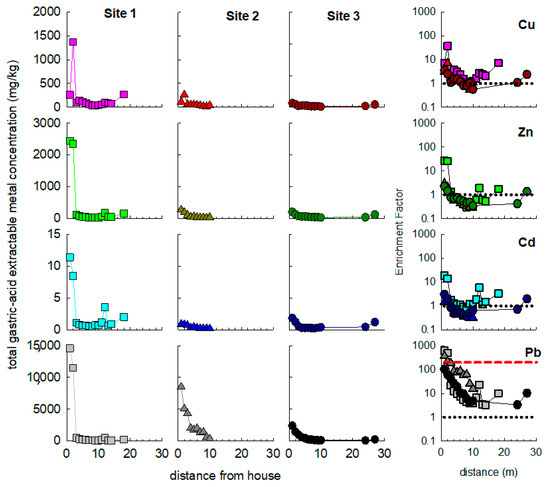
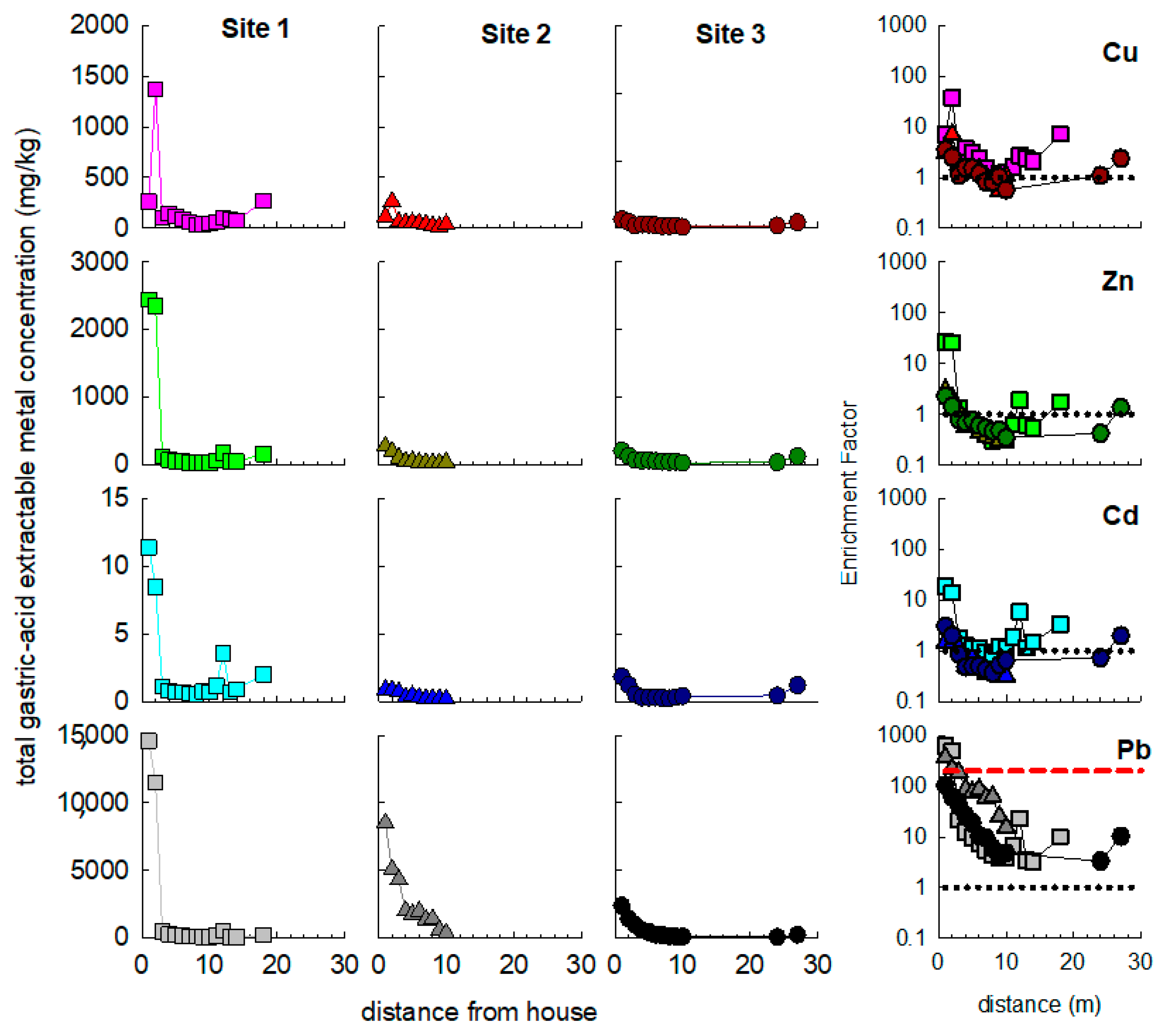
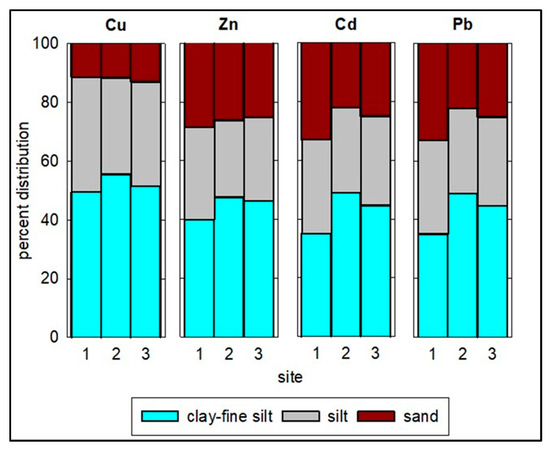
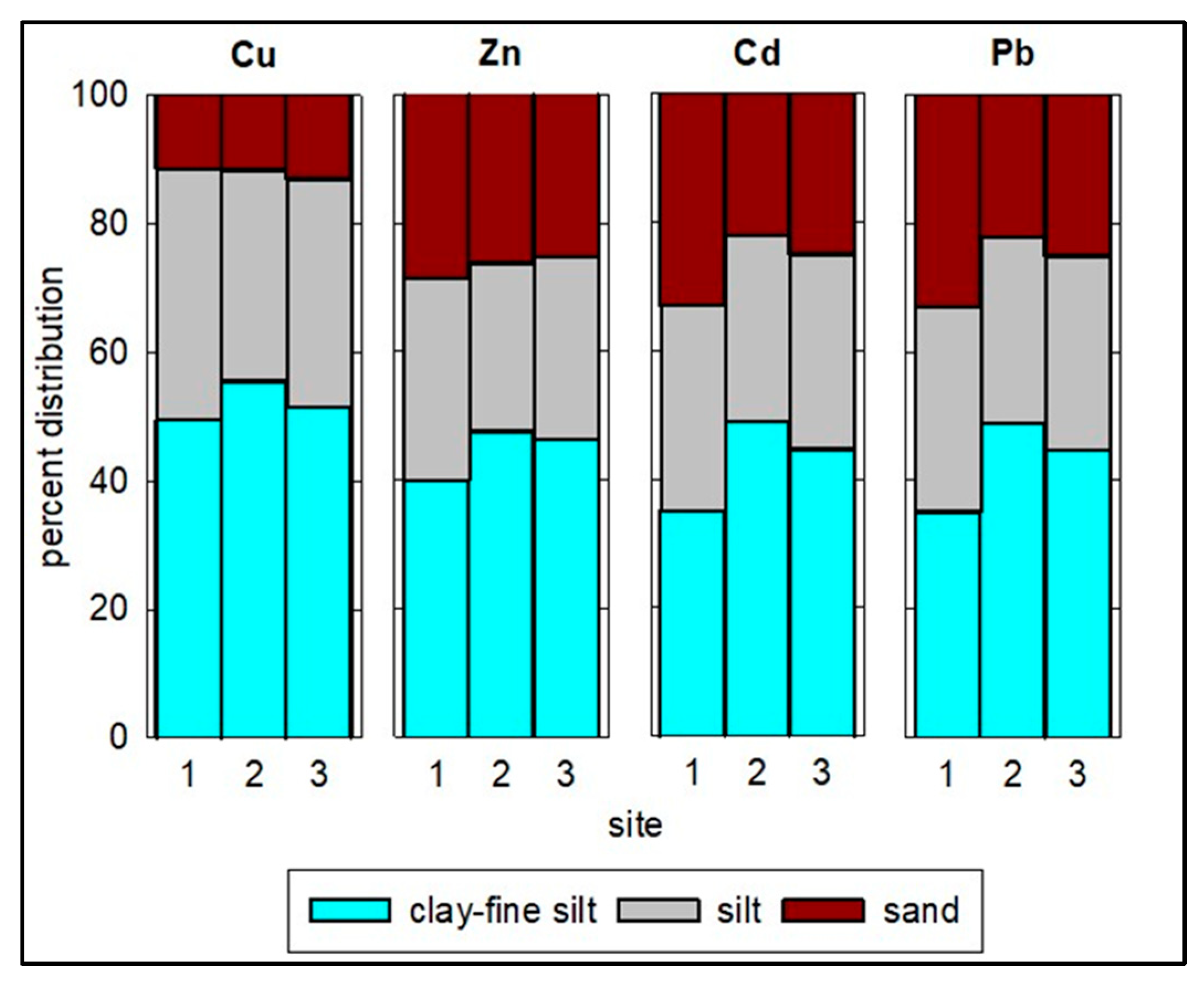
The total extractable Pb was highest near the homes and rapidly decreased with distance. Along the front transect at Site 1, the highest [Pb]T-GA concentration was observed 1 m from the house (14,583 mg/kg), followed by a sharp decrease at 3 m and a continued decline with increasing distance. A similar pattern was observed at Sites 2 and 3 (Figure 2 and Figure S3), where the highest [Pb]T-GA values were observed at 1 m from the homes, at 8503 mg/kg and 2393 mg/kg, respectively. The concentrations decreased sharply as the distance from the houses increased. Although fewer samples were collected along the transects behind the homes compared to the front, similar trends were observed, with the highest [Pb]T-GA closest to the homes. The concentration of gastric extractable Pb ranged from 47 mg/kg to 551 mg/kg at Site 1, 42 mg/kg to 11,247 mg/kg at Site 2, and 200 mg/kg to 3344 mg/kg at Site 3 (Figure S7). Along the vertical soil core, the highest [Pb]T-GA (3809 mg/kg) in Site 1 was found in the top 0–10 cm of soil and decreased progressively with depth, reaching 410 mg/kg at the 40–50 cm layer. In contrast, the [Pb]T-GA increased with depth at Site 3, from 4033 mg/kg at 0–10 cm to 5862 mg/kg at 20–30 cm, before decreasing to 5109 mg/kg at a 30–40 cm depth (Figure S8). The distribution of Pb within the three size fractions was essentially invariant as a function of distance from the houses or with depth (Figures S9–S11). The abundance of Pb was highest in the clay–fine silt fractions across all three sites. The concentration of Pb in the finest fraction increased from Site 1 to Site 2, but decreased at Site 3, indicating the loss of a larger amount of the fine fraction (Figure 3). Average contributions across the sand, silt, and clay–fine silt fractions were distributed in Site 1: 30 ± 10%, 34 ± 5%, and 36 ± 5%; Site 2: 23 ± 13%, 28 ± 5%, and 49 ± 8%; and Site 3: 25 ± 5%, 29 ± 2%, and 46 ± 4% across the horizontal front transect, Site 1: 32 ± 5%, 32 ± 3%, and 36 ± 5%; Site 2: 20 ± 2%, 33 ± 6%, and 47 ± 4%; and Site 3: 21 ± 5%, 36 ± 7%, and 43 ± 2% across the horizontal back transect, and Site 1: 45 ± 14%, 26 ± 5%, and 29 ± 9% and Site 3: 28 ± 4%, 31 ± 3%, and 42 ± 2% in the vertical soil cores, respectively.
Figure 2.
Concentration of total gastric acid-extractable metal content with distance from the front transect of the three sites (site 1, squares, left column; site 2, triangles, center column; and Site 3, circles, right column) for Cu (top row), Zn (second row), Cd (third row), and Pb (bottom row). Color shading (lightest for Site 1 to darkest for Site 3) highlights how much time has passed since the homes were renovated (most recently for Site 1 and oldest for Site 3) as described in the site description. The column on the right shows the enrichment factor values for Cu, Zn, Cd, and Pb for the three sites. The black dotted line represents the regional background concentration, and the red dashed line for the Pb panel is a concentration of 200 mg/kg, the US EPA action level for total Pb in residential soils.
Figure 3.
Percentage contribution of gastric-acid extractable Cu, Zn, Cd, and Pb concentrations across horizontal and vertical transects at three homes, by particle size fraction: clay–fine silt (blue), silt (grey), and sand (brown).
3.1.2. Copper (Cu)
The [Cu]T-GA values in soils along the horizontal transects and vertical soil cores vary with distance and depth from the homes, showing peaks and declines at different points within the transects. Along the front transects, maximum [Cu]T-GA were 1373 mg/kg at Site 1, 265 mg/kg at Site 2, and 131 mg/kg at Site 3, occurring at 2 m, 2 m, and 1 m from the homes, respectively. Average concentrations were 192 ± 335 mg/kg, 73 ± 72 mg/kg, and 56 ± 33 mg/kg for Sites 1, 2, and 3, respectively (Figure 2 and Figure S5). At the back transects, the average [Cu]T-GA was 96 ± 69 mg/kg, 98 ± 44 mg/kg, and 103 ± 13 mg/kg at Sites 1, 2, and 3, respectively. Maximum concentrations were 280 mg/kg (18 m), 145 mg/kg (56 m), and 113 mg/kg (56 m) at Sites 1, 2, and 3, respectively (Figure S7). In the vertical soil cores, the concentration decreased with depth at Site 1, from 204 mg/kg at 0–10 cm to 70 mg/kg at 40–50 cm, averaging 107 ± 58 mg/kg. Conversely, concentration increased with depth at Site 3, from 278 mg/kg at 0–10 cm to 3356 mg/kg at 30–40 cm. No vertical core was collected at Site 2 (Figure S8). The percentage contribution of Cu to the three fraction sizes at horizontal distances and depths was relatively uniform across the homes (Figures S9–11). The abundance of Cu was highest in the clay–fine silt fractions across all three sites. The concentration of Cu in the finest fraction increased from Site 1 to Site 2, but decreased at Site 3, consistent with the loss of fine fraction (Figure 3). The average contributions to the sand, silt, and clay–fine silt fractions along the front transect were 12 ± 21%, 39 ± 9%, and 49 ± 12% at Site 1; 11 ± 5%, 33 ± 5%, and 56 ± 3% at Site 2; and 10 ± 2%, 36 ± 4%, and 54 ± 5% at Site 3. Along the back transects, the respective averages were 11 ± 5%, 39 ± 5%, and 51 ± 7% at Site 1; 8 ± 4%, 37 ± 2%, and 55 ± 4% at Site 2; and 10 ± 1%, 36 ± 4%, and 54 ± 4% at Site 3. The contribution of Cu along the vertical soil core was 8 ± 3%, 45 ± 5%, and 48 ± 6% at Site 1, and 24 ± 1%, 33 ± 5%, and 43 ± 5% at Site 3.
3.1.3. Zinc (Zn)
The [Zn]T-GA displayed spatial patterns similar to those of Pb; the total extractable Zn were highest nearest to the homes and decreased with distance from them. The highest concentration, 2449 mg/kg, was observed at Site 1, 1 m from the front of the home, followed by a similar rapid decline. Maximum concentrations near the front of the homes at Sites 2 and 3 were 276 mg/kg and 208 mg/kg, respectively (Figure 2 and Figure S5). In the back transects of the homes, the average [Zn]T-GA was 130 ± 79 mg/kg at Site 1. Of the few samples collected from Sites 2 and 3, the [Zn]T-GA decreased from 1246 mg/kg and 511 mg/kg near the homes to 145 mg/kg and 29 mg/kg, respectively, at similar distances from the homes (Figure S7). Within the soil cores, [Zn]T-GA at Site 1 steadily decreased from 648 mg/kg at the 0–10 cm depth to 74 mg/kg at 40–50 cm. In contrast, Site 3 exhibited increasing [Zn]T-GA, ranging from 184 mg/kg at 0–10 cm to a peak of 303 mg/kg at 30–40 cm (Figure S8). Like Pb, Zn speciation showed minimal variation across fractions relative to horizontal distance and depth from the homes (Figure S10), and, like Pb, Zn was most abundant in clay–fine silt across all sites. Its concentration in the finest fraction increased from Site 1 to Site 2 but decreased at Site 3, indicating the loss of fine fraction (Figure S5). The average contribution of the sand, silt, and clay–fine silt fractions across the front transect were 25 ± 11%, 35 ± 6%, and 41 ± 7% at Site 1; 28 ± 16%, 25 ± 7%, and 47 ± 10% at Site 2; and 25 ± 5%, 28 ± 2%, and 47 ± 5% at Site 3. Across the back transect, the contributions were 30 ± 9%, 28 ± 6%, and 42 ± 7% at Site 1; 27 ± 6%, 28 ± 2%, and 45 ± 7% at Site 2; and 22 ± 2%, 31 ± 3%, and 47 ± 1% at Site 3. Along the vertical soil cores, the average contributions of the Pb in the sand, silt and clay–fine silt fractions were 37 ± 14%, 27 ± 6%, and 34 ± 10% at Site 1 and 28 ± 4%, 29 ± 3%, and 43 ± 3% at Site 3.
3.1.4. Cadmium (Cd)
The [Cd]T-GA was highest near the house but decreased with increasing horizontal distance from the homes. Across the front transect, the average concentration was 2 ± 3 mg/kg, 0.4 ± 0.3 mg/kg, and 1 ± 1 mg/kg at Sites 1, 2, and 3, respectively. Maximum concentrations were 11, 1, and 2 mg/kg at Sites 1, 2, and 3, respectively, all observed at 1 m (Figure 2 and Figure S3). Along the back transects, average concentrations were 2 ± 1, 1 ± 1, and 3 ± 2 mg/kg at Sites 1, 2, and 3, respectively. Maximum concentrations were 5 mg/kg (7 m), 2 mg/kg (0 m), and 5 mg/kg (0 m) at Sites 1, 2, and 3, respectively (Figure S7). Along the vertical transect, [Cd]T-GA generally decreased with depth at Site 1, apart from a spike at 10–20 cm reaching 6 mg/kg, with an average of 4 ± 2 mg/kg. In contrast, at Site 3, [Cd]T-GA generally increased with depth, apart from a bump at 10–20 cm that shifted the profile’s maximum to 2 mg/kg, with an average of 2 ± 1 mg/kg (Figure S8). The percentage contribution of Cd to the three fraction sizes was generally consistent across different horizontal distances and depths (Figures S9–S11). The abundance of Cd was highest in the clay–fine silt fractions across all three sites. The concentration of Cd in the finest fraction increased from Site 1 to Site 2, but decreased at Site 3, indicating the loss of fine fraction (Figure 3 and Figure S5g). In the front transect, the average contributions for the sand, silt, and clay–fine silt fractions were 29 ± 9%, 33 ± 5%, and 38 ± 5% at Site 1; 26 ± 14%, 24 ± 6%, and 50 ± 10% at Site 2; and 29 ± 7%, 24 ± 3%, and 47 ± 5% at Site 3. For the back transects, the corresponding averages were 33 ± 7%, 28 ± 6%, and 39 ± 4% at Site 1; 20 ± 5%, 29 ± 6%, and 50 ± 6% at Site 2; and 21 ± 6%, 32 ± 5%, and 47 ± 1% at Site 3. Regarding the vertical soil cores, the average contribution at Site 1 was 42 ± 18%, 26 ± 7%, and 31 ± 10%. Within the 30–40 cm depth, the contribution of Cd in the sand fraction was higher than at other depths, resulting in lower contributions in the silt and clay–fine silt fractions, each at 14%. The average contribution at Site 3 aligns with the trend observed in the horizontal transects and is 28 ± 2%, 28 ± 3%, and 44 ± 3% for the sand, silt, and clay–fine silt fractions, respectively.
3.1.5. Enrichment Factor (EF) Values and Elemental Correlations
The enrichment factor (EF) values for Cu, Zn, Cd, and Pb (Figure 2, right column) highlight that most of the soil samples have elevated concentrations of these metals above background values by up to three orders of magnitude. The EF values for Cu and Zn were nearly 100× above background values, and 10× for Cd, within the first few meters near the homes, and decreased to near background values with distance. Lead was above background values by 1000× near the homes, and although Pb concentrations decrease with distance, Pb was above background values in all locations. The samples immediately near the homes also had Pb values above 200 mg/kg, the US Environmental Protection Agency’s (EPA) action level for Pb in residential soils.
Given the invariance in metal distribution within the size fractions at each site, total extractable metal concentrations were evaluated for correlations (Figure S12). Strong, significant positive correlations were observed between total extractable Pb, Cu, Zn, and Cd. These metals exhibited a weak positive correlation with total extractable Fe and Mn, and a negative correlation with total extractable Al. Positive correlations were also observed between total extractable Si, K, Ca, and Mg.
3.2. Bulk Soil Mineralogy and Grain- and Sub-Grain Scale Characterization
The bulk mineralogical composition of soils at the three homes did not vary across the horizontal transect (Figure S13) and was broadly similar between the three homes (Figure S14). The identified mineral assemblages included quartz, feldspars, clays (illite, kaolinite, and chlorite), and micas (primarily muscovite) (Figure S13). The average values for quartz, feldspars, clays, and micas at Site 1 were 57 ± 6%, 20 ± 5%, 16 ± 4%, and 7 ± 2% for the silt fraction and 58 ± 7%, 15 ± 5%, 20 ± 5%, and 7 ± 2% for the clay–fine silt fraction. The values at Site 2 were 63 ± 7%, 24 ± 6%, 6 ± 1%, and 7 ± 3% for the silt fraction and 54 ± 9%, 24 ± 7%, 13 ± 5%, and 9 ± 2% for the clay–fine silt fraction. At Site 3, the average values were 61 ± 6%, 25 ± 10%, 8 ± 4%, and 5 ± 2% for the silt fraction and 54 ± 13%, 22 ± 15%, 11 ± 5%, and 9 ± 6% for the clay–fine silt fraction (Tables S1–S3).
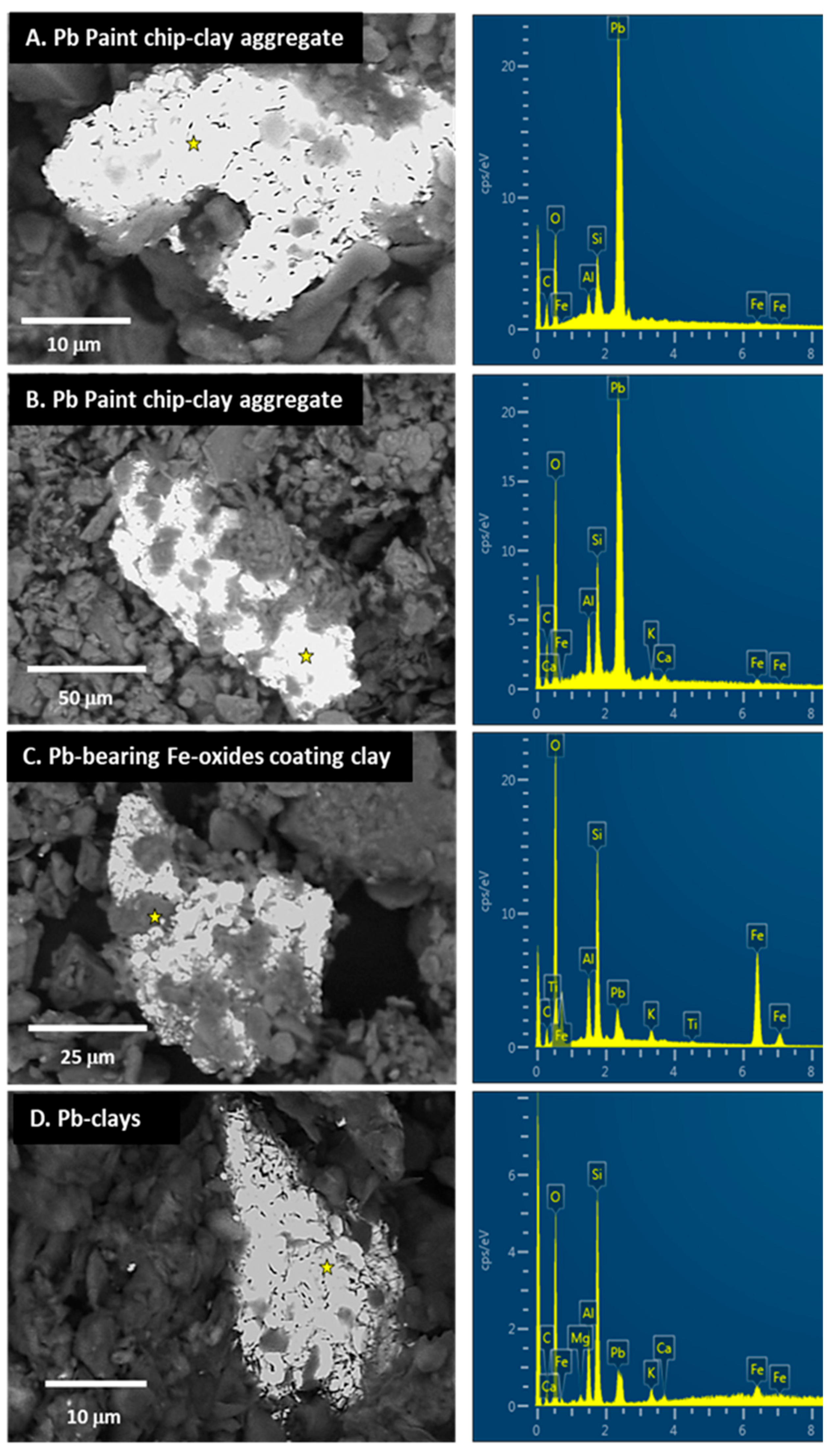
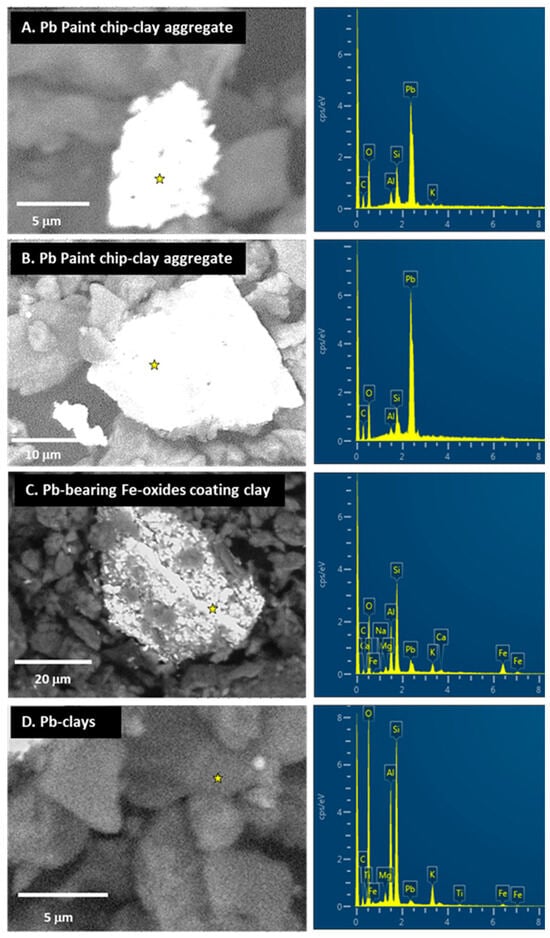
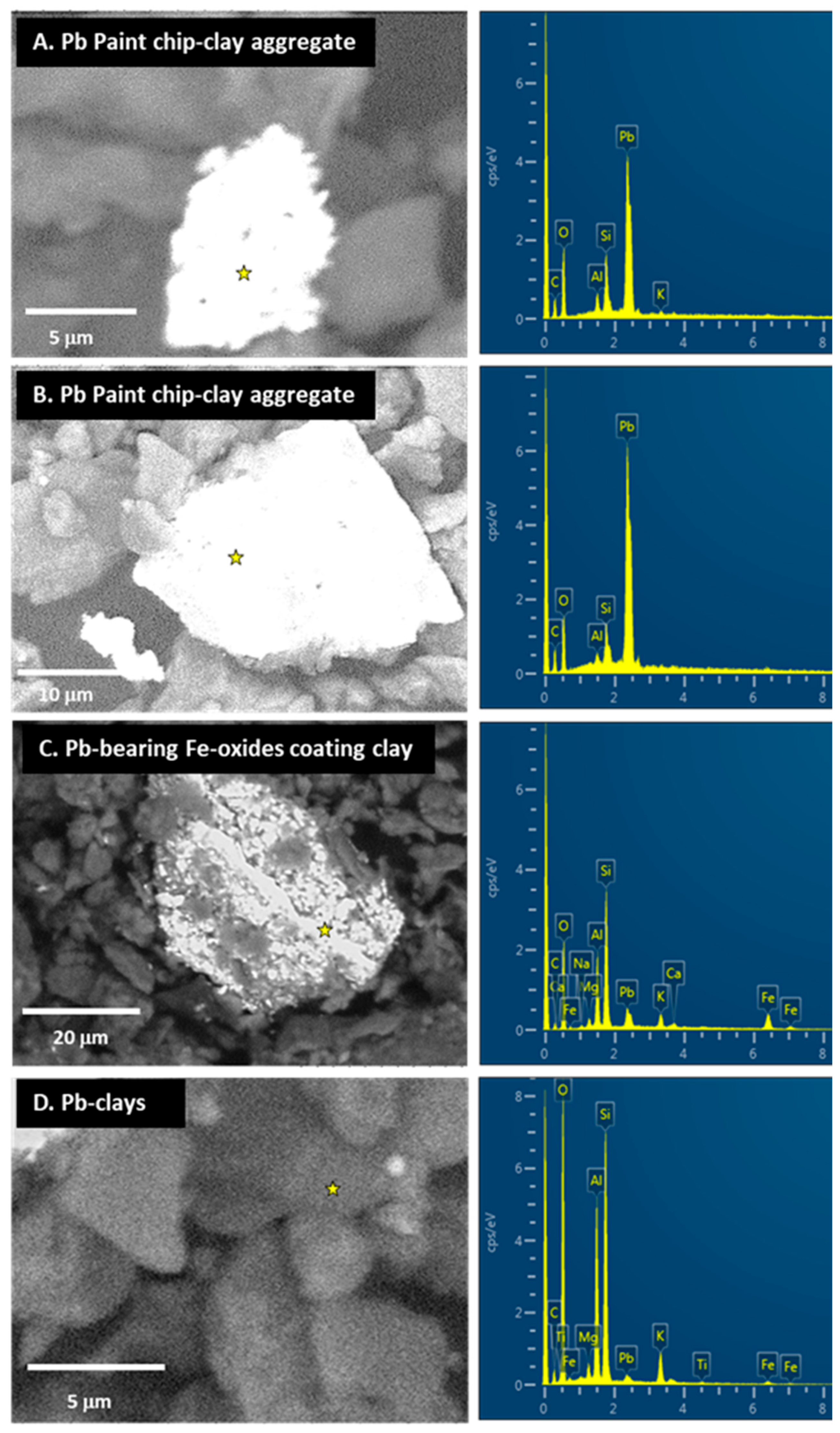
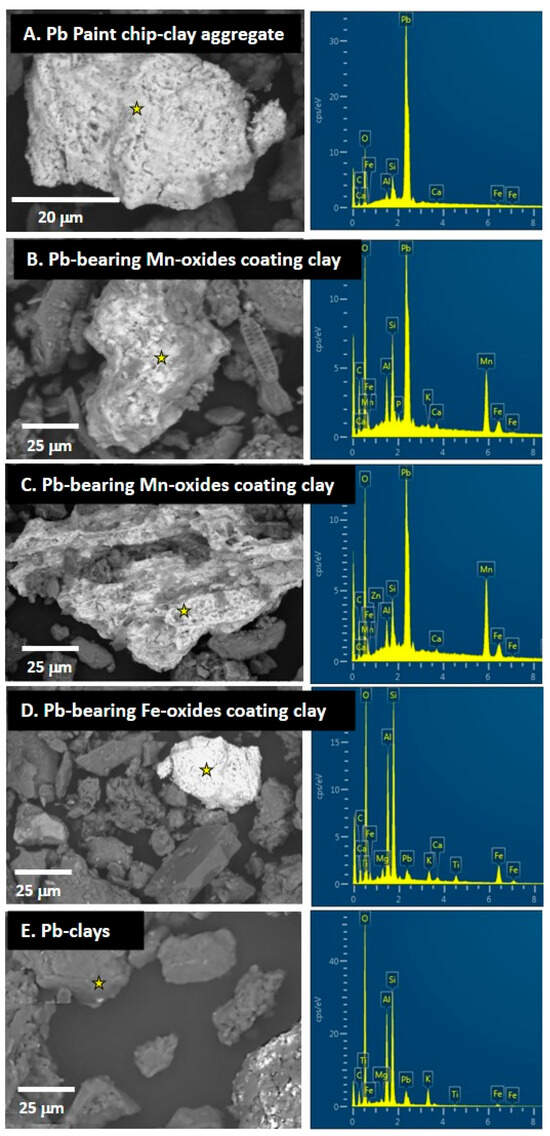
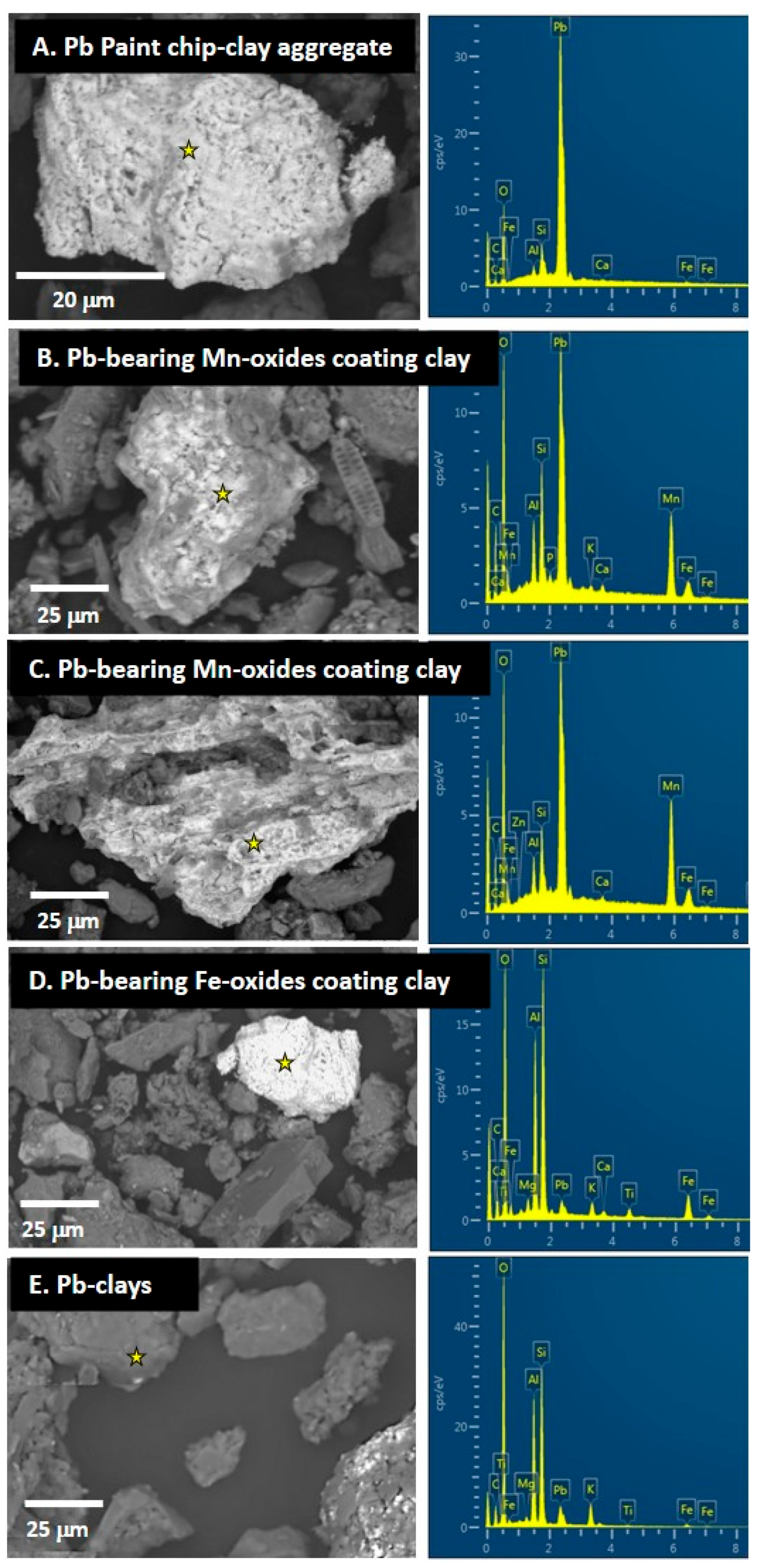
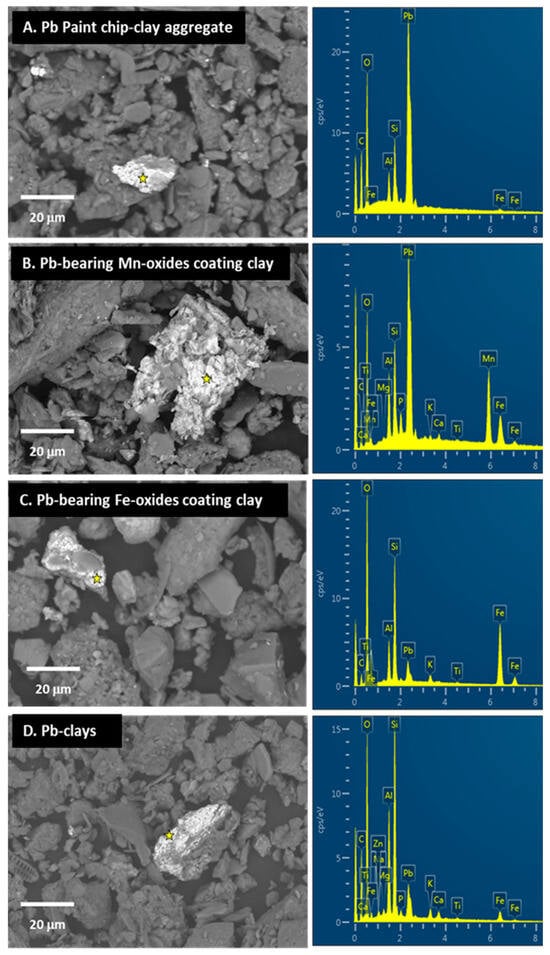
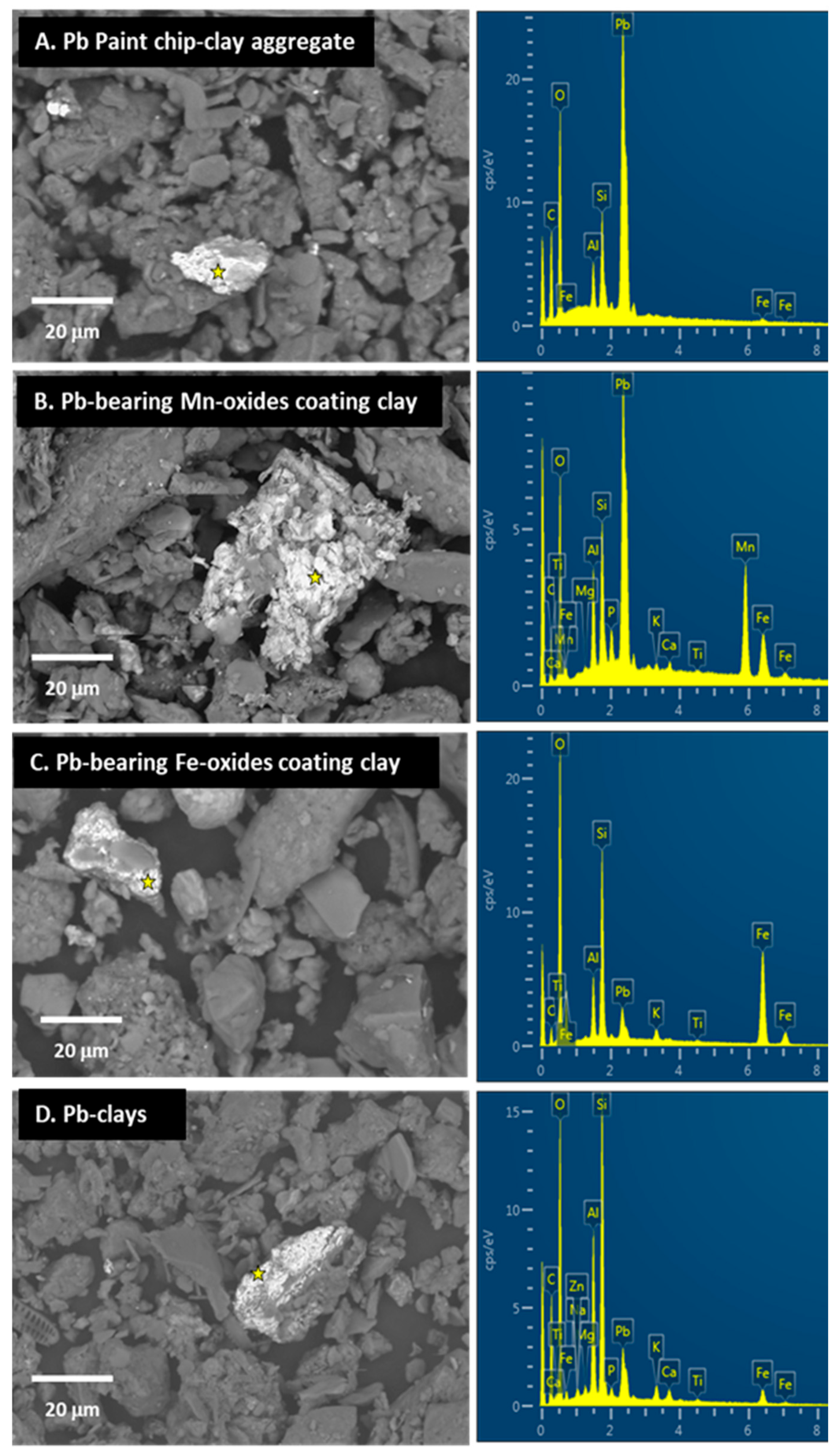
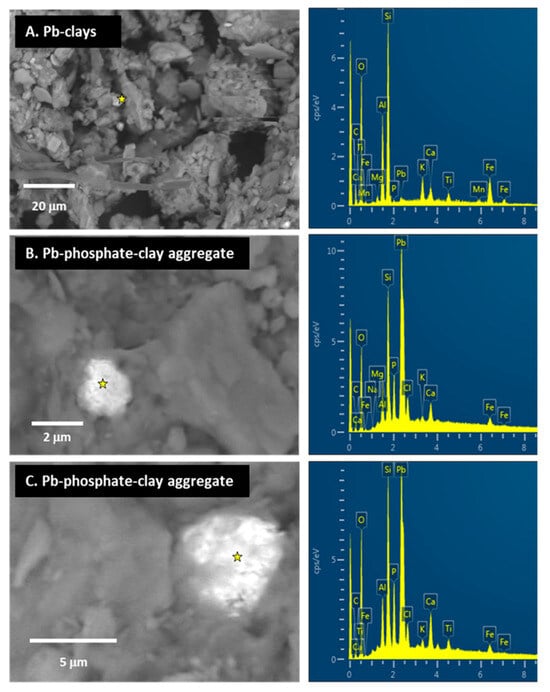
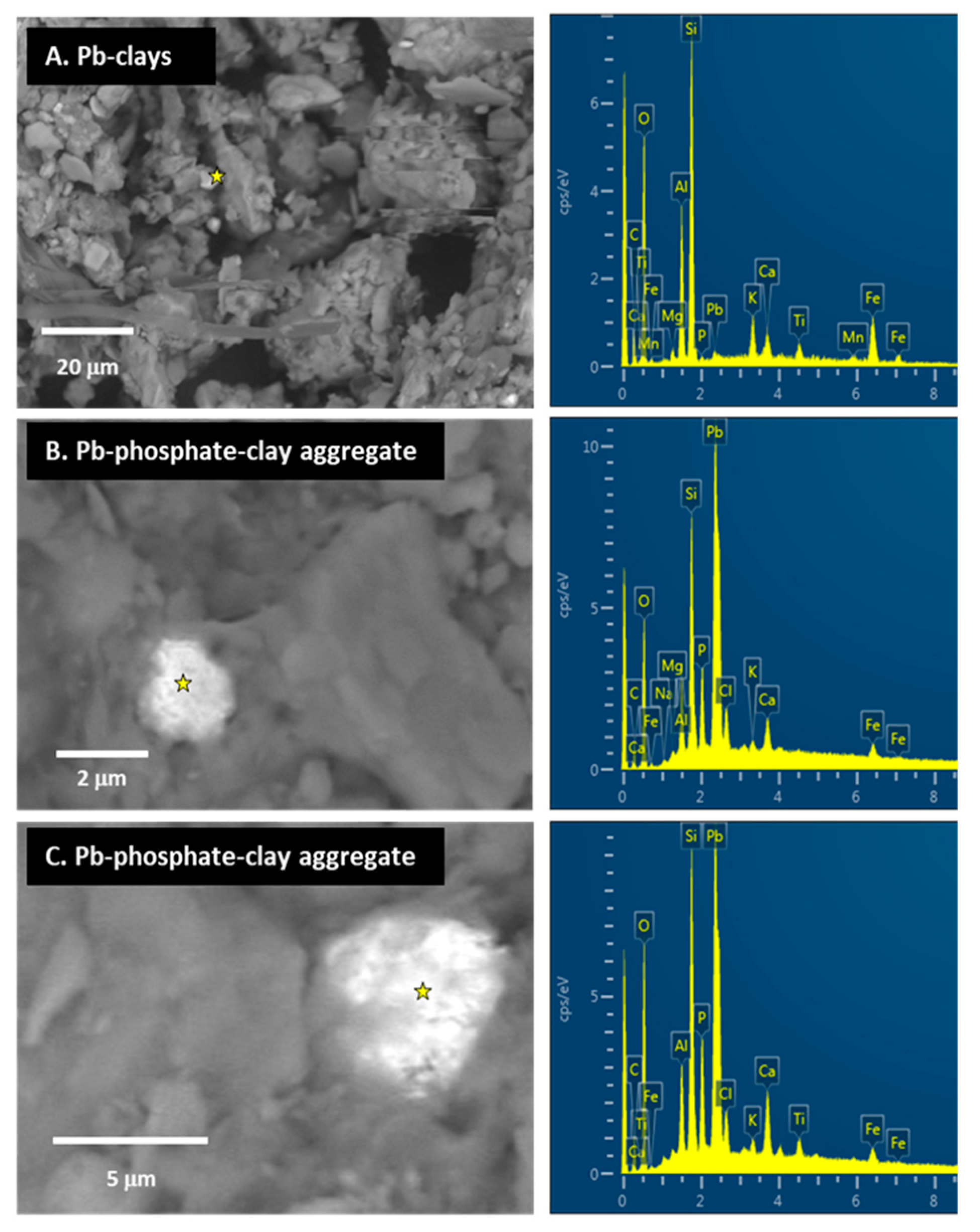
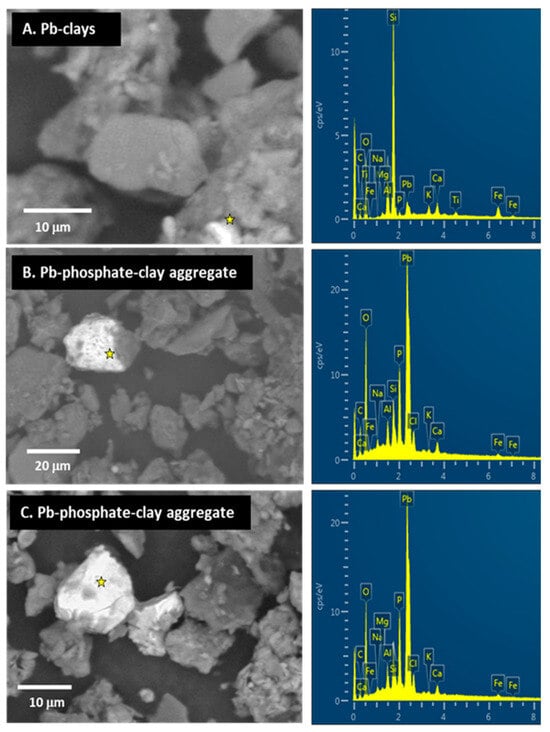
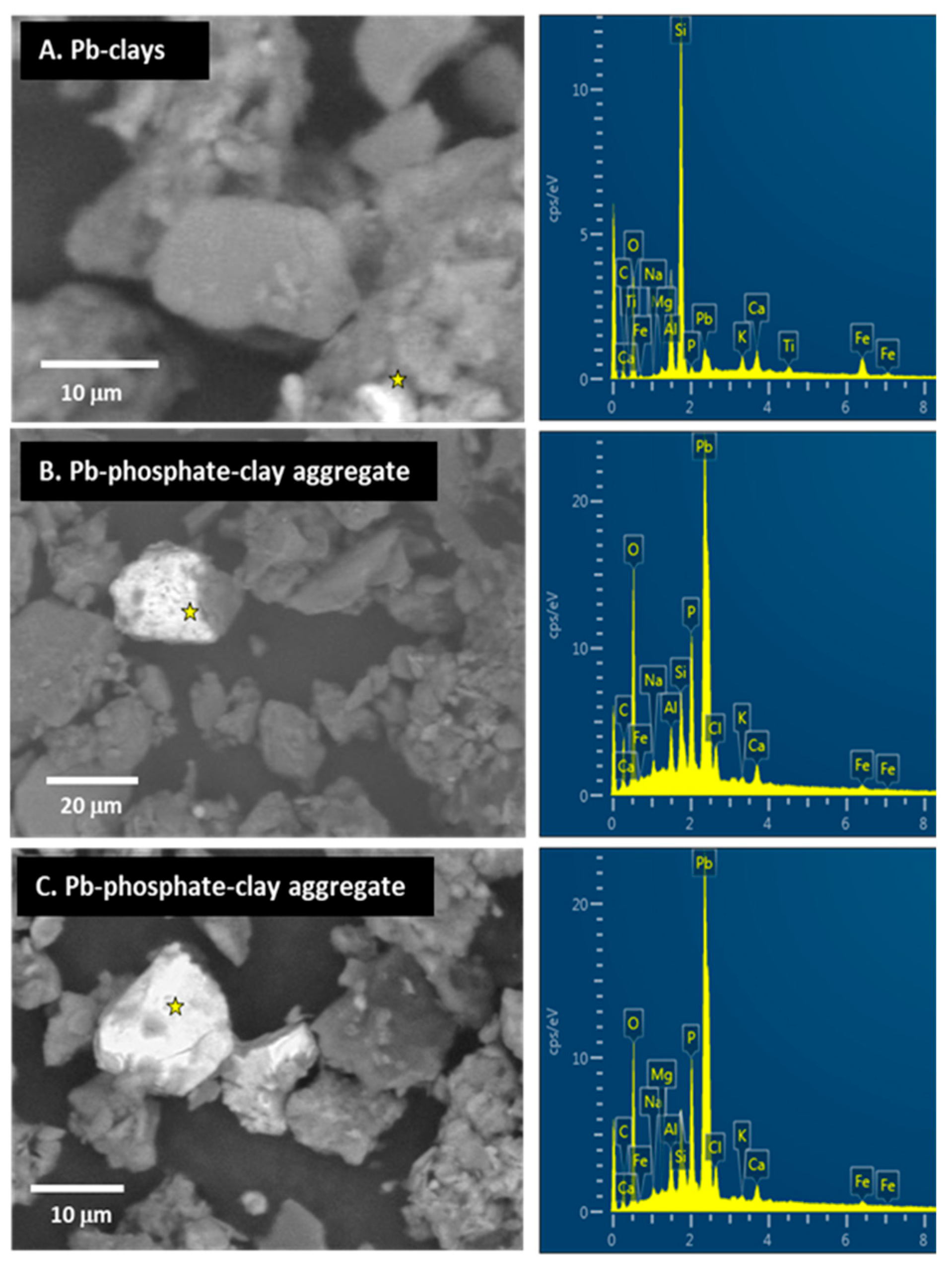
In both the silt and clay–fine silt fractions, SEM-EDS analyses revealed that Pb-bearing particles were most abundant in Site 1 and least abundant in Sites 2 and 3, a trend consistent with the amount of total gastric acid-extractable Pb within the samples (Figure S15). Further, within each site, the abundance of Pb-bearing grains decreased with distance from the house (Figures S16–S24); by 3 m distance, only sporadic Pb-bearing particles were observed in either size fraction, in contrast to the samples closer to the homes (Figure S15). The composition of different Pb-bearing grains was distinguished based on SEM-EDS analyses and grouped into the following categories: paint chip–phyllosilicate aggregates; Pb-bearing phyllosilicates; Pb-bearing Fe-oxides (often aggregated with phyllosilicates); Pb-bearing Mn-oxides (often aggregated with phyllosilicates); Pb-phosphates; and Pb-sulfides (Table S4). Soil particles with compositions and morphologies consistent with paint fragments (Pb–O–C-rich) aggregated with clay particles were observed at Sites 1 and 2, but not at Site 3. In contrast, Pb-bearing Fe- and Mn-oxides, as well as Pb associated with clays, were observed at all three sites. The association of Pb (and other metals) with Fe- and Mn-oxides, rather than Al-oxides is consistent with the Pearson Correlation analysis (Figure S12). Lastly, grains with compositions consistent with Pb–phosphate–clay aggregates were observed only at Site 3 (Figure 4, Figure 5, Figure 6, Figure 7, Figure 8 and Figure 9). Lead-bearing grains at Sites 2 and 3 were consistent with the composition of galena (Pb-S) (Figures S19, S22 and S24). The morphology of the Pb-bearing particles ranged from approximately 1 to 4 µm in diameter. Paint chip fragments were typically angular to irregular and occurred as discrete grains (7 to 28 µm in diameter) or as part of larger paint chip–clay aggregates (10 to 38 µm in diameter). The Fe- and Mn-oxides were generally sub-rounded to irregular, often less than 6 µm, and occurred primarily as coatings on clay surfaces rather than as isolated particles. Clay-rich phases appeared platy to flocculated (Figure 6E and Figure 7D), with Pb distributed within both discrete clay aggregates and mixed aggregates with other phases. The Pb-phosphate was compact, equant to sub-rounded, typically 5 to 18 µm in diameter, and was found both as discrete grains and as fine coatings or aggregates with clays (Figure 8B,C and Figure 9B,C).
Figure 4.
Representative SEM images (left) and EDS (right) spectra showing Pb-bearing phases within the silt fraction of soils collected from Site 1 for Pb paint chip–clay aggregates (A,B), Pb associated with Fe-oxide coated clays (C), and Pb associated with clays (D). The yellow stars in the SEM images indicate the locations where the corresponding EDS spectra were collected.
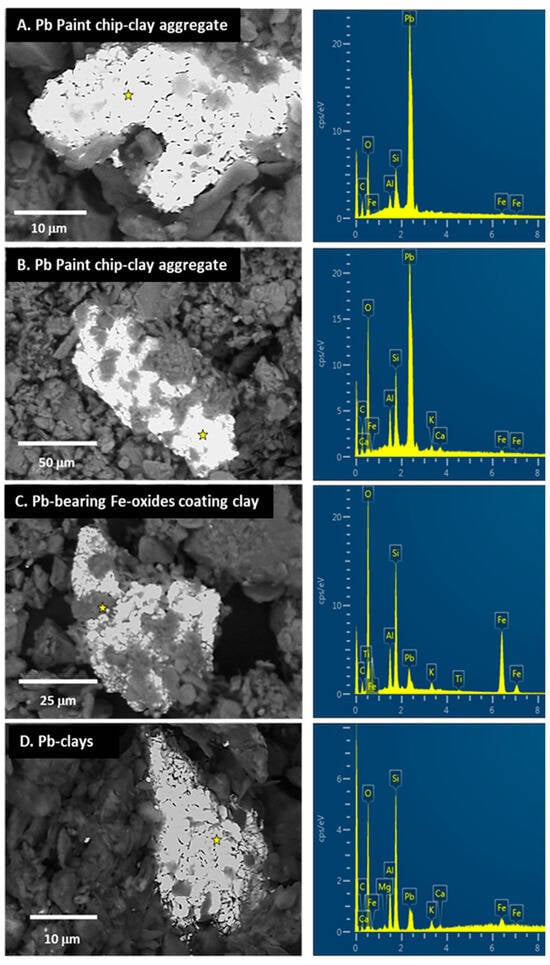
Figure 5.
Representative SEM images (left) and EDS (right) spectra showing Pb-bearing phases within the clay–fine silt fraction of soils collected from Site 1 for Pb paint chip–clay aggregates (A,B), Pb associated with Fe-oxide coated clays (C), and Pb associated with clays (D). The yellow stars in the SEM images indicate the locations where the corresponding EDS spectra were collected.
Figure 6.
Representative SEM images (left) and EDS (right) spectra showing Pb-bearing phases within the silt fraction of soils collected from Site 2 for Pb paint chip–clay aggregates (A), Pb associated with Mn-oxide coated clays (B,C), Pb associated with Fe-oxide coated clays (D), and Pb associated with clays (E). The yellow stars in the SEM images indicate the locations where the corresponding EDS spectra were collected.
Figure 7.
Representative SEM images (left) and EDS (right) spectra showing Pb-bearing phases within the clay–fine silt fraction of soils collected from Site 2 for Pb paint chip–clay aggregates (A), Pb associated with Mn-oxide coated clays (B), Pb associated with Fe-oxide coated clays (C), and Pb associated with clays (D). The yellow stars in the SEM images indicate the locations where the corresponding EDS spectra were collected.
Figure 8.
Representative SEM images (left) and EDS (right) spectra showing Pb-bearing phases within the silt fraction of soils collected from Site 3 for Pb associated with clays (A), Pb associated with phosphate and clay aggregate (B,C). The yellow stars in the SEM images indicate the locations where the corresponding EDS spectra were collected.
Figure 9.
Representative SEM images (left) and EDS (right) spectra showing Pb-bearing phases within the clay–fine silt fraction of soils collected from Site 3 for Pb associated with clays (A), Pb associated with phosphate and clay aggregate (B,C). The yellow stars in the SEM images indicate the locations where the corresponding EDS spectra were collected.
4. Discussion
4.1. Temporal and Spatial Pb Physical Speciation Trends
The concentration of labile Pb in the soils from the three homes, as measured by the total gastric acid-extractable concentration across all size fractions, decreased with time since Pb paint was added to the soils (Figure 2), specifically the time elapsed since the last renovation of the three houses. This trend likely reflects the effect of weathering on Pb particles over time [48]. Although soil weathering over time may be a dominant factor in explaining the decrease in Pb, as well as Cu, Zn, and Cd, over time, other factors may contribute to these observations as well, including variations local geomorphology and localized soil loss rates, and warrant further investigation. Despite the progressive decrease in Pb concentration over time, Pb in the soil can still pose an exposure risk, although assessing this risk is complicated, given that action levels are typically set by total metal concentrations, whereas exposure risk is linked to the potentially bioavailable fraction. One benchmark for assessing the risk of exposure is the US EPA action level of 200 mg/kg. This action level applies to total Pb concentration in soils, and previous studies have shown that 30–90% of total Pb in similar soils occurs in labile, acid-extractable species [34,49,50,51,52,53,54,55].
The relationship between [Pb]T-GA and time since home renovation can be used to assess rates of Pb loss. Although it cannot be ascertained if the initial Pb concentration in soils was the same for all three sites, physical disturbance of external Pb paints results in broadly similar total Pb concentrations in soil [3]. Furthermore, previous works [56,57] have shown that, in general, lower concentrations of Pb in soil are associated with older homes and/or longer time periods since the external surface of the house was disturbed. Based on this relationship, following the addition of Pb-bearing paint chips into soils, the loss of Pb through chemical and physical weathering would result in reaching 200 mg/kg within approximately three to four decades [33,43,44,45,46,47,48,49]. The estimated rate of Pb loss from Site 1 to Site 3 is estimated to be approximately 500 mg/kg/year. These results are consistent with previous studies that have demonstrated the combined effect of chemical and physical weathering on Pb loss over time [58]. Although few studies have quantified rates of Pb loss from soils, available evidence indicates that Pb mobility and immobilization are strongly controlled by soil environment and mineralogy, with factors such as clay content, pH, and soil age [59] influencing loss rates and with urban and suburban soils often promoting faster immobilization than natural forested systems. For example, in boreal forest soils in eastern Finland, Pb was reported to have been released from parent materials at a mean rate of 0.1 μg/kg/yr, comparable to atmospheric deposition, litterfall, and leaching [60], highlighting the significantly lower Pb leach rates in soils with less anthropogenic disturbances compared to the current study. Although no data were measured to observe the flux and speciation of Pb lost from the soils, previous studies have explained the media through which Pb can be lost from soils, including aqueous [61] and particulate forms (such as colloids, organic matter, resuspension of fine particles, and adsorption to oxides like Fe, Mn, and Al) [62,63]. Laboratory-based irrigation experiments intended to simulate Pb leaching from rainfall on contaminated soils have shown that limited leaching of soil particles and/or Pb-bearing colloids was observed [64]. This may be due to the association of Pb with aggregates of clays and Fe-oxides observed here in and other studies [37,55] that may be less mobile, suggesting that the dominant form of Pb being lost from the soils is dissolved and transported in the aqueous phase; however, further investigation is warranted to determine the speciation and flux of Pb loss over time.
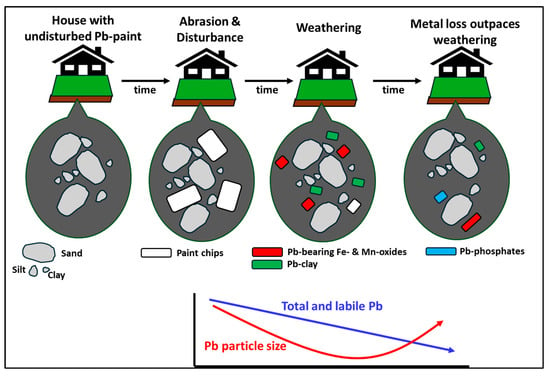
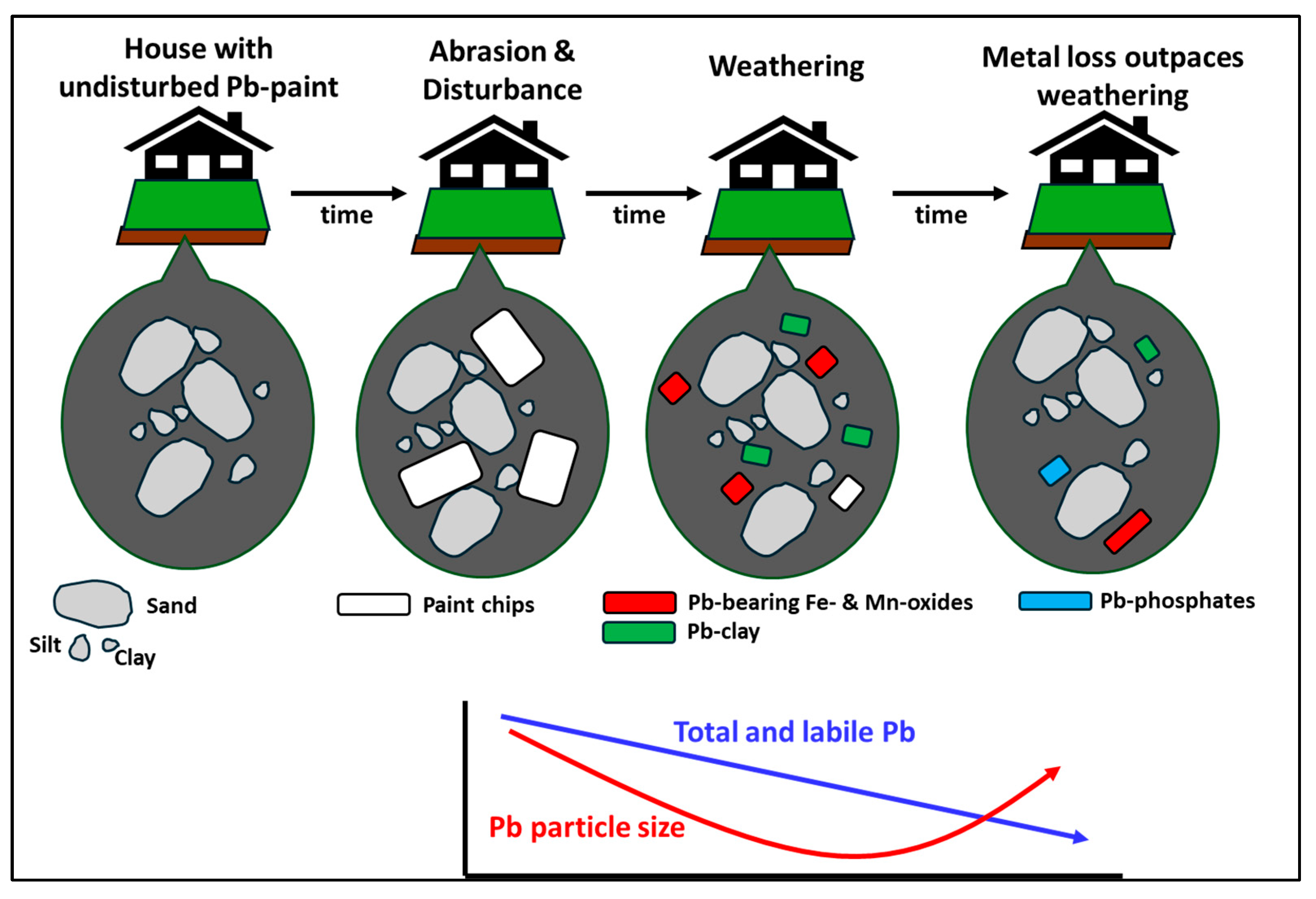
Although the total gastric acid-extractable concentrations of Pb and other metals exhibited a decreasing trend over time, the distribution of Pb and other metals in the three size fractions did not reveal a linear trend. Specifically, the fraction of Pb in the finest size fraction increased from Site 1 to Site 2 (Figure 3), consistent with the combination of physical and chemical weathering resulting in the fining of metal-bearing phases [65,66], as well as soil weathering being linked to higher Pb concentrations. However, with longer weathering times, the distribution of Pb physical speciation shifted with a slight decrease in the percentage of Pb in the clay–silt fraction from Site 2 to Site 3. This trend was also observed for Zn, Cu, and Cd (Figure 3). It should be noted that these metals are not present in Pb-bearing paint, but their concentration profiles and correlation with Pb suggest a similar source and overall similar in weathering behavior. It is likely that these metals are sourced from materials on homes, including galvanized iron within roofs and other metal components [67,68]. Elevated concentrations and correlations between Cu Zn, Cd, and Pb have been linked to both the residences as the primary sources [69,70] of these metals and similar retention pathways, including uptake by secondary metal oxides, clays, and organic matter in soils [71,72]. Ultimately, the variability in the particle size distribution trend over time of these metals is likely due to faster flux rates of aqueous and/or metal-bound phases being faster than the weathering of Pb- and metal-bearing phases, resulting in the loss of the fine fraction of metal-bearing phases. These results underscore the dynamic weathering conditions in the soils (summarized in Figure 10), and further investigation is warranted to better describe the flux and speciation of Pb and other metals leaching from these soils.
Figure 10.
Conceptual model of weathering and metal-loss progression of Pb-based paint following its introduction into soil over time. Relevant phases include paint chips (white rectangles), Pb-bearing Fe- and Mn-oxides (red rectangles), Pb-bearing clays (green rectangles), and Pb-phosphates (blue rectangles). The graph illustrates temporal trends in total Pb concentrations and Pb particle size.
One other important aspect in the speciation of Pb and other anthropogenically sourced metals in the Akron soils was the invariance in physical speciation and distribution across particle sizes within each site transect. Similar patterns have been previously reported in residential soils [22], which contrasts with a prior study that observed variation in the chemical speciation of Pb along the transects of similar soils [37]. It is possible that during chemical weathering, when Pb and other metals are redistributed to new phases, including secondary mineral coatings composed of metal oxides and clay aggregates that exist across particle sizes [73], that the reactive surface area of these phases is far greater than the amount of Pb being leached and re-sequestered. Further, even coarser grains, such as sand and silt, can be covered with thin reactive coatings capable of binding Pb as effectively as clay minerals [74], resulting in a sink for Pb and other metals across a range of particle sizes. Such conditions could result in changes in Pb chemical speciation across a lawn transect, with no apparent change in physical speciation. Evidence for this is provided by the observation that the bulk soil particle distribution [37] did not match the distribution of Pb and other metals, as Site 1 had a finer texture compared to Sites 2 and 3. Therefore, the reactive surfaces and particle size distribution of secondary mineral coatings likely exert a strong degree of control on metal physical speciation, while chemical speciation drives the redistribution of Pb-bearing phases. Ultimately, these results highlight the importance of home external surfaces as sources of potentially toxic elements into the environment and local soils, and further work is warranted to investigate these trends in controlled laboratory settings and across a broader urban geographic area.
4.2. Changes in Pb-Bearing Phase Mineralogy
Akron soils exhibited a progression of Pb phase changes over time following the addition of Pb paint chips. Unweathered Pb-based paint was produced with several compounds, including Pb carbonates (cerussite, hydrocerussite), chromates (PbCrO4), sulfates (anglesite), and oxides (PbO, Pb3O4) [75]. However, Pb-carbonates were the more dominant form of Pb in the residential paints. Comparing Pb speciation as a function of time since renovation at the three homes, a weathering progression is observed where following the onset of the paint weathering, Pb phases associated with Fe and Mn oxides and clays emerged, while the Pb paint chips continued to reduce in size and undergo chemical alteration. Some of the Pb2+ released from the paint appears to have been lost or re-sorbed into the system to form less labile species such as phosphates. Lead associated with phosphate was unique to Pb particles that had undergone much longer weathering (Figure 8 and Figure 9). These observations align with findings that the highly stable Pb-phosphate minerals seen in Pb-based paint residues, such as pyromorphite, form through long-term weathering. As primary Pb minerals like Pb carbonates gradually dissolve, they release Pb2+ ions that react with available phosphate to produce these persistent Pb-phosphate phases. This transformation occurs slowly over an extended period of weathering. It is controlled mainly by the dissolution rate of the original Pb minerals and the availability of phosphate in the environment [76]. The formation of Pb phosphate minerals has been reported to be an effective buffer mechanism responsible for controlling Pb mobility in contaminated soils [77]. Some studies have reported natural and anthropogenic sources of phosphates in residential soils. Natural sources include apatite weathering and the mineralization of organic matter, while anthropogenic sources include fertilizers and domestic inputs such as detergents, waste, and sludge [78]. The soils studied in the Akron area were from residential environments with gardens and green spaces, where fertilizer use may have been a prominent source of phosphate. In addition, microbial activity can fix phosphorus in soils by immobilizing it within microbial biomass and by driving redox reactions that promote its association with mineral phases [79]. Following microbial turnover, this immobilized phosphorus can be released back into the soil, thereby mobilizing it and making it available to plants [80]. Despite the coexistence of phosphate and Pb2+ ions in residential soils, the formation of Pb-phosphate species such as pyromorphite is often delayed. This slow transformation reflects the kinetically limited nature of pyromorphite nucleation and growth [81], as well as restricted phosphate availability resulting from sorption onto Fe/Al oxides and organic matter [82]. Pb release from paint chips and other particulate residues occur gradually through weathering, further constraining reaction rates. Fluctuations in soil pH, redox state, and moisture also interrupt the geochemical conditions required for stable Pb-phosphate precipitation. As a result, Pb-phosphate species typically emerge only after extended environmental exposure, consistent with findings that its formation is thermodynamically favored but kinetically slow.
With respect to the presence of galena at Sites 2 and 3, previous work has shown that urban soils downwind of sulfur emissions, including the rubber industry in Akron, could result in the transformation of Pb in soils into galena [55]. This would explain why galena was observed at Sites 2 and 3, which are downwind of major S emission sources in Akron, but not at Site 1, which is located north of those sources. Further work is warranted to determine the extent to which galena is found in downwind soils and whether the formation of galena was limited to time periods with particularly high S emissions or if this occurred over a wider period. Ultimately, these results highlight the broad geographic area impacted by both Pb contamination and other industrial impacts, including areas outside the urban core.
5. Conclusions
Understanding how Pb and other metals are distributed across soil particle sizes and spatial gradients is critical for assessing their persistence and potential exposure risk in urban environments. Across all transects in the Akron soil, total extractable Pb, Zn, Cu, and Cd were highest in soils closest to the three homes and decreased with increasing distance from the homes. These results suggest that the dominant source of metals in these soils is from the home, including leaded paint and other metal-bearing phases on the exterior of the structure. Somewhat surprisingly, the distribution of Pb and the other metals among the three particle-size fractions remained largely invariant with both distance and depth from the houses. The concentration of metals was also highest in the clay–fine silt fraction at all sites; however, concentrations in this finest fraction increased from Site 1 to Site 2 and then declined at Site 3, suggesting the loss of more fine fractions in Site 3. With respect to Pb, the rate of loss following the addition of paint chips to soil, determined with respect to the US EPA action limit of 200 mg/kg, was estimated to be three to four decades, with a loss rate of approximately 500 mg/kg/y. Grain and sub-grain-scale observations indicate the in situ formation of relatively stable Pb compounds such as Pb phosphates, within one to two decades after Pb-paint addition to the soil. These findings lend support to existing phosphate-based remediation strategies to facilitate the formation of recalcitrant phases, while underscoring the need for further investigation into the mechanisms governing Pb phosphate formation and their implications for the long-term effectiveness of remediation in Pb-contaminated residential lawns.
The study area experiences a humid continental climate, marked by hot, humid summers and cold winters with precipitation distributed fairly evenly throughout the year. In different climatic settings, metal behavior may diverge substantially. Increased temperature, humidity, and episodic flooding in urban soil could alter metal redistribution or loss through changes in redox conditions. For example, laboratory-controlled flooding experiments demonstrate that flooding can lower redox potential and increase pH, conditions that in some cases reduce metal mobility by enhancing adsorption onto soil particles and promoting its transfer from exchangeable pools into Fe–Mn-oxide-bound and other less mobile fractions [83]. However, this response is not ubiquitous under reducing conditions. Metal mobility during flooding may instead depend on site-specific factors such as soil type, organic matter content, Fe/Mn oxide abundance, and sulfide formation. For example, metals associated with Fe- and Mn-oxides can be remobilized when these phases dissolve under strongly reducing conditions [84,85].
Given the high levels of contamination of Pb within these soils, housing and environmental agencies should prioritize targeted remediation within the first three meters surrounding older homes to effectively reduce residential Pb exposure, particularly during the decade following exterior renovation or paint disturbance. Observations from this Akron study show that this perimeter zone contains the highest concentrations of labile, bioavailable Pb due to the weathering of discrete lead-based paint chips that persist in soil for years before fully disintegrating. Given the elevated Pb bioavailability associated with small, highly mobile particles, post-renovation soil management may be mandated as part of lead-safe work practices, including removal or capping of contaminated surface soils, installation of physical or vegetative barriers to prevent splash and tracking, and routine post-renovation soil assessments. Incorporating these measures into local housing codes and renovation standards would address the most active exposure pathway in urban yards and substantially reduce the long-term burden of legacy Pb contamination.
Supplementary Materials
The following supporting information can be downloaded at https://www.mdpi.com/article/10.3390/soilsystems10080086/s1: Figure S1. SEM-EDS images and spectra of paint chips from Site 1; Figure S2. Light-scattering–derived particle-size distributions at selected sample depths used to establish average particle sizes and depth thresholds for operational separation of clay–fine silt and silt fractions; Figures S3 and S4. Total gastric-extractable concentration of selected elements over the horizontal front transects across the three homes; Figures S5 and S6. Percentage contribution of total gastric-extractable concentrations of selected elements within the fractions across the sites; Figures S7 and S8. Total gastric-extractable concentration of selected elements over the horizontal back transect across the three homes; Figures S9–S11. Percentage contribution of individual elements along horizontal and vertical transects; Figure S13. Mineral abundance along the front transects of the homes in each size fraction. Figure S14. Mineral abundance along the front transects with distance from the homes; Figure S15. SEM-EDS wide-view images of the silt and clay fractions at and magnification; Figures S16–S24. Representative SEM-EDS images and spectra of Pb-bearing phases in the silt and clay fractions; Tables S1–S3. Mineralogy of the silt and clay fractions at Sites 1–3; Table S4. Grain composition analysis by EDS.
Author Contributions
The contribution of each author to project roles is as follows: Conceptualization C.E.N. and D.M.S.; Methodology C.E.N. and D.M.S.; Validation D.M.S. and A.C.T., Formal analysis C.E.N., D.M.S. and A.C.T.; Investigation C.E.N., D.M.S., A.C.T., J.B., B.S. and P.C.; Resources C.E.N. and D.M.S., Data curation D.M.S., Writing—original draft C.E.N. and D.M.S.; Writing—review and editing C.E.N., D.M.S., A.C.T., J.B., B.S. and P.C.; Visualization C.E.N. and D.M.S.; Supervision D.M.S.; Project administration D.M.S.; and Funding acquisition C.E.N. and D.M.S. All authors have read and agreed to the published version of the manuscript.
Funding
This research was supported by Kent State University Graduate Student Senate (GSS) Research Award to C.E.N.
Data Availability Statement
Data are contained within the article or Supplementary Materials.
Acknowledgments
We are grateful to the three Akron-area homeowners for providing access to their property.
Conflicts of Interest
The authors declare no conflicts of interest.
References
- Filippelli, G.M.; Laidlaw, M.A.S. The elephant in the playground: Confronting lead-contaminated soils as an important source of lead burdens to urban populations. Perspect. Biol. Med. 2010, 53, 31–45. [Google Scholar] [CrossRef] [Scilit] [PubMed]
- Laidlaw, M.A.S.; Filippelli, G.; Mielke, H.; Gulson, B.; Ball, A.S. Lead exposure at firing ranges—A review. Environ. Health 2017, 16, 34. [Google Scholar] [CrossRef] [Scilit] [PubMed]
- Mielke, H.W.; Reagan, P.L. Soil Is an Important Pathway of Human Lead Exposure. Environ. Health Perspect. 1998, 106, 217–229. [Google Scholar] [CrossRef] [Scilit] [PubMed]
- Boldyrev, M. Lead: Properties, history, and applications. WikiJ. Sci. 2018, 1, 1–23. [Google Scholar] [CrossRef] [Scilit]
- Lanphear, B.P.; Hornung, R.; Khoury, J.; Yolton, K.; Baghurst, P.; Bellinger, D.C.; Canfield, R.L.; Dietrich, K.N.; Bornschein, R.; Greene, T.; et al. Low-level environmental lead exposure and children’s intellectual function: An international pooled analysis. Environ. Health Perspect. 2005, 113, 894–899. [Google Scholar] [CrossRef] [Scilit] [PubMed]
- Collin, M.S.; Venkatraman, S.K.; Vijayakumar, N.; Kanimozhi, V.; Arbaaz, S.M.; Stacey, R.G.S.; Anusha, J.; Choudhary, R.; Lvov, V.; Tovar, G.I.; et al. Bioaccumulation of lead (Pb) and its effects on human: A review. J. Hazard. Mater. Adv. 2022, 7, 100094. [Google Scholar] [CrossRef] [Scilit]
- Li, X.; Gao, Y.; Zhang, M.; Zhang, Y.; Zhou, M.; Peng, L.; He, A.; Zhang, X.; Yan, X.; Wang, Y.; et al. In vitro lung and gastrointestinal bioaccessibility of potentially toxic metals in Pb-contaminated alkaline urban soil: The role of particle size fractions. Ecotoxicol. Environ. Saf. 2020, 190, 110151. [Google Scholar] [CrossRef] [Scilit] [PubMed]
- Consumer Product Safety Commission. National Archives: Code of Federal Regulations. In Ban of Lead-Containing Paint and Certain Consumer Products Bearing Lead-Containing Paint; Consumer Product Safety Commission: Bethesda, MD, USA, 1977. [Google Scholar]
- Hauptman, M.; Bruccoleri, R.; Woolf, A.D. An Update on Childhood Lead Poisoning. Clin. Pediatr. Emerg. Med. 2017, 18, 181–192. [Google Scholar] [CrossRef] [Scilit] [PubMed]
- Brown, M.J.; Margolis, S. Lead in Drinking Water and Human Blood Lead Levels in the United States. Morb. Mortal. Wkly. Rep. 2012, 61, 1–9. [Google Scholar]
- Egan, K.B.; Cornwell, C.R.; Courtney, J.G.; Ettinger, A.S. Blood lead levels in U.S. children ages 1–11 Years, 1976–2016. Environ. Health Perspect. 2021, 129, 37003. [Google Scholar] [CrossRef] [Scilit] [PubMed]
- Hauptman, M.; Niles, J.K.; Gudin, J.; Kaufman, H.W. Individual- And Community-Level Factors Associated with Detectable and Elevated Blood Lead Levels in US Children: Results from a National Clinical Laboratory. JAMA Pediatr. 2021, 175, 1252–1260. [Google Scholar] [CrossRef] [Scilit] [PubMed]
- Mielke, H.W.; Anderson, J.C.; Berry, K.J.; Mielke, P.W.; Chaney, R.L.; Leech, M. Lead Concentrations in Inner-City Soils As a Factor in the Child Lead Problem. Am. J. Public Health 1983, 73, 1366–1369. [Google Scholar] [CrossRef] [Scilit] [PubMed]
- Fitzstevens, M.G.; Sharp, R.M.; Brabander, D.J. Biogeochemical characterization of municipal compost to support urban agriculture and limit childhood lead exposure from resuspended urban soils. Elementa 2017, 5, 51. [Google Scholar] [CrossRef] [Scilit]
- Mitra, A.; Sen, I.S.; Pandey, S.K.; Velu, V.; Reisberg, L.; Bizimis, M.; Cloquet, C.; Nizam, S. Lead Isotope Evidence for Enhanced Anthropogenic Particle Transport to the Himalayas during Summer Months. Environ. Sci. Technol. 2021, 55, 13697–13708. [Google Scholar] [CrossRef] [Scilit] [PubMed]
- Mielke, H.W.; Gonzales, C.R.; Powell, E.T.; Egendorf, S.P. Lead in Air, Soil, and Blood: Pb Poisoning in a Changing World. Int. J. Environ. Res. Public Health 2022, 19, 9500. [Google Scholar] [CrossRef] [Scilit] [PubMed]
- Filippelli, G.M.; Adamic, J.; Nichols, D.; Shukle, J.; Frix, E. Mapping the urban lead exposome: A detailed analysis of soil metal concentrations at the household scale using citizen science. Int. J. Environ. Res. Public Health 2018, 15, 1531. [Google Scholar] [CrossRef] [Scilit] [PubMed]
- Macías, R.; Ramos, M.S.; Guerrero, A.L.; Farfán, M.G.; Mitchell, K.; Avelar, F.J. Contamination Assessment and Chemical Speciation of Lead in Soils and Sediments: A Case Study in Aguascalientes, México. Appl. Sci. 2022, 12, 8592. [Google Scholar] [CrossRef] [Scilit]
- Haque, E.; Thorne, P.S.; Nghiem, A.A.; Yip, C.S.; Bostick, B.C. Lead (Pb) concentrations and speciation in residential soils from an urban community impacted by multiple legacy sources. J. Hazard. Mater. 2021, 416, 125886. [Google Scholar] [CrossRef] [Scilit] [PubMed]
- Sowers, T.D.; Blackmon, M.D.; Wilkin, R.T.; Rovero, M.; Bone, S.E.; Jerden, M.L.; Nelson, C.M.; Bradham, K.D. Lead Speciation, Bioaccessibility, and Sources for a Contaminated Subset of House Dust and Soils Collected from Similar United States Residences. Environ. Sci. Technol. 2024, 58, 9339–9349. [Google Scholar] [CrossRef] [Scilit] [PubMed]
- D’Amore, J.J.; Al-Abed, S.R.; Scheckel, K.G.; Ryan, J.A. Methods for Speciation of Metals in Soils. J. Environ. Qual. 2005, 34, 1707–1745. [Google Scholar] [CrossRef] [Scilit] [PubMed]
- Saleh, H.; Sarkar, D.; Mustafa, K.; Zhang, Z.; Larson, S.; Datta, R. Impact of soil particle size on lead distribution, geochemical speciation, and bioaccessibility in lead paint-contaminated residential soils. Environ. Geochem. Health 2025, 47, 312. [Google Scholar] [CrossRef] [Scilit] [PubMed]
- Kennedy, S.K.; Walker, W.; Forslund, B. Speciation and Characterization of Heavy Metal-Contaminated Soils Using Computer-Controlled Scanning Electron Microscopy. Environ. Forensics 2002, 3, 131–143. [Google Scholar] [CrossRef] [Scilit]
- Huang, B.; Yuan, Z.; Li, D.; Zheng, M.; Nie, X.; Liao, Y. Effects of soil particle size on the adsorption, distribution, and migration behaviors of heavy metal(loid)s in soil: A review. Environ. Sci. Process. Impacts 2020, 22, 1596–1615. [Google Scholar] [CrossRef] [Scilit] [PubMed]
- Landrot, G.; Khaokaew, S. Lead Speciation and Association with Organic Matter in Various Particle-Size Fractions of Contaminated Soils. Environ. Sci. Technol. 2018, 52, 6780–6788. [Google Scholar] [CrossRef] [Scilit] [PubMed]
- Hayes, S.M.; White, S.A.; Thompson, T.L.; Maier, R.M.; Chorover, J. Changes in lead and zinc lability during weathering-induced acidification of desert mine tailings: Coupling chemical and micro-scale analyses. Appl. Geochem. 2009, 24, 2234–2245. [Google Scholar] [CrossRef] [Scilit] [PubMed]
- Felde, V.J.M.N.L.; Schweizer, S.A.; Biesgen, D.; Ulbrich, A.; Uteau, D.; Knief, C.; Graf-Rosenfellner, M.; Kögel-Knabner, I.; Peth, S. Wet sieving versus dry crushing: Soil microaggregates reveal different physical structure, bacterial diversity and organic matter composition in a clay gradient. Eur. J. Soil Sci. 2020, 72, 810–828. [Google Scholar] [CrossRef] [Scilit]
- Zheng, N.; Luo, M.; Meng, D.; Xu, D.; Liu, Z.; Shao, Y.; Ma, L. Effect of Soil Aggregate Separation Methods on the Occurrence Characteristics of Typical Pollutants. Processes 2022, 10, 216. [Google Scholar] [CrossRef] [Scilit]
- Fernández-Martínez, R.; Loredo, J.; Ordóñez, A.; Rucandio, M.I. Physicochemical characterization and mercury speciation of particle-size soil fractions from an abandoned mining area in Mieres, Asturias (Spain). Environ. Pollut. 2006, 142, 217–226. [Google Scholar] [CrossRef] [Scilit] [PubMed]
- Plumlee, G.S.; Morman, S.A.; Ziegler, T.L. The toxicological geochemistry of Earth materials: An overview of processes and the interdisciplinary methods used to understand them. Rev. Miner. Geochem. 2006, 64, 5–57. [Google Scholar] [CrossRef] [Scilit]
- Kolawole, T.O.; Ajibade, O.M.; Olajide-Kayode, J.O.; Fomba, K.W. Level, distribution, ecological, and human health risk assessment of heavy metals in soils and stream sediments around a used-automobile spare part market in Nigeria. Environ. Geochem. Health 2023, 45, 1573–1598. [Google Scholar] [CrossRef] [Scilit] [PubMed]
- Karna, R.R.; Noerpel, M.; Betts, A.R.; Scheckel, K.G. Lead and Arsenic Bioaccessibility and Speciation as a Function of Soil Particle Size. J. Environ. Qual. 2017, 46, 1225–1235. [Google Scholar] [CrossRef] [Scilit] [PubMed]
- Ruby, M.V.; Davis, A.; Eberle, S.; Sellstone, C.M. Estimation of Lead and Arsenic Bioavailability Using a Physiologically Based Extraction Test. 1996. Available online: https://pubs.acs.org/sharingguidelines (accessed on 29 October 2025).
- Yan, K.; Dong, Z.; Wijayawardena, M.A.A.; Liu, Y.; Naidu, R.; Semple, K. Measurement of soil lead bioavailability and influence of soil types and properties: A review. Chemosphere 2017, 184, 27–42. [Google Scholar] [CrossRef] [Scilit] [PubMed]
- Cartwright, A.; Jackson, K.; Morgan, C.; Anderson, A.; Britt, D.W. A review of metal and metal-oxide nanoparticle coating technologies to inhibit agglomeration and increase bioactivity for agricultural applications. Agronomy 2020, 10, 1018. [Google Scholar] [CrossRef] [Scilit]
- Schindler, M.; Singer, D.M. Mineral surface coatings: Environmental records at the nanoscale. Elements 2017, 13, 159–164. [Google Scholar] [CrossRef] [Scilit]
- Nwoko, C.E.; Singer, D.M.; Tessin, A.C.; Izworski, R.; Heestand, C. Spatial Variability in the Speciation of Lead (Pb) and Other Metals Across Urban Lawns Is Linked to Post-Deposition Weathering Reactions. Soil Syst. 2024, 8, 113. [Google Scholar] [CrossRef] [Scilit]
- Banks, P.O.; Feldmann, R.M. Guide to the Geology of Northeastern Ohio; Northern Ohio Geological Society: Cleveland, OH, USA, 1970.
- White, G.W.; Totten, S.M. Glacial Geology of Northeastern Ohio; State of Ohio Department of Natural Resources, Division of Geological Survey: Columbus, OH, USA, 1982.
- American Chemical Society. Kem-Tone ® Wall Finish; The Sherwin-Williams Company: Cleveland, OH, USA, 1996. [Google Scholar]
- Rabin, R. Public Health Then and Now Warnings Unheeded: A History of Child Lead Poisoning. Am. J. Public Health 1989, 79, 1668–1674. [Google Scholar] [CrossRef] [Scilit] [PubMed]
- Markowitz, G.; Rosner, D. “Cater to the Children”: The Role of The Lead Industry in a Public Health Tragedy, 1900–1955. Am. J. Public Health 2000, 90, 36–46. [Google Scholar] [CrossRef] [Scilit] [PubMed]
- Jacobs, D.E.; Clickner, R.P.; Zhou, J.Y.; Viet, S.M.; Marker, D.A.; Rogers, J.W.; Zeldin, D.C.; Broene, P.; Friedman, W. The Prevalence of Lead-Based Paint Hazards in U.S. Housing. Environ. Health Perspect. 2002, 110, A599–A606. [Google Scholar] [CrossRef] [Scilit] [PubMed]
- U.S. Environmental Protection Agency. METHOD 1340: In-Vitro Bioaccessibility Assay for Lead in Soil; SW-846 Update VI; US EPA: Washington, DC, USA, 2017; pp. 1–29.
- Christman, T.; Martin, J.; Myers, F.; Rasik, C.; Sainey, E.; Steigerwald-Dick, V. Evaluation of Background Metal Soil Concentrations in Cuyahoga County—Cleveland Area; OH-EPA Summary Report; Ohio EPA: Columbus, OH, USA, 2013.
- Gibson, M.; Farmer, J. Multi-step Sequential Chemical Extraction of Heavy Metals from Urban Soils. Environ. Pollut. Ser. B Chem. Phys. 1986, 11, 117–135. [Google Scholar] [CrossRef] [Scilit]
- Gonçalves, J.d.G.; Souza, L.R.R.; da Veiga, M.A.M.S. Lead in Urban Soils: Relation between the Hazard Exposure from Bioaccessible Fraction and Soil Fractionation. Soil Sediment Contam. Int. J. 2023, 32, 164–178. [Google Scholar] [CrossRef] [Scilit]
- Willgoose, G. Soils: Physical Weathering and Soil Particle Fragmentation. In Principles of Soilscape and Landscape Evolution; Cambridge University Press: Cambridge, UK, 2018; pp. 96–118. [Google Scholar] [CrossRef] [Scilit]
- Hamel, S.C.; Ellickson, K.M.; Lioy, P.J. The estimation of the bioaccessibility of heavy metals in soils using artificial biofluids by two novel methods: Mass-balance and soil recapture. Sci. Total. Environ. 1999, 243–244, 273–283. [Google Scholar] [CrossRef] [Scilit] [PubMed]
- Juhasz, A.L.; Weber, J.; Smith, E.; Naidu, R.; Marschner, B.; Rees, M.; Rofe, A.; Kuchel, T.; Sansom, L. Evaluation of SBRC-gastric and SBRC-intestinal methods for the prediction of in vivo relative lead bioavailability in contaminated soils. Environ. Sci. Technol. 2009, 43, 4503–4509. [Google Scholar] [CrossRef] [Scilit] [PubMed]
- Wu, J.; Edwards, R.; He, X.; Liu, Z.; Kleinman, M. Spatial analysis of bioavailable soil lead concentrations in Los Angeles, California. Environ. Res. 2010, 110, 309–317. [Google Scholar] [CrossRef] [Scilit] [PubMed]
- Stewart, L.R.; Farver, J.R.; Gorsevski, P.V.; Miner, J.G. Spatial prediction of blood lead levels in children in Toledo, OH using fuzzy sets and the site-specific IEUBK model. Appl. Geochem. 2014, 45, 120–129. [Google Scholar] [CrossRef] [Scilit]
- Bradham, K.D.; Nelson, C.M.; Kelly, J.; Pomales, A.; Scruton, K.; Dignam, T.; Misenheimer, J.C.; Li, K.; Obenour, D.R.; Thomas, D.J. Relationship Between Total and Bioaccessible Lead on Children’s Blood Lead Levels in Urban Residential Philadelphia Soils. Environ. Sci. Technol. 2017, 51, 10005–10011. [Google Scholar] [CrossRef] [Scilit] [PubMed]
- Paltseva, A.; Cheng, Z.; Deeb, M.; Groffman, P.M.; Maddaloni, M. Variability of Bioaccessible Lead in Urban Garden Soils. Soil Sci. 2018, 183, 123–131. [Google Scholar] [CrossRef] [Scilit]
- Santoro, N.; Singer, D.M.; Mulvey, B.K.; Halasa, K.; Teutsch, N.; Shedleski, A.; Wood, M. Neighborhood-scale lead (Pb) speciation in Akron, Ohio (USA) soils: Primary sources, post-deposition diagenesis, and high concentrations of labile Pb. Environ. Geochem. Health 2024, 46, 164. [Google Scholar] [CrossRef] [Scilit] [PubMed]
- Mielke, H.W.; Gonzales, C.R.; Smith, M.K.; Mielke, P.W. The Urban Environment and Children’s Health: Soils as an Integrator of Lead, Zinc, and Cadmium in New Orleans, Louisiana, U.S.A. Environ. Res. 1999, 81, 117–129. [Google Scholar] [CrossRef] [Scilit] [PubMed]
- Wade, A.M.; Richter, D.D.; Craft, C.B.; Bao, N.Y.; Heine, P.R.; Osteen, M.C.; Tan, K.G. Urban-soil pedogenesis drives contrasting legacies of lead from paint and gasoline in city soil. Environ. Sci. Technol. 2021, 55, 7981–7989. [Google Scholar] [CrossRef] [Scilit] [PubMed]
- Hu, S.; Xiong, X.; Li, X.; Wang, M.; Xu, D.; Zhou, W. Distribution and leachability of heavy metals from lead-zinc tailings with different degrees of chemical weathering in the Qinling Mountains. Appl. Geochem. 2025, 189, 106434. [Google Scholar] [CrossRef] [Scilit]
- Han, Z.; Liu, Y.; Mo, Y.; Zhao, R.; Cai, Y.; Huang, S.; Lin, X. Concentration, speciation and origin of lead (Pb) in alluvial agricultural soils in the world’s largest continuous karst terrain, southwestern China. Environ. Geochem. Health 2025, 47, 1–18. [Google Scholar] [CrossRef] [Scilit] [PubMed]
- Starr, M.; Lindroos, A.J.; Ukonmaanaho, L.; Tarvainen, T.; Tanskanen, H. Weathering Release of Heavy Metals from Soil in Comparison to Deposition, Litterfall and Leaching Fluxes in a Remote, Boreal Coniferous Forest. Available online: www.elsevier.com/locate/apgeochem (accessed on 12 June 2003).
- Yeboah, I.B.; Tuffour, H.O.; Abubakari, A.; Melenya, C.; Bonsu, M.; Quansah, C.; Adjei-Gyapong, T. Mobility and transport behavior of lead in agricultural soils. Sci. Afr. 2019, 5, e00117. [Google Scholar] [CrossRef] [Scilit]
- Sharp, R.M.; Brabander, D.J. Lead (Pb) Bioaccessibility and Mobility Assessment of Urban Soils and Composts: Fingerprinting Sources and Refining Risks to Support Urban Agriculture. Geohealth 2017, 1, 333–345. [Google Scholar] [CrossRef] [Scilit] [PubMed]
- Keçeci, M.; Usta, S.; Uygur, V. Lead adsorption in soils and the effect of soil properties: Case study from Turkey. Environ. Earth Sci. 2020, 79, 416. [Google Scholar] [CrossRef] [Scilit]
- Löv, Å.; Cornelis, G.; Larsbo, M.; Persson, I.; Sjöstedt, C.; Gustafsson, J.P.; Boye, K.; Kleja, D.B. Particle- and colloid-facilitated Pb transport in four historically contaminated soils—Speciation and effect of irrigation intensity. Appl. Geochem. 2018, 96, 327–338. [Google Scholar] [CrossRef] [Scilit]
- Stanforth, R.; Yap, C.F.; Nayar, R. Effects of Weathering on Treatment of Lead Contaminated Soils. J. Environ. Eng. 2005, 131, 38–48. [Google Scholar] [CrossRef] [Scilit]
- Gong, C.; Shao, Y.; Luo, M.; Xu, D.; Ma, L. Distribution Characteristics of Heavy Metals in Different Particle Size Fractions of Chinese Paddy Soil Aggregates. Processes 2023, 11, 1873. [Google Scholar] [CrossRef] [Scilit]
- Fergusson, J.E.; Kim, N.D. Trace Elements in Street and House Dusts: Sources and Speciation. Sci. Total Environ. 1991, 100, 125–150. [Google Scholar] [CrossRef] [Scilit] [PubMed]
- Beauchemin, S.; Rasmussen, P.E.; MacKinnon, T.; Chénier, M.; Boros, K. Zinc in house dust: Speciation, bioaccessibility, and impact of humidity. Environ. Sci. Technol. 2014, 48, 9022–9029. [Google Scholar] [CrossRef] [Scilit] [PubMed]
- Bretzel, F.; Calderisi, M. Metal contamination in urban soils of coastal Tuscany (Italy). Environ. Monit. Assess. 2006, 118, 319–335. [Google Scholar] [CrossRef] [Scilit] [PubMed]
- Nezat, C.A.; Hatch, S.A.; Uecker, T. Heavy metal content in urban residential and park soils: A case study in Spokane, Washington, USA. Appl. Geochem. 2017, 78, 186–193. [Google Scholar] [CrossRef] [Scilit]
- Degryse, F.; Smolders, E.; Parker, D.R. Partitioning of metals (Cd, Co, Cu, Ni, Pb, Zn) in soils: Concepts, methodologies, prediction and applications—A review. Eur. J. Soil Sci. 2009, 60, 590–612. [Google Scholar] [CrossRef] [Scilit]
- González Costa, J.J.; Reigosa, M.J.; Matías, J.M.; Covelo, E.F. Soil Cd, Cr, Cu, Ni, Pb and Zn sorption and retention models using SVM: Variable selection and competitive model. Sci. Total Environ. 2017, 593–594, 508–522. [Google Scholar] [CrossRef] [Scilit] [PubMed]
- Bakshe, P.; Jugade, R. Influence of Fe/Al oxyhydroxides and soil organic matter on the adsorption of Pb onto natural stream sediment. J. Environ. Health Sci. Eng. 2024, 22, 271–279. [Google Scholar] [CrossRef] [Scilit] [PubMed]
- Park, H.J.; Yang, H.I.; Park, S.I.; Lim, S.S.; Kwak, J.H.; Lee, G.-T.; Lee, S.-M.; Park, M.; Choi, W.-J. Sorption of Pb in chemical and particle-size fractions of soils with different physico-chemical properties. J. Soils Sediments 2018, 19, 310–321. [Google Scholar] [CrossRef] [Scilit]
- Gliozzo, E.; Ionescu, C. Pigments—Lead-based whites, reds, yellows and oranges and their alteration phases. Archaeol. Anthr. Sci. 2022, 14, 17. [Google Scholar] [CrossRef] [Scilit]
- Carrero, S.; Slotznick, S.P.; Fakra, S.C.; Sitar, M.C.; Bone, S.E.; Mauk, J.L.; Manning, A.H.; Swanson-Hysell, N.L.; Williams, K.H.; Banfield, J.F.; et al. Mineralogical, magnetic and geochemical data constrain the pathways and extent of weathering of mineralized sedimentary rocks. Geochim. Cosmochim. Acta 2023, 343, 180–195. [Google Scholar] [CrossRef] [Scilit]
- Shevade, A.V.; Erickson, L.; Pierzynski, G.; Jiang, S. Formation and Stability of Substituted Pyromorphite: A Molecular Modeling Study. J. Hazard. Subst. Res. 2001, 3, 2. [Google Scholar] [CrossRef] [Scilit]
- Bindraban, P.S.; Dimkpa, C.O.; Pandey, R. Exploring phosphorus fertilizers and fertilization strategies for improved human and environmental health. Biol. Fertil. Soils 2020, 56, 299–317. [Google Scholar] [CrossRef] [Scilit]
- Aguiar, D.; Melo, V.F.; Nogueira, M.A.; Corrêa, R.S. The Role of Microbial Mechanisms on the Availability of Soil Phosphorus from Fixed and Structural Mineral Fractions. J. Soil Sci. Plant Nutr. 2024, 24, 8192–8207. [Google Scholar] [CrossRef] [Scilit]
- Pang, F.; Li, Q.; Solanki, M.K.; Wang, Z.; Xing, Y.X.; Dong, D.F. Soil phosphorus transformation and plant uptake driven by phosphate-solubilizing microorganisms. Front. Microbiol. 2024, 15, 1383813. [Google Scholar] [CrossRef] [Scilit] [PubMed]
- Scheckel, K.G.; Ryan, J.A. Effects of aging and pH on dissolution kinetics and stability of chloropyromorphite. Environ. Sci. Technol. 2002, 36, 2198–2204. [Google Scholar] [CrossRef] [Scilit] [PubMed]
- Katoh, M.; Hamada, K. Formation of pyromorphite by hydroxyapatite in soil during lead migration through water-unsaturated soils. Jpn. Geotech. Soc. Spec. Publ. 2021, 9, 351–355. [Google Scholar] [CrossRef] [Scilit]
- Sun, L.; Chen, S.; Chao, L.; Sun, T. Effects of flooding on changes in Eh, pH and speciation of cadmium and lead in contaminated soil. Bull. Environ. Contam. Toxicol. 2007, 79, 514–518. [Google Scholar] [CrossRef] [Scilit] [PubMed]
- Ponting, J.; Kelly, T.J.; Verhoef, A.; Watts, M.J.; Sizmur, T. The impact of increased flooding occurrence on the mobility of potentially toxic elements in floodplain soil—A review. Sci. Total. Environ. 2021, 754, 142040. [Google Scholar] [CrossRef] [Scilit] [PubMed]
- Lu, H.; Yang, Y.; Huang, K.; Huang, G.; Hu, S.; Pan, D.; Liu, T.; Li, X. Transformation kinetics of exogenous lead in an acidic soil during anoxic-oxic alteration: Important roles of phosphorus and organic matter. Environ. Pollut. 2023, 335, 122271. [Google Scholar] [CrossRef] [Scilit] [PubMed]
Disclaimer/Publisher’s Note: The statements, opinions and data contained in all publications are solely those of the individual author(s) and contributor(s) and not of MDPI and/or the editor(s). MDPI and/or the editor(s) disclaim responsibility for any injury to people or property resulting from any ideas, methods, instructions or products referred to in the content. |
© 2026 by the authors. Licensee MDPI, Basel, Switzerland. This article is an open access article distributed under the terms and conditions of the Creative Commons Attribution (CC BY) license.