3.1. Mass Loss Rate of the Oil Pool Fire
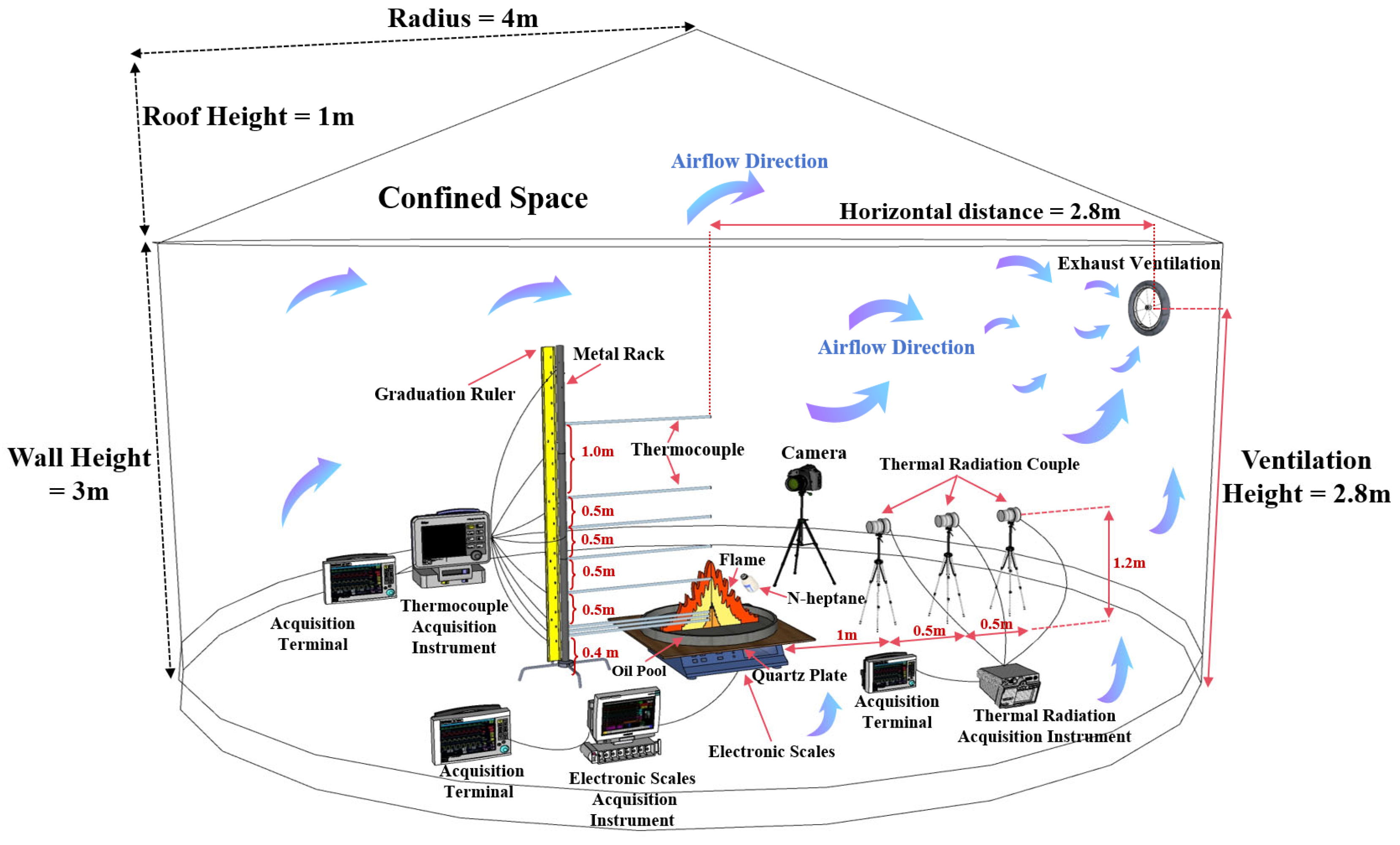
The mass loss rate (MLR, defined as the negative time derivative of the residual fuel mass, dm/dt) of an aviation kerosene pool fire is a core physical quantity for characterizing heat release intensity and evolutionary dynamics. Its dynamic evolution directly reflects the interaction between fuel consumption processes and phase change dynamics within a confined space. The temporal evolution of the residual fuel mass was measured using K-type armored thermocouples. As shown in
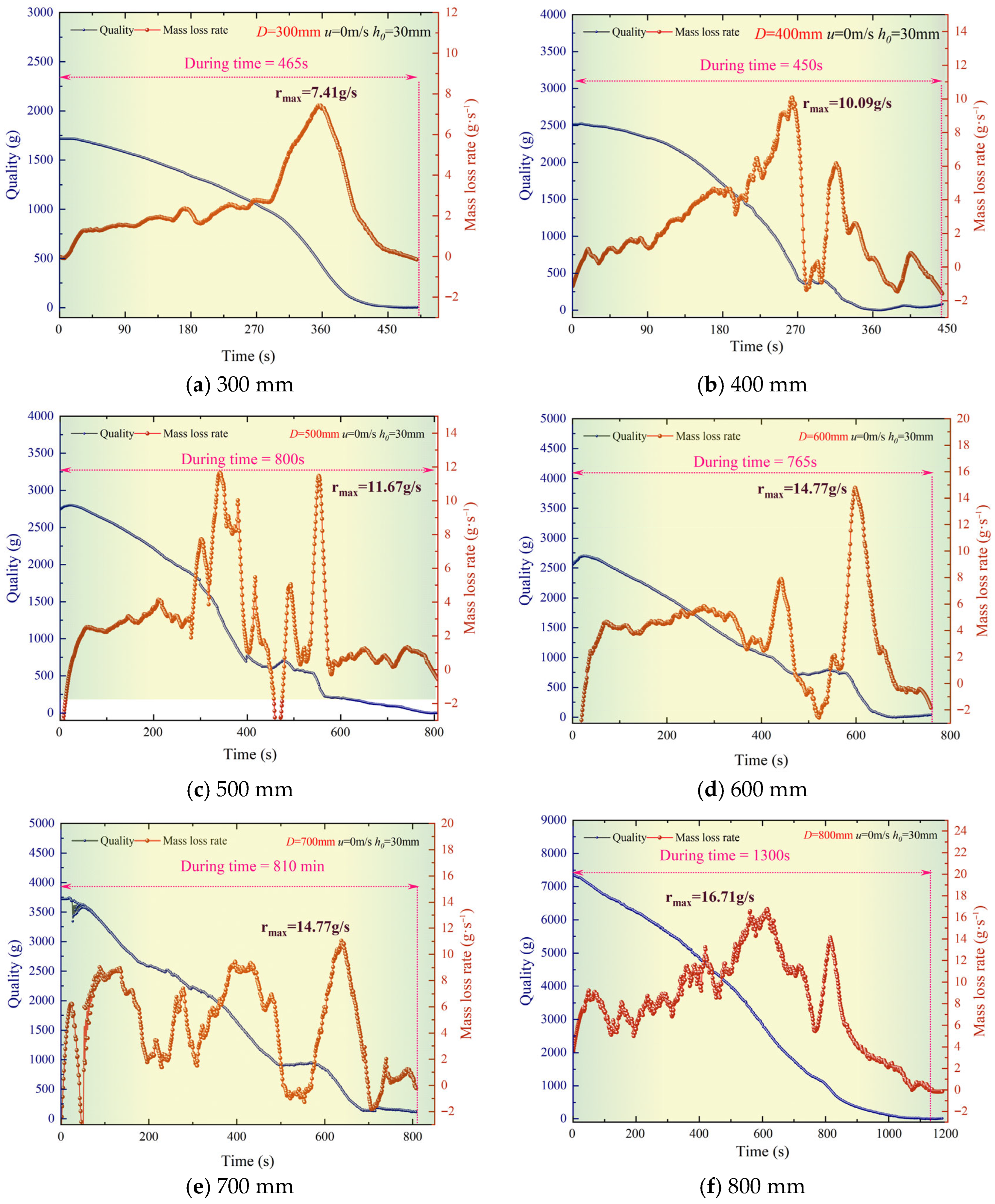
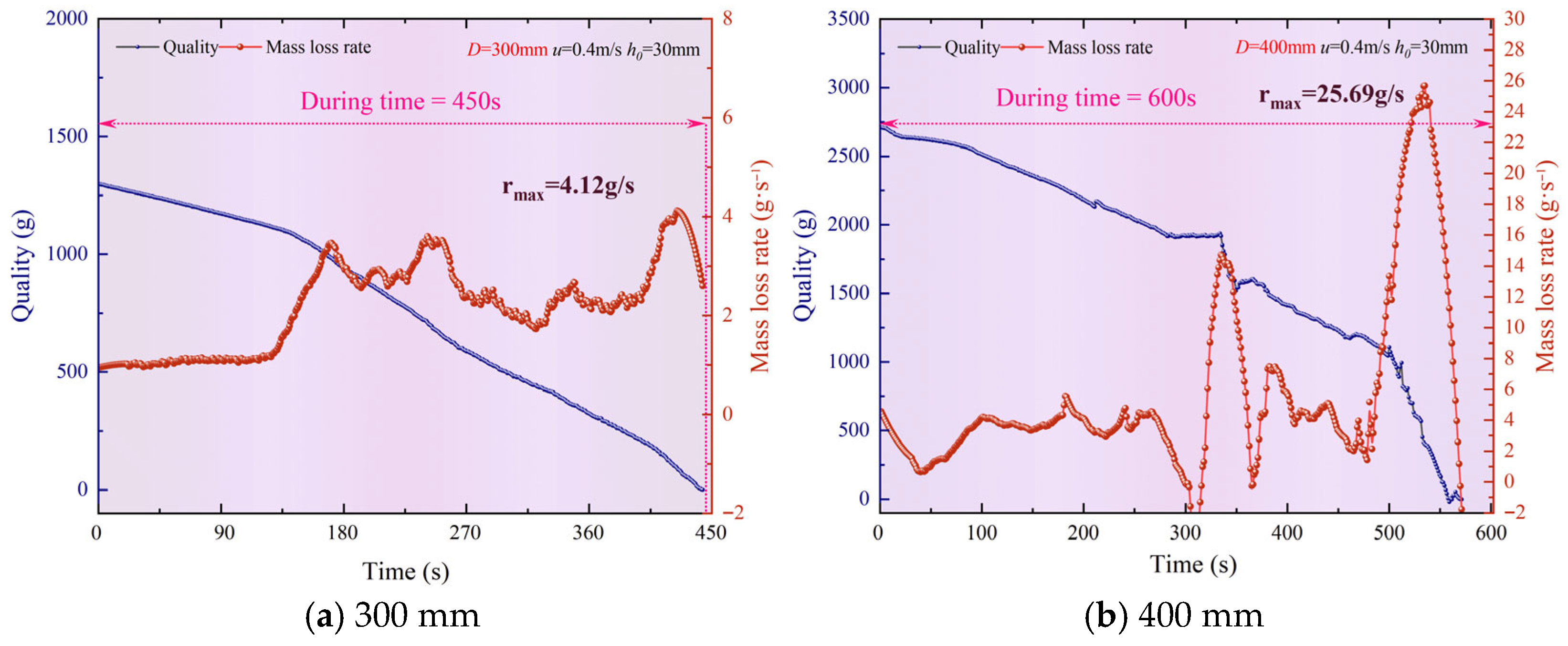
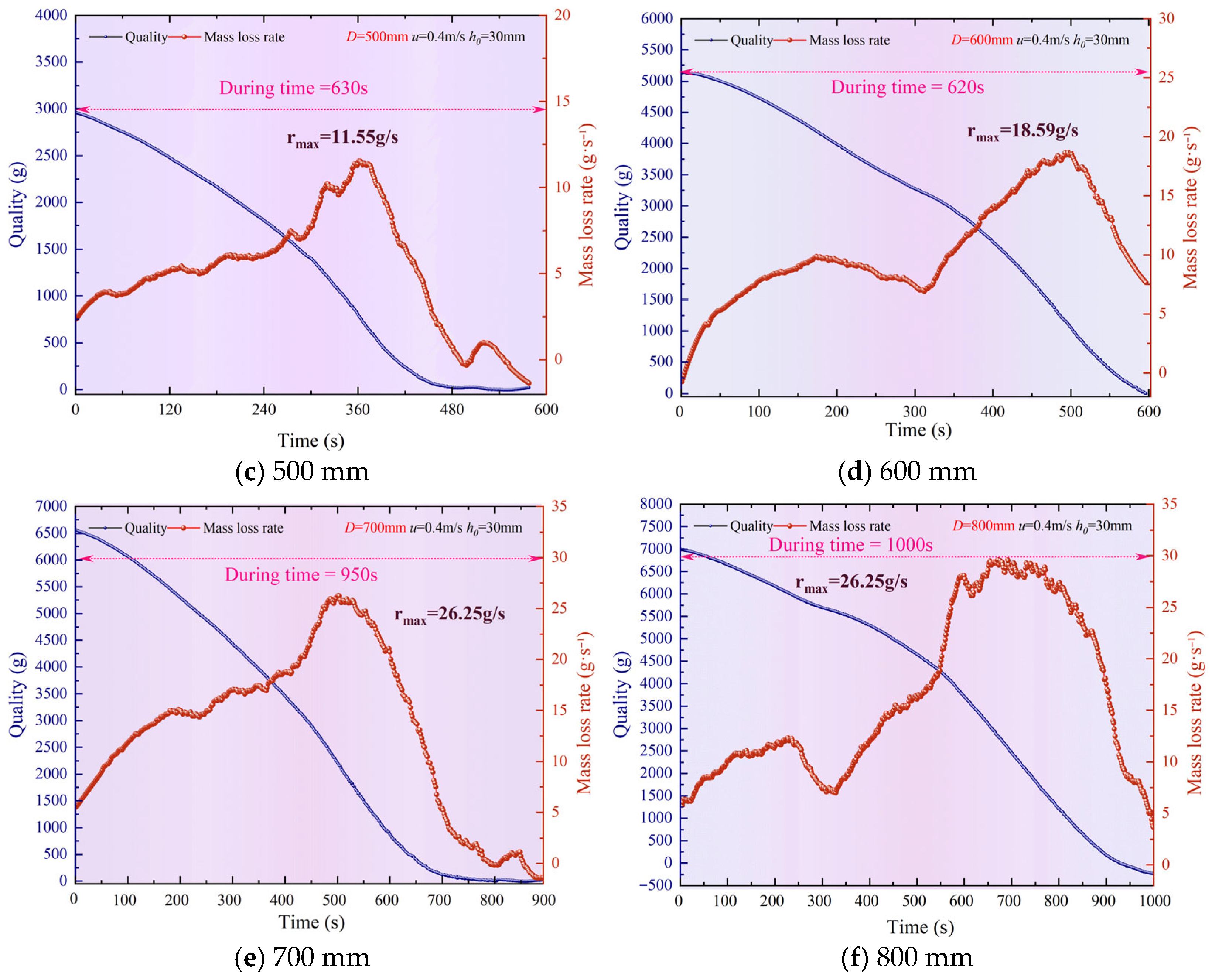
Figure 2 and
Figure 3, in order to maintain the stability of the oil level (30 mm), the initial mass at time t = 0 for each operating condition will vary, which is related to the diameter of the oil pans to ensure the stability of the oil level in each oil pan. The mass loss rate is derived from the mass-time curve through numerical differentiation. Subsequently, the Heat Release Rate (HRR) is estimated using the oxygen consumption principle or the effective heat of combustion for RP-3 fuel (42.8 MJ/kg).
Figure 2 and
Figure 3 display the variation curves of the mass loss rate (MLR) over time for RP-3 aviation kerosene pool fires with characteristic diameters of 600 mm, 700 mm, and 800 mm under different ventilation states. Combined with quantitative statistics, the entire combustion process of RP-3 aviation kerosene exhibits distinct staged characteristics across all conditions. These stages include the initial heating stage, the rapid development stage, and the stable decay stage. During the initial heating stage, the MLR remains at a low level, typically around 10 g/s. At this time, the heat flow feedback from the flame is primarily consumed to overcome the latent heat of vaporization and the sensible heat rise of the liquid layer. Since the liquid surface temperature has not yet reached a stable boiling state, the evaporation rate is limited by the saturated vapor pressure. Consequently, the evolution of MLR during this stage is relatively gradual. Upon entering the rapid development stage, the MLR shows a significant upward trend. The intervention of mechanical negative pressure ventilation significantly compresses the duration of this stage. For instance, after activating ventilation for the 600 mm pool, the duration of the rapid development stage dropped from 765 s to 620 s. The underlying physical mechanism is that the high-Reynolds-number turbulent field induced by the ventilation enhances the momentum exchange between the flame base and the air. This process accelerates the mass transfer of the fuel to the gas phase.
The enhancement effect of mechanical negative pressure ventilation on the MLR demonstrates clear scale dependency and dynamic response characteristics. As the pool diameter increases, the absolute value of the combustion intensity enhancement shows a non-linear gain. For the 800 mm pool, the average mass loss rate jumped from 5.925 g/s to 8.933 g/s after activating ventilation. This increase significantly exceeds that of the smaller-scale conditions. The core reason for this dynamic response lies in the fundamental switch of the combustion control mode. Under natural convection, combustion in the confined space is restricted by the limited oxygen supply flux, representing a typical “oxygen-limited” mode. The negative pressure flow field formed by the ventilation continuously extracts combustion products. Furthermore, it significantly thins the concentration boundary layer thickness above the liquid surface through forced convection. This improves the mass transfer capability and shifts the combustion mode toward a “power-controlled” mode dominated by the fuel evaporation rate. Additionally,
Figure 2c shows that the MLR curves exhibit more intense instantaneous pulsations under ventilation conditions. These high-frequency oscillations are attributed to the instability of the shear flow field caused by negative pressure ventilation above the oil surface. This instability leads to periodic displacement of the flame base and triggers flame tilt. These factors cause the continuous spatial reorganization of the heat feedback field, forming complex turbulence-coupled combustion characteristics. In summary, mechanical negative pressure ventilation reshapes the boundary layer characteristics and oxygen supply modes in confined spaces. This induces a dynamic switch from low-efficiency diffusion combustion to high-intensity turbulence-enhanced combustion. Consequently, it forces RP-3 aviation kerosene to release chemical energy at rates far exceeding its natural state. In multiple repeated experiments, the maximum relative deviation of the mass loss rate (MLR) and the temperature peak was within 5%, which proved the excellent reproducibility of the experimental system.
Under mechanical negative pressure ventilation at
u = 0.4 m/s, the mass loss rate (MLR) of aviation kerosene pool fires exhibits significant pulsation enhancement and cycle compression characteristics.
Figure 3 records the MLR evolution curves for six pool scales ranging from 300 to 800 mm under forced convection. Compared to natural convection, the intervention of ventilation causes the peak burning rate (
rmax, the maximum MLR under each operating condition) of each pool diameter to undergo a magnitude leap. For the 300 mm pool, the peak rate is 4.12 g/s. As the diameter increases, the enhancement effect expands nonlinearly. The
rmax for both 700 mm and 800 mm pools reaches 26.25 g/s, demonstrating extreme instantaneous heat release potential. Throughout the flame development period, the MLR curves under ventilation no longer maintain a stable plateau. Instead, they exhibit intense random pulsations and multi-peak features. This reflects the unsteady perturbation of the liquid surface evaporation process by turbulence coherent structures induced by the negative pressure flow field. Furthermore, forced ventilation significantly accelerates the heat feedback accumulation process of the system. This leads to a substantial increase in the slope of the rapid development stage and a highly compressed combustion cycle. These results reveal the explosive growth characteristics of confined space fires under forced ventilation.
Comparing the experimental data from
Figure 2 (no ventilation) and
Figure 3 (ventilation) reveals that ventilation has a dual effect on aviation kerosene combustion: increasing intensity and shortening the cycle. Under natural convection, oxygen flux in the confined space is limited by buoyancy plumes. This places the combustion process in a typical oxygen-limited mode. Consequently, the MLR curve evolution is relatively gentle and long-lasting. For example, the peak rate of a 700 mm pool without ventilation is only 14.77 g/s. When mechanical ventilation is activated, the peak burning rate for the same scale climbs to 26.25 g/s, representing a 77.7% increase. This drastic performance difference stems from the fundamental evolution of confined flow field dynamics. Negative pressure ventilation creates a directional pressure gradient within the chamber. The forced intake of fresh air greatly enhances the entrainment intensity at the flame base. This process shifts the combustion control mode from passive diffusion control to a power-enhanced mode dominated by the fuel evaporation flux.
Table 3 is the summary table of Peak Heat Release Rate (HRR, the amount of heat released through chemical reactions within a unit of time) for 12 Operating Conditions of RP-3 Aviation Kerosene Pool Fire. For aviation kerosene (RP-3), its complete combustion heat
is typically within the range of 42.8~45 MJ/kg. Due to the incomplete combustion that occurs in pool fires, the combustion efficiency factor is set at 0.75 (typically ranging from 0.7 to 0.9). Among them, the effective combustion heat
of RP-3 aviation kerosene is set at 32.4 MJ/kg.
where:
: heat release rate, kW;
: g/s, measured rate of quality loss, g/s;
: effective combustion heat, kJ/kg.
In summary, mechanical negative pressure ventilation injects kinetic energy into the system. This breaks the physical bottlenecks of product accumulation and oxygen deficiency in confined spaces. As a result, the thermal hazard of the fire source achieves an exponential leap in both scale and intensity simultaneously.
3.2. Geometric Characteristics of the Oil Pool Fire Flame
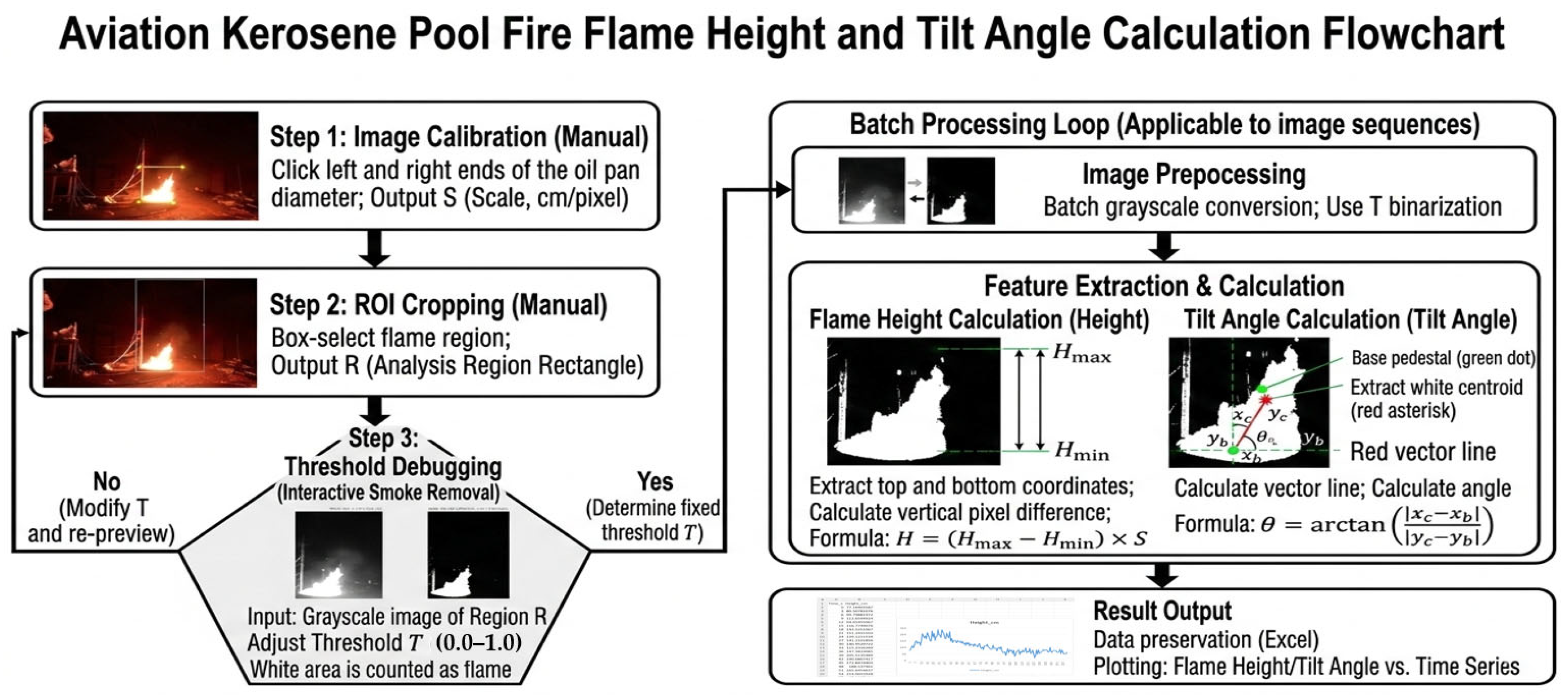
To accurately quantify the evolution of flame height and tilt angle for aviation kerosene pool fires under mechanical negative pressure ventilation, this study developed a digital image processing (DIP) program based on the MATLAB (MATLAB R2022a) platform. The program performs automated feature extraction from the recorded video sequences.
Figure 4 illustrates the logic architecture and calculation flow of the algorithm in detail. It consists of four core modules: image calibration, region of interest (ROI) extraction, binary segmentation, and geometric feature quantification. The program extracts geometric parameters by calculating the pixel distribution within the white regions of the binarized images. To extract the flame tilt angle
θ, the algorithm identifies the center point of the pool base
and the coordinates of the flame center of mass
. Based on the vector relationship between these two points, the angle of the flame axis relative to the vertical direction is calculated using inverse trigonometric functions.
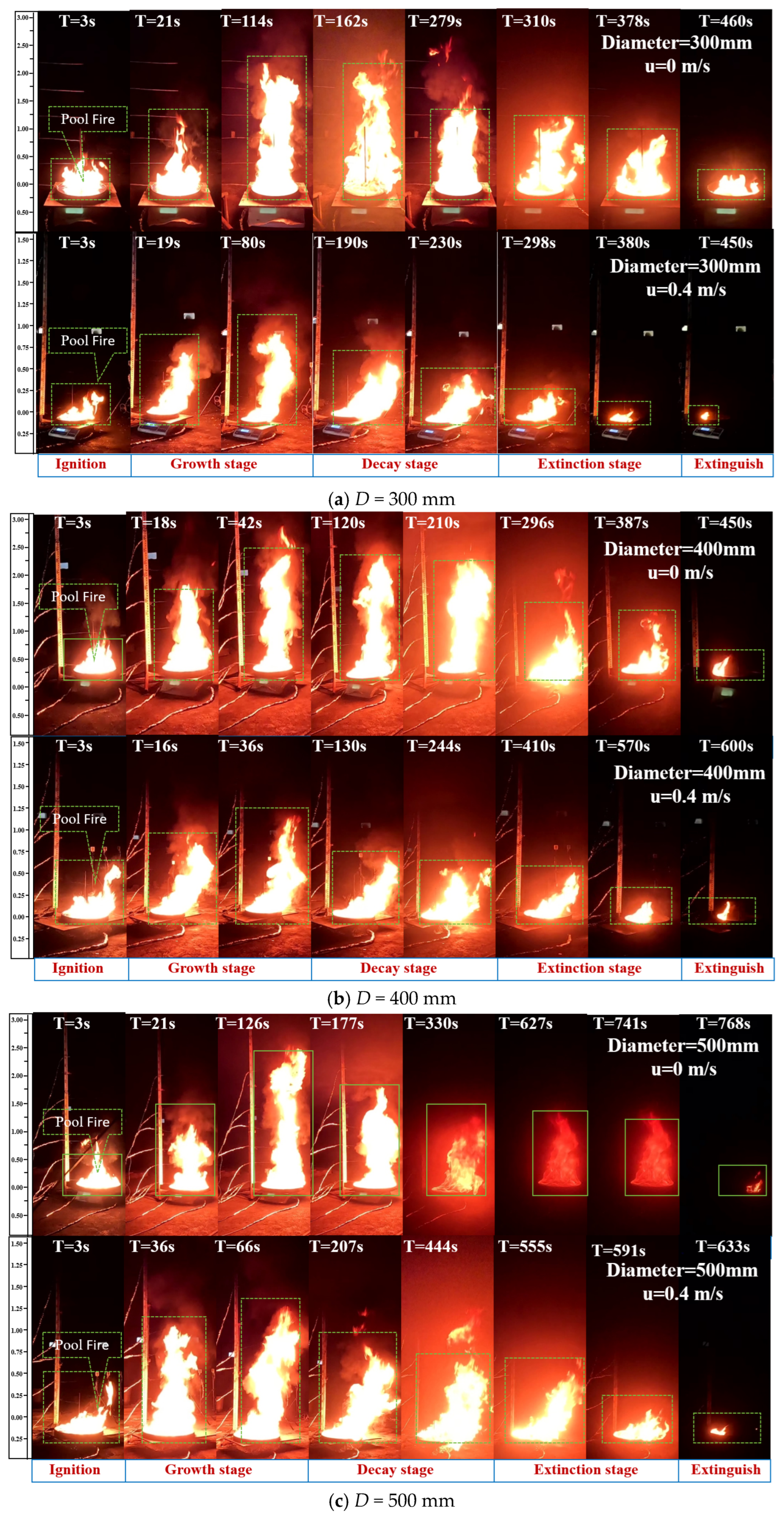
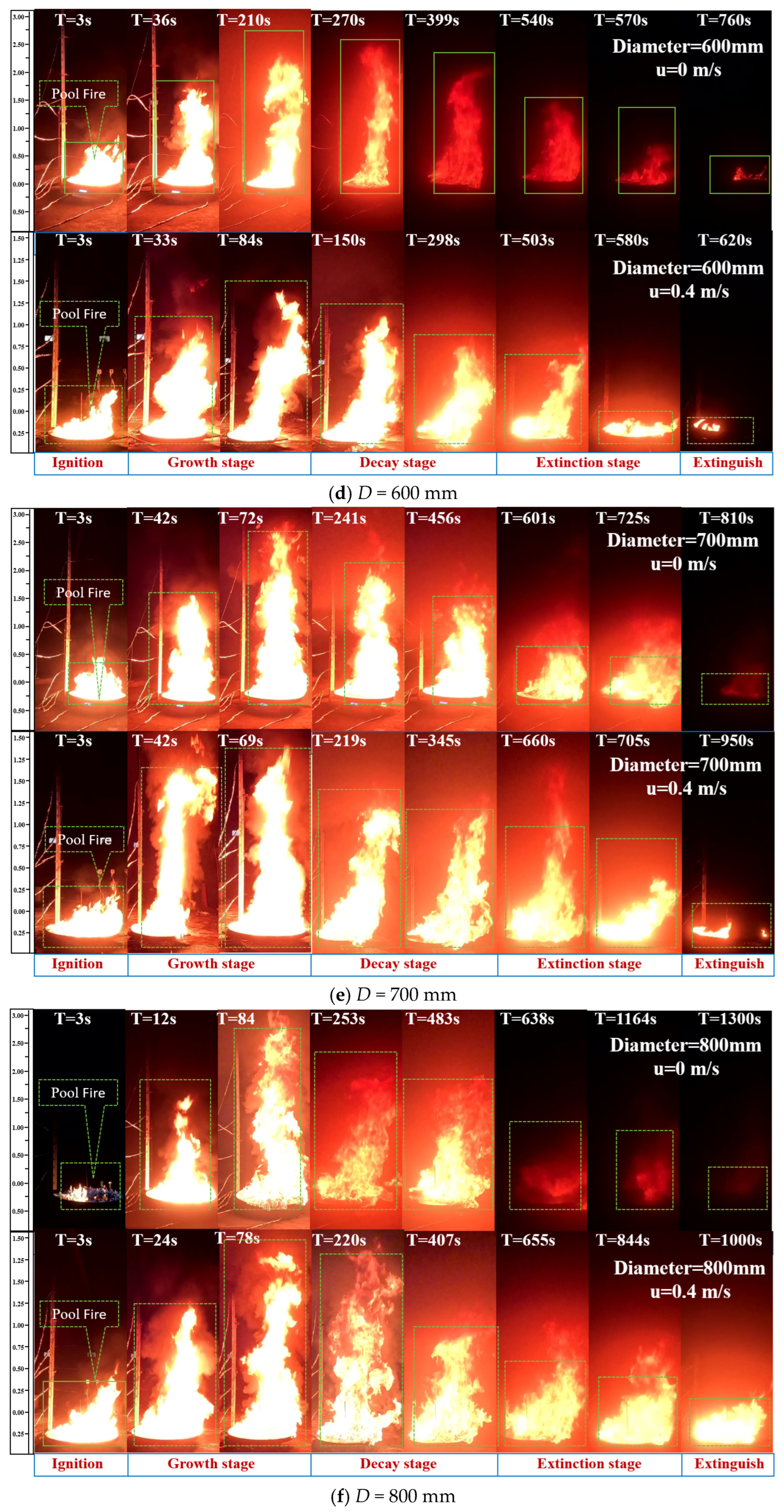
Figure 5 systematically illustrates the contrast in flame morphology evolution between natural convection
u = 0 m/s and mechanical negative pressure ventilation
u = 0.4 m/s for RP-3 aviation kerosene pool fires across a continuous scale of
D = 300–800 mm. From the perspective of overall evolution, the flames under natural convection remain vertically upright due to strong buoyancy. The geometric structure displays typical axisymmetric diffusion flame characteristics, with the core height pulsating along the vertical axis according to variations in combustion intensity. In contrast, the introduction of mechanical ventilation completely disrupts the original buoyancy balance and imparts a significant horizontal momentum vector to the flame plume. This causes the flame envelope to deflect sharply toward the exhaust outlet throughout its life cycle. Experimental observations indicate that this deflection effect is particularly prominent during the growth stage. As the pool diameter increases, both the flame volume and the degree of turbulent wrinkling rise sharply. Consequently, the 800 mm large-scale flame demonstrates intense spatial aggressiveness in the horizontal direction.
Comparing the characteristic time nodes reveals that the total duration from ignition to extinction is significantly reduced under the u = 0.4 m/s condition for all pool diameters. For instance, the extinction time for the 300 mm pool advances from 460 s under natural convection to 450 s under ventilation. The evolution of the 800 mm large-scale pool is even more explosive, with its extinction node compressed from 1300 s to 1000 s. This demonstrates the intense squeezing effect of forced convection on chemical reaction rates. Furthermore, the flame morphology during the decay stage under ventilation shows increased fragmentation. Because negative pressure suction maintains a steady oxygen supply at the flame base, the flame retains high brightness and turbulent pulsation frequencies until final extinction.
The physical mechanism for this morphological reshaping and accelerated evolution lies in the fundamental change in entrainment modes caused by the negative pressure field in confined spaces. Driven by the directional pressure gradient from mechanical exhaust, fresh air is forced toward the flame base instead of relying on passive buoyancy entrainment. This enhanced mass transfer mechanism thins the reaction-diffusion layer and shifts the combustion mode toward high-intensity reaction. As the pool diameter increases from 300 mm to 800 mm, the surface area exposed to the wind grows geometrically. This causes the drag moment generated by the horizontal airflow to far exceed the buoyant moment of the flame, driving a large deflection of the flame axis toward the exhaust side. This morphology reconstruction explains the surge in lateral thermal radiation measurements. The tilted flame physically brings the high-temperature radiation source closer to downwind sensors. This forcibly transfers the thermal hazard from the traditional vertical area to the downwind equipment zones, significantly increasing the dynamic risk of secondary ignition in confined plants.
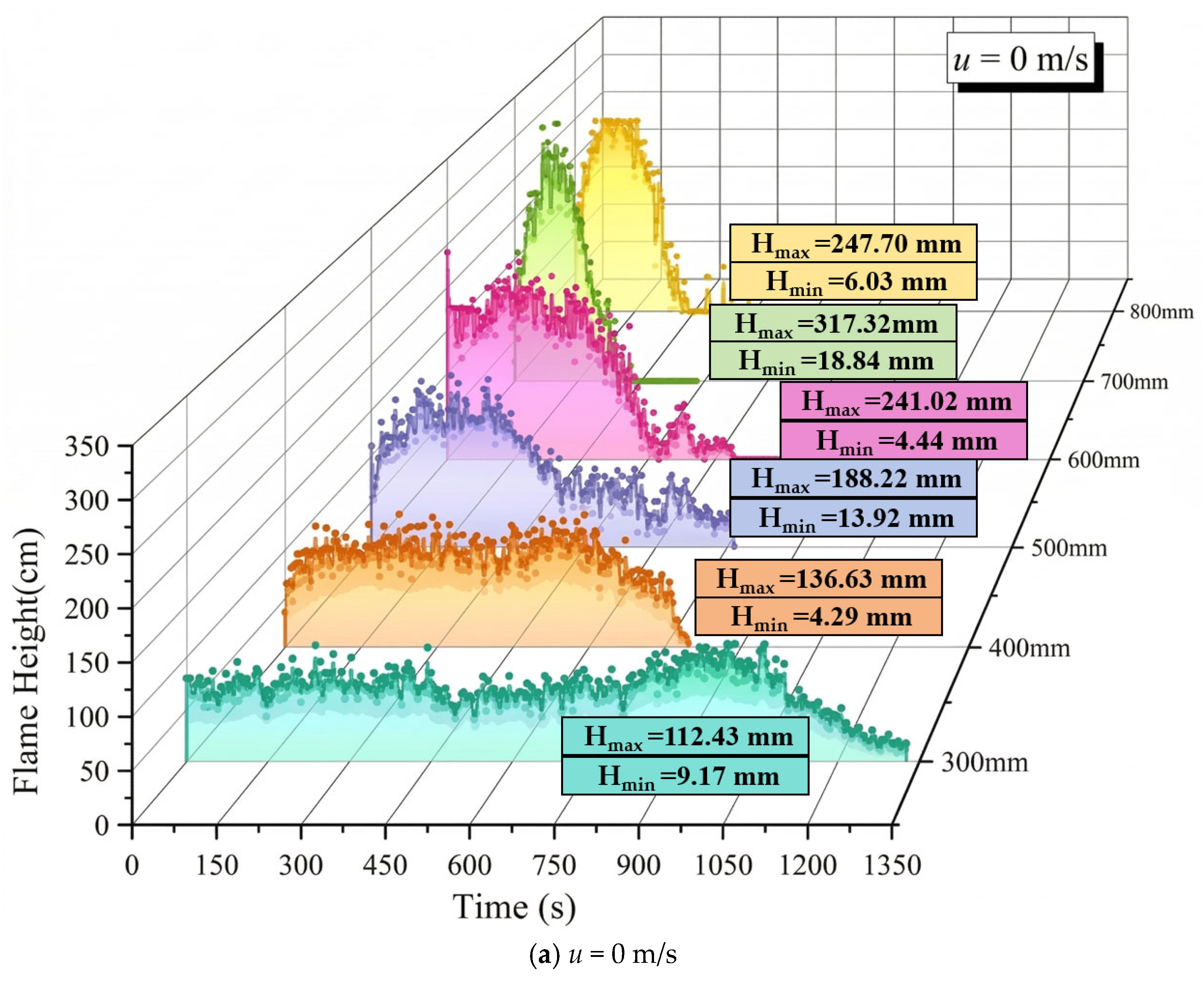
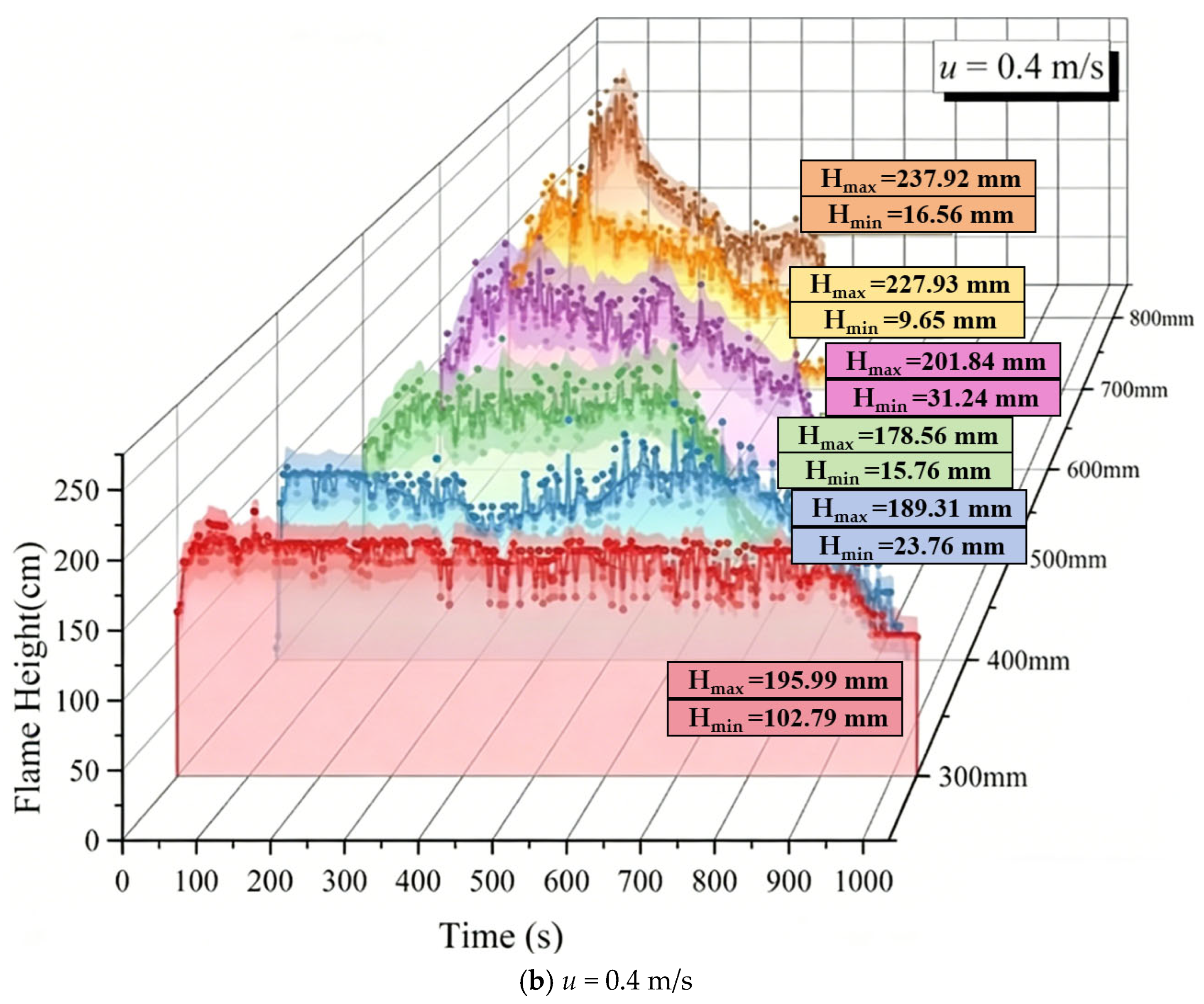
A comparison of the temporal evolution of flame height H under natural convection (
Figure 6a) and mechanical negative pressure ventilation (
Figure 6b) clearly reveals the regulatory effects of confined space flow fields on fires of different scales. Under natural convection, the flame height increases nonlinearly as the pool diameter D grows. Specifically, the peak flame height for the 700 mm pool reaches 317.32 cm. Notably, as the diameter further increases to 800 mm, the height under natural convection drops back to 247.70 cm. This decrease reflects local oxygen depletion caused by intense combustion at the top of the fully enclosed space (the conical funnel structure). It also highlights the physical suppression of upward flame development by the accumulation of combustion products.
Upon activating mechanical negative pressure ventilation u = 0.4 m/s, the distribution characteristics of flame height undergo fundamental restructuring. For small-scale pools like 300 mm, the forced entrainment induced by ventilation significantly enhances the reaction intensity at the flame base. This causes the peak height to jump dramatically from 112.43 cm under natural convection to 195.98 cm. However, for large-scale pools (600 mm to 800 mm), the vertical flame height does not increase proportionally after ventilation is activated. In some cases, it even decreases; for instance, the peak height for the 700 mm condition drops to 207.63 cm. This phenomenon does not indicate a reduction in combustion intensity. Instead, it is a direct quantification of the previously mentioned flame tilt. The forced flow field stretches the flame plume horizontally, shifting flame energy from the vertical axis toward the exhaust side. Furthermore, ventilation significantly shortens the combustion cycle for all conditions. The effective combustion duration for the 800 mm case is compressed from approximately 1300 s to less than 1000 s, demonstrating extreme explosiveness.
The integrated analysis of flame morphology (
Figure 5) and quantitative height (
Figure 6) reveals a distinct “scale-flow field” coupling effect of mechanical negative pressure ventilation on confined space pool fires. At small scales, the primary roles of ventilation are “combustion assistance and stretching,” which significantly increase the flame volume by enhancing the oxygen supply. Conversely, at medium-to-large scales, its role shifts to “reshaping and transferring” by injecting horizontal kinetic energy to forcibly alter the heat feedback path. This transition in dynamic behavior reveals the core logic of fire safety design in confined spaces: while ventilation systems dilute harmful gases, they essentially transform the vertical thermal hazard into horizontal, high-intensity thermal aggression by thinning the heat and mass transfer boundary layers and altering radiation view factors. Consequently, for industrial plant designs involving large-diameter aviation kerosene storage areas, the flame tilt effect induced by negative pressure flow fields must be comprehensively considered. This is essential to prevent the risk of horizontal chain ignition of facilities caused by the restructuring of flame morphology.
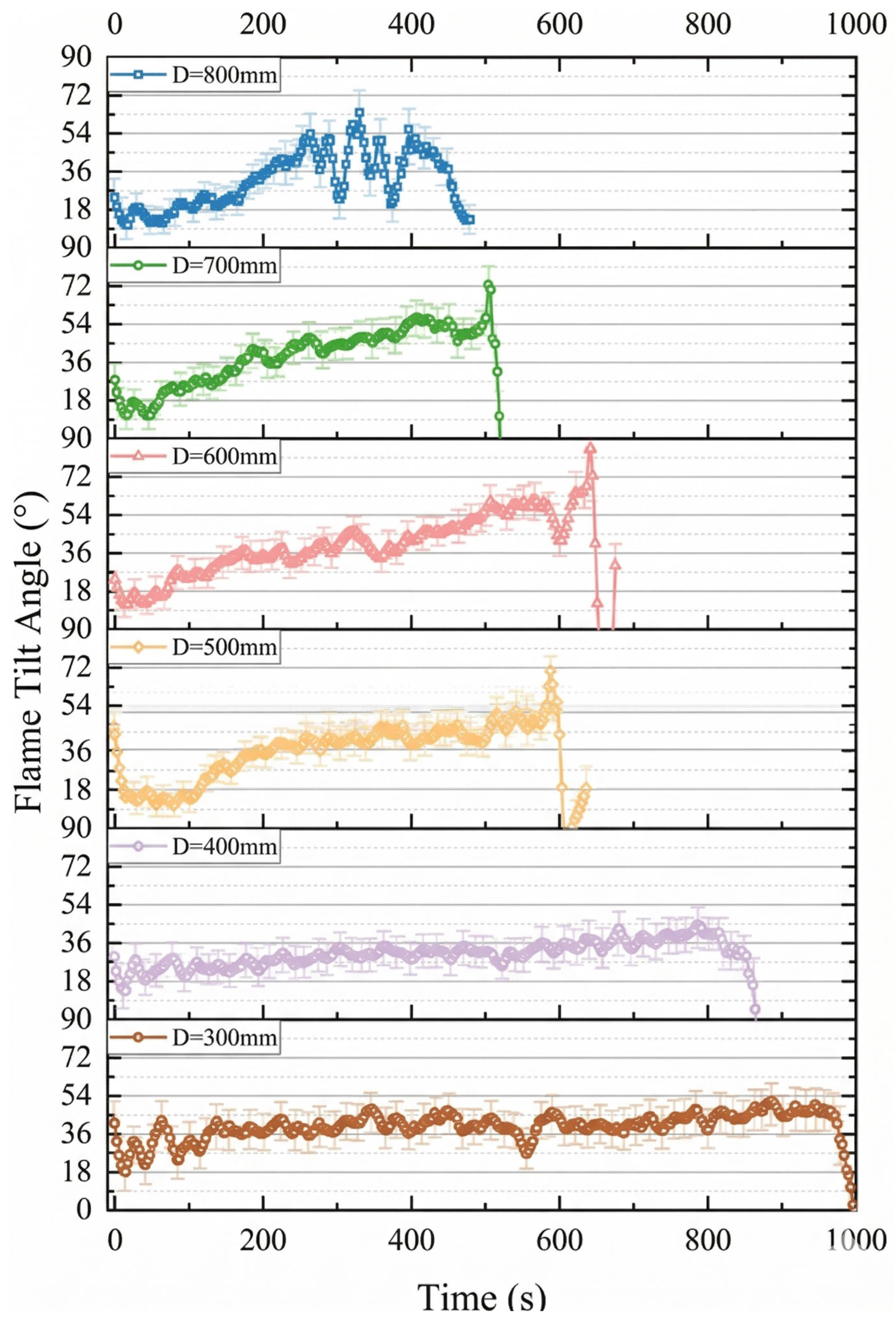
The flame tilt angle
θ is the most intuitive geometric parameter reflecting the force state of a fire plume within a confined space. Its magnitude directly determines the spatial directionality of the fire’s heat release and the resulting distribution of thermal hazards.
Figure 7 records the real-time evolution of flame tilt angles for six pool scales, ranging from 300 to 800 mm, under a constant ventilation intensity of
u = 0.4 m/s. Experimental data indicate that the horizontal flow field induced by mechanical negative pressure ventilation disrupts the original axisymmetric equilibrium of the flame. This causes significant downwind deflection across all experimental conditions. Furthermore, the degree of tilt exhibits complex unsteady characteristics that follow the fluctuations in combustion intensity.
According to the temporal distribution shown in
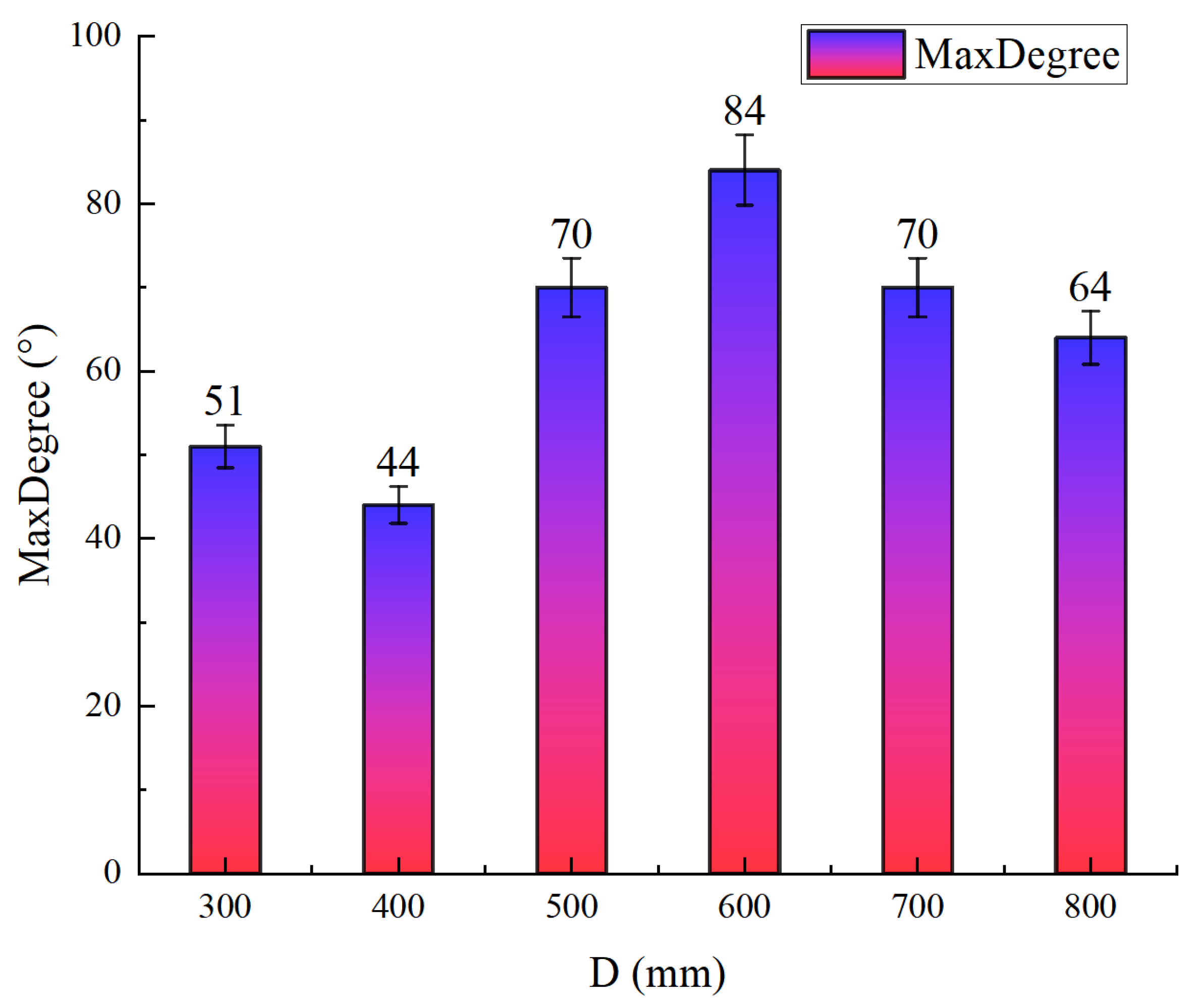
Figure 7, the tilt angles for all pool diameters remain in an active state of oscillation throughout the entire combustion cycle. For the 300 mm and 400 mm small-scale pools, the oscillation center of the tilt angle is relatively low, primarily fluctuating within the 18° to 36° range. As the pool diameter D increases to the 500–700 mm range, the evolution of the tilt angle demonstrates a stronger correlation with the combustion phase. During the later stages of combustion, the depletion of the liquid fuel causes a sharp decrease in vertical buoyancy momentum. Consequently, the horizontal ventilation torque dominates the momentum balance, inducing an explosive increase in the tilt angle. The statistics for the maximum tilt angle in
Figure 8 reveal a nonlinear trend that first increases and then decreases with pool diameter. The maximum tilt angle reaches a peak of 84° for the 600 mm pool, representing an extreme state where the flame is nearly horizontal. Conversely, when the diameter increases further to 700 mm and 800 mm, the maximum tilt angle drops back to 70° and 64°, respectively.
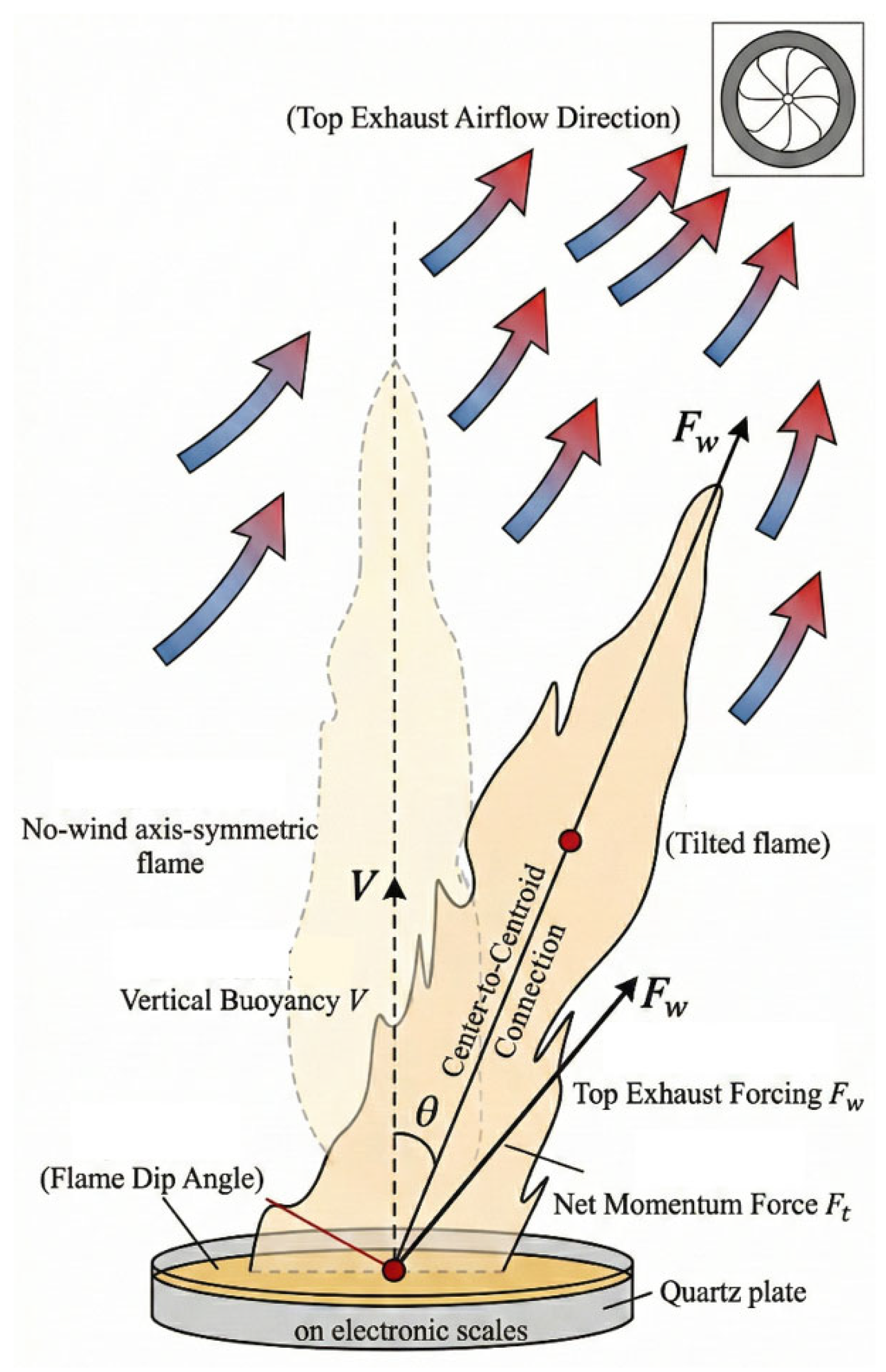
This complex scale-dependent response can be explained by the vector force model illustrated in
Figure 9. Within the negative pressure flow field at the top of the confined space, the flame is simultaneously subjected to upward buoyancy
V and the horizontal forced ventilation force
Fw. The vector sum of these forces, the net momentum force
Ft, determines the instantaneous direction of the flame tilt angle
θ. At smaller scales,
V is relatively low, allowing
Fw to easily drive a large deflection. As the diameter increases to 600 mm, the growth rate of the flame’s windward area exceeds the increase in vertical lift, causing the tilt angle to reach its geometric limit. However, upon entering the 800 mm large-scale range, the mass loss rate improves significantly. This generates massive upward thermal buoyancy momentum, which greatly enhances the vertical stiffness of the fire plume. This increased stiffness provides stronger resistance to lateral wind disturbances, leading to a reduction in the maximum tilt angle compared to the 600 mm case.
Analysis of both the temporal variation (
Figure 7) and the force mechanism (
Figure 9) shows that the reshaping of flame morphology by mechanical negative pressure ventilation has distinct non-monotonic features. This dynamic change in tilting behavior directly drives the spatial reconstruction of heat feedback. When the flame tilts at a large angle, the high-temperature core physically approaches the downwind sensors. This leads to the previously noted doubling of thermal radiation intensity. This physical essence reveals the coupling mechanism between the ventilation system and fire source scale in confined plants. In the fire safety design of large-scale aviation kerosene storage areas, it is critical to evaluate the extreme morphological deflection induced by exhaust and its associated risks of directional thermal aggression.
In fire dynamics research, the introduction of dimensionless parameters for similarity analysis represents an effective method for revealing the fundamental combustion laws within complex flow fields. This study further explores the deep mechanisms by which mechanical negative pressure ventilation intervenes in aviation kerosene pool fires by constructing a momentum balance model. To address the flame tilt phenomenon, the Modified Froude Number (Fr) is defined to characterize the competition between the horizontal negative pressure flow momentum and the buoyancy momentum of the fire plume.
According to the law of conservation of momentum, the magnitude of the flame tilt angle
θ depends on the vector synthesis of the horizontal forced force
Fw and the vertical buoyancy
V. To establish a quantitative relationship, the dimensionless characteristic velocity
u* is introduced as a correlation term (Formula 2).
where
is the heat release rate of the fire source (kW);
g is the gravitational acceleration (9.81\m/s
2);
is the ambient air density (kg/m
3);
Cp is the specific heat capacity of ambient air (kJ/(kg·K)); and
is the ambient temperature (K).
Physically, the dimensionless velocity
characterizes the momentum competition between the horizontal ventilation flow and the vertical buoyant fire plume [
30]. In Equation (1), the numerator
represents the inertial velocity of the mechanical cross-flow, which tends to deflect the flame horizontally. The denominator,
, represents the characteristic vertical ascent velocity induced by the thermal buoyancy of the fire. A larger
indicates a flow regime dominated by the horizontal ventilation momentum, resulting in a more significant flame tilt. Conversely, a smaller
implies that the vertical buoyancy driven by the intense heat release rate (
) is strong enough to maintain a relatively upright flame plume, enhancing its physical stiffness against cross-flow disturbances.
In this context,
u represents the characteristic exhaust wind speed, and
Q denotes the instantaneous heat release rate of the fire source. The experimental results indicate a significant power-function correlation between the tangent of the flame tilt angle
tanθ and the dimensionless velocity
u* [
31]. Observations from
Figure 8 and
Figure 9 show that as the pool diameter
D increases from 300 mm to 600 mm, the growth rate of the wind-exposed area exceeds the increment in initial momentum. This leads to an enhanced Froude number
Fr effect, which increases the deflection sensitivity of the flame. However, when the diameter increases further to 800 mm, the vertical upward momentum generated by the sharp increase in burning rate significantly enhances the physical stiffness of the fire plume. This improvement in the flame’s resistance to disturbances from the lateral flow field causes the maximum tilt angle to decrease.
Regarding the enhancement mechanism of the mass loss rate, this study establishes a criterion equation for the dimensionless burning rate
rather than using absolute values. Based on boundary layer theory, the high-Reynolds-number turbulent field induced by mechanical negative pressure ventilation significantly thins the mass transfer boundary layer above the liquid surface. This process increases the Sherwood number
Sh. The physical essence of this phenomenon is that forced convection exploits the evaporation potential of the fuel. By expressing the dimensionless burning rate as a function of flow field dynamics (Reynolds number,
Re) and fire thermodynamics (Froude number,
Fr) [
32,
33,
34], it can be defined as:
According to Formulas (2) and (3) and
Figure 9, the enhancement effect of ventilation on the burning rate does not follow a linear growth pattern. Rather, it is governed by the nonlinear coupling between flow field dynamics and fire thermodynamics. In the large-scale stage, the Modified Froude Number
Fr is relatively low, indicating that buoyancy remains the dominant force. Under these conditions, the flame tends toward an axisymmetric distribution. This causes the disturbance effect of the lateral shear flow field on the boundary layer to converge compared to the medium-scale cases. This dimensionless analysis provides a theoretical explanation for the non-monotonic response characteristics observed in the experiments. It also establishes a physical foundation for the development of future cross-scale prediction models for aviation kerosene fires.
3.3. Characteristics of Temperature Variation of Flames
The flame temperature field is a critical physical parameter that reflects combustion intensity, heat release rate, and the spatial distribution of the gas-phase reaction zone. Its evolutionary characteristics provide a deep understanding of the dynamic response of fire plumes in confined spaces. Thermocouples 1# to 8# are arranged along the vertical centerline of the fuel pool. This configuration allows for the precise capture of spatiotemporal temperature gradients, ranging from the internal liquid domain to the far-field gas-phase plume. It should be noted that the temperatures recorded by the sheathed thermocouples represent local gas-phase values rather than the theoretical adiabatic flame temperature. This discrepancy is primarily attributed to the substantial radiative heat losses to the compartment boundaries and the cooling effect triggered by enhanced air entrainment under negative pressure ventilation. In industrial confined space fires, the effective heat field is significantly affected by radiant heat dissipation and non-uniform air dilution. For engineering safety design, the measured local gas temperature is the only reliable basis for evaluating structural integrity and fire protection requirements, because the theoretical maximum temperature value still has a considerable gap compared to the actual heat load. However, in the process of capturing the fire temperature in actual factories, the measurement data obtained by thermocouples tend to be closer to the actual values compared to the theoretical adiabatic flame temperature. Although the theoretical adiabatic flame temperature of RP-3 can be calculated using the thermodynamic equilibrium formula, in this analysis we have taken the actual measured temperature in the environment as the main angle of analysis.
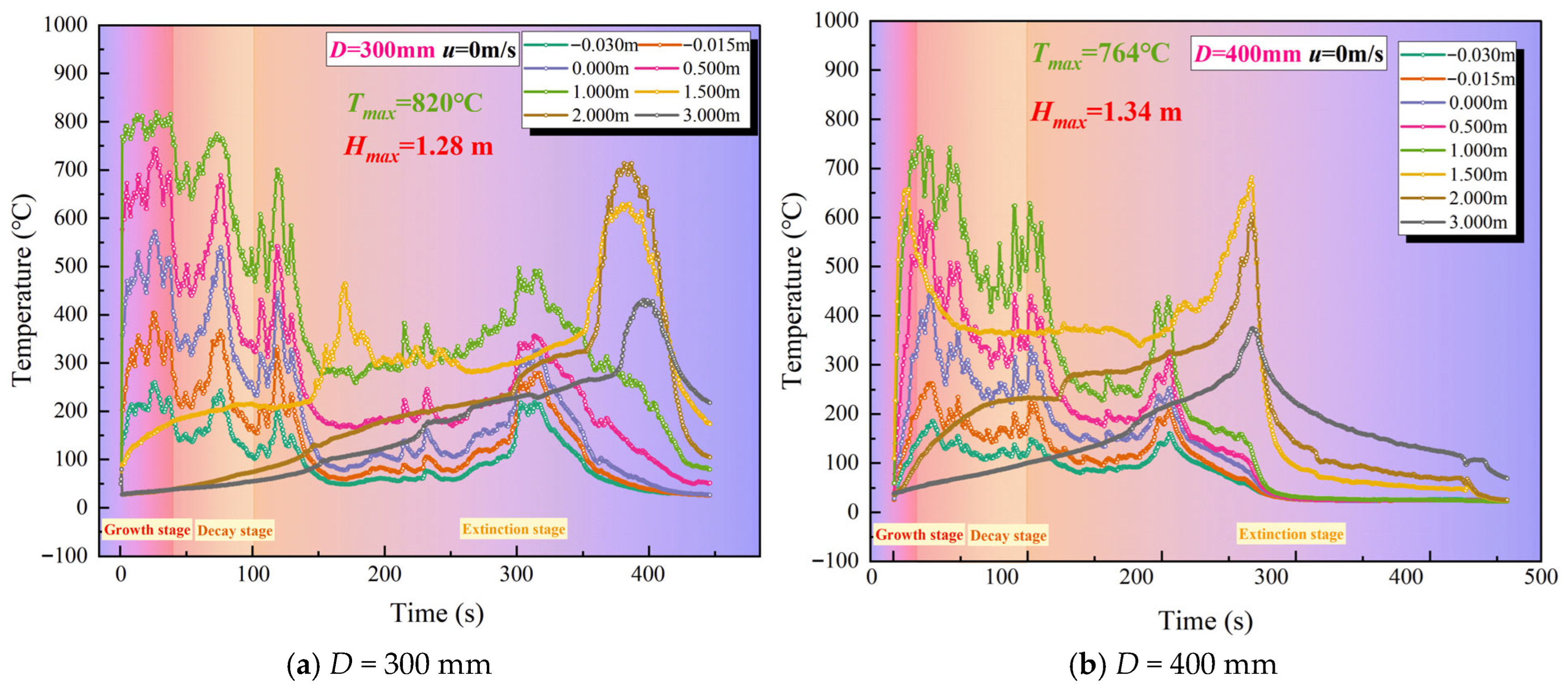
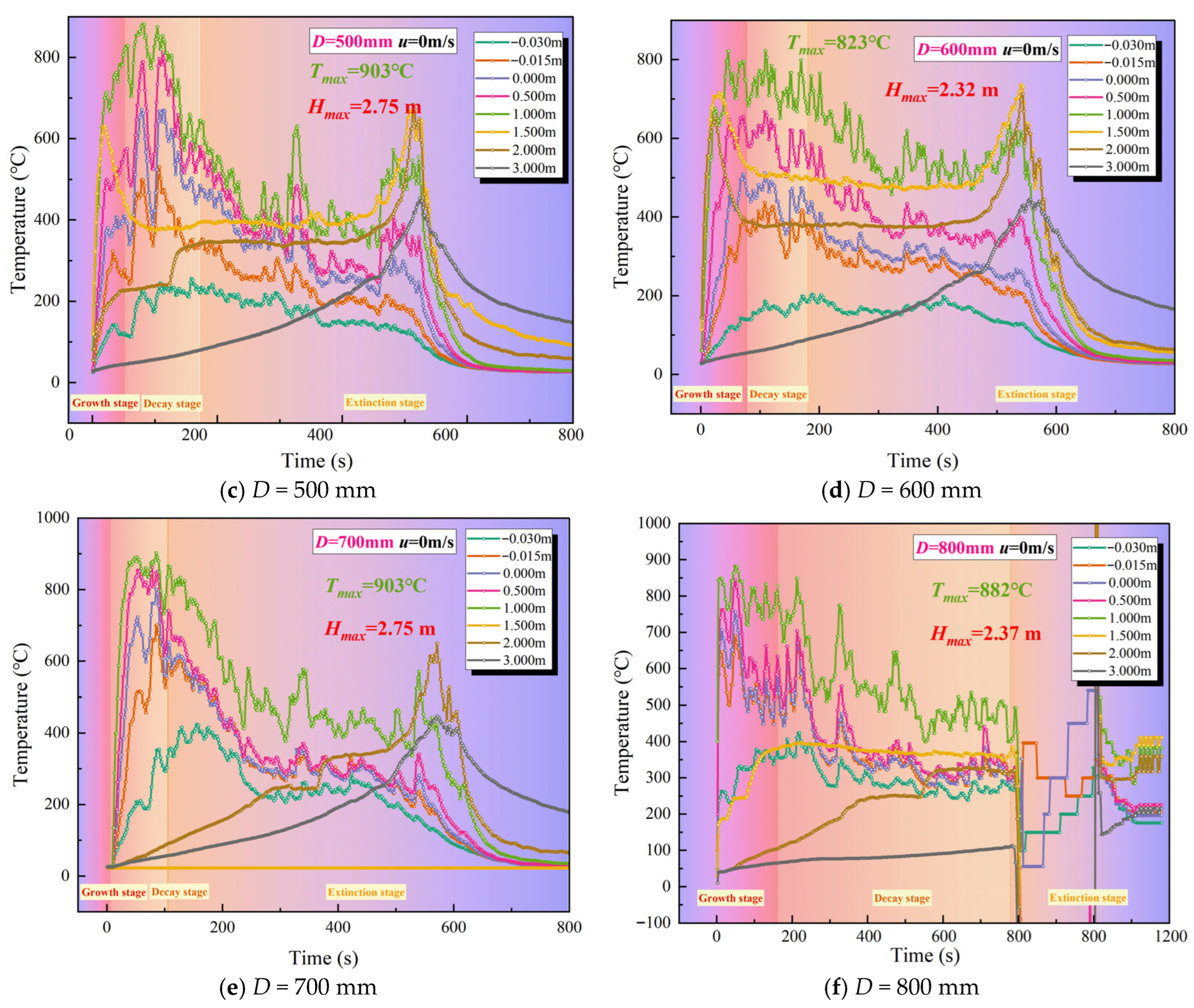
Figure 10 illustrates the temporal evolution of temperatures along the vertical axis for pool diameters ranging from 300 mm to 800 mm under the baseline condition of natural convection
u = 0 m/s. Experimental data show that all cases undergo a rapid temperature increase during the growth stage. Peak temperatures are primarily concentrated within the continuous flame zone, which extends from the fuel surface to a vertical height of 0.5 m. For the 600 mm, 700 mm, and 800 mm pools, the maximum axial temperatures
Tmax reach 823 °C, 903 °C, and 882 °C, respectively. Regarding spatial distribution, the axial temperature exhibits a clear monotonic decrease with increasing height. This trend is caused by the intense entrainment of surrounding cold air into the thermal plume. Such axisymmetric distribution reflects that the flame remains vertically upright under buoyancy control during natural convection. Consequently, the heat feedback path is concentrated directly above the fuel pool.
The introduction of mechanical negative pressure ventilation significantly alters the axial thermal evolution process of aviation kerosene pool fires within confined spaces.
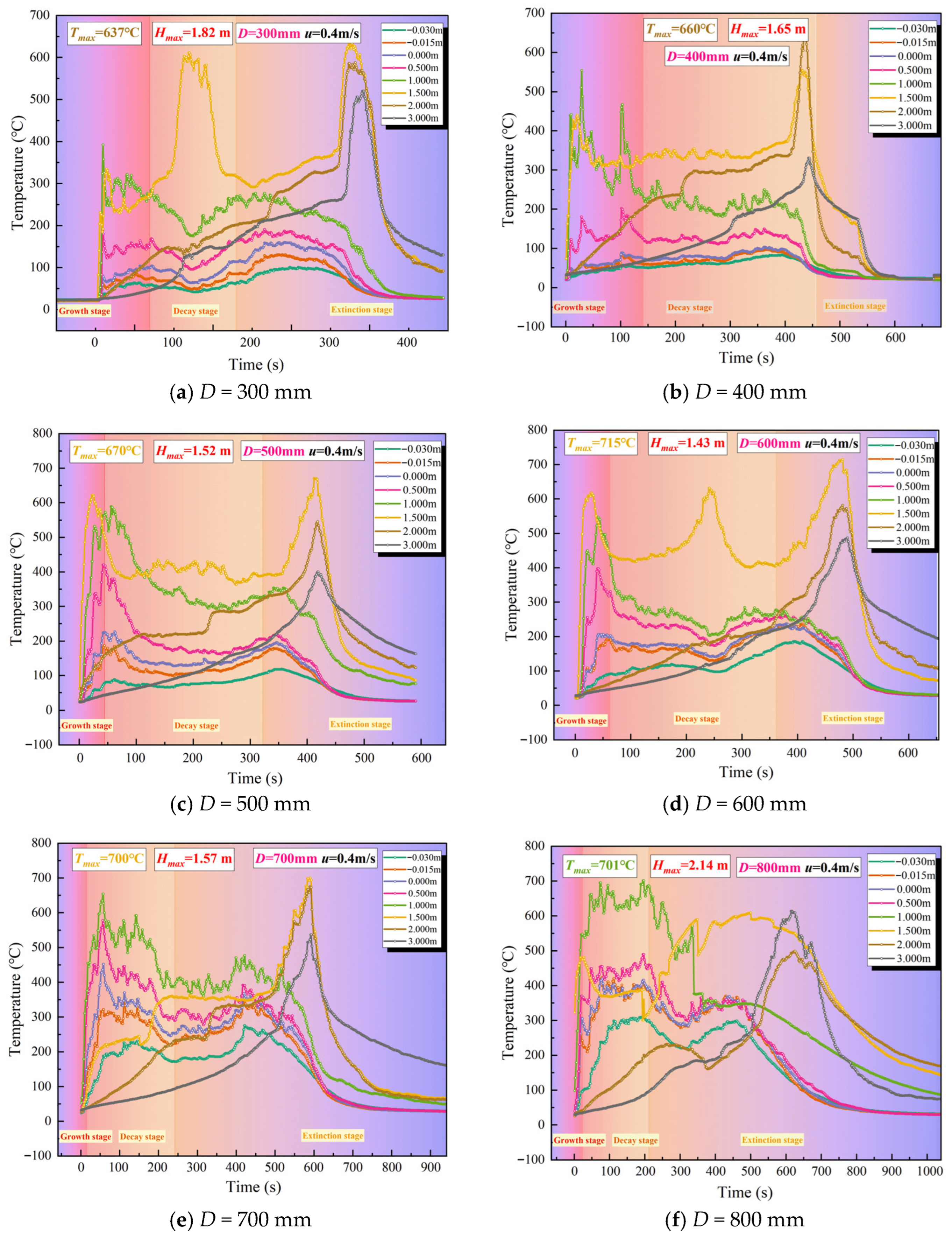
Figure 11 illustrates the real-time temperature distribution along the vertical axis for six pool scales ranging from 300 mm to 800 mm under an exhaust condition of
u = 0.4 m/s. Compared to the natural convection condition in
Figure 10, the axial temperature field under ventilation exhibits distinct peak suppression and cycle compression. Experimental data show that after activating the exhaust, the maximum axial temperatures for the 600 mm, 700 mm, and 800 mm pools dropped to approximately 715 °C, 700 °C, and 701 °C, respectively. Compared to the 823 °C to 903 °C range observed under no-wind conditions, the peak axial temperature decrease reaches up to 22.5%, demonstrating the potent thermal interference of the negative pressure flow field on the central axis region.
Regarding overall development trends, the temperature rise curves for the various measurement heights between 0.030 m and 3.000 m in
Figure 11 exhibit higher instability and synchronicity under the influence of ventilation. Under natural convection, the fire plume is buoyancy-driven and vertically upright, transporting heat primarily upward along the central axis and forming a clear hierarchical temperature gradient. In the negative pressure flow field induced by mechanical exhaust, however, the temperature rise rates captured by thermocouples at all heights accelerate significantly. Because the entire flame deflects sharply toward the exhaust outlet—with tilt angles reaching 60° to 84°—the thermocouple array originally situated on the geometric center axis is effectively positioned at the edge or on the leeward side of the tilted flame. This spatial reconfiguration causes the high-temperature reaction core to physically deviate from the detection points, manifesting as a notable temperature drop in the monitoring data.
Another underlying dynamic cause for this axial cooling is the forced convection cooling effect. Driven by the directional pressure gradient of the exhaust system, a large volume of fresh ambient air is forced into the flame base, significantly enhancing turbulent entrainment and convective heat transfer at the flame front. This continuous cold air dilution not only lowers the gas temperature at the axial measurement points but also accelerates the discharge of gas-phase reaction products. Furthermore, looking at the time scales in
Figure 11, the duration of the temperature rise for each condition is substantially compressed. For instance, the effective combustion duration for the 800 mm case under ventilation was shortened from 600 s in its natural state to approximately 400 s. This further corroborates the transition of the combustion mode toward a high-intensity, short-cycle power control mode under ventilation.
Moreover, the second temperature peak observed toward the end of the burning process (approx. 500~800 s) is attributed to the pan-bottom effect and thin-layer heating. As the fuel layer is depleted and becomes sufficiently thin, the thermal energy feedback from the flames is no longer absorbed by a bulk liquid volume but is instead conducted to the metallic pan bottom. The rapid temperature rise of the pan base provides secondary heat feedback to the remaining thin fuel layer, triggering a transient surge in the evaporation rate and burning intensity just before extinction. This terminal flare-up is further intensified in the confined space by the cumulative radiative feedback from the heated compartment walls.
In summary, mechanical negative pressure ventilation essentially achieves a directional reconstruction of the energy field within the confined space via kinetic energy injection. Although the apparent temperatures recorded at the axial monitoring points decrease due to flame deflection and cold air entrainment, the overall heat release intensity of the system is not weakened. Instead, the hazard load is forcibly transferred from the vertical overhead area to the horizontal downwind region. This coexistence of vertical cooling and horizontal thermal radiation surges reveals the spatial asymmetry of thermal threats in ventilated environments. Such findings provide critical engineering guidance for the layout of fire detection systems and the formulation of emergency response strategies in aviation kerosene storage facilities.
3.4. Thermal Radiation Characteristics of Flames
Thermal radiation flux serves as the core physical quantity for evaluating the thermal hazard and secondary ignition risk of confined space fires. Its magnitude is jointly governed by the heat release rate of the fire source, the geometric morphology of the flame, and the spatial positioning relationships. By deploying thermal radiation sensors 1#, 2#, and 3# in the downwind direction of the exhaust, the directional thermal aggression characteristics of the flame under various flow field interventions can be accurately captured.
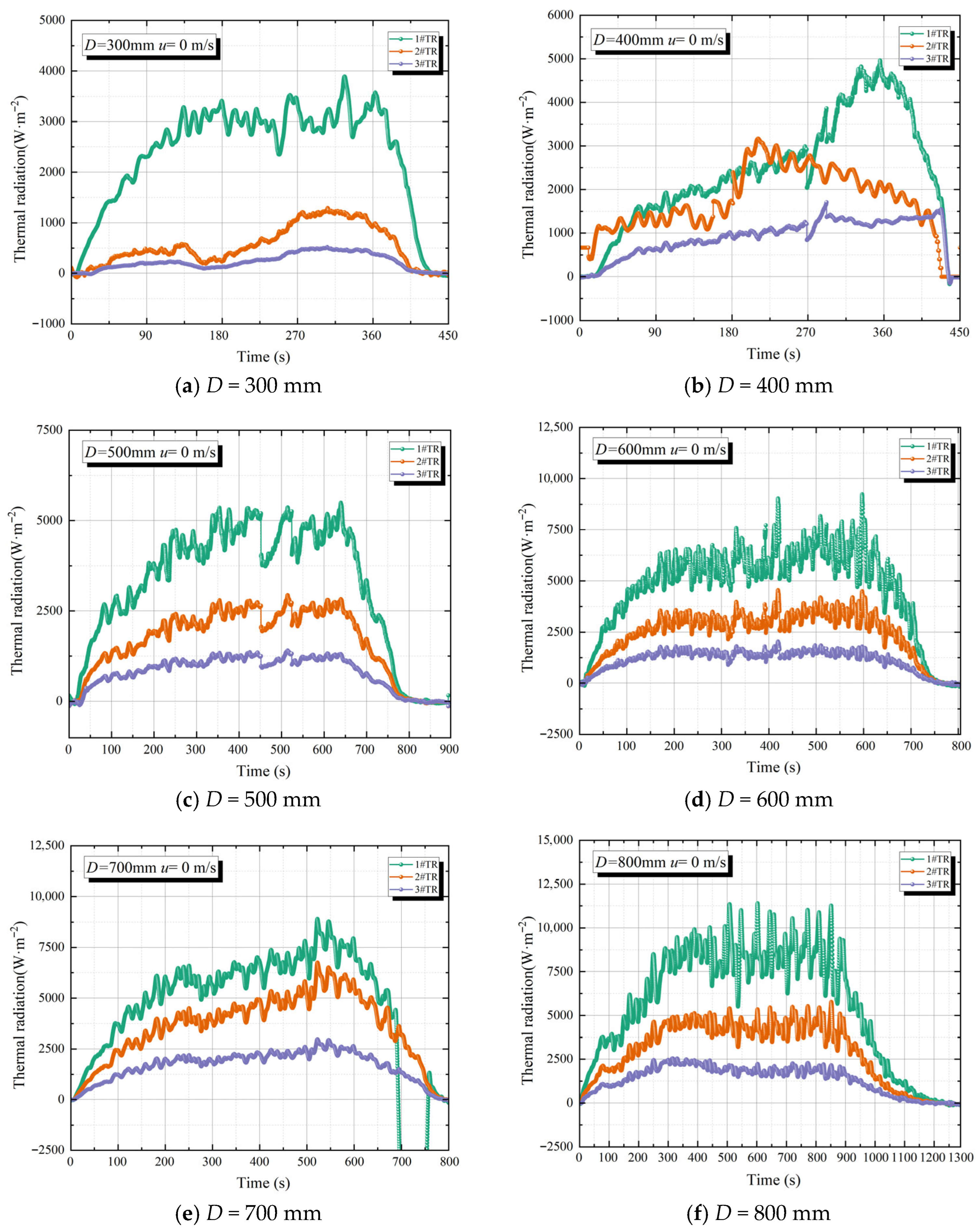
Figure 12 illustrates the temporal evolution of thermal radiation for various pool scales under the baseline condition of natural convection
u = 0 m/s. Experimental results indicate that the thermal radiation flux increases steadily with the pool diameter (
D). In the small-scale range of 300 to 500 mm, the peak values at sensor 1# fluctuate between 4000 and 5500 W/m
2. As the diameter increases to 600 to 800 mm, the peak range rises to 7500 to 11,000 W/m
2. Regarding spatial distribution, since the flame remains vertically upright, heat is radiated outward axisymmetrically. This results in a clear attenuation characteristic as the distance increases, specifically 1# > 2# > 3#. Furthermore, the pulsation frequency is low, and the curves evolve relatively smoothly.
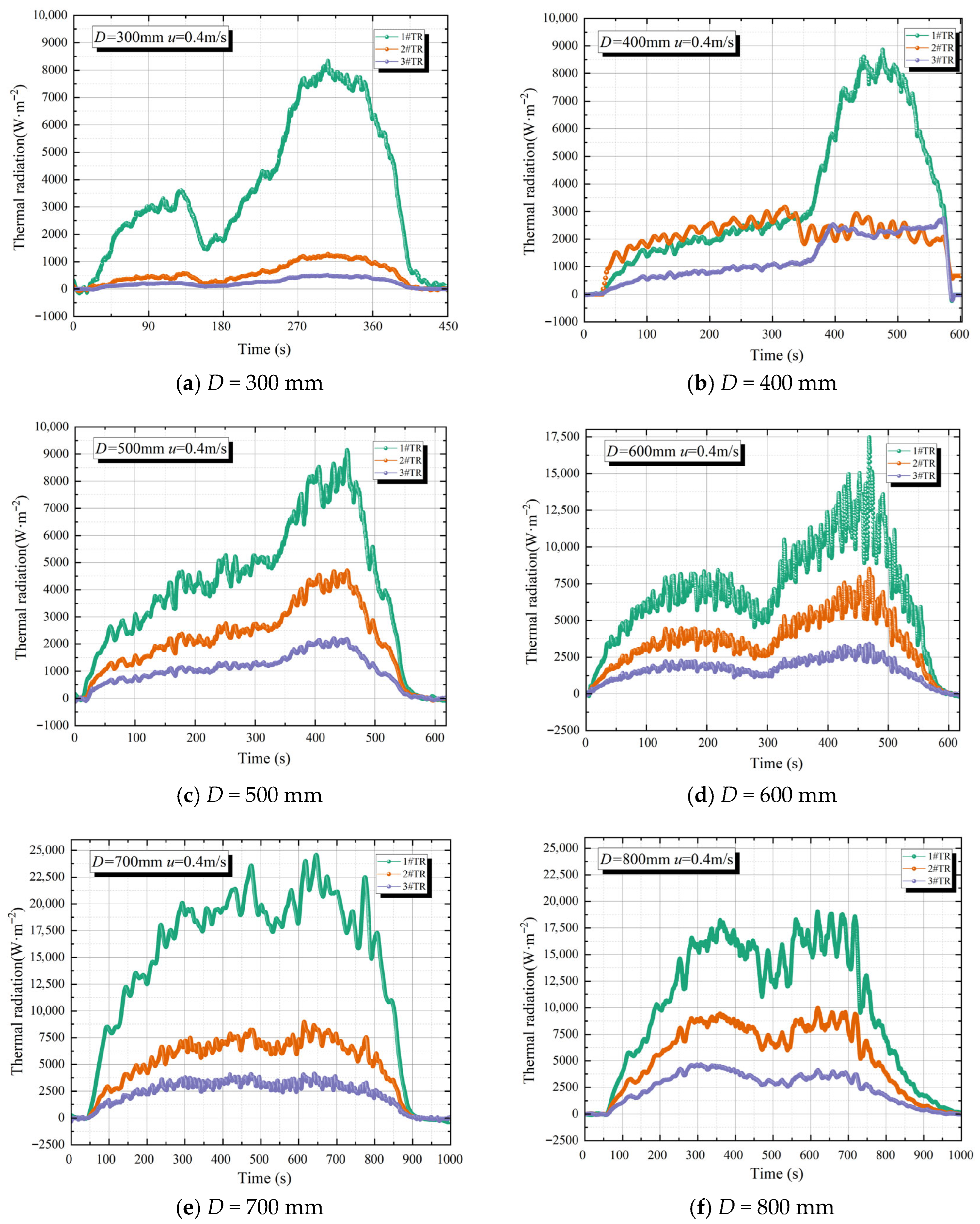
Figure 13 illustrates the temporal evolution of thermal radiation for various pool scales under the baseline condition of natural convection
u = 0.4 m/s. A systematic comparative analysis of experimental data under natural convection (
u = 0.4 m/s) and mechanical negative pressure ventilation (
u = 0.4 m/s)) clearly reveals the regulatory laws of confined space flow fields on the dynamic behavior of aviation kerosene pool fires. Regarding the mass loss rate (MLR), mechanical exhaust demonstrates a significant combustion-assisting effect, with the peak burning rate (r
max) for all pool scales undergoing leapfrog growth. For instance, the 800 mm diameter pool jumps from 16.71 g/s under no-wind conditions to 26.25 g/s under ventilation, representing a 57% increase. Simultaneously, the combustion cycle is substantially compressed; the total combustion duration for the 800 mm case is reduced from 1300 s to 1000 s. This validates the physical essence of the negative pressure flow field pushing the combustion mode from diffusion control toward kinetic enhancement by increasing oxygen flux.
The comparison of flame geometric characteristics further reveals the logic of spatial energy redistribution. Under natural convection, the flame height H exhibits a strong linear correlation with the pool diameter D, with the 700 mm pool reaching a maximum vertical height of 317.32 cm. However, after activating the exhaust, the injection of horizontal momentum induces severe flame tilt, causing the peak vertical height of large-scale pools to decrease. This phenomenon is most extreme for the 600 mm pool, where the maximum tilt angle reaches 84°, exhibiting a nearly recumbent morphology. Analysis via the vector force model shows that this non-monotonic tilt response stems from the competition between vertical buoyancy momentum and horizontal exhaust torque. When the diameter reaches 800 mm, the massive upward lift generated by the surge in burning rate enhances the vertical stiffness of the fire plume, causing the maximum tilt angle to decrease to 64°.
The most significant comparative feature is reflected in the deconstruction and reconstruction of the spatial temperature and thermal radiation fields. A unique energy mutation phenomenon was observed: after activating the exhaust, temperatures at thermocouple points located on the vertical axis of the pool generally decreased; for the 800 mm case, the peak axial temperature dropped from 882 °C to 701 °C, a decrease of approximately 20%. Simultaneously, the values at the downwind radiation sensor 1# experienced exponential growth, with the peak surging from approximately 11,000 W/m2 under natural convection to over 17,500 W/m2 under ventilation. This contrast of vertical cooling and horizontal heating profoundly reveals the dual role of mechanical negative pressure ventilation in fire evolution: while it reduces local axial temperatures through forced convection cooling, it essentially projects extreme thermal loads directionally toward the downwind area by altering radiation view factors. In summary, mechanical negative pressure ventilation not only significantly exploits the combustion potential of aviation kerosene but also fundamentally changes the direction of thermal aggression, making the ignition risk for horizontal downwind facilities far exceed traditional prediction ranges.