


Abstract
Quercus suber bark, known as cork, is an important fire-adaptive trait of this Mediterranean species. However, the increased frequency of wildfires and poor forest management practices can be significant challenges in managing the sustainable exploitation of cork oak stands. This study evaluates cork’s thermal behavior and organoleptic quality for commercial applications under three experimental fire scenarios: prescribed burn, low-intensity wildfire, and high-intensity wildfire. Bench-scale tests were conducted using a vertical mass loss calorimeter to simulate heat exposure levels, measuring temperature changes at four cork depths and quantifying heat-induced damage. Morphological traits—cork thickness, corkback thickness, and relative humidity—were recorded as predictor variables. Additionally, organoleptic and aromatic analyses were performed to assess the suitability of fire-exposed cork for wine stopper production. Results were consistent with the available literature, confirming that cork thickness significantly reduces the maximum temperature at the phellogen level. Specifically, mean cork thickness showed a significant negative effect on Tmax4 (β = −0.02, p < 0.001), indicating a consistent decrease in internal temperatures with increasing thickness across all heat flux levels. By contrast, cork consumption (mass loss) was primarily driven by heat flux intensity rather than cork structural traits. Aromatic profiling and organoleptic analysis revealed the presence of smoke-related compounds in cork samples exhibiting external carbonization. This effect was observed under higher heat flux exposure (particularly at 25 and 50 kW m−2), where visible charring occurred. Under these conditions, commercial quality may be partially compromised, whereas samples without external carbonization did not show comparable aromatic alteration. Further field validation is recommended.
1. Introduction
The Mediterranean basin is characterized by a recurrent fire regime [1], a situation now intensified by climate change, which is increasing both the frequency and the severity of wildfires [2]. Cork oak (Quercus suber) forests, predominantly located in Portugal and Spain, represent a key socioecological system in these fire-prone landscapes.
Cork is the main adaptive fire-related trait of cork oak, enabling the species to cope with recurrent wildfires. It corresponds to a thickened bark composed of dead cells with walls rich in suberin [3], a low-density material that acts as an efficient thermal insulator protecting the cambium during fire [4]. When nutrient flow remains uninterrupted, the aerial epicormic buds allow rapid post-fire regeneration [5,6]. Thanks to these protective features, cork oak can survive moderate-intensity fires and maintain its productivity.
Cork is a renewable resource harvested every 9–12 years, sustaining a major industry whose most valuable product is wine stoppers, despite the many other uses of cork, such as in thermal, acoustic, and vibration insulation [7]. However, several challenges threaten the sustainability of the cork oak landscape: a lack of skilled harvesters, inadequate harvesting practices, insufficient forest management, and land-use changes. These factors promote biomass accumulation, hinder seedling germination, limit access for harvesters, reduce nutrient incorporation into the soil, and increase wildfire risk [6]. The resulting environmental and socioeconomic costs [8,9] ultimately lead to declines in cork quality and market competitiveness [6].
Preventive silviculture, within a sustainable forest management framework, can enhance both resistance and resilience to wildfires [10]. Prescribed burning is a widely used tool that reduces fuel loads through controlled low-intensity fires [11]. Indirect benefits include reduced fire intensity, lower probability of lethal internal temperatures, and consequently reduced cork loss [12]. These burns can also decrease competition, promote regeneration, rejuvenate forest stands, and facilitate cork extraction. Studies of pine species [13] suggest that prescribed burns can lower fire risk without compromising growth.
Despite these benefits, prescribed burns must be carefully managed to avoid compromising cork quality. Temperatures above 60 °C in the cambium can cause cell death [14], while 100 °C may lead to carbonization and 300 °C can cause weight loss in Mediterranean plants [15]. Although cork located one centimeter beneath a carbonized outer layer retains its physical properties, its organoleptic quality may be altered, potentially transmitting smoke-like aromas to wine [16]. Nevertheless, cork taken from the non-carbonized portions of fire-affected trees can still be used for oenological purposes, and if a wildfire occurs mid-cycle—that is, when several years have already passed since the last harvest but the next scheduled harvest is still years away—the extended interval until the following extraction may even result in thicker cork slabs because the tree continues to accumulate cork throughout the remaining years of the cycle [1,16].
Existing research identifies bark thickness as the primary predictor of fire resistance, [12,13,14,17], while humidity appears to play a lesser role. Although fuel humidity strongly influences the flammability of fine live fuels [14], its effect on bark insulation capacity is reported as marginal when compared to bark thickness [17]. Studies on conifers and Mediterranean broadleaves show that bark humidity, along with bark density and roughness, contributes little to reducing cambium heating relative to the influence of bark thickness [13,18,19,20].
The role of the corkback has received less attention but appears to be relevant [12,21]. When cork is removed from the tree, the outer layer of the stem is exposed to the atmosphere. This layer then dries up and dies, becoming the external surface of the new cork, which is known as ‘corkback’ [3,7]. In cork oak, corkback properties such as roughness, porosity, and overall thickness significantly influence cambium temperature and flammability dynamics [12]. Additional studies focused on other species suggest that air-filled voids within the dead external bark layers enhance thermal insulation [17,22], whereas other research reports negligible effects of bark roughness on fire resistance, highlighting contextual or species-specific variability [23]. Despite advances, gaps remain regarding the specific conditions under which fire-exposed cork can remain suitable for high-quality stopper production—particularly under low-intensity prescribed burns.
This study evaluates the suitability of fire-exposed cork for the cork stopper industry. Although previous research has analyzed bark insulating capacity under different heat fluxes in other species (e.g., Espinosa et al., 2020 [13]), these findings cannot be directly extrapolated to Quercus suber. Cork differs markedly from other species’ bark [3], with anatomical and physical properties that justify a species-specific assessment of how cork responds to varying levels of heat flux. Accordingly, our first aim is to examine cork thermal behavior under low, medium, and high heat fluxes, reproducing conditions ranging from prescribed burns to high-intensity wildfires at bench scale. The second aim is to determine whether cork exposed to low heat flux during a prescribed burning—representative of prescribed-burn scenarios—remains acceptable for stopper production by performing an aromatic characterization of the burned samples using SPME-GC-MS/MS. To date, no study has linked controlled fire-exposure experiments with industrial quality evaluations of cork, despite the direct implications that prescribed burns and wildfires have for cork harvesters and the cork industry.
We hypothesized that greater cork thickness and humidity would decrease the maximum reached temperature and slow the heating rate of the cambium, and that low-intensity exposure during a prescribed fire would produce limited damage, allowing cork to remain suitable for stopper manufacture.
2. Materials and Methods
2.1. Samples Collection
Sampling was carried out in May 2024 at the Ágora Park estate (Lat. 41.85403, Long. 2.65135), located in the municipality of Tordera (Barcelona, NE Spain) affected by a prescribed fire in 2017. Samples were collected from nine trees. From each extracted cork plank, six subsamples were taken to represent within-tree variability: two from the upper part of the debarked area (closer to the canopy), two from the middle part (diameter at breast height, DBH), and two from the lower part (closer to the ground, at the base of the trunk). Subsamples were therefore not fully independent, and this hierarchical structure was considered when interpreting the results, with an emphasis on variability across trees rather than within-tree replication. This procedure ensured the collection of two independent sample paired sets: one delivered to the ICIFOR-INIA, CSIC laboratories for fire-resistance bench scale tests—after which the same samples were subsequently subjected to organoleptic evaluation—and another set delivered directly to ICSURO facilities for organoleptic analysis.
Consequently, two partially overlapping datasets were defined according to the type of analysis performed. In total, 54 samples were collected in the field. A subset of 36 samples (excluding charred planks) was used for the bench-scale fire resistance tests. After these experiments, these same samples were subsequently included together with the remaining samples in the organoleptic and aromatic analyses. Therefore, all 54 samples were evaluated for organoleptic properties, whereas only the subset of 36 samples was used for the bench-scale experiments and subsequent statistical analyses.
2.2. Bench-Scale Fire Resistance Tests
To carry out the tests, 10 × 10 × 5 cm3 samples were prepared, as these dimensions corresponded to the size of the metal frame where the sample had to be placed for testing.
Using a saw, a slice of approximately 1 cm was cut from each sample. These fragments were used to measure humidity: the sample slices were weighed on a precision balance to record the wet weight (Ph). Next, they were placed in an oven at 100 °C for 24 h, and then they were left to cool in a chamber at room temperature for half an hour before being weighed again to obtain the dry weight (P0). The humidity (%) of each sample was determined using the following formula:
Cork thickness was measured with calipers at three points (right, center, and left) on the transverse section of each sample, and the mean of these three values was taken as the representative thickness. The same procedure was applied to determine corkback thickness.
These morphological traits, together with the heating scenarios, were included as explanatory variables in this study (Table 1), following the methodological approach described in [13].
Table 1.
Cork morphological variables (thickness and humidity) and experimental heat flux (intensity) for each series of test (12 tests per condition, N = 36).
The range of cork thickness in the sample set was between 13.27 mm and 41.40 mm, while the range of corkback thickness was between 0.55 mm and 3.82 mm. Humidity, on the other hand, ranged from 3% to 10.5% (Table 1).
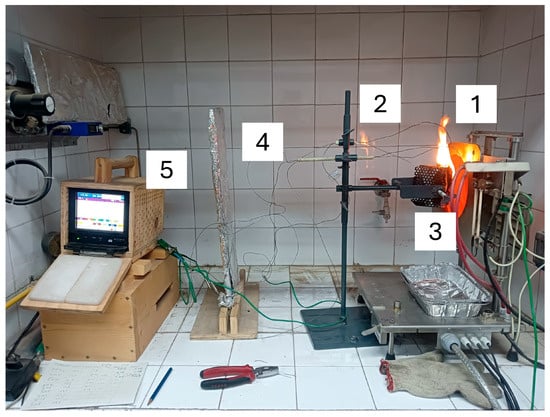
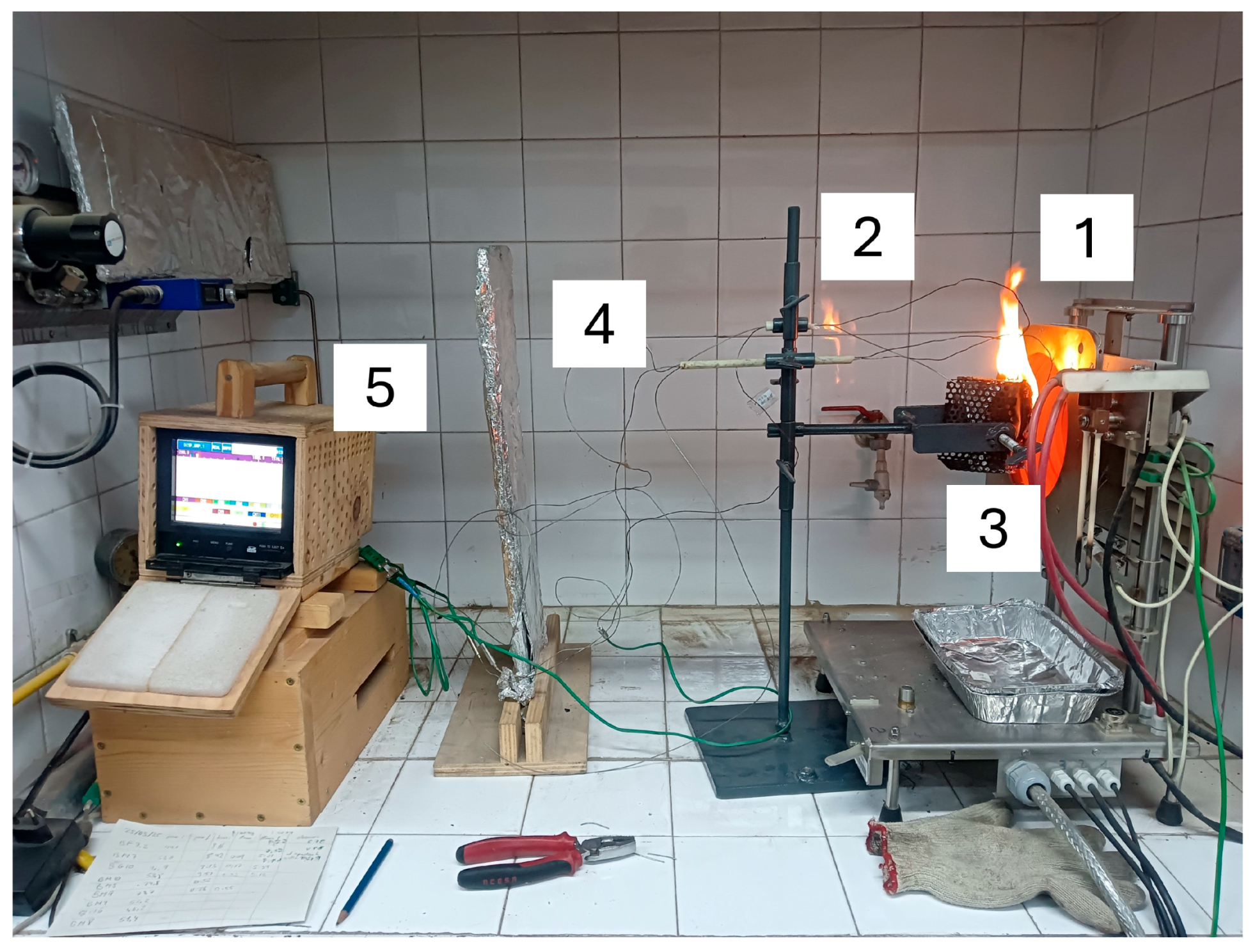
To simulate the three different scenarios, a mass loss calorimeter device (MLC device FTT ®, Barcelona, Spain) was used. The basis for conducting this type of test was established by Dehane [14], but using this device in a vertical position allowed a better representation of the heat flux that acts on the stem during a fire [13]. Once the sample was placed on the support, the thermocouples (Spain) were inserted, and the support was positioned so that the sample was 25 mm from the heat source. The vertical cone was calibrated so that an intensity of 15 kW/m2 corresponded to a temperature of 530 °C, 25 kW/m2 corresponded to 636 °C, and 50 kW/m2 corresponded to 805 °C. These heat flux levels were selected to represent a gradient of fire intensity conditions, from low to high exposure, based on values commonly used in experimental fire studies (e.g., Ref. [13]). Accordingly, 15 kW/m2 represented low-intensity exposure conditions comparable to those expected in prescribed burning, whereas 25 and 50 kW/m2 represented progressively higher fire intensities. The sample was weighed prior to heating, and small modifications were made, using staples and small perforations, so that the thermocouples (TC) could be placed in their respective positions: TC1 was attached to the corkback surface, TC2 was placed in the same spot but under the corkback, TC3 was placed 1 cm deep, and finally, TC4 was attached to the inner layer, representing the theoretical temperature of the phellogen. To prevent the holes from closing, a wire was placed inside until the thermocouples were introduced. The sample was wrapped in aluminum foil, leaving only the surface to be exposed to the fire uncovered, to prevent flammable gases from entering through the internal part of the cork, which should be in contact with the phellogen. This gas entrance would not occur under real conditions and, therefore, must be avoided in the test. The sample was then placed in the metal frame, which secured it to the support during the test (Figure 1).
Figure 1.
Bench-scale configuration fire resistant test showing: (1) mass loss calorimeter (MLC) in a vertical configuration according to Espinosa et al. 2020 [13]); (2) thermocouples 1 mm in diameter sited in 4 different places in (3) the cork sample (10 × 10 × 5 cm3); (4) insulation panel to protect the (5) datalogger (in the screen appears the heating curve).
In total, 36 tests were carried out, with 12 samples tested for each heat intensity. The test lasted for 5 min (simulating the residence time of a fire front, according to Espinosa et al. 2020 [13]), during which each thermocouple recorded temperature data every second at its respective position. Ignition events were recorded as a binary variable (presence/absence of flaming ignition). A total of three ignition events were observed across all tests. Due to the low frequency of these events, ignition was not included in the statistical models; however, it was retained as a descriptive variable to provide additional context about cork flammability under the tested conditions. After the test period (5 min), the sample was removed from the heat source and allowed to cool until all thermocouples dropped below 60 °C, which took approximately 45 min. Data recording was then stopped.
The sample, along with the ashes released during heating, was left to cool for 24 h and then was weighed, both with and without the ashes, so that it was possible to calculate the percentage of the sample that had been volatilized.
2.3. Aromatic Characterization
According to the International Code of Cork Stopper Manufacturing Practices (CIPT) [24], cork planks were stabilized for six months after extraction. The samples were stored on sloped, well-drained surfaces, away from soil contact, and without any coverings that could cause condensation or restrict ventilation. Once the stabilization period was over, the cork planks were submerged in boiling water (100 °C) for 1 h, as specified in the CIPT [24]. Next, the cork was left to stabilize until it reached a uniform consistency and relative humidity of between 8–16% relative humidity.
The cork samples were cut tangentially to facilitate separation of the inner layer and the back. To assess the extent of fire damage after prescribed burning, cross-sections were made at various depths, depending on the thickness of each plank. Each section was approximately 1 cm thick, allowing for a detailed evaluation of the degree of damage in each layer.
Subsequently, the cork samples were macerated following an adaptation of the method proposed by AENOR regulation UNE 56928. Approximately 3 to 4 g of each sample was placed in a 100 mL bottle, which was then filled with a macerating solution consisting of low-mineralization water. The bottles were sealed without leaving an air chamber. Maceration was carried out over a period of 20 ± 2 h at a temperature of 20 ± 2 °C, after which sensory analysis was performed.
Initially, sensory analysis was performed on all samples: those stored by ICSURO subjected to prescribed burning and those subjected to bench-scale tests. The sensory panel consisted of 4 people among the laboratory staff with long experience in sensory analysis. The families and descriptors described in the UNE 56928:2004. Cork stoppers. Sensory analysis. Aenor. Spain, 2004.were used. Panelists scored the intensity of each attribute (H smoke, M mold, T earth, V vegetal) using a 5-point scale (0 = not detected; 1 = weak, hardly recognizable note; 2 = slightly recognizable note; 3 = clear but not intense note; 4 = intense note). Each panelist provided a single sensory evaluation result for each sample, indicating the family, descriptor, and intensity. An aroma was considered present in the sample if it was detected by at least 3 of the 4 panelists.
Based on the results of the sensory analysis, four sample pools (H smoke, M mold, T earth, V vegetal) were established according to the sensory family described. Samples were analyzed using solid-phase microextraction gas chromatography–mass spectrometry (GC-MS/MS) at ICSURO. The aromatic profile of the cork samples was obtained through the extraction and identification of the aromatic compounds contained in the cork samples. The samples were ground and analyzed using the SPME-GC-MS/MS technique. This analysis was conducted to detect the presence of smoke-derived volatile compounds that may affect cork quality and its suitability for stopper production. Aromatic compounds were identified through aromatic analysis across all samples based on the NIST library (National Institute of standards and technology 2025).
2.4. Data Analysis
The same cork samples described in Section 2.2 and Section 2.3 were used for the statistical analyses presented here. Prior to model fitting, Pearson’s bivariate correlations were computed as an exploratory step to assess linear relationships among cork traits and response variables and to guide the definition of possible model structures.
Generalized linear models (GLMs) were fitted to evaluate the relationships between cork structural traits, experimental heat flux conditions, and the main thermal response variables. Repeatability was assessed through the dispersion of replicated measurements, expressed as the standard deviation (and coefficient of variation where appropriate), with lower dispersion indicating higher repeatability. Given the continuous and strictly positive nature of these response variables, models were fitted assuming a Gamma distribution with a log link function. Heat flux intensity was included as a discrete fixed factor, while cork traits were treated as continuous predictors. Candidate explanatory variables included mean cork thickness (MCT), mean corkback thickness (MCBT), and humidity (H), as listed in Table 2. Model selection was based on Akaike’s Information Criterion corrected for small sample size (AICc). Model fit and reliability were further assessed for the selected models using residual deviance, the residual deviance-to-degrees-of-freedom ratio, simulation-based overdispersion tests implemented in DHARMa, and McFadden’s pseudo-R2. SPSS ® (version 20.0) and R software (version 4.3) were used to carry out the statistical analysis.
Table 2.
Mass loss and temperatures (°C) during bench-scale tests: Tmax (maximum temperature) in points TCI (cork back surface), TC2 (under corkback), TC3 (1 cm under corkback), and TC4 (phellogen temperature).
For the aromatic characterization data analysis, multivariate analysis techniques were applied to identify patterns of similarity and differentiation among cork samples. Aromatic characterization data were analyzed using Minitab® 18.1 software. A hierarchical cluster analysis (dendrogram) was used to assess the proximity between sample groups based on their volatile compound composition, using the complete linkage method and Euclidean distance. A heatmap further illustrated the relative distribution of compounds across samples, highlighting marker compounds. Additionally, a principal component analysis (PCA) was conducted to reduce data dimensionality.
3. Results
Table 2 summarizes the data obtained from the recorded heat curves, which are considered reliable indicators of cork resistance. These include the time taken to reach critical temperatures (60 °C and 100 °C) during the test, as well as the heat rate measured at each thermocouple.
3.1. Fire Resistance
3.1.1. Pearson’s Bivariate Correlation
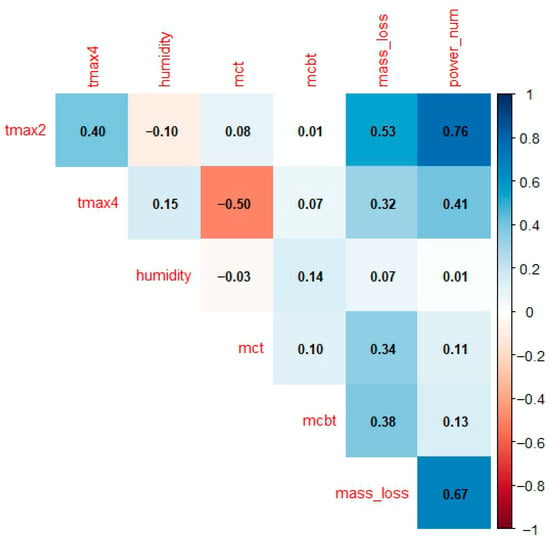
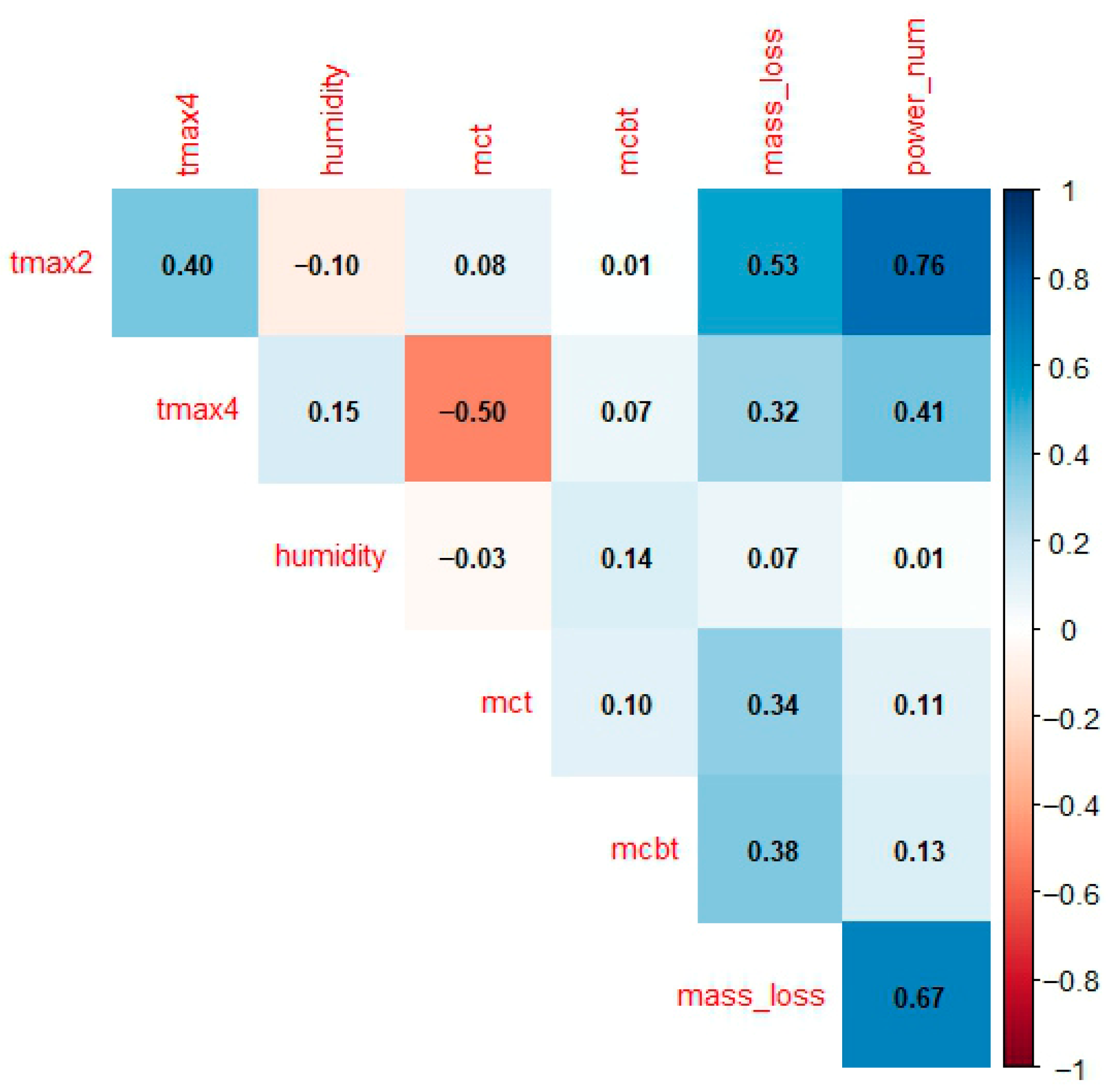
In line with the revised analytical framework, correlations were examined for the maximum temperature, cork mass loss, mean cork thickness (MCT), mean corkback thickness (MCBT), relative humidity (H), and applied heat flux intensity (Figure 2). Ignition events were rare, occurring in only three cases across all experiments, and were associated with the highest heat flux levels.
Figure 2.
Pearson’s correlation matrix of the variables included in the exploratory analysis. Positive correlations are shown in blue and negative correlations are shown in red, with the color intensity proportional to the strength of the correlation (scale from −1 to 1). The matrix includes the maximum temperatures recorded at the intermediate thermocouple (Tmax2) and at the deepest thermocouple (Tmax4), absolute cork mass loss (mass_loss), mean cork thickness (MCT), mean corkback thickness (MCBT), relative humidity (H), and applied heat flux intensity. Correlation coefficients are reported within each cell.
Mean cork thickness (MCT) showed a moderate and significant negative correlation with Tmax4 (r = −0.50), indicating that a thicker cork layer is associated with a lower maximum temperature at the phellogen level. By contrast, MCBT and relative humidity were only weakly correlated with Tmax4. Tmax4 also showed a positive association with heat flux intensity (r = 0.41), reflecting the influence of external heat input on internal temperatures.
Behind the corkback, Tmax2 was strongly and positively correlated with heat flux intensity (r = 0.76) and moderately correlated with cork mass loss (r = 0.53), indicating that a higher external heat input is associated with both increased internal temperatures and greater material consumption. The correlation between Tmax2 and cork thickness-related traits was weak.
Cork mass loss (expressed as absolute mass loss) was positively correlated with heat flux intensity (r = 0.67) and showed moderate positive correlations with both MCT (r = 0.34) and MCBT (r = 0.38). This reflects the greater amount of combustible material present in thicker bark, rather than a reduced resistance to fire. In other words, larger cork samples can undergo higher absolute mass consumption while still providing effective thermal insulation.
Overall, the correlation analysis highlighted a depth-dependent thermal response, with cork thickness primarily associated with temperature attenuation at the living tissue level (Tmax4), while heat flux intensity dominated the thermal response and material consumption in more external bark layers. These exploratory results informed the selection of predictors for subsequent model-based analyses.
3.1.2. Generalized Linear Model
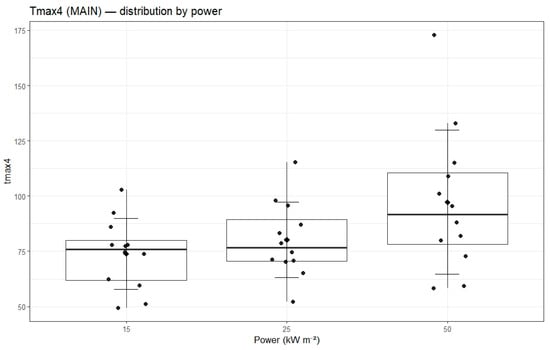
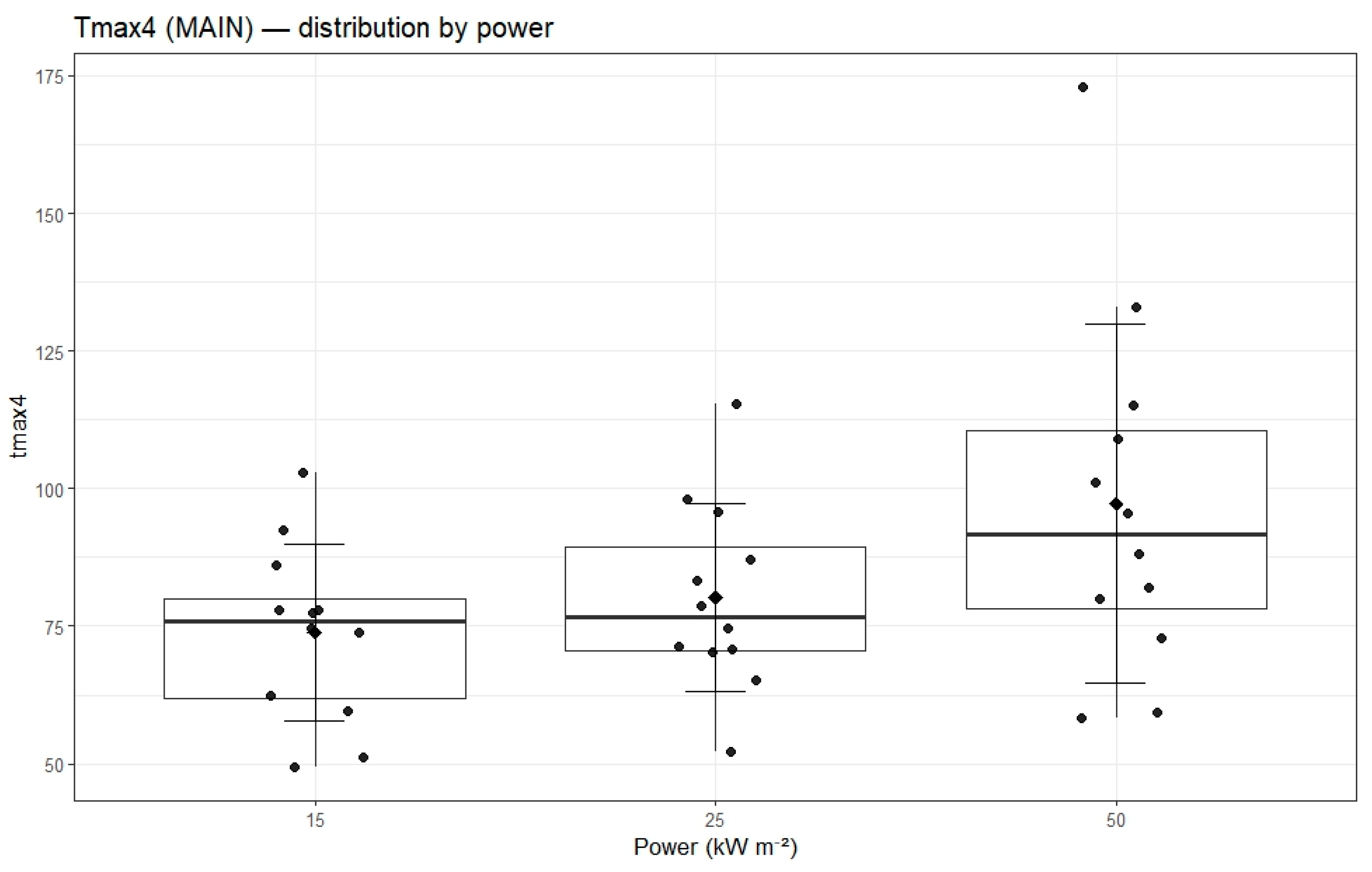
The distribution of the maximum temperature recorded at the deepest thermocouple (Tmax4) showed a progressive increase with heat flux intensity, with higher values and greater variability observed at 50 kW m−2 (Figure 3). Model diagnostics supported an adequate fit for the selected Tmax4 model, with low residual deviance (1.049), a residual deviance-to-degrees-of-freedom ratio of 0.036, and no evidence of overdispersion according to the DHARMa test (dispersion = 1.324, p = 0.272). The model showed a McFadden’s pseudo-R2 of 0.104, indicating a reasonable explanatory capacity given the inherent variability of the system.
Figure 3.
Distribution of maximum temperatures at inner bark depth (Tmax4) across heat flux treatments (15, 25, and 50 kW m−2). Boxplots represent median, interquartile range, and whiskers (1.5 × IQR), while points show individual observations. Diamonds indicate group means, and vertical error bars represent the mean ± standard deviation. A higher heat flux intensity results in an increased maximum temperature, whereas variability within treatments reflects differences in cork structural properties.
Model comparison based on Akaike’s Information Criterion corrected for small sample size (AICc) indicated that the most parsimonious model explaining the variation in Tmax4 included the interaction between heat flux intensity and mean cork thickness. Models incorporating additional variables, such as corkback thickness (MCBT) or relative humidity, exhibited substantially higher AICc values (ΔAICc ≥ 8.8), indicating a clear lack of additional statistical support.
According to the selected model, mean cork thickness had a strong and statistically significant negative main effect on Tmax4 (β = −0.02, 95% CI [−0.04, −0.01], p < 0.001), indicating that a thicker cork layer consistently reduced the maximum temperature reached in inner tissues. Heat flux intensity also influenced Tmax4, with a significant increase in temperature at the highest intensity level (50 kW m−2) compared to the lowest intensity tested (β = 0.59, 95% CI [0.08, 1.10], p = 0.022), whereas the intermediate intensity level (25 kW m−2) showed a weaker and non-significant effect.
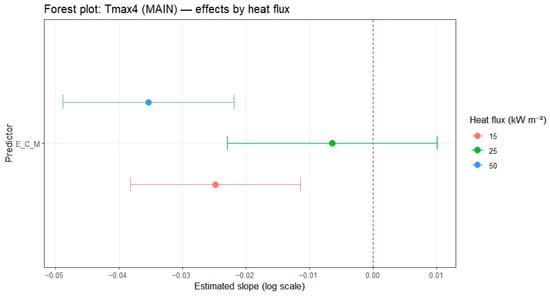
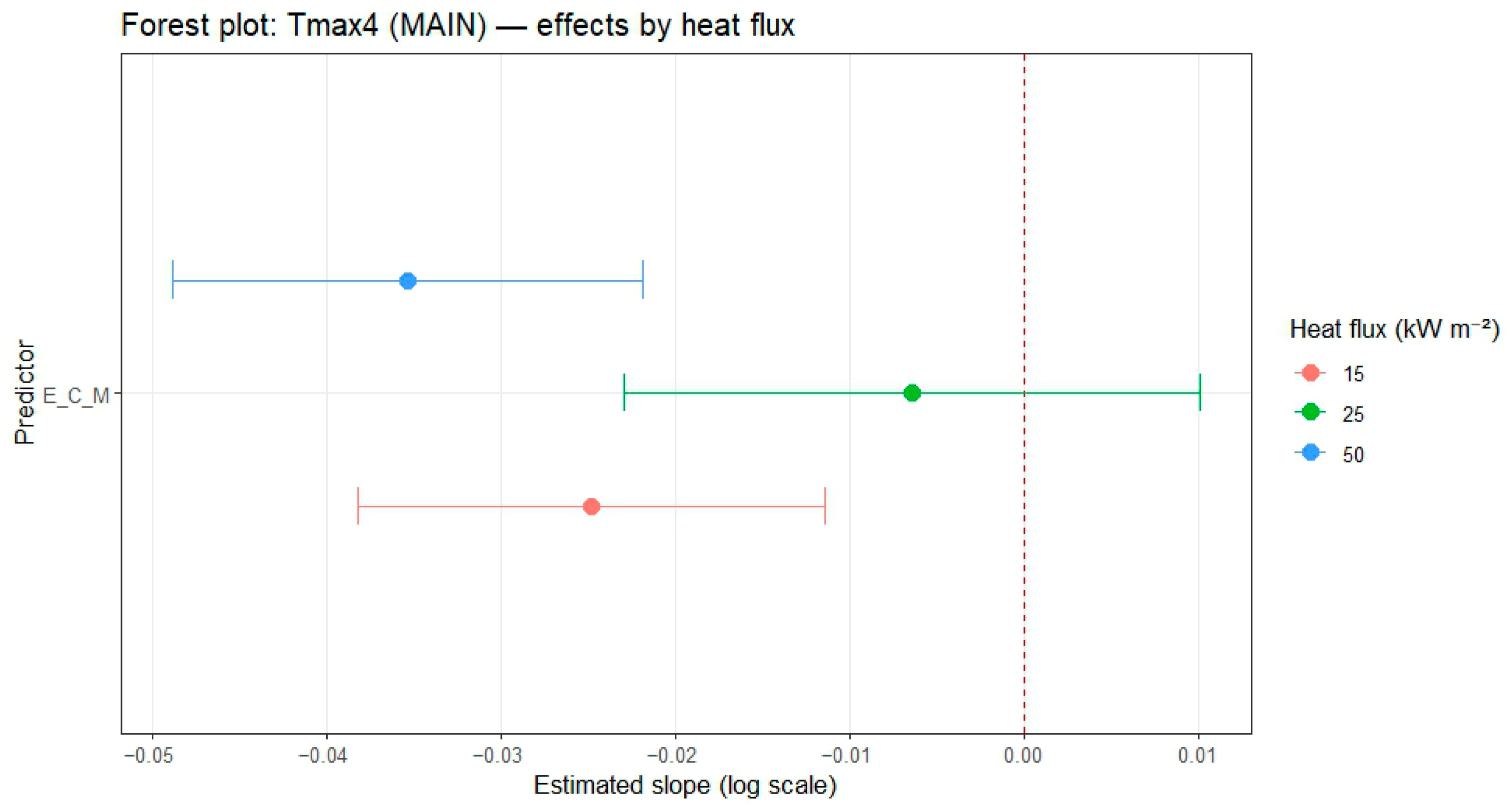
Interaction terms between heat flux intensity and mean cork thickness did not reach statistical significance. This indicated that the effect of cork thickness on reducing the maximum temperature at the phellogen level was consistent across the range of heat flux intensities tested. This pattern was reflected in the forest plots stratified by intensity (Figure 4), where the MCT slopes were consistently negative and their confidence intervals largely overlapped.
Figure 4.
Forest plot showing the estimated effects of mean cork thickness (MCT) on the maximum temperature recorded at the deepest thermocouple (Tmax4), stratified by heat flux intensity (15, 25, and 50 kW m−2), based on the selected Gamma generalized linear model. Points represent estimated slopes (regression coefficients) on the log scale for each power level, and horizontal lines indicate 95% confidence intervals. The vertical dashed line denotes a null effect (slope = 0). Negative estimates indicate a decrease in Tmax4 with increasing cork thickness, whereas positive estimates indicate an increase.
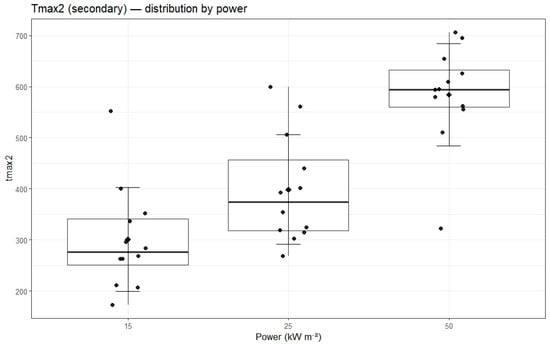
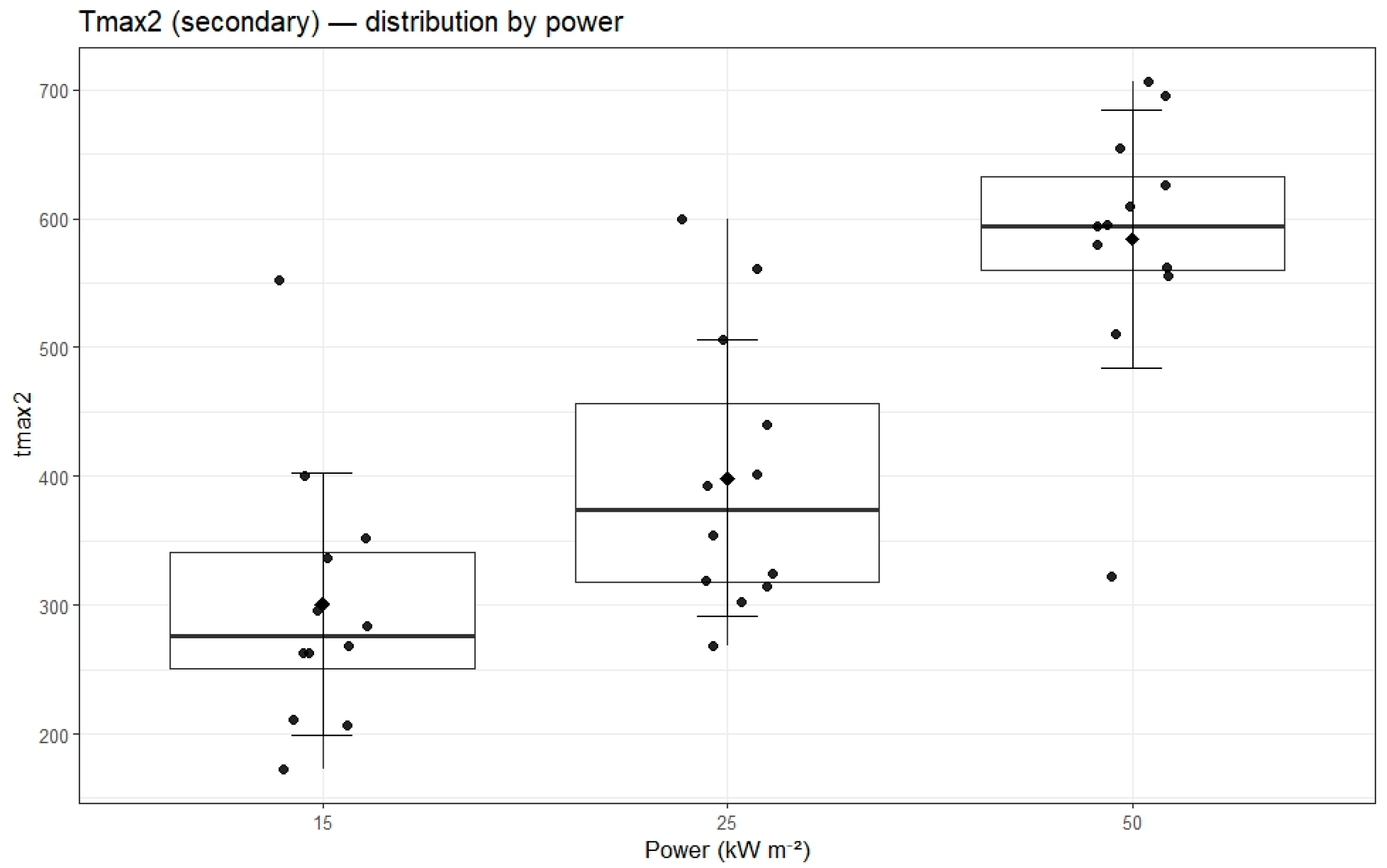
The maximum temperature recorded at the intermediate thermocouple, behind the corkback (Tmax2), also increased with heat flux intensity, as shown by its distribution across power levels (Figure 5), with a clear rise in both the median and variability at 50 kW m−2. Model diagnostics indicated an adequate fit for the selected Tmax2 model (residual deviance = 2.124; residual deviance/df = 0.073), with no evidence of overdispersion (DHARMa dispersion = 0.818, p = 0.580). The McFadden’s pseudo-R2 was 0.067, suggesting a moderate explanatory power compared to Tmax4.
Figure 5.
Distribution of maximum temperatures at intermediate bark depth (Tmax2) across heat flux treatments (15, 25, and 50 kW m−2). Boxplots represent median, interquartile range, and whiskers (1.5 × IQR), while points show individual observations. Diamonds indicate group means, and vertical error bars represent mean ± standard deviation. Tmax2 shows a strong increase with heat flux intensity, highlighting the dominant effect of external heat input on outer bark layers.
Model comparison indicated that the most parsimonious model for Tmax2 likewise included the interaction between heat flux intensity and mean cork thickness. Models incorporating additional variables, such as cork back thickness or relative humidity, exhibited higher AICc values (ΔAICc ≥ 2.4), indicating reduced statistical support under the current experimental design.
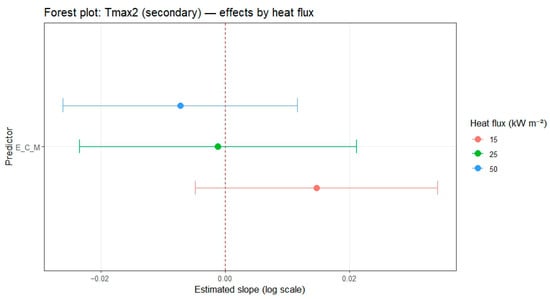
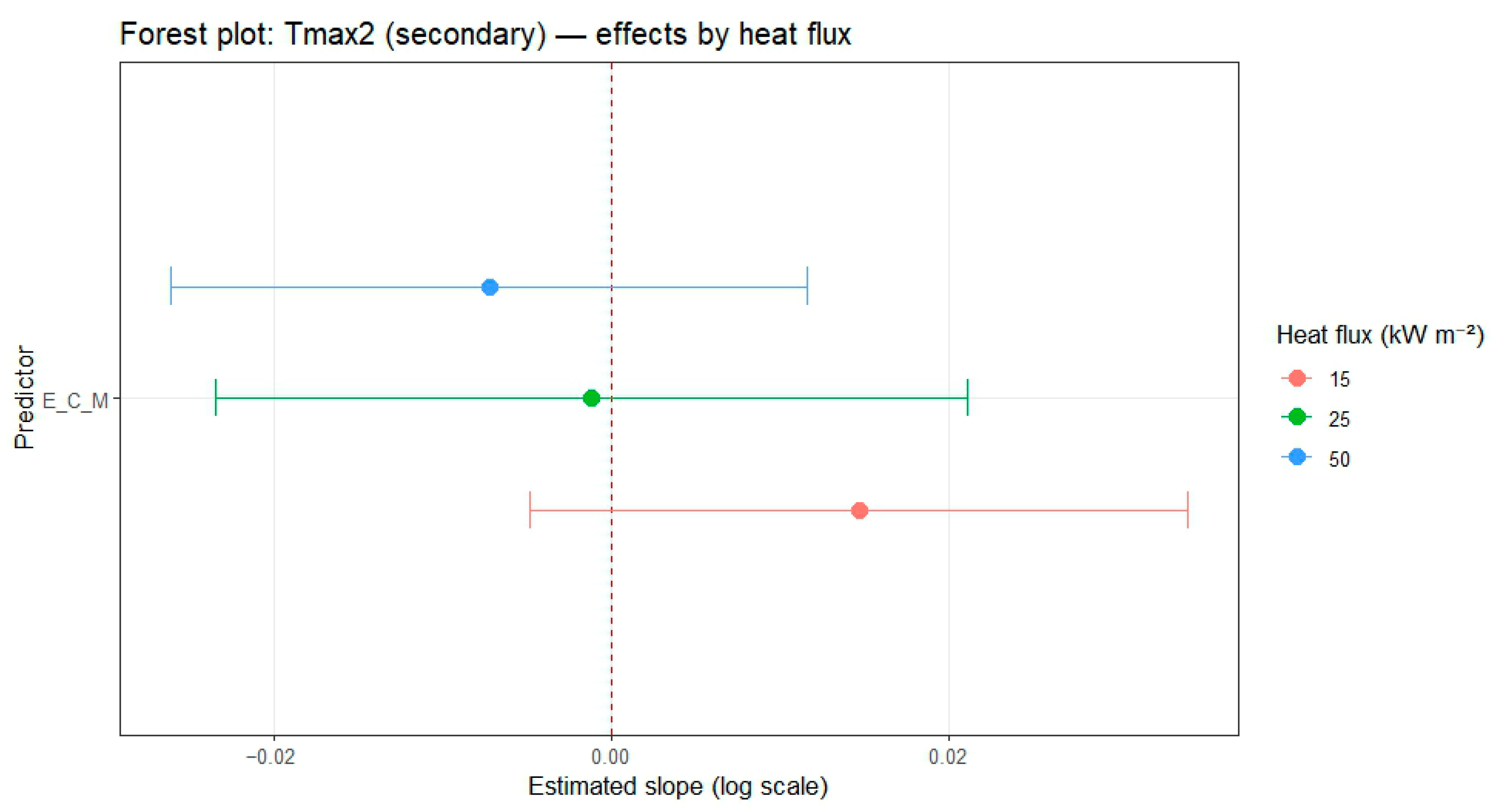
In the selected model, heat flux intensity was the primary determinant of Tmax2. The highest intensity level (50 kW m−2) produced a significant increase in the maximum temperature (β = 1.23, 95% CI [0.50, 1.95], p < 0.001), whereas the intermediate intensity level showed a weaker and marginal effect. Mean cork thickness and the interaction terms were not statistically significant, and confidence intervals were wide.
Forest plots stratified by intensity (Figure 6) showed MCT-associated slopes close to zero with high uncertainty and no consistent pattern across heat flux levels.
Figure 6.
Forest plot showing the estimated effects of mean cork thickness (MCT) on the maximum temperature recorded at the intermediate thermocouple (Tmax2), stratified by heat flux intensity. Points represent model-based slope estimates (on the log scale) for each heat flux level (15, 25, and 50 kW m−2), and horizontal lines indicate 95% confidence intervals.
3.2. Aromatic Characterization
3.2.1. Sensory Analysis
On the one hand, in the samples ICSURO kept for sensory analysis, undesirable aromas from smoke were found in cork samples collected in the only fully charred tree from which samples were taken and in the lower part (close to the base of trunk) sampled from two additional trees. The aromas found in the remaining samples analyzed were those expected in cork samples. On the other hand, all samples derived from the combustion tests carried out at ICIFOR-INIA, CSIC (all charred according to tests described in Section 3.1) presented undesirable smoke-related aromas, regardless of fire intensity.
3.2.2. SPME-GC-MS/MS Analysis
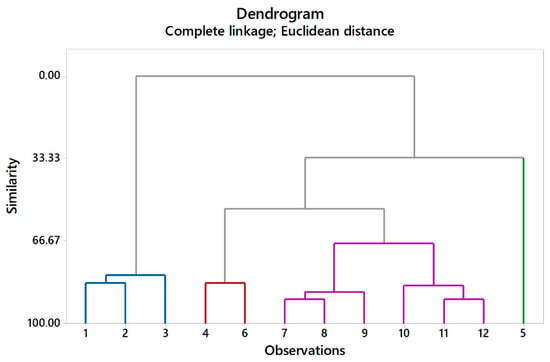
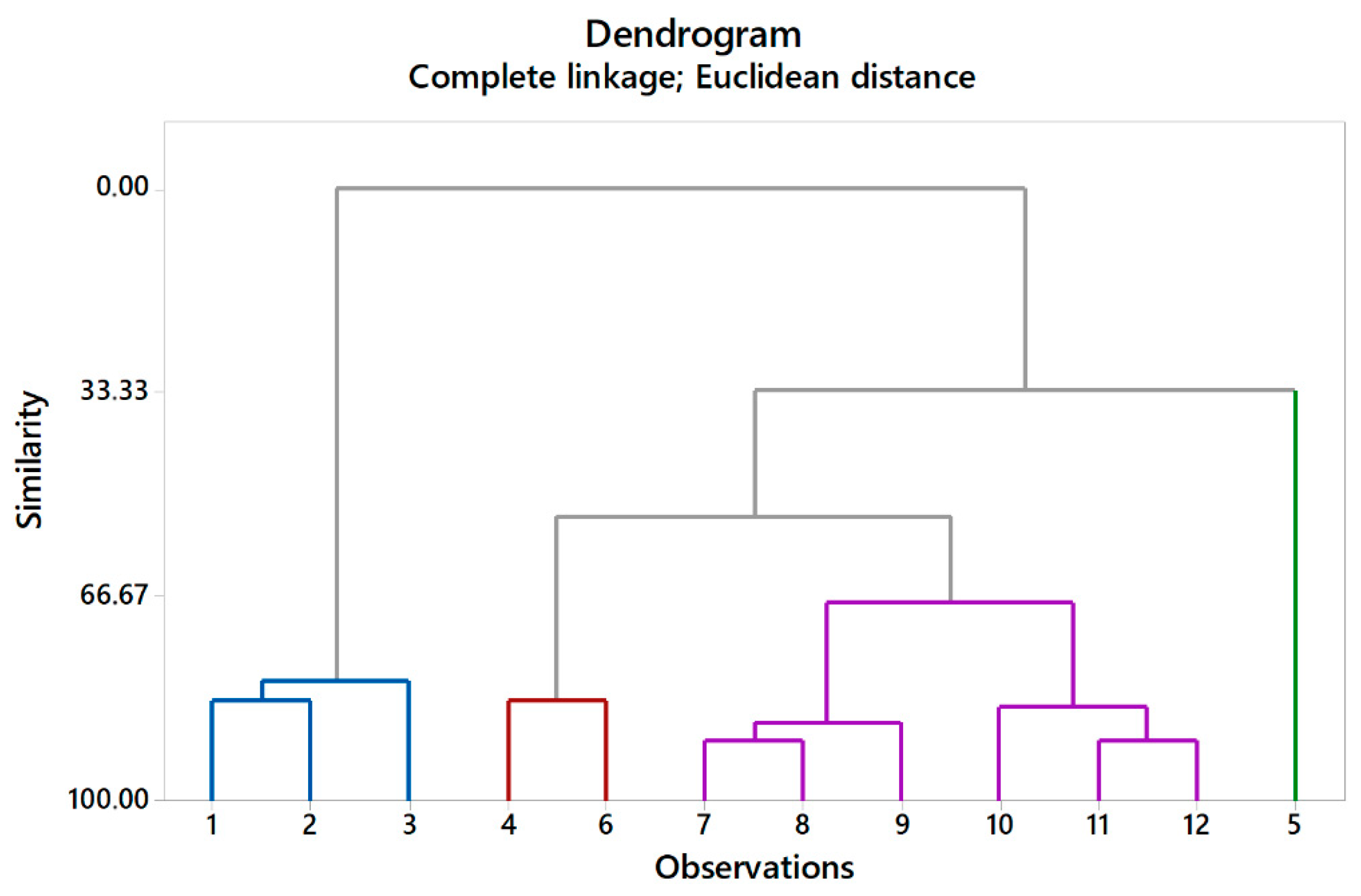
A total of 87 compounds were identified through aromatic analysis across all samples. Hierarchical cluster analysis revealed that the most fire-affected samples (group H) exhibited a chemically distinct profile compared to the others (groups M, T, and V), which were more homogeneous among themselves (Figure 7).
Figure 7.
Dendrogram obtained for the four study groups (with replicates) based on the quantity and type of chemical compounds identified through GC-MS/MS. (N = 54).
There were differences in the sensory profiles of the samples, especially between sample H and the others. Aristolene, dodecane, and longipinerene are present in all samples at high intensities. Compounds such as aromandene, camphene, cuparene, cyclopentene, cymenene, hexadecane, isoborneol, nonanal, terpineol, tetradecene, tridecane, and undecane are found in all samples at intermediate intensities. Some compounds, such as 4-ethylguaiacol, were detected only in the cork samples from group H. Bornanone was found at high concentrations in samples M, T, and V.
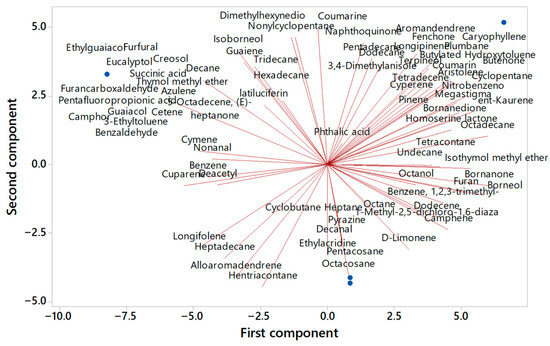
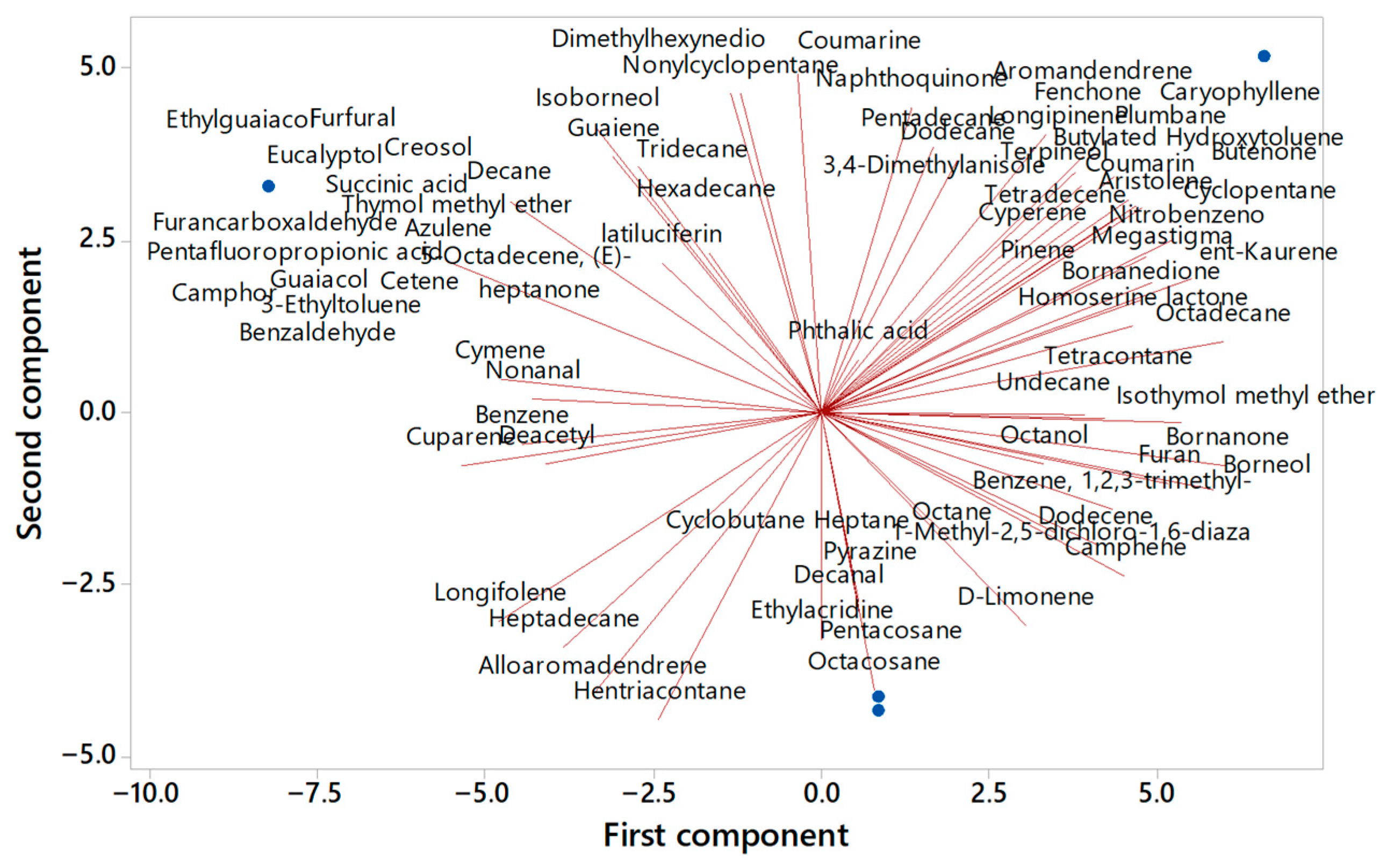
The principal component analysis allowed the identification of three main components explaining 70.6% of the total variance (PC1: 31.6%, PC2: 22.1%, PC3: 17.0%). The PCA confirmed the segregation of sample H, influenced by combustion-related compounds, and the similarity between T and V (Figure 8).
Figure 8.
Principal component analysis (PCA) plot showing the distribution of samples and the identified compounds.
4. Discussion
4.1. Fire Resistance Drivers
Heat flux intensity and cork thickness emerged as the two primary factors determining cork fire resistance, in line with previous studies [5,12,25]. Exploratory Pearson’s correlation analyses supported a clear depth-dependent pattern in thermal responses, whereby heat flux primarily determines the processes occurring in the outer bark layers, while cork thickness becomes increasingly relevant in regulating thermal transmission toward the inner tissues, phellogen, and cambium. Overall, our results support a depth-dependent mechanistic framework of cork fire resistance, in which external heat flux and internal bark structure play distinct but complementary roles.
Specifically, the negative correlation observed between mean cork thickness and Tmax4 indicates that a thicker cork layer is associated with a lower maximum temperature at the cambium level, whereas no such relationship was detected at the outer thermocouple. Conversely, temperatures in the external layers are strongly driven by heat flux intensity and, to a lesser extent, by cork consumption, highlighting the limited buffering capacity of bark traits at the surface. These patterns are consistent with the insulating role of cork described in previous experimental and field studies and support the use of Tmax4 as a proxy for fire resistance at the cambium level.
The absence of a significant interaction between heat flux intensity and cork thickness suggests that the protective effect of cork is stable across different fire intensities. This indicates that cork thickness acts as a robust insulating trait, consistently reducing heat transmission to the inner tissues regardless of the external heat input within the tested range. From an ecological and management perspective, this finding reinforces the role of cork thickness as a key predictor of tree survival under both prescribed burning and wildfire scenarios.
4.2. Cork Thickness
The generalized linear models reinforced the central role of mean cork thickness as the main biological trait modulating internal thermal response under fire exposure. Under the simplified modeling framework adopted herein, cork thickness was the only structural trait consistently retained in the most parsimonious models explaining the variation in Tmax4. Models including additional variables such as corkback thickness [14] or humidity did not improve model fit, indicating limited additional explanatory power once heat flux intensity and cork thickness were accounted for.
The negative main effect of cork thickness on Tmax4 confirmed that a thicker cork layer effectively reduces the maximum temperature transmitted to inner tissues. Importantly, although the models allowed for an interaction between heat flux intensity and cork thickness, the interaction terms were weak and not statistically significant. This suggested that the protective effect of cork thickness was largely consistent across the range of fire intensities tested, rather than being strongly modulated by heat flux intensity.
This result aligned with previous studies reporting threshold bark thicknesses beyond which cambium protection increases markedly. Espinosa et al. [13] identified bark thicknesses of approximately 17–20 mm as reducing cambium mortality in Pinus nigra, while Molina et al. [12] reported that total bark thicknesses above 37 mm prevented lethal cambium temperatures in Quercus suber. Differences among reported thresholds likely reflect methodological contrasts, particularly the inclusion of ignition and flaming combustion in some studies [13,14], which can lead to higher peak temperatures than those reached in radiant heat bench-scale tests.
At intermediate bark depths (Tmax2), the GLM results indicated that heat flux intensity is the dominant driver of thermal response, whereas cork thickness and its interaction with intensity showed weak and statistically non-significant effects. While the most parsimonious models formally included cork thickness, confidence intervals were wide and slope estimates were close to zero, indicating limited explanatory power of bark traits at this depth.
These findings support a mechanistic, depth-dependent model of cork fire resistance. Outer bark layers (e.g., Tmax2) are primarily governed by external heat flux intensity, reflecting direct energy input and limited insulation capacity at the surface. By contrast, inner layers (e.g., Tmax4), which are closer to living tissues, are mainly controlled by structural properties, particularly cork thickness, which regulates heat transmission.
This pattern can be interpreted as a bi-layer thermal filter system: an outer layer driven by heat flux and an inner insulating layer determined by cork structure. Under this framework, Tmax2 provides information on fire exposure and heat input, whereas Tmax4 better reflects the biological resistance of the tree.
Although exploratory trends suggest that cork traits may begin to influence thermal dynamics at intermediate depths, such effects could not be robustly resolved with the available sample size. In this context, Tmax2 provides complementary information on heat propagation through the bark but appears less informative than Tmax4 for identifying the biological drivers of fire resistance, while remaining useful for characterizing heat flux. This is particularly relevant for assessing fire severity during prescribed burning, as the use of thermocouples [13] is more cost-effective than direct heat flux measurements.
4.3. Cork Consumption
Cork mass loss was primarily associated with heat flux intensity, with no robust effects of cork thickness or other structural traits detected in the GLM analyses. This outcome is consistent with the strong temperature dependence of cork degradation described by Pereira [26], who showed that mass loss increases rapidly above 200 °C. In the present study, the maximum temperatures recorded at inner thermocouples approached this threshold, and observed mass losses (up to ~35%) fell within the expected range for partial thermal degradation. Mass loss showed higher explanatory power than intermediate thermal metrics.
The absence of a strong thickness effect on mass loss also aligns with observations by Cardillo [16], who reported that a relatively constant proportion of cork (approximately 20–25%) undergoes charring during forest fires regardless of bark thickness. At higher heat flux intensities, this baseline consumption may dominate, leading to similar mass-loss proportions across samples.
4.4. Cork Humidity and Corkback Thickness
Humidity did not emerge as a significant predictor in the GLM analyses. However, this result should be interpreted cautiously, as relative humidity values in this study were low and showed limited variability (~7%). Although field measurements indicated that cork moisture typically fell within similar ranges under Mediterranean summer conditions, bark is largely composed of dead tissue and its water content may therefore play a secondary role compared to structural traits. Moreover, while laboratory experiments can reproduce realistic average moisture levels, they cannot simulate the natural radial moisture gradient present in standing trees—particularly the higher inner moisture associated with the living phellogen—which may modulate heat transfer under field conditions.
Similarly, corkback thickness did not show a robust effect once cork thickness and heat flux intensity were included in the models. Earlier studies have linked corkback thickness to increased flammability and heat release [12,14,21], particularly under flaming combustion or low-intensity prescribed burns, but this effect was not detected in our series of tests, probably because the low number of flaming tests reduced the effect of thermal heating [13].
4.5. Aromatic Characterization
The analysis of aromatic characteristics confirmed that fire exposure, even under controlled conditions, can alter the organoleptic profile of cork. As described by Silva et al. [7], cork contains free extractable components, which can migrate into wine and influence its sensory profile. This is particularly relevant in fire-affected cork, where some of these compounds may exceed sensory thresholds. In this study, both sensory panel assessments and GC-MS/MS analysis revealed the presence of undesirable smoke-related aromas—such as 4-ethylguaiacol—exclusively in charred samples (group H), while in the remaining samples, which showed less visual impact and had been exposed to prescribed burns several years earlier, these undesirable aromas were not detected. Multivariate analyses (hierarchical clustering and PCA) clearly separated these samples from the rest, suggesting a chemical transformation of volatile compounds due to fire exposure. The feasibility of validating sensory analysis results through gas chromatography analysis aligns with the observations of Culleré et al. [27], whose GC-O analysis validated the sensory perception of off-notes. Although Cardillo [16] noted that non-carbonized cork layers may still be usable for stopper production, our findings indicate that even cork from inner layers can carry perceptible deviations if thermal exposure is significant. However, it is important to highlight the differences observed between recently burned samples and those burned some time ago: in bench-scale tests, even 15 kW low-intensity samples exhibited undesirable odors, which may suggest a transient effect that reduces the impact observed in the field, or alternatively, that the 5-min laboratory exposure of the sample overestimated actual field exposure in many of the affected trees during prescribed fires.
4.6. Conclusions and Management Implications
Overall, the results indicated that heat flux intensity and cork thickness were the primary drivers of cork fire resistance under the experimental conditions tested. The protective effect of cork thickness was consistent across all tested heat flux intensities, as reflected by the absence of significant interaction terms in the models and overlapping confidence intervals across treatments.
Mean cork thickness showed a significant negative effect on maximum internal temperature (Tmax4; estimate = −0.02 ± 0.0068, p < 0.001), confirming its role as a key structural trait conferring thermal insulation. By contrast, additional bark traits such as corkback thickness and humidity did not improve model performance once heat flux intensity and cork thickness were accounted for.
The observed positive relationship between cork thickness and absolute mass loss reflects two distinct processes: fuel availability and thermal protection. Mass loss was strongly and positively associated with heat flux intensity (r = 0.67, p < 0.001), while showing moderate positive correlations with cork thickness (MCT: r = 0.34, p = 0.042; MCBT: r = 0.38, p = 0.021). This indicates that thicker cork samples contain more combustible material and therefore experience greater absolute consumption under higher heat exposure, without compromising their insulating function. In this sense, cork can be interpreted as a dual-function structure, where the outer layers act as material that can be partially consumed, while the inner layers maintain their protective role.
Properly managed prescribed burns can therefore be compatible with cork survival when sufficient cork thickness is present (approximately >1–1.5 cm, based on the lowest heat flux treatment, 15 kW m−2), although cork commercial quality may still be affected in the short term, as indicated by the occurrence of smoke-related aromas after heat exposure in bench-scale tests. These findings support the use of prescribed burning as a fire-prevention tool in cork oak forests, while highlighting the need to consider both cork thickness and potential impacts on cork quality, particularly by reducing surface carbonization (e.g., through shrub clearing around trees prior to burning).
In addition, a time lapse will be required to assess the persistence of smoke-derived volatile organic compounds, and future research should determine the optimal combination between fire intensity, carbonization, and recovery time to minimize impacts on cork suitability for stopper production. The development of field kits detecting BVOCs such as 4-ethylguaiacol could provide a practical tool to assess cork quality in cork oak stands managed with prescribed burning. This study represents a first step in evaluating prescribed burning as a silvicultural tool in cork oak systems, and future work should validate these findings under field conditions and quantify the associated economic implications.
Author Contributions
Conceptualization, M.S.-G. and J.M.; methodology, M.S.-G. and J.M.; software, C.E., M.V. and P.J.; validation, M.S.-G., J.M., M.V. and P.J.; formal analysis, C.E.; investigation, C.E.; resources, E.L.L., M.S.-G. and J.M.; data curation, C.E., M.V. and P.J.; writing—original draft preparation, C.E.; writing—review and editing, M.S.-G., J.M., M.V. and P.J.; supervision, M.S.-G. and J.M.; project administration, M.S.-G.; funding acquisition, M.S.-G. All authors have read and agreed to the published version of the manuscript.
Funding
This research was funded by Biodiversity Foundation of the Ministry for Ecological Transition and the Demographic Challenge (MITECO) within the framework of the Recovery, Transformation, and Resilience Plan (PRTR), funded by the European Union-NextGenerationEU, grant number BF022 FUTURECORK.
Institutional Review Board Statement
Not applicable.
Data Availability Statement
The original contributions presented in this study are included in the article. Further inquiries can be directed to the corresponding authors.
Acknowledgments
This paper is part of the project FUTURECORK, which is supported by the Biodiversity Foundation of the Ministry for the Ecological Transition and the Demographic Challenge (MITECO) within the framework of the Recovery, Transformation and Resilience Plan (PRTR), funded by the European Union–NextGenerationEU.
Conflicts of Interest
The authors declare no conflicts of interest.
Abbreviations
The following abbreviations are used in this manuscript:
| AICc | Akaike’s Information Criterion Corrected for Small Sample Size |
| BVOCs | Biogenic Volatile Organic Compounds |
| CIPT | International Code of Cork Stopper Manufacturing Practices |
| DBH | Diameter at Breast Height |
| GC–MS/MS | Gas Chromatography–Tandem Mass Spectrometry |
| GLM | Generalized Linear Model |
| H | Humidity |
| kW m−2 | Kilowatts per Square Meter (Heat Flux Intensity) |
| MCBT | Mean Corkback Thickness |
| MCT | Mean Cork Thickness |
| MLC | Mass Loss Calorimeter |
| PCA | Principal Component Analysis |
| PRTR | Recovery, Transformation, and Resilience Plan |
| SPME | Solid-Phase Microextraction |
| TC | Thermocouple |
| Tmax | Maximum Temperature |
| Tmax1–Tmax4 | Maximum Temperature Recorded at Thermocouples 1 to 4 |
| ICIFOR-INIA, CSIC | Institute of Forest Sciences–National Institute for Agricultural and Food Research and Technology of Spain, Spanish National Research Council |
| ICSURO | Catalan Cork Institute Foundation |
References
- Catry, F.X.; Moreira, F.; Pausas, J.G.; Fernandes, P.M.; Rego, F.; Cardillo, E.; Curt, T. Cork oak vulnerability to fire: The role of bark harvesting, tree characteristics and abiotic factors. PLoS ONE 2012, 7, e39810. [Google Scholar] [CrossRef] [Scilit] [PubMed]
- Mansoor, S.; Farooq, I.; Kachroo, M.M.; Mahmoud, A.E.D.; Fawzy, M.; Popescu, S.M.; Alyemeni, M.; Sonne, C.; Rinklebe, J.; Ahmad, P. Elevation in wildfire frequencies with respect to the climate change. J. Environ. Manag. 2022, 301, 113769. [Google Scholar] [CrossRef] [Scilit]
- Pereira, H. The formation and growth of cork. In Cork: Biology, Production and Uses, 1st ed; Elsevier Science: Amsterdam, The Netherlands; London, UK, 2007; pp. 7–31. [Google Scholar]
- Pereira, H.; Rosa, M.E.; Fortes, M.A. The cellular structure of cork from Quercus suber L. IAWA J. 1987, 8, 213–218. [Google Scholar] [CrossRef] [Scilit]
- Pausas, J.G. Resprouting of Quercus suber in NE Spain after fire. J. Veg. Sci. 1997, 8, 703–706. [Google Scholar] [CrossRef] [Scilit]
- Fontseca Riera, S. Quema prescrita para la gestión inicial de un alcornocal en estado de abandono. RIyRN 2022, 8, 50–52. [Google Scholar]
- Silva, S.P.; Sabino, M.A.; Fernandas, E.M.; Correlo, V.M.; Boesel, L.F.; Reis, R.L. Cork: Properties, capabilities and applications. Int. Mater. Rev. 2005, 50, 345–365. [Google Scholar] [CrossRef] [Scilit]
- Sierra-Pérez, J.; Boschmonart-Rives, J.; Gabarrell, X. Production and trade analysis in the Iberian cork sector: Economic characterization of a forest industry. Resour. Conserv. Recycl. 2015, 98, 55–66. [Google Scholar] [CrossRef] [Scilit]
- Tedim, F.; Leone, V.; Amraoui, M.; Bouillon, C.; Coughlan, M.R.; Delogu, G.M.; Fernandes, P.M.; Ferreira, C.; McCaffrey, S.; McGee, T.K.; et al. Defining extreme wildfire events: Difficulties, challenges, and impacts. Fire 2018, 1, 9. [Google Scholar] [CrossRef] [Scilit]
- Marziliano, P.A.; Lombardi, F.; Cataldo, M.F.; Mercuri, M.; Papandrea, S.F.; Manti, L.M.; Bagnato, S.; Alì, G.; Fusaro, P.; Pantano, P.S.; et al. Forest Fires: Silvicultural Prevention and Mathematical Models for Predicting Fire Propagation in Southern Italy. Fire 2024, 7, 278. [Google Scholar] [CrossRef] [Scilit]
- Castellnou, M.; De Catalunya, G.; Kraus, D. Prescribed burning and suppression fire techniques: From fuel to landscape management. In Best Practices of Fire Use—Prescribed Burning and Suppression Fire Programmes in Selected Case-Study Regions in Europe, 1st ed; Montiel, C., Kraus, D., Eds.; European Forest Institute: Joensuu, Finland, 2010; pp. 3–16. [Google Scholar]
- Molina, J.R.; Prades, C.; Lora, Á.; Rodríguez y Silva, F. Quercus suber cork as a keystone trait for fire response: A flammability analysis using bench and field scales. For. Ecol. Manag. 2018, 429, 384–393. [Google Scholar] [CrossRef] [Scilit]
- Espinosa, J.; Rodríguez de Rivera, O.; Madrigal, J.; Guijarro, M.; Hernando, C. Predicting potential cambium damage and fire resistance in Pinus nigra Arn. ssp. salzmannii. For. Ecol. Manag. 2020, 474, 118372. [Google Scholar] [CrossRef] [Scilit]
- Dehane, B.; Hernando, C.; Guijarro, M.; Madrigal, J. Flammability of some companion species in cork oak (Quercus suber L.). Ann. For. Sci. 2017, 74, 60. [Google Scholar] [CrossRef] [Scilit]
- Kaloustian, J.; Pauli, A.M.; Pastor, J. Etude par analyse thermique de quelques vegetaux mediteraneens. J. Therm. Anal. 1996, 46, 1349–1365. [Google Scholar] [CrossRef] [Scilit]
- Cardillo, E. El Alcornocal y el Fuego. Instituto del Corcho, la Madera y el Carbón, 1st ed.; Marco Macarro, P., Ed.; Instituto del Corcho, la Madera y el Carbón Vegetal (IPROCOR/Instituto CMC)—Junta de Extremadura: Mérida, Spain, 2007.
- Bauer, G.; Speck, T.; Blömer, J.; Bertling, J.; Speck, O. Insulation capability of the bark of trees with different fire adaptation. J. Mater. Sci. 2010, 45, 5950–5959. [Google Scholar] [CrossRef] [Scilit]
- Hengst, G.E.; Dawson, J.O. Bark thermal properties of selected central hardwood species. In Proceedings of the 9th Central Hardwood Forest Conference, West Lafayette, IN, USA, 8–10 March 1993; pp. 55–68. [Google Scholar]
- Pinard, M.A.; Huffman, J. Fire resistance and bark properties of trees in a seasonally dry forest in eastern Bolivia. J. Trop. Ecol. 1997, 13, 727–740. [Google Scholar] [CrossRef] [Scilit]
- Brando, P.M.; Nepstad, D.C.; Balch, J.K.; Bolker, B.; Christman, M.C.; Coe, M.; Putz, F.E. Fire-induced tree mortality in a neotropical forest: The roles of bark traits, tree size, wood density and fire behavior. Glob. Chang. Biol. 2012, 18, 630–641. [Google Scholar] [CrossRef] [Scilit]
- Lara, H.; Madrigal Olmo, C.; Sánchez, S.; Guijarro Guzmán, P.F. Efecto de la severidad del fuego en la producción de corcho. In Actas del Congreso Sobre Gestión de Ecosistemas Forestales Resilientes a Incendios Forestales (GEPRIF); Plasencia, Cáceres, 2017. pp. 1–12. Available online: https://oa.upm.es/50029/ (accessed on 9 April 2026).
- Odhiambo, B.; Meincken, M.; Seifert, T. The protective role of bark against fire damage: A comparative study on selected introduced and indigenous tree species in the Western Cape, South Africa. Trees—Struct. Funct. 2014, 28, 555–565. [Google Scholar] [CrossRef] [Scilit]
- Liège, C.E. SYSTECODE. 6.06 17 July 2014. pp. 1–79. Available online: https://aecork.com/wp-content/uploads/2017/10/20140717-CIPT-v-6-.06-ESP.pdf (accessed on 9 April 2026).
- Dehane, B.; Madrigal, J.; Hernando, C.; Bouhraoua, R.; Guijarro, M. New bench-scale protocols for characterizing bark flammability and fire resistance in trees: Application to Algerian cork. J. Fire Sci. 2015, 33, 202–217. [Google Scholar] [CrossRef] [Scilit]
- Pereira, H. The thermochemical degradation of cork. Wood Sci. Technol. 1992, 26, 259–269. [Google Scholar] [CrossRef] [Scilit]
- Madrigal, J.; Hernando, C.; Guijarro, M. A new bench-scale methodology for evaluating the flammability of live forest fuels. J. Fire Sci. 2012, 31, 131–142. [Google Scholar] [CrossRef] [Scilit]
- Culleré, L.; Cacho, J.; Ferreira, V. Comparative study of the aromatic profile of different kinds of wine cork stoppers. Food Chem. 2009, 112, 381–387. [Google Scholar] [CrossRef] [Scilit]

Disclaimer/Publisher’s Note: The statements, opinions and data contained in all publications are solely those of the individual author(s) and contributor(s) and not of MDPI and/or the editor(s). MDPI and/or the editor(s) disclaim responsibility for any injury to people or property resulting from any ideas, methods, instructions or products referred to in the content. |
© 2026 by the authors. Licensee MDPI, Basel, Switzerland. This article is an open access article distributed under the terms and conditions of the Creative Commons Attribution (CC BY) license.