


Abstract
Frequent fire occurrences and the limitations of traditional fire extinguishing agents are driving the upgrade of fire suppression materials toward environmental friendliness, high efficiency, and intelligence. As a new generation of clean and intelligent fire extinguishing material, fire extinguishing microcapsules feature a unique core–shell structure and thermally responsive controlled-release performance. They effectively overcome drawbacks such as residual pollution and environmental damage caused by conventional agents and have become a research hotspot intersecting safety science and materials science. This paper systematically reviews the evolution of fire suppression materials and summarizes the development history, structural composition, preparation techniques, fire extinguishing mechanisms, performance, and application scope of fire extinguishing microcapsules. In view of the existing deficiencies in material systems and preparation technologies, future development trends are projected from the perspectives of material innovation, process optimization, and industrialization advancement. We aim to provide references for the research, development, and engineering application of high-efficiency intelligent fire suppression materials.
1. Introduction
Fire is a common uncontrolled combustion phenomenon, and its occurrence frequency and disaster severity have always been core concerns in the field of public safety [1,2,3,4,5]. The annual reported fire cases and economic losses in recent years are shown in Figure 1. Statistics indicate that 549,000 fires were recorded in China in 2023, causing direct economic losses of 5.94 billion yuan. The figures rose to 908,000 fires and 7.73-billion-yuan losses in 2024, and the economic losses hit 8.53 billion yuan in 2025 [6,7]. This growing trend reveals that despite continuous advances in fire prevention design and detection technologies, fires still incur billions of yuan in direct economic losses each year, accompanied by irreversible casualties and ecological damage. Against this backdrop, fire extinguishing materials serve as key media acting directly on fires in fire prevention and control systems. Their performance determines the success of initial fire suppression and exerts far-reaching influences on the prevention and control of secondary disasters.
Figure 1.
Number of reported fires and corresponding economic losses in China in recent years.
The research and evolution of fire extinguishing materials have always been key topics in the field of science and technology. Figure 2a systematically presents the dynamic evolution of annual publications and total citations in the field of fire extinguishing materials from 1997 to 2026 within the Web of Science Core Collection. From a temporal perspective, the research development can be divided into three stages: the embryonic initiation phase, the steady growth phase, and the explosive growth phase, with both publication volume and citation count showing significant increases. Figure 2b reveals the primary thematic distribution of fire extinguishing materials, indicating that fire prevention and suppression, fire extinguishing materials, and fire extinguishing technologies are the three core research directions in this field, collectively accounting for over 78%. Both figures further reflect the global scientific community’s high regard and deep investment in fundamental research, technological innovation, and engineering applications of fire extinguishing materials [8].
Figure 2.
(a) Annual publications and citations of fire extinguishing materials in Web of Science from 1997 to 2026; (b) distribution of major research topics of fire extinguishing materials.
The types and development history of fire extinguishing agents are shown in Figure 3, and their evolution trajectory deeply reflects the deepening of human understanding of the nature of fire combustion and the leap in industrial technology level. The natural fire extinguishing stage relies on natural media such as water and sand to extinguish the fire; dry powder extinguishing agents and chemical foam extinguishing agents came out later, one after another, but their use was reduced because a large number of powder particles would be left after fire extinguishing, which could easily be inhaled by the human body or cause water pollution, and there were health hazards [9,10,11,12,13,14,15,16,17,18,19,20,21]. Although Halon fire extinguishing agents have high fire extinguishing efficiency, their use is limited due to the destruction of the ozone layer [22,23,24]. Afterwards, they were replaced by clean gas fire extinguishing agents [25], fine-water-mist fire extinguishing agents [26,27,28,29,30,31,32], and hot aerosol fire extinguishing agents [33,34,35,36,37,38]. Fire extinguishing microcapsule materials are made by encapsulating fire extinguishing agents in polymer shells through microcapsule technology, which can achieve precise release and long-term storage of fire extinguishing agents. When exposed to a high temperature or pressure stimulation from a fire, the capsule shell ruptures and releases the core fire extinguishing components [39,40], which can effectively suppress the combustion chain reaction and solve the problem of scattered fire extinguishing range and easy loss of traditional materials. In addition, the capsule particle size, coating material, and core fire extinguishing agent type can be adjusted according to different scene requirements to adapt to various special needs, which has great advantages in active fire extinguishing, precise prevention and control, and scene adaptability. Despite the outstanding potential of fire extinguishing microcapsules, existing research still has many limitations. On the one hand, the mechanical strength of the capsule material is insufficient, which makes it prone to damage and leakage during processing, transportation, and long-term storage, resulting in premature loss of the fire extinguishing agent; on the other hand, existing preparation processes generally have limited encapsulation efficiency, wide product particle size distribution, and poor batch repeatability, making it difficult to meet the requirements of industrial large-scale production. In addition, the micro-mechanisms of microcapsule thermal rupture and core material release have not been fully revealed, and key scientific issues such as shell–core interface compatibility and long-term aging stability still lack systematic exploration, which restricts the material from being used in a laboratory for practical fire engineering. Based on the above-mentioned practical bottlenecks, it is necessary to conduct more comprehensive and systematic in-depth research on fire extinguishing microcapsules, providing theoretical support and a practical basis for the design optimization and engineering implementation of high-performance fire extinguishing microcapsules.
Figure 3.
Types of fire extinguishing agents: (1) foam extinguishing agent [15], (2) dry powder extinguishing agent [12], (3) water mist extinguishing agent [27], (4) Halon extinguishing agent [24], (5) clean gas extinguishing agent [25], (6) thermal aerosol extinguishing agent [33], and (7) fire extinguishing microcapsule [41].
2. Fire Extinguishing Microcapsule Materials
In this review, fire extinguishing microcapsules were selected as the main focus on the progress of fire prevention and control. The research emphasis and focus are on selecting or developing fire extinguishing microcapsule materials with good control release, high fire extinguishing efficiency, and strong scene adaptability to meet the needs of various fire prevention and control systems. The continuous research on fire extinguishing microcapsule technology is driving the development of new formulation systems and composite flame-retardant/fire extinguishing materials to improve the storage and release efficiency of microcapsules and expand their practical applications in fields such as construction, new energy, and power equipment. In the microcapsule research system for fire safety, microcapsules are mainly categorized into fire extinguishing microcapsules and flame-retardant microcapsules according to their fire suppression mechanisms and functions. Fire extinguishing microcapsules are designed for active fire suppression: under thermal triggering conditions, their capsule shells rupture and release the encapsulated fire extinguishing agent, which rapidly acts on open flames to achieve rapid fire extinction, and their core performance evaluation indicators include fire extinguishing time, minimum fire extinguishing concentration, and anti-reignition performance. In contrast, flame-retardant microcapsules are mostly incorporated into polymer matrices. They improve the flame resistance of substrate materials by forming a carbonized layer, inhibiting thermal decomposition, and retarding flame spread. Different from fire extinguishing microcapsules that put out existing open flames quickly, they mainly function to delay ignition and restrict flame propagation, with typical evaluation indexes involving the Limiting Oxygen Index (LOI), UL-94 rating, and heat release rate [42,43,44,45,46,47]. Therefore, conducting in-depth research on fire extinguishing microcapsule materials has important theoretical significance and practical application value for enhancing the fire prevention and control capabilities of the whole society, ensuring the safety of people’s lives and property, and protecting the ecological environment.
2.1. Development History of Fire Extinguishing Microcapsules
The stage history of fire extinguishing microencapsulated materials since 1999 is shown in Figure 4. The development of the principle of microencapsulated fire extinguishing technology began in 1999. Figueredo et al. [48] systematically revealed the thermodynamic unstable structure of foam, bubble evolution, liquid drainage, and membrane rupture mechanism and defined the core principle of fire extinguishing by covering and isolating oxygen, cooling and reducing temperature, and inhibiting the volatilization of combustible vapor. They also focused on the development of an aqueous film-forming foam (AFFF) extinguishing agent with perfluorinated surfactant as the core, which was successfully applied to oil tank fires, providing basic theoretical support for subsequent gas–liquid two-phase active fire extinguishing materials. In 2006, Jimenez et al. [49] developed an epoxy resin-based expansion-type fireproof coating. By compounding ammonium polyphosphate (APP) with boric acid, it decomposes to produce acid, catalyzes the formation of carbon, and releases foaming gas when heated, forming a dense and porous insulation carbon layer. It can provide nearly 30 min of protection for steel structures in hydrocarbon fires. Although it belongs to a passive fireproof system, its thermal response decomposition, shell softening expansion, and insulation carbon formation mechanism provide key ideas for microcapsule shell design and thermal trigger release. In 2012, Vilesov et al. [50] proposed a technical route for microencapsulation of liquid and gas fire extinguishing agents, using interface condensation and coagulation methods to prepare gelatin siloxane bilayer shell microcapsules, encapsulating environmentally friendly brominated hydrocarbon fire extinguishing agents such as dibromomethane, solving the problem of traditional liquid fire extinguishing agents being prone to volatilization and diffusion leakage, achieving explosive release of fire extinguishing agents in an overheated state, and suppressing initial fires within 10 s, establishing a microcapsule fire extinguishing technology framework of “core–shell structure + thermal triggered explosion”. Building upon the above framework, in 2014, Suvorova et al. [51] further modified microcapsule shells with montmorillonite nanosheets to enhance barrier performance and reduce agent diffusion loss. Meanwhile, ozone-safe Novec 1230 (perfluorohexanone) was adopted to replace ozone-depleting freon-type agents. Their microcapsules combined long-term storage stability, fast thermal response, and environmental friendliness, which greatly expanded the candidate core agents for fire extinguishing microcapsules. Starting in 2015, fire extinguishing microcapsules were further introduced into lithium-ion battery safety protection. Yim et al. [52] synthesized crosslinked PMMA(polymethyl methacrylate)-shell microcapsules encapsulating perfluorinated endothermic fire suppression liquid DMTP(1,1,1,2,2,3,4,5,5,5-difluoro-3-methoxy-4-(trifluoromethyl)-pentane). Microcapsules remained inert under normal battery operation without disturbing electrode–electrolyte interfaces; once thermal runaway occurred, shell softening rupture released the fire suppressant to quench radical reactions. Nail penetration tests demonstrated a 74 °C reduction in battery temperature rise, achieving a trade-off between electrochemical performance and thermal safety. This pioneering work opened up the important application direction of battery thermal runaway early intervention. In 2017, Huang et al. [53] prepared urea–formaldehyde resin microcapsules encapsulating phosphorus flame retardants TPP and DOPO via in situ polymerization. Microencapsulation effectively eliminated adverse side effects, including slurry agglomeration, abnormal viscosity, and current collector corrosion caused by direct addition of free flame retardants. The self-extinguishing efficiency of a cathode–electrolyte system increased by 30–40%, while battery capacity and cycling stability were well preserved, demonstrating the advantages of microencapsulation for compatibility between functional additives and battery components. In 2018, Chen et al. [54] extended this system to inorganic flame retardants (ATH and AlOOH). Comparative experiments verified that urea–formaldehyde-encapsulated ATH microcapsules delivered 68% fire suppression efficiency, outstanding thermal stability, and electrochemical compatibility, which significantly suppressed electrolyte combustion and lowered peak temperature. Their research further improved organic–inorganic composite fire extinguishing microcapsule systems. In 2022, Liu et al. [55] innovatively proposed thermally triggered fire-suppressive separators with phase-change-material flame-retardant co-encapsulation. Stearic acid phase-change material and TEP (triethyl phosphate) flame retardant were loaded within hollow mesoporous SiO2 and coated onto commercial polypropylene separators. A solid PCM-locked flame retardant under normal working conditions avoids side reactions with the electrolyte. Upon reaching the phase transition temperature, the PCM melted, and TEP was precisely released to terminate combustion chain reactions. The SiO2 host also improved separator wettability and ionic conductivity. This strategy solved the release-lag drawback of conventional polymer shells. In 2024, targeting fire hazards in narrow confined spaces, Li et al. [56] adopted microfluidic technology to precisely tailor the particle size, shell thickness, and encapsulation ratio of perfluorohexanone microcapsules. Microcapsules underwent thermal micro-burst near 100 °C and discharged the fire suppressant within 0.2 ms. Flexible fire suppression patches were further manufactured for early fire intervention inside lithium-ion battery compartments. Microfluidics was proven to be a powerful tool for high-precision microcapsule structural regulation. In 2026, Cao et al. [57] exploited a 3D-printed non-planar microfluidic platform to fabricate PMP-loaded core–shell microcapsules. They systematically revealed size-dependent effects and micro-explosion mechanisms and determined the optimal structure (inner diameter 535 μm and shell thickness 34 μm) with programmable fire suppression directionality. The derived flexible patches extinguished an n-heptane pool fire within 6 s, reduced the thermal runaway peak temperature of lithium-ion batteries by ~170 °C, and delayed thermal runaway onset.
Figure 4.
Evolution history of fire-extinguishing microcapsule materials from 1999 to 2026. (a) Micro-morphology of thermodynamically unstable fire-suppression foam in 1999, (b) Morphology of epoxy-based intumescent fire-retardant coating in 2006, (c) SEM image of gelatin-siloxane double-shell microcapsules loaded with brominated fire suppressant in 2012, (d) Cross-sectional SEM view of montmorillonite-modified Novec-1230-loaded microcapsule shell in 2014, (e) Morphology and thermal-triggered rupture behavior of PMMA-shelled fire-extinguishing microcapsules for lithium-ion-battery safety in 2015, (f) Micrograph of urea-formaldehyde microcapsules encapsulating phosphorus-based flame retardants in 2017, (g) SEM image of urea-formaldehyde-encapsulated inorganic flame-retardant microcapsules in 2018, (h) Microstructure of SiO2 microcapsules co-loaded with phase-change material and flame retardant and coated on polypropylene separator in 2022, (i) SEM image of perfluorohexanone-loaded fire-extinguishing microcapsules fabricated by microfluidics for confined-space fire intervention in 2024, (j) Optical photograph of PMP core-shell fire-extinguishing microcapsules prepared via 3D-printed non-planar microfluidic platform in 2026.
To sum up, from the basic theoretical groundwork of early foam fire extinguishing and passive fire retardant coating, to the establishment of the technical framework of “core–shell structure + thermal triggered blasting”, and to the customized development of scenarios such as lithium ion battery safety and narrow confined spaces, the fire extinguishing microcapsule has achieved a leap from “passive protection” to “active intervention” and from “single-fire extinguishing” to “safety and performance consideration”.
2.2. Structural Composition of Fire Extinguishing Microcapsules
Fire extinguishing microcapsules typically adopt a typical core–shell structure design [58,59,60,61,62], and their core properties (such as thermal stability, flame retardancy, controlled-release performance, and fire extinguishing efficiency) are directly determined by the type and composition relationship of the shell material (wall material) and the core material. Table 1 systematically summarizes typical formulation systems in existing research and summarizes the classification, characteristics, and preparation processes of wall and core materials [63].
The shell material (wall material) serves as the coating layer for microcapsules, and its main functions include protecting the core material from external environmental influences, regulating the release behavior of the core material, providing necessary mechanical support and thermal stability, and also achieving synergistic flame retardancy by introducing flame-retardant components [64,65,66,67,68]. According to their chemical composition and sources, wall materials can be divided into three categories: synthetic polymer resin wall materials, natural polymer wall materials, and inorganic organic composite wall materials. Synthetic polymer resin wall materials, represented by urea–formaldehyde resin (UF) and melamine–urea–formaldehyde resin (MUF), have good film-forming properties, high thermal stability, and mechanical strength [69]. They can maintain the integrity of the capsule structure at high temperatures and facilitate efficient encapsulation of liquid core materials through interfacial polymerization reactions [70,71]. There are also studies that introduce flame-retardant additives such as ammonium polyphosphate into resin systems to endow wall materials with additional flame-retardant properties, further enhancing the overall flame-retardant effect of capsules [72,73]. In addition, there are studies using flame-retardant photosensitive resins [56,74] as wall materials to achieve photo-responsive release or special environmental stability of capsules. Natural polymers and their composite wall materials, represented by gelatin, arabic gum, chitosan, and sodium alginate, have good biocompatibility and film-forming properties and can be used to encapsulate volatile and thermosensitive core materials under mild conditions. To improve the poor water resistance and insufficient mechanical strength of a single, natural polymer wall material, it is often combined with components such as polyvinyl alcohol (PVA) [51] and sodium hexametaphosphate [75] during research to form a composite wall material system with better performance. The formulation system of inorganic organic composite wall materials introduces inorganic fillers such as nano-siloxane [50], aluminum hydroxide [73], and boehmite [54], which are combined with organic resins or natural polymer matrices to form inorganic organic composite wall materials. The introduction of inorganic fillers can significantly enhance the thermal stability, barrier properties, and synergistic flame-retardant effect of wall materials, effectively reducing the volatilization loss of core materials during storage and processing and improving the structural stability of capsules in high-temperature environments [76,77].
The core material is the core component for achieving microcapsule fire extinguishing function. In existing research, fluorine-containing fire extinguishing agents are the mainstream, supplemented by some inorganic flame-retardant synergists. According to the mechanism of action, they can be divided into two categories: fluorine-containing liquid fire extinguishing agent core material and inorganic flame-retardant synergist composite core material. Among them, fluorinated liquid fire extinguishing agent core material is the most commonly used core material for fire extinguishing microcapsules, with typical components including perfluorohexane, nonafluoromethoxybutane [75], 1,1,1,2,2,3,4,5,5,5-difluoro-3-methoxy-4-(trifluoromethyl) pentane [78], etc. This type of fire extinguishing agent has the characteristics of a low boiling point, strong volatility, and high fire extinguishing efficiency. When heated or exposed to open flames, it can quickly vaporize and achieve fire extinguishing through the dual effects of physical suffocation (diluting oxygen concentration) and chemical inhibition (capturing free radicals in the combustion chain reaction); at the same time, its ozone depletion potential (ODP) value is 0, making it environmentally friendly and an important substitute for Halon fire extinguishing agents. There are studies that use various fluorinated fire extinguishing agent compound systems, such as the compound of perfluorohexane with heptafluoropentane and 2-bromo-3,3-trifluoropropene [79], to achieve gradient release through the difference in boiling points of different components in order to adapt to different types of fire scenarios. Inorganic flame-retardant synergists and composite core materials have been studied to improve fire extinguishing efficiency and synergistic flame-retardant effects by introducing inorganic or organic phosphorus-based flame-retardant synergists such as aluminum hydroxide, boehmite, and triphenyl phosphate into fluorine-containing fire extinguishing agent core materials. Upon thermal decomposition, these synergists release crystal water or form a dense carbon layer, achieving the functions of heat absorption, cooling, and blocking heat transfer. Such behaviors complement the fire extinguishing mechanism of fluorine-containing fire extinguishing agents well, further enhancing the flame-retardant and fire extinguishing performance of the system [80,81].
In summary, the rational selection, precise matching, and collaborative design of wall and core materials in the core–shell structure system of fire extinguishing microcapsules are the key factors determining their comprehensive application performance. Existing research has conducted extensive exploration on the encapsulation characteristics of different types of wall materials, the fire extinguishing mechanism of core materials, and the compounding rules, laying a solid theoretical and experimental foundation for the formulation optimization, structural regulation, and performance improvement of fire extinguishing microcapsules. At the same time, more in-depth systematic research is still needed to address existing issues such as the environmental adaptability of wall materials, the long-term release control of core materials, and the bonding stability of core–shell interfaces in order to further promote the large-scale application and industrial development of fire extinguishing microcapsule materials in the fields of efficient flame retardancy and intelligent fire extinguishing [82].
Table 1.
Classification, characteristics and preparation process of shell and core materials of fire extinguishing microcapsules.
2.3. Preparation Technologies of Fire Extinguishing Microcapsules
The preparation process of fire extinguishing microcapsules directly affects the integrity of their core–shell structure, uniform particle size distribution, wall material coating efficiency, and core material controlled-release performance, thereby determining their final fire extinguishing effect and adaptability to application scenarios. Based on existing research results, the mainstream preparation processes for fire extinguishing microcapsules mainly include in situ polymerization, composite coagulation, and microfluidics. Each process, with its unique reaction mechanism and operational characteristics, is suitable for combination systems of different types of wall and core materials. This section will provide a detailed description of each preparation process.
2.3.1. In Situ Polymerization Method
In situ polymerization is currently one of the most widely used and technologically mature processes in the preparation of fire extinguishing microcapsules. Its core principle is to disperse the wall material and core material, place them in the same reaction system, and trigger the monomer to undergo a polymerization reaction on the surface of the core material particles through an initiator, gradually forming a dense polymer wall layer and achieving the coating of the core material [92,93,94]. The operation process of preparing fire extinguishing microcapsules by in situ polymerization is as follows: first, the core material is dispersed in the aqueous medium, a uniform lotion is formed by stirring, and the stirring rate is controlled to adjust the particle size of the core material particles; then, wall materials are added to the lotion system to adjust the pH value and temperature of the system to keep the monomer stable in the aqueous phase. Next, an initiator or surfactant is added to initiate the polymerization reaction of the monomer. As the reaction progresses, polymer molecules gradually deposit and crosslink on the surface of the core material particles, forming a complete wall material coating layer. Finally, after post-processing steps such as filtration, washing, and drying, the finished fire extinguishing microcapsules are obtained [95,96,97,98].
Figure 5 shows the process flow diagram of various researchers using in situ polymerization to prepare fire extinguishing microcapsules. Figure 5a shows Chen et al. [54] using urea–formaldehyde resin as the shell material, encapsulating inorganic flame retardants aluminum hydroxide, boehmite, and organic flame retardant triphenyl phosphate, respectively, to prepare three types of flame-retardant microcapsules—en-ATH, en-AlOOH, and en-TPP—which improved the fire extinguishing efficiency of inorganic flame retardants, enhanced microcapsule aggregation, and improved the safety of lithium-ion batteries; Figure 5b shows that Ma et al. [73] first obtained ATH-APP by coating aluminum hydroxide on the surface of ammonium polyphosphate through precipitation and then prepared en-ATH-APP synergistic flame-retardant microcapsules by coating with urea–formaldehyde resin through in situ polymerization. The research results showed that the synergistic effect of ATH and APP resulted in better flame-retardant performance than single APP, and the poly-(urea-formaldehyde) (PUF) shell layer did not affect flame-retardant efficiency, only improving electrochemical compatibility. Figure 5c shows Kim et al. [78] using UF as the shell material and perfluorinated compounds PF5056 and Nv7300 as the core materials, achieving microencapsulation through in situ polymerization to prepare thermally responsive microcapsules. Figure 5d shows that Liu et al. [85] prepared them by in situ polymerization and solvent evaporation, respectively; UF@PMP (core: Perfluoro (2-methyl-3-pentanone); shell: urea–formaldehyde resin) and PMMA@DMTP (shell: two types of fire extinguishing microcapsules, PMMA) have the characteristics of environmental protection and controllable thermal response. Moreover, the fire extinguishing agent has excellent fire extinguishing effect even at a low dosage, which can reduce secondary pollution. Figure 5e shows Bai et al. [79] using the in situ polymerization process to prepare an MUF resin shell wrapped with a ternary composite core of perfluorohexane (C6F12O), heptafluoropentane (C5H3F7), and 2-bromo-3,3-trifluoropropene (2-BTP). A heat-sensitive microcapsule fire extinguishing agent with precise thermal response was prepared, which has high fire extinguishing efficiency, environmental protection and low toxicity, zero ODP, does not affect the electrochemical performance of the battery, and is stable for storage. Figure 5f shows Meng et al. [88] using in situ polymerization to prepare UF shell encapsulated C6F12O microcapsules, which were then cured with epoxy resin to form a fire extinguishing polymer composite material (FEPC); passive release and active release thermal runaway suppression experiments were conducted on LIB modules in a sealed explosion chamber. The microcapsules produced have fast fire extinguishing speed, significant cooling effect, and are non-corrosive, without damaging battery equipment. Figure 5g shows the in situ polymerization process used by Wang et al. [26] to prepare MUF shell encapsulated microcapsules of nonafluoromethoxybutane (MNFB) and heptafluorocyclopentane (F7A); composite microcapsules with a fine-water-mist (FWM@M) design were created. The collaborative microcapsule fine-water-mist fire extinguishing system was used to conduct LIB jet fire suppression experiments in an explosion chamber. Fine water mist acts as an “external barrier“ to block thermal radiation, while microcapsules act as an “internal attack“ to trigger the release of core materials. The synergistic effect is significant, and the fire extinguishing speed is fast. Figure 5h shows Guo et al. [91] preparing a novel temperature-triggered microcapsule fire extinguishing agent (containing perfluorohexane (Novec 1230) and cis-1,1,4,4-hexafluoro-2-butene (HFO-1336mzz (Z)) using the in situ polymerization method. The shell material is melamine–urea–formaldehyde resin, which has dual functions of fire extinguishing and cooling. The combination of the two enables the microcapsule fire extinguishing agent to delay the thermal runaway of lithium-ion batteries and effectively suppress the spread of thermal runaway.
Figure 5.
Typical process diagrams for fabricating fire-extinguishing microcapsules via in-situ polymerization. (a) Fabrication route of urea-formaldehyde-encapsulated ATH, AlOOH and TPP flame-retardant microcapsules, (b) Preparation process of ATH-APP composite synergistic flame-retardant microcapsules, (c) Fabrication of thermoresponsive fire-extinguishing microcapsules with UF shell encapsulating PF5056/Nv7300, (d) Preparation of UF@PMP and PMMA@DMTP fire-extinguishing microcapsules, (e) Fabrication of thermosensitive fire-extinguishing microcapsules with MUF shell encapsulating ternary composite fire suppressant, (f) Synthesis of UF@perfluorohexanone microcapsules and FEPC fire-extinguishing polymer composite, (g) Preparation of MUF-encapsulated MNFB/F7A microcapsules and microcapsule-fine-water-mist synergistic system, (h) Synthesis of MUF-shelled self-triggered fire-extinguishing microcapsules loaded with Novec 1230/HFO-1336mzz(Z).
The in situ polymerization technique features simple operation, low manufacturing cost, and high encapsulation efficiency, which can achieve efficient encapsulation of liquid and solid core materials. The prepared microcapsules have a uniform particle size distribution and excellent mechanical properties, making them suitable for large-scale industrial production. Their limitations are mainly manifested in the significant impact of parameters such as the pH value, temperature, and stirring rate of the reaction system on product performance, which can easily lead to problems such as uneven wall thickness and capsule agglomeration. In addition, some by-products may be generated during the polymerization process, which may affect the environmental compatibility of microcapsules.
2.3.2. Complex Coacervation Method
The composite coagulation method belongs to the physical coating process. Its core principle is to use two kinds of polymer wall materials with opposite charges to generate an electrostatic interaction under specific conditions (such as pH value adjustment and temperature change), so that the molecules of the wall materials can be condensed to form gel-like films, which can then be coated on the surface of the core material particles to achieve the construction of core–shell structure. This process is mainly suitable for the coating system of natural polymer wall materials (such as gelatin arabic gum, chitosan sodium alginate, etc.) and has the characteristics of mild reaction conditions, no toxic by-products, and good biocompatibility [99]. The preparation procedure of fire extinguishing microcapsules by the composite coagulation method is as follows: Firstly, two polymer wall materials with opposite charges (typically cationic gelatin and anionic gum arabic) are selected and dissolved in an aqueous medium to prepare a certain concentration of wall material solution; then, the core material is dispersed in one of the wall material solutions and stirred to form a stable lotion. Next, by adding acid or alkali dropwise to adjust the pH value of the system, the charges of the two wall materials are reversed, generating electrostatic attraction and condensation, forming a condensed material that covers the core material. Subsequently, crosslinking agents (such as glutaraldehyde) are added to solidify the aggregates, improving the mechanical strength and water resistance of the wall material. Finally, well-molded fire extinguishing microcapsules can be obtained through centrifugation, washing, and drying post-treatments [100,101,102].
Figure 6 shows the process flow diagram of various researchers using the composite coagulation method to prepare fire extinguishing microcapsules. Figure 6a shows Qi et al. [15] using a simple coagulation method, with gelatin (GE) as the shell material and perfluoro (2-methyl-3-pentanone) (PFMP) as the core, optimizing emulsification parameters, adding montmorillonite/titanium dioxide modified shell layer, and vacuum drying to obtain microcapsules, aiming to develop an efficient and environmentally friendly UV curable polymer safety strategy. Figure 6b shows that Zhou et al. [86] used a composite coagulation method, using chitosan (CTS, positively charged) and sodium alginate (SA, negatively charged) as shell materials, and electrostatically coated the composite core of heptafluoropentane (F7A) and perfluorohexane (Novec 1230) to prepare environmentally friendly composite CTS-SA@F7A-Novec 1230 fire extinguishing microcapsules, combined with ABC dry powder and N2, solving the problem of traditional dry powder being unable to suppress battery reignition. Figure 6c shows that Lee et al. [75] first prepared single-layer microcapsules (with methoxynonafluorobutane MNFB as the core) using a composite coagulation method with GE and sodium hexametaphosphate (SHMP) and then coated them with UF through in situ polymerization to form a bilayer structure. Through characterization and fire extinguishing testing, the influence of double-layer structure on fire extinguishing was studied, and the thermal durability and long-term stability of microcapsules were improved. Figure 6d shows Li et al. [89] preparing microcapsules of perfluorohexane (PHF) wrapped in a gelatin/melamine–formaldehyde (RF) shell using a low-temperature composite coagulation method. The microcapsules were mixed with 107 silicone rubber, curing agent, etc., and vulcanized at room temperature to form high-encapsulation-efficiency PHF fire extinguishing microcapsules and silicone rubber composite fire extinguishing materials; Figure 6e shows that Han et al. [87] used a composite coagulation method, with gelatin and arabic gum as composite shell materials. Perfluorohexane (C6F12O, CFO) was encapsulated by electrostatic crosslinking, and optimized parameters (coagulation temperature 40 °C, pH = 3.8, shell material concentration 8%, and core–shell mass ratio 4:1) for glutaraldehyde crosslinking and curing were used to prepare GA-GE/CFO core–shell fire extinguishing microcapsules.
Figure 6.
Typical process diagrams for preparing fire-extinguishing microcapsules by complex coacervation. (a) Fabrication and shell-modification of PFMP-loaded fire-extinguishing microcapsules with gelatin shell, (b) Preparation of eco-friendly F7A-Novec-1230-loaded microcapsules with chitosan-sodium-alginate composite shell, (c) Synthetic route of double-layer fire-extinguishing microcapsules (gelatin-SHMP inner layer + urea-formaldehyde outer shell), (d) Fabrication of perfluorohexanone-loaded microcapsules with gelatin/melamine-formaldehyde shell and corresponding silicone-rubber composite material, (e) Preparation of core-shell CFO-loaded fire-extinguishing microcapsules with gelatin-gum-arabic composite shell.
The outstanding advantage of the composite coagulation process is that the reaction conditions are mild (usually carried out at room temperature and atmospheric pressure), which can effectively protect the performance of thermosensitive and volatile core materials. The prepared microcapsule wall materials have good biocompatibility and are suitable for scenarios with high environmental requirements (such as indoor and precision instrument perimeter fire extinguishing). Its drawback is that this process is only applicable to water-soluble wall material systems and has poor adaptability to hydrophobic wall materials; moreover, the prepared microcapsule wall materials are usually thin, have insufficient mechanical strength, and have poor water resistance, requiring further optimization of performance through subsequent crosslinking modification.
2.3.3. Microfluidic Method
The core principle of preparing fire extinguishing microcapsules by the microfluidic method involves a three-phase (inner phase, outer phase, and driving phase) interface flow. These three fluids are introduced into microchannel structures with the same specifications. By precisely controlling the flow rate and pressure of the two phases, the coaxial stretching of the inner and outer interfaces causes the outer phase fluid to envelop the inner phase fluid, forming uniformly sized droplets. Subsequently, through polymerization, solidification, and other reactions, a wall material coating layer is formed on the surface of the droplets, ultimately obtaining fire extinguishing microcapsules with excellent monodispersity. The core advantage of this process is that it can achieve precise control of the microcapsule particle size and wall thickness, and the uniformity of the prepared products is much better than that using traditional processes [56,74]. The typical process of preparing fire extinguishing microcapsules by the microfluidic method is divided into three stages: the first stage is the droplet formation stage, the second stage is the wall material solidification stage, and the last stage is the post-processing stage [57,103].
Figure 7 shows the process flow diagram of various researchers using the microfluidic method to prepare fire extinguishing microcapsules. Figure 7a shows Ren et al. [74] using a three-phase (internal phase: 3% SDBS aqueous solution; external appearance: flame-retardant photosensitive resin; driven phase: 2% PVA solution) interface flow, UV curing molding, and microfluidic technology to prepare fine-water-mist microcapsules, which were then made into two-dimensional thermally responsive fire extinguishing patches for testing in closed cabinets and jet fire scenarios. The microcapsule bursts and releases fine water mist within 0.2 ms at a high temperature, extinguishes candle fires within 1 ms, and extinguishes n-heptane fires within 8 s with a fire extinguishing patch in a closed cabinet. Figure 7b shows Li et al. [56] using microfluidic technology to prepare perfluorohexane fire extinguishing microcapsules (FEMs) (core: perfluorohexane; shell material: flame-retardant photosensitive resin), also made into fire extinguishing patches (FEPs), tested in electrical sockets and sealed boxes, achieving an 8 s fire extinguishing and reignition prevention effect in electrical socket fires. Figure 7c shows that Pan et al. [103] prepared firefighting microfibers (FEMFs) using microfluidic technology, which were uniformly distributed on embedded perfluorohexane (PFH) nodules, with each nodule being a separate firefighting unit. Fire extinguishing patches (FEPs) made of fire extinguishing microfibers have uniformly distributed fire extinguishing agents and excellent fire extinguishing performance in electrical junction box fire extinguishing testing experiments. Figure 7d shows a novel polydimethylsiloxane (PDMS) microfluidic device designed by Cao et al. [57,104] for efficient preparation of thermally responsive water-based fire extinguishing microcapsules. By designing the structure, it is possible to achieve controllable adjustment of reagent dosage, as well as control the release direction and coverage area of fine water mist. The prepared microcapsules exhibit unique micro-explosion behavior under thermal triggering.
Figure 7.
Typical process diagrams for fire-extinguishing microcapsule fabrication using microfluidic technology. (a) Fabrication of photosensitive-resin-based fine-water-mist microcapsules and thermally responsive fire-extinguishing patches, (b) Preparation of perfluorohexanone-loaded fire-extinguishing microcapsules with flame-retardant photosensitive-resin shell and corresponding fire-extinguishing patches, (c) Synthetic route of array-structured fire-extinguishing microfibers and fire-extinguishing patches, (d) PDMS-based non-planar microfluidic device for thermally-triggered water-borne fire-extinguishing microcapsules with controllable micro-explosion and release direction.
Microfluidic technology stands out for its remarkable advantages in fabricating high-quality fire extinguishing microcapsules, which feature excellent particle size uniformity, precisely tunable shell thickness, and intact core–shell structures. The performance of the microcapsules can be precisely controlled according to actual needs, making them suitable for high-end and precision fire extinguishing needs (such as electronic devices and aerospace fields). Furthermore, microfluidic methods support the precise composite of multi-component core or wall materials, facilitating the preparation of functional fire extinguishing microcapsules (such as photo-responsive and temperature-responsive microcapsules). Nevertheless, this technology has inherent limitations. It suffers from high equipment costs, complex operational procedures, and low single-batch production volume. Currently, it is mainly suitable for laboratory research and small-batch production, and it is difficult to meet the needs of large-scale industrial applications. At the same time, this process requires high fluidity and compatibility between the core and wall materials, which limits the application of some systems.
2.4. Fire Suppression Mechanisms of Fire Extinguishing Microcapsules
Fire extinguishing microcapsules are composed of an outer wall material and an inner core material, and their fire extinguishing mechanism is also achieved through the protection and controlled-release function of the wall material, the fire extinguishing function of the core material, and the synergistic flame-retardant effect of the core–shell structure. Combined with physical and chemical interactions, a fire extinguishing system with multiple pathways of action is formed, which can be divided into two modules: the controlled-release mechanism of the wall material and the fire extinguishing mechanism of the core material. The synergistic effect of the two enhances the overall fire extinguishing efficiency.
The controlled-release mechanism of wall materials is a prerequisite for microcapsules to achieve precise fire extinguishing. Its core function is to “release“ the core material as needed, avoiding the volatilization and loss of the core material during normal use and action and responding quickly in the event of a fire, releasing the core material to play a role in extinguishing the fire. By understanding the preparation methods and mechanisms of action of microcapsule materials by researchers over the years, the controlled-release mechanisms can be classified into two categories based on their triggering methods—temperature-responsive controlled release [75,78,79,85] and photosensitive responsive controlled release [56,74]—with temperature-responsive controlled release being the most widely used. Temperature-responsive control release relies on the thermal sensitivity of the wall material. When the ambient temperature rises to the critical temperature of a fire, the wall material undergoes thermal softening, melting, or degradation, the capsule structure is damaged, and the core material rapidly vaporizes and is released into the fire area. If inorganic organic composite wall materials are used, the gradient release of the core material can be achieved by regulating the content of inorganic fillers, which is suitable for fire scenarios in different temperature ranges [105]. The photosensitive responsive controlled-release method introduces photosensitive components into the wall material, which undergoes photodegradation under specific wavelengths of light (such as ultraviolet light) to achieve controlled release of the core material, suitable for precise fire extinguishing in specific environments.
The fire extinguishing mechanism of core materials is the core of achieving microcapsule fire extinguishing function. Combining with the existing mainstream types of core materials, it is mainly divided into physical fire extinguishing mechanisms and chemical fire extinguishing mechanisms. The physical fire extinguishing mechanism mainly targets fluorine-containing liquid core materials (such as perfluorohexane, heptafluoropentane [86], nonafluoromethoxybutane [90], etc.), which have low boiling points and strong volatility. After being heated and released, they quickly vaporize. On the one hand, by diluting the oxygen concentration in the fire area, an inert gas barrier is formed to achieve physical suffocation fire extinguishing; On the other hand, the vaporization process absorbs a large amount of heat, lowers the temperature of the fire area, inhibits the continuous combustion reaction, and forms a dual physical fire extinguishing effect of “cooling suffocation“. The chemical fire extinguishing mechanism mainly relies on the active components released by the core material, such as the fluorine-containing free radicals generated by the vaporization of fluorine-containing fire extinguishing agents, which can capture the active free radicals such as ·OH, ·H, and ·O generated in the combustion chain reaction, disrupt the continuous progress of the combustion chain reaction, and terminate the combustion at the root. This chemical inhibition effect has the characteristics of high fire extinguishing efficiency and fast speed and is currently the core mechanism for efficient fire extinguishing [72]. In addition, the wall material itself can also participate in synergistic flame retardancy. By introducing flame-retardant components (such as triphenyl phosphate [54] and aluminum hydroxide [73]), the wall material can decompose and produce flame-retardant gases when heated, forming a carbon layer that cooperates with the fire extinguishing effect of the core material. On the one hand, it delays the spread of fire, and on the other hand, it reduces the consumption of the core material, prolongs the fire extinguishing time, and forms a “flame-retardant wall material–fire extinguishing core material “ system, further improving the comprehensive fire extinguishing performance of fire extinguishing microcapsules.
Figure 8 shows the mechanism of action of microcapsule fire extinguishing materials explored by various researchers. Figure 8a shows Liu et al.’s [85] exploration of the mechanism of microcapsules in enhancing the fire safety of combustible materials. It is pointed out that the thermal response process of microcapsules includes the vaporization release of core materials and the thermal decomposition of wall materials. Perfluoro-2-methyl-3-pentanone (PMP) can suppress flames through physical mechanisms and chemical effects. The physical inhibition effect involves the formation of a high-heat-capacity gas mixture after PMP vaporization, which can reduce the surface temperature of flames and fuel [106]; on the other hand, chemical inhibition captures free radicals through pyrolysis and termination of combustion chain reactions, converting them into stable components [107]. Figure 8b shows the analysis and explanation of the fire extinguishing mechanisms of three fire extinguishing agents, namely perfluorohexane (Novec 1230), heptafluoropentane (F7A), and ABC dry powder, by Zhou et al. [86]. The fire extinguishing mechanism of ABC dry powder can be divided into physical inhibition, chemical inhibition, and isolation suffocation, and its fire extinguishing mechanism is similar to that of thermal aerosol fire extinguishing agents [108,109,110,111,112,113]. The physical inhibition of F7A mainly depends on the cooling temperature and gas suffocation effect, and a large amount of heat in the combustion reaction zone is absorbed by its vaporization latent heat and heat capacity. Novec 1230 has a boiling point of 49 °C, and its physical inhibition mainly relies on cooling, which makes it easy to evaporate and take away a large amount of heat. Chemical inhibition mainly relies on its thermal decomposition products—CF3, CF2, and CFO free radicals—which can react with the free radicals generated by combustion to reduce the reaction concentration [114,115]. Figure 8c shows the mechanism of action of Guo et al. [91] on self-triggered fire extinguishing microcapsules in suppressing thermal runaway of lithium-ion batteries. The MUF shell undergoes high-temperature thermal decomposition, absorbing heat and releasing inert gases (NH3, N2, and CO2) to further dilute the concentration of combustible gases and oxygen, assisting in flame suppression and preventing reignition. The vaporization heat of cis hexafluorobutene (HFO-1336mzz (Z)) is high, and the phase transition process absorbs a large amount of heat, significantly suppressing the battery heating rate and blocking the spread of thermal runaway. The chemical cycle fire suppression process is that the decomposition product CF3H can react with ·OH and ·H to generate CF3·, which can then cycle with ·H to generate CF3H, continuously consuming free radicals and enhancing the fire extinguishing effect. Figure 8d shows the study conducted by Qi et al. [41] (PFMP@GE schematic diagram of the synergistic fire extinguishing mechanism of microcapsules), which combines physical and chemical inhibition. The GE shell ruptures, releasing perfluoro (2-methyl-3-pentanone) (PFMP); PFMP vaporization strongly absorbs heat, reduces the temperature of the fire, dilutes the oxygen concentration in the gas phase, and quenches the ·H and ·OH free radicals generated by combustion with fluorine free radicals such as CF3· and CF2·, producing stable products and terminating the key chain reaction of flame propagation. Figure 8e illustrates the thermal runaway suppression mechanism of Bai et al. [79] for lithium-ion battery thermosensitive microcapsules, indicating that when the LIB temperature reaches 120 °C, the wall material MUF ruptures, releasing a ternary composite fire extinguishing agent: perfluorohexane (C6F12O), heptafluoropentane (C5H3F7), and 2-bromo-3,3-trifluoropropene (2-BTP). C6F12O and C5H3F7 have high latent heat of evaporation, so they can quickly absorb heat and transform into vapor to absorb a large amount of thermal energy. They also effectively suppress the high-temperature decomposition of electrolytes through chemical reactions, reducing the generation of combustible gases. In addition, the Br element in 2-BTP can capture free radicals in the combustion chain reaction and disrupt the oxidation process. The synergistic effect achieves a triple effect of physical cooling, chemical inhibition, and gas isolation. Figure 8f shows Xue et al. [116] synthesizing a bilayer by encapsulating the fire extinguishing agent perfluoro (2-methyl-3-pentanone) (CFO) in multiple urea microcapsules through the interfacial polymerization reaction of isourea diisocyanate (IPDI) and diethylenediamine (DETA) and coating the outer layer with a flame-retardant melamine–formaldehyde (MF) resin, forming MF@PU@CFO microcapsules. The fire extinguishing mechanism of this microcapsule is that the vaporization process of CFO absorbs a large amount of heat, which can effectively reduce the temperature. Meanwhile, during the high-temperature process, MF resin decomposes and releases inert gases such as NH3 and N2, effectively diluting the oxygen concentration. The nitrogen-containing free radicals (-NH2) generated can combine with highly active free radicals (·H and ·OH) in the flame, interrupting the chain reaction.
Figure 8.
Schematic illustration of fire-suppression and thermal-runaway-inhibition mechanisms of fire-extinguishing microcapsules. (a) Thermally-triggered release and physicochemical synergistic fire-extinguishing mechanism of PMP-based microcapsules, (b) Comparison of gas-liquid-solid multiphase synergistic fire-suppression mechanisms among Novec 1230, F7A and ABC dry powder, (c) Cooling-inert-gas-dilution-radical-cyclic-inhibition mechanism of MUF-shelled self-triggered microcapsules for suppressing lithium-ion-battery thermal runaway, (d) Synergistic fire-extinguishing mechanism of PFMP@GE microcapsules including heat absorption, oxygen isolation and radical quenching, (e) Multiple inhibition mechanism of MUF microcapsules loaded with ternary fire suppressant against lithium-ion-battery thermal runaway, (f) Synergistic flame-retardant mechanism of MF@PU@CFO double-layer microcapsules via heat absorption, inert-gas dilution and free-radical capture.
In summary, the action mechanism of existing fire extinguishing microcapsule materials has formed a multidimensional regulatory system of physical inhibition, chemical inhibition, and synergistic enhancement. At the physical level, cooling and oxygen isolation are achieved through the vaporization and heat absorption of the core material and the dilution of inert gas; at the chemical level, fluorine/bromine/nitrogen-containing free radicals capture highly active groups such as ·H and ·OH in the combustion chain reaction, interrupting the flame propagation path. Furthermore, the rational design of wall material thermal response rupture and precise release of core materials can enable the material to have intelligent fire extinguishing characteristics of self-triggering and active intervention. Benefiting from the above superiorities, fire extinguishing microcapsules has demonstrated significant application potential in scenarios such as fire prevention of combustible materials and thermal runaway prevention and control of lithium batteries.
2.5. Fire Suppression Performance of Fire Extinguishing Microcapsules
The fire extinguishing efficiency of fire extinguishing microcapsules is the core indicator for measuring their application value, mainly depending on the fire extinguishing performance of the core material, the control release efficiency of the wall material, the integrity of the core–shell structure, and the adaptability of the application scenario. Researchers usually evaluate it through laboratory simulated fire testing and actual scenario verification. The core evaluation indicators include fire extinguishing time, fire extinguishing concentration, flame-retardant persistence, and environmental adaptability [117].
Firstly, the extinguishing time is the most intuitive indicator for evaluating the effectiveness of fire extinguishing. It refers to the time required for microcapsules to release extinguishing particles from contact with the fire source and completely extinguish the fire source. Its length is mainly related to the volatility of the core material, the extinguishing mechanism, and the controlled release rate. As shown in Figure 9a, Kim et al. [78] prepared thermal-responsive microcapsules with fire extinguishing composite materials and conducted fire extinguishing tests (the composite material consists of perfluorinated compound (PF5056) and 1,1,1,2,2,3,4,5,5,5-difluoro-3-methoxy-4(trifluoromethyl) pentane (Nv7300), with mixing ratios of 1:9, 5:5, and 9:1, respectively). The results showed that the presence of microcapsules significantly improved the fire extinguishing effect. When PF5056 and Nv7300 were used alone, the fire was successfully extinguished within 20–40 s. UF-PFMPF19 and UF-PFMPF91 had similar effects, while UF-PFMPF55 achieved inhibition within 19 s. The fire extinguishing effect is optimal. Figure 9d shows the temperature-responsive fire extinguishing microcapsule fire extinguishing test prepared by Yim et al. [52] When the standard electrolyte is ignited, it will continue to burn and be completely consumed. However, when there are microcapsules in the electrolyte, the flame rapidly weakens within 10 s, and the fire is completely extinguished within 20–30 s. Figure 9e shows the fire extinguishing experiment conducted on microcapsules of perfluorohexane (C6F12O, CFO) encapsulated in GE and arabic gum (GA) prepared by Han et al. [87] The results show that when the n-heptane reagent naturally burns, the combustion time is 82 s. After adding the GA-GE shell, the temperature increases, indicating poor shell blocking effect. However, GA-GE/CFO microcapsules can lower the flame temperature and have a more significant flame suppression effect, with the flame extinguished at 35 s.
Figure 9.
Typical experimental results for evaluating fire-suppression performance of fire-extinguishing microcapsules. (a) Comparative fire-extinguishing test of thermoresponsive microcapsules with different core-material ratios, (b) Control test on n-heptane pool fire suppressed by PMP-loaded microcapsule fire-extinguishing patches, (c) Pool-fire suppression control experiment of water-borne microcapsule fire-extinguishing patches, (d) Electrolyte-flame-suppression test for PMMA-shelled fire-extinguishing microcapsules, (e) Fire-extinguishing-time test of GA-GE/CFO microcapsules against n-heptane flame, (f) Active fire-suppression box test for UV-cured resin plate modified by PFMP@GE microcapsules, (g) Heat-insulation and flame-retardancy test of aerogel sheet modified with fire-extinguishing microcapsules, (h) Fire-extinguishing and infrared temperature-reduction test of PHF-microcapsule/silicone-rubber composite against multiple fire sources, (i) Comparative fire-suppression test of fine-water-mist microcapsule patches in confined space.
Secondly, the second evaluation indicator is the fire extinguishing concentration, defined as the minimum mass concentration of microcapsules required to achieve effective fire suppression, which serves as a critical metric for evaluating fire suppression efficiency; generally, a lower value corresponds to higher efficiency. Nevertheless, unified standardized test protocols for measuring the fire extinguishing concentration of fire extinguishing microcapsules have not yet been established, and most reported data are obtained under lab-specific small-scale conditions, making direct cross-literature comparison difficult. Existing scattered experimental results indicate that fluorine-loaded microcapsules can achieve fire suppression at a relatively low additive dosage owing to the combined effects of chemical radical scavenging and physical suffocation, while systematic quantitative comparison with conventional dry powder agents remains insufficient. Representative reported minimum effective mass concentrations for several fluorine-based microcapsule systems are supplemented herein. Related studies have pointed out that traditional fire extinguishing agents have a bottleneck problem of low fire extinguishing efficiency in fire prevention and control. Specifically, water-based fire extinguishing agents can trigger chain reactions due to exothermic reactions when in contact with electrolytes; dry powder fire extinguishing agents have low specific heat capacity, low extinguishing concentration, and insufficient cooling speed. The foam extinguishing agent easily damages the covering layer under jet impact. So, an innovative alginate gelatin/ammonium dihydrogen phosphate (SA-GE/NH4H2PO4) core–shell microcapsule system was designed and manufactured [118,119,120]. Researchers often use fire extinguishing microcapsules in the form of fire extinguishing boards or patches, as shown in Figure 9b,c,f,i. Figure 9b shows the fire extinguishing experiment of PMP core–shell structure fire extinguishing microcapsules prepared by Cao et al. [57]. In the experimental group (II), where the fire extinguishing patch was placed, the n-heptane flame quickly extinguished within only 6 s without reignition. In contrast, the flames in the control group (I) continued to burn, confirming that the fire extinguishing patch has excellent thermal-responsive fire extinguishing ability for liquid fuels. Figure 9c shows the fire extinguishing test experiment of the solidified sample of fine-water-mist microcapsules designed by Cao et al. [104] and the customizable thermal-responsive fire extinguishing patch. The results show that the flame of culture dish II with a water-based microcapsule fire extinguishing patch fixed on the inside of the lid was extinguished within 3 s and did not reignite, while the flame in culture dish I continued to burn. Figure 9f shows the active fire extinguishing effect experiment of the GE encapsulated perfluoro (2-methyl-3-pentanone) (PFMP) microcapsule UV-cured resin plate designed by Qi et al. [15]. The resin plate containing microcapsule powder was installed on the top of the experimental box. In this test, the time from lighting the candle to closing the lid and then extinguishing it was 2.02 s, confirming the active fire extinguishing ability of PFMP@GE incorporated into the resin board. Figure 9i shows Ren et al. [74] using microfluidic technology to prepare fine-water-mist microcapsules and using the patch casting method to prepare thermally responsive fire extinguishing patches for fire extinguishing scenario testing. Scenario A involves attaching a fine-water-mist microcapsule fire extinguishing patch to the top of a tablet, while Scenario B serves as the control group, with no microcapsule fire extinguishing patch on the top of the tablet. The initial ignition source was simulated with 5 mL of n-hexane, and the fire situation was simulated in a confined space. The results showed that the flame in scene A was extinguished within 8 s without reigniting, while the flame in scene B continued to burn, confirming the effectiveness of the fine-water-mist microcapsule fire extinguishing patch. Establishing standardized test methodologies and universal evaluation benchmarks for fire extinguishing concentrations remains an important direction for future research of fire extinguishing microcapsules.
Finally, flame retardancy and environmental adaptability are also important indicators for measuring the long-term effectiveness of fire extinguishing microcapsules. The prepared fire extinguishing microcapsules should not only accurately and efficiently achieve the purpose of fire extinguishing but also prevent the risk of fire reignition. Environmental adaptability mainly includes high- and low-temperature stability, water resistance, and corrosiveness. Fire extinguishing microcapsules need to maintain structural integrity under different environmental conditions to ensure that fire extinguishing efficiency is not affected. Figure 9g shows that Xiao et al. [121] prepared a dual-function fire extinguishing microcapsule coating aerogel film. As shown in the experiment, the hand was placed on the left side of the 1 cm thick fire extinguishing microcapsule aerogel, and the right side was heated with a 1300 °C butane flame. The hand was not injured. The heat transfer velocity in the thickness direction was explored with infrared thermal imaging; at the same time, the coating method was used to modify the gel sheet with fire extinguishing microspheres to achieve the cooling effect. A uniform fire extinguishing microcapsule coating was obtained on the surface of the gel sheet, which verified the flame-retardant durability of the microcapsule. Figure 9h shows that Li et al. [89] prepared layer-by-layer-assembled perfluorohexane (PHF) microcapsules using low-temperature composite copolymerization. In the fire extinguishing experiment, paper, kraft paper, and sodium electrolyte were used as fire sources. The results showed that the presence of PHF microcapsules significantly promoted the extinguishing effect. The fire caused by paper and kraft paper as fire sources was extinguished within 15 s and 18 s. In addition, the temperature of the composite material at 10 s of combustion was recorded using an infrared imaging instrument, and the combustion temperature of the composite material was 485.9 °C without adding PHF MCs. With the increase in PHF MCs content in composite materials, the infrared imaging instrument observed a gradual decrease in the temperature of the composite material, indicating that the fire extinguishing agent gradually suppressed the flame and reduced the combustion temperature.
In summary, the fire extinguishing effectiveness of fire extinguishing microcapsule materials is closely related to core indicators such as fire extinguishing time, fire extinguishing concentration, flame-retardant persistence, and environmental adaptability. Through targeted material design and application optimization, this type of material can achieve rapid suppression and long-term protection against different types of fire sources, providing an efficient and reliable technical path for active fire prevention and control under complex working conditions. It also points out the direction for performance optimization and scene adaptation research for engineering applications in the future.
2.6. Application Fields of Fire Extinguishing Microcapsules
With the continuous optimization of the performance of fire extinguishing microcapsule materials, their application fields have gradually expanded from traditional fire prevention and control to high-end equipment, precision instruments, new energy, buildings, etc. [122,123,124,125,126,127]. In addition, numerous researchers have applied microcapsules to corresponding fire extinguishing devices [128,129,130,131,132,133]. The core advantages of fire extinguishing microcapsules are their good release control, high fire extinguishing efficiency, environmental friendliness, and no secondary pollution, making them adaptable to different fire prevention and control needs. According to the characteristics of application scenarios, they can be divided into the following categories:
The first category is in the field of precision electronics and electrical equipment, where fires are mostly electrical fires [134,135] (such as fires caused by short circuits and overloads). These fires have the characteristics of fast spread, easy damage to precision components, and difficulty in extinguishing. They require high cleanliness and extinguishing accuracy of fire extinguishing agents. Fire extinguishing microcapsules can be made into miniature fire extinguishing devices, embedded inside electronic devices such as circuit boards, motors, and battery packs [136,137,138]. When local overheating or fire occurs, microcapsules can quickly respond, release core materials, and quickly extinguish fires without damaging precision components while avoiding corrosion and pollution of electronic devices by traditional fire extinguishing agents [139]. The second category is in the field of new energy, mainly aimed at fire prevention and control of lithium-ion batteries, new energy vehicles, photovoltaic modules, etc. Lithium-ion battery fires have the characteristics of fast ignition, high temperature, and easy reignition, and traditional fire extinguishing agents are difficult to effectively extinguish [26,86,140,141,142]. Fire extinguishing microcapsules can be applied to the positive electrode, negative electrode, and electrolyte of batteries through coating, addition, and other methods. When the battery overheats, the microcapsules rupture and release the core material, which not only rapidly cools down and suppresses thermal runaway of the battery but also terminates combustion through chemical inhibition, effectively preventing the occurrence and spread of battery fires [52]. The third category is in the field of construction and building materials, where the focus of fire prevention and control is to slow down the spread of fire, improve the fire resistance limit of buildings, and protect the safety of personnel and property. Fire extinguishing microcapsules can be combined with building materials such as coatings, insulation materials, plastics, etc., to prepare fire extinguishing fibers [103], fire extinguishing patches [143], flame-retardant coatings [144], flame-retardant films [145], etc. Mao et al. [146] invented an environmentally friendly fire-resistant coating, which consists of a coating substrate and microcapsules of a fire extinguishing agent. These microcapsules can rupture and vaporize to release fire extinguishing materials, achieving the purpose of cooling and fire prevention. When a fire occurs, the microcapsules release the core material at high temperatures, forming a flame-retardant barrier, delaying the combustion rate, and buying time for personnel evacuation and firefighting. Choi et al. [147] manufactured a fire extinguishing microcapsule containing a mixture of fire extinguishing agent and silicone coated on a flame-retardant cloth, which caused the microcapsule to burst due to flame heat in the early stages of a fire, releasing the fire extinguishing agent inside the capsule to accelerate the extinguishing of the fire. Saikyo et al. [148] invented fire extinguishing ropes and fire extinguishing boards, which are made by mixing microcapsules with ink composed of water-soluble resin and curing agent, kneading them into fibers, and solidifying them into plate or rod shapes to achieve fire prevention.
In summary, fire extinguishing microcapsule materials have achieved large-scale applications in multiple fields due to their unique core–shell structure and excellent fire extinguishing performance. With the optimization of formulations and upgrading of preparation processes, their application areas will further expand, and they will also develop towards high efficiency, intelligence, and environmental friendliness to meet the high-end fire prevention and control needs of different scenarios.
3. Summary and Prospects
As a new generation of clean fire extinguishing materials, fire extinguishing microcapsules, with their core–shell structure and thermal response controlled-release characteristics, have effectively made up for the defects of traditional fire extinguishing agents such as dry powder, foam, Halon, etc., and become a research hotspot across the fields of safety science and materials science. This article systematically reviews the development of fire extinguishing materials, with a focus on the development history, structural composition, preparation process, mechanism of action, fire extinguishing efficiency, and application fields of fire extinguishing microcapsules. After more than 20 years of technological iteration, fire extinguishing microcapsules have moved from exploring basic principles to practical applications in multiple scenarios, forming a mature technical system: In terms of structure, synthetic polymers, natural polymers, and inorganic organic composite materials are used as wall materials, and environmentally friendly fluorine-containing fire extinguishing agents and phosphorus based/inorganic flame retardants are used as core materials, which can flexibly adapt to different stability and release requirements. In terms of process, the three complementary technologies of in situ polymerization, composite coagulation, and microfluidics, respectively, meet the needs of industrial mass production, mild and environmentally friendly preparation, and high-precision regulation. In terms of its mechanism of action, they combine physical heat absorption and suffocation, chemical radical quenching, and synergistic flame-retardant effects to achieve rapid fire extinguishing and suppress reignition. In terms of performance, fire extinguishing microcapsules have advantages such as sensitive triggering, rapid fire extinguishing, low concentration, high efficiency, no residue, and low corrosion. In terms of applications, they have widely covered fields such as precision electronics, new energy lithium batteries, and building materials, especially demonstrating irreplaceable value in the early prevention and control of thermal runaway of lithium batteries.
In response to the significant demands of the rapid development of the new energy industry, upgrading urban fire safety, and implementing the dual carbon strategy, fire extinguishing microcapsules still face problems such as wall material stability, core material environmental friendliness, large-scale preparation, and insufficient functional integration. Nevertheless, more researchers need to continue to make breakthroughs in materials, processes, scene expansion, and industrial landing; develop wall materials with higher loading rates and long-term stability; promote the replacement of fluorine-free/low-fluorine green core materials; strengthen organic–inorganic composite design; and further improve thermal response speed and environmental safety. Further precise control of the preparation process to achieve continuous production is also necessary. In addition, developing multi-stimulus response modes for temperature, light, and pressure, integrating functions such as fire warning and self-repair, constructing an integrated intelligent system, and deepening research on the mechanism of multi-mechanism synergy are important. In terms of standards and industrialization, we will accelerate the establishment of unified evaluation standards for fire extinguishing efficiency, environmental safety, and long-term stability; promote the transformation of laboratory results into engineering products; and form a complete industrial chain of material preparation–equipment–application [149,150].
With interdisciplinary innovation and continuous breakthroughs in key technologies, fire extinguishing microcapsules will develop towards higher efficiency, intelligence, greenness, and universality, greatly enhancing their ability to accurately prevent and control early fires and providing key support for public safety, high-quality development of new energy, and ecological environment protection. They offer broad research prospects and application potential.
Author Contributions
W.X.: Investigation, conceptualization, experimental conduction, formal analysis, validation, and writing—original draft. D.L.: Experimental conduction, formal analysis, conceptualization, supervision, and writing—review and editing. C.C.: Investigation, funding acquisition, and data curation. G.K.: Project administration, resources, and funding acquisition. All authors have read and agreed to the published version of the manuscript.
Funding
This work was supported by the Guangdong Provincial Key-Area R&D Program (2023B0101200008).
Data Availability Statement
The original contributions presented in this study are included in the article. Further inquiries can be directed to the corresponding author.
Conflicts of Interest
The authors declare that they have no known competing financial interests or personal relationships that could have appeared to influence the work reported in this paper.
References
- Skjold, T.; Souprayen, C.; Dorofeev, S. Fires and Explosions. Prog. Energ. Combust. 2018, 64, 2–3. [Google Scholar] [CrossRef] [Scilit]
- Lasslop, G.; Hantson, S.; Harrison, S.P.; Bachelet, D.; Burton, C.; Forkel, M.; Forrest, M.; Li, F.; Melton, J.R.; Yue, C. Global Ecosystems and Fire, Multi-Model Assessment of Fire-Induced Tree-Cover and Carbon Storage Reduction. Glob. Change Biol. 2020, 26, 5027–5041. [Google Scholar] [CrossRef] [Scilit]
- Lopez, A.M.; Pacheco, J.L.; Fendorf, S. Metal Toxin Threat in Wildland Fires Determined by Geology and Fire Severity. Nat. Commun. 2023, 14, 8007. [Google Scholar] [CrossRef] [Scilit]
- Scholten, R.C.; Jandt, R.; Miller, E.A.; Rogers, B.M.; Veraverbeke, S. Overwintering Fires in Boreal Forests. Nature 2021, 593, 399–404. [Google Scholar] [CrossRef] [Scilit]
- Ibrahim, M.A. Risk of Spontaneous and Anthropogenic Fires in Waste Management Chain and Hazards of Secondary Fires. Resour. Conserv. Recy. 2020, 159, 104852. [Google Scholar] [CrossRef] [Scilit]
- Li, G.; Wang, Q.; Liu, G.; Yao, M.; Wang, Y.; Li, Y.; Lin, K.; Liu, X. Hydrogel Extinguishants. Nanomaterials 2024, 14, 1128. [Google Scholar] [CrossRef] [Scilit]
- He, Y.S.; Yu, R.; Jia, H.C.; Zhang, Y. Overall situation of China’s fire and fire alarm in 2024. Fire Sci. Tech. 2025, 44, 1857–1859. [Google Scholar] [CrossRef]
- Khan, M.A.; Anwar, G.A.; Usmani, A. Framework for fire risk assessment of bridges. Structures 2021, 33, 523–532. [Google Scholar] [CrossRef] [Scilit]
- Du, X.Y.; Wang, T.F.; Zhao, J.C.; Yu, Z.L.; Zhang, H.P. Investigation of mixing efficiency of ultrafine dry powder fire extinguishing agents in different obstructions recirculation zones of aircraft nacelles. Process Saf. Environ. 2026, 206, 108344. [Google Scholar] [CrossRef] [Scilit]
- Valtsifer, I.; Huo, Y.; Zamashchikov, V.; Shamsutdinov, A.; Saenko, E.; Kondrashova, N.; Averkina, A.; Valtsifer, V. One-Stage Synthesis of Superhydrophobic SiO2 Particles for Struvite-Based Dry Powder Coating of Extinguishing Agent. Nanomaterials 2025, 15, 1859. [Google Scholar] [CrossRef] [Scilit]
- Hua, M.; Chen, Y.H.; Zhu, L.; Xue, S.J.; Guo, X.X.; Pan, X.H. Experimental study on the suppression effect of composite ultrafine dry powder fire extinguishing agents containing ternary layered double hydroxides on hydrogen deflagration. Chem. Eng. J. 2025, 526, 171140. [Google Scholar] [CrossRef] [Scilit]
- Liu, L.R.; Liu, L.K.; Huang, J.L.; Pan, R.M.; Zhou, X. Surface modification and application properties of heat-resistant ultrafine KAl(OH)2CO3 dry powder fire extinguishing agent. Powder. Technol. 2026, 469, 121935. [Google Scholar] [CrossRef] [Scilit]
- Wu, C.P.; Hu, Z.Q.; Zhang, J.P.; Chang, T.; Zhao, J.L. Development of a double-network gel foam based on sodium carboxymethyl cellulose with enhanced extinguishing and re-ignition resistance performance for tank fires. Carbohyd. Polym. 2026, 379, 124996. [Google Scholar] [CrossRef] [Scilit]
- Chen, F.; Gou, H.W.; Tao, J.L.; Cheng, X.D.; He, K. Experimental study on the diffusion characteristics and fire extinguishing effect of foams with different expansion ratios. Process Saf. Environ. 2026, 208, 108489. [Google Scholar] [CrossRef] [Scilit]
- Yan, B.G.; Zhu, G.Q.; Liu, C.X.; Hu, X.Y.; Zhong, F.X.; He, L.; Liu, T.; Peng, M. Preparation and properties of a fluorine-free aerogel foam extinguishing agent. Colloid. Surface. A 2025, 707, 135826. [Google Scholar] [CrossRef] [Scilit]
- Zhao, W.; Xu, Z.; Yan, L. Optimizing Xanthan Gum for Enhanced Fire Extinguishing Performance of Eco-Friendly Short-Chain Fluorocarbon Surfactant Foam. Fire 2025, 8, 463. [Google Scholar] [CrossRef] [Scilit]
- Du, W.N.; Luo, J.; Zhu, H.; Yan, M.Q. Enhanced fire prevention and fire extinguishing performances of silica gel foam containing ammonium polyphosphate. Colloid. Surface. A 2026, 729, 138951. [Google Scholar] [CrossRef] [Scilit]
- Mak, D.S.; Yao, Z.P. Evaluation of fire extinguisher dry powder as an “in situ” development powder for latent fingermarks. Sci. Nat. 2026, 113, 65. [Google Scholar] [CrossRef] [Scilit]
- Williamson, K.I.; Schutt, T.; Shukla, M.K.; Hinnant, K.M. Impact of Molecular Features on the Interfacial Behaviors of Fluorine-Free Firefighting Foam Surfactants. Langmuir 2026, 42, 3888–3901. [Google Scholar] [CrossRef] [Scilit]
- Mak, D.S.; Fung, M.Y. Preliminary Chemical Analysis of Latent Fingermarks Developed with Fire Extinguisher Dry Powder by Matrix-Assisted Laser Desorption/Ionization Mass Spectrometry Imaging. Forensic Chem. 2026, 48, 100726. [Google Scholar] [CrossRef] [Scilit]
- Mohamed, A.; Abdulrahman, H.; AlMutairi, M.; AlFadhli, N.; Salman, S. NEW and accurate analytical method for measuring mono-ammonium phosphate content in dry chemical extinguishing powder (part I). Results Chem. 2026, 21, 103039. [Google Scholar] [CrossRef] [Scilit]
- Molina, M.J.; Rowland, F.S. Stratospheric sink for chlorofluoromethanes, chlorine atomcatalysed destruction of ozone. Nature 1974, 249, 810–812. [Google Scholar] [CrossRef] [Scilit]
- Perry, C.; Nickson, T.; Starr, C.; Grabiel, T.; Geoghegan, S.; Porter, B.; Walravens, F. More to offer from the montreal protocol, How the ozone treaty can secure further significant greenhouse gas emission reductions in the future. J. Integr. Environ. Sci. 2024, 21, 2362124. [Google Scholar] [CrossRef] [Scilit]
- Li, P.Z.; Zhang, Y.L.; Yan, H. Investigation of common aircraft alloy corrosion behavior and mechanism by the potential halon replacement fire suppressant C2F5I. Corros. Rev. 2025, 44, 20240111. [Google Scholar] [CrossRef] [Scilit]
- Bai, H.L.; Huang, X.; Zhou, X.M. Corrosion study of the clean fire extinguishing gas 2-BTP on typical magnesium alloy AZ80A in different temperature environments. Vacuum 2023, 217, 112520. [Google Scholar] [CrossRef] [Scilit]
- Wang, X.; He, Z.; Gao, J.; Guo, Y.; Zhang, H.; Wang, M. External Barrier and Internal Attack, Synergistic Effect of Microcapsule Fire Extinguishing Agent and Fine Water Mist on Suppressing Lithium-Ion Battery Fire. Materials 2025, 18, 3082. [Google Scholar] [CrossRef] [Scilit]
- Zhang, S.H.; Zhao, J.L.; Zhai, X.; Hu, Z.Q.; Zhang, J.P.; Jiang, H.L. Study on high-pressure water mist fire extinguishing for urban underground substations, full-scale experiments and mechanism analysis. J. Build. Eng. 2025, 116, 114636. [Google Scholar] [CrossRef] [Scilit]
- Liang, T.S.; Bai, X.L.; Zhang, D.F.; Zhong, W. A comparative study of ultrafine water mist extinguishing hydrocarbon pool fires with or without potassium salts. Therm. Sci. Eng. Prog. 2023, 39, 101655. [Google Scholar] [CrossRef] [Scilit]
- Liang, T.S.; Liu, Z.L.; Xiao, X.K.; Luo, S.M.; Liao, G.X.; Zhong, W. Experimental and Numerical Study of Fire Suppression Performance of Ultral-Fine Water Mist in a Confined Space. Procedia. Eng. 2013, 52, 208–213. [Google Scholar] [CrossRef] [Scilit][Green Version]
- Sergey, D. Numerical modeling of water mist fire suppression in enclosures. Fire Saf. J. 2026, 163, 104845. [Google Scholar] [CrossRef] [Scilit]
- Seo, J.M.; Seo, S.D.; Lee, J.D. Sustainable Fire Suppression: A Techno-Economic Assessment of Gas-Hydrate-Based Agents. Korean J. Chem. Eng. 2026. [Google Scholar] [CrossRef] [Scilit]
- Jeong, S.Y.; Oh, H.-S.; Park, Y.S.; Yang, S.-C.; Bae, S. Fire Suppression Performance of a Water Mist System Using Ultrasonic Waves. Fire 2026, 9, 219. [Google Scholar] [CrossRef] [Scilit]
- Wang, J.; Wang, Z.X.; Liu, J.Y.; Wang, L.; Cai, W.; Li, Q.W.; Pan, R.M.; Zhou, X. Insights into pyrolysis behavior of the typical condensed aerosol extinguishing agent forming compound, Interaction between its basic components. J. Anal. Appl. Pyrol. 2023, 172, 106023. [Google Scholar] [CrossRef] [Scilit]
- Rohilla, M.; Saxena, A.; Tyagi, Y.K. Factors affecting the burn rate and combustion temperature of fire-extinguishing aerosol-forming composite material. J. Mater. Res. 2023, 38, 789–798. [Google Scholar] [CrossRef] [Scilit]
- Yan, Y.; Du, Z.; Han, Z. A novel hot aerosol extinguishing agent with high efficiency for Class B fires. Fire Mater. 2019, 43, 84–91. [Google Scholar] [CrossRef] [Scilit]
- Yan, Y.; Han, Z.Y.; Du, Z.M.; Zhao, L.S.; Cong, X.M. New type pyrotechnically generated aerosol extinguishing agents containing phosphorus. J. Clean. Prod. 2017, 154, 151–158. [Google Scholar] [CrossRef] [Scilit]
- Prakash, B.; Saxena, A.; Tyagi, Y.K.; Singh, I.P.; Kumar, A. Natural Ingredients-based pyrotechnic aerosol forming composite for quick fire extinguishment. Process Saf. Environ. 2026, 216, 109202. [Google Scholar] [CrossRef] [Scilit]
- Sasahara, Y.; Usuki, K.; Sakurai, Y.; Kumasaki, M.; Okada, K.; Wakui, K.; Endo, T. Method for quantifying the performance of aerosol fire-extinguishing agents. J. Loss Prev. Process Ind. 2026, 103, 106102. [Google Scholar] [CrossRef] [Scilit]
- Nawong, S.; Oonsivilai, R.; Boonkerd, B. Entrapment in food-grade transglutaminase crosslinked gelatin-maltodextrin microspheres protects Lactobacillus spp. during exposure to simulated gastrointestinal juices. Food. Res. Int. 2016, 85, 191–199. [Google Scholar] [CrossRef] [Scilit]
- Zhu, J.; He, J.; Zhou, J.; Yang, Z.; Li, X.; Li, Y.; You, Z. Recent progress in microencapsulation technology and its applications in petroleum industry. J. Mol. Liq. 2024, 407, 125162. [Google Scholar] [CrossRef] [Scilit]
- Qi, L.T.; Xing, Z.X.; Wu, J.; Lu, W.Z.; Liu, Y.C.; Guo, A.W.; Shi, Y.Q.; Zhou, T.Y.; Jiang, J.C. Preparation and characterization of PFMP@GE microcapsules for enhancing the safety of UV-curable polymers. React. Funct. Polym. 2024, 205, 106042. [Google Scholar] [CrossRef] [Scilit]
- Kulkarni, S.; Xia, Z.; Yu, S.; Kiratitanavit, W.; Morgan, A.B.; Kumar, J.; Mosurkal, R.; Nagarajan, R. Bio-basedflame-retardant coatings based on the synergistic combination of tannic acid andphytic acid for nylon-cotton blends. ACS Appl. Mater. Interfaces 2021, 13, 61620–61628. [Google Scholar] [CrossRef] [Scilit]
- Salaiin, F.; Lewandowski, M.; Vroman, I.; Bedek, G.; Bourbigot, S. Development andcharacterisation of flame-retardant fibres from isotactic polypropylene melt-compounded with melamine-formaldehyde microcapsules. Polym. Degrad. Stab. 2010, 96, 131–143. [Google Scholar] [CrossRef] [Scilit]
- Pramod, T.; Sailaja, R.R.N.; Praveen, M. High density polyethylene composites loaded with microencapsulated additives: Mechanical, thermal and fire retardancy properties. Iran. Polym. J. 2026, 35, 1993–2005. [Google Scholar] [CrossRef] [Scilit]
- Çelik, M.G.; Tayfun, Ü.; Doğan, M.; Yılmaz, A. Exploring Microencapsulated Magnesium Tetraborate: A Promising Flame-Retardant Additive for Polyurethane-Based Composites. J. Vinyl. Addit. Tech. 2026, 1–11. [Google Scholar] [CrossRef] [Scilit]
- Wang, X.; Kalali, E.N.; Wan, J.T. Carbon-family materials for flame retardant polymeric materials. Prog. Polym. Sci. 2017, 69, 22–46. [Google Scholar] [CrossRef] [Scilit]
- Palacios, A.; De Gracia, A.; Haurie, L.; Cabeza, L.F.; Fernández, A.I.; Barreneche, C. Study of the Thermal Properties and the Fire Performance of Flame Retardant-Organic PCM in Bulk Form. Materials 2018, 11, 117. [Google Scholar] [CrossRef] [Scilit]
- Figueredo, R.C.R.; Ribeiro, F.A.L.; Sabadini, E. Ciência de espumas-aplicação na extinção de incêndios. Quim. Nova. 1999, 22, 126–130. [Google Scholar] [CrossRef] [Scilit]
- Jimenez, M.; Duquesne, S.; Bourbigot, S. Characterization of the performance of an intumescent fire protective coating. Surf. Coat. Tech. 2006, 201, 979–987. [Google Scholar] [CrossRef] [Scilit]
- Vilesov, A.D.; Saprykina, N.N.; Stepanov, R.V.; Suvorova, O.M.; Bosenko, M.S.; Vilesova, M.S.; Stankevich, R.P. Microencapsulated fire-extinguishing fluids and reactive fire-extinguishing composites formed on their basis. Polym. Sci. Ser. A 2012, 54, 499–504. [Google Scholar] [CrossRef] [Scilit]
- Vilesov, A.D.; Suvorova, O.M.; Yudin, V.E.; Saprykina, N.N.; Vilesova, M.S.; Stankevich, R.P. Novel microencapsulated liquid fire extinguishers with a nanomodified microcapsule shell. Polym. Sci. Ser. B 2014, 56, 512–519. [Google Scholar] [CrossRef] [Scilit]
- Yim, T.; Park, M.S.; Woo, S.G.; Kwon, H.K.; Yoo, J.K.; Jung, Y.S.; Kim, K.J.; Yu, J.S.; Kim, Y.J. Self-Extinguishing Lithium Ion Batteries Based on Internally Embedded Fire-Extinguishing Microcapsules with Temperature-Responsiveness. Nano. Lett. 2015, 5, 5059–5067. [Google Scholar] [CrossRef] [Scilit]
- Huang, P.H.; Chang, S.J.; Li, C.C. Encapsulation of flame retardants for application in lithium-ion batteries. J. Power. Sources 2017, 338, 82–90. [Google Scholar] [CrossRef] [Scilit]
- Chen, C.A.; Li, C.C. Microencapsulating inorganic and organic flame retardants for the safety improvement of lithium-ion batteries. Solid State Ion. 2018, 323, 56–63. [Google Scholar] [CrossRef] [Scilit]
- Liu, Z.F.; Peng, Y.T.; Meng, T.; Yu, L.; Wang, S.; Hu, X.L. Thermal-triggered fire-extinguishing separators by phase change materials for high-safety lithium-ion batteries. Energy Storage Mater. 2022, 47, 445–452. [Google Scholar] [CrossRef] [Scilit]
- Li, C.; Bian, H.R.; Ding, D.; Huang, F.S.; Zhu, Z.Q. Enhancing safety in small confined spaces with thermally triggered fire-extinguishing microcapsules from microfluidics. Lab Chip 2024, 24, 904–912. [Google Scholar] [CrossRef] [Scilit]
- Cao, M.; Jin, X.S.; Yi, M.R.; Chen, J.F.; Dai, Y.C.; Chen, X.X.; Huang, F.S.; Zhu, Z.Q.; Ji, S.Y.; Li, K.; et al. Investigation of the size effect and explosion mechanism of fire-extinguishing microcapsules using a 3D-printed non-planar microfluidic platform. Chem. Eng. J. 2026, 531, 174269. [Google Scholar] [CrossRef] [Scilit]
- Kotani, K.; Jeem, M.; Shimizu, Y.; Nakamura, T.; Chidiebere, M.J.; Tanahashi, K.; Nomura, T. Microencapsulation of Zn Phase Change Material via Dry Synthesis Method and Its Shell Formation Mechanism. Energy Fuels 2026, 40, 16646–16660. [Google Scholar] [CrossRef] [Scilit]
- Jonuarti, R.; Anugrah, M.R.; Hidayat, R.; Kurniawati, Y. Engineering Core@Shell Fe2O3@CuO nanocubes toward efficient photocatalysis: Structural design and DFT mechanistic study. Mat. Sci. Eng. B 2026, 332, 119680. [Google Scholar] [CrossRef] [Scilit]
- Yasir, A.S.; Ridha, N.J.; Alosfur, F.K.; Tahir, K.J. Structural and morphological properties of TiO2/(Ag-CuO/ZnO) core-shell heterostructures. Polyhedron 2026, 297, 118253. [Google Scholar] [CrossRef] [Scilit]
- Gopi, J.A.; Parameswaranpillai, J. Conversion of waste crustacean shells to hetero atom doped carbon nanostructures for potential applications: A comprehensive review. Biomass. Bioenerg. 2026, 215, 109577. [Google Scholar] [CrossRef] [Scilit]
- Kataoka, T.; Ikeda, R.; Fujii, E.; Yoshioka, T.; Hayakawa, S. Preparation of chitosan/apatite composite particles with core-shell structure. J. Ceram. Soc. Jpn. 2026, 134, 676–681. [Google Scholar] [CrossRef] [Scilit]
- Bergek, J.; Elgh, B.; Palmqvist, A.E.C.; Nordstierna, L. Formation of titanium dioxidecore-shell microcapsules through a binary-phase spray technique. Phys. Chem. Chem. Phys. 2017, 19, 23878–23886. [Google Scholar] [CrossRef] [Scilit]
- Cheng, B.; Sun, Y.; Zhang, W.C.; Wang, Y.J.; Li, D.H.; Yang, R.J. Multi-layer core-shell ATH, A novel approach to flame retardant and high-performance EVA composites. Compos. Commun. 2025, 53, 102224. [Google Scholar] [CrossRef] [Scilit]
- Zhang, X.; Gu, Z.; Sui, J.Y.; Li, Z.X.; Song, L.N.; Yang, L.N.; Wang, N.; Zhao, J. Preparation and characterization of halogen-free flame retardant MCA core-shell microcapsules coated with melamine or acrylic acid resin. Polimery 2021, 66, 245–252. [Google Scholar] [CrossRef] [Scilit]
- Yu, L.; Yang, G.C.; Wang, X.Y.; Fang, J. Flame retardancy and degradation process of precipitation construction of double-shell flame-retardant microcapsules. Ind. Crop. Prod. 2023, 205, 117551. [Google Scholar] [CrossRef] [Scilit]
- Zhu, Y.J.; Wang, H.R.; Fu, L.B.; Xu, P.H.; Rao, G.J.; Xiao, W.; Wang, L.C.; Shi, Y.Q. Interface engineering of multi-component core-shell flame retardant towards enhancing fire safety of thermoplastic polyurethane and mechanism investigation. Appl. Mater. Today 2024, 38, 102233. [Google Scholar] [CrossRef] [Scilit]
- Zhu, Z.Q.; Ai, Y.X.; Li, M.X.; Sun, H.X.; Jiao, R.; Li, J.Y.; Li, A. High-efficiency flame-retardant microcapsules, A review. Adv. Colloid. Interfac. 2026, 353, 103885. [Google Scholar] [CrossRef] [Scilit]
- Katoueizadeh, E.; Zebarjad, S.M.; Janghorban, K. Investigating the effect of synthesis conditions on the formation of urea-formaldehyde microcapsules. J. Mater. Res. Technol. 2018, 8, 541–552. [Google Scholar] [CrossRef] [Scilit]
- Ahmet, G.; Elif, Ş. Preparation of Melamine Urea Formaldehyde Organo Clay Nanocomposite Foams Using Thermal Processing and Microwave Irradiation Techniques and Investigation of Their Thermal Insulation and Compressive Strength. Polym. Sci. Ser. B 2024, 66, 117–128. [Google Scholar] [CrossRef] [Scilit]
- Ali, D.; Mohammad, F.P.; Sogand, G.M.; Antonio, P.; Peyman, P.S.; Mohammad, V.K.; Hamid, H.; Mohammad, H.S.; Roozbeh, A. A review of recent progress in melamine-formaldehyde resin based nanocomposites as coating materials. Prog. Org. Coat. 2022, 165, 106768. [Google Scholar] [CrossRef] [Scilit]
- Zhai, X.W.; Yang, C.; Shi, B.B. Inhibition performance of microcapsule material on coal oxidation. J. Therm. Anal. Calorim. 2022, 147, 2665–2677. [Google Scholar] [CrossRef] [Scilit]
- Ma, T.K.; Yang, Y.M.; Jiang, J.J.; Yang, M.; Jiang, J.C. Synergistic Flame Retardancy of Microcapsules Based on Ammonium Polyphosphate and Aluminum Hydroxide for Lithium-Ion Batteries. J. Am. Chem. Soc. 2021, 6, 21227–21234. [Google Scholar] [CrossRef] [Scilit]
- Ren, Y.J.; Zhang, P.; Bian, H.R.; Ding, D.; Li, C.; Sang, N.; Zhang, J.C.; Huang, F.S.; Zhu, Z.Q. Enhancing fire suppression in restricted spaces with fine water mist microcapsules. Chem. Eng. J. 2025, 503, 158422. [Google Scholar] [CrossRef] [Scilit]
- Lee, D.H.; Kwon, S.; Kim, Y.E.; Kim, N.Y.; Joo, J.B. Double-Layered Polymer Microcapsule Containing Non-Flammable Agent for Initial Fire Suppression. Materials 2022, 15, 7831. [Google Scholar] [CrossRef] [Scilit]
- Xiao, Z.T.; Akhmetova, M.; Shi, H.J.; Bekeshev, A.; Uzakbaeva, S.; Zhanturina, N.; Aimaganbetova, Z.; Hu, Y.; Wang, X. A phosphaphenanthrene-grafted cyclosiloxane in combination with diatomite for flame retardant epoxy resins with excellent comprehensive properties. Polym. Degrad. Stabil. 2025, 240, 111460. [Google Scholar] [CrossRef] [Scilit]
- Cai, G.; Wu, J.; Guo, J.; Wan, Y.; Zhou, Q.; Zhang, P.; Yu, X.; Wang, M.A. Novel Inorganic Aluminum Phosphate-Based Flame Retardant and Thermal Insulation Coating and Performance Analysis. Materials 2023, 16, 4498. [Google Scholar] [CrossRef] [Scilit]
- Kim, S.; Choi, H.; Song, Y.K.; Lee, K.C. Thermoresponsive Microcapsules with Fire-Extinguishing Composites for Fire Prevention. ACS. Appl. Polym. Mater. 2024, 6, 3373–3378. [Google Scholar] [CrossRef] [Scilit]
- Bai, Z.; Zhang, P.; Kang, F.; Song, Z.; Xiao, Y. Thermal Runaway Suppression Mechanism of Thermosensitive Microcapsules for Lithium-Ion Batteries. Polymers 2025, 17, 2374. [Google Scholar] [CrossRef] [Scilit]
- Yang, C.Y.; Liang, T.Y.; Chiang, C.L.; Kuan, H.C.; Kuan, C.F. Development of Eco-Friendly synergistic intumescent flame retardants for enhanced thermal stability and fire resistance of biomass TPU composites. Compos. Part A Appl. Sci. Manuf. 2025, 193, 108844. [Google Scholar] [CrossRef] [Scilit]
- Liu, L.B.; Xu, Y.; Li, S.; Xu, M.J.; He, Y.T.; Shi, Z.X.; Li, B. A novel strategy for simultaneously improving the fire safety, water resistance and compatibility of thermoplastic polyurethane composites through the construction of biomimetic hydrophobic structure of intumescent flame retardant synergistic system. Compos. Part. B-Eng. 2019, 176, 107218. [Google Scholar] [CrossRef] [Scilit]
- Cordner, A. Environmental health hazards and wildland firefighting: A qualitative analysis. Fire Ecol. 2026, 22, 10. [Google Scholar] [CrossRef] [Scilit]
- Huang, P.H.; Chang, S.J.; Li, C.C.; Chen, C.A. Boehmite-based Microcapsules as Flame-retardants for Lithium-ion Batteries. Electrochim. Acta 2017, 228, 597–603. [Google Scholar] [CrossRef] [Scilit]
- Guo, Y.B.; Wang, X.J.; Gao, J.J.; He, Z.W.; Yao, S.; Zhou, X.M.; Zhang, H.J. In situ extinguishing mechanism and performance of self-portable microcapsule fire extinguishing agent for lithium-ion batteries. J. Energy Storage 2024, 93, 112393. [Google Scholar] [CrossRef] [Scilit]
- Liu, H.; Zhang, T.W.; Zhang, M.; Zhang, C.W.; Guo, Z.D.; Zhang, Y.H.; Chen, H.R.; Wu, Y.C.; Zhang, G.Y. Preparation and thermal responsiveness of microencapsulated fluorinated liquids for automatic fire extinguishing. Heliyon 2024, 10, 27454. [Google Scholar] [CrossRef] [Scilit]
- Zhou, G.; Li, Y.Y.; Liu, Y.; Zhang, Q.; Wei, Z.K.; Li, S.L.; Yang, S.Q.; Yuan, S.; Fan, T.; Huang, Q. Preparation of a novel environmental-friendly lithium-ion battery fire suppression microcapsule and its fire extinguishing mechanism in coordination with ABC dry powder. J. Clean. Prod. 2024, 448, 141438. [Google Scholar] [CrossRef] [Scilit]
- Han, Z.Y.; Yang, J.; Yu, Y.; Zhang, X.R. Preparation and characterization of novel core-shell microcapsules containing C6F12O for initial fire suppression. Process Saf. Environ. 2025, 193, 772–780. [Google Scholar] [CrossRef] [Scilit]
- Meng, H.; Zhang, T.W.; Wang, Z.H.; Kong, L.R.; Wei, Z.W.; Dong, W.Y.; Li, D.; Liang, H.; Zhang, C.W. Experimental study on a novel safety strategy for lithium-ion batteries, Fire suppression and thermal runaway mitigation in confined spaces using heat-triggered Fire-extinguishing Polymer Composite, FEPC. J. Energy Storage 2025, 130, 117419. [Google Scholar] [CrossRef] [Scilit]
- Li, J.C.; Xing, Y.D.; Liu, H.M.; Lu, L.W.; Xue, T.; Xu, X.; Zhang, F.A. Fabrication of thermally activated fire-extinguishing microcapsules and silicone rubber composite. Compos. Commun. 2025, 53, 102256. [Google Scholar] [CrossRef] [Scilit]
- Madronich, S.; Bernhard, G.H.; Neale, P.J. Continuing benefits of the Montreal Protocol and protection of the stratospheric ozone layer for human health and the environment. Photoch. Photobio. Sci. 2024, 23, 1087–1115. [Google Scholar] [CrossRef] [Scilit]
- Guo, Y.B.; Gao, J.J.; Zhou, X.M.; Zhang, H.J. Self-triggered fire-extinguishing microcapsules with pronounced performance in suppressing the thermal runaway of lithium-ion batteries. J. Mater. Chem. A 2025, 13, 32460–32470. [Google Scholar] [CrossRef] [Scilit]
- Gao, W.Y.; Wang, S.J.; Ma, H.Q.; Wang, Y.H.; Meng, F.B. Combined Situ Polymerization and Thermal Cross-Linking Technique for the Preparation of Ammonium Polyphosphate Microcapsules with Composite Shell. J. Phys. Chem. C 2015, 119, 28999–29005. [Google Scholar] [CrossRef] [Scilit]
- Zuo, M.M.; Liu, T.Q.; Han, J.J.; Tang, Y.C.; Yao, F.; Yuan, Y.F.; Qian, Z.H. Preparation and characterization of microcapsules containing ammonium persulfate as core by in situ polymerization. Chem. Eng. J. 2014, 249, 27–33. [Google Scholar] [CrossRef] [Scilit]
- Liu, S.H.; Kuan, C.F.; Kuan, H.C.; Shen, M.Y.; Yang, J.M.; Chiang, C.L. Preparation and Flame Retardance of Polyurethane Composites Containing Microencapsulated Melamine Polyphosphate. Polymers 2017, 9, 407. [Google Scholar] [CrossRef] [Scilit]
- Qiu, S.L.; Zhu, Y.L.; Huang, Z.G.; Liu, Q.; He, J.N.; Zhang, M.Y.; Wu, Q.Y.; Wu, J.J. Advances in preparation and application of polymeric microcapsules. New. Chem. Mater. 2014, 42, 204–206. [Google Scholar] [CrossRef] [Scilit]
- Scholl, R.; Freudenmann, D. Ionic liquid-filled polyamide microcapsules obtainedby interfacial polymerization. Adv. Mater. Interfaces 2024, 12, 2400393. [Google Scholar] [CrossRef] [Scilit]
- Saihi, D.; Vroman, I.; Giraud, S.; Bourbigot, S. Microencapsulation of ammoniumphosphate with a polyurethane shell. Part II. Interfacial polymerizationtechnique. React. Funct. Polym. 2006, 66, 1118–1125. [Google Scholar] [CrossRef] [Scilit]
- Singh, N.; Sheikh, J. Sustainable development of mosquito-repellent, flame-retardant, antibacterial, fragrant and antioxidant linen using microcapsulescontaining thymus vulgaris oil in in-situ generated chitosan-phosphate. Cellulose 2021, 28, 2599–2614. [Google Scholar] [CrossRef] [Scilit]
- Wang, K.Y.; Wang, Y.F.; Xi, X.M.; Lu, J.H.; Wang, Y.R.; Zhao, P.X.; Cheng, M.; Wang, X.Y.; Wang, J. Preparation and characterization of oregano essential oil microcapsules by gelatin/polysaccharide composite coagulation method. Food. Bioprod. Process 2024, 147, 495–506. [Google Scholar] [CrossRef] [Scilit]
- Chen, Z.; Zhang, W.W.; Yuan, Z.H.; Wang, Z.Y.; Ma, R.J.; Chen, K.L. Preparation of strawberry chitosan composite microcapsules and their application in textiles. Colloid. Surface. A 2022, 652, 129845. [Google Scholar] [CrossRef] [Scilit]
- Lai, W.; Liu, Y.; Kuang, Y.; Zhang, S.; Zhang, C.; Li, C.; Guo, B. Application of sodium alginate and chitosan for compound volatile oils from rimulus cinnamon and angelica sinensis, Microcapsules preparation, evaluation, characterization, and in vitro release study. Pharmacogn. Mag. 2022, 18, 1045–1054. [Google Scholar] [CrossRef]
- Demirbag, S.; Aksoy, S.A. Encapsulation of phase change materials by complexcoacervation to improve thermal performances and flame retardant properties of the cotton fabrics. Fibers. Polym. 2017, 17, 408–417. [Google Scholar] [CrossRef] [Scilit]
- Pan, Q.S.; Sang, N.; Zhou, T.P.; Wu, C.Z. Array-structured microcapsule fibers for efficient fire extinguishing in confined spaces. Lab Chip 2025, 25, 2193–2204. [Google Scholar] [CrossRef] [Scilit]
- Cao, M.; Jin, X.S.; Yi, M.R.; Chen, X.X.; Dai, Y.C.; Chen, J.F. Size optimization of fire-extinguishing microcapsules fabricated via non-planar microfluidics and their performance study. Lab Chip 2026, 26, 735–749. [Google Scholar] [CrossRef] [Scilit]
- Jang, H.; Han, Y.; Jeong, J.; Youn, B.; Lee, D. Fire-retardant phase-change material composites, A review of organic and inorganic systems for thermal safety. Compos. Part. B-Eng. 2026, 314, 113448. [Google Scholar] [CrossRef] [Scilit]
- Xu, W.; Jiang, Y.; Ren, X.Y. Combustion promotion and extinction of premixed counterflow methane/air flames by C6F12O fire suppressant. J. Fire Sci. 2016, 34, 289–304. [Google Scholar] [CrossRef] [Scilit]
- Liu, L.; Du, Z.; Zhang, T. The inhibition/promotion effect of C6F12O added to a lithium-ion cell syngas premixed flame. Int. J. Hydrog. Energy 2019, 44, 22282–22300. [Google Scholar] [CrossRef] [Scilit]
- Dobhal, S.P.; Pathak, T.K.; Sharma, V. Performance evaluation of guar gum and conventional binders based fire-extinguishing aerosol-forming composites. Fire Mater. 2023, 47, 990–1002. [Google Scholar] [CrossRef] [Scilit]
- Korobeinichev, O.P.; Shmakov, A.G.; Shvartsberg, V.M.; Chernov, A.A.; Yakimov, S.A.; Koutsenogii, K.P.; Makarov, V.I. Fire suppression by low-volatile chemically active fire suppressants using aerosol technology. Fire Saf. J. 2012, 51, 102–109. [Google Scholar] [CrossRef] [Scilit]
- Dong, Q.C.; Qi, J.C.; Lu, S.; Shi, L. Synergistic effects of typical clean gaseous fire-extinguishing agents. Fire Saf. J. 2024, 147, 104206. [Google Scholar] [CrossRef] [Scilit]
- Rohilla, M.; Saxena, A.; Dixit, P.K. Aerosol Forming Compositions for Fire Fighting Applications, A Review. Fire Technol. 2019, 55, 2515–2545. [Google Scholar] [CrossRef] [Scilit]
- Wang, Y.; Zou, G.; Liu, C.; Gao, Y. Comparison of fire extinguishing performance of four halon substitutes and Halon 1301. J. Fire Sci. 2021, 39, 370–399. [Google Scholar] [CrossRef] [Scilit]
- Subash, A.A.; Nilsson, E.J.K.; Runefors, M. On the Effectiveness of Aerosol Extinguishing Agents for Battery Vent Gases and Hydrogen. Fire Technol. 2025, 61, 4081–4102. [Google Scholar] [CrossRef] [Scilit]
- Wang, T.; Sheng, Y.; Yu, Y.; Cheng, F.; Ding, X.; Qu, J.; Deng, J.; Nan, F.; Luo, Z. Experimental investigation and numerical analysis on the confined deflagration behavior of methane-air mixtures within the suppression of typical haloalkanes. Process Saf. Environ. Prot. 2024, 183, 87–98. [Google Scholar] [CrossRef] [Scilit]
- Zhang, M.; Lin, Z.; Song, C. Comprehensive theoretical studies on the CF3H dissociation mechanism and the reactions of CF3H with OH and H free radicals. J. Chem. Phys. 2007, 126, 034307. [Google Scholar] [CrossRef] [Scilit]
- Xue, H.L.; Wang, Y.C.; Ou, H.X.; Zhou, W.Q.; Su, J.W.; Wen, Z. Preparation of MF@PU@CFO microcapsules and fire extinguishing performance tests. Int. J. Polym. Anal. Ch. 2026, 31, 839–852. [Google Scholar] [CrossRef] [Scilit]
- Zimak, J.; Simeoni, A. Inert gas extinguishing systems: Preventing reignition. Fire Saf. J. 2026, 163, 104813. [Google Scholar] [CrossRef] [Scilit]
- Yang, L.P.; Zhang, K.; Li, G.X. Preparation of microencapsulated NH4H2PO4 solution and flame suppression of lithium battery thermal runaway. Case Stud. Therm. Eng. 2025, 76, 107428. [Google Scholar] [CrossRef] [Scilit]
- Yan, L.M.; Huang, X.; Fu, Y.Y. Experimental evaluation on cooling and suppressing thermal runaway of lithium-ion batteries in confined space by compressed air foam. J. Energy Storage 2025, 133, 118045. [Google Scholar] [CrossRef] [Scilit]
- Zhang, X.Q.; Quan, N.; Zhang, M. Preparation and properties of alginate based flame-retardant epoxy resin materials. Journal of Fire Sciences 2025, 43, 223-239. [Google Scholar] [CrossRef] [Scilit]
- Xiao, Y.Y.; Pan, Y.L.; Yang, J. Enhanced safety of lithium-ion batteries by a novel bifunctional aerogel sheet coated with fire extinguishing microcapsules. Chem. Eng. J. 2025, 516, 164014. [Google Scholar] [CrossRef] [Scilit]
- Choi, K.H.; Jeong, C.Y. Fire-Fighting Microcapsules with Built-In Fire Extinguishing Substance and Manufacturing Method of the Same. KR20240067531A, 17 May 2024. [Google Scholar]
- Joo, J.B.; Lee, D.H.; Kim, N.Y.; Kim, Y.H. Organic-Inorganic Hybrid Type Fire-Extinguishing Microcapsule Having Double-Wall Structure, Method for Manufacturing Same, and Fire-Extinguishing Composition Comprising Same. US202418601213A, 29 August 2024. [Google Scholar]
- Park, J.H.; Lee, N.H. Manufacturing Method for Fire Extinguishing Agent Including Microcapsules Fire Extinguishing Patch Using the Same and Manufacturing Method for the Patch. KR20230106407A, 9 November 2023. [Google Scholar]
- Dmitrievich, V.A.; Sergeevna, V.M.; Stanislavovich, K.Y. Microcapsules, Method for Preparing Microcapsules, Fire-Extinguishing Agents, Materials, Coatings, and Articles Based Thereupon. US201415533021A, 14 March 2019. [Google Scholar]
- Dmitrievich, V.A.; Gastonovich, K.A. Microcapsulated Fire Extinguishing Agent, Method for Its Production and Fire Extinguishing Product Containing Such Agent. RU2022116095, 9 March 2022. [Google Scholar]
- Aleksandrovich, S.D.; Alekseevich, P.V. Thermoactivated Microencapsulated Extinguishing Agent, Method for Its Production and Fire Extinguishing Article Containing Such Agent. RU2020135809A, 31 May 2020. [Google Scholar]
- Lee, S.; Kim, C. Fire Extinguishing Film Comprising Fire Extinguishing Microcapsule, and Manufacturing Method Therefor. WO2021KR02706, 28 October 2021. [Google Scholar]
- Takashi, M.; Kunio, O. Coating Material or Sealant for Ejecting Fire Extinguishant. JP2019149141A, 1 March 2021. [Google Scholar]
- Aleksandrovich, S.D.; Alekseevich, P.V. Method of Producing Microencapsulated Thermo-Activated Extinguishing Agent. RU2019123083A, 4 September 2020. [Google Scholar]
- Kim, S.M.; Kwon, O.D.; Kim, Y.S.; Mun, I.J.; Kim, D.W. Self-Extinguishing Power Cable Having Microcapsule. KR20170062905A, 29 November 2018. [Google Scholar]
- Tadamasa, F.; Takashi, U.; Masato, K. Fire-Extinguishing Material and Apparatus and Method Using It. JP2006151988A, 13 December 2007. [Google Scholar]
- Xing, Z.; Ma, L.; Qi, L.; Liu, Y. Active Fire Extinguishing Microcapsule, Preparation Method, Use, Ultraviolet-Curable Resin Board and Preparation Method Therefor. WO2025CN121282, 2 April 2026. [Google Scholar]
- Thai, H.D.; Le, N.B.V.; Lee, D.; Huh, J.H. A Survey of Electrical Fire Causes Assessment Technology. IEEE Access 2024, 12, 145378–145392. [Google Scholar] [CrossRef] [Scilit]
- Ren, X.; Li, C.; Ma, X.; Chen, F.; Wang, H.; Sharma, A.; Gaba, G.S.; Masud, M. Design of Multi-Information Fusion Based Intelligent Electrical Fire Detection System for Green Buildings. Sustainability 2021, 13, 3405. [Google Scholar] [CrossRef] [Scilit]
- Lee, Y.S. Switchgear High-Voltage Panel Low-Voltage Panel Motor Control Panel Distribution Panel Equipped with an Initial Fire Extinguishing Device. KR20220022400A, 25 February 2022. [Google Scholar]
- Lee, S.S.; Kim, C.H. Fire Extinguishing Device for Secondary Battery and Battery Pack Containing Thereof. KR20200135077A, 13 May 2021. [Google Scholar]
- Park, G.H.; Eo, J.S.; Park, S.H. Automatic Fire Extinguishing System of Solar Power Electric Equipment and Control Method of the Same. KR20180052659A, 18 May 2018. [Google Scholar]
- Yang, J.H.; Lee, J.H.; Park, B.K. Safety-oriented separator with thermally-triggered CaBr2 microcapsules for self-extinguishing lithium-ion batteries. Chem. Eng. J. 2026, 546, 178275. [Google Scholar] [CrossRef] [Scilit]
- Makeen, P.; Ghali, H.A.; Memon, S. Theoretical and Experimental Analysis of a New Intelligent Charging Controller for Off-Board Electric Vehicles Using PV Standalone System Represented by a Small-Scale Lithium-Ion Battery. Sustainability 2022, 14, 7396. [Google Scholar] [CrossRef] [Scilit]
- Zubi, G.; Dufo-López, R.; Carvalho, M.; Pasaoglu, G. The lithium-ion battery: State of the art and future perspectives. Renew. Sust. Energ. Rev. 2018, 89, 292–308. [Google Scholar] [CrossRef] [Scilit]
- Vermeer, W.; Mouli, G.R.C.; Bauer, P. Optimal Sizing and Control of a PV-EV-BES Charging System Including Primary Frequency Control and Component Degradation. IEEE Open J. Ind. Electron. Soc. 2022, 3, 236–251. [Google Scholar] [CrossRef] [Scilit]
- Song, J.H.; Lee, S.M. Encapsulated Fire Extinguishing Composition and Fire Extinguishing Patch Containing Same. KR20190091345A, 5 August 2020. [Google Scholar]
- Ren, Y.J.; Zhao, Z.H.; Wang, C.X.; Li, C.; Zhang, J.C.; Zhang, P.; Fu, J.J.; Huang, F.S.; Zhu, Z.Q. Rapid cooling of lithium-ion battery thermal runaway achieved by high-silica fabric based on dual-functional fire-extinguishing microcapsule coating. Chem. Eng. J. 2026, 537, 176590. [Google Scholar] [CrossRef] [Scilit]
- Lee, J.; Kim, M.; Kim, I.; Choi, S.; Moon, S.H.; Kim, D. Fabrication and Characterization of Fire-Extinguishing Microcapsule-Infused LDPE Composite Films via Kneader Processing. Polym. Eng. Sci. 2026, 6, 4627–4636. [Google Scholar] [CrossRef] [Scilit]
- Mao, H.; Chen, H.; Wu, J.Y. Environment-Friendly Fire-Retardant Coating and Preparation Method Thereof. US202318455641A, 21 September 2023. [Google Scholar]
- Choi, I.D. A Process for the Preparation of Flame Retardant Cloth for fire Suppression and the Flame Retardant Cloth for Fire Suppression Prepared Thereof. KR20230051712A, 29 October 2024. [Google Scholar]
- Saikyo, C.L.; Meiwa, B.K. Microcapsule, and Fire Extinguishing Sheet and Fire Extinguishing Cord Using the Same, and Its Auxiliary Tool. JP2018226153A, 4 June 2020. [Google Scholar]
- Iqbal, M.; Hassan, S.; Awwad, N. Next-Generation Flame Retardant Materials: Design Strategies, Mechanisms, and Future Perspectives. Fire Tech 2026, 62, 99. [Google Scholar] [CrossRef] [Scilit]
- Manivannan, S. Flame-retardant coatings: Recent advances in materials, mechanisms, and multifunctional applications. Prog. Org. Coat. 2025, 209, 109572. [Google Scholar] [CrossRef] [Scilit]
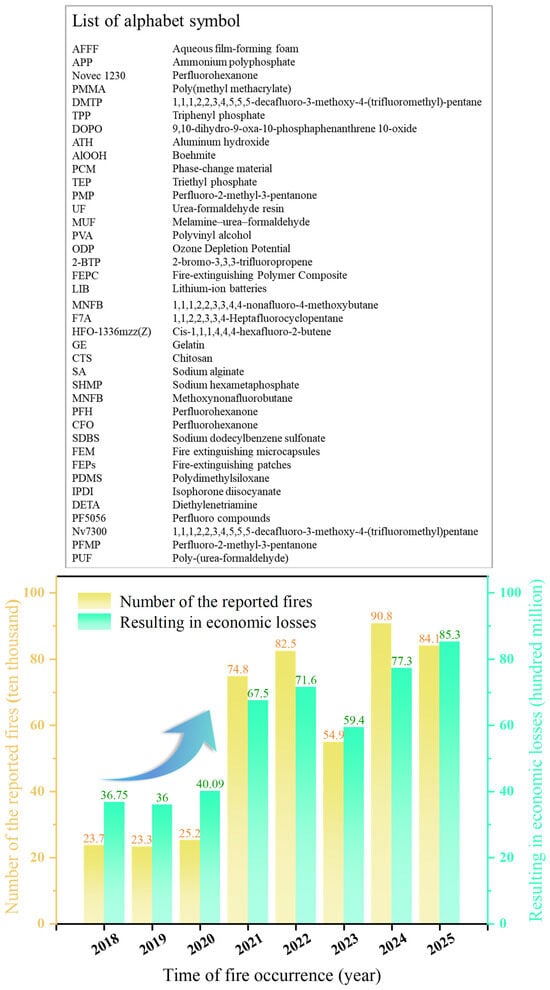
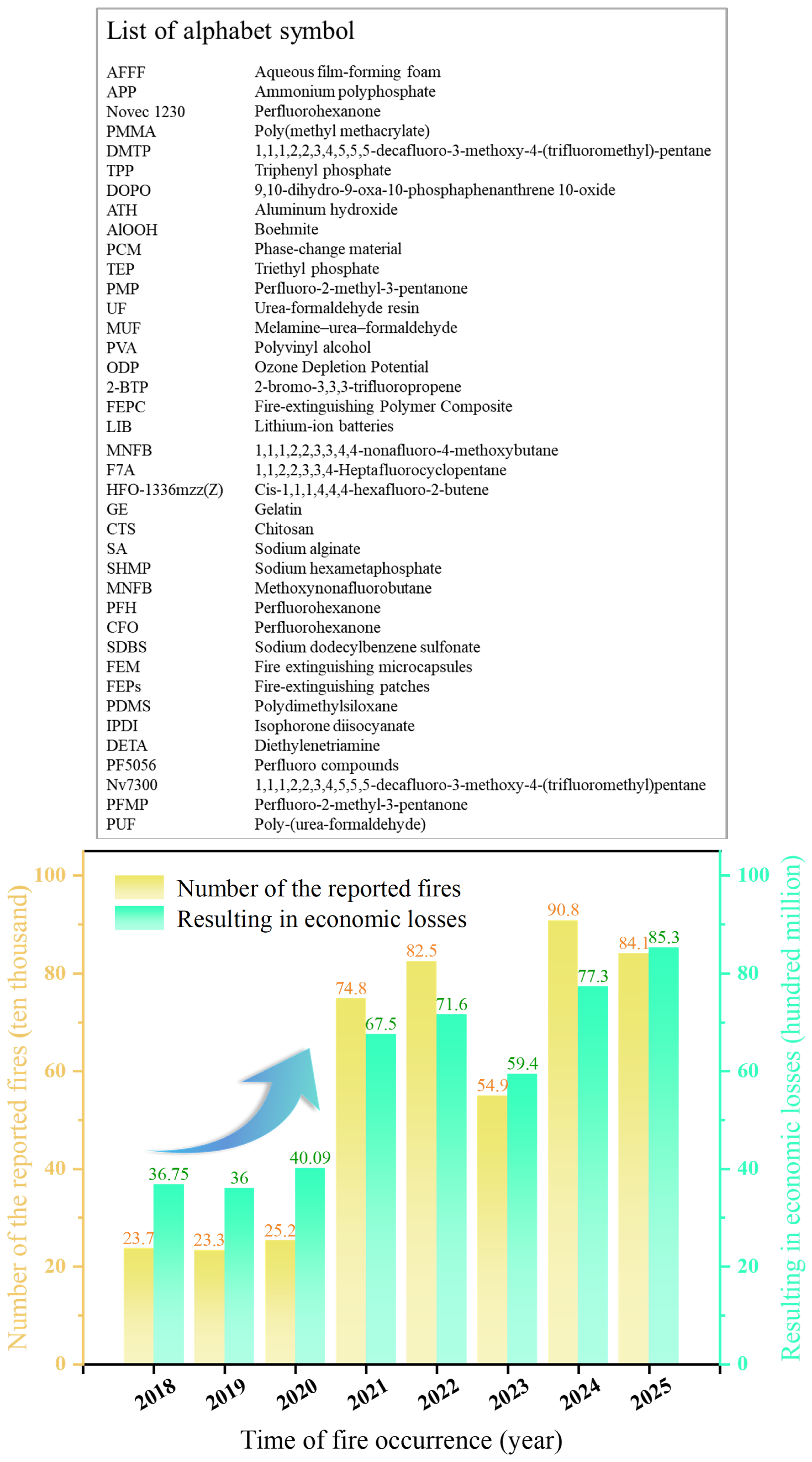
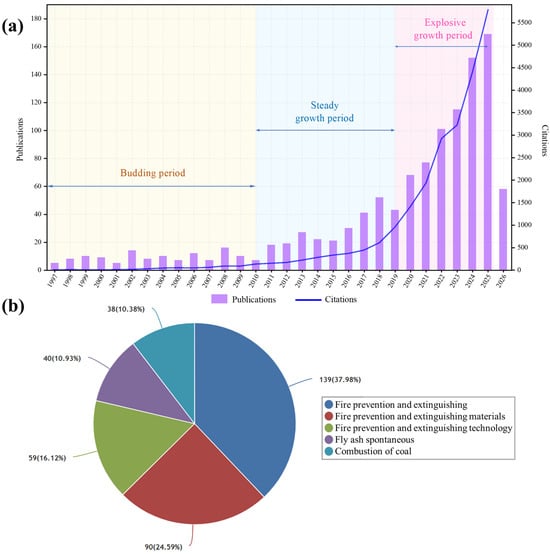
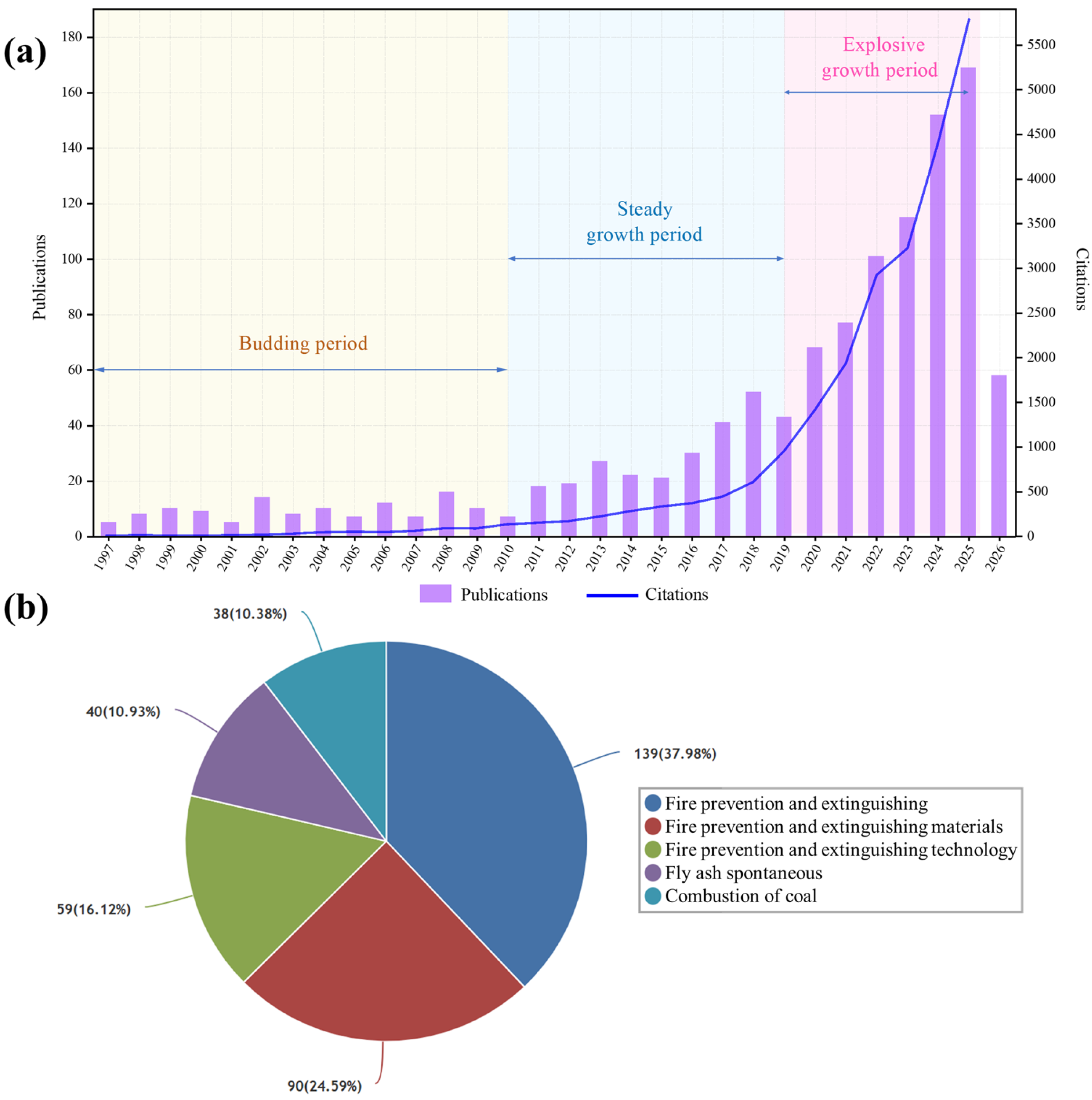
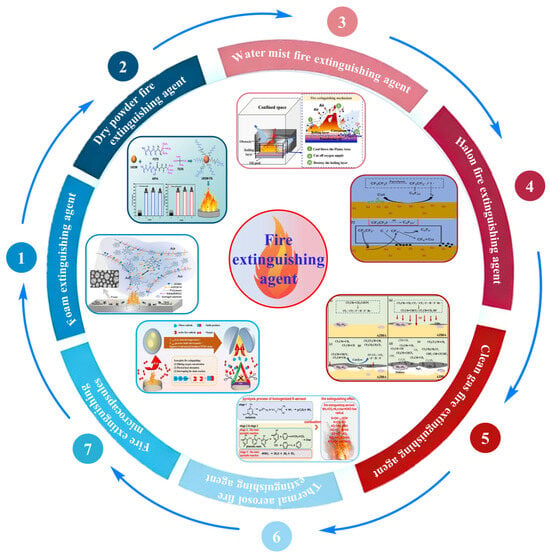
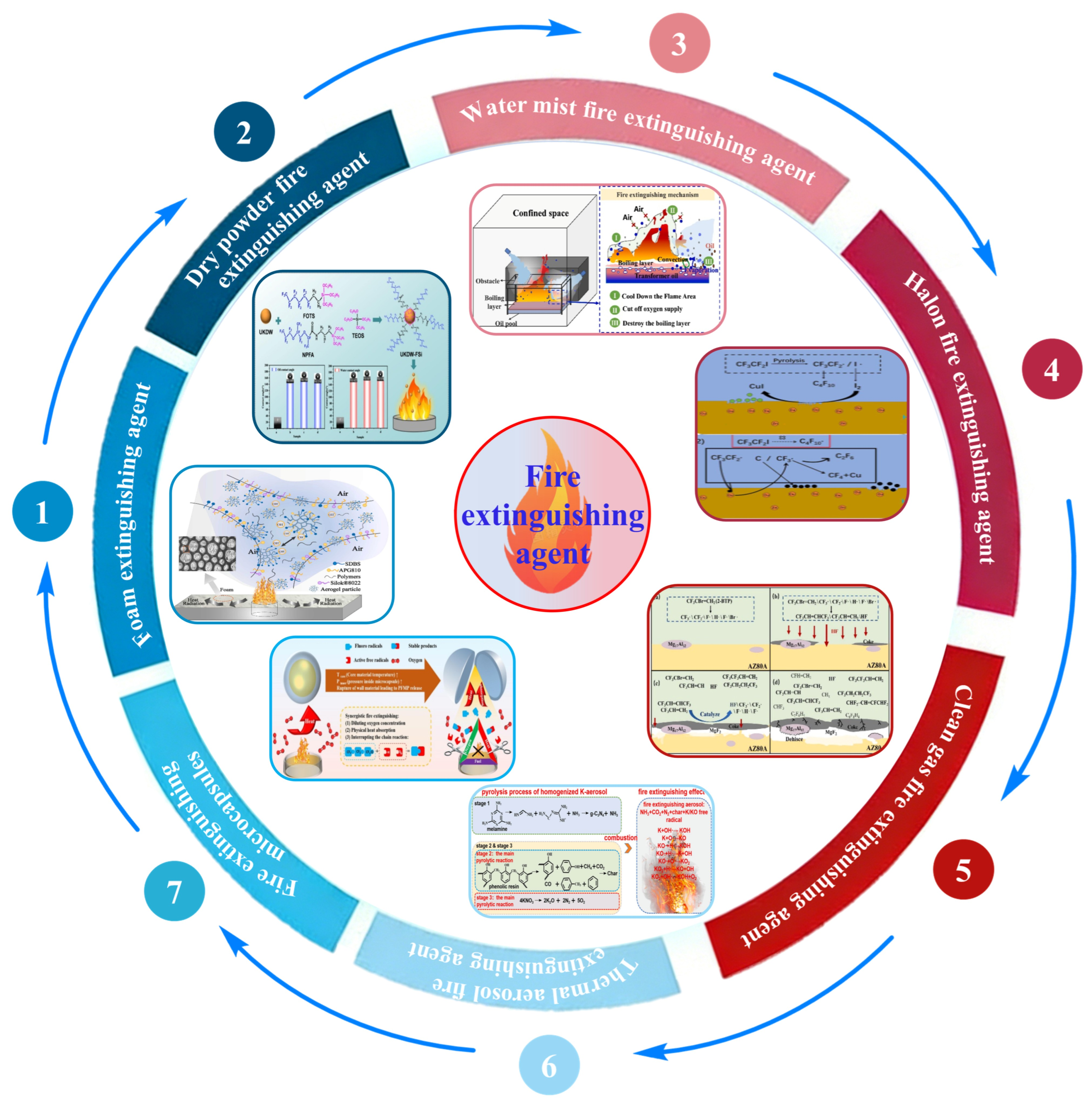
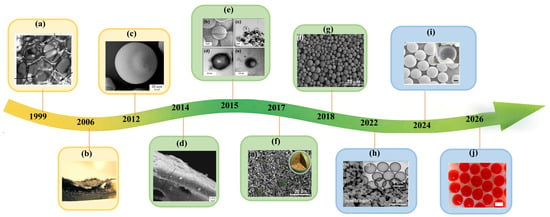
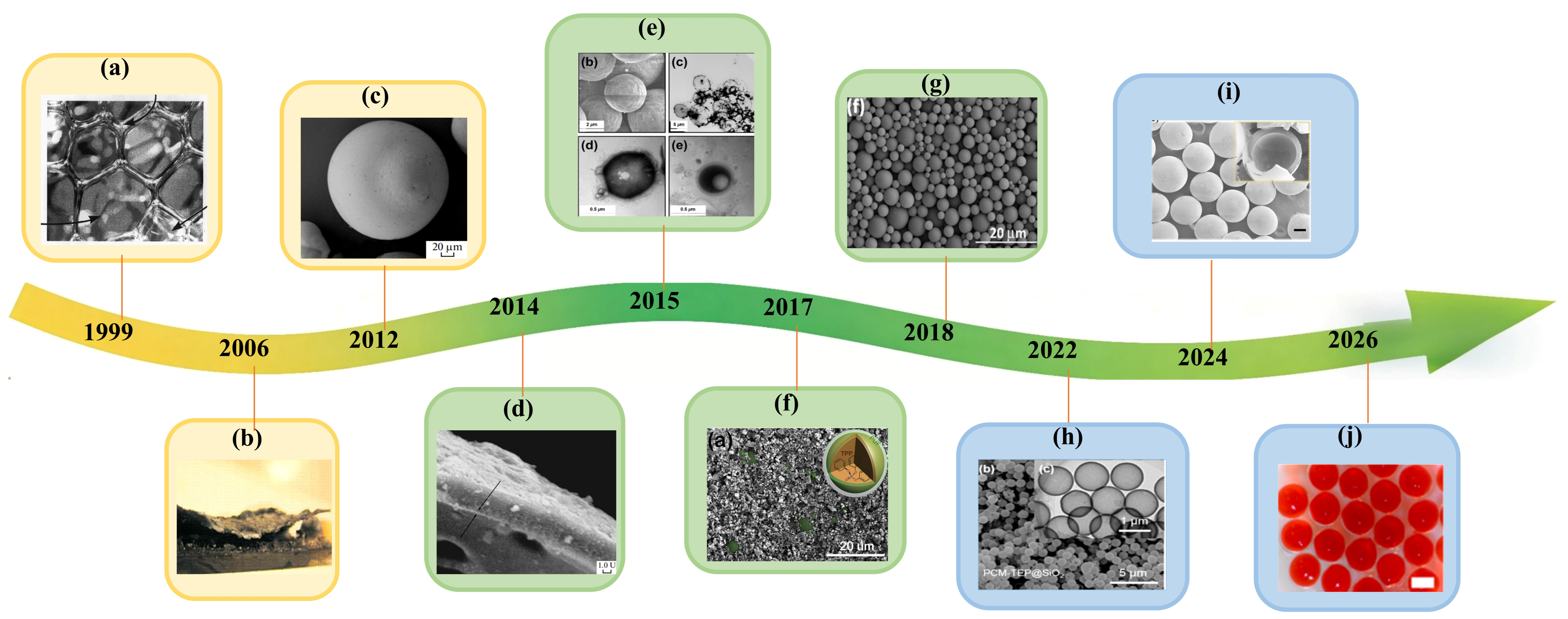
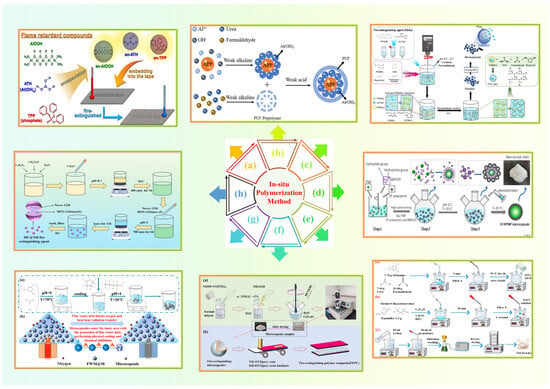
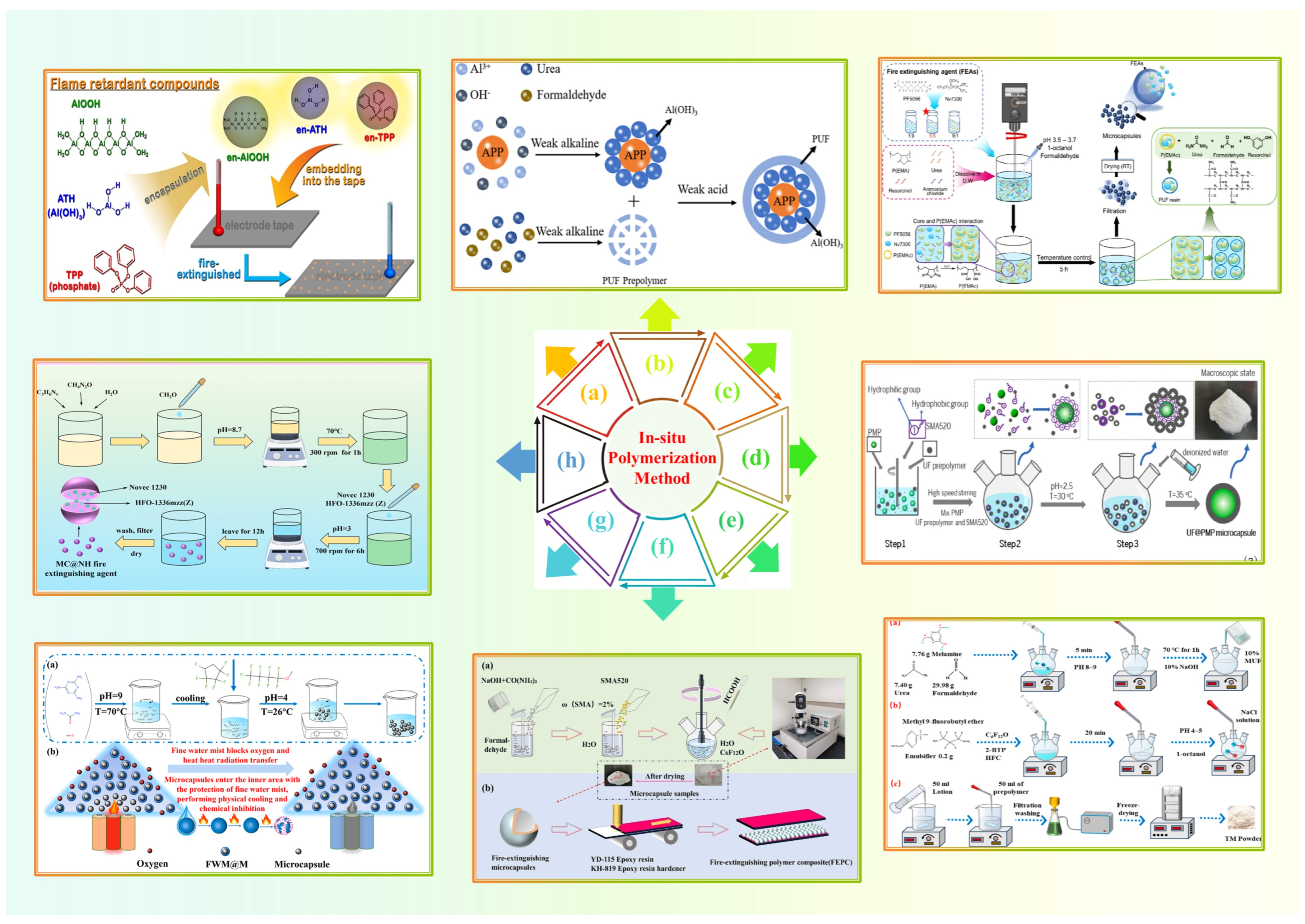
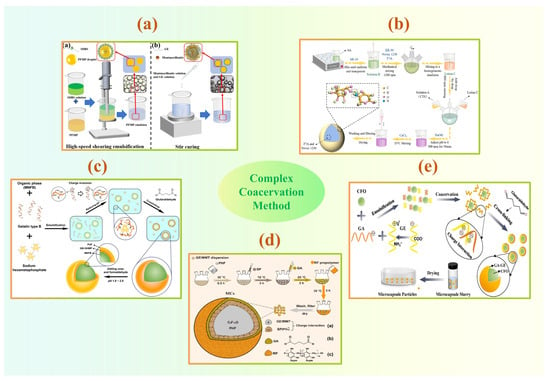
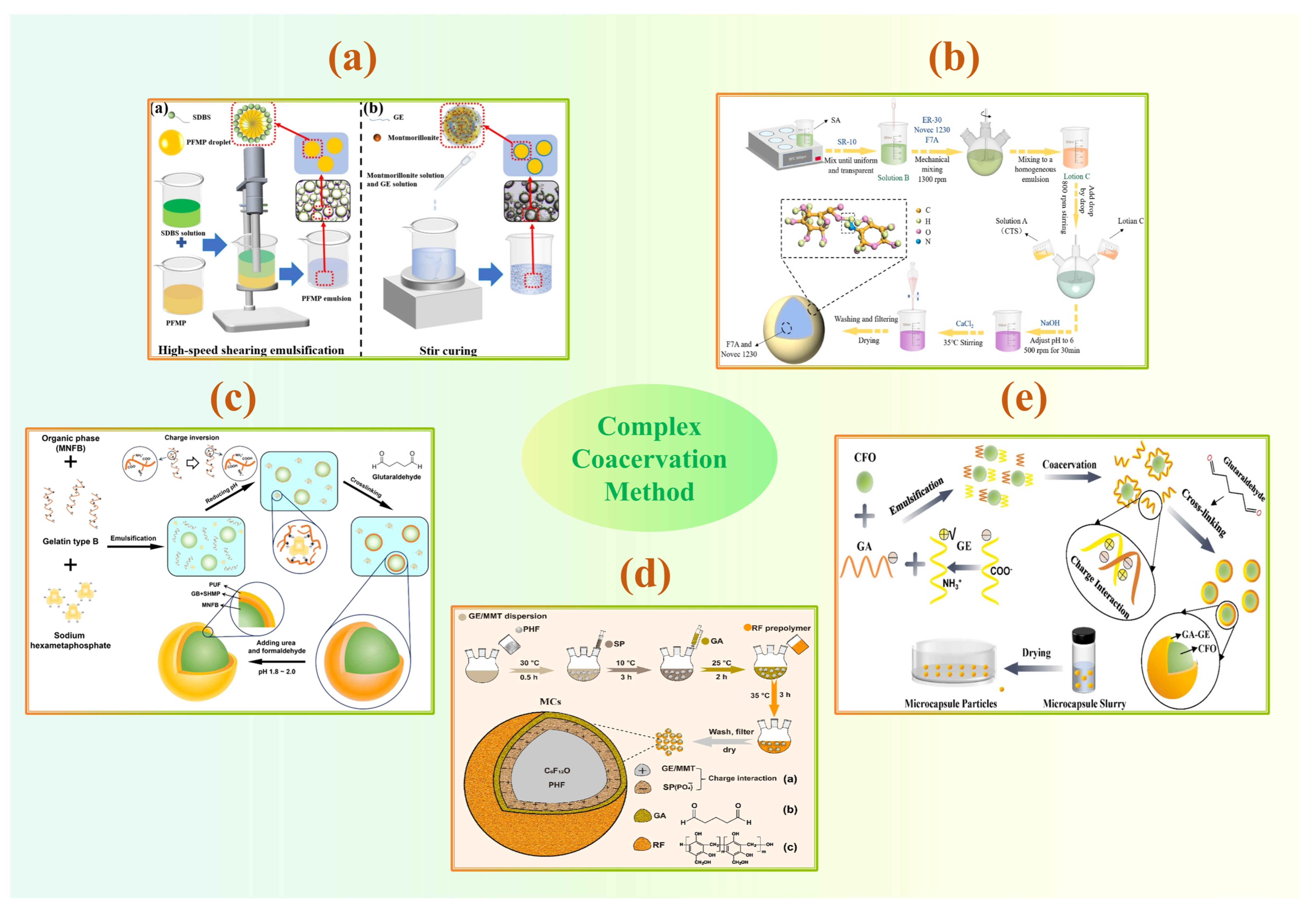
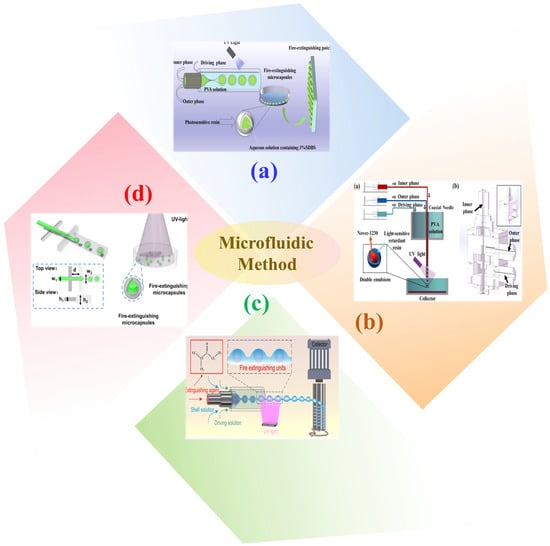
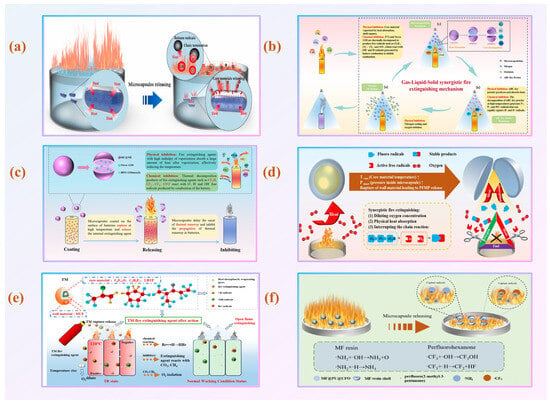
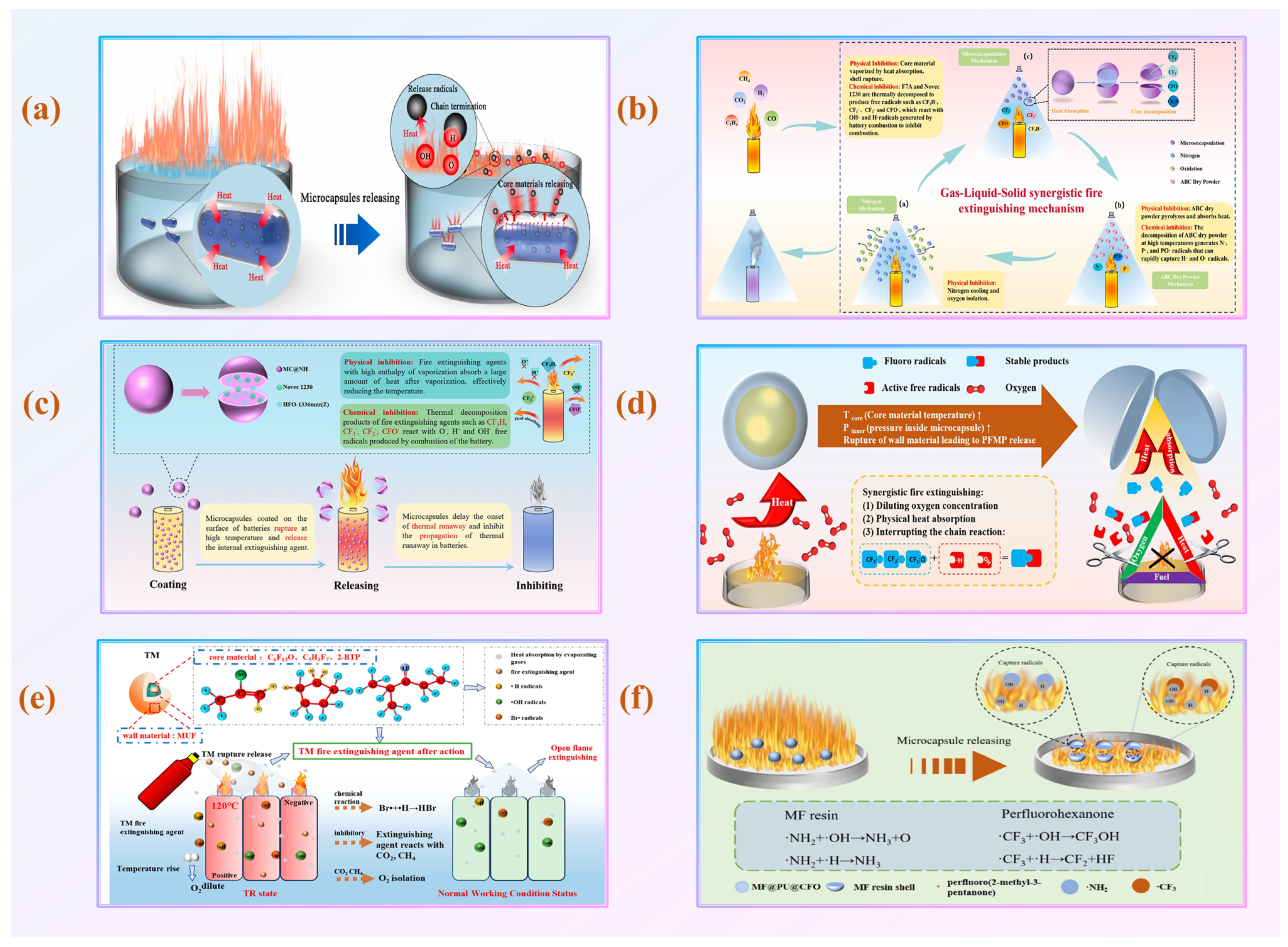
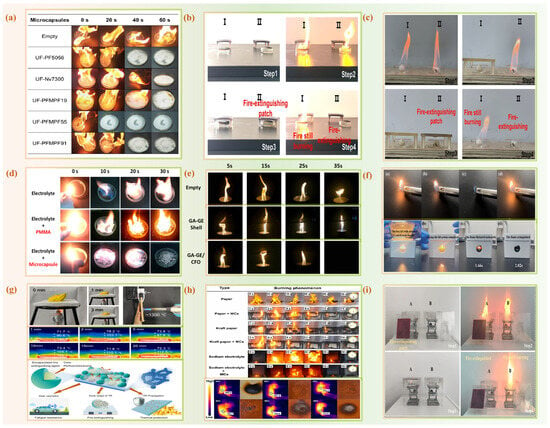
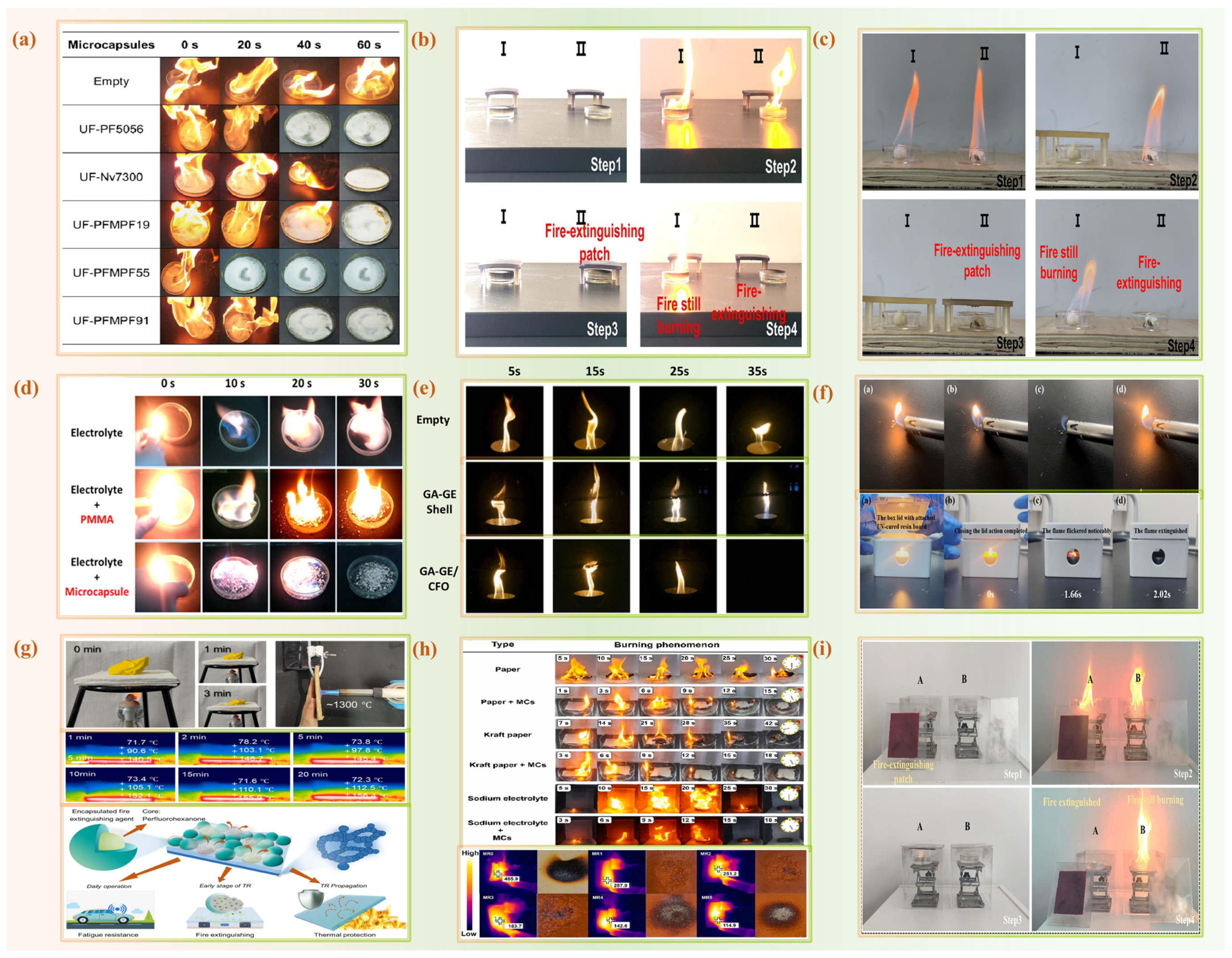
Disclaimer/Publisher’s Note: The statements, opinions and data contained in all publications are solely those of the individual author(s) and contributor(s) and not of MDPI and/or the editor(s). MDPI and/or the editor(s) disclaim responsibility for any injury to people or property resulting from any ideas, methods, instructions or products referred to in the content. |
© 2026 by the authors. Licensee MDPI, Basel, Switzerland. This article is an open access article distributed under the terms and conditions of the Creative Commons Attribution (CC BY) license.