


Abstract
Ba(Ce,Zr,Y)O3-based ceramics are promising materials for electrochemical applications, but their processing into complex geometries remains challenging because suitable rheological behavior, shape retention, thermal stability and densification must be achieved simultaneously. In this work, three-dimensional structures based on the hydrothermally synthesized Ba(Ce0.5Zr0.3Y0.2)O3 composition were fabricated by robocasting using Pluronic F-127-based formulations. Several paste compositions were evaluated, and the optimized formulation consisted of approximately 80.6 wt% ceramic powder and 19.4 wt% Pluronic F-127 solution (30% concentration). Amplitude sweep measurements indicated a predominantly elastic response at low strains followed by a gradual transition to viscous behavior at a shear stress of approximately 240 Pa. Planar and cylindrical structures were successfully printed and heat-treated using a multi-stage binder removal program, followed by sintering at 1350 °C for 3 h. X-ray diffraction revealed two crystalline phases, indicating phase redistribution during high-temperature treatment rather than the formation of a single-phase BCZY ceramic. SEM observations confirmed advanced particle consolidation after sintering, although some residual porosity persisted. Relative densities of approximately 96% and 87% were achieved for the planar and cylindrical samples, respectively. FTIR analysis confirmed the efficient removal of the Pluronic binder following heat treatment. Overall, the results demonstrate the feasibility of processing Ba(Ce,Zr,Y)O3-based ceramic structures via the robocasting method and highlight the importance of controlling paste rheology, heat treatment, phase stability, and densification in extrusion-based additive manufacturing.
1. Introduction
With the growing global demand for sustainable power generation, the need for efficient electrochemical energy conversion has become a central focus of modern research. Solid oxide fuel cells (SOFCs) and protonic ceramic fuel cells (PFCFs) are particularly promising candidates to meet this challenge. However, traditional systems require high operating temperatures that accelerate material degradation. Proton-conducting ceramic electrolytes offer a compelling solution by enabling operation in the intermediate-temperature range, where proton transport becomes highly competitive with conventional oxide-ion conduction [1,2,3]. Lowering the operating temperature prevents thermal degradation and broadens the range of materials that can be integrated into these devices.
Among proton-conducting oxides, acceptor-doped barium cerates and barium zirconates have been extensively investigated because of their ability to incorporate protonic defects under hydrogen- and water-containing atmospheres. BaCeO3-based compositions generally exhibit relatively high proton conductivity but limited chemical stability, particularly in CO2- and H2O-containing environments, whereas BaZrO3-based materials provide improved chemical stability but are more refractory and difficult to densify [2,3,4]. Solid solutions based on yttrium-doped barium cerate-zirconate, commonly referred to as BCZY, have therefore attracted considerable interest because they offer a potential compromise between proton transport, chemical stability and thermal resistance [2,4].
Despite these advantages, the processing of BCZY-type ceramics remains challenging. Their densification generally requires high sintering temperatures and prolonged thermal treatments, conditions that may promote compositional changes, volatilization of barium-containing species, secondary-phase formation and microstructural heterogeneity [5].
In parallel with the development of proton-conducting materials, additive manufacturing has emerged as an attractive alternative to conventional ceramic shaping technologies. Among extrusion-based additive manufacturing techniques, direct ink writing (DIW), also referred to as robocasting, enables concentrated ceramic pastes to be deposited through a nozzle following a predefined computer-aided design [6,7,8]. Compared with conventional shaping approaches, DIW provides substantial geometrical flexibility, allows control over filament arrangement and internal architecture, and can potentially reduce material waste [6,7].
A critical requirement for successful ceramic robocasting is the development of an ink or paste with rheological properties compatible with both extrusion and shape retention [9]. During extrusion through the nozzle, the material must flow reproducibly under the imposed stress, whereas immediately after deposition it must exhibit sufficient mechanical stability to preserve filament geometry and support subsequent layers [7,8,10].
Recent studies have emphasized that rheological characterization should therefore be considered together with printing parameters and final component properties rather than treated as an isolated indicator of printability [7,10]. Parameters such as ceramic loading, particle-size distribution, binder concentration, extrusion pressure, printing speed, nozzle diameter and filament spacing can significantly affect extrusion behavior and the quality of the printed green bodies [6,7,8,10]. In addition, the post-printing thermal treatment represents a critical processing stage. Organic additives must be removed without inducing structural collapse, cracking or deformation, while the sintering stage must provide sufficient particle consolidation and densification without affecting phase stability [11].
Although direct ink writing has been extensively studied for several oxide and non-oxide ceramic systems, the processing of Ba(Ce,Zr,Y)O3 based compositions by extrusion-based additive manufacturing remains comparatively less established than that of conventional structural ceramics. Therefore, in the present work, three-dimensional ceramic structures based on BCZY compositions were fabricated by robocasting. Different paste formulations were first evaluated in terms of extrudability and structural stability, after which the rheological behavior of the selected composition was investigated by oscillatory measurements. Planar and cylindrical geometries were fabricated and subjected to controlled binder removal and sintering at 1350 °C. The resulting structures were characterized using thermal analysis, X-ray diffraction, Fourier-transform infrared spectroscopy, scanning electron microscopy, and density measurements.
The study focuses on the relationships between paste formulation, rheological response, printability, thermal processing, phase evolution, and microstructural development, providing a processing-oriented assessment of Ba(Ce,Zr,Y)O3-based ceramics fabricated via additive manufacturing technologies.
2. Materials and Methods
2.1. Ceramic Powder and Paste Preparation
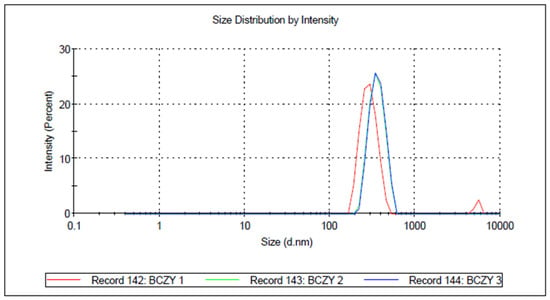
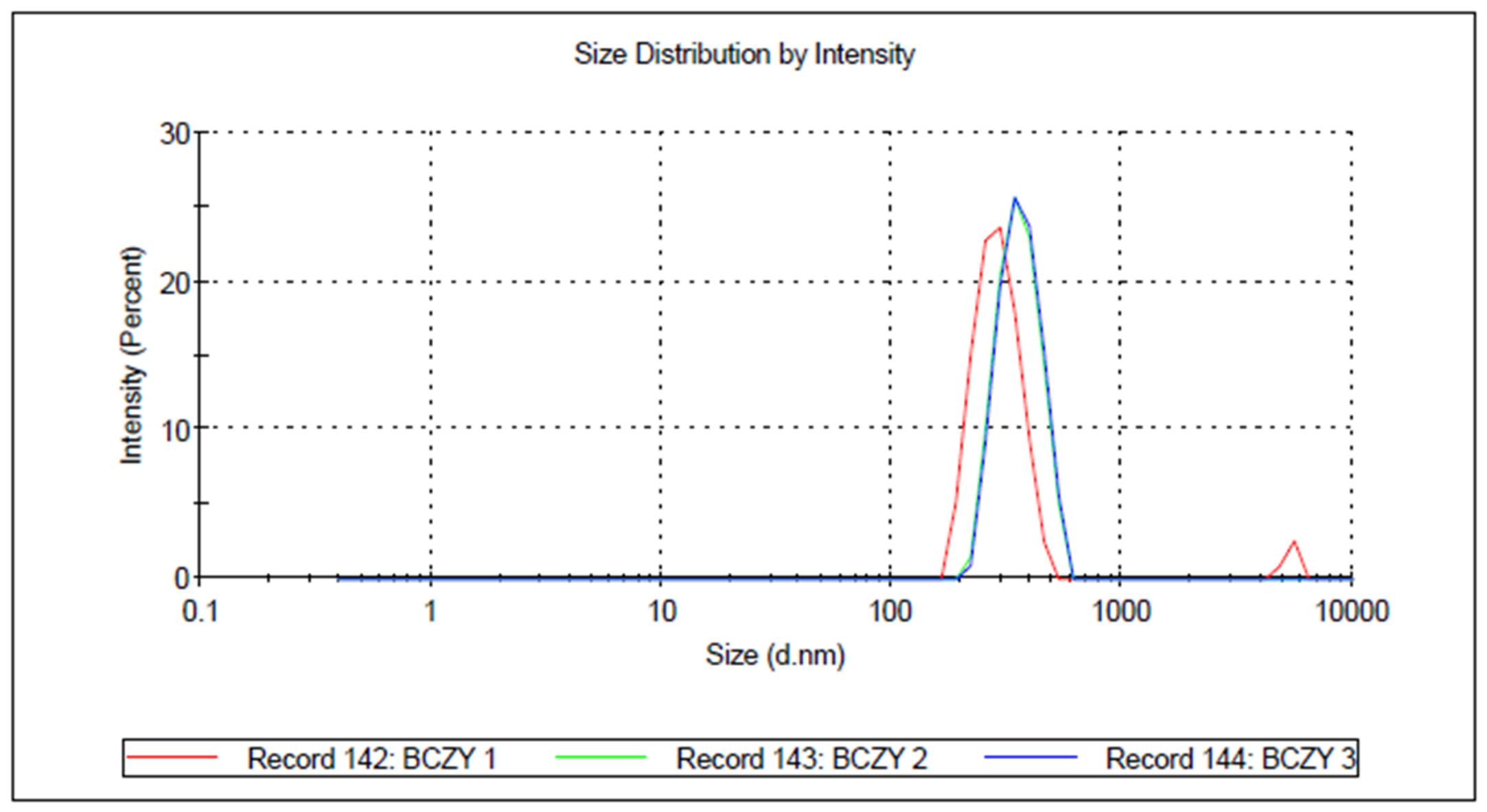
A ceramic powder with the nominal composition Ba(Ce0.5Zr0.3Y0.2)O3 (BCZY) was used as the starting material for the preparation of the robocasting pastes. The powder has been previously synthesized by a hydrothermal route and was sieved through a 200 µm sieve before paste preparation. Prior to ink preparation, the particle size distribution of the BCZY ceramic powder was investigated using dynamic light scattering (DLS) with a Zetasizer Nano ZS90 laser particle size analyzer (Malvern Panalytical Ltd., Malvern, UK). The analysis revealed a Z-average hydrodynamic diameter of 402.1 nm and a main intensity-weighted peak at 365.1 nm, with a polydispersity index (PdI) of 0.257. These results indicate a moderately polydisperse particle population in the investigated suspension (Figure 1).
Figure 1.
Intensity-weighted particle size distribution of BCZY ceramic powder determined by dynamic light scattering (DLS) prior to ink formulation. The three curves correspond to repeated measurements of the ceramic particle suspension.
The particle size characteristics of the starting ceramic powder are particularly relevant to the formulation of ceramic inks, as they may influence particle dispersion, suspension homogeneity, rheological properties, and extrusion behavior.
Pluronic F-127 (Sigma Aldrich, St. Louis, MO, USA), a triblock copolymer, was used as the primary organic component of the printing formulations. A hydrogel suitable for 3D printing was prepared by dissolving 30% Pluronic F-127 in 70% distilled water at 90 °C. In preliminary experiments, Baymedix FD103 (Covestro, Leverkusen, Germany), an aqueous polyurethane dispersion, was also evaluated as an additional binder component.
Several formulations were initially tested to determine their suitability for extrusion-based additive manufacturing. The first formulation contained 3 g of BCZY powder and 1 g of 30% Pluronic F-127 solution. The mixture was homogenized for 4 min at 2000 rpm and subsequently defoamed for 2 min at 2000 rpm using the Thinky ARE-250 planetary centrifugal mixer (Thinky Corporation, Tokyo, Japan). Although this paste could be extruded, its viscosity was insufficient to retain the deposited geometry. A second formulation consisted of 5 g of sieved BCZY powder, 1 g of 30% Pluronic F-127 solution and 0.15 mL of Baymedix FD103. In this case, the paste exhibited suitable extrudability and enabled the fabrication of cylindrical structures but the printed specimens collapsed during drying under ambient conditions.
Based on these preliminary experiments, a third formulation containing 5 g of sieved BCZY powder and 1.2 g of 30% Pluronic F-127 solution was tested. This composition indeed exhibited adequate extrudability and shape retention and was therefore used for further rheological characterization and robocasting experiments.
2.2. Rheological Characterization
The rheological behavior of the selected BCZY-based paste was investigated using an Anton Paar MCR 302e rheometer equipped with a PP25 plate-plate measuring system. Oscillatory amplitude sweep measurements were performed at a constant angular frequency of 1 rad s−1 and a temperature of 26 °C.
The storage modulus (G’), loss modulus (G”), shear stress (τ), and loss factor (tan δ) were recorded as a function of increasing shear strain. These measurements were used to evaluate the linear viscoelastic region, the structural stability of the paste under low deformation, and its transition from predominantly elastic to predominantly viscous behavior under increasing deformation. The crossover between G’ and G” was considered as an indicator of the flow transition of the printing paste [7,12].
2.3. Three-Dimensional Model Design and Robocasting
Two specimen geometries were considered: planar disc-shaped structures and cylindrical structures. The three-dimensional models were designed using SolidWorks (Version 2019 SP0.0) and exported in STL format. The resulting models were subsequently processed using RP Perfactory software (Version 3.2) for layer slicing and conversion into the *.BPL format required by the Visual Machines software (Version 2.10.130r5) controlling the printing system.
The robocasting process was performed using a 3D-BioPlotter Starter Series system (EnvisionTEC GmbH, Gladbeck, Germany). Prior to printing, the ceramic paste was subjected to a degassing step using an ARE-250 THINKY mixer and subsequently transferred into the extrusion syringe. The syringe was mounted on the X-Y-Z positioning system of the printer, and material extrusion was achieved by applying compressed-air pressure.
2.4. Thermal Analysis and Post-Printing Heat Treatment
The thermal behavior of the printed structures was investigated to establish an appropriate binder-removal procedure. Differential scanning calorimetry (DSC) was performed using a NETZSCH DSC 200 F3 Maia instrument (Netzsch-Gerätebau GmbH, Selb, Germany) under an argon atmosphere. The experimental data were processed using PROTEUS ANALYSIS software (Version 8.0.3). Based on the obtained results, the 3D-printed structures were subjected to a multistep thermal treatment. After full debinding, the 3D-printed specimens were subsequently sintered at 1350 °C for 3 h to promote consolidation and densification of the ceramic structures.
2.5. Characterization Methods
The crystalline phase composition of the starting BCZY ceramic powder and the sintered structures was investigated via X-ray diffraction (XRD) using a BRUKER D8 ADVANCE diffractometer (Bruker, Karlsruhe, Germany) operating in Bragg–Brentano geometry with a vertical θ-θ configuration. Diffraction data were processed using DIFFRAC.EVA software (version 5/2019) and phase identification was performed using the ICDD PDF-5+ 2024 database.
The microstructure of the printed specimens before and after sintering was examined by scanning electron microscopy (SEM) using a QUANTA INSPECT F50 microscope (FEI, Eindhoven, The Netherlands) equipped with a field-emission electron gun. The instrument had a nominal resolution of 1.2 nm and was coupled with an energy-dispersive X-ray spectroscopy detector with a Mn Kα energy resolution of 133 eV. To quantitatively evaluate the evolution of pore characteristics during sintering, the SEM images obtained before and after thermal treatment were analyzed using ImageJ software (version 1.54x).
Fourier-transform infrared (FTIR) spectroscopy was used to investigate the organic and inorganic components present in the printed structures before and after thermal treatment. Measurements were performed using an ABB MB3000 FTIR spectrometer (ABB Inc., Quebec, QC, Canada). Spectra were recorded over the range of 550–4000 cm−1 at a spectral resolution of 4 cm−1, with 64 scans acquired for each specimen.
The density of representative sintered planar and cylindrical specimens was determined using Archimedes’ principle. Relative density was calculated using a theoretical density of 6.2 g/cm3 for the ceramic BCZY material. The measurements were used to compare the degree of densification achieved for the two printed geometries following sintering at 1350 °C.
3. Results and Discussion
3.1. Paste Formulation and Printability
The formulation of a ceramic paste suitable for direct ink writing requires a balance between extrudability and post-deposition shape retention [8,12]. In the present study, three BCZY-based formulations were initially evaluated in order to identify a composition capable of continuous extrusion while maintaining the geometry of the deposited filaments. The investigated samples are presented in Table 1.
Table 1.
Preliminary screening of BCZY-based paste formulations for robocasting.
Among these experiments, the best printing behavior was observed for the F3 formulation corresponding to approximately 80.6 wt% ceramic powder and 19.4 wt% Pluronic solution. At an extrusion pressure of 2.4 bar and a printing speed of 12 mm/s, continuous deposition was achieved and both planar and cylindrical specimens maintained their geometry after printing.
The improved behavior of the selected formulation can be associated with the ability of the Pluronic-containing system to generate an internal network that resists deformation at rest while progressively yielding under the stress generated during extrusion. To further assess this behavior, the selected formulation was subjected to oscillatory rheological characterization.
3.2. Rheological Behavior of the Selected Paste
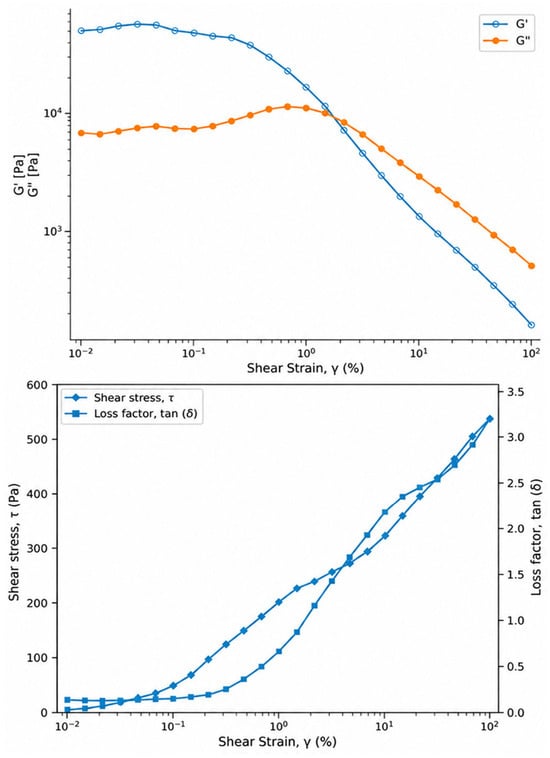
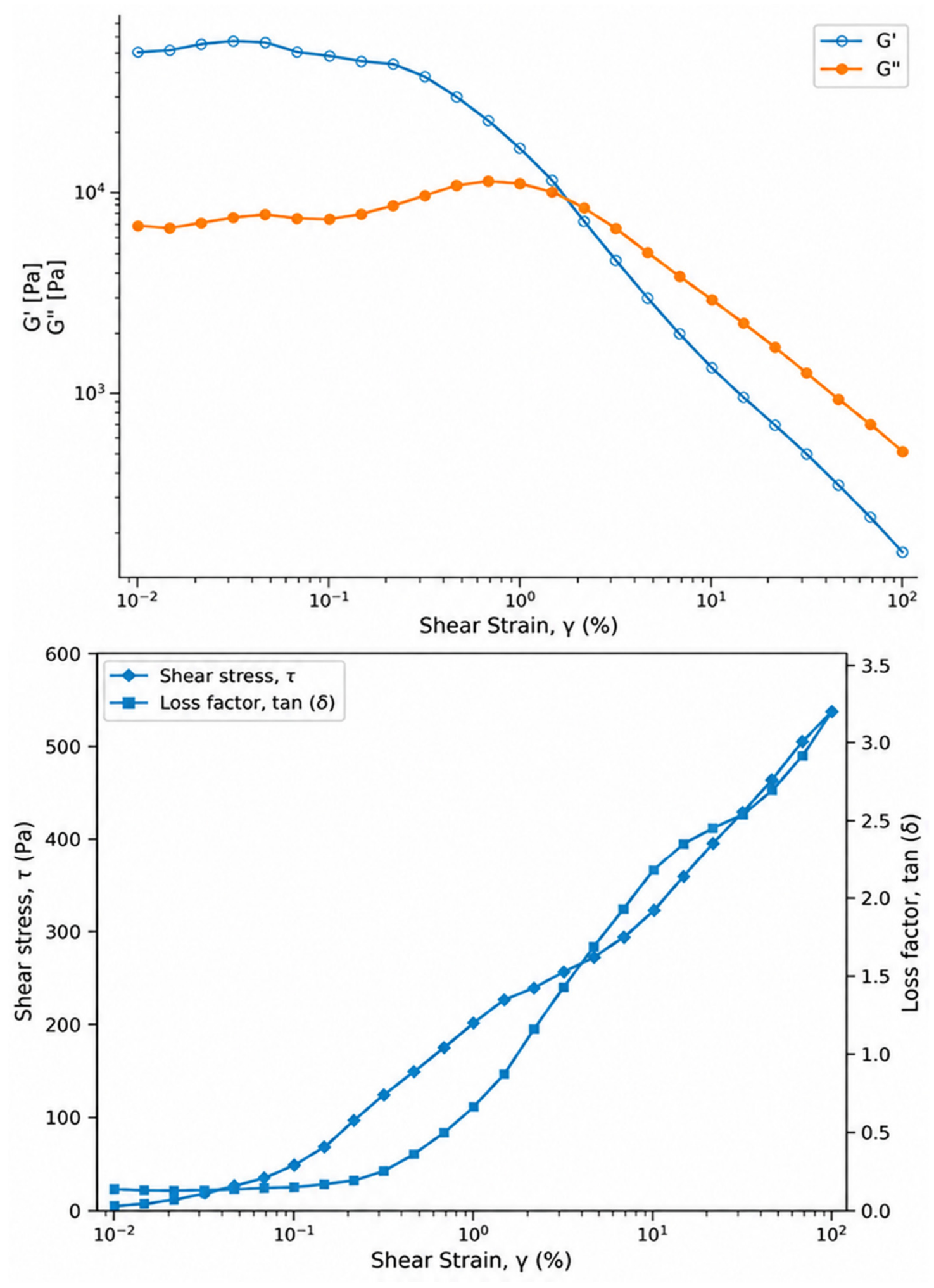
The rheological behavior of the paste containing 80.6 wt% BCZY powder and 19.4 wt% 30% Pluronic F-127 solution was investigated by amplitude sweep measurements to assess its structural stability and suitability for extrusion-based additive manufacturing. The corresponding results are presented in Figure 2.
Figure 2.
Rheological behavior of the selected BCZY-based paste determined by amplitude sweep measurements.
At low shear strains, the paste exhibited a predominantly elastic response, with the storage modulus (G’) clearly exceeding the loss modulus (G”). In this region, G’ remained relatively constant, with values on the order of 104–105 Pa, indicating the presence of a stable internal structure capable of resisting small deformations. The loss factor remained well below unity (tan δ < 1), further confirming the predominantly solid-like character of the paste under low-strain conditions [13]. This response is consistent with the formation of a structured network. From a processing perspective, such behavior is advantageous because it provides sufficient mechanical stability for the deposited filaments to retain their geometry after extrusion and to support subsequently deposited layers [14].
As the shear strain increased, G’ progressively decreased, indicating gradual disruption of the internal structure of the paste. G” initially increased moderately, reaching a maximum in the vicinity of 1% shear strain, and subsequently decreased. However, G’ decreased faster, leading to an increasing relative contribution of the viscous component. Consequently, the material progressively evolved from predominantly solid-like to predominantly liquid-like behavior.
The crossover between G’ and G’’ occurred at a shear strain of approximately 1.5–2%, corresponding to a shear stress of approximately 240 Pa. Beyond this region, G” became greater than G’ and tan δ exceeded unity, confirming the predominance of viscous behavior. The gradual nature of this transition is particularly favorable for extrusion-based additive manufacturing. The material exhibits shear-thinning behavior: its stable elastic network preserves shape under low stress but yields under extrusion forces to flow through the printing nozzle.
Overall, the combination of a relatively high G’ at low deformation, tan δ values below unity in the structured regime, and a gradual G’-G” crossover under increasing strain indicates that the selected BCZY-based paste exhibits rheological characteristics generally considered compatible with robocasting [12,14]. These results are consistent with the experimentally observed ability of the formulation (F3) to undergo continuous extrusion while maintaining the geometry of the printed structures after deposition.
3.3. Fabrication and Thermal Processing of the 3D Structures
The geometries employed for robocasting were based on CAD models previously developed and used by the authors for the fabrication of 8YSZ ceramic structures by extrusion-based additive manufacturing [15]. The model was designed in SolidWorks and exported as STL files, which were subsequently used in the present work for BCZY-based printing experiments.
Two geometries were considered: a planar disc-shaped structure and a cylindrical structure. The STL files were processed using RP Perfactory software for slicing and subsequently converted into the *.BPL format required by the VisualMachines software (Version 2.10.130r5) controlling the 3D-BioPlotter system.
Robocasting of the optimized BCZY-based paste was performed using an 800 µm conical nozzle. Based on the preliminary printing trials, an extrusion pressure of 2.4 bar and a printing speed of 12 mm/s were selected. A preflow time of 0.15 s, a contour distance (Dc) of 0.1 mm and a filament spacing (Df) of 0.8 mm were applied. Under these conditions, continuous filament deposition was achieved, and both planar (20 mm diameter, 0.64 mm height) and cylindrical structures (20 mm diameter, 5.12 mm height) were successfully fabricated. The printed samples exhibited sufficient shape retention immediately after deposition, with no macroscopic collapse observed.
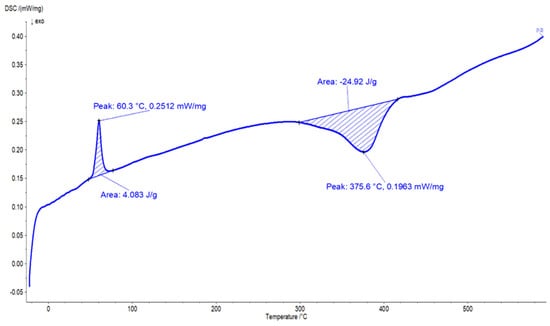
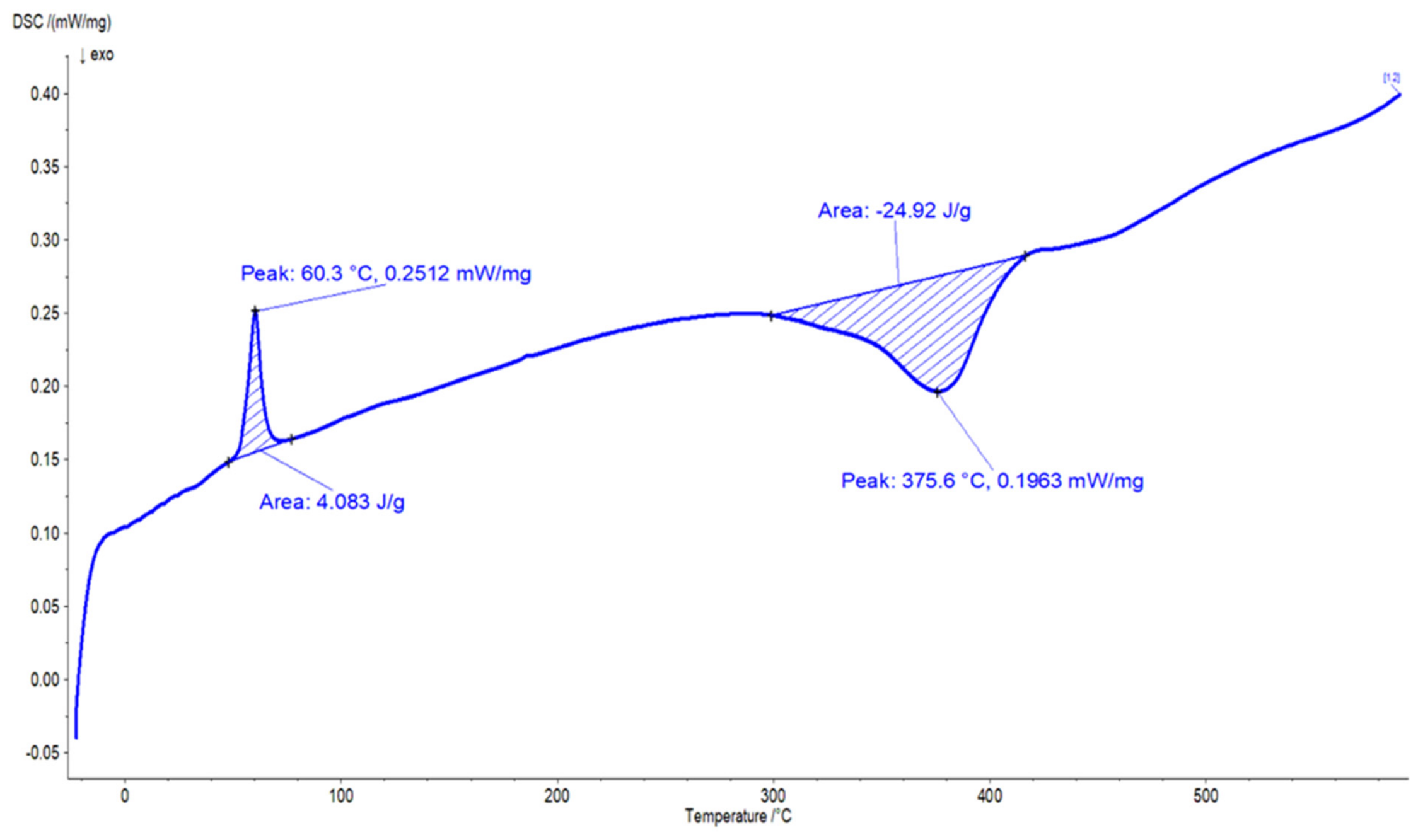
The post-printing thermal treatment was designed considering the thermal behavior of the Pluronic-containing green body. The DSC curve in Figure 3 revealed two distinct thermal events at approximately 60.3 °C and 375.6 °C. The first event, characterized by a sharp endothermic peak with an enthalpy change of 4.08 J/g, is consistent with the melting of crystalline domains of Pluronic F-127 within the ceramic-polymer composite, in agreement with the melting temperature reported in the literature [16,17].
Figure 3.
DSC analysis results for BCZY-based 3D-printed structures.
The second thermal event, characterized by a broad exothermic peak centered at 375.6 °C and an enthalpy change of −24.92 J/g, is attributed primarily to the thermal degradation of the Pluronic F-127 binder. This exothermic process is consistent with the literature reports showing that the main thermal decomposition of Pluronic F-127 occurs approximately within the 350–410 °C range [18,19].
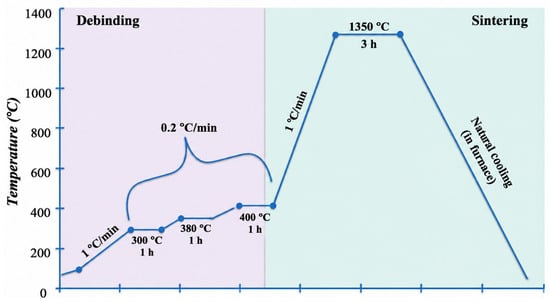
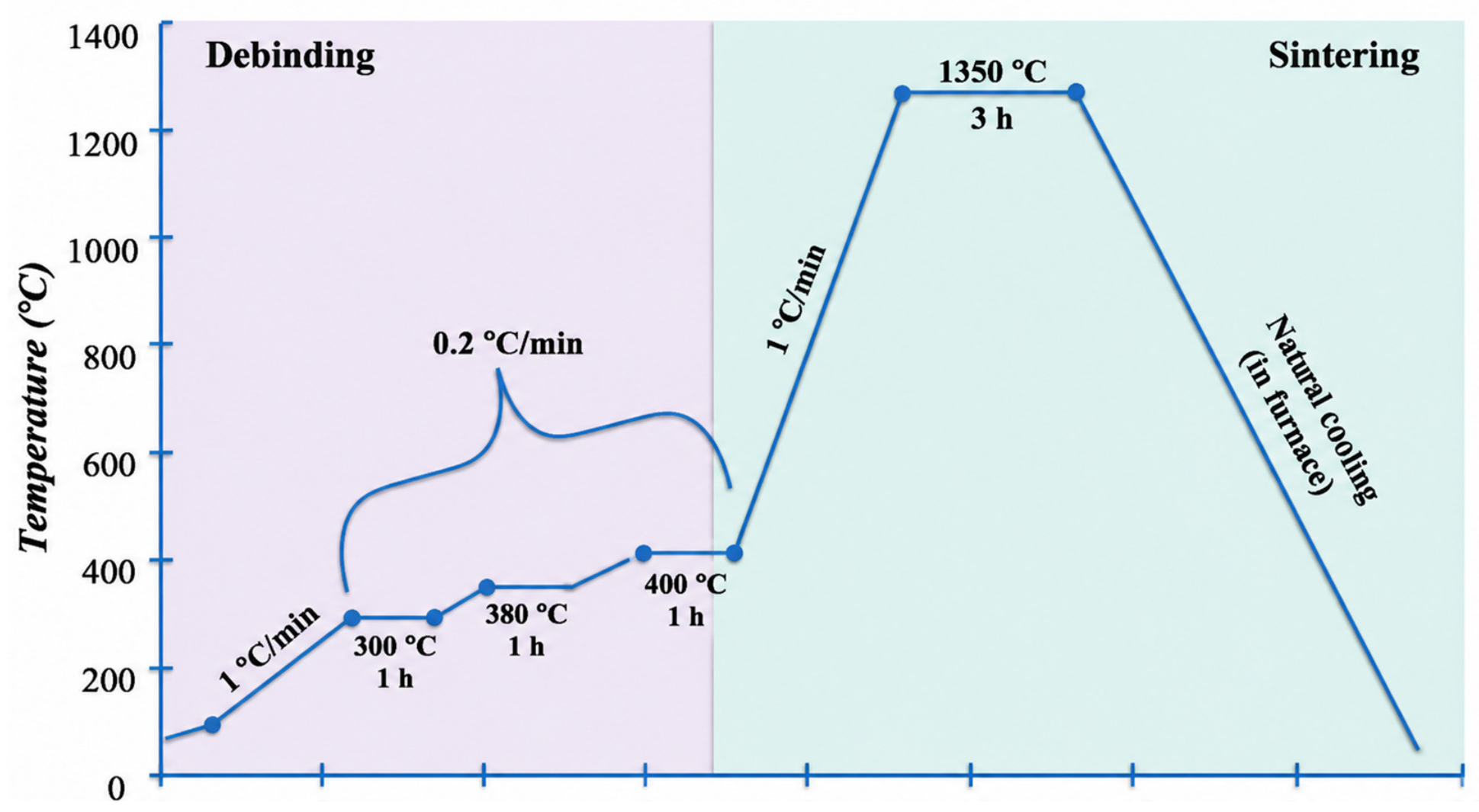
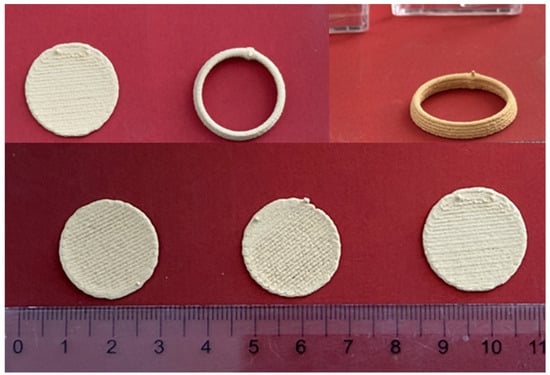
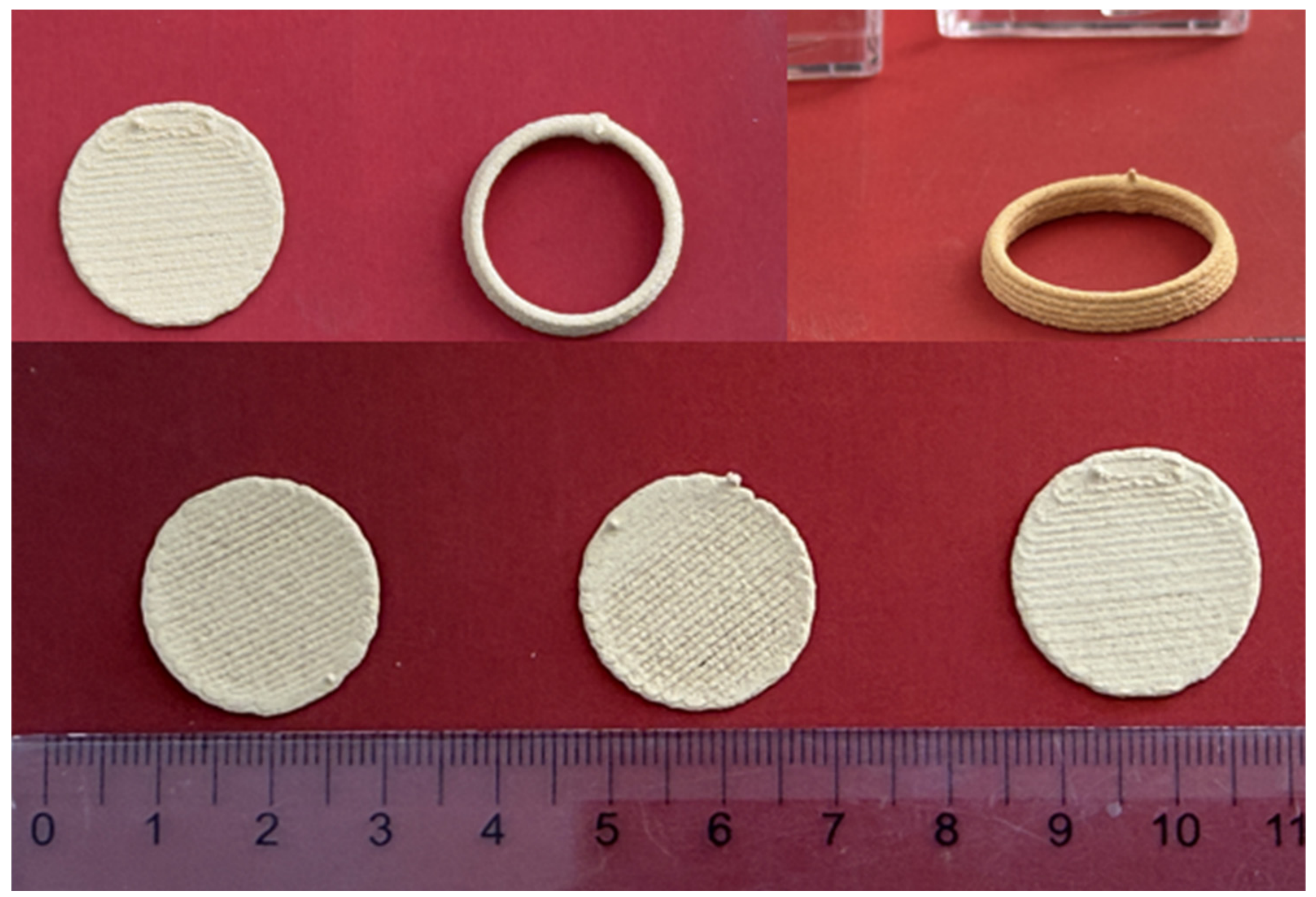
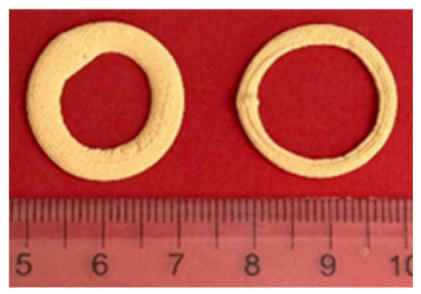
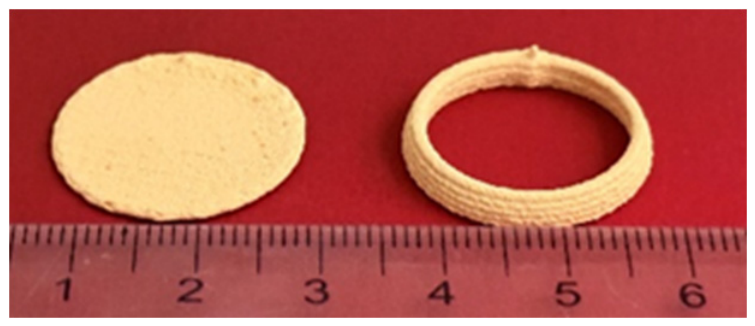
Based on these findings, a multistep thermal treatment was employed as illustrated in Figure 4. The debinding stage was performed up to 400 °C to promote the gradual decomposition and removal of the organic binder prior to sintering. Subsequently, the ceramic structures were sintered at 1350 °C for 3 h to promote densification. Low heating rates ranging from 0.2 to 1 °C/min were employed to limit rapid gas evolution and reduce the development of internal stresses during binder burnout, thereby minimizing the risk of cracking and deformation and helping to preserve the geometrical integrity of the 3D-printed structures [10,20]. Examples of the sintered BCZY-based 3D-printed structures can be seen in Figure 5.
Figure 4.
Schematic representation of the thermal treatment protocol, including the debinding and sintering stages.
Figure 5.
Examples of the sintered BCZY-based 3D-printed structures.
After sintering, no measurable dimensional shrinkage was detected in the 3D-printed disc. For the cylindrical specimen, the diameter decreased from 20.00 mm to 19.58 mm, corresponding to a shrinkage rate of 2.10%, while the height decreased from 5.12 mm to 4.99 mm, corresponding to a shrinkage rate of 2.54%.
3.4. Phase Evolution After Sintering
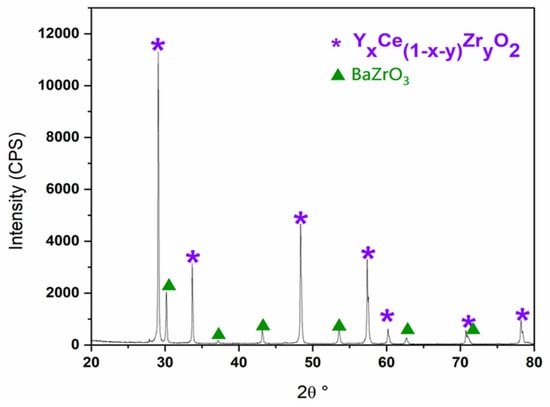
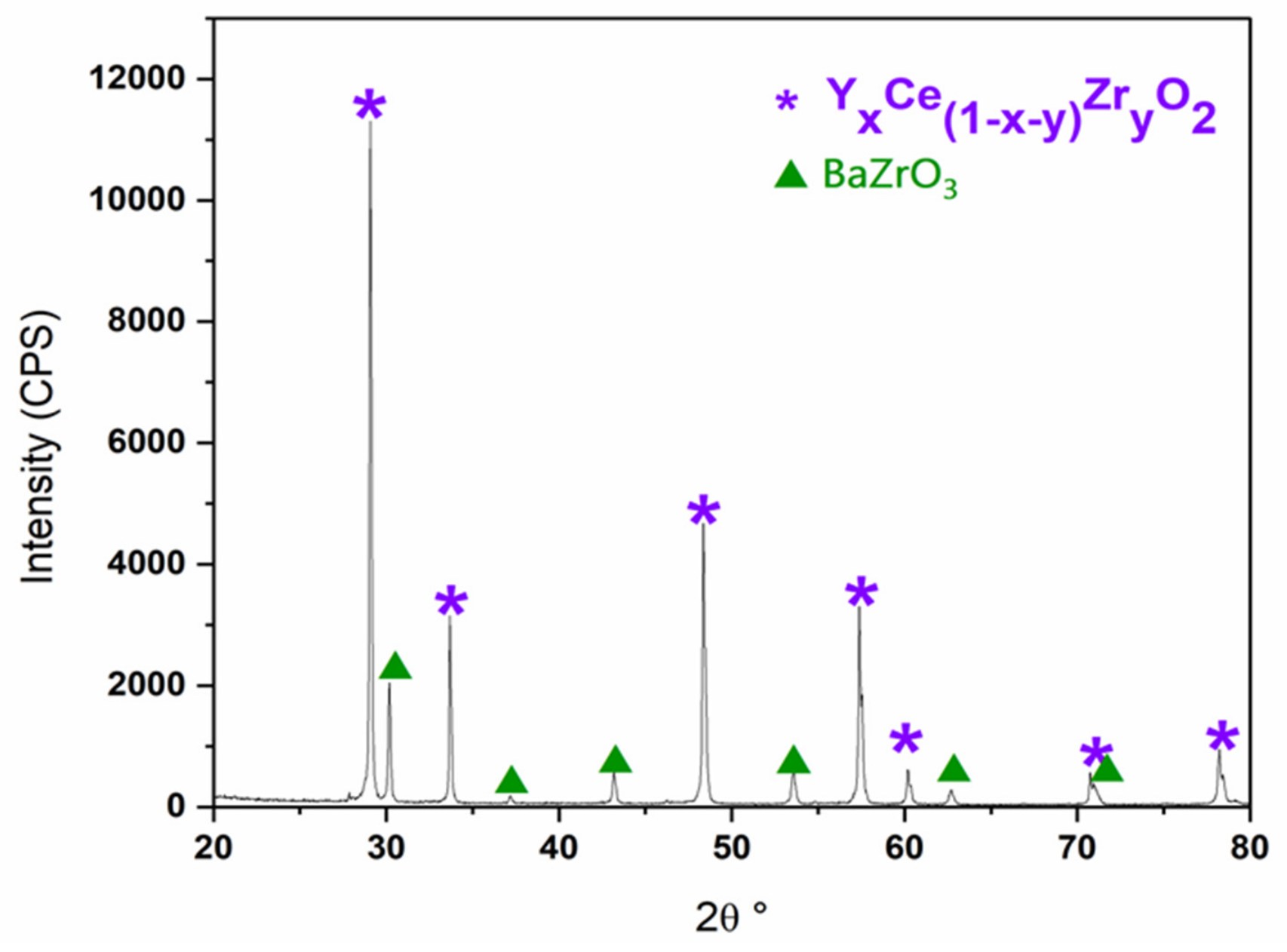
To evaluate the influence of thermal treatment on the crystalline phase composition, X-ray diffraction analysis was performed on both the starting BCZY ceramic powder and the specimens sintered at 1350 °C for 2 h.
The XRD pattern of the starting ceramic powder in Figure 6 revealed the presence of multiple crystalline phases, with diffraction reflections attributed to BaZrO3 and Y-Ce-Zr-O-based compounds. This indicates that the starting powder did not exhibit a single-phase crystalline structure corresponding to the nominal Ba(Ce0.5Zr0.5Y0.2)O3 composition.
Figure 6.
X-ray diffraction pattern of the starting BCZY powder.
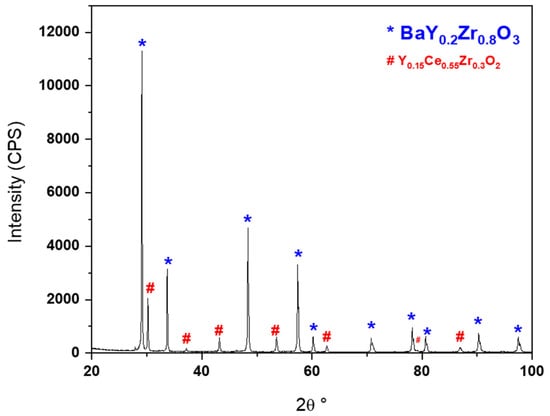
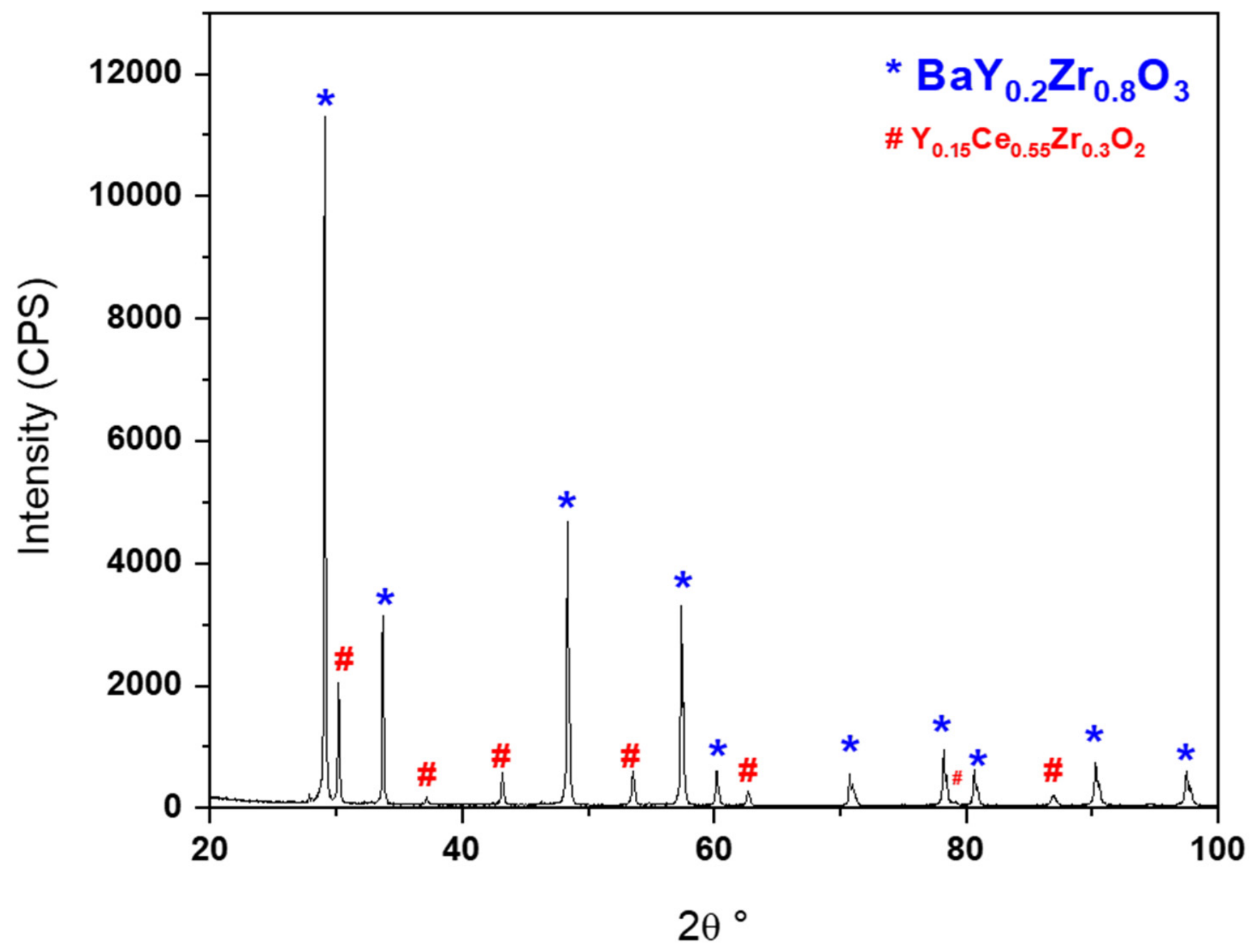
Following processing by robocasting and sintering at 1350 °C for 3 h, the diffraction pattern in Figure 7 exhibited intense and relatively narrow reflections, indicating the presence of well-crystallized phases. Phase identification revealed two main crystalline phases, assigned to BaY0.2Zr0.8O3 and a Y0.15Ce0.55Zr0.3O2 phase.
Figure 7.
X-ray diffraction pattern of the sintered BCZY-based 3D structures.
The occurrence of two crystalline phases suggests that phase redistribution took place during high-temperature treatment. The presence of Ba-containing Zr-Y-rich phase together with a Ce-Zr-Y-rich oxide phase indicates that the nominal cation distribution was not fully preserved during sintering. From a processing perspective, this result is important because it shows that successful robocasting and preservation of the printed geometry do not necessarily ensure phase stability during subsequent thermal treatment.
The observed phase evolution may be related to the high-temperature processing conditions and to the sensitivity of Ba-Ce-Zr-Y oxide systems to thermal history and compositional changes. Further optimization of the starting powder composition and sintering conditions may therefore be required if a predominantly single-phase BCZY material is targeted.
3.5. Microstructural Evolution and Densification
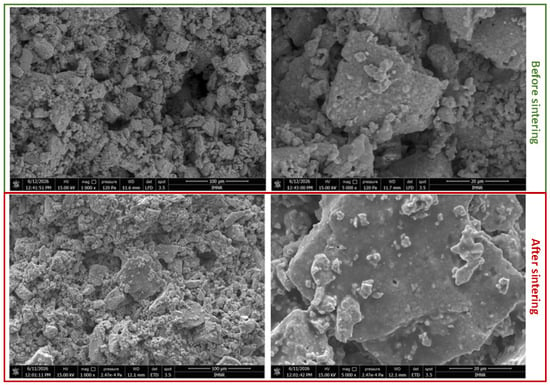
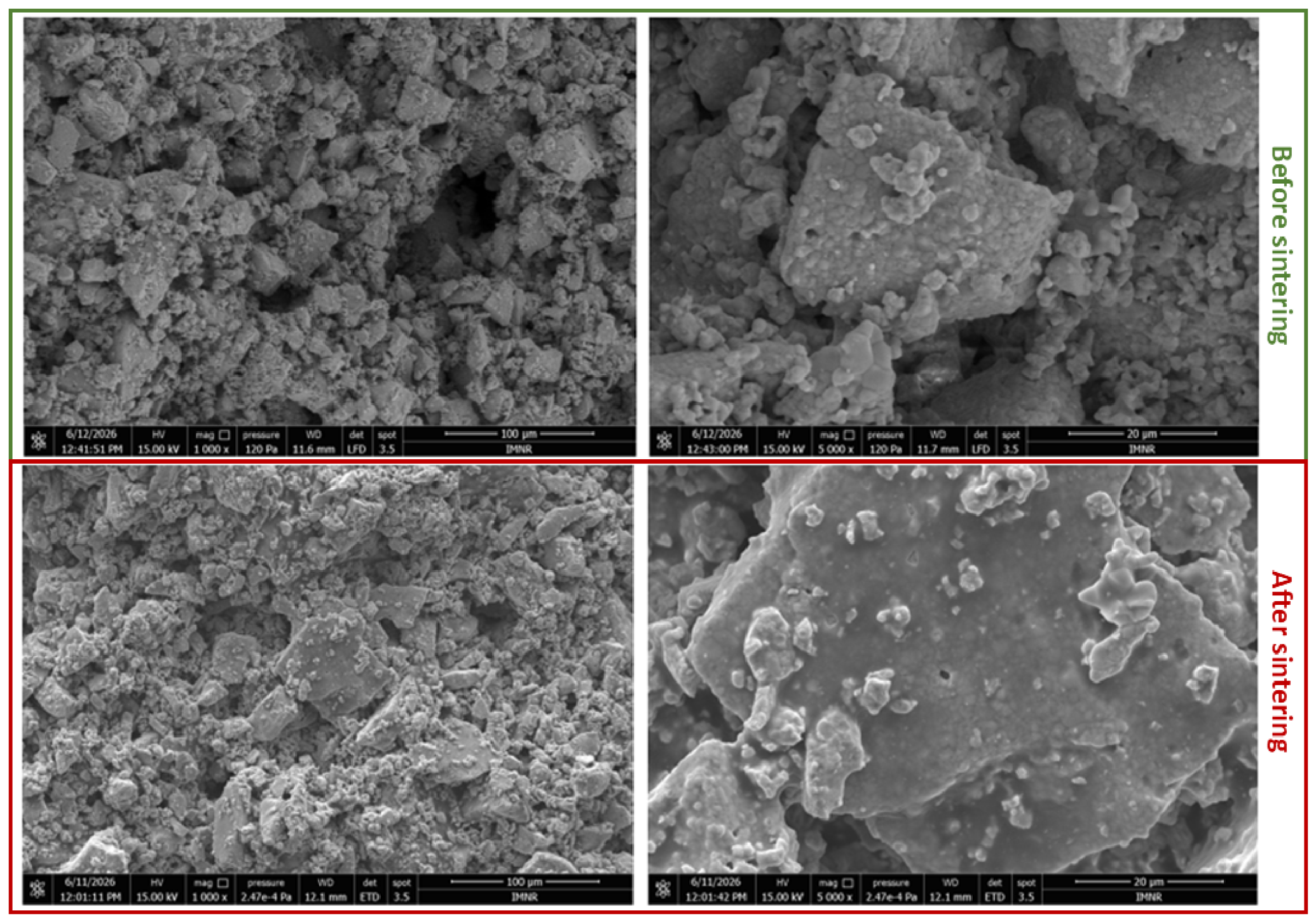
Scanning electron microscopy was used to evaluate the microstructural changes induced by thermal treatment in the 3D-printed BCZY-based structures. Representative SEM micrographs of the green and sintered specimens are presented in Figure 8.
Figure 8.
Representative SEM micrographs of 3D-printed BCZY-based ceramics structure before and after sintering.
Before sintering, the printed structures exhibited a relatively porous microstructure composed of irregularly shaped particles and agglomerates, with numerous interparticle voids. The limited degree of particle contacts and the pronounced open interparticle spaces are consistent with the unconsolidated nature of the green body prior to high-temperature treatment.
After sintering at 1350 °C for 3 h, a clear increase in microstructural consolidation was observed. The particles exhibited more developed interparticle contacts and neck-like connections between adjacent particle can be observed at higher magnifications, suggesting the progression of sintering through solid-state diffusion. However, complete densification was not achieved, as agglomerates, irregularly shaped particles and residual pores were still visible. These observations indicate partial sintering, which improved the cohesion between particles but was not sufficient to completely eliminate porosity.
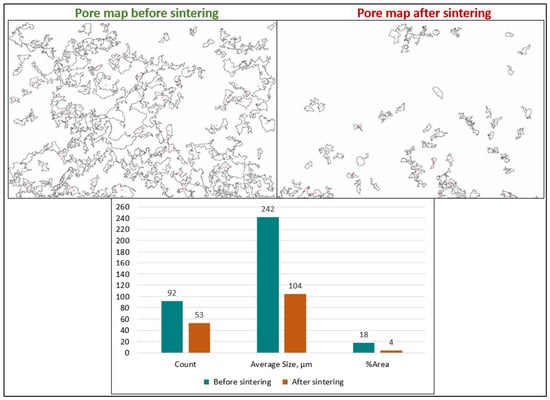
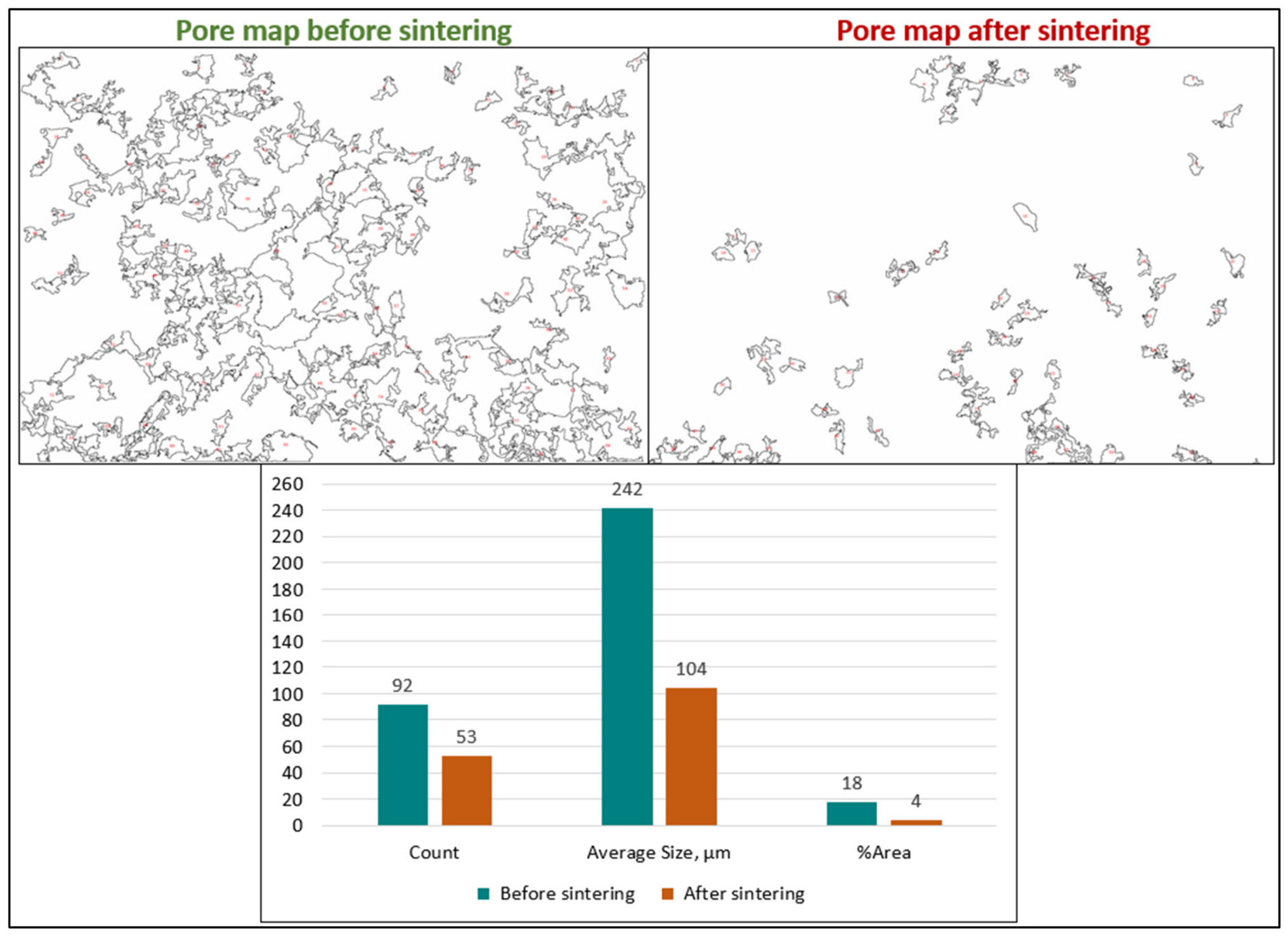
To quantitatively evaluate the evolution of pore characteristics during sintering, the SEM images obtained before and after thermal treatment were analyzed using ImageJ software. The analysis included pore count, average pore size and pore area fraction (%area). The results are presented in Figure 9.
Figure 9.
Quantitative analysis of pore characteristics before and after sintering using ImageJ software, highlighting the reduction in porosity following thermal treatment at 1350 °C for 3 h.
Before sintering, the analyzed microstructure exhibited 92 identified pores, with an average pore size of 242 µm and a pore area fraction of 18%. Following sintering at 1350 °C for 3 h, the number of detected pores decreased to 53, while the average pore size decreased to 104 µm. Moreover, the pore area fraction was reduced to 4%, corresponding to a relative decrease of approximately 77.8%.
These findings demonstrate a reduction in the extent of pore regions within the analyzed SEM images, consistent with the densification of the ceramic structure during sintering. The residual pore area fraction of 4% indicates that some porosity remained detectable after thermal treatment.
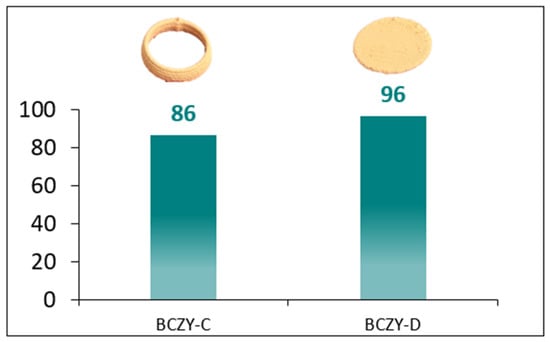
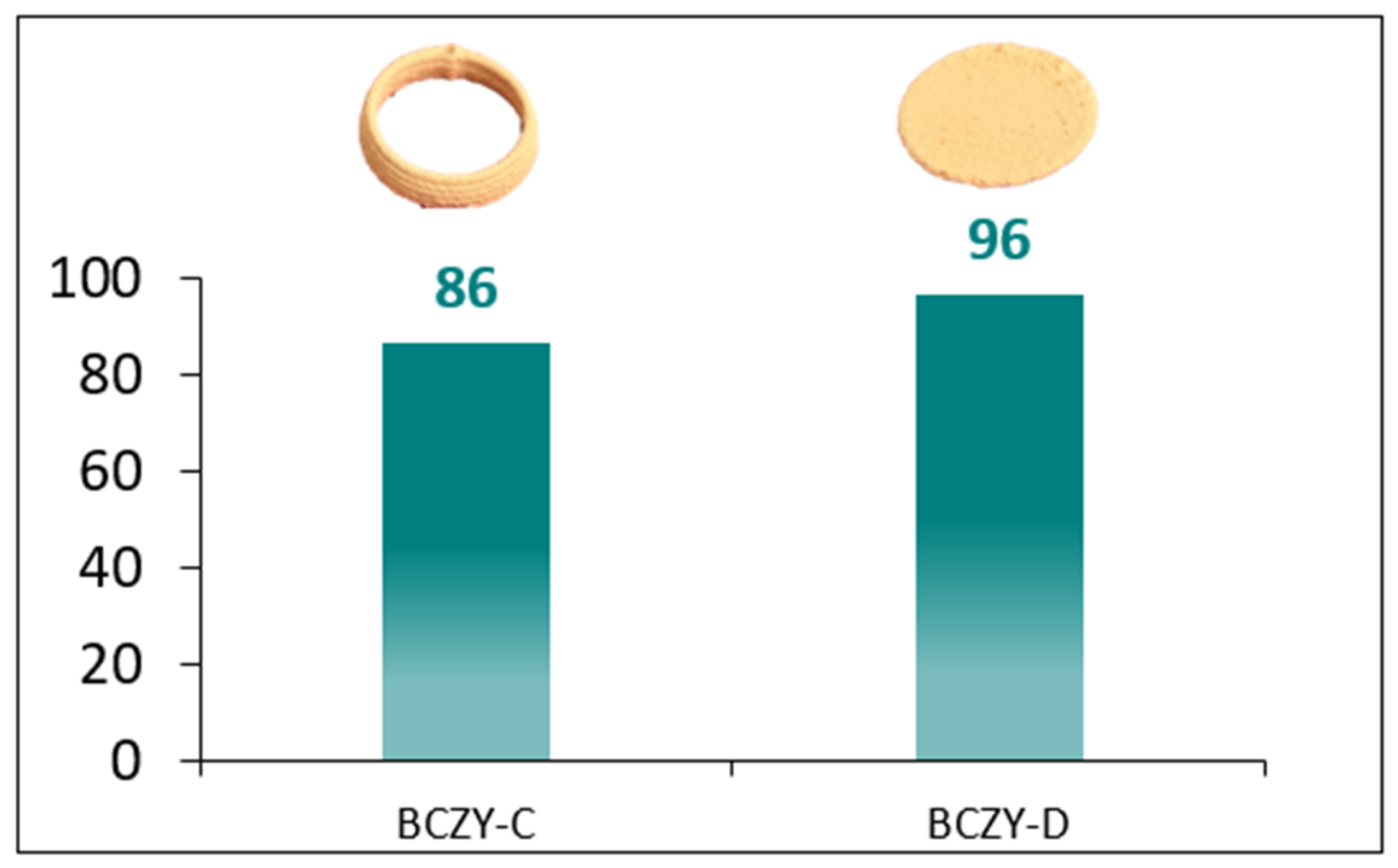
The microstructural observations were complemented by bulk density measurements performed on representative planar and cylindrical specimens after sintering. A clear difference was observed between the two printed geometries (Figure 10).
Figure 10.
Relative density of sintered 3D-printed BCZY-based structures, determined by Archimedes’ method.
The planar disc-shaped structure (20 mm diameter, 0.64 mm height) reached a relative density of approximately 96%, whereas the cylindrical sample (19.58 mm diameter, 4.99 mm height) exhibited a lower relative density of approximately 87%. These values indicate that the printing architecture influenced the final densification behavior of the 3D-printed structures.
The higher relative density obtained for the planar structure may be associated with differences in filament arrangement, local packing efficiency, interlayer contact and shrinkage behavior during sintering. Archimedes-based measurements provide an overall estimate of the bulk density of the specimen, whereas SEM observations reflect localized microstructural regions. The combined results therefore indicate substantial but spatially heterogenous densification of the printed ceramic structures.
3.6. FTIR Analysis
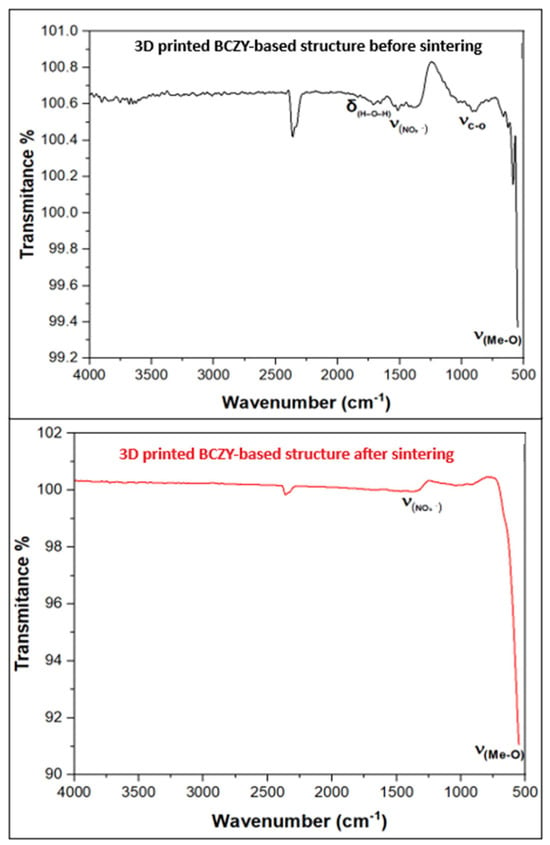
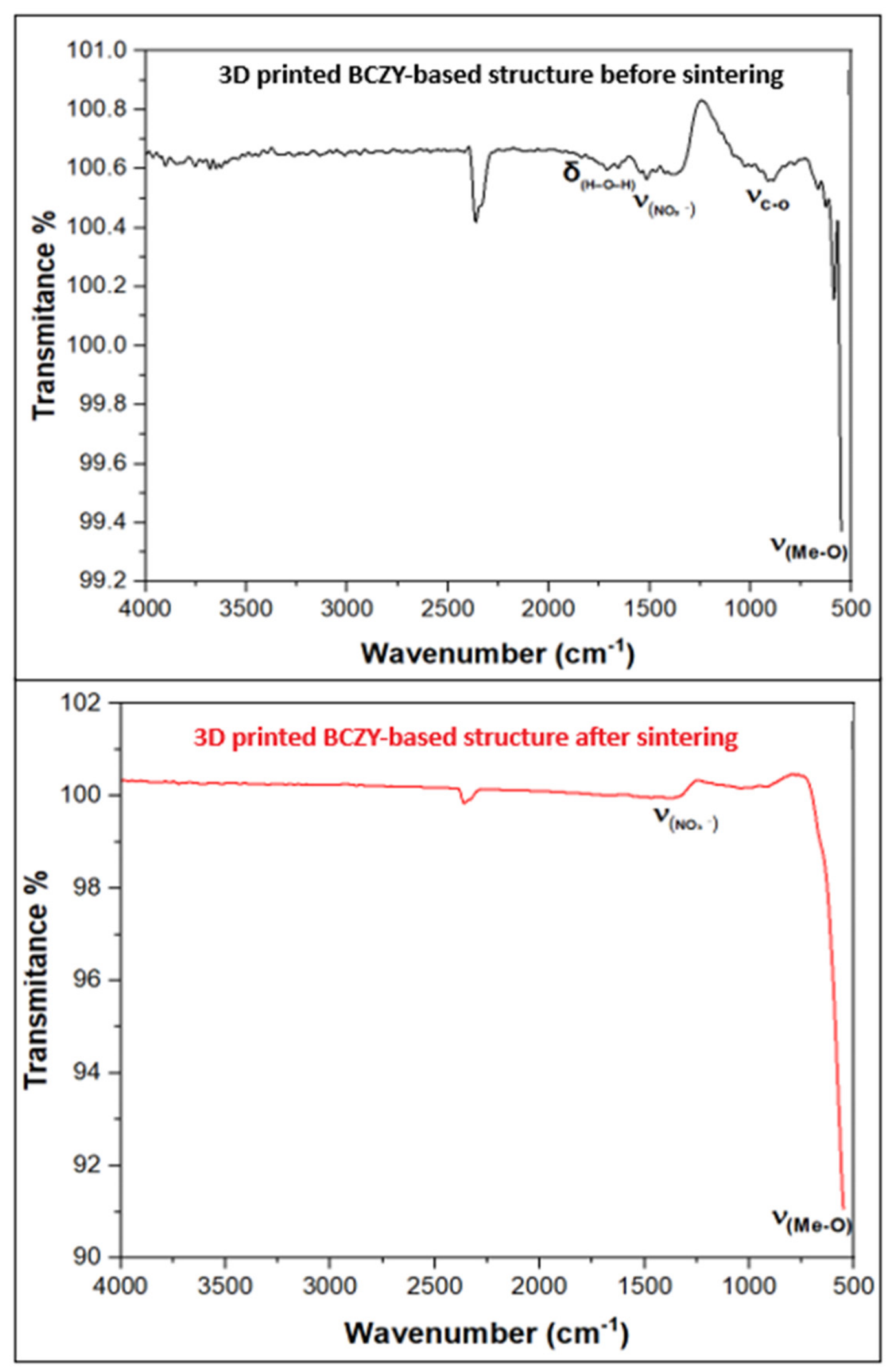
FTIR spectroscopy (Figure 11) was used to monitor the presence and subsequent removal of the organic component of the printing formulation. Before thermal treatment, the spectrum of the printed structure contained contributions associated with both the ceramic matrix and Pluronic F-127.
Figure 11.
FTIR spectra of 3D-printed BCZY-based structures before and after sintering.
A band in the 1100–1000 cm−1 region was assigned to C-O stretching vibrations associated with the ether groups of the Pluronic macromolecular structure [17]. In the lower wavenumber region, between approximately 700 and 500 cm−1, a broad absorption feature was attributed to metal-oxygen vibrations arising from the oxide ceramic components.
After thermal treatment, the bands associated with the organic component were no longer observed. In particular, the disappearance of the C-H stretching contributions in the 3000–2800 cm−1 region [21,22] and of the C-O-C related band between 1100 and 1000 cm−1 [21] indicated effective removal of the Pluronic-based organic phase during debinding and sintering.
The spectrum of the sintered specimen was consequently dominated by the broad metal-oxygen absorption region, consistent with the predominantly inorganic character of the thermally treated structure. These observations support the effectiveness of the selected binder-removal treatment.
4. Conclusions
The robocasting technique was successfully applied to fabricate Ba(Ce,Zr,Y)O3-based ceramic structures using a Pluronic F-127-based paste. The optimized formulation exhibited rheological behavior suitable for extrusion, combining elastic stability under low deformation with a gradual transition to viscous flow under increasing stress. Stable planar and cylindrical geometries were obtained, retaining their shape during the controlled binder removal and sintering stages at 1350 °C.
After sintering, the planar samples achieved a relative density of approximately 96%, whereas the cylindrical structures exhibited a lower degree of densification. SEM analysis confirmed improved particle consolidation, although some residual porosity persisted. XRD analysis revealed the formation of two crystalline phases rather than a single-phase BCZY composition, indicating that phase stability remains a key aspect for further optimization. FTIR analysis confirmed the efficient removal of the Pluronic binder. Overall, the results demonstrate the feasibility of processing BCZY-based ceramics via robocasting and provide a foundation for further optimizing phase homogeneity and the degree of densification.
Author Contributions
Conceptualization, Ș.C. and G.-F.I.; methodology, Ș.C.; investigation, Ș.C.; M.-A.I. and A.O.; data curation, Ș.C., G.-F.I., M.-A.I. and A.O.; writing—original draft preparation, Ș.C.; writing—review and editing, G.-F.I.; visualization, Ș.C.; supervision, A.-M.M.; project administration, Ș.C. All authors have read and agreed to the published version of the manuscript.
Funding
This work was supported by MCID, Core Program no. 5N/01.01.2023–ENERCLEAN, project number PN23250102/2023.
Data Availability Statement
The raw data supporting the conclusions of this article will be made available by the authors on request.
Acknowledgments
During the preparation of this manuscript, the authors used ChatGPT-6 for the purposes of English language refinement and improvement of scientific phrasing. The authors have reviewed and edited the output and take full responsibility for the content of this publication.
Conflicts of Interest
The authors declare no conflicts of interest.
References
- Danilov, N.A.; Starostina, I.A.; Starostin, G.N.; Kasyanova, A.V.; Medvedev, D.A.; Shao, Z. Fundamental Understanding and Applications of Protonic Y- and Yb-Coped Ba(Ce,Zr)O3 Perovskites: State-of-the-Art and Perspectives. Adv. Energy Mater. 2023, 13, 2302175. [Google Scholar] [CrossRef] [Scilit]
- Han, D.; Liu, X.; Bjørheim, T.S.; Uda, T. Yttrium-Doped Barium Zirconate-Cerate Solid Solution as Proton Conducting Electrolyte: Why Higher Cerium Concentration Leads to Better Performance for Fuel Cells and Electrolysis Cells. Adv. Energy Mater. 2021, 11, 2003149. [Google Scholar] [CrossRef] [Scilit]
- Rashid, N.L.R.M.; Samat, A.A.; Jais, A.A.; Somalu, M.R.; Muchtar, A.; Baharuddin, N.A.; Wan Isahak, W.N.R. Review on Zirconate-Cerate-Based Electrolytes for Proton-Conducting Solid Oxide Fuel Cell. Ceram. Int. 2019, 45, 6605–6615. [Google Scholar] [CrossRef] [Scilit]
- Loureiro, F.J.A.; Nasani, N.; Reddy, G.S.; Munirathnam, N.R.; Fagg, D.P. A Review on Sintering Technology of Proton Conducting BaCeO3-BaZrO3 Perovskite Oxide Materials for Protonic Ceramic Fuel Cells. J. Power Sources 2019, 438, 226991. [Google Scholar] [CrossRef] [Scilit]
- Bartoletti, A.; Mercadelli, E.; Gondolini, A.; Sanson, A. Exploring the Potential of Cold Sintering for Proton-Conducting Ceramics: A Review. Materials 2024, 17, 5116. [Google Scholar] [CrossRef] [Scilit] [PubMed]
- Maillard, M.; Fournier, S.; García-Tuñón, E.; Courtial, E.J. Advances and Obstacles to Unify the Concept of “Printability” in Ceramics Direct Ink Writing. Open Ceram. 2025, 23, 100808. [Google Scholar] [CrossRef] [Scilit]
- De Smedt, S.; Attaianese, B.; Cardinaels, R. Direct Ink Writing of Particle-Based Multiphase Materials: From Rheology to Functionality. Curr. Opin. Colloid Interface Sci. 2025, 75, 101889. [Google Scholar] [CrossRef] [Scilit]
- Cárdenas Correa, E.F.; Torres Barahona, E.A.; Carda Castelló, J.B. Additive Manufacturing of Ceramic Materials via Direct Ink Writing (DIW): A Review. Ceramics 2026, 9, 16. [Google Scholar] [CrossRef] [Scilit]
- Li, Z.L.; Zhou, S.; Saiz, E.; Malik, R. Ink Formulation in Direct Ink Writing of Ceramics: A Meta-Analysis. J. Eur. Ceram. Soc. 2024, 44, 6777–6796. [Google Scholar] [CrossRef] [Scilit]
- Chen, Z.; He, P.; Ouyang, J.; Duan, X.; Jia, D.; Colombo, P.; Zhou, Y. Direct Ink Writing of Ceramics: From Fundamentals to Industrial Applications. Adv. Mater. Join. 2026, 1, 6. [Google Scholar] [CrossRef] [Scilit]
- Tiwari, S.; Kumar, S.; Ahmad, M.I. Direct Ink Writing and Rapid Microwave Sintering of Alumina. Ceram. Int. 2025, 51, 1605–1612. [Google Scholar] [CrossRef] [Scilit]
- Del-Mazo-Barbara, L.; Ginebra, M.-P. Rheological Characterisation of Ceramic Inks for 3D Direct Ink Writing: A Review. J. Eur. Ceram. Soc. 2021, 41, 18–33. [Google Scholar] [CrossRef] [Scilit]
- Maillard, M.; Chevalier, J.; Gremillard, L.; Baeza, G.P.; Courtial, E.J.; Marion, S.; Garnier, V. Optimization of Mechanical Properties of Robocast Alumina Parts through Control of the Paste Rheology. J. Eur. Ceram. Soc. 2023, 43, 2805–2817. [Google Scholar] [CrossRef] [Scilit]
- Rau, D.A.; Williams, C.B.; Bortner, M.J. Rheology and Printability: A Survey of Critical Relationships for Direct Ink Write Materials Design. Prog. Mater. Sci. 2023, 140, 101188. [Google Scholar] [CrossRef] [Scilit]
- Licu, L.; Matei, A.C.; Caramarin, Ș.; Ioniță, F.G.; Drăguț, D.V.; Okos, A.; Ciobota, D.N. Exploring the Potential of Robocasting for High-Density Electrolytes in Solid Oxide Fuel Cells. Inorganics 2024, 12, 300. [Google Scholar] [CrossRef] [Scilit]
- Stern, T. Transcrystalline Mechanism of Banded Spherulites Development in Melt-Crystallized Semicrystalline Polymers. Polymers 2024, 16, 2411. [Google Scholar] [CrossRef] [Scilit] [PubMed]
- Jones, D.S.; Westwood, M.; Li, S.; Andrews, G.P. Spectroscopic and Thermal Characterisation of Interpenetrating Hydrogel Networks (IHNs) Based on Polymethacrylates and Pluronics, and Their Physicochemical Stability under Aqueous Conditions. Polymers 2024, 16, 2796. [Google Scholar] [CrossRef] [Scilit] [PubMed]
- King, O.; Nirapun, J.; Treetong, A.; Phungbun, C.; Hunsub, P.; Prateepchinda, S. Elastomeric PU-Pluronic Thin Films: Catalyst Solvent Effects on Microstructure, Mechanical Properties, And. ACS Omega 2025, 10, 62380–62394. [Google Scholar] [CrossRef] [Scilit] [PubMed]
- Rocha, M.S.; Batista, J.V.C.; Melo, M.N.O.; de Campos, V.E.B.; Toledo, A.L.M.M.; Oliveira, A.P.; Picciani, P.H.S.; Baumgartner, S.; Holandino, C. Pluronic® F127 Thermoresponsive Viscum Album Hydrogel: Physicochemical Features and Cellular In Vitro Evaluation. Pharmaceutics 2022, 14, 2775. [Google Scholar] [CrossRef] [Scilit] [PubMed]
- Bhandari, S.; Hanzel, O.; Kermani, M.; Sglavo, V.M.; Biesuz, M.; Franchin, G. Rapid Debinding and Sintering of Alumina Ceramics Fabricated by Direct Ink Writing. J. Eur. Ceram. Soc. 2025, 45, 117144. [Google Scholar] [CrossRef] [Scilit]
- Ozaksun, N.T.; Tayyar, T.; Ozdemir, A.; Ark, M.; Incecayir, T. Development and Optimization of Soluplus®/Pluronic-Based Polymeric Micelles for Bicalutamide Delivery: Characterization, Lyophilization, Stability, and Cellular Studies. Eur. J. Pharm. Sci. 2026, 217, 107395. [Google Scholar] [CrossRef] [Scilit] [PubMed]
- Fitzpatrick, D.P.; Browne, E.; Kealey, C.; Brady, D.; Kavanagh, S.; Devery, S.; Gately, N. The Effects of Encapsulating Bioactive Irish Honey into Pluronic-Based Thermoresponsive Hydrogels and Potential Application in Soft Tissue Regeneration. Gels 2025, 11, 215. [Google Scholar] [CrossRef] [Scilit] [PubMed]

Disclaimer/Publisher’s Note: The statements, opinions and data contained in all publications are solely those of the individual author(s) and contributor(s) and not of MDPI and/or the editor(s). MDPI and/or the editor(s) disclaim responsibility for any injury to people or property resulting from any ideas, methods, instructions or products referred to in the content. |
© 2026 by the authors. Licensee MDPI, Basel, Switzerland. This article is an open access article distributed under the terms and conditions of the Creative Commons Attribution (CC BY) license.