


Abstract
This study presents the laminar technology from Late Acheulian contexts (ca. 500–300 ka) at Jaljulia, Israel. The lithic assemblages include laminar cores, core trimming elements, and laminar end-products, representing the only known evidence, to date, of blade technology within a sequence of typical handaxe-bearing Acheulian horizons. Although the majority of analyzed blades do not exhibit evident traces of regularity, serial blade production is indicated by some attributes resembling the principles of the succeeding Acheulo-Yabrudian Cultural Complex (AYCC) Amudian standards. Notably, the earliest Jaljulia localities predate the AYCC by ~100 ka, suggesting a possible Acheulian origin for late Lower Paleolithic laminar production in the Levant. The onset of blade production at Jaljulia coincides chronologically with the earliest known blade industries across Africa, appearing in isolated instances prior to the broader dissemination of Middle Pleistocene laminar technologies. Distinct blade technologies appear to have emerged independently across various Middle Pleistocene contexts, predating the appearance of Homo sapiens and reflecting innovations rooted in earlier phases of human cultural and biological evolution. This evidence parallels the independent emergence of other technological systems, such as the Levallois method and Quina retouch, indicating that convergent cultural evolution in light-duty technologies operated as early as the Lower Paleolithic.
1. Introduction
The late Lower Paleolithic in the Levant (ca. 500–200 ka) is marked by significant transformations in Middle Pleistocene hominin biology and culture. Paleoanthropological evidence from this interval documents the final occurrences of Homo erectus alongside the emergence of post-erectus cranio-dental morphologies associated with archaic modern humans and Neanderthals [1,2,3,4,5,6,7]. Archeologically, this period is characterized by the final stage of the long-lasting Levantine Acheulian cultural complex (Late Acheulian, ca. 500–200 ka) and the subsequent appearance of the Acheulo-Yabrudian Cultural Complex (AYCC, ca. 400–200 ka) [8,9,10,11,12,13,14,15]. The AYCC is defined by a suite of technological innovations, including systematic blade production [16,17,18] and additional behavioral novelties [9,10,19,20,21,22,23,24], while recent studies have also identified comparable innovations within the Late Acheulian [25,26,27,28]. Both entities are characterized by distinct site use, with AYCC assemblages found almost exclusively in caves/rock shelters [9,10,14,17,29,30,31], whereas Late Acheulian sites are predominantly open-air with a few cave sites [13,32]. Paleoenvironmental reconstructions indicate a modern-like climatic gradient from wetter Mediterranean zones to drier interior areas in the Levant across the Pleistocene [32,33,34,35,36,37], with glacial–interglacial oscillations modulating regional environmental variability [38]. The Levantine mammal community at 500–200 ka is dominated by Palearctic taxa [39], and this interval represents the last occurrence of Pleistocene proboscideans in the region [26,39,40,41]. Against this background, the late Lower Paleolithic has been characterized by intensification of innovative technological behaviors [9,24,28,42,43,44], including the earliest appearance of systematic blade production, which is the focus of the present study.
1.1. Middle Pleistocene Blade Technologies in Africa and the Levant—A Short Overview
Paleolithic blade technologies are traditionally regarded as a major milestone in human cultural evolution, often linked to the emergence of “modern human behavior” and the expansion of Homo sapiens [45,46,47,48,49,50,51]. Upper Paleolithic/Late Stone Age blade technologies after 50 ka are frequently associated with advanced knapping skills [52,53], innovations in composite tool manufacture, and projectile weaponry [45,54,55,56]. Blade production persisted through later formative periods, including the rise in agriculture and early states [57], and remained culturally prominent among some of the last contemporary stone-knapping societies [58,59]. As such, the stone blade is widely considered a hallmark of Homo sapiens, prompting the question of whether this technology is co-structured with our species.
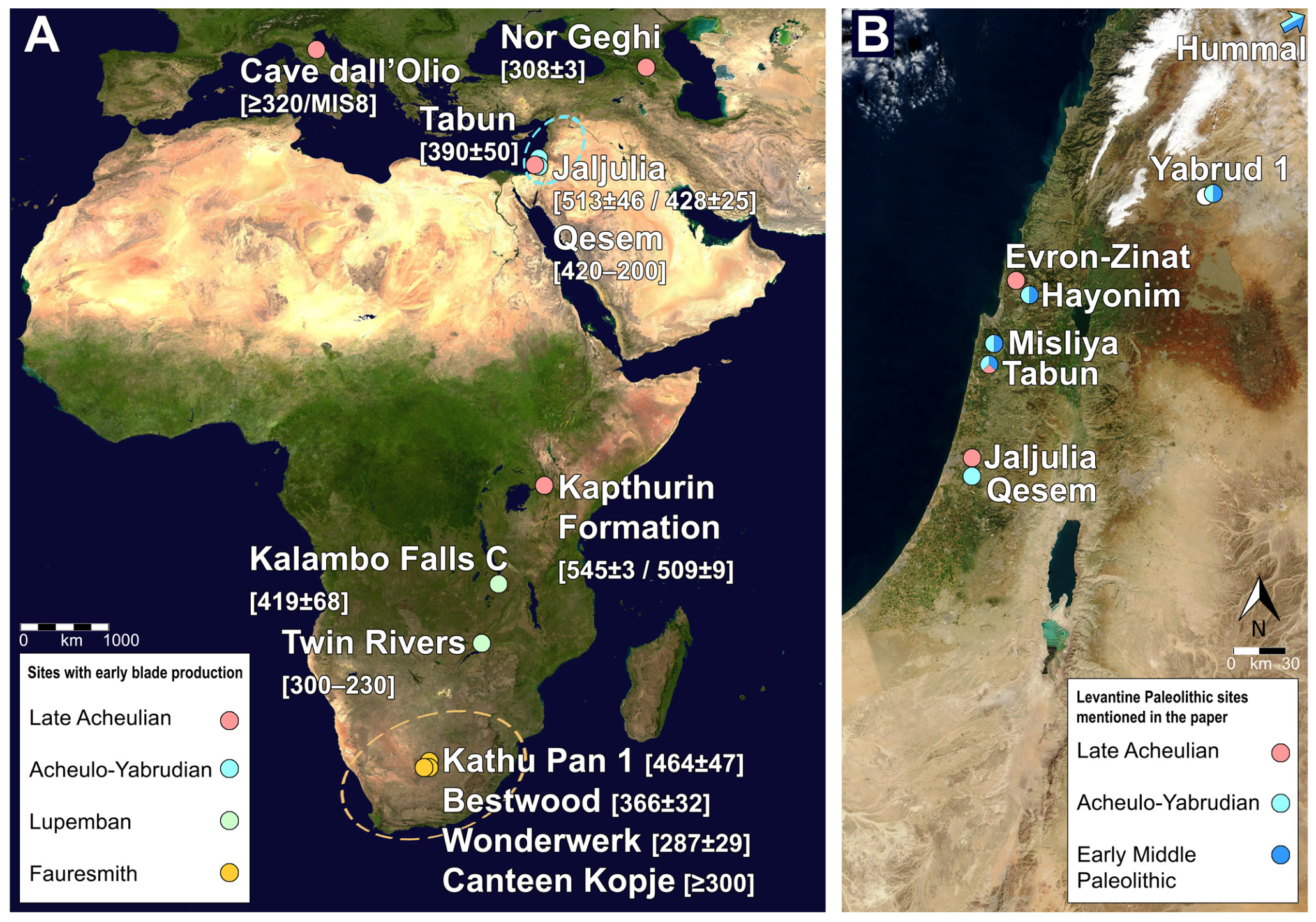
Evidence for blade production in the early Pleistocene is scarce, represented mostly by elongated flakes and incidental blades in early Acheulian contexts [60,61], and by a discrete example of bipolar-on-anvil bladelets around 1 Ma [62]. The development of elongated blank production occurred within established flake-based systems rather than as abrupt and discrete innovation, evident in both the earliest blade-bearing assemblages (see below) and later Middle Pleistocene contexts [63,64]. Systematic blade production first appears in the Middle Pleistocene (~500–250 ka) across several techno-cultural complexes in Africa [18,65,66,67,68] and the Levant [10,14,16,17,69,70], with sporadic reappearances in these and other regions [44,47,69,71,72,73,74,75] (Figure 1A). A review of published early blade assemblages identifies eastern Africa, southern Africa, and the Levant as the earliest regions to adopt serial blade manufacture, as illustrated by the following key case studies:
1.1.1. Kapthurin Formation (545–509 kya)
The earliest evidence for systematic blade production has been identified in the Kapthurin Formation of the Central Rift Valley, Kenya, at two Early Stone Age localities dated to 545 and 509 ka, with additional occurrences in younger contexts [66,76,77]. The blade cores were made from small, locally available, fine-grained phonolite cobbles, and core exploitation resembled the “hummalian” volumetric method from later Levantine contexts [78]. Blade production at the Kapthurin Formation involved minimal core preparation, and no evidence for the Levallois method has been documented in these contexts. Although the assemblages are small, they include refitting sets of flakes and blades, as well as blades exhibiting elongated dorsal scar patterns, indicative of sequential blade removals. The associated assemblages are flake-dominated and nominally attributed to the Acheulian, although no diagnostic artifacts such as handaxes accompany the blades.
1.1.2. Fauresmith Industry at Kathu Pan 1 (471–223 kya)
Stratum 4a at Kathu Pan 1, located in the Northern Cape Province of South Africa and dated to 464 ± 47 ka [79], represents the earliest manifestation of the Fauresmith industry (471–223 kya) [18,68,79], and is associated with small frequencies of bifaces, notable presence of the Levallois method, and numerous retouched points [67]. The assemblage includes numerous large blades produced by direct hard-hammer percussion from bifacially hierarchical, typically bidirectional cores, prepared through centripetal flaking in a Levallois-like manner. Cores were primarily shaped from locally available banded ironstone cobbles, with blades detached along the natural direction of banding. Compared with the Kapthurin Formation, Kathu Pan 1 blades are larger, more standardized, frequently exhibit platform faceting, and sometimes retouched into points. Blades have also been reported from other (and later) Fauresmith sites, though their frequency and production strategies vary, including single-platform rectangular cores [67]. The Fauresmith is considered a standalone techno-complex emerging between the Early and Middle Stone Age, but ultimately post-dating the South African Late Acheulian [80].
1.1.3. Lupemban Industry at Kalambo Falls and Twin Rivers (ca. 400–230 kya)
The Lupemban industry of central Africa is one of the post-Acheulian techno-complexes found in sub-Saharan Africa, distinguished by innovative light-duty technologies alongside lanceolate bifacial points and core-axes [81,82]. Kalambo Falls (Zambia) likely represents the earliest blade-bearing Lupemban, with the transition from the Acheulian (and the Sangoan) broadly dated to ca. 300 ka [83,84]. A blade-containing horizon at Kalambo Falls C yielded an age of 419 ± 68 ka, derived from a complex depositional context [85]. Another early blade-producing Lupemban site is Twin Rivers, dated to ca. 300–230 ka [86,87]. At Kalambo Falls, blades are present from the earliest Lupemban phase but become more frequent in later levels [83]. Silicified mudstone was the preferred stone type, and production relied heavily on the natural morphology of cores, with relatively straightforward techniques [85]. Blade production at Twin Rivers were mostly produced from single-platform combined laminar-and-flake cores, different from the radial flaking method which is common at the site. The end-products were subject to intense shaping via retouch, including lateral backing and truncation of distal or proximal ends, likely for hafting. While the Lupemban blade component appears sporadic and unsystematic, it is clearly identifiable. The Lupemban at Kalambo Falls overlays the Sangoan, a heavy-duty oriented industry lacking a notable blade component. However, the Sangoan at Kalambo Falls shows an increase in elongated flakes relative to the preceding Acheulian [83,85], indicating a local trend toward elongated blank production after the Acheulian.
1.1.4. Acheulo-Yabrudian Cultural Complex in the Levant (400–220 kya)
The late Lower Paleolithic in the Levant (ca. 500–200 kya) comprises the earlier Late Acheulian and the later Acheulo-Yabrudian Cultural Complex (AYCC), which appear to chronologically overlap to some extent after 400 ka [88]. These complexes differ markedly in lithic assemblages, site types, subsistence strategies, and associated hominin taxa [1,7,10,11,88,89,90]. Blade production is a key distinguishing feature, being exceptionally rare in the Levantine Acheulian [91,92], yet widespread in the AYCC, particularly within the Amudian industry [10,14,15,61]. Extensive studies at Qesem Cave, Tabun Cave, and Yabrud I [16,17,93] identified two principal core reduction trajectories: 1. A débitage frontal method using thin, flat nodules with rectangular cross-sections for single-platform laminar cores, including the diagnostic “parallel-edges” type. 2. Flexible exploitation of morphologically variable nodules for laminar or combined laminar-and-flake removals, with flakes playing a crucial role in maintaining core geometry, occasionally transforming them into prismatic or pyramidal types. The Amudian industry is particularly associated with a specific type of laminar end-product, the naturally backed knife (NBK) [94]. Alongside NBKs, the Amudian system generated numerous cortical and non-cortical blades, forming the three distinctive components of Amudian technology [16,17]. Functional analysis of the three laminar types suggests their use as butchery cutting tools [95].
1.1.5. Early Middle Paleolithic Levantine Mousterian (250~ kya)
New blade technologies within the Early Middle Paleolithic (EMP) emerged by ca. 250–200 ka [96,97]. EMP blades were serially produced using Levallois unidirectional and convergent methods, as well as non-Levallois semi-rotating laminar concepts [29,69,70,78,96,98,99,100,101], and introduced elongated points as a new lithic artifact type. Although EMP layers overlie the AYCC stratigraphically, traces of continuity between Lower and Middle Paleolithic blade technologies are limited [11,43,94,96,101], despite some technological affinities in other attributes [8,11]. Consequently, the Lower-to-Middle Paleolithic transition in the Levant is currently interpreted as a “sharp technological break” [96], particularly regarding laminar production methods [102]. Following the EMP, lithic production shifted toward centripetal Levallois methods, and blades became rare in later Mousterian assemblages [74], reappearing only with the onset of the Upper Paleolithic [103,104].
Figure 1.
(A). Sites with the earliest blade production in Africa, the Levant, and Europe with their dates. Dotted circles indicate the approximate distribution of the Acheulo-Yabrudian in the Levant and the Fauresmith in southern Africa. References: Kapthurin Formation [66], Jaljulia [88], Kathu Pan 1 [79], Qesem [105], Nor Geghi [44], Cave dall’olio [106], Tabun [107], Wonderwerk [108], Bestwood [109], Canteen Kopje [67], Kalambo Falls [84,85], Twin Rivers [87]. (B). Map showing the location of Jaljulia and other late Lower Paleolithic Levantine sites mentioned in this paper.
1.2. The Question of Blade Production in the Levantine Late Acheulian
Although blades have been identified at many Levantine Acheulian sites, they occur in negligible numbers and have not been associated with systematic production (Table S1). The scarcity of blades in Levantine Acheulian contexts has long been considered a clear distinction between Late Acheulian and AYCC (and Mousterian) assemblages in the Levant [12,13]. While recent studies have demonstrated the presence of AYCC elements early within the Late Acheulian [26,91], characteristic blade production has yet to be identified.
This study presents a technological analysis of blade assemblages at five Late Acheulian localities (500–300 ka) at Jaljulia, Israel (Figure 1B and Figure S1). We document the recurrent occurrence of blades obtained through different reduction methods and compare them to the well-documented Amudian assemblage from the nearby Qesem Cave [10,16,17,93,95]. In particular, we explore the degree of technological and conceptual affiliation between the Acheulian blades at Jaljulia and the Amudian serial blade production at Qesem Cave using established criteria for the latter [90]. The presence of this small-scale but repeated and defined blade component in the Late Levantine Acheulian, dated as early as ~500 ka, predates the AYCC and represents one of the earliest regionally documented occurrences of Middle Pleistocene blade technology.
2. Materials and Methods
2.1. The Site of Jaljulia
Jaljulia is located on the eastern edge of the Israeli Coastal Plain, approximately 9 km inland from the modern coastline (Figure S1). Excavations across six localities (A–E, G), covering 80 m2 within a broader Acheulian paleo-landscape exceeding 1 ha, revealed stratified archeological horizons at depths of 1.5–5 m [88]. These horizons, rich in typical Acheulian artifacts, were deposited on a flint-bearing conglomerate laid down by an ancient outlet of Wadi Qana. The archeological horizons directly overlie this conglomerate. The paleoenvironment is reconstructed as wetlands/marshes in the Mediterranean biome, offering favorable conditions for repeated occupation [88]. Due to post-depositional factors, only a small and highly fragmented faunal assemblage was recovered from locality D, with Bos primigenius as the sole identified species [88].
Chronological assessment using TT-OSL, pIR-IR290, and ESR dating methods places the hominin activity at Jaljulia between 514 and 195 ka. Localities D (516–417 ka) and C (444–428 ka) represent the earliest occupations, likely corresponding to MIS 12/13. Younger occupation phases are evident at locality B (367–316 ka) and locality G (310–195 ka). This study focuses on laminar technology from localities A–E. The assemblages from locality G are currently analyzed and were not included here.
The lithic assemblages are dominated by a core-and-flake industry yielding medium- and small-sized flakes and flake tools, and a small number of blades. Prepared core technologies and core-on-flake strategies, typical of the Levantine Late Acheulian, are also present [28,88]. Shaped tools primarily consist of marginally retouched flakes, notches, and scrapers, including a small number with Quina-like retouch [26]. The bifacial component in Jaljulia is represented mainly by handaxes of various dimensions and use-wear indicative of processing mostly hard material, i.e., bone [110]. Heavy-duty tools are represented by chopping tools and a few large (>8 cm) scrapers. The lithic assemblage has been defined as classic Late Acheulian sensu stricto [111], and has been studied extensively, with detailed typo-technological analyses on the lithic trajectories published separately [25,26,88,110,112,113].
2.2. Jaljulia Blade Production Analysis
The blade-related components of the Jaljulia assemblages were analyzed following methodologies established in prior studies of late Lower Paleolithic blade technologies, and specifically, the well-studied blade technology at Qesem Cave [8,16,17,18,66,90]. Different stages of the laminar chaîne opératoire, including blade or blade-and-flake cores, core trimming elements (CTEs), laminar products, and shaped laminar items, have been identified in the analyzed assemblages. Artifacts were categorized according to macro-categories of flint types defined previously [114,115].
Laminar items, CTEs, and cores collectively represent 1.2–2.1% of the total debitage and shaped artifacts (consisting of approximately 25,000 items) across all Jaljulia localities (Table S2). A total of 282 laminar production-related artifacts were analyzed, comprising complete or semi-complete pieces larger than 25 mm, including items with post-depositional damage that still allowed measurement of technological and metric attributes (Figure S2). Partially damaged proximal or distal ends were included if key features remained measurable.
Blades were defined as flaked items with a length-to-width ratio of ≥2:1 and categorized as cortical blades (≥30% dorsal cortex), non-cortical blades (central blades) with less than 30% of their dorsal face covered by cortex, or naturally backed knives (NBKs). The latter is a diagnostic element of the Amudian industry, characterized by a cortical back forming a perpendicular angle of 65–90° with the ventral surface [94,95]. Retouched blades were assigned to one of these categories or to relevant CTE classes based on their blank type. Intensively retouched blade-like items, including those that achieved blade proportions through modification (e.g., scrapers and denticulates), were excluded. Rare items with blade proportions but distinctive technological features (e.g., double-ventral surfaces or burin spalls) were also omitted.
Relevant core trimming elements (CTEs) included overshot blades, crested blades, entame blades, and ‘varia’ items that were removed during core maintenance and conformed to standard blade proportions. It should be noted that overshot items (one of the technological categories within the CTE) are not synonymous with overpassing, which indicates a type of ventrally curved distal termination that may occur on any laminar item. Within the overshot category, a small number of items with a length-to-width ratio slightly below 2:1 were included due to the presence of clear laminar scars. Overshot items were further subdivided into three categories: initial overshot blades with 50% cortical coverage; correction overshot items that served to correct debitage surfaces that were compromised by hinged or stepped scars or impurities in the flint; and regular rejuvenation overshot blades, produced with similar intent but exhibiting flake scars only.
3. Results
3.1. Raw Materials
The analyzed Late Acheulian artifacts (Table 1) were predominantly made from locally sourced fine-textured flints of the Turonian/Upper Cenomanian–Turonian landscape surrounding Jaljulia, particularly along Qana stream (Figure S1). Laminar items were produced mainly from homogeneous fine-textured flint with few impurities (Figure 2), divided into two groups: striped and plain (Table S3). The striped type, largely from the B’ina Formation, is visually banded and comparable to flint used in Amudian blade production at Qesem [116]. Striped flint types were used for producing the “parallel edges” cores, and were fairly common among the laminar debitage (see below). The plain fine-textured group includes homogeneous Turonian to Campanian flints with minimal impurities, also known from Qesem but in smaller quantities [117]. Coarse-textured flint, whether homogeneous or semi-homogeneous, as well as the heterogenous brecciated Campanian flint [115] was used to a relatively lesser extent than the homogenous types. Brecciated flint types were technically feasible and commonly used for biface and scraper production [26,115]. The relative scarcity of this material among laminar items hints at a prevailing, though not definite, preference for homogeneous flint types for this trajectory.
Table 1.
Counts and relative frequencies (%) of lithic artifacts by category (cores, core trimming elements, and blades, including cortical blades and NBK) across excavation areas A–E.
Figure 2.
Flint types of laminar items (n = 282) from the five Jaljulia localities.
3.2. Cores
The assemblage includes laminar (n = 12) and combined laminar–flake cores (n = 20). The cores are relatively small overall (mean: 54.1 × 38.1 × 38.0 mm) (Table 2), but their overall dimensions correspond closely to the size of laminar products (see below). All but one laminar core possess a single production surface. Five, made from thin flint slabs (Figure 3(1); Figure 4(2–5)), strictly correspond to the “parallel-edges” type defined at Qesem (Figure 3(7,8)). These cores occur only at the two oldest localities (D, C) (Figure 5). These cores show systematic exploitation of the entire debitage surface through continuous laminar removals, with overpass terminations maintaining desirable distal convexity [10,16,17]. The slab morphology, characterized by relatively narrow (Figure 6A) debitage surfaces, produced diagnostic laminar attributes—uniform lateral edges orthogonal to the ventral surface (particularly in NBKs and CTEs) and continuous cortical bands aligned with scar trajectories in cortical blades (Figure 3(3–6,9–12)). Laminar cores are also represented by three small prismatic cores (Figure 4(7)) resembling examples from Qesem, each showing two blade scars and minor micro-flaking. Two others display a single laminar removal on unexploited surfaces, likely “core testing” (Figure 4(6)), both prepared with a dihedral platform before the main laminar removal.
Table 2.
Descriptive statistics for metric attributes of laminar/laminar-and-flake cores (n = 32).
Figure 3.
Examples of comparable blade technologies in Late Acheulian Jaljulia and Acheulo-Yabrudian Qesem Cave. Jaljulia: Flint slab found in situ (1), “parallel edges” type core (2), overshot (3), cortical blade (4), NBK (5,6). Qesem Cave: “parallel edges”-type cores (7,8), unifacial crested blade (9), overshot (10), blade (11), NBK (12).
Figure 4.
Laminar and laminar-and-flake cores from Jaljulia. (1). Two-striking platform laminar core. (2–7). Single-striking platform laminar cores. (8,9). Single-striking platform laminar-and-flake cores.
Figure 5.
Distribution of laminar/laminar-and-flake cores (n = 32) at the five Jaljulia localities.
Figure 6.
Visualized distribution of Jaljulia cores (A), core trimming elements (B) and laminar end-products (C) according to length and width values.
The mixed laminar–flake cores (Figure 4(8,9)) comprise prismatic (n = 12) and amorphous (n = 8) types. They range from specimens with successive laminar removals to those dominated by flake scars with occasional laminar detachments. Some (e.g., Figure 4(8)) conceptually resemble “parallel-edges” cores, with a narrow debitage surface bounded by natural or minimally flaked sides. Six prismatic cores bear two laminar scars, while most amorphous cores show only one.
Pre-shaping was limited in both laminar and laminar-and-flake cores, though nearly half show prepared single-facet striking platforms. Overpass removals, crucial for Amudian core reduction, occur on ten cores (31.2%), implying inconsistent maintenance of convexities (Table 3). Step and hinge terminations are frequent, averaging 1.2 per core. Some cores were likely discarded due to hinges, steps or fractures, or repurposed as flake cores, erasing overpass scars. Knapping errors were likely the primary reason for core discard, while exhaustion is registered only in five items (for attributes, see Table 2 and Table 3).
Table 3.
Attribute counts and presence ratios for laminar/laminar-and-flake cores (n = 32).
3.3. Core Trimming Elements
CTEs (n = 89) were selected for blade-proportioned traits and likely underrepresent the full laminar reduction spectrum, which also included flake removals, as reconstructed for the Amudian industry [16,93]. Notwithstanding the observed variation, CTE dimensions tend to be slightly larger than those of the laminar end-products and some of the cores (Figure 6B). Crested blades form the largest category. At locality D, overshot items slightly outnumber crested blades, while at locality C they occur at equal frequencies (Figure S3). Other types, core tables and entame blades, are rare (Table 4).
Table 4.
Core trimming element (CTE) types (n = 89) and their number of laminar scars.
Crested items (n = 41) include unifacial (46.3%), initial (26.8%), and bifacial (26.8%) types. Unifacial crested blades (Figure 7(3–10)) have a ridge produced by a sequence of removals originating from a single direction, potentially serving a similar function within the Amudian industry [16,17]. Initial crested blades (Figure 7(1,2)) retain partial cortex and limited removals, either unifacial or bifacial (Figure 7(2)). The bifacial type (Figure 7(11,12)) is characterized by a ridge formed through bifacial shaping, oriented to guide the removal of a laminar blank, an essential feature in laminar reduction systems [118]. Crested blades were made of various flint types. Platform preparation was infrequent and occurred in 17.1% (n = 7) of the items. An overpass termination was present in 36.6% (n = 15) of the items. Only four items (9.7%) retain identifiable unidirectional laminar scars on the dorsal face, possibly due to subsequent crest adjustments that may have erased previous blade scars. Convergent scars were extremely rare.
Figure 7.
Crested elements from Jaljulia. Initial crested blades (1,2). Unifacial crested blades (3–10). Bifacial crested blades (11,12). A unifacial crested blade on an overshot (13).
Overshot items (n = 33) were classified into correction (45.4%), regular (27.3%), and initial (27.3%) types, closely resembling corresponding types at Qesem [16]. The primary distinction between correction and regular types is in the presence of hinged or stepped fractures and other surface irregularities that characterize the former. Regular overshot items, while not preserving hinges or step, often preserve laminar scars short of the distal end (e.g., Figure 8(6–8)), disrupting continuous production. Overshot items show frequent laminar scars (Table 4; Figure 8(2–9)), with 38.1% (n = 8) bearing multiple scars. While some overshot pieces may reflect knapping accidents, their recurrent role in sustaining distal core convexities through overpassing terminations indicates they were functionally integrated into blade production.
Figure 8.
Overshot items from Jaljulia. Correction overshot (1–3). Regular overshot (4–10). Initial overshot (11).
3.4. Blades, Cortical Blades, and NBKs
In terms of relative abundance, cortical blades are the most frequent (n = 76) (Figure 9(1–7)), followed by blades (n = 67) (Figure 9(8–14)), while NBKs are rare in all localities (n = 14) (Figure 10), except for a higher proportion at locality E (Figure S4). Laminar items range from 26 to 84 mm (mean: 48.3 × 20.2 mm; L/W = 2.41; W/T = 2.11) (Figure 6C, Table 5). Dimensional consistency is observed across the three laminar types, with cortical blades being only slightly longer. Metric attributes also remained consistent between the different localities. Compared to the laminar products from Qesem, the artifacts are slightly smaller in length and width but broadly similar in thickness (~1 cm).
Figure 9.
Cortical blades (1–7) and blades (8–14) from Jaljulia.
Figure 10.
Naturally backed knives (1–9) from Jaljulia.
Table 5.
Metric and technological attribute values of the laminar items from Jaljulia and Qesem Cave. The data on Qesem Cave were retrieved from [93].
Among all the end-products, striking platforms are predominantly plain (50%, n = 69), followed by modified (usually dihedral) (26.1%, n = 36), and cortical (14.5%, n = 20), thus indicating minimal investment into platform preparation. Longitudinal profiles are predominantly straight (44.7%, n = 72), but these decrease from 52.6% in early localities (D, C) to 36% in B. Cross-sections are chiefly triangular (46.5%, n = 75). Distal ends are highly variable, with oblique (14.9%, n = 24), pointed (13.7%, n = 22), and rounded (13.7%, n = 22) being the most common. Nearly half (47.3%, n = 52) end in feather terminations but overpassing and hinge terminations are also common (Figure 11, Table 5). No significant difference in termination type exists between blades and cortical blades (χ2 = 3.45, p = 0.178).
Figure 11.
End terminations on the three laminar types (n = 161).
Mean edge angles are comparable across blades (49.1°), cortical blades (50.6°), and NBKs (46.4°), averaging 49.3° (Figure 12A). Blades more often have very sharp edges (<40°), though the difference with cortical blades is not significant (U = 3337, p = 0.254). While NBK edge angles match AYCC values [17], blades and cortical blades show higher averages than at AYCC sites, where cortical blades average ~40° and blades 30–40°. Most blades (74.6%, n = 50) and cortical blades (68.4%, n = 52) exhibit uniform edges (≤10° variation), though partial cortex often introduces asymmetry. Cortical blades commonly retain cortex along one edge and an opposite sharp margin from prior removal, typically more acute than the cortical side (Figure 12B). While continuous orthogonal cortical backs conventionally characterize NBKs, a lateral cortical back opposite the cutting edge is also observed on formally non-NBK pieces (e.g., Figure 8(1,10) and Figure 9(4,5,10)). About one-third (35.5%, n = 27) of cortical blades have a steep natural or semi-natural back (<65°), resembling NBKs morphologically but lacking their regularity and/or a continuously opposing cutting edge. This, however, suggests that certain technological overlaps between different end-product designs exist, pointing to possible functional equivalence despite distinct classifications.
Figure 12.
Non-cortical edge angle among the three laminar types (n = 161) (A), and cortical edge angle among cortical blades (n = 76) and NBKs (n = 14) (B).
3.5. Retouched Items
Retouched blades are uncommon across all localities, contrasting with the frequent retouching observed on flakes. Retouch intensity on shaped laminar items is generally low, usually limited to fine or isolated modifications along a sharp lateral segment or at the distal end (Figure 8(9) and Figure 9(8,12)) (Table 6). Abrupt and semi-abrupt retouch types show slightly broader coverage but rarely exceed 50% of the edge length. Only four blades (7.84%) display patinated retouch superimposed on an older patinated surface.
Table 6.
Retouch type frequencies on the laminar items (n = 51) and their retouch intensity index and GIUR [119] values.
Retouch occurred on a variety of laminar items, including blades, cortical blades, and CTEs of different blank morphologies. Only a few pieces exhibit intensive retouch comparable to formal tools (Figure 10(3)), whereas most show minimal modification, indicating that retouch was not considered an essential step for edge shaping. The relatively small size (<5 cm) of most laminar items may have further reduced the need for subsequent retouch, suggesting that these items were likely intended for immediate use, taking advantage of their naturally elongated, sharp edges [95].
3.6. Overview of Amudian-like and Non-Amudian Blade Trajectories at Jaljulia
Identifying laminar technology requires verifying that the laminar products in question meet several criteria at distinct levels: metric, technological, and assemblage-wide [63,64,90,118]. The Jaljulia laminar products clearly originate from a flake-dominated Late Acheulian system in a landscape intensively used by hominins [88]. However, three lines of technological evidence bear on whether blade production at Jaljulia was intentional and recurrent rather than incidental: the continuity between core reduction and CTEs, the high frequency of overpass maintenance, and the consistency of this pattern across the five localities. The technological signature is comparable to the serial blade production of Qesem Cave, allowing us to recognize the laminar products at Jaljulia within a regional techno-cultural context. Overall, the assemblages of Jaljulia and Qesem Cave exhibit closely aligned laminar trajectories. Although the laminar items at Jaljulia are slightly shorter and show lower unidirectional scar counts, they feature a high degree of overpassing, a defining attribute of recurrent blade production in the Amudian. Together, these observations suggest a small-scale laminar trajectory in the Late Acheulian of Jaljulia, here termed Amudian-like, that parallels the AYCC blade-production system [10,15,16,17].
The chaîne opératoire reconstructed for blade production at Jaljulia shows the use of narrow nodules of homogeneous, fine-textured flint for single-platform cores and their utilization in accordance with the Amudian principles identified at Qesem [10,16,17,93]. These were supplemented by amorphous and prismatic laminar or combined cores that were also actively exploited in the Amudian. Notably, evidence for recurrent reduction is asymmetric across CTE types. The lack of systematic crest preparation suggests that this technique was largely absent at Jaljulia, similar to other instances of early laminar technologies [18] (see below). Overshot items retain laminar scars far more often than crested blades (63.6% vs. 9.75%; Table 4), indicating that overshot removals provide the more direct technological signature of sustained blade production at Jaljulia. Together with the laminar overshot items, the high incidence of overpassing terminations among blades, cortical blades, and NBKs, indicate that overpass removals were methodically applied for maintaining laminar reduction at a comparable rate to AYCC contexts [17].
Diagnostic criteria used to distinguish Amudian-like blade technologies, such as “parallel-edges” cores, associated core trimming elements (CTEs), naturally backed knives (NBKs), blades bearing laminar scars, or non-NBK primary elements with natural backs made on Turonian to Upper Turonian–Cenomanian flint, indicate that Amudian-like attributes occur in approximately 20–40% of the assemblage (39.2% at localities D/C, n = 49; 32.0% at locality B, n = 17). (Figure 13). Notably, the separation between Amudian-like and non-Amudian blade production remains interpretative, as even fully developed Amudian assemblages include undiagnostic debitage, also demonstrated through experimental knapping [16].
Figure 13.
Estimated proportions of Amudian-like and non-Amudian attributes on laminar items from the earlier localities (D and C, n = 134), locality B (n = 82), and the combined assemblage.
Amudian-like blades, cortical blades, NBKs, overshot items bearing laminar scars, and “parallel-edges” cores were identified at the earliest localities D (∼516–417 ka) and C (∼444–428 ka). Amudian-like elements, including frequent NBKs, also occur at locality E, though its small assemblage and uncertain chronology limit interpretation. The appearance of systematic laminar production in these Late Acheulian contexts predates the earliest AYCC examples by approximately 100 ka, representing one of the earliest instances of recurrent blade manufacture in the Middle Pleistocene. In the younger locality B (367–316 ka), the overall proportion of blades and laminar CTEs increases, yet diagnostic Amudian traits are fewer and less structured. No “parallel-edges” cores were found, and laminar or laminar-and-flake cores are less common than in earlier phases. Although recurrent blade removals remain evident in dorsal scar patterns on CTEs, laminar products show no technological refinement, and NBKs become rare. Cortical blades and CTEs with thick lateral edges, however, persist throughout the sequence. Locality A broadly resembles locality B in composition and attribute distribution, though it lacks dating and shows extensive post-depositional alteration. Overall, blade production at Jaljulia originated as a small-scale but distinct Amudian-like industry that gradually diminished in favor of a more stochastic and generalist blade technology.
While differences in sample size must be considered, these data plausibly reflect an intentional and structured application of overpass removals by Acheulian knappers to sustain core convexities during laminar production. However, the relatively high frequency of hinge terminations suggests that mastery of systematic blade reduction was still incomplete. A considerable portion of laminar items that cannot be securely assigned to the Amudian-like industry were likely produced expediently within the flake-based Acheulian technological framework. A suitable natural platform oriented at ≤90° to the debitage surface could facilitate the opportunistic removal of cortical blades and “initial” CTEs as part of the preparation of a debitage surface for subsequent flake production or nodule testing. The relatively low frequency of laminar scars on artifacts from Jaljulia suggests that combined flake and blade production represented a dominant trajectory within the Acheulian reduction system. Nevertheless, the presence of a few crested items, whether intended for laminar removal or as part of a flake-oriented system, may reflect a conceptual step toward systematic blade production. Likewise, the occasional use of coarse brecciated flint types for laminar items, compared with the consistent preference for fine, homogeneous types at Qesem [117], suggests a lower degree of raw material selectivity, consistent with an early and still-experimental stage of laminar technology.
The small-scale blade industry at Jaljulia, coupled with the rarity or near absence of blades at other Levantine Acheulian sites, contrasts sharply with the sustained abundance of Amudian blades throughout the AYCC. The stark technological difference between Jaljulia and nearby Qesem Cave, only 6 km apart, exemplifies this distinction. Chronometric data indicate that Qesem Cave postdates Jaljulia, excluding direct diffusion of innovations from the AYCC to the Acheulian. Distinctive AYCC traits already occur at the earliest Jaljulia locality, alongside typical Acheulian handaxes and flake-tools, suggesting that the Late Acheulian may have contributed to the emergence of two AYCC hallmarks: Amudian blades and Quina scrapers [26]. Neither innovation, however, became widespread within the Acheulian, which remained technologically stable and distinct from the AYCC. This observation aligns with other evidence for Acheulian intra-site variation but overall technological stability [11,26,28,102,120].
4. Discussion
Jaljulia is currently the earliest classic Acheulian site (sensu stricto) [111] exhibiting laminar production alongside conventional bifacial and prepared core technologies, followed by Cave dall’Olio in Italy (~320/MIS8; [106]) and Nor-Geghi in Armenia (~300 ka; [44]). The small-scale blade production at Jaljulia is broadly contemporary with early blade industries documented in the Kapthurin Formation in Kenya [66], the Fauresmith at Kathu Pan 1 in southern Africa [18], and possibly the Lupemban at Kalambo Falls in Zambia, although its chronological association is uncertain [83,84,85]. Collectively, the earliest known Middle Pleistocene blade technologies in eastern and southern Africa, and in the Levant, are securely dated to ~500–400 ka.
The assemblages from Jaljulia, Qesem Cave, Kathu Pan 1, and the Kapthurin Formation sites share a common Early Stone Age/Lower Paleolithic technological foundation, but are distinguished by distinct typo-technological attributes, particularly within their laminar industries (Table 7). At the Kapthurin sites, blades are rare (2.5–2.7%), minimally retouched, produced from small-sized volumetric cores with limited preparation, and occur in a flake-dominated assemblage lacking bifaces and the Levallois technology [66]. In contrast, the Fauresmith industry at Kathu Pan 1 includes both light-duty and bifacial elements, and the blades are relatively common (16.1%), produced via a Levallois-like method, and often retouched into points [18] (Table 7). Blades are also fairly represented at the Lupemban of Kalambo Falls C (5.5–7.4%) [85], but are very rare at Twin Rivers [87]. Blades in Lupemban assemblages were subjected to extensive trimming and shaping, resulting in complex geometric forms possibly adapted for hafting [65,81]. These methods differ from the Levantine Acheulian and AYCC, where blades were seldom shaped and intended for hand-held use [26,95,121].
Table 7.
Technological characteristics of Middle Pleistocene blade-bearing assemblages in Africa and the Levant discussed in the text. Note that laminar cores, CTEs, and shaped items were included in the total frequencies of laminar items for Jaljulia assemblages.
Early blade production has often been associated with broader shifts in human bio-cultural evolution [10,11,66], with the link between them and the emergence of biologically and culturally modern humans largely elusive [69,70,122]. Current understanding of the earliest blade technologies remains fragmented and not yet securely integrated into the broader synchronic and diachronic Paleolithic cultural framework or hominin fossil record [122], raising critical questions regarding when and under what conditions systematic blade production first emerged.
Nevertheless, the appearance and spread of blade technologies before and after the Lower Paleolithic/Early Stone Age Acheulian to Middle Paleolithic/Middle Stone Age transition are frequently interpreted as linked to the replacement of Homo erectus/Homo heidelbergensis by biologically and behaviorally early modern humans [65,67,81,85,123,124,125,126]. Considering this possible association, the Lupemban has been proposed to represent the adaptation of mobile Homo sapiens foragers in the central African rainforest and adjacent ecotones [65,81,127,128,129]. Yet, Lupemban artifacts have also been reported from Broken Hill (Kabwe) in an indirect association with Homo rhodesiensis/Homo heidelbergensis dated to 299 kya [130], which remains the oldest hominin fossil attributed to this industry. Similarly, the blade assemblages of the Fauresmith sites lack direct association with diagnostic hominin fossils. A chronologically close example is the Florisbad hominin site bearing early MSA blades [131] alongside the type specimen for Homo helmei, also commonly classified as an archaic Homo sapiens [126], and dated to 259 kya [132]. Another contemporary candidate is Homo naledi from Rising Star [133], which currently remain unlinked to Middle Pleistocene lithic innovations. In the Levant, the Acheulian has been provisionally attributed to Homo erectus sensu lato, the only taxon with fossil evidence recovered from Acheulian contexts in the region [7,134]. Concurrently, hominin remains from the AYCC Qesem and Zuttiyeh show morphological features indicative of archaic modern humans or neanderthals [1,4,5,6]. Together, these data provide a tentative link between Middle Pleistocene blade technologies and post-erectus lineages, but not exclusively Homo sapiens sensu stricto. However, tracing the origins of blade production back to ~500 ka reveals that such a direct cultural–biological turnover is not certain, especially as these assemblages predate both the earliest Homo sapiens fossils and current estimates for its genomic divergence [80,135,136,137,138].
No human fossil remains have been recovered at Jaljulia, and the taxonomic affiliation of the hominins responsible for the reported blade assemblage therefore remains unidentified. However, being a well-defined Late Acheulian site, Jaljulia represents a valuable addition to the mosaic of techno-cultural contexts in which early blade production emerged. Such a considerable variation in assemblages containing early blade technologies indicates that geographically dispersed Middle Pleistocene hominin populations independently developed novel lithic strategies structured around distinct end-product trajectories. The contemporary occurrence of blade production within Acheulian and Acheulo-Yabrudian contexts in the Levant, as well as in the Kapthurin Formation and Kathu Pan around ~500 ka, is best interpreted as a major episode of convergent cultural evolution.
The autonomous nature of Acheulian innovation is reflected in convergent approaches to producing large cutting tools from flakes detached from giant cores, including the Victoria West, Tabelbala-Tachenghit, and Kombewa, among others [60,77,139,140,141,142]. The Levallois method has been proposed to have emerged independently in Africa [76,77,143], the Levant [28,61,70,99,101], Caucasus and Northern Europe [44,144] and India [145,146], where Levallois assemblages dated to ~300 ka predate the main Middle Paleolithic record, revealing a temporal gap between early occurrences and later Homo sapiens-driven technological transformations [145,147]. A similar pattern characterizes the Quina retouch, appearing sporadically in the Levantine Late Acheulian and becoming widespread in the AYCC [26], while also recorded in Armenia around ~300 ka [44], the Balkans by 300–240 kya [148], and later re-emerging in Europe as the hallmark of the Late Mousterian Quina facies (70–43 ka) [149,150,151,152]. Quina artifacts were recently reported in China and dated to 90–60 ka, preceding the conventionally accepted arrival of Homo sapiens [153] (see also [154,155]), further demonstrating the global scope of convergent lithic innovations, including blades, independent of hominin dispersals.
Various cognitive, demographic, and environmental factors may have facilitated independent early blade production across the Middle Pleistocene, but the considerable geographic separation between the cultural complexes in which early blade production emerged challenges any single overarching explanation. Still, searching for a unifying attribute true to the different early blade contexts suggests an increased emphasis on light-duty implements and associated toolmaking innovations [22,25,65,67,76,127,129,156]. Notably, hierarchical/prepared core reduction has been identified in all early blade-bearing contexts, except for Kapthurin Formation horizons, where it emerges at ~400 ka. The early blade-bearing horizons at Kapthurin lack handaxes and other heavy-duty tools [66]. Likewise, the Fauresmith has been interpreted as reflecting the “decline of Acheulean technology in favor of a lighter toolkit” [67], combining blades with a variety of light-duty tools and generally smaller bifaces (albeit with exceptions) [67,80]. A somewhat similar observation was made for the Lupemban, where blades form part of a highly versatile toolkit, but with lesser presence of heavy-duty implements compared to the Acheulian and Sangoan complexes [81,83]. In the Levant, the Late Acheulian shows reduced variability in heavy-duty implements compared to earlier phases, retaining mainly handaxes and chopping tools alongside a range of traditional and innovative flake tools [112,157,158]. Such a process of recalibration of lithic toolkits apparently culminated in the predominantly light-duty assemblages of the AYCC and early Middle Paleolithic, including fully developed laminar industries [9,10,70,99,100,122].
The expansion of light-duty technologies, including laminar, may reflect an early step towards miniaturization [159]. A key factor underlying this trend may have been changes in the activities performed with these tools, particularly in the materials worked and the scale of the actions involved. In this regard, shifts in hominin subsistence are especially relevant, as changes in prey composition and carcass size would have directly affected the functional requirements of lithic toolkits. The Levantine late Lower Paleolithic is characterized by changing hominin subsistence following the disappearance of proboscideans [40,41,160] and the general decline of megaherbivore presence after ~200 ka [157]. Yet, Levantine Acheulian horizons often contain proboscidean remains, including evidence of butchery [40,161,162,163], reflecting a relatively stable subsistence preference. In contrast, AYCC faunal assemblages are dominated by smaller ungulates [10,13,31,160], processed using Amudian blades [95]. Although much less can be inferred from African blade-bearing sites, the transition to the Middle Stone Age in the Kenyan rift broadly coincides with significant faunal turnover, with large taxa, including Palaeoloxodon recki, replaced by smaller-bodied species [156,164]. A specific example is provided by Kathu Pan 1, where blade-bearing Fauresmith strata are dominated by large and medium grazing ungulates, whereas the preceding Acheulian occupation is characterized by Palaeoloxodon/Elephas recki, possibly reflecting a distinct subsistence focus [79]. Thus, the introduction of blades in these varied settings may have aimed to expand novel toolkits suited for processing generally smaller prey than previously exploited, a scenario discussed in depth elsewhere [3,55,120,157].
The Late Acheulian, as shown here and elsewhere [25,26,27,28,44,165,166], is characterized by successful introduction of innovations, but with no major alteration of the traditional technological repertoire [11], a notion interpreted as “preferred cultural conservatism.” [120]. The cognitive and technical capacities of Acheulian hominins [42,120,167,168] evidently enabled experimentation with innovative elements, including the entire concept of the Amudian serial blade production system prior to the AYCC. However, continued reliance on relatively stable Acheulian lifeways may have limited the broader adoption and spread of this innovation, whereas fully developed blade industries flourished in contexts marked by substantial changes in hominin subsistence and paleoecology.
5. Conclusions
The earliest Middle Pleistocene blade technologies are primarily associated with the AYCC in the Levant, and with several geographically distinct occurrences in sub-Saharan Africa. The site of Jaljulia preserves small-scale, Amudian-like and non-Amudian blade assemblages within a Levantine Late Acheulian context, providing evidence for both serial and non-serial blade production between ca. 500 and 300 ka. Blades are exceedingly rare in Acheulian contexts within and beyond the Levant, making the presented assemblage exceptional. Blade production may have emerged in the Levantine Acheulian as an experimental innovation that failed to become widespread within the culturally conservative Acheulian lithic organization yet may have served as a direct precursor to the blade-rich AYCC. It is, however, evident that the cognitive and technical prerequisites for blade production were already established during the Acheulian. Multiple blade technologies across Africa and southwestern Asia appear to have converged around and after 500 ka, likely initiated by distinct populations prior to the evolutionary divergence of our species.
Supplementary Materials
The following supporting information can be downloaded at: https://www.mdpi.com/article/10.3390/quat9060077/s1, Figure S1: Location and geological setting of the site of Jaljulia. An aerial view of the site (A), and the geological settings of the area (B). For detailed information see [1]; Figure S2: State of preservation of laminar items (n = 250) from five Jaljulia localities. The majority of the items recovered from the five localities show good preservation, exhibiting minimal post-depositional damage. The most common fracture occurred in the distal end, followed by fractures in the medial part. Localities C, D and E had slightly better representation of complete items, while localities B and A had more damaged items; Figure S3: Representation of the different core trimming elements in the five Jaljulia localities (n = 89); Figure S4: Representation of three laminar types across the five localities (n = 161); Table S1: Frequencies and numbers of blades reported from Levantine Acheulian assemblages. *For Jaljulia, only complete blade blanks are counted. **For GBY, only flint blades are counted; Table S2: General breakdown of the lithic assemblage of Jaljulia localities A-E. Note that blade-related items are marked in bold. Retouched blades and NBK are represented independently of other shaped items; Table S3: Flint type with visual examples and groups and corresponding group numbers in [9].
Author Contributions
Conceptualization: V.L., M.S. and R.B.; Methodology, V.L., M.S. and R.B.; Validation, V.L., M.S. and R.B.; Formal Analysis, V.L.; Investigation, V.L., M.S. and R.B.; Data Curation, R.B.; Writing—Original Draft Preparation, V.L.; Writing—Review and Editing, V.L., M.S. and R.B.; Visualization, V.L.; Supervision, R.B.; Project Administration, R.B.; Funding Acquisition, M.S. and R.B. All authors have read and agreed to the published version of the manuscript.
Funding
Israel Science Foundation grant 321/19 entitled ‘Late Acheulean JaljuliadA lithic perspective’.
Data Availability Statement
All necessary data is provided in the manuscript and SI file. Any additional information can be obtained by request.
Acknowledgments
We thank the Rotenstreich scholarship program for their material support. We wish to thank Naama Earron for providing drawings of the lithic artifacts.
Conflicts of Interest
The authors declare no conflicts of interest.
References
- Hershkovitz, I.; Weber, G.W.; Fornai, C.; Gopher, A.; Barkai, R.; Slon, V.; Quam, R.; Gabet, Y.; Sarig, R. New Middle Pleistocene Dental Remains from Qesem Cave (Israel). Quat. Int. 2016, 398, 148–158. [Google Scholar] [CrossRef] [Scilit]
- Hershkovitz, I. Southern Levantine Homo Populations’ Dynamic during the Late Lower and Middle Paleolithic (400-50 Ka). Mitekufat Haeven J. Isr. Prehist. Soc. 2025, 55, 171–213. [Google Scholar] [CrossRef] [Scilit]
- Ben-Dor, M.; Gopher, A.; Hershkovitz, I.; Barkai, R. Man the Fat Hunter: The Demise of Homo Erectus and the Emergence of a New Hominin Lineage in the Middle Pleistocene (ca. 400 Kyr) Levant. PLoS ONE 2011, 6, e28689. [Google Scholar] [CrossRef] [Scilit]
- Hershkovitz, I.; Smith, P.; Sarig, R.; Quam, R.; Rodríguez, L.; García, R.; Arsuaga, J.L.; Barkai, R.; Gopher, A. Middle Pleistocene Dental Remains from Qesem Cave (Israel). Am. J. Phys. Anthropol. 2011, 144, 575–592. [Google Scholar] [CrossRef] [Scilit]
- Zeitoun, V. The Taxinomical Position of the Skull of Zuttiyeh. Comptes Rendus Académie Sci.-Ser. IIA-Earth Planet. Sci. 2001, 332, 521–525. [Google Scholar] [CrossRef] [Scilit]
- Freidline, S.E.; Gunz, P.; Janković, I.; Harvati, K.; Hublin, J.J. A Comprehensive Morphometric Analysis of the Frontal and Zygomatic Bone of the Zuttiyeh Fossil from Israel. J. Hum. Evol. 2012, 62, 225–241. [Google Scholar] [CrossRef] [Scilit]
- Schmid, P. Nadaouiyeh—A Homo Erectus in Acheulean Context. L’Anthropologie 2015, 119, 694–705. [Google Scholar] [CrossRef] [Scilit]
- Shimelmitz, R.; Kuhn, S.L.; Bisson, M.; Weinstein-Evron, M. The End of the Acheulo-Yabrudian and the Lower Paleolithic in the Levant: A View from the “Transitional” Unit X of Tabun Cave, Israel. Archaeol. Anthropol. Sci. 2021, 13, 66. [Google Scholar] [CrossRef] [Scilit]
- Zaidner, Y.; Weinstein-Evron, M. The End of the Lower Paleolithic in the Levant: The Acheulo-Yabrudian Lithic Technology at Misliya Cave, Israel. Quat. Int. 2016, 409, 9–22. [Google Scholar] [CrossRef] [Scilit]
- Barkai, R.; Gopher, A. Cultural and Biological Transformations in the Middle Pleistocene Levant: A View from Qesem Cave, Israel. In Dynamics of Learning in Neanderthals and Modern Humans Volume 1; Akazawa, T., Nishiaki, Y., Aoki, K., Eds.; Springer: Tokyo, Japan, 2013; pp. 115–137. [Google Scholar]
- Malinsky-Buller, A. The Muddle in the Middle Pleistocene: The Lower–Middle Paleolithic Transition from the Levantine Perspective. J. World Prehistory 2016, 29, 1–78. [Google Scholar] [CrossRef] [Scilit]
- Bar-Yosef, O. The Lower Paleolithic of the Near East. J. World Prehistory 1994, 8, 211–265. [Google Scholar] [CrossRef] [Scilit]
- Garrod, D.A.E.; Bate, D.M.A. The Stone Age of Mount Carmel: Excavations at the Wady El-Mughara; The Clarendon Press: Oxford, UK, 1937; Volume 1. [Google Scholar]
- Rust, A. Die Höhlenfunde von Jabrud (Syrien); Vor- und frühgeschichtliche Untersuchungen aus dem Schleswig-Holsteinischen Museum Vorgeschichtlicher Altertümer in Schleswig; Wachholtz: Neumünster, Germany, 1950. [Google Scholar]
- Jelinek, A.J. The Tabun Cave and Paleolithic Man in the Levant. Science 1982, 216, 1369–1375. [Google Scholar] [CrossRef] [Scilit]
- Shimelmitz, R.; Barkai, R.; Gopher, A. Systematic Blade Production at Late Lower Paleolithic (400–200 Kyr) Qesem Cave, Israel. J. Hum. Evol. 2011, 61, 458–479. [Google Scholar] [CrossRef] [Scilit]
- Shimelmitz, R.; Barkai, R.; Gopher, A. Regional Variability in Late Lower Paleolithic Amudian Blade Technology: Analyzing New Data from Qesem, Tabun and Yabrud I. Quat. Int. 2016, 398, 37–60. [Google Scholar] [CrossRef] [Scilit]
- Wilkins, J.; Chazan, M. Blade Production ∼500 Thousand Years Ago at Kathu Pan 1, South Africa: Support for a Multiple Origins Hypothesis for Early Middle Pleistocene Blade Technologies. J. Archaeol. Sci. 2012, 39, 1883–1900. [Google Scholar] [CrossRef] [Scilit]
- Blasco, R.; Rosell, J.; Gopher, A.; Barkai, R. Subsistence Economy and Social Life: A Zooarchaeological View from the 300 Kya Central Hearth at Qesem Cave, Israel. J. Anthropol. Archaeol. 2014, 35, 248–268. [Google Scholar] [CrossRef] [Scilit]
- Blasco, R.; Rosell, J.; Sánchez-Marco, A.; Gopher, A.; Barkai, R. Feathers and Food: Human-Bird Interactions at Middle Pleistocene Qesem Cave, Israel. J. Hum. Evol. 2019, 136, 102653. [Google Scholar] [CrossRef] [Scilit]
- Blasco, R.; Rosell, J.; Arilla, M.; Margalida, A.; Villalba, D.; Gopher, A.; Barkai, R. Bone Marrow Storage and Delayed Consumption at Middle Pleistocene Qesem Cave, Israel (420 to 200 Ka). Sci. Adv. 2019, 5, eaav9822. [Google Scholar] [CrossRef] [Scilit]
- Zupancich, A.; Nunziante-Cesaro, S.; Blasco, R.; Rosell, J.; Cristiani, E.; Venditti, F.; Lemorini, C.; Barkai, R.; Gopher, A. Early Evidence of Stone Tool Use in Bone Working Activities at Qesem Cave, Israel. Sci. Rep. 2016, 6, 37686. [Google Scholar] [CrossRef] [Scilit]
- Matskevich, Z.; Goren-Inbar, N.; Gaudzinski, S. A Newly Identified Acheulian Handaxe Type at Tabun Cave—The Faustkeilblätter. In A Very Remote Period Indeed. Papers on the Palaeolithic Presented to Professor Derek Roe; Oxbow Books: Oxford, UK, 2001; pp. 120–132. [Google Scholar]
- Agam, A.; Zupancich, A. Interpreting the Quina and Demi-Quina Scrapers from Acheulo-Yabrudian Qesem Cave, Israel: Results of Raw Materials and Functional Analyses. J. Hum. Evol. 2020, 144, 102798. [Google Scholar] [CrossRef] [Scilit]
- Mathias, C.; Lemorini, C.; Marinelli, F.; Sánchez-Dehesa Galán, S.; Shemer, M.; Barkai, R. Bulb Retouchers Half a Million Years Ago: New Evidence from Late Acheulean Jaljulia, Israel. J. Archaeol. Sci. Rep. 2023, 47, 103821. [Google Scholar] [CrossRef] [Scilit]
- Litov, V.; Marinelli, F.; Lemorini, C.; Barkai, R. Continuity and Innovation in the Late Acheulian: Technological and Functional Analysis of Scrapers from Jaljulia, Southern Levant (500–300 Ka). J. Hum. Evol. 2025, 205, 103716. [Google Scholar] [CrossRef] [Scilit]
- Rosenberg-Yefet, T.; Barkai, R. Early in the Late Acheulian: Techno-Typological Analysis of the Earliest Lithic Assemblage from Lower Paleolithic Revadim, Israel. Mitekufat Haeven J. Isr. Prehist. Soc. 2019, 49, 6–31. [Google Scholar] [CrossRef] [Scilit]
- Rosenberg-Yefet, T.; Shemer, M.; Barkai, R. Lower Paleolithic Winds of Change: Prepared Core Technologies and the Onset of the Levallois Method in the Levantine Late Acheulian. Front. Earth Sci. 2022, 10, 847358. [Google Scholar] [CrossRef] [Scilit]
- Meignen, L.; Bar-Yosef, O. Hayonim Cave: From the Early to the Middle Palaeolithic in the Levant Israel; Sidestone Pr: Leiden, The Netherlands, 2024. [Google Scholar]
- Zaidner, Y.; Druck, D.; Nadler, M.; Weinstein-Evron, M. The Acheulo-Yabrudian of Jamal Cave, Mount Carmel, Israel. Mitekufat Haeven J. Isr. Prehist. Soc. 2005, 35, 93–115. [Google Scholar] [CrossRef] [Scilit]
- Garrard, A. The Palaeolithic Faunal Remains from Adlun and Their Ecological Context. In The Stone Age of Adlun; Roe, D., Ed.; British Archaeological Reports: Oxford, UK, 1983; pp. 397–409. [Google Scholar]
- Marom, N.; Lazagabaster, I.A.; Shafir, R.; Natalio, F.; Eisenmann, V.; Horwitz, L.K. The Late Middle Pleistocene Mammalian Fauna of Oumm Qatafa Cave, Judean Desert: Taxonomy, Taphonomy and Palaeoenvironment. J. Quat. Sci. 2022, 37, 612–638. [Google Scholar] [CrossRef] [Scilit]
- Lev, M.; Shimelmitz, R.; Weinstein-Evron, M.; Yeshurun, R. Paleoenvironments and Climate at Nahal Me’arot (Mount Carmel, Israel) during the Middle and Late Pleistocene: The Herpetofauna of Tabun Cave and El-Wad Terrace. Quat. Sci. Rev. 2023, 307, 108060. [Google Scholar] [CrossRef] [Scilit]
- Rosenfeld, A.; Nathan, Y.; Feibel, C.S.; Schilman, B.; Halicz, L.; Goren-Inbar, N.; Siman-Tov, R. Palaeoenvironment of the Acheulian Gesher Benot Ya’aqov Pleistocene Lacustrine Strata, Northern Israel—Lithology, Ostracod Assemblages and Ostracod Shell Geochemistry. J. Afr. Earth Sci. 2004, 38, 169–181. [Google Scholar] [CrossRef] [Scilit]
- Ginat, H.; Zilberman, E.; Saragusti, I. Early Pleistocene Lake Deposits and Lower Paleolithic Finds in Nahal (Wadi) Zihor, Southern Negev Desert, Israel. Quat. Res. 2003, 59, 445–458. [Google Scholar] [CrossRef] [Scilit]
- Horowitz, A. Elephants, Horses, Humans, and Others: Paleoenvironments of the Levantine Land Bridge. Isr. J. Earth Sci. 2002, 51, 203–209. [Google Scholar] [CrossRef] [Scilit]
- Curran, S.C. Hominin Paleoecology and Cervid Ecomorphology; University of Minnesota: Minneapolis, MN, USA, 2009. [Google Scholar]
- Bar-Matthews, M.; Ayalon, A.; Gilmour, M.; Matthews, A.; Hawkesworth, C.J. Sea–Land Oxygen Isotopic Relationships from Planktonic Foraminifera and Speleothems in the Eastern Mediterranean Region and Their Implication for Paleorainfall during Interglacial Intervals. Geochim. Cosmochim. Acta 2003, 67, 3181–3199. [Google Scholar] [CrossRef] [Scilit]
- Bar-Yosef, O.; Belmaker, M. Early and Middle Pleistocene Faunal and Hominins Dispersals through Southwestern Asia. Quat. Sci. Rev. 2011, 30, 1318–1337. [Google Scholar] [CrossRef] [Scilit]
- Rabinovich, R.; Ackermann, O.; Aladjem, E.; Barkai, R.; Biton, R.; Milevski, I.; Solodenko, N.; Marder, O. Elephants at the Middle Pleistocene Acheulian Open-Air Site of Revadim Quarry, Israel. Quat. Int. 2012, 276–277, 183–197. [Google Scholar] [CrossRef] [Scilit]
- Lister, A.M.; Dirks, W.; Assaf, A.; Chazan, M.; Goldberg, P.; Applbaum, Y.H.; Greenbaum, N.; Horwitz, L.K. New Fossil Remains of Elephas from the Southern Levant: Implications for the Evolutionary History of the Asian Elephant. Palaeogeogr. Palaeoclimatol. Palaeoecol. 2013, 386, 119–130. [Google Scholar] [CrossRef] [Scilit]
- Romagnoli, F. Changes in Raw Material Selection and Use at 400,000 Years BP: A Novel, Symbolic Relationship between Humans and Their World. Discussing Technological, Social and Cognitive Arguments. Camb. Archaeol. J. 2021, 31, 325–336. [Google Scholar] [CrossRef] [Scilit]
- Kuhn, S.; Moncel, M.-H.; Weinstein-Evron, M.; Zaidner, Y. Introduction to Special Issue The Lower to Middle Paleolithic Boundaries: Evolutionary Threshold or Continuum? J. Hum. Evol. 2021, 159, 103054. [Google Scholar] [CrossRef] [Scilit]
- Adler, D.S.; Wilkinson, K.N.; Blockley, S.; Mark, D.F.; Pinhasi, R.; Schmidt-Magee, B.A.; Nahapetyan, S.; Mallol, C.; Berna, F.; Glauberman, P.J.; et al. Early Levallois Technology and the Lower to Middle Paleolithic Transition in the Southern Caucasus. Science 2014, 345, 1609–1613. [Google Scholar] [CrossRef] [Scilit]
- Ambrose, S.H. Paleolithic Technology and Human Evolution. Science 2001, 291, 1748–1753. [Google Scholar] [CrossRef] [Scilit]
- Boaretto, E.; Hernandez, M.; Goder-Goldberger, M.; Aldeias, V.; Regev, L.; Caracuta, V.; McPherron, S.P.; Hublin, J.-J.; Weiner, S.; Barzilai, O. The Absolute Chronology of Boker Tachtit (Israel) and Implications for the Middle to Upper Paleolithic Transition in the Levant. Proc. Natl. Acad. Sci. USA 2021, 118, e2014657118. [Google Scholar] [CrossRef] [Scilit]
- d’Errico, F.; Stringer, C.B. Evolution, Revolution or Saltation Scenario for the Emergence of Modern Cultures? Philos. Trans. R. Soc. B Biol. Sci. 2011, 366, 1060–1069. [Google Scholar] [CrossRef] [Scilit]
- Madsen, D.B.; Oviatt, C.G.; Zhu, Y.; Brantingham, P.J.; Elston, R.G.; Chen, F.; Bettinger, R.L.; Rhode, D. The Early Appearance of Shuidonggou Core-and-Blade Technology in North China: Implications for the Spread of Anatomically Modern Humans in Northeast Asia? Quat. Int. 2014, 347, 21–28. [Google Scholar] [CrossRef] [Scilit]
- Mellars, P. Going East: New Genetic and Archaeological Perspectives on the Modern Human Colonization of Eurasia. Science 2006, 313, 796–800. [Google Scholar] [CrossRef] [Scilit]
- Toth, N.; Schick, K. Early Stone Industries and Inferences Regarding Language and Cognition. In Tools, Language and Cognition in Human Evolution; Gibson, K.R., Ingold, T., Eds.; Cambridge University Press: Cambridge, UK, 1993; pp. 346–362. [Google Scholar]
- Zwyns, N. The Initial Upper Paleolithic in Central and East Asia: Blade Technology, Cultural Transmission, and Implications for Human Dispersals. J. Paleolit. Archaeol. 2021, 4, 19. [Google Scholar] [CrossRef] [Scilit]
- Muller, A.; Shipton, C.; Clarkson, C. The Proceduralization of Hominin Knapping Skill: Memorizing Different Lithic Technologies. Camb. Archaeol. J. 2023, 33, 655–672. [Google Scholar] [CrossRef] [Scilit]
- Nishiaki, Y. Mastering Hammer Use in Stone Knapping: An Experiment. In Learning Among Neanderthals and Palaeolithic Modern Humans: Archaeological Evidence; Nishiaki, Y., Jöris, O., Eds.; Springer Nature: Singapore, 2019; pp. 59–76. [Google Scholar]
- Belfer-Cohen, A.; Goring-Morris, N. Why Microliths? Microlithization in the Levant. Archaeol. Pap. Am. Anthropol. Assoc. 2002, 12, 57–68. [Google Scholar] [CrossRef] [Scilit]
- Ben-Dor, M.; Barkai, R. The Evolution of Paleolithic Hunting Weapons: A Response to Declining Prey Size. Quaternary 2023, 6, 46. [Google Scholar] [CrossRef] [Scilit]
- Shea, J.J.; Sisk, M. Complex Projectile Technology and Homo Sapiens Dispersal into Western Eurasia. Paleo Anthropol. 2010, 100–122. [Google Scholar] [CrossRef]
- Rosen, S.A. Lithics After the Stone Age: A Handbook of Stone Tools from the Levant; Altamira Press: Lanham, MD, USA, 1997. [Google Scholar]
- Holdaway, S.; Douglass, M. A Twenty-First Century Archaeology of Stone Artifacts. J. Archaeol. Method Theory 2012, 19, 101–131. [Google Scholar] [CrossRef] [Scilit]
- Jones, R.; White, N. Point Blank: Stone Tool Manufacture at the Ngilipitji Quarry, Arnhem Land, 1981. In Archaeology with Ethnography: An Australian Perspective; Meehan, B., Jones, R., Eds.; Department of Prehistory, RSPacS, Australian National University: Canberra, Australia, 1988; pp. 51–87. [Google Scholar]
- Kleindienst, M. Component of the East African Acheulian Assemblage: An Analytic Approach. In Actes Du IV Congrès Panafricain De Préhistoire et de l’Etude du Quaternaire, Leopoldville, 1959; Musée Royal de l’Afrique Centrale: Tervuren, Belgium, 1962; Volume 40, pp. 81–111. [Google Scholar]
- Derevianko, A.P. Levantine Middle Pleistocene Blade Industries. Archaeol. Ethnol. Anthropol. Eurasia 2016, 44, 3–26. [Google Scholar] [CrossRef] [Scilit][Green Version]
- Gallotti, R.; Mohib, A.; Fernandes, P.; El Graoui, M.; Lefèvre, D.; Raynal, J.-P. Dedicated Core-on-Anvil Production of Bladelet-like Flakes in the Acheulean at Thomas Quarry I—L1 (Casablanca, Morocco). Sci. Rep. 2020, 10, 9225. [Google Scholar] [CrossRef] [Scilit]
- Blaser, F.; Bourguignon, L.; Sellami, F.; Joseba, E.; Rios-Garaizar, J. Une Série Lithique à Composante Laminaire Dans Le Paléolithique Moyen Du Sud-Ouest de La France: Le Site de Cantalouette 4 (Creysse, Dordogne, France). Bull. Société Préhistorique Fr. 2013, 109, 5–33. [Google Scholar] [CrossRef] [Scilit]
- Koehler, H. Blade Production in the Early Phase of the Middle Paleolithic at Bapaume-Les Osiers (Pas-De-Calais, France): Comments on the Distinction between the Early and Late Phases of the Middle Paleolithic. In Neanderthal Lifeways, Subsistence and Technology: One Hundred Fifty Years of Neanderthal Study; Conard, N.J., Richter, J., Eds.; Springer: Dordrecht, The Netherlands, 2011; pp. 111–120. [Google Scholar]
- Barham, L. Backed Tools in Middle Pleistocene Central Africa and Their Evolutionary Significance. J. Hum. Evol. 2002, 43, 585–603. [Google Scholar] [CrossRef] [Scilit]
- Johnson, C.R.; McBrearty, S. 500,000 Year Old Blades from the Kapthurin Formation, Kenya. J. Hum. Evol. 2010, 58, 193–200. [Google Scholar] [CrossRef] [Scilit]
- Kuman, K.; Lotter, M.G.; Leader, G.M. The Fauresmith of South Africa: A New Assemblage from Canteen Kopje and Significance of the Technology in Human and Cultural Evolution. J. Hum. Evol. 2020, 148, 102884. [Google Scholar] [CrossRef] [Scilit]
- Lombard, M.; Bradfield, J.; Caruana, M.V.; Makhubela, T.V.; Dusseldorp, G.L.; Kramers, J.D.; Wurz, S. The Southern African Stone Age Sequence Updated (Ii). S. Afr. Archaeol. Bull. 2022, 77, 172–212. [Google Scholar]
- Kozlowski, J.K. Origin and Evolution of Blade Technologies in the Middle and Early Upper Palaeolithic. Mediterr. Archaeol. Archaeom. 2001, 1, 3–18. [Google Scholar]
- Meignen, L. Early Middle Palaeolithic Blade Technology in Southwestern Asia. Sinica 2000, 19, 158–168. [Google Scholar]
- Carmignani, L.; Soressi, M. Ahead of the Times: Blade and Bladelet Production Associated with Neandertal Remains at the Bau de l’Aubesier (Mediterranean France) Between MIS 7 and MIS 5d. PaleoAnthropology 2023, 2023, 1–33. [Google Scholar] [CrossRef]
- Olszewski, D.I.; Kleindienst, M.R.; Pargeter, J.; Wilkins, J.; Beyin, A. The Pleistocene Stone Artifact Record of Africa: Technologies, Typologies, and Analytic Approaches. In Handbook of Pleistocene Archaeology of Africa: Hominin Behavior, Geography, and Chronology; Beyin, A., Wright, D.K., Wilkins, J., Olszewski, D.I., Eds.; Springer: Cham, Switzerland, 2023; pp. 1821–1883. [Google Scholar]
- Pavlenok, G.D.; Kogai, S.A.; Kurbanov, R.N.; Mukhtarov, G.A.; Pavlenok, K.K. The Emergence of Levallois Blade Industry in the Western Foothills of Tien Shan: Kulbulak Layer 24. Archaeol. Ethnol. Anthropol. Eurasia 2023, 51, 14–26. [Google Scholar] [CrossRef] [Scilit]
- Sharon, G.; Grosman, L.; Fluck, H.; Melamed, Y.; Rak, Y.; Rabinovich, R.; Oron, M. The First Excavation Seasons at NMO: A Mousterian Site at the Bank of the Jordan River. Eurasian Prehistory 2010, 7, 135–157. [Google Scholar]
- Shunkov, M.V.; Kozlikin, M.B.; Derevianko, A.P. Dynamics of the Altai Paleolithic Industries in the Archaeological Record of Denisova Cave. Quat. Int. 2020, 559, 34–46. [Google Scholar] [CrossRef] [Scilit]
- McBrearty, S.; Tryon, C. From Acheulean to Middle Stone Age in the Kapthurin Formation, Kenya. In Transitions Before the Transition: Evolution and Stability in the Middle Paleolithic and Middle Stone Age; Hovers, E., Kuhn, S.L., Eds.; Springer: Boston, MA, USA, 2006; pp. 257–277. [Google Scholar]
- Shipton, C. Predetermined Refinement: The Earliest Levallois of the Kapthurin Formation. J. Paleolit. Archaeol. 2022, 5, 4. [Google Scholar] [CrossRef] [Scilit]
- Wojtczak, D. Rethinking the Hummalian Industry. L’Anthropologie 2015, 119, 610–658. [Google Scholar] [CrossRef] [Scilit]
- Taylor, N. The Origins of Hunting & Gathering in the Congo Basin: A Perspective on the Middle Stone Age Lupemban Industry. Farming 2011, 2011, 6. [Google Scholar]
- Taylor, N.; Barham, L.S. Lithic Use-Wear Analysis of Lupemban Middle Stone Age Core-Axes from Kalambo Falls, Zambia. Archaeol. Anthropol. Sci. 2025, 17, 99. [Google Scholar] [CrossRef] [Scilit]
- Clark, J.D. Kalambo Falls Prehistoric Site: Volume 3, the Earlier Cultures: Middle and Earlier Stone Age; Cambridge University Press: Cambridge, UK, 2003; Volume 3. [Google Scholar]
- Duller, G.A.T.; Tooth, S.; Barham, L.; Tsukamoto, S. New Investigations at Kalambo Falls, Zambia: Luminescence Chronology, Site Formation, and Archaeological Significance. J. Hum. Evol. 2015, 85, 111–125. [Google Scholar] [CrossRef] [Scilit]
- Barham, L.; Tooth, S.; Duller, G.A.; Plater, A.J.; Turner, S. Excavations at Site C North, Kalambo Falls, Zambia: New Insights into the Mode 2/3 Transition in South-Central Africa. J. Afr. Archaeol. 2015, 13, 187–214. [Google Scholar] [CrossRef] [Scilit]
- Barham, L.S.; Smart, P.L. Current Events: An Early Date for the Middle Stone Age of Central Zambia. J. Hum. Evol. 1996, 30, 287–290. [Google Scholar] [CrossRef] [Scilit]
- Clark, J.D.; Brown, K.S. The Twin Rivers Kopje, Zambia: Stratigraphy, Fauna, and Artefact Assemblages from the 1954 and 1956 Excavations. J. Archaeol. Sci. 2001, 28, 305–330. [Google Scholar] [CrossRef] [Scilit]
- Porat, N.; Chazan, M.; Grün, R.; Aubert, M.; Eisenmann, V.; Horwitz, L.K. New Radiometric Ages for the Fauresmith Industry from Kathu Pan, Southern Africa: Implications for the Earlier to Middle Stone Age Transition. J. Archaeol. Sci. 2010, 37, 269–283. [Google Scholar] [CrossRef] [Scilit]
- Herries, A.I.R. A Chronological Perspective on the Acheulian and Its Transition to the Middle Stone Age in Southern Africa: The Question of the Fauresmith. Int. J. Evol. Biol. 2011, 2011, 961401. [Google Scholar] [CrossRef] [Scilit]
- Shemer, M.; Greenbaum, N.; Taha, N.; Brailovsky-Rokser, L.; Ebert, Y.; Shaar, R.; Falgueres, C.; Voinchet, P.; Porat, N.; Faershtein, G.; et al. Late Acheulian Jaljulia—Early Human Occupations in the Paleo-Landscape of the Central Coastal Plain of Israel. PLoS ONE 2022, 17, e0267672. [Google Scholar] [CrossRef] [Scilit]
- Bar-Yosef, O. The Known and the Unknown about the Acheulean. In Axe Age: Acheulean Tool-Making from Quarry to Discard; Goren-Inbar, N., Sharon, G., Eds.; Routledge: London, UK, 2006. [Google Scholar]
- Barkai, R.; Gopher, A.; Shimelmitz, R. Middle Pleistocene Blade Production in the Levant: An Amudian Assemblage from Qesem Cave, Israel. Eurasian Prehistory 2005, 3, 39–74. [Google Scholar]
- Finkel, M.; Dor, Y.B.; Gubenko, N.; Tirosh, O.; Agam, A.; Ben-Yosef, E.; Sharon, G. The Late Lower Paleolithic Site of Evron Zinat: Uncommon Raw Material Sources and Procurement Strategies. Mitekufat Haeven J. Isr. Prehist. Soc. 2024, 54, 7–30. [Google Scholar] [CrossRef] [Scilit]
- Ronen, A.; Winter, Y. Eyal 23—A Lower Palaeolithic Site in the Eastern Sharon, Israel. Quartär–Int. Jahrb. Zur Erforsch. Eiszeitalt. Steinzeit 1997, 47, 177–188. [Google Scholar] [CrossRef]
- Shimelmitz, R. Lithic Blade Production in the Middle Pleistocene of the Levant; Tel Aviv University: Tel Aviv, Israel, 2009. [Google Scholar]
- Jelinek, A.J.; Farrand, W.R.; Haas, G.; Horowitz, A.; Goldberg, P. New Excavations at the Tabun Cave, Mount Carmel, Israel, 1967–1972: A Preliminary Report. Paléorient 1973, 1, 151–183. [Google Scholar] [CrossRef] [Scilit]
- Lemorini, C.; Stiner, M.C.; Gopher, A.; Shimelmitz, R.; Barkai, R. Use-Wear Analysis of an Amudian Laminar Assemblage from the Acheuleo-Yabrudian of Qesem Cave, Israel. J. Archaeol. Sci. 2006, 33, 921–934. [Google Scholar] [CrossRef] [Scilit]
- Meignen, L.; Bar-Yosef, O. Acheulo-Yabrudian and Early Middle Paleolithic at Hayonim Cave (Western Galilee, Israel): Continuity or Break? J. Hum. Evol. 2020, 139, 102733. [Google Scholar] [CrossRef] [Scilit]
- Richard, M.; Mercier, N.; Weinstein-Evron, M.; Weissbrod, L.; Shimelmitz, R. Chronology of the Late Lower and Middle Palaeolithic at Tabun Cave (Mount Carmel, Israel) with Insights into Diagenesis and Dose Rate Variation Using Post-IR IRSL (pIRIR290) Dating and Infrared Spectroscopy. Quat. Geochronol. 2024, 84, 101611. [Google Scholar] [CrossRef] [Scilit]
- Boëda, E. Levallois: A Volumetric Construction, Methods, a Technique. Defin. Interpret. Levallois Technol. 1995, 23, 41–68. [Google Scholar]
- Meignen, L. Middle Paleolithic Blady Assemblages in the Near East: A Reassessment. In Caucasus and the Initial Dispersals in the Old World; Russian Academy of Sciences: St Petersbourg, Russia, 2007; p. 133. [Google Scholar]
- Wojtczak, D.B. More than Blades. Early Middle Palaeolithic of the Levant. L’Anthropologie 2022, 126, 103046. [Google Scholar] [CrossRef] [Scilit]
- Zaidner, Y.; Weinstein-Evron, M. The Emergence of the Levallois Technology in the Levant: A View from the Early Middle Paleolithic Site of Misliya Cave, Israel. J. Hum. Evol. 2020, 144, 102785. [Google Scholar] [CrossRef] [Scilit]
- Malinsky-Buller, A.; Grosman, L.; Marder, O. A Case of Techno-Typological Lithic Variability & Continuity in the Late Lower Palaeolithic. Farming 2011, 2011, 1–32. [Google Scholar] [CrossRef] [Scilit]
- Bar-Yosef, O. The Upper Paleolithic Revolution. Annu. Rev. Anthropol. 2002, 31, 363–393. [Google Scholar] [CrossRef] [Scilit]
- Kuhn, S.; Zwyns, N. Rethinking the Initial Upper Paleolithic. Quat. Int. 2014, 347, 29–38. [Google Scholar] [CrossRef] [Scilit]
- Falguères, C.; Barkai, R.; Tombret, O.; Gopher, A. New ESR/U-Series Dates of the Lowest Acheuleo-Yabrudian Levels of Qesem Cave. Quat. Geochronol. 2022, 69, 101266. [Google Scholar] [CrossRef] [Scilit]
- Fontana, F.; Nenzioni, G.; Peretto, C. The Southern Po Plain Area (Italy) in the Mid-Late Pleistocene: Human Occupation and Technical Behaviours. Quat. Int. 2010, 223, 465–471. [Google Scholar] [CrossRef] [Scilit]
- Rink, W.J.; Schwarcz, H.P.; Ronen, A.; Tsatskin, A. Confirmation of a near 400 Ka Age for the Yabrudian Industry at Tabun Cave, Israel. J. Archaeol. Sci. 2004, 31, 15–20. [Google Scholar] [CrossRef] [Scilit]
- Beaumont, P.B.; Vogel, J.C. On a Timescale for the Past Million Years of Human History in Central South Africa. S. Afr. J. Sci. 2006, 102, 217–228. [Google Scholar]
- Richard, M.; Chazan, M.; Porat, N. Single Grain TT-OSL Ages for the Earlier Stone Age Site of Bestwood 1 (Northern Cape Province, South Africa). Quat. Int. 2022, 614, 16–22. [Google Scholar] [CrossRef] [Scilit]
- Zupancich, A.; Shemer, M.; Barkai, R. Biface Use in the Lower Paleolithic Levant: First Insights from Late Acheulean Revadim and Jaljulia (Israel). J. Archaeol. Sci. Rep. 2021, 36, 102877. [Google Scholar] [CrossRef] [Scilit]
- Moncel, M.-H.; Cucart-Mora, C.; Arzarello, M.; Ashton, N.; Baena, J.; Barsky, D.; de la Torre, I.; Galanidou, N.; García-Medrano, P.; Hertler, C.; et al. What Is the Acheulean? Evol. Anthropol. Issues News Rev. 2026, 35, e70029. [Google Scholar] [CrossRef] [Scilit]
- Rosenberg-Yefet, T.; Agam, A.; Assaf, E.; Efrati, B.; Kedar, Y.; Litov, V.; Shemer, M.; Barkai, R. Late Acheulian Stone-Working by the Riverbank: Patterns of Continuity and Change Reflected in Jaljulia Lithic Assemblages, Israel. PLoS ONE 2025, 20, e0338540. [Google Scholar] [CrossRef] [Scilit]
- Sánchez-Dehesa, S.; Mathias, C.; Shemer, M.; Barkai, R. Reassessing Craft in the Late Acheulean: Technological Insights from Jaljulia Handaxes (Levant). J. Paleolit. Archaeol. 2026, 9, 5. [Google Scholar] [CrossRef] [Scilit]
- Agam, A.; Wilson, L.; Gopher, A.; Barkai, R. Flint Type Analysis of Bifaces From Acheulo-Yabrudian Qesem Cave (Israel) Suggests an Older Acheulian Origin. J. Paleolit. Archaeol. 2020, 3, 719–754. [Google Scholar] [CrossRef] [Scilit]
- Agam, A.; Rosenberg-Yefet, T.; Wilson, L.; Shemer, M.; Barkai, R. Flint Type Analysis at Late Acheulian Jaljulia (Israel), and Implications for the Origins of Prepared Core Technologies. Front. Earth Sci. 2022, 10, 858032. [Google Scholar] [CrossRef] [Scilit]
- Wilson, L.; Agam, A.; Barkai, R.; Gopher, A. Raw Material Choices in Amudian versus Yabrudian Lithic Assemblages at Qesem Cave: A Preliminary Evaluation. Quat. Int. 2016, 398, 61–69. [Google Scholar] [CrossRef] [Scilit]
- Agam, A. Late Lower Paleolithic Lithic Procurement and Exploitation Strategies: A View from Acheulo-Yabrudian Qesem Cave (Israel). J. Archaeol. Sci. Rep. 2020, 33, 102447. [Google Scholar] [CrossRef] [Scilit]
- Inizan, M.; Reduron-Ballinger, M.; Roche, H.; Tixier, J. Technology and Terminology of Knapped Stone; Cercle de Recherches et d’Études Préhistoriques: Nanterre, France, 1999. [Google Scholar]
- Kuhn, S.L. A Geometric Index of Reduction for Unifacial Stone Tools. J. Archaeol. Sci. 1990, 17, 583–593. [Google Scholar] [CrossRef] [Scilit]
- Finkel, M.; Barkai, R. The Acheulean Handaxe Technological Persistence: A Case of Preferred Cultural Conservatism? In Proceedings of the Prehistoric Society; Cambridge University Press: Cambridge, UK, 2018; Volume 84, pp. 1–19. [Google Scholar]
- Venditti, F.; Nunziante-Cesaro, S.; Parush, Y.; Gopher, A.; Barkai, R. Recycling for a Purpose in the Late Lower Paleolithic Levant: Use-Wear and Residue Analyses of Small Sharp Flint Items Indicate a Planned and Integrated Subsistence Behavior at Qesem Cave (Israel). J. Hum. Evol. 2019, 131, 109–128. [Google Scholar] [CrossRef] [Scilit]
- Bar-Yosef, O.; Kuhn, S.L. The Big Deal about Blades: Laminar Technologies and Human Evolution. Am. Anthropol. 1999, 101, 322–338. [Google Scholar] [CrossRef] [Scilit]
- Chazan, M. The Fauresmith and Cultural Dynamics at the End of the Southern African Earlier Stone Age. In Oxford Research Encyclopedia of Anthropology; Oxford Academic: New York, NY, USA, 2022. [Google Scholar]
- Foley, R.; Lahr, M.M. On Stony Ground: Lithic Technology, Human Evolution, and the Emergence of Culture. Evol. Anthropol. Issues News Rev. Issues News Rev. 2003, 12, 109–122. [Google Scholar] [CrossRef] [Scilit]
- Klein, R. The Earlier Stone Age of Southern Africa. S. Afr. Archaeol. Bull. 2000, 27, 107–122. [Google Scholar] [CrossRef] [Scilit]
- Stringer, C. The Origin and Evolution of Homo Sapiens. Philos. Trans. R. Soc. B Biol. Sci. 2016, 371, 20150237. [Google Scholar] [CrossRef] [Scilit]
- Barham, L.S. Central Africa and the Emergence of Regional Identity in the Middle Pleistocene. In Human Roots: Africa and Asia in the Middle Pleistocene; Barham, L., Robson-Brown, K., Eds.; Western Academic and Specialist Press: Bristol, UK, 2001; pp. 65–80. [Google Scholar]
- Mesfin, I. Central African Hunter-Gatherers, A History Deeply Rooted in Time and Space. In An Archaeology of the Bantu Expansion; Routledge: Abingdon, UK, 2025; pp. 54–82. [Google Scholar]
- Taylor, N. Riddles Wrapped inside an Enigma. Lupemban MSA Technology as a Rainforest Adaptation: Revisiting the Lanceolate Point. Philos. Trans. R. Soc. B Biol. Sci. 2022, 377, 20200484. [Google Scholar] [CrossRef] [Scilit]
- Grün, R.; Pike, A.; McDermott, F.; Eggins, S.; Mortimer, G.; Aubert, M.; Kinsley, L.; Joannes-Boyau, R.; Rumsey, M.; Denys, C.; et al. Dating the Skull from Broken Hill, Zambia, and Its Position in Human Evolution. Nature 2020, 580, 372–375. [Google Scholar] [CrossRef] [Scilit]
- Kuman, K.; Inbar, M.; Clarke, R.J. Palaeoenvironments and Cultural Sequence of the Florisbad Middle Stone Age Hominid Site, South Africa. J. Archaeol. Sci. 1999, 26, 1409–1425. [Google Scholar] [CrossRef] [Scilit]
- Grün, R.; Brink, J.S.; Spooner, N.A.; Taylor, L.; Stringer, C.B.; Franciscus, R.G.; Murray, A.S. Direct Dating of Florisbad Hominid. Nature 1996, 382, 500–501. [Google Scholar] [CrossRef] [Scilit]
- Berger, L.R.; Hawks, J.; de Ruiter, D.J.; Churchill, S.E.; Schmid, P.; Delezene, L.K.; Kivell, T.L.; Garvin, H.M.; Williams, S.A.; DeSilva, J.M.; et al. Homo Naledi, a New Species of the Genus Homo from the Dinaledi Chamber, South Africa. eLife 2015, 4, e09560. [Google Scholar] [CrossRef] [Scilit]
- Barash, A.; Belmaker, M.; Bastir, M.; Soudack, M.; O’Brien, H.D.; Woodward, H.; Prendergast, A.; Barzilai, O.; Been, E. The Earliest Pleistocene Record of a Large-Bodied Hominin from the Levant Supports Two out-of-Africa Dispersal Events. Sci. Rep. 2022, 12, 1721. [Google Scholar] [CrossRef] [Scilit]
- Cabrera, V.M. Following the Evolution of Homo Sapiens across Africa Using a Uniparental Genetic Guide. Med. Res. Arch. 2023, 11, 1–20. [Google Scholar] [CrossRef] [Scilit]
- Harvati, K.; Reyes-Centeno, H. Evolution of Homo in the Middle and Late Pleistocene. J. Hum. Evol. 2022, 173, 103279. [Google Scholar] [CrossRef] [Scilit]
- Hublin, J.-J.; Ben-Ncer, A.; Bailey, S.E.; Freidline, S.E.; Neubauer, S.; Skinner, M.M.; Bergmann, I.; Le Cabec, A.; Benazzi, S.; Harvati, K.; et al. New Fossils from Jebel Irhoud, Morocco and the Pan-African Origin of Homo Sapiens. Nature 2017, 546, 289–292. [Google Scholar] [CrossRef] [Scilit]
- Schlebusch, C.M.; Malmström, H.; Günther, T.; Sjödin, P.; Coutinho, A.; Edlund, H.; Munters, A.R.; Vicente, M.; Steyn, M.; Soodyall, H.; et al. Southern African Ancient Genomes Estimate Modern Human Divergence to 350,000 to 260,000 Years Ago. Science 2017, 358, 652–655. [Google Scholar] [CrossRef] [Scilit]
- Sharon, G. Large Flake Acheulian. Quat. Int. 2010, 223–224, 226–233. [Google Scholar] [CrossRef] [Scilit]
- Sharon, G.; Alperson-Afil, N.; Goren-Inbar, N. Cultural Conservatism and Variability in the Acheulian Sequence of Gesher Benot Ya ‘aqov. J. Hum. Evol. 2011, 60, 387–397. [Google Scholar] [CrossRef] [Scilit]
- Wilson, C.G.; Caruana, M.V.; Bradley, B.; Herries, A.I.R. Skill and Efficiency in Acheulian Giant Core Reduction. R. Soc. Open Sci. 2025, 12, 250695. [Google Scholar] [CrossRef] [Scilit]
- Goren-Inbar, N.; Alperson-Afil, N.; Sharon, G.; Herzlinger, G. The Acheulian Site of Gesher Benot Ya‘aqov. Volume IV: The Lithic Assemblages; Springer: Cham, Switzerland, 2018; Volume IV. [Google Scholar]
- Groucutt, H.S. Culture and Convergence: The Curious Case of the Nubian Complex. In Culture History and Convergent Evolution: Can We Detect Populations in Prehistory? Groucutt, H.S., Ed.; Springer: Cham, Switzerland, 2020; pp. 55–86. [Google Scholar]
- Gill, J.P.; Ashton, N.; Wilkinson, K.N.; Gasparyan, B.; Adler, D.S. The Shape of Technology to Come: An Examination of Evolutionary Relationships between Bifacial and Core Technologies at the Lower-Middle Palaeolithic Boundary across Regions in Eurasia. J. Hum. Evol. 2025, 205, 103702. [Google Scholar] [CrossRef] [Scilit]
- Akhilesh, K.; Pappu, S.; Rajapara, H.M.; Gunnell, Y.; Shukla, A.D.; Singhvi, A.K. Early Middle Palaeolithic Culture in India around 385–172 Ka Reframes Out of Africa Models. Nature 2018, 554, 97–101. [Google Scholar] [CrossRef] [Scilit]
- Anil, D.; Chauhan, N.; Ajithprasad, P.; Devi, M.; Mahesh, V.; Khan, Z. An Early Presence of Modern Human or Convergent Evolution? A 247 Ka Middle Palaeolithic Assemblage from Andhra Pradesh, India. J. Archaeol. Sci. Rep. 2022, 45, 103565. [Google Scholar] [CrossRef] [Scilit]
- Chauhan, P.R. The South Asian Paleolithic Record and Its Potential for Transitions Studies. In Sourcebook of Paleolithic Transitions: Methods, Theories, and Interpretations; Springer: New York, NY, USA, 2009; pp. 121–139. [Google Scholar]
- Mihailović, D.; Kuhn, S.L.; Bogićević, K.; Dimitrijević, V.; Marín-Arroyo, A.B.; Marković, J.; Mercier, N.; Mihailović, B.; Morley, M.W.; Radović, P. Connections between the Levant and the Balkans in the Late Middle Pleistocene: Archaeological Findings from Velika and Mala Balanica Caves (Serbia). J. Hum. Evol. 2022, 163, 103138. [Google Scholar] [CrossRef] [Scilit]
- Delagnes, A.; Rendu, W. Shifts in Neandertal Mobility, Technology and Subsistence Strategies in Western France. J. Archaeol. Sci. 2011, 38, 1771–1783. [Google Scholar] [CrossRef] [Scilit]
- Delpiano, D.; Zupancich, A.; Bertola, S.; Martellotta, E.F.; Livraghi, A.; Cristiani, E.; Peresani, M. Flexibility within Quina Lithic Production Systems and Tool-Use in Northern Italy: Implications on Neanderthal Behavior and Ecology during Early MIS 4. Archaeol. Anthropol. Sci. 2022, 14, 219. [Google Scholar] [CrossRef] [Scilit]
- Discamps, E.; Royer, A. Reconstructing Palaeoenvironmental Conditions Faced by Mousterian Hunters during MIS 5 to 3 in Southwestern France: A Multi-Scale Approach Using Data from Large and Small Mammal Communities. Quat. Int. 2017, 433, 64–87. [Google Scholar] [CrossRef] [Scilit]
- Guérin, G.; Frouin, M.; Tuquoi, J.; Thomsen, K.J.; Goldberg, P.; Aldeias, V.; Lahaye, C.; Mercier, N.; Guibert, P.; Jain, M.; et al. The Complementarity of Luminescence Dating Methods Illustrated on the Mousterian Sequence of the Roc de Marsal: A Series of Reindeer-Dominated, Quina Mousterian Layers Dated to MIS 3. Quat. Int. 2017, 433, 102–115. [Google Scholar] [CrossRef] [Scilit]
- Ruan, Q.-J.; Li, H.; Xiao, P.-Y.; Li, B.; Monod, H.; Sumner, A.; Zhao, K.-L.; Liu, J.-H.; Jia, Z.-X.; Wang, C.-X.; et al. Quina Lithic Technology Indicates Diverse Late Pleistocene Human Dynamics in East Asia. Proc. Natl. Acad. Sci. USA 2025, 122, e2418029122. [Google Scholar] [CrossRef] [Scilit]
- Bourguignon, L.; Soriano, S.; Claud, É.; Faivre, J.-P.; Gauvrit-Roux, E.; Jaubert, J.; Meignen, L.; Vaissié, E.; Guérin, G. The Presence of Quina Lithic Technology in China 50 to 60 Ka Ago Remains a Hypothesis. Proc. Natl. Acad. Sci. USA 2025, 122, e2518182122. [Google Scholar] [CrossRef] [Scilit]
- Ruan, Q.-J.; Li, H.; Marwick, B.; Peresani, M.; Moncel, M.-H.; Xiao, P.-Y.; Monod, H.; Li, B.; Delpiano, D. Reply to Bourguignon et al.: Convergence Is a Plausible Hypothesis for Quina Technology in East Asia. Proc. Natl. Acad. Sci. USA 2025, 122, e2519000122. [Google Scholar] [CrossRef] [Scilit]
- Potts, R.; Behrensmeyer, A.K.; Faith, J.T.; Tryon, C.A.; Brooks, A.S.; Yellen, J.E.; Deino, A.L.; Kinyanjui, R.; Clark, J.B.; Haradon, C.M.; et al. Environmental Dynamics during the Onset of the Middle Stone Age in Eastern Africa. Science 2018, 360, 86–90. [Google Scholar] [CrossRef] [Scilit]
- Litov, V.; Ben-Dor, M.; Barkai, R. The Heavy Connection: Decline in Heavy-Duty Tools Correlates with Megaherbivore Disappearance in the Paleolithic Levant. Quat. Sci. Rev. 2026, 377, 109872. [Google Scholar] [CrossRef] [Scilit]
- Barzilai, O.; Malinsky-Buller, A.; Ackermann, O. Kefar Menachem West: A Lower Palaeolithic Site in the Southern Shephela, Israel. J. Isr. Prehist. Soc. 2006, 36, 7–38. [Google Scholar] [CrossRef] [Scilit]
- Pargeter, J.; Shea, J.J. Going Big versus Going Small: Lithic Miniaturization in Hominin Lithic Technology. Evol. Anthropol. Issues News Rev. 2019, 28, 72–85. [Google Scholar] [CrossRef] [Scilit]
- Devès, M.; Sturdy, D.; Godet, N.; King, G.C.P.; Bailey, G.N. Hominin Reactions to Herbivore Distribution in the Lower Palaeolithic of the Southern Levant. Quat. Sci. Rev. 2014, 96, 140–160. [Google Scholar] [CrossRef] [Scilit]
- Goren-Inbar, N.; Lister, A.; Werker, E.; Chech, M. A Butchered Elephant Skull and Associated Artifacts from the Acheulian Site of Gesher Benot Ya’aqov, Israel. Paléorient 1994, 20, 99–112. [Google Scholar] [CrossRef] [Scilit]
- Solodenko, N.; Zupancich, A.; Cesaro, S.N.; Marder, O.; Lemorini, C.; Barkai, R. Fat Residue and Use-Wear Found on Acheulian Biface and Scraper Associated with Butchered Elephant Remains at the Site of Revadim, Israel. PLoS ONE 2015, 10, e0118572. [Google Scholar] [CrossRef] [Scilit]
- Solodenko, N. On Tools and Elephant: An Analysis of a Lithic Assemblage from Area B of the Late Acheulian Site Revadim Quarry. Master’s Thesis, Tel-Aviv University, Tel-Aviv, Israel, 2010. [Google Scholar]
- Potts, R.; Dommain, R.; Moerman, J.W.; Behrensmeyer, A.K.; Deino, A.L.; Riedl, S.; Beverly, E.J.; Brown, E.T.; Deocampo, D.; Kinyanjui, R.; et al. Increased Ecological Resource Variability during a Critical Transition in Hominin Evolution. Sci. Adv. 2020, 6, eabc8975. [Google Scholar] [CrossRef] [Scilit]
- Agam, A.; Marder, O.; Barkai, R. Small Flake Production and Lithic Recycling at Late Acheulian Revadim, Israel. Quat. Int. 2015, 361, 46–60. [Google Scholar] [CrossRef] [Scilit]
- Goren-Inbar, N. The Lithic Assemblage of the Berekhat Ram Acheulian Site, Golan Heights. Paléorient 1985, 11, 7–28. [Google Scholar] [CrossRef] [Scilit]
- Efrati, B. Bringing Back Familiar Forms: Recycling Quina Scrapers at the Late Lower Palaeolithic Qesem Cave, Israel. Oxf. J. Archaeol. 2026, 45, 250–277. [Google Scholar] [CrossRef] [Scilit]
- Goren-Inbar, N. Culture and Cognition in the Acheulian Industry: A Case Study from Gesher Benot Ya’aqov. Philos. Trans. Biol. Sci. 2011, 366, 1038–1049. [Google Scholar] [CrossRef] [Scilit]
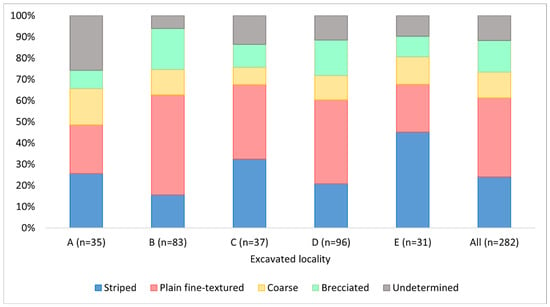
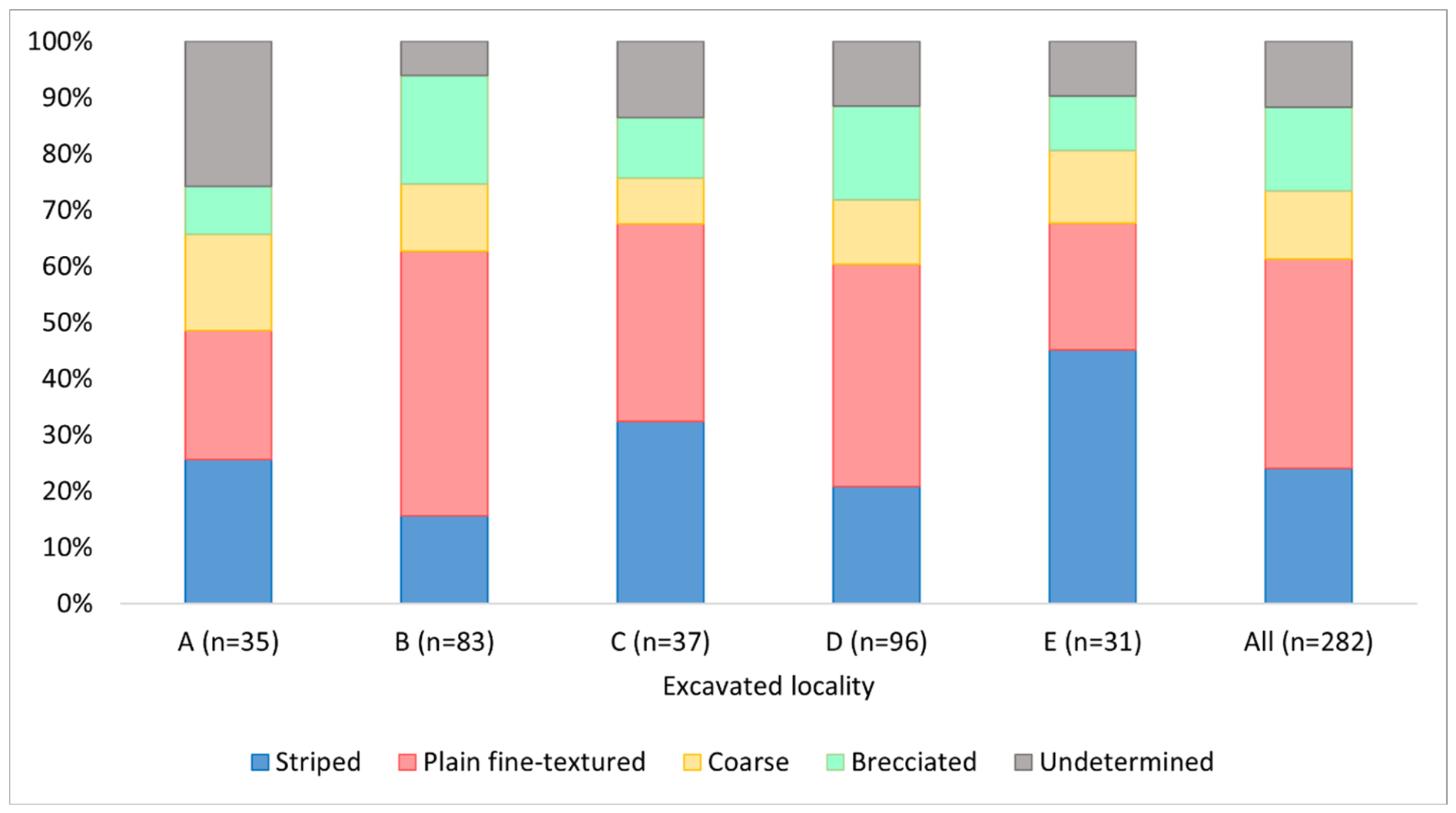
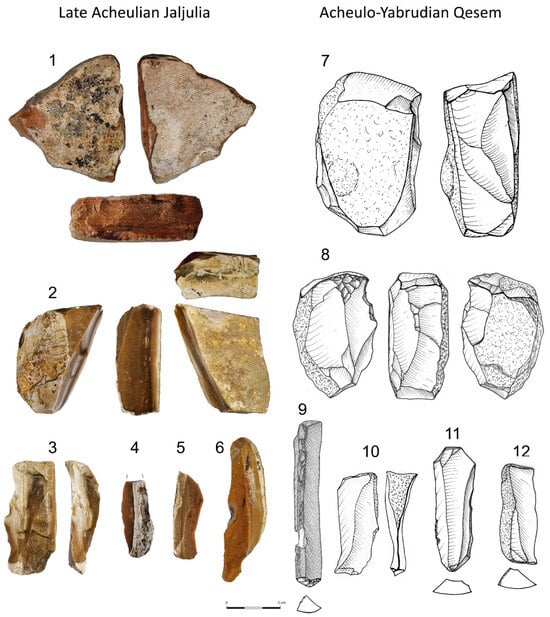
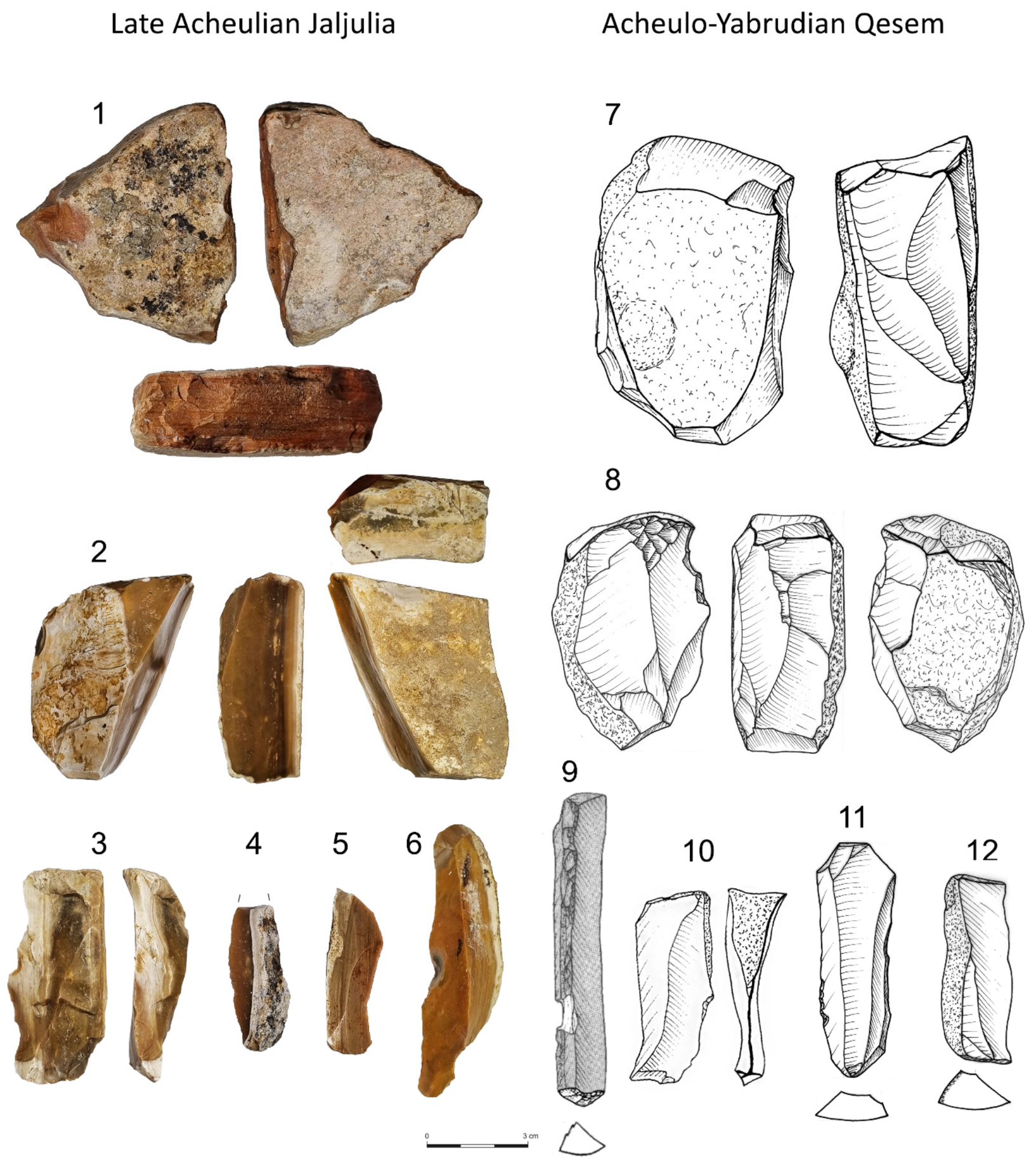
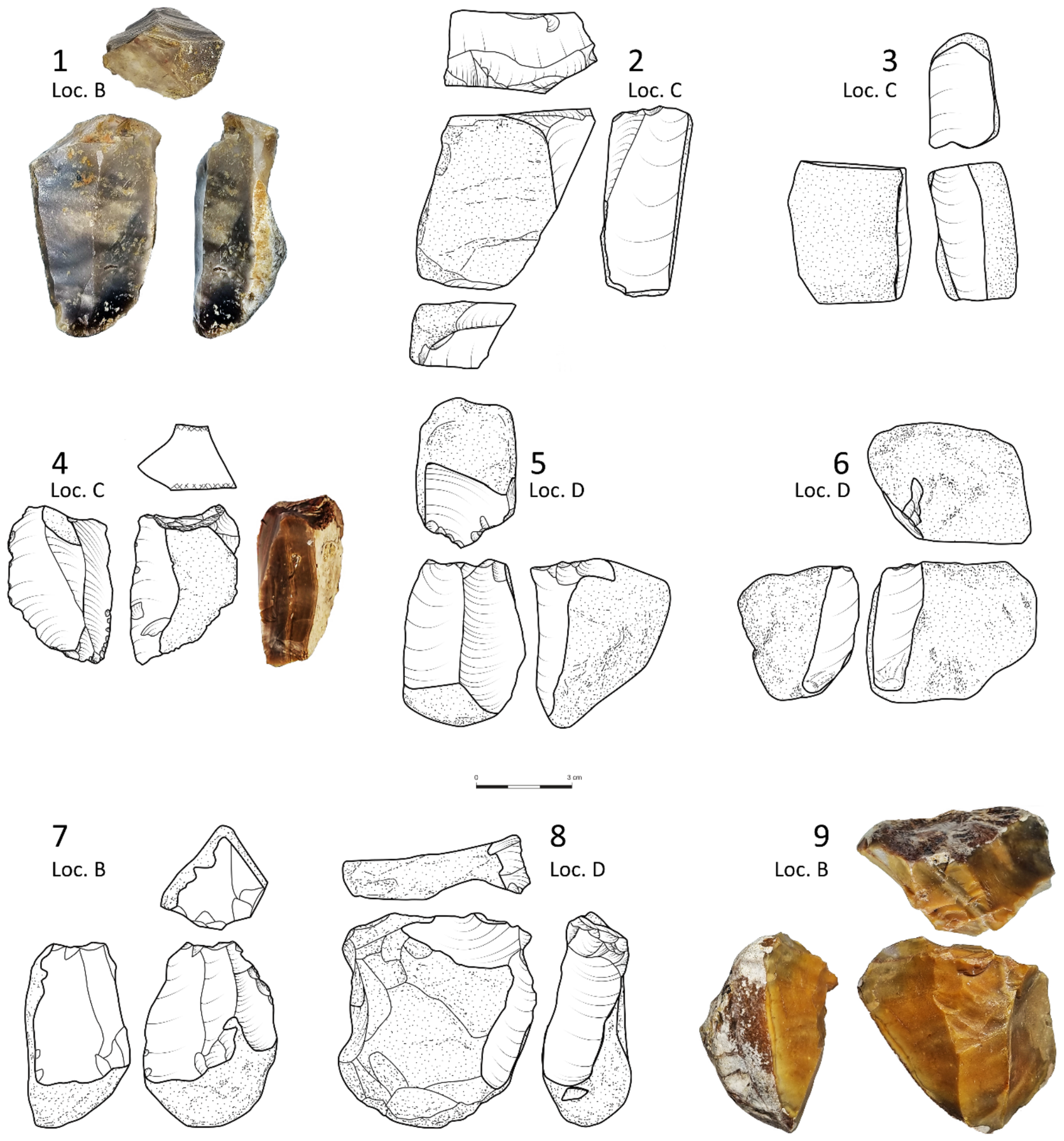
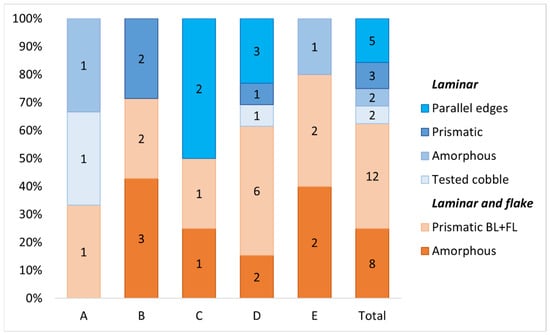
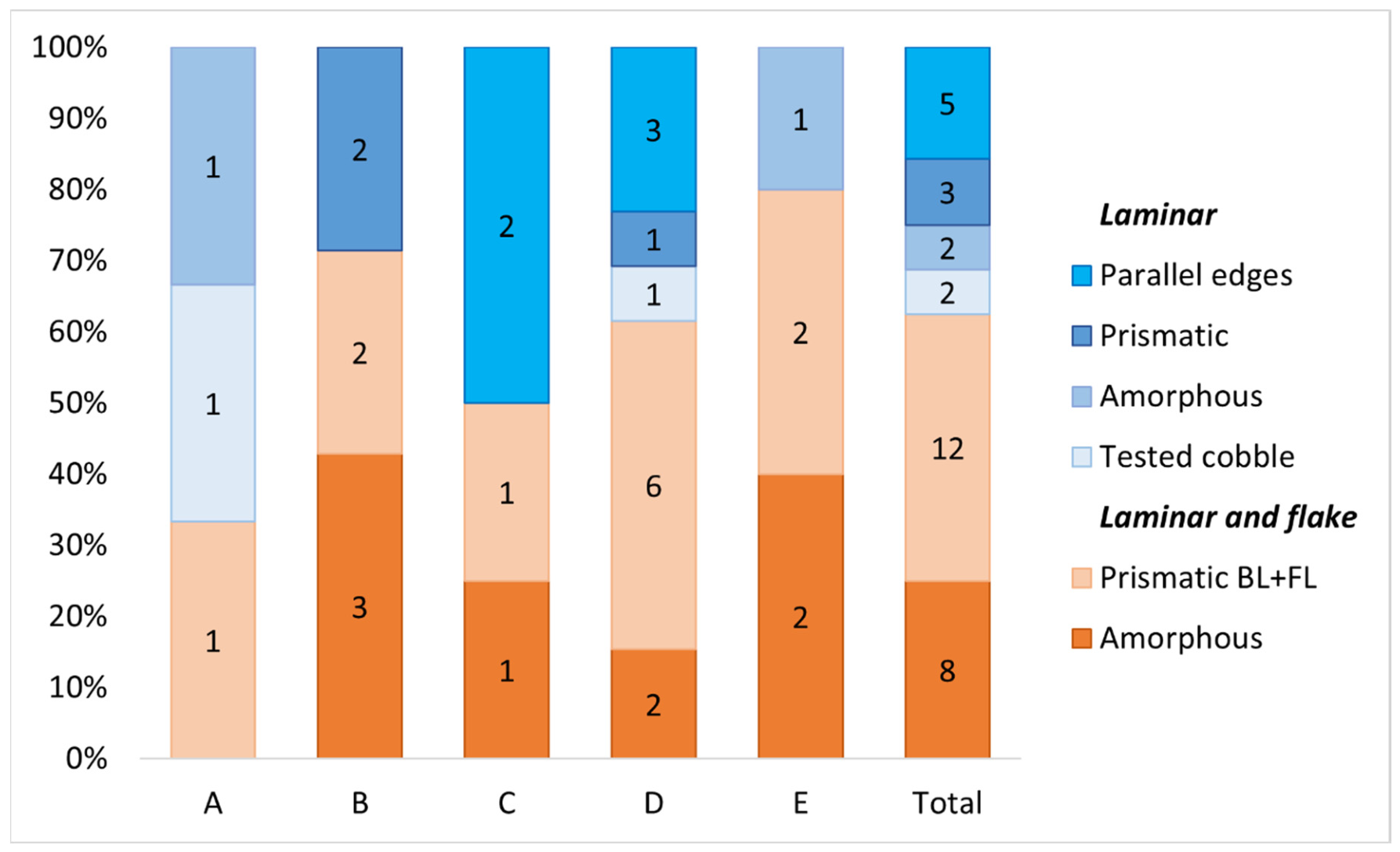
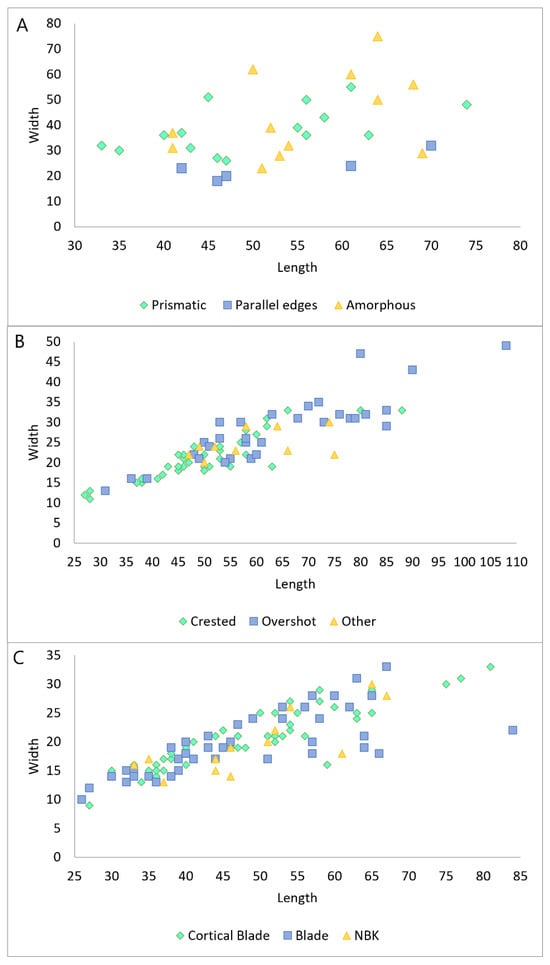
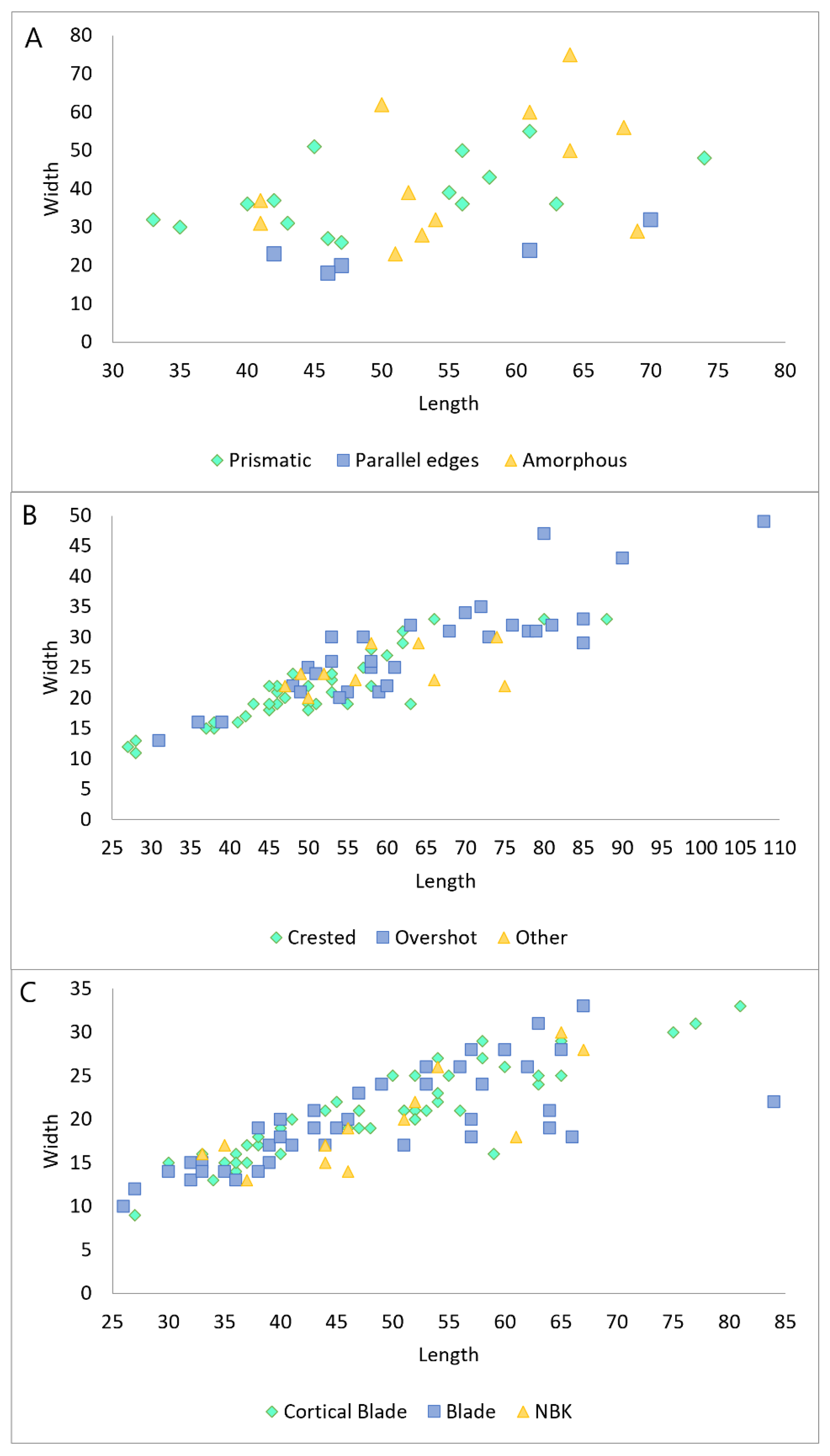
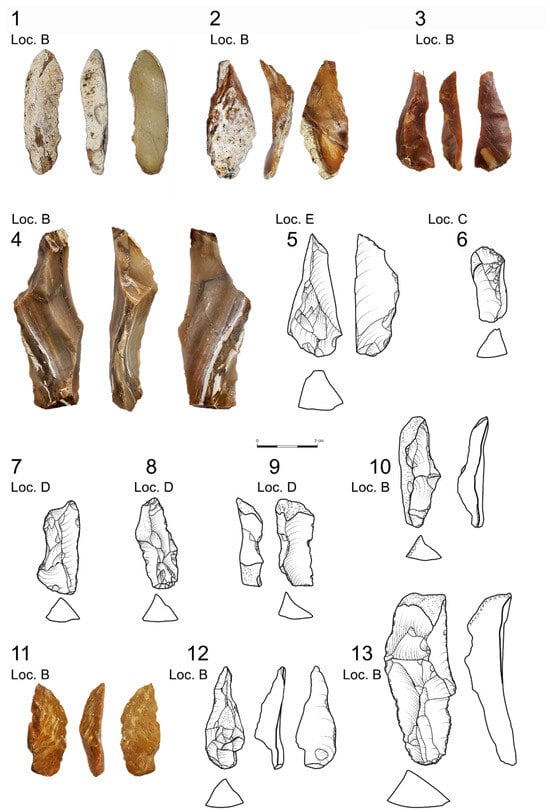
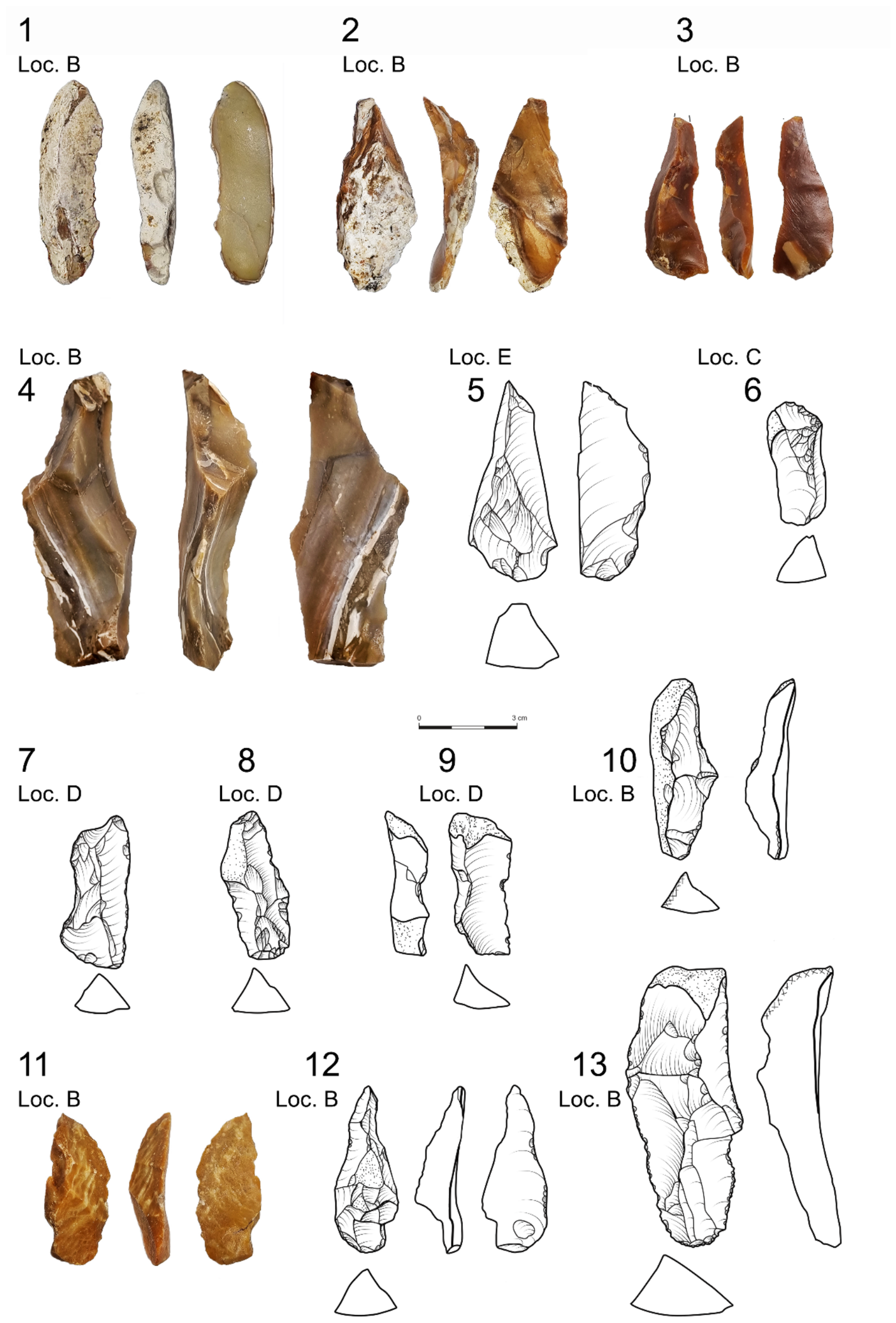
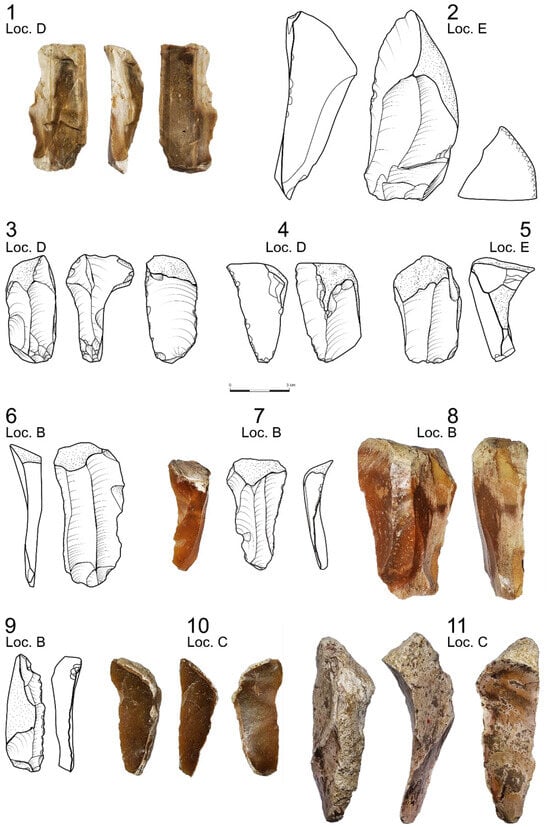
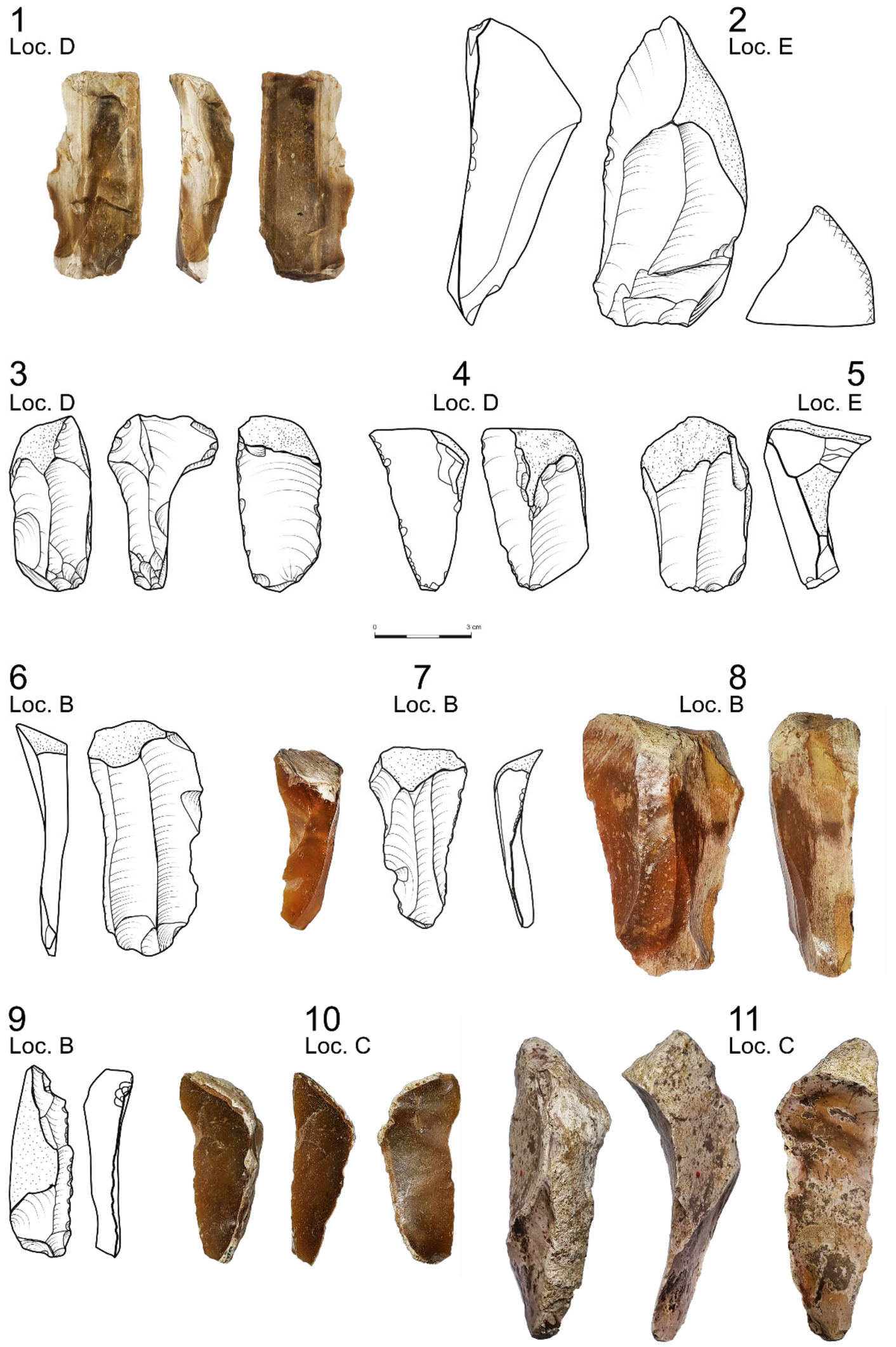
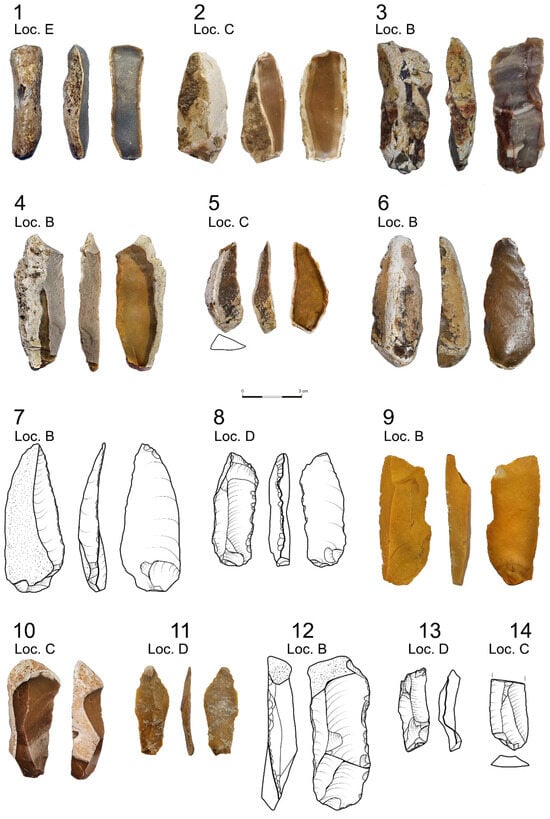
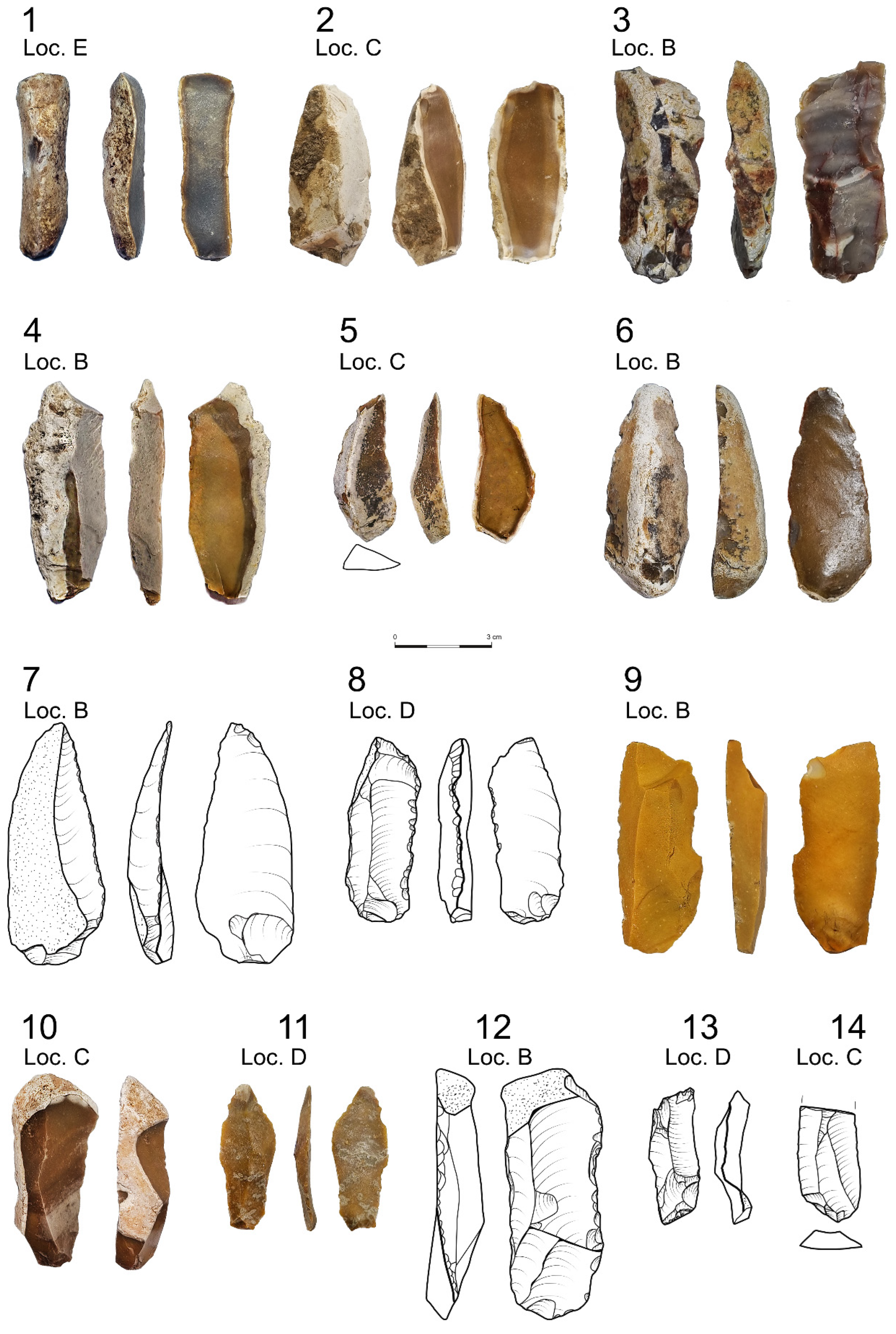
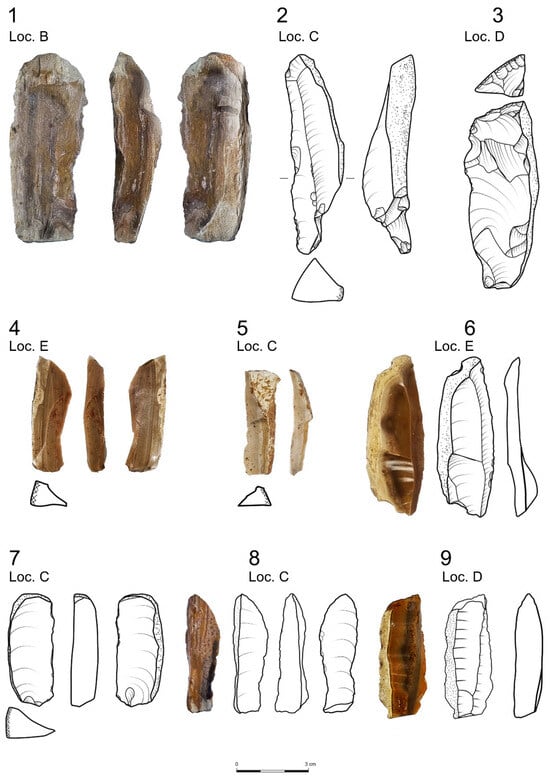
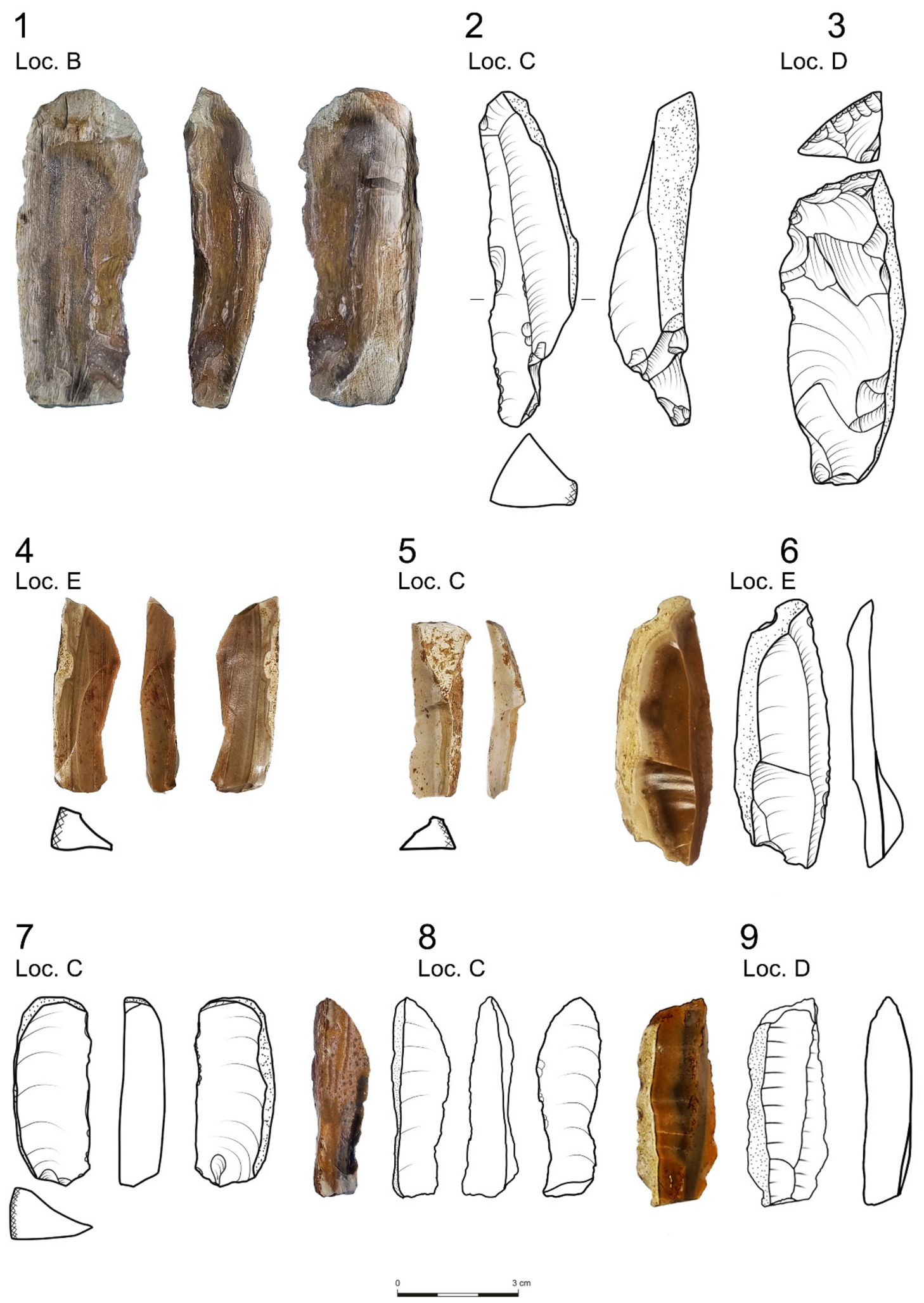
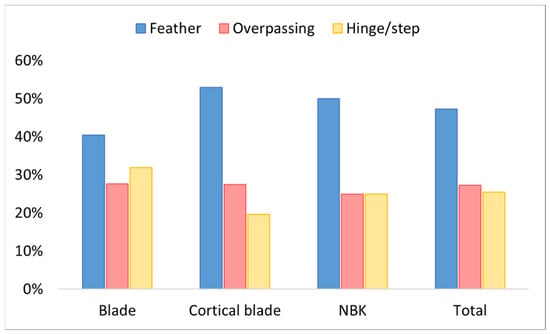
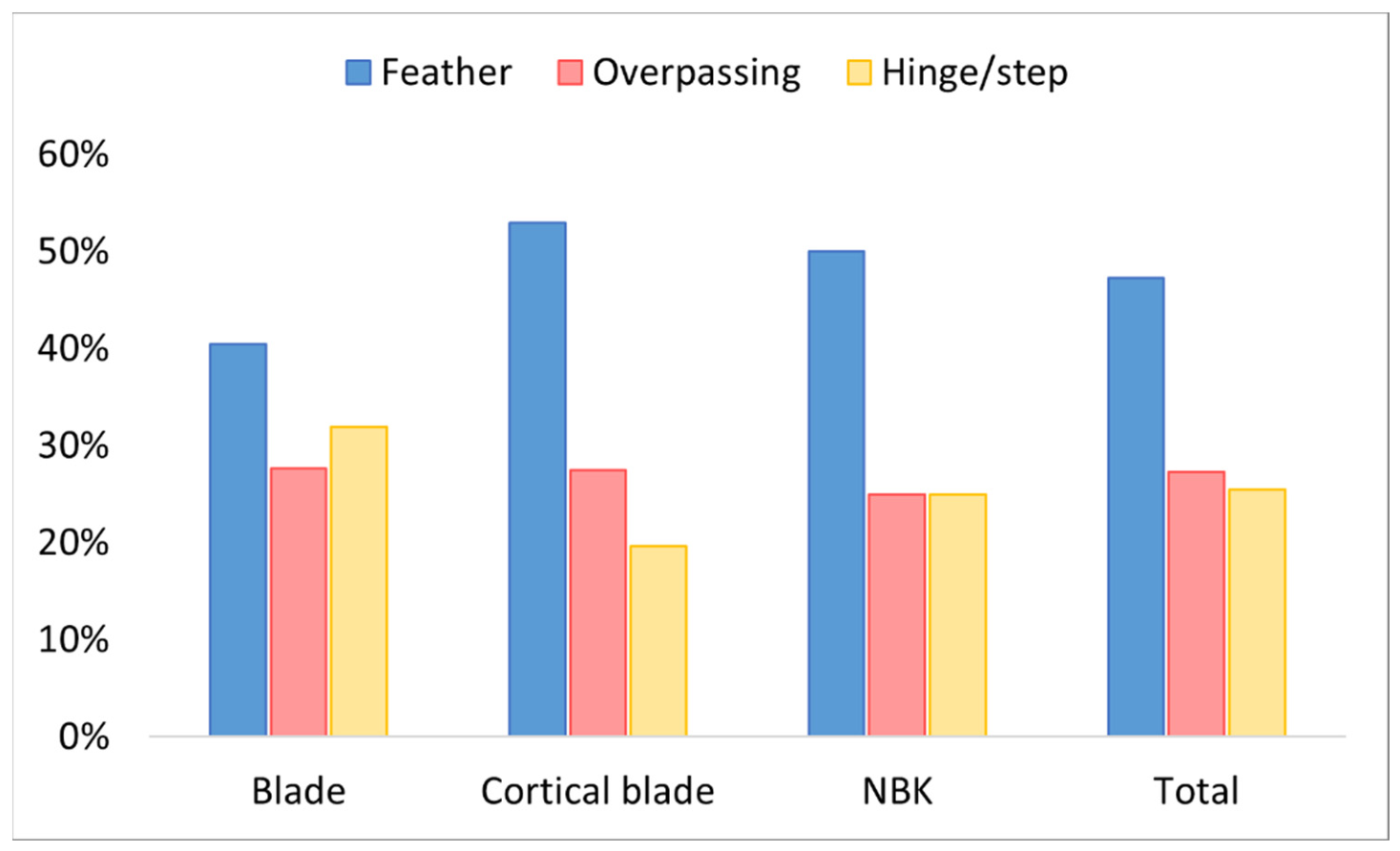
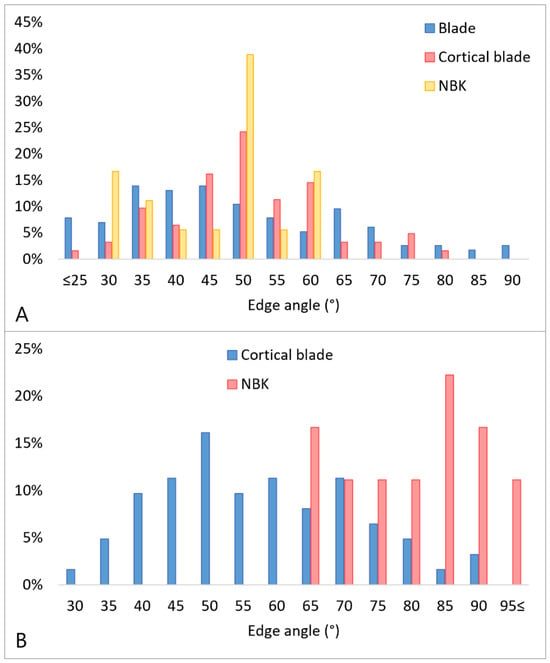
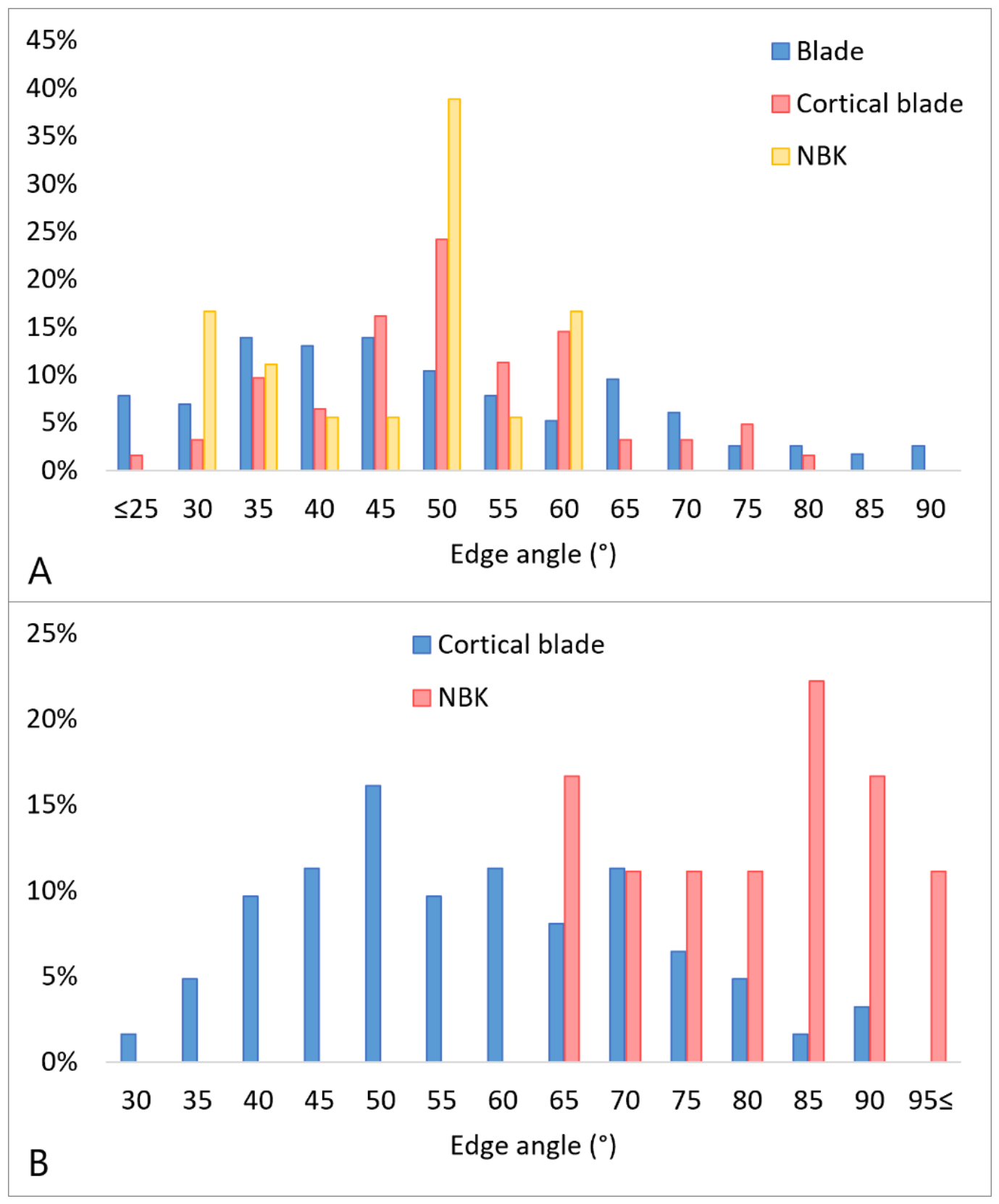
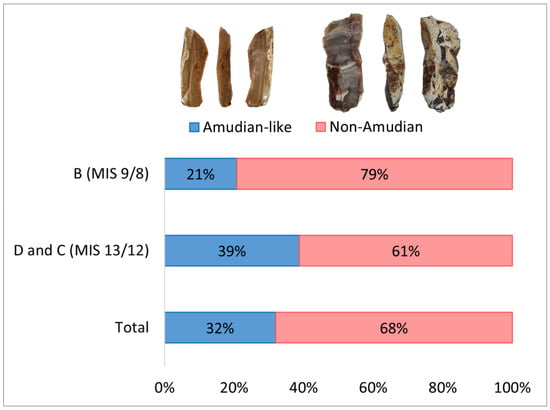
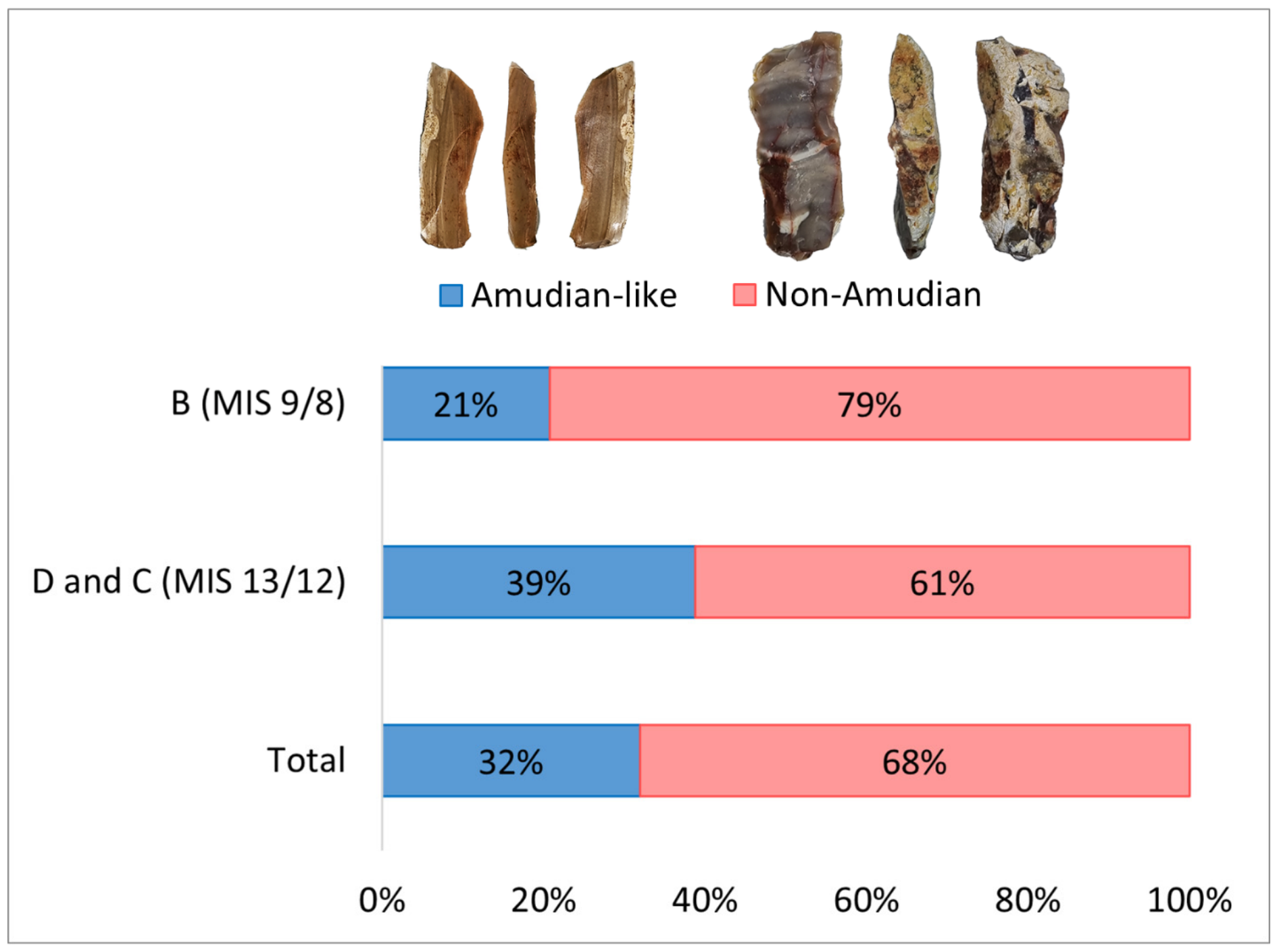

Disclaimer/Publisher’s Note: The statements, opinions and data contained in all publications are solely those of the individual author(s) and contributor(s) and not of MDPI and/or the editor(s). MDPI and/or the editor(s) disclaim responsibility for any injury to people or property resulting from any ideas, methods, instructions or products referred to in the content. |
© 2026 by the authors. Licensee MDPI, Basel, Switzerland. This article is an open access article distributed under the terms and conditions of the Creative Commons Attribution (CC BY) license.