


Abstract
This study investigates intraspecific morphometric variability in the archaeozoological assemblages from the multi-period site of Șoimuș-Teleghi (Hunedoara County, Romania), encompassing occupation phases from the Early Neolithic (Starčevo-Criș culture) to the Late Bronze Age. The new AMS radiocarbon dates obtained refine the chronological framework of the site. The results reveal pronounced morphometric variability in cattle (Bos taurus), with horncore flattening indices, dental dimensions, and postcranial measurements enabling the differentiation of males, females, and probable castrates—the latter suggesting traction-oriented management strategies. A notably large horncore from the Vinča level may indicate hybridisation between domestic cattle and aurochs (Bos primigenius). Sheep (Ovis aries) display an increase in estimated withers height from the Neolithic to the Late Bronze Age, potentially reflecting improved husbandry. The pig (Sus domesticus) scapula scatter plot indicates a female-dominated culling pattern, while postcranial elements suggest relatively robust forelimbs combined with more gracile distal limb segments. Among wild taxa, red deer (Cervus elaphus) and wild boar (Sus scrofa) exhibit clear sexual dimorphism and generally large body sizes, consistent with the selective hunting of prime adult males. Comparative analysis with contemporary assemblages from Transylvania, Banat, and Hungary situates the Șoimuș-Teleghi material within broader regional trends, while highlighting certain distinctive features, particularly the large dimensions of Early Neolithic cattle and the diachronic size increase observed in caprine.
Keywords:
archaeozoology; osteometry; radiocarbon dating; Șoimuș-Teleghi; Neolithic; Bronze Age; Romania 1. Introduction
Metric data extracted from animal skeletal remains can answer a remarkably wide range of questions about past human–animal relationships and ancient environments. Morphometric analysis provides insights into animal size, sexual dimorphism, and animal population structure. Osteometric data also contribute to understanding animal husbandry practices over longer timescales: changes in average body size within a domestic species across centuries can reflect shifts in feeding regimes, environmental stress, breed improvement, or the importation of new livestock varieties through trade and migration networks.
Although numerous archaeozoological studies have addressed taxonomic composition and age-at-death profiles, detailed morphometric investigations remain comparatively scarce, particularly those covering long chronological sequences within a single settlement framework. This is mainly due to the poor preservation of faunal remains, which do not allow measurements to be taken.
The evaluation of intraspecific morphometric variability in archaeozoological samples from the Neolithic and Bronze Age allows the reconstruction of animal management strategies and adaptations to the environment. Standardised linear measurements can be used to calculate body conformation indices, estimate animal size, or detect morphological changes induced by human selection [1,2].
The present study focuses on the morphometric analysis of faunal remains recovered from the multi-cultural archaeological site of Șoimuș-Teleghi, excavated in the context of rescue investigations associated with the construction of the A1 highway. Previous research on the site [3,4] has integrated archaeozoological (Table 1) and phytolith data to reconstruct subsistence patterns and environmental conditions from the Early Neolithic through the Late Bronze Age. Bioarchaeological data revealed a diachronic shift in subsistence practices, reflecting cultural and environmental transformations. Domestic mammals predominate in all the samples, indicating that animal husbandry was the primary source of animal protein for the prehistoric populations of Șoimuș-Teleghi. The main identified domestic species are cattle, sheep/goat, and pig. The Early Neolithic communities relied heavily on cattle and sheep/goat, and the subsequent rise in pig consumption from the Middle Neolithic to Late Bronze Age I suggests a transition toward more sedentary lifeways. An increased diversity in game species (most frequently red deer, wild boar, and roe deer) was observed from the Early to Middle Neolithic, and then, beginning with the Middle Bronze Age, the frequency of wild mammal remains gradually declined [3,4].
Table 1.
Quantification of mammal remains (NISP = number of identified specimens) [3,4].
This contribution aims to valorise osteometric data of domestic and wild animals, assessing their intraspecific variability.
2. Materials and Methods
The studied material consists of the faunal remains recovered during the archaeological excavations carried out in 2011–2012 in the context of the construction of the A1 highway in Hunedoara County (Romania) [5,6,7,8,9,10]. The faunal remains subject to morphometric analysis belong to different prehistoric periods, as follows: Early Neolithic (Starčevo-Criş culture), Middle Neolithic (Vinča culture), Middle Bronze Age (Wietenberg culture—phases W II and W III), and Late Bronze Age (phases I and II).
Radiocarbon dating. These analyses were performed for Middle Neolithic (Vinča culture), Middle Bronze Age (Wietenberg culture—phases W II and W III), and Late Bronze Age (phases I and II) assemblages. Before any chemical treatment, a small amount of material from each sample was weighed into tin capsules and burned in an Elemental Analyzer (EA) in order to determine the percentage of (%C), (%N) and C/N atomic ratio (Table 2).
Table 2.
The percentages of nitrogen, carbon and the C/N mass ratio are obtained with the Elemental Analyzer (EA).
For collagen extraction, the bone samples were pretreated using an AA (acid–acid) treatment protocol followed by gelatinisation and ultrafiltration. The bone surface was mechanically removed with a DremelTM (from Dacchim, Bucharest, Romania) before any other interventions, and 2–3 g of raw bone was crushed to a size of 0.5 to 2 mm with a grinder mill. For complete demineralisation, the chunks were then treated in 0.5 M HCl solution for 30 min in order to discard carbonates, fulvic acids and other contaminants soluble in an acid medium. Further, the sample was washed in ultrapure MilliQTM water (water obtained in MilliQTM Direct 8, from Merck, Bucharest, Romania) up to neutral pH, and the final step consisted of gelatinisation overnight at 80 °C in 0.2 M HCl using a thermomixer at 500 rpm. The gelatin solution was then ultra-filtered using a pre-cleaned VivaspinTM 15, 30 kDa MWCO (Molecular Weight Cut Off) and centrifuged at 4500 rpm for 30 min. After that, the gelatin fraction was frozen before being freeze-dried at −45 °C [11,12,13].
Further, 2–3 mg of collagen samples were burned in the Elemental Analyzer, and the resulting CO2 from the sample combustion was then adsorbed on the zeolite trap of the Automated Graphitization Equipment (AGE-3, from IonPlus, Zürich, Switzerland). Finally, the pure CO2 was thermally released into one of the selected reactors of the AGE-3, with an iron catalyst on the bottom, where it is converted with excess hydrogen into graphite, with the final sample being a homogeneous mixture of carbon and iron. The entire process is a semi-automated one controlled by custom PC software developed in Lab VIEW [14,15].
Radiocarbon analysis was carried out at RoAMS Laboratory using the 1 MV TandetronTM Accelerator of IFIN-HH, produced by HVEE (High Voltage Engineering Europe, Amersfoort, Netherlands) [16,17]. The 14C content expressed as 14C/12C ratio was corrected with 13C/12C isotopic fractionation of carbon species measured by AMS [18]. The Conventional Radiocarbon Age (CRA) was reported in BP years (years before present, with the present being considered 1950). To determine the age in calendar years, the OxCal v4.3.2 program and the IntCal20 atmospheric calibration curve were used [19,20].
Archaeozoological methods. The archaeozoological methods for this work primarily involved measurements of skeletal elements from adult individuals using a calliper. Osteometric data were recorded following the standard measurement protocol of von den Driesch [21] and analysed using descriptive statistical methods (mean, standard deviation) and multivariate visualisation techniques (e.g., biplots). Size and morphology measurements allow researchers to distinguish between closely related species whose bones are otherwise difficult to tell apart; this is especially critical for separating sheep from goat, aurochs from cattle, and wild boar from pig. Osteometric datasets are inherently quantitative; they lend themselves to statistical comparison across sites, regions, and time periods. This makes them especially valuable for large-scale syntheses and for building reference databases that the wider research community can draw on—a cumulative, collaborative dimension that few other archaeozoological methods offer as readily.
The osteometric data were processed using Microsoft Excel and RStudio v. 2025.09.2 + 418 software.
Specific coefficients were used to calculate the withers height, as follows: Fock’s coefficients for Bos taurus [22], Teichert’s coefficients for Ovis aries [23], Schramm’s coefficients for Capra hircus [24], Teichert’s coefficients for Sus domesticus and Sus scrofa [25,26], Harcourt’s coefficient for Canis familiaris [27], and Kiesewalter’s coefficients for Equus caballus [28].
3. Results and Discussion
The Starčevo-Criș assemblage was previously radiocarbon dated, with the results published by Malaxa et al. ii, indicating an occupation period between 6080 and 5850 calBC [4].
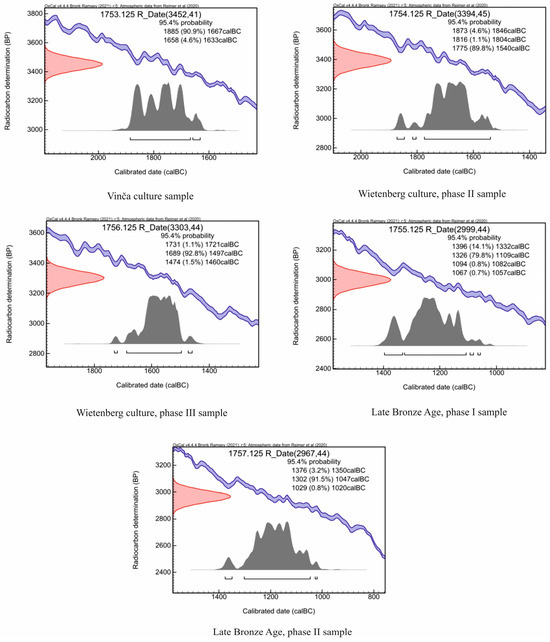
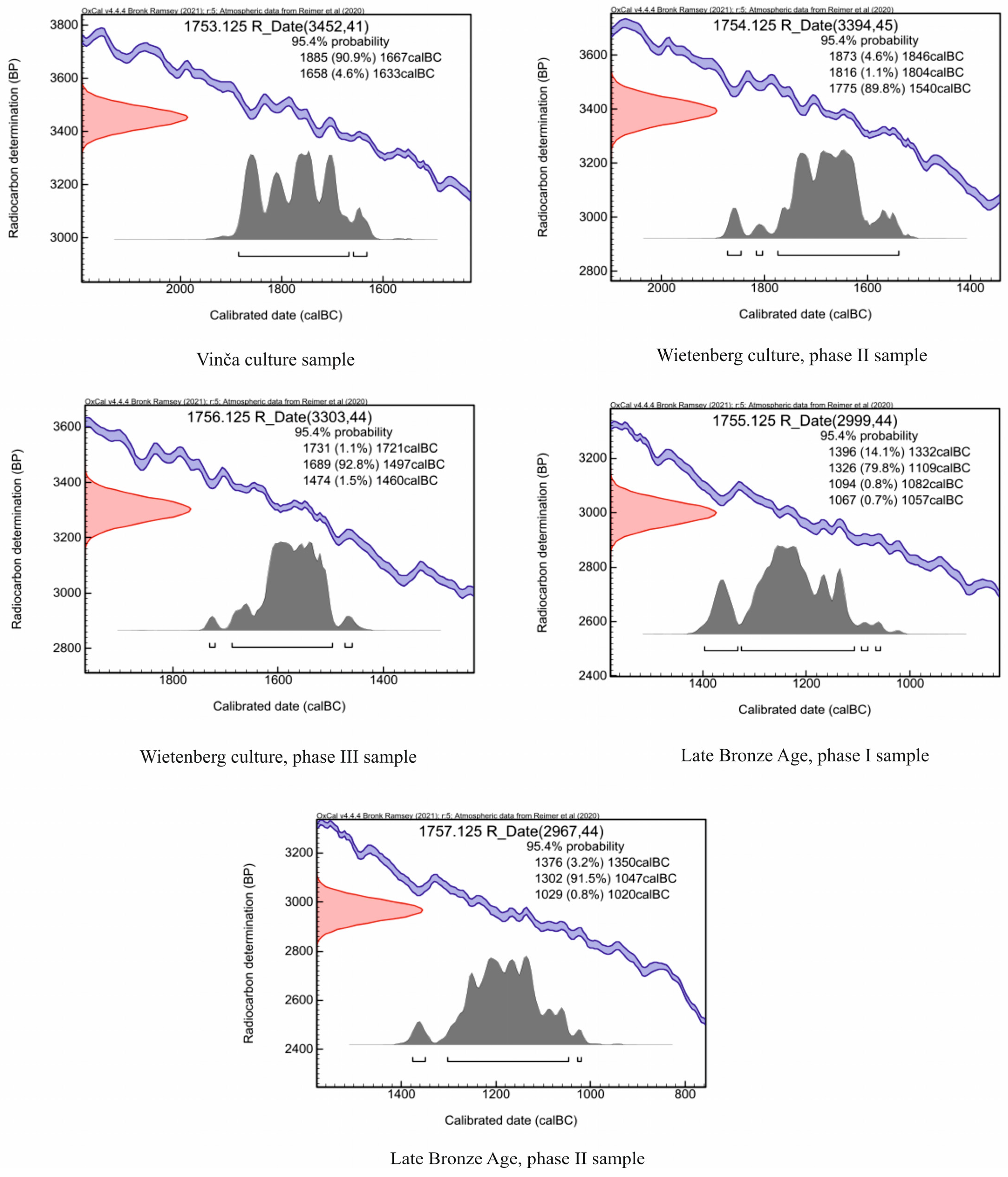
The Middle Neolithic (Vinča culture), Middle Bronze Age (Wietenberg culture—phases W II and W III), and Late Bronze Age (phases I and II) samples were submitted for radiocarbon analysis to IFIN-HH Bucharest–Măgurele, Romania, with the results presented in this paper. The sample initially attributed to the Vinča period returned a calibrated date range of 1885–1667 calBC (with a 90.9% probability), leading to its reassignment to the Wietenberg culture, phase II (W II) for subsequent analysis. The calibrated range for the W II sample is 1775–1540 calBC, while the W III sample is dated 1689–1497 calBC. For the Late Bronze Age, the first phase (LBA I) is dated 1326–1109 calBC, and the second phase (LBA II) is dated 1302–1047 calBC (Table 3 and Figure 1).
Table 3.
List of AMS 14C dates from Șoimuș-Teleghi. The 14C ages were calibrated using OxCal version 4.4.
Figure 1.
Calibrated radiocarbon data for Șoimuș-Teleghi cultural layers (The pair of blue curves show the radiocarbon measurements on the tree rings (plus and minus one standard deviation); the red curve on the left indicates the radiocarbon concentration in the sample; the grey histogram shows possible ages for the sample (the higher the histogram the more likely that age is) [19].
- Cattle (Bos taurus)
Morphometrics in cattle are based on measurements taken at the level of horncores, dental series, metapodials and other bones.
Measurable horncore remains are rare—one each in the Vinča, Wietenberg II (W II), Wietenberg III (W III), Late Bronze Age II (LBA II) levels, and two in Late Bronze Age I (LBA I). Their dimensions and shape, expressed by the flattening index, are presented in Table 4.
Table 4.
Dimensions (in mm) of cattle horncores.
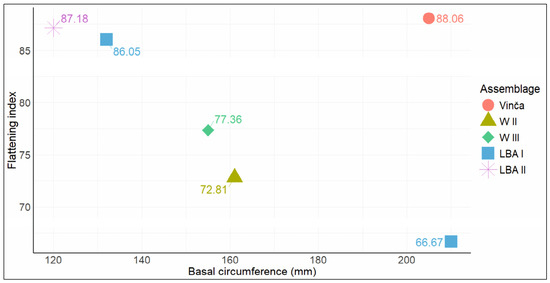
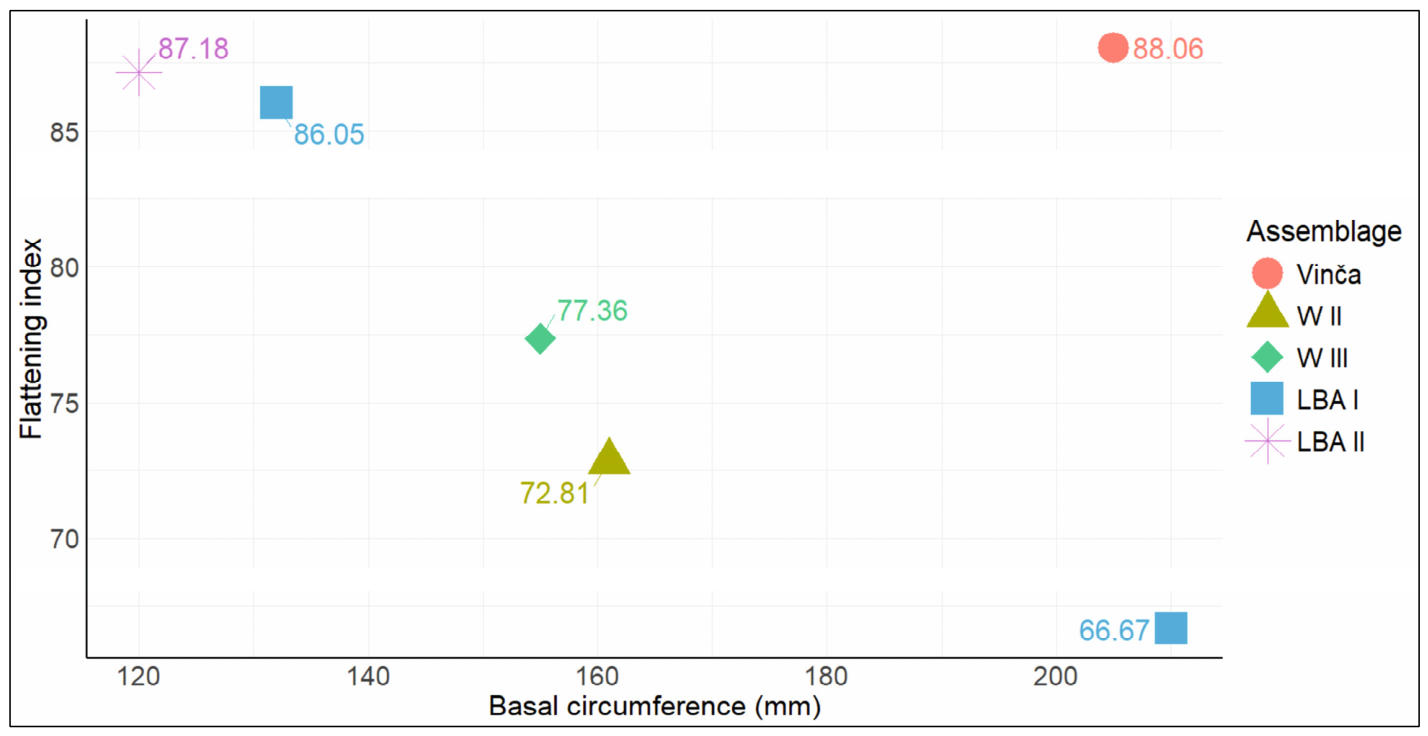
The scatter plot of the horncores (Figure 2) illustrates the basal circumference reported to the flattening index (the least base diameter/the greatest base diameter × 100), an index that allows a distinction between the oval-section horncores of males (low index value) and the circular-section horncores of females (higher index value) [29]. Thus, Figure 2 illustrates a single male in the LBA I sample, characterised by a low flattening index value of 66.6. At the opposite end of the spectrum, with values of 86.05 and 87.1, are two females, and the intermediate values may correspond to two castrated individuals. The horncore from the Vinča layer, with a flattening index of 88.06 and a large basal circumference of 205 mm, could derive from a cross between cattle and aurochs. The single horncore excavated from the Vinča level at Șoimuș-Teleghi appears larger than most specimens reported from comparable sites. In other Vinča settlements, the average basal circumference of horncores is lower, reaching 161.5 mm at Liubcova-Ornița, 174.4 mm at Foeni-Gaz, 181.5 mm at Gornea-Căunița de Sus [30], and 191.6 mm at Parța [31]. Likewise, the specimen from Șoimuș-Teleghi exceeds the values reported from Miercurea Sibiului-Petriș, where a basal circumference of 158.2 mm [32] was recorded, as well as those from Neszmely-Tekerespatak [33]. For the Bronze Age assemblages, the horncore measurements from the Wietenberg layers are higher than those documented at Derșida, where the average basal circumference reaches only 139.6 mm [34]. In the Late Bronze Age, the horncore values from Șoimuș-Teleghi (mean value of 154 mm) are comparable to those reported from Dunaújváros-Koszider, which has an average basal circumference of 153.8 mm. However, they remain lower than the averages documented at Békés-Városerdő, Csepel-Háros, Füzesabony, Süttő-Hosszúvölgy, Tápiószele-Tűzkővés, and Tiszaluc-Dankadomb, where the mean values range between 159.6 mm and 183 mm (168.3 mm, 168.5 mm, 159.6 mm, 160.5 mm, 178 mm, and 183 mm respectively) [33].
Figure 2.
Scatter plot of cattle horncore sizes (mm) and shapes (flattening index)—flattening index is displayed on the plot (Vinča = Vinča culture; W II = Wietenberg culture, phase II; W III = Wietenberg culture, phase III; LBA I = Late Bronze Age, phase I; LBA II = Late Bronze Age, phase II).
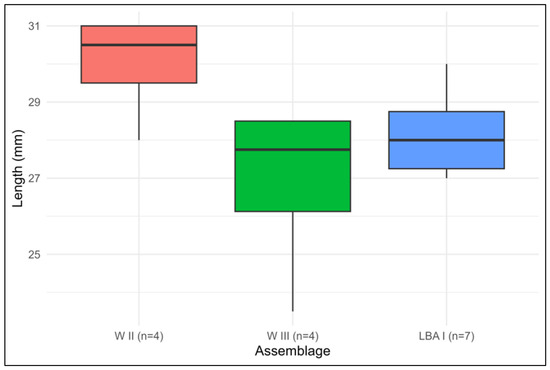
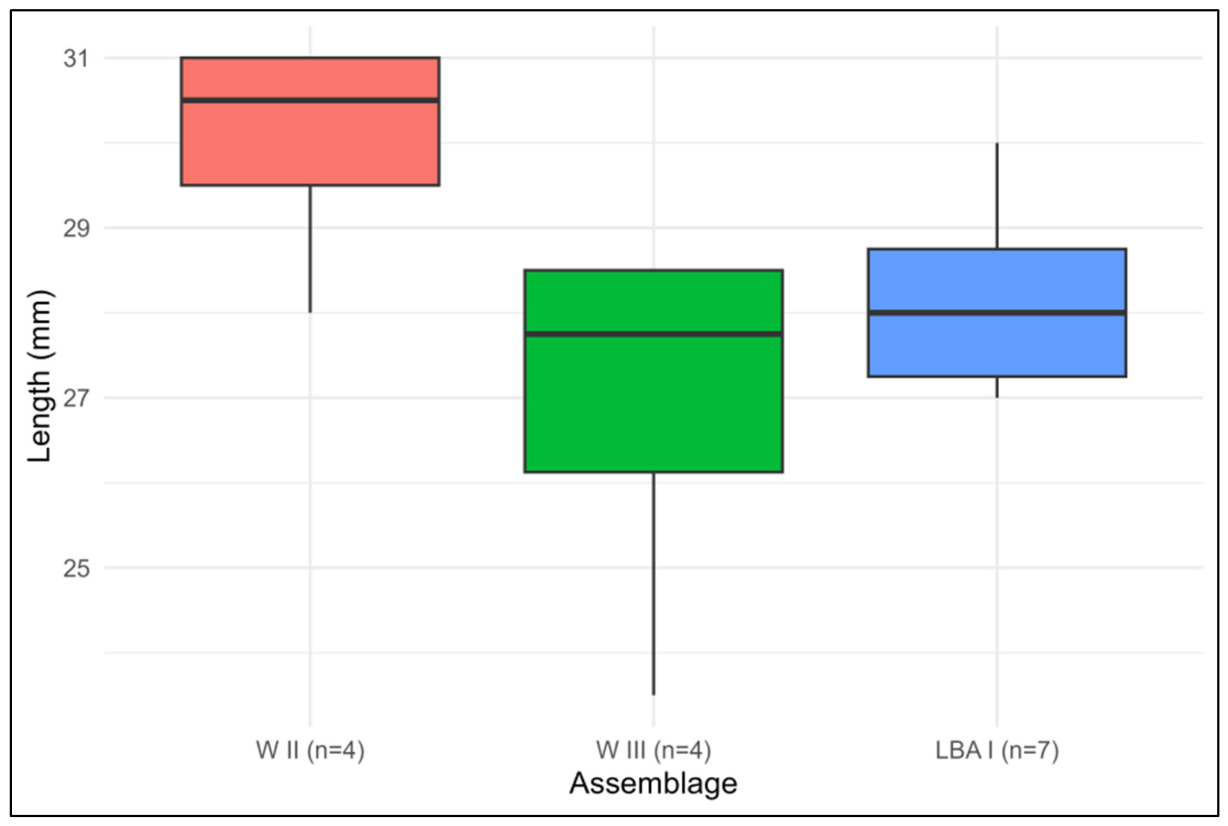
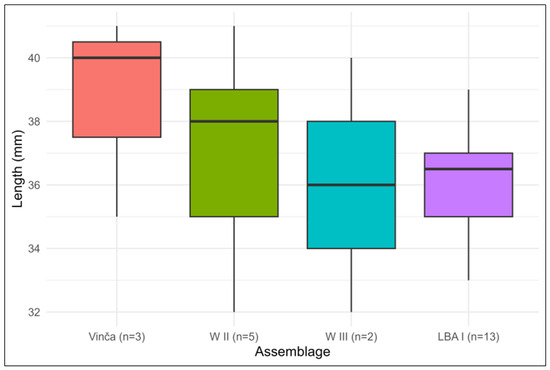
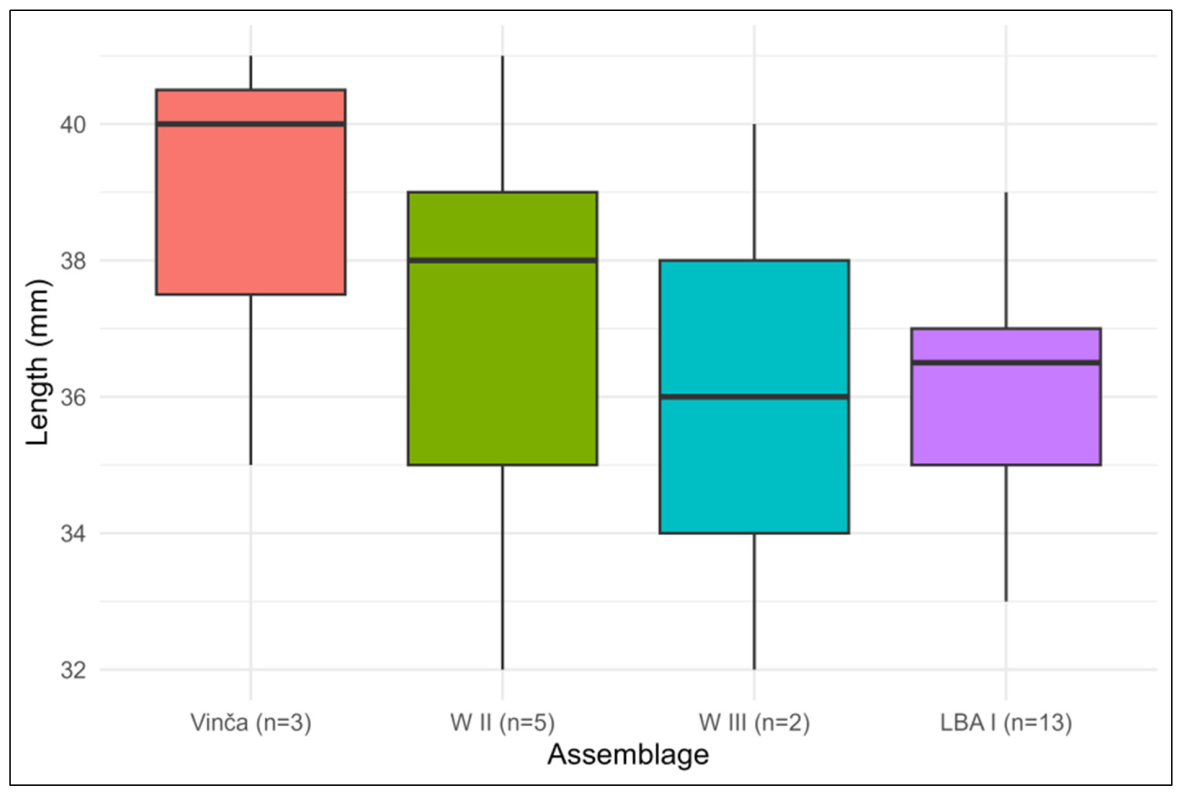
The dentition also yields limited metric data, as most of the maxillae and mandibles are in an advanced state of fragmentation. Nevertheless, within the permanent dentition, it was possible to measure the length of the cheektooth row (P2-M3), the length of the molar row (M1–M3), and the length of the third molar (M3). As the M3 tooth is comparatively better represented in the analysed assemblages, the variability ranges and average values could be calculated for several sites. For the upper third molar (M3), the greatest dimensional variability is observed in the W III level, with lengths ranging from 23.5 mm to 28.5 mm. The lowest average length (26.9 mm) is also found in this level, whereas the highest average value is recorded in W II (30 mm). In the LBA I level, the M3 length ranges between 27 and 30 mm (Figure 3). For the lower third molar (M3), the greatest dimensional variability is observed in W II, where lengths range from 32 to 41 mm. Substantial variability is also present in W III, with values between 32 and 40 mm. The lowest average length of the M3 (36 mm) occurs in the W III sample, whereas the highest average value is recorded in the Vinča culture level (38.7 mm) (Figure 4). Cattle dental measurements are relatively scarce in the published literature. The average length of the M3 from the Vinča level at Șoimuș-Teleghi is comparable to that recorded at the Tărtăria settlement, where an average value of 39 mm has been reported [34]. However, the assemblage from Șoimuș-Teleghi displays a wider range of variation in M3 length than that observed at other Vinča sites, such as Gornea-Căunița de Sus (36.5–40 mm) and Liubcova-Ornița (36–40 mm) [30]. During the Bronze Age, the values appear to decrease. The specimens from the W III and LBA I levels show mean values similar to the M3 measurement recorded from the Bronze Age layer at Tărtăria (36 mm), but remain smaller than those reported at Derșida (40.8 mm) [34]. Nevertheless, the specimens from the Bronze Age levels at Șoimuș-Teleghi display larger M3 values than those documented at Foeni (33 mm) and Gornea-Păzăriște (33–36 mm) [30].
Figure 3.
Box-and-whisker plot for upper third molar (M3) length in cattle.
Figure 4.
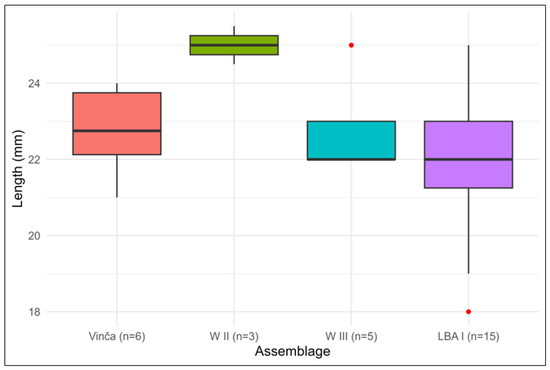
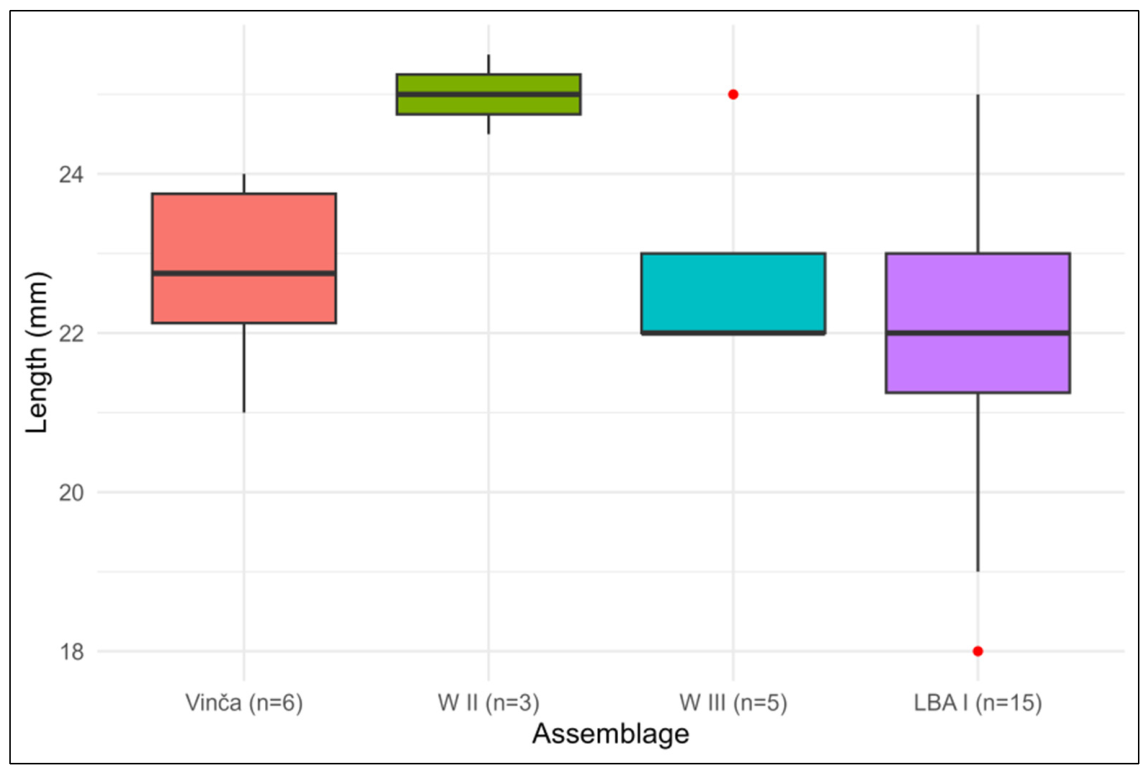
Box-and-whisker plot for lower third molar (M3) length in cattle (Vinča = Vinča culture; W II = Wietenberg culture, phase II; W III = Wietenberg culture, phase III; LBA I = Late Bronze Age, phase I).
A Kruskal–Wallis test revealed no statistically significant differences in the measurements of cattle upper third molars among the three archaeozoological assemblages (χ2 = 4.80, df = 2, p = 0.091). The same is revealed for the lower third molar, with no statistical significance among the samples (χ2 = 2.02, df = 3, p = 0.5676). To complement the non-parametric analysis, pairwise Welch’s t-tests were performed between all assemblage pairs for the cattle upper and lower third molar length, with Holm’s correction applied to adjust for multiple comparisons. No statistically significant differences were found between any of the assemblages. These results are consistent with the Kruskal–Wallis and Dunn’s test outcomes for the same dataset, and, taken together, suggest that although a trend toward smaller third molars dimensions is apparent in the W III samples relative to Vinča, W II or LBA I, this difference cannot be considered statistically robust given the limited sample sizes (n = 4, 4, 7 for the upper M3 and n = 3, 5, 2, 13 for the lower M3) (Table 5).
Table 5.
Welch’s t-test for upper and lower third molar length in cattle.
The measurements of the limb bone fragments are included in Table 6, except for metapodials whose dimensions are presented in Table 7.
Table 6.
Dimensions of limb bones (in mm) in cattle (LG = length of the glenoid cavity; BG = breadth of the glenoid cavity; GL = greatest length; Bp = breadth of the proximal end; BFp = breadth of the facies articularis proximalis; Bd = breadth of the distal end; BFd = breadth of the facies articularis distalis; BT = breadth of the trochlea; SD = smallest diameter of diaphysis; LA = length of the acetabulum).
Table 7.
Withers height estimations in cattle (GL = greatest length; Bp = breadth of the proximal end; SD = smallest diameter of the diaphysis; Bd = breadth of the distal end; F = female; C = castrated).
Regarding the scapula, the specimen from the Early Neolithic level appears more robust than those reported from several contemporaneous sites, including Gura Baciului (LG of 58 mm), Tărtăria (average LG of 59.5 mm), Leț (61.3 mm) [34], Miercurea Sibiului-Petriș (average LG of 62.8 mm) [35], and Gornea-Locurile Lungi (40 and 57 mm) [30]. However, it remains more gracile than the specimen documented at Ocna Sibiului (LG of 69.7 mm) [34]. For the Bronze Age assemblage, the cattle scapulae from Șoimuș-Teleghi appear more gracile than the specimen from Tureni (LG of 66.7 mm) and show values comparable to those recorded at Derșida [34]. The humerus from the Late Neolithic level at Șoimuș-Teleghi appears more gracile than the specimen discovered at Tărtăria (Bd of 87 mm; BT of 78.5 mm) [34], as well as the specimens from Liubcova-Ornița (average Bd of 82.3 mm) and Gornea-Căunița de Sus (average Bd of 82.8 mm) [30]. However, the humerus from Șoimuș is more robust than the one discovered in the eponymous settlement of the Vinča culture (Bd of 67.8 mm) [36], as well as those from the vinčian layer at Miercurea Sibiului-Petriș (average Bd of 80 mm) [32] and Neszmély-Tekerespatak [33]. The humeri recovered from the Wietenberg layer appear more robust than the specimens reported from Derșida (average Bd of 75.5 mm) [34]. In comparison with Bronze Age assemblages from Hungary, the measurements from Șoimuș fall within a similar range to those recorded at Csepel-Háros (Bd of 82 mm), Jászdózsa (Bd 81 mm), Dunaújváros-Koszider (average Bd of 73.3 mm), Nyergesújfalu-Téglagyá (average Bd of 78.75 mm), Süttő-Hosszúvölgy (average Bd of 80 mm), Tiszaluc-Dankadomb (average Bd of 77.4 mm) and are slightly higher than the values documented at Valkó-Erdőgazdaság (Bd of 68 mm), Mezőkomárom-Alsóhegy (average Bd of 72 mm) and Tápiószele-Tűzköves (average Bd of 70.25 mm) [33]. The pelvic measurements recorded at Șoimuș-Teleghi fall within the range documented at several Starčevo-Criș sites, including Gura Baciului, Ocna Sibiului [34], Dudeștii Vechi, and Foeni-Gaz [37]. For the Early Neolithic assemblage, the astragalus measurements display generally higher values than those reported from other contemporaneous settlements, such as Gura Baciului (GL of 69.2 and 74.8 mm), Leț (66.7 mm), Ocna Sibiului (59.7 and 71.6 mm), Zăuan (70.2 mm), Tărtăria (63.9 mm) and Tășnad (65 and 71 mm) [34]. In contrast, during the Vinča period the astragali from Șoimuș present smaller measurements than those recorded at other Vinča settlements, including Vinča-Belo Brdo (average GL of 67.9 mm) [36], Miercurea Sibiului-Petriș, Vinča layer, (averge GL of 70.85 mm) [32], Gornea-Căunița de Sus (average GL of 70.3 mm) and Liubcova-Ornița (average GL of 69.1 mm) [30]. When compared with Neolithic sites in Hungary, the Early Neolithic astragali from Șoimuș appear to be generally larger than those from Gyálarét (GL of 57 and 62 mm), Hortobágy-Arkusi (66 mm), Kisköre (72 mm), Neszmély-Tekerespatak (70 and 74 mm) and Tiszaluc-Vályogos (average GL of 68.8 mm) [33]. For the Late Neolithic period, the astragalus GL values from Șoimuș-Teleghi are comparable to those recorded at Gyálarét and Hortobágy-Arkusi, while remaining lower than those reported from the other Hungarian settlements. For the Wietenberg layer, the astragalus measurements from Șoimuș are higher than those documented at Derșida (average GL of 62.1 mm) [34] and similar to those from Pianu de Jos-Lunca Pârâului [38]. In comparison with Bronze Age assemblages from Hungary, the astragalus measurements from Șoimuș-Teleghi fall within a similar range [33]. Regarding the calcaneus, the specimens recorded at Șoimuș are generally similar to or more robust than those from other Bronze Age assemblages, with a few exceptions such as Tureni (GL of 135.8 mm) [34], Csepel-Háros (average GL of 141.7 mm), Mezőkomárom-Alsóhegy (Gl of 132 and 142 mm) and Tiszaluc-Dankadomb (average GL of 136.3 mm) [33].
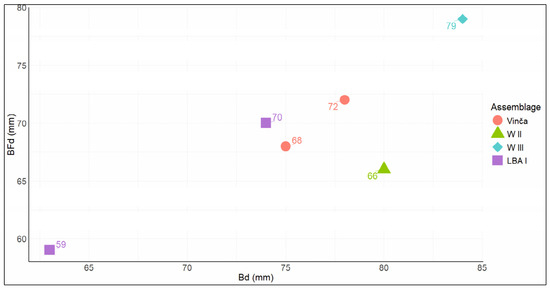
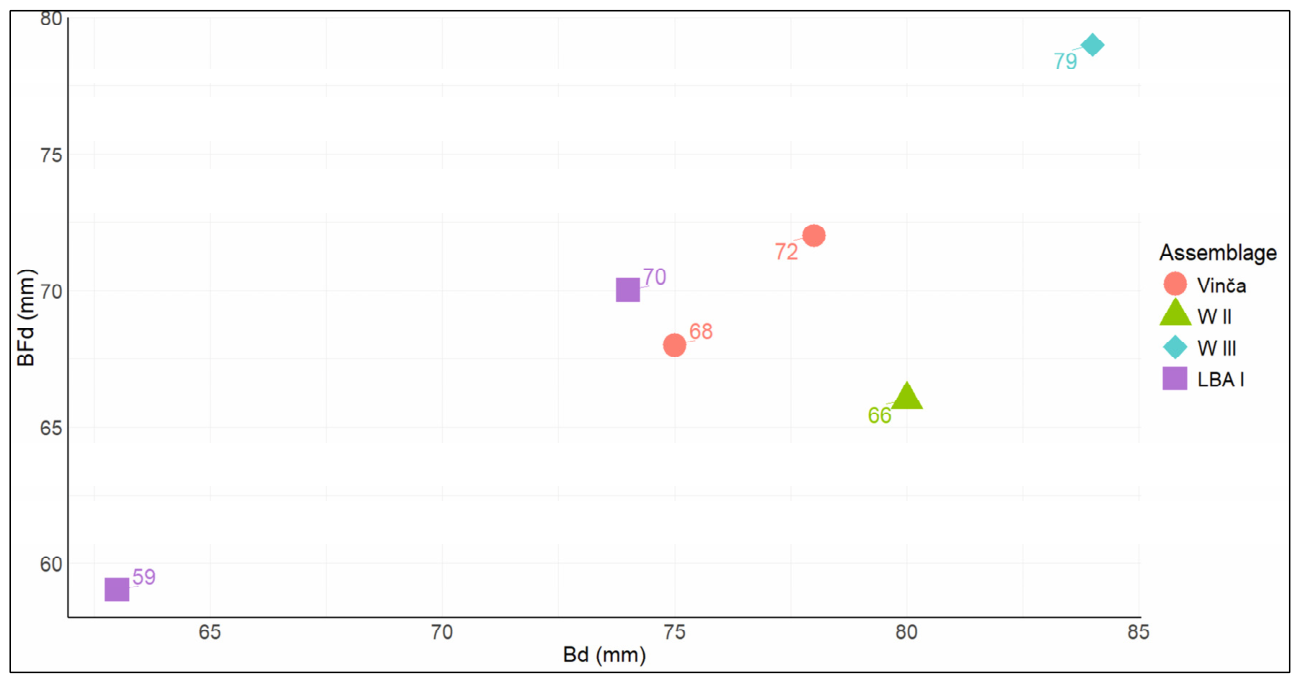
Figure 5 and Figure 6 illustrate the dimensional variability of radius and tibia epiphyses in cattle. In the scatter of radius distal epiphysis, most measurements cluster in a central cloud, likely corresponding to castrated individuals, while two extreme values are evident—one at the lower left of the plot, probably representing a female, and one at the upper right, likely a male (Figure 5). The Vinča specimens from Șoimuș appear to be larger in terms of Bd than those recorded at Tărtăria (Bd of 74 mm) [34] and Vinča-Belo Brdo (average Bd of 70.2 mm) [36]. A similar pattern can be observed for the Wietenberg layer, where the specimens from Șoimuș-Teleghi are generally larger than those reported from Derșida (average Bd of 69 mm), Tureni (75.6 mm) [34] and Pianu de Jos (64.2 and 77.1 mm) [38]. Compared with other Neolithic and Bronze Age assemblages from Hungary, the Bd values of cattle radius fall within a similar range [33].
Figure 5.
Scatter plot for the radius distal epiphysis in cattle (Bd = breadth of the distal end; BFd = breadth of the distal facies articularis; Vinča= Vinča culture; W II = Wietenberg culture, phase II; W III = Wietenberg culture, phase III; LBA I = Late Bronze Age, phase I)—BFd metrics being shown on the plot.
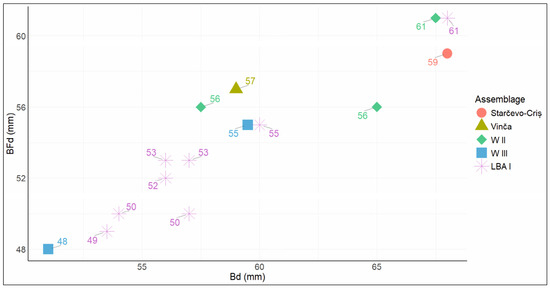
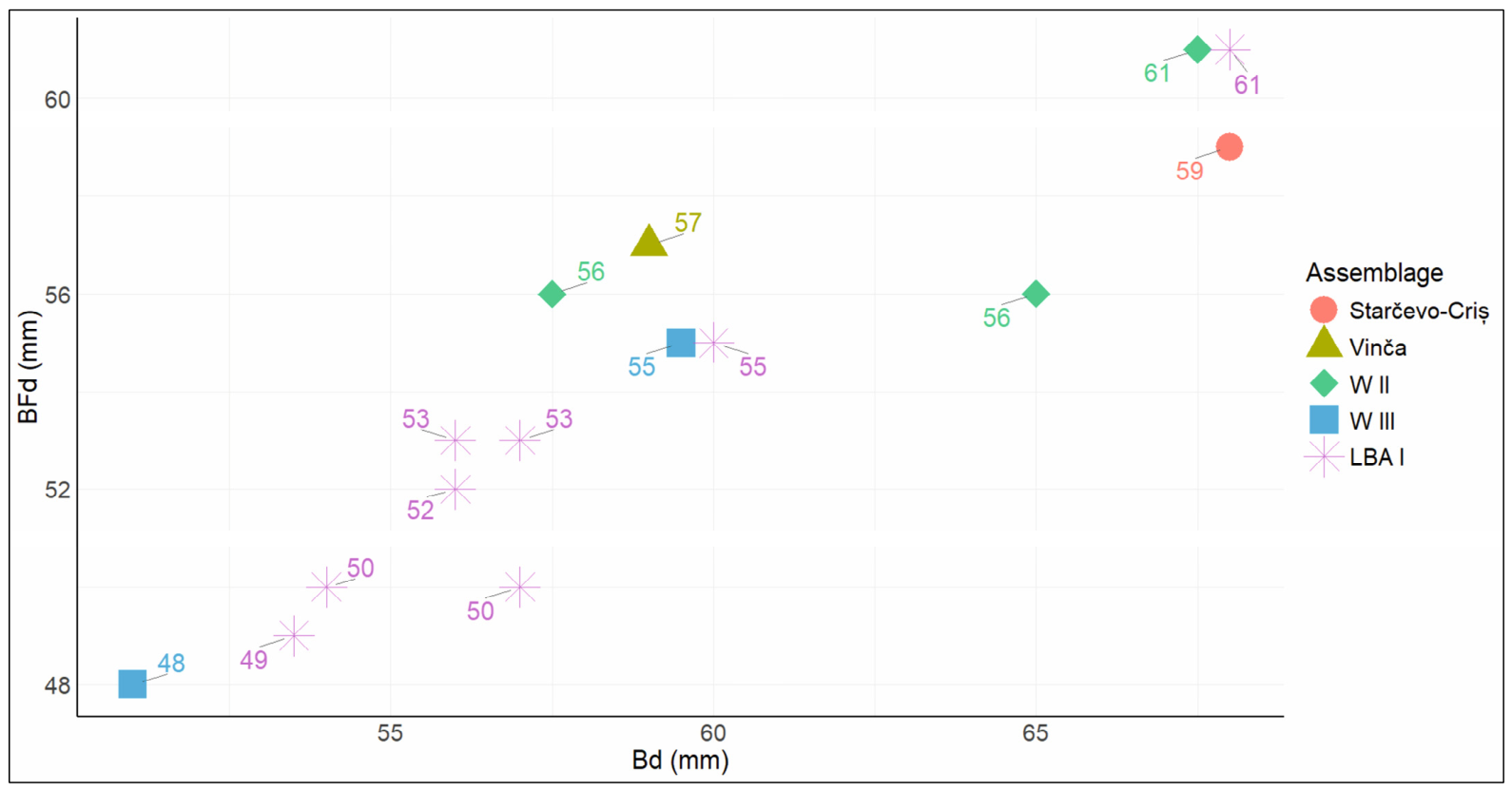
Figure 6.
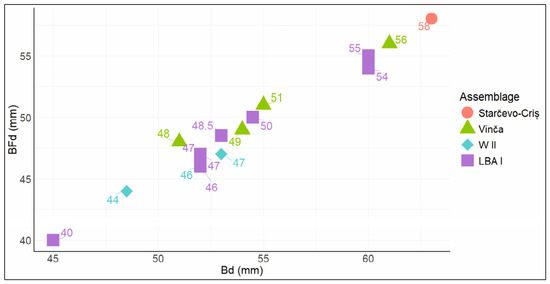
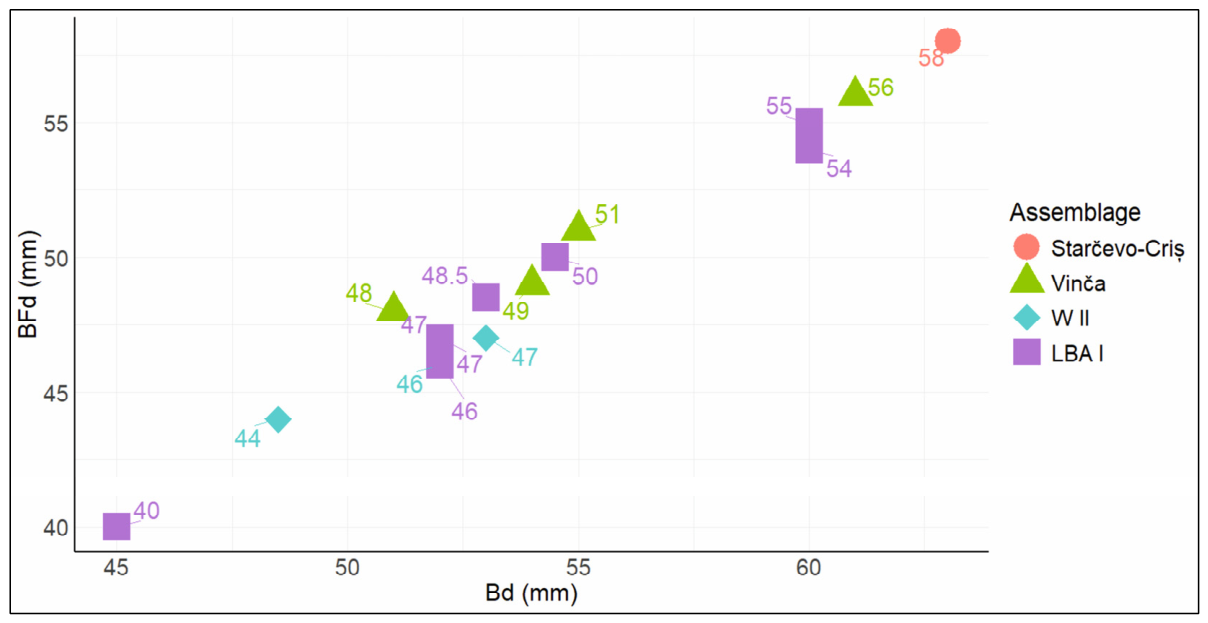
Scatter plot for the tibia distal epiphysis in cattle (Bd = breadth of the distal end; BFd = breadth of the distal facies articularis; Starčevo-Criş = Starčevo-Criş culture; Vinča = Vinča culture; W II = Wietenberg culture, phase II; W III = Wietenberg culture, phase III; LBA I = Late Bronze Age, phase I)—BFd metrics being shown on the plot.
The dispersion of the tibia distal epiphysis shows most values grouped in a cloud on the left side of the diagram; the remaining measurements are positioned toward the upper right and correspond to more robust individuals, probably males (Figure 6). For the Starčevo-Criș layer, the cattle specimens from Șoimuș-Teleghi appear smaller than those reported from Gura Baciului (tibia Bd of 74.3 mm), but are comparable to the values recorded at Ocna Sibiului (Bd of 67.4 mm) [34] and Miercurea Sibiului-Petriș (Bd of 68 mm) [35]. In contrast, smaller individuals were documented at Leț (Bd of 54.6 mm) [34], and at several other Starčevo-Criș settlements, including Cârcea-Viaduct (average Bd of 63.6 mm) [39], Gornea-Locurile Lungi (average Bd of 66.2 mm), and Moldova Veche-Rât (average Bd of 64.3 mm) [30]. For the Vinča layer at Șoimuș-Teleghi, the only measurable specimen appear more gracile than those documented at several Vinča settlements, such as Tărtăria (average Bd of 69 mm) [34], Gornea-Căunița de Sus (average Bd of 65.5 mm), Liubcova-Ornița (average Bd of 67 mm), Foeni (average Bd of 67.2 mm) [30], Vinča-Belo Brdo (Bd of 64.3 mm and 69.4 mm) [36] and Miercurea Sibiului-Petriș (average Bd of 66 mm) [32]. During the Bronze Age, the specimens raised at Șoimuș-Teleghi are more gracile than those from Tureni [34] and Pianu de Jos [38], but more robust than those recorded at Derșida [34]. When compared with several Neolithic and Bronze Age assemblages from Hungary, the cattle specimens from Șoimuș-Teleghi generally display slightly more gracile tibiae [33].
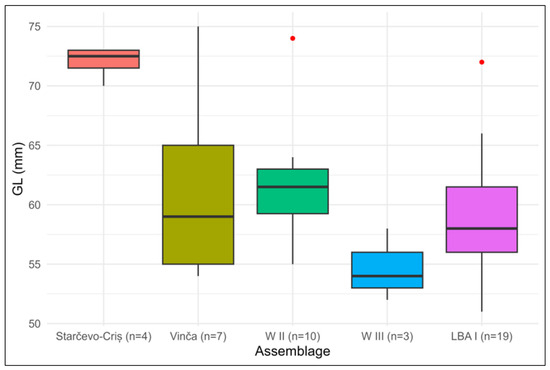
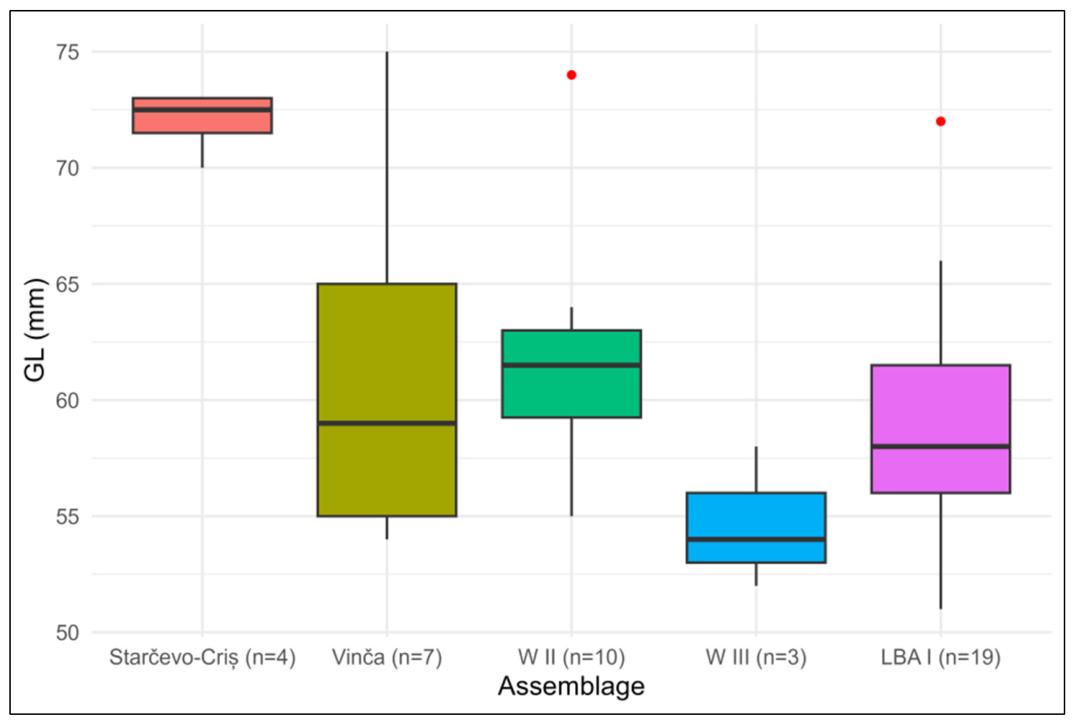
For the proximal phalanx, the largest variability of GL (Greatest Length) is recorded in the Vinča level, and the smallest one occurs in Starčevo-Criș (Figure 7). These data suggest that the most robust cattle specimens were probably raised in the Early Neolithic, as the average GL of the proximal phalanx reaches 72 mm. The mean value subsequently decreases to 54.7 mm in W III, followed by a slight increase in LBA I to 58.8 mm (Figure 7). The measurements of the proximal phalanx from Șoimuș-Teleghi fall within the range recorded at Zăuan and are generally larger than those recorded at several other Starčevo settlements [30,34,35]. In contrast, during the Late Neolithic, the cattle from Șoimuș-Teleghi display smaller values for the GL of the first phalanx compared with other Vinča assemblages [30,34,36]. A similar pattern is observed during the Bronze Age, where the measurements recorded at Șoimuș-Teleghi are, in general, smaller than those reported from sites such as Derșida, Mintiu Gherlei, and Tureni [34].
Figure 7.
Box-and-whisker plot of the proximal phalanx in cattle (GL = greatest length; Starčevo-Criş = Starčevo-Criş culture; Vinča = Vinča culture; W II = Wietenberg culture, phase II; W III = Wietenberg culture, phase III; LBA I = Late Bronze Age, the first phase) (red dots represent outliers).
The Kruskal–Wallis test revealed significant differences in cattle proximal phalanx length among the archaeozoological assemblages (χ2 = 13.35, df = 4, p = 0.0097). Dunn’s tests with Bonferroni correction showed that the Starčevo-Criș assemblage differed significantly from both the LBA I assemblage (adjusted p = 0.031) and the W III assemblage (adjusted p = 0.014). No other comparisons remained significant after correction, suggesting broadly similar phalanx lengths among the remaining assemblages (Table 8). For the GL of the cattle proximal phalanx, pairwise Welch’s t-tests with Holm’s correction revealed statistically significant differences involving the Starčevo-Criș assemblage. Starčevo-Criș differed significantly from W II (adjusted p < 0.001), W III (adjusted p = 0.036), and LBA I (adjusted p < 0.001), with the Starčevo-Criș sample showing consistently and substantially higher mean GL values (mean differences of 10.1–17.3 mm) than all three later assemblages. No other pairwise comparisons approached significance (all adjusted p > 0.5) (Table 9).
Table 8.
Kruskal–Wallis and Dunn’s tests for proximal phalanx GL in cattle.
Table 9.
Welch’s t-test for proximal phalanx GL in cattle.
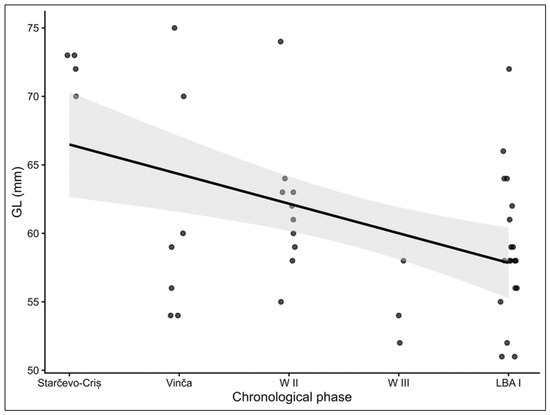
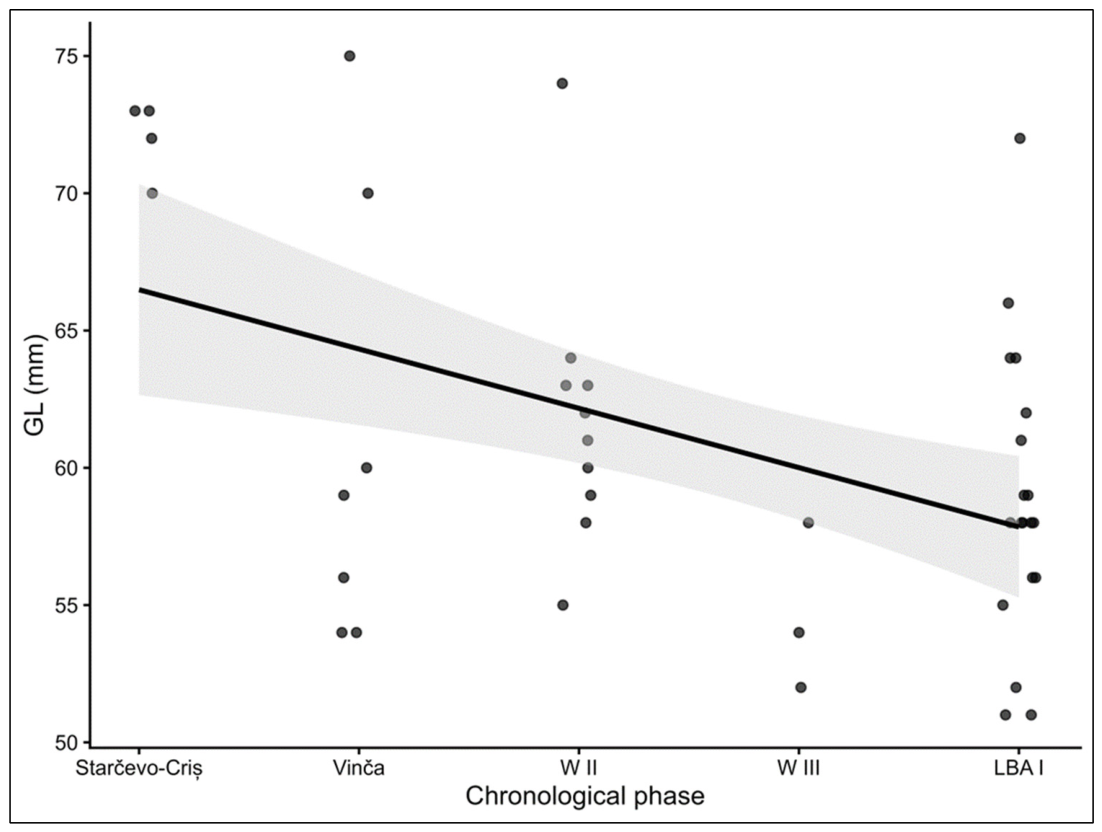
Linear regression analysis demonstrated a significant negative relationship between chronological phase and cattle phalanx length (p = 0.0016), indicating a possible trend toward smaller cattle through time (Figure 8).
Figure 8.
Linear regression for cattle proximal phalanx greatest length (GL) (Starčevo-Criş = Starčevo-Criş culture; Vinča = Vinča culture; W II = Wietenberg culture, phase II; W III = Wietenberg culture, phase III; LBA I = Late Bronze Age, phase I).
The withers height in cattle has been estimated only in the Vinča, W II, and LBA I levels, separately for female (average of 1135.98 mm) and castrated individuals (average of 1213.55 mm) (Table 7). The withers height estimated for the Vinča layer at Șoimuș-Teleghi is lower than the values reported from other Vinča settlements, such as Miercurea Sibiului-Petriș (126.8 cm), Gornea (126.07 cm), and Parța (132.2 cm for females) [32]. During the Bronze Age, however, the estimated withers heights fall within the range documented at other Transylvanian settlements, including Derșida (113.8 cm) and Tureni (121.8 cm) [34].
- Sheep/Goat (Ovis aries/Capra hircus)
Only a small number of horncores were recovered, most of them highly fragmented. A horncore fragment attributed to a goat was identified in the Vinča level. From W II, one goat horncore and two sheep were recovered; of these, only one sheep horncore was measurable, with the basal circumference of 162 mm and the greatest and smallest basal diameters of 57 mm and 41 mm respectively. In the subsequent phase of this culture, two goat horncores were identified, one of which was measured, showing a basal circumference of 120 mm, the greatest basal diameter of 42 mm, and the smallest basal diameter of 32 mm. In the LBA I assemblage, five goat horncores and four sheep horncores were examined. Among the goat horncores, one specimen was measurable, with a basal circumference of 101 mm and the greatest/least diameters of 32 mm and 21 mm. Of the sheep horncores, two were attributed to males and one to a female; only one male horncore was measured, with a basal circumference of 163 mm and greatest/smallest diameters of 57 mm/41.5 mm. The basal circumference measurements of sheep/goat horncores recorded at Șoimuș-Teleghi generally display larger values compared to those documented at other settlements in Transylvania [34], while falling within the range reported from several Hungarian sites [33].
The length variability of the upper third molar (M3) was assessed only in two levels (W II and LBA I); in each, two M3 teeth were measured, with the lengths of 18 mm and 19 mm in W II, and 18 mm and 19 mm in LBA I. The values recorded at Șoimuș-Teleghi appear smaller than those documented at Foeni, where an average length of 22.8 mm has been reported [30].
At the Starčevo-Criș level, two lower M3 were measured, both 24 mm in length. The greatest dimensional variability of lower third molar (M3) is recorded in the LBA I level, with a minimum length of 18 mm and a maximum of 24 mm. The smallest length variability is in W II, with a minimum of 24.5 mm and a maximum of 25.5 mm. The average length of M3 in sheep/goat is highest in the W II sample (24.7 mm), followed by that of W III (22.8 mm). The lowest average value is observed in LBA I (21.9 mm) (Figure 9). For the Starčevo-Criș culture, the specimen from Șoimuș-Teleghi displays a greater M3 length compared with those reported from Gura Baciului, Leț, Ocna Sibiului [34], and Dudeștii Vechi [37], while remaining comparable to the values recorded at Miercurea Sibiului-Petriș (average M3 length = 23.3 mm) [35]. For the Vinča period, the M3 measurement from Șoimuș-Teleghi is smaller than that reported from Tărtăria (L = 23.2 mm) [34], but larger than the values documented at Liubcova-Ornița [30]. In the Wietenberg context, the specimens from Derșida exhibit smaller M3 lengths, with an average value of 21.7 mm [34].
Figure 9.
Box-and-whisker plot for lower third molar (M3) length in sheep/goat. Red dots represent outliers (Vinča = Vinča culture; W II = Wietenberg culture, phase II; W III = Wietenberg culture, phase III; LBA I = Late Bronze Age, phase I).
The Kruskal–Wallis test was performed on the lower third molar of sheep/goat length, revealing statistical significance (p value of 0.049372). Furthermore, we performed Dunn’s test with Bonferroni correction, showing that the W II assemblage differed significantly from LBA I (Table 10). For the length of the sheep/goat lower M3, pairwise Welch’s t-tests with Holm’s correction identified two statistically significant differences, both involving the W II assemblage. W II differed significantly from Vinča (adjusted p = 0.025), and from LBA I (adjusted p < 0.0005). No other pairwise comparisons were significant (Table 11).
Table 10.
Kruskal–Wallis and Dunn’s tests for lower third molar (M3) length in sheep/goat.
Table 11.
Welch’s t-test for lower third molar (M3) length in sheep/goat.
For the forelimb, it was possible to calculate the average of some dimensional parameters of bone extremities; these are included in Table 12. Starčevo-Criș and Vinča data display similar averages of the humerus Bd; the largest values of this dimension come from the LBA I level, suggesting that the most robust sheep/goats were probably raised there. In the LBA I level, two proximal metacarpal fragments (with proximal breadths of 24.5 mm and 24 mm, respectively) and one complete metacarpal (dimensions are included in the withers height estimations table) were recorded. At Șoimuș-Teleghi, the greatest length (LG) of the scapula generally displays larger values compared with those recorded at several Starčevo-Criș settlements, including Gura Baciului (average LG = 23.3 mm), Zăuan (LG = 20.7 mm and 18.2 mm) [34], Gornea-Locurile Lungi (LG = 20.5 mm) [30], and Miercurea Sibiului-Petriș (average LG = 26 mm) [35], while falling within the range documented at Șeușa (LG = 28 mm) [37]. For the distal breadth of the humerus, the values recorded at Șoimuș-Teleghi are comparable to those reported from Neolithic assemblages at Gura Baciului (Bd = 29.7 mm), Zăuan (Bd = 28.7 mm) [34], and Liubcova-Ornița (Bd = 28.5 mm), and are slightly smaller than those documented at Gornea-Căunița de Sus (Bd = 30.4 mm) [30]. In the Bronze Age, the measurements from Șoimuș-Teleghi appear larger than those recorded at Derșida (Bd = 27.8 and 32.3 mm) [34]. The radius BFp from Șoimuș-Teleghi shows similar average values to those documented at Derșida (average BFp = 28.2 mm) and larger values than those reported from Mintiu Gherlei (BFp = 26 mm) [34]. In contrast, higher average values for the sheep/goat radius BFp have been recorded at Foeni (31.5 mm) [30].
Table 12.
Dimensional variation in bone extremities in caprines (LG = length of the Glenoid cavity; Bd = breadth of the distal end; BFp = breadth of the proximal facies articularis; Min = minimum; Max = maximum).
For sheep/goat humerus distal breadth, the Kruskal–Wallis test yielded a statistical significance p value of 0.008642, while the post hoc test revealed that the only significant difference is between the Starčevo-Criș and LBA I assemblages (Table 13). The Welch’s t-tests with Holm’s correction showed a statistically significant difference between the Starčevo-Criș and LBA I assemblages (adjusted p = 0.007), with LBA I specimens exhibiting a substantially larger mean Bd (mean difference = 3.38 mm). No significant difference was found between Starčevo-Criș and Vinča (adjusted p = 0.474), nor between Vinča and LBA I (adjusted p = 0.055) (Table 14).
Table 13.
Kruskal–Wallis and Dunn’s tests for humerus distal breadth in sheep/goat.
Table 14.
Welch’s t-test for humerus distal breadth in sheep/goat.
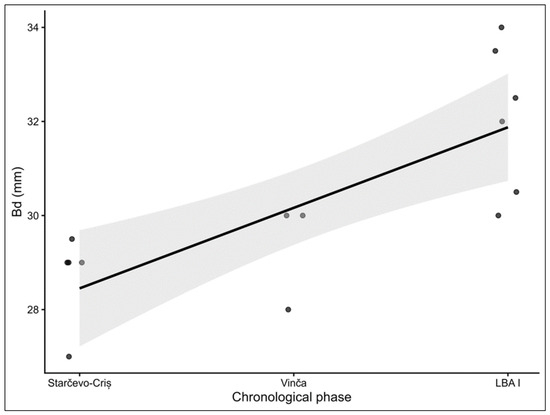
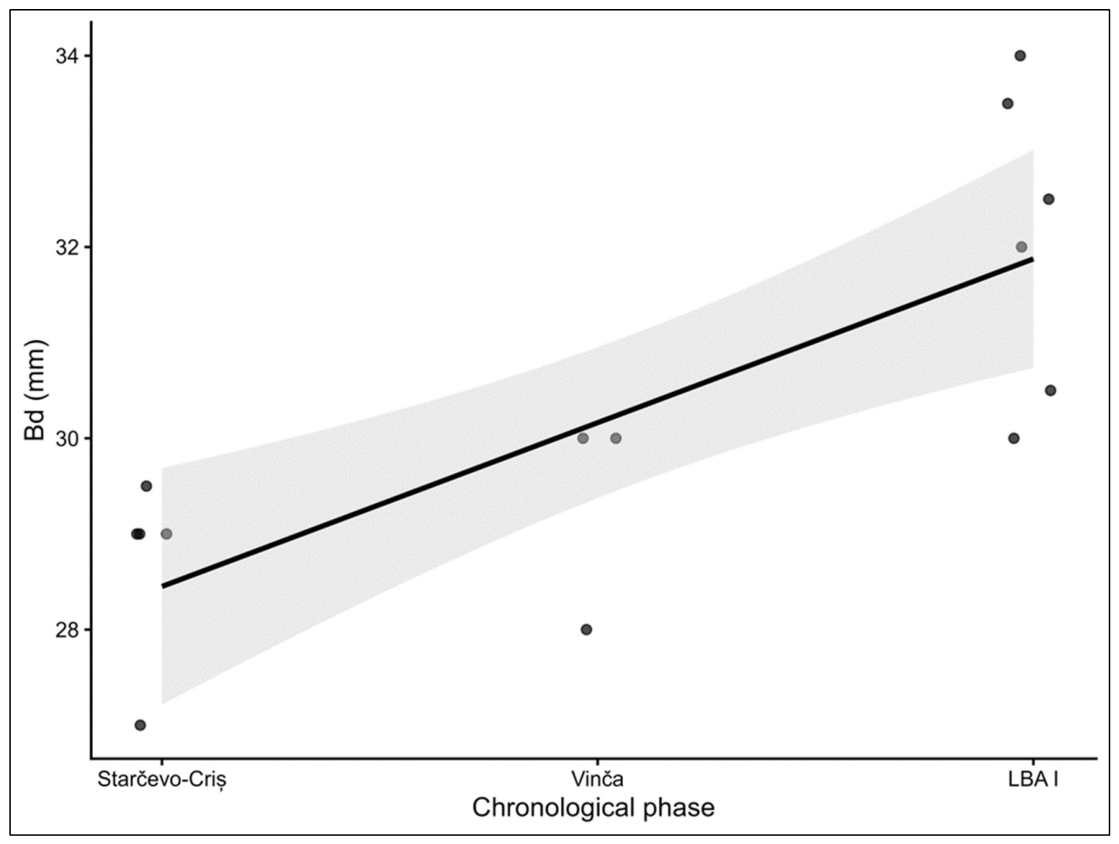
Linear regression analysis revealed a significant positive relationship between chronological phase and distal humerus breadth (Bd) in caprines (p = 0.0012), with distal breadth increasing with each successive archaeological phase (Figure 10). For the rest of the measured parameters, the regression analysis showed no statistical power.
Figure 10.
Linear regression for humerus distal breadth (Bd) in sheep/goat (Starčevo-Criş = Starčevo-Criş culture; Vinča = Vinča culture; LBA I = Late Bronze Age, phase I).
For the pelvic limb in caprines, the average of tibia Bd was calculated only in the LBA I level (Table 12). In Starčevo-Criș, only a distal fragment of the tibia with Bd of 25 mm was recovered. For Vinča, two tibiae were measured: one complete, with GL 197 mm, Bp 40 mm, SD 14 mm, and Bd 26 mm; one fragmentary, with Bd 26 mm. For the W III level, a single distal tibia fragment with Bd 27.5 mm was measured. The specimen from the Starčevo-Criș layer at Șoimuș-Teleghi presents values comparable to those recorded at Miercurea Sibiului-Petriș [35], Leț, and Ocna Sibiului, while being larger than the specimen documented at Tărtăria [34]. For the Vinča period, the measurements from Șoimuș-Teleghi are similar to those reported at Gornea-Căunița de Sus (average tibia Bd of 26.9 mm) and exceed the values recorded at Liubcova-Ornița (average Bd of 24.5 mm) [30] and Vinča-Belo Brdo (average Bd of 22.5 mm) [36]. For the Wietenberg cultural layer, the values recorded at Șoimuș-Teleghi are similar to those reported from Derșida (Bd of 27 mm) [34].
In the LBA I sample, four metatarsals were measured, yielding a mean Bp of 21.2 mm. At LBA II, only one proximal metatarsal fragment was available for measurement, with a Bp of 20 mm.
The distinction between sheep and goat was made at the metapodial level based on the diaphyseal index and the distal epiphyseal index, after which withers height was calculated separately for each species (Table 15). In goat (Capra hircus), withers height was estimated only for the LBA I level, where an average of 662.36 mm resulted from three metatarsals (Table 15). In sheep (Ovis aries), withers height was estimated based on astragali, metacarpal, and metatarsals. In the Starčevo-Criș, average withers height was 618 mm; in Vinča, it was 608.36 mm; and in LBA I, there was an average of approximately 642 mm (Table 15). The sheep from the Neolithic levels at Șoimuș-Teleghi appear to be generally larger than those reported from several contemporaneous settlements, including Zăuan (542.53 mm) [34], Dudeștii Vechi (594.75 mm), Foeni-Gaz (569 mm), Peștera Cauce (523.33 mm), Gura Baciului (589 mm), and Miercurea Sibiului-Petriș (603.66 mm) [37]. During the Bronze Age, however, the sheep from Șoimuș-Teleghi display values comparable to those documented at other Bronze Age sites in Transylvania (average value of 646.53 mm) [34] and Banat (645–678 mm) [30].
Table 15.
Withers height estimations in sheep and goat (GL = greatest length; Bp = breadth of the proximal end; SD = smallest diameter of the diaphysis; Bd = breadth of the distal end).
- Pig (Sus domesticus)
For the cephalic skeleton, it was possible to evaluate the variation in the average length of the third molar in some of the studied samples. With the reservation of the small number of data, it can be appreciated that this dimension records a higher average value in the WII level, both for the upper third molar (M3) and for the lower one (M3) (Table 16). The upper third molar measurements from Șoimuș-Teleghi are slightly larger than those recorded at the Wietenberg culture settlement of Derșida (M3 length = 33.9 mm) [34]. In the Late Bronze Age, the values are comparable to those documented at Gornea-Păzăriște (32.5 mm), but remain lower than those reported from Foeni (34 mm) [30]. At a broader scale, the Bronze Age measurements from Șoimuș-Teleghi fall within the general range documented for Romania (average M3 length = 33.4 mm) [40]. In comparison with Bronze Age assemblages from Hungary, the specimens from Șoimuș-Teleghi appear more gracile than those reported from Tiszaluc-Dankadomb (M3 length = 34 mm) [33]. For the lower third molar, the values recorded at Șoimuș-Teleghi are likewise comparable to the general range documented for Romania (average M3 length = 35 mm) [40]. However, the specimens from Șoimuș-Teleghi are generally more robust than those reported from other Bronze Age sites in Transylvania, such as Derșida (33.8 mm), Mintiu Gherlei (32 mm) [34], and Gornea-Păzăriște (31.1 mm) [30].
Table 16.
Variability (minimum–maximum) and average length of the third molar in pig.
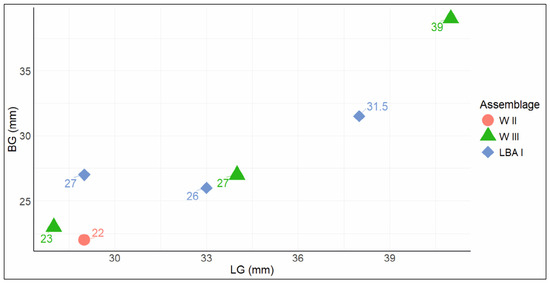
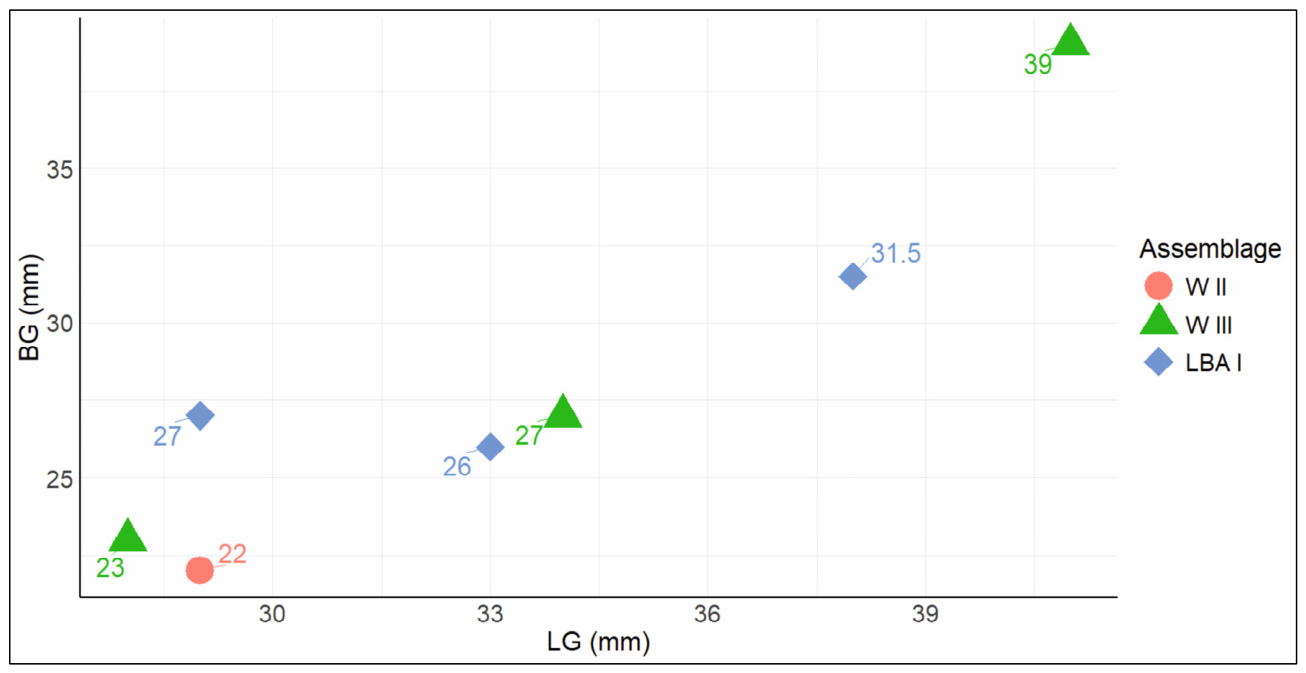
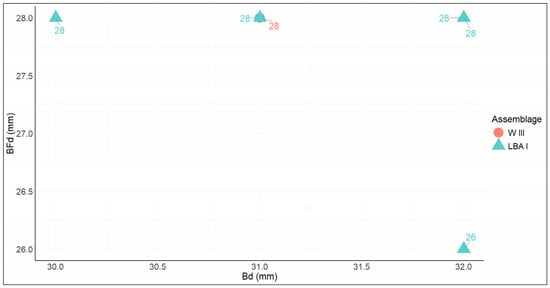
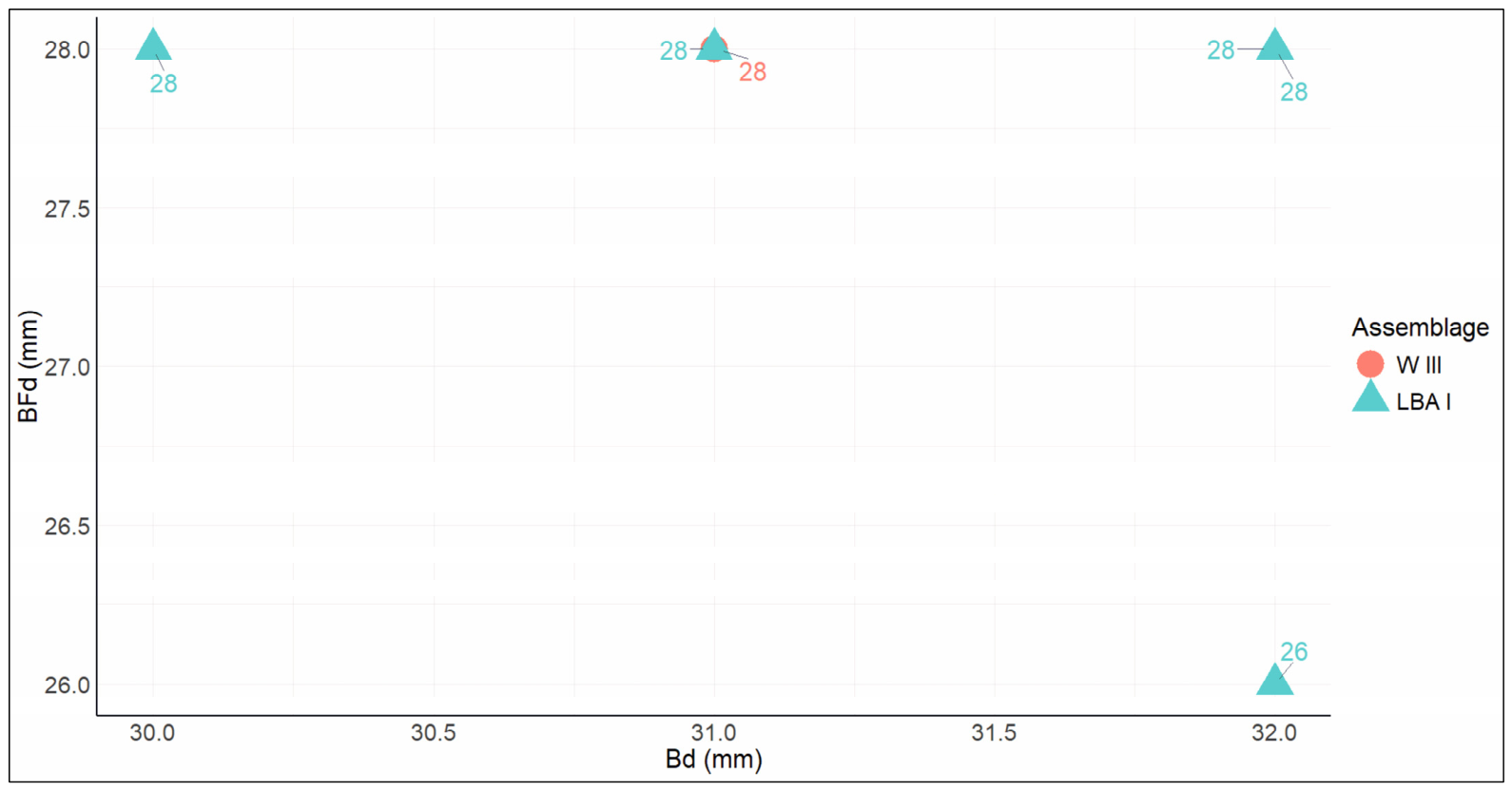
Due to the high degree of fragmentation, it was not possible to calculate average values for thoracic- and pelvic-limb parameters in domestic pigs. Measurements for scapula and tibia are presented in Figure 11 and Figure 12, respectively, while five humeri were recorded in the LBA I layer, yielding an average Bd of 41.1 mm, which is slightly higher than the values generally reported for Romania [40].
Figure 11.
Scatter plot for the scapula glenoid cavity dimensions (mm) in pig (LG = length of the glenoid cavity, BG = breadth of the glenoid cavity; W II = Wietenberg culture, phase II; W III = Wietenberg culture, phase III; LBA I = Late Bronze Age, phase I)—BG metrics being shown on the plot.
Figure 12.
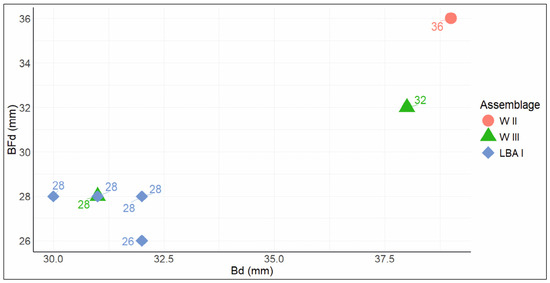
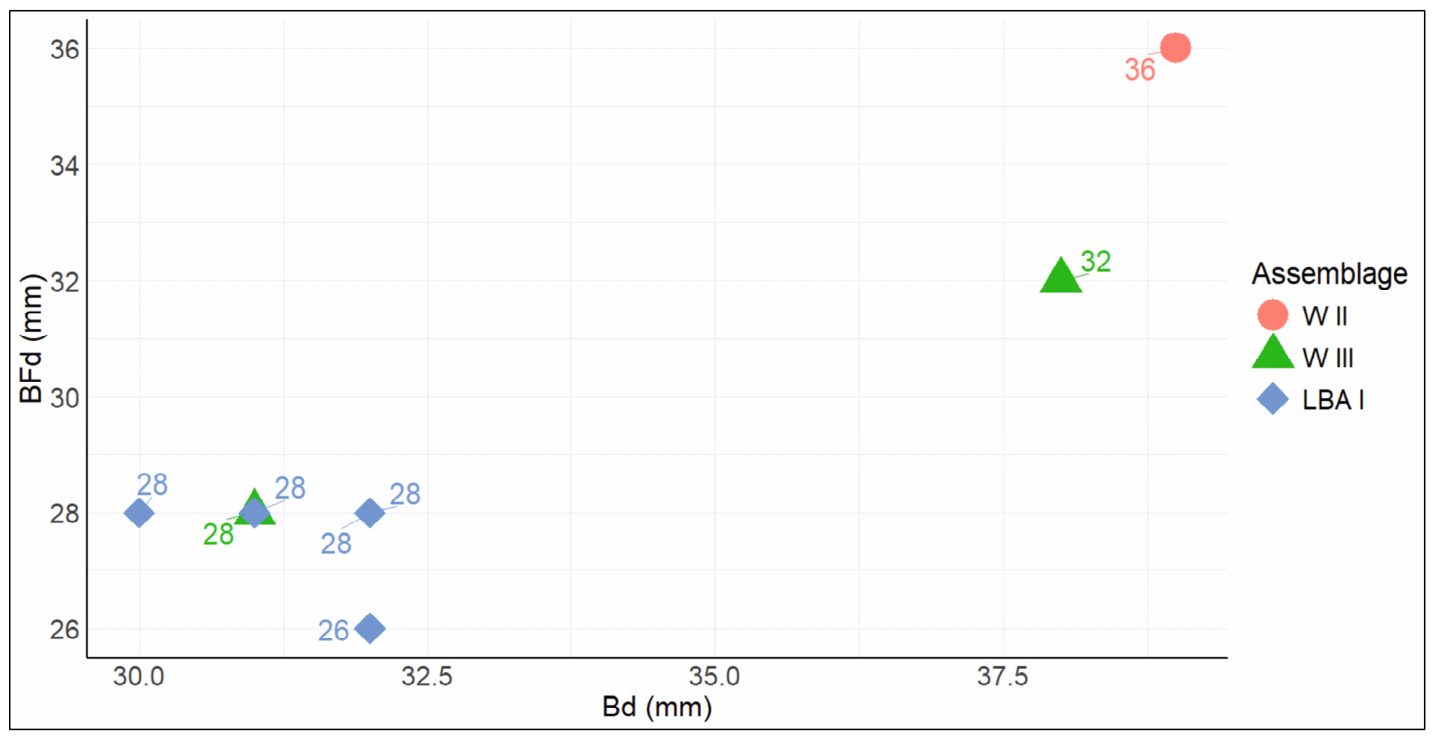
Scatter plot for the tibia distal epiphysis dimensions (mm) in pig (Bd = breadth of the distal end; BFd = breadth of the distal facies articularis; W III = Wietenberg culture, phase III; LBA I = Late Bronze Age, phase I)—BFd metrics being shown on the plot.
The scatter plot of glenoid cavity dimensions of the pig scapula probably groups females at the bottom left, while males would be represented only by two individuals identified in the W III and LBA I levels (Figure 11). The scapula measurements from the Wietenberg layer at Șoimuș-Teleghi appear to be larger than those documented at Derșida (average LG = 28.2 mm) [34] and Pianu de Jos-Lunca Pârâului (LG = 31.3 mm) [38]. Considering the full set of Bronze Age measurements from Șoimuș-Teleghi, the specimens appear to have been generally more robust than those recorded in the rest of the country, where the average scapula length in pigs is approximately 31.8 mm [40]. The distal tibia epiphysis in pig shows values broadly and similarly distributed (Figure 10). For the distal tibia, the specimens measured at Șoimuș-Teleghi display more gracile morphology compared with those reported from Derșida (average Bd of 32.8 mm) [34] and Békés-Városerdő (average Bd of 32.04 mm) [33], while showing values similar to those recorded at Foeni (31.3 mm) [30].
The pig’s withers height was estimated using metapodial bones, and most values were obtained for the LAB I level, with an average of about 783 mm (Table 17). The withers height estimated for the Middle Bronze Age at Șoimuș-Teleghi appears to be greater than the average values reported for Romania (791.3 mm), whereas in the Late Bronze Age the estimated values from Șoimuș-Teleghi are lower (798.07 mm—the average for Romanian Late Bronze Age) [40].
Table 17.
Withers height estimation for pig (GL = greatest length).
- Dog (Canis familiaris)
The measurements for both the cephalic and appendicular skeleton of the dog are presented in Table 18. The M1 lengths recorded at Șoimuș-Teleghi appear to be greater than the values documented at Derșida (average M1 length of 20.6 mm) [34], Békés-Városerdő (average M1 length of 20.6 mm), and Füzesabony (average M1 length of 20.4 mm) [33]. For the humerus, the specimen from Șoimuș-Teleghi exhibits a broader distal epiphysis compared with those recorded at Derșida (average Bd of 29.7 mm) [34]. The proximal breadth of the dog radii from Șoimuș-Teleghi appears to be greater than those reported from Vinča-Belo Brdo [36] and Derșida [34], but smaller than the values documented at Békés-Városerdő [33]. Regarding the pelvis, similar values of acetabular length have been recorded at Derșida [34]. For the femur, comparable distal breadth measurements are documented at Nagykálló (33 mm) and Palotás-Homokos (33.5 mm) [33]. The tibia measurements from Șoimuș-Teleghi fall within the range reported at Pianu de Jos-Lunca Pârâului (22.7 mm) [38].
Table 18.
Dimensions of bones (in mm) in dog (GLP = greatest length of the glenoid process; LG = length of the glenoid cavity; BG = breadth of the glenoid cavity; GL = greatest length; Bp = breadth of the proximal end; Bd = breadth of the distal end; SD = smallest diameter of diaphysis; LA = length of the acetabulum).
Based on a tibia from the LBA I level with a GL of 115.5 mm, the withers height was calculated at 332.47 mm. According to the scale proposed by Udrescu et al. ii (1999) [41], this individual falls below medium height. Furthermore, a diaphyseal index of 6.06 places the specimen within the gracile dog category [41].
- Horse (Equus caballus)
Metric data for this species are scarce, making it impossible to conduct a comparative study between cultural levels. For the Bronze Age, a single upper third molar (M3) was measured in the W II level, with a length of 32 mm, slightly smaller than the one recorded at Derșida (34.5 mm) [34]. In W III, several postcranial elements were dimensioned: a distal tibia fragment with a Bd of 72.5 mm, a distal metacarpal fragment with a Bd of 48 mm, and a complete metacarpal with a GL of 202.5 mm. The latter displays a gracility index of 13.33, which places it in the “very thin” horse category on Brauner’s scale [41]. On the basis of this metacarpal, withers height was estimated at 1298.02 mm, which is smaller than the withers heights recorded at Foeni Bronze Age level (1333–1365 mm) [30]. In the LBA I level, the following measurements were obtained: a scapula with LG 54 mm and BG 44 mm; a proximal radius fragment with Bp 87 mm and BFp 76 mm; and a distal tibia fragment with Bd 68 mm and BFd 58 mm.
- Red deer (Cervus elaphus)
The following measurements were recorded for the cephalic skeleton of deer:
- Starčevo-Criș level: one mandible with the cheektooth row length of 126 mm, the molar row length of 79 mm, and the M3 length of 29 mm.
- W II level: one maxilla with the M3 length of 25.5 mm, and one mandible with the M3 length of 35 mm, smaller than the one from Derșida—40.6 mm [34].
- LBA I level: two mandibles with the M3 lengths of 31 mm and 35 mm, respectively.
For postcranial elements, the limited dataset allowed only the construction of scatter plots for a few dimensions: the glenoid cavity of the scapula, the proximal epiphysis of the radius, and the distal epiphysis of the tibia. In addition, the variation in length of the astragalus and the first phalanx (i.e., minimum, maximum, and average) was evaluated for some of the analysed assemblages.
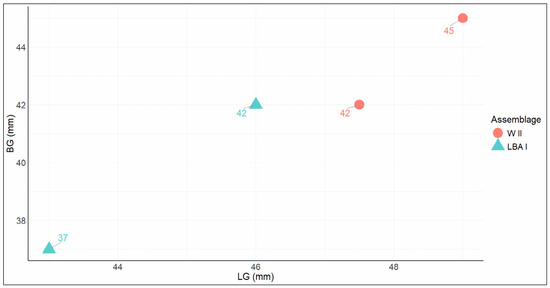
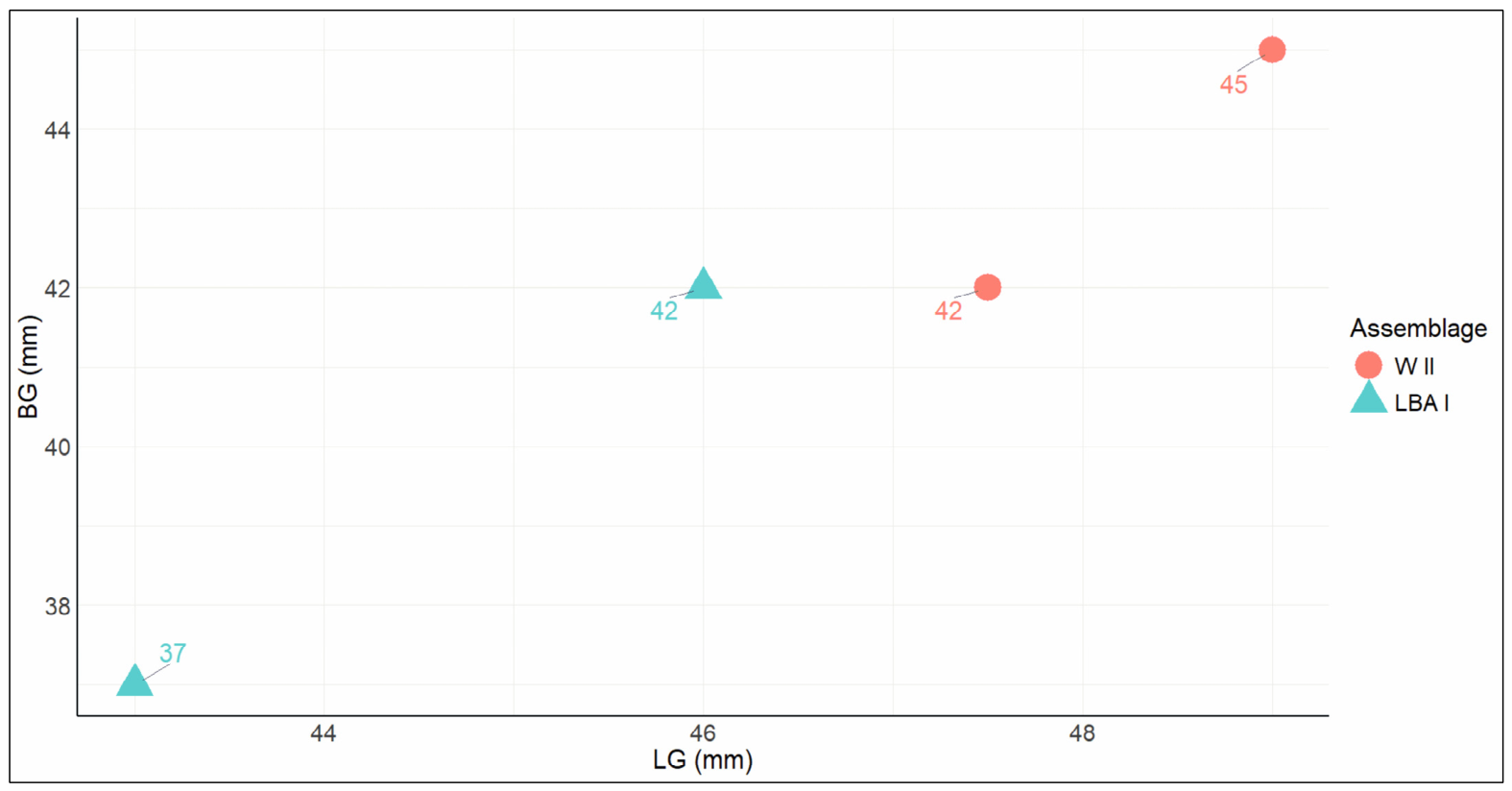
The scatter plot of scapula glenoid cavity dimensions in red deer displays a separation of probably males toward the right side of the diagram, with greater values for both length and breadth, compared to the female specimen identified in the LBA I assemblage (Figure 13).
Figure 13.
Scatter plot for the scapula glenoid cavity dimensions (mm) in red deer (LG = length of the glenoid cavity, BG = breadth of the glenoid cavity; W II = Wietenberg culture, phase II; LBA I= Late Bronze Age, phase I)—BG metrics being shown on the plot.
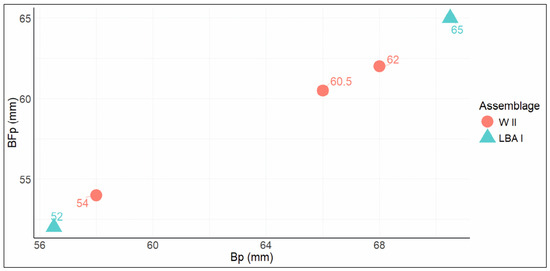
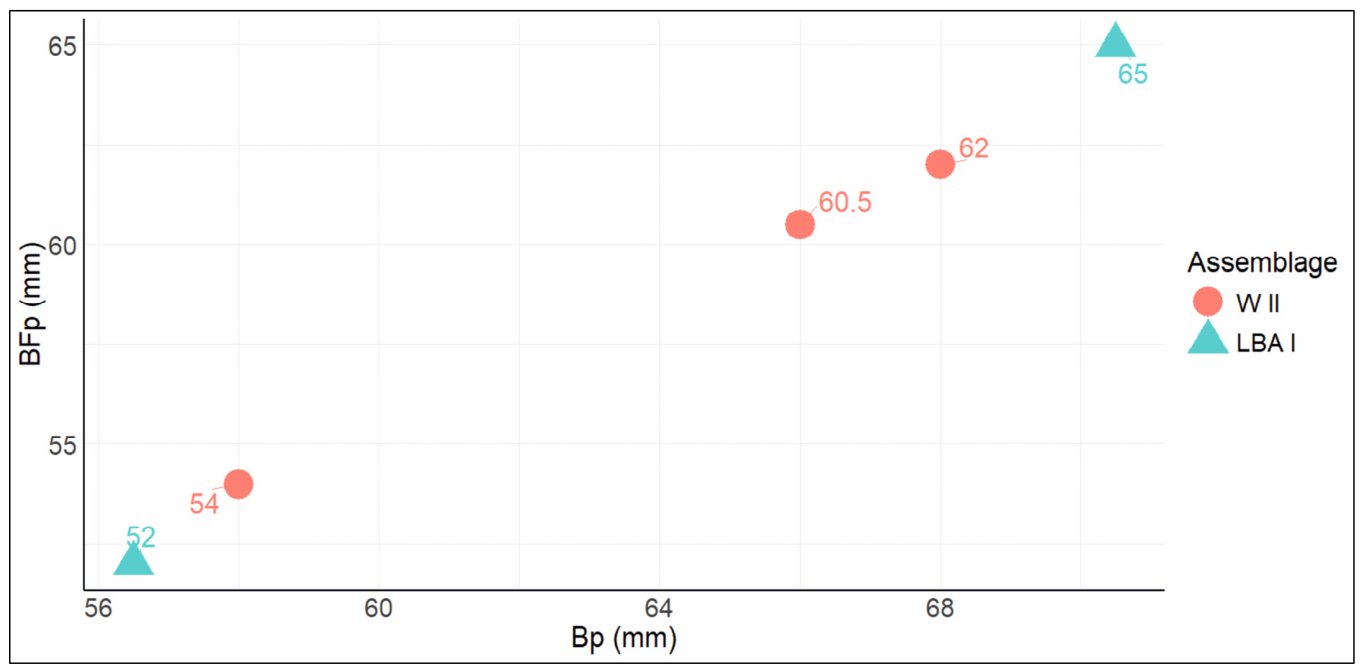
At the level of the proximal epiphysis of the radius, presumed female specimens cluster at the lower left of the distribution, with BFp values equal to or below 54 mm, whereas the values placed on the upper right, exceeding 60 mm, could be attributed to male individuals (Figure 14).
Figure 14.
Scatter plot for the radius proximal epiphysis dimensions (mm) in red deer (Bp = breadth of the proximal end; BFp = breadth of the proximal facies articularis; W II = Wietenberg culture, phase II; LBA I= Late Bronze Age, phase I)—BFp metrics being shown on the plot.
The scatter plot of tibia distal epiphysis dimensions in red deer shows BFd values over 54 mm at the upper right of the distribution, which likely correspond to male individuals. Conversely, the two BFd values under 44 mm, recorded in the W II and LBA I assemblages, positioned at the lower left of the plot, could be attributed to females. The intermediate values, with BFd ranging between 46 and 51 mm, probably reflect an overlap between the two sexes across different levels, resulting from interpopulation variability (Figure 15). The distal end of the tibia recorded at Șoimuș-Teleghi is generally larger than those documented at other Starčevo-Criș sites, such as Moldova Veche-Rât (Bd = 58 and 60 mm) [30] and Miercurea Sibiului-Petriș (Bd = 58 mm) [35]. For the Vinča layer, the specimens from Șoimuș-Teleghi display smaller values than those reported at Vinča-Belo Brdo (average Bd = 56.1 mm) [36], but are larger than those documented at Liubcova-Ornița (average Bd = 52.6 mm) and Gornea-Căunița de Sus (Bd = 50 and 53 mm) [30]. In the Bronze Age, the distal tibia measurements from Șoimuș-Teleghi appear lower than those recorded at Gornea-Păzăriște (average Bd = 56.3 mm) [30].
Figure 15.
Scatter plot for the tibia distal epiphysis dimensions (mm) in red deer (Bd = breadth of the distal end; BFp = breadth of the proximal facies articularis; Starčevo-Criş=Starčevo-Criş culture; Vinča= Vinča culture; W II = Wietenberg culture, phase II; LBA I = Late Bronze Age, phase I)—BFd metrics being shown on the plot.
The following astragalus measurements were recorded: for Starčevo-Criș and Vinča levels, one astragalus was measured in each assemblage, both with a GL of 57 mm; for the W II level, six astragali were measured, yielding a GL range of 55–67 mm and an average value of 59.2 mm; in LBA I, 12 astragali were recorded, with GL values ranging from 58 to 65 mm and an average of 61.3 mm. For the Neolithic period, the astragali measured at Șoimuș-Teleghi appear to derive from larger specimens than those from the Tărtăria assemblage (52.2 mm) [34], but are smaller compared to those from Miercurea Sibiului-Petriș (62 and 63.2 mm) [32] and Vinča-Belo Brdo (average GL of 60.8 mm) [36].
Dimensional variability of the first phalanx in red deer was assessed in only three of the investigated assemblages. In W II, five specimens were measured, yielding an average GL of 63.5 mm (minimum 61 mm; maximum 66 mm); in W III, only two specimens were recorded, with GL values of 57 mm and 59 mm; in the LBA I level, a great dimensional variability is evident, with GL values ranging from 55.5 mm to 68 mm and an average of 62.6 mm (n = 6). The measurements taken in the Șoimuș-Teleghi assemblage appear larger than the data documented at Pianu de Jos-Lunca Pârâului (average GL of 58.73 mm) [38].
- Wild boar (Sus scrofa)
The following measurements were recorded for the cephalic skeleton in wild boar:
- -
- Vinča level: one mandible with the M3 length of 44 mm, larger than those from Vinča-Belo Brdo (average length of M3 = 42.6 mm) [36], but smaller than the M3 from Gornea-Căunița de Sus (average length of M3 = 45.5) and Liubcova-Ornița (average length of M3 = 45.4 mm) [30];
- -
- W II assemblage: five mandibles with an average M3 length of 46.4 mm (minimum 45 mm; maximum 47 mm), and one maxilla with the M3 length of 46.5 mm;
- -
- W III assemblage: two mandibles and one isolated lower M3, with an average M3 length of 44.3 mm (minimum 41 mm; maximum 48 mm).
For the thoracic limb, the following measurements were recorded: in the Starčevo-Criș level, one scapula was measured with the LG of 38 mm and BG of 34 mm; in W III, one scapula with LG of 42.5 mm and BG 36 mm; in Vinča, one distal humerus fragment with Bd of 56 mm, which is larger than other humeri recorded at Miercurea Sibiului-Petriș [32], Liubcova-Ornița [30] and Vinča-Belo Brdo [36] and smaller than the one from Gornea-Căunița de Sus [30]; in W II, two distal humeri fragments with the Bd of 55 mm and 59 mm respectively, which seem to fall in range with the one from Derșida (Bd of 57.2 mm), two proximal radius fragments with the Bp of 41.5 mm and 42 mm respectively, one distal radius fragment with the Bd of 62 mm; in LBA I, one distal humerus fragment with Bd of 50 mm, one distal radius fragment with Bd of 63 mm, a metacarpal III with the GL of 99 mm.
For the pelvic limb, one coxal with acetabular diameters of 37 mm and 35 mm was measured in the W II assemblage. In W III, a coxal with diameters of 40 mm and 39 mm was recorded, while in LBA I, a coxal with greatest/least diameters of 45/42 mm was recorded. A calcaneus with the GL of 94 mm was recorded in the W II settlement, and another specimen from W III yielded the GL of 125 mm.
Measurements of the proximal phalanx of wild boar were obtained only from the W II assemblage, where five specimens were recorded with an average GL of 47 mm. Coming from the same level, there are two second phalanges (GL of 32 mm and 37 mm respectively), and two third phalanges, both with the DLS value of 43 mm. In the LBA I sample, two middle phalanges with GL values of 32 mm and 34 mm respectively were recorded.
For the pelvic limb, a scatter plot was constructed based on the tibia distal epiphysis dimensions. By incorporating comparative metric data of pig (Sus domesticus), the plot demonstrates a clear separation between the domestic form and its wild ancestor (Figure 16).
Figure 16.
Scatter plot for the tibia distal epiphysis dimensions (mm) in wild boar and pig (BFd = under 32 mm) (Bd = breadth of the distal end; BFd = breadth of the distal facies articularis; W II = Wietenberg culture, phase II; W III= Wietenberg culture, phase III; LBA I= Late Bronze Age, phase I)—BFd metrics being shown on the plot.
The withers height was estimated only for wild boar from the W II, W III, and LBA I levels. The highest value is recorded in the W III level, where the withers height of 1193.5 mm was estimated based on a calcaneus with the GL of 125 mm. A close value is observed in LBA I, and the lowest one is documented in W II, at 903.96 mm (Table 19).
Table 19.
Withers height estimations in wild boar (GL = greatest length).
- Roe deer (Capreolus capreolus)
The following measurements were recorded for the roe deer from Neolithic: In the Starčevo-Criș level, one coxal was measured, with acetabular diameters of 25 mm and 23 mm. In Vinča, two humerus distal fragments with the Bd of 25 mm and 27 mm, smaller than the ones recorded at Miercurea Sibiului-Petriș (Bd of 29 mm) [32] and Vinča-Belo Brdo (Bd of 30.2 mm) [36]; two radius distal fragments with the Bd of 24 mm and 28.5 mm, similar with the measurements recorded at Tărtăria (25.6 mm) [34] and Vinča-Belo Brdo (27.2 mm) [36]; and one metatarsal with the GL of 210 mm, larger than the metarasal recorded at Vinća-Belo Brdo (GL of 202.2 mm) [36].
For the Middle Bronze Age, the W II level yielded one mandible with the M3 length of 16 mm; one radius distal fragment with Bd 29.5 mm, slightly larger than the one from Derșida (27 mm) [34]; one tibia proximal fragment with Bp 41.5 mm; and one metatarsal proximal fragment with the Bp of 22 mm. In W III, two mandibles with M3 lengths of 11 mm and 16 mm, one radius proximal fragment (Bp 26.5 mm), and one tibia distal fragment (Bd 24 mm). In LBA I, one scapula with LG 24 mm and BG 21 mm and one proximal phalanx with the GL of 41 mm.
- Aurochs (Bos primigenius)
Few data are provided for this species, as follows: in the Starčevo-Criș level, one distal femur fragment with the Bd of 117 mm, and one calcaneus with the GL of 160 mm; in W II, one proximal phalanx with the GL of 81 mm was recorded; in LBA I, one distal humerus fragment with the BT of 96 mm, one calcaneus with the GL of 170 mm, and one proximal phalanx with the GL of 78 mm. In the Neolithic, the calcaneus present at Șoimuș-Teleghi shows a smaller length than the one recorded at Zăuan (163.2 mm) [34]. During the Bronze Age, the measurements are generally larger than those recorded at other contemporaneous sites, such as Foeni (Bronze Age level; humerus BT: 92 mm), Parța (calcaneus GL: 168 mm), and Moldova Veche-Ostrov (average phalanx I GL: 75.4 mm) [30].
- Hare (Lepus europaeus)
In terms of osteometry, a single coxal was measured for this species in the LBA I settlement, with the greatest/least diameters of 14 mm/13 mm.
For the other identified species (i.e., Equus asinus, Ursus arctos, Meles meles, Canis lupus, Castor fiber, Vulpes vulpes, Mustela putorius, Lynx lynx, Equus ferus, and Equus hydruntinus), the recovered remains did not provide metric data, being too scarce and too fragmented.
4. Conclusions
Across all discussed taxa, osteometric variability is high, but unevenly evaluated, mainly as a result of the pronounced fragmentation and poor preservation of the remains that limited the number of osteometric measurements available. Despite these constraints, patterns of sex-related dimorphism, castration, and diachronic size variation can be identified in domestic and wild taxa, particularly Bos taurus, Ovis aries/Capra hircus, Sus domesticus, Cervus elaphus and Sus scrofa.
The intermediate values of some dimensions observed in cattle skeletal remains (e.g., horncore and radius) suggest the presence of castrated individuals in the levels of Vinča, Wietenberg, LBA I. These animals likely played a significant role within the communities, consistent with traction-oriented cattle strategies. Based on withers height estimates, the Middle Neolithic and Middle Bronze Age cattle are generally larger than those from the Late Bronze Age. Furthermore, the cattle horncores from Vinča level, displaying a very large basal circumference and a high flattening index, could indicate hybridisation between domestic form and aurochs rather than simple sexual dimorphism. In the Early Neolithic, the data recorded at Șoimuș-Teleghi generally indicate larger measurements than those observed at comparable sites, while in the Bronze Age the measurements typically fall within regional ranges.
Sheep show an increase in average withers height from Neolithic to LBA I, indicating improved husbandry conditions, and even a possible selective breeding. In contrast, goats from LBA I display considerable variability in withers height (approx. 580–750 mm), suggesting more likely a mixed-sex herd. Individual measurements for sheep and goats mostly fall within the regional ranges; however, the withers heights of Neolithic sheep at Șoimuș-Teleghi appear to be higher. In contrast, during the Bronze Age, sheep withers heights from Șoimuș-Teleghi display values comparable to those documented at other Bronze Age sites from Transylvania and Banat.
Comparatively, the pig measurements recorded at Șoimuș-Teleghi are more gracile than the data recorded in other Hungarian sites, but are more robust than in other Transylvanian settlements. Although limited, the postcranial data suggest relatively robust forelimb elements (e.g., humerus and scapula), contrasted with more gracile distal limb elements (e.g., tibia). The scatter plot for the pig scapula suggests a female-dominated population, with males present, but rare.
The only dog specimen for which withers height could be estimated appears to represent a small, below-average, gracile individual, recorded in LBA I level, and possibly exploited for companionship rather than for specialised labour (e.g., hunting).
Although metric data are limited, the available evidence suggests that Bronze Age horses from Șoimuș-Teleghi were generally small and gracile, as indicated by the low gracility index and reduced withers height compared to other contemporaneous sites.
Hunting activities targeted male large individuals, indicating a skilled and selective exploitation of wild resources.
Red deer cranial elements suggest slightly smaller individuals compared to some contemporaneous sites, while postcranial data indicate generally robust specimens. These contradictory data are most likely due to the small number of specimens measured.
Author Contributions
Conceptualisation, D.I.M. and L.B.; methodology, O.G., D.P. and D.I.M.; software, D.I.M., O.G., D.P. and A.R.P.; validation, M.-S.S. and L.B.; formal analysis, D.I.M., O.G., D.P. and A.R.P.; investigation, D.I.M., O.G., D.P. and M.-S.S.; resources, D.I.M. and M.-S.S.; data curation, M.-S.S. and L.B.; writing—original draft preparation, D.I.M., O.G., D.P. and A.R.P.; writing—review and editing, D.I.M., M.-S.S. and L.B.; visualisation, D.I.M., M.-S.S. and L.B.; supervision, M.-S.S. and L.B.; project administration, D.I.M. and L.B.; funding acquisition, O.G., D.P. and A.R.P. All authors have read and agreed to the published version of the manuscript.
Funding
The radiocarbon dating was supported under Research Programme Partnership in Priority Areas PNII MEN-UEFISCDI, contract PN 23 21 02 01. Experiments were carried out at the 1 MV Tandetron™ accelerator and were supported by the Romanian Government Programme through the National Programme for Infrastructure of National Interest (IOSIN).
Data Availability Statement
The original contributions presented in this study are included in the article. Further inquiries can be directed to the corresponding author.
Conflicts of Interest
The authors declare no conflicts of interest.
References
- Halstead, P. Zooarchaeological Evidence for Livestock Management in (Earlier) Neolithic Europe: Outstanding Questions and Some Limitations of Current Approaches. Quat. Int. 2024, 683–684, 42–50. [Google Scholar] [CrossRef] [Scilit]
- Mureau, C.; d’Oliveira, L.; Peyron, O.; Blaise, E.; Renault, A.; Balcarcel, A.; Jeanjean, M.; Bonhomme, V.; Bouby, L.; Ris, J.; et al. 8000 Years of Wild and Domestic Animal Body Size Data Reveal Long-Term Synchrony and Recent Divergence Due to Intensified Human Impact. Proc. Natl. Acad. Sci. USA 2025, 122, e2503428122. [Google Scholar] [CrossRef] [Scilit] [PubMed]
- Stanc, M.S.; Malaxa, D.I.; Bărbat, I.A.; Marc, A.T.; Popovici, M.; Bejenaru, L.; Danu, M. Middle Holocene Subsistence in Southwestern Transylvania: Bioarchaeological Data on the Multicultural Site of Șoimuș-Teleghi (Hunedoara County, Romania). Quaternary 2025, 8, 60. [Google Scholar] [CrossRef] [Scilit]
- Malaxa, D.I.; Stanc, S.; Bărbat, A.; Gâza, O.; Păceșilă, D.; Bejenaru, L.; Danu, M. Farming Beginning in Southwestern Transylvania (Romania). Subsistence Strategies in Mureș Valley during the Early Neolithic. Diversity 2022, 14, 894. [Google Scholar] [CrossRef] [Scilit]
- Schuster, C.; Petcu, R.; Petcu, R.; Heroiu, A.; Rumega, V.; Crețu, A.P.; Dimache, M.; Irimuș, L.; Dobrotă, S.; Vasilescu, D.; et al. Șoimuș, Șoimuș Commune, Hunedoara County (Deva–Orăștie Bypass), Point: Șoimuș 1 (Avicola) km. Cron. Cercet. Arheol. 2012, 291–292, 29+750–30+300. [Google Scholar]
- Ștefan, C.E.; Petcu, R.; Petcu, R. Brief Note on Some Basarabian-Type Complexes from Șoimuș-La Avicola (Farm 2), Hunedoara County (Romania). Stud. Preist. 2013, 10, 49–66. [Google Scholar]
- Ștefan, C.E. Playing with Clay: Anthropomorphic Figurines from Șoimuș—La Avicola (Ferma 2), Hunedoara County. Dacia 2016, 60, 31–66. [Google Scholar]
- Ștefan, C.E. Miniature Vessels from Șoimuș—La Avicola (Ferma 2), Hunedoara County. A Case Study. Dacia 2017, 61, 7–69. [Google Scholar]
- Bărbat, A.I. Interaction of Early Neolithic Communities with the Environment. The Starčevo-Criș Settlements from Șoimuș (Hunedoara County). Sargetia Acta Musei Devensis 2015, VI, 9–40. [Google Scholar]
- Bărbat, A. Short Considerations About the Starčevo-Criș Figurines from the Șoimuș-Teleghi Archaeological Site, Feature 176A (Hunedoara County); Editura Mega: Cluj-Napoca, Romania, 2018. [Google Scholar]
- Longhin, R. New Method of Collagen Extraction for Radiocarbon Dating. Nature 1971, 230, 241–242. [Google Scholar] [CrossRef] [Scilit] [PubMed]
- Brock, F.; Geoghegan, V.; Thomas, B.; Jurkschat, K.; Higham, T.F.G. Analysis of Bone “Collagen” Extraction Products for Radiocarbon Dating. Radiocarbon 2013, 55, 445–463. [Google Scholar] [CrossRef] [Scilit]
- Sava, T.B.; Simion, C.A.; Gâza, O.; Stanciu, I.M.; Păceșilă, D.G.; Sava, G.O.; Wacker, L.; Stefan, B.; Mosu, V.D.; Ghită, D.G.; et al. Status Report on the Sample Preparation Laboratory for Radiocarbon Dating at the New Bucharest RoAMS Center. Radiocarbon 2018, 61, 649–658. [Google Scholar] [CrossRef] [Scilit]
- Wacker, L.; Nemec, M.; Bourquin, J. A Revolutionary Graphitisation System: Fully Automated, Compact and Simple. Nucl. Instrum. Methods Phys. Res. B 2010, 268, 931–934. [Google Scholar] [CrossRef] [Scilit]
- Nemec, M.; Wacker, L.; Gäggeler, H. Optimization of the Graphitization Process at AGE-1. Radiocarbon 2010, 52, 1380–1393. [Google Scholar] [CrossRef] [Scilit]
- Stan-Sion, C.; Enachescu, M.; Petre, A.R.; Simion, C.A.; Calinescu, C.I.; Ghita, D.G. A New and Compact System at the AMS Laboratory in Bucharest. Nucl. Instrum. Methods Phys. Res. B 2015, 361, 105–109. [Google Scholar] [CrossRef] [Scilit]
- Stan-Sion, C.; Enachescu, M.; Ghita, D.G.; Calinescu, C.I.; Petre, A.R.; Mosu, D.V.; Klein, M. A New AMS Facility Based on a Cockcroft–Walton Type 1MV Tandetron at IFIN-HH Magurele, Romania. Nucl. Instrum. Methods Phys. Res. B 2014, 319, 117–122. [Google Scholar] [CrossRef] [Scilit]
- Stenström, K.E.; Skog, G.; Georgiadou, E.T.; Genberg, J.; Johansson, A. A Guide to Radiocarbon Units and Calculations. In Lund University, Department of Physics, Division of Nuclear Physics Internal Report LUNFD6 (NFFR-3111); Lund University: Lund, Sweden, 2011; pp. 1–17. [Google Scholar]
- Reimer, P.J.; Austin, W.E.N.; Bard, E.; Bayliss, A.; Blackwell, P.G.; Bronk Ramsey, C.; Talamo, S. The IntCal20 Northern Hemisphere Radiocarbon Age Calibration Curve (0–55 cal kBP). Radiocarbon 2020, 62, 725–757. [Google Scholar] [CrossRef] [Scilit]
- Ramsey, C.B. Radiocarbon Calibration and Analysis of Stratigraphy: The OxCal Program. Radiocarbon 1995, 37, 425–430. [Google Scholar] [CrossRef] [Scilit]
- Von den Driesch, A. A Guide to the Measurement of Animal Bones from Archaeological Sites; Peabody Museum of Archaeology and Ethnology, Harvard University: Cambridge, MA, USA, 1976.
- Fock, J. Metrische Untersuchungen an Metapodien Einiger Europäischer Rinderrassen. Ph.D. Thesis, Ludwig-Maximilians-Universität München, München, Germany, 1966. [Google Scholar]
- Teichert, M. Osteometrische Untersuchungen zur Berechnung der Widerristhohe bei Schafen. In Archaeozoological Studies; Clason, A.T., Ed.; North-Holland Publishing Company: Amsterdam, The Netherlands, 1975; pp. 51–69. [Google Scholar]
- Schramm, Z. Różnice Morfologiczne Niektórych Kości Kozy i Owcy. Roczn. Wyższej Szk. Roln. Pozn. Wydz. Zootech. 1967, 10, 107–133. [Google Scholar]
- Teichert, M. Osteometrische Untersuchungen zur Berechnung der Widerristhöhe bei Vor- und Frühgeschichtlichen Schweinen. Archaol. Z. 1969, 83, 237–292. [Google Scholar]
- Teichert, M. Withers Height Calculations for Pigs—Remarks and Experience. In Proceedings of the 6th ICAZ Conference, Washington, DC, USA, 21–25 May 1990. [Google Scholar]
- Harcourt, R.A. The Dog in Prehistoric and Early Historic Britain. J. Archaeol. Sci. 1974, 1, 151–175. [Google Scholar] [CrossRef] [Scilit]
- Kiesewalter, L. Skelettmessungen am Pferde als Beitrag zur Theoretischen Grundlage der Beurteilungslehre des Pferdes. Ph.D. Thesis, Leipzig University, Leipzig, Germany, 1888. [Google Scholar]
- Armitage, P.L.; Clutton-Brock, J. A System for Classification and Description of the Horn Cores of Cattle from Archaeological Sites. J. Archaeol. Sci. 1976, 3, 329–348. [Google Scholar] [CrossRef] [Scilit]
- El Susi, G. Vânători, Pescari și Crescători de Animale în Banatul Mileniilor VI î.CH–I d.CH; Ed. Mirton: Timișoara, Romania, 1996. [Google Scholar]
- Oprean, C.; El Susi, G. Synthesis of Results Related to the Animal Economy of the Prehistoric Settlement in Parţa (Timiş County): An Archaeozoological Study. Terra Sebus. Acta Musei Sabesiensis 2019, 11, 9–36. [Google Scholar]
- El Susi, G. New Data on Livestock and Hunting in the Settlement Vinča A3-B1 (Level IIb) at Miercurea Sibiului—“Petriş”, Sibiu County. Acta Terrae Septemcastrensis 2012, 11, 33–56. [Google Scholar]
- Bökönyi, S. History of Domestic Mammals in Central and Eastern Europe; Akadémiai Kiadó: Budapest, Hungary, 1974. [Google Scholar]
- Bindea, D. Arheozoologia Transilvaniei în Pre-și Protoistorie; Teognost: Cluj-Napoca, Romania, 2008. [Google Scholar]
- El Susi, G. Data on Husbandry and Hunting in the Early Starčevo-Criş Settlement from Miercurea Sibiului—“Petriş” (Sibiu County). Stud. Preist. 2011, 8, 39–58. [Google Scholar]
- Dimitrijević, V. Vertebrate Fauna of Vinča-Belo Brdo: Excavation Campaigns 1998–2003. Starinar 2006, 56, 245–269. [Google Scholar] [CrossRef] [Scilit]
- El Susi, G. Archaeozoological Records about Domestic Species Farmed by Early Neolithical Communities from Banat and Transylvania. Acta Terrae Septemcastrensis 2007, VI, 25–52. [Google Scholar]
- Bălășescu, A.; Voicu, M.; Mărgărit, M.; Radu, V. Bronze Age Fauna from Pianu de Jos-Lunca Pârâului (Wietenberg Culture). Stud. Preist. 2016, 13, 187–212. [Google Scholar]
- Haimovici, S. The Study of the Archaeozoological Remains Found in Pit No. 3, Containing Human Skulls from Cârcea-Viaduct, Starčevo-Criş Culture. Stud. Preist. 2005, 3, 125–129. [Google Scholar]
- Popovici, M.; Stanc, S. Osteometric Survey of Pig (Sus domesticus) in Bronze Age Settlements on Romania’s Territory. Anal. Științ. Univ. Alexandru Ioan Cuza Iași s. Biol. Anim. 2013, LIX, 93–99. [Google Scholar]
- Udrescu, M.; Bejenaru, L.; Hriscu, C. Introducere în Arheozoologie; Editura Corson: Iași, Romania, 1999. [Google Scholar]

Disclaimer/Publisher’s Note: The statements, opinions and data contained in all publications are solely those of the individual author(s) and contributor(s) and not of MDPI and/or the editor(s). MDPI and/or the editor(s) disclaim responsibility for any injury to people or property resulting from any ideas, methods, instructions or products referred to in the content. |
© 2026 by the authors. Licensee MDPI, Basel, Switzerland. This article is an open access article distributed under the terms and conditions of the Creative Commons Attribution (CC BY) license.