


Abstract
Prostate cancer remains one of the most frequently diagnosed malignancies in men worldwide, and despite favorable outcomes for localized disease, progression to castration-resistant prostate cancer (CRPC) represents a major clinical challenge associated with poor prognosis. CRPC is characterized by disease progression despite castrate levels of circulating testosterone and is most commonly diagnosed in the metastatic setting. Although the introduction of second-generation androgen receptor-targeted therapies has improved survival, resistance inevitably emerges. This review overviews the most recent findings in the field of CRPC with particular emphasis on the current understanding of the biological mechanisms of hormone-resistant cancer as well as the evidence on treatment strategies. A comprehensive literature search was conducted across PubMed/MEDLINE, Scopus, Web of Science, and Google Scholar, focusing mainly on studies published between 2015 and 2025 that investigated molecular and cellular mechanisms of resistance to androgen deprivation therapy and androgen receptor (AR)-targeted treatments. Seventy-eight relevant articles were included in the final synthesis. The reviewed evidence highlights four major categories of resistance mechanisms. First, AR-dependent alterations remain predominant, including AR gene amplification, activating mutations, dysregulation of co-regulators, and expression of constitutively active AR splice variants such as androgen receptor variant 7 (AR-V7). Second, AR-independent or bypass pathways, most notably phosphoinositide 3-kinase (PI3K)/protein kinase B (AKT)/mechanistic target of rapamycin (mTOR), wingless-related integration site (WNT)/β-catenin, mitogen-activated protein kinase (MAPK), and glucocorticoid receptor signaling, enable tumor survival despite AR blockade. Third, lineage plasticity and transdifferentiation to neuroendocrine prostate cancer represent a distinct and increasingly recognized resistance mechanism driven by loss of tumor protein 53 (TP53) and retinoblastoma 1 (RB1) and epigenetic reprogramming. Finally, additional contributors, including intratumoral androgen synthesis, metabolic reprogramming, and tumor microenvironment interactions, further support disease progression. Together, these interconnected mechanisms underscore the biological complexity of CRPC and emphasize the need for biomarker-guided, combination-based therapeutic strategies to overcome resistance and improve patient outcomes.
1. Introduction
Prostate cancer (PCa) is one of the most common malignancies worldwide and represents a major public health burden. Globally, it is the second most frequently occurring cancer in men, following lung cancer, with a projected increase to nearly 2.9 million annual cases by 2040, largely due to population aging and increased life expectancy. Mortality is also expected to rise proportionally, with an estimated 85% increase in deaths over the same period [1].
Despite the generally favorable prognosis of localized prostate cancer, progression to advanced disease remains a major clinical challenge. Following androgen deprivation therapy (ADT), a substantial proportion of patients eventually develop castration-resistant prostate cancer (CRPC), defined by disease progression despite castrate levels of serum testosterone. According to the European Association of Urology (EAU) guidelines, CRPC is diagnosed in the presence of castrate testosterone plus evidence of biochemical, radiological, or clinical progression [2]. Population-based studies indicate that approximately 10–20% of patients progress to CRPC within five years of initiating ADT, although this rate varies according to baseline clinical and pathological risk factors [3].
In the metastatic setting, the median time from metastatic hormone-sensitive prostate cancer (mHSPC) to CRPC has historically been reported in the range of approximately 2–3 years, although this interval is influenced in the contemporary era by the earlier use of androgen receptor pathway inhibitors in the hormone-sensitive setting.
In higher-risk populations, including patients presenting with metastatic disease at diagnosis, progression to CRPC may occur more rapidly, with reported median times of approximately 20–26 months depending on disease burden and prognostic factors [3,4].
Emerging real-world evidence further suggests that the interval from initial prostate cancer diagnosis to CRPC onset differs according to clinical presentation. Patients with de novo or synchronous metastatic disease tend to progress more rapidly to CRPC compared with patients initially diagnosed with non-metastatic disease (median 42 vs. 58 months in a recent cohort, respectively) [3,4]. Once CRPC develops, particularly in the metastatic setting, median overall survival historically ranged from approximately 9 to 30 months, with pooled estimates around 14 months in earlier epidemiological analyses, although outcomes have improved in the modern therapeutic era [3,4].
Collectively, these data highlight CRPC as a heterogeneous and lethal endpoint of advanced prostate cancer, with variability in incidence, timing of progression, and survival outcomes driven by disease stage at presentation, treatment exposure, and underlying biological risk factors.
Recent advances in molecular imaging, particularly prostate-specific membrane antigen (PSMA)-targeted positron emission tomography (PET), have significantly enhanced the detection of metastatic prostate cancer compared with conventional imaging (computed tomography (CT) and bone scan). PSMA PET exhibits superior sensitivity and specificity for identifying both nodal and distant metastases, including small metastatic deposits that were previously undetectable on conventional imaging, leading to earlier and more accurate staging and frequently altering clinical management [5]. This improved diagnostic accuracy enables better characterization of disease burden, including oligometastatic disease, which may have implications for treatment decisions and the timing of systemic therapy initiation [6].
In parallel with advances in imaging technologies, translational and clinical research has increasingly elucidated novel mechanisms of therapeutic resistance and disease progression leading to CRPC. These include persistent androgen receptor signaling, androgen receptor (AR) splice variants, intratumoral androgen synthesis, lineage plasticity, and alternative survival pathways, underscoring the biological heterogeneity of CRPC. The integration of improved disease detection with a deeper understanding of the molecular drivers of resistance has reshaped the clinical and biological landscape of advanced prostate cancer [7]. Notably, these mechanisms rarely act in isolation but instead reflect a dynamic and adaptive tumor ecosystem, challenging the traditional linear model of disease progression. In this context, the present review aims to summarize current evidence on the mechanisms underlying progression to CRPC and resistance to therapy, with a focus on their clinical implications.
2. Materials and Methods
A narrative review was conducted to identify and analyze studies investigating the biological mechanisms underlying resistance to hormonal therapies in CRPC. The primary literature search was conducted in PubMed/MEDLINE, while Scopus, Web of Science and Google Scholar were used to identify additional relevant studies and reviews. Only articles published in the English language were considered.
The search strategy combined Medical Subject Headings (MeSH) terms and free-text keywords related to prostate cancer and therapeutic resistance. Specifically, the terms castration resistant prostate cancer, hormone resistant prostate cancer, androgen receptor, androgen receptor splice variants, mechanisms of resistance, neuroendocrine prostate cancer, and androgen-independent prostate cancer were used in various combinations with Boolean operators (AND/OR). In addition, the reference lists of relevant articles were manually screened to identify further eligible studies.
The literature search included studies published between January 2015 and December 2025. Articles were considered eligible if they consisted of original research, narrative reviews, or systematic reviews focusing on molecular, cellular, or biological mechanisms of resistance to androgen deprivation therapy or androgen receptor-targeted treatments. Studies conducted in human tissues, prostate cancer cell lines, or animal models were included, provided that the full text was available in English.
Articles were excluded if they were case reports, small case series lacking mechanistic insights, editorials, letters to the editor, conference abstracts without original experimental data, or studies not directly addressing mechanisms of hormonal resistance in prostate cancer. Duplicate publications identified across the different databases were also excluded.
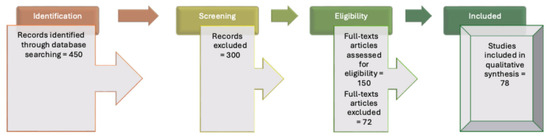
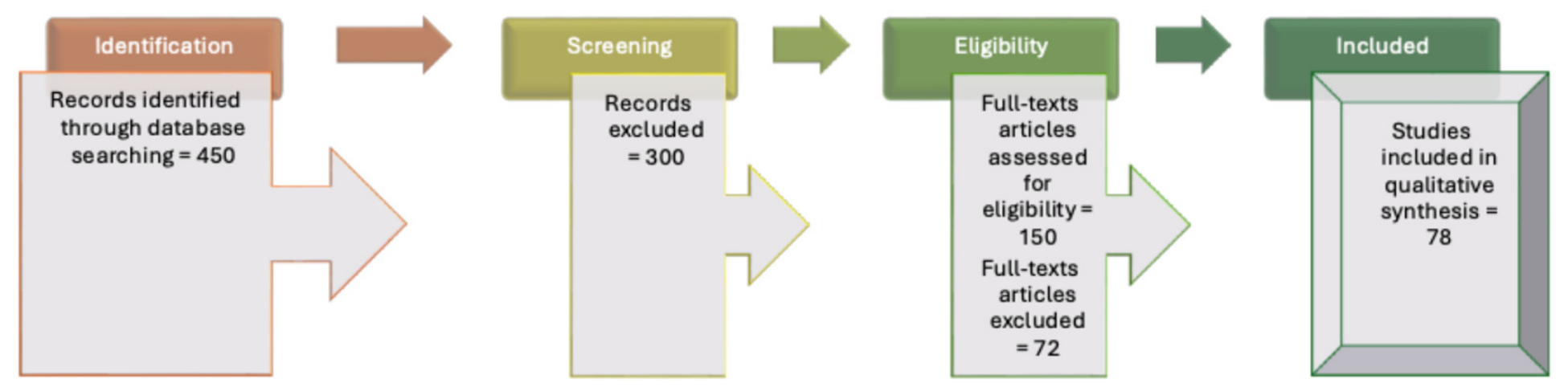
While this work is presented as a narrative review rather than a systematic review, we have included a Preferred Reporting Items for Systematic Reviews and Meta-Analyses (PRISMA)-style flow diagram to enhance clarity and transparency of the study selection process, without implying full systematic review methodology. The focus was on biological mechanisms of resistance to hormonal therapies. Both original research and reviews were considered, and studies were evaluated for molecular, cellular, and biological pathways associated with therapeutic resistance. This approach ensured a comprehensive identification of relevant evidence. The study selection process is summarized in the PRISMA flow diagram (Figure 1).
Figure 1.
Preferred Reporting Items for Systematic Reviews and Meta-Analyses (PRISMA) flow diagram illustrating study selection progress.
3. Results
The literature search identified approximately 450 PubMed records on hormone-resistant or castration-resistant prostate cancer. After removing duplicates and screening titles and abstracts, 150 articles were evaluated in full text. Studies lacking mechanistic relevance or focusing solely on clinical outcomes were excluded, leaving 78 articles for the final narrative synthesis. Supplementary searches in Scopus, Web of Science, and Google Scholar provided additional context but did not alter the selection. The included studies covered a broad spectrum of resistance mechanisms, that could be grouped into four primary foci:
- -
- First, AR-dependent resistance remains the predominant mechanism, driven by sustained or reactivated androgen receptor signaling despite castrate androgen levels. This includes AR gene amplification, activating mutations, and the expression of constitutively active AR splice variants, which collectively maintain tumor growth and survival under AR-targeted therapies [8,9,10,11,12].
- -
- Second, AR-independent or bypass resistance pathways enable tumor proliferation in the context of effective AR blockade. These mechanisms involve the activation of alternative signaling networks such as phosphoinositide 3-kinase (PI3K)/protein kinase B (AKT)/mechanistic target of rapamycin (mTOR), wingless-related integration site (WNT)/β-catenin, mitogen-activated protein kinase (MAPK), and compensatory glucocorticoid receptor signaling, highlighting the signaling plasticity of advanced prostate cancer [13,14,15].
- -
- Third, lineage plasticity and neuroendocrine differentiation represent a distinct and increasingly recognized resistance mechanism. Through genetic and epigenetic reprogramming, prostate cancer cells can transdifferentiate into AR-indifferent phenotypes, including neuroendocrine prostate cancer, which are highly aggressive and largely refractory to AR-directed therapies [16,17,18,19].
- -
- Finally, additional contributing mechanisms, including intratumoral androgen biosynthesis, metabolic reprogramming, and interactions with the tumor microenvironment, further support tumor adaptation and survival under therapeutic pressure, underscoring the multifactorial nature of CRPC progression [20].
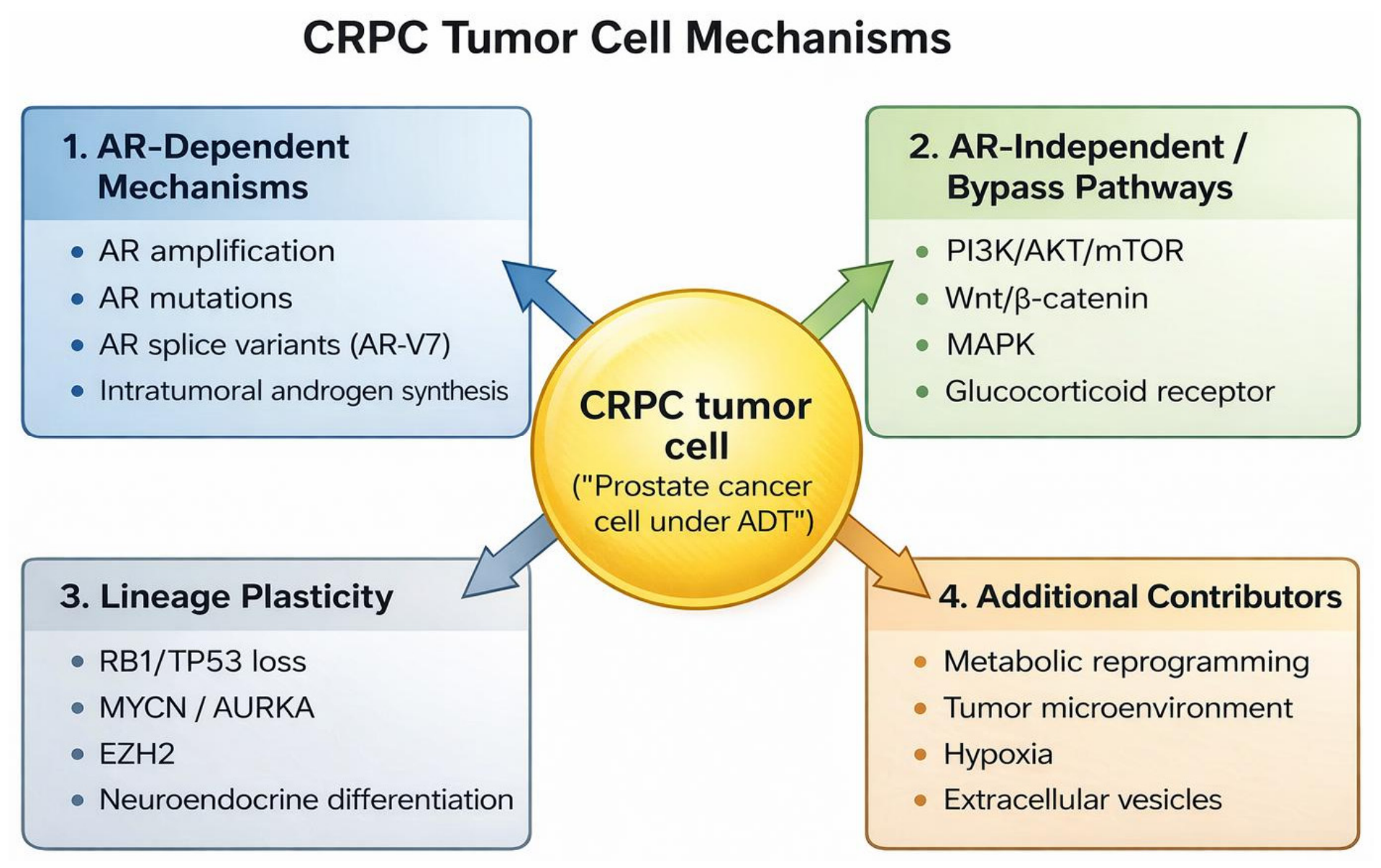
Importantly, these categories should not be interpreted as mutually exclusive. Increasing evidence suggests that multiple resistance mechanisms frequently coexist within the same tumor or emerge sequentially under therapeutic pressure, reflecting the high degree of tumor plasticity in CRPC. A schematic overview of the major resistance mechanisms in CRPC is shown in Figure 2.
Figure 2.
Schematic overview of key molecular mechanisms driving therapeutic resistance in CRPC, highlighting the dynamic interplay between AR-dependent, AR-independent, lineage plasticity, and microenvironmental processes. CRPC: castration-resistant prostate cancer; AR: androgen receptor; ADT: androgen deprivation therapy; AR-V7: androgen receptor variant 7; RB1: retinoblastoma 1; TP53: tumor protein 53; MYCN: MYCN proto-oncogene, bHLH transcription factor; AURKA: aurora kinase A; EZH2: enhancer of zeste homolog 2; PI3K: phosphoinositide 3-kinase; AKT: protein kinase B; mTOR: mechanistic target of rapamycin; WNT: wingless-related integration site; MAPK: mitogen-activated protein kinase.
4. Discussion
Understanding the molecular causes of therapeutic resistance in CRPC is crucial for devising effective treatment strategies and guiding clinical decision-making. Up to now four mechanisms have been recognized as causes of hormone-resistant prostate cancer (HRPC)/CRPC. Specifically, they are as follows:
4.1. AR-Dependent Resistance
A central theme in CRPC is the continued reliance on AR signaling despite low circulating androgens. In PCa, the physiological metabolic functions of the AR are altered, allowing AR signaling to promote tumor growth. Moreover, genetic and epigenetic alterations occurring during disease progression may confer additional oncogenic functions on the AR [21]. Reactivation or enhancement of AR signaling remains a dominant driver of resistance and is the most extensively reported mechanism among the included studies. AR gene amplification is a well-established mechanism that increases AR signaling in low-androgen environments. Early work demonstrated frequent AR amplification in recurrent tumors following ADT and suggested that this amplification confers proliferative advantage under androgen deprivation, enabling tumor progression [22,23]. AR splice variants, especially androgen receptor variant 7 (AR-V7), also contribute significantly to therapeutic escape. Expression of androgen receptor variants (AR-Vs) is increased in CRPC compared to hormone-naive (HN) bone metastases and associated with a particularly poor prognosis [24]. AR-V7 lacks the ligand-binding domain, allowing constitutive transcriptional activity independent of androgen binding. Sharp et al. showed that AR-V7 is rarely expressed in primary prostate cancer but becomes highly prevalent after ADT and subsequent AR-targeted therapies, where it correlates with poor clinical outcomes and differential gene expression signatures in CRPC [8]. Likewise, AR splice variants have been shown to drive transcriptional programs distinct from full-length AR, promoting metastasis and therapy resistance [9].
Beyond amplification and splicing, point mutations in the AR gene can also affect responsiveness to therapy by broadening ligand specificity or converting antagonists into agonists, further undermining AR antagonists’ efficacy. Though such mutations are less common than amplification and splicing, their functional impact contributes to the diversity of AR dependence mechanisms [25]. Large-scale genomic profiling studies have reinforced the centrality of AR pathway alterations in CRPC. Integrative sequencing in cohorts of metastatic castration-resistant prostate cancer (mCRPC) identifies AR as one of the most frequently aberrant genes, with alterations present in a majority of tumors and frequently co-occurring with tumor protein 53 (TP53) and phosphatase and tensin homolog (PTEN) aberrations, reinforcing AR’s role in resistance and tumor evolution [26].
Collectively, these AR-dependent adaptations account for a large portion of resistance mechanisms, explaining why therapies exclusively targeting classical AR signaling components eventually fail. However, an exclusively AR-centric view of CRPC is increasingly insufficient in explaining treatment failure, particularly in later disease stages where alternative or AR-independent mechanisms may predominate. This has important implications for therapeutic sequencing and highlights the limitations of strategies solely targeting AR signaling.
4.2. AR-Independent Resistance
A substantial proportion of CRPC tumors rely on AR-independent or bypass mechanisms to maintain proliferation despite androgen receptor inhibition.
Numerous studies and reviews have emphasized the contribution of alternative signaling pathways, including PI3K/AKT/mTOR, Wnt/β-catenin, MAPK, and hormone receptor crosstalk, in promoting therapeutic resistance. Among these, PI3K/AKT/mTOR signaling is commonly activated in CRPC, frequently following loss of the tumor suppressor PTEN, which results in aberrant downstream pathway activation. As one of the most frequently dysregulated pathways in advanced PCa, it represents a central hub that coordinates growth factor signaling with key cellular functions, including protein synthesis, proliferation, survival, metabolism, and differentiation. Through these effects, the pathway enables cancer cells to adapt to and withstand the selective pressure imposed by androgen deprivation. Preclinical investigations have also demonstrated a direct functional link between the PI3K-AKT-mTOR and AR signaling networks, highlighting a reciprocal interplay between these pathways during the emergence of resistance to ADT [27,28,29]. Furthermore, inhibition of the PI3K/AKT pathway can prevent the compensatory upregulation of the glucocorticoid receptor (GR) expression and activity that occurs following AR inhibition, thereby limiting a well-established bypass mechanism of therapeutic resistance [30]. However, suppression of AKT signaling has also been shown to promote neuroendocrine differentiation in PCa cells through degradation of the RE1-Silencing Transcription factor (REST) protein. This observation highlights a potential limitation of the combined targeting of AR and PI3K/AKT signaling, as such an approach may inadvertently favor the development of treatment-related neuroendocrine prostate cancer (t-NEPC) [31]. The Wnt/β-catenin pathway likewise plays an important role in AR-independent resistance. Aberrant activation of Wnt signaling has been identified in a subset of CRPC tumors, where it supports tumor growth and cell survival under androgen-deprived conditions. Moreover, pharmacological inhibition of Wnt signaling has been reported to restore sensitivity of prostate cancer cells to AR antagonists, further supporting its functional involvement in CRPC [32]. In addition, compensatory upregulation of the GR represents another bypass mechanism of resistance, as GR is capable of activating a subset of AR-regulated genes despite effective inhibition of AR signaling. Although the molecular mechanisms underlying GR induction have not yet been fully defined, accumulating evidence indicates that GR can circumvent AR blockade and sustain tumor cell proliferation [15]. Furthermore, fibroblast growth factor (FGF)/MAPK signaling has been implicated in both AR-null and neuroendocrine-null CRPC phenotypes, providing alternative pathways that support tumor growth independently of AR activity [33].
The convergence of these alternative signaling pathways emphasizes the remarkable plasticity of CRPC and its capacity to utilize multiple survival mechanisms beyond AR signaling. The simultaneous presence of several bypass pathways further illustrates the limited effectiveness of targeting a single signaling axis and provides a compelling biological rationale for the development of combination therapeutic strategies. Nevertheless, translating these approaches into clinical practice remains challenging because of increased treatment-related toxicity and the absence of validated predictive biomarkers.
4.3. Lineage Plasticity & Neuroendocrine Differentiation
Beyond the reactivation or bypass of AR signaling, a distinct mechanism of resistance involves lineage plasticity with transdifferentiation to AR-indifferent phenotypes, particularly neuroendocrine prostate cancer (NEPC) [34,35,36]. This process is increasingly recognized as a major driver of resistance, especially in tumors treated with potent AR pathway inhibitors. Multiple studies demonstrate that therapy-induced lineage plasticity can lead to the emergence of tumor cells that no longer depend on AR signaling [37]. Genetic events such as retinoblastoma 1 (RB1), TP53, and PTEN loss and amplification of drivers like MYCN proto-oncogene, bHLH transcription factor (MYCN) and aurora kinase A (AURKA) are associated with the NEPC phenotype and with poor responses to AR antagonists. Epigenetic alterations also play a significant role in lineage switching. Modifiers such as enhancer of zeste homolog 2 (EZH2) contribute to epigenetic reprogramming that suppresses AR expression and activates lineage-specific gene programs characteristic of NEPC. These changes can result in aggressive, AR-independent tumors with distinct biological and clinical behaviors [18,19].
Lineage plasticity indicates a fundamental shift in tumor identity rather than simply a change in pathway activity, emphasizing the need for therapeutic strategies that address not only signaling circuits but also cell fate determinants [38]. Importantly, lineage plasticity represents a mechanism of resistance but also a shift toward a fundamentally different disease state, which is often underrecognized in clinical practice and may require distinct therapeutic approaches.
4.4. Additional Contributors
While the preceding categories represent the major classes of resistance, other mechanisms also contribute to CRPC progression, though they are less frequently reported [39]. These mechanisms include intratumoral androgen biosynthesis, metabolic reprogramming, and tumor microenvironment interactions [40]. Intratumoral androgen synthesis allows tumors to maintain sufficient local androgen levels to activate AR even when systemic androgen is depleted. Tumors can express steroidogenic enzymes that convert adrenal precursors into active androgens, effectively bypassing systemic suppression. Metabolic reprogramming supports tumor survival under therapeutic stress. CRPC cells can adapt their energy metabolism, increasing reliance on alternative substrates and pathways to fuel proliferation despite therapeutic pressures. Interactions with the tumor microenvironment (including hypoxia, stromal signaling, immune modulation, and extracellular vesicles) also play roles in resistance by creating niches that support survival and mitigate therapy effects [41,42]. These auxiliary mechanisms underscore the complex, multifactorial nature of CRPC resistance and emphasize the need to integrate multiple biological axes when designing therapeutic strategies. Although often considered secondary, these mechanisms may critically modulate treatment response and contribute to interpatient variability, suggesting that a more integrated view of tumor biology is necessary to fully understand resistance.
5. Future Directions and Therapeutic Implications
Modern ADT have evolved beyond conventional castration to include potent AR-targeted agents that act either by inhibiting androgen biosynthesis or by directly antagonizing the AR. These therapies are indicated across a spectrum of disease states, including mHSPC, non-metastatic castration-resistant prostate cancer (nmCRPC), and mCRPC, and have consistently demonstrated improvements in OS, rPFS, and time to metastasis (see Table 1 for an overview of approved agents, mechanisms, clinical settings, and key efficacy outcomes). In randomized phase III trials, their addition to conventional ADT has consistently demonstrated significant improvements in overall survival (OS), radiographic progression-free survival (rPFS), and time to metastasis, establishing AR pathway intensification as a standard of care in advanced prostate cancer. However, despite these advances, disease progression and resistance remain inevitable, underscoring the need to better understand mechanisms of treatment failure.
Table 1.
Modern androgen deprivation therapies in advanced prostate cancer: mechanism of action, approved clinical indications, and key efficacy outcomes.
The heterogeneous landscape of resistance mechanisms in CRPC underscores the limitations of monotherapies targeting a single axis of tumor survival. The predominance of AR-dependent mechanisms—including AR splice variants like AR-V7 that confer ligand-independent signaling and are associated with resistance to abiraterone and enzalutamide—highlights the need for advanced AR-targeted agents that go beyond classical ligand-binding domain inhibition (e.g., targeting the AR N-terminal domain or other non-ligand binding domain (LBD) regions). Notably, expression of AR-V7 in circulating tumor cells has been associated with poor response to standard AR signaling inhibitors, emphasizing its role as a clinical biomarker for resistance and treatment stratification [9]. At the same time, AR-independent or bypass pathways, such as PI3K/AKT/mTOR signaling and compensatory receptor cross-talk (e.g., glucocorticoid receptor signaling), strongly contribute to resistance. The interconnectivity between AR and PI3K/AKT pathways suggests that dual targeting could prevent the reciprocal activation that drives survival in the context of AR inhibition [47]. Emerging evidence also supports the role of Wnt/β-catenin signaling in therapeutic resistance, as aberrant Wnt activity can promote disease progression and may represent a targetable vulnerability in a subset of CRPC tumors [48]. Addressing lineage plasticity and neuroendocrine differentiation will require targeting genetic and epigenetic drivers of transdifferentiation. Loss of tumor suppressors such as RB1 and TP53 facilitates lineage switching to AR-indifferent phenotypes, and genomic studies confirm the frequent involvement of these alterations t-NEPC [49]. Epigenetic modifiers such as EZH2 also play a critical role in reprogramming and may be targeted to reverse or prevent this phenotype [50]. Finally, auxiliary contributors, such as metabolic reprogramming and tumor microenvironment interactions, also support the resistant CRPC phenotype. Metabolic dependency shifts, including altered lipid and amino acid metabolism, have been implicated in adaptive survival and may reveal metabolic vulnerabilities that can be pharmacologically targeted [51]. The integration of biomarkers reflecting specific resistance mechanisms (e.g., AR-V7 status, pathway activity signatures) into clinical workflows holds promise for guiding personalized treatment choices and improving outcomes [52,53,54].
In the context of PSMA-targeted disease characterization, therapeutic exploitation of PSMA expression has led to the development of radioligand therapy, with lutetium-177–PSMA-617 demonstrating a survival benefit in metastatic castration-resistant prostate cancer in phase III studies, representing a direct translation of tumor biology into targeted treatment strategies [55]. In parallel, combination strategies targeting both androgen receptor signaling and DNA damage repair pathways have recently been evaluated in phase III clinical trials, including PROpel, MAGNITUDE, and TALAPRO-2, supporting the clinical relevance of synthetic lethality and cross-talk between androgen signaling and genomic instability [56,57]. Finally, emerging therapeutic approaches targeting the androgen receptor N-terminal domain are under investigation as a strategy to overcome resistance mediated by androgen receptor splice variants and ligand-binding domain alterations.
This evolving understanding points toward precision-guided, combination-based therapeutic strategies that address multiple resistance axes and anticipate adaptive tumor responses [58].
In this context, targeting defects in DNA damage repair (DDR) pathways has emerged as a clinically relevant strategy. A subset of CRPC patients harbor alterations in homologous recombination repair genes, including breast cancer gene 1 (BRCA1), breast cancer gene 2 (BRCA2), and ataxia-telangiectasia mutated (ATM), which confer sensitivity to poly(adenosine diphosphate [ADP]-ribose) polymerase (PARP) inhibitors. These agents exploit synthetic lethality by selectively targeting tumor cells with impaired DNA repair mechanisms and have demonstrated significant clinical benefit in biomarker-selected populations.
Importantly, the efficacy of PARP inhibitors highlights the transition toward biomarker-driven treatment strategies in CRPC. However, resistance to PARP inhibition can also develop—through mechanisms such as restoration of homologous recombination or replication fork stabilization—underscoring the need for rational combination approaches [59].
6. Clinical Interpretation and Traslational Implications
The translation of resistance mechanisms into clinical decision-making remains a major challenge. While biomarkers such as AR-V7, PTEN loss, or DNA repair alterations show promise, their integration into routine practice is still limited by tumor heterogeneity, temporal evolution, and lack of standardization.
In clinical settings, treatment selection is still largely empirical, and the identification of robust predictive biomarkers represents a critical unmet need. A deeper integration of molecular profiling with clinical parameters may enable more precise patient stratification and improve therapeutic outcomes. Among currently available biomarkers, alterations in DNA repair genes represent one of the most clinically actionable, directly informing the use of PARP inhibitors in selected patients.
7. Conclusions
Castration-resistant prostate cancer arises from a complex interplay of mechanisms, including reactivation of AR signaling, activation of bypass survival pathways, lineage plasticity with neuroendocrine differentiation, and adaptive metabolic and microenvironmental changes. An accurate understanding of these mechanisms, supported by robust, clinically relevant biomarkers, is essential to guide therapy selection and the design of novel combination strategies that can delay, overcome, or prevent resistance. Future research should prioritize integrated, mechanism-based approaches that target both dominant and auxiliary pathways to improve survival and quality of life for patients with advanced prostate cancer.
Author Contributions
Conceptualization: C.D.N. and A.C.; methodology: C.D.N.; software: S.R.; validation: C.D.N.; formal analysis: G.G.; investigation: G.G.; resource: S.R.; data curation: L.M. and E.K.; writing—original draft preparation: S.R.; writing—review and editing: G.G.; visualization: R.P. and E.K.; supervision: K.R.; project administration: A.C. All authors have read and agreed to the published version of the manuscript.
Funding
This research received no external funding.
Institutional Review Board Statement
Not applicable.
Informed Consent Statement
Not applicable.
Data Availability Statement
No new data were created or analyzed in this study. Data sharing is not applicable to this article.
Acknowledgments
The authors did not use any artificial intelligence (AI)-assisted tools in the preparation, writing, editing, or analysis of this manuscript.
Conflicts of Interest
The authors declare no conflicts of interest.
References
- Vieira Lima Aguiar Melão, B.; Pekala, K.R.; Matsoukas, K.; Bratt, O.; Carlsson, S.V. SIU-ICUD: Epidemiology of Prostate Cancer. Soc. Int. Urol. J. 2025, 6, 44. [Google Scholar] [CrossRef] [Scilit]
- EAU-EANM-ESTRO-ESUR-ISUP-IOG Guidelines on Prostate Cancer. European Association of Urology. 2025. Available online: https://uroweb.org/guidelines/prostate-cancer (accessed on 13 January 2026).
- Kirby, M.; Hirst, C.; Crawford, E.D. Characterising the castration-resistant prostate cancer population: A systematic review. Int. J. Clin. Pract. 2011, 65, 1180–1192. [Google Scholar] [CrossRef] [Scilit] [PubMed]
- Costa, P.; Patrício, A.; Barreira, J.V.; Monteiro, L.A.; Pinheiro, L.C.; Azinhais, P.; Sequeira, I.; Rabaça, C.; Pereira, F.; Borges, R.; et al. Comparison of Disease Progression from Prostate Cancer Diagnosis to Metastatic or Nonmetastatic Castrate-Resistant Prostate Cancer (CRPC) Patients: CaPA Study. Cancer Med. 2025, 14, e71149. [Google Scholar] [CrossRef] [Scilit] [PubMed]
- Pepe, P.; Pepe, L.; Fiorentino, V.; Curduman, M.; Pennisi, M.; Fraggetta, F. PSMA PET/CT Accuracy in Diagnosing Prostate Cancer Nodes Metastases. In Vivo 2024, 38, 2880–2885. [Google Scholar] [CrossRef] [Scilit] [PubMed]
- Islam, R.; Desai, S.; Moran, M.; Golombos, D.M. The Role of PSMA PET Imaging in Prostate Cancer: Current Applications and Future Directions. Curr. Urol. Rep. 2025, 26, 46. [Google Scholar] [CrossRef] [Scilit] [PubMed]
- Candelieri-Surette, D.; Lee, J.; Lynch, J.A.; Chang, N.-C.N.; Nelson, T.J.; Teerlink, C.C.; Pimentel, C.; Schoen, M.W.; Berlowitz, D. Epidemiology of Metastatic Castration-Resistant Prostate Cancer in Veterans Nationwide. J. Natl. Compr. Cancer Netw. 2025, 23, 307–313. [Google Scholar] [CrossRef] [Scilit] [PubMed]
- Sharp, A.; Coleman, I.; Yuan, W.; Sprenger, C.; Dolling, D.; Rodrigues, D.N.; Russo, J.W.; Figueiredo, I.; Bertan, C.; Seed, G.; et al. Androgen receptor splice variant-7 expression emerges with castration resistance in prostate cancer. J. Clin. Investig. 2019, 129, 192–208. [Google Scholar] [CrossRef] [Scilit] [PubMed]
- Han, D.; Labaf, M.; Zhao, Y.; Owiredu, J.; Zhang, S.; Patel, K.; Venkataramani, K.; Steinfeld, J.S.; Han, W.; Li, M.; et al. Androgen receptor splice variants drive castration-resistant prostate cancer metastasis by activating distinct transcriptional programs. J. Clin. Investig. 2024, 134, e168649. [Google Scholar] [CrossRef] [Scilit] [PubMed]
- Antonarakis, E.S.; Lu, C.; Luber, B.; Wang, H.; Chen, Y.; Nakazawa, M.; Nadal, R.; Paller, C.J.; Denmeade, S.R.; Carducci, M.A.; et al. Androgen Receptor Splice Variant 7 and Efficacy of Taxane Chemotherapy in Patients with Metastatic Castration-Resistant Prostate Cancer. JAMA Oncol. 2015, 1, 582–591. [Google Scholar] [CrossRef] [Scilit] [PubMed]
- Nakazawa, M.; Antonarakis, E.S.; Luo, J. Androgen Receptor Splice Variants in the Era of Enzalutamide and Abiraterone. Horm. Cancer 2014, 5, 265–273. [Google Scholar] [CrossRef] [Scilit] [PubMed]
- Giacinti, S.; Bassanelli, M.; Aschelter, A.M.; Milano, A.; Roberto, M.; Marchetti, P. Resistance to abiraterone in castration-resistant prostate cancer: A review of the literature. Anticancer Res. 2014, 34, 6265–6269. [Google Scholar] [PubMed]
- Edlind, M.P.; Hsieh, A.C. PI3K-AKT-mTOR signaling in prostate cancer progression and androgen deprivation therapy resistance. Asian J. Androl. 2014, 16, 378–386. [Google Scholar] [CrossRef] [Scilit] [PubMed]
- Estrada, J.; Andrew, N.; Gibson, D.; Chang, F.; Gnad, F.; Gunawardena, J. Cellular Interrogation: Exploiting Cell-to-Cell Variability to Discriminate Regulatory Mechanisms in Oscillatory Signalling. PLoS Comput. Biol. 2016, 12, e1004995. [Google Scholar] [CrossRef] [Scilit] [PubMed]
- Sakellakis, M.M.; Flores, L.J. Is the glucocorticoid receptor a key player in prostate cancer?: A literature review. Medicine 2022, 101, e29716. [Google Scholar] [CrossRef] [Scilit] [PubMed]
- Shao, B.; Zeng, Y. Mechanisms of neuroendocrine differentiation in castration-resistant prostate cancer and advances in the treatment of neuroendocrine prostate cancer. Ann. Med. 2025, 57, 2548975. [Google Scholar] [CrossRef] [Scilit] [PubMed]
- Imamura, J.; Ganguly, S.; Muskara, A.; Liao, R.S.; Nguyen, J.K.; Weight, C.; Wee, C.E.; Gupta, S.; Mian, O.Y. Lineage plasticity and treatment resistance in prostate cancer: The intersection of genetics, epigenetics, and evolution. Front. Endocrinol. 2023, 14, 1191311. [Google Scholar] [CrossRef] [Scilit] [PubMed]
- Ku, S.Y.; Rosario, S.; Wang, Y.; Mu, P.; Seshadri, M.; Goodrich, Z.W.; Goodrich, M.M.; Labbé, D.P.; Gomez, E.C.; Wang, J.; et al. Rb1 and Trp53 cooperate to suppress prostate cancer lineage plasticity, metastasis, and antiandrogen resistance. Science 2017, 355, 78–83. [Google Scholar] [CrossRef] [Scilit] [PubMed]
- Mu, P.; Zhang, Z.; Benelli, M.; Karthaus, W.R.; Hoover, E.; Chen, C.-C.; Wongvipat, J.; Ku, S.-Y.; Gao, D.; Cao, Z.; et al. SOX2 promotes lineage plasticity and antiandrogen resistance in TP53- and RB1-deficient prostate cancer. Science 2017, 355, 84–88. [Google Scholar] [CrossRef] [Scilit] [PubMed]
- Tilki, D.; Schaeffer, E.M.; Evans, C.P. Understanding Mechanisms of Resistance in Metastatic Castration-resistant Prostate Cancer: The Role of the Androgen Receptor. Eur. Urol. Focus 2016, 2, 499–505. [Google Scholar] [CrossRef] [Scilit] [PubMed]
- Yuan, X.; Cai, C.; Chen, S.; Yu, Z.; Balk, S.P. Androgen receptor functions in castration-resistant prostate cancer and mechanisms of resistance to new agents targeting the androgen axis. Oncogene 2014, 33, 2815–2825. [Google Scholar] [CrossRef] [Scilit] [PubMed]
- Koivisto, P.A.; Rantala, I. Amplification of the androgen receptor gene is associated with P53 mutation in hormone-refractory recurrent prostate cancer. J. Pathol. 1999, 187, 237–241. [Google Scholar] [CrossRef]
- Koivisto, P.; Visakorpi, T.; Kallioniemi, O.P. Androgen receptor gene amplification: A novel molecular mechanism for endocrine therapy resistance in human prostate cancer. Scand. J. Clin. Lab. Investig. 1996, 226, 57–63. [Google Scholar] [PubMed]
- Hörnberg, E.; Ylitalo, E.B.; Crnalic, S.; Antti, H.; Stattin, P.; Widmark, A.; Bergh, A.; Wikström, P. Expression of Androgen Receptor Splice Variants in Prostate Cancer Bone Metastases is Associated with Castration-Resistance and Short Survival. PLoS ONE 2011, 6, e19059. [Google Scholar] [CrossRef] [Scilit] [PubMed]
- Linja, M.J.; Visakorpi, T. Alterations of androgen receptor in prostate cancer. J. Steroid Biochem. Mol. Biol. 2004, 92, 255–264. [Google Scholar] [CrossRef] [Scilit] [PubMed]
- Robinson, D.; Van Allen, E.M.; Wu, Y.-M.; Schultz, N.; Lonigro, R.J.; Mosquera, J.-M.; Montgomery, B.; Taplin, M.-E.; Pritchard, C.C.; Attard, G.; et al. Integrative Clinical Genomics of Advanced Prostate Cancer. Cell 2015, 161, 1215–1228. [Google Scholar] [CrossRef] [Scilit] [PubMed]
- Shorning, B.Y.; Dass, M.S.; Smalley, M.J.; Pearson, H.B. The PI3K-AKT-mTOR Pathway and Prostate Cancer: At the Crossroads of AR, MAPK, and WNT Signaling. Int. J. Mol. Sci. 2020, 21, 4507. [Google Scholar] [CrossRef] [Scilit] [PubMed]
- Bitting, R.L.; Armstrong, A.J. Targeting the PI3K/Akt/mTOR pathway in castration-resistant prostate cancer. Endocr. Relat. Cancer 2013, 20, R83–R99. [Google Scholar] [CrossRef] [Scilit] [PubMed]
- Carver, B.S.; Chapinski, C.; Wongvipat, J.; Hieronymus, H.; Chen, Y.; Chandarlapaty, S.; Arora, V.K.; Le, C.; Koutcher, J.; Scher, H.; et al. Reciprocal Feedback Regulation of PI3K and Androgen Receptor Signaling in PTEN-Deficient Prostate Cancer. Cancer Cell 2011, 19, 575–586. [Google Scholar] [CrossRef] [Scilit] [PubMed]
- Adelaiye-Ogala, R.; Gryder, B.E.; Nguyen, Y.T.M.; Alilin, A.N.; Grayson, A.R.; Bajwa, W.; Jansson, K.H.; Beshiri, M.L.; Agarwal, S.; Rodriguez-Nieves, J.A.; et al. Targeting the PI3K/AKT Pathway Overcomes Enzalutamide Resistance by Inhibiting Induction of the Glucocorticoid Receptor. Mol. Cancer Ther. 2020, 19, 1436–1447. [Google Scholar] [CrossRef] [Scilit] [PubMed]
- Chen, R.; Li, Y.; Buttyan, R.; Dong, X. Implications of PI3K/AKT inhibition on REST protein stability and neuroendocrine phenotype acquisition in prostate cancer cells. Oncotarget 2017, 8, 84863–84876. [Google Scholar] [CrossRef] [Scilit] [PubMed]
- Lee, E.; Ha, S.; Logan, S.K. Divergent Androgen Receptor and Beta-Catenin Signaling in Prostate Cancer Cells. PLoS ONE 2015, 10, e0141589. [Google Scholar] [CrossRef] [Scilit] [PubMed]
- Bluemn, E.G.; Coleman, I.M.; Lucas, J.M.; Coleman, R.T.; Hernandez-Lopez, S.; Tharakan, R.; Bianchi-Frias, D.; Dumpit, R.F.; Kaipainen, A.; Corella, A.N.; et al. Androgen Receptor Pathway-Independent Prostate Cancer Is Sustained through FGF Signaling. Cancer Cell 2017, 32, 474–489.e6. [Google Scholar] [CrossRef] [Scilit] [PubMed]
- Akamatsu, S.; Inoue, T.; Ogawa, O.; Gleave, M.E. Clinical and molecular features of treatment-related neuroendocrine prostate cancer. Int. J. Urol. 2018, 25, 345–351. [Google Scholar] [CrossRef] [Scilit] [PubMed]
- Usmani, S.; Orevi, M.; Stefanelli, A.; Zaniboni, A.; Gofrit, O.N.; Bnà, C.; Illuminati, S.; Lojacono, G.; Noventa, S.; Savelli, G. Neuroendocrine differentiation in castration resistant prostate cancer. Nuclear medicine radiopharmaceuticals and imaging techniques: A narrative review. Crit. Rev. Oncol. Hematol. 2019, 138, 29–37. [Google Scholar] [CrossRef] [Scilit] [PubMed]
- Parimi, V.; Goyal, R.; Poropatich, K.; Yang, X.J. Neuroendocrine differentiation of prostate cancer: A review. Am. J. Clin. Exp. Urol. 2014, 2, 273–285. [Google Scholar] [PubMed]
- Lipianskaya, J.; Cohen, A.; Chen, C.J.; Hsia, E.; Squires, J.; Li, Z.; Zhang, Y.; Li, W.; Chen, X.; Xu, H.; et al. Androgen-deprivation therapy-induced aggressive prostate cancer with neuroendocrine differentiation. Asian J. Androl. 2014, 16, 541–544. [Google Scholar] [CrossRef] [Scilit] [PubMed]
- de Kouchkovsky, I.; Chan, E.; Schloss, C.; Poehlein, C.; Aggarwal, R. Diagnosis and management of neuroendocrine prostate cancer. Prostate 2024, 84, 426–440. [Google Scholar] [CrossRef] [Scilit] [PubMed]
- Guo, Z.; Lu, X.; Yang, F.; He, C.; Qin, L.; Yang, N.; Han, C.; Wu, J. Exosomal LINC01213 Plays a Role in the Transition of Androgen-Dependent Prostate Cancer Cells into Androgen-Independent Manners. J. Oncol. 2022, 2022, 8058770. [Google Scholar] [CrossRef] [Scilit] [PubMed]
- Papanikolaou, S.; Vourda, A.; Syggelos, S.; Gyftopoulos, K. Cell Plasticity and Prostate Cancer: The Role of Epithelial–Mesenchymal Transition in Tumor Progression, Invasion, Metastasis and Cancer Therapy Resistance. Cancers 2021, 13, 2795. [Google Scholar] [CrossRef] [Scilit] [PubMed]
- McKinney, L.P.; Singh, R.; Jordan, I.K.; Varambally, S.; Dammer, E.B.; Lillard, J.W. Transcriptome Analysis Identifies Tumor Immune Microenvironment Signaling Networks Supporting Metastatic Castration-Resistant Prostate Cancer. Onco 2023, 3, 81–95. [Google Scholar] [CrossRef] [Scilit] [PubMed]
- Chen, P.; Chen, J.; Zhan, P.; Ye, X.; Zhao, L.; Zhang, Z.; Zuo, J.; Shi, H.; Li, X.; Wu, S.; et al. Targeting Cancer-Associated Fibroblasts in Prostate Cancer: Recent Advances and Therapeutic Opportunities. Cancers 2025, 18, 151. [Google Scholar] [CrossRef] [Scilit] [PubMed]
- Fizazi, K.; Tran, N.; Fein, L.; Matsubara, N.; Rodriguez-Antolin, A.; Alekseev, B.Y.; Özgüroğlu, M.; Ye, D.; Feyerabend, S.; Protheroe, A.; et al. Abiraterone plus Prednisone in Metastatic, Castration-Sensitive Prostate Cancer. N. Engl. J. Med. 2017, 377, 352–360. [Google Scholar] [CrossRef] [Scilit] [PubMed]
- Hussain, M.; Fizazi, K.; Saad, F.; Rathenborg, P.; Shore, N.; Ferreira, U.; Ivashchenko, P.; Demirhan, E.; Modelska, K.; Phung, D.; et al. Enzalutamide in Men with Nonmetastatic, Castration-Resistant Prostate Cancer. N. Engl. J. Med. 2018, 378, 2465–2474. [Google Scholar] [CrossRef] [Scilit] [PubMed]
- Smith, M.R.; Saad, F.; Chowdhury, S.; Oudard, S.; Hadaschik, B.A.; Graff, J.N.; Olmos, D.; Mainwaring, P.N.; Lee, J.Y.; Uemura, H.; et al. Apalutamide Treatment and Metastasis-free Survival in Prostate Cancer. N. Engl. J. Med. 2018, 378, 1408–1418. [Google Scholar] [CrossRef] [Scilit] [PubMed]
- Fizazi, K.; Shore, N.; Tammela, T.L.; Ulys, A.; Vjaters, E.; Polyakov, S.; Jievaltas, M.; Luz, M.; Alekseev, B.; Kuss, I.; et al. Darolutamide in Nonmetastatic, Castration-Resistant Prostate Cancer. N. Engl. J. Med. 2019, 380, 1235–1246. [Google Scholar] [CrossRef] [Scilit] [PubMed]
- Tortorella, E.; Giantulli, S.; Sciarra, A.; Silvestri, I. AR and PI3K/AKT in Prostate Cancer: A Tale of Two Interconnected Pathways. Int. J. Mol. Sci. 2023, 24, 2046. [Google Scholar] [CrossRef] [Scilit] [PubMed]
- Kishore, C.; Zi, X. Wnt Signaling and Therapeutic Resistance in Castration-Resistant Prostate Cancer. Curr. Pharmacol. Rep. 2023, 9, 261–274. [Google Scholar] [CrossRef] [Scilit] [PubMed]
- Ueki, H.; Jimbo, N.; Terakawa, T.; Hara, T.; Tobe, T.; Hirata, J.; Wakita, N.; Okamura, Y.; Suzuki, K.; Bando, Y.; et al. Evaluating RB1 and p53 as diagnostic markers in treatment-related neuroendocrine prostate cancer through immunohistochemistry and genomic analysis of RB1 and TP53. Prostate 2024, 84, 1506–1514. [Google Scholar] [CrossRef] [Scilit] [PubMed]
- Beltran, H.; Demichelis, F. Therapy considerations in neuroendocrine prostate cancer: What next? Endocr. Relat. Cancer 2021, 28, T67–T78. [Google Scholar] [CrossRef] [Scilit] [PubMed]
- Chetta, P.; Zadra, G. Metabolic reprogramming as an emerging mechanism of resistance to endocrine therapies in prostate cancer. Cancer Drug Resist. 2021, 4, 143–162. [Google Scholar] [CrossRef] [Scilit] [PubMed]
- Sowalsky, A.G.; Figueiredo, I.; Lis, R.T.; Coleman, I.; Gurel, B.; Bogdan, D.; Yuan, W.; Russo, J.W.; Bright, J.R.; Whitlock, N.C.; et al. Assessment of Androgen Receptor Splice Variant-7 as a Biomarker of Clinical Response in Castration-Sensitive Prostate Cancer. Clin. Cancer Res. 2022, 28, 3509–3525. [Google Scholar] [CrossRef] [Scilit] [PubMed]
- Sumiyoshi, T.; Mizuno, K.; Yamasaki, T.; Miyazaki, Y.; Makino, Y.; Okasho, K.; Li, X.; Utsunomiya, N.; Goto, T.; Kobayashi, T.; et al. Clinical utility of androgen receptor gene aberrations in circulating cell-free DNA as a biomarker for treatment of castration-resistant prostate cancer. Sci. Rep. 2019, 9, 4030. [Google Scholar] [CrossRef] [Scilit] [PubMed]
- Romanel, A.; Tandefelt, D.G.; Conteduca, V.; Jayaram, A.; Casiraghi, N.; Wetterskog, D.; Salvi, S.; Amadori, D.; Zafeiriou, Z.; Rescigno, P.; et al. Plasma AR and abiraterone-resistant prostate cancer. Sci. Transl. Med. 2015, 7, 312re10. [Google Scholar] [CrossRef] [Scilit] [PubMed]
- Sartor, O.; de Bono, J.; Chi, K.N.; Fizazi, K.; Herrmann, K.; Rahbar, K.; Tagawa, S.T.; Nordquist, L.T.; Vaishampayan, N.; El-Haddad, G.; et al. Lutetium-177–PSMA-617 for Metastatic Castration-Resistant Prostate Cancer. N. Engl. J. Med. 2021, 385, 1091–1103. [Google Scholar] [CrossRef] [Scilit] [PubMed]
- Beije, N.; Abida, W.; Antonarakis, E.S.; Castro, E.; de Wit, R.; Fizazi, K.; Gillessen, S.; Hussain, M.; Mateo, J.; Morris, M.J.; et al. PARP Inhibitors for Prostate Cancer: Tangled up in PROfound and PROpel (and TALAPRO-2) Blues. Eur. Urol. 2023, 84, 253–256. [Google Scholar] [CrossRef] [Scilit] [PubMed]
- Ye, D.; Saad, M.; Lee, J.Y.; Jung, W.; Pang, S.; Li, L.; Gurney, H.; Attard, G.; Chi, K.N.; Mundle, S.; et al. Niraparib with Abiraterone Acetate Plus Prednisone as First-Line Therapy in Patients with Metastatic Castration-Resistant Prostate Cancer with Homologous Recombination Repair Gene Alterations: Final Analysis of the Asian Subgroup From the MAGNITUDE Study. Int. J. Urol. 2026, 33, e70455. [Google Scholar] [CrossRef] [Scilit] [PubMed]
- Wadosky, K.M.; Koochekpour, S. Molecular mechanisms underlying resistance to androgen deprivation therapy in prostate cancer. Oncotarget 2016, 7, 64447–64470. [Google Scholar] [CrossRef] [Scilit] [PubMed]
- Tzang, C.-C.; Wu, H.-W.; Luo, C.-A.; Li, Y.-T.; Kang, Y.-F.; Hsieh, C.-M.; Lee, C.-Y.; Hsu, T.-C.; Tzang, B.-S. Efficacy and safety of PARP inhibitors in prostate cancer: An umbrella review of systematic reviews and meta-analyses. Crit. Rev. Oncol. Hematol. 2025, 207, 104609. [Google Scholar] [CrossRef] [Scilit] [PubMed]

Disclaimer/Publisher’s Note: The statements, opinions and data contained in all publications are solely those of the individual author(s) and contributor(s) and not of MDPI and/or the editor(s). MDPI and/or the editor(s) disclaim responsibility for any injury to people or property resulting from any ideas, methods, instructions or products referred to in the content. |
© 2026 by the authors. Published by MDPI on behalf of the Société Internationale d’Urologie. Licensee MDPI, Basel, Switzerland. This article is an open access article distributed under the terms and conditions of the Creative Commons Attribution (CC BY) license.