


Abstract
Objective: CDCA8 is frequently overexpressed in malignant tumors and linked to poor prognosis. This study evaluated the prognostic significance of CDCA8 expression in glioma patients using the CGGA and TCGA datasets. Methods: Clinical and expression data of glioma patients from CGGA and TCGA were analyzed. CDCA8 expression was compared across subgroups based on tumor grade (GBM vs. LGG) and IDH mutation status, and meta-analyses were performed to assess inter-database differences. Results: This study included 1125 glioma patients from CGGA and TCGA. CDCA8 expression was higher in TCGA GBM (p < 0.001) but comparable between databases in LGG (p = 0.501). CGGA showed lower CDCA8 in IDH-mutant gliomas (p < 0.001), with no difference in IDH-wildtype cases (p = 0.154). CGGA patients had longer overall survival in all above subgroups. Meta-analysis found no significant prognostic association of CDCA8 in GBM, IDH-wildtype and IDH-mutant gliomas. In LGG, high CDCA8 was significantly linked to reduced adverse events (p < 0.001, OR = 0.22, 95% CI [0.11–0.43]). Conclusion: CDCA8 has grade-dependent prognostic roles in gliomas. Its overexpression correlates with poor prognosis in GBM but favorable outcomes in LGG. Inter-database variations support CDCA8 as a promising prognostic biomarker for LGG, and reflect the influences of regional, therapeutic and genetic factors.
1. Introduction
The cell division cycle-associated 8 (CDCA8) gene plays a crucial role in mitosis and cell cycle regulation [1]. CDCA8, also known as Borealin, is a core component of the Chromosome Passenger Complex (CPC), together with Aurora B, INCENP, and Survivin [2]. In normal cells, the CPC is essential for accurate chromosome segregation and cytokinesis during mitosis: it localizes to centromeres in metaphase to correct erroneous kinetochore–microtubule attachments, and relocates to the central spindle in anaphase to ensure proper completion of cytokinesis [3]. Dysregulation of the CPC leads to aneuploidy and chromosomal instability, which are hallmarks of cancer. In many malignancies, CDCA8 is frequently overexpressed, and its upregulation correlates with advanced tumor stage, increased proliferation, and poor clinical outcomes [4]. These established roles make CDCA8 a compelling candidate to investigate in glioma, where chromosomal instability and mitotic dysregulation are common features. In recent years, studies have demonstrated that abnormal expression of CDCA8 is closely associated with the development of multiple malignancies [5], particularly gliomas [6]. Gliomas are among the most common primary brain tumors in adults, characterized by complex pathogenesis involving both genetic and environmental factors [7]. Aberrant CDCA8 expression in gliomas may contribute to tumor proliferation and progression by disrupting cell cycle control.
In Western countries, the incidence of gliomas is relatively high, and the prevalence of glioblastoma (GBM) has shown a sustained upward trend [8]. Recent investigations into CDCA8 suggest that it may serve as a promising biomarker and therapeutic target, offering new strategies for early diagnosis and targeted therapy in gliomas [9,10,11,12]. In contrast, the incidence of gliomas in China is relatively lower; however, significant advances in diagnostic and therapeutic techniques have been achieved in recent years [13]. Although research on CDCA8 in Chinese glioma cohorts is still in its exploratory phase, preliminary findings indicate that CDCA8 may play an important role in glioma initiation and progression.
In summary, CDCA8 holds substantial significance in glioma research, and future studies may further elucidate its pathogenic mechanisms and therapeutic potential across different populations and regions.
2. Materials and Methods
2.1. Study Design
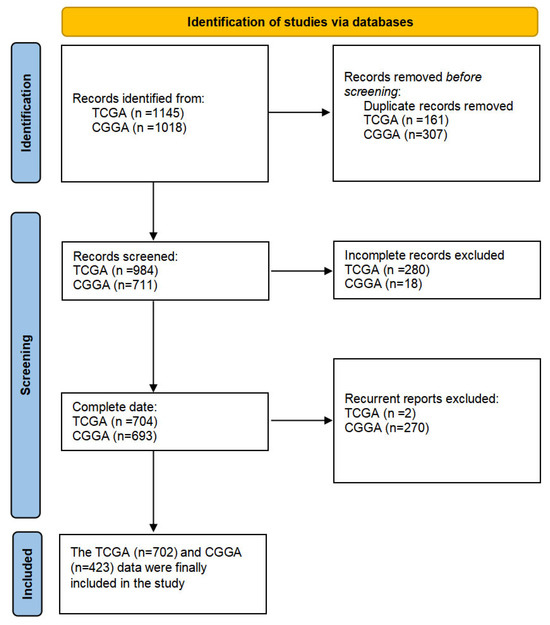
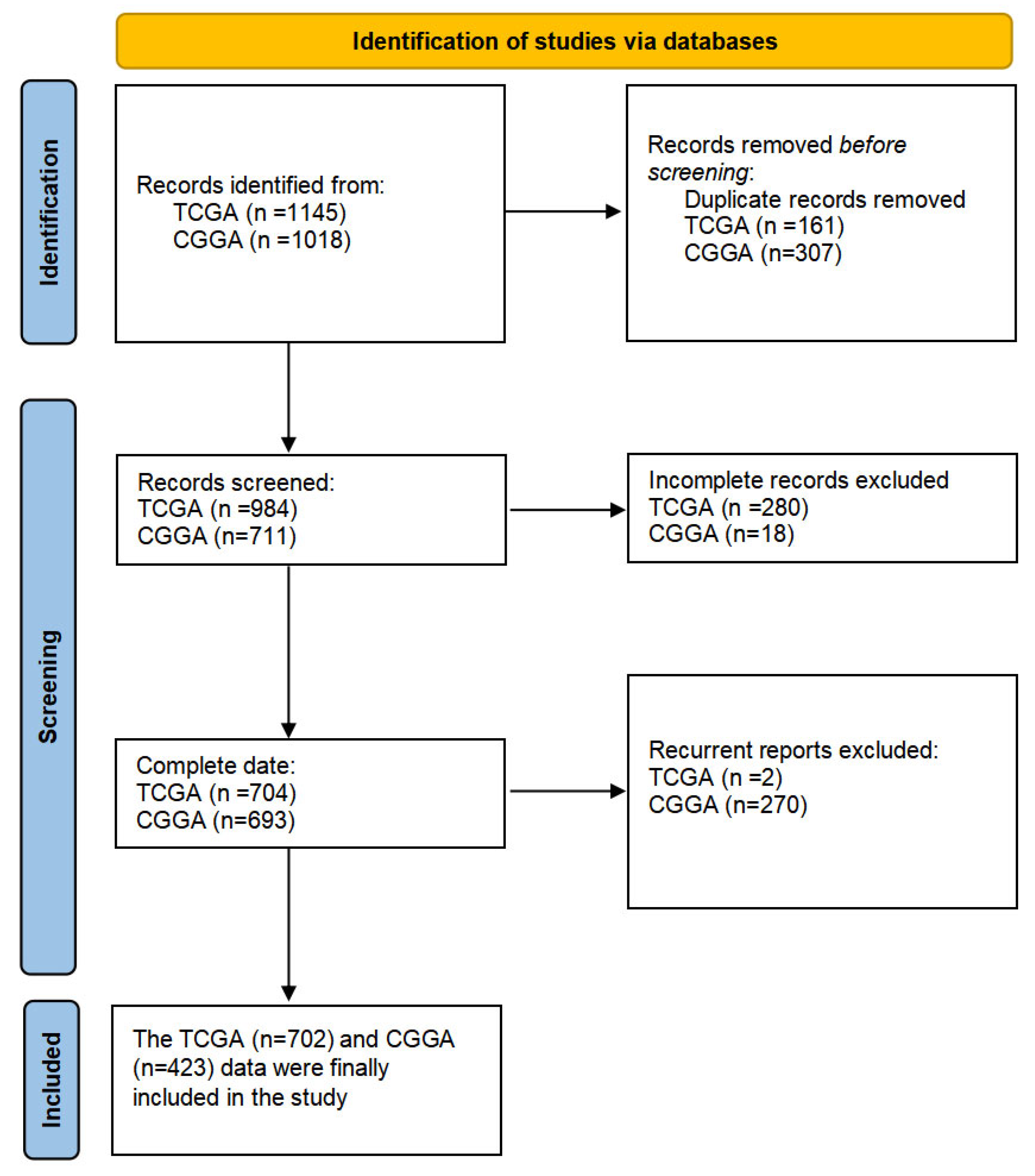
This study is a combined analysis of patient-level data from two public glioma databases (CGGA and TCGA), with a subgroup meta-analysis to assess the association between CDCA8 expression and clinical outcomes. The reporting of this study follows the Preferred Reporting Items for Systematic Reviews and Meta-Analyses (PRISMA) 2020 guidelines (Supplementary Materials). A PRISMA flow diagram detailing the patient inclusion and exclusion process is provided in Figure 1. No prospective protocol registration was performed for this analysis, as it is based on publicly available de-identified patient data rather than a systematic review of published literature.
Figure 1.
The process of data collection and organization.
2.2. Inclusion Criteria
- (1)
- Study Type: (1) All publicly available studies utilizing data from The Cancer Genome Atlas (TCGA) and the Chinese Glioma Genome Atlas (CGGA) that include glioma patients; (2) Studies reporting CDCA8 expression data along with relevant clinical information, such as sex, age, tumor classification (GBM and LGG), and IDH mutation status; (3) Studies employing standardized methodologies for quantifying CDCA8 expression levels (e.g., FPKM, RSEM, RNA sequencing).
- (2)
- Patient Characteristics: (1) Pathologically confirmed glioma patients with clearly defined tumor types (GBM or LGG); (2) Both male and female patients, with explicit records of sex, age, and histopathological diagnosis; (3) Availability of CDCA8 expression data and at least one clinical outcome (e.g., overall survival, prognosis, therapeutic response).
- (3)
- Database Requirements: The TCGA database includes multi-center data from the United States, covering glioma patients of different races, ages, and sexes. The CGGA database provides representative genomic data from Chinese glioma patients.
2.3. Exclusion Criteria
- (1)
- Study Type: (1) Studies without control groups or without extractable CDCA8 expression data; (2) Non-original studies, including reviews, book chapters, case reports, or conference abstracts.
- (2)
- Patient Characteristics: (1) Studies lacking complete clinical data, such as sex, age, tumor classification, or IDH mutation status; (2) Studies with mixed or unclassifiable glioma patient data that cannot be clearly assigned to GBM or LGG groups; (3) Patients with recurrent gliomas after treatment, due to potential confounding effects of prior therapies on CDCA8 expression.
- (3)
- Data Quality: (1) Studies with poor data quality, extensive missing values, or inconsistent normalization of expression data; (2) Studies using non-standardized gene expression data or inconsistent experimental methodologies.
2.4. Search Strategy
In the TCGA database, clinical samples of glioma patients with available CDCA8 gene expression data were identified through the UCSC Xena platform. In the CGGA database, the CGGA Online Platform was used to retrieve and download glioma-related gene expression datasets, ensuring that each selected dataset contained CDCA8 expression levels and relevant clinical characteristics (such as IDH mutation status and tumor grade). The keyword “CDCA8” was used as the primary search term to capture all studies and expression data related to CDCA8, while “Glioma,” “Glioblastoma multiforme,” and “Lower grade glioma” were applied to obtain expression data for different glioma subtypes, ensuring comprehensive coverage of both GBM and LGG cases. Data retrieval from both databases was completed on [02/2026]. After initial screening by the two independent reviewers, cases that did not meet the inclusion criteria were excluded, and any discrepancies were resolved by consensus. The patient selection process is illustrated in the PRISMA flow diagram (Figure 1).
2.5. Data Quality Assessment and Heterogeneity Analysis
A modified Newcastle–Ottawa Scale (NOS) was utilized to evaluate the data quality of the CGGA and TCGA patient cohorts. Adjustments were made to adapt the original NOS framework for database-derived population data rather than conventional observational studies. The modified NOS consists of three evaluation domains with a total score of 9 points: participant selection (4 points), cohort comparability (2 points), and exposure assessment (3 points). According to the NOS scoring criteria, scores ranging from 0 to 4 points indicate low data quality, while scores of 5 to 9 points represent high data quality [14].
Heterogeneity Assessment: To evaluate variability among studies, the I2 statistic was used to quantify interstudy heterogeneity. The assessment indicated moderate to high heterogeneity (I2 > 50%) in some comparisons, which may be attributed to factors such as sample size, baseline patient characteristics, and variations in study design across regions. To address this, a random-effects model based on restricted maximum likelihood estimation was applied to ensure the robustness and reliability of the pooled effect size.
2.6. Statistical Analysis
Tests for heterogeneity were conducted for each meta-analysis using the I2 statistic, with I2 ≤ 50% indicating low heterogeneity and I2 > 50% indicating substantial heterogeneity. A non-significant Cochran’s Q test (p > 0.01) suggested the absence of significant heterogeneity. A p-value < 0.05 was considered statistically significant. Pooled analyses were performed using fixed-effects models in the absence of significant heterogeneity and random-effects models when substantial heterogeneity was present. Odds ratios (ORs) and 95% confidence intervals (CIs) were selected as effect measures. To explore potential sources of heterogeneity, subgroup analyses were performed according to tumor grade (GBM vs. LGG) and IDH mutation status. All meta-analyses were conducted using RevMan software (version 5.4). All figures and charts were generated using GraphPad Prism software (version 10.0). No formal sensitivity analysis or publication bias assessment was performed, as this study was based on patient-level data from two public databases rather than published literature.
3. Results
3.1. Search Results and Characteristics of Included Studies
The process of data collection and organization is illustrated in Figure 1. For this meta-analysis, a total of 1018 glioma cases from the CGGA database and 1145 glioma cases from the TCGA database were initially retrieved. After excluding duplicate and incomplete records, 423 cases from CGGA and 702 cases from TCGA were included in the final analysis. All selected studies provided CDCA8 gene expression data and relevant clinical information, including sex, age, tumor classification, and IDH mutation status. CDCA8 expression levels were normalized using Z-Score transformation, and all studies utilized commonly accepted gene expression quantification methods, such as RNA sequencing (RNA-seq) or fragments per kilobase of transcript per million mapped reads (FPKM).
For each dataset, the median CDCA8 expression value was calculated, and samples with expression levels above the median were categorized as high expression, whereas those at or below the median were classified as low expression. Glioma cases were stratified into GBM (WHO IV) and LGG (WHO I–III) groups, or by IDH mutation status as IDH-mutant (IDH-M) and IDH-wild type (IDH-W). Clinical characteristics for each subgroup are summarized and presented as mean ± standard deviation, as shown in Table 1.
Table 1.
Relevant database data included in the study.
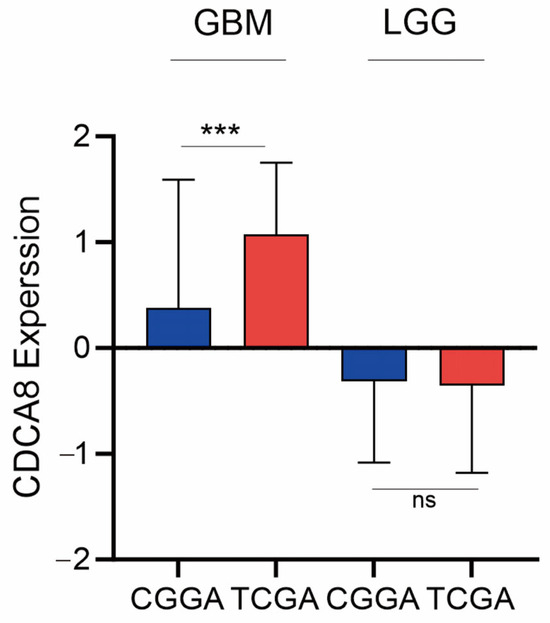
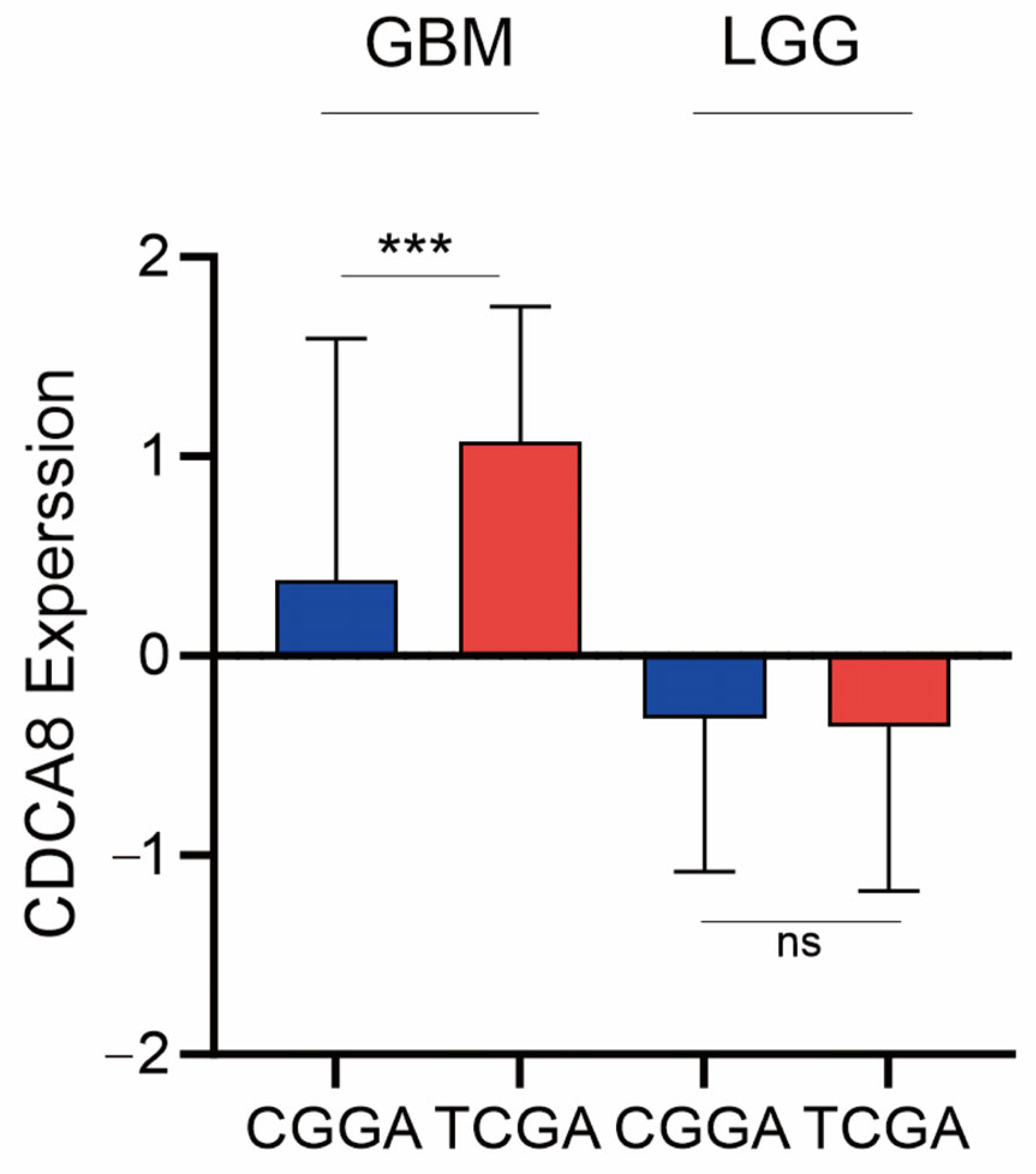
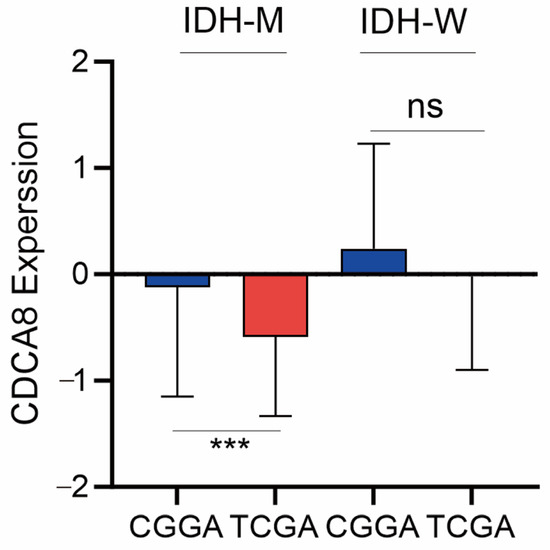
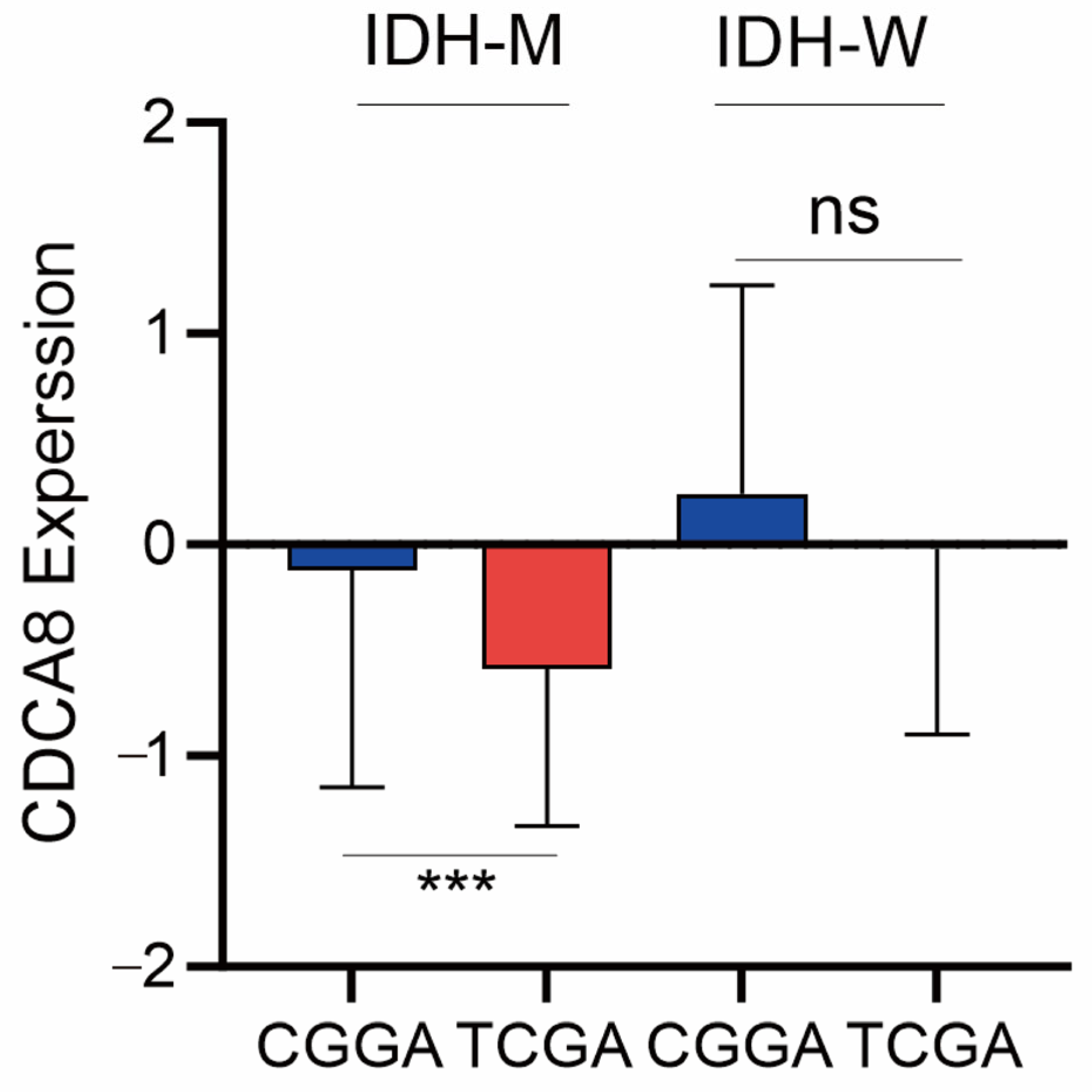
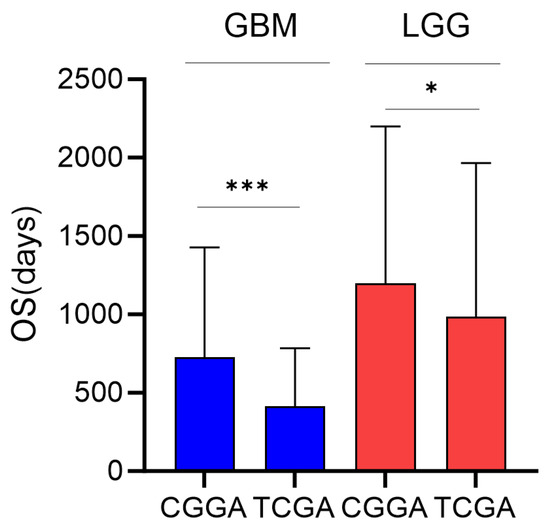
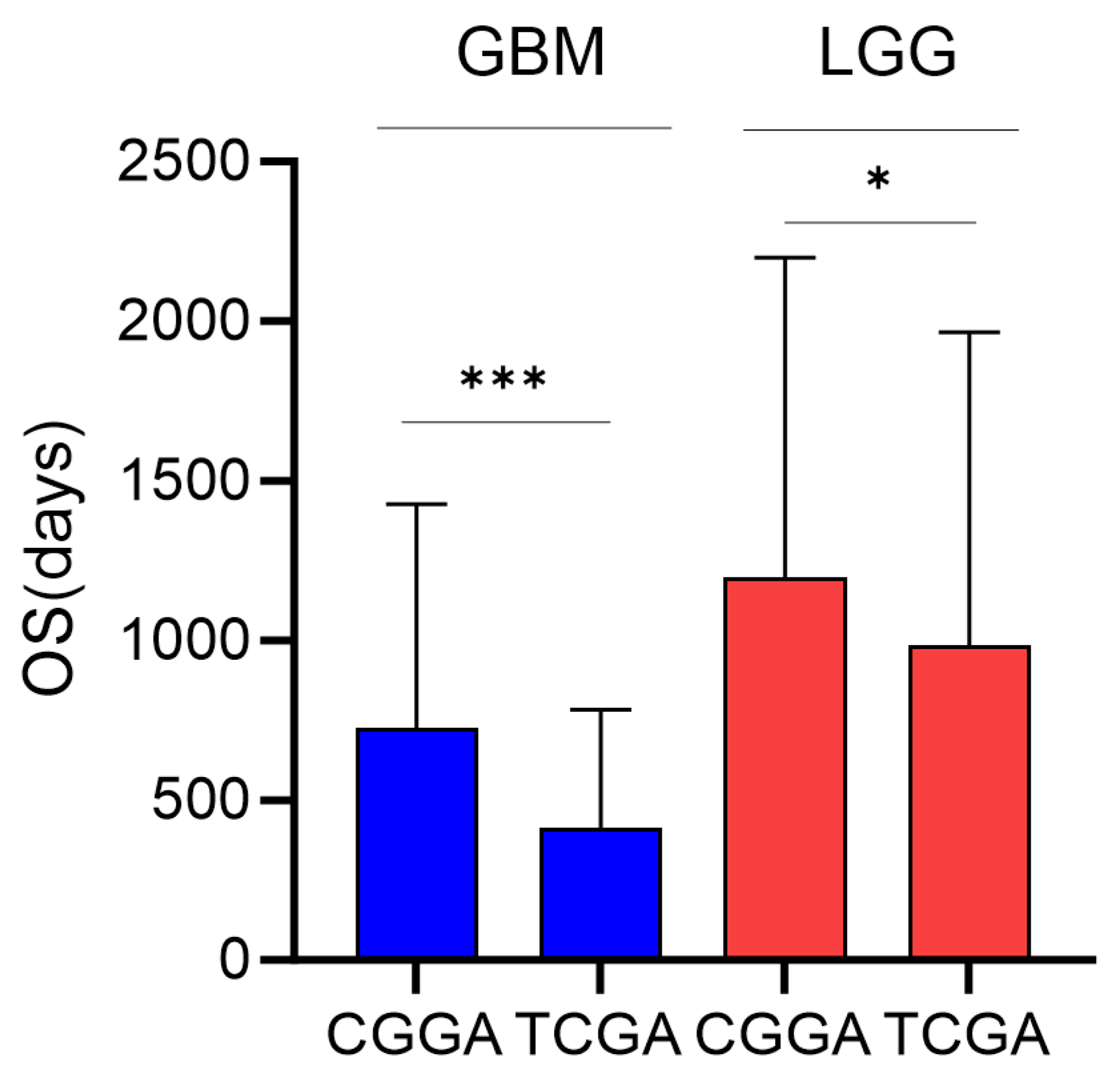
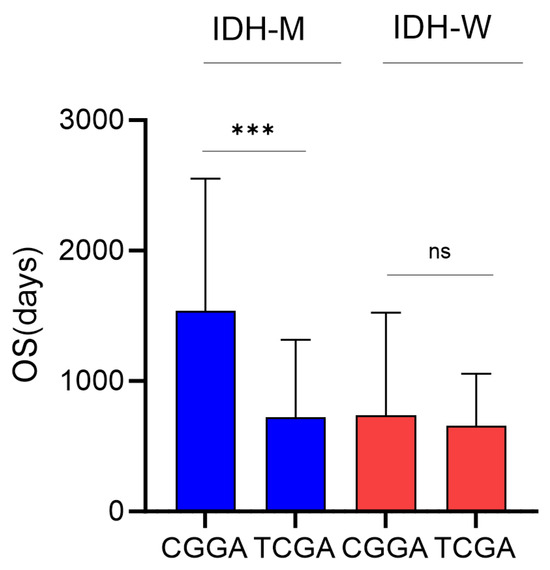
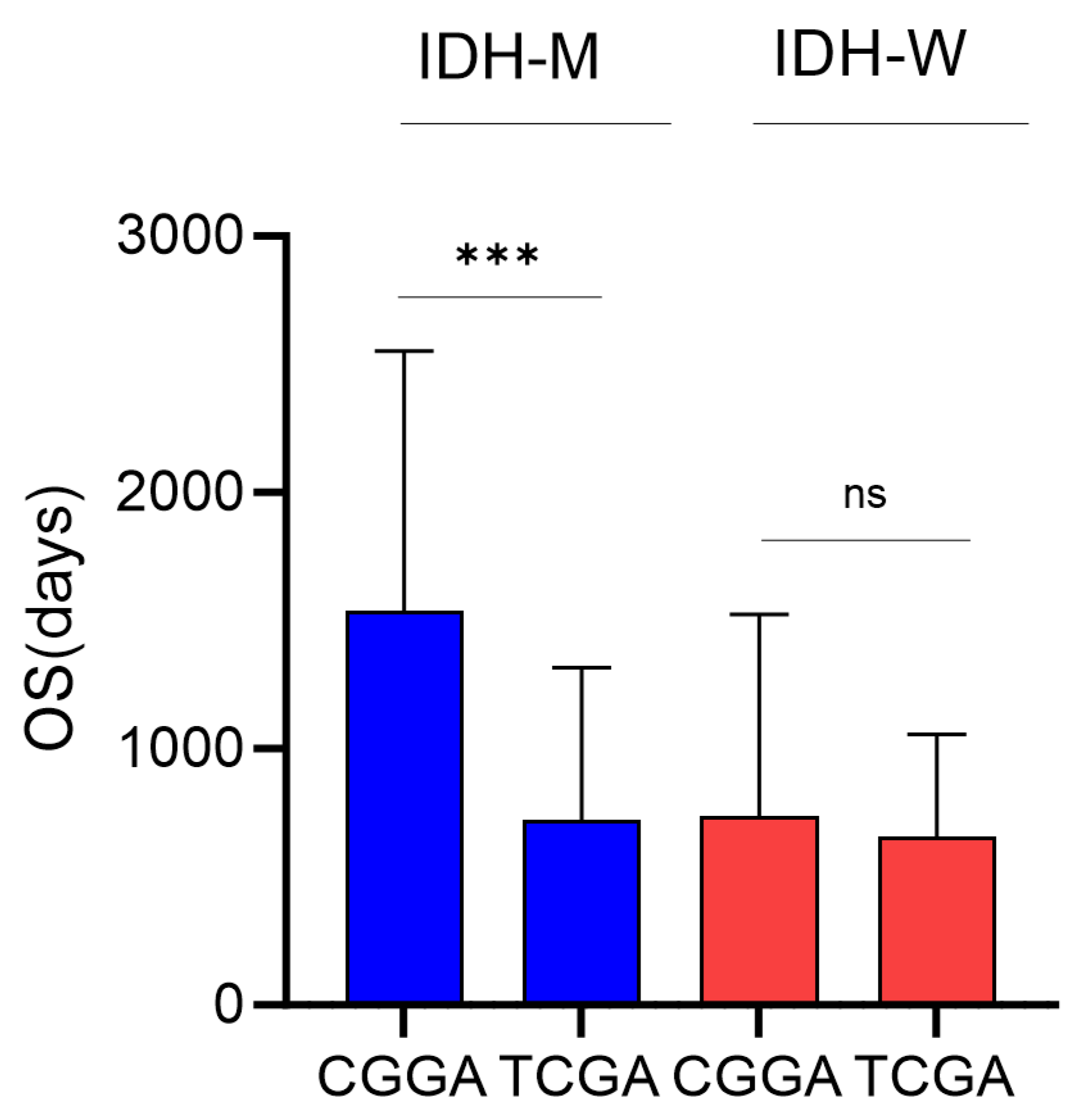
As illustrated in Figure 2, CDCA8 expression in GBM patients was significantly higher in TCGA than in CGGA (p < 0.001), whereas no statistically significant difference was observed in LGG patients (p = 0.501). In Figure 3, IDH-M glioma patients in CGGA exhibited significantly lower CDCA8 expression compared with those in TCGA (p < 0.001), while IDH-W gliomas showed no significant difference (p = 0.154). Figure 4 demonstrates that overall survival (OS) in both GBM and LGG patients from CGGA was longer than that of patients in TCGA (p < 0.001 and p < 0.03, respectively). Finally, as shown in Figure 5, OS in IDH-M glioma patients was significantly higher in CGGA than in TCGA (p < 0.001), whereas no significant difference in OS was observed in the IDH-W subgroup (p = 0.573).
Figure 2.
The expression of CDCA8 in GBM and LGG in databases. *** p < 0.001, ns: no statistical significance.
Figure 3.
The expression of CDCA8 in IDH-M and IDH-W in databases. *** p < 0.001, ns: no statistical significance.
Figure 4.
The overall survival (OS) of patients with GBM and LGG in databases. *** p < 0.001, * p < 0.05.
Figure 5.
The overall survival (OS) of patients with IDH-M and IDH-W in databases. *** p < 0.001, ns: no statistical significance.
To further clarify the prognostic significance of CDCA8 in different glioma subgroups, two complementary analytical approaches were used in this study: (1) Descriptive analyses: CDCA8 expression levels and overall survival (OS) were compared between CGGA and TCGA databases across different pathological grades (GBM/LGG) and molecular subtypes (IDH-mutant/wild-type). These analyses were designed to characterize the baseline features of the study populations and validate well-established clinical patterns in gliomas. (2) Meta-analyses: Within each subgroup, patients were dichotomized into high and low CDCA8 expression groups, and the association between CDCA8 expression and the risk of adverse clinical events was evaluated. A random-effects model was used to pool results from the two databases to assess the independent prognostic effect of CDCA8.
3.2. Meta-Analysis Results
A meta-analysis of the included variables was performed using a random-effects model. For CDCA8 expression in glioma patients, no statistically significant differences were observed between the two databases in the GBM, IDH-W, and IDH-M subgroups, with p-values of 0.06, 0.10, and 0.12, respectively. The corresponding ORs and 95% CIs were 0.63 [−0.02, 1.29], 2.38 [0.85, 6.65], and 0.20 [0.03, 1.55], as shown in Figure 6, Figure 7 and Figure 8. In contrast, a significant difference was observed in LGG between the two databases (p < 0.001), with an OR and 95% CI of 0.22 [0.11, 0.43] (Figure 9). A summary of the meta-analysis results is presented in Table 2.
Figure 6.
Forest plot of CDCA8 expression in GBM patients.
Figure 7.
Forest plot of CDCA8 expression in IDH-W patients.
Figure 8.
Forest plot of CDCA8 expression in IDH-M patients.
Figure 9.
Forest plot of CDCA8 expression in LGG patients.
Table 2.
Results of meta-analysis.
3.3. Studies Quality
In this meta-analysis, data quality assessment encompassed the standardization of gene expression data, completeness of clinical information, consistency in data processing, and potential sources of bias. Glioma patient data from both the TCGA and CGGA databases underwent rigorous quality control to ensure high reliability of the included datasets. CDCA8 expression values were transformed using log2(FPKM+1) to improve comparability across studies. All expression data were normalized to minimize variations caused by different experimental platforms or technical methods, thereby enhancing the credibility of the analysis results. Although some degree of heterogeneity was observed, the use of a random-effects model ensured the robustness and reliability of the findings. The NOS scores for the datasets from both databases are summarized in Table 3.
Table 3.
The NOS score of the included research databases.
4. Discussion
The results of this study demonstrated that CDCA8 expression in GBM patients from the TCGA database was significantly higher than that in patients from the CGGA database (p < 0.001). This finding is consistent with previous studies, suggesting that elevated CDCA8 expression may be closely associated with the malignancy and invasive growth of GBM [15]. As a critical regulator of the cell cycle, CDCA8 may play a role in tumor proliferation, invasion, and anti-apoptotic mechanisms in GBM [16]. Notably, while the association between high CDCA8 expression and poor prognosis was apparent in GBM, no significant difference in CDCA8 expression was observed in LGG patients (p = 0.501). This suggests that CDCA8 may exert different biological effects across gliomas of varying malignancy grades. LGG is generally less aggressive and is often associated with a longer survival period [17], which may explain the weaker prognostic relevance of CDCA8 expression in LGG. Additionally, other molecular markers—such as IDH mutations [18] and O6 methylguanine DNA methyltransferase (MGMT) promoter methylation [19]—may play a more dominant role in determining prognosis in LGG.
This study further examined the effect of IDH mutation status on CDCA8 expression. In the CGGA database, CDCA8 expression was significantly lower in IDH-M gliomas compared with TCGA (p < 0.001). This may reflect the influence of IDH mutation as a critical molecular feature that modulates gene expression through metabolic or epigenetic mechanisms [20]. IDH mutations lead to the accumulation of 2-hydroxyglutarate (2-HG), which alters tumor cell metabolism and epigenetic programming [21], potentially contributing to lower CDCA8 expression in this subgroup. However, no significant difference was observed in IDH-W gliomas (p = 0.154), suggesting that CDCA8 expression in IDH-W patients may be influenced by other molecular markers or treatment factors, which warrants further investigation.
A comparison of OS between the two datasets revealed that both GBM and LGG patients in the CGGA cohort had significantly longer OS than those in the TCGA cohort (p < 0.001 and p < 0.03, respectively). This finding suggests that differences in treatment strategies or population characteristics (e.g., age, sex) may contribute to better prognosis in the CGGA cohort [22]. In particular, among IDH-M patients, OS was significantly longer in CGGA compared with TCGA (p < 0.001), which could be associated with regional differences in treatment protocols, genetic background, and environmental exposures [23]. Given that IDH mutation is widely recognized as a favorable prognostic factor in gliomas [24], improved OS in the CGGA IDH-M subgroup may reflect broader treatment availability and optimized clinical management in this patient population.
Meta-analysis revealed no significant association between CDCA8 expression and adverse clinical events in GBM, IDH-wildtype and IDH-mutant glioma subgroups (p = 0.06, 0.10 and 0.12, respectively). This indicates that the prognostic value of CDCA8 in these subtypes may be affected by tumor heterogeneity and variations in patient demographics. In contrast, a significant correlation was identified in the LGG subgroup (p < 0.001, OR = 0.22, 95% CI [0.11–0.43]), demonstrating that CDCA8 exerts a vital biological function in LGG. These differences are biologically relevant and may reflect the dual role of CDCA8 in glioma progression. In high-grade GBM, CDCA8 overexpression likely drives chromosomal instability and uncontrolled proliferation, contributing to aggressive tumor behavior. In contrast, in low-grade LGG, CDCA8 expression may reflect a less genomically unstable phenotype or be part of a compensatory response that limits malignant progression. The observed subtype-dependent effects underscore the complex and context-dependent function of CDCA8 in glioma, warranting further functional studies to elucidate the underlying mechanisms.
Several factors may explain the observed differences in CDCA8 expression between the CGGA and TCGA databases. First, there are clear demographic differences between the two cohorts: CGGA mainly enrolled Chinese patients, while TCGA included individuals from the United States and other Western regions. Variations in genetic makeup, environmental factors and lifestyles can lead to distinct CDCA8 expression patterns. Moreover, differences in the prevalence of major GBM driver mutations, including TP53 mutation, EGFR amplification and PTEN deletion, may also exist between the two datasets and potentially contribute to such variability [25]. Second, patients in the two databases may have received different therapeutic regimens—including radiotherapy, chemotherapy, or targeted therapy—which could have contributed to variation in CDCA8 expression levels [26]. Third, discrepancies in sample size, experimental platforms, data preprocessing, and batch effects may have affected quantitative expression measurements [27]. Given the oncogenic role of CDCA8, targeting the CPC and its components has emerged as a promising therapeutic strategy. Direct inhibition of Aurora B kinase, the catalytic subunit of the CPC, has been explored in clinical trials for various cancers [28], including glioblastoma [29]. Although specific small-molecule inhibitors directly targeting CDCA8 are not yet clinically available, inhibitors against Survivin have shown anti-tumor activity in preclinical glioma models, inducing apoptosis and reducing cell proliferation [30]. These approaches provide a potential alternative for targeting CDCA8-related pathways in GBM, and further research is warranted to develop specific CDCA8 inhibitors or combination therapies.
We explicitly state that our findings need to be further validated in independent cohorts from different regions and populations to confirm the cross-population stability of CDCA8 as a prognostic biomarker for glioma. We also highlight the potential clinical value of CDCA8 as a prognostic stratification marker in GBM, a disease with dismal prognosis in most cases. Taken together, these findings suggest that while high CDCA8 expression in LGG is associated with poorer prognosis, its expression pattern varies across populations, reflecting a combination of geographic, therapeutic, methodological, and tumor microenvironmental factors. To better characterize the biological function of CDCA8 and its clinical potential in gliomas, future work should adopt standardized protocols and conduct multicenter clinical trials to evaluate its role as a therapeutic target. Meanwhile, investigating the expression and prognostic significance of other CPC members (Aurora B, Survivin and INCENP) will help clarify how these proteins act in concert to drive glioma progression.
5. Conclusions
High CDCA8 expression was strongly associated with poor prognosis in the GBM subgroup, whereas no significant difference was observed in LGG, which may be attributed to differences in treatment strategies, geographic regions, and patient population characteristics. The significant difference in CDCA8 expression observed in LGG between the two databases suggests that this gene may play an important biological role in LGG and provides new evidence supporting CDCA8 as a potential prognostic biomarker.
6. Limitations
The samples included in this analysis were primarily obtained from the publicly available TCGA and CGGA databases. Although these databases contain a large number of cases, sample selection bias remains a factor that must be considered. The patients represented in these datasets may not fully reflect the overall glioma patient population. Moreover, because the data were collected from multiple hospitals and laboratories, variations in sampling methods, patient recruitment criteria, and institutional protocols may have influenced the results.
Supplementary Materials
The following supporting information can be downloaded at: https://www.mdpi.com/article/10.3390/ctn10020014/s1, PRISMA 2020 Checklist. Ref. [31] is cited in supplementary file.
Author Contributions
W.G.: Conceptualization, Methodology, Data Curation, Formal Analysis, Software, Validation, Writing—Original Draft, Visualization; B.Z.: Investigation, Data Collection; Z.Y.: Data Curation (assisted), Formal Analysis (assisted); C.C.: Validation; C.T.: Supervision, Academic Guidance, Manuscript Finalization, Submission and Journal Communication; F.Y.: Supervision, Project Administration, Manuscript Review and Revision; All authors: Editorial Changes, Manuscript Review and Approval, Accountability for all aspects of the work. All authors have read and agreed to the published version of the manuscript.
Funding
This research was funded by the National Key R&D Program of China (Nos. 2022YFC2704204).
Institutional Review Board Statement
Not applicable.
Informed Consent Statement
This study is based entirely on publicly available, de-identified datasets (CGGA and TCGA); therefore, no ethics approval or informed consent was required. The research was conducted in accordance with the principles of the Declaration of Helsinki.
Data Availability Statement
The datasets analyzed in this study are publicly available. Data for glioma patients were retrieved from the CGGA (https://www.cgga.org.cn/index.jsp, accessed on 21 March 2026) and TCGA (https://portal.gdc.cancer.gov, accessed on 21 March 2026). No additional datasets were generated or analyzed.
Acknowledgments
We would like to thank all members of the research team and the data contributors to the CGGA and TCGA for their valuable support in this study.
Conflicts of Interest
The authors declare that there is no conflict of interest.
Abbreviations
The following abbreviations are used in this manuscript:
| CDCA8 | Cell Division Cycle Associated 8 |
| TCGA | The Cancer Genome Atlas |
| CGGA | Chinese Glioma Genome Atlas |
| GBM | Glioblastoma Multiforme |
| LGG | Low-Grade Glioma |
| IDH | Isocitrate Dehydrogenase |
| UCSC | University of California, Santa Cruz |
| NOS | Not Otherwise Specified |
| CI | Confidence Interval |
| OR | Odds Ratio |
| 2-HG | 2-hydroxyglutarate |
References
- Luo, Y.; Feng, X.; Lang, W.; Xu, W.; Wang, W.; Mei, C.; Ye, L.; Zhu, S.; Wang, L.; Zhou, X.; et al. Ectopic expression of the transcription factor ONECUT3 drives a complex karyotype in myelodysplastic syndromes. J. Clin. Investig. 2024, 134, e172468. [Google Scholar] [CrossRef] [Scilit]
- Ruza, R.R.; Chung, C.W.; Gold, D.B.H.; Serena, M.; Roberts, E.; Gruneberg, U.; A Barr, F. A pivot-tether model for nucleosome recognition by the chromosomal passenger complex. EMBO Rep. 2025, 26, 4219–4247. [Google Scholar] [CrossRef] [Scilit]
- Gireesh, A.; Abad, M.A.; Nozawa, R.-S.; Sotelo-Parrilla, P.; Dury, L.C.; Likhodeeva, M.; Wear, M.; Spanos, C.; Peralta, C.C.; Rappsilber, J.; et al. Nucleosome interaction of the CPC secures centromeric chromatin integrity and chromosome segregation fidelity. EMBO J. 2025, 44, 6556–6597. [Google Scholar] [CrossRef] [Scilit]
- Wan, S.; He, Y.; Zhang, B.; Yang, Z.; Du, F.-M.; Zhang, C.-P.; Fu, Y.-Q.; Mi, J. Overexpression of CDCA8 Predicts Poor Prognosis and Promotes Tumor Cell Growth in Prostate Cancer. Front. Oncol. 2022, 12, 784183. [Google Scholar] [CrossRef] [Scilit] [PubMed]
- Peng, B.; Zhang, J.; Xiang, Y. CDCA8 and its multifaceted role in tumorigenesis. Biomed. Pharmacother. 2025, 185, 117951. [Google Scholar] [CrossRef] [Scilit] [PubMed]
- Alom, W.; Jibon, D.K.; Faruqe, O.; Rahman, S.; Akter, F.; Ali, A.; Rahman, M. Integrated Gene Expression Data-Driven Identification of Molecular Signatures, Prognostic Biomarkers, and Drug Targets for Glioblastoma. BioMed Res. Int. 2024, 2024, 6810200. [Google Scholar] [CrossRef] [Scilit]
- Kudelkina, V.V.; Bulava, A.I.; Gorkin, A.G.; Venerina, Y.A.; Alexandrov, Y.I. Comparative Characterization of High-Grade Glioma Models in Rats: Its Importance for Neurobiology. Clin. Transl. Neurosci. 2025, 9, 58. [Google Scholar] [CrossRef] [Scilit]
- Frosina, G.; Casella, C.; Puppo, A.; Marani, E.; Campanella, D.; Boni, L.; Fontana, V. Epidemiology of malignant brain tumors in Genova, Italy. 1993–2017. Sci. Rep. 2024, 14, 27300. [Google Scholar] [CrossRef] [Scilit] [PubMed]
- Tsunematsu, T.; Mouri, Y.; Shao, W.; Arakaki, R.; Ruppert, J.G.; Murano, K.; Ishimaru, N.; Guardavaccaro, D.; Pagano, M.; Kudo, Y. Sustained chromosomal passenger complex activity preserves the pluripotency of human embryonic carcinoma cells. Sci. Signal. 2025, 18, eadg4626. [Google Scholar] [CrossRef] [Scilit] [PubMed]
- Zhou, Q.; Huang, W.; Xiong, J.; Guo, B.; Wang, X.; Guo, J. CDCA8 promotes bladder cancer survival by stabilizing HIF1α expression under hypoxia. Cell Death Dis. 2023, 14, 658. [Google Scholar] [CrossRef] [Scilit]
- Chen, E.; He, Y.; Jiang, J.; Yi, J.; Zou, Z.; Song, Q.; Ren, Q.; Lin, Z.; Lu, Y.; Liu, J.; et al. CDCA8 induced by NF-YA promotes hepatocellular carcinoma progression by regulating the MEK/ERK pathway. Exp. Hematol. Oncol. 2023, 12, 9. [Google Scholar] [CrossRef] [Scilit] [PubMed]
- Xiang, C.; Sun, W.H.; Ke, Y.; Yu, X.; Wang, Y. CDCA8 Contributes to the Development and Progression of Thyroid Cancer through Regulating CDK1. J. Cancer 2022, 13, 2322–2335. [Google Scholar] [CrossRef] [Scilit] [PubMed]
- Tu, S.; Huang, X.; Fan, X.; Zhang, Y.; Huang, L.; Li, K.; Wang, X.; Gao, Y.; Zhao, X.; Feng, Z. National and subnational burden of brain and central nervous system cancers in China and global from 1990 to 2021: Results from the global burden of disease study 2021. Arch. Public Health 2025, 83, 195. [Google Scholar] [CrossRef] [Scilit]
- Gong, W.; Wang, X.-D.; Liu, Y.-T.; Sun, Z.; Deng, Y.-G.; Wu, S.-M.; Wang, L.; Tian, C.-L. Intracranial drainage versus extracranial shunt in the treatment of intracranial arachnoid cysts: A meta-analysis. Childs Nerv. Syst. 2022, 38, 1955–1963. [Google Scholar] [CrossRef] [Scilit]
- Li, R.; Chen, Y.; Yang, B.; Li, Z.; Wang, S.; He, J.; Zhou, Z.; Li, X.; Li, J.; Sun, Y.; et al. Integrated bioinformatics analysis and experimental validation identified CDCA families as prognostic biomarkers and sensitive indicators for rapamycin treatment of glioma. PLoS ONE 2024, 19, e0295346. [Google Scholar] [CrossRef] [Scilit] [PubMed]
- Wang, X.; Wang, H.; Xu, J.; Hou, X.; Zhan, H.; Zhen, Y. Double-targeting CDCA8 and E2F1 inhibits the growth and migration of malignant glioma. Cell Death Dis. 2021, 12, 146. [Google Scholar] [CrossRef] [Scilit]
- Zhang, X.; Zhang, X.; Zhu, J.; Yi, Z.; Cao, H.; Tang, H.; Zhang, H.; Huang, G. An MRI Radiogenomic Signature to Characterize the Transcriptional Heterogeneity Associated with Prognosis and Biological Functions in Glioblastoma. Front. Biosci. 2025, 30, 36348. [Google Scholar] [CrossRef] [Scilit]
- Jackson, C.; Cherry, C.; Bom, S.; Dykema, A.G.; Wang, R.; Thompson, E.; Zhang, M.; Li, R.; Ji, Z.; Hou, W.; et al. Distinct myeloid-derived suppressor cell populations in human glioblastoma. Science 2025, 387, eabm5214. [Google Scholar] [CrossRef] [Scilit]
- Walter, T.; Lecomte, T.; Hadoux, J.; Niccoli, P.; Saban-Roche, L.; Gaye, E.; Guimbaud, R.; Baconnier, M.; Hautefeuille, V.; Cao, C.D.; et al. Oxaliplatin-Based Versus Alkylating Agent in Neuroendocrine Tumors According to the O6-Methylguanine-DNA Methyltransferase Status: A Randomized Phase II Study (MGMT-NET). J. Clin. Oncol. 2025, 43, 960–971. [Google Scholar] [CrossRef] [Scilit]
- Lv, Q.; Liu, Y.; Sun, Y.; Wu, M. Insight into deep learning for glioma IDH medical image analysis: A systematic review. Medicine 2024, 103, e37150. [Google Scholar] [CrossRef] [Scilit]
- Rudà, R.; Horbinski, C.; van den Bent, M.; Preusser, M.; Soffietti, R. IDH inhibition in gliomas: From preclinical models to clinical trials. Nat. Rev. Neurol. 2024, 20, 395–407. [Google Scholar] [CrossRef] [Scilit]
- Korneenko, T.V.; Pestov, N.B.; Shakhparonov, M.I.; Barlev, N.A. Microenvironment of Solid Tumors. Front. Biosci. 2025, 30, 36940. [Google Scholar] [CrossRef] [Scilit] [PubMed]
- Behin, A.; Hoang-Xuan, K.; Carpentier, A.F.; Delattre, J.Y. Primary brain tumours in adults. Lancet 2003, 361, 323–331. [Google Scholar] [CrossRef] [Scilit] [PubMed]
- Gupta, P.; Dang, M.; Oberai, S.; Migliozzi, S.; Trivedi, R.; Kumar, G.; Peshoff, M.; Milam, N.; Ahmed, A.; Bojja, K.; et al. Immune landscape of isocitrate dehydrogenase-stratified primary and recurrent human gliomas. Neuro-Oncology 2024, 26, 2239–2255. [Google Scholar] [CrossRef] [Scilit] [PubMed]
- Barcelos, P.M.; Filgueiras, I.S.; Nóbile, A.L.; Usuda, J.N.; Adri, A.S.; de Alburquerque, D.G.; Côrrea, Y.L.G.; Vale, F.Y.N.D.; Bahia, I.A.F.; Nava, R.G.; et al. Gene regulatory networks analysis for the discovery of prognostic genes in gliomas. Sci. Rep. 2025, 15, 14034. [Google Scholar] [CrossRef] [Scilit]
- Tseng, C.-L.; Zeng, K.L.; A Mellon, E.; Soltys, S.G.; Ruschin, M.; Lau, A.Z.; Lutsik, N.S.; Chan, R.W.; Detsky, J.; Stewart, J.; et al. Evolving concepts in margin strategies and adaptive radiotherapy for glioblastoma: A new future is on the horizon. Neuro-Oncology 2024, 26, S3–S16. [Google Scholar] [CrossRef] [Scilit]
- Johri, P.; Gout, J.F.; Doak, T.G.; Lynch, M. A Population-Genetic Lens into the Process of Gene Loss Following Whole-Genome Duplication. Mol. Biol. Evol. 2022, 39, msac118. [Google Scholar] [CrossRef] [Scilit]
- Johnson, M.L.; Wang, J.S.; Falchook, G.; Greenlees, C.; Jones, S.; Strickland, D.; Fabbri, G.; Kennedy, C.; Pease, J.E.; Sainsbury, L.; et al. Safety, tolerability, and pharmacokinetics of Aurora kinase B inhibitor AZD2811: A phase 1 dose-finding study in patients with advanced solid tumours. Br. J. Cancer 2023, 128, 1906–1915. [Google Scholar] [CrossRef] [Scilit]
- Mahaddalkar, T.; Banerjee, A.; Ketkar, M.; Thorat, R.; Gardi, N.; Dutt, S. Aurora Kinase A and B inhibition abrogates ‘Neosis’, a non-mitotic cell division of GBM residual cells and prevents GBM recurrence. Oncogene 2025, 44, 2103–2115. [Google Scholar] [CrossRef] [Scilit]
- Elliott, W.J.; Gurramkonda, N.; Guda, M.R.; Tsung, A.J.; Velpula, K.K. Survivin Interference and SurVaxM as an Adjunct Therapy for Glioblastoma Multiforme. Cells 2025, 14, 755. [Google Scholar] [CrossRef] [Scilit]
- Page, M.J.; McKenzie, J.E.; Bossuyt, P.M.; Boutron, I.; Hoffmann, T.C.; Mulrow, C.D.; Shamseer, L.; Tetzlaff, J.M.; Akl, E.A.; Brennan, S.E.; et al. The PRISMA 2020 statement: An updated guideline for reporting systematic reviews. BMJ 2021, 372, n71. [Google Scholar] [CrossRef] [Scilit]









Disclaimer/Publisher’s Note: The statements, opinions and data contained in all publications are solely those of the individual author(s) and contributor(s) and not of MDPI and/or the editor(s). MDPI and/or the editor(s) disclaim responsibility for any injury to people or property resulting from any ideas, methods, instructions or products referred to in the content. |
© 2026 by the authors. Published by MDPI on behalf of the Swiss Federation of Clinical Neuro-Societies. Licensee MDPI, Basel, Switzerland. This article is an open access article distributed under the terms and conditions of the Creative Commons Attribution (CC BY) license.