


Abstract
Identity verification across pre-operative and post-operative facial images remains a challenging task, particularly following eyelid surgery, where localized periocular changes can disrupt conventional face recognition systems. This research introduces a novel verification framework using an ensemble-based autoencoder-initialized Siamese eye-region periocular verification network designed to remain resilient to surgically induced appearance variation. The proposed approach integrates anatomy-guided periocular normalization with a Siamese deep metric learning architecture, initialized via unsupervised autoencoder pretraining, enabling the model to acquire periocular-specific representations before supervised learning. Robustness in this data-limited clinical setting is enhanced through a combination of constrained periocular augmentation, dropout-based regularization, L2 weight decay, validation-guided checkpoint selection, staged hard-negative mining, validation-weighted multi-seed ensemble learning, and bootstrap-based threshold calibration. Experimental evaluation demonstrates recognition rates of 96.08% on the test set. These results indicate that the proposed framework maintains discriminative periocular identity representations under post-surgical appearance variation while remaining robust in a limited-data clinical setting.
1. Introduction
Artificial intelligence has increasingly shaped the evolution of facial analysis in security, clinical, and forensic applications, particularly in settings where appearance variability challenges conventional methods [1,2,3]. Traditional biometric systems, which rely on handcrafted features and fixed similarity metrics, tend to degrade rapidly when facial structure is altered by aging, trauma, or surgical intervention. By contrast, AI-driven approaches, most notably those based on deep learning, offer the flexibility to learn identity-relevant patterns directly from data, making them far better suited to handling complex and localized facial changes [4,5,6].
In medical contexts, AI has enabled more objective and reproducible analysis of facial imagery than was previously possible [7]. Deep neural networks can capture subtle anatomical cues while remaining tolerant to non-rigid deformations, illumination differences, and acquisition variability. Advanced deep learning architectures, such as transformers, have gained widespread attention in medical research, including the prediction of Alzheimer’s disease progression, owing to their ability to capture intricate relationships within heterogeneous clinical data and achieve robust predictive accuracy [8]. This capability is particularly important in perioperative scenarios, where localized surgical modifications may significantly alter texture and geometry without fully obscuring underlying identity. From a practical standpoint, AI-based systems provide a level of consistency that is difficult to achieve through manual assessment or classical algorithmic pipelines [9]. Another important contribution of AI lies in addressing data limitations that are common in clinical environments. Large, fully annotated surgical datasets are rarely available due to privacy concerns and ethical constraints. Techniques such as unsupervised representation learning, encoder pretraining, and transfer learning allow models to leverage unlabeled data and prior knowledge, reducing reliance on extensive manual annotation. Ensemble strategies further enhance robustness by mitigating the effects of random initialization and optimization variability, which can otherwise have a disproportionate impact in data-scarce settings [10,11].
Beyond performance alone, the role of AI in facial analysis has expanded to emphasize transparency and trustworthiness. In applications such as post-surgical identity verification, incorrect decisions can carry meaningful clinical or legal consequences [12,13,14]. As a result, there is growing demand for systems that not only produce accurate predictions but also offer insight into the reasoning behind them. Explainable AI techniques, including gradient-based saliency visualization, make it possible to inspect where models focus their attention and to verify that decisions are driven by anatomically meaningful structures rather than spurious artifacts [15,16,17].
Taken together, these advances have shifted facial analysis away from rigid, feature-engineered systems toward adaptive, data-driven frameworks capable of operating reliably under real-world variability. In the context of post-surgical facial and periocular verification, AI has contributed the essential tools needed to balance discrimination, robustness, and interpretability. The approach proposed in this research builds directly on these developments by integrating unsupervised representation learning, metric-based verification, ensemble modeling, and explainable inference into a unified framework designed for surgically altered periocular imagery. The main contributions of this research are fourfold:
- EASE-PVNet was proposed, a domain-specific periocular identity verification framework explicitly designed to address the challenging problem of matching pre-operative and post-operative eyelid surgery images, where conventional face recognition methods systematically fail.
- An autoencoder-initialized Siamese verification architecture was introduced that leverages unsupervised periocular representation learning before metric supervision, improving robustness in data-limited clinical settings.
- An enhanced verification stability through a combination of staged hard-negative mining, validation-weighted multi-seed ensemble learning, and bootstrap-based threshold calibration, resulting in consistent and well-balanced biometric performance across training, validation, and test splits.
- An integrated ensemble Grad-CAM explainability layer was added to provide anatomically meaningful visual evidence supporting each verification decision, improving transparency and clinical interpretability. Together, these contributions form a robust, interpretable, and application-ready solution for post-surgical periocular identity verification in clinical and forensic contexts.
2. Related Work
Only a small number of studies have investigated the use of machine learning techniques for recognizing faces that have undergone different types of plastic surgery.
In 2021, Hayasaka et al. developed an artificial intelligence model using a convolutional neural network (CNN) to classify tracheal intubation difficulty from facial images in 202 adult surgical patients [18]. Sixteen different facial images were taken per patient and labeled as “easy” (Cormack–Lehane I–II) or “difficult” (Cormack–Lehane III–IV) based on actual intubation outcomes. The best-performing model used supine-side-closed mouth-base position images, achieving an accuracy of 80.5%, sensitivity of 81.8%, specificity of 83.3%, and an area under the curve (AUC) of 0.864 (95% CI: 0.731–0.969). Class activation heat maps revealed that the model focused on the neck region, particularly from the chin tip to the larynx, to identify easy intubations. This study benefits the field by being the first to apply deep learning for intubation difficulty classification, potentially providing an objective, rapid assessment tool to assist inexperienced medical staff in emergencies.
In 2022, Sabharwal et al. proposed a deep feed-forward neural network with a Hessian-trace-based weight update to recognize faces altered by plastic surgery [19]. Their method reduces computational complexity by optimizing hidden layers without requiring GPU environments. On a surgical facial dataset, it achieved a recognition rate of 96.40% and an F-score of 1.00, outperforming traditional methods like PCA (29.70%) and SURF (49.60%), while reaching near-perfect results for rhinoplasty (98.24%) and skin peeling (97.89%).
In 2025, Jerjes et al. prospectively evaluated the diagnostic accuracy of in vivo optical coherence tomography (OCT) for detecting, subtyping, and assessing margins of facial basal cell carcinomas (BCCs) in 136 patients with 220 suspicious lesions, using histopathology as the gold standard [20]. OCT demonstrated excellent diagnostic performance, with a sensitivity of 96.8%, specificity of 98.2%, and accuracy of 97.5% (AUC = 0.97). Subtype sensitivity was highest for superficial (93.1%) and nodular BCC (92.1%), slightly lower for micronodular (89.3%) and infiltrative (90.0%) subtypes. OCT-derived tumour depth correlated strongly with histopathology (2.3 ± 0.9 mm vs. 2.2 ± 0.8 mm; p = 0.08). The study benefits the field by confirming OCT as a reliable, non-invasive preoperative tool for facial BCC management, potentially reducing unnecessary excisions and improving surgical planning, particularly in cosmetically sensitive areas.
3. Methodology
This section presents the periocular identity verification framework. It is developed to support the clinically demanding problem of matching subjects across pre-operative and post-operative eyelid surgery images. Surgical modification of the periorbital region introduces localized but substantial appearance changes that systematically undermine standard face recognition approaches, motivating a domain-specific solution [3]. The proposed system is built around three foundational design decisions:
- The encoder is initialized through unsupervised autoencoder pretraining on the unlabeled periocular collection before any supervised signal is introduced, so that the shared feature extractor begins metric learning with periocular-aware representations rather than random weights
- The pretrained encoder is transferred directly into a Siamese verification network and fine-tuned end-to-end under a contrastive objective
- Five such networks are trained independently under different random seeds, and their outputs are fused through a validation-weighted ensemble, reducing the sensitivity of the final prediction to any single optimization trajectory.
Integrating these foundations with anatomy-guided normalization, curriculum hard-negative mining, bootstrap-stabilized threshold estimation, and gradient-weighted explainability, constitutes the complete pipeline described in the subsections below.
3.1. Overview of the Proposed Pipeline
The full system is depicted in Figure 1. Given an input pair comprising one pre-operative and one post-operative facial image, the pipeline proceeds through four sequentially coupled blocks. Block 1 performs anatomy-guided periocular region localization, normalization, and augmentation, yielding two standardized ROI images. Block 2 passes both ROIs through five independently trained Siamese encoders with shared weights, each producing a 256-dimensional -normalized embedding pair and a cosine similarity score. Block 3 aggregates the five scores through validation-weighted fusion and applies a bootstrap-stabilized threshold to produce a binary decision. Block 4 generates gradient-weighted saliency maps via ensemble Grad-CAM to support qualitative interpretability of each decision [21].
Figure 1.
Overview of our proposed architecture EASE-PVNet four-block periocular verification pipeline.
3.2. Dataset Description and Protocol Justification
The experiments were conducted using blepharoplasty cases from the HDA Plastic Surgery Face Database, a benchmark dataset previously employed in plastic-surgery face recognition studies. The original dataset contains full-face pre-operative and post-operative facial images annotated with subject identity and acquisition stage. According to the dataset naming convention, suffix b denotes the pre-operative image, whereas suffix a denotes the post-operative image. The complete dataset comprises 261 facial images belonging to 131 subjects. However, operative metadata specifying whether a patient underwent upper blepharoplasty, lower blepharoplasty, or a combined procedure is not available. To avoid unsupported assumptions regarding surgical subtype, this study adopts an anatomy-guided periocular verification protocol in which both upper and lower periocular structures are retained within a standardized region of interest (ROI). This design preserves the anatomical information most relevant to identity recognition while remaining independent of unavailable surgical annotations. Since the objective of this work is periocular identity verification rather than full-face recognition, the original facial images were processed through the periocular localization and quality-control pipeline described in Section 3.3. This procedure automatically detected, cropped, and normalized periocular ROIs from the full-face images. Following quality control, 256 valid periocular samples were retained, while 5 samples were excluded due to ROI detection failure.
Verification pairs were subsequently constructed using the normalized periocular samples. Genuine pairs consisted of the pre-operative and post-operative images of the same subject, whereas impostor pairs were generated by pairing the pre-operative image of one subject with the post-operative image of a different subject. To prevent class-imbalance effects, the number of impostor pairs was matched exactly to the number of genuine pairs for each experimental seed. The resulting dataset was partitioned using stratified sampling into training, validation, and testing subsets containing 170, 31, and 51 pairs, respectively. Stratification preserved the genuine-to-impostor ratio across all subsets, ensuring consistent class distributions during model development and evaluation. This protocol enables a controlled assessment of periocular biometric verification under appearance changes induced by blepharoplasty surgery.
3.3. Periocular ROI Extraction, Normalization, and Augmentation
The ROI definition intentionally covers the complete periocular field rather than isolating only the upper or lower eyelid. This was necessary because the available images do not include clinically verified surgical-subtype labels. Using the full periocular ROI, therefore, provides a reproducible and anatomically inclusive representation for verification. Reproducible periocular localization is especially critical in the surgical context, where face-level appearance may differ substantially between sessions [6]. Face detection was performed using a frontal Haar cascade applied to the full image. Eye candidates were searched within the detected face crop, and when two geometrically consistent eye centers were identified, the inter-eye axis was used to estimate in-plane rotation and align the image to canonical orientation. A periocular window centered on the inter-eye midpoint was then extracted using dimensions scaled proportionally to the inter-eye distance, ensuring consistent anatomical coverage across subjects with varying facial scales, and resampled to pixels. When bilateral detection yielded insufficient confidence, a fallback crop of the upper face region was extracted from the bounding box. In both pathways, contrast-limited adaptive histogram equalization (CLAHE) was applied before resizing to enhance local periocular texture visibility while compensating for illumination differences between sessions [22]. The effectiveness of CLAHE for enhancing subtle anatomical structures has also been demonstrated in various medical imaging applications, including near-infrared vein detection and localization systems, where it improved vascular visibility under challenging acquisition conditions [23].
A sample was accepted only if it satisfied minimum sharpness and contrast requirements. Sharpness was quantified using the variance of the Laplacian, which measures the amount of high-frequency edge information in the grayscale ROI. A low Laplacian variance indicates excessive blur or loss of anatomical detail, while a higher value indicates that eyelid contours, canthal boundaries, and periocular texture remain sufficiently visible for verification. Contrast was quantified using the normalized grayscale standard deviation, which measures the spread of pixel intensities after grayscale conversion and intensity normalization. A low normalized standard deviation indicates a poorly contrasted ROI in which periocular texture is weakly represented. Samples failing either quality criterion were excluded before verification-pair construction to ensure that all retained ROIs contained sufficient structural and photometric information for reliable periocular matching. The ROI extraction telemetry was recorded to quantify detection reliability. Out of 261 raw facial images, 250 images (95.8%) were processed using successful bilateral eye alignment. Six images (2.3%) triggered the upper-face fallback pathway because bilateral eye detection was insufficiently reliable, yet these samples were still retained after normalization and quality filtering. Another five images (1.9%) failed face detection and were excluded before pair generation. Therefore, the fallback pathway was used only for a small fraction of the dataset. The exclusion of images that failed face detection was intended to maintain dataset quality, consistent with data-centric learning approaches that improve model robustness by removing samples that do not satisfy predefined reliability criteria [24].
The augmentation strategy was not intended to inflate the dataset size artificially, but to regularize supervised Siamese training by exposing each training pair to controlled photometric and geometric variation. Data augmentation was applied to the training pairs after periocular normalization and before Siamese optimization. No augmentation was applied to the validation or test sets. This separation was important for preventing data leakage and for preserving an unbiased evaluation protocol. The augmentation strategy combined photometric (brightness, contrast, Gaussian noise), image degradation (Gaussian blur), and geometric (rotation and translation) transformations to improve robustness to illumination changes, acquisition-quality variations, sensor noise, and minor pose misalignment. All augmentation ranges were intentionally conservative. The goal was not to create artificial anatomical deformation, but to expose the model to realistic photometric and geometric variation that may occur in clinical imaging.
3.4. Autoencoder-Based Encoder Pretraining
Domain-specific autoencoder pretraining was adopted because conventional pretrained vision models are typically optimized for natural-image classification or full-face recognition tasks, which differ substantially from the narrow periocular verification problem considered in this study [25,26]. Unlike full-face recognition, post-blepharoplasty verification relies on localized periocular characteristics, such as eyelid morphology, canthal structure, skin texture, and crease patterns, rather than global facial features. The unsupervised autoencoder was therefore trained directly on normalized periocular ROIs to learn representations tailored to the target domain without using identity or verification labels. This task-aligned initialization enables the encoder to capture the structural and textural characteristics of periocular regions while avoiding the domain mismatch and potential bias associated with generic pretrained backbones.
Training a Siamese verification network from randomly initialized weights on a limited clinical dataset risks encoder underfitting, as the shared backbone must learn discriminative periocular representations of a small number of labeled pairs. To address this, the encoder was first trained through unsupervised reconstruction, as illustrated in Figure 2. Each normalized periocular image was compressed into a compact latent code and subsequently reconstructed by a symmetric decoder. By minimizing pixel-wise reconstruction error over the full unlabeled periocular collection, the encoder was exposed to periocular structure, local texture continuity, and illumination-robust spatial patterns before any pairwise supervision was introduced, providing a substantially more informative initialization than random weights.
Figure 2.
Convolution autoencoder used for unsupervised encoder pretraining.
The encoder comprised four convolutional blocks with channel progression , each consisting of a convolution with stride 2, batch normalization, and ReLU activation. The decoder mirrored this structure with transposed convolutions and a sigmoid output layer. Our proposed autoencoder architecture was trained for 30 epochs using Adam [27] with a learning rate of and mean squared error (MSE) as the reconstruction error metric. The autoencoder pretraining settings were selected empirically using validation reconstruction behavior rather than test-set performance. The number of pretraining epochs was evaluated to ensure that the encoder received sufficient exposure to the target periocular distribution without continuing unnecessary reconstruction optimization after convergence. The Adam optimizer with a learning rate of was selected because it provided stable reconstruction convergence without oscillatory validation behavior during pilot runs. The checkpoint achieving the lowest validation reconstruction loss was retained for weight transfer. The autoencoder was used exclusively for encoder initialization and performed no generative role during verification inference.
The following results confirm the autoencoder’s stable representations for the target dataset domain. Figure 3 shows the resulting curves when training and validation reconstruction losses were monitored across all 30 pretraining epochs and repeated across the five ensemble seeds. The x-axis is the epoch number, while the y-axis is reconstruction loss (MSE). The autoencoder training curves provide empirical support for the use of domain-specific initialization. Across five independent seeds, the mean training reconstruction loss decreased from 0.0504 to 0.0031, while the mean validation reconstruction loss decreased from 0.0493 to 0.0030. The close agreement between the training and validation curves indicates that the encoder learned reusable periocular structure rather than memorizing the training samples. This behavior is important because the autoencoder stage is fully unsupervised and does not observe genuine pairs or impostor pairs. The learned encoder is therefore initialized from the target periocular distribution before supervised Siamese metric learning begins.
Figure 3.
Autoencoder pretraining dynamics across five independent seeds.
3.5. Siamese Verification Architecture
Following pretraining, the encoder weights were transferred to our proposed architecture for the Siamese verification network shown in Figure 4 [28]. The shared weights used by both Siamese branches are initialized from the encoder learned during the unsupervised autoencoder pretraining stage and are subsequently fine-tuned during supervised metric learning. The two branches share identical weights and process each periocular ROI independently, producing spatial feature maps that are flattened and passed through a three-layer fully connected verification head. The framework did not alter the validation/test distributions. Instead, each epoch exposed the Siamese network to stochastic variants of the 170 training pairs. Across 55 Siamese epochs, this produced 9350 training pair exposures per seed, corresponding to 18,700 periocular ROI exposures. Across the five independently trained ensemble members, the supervised training process therefore involved 46,750 pair exposures while preserving the original held-out validation and test sets unchanged. Importantly, these exposure counts do not represent newly stored images.
Figure 4.
The proposed architecture Siamese verification network with shared convolutional encoder and fully connected verification head producing 256-D normalized embeddings.
The verification head projects features through dimensions of 1024, 512, and 256, with batch normalization and ReLU following the first two layers. Dropout is applied at rates of 0.35 and 0.25 after the first and second layers, respectively; the higher rate at the first layer, which handles the highest-dimensional representation, applies stronger regularization where overfitting risk is greatest, while the reduced rate at the second layer preserves the discriminative structure progressively built up by the network. The head output is -normalized to yield a unit embedding in ; the 256-dimensional space balances representational capacity against the risk of sparse coverage when training data is limited.
Given two normalized embeddings , the verification score is the cosine similarity:
Network parameters were optimized under the contrastive loss [29]:
where is the pair label, is the Euclidean distance between normalized embeddings, and m is the margin [30]. The margin was set to for unit-normalized embeddings; the maximum achievable distance is 2, so a margin of 1.1 places the repulsion boundary comfortably above the mid-range of the distance space, keeping the repulsive term actively informative for confusable impostor pairs without approaching the theoretical maximum at which the penalty would become trivially satisfied.
Optimization used AdamW [31] with separate learning rates for the head () and the encoder (scaled by 0.2, yielding ). The lower encoder rate reflects the finer gradient adjustments appropriate for pretrained weights, preventing premature overwriting of the reconstruction-learned representation. Weight decay of and a cosine annealing schedule were applied throughout, with gradient clipping at a maximum -norm of 5.0 to prevent instability during the early fine-tuning phase. The encoder was frozen for the first four epochs and unfrozen from epoch 5 onward, allowing the verification head to establish a coherent embedding geometry before joint end-to-end optimization began. Training continues for 55 epochs in total.
The architecture described in this section defines the base Siamese verifier used by each ensemble member. In the complete EASE-PVNet pipeline, this verifier is not used as a single isolated model. Instead, it serves as the repeated backbone of the multi-seed ensemble described in Section 3.7. Each ensemble member receives identical preprocessing, architecture, optimizer settings, and pair-generation protocol, but is initialized and trained under a different random seed. This design preserves architectural consistency while introducing controlled diversity across learned embedding spaces. The purpose of this controlled diversity is to improve verification stability in the limited-data clinical setting. A single Siamese model can be sensitive to random initialization, mini-batch ordering, and local optimization behavior. By training multiple independently initialized Siamese verifiers and later combining their outputs, EASE-PVNet reduces the probability that the final decision is dominated by a single unstable embedding configuration. Thus, the base Siamese network provides discriminative periocular embeddings, while the multi-seed design improves robustness at the system level.
The supervised training protocol was designed to reduce overfitting on the limited labeled pair set. The verification head used dropout rates of 0.35 and 0.25 after the first and second fully connected layers, respectively, reducing co-adaptation between high dimensional embedding features. The weight decay of was applied through AdamW to constrain parameter growth during fine-tuning. The encoder learning rate was set to 20% of the head learning rate, allowing the pretrained encoder to adapt gradually without rapidly overwriting the autoencoder-learned periocular representation. In addition, the encoder was frozen during the initial training stage and unfrozen only after the verification head had established a stable embedding geometry.
The novelty of EASE-PVNet does not lie in the use of a Siamese network alone [29,32]. Bromley et al. (1993) is the seminal work that introduced the Siamese neural network architecture for similarity learning [32]. In this study, the Siamese architecture is used as the metric-learning backbone, while the main contribution lies in adapting this backbone to a post-surgical periocular setting. The first contribution is the autoencoder-based initialization of the shared encoder before supervised pairwise training [33]. Instead of starting from random weights, the encoder is exposed to the target periocular distribution through unsupervised reconstruction. This allows the network to learn local eyelid contours, canthal structures, periocular texture continuity, and illumination-robust spatial patterns before any identity labels are used. The second contribution is the staged hard-negative mining curriculum [34,35]. It progressively increases the proportion of hard impostor pairs, forcing the embedding boundary to focus on visually confusable identities rather than remaining dominated by easy negative examples. The third contribution is the validation-weighted multi-seed decision ensemble. Five independently trained Siamese models are retained, and their scores are fused according to validation recognition rates rather than by simple model selection. This reduces dependence on a single random initialization while preserving complementary information from multiple embedding spaces. Finally, bootstrap-based threshold calibration stabilizes the operating decision boundary by estimating the threshold from repeated validation-set resampling before test evaluation [34]. These components collectively transform a standard Siamese verifier into a domain-specific and robust periocular verification framework.
The choice of a Siamese verification network was motivated by the pairwise nature of the task. The objective was not to classify subjects into fixed identity classes, but to determine whether a pre-operative and post-operative periocular pair belong to the same identity. The autoencoder is initialized and then integrated into the Siamese framework to provide a domain-specific periocular representation. This design combines unsupervised target-domain representation learning with supervised pairwise verification, which directly matches the structure of the post-blepharoplasty identity-maintenance problem. The architecture shown in Figure 4 and the associated training hyperparameters were selected through a validation-guided tuning process. The aim was to identify a configuration that could provide stable periocular metric learning under the limited-pair clinical setting without relying on the test set. Therefore, the test partition was kept fully isolated during model selection, hyperparameter tuning, ensemble weighting, and threshold calibration.
Hyperparameter tuning was performed as a joint configuration search. The embedding dimension was evaluated at 128, 256, and 512, with 256 retained as the final representation size. The contrastive margin was evaluated at 0.8, 1.0, 1.1, 1.2, and 1.5, with 1.1 selected for the final model. The Siamese head learning rate was evaluated across 1 × , 5 × , 2 × , and 1 × , and the selected value was 2 × . The encoder learning-rate factor was evaluated at 0.1, 0.2, and 0.5, with 0.2 retained, resulting in an encoder learning rate of 4 × . This slower encoder update rate was used to preserve the autoencoder-learned periocular representation during supervised fine-tuning.
Regularization parameters were also tuned on the validation split. Dropout after the first fully connected layer was evaluated at 0.25, 0.35, and 0.50, with 0.35 selected. Dropout after the second fully connected layer was evaluated at 0.10, 0.25, and 0.35, with 0.25 selected. Weight decay was evaluated at 0, 1 × , 1 × , and 1 × , with 1 × retained. Training duration was evaluated using 20, 30, and 50 epochs for autoencoder pretraining and 40, 55, and 70 epochs for Siamese fine-tuning. The final configuration used 30 autoencoder pretraining epochs and 55 Siamese training epochs. Batch size was evaluated at 8, 12, and 16, with 12 selected. The hard-negative mining schedule was also selected empirically. A fixed hard-negative ratio of 0.25, and the staged schedule were compared. The staged schedule was retained because it allowed the model to first learn a coarse embedding structure before progressively focusing on visually confusable impostor pairs. Ensemble cardinality was evaluated separately by increasing the number of models from one to five, and the five-model configuration was retained because it achieved the strongest operating performance among the tested ensemble sizes. Bootstrap threshold calibration was evaluated using 50, 100, and 200 validation resamples, and 200 resamples were retained to improve threshold stability.
3.6. Staged Hard-Negative Mining
In deep metric learning, the objective is to learn an embedding space in which samples belonging to the same identity are mapped closer together, while samples from different identities are separated by a sufficient margin. Under contrastive-loss optimization, the contribution of a training pair to parameter updates depends on its distance from the current decision boundary. Negative pairs that are already well separated generate small or near-zero gradients and therefore contribute little to further representation refinement [36,37]. In contrast, difficult negative pairs near the boundary remain highly informative because they provide stronger supervisory signals to improve class separation. Consequently, the quality of the learned embedding is influenced not only by the network architecture and loss function but also by the selection of training samples.
This principle is particularly relevant in post-blepharoplasty periocular verification. Surgical modifications, eyelid contour alterations, illumination variability, and the inherently limited texture of the periocular region can increase visual similarity between different identities. As a result, certain impostor pairs may occupy regions of the embedding space close to genuine pairs, making them more likely to cause false acceptance errors. These difficult impostor samples provide substantially greater value for boundary refinement than easily separable negatives.
To exploit this property, EASE-PVNet incorporates a staged hard-negative mining strategy. At the end of each training epoch, negative pairs are rescored using the current Siamese model as shown in Figure 5. Impostor pairs exhibiting high cosine similarity are identified as hard negatives because their embeddings lie closest to the genuine-pair distribution. These samples are then preferentially selected during subsequent training iterations. Rather than applying aggressive hard mining from the outset, the proportion of hard negatives is increased progressively according to a curriculum schedule of 0.15, 0.35, and 0.50 during the early, intermediate, and late training phases, respectively.
Figure 5.
Iterative hard-negative reweighting: misclassified impostor pairs receive increasing sampling weight across successive training rounds.
The staged hard-negative mining schedule was empirically designed to support a gradual learning curriculum. The hard-negative fraction was increased from 0.15 during early training to 0.35 in the intermediate stage and 0.50 in the final stage. The initial 15% hard-negative rate prevents unstable learning while the embedding space is forming, the 35% rate introduces more challenging impostor pairs after coarse separation has been learned, and the final 50% rate emphasizes boundary refinement by giving hard negatives equal importance to randomly sampled negatives. Compared with fixed hard-negative ratios, the 0.15 → 0.35 → 0.50 schedule produced more stable validation behavior and a smoother transition from general representation learning to fine-grained metric discrimination.
The progressive design is motivated by optimization of stability. During the initial stages of training, the embedding space has not yet developed a reliable global structure; therefore, excessive emphasis on difficult samples can lead to unstable convergence and poor representation formation. Consequently, the early stage retains a larger proportion of randomly sampled negatives to facilitate coarse discrimination between genuine and impostor pairs. As the embedding space matures, the proportion of hard negatives is gradually increased, directing the learning process toward increasingly challenging boundary cases. This curriculum-based strategy guides optimization from broad identity separation toward fine-grained periocular boundary refinement.
The proposed approach follows established findings in metric learning and face verification, where informative sample mining is a critical determinant of embedding quality. By progressively emphasizing difficult impostor pairs, EASE-PVNet adapts these principles to the limited-data post-surgical periocular domain, improving embedding discrimination while maintaining stable training dynamics.
3.7. Weighted Multi-Seed Score-Level Ensemble
A single training instance is inherently affected by stochastic factors, including random weight initialization and data ordering during training. In data-constrained clinical applications, such sources of randomness can introduce measurable performance variability that may not accurately reflect the intrinsic capability of the underlying model. To reduce this effect, five independent Siamese networks were trained using the random-seed set S = {42, 123, 777, 2026, and 3407}. Here, S denotes initialization seeds only and does not correspond to different labeled datasets or alternative data partitions. Each model was trained using the same verification-pair dataset, preprocessing pipeline, network architecture, and optimization protocol. Furthermore, all experiments employed the identical stratified data partition comprising 170 training pairs, 31 validation pairs, and 51 test pairs, as described in Section 3.2. To ensure a controlled comparison, all ensemble members were evaluated on the same reference split, allowing performance differences among models to be attributed solely to training stochasticity rather than variations in dataset composition.
Block 2 of the proposed framework represents the multi-seed Siamese score-generation stage of EASE-PVNet as shown in Figure 6. Block 2 explains how the final framework expands this verifier into five independently trained AE-initialized Siamese models. Each model receives the same normalized pre-operative and post-operative periocular ROI pair, projects both images into a shared 256-dimensional embedding space, and outputs one cosine similarity score. The independence across random seeds allows the framework to capture the same biometric evidence through multiple learned embedding geometries, reducing dependence on a single optimization trajectory. Block 2’s design separates within-model weight sharing from across-model independence. Within each Siamese model, the pre-operative and post-operative branches are constrained to use identical encoder and projection weights, ensuring that both ROIs are embedded in the same metric space. Across the five models, however, the training seeds differ, producing independent optimization paths while preserving the same architecture, preprocessing, and data split.
Figure 6.
Detailed structure of Block 2 multi-seed AE-initialized Siamese score generation.
For a given input pair, the k-th model produces a cosine similarity score . The ensemble score is computed as:
where K = 5 and denotes the validation recognition rate of the k-th ensemble member. The term = is included only as a computational safety guard to prevent a division-by-zero exception in the unlikely case that the denominator becomes zero during implementation. It is not intended to modify the ensemble weighting rule.
Weighting by validation performance assigns greater influence to members that are more consistent on held-out data, without requiring model-level selection or additional calibration [38]. The ensemble score should therefore be interpreted as a validation-weighted average of the five cosine similarity scores, where a higher validation recognition rate gives a model greater influence in the fused decision.
Block 3 converts the five per-model cosine similarity scores produced by Block 2 into one final verification score as depicted in Figure 7. Instead of applying simple averaging, each score is weighted according to the validation recognition rate of its corresponding model. This makes the fusion reliability-aware: ensemble members with stronger held-out validation behavior contribute more to the final score, while weaker members contribute less. The innovation of Block 3 lies in coupling validation-weighted score fusion with bootstrap-calibrated thresholding. The validation-weighted fusion reduces sensitivity to individual model variability by assigning influence according to held-out performance rather than treating all members equally. The bootstrap threshold adds a second stability layer by estimating the operating decision boundary from repeated validation-set resampling before the test set is evaluated. As a result, the final verification decision is based on both a stabilized ensemble similarity score and a threshold selected independently of the test data.
Figure 7.
Detailed structure of Block 3: validation-weighted fusion and decision calibration.
The validation-weighted fusion strategy was designed to avoid two limitations of simple ensemble averaging. First, equal averaging assumes that all ensemble members have the same reliability, which is rarely guaranteed when training several models on a limited clinical dataset. Second, selecting only the best single model would discard complementary information learned by the remaining members and would increase dependence on one validation outcome. The proposed fusion mechanism avoids both issues by retaining all five models while weighting their contribution according to the validation recognition rate.
The rationale for selecting five ensemble members is evident from Table 1 and Figure 8. As cardinality increases from one to three models, all metrics improve substantially, where recognition rate rises from 64.7% to 94.1% on the test set and EER drops from 11.54% to 7.69%, reflecting the high sensitivity of a single model to its initialization. From three to five models, gains are incremental, and the five-model configuration consistently achieves the highest values across all reported metrics, confirming that the performance plateau has been reached. Increasing cardinality further would add computational overhead without meaningful performance benefit; five models therefore represent the operating point that balances stability against efficiency.
Table 1.
Verification performance as a function of ensemble cardinality.
Figure 8.
Impact of ensemble cardinality on accuracy, AUC, F1-score, and EER across model counts.
3.8. Threshold Estimation and Decision Rule
The operating threshold was estimated directly from validation-set scores of the weighted ensemble through a principled data-driven procedure, rather than being fixed heuristically. The operating threshold was estimated exclusively from the validation split after model training was completed. No training samples were used for threshold selection, and the test split remained fully unseen during this stage. This separation was enforced to prevent biased threshold tuning and to preserve an unbiased final test evaluation.
A dense search was conducted over the full range of observed validation scores, and each candidate threshold t was evaluated using:
where . The dominant weight on accuracy (0.7) reflects the primary verification objective; the term (0.3) preserves sensitivity to class-balanced recognition on the small validation set, where a threshold optimized purely on accuracy could silently favor one class; and the negative HTER term (−0.15) applies a mild but explicit penalty against operating points with strongly asymmetric false acceptance and false rejection rates, which would be clinically undesirable.
To reduce sensitivity to the specific composition of the single validation partition, the search was repeated over 200 non-parametric bootstrap resamples drawn with replacement from the validation scores [39]. The threshold maximizing was recorded for each resample, and the final operating threshold was defined as the median of the resulting empirical distribution. The median was chosen over the mean because it is robust to the occasional outlier bootstrap sample that may arise from the small validation set. Across these bootstrap resamples, the resulting threshold distribution had a median of 0.8583 and a standard deviation of 0.0387. Reporting this dispersion is important because it quantifies the stability of the decision boundary under validation-set resampling. The relatively small standard deviation indicates that the calibrated threshold is not highly sensitive to a particular bootstrap sample and is therefore not driven by a single favorable validation composition.
The binary verification decision on the test set was then:
where denotes a same-identity match and a different-identity non-match. The threshold was fixed entirely from validation data and applied without modification to the test set, ensuring a clean separation between model selection and final evaluation.
3.9. Gradient-Weighted Explainability
Clinical deployment of identity verification systems requires not only high accuracy but also the capacity to expose the spatial evidence underlying each decision, enabling domain experts to audit model behavior and identify failure modes. To serve this role, the pipeline incorporates an ensemble Grad-CAM [21] module that produces a pair of spatially registered saliency overlays, one per input image, highlighting the periocular regions that most influenced the similarity score. Per-model maps are fused using the same validation-derived weights adopted in score fusion, so that models contributing more to the verification decision also contribute more to the explanation. A representative output is shown in Figure 9, illustrating the decision heatmaps and the top discriminative points identified for both images in a matched pair.
Figure 9.
Ensemble Grad-CAM results for a matched periocular image pair. The decision heatmaps and top discriminative points are shown for Image 1 (post-operative) and Image 2 (pre-operative).
This module is strictly a qualitative analysis component. It does not participate in parameter optimization, threshold selection, or ensemble-member weighting, and its output is not used to modify any upstream decision. Its sole function is to provide visual evidence that model attention is concentrated on anatomically meaningful periocular structures, eyelid contours, canthal regions, and periorbital texture, rather than on background content or ROI boundary artifacts, thereby supporting clinical confidence in the system’s decision basis.
The proposed framework employs two distinct and non-interchangeable ensemble mechanisms:
- The decision-level ensemble in Block 3, where cosine similarity scores from five independently trained Siamese models are fused using validation-derived weights to produce the final numerical verification score. This ensemble contributes to the biometric decision by reducing sensitivity to any single random initialization and data ordering.
- The explanation-level ensemble in Block 4, where Grad-CAM maps generated from the same five Siamese models are fused using the corresponding validation-derived weights. This mechanism is used only for post-hoc qualitative interpretation. It does not participate in parameter optimization or identity decision. Its purpose is to provide a more stable visual of the anatomical regions that influenced the already-computed similarity score.
This separation is important because the two ensemble mechanisms serve different roles. The decision-level ensemble improves numerical verification robustness, while the explanation-level ensemble improves interpretability consistency. Therefore, EASE-PVNet does not rely on Grad-CAM as evidence for classification. Grad-CAM is used only as a visualization layer that helps verify whether the trained decision model attends to clinically meaningful periocular structures or not.
3.10. Evaluation Protocol
System performance will be assessed across three dimensions. Verification accuracy is evaluated using recognition rate, accuracy, precision, recall, macro F1-score, and area under the receiver operating characteristic curve (AUC-ROC). Security robustness is characterized by false acceptance rate (FAR), false rejection rate (FRR), equal error rate (EER), and half total error rate (HTER). System stability and efficiency are assessed through cross-seed variability of accuracy and AUC across the five ensemble members, score-distribution separation between genuine and impostor pairs, total test-set inference time, and mean per-pair latency. All verification metrics are computed on the training, validation, and test splits separately, with the threshold fixed at as estimated from validation data. Statistical reliability was assessed using 95% Wilson confidence intervals and exact binomial testing against the 50% chance level for EASE-PVNet performance. In addition, paired t-test and McNemar’s test were used in the component ablation analysis to evaluate whether the improvement over the random-initialization Siamese baseline was statistically significant.
4. Results
The experimental evaluation is organized into five complementary analyses. First, classification and biometric security performance assess the primary verification capability of EASE-PVNet, followed by an ablation study, which quantifies the impact of individual framework components. The evaluation is then extended through cross-seed robustness analysis, framework efficiency in the presence of noise, and comparison with prior work, providing evidence of performance relative to existing approaches. Before reporting verification performance, the preprocessing stage retained 256 valid periocular ROI samples from the original 261 full-face images. The five excluded images were removed because reliable face detection failed, preventing consistent periocular localization. All reported training, validation, and testing results were therefore computed on quality-controlled periocular ROIs generated before verification-pair construction. The five-model ensemble process 51 pairs in total, 2.8 s, while achieving an average latency of 56.11 milliseconds per pair. These images are measured on standard CPU hardware, and each pair’s latency is within an acceptable range in clinic and verification workflows due to its real-time performance without any GPU acceleration.
4.1. Core Classification and Biometric Security Performance
Table 2 summarizes the classification metrics across the training, validation, and testing splits, while Figure 10 shows the same metrics across all splits. The proposed EASE-PVNet framework shows consistently high performance across all splits, with no evidence of a large train–test discrepancy. The training accuracy is 94.71%, while the validation and test accuracies are 96.77% and 96.08%, respectively. The close agreement between training, validation, and testing performance indicates stable generalization and suggests that the proposed framework does not exhibit a pronounced overfitting pattern. This consistency supports the reliability of the stratified data partition and the effectiveness of the employed regularization and hard-negative mining strategies. The marginally higher validation and test performance compared with training performance is consistent with the regularization and augmentation strategies employed during training and indicates good generalization rather than overfitting. On the held-out test set, EASE-PVNet achieves 96.08% accuracy, with precision, recall, and F1-score all equal to 96.00%. The AUC-ROC of 0.9692 further demonstrates strong score separability between genuine and impostor pairs. The AUC-ROC is 0.96.92, showing a strong rank between genuine (pre-surgery) and imposter (after-surgery) pairs, as illustrated in Figure 11. The three ROC Curves (training, validation, and test) rise sharply in the top-left corner. From the security perspective, the model achieves an EER of 3.85%, FAR of 3.85%, FRR of 4.00%, and HTER of 3.92% on the test split. The close agreement between FAR and FRR shows that the validation-calibrated bootstrap threshold provides a balanced operating point.
Table 2.
Performance Metrics Across Data Splits.
Figure 10.
Summary of all performance and security metrics across training, validation, and testing splits. Upper row: accuracy, F1-score, and AUC-ROC. Lower row: EER, FAR, and FRR.
Figure 11.
Receiver Operating Characteristic (ROC) curve for training, validation, and test.
To strengthen the interpretation of these metrics, statistical significance testing was conducted against the random-initialization Siamese baseline. This additional analysis is necessary because high point estimates alone do not prove that the observed improvement is statistically reliable. Two complementary tests were used. First, a paired t-test across the five independent random seeds evaluated whether EASE-PVNet consistently outperformed the no-pretraining baseline across repeated training runs. Second, McNemar’s test evaluated disagreement between paired predictions on the same held-out test pairs, measuring whether the proposed method corrected errors made by the baseline more often than vice versa. Furthermore, it is evaluated using confidence intervals and exact significance testing. Since the verification task is binary, with same-identity and different-identity decisions, chance-level performance corresponds to 50%. Therefore, an exact binomial test was applied to each split to assess whether the observed number of correct pair-level decisions was significantly higher than random binary verification. In addition, 95% Wilson confidence intervals were computed for accuracy to account for the finite number of verification pairs in each split. This is particularly important for the validation and test partitions, where each pair-level decision has a visible effect on the final percentage. This analysis evaluates the statistical reliability of the proposed model’s own performance without comparing it to another model.
Table 3 confirms that the high recognition rates reported in Table 2 are statistically reliable and not attributable to chance-level binary decision behavior. On the held-out test split, EASE-PVNet correctly classified 49 of 51 verification pairs, corresponding to 96.08% accuracy. The associated 95% Wilson confidence interval is 86.78 to 98.92%, and the exact binomial test confirms that this result is significantly above the 50% chance level (p < 0.001). The validation split shows a similar pattern, with 30 correct decisions out of 31 pairs and a 96.77% accuracy. Although the validation confidence interval is wider because the split contains fewer pairs. The training split also shows statistically significant performance, with 161 correct decisions out of 170 pairs and a narrower confidence interval due to the larger number of pair-level observations. This analysis strengthens the interpretation of Table 2 by showing that EASE-PVNet achieves statistically meaningful verification performance across all data splits. The test-set confidence interval, together with the low EER and high AUC reported in Table 2, supports the reliability of the proposed framework as a biometric verifier rather than merely reporting a high point estimate.
Table 3.
Statistical confidence analysis of EASE-PVNet recognition accuracy across data splits.
Figure 12 presents the confusion matrix for the five-model ensemble on the test set. For 51 test pairs, the system correctly classifies 49, with one false acceptance and one false rejection, which indicates that a strong model can differentiate genuine and imposter persons.
Figure 12.
Confusion matrix heatmap on the test set. The x-axis represents the predicted labels and the y-axis represents the actual labels.
These results indicate a balanced classification behavior and suggest that the proposed framework does not systematically favor either verification class. To further explain why this decision behavior occurs, the learned representation was examined using score-separation statistics and Grad-CAM++ visualization. This analysis evaluates whether the model separates genuine and impostor periocular pairs in the embedding space and whether its attention is concentrated on anatomically meaningful eye-region structures. For the statistical analysis, cosine similarity scores were computed for genuine and impostor pairs in the held-out test set. A model that has learned periocular identity structure should assign high similarity to genuine pairs and lower similarity to impostor pairs, even when post-operative appearance changes are present.
Table 4 demonstrates that EASE-PVNet learns highly discriminative periocular embeddings, with genuine pairs showing substantially higher similarity (0.9315 ± 0.0554) than impostor pairs (0.7322 ± 0.0796). The large Cohen’s d value of 2.9082 confirms exceptional separation between the two distributions, indicating robust identity preservation across pre- and post-operative images rather than reliance on superficial visual similarity.
Table 4.
Test-set score separation analysis for EASE-PVNet periocular representation quality.
To isolate the role of autoencoder pretraining, Grad-CAM++ maps were compared between the complete AE-pretrained EASE-PVNet model and a Siamese model trained from random initialization without autoencoder pretraining. This comparison directly examines whether unsupervised pretraining improves the anatomical focus of the model before supervised verification learning. The difference map highlights regions where the AE-pretrained model assigns stronger attention than the no-pretraining baseline. Figure 13 presents a Grad-CAM++ comparison between the AE-pretrained EASE-PVNet model and the Siamese baseline trained without autoencoder pretraining. The first column displays the original periocular ROI, the second column shows the Grad-CAM++ activation map generated by the AE-pretrained EASE-PVNet model, the third column illustrates the corresponding activation map from the no-pretraining baseline, and the fourth column presents the difference map between the two explanations. In the difference maps, red regions denote areas receiving stronger attention from EASE-PVNet relative to the baseline model. The AE-pretrained network exhibits a more concentrated and anatomically consistent focus on clinically relevant periocular structures, including the eyelid folds, canthal regions, and surrounding periocular tissue. Quantitatively, the mean attention allocated to the eyelid region increased from 45.4% in the model trained without pretraining to 56.0% in the AE-pretrained EASE-PVNet, indicating that autoencoder pretraining promotes more anatomically meaningful feature representations.
Figure 13.
Grad-CAM++ comparison between AE-pretrained EASE-PVNet and the no-pretraining Siamese baseline.
Figure 14 presents the Detection Error Tradeoff (DET) curve for the test set, which is plotted on a logarithmic scale to provide enhanced resolution in the operationally critical low-error regions. The DET plot clearly illustrates the precise balance between the False Alarm Rate (FAR) and False Reject Rate (FRR). The Equal Error Rate (EER) operating point of 3.85% is explicitly marked. The DET curve should be interpreted in light of the relatively small held-out test set of 51 verification pairs, where each pair-level decision changes the error rate by approximately 1.96%. Consequently, the sharp appearance of the curve partly reflects the discrete evaluation setting rather than a lack of data diversity. Nevertheless, the DET results are consistent with the confusion matrix, which recorded only one false acceptance and one false rejection, as well as the ROC and PR analyses demonstrating strong genuine–impostor separation. Therefore, the DET curve serves as evidence of balanced low-error performance, while overall system reliability is more supported by AUC, EER, FAR, FRR, cross-seed stability, and statistical significance analyses. Additionally, Figure 15, Precision–Recall curve (PR), illustrates the balance between precision and recall on the test set. The PR curve indicates that EASE-PVNet preserves strong precision even at higher recall values, suggesting effective coverage of genuine matches while maintaining a low false-alarm rate. Reaching an Average Precision of 0.9776 is a strong result, proving that the system stays dependable despite the visual challenges typical of post-surgical recovery.
Figure 14.
Detection Error Tradeoff (DET) curve on the test set. The star marker indicates the Equal Error Rate (EER ≈ 3.85%).
Figure 15.
Precision–Recall (PR) curve on the test set.
4.2. Component Ablation and Architectural Contribution Analysis
To clarify the source of the proposed model’s improvement, the original ensemble-size analysis was redesigned into a component ablation and robustness contribution study as shown in Table 5. The goal of this experiment was to determine whether the performance gain comes merely from using a Siamese verification architecture or from the complete EASE-PVNet design. Therefore, the main components of the framework were selectively removed while preserving the same dataset, periocular preprocessing pipeline, verification-pair construction protocol, and evaluation split. The ablation study evaluates four controlled configurations:
Table 5.
Ablation and diagnostic evaluation of the proposed EASE-PVNet framework.
- The first removes autoencoder pretraining and trains the Siamese verifier from random initialization, isolating the contribution of domain-specific unsupervised encoder initialization.
- The second keeps autoencoder pretraining but removes staged hard-negative mining, isolating the contribution of curriculum-based boundary refinement.
- The third evaluates a one-member EASE-PVNet configuration, isolating the effect of replacing a single trained model with the proposed multi-seed ensemble.
- The final configuration corresponds to the complete EASE-PVNet framework, which combines autoencoder initialization, staged hard-negative mining, validation-weighted multi-seed score fusion, and bootstrap-calibrated threshold selection.
The ablation results show that the proposed improvement is not attributable to the Siamese architecture alone. The random initialization of the Siamese configuration achieved 84.31% test recognition rate and 15.38% EER, whereas the complete EASE-PVNet achieved 96.08% test recognition rate and 3.85% EER. This confirms that domain-specific autoencoder initialization provides a substantial contribution by exposing the encoder to periocular structure before supervised pairwise metric learning. The effect of hard-negative mining is also evident. When autoencoder pretraining was retained but staged hard-negative mining was removed, the test recognition rate decreased to 88.24%, and the EER increased to 11.54%. This indicates that unsupervised encoder initialization alone is not sufficient. The embedding boundary still requires curriculum-based refinement using visually confusable impostor pairs, which is especially important in post-surgical periocular verification, where genuine and impostor pairs may share similar local eye-region appearance.
The single-member EASE-PVNet diagnostic further demonstrates why the final system uses a multi-seed ensemble rather than relying on a single trained Siamese model. This diagnostic setting corresponds to the one-model ensemble configuration reported in the ensemble-cardinality analysis. It achieved 64.71% test recognition rate, 92.62% AUC, and 34.62% EER. In contrast, the complete five-member EASE-PVNet ensemble reached 96.08% test recognition rate, 0.9692 AUC, and 3.85% EER. This difference shows that single-seed inference can be unstable in the limited-data clinical setting, even when the model uses AE initialization and hard-negative mining. Multi-seed score fusion reduces dependence on one initialization path and produces a more stable verification decision. For this reason, the ensemble-size experiment was retained as a secondary stability-efficiency analysis. Performance improved from 64.71% test recognition rate with one member to 96.08% with five members, confirming that the selected five-model configuration provides the strongest operating point among the tested ensemble sizes. Bootstrap calibration was evaluated as a decision-boundary stability mechanism. Across 200 validation-set bootstrap resamples, the final threshold was = 0.8583 ± 0.0387. This limited dispersion indicates that the operating threshold is stable under validation resampling and is not driven by a single favorable validation split composition. Together, the ablation results support the novelty of EASE-PVNet. A standard Siamese verifier is transformed into a robust post-surgical periocular verification through domain-specific unsupervised pretraining, hard-negative boundary refinement, multi-seed score fusion, and bootstrap-stabilized threshold selection.
To determine whether the performance gains achieved by the complete EASE-PVNet framework are statistically significant rather than merely numerical, formal significance testing was performed against a randomly initialized Siamese baseline. This baseline was chosen because it enables isolation of the contributions of the proposed autoencoder-based domain-specific initialization and the subsequent robustness-enhancing components beyond the Siamese architecture itself. Two complementary statistical tests were employed. First, a paired t-test was conducted across the five independently trained seeds to assess whether EASE-PVNet consistently outperformed the randomly initialized Siamese model under repeated stochastic training conditions. Second, McNemar’s test was applied to paired predictions on the same held-out test set to determine whether the proposed framework corrected verification errors more frequently than the baseline. While the paired t-test evaluates the consistency of performance improvements across independent training runs, McNemar’s test assesses the significance of pair-level decision improvements on identical test samples. The statistical analysis confirms that the performance improvements achieved by EASE-PVNet are both consistent and significant. A paired t-test across five independent training seeds demonstrated that the proposed framework consistently outperformed the randomly initialized Siamese baseline (t = 4.6771, p = 0.0095), indicating that the observed gains are unlikely to be attributable to random initialization effects. This finding was further supported by McNemar’s test on the same held-out test pairs (p = 0.0312), which confirmed a significant improvement in pair-level verification decisions. Together, these results demonstrate that the superior performance of EASE-PVNet is statistically reliable and extends beyond numerical improvements in accuracy and error rates.
In addition to component-level ablation, ensemble cardinality was examined to determine whether five members provide a reasonable stability-efficiency trade-off. Performance improved substantially when moving from one to three ensemble members, with test recognition rate increasing from 64.71% to 94.12%. The gain from three to five members was smaller but still positive, reaching the best test recognition rate of 96.08% and the highest AUC of 0.9692. This confirms that the final five-model design improves robustness without relying on an unnecessarily large ensemble. Table 6 and Figure 16 represent the recognition rate, Accuracy, AUC, F1-score, EER, and total evaluation time as the ensemble is grown incrementally from one to five models. It is clear that the performance improves consistently with larger ensembles, with 5 models achieving the highest recognition rate (96.08%) and AUC (0.9692).
Table 6.
Ensemble cardinality analysis.
Figure 16.
Performance scaling with ensemble size.
4.3. Cross Seed Robustness Evaluation
Table 7 and Figure 17 report the test performance of each model. Mean test accuracy across five seeds is , and mean test AUC is . The average inference speed was ms per pair, and approximately FPS.
Table 7.
System diagnostics, cross-seed stability, and final recognition rates (five-model ensemble).
Figure 17.
Cross-seed stability analysis showing per-seed Test Accuracy (left) and Test AUC (right). Dashed lines denote the mean values, while shaded areas represent the ±1 standard deviation (SD) interval.
To further evaluate robustness beyond variability induced by random initialization, the fixed EASE-PVNet ensemble was subjected to a class-distribution stress analysis. The primary experimental protocol employed stratified sampling to preserve the genuine-to-impostor ratio across the training, validation, and test partitions. However, real-world biometric systems frequently operate under class distributions that differ from those observed during model development. In many security-oriented applications, impostor verification attempts may occur substantially more often than genuine authentication attempts. To assess the stability of the learned embedding space and the validation-calibrated decision threshold under such conditions, an additional robustness study was conducted in which the proportion of impostor pairs was systematically increased.
To ensure a controlled evaluation, the trained five-member EASE-PVNet ensemble, validation-derived score-fusion weights, and operating threshold were held constant across all class-distribution scenarios. No retraining, threshold recalibration, model reselection, or parameter optimization was performed. The only experimental variable was the composition of verification pairs sampled from the held-out evaluation pool. The balanced 1:1 genuine-to-impostor ratio was adopted as the reference condition for this analysis. This setting represents a balanced resampled evaluation scenario and should not be confused with the original 51-pair held-out test set used to report the primary performance results. Additional stress-test conditions with class ratios of 1:2, 1:3, and 1:5 were then generated by progressively increasing the proportion of impostor pairs while maintaining an identical model and decision rule. Among these scenarios, the 1:5 condition constitutes the most challenging class-imbalance setting, in which impostor attempts outnumber genuine attempts by a factor of five.
Table 8 demonstrates that EASE-PVNet maintains robust verification performance under increasing class imbalance. As the impostor proportion rises from a balanced 1:1 ratio to a severe 1:5 ratio, accuracy decreases only marginally from 95.24% to 92.86%, while AUC remains consistently high (0.9720–0.9827), indicating strong preservation of genuine–impostor score separability. Although EER and FAR increase under more challenging imbalance conditions, the degradation remains controlled, with the model sustaining 92.86% accuracy, 0.9720 AUC, and 7.14% EER/FAR even in the most extreme scenario. These findings suggest that the validation-calibrated threshold and learned embedding space remain effective under shifted class distributions, demonstrating that EASE-PVNet is not only accurate under balanced evaluation settings but also robust to realistic deployment environments where genuine and impostor attempts occur at unequal rates.
Table 8.
Class-imbalance robustness of EASE-PVNet under different genuine-to-impostor evaluation ratios.
The experimental results provide no evidence of severe overfitting. Specifically, EASE-PVNet achieved comparable recognition rates across the training (94.71%), validation (96.77%), and test (96.08%) sets, with the test performance remaining consistent with the training performance. This behavior suggests that the model learned generalizable discriminative features rather than memorizing the training samples. To assess robustness, the model was trained using five independent random seeds. The resulting mean test accuracy and AUC were 0.9216 ± 0.0277 and 0.9471 ± 0.0231, respectively, indicating low performance variability across random initializations and data ordering effects. These findings confirm that the reported performance is reproducible and reflects stable model behavior rather than a favorable outcome from a single training run.
4.4. Framework Efficiency with the Presence of Noise
This section presents a robustness analysis from two perspectives. First principle: the resilience of the proposed framework to feature-level perturbations is evaluated through controlled degradation of the input periocular features. Second principle: the influence of label noise is examined by introducing incorrect feature–label associations and assessing their effect on verification performance.
4.4.1. Feature-Level Robustness Evaluation Under Progressive Periocular Degradation
To assess Principle 1, a controlled feature-level perturbation experiment was conducted using periocular ROIs that had successfully passed the complete preprocessing pipeline, including face detection, ROI extraction, normalization, and quality validation. This experiment evaluates the robustness of EASE-PVNet to degradation of valid periocular inputs rather than failures in the preprocessing stage.
Four input conditions were generated from the same valid periocular pairs: clean, mild, moderate, and severe degradation as depicted in Figure 18. Progressive perturbations were introduced through combinations of Gaussian noise, Gaussian blur, brightness modification, and contrast reduction, while preserving the underlying anatomical structure of the periocular region. This design enabled systematic evaluation of the model’s ability to maintain identity discrimination under increasingly challenging yet clinically plausible imaging conditions.
Figure 18.
Feature-level perturbation protocol applied after valid preprocessing.
The robustness analysis was performed on the same held-out test set used in the primary evaluation, comprising 51 verification pairs. The trained EASE-PVNet ensemble and all decision parameters remained unchanged throughout the experiment. Consequently, any performance variation can be attributed solely to degradation of the periocular features rather than retraining or threshold adjustment. Table 9 demonstrates a gradual and interpretable decline in performance as the level of feature degradation increases. Under the clean reference condition, EASE-PVNet correctly classifies 49 of the 51 held-out test pairs, corresponding to the previously reported test accuracy of 96.08%. This result confirms that the robustness analysis was conducted using the same test partition and evaluation protocol employed in the primary experimental assessment.
Table 9.
Feature-level robustness of EASE-PVNet under progressive perturbation of valid periocular ROI images.
Results as depicted in Table 9 demonstrate a gradual and interpretable decline in performance as degradation severity increases. Accuracy decreased from 96.08% under clean conditions to 94.12%, 92.16%, and 88.24% under mild, moderate, and severe perturbations, respectively, while AUC remained relatively stable and EER increased only progressively. Even under the most severe degradation scenario, the system preserved 91.84% of its baseline accuracy and maintained meaningful biometric discrimination capability. Overall, the findings indicate that EASE-PVNet exhibits strong robustness to feature-level appearance variations after successful preprocessing. The controlled degradation experiments show that performance degrades gracefully rather than abruptly, suggesting that the framework relies on stable periocular identity representations.
4.4.2. Robustness Under Pair-Label Stress
To evaluate Principle 2, a label-consistent pair-level stress protocol was designed to assess the robustness of EASE-PVNet under increasingly challenging feature-to-label relationships. Here, the difficulty of the verification task was increased by progressively replacing randomly selected impostor pairs with visually confusable hard-impostor pairs. These pairs consisted of different identities that received high similarity scores from the trained ensemble while retaining their correct impostor label.
The evaluation was conducted on the same held-out test set used in the primary experiments, with the trained ensemble, validation-calibrated threshold, and all model parameters kept fixed. To ensure direct comparability, the total number of verification pairs (51) and the genuine-to-impostor ratio were preserved across all stress conditions. Pair difficulty was increased by replacing 25%, 50%, and 100% of the impostor subset with hard-impostor pairs in the mild, moderate, and severe stress settings, respectively.
Results indicate that EASE-PVNet maintains stable verification performance as pair-label complexity increases, as shown in Table 10. The pair composition for each condition is 25 genuine and 26 impostors. Accuracy decreased gradually from 96.08% under the clean reference condition to 94.12%, 90.20%, and 86.27% under mild, moderate, and severe stress, respectively, while AUC remained relatively high and EER increased in a controlled manner. Even when all impostor pairs were selected from the hard-impostor pool, the framework preserved nearly 90% of its baseline performance and correctly rejected a substantial proportion of visually confusable different-identity pairs.
Table 10.
Robustness of EASE-PVNet under pair-label stress.
Overall, the results demonstrate that EASE-PVNet is robust not only to feature-level perturbations but also to increasingly difficult pair-label configurations. The controlled decline in performance suggests that the framework learns a stable identity-discriminative representation rather than relying on superficial similarity cues, highlighting the effectiveness of the Siamese metric-learning architecture, staged hard-negative mining strategy, and validation-weighted ensemble fusion in maintaining reliable verification decisions under challenging impostor conditions.
4.5. Comparison with Prior Work
A comparison for post-blepharoplasty periocular verification remains limited because available plastic-surgery face-recognition studies do not follow the exact experimental setting used in this work. The proposed framework evaluates eyelid-region periocular ROIs, constructs pre-operative/post-operative verification pairs, and applies Siamese metric evaluation under a fixed train/validation/test split. In contrast, the closest prior work [19] reports full-face plastic-surgery recognition results for several medical alteration categories, including blepharoplasty. Table 11 compares our proposed EASE-PVNet and the prior work of [19], which is compared in the same Surgery (Blepharoplasty) and the same Dataset (HDA Plastic Surgery [40]). Figure 19 shows a visual summary of the comparison between the two frameworks. As shown in Table 11, EASE-PVNet achieves better results in comparison to the study [19] for rate recognition considering training, validation, and testing data. EASE-PVNet reports a higher test recognition rate, increasing the test-level score from 89.60% to 96.08% and the overall score from 91.80% to 95.24%. This comparison should be interpreted as contextual rather than fully direct, where the study [19] addresses full-face recognition after medical alterations using a deep feed-forward neural network with a modified weight-update strategy. In contrast, the present study deliberately restricts the input to normalized periocular ROIs and evaluates identity using a pairwise pre-operative/post-operative Siamese verification protocol.
Table 11.
Recognition rate (RR) comparison between the proposed EASE-PVNet and the [19] in Blepharoplasty (eyelid surgery).
Figure 19.
Comparative analysis: Proposed EASE-PVNet vs. Prior Work [19].
We conducted a model-selection experiment to verify whether a generic pretrained backbone could solve the post-blepharoplasty periocular verification task. The comparison was performed using the same testing environment, including the dataset, preprocessing pipeline, ROI resolution, training, validation, and test data, and the same verification metrics. The tested baselines included a randomly initialized Siamese model and three ImageNet-pretrained backbones: MobileNet-V2, ResNet-18, and EfficientNet-B1. Table 12 shows this comparison, where EASE-PVNet achieves the highest recognition rate across all data splits, with 94.71%, 96.77%, and 96.08% on the training, validation, and test set, respectively. It also achieves the highest AUC of 0.9692 and the lowest EER of 3.85%. The Siamese model trained from random initialization reaches 84.31% test RR, showing that Siamese metric learning alone is not sufficient for this limited post-surgical periocular verification task. The ImageNet-pretrained MobileNet-V2, ResNet-18, and EfficientNet-B1 baselines achieve lower test RR values of 62.75%, 66.67%, and 60.78%, respectively. These results show that generic pretrained classification backbones do not transfer effectively to narrow periocular ROIs affected by surgical appearance changes.
Table 12.
Performance comparison of different models.
5. Discussion
The results demonstrate that periocular-based verification remains a reliable biometric modality even under the challenging conditions introduced by eyelid surgery. By focusing on the periocular region rather than the full face, the proposed framework effectively mitigates the impact of localized surgical alterations that commonly disrupt conventional facial recognition systems. The consistent performance observed across training, validation, and test sets indicates that the adopted combination of unsupervised pretraining and ensemble learning contributes meaningfully to representation stability in this data-limited clinical setting.
An important practical observation is the close balance achieved between false acceptance and false rejection rates, which is particularly relevant in post-surgical verification scenarios where both security and patient convenience are critical. Moreover, the Grad-CAM visualizations suggest that the model relies on anatomically meaningful periocular features rather than spurious cues, supporting the interpretability and trustworthiness of the system. While the dataset size reflects realistic clinical constraints, future validation on larger, diverse cohorts will be essential to assess generalizability across surgical types and post-operative timelines.
The limited dataset size represents a key constraint of this study. To mitigate potential overfitting, the proposed framework incorporates multiple regularization and validation strategies, including data augmentation, unsupervised autoencoder initialization, dropout, L2 weight decay, validation-guided checkpoint selection, staged hard-negative mining, strict separation of training, validation, and test sets, and evaluation across five independent random seeds. The strong agreement between training, validation, and test recognition rates indicates that the learned periocular representation generalizes well despite the limited data. Nevertheless, further validation on larger multi-center cohorts encompassing broader demographic diversity, surgical timelines, and imaging conditions is warranted to establish the generalizability of the proposed approach.
An additional limitation of the present study is the lack of post-operative acquisition-time metadata within the available dataset. Although both pre-operative and post-operative images are provided for each subject, the dataset does not specify the elapsed recovery period between surgery and image acquisition (e.g., days, weeks, or months post-operatively). Consequently, it was not possible to conduct a temporally stratified analysis of verification performance without introducing unsupported assumptions regarding recovery-stage labeling. Therefore, future work would address this limitation through a longitudinal evaluation using time-stamped post-operative images categorized into clinically meaningful recovery phases, such as early recovery, intermediate healing, and long-term post-surgical outcomes. The proposed ROI extraction framework, fixed verification threshold, and evaluation protocol could then be applied independently within each recovery stage. Such an analysis would enable a direct assessment of the temporal effects of surgical recovery on periocular verification performance, including potential performance degradation during swelling-dominated early recovery and the subsequent stabilization of identity representations as tissue healing progresses over time.
Although transfer learning is widely effective in many computer vision tasks, its direct use in this study is limited by the mismatch between the available pretrained domains and the target periocular verification problem. The input used in this work excludes most full-face structures and focuses on localized periocular tissue affected by blepharoplasty. For this reason, the proposed framework uses unsupervised autoencoder pretraining on the target periocular distribution before supervised Siamese verification learning. Future work may investigate specialized periocular or surgery-aware pretrained models if suitable public checkpoints become available for the same ROI scale, surgical context, and verification protocol.
6. Conclusions
This research proposed EASE-PVNet, a robust periocular identity verification framework designed to address the challenges posed by pre-operative and post-operative eyelid surgery, where localized anatomical changes undermine conventional face recognition systems. The proposed approach combines unsupervised autoencoder-based encoder pretraining with a Siamese metric learning architecture, enabling the model to acquire periocular-specific representations before supervised verification, which is particularly effective in data-limited clinical settings.
System robustness and stability are further enhanced through staged hard-negative mining, validation-weighted multi-seed ensemble learning, and bootstrap-based threshold calibration. Together, these strategies reduce sensitivity to random initialization and decision-boundary instability while maintaining balanced biometric error characteristics. Experimental evaluation demonstrates strong and consistent performance, achieving an overall recognition rate of 95.24 percent, with test-set accuracy of 96.08 percent, an AUC-ROC of 96.92 percent, and a low equal error rate of 3.85 percent. The close alignment between false acceptance and false rejection rates confirms the effectiveness of the proposed threshold calibration strategy.
In addition to quantitative performance, the integration of ensemble Grad-CAM provides visual explanations that confirm model attention is focused on anatomically meaningful periocular regions, enhancing transparency and supporting clinical interpretability. Overall, EASE-PVNet offers an accurate, stable, and interpretable solution for post-surgical periocular identity verification, with clear potential for clinical and forensic deployment. Future work will focus on validating the framework on larger and more diverse surgical datasets and extending it to longitudinal and cross-spectral periocular scenarios.
Future work will extend the framework evaluation to include margin-based face-verification feature extractors such as ArcFace and MagFace, as well as periocular-specific and Vision Transformer-based feature extractors, under the same ROI-based pre-operative/post-operative verification protocol. This will allow a broader assessment of how modern full-face and transformer-based representations transfer to the restricted post-blepharoplasty periocular setting. Additionally, a comprehensive study will investigate broader automated hyperparameter optimization strategies, including Bayesian optimization, population-based search, and alternative optimization algorithms, to further refine the framework when larger multi-center periocular datasets become available. Furthermore, future work will evaluate the proposed framework on independent periocular and post-surgical facial datasets to quantify cross-dataset generalization, external validity, and threshold transferability under different imaging devices, clinical acquisition protocols, surgical timelines, and demographic distributions. Finally, future work will investigate combined robustness stress scenarios in which feature-level perturbations and hard-impostor pair-label configurations are applied simultaneously. Such experiments will enable assessment of EASE-PVNet under compound degradation conditions that more closely approximate challenging real-world post-surgical biometric deployments.
Author Contributions
Z.A. contributed to conceptualization, methodology, software development, formal analysis, investigation, data curation, visualization, and writing of the original draft. O.K. contributed to software development, formal analysis, data curation, visualization, and writing of the original draft. E.K. contributed to validation, investigation, and critical review and editing of the manuscript. H.S. contributed to methodology, validation, and critical review and editing of the manuscript. O.S. contributed to conceptualization, supervision, project administration, funding acquisition, and manuscript review and editing. All authors have read and agreed to the published version of the manuscript.
Funding
This research received no external funding.
Institutional Review Board Statement
Not applicable.
Informed Consent Statement
Not applicable.
Data Availability Statement
The dataset used for this research is available online.
Acknowledgments
The authors acknowledge Ajman University for its support in this research.
Conflicts of Interest
The authors declare no conflicts of interest.
Abbreviations
The following abbreviations are used in this manuscript:
| ACC | Accuracy |
| AUC | Area Under the Curve |
| AUC-ROC | Area Under the Receiver Operating Characteristic Curve |
| BCC | Basal Cell Carcinoma |
| CNN | Convolutional Neural Network |
| CLAHE | Contrast-Limited Adaptive Histogram Equalization |
| CRediT | Contributor Roles Taxonomy |
| DET | Detection Error Tradeoff |
| EER | Equal Error Rate |
| EASE-PVNet | Ensemble Autoencoder-Initialized Siamese Periocular Verification Network |
| FAR | False Acceptance Rate |
| FRR | False Rejection Rate |
| HTER | Half Total Error Rate |
| OCT | Optical Coherence Tomography |
| PR | Precision–Recall |
| ROI | Region of Interest |
| RR | Recognition Rate |
| SGD | Stochastic Gradient Descent |
| XAI | Explainable Artificial Intelligence |
References
- Rasheed, S. Lightweight Deep Learning Models for Face Mask Detection in Real-Time Edge Environments: A Review and Future Research Directions. Mach. Learn. Knowl. Extr. 2026, 8, 102. [Google Scholar] [CrossRef] [Scilit]
- Fawzy, H.; Elbrawy, A.; Amr, M.; Eltanekhy, O.; Khatab, E.; Shalash, O. A systematic review: Computer vision algorithms in drone surveillance. J. Robot. Integr. 2025, 2, 1–10. [Google Scholar]
- Alonso-Fernandez, F.; Bigun, J.; Fierrez, J.; Damer, N.; Proenca, H.; Ross, A. Periocular biometrics: A modality for unconstrained scenarios. IEEE Comput. 2024, 55, 54–63. [Google Scholar] [CrossRef]
- Mattioli, M.; Cabitza, F. Not in my face: Challenges and ethical considerations in automatic face emotion recognition technology. Mach. Learn. Knowl. Extr. 2024, 6, 2201–2231. [Google Scholar] [CrossRef] [Scilit]
- Talreja, V.; Nasrabadi, N.M.; Valenti, M.C. Attribute-Based Deep Periocular Recognition: Leveraging Soft Biometrics. In Proceedings of the IEEE Winter Conference on Applications of Computer Vision (WACV); IEEE: Piscataway, NJ, USA, 2022; pp. 3540–3549. [Google Scholar] [CrossRef] [Scilit]
- Alonso-Fernandez, F.; Bigun, J. A survey on periocular biometrics research. Pattern Recognit. Lett. 2016, 82, 92–105. [Google Scholar] [CrossRef] [Scilit]
- Aggarwal, G.; Biswas, S.; Flynn, P.J.; Bowyer, K.W. A Sparse Representation Approach to Face Matching Across Plastic Surgery. In Proceedings of the IEEE Workshop on Applications of Computer Vision (WACV); IEEE: Piscataway, NJ, USA, 2012; pp. 113–119. [Google Scholar] [CrossRef] [Scilit]
- Sharaf, H.A.; Kholief, M.H.; Said, H.H.M. Time-Variant Transformer for Predicting Alzheimer’s Disease Progression from Longitudinal Data. In Proceedings of the 2025 35th International Conference on Computer Theory and Applications (ICCTA); IEEE: Piscataway, NJ, USA, 2025; pp. 365–370. [Google Scholar] [CrossRef] [Scilit]
- Holzinger, A.; Longo, L.; Cangelosi, A.; Ser, J.D. Research Frontiers in Machine Learning & Knowledge Extraction. Mach. Learn. Knowl. Extr. 2025, 8, 6. [Google Scholar] [CrossRef] [Scilit]
- Pavel, M.S.; Moldovanu, S.; Aiordachioaie, D. On classification of the human emotions from facial thermal images: A case study based on machine learning. Mach. Learn. Knowl. Extr. 2025, 7, 27. [Google Scholar] [CrossRef] [Scilit]
- Borza, D.L.; Yaghoubi, E.; Frintrop, S.; Proenca, H. Adaptive Spatial Transformation Networks for Periocular Recognition. Sensors 2023, 23, 2456. [Google Scholar] [CrossRef] [Scilit] [PubMed]
- Zhang, L.; Arandjelović, O. Review of automatic microexpression recognition in the past decade. Mach. Learn. Knowl. Extr. 2021, 3, 414–434. [Google Scholar] [CrossRef] [Scilit]
- Dietterich, T.G. Ensemble Methods in Machine Learning. In Multiple Classifier Systems; Springer: Berlin/Heidelberg, Germany, 2000; pp. 1–15. [Google Scholar] [CrossRef] [Scilit] [PubMed]
- Weng, W.H. Learning Representations for Limited and Heterogeneous Medical Data. Doctoral Dissertation, Massachusetts Institute of Technology, Cambridge, MA, USA, 2022. [Google Scholar]
- Zhang, H.; Ogasawara, K. Grad-CAM-Based Explainable Artificial Intelligence Related to Medical Applications. Bioengineering 2023, 10, 1070. [Google Scholar] [CrossRef] [Scilit] [PubMed]
- Suara, S.; Jha, A.; Sinha, P.; Sekh, A.A. Is Grad-CAM Explainable in Medical Images? arXiv 2023, arXiv:2307.10506. [Google Scholar]
- Zhuang, M.; Wang, H. Unsupervised Representation Learning of Medical Images for Downstream Segmentation. OpenReview 2025. preprint. [Google Scholar]
- Hayasaka, T.; Kawano, K.; Kurihara, K.; Suzuki, H.; Nakane, M.; Kawamae, K. Creation of an artificial intelligence model for intubation difficulty classification by deep learning (convolutional neural network) using face images: An observational study. J. Intensive Care 2021, 9, 38. [Google Scholar] [CrossRef] [Scilit] [PubMed]
- Sabharwal, T.; Gupta, R. Deep facial recognition after medical alterations. Multimed. Tools Appl. 2022, 81, 25675–25706. [Google Scholar] [CrossRef] [Scilit]
- Jerjes, W.; Hamdoon, Z.; Rashed, D.; Hopper, C. In Vivo Optical Coherence Tomography for the Detection, Subtyping, and Margin Assessment of Facial Basal Cell Carcinoma: A Comparative Study with Histopathology. J. Clin. Med. 2025, 14, 949. [Google Scholar] [CrossRef] [Scilit] [PubMed]
- Selvaraju, R.R.; Cogswell, M.; Das, A.; Vedantam, R.; Parikh, D.; Batra, D. Grad-CAM: Visual Explanations from Deep Networks via Gradient-Based Localization. In Proceedings of the IEEE International Conference on Computer Vision (ICCV), Venice, Italy, 22–29 October 2017; pp. 618–626. [Google Scholar]
- Zuiderveld, K. Contrast limited adaptive histogram equalization. In Graphics Gems IV; Academic Press: Cambridge, MA, USA, 1994; pp. 474–485. [Google Scholar]
- Said, H.; Mohamed, S.; Shalash, O.; Khatab, E.; Aman, O.; Shaaban, R.; Hesham, M. Forearm intravenous detection and localization for autonomous vein injection using contrast-limited adaptive histogram equalization algorithm. Appl. Sci. 2024, 14, 7115. [Google Scholar] [CrossRef] [Scilit]
- Said, H.H.M. Distributional Coherence-Based Data Refinement for Early Detection in the Alzheimer’s Disease Spectrum Using SHAP-Guided Feature Selection. Math. Comput. Appl. 2026, 31, 90. [Google Scholar] [CrossRef] [Scilit]
- Huang, S.C.; Pareek, A.; Jensen, M.; Lungren, M.P.; Yeung, S.; Chaudhari, A.S. Self-supervised learning for medical image classification: A systematic review and implementation guidelines. npj Digit. Med. 2023, 6, 74. [Google Scholar] [CrossRef] [Scilit] [PubMed]
- Rani, V.; Kumar, M.; Gupta, A.; Sachdeva, M.; Mittal, A.; Kumar, K. Self-supervised learning for medical image analysis: A comprehensive review. Evol. Syst. 2024, 15, 1607–1633. [Google Scholar] [CrossRef] [Scilit]
- Kingma, D.P.; Ba, J. Adam: A Method for Stochastic Optimization. arXiv 2015, arXiv:1412.6980. [Google Scholar]
- Kaya, M.; Bilge, H.Ş. Deep metric learning: A survey. Symmetry 2019, 11, 1066. [Google Scholar] [CrossRef] [Scilit]
- Hadsell, R.; Chopra, S.; LeCun, Y. Dimensionality Reduction by Learning an Invariant Mapping. In Proceedings of the IEEE Conference on Computer Vision and Pattern Recognition (CVPR), New York, NY, USA, 17–22 June 2006; pp. 1735–1742. [Google Scholar]
- Deng, J.; Guo, J.; Xue, N.; Zafeiriou, S. Arcface: Additive angular margin loss for deep face recognition. In Proceedings of the IEEE/CVF Conference on Computer Vision and Pattern Recognition, Long Beach, CA, USA, 15–20 June 2019; pp. 4690–4699. [Google Scholar]
- Loshchilov, I.; Hutter, F. Decoupled Weight Decay Regularization. arXiv 2019, arXiv:1711.05101. [Google Scholar]
- Bromley, J.; Guyon, I.; LeCun, Y.; Säckinger, E.; Shah, R. Signature verification using a “siamese” time delay neural network. Adv. Neural Inf. Process. Syst. 1993, 6, 737–744. [Google Scholar] [CrossRef] [Scilit]
- Vincent, P.; Larochelle, H.; Bengio, Y.; Manzagol, P.A. Extracting and composing robust features with denoising autoencoders. In Proceedings of the 25th International Conference on Machine Learning, Helsinki, Finland, 5–9 July 2008; pp. 1096–1103. [Google Scholar]
- Schroff, F.; Kalenichenko, D.; Philbin, J. Facenet: A unified embedding for face recognition and clustering. In Proceedings of the IEEE Conference on Computer Vision and Pattern Recognition, Boston, MA, USA, 7–12 June 2015; pp. 815–823. [Google Scholar]
- Wu, C.Y.; Manmatha, R.; Smola, A.J.; Krahenbuhl, P. Sampling matters in deep embedding learning. In Proceedings of the IEEE International Conference on Computer Vision, Venice, Italy, 22–29 October 2017; pp. 2840–2848. [Google Scholar]
- Gajić, B.; Amato, A.; Gatta, C. Fast hard negative mining for deep metric learning. Pattern Recognit. 2021, 112, 107795. [Google Scholar] [CrossRef] [Scilit]
- Kertesz, G. Deep metric learning using negative sampling probability annealing. Sensors 2022, 22, 7579. [Google Scholar] [CrossRef] [Scilit] [PubMed]
- Lakshminarayanan, B.; Pritzel, A.; Blundell, C. Simple and scalable predictive uncertainty estimation using deep ensembles. Adv. Neural Inf. Process. Syst. 2017, 30, 1–12. [Google Scholar]
- Efron, B.; Tibshirani, R.J. An Introduction to the Bootstrap; Chapman Hall: New York, NY, USA; CRC: New York, NY, USA, 1993; Volume 57. [Google Scholar]
- Rahmani, A.; Ghedasati, S. HDA Plastic Surgery Face Database. 2024. Available online: https://dasec.h-da.de/research/biometrics/hda-plastic-surgery-face-database/ (accessed on 24 November 2025).
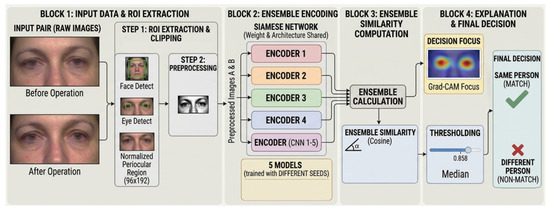
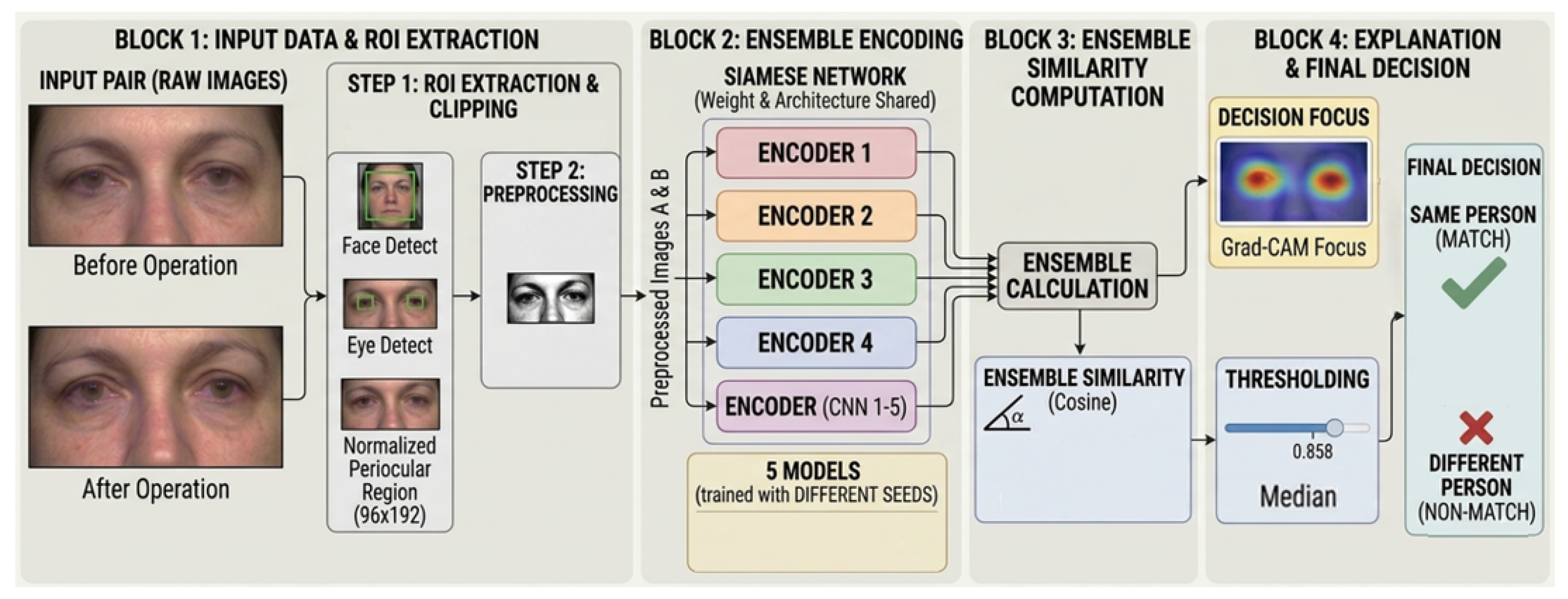
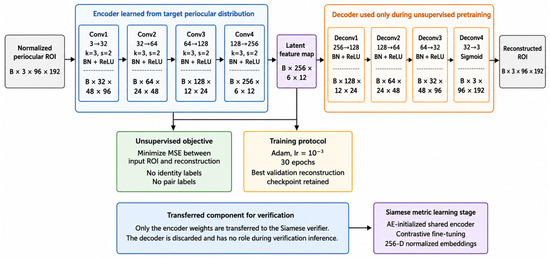
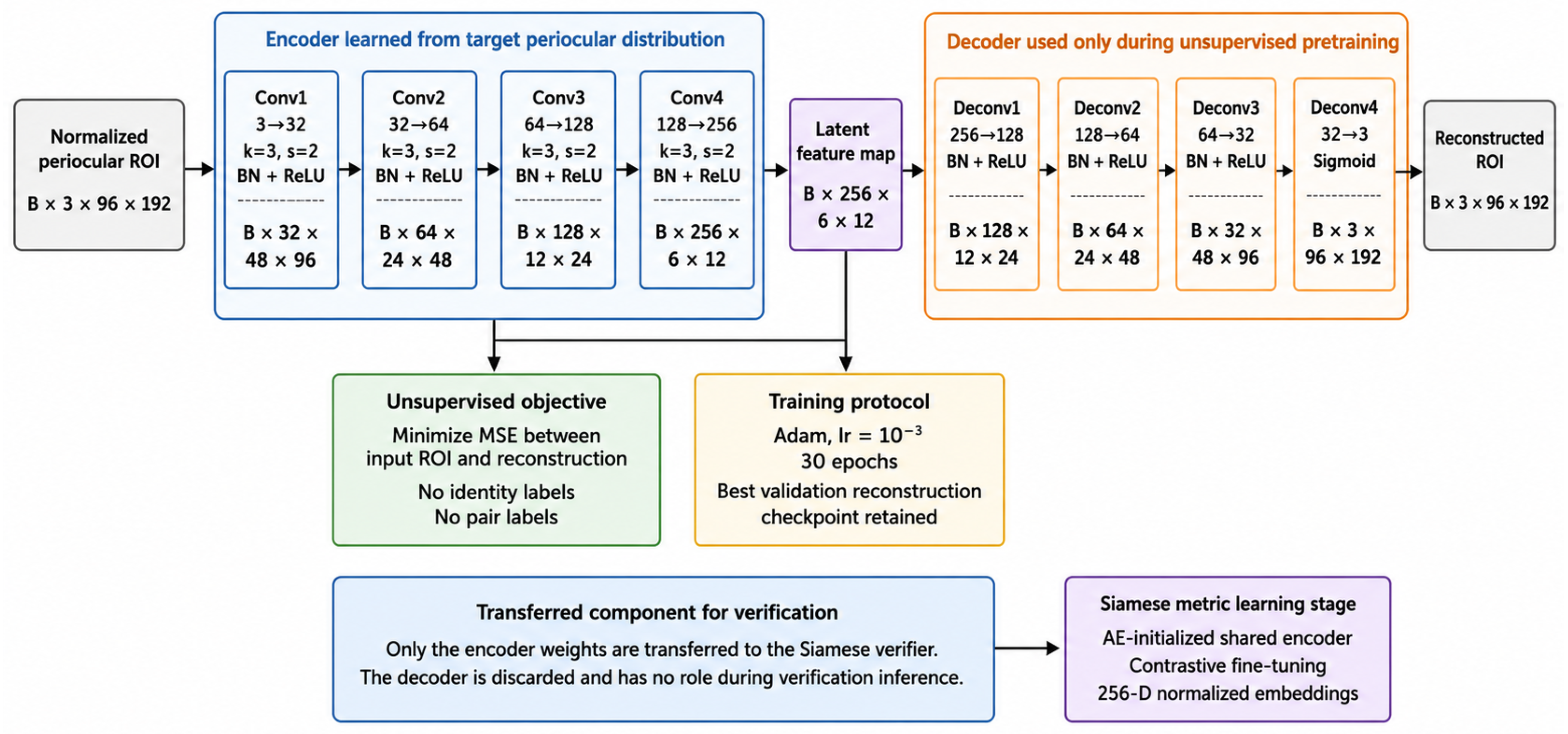
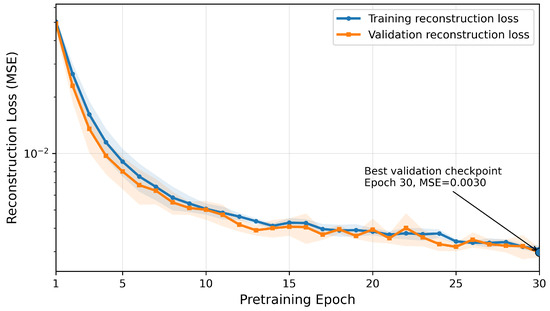
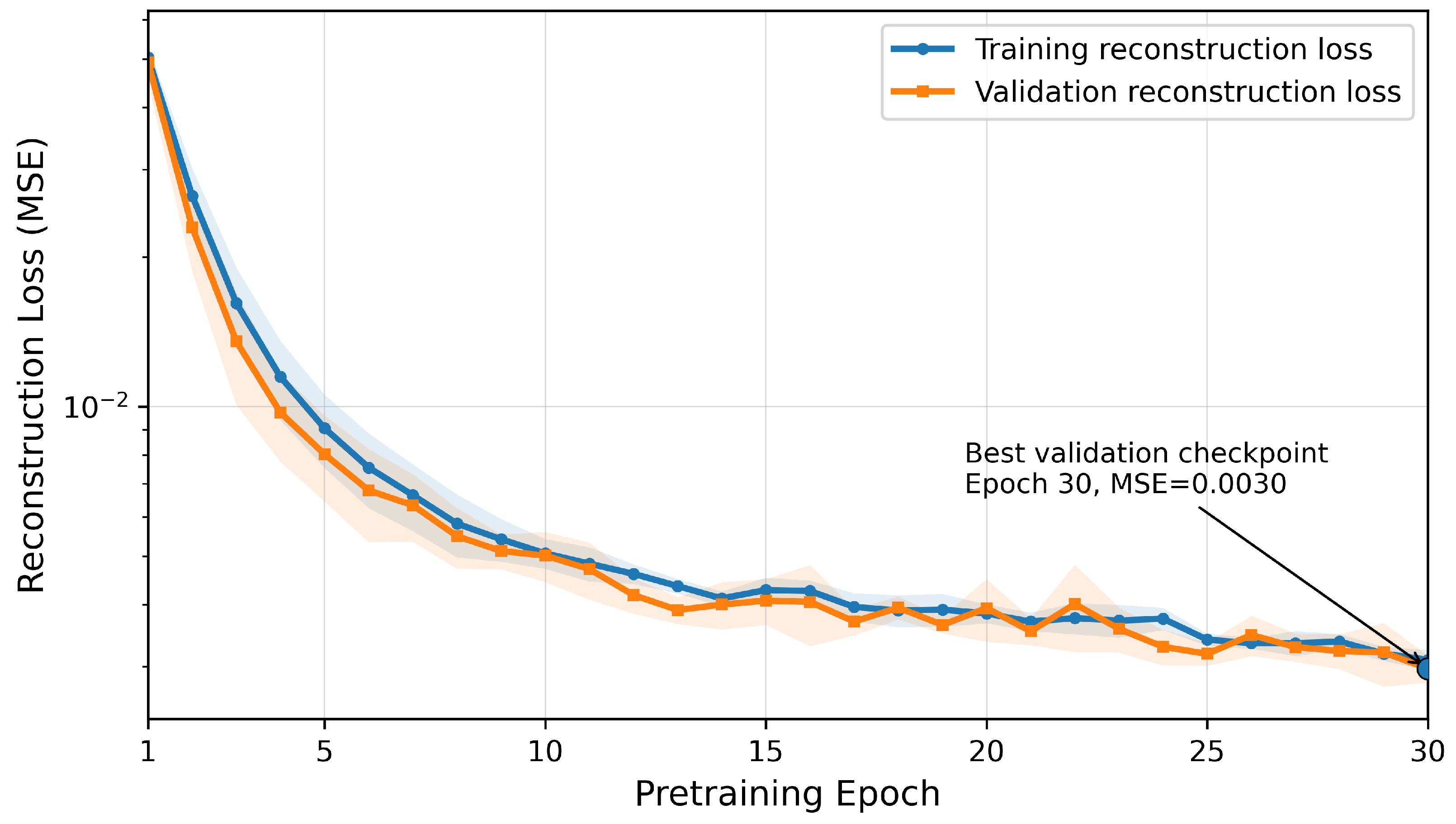
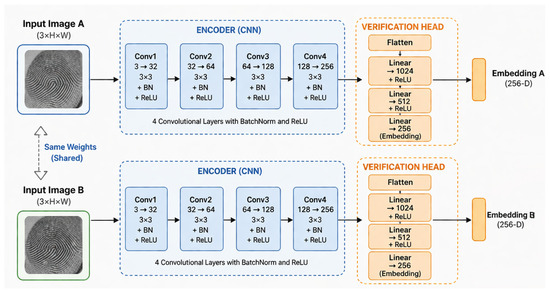
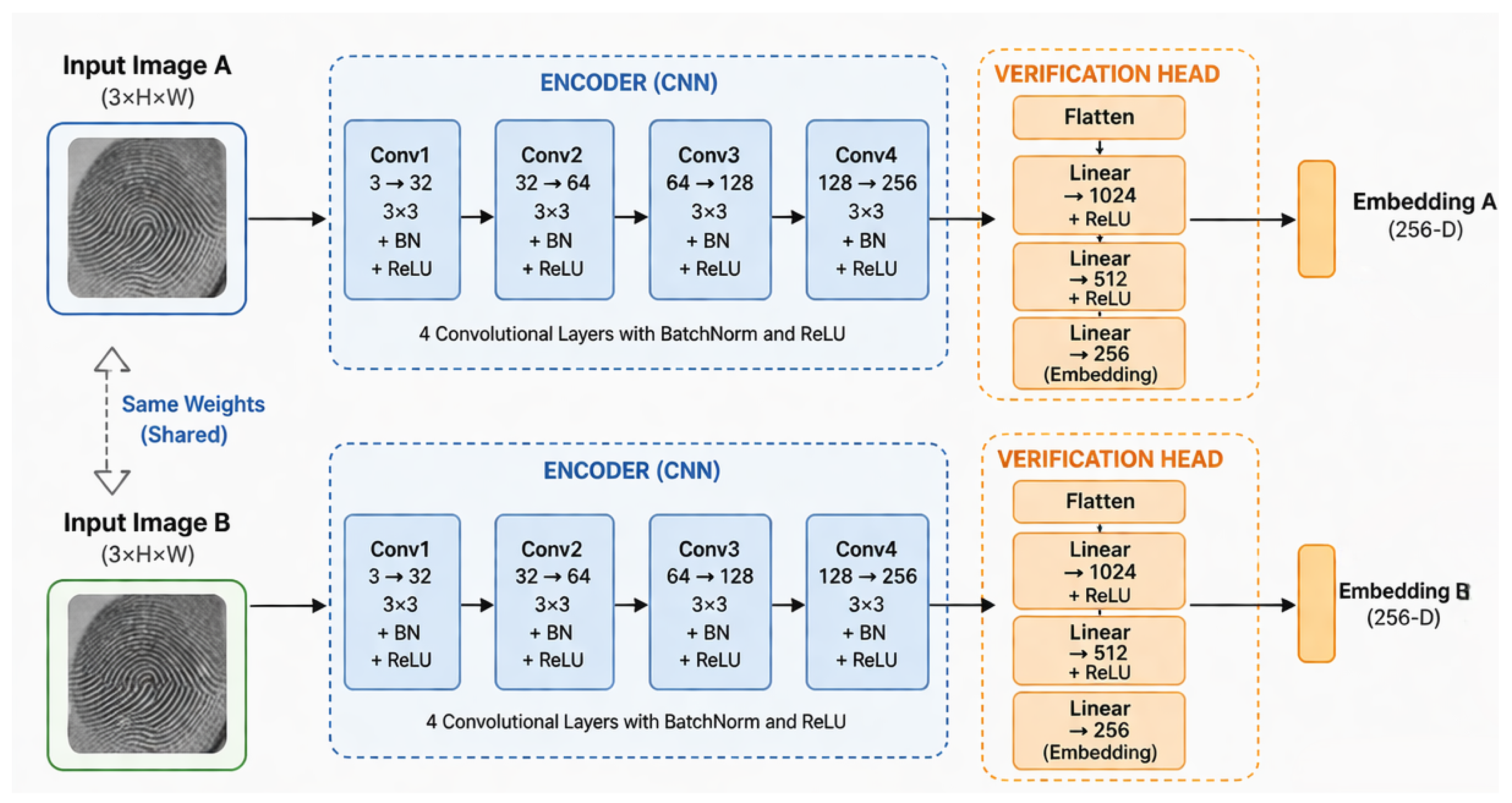
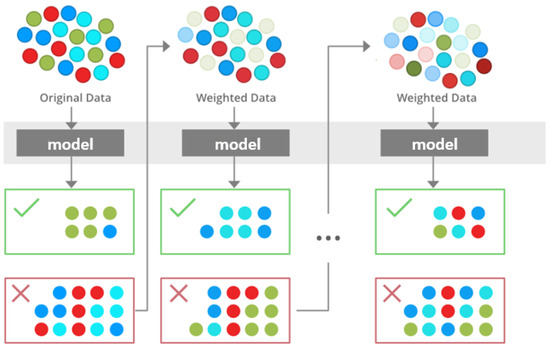
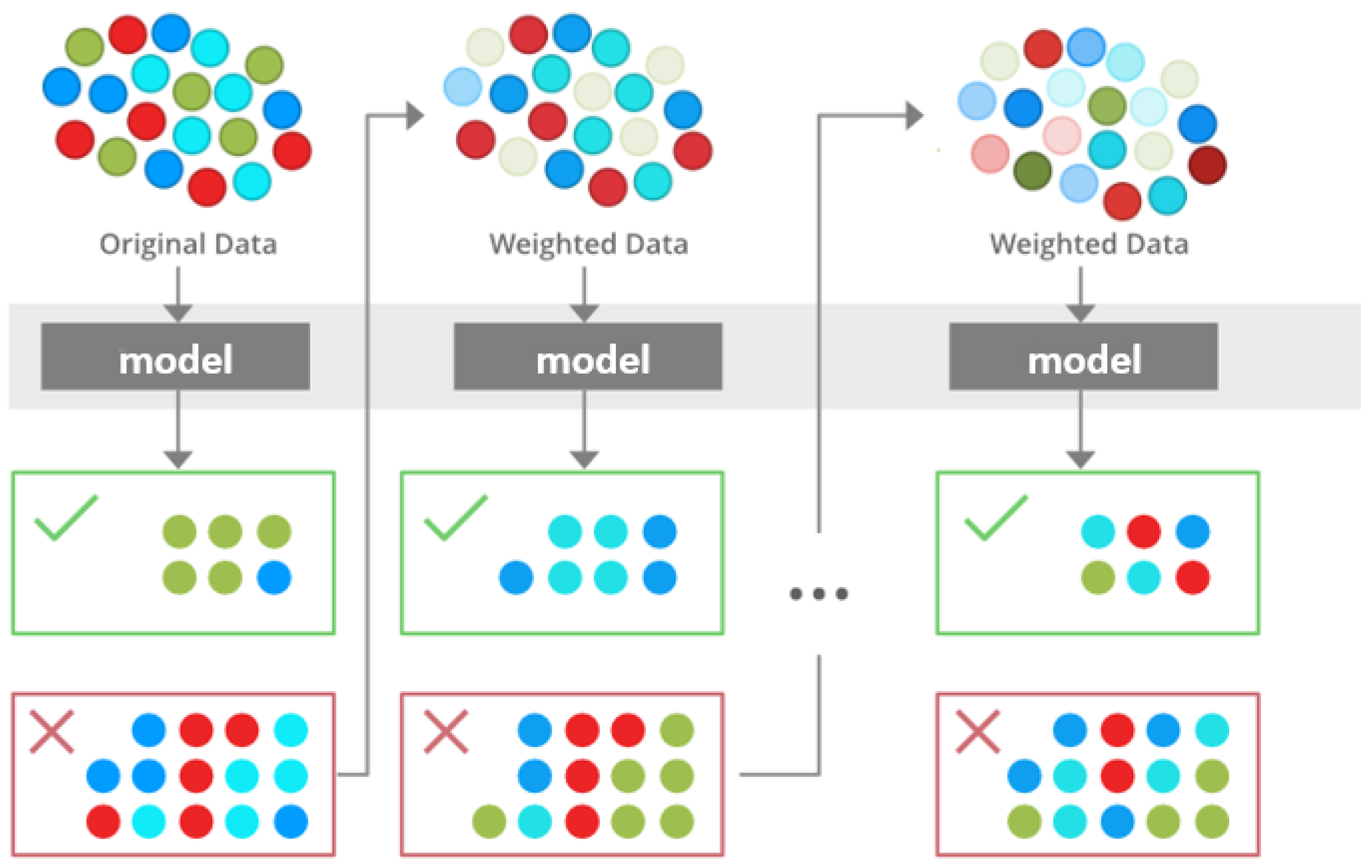
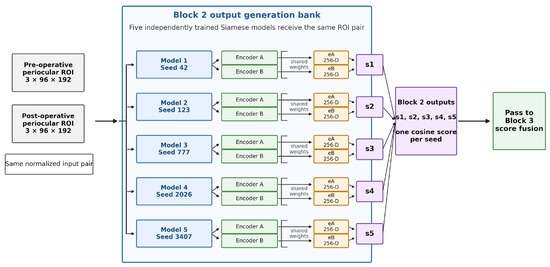
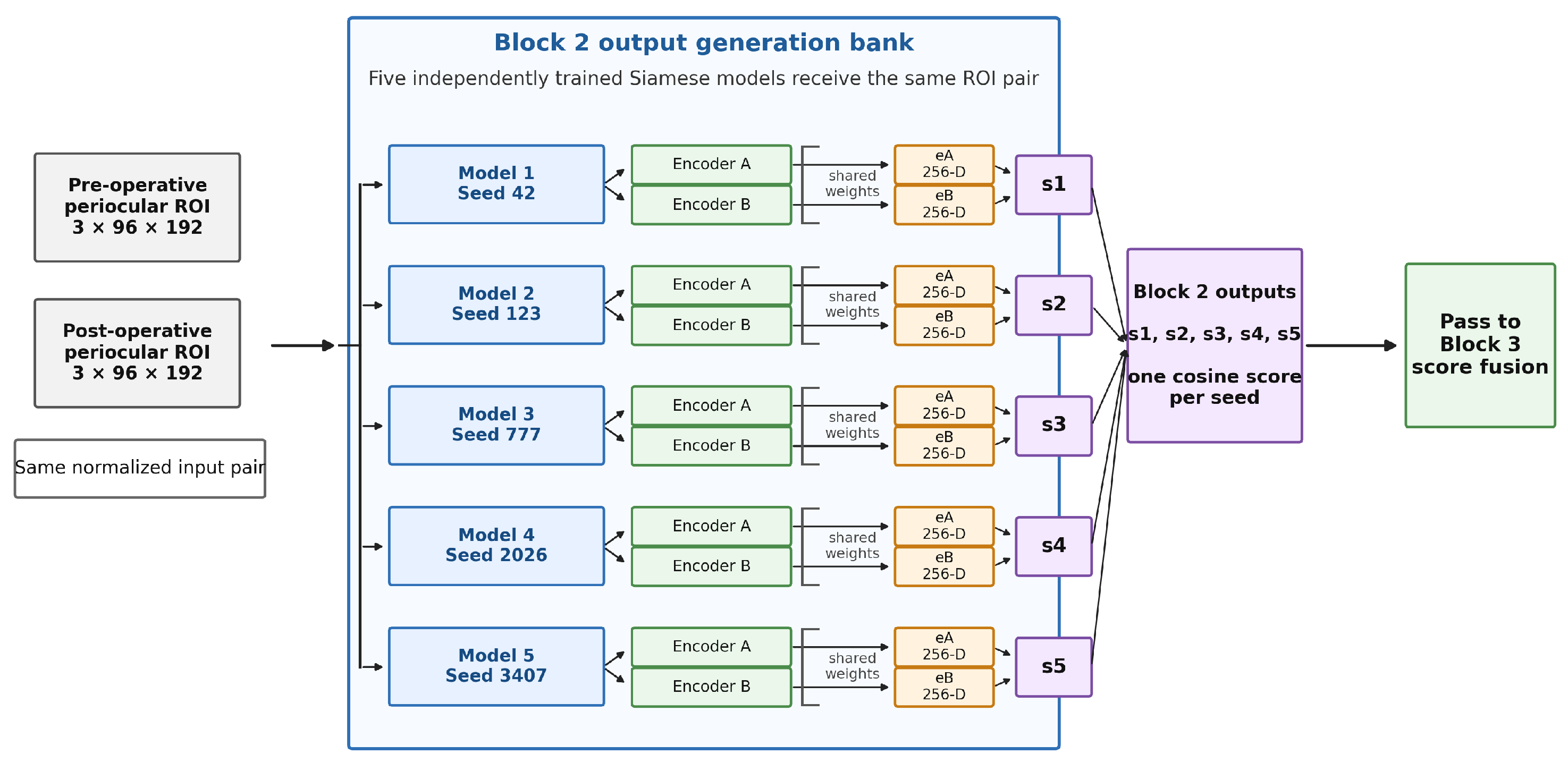
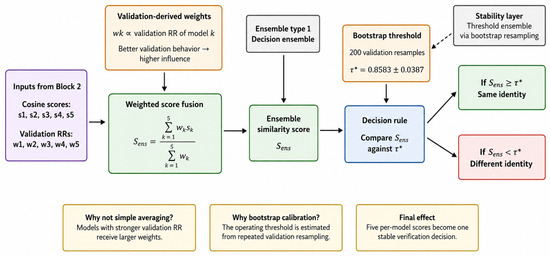
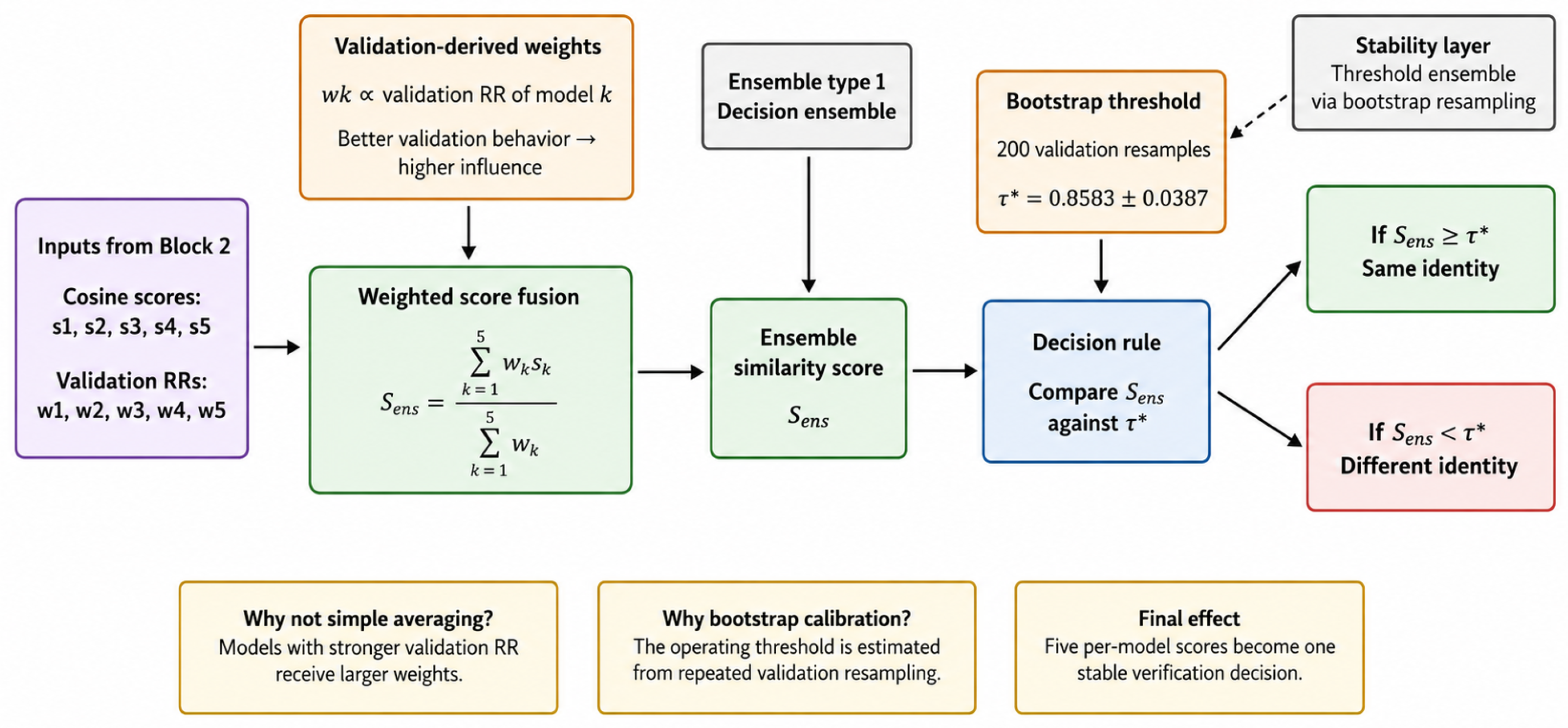
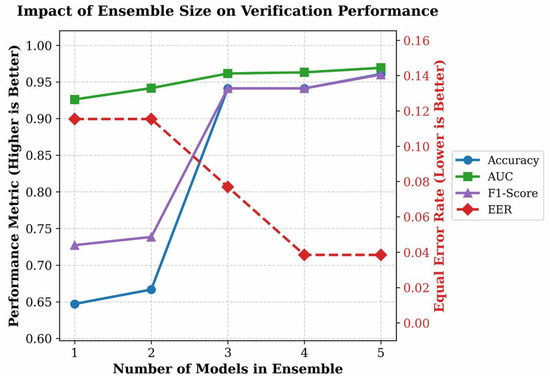
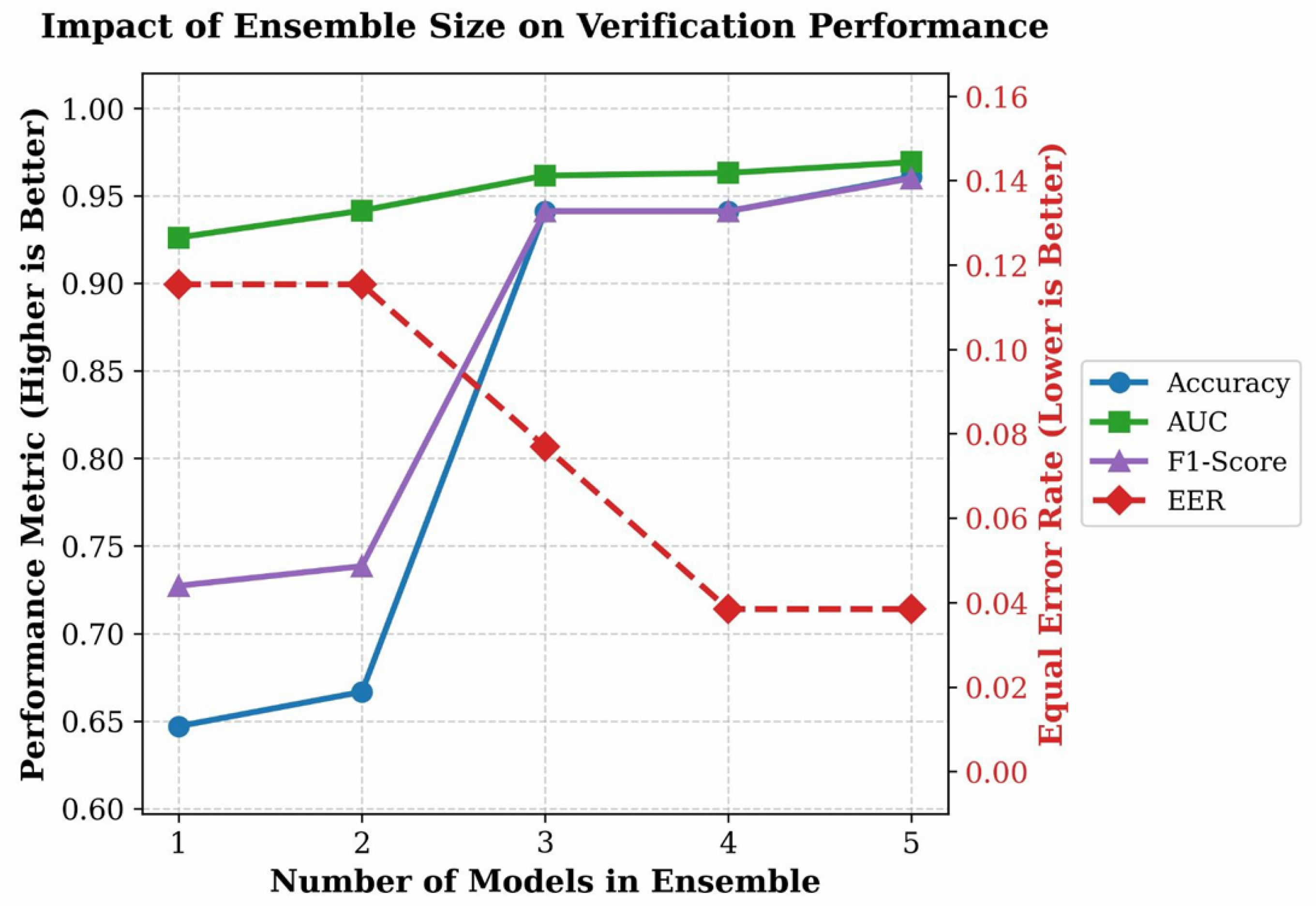


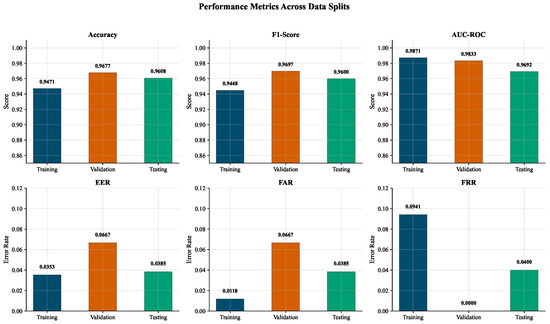
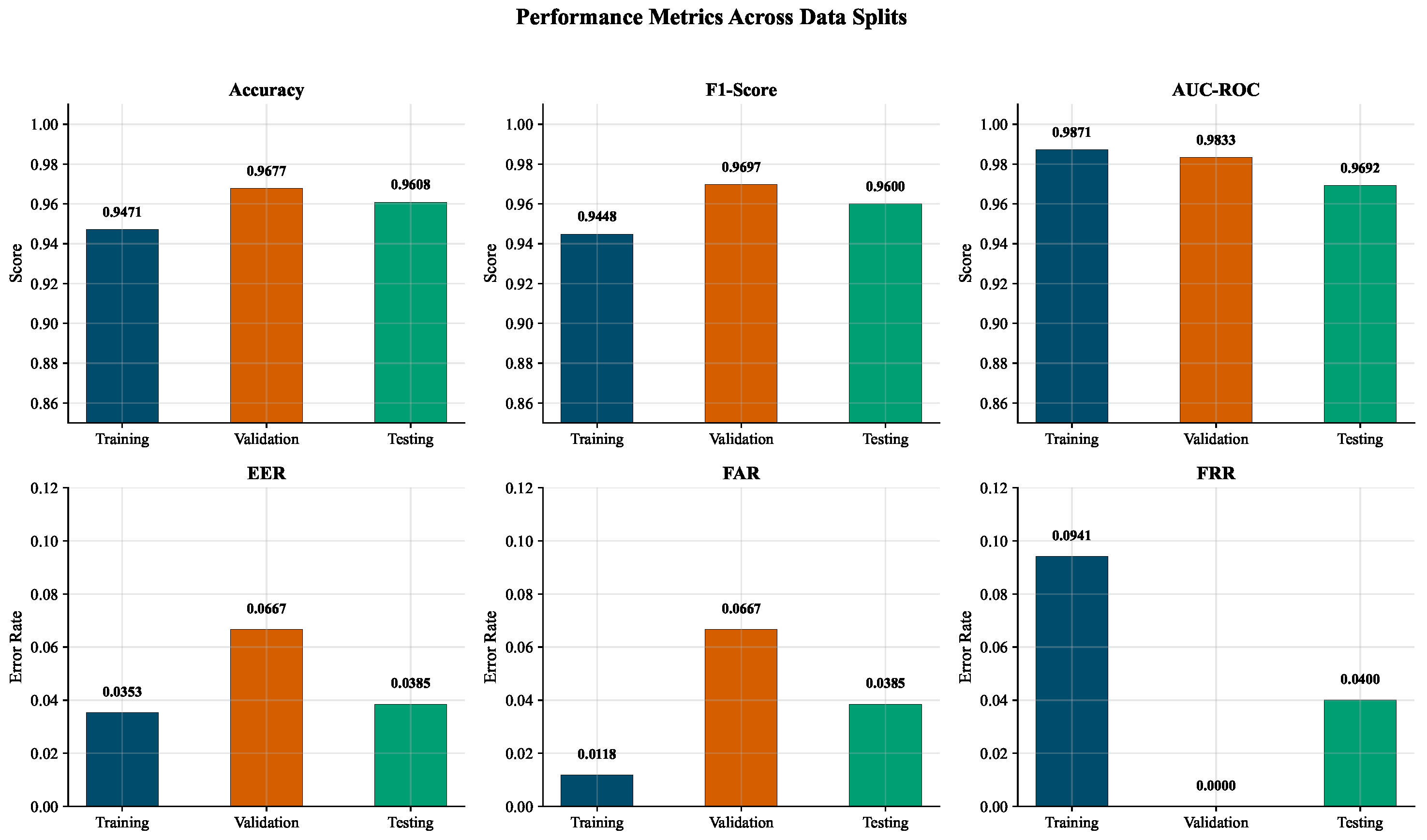
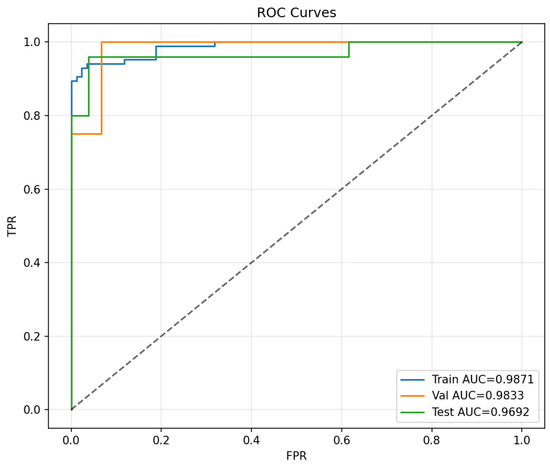
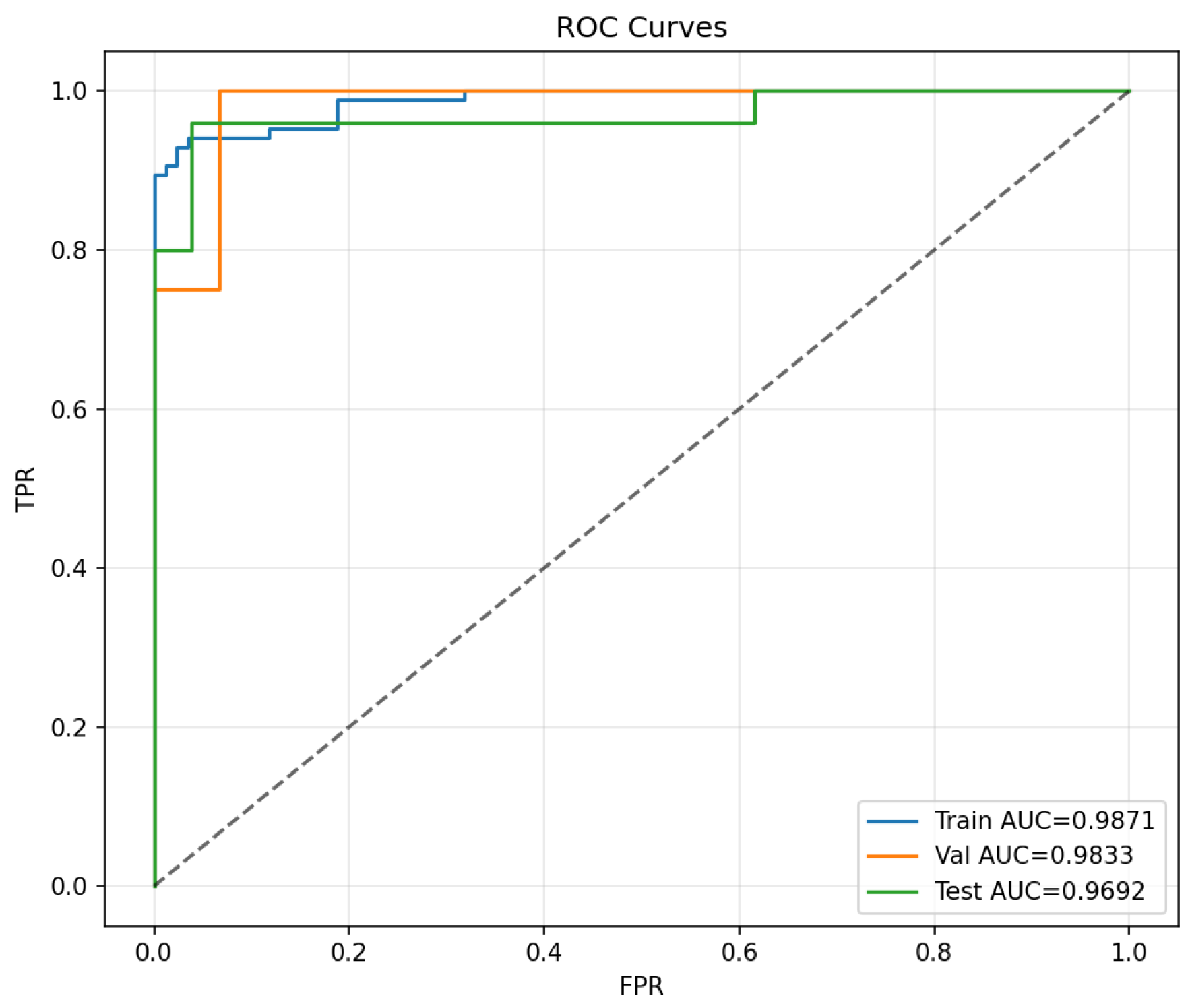
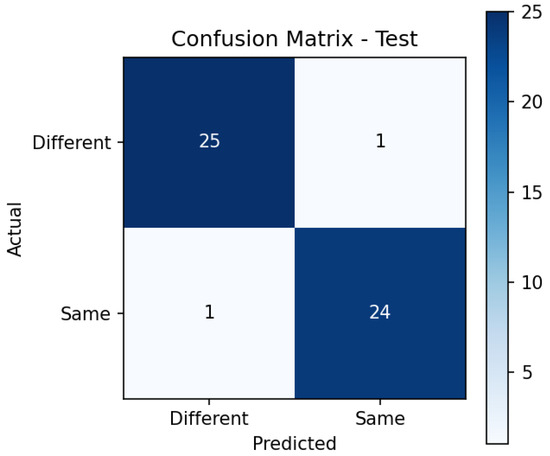
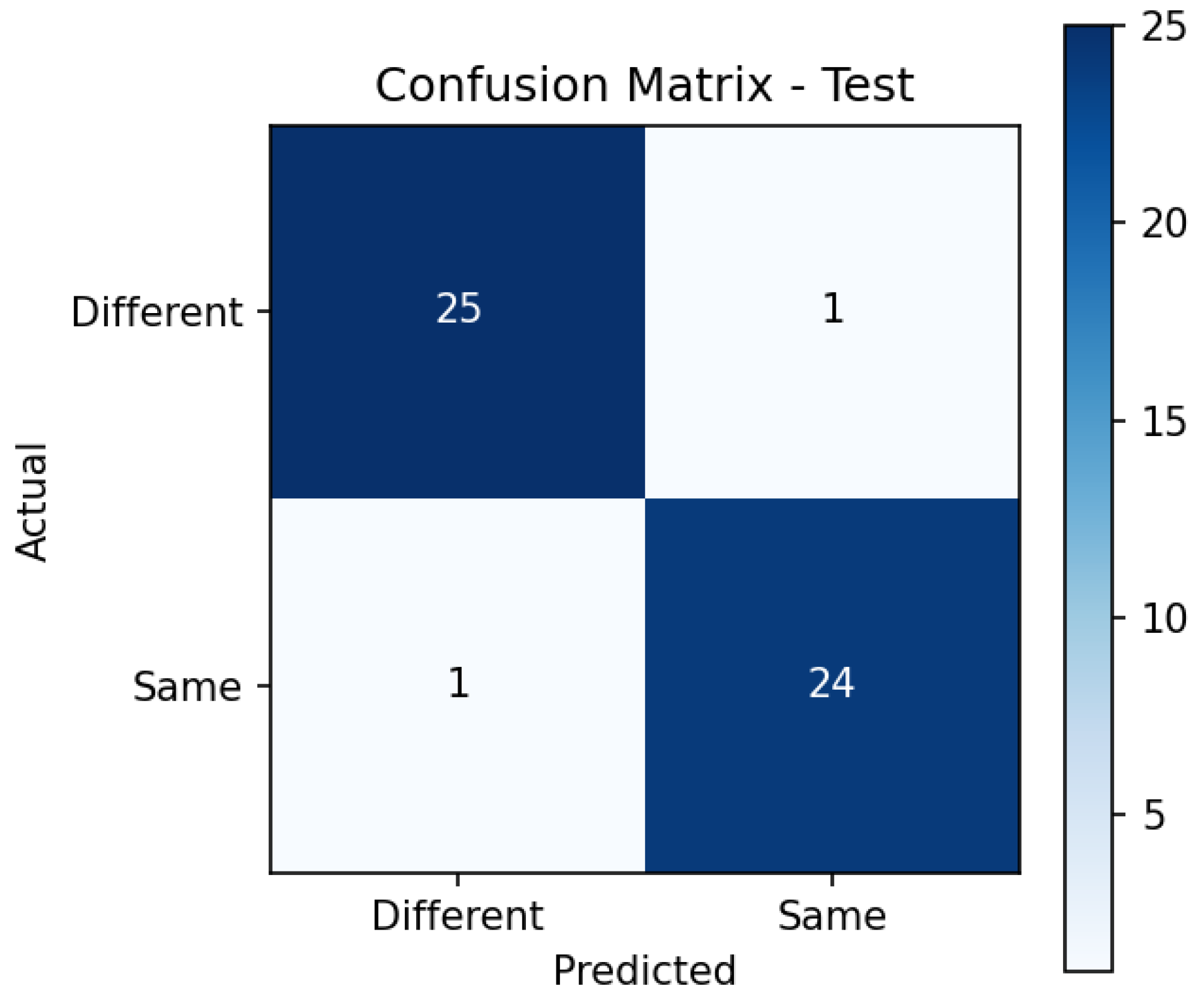
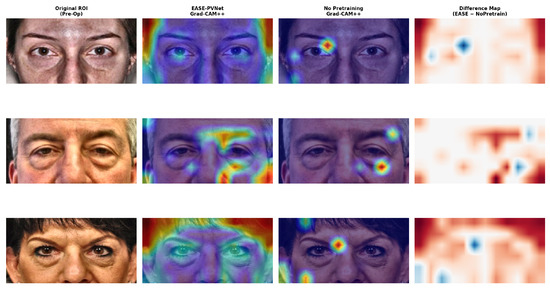
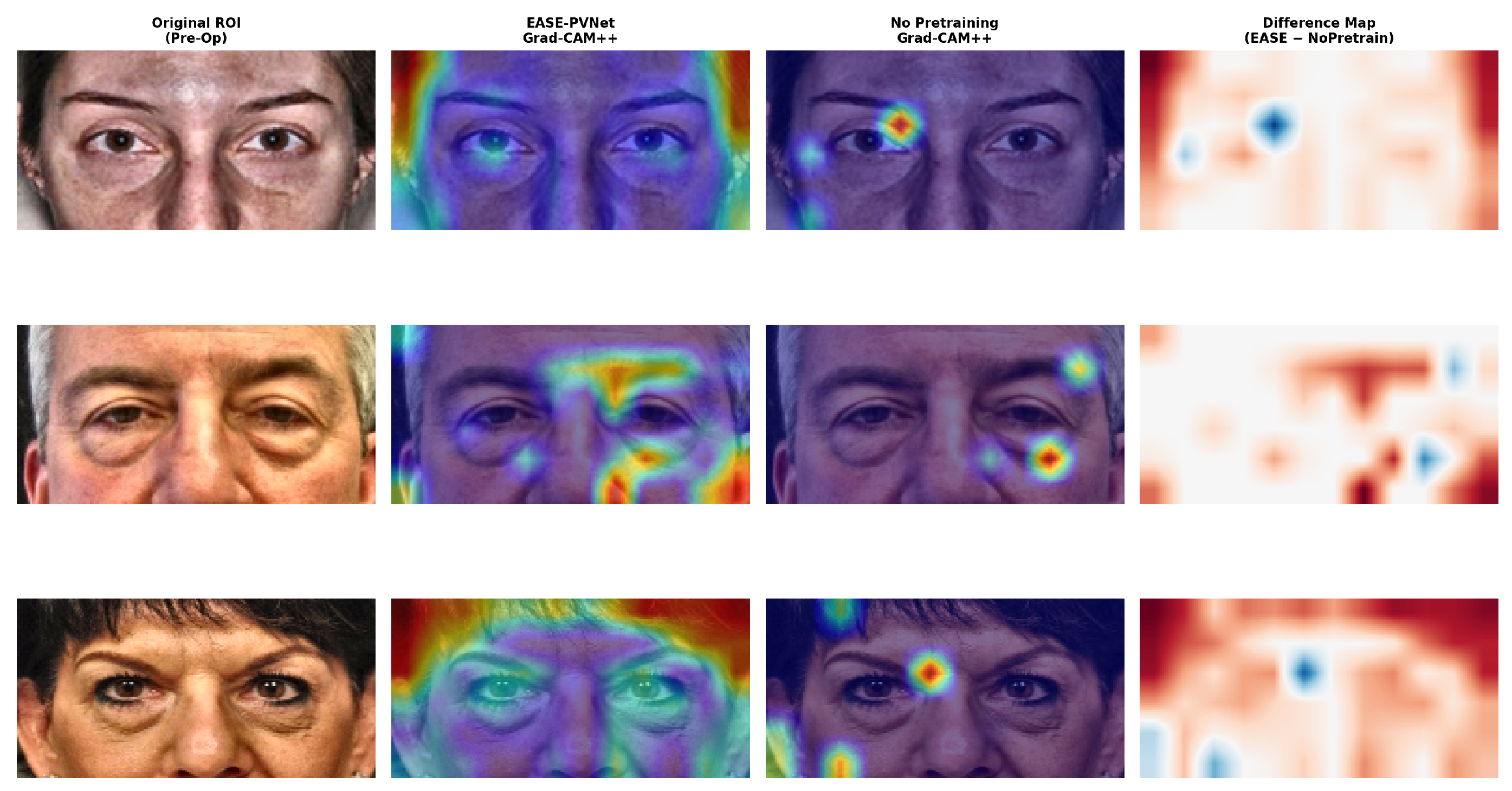
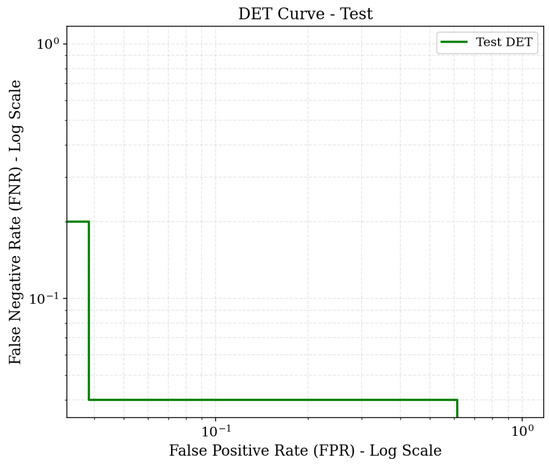
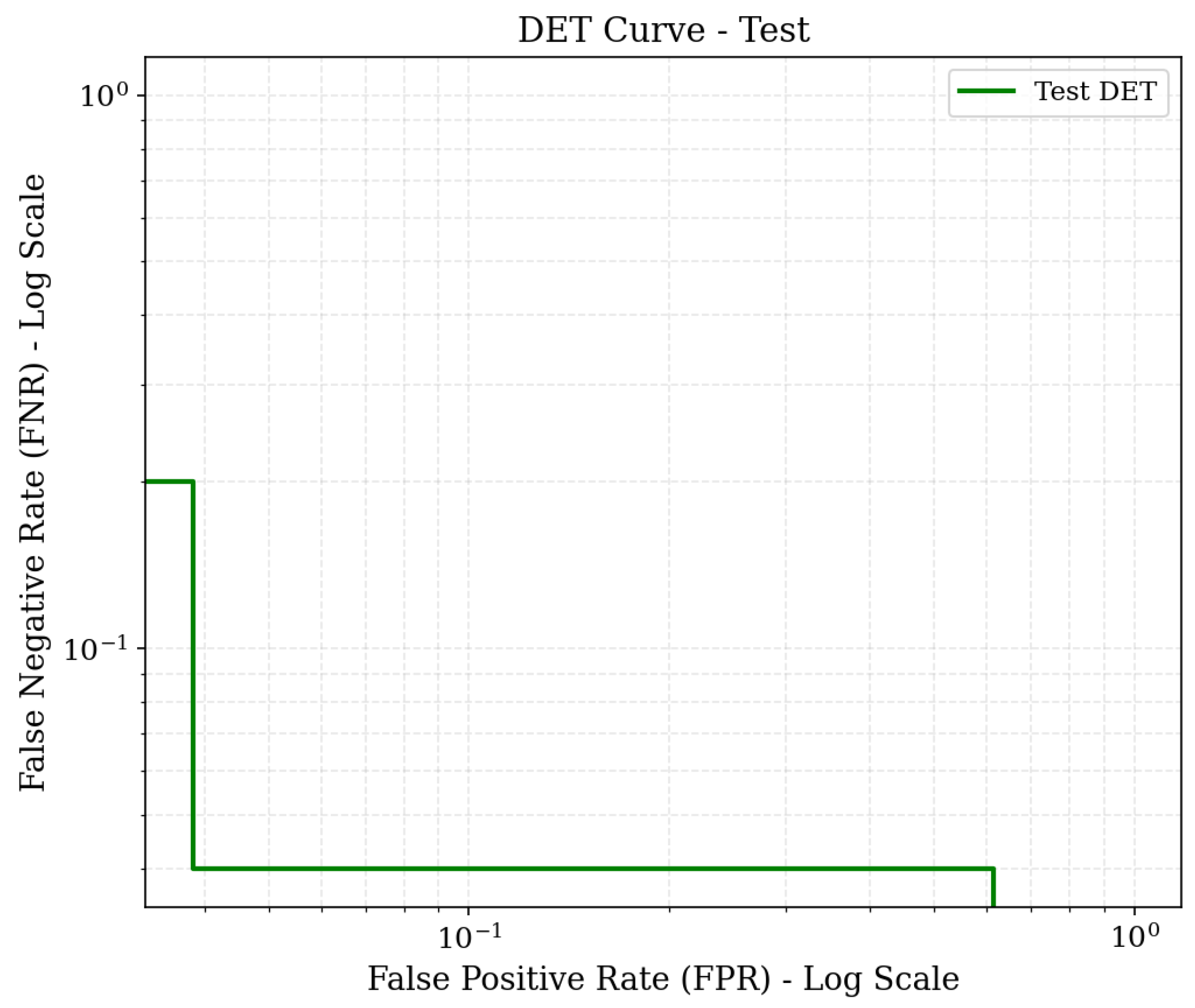
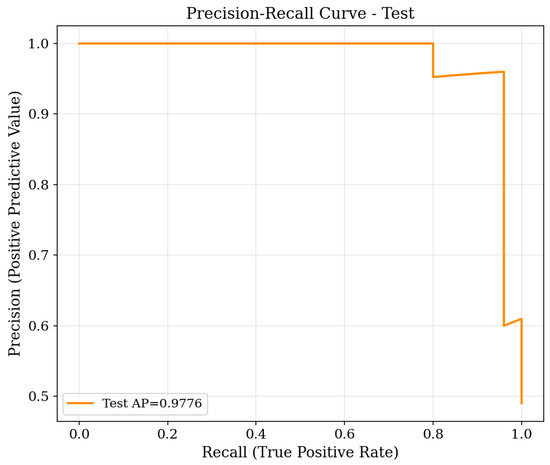
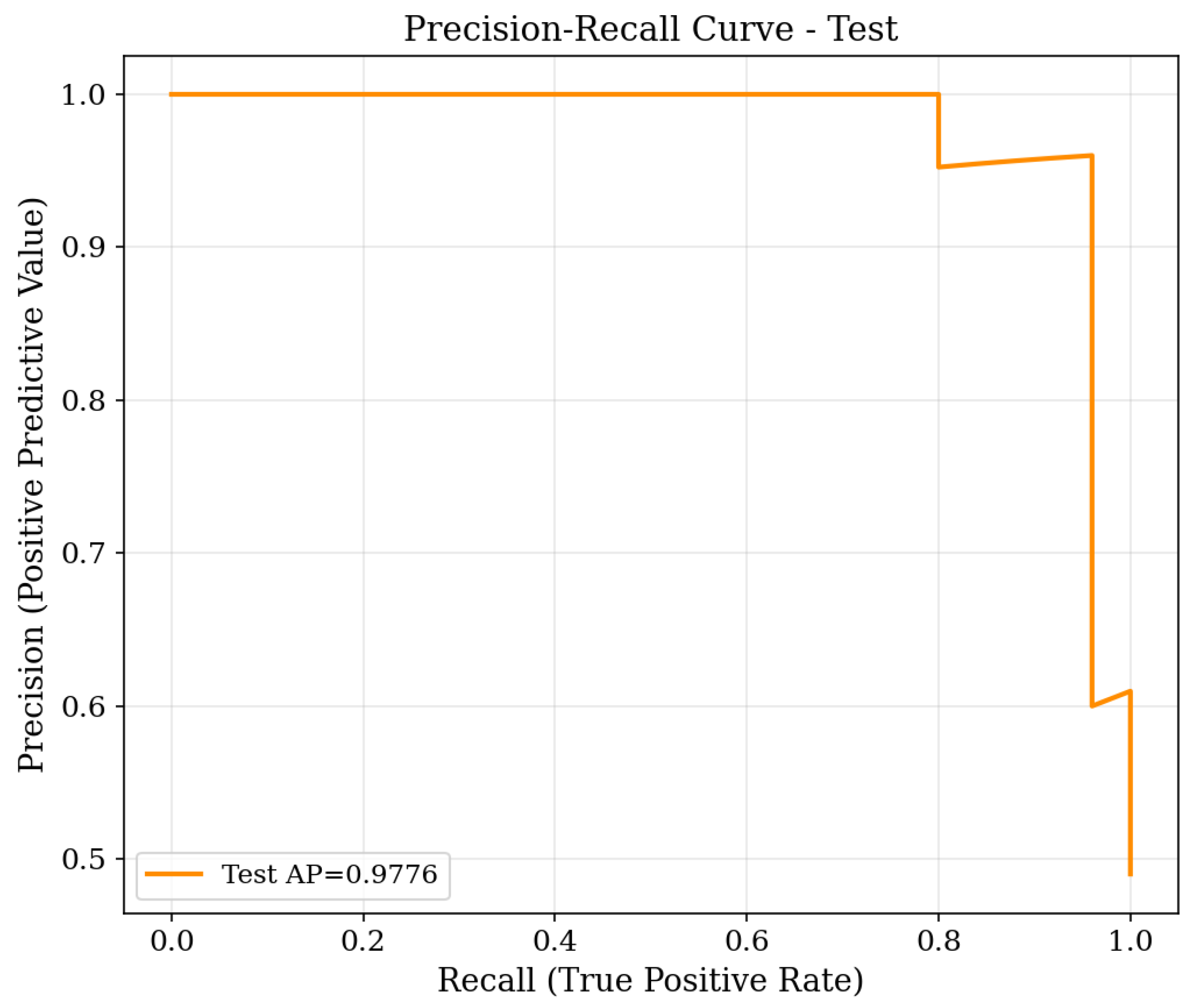
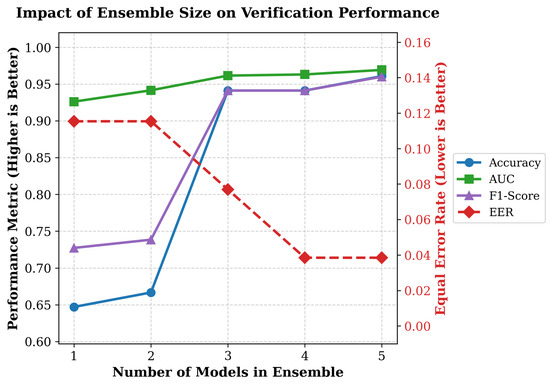
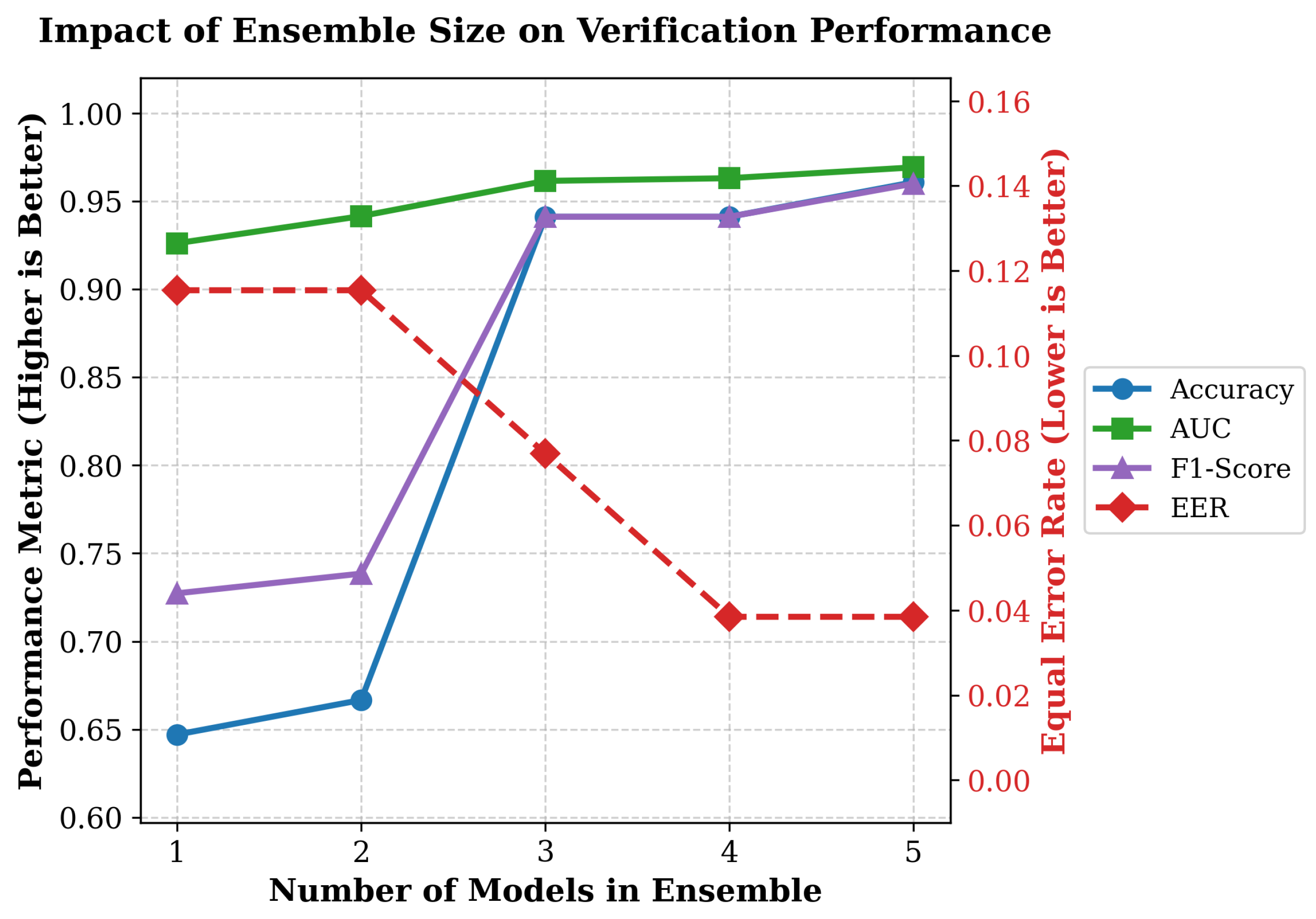
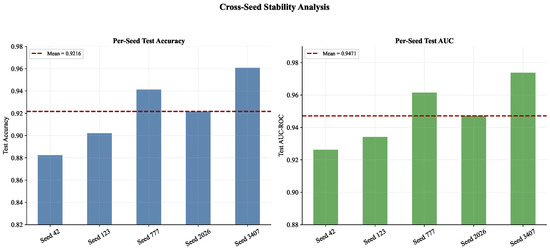
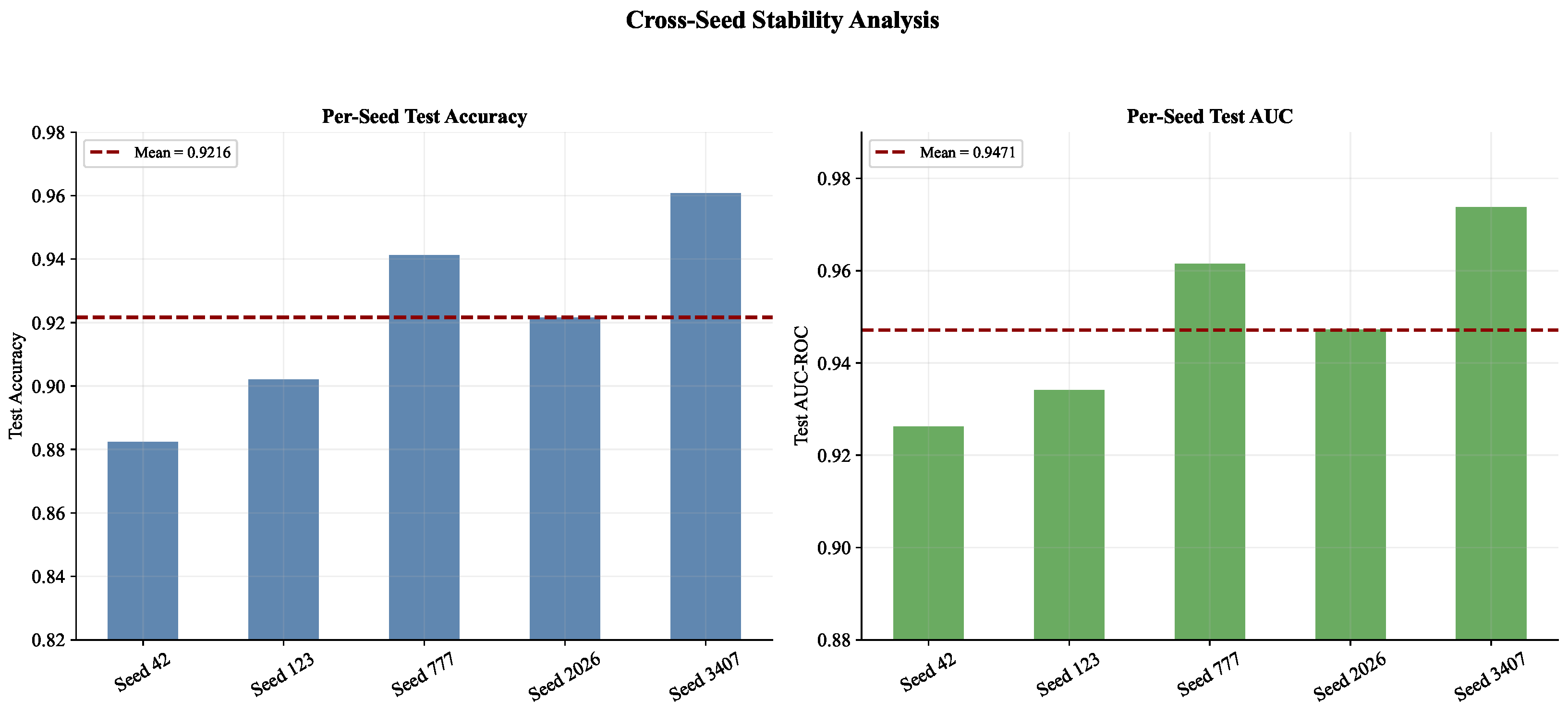
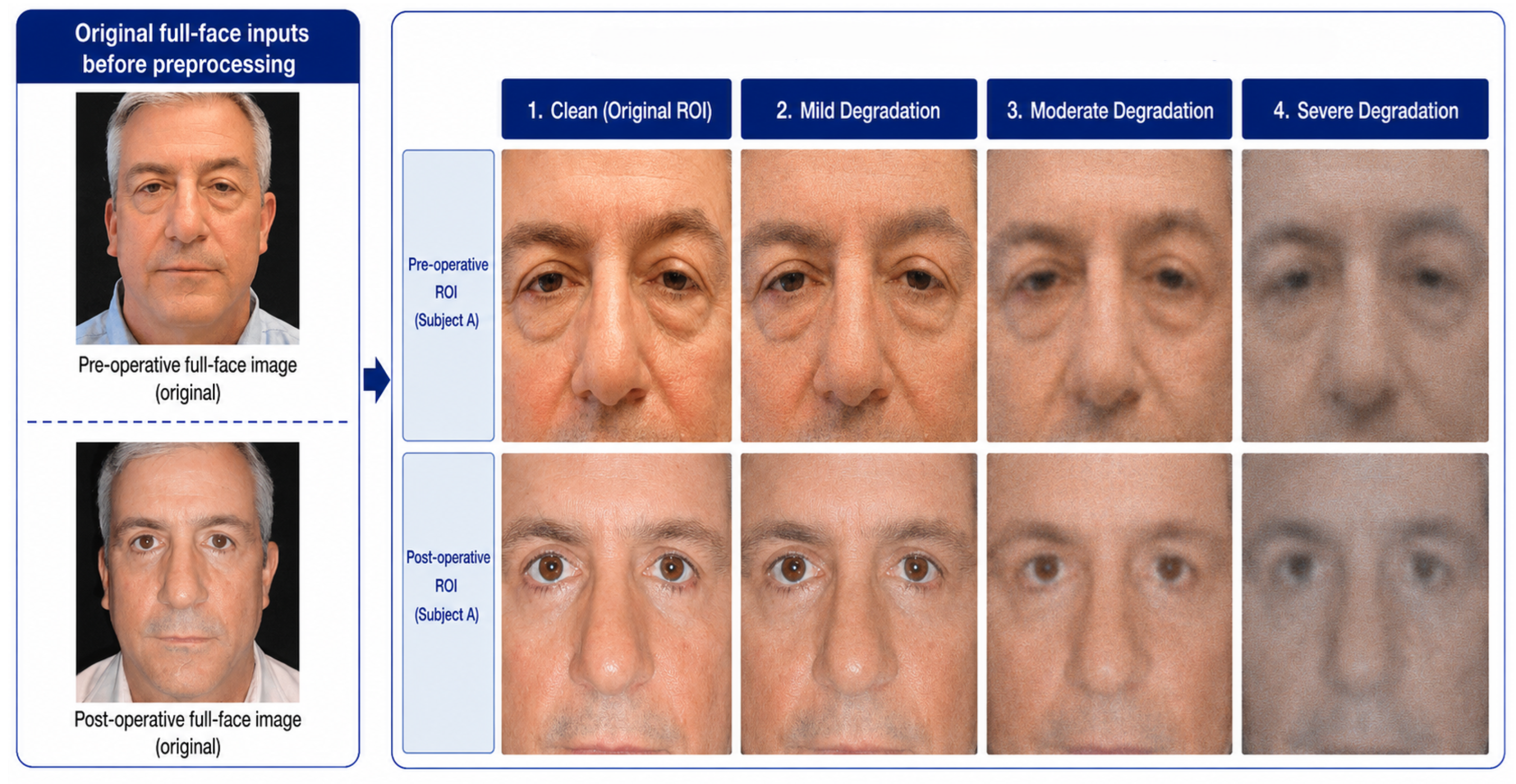
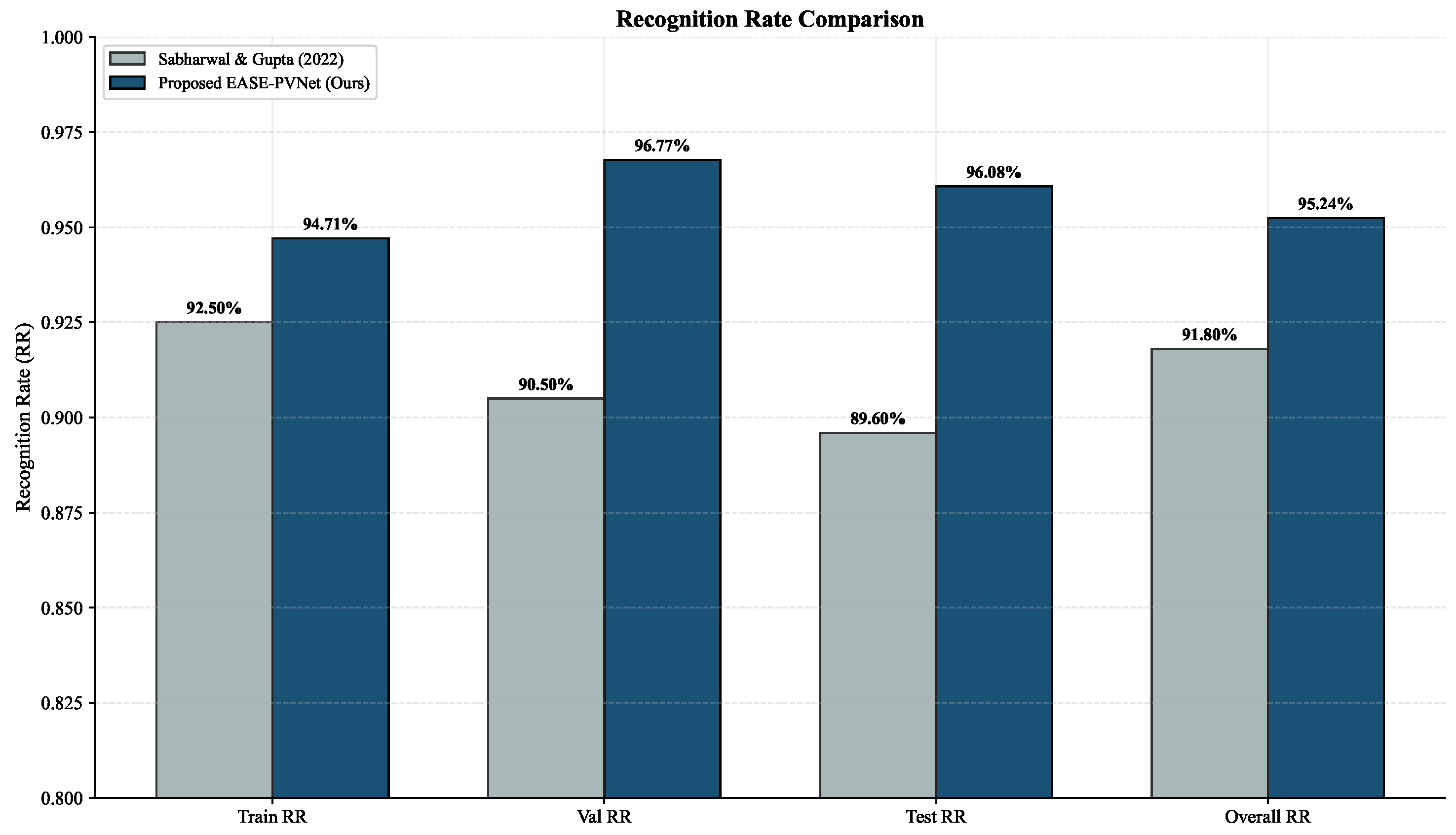

Disclaimer/Publisher’s Note: The statements, opinions and data contained in all publications are solely those of the individual author(s) and contributor(s) and not of MDPI and/or the editor(s). MDPI and/or the editor(s) disclaim responsibility for any injury to people or property resulting from any ideas, methods, instructions or products referred to in the content. |
© 2026 by the authors. Licensee MDPI, Basel, Switzerland. This article is an open access article distributed under the terms and conditions of the Creative Commons Attribution (CC BY) license.