


Abstract
Vision–language models (VLMs) increasingly support multilingual interaction, yet much of their evaluation relies on translated, English-origin data. We present a structured critical review of 111 sources, based on searches covering 1 January 2016 to 31 July 2026 and supplemented by foundational work, examining how language composition, model architecture, and evaluation practice shape cross-lingual and cultural grounding. We organize the evidence by linguistic level (morphology, syntax, and spatial semantics) and pipeline stage (data, representation, decoding, and evaluation) and label each claim as measured, indirect, or untested under the present review protocol. Only two of the twelve taxonomy cells have controlled evidence, and both are English-internal. Existing benchmarks show substantial performance gaps for non-English and non-Western settings; however, corpus volume, image distribution, and model capacity remain competing explanations, and current evidence does not establish a universal English-mediated routing mechanism. Evidence for Spanish-specific grammatical grounding is especially limited. We propose a diagnostic matrix and experimental agenda based on source-language-authored, culture-grounded, item-parallel data and typology-sensitive metrics. The review supports complementing translated resources with native data and disaggregated evaluation while treating typological effects as testable hypotheses rather than established causes.
1. Introduction
1.1. From Contrastive Pre-Training to Multimodal Foundation Models
The past five years have transformed how machines connect pixels and words. Contrastive image–text pre-training was introduced at scale by CLIP [1] and ALIGN [2]. It demonstrated that a dual-encoder trained on hundreds of millions to billions of web image–text pairs could perform open-vocabulary recognition and retrieval without task-specific supervision. Efficiency-oriented refinements such as the sigmoid contrastive objective of SigLIP [3] followed, while a parallel line of work shifted from contrastive alignment to generation: frozen-encoder bridging in BLIP-2 [4], few-shot in-context captioning in Flamingo [5], and instruction tuning in LLaVA [6]. These advances culminate in proprietary general-purpose multimodal models: GPT-4V [7] and Gemini [8], now embedded in consumer-facing assistants. Across this trajectory, multimodal AI is increasingly positioned as a general interface between humans and machines.
Much of this progress was measured, optimized, and reported in English. The pre-training corpora that endow these models with their visual priors—Conceptual Captions [9] and LAION-5B [10]—are dominated by English alt-text, and the canonical evaluation suites are English benchmarks. This survey examines whether visual–semantic competence acquired in English transfers to the typologically and culturally different ways in which other languages describe the visual world.
1.2. Observed Gaps and a Working Hypothesis
A growing body of evidence reports substantial aggregate gaps when existing multilingual VLMs are evaluated on non-English data. On the cross-lingual VQA benchmark xGQA [11], zero-shot transfer to seven typologically diverse languages reports an average drop of roughly 38 points. The cross-modal, cross-lingual benchmark suite IGLUE [12] reports large transfer gaps across tasks and languages. We state at the outset what that literature does not show, since the point constrains everything that follows. IGLUE’s own analysis finds per-language accuracy far better predicted by the size of a language’s corpus than by its typological distance from English. We take that finding seriously instead of working around it (Section 3.4). Culturally grounded benchmarks—MaRVL [13] for visual reasoning and CVQA [14] for culturally diverse VQA—find that models often perform worse when images and questions originate from non-Western, non-English contexts instead of being translated into them. More recent evaluations broaden both language and modality coverage: BLEnD-Vis tests robustness to linguistic rephrasing and visual presentation across 16 regions [15]; MMAC aligns cultural questions across text, image, and speech in 10 languages [16]; VLURes tests multilingual long-text grounding [17]; and Afri-MCQA supplies native-speaker-authored text and speech questions in 15 African languages [18]. Taken together, these benchmarks indicate that multilingual coverage can conceal language-, culture-, and modality-specific fragility, although they still do not isolate the typological variables examined in this review.
We use Illusion of Multilingualism as a working label for a possible discrepancy between surface-language fluency and language-specific visual grounding. The associated model-side hypothesis is that English-heavy training can encourage non-English input to rely on representations shaped by English lexical and syntactic regularities. The associated instrument-side hypothesis is that translated, English-origin tests can under-measure distinctions that native speakers use. Neither hypothesis is assumed to hold for every VLM. Machine-translated captions may preserve useful alignment while omitting source-language choices about what to describe. A controlled German study reports measurable differences between native and translated captions [19]; for Spanish, the available evidence is limited to a qualitative illustration in Crossmodal-3600 [20].
The thesis has two components, and we keep them apart throughout because they are separately falsifiable. The model-side claim is that non-English input is routed through English-shaped representations. The instrument-side claim, developed in Section 6, is that the exams used to certify multilingual competence are themselves calibrated on English and therefore under-measure the resulting failures. These are not the same proposition, and they can pull in opposite directions: measurement choices may account for a portion of a reported cross-lingual gap rather than a model property. We therefore do not treat benchmark gaps as direct confirmation of the model-side claim, and we mark, at each point in the survey, which of the two a given piece of evidence bears on.
Evidence from text-only models is compatible with an English-dominant stage: logit-lens probing identifies an English-dominated region for some non-English prompts [21], and a semantic-hub analysis reports analogous interventions across modalities [22]. These studies do not establish that every multimodal model uses an English pivot, nor that such a pivot selectively removes typological distinctions. The review examines which construction-level effects remain after accounting for corpus size, image distribution, model capacity, and evaluation validity.
1.3. English, Spanish, and Chinese as a Diagnostic Sample
This survey uses English, Spanish, and Mandarin Chinese as a diagnostic sample, chosen for contrasting grammatical profiles and practical relevance rather than for a claim of maximal typological distance.
English (Germanic; predominantly analytic) is a frequent training and evaluation reference. Spanish (Romance; fusional with null-subject constructions) provides a high-resource comparison with richer agreement and greater constituent-order flexibility. Mandarin Chinese (Sinitic; predominantly isolating, with classifiers and topic-prominent constructions) provides a structurally different comparison. These profiles motivate construction-level hypotheses; they do not by themselves establish causal typological distances or language-wide effects.
The three languages jointly represent variation in inflection, agreement, constituent order, classifiers, and spatial expression documented in typological resources [23]. These are dimensions, not endpoints of a strict linear continuum. English–Spanish is the primary comparison; Chinese is introduced where it helps test whether a prediction generalizes beyond one language pair. Figure 1 summarizes these construction-level contrasts; its arrows denote hypotheses rather than measured model behavior.
Figure 1.
Diagnostic illustration. A single scene can be described using language-specific agreement, classifiers, topic structure, and spatial choices. The arrows illustrate hypotheses about possible alignment pressures, not measurements of a particular model. “CL” denotes a classifier; “shang” glosses a postposed locative meaning approximately “on/above”.
1.4. Scope and Differentiation from Prior Surveys
The intended contribution of this survey lies at an intersection that prior reviews leave unexamined. Existing surveys fall into two camps. Multilingual NLP reviews analyze cross-lingual transfer but treat language in isolation from vision. Vision–language reviews catalogue architectures and benchmarks but implicitly assume English. We did not identify a prior survey that analyzes VLM cross-lingual failure by the typological property held responsible for it: it asks not merely which languages underperform, but why, in terms of the morphological, syntactic, spatial, and pragmatic structures that distinguish them. Three prior surveys come closest and must be distinguished explicitly instead of passed over. Ponti et al. [24] survey how typological knowledge can and should inform NLP, but the setting is text-only: no visual referent enters the account, so the question of whether grounding is language-dependent cannot arise in it. Hershcovich et al. [25] survey cross-cultural NLP and organize cross-cultural variation into linguistic form, semantics, values and common ground. Their scheme is broader than ours on the cultural axis, but it is likewise language-only and is organized by dimension of cultural difference rather than by where in a model pipeline a difference is lost. What we add to both is the multimodal pipeline axis: a typological distinction can be destroyed at four separable points (data, representation, decoding, and metric), and we give an explicit accounting of how much evidence exists at each of them. The third and closest precedent is multimodal. Manea and Libovický [26] review 31 multilingual VLMs and 21 benchmarks and organize the field around a tension between language neutrality and cultural awareness, reporting that roughly two thirds of current benchmarks are translation-derived. We claim no priority over that review either for the object of study or for the translation critique, and a reader who wants the better map of models and resources should go there. The difference is one of organizing axis and of purpose. Theirs is indexed by model and benchmark and diagnoses translation as a property of resources. Ours is indexed by linguistic level × pipeline stage and asks which specific grammatical distinction is lost where, with the explicit aim of producing a ledger of what has never been measured rather than a catalogue of what exists. This typological framing is the organizing principle of the survey and the source of its central artifact, the taxonomy of Section 4, previewed in Figure 2.
Figure 2.
A typologically informed taxonomy of candidate cross-lingual grounding risks. One visual scene admits descriptions in English (EN), Spanish (ES), and Mandarin Chinese (ZH). The Spanish and Mandarin phrases both mean “two cats on the mat.” Spanish en and Mandarin shàng express “on” here, and Mandarin zhī is the classifier for the cats. Each × marks the hypothesized risk described below it. The morphology, syntax, and spatial-grounding cells are construction-level predictions, not model measurements. Section 4 reviews the evidence for each cell, and Table 1 records whether support is measured, indirect, or absent under the review protocol. Controlled evidence is currently English-internal.
1.5. Contributions
- C1
- A cross-disciplinary analytical framework that couples linguistic typology with visual grounding, recasting cross-lingual VLM failure as a testable consequence of language-specific structure rather than as undifferentiated “low-resource” noise. We do not treat this as an established alternative to resource volume in explaining aggregate gaps (Section 3.4).
- C2
- A typology-organized taxonomy of cross-lingual multimodal alignment risks, structured along two axes: a linguistic-level axis (morphology → syntax → spatial relation) and a pipeline-stage axis (training data/representation space/decoding/evaluation metric). It is applied uniformly through a five-part micro-structure (linguistic phenomenon → observed or predicted failure → technical cause → mitigation → residual limitation). Every cell of the matrix is stated as a falsifiable prediction and carries an explicit evidential status, measured, indirect, or untested (Table 1), so that it functions as a diagnostic framework and research agenda rather than as a catalogue of already-documented biases. We are explicit about which part of this we regard as new. The two axes in Table 2 reorganize categories that are individually familiar: the linguistic level from descriptive linguistics, and the pipeline stage from the machine learning literature. It is their crossing together with the evidential ledger that converts a descriptive scheme into an enumerated list of experiments the field has not run.Table 1. Evidential status of each cell of the taxonomy (Table 2). M: supported by a controlled experiment, but English-internal; M therefore certifies the existence of the failure mode, not its cross-lingual instantiation: no M-labeled cell reports a Spanish–English or Mandarin–English comparison; I: indirect support (documented corpus composition, metric definition, or a result in another language); U: untested, meaning no published measurement isolates the phenomenon.Table 2. Dual-axis view of the taxonomy. Rows are the linguistic levels (vertical axis); columns are the pipeline stages at which a failure may arise (horizontal axis). Each cell names the representative cross-lingual failure mode discussed in the corresponding subsection.
- C3
- A structured synthesis of 111 sources identified through the review protocol, including peer-reviewed papers, preprints, technical reports, and foundational sources in linguistic typology, cognitive science, and evaluation methodology reaching back to 1956. The synthesis connects models, datasets and evaluation practice into a single typologically-informed narrative and includes (Section 2.4) a consolidated audit, which we have not found assembled elsewhere, of the evidence that actually exists for Spanish.
- C4
- A research roadmap that identifies 10+ open problems and consolidates them into four grand challenges, accompanied by an explicit position statement urging the community to move from translation-style toward typologically-informed multilingual VLMs.
1.6. Review Design and Evidence Synthesis
This article is a structured critical review rather than a meta-analysis. Its purpose is theory building and evidence mapping across heterogeneous empirical, resource, and conceptual studies. We use systematic reporting of the databases, queries, eligibility rules, coding fields, and evidence labels while avoiding a pooled effect estimate because the tasks, datasets, models, and outcome metrics are not statistically comparable.
- Information sources and search strategy.
We conducted targeted searches of ACL Anthology, CVF Open Access, OpenReview, PMLR, and arXiv (cs.CL and cs.CV) between 1 January 2016 and 31 July 2026; the archived search was last run on 31 July 2026. Queries combined the terms {multilingual, cross-lingual, cross-cultural, typological} with {vision–language, VLM, image–text, captioning, VQA, grounding}. We then traced references backward and forward from the benchmark families in Table 3 and from the four mitigation families in Section 7. Foundational work in typology, cognitive science, and evaluation methodology was retrieved separately, reaching back to 1956.
Table 3.
A panorama of the cross-lingual VLM evaluation ecosystem. “Native” marks data collected from source-language/source-culture speakers rather than translated from English. A detailed critique of coverage and metrics is deferred to Section 6.
- Eligibility criteria.
We retained a source when it (i) reported a vision–language result in or about a non-English language; (ii) documented the linguistic or cultural composition of a multimodal corpus, filter, or benchmark; (iii) introduced an explicitly multilingual or multicultural multimodal evaluation; or (iv) supplied a typological, cognitive, or evaluation-theoretic premise used in the analysis. Text-only studies were included only when they provided a direct premise for the multimodal argument. We excluded architecture papers without cross-lingual or cross-cultural relevance, non-technical commentary, and duplicate versions of the same study; where both a preprint and a peer-reviewed version were available, the latter was preferred.
- Evidence extraction and synthesis.
The resulting corpus contains 111 unique sources. One reviewer screened and coded each source; a second author checked the inclusion of benchmark, model, and Spanish-evidence entries. Each source was coded by contribution type, language and culture coverage, task, native versus translated construction, affected pipeline stage, linguistic level, and evidential status. The synthesis is qualitative because tasks, datasets, models, and outcome metrics are too heterogeneous for a defensible pooled effect size. We did not assign a formal risk-of-bias score. Instead, every taxonomy cell is labeled measured, indirect, or untested, as defined in Table 1.
- Review limitations.
The searches were conducted in English and emphasized English-language venues, so work published in Spanish- or Chinese-language outlets may be under-represented. The retained corpus contains 111 unique sources, but the archive used for this revision does not preserve database-level hit totals or a complete screening log; we therefore do not reconstruct hit, deduplication, or exclusion counts. Screening and coding were led by one reviewer, with a second-author check of benchmark, model, and Spanish-evidence entries; no blinded duplicate screening or inter-rater agreement statistic was recorded. “Untested” therefore means that no qualifying published measurement was identified by this procedure, not that no such study can exist. These limits apply to every claim in the review that a particular experiment has not yet been reported. Table 4 summarizes the evidence for each claim, and Table 5 links diagnostic findings to possible interventions.
Table 4.
Evidence boundaries used throughout the review. The table separates a measured behavioral pattern from a candidate mechanism and its minimum test.
Table 5.
Decision sequence for selecting an intervention after a construction-level diagnostic. Each row states what the observation can motivate and what it cannot establish.
1.7. Organization of the Survey
The remainder of the survey is organized as follows. Section 2 provides bidirectional background: a minimal VLM-architecture primer for linguists and a minimal comparative-linguistics toolbox for vision researchers, together with an overview of the cross-lingual evaluation ecosystem. Section 3 traces the architectural and data origins of Anglocentric bias. Section 4 presents the core typological taxonomy of grounding risks; it is previewed here in Figure 2. Section 5 ascends from grammar to culture and pragmatics, reframing the problem as one of multimodal fairness. Section 6 critiques both benchmark coverage and metric design in the current evaluation regime. Section 7 offers a critical review of mitigation strategies, each paired with an analysis of its residual limitations. Section 8 lays out open problems and four grand challenges, and Section 9 concludes.
2. Background and Preliminaries
The remaining background establishes the architectural and linguistic concepts used in the analysis. This survey sits at the intersection of two communities that rarely read each other’s literature: computer vision and comparative linguistics. A reviewer trained in one is, almost by construction, a non-specialist in the other. This section is therefore written as a deliberately bidirectional primer. Section 2.1 walks a linguist through the architectural genealogy of modern vision–language models (VLMs) and isolates, at each generation, the exact point at which an English prior enters the system. Section 2.2 hands a vision researcher a minimal but operational toolbox of typological linguistics, enough to understand why English, Spanish and Chinese are not interchangeable test languages but three structurally distinct poles. Section 2.3 maps the existing cross-lingual evaluation ecosystem, deferring its critique to Section 6. Throughout, we test a working hypothesis: that some “multilingual” VLMs obtain surface-language fluency by routing non-English inputs through representations shaped partly by English, a possibility we call the illusion of multilingualism.
2.1. An Architectural Genealogy of Vision–Language Models
The modern VLM landscape can be organized into four overlapping paradigms (Table 6, Figure 3). Reading them in sequence highlights a recurrent dependency: later systems often reuse data, encoders, or objectives introduced by earlier generations. This dependency can preserve an English-heavy prior, although its magnitude varies across models and training stages.
Table 6.
Four paradigms in the genealogy of vision–language models, and the stage at which English-dominant supervision may influence each. Representative systems are cited at their canonical venue.
Figure 3.
A schematic genealogy of vision–language models. English-dominant training may influence several stages, while later data and objectives can modify inherited representations.
- (i)
- Dual-encoder contrastive models.
The contemporary era opens with CLIP [1] and the concurrent ALIGN [2], which align an image encoder and a text encoder in a shared embedding space using a symmetric contrastive (InfoNCE) objective over hundreds of millions to over one billion web-crawled image–text pairs. SigLIP [3] later replaces the global softmax with a pairwise sigmoid loss, decoupling the loss from batch size and improving efficiency. These models support zero-shot recognition and retrieval, and their visual encoders are often reused in later systems. The relevant observation for this review is that many training corpora are English-dominant [10]; the resulting joint space may therefore reflect English lexical and syntactic distinctions. Later components can inherit this geometry, but subsequent multilingual training can modify it.
- (ii)
- Bridged generative models.
The second paradigm connects a (typically frozen) vision encoder to a (typically frozen) language model through a lightweight learned interface, enabling open-ended generation instead of mere similarity scoring. Flamingo [5] interleaves images and text and injects visual features into a frozen language model via gated cross-attention, unlocking in-context few-shot multimodal learning. BLIP-2 [4] bridges the modality gap with a compact Querying Transformer (Q-Former) that distils visual features into a small set of query tokens consumable by a frozen large language model (LLM). Because the bridge is trained against a pre-trained, often English-dominant LLM, the target representation is defined partly by that language model. The visual signal is consequently encouraged to fit the LLM’s textual interface; the extent to which this creates language-specific bias remains empirical.
- (iii)
- Instruction-tuned multimodal LLMs.
The third paradigm fine-tunes bridged models on multimodal instruction-following data. LLaVA [6] connects a CLIP visual encoder to an LLM through a simple projection and trains on instruction data generated by a language-only GPT-4 [29]; MiniGPT-4 [28] aligns a frozen visual encoder to a frozen LLM through a single projection layer. Instruction data can also encode cultural and pragmatic assumptions. When such data are authored or synthesised predominantly in English, notions of helpfulness, background knowledge, and answer format may be calibrated to English-speaking contexts; this is a risk to be measured rather than assumed.
- (iv)
- Proprietary generalist models.
Finally, closed generalist systems such as GPT-4V [7] and Gemini [8] expose state-of-the-art multimodal capability behind an API. Their training data and architecture are undisclosed. That paradoxically makes a typologically-informed, behavior-level analysis of the kind this survey advocates one of the few available windows onto their cross-lingual competence. Viewed over time (Figure 4), this paradigm shift coincides with the moment the “multilingual” label enters the field. Contrastive, bridged, and instruction-tuned systems have often been trained and evaluated primarily in English, whereas proprietary generalists claim broad multilingual competence. Public documentation does not yet provide a uniform native-grounding evaluation for these closed systems. The timeline therefore records the evidence available to this review, not a per-model measurement.
Figure 4.
Timeline of representative vision–language systems, grouped by architectural paradigm and claimed language scope. The placement of closed models records public claims and the absence of a uniform native-grounding evaluation; it is not a per-model performance measurement. Dates follow public release information, and the figure is not exhaustive. Numeric dates are given as year, year–month, or year–month–day. Q denotes a calendar quarter.
2.2. A Minimal Toolbox of Comparative Linguistics
To a vision researcher, “add another language” sounds like a data problem. To a typologist it is a structural problem: languages differ not only in vocabulary but in how meaning is packaged. This subsection introduces the three concepts a VLM researcher needs.
- Morphological typology: synthesis and fusion.
Classical typology distinguishes the number of meaning units (morphemes) a word carries from how grammatical meanings are combined within morphemes [30,31]. Isolating (analytic) languages approach one morpheme per word and express grammatical relations through word order and free particles. Agglutinative languages string together many transparent, separable affixes, while fusional (inflectional) languages fuse several grammatical meanings, such as person, number, gender, and tense, into single, non-separable affixes. These are idealised patterns, not boxes: every real language mixes strategies, and the World Atlas of Language Structures documents this variation feature by feature [23]. The three languages at the center of this survey show different combinations of these properties (Table 7). Mandarin Chinese is strongly isolating; Spanish is more fusional than English and marks gender/number agreement on many forms, whereas English is predominantly analytic with limited inflection. The three languages therefore provide contrasting constructions rather than three translations of one design.
Table 7.
Selected typological contrasts among the three survey languages. The right column lists candidate loci for grounding diagnostics in Section 4.
- Levels of linguistic description.
A second tool is the standard layering of linguistic structure into morphology (word-internal form), syntax (how words combine), semantics (literal meaning) and pragmatics (meaning in context). This layering is not decorative: it gives the survey its organizing axis. Section 4 builds its taxonomy by walking up these levels (morphological, then syntactic, then spatial) and asking, at each, where a VLM’s visual grounding diverges across languages.
- Symbol grounding and the definition of a candidate grounding risk.
Before recasting relativity for machines, we fix the survey’s central term. The symbol grounding problem asks how an abstract symbol acquires meaning instead of merely being shuffled against other symbols; the classical answer is that grounding requires connecting the symbol to the perceptual experience of its referent [32]. The same concern animates the modern argument that a system trained on linguistic form alone has no access to meaning, which resides in the relation between form and world rather than in distributional co-occurrence [33]. A vision–language model can add perceptual context that text alone lacks. The learned form-to-referent mapping nevertheless depends partly on the language distribution of its supervision. If that mapping is acquired mainly through English captions and then transferred, a model may ground an English phrase correctly yet misalign a corresponding expression in another language. We use candidate grounding risk for a reproducible, language-dependent disparity in mapping linguistic forms to visual referents. Whether such a disparity arises from English-dominant supervision is treated below as a hypothesis to be tested.
- The neo-Whorfian hypothesis, recast for representations.
The linguistic relativity (Sapir–Whorf) hypothesis holds that the structure of one’s language influences habitual thought [34]. Its strong determinist form is widely rejected, but a weaker, empirically tractable version, that grammatical structure can influence attention and categorisation, has motivated substantial empirical work [35]. A canonical example directly relevant here is Boroditsky [36], who reported that Mandarin and English speakers differ in how they spatialise time, consistent with their languages’ distinct metaphor systems (this specific result remains debated, which is itself instructive about the difficulty of measuring relativity). The counter-position deserves more than a parenthesis, because it bears on the two phenomena we later use as diagnostic typological contrasts. Li and Gleitman [37] argue that the spatial-reasoning differences attributed to language can be induced or removed by manipulating context alone, and Papafragou et al. [38] report that speakers of verb-framed and satellite-framed languages differ in what they say about motion events while behaving alike on non-linguistic memory and categorisation tasks. Together, these studies challenge a direct inference from the frames-of-reference and Talmy contrasts of Section 4.3 to differences in non-linguistic cognition. Accordingly, the claims here concern models rather than human cognition. The model-level issue is whether a system trained predominantly on English captions represents Spanish en in the same way that it represents in/on/at. A universalist verdict about human cognition would leave the model-level issue unaffected, because what is at issue is the model’s supervision, not the world. We adopt a deliberately neo-Whorfian stance for the AI setting: we make no claim about human cognition but argue that a VLM’s learned representation is a plausible site at which properties of a dominant training language may be encoded. The bridge between this linguistic framing and machine learning is already charted on the language-only side: Ponti et al. [24] survey how typological knowledge can and should inform NLP. This survey extends that program to the multimodal case, where language structure could affect how visual inputs are mapped to words.
2.3. The Cross-Lingual VLM Evaluation Ecosystem: A Brief Panorama
A small but growing family of benchmarks attempts to measure VLMs beyond English. We introduce them here at a glance (Table 3) and reserve a critical analysis of their coverage blind spots and metric biases for Section 6. They differ along two useful analytical axes: whether the non-English data are source-language-authored or translated from English, and whether the imagery is culturally representative or Western-centric. Read as a group they are less a coverage ladder than a set of heterogeneous designs. Earlier benchmarks often varied language or culture without controlling the other; some recent resources combine these axes more directly but still do not isolate linguistic typology from resource volume, country, task, and modality. We return to that distinction in Section 6.1.
A first wave extended established English tasks to more languages. xGQA [11] translates the GQA visual-question-answering task into seven typologically diverse languages and already documents a large zero-shot cross-lingual accuracy drop. IGLUE [12] aggregates several such tasks, VQA, retrieval, grounded reasoning and entailment, across twenty languages, and reports the now-classic finding that translate-test transfer outperforms zero-shot transfer: by accuracy points on visual entailment, on visual question answering, on grounded reasoning and roughly 20 points of recall@1 on retrieval [12]. This translate-test advantage is consistent with but does not establish an English-mediated route. Crossmodal-3600 (XM3600) [20] provides human-authored captions for 3600 geographically diverse images in thirty-six languages, explicitly avoiding direct-translation artifacts.
A second wave foregrounds culture rather than mere language coverage and, importantly, builds data from native speakers instead of by translating English. MaRVL [13], a best-paper-awarded benchmark, has native speakers of five typologically diverse languages (including Mandarin Chinese) select both the concepts and the images, then write true/false grounded statements; baseline models transfer far worse than their English performance suggests. CulturalVQA [27] probes geo-diverse cultural understanding across eleven countries and five facets (food, drink, clothing, rituals, and traditions), revealing sharp regional disparities even for GPT-4V and Gemini. CVQA [14] engages native speakers and cultural experts to build culturally grounded questions. The extended release used in Figure 5 covers 30 countries, 31 languages, and 10,374 questions and finds the resulting set challenging for state-of-the-art multimodal LLMs.
Figure 5.
Qualitative synthesis of reported cross-cultural findings across five multicultural VLM benchmarks, showing recurring disparities across regions and tasks despite differing construction methods and task formats. The matrix reproduces each work’s reported finding without introducing additional metrics; the labels and colors in the “Comparison focus” column are qualitative tags and do not encode performance scores. The lower band lists verified quantitative findings with their scope and source. For CulturalVQA, GPT-4o LAVE spans 43.27–76.44% across 11 countries; the reported country means are 61.36% for GPT-4o and 46.18% for InternVL1.5, a 15.18 percentage-point difference [27]. The CVQA row uses the extended release (30 countries, 31 languages, 10,374 questions).
A third wave in 2026 expands cultural and modality coverage. BLEnD-Vis [15] contains 313 culturally grounded templates spanning 16 regions, 4916 images, and more than 21,000 aligned multiple-choice instances; it reveals sensitivity to linguistic rephrasing and low cross-modal consistency. MMAC [16] contributes 27,000 human-curated questions in 10 languages from eight Asian countries, aligned at the input level across text, image, and speech. VLURes [17] adds 4000 web-curated image–long text pairs in English, Japanese, Swahili, and Urdu and exposes persistent cross-lingual sensitivity in long-context grounding. Finally, Afri-MCQA [18] provides 7500 culturally grounded question–answer pairs in 15 African languages from 12 countries, with parallel text and speech inputs created entirely by native speakers.
2.4. What the Ecosystem Actually Measures for Spanish
Because English versus Spanish is the primary contrast of this survey, it is worth establishing, before any interpretation, what the evaluation ecosystem does and does not measure for Spanish. The answer is considerably narrower than the demographic weight of the language would suggest, and we therefore state it explicitly in Table 8.
Table 8.
The empirical basis for Spanish in current cross-lingual VLM evaluation. “Spanish” refers to Spanish-language items, not to Spanish-speaking imagery. Figures are the ranges spanned by the four multilingual encoders benchmarked in IGLUE (mUNITER, xUNITER, UC2, M3P); English figures are supervised English test performance and Spanish figures are zero-shot cross-lingual transfer.
Two of the most frequently cited cross-lingual resources exclude Spanish altogether: xGQA covers Bengali, German, Indonesian, Korean, Portuguese, Russian and Mandarin [11,12], and MaRVL covers Indonesian, Mandarin, Swahili, Tamil and Turkish [13]. GD-VCR and CulturalVQA vary culture while holding the query language at English [27,39]. The Spanish evidence therefore rests on three resources. In IGLUE, Spanish appears in cross-lingual visual entailment (XVNLI, translated) and in image–text retrieval (xFlickr&CO, whose non-English captions were written from the image and not translated). The four multilingual encoders benchmarked there fall from – accuracy in supervised English to – in zero-shot Spanish, a drop of roughly 17–19 points per model on a three-way task. The exact figure depends on which of the four encoders is read and is not derivable from the two ranges alone. Image-retrieval recall@1 likewise falls from – in English to – in Spanish [12]. In XM3600, Spanish captions are elicited independently from the image, and the authors use a Spanish caption precisely to illustrate content that a native description contains but a translation of the English caption would not [20]. In the extended CVQA release, Spanish-speaking subsets include Spain, Argentina, Chile, Colombia, Ecuador, Mexico, and Uruguay. The authors report that the penalty for querying in the local rather than the English version of an item is comparatively small for well-resourced languages such as Spanish, while it is severe for understudied ones such as Breton and Javanese [14].
Three consequences follow, and they constrain the claims we allow ourselves in the remainder of this survey. First, an aggregate Spanish gap is reported in both IGLUE tasks. Second, that gap is not, on this evidence, ordered by typological distance: on xFlickr&CO the same model (UC2) reaches 28.6 and 31.6 recall@1 in German and Mandarin against 16.0 in Spanish, and the ordering is consistent with differences in pre-training exposure; this comparison cannot identify a typological effect [12]. Third, and this is the gap the present survey is written to expose, not one of these resources isolates a Spanish grammatical phenomenon. Gender–number agreement, pro-drop agent binding, the polysemous locative en, and verb-framed path encoding are, at the time of writing, untested rather than tested and confirmed. Wherever we discuss them we mark them as predictions (Section 4, Table 1).
3. Anglocentric Biases: Architectural and Data Origins
With the architectural genealogy and the typological toolbox in place, we turn to the origins of the bias itself. Before interpreting a VLM’s cross-lingual performance, it is necessary to examine the linguistic composition of its training pipeline. The working hypothesis in Section 1 is motivated by the composition of pre-training corpora and the inductive biases of the encoder–tokenizer pipeline. This section examines two potential sources of language-dependent behavior: data (Section 3.1) and architecture (Section 3.2). It then revisits the common assumption that the visual encoder is language-agnostic (Section 3.3). Throughout, English and Spanish serve as the primary contrast, with Chinese introduced as a typological third reference point.
3.1. Data-Level Bias: The Anglocentric Pre-Training Corpus
Many VLMs derive substantial behavior from the web-scale image–text corpora on which they are trained. The seminal contrastive models, CLIP and ALIGN, established the paradigm of learning visual representations from noisy alt-text supervision at the scale of hundreds of millions to over a billion pairs [1,2]. Crucially, the supervision signal in these works was overwhelmingly English. CLIP’s WebImageText corpus was assembled by querying the web with a list of high-frequency English terms, and the earlier curated captioning sets that seeded the field, Conceptual Captions (CC3M) and Conceptual 12M (CC12M), are English-only by design [9,40]. These datasets establish an English-heavy starting point for many commonly used models; they do not imply that every later VLM uses the same language distribution.
The open-data era did not necessarily remove this imbalance. LAION-5B, the dataset that democratized CLIP-scale training, contains billion image–text pairs, of which billion are English, while the remainder is divided between a long tail of other languages and pairs whose language could not be determined [10]. At face value a English share does not specify balanced multilingual coverage. The non-English remainder is distributed across a long tail, so per-language data for many languages is smaller than for English. Babel-ImageNet reports lower downstream zero-shot accuracy across 92 languages; high-resource languages such as German and Chinese still trail English, whereas lower-resource languages tend to perform worse [41]. This association does not by itself establish causation. The multilingual subset of LAION-5B was itself retained by a CLIP-derived multilingual filter whose similarity space was distilled from an English-trained teacher [10]; this is one plausible source of language-dependent selection, not evidence that all multilingual data are machine-translated.
One potentially important data-level mechanism is language-dependent filtering. One DataComp baseline removes non-English alt-text using a fastText language classifier before multimodal scoring [42]. Even without an explicit language rule, Nguyen et al. demonstrate that ranking a raw web crawl by CLIP score progressively concentrates the surviving pool toward English (and Western) image–text pairs, because the scorer’s notion of “alignment” was learned on English supervision. They further show that English and non-English samples differ significantly in both image and text space, so discarding non-English data is not merely discarding text but discarding visual diversity [43]. A complementary audit of CLIP-filtering in DataComp reports the same directional effect at the level of who and what is retained versus excluded [44].
Two qualifications must be recorded here, because they cut against the reading we are constructing. Nguyen et al.’s own conclusion is not that non-English pairs should be preserved in their original form but that they should be translated: re-captioning multilingual pairs into English and re-filtering them yields representations that outperform English-only and English-dominated pools on ImageNet, on distribution shifts, on retrieval and across the DataComp task suite [43]. Pouget et al. reach a converging but distinct conclusion from the opposite direction: it is the filtering of training data down to English pairs that damages cultural and socio-economic coverage, and pre-training on globally unfiltered data before fine-tuning on English content improves cultural understanding without sacrificing ImageNet or COCO performance. They also observe that the resulting deficit is not captured by, and can even run counter to, those same Western-centric metrics [45]. Taken together, these results suggest that the language composition of a training pool can influence what the vision tower represents. Whether translation is a loss or a gain is, on present evidence, task-dependent rather than settled, and we return to that tension in Section 3.4 and Section 6.
A separate concern is the quality, not only the quantity, of non-English data. Many multilingual pipelines supplement sparse source-language text with machine translation, but corpus-level proportions vary and are often undocumented. Translated captions can alter lexicalization, salience, and image–text correspondences; they do not necessarily omit grammatical agreement. The empirical consequence has been quantified directly by Buettner and Kovashka for German: models trained on natively perceived captions and models trained on captions machine- or human-translated from English differ measurably; translation can alter which objects and details are described [19]. For Spanish the corresponding demonstration is qualitative rather than quantitative: XM3600 uses a Spanish caption as its illustration of native content that a translation of the English caption would not have produced [20]. Table 9 summarizes mechanisms that may narrow parts of a data pipeline toward English; Figure 6 visualizes these risks schematically.
Table 9.
Illustrative pathways through which a VLM data pipeline may become English-heavy.
Figure 6.
Illustrative data-selection risks. English-heavy source collection, uneven language composition, language-dependent filtering, and translation-derived augmentation can each alter the surviving image–text distribution. Band widths are schematic and not to scale; the relative effects vary by corpus.
3.2. Architecture-Level Bias: Tokenization and Attention Priors
Data is only one source of variation; encoder and tokenizer choices can also affect cross-lingual representations. Subword vocabularies, including BPE variants [46], segment the same content differently across languages. Petrov et al. report disparities of up to a factor of fifteen in a broad cross-lingual analysis, including multilingual tokenizers [47]. The direction and magnitude depend on the tokenizer, normalization, and model; they should not be inferred from morphology alone. Fragmentation is therefore a plausible efficiency or representation mechanism, not evidence that agreement or classifier information is lost in a grounded task. Figure 7 provides a schematic illustration of this dependence.
Figure 7.
Illustrative tokenizer comparison. The Spanish and Mandarin rows illustrate the English sentence “The little girls are playing with the red ball on the table.” Token boundaries depend on the selected model, vocabulary, normalization, and segmentation policy. The illustration is schematic and should not be read as a reproducible count or as evidence of a language-specific grounding error; broad cross-lingual extremes reach up to in the analysis of Petrov et al. [47].
A related hypothesis concerns the cross-modal fusion mechanism. The two dominant fusion families both learn their cross-attention patterns from predominantly English caption–image pairs: dual-stream models that attend across separate modality streams (e.g., ViLBERT [48]) and single-stream models that concatenate visual and textual tokens into one transformer (e.g., UNITER [49]). Predominantly subject–verb–object patterns in English data may influence the statistics against which attention heads are optimized. When the same machinery is later asked to process a null-subject Spanish sentence or a Mandarin topic–comment construction, the learned alignment prior may be mismatched to the input’s information structure. We flag this as a mechanism to be tested in the syntactic-bias analysis of Section 4. It remains an architectural hypothesis rather than a demonstrated typological effect.
3.3. The Language-Agnostic Status of Visual Encoders
The review re-examines an assumption that underlies much multilingual VLM engineering: that the visual encoder is a language-neutral perceiver, and that “going multilingual” is therefore a problem confined to the text side. The dominant recipe embodies just this belief, though it is worth being precise about what each system actually freezes, because the recipe is less uniform than it is usually reported to be. Multilingual-CLIP trains a multilingual text encoder to reproduce the embeddings of CLIP’s English text encoder from machine-translated parallel text, so no image ever enters training and the visual tower is left untouched [50]. AltCLIP replaces the text tower with XLM-R and reaches CLIP’s space in two stages: teacher learning, followed by contrastive fine-tuning on image–text pairs [51]. Chinese-CLIP is a relevant counterexample: its first stage locks the inherited visual encoder, but its second stage unfreezes it and trains both towers contrastively on native Chinese pairs [52]. For the systems listed here, the image tower is not always frozen, but it is inherited initially: each starts from an English-trained visual representation and uses it as a reference frame, whether or not later stages are permitted to adjust it.
Testing that assumption requires care, because two hypotheses predict much of the same evidence. (H1) The English-anchored pivot. The visual space carries the structure of the English text that supervised it, so text-only re-alignment “works” by projecting other languages onto an English-shaped hub. (H2) Modality-independent convergence. Vision and language encoders come to resemble one another because they model the same physical world, so their alignment says nothing about the language of supervision. H2 is the position developed as the platonic representation hypothesis, under which representations across modalities and objectives converge as scale increases [53].
Correlational similarity does not separate the two. Maniparambil et al. report that the latent spaces of vision and language encoders are semantically similar under centered kernel alignment and that unaligned encoders can be matched without any training by seeded graph matching [54]. It would be a misreading of that result to enlist it for H1. Their analysis includes DINOv2, a purely self-supervised encoder trained with no language supervision at all, whose similarity and matching scores they report as comparable to those of CLIP-style models, and they find that the similarity grows with the scale and quality of the visual pre-training data irrespective of the training paradigm. Their finding is therefore consistent with H2 at least as much as with H1.
A potentially discriminating test is intervention on the language composition of training, and three such interventions now exist. First, filtering a contrastive pre-training pool down to English image–text pairs measurably degrades what the resulting model recognizes in images from lower-income and non-Western contexts, and pre-training on globally unfiltered data before fine-tuning on English recovers that ability [45]. Second, re-balancing the pool toward multilingual data changes the learned image representation itself, not merely the text tower [43]. Third, and most directly, Ananthram et al. trace a Western bias in image understanding to the language mix used in text-only pre-training. Prompting in a language closer to the target culture reduces the bias but does so far more effectively when that language was well represented during pre-training, and the reduction is visible even when the prompt is English [55]. These results are inconsistent with a fully language-invariant account, although image, data, and capacity confounds remain. The three studies also offer a methodological advantage that matters once Section 6 argues that the measuring instruments are themselves English-calibrated. Each is a difference between two models scored on the same instrument, so a bias in that instrument is differenced away provided it is constant across the two arms. Accordingly, the survey rests its model-side case on interventions rather than on the far larger stock of cross-lingual accuracy gaps, which are single-arm measurements and inherit the instrument’s bias in full.
The most recent encoders are consistent with the same reading. Rather than aligning text to a fixed English visual space post hoc, SigLIP and its successor SigLIP 2 are trained from scratch on deliberately multilingual, debiased mixtures [3,56], and the persistent, language-dependent accuracy gaps documented across 92 languages in Babel-ImageNet are the downstream signature that remains [41]. We are careful, however, not to over-read that residue: a gap that shrinks but does not vanish is compatible with several explanations—remaining data imbalance, tokenization, and evaluation-set construction—and inferring an English prior from it alone would be to affirm the consequent. Section 3.4 takes those competing explanations seriously.
The defensible conclusion is that language composition can affect a visual encoder’s learned representation. Whether the residual, language-dependent structure is specifically English-typological rather than a matter of data volume is a further claim, one that the current evaluation apparatus cannot adjudicate. Establishing it is the empirical program set out in this survey (Section 6 and Section 8), with the taxonomy in Section 4 serving as the hypothesis to be tested.
3.4. Competing Explanations: Data Volume, Capacity, and Typology
A survey that proposes typology as an organizing variable owes the reader an account of the two cheaper explanations it must out-perform and an honest report of where the current evidence points.
- Hdata: per-language resource volume. Cross-lingual performance may simply track how much data a language contributes. The evidence for this is strong and comes, inconveniently, from the very benchmarks this survey relies on. IGLUE correlates per-language zero-shot accuracy with the size of each language’s Wikipedia and with typological similarity to English and finds the former a much better predictor than the latter. Correlations with corpus size reach on visual entailment and on visual question answering, whereas correlations with syntactic similarity to English are lower on four of the five tasks and slightly negative on MaRVL [12]. The authors’ own summary is that downstream performance is partly explained by the amount of unlabelled text available for a language and only weakly by its typological distance from the source. Babel-ImageNet reports the same directional result across 92 languages [41], and the text-only literature had already established that both pre-training corpus size and linguistic proximity to the source language predict the quality of zero-shot transfer [57]. CVQA likewise notes that the local-language penalty is smallest for well-resourced languages such as Spanish [14]. The illustration in Section 2.4 is exactly of this kind: a model retrieves better in German and Mandarin than in Spanish because its captions have been translated into German and Mandarin, not because Spanish is typologically more distant.
- Hcapacity: interference under fixed capacity. A second explanation requires no reference to any particular language: adding languages to a model of fixed size dilutes per-language capacity, a trade-off documented for text encoders as the curse of multilinguality, where per-language quality degrades once too many languages share the same parameters [58]. On this account cross-lingual gaps are an allocation problem, and typological structure is epiphenomenal.
- Hreferent: the images, not the grammar. A third explanation is easy to conflate with our own, and we separate it here because the interventions of Section 3.3 do not distinguish them. Language and depicted content are confounded on the web: pairs written in Spanish are also, disproportionately, pairs photographed in Spanish-speaking places. What those interventions establish is therefore that the referent distribution reaching the encoder is language-dependent. They do not establish that the encoder has internalised English grammar. The distinction is not academic, because the two accounts prescribe different remedies: under Hreferent the fix is geographic and cultural rebalancing of the imagery, under Htypology it is structural. We regard Hreferent as well supported for the cultural axis of Section 5 and as not yet separated from Htypology for the grammatical axis of Section 4; separating them requires holding the imagery fixed and varying only the grammatical construction, which is design (ii) below.
- Htypology: structural mismatch. The hypothesis of this survey is that some failures are not explained by volume or capacity because they concern distinctions that the source language does not encode at all: obligatory gender–number agreement, obligatory classifier selection, the topic–comment articulation of a clause, and the verb-framed encoding of path. English-only supervision provides no direct target for these distinctions, and additional capacity alone does not guarantee that they will be learned.
- Hinterlingua: the shared space is the objective, not the defect. A fifth position is not an alternative causal explanation but a rejection of the framing, and it is the one a machine-learning reviewer is likeliest to press. A single language-neutral semantic space is precisely what a multilingual model is supposed to learn; convergence onto a shared hub is then a success criterion, and the platonic-representation argument [53] and the semantic-hub findings [22] describe an interlingua rather than a pathology. We accept the framing and locate the disagreement inside it. The question is not whether a shared space should exist but whether it preserves task-relevant distinctions. Semantic-hub results suggest that some representations are more legible through the dominant pre-training language but do not establish a universal multimodal mechanism. A useful interlingua would have to represent distinctions no single contributing language marks; a space centered on one language may underrepresent distinctions marked elsewhere. This concern does not require rejecting a shared semantic space.
- Hinstrument: part of the gap is in the ruler. A fourth possibility concerns the evaluation instrument. Some of what is reported as cross-lingual failure may be a property of the measurement rather than of the model: translated and non-item-parallel test sets, surface-overlap metrics, and judges validated only against English annotators can penalize legitimate non-English variation (Section 6). This is not a rival to the other hypotheses but a validity concern for the quantity they seek to explain. It can inflate measured gaps when an instrument penalizes variation and conceal them when the instrument cannot see the relevant structure. Consequently, Section 4.4 marks the evaluation column as the one in which our own framework predicts an effect would be hidden.
- Why aggregate accuracy cannot decide between them. These hypotheses are not rivals at the same level of description, and this is the methodological point on which the rest of the survey depends. Hdata and Hcapacity predict the magnitude of an aggregate gap; Htypology predicts its shape, which constructions fail, in which direction, and with what error signature, while remaining largely silent about aggregate magnitude. A single accuracy number computed over a translated, non-item-parallel test set is a measurement of magnitude only, so the correlational results above cannot refute Htypology, and, equally, they cannot be recruited to support it. Two designs would separate the hypotheses. (i) Hold resource volume approximately constant and vary typological distance: if Hdata were sufficient, two languages with comparable corpora and different typological profiles would show comparable per-construction error profiles. (ii) Hold the language constant and vary the construction, with native-speaker-verified item difficulty: under Hdata and Hcapacity, errors within a language should be distributed broadly across constructions, whereas Htypology predicts that they concentrate on precisely those constructions that have no English counterpart. Neither design has been run for the languages of this survey, but the first is no longer wholly hypothetical. Geigle et al. train LVLMs over systematically varied language mixes across 43 languages and 13 tasks and report that as many as 100 languages can be added, at 25– non-English data, without degrading English [59]. That study varies composition and measures aggregate per-language accuracy; it does not hold the imagery fixed or resolve results by construction, so it bears on Hdata and Hcapacity and leaves Htypology untouched. Its bearing on our own argument is nonetheless uncomfortable and we record it as such: if 100 languages can be accommodated under a fixed budget, the capacity story is weaker than is usually assumed, and the burden on a typological account is correspondingly heavier. We therefore state the position of the survey exactly. Typology is advanced as a candidate explanation for the structure of residual failures; it is not advanced as a competitor to resource volume in explaining aggregate scores, and Section 8 treats the experiment that would falsify it as a first-class research objective rather than as future work.
One further position requires no hypothesis at all, and we record it because it is the one a sceptical reader is most likely to hold: that continued scaling of English-anchored systems will absorb these distinctions incidentally, as it has absorbed so much else. We cannot refute it and we do not attempt to. We observe only that no scaling study has yet been addressed to per-construction, item-parallel cross-lingual grounding, so that position is at present exactly as untested as ours. This is a symmetry we return to in Section 9.
4. A Typological Taxonomy of Grounding Risks
The taxonomy organizes candidate risks in vision–language models along two orthogonal axes and constitutes the central analytical contribution of the survey. The vertical axis follows the layered architecture of linguistic description, morphology, syntax, and spatial semantics, because failures at each level arise from distinct causes and propagate to distinct downstream tasks. The horizontal axis decomposes, for every linguistic level, where in the VLM pipeline a failure may arise: the training data, the learned representation space, the decoding/generation stage, and the evaluation metric. Throughout, English (EN) and Spanish (ES) form the primary contrast: two Indo-European languages that nonetheless diverge sharply in morphological richness, null-subject behavior, and motion-event encoding. Mandarin Chinese (ZH) is used as a structurally distinct comparison. Its classifier and topic-prominent constructions motivate additional hypotheses; they do not by themselves establish a general property of English-dominant grounding.
The taxonomy is summarized as a tree in Figure 8 and as a dual-axis matrix in Table 2. Each subsection follows a uniform five-part micro-structure: (i) the linguistic phenomenon, (ii) the characteristic VLM failure, (iii) the technical cause, (iv) existing mitigations, and (v) the residual problems. Linguistic theory, computational mechanism, and critical appraisal are thereby interleaved within each level instead of separated into disjoint halves of the section.
Figure 8.
The proposed typological taxonomy of candidate VLM grounding risks (vertical axis). The three linguistic levels each decompose into the EN/ES/ZH contrasts analyzed in Section 4.1, Section 4.2 and Section 4.3. In the Mandarin entries, the morphological example means “one dog” (one–classifier–dog), the syntactic label means “topic–comment,” and the spatial construction means “on” a reference object. Orthogonally, every leaf is examined along the four pipeline-stage dimensions of the horizontal axis (Table 2): training data, representation space, decoding/generation, and evaluation metric.
This organization is motivated by aggregate benchmark evidence. A growing suite of cross-lingual and multicultural benchmarks, among them xGQA [11], the aggregated IGLUE suite [12], MaRVL, Crossmodal-3600, and CVQA, already documents substantial aggregate gaps. Cross-lingual transfer on MaRVL lags dramatically behind supervised English performance [13]; on the natively constructed CVQA benchmark, most open multimodal LLMs fall below accuracy and degrade further when questions are posed in the local language [14]; and Crossmodal-3600 shows that translated captions can introduce artifacts that affect the reliability of standard metrics [20]. These results, however, are reported at an aggregate level: they show that a language or cultural setting can underperform without identifying which property of that setting is responsible. Our taxonomy proposes one such hypothesis and re-organizes the observations into a level-by-level, source-by-source diagnosis; whether the hypothesis is correct is, as Section 4.4 records in detail, largely still an open question.
4.1. Morphological-Level Risks
- Linguistic phenomenon. The three languages realize quantity, gender, and individuation through different grammatical systems [30]. English has relatively limited inflectional morphology. Spanish, by contrast, marks grammatical gender and number with obligatory agreement across determiners, adjectives, and participles and has richer verbal inflection. Mandarin is isolating, with minimal inflection, while a numeral classifier is commonly required between a numeral or demonstrative and its noun (e.g., yī zhī gǒu, “one [CLF] dog”), with classifier choice partly conditioned by semantic or classificatory properties such as shape, animacy, and function [60].
- VLM failure. English-language diagnostics show that some CLIP-style contrastive dual-encoders have weak word-order and attribute binding [1,61]. This does not directly establish weak morphological representation. Morphological errors should first be classified as failures of linguistic realization; they constitute grounding failures only when number, agreement, or classifier choice is required to identify or distinguish a visual referent. The test bed of Yuksekgonul et al. is the CLIP/BLIP/FLAVA generation and predates the sigmoid-loss encoders [3], which have not been evaluated this way. Thrush et al. [62] report near-chance sensitivity to such fine-grained contrasts on minimally different captions. Both diagnostics are English-only and probe attribute and word-order binding, not morphology; extending them to Spanish agreement and to Mandarin classifiers is an extrapolation, and we mark it as such. For Mandarin, some classifier contrasts can involve visually relevant semantic features, although many choices are lexicalized and cannot be inferred from an image alone. A decoder with sparse target-language supervision may therefore omit or misuse classifiers. Under our review protocol, no qualifying study measured classifier error or omission rates for instruction-tuned and few-shot generators such as Flamingo, BLIP-2 or LLaVA [4,5,6]; the statement is therefore the prediction our framework makes (Table 1), not a result we are reporting.
- Technical cause. Two factors are plausible. First, data: web-scale corpora such as LAION-5B and Conceptual Captions are overwhelmingly English [9,10]. Many multilingual pipelines supplement sparse source-language data with machine-translated captions, although the proportion varies by corpus and is often undocumented; translation can alter caption content and metric behavior [20]. Second, tokenization: subword segmentation can fragment inflected and classifier-bearing forms unevenly across languages, with effects that depend on the tokenizer and vocabulary. Petrov et al. [47] measure tokenization-length disparities of up to across languages and report that the disparity persists even for tokenizers explicitly trained for multilingual coverage; on the role of tokenization in the quality of multilingual models more generally, see [63] as well. The figure is a cross-lingual extreme and should not be generalized to the three focal languages. Fragmentation is a plausible mechanism for diluting the morpheme-level signal on which gender/number agreement depends, not a demonstration that the signal is lost; no study has yet related tokenization granularity to agreement errors in a grounded task.
- Existing mitigations. Source-language-authored (non-translated) data and language-specific encoders can help. Chinese-CLIP, trained on source-language Chinese image–text pairs, substantially outperforms the original CLIP on the natively constructed MUGE retrieval benchmark [52], a result echoed by the large-scale Wukong corpus [64] and by multilingual text encoders such as Multilingual-CLIP [50].
- Residual problems. It remains unclear whether these gains reflect genuine acquisition of target-language morphology or merely better alignment under a different training distribution: whether a model represents agreement as a systematic constraint rather than as memorised lexical correlations is unresolved, and morphology-specific evaluation is almost entirely absent from current benchmarks.
4.2. Syntactic-Level Risks
- Linguistic phenomenon. “Who does what to whom” is recovered from very different cues across the three languages [65]. English default declaratives are predominantly SVO and generally require an overt subject. Spanish is a null-subject (pro-drop) language whose rich verbal agreement licenses omitted subjects and a comparatively free constituent order, including post-verbal subjects and, in marked information-structural contexts, non-canonical orderings. Mandarin is often analyzed as allowing topic-prominent constructions, in which topic–comment organization can coexist with subject–predicate structure.
- VLM failure. In English diagnostics, some contrastively trained VLMs show weak sensitivity to word order. The Winoground pairs use an identical set of words in different orders, yet state-of-the-art models perform near chance [62]; Yuksekgonul et al. [61] attribute this to bag-of-words behavior with weak relation binding. A cross-lingual extension would test whether, under null-subject or topic–comment constructions, an agent or topic is mis-bound to the wrong image entity; this is a prediction, not a measured Spanish or Chinese result. Figure 9 illustrates both mechanisms schematically for a single scene rendered across the three languages.Figure 9. Hypothetical argument–image binding risks for one scene. Spanish null subjects remain constrained by verbal agreement and discourse context; Mandarin topic–comment constructions need not identify the topic as the agent. The schematic illustrates controlled hypotheses for future tests and is not the output of a particular model.
- Technical cause. A contrastive objective can assign similar embeddings to captions with high lexical overlap unless hard negatives require structural discrimination. Under English-heavy paired data, positional and attention patterns may emphasize common English order. These are candidate mechanisms; their effects on null-subject and topic–comment constructions require controlled cross-lingual tests.
- Existing mitigations. Hard-negative compositional training measurably improves order and attribute sensitivity: for example, the NegCLIP procedure of Yuksekgonul et al. [61] adds word-swapped negatives. Structure-aware or scene-graph objectives help on English relations.
- Residual problems. These improvements are demonstrated mainly in English. Whether order robustness transfers to null-subject or topic-prominent inputs is untested, and controlled VLM evaluation of topic–comment structure remains limited.
4.3. Spatial-Grounding Risks
- Linguistic phenomenon. Spatial expression provides a useful typological contrast at two levels. For static location, English commonly distinguishes in/on/at; Spanish uses the highly polysemous preposition en; and Mandarin uses post-posed localizers (shàng “on/above”, l “in/inside”, zhōng “in/middle”), whose topological logic does not map one-to-one onto English prepositions [66,67]. For motion, in Talmy’s prototype-based typology, English is predominantly satellite-framed, encoding path in a particle while the verb carries manner (“the bottle floated into the cave”), whereas Spanish is predominantly verb-framed, encoding path in the verb itself and demoting manner to a gerund (“la botella entró flotando”) [68,69]. Languages further privilege different frames of reference: intrinsic, relative, or absolute [66]. Figure 10 contrasts how the three languages carve up the same static spatial relations at different granularities.Figure 10. Illustrative cross-linguistic encoding of static spatial relations and a proposed diagnostic. English often distinguishes on/in/at; Spanish uses en in the three examples shown; and Mandarin uses zài with a post-posed localizer or place noun (zài…shàng, zài…l, and zài plus a place noun). These forms illustrate hypotheses about how one image may be described, not model outputs. The lower panel holds the image fixed, contrasts two candidate captions, obtains a native-speaker naturalness choice, and reports accuracy as correct choices divided by total items for each language. The diagnostic is a design illustration, not an empirical result of this review [66,67].
- VLM failure. Spatial grounding remains difficult even within English. On the controlled Visual Spatial Reasoning (VSR) benchmark of more than sixty relation types, the human ceiling exceeds while strong VLMs reach about , with particularly weak results for relations that involve object orientation; the authors explicitly identify varying frames of reference as a core source of difficulty [70]. Cross-lingually, polysemous forms such as Spanish en require contextual resolution, and prototype differences in motion-event encoding mean that image-relevant information sits in different lexical slots depending on the language.
- Technical cause. Under English-heavy paired data, a model may learn spatial categories that do not map one-to-one onto Spanish or Mandarin forms. Differences in where path and manner are expressed are therefore candidate sources of alignment error. This hypothesis requires item-level contexts and native-speaker validation; surface preposition differences alone do not establish a grounding error.
- Existing mitigations. Spatial-aware objectives and scene-graph supervision target spatial grounding. Multilingual encoders improve cross-lingual retrieval [50,52], while VSR documents a human–model gap in spatial reasoning [70].
- Residual problems. Current benchmarks do not isolate frames of reference or verb-framed path encoding across the focal languages; the VSR human–model gap persists; and under our review protocol no benchmark probes spatial grounding with source-language-authored items across typologically distinct languages rather than by translating an English spatial vocabulary.
4.4. The Evidential Status of Each Cell
The matrix above is the central artifact of this survey, and over-claiming here would be more costly than anywhere else. We state its status explicitly in Table 1. Two of the twelve cells rest on controlled experiments, and both are English-internal: the compositionality diagnostics of Yuksekgonul et al. and Thrush et al. for the syntactic row [61,62], and the Visual Spatial Reasoning benchmark for the spatial row [70]. Six further cells are supported indirectly: the composition of the training corpora is documented [9,10,42], the effect of translation on caption content has been quantified for German [19], and the insensitivity of surface metrics to inflectional variation follows from their definition [71,72]. The remaining four cells—the entire decoding column plus spatial evaluation—are, to our review protocol, untested: no qualifying study measures whether a VLM omits Spanish agreement, selects the wrong Mandarin classifier, flattens a topic–comment structure into canonical order, or drops a postposed localizer.
The aggregate cross-lingual gaps reported in the literature do not fill these cells: roughly 38 accuracy points on xGQA [11], the transfer gaps of IGLUE [12], and the Spanish figures of Section 2.4 are language-level rather than phenomenon-level measurements, so they establish that something fails, not which construction fails. This is the diagnostic blind spot analyzed in Section 6 and addressed by the fourth grand challenge (Section 8). The matrix should accordingly be read as a research agenda with an explicit evidential ledger, and its untested cells as its main scientific contribution: they are the experiments the field has not yet run. The corresponding implication is that, on this accounting the taxonomy’s two axes are a reorganisation of familiar categories, and it is the ledger, the claim that ten of twelve cells rest on indirect evidence or on none at all, that carries whatever novelty the artifact has.
4.5. Synthesis: Reading the Two Axes Together
Reading Table 2 by column suggests a recurring chain of risks. English-dominant data and translation-derived resources (column 1) may shape a representation space around distinctions common in English (column 2), affect decoding (column 3), and be under-detected by metrics that do not encode the relevant linguistic structure (column 4). Reading by row shows the damage compounding upward, from sub-lexical morphology, through clause-level syntax, to the conceptual layer of spatial cognition. Read against Table 1, however, the two axes are unevenly supported, and saying so is more useful than asserting a uniform verdict. The representation-space column is the only one with controlled evidence, and that evidence is English-internal. The training-data column documents exposure patterns rather than their causal effects, and the decoding column is empty. The evaluation column identifies effects that current metrics may under-detect. There is also an internal tension here: the same translation of non-English data that Section 3 identifies as potentially altering source-language image–text correspondence has been shown, in at least one controlled setting, to improve downstream representations [43]. A framework that predicted only degradation would already be falsified; what the matrix predicts is more specific: translation may preserve English-expressed content while reducing some source-language-specific choices. Under the present review protocol, no controlled study separates those two outcomes across the three focal languages.
The review consequently retains the following bounded hypothesis, with an explicit evidential ledger rather than a demonstrated mechanism: some VLMs may process non-English input through English-shaped representations and evaluate it with English-conditioned metrics. Mechanism-level evidence is limited but relevant. Logit-lens probing localizes an English-dominated stage in the processing of non-English prompts [21], and the semantic-hub analysis reports related effects for image and audio inputs and shows that English-side interventions can steer non-dominant-language and modality outputs [22]. Two limits keep this from settling the matter. Both studies probe the language-model backbone of a multimodal system rather than the contrastive visual encoder in which Section 3 locates the prior, so they do not show that the grounding of a caption is English-mediated. And neither resolves the pivot on its own: showing that Spanish is routed through English says nothing about which Spanish distinctions do not survive the trip. The consequential gap is therefore narrower, and more tractable, than a blanket absence: it is a per-construction probing study. The taxonomy converts the aggregate gaps reported by multilingual benchmarks [13,14,20] into a structured set of testable predictions that the mitigation review (Section 7) and the research roadmap (Section 8) build upon directly.
5. Cultural and Pragmatic Misalignment
Language-side alignment risks provide the context for the cultural analysis. Cultural coverage is related but distinct: even a grammatically accurate model may remain biased if its image distribution under-represents relevant regions, practices, and objects. Here, English-dominant refers to language composition, whereas Western-skewed refers to geographic and cultural image content. These properties often covary in web data but should not be treated as interchangeable. The section reviews evidence that cultural and pragmatic coverage varies across models and benchmarks without assuming that language or country determines an individual user’s interpretation.
Unequal cultural performance is also a fairness concern because deployed systems may serve users unevenly. The literature on modeling culture in large models therefore treats dataset provenance, annotation, and evaluation as validity variables [73]. The discussion below separates measured benchmark disparities from hypotheses about their mechanisms and avoids treating Hall-style cultural categories as intrinsic properties of English, Spanish, or Mandarin Chinese.
5.1. One Mechanism, Two Axes: Why Culture Is Not a Second Story
Section 4 and the present section are not two unrelated complaints—one about grammar and one about culture—held together only by the word “bias”. The connection is mechanical rather than rhetorical.
A contrastive VLM learns mappings between linguistic forms and visual referents under an InfoNCE- or sigmoid-style objective. Corpus selection can use language classifiers and CLIP-based similarity filters (Section 3). Language metadata is also correlated with source website, geography, topic, and image content. Consequently, filtering by language can change both the text and the referent distribution. This creates a selection confound rather than a simple one-directional causal chain and motivates image-matched interventions.
Two intervention studies are relevant. Pouget et al. filter a pre-training pool to English image–text pairs and measure the effect on the resulting model’s ability to recognize everyday objects from lower-income and non-Western households, on landmark recognition and on culturally grounded reasoning; the language-filter intervention is associated with changes in cultural coverage [45]. Ananthram et al. run a related experiment on the language side of the stack. Varying the language mix used in text-only pre-training changes performance on culturally split image understanding tasks, and prompting in the culturally proximal language helps far more when that language was well represented during pre-training, with the effect persisting even when the prompt itself is English [55]. These results are compatible with language-mediated effects, but they do not fully separate language composition from correlated referent distributions. They therefore motivate, rather than complete, the bridge between Section 4 and the present section.
The framing is motivated, though not evidenced, by a long tradition in cultural psychology holding that culture conditions visual attention itself: observers from different traditions differ in how much they attend to a focal object versus its field [74,75]. Consistent with the position taken in Section 2.2, we use this as motivation for taking the visual side of the problem seriously and not as evidence about models; the evidence about models is the interventional work cited above.
This evidence motivates an interaction hypothesis: language form and cultural image provenance may interact rather than contribute independently. Presenting a source-language-authored question about a source-culture scene may therefore be more difficult than changing either factor alone. One result that crosses both axes is consistent with this: CVQA finds that querying in the local language rather than English reduces accuracy on culturally specific items [14]. But a single benchmark, with the scope limitations we record in Section 5.5, is not a test of an interaction. Building the resource that would test it constitutes Blind Spot 3 of Section 6 and the fourth grand challenge of Section 8.
5.2. The Cultural Specificity of Visual Concepts
- Phenomenon.
Visual instances of broad concepts such as weddings, festivals, food, and clothing vary within and across regions. Benchmark categories can therefore pool heterogeneous practices under one label. Country-level examples are illustrative distributions, not exhaustive definitions of a culture or the preferences of an individual.
- Mechanism.
Web-scale contrastive pretraining weights observed image–text associations by their frequency in the training distribution [1]. Under-represented regions or practices may consequently receive weaker or less diverse representations. English-conditioned text alignment and Western-skewed image content can compound, but the relative contribution of each factor requires controlled, image-matched analysis.
- Failure case.
The Geo-Diverse Visual Commonsense Reasoning benchmark (GD-VCR) was constructed around culture-laden scenes such as weddings, religious activities, and festivals. Models such as VisualBERT and ViLBERT, trained on the Western-centric VCR corpus, perform substantially worse on East Asian, South Asian, and African images than on Western ones, with the gap widening for culturally specific scenarios and higher-order reasoning rather than low-level recognition [39]. The disadvantage is present even below the level of culture: publicly available object-recognition systems perform markedly worse on everyday household items from lower-income, predominantly non-Western homes [76], so the cultural gap we describe compounds a perceptual gap that exists from the outset. CulturalVQA reports the same gradient at the scale of contemporary foundation models: across eleven countries, accuracy is highest for North America and markedly lower for Africa. GPT-4o LAVE spans 43.27–76.44% by country, with a country mean of 61.36%, and food and drink is consistently the weakest cultural facet relative to clothing, rituals, and traditions [27]. The deficit is not confined to discriminative understanding: on the generative side, under-specified text-to-image prompts default to United States surroundings (followed by India), and explicitly naming the target country raises geographical representativeness only modestly [77]. The GlobalRG benchmark, which separates retrieval for universal concepts from grounding of culture-specific concepts, finds that cultural visual grounding varies sharply from culture to culture [78].
- Mitigation.
A documented response is to construct multicultural resources with native speakers and cultural experts rather than translate English benchmarks: MaRVL, CVQA, CulturalVQA, and GlobalRG use variants of this protocol [13,14,27,78]. Retrieval augmentation and geo-diverse prompting can add culture-specific knowledge at inference time. These methods are mainly evaluated on the benchmarks that motivated them, and retrieval depends on a culturally appropriate knowledge base; we return to this limitation in Section 5.4.
- Residual problem.
Source-culture data collection does not, by itself, repair a frozen encoder, and the long tail of practices remains sparse. Naive balancing can also essentialise cultures into a small set of canonical icons; coverage should therefore be reported within regions and communities rather than only between country labels.
5.3. Visual Misreading of Non-Verbal Communication
- Phenomenon.
Gesture, gaze, interpersonal distance, and facial display are context-dependent rather than universally legible. Evidence challenges the claim that a small fixed set of facial configurations is produced and interpreted identically across populations [79,80]. The relevant variation is within as well as between groups, so language, country, or ethnicity should not be used as a deterministic proxy for affect.
- Mechanism.
Affective-vision modules are often trained on narrow datasets and fixed label sets. If display conditions or annotation norms are under-represented, the model may map context-dependent expressions to inappropriate labels; the direction and magnitude of this error require direct measurement.
- Failure case.
Direct, controlled measurements of cross-cultural gesture interpretation by general-purpose VLMs remain scarce. Facial interpretation varies with context [79,80], and commercial emotion systems exhibit demographic performance disparities [81]. Together these findings motivate a documented risk, not a measured cross-cultural result for general-purpose VLMs.
- Mitigation.
Proposed responses include assembling culturally diverse affective datasets, moving from configuration-based to context-aware emotion modeling, and abandoning the fixed universal label set in favor of dimensional or context-conditioned representations [80].
- Residual problem.
Data balancing alone cannot resolve construct validity when the label taxonomy omits context. Dataset documentation should report who defined the categories and how performance varies across settings.
5.4. The High-/Low-Context VQA Gap
- Phenomenon.
Hall’s high-/low-context distinction is a heuristic about how much meaning is made explicit versus supplied by shared context [82]. It should not be treated as a property of a language, nation, or individual; country-level rankings have been criticized as under-substantiated [83]. For VQA, an item that presupposes more shared context may require knowledge not stated in the question or image.
- Mechanism.
VQA models trained on data with limited contextual variation may rely more heavily on explicitly depicted cues. If an item requires unstated cultural knowledge, retrieval or prior knowledge can be incomplete or mismatched; this is a testable mechanism rather than a language-intrinsic rule.
- Failure case.
GD-VCR reports larger gaps on geo-diverse commonsense questions than on lower-order perception [39]. MaRVL and CVQA report substantial transfer differences across languages and cultures [13,14]. CVQA’s local-language penalty is concentrated in particular open-source systems and understudied languages; it is comparatively small for Spanish. These results motivate but do not establish an English-mediated mechanism.
- Mitigation.
Suggested fixes include retrieval-augmented or knowledge-injected VQA; culture-conditioned prompting; and native-language, native-culture evaluation suites built from the source culture outward [14,27].
- Residual problem.
Retrieval quality depends on the provenance and coverage of the knowledge source. A static “culture” label can obscure within- group variation, and prompt-level changes may not repair a representation learned from imbalanced image–text data.
5.5. Empirical Anchors
Figure 5 consolidates the multicultural VLM benchmarks that anchor this section, summarizing their scale, language coverage, construction protocol, the primary locus of the cross-cultural gap, and each work’s central reported finding, alongside the verified quantitative results that recur across studies. The benchmarks differ markedly in construction, from true/false reasoning over image pairs to multiple-choice commonsense, open-ended question answering, and retrieval plus visual grounding; they provide converging evidence of disparities but not a single mechanism.
Read together, the anchors show recurring disparities across cultures, tasks, and modalities [13,27,39,78]. Gaps are often larger for higher-order cultural reasoning and everyday facets such as food or ritual than for low-level recognition. Proprietary systems can still show substantial disparities, and CVQA reports a local-language penalty for some open-source systems, concentrated in understudied languages; the Spanish penalty is comparatively small [14]. These findings establish benchmark differences, not a universal mechanism or a typology-specific cause.
These disparities motivate treating cultural coverage as a fairness and validity concern [73]. Some benchmarks rely on English-derived references, judges, or answer formats, whereas others use native-speaker annotation and local options; the extent of metric dependence varies by task. A portion of a measured gap could therefore reflect the instrument as well as the model, motivating the evaluation principles in Section 6.
6. Limitations of Current Evaluation
Current benchmarks provide important evidence but do not isolate every construction identified in the taxonomy. Some use translated prompts or English-derived references, whereas others use source-language authoring, local options, or native-speaker judges. Metric and annotation choices can therefore increase, decrease, or redistribute a measured cross-lingual gap. Section 6.1 audits the cross-lingual benchmark landscape and its blind spots; Section 6.2 dissects the English bias of the metrics; Section 6.3 examines the methodological fragility of human and aggregate evaluation; and Section 6.4 argues for culture-native, typologically-informed evaluation.
6.1. The Cross-Lingual Benchmark Landscape and Its Blind Spots
A small number of benchmarks define what the community currently means by “multilingual” or “multicultural” VLM evaluation. Table 10 revisits the resources introduced at a glance in Table 3, now recording venue, task and construction and reading them along the two axes on which this critique turns: linguistic coverage (how many, and which, languages) and cultural coverage (how many, and which, regions or cultures), together with how each was constructed. The landscape exhibits three structural blind spots.
Table 10.
The dominant cross-lingual/cross-cultural VLM benchmarks. “Construction” distinguishes translated test sets (English-origin items rendered into other languages) from native authoring (concepts, images, captions, or questions produced by native speakers/cultural experts). No single benchmark jointly stresses the linguistic and the cultural axes for the English–Spanish–Chinese triangle.
- Blind spot 1: translation-origin construction tests robustness, not native conceptualization.
The most widely used multilingual VQA benchmark, xGQA, derives its non-English test sets by translating the English GQA questions into seven typologically diverse languages, leaving the underlying images and the question semantics English-sourced [11]. Such a design measures whether a model is robust to a change of input string; it does not by itself measure whether the model handles a source-language-authored query. The contrast with source-language-authored resources is instructive: XM3600 deliberately collects human captions in each language and explicitly avoids artifacts arising from direct translation [20], while MaRVL, CulturalVQA, CVQA, MMAC, and Afri-MCQA elicit concepts, images, or questions from native speakers and cultural experts [13,14,16,18,27]. When the benchmark itself is a translation of an English exam, a high score primarily tests robustness to translated inputs rather than native conceptualization.
- Blind spot 2: the triangle’s diagnostic phenomena are rarely isolated.
Even where Spanish and Chinese appear in a language list, the axes of difficulty that this survey identifies are not separated out as controlled evaluation conditions: Spanish nominal and verbal morphology, Chinese topic-prominence and the classifier system, and their interaction with spatial grounding. Coverage is, moreover, uneven across the triangle: MaRVL includes Mandarin Chinese but not Spanish [13], and the cultural VQA suites are organized by country rather than by typological feature [14,27]. Consequently, an aggregate score can rise while a specific, linguistically motivated failure mode, say gender–number agreement or measure-word selection, remains entirely undiagnosed. This is the same fact that Table 1 records from the other side: the decoding column of our taxonomy is empty not because the phenomena are unimportant but because no benchmark isolates them, and the Spanish audit of Section 2.4 shows how little of the language the current instruments touch. A benchmark that does not localize failure to a typological cause cannot directly support targeted progress on it; correspondingly, a survey organized by typology should treat such categories as hypotheses until instruments separate them.
- Blind spot 3: the two axes are increasingly combined, but typological variables remain uncontrolled.
The earlier landscape largely bifurcates. One family varies language while holding imagery Western and English-conceived (xGQA); another varies culture while holding the query language English (GD-VCR, CulturalVQA). MMAC, Afri-MCQA, BLEnD-Vis, and CVQA now move on language, culture, and (in some cases) modality together [14,15,16,18]. This is a substantive correction to the earlier bifurcation, but the new resources are organized by country or region and report aggregate task scores; they do not control morphological, syntactic, classifier, or spatial-relation properties. Nor does any one of them jointly stress the English–Spanish–Chinese triangle. The field can therefore ask whether a system handles natively authored cultural content but still cannot attribute an observed gap to a specific typological feature rather than resource volume, country, task, or modality.
The magnitude of the gaps that existing evaluations reveal is nevertheless substantial. xGQA reports an average zero-shot drop of roughly 38 accuracy points [11], and IGLUE finds a wide margin between supervised English performance and zero-shot cross-lingual transfer across its tasks [12]. MaRVL finds cross-lingual transfer lagging dramatically behind English supervision [13]. GD-VCR finds non-Western regions significantly below the Western region, with the gap widest on culturally loaded scenarios such as weddings, religious activities, and festivals [39], and CulturalVQA finds strong North-American but markedly weaker African performance, with food- and drink-related items hardest [27]. The most striking result is from CVQA: for open-source systems, and most sharply in understudied languages, models tend to perform worse when queried in the local language than in English [14]. MMAC and Afri-MCQA extend the same diagnostic space to aligned speech and text, while BLEnD-Vis exposes rephrasing and cross-modal instability [15,16,18]. Read at that scope (Section 5.5), the result motivates a direct test of language-channel effects. Because construction and metric choices differ across benchmarks, it is not a clean measurement of a single bias. It therefore motivates reform of Section 6.4 without resolving the underlying issue.
6.2. The English Bias of the Metrics Themselves
Even with a faithful, native benchmark, the scoring function can re-import the very English prior under test. Table 11 summarizes the dominant caption- and QA-evaluation metrics and the typological bias each carries relative to an English baseline.
Table 11.
Dominant VLM evaluation metrics and potential sources of language dependence. Surface-form scores can under-score legitimate inflectional or ordering variants; neural metrics inherit the language composition of their resources or encoders.
- Surface-form metrics can under-score legitimate variation.
BLEU, CIDEr, and (in its core) METEOR score a candidate by its surface overlap with reference strings [71,72,84]. A Spanish caption with a valid inflectional ending or constituent order can therefore receive a lower score when the reference uses another form. For Chinese, where there is no orthographic word delimiter, n-gram counts depend on the segmenter, so the same prediction can receive different scores under different tokenizations; the metric measures a preprocessing choice as much as caption quality. METEOR mitigates some of this through stemming and synonymy, but its linguistic resources are richest for English and sparse or absent for many target languages, so its leniency is itself unequally distributed [84]. SPICE was introduced because n-gram overlap correlates poorly with human semantic judgment [85], yet by operating over English scene-graph parses, it trades one English dependence for another and is not language-neutral.
- Reference-free does not guarantee language neutrality.
CLIPScore avoids references by scoring the cosine similarity between an image and a candidate caption in CLIP’s joint embedding space [86]. But CLIP’s text encoder was trained on roughly 400 million predominantly English image–text pairs [1]. Using that version to score Spanish or Chinese output can therefore introduce language dependence; the size and direction of the effect should be measured for the specific encoder and language.
- QA metrics must distinguish consensus and exact match.
Standard VQA accuracy often uses soft agreement with multiple human answers, whereas generative benchmarks may use exact match or an LLM judge. Exact string matching can under-estimate performance for open-ended answers [87]. This effect is amplified for morphologically rich languages, where a single concept surfaces in many correct lexical forms. The field has responded by moving toward LLM-as-rater metrics: LAVE scores a candidate answer against references using an instruction-tuned LLM and correlates better with human judgment than string match [87], and CulturalVQA adopts an LLM-based judge for this same reason, reporting roughly 79% agreement with human judgment for a GPT-4 rater on its data [27]. The residual problem is that an LLM judge may inherit language and response biases; an evaluator validated against English humans cannot be assumed to transfer to Spanish or Chinese without per-language validation.
- Translationese contaminates the references themselves.
Finally, some references are translations of English captions rather than source-language descriptions. Buettner and Kovashka [19] quantify measurable gaps between models trained on natively perceived German captions and those trained on captions machine- or human-translated from English, showing that translation can alter which objects and details are described. When a reference set is translation-derived, reference-based metrics can inherit those lexical and perceptual choices and reward outputs that resemble the translated references.
6.3. Methodological Fragility of Human and Aggregate Evaluation
Human evaluation is often invoked as the gold standard that automatic metrics approximate. For multilingual VLMs, however, the human protocols carry their own validity threats.
- The translate-test paradigm re-Englishes the input.
A common evaluation shortcut is translate-test: translate non-English inputs into English, run an English model, and report the result. It measures robustness to a translated input and does not test source-language conceptualization. MaRVL instead uses native concept elicitation [13]; translation may not preserve culturally salient content, but its effect depends on the task.
- Annotator background is a validity variable, not a logistics detail.
Annotation provenance can introduce construct-validity risks for under-represented visual concepts. GD-VCR, CulturalVQA, and CVQA each engage region-native annotators or cultural experts specifically to correct this [14,27,39]; the absence of native speakers is therefore a threat to construct validity, since a non-native annotator may mislabel the very cultural content the benchmark intends to test. Reported disparities such as CulturalVQA’s North-America-versus-Africa gap [27] must be read as joint properties of the model and the annotation provenance.
- Aggregation hides per-language collapse.
Reporting a single multilingual average can conceal severe per-language failure. Pikuliak and Simko [88] formalise the caveats of averaging over typologically unlike languages: an unweighted mean may be dominated by easier or higher-resource languages and can hide failure on one language. Comparable per-language reporting requires item sets calibrated and verified to have comparable difficulty; otherwise a gap may reflect item mismatch rather than model deficiency.
6.4. Toward Culture-Native, Typologically-Informed Evaluation
The diagnosis above suggests that adding languages to an English-derived exam is insufficient on its own. We articulate four principles, each addressing a specific failure identified in Section 6.1, Section 6.2 and Section 6.3.
- Source-language authoring over translation. Construct benchmarks from the source language and culture, using source-language captions [20] and native-speaker concept, image, and question elicitation [13,14,27], instead of translating English benchmarks such as GQA [11]. This directly addresses one translation-origin limitation.
- Typologically-informed item design. Isolate the morphological, word-order, topic, classifier, and spatial phenomena listed in Section 4 as controlled conditions, so that scores can help localize a failure. This layer is often absent from country-organized cultural suites [14,27] and from translation-based VQA [11].
- Language-fair metrics. Prefer language-validated encoders and morphology- or segmentation-aware matching; validate LLM judges per language against native human judgment [86,87]. Because every reference-free metric reflects its training data, metric papers should report the languages and proportions used to train the scorer.
- Disaggregated, item-parallel reporting. Report per-language and per-phenomenon results rather than relying on a single multilingual average that can hide collapse [88], and require native validation that cross-lingual items are of matched difficulty before any “gap” is interpreted as a model property.
Taken together, these principles shift evaluation from counting languages to checking source-language-authored descriptions of source-culture scenes with language-validated instruments. Until such protocols are adopted, aggregate scores should be interpreted cautiously because they combine language robustness, cultural coverage, and metric validity.
7. Mitigation Strategies: A Critical Review
The review identifies recurring cross-lingual performance gaps and candidate mechanisms in an English-dominant pipeline. That pipeline includes data with substantial English alt-text (Section 3.1); an embedding geometry and tokenizer influenced by English (Section 3.2); and candidate bias families organized by morphological, syntactic, and spatial levels of linguistic typology (Section 4), together with a cultural–pragmatic axis (Section 5). A substantial and fast-growing body of work seeks to mitigate these biases. This section evaluates whether each approach addresses a candidate typological mechanism or only its observed surface symptoms. We organize the literature into four families according to the point in the VLM pipeline at which they intervene, from training data and representation space to lightweight adaptation and generation policy, and we subject each family to a critical assessment keyed to the taxonomy of Section 4 and the cultural analysis of Section 5.
A single diagnostic recurs throughout the review, which we call the English-anchor problem: some methods that nominally “add languages” align non-English representations to a fixed English reference, which may reinforce rather than remove the prior they are intended to mitigate (Figure 11). Table 12 summarizes the four families, their intervention point, the bias axes they plausibly address, and their principal limitation.
Figure 11.
The proposed English-anchor problem. (a) Some methods align other languages to a fixed English reference, which may pull the joint geometry toward that reference; whether typological distinctions are lost requires phenomenon-level tests. (b) A target design could organize languages around a shared visual–semantic space while preserving language-specific structure.
To make the diagnostic falsifiable, we state the criterion in advance. We will say that a method dissolves the English anchor when its per-phenomenon error profile in Spanish and Mandarin becomes statistically indistinguishable from its profile on the English counterparts, on phenomenon-isolated and item-parallel tests of the kind specified in Section 6.4 (items verified by native speakers to be of matched difficulty across languages). The criterion should also be evaluated for constructions that have no English counterpart at all (agreement, classifiers, topic–comment fronting, and verb-framed path). By that criterion, no method reviewed below has yet been shown to satisfy it, because no method has been tested this way; the verdict on the whole family is therefore not established rather than refuted. Where we write that a method may leave the anchor intact, the claim is that its training objective does not explicitly supervise a distinction absent from its data—an argument about what has been optimized, not a measurement of what has been achieved.
7.1. Multilingual Contrastive Learning
The most direct response to English dominance is to extend CLIP-style [1] contrastive pre-training beyond English. Two routes dominate. The first is a teacher-distillation route that keeps the original English CLIP frozen and trains a multilingual text encoder to imitate it. M-CLIP re-trains the text encoder by cross-lingual teacher learning, relying entirely on machine-translated parallel text and requiring no image data [50]. AltCLIP replaces CLIP’s text encoder with a pre-trained multilingual encoder (XLM-R) and aligns it through a two-stage teacher-then-contrastive schedule [51]. mCLIP retains the dual-encoder design while aligning a multilingual text encoder to CLIP through a Triangle Cross-modal Knowledge Distillation objective in which only two lightweight projectors are updated [89]. The second is a native-data route that pre-trains contrastively on large in-language corpora: Chinese-CLIP trains on Chinese image–text pairs with a two-stage schedule that first freezes and then unfreezes the image encoder [52], and Wukong releases one hundred million native Chinese pairs as a pre-training benchmark [64].
- Critical assessment.
The teacher-distillation route uses an English embedding space as its target. Non-English text is therefore optimized to approach English neighbours, which may favor distinctions represented by the teacher. This can support retrieval from parallel captions, but external semantic signals should also be checked for redundancy rather than treated as uniformly beneficial. Lin et al. [100] propose an information-bottleneck module that compresses external text features and a multi-head cross-head distillation scheme to reduce semantic inconsistency. This is adjacent methodological evidence, not a cross-lingual grounding result: it does not test Spanish or Mandarin constructions, native authoring, or culture-specific grounding, but it motivates redundancy-aware representation diagnostics. It does not guarantee recovery of morphological or spatial distinctions specific to the target language. Whether Spanish en, for example, retains context-sensitive correspondences rather than inheriting an English reference must be tested directly. The native-data route avoids this particular distillation objective, yet the visual encoder is often initialized from English-heavy pre-training, leaving open whether later training fully modifies that representation. The reviewed demonstrations also use very large source-language corpora, which limits direct replication for languages with fewer image–text pairs [52,64]. The nearest Spanish counterexample is WIT, whose 37.6M Wikipedia-derived image–text pairs span 108 languages and are natively authored rather than translated [101]. It is smaller than the cited Chinese corpora and encyclopaedic instead of web-general in register; we did not identify an evaluation of a WIT-trained Spanish contrastive encoder against the phenomena of Section 4. The statement is therefore not that the resource is absent but that it is unexploited: for the primary contrast of this survey the native-data route is at present a recommendation and not a demonstrated option, which is why the corpus-construction challenge of Section 8.1 precedes the modeling ones. A further limitation is evaluative: these models are often validated on retrieval, whose scores primarily measure cross-lingual interoperability and may miss construction-specific grounding errors.
7.2. Parameter-Efficient Adaptation and Prompt Engineering
Instead of retraining a model, a second family injects a small number of trainable parameters or optimizes the input. Bottleneck adapters insert lightweight layers between frozen blocks [90]; LoRA learns low-rank updates to frozen weights [91]; MAD-X composes separate language- and task-adapters to enable zero-shot cross-lingual transfer [92]; and CLIP-Adapter attaches feature adapters on top of a frozen CLIP [95]. On the input side, CoOp replaces hand-crafted templates with learned continuous context vectors [93], and CoCoOp conditions those vectors on each image to improve generalization to unseen classes and distribution shift [94].
- Critical assessment.
Parameter efficiency may limit the extent of representational change. Many implementations freeze the pre-trained backbone and update a small parameter set; pre-existing visual and cross-modal biases may therefore remain. MAD-X-style language adapters can route inputs by language, but their ability to alter the underlying geometry depends on the adapted layers. Likewise, prompt learning operates within an existing feature space and does not guarantee recovery of a distinction that the encoder represents weakly. For the morphological and spatial hypotheses in Section 4, the capacity of these techniques to reduce construction-specific grounding gaps remains untested.
7.3. Multilingual RLHF and Cultural Alignment
A third family aligns the generative behavior of multimodal large language models to human preferences. The technique descends from InstructGPT, which scaled reinforcement learning from human feedback (RLHF) on GPT-3 [96]. In the multimodal setting, LLaVA-RLHF introduces factually augmented RLHF to curb hallucination in large multimodal models [97], and RLHF-V collects fine-grained, segment-level human corrections and applies dense direct preference optimization over them, substantially reducing ungrounded generation with very few annotated samples [98]. Running in parallel, a cultural-alignment literature probes whether such aligned models represent diverse populations at all.
- Critical assessment.
Three limitations qualify this family. First, annotator composition. Preference data may be gathered from a narrow, frequently English-speaking pool, so the resulting feedback may reflect a limited range of expectations. Naous et al. [102] show that multilingual and even monolingual non-English models are biased toward entities associated with Western culture. AlKhamissi et al. [103] find that cultural alignment improves only when a model is both prompted in and pre-trained on a culture’s dominant language, a result consistent with dependence on language exposure. Second, homogenization. Using the GlobalOpinionQA framework, Durmus et al. [104] report three findings: a helpful-honest-harmless model’s default responses skew toward opinions held in the United States and parts of Europe; translating a question into a target language does not make responses resemble that language’s speakers; and prompting for a country’s perspective can elicit cultural stereotypes. These observations indicate that preference optimization can alter, and in some settings narrow, represented viewpoints. Third, scalability. The fine-grained correctional pipelines that make RLHF-V effective are costly and were demonstrated on English-language hallucination; replicating culturally competent annotation across many languages raises substantial cost and governance challenges. RLHF acts at the generation stage and does not directly modify the visual encoder; its effect on perceptual and culturally specific errors therefore requires separate evaluation.
7.4. Data-Centric Efforts
The fourth family addresses data composition by changing the training distribution. One strand scales web-crawled corpora: Conceptual Captions (CC3M) and its larger successor CC12M supply roughly three and twelve million English alt-text pairs, respectively [9,40], while LAION-5B provides 5.85 billion CLIP-filtered pairs, of which about 2.32 billion (≈40%) are English and the remainder are spread unevenly across a long tail of lower-resource languages [10]. A second strand builds in-language or translated multilingual corpora: Wukong contributes one hundred million native Chinese pairs [64], whereas a common shortcut augments non-English training with machine-translated captions [99].
- Critical assessment.
Data curation can affect several bias axes, but its effects depend on source selection and annotation. First, translation-origin effects. Machine-translated captions may retain English-origin choices about information structure and spatial description. For Spanish, translation may alter the distribution of agreement cues and image–text correspondences rather than remove agreement altogether [99]. Translation can likewise omit or reshape culturally specific concepts not lexicalized in the source caption. Second, the scale-versus-nativeness trade-off. Native corpora such as Wukong are large but smaller than the largest English-heavy collections, which may encourage the use of larger mixed-language corpora; even nominally multilingual datasets such as LAION-5B remain English-dominated, with a sparse multilingual tail [10]. Third, data alone fixes neither architecture nor evaluation. Without the structural priors discussed in Section 8 and the culture-native benchmarks called for in Section 6, more native data may be useful but is not sufficient on its own. Data-centric work remains promising, but the field lacks agreed collection protocols, provenance standards, and ethical guidelines for assembling native multilingual multimodal corpora at scale, a gap we take up as the first grand challenge in Section 8.
7.5. Synthesis
Across the four families, interventions often target one part of the pipeline. Teacher-distillation and some adaptation methods may retain an English reference; RLHF primarily modifies generation; and data interventions alter the training distribution without directly validating every downstream stage. Under the criterion stated above, none of the four families has been shown to remove the proposed typological effect, and none has been tested comprehensively against it. Two recent efforts illustrate the remaining gap. Centurio varies the training language mix systematically, and Pangea assembles six million multilingual instruction items across 39 languages [59,105]; both report large aggregate multilingual gains, and both are evaluated on suites that are predominantly translation-derived and are not resolved by phenomenon. They establish that the aggregate gap can be reduced. They do not establish whether construction-specific residuals are typologically structured. Under the reviewed settings, single-stage interventions can give the appearance of broad multilingual competence when evaluated mainly with translation-derived aggregate scores. The constructive implication, developed in Section 8, is that progress should coordinate intervention across data, representation, and evaluation, ideally informed by explicit typological structure instead of implicit English defaults.
8. Open Problems and Future Roadmap: Four Grand Challenges
The review motivates but does not establish the hypothesis that some multilingual VLM behavior relies partly on translation-style alignment to English-shaped representations. Current benchmarks document aggregate language and cultural gaps, while construction-specific morphological, syntactic, and spatial effects remain under-tested (Section 4 and Section 5). Evaluation choices can also favor English-compatible forms (Section 6). Existing mitigations narrow measured gaps, but no qualifying test of the full proposed mechanism was identified under our review protocol.
The diagnostic framework is therefore translated into a forward-looking agenda. This section converts the preceding analysis into a constructive program. We organize the open problems into four grand challenges (GC1–GC4), illustrated as a two-track roadmap in Figure 12, deliberately spanning the entire pipeline, from data, through representation and architecture, to evaluation, so that no single stage is treated as the sole locus of the problem. The challenges are cross-cutting by design: source-language data (GC1) support tests of typological priors (GC2); such priors are most useful when an architecture can deploy them adaptively (GC3); and their effects require language-validated evaluation (GC4). Each subsection follows a consistent forward-looking micro-structure, the open problem, promising directions with concrete anchors in the literature, and open questions, and we close with an explicit position statement.
Figure 12.
Operational roadmap from four potential limitation stages—data, representation, architecture, and evaluation—to four proposed grand challenges (GC1–GC4). Each stage specifies an input, a minimum metric, a success criterion, and an effort level; the English–Spanish–Mandarin diagnostic sample is carried through all stages. The arrows and stage-to-stage links are planning relations, not measured causal effects.
8.1. GC1: From Translationese to Native: Standards for Multilingual Multimodal Corpus Construction
- The open problem.
A major candidate source of the observed gaps is data composition (Section 3). Non-English image–text pairs are unevenly distributed, and some multilingual pipelines rely heavily on machine translation. Audits of large web-crawled corpora report quality problems and language mislabeling, especially in lower-resource subsets [106]. The broader resource landscape remains concentrated on high-resource languages [107]. In multimodal data, translating an English caption may not preserve source-language choices about relevant referents or description. It can therefore weaken the source-language vision–text correspondence. In addition, English-oriented collection or filtering in LAION-5B, Conceptual Captions, and DataComp may down-weight some non-English or culturally divergent content [9,10,42].
- Promising directions.
Recent resources increasingly use grassroots, native collection rather than relying exclusively on translation. CVQA is an instructive template: instead of translating an English question set, its extended release engages native speakers and cultural experts across 30 countries and 31 languages, with questions, to author and validate culturally grounded items that translation may not reproduce [14]. In captioning, Crossmodal-3600 (XM3600) deliberately elicited independent native captions in 36 languages so as to avoid direct-translation artifacts [20]. The next methodological step is a standardized protocol for native multimodal corpus construction. It should comprise at least four elements. (i) Participatory, community-in-the-loop collection in which native speakers are creators, not post-hoc translators. (ii) Explicit provenance, consent, and licensing. (iii) Systematic documentation via datasheets [108], extended with typological and cultural metadata, for instance, machine-readable typological vectors in the style of URIEL/lang2vec [109], alongside region and culture tags. (iv) Image–text alignment auditing, analogous to the text-quality audit of [106] but targeting whether a caption is a native description of the image rather than a translated gloss.
- The limitation of this direction.
Native collection and pre-training scale remain in tension: the resources that demonstrate this protocol are often substantially smaller than web-scale corpora, and participatory, consent-based collection can be costly per item. Pangea reaches multilingual instruction data at the scale that matters precisely by making careful machine translation a first-class ingredient alongside natively authored material [105], and Centurio obtains its multilingual gains from translated high-quality English data [59]. Neither result shows that translation preserves the distinctions Section 4 is about (no evaluation in either study is resolved by construction), but both show that aggregate accuracy alone does not settle the case for native data; translated data perform well on the reported tasks. It is therefore possible that the honest conclusion is not “collect native data at web scale” but “accept that native data will remain an evaluation and fine-tuning resource, and locate the structural remedy elsewhere,” which would shift weight from GC1 onto GC2 and GC3. We do not think the question is settled, and we flag it as the principal risk to the first stage of this roadmap.
- Open research directions.
- Scale. Source-language collection should extend beyond benchmark scale while limiting reliance on machine translation.
- Documentation schema. A metadata schema should capture cultural and typological provenance for downstream auditing.
- Measuring translationese. A reproducible “nativeness” signal is needed to filter image–text pairs for genuine vision–text correspondence at web scale.
- Governance and ethics. Governance frameworks should ensure equitable compensation, community control, and avoidance of extractive data practices.
8.2. GC2: Injecting Typological Priors into Visual Grounding: A Neuro-Symbolic Agenda
- The open problem.
Current VLMs often learn alignment in a shared distributed space without an explicit representation of the language’s grammatical profile. The taxonomy in Section 4 predicts possible errors involving Spanish agreement and null subjects, Mandarin classifiers and topic–comment constructions, and spatial expression. Whether these errors track known typological parameters remains untested. Since WALS and URIEL/lang2vec provide structured language features [23,109], one research direction is to evaluate typological features as optional priors rather than assume that larger models will learn every relevant construction implicitly.
- Promising directions.
Neuro-symbolic vision–language models illustrate one possible mechanism. By parsing a sentence into an executable program over an object-centric scene representation, models such as the Neuro-Symbolic Concept Learner [110] and Neural-Symbolic VQA [111] create an explicit bridge between a structured linguistic representation and visual entities. The two differ on the property that matters for our proposal: NS-CL executes programs quasi-symbolically over continuous object embeddings, with an executor differentiable with respect to visual and concept representations, whereas NS-VQA runs a discrete, non-differentiable executor. Both systems train their semantic parsers using REINFORCE. The former provides a differentiable perception–execution interface that could support a typologically conditioned grounding module. These systems were designed for English and synthetic (CLEVR-style) scenes, and the gap between closed-vocabulary synthetic worlds and open-domain photographs remains an important challenge: program induction depends on a parser and a discrete object inventory, neither of which transfers directly to open-domain imagery. A differentiable bridge between explicit linguistic structure and visual entities is one possible design pattern; its scalability is open. The research program is to make that structured representation typologically parameterized:
- Typology-conditioned grounding. Condition the alignment module on a language’s typological feature vector [109] so that a high classifier-related feature could condition count-noun handling, a fusional-morphology feature could support agreement, and a topic-prominence feature could reweight cross-modal attention away from strict subject–verb–object position.
- Structure injection. Incorporate dependency/constituency parses, or topic–comment structure, as a soft constraint on cross-modal attention: a syntactic–visual inductive bias that generalizes program-based grounding [110] beyond English.
- Hybrid symbolic spatial reasoning. Represent spatial relations in a language-neutral topological/geometric calculus and realize them into each language’s spatial lexicon, directly addressing the in/on/at versus Spanish en versus Chinese locative (e.g., zai…shang ‘on’, zai…li ‘in’) mismatch analyzed in Section 4.3.
- Open research directions.
- Where to inject. The placement of typological priors in the visual encoder, fusion module, or decoder, together with end-to-end differentiability, remains to be established.
- Transfer. The capacity of language-level typological vectors [109] to support zero-shot grounding in unseen languages requires direct evaluation.
- Brittleness. Symbolic structure helps when parses are correct but propagates parser errors; the appropriate balance between explicit structure and learned robustness under parser error remains unresolved.
- Scale and openness. Scaling the approach to languages and open-domain (non-synthetic) imagery remains to be tested.
8.3. GC3: Culture-Adaptive Dynamic VLM Architectures
- The open problem.
Many systems use one static parameter set across languages and cultures. If some visual practices are overrepresented in training, a shared model may encode them more strongly and face trade-offs on underrepresented variants. This motivates studying adaptive components without assuming that each language or region has a single cultural prototype.
- Promising directions.
Modular, parameter-efficient adaptation offers a route to per-culture specialization without full retraining. Adapters [90] and low-rank adaptation (LoRA) [91] already insert small, swappable modules into a frozen backbone, and adapter-based frameworks such as MAD-X demonstrate composable, language-specific transfer [92]. The proposal is to lift this idea from language to culture and typology: culture/typology-specific grounding modules that can be composed and dynamically routed. The proposal inherits a combinatorial problem that we flag here rather than in the open questions alone: culture is not nested inside language. Spanish is the working example (CVQA itself splits it into seven distinct country subsets [14]), so a language-indexed module may be too coarse, while a language-×-culture-indexed design could raise annotation costs. A culture-adaptive VLM could infer relevant language and contextual information, then select or interpolate an appropriate grounding strategy, such as classifier-aware or agreement-aware processing, while avoiding deterministic culture labels.
- Open research directions.
- The routing problem. Reliable detection of target culture and language, together with criteria for switching strategies, remains an open design problem.
- Negative transfer and forgetting. Cultural modules must be added without catastrophic forgetting or harmful interference across the cultures represented within a single “language”.
- Countering the anchor. Specialized adapter or LoRA modules should avoid excessive alignment toward English semantics.
- Cost. The compute and latency costs of dynamic conditional computation at inference time require explicit measurement.
8.4. GC4: From Multilingual to Typologically-Informed Evaluation
- The open problem.
Section 6 identified two important evaluation limitations. First, coverage: many cross-lingual multimodal benchmarks translate English tasks or reuse Western-centric imagery, limiting cultural and typological coverage. Second, metrics: n-gram metrics such as BLEU [71], METEOR [84], and CIDEr [72] can under-score legitimate surface variation, while embedding-based metrics such as CLIPScore inherit an English anchor through their underlying encoder [86]. Legitimate grammatical variants may therefore receive lower scores in Spanish or Chinese.
- Promising directions.
Culture-native benchmarks provide concrete precedents. CVQA [14] and CulturalVQA [27] were designed culture-first, with native speakers, and they report geographic disparities and local-language performance differences. These results are consistent with the proposed concern but do not isolate its mechanism. XM3600 [20] and MaRVL [13] likewise move toward geographically diverse evaluation designed to reduce translation artifacts. Building on these, we advocate two further moves. The first is typology-stratified reporting: borrow the massively multilingual, multi-task design of suites such as XTREME [112] but reorganize the reporting axis around typological properties (morphological richness, word-order flexibility, classifier systems, spatial-lexicon granularity) so that a single aggregate score is less likely to conceal failure on a particular typological profile. The second is the development of metrics robust to legitimate morphological and word-order variation, together with native-speaker, culturally situated human-evaluation protocols whose annotator provenance is documented [108]. Two caveats attach to the first proposal and should be reported alongside it. Typological feature vectors are themselves derived from databases with substantial missing data and imputation, so a typology-stratified reporting axis inherits their coverage gaps and would have to declare them. Stratifying by typological feature also presupposes that the feature, rather than the corpus size correlated with it, is what the strata separate: the confound of Section 3.4, reappearing inside the reporting protocol itself.
Operationally, a matched diagnostic can report per-language accuracy , construction-level , and minimal-pair consistency . The native–translated difference is . These are measurement definitions rather than causal tests: paired items, fixed images, and native-speaker adequacy checks are needed before interpreting a difference.
- Open research directions.
- Variation-aware reference metrics. Reference-based metrics should be invariant to legitimate inflectional and word-order variation while remaining sensitive to genuine grounding errors.
- Anchor-free metrics. Reference-free metrics should be evaluated for independence from an English semantic anchor [86].
- Valid human evaluation. Human evaluation should be scalable and culturally valid without relying on translated rubrics applied by non-native annotators.
- A standing benchmark. An extensible, typologically balanced benchmark suite is needed in place of successive one-off datasets.
8.5. A Position: Toward Typologically-Informed Multimodal AI
The four grand challenges share a qualified thesis: translation alone may not address every cross-lingual grounding distinction. This review hypothesizes that bias can arise in data, representation, decoding, and evaluation, including in how models handle agreement, argument structure, spatial expression, and cultural coverage. We therefore encourage the vision–language community to shift from translation-based multilingualism to typologically-informed multilingualism: to treat the world’s typological and cultural diversity as a set of first-class design constraints that act simultaneously on data (GC1), representation (GC2), architecture (GC3), and evaluation (GC4), rather than as a localization step applied after an English-first model is built.
The three-language lens of this survey—English (analytic, Germanic), Spanish (fusional, pro-drop, Romance), and Chinese (isolating, topic-prominent, classifier-based, Sino-Tibetan)—was chosen because these languages span a wide typological space and make several contrasts explicit. It is a diagnostic sample, not a complete representation of language diversity. Future work should extend the analysis to lower-resource languages while separating typology from data volume and cultural provenance [107]. The practical goal is robust, disaggregated performance across source-language and source-culture settings.
9. Conclusions
This review synthesized 111 sources on multilingual and culturally grounded vision–language model evaluation. Across the reviewed benchmarks, non-English and non-Western settings often yield lower scores, and several interventions indicate that language composition can affect learned visual representations. These findings do not establish a universal English-mediated routing mechanism or a typology-specific causal effect; corpus volume, image distribution, model capacity, and metric validity remain competing explanations.
We treat the proposed morphology–syntax–spatial × data–representation–decoding–evaluation matrix as a hypothesis map. Controlled evidence is predominantly English-internal, while Spanish agreement, null-subject constructions, and spatial distinctions, together with Mandarin classifier and topic–comment phenomena, remain under-measured under the review protocol.
Future work should combine source-language-authored, culture-grounded data; item-parallel tests that isolate linguistic constructions; and metrics or judges validated for each language. The practical objective is to preserve task-relevant linguistic and cultural distinctions while reporting uncertainty and disaggregated results. Typology-specific effects remain an empirical research program rather than a settled conclusion.
Author Contributions
Conceptualization, X.F. and Y.D.; methodology, X.F. and Y.D.; investigation, X.F. and Y.D.; writing—original draft preparation, X.F. and Y.D.; writing—review and editing, X.F., Y.D., G.B.G.V. and G.V.-G.; visualization, X.F. and Y.D.; supervision, G.B.G.V. and G.V.-G. All authors have read and agreed to the published version of the manuscript.
Funding
This research received no external funding.
Institutional Review Board Statement
Not applicable.
Informed Consent Statement
Not applicable.
Data Availability Statement
No new data were created or analyzed in this study. Data sharing is not applicable to this article.
Conflicts of Interest
The authors declare no conflicts of interest.
References
- Radford, A.; Kim, J.W.; Hallacy, C.; Ramesh, A.; Goh, G.; Agarwal, S.; Sastry, G.; Askell, A.; Mishkin, P.; Clark, J.; et al. Learning Transferable Visual Models From Natural Language Supervision. In Proceedings of the 38th International Conference on Machine Learning (ICML), Virtual, 18–24 July 2021; PMLR 139. pp. 8748–8763. [Google Scholar]
- Jia, C.; Yang, Y.; Xia, Y.; Chen, Y.-T.; Parekh, Z.; Pham, H.; Le, Q.V.; Sung, Y.-H.; Li, Z.; Duerig, T. Scaling Up Visual and Vision-Language Representation Learning With Noisy Text Supervision. In Proceedings of the 38th International Conference on Machine Learning (ICML), Virtual, 18–24 July 2021; PMLR 139. pp. 4904–4916. Available online: https://proceedings.mlr.press/v139/jia21b.html (accessed on 28 October 2026).
- Zhai, X.; Mustafa, B.; Kolesnikov, A.; Beyer, L. Sigmoid Loss for Language Image Pre-Training. In Proceedings of the IEEE/CVF International Conference on Computer Vision (ICCV), Paris, France, 1–6 October 2023; pp. 11975–11986. [Google Scholar]
- Li, J.; Li, D.; Savarese, S.; Hoi, S. BLIP-2: Bootstrapping Language-Image Pre-training with Frozen Image Encoders and Large Language Models. In Proceedings of the 40th International Conference on Machine Learning (ICML), Honolulu, HI, USA, 23–29 July 2023; PMLR 202. pp. 19730–19742. Available online: https://proceedings.mlr.press/v202/li23q.html (accessed on 28 October 2026).
- Alayrac, J.-B.; Donahue, J.; Luc, P.; Miech, A.; Barr, I.; Hasson, Y.; Lenc, K.; Mensch, A.; Millican, K.; Reynolds, M. Flamingo: A Visual Language Model for Few-Shot Learning. In Proceedings of the Advances in Neural Information Processing Systems (NeurIPS), New Orleans, LA, USA, 28 November–9 December 2022; Volume 35, pp. 23716–23736. [Google Scholar]
- Liu, H.; Li, C.; Wu, Q.; Lee, Y.J. Visual Instruction Tuning. In Proceedings of the Advances in Neural Information Processing Systems (NeurIPS), New Orleans, LA, USA, 10–16 December 2023; Volume 36, pp. 34892–34916. [Google Scholar] [CrossRef] [Scilit]
- OpenAI. GPT-4V(ision) System Card; Technical Report; OpenAI: San Francisco, CA, USA, 2023; Available online: https://openai.com/index/gpt-4v-system-card/ (accessed on 28 October 2026).
- Gemini Team, Google. Gemini: A Family of Highly Capable Multimodal Models; Technical Report; Gemini Team, Google: Mountain View, CA, USA, 2023. [Google Scholar] [CrossRef] [Scilit]
- Sharma, P.; Ding, N.; Goodman, S.; Soricut, R. Conceptual Captions: A Cleaned, Hypernymed, Image Alt-text Dataset For Automatic Image Captioning. In Proceedings of the 56th Annual Meeting of the Association for Computational Linguistics (ACL), Melbourne, Australia, 15–20 July 2018; pp. 2556–2565. [Google Scholar]
- Schuhmann, C.; Beaumont, R.; Vencu, R.; Gordon, C.; Wightman, R.; Cherti, M.; Coombes, T.; Katta, A.; Mullis, C.; Wortsman, M.; et al. LAION-5B: An Open Large-Scale Dataset for Training Next Generation Image-Text Models. In Proceedings of the Advances in Neural Information Processing Systems (NeurIPS), New Orleans, LA, USA, 28 November–9 December 2022; Volume 35. Datasets and Benchmarks Track. [Google Scholar]
- Pfeiffer, J.; Geigle, G.; Kamath, A.; Steitz, J.-M.O.; Roth, S.; Vulić, I.; Gurevych, I. xGQA: Cross-Lingual Visual Question Answering. In Proceedings of the Findings of the Association for Computational Linguistics: ACL 2022, Dublin, Ireland, 22–27 May 2022; pp. 2497–2511. [Google Scholar]
- Bugliarello, E.; Liu, F.; Pfeiffer, J.; Reddy, S.; Elliott, D.; Ponti, E.M.; Vulić, I. IGLUE: A Benchmark for Transfer Learning across Modalities, Tasks, and Languages. In Proceedings of the 39th International Conference on Machine Learning (ICML), Baltimore, MD, USA, 17–23 July 2022; PMLR 162. pp. 2370–2392. [Google Scholar]
- Liu, F.; Bugliarello, E.; Ponti, E.M.; Reddy, S.; Collier, N.; Elliott, D. Visually Grounded Reasoning across Languages and Cultures. In Proceedings of the 2021 Conference on Empirical Methods in Natural Language Processing (EMNLP), Punta Cana, Dominican Republic, 7–11 November 2021; pp. 10467–10485. [Google Scholar]
- Romero, D.; Lyu, C.; Wibowo, H.A.; Lynn, T.; Hamed, I.; Kishore, A.N.; Mandal, A.; Dragonetti, A.; Abzaliev, A.; Tonja, A.L.; et al. CVQA: Culturally-diverse Multilingual Visual Question Answering Benchmark. In Proceedings of the Advances in Neural Information Processing Systems (NeurIPS), Vancouver, BC, Canada, 10–15 December 2024; Datasets and Benchmarks Track. Volume 37, pp. 11479–11505. [Google Scholar]
- Tan, B.C.Z.; Zheng, W.; Liu, Z.; Chen, N.F.; Lee, H.; Choo, K.T.W.; Lee, R.K.-W. BLEnD-Vis: Benchmarking Multimodal Cultural Understanding in Vision Language Models. In Proceedings of the 19th Conference of the European Chapter of the Association for Computational Linguistics (EACL), Rabat, Morocco, 24–29 March 2026; Volume 1: Long Papers, pp. 4647–4669. [Google Scholar] [CrossRef] [Scilit]
- Zheng, W.; Liu, Z.; Chakraborty, T.; Xu, W.; Gao, X.; Tan, B.C.Z.; Zou, B.; Liu, C.; Hu, Y.; Xie, X.; et al. MMAC: A Multilingual, Multimodal Alignment Framework for Cultural Grounding Evaluation. In Proceedings of the 64th Annual Meeting of the Association for Computational Linguistics (ACL), San Diego, CA, USA, 2–7 July 2026; Volume 1: Long Papers, pp. 21667–21709. [Google Scholar] [CrossRef] [Scilit]
- Atuhurra, J.; Ali, I.; Iwakura, T.; Kamigaito, H.; Hiraoka, T. VLURes: Benchmarking Long-Text Grounding and Cross-Lingual Robustness in Vision Language Models. In Proceedings of the Findings of the Association for Computational Linguistics: ACL 2026, San Diego, CA, USA, 2–7 July 2026; pp. 27426–27481. [Google Scholar] [CrossRef] [Scilit]
- Tonja, A.L.; An, S.; Villa-Cueva, E.; Azime, I.A.; Alabi, J.; Mohamed, M.A.; Yadeta, D.D.; Abadi, N.H.; Oppong, A.; Obiefuna, N.C.; et al. Afri-MCQA: Multimodal Cultural Question Answering for African Languages. In Proceedings of the 64th Annual Meeting of the Association for Computational Linguistics (ACL), San Diego, CA, USA, 2–7 July 2026; Volume 1: Long Papers, pp. 40249–40282. [Google Scholar] [CrossRef] [Scilit]
- Buettner, K.; Kovashka, A. Quantifying the gaps between translation and native perception in training for multimodal, multilingual retrieval. In Proceedings of the Conference on Empirical Methods in Natural Language Processing (EMNLP), Miami, FL, USA, 12–16 November 2024. [Google Scholar]
- Thapliyal, A.V.; Pont-Tuset, J.; Chen, X.; Soricut, R. Crossmodal-3600: A Massively Multilingual Multimodal Evaluation Dataset. In Proceedings of the 2022 Conference on Empirical Methods in Natural Language Processing (EMNLP), Abu Dhabi, United Arab Emirates, 7–11 December 2022; pp. 715–729. [Google Scholar]
- Wendler, C.; Veselovsky, V.; Monea, G.; West, R. Do Llamas Work in English? On the Latent Language of Multilingual Transformers. In Proceedings of the 62nd Annual Meeting of the Association for Computational Linguistics, Bangkok, Thailand, 11–16 August 2024; Volume 1: Long Papers, pp. 15366–15394. [Google Scholar] [CrossRef] [Scilit]
- Wu, Z.; Yu, X.V.; Yogatama, D.; Lu, J.; Kim, Y. The Semantic Hub Hypothesis: Language Models Share Semantic Representations Across Languages and Modalities. In Proceedings of the International Conference on Learning Representations (ICLR), Singapore, 24–28 April 2025. [Google Scholar]
- Dryer, M.S.; Haspelmath, M. (Eds.) The World Atlas of Language Structures Online; Max Planck Institute for Evolutionary Anthropology: Leipzig, Germany, 2013; Available online: https://wals.info (accessed on 28 October 2026).
- Ponti, E.M.; O’Horan, H.; Berzak, Y.; Vulić, I.; Reichart, R.; Poibeau, T.; Shutova, E.; Korhonen, A. Modeling language variation and universals: A survey on typological linguistics for natural language processing. Comput. Linguist. 2019, 45, 559–601. [Google Scholar] [CrossRef] [Scilit]
- Hershcovich, D.; Frank, S.; Lent, H.; de Lhoneux, M.; Abdou, M.; Brandl, S.; Bugliarello, E.; Piqueras, L.C.; Chalkidis, I.; Cui, R.; et al. Challenges and strategies in cross-cultural NLP. In Proceedings of the 60th Annual Meeting of the Association for Computational Linguistics, Dublin, Ireland, 22–27 May 2022; Volume 1: Long Papers, pp. 6997–7013. [Google Scholar]
- Manea, A.-A.; Libovický, J. Multilingual Vision-Language Models, A Survey. arXiv 2025, arXiv:2509.22123. [Google Scholar]
- Nayak, S.; Jain, K.; Awal, R.; Reddy, S.; van Steenkiste, S.; Hendricks, L.A.; Stańczak, K.; Agrawal, A. Benchmarking Vision Language Models for Cultural Understanding. In Proceedings of the Conference on Empirical Methods in Natural Language Processing (EMNLP), Miami, FL, USA, 12–16 November 2024; pp. 5769–5790. [Google Scholar] [CrossRef] [Scilit]
- Zhu, D.; Chen, J.; Shen, X.; Li, X.; Elhoseiny, M. MiniGPT-4: Enhancing vision-language understanding with advanced large language models. arXiv 2023, arXiv:2304.10592. [Google Scholar]
- OpenAI. GPT-4 technical report. arXiv 2023, arXiv:2303.08774. [Google Scholar] [CrossRef] [Scilit]
- Comrie, B. Language Universals and Linguistic Typology: Syntax and Morphology, 2nd ed.; University of Chicago Press: Chicago, IL, USA, 1989; Available online: https://press.uchicago.edu/ucp/books/book/chicago/L/bo24426144.html (accessed on 28 October 2026).
- Croft, W. Typology and Universals, 2nd ed.; Cambridge University Press: Cambridge, UK, 2003. [Google Scholar]
- Harnad, S. The symbol grounding problem. Phys. D Nonlinear Phenom. 1990, 42, 335–346. [Google Scholar] [CrossRef] [Scilit]
- Bender, E.M.; Koller, A. Climbing towards NLU: On meaning, form, and understanding in the age of data. In Proceedings of the 58th Annual Meeting of the Association for Computational Linguistics (ACL), Virtual, 5–10 July 2020; pp. 5185–5198. [Google Scholar]
- Whorf, B.L. Language, Thought, and Reality: Selected Writings of Benjamin Lee Whorf; Carroll, J.B., Ed.; MIT Press: Cambridge, MA, USA, 1956. [Google Scholar]
- Lucy, J.A. Linguistic relativity. Annu. Rev. Anthropol. 1997, 26, 291–312. [Google Scholar] [CrossRef] [Scilit]
- Boroditsky, L. Does language shape thought? Mandarin and English speakers’ conceptions of time. Cogn. Psychol. 2001, 43, 1–22. [Google Scholar] [CrossRef] [Scilit] [PubMed]
- Li, P.; Gleitman, L. Turning the tables: Language and spatial reasoning. Cognition 2002, 83, 265–294. [Google Scholar] [CrossRef] [Scilit] [PubMed]
- Papafragou, A.; Massey, C.; Gleitman, L. Shake, rattle, ‘n’ roll: The representation of motion in language and cognition. Cognition 2002, 84, 189–219. [Google Scholar] [CrossRef] [Scilit] [PubMed]
- Yin, D.; Li, L.H.; Hu, Z.; Peng, N.; Chang, K.-W. Broaden the vision: Geo-diverse visual commonsense reasoning. In Proceedings of the Conference on Empirical Methods in Natural Language Processing (EMNLP), Punta Cana, Dominican Republic, 7–11 November 2021; pp. 2115–2129. [Google Scholar] [CrossRef] [Scilit]
- Changpinyo, S.; Sharma, P.; Ding, N.; Soricut, R. Conceptual 12M: Pushing web-scale image-text pre-training to recognize long-tail visual concepts. In Proceedings of the IEEE/CVF Conf. Computer Vision and Pattern Recognition (CVPR), Nashville, TN, USA, 20–25 June 2021; pp. 3558–3568. [Google Scholar]
- Geigle, G.; Timofte, R.; Glavaš, G. Babel-ImageNet: Massively multilingual evaluation of vision-and-language representations. In Proceedings of the 62nd Annual Meeting of the Association for Computational Linguistics (ACL), Bangkok, Thailand, 11–16 August 2024; pp. 5064–5084. [Google Scholar]
- Gadre, S.Y.; Ilharco, G.; Fang, A.; Hayase, J.; Smyrnis, G.; Nguyen, T.; Marten, R.; Wortsman, M.; Ghosh, D.; Zhang, J.; et al. DataComp: In search of the next generation of multimodal datasets. In Proceedings of the Advances in Neural Information Processing Systems (NeurIPS), New Orleans, LA, USA, 10–16 December 2023; Datasets and Benchmarks Track. Volume 36. [Google Scholar]
- Nguyen, T.; Wallingford, M.; Santy, S.; Ma, W.-C.; Oh, S.; Schmidt, L.; Koh, P.W.; Krishna, R. Multilingual diversity improves vision-language representations. In Proceedings of the Advances in Neural Information Processing Systems (NeurIPS), Vancouver, BC, Canada, 10–15 December 2024; Volume 37, pp. 91430–91459. [Google Scholar]
- Hong, R.; Agnew, W.; Kohno, T.; Morgenstern, J. Who’s in and who’s out? A case study of multimodal CLIP-filtering in DataComp. arXiv 2024, arXiv:2405.08209v2. [Google Scholar] [CrossRef] [Scilit]
- Pouget, A.; Beyer, L.; Bugliarello, E.; Wang, X.; Steiner, A.P.; Zhai, X.; Alabdulmohsin, I. No Filter: Cultural and Socioeconomic Diversity in Contrastive Vision-Language Models. In Proceedings of the Advances in Neural Information Processing Systems (NeurIPS), Vancouver, BC, Canada, 10–15 December 2024; Volume 37. [Google Scholar]
- Sennrich, R.; Haddow, B.; Birch, A. Neural machine translation of rare words with subword units. In Proceedings of the 54th Annual Meeting of the Association for Computational Linguistics, Berlin, Germany, 7–12 August 2016; pp. 1715–1725. [Google Scholar] [CrossRef] [Scilit]
- Petrov, A.; Malfa, E.L.; Torr, P.H.S.; Bibi, A. Language model tokenizers introduce unfairness between languages. In Proceedings of the Advances in Neural Information Processing Systems (NeurIPS), New Orleans, LA, USA, 10–16 December 2023; Volume 36, pp. 36963–36990. [Google Scholar]
- Lu, J.; Batra, D.; Parikh, D.; Lee, S. ViLBERT: Pretraining task-agnostic visiolinguistic representations for vision-and-language tasks. In Proceedings of the Advances in Neural Information Processing Systems (NeurIPS), Vancouver, BC, Canada, 8–14 December 2019; Volume 32. [Google Scholar]
- Chen, Y.-C.; Li, L.; Yu, L.; Kholy, A.E.; Ahmed, F.; Gan, Z.; Cheng, Y.; Liu, J. UNITER: Universal image-text representation learning. In Proceedings of the European Conf. Computer Vision (ECCV), Glasgow, UK, 23–28 August 2020; pp. 104–120. [Google Scholar]
- Carlsson, F.; Eisen, P.; Rekathati, F.; Sahlgren, M. Cross-lingual and multilingual CLIP. In Proceedings of the Thirteenth Language Resources and Evaluation Conference (LREC), Marseille, France, 20–25 June 2022; pp. 6848–6854. Available online: https://aclanthology.org/2022.lrec-1.739/ (accessed on 28 October 2026).
- Chen, Z.; Liu, G.; Zhang, B.-W.; Yang, Q.; Wu, L. AltCLIP: Altering the language encoder in CLIP for extended language capabilities. In Proceedings of the Findings of the Association for Computational Linguistics: ACL 2023, Toronto, ON, Canada, 9–14 July 2023; pp. 8666–8682. [Google Scholar]
- Yang, A.; Pan, J.; Lin, J.; Men, R.; Zhang, Y.; Zhou, J.; Zhou, C. Chinese CLIP: Contrastive vision-language pretraining in Chinese. arXiv 2022, arXiv:2211.01335. [Google Scholar]
- Huh, M.; Cheung, B.; Wang, T.; Isola, P. Position: The Platonic Representation Hypothesis. In Proceedings of the 41st International Conference on Machine Learning (ICML), Vienna, Austria, 21–27 July 2024; PMLR 235. pp. 20617–20642. [Google Scholar]
- Maniparambil, M.; Akshulakov, R.; Djilali, Y.A.D.; Seddik, M.E.A.; Narayan, S.; Mangalam, K.; O’Connor, N.E. Do vision and language encoders represent the world similarly? In Proceedings of the IEEE/CVF Conf. Computer Vision and Pattern Recognition (CVPR), Seattle, WA, USA, 19–21 June 2024; pp. 14334–14343. Available online: https://openaccess.thecvf.com/content/CVPR2024/html/Maniparambil_Do_Vision_and_Language_Encoders_Represent_the_World_Similarly_CVPR_2024_paper.html (accessed on 28 October 2026).
- Ananthram, A.; Stengel-Eskin, E.; Bansal, M.; McKeown, K. See It from My Perspective: How Language Affects Cultural Bias in Image Understanding. In Proceedings of the International Conference on Learning Representations (ICLR), Singapore, 24–28 April 2025; Available online: https://proceedings.iclr.cc/paper_files/paper/2025/hash/8c0fabe372177d2aded596be2d3b4544-Abstract-Conference.html (accessed on 28 October 2026).
- Tschannen, M.; Gritsenko, A.; Wang, X.; Naeem, M.F.; Alabdulmohsin, I.; Parthasarathy, N.; Evans, T.; Beyer, L.; Xia, Y.; Mustafa, B.; et al. SigLIP 2: Multilingual vision-language encoders with improved semantic understanding, localization, and dense features. arXiv 2025, arXiv:2502.14786. [Google Scholar]
- Lauscher, A.; Ravishankar, V.; Vulić, I.; Glavaš, G. From Zero to Hero: On the Limitations of Zero-Shot Language Transfer with Multilingual Transformers. In Proceedings of the Conference on Empirical Methods in Natural Language Processing (EMNLP), Virtual, 16–20 November 2020; pp. 4483–4499. [Google Scholar]
- Conneau, A.; Khandelwal, K.; Goyal, N.; Chaudhary, V.; Wenzek, G.; Guzmán, F.; Grave, E.; Ott, M.; Zettlemoyer, L.; Stoyanov, V. Unsupervised Cross-lingual Representation Learning at Scale. In Proceedings of the 58th Annual Meeting of the Association for Computational Linguistics (ACL), Virtual, 5–10 July 2020; pp. 8440–8451. [Google Scholar] [CrossRef] [Scilit]
- Geigle, G.; Schneider, F.; Holtermann, C.; Biemann, C.; Timofte, R.; Lauscher, A.; Glavaš, G. Centurio: On Drivers of Multilingual Ability of Large Vision-Language Model. In Proceedings of the 63rd Annual Meeting of the Association for Computational Linguistics, Vienna, Austria, 27 July–1 August 2025; Volume 1: Long Papers, pp. 2831–2881. [Google Scholar]
- Aikhenvald, A.Y. Classifiers: A Typology of Noun Categorization Devices; Oxford University Press: Oxford, UK, 2000. [Google Scholar]
- Yuksekgonul, M.; Bianchi, F.; Kalluri, P.; Jurafsky, D.; Zou, J. When and why vision-language models behave like bags-of-words, and what to do about it? In Proceedings of the International Conference on Learning Representations (ICLR), Kigali, Rwanda, 1–5 May 2023. [Google Scholar]
- Thrush, T.; Jiang, R.; Bartolo, M.; Singh, A.; Williams, A.; Kiela, D.; Ross, C. Winoground: Probing vision and language models for visio-linguistic compositionality. In Proceedings of the IEEE/CVF Conference on Computer Vision and Pattern Recognition (CVPR), New Orleans, LA, USA, 18–24 June 2022; pp. 5238–5248. Available online: https://openaccess.thecvf.com/content/CVPR2022/html/Thrush_Winoground_Probing_Vision_and_Language_Models_for_Visio-Linguistic_Compositionality_CVPR_2022_paper.html (accessed on 28 October 2026).
- Rust, P.; Pfeiffer, J.; Vulić, I.; Ruder, S.; Gurevych, I. How good is your tokenizer? On the monolingual performance of multilingual language models. In Proceedings of the 59th Annual Meeting of the Association for Computational Linguistics (ACL), Virtual, 1–6 August 2021; pp. 3118–3135. [Google Scholar] [CrossRef] [Scilit]
- Gu, J.; Meng, X.; Lu, G.; Hou, L.; Minzhe, N.; Liang, X.; Yao, L.; Huang, R.; Zhang, W.; Jiang, X.; et al. Wukong: A 100 million large-scale Chinese cross-modal pre-training benchmark. In Proceedings of the Advances in Neural Information Processing Systems (NeurIPS), New Orleans, LA, USA, 28 November–9 December 2022; Volume 35, pp. 26418–26431. [Google Scholar]
- Li, C.N.; Thompson, S.A. Subject and topic: A new typology of language. In Subject and Topic; Li, C.N., Ed.; Academic Press: New York, NY, USA, 1976; pp. 457–489. [Google Scholar]
- Levinson, S.C. Space in Language and Cognition: Explorations in Cognitive Diversity; Cambridge University Press: Cambridge, UK, 2003. [Google Scholar]
- Landau, B.; Jackendoff, R. ‘What’ and ‘where’ in spatial language and spatial cognition. Behav. Brain Sci. 1993, 16, 217–265. [Google Scholar]
- Talmy, L. Lexicalization patterns: Semantic structure in lexical forms. In Language Typology and Syntactic Description, Volume III: Grammatical Categories and the Lexicon; Shopen, T., Ed.; Cambridge University Press: Cambridge, UK, 1985; pp. 57–149. [Google Scholar]
- Talmy, L. Toward a Cognitive Semantics; MIT Press: Cambridge, MA, USA, 2000; Available online: https://mitpress.mit.edu/9780262201216/toward-a-cognitive-semantics-volume-2/ (accessed on 28 October 2026).
- Liu, F.; Emerson, G.; Collier, N. Visual spatial reasoning. Trans. Assoc. Comput. Linguist. 2023, 11, 635–651. [Google Scholar] [CrossRef] [Scilit]
- Papineni, K.; Roukos, S.; Ward, T.; Zhu, W.-J. BLEU: A Method for Automatic Evaluation of Machine Translation. In Proceedings of the 40th Annual Meeting of the Association for Computational Linguistics (ACL), Philadelphia, PA, USA, 6–12 July 2002; pp. 311–318. [Google Scholar]
- Vedantam, R.; Zitnick, C.L.; Parikh, D. CIDEr: Consensus-Based Image Description Evaluation. In Proceedings of the IEEE Conference on Computer Vision and Pattern Recognition (CVPR), Boston, MA, USA, 8–10 June 2015; pp. 4566–4575. [Google Scholar]
- Adilazuarda, M.F.; Mukherjee, S.; Lavania, P.; Singh, S.; Aji, A.F.; O’Neill, J.; Modi, A.; Choudhury, M. Towards measuring and modeling ‘culture’ in LLMs: A survey. In Proceedings of the Conference on Empirical Methods in Natural Language Processing (EMNLP), Miami, FL, USA, 12–16 November 2024; pp. 15763–15784. [Google Scholar] [CrossRef] [Scilit]
- Nisbett, R.E.; Peng, K.; Choi, I.; Norenzayan, A. Culture and Systems of Thought: Holistic Versus Analytic Cognition. Psychol. Rev. 2001, 108, 291–310. [Google Scholar] [CrossRef] [Scilit] [PubMed]
- Masuda, T.; Nisbett, R.E. Attending Holistically Versus Analytically: Comparing the Context Sensitivity of Japanese and Americans. J. Personal. Soc. Psychol. 2001, 81, 922–934. [Google Scholar] [CrossRef] [Scilit] [PubMed]
- DeVries, T.; Misra, I.; Wang, C.; van de Maaten, L. Does object recognition work for everyone? In Proceedings of the IEEE/CVF Conference on Computer Vision and Pattern Recognition Workshops (CVPRW), Long Beach, CA, USA, 16–17 June 2019; pp. 52–59. Available online: https://openaccess.thecvf.com/content_CVPRW_2019/html/cv4gc/de_Vries_Does_Object_Recognition_Work_for_Everyone_CVPRW_2019_paper.html (accessed on 28 October 2026).
- Basu, A.; Babu, R.V.; Pruthi, D. Inspecting the geographical representativeness of images from text-to-image models. In Proceedings of the IEEE/CVF International Conference on Computer Vision (ICCV), Paris, France, 1–6 October 2023; pp. 5113–5124. [Google Scholar] [CrossRef] [Scilit]
- Bhatia, M.; Ravi, S.; Chinchure, A.; Hwang, E.; Shwartz, V. From local concepts to universals: Evaluating the multicultural understanding of vision-language models. In Proceedings of the Conference on Empirical Methods in Natural Language Processing (EMNLP), Miami, FL, USA, 12–16 November 2024; pp. 6763–6782. [Google Scholar] [CrossRef] [Scilit]
- Jack, R.E.; Garrod, O.G.B.; Yu, H.; Caldara, R.; Schyns, P.G. Facial expressions of emotion are not culturally universal. Proc. Nat. Acad. Sci. USA 2012, 109, 7241–7244. [Google Scholar] [CrossRef] [Scilit] [PubMed]
- Barrett, L.F.; Adolphs, R.; Marsella, S.; Martinez, A.M.; Pollak, S.D. Emotional expressions reconsidered: Challenges to inferring emotion from human facial movements. Psychol. Sci. Public Interest 2019, 20, 1–68. [Google Scholar] [CrossRef] [Scilit] [PubMed]
- Bryant, D.; Howard, A. A comparative analysis of emotion-detecting AI systems with respect to algorithm performance and dataset diversity. In Proceedings of the AAAI/ACM Conference on AI, Ethics, and Society (AIES), Honolulu, HI, USA, 27–28 January 2019; pp. 377–382. [Google Scholar] [CrossRef] [Scilit]
- Hall, E.T. Beyond Culture; Anchor Press/Doubleday: Garden City, NY, USA, 1976. [Google Scholar]
- Kittler, M.G.; Rygl, D.; Mackinnon, A. Beyond culture or beyond control? Reviewing the use of Hall’s high-/low-context concept. Int. J. Cross Cult. Manag. 2011, 11, 63–82. [Google Scholar] [CrossRef] [Scilit]
- Banerjee, S.; Lavie, A. METEOR: An Automatic Metric for MT Evaluation with Improved Correlation with Human Judgments. In Proceedings of the ACL Workshop on Intrinsic and Extrinsic Evaluation Measures for Machine Translation and/or Summarization, Ann Arbor, MI, USA, 29 June 2005; pp. 65–72. Available online: https://aclanthology.org/W05-0909/ (accessed on 28 October 2026).
- Anderson, P.; Fernando, B.; Johnson, M.; Gould, S. SPICE: Semantic propositional image caption evaluation. In Proceedings of the European Conference on Computer Vision (ECCV), Amsterdam, The Netherlands, 11–14 October 2016; LNCS 9909. pp. 382–398. [Google Scholar] [CrossRef] [Scilit]
- Hessel, J.; Holtzman, A.; Forbes, M.; Bras, R.L.; Choi, Y. CLIPScore: A Reference-free Evaluation Metric for Image Captioning. In Proceedings of the Conference on Empirical Methods in Natural Language Processing (EMNLP), Punta Cana, Dominican Republic, 7–11 November 2021; pp. 7514–7528. [Google Scholar] [CrossRef] [Scilit]
- Mañas, O.; Krojer, B.; Agrawal, A. Improving automatic VQA evaluation using large language models. Proc. AAAI Conf. Artif. Intell. 2024, 38, 4171–4179. [Google Scholar] [CrossRef] [Scilit]
- Pikuliak, M.; Simko, M. Average is not enough: Caveats of multilingual evaluation. In Proceedings of the 2nd Workshop on Multi-lingual Representation Learning (MRL), Abu Dhabi, United Arab Emirates, 8 December 2022; pp. 125–133. [Google Scholar]
- Chen, G.; Hou, L.; Chen, Y.; Dai, W.; Shang, L.; Jiang, X.; Liu, Q.; Pan, J.; Wang, W. mCLIP: Multilingual CLIP via cross-lingual transfer. In Proceedings of the 61st Annual Meeting of the Association for Computational Linguistics (ACL), Toronto, ON, Canada, 9–14 July 2023; pp. 13028–13043. [Google Scholar]
- Houlsby, N.; Giurgiu, A.; Jastrzębski, S.; Morrone, B.; de Laroussilhe, Q.; Gesmundo, A.; Attariyan, M.; Gelly, S. Parameter-Efficient Transfer Learning for NLP. In Proceedings of the International Conference on Machine Learning (ICML), Long Beach, CA, USA, 9–15 June 2019. [Google Scholar]
- Hu, E.J.; Shen, Y.; Wallis, P.; Allen-Zhu, Z.; Li, Y.; Wang, S.; Wang, L.; Chen, W. LoRA: Low-Rank Adaptation of Large Language Models. In Proceedings of the International Conference on Learning Representations (ICLR), Virtual, 25–29 April 2022. [Google Scholar]
- Pfeiffer, J.; Vulić, I.; Gurevych, I.; Ruder, S. MAD-X: An Adapter-Based Framework for Multi-Task Cross-Lingual Transfer. In Proceedings of the Conference on Empirical Methods in Natural Language Processing (EMNLP), Virtual, 16–20 November 2020; pp. 7654–7673. [Google Scholar] [CrossRef] [Scilit]
- Zhou, K.; Yang, J.; Loy, C.C.; Liu, Z. Learning to prompt for vision-language models. Int. J. Comput. Vis. 2022, 130, 2337–2348. [Google Scholar] [CrossRef] [Scilit]
- Zhou, K.; Yang, J.; Loy, C.C.; Liu, Z. Conditional prompt learning for vision-language models. In Proceedings of the IEEE/CVF Conference on Computer Vision and Pattern Recognition (CVPR), New Orleans, LA, USA, 18–24 June 2022; pp. 16816–16825. [Google Scholar]
- Gao, P.; Geng, S.; Zhang, R.; Ma, T.; Fang, R.; Zhang, Y.; Li, H.; Qiao, Y. CLIP-Adapter: Better vision-language models with feature adapters. Int. J. Comput. Vis. 2024, 132, 581–595. [Google Scholar] [CrossRef] [Scilit]
- Ouyang, L.; Wu, J.; Jiang, X.; Almeida, D.; Wainwright, C.L.; Mishkin, P.; Zhang, C.; Agarwal, S.; Slama, K.; Ray, A.; et al. Training language models to follow instructions with human feedback. In Proceedings of the Advances in Neural Information Processing Systems (NeurIPS), New Orleans, LA, USA, 28 November–9 December 2022; Volume 35, pp. 27730–27744. [Google Scholar]
- Sun, Z.; Shen, S.; Cao, S.; Liu, H.; Li, C.; Shen, Y.; Gan, C.; Gui, L.-Y.; Wang, Y.-X.; Yang, Y.; et al. Aligning large multimodal models with factually augmented RLHF. arXiv 2023, arXiv:2309.14525. [Google Scholar]
- Yu, T.; Yao, Y.; Zhang, H.; He, T.; Han, Y.; Cui, G.; Hu, J.; Liu, Z.; Zheng, H.-T.; Sun, M.; et al. RLHF-V: Towards trustworthy MLLMs via behavior alignment from fine-grained correctional human feedback. In Proceedings of the IEEE/CVF Conference on Computer Vision and Pattern Recognition (CVPR), Seattle, WA, USA, 17–21 June 2024; pp. 13807–13816. [Google Scholar]
- Qiu, C.; Oneăţxax, D.; Bugliarello, E.; Frank, S.; Elliott, D. Multilingual multimodal learning with machine translated text. In Proceedings of the Findings of the Association for Computational Linguistics: EMNLP 2022, Abu Dhabi, United Arab Emirates, 7–11 December 2022; pp. 4178–4193. [Google Scholar]
- Lin, Z.; Zhou, G.; Huang, H.; Huang, Z.; Zhao, Q.; Xie, S. Redundancy-Aware External Signal Learning for Image Clustering. IEEE Trans. Syst. Man Cybern. Syst. 2026, 56, 4984–4997. [Google Scholar] [CrossRef] [Scilit]
- Srinivasan, K.; Raman, K.; Chen, J.; Bendersky, M.; Najork, M. WIT: Wikipedia-based Image Text Dataset for Multimodal Multilingual Machine Learning. In Proceedings of the 44th International ACM SIGIR Conference on Research and Development in Information Retrieval, Virtual, 11–15 July 2021; pp. 2443–2449. [Google Scholar]
- Naous, T.; Ryan, M.J.; Ritter, A.; Xu, W. Having beer after prayer? Measuring cultural bias in large language models. In Proceedings of the 62nd Annual Meeting of the Association for Computational Linguistics (ACL), Bangkok, Thailand, 11–16 August 2024; pp. 16366–16393. [Google Scholar]
- AlKhamissi, B.; ElNokrashy, M.; AlKhamissi, M.; Diab, M. Investigating cultural alignment of large language models. In Proceedings of the 62nd Annual Meeting of the Association for Computational Linguistics (ACL), Bangkok, Thailand, 11–16 August 2024; 2024, pp. 12404–12422. [Google Scholar]
- Durmus, E.; Nguyen, K.; Liao, T.I.; Schiefer, N.; Askell, A.; Bakhtin, A.; Chen, C.; Hatfield-Dodds, Z.; Hernandez, D.; Joseph, N.; et al. Towards measuring the representation of subjective global opinions in language models. arXiv 2023, arXiv:2306.16388. [Google Scholar]
- Yue, X.; Song, Y.; Asai, A.; Kim, S.; Nyandwi, J.d.; Khanuja, S.; Kantharuban, A.; Sutawika, L.; Ramamoorthy, S.; Neubig, G. Pangea: A Fully Open Multilingual Multimodal LLM for 39 Languages. In Proceedings of the International Conference on Learning Representations (ICLR), Singapore, 24–28 April 2025. [Google Scholar]
- Kreutzer, J.; Caswell, I.; Wang, L.; Wahab, A.; Van Esch, D.; Ulzii-Orshikh, N.; Tapo, A.; Subramani, N.; Sokolov, A.; Sikasote, C.; et al. Quality at a Glance: An Audit of Web-Crawled Multilingual Datasets. Trans. Assoc. Comput. Linguist. 2022, 10, 50–72. [Google Scholar] [CrossRef] [Scilit]
- Joshi, P.; Santy, S.; Budhiraja, A.; Bali, K.; Choudhury, M. The State and Fate of Linguistic Diversity and Inclusion in the NLP World. In Proceedings of the 58th Annual Meeting of the Association for Computational Linguistics (ACL), Virtual, 5–10 July 2020; pp. 6282–6293. [Google Scholar] [CrossRef] [Scilit]
- Gebru, T.; Morgenstern, J.; Vecchione, B.; Vaughan, J.W.; Wallach, H.; Daumé, H., III; Crawford, K. Datasheets for Datasets. Commun. ACM 2021, 64, 86–92. [Google Scholar] [CrossRef] [Scilit]
- Littell, P.; Mortensen, D.R.; Lin, K.; Kairis, K.; Turner, C.; Levin, L. URIEL and lang2vec: Representing Languages as Typological, Geographical, and Phylogenetic Vectors. In Proceedings of the 15th Conference of the European Chapter of the Association for Computational Linguistics (EACL), Valencia, Spain, 3–7 April 2017; Volume 2, pp. 8–14. [Google Scholar]
- Mao, J.; Gan, C.; Kohli, P.; Tenenbaum, J.B.; Wu, J. The Neuro-Symbolic Concept Learner: Interpreting Scenes, Words, and Sentences from Natural Supervision. In Proceedings of the International Conference on Learning Representations (ICLR), New Orleans, LA, USA, 6–9 May 2019. [Google Scholar]
- Yi, K.; Wu, J.; Gan, C.; Torralba, A.; Kohli, P.; Tenenbaum, J.B. Neural-Symbolic VQA: Disentangling Reasoning from Vision and Language Understanding. In Proceedings of the Annual Conference on Neural Information Processing Systems (NeurIPS), Montréal, QC, Canada, 2–8 December 2018. [Google Scholar]
- Hu, J.; Ruder, S.; Siddhant, A.; Neubig, G.; Firat, O.; Johnson, M. XTREME: A Massively Multilingual Multi-task Benchmark for Evaluating Cross-lingual Generalisation. In Proceedings of the International Conference on Machine Learning (ICML), Virtual, 13–18 July 2020; PMLR 119. pp. 4411–4421. Available online: https://proceedings.mlr.press/v119/hu20b.html (accessed on 28 October 2026).
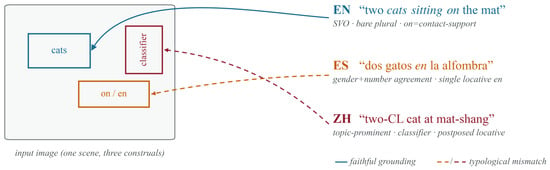
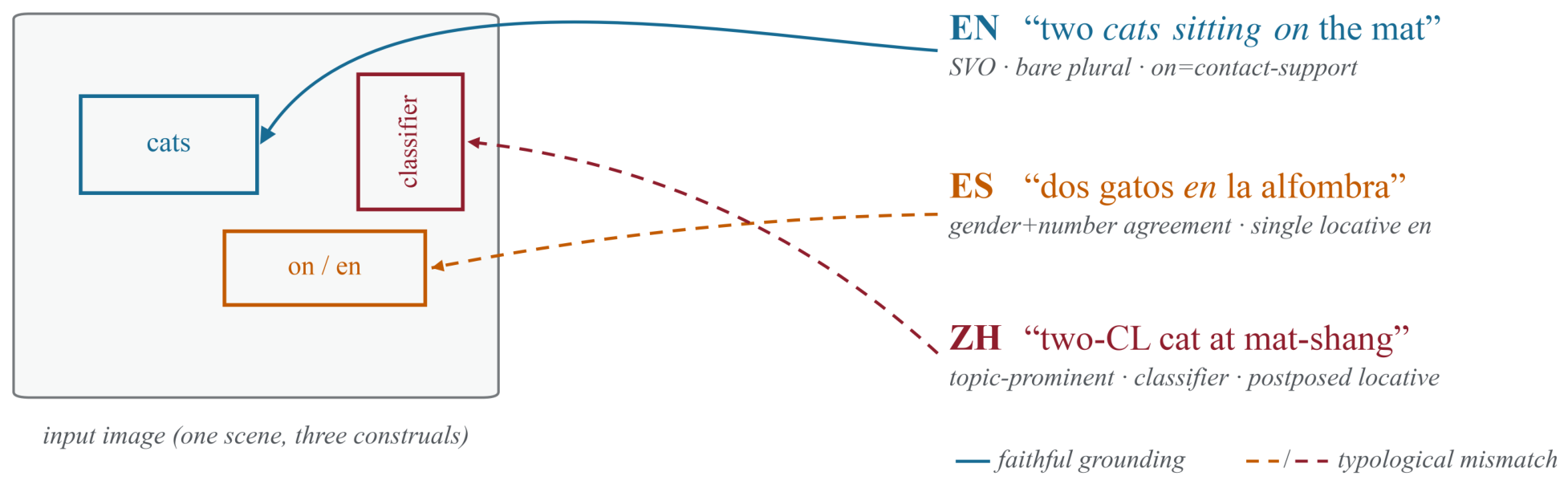
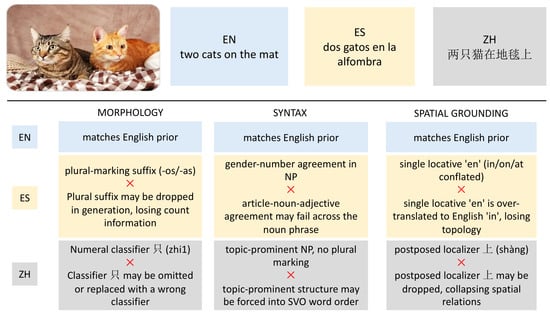
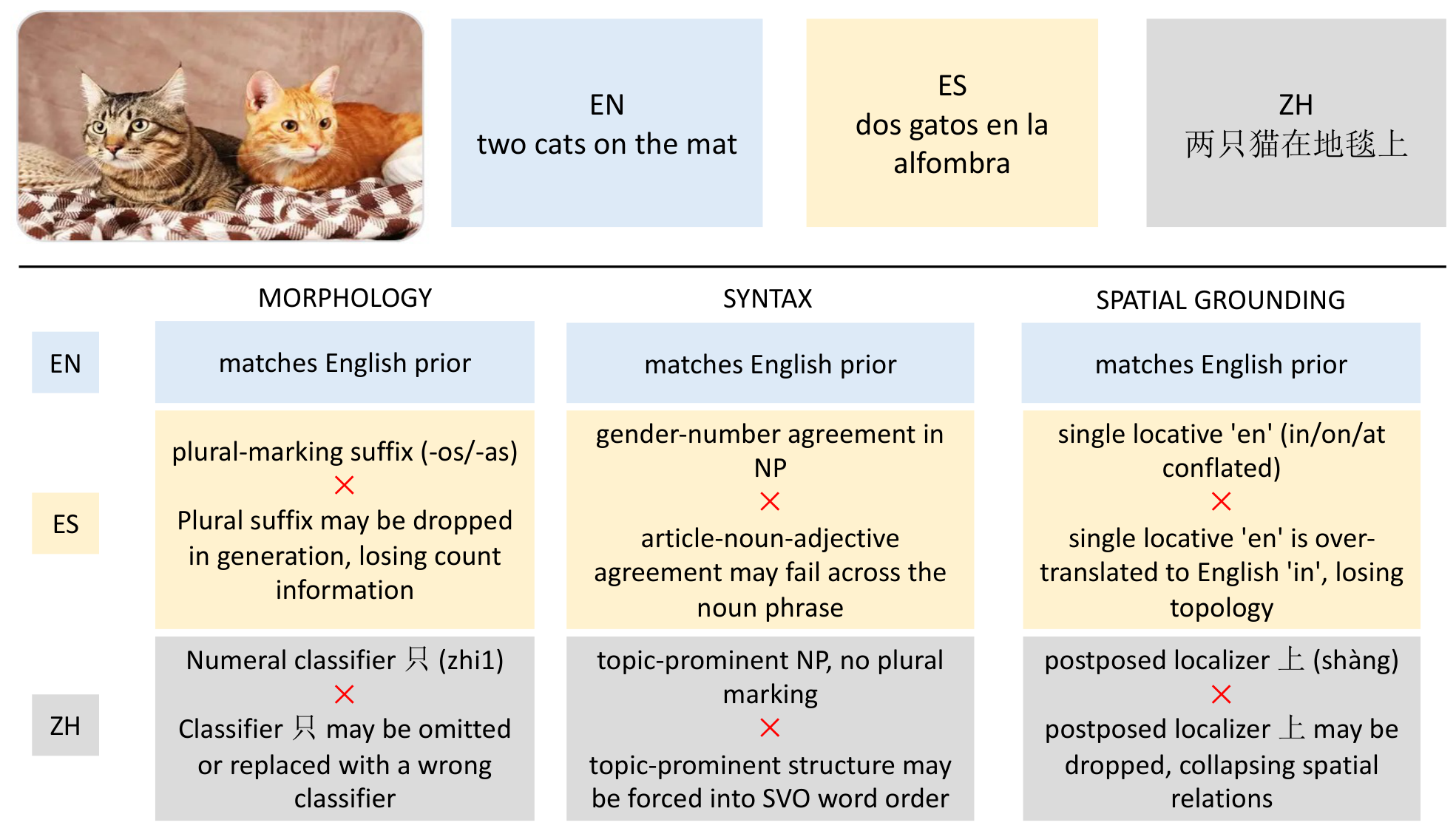


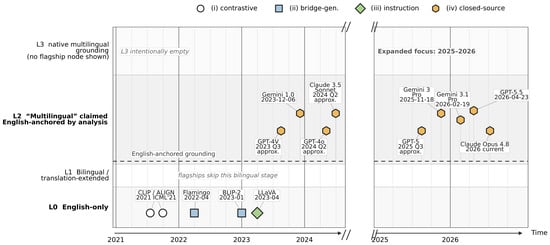
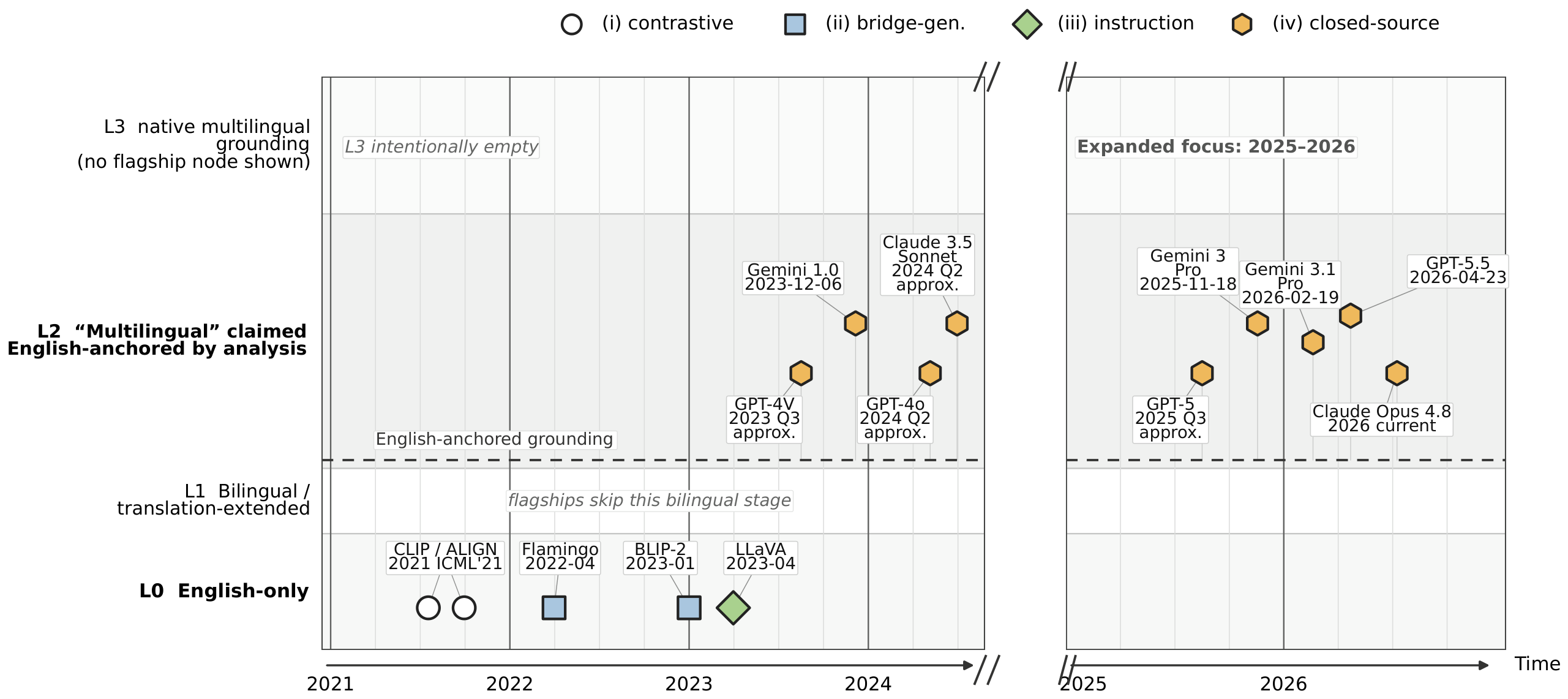
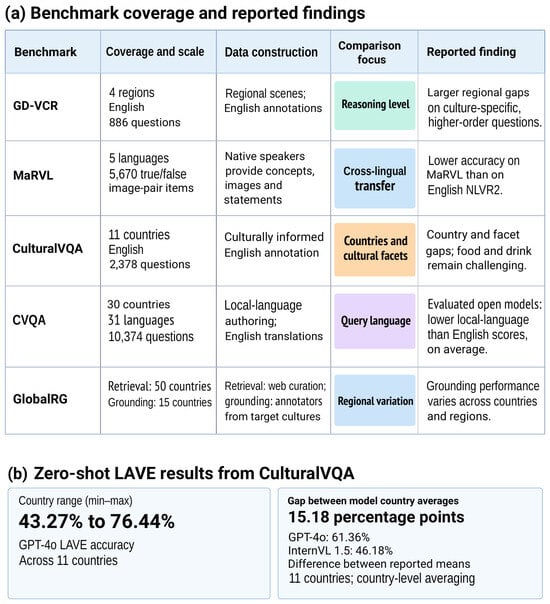
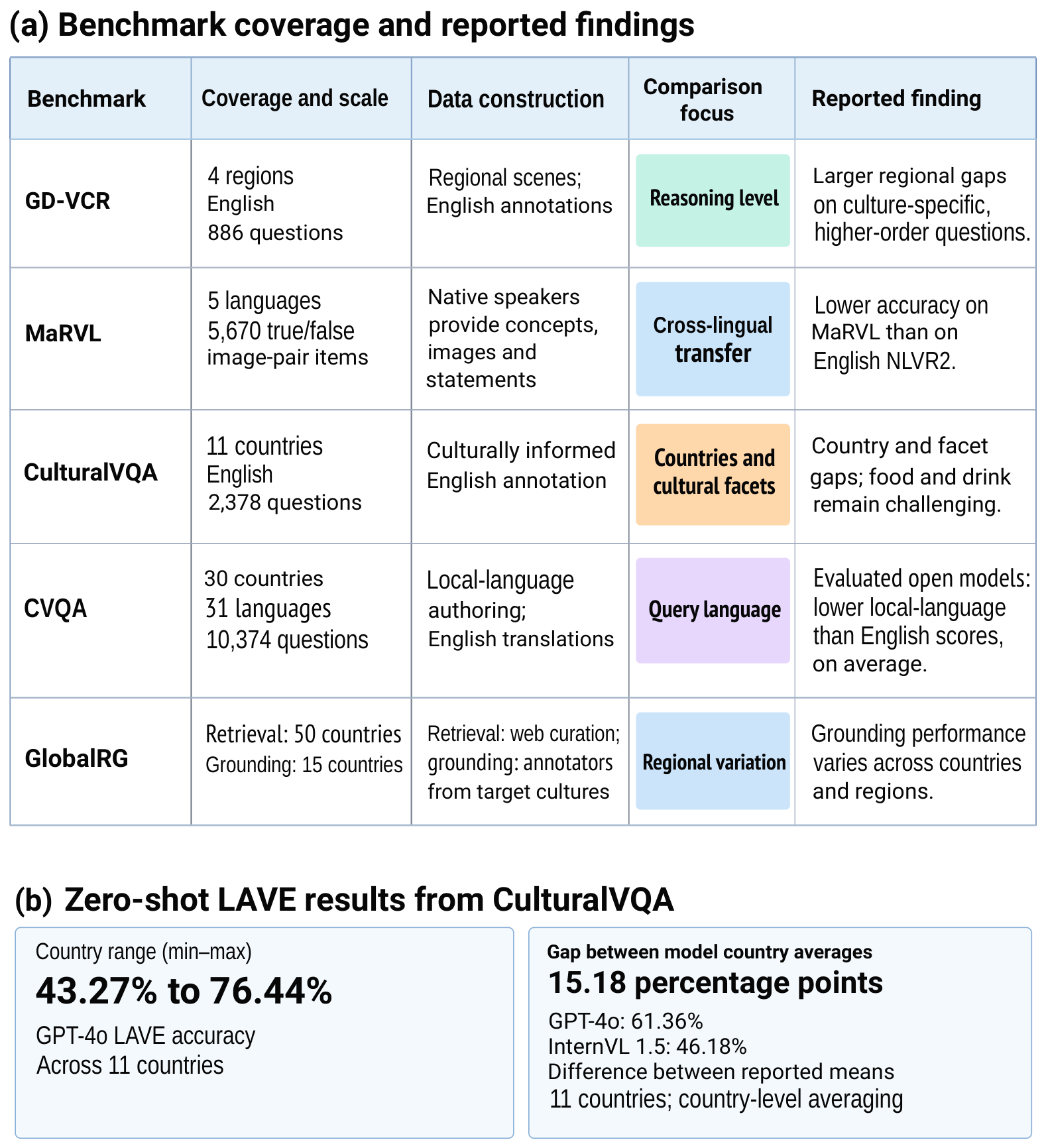
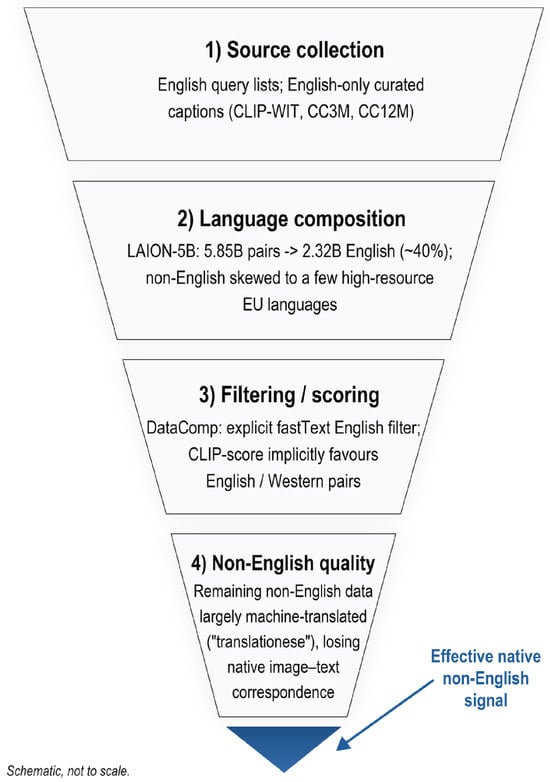
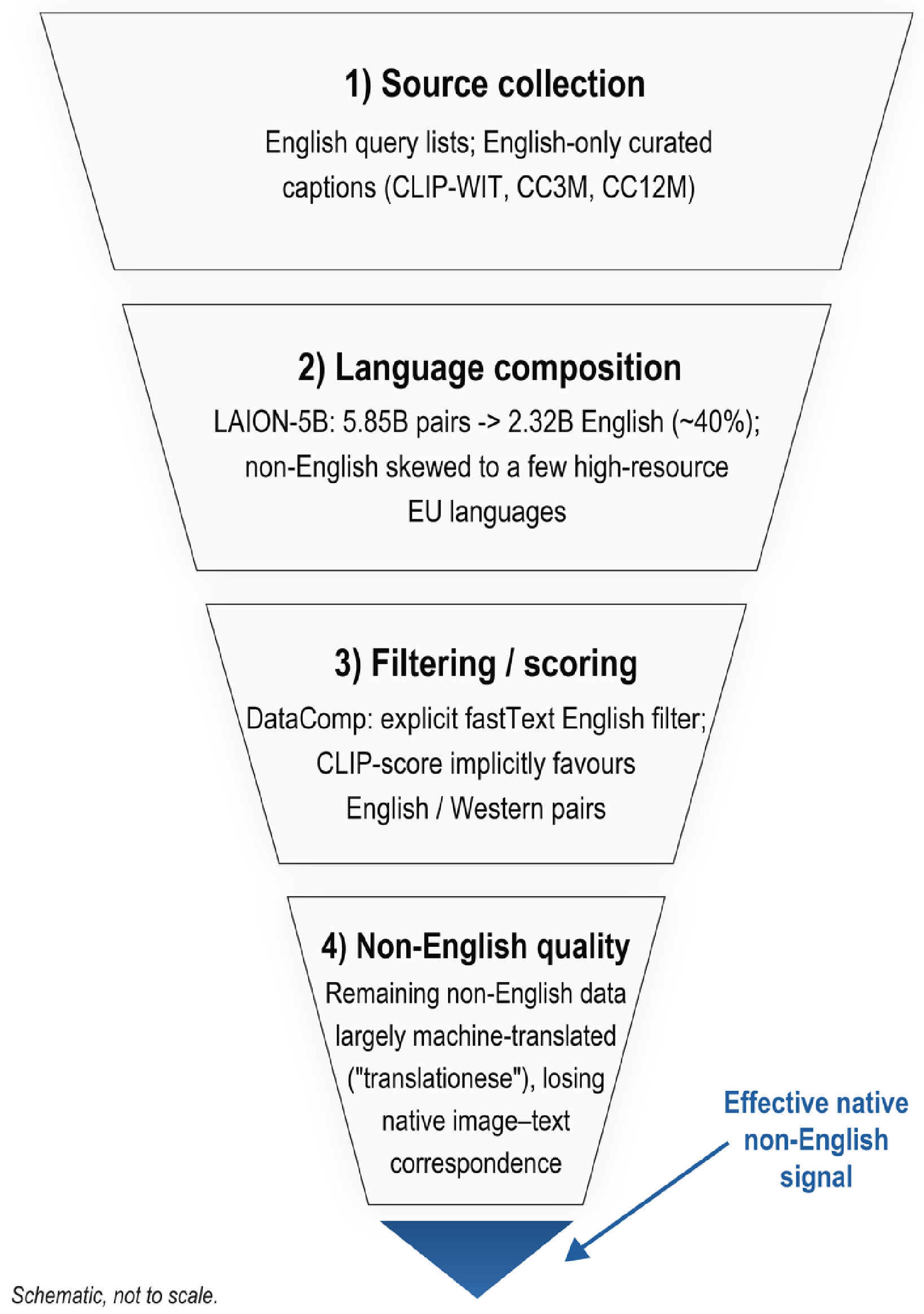
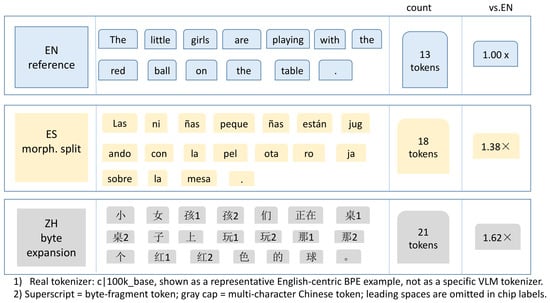
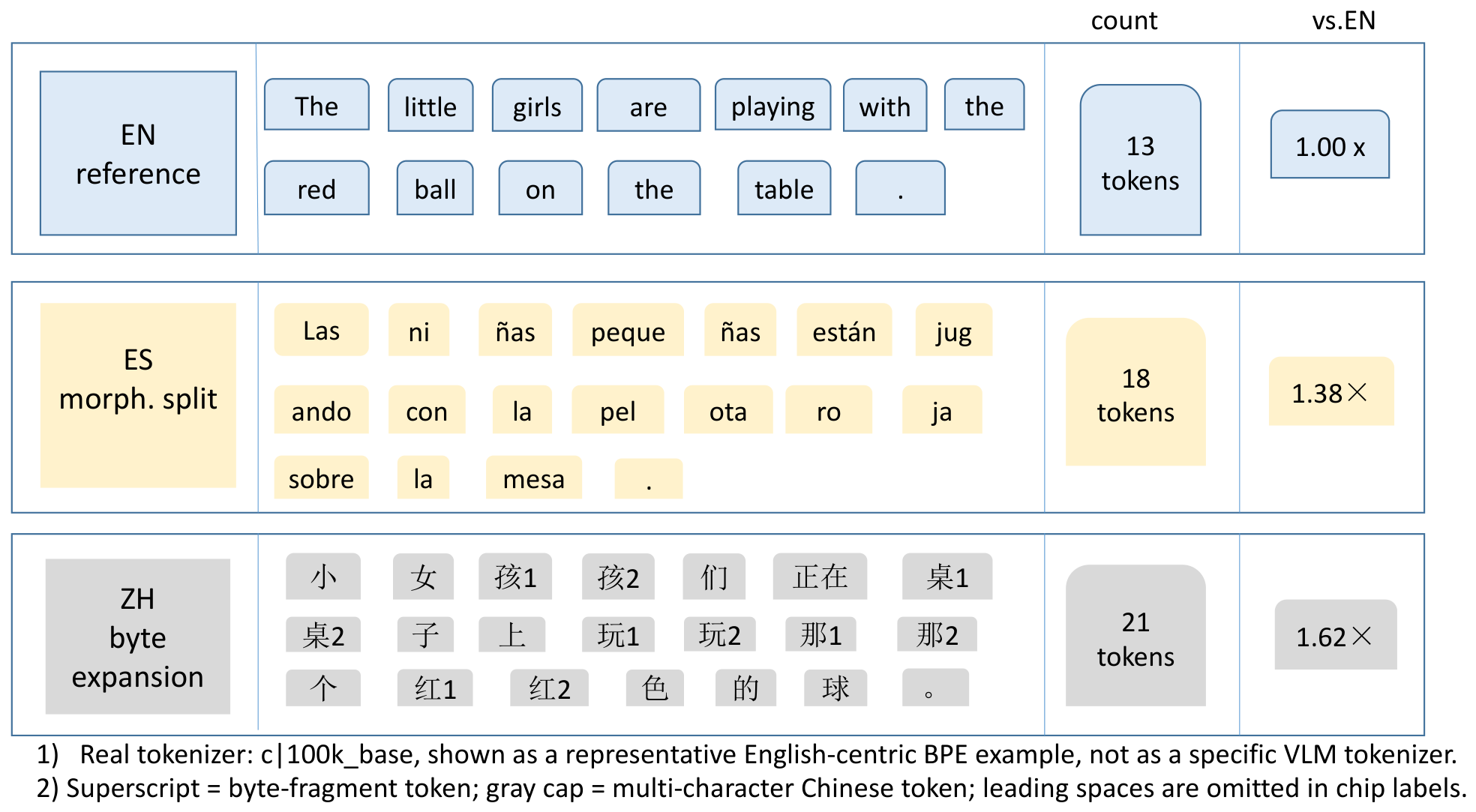
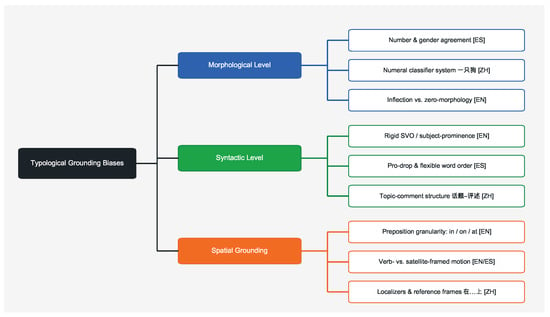
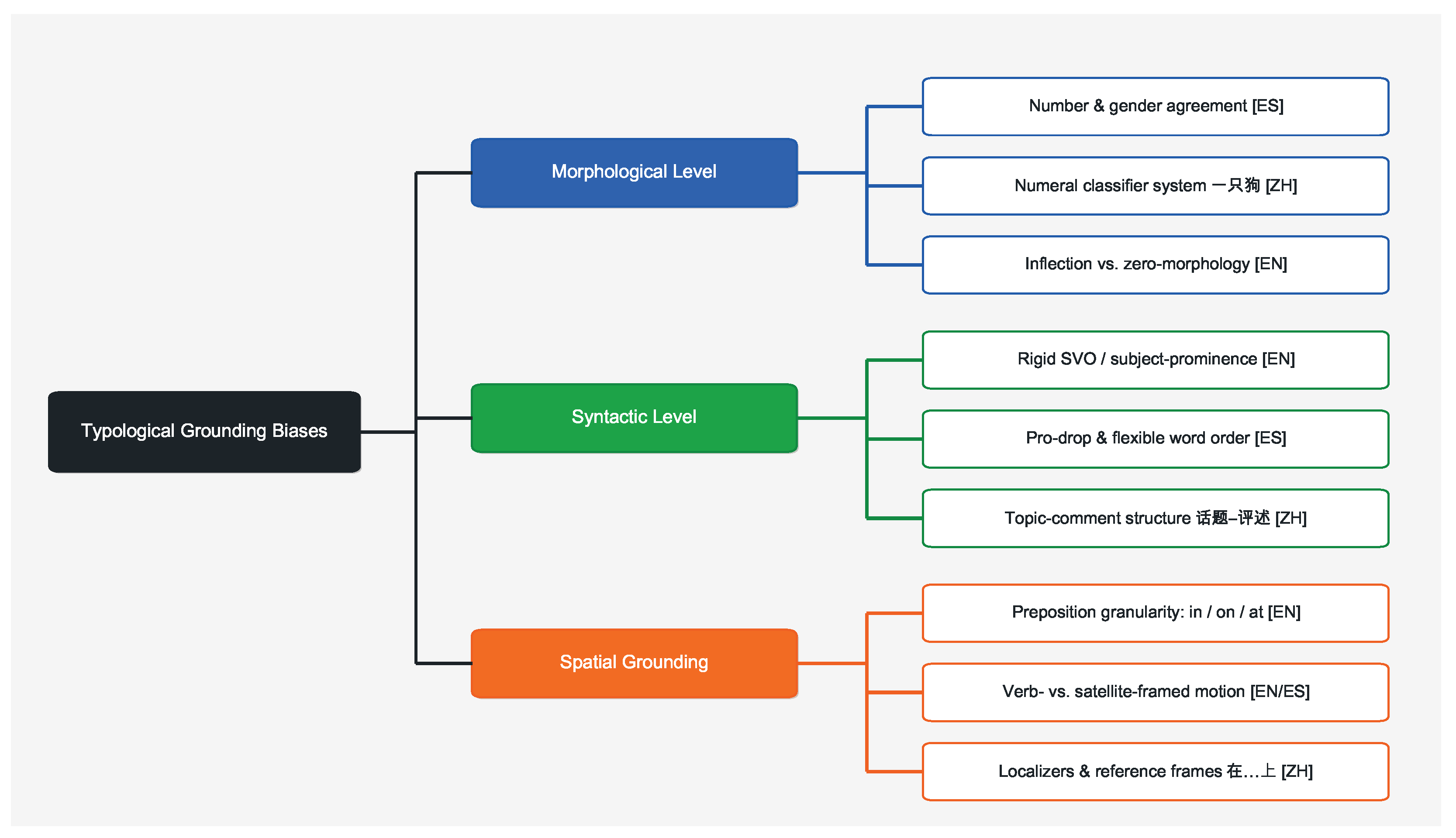
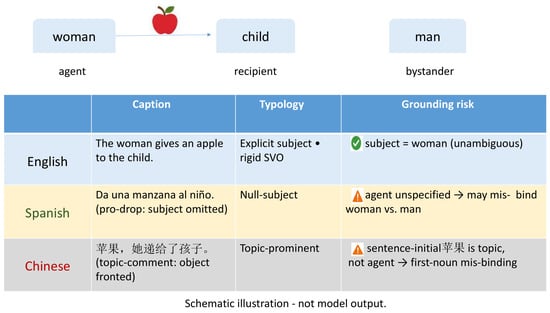
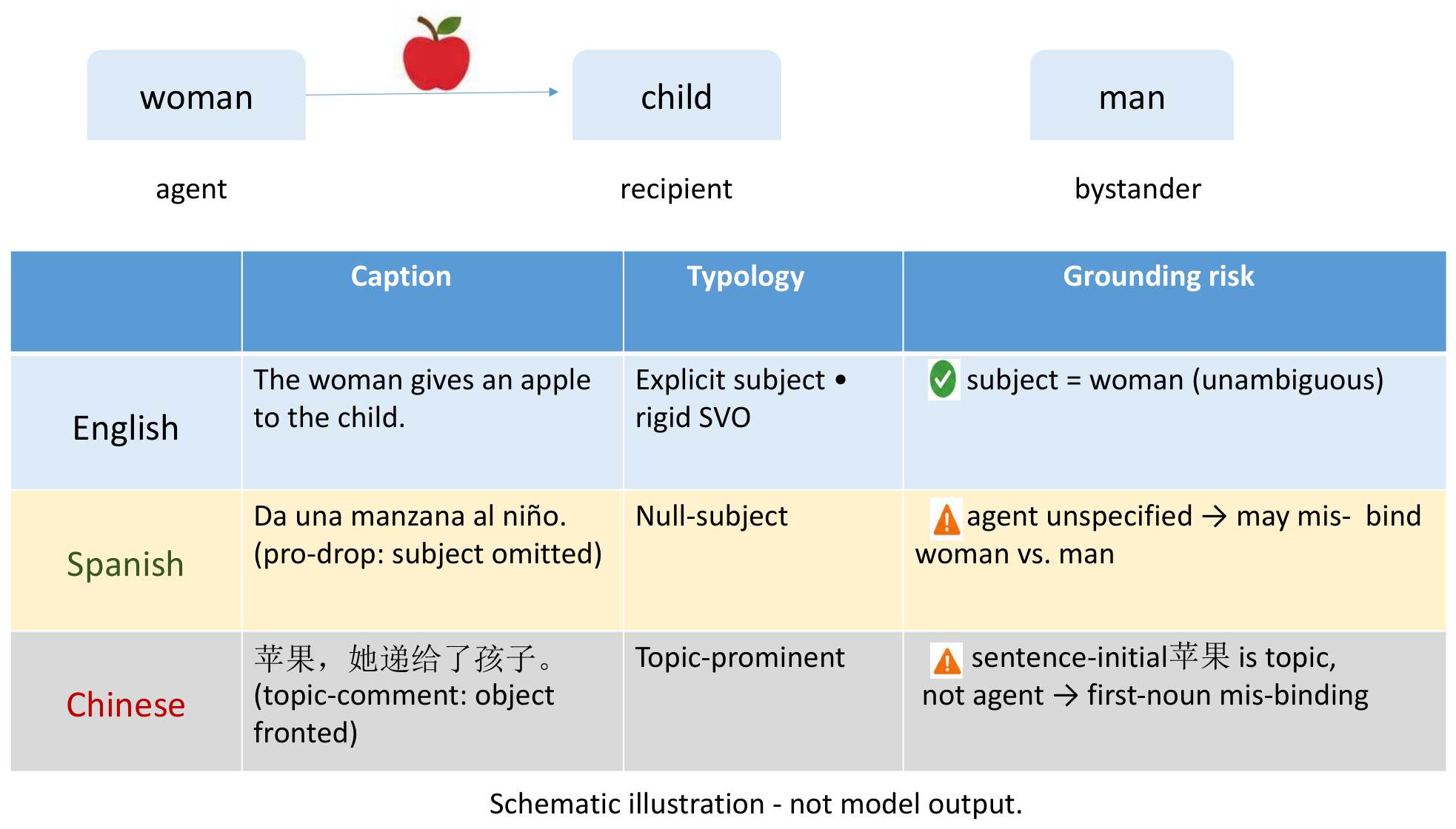
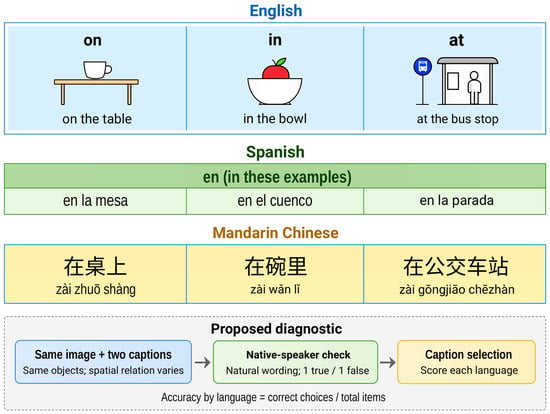
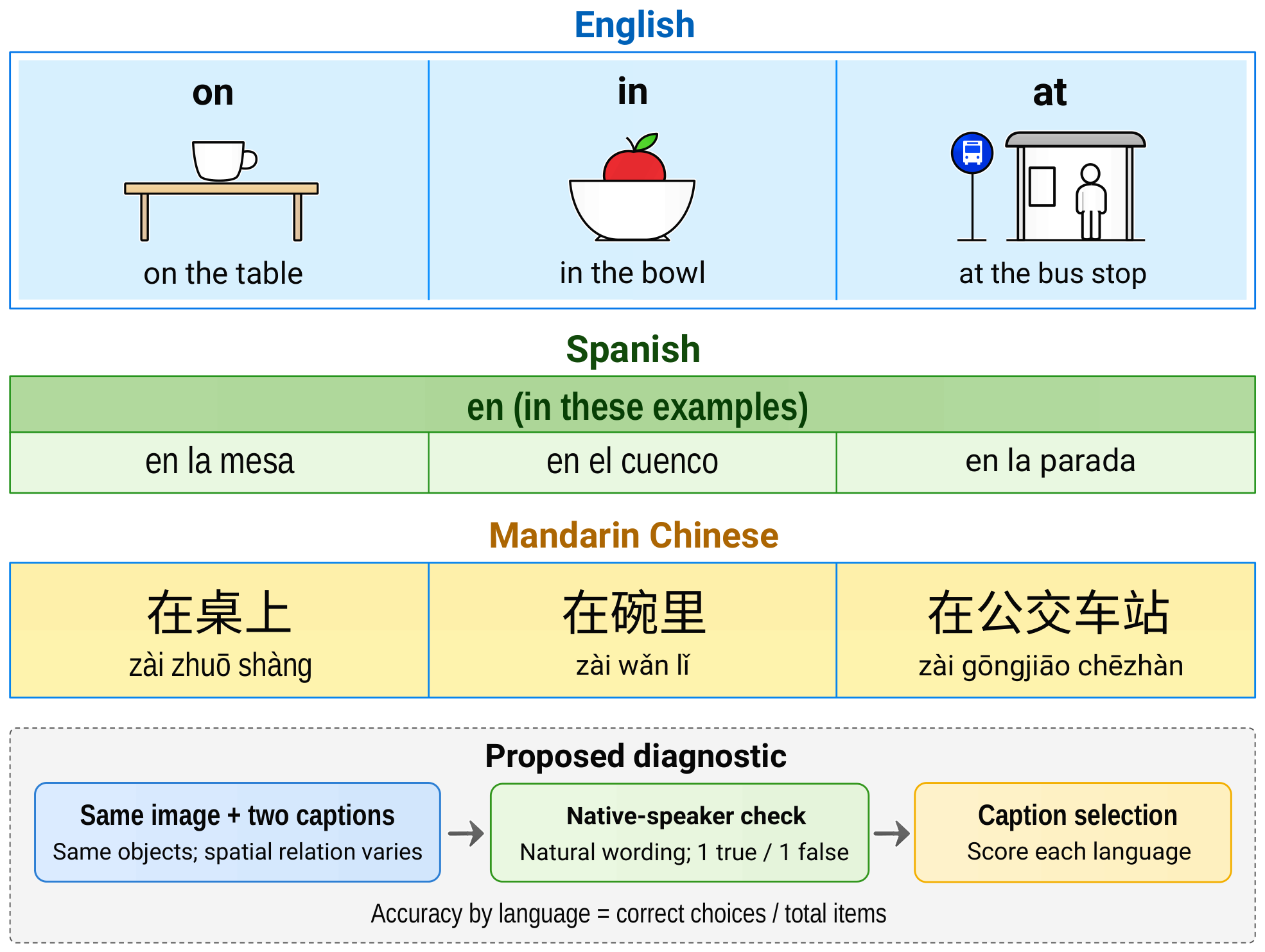
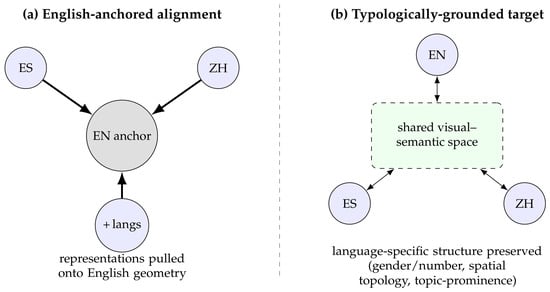
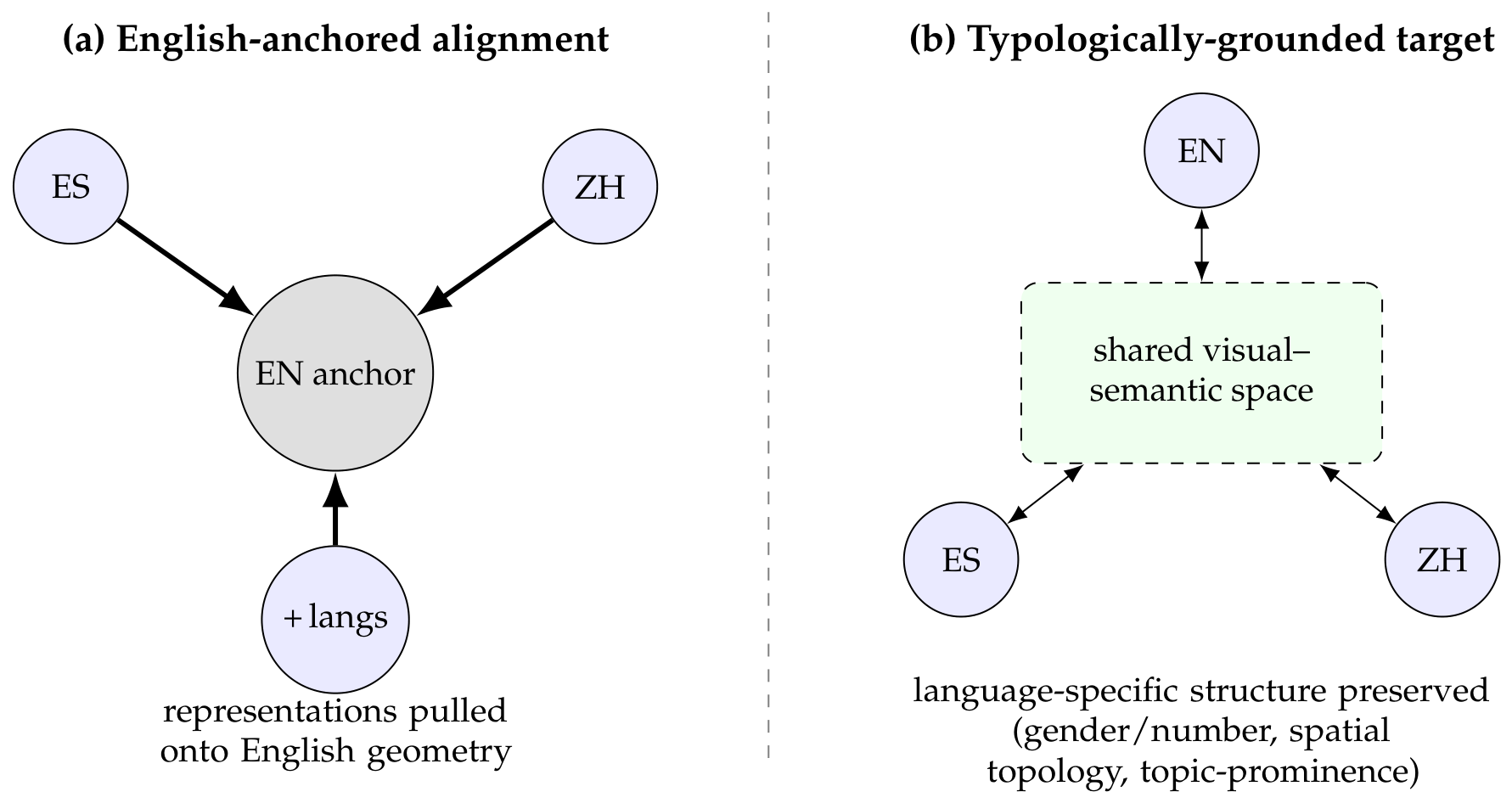
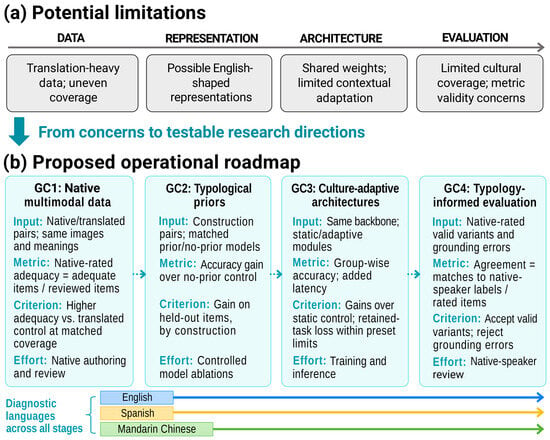
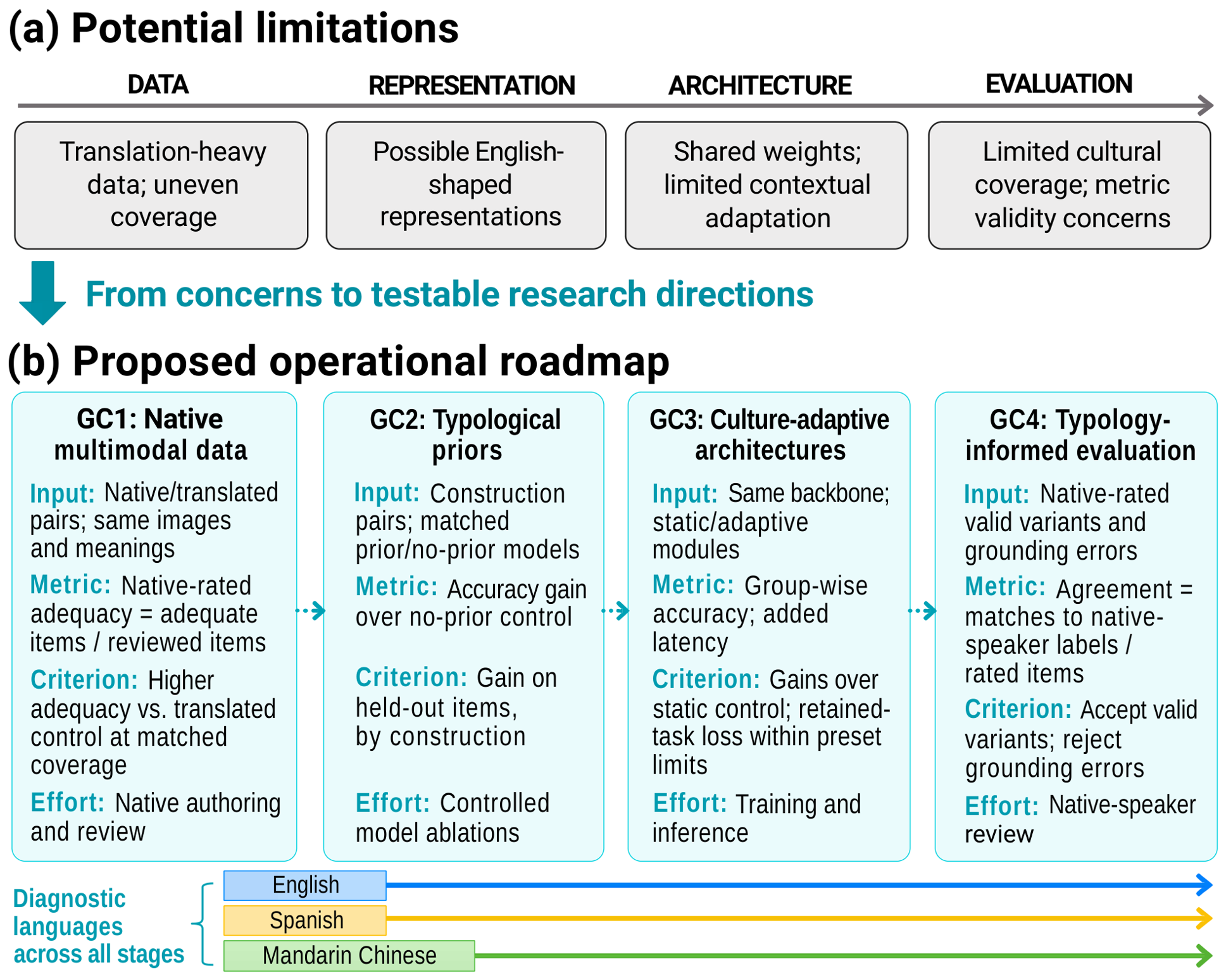

Disclaimer/Publisher’s Note: The statements, opinions and data contained in all publications are solely those of the individual author(s) and contributor(s) and not of MDPI and/or the editor(s). MDPI and/or the editor(s) disclaim responsibility for any injury to people or property resulting from any ideas, methods, instructions or products referred to in the content. |
© 2026 by the authors. Licensee MDPI, Basel, Switzerland. This article is an open access article distributed under the terms and conditions of the Creative Commons Attribution (CC BY) license.