


Abstract
As a typical industrial solid waste-based concrete material, activated coal gangue cementitious concrete is prone to the freeze-thaw cycle in cold-region engineering applications, leading to durability degradation that severely limits its service performance. In this paper, freeze-thaw cycle tests were designed to reveal the influence of different ratio designs on the freeze resistance of materials. Scanning electron microscopy and nuclear magnetic resonance spectroscopy were employed to observe the microstructural changes in the internal pores of activated coal gangue cementitious concrete after freeze-thaw degradation. The optimal replacement ratio for activated coal gangue powder was analyzed. The results showed that, as the number of freeze-thaw cycles increased, the pore structure within the activated coal gangue cemented concrete deteriorated significantly, though the degree of deterioration varied. With the gangue powder content increasing, both the number of pores and porosity within the concrete initially decrease and then increase. According to the test results, when the activated coal gangue powder content was 35% in the concrete mix, the freeze-thaw resistance performance was optimal. This mixture maintained a good pore structure and superior porosity, indicating that the concrete with 35% activated coal gangue powder content was the best mix design. The result provides a reference for enhancing the freeze-thaw resistance of activated coal gangue cementitious concrete in cold environments.
1. Introduction
Coal gangue, a solid waste discharged during coal mining and washing [1], represents a significant environmental challenge, with an annual output exceeding 700 million tons in China alone [2]. Its accumulation not only occupies vast land areas but also leads to severe pollution [3]. Utilizing coal gangue as a concrete aggregate or admixture offers a sustainable solution for resource recovery and mitigating the shortage of natural aggregates [4]. However, a pivotal challenge for activated coal gangue cementitious concrete lies in its application in cold regions, where freeze-thaw cycles induce pore degradation and mechanical deterioration, significantly shortening its service life [5]. This is particularly critical as freeze-thaw damage accounts for over 60% of concrete structure failures in such environments [6], a problem exacerbated by the inherently higher porosity of coal gangue aggregates, which can be 3–5 times that of natural aggregates [7].
Synthesized existing studies have established a foundational understanding of coal gangue concrete. Research has focused on performance thresholds, with Song et al. [8] identifying critical replacement limits for maintaining workability. The influence on mechanical properties has been well-documented, with Niu et al. [9] observing that compressive and tensile strengths peak at a 40% gangue content, while others have explored its effects on flexural strength [10] and microstructural damage after wet-dry cycles [11]. Regarding freeze-thaw resistance, investigations have explored constitutive damage relationships [12,13], the negative correlation between the water-cement ratio and durability [14,15], and the accelerated failure at high replacement rates [16]. Notably, studies employing techniques such as NMR have revealed that increased gangue content leads to higher porosity and accelerated damage under freeze-thaw [17]. International research corroborates these findings, noting sharp increases in mass loss and damage rates with higher replacement levels [2,4,18].
While these contributions are valuable, they predominantly characterize macroscopic mechanical properties, such as strength loss. A critical gap remains in understanding the influence of material heterogeneity on freeze-thaw sensitivity. Crucially, traditional durability evaluations rely heavily on macroscopic parameters (e.g., mass loss, dynamic modulus). However, the crux of freeze-thaw damage lies in the microstructural response—specifically, the propagation of microcracks driven by hydraulic and osmotic pressures from pore water phase changes. Systematic studies investigating the direct correlation between micro-pore evolution (e.g., pore-size distribution, connectivity) and the macro-performance of activated coal gangue cementitious concrete are lacking. In particular, the behavior of nanoscale pores under freeze-thaw action, and their contribution to overall deterioration, remains unquantified.
To address this knowledge gap, this study employs a multi-scale experimental framework to elucidate the pore deterioration mechanisms in activated coal gangue cementitious concrete under freeze-thaw cycles. Nuclear magnetic resonance (NMR) spectroscopy was utilized to quantitatively analyze the evolution of pore-size distribution, while scanning electron microscopy (SEM) was employed for direct observation of pore morphology and structural changes. By integrating these techniques, this research aims to establish a mechanistic understanding of freeze-thaw degradation, thereby providing a scientific basis for optimizing mixture proportions and enhancing the durability of this sustainable construction material for cold-region applications.
2. Materials and Methods
2.1. Materials
- (1)
- Cement: This experiment used P.F 32.5 fly ash Portland cement [19,20].
- (2)
- Coarse Aggregate: According to the Standard for Evaluation of Concrete Compressive Strength (GB/T50107-2010) and the Test Methods of Aggregates for Highway Engineering (JTG3432-2024), coarse aggregate in cement concrete refers to crushed stone or gravel I with particle sizes exceeding 4.75 mm. In this experiment, the coarse aggregate used consists of continuously graded crushed stone ranging from 5 to 16 mm [21,22].
- (3)
- Fine Aggregate: According to the Test Methods of Aggregates for Highway Engineering (JTG3432-2024), fine aggregate in cement concrete refers to natural sand or manufactured sand with particle sizes less than 4.75 mm. This experiment used the natural river sand [21,22] from Ordos, with a fineness modulus of 2.75.
- (4)
- Water: Kangbashi tap water is used, with a density of 1 g/cm3, meeting the standard for mixing water.
- (5)
- Water-reducing agent: The use of a high-efficiency water-reducing agent with an 18% water-reduction rate significantly improves cement utilization efficiency. It enhances the density and hardness of calcined coal gangue concrete while improving workability, meeting experimental standards.
- (6)
- Coal gangue powder: Calcined coal gangue powder was used in this experiment. Its main components are shown in Figure 1 and Table 1.Figure 1. Materials: (a) Cement, (b) Coarse Aggregate, (c) Fine Aggregate, (d) Water-reducing agent, (e) Coal gangue powder, and (f) Coal gangue concrete.Table 1. Main components of calcined coal gangue powder.
2.2. Mix Design and Experiment Methods
This experiment was based on the Specification for mix proportion design of ordinary concrete (JGJ55-2011) [23]. Following the standard requirements, coal gangue was used to replace C32.5 cement at substitution rates of 0%, 35%, 40%, 45%, and 50%. The replacement levels of 0%, 35%, 40%, 45%, and 50% were selected based on previous investigations [8,9], which suggested that the optimal coal gangue content for mechanical properties lies between 30% and 50%. This range allows the evaluation of freeze-thaw resistance across low, moderate, and high replacement levels. Activated coal gangue cementitious concrete specimens were prepared, with the mix designs for each group shown in Table 2 below. To ensure the validity of comparative analysis among concrete mixtures with different coal gangue powder replacement ratios, the workability of all mixtures was controlled to achieve a consistent slump class. Prior to specimen preparation, the water content in each mixture was adjusted to maintain a target slump value of 50–70 mm, in accordance with the requirements of JGJ55-2011 [23]. This approach ensures that all mixtures exhibited comparable consistency before hardening, thereby eliminating the influence of workability differences on the subsequent evaluation of hardened properties, including pore structure and freeze-thaw resistance. Based on preliminary tests, the slump value for this batch was 70 mm.
Table 2.
Mix ratios of different experimental groups.
Subsequently, freeze-thaw testing was conducted on the specimens using the “rapid freezing method” specified in the Standard for test methods of long-term performance and durability of ordinary concrete (GB/T50082—2024) [24].
After freeze-thaw cycles, the micro-morphology and pore-size distribution of activated coal gangue cementitious concrete subjected to freeze-thaw degradation were examined using SEM (ZEISS, Osaka, Japan) and NMR. The degradation rules and changes in pore-size distribution following freeze-thaw exposure were analyzed to determine the optimal replacement ratio for activated coal gangue powder.
2.3. Experiment Contents
- (1)
- Freeze-thaw resistance testing mainly evaluates the impact of different mixing ratios and admixtures on the freeze-thaw resistance of concrete through freeze-thaw cycle tests.
- (2)
- The changes in micro-morphology and pore structure of activated coal gangue cementitious concrete under freeze-thaw cycles were analyzed using SEM and NMR.
2.4. Specimen Preparation and Loading
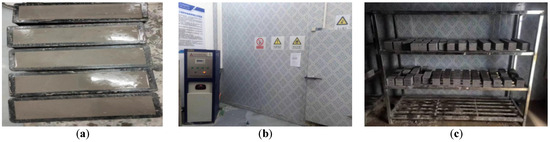
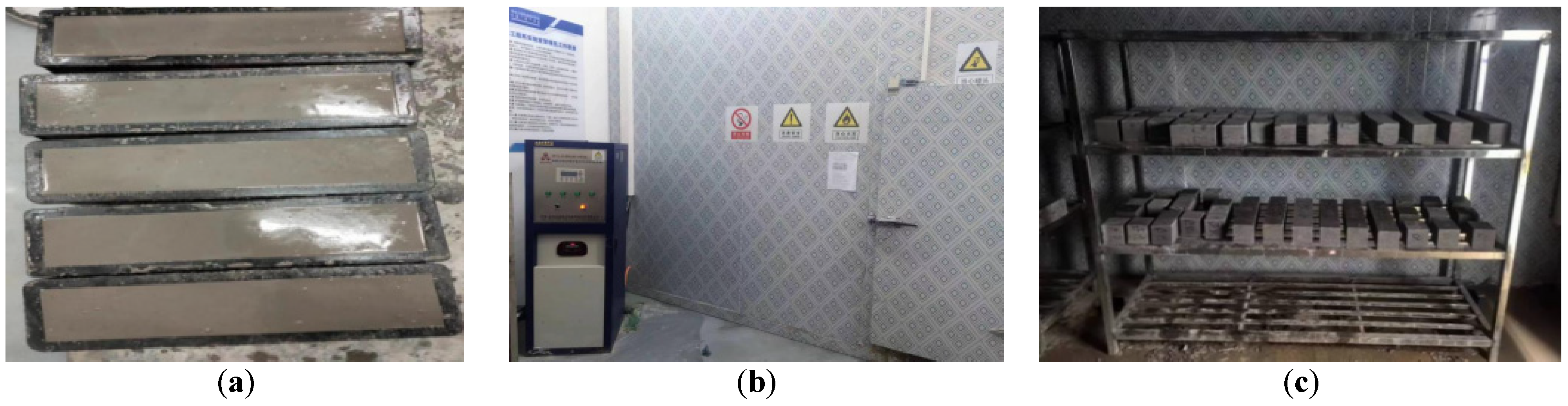
The test was designed with five groups, each group for compressive strength testing of 15 concrete specimens measuring 100 mm × 100 mm × 100 mm cubes; four prismatic specimens measuring 100 mm × 100 mm × 400 mm were prepared for freeze-thaw cycle testing. Standard-sized plastic molds were uniformly used for all test specimens. The activated coal gangue cementitious concrete was shaped by vibration, demolded after 24 h, and transferred to a standard constant-temperature curing chamber for 28 days before subsequent testing. The specimen curing process (molding, curing chamber, and curing condition) is shown in Figure 2.
Figure 2.
Specimen Curing: (a) Specimen placed in mold, (b) Standard curing chamber, and (c) Curing of test specimens.
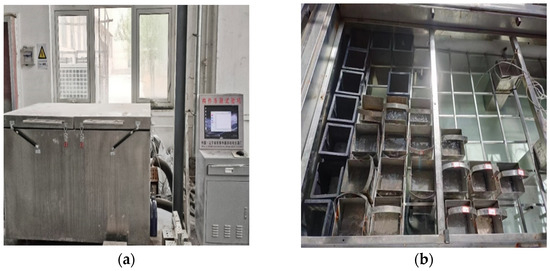
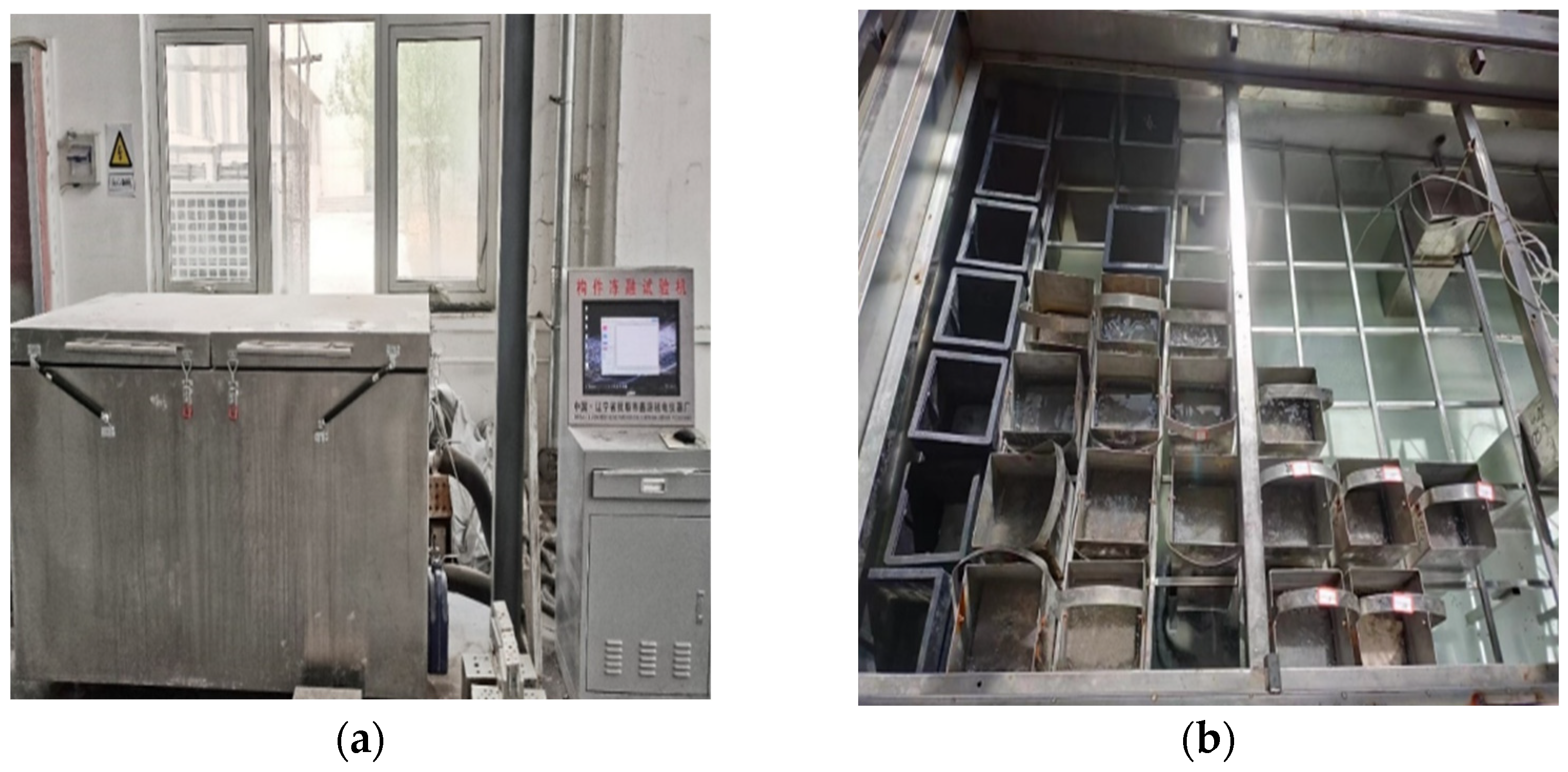
In accordance with the provisions of the Standard for test methods of long-term performance and durability of ordinary concrete (GB/T50082-2024) [24] and the Test code for hydraulic concrete (SL/T352-2020) [25], freeze-thaw cycles for activated coal gangue cementitious concrete were conducted using the “rapid freezing method.” Each freeze-thaw cycle lasted 2–4 h, with a thawing period exceeding 30–60 min. The minimum temperature of the core specimen was controlled at −20 °C, while the maximum temperature was maintained below 7 °C. Specimens were 100 mm × 100 mm × 400 mm in size, with four specimens per group. Pure water was used as the freeze-thaw medium. The freeze-thaw testing machine and test setup (Beijing Naiheng Testing Equipment Technology Development Co., Ltd., Beijing, China) are illustrated in Figure 3. Before the test begins, remove specimens cured for 24 days and place them in a container filled with clean water for 4 days. The water level should be 2 cm above the top of the specimens to ensure thorough internal water absorption. After soaking, remove the specimens, wipe off surface moisture, and measure the dynamic elastic modulus and mass before testing. Subsequently, measure the time-dependent dynamic elastic modulus and mass changes every 25 freeze-thaw cycles, then invert the specimens and place them back into the container to continue testing.
Figure 3.
Freeze-Thaw Test: (a) Freeze-Thaw Testing Machine, and (b) Freeze-thaw testing of specimens.
To meet test requirements, the freeze-thaw testing of concrete shall be terminated upon meeting any one of the following conditions: (1) Mass loss rate reaches 5%; (2) Relative dynamic modulus of elasticity decreases to below 60%; (3) Specimen failure occurs.
Tests were conducted in accordance with the Standard for test methods of concrete physical and mechanical properties (GB/T50081-2019) [26]. Cube compressive strength test specimens measured 100 mm × 100 mm × 100 mm. Considering the size effect of specimens, a cube compressive strength reduction factor of 0.95 was applied. During testing, load was applied continuously and uniformly at a rate of 0.5 MPa/s. Three specimens were tested per group, and the compressive strength of the concrete was determined as the arithmetic mean of the data obtained from these three specimens.
3. Analysis of Freeze-Thaw Resistance
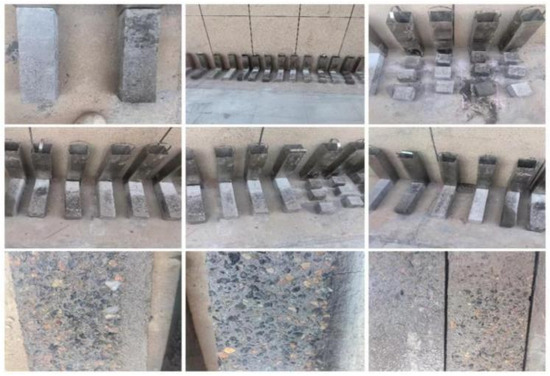
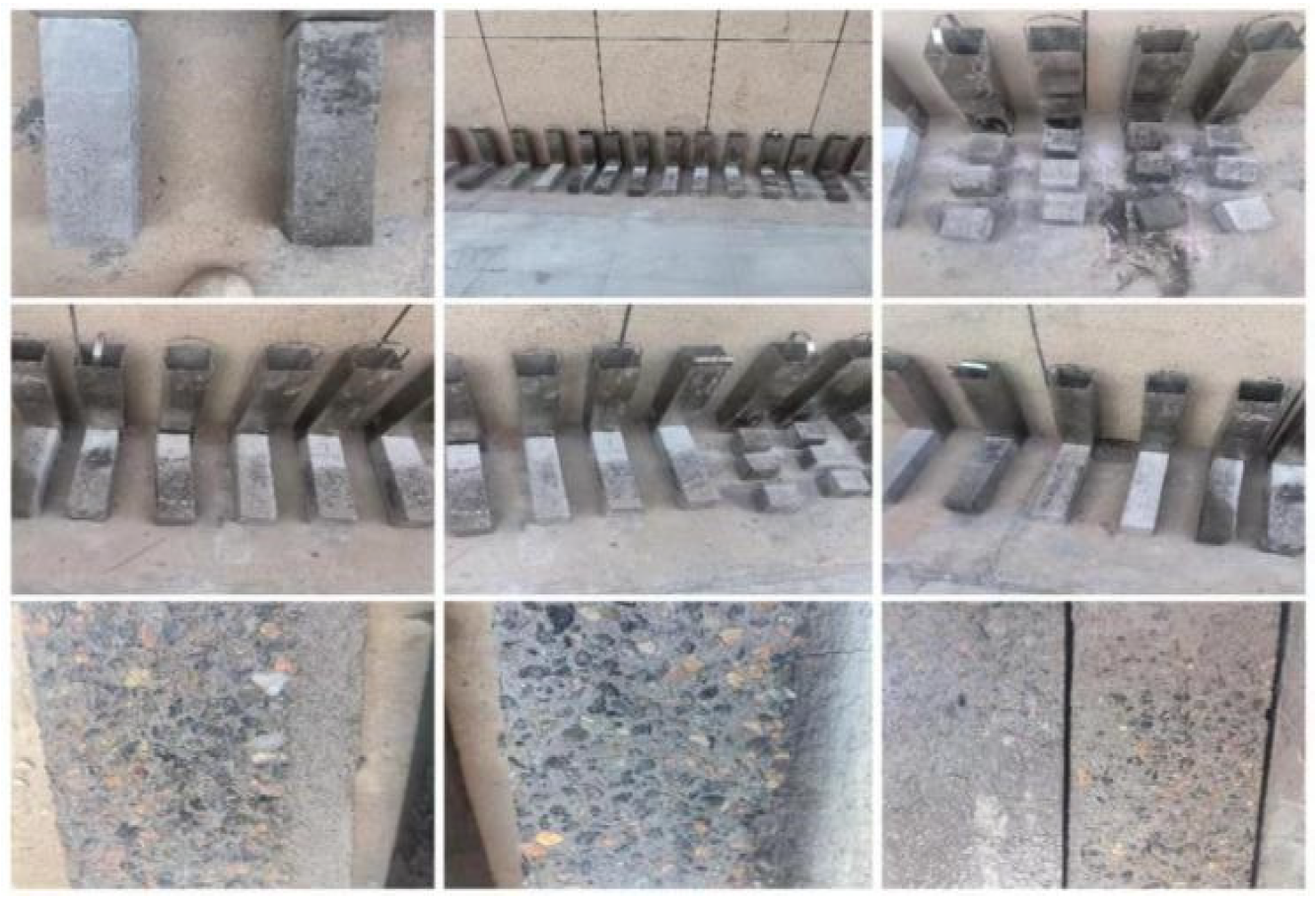
The freeze-thaw resistance of activated coal gangue cementitious concrete was evaluated by monitoring mass loss, relative dynamic modulus of elasticity, and compressive strength degradation across 0, 25, and 50 freeze-thaw cycles. As the number of cycles increased, all specimens exhibited progressive deterioration, with the extent of damage closely related to the coal gangue powder content. Figure 4 shows the appearance of specimens after freeze-thaw cycles. Specifically, the mass loss rate increased most sharply at 50% gangue content, reaching 3.25% after 50 cycles, while the control group showed only 0.593% loss. Similarly, the relative dynamic modulus of elasticity declined with increasing gangue content; after 50 cycles, the 50% gangue group retained less than 55% of its initial modulus, whereas the 35% and 40% groups retained 95.38% and 88.29%, respectively. Compressive strength also decreased with freeze-thaw exposure, with the 35% gangue group exhibiting the smallest strength loss (31.64% after 50 cycles) compared to the higher replacement levels. These results indicate that while coal gangue incorporation generally reduces freeze-thaw durability, a 35% replacement level offers the best compromise, maintaining relatively low mass loss, higher dynamic modulus retention, and superior compressive strength performance. These findings align with the microstructural observations and pore structure analyses discussed in Section 4, further supporting the optimal mix design.
Figure 4.
Specimens after freeze-thaw cycles.
4. Microstructural Analysis
4.1. Observation of Microstructure
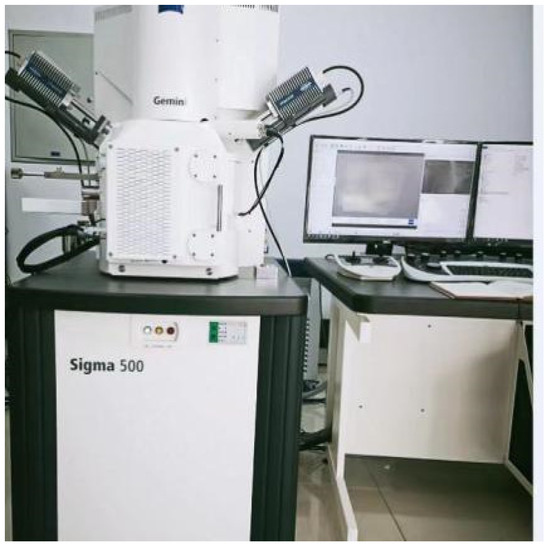
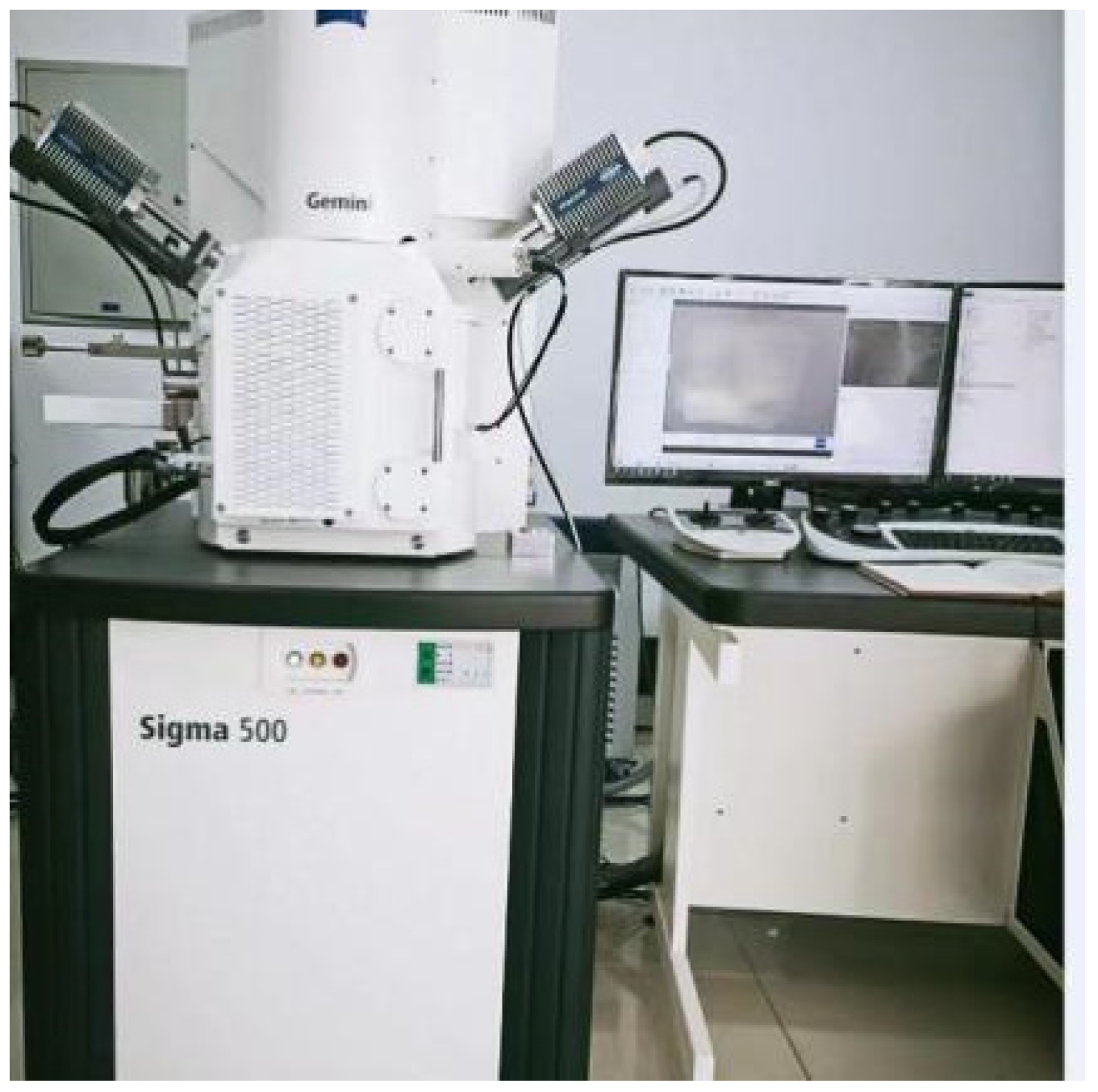
Microstructural observations were performed using a Sigma500 scanning electron microscope (SEM) at an acceleration voltage of 10 kV. The electron microscope used in this study is shown in Figure 5. Flake fragments approximately 3–5 mm in diameter were collected from the broken specimens after compressive strength testing. The fragments were dried to constant weight in a vacuum desiccator, mounted on copper stubs with conductive adhesive, sputter-coated with gold, and examined under the SEM to observe pore morphology and microstructural features.
Figure 5.
Electron microscope.
After conducting compressive-strength tests on concrete specimens, the fragments obtained from the broken specimens were cleaned. The samples were placed on a SEM stage, where the fragments underwent multi-angle scanning using an electron beam. By adjusting the scanning speed and acceleration voltage of the electron beam, the microstructure of the fragments, including pore structure, was observed. The results are as follows:
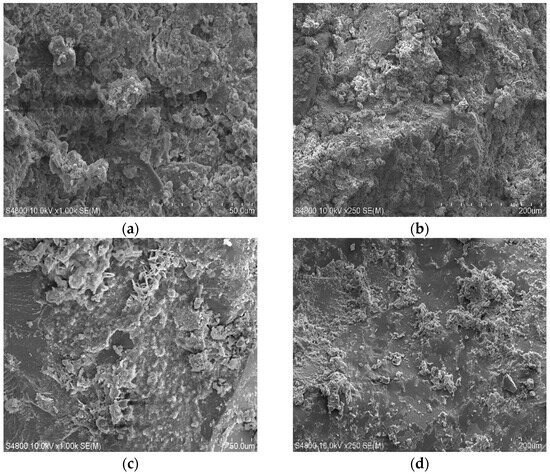
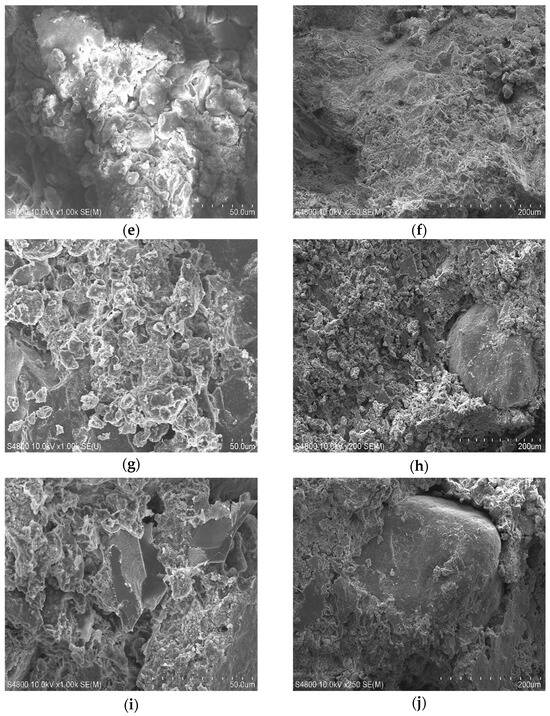
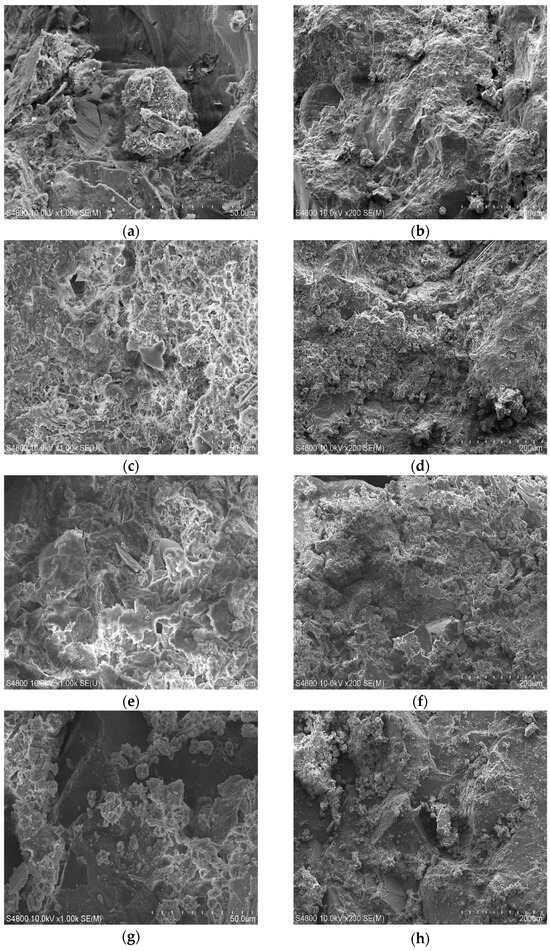
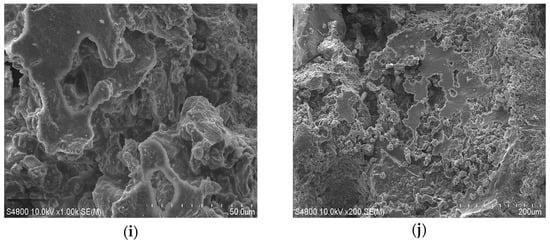
The microstructural features of activated coal gangue cementitious concrete specimens, observed under a SEM, are shown in Figure 6 below. These specimens were prepared without freeze-thaw cycling and contained varying proportions of calcined coal gangue powder:
Figure 6.
Microscopic appearance of unfreeze-thaw specimens: (a) Pure cement (0% content), (b) Pure cement (0% content), (c) 35% content, (d) 35% content, (e) 40% content, (f) 40% content, (g) 45% content, (h) 45% content, (i) 50% content, and (j) 50% content.
Under non-freezing-thawing conditions, electron microscopy examination of the internal pore-size distribution in specimens of activated coal gangue cementitious concrete with varying admixture ratios revealed that specimens with a 35% admixture ratio exhibited relatively fewer pores of moderate size. The pore-size distribution was relatively uniform, with regular pore morphology and better bonding to the cement matrix. 35% gangue powder content may be the optimal choice without freeze-thaw cycling processing, achieving a favorable pore structure and concrete performance.
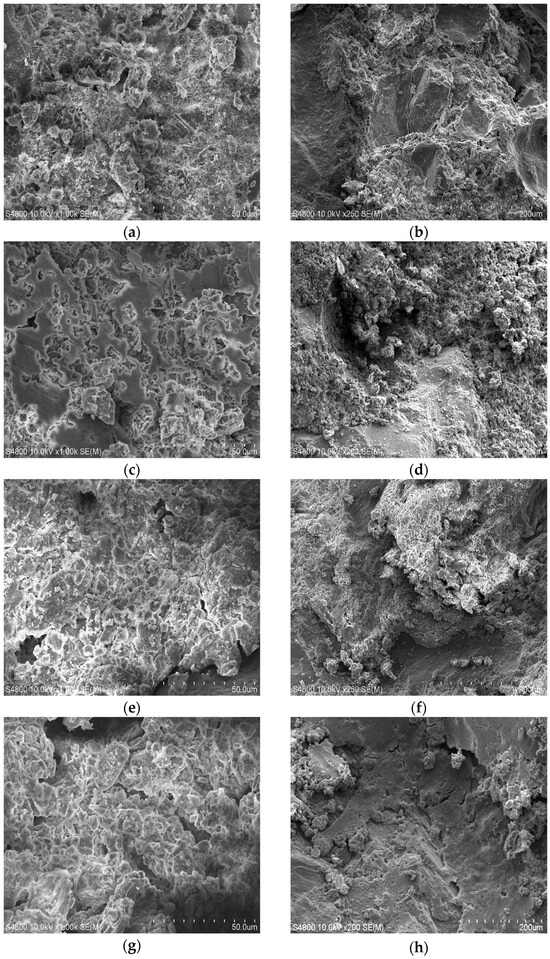
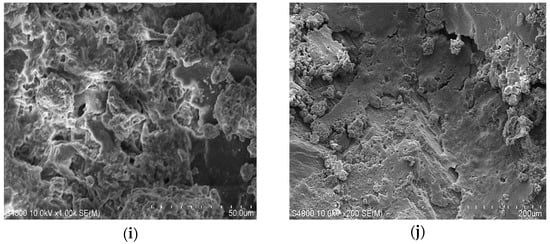
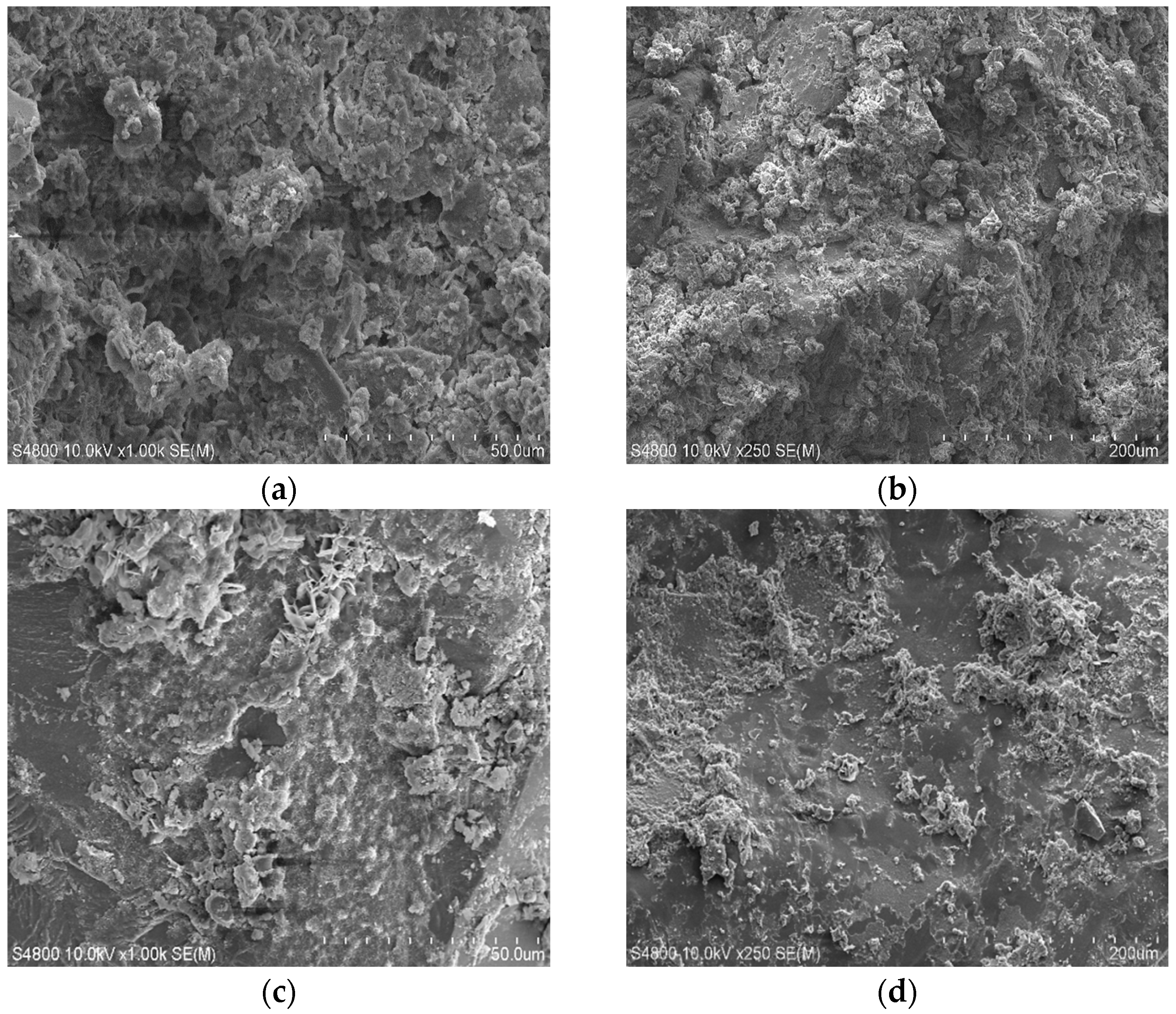
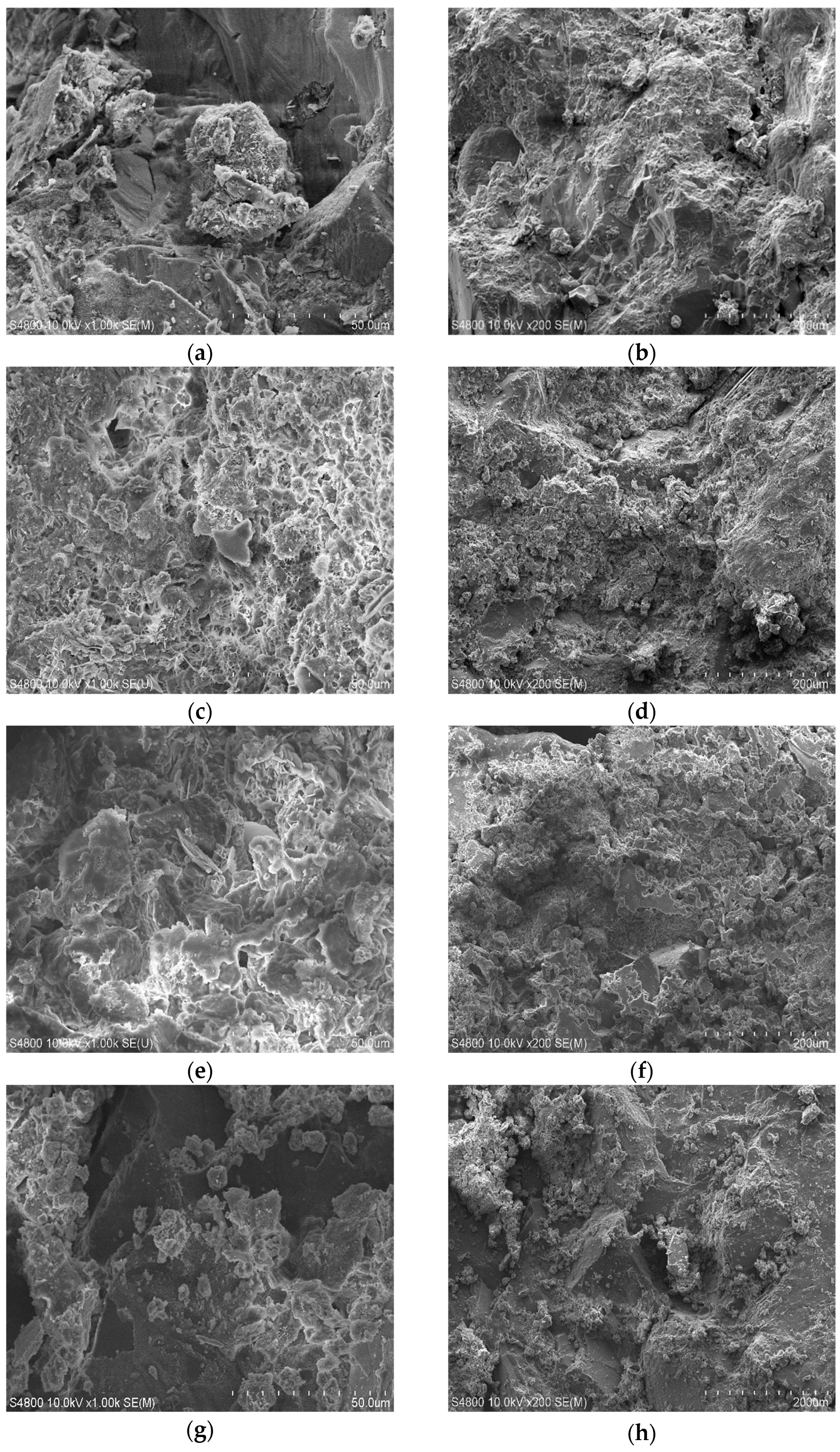
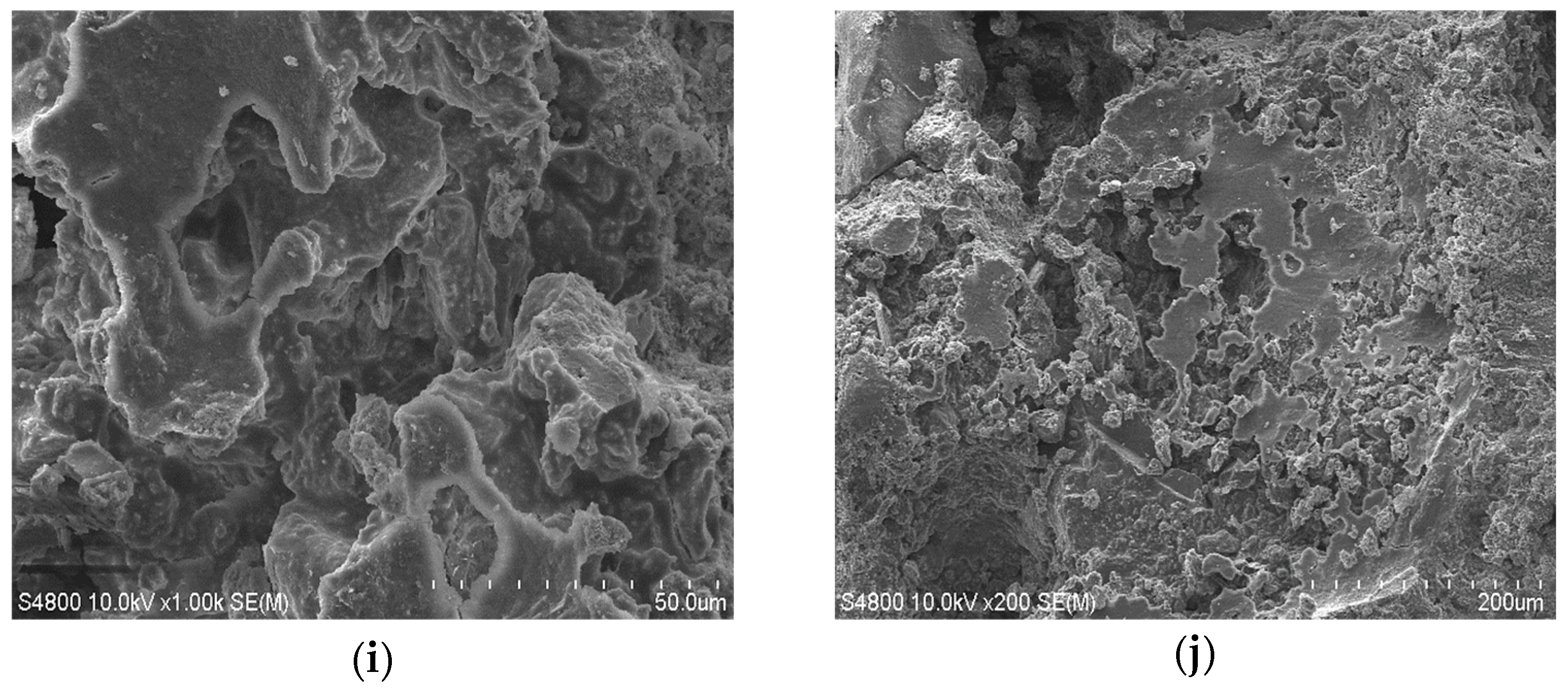
After 25 freeze-thaw cycles, the microstructural features of activated coal gangue cementitious concrete specimens with different proportions of calcined coal gangue powder, as observed under an electron microscope, are shown in Figure 7 below:
Figure 7.
Microscopic appearance of the specimen after 25 freeze-thaw cycles: (a) Pure cement (0% content), (b) Pure cement (0% content), (c) 35% content, (d) 35% content, (e) 40% content, (f) 40% content, (g) 45% content, (h) 45% content, (i) 50% content, and (j) 50% content.
Compared to unfrozen specimens, the internal pore-size distribution of activated coal gangue cementitious concrete specimens with different admixture ratios after 25 freeze-thaw cycles revealed that specimens with a 35% admixture ratio showed relatively fewer voids, a more uniform pore-size distribution, and a more regular pore morphology, thereby achieving a favorable pore structure.
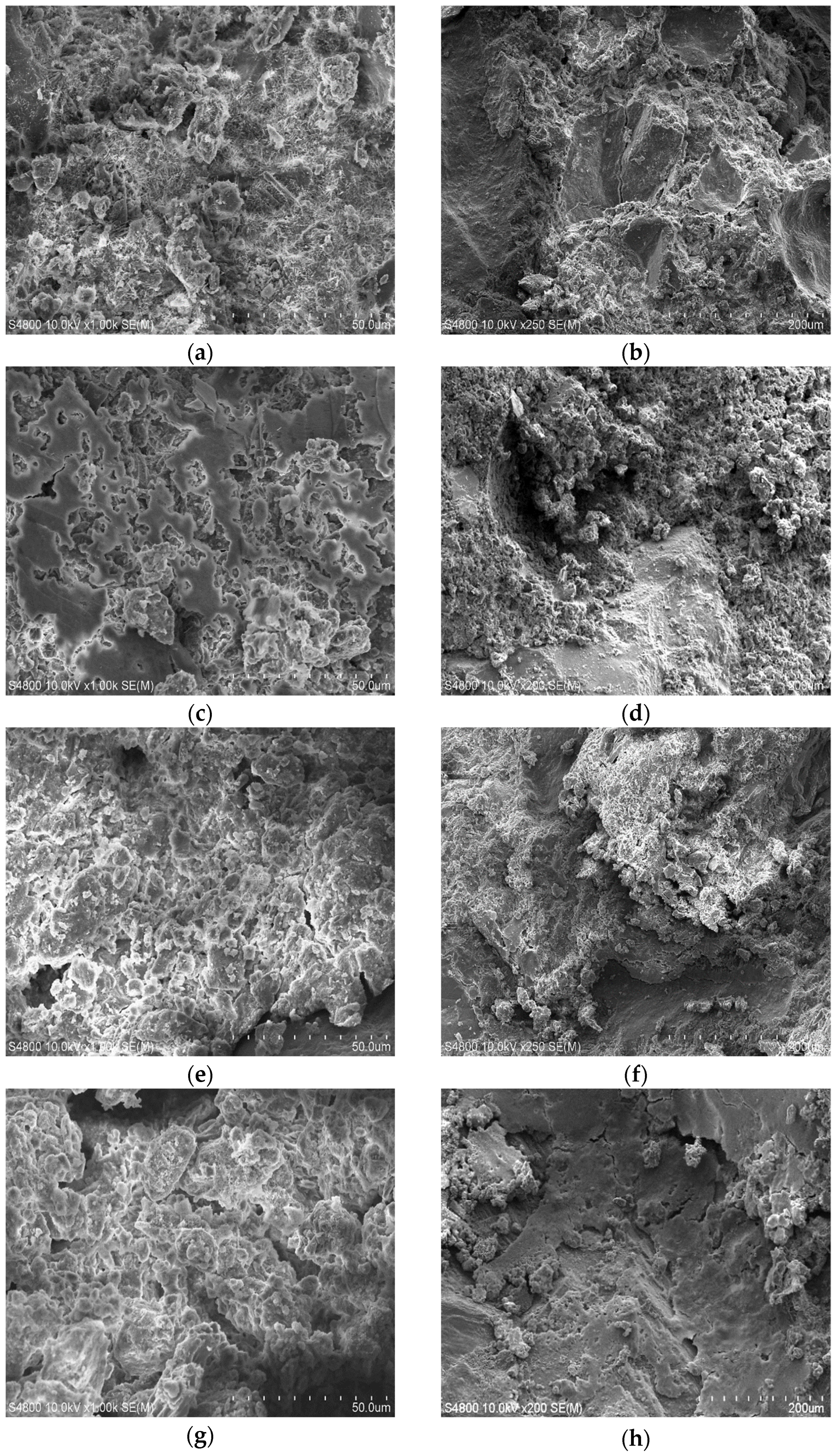
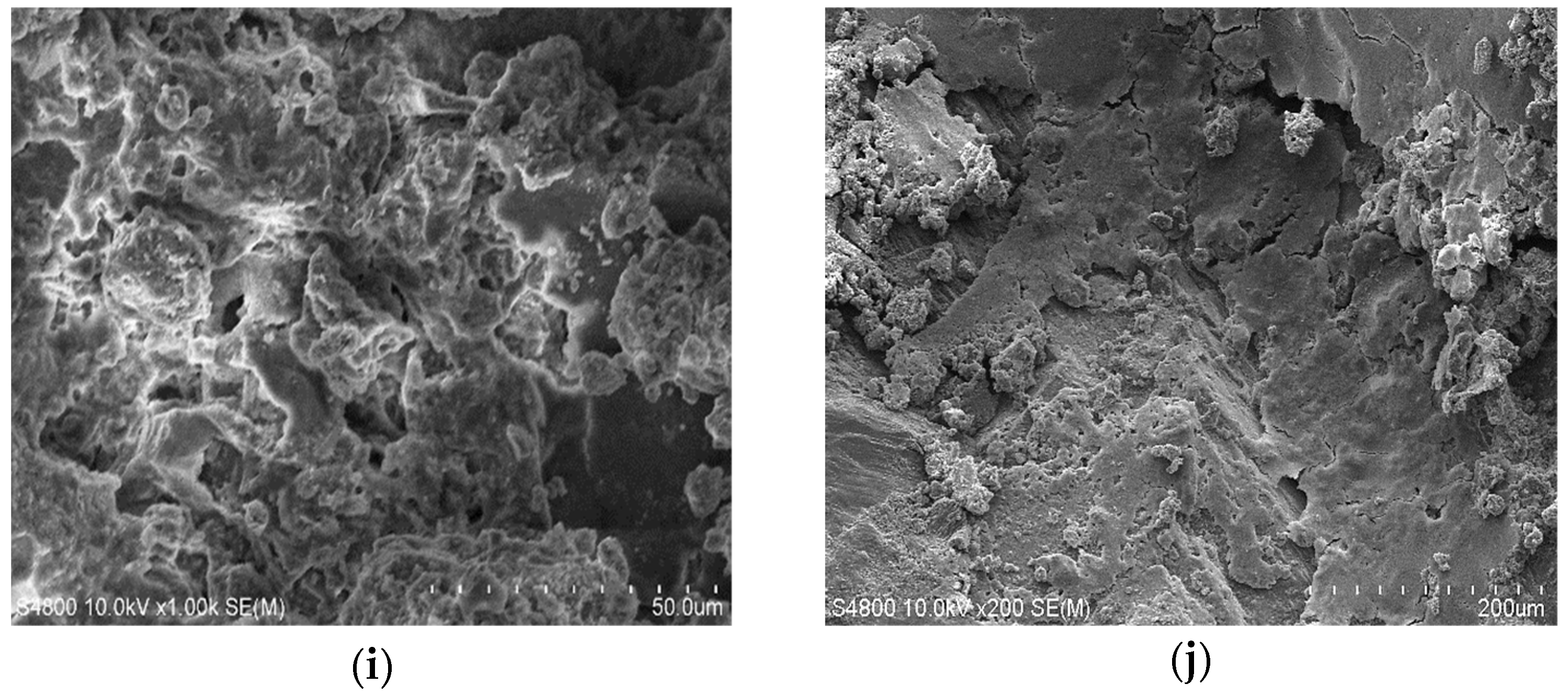
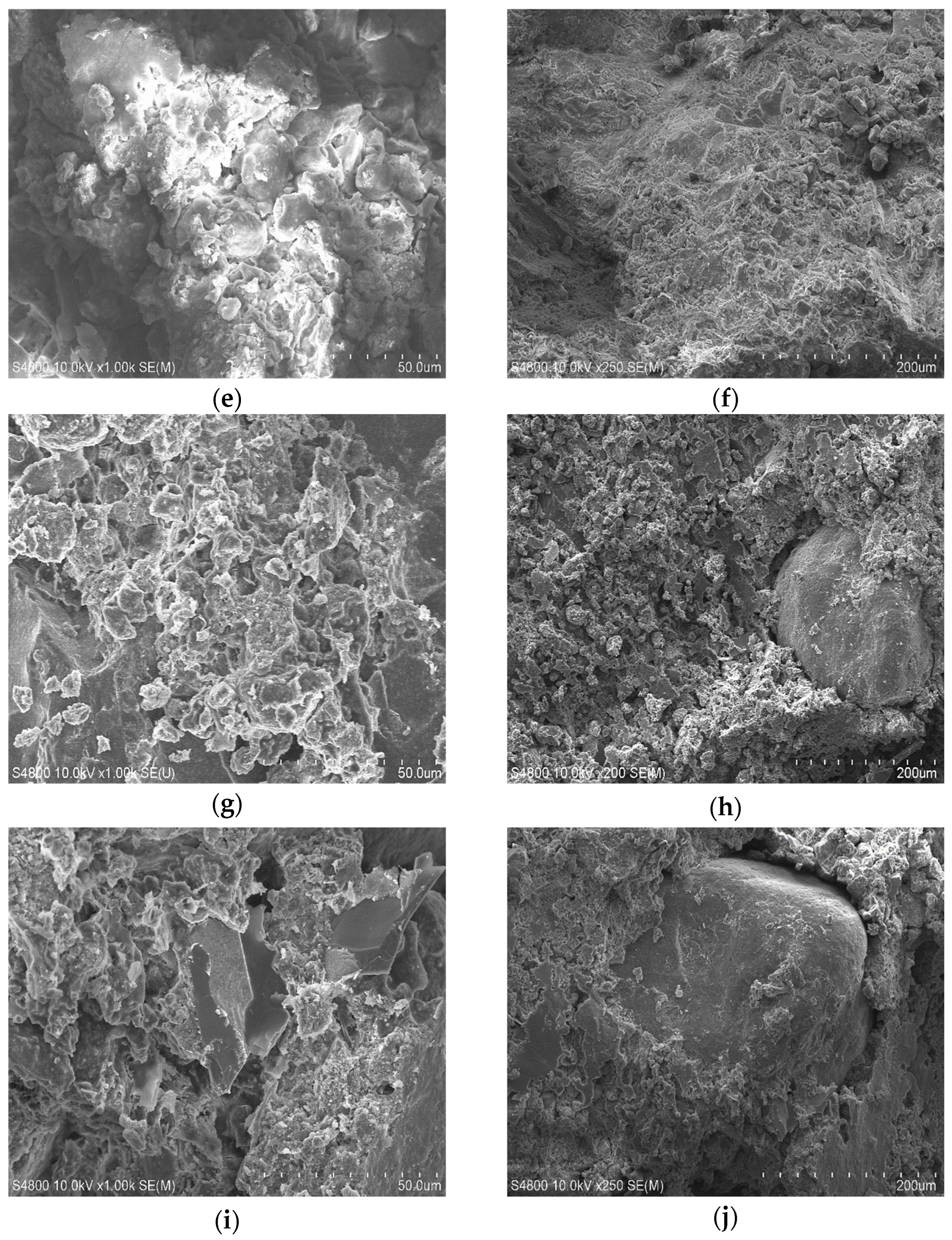
After 50 freeze-thaw cycles, the microstructural features of activated coal gangue cementitious concrete specimens with different proportions of calcined coal gangue powder, as observed under an electron microscope, are shown in Figure 8 below:
Figure 8.
Microscopic appearance of the specimen after 50 freeze-thaw cycles: (a) Pure cement (0% content), (b) Pure cement (0% content), (c) 35% content, (d) 35% content, (e) 40% content, (f) 40% content, (g) 45% content, (h) 45% content, (i) 50% content, and (j) 50% content.
Compared to 25 freeze-thaw cycles, specimens of activated coal gangue cementitious concrete with varying admixture ratios subjected to 50 freeze-thaw cycles showed the following internal pore-structure characteristics: Specimens with a 35% admixture ratio had a relatively lower number of pores, a more uniform pore-size distribution, and more regular pore morphology, indicating a superior internal microstructure.
Electron microscopy observations of activated coal gangue cementitious concrete were conducted at different gangue powder contents (0%, 35%, 40%, 45%, and 50%) and freeze-thaw cycle numbers (0 cycles, 25 cycles, and 50 cycles). The rule of change in pore-size distribution is as follows:
Firstly, according to the admixture ratio of coal gangue powder, the pore structure of the concrete showed different changes at varying mixing ratios. At a filler content of 0%, the concrete had fewer pores, uniform pore sizes, and regular pore morphology. At a dosage of 0%, the concrete had less porosity, uniform pore-size distribution, and regular pore morphology. At a dosage of 35%, the concrete showed relatively fewer pores, a more uniform pore-size distribution, and a denser pore morphology. At a dosage of 40%, the concrete had more pores, an irregular pore-size distribution, and irregular pore morphology. When the admixture content exceeded 40%, the number of pores in the concrete began to increase, pore sizes gradually enlarged, and a significant number of irregular pores appeared. When the gangue powder mixing ratio was 35%, the freeze-thaw deterioration resistance of the activated gangue cementitious concrete exhibited the most optimal performance.
Without undergoing freeze-thaw cycles, pure cement specimens (0% admixture) exhibited a relatively dense hydration product structure. Calcium silicate hydrate (C-S-H) gel developed well, with a clear crystalline structure, fewer pores, and more uniform distribution. As the gangue mixing ratio increased (35–50%), the microstructure exhibited significant differentiation. At moderate mixing ratios (35–40%), the synergistic effects of coal gangue’s active properties and micro-aggregate filling enhanced the matrix density. Some gangue particles underwent surface hydration reactions, forming partial bonding with the cement matrix. However, when the mixing ratio is further increased to 45–50%, an increase in unconsolidated coal gangue particles was observed. Microcracks and weak bonds were present in the interfacial transition zone between the particles and the matrix, which might result from a relative shortage of cementitious materials and uneven internal stress distribution.
Secondly, from the perspective of freeze-thaw cycle frequency, the pore structure within the activated coal gangue cementitious concrete deteriorated significantly as the number of freeze-thaw cycles increased. Without freeze-thaw cycles (0 cycles), the pore structure of concrete remained relatively intact, with both pore count and pore size at low levels. After 25 freeze-thaw cycles, some pores in the concrete appeared enlarged and irregular in shape. Following 50 freeze-thaw cycles, cracks along pore edges and pore diameters gradually expanded, resulting in more interconnected pores and larger cracks.
After 25 freeze-thaw cycles, all specimens had different degrees of microstructural deterioration. Microcracks can be observed forming and propagating in pure cement specimens, with pores tending to interconnect. In specimens containing coal gangue, the damage pattern exhibited a doping-dependent behavior: at low doping levels (35–40%), cracks primarily propagated along the interface between coal gangue and the matrix, with localized spalling observed in certain areas; in specimens with high gangue content (45–50%), besides interfacial cracking, significant internal fracturing and loosening occurred within the matrix, leading to a marked increase in porosity and a decline in overall structural integrity.
Damage intensified further when freeze-thaw cycles increased to 50. Numerous network cracks merged with voids in the pure cement specimens. Specimens with a gangue content of 35–40% still maintained a certain degree of structural continuity but exhibited significant interfacial damage, with localized areas appearing fractured. Specimens with high content (45–50%) exhibited severe microstructural degradation, characterized by extensive debonding between coal gangue particles and the matrix. Pores interconnected to form damage pathways, and the C-S-H gel structure became loose, indicating a significant reduction in freeze-thaw fatigue resistance.
However, specimens of activated coal gangue cementitious concrete with a 35% admixture retained good pore structure after 0, 25, and 50 freeze-thaw cycles. Analysis of microstructural features under scanning electron microscopy revealed that the proportion of coal gangue admixture significantly influences the microstructural characteristics and freeze-thaw damage behavior of concrete. Coal gangue concrete with a 35% admixture content maintained structural integrity to a certain extent and exhibited relatively good freeze-thaw resistance. However, beyond this admixture level, interfacial weakening and matrix loosening intensify, leading to a significant decline in freeze-thaw performance.
4.2. Pore-Structure Analysis
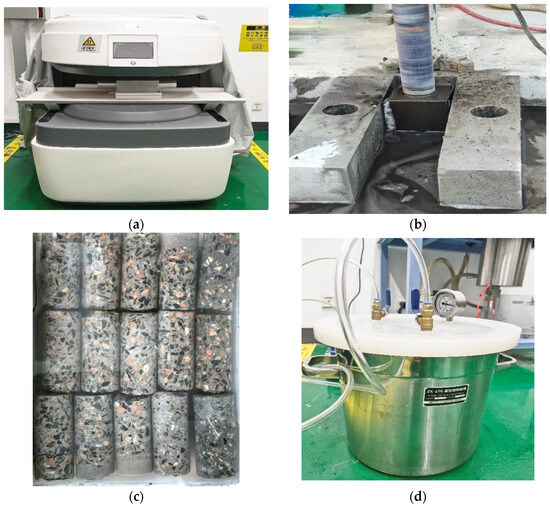
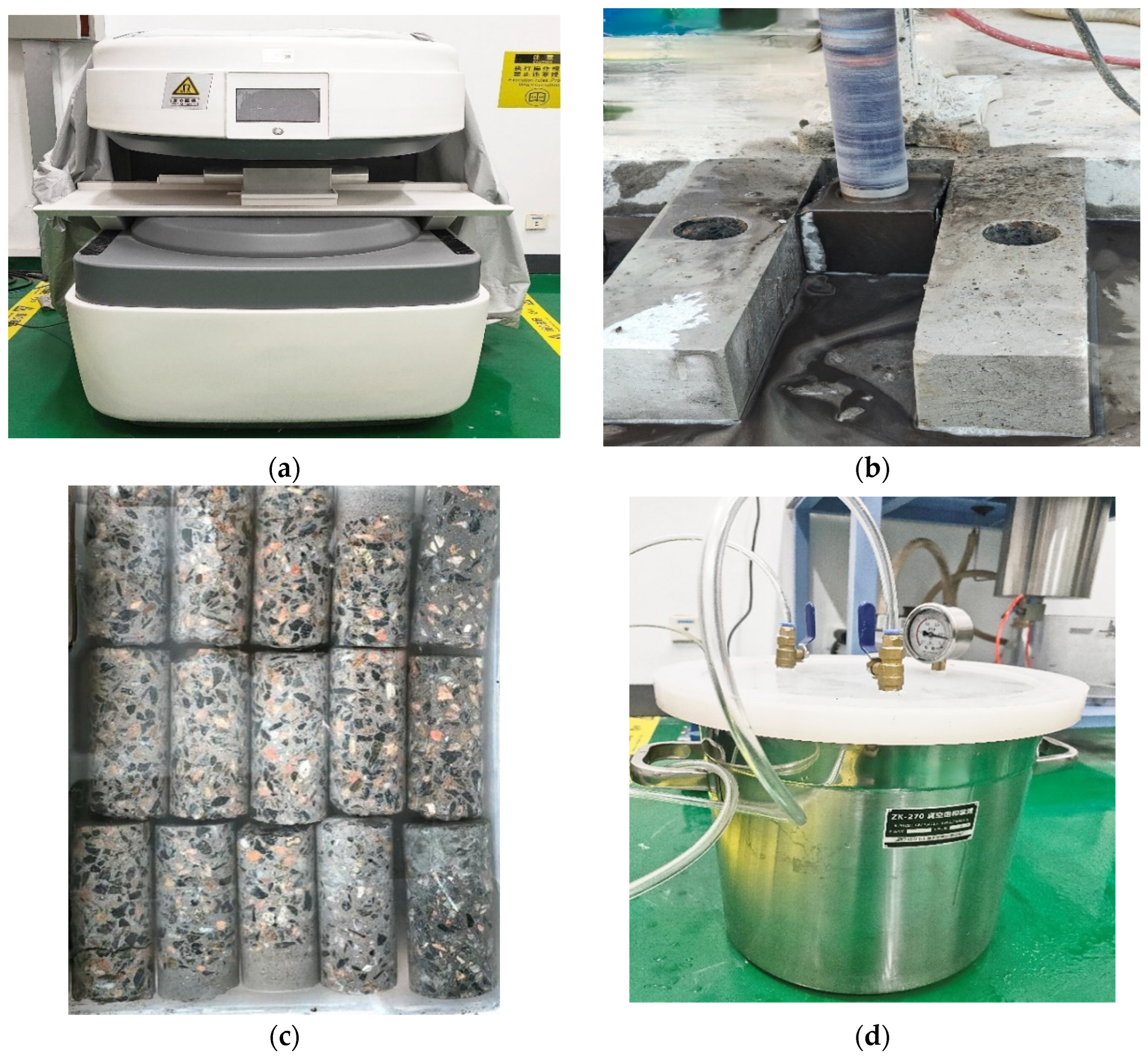
Pore-structure analysis was conducted using a NiuMai large-aperture nuclear magnetic resonance (NMR) analyzer (Figure 9). Core samples (25 mm diameter × 50 mm height) were extracted from specimens after 0, 25, and 50 freeze-thaw cycles. Prior to testing, all samples were vacuum-saturated in distilled water at −0.1 MPa for 12 h to ensure full saturation. Transverse relaxation time (T2) signals were acquired using the Carr–Purcell–Meiboom–Gill (CPMG) pulse sequence with an echo time of 0.2 ms and 8000 echoes per scan. Based on established T2 cutoff values from previous studies, pores were classified into three categories: gel pores (<0.1 μm), capillary pores (0.1–1 μm), and macropores (>1 μm). The processed T2 distribution curves were used to characterize the pore-size distribution and porosity evolution under freeze-thaw cycles. The processed signals for the corresponding specimens were obtained, with results as follows:
Figure 9.
Nuclear Magnetic Resonance Test: (a) Nuclear Magnetic Resonance, (b) Core sampling of test specimens, (c) Core sample saturation, and (d) Vacuuming of core samples.
- (1)
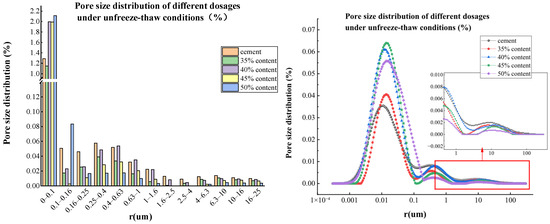
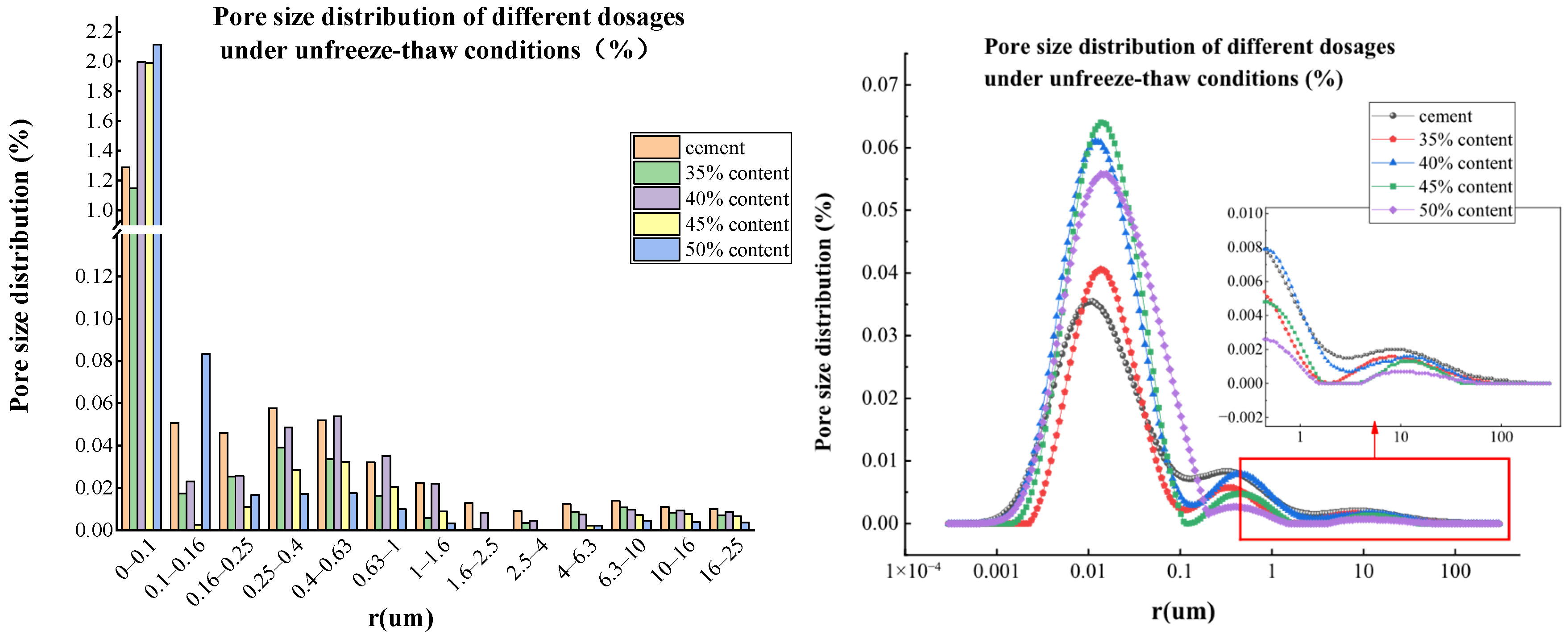
- The NMR test results for activated coal gangue cementitious concrete specimens at different gangue powder dosages without freeze-thaw cycles are shown in Figure 10:Figure 10. Pore-size distribution of specimens under unfreeze-thaw conditions.
For coal gangue specimens without freeze-thaw cycles, the porosity of activated coal gangue cementitious concrete was 1.63% at a 0% admixture ratio, exhibiting a relatively dense structure with small, uniformly distributed pores. At a 35% admixture ratio, the observed porosity was 1.33%, with a regular structure and a reasonable pore-size distribution, primarily consisting of small pores. At a 40% content, the activated coal gangue cementitious concrete contained mainly small pores, with a porosity of 2.26%. At a 45% content, porosity was 2.12%, and at 50%, it was 2.28%. The activated coal gangue cementitious concrete exhibited larger pores, an irregular structure, and the presence of interconnected holes.
Before freeze-thaw cycles, the pore-size distribution curve of pure cement specimens showed a typical multi-peak characteristic, with the main pore sizes concentrated in the 0.01–1 μm range. After incorporating coal gangue, the pore-size distribution underwent significant changes. At a blending ratio of 35–40%, compared to pure cement, the proportion of capillary pores in the 0.1–1 μm range decreased, while the proportion of gel pores (<0.1 μm) relatively increased. This indicates that an appropriate amount of coal gangue optimizes the pore-size distribution through its active effect and micro-filling action, refining large pores and enhancing matrix compactness. However, when the blending ratio increased to 45–50%, the peak in the 0.1–10 μm pore-size range markedly rose, and the proportion of large pores (>1 μm) increased. This indicates that excessive coal gangue introduced more interfacial defects and incompletely hydrated regions, leading to an increase in harmful pores and a decrease in structural uniformity.
- (2)
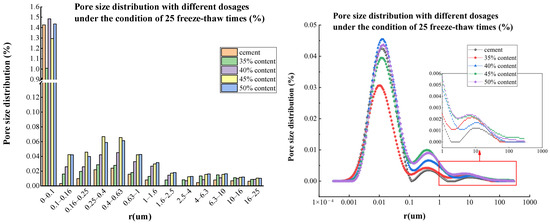
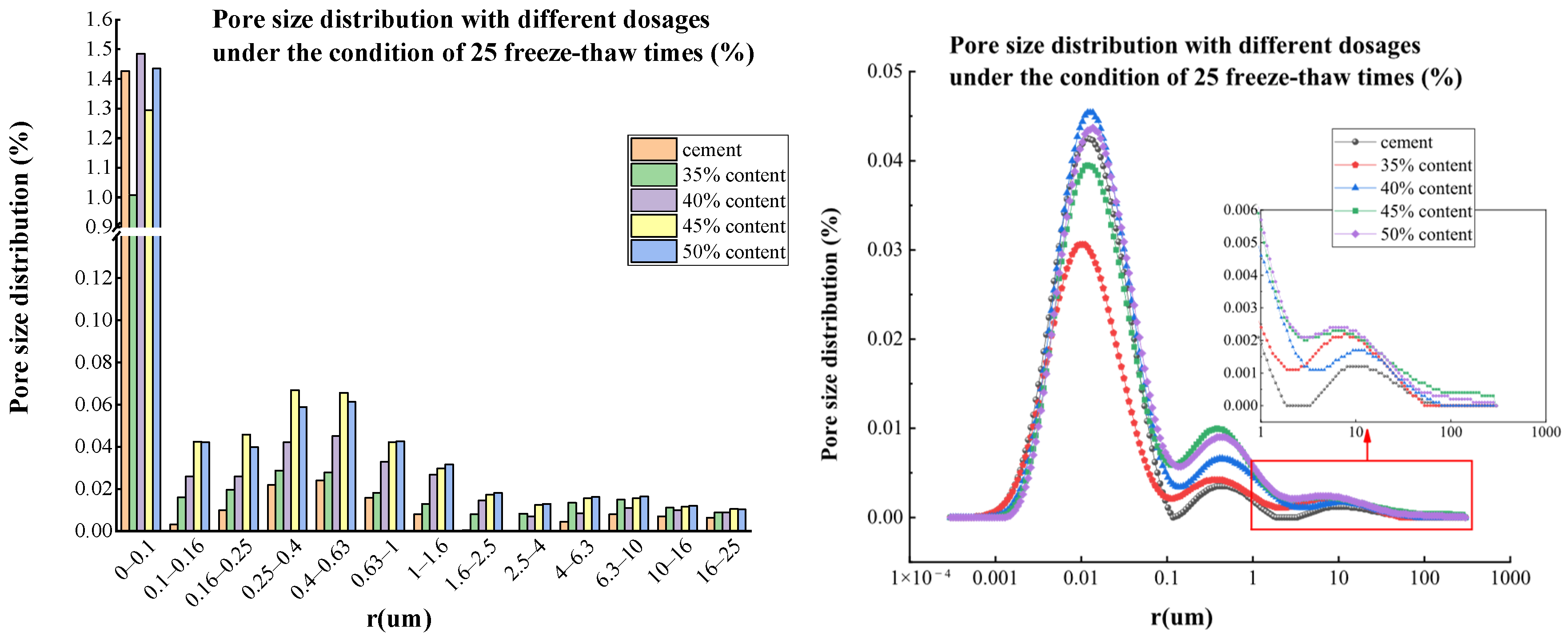
- After 25 freeze-thaw cycles, the NMR test results for activated coal gangue cementitious concrete specimens at different calcined coal gangue powder admixtures are shown in Figure 11:Figure 11. Pore-size distribution of specimens after 25 freeze-thaw cycles.
Compared to unfrozen-thawed activated coal gangue cementitious concrete specimens, the porosity of activated coal gangue cementitious concrete with 0% admixture content was 1.54%, with a relatively uniform pore-size distribution. At a 35% addition rate, the porosity of the activated coal gangue cementitious concrete was observed to be 1.2%, exhibiting small pores and microcracks. At a 40% addition rate, the porosity reached 1.75%, with larger pores and uneven distribution. At 45% and 50% content, porosity was 1.69% and 1.81%, respectively, with the formation of large and interconnected pores in the activated coal gangue cementitious concrete.
After 25 freeze-thaw cycles, the pore-size distribution curves of all specimens shifted to the right, indicating a general increase in the proportion of large-pore voids. In pure cement and medium-to-low dosage (35–40%) specimens, the growth of 0.1–1 μm pores was particularly pronounced, reflecting the phenomenon of microcrack propagation and capillary pore coalescence induced by freeze-thaw pressure. Specimens with high cementitious content (45–50%) exhibited a sharp increase in pores > 1 μm, accompanied by a broader and flatter pore-size distribution curve. This indicates that freeze-thaw action accelerated the connectivity and expansion of existing defects, leading to more rapid deterioration of the pore structure.
- (3)
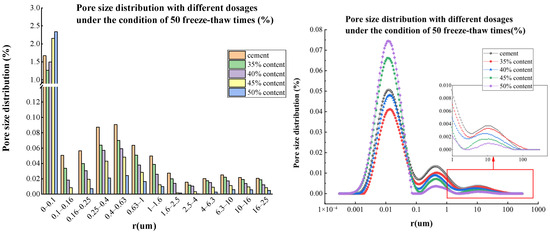
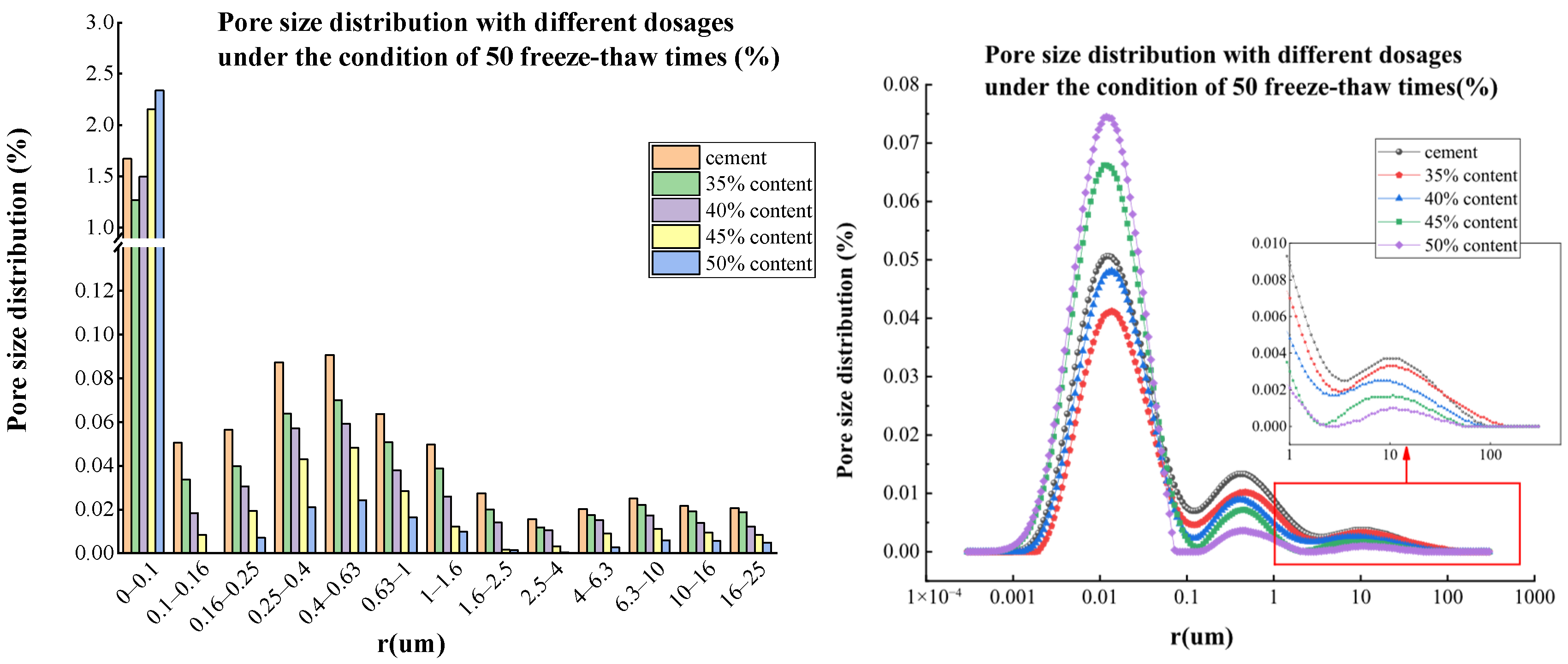
- After 50 freeze-thaw cycles, the NMR test results for activated coal gangue cementitious concrete specimens at different calcined coal gangue powder admixtures are shown in Figure 12:Figure 12. Pore-size distribution of specimens after 50 freeze-thaw cycles.
Compared to activated coal gangue cementitious concrete specimens after 25 freeze-thaw cycles, NMR analysis revealed that at 0% dosage, some small pores in the activated coal gangue cementitious concrete began transforming into larger pores, with porosity reaching 2.22% and a broader pore-size distribution. At a 35% blending ratio, the porosity of the activated coal gangue cementitious concrete was 1.7%, with a relatively regular structure; at a 40% blending ratio, the porosity was 1.82%; at a 45% admixture ratio, the porosity reached 2.36%, dominated by large, irregular pores. At 50%, porosity was 2.22%, with the activated coal gangue cementitious concrete exhibiting numerous large and interconnected pores, indicating further deterioration of the pore structure.
After 50 freeze-thaw cycles, the deterioration trend of the pore structure further intensified. Pore-size distribution data showed that the proportion of pores in the 0.1–1 μm range remained dominant in pure cement specimens but extended toward larger pore sizes. In specimens with 35–40% coal gangue content, the proportion of pore throats in the 0.25–4 μm range increased significantly, indicating that freeze-thaw damage had expanded from the microporous to the mesoporous range. In specimens with 45–50% gangue content, the proportion of macropores exceeding 4 μm increased substantially, and the pore-size distribution exhibited pronounced “coarsening” characteristics. This confirms the formation of interconnected damage pathways within the specimens, resulting in severe loss of structural integrity.
Analysis of comprehensive nuclear magnetic resonance test results indicates that the proportion of coal gangue admixture affects the pore distribution within concrete and its freeze-thaw damage characteristics. While appropriate content (≤40%) can refine pores during the initial stage, it struggles to suppress damage propagation after multiple freeze-thaw cycles. Conversely, specimens with high content (≥45%) exhibit a significantly degraded initial pore structure, leading to accelerated pore coarsening and connectivity during freeze-thaw cycles, resulting in poorer freeze-thaw durability. After 0, 25, and 50 freeze-thaw cycles, specimens of activated coal gangue cementitious concrete with 35% gangue powder maintained good porosity and a relatively uniform pore-size distribution.
The observed evolution of pore structure under freeze-thaw cycles is consistent with previous findings on coal gangue concrete. For instance, Song et al. [8] reported that the workability and mechanical properties of coal gangue concrete are optimal when the replacement ratio is below 40%, which aligns with our observation that 35% gangue content yields the most favorable pore-size distribution and porosity (1.33% before freeze-thaw). Niu et al. [9] also noted that compressive and tensile strengths peak at 40% gangue content, but our results indicate that for freeze-thaw durability, 35% replacement may be more advantageous due to slower pore coarsening. Furthermore, studies using NMR [17] have demonstrated that higher gangue content (>40%) leads to increased porosity and accelerated damage under freeze-thaw, corroborating our data (porosity increased to 2.28% at 50% content after 50 cycles). This comparison confirms that the optimal replacement ratio for balancing mechanical performance and frost resistance lies in the range of 35–40%, with 35% exhibiting superior microstructural stability under cyclic freezing and thawing.
It should be noted that the porosity values obtained in this study (ranging from 1.33% to 2.36%) are relatively low compared to typical values reported for ordinary concrete. This can be attributed to several factors: (1) the core samples were extracted from the interior of well-compacted specimens, where porosity is generally lower than near-surface regions; (2) the concrete mixtures had a low water-to-cement ratio and incorporated superplasticizer, resulting in a denser microstructure; (3) NMR detects only pores that are fully saturated with water, and some ultrafine gel pores may not have been completely saturated or detected under the current experimental conditions. Nevertheless, the relative trends observed across different gangue contents and freeze-thaw cycles remain valid and consistent with the microstructural evolution discussed in Section 4.1.
5. Conclusions
- (1)
- Freeze-thaw cycles exert a significant influence on the pore structure of activated coal gangue cementitious concrete with varying gangue powder content. As the number of freeze-thaw cycles increases, all concrete specimens incorporating coal gangue powder exhibit deterioration in pore structure. However, specimens with 35% coal gangue powder showed gradually declining freeze-thaw resistance after 0, 25, and 50 cycles. Although the deterioration rate was slower, they maintained superior porosity compared to specimens with other gangue powder contents.
- (2)
- Based on observations and analysis from both electron microscopy and nuclear magnetic resonance, the optimal mix design for activated coal gangue cementitious concrete is achieved at a 35% admixture ratio. This is because calcined coal gangue powder exhibits fine particle size and enhanced reactivity, with relatively high SiO2 and Al2O3 content. These substances react with Ca(OH)2 in cement to form silicate cementitious compounds, promoting cement hydration in concrete. This enhances early strength development rate, strength, and durability, reduces the occurrence of age-related cracks, and improves the performance of activated coal gangue cementitious concrete. It should be noted that this explanation of the pozzolanic reaction is based on the material’s chemical composition and general knowledge of cement chemistry and requires further validation through targeted analytical techniques such as XRD or TGA in future studies.
In engineering applications, the effects of coal gangue powder content and freeze-thaw cycle frequency on concrete cold resistance should be comprehensively evaluated. Optimize the mix design and construction techniques to enhance the concrete’s cold resistance.
6. Limitations and Future Research
- (1)
- This study has two main limitations. First, the replacement levels of activated coal gangue powder were set at 0%, 35%, 40%, 45%, and 50%, which leaves a relatively wide interval between the control group and the first replacement level. While these levels were chosen based on previous studies indicating that the optimal replacement ratio typically falls within the 30–50% range [8,9], a finer gradation (e.g., 30%, 32.5%, 37.5%) would allow for more precise determination of the optimal content. Second, the freeze-thaw testing was conducted up to 50 cycles. Although 50 cycles were sufficient to observe clear trends in mass loss, dynamic modulus degradation, and pore-structure evolution, longer-term tests (e.g., 75, 100, or more cycles) are necessary to fully assess the long-term durability of activated coal gangue cementitious concrete under severe cold-region conditions.Despite these limitations, the current experimental design successfully captured the deterioration patterns and identified 35% as the most promising replacement level. Future research should extend the freeze-thaw cycles and incorporate finer replacement intervals to validate and refine the findings of this study.
- (2)
- Although the SEM observations in this study provide valuable insights into the microstructural evolution of activated coal gangue cementitious concrete under freeze-thaw cycles, the analysis remains primarily qualitative due to the lack of high-resolution image processing tools at the time of the study. Quantitative parameters such as pore area fraction, pore circularity, and crack width distribution were not extracted. Future research will focus on integrating image analysis techniques to enable statistical and quantitative characterization of microstructural damage.
- (3)
- This study did not include a comprehensive characterization of the activated coal gangue powder, such as particle size distribution, specific surface area, or pozzolanic reactivity index. Although the primary focus of this work was to evaluate the freeze-thaw deterioration mechanism through microstructural observation and pore-structure analysis, the authors acknowledge that a detailed material characterization would provide a more fundamental understanding of how the physical and chemical properties of coal gangue powder influence hydration kinetics, pore refinement, and freeze-thaw resistance. Future research will incorporate systematic characterization of coal gangue powder to establish quantitative correlations between material properties and durability performance.While this study provides valuable qualitative insights into the microstructural evolution of activated coal gangue cementitious concrete under freeze-thaw cycles through SEM and NMR analyses, it does not establish a quantitative correlation between the observed microstructural changes (e.g., porosity, pore-size distribution) and the degradation of macroscopic mechanical properties (e.g., compressive strength loss, relative dynamic modulus of elasticity). The interpretation of the freeze-thaw deterioration mechanism presented in this manuscript is therefore primarily descriptive. A quantitative framework linking these multiscale parameters is essential for a more profound mechanistic understanding. Future research will focus on developing statistical or empirical models to quantitatively correlate pore-structure characteristics with mechanical performance indicators, thereby enabling more robust predictions of material durability.
Author Contributions
Conceptualization, J.T.; methodology, J.T.; validation, J.T., C.L., and Y.Y.; formal analysis, C.L. and Y.Y.; investigation, C.L. and J.T.; resources, J.T.; data curation, Y.Y.; writing—original draft preparation, C.L.; writing—review and editing, C.L.; visualization, C.L. and J.T.; supervision, Y.W. and Y.W.; project administration, J.T.; funding acquisition, J.T. All authors have read and agreed to the published version of the manuscript.
Funding
No funding was received for this study.
Institutional Review Board Statement
Not applicable.
Informed Consent Statement
Not applicable.
Data Availability Statement
The original contributions presented in this study are included in the article. Further inquiries can be directed to the corresponding author.
Acknowledgments
This study is supported by the School of Civil Engineering at Ordos Institute of Technology.
Conflicts of Interest
The authors declare no conflicts of interest.
References
- Yi, C.; Ma, H.; Zhu, H.; Dong, Z.; Su, Z.; Zhang, Y.; Chu, Z. Investigation on Anti-carbonation Performance of Coal Gangue Coarse Aggregate Concrete. J. Build. Mater. 2017, 20, 787–793. [Google Scholar] [CrossRef]
- Gao, S.; Zhang, S.; Guo, L. Application of Coal Gangue as a Coarse Aggregate in Green Concrete Production: A Review. Materials 2021, 14, 6803. [Google Scholar] [CrossRef] [Scilit] [PubMed]
- Shi, J.W.; Song, Z.P.; Cui, G.J.; Cheng, Y.; Yan, B. Study on frost resistance of steel fiber gangue concrete under freeze-thaw circulation. J. Xi’an Univ. Archit. Technol. (Nat. Sci. Ed.) 2023, 55, 52–59. [Google Scholar]
- Cheng, Y.; Sun, L.; Li, Y.; Liu, M.; He, R.; Jin, X.; Jin, H. Damage Model of Steel Fiber-Reinforced Coal Gangue Concrete under Freeze–Thaw Cycles Based on Weibull Distribution. Materials 2023, 16, 6775. [Google Scholar] [CrossRef] [Scilit] [PubMed]
- Luo, D.; Wang, Y.; Zhang, S.; Niu, D.; Song, Z. Frost Resistance of Coal Gangue Aggregate Concrete Modified by Steel Fiber and Slag Powder. Appl. Sci. 2020, 10, 3229. [Google Scholar] [CrossRef] [Scilit]
- Pan, C.; Zheng, Z.; Yang, Y. Crack Propagation Phenomenon in Gangue Concrete Using the Digital Image Correlation (DIC) Method. Constr. Build. Mater. 2024, 2024, 7247770. [Google Scholar] [CrossRef] [Scilit]
- Zhang, T.; Wang, H.; Zheng, X.; Gao, S. Axial Compressive Behaviours of Coal Gangue Concrete-Filled Circular Steel Tubular Stub Columns after Chloride Salt Corrosion. Materials 2024, 17, 2782. [Google Scholar] [CrossRef] [Scilit] [PubMed]
- Song, Q.; Yang, Y.; Xu, S.; Gao, S.; Liu, J.; Bao, J.; Xue, S. Research progress in performance and enhancement of coal gangue concrete. Coal Sci. Technol. 2025, 53, 407–425. [Google Scholar]
- Niu, X.; Wang, H.; An, M.; Li, S.; Geng, X. Study on physical and chemical properties and mechanical properties of gangue coarse aggregate. Concrete 2023, 1, 68–72. [Google Scholar] [CrossRef]
- Liu, H.; Bai, G.; Zhu, K.; Liu, H.; Chen, F.; Wang, B. Experimental study on flexural strength of coal gangue coarse aggregate concrete. J. Build. Mater. 2022, 26, 346–352. [Google Scholar] [CrossRef]
- Qiu, J.S.; Wang, M.H.; Guan, X.; Pan, D.; Xiong, G.H. Experimental Study on Freezing-thawing Damage Constitutive Relationship of Coal Gangue Concrete. Sci. Technol. Eng. 2018, 18, 216–222. [Google Scholar]
- Qiu, J.; Zhou, Y.; Wang, M.; Guan, X.; Hou, B. Damage characteristics and constitutive relationship of coal gangue concrete under freeze-thaw cycles. J. Civ. Environ. Eng. 2021, 43, 149–157. [Google Scholar]
- Li, Y.; Xing, Y.; Zhang, X.; Yan, X. Experimental study on the durability of the concrete with coal gangue aggregate. J. China Coal Soc. 2013, 38, 1215–1219. [Google Scholar] [CrossRef]
- Li, Y.; Han, J.; Xing, Y.; Yan, X.; Zhang, X. Research on the freezing and thawing cycle test of coal gangue aggregate concrete. Concrete 2013, 12, 100–102. [Google Scholar]
- Ge, J.; Zhu, H.; Li, Z.; Li, W.; Shen, Z.; Hou, J.; Yang, S. Study on Mechanics and Durability of Coal Gangue Coarse Aggregate-Geopolymer Concrete. Mater. Rep. 2021, 35, 218–223. [Google Scholar]
- Bai, C.; Li, L.; Shen, Y.; Long, G.; Ma, K. Experimental study on the effect of coal gangue on the frost resistance of C30 concrete. Eng. Technol. Res. 2018, 10, 15–17. [Google Scholar] [CrossRef]
- Qiao, L. Experimental Study on the Mechanical Properties and Durability of Coal Gangue Concrete. Master’s Thesis, Inner Mongolia Agricultural University, Hohhot, China, 2022. [Google Scholar]
- Xin, C.; Yang, Y.; Yang, M.; Di, J.Z.; Sun, Y.; Liang, P.; Wang, Y. Multi-Scale Analysis of the Damage Evolution of Coal Gangue Coarse Aggregate Concrete after Freeze–Thaw Cycle Based on CT Technology. Materials 2024, 17, 975. [Google Scholar] [CrossRef] [Scilit] [PubMed]
- Wang, H.X.; Ni, W.; Huang, Y. Study on the Preparation of New-type Cementitious Materials by Using the Activated Coal Gangue. Met. Mine 2011, 32, 165–168. [Google Scholar]
- GB/T50107; Test Method for Activity of Industrial Waste Slag Used as Addition to Cement. National Standard of the People’s Republic of China, Architecture & Building Press: Beijing, China, 2005.
- GB/T50107-2010; Standard for Evaluation of Concrete Compressive Strength. National Standard of the People’s Republic of China, Architecture & Building Press: Beijing, China, 2010.
- JTG3432-2024; Test Methods of Aggregates for Highway Engineering. Industry Standard of the People’s Republic of China, Architecture & Building Press: Beijing, China, 2024.
- JGJ55-2011; Specification for Mix Proportion Design of Ordinary Concrete. Industry Standard of the People’s Republic of China, Architecture & Building Press: Beijing, China, 2011.
- GB/T50082-2024; Standard for Test Methods of Long-Term Performance and Durability of Ordinary Concrete. National Standard of the People’s Republic of China, Architecture & Building Press: Beijing, China, 2024.
- SL/T352-2020; Test Code for Hydraulic Concrete. Industry Standard for Water Resources Management of the People’s Republic of China, Architecture & Building Press: Beijing, China, 2024.
- GB/T50081-2019; Standard for Test Methods of Concrete Physical and Mechanical Properties. National Standard of the People’s Republic of China, Architecture & Building: Beijing, China, 2019.



Disclaimer/Publisher’s Note: The statements, opinions and data contained in all publications are solely those of the individual author(s) and contributor(s) and not of MDPI and/or the editor(s). MDPI and/or the editor(s) disclaim responsibility for any injury to people or property resulting from any ideas, methods, instructions or products referred to in the content. |
© 2026 by the authors. Licensee MDPI, Basel, Switzerland. This article is an open access article distributed under the terms and conditions of the Creative Commons Attribution (CC BY) license.