


Abstract
Additive manufacturing enables the fabrication of personalized protective equipment with locally tailored mechanical properties. In this work, a low-cost scan-to-print workflow is proposed for the fused filament fabrication (FFF) of personalized dual-zone shin guards combining a stiff outer load-distribution layer with a compliant inner energy-absorbing layer. Subject-specific leg geometry was acquired via structured-light 3D scanning and used to design a shin guard with two 3.5 mm thick zones (total thickness 7 mm). Foamable filaments of PLA, ASA, and TPU were employed to manufacture unfoamed and foamed regions by controlling extrusion temperature. Mechanical performance was assessed through three-point bending tests and dynamic finite element impact simulations. Unfoamed PLA and ASA exhibited flexural strengths of approximately 88 MPa and 72 MPa, respectively, while foaming reduced these values by about 74%. Dual-zone configurations partially restored stiffness, reaching 41 MPa for PLA and 29 MPa for ASA. TPU showed lower flexural stresses with a smaller reduction of 23% upon foaming. Impact simulations revealed maximum deformations of 1.97 mm and 2.02 mm for PLA and ASA outer zones, respectively, while TPU exhibited large deformations leading to penetration of the 3.5 mm thick inner layer. The results demonstrate that dual-zone designs manufactured via foaming-enabled FFF can effectively balance stiffness, weight, and impact response for personalized shin guard applications.
1. Introduction
Additive manufacturing (AM), commonly referred to as 3D printing, has received significant attention in recent years due to its ability to fabricate complex and unconventional geometries that are difficult or impossible to produce using conventional manufacturing techniques [1,2]. By enabling layer-by-layer fabrication directly from digital models, AM offers substantial advantages such as design freedom, material efficiency, reduced tooling requirements, and rapid product development [3,4]. As a result, AM has been widely adopted across diverse sectors, including aerospace and biomedical engineering, where functionality, customization, and short lead times are particularly valuable [5,6].
Among the different AM technologies, fused filament fabrication (FFF) is one of the most widely used due to its low cost, simplicity, and broad material availability [7,8]. In recent years, FFF has been increasingly explored for the creation of protective and wearable devices, including orthoses and other body-worn components where geometry, stiffness distribution, and comfort can be tailored to the user [9,10]. The ability to tune internal architecture (e.g., infill pattern and density) provides additional opportunities to tailor stiffness and deformation behavior for load management and energy absorption [11,12].
Recent developments in FFF materials and processing have also focused on incorporating foaming approaches, including filaments containing blowing agents that can generate microporosity during printing [13,14]. When extrusion temperatures exceed the activation threshold of the blowing agent, controlled pore formation occurs, resulting in reduced density and potentially improved cushioning and energy-absorption behavior compared to unfoamed prints [15,16]. Foamed and cellular polymer structures are widely recognized as effective energy absorbers, and foaming-enabled extrusion AM offers a promising route to lightweight protective structures with locally tuned properties [17,18].
Beyond internal structural parameters (e.g., infill density and raster orientation), surface characteristics can also be tailored, as the surface roughness of FFF parts can be intentionally modified through printing parameters or slicer-based strategies, including surface texturing approaches such as the “fuzzy skin” feature that generates controlled micro-scale roughness, which can influence friction, adhesion, and wettability of printed components [19]. In addition, FFF enables the fabrication of multi-material structures through dual-extrusion or multi-nozzle systems, allowing the deposition of different polymers within a single build to create components with spatially varying mechanical or functional properties. This capability supports the development of multifunctional and graded structures and represents an increasingly important research direction in material extrusion additive manufacturing [20,21].
In parallel with AM developments, 3D scanning technologies have advanced significantly, providing improved accuracy, faster acquisition, and increasingly accessible systems for capturing complex geometries [22,23]. In medical and wearable contexts, 3D scanning supports the digitization of patient- or user-specific anatomy, enabling the development of personalized devices that better match the body and improve fit and comfort [24,25]. Such personalization can be particularly beneficial for lower-limb applications where small geometric mismatches may affect usability and perceived comfort [26,27].
The combination of 3D scanning and 3D printing has enabled scan-to-print workflows that support mass customization without expensive tooling [28,29]. These workflows are increasingly reported for patient-specific and user-specific devices and are attractive for applications requiring fast iteration and low-volume production [30,31]. This digital approach also allows geometry and material distribution to be modified rapidly based on mechanical requirements or user feedback.
However, despite the growing literature on extrusion-based AM for wearable and protective components, many studies do not explicitly follow the conventional protective-gear strategy of combining a compliant energy-absorbing region with a stiffer load-distribution region [32,33]. To address this gap, the present study proposes a low-cost workflow to manufacture personalized dual-zone shin guards via FFF, combining unfoamed and foamed regions within a single component. For this purpose, three different thermoplastic materials, namely ASA, PLA, and TPU, are investigated with respect to manufacturability and mechanical performance.
2. Materials and Methods
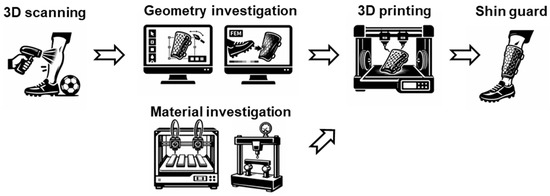
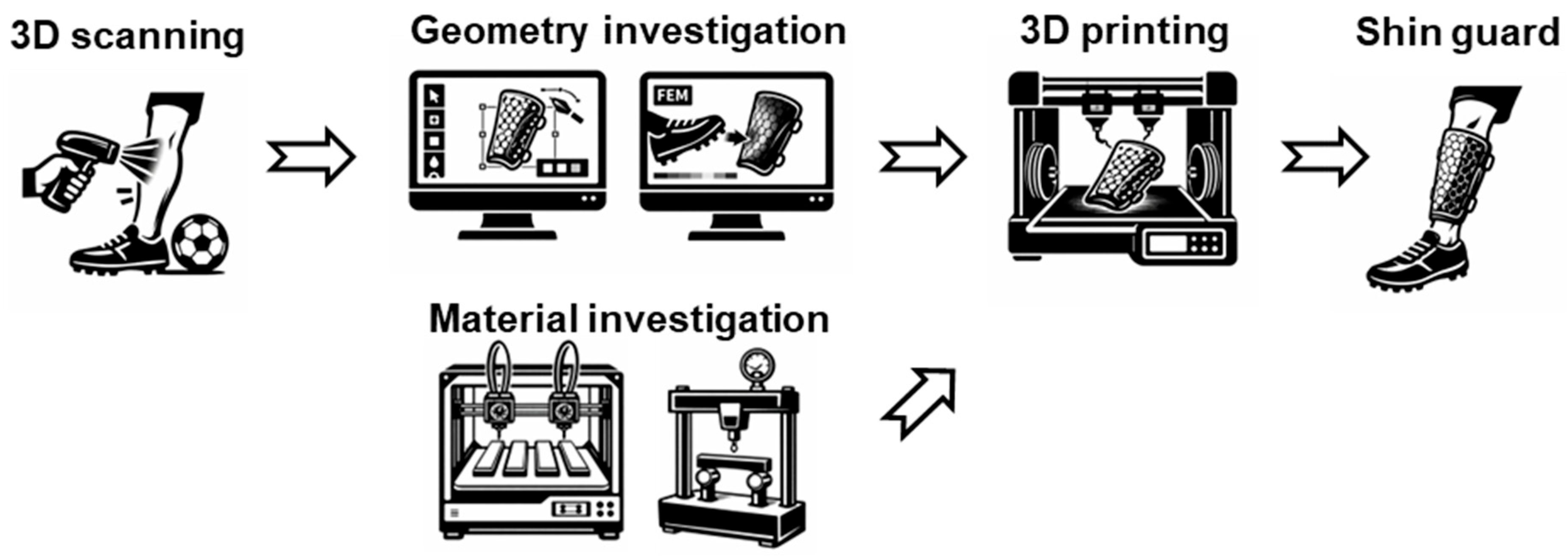
Figure 1 illustrates the methodological workflow adopted in this study. Initially, a three-dimensional scanning process is conducted to accurately capture the anatomical geometry of the subject’s lower leg, which serves as the basis for personalization of the shin guard. Subsequently, a comprehensive geometry investigation is performed through an iterative design and simulation process. In parallel, a material investigation is carried out by additively manufacturing test specimens to experimentally evaluate their mechanical properties. Finally, the validated design and selected material configurations are employed in a 3D printing process to fabricate the dual-zone shin guard, resulting in a fully customized protective device.
Figure 1.
Workflow of the proposed methodology for the design and additive manufacturing of a dual-zone personalized shin guard.
2.1. Design Process
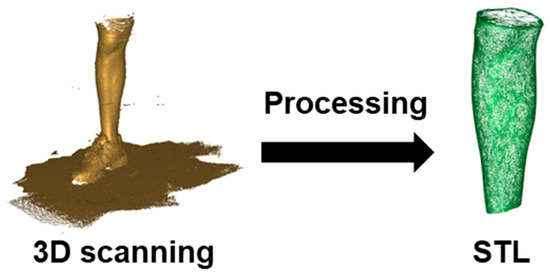
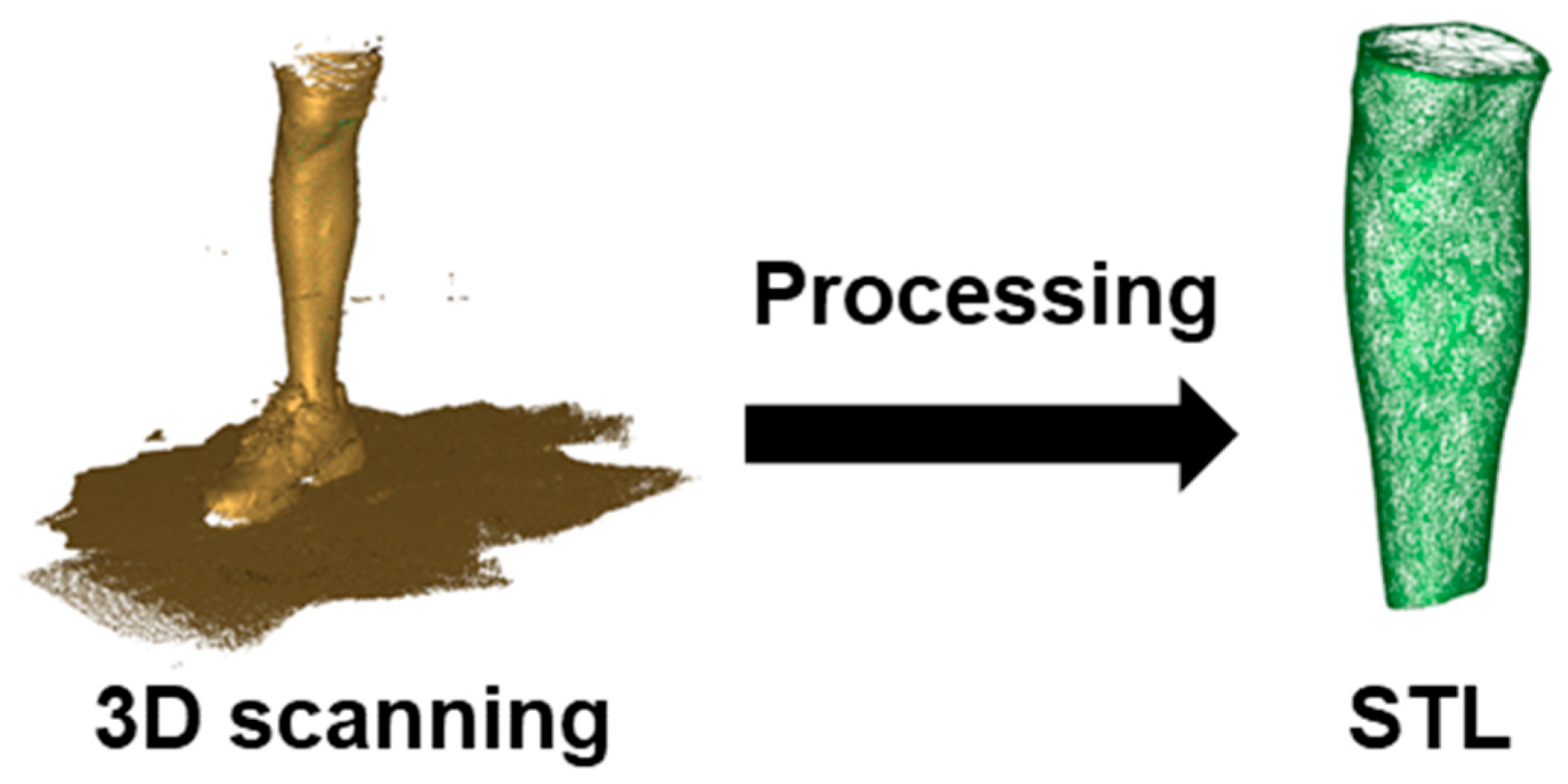
The design process initiates with the acquisition of the subject-specific leg geometry. This was achieved using an Eva 3D scanner (Artec 3D, Senningerberg, Luxembourg), which provides high-quality, full-color structured-light scans with a point accuracy up to ~0.1 mm and resolution of ~0.2 mm, in combination with Artec Studio software (Artec 3D, Version 16, Senningerberg, Luxembourg). During the scanning workflow, the acquired frames were processed into a refined STL model through operations such as noise removal, meshing, and mesh decimation. The initially captured leg geometry and the final processed STL model are presented in Figure 2.
Figure 2.
Raw leg geometry acquired using the Artec Eva 3D scanner and the corresponding processed STL model after cleaning, meshing, and decimation.
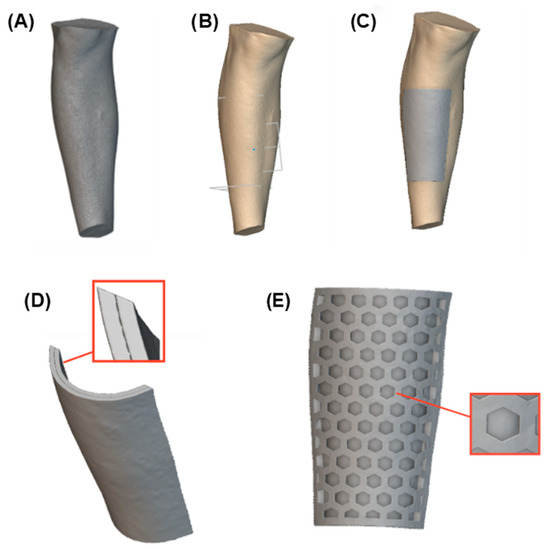
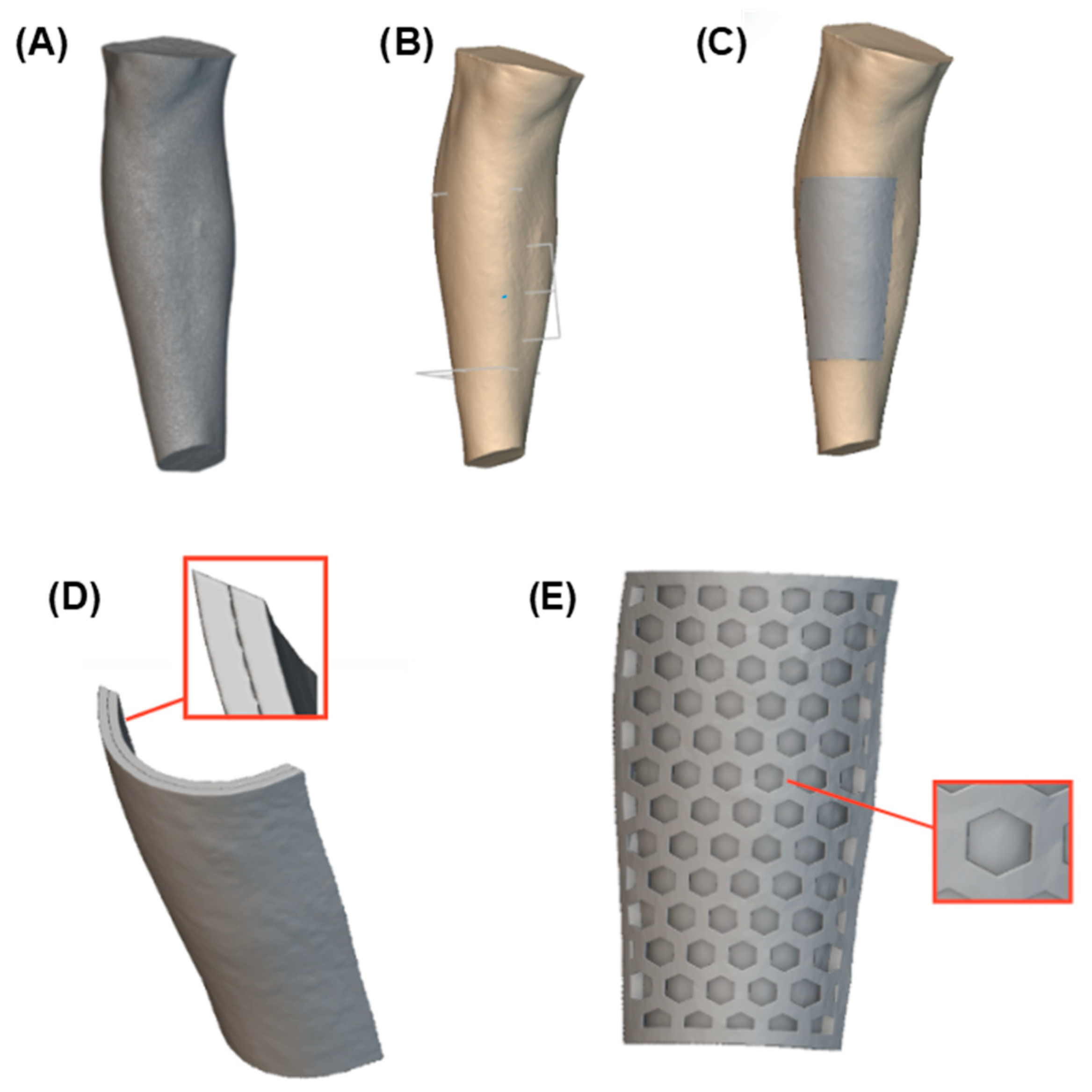
The finalized STL model (Figure 3A) was imported into nTop software (nTopology Inc., Educational license, New York, NY, USA)., where the anatomical region requiring protection was delineated using reference planes (Figure 3B,C). Once the protective surface was defined, a thickness operation of 3.5 mm was applied in two successive stages to generate two distinct structural zones (Figure 3D) with a total thickness of 7 mm. Subsequently, the external zone was further optimized by incorporating a two-dimensional honeycomb lattice pattern (Figure 3E). This modification reduced the volume of the stiffer outer layer, leading to a decrease in overall weight, a design approach commonly employed in shin guard development.
Figure 3.
Design workflow of the personalized dual-zone shin guard in nTopology: (A) imported leg STL, (B,C) definition of the protected area using reference planes, (D) creation of dual-thickness zones, and (E) application of a honeycomb pattern to the outer zone for weight reduction.
2.2. Materials for Additive Manufacturing
A wide range of fused filament fabrication (FFF) materials is currently available on the market. In this study, three polymeric filaments were investigated: acrylonitrile styrene acrylate (ASA), polylactic acid (PLA), and thermoplastic polyurethane (TPU). ASA is widely recognized for its high toughness, impact resistance, and excellent UV and weather stability. PLA is commonly used due to its ease of processing, good dimensional stability, and relatively high stiffness, while TPU is valued for its flexibility, elasticity, and superior energy-absorption capabilities. By utilizing filaments that incorporate chemical blowing agents, it is possible to induce controlled foaming of these polymers when printed at elevated extrusion temperatures. This characteristic enables the use of the same base material to fabricate a dense, rigid structure at lower temperatures for the outer protective layer, and a lightweight, compliant foam at higher temperatures for the inner cushioning layer. In the present work, commercial foaming-grade filaments supplied by ColorFabb (Belfeld, The Netherlands) were employed, specifically LW-ASA, LW-PLA, and Varioshore TPU. The mechanical properties of these materials have been extensively investigated in our previous studies for ASA [16], TPU [18] and PLA [19].
2.3. Fabrication Process
Both the shin guards and the mechanical testing specimens were fabricated using LW-ASA, LW-PLA, and Varioshore TPU filaments on a dual-extrusion Snapmaker J1 FFF printer (Snapmaker, Shenzhen, China). Although dual-zone components can be manufactured using a single-extruder system by adjusting the extrusion temperature, a dual-head configuration was selected in this work, with the same filament type loaded into both print heads. This strategy was employed to reduce material overflow effects and to simplify G-code generation by assigning each print head to a specific structural zone. In addition, the dual-extrusion setup enabled the use of different-colored filaments of the same material in each print head, enhancing the aesthetic appearance of the resulting personalized shin guards. The printing parameters corresponding to the solid (unfoamed) and foamed states of each filament are summarized in Table 1. All filaments were printed with a nozzle of 0.4 mm and a speed of 40 mm/s.
Table 1.
Printing parameters used for the fabrication of solid (unfoamed) and foamed specimens and dual-zone shin guards using LW-ASA, LW-PLA, and Varioshore TPU filaments.
2.4. Material Investigation
During use, shin guards are subjected to combined loading conditions, including localized impacts and flexural deformation as they conform to the curved geometry of the lower leg. Under such loading, bending induces compressive stresses on the outer surface and tensile stresses on the inner surface of the guard. To replicate this mechanical behavior, three-point bending (3 PB) specimens with a rectangular geometry (dimensions: 80 mm × 10 mm × 4 mm) were fabricated. Both homogeneous specimens, printed at a single extrusion temperature, and dual-zone specimens, produced using two different extrusion temperatures, were manufactured to evaluate the mechanical response of the dual-zone architecture under flexural loading. The three-point bending tests were performed using a Testometric Model M500-50AT universal testing machine (Testometric, Rochdale, UK) at a constant crosshead speed of 10 mm/min and a span length of 65 mm. A 500 N load cell was employed to record the applied forces, and the flexural strength and flexural strain were calculated in accordance with Equations (1) and (2).
where F is the applied load recorded during the test, is the support span length, is the specimen width, is the specimen thickness and corresponds to the deflection.
The effect of printing temperature on microporosity formation was examined using SEM with a Phenom ProX instrument (ThermoFisher Scientific, Waltham, MA, USA). Prior to imaging, the samples were gold-coated using an ion sputtering device (Quorum SC7620, Quorum Technologies Ltd., Laughton, UK) and mounted on aluminum stubs with double adhesive conductive carbon tabs (TED Pella, Redding, CA, USA). SEM imaging was conducted at an accelerating voltage of 10 kV. Microscopic images were captured using a Dino-Lite digital microscope (Anmo Electronics Corporation, Taiwan, China).
2.5. Finite Element Analysis
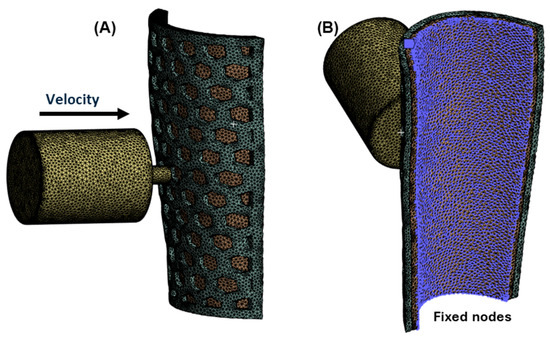
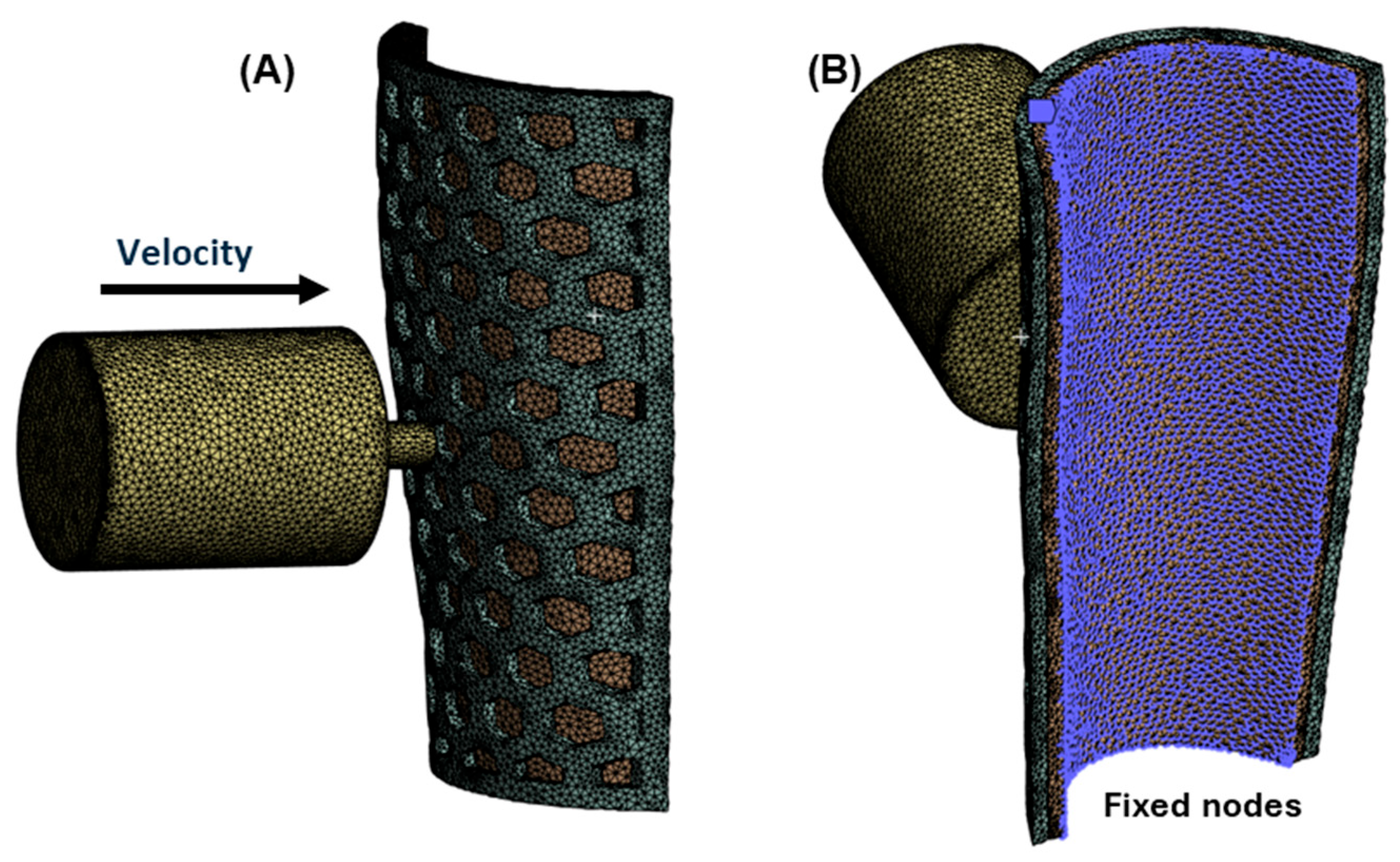
To investigate the response of the dual-zone shin guards under impact loading, a dynamic finite element analysis was conducted using ANSYS software (ANSYS Inc., Academic Research Mechanical, Release 2023 R1, Canonsburg, PA, USA). To perform this analysis, a rigid impactor consisting of a 10 mm diameter spike attached to a cylindrical mass of 1 kg was designed, similar to what the EN 13061 standard test [34] suggests for stud impact test, with structural steel assigned as the material for the impactor. The spike was given an initial velocity of 5.42 m/s toward the shin guard, as illustrated in Figure 4A to achieve an impact energy equivalent to that generated by 1 kg dropped from 1.5 m. The geometric models were discretized using finite elements, and a mesh convergence study was performed to ensure numerical accuracy. The final mesh consisted of approximately 333,304 elements. The inner surface nodes of the shin guard, corresponding to the interface with the leg, were constrained to simulate support from the lower limb (Figure 4B). A bonded interaction was defined between the two layers of the shin guard, while a frictionless contact was applied between the spike and the shin guard.
Figure 4.
Finite element model used for dynamic impact analysis of the dual-zone shin guard: (A) meshed geometry of the shin guard and impactor, and (B) applied boundary condition of fixed inner nodes that are in contact with the leg.
Although this numerical model represents a simplified impact scenario and does not explicitly account for the geometry or mechanical properties of the leg, it provides valuable insight into the deformation behavior and stress distribution of the dual-zone shin guards fabricated from different polymeric materials. The constitutive material models employed in the simulations were adopted from previously published studies for ASA [16], TPU [18] and PLA [19].
3. Results
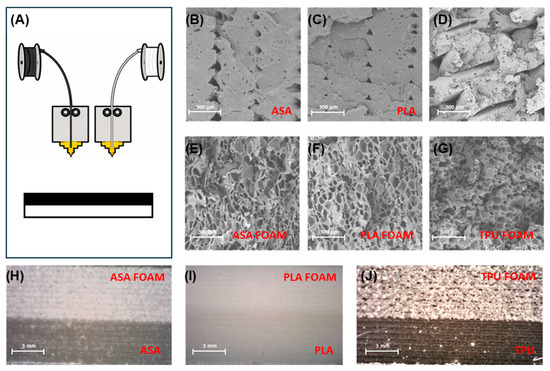
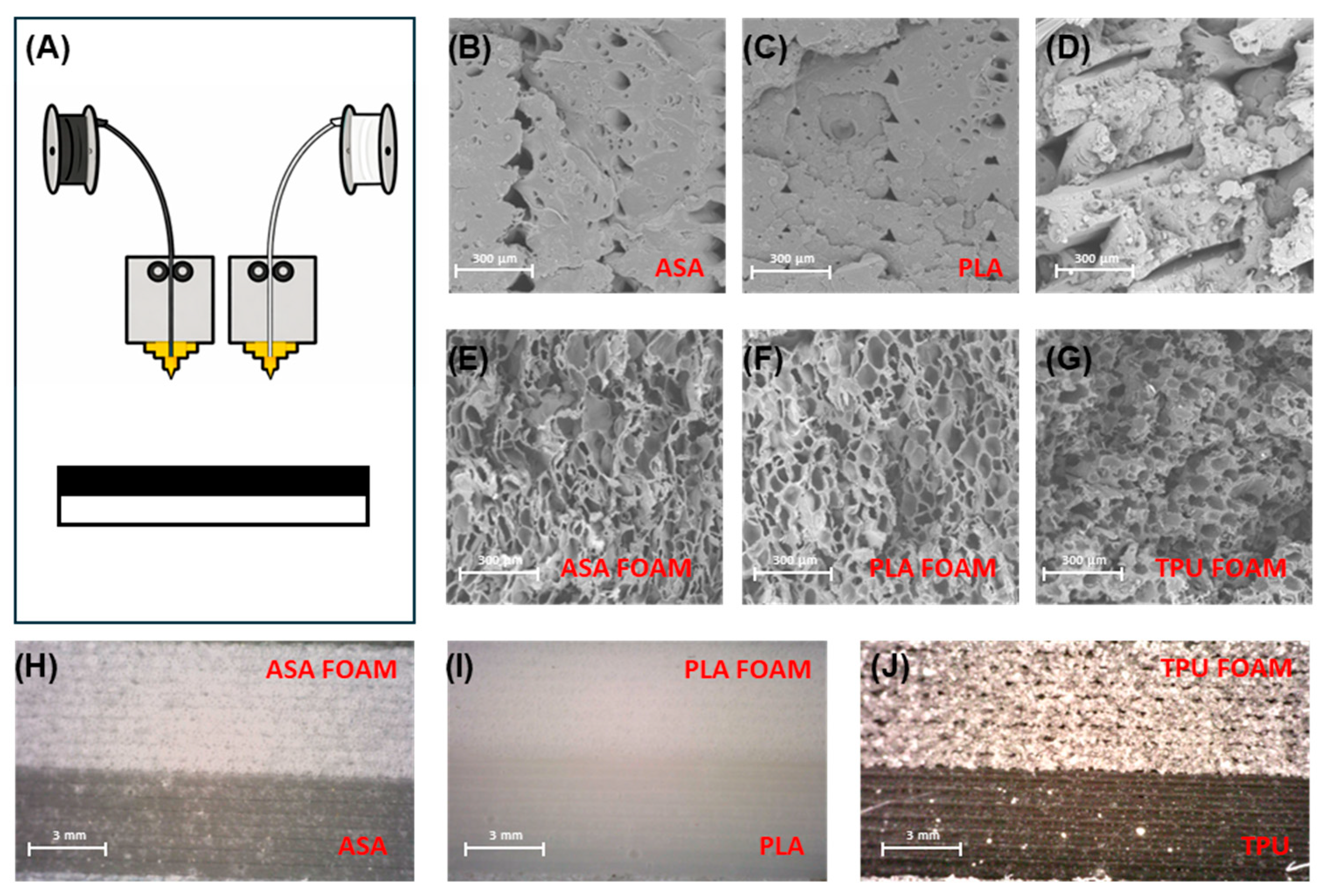
Prior to printing the designed shin guards, three-point bending tests were conducted to investigate the bending behavior of foamed, unfoamed, and dual-zone materials. Figure 5A illustrates the printing orientation of the dual-zone specimens, in which half of each specimen was printed at a lower temperature and the other half at a higher temperature. Figure 5B, Figure 5C, and Figure 5D present SEM images of the unfoamed internal structures of ASA, PLA, and TPU, respectively. Visible gaps can be observed, which result from the spaces left by the print head during filament extrusion.
Figure 5.
Printing orientation and internal morphology of unfoamed, foamed, and dual-zone specimens: (A) dual-zone printing orientation; (B–D) SEM images of the unfoamed ASA, PLA, and TPU specimens; (E–G) SEM images of the foamed ASA, PLA, and TPU specimens; (H–J) microscopic images of dual-zone specimens for ASA PLA and TPU specimens.
The internal structures of the foamed ASA, PLA, and TPU specimens are shown in Figure 5E–G, where the formation of porosity is evident and can be attributed to the activation of blowing agents at elevated temperatures. Figure 5H–J display microscopic images of the dual-zone specimens, revealing color variations between the two zones, while the microporosity is barely distinguishable due to its relatively small size.
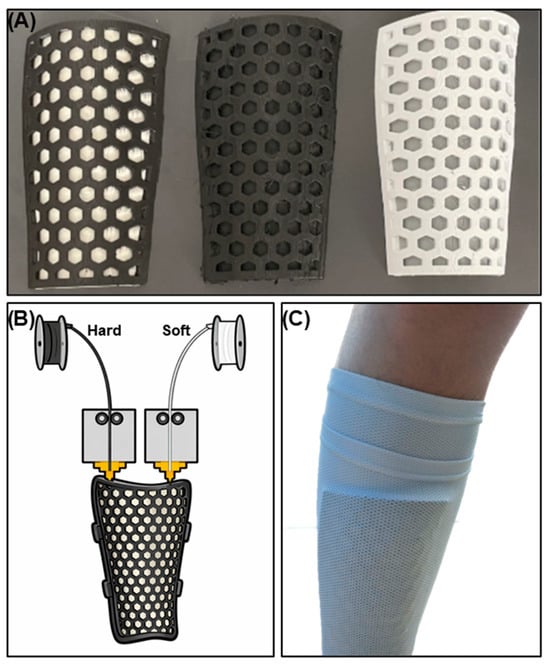
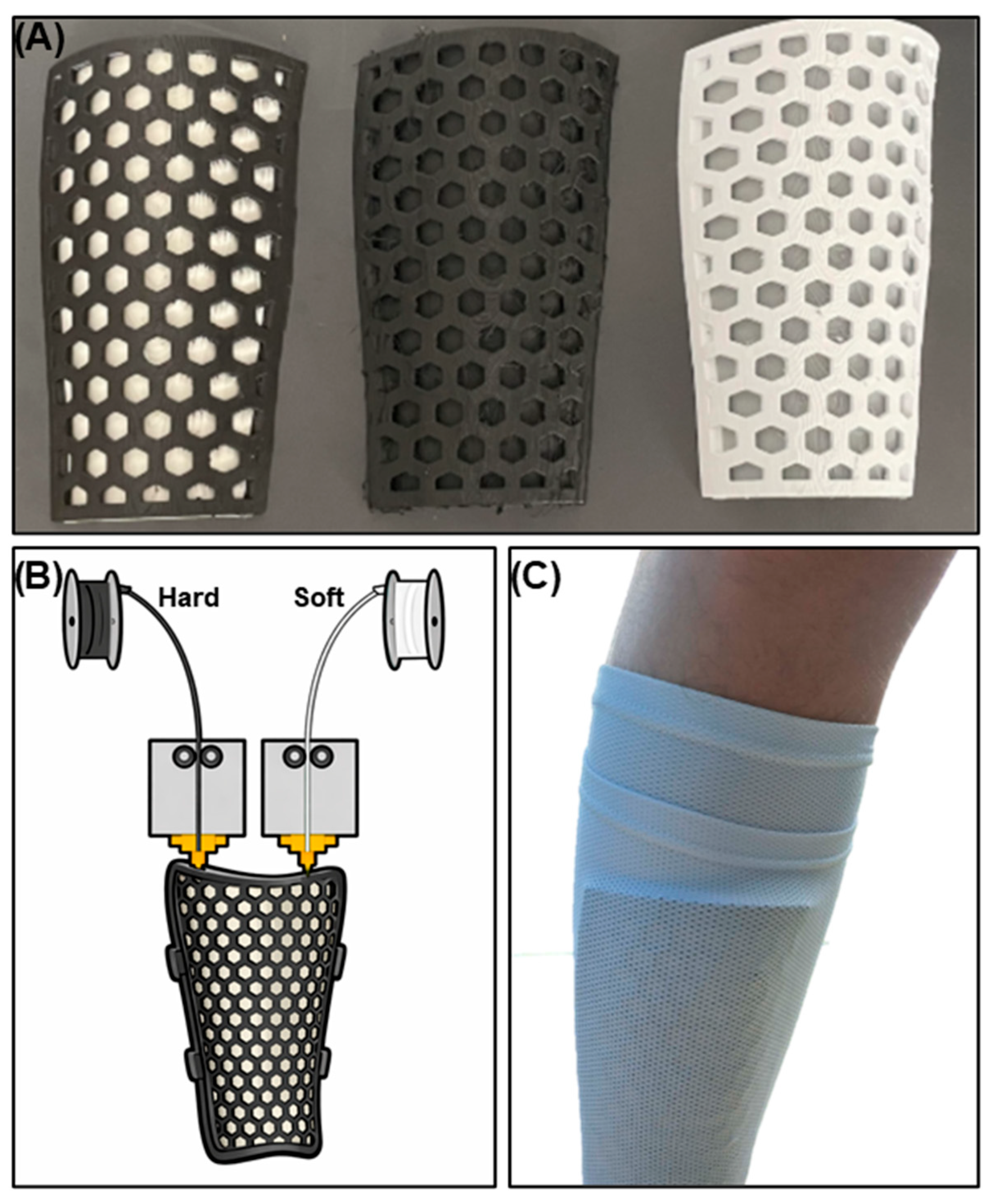
The manufacturability of the shin guards was further evaluated by printing personalized dual-zone shin guards using ASA, PLA, and TPU. Figure 6A shows the fabricated shin guards, while Figure 6B illustrates the printing process, in which one print head operated at a higher temperature to produce the foamed material. Finally, Figure 6C demonstrates the fit and practical use of the shin guard, showing it positioned inside a socket under real-use conditions.
Figure 6.
Manufacturability and application of personalized dual-zone shin guards: (A) 3D-printed dual zone personalized shin guards fabricated from ASA, PLA, and TPU; (B) printing process illustrating the use of a dual head printer to produce the foamed and the unfoamed zone; (C) demonstration of fit and practical use of the shin guard placed inside a socket.
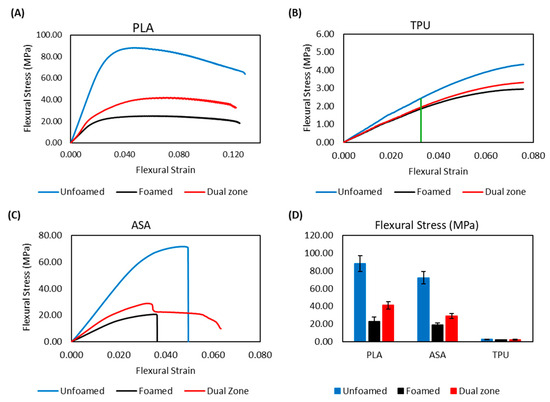
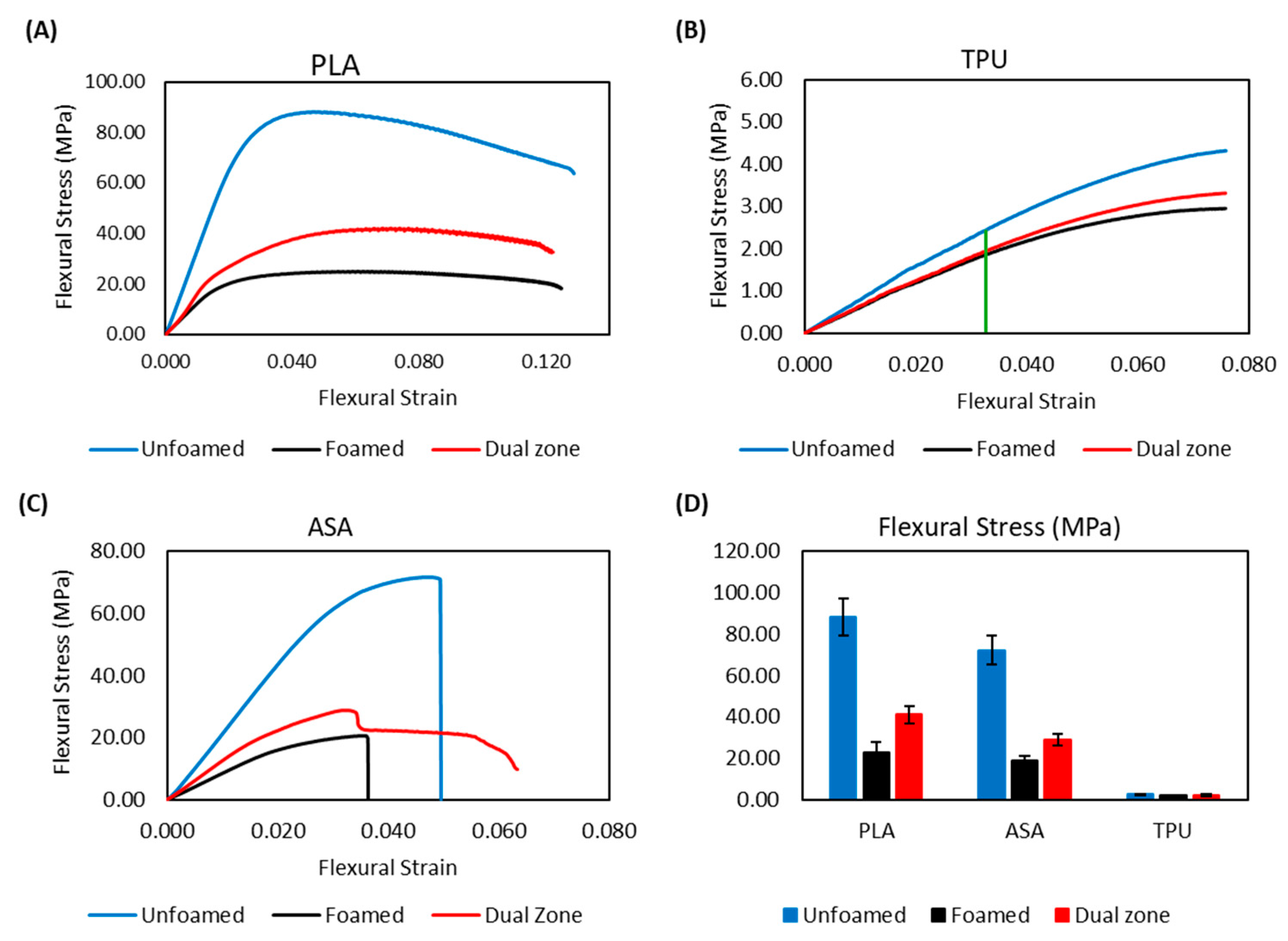
The three-point bending results demonstrate that foaming significantly degrades flexural performance, especially in rigid polymers (PLA and ASA). Dual-zone structures, however, partially restore the mechanical performance, confirming that the rigid outer zone plays a dominant role in bending resistance. Figure 7 presents the flexural stress–strain curves obtained from the three-point bending tests for PLA (Figure 7A), TPU (Figure 7B), and ASA (Figure 7C).
Figure 7.
Flexural stress–strain curves from three-point bending tests for (A) PLA, (B) TPU where green line represents strain values for 1.5× specimen thickness, and (C) ASA specimens with unfoamed, foamed, and dual-zone structures. (D) Flexural stress of PLA TPU and ASA under foamed, unfoamed, and dual-zone configurations.
As shown in Figure 7A, unfoamed PLA exhibits the highest flexural performance, with a maximum stress of approximately 88 MPa. The gradual decrease observed after the peak is associated with post-yield softening, a typical behavior of rigid thermoplastics. Foamed PLA shows a strong reduction in flexural stress, with a maximum value close to 23 MPa, corresponding to nearly a 74% decrease compared to unfoamed PLA. Dual-zone PLA specimens exhibit intermediate behavior, with a maximum flexural stress of approximately 41 MPa.
The flexural behavior of TPU, shown in Figure 7B, is fundamentally different from that of PLA. TPU specimens do not display a distinct maximum stress or a fracture point, which is characteristic of the elastomeric nature of the material. Unfoamed TPU reaches approximately 2.6 MPa, while foamed and dual-zone specimens reach 2 MPa and 2.1 MPa, respectively. This indicates a significantly lower reduction in flexural stress compared to the rigid polymers, around 19–23%. The reported flexural stress values for TPU correspond to the conventional flexural stress at the deflection limit (1.5× specimen thickness), as defined by ISO 178 [35]. This means that the specimens neither reach a maximum stress nor fracture before the conventional deflection is attained (green line in Figure 7B). In this case, the test is terminated shortly after the deflection reaches 1.5 times its thickness.
ASA results, presented in Figure 7C, indicate a trend similar to that of PLA. The unfoamed ASA reaches a maximum flexural stress of approximately 72 MPa, followed by a sudden drop indicating brittle fracture. The foamed specimens exhibit a strong reduction in flexural stress, with maximum values reaching only 19 MPa, corresponding to a 74% loss relative to the unfoamed specimens. Dual-zone ASA reaches approximately 29 MPa, indicating partial recovery of flexural performance due to the presence of the dense outer zone.
Overall, Figure 7D presents the flexural strength of all specimens for comparison. Previous studies on FFF-printed PLA report flexural strengths commonly ranging between approximately 60 and 100 MPa depending on printing parameters and orientation, which aligns well with the ~90 MPa observed in this work [36]. Similarly, experimental investigations of FDM-printed ASA components have reported flexural strengths around 60 MPa, confirming that the values obtained for the unfoamed ASA specimens in this study fall within the expected range for extrusion-based additive manufacturing [37]. For TPU, the relatively low flexural stress values are also consistent with the elastomeric nature of thermoplastic polyurethanes and agree with reported mechanical behavior of FFF-printed TPU materials, which typically exhibit flexural stresses in the range of a few MPa due to their high flexibility and large deformation capability [38]. In addition, the reduction in mechanical performance observed for the foamed structures is consistent with the general behavior of cellular polymer materials, where microporosity reduces the effective load-bearing cross-section and consequently decreases flexural strength compared to dense printed parts [39].
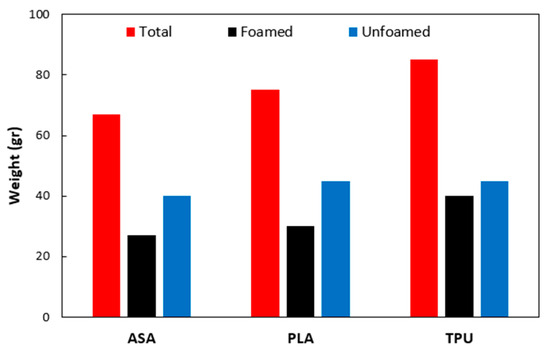
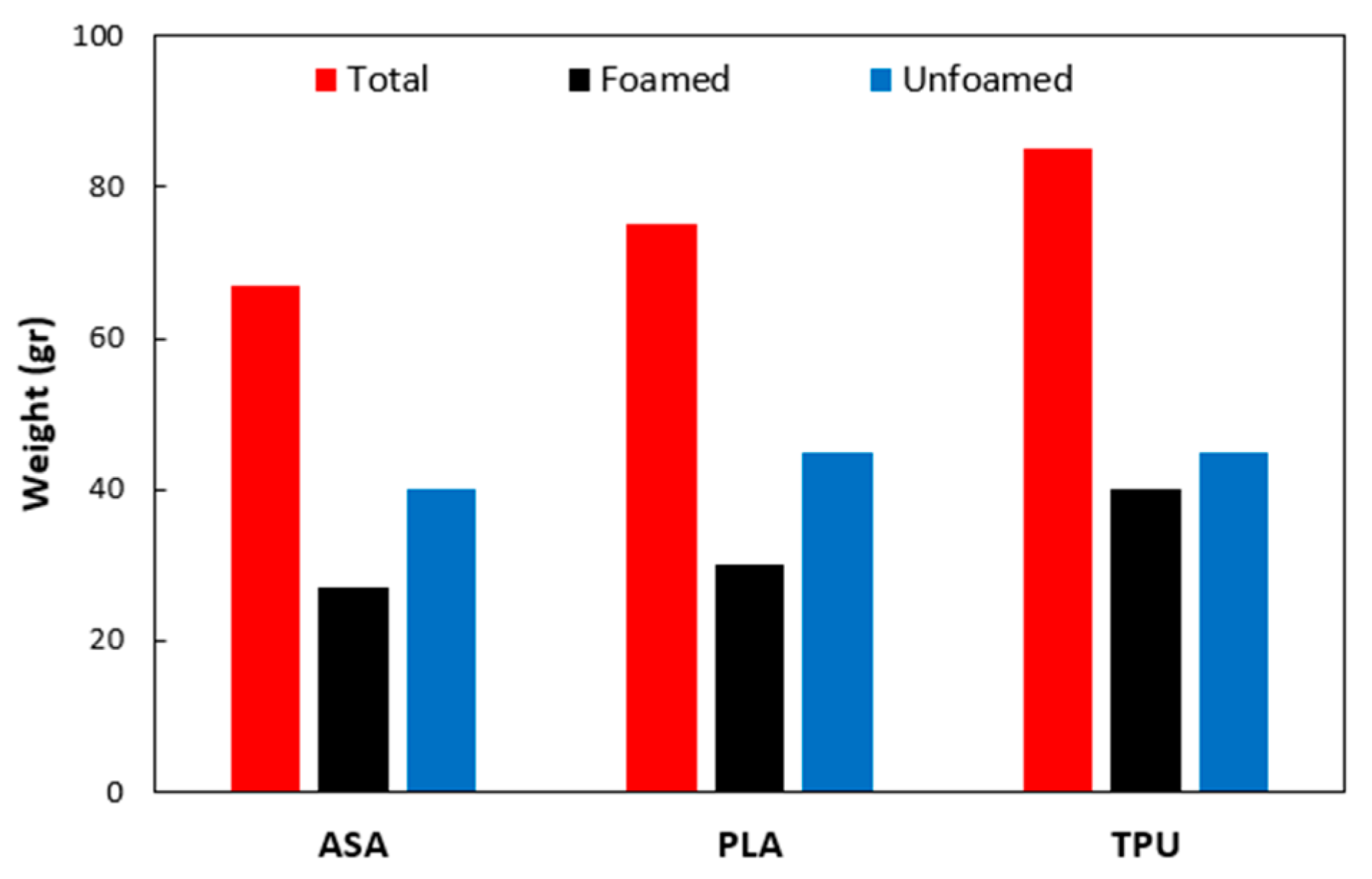
Figure 8 summarizes the weights of the designed shinguards, distinguishing between total mass, foamed regions, and unfoamed regions. The TPU shinguard exhibits the highest overall weight (85 g), whereas the ASA shinguard is the lightest (67 g). Despite occupying a larger volume, the foamed region contributes less to the overall weight than the unfoamed region, highlighting the effectiveness of foaming in reducing mass.
Figure 8.
Weight comparison of the designed shinguards fabricated in ASA, PLA, and TPU, considering total, foamed and unfoamed areas.
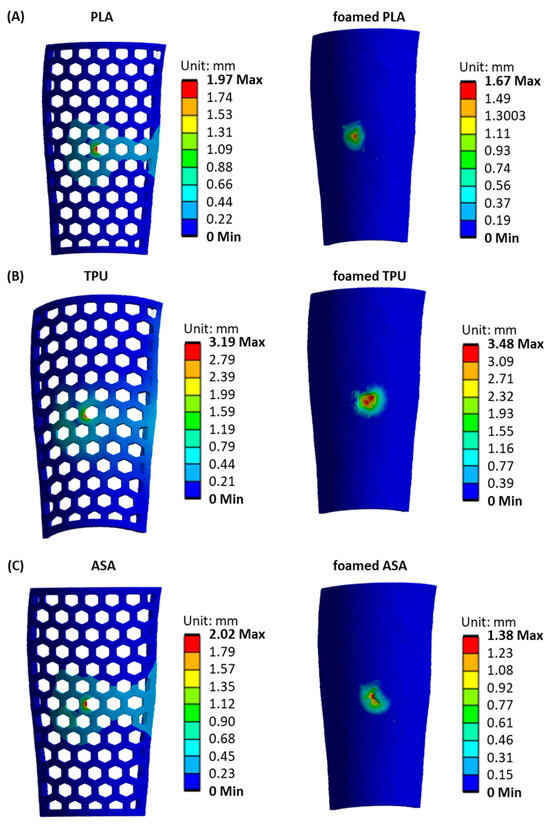
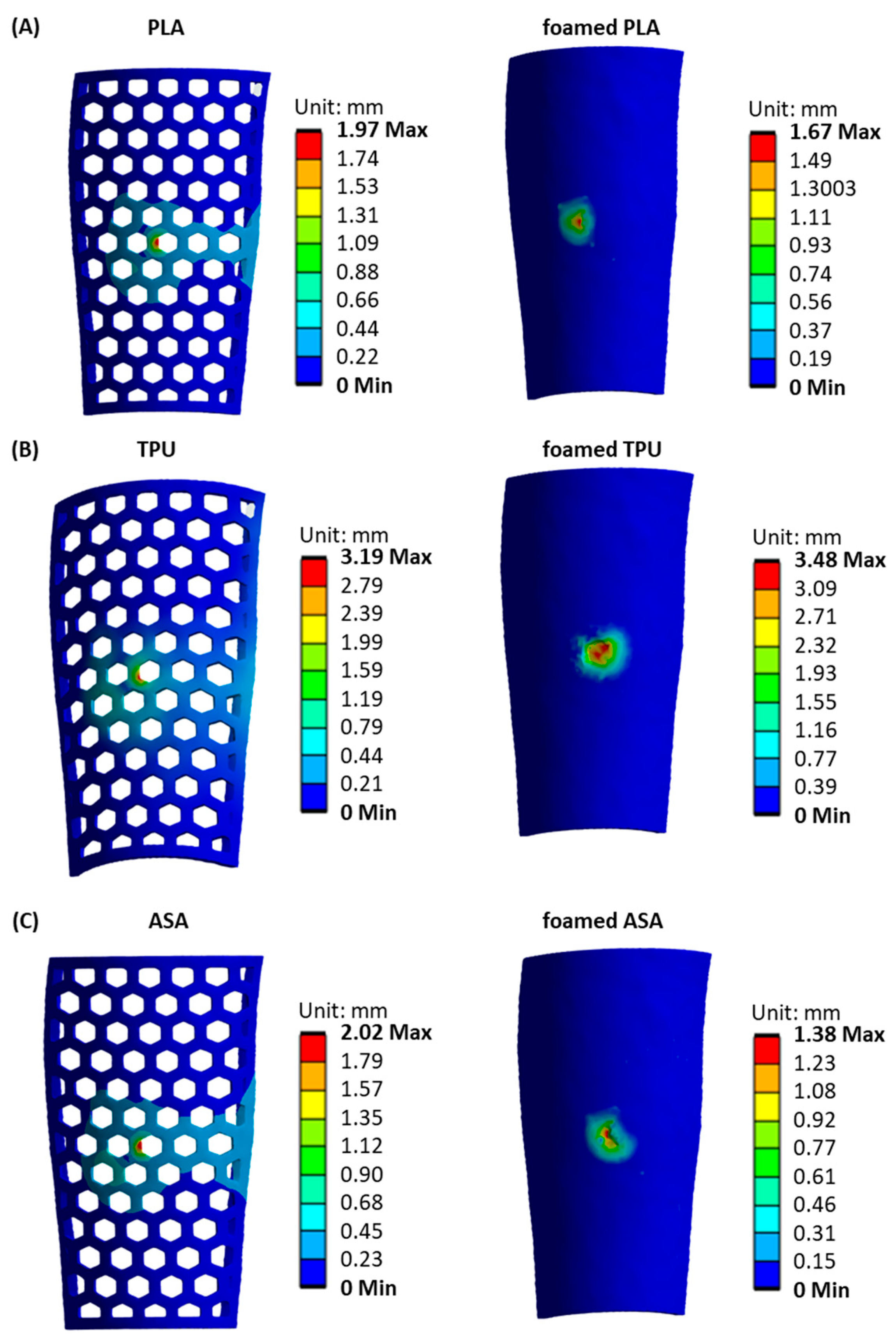
Figure 9 illustrates the finite element analysis (FEA) outcomes for the different shinguard materials. For the PLA shinguard (Figure 9A), the maximum deformation measured 1.97 mm in the outer (unfoamed) zone and 1.67 mm in the inner (foamed) zone. In the TPU shinguard (Figure 9B), the deformation increased to 3.19 mm in the outer zone and 3.48 mm in the inner zone. In this case, the simulation was terminated prematurely because the spike perforated the inner layer, which has a thickness of 3.5 mm.
Figure 9.
Finite element analysis (FEA) results showing deformation and spike interaction for (A) PLA, (B) TPU, and (C) ASA shinguards, highlighting differences in maximum displacement and penetration behavior between stiff and soft materials.
For the ASA shinguard (Figure 9C), the maximum deformation was comparable to that of PLA, reaching 2.02 mm in the outer zone and 1.38 mm in the foamed zone. A notable difference between the PLA/ASA and TPU cases is the spike behavior during impact: in the stiffer PLA and ASA materials, the spike experienced a significant change in direction, whereas in the much softer TPU material, the spike penetrated through the shinguard.
Overall, the external honeycomb zone is the first region to receive the impact and therefore absorbs the initial energy. Due to its lattice architecture, it has lower effective stiffness than a fully dense structure, allowing greater deformation and partial dissipation of the impact energy before it reaches the inner foamed layer. Consequently, the inner zone experiences reduced loading and smaller deformation in the PLA and ASA cases. In contrast, the much lower stiffness of TPU limits the ability of the outer layer to redistribute the load, allowing deeper penetration and greater deformation of the inner zone.
4. Conclusions
This study demonstrates the feasibility of a fully digital workflow for the design and additive manufacturing of personalized dual-zone shin guards using fused filament fabrication and foaming-enabled thermoplastic filaments. By integrating 3D scanning, parametric design, and controlled material foaming, customized protective devices can be produced with locally tailored mechanical performance and improved fit.
Experimental results from three-point bending tests confirmed that foaming significantly reduces flexural strength, particularly for rigid polymers such as PLA and ASA. However, the introduction of a dense outer zone in dual-zone configurations partially compensated for this loss, confirming the effectiveness of combining a stiff load-bearing layer with a compliant cushioning layer—an established strategy in protective gear design. TPU exhibited a fundamentally different response, with lower stiffness but greater deformation capacity and a smaller relative reduction in flexural performance upon foaming.
Dynamic finite element impact simulations further highlighted the influence of material stiffness on protective behavior. PLA and ASA dual-zone shin guards showed limited deformation and induced a redirection of the impacting spike, whereas TPU’s high compliance resulted in excessive deformation and penetration of the inner layer. These findings indicate that while TPU offers superior flexibility and comfort, its impact resistance in the tested configuration is insufficient without further geometric or material reinforcement.
Overall, the results suggest that foaming-enabled FFF is a promising approach for manufacturing lightweight, personalized protective equipment with spatially tailored properties. Future work will investigate hybrid material configurations that combine different polymers in the foamed inner layer and the unfoamed outer layer, leveraging the high stiffness of materials such as PLA and ASA for the outer zone and the superior energy-absorption capability of foamed TPU for the inner layer.
Beyond shin guard applications, the proposed digital workflow and foaming-enabled FFF approach could be extended to other types of personalized protective equipment and lightweight structures requiring spatially tailored mechanical properties. Potential applications include protective sports gear such as helmets, knee and elbow pads, as well as orthotic and medical support devices where customized fit, energy absorption, and weight reduction are critical. Furthermore, the ability to locally control stiffness through foaming may also be beneficial in broader engineering applications involving impact mitigation and adaptive structural components.
Author Contributions
Conceptualization, S.K. and M.M.; methodology, S.K. and M.M.; software, S.K. and M.M.; validation, S.K. and M.M.; formal analysis, S.K. and M.M.; investigation, S.K., M.M. and G.M.; resources, S.K. and D.T.; data curation, S.K.; writing—original draft preparation, S.K., M.M. and G.M.; writing—review and editing, S.K., M.M. and D.T.; visualization, S.K. and M.M.; supervision, D.T.; project administration, D.T.; funding acquisition, D.T. All authors have read and agreed to the published version of the manuscript.
Funding
This research received no external funding.
Data Availability Statement
All data generated or analyzed during this study are included in this article.
Conflicts of Interest
The authors declare no conflicts of interest.
References
- Gibson, I.; Rosen, D.W.; Stucker, B.; Khorasani, M. Additive Manufacturing Technologies, 3rd ed.; Springer: Cham, Switzerland, 2021. [Google Scholar] [CrossRef] [Scilit]
- Ngo, T.D.; Kashani, A.; Imbalzano, G.; Nguyen, K.T.Q.; Hui, D. Additive manufacturing (3D printing): A review of materials, methods, applications and challenges. Compos. Part B Eng. 2018, 143, 172–196. [Google Scholar] [CrossRef] [Scilit]
- Guo, N.; Leu, M.-C. Additive manufacturing: Technology, applications and research needs. Front. Mech. Eng. 2013, 8, 215–243. [Google Scholar] [CrossRef] [Scilit]
- Thompson, M.K.; Moroni, G.; Vaneker, T.; Fadel, G.; Campbell, R.I.; Gibson, I.; Bernard, A.; Schulz, J.; Graf, P.; Ahuja, B.; et al. Design for additive manufacturing: Trends, opportunities, considerations, and constraints. CIRP Ann. 2016, 65, 737–760. [Google Scholar] [CrossRef] [Scilit]
- DebRoy, T.; Wei, H.L.; Zuback, J.S.; Mukherjee, T.; Elmer, J.W.; Milewski, J.O.; Beese, A.M.; Wilson-Heid, A.; De, A.; Zhang, W. Additive manufacturing of metallic components—Process, structure and properties. Prog. Mater. Sci. 2018, 92, 112–224. [Google Scholar] [CrossRef] [Scilit]
- Ventola, C.L. Medical applications for 3D printing: Current and projected uses. Pharm. Ther. 2014, 39, 704–711. [Google Scholar]
- Turner, B.N.; Strong, R.; Gold, S.A. A review of melt extrusion additive manufacturing processes: I. Process design and modeling. Rapid Prototyp. J. 2014, 20, 192–204. [Google Scholar] [CrossRef] [Scilit]
- Sun, Q.; Rizvi, G.M.; Bellehumeur, C.T.; Gu, P. Effect of processing conditions on the bonding quality of FDM polymer filaments. Rapid Prototyp. J. 2008, 14, 72–80. [Google Scholar] [CrossRef] [Scilit]
- Wojciechowski, E.; Sman, A.D.; Cornelissen, M.; Wismeijer, D. Feasibility of designing, manufacturing and delivering customised 3D printed ankle-foot orthoses: A systematic review. J. Foot Ankle Res. 2019, 12, 11. [Google Scholar] [CrossRef] [Scilit]
- Rengier, F.; Mehndiratta, A.; von Tengg-Kobligk, H.; Zechmann, C.M.; Unterhinninghofen, R.; Kauczor, H.-U.; Giesel, F.L. 3D printing based on imaging data: Review of medical applications. Int. J. Comput. Assist. Radiol. Surg. 2010, 5, 335–341. [Google Scholar] [CrossRef] [Scilit]
- Cantrell, J.T.; Rohde, S.; Damiani, D.; Gurnani, R.; DiSandro, L.; Anton, J.; Young, A.; Jerez, A.; Steinbach, D.; Kroese, C.; et al. Experimental characterization of the mechanical properties of 3D-printed ABS and polycarbonate parts. Rapid Prototyp. J. 2017, 23, 811–824. [Google Scholar] [CrossRef] [Scilit]
- Cuan-Urquizo, E.; Barocio, E.; Tejada-Ortigoza, V.; Pipes, R.B.; Rodriguez, C.A.; Roman-Flores, A. Characterization of the mechanical properties of FFF structures and materials: A review. Materials 2019, 12, 895. [Google Scholar] [CrossRef] [Scilit]
- Moysiadis, G.; Koltsakidis, S.; Ziogas, O.; Panagiotou, P.; Tzetzis, D. Design and Evaluation of an Additively Manufactured UAV Fixed-Wing Using Gradient Thickness TPMS Structure and Various Shells and Infill Micro-Porosities. Aerospace 2026, 13, 50. [Google Scholar] [CrossRef] [Scilit]
- Koltsakidis, S.; Tsongas, K.; Papas, N.; Pechlivani, E.M.; Tzetzis, D. Multi-Material Fused Filament Fabrication of TPU Composite Honeycombs Featuring Out-of-Plane Gradient Stiffness. J. Compos. Sci. 2025, 9, 588. [Google Scholar] [CrossRef] [Scilit]
- Koltsakidis, S.; Tsongas, K.; Tzetzis, D. Additive Manufacturing of Gradient Stiffness Honeycombs Using Thermoplastic Polyurethane Composite Material Variations. Adv. Eng. Mater. 2025, 28, e202501422. [Google Scholar] [CrossRef] [Scilit]
- Koltsakidis, S.; Tsongas, K.; Tzetzis, D. Combining Micro and Macro Relative Density: An Experimental and Computational Study on Hierarchical Porous 3D-Printed Polylactic Acid Structures. Adv. Eng. Mater. 2024, 26, 2402012. [Google Scholar] [CrossRef] [Scilit]
- Savvas, K.; Dimitrios, T. Review of the Integration of Fused Filament Fabrication with Complementary Methods for Fabricating Hierarchical Porous Polymer Structures. Appl. Sci. 2025, 15, 9703. [Google Scholar] [CrossRef] [Scilit]
- Altıparmak, S.C.; Yardley, V.A.; Shi, Z.; Lin, J. Extrusion-based additive manufacturing technologies: State of the art and future perspectives. J. Manuf. Process. 2022, 83, 607–636. [Google Scholar] [CrossRef] [Scilit]
- Boschetto, A.; Bottini, L. Surface improvement of fused deposition modeling parts by barrel finishing. Rapid Prototyp. J. 2015, 21, 686–696. [Google Scholar] [CrossRef] [Scilit]
- Salvi, D.; Ucciardello, N.; Vesco, S. Multi-head MEX 3D printing of self-recoverable Joule-heating-based shape memory polymeric components. Arab. J. Sci. Eng. 2025, 1–15. [Google Scholar] [CrossRef] [Scilit]
- Hasanov, S.; Gupta, A.; Alifui-Segbaya, F. Review on additive manufacturing of multi-material parts: Progress and challenges. J. Manuf. Mater. Process. 2021, 6, 4. [Google Scholar] [CrossRef] [Scilit]
- Remondino, F. Heritage recording and 3D modeling with photogrammetry and 3D scanning. Remote Sens. 2011, 3, 1104–1138. [Google Scholar] [CrossRef] [Scilit]
- Besl, P.J.; McKay, N.D. A method for registration of 3-D shapes. IEEE Trans. Pattern Anal. Mach. Intell. 1992, 14, 239–256. [Google Scholar] [CrossRef] [Scilit]
- Bibb, R.; Eggbeer, D.; Evans, P. Rapid manufacture of custom-fitting surgical guides. Rapid Prototyp. J. 2009, 15, 346–354. [Google Scholar] [CrossRef] [Scilit]
- Tack, P.; Victor, J.; Gemmel, P.; Annemans, L. 3D-printing techniques in a medical setting: A systematic literature review. Biomed. Eng. Online 2016, 15, 115. [Google Scholar] [CrossRef] [Scilit] [PubMed]
- Faustini, M.C.; Neptune, R.R.; Crawford, R.H.; Stanhope, S.J. Manufacture of passive dynamic ankle-foot orthoses using selective laser sintering. IEEE Trans. Biomed. Eng. 2008, 55, 784–790. [Google Scholar] [CrossRef] [Scilit]
- Telfer, S.; Gibson, K.S.; Hennessy, K.; Steultjens, M.P.M.; Woodburn, J. Computer-aided design of customized foot orthoses: Reproducibility and effect of method used to obtain foot shape. Med. Eng. Phys. 2012, 34, 1306–1312. [Google Scholar] [CrossRef] [Scilit] [PubMed]
- Martelli, N.; Serrano, C.; van den Brink, H.; Pineau, J.; Prognon, P.; Borget, I.; El Batti, S. Advantages and disadvantages of 3-dimensional printing in surgery: A systematic review. Surgery 2016, 159, 1485–1500. [Google Scholar] [CrossRef] [Scilit] [PubMed]
- Wong, K.C. 3D-printed patient-specific applications in orthopaedics. Med. Eng. Phys. 2016, 38, 1081–1088. [Google Scholar] [CrossRef] [Scilit]
- Javaid, M.; Haleem, A. Additive manufacturing applications in medical field: A brief review. J. Clin. Orthop. Trauma 2018, 9, 202–206. [Google Scholar] [CrossRef] [Scilit]
- Li, S.; Liao, H.; Zou, J.; Deng, Z. Toward mass customization through additive manufacturing: A case study of a custom-fit respirator. 3D Print Med. 2021, 7, 20. [Google Scholar]
- McIntosh, A.S. Biomechanical considerations in the design of equipment to prevent sports injury. Proc. Inst. Mech. Eng. Part P J. Sports Eng. Technol. 2012, 226, 193–199. [Google Scholar] [CrossRef] [Scilit]
- Mills, N.J.; Gilchrist, A. The effectiveness of foams in bicycle and motorcycle helmets. Accid. Anal. Prev. 1991, 23, 153–163. [Google Scholar] [CrossRef] [Scilit]
- Kuznetsov, V.E.; Solonin, A.N.; Urzhumtsev, O.D.; Schilling, R.; Tavitov, A.G. Strength of PLA components fabricated with fused deposition technology using a desktop 3D printer as a function of geometrical parameters of the process. Polymers 2018, 10, 313. [Google Scholar] [CrossRef] [Scilit] [PubMed]
- EN 13061:2009; Shin Guards for Association Football—Requirements and Test Methods. European Committee for Standardization: Brussels, Belgium, 2009.
- ISO 178:2019; Plastics—Determination of Flexural Properties. International Organization for Standardization: Geneva, Switzerland, 2019.
- Raam Kumar, S.; Sridhar, S.; Venkatraman, R.; Venkatesan, M. Polymer additive manufacturing of ASA structure: Influence of printing parameters on mechanical properties. Mater. Today Proc. 2021, 39, 1316–1319. [Google Scholar] [CrossRef] [Scilit]
- Kumar, S.; Singh, I.; Koloor, S.S.R.; Kumar, D.; Yahya, M.Y. On laminated object manufactured FDM-printed ABS/TPU multimaterial specimens: An insight into mechanical and morphological characteristics. Polymers 2022, 14, 4066. [Google Scholar] [CrossRef] [Scilit] [PubMed]
- Gibson, L.J.; Ashby, M.F. Cellular Solids: Structure and Properties, 2nd ed.; Cambridge University Press: Cambridge, UK, 1997. [Google Scholar] [CrossRef] [Scilit]

Disclaimer/Publisher’s Note: The statements, opinions and data contained in all publications are solely those of the individual author(s) and contributor(s) and not of MDPI and/or the editor(s). MDPI and/or the editor(s) disclaim responsibility for any injury to people or property resulting from any ideas, methods, instructions or products referred to in the content. |
© 2026 by the authors. Licensee MDPI, Basel, Switzerland. This article is an open access article distributed under the terms and conditions of the Creative Commons Attribution (CC BY) license.