
Article

A Visual Aquaculture System Using a Cloud-Based Autonomous Drones
1
Department of Computer Science and Engineering, National Taiwan Ocean University, Keelung City 202, Taiwan
2
Department of Aquaculture, National Taiwan Ocean University, Keelung City 202, Taiwan
*
Author to whom correspondence should be addressed.
Drones 2021, 5(4), 109; https://doi.org/10.3390/drones5040109
Submission received: 23 August 2021 / Revised: 26 September 2021 / Accepted: 29 September 2021 / Published: 2 October 2021
(This article belongs to the Special Issue Advances in Civil Applications of Unmanned Aircraft Systems)

Abstract

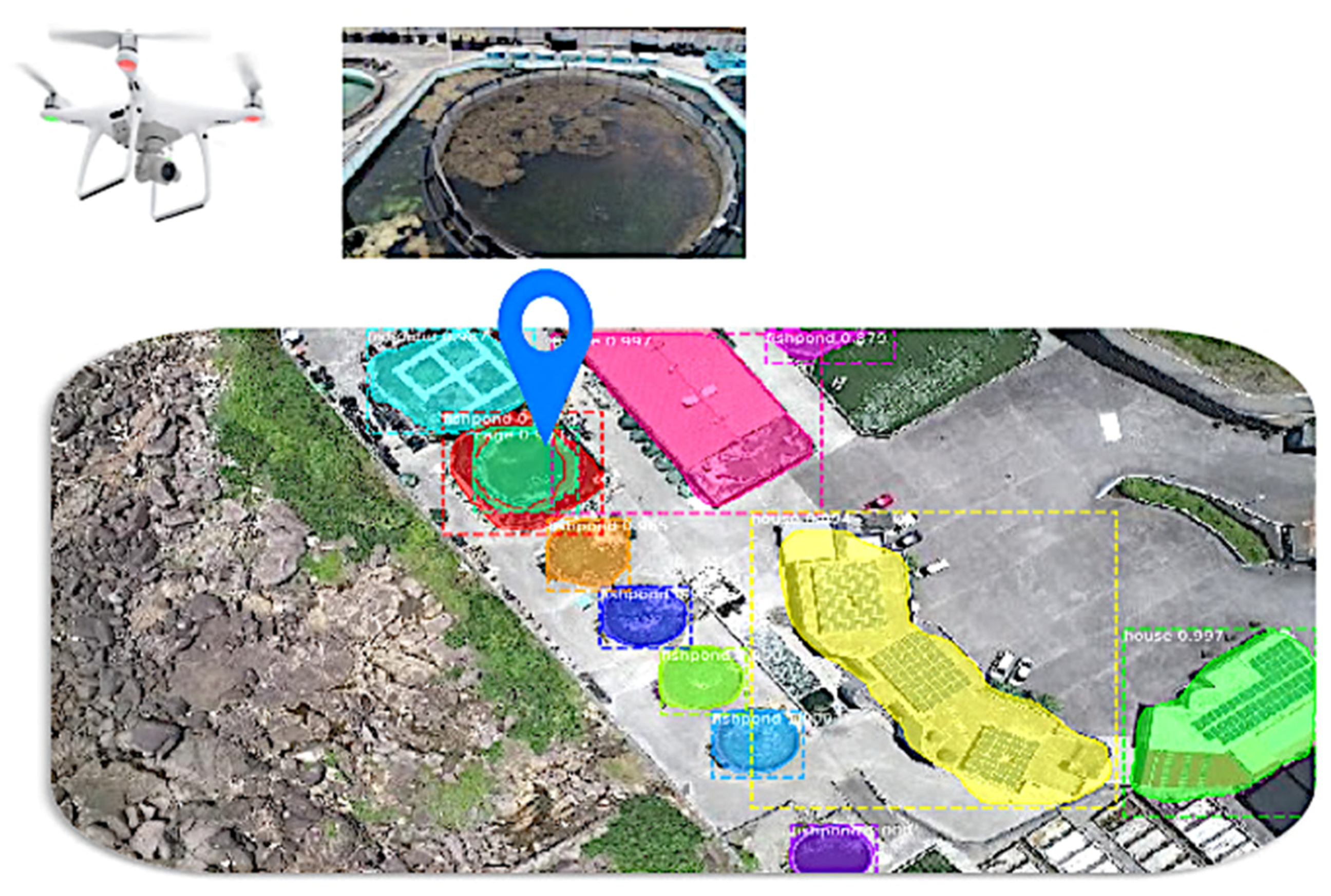
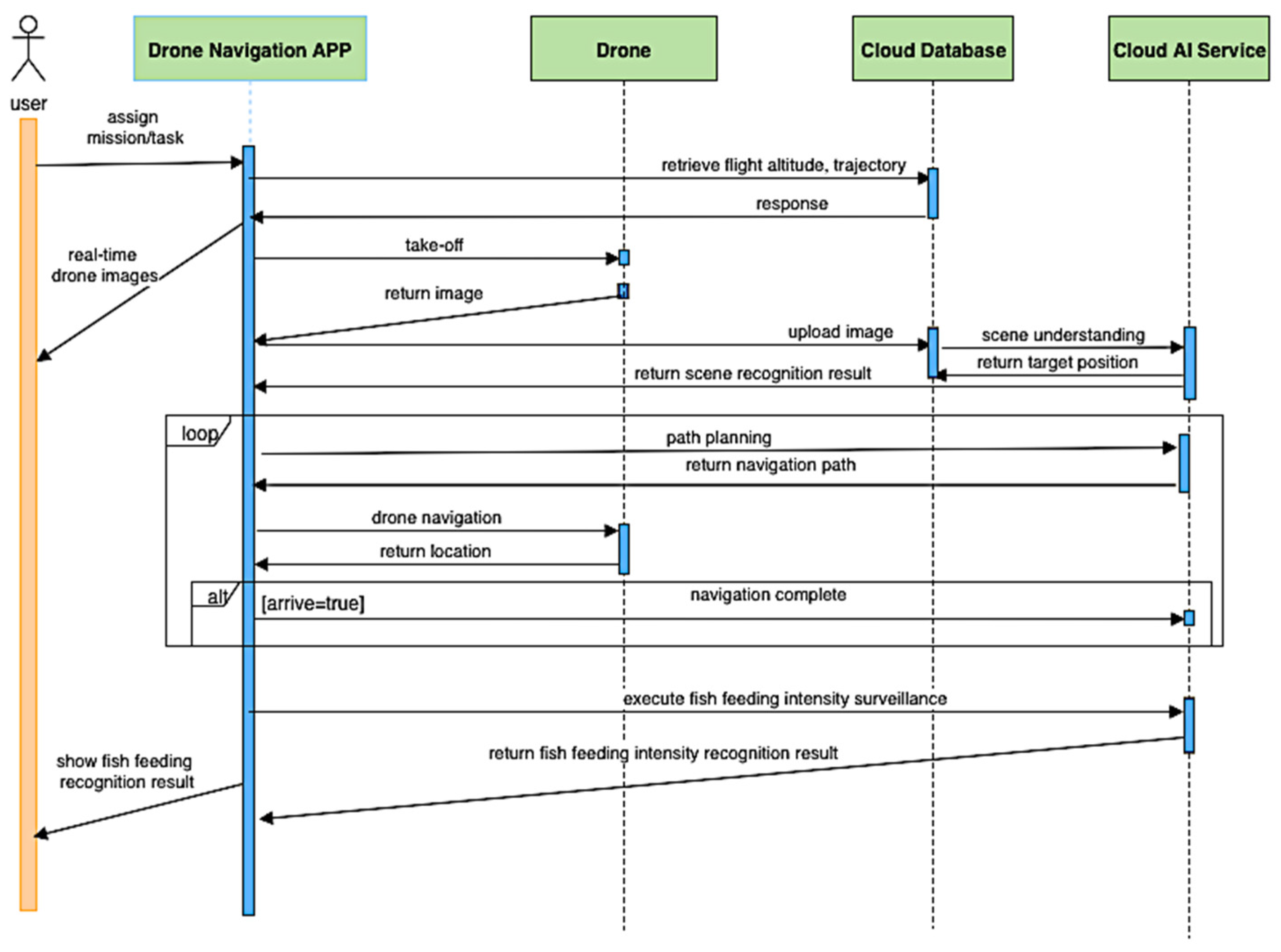
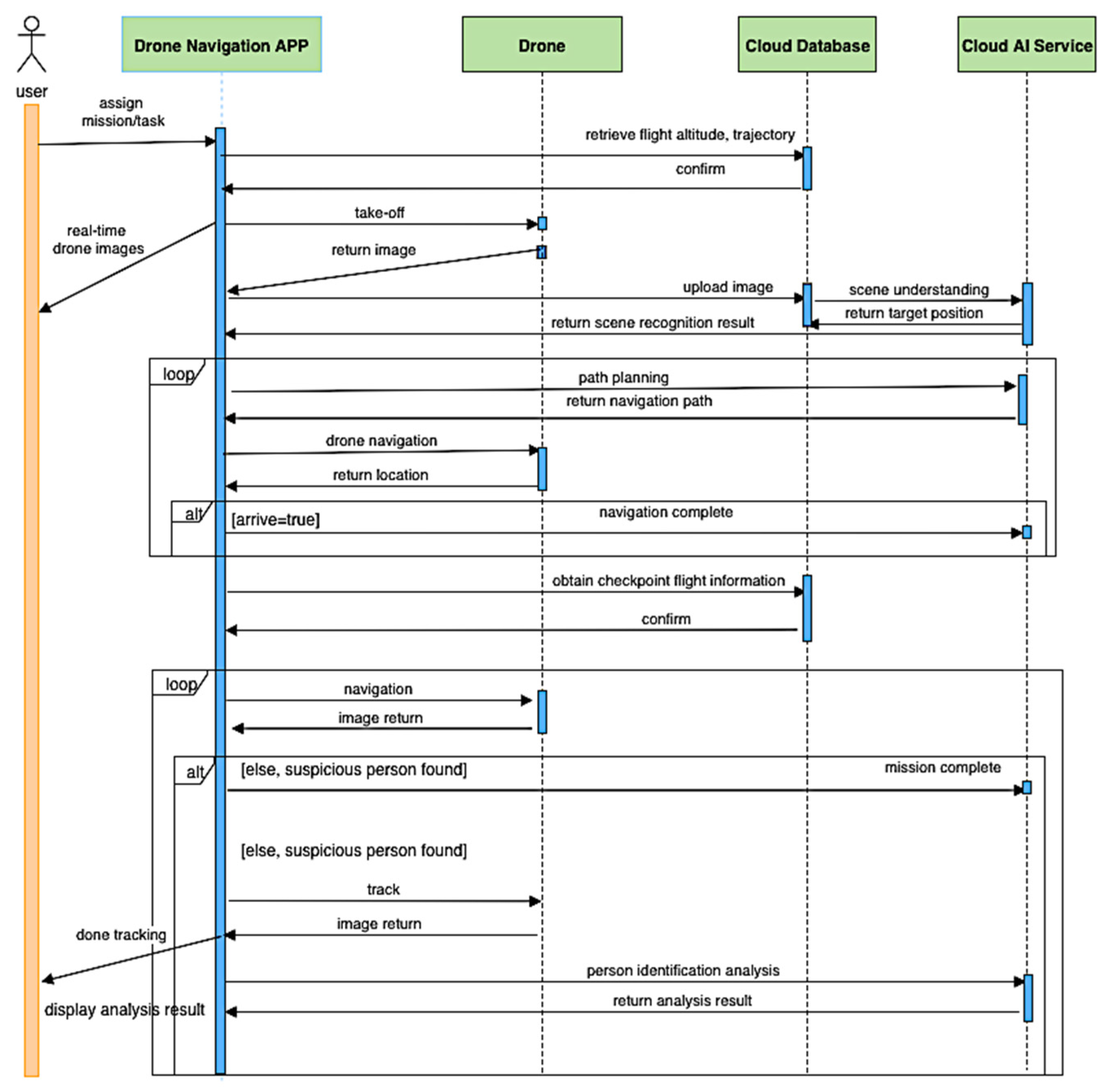
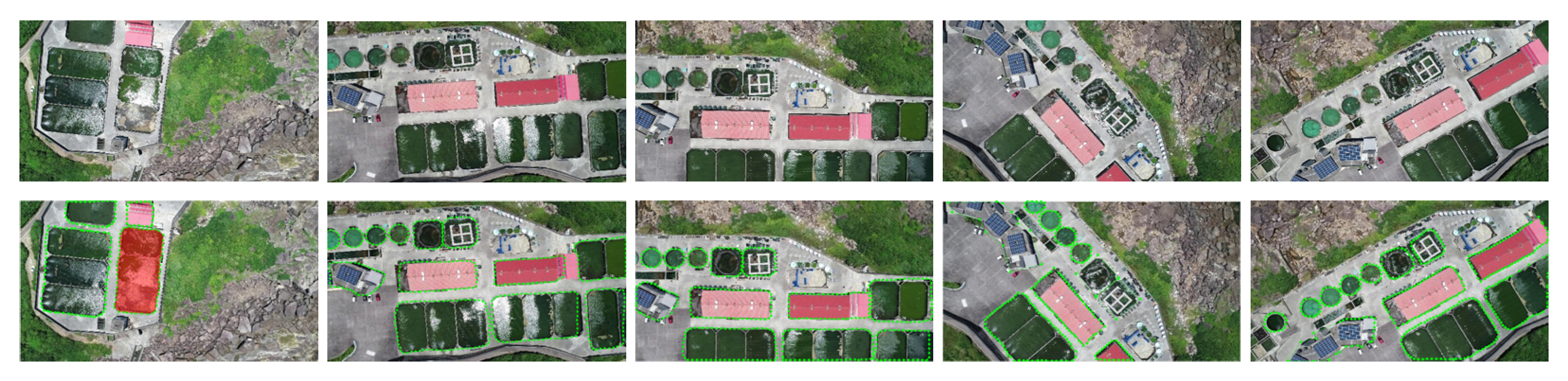
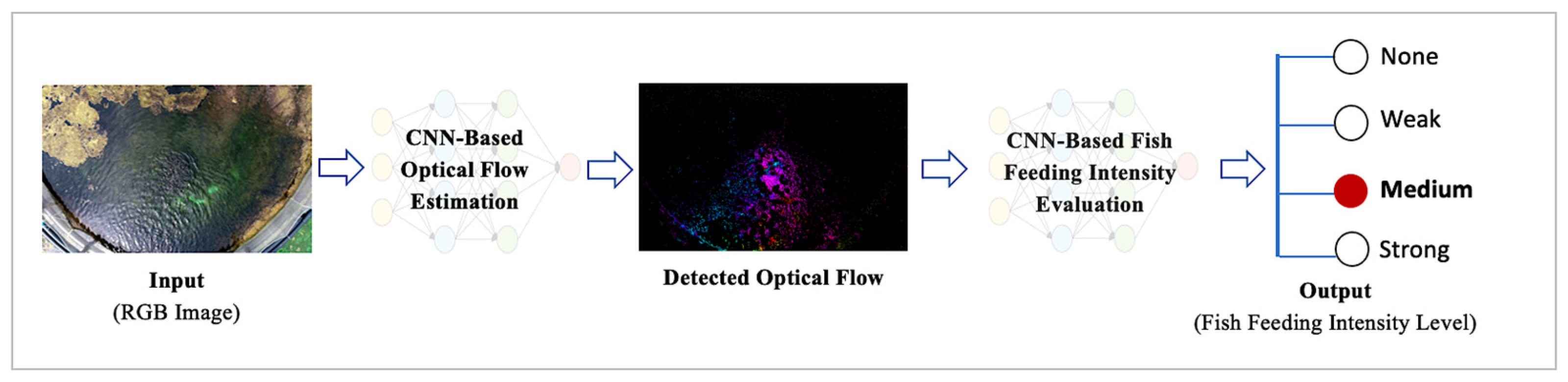
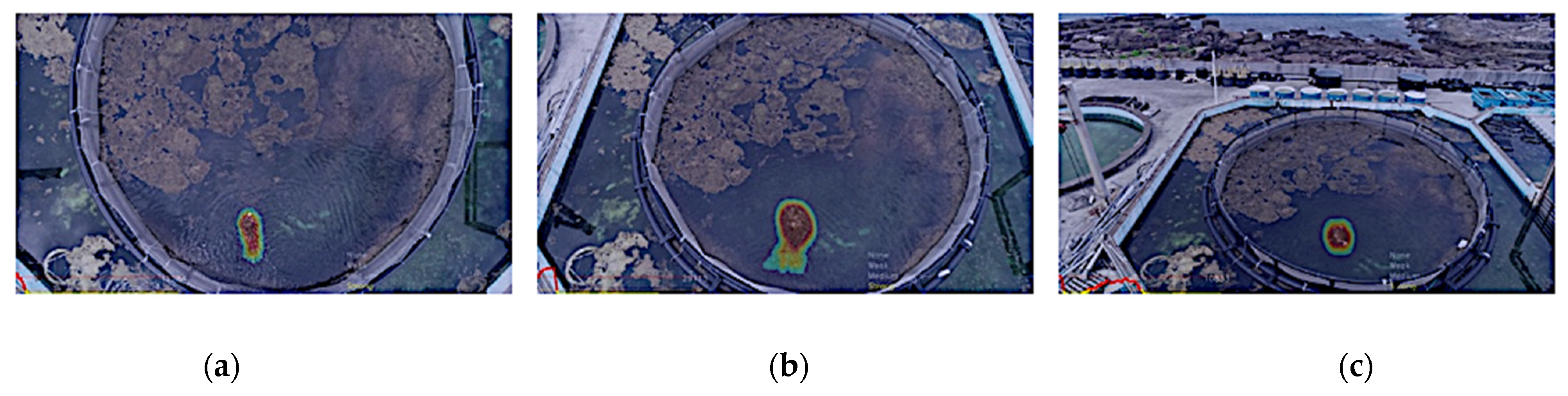
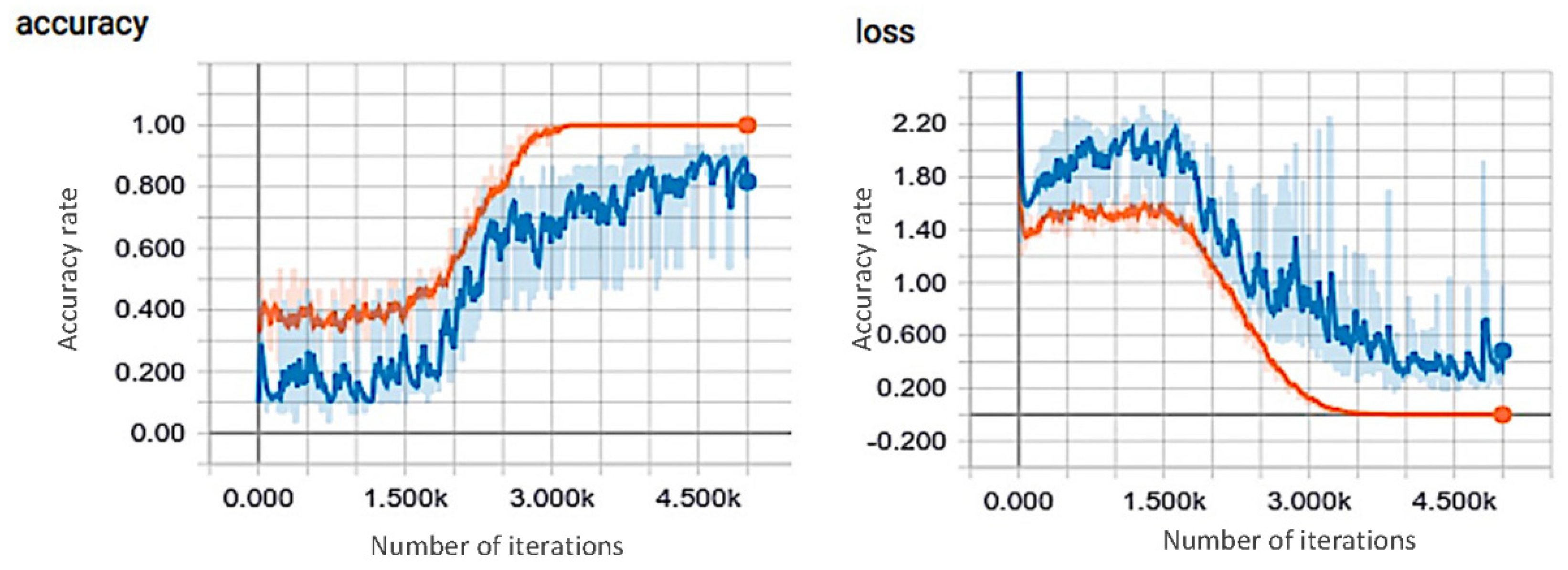
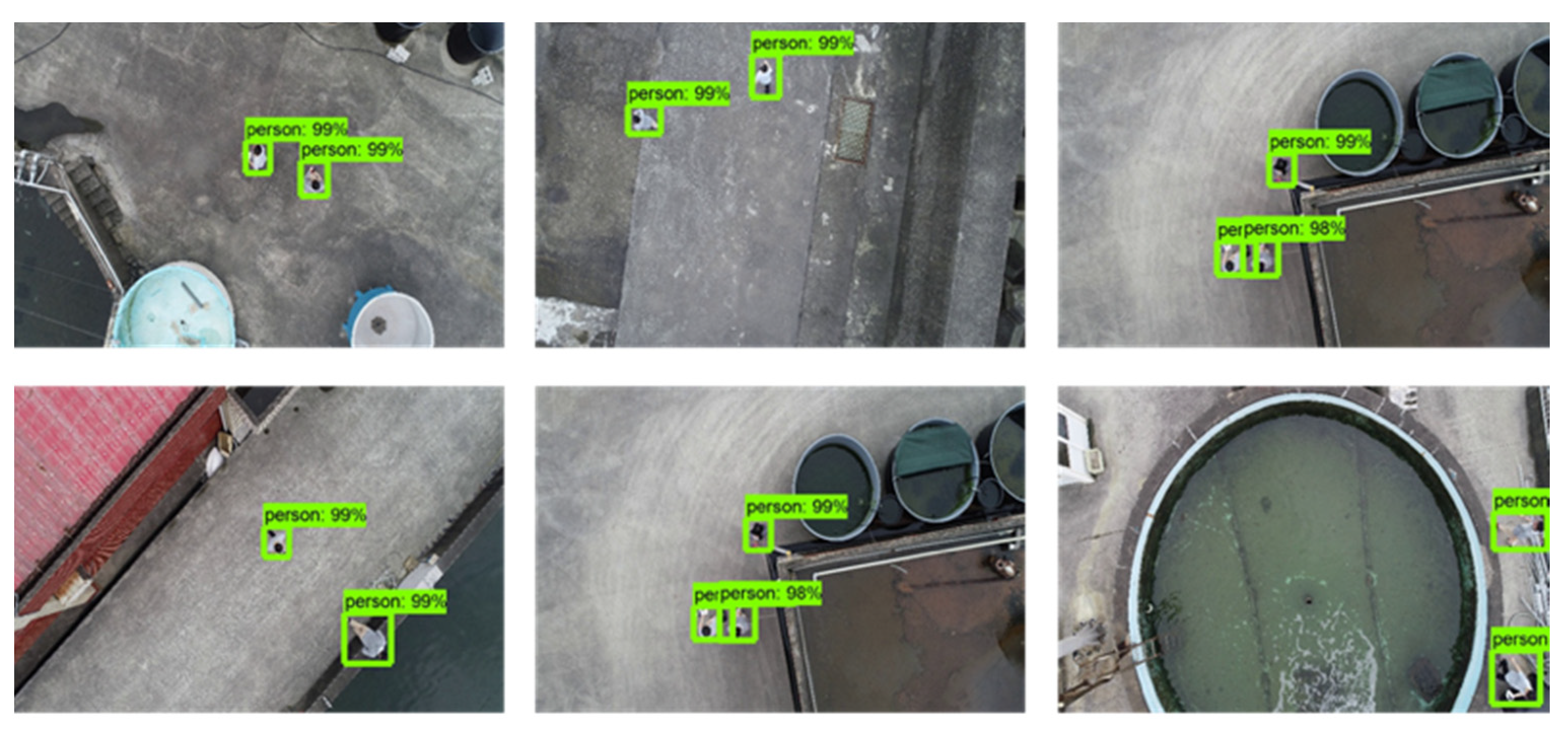
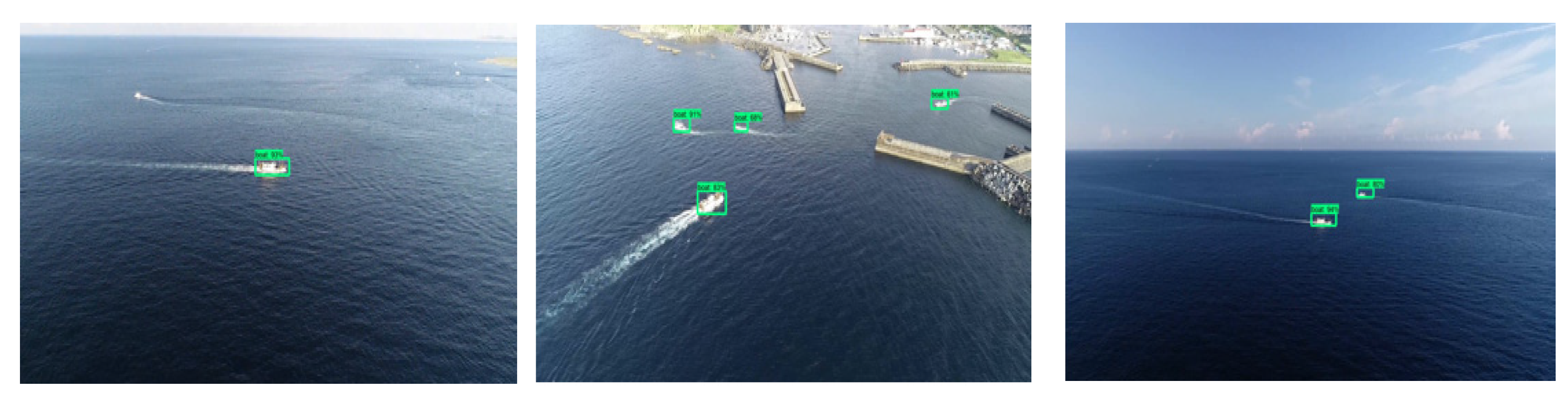
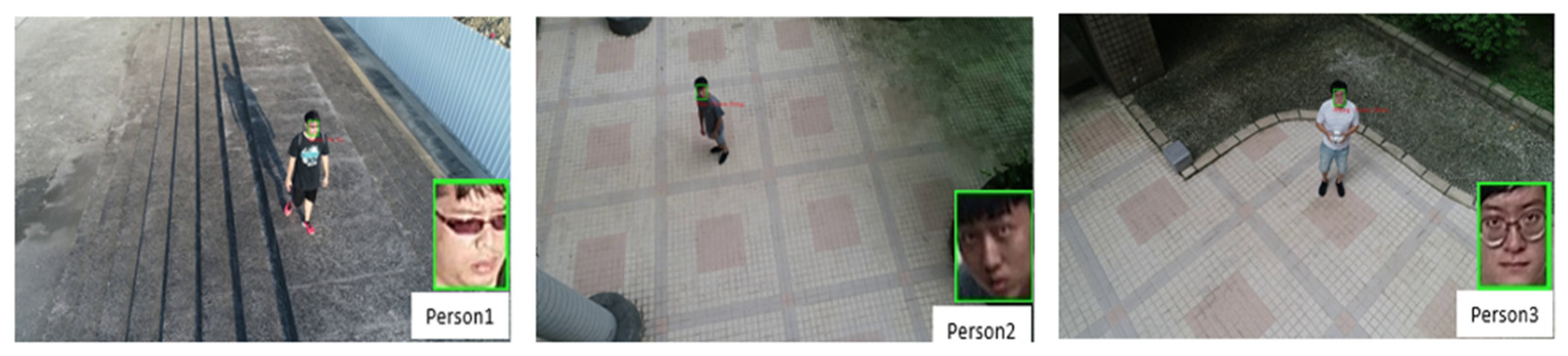
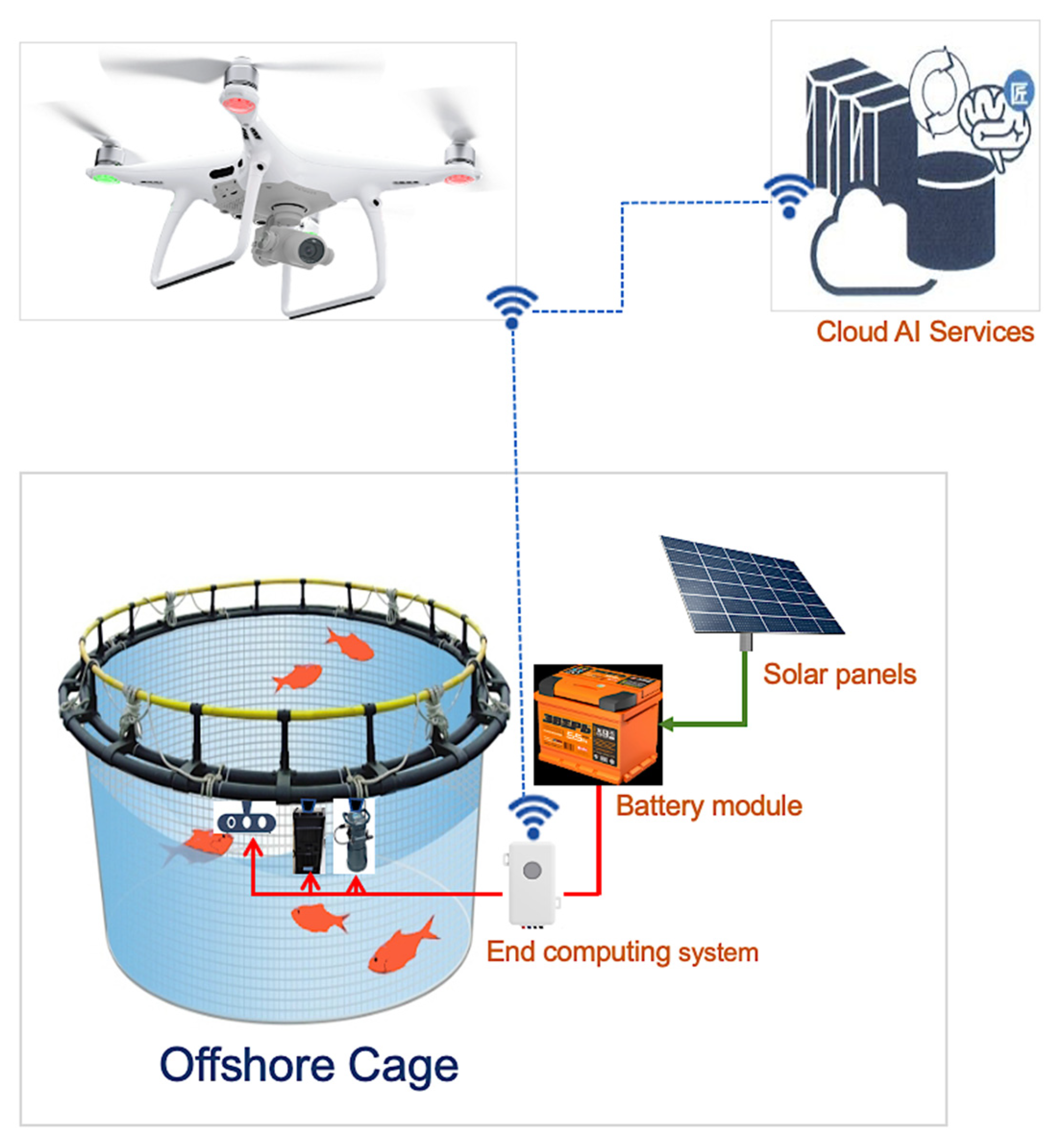
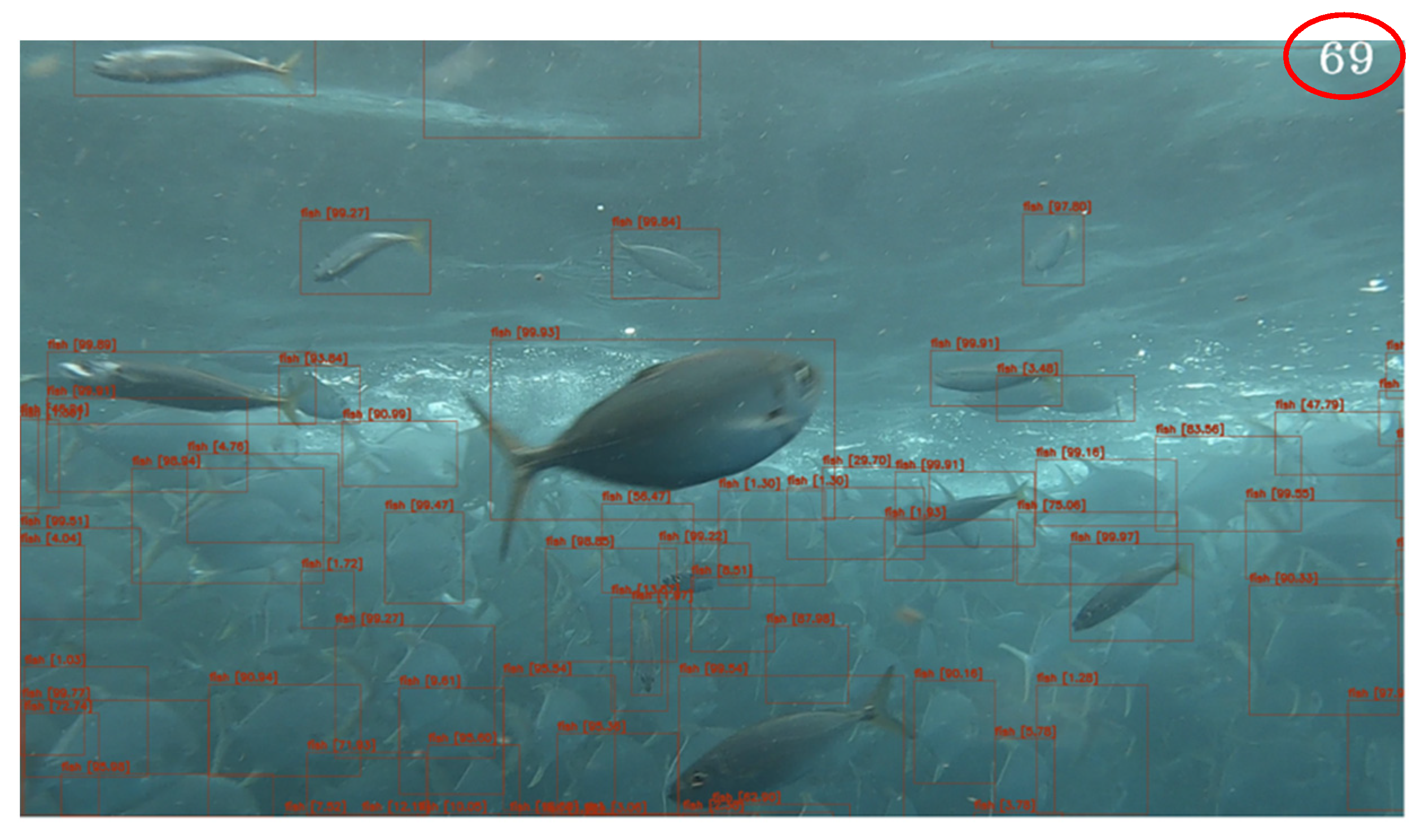
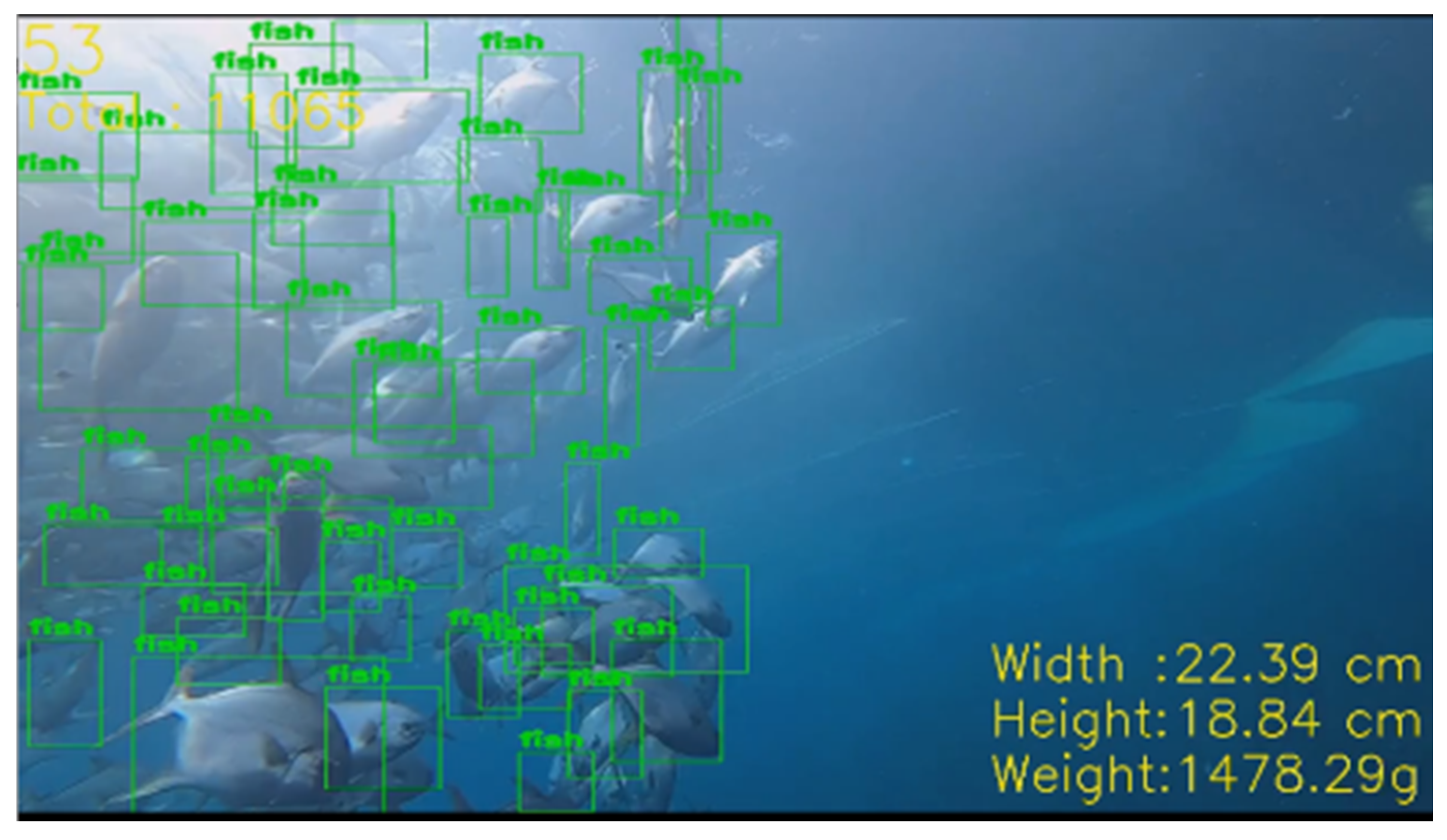
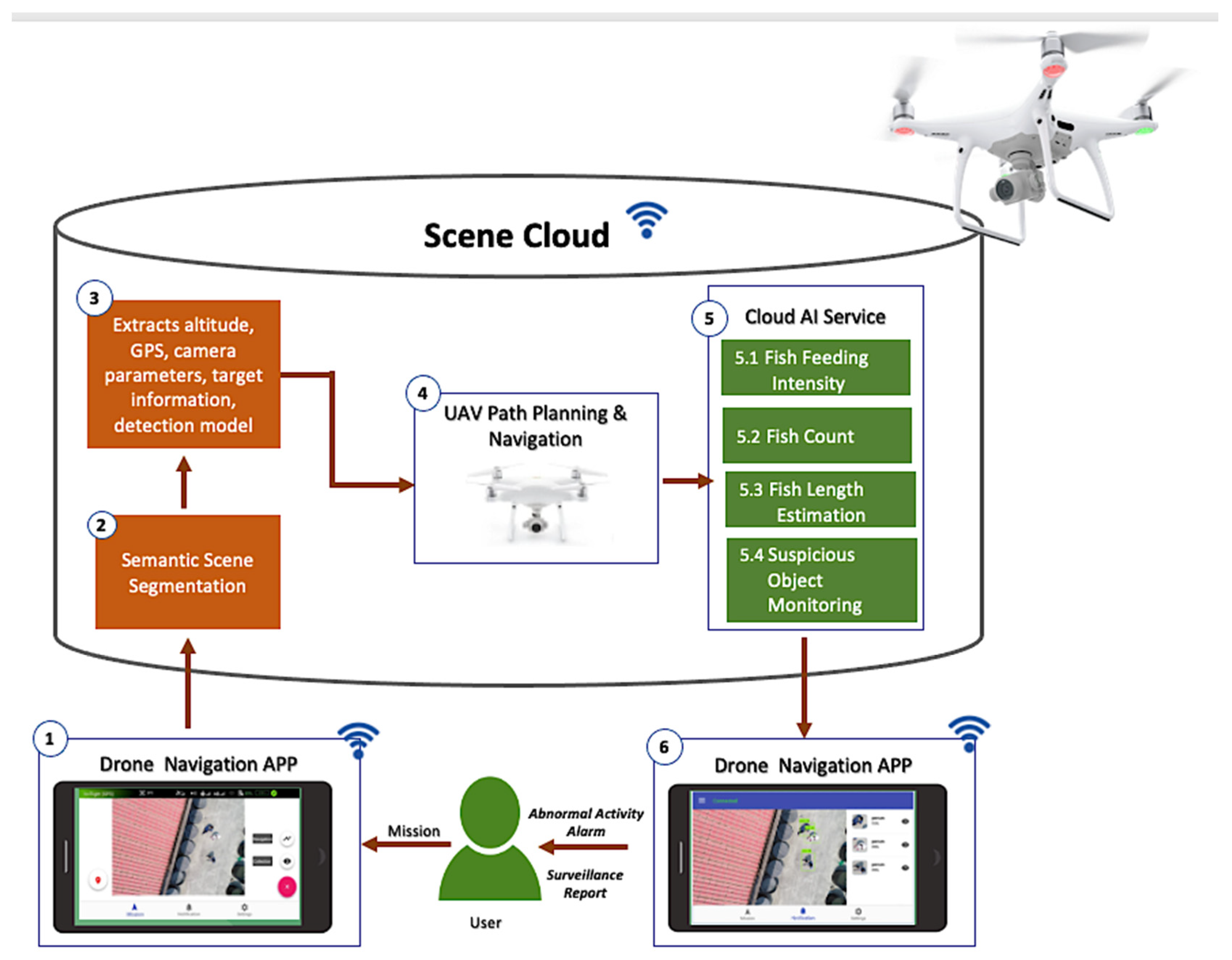
This paper presents a low-cost and cloud-based autonomous drone system to survey and monitor aquaculture sites. We incorporated artificial intelligence (AI) services using computer vision and combined various deep learning recognition models to achieve scalability and added functionality, in order to perform aquaculture surveillance tasks. The recognition model is embedded in the aquaculture cloud, to analyze images and videos captured by the autonomous drone. The recognition models detect people, cages, and ship vessels at the aquaculture site. The inclusion of AI functions for face recognition, fish counting, fish length estimation and fish feeding intensity provides intelligent decision making. For the fish feeding intensity assessment, the large amount of data in the aquaculture cloud can be an input for analysis using the AI feeding system to optimize farmer production and income. The autonomous drone and aquaculture cloud services are cost-effective and an alternative to expensive surveillance systems and multiple fixed-camera installations. The aquaculture cloud enables the drone to execute its surveillance task more efficiently with an increased navigation time. The mobile drone navigation app is capable of sending surveillance alerts and reports to users. Our multifeatured surveillance system, with the integration of deep-learning models, yielded high-accuracy results.
Keywords: autonomous drone; cloud computing; visual aquaculture surveillance; object detection and activity recognition; remote sensing autonomous drone; cloud computing; visual aquaculture surveillance; object detection and activity recognition; remote sensing