


Highlights
What are the main findings?
- A virtual–center consensus and V-shaped self-reconfiguration method enabled UAV swarms to maintain formation, adapt their geometry, and safely traverse constrained narrow-space environments without relying on a physical leader.
- A digital twin-based virtual–real interactive platform demonstrated the formation consistency, safe separation, and scenario adaptability of the proposed local penetration method.
What are the implications of the main findings?
- The proposed method provides an effective way to balance formation stability, traversability, and safety margins in constrained UAV swarm missions.
- The digital twin platform provides a repeatable and low-risk validation approach for UAV swarm control algorithms before real-world deployment.
Abstract
To address the challenges faced by UAV swarms in local narrow-space penetration missions, including constrained passages, dense obstacles, and the difficulty of balancing formation stability and traversability, this paper proposes a local penetration method that integrates virtual–center consensus-based formation control with a V-shaped formation self-reconfiguration strategy. First, a virtual geometric center is introduced as the consensus reference to replace the traditional physical leader node, thereby reducing the risk of single-point failure and improving swarm coordination consistency. Second, geometric constraints, including the effective channel width, lateral formation width, and safety margin, are incorporated to construct a channel-constraint-driven formation self-reconfiguration mechanism, enabling the swarm to contract its formation, avoid obstacles during traversal, and recover the formation after passing through the constrained region. Finally, a digital twin-based virtual–real interactive validation platform is constructed to verify the formation maintenance, formation reconfiguration, and virtual–real trajectory consistency of the proposed method. Experimental results show that the proposed method can maintain favorable formation consistency and safe inter-UAV distances in constrained channel environments while demonstrating good stability and scenario adaptability during formation adjustment and recovery.
1. Introduction
With the miniaturization, intelligentization, and cost reduction in UAV platforms, multi-UAV swarms, owing to their distributed coordination and mission redundancy capabilities, have become an important means for reconnaissance and search, emergency rescue, and cooperative strike missions in complex environments. Particularly in local penetration scenarios involving narrow spaces, UAV swarms are required to rapidly pass through constrained passages while maintaining formation stability under conditions of limited channels, dense obstacles, and dynamically changing threats. This imposes higher requirements on local planning, formation control, and formation reconfiguration capabilities. Gabryel Silva Ramos et al. proposed an autonomous multi-UAV swarm system based on the cognitive intelligent architecture ARCog-NET, which integrates edge, fog, and cloud collaboration to establish a unified decision-making framework for task allocation, path planning, and formation control, thereby improving autonomy and energy efficiency in dynamic mission scenarios [1]. Xin Gong et al. further proposed a human–machine collaborative resilient control architecture for multi-UAV swarms, introducing digital twin and multi-agent decision-making mechanisms to resist communication disturbances [2]. Related studies indicate that the efficient operation of multi-UAV swarms often relies on the systematic co-design of planning and control, which is even more prominent in narrow-space local penetration missions.
In addition, the reliable operation of UAVs in complex environments depends on the ability of low-level flight control algorithms to mitigate nonlinear dynamics, external disturbances, and model uncertainties. In recent years, nonlinear robust control methods, including backstepping control, sliding mode control, super-twisting control, and disturbance observers, have been widely applied to improve UAV attitude and trajectory tracking performance. Borja-Jaimes et al. combined backstepping sliding mode control with a super-twisting observer to achieve robust trajectory tracking of a quadrotor UAV under partial-state measurements and bounded disturbances [3]. Park and Han integrated super-twisting sliding mode backstepping control, a tracking differentiator, and a nonlinear disturbance observer to enhance the robust tracking performance of unknown multirotor UAV systems [4]. Dou et al. further applied an improved super-twisting sliding mode method to trajectory tracking and formation control of quadrotor UAVs, improving the system response speed and stability under external disturbances [5]. These studies provide important references for robust UAV flight control; however, their research primarily focuses on single-UAV trajectory tracking, attitude control, or conventional formation control, with limited attention to active formation contraction, cooperative collision avoidance, and virtual–real consistency validation in local narrow-space penetration missions.
The core difficulty of local penetration missions lies in the coexistence of multiple objectives and strong constraints. On the one hand, penetration paths must balance safety and efficiency under terrain obstacle and potential threat constraints while maintaining rapid responsiveness to dynamic changes. On the other hand, swarm formations must adjust their configurations in a timely manner according to channel width and obstacle distribution to avoid collisions and maintain cooperative consistency. If only single-UAV local obstacle avoidance is adopted, or if path planning and formation control are treated separately, problems may arise, such as feasible paths failing to support safe formation passage, or formations being maintained but unable to pass through narrow areas. These issues reduce the success rate of penetration and amplify system uncertainty.
For UAV path planning and obstacle avoidance, existing studies mainly focus on intelligent optimization, geometric constraint modeling, and learning-based decision-making. Van Truong Hoang et al. proposed a generalized particle swarm optimization algorithm, namely GEPSO, which jointly optimizes the formation centroid and individual trajectories to achieve efficient obstacle avoidance and mission maintenance in complex spaces [6]. Chenglou Liu et al. proposed a Dubins-curve-based rigid formation path planning algorithm for fixed-wing UAVs. By modeling the formation as an integrated entity under geometric constraints, this method improves planning efficiency and facilitates stable formation maintenance [7]. In addition, Luo Jing et al. combined an improved holistic particle swarm optimization algorithm with threat-constrained optimization to achieve three-dimensional UAV penetration [8]. Lu et al. proposed an RB-ABC cooperative planning method to improve convergence speed in multi-objective penetration missions [9]. Liu et al. established a multi-objective path optimization model based on radar cross-section characteristics [10]. Yuxie Luo et al. applied DDPG-based deep reinforcement learning to multi-UAV co-operative penetration and dynamic interception tasks [11]. Recent studies have further extended UAV swarm path planning and formation control from the perspectives of distributed control, learning-based methods, and obstacle avoidance, including adaptive cooperative path planning based on rotating artificial potential fields, distributed formation and collision avoidance under fixed and switching topologies, and machine-learning-driven digital twin models for swarm design [12,13,14]. Overall, existing studies have improved the feasibility and concealment of penetration path planning from the perspectives of intelligent optimization, geometric constraint modeling, and learning-based decision-making. However, most existing works still mainly focus on trajectory generation. For swarm passage under narrow-space constraints, systematic task-closed-loop research is still insufficient regarding how to achieve rapid formation adjustment and consistency maintenance during traversal, and how to validate algorithm effectiveness under repeatable virtual–real consistency conditions.
In terms of formation coordination and control, leader–follower, virtual structure, and behavior-based methods are typical representative approaches. Arystan Amangeldi et al. combined the RRT algorithm with leader–follower control to design a cooperative cruising model for multiple quadrotors, and verified its feasibility in terrain inspection and monitoring tasks [15]. Zonghang Gu et al. designed a leader–follower controller based on sliding mode control and verified its robustness through real-flight experiments [16]. Cui et al. addressed the resilient cooperative control problem of heterogeneous multi-agent systems under compound attacks and proposed a digital twin-based dual-layer control framework, which provides a reference for stable UAV swarm coordination under complex conditions such as communication disturbances, false data injection, and actuator anomalies [17]. Valadbeigi et al. proposed a Q-learning-based robust H∞ output consensus method for heterogeneous discrete-time multi-agent systems, providing a reference for robust multi-agent coordination and closed-loop stability analysis under model uncertainties [18]. Nevertheless, leader-based structures still suffer from the risk of single-point failure, and obstacle avoidance by the leader can easily lead to the propagation of formation errors. Behavior-based methods offer a certain degree of flexibility, but they rely heavily on weight selection and parameter tuning. Virtual structure methods are helpful for reducing the influence of individual UAV failures; however, there remains room for improvement in rapid formation adjustment in narrow spaces, consistency maintenance during passage, and formation recovery after traversal [19,20,21]. Recent studies have further investigated formation obstacle avoidance, multi-agent reinforcement learning, three-dimensional path planning, privacy-preserving control, connectivity maintenance, and vision-based navigation and obstacle avoidance, providing support for UAV swarm cooperative control in complex constrained environments [22,23,24,25,26,27,28].
In addition to algorithm design, the validation of local penetration scenarios is also an important factor restricting practical implementation. Field flight tests are costly, risky, and insufficiently reproducible, whereas pure simulation often suffers from limited credibility of evaluation conclusions due to inadequate environmental fidelity and insufficient modeling of system constraints. Digital twin technology provides a feasible path for virtual–real consistent validation of complex UAV swarm missions and is gradually becoming an important means of narrowing the gap between simulation and real systems while improving the repeatability of algorithm evaluation. Nguyen Van Lanh et al. introduced digital twins into multirotor structural inspection missions and constructed a virtual–real collaborative simulation framework for safety validation [29]. Fei Tao et al. proposed a digital twin interaction theory, providing a methodological foundation for interaction mechanisms and closed-loop process design in multi-agent virtual–real collaboration [30]. Shen et al. used a digital twin-enabled deep reinforcement learning framework to support flocking motion learning and sim-to-real deployment for multi-UAV systems [31]. George A. et al. combined digital twins with visual–inertial odometry to improve positioning accuracy, providing key support for virtual–real alignment [32]. Lucio Rafael Salinas et al. developed a digital twin swarm monitoring system and verified the feasibility of swarm-level virtual–real mapping in disaster environments [33]. These studies show that digital twins can realize virtual–real mapping and online interaction through high-fidelity modeling and multi-source data fusion, thereby reducing experimental risks and improving validation efficiency and reproducibility. However, research on local penetration missions for UAV swarms remains relatively insufficient. In particular, there is still a lack of reproducible scenario construction and disturbance injection methods for narrow-space passage scenarios, robust evaluation procedures under disturbance conditions, and systematic frameworks that jointly design penetration algorithms and digital twin validation mechanisms. Based on this, a virtual–real interactive validation framework is constructed for local penetration missions. Through virtual–real mapping and state-feedback error evaluation and analysis, the framework improves the verifiability and repeatability of the algorithm under real-world constraints.
In summary, although existing studies have made substantial progress in path planning, formation control, robust coordination, and digital twin-based validation, they still cannot directly address the local narrow-space penetration problem considered in this study. Existing path-planning methods mainly focus on trajectory generation and give insufficient consideration to active formation contraction, obstacle-avoidance traversal, and post-traversal recovery within constrained channels. Leader–follower, virtual structure, and behavior-based formation methods are subject to single-point failure, limited structural adaptability, and parameter sensitivity, respectively, making it difficult to simultaneously ensure traversability and formation consistency. Distributed robust control, stochastic predictive control, and communication-aware coordination methods are primarily designed for systems with general constraints and pay limited attention to formation-reconfiguration-based penetration under local channel constraints. Existing digital twin studies are mainly used for state mapping, visualization, or safety validation, and an integrated closed-loop framework combining penetration control, virtual–real synchronization error analysis, and real-system validation is still lacking.
Therefore, this paper proposes a UAV swarm local penetration method that integrates virtual–center consensus-based formation control with a V-shaped formation reconfiguration strategy, and constructs a digital twin-based virtual–real interactive framework for algorithm validation. As shown in Figure 1, the framework realizes dynamic mapping and closed-loop validation between the virtual environment and the real system, providing overall support for the subsequent design of the local penetration algorithm and virtual–real consistency validation. The main innovations and contributions of this paper can be summarized as follows:
Figure 1.
Digital twin-based virtual–real collaborative framework for the UAV swarm local penetration algorithm.
- (1)
- A virtual–center consensus-based formation control and V-shaped formation self-reconfiguration method is proposed for local narrow-space penetration. The method replaces the physical leader with a virtual geometric center and incorporates the geometric constraints of narrow passages to achieve formation contraction, channel traversal, and formation recovery. The stability and boundedness of the control strategy are also analyzed.
- (2)
- A digital twin-based virtual–real interactive framework for UAV formation is constructed. A three-layer architecture consisting of the UAV software layer, the digital twin simulation environment, and the real system is designed, forming a bidirectional virtual–real data flow and closed-loop validation mechanism. This provides safe, efficient, and repeatable experimental conditions for cooperative algorithms.
- (3)
- A digital twin experimental platform based on AirSim and UE4 is developed to conduct virtual–real consistency validation of the algorithm. By comparatively analyzing indicators such as virtual–real trajectory error, formation consistency error, and safety separation, the mapping capability of the platform and the feasibility and reliability of the proposed method in narrow-space scenarios are verified.
The structure of this paper is organized as follows. Section 2 introduces the proposed local penetration algorithm and presents performance evaluation and comparative experiments. Section 3 describes the digital twin-based virtual–real interactive framework for UAV formation, including the overall architecture and key interaction mechanisms. Section 4 presents the construction of the digital twin experimental platform and the results of virtual–real consistency validation, followed by experimental verification of the local penetration algorithm. Section 5 discusses technical limitations and future research directions, and finally draws the conclusions of this study.
2. Research on Cooperative Penetration of UAV Swarm Formation Flight
2.1. Analysis of Formation Control Algorithm
At present, multi-UAV formation control algorithms mainly include three categories: the leader–follower method, the virtual rigid-body method, and the behavior-based method [34]. This paper conducts an in-depth analysis and comparison of these three typical algorithms.
The leader–follower method is widely favored due to its high maturity and broad applicability. This method divides the UAV formation into two levels: the leader and the followers. The leader is responsible for planning and executing a predetermined flight trajectory, while the followers dynamically adjust their states according to the state information of the leader in order to maintain the relative distances and formation consistency. This strategy effectively addresses potential collision problems among UAVs and also avoids systematic errors caused by a single control signal. After the algorithm was proposed, Yu Hui et al. realized leader-based formation control based on a dynamic topology and evaluated the stability of the system using generalized Lyapunov theory. In addition, Ghamry et al. proposed a cooperative control algorithm by combining sliding mode control with a linear quadratic regulator, enriching the theoretical foundation of formation control. Zhang Chenhui et al. adopted a method combining state feedback and output feedback to enhance system robustness. Although this method is easy to implement and can control the overall formation by controlling only the leader, it also has significant limitations. The robustness of the formation depends heavily on the leader; once the leader fails, the entire formation may lose control. Meanwhile, information transmission is unidirectional, making it difficult to provide timely feedback and correct errors, which may lead to error accumulation.
The virtual structure method was first proposed by Lewis et al. Its basic idea is to regard the entire formation as a virtual rigid structure, in which each UAV in the formation corresponds to a structural point in the virtual structure. During flight, all UAVs move synchronously by following their corresponding structural points. In practical implementation, a “virtual geometric center” or “virtual leader” can be constructed as the reference center of the overall formation. Each UAV maintains a fixed geometric relationship with respect to this reference point, thereby achieving formation maintenance. The virtual structure method offers good overall coordination and high formation-keeping accuracy. However, since it usually treats the swarm as a rigid geometric structure, its capability for adaptive formation reconfiguration is limited in narrow spaces or dynamic obstacle environments.
Behavior-based formation control is inspired by bionics. This method decomposes formation behavior into multiple basic action modules, such as formation keeping, obstacle avoidance, and target tracking. Each behavior module adopts an independent control strategy, and the final control command is generated by weighted summation of these modules. This method has the advantage of distributed control and strong flexibility, making it suitable for dynamic environments and complex scenarios. However, it also places higher requirements on behavior design and parameter tuning.
2.2. Local Penetration Cooperative Control Algorithm
2.2.1. Virtual–Center Formation Flight
In this study, digital twin technology for UAVs is further introduced and combined with the virtual structure method to propose a multi-agent formation control algorithm based on a “virtual center.” This algorithm uses a “digital leader” in the virtual space as the navigation reference. In essence, the digital leader is not a physically existing UAV, but a control agent operating in the digital space to guide formation motion. The position of the virtual center is updated in real time according to the pose information fed back by the real UAVs, as shown in Figure 2. This method abstracts the real-time trajectory on the ground into a virtual leader to guide the formation, thereby enabling flexible configuration of different formation patterns. All real UAVs dynamically adjust their positions according to the geometric constraint relationships of the structural points on the virtual body, achieving orderly coordination and real-time reconfiguration of the formation. Compared with a real leader, the virtual leader is a virtual UAV and does not need to avoid obstacles during flight. Therefore, it does not cause formation errors in the same way that obstacle avoidance by a real leader might, effectively reducing the impact of environmental disturbances on the entire swarm. In addition, this strategy has good scalability. By adding or configuring virtual body structures, flexible formation reconfiguration can be achieved, such as wedge-shaped, matrix, and circular formations, significantly enhancing the system’s adaptability to complex missions and dynamic environments.
Figure 2.
Schematic diagram of the virtual–center method.
To clarify the information interaction relationships among the UAVs, the swarm communication topology is represented by an undirected graph , where denotes the set of UAV nodes and denotes the set of communication edges. If an available communication link exists between UAV and UAV , then . The adjacency matrix is defined as . When UAV can receive the state information of UAV , ; otherwise, . The neighbor set of UAV is expressed as
This study assumes that the communication graph G remains connected during formation establishment, narrow-space traversal, and formation recovery. When local communication links are affected by obstacle occlusion, communication delays, or short-term packet loss, the system is assumed to satisfy the joint-connectivity condition over a finite time window. This assumption ensures that each UAV can achieve cooperative control using neighboring state information and virtual–center reference information, without relying on a single physical leader UAV. Similar virtual-leader and consensus-based formation concepts have been applied to UAV swarm formation control to reduce dependence on physical leader nodes and improve the robustness of formation maintenance [35]. On this basis, this study further integrates the virtual–center reference with the geometric constraints of narrow passages and the V-shaped formation reconfiguration process. Consequently, the virtual center is used not only to maintain formation consistency, but also to support formation contraction, obstacle-avoidance traversal, and post-traversal recovery under constrained channel conditions, thereby distinguishing the proposed method from traditional virtual structure methods that primarily focus on formation maintenance or trajectory tracking in open spaces.
In the consensus-based formation control method, the selection of the consensus variable is crucial for controller design. Considering that each quadrotor UAV moves around the virtual geometric center during formation flight, and that the relative position between each UAV and the virtual center is fixed and known in the predefined reference formation, the relative position error with respect to the virtual geometric center can be selected as the consensus variable for controller design. As shown in Figure 3, is selected as the consensus variable. The objective is to drive the position of each UAV in the global coordinate system to gradually converge to its desired position in the reference formation, thereby achieving spatial consistency and stable formation maintenance for the entire UAV swarm.
Figure 3.
Schematic diagram of virtual–center consensus: (a) consensus-based formation process; (b) consensus achieved.
As shown in Figure 3, the desired formation of the four quadrotor UAVs is a diamond-shaped configuration. In this study, is selected as the consensus variable, such that the position of each UAV in the global coordinate system gradually approaches its desired position in the reference formation, thereby achieving spatial consistency and stable maintenance of the overall formation. denotes the origin of the geographic coordinate system, denotes the actual spatial position of UAV , denotes the desired position of UAV relative to the geometric center of the formation in the reference configuration, denotes the formation-center position estimated by UAV , and denotes the position of the geometric center of the reference formation. According to the geometric relationship,
To clarify the relationship between the selected consensus variable and formation convergence, the error of UAV i relative to its desired formation position is defined as .
Combining this definition with , yields
Therefore, when the consensus control drives the estimated formation-center positions of all UAVs to satisfy , it follows that . Accordingly, the actual position of each UAV converges to its desired position in the reference formation. Thus, selecting as the consensus variable transforms the consensus convergence of the formation-center estimates of all UAVs into the convergence of their actual positions toward the desired structural points of the formation. This derivation provides the error-definition basis for the subsequent stability and boundedness analysis.
2.2.2. V-Shaped Reconfiguration for Local Penetration
To address the challenges of constrained formation width, reduced separation from obstacle boundaries, and difficulty in maintaining safe inter-UAV separation during local narrow-space penetration missions, this study develops a self-reconfigurable V-shaped formation control strategy based on virtual–center consensus-based formation control. By adjusting the degree of extension of the two wings of the V-shaped formation, the strategy enables the UAV swarm to achieve formation contraction, channel traversal, and formation recovery according to the channel width and obstacle distribution. When operating in open areas, the UAVs maintain the desired V-shaped configuration to preserve spatial coverage and coordinated stability. When the formation enters a narrow region, the two wings gradually contract and, when necessary, approximately merge into a line formation to satisfy the channel-passage condition. After the UAV swarm passes through the constrained region, the formation re-expands and recovers to the desired V-shaped configuration [36].
Compared with fixed-formation control methods, the V-shaped self-reconfiguration strategy does not require the formation to remain unchanged throughout the flight process; instead, it dynamically adjusts the geometric parameters of the formation according to environmental constraints. Let W denote the effective width of the narrow channel, the safety margin between the UAVs and obstacles, and the current lateral width of the V-shaped formation. When , the current formation width cannot satisfy the channel-passage requirement, and formation contraction is therefore triggered. When , the formation satisfies the geometric condition for safe passage. Through these geometric constraints, the narrow-space environment can be directly associated with the V-shaped formation reconfiguration process, thereby enhancing the adaptability of the proposed algorithm to locally constrained spaces.
Unlike general preset formation-switching methods, the V-shaped formation reconfiguration proposed in this study is not a discrete transition between fixed formations, but a continuous formation adjustment process triggered by the geometric constraints of the narrow channel. Formation contraction is jointly determined by effective channel width, lateral formation width, and safety margin. During traversal, the obstacle avoidance term and the inter-UAV collision avoidance term are used to maintain safe distances between the UAVs and obstacles, as well as between neighboring UAVs. After passing through the constrained region, the formation gradually recovers to the V-shaped configuration according to the desired formation parameters. Therefore, the proposed reconfiguration mechanism places greater emphasis on formation-scale adjustment, channel traversal, and recovery under narrow-space mission constraints, rather than on simple switching between formation configurations.
The formation consists of n identical UAVs, each equipped with sensing modules for positioning and navigation, such as LiDAR, GPS, and an inertial measurement unit (IMU). The UAVs are also equipped with communication modules that support peer-to-peer communication among UAVs. At an altitude of , a UAV is modeled as a particle moving in a two-dimensional plane, with position and heading angle . The single-integrator kinematic model of UAV can be expressed as follows:
where is the velocity vector of UAV .
The heading angle can be obtained as
For each UAV , its communication range is divided into two regions, including the sensing region with radius and the warning region with radius , where . These regions satisfy , as shown in Figure 4.
Figure 4.
Sensing range of a UAV. The outer and inner regions represent the sensing region and warning region , respectively, and the arrows indicate the corresponding radii and .
- (1)
- Obstacle avoidance behavior
During flight, the formation must avoid obstacles in the environment [37]. Let denote the closest point on the boundary of obstacle within the sensing range of UAV .
When UAV detects obstacle , it generates a repulsive force to bypass and avoid the obstacle. The direction of the repulsive force is expressed as follows:
where is a positive gain, is the distance between UAV and obstacle , and is the sensing range. When all obstacles are considered, the obstacle avoidance behavior of UAV can be expressed as
where is the number of observable obstacles within the sensing range of UAV . Equation (6) represents the aggregate response of the UAV to the repulsive forces generated by locally observable obstacles.
The self-reconfiguration process of the V-shaped structure is illustrated in Figure 5.
Figure 5.
Self-reconfiguration of the V-shaped structure in a local narrow region. The blue circles denote UAVs, the arrows represent the corresponding control vectors, and the dashed lines indicate the desired V-shaped formation geometry.
- (2)
- Collision avoidance behavior
In addition to obstacle avoidance, the control algorithm also needs to adjust the positions of UAVs to avoid inter-UAV collisions [38]. To address this problem, we propose that if UAVs and are not located on the same wing and their distance satisfies , a repulsive force is applied to prevent the UAVs from entering each other’s safety region . Let . The control law for collision avoidance is given by
where is a positive collision avoidance gain, and is a smoothing factor.
- (3)
- Self-reconfiguration behavior
Inspired by the principle of scissor mechanisms, which change their shape by applying opposite forces to their handle arms, the V-shaped formation can open or close its wings under the action of external forces. In this study, such forces are generated according to the difference between the actual inter-UAV distance and the desired distance.
Specifically, when the formation is disturbed due to improper positioning, for example, when UAV deviates from the formation, a combined force acts on it to guide it back to the desired position. In addition, if obstacles affect the formation from both sides simultaneously, the V-shaped formation can contract its wings to pass through a narrow channel.
The above reconfiguration behavior is implemented as follows:
where is a positive reconfiguration gain, is a smoothing factor, and is the desired distance between UAVs. The reconfiguration gain and the smoothing factor are used to control the magnitude of the force and ensure smooth transitions, thereby maintaining formation stability during dynamic adjustment.
When UAVs and are located on the same wing, the desired distance can be expressed as . In Equation (8), the term enables the UAVs to adjust their positions to maintain the desired inter-UAV distance. This behavior is also used as collision avoidance behavior for UAVs located on the same wing.
Where is the positive reconfiguration gain, is the distance-error adjustment exponent, is the radius of the warning region, and is the desired distance between the UAVs. The term represents the deviation between the actual inter-UAV distance and the desired distance, and its power-function form is used to regulate the influence of the distance error on the reconfiguration control input. The term characterizes the trend of the control action being strengthened as the inter-UAV distance approaches the warning radius. The term is the unit direction vector pointing from UAV to UAV and is used to determine the direction of the reconfiguration control action. To ensure that Equation (8) is well defined over the real domain, is selected as a positive integer.
When UAVs and are located on the same wing, is determined by their hierarchical relationship in the V-shaped formation. If the desired spacing between adjacent UAVs is , then
During narrow-channel traversal, can be dynamically adjusted according to the opening angle of the V-shaped formation and the channel-width constraint, allowing the two wings of the formation to gradually contract toward the central axis. After the UAV swarm passes through the constrained region, is restored to the desired distance corresponding to the normal V-shaped formation, thereby enabling formation recovery. Therefore, Equation (8) is used not only to maintain the desired distance between UAVs on the same wing, but also to support formation contraction, channel traversal, and formation recovery in narrow spaces.
The selection of and should balance the formation recovery speed and the smoothness of the control input. The parameter primarily determines the correction strength applied to the distance deviation. Increasing can accelerate formation contraction and recovery; however, an excessively large value may cause local oscillations. The parameter is used to regulate the nonlinear influence of the distance error on the reconfiguration control input. A larger helps suppress abrupt changes in the control input but may reduce the formation recovery speed. Therefore, and are tuned through simulation by considering the maximum UAV speed, control period, warning radius, and narrow-channel width constraint, and the rationality of the parameter settings is subsequently verified using the average formation error, minimum inter-UAV distance, and formation recovery time. In addition, the warning radius , sensing radius , and collision-avoidance gain affect the advance intervention distance for collision avoidance, obstacle-response range, and inter-UAV repulsion strength, respectively. If or is too small, the inter-UAV safety margin may decrease; if either value is too large, trajectory detours or local oscillations may occur.
2.2.3. Stability and Boundedness Analysis
To further demonstrate the theoretical feasibility of the proposed virtual–center consensus control and V-shaped formation reconfiguration strategy during narrow-space penetration, this section analyzes formation-error convergence, boundedness under disturbances, and the capability to maintain safe separation [39]. Considering nonideal factors during local penetration, including obstacle repulsive forces, inter-UAV collision-avoidance actions, communication delays, short-term packet loss, and sensor noise, this study does not directly assume that the system is globally asymptotically stable under all operating conditions. Instead, formation-error convergence is analyzed under disturbance-free conditions subject to explicit assumptions, and the uniform ultimate boundedness of the error under bounded disturbances is further established. For the convenience of analysis, the following assumptions are introduced.
Assumption 1.
The communication topology of the UAV swarm remains connected during formation establishment, narrow-space traversal, and formation recovery. When local links switch because of occlusion, delays, or short-term packet loss, the system satisfies the joint-connectivity condition over a finite time window. Let L denote the Laplacian matrix corresponding to the communication graph. Then,
where λ2 is the second-smallest eigenvalue of the Laplacian matrix.
Assumption 2.
The virtual–center reference trajectory , the desired relative position of each UAV in the reference formation, and their first derivatives are bounded. Specifically, there exist positive constants , , , and , such that
Assumption 3.
The narrow channel satisfies the geometric traversability condition given in Section 2.2.2. Specifically, the lateral width of the contracted formation satisfies
This condition indicates that the contracted V-shaped formation geometrically satisfies the requirement for safe passage through the narrow channel.
Assumption 4.
Nonideal factors, including obstacle repulsive forces, inter-UAV collision-avoidance actions, communication delays, packet loss, sensor noise, and near-wall disturbances in narrow spaces, can be equivalently represented by a bounded disturbance term . There exists a positive constant such that
According to the definition of the virtual–center consensus variable in Section 2.2.1, let denote the formation-center position estimated by UAV i and denote the position of the geometric center of the reference formation. The consensus error of UAV i is defined as
The consensus errors of all UAVs are stacked as
When , the formation-center estimate of UAV i converges to the common reference center. According to the geometric relationship given in Section 2.2.1, when , it follows that ; that is, each UAV converges to its desired position in the reference formation. Therefore, analyzing the convergence of characterizes the convergence properties of the formation consensus control.
Under ideal conditions in which obstacle avoidance, inter-UAV collision avoidance, and external disturbances are not considered, the virtual–center consensus control action can be equivalently expressed by the following error dynamics:
where is the virtual–center tracking gain, is the neighboring consensus coupling gain, is the n-dimensional identity matrix, is the two-dimensional identity matrix, and denotes the Kronecker product. Equation (16) shows that the virtual–center tracking term drives the formation-center estimate of each UAV toward the common reference center, whereas the neighboring consensus term constrains the differences between the estimation errors of adjacent UAVs, thereby suppressing the accumulation of local errors.
Consider the Lyapunov function
Differentiating Equation (17) and using Equation (16) yield
Because the communication graph is connected, , , and the matrix is positive definite. Let
Then
According to Lyapunov stability theory, when the communication graph is connected, the virtual–center reference trajectory is continuously differentiable, and no external disturbances are present, the formation consensus error asymptotically converges to zero, namely, .
Combining the above equation, this result indicates that all UAVs eventually converge to their desired positions in the reference formation, thereby achieving stable formation flight with respect to the virtual center.
The effects of obstacle repulsive forces, inter-UAV collision avoidance, communication delays, short-term packet loss, and sensor noise are further considered and collectively represented by the bounded disturbance term . The error dynamics can then be written as
where
According to Assumption 4, there exists a positive constant , such that . The derivative of the Lyapunov function then satisfies .
When
. Therefore, under bounded disturbances such as obstacle repulsive forces, communication delays, packet loss, and sensor noise, the formation error does not diverge but is uniformly ultimately bounded, with the error bound expressed as
It indicates that a larger disturbance bound results in a larger ultimate bound on the formation consensus error, whereas an appropriate increase in the virtual–center tracking gain reduces this error bound. The neighboring consensus coupling gain and the connectivity of the communication topology mainly affect the error-decay rate and cooperative performance. When communication delays, short-term packet loss, and sensor noise remain bounded, the proposed method can maintain the formation error within a finite neighborhood. For collision avoidance and safe obstacle passage, define the safe set as
where is the minimum allowable safe distance between UAVs, is the distance between UAV and obstacle , and is the safety margin between a UAV and an obstacle. According to the design of the obstacle-avoidance and inter-UAV collision-avoidance terms in Section 2.2.2, when a UAV approaches an obstacle boundary or a neighboring UAV, the obstacle-avoidance and collision-avoidance terms are strengthened in the directions away from the obstacle and the neighboring UAV, respectively.
Therefore, provided that the initial state satisfies , the control input remains within the velocity saturation limits, the obstacles are static or quasi-static, and the channel satisfies + 2 ≤ W, the system state does not continue to approach the safety boundary, and the trajectories can be maintained within the safe set . Thus, under the geometric feasibility condition of the channel, the proposed control strategy can maintain safe distances both among the UAVs and between the UAVs and obstacles.
To characterize the convergence of the order parameter used in the simulation experiments, the velocity-direction order parameter of the UAV swarm is defined as
When the velocity directions of all UAVs are consistent, . After formation reconfiguration is completed, the desired relative positions remain unchanged, and all UAVs follow a virtual center moving at a nonzero velocity in a common direction; their velocity directions gradually become consistent. Therefore, .
In the presence of bounded disturbances, because the formation consensus error is uniformly ultimately bounded, the velocity-direction deviations are also confined to a finite range. Consequently, the order parameter exhibits only small fluctuations around one. This conclusion is consistent with the subsequent simulation results, in which the order parameter rapidly converges and remains at a high level during narrow-channel traversal.
In summary, provided that the nominal communication graph remains connected, the channel is geometrically feasible, the initial safe-distance requirements are satisfied, and the effects of link switching and other external disturbances are bounded, the proposed control strategy guarantees asymptotic convergence of the formation error under disturbance-free conditions and uniform ultimate boundedness of the error under bounded disturbances. This analysis provides theoretical support for the formation maintenance, obstacle and collision avoidance, and order-parameter convergence observed in the subsequent narrow-space penetration experiments.
2.3. Local Narrow-Space Penetration Experiment
This experiment aims to verify the feasibility of achieving local-space penetration using the virtual–center formation algorithm and the V-shaped reconfigurable formation transformation algorithm. Through formation flight control of the UAV swarm, the UAVs can autonomously adjust their formation configuration to adapt to complex environments while maintaining safe separation and a stable formation shape. The experiment is designed to verify the collision avoidance capability of the UAV formation in narrow spaces, test its performance in restoring the desired formation after passing through obstacles, and evaluate indicators such as formation stability, error convergence speed, and orderliness.
In this paper, a simulation experiment is designed in which a UAV swarm consisting of five UAVs passes through a local narrow space. In the simulation, parameters such as the warning radius, sensing radius, control period, maximum speed of each UAV, and the defined parameters of the V-shaped formation are configured. The specific parameter values are listed in Table 1.
Table 1.
Main parameter settings.
In the designed experiment, the simulation map contains two large obstacles that form a narrow passage, as shown in Figure 6. Figure 6 also illustrates the trajectories of the UAVs moving in the environment under the guidance of the proposed control algorithm. Initially, the UAV swarm is distributed around a starting point in a line formation. It then autonomously adjusts its configuration to form the desired V-shaped formation according to the control signals generated by the formation control and reconfiguration behaviors. Upon encountering the narrow passage, the UAV swarm further adjusts its formation, including deformation and transformation into a straight-line formation, so as to pass through the narrow channel. After successfully bypassing the obstacles, the UAVs reconfigure themselves back into the desired V-shaped formation and proceed toward the target location, eventually reaching the destination point. The trajectories shown in the figure indicate that the UAV swarm is able to flexibly adapt its formation in a dynamic environment, while the trajectories of all UAVs remain free of intersection with the obstacles throughout the process. This verifies the effectiveness of the proposed control algorithm in obstacle avoidance and formation reconfiguration.
Figure 6.
Flight trajectories of the UAV swarm during narrow-space penetration. Different colored curves represent the trajectories of individual UAVs, and the gray shaded areas indicate obstacles forming the narrow passage.
As shown by the variation trend of inter-UAV distances over time in Figure 7 and the variation in the average distance error of the UAV swarm over time in Figure 8, the inter-UAV distances fluctuate significantly in the initial stage because the formation has not yet stabilized, and the average error is also relatively large. As the control algorithm takes effect, the inter-UAV distances gradually become stable and fluctuate around the desired distance, while the error decreases rapidly and approaches zero. It can also be observed from the figures that the minimum distance between UAVs is always greater than the warning radius of 0.3 m, demonstrating the reliability of the proposed control algorithm in collision avoidance. When passing through the narrow channel, the inter-UAV distances exhibit certain fluctuations but remain within the safe range. Meanwhile, the average error remains stable with small fluctuations and is consistently below 0.06 m, indicating that the algorithm has high stability in dynamic environments. After passing through the channel, the inter-UAV distances quickly recover to values close to the desired distance, further demonstrating the accuracy and adaptability of the algorithm in formation reconfiguration. These results show that the proposed method can maintain high-precision and stable formation configurations in complex environments.
Figure 7.
Inter-UAV distances during UAV swarm formation flight.
Figure 8.
Average distance error during UAV formation flight.
Figure 9 presents the distribution characteristics of inter-UAV distances between adjacent UAVs using a box plot. The results show that the average distances between different UAV pairs fluctuate around the desired value of 0.8 m, while the minimum inter-UAV distance always remains greater than the warning radius. This verifies the effectiveness of the proposed algorithm in preventing inter-UAV collisions. In addition, the average distances between adjacent UAVs are close to the desired value, indicating that the UAVs can maintain a stable formation shape during dynamic adjustment. The box plot shows a relatively narrow distribution range with very few outliers, suggesting that the control algorithm achieves high accuracy and consistency in adjusting the UAV formation over most time steps.
Figure 9.
Inter-UAV distances between adjacent UAVs. The boxes indicate the interquartile ranges of the distance distributions, and the red lines represent the median values.
To further evaluate the performance of the proposed controller, an order parameter is used to measure the directional similarity among UAVs. The value of this index lies in the interval [0, 1], and it is calculated as follows:
According to Equation (27), when the heading angles of all UAVs are consistent, the order parameter approaches 1. Based on the variation in the order parameter in the simulation shown in Figure 10, it can be observed that the value remains close to one during formation motion, even when the UAVs avoid obstacles or pass through a narrow channel. The variation in heading angles increases when the UAVs leave the channel, because the UAVs in the formation need to realign themselves and return to the original formation shape. However, after the UAVs reform the desired formation, the order parameter rapidly converges to one. These results verify the effectiveness of the proposed control algorithm.
Figure 10.
Order parameter during UAV swarm formation flight.
To further evaluate the adaptability of the proposed method under different operating conditions, multiple parameter-variation scenarios are considered in the local narrow-space penetration simulations, including different channel constraints, obstacle distributions, numbers of UAVs, desired inter-UAV distances d, and V-shaped formation angles α. The average formation error, minimum inter-UAV distance, and average distance between adjacent UAVs are selected as evaluation metrics to assess formation-maintenance accuracy, inter-UAV safety margin, and formation geometric stability, respectively. The statistical results are presented in Table 2.
Table 2.
Statistical evaluation of the proposed strategy under different scenarios.
As shown in Table 2, under different settings of UAV number, desired inter-UAV distance, and formation angle, the average formation error of the proposed method is approximately 0.1 m, and the minimum inter-UAV distance in each scenario remains greater than the collision warning threshold. These results indicate that the UAV swarm can maintain small positional deviations and the required safety margin during formation reconfiguration and traversal. Meanwhile, the average distance between adjacent UAVs is generally close to the desired distance, demonstrating that the V-shaped formation maintains favorable geometric consistency before and after traversal. The above results indicate that the proposed method exhibits a certain degree of adaptability for small- and medium-scale swarms under limited variations in formation parameters. It should be noted that Table 2 mainly presents simulation results under a limited range of parameter variations, and the robustness of the proposed method for larger-scale swarms and under more complex disturbance conditions requires further validation.
2.4. Comparative Analysis with Existing Algorithms
To verify the effectiveness of the proposed UAV swarm local penetration method in narrow-space scenarios and clarify its differences from existing formation control methods and recent advanced cooperative control methods, comparative analyses are conducted at the levels of methodological mechanisms and simulation performance. Considering the differences among the relevant methods in terms of research objects, dynamic models, and mission scenarios, a qualitative comparison is first performed with respect to formation adaptability, constrained-space traversability, robustness to communication constraints, stability guarantees, and digital twin integration. The results are presented in Table 3.
Table 3.
Qualitative comparison of the proposed method with related formation and cooperative control methods.
As shown in Table 3, existing methods focus on different aspects, including formation maintenance, communication-aware coordination, multi-agent convergence analysis, stability control of complex UAV systems, formation-based source seeking, and learning-based formation decision-making. However, their research objectives do not fully correspond to the local narrow-space penetration task considered in this study. In particular, formation-based gradient-free cooperative source-seeking methods mainly construct search directions using the desired formation and multipoint scalar-field sampling, with the formation structure primarily serving to acquire source-direction information. In contrast, the virtual–center consensus mechanism in this study is not used for signal-field direction estimation but instead provides a unified formation reference for local narrow-space penetration and is combined with the V-shaped reconfiguration mechanism to achieve formation contraction, cooperative collision avoidance, and post-traversal recovery. Compared with existing methods, this study incorporates the effective channel width, lateral formation width, and safety margin into the formation-reconfiguration triggering mechanism, thereby directly relating changes in the V-shaped formation to the geometric traversability condition of the narrow space. Meanwhile, formation control, formation reconfiguration, obstacle and collision avoidance, and digital twin-based virtual–real validation are integrated into a unified mission framework, and the local penetration process is verified through simulation, comparative experiments, and real-system experiments.
The three methods represent three typical formation-control strategies: hierarchical guidance, distributed behavior fusion, and geometric-structure constraints. In the leader–follower method, a physical leader UAV tracks the reference path, while the followers maintain predefined relative poses. The behavior-based method generates control inputs by weighting behavioral terms such as target tracking, formation maintenance, obstacle avoidance, and inter-UAV collision avoidance. The traditional virtual structure method maintains the formation by tracking fixed virtual structure points but lacks an active contraction mechanism for narrow-channel traversal. The performance comparison of the algorithms is presented in Table 4, where the average formation error, minimum inter-UAV distance, order parameter, formation recovery time, and maximum lateral-width contraction ratio are used to evaluate formation-maintenance accuracy, inter-UAV safety margin, swarm-motion consistency, formation recovery efficiency, and lateral-scale compression capability, respectively. To conduct further quantitative validation, the leader–follower method, behavior-based formation method, and traditional virtual structure method are selected as comparative algorithms under the same scenario.
Table 4.
Comparative results of different algorithms in the narrow-space penetration task.
The comparative analysis shows that, in terms of average formation error, the proposed algorithm achieves a significantly lower error than the comparative methods. This indicates that the virtual–center-based consensus control mechanism can effectively reduce the overall formation deviation during penetration. In terms of the minimum inter-UAV distance, the proposed method maintains a compact formation structure while ensuring a sufficient safety margin, which is beneficial for improving the overall passage capability in narrow channels. The order parameter is used to evaluate the consistency between the velocity directions of the swarm and the desired formation direction. Its value ranges from [0, 1], with a larger value indicating higher overall formation consistency. With respect to this metric, the proposed algorithm maintains a high level of consistency during the penetration process, indicating that the virtual–center consensus control effectively maintains the coordination of swarm motion.
Furthermore, the maximum lateral-width contraction ratio and formation recovery time reflect the influence of the formation reconfiguration strategy on narrow-space traversability. Compared with the benchmark methods, the proposed algorithm performs better in terms of lateral-scale compression and post-traversal formation recovery, indicating that the channel-constraint-driven V-shaped reconfiguration strategy can enhance the swarm’s traversal capability in constrained spaces. A comprehensive analysis of the evaluation metrics shows that virtual–center consensus control primarily improves the average formation error and order parameter, whereas the obstacle-repulsion and inter-UAV collision-avoidance terms mainly serve to maintain the minimum inter-UAV distance. The V-shaped formation reconfiguration strategy directly adjusts the lateral scale of the formation and is the main factor contributing to improved traversability and reduced recovery time. The digital twin platform does not directly modify the output of the control law, but supports virtual–real trajectory consistency evaluation, analysis of communication-delay effects, and repeatable algorithm validation.
In terms of system robustness, the leader–follower method relies on a physical leader node and therefore suffers from the risk of single-point failure. In contrast, the proposed method avoids this problem by introducing a virtual center as the consensus reference. Although the behavior-based method and the traditional virtual structure method do not involve single-point failure, they are relatively sensitive to parameter tuning or reconfiguration accuracy under narrow-space conditions, resulting in insufficient stability during penetration.
With respect to adaptability to narrow spaces, the proposed algorithm can actively adjust the formation structure according to channel constraints, maintain good formation compactness during penetration, and rapidly recover to a stable formation state after passing through the constrained region. By comparison, the other methods are prone to formation dispersion or accumulated reconfiguration errors during channel traversal, which further affects the stability of subsequent cooperative flight. Overall, the proposed method can restore formation consistency after penetration with a lower cooperative adjustment cost, thereby providing more stable initial conditions for subsequent mission execution.
It should be noted that all algorithms adopt the same control period in the experiments, and this metric is mainly used to ensure the fairness of the comparative experiments. The overall comparison results demonstrate that the proposed method can better balance formation consistency and system robustness in narrow-space local penetration tasks, highlighting its applicability and advantages in complex constrained environments.
In summary, under the narrow-space local penetration simulation conditions considered in this study, the proposed method demonstrates better overall performance than classical formation-control baselines in terms of formation accuracy, safety margin, motion consistency, and formation recovery efficiency. Compared with recent distributed control, communication-aware coordination, and complex UAV control methods, the proposed method places greater emphasis on active formation contraction, channel traversal, post-traversal recovery, and digital twin-based validation under narrow-space geometric constraints.
3. Digital Twin-Based Virtual–Real Interactive Framework for UAV Formation
In UAV digital twin research, AI-based navigation frameworks, federated UAV digital twins, future-airspace twin modeling, and digital twin-based trajectory optimization have further demonstrated the potential of virtual–real interaction for scalable UAV validation and deployment [31,32,33,34].
For UAV swarm control algorithms, the transition from theoretical design to practical application requires repeated validation in diverse and reproducible scenarios. This requirement is particularly important for narrow-space local penetration tasks, because the cooperative capability of the algorithm, the accuracy of formation adjustment, and the formation reconfiguration capability all need to be fully evaluated. However, traditional UAV flight tests are often affected by high experimental costs, hardware risks, field deployment constraints, and the difficulty of repeatedly constructing complex constrained scenarios, such as dynamic obstacle distributions and narrow-passage environments. These limitations prolong the experimental cycle and reduce the efficiency of algorithm iteration.
To address these issues, this paper designs a digital twin-based virtual–real interactive framework for UAV swarms. By modeling UAV states, environmental constraints, sensor information, and interaction logic in a virtual environment, the framework realizes state mapping, data interaction, and synchronized operation between the virtual and physical systems. Based on this framework, closed-loop experiments can be conducted in a repeatable virtual–real environment, thereby supporting the validation, optimization, and practical application of UAV swarm local penetration algorithms while reducing the risks and costs of physical testing.
3.1. Overall Platform Design
In local penetration scenarios, UAV swarms are required to perform rapid cooperative maneuvers under complex electromagnetic environments, dense decision threats, and dynamic obstacles. Traditional purely physical experiments suffer from problems such as high risk, difficulty in scenario reproduction, and slow algorithm iteration. To address the challenges of real-time collaboration between physical UAVs and their digital twins, as well as the virtual–real interaction of UAV systems, while meeting the validation requirements of penetration algorithms, this paper designs a digital twin-based virtual–real interactive framework for UAV formation.
As shown in Figure 11, the framework consists of three main components: the UAV software layer, the digital twin simulation environment, and the real environment. Through multi-level data flows, real-time interaction and coordination between the virtual and physical environments are achieved, thereby providing strong support for the validation and optimization of UAV formation control algorithms. The digital twin platform developed in this study is designed to meet the virtual–real collaborative validation requirements of local penetration missions by integrating physical UAV state feedback, virtual-scene mapping, mission-process reproduction, and consistency evaluation within a unified validation framework. State information from the physical UAVs, including position, velocity, and attitude, is transmitted to the digital twin through a UDP-based MAVLink state-feedback link and used to drive state updates of the virtual UAVs. Meanwhile, the platform quantitatively evaluates virtual–real synchronization accuracy and algorithm execution performance using metrics such as trajectory error, formation error, safety separation, and communication delay.
Figure 11.
Overall architecture of the digital twin-based virtual–real interactive framework.
3.2. Details of Each Module
3.2.1. UAV Software Layer
The UAV software layer serves as the core unit for data processing and command forwarding in the virtual–real interaction framework. Its primary functions are to perform full-process fusion and processing of multi-source data and to ensure the accurate connection between control commands and their execution. This layer is directly connected to various sensors in the physical environment and receives two categories of key information in real time. The first category is environmental perception data, including dynamic information of the physical environment such as obstacle distributions and terrain features collected by LiDAR, depth cameras, and other sensors. The second category is UAV self-state data, including GPS positioning information, attitude angles, acceleration, and other pose-related data output by the IMU.
To ensure the stability of data transmission and the accuracy of command parsing, the software layer adopts a collaborative architecture based on the MAVLink protocol and the ROS framework. The MAVLink protocol is responsible for lightweight data interaction among the UAVs, the ground station, and the simulation environment, ensuring low-latency transmission of key data such as control commands and state feedback. The ROS framework undertakes distributed processing of multi-source data and provides flexible interfaces for information exchange among functional modules. In the data processing procedure, the data reception module first preprocesses the raw data, including filtering sensor noise, correcting data deviations, and unifying data formats. Invalid information is removed to reduce the computational burden of subsequent processing. Then, the multimodal data fusion module integrates heterogeneous data from different sensors, such as GPS position data, IMU attitude data, and environmental data from vision sensors. This complementary integration effectively addresses the limitations of single-sensor data, such as insufficient accuracy and weak anti-interference capability, thereby significantly improving data reliability and consistency. Finally, the software layer converts the optimized control commands into PWM signals that can be recognized by the UAV propulsion system. After receiving these signals, the actuation components precisely regulate the motor speed, servo angle, and other actuators, enabling the UAV to perform specified tasks such as takeoff, flight, and turning. Meanwhile, the software layer continuously outputs the processed pose information and environmental information, providing stable and accurate basic data support for the core logic of UAV formation algorithms, including path planning, formation adjustment, and obstacle-avoidance decision-making.
3.2.2. Composition of the Digital Twin Simulation Environment
The digital twin simulation environment serves as the core supporting component of the overall framework. Through high-fidelity modeling and multi-engine collaboration, it constructs a virtual test field that is highly consistent with the real scenario, providing a risk-free and repeatable test carrier for algorithm validation. Its core composition includes five key modules, each performing specific functions while working collaboratively.
First, the UAV twin model, as the digital mapping of the physical UAV, not only accurately replicates the physical structure of the real UAV, including fuselage dimensions, weight distribution, and power layout, but also comprehensively simulates its control performance, such as flight control response characteristics, attitude adjustment accuracy, and payload capacity, as well as motion constraints, including maximum speed, turning limits, and endurance boundaries. This ensures that the behavioral characteristics of the virtual UAV remain consistent with those of the real UAV. Second, the sensor model is designed to simulate the data acquisition capabilities of real sensors, including key parameters such as the positioning accuracy of GPS, the sampling frequency of the IMU, and the detection range and resolution of LiDAR. Meanwhile, sensor noise, delay, and other characteristics in real environments are also reproduced, allowing the perception data in the virtual environment to have a comparable reference value to that obtained in real scenarios. Third, the twin environment model takes the real test scenario, such as a playground or complex terrain area, as its prototype. Through three-dimensional modeling, environmental elements such as terrain features, obstacle distributions, and lighting conditions are accurately reconstructed. In addition, specific scenarios such as dynamic obstacles and narrow channels can be flexibly configured according to test requirements, thereby achieving a high-fidelity reproduction of the real operational environment. Fourth, the physics engine, as the dynamic core of the simulation environment, calculates in real time the motion states of UAVs in the virtual environment based on classical mechanics, including pose variation, velocity and acceleration updates, and force feedback. It accurately simulates the flight dynamics of UAVs and provides scientific and reliable dynamic support for the simulation process. Fifth, the rendering engine is responsible for converting the real-time states of the virtual environment and UAVs into intuitive three-dimensional visual scenes. It clearly presents key information such as UAV flight trajectories, formation variations, and relative positions with respect to obstacles. It also supports the real-time overlay display of state parameters, including velocity, attitude angles, and distance errors, enabling test personnel to intuitively observe the simulation process and analyze experimental data.
In addition, the simulation environment is deeply interconnected with the communication layer, establishing a bidirectional data flow channel between virtual data and real UAV data. This ensures that the virtual environment can receive real-data feedback in real time while outputting effective control-command references to the physical environment.
3.2.3. Virtual–Real Interaction Mechanism
The core of the virtual–real interaction mechanism lies in realizing real-time linkage and state synchronization between the virtual environment and the physical environment through bidirectional closed-loop data flow. This ensures consistency between the two environments in terms of behavioral logic and provides support for algorithm validation through virtual–real complementarity and collaborative optimization. The specific interaction process forms a complete closed-loop chain.
In the data uploading link, UAVs in the physical environment continuously collect their own pose data and surrounding environmental data through various sensors. After preprocessing and fusion in the UAV software layer, these raw data are transmitted in real time to the digital twin simulation environment through the communication layer using the MAVLink protocol and UDP multicast communication. After receiving the data, the simulation environment uses the real data to calibrate the state of the UAV twin model, update key information such as the pose and motion trend of the virtual UAV, and then recalculate its dynamic response through the physics engine. Combined with the rendering engine, the virtual UAV flight state is fed back in real time, thereby realizing the mapping logic of “real data driving virtual state updates.”
In the command issuing link, control commands generated based on the simulation results in the virtual environment, such as formation reconfiguration commands and obstacle avoidance adjustment commands, are transmitted to the UAV software layer through the communication layer. The data processing and fusion modules in the software layer parse and optimize these commands, and then conduct secondary verification based on real-time data from the physical environment to ensure their feasibility and safety. Subsequently, the software layer converts the optimized commands into PWM signals and transmits them to the dynamic actuation components of the physical UAVs, driving the real UAVs to perform the corresponding actions. This completes the control logic of “virtual commands guiding physical behavior.”
This bidirectional closed-loop mechanism, consisting of “real data uploading, virtual state calibration, virtual command generation, and physical behavior execution,” enables real-time interaction and dynamic adaptation between the virtual and physical environments. It effectively ensures consistency and real-time performance in both control logic and behavioral representation. With this framework, UAV formation control algorithms can be repeatedly tested, iteratively optimized, and verified in the virtual environment without relying on costly and high-risk real flight tests. This significantly reduces the cost and cycle of algorithm validation, provides sufficient reliability verification for practical deployment in real scenarios, and ultimately forms a safe, efficient, and scalable validation platform for UAV formation control algorithms.
4. Experimental Validation and Result Analysis Based on the Digital Twin Platform
This section first introduces the construction of the digital twin environment, including the hardware equipment used in the experiments, the establishment of the twin environment, and the design of the interaction interface for the UAV swarm. Subsequently, the virtual–real consistency of the platform is experimentally validated, and the local penetration algorithm studied in Section 2 is further verified through digital twin experiments.
4.1. Construction of the Experimental Environment
4.1.1. Introduction to Platform Software and Hardware
The software system, hardware configuration, and UAV hardware used in the digital twin experiments are listed in Table 5.
Table 5.
System software and hardware configurations.
To conduct data acquisition and real-flight experiments, a quadrotor UAV experimental platform was constructed, as shown in Figure 12. The platform integrates multiple sensor modules mentioned above, including an IMU, a GPS module, and a depth camera. The state-update mechanism of the digital twin simulation platform is synchronized with the sensor output frequency on the physical side. Specifically, the GPS module provides coarse positioning information at 1 Hz, the IMU outputs high-frequency attitude and acceleration data at 100 Hz, and the vision sensor provides vision-aided localization information at 20 Hz. This configuration ensures synchronization and comparability between the simulation system and the physical system.
Figure 12.
UAV hardware system.
To clarify the sources of error in the virtual–real consistency experiments, this study describes the physical-side sensors, flight-control state estimation, and state-feedback link. In the virtual–real trajectory consistency experiment presented in Section 4.2, the feedback states of the physical UAV are used as the source of the real trajectory data. These states are obtained through fusion-based estimation of GPS, IMU, and visual-sensor measurements by the flight-control system and are transmitted to the digital twin through a UDP-based MAVLink state-feedback link. No additional independent sensor-noise model is introduced on the virtual side to avoid double-counting the same error source. Therefore, the virtual–real trajectory error mainly arises from sensor measurement errors, flight-control state-estimation errors, communication delays, and state-update latency on the digital twin side. Table 6 summarizes the data characteristics, error sources, and experimental treatments of the principal sensors.
Table 6.
Sensor data characteristics and error sources.
4.1.2. Construction of the Twin Environment Scenario
To verify the effectiveness of the constructed digital twin system, virtual–real interactive validation tests of the UAV swarm were conducted. A prerequisite for these tests is to construct a twin external test environment in the simulation platform according to the actual outdoor experimental environment. Therefore, the real school playground environment was accurately reconstructed through three-dimensional modeling, and realistic weather factors were incorporated to provide the UAV system with a test environment that closely resembles real-world scenarios. The real-world scene and the corresponding twin model are shown in Figure 13.
Figure 13.
Real-world scene and corresponding twin simulation scene: (a) real-world scene; (b) twin simulation scene.
4.1.3. Design of the UAV Swarm Interaction Interface
To realize digital twin-based UAV formation flight, a communication architecture for digital twin UAVs was established to connect the data between physical UAVs in the real environment and virtual UAVs in the digital twin simulation environment [51,52,53,54]. As shown in Figure 14, in the real environment, the physical UAVs communicate with the local computer through radio modules. The radio modules serve as intermediary devices and receive and transmit flight control commands and feedback state information through UDP multicast communication. The physical UAVs are responsible for executing flight missions and feeding back state information. The virtual UAVs in the digital twin simulation environment are simulated through the simulation software and are used to test and validate the control algorithm.
Figure 14.
Communication architecture of the digital twin UAV system. Arrows indicate the information flow and communication interactions among different components.
The local computer plays a central role in this communication architecture by controlling the UAVs and receiving feedback information from both the physical and simulation environments. The programs running on the local computer include the MAVLink communication client, the AirSim communication client, the formation control algorithm, and the API-based control module for the twin UAV models. The formation control algorithm runs on the local computer and calculates the mission waypoint positions of the UAV swarm in real time. The ground station then transfers the calculated flight waypoints to the MAVLink relay program, which parses and packages them into MAVLink control commands. These commands are broadcast through the data transmission radio using UDP multicast, allowing each UAV that joins the multicast group to receive the corresponding control commands and fly in the physical environment. Meanwhile, during flight, the physical UAVs continuously feed back their flight states to the ground station. After receiving and parsing these state data, the ground station calls the twin UAV model API to map the real-time poses of the physical UAVs into the digital twin environment, thereby driving the formation flight of the twin UAVs in the simulation environment. In this way, a twin flight experiment is realized, in which the virtual environment controls the physical system and the physical system is mapped back to the virtual environment.
4.2. Virtual–Real Consistency Experiment of Formation Flight
Figure 15 shows the experimental procedure of digital twin-based UAV formation flight. First, the formation control algorithm runs on the ground station to calculate the mission waypoint positions of the UAV swarm in real time. These waypoints are parsed and packaged into control commands by the MAVLink relay program, and then transmitted to all UAVs in the multicast group through the data transmission radio using UDP multicast. After receiving the control commands, each UAV executes the corresponding flight task and simultaneously feeds back its flight state to the ground station in real time. The ground station parses the state data and calls the digital twin model API to drive the corresponding twin UAVs, thereby realizing synchronized formation flight between the physical UAVs and their digital twins. This process forms a dynamic closed-loop validation mechanism characterized by virtual-to-physical control and physical-to-virtual mapping.
Figure 15.
Experimental flowchart of digital twin-based UAV formation flight.
The virtual–real UAV formation flight experiment is illustrated in Figure 16. Figure 16a shows the digital twin scenario, which simulates the real-time flight state of the UAVs, while Figure 16b shows the UAV formation flight process in the real-world scenario, which is used to verify virtual–real consistency. The two scenarios are conducted synchronously to evaluate the real-time performance and accuracy of the digital twin technology.
Figure 16.
Experimental process of UAV formation flight: (a) digital twin scenario; (b) real-world scenario.
Figure 17 presents the three-dimensional flight trajectories of the UAV formation, including those of the physical UAVs and their virtual twin counterparts. It can be observed that the trajectories of the virtual and physical UAVs are highly consistent, indicating that the digital twin model can effectively reflect the actual flight states of the physical UAVs and thereby validating the high consistency between the virtual and physical systems.
Figure 17.
UAV formation flight trajectory curves.
Figure 18 compares the position variations in the virtual and physical UAVs along the X-, Y-, and Z-axes during formation flight. As shown in each subplot, the trajectories of the virtual twin UAVs, represented by dashed lines, are highly consistent with those of the physical UAVs, represented by solid lines, along all three axes, and the corresponding errors remain within an acceptable range. This further demonstrates the effectiveness of the virtual–real synchronization algorithm and the high accuracy of the twin system.
Figure 18.
X-, Y-, and Z-axis position comparison between virtual and physical UAVs during formation flight.
Based on the above experimental procedure and result analysis, the virtual twin model can accurately map the flight states of the physical UAVs. Moreover, the formation control algorithm deployed on the ground station can drive both the virtual and physical UAVs to fly synchronously in real time through the twin system, thereby verifying the virtual–real consistency of digital twin-based UAV formation flight. The digital twin platform can not only accurately reproduce the flight states of physical UAVs but also realize real-time synchronized flight between virtual and physical UAVs. Therefore, it provides an efficient and reliable validation approach for the testing and optimization of UAV formation algorithms and can effectively support algorithm verification in complex mission scenarios.
To verify the capability of the digital twin platform to reproduce the flight process of physical UAVs, this paper compares and analyzes the flight trajectories of the virtual UAVs and physical UAVs under the same mission scenario. During the experiment, the three-dimensional position data of both the virtual and physical UAVs are collected at each time instant. The root mean square error (RMSE), mean absolute error (MAE), and standard deviation (Std) are then used to quantitatively evaluate the trajectory deviations. Among them, the root mean square error (RMSE) is used to measure the average position deviation between the virtual and physical UAVs along each axis, and is calculated as follows:
where and denote the position coordinates of the physical UAV and the virtual UAV at time , respectively, and N is the number of sampling points. The RMSE can reflect the overall error level between the virtual and physical trajectories, as well as the robustness of the system against local disturbances.
To further evaluate the similarity between the two trajectories in terms of spatial path morphology, the Fréchet distance is introduced as a trajectory similarity metric, which is defined as
where and denote the virtual and physical trajectory curves, respectively, and represents the Euclidean distance. This metric can comprehensively reflect the maximum deviation between two trajectories over the entire motion process, thereby characterizing their overall trajectory consistency.
As shown in Table 7, the RMSE values along all axes are less than 0.3, the MAE values are all below 0.25, and the standard deviations remain within a relatively small range. This indicates that the overall errors between the virtual and physical trajectories are small and stably distributed. The results demonstrate that the digital twin model can accurately reproduce the motion states of the physical UAVs and exhibits good stability and robustness during flight. In addition, the Fréchet distance between the virtual and physical trajectories is 0.317, indicating that the two trajectories have a high degree of consistency in terms of the overall spatial path morphology. Although certain local position deviations exist, the overall flight trends and trajectory structures are generally consistent. Considering the typical desired inter-UAV distance of approximately 0.8 m and the 7 m channel width used in the real-world experiments, the above errors do not alter the overall motion trends of the virtual and physical trajectories, thereby supporting the digital twin platform in reproducing the formation evolution process and validating the effectiveness of local penetration.
Table 7.
Trajectory error results.
To further analyze the effect of communication delay on virtual–real synchronization accuracy, the feedback delay and delay jitter of the UDP-based MAVLink state-feedback link are statistically evaluated under the condition without additional communication delay. A delay-sensitivity analysis is then conducted by introducing additional communication delays of 50 ms, 100 ms, and 200 ms. Here, 0 ms indicates that no additional communication delay is artificially introduced; it does not imply that the communication link is free from transmission, data-parsing, and digital twin update delays. The overall position RMSE, denoted by , is defined as
where , , and denote the trajectory root-mean-square errors in the X, Y, and Z directions, respectively. The virtual–real trajectory synchronization errors under different additional communication delays are presented in Table 8.
Table 8.
Virtual–real trajectory synchronization errors under different additional communication delays.
As shown in Table 8, under the condition without additional communication delay, the system has an equivalent average feedback delay of 18.6 ms, a delay jitter of 4.2 ms, and an overall position RMSE of 0.410 m. As the additional communication delay increases to 50 ms, 100 ms, and 200 ms, the overall position RMSE increases to 0.454 m, 0.518 m, and 0.651 m, respectively, indicating that communication delay reduces the synchronization accuracy of the digital twin with respect to the flight states of the physical UAVs. When the additional communication delay does not exceed 100 ms, the increase in virtual–real synchronization error remains relatively controllable. When the additional delay reaches 200 ms, the error increases more noticeably, indicating that communication-link quality and the timeliness of state updates are important factors affecting the real-time applicability boundary of the digital twin platform.
In terms of real-time operation, the experimental control period is set to 0.02 s, corresponding to a control update frequency of 50 Hz. For the current experimental scale of five UAVs, formation-control command generation, MAVLink message parsing, UDP state transmission, and digital twin state updates remain compatible with the control period, thereby satisfying the virtual–real interaction validation requirements of this study. Because the control computation for each UAV mainly involves the consensus term, inter-UAV collision-avoidance term, and obstacle-repulsion term, increases in the number of UAVs will further increase the number of communication messages, state-synchronization frequency, local collision-avoidance computational load, and digital twin rendering load. Therefore, real-time performance under larger-scale swarm conditions requires further evaluation in terms of CPU and GPU utilization, message throughput, and communication update frequency.
Based on the above experimental procedure and result analysis, the virtual twin model can accurately map the flight states of the physical UAVs. Through the digital twin platform, the formation control algorithm deployed on the ground station can simultaneously drive both the virtual and physical UAVs to operate synchronously, thereby realizing virtual–real closed-loop validation. These results demonstrate the effectiveness and feasibility of the constructed digital twin platform in UAV formation flight scenarios.
4.3. Validation of the Local Penetration Algorithm
To verify the effectiveness of the proposed local narrow-space penetration algorithm in real environments, this paper designs a UAV swarm experiment involving passage through a goal frame. A soccer goal with a width of 7 m is selected as a typical narrow passage to simulate the local penetration process of a UAV swarm in a constrained space. The experimental procedure is illustrated in Figure 19. From initialization to data logging and storage, the entire process covers the full virtual–real interaction between the physical UAVs and the digital twin platform.
Figure 19.
Workflow of the virtual–real integrated experiment.
At the beginning of the experiment, the physical UAVs are initialized to ensure that all relevant parameters satisfy the experimental requirements. Subsequently, the twin scenario is loaded in the virtual environment, and the twin UAV models are configured to ensure performance consistency with the physical UAVs. Real-time data exchange between the virtual and physical systems is achieved through the communication link. During operation, the twin system executes the formation control algorithm based on the current swarm state, generates key waypoints, and transmits them to the physical UAVs to guide the formation flight. Meanwhile, the physical UAVs feed back their pose information to the twin platform in real time, thereby enabling virtual–real closed-loop synchronization.
The flight process of the UAVs during the experiment is illustrated in Figure 20, which shows how the UAV swarm passes through the narrow space after undergoing V-shaped formation reconfiguration from its initial formation.
Figure 20.
Formation flight process of the UAV swarm during narrow-space penetration: (a) initial formation; (b) formation transformation; (c) completed formation transformation; (d) passing through the goal region.
The comparison results of the virtual and physical trajectories under the proposed algorithm are shown in Figure 21. In the figure, the solid lines represent the flight trajectories of the physical UAVs, while the dashed lines represent those of the twin UAVs. Different colors correspond to different UAV individuals.
Figure 21.
Comparison of formation flight trajectories between virtual and physical UAV swarms.
It can be observed that the virtual and physical trajectories are generally consistent in terms of their overall evolution trends, indicating that the digital twin system is capable of effectively mapping the real flight process and providing reliable data support for subsequent algorithm performance evaluation. The local deviations mainly arise from factors such as communication delay, sensor measurement errors, and disturbances in the real environment. Overall, the proposed algorithm can maintain good virtual–real consistency in real environments, thereby providing evidence that the digital twin platform can effectively support the validation of formation control algorithms.
To further verify the superiority of the proposed algorithm, the traditional virtual structure method is selected as the baseline method for comparison, and comparative experiments are conducted under the same initial conditions, the same narrow-channel width, and the same flight task. The traditional virtual structure method treats the UAV swarm as an integral rigid structure, in which each UAV maintains a fixed relative position and performs formation flight by tracking the desired points in the virtual structure. Figure 22 shows the formation flight trajectories of the virtual and physical UAV swarms under the traditional virtual structure method.
Figure 22.
Formation flight trajectories of virtual and physical UAV swarms under the traditional virtual structure method.
To quantitatively evaluate the performance of the proposed algorithm in real-world local penetration tasks, the traditional virtual structure method is selected as the baseline method based on the comparative analysis presented in Section 2.4. This method treats the swarm as an integral virtual structure and maintains the formation by requiring each UAV to track its corresponding structure point, making it one of the representative methods in multi-agent formation control [41]. The average formation error, minimum inter-UAV distance, order parameter, formation recovery time, and number of safety-distance violations are selected as evaluation metrics to characterize formation accuracy, inter-UAV safety margin, motion consistency, reconfiguration recovery efficiency, and collision-avoidance safety, respectively. The statistical results are presented in Table 9.
Table 9.
Evaluation results of formation performance and penetration effectiveness of the UAV swarm.
As shown in Table 9, the proposed algorithm outperforms the traditional virtual structure method across all evaluation metrics. In terms of formation accuracy, the average formation error of the proposed algorithm is 0.10 m, which is 50.0% lower than that of the traditional virtual structure method, 0.20 m. This indicates that the proposed virtual–center consensus control strategy can effectively reduce formation-keeping errors. In terms of safety, the minimum inter-UAV distance of the proposed algorithm is 0.37 m, which is larger than that of the traditional virtual structure method, 0.30 m. This demonstrates that the proposed method can enhance the safety margin while maintaining good formation stability, thereby reducing the risk of inter-UAV collisions. In terms of swarm consistency, the order parameter of the proposed algorithm reaches 0.98, which is higher than that of the traditional virtual structure method, 0.92. This indicates that the UAV swarm maintains better motion coordination during the penetration process. In terms of reconfiguration efficiency, the formation recovery time of the proposed algorithm is 2.0 s, whereas that of the traditional virtual structure method is 3.8 s, corresponding to a reduction of approximately 47.4%. This shows that the proposed method can restore the target formation more rapidly after passing through the narrow channel, which is beneficial for the continuous execution of subsequent tasks. In addition, one safety-distance violation occurs during the experiment using the traditional virtual structure method, whereas no such violation is observed with the proposed algorithm. This further verifies the safety and robustness of the proposed algorithm in complex constrained environments.
Combined with the trajectory plots and quantitative metrics, it can be seen that the main limitation of the traditional virtual structure method lies in its rigid formation constraint. During formation transformation, this method usually adapts to the channel by scaling the entire structure, causing all UAVs to contract toward the central region. Such a contraction mechanism lacks adaptability to local spatial constraints, resulting in insufficient utilization of local space and making the formation prone to congestion and reconfiguration delay. In contrast, the proposed algorithm introduces virtual–center consensus control and a V-shaped formation reconfiguration mechanism, enabling the UAVs to actively adjust their relative positions according to the constraints of the narrow channel. While maintaining overall consistency, the proposed method improves local spatial adaptability. Therefore, the proposed algorithm not only improves formation-keeping accuracy but also enhances safety and dynamic response performance during the penetration process.
It should be noted that, during the real-world experiment, slight path oscillations are still observed for individual UAVs before entering the narrow channel. This is mainly because the abrupt change in channel constraints causes frequent adjustment of the control inputs within a short period. Meanwhile, communication delay, airflow disturbances, and sensor noise further amplify such deviations. Compared with the ideal simulation results in Section 2.4, the performance metrics obtained in the digital twin and real-UAV experiments in this section show a slight decrease. Nevertheless, the overall variation trend remains consistent, indicating that the proposed algorithm still has good stability and feasibility under non-ideal conditions. In future work, prediction control, delay compensation, and adaptive parameter adjustment mechanisms can be introduced to further improve virtual–real synchronization accuracy and penetration stability.
In summary, based on the virtual–real consistency validation, the trajectory comparison and quantitative analysis results demonstrate that the proposed local penetration algorithm, which integrates virtual–center consensus control with V-shaped formation reconfiguration, can achieve stable formation maintenance, rapid reconfiguration, and safe penetration in real environments. Compared with the traditional virtual structure method, the proposed algorithm effectively reduces formation errors, improves adaptability to narrow spaces, and avoids local congestion caused by rigid structural contraction. Furthermore, the digital twin validation results indicate that the constructed virtual–real interactive framework has high modeling accuracy and synchronization capability, providing reliable support for the optimization of UAV swarm formation control methods and their application in complex mission scenarios.
5. Conclusions
This paper focuses on UAV swarm penetration tasks in local narrow-space environments, where the swarm faces challenges such as constrained passage, dense obstacles, unstable formation maintenance, and high validation costs. To address these problems, a local penetration method integrating virtual–center consensus-based formation control with a V-shaped formation reconfiguration strategy is proposed. In addition, a digital twin-based virtual–real interactive validation framework and experimental platform are constructed, forming a complete technical chain from algorithm design to virtual–real consistency validation.
In terms of algorithm design, this paper replaces the physical leader with a virtual geometric center and establishes a distributed consensus-based formation control mechanism, thereby reducing the risk of single-point failure in leader-based structures. Meanwhile, a V-shaped formation reconfiguration strategy is designed, enabling the swarm to rapidly adjust its formation according to narrow-channel constraints, achieve collision-free passage, and recover the desired formation after traversal. Simulation and comparative experimental results show that the proposed method can maintain ordered formation motion and safe inter-UAV distances during narrow-space passage. It demonstrates good collision avoidance capability and formation stability, and achieves better overall performance than typical methods in terms of formation error convergence and stable formation maintenance.
In terms of validation, a three-layer virtual–real interactive architecture is constructed, consisting of the UAV software layer, the digital twin simulation environment, and the physical system. A digital twin experimental platform is built based on AirSim and UE4, and mechanisms such as UDP multicast are used to realize state synchronization and mission-process mapping between virtual and physical UAVs. The virtual–real consistency experiment for formation flight and the virtual–real integrated experiment for narrow-space penetration show that the twin system can effectively reproduce the motion trajectories and formation evolution process of physical UAVs. This provides low-risk and high-efficiency validation conditions for iterative optimization and repeatable evaluation of the penetration algorithm.
Although this study made certain research progress, several aspects remain to be further improved. First, the present work mainly focuses on homogeneous multirotor UAV swarms and does not fully consider the cooperative control of heterogeneous platforms with differences in dynamic characteristics, velocity constraints, and mission payloads. Second, the current obstacle-avoidance model is primarily designed for static or quasi-static obstacles and describes the avoidance effect using the nearest point on the obstacle boundary and a repulsive-force term. Obstacle velocity and motion-trend prediction are not explicitly incorporated; therefore, the capability for assessing future collision risks in dynamic-obstacle scenarios requires further enhancement. Third, the current environmental model mainly considers geometric obstacles and bounded disturbances, whereas the effects of complex factors such as near-wall aerodynamic interference, sudden airflow disturbances, and electromagnetic interference in narrow spaces have not yet been systematically modeled. In addition, the proposed virtual–center consensus control relies on UAV position information. In GPS-constrained or interference-prone environments, when pose information is obtained primarily through visual–inertial odometry, accumulated drift may introduce errors in virtual–center estimation and further affect formation-maintenance accuracy. Regarding the digital twin platform, the current research mainly focuses on virtual–real state mapping, mission-process reproduction, and trajectory-consistency evaluation. An online adaptive calibration mechanism for model parameters has not yet been implemented, and the characterization of complex wind-field disturbances, sensor degradation, and the propagation of multisource uncertainties requires further improvement.
Future work will proceed in the following directions. First, the method will be extended to heterogeneous UAV swarms, larger-scale swarms, and more complex formation structures. The effects of increasing swarm size on communication load, state-synchronization frequency, and real-time operating boundaries will be analyzed to improve the applicability of the method under different platforms and mission conditions. Second, velocity-obstacle methods, dynamic-window approaches, or model predictive control will be incorporated to include dynamic-obstacle velocities, predicted trajectories, and safety-region constraints in the formation-reconfiguration and obstacle-avoidance control processes. Third, for GPS-constrained scenarios, localization-compensation methods such as VIO, UWB, visual fiducial markers, loop-closure detection, and multisource fusion filtering will be introduced to reduce the effects of accumulated drift on virtual–center estimation and formation-control accuracy. Fourth, complex disturbances, including near-wall aerodynamic effects, electromagnetic interference, and sudden airflow disturbances, will be further considered to improve robustness evaluation and parameter-sensitivity analysis for narrow-space penetration missions. Fifth, the online evaluation and state-calibration capabilities of the digital twin platform will be enhanced by introducing online parameter identification and uncertainty-modeling methods, exploring adaptive control and learning-based formation-reconfiguration strategies, and validating their engineering applicability through field experiments and hardware-in-the-loop tests.
Author Contributions
Conceptualization, S.Q. and Y.F.; methodology, Y.C.; validation, S.Q.; resources, Y.F. and S.Q.; data curation, Y.C. and S.W.; formal analysis, Y.C. and S.W.; investigation, S.W.; writing—original draft preparation, Y.C.; writing—review and editing, Y.C. and S.Q.; supervision, S.Q.; project administration, Y.F.; funding acquisition, Y.F. All authors have read and agreed to the published version of the manuscript.
Funding
This research was funded by the Research Project on Postgraduate Education and Teaching Reform of Xi’an Technological University, grant number XAGDYJ250106.
Data Availability Statement
Data are contained within the article.
Conflicts of Interest
The authors declare no conflicts of interest.
References
- Ramos, G.S.; Pinto, M.F.; Haddad, D.B. Advancing UAV swarm autonomy with ARCog-NET for task allocation, path planning, and formation control. Robotica 2025, 43, 2565–2609. [Google Scholar] [CrossRef] [Scilit]
- Gong, X.; Gui, J.; Chen, Y.; Yang, X.; Yu, W.; Huang, T. Resilient human-in-the-loop formation-tracking of multi-UAV systems against Byzantine attacks. IEEE Trans. Autom. Sci. Eng. 2025, 22, 3797–3809. [Google Scholar] [CrossRef] [Scilit]
- Borja-Jaimes, V.; García-Morales, J.; Escobar-Jiménez, R.F.; Guerrero-Ramírez, G.V.; Adam-Medina, M. A backstepping sliding mode control of a quadrotor UAV using a super-twisting observer. Appl. Sci. 2025, 15, 10120. [Google Scholar] [CrossRef] [Scilit]
- Park, S.; Han, S. Robust super-twisting sliding mode backstepping control blended with tracking differentiator and non-linear disturbance observer for an unknown UAV system. Appl. Sci. 2022, 12, 2490. [Google Scholar] [CrossRef] [Scilit]
- Dou, J.; Wu, Y.; Xie, D.; Zhang, T. Trajectory tracking and formation control of quadrotor UAVs based on modified super twisting sliding mode method. Sci. Rep. 2025, 15, 24039. [Google Scholar] [CrossRef] [Scilit] [PubMed]
- Hoang, V.T. Path planning for multi-copter UAV formation employing a generalized particle swarm optimization. arXiv 2025, arXiv:2501.05770. [Google Scholar] [CrossRef] [Scilit]
- Liu, C.; Xie, F.; Ji, T. Fixed-wing UAV formation path planning based on formation control: Theory and application. Aerospace 2024, 11, 1. [Google Scholar] [CrossRef] [Scilit]
- Luo, J.; Liang, Q.; Li, H. UAV penetration mission path planning based on improved holonic particle swarm optimization. J. Syst. Eng. Electron. 2023, 34, 197–213. [Google Scholar] [CrossRef] [Scilit]
- Lu, C.; Lv, Y.; Su, Y.; Liu, L. UAV swarm collaborative path planning based on RB-ABC. In Proceedings of the 2022 9th International Forum on Electrical Engineering and Automation (IFEEA), Zhuhai, China, 4–6 November 2022; pp. 627–632. [Google Scholar] [CrossRef] [Scilit]
- Liu, S.; Wang, Y.; Gao, Y.; Liu, P.; Wang, Y. Trajectory planning technology of UAV swarm cooperative stealth based on formation control. In Proceedings of the 2021 5th Chinese Conference on Swarm Intelligence and Cooperative Control; Ren, Z., Wang, M., Hua, Y., Eds.; Lecture Notes in Electrical Engineering; Springer: Singapore, 2023; Volume 934, pp. 406–417. [Google Scholar] [CrossRef] [Scilit]
- Luo, Y.; Song, J.; Zhao, K.; Liu, Y. UAV-cooperative penetration dynamic-tracking interceptor method based on DDPG. Appl. Sci. 2022, 12, 1618. [Google Scholar] [CrossRef] [Scilit]
- Liu, H.; Long, X.; Li, Y.; Yan, J.; Li, M.; Chen, C.; Gu, F.; Pu, H.; Luo, J. Adaptive multi-UAV cooperative path planning based on novel rotation artificial potential fields. Knowl.-Based Syst. 2025, 317, 113429. [Google Scholar] [CrossRef] [Scilit]
- Wu, J.; Luo, C.; Luo, Y.; Li, K. Distributed UAV swarm formation and collision avoidance strategies over fixed and switching topologies. IEEE Trans. Cybern. 2022, 52, 10969–10979. [Google Scholar] [CrossRef] [Scilit] [PubMed]
- Zohdi, T.I. A machine-learning enabled digital-twin framework for tactical drone-swarm design. Comput. Methods Appl. Mech. Eng. 2025, 442, 117999. [Google Scholar] [CrossRef] [Scilit]
- Amangeldi, A.; Kusdavletov, S. Path planning and formation control for multiple quadrotor UAV leader-follower systems. In Proceedings of the 2023 11th International Conference on Control, Mechatronics and Automation (ICCMA), Grimstad, Norway, 1–3 November 2023; pp. 109–114. [Google Scholar] [CrossRef] [Scilit]
- Gu, Z.; Song, B.; Fan, Y.; Chen, X. Design and verification of UAV formation controller based on leader-follower method. In Proceedings of the 2022 7th International Conference on Automation, Control and Robotics Engineering (CACRE), Xi’an, China, 14–16 July 2022; pp. 38–44. [Google Scholar] [CrossRef] [Scilit]
- Cui, Y.; Cao, L.; Gong, X.; Basin, M.V.; Shen, J.; Huang, T. Resilient output containment control of heterogeneous multiagent systems against composite attacks: A digital twin approach. IEEE Trans. Cybern. 2024, 54, 3313–3326. [Google Scholar] [CrossRef] [Scilit] [PubMed]
- Valadbeigi, A.P.; Soltanian, F.; Shasadeghi, M. Robust H∞ Output Consensus in Heterogeneous Multi-Agent Discrete-Time Systems Using Q-Learning Algorithm. Iran. J. Sci. Technol. Trans. Electr. Eng. 2025, 49, 251–263. [Google Scholar] [CrossRef] [Scilit]
- Reynolds, C.W. Flocks, herds, and schools: A distributed behavioral model. In Proceedings of the 14th Annual Conference on Computer Graphics and Interactive Techniques, Anaheim, CA, USA, 27–31 July 1987; Volume 21, pp. 25–34. [Google Scholar] [CrossRef] [Scilit]
- Lewis, F.L.; Zhang, H.; Hengster-Movric, K.; Das, A. Cooperative Control of Multi-Agent Systems: Optimal and Adaptive Design Approaches; Springer: London, UK, 2014. [Google Scholar] [CrossRef] [Scilit]
- Olfati-Saber, R.; Murray, R.M. Consensus problems in networks of agents with switching topology and time-delays. IEEE Trans. Autom. Control 2004, 49, 1520–1533. [Google Scholar] [CrossRef] [Scilit]
- Liu, Y.; Chen, C.; Wang, Y.; Zhang, T.; Gong, Y. A fast formation obstacle avoidance algorithm for clustered UAVs based on artificial potential field. Aerosp. Sci. Technol. 2024, 147, 108974. [Google Scholar] [CrossRef] [Scilit]
- Zhao, B.; Huo, M.; Li, Z.; Yu, Z.; Qi, N. Graph-based multi-agent reinforcement learning for large-scale UAVs swarm system control. Aerosp. Sci. Technol. 2024, 150, 109166. [Google Scholar] [CrossRef] [Scilit]
- Bu, Y.; Yan, Y.; Yang, Y. Advancement challenges in UAV swarm formation control: A comprehensive review. Drones 2024, 8, 320. [Google Scholar] [CrossRef] [Scilit]
- Tan, L.; Zhang, H.; Shi, J.; Liu, Y.; Yuan, T. A robust multiple unmanned aerial vehicles 3D path planning strategy via improved particle swarm optimization. Comput. Electr. Eng. 2023, 111, 108947. [Google Scholar] [CrossRef] [Scilit]
- Yue, J.; Qin, K.; Shi, M.; Jiang, B.; Li, W.; Shi, L. Event-trigger-based finite-time privacy-preserving formation control for multi-UAV system. Drones 2023, 7, 235. [Google Scholar] [CrossRef] [Scilit]
- Zhu, L.; Ma, C.; Li, J.; Lu, Y.; Yang, Q. Connectivity-maintenance UAV formation control in complex environment. Drones 2023, 7, 229. [Google Scholar] [CrossRef] [Scilit]
- Kalidas, A.P.; Joshua, C.J.; Md, A.Q.; Basheer, S.; Mohan, S.; Sakri, S. Deep reinforcement learning for vision-based navigation of UAVs in avoiding stationary and mobile obstacles. Drones 2023, 7, 245. [Google Scholar] [CrossRef] [Scilit]
- Nguyen, L.V.; Le, T.H.; Torres Herrera, I.; Kwok, N.M.; Ha, Q.P. Intelligent path planning for civil infrastructure inspection with multi-rotor aerial vehicles. Constr. Robot. 2024, 8, 19. [Google Scholar] [CrossRef] [Scilit]
- Tao, F.; Qi, Q.; Wang, L.; Nee, A.Y.C. Digital twins and cyber–physical systems toward smart manufacturing and Industry 4.0: Correlation and comparison. Engineering 2019, 5, 653–661. [Google Scholar] [CrossRef] [Scilit]
- Shen, G.; Lei, L.; Li, Z.; Cai, S.; Zhang, L.; Cao, P.; Liu, X. Deep reinforcement learning for flocking motion of multi-UAV systems: Learn from a digital twin. IEEE Internet Things J. 2022, 9, 11141–11153. [Google Scholar] [CrossRef] [Scilit]
- George, A.; Koivumäki, N.; Hakala, T.; Suomalainen, J.; Honkavaara, E. Visual-inertial odometry using high flying altitude drone datasets. Drones 2023, 7, 36. [Google Scholar] [CrossRef] [Scilit]
- Salinas, L.R.; Tzoumas, G.; Pitonakova, L.; Hauert, S. Digital twin technology for wildfire monitoring using UAV swarms. In Proceedings of the 2023 International Conference on Unmanned Aircraft Systems (ICUAS), Warsaw, Poland, 6–9 June 2023; pp. 586–593. [Google Scholar] [CrossRef] [Scilit]
- Liu, Y.; Liu, Z.; Wang, G.; Yan, C.; Wang, X.; Huang, Z. Flexible multi-UAV formation control via integrating deep reinforcement learning and affine transformations. Aerosp. Sci. Technol. 2025, 157, 109812. [Google Scholar] [CrossRef] [Scilit]
- Yildiz, B.; Durdu, A.; Kayabaşı, A. Consensus-Based Virtual Leader Tracking Algorithm for Flight Formation Control of Swarm UAVs. Turk. J. Electr. Eng. Comput. Sci. 2024, 32, 251–267. [Google Scholar] [CrossRef] [Scilit]
- Bui, D.N.; Phung, M.D.; Duy, H.P. Self-Reconfigurable V-Shape Formation of Multiple UAVs in Narrow Space Environments. In Proceedings of the 2024 IEEE/SICE International Symposium on System Integration (SII), Ha Long, Vietnam, 8–11 January 2024; IEEE: Piscataway, NJ, USA, 2024; pp. 1006–1011. [Google Scholar] [CrossRef] [Scilit]
- Zhang, P.; He, Y.; Wang, Z.; Li, S.; Liang, Q. Research on Multi-UAV Obstacle Avoidance with Optimal Consensus Control and Improved APF. Drones 2024, 8, 248. [Google Scholar] [CrossRef] [Scilit]
- Abujabal, N.; Fareh, R.; Sinan, S.; Baziyad, M.; Bettayeb, M. A Comprehensive Review of the Latest Path Planning Developments for Multi-Robot Formation Systems. Robotica 2023, 41, 2079–2104. [Google Scholar] [CrossRef] [Scilit]
- Yu, H.; Yang, X.; Zhang, Y.; Jiang, Z. Cooperative Target Fencing Control for Unmanned Aerial Vehicle Swarm with Collision, Obstacle Avoidance, and Connectivity Maintenance. Drones 2024, 8, 317. [Google Scholar] [CrossRef] [Scilit]
- Wen, J.; Tang, Q.; Zhang, X.; Li, H.; Yang, Y.; Ma, S.; Li, Z. UAVs Formation Obstacle Avoidance Method Based on Improved Artificial Potentials and Virtual Leaders. In Advances in Guidance, Navigation and Control: Proceedings of the 2024 International Conference on Guidance, Navigation and Control, Volume 18; Yan, L., Duan, H., Deng, Y., Eds.; Lecture Notes in Electrical Engineering; Springer Nature: Singapore, 2025; Volume 1354, pp. 453–461. [Google Scholar] [CrossRef] [Scilit]
- Wang, J.; Hu, Z.; Zhang, H. Multiple-AUV Formation Control with a Collision Avoidance Algorithm Based on a Virtual Structure and an Improved Artificial Potential Field Method. Meas. Sci. Technol. 2025, 36, 116203. [Google Scholar] [CrossRef] [Scilit]
- Li, B.; Lin, M.; Shi, M. Distributed distributionally robust model predictive control. Int. J. Robust Nonlinear Control 2026, 36, 1652–1664. [Google Scholar] [CrossRef] [Scilit]
- Li, B.; Liu, G.; Duan, G.-R. Data-driven stochastic model predictive control for spacecraft attitude tracking. Sci. China Technol. Sci. 2026. [Google Scholar] [CrossRef] [Scilit]
- Guan, X.; Li, B.; Yiu, K.-F.C.; Rong, Y.; Zeng, Y.; Zhang, R. 3D trajectory optimization for fixed-wing UAV communications with full UAV dynamics. IEEE Trans. Veh. Technol. 2025, 74, 15401–15415. [Google Scholar] [CrossRef] [Scilit]
- Li, B.; Zhang, H.; Rong, Y.; Han, Z. A control-based design of beamforming and trajectory for UAV-enabled ISAC system. IEEE Trans. Wirel. Commun. 2026, 25, 3469–3484. [Google Scholar] [CrossRef] [Scilit]
- Wang, Y.; Cao, J.; Kashkynbayev, A. Multi-agent bifurcation consensus-based multi-layer UAVs formation keeping control and its visual simulation. IEEE Trans. Circuits Syst. I Regul. Pap. 2023, 70, 3221–3233. [Google Scholar] [CrossRef] [Scilit]
- Lv, Z.; Zhao, Q.; Sun, X.-M.; Wu, Y. Finite-Time Control Design for a Coaxial Tilt-Rotor UAV. IEEE Trans. Ind. Electron. 2024, 71, 16132–16142. [Google Scholar] [CrossRef] [Scilit]
- Wang, J.; Liu, J.; Chen, P.; Chen, K. Distributed Observer-Based Formation Control for Leader-Follower Multi-UAVs with Collision Avoidance. IEEE Trans. Veh. Technol. 2025, 74, 11951–11962. [Google Scholar] [CrossRef] [Scilit]
- Jin, Z.; Li, H.; Qin, Z.; Wang, Z. Gradient-Free Cooperative Source-Seeking of Quadrotor under Disturbances and Communication Constraints. IEEE Trans. Ind. Electron. 2025, 72, 1969–1979. [Google Scholar] [CrossRef] [Scilit]
- Lin, P.-T.; Wu, R.-B.; Chang, S.-C. Leader–Follower UAV Formation Control with Cost-Effective Coordination and Pre-Flight Simulation. Drones 2026, 10, 286. [Google Scholar] [CrossRef] [Scilit]
- Soliman, A.; Al-Ali, A.; Mohamed, A.; Gedawy, H.; Izham, D.; Bahri, M.; Erbad, A.; Guizani, M. AI-based UAV navigation framework with digital twin technology for mobile target visitation. Eng. Appl. Artif. Intell. 2023, 123, 106318. [Google Scholar] [CrossRef] [Scilit]
- Zhou, L.; Leng, S.; Wang, Q. A federated digital twin framework for UAVs-based mobile scenarios. IEEE Trans. Mob. Comput. 2024, 23, 7377–7393. [Google Scholar] [CrossRef] [Scilit]
- Souanef, T.; Al-Rubaye, S.; Tsourdos, A.; Ayo, S.; Panagiotakopoulos, D. Digital twin development for the airspace of the future. Drones 2023, 7, 484. [Google Scholar] [CrossRef] [Scilit]
- ElSayed, M.; Mohamed, M. Robust digital-twin airspace discretization and trajectory optimization for autonomous unmanned aerial vehicles. Sci. Rep. 2024, 14, 12506. [Google Scholar] [CrossRef] [Scilit] [PubMed]
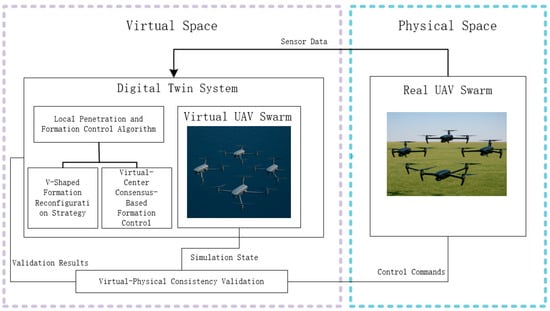
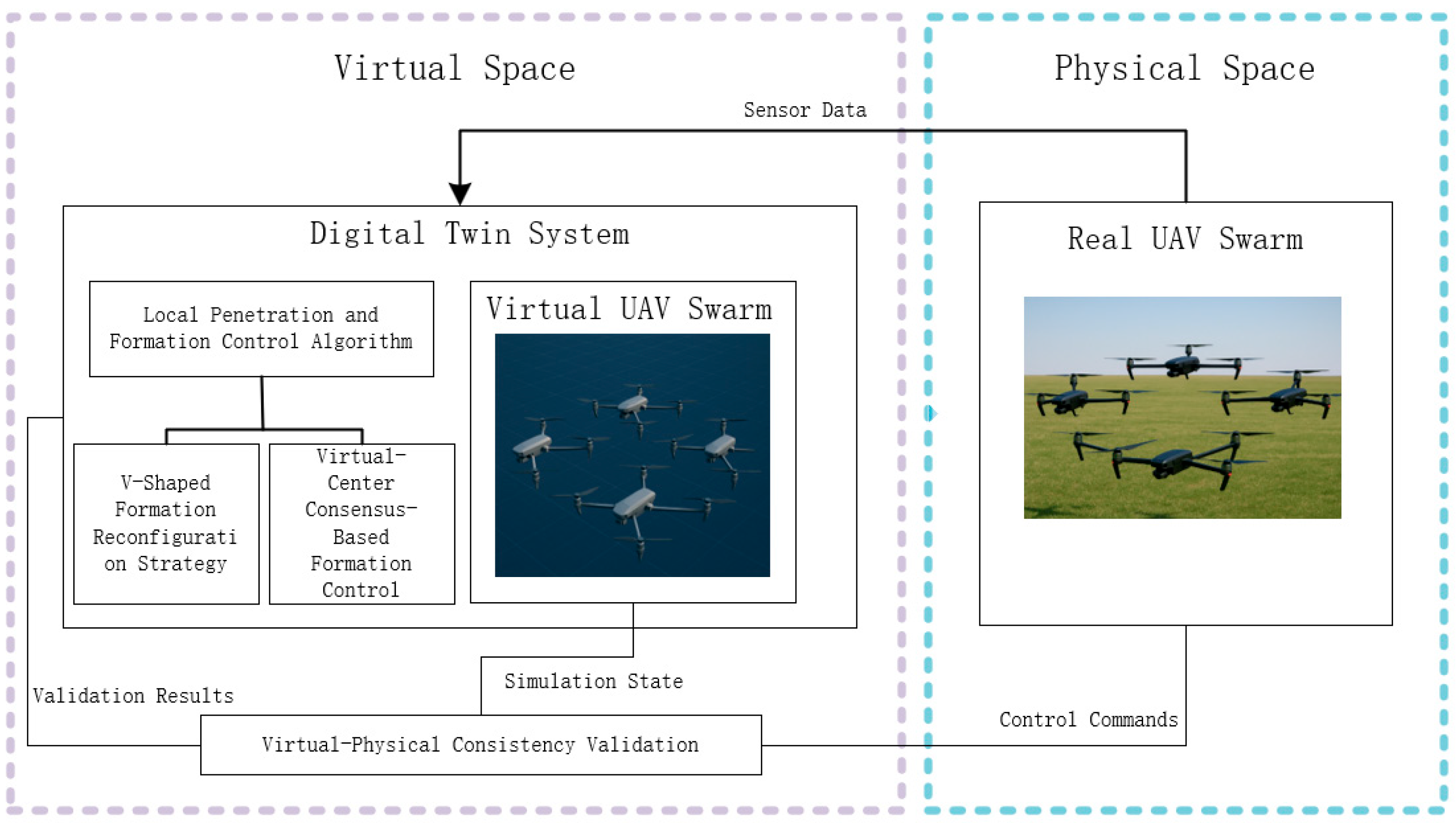
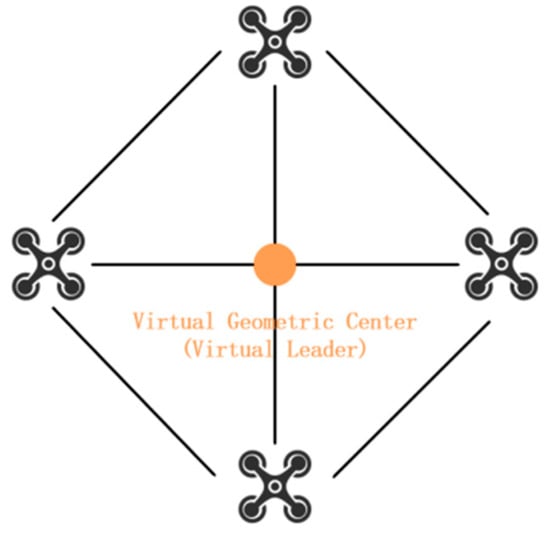
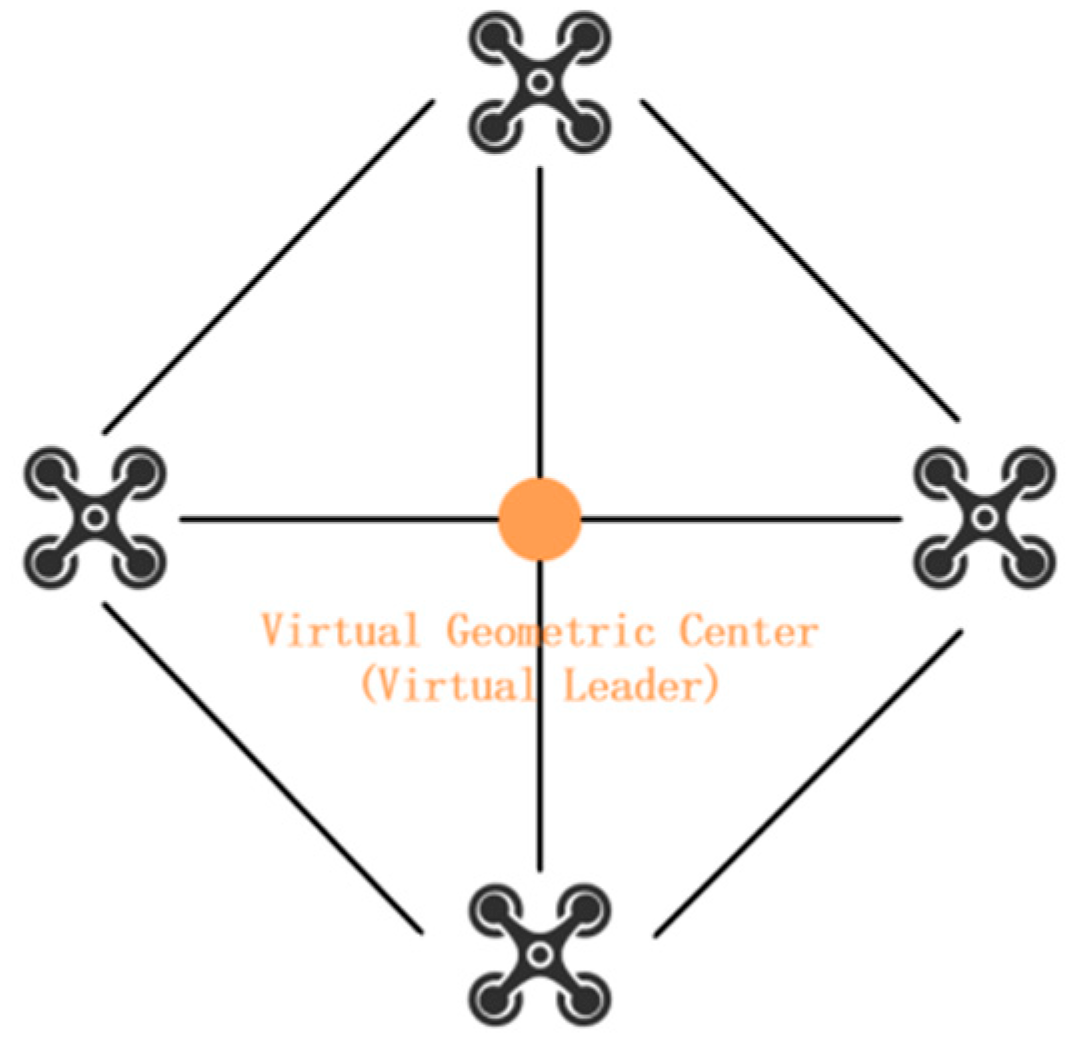
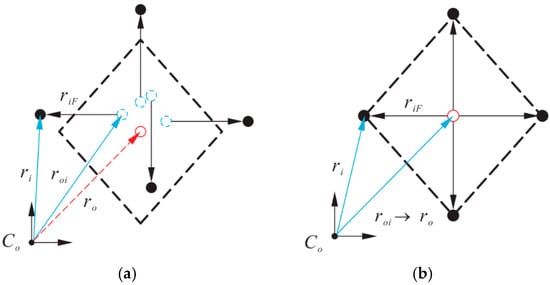
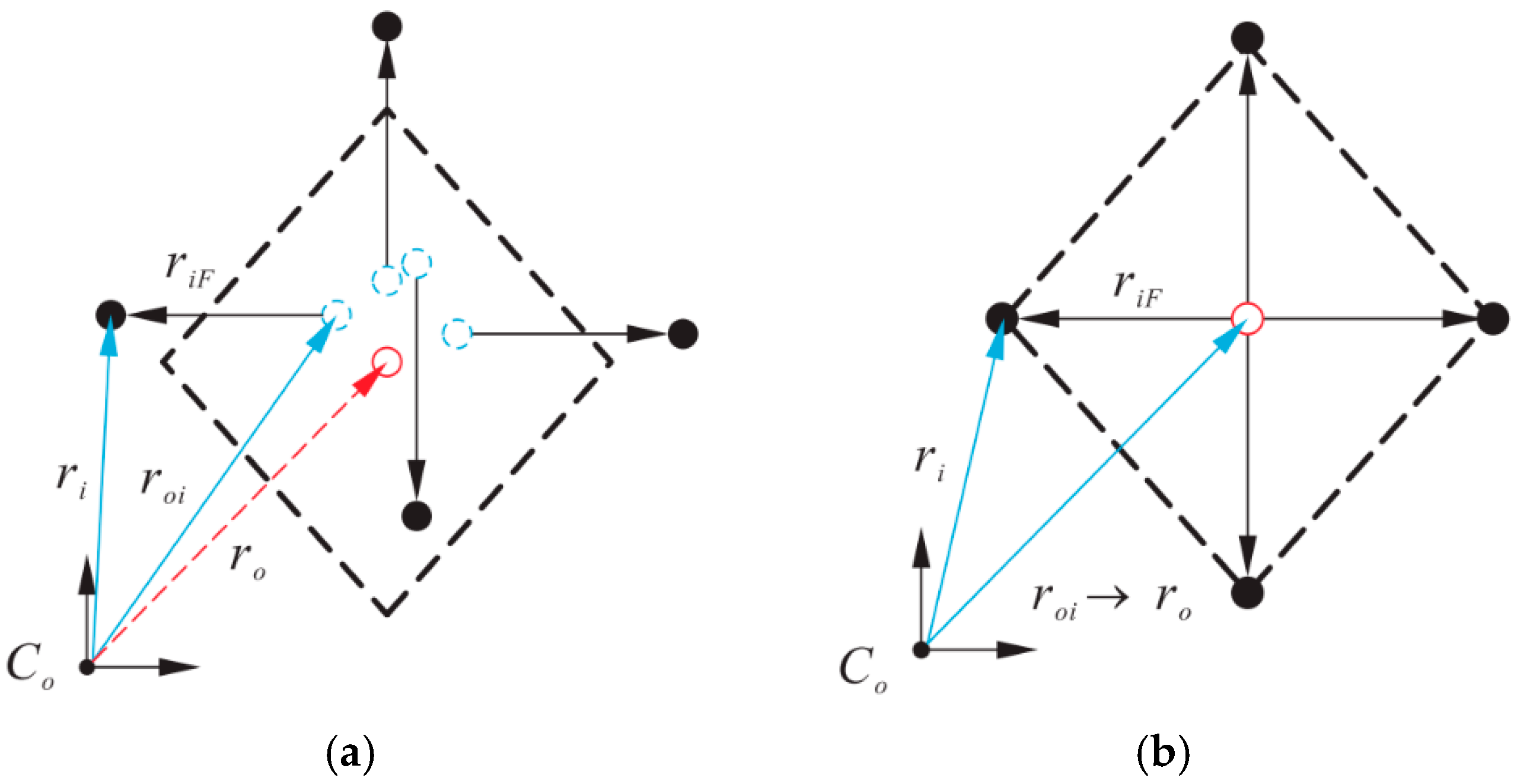
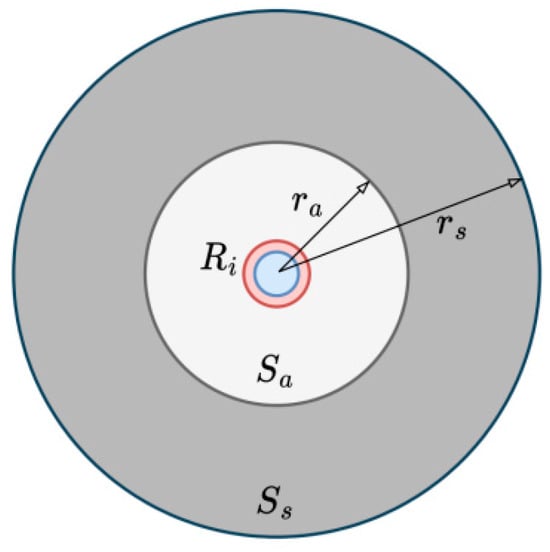
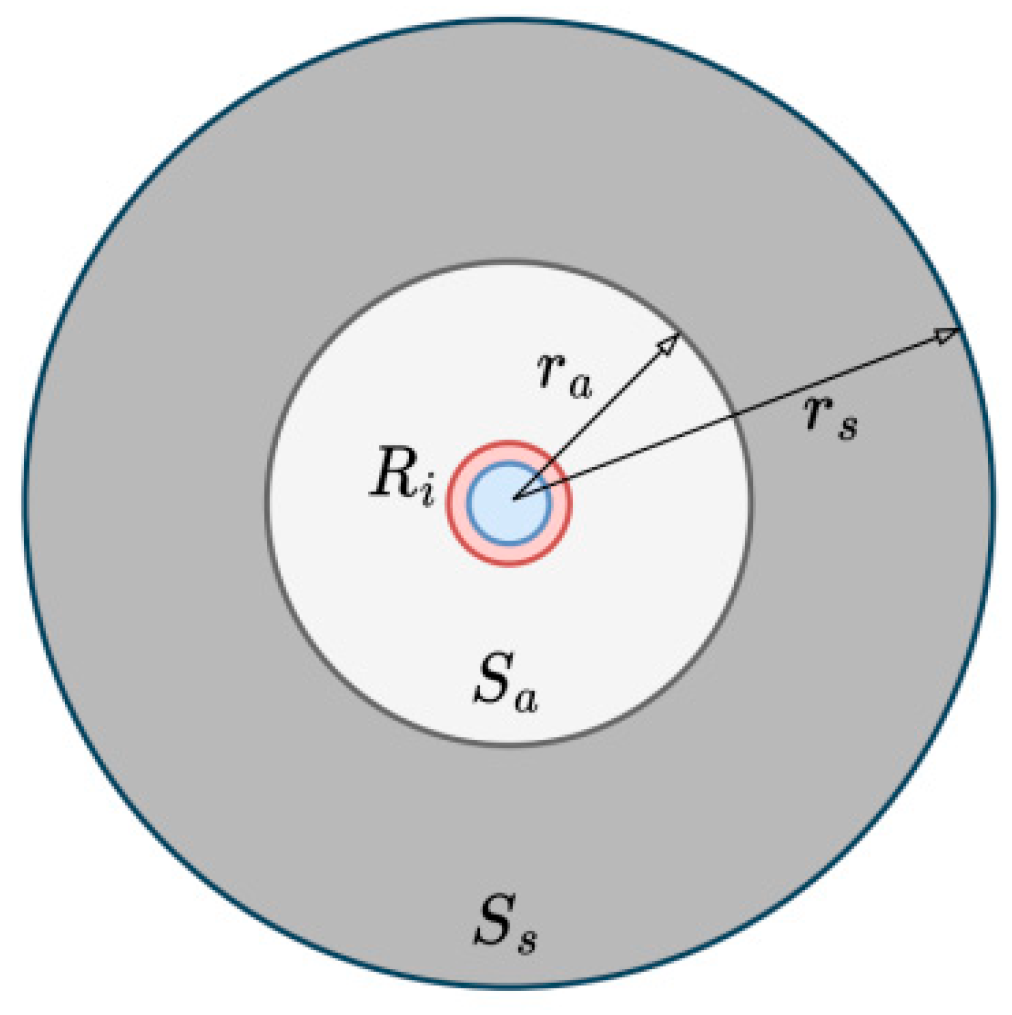
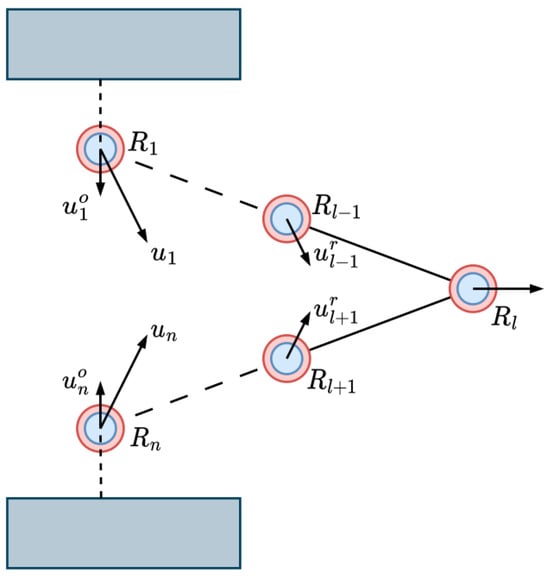
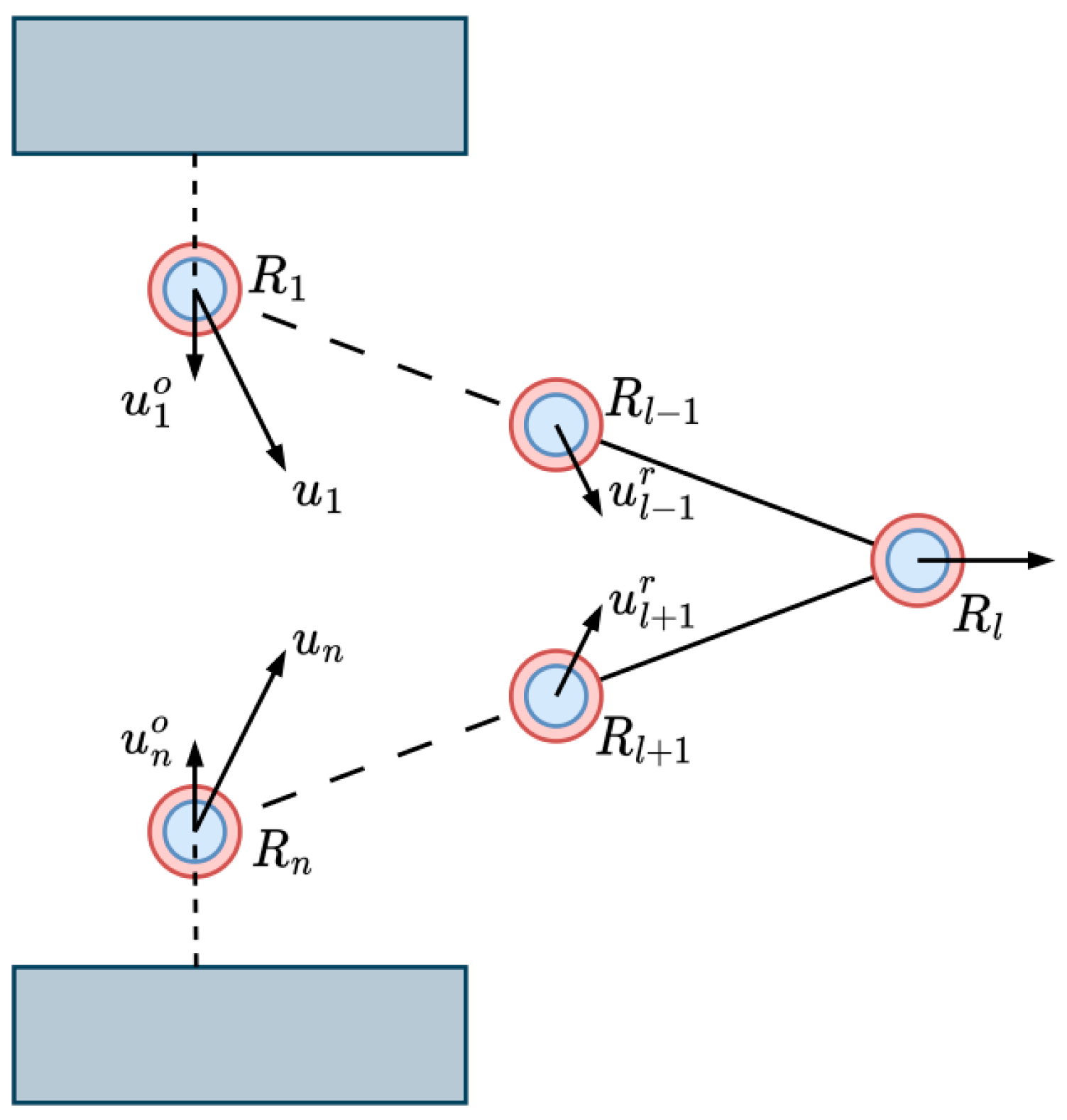
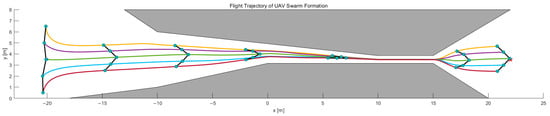
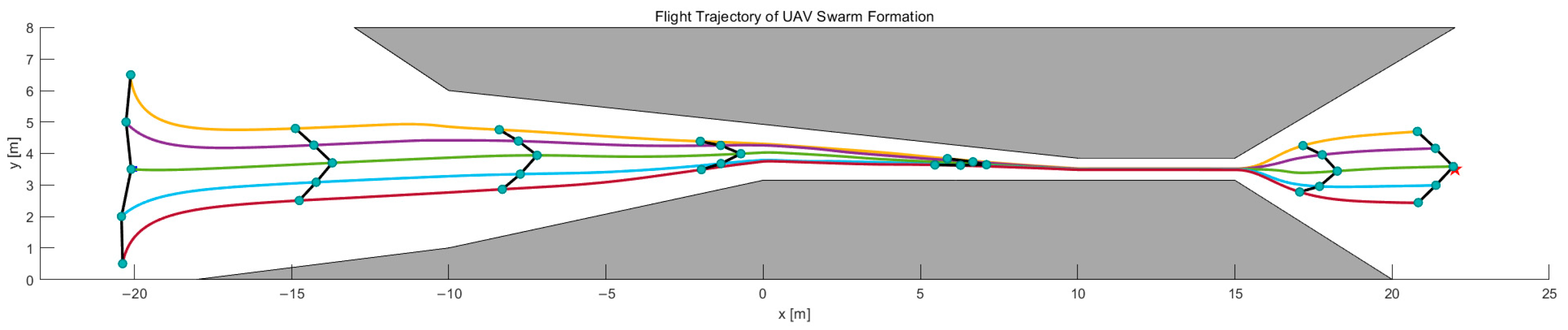
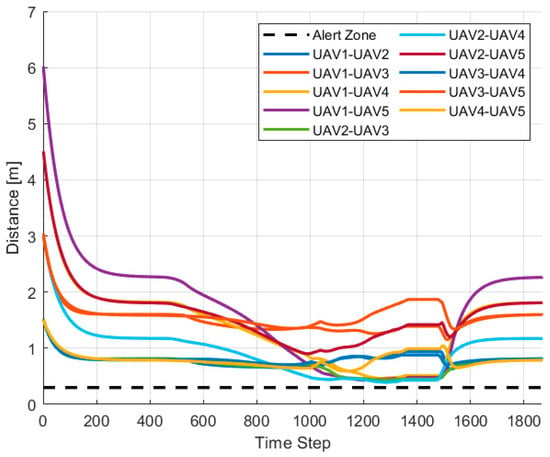
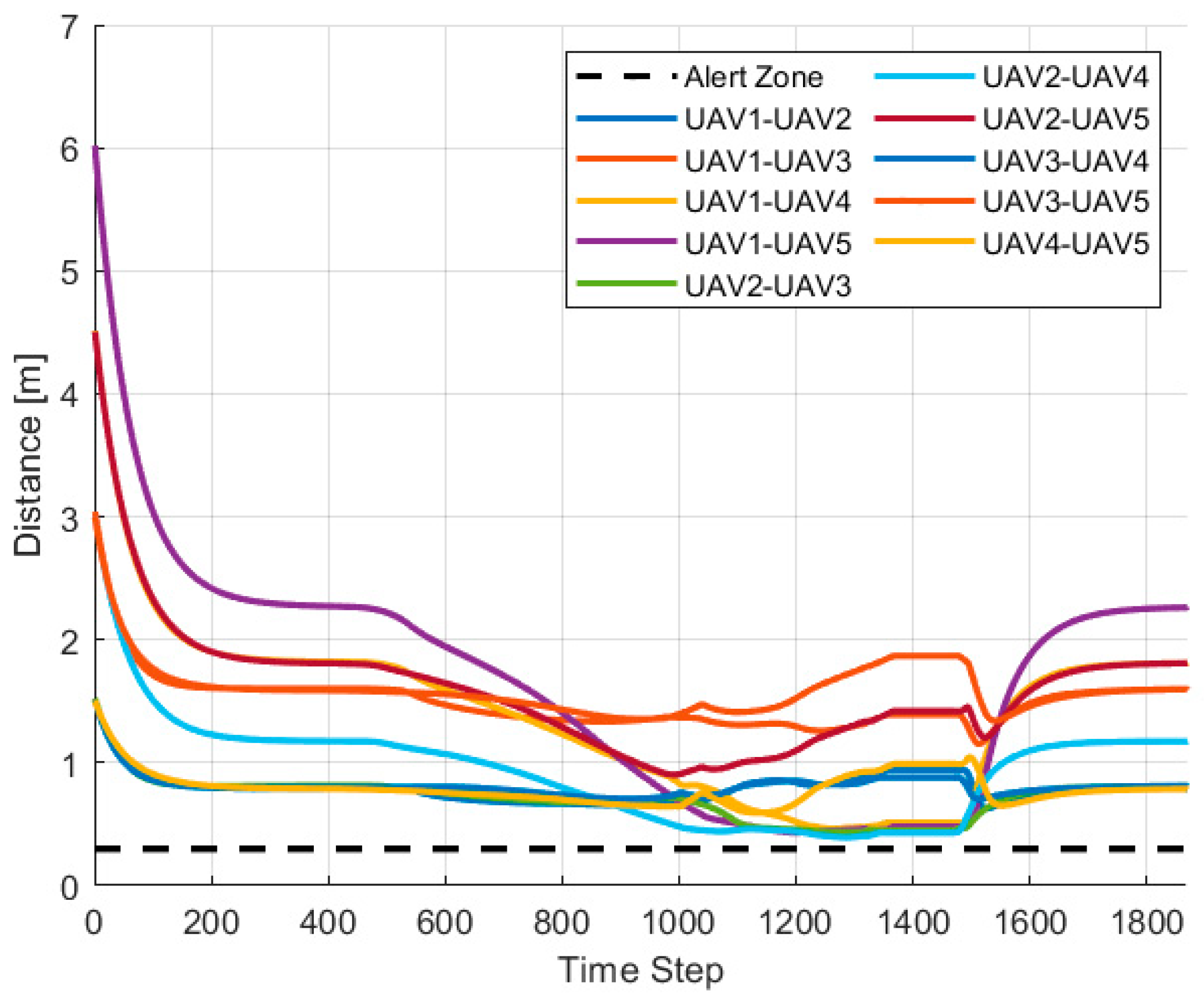
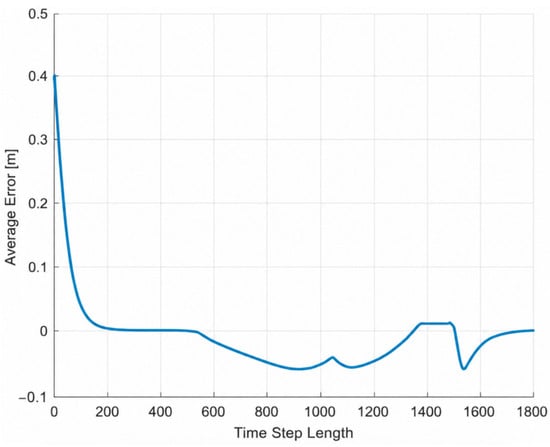
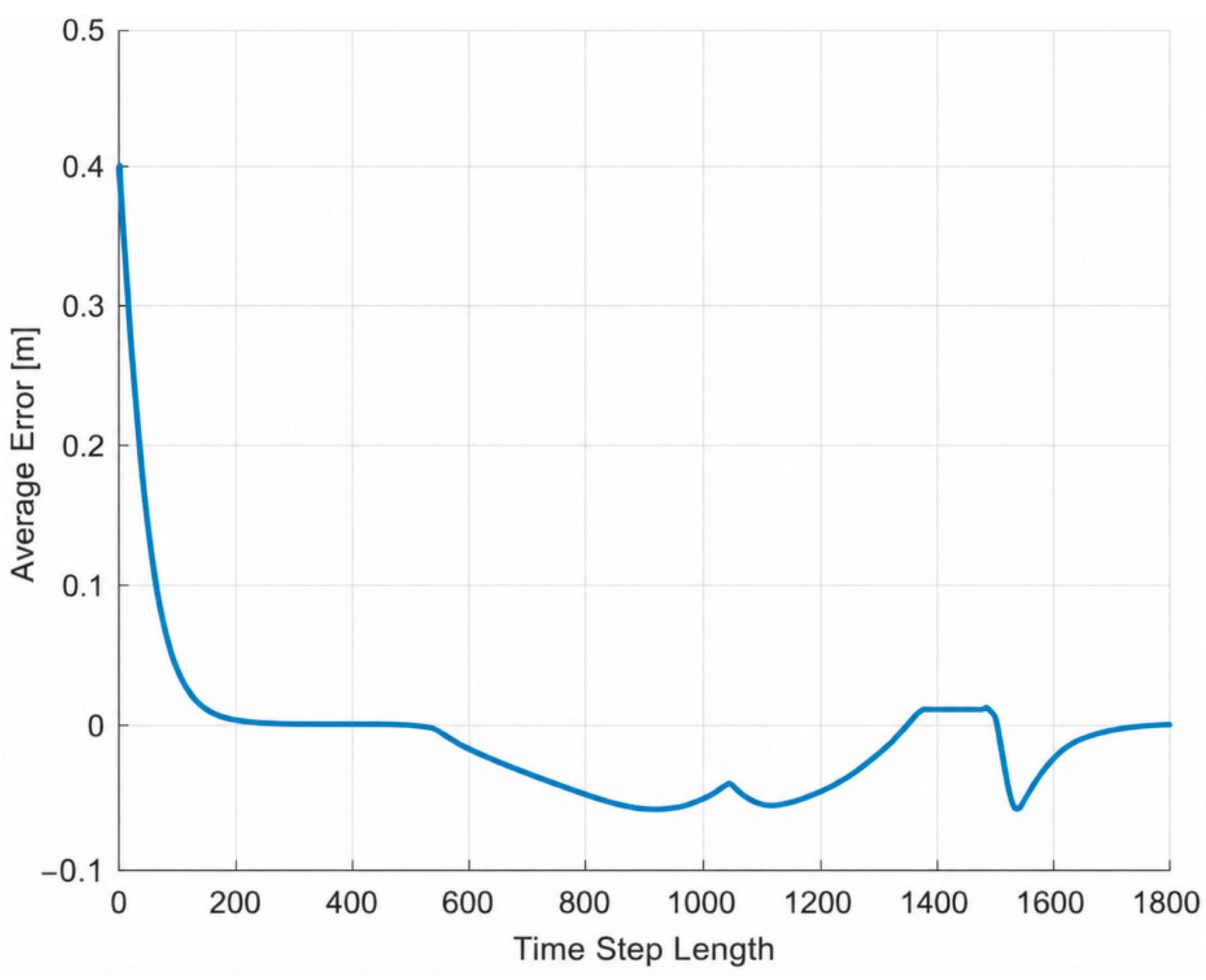
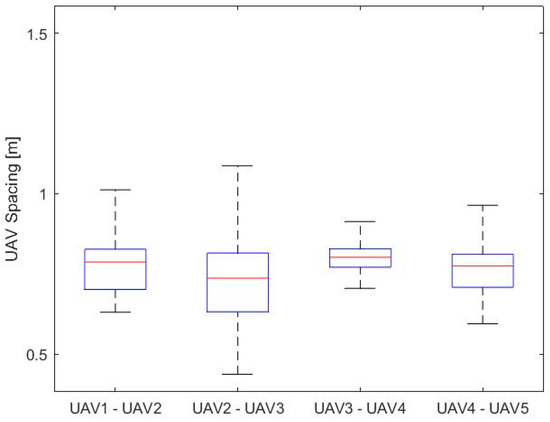
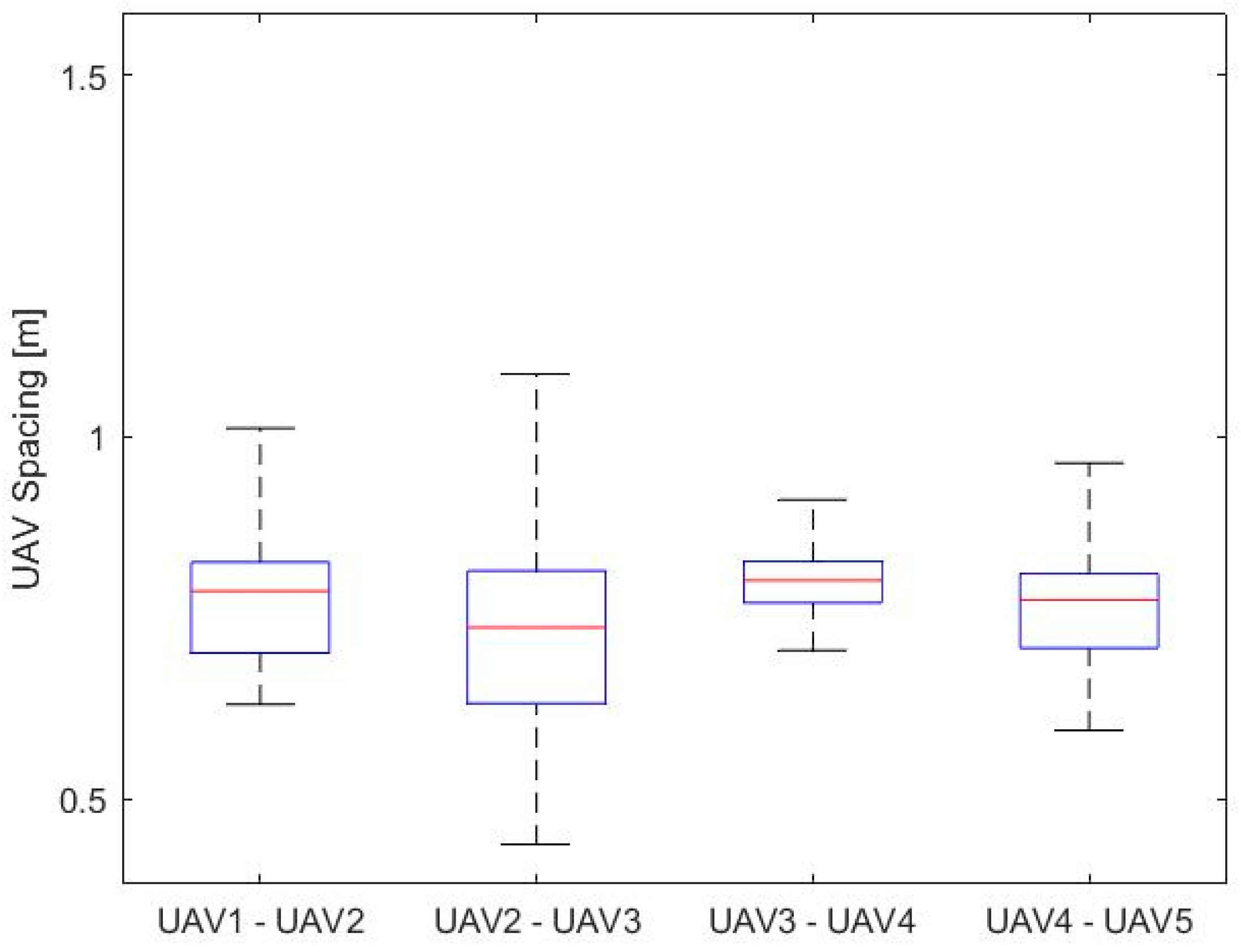
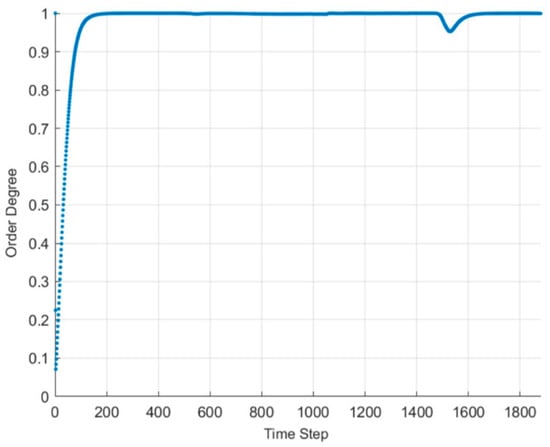
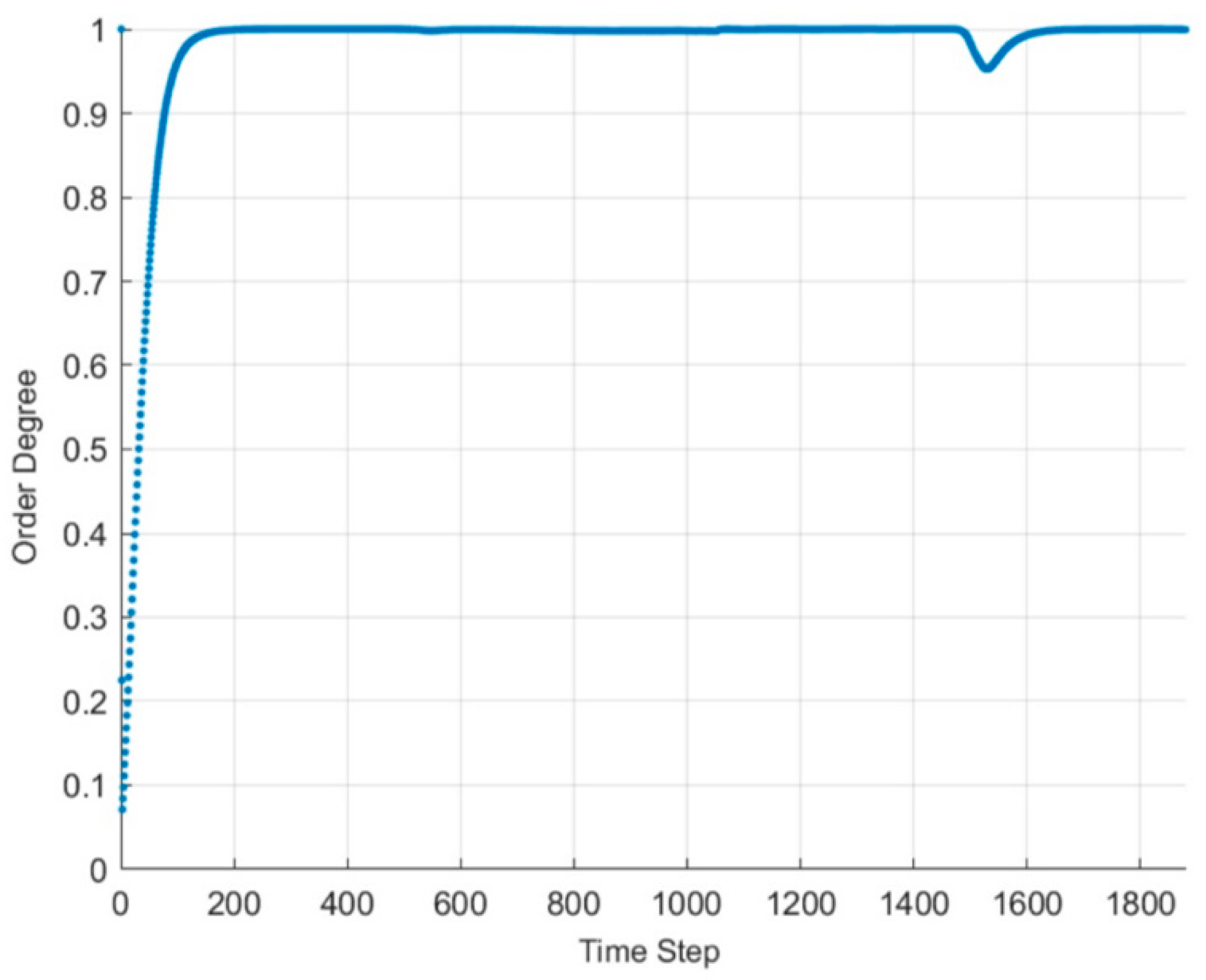
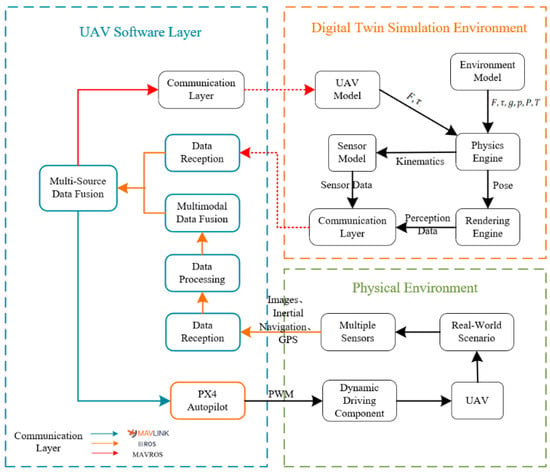
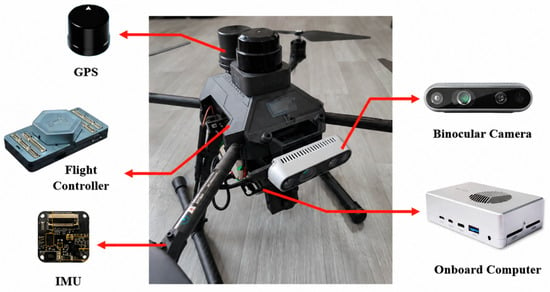
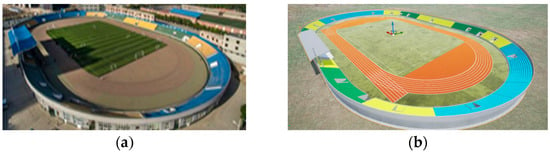
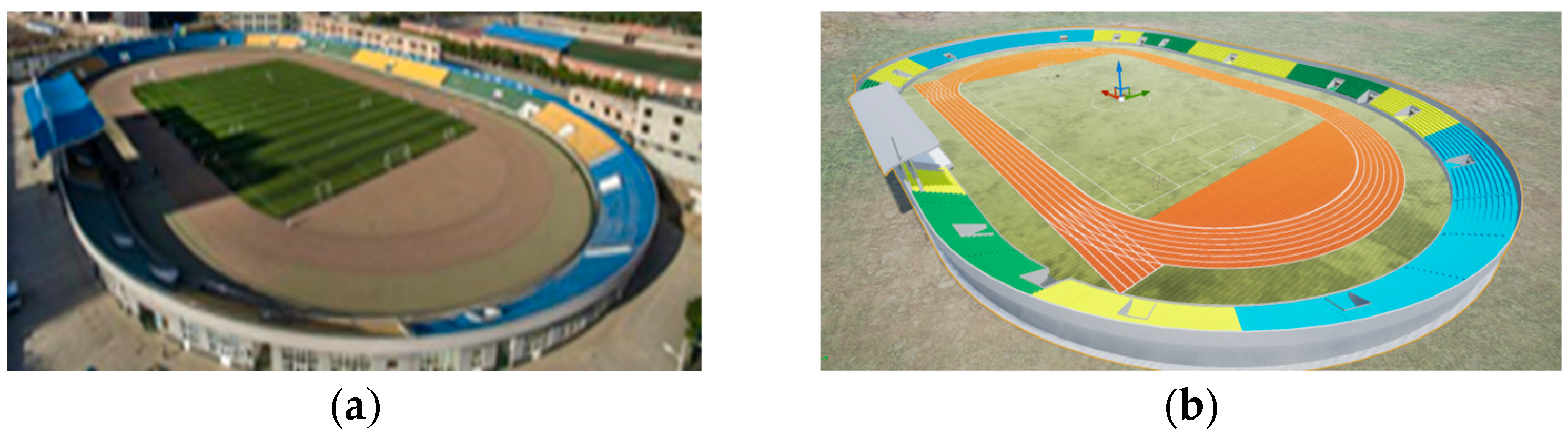
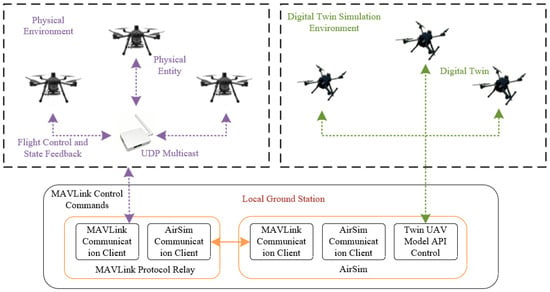
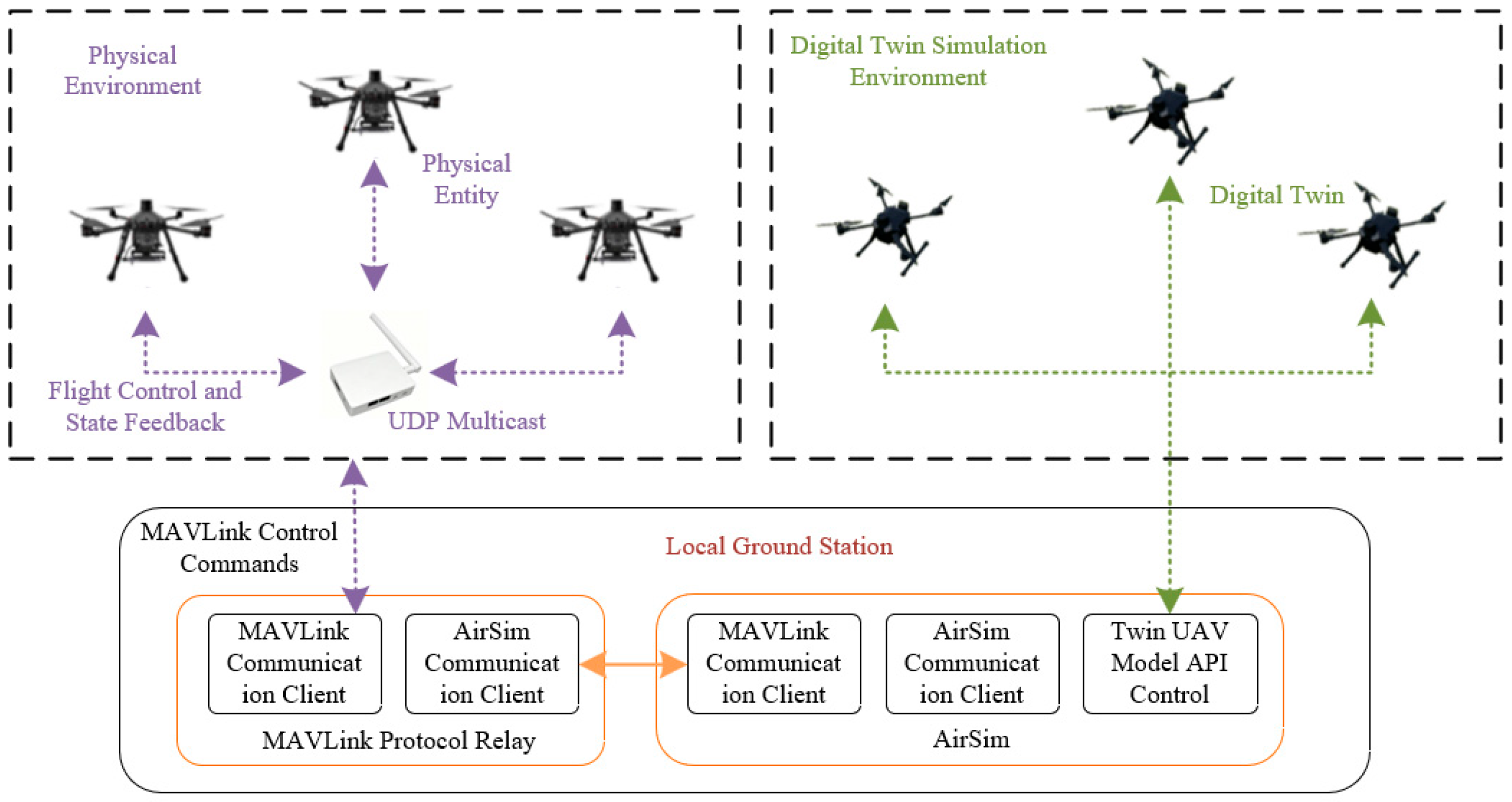
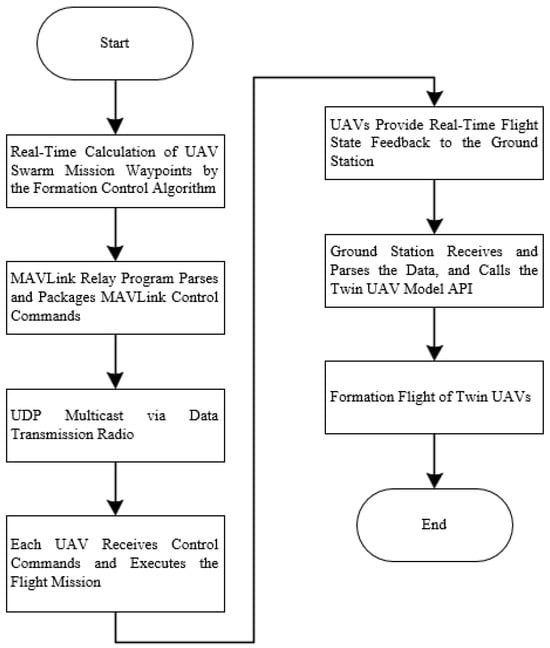
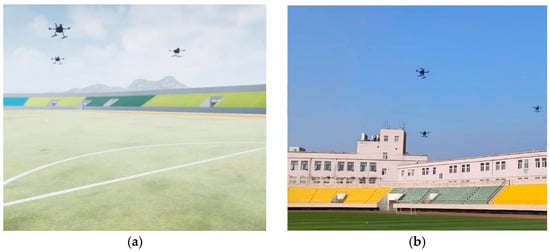
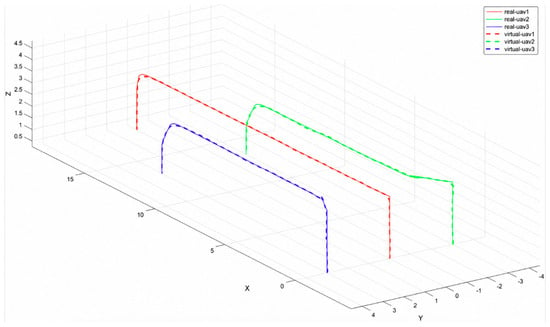
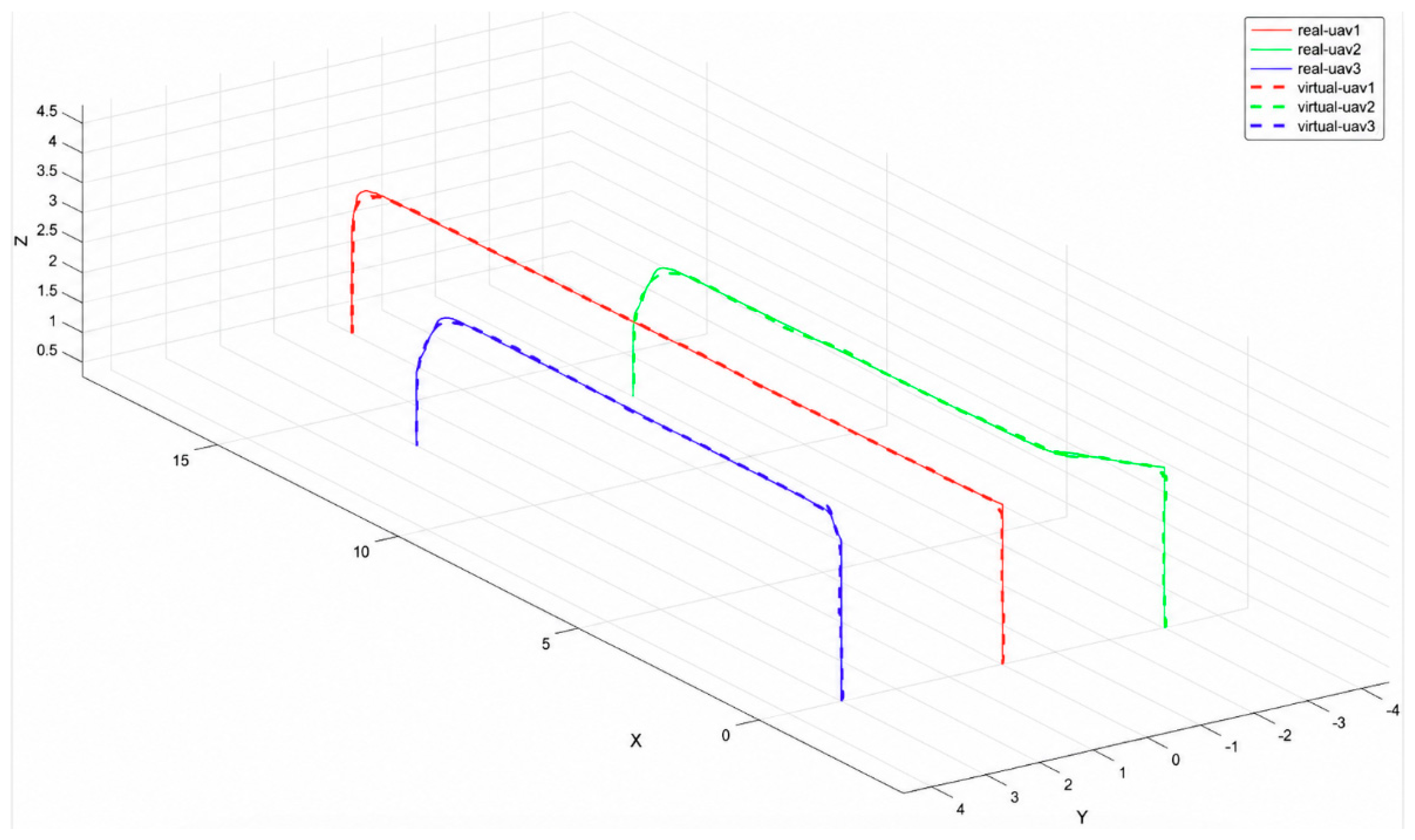
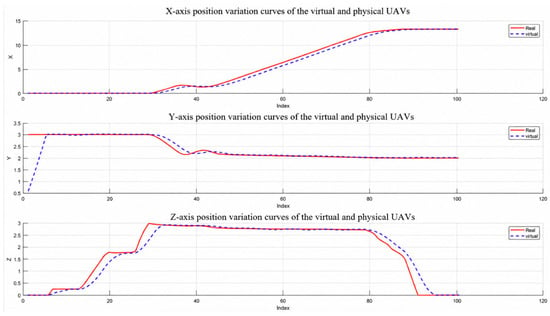
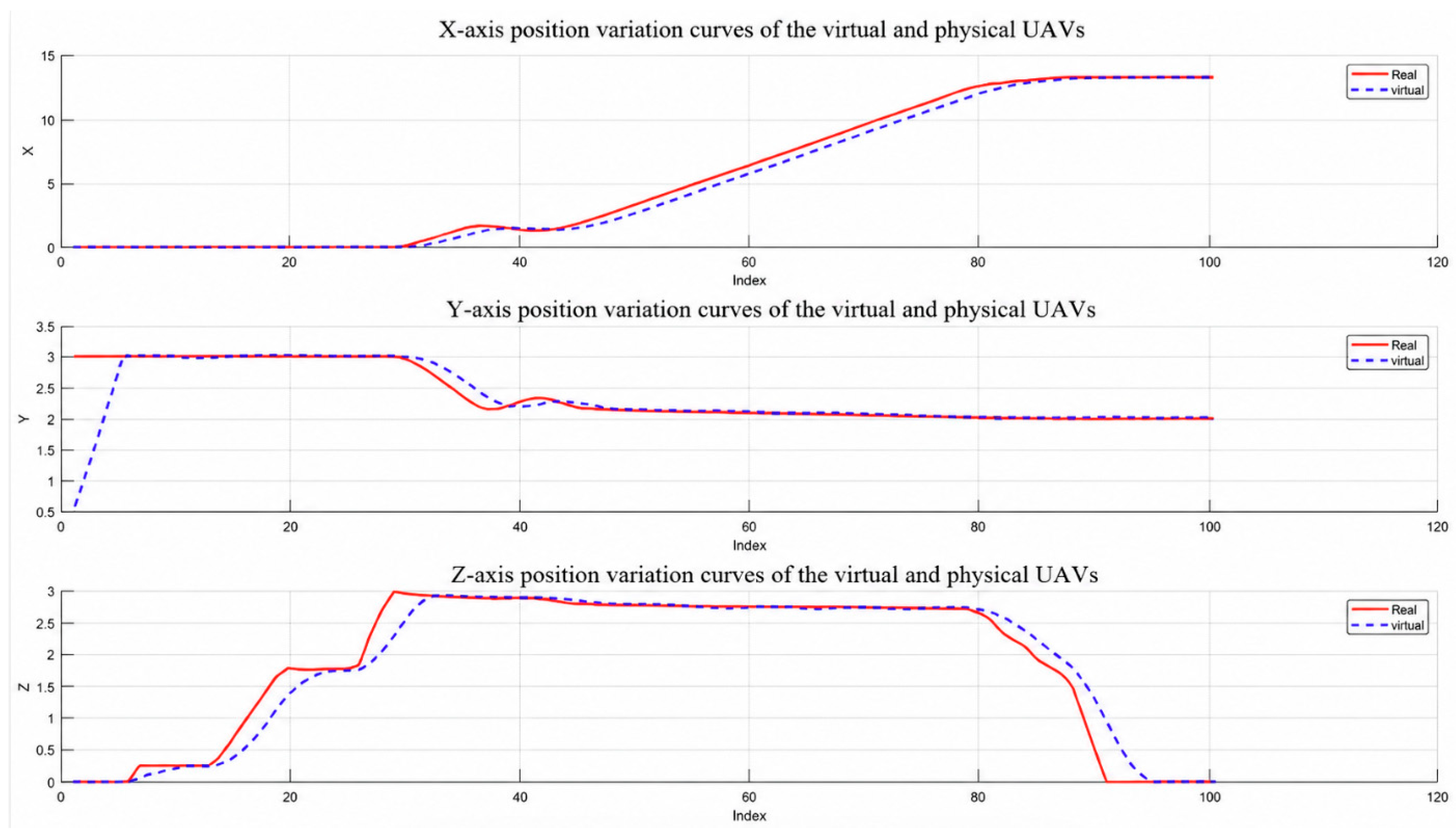
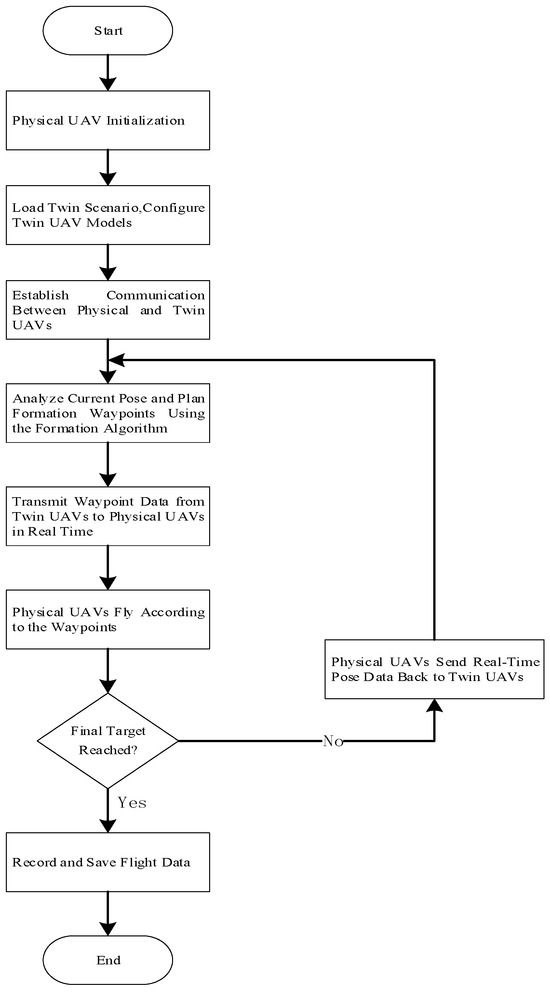
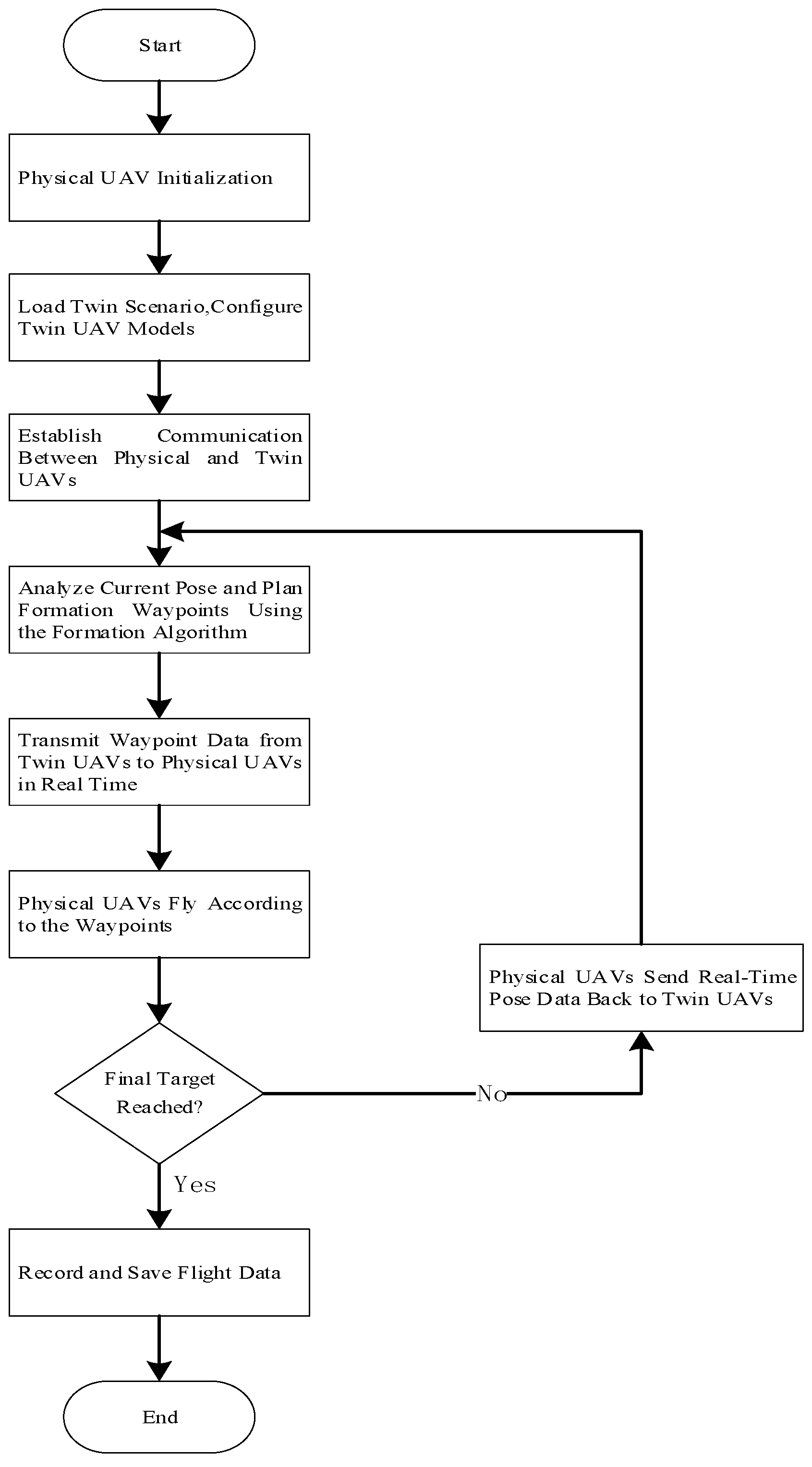
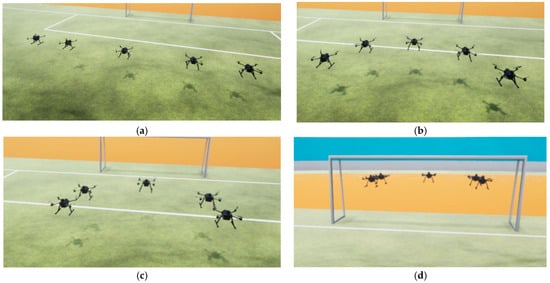
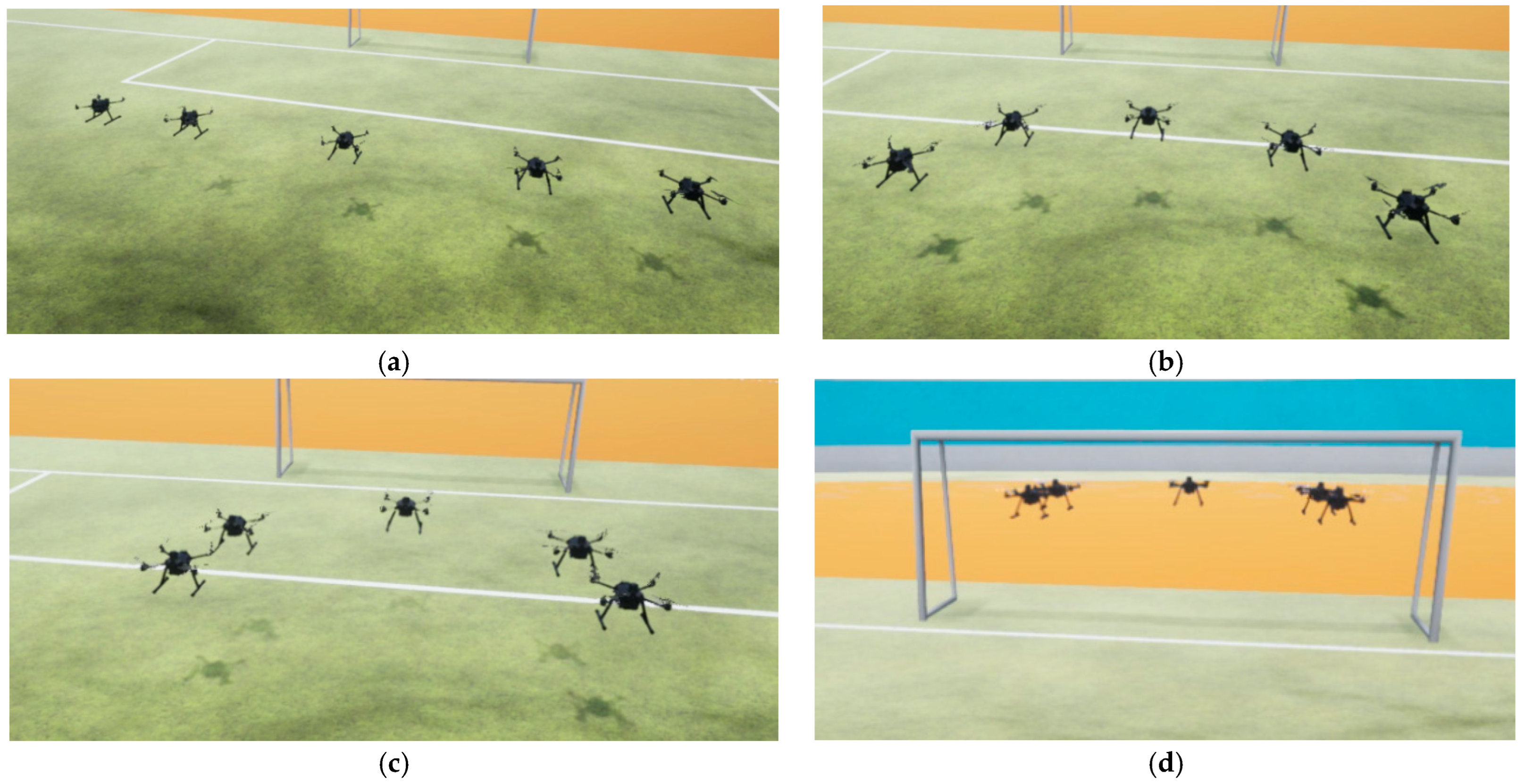
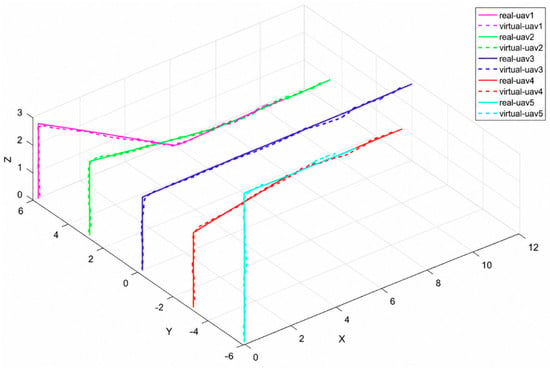
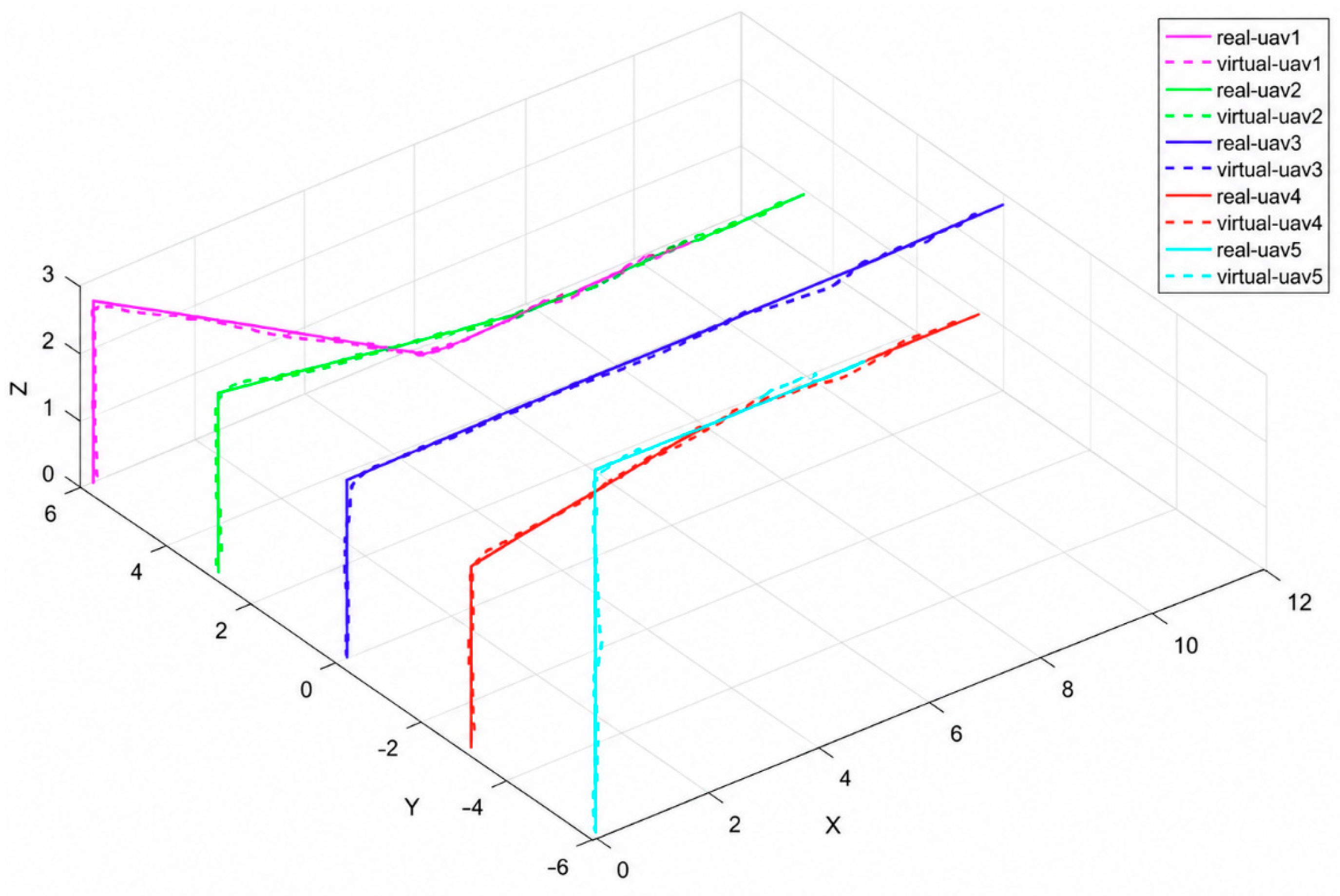
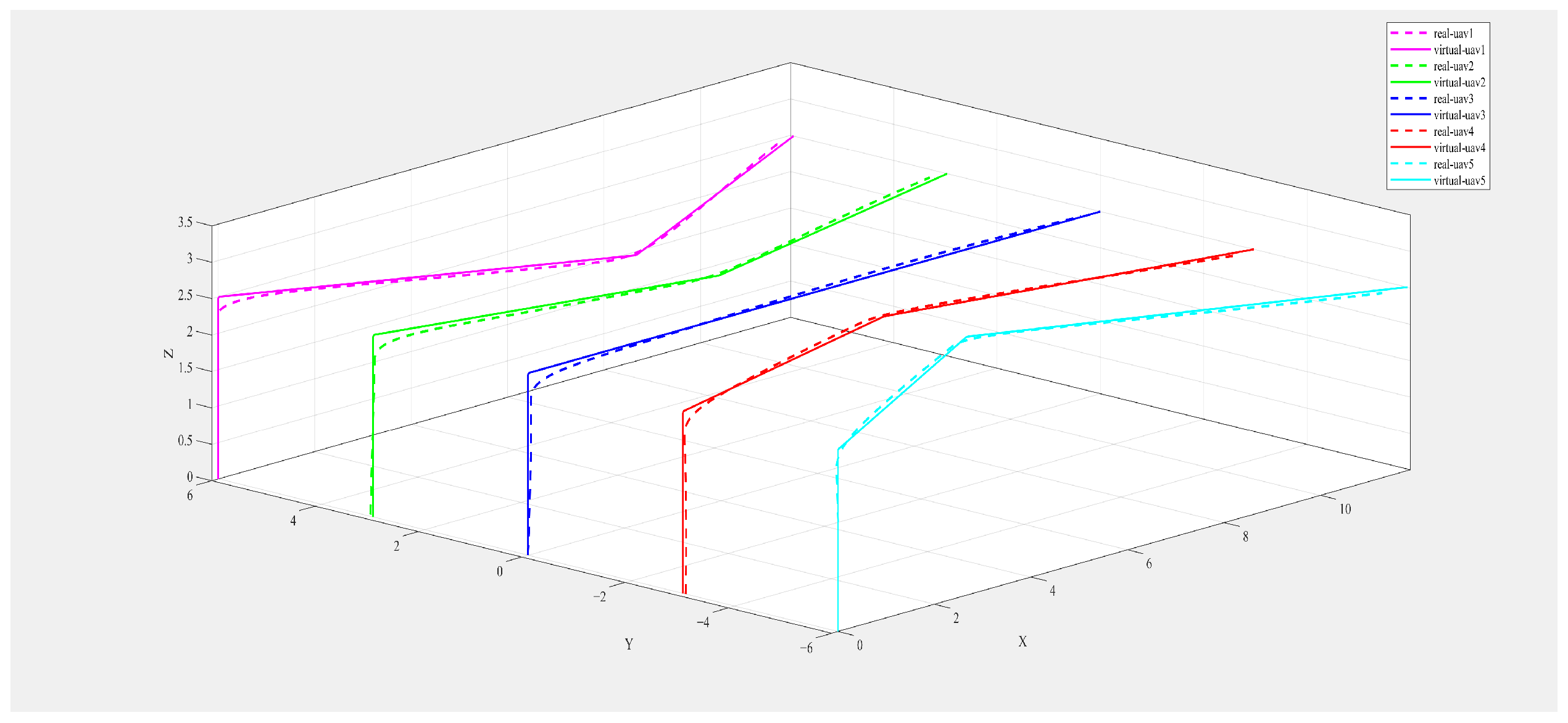

Disclaimer/Publisher’s Note: The statements, opinions and data contained in all publications are solely those of the individual author(s) and contributor(s) and not of MDPI and/or the editor(s). MDPI and/or the editor(s) disclaim responsibility for any injury to people or property resulting from any ideas, methods, instructions or products referred to in the content. |
© 2026 by the authors. Licensee MDPI, Basel, Switzerland. This article is an open access article distributed under the terms and conditions of the Creative Commons Attribution (CC BY) license.