


Highlights
What are the main findings?
- A structured mapping of UAV-swarming research reveals the need of a three-dimensional taxonomy regarding Swarming Paradigms covering Coordination Mechanisms, Algorithmic Nature, and Swarming Behaviours.
- The review exposes a quantifiable reality gap in UAV swarms’ research, with only 23.3% of studies reporting experimental implementation, predominantly limited to indoor controlled validation environments.
What are the implications of the main findings?
- The establishment of a holistic view of UAV swarming paradigms within the current literature.
- The evidence of a necessary paradigm shift toward experiment-driven research, emphasizing real-world validation and reduced dependence on simulation.
Abstract
Uncrewed Aerial Vehicle (UAV) swarms offer a significant paradigm for scalable and resilient mission execution, yet the integrated literature examining the intersection of individual dynamics and collective intelligence remains limited. This study conducts a structured mapping of 116 articles published between January 2021 and August 2025, providing a comprehensive overview of the current state of the art concerning the components of a UAV swarm, progressing from individual vehicle dynamics to coordinated collectives. Quantitative results reveal a dominant shift towards decentralized architectures, with connectivity maintenance and collision avoidance identified as primary functional domains. Methodologically, while control theory and optimization models form the field’s “deterministic spine”, data-driven approaches and artificial intelligence are emerging as significant research trends. Despite the widespread application of UAV swarms in simulation, the analysis highlights a disparity in experimental implementation, with only 23.3% of the reviewed research indicating hardware implementation beyond numerical simulations, predominantly restricted to controlled indoor environments, underlining critical research gaps in Sim-to-Real transfer and environmental robustness. Based on a multi-perspective analysis, the authors propose a multidimensional taxonomy categorized through three lenses—coordination mechanisms, algorithmic nature, and collective behaviours—aiming to provide a structured overview of the swarming paradigms identified in the recent literature.
1. Introduction
Uncrewed Aerial Vehicles (UAVs) have become an integral part of modern technology, offering a diverse spectrum of enhanced capabilities such has wide mobility, aerial reach, and operational flexibility [1,2] in a diverse spectrum of applications, from civil infrastructure inspection and precision agriculture [3] to military reconnaissance and tactical deployment [4]. Their capacity to access remote or hazardous regions, collect real-time data and adapt to dynamic conditions has elevated them to the forefront of autonomous systems research.
The paradigm of drone swarms, cooperative networks of UAVs operating under distributed or centralised intelligence and coordination, has emerged as a transformative advancement in aerial robotics. These swarms have as primary capabilities, inter-vehicle communication, collective sensing, and joint decision-making, to execute complex missions with improved scalability, robustness, and efficiency compared to isolated UAVs [1,5,6]. These systems are especially applicable for tasks like coordinated mapping [7], distributed surveillance [4], disaster response [8], and adaptive logistics in contested environments [9].
Despite the promise of UAV swarms, several technical and operational challenges remain. Key among these are the design of scalable coordination and formation control algorithms, resilient inter-UAV communication structures, real-time collision avoidance in dynamic environments, and the integration of Artificial Intelligence (AI) to support autonomous adaptation under constrained energy and sensing resources [10]. Moreover, regulatory, safety, and interoperability issues introduce additional barriers for the deployment of aerial swarms at scale [11].
The current landscape of UAV swarm research is characterized by a high volume of specialized literature. Although recent contributions offer extensive and high-quality deep-dives into specific facets of the field, these surveys predominantly focus on technical niches or isolated operational domains. Specifically, an abundance of specialized reviews dedicate their scope exclusively to formation control and consensus implementations [12,13], while others concentrate strictly on trajectory design, path planning heuristics, and collision avoidance [5,14,15,16,17]. Similarly, a substantial body of the literature isolates the application of specific computational paradigms, such as artificial intelligence and deep reinforcement learning [18,19,20], or addresses highly specialized subsystems and applications, including regulatory mission planning, task assignment, localization, and reliability assessment [6,11,21,22,23].
Conversely, while broader surveys exist that attempt to capture the general landscape of swarm robotics or overarching UAV challenges [1,4,7,24,25], they often approach the topic from a macroscopic conceptual level encompassing terrestrial, aquatic, and aerial robots indiscriminately, or focus heavily on non-technical factors such as ethics and public perception rather than the underlying control engineering.
Consequently, there remains a critical need for an integrated, holistic synthesis that bridges these specialized technical niches and generalized overviews. The present work seeks to fill this gap by tracing the technological progression from individual vehicle dynamics to the emergence of fully coordinated aerial collectives in a specific time period (January 2021–August 2025). In this context, the mapping of the field is performed in this paper across 5 characterization vectors, namely Swarm Architecture, Environment Complexity, Core Components, Validation Techniques and Swarming Paradigms, identified as essential technical building blocks for autonomous behaviour, as illustrated in Figure 1. Moreover, a three-dimensional taxonomy is proposed regarding Swarming Paradigms covering Coordination Mechanisms, Algorithmic Nature, and Swarming Behaviours.
Figure 1.
Conceptual framework and structural organization of the review (AI—Artificial Intelligence, DL—Deep Learning).
This paper is structured in five primary sections. After this Introduction, Section 2 details the review methodology, describing a transparent and rule-based selection process and clarifying the selection criteria for the 116 articles analysed. Section 3 presents the analysis of the reviewed articles, namely regarding (i) swarm architecture and current applications, (ii) environmental modelling, categorizing operational spaces by dimensionality, stability, and obstacle density, (iii) core system components, including hardware platforms, sensing layers, and communication protocols, and (iv) validation techniques, moving from numerical simulation to hardware experimentation. The proposed swarming categorization is presented in Section 4, which is divided according to three critical lenses: (i) coordination mechanisms; (ii) methodological paradigms ranging from deterministic control to data-driven AI; and (iii) swarming behaviours. Finally, Section 5 provides the conclusions of this review, summarizing the existing limitations and identifying critical future research directions for the deployment of resilient UAV swarms.
2. Review Methodology
Given the complexity and multidisciplinary nature of swarming strategies for UAVs, the literature revealed itself to be fragmented, with contributions dispersed across control theory, robotics, AI, communication systems and biologically-inspired contributions. As a result, a structured, integrative and transparent review methodology becomes particularly valuable, aiming to provide a comprehensive reference that maps the conceptual landscape of the field through a hybrid review approach that integrates objective selection criteria into a traditional empirical review. It is important to clarify that while systematic methods were employed for database searches, screening, and categorization, this survey does not follow an organized systematic review protocol such as PRISMA (Preferred Reporting Items for Systematic Reviews and Meta-Analyses) [26]. Instead, it is specifically designed as a structured mapping and narrative review tailored to conceptually organize a highly multidisciplinary technological landscape, within the aforementioned time period.
To establish the thematic scope and conceptual framework of this review, a discovery-driven preliminary scoping phase was conducted in August 2025. This involved the systematic collection of a representative group of keywords from the relevant literature on UAV swarm coordination. The temporal scope (January 2021–August 2025) was established based on empirical criteria to capture the most significant advancements in autonomous coordination. A 2021 baseline provides an approximately 18-month window prior to the conflict in Ukraine, which triggered a notable boom in tactical UAV development and interaction [27]. Furthermore, this period encompasses the emergence of major Large Language Models (LLMs) and the subsequent surge in Artificial Intelligence research, which has fundamentally redefined learning-based methods in swarm intelligence [28]. This methodology aligns with established practices in recent UAV surveys, which utilize structured metadata analysis to define research boundaries and categorize emerging paradigms.
To ensure the review maintains a rigorous and well-defined scope within the vast field of aerial robotics, the selected keywords were systematically categorized into three thematic pillars: Control, Platform, and Swarm. These thematic pillars serve as a structural filter to ensure that the literature analysed resides strictly at the intersection of these three domains, which represents our primary focus: “Swarming Strategies in UAVs”. A visual representation of this filter is illustrated in the diagram of Figure 2 and a textual description is provided in the sequence.
Figure 2.
Schematic illustration of the review’s thematic scope definition (ASIU—Autonomous Swarm Intelligence in UAVs).
The Control category encompasses the “intelligence” of the system, including the specific algorithms and methodologies required for navigation, guidance, stability, and decision-making. By including this class, the review ensures an in-depth analysis of how UAVs process information to achieve autonomous and coordinated behaviour. Complementing this is the Platform pillar, which focuses on the physical and operational characteristics of the UAVs. This area looks at the physical design of the drones, such as whether they use propellers or fixed wings. It also covers the sensors they carry and their physical limits, like battery life and carrying capacity. Looking at these details helps us separate practical drone research from purely mathematical-based ideas or studies about other types of vehicles. Finally, the “Swarm” category focuses on how the drones act as a group. It looks at how they talk to each other without a central leader, coordinate their movements, and work together to do things like operate in a flock or search an area.
By only choosing studies that combine all three areas, Control, Platform and Swarm, this review captures the state of the art of Autonomous Swarm Intelligence for UAVs (ASIU) area.
To catch the multidimensional nature of the field, a rule-based systematic Boolean search string was constructed by applying the logical operator OR within each thematic category to maximize recall, and the AND operator between categories to ensure the intersection of all three domains was met. The specific keywords and their respective categorizations are detailed in Table 1, where the asterisk “*” means that a word or an expression does not require to appear isolated in the Boolean string.
Table 1.
Search keywords used for the literature review.
After running a search on Google Scholar with the aforementioned parameters on 12 August 2025, the initial database search yielded a total of 997 records (just below the search engine 1000 retrievable records limit). To refine this set into a more representative dataset for analysis, a multi-stage screening process was conducted, as shown in Figure 3:
Figure 3.
Methodology framework adopted for the final articles’ pool selection.
- Title-Based Screening: An initial heuristic screening of titles was performed to remove duplicates and clearly out of scope entries, specifically targeting literature that aligned with the intersection of the previously defined thematic triad (Control, Platform, and Swarm). This phase resulted in 186 articles remaining for secondary screening.
- Abstract-Level Exclusion: The remaining articles underwent a detailed abstract review. Documents focusing on Uncrewed Ground Vehicles (UGVs) or purely theoretical communication protocols lacking direct swarm coordination applications, as well as review papers, were excluded. During this stage, 70 articles were also excluded for being out of scope.
Following the final selection, a comprehensive data extraction matrix was developed to synthesize the findings. To address the lack of uniformity in the literature, a normalization process was applied to some entries. This allowed for the transformation of disparate technical terms into standardized categories, facilitating a coherent quantitative analysis and the identification of global research trends.
2.1. Direct Results from the Bibliographic Selection
Figure 4 illustrates the global distribution of drone swarm research, highlighting distinct geographic hubs of innovation. To standardize this bibliometric mapping and avoid double-counting in multi-national collaborations, the geographic origin of each publication is defined by the primary institutional affiliation of its first author. The data reveals a pronounced concentration of scholarly output originating from China, with North America and Europe serving as secondary, yet highly influential, contributors. Because this research spans distinct geopolitical and environmental contexts, the resulting literature inherently encompasses a diverse spectrum of technological architectures, operational testing environments, and regulatory frameworks. Ultimately, these spatial trends serve as a strong proxy for targeted capital investment and scientific momentum within the autonomous systems domain. While sheer publication volume does not universally equate to deployment readiness or technological maturity, it unequivocally identifies the primary geopolitical engines driving the paradigm shift in drone swarm capabilities today.
Figure 4.
World Map Distribution of research publications. The table (left) details the exact number of publications per country, corresponding to the geographical visualization (right).
2.2. Methodology Limitations
While significant efforts were made to ensure the representativeness and coherence of this study, it must be clarified that this study follows a hybrid review methodology rather than a formal Systematic Literature Review (SLR) adhering to PRISMA or Kitchenham protocols. Consequently, certain limitations must be acknowledged to maintain transparency and facilitate an accurate interpretation of the findings.
The first limitation is that our study relies on automated keyword searches. Even though we combined AND and OR operators to find as many papers as possible, this method depends entirely on the exact words the original authors chose. Because of this, we might have missed relevant studies if the authors used unusual or highly specific terms. Additionally, we mainly used Google Scholar instead of specialized scientific databases like IEEE Xplore, Scopus, or Web of Science. While Google Scholar searches across a very wide range of sources, it does not have strict quality filters, and its search results can be difficult to reproduce perfectly. We made this choice to quickly gather a broad overview of a fast-moving field, even though it means our approach is less strict than a traditional systematic review.
A specific terminological emphasis was placed on the “Platform” pillar through the inclusion of targeted terms such as “quadcopter,” alongside generic identifiers like “UAV” and “drone” (as detailed in Table 1). To clarify, studies involving fixed-wing or hybrid platforms were not explicitly filtered out during the search execution; rather, specific nomenclature for these platforms was merely omitted from the list of explicit keywords. This choice was informed by the current research landscape, where multi-rotor platforms dominate the literature due to their hovering capabilities and agility in cluttered environments. As evidenced in Figure 11 in Section 3.3, multi-rotors account for the vast majority of identified swarm studies. However, this targeted approach introduces a potential limitation: by prioritizing quadrotor-centric keywords alongside general UAV terms, the review may inherently favour the multi-rotor literature and under-represent swarming strategies unique to fixed-wing or hybrid VTOL platforms, which operate under different kinematic constraints.
The subjectivity associated with the manual screening arises as another clear limitation of our approach. Exclusion based on the review of the titles and abstracts requires arbitrary values of judgment regarding what constitutes an “out of scope” article, that are permeable to the reviewer’s interpretation.
Lastly, it should be noted that the research limits are defined by both the temporal scope and the reach of the consulted databases. This study focused on articles published in English, which may exclude relevant contributions from the “grey literature”, articles in other languages or scientific documents that are not materialized in a scientific publication. Additionally, the exclusive focus on the proposed thematic triad implies that isolated advances in adjacent areas, such as material science for UAVs or purely network-based communication protocols, were not the central focus unless they were integrated into a swarm control logic.
3. Analysis of Literature Review of UAV Swarms
This section presents an in-depth analysis of the 116 articles identified during the UAV swarm literature screening detailed in Section 2. To provide a holistic perspective of the field, the analysis is structured across five distinct characterization vectors, which are described now. Section 3.1 explores the swarm architectures of UAV Swarm Robotics, highlighting biological inspirations and current applications. Environmental modelling is addressed in Section 3.2, which categorizes operational spaces by dimensionality, stability, and obstacle density. Section 3.3 examines core system components, including hardware platforms, sensing layers, and communication protocols. Next, Section 3.4 outlines current validation techniques, tracing the progression from numerical simulation to hardware experimentation. Lastly, to address the highly dispersed nature of swarming paradigms in the current literature, Section 4 introduces a structured categorization framework to systematically organize these diverse coordination mechanisms.
3.1. Swarm Architecture and Multidisciplinary Applications of UAV Swarm Robotics
The field of SR represents a transformative paradigm in aerial systems, focusing on the coordination of multiple autonomous UAVs to achieve collective objectives that transcend the capabilities of a single agent [29]. A system is formally classified as a swarm if it consists of three or more autonomous entities that cooperate with minimal human intervention, emphasizing properties such as self-organization, robustness, and scalability [25,30]. Generally, this domain draws heavy inspiration from biological collectives, such as bird flocks and ant colonies, where sophisticated global behaviours emerge from simple local interactions [7,30]. Central to the implementation of these strategies is the command architecture, which is primarily divided into centralized and decentralized frameworks [14]. In a centralized control system, a single entity, such as a Ground Control Station (GCS) or an omniscient master UAV, collects global status information, computes optimal motion commands, and redistributes them to individual units [5,14]. While this approach simplifies decision-making and ensures consistency in collective action, it is inherently vulnerable to a single point of failure [13,31]. Furthermore, centralized architectures often suffer from the “curse of dimensionality,” where computational complexity and communication overhead grow exponentially as the number of UAVs increases [19,32]. To overcome these limitations, research has shifted toward decentralized and distributed systems (Figure 5), where each UAV makes autonomous decisions based on local sensory data and information exchanged only with immediate neighbours [32,33]. These distributed models are highly resilient; if individual agents fail or are destroyed, the remaining swarm can reconfigure its topology and maintain mission continuity [1,4]. Movement in these decentralized swarms is frequently governed by Reynolds’ rules (cohesion, separation, and alignment), which facilitate group unity while preventing reciprocal collisions [34,35]. A critical aspect of managing these systems is the scale of the swarm, defined by the total number of agents (N) [6]. Increasing the scale typically enhances situational awareness and coverage efficiency, as demonstrated in [36], whose data showed that target visibility increases significantly from to drones. However, larger swarms introduce significant coordination challenges, as the time required for the collective to reach a consensus or stable formation generally increases with the number of agents [32,33]. To balance the optimization of centralized systems with the robustness of decentralized ones, hybrid and hierarchical architectures have emerged [37,38]. These systems often utilize clustering techniques, where the swarm is partitioned into distinct groups coordinated by local cluster heads [31,37]. Such hierarchical models are essential for scalability, as they reduce message flooding and communication overhead by allowing the computational burden per agent to remain independent of the total swarm size [31,39]. within these clusters, UAVs may take on heterogeneous roles, such as leaders, coordinators, or followers, to manage position assignment and conflict resolution more effectively [38]. The physical patterns adopted during various mission stages, such as schooling, swarming, and milling, further illustrate the impact of internal interaction rules on the collective’s ability to adapt to dynamic environments [35].In summary, the operational effectiveness of an aerial swarm is fundamentally dictated by its underlying architecture and scale [6,14]. While architecture determines the logic of coordination and fault tolerance, the scale of the swarm (N) governs the complexity of communication and the speed of collective consensus [32,33]. These two sub-parts of the swarm architecture are the primary factors that differentiate swarm types, shifting them from simple small-scale formations to complex, resilient collectives capable of high-level autonomy [4,31].
Figure 5.
Statistical distribution of command architectures across the articles’ pool. N/A = Not applicable.
3.1.1. Applications of UAV Swarms
The practical ideas of swarm robotics are used in many important real-world missions.
In the domain of search and rescue (SAR), swarms are sent to patrol dangerous or hard-to-reach places like dense forests or disaster zones [1]. Inside the swarm, drones can take different roles. For example, some explore to find the emergency and others act as “healers” [40]. Because there is no single leader, if one drone breaks, the rest just keep going, which is very important when time is short [16]. They can also use advanced sensors to combine their data. This let them “see” hidden targets, like missing people under the trees [36]. Some studies shows that just 10 drones can get 72% visibility in seconds by moving over gaps in the vegetation [36].
For wildfire monitoring, drones are an essential tool to track fires in remote areas where the communication is bad. They use thermal cameras to find fire spots much more faster than planes or satellites [41]. They can fly in circles around a moving fire, even if the environment has unknown disturbances [42]. To save battery during long missions, they use smart methods inspired by nature, like the grey wolf optimizer. This enables them to save energy over unnecessary communications [41].
In smart farming, also called AgriFood 4.0, swarms completely change how we plant seeds and spray crops [22]. A group of drones can cover large areas in just minutes, finding weeds and making maps autonomously [3]. To enhance the autonomy in this enduring tasks, deployable, autonomous and automatic charging stations and procedures are appearing as research direction [22].
In military operations, the level of autonomy is a critical factor. They are used for surveillance, reconnaissance, electronic warfare and offensive manoeuvrers [43]. Big projects like OFFSET show that hundreds of drones can be released to do missions completely autonomously [25].
The evolution of infrastructure inspection and logistics applies swarms to the autonomous monitoring of large-scale structures and the delivery of essential goods. Drones equipped with sensors are used to preserve the structural integrity of major bridges by collecting data from embedded Internet of Things (IoT) sensors [44]. In the logistics realm, collaborative routing and distributed cargo strategies allow a group of drones to deliver heavy loads more agile than a single large aircraft [45]. These systems rely on decentralized communication paradigms to collaborate in real-time based on the current state of the environment and neighbour locations [18].
Finally, in smart cities, these swarms also serve as active connectivity enablers, acting as mobile base stations to restore communication networks in disaster areas where ground infrastructure has been destroyed [44].
3.1.2. Statistical Distribution of Command Architectures and Swarm Scale
Quantitative analysis of the selected research articles’ pool reveals a clear and systematic shift in command and coordination paradigms for UAV swarms, with decentralized and distributed architectures emerging as the dominant approach [2]. As illustrated in Figure 5, the majority of the 116 reviewed publications adopts decentralized frameworks, reflecting a growing consensus that local decision-making and peer-to-peer interaction are essential to achieve scalability, fault tolerance, and adaptability in large multi-agent systems [1,14]. This trend is consistent with the increasing emphasis on robustness against single points of failure, particularly in safety-critical and communication-constrained environments [4,32].
Nevertheless, the prevalence of decentralized approaches in the literature should not be interpreted as unequivocal evidence of their universal superiority. Centralized and semi-centralized architectures remain prominent in application scenarios that require tight global coordination, such as communication-intensive search and rescue missions or formation-critical inspection tasks [5]. In these cases, centralized control enables globally optimal task allocation and trajectory planning [3,21], albeit at the cost of increased communication overhead and vulnerability to node failures [2,46]. The articles’ pool does not reflect a replacement for centralized paradigms scalability but a shift towards resilience over global optimality [5,47].
A closer examination of the operational scale reveals a notable disparity between the swarm sizes predominantly addressed in the literature and those theoretically envisioned for large-scale deployment. As shown in Figure 6, the majority of the reviewed studies that provide a specified number of UAVs in the swarm concentrate on small-scale swarms with agent counts in the range . This concentration is consistent with the well-known logistical, financial, and regulatory challenges associated with deploying and coordinating larger fleets of UAVs, including airspace constraints, inter-vehicle interference, and system-level safety considerations [24]. As a result, many reported performance metrics, such as convergence behaviour, formation maintenance, and collision avoidance, are primarily characterized within low-density swarm configurations, where interaction complexity remains limited.
Figure 6.
Analysis of swarm scale (N) across the reviewed publications. Papers where the swarm size altered during experiments or was not restricted to a single number are categorized under “Variable” and “Multiple”, respectively. N/A = Not applicable.
By contrast, the subset of works addressing swarms with agents represents a significantly smaller portion of the articles’ pool. These studies primarily explore scalability at a conceptual or algorithmic level, focusing on emergent collective behaviour, communication load, and coordination strategies as swarm size increases. While such analyses are essential for understanding theoretical limits and design trends, their applicability to real-world deployments may depend strongly on assumptions regarding sensing fidelity, communication reliability, and agent homogeneity [4]. This contrast highlights a structural imbalance in the literature, where the exploration of large-scale swarm behaviour is less frequently supported by conditions representative of operational environments.
Overall, current research trends point to a maturing field that clearly favours decentralized designs. Even so, researchers are still struggling to transition these systems from small laboratory tests to large, crowded real-world deployments [40]. The high frequency of decentralized models in the reviewed literature shows a scientific trend, but it also reflects the practical limits of what can currently be experimentally validated in physical experiments.
3.2. Environment Complexity
The environment in which UAV swarms operate is a primary determinant of mission complexity, significantly influencing the design of path planning, coordination, and collision avoidance strategies [1]. A fundamental distinction in environmental modelling is the dimensionality of the workspace, typically divided into two-dimensional (2D) and three-dimensional (3D) representations [16]. Many studies simplify the UAV flight model to a 2D plane by assuming that the collective operates at a constant, fixed altitude, which effectively removes the vertical axis from consideration to reduce computational and state-space complexity [16,19]. However, real-world aerial missions, such as those in urban canyons, dense forests, or mountainous regions, are inherently 3D, requiring the management of height-variant obstacles and complex manoeuvres like climbing and descending [16,33,48]. Transitioning to 3D increases the degrees of freedom and the complexity of the collision avoidance problem, often requiring advanced spatial partitioning techniques to manage the volume of data [33]. Furthermore, some researchers adopt a 4D path planning approach, which incorporates the time dimension into 3D coordinates to ensure collision-free trajectories in highly dynamic settings where objects move and change the environment geometry over time [16].
The stability of environmental features over time further categorizes mission spaces into static or dynamic environments. Static environments consist of stationary obstacles, such as buildings and terrain, where global path optimization can often be conducted offline before the mission commences [16]. In contrast, dynamic environments involve moving entities like other aircraft, ground vehicles, birds, or pedestrians, which demand continuous real-time perception and rapid trajectory replanning as initial solutions may become invalid within moments [5,49,50,51]. The density and clutter of obstacles within the mission space significantly impact the visibility of targets and the probability of mission completion [33,50]. Densely cluttered environments, such as forest canopies or post-disaster indoor sites, restrict the available flight volume and can lead to Global Navigation Satellite System (GNSS)-denied conditions, forcing the swarm to rely on relative localization and vision-based navigation [50,52]. To ensure formation integrity in these spaces, researchers employ robust collision avoidance mechanisms that prioritize safety as the obstacle density increases [5,33].
Modeling these environments often involves discretizing the space into grid-based occupancy maps or using geometric primitives, such as cylinders or spheres, to facilitate high-speed distance calculations [33,50]. Advanced simulations may employ procedural generation to create complex 3D terrains with randomized features like concave crevices or “traps” that test the swarm’s robustness and its ability to escape local minima [50,53]. Beyond physical barriers, the operational environment includes aerodynamic and natural disturbances that can degrade performance [50]. Wind gusts and turbulence are persistent factors that increase energy consumption and can destabilize flight if the control system lacks adequate disturbance rejection capabilities [50,54]. Additionally, swarms flying in close proximity are subject to downwash effects, where the air column from a leading drone disrupts the stability of trailing units, potentially leading to a loss of control or collisions [35,50,55]. In adverse environments, swarms must also navigate through “denied” areas where they face electrical disruptions, communication breakdowns, or targeted attacks that can trigger cascading failures across the collective [56].
In summary, the operational environment is fundamental to define the swarm’s complexity, navigation and coordination logic. Whether a determine mission is implemented in a 2D plane or in a 4D time-variant environment or the interaction amongst dynamic variables, obstacle density or aerodynamic effects determines the threshold between the failure and success of a mission. At last, the difference between a static controlled environment to a dynamic GNSS-Denied environment is crucial in the resilience, autonomy and robustness when the development and deployment of a swarm.
Characterization of Operational Environments and Obstacle Complexity
The statistical analysis of environmental characteristics across the selected articles’ pool reveals clear modelling preferences that directly shape how swarm coordination, planning, and safety mechanisms are formulated. As illustrated in Figure 7, a strong dominance of three-dimensional environment representations is observed, accounting for the majority of studies, while two-dimensional formulations represent a smaller but still significant subset [16]. This prevalence reflects an increasing recognition that realistic UAV operations inherently require full spatial modelling, particularly in applications involving urban environments, natural terrain, or obstacle-rich airspaces [57]. Nevertheless, the continued presence of 2D abstractions indicates that computational tractability and analytical clarity remain influential factors, especially in early-stage algorithm development or theoretical validation [47].
Figure 7.
Type of environment in the articles’ pool. N/A = Not applicable.
Importantly, the frequent adoption of 3D models does not necessarily imply uniform environmental realism. Many 3D formulations still rely on simplified obstacle geometries or constrained altitude bands, effectively reducing vertical manoeuvring freedom [16]. This suggests that while dimensionality has expanded, the complexity of vertical interaction and multi-layer airspace management remains only partially explored [35,55]. Consequently, the literature reflects a transition toward spatial realism that is still bounded by practical modelling compromises.
Figure 8 highlights a relatively balanced distribution between static and dynamic environments. This trend underscores a growing emphasis on adaptability and real-time responsiveness in swarm control strategies, particularly for missions involving moving obstacles, evolving targets, or time-varying constraints [5,29]. However, the coexistence of static-environment studies suggests that offline planning and deterministic optimization continue to play a role, especially when the objective is to benchmark coordination strategies or isolate specific swarm behaviours without confounding temporal variability [47].
Figure 8.
Dynamic Environment vs Static Environment across articles’ pool. N/A = Not applicable.
Notably, a 15% fraction of studies incorporates both static and dynamic elements, reflecting hybrid modelling approaches where fixed environmental structures coexist with mobile agents or disturbances [50]. While such formulations more closely approximate operational conditions, they also expose a methodological tension: algorithms optimized for static guarantees often degrade when dynamic elements are introduced, highlighting the limited transferability of some planning and collision-avoidance strategies across environmental regimes [34].
The obstacle density analysis shown in Figure 9 provides a nuanced view: among the 116 studies, low-density environments represent the largest classified category at 26%, followed by medium density at 22% and high density at 17%, while a large fraction remains unclassified. Despite low-density environments being the most common when classified, the substantial combined focus on medium and high-density scenarios (45 out of 116) aligns with the perception that Swarm Robotics (SR) offers distinct advantages in constrained spaces. However, interpreting these trends must account for the large proportion of unclassified studies. High-density scenarios tend to amplify collision-avoidance behaviour and local interaction rules, often at the expense of long-horizon optimality or energy efficiency [5]. As a result, swarm strategies validated primarily under dense conditions may over-prioritize reactive safety mechanisms, potentially limiting performance in sparse or mixed-density environments where global coordination and efficiency become dominant concerns [33].
Figure 9.
Obstacle Density of environments across the articles’ pool. N/A = Not applicable.
Collectively, these trends indicate that the current literature prioritizes spatial realism, environmental dynamism, and obstacle-rich conditions, reflecting the domains where SR is perceived to offer the strongest advantages. At the same time, the uneven distribution across dimensionality, environmental stability, and obstacle density highlights open challenges in developing coordination frameworks that remain robust across heterogeneous operational contexts [1]. Bridging these gaps will require systematic evaluation of swarm strategies under varying environmental assumptions, rather than optimization within narrowly defined scenario classes [50].
3.3. Core Components of Swarm Systems
The successful implementation of a swarming strategy relies on the integration of four backbones: vehicle platforms, sensing layers, communication protocols, and control systems. These components allow individual agents to perceive their environment, share state information, and execute precise manoeuvres to maintain formation and achieve mission goals [1,4].
The physical characteristics of the agents dictate the swarm’s operational envelope, with the literature predominantly focusing on multi-rotor platforms, specifically quadrotors, due to their high manoeuvrability and hovering and vertical take-off and landing (VTOL) capabilities [52,58]. These are ideal for cluttered environments where agility is paramount, ranging from small commercial drones for indoor purposes [45,59] to larger frames for outdoor activities [60]. Conversely, fixed-wing UAVs are extensively studied for missions requiring long-endurance and high-speed coverage, often employing constant-speed kinematic models like Dubins vehicles [37,61]. Some research directions are taking advantage on hybrid VTOL configurations to bridge the gap between the hovering flexibility of rotors and the aerodynamic efficiency of fixed wings [54].
Sensors provide the necessary state estimation and environmental awareness required for intra-swarm coordination and collision avoidance. Red–Green–Blue (RGB)/optical cameras serve as the primary exteroceptive sensors, facilitating visual odometry and object detection [8,23]. For specific profiles such as search and rescue and wildfire monitoring, thermal/infrared sensors are essential for detecting heat signatures like victims or fire fronts [62,63]. While GNSS remains the standard for outdoor global positioning and trajectory alignment [64,65], reliance on it is minimized in resilient designs. Instead, swarms utilize Ultra-Wideband (UWB) technology for centimetre-level relative ranging and communication in GNSS-denied areas, enabling tight formations without reliance on external infrastructure [52,66,67].
Internal state estimation is driven by an Inertial Measurement Unit (IMU), a critical sensor found in all flight controllers that provides high-frequency acceleration and angular rate data for attitude stabilization [68,69,70]. For high-precision 3D reconstruction tasks such as Simultaneous Localization and Mapping (SLAM) and obstacle detection, Light Detection and Ranging (LiDAR) is frequently utilized, particularly in complex urban or forest environments [18,50,52]. Radio Frequency (RF) transceivers are employed beyond standard data links for Received Signal Strength Indicator (RSSI)-based tracking and direction finding [10,71]. In low-cost or indoor platforms, ultrasonic sensors are used for low-altitude terrain following and short-range obstacle avoidance [72,73]. Furthermore, microphones are integrated for acoustic source localization [7,39], radar is employed for long-range detection in low-visibility conditions [8,17], and Automatic Dependent Surveillance-Broadcast (ADS-B) is critical for integrating swarms into national airspace to avoid cooperative piloted aircraft [17].
Effective communication protocols govern data transmission and route establishment in the dynamic Flying Ad-Hoc Network (FANET) environment [24]. At the physical and data link layers, Wi-Fi is commonly adopted for high-bandwidth inter-agent communication in experimental studies [12,74]. For applications requiring low power and long range (LoRa), LoRa-based technologies are used to exchange small state packets [75]. Cellular (4G/5G) protocols are increasingly popular for wide-area coverage, supporting ultra-reliable low-latency communication (URLLC) [22,29]. To manage channel access, Medium Access Control (MAC) protocols such as Time Division Multiple Access (TDMA) are used for collision-free transmission in safety-critical formations, while Carrier Sense Multiple Access with Collision Avoidance (CSMA/CA) is used for flexible access [4,47]. Routing protocols are essential for managing dynamic topologies; proactive protocols like Optimized Link State Routing (OLSR) maintain up-to-date tables, whereas reactive protocols like Ad hoc On-Demand Distance Vector (AODV) discover routes on demand to save bandwidth [41].
Finally, while swarm algorithms handle high-level logic, low-level controllers command the physical manoeuvres (attitude and thrust). Proportional–Integrative–Derivative (PID) strategies remain the industry standard for inner-loop attitude control due to their simplicity [68,76,77]. Sliding Mode Control (SMC) is favoured for its robustness in rejecting external disturbances such as wind gusts [58,70,78]. Model Predictive Control (MPC) is utilized for its ability to anticipate future states and handle constraints, making it suitable for collision avoidance and trajectory tracking [33,38,75]. For swarms with varying payloads or unknown dynamics, Adaptive Control (e.g., Model Reference Adaptive Control (MRAC)) allows real-time parameter adjustment to ensure stability [68,79,80], while Geometric Control on 3D Euclidean Space is employed to avoid singularities during aggressive manoeuvres [8,81].
Analysis of Sensor Integration and Platform Preferences
The sensor and platform distributions highlighted in Figure 10a,b, alongside Figure 11, provide useful insights into the prevailing trends in UAV swarm systems. A major takeaway, explicitly quantified in the bar chart of Figure 10b, is the frequent reporting of RGB/optical cameras (20 mentions) relative to more fundamental sensors like IMUs (16 mentions), drawn from only 51 of the 116 papers that explicitly state their sensor payloads. Despite IMUs being present in all flight controllers, the literature reflects a greater emphasis on visual sensing for tasks such as object detection and formation tracking, likely due to the increasing reliance on autonomous perception-based control [36,82]. It is important to note, however, that the large number of unclassified (N/A) studies regarding payloads implies this trend is skewed by the “sensor-agnostic” approach of many theoretical papers.
Figure 10.
Distribution of sensors across UAV swarm platforms mentioned in the literature. (a) Proportion of sensor types represented as a donut chart. (b) Absolute counts and exact percentages detailed in a bar chart.
Figure 11.
Platform distribution in swarm systems presented in the literature.
Interestingly, the scarcity of thermal/infrared sensors, appearing in only a few studies (2 mentions), is aligned with the specialized nature of their applications, such as search and rescue or wildfire monitoring [8,54]. However, this limited use could also reflect a narrow focus on more general-purpose UAV swarm systems that do not typically encounter such specific environmental challenges.
Furthermore, the dominance of communication technologies like RF Transceivers (16 mentions) and UWB (11 mentions) emphasizes their role in ensuring precise inter-agent communication and positioning in GNSS-denied environments [67,75]. While these technologies are vital for maintaining tight formations, the limited use of radar (1 mention) and microphones (1 mention) suggests that the swarm community is more focused on short-range, low-latency communication and visual sensing rather than exploring long-range detection or acoustic source localization.
Lastly, it is important to note that the majority of the reviewed studies adopt a “sensor-agnostic” perspective, focusing on high-level coordination logic rather than the specificities of the perception layer. In the current articles’ pool, only a limited number of papers provide granular details regarding the onboard sensing suite or the underlying architectures for multi-sensor fusion.
3.4. Validation Techniques
Validation constitutes a critical phase in the development of UAV swarms, ensuring that theoretical coordination and control algorithms translate effectively to real-world operations. The necessity of this phase stems from the “Reality Gap”, the inherent discrepancy between simulated behaviours and actual physics, such as complex aerodynamics, battery discharge characteristics, and communication latency [40,68]. To systematically bridge this gap, the literature establishes a tiered approach to validation, which progresses from numerical simulations to high-fidelity physics environments and, ultimately, physical hardware experimentation [50,68]. It is worth noting that within the reviewed literature, no study that would fall in the “Hardware-only” category was found. This is a genuine finding rather than a coding convention; the prohibitive costs, legal restrictions, and high collision risks of multi-agent aerial systems make bypassing simulation entirely unfeasible. Due to these constraints, simulation remains the primary method for validating complex swarm behaviours [50]. Numerical and mathematical tools such as MATLAB and Simulink (e.g., MATLAB R2023b and MATLAB R2020a) are the most prevalent for verifying control logic, stability analysis, and trajectory generation before any physical deployment [48,50]. These environments can also be used to run Monte Carlo simulations, aiming to estimate probabilistic distribution characteristics and validate path planning under high uncertainty [14], critical for effectively managing a UAV swarm. They also serve as the benchmark for testing specific algorithms like Improved Artificial Potential Fields (IAPF) and consensus protocols, enabling detailed analysis of collision frequency and formation convergence times [83,84]. In an attempt to start reducing disparities between abstract theory and physical reality, researchers utilize high-fidelity simulators such as Gazebo cooperatively with the Robot Operating System (ROS) [58,85]. This integrated setup enables Software-in-the-Loop (SITL) testing, where the swarm’s actual flight code is executed within a virtual world that simulates an array of physic factors [50]. Furthermore, platforms like AirSim provide photorealistic rendering suitable for vision-based algorithms such as object detection and visual formation control through deep reinforcement learning [19]. Similarly, Unity and its associated Machine Learning (ML)-Agents toolkit are utilized to develop complex visual scenes for training reinforcement learning agents before policy transfer to physical platforms [86]. Emerging hybrid validation methodologies further enhance swarm robustness. Hardware-in-the-Loop (HITL) simulations run control algorithms on physical embedded hardware while vehicle dynamics and environments remain simulated, validating computational feasibility on resource-constrained devices [56]. Sim-to-Real techniques utilize domain randomization during simulation-based training to ensure that learned policies generalize effectively to real flight conditions without extensive fine-tuning [68,86]. Additionally, Digital Twin technology creates a synchronized virtual replica of the physical swarm, allowing for real-time parallel processing to predict system behaviour and validate critical decisions before they are executed by physical agents [85]. Physical experimentation provides the ultimate validation for autonomous systems. Micro-UAV are the most common indoor swarm research platforms due to their small mass, open-source firmware, and inherent safety [87]. For larger-scale or vision-based studies, integrated commercial-off-the-shelf (COTS) platforms are commonly used to validate Sim-to-Real transfer capabilities, in contrast with custom-built quadrotors equipped with advanced modular autopilots facilitate outdoor validation of payload capacity and environmental robustness [75,86,88]. Lastly, in outdoor scenarios, position estimates from sensors such as UWB are compared against Real-Time Kinematics (RTK) GNSS receivers, which serve as the ground truth to measure drift and precision. In GNSS-denied environments, however, validation is typically performed against alternative established baselines, such as motion capture systems [72,75].
The validation schemes analysed in Figure 12 highlight a structural reliance on virtual environments, with Simulation accounting for 76.7% of the reviewed studies. Only 23.3% of the literature incorporates a combination of Hardware and Simulation, a tiered approach that is essential for bridging the aforementioned reality gap To quantify this reality gap rather than merely assert it, these 23.3% of studies were sub-categorized by their level of physical deployment: 17.2% performed indoor flight using motion capture systems, 5.2% achieved outdoor free flight, and 0.9% utilized Hardware-in-the-Loop (HITL). These trends suggest that while high-fidelity physics engines have become sophisticated enough to verify flight code via SITL testing, physical experimentation at scale remains a scarce validation technique, turning the identified reality gap into a quantifiable bottleneck for the field.
Figure 12.
Validation schemes used in the articles’ pool, where indoor/outdoor/HITL (hardware in-the-loop) refers to the experimental validation conditions.
3.5. Swarming Paradigms
Having evaluated the physical, environmental, and validation constraints of UAV swarms, it is crucial to address how the transition from isolated aerial units to a unified, autonomous collective is achieved. Throughout our review of this characterization vector, we identified a pronounced disparity and lack of structured organization regarding swarming logic in the contemporary literature. To bridge this gap and provide a cohesive understanding of swarm intelligence, we propose a multidimensional taxonomy. This categorization systematically subdivides the swarming paradigms into three distinct lenses: Coordination Mechanisms, Swarming Approaches or Algorithmic Nature, and Swarming Behaviours, as evidenced in Section 4.
To anchor this multidimensional analysis, a comprehensive classification matrix (Table 2) is presented at this juncture. This overarching table synthesizes the extracted data from all 116 reviewed articles, serving as the foundational baseline for the analysis performed and the subsequent categorization and in-depth analysis. By consolidating the diverse characterization vectors, ranging from swarm architecture and environmental complexity to core components, and validation schemes, into a single reference point, Table 2 provides a transparent, holistic map of the current literature.
Table 2.
UAV Swarm Literature Review Classification. Legend: Arch: Swarm Architecture (Decentralized/Centralized); Dim: Environment (2D/3D); Env: Environment (Static/Dynamic); Obs: Environment Obstacle Density; Cons: Consensus; Task: Task Allocation; Form: Formation Control; Sync: Synchronization & Time Alignment; Coll: Connectivity Maintenance & Collision Avoidance; Opt: Optimization-Based Models; AI: AI & Deep Learning; Bio: Bio-Inspired; Ctrl: Control Theoretical Methods; Val: Validation Techniques. N/A = Not applicable.
4. Categorization of Swarming Paradigms: Coordination Mechanisms, Algorithms, and Behaviours
Having analysed the literature across the preceding sections, it is of crucial importance to understand how the transition from isolated aerial units to a unified, autonomous collective is achieved, a process requiring a clear hierarchy of logic, function, and observable motion. To this end, this section proposes a multidimensional taxonomy designed to categorize the 116 reviewed articles based on their conceptual and operational contributions. By systematizing these strategies, the analysis moves beyond simple platform descriptions to address the underlying paradigms enabling swarm resilience, scalability, and self-organization. Crucially, this framework also serves to clarify the overarching swarming paradigms; as a characterization vector, this dimension could not be effectively evaluated in the previous sections due to the highly fragmented and scattered nature of the information provided in the existing literature, thereby necessitating the dedicated taxonomy and categorization presented.
The proposed taxonomy is then structured around these three critical components considered to define the operational life cycle of a swarm:
- The Coordination Mechanism (the “Job”): These are the functional requirements or mission tasks, which serve as the algorithmic core of swarm intelligence.
- The Methodological Paradigm (the “Brain”): This represents the algorithmic nature and decision-making logic, ranging from deterministic control theory to data-driven artificial intelligence (AI) that dictates how individual agents process environmental data and neighbour information.
- The Collective Behaviour (the “Action”): This describes the emergence of observable physical patterns, where programmed or emergent local rules interact to produce a cohesive global state.
This taxonomy differentiates itself from the existing literature by introducing a three-lens decoupling that separates functional intent from algorithmic implementation. Existing frameworks tend to be reductionist or component-centric; for instance, Ref. [2] focuses strictly on the mathematical dichotomy of control methods, while Ref. [4] categorizes by technical subsystems like communication and security, and Ref. [13] targets on tactical topologies, such as leader–follower or virtual structures. In contrast, the multidimensional approach suggested in this review recognizes that a single tactical pattern (the “Action”) can be driven by entirely different mathematical logics (the “Brain”) to satisfy distinct mission requirements (the “Job”). By decoupling these three layers, this taxonomy moves beyond a simple listing of types and allows for a cross-mapping of the field, identifying which algorithmic “Brains” are maturing for specific “Jobs” and which emergent “Actions” remain unsupported by rigorous control theory. By understanding the interplay between these levels and classifying research through these lenses, one can more effectively identify robust solutions.
In the articles’ pool, a cross-referencing analysis was conducted between the identified coordination mechanisms and the algorithmic nature of the swarming strategies, as detailed in Table 3. Furthermore, this table also provides every reference analyzed in the meta-analysis. This multidimensional mapping is critical as it reveals the novel Methodological-Functional alignment within the field. It identifies which mathematical paradigms are most effective for specific operational tasks, such as using deterministic control for high-precision formation maintenance versus employing data-driven AI to navigate the uncertainties of dynamic collision avoidance. By correlating these two lenses, the review highlights current technical maturities and exposes gaps where certain algorithms have yet to be fully exploited for complex coordination roles.
Table 3.
Coordination mechanisms vs. swarming strategy approaches, corrected according to the master literature-review table.
4.1. Categorization of Coordination Mechanisms in Multi-Agent Systems
Coordination mechanisms constitute the algorithmic core of swarm intelligence, enabling a multitude of autonomous agents to transcend individual limitations and exhibit coherent global behaviours through local interactions [1]. Based on the systematic mapping conducted in this study, a taxonomy is proposed that organizes these mechanisms into five distinct functional domains, each addressing a specific operational requirement. While consensus algorithms focus on reaching a unified agreement on shared internal states (e.g., position or heading), task allocation involves the strategic distribution of objectives among agents to optimize overall mission efficiency. Formation control governs the spatial geometry and relative positioning of the vehicles during flight, whereas synchronization and time alignment ensure that coordinated actions occur within a precise temporal framework. Finally, the dual requirements of connectivity maintenance and collision avoidance serve as the foundational safety envelope, preserving the communication network while preventing physical impacts within the group.
The consensus provides the theoretical and mathematical framework for distributed agents to reach agreement on shared information states, such as position, heading, velocity, or time, which is fundamental for cooperative control [115]. In the context of UAV swarms, consensus protocols are typically modelled using algebraic graph theory, where the interaction topology is represented by a Laplacian matrix, and convergence depends on the algebraic connectivity of the network graph [2]. Recent advancements have focused on displacement-based consensus, where agents update their states based on the relative state measurements of their neighbours rather than absolute global data [12]. To address the slow convergence rates in large-scale ad hoc networks, researchers have developed acceleration schemes for distributed consensus time synchronization, utilizing extrapolation methods to predict and align state vectors faster than traditional asymptotic methods [109]. Furthermore, consensus frameworks have evolved to support field-based computing, such as the MacroSwarm framework, which uses resilient aggregate computing blocks to allow swarms to converge on target values or mission parameters despite high node mobility and potential message loss [40].
Efficient task allocation is the process of optimizing the swarm’s performance by distributing specific roles, targets, or sub-missions among heterogeneous or homogeneous agents [14]. This mechanism is critical for maximizing collective utility while accounting for individual agent constraints, such as energy levels, sensor capabilities and payload types. Algorithms inspired by biological phenomena, such as Wolf Pack Hunting [124], are prominent; in these models, agents dynamically switch roles based on guiding factors derived from individual-environment interactions, allowing the swarm to seamlessly transition between searching and attacking phases without central command [47,124]. The allocation problem is frequently modelled as a Multiple Travelling Salesman Problem (MTSP) solved via meta-heuristics like Particle Swarm Optimization (PSO) to navigate the vast solution space [5]. For area coverage, the environment can be discretized, and allocation treated as a Distributed Constraint Optimization Problem (DCOP), balancing coverage maximization with communication overhead [61]. Additionally, Multi-Agent Reinforcement Learning (MARL) is increasingly used for dynamic environments, such as edge computing offloading, where UAVs learn policies to maximize data throughput and minimize latency by treating task assignment as a cooperative game [137,142].
Formation control focuses on maintaining a specific geometric configuration among agents during motion to ensure coverage, connectivity, or aerodynamic efficiency [13]. Strategies are broadly classified into leader–follower, virtual structure, and behaviour-based approaches. The leader–follower topology is the most prevalent, where follower UAVs track the trajectory of a designated leader. To mitigate the risk of a single point of failure, adaptive hybrid controllers combining PID with fuzzy logic have been proposed to fine-tune performance under uncertainty [84]. This concept is extended by cluster containment control, where followers are not assigned to a single leader but must remain within the convex hull formed by a group of leaders, facilitating scalable, hierarchical formations [80]. To overcome local minima issues in traditional methods, Improved Artificial Potential Fields (IAPF) integrate consensus protocols and time-integrating factors, ensuring agents can maintain formation shapes while navigating complex obstacle fields [83]. Modern controllers also utilize Control Barrier Functions (CBFs) and event-triggered schemes to strictly enforce formation constraints and reduce communication frequency by updating control inputs only when errors exceed dynamic thresholds [42,70].
Synchronization and Time Alignment ensures that agents act in unison, a requirement that is critical for time-sensitive missions like simultaneous data gathering or coherent phased-array transmission [14]. In FANETs, packet delays and topology changes induce clock drift; therefore, self-organizing timing synchronization models have been developed to manage packet overheads and estimate transmission timing errors, ensuring temporal alignment across the swarm [39]. Beyond clock time, agents must synchronize their physical states. Techniques such as Sigma Point Belief Propagation (SPBP) are utilized for cooperative navigation, allowing low-cost UAVs to fuse GNSS, IMU, and UWB range data to maintain synchronized relative position estimates even when individual GNSS signals are degraded [64].
The survivability of a swarm depends on its ability to avoid physical collisions while simultaneously preventing network fragmentation [17]. These two objectives are often conflictive, as avoiding collisions requires dispersion while maintaining connectivity requires proximity. Collision avoidance is frequently implemented using Artificial Potential Fields (APF), where obstacles exert repulsive forces; safety is enhanced by defining “Collision Hazard Zones” where repulsive forces increase exponentially [83].
Non-linear Model Predictive Control (NMPC) is also widely used to solve constrained optimization problems for collision-free trajectories in real-time [51]. Simultaneously, connectivity is treated as a constraint in the control loop, where interaction forces act as “virtual springs” to prevent agents from exceeding maximum communication ranges [82]. To ensure resilience against node failures, level-based distributed recursive self-healing algorithms allow the swarm to rapidly identify critical nodes and autonomously reconfigure the topology to restore connectivity [56]. Recent approaches also integrate CBF as “safety shields” within Reinforcement Learning frameworks, ensuring that learned policies for coverage do not violate safety or connectivity constraints [102]. Furthermore, resilience frameworks explicitly model environmental disturbances, such as wind fields, using Bayesian updates to robustly plan paths around dynamic threats [50].
Functional Distribution of Coordination Mechanisms
The quantitative distribution of coordination mechanisms across the selected literature, as illustrated in Figure 13, reveals that Connectivity Maintenance and Collision Avoidance is the most frequently addressed pillar, appearing in 90 of the 116 analysed publications. This dominance highlights the dual critical requirement of balancing inter-agent proximity for decentralized communication with the repulsive forces necessary to prevent physical impact in dense formations [82]. Formation Control follows as the second most studied mechanism with 78 entries, emphasizing strategies such as leader–follower and virtual structures to maintain geometric integrity during mission execution [2,13]. In contrast, Consensus, Task Allocation, and Synchronization appear less frequently in the articles’ pool, with 51, 41, and 41 entries respectively. This disparity suggests that while state agreement and role distribution are essential for swarm intelligence, the research community is currently prioritizing fundamental safety and structural stability over high-level mission logic. Such trends indicate a maturing field that focuses on resolving the primary physical and connective challenges of multi-agent systems in dynamic environments as a necessary prerequisite for more complex cooperative tasks [4,47].
Figure 13.
Distribution of coordination mechanisms identified in the reviewed literature.
4.2. Categorization by Algorithmic Nature of Swarming Approaches
The engineering of UAV swarms is underpinned by diverse methodological paradigms designed to facilitate autonomous cooperation and collective goal achievement [1]. Based on the comprehensive mapping conducted in this study, it is proposed to categorize these strategies into four algorithmic nature categories:
- Bio-Inspired Approaches;
- Optimization-Based Models;
- Control-Theoretical Methods;
- AI and Deep Learning Models.
Bio-inspired strategies derive from natural collectives, utilizing decentralized local interactions to ensure scalability and adaptability in dynamic settings [2,25]. Beyond the foundational Reynolds Boids model used for movement heuristics [85], variations such as the Vicsek model allow for the analysis of phase transitions and self-ordering within particle systems [30,76]. For tactical operations, models like Wolf Pack Hunting facilitate dynamic role-switching among agents during search-and-attack missions [124]. Furthermore, Pigeon-Inspired Optimization (PIO) and insect-mimetic algorithms like Ant Colony Optimization (ACO) and Artificial Bee Colony (ABC) are extensively applied to optimize path planning and routing in cluttered spaces [15,16,49,147]. Specialized meta-heuristics, including the Salp Swarm Algorithm (SSA) and Fruit Fly Optimization, extend these biological principles to multimodal function localization and target interception [5,24]. From a computational perspective, these approaches are generally characterized by low per-agent complexity, often scaling linearly () with the number of immediate neighbours, which facilitates massive scalability [33,55] at the expense of formal deterministic convergence guarantees [2].
Optimization-based approaches treat swarm coordination as a formal cost minimization or utility maximization problem [11]. Particle Swarm Optimization (PSO) is central to this domain, adjusting agent trajectories based on local and global optima to ensure convergence in three-dimensional environments [48,94]. These methods frequently integrate hybrid mechanisms, such as Genetic Algorithms (GA) or Cauchy mutations, to navigate complex state spaces and prevent premature convergence to local minima [47,48,76,114]. Furthermore, combinatorial optimization frameworks addressing the MTSP are vital for the efficient distribution of targets among heterogeneous agents in multi-objective missions [5,11]. The computational demand of these models scales with the population size and the dimensionality of the search space [25,53]. While effective for offline path generation, their iterative nature often introduces significant latency in real-time execution compared to purely reactive or heuristic methods [16,47].
Control theoretical paradigms provide the rigorous deterministic spine necessary for precise formation maintenance and trajectory tracking [13]. This school of thought relies on consensus protocols to enable state agreement via algebraic graph theory [12,83], often augmented by event-triggered mechanisms to optimize communication efficiency [70]. Guidance is frequently managed via APF, with improved variants like IAPF addressing local minima issues through virtual leadership or consensus integration [49,83]. In leader–follower topologies, adaptive hybrid controllers and virtual leader strategies mitigate vulnerabilities to single points of failure [12,80,84]. More complex manoeuvrers in constrained airspaces are governed by MPC and DMPC, which resolve finite-horizon optimization problems at each time step [33,38,66]. Low-level flight stability is typically ensured through Sliding Mode Control (SMC), valued for its insensitivity to parameter variations and external disturbances [58,87,93]. While consensus-based and sliding-mode controllers offer computationally efficient polynomial-time performance [13,87], predictive frameworks like DMPC introduce a heavy overhead ( for typical quadratic programming solvers), representing a critical bottleneck for resource-constrained onboard processors in dense swarms [12,14].
Finally, the increasing complexity of operational environments has driven the adoption of data-driven AI models, which augment traditional deterministic frameworks [1,2]. Reinforcement Learning (RL) and Deep Reinforcement Learning (DRL) paradigms allow swarms to learn optimal policies through environmental interaction, with architectures like Deep Q-Networks (DQN) and Proximal Policy Optimization (PPO) facilitating navigation and obstacle avoidance [10,19,44,47,101]. In large-scale scenarios, MARL resolves non stationarity issues to support collaborative search and resource allocation [5,46,60], as well as to optimize communication security, such as utilizing Multi-Agent Proximal Policy Optimization (MAPPO) for collaborative beamforming against eavesdropping threats [101]. To enhance controller robustness against unmodelled dynamics, Artificial Neural Networks (ANNs) and Radial Basis Function (RBF) networks are integrated into formation loops [2,55,100]. Nevertheless, the integration of deep learning architectures introduces new vulnerabilities, making the study of adversarial attacks and corresponding defensive mechanisms a critical priority for safe swarm deployment [18]. Additionally, Federated Learning (FL) and its hierarchical variants have emerged as critical enablers for collaborative model training without raw data sharing, optimizing both privacy and communication bandwidth in distributed sensing operations [29,31,141]. The computational profile of these models is notably asymmetric: while offline training requires massive resources, real-time inference is typically time-constant [44,46]. However, the transition to Multi-Agent Reinforcement Learning (MARL) faces the “curse of dimensionality”, where the joint action space grows exponentially with the number of agents, posing significant challenges for decentralized coordination [19,101].
Functional Distribution of Swarming Intelligence Paradigms Regarding Algorithmic Nature of the Swarming Approaches
Figure 14 provides a comparative view of the methodological paradigms used to engineer autonomous cooperation, showing a significant concentration in Control Theoretical Methods and Optimization-Based Models [2,5]. These results indicate that the field relies heavily on a “rigorous deterministic spine” for trajectory tracking and cost-minimization frameworks, such as PSO, to navigate complex state spaces [16]. However, a critical control engineering bottleneck remains the “curse of dimensionality”: as swarm density increases, the computational overhead required for real-time trajectory optimization, particularly in Distributed Model Predictive Control (DMPC), often exceeds the processing capabilities of resource-constrained micro-UAV hardware. While AI and Deep Learning Models show substantial representation, reflecting the trend toward using Reinforcement Learning to handle unmodelled dynamics and environmental uncertainty [34,55], they have not yet overtaken traditional control methods. Interestingly, Bio-Inspired Approaches, despite being the foundational inspiration for behaviours like flocking [30], are the least represented category in the current literature pool. This shift suggests a maturing field that is moving away from purely heuristic biological mimicry toward more formal, mathematically verifiable coordination strategies [40].
Figure 14.
Distribution of algorithmic Nature Categories identified across the reviewed literature.
4.3. Systematization of Swarming Behaviours: From Local Rules to Global Phases
Swarming behaviours in UAV systems are mainly inspired by the self-organizing principles observed in biological collectives such as bird flocks, fish schools, and insect colonies [16,85]. These natural systems demonstrate how sophisticated global coordination can emerge from simple local interaction rules, without the presence of centralized supervision or explicit global planning [35]. In SR, this paradigm enables scalable and robust coordination by leveraging decentralized decision-making.
A large portion of the literature adopts the Boids model, which formalizes flocking dynamics through three fundamental interaction rules: separation, alignment, and cohesion as illustrated in Figure 15 [20,25,85,113]. Separation governs collision avoidance by requiring each agent to maintain a minimum distance from its neighbours [25,108]. In mathematical formulations, this behaviour is often modelled as a repulsive force that increases rapidly as agents approach a predefined safety radius [13,45,108]. Effective separation is essential for safe operation in dense formations and cluttered environments, where inter-agent distances may vary rapidly [33,35].
Figure 15.
Swarming Behaviours of Swarm Intelligence.
Alignment drives agents to match both the velocity magnitude and heading direction of their local neighbours, promoting synchronized motion across the swarm [20,25,83]. This rule ensures directional coherence, allowing the swarm to behave as a unified entity rather than a collection of independent robots [56,85]. Alignment is particularly critical in tasks such as migration, convoy tracking, or coordinated target pursuit, where maintaining a common direction of travel is essential [35,40].
Cohesion encourages each agent to move toward the average position, or centre of mass, of its neighbouring agents [14,20,25]. This attractive interaction prevents fragmentation and ensures the structural integrity of the group [13,45,108]. In practice, cohesion must be carefully balanced against separation to maintain a stable inter-agent spacing, often referred to as the characteristic length scale of the swarm [35,99].
The combined effect of separation, alignment, and cohesion gives rise to flocking, a holistic collective behaviour frequently augmented by an additional migration term that biases the swarm toward a desired goal or waypoint [33,40]. In three-dimensional environments, flocking becomes significantly more complex, as agents must also regulate vertical interactions, manage altitude-dependent constraints, and mitigate aerodynamic effects such as downwash to maintain stability and cohesion [35].
Depending on the relative strength of these interaction rules, different collective phases can emerge. In the schooling phase, the swarm exhibits both strong cohesion and high polarization, with agents tightly aligned in a common direction of motion [35]. Swarming describes a cohesive but weakly aligned state, in which agents remain grouped without a dominant travel direction, a configuration often exploited for area exploration or spatial coverage. Milling corresponds to a rotational pattern where agents orbit a shared centre, a behaviour particularly relevant for non-stoppable vehicles such as fixed-wing UAVs that must maintain continuous motion to remain airborne [35].
Beyond these behavioural primitives, the literature distinguishes swarm systems according to how collective intelligence is generated, broadly categorizing approaches as programmed or emergent [36,40]. Programmed, or handcrafted, swarm behaviours rely on explicit algorithms, predefined trajectories, or centralized planning structures [9,11,36]. In contrast, emergent or self-organized swarm behaviours arise from decentralized agents interacting through local sensing and simple rules, without explicit global coordination [1,30,113]. Agents typically respond only to a limited subset of influential neighbours, adjusting their state based on local observations [35,40].
Recent research increasingly leverages MARL and DRL to enable swarms to autonomously learn coordination policies that outperform manually designed rules in complex or adversarial environments [2,34,46,110]. However, the growing reliance on these Deep Learning models simultaneously necessitates the development of robust defenses against adversarial attacks targeting the UAVs’ perception and control layers [18]. In this context, a programmed swarm can be likened to a theater troupe following a rigid script provided by a director, precise and visually striking, yet fragile if the script is lost. An emergent swarm, by contrast, resembles the collective flow of people navigating a busy airport: no single agent is in charge, yet by adhering to simple local conventions such as avoiding collisions and maintaining direction, coherent global movement emerges that can adapt seamlessly to unexpected disruptions.
5. Conclusions
The analysis of the 116 articles selected for this review reveals a field characterized by significant growth but constrained by practical and methodological limitations. The prevailing trend in the literature demonstrates a clear transition towards decentralized and distributed architectures, which are favoured for their fault tolerance and scalability in contested or communication-constrained environments. Furthermore, quantitative findings suggest a struggle to scale swarms in the number of agents, as the majority of research remains focused on small-scale swarms consisting of 10 or fewer agents.
The proposed taxonomy highlights that current research prioritizes foundational safety and structural stability, such as collision avoidance and formation control, over high-level mission logic. Control theory and Optimization-based models provide the mathematical backbone for most mission-critical tasks. While data-driven AI models are emerging to handle environmental uncertainty and modelled dynamics, they have yet to surpass traditional deterministic frameworks in terms of literature representation. Validation practices reveal a persistent structural reliance on virtual environments, with 76.7% of the reviewed studies restricted to numerical simulations and absolutely zero studies bypassing simulation for hardware-only testing. This reliance contributes to a quantifiable “Reality Gap”. Even among the 23.3% of studies that achieve physical implementation, validations are overwhelmingly restricted to indoor motion-capture environments (17.2%). Consequently, simulated behaviours often fail to account for complex aerodynamics, such as the non-linear instabilities and destabilizing forces caused by propeller downwash in high-density formations, communication latency, and battery discharge characteristics found in physical deployments. Current control engineering progress is further obstructed by the lack of robust disturbance-rejection controllers specifically “hardened” against these localized aerodynamic interactions. Physical experimentation remains a secondary and resource-intensive stage in the development process.
Ultimately, this review concludes that the current research landscape is heavily skewed toward niche applications, such as military reconnaissance and precision agriculture, rather than the development of a general engineering methodology. Current implementations often bypass standardized frameworks, resulting in fragmented solutions that are difficult to compare scientifically or scale effectively. To advance beyond laboratory-scale demonstrations, future efforts must prioritize hardening Sim-to-Real transfer, solving the real-time state-agreement problem in GNSS-denied environments through relative-only sensor fusion, establishing unified performance metrics, and developing formal engineering standards that integrate hardware constraints and communication reliability with algorithmic logic.
Author Contributions
Conceptualization, D.C., A.A. and A.M.; methodology, D.C.; validation, D.C. and A.A.; formal analysis, D.C.; investigation, D.C.; resources, D.C. and A.M.; writing—original draft preparation, D.C.; writing—review and editing, D.C., A.A. and A.M.; visualization, D.C., A.A. and A.M.; supervision, A.A. and A.M.; project administration, A.M.; funding acquisition, A.M. All authors have read and agreed to the published version of the manuscript.
Funding
The authors acknowledge Fundação para a Ciência e a Tecnologia (FCT) for its financial support via LAETA (project 10.54499/UID/50022/2025) and through grant 2024.03868.BD (project 10.54499/2024.03868.BD).
Data Availability Statement
No new data were created or analysed in this study. Data sharing is not applicable to this article.
Conflicts of Interest
The authors declare no conflicts of interest.
Abbreviations
The following abbreviations are used in this manuscript:
| ABC | Artificial Bee Colony |
| ACO | Ant Colony Optimization |
| ADS-B | Automatic Dependent Surveillance–Broadcast |
| AI | Artificial Intelligence |
| ANN | Artificial Neural Network |
| AODV | Ad hoc On-Demand Distance Vector |
| APF | Artificial Potential Field |
| ASIU | Autonomous Swarm Intelligence for UAVs |
| CBF | Control Barrier Function |
| COTS | Commercial-Off-The-Shelf |
| CSMA/CA | Carrier Sense Multiple Access with Collision Avoidance |
| DCOP | Distributed Constraint Optimization Problem |
| DMPC | Distributed Model Predictive Control |
| DQN | Deep Q-Network |
| DRL | Deep Reinforcement Learning |
| FANET | Flying Ad-hoc Network |
| FL | Federated Learning |
| GCS | Ground Control Station |
| GNSS | Global Navigation Satellite System |
| GPS | Global Positioning System |
| HITL | Hardware-in-the-Loop |
| IAPF | Improved Artificial Potential Field |
| IMU | Inertial Measurement Unit |
| IoT | Internet of Things |
| LiDAR | Light Detection and Ranging |
| LoRa | Long Range |
| MAC | Medium Access Control |
| MARL | Multi-Agent Reinforcement Learning |
| MAS | Multi-Agent System |
| MPC | Model Predictive Control |
| MRAC | Model Reference Adaptive Control |
| MTSP | Multiple Traveling Salesman Problem |
| NMPC | Nonlinear Model Predictive Control |
| OFFSET | Offensive Swarm-Enabled Tactics |
| OLSR | Optimized Link State Routing |
| PID | Proportional–Integral–Derivative |
| PIO | Pigeon-Inspired Optimization |
| PPO | Proximal Policy Optimization |
| PSO | Particle Swarm Optimization |
| RBF | Radial Basis Function |
| RF | Radio Frequency |
| RL | Reinforcement Learning |
| ROS | Robot Operating System |
| RSSI | Received Signal Strength Indicator |
| RTK | Real-Time Kinematic |
| SAR | Search and Rescue |
| SITL | Software-in-the-Loop |
| SLAM | Simultaneous Localization and Mapping |
| SMC | Sliding Mode Control |
| SPBP | Sigma Point Belief Propagation |
| SR | Swarm Robotics |
| SSA | Salp Swarm Algorithm |
| TDMA | Time Division Multiple Access |
| UAS | Unmanned Aircraft System |
| UAV | Uncrewed Aerial Vehicle |
| UGV | Uncrewed Ground Vehicle |
| URLLC | Ultra-Reliable Low-Latency Communication |
| UWB | Ultra-Wideband |
| VTOL | Vertical Take-Off and Landing |
References
- Alqudsi, Y.; Makaraci, M. UAV Swarms: Research, Challenges, and Future Directions. J. Eng. Appl. Sci. 2025, 72, 12. [Google Scholar] [CrossRef] [Scilit]
- Bu, Y.; Yan, Y.; Yang, Y. Advancement Challenges in UAV Swarm Formation Control: A Comprehensive Review. Drones 2024, 8, 320. [Google Scholar] [CrossRef] [Scilit]
- Ming, R.; Jiang, R.; Luo, H.; Lai, T.; Guo, E.; Zhou, Z. Comparative Analysis of Different UAV Swarm Control Methods on Unmanned Farms. Agronomy 2023, 13, 2499. [Google Scholar] [CrossRef] [Scilit]
- Javed, S.; Hassan, A.; Ahmad, R.; Ahmed, W.; Ahmed, R.; Saadat, A.; Guizani, M. State-of-the-Art and Future Research Challenges in UAV Swarms. IEEE Internet Things J. 2024, 11, 19023–19045. [Google Scholar] [CrossRef] [Scilit]
- Arshid, K.; Krayani, A.; Marcenaro, L.; Gomez, D.M.; Regazzoni, C. Toward Autonomous UAV Swarm Navigation: A Review of Trajectory Design Paradigms. Sensors 2025, 25, 5877. [Google Scholar] [CrossRef] [Scilit] [PubMed]
- Zaitseva, E.; Levashenko, V.; Mukhamediev, R.; Brinzei, N.; Kovalenko, A.; Symagulov, A. Review of Reliability Assessment Methods of Drone Swarm (Fleet) and a New Importance Evaluation Based Method of Drone Swarm Structure Analysis. Mathematics 2023, 11, 2551. [Google Scholar] [CrossRef] [Scilit]
- Dias, P.G.F.; Silva, M.C.; Rocha Filho, G.P.; Vargas, P.A.; Cota, L.P.; Pessin, G. Swarm Robotics: A Perspective on the Latest Reviewed Concepts and Applications. Sensors 2021, 21, 2062. [Google Scholar] [CrossRef] [Scilit] [PubMed]
- Cardona, G.A.; Ramirez-Rugeles, J.; Mojica-Nava, E.; Calderon, J.M. Visual Victim Detection and Quadrotor-Swarm Coordination Control in Search and Rescue Environment. Int. J. Electr. Comput. Eng. 2021, 11, 2079. [Google Scholar] [CrossRef] [Scilit]
- Behjat, A.; Manjunatha, H.; Kumar, P.K.; Jani, A.; Collins, L.; Ghassemi, P.; Distefano, J.; Doermann, D.; Dantu, K.; Esfahani, E.; et al. Learning Robot Swarm Tactics over Complex Adversarial Environments. In Proceedings of the 2021 International Symposium on Multi-Robot and Multi-Agent Systems (MRS); IEEE: Piscataway, NJ, USA, 2021; pp. 83–91. [Google Scholar] [CrossRef] [Scilit]
- Jung, W.; Park, C.; Lee, S.; Kim, H. Enhancing UAV Swarm Tactics with Edge AI: Adaptive Decision Making in Changing Environments. Drones 2024, 8, 582. [Google Scholar] [CrossRef] [Scilit]
- Checker, L.; Xie, H.; Khaksar, S.; Murray, I. Systematic Review of Multi-Objective UAV Swarm Mission Planning Systems from Regulatory Perspective. Drones 2025, 9, 509. [Google Scholar] [CrossRef] [Scilit]
- Lizzio, F.F.; Capello, E.; Guglieri, G. A Review of Consensus-based Multi-agent UAV Implementations. J. Intell. Robot. Syst. 2022, 106, 43. [Google Scholar] [CrossRef] [Scilit]
- Do, H.; Hua, H.; Nguyen, M.; Nguyen, C.; Nguyen, H.; Nguyen, H.; Nguyen, N. Formation Control Algorithms for Multiple-UAVs: A Comprehensive Survey. EAI Endorsed Trans. Ind. Netw. Intell. Syst. 2021, 8, 170230. [Google Scholar] [CrossRef] [Scilit]
- Wang, L.; Huang, W.; Li, H.; Li, W.; Chen, J.; Wu, W. A Review of Collaborative Trajectory Planning for Multiple Unmanned Aerial Vehicles. Processes 2024, 12, 1272. [Google Scholar] [CrossRef] [Scilit]
- Yang, Y.; Xiong, X.; Yan, Y. UAV Formation Trajectory Planning Algorithms: A Review. Drones 2023, 7, 62. [Google Scholar] [CrossRef] [Scilit]
- Aljalaud, F.; Kurdi, H.; Youcef-Toumi, K. Bio-Inspired Multi-UAV Path Planning Heuristics: A Review. Mathematics 2023, 11, 2356. [Google Scholar] [CrossRef] [Scilit]
- Tang, J.; Lao, S.; Wan, Y. Systematic Review of Collision-Avoidance Approaches for Unmanned Aerial Vehicles. IEEE Syst. J. 2022, 16, 4356–4367. [Google Scholar] [CrossRef] [Scilit]
- Caballero-Martin, D.; Lopez-Guede, J.M.; Estevez, J.; Graña, M. Artificial Intelligence Applied to Drone Control: A State of the Art. Drones 2024, 8, 296. [Google Scholar] [CrossRef] [Scilit]
- Frattolillo, F.; Brunori, D.; Iocchi, L. Scalable and Cooperative Deep Reinforcement Learning Approaches for Multi-UAV Systems: A Systematic Review. Drones 2023, 7, 236. [Google Scholar] [CrossRef] [Scilit]
- Azoulay, R.; Haddad, Y.; Reches, S. Machine Learning Methods for UAV Flocks Management-A Survey. IEEE Access 2021, 9, 139146–139175. [Google Scholar] [CrossRef] [Scilit]
- Tang, H.; Xu, Y. Unmanned Aerial Vehicle Cluster Task Assignment and Related Research Review. Int. Core J. Eng. 2021, 7, 65–75. [Google Scholar] [CrossRef]
- Khelifi, M.; Butun, I. Swarm Unmanned Aerial Vehicles (SUAVs): A Comprehensive Analysis of Localization, Recent Aspects, and Future Trends. J. Sens. 2022, 2022, 600674. [Google Scholar] [CrossRef] [Scilit]
- Tong, P.; Yang, X.; Yang, Y.; Liu, W.; Wu, P. Multi-UAV Collaborative Absolute Vision Positioning and Navigation: A Survey and Discussion. Drones 2023, 7, 261. [Google Scholar] [CrossRef] [Scilit]
- Phadke, A.; Medrano, F.A. Towards Resilient UAV Swarms—A Breakdown of Resiliency Requirements in UAV Swarms. Drones 2022, 6, 340. [Google Scholar] [CrossRef] [Scilit]
- Shahzad, M.M.; Saeed, Z.; Akhtar, A.; Munawar, H.; Yousaf, M.H.; Baloach, N.K.; Hussain, F. A Review of Swarm Robotics in a NutShell. Drones 2023, 7, 269. [Google Scholar] [CrossRef] [Scilit]
- Page, M.J.; McKenzie, J.E.; Bossuyt, P.M.; Boutron, I.; Hoffmann, T.C.; Mulrow, C.D.; Shamseer, L.; Tetzlaff, J.M.; Akl, E.A.; Brennan, S.E.; et al. The PRISMA 2020 statement: An updated guideline for reporting systematic reviews. BMJ 2021, 372, n71. [Google Scholar] [CrossRef] [Scilit] [PubMed]
- Kunertova, D. Drones have boots: Learning from Russia’s war in Ukraine. Contemp. Secur. Policy 2023, 44, 576–591. [Google Scholar] [CrossRef] [Scilit]
- Mohammed, A.; Kora, R. A Comprehensive Overview and Analysis of Large Language Models: Trends and Challenges. IEEE Access 2025, 13, 95851–95875. [Google Scholar] [CrossRef] [Scilit]
- Ding, Y.; Yang, Z.; Pham, Q.V.; Hu, Y.; Zhang, Z.; Shikh-Bahaei, M. Distributed Machine Learning for UAV Swarms: Computing, Sensing, and Semantics. IEEE Internet Things J. 2024, 11, 7447–7473. [Google Scholar] [CrossRef] [Scilit]
- Duan, H.; Huo, M.; Fan, Y. From Animal Collective Behaviors to Swarm Robotic Cooperation. Natl. Sci. Rev. 2023, 10, nwad040. [Google Scholar] [CrossRef] [Scilit] [PubMed]
- Hoang, D.; Truong, V.T.; Le, H.D.; Le, L.B. Clustered and Scalable Federated Learning Framework for UAV Swarms. TechRxiv 2023. [Google Scholar] [CrossRef]
- Azam, M.A.; Mittelmann, H.D.; Ragi, S. UAV Formation Shape Control via Decentralized Markov Decision Processes. Algorithms 2021, 14, 91. [Google Scholar] [CrossRef] [Scilit]
- Soria, E.; Schiano, F.; Floreano, D. Distributed Predictive Drone Swarms in Cluttered Environments. IEEE Robot. Autom. Lett. 2022, 7, 73–80. [Google Scholar] [CrossRef] [Scilit]
- Bai, C.; Yan, P.; Piao, H.; Pan, W.; Guo, J. Learning-Based Multi-UAV Flocking Control with Limited Visual Field and Instinctive Repulsion. IEEE Trans. Cybern. 2024, 54, 462–475. [Google Scholar] [CrossRef] [Scilit] [PubMed]
- Verdoucq, M.; Sire, C.; Escobedo, R.; Theraulaz, G.; Hattenberger, G. Bio-Inspired 3D Flocking Algorithm with Minimal Information Transfer for Drones Swarms. In Proceedings of the 2023 IEEE/RSJ International Conference on Intelligent Robots and Systems (IROS); IEEE: Piscataway, NJ, USA, 2023; pp. 8833–8838. [Google Scholar] [CrossRef] [Scilit]
- Amala Arokia Nathan, R.J.; Kurmi, I.; Bimber, O. Drone Swarm Strategy for the Detection and Tracking of Occluded Targets in Complex Environments. Commun. Eng. 2023, 2, 55. [Google Scholar] [CrossRef] [Scilit]
- Chen, H.; Wang, X.; Shen, L.; Cong, Y. Formation Flight of Fixed-Wing UAV Swarms: A Group-Based Hierarchical Approach. Chin. J. Aeronaut. 2021, 34, 504–515. [Google Scholar] [CrossRef] [Scilit]
- Zhao, J.; Sun, J.; Cai, Z.; Wang, Y.; Wu, K. Distributed Coordinated Control Scheme of UAV Swarm Based on Heterogeneous Roles. Chin. J. Aeronaut. 2022, 35, 81–97. [Google Scholar] [CrossRef] [Scilit]
- Alsolami, F.; Alqurashi, F.A.; Hasan, M.K.; Saeed, R.A.; Abdel-Khalek, S.; Ben Ishak, A. Development of Self-Synchronized Drones’ Network Using Cluster-Based Swarm Intelligence Approach. IEEE Access 2021, 9, 48010–48022. [Google Scholar] [CrossRef] [Scilit]
- Aguzzi, G.; Casadei, R.; Viroli, M. MacroSwarm: A Field-Based Compositional Framework for Swarm Programming. In Coordination Models and Languages; Jongmans, S.S., Lopes, A., Eds.; Springer Nature: Cham, Switzerland, 2023; Volume 13908, pp. 31–51. [Google Scholar] [CrossRef] [Scilit]
- Arafat, M.Y.; Moh, S. Bio-Inspired Approaches for Energy-Efficient Localization and Clustering in UAV Networks for Monitoring Wildfires in Remote Areas. IEEE Access 2021, 9, 18649–18669. [Google Scholar] [CrossRef] [Scilit]
- Hu, Z.; Jin, X. Formation Control for an UAV Team with Environment-Aware Dynamic Constraints. IEEE Trans. Intell. Veh. 2024, 9, 1465–1480. [Google Scholar] [CrossRef] [Scilit]
- Jia, L.; Wang, L.; Quan, W.; Qiao, E.; Zhang, Z.; Chen, C. A Multi-Agent Based Simulation Modeling Method for UAV Swarm Collaborative Combat. In Proceedings of the 2024 39th Youth Academic Annual Conference of Chinese Association of Automation (YAC); IEEE: Piscataway, NJ, USA, 2024; pp. 1061–1066. [Google Scholar] [CrossRef] [Scilit]
- Bayerlein, H.; Theile, M.; Caccamo, M.; Gesbert, D. Multi-UAV Path Planning for Wireless Data Harvesting with Deep Reinforcement Learning. IEEE Open J. Commun. Soc. 2021, 2, 1171–1187. [Google Scholar] [CrossRef] [Scilit]
- Brandstätter, A.; Smolka, S.A.; Stoller, S.D.; Tiwari, A.; Grosu, R. Multi-Agent Spatial Predictive Control with Application to Drone Flocking. In Proceedings of the IEEE International Conference on Robotics and Automation (ICRA), London, UK, 29 May–2 June 2023; p. 10160617. [Google Scholar] [CrossRef] [Scilit]
- Hou, Y.; Zhao, J.; Zhang, R.; Cheng, X.; Yang, L. UAV Swarm Cooperative Target Search: A Multi-Agent Reinforcement Learning Approach. IEEE Trans. Intell. Veh. 2024, 9, 568–578. [Google Scholar] [CrossRef] [Scilit]
- Cao, P.; Lei, L.; Cai, S.; Shen, G.; Liu, X.; Wang, X.; Zhang, L.; Zhou, L.; Guizani, M. Computational Intelligence Algorithms for UAV Swarm Networking and Collaboration: A Comprehensive Survey and Future Directions. IEEE Commun. Surv. Tutor. 2024, 26, 2684–2728. [Google Scholar] [CrossRef] [Scilit]
- Ali, Z.A.; Zhangang, H. Multi-Unmanned Aerial Vehicle Swarm Formation Control Using Hybrid Strategy. Trans. Inst. Meas. Control 2021, 43, 2689–2701. [Google Scholar] [CrossRef] [Scilit]
- Li, S.; Fang, X. A Modified Adaptive Formation of UAV Swarm by Pigeon Flock Behavior within Local Visual Field. Aerosp. Sci. Technol. 2021, 114, 106736. [Google Scholar] [CrossRef] [Scilit]
- Phadke, A.; Medrano, F.A.; Chu, T.; Sekharan, C.N.; Starek, M.J. Modeling Wind and Obstacle Disturbances for Effective Performance Observations and Analysis of Resilience in UAV Swarms. Aerospace 2024, 11, 237. [Google Scholar] [CrossRef] [Scilit]
- Lindqvist, B.; Sopasakis, P.; Nikolakopoulos, G. A Scalable Distributed Collision Avoidance Scheme for Multi-agent UAV Systems. In Proceedings of the 2021 IEEE/RSJ International Conference on Intelligent Robots and Systems (IROS); IEEE: Piscataway, NJ, USA, 2021; pp. 9212–9218. [Google Scholar] [CrossRef] [Scilit]
- Ayane, F.A.; El Khamlichi, B.; Seghrouchni, A.E.F. Distributed Cooperative UAV Leader-Follower Strategies in GNSS-Denied Environments. In Proceedings of the 2025 21st International Conference on Distributed Computing in Smart Systems and the Internet of Things (DCOSS-IoT); IEEE: Piscataway, NJ, USA, 2025; pp. 368–374. [Google Scholar] [CrossRef] [Scilit]
- Westheider, J.; Rückin, J.; Popović, M. Multi-UAV Adaptive Path Planning Using Deep Reinforcement Learning. In Proceedings of the 2023 IEEE/RSJ International Conference on Intelligent Robots and Systems (IROS); IEEE: Piscataway, NJ, USA, 2023; pp. 649–656. [Google Scholar] [CrossRef] [Scilit]
- Hu, J.; Niu, H.; Carrasco, J.; Lennox, B.; Arvin, F. Fault-Tolerant Cooperative Navigation of Networked UAV Swarms for Forest Fire Monitoring. Aerosp. Sci. Technol. 2022, 123, 107494. [Google Scholar] [CrossRef] [Scilit]
- Shi, G.; Honig, W.; Shi, X.; Yue, Y.; Chung, S.J. Neural-Swarm2: Planning and Control of Heterogeneous Multirotor Swarms Using Learned Interactions. IEEE Trans. Robot. 2022, 38, 1063–1079. [Google Scholar] [CrossRef] [Scilit]
- Feng, J.; Pan, Z.; Deng, H.; Xia, Y. A Level-Based Distributed Recursive Self-Healing Algorithm of Unmanned Aerial Vehicle Swarm. IEEE Trans. Aerosp. Electron. Syst. 2025, 61, 14303–14313. [Google Scholar] [CrossRef] [Scilit]
- Wu, Y.; Low, K.H.; Pang, B.; Tan, Q. Swarm-Based 4D Path Planning For Drone Operations in Urban Environments. IEEE Trans. Veh. Technol. 2021, 70, 7464–7479. [Google Scholar] [CrossRef] [Scilit]
- Mechali, O.; Iqbal, J.; Wang, J.; Xie, X.; Xu, L. Distributed Leader-Follower Formation Control of Quadrotors Swarm Subjected to Disturbances. In Proceedings of the 2021 IEEE International Conference on Mechatronics and Automation (ICMA); IEEE: Piscataway, NJ, USA, 2021; pp. 1442–1447. [Google Scholar] [CrossRef] [Scilit]
- Misra, S.; Deb, P.K.; Saini, K. Dynamic Leader Selection in a Master-Slave Architecture-Based Micro UAV Swarm. In Proceedings of the 2021 IEEE Global Communications Conference (GLOBECOM); IEEE: Piscataway, NJ, USA, 2021; pp. 1–6. [Google Scholar] [CrossRef] [Scilit]
- Li, S.; Jia, Y.; Yang, F.; Qin, Q.; Gao, H.; Zhou, Y. Collaborative Decision-Making Method for Multi-UAV Based on Multiagent Reinforcement Learning. IEEE Access 2022, 10, 91385–91396. [Google Scholar] [CrossRef] [Scilit]
- Zhang, Z.; Xu, X.; Cui, J.; Meng, W. Multi-UAV Area Coverage Based on Relative Localization: Algorithms and Optimal UAV Placement. Sensors 2021, 21, 2400. [Google Scholar] [CrossRef] [Scilit] [PubMed]
- Raja, G.; Baskar, Y.; Dhanasekaran, P.; Nawaz, R.; Yu, K. An Efficient Formation Control Mechanism for Multi-UAV Navigation in Remote Surveillance. In Proceedings of the 2021 IEEE Globecom Workshops (GC Wkshps); IEEE: Piscataway, NJ, USA, 2021; pp. 1–6. [Google Scholar] [CrossRef] [Scilit]
- Nie, Y.; Zhao, J.; Gao, F.; Yu, F. Semi-Distributed Resource Management in UAV-Aided MEC Systems: A Multi-Agent Federated Reinforcement Learning Approach. IEEE Trans. Veh. Technol. 2021, 70, 13162–13173. [Google Scholar] [CrossRef] [Scilit]
- Chen, M.; Xiong, Z.; Song, F.; Xiong, J.; Wang, R. Cooperative Navigation for Low-Cost UAV Swarm Based on Sigma Point Belief Propagation. Remote Sens. 2022, 14, 1976. [Google Scholar] [CrossRef] [Scilit]
- Tang, C.; Wang, Y.; Zhang, L.; Zhang, Y.; Song, H. Multisource Fusion UAV Cluster Cooperative Positioning Using Information Geometry. Remote Sens. 2022, 14, 5491. [Google Scholar] [CrossRef] [Scilit]
- Chen, Q.; Jin, Y.; Wang, T.; Wang, Y.; Yan, T.; Long, Y. UAV Formation Control Under Communication Constraints Based on Distributed Model Predictive Control. IEEE Access 2022, 10, 126494–126507. [Google Scholar] [CrossRef] [Scilit]
- Xu, H.; Zhang, Y.; Zhou, B.; Wang, L.; Yao, X.; Meng, G.; Shen, S. Omni-Swarm: A Decentralized Omnidirectional Visual–Inertial–UWB State Estimation System for Aerial Swarms. IEEE Trans. Robot. 2022, 38, 3374–3394. [Google Scholar] [CrossRef] [Scilit]
- Arevalo-Castiblanco, M.F.; Wi, Y.; Cescon, M.; Uribe, C.A. An Application of Model Reference Adaptive Control for Multi-Agent Synchronization in Drone Networks. arXiv 2024, arXiv:2407.00570. [Google Scholar] [CrossRef] [Scilit]
- Chen, Y.; Dong, Q.; Shang, X.; Wu, Z.; Wang, J. Multi-UAV Autonomous Path Planning in Reconnaissance Missions Considering Incomplete Information: A Reinforcement Learning Method. Drones 2022, 7, 10. [Google Scholar] [CrossRef] [Scilit]
- Han, Q.; Zhou, Y.; Liu, X.; Tuo, X. Event-Triggered Finite-Time Attitude Cooperative Control for Multiple Unmanned Aerial Vehicles. Appl. Bionics Biomech. 2022, 2022, 875004. [Google Scholar] [CrossRef] [Scilit] [PubMed]
- Spyridis, Y.; Lagkas, T.; Sarigiannidis, P.; Zhang, J. Modelling and Simulation of a New Cooperative Algorithm for UAV Swarm Coordination in Mobile RF Target Tracking. Simul. Model. Pract. Theory 2021, 107, 102232. [Google Scholar] [CrossRef] [Scilit]
- Yan, B.; Shi, P.; Lim, C.C. Robust Formation Control for Nonlinear Heterogeneous Multiagent Systems Based on Adaptive Event-Triggered Strategy. IEEE Trans. Autom. Sci. Eng. 2022, 19, 2788–2800. [Google Scholar] [CrossRef] [Scilit]
- Uspenskyi, V.B.; Shyriaieva, N.V. Relative Navigation of UAV in a Swarm. In Proceedings of the 2023 IEEE 4th KhPI Week on Advanced Technology (KhPIWeek); IEEE: Piscataway, NJ, USA, 2023; pp. 1–5. [Google Scholar] [CrossRef] [Scilit]
- Song, H.; Liu, L.; Shang, B.; Pudlewski, S.; Bentley, E.S. Enhanced Flooding-Based Routing Protocol for Swarm UAV Networks: Random Network Coding Meets Clustering. In Proceedings of the IEEE INFOCOM 2021—IEEE Conference on Computer Communications; IEEE: Piscataway, NJ, USA, 2021; pp. 1–10. [Google Scholar] [CrossRef] [Scilit]
- Chen, S.; Yin, D.; Niu, Y. A Survey of Robot Swarms’ Relative Localization Method. Sensors 2022, 22, 4424. [Google Scholar] [CrossRef] [Scilit] [PubMed]
- Ali, Z.A.; Han, Z.; Masood, R.J. Collective Motion and Self-Organization of a Swarm of UAVs: A Cluster-Based Architecture. Sensors 2021, 21, 3820. [Google Scholar] [CrossRef] [Scilit] [PubMed]
- Mardiyanto, R.; Hisak, M.N.; Mujiono, T.; Suryoatmojo, H. Robot Operating System (ROS) Framework for Swarm Drone Flight Controller. In Proceedings of the 2022 International Seminar on Intelligent Technology and Its Applications (ISITIA); IEEE: Piscataway, NJ, USA, 2022; pp. 297–303. [Google Scholar] [CrossRef] [Scilit]
- Yu, Y.; Guo, J.; Chadli, M.; Xiang, Z. Distributed Adaptive Fuzzy Formation Control of Uncertain Multiple Unmanned Aerial Vehicles with Actuator Faults and Switching Topologies. IEEE Trans. Fuzzy Syst. 2023, 31, 919–929. [Google Scholar] [CrossRef] [Scilit]
- Baldi, S.; Sun, D.; Zhou, G.; Liu, D. Adaptation to Unknown Leader Velocity in Vector-Field UAV Formation. IEEE Trans. Aerosp. Electron. Syst. 2022, 58, 473–484. [Google Scholar] [CrossRef] [Scilit]
- Hu, J.; Bhowmick, P.; Jang, I.; Arvin, F.; Lanzon, A. A Decentralized Cluster Formation Containment Framework for Multirobot Systems. IEEE Trans. Robot. 2021, 37, 1936–1955. [Google Scholar] [CrossRef] [Scilit]
- Li, J.; Zhang, G.; Shan, Q.; Zhang, W. A Novel Cooperative Design for USV–UAV Systems: 3-D Mapping Guidance and Adaptive Fuzzy Control. IEEE Trans. Control Netw. Syst. 2023, 10, 564–574. [Google Scholar] [CrossRef] [Scilit]
- Zhang, D.; Duan, H.; Zeng, Z. Leader–Follower Interactive Potential for Target Enclosing of Perception-Limited UAV Groups. IEEE Syst. J. 2022, 16, 856–867. [Google Scholar] [CrossRef] [Scilit]
- Wang, Y.; Zhong, Y.; Zhang, Y.; Shi, Y.; Chen, H. Unmanned Aerial Vehicle Formation Control Method Based on Improved Artificial Potential Field and Consensus. IET Control Theory Appl. 2024, 18, 2555–2567. [Google Scholar] [CrossRef] [Scilit]
- Ali, Z.A.; Israr, A.; Alkhammash, E.H.; Hadjouni, M. A Leader-Follower Formation Control of Multi-UAVs via an Adaptive Hybrid Controller. Complexity 2021, 2021, 9231636. [Google Scholar] [CrossRef] [Scilit]
- Shen, G.; Lei, L.; Li, Z.; Cai, S.; Zhang, L.; Cao, P.; Liu, X. Deep Reinforcement Learning for Flocking Motion of Multi-UAV Systems: Learn From a Digital Twin. IEEE Internet Things J. 2022, 9, 11141–11153. [Google Scholar] [CrossRef] [Scilit]
- Xiao, J.; Fang, X.; Jia, Q.; Feroskhan, M. Learning Resilient Formation Control of Drones with Graph Attention Network. IEEE Internet Things J. 2025, 12, 24028–24040. [Google Scholar] [CrossRef] [Scilit]
- Nguyen, N.P.; Park, D.; Ngoc, D.N.; Xuan-Mung, N.; Huynh, T.T.; Nguyen, T.N.; Hong, S.K. Quadrotor Formation Control via Terminal Sliding Mode Approach: Theory and Experiment Results. Drones 2022, 6, 172. [Google Scholar] [CrossRef] [Scilit]
- Xu, H.; Liu, P.; Chen, X.; Shen, S. D2SLAM: Decentralized and Distributed Collaborative Visual-Inertial SLAM System for Aerial Swarm. IEEE Trans. Robot. 2024, 40, 3445–3464. [Google Scholar] [CrossRef] [Scilit]
- Nascimento, A.M.; Madruga, S.; Brito, A.; Nascimento, T. A Multi-Rotor UAV Modified Geometric Attitude Controller. In Proceedings of the 2025 Brazilian Conference on Robotics (CROS); IEEE: Piscataway, NJ, USA, 2025; pp. 1–6. [Google Scholar] [CrossRef] [Scilit]
- Khalil, H.; Rahman, S.U.; Ullah, I.; Khan, I.; Alghadhban, A.J.; Al-Adhaileh, M.H.; Ali, G.; ElAffendi, M. A UAV-Swarm-Communication Model Using a Machine-Learning Approach for Search-and-Rescue Applications. Drones 2022, 6, 372. [Google Scholar] [CrossRef] [Scilit]
- Kumari, N.; Lee, K.; Ranaweera, C.; Barca, J.C. A Comparison of Clustering vs YOLO for Drone Swarm Centroid Detection. In Proceedings of the 2023 8th International Conference on Robotics and Automation Engineering (ICRAE); IEEE: Piscataway, NJ, USA, 2023; pp. 106–111. [Google Scholar] [CrossRef] [Scilit]
- Yu, Y.; Chen, C.; Guo, J.; Chadli, M.; Xiang, Z. Adaptive Formation Control for Unmanned Aerial Vehicles with Collision Avoidance and Switching Communication Network. IEEE Trans. Fuzzy Syst. 2024, 32, 1435–1445. [Google Scholar] [CrossRef] [Scilit]
- Zhao, X.; Tian, B.; You, M.; Ma, L. Adaptive Distributed Sliding Mode Control for Multiple Unmanned Aerial Vehicles with Prescribed Performance. IEEE Trans. Veh. Technol. 2022, 71, 11480–11490. [Google Scholar] [CrossRef] [Scilit]
- Chu, H.; Yi, J.; Yang, F. Chaos Particle Swarm Optimization Enhancement Algorithm for UAV Safe Path Planning. Appl. Sci. 2022, 12, 8977. [Google Scholar] [CrossRef] [Scilit]
- Qu, Y.; Dai, H.; Zhuang, Y.; Chen, J.; Dong, C.; Wu, F.; Guo, S. Decentralized Federated Learning for UAV Networks: Architecture, Challenges, and Opportunities. IEEE Netw. 2021, 35, 156–162. [Google Scholar] [CrossRef] [Scilit]
- Pliatsios, D.; Goudos, S.K.; Lagkas, T.; Argyriou, V.; Boulogeorgos, A.A.A.; Sarigiannidis, P. Drone-Base-Station for Next-Generation Internet-of-Things: A Comparison of Swarm Intelligence Approaches. IEEE Open J. Antennas Propag. 2022, 3, 32–47. [Google Scholar] [CrossRef] [Scilit]
- Zhou, X.; Zhu, J.; Zhou, H.; Xu, C.; Gao, F. EGO-Swarm: A Fully Autonomous and Decentralized Quadrotor Swarm System in Cluttered Environments. In Proceedings of the 2021 IEEE International Conference on Robotics and Automation (ICRA); IEEE: Piscataway, NJ, USA, 2021; pp. 4101–4107. [Google Scholar] [CrossRef] [Scilit]
- Zhi, H.; Chen, L.; Li, C.; Guo, Y. Leader–Follower Affine Formation Control of Second-Order Nonlinear Uncertain Multi-Agent Systems. IEEE Trans. Circuits Syst. II Express Briefs 2021, 68, 3547–3551. [Google Scholar] [CrossRef] [Scilit]
- Fernando, M. Online Flocking Control of UAVs with Mean-Field Approximation. In Proceedings of the 2021 IEEE International Conference on Robotics and Automation (ICRA); IEEE: Piscataway, NJ, USA, 2021; pp. 8977–8983. [Google Scholar] [CrossRef] [Scilit]
- Yu, Y.; Guo, J.; Ahn, C.K.; Xiang, Z. Neural Adaptive Distributed Formation Control of Nonlinear Multi-UAVs with Unmodeled Dynamics. IEEE Trans. Neural Netw. Learn. Syst. 2023, 34, 9555–9561. [Google Scholar] [CrossRef] [Scilit] [PubMed]
- Zhan, G.; Zhang, X.; Li, Z.; Xu, L.; Zhou, D.; Yang, Z. Multiple-UAV Reinforcement Learning Algorithm Based on Improved PPO in Ray Framework. Drones 2022, 6, 166. [Google Scholar] [CrossRef] [Scilit]
- Ma, Z.; You, J.; Zhang, Y.; Cheng, Y.; Shao, J. Reinforcement Learning-Based Dynamic Coverage Control of Multi-Rotor UAVs with Safety Priority. IEEE Trans. Autom. Sci. Eng. 2025, 22, 17474–17485. [Google Scholar] [CrossRef] [Scilit]
- Peng, Y.; Duan, H.; Deng, Y. Reversed Pigeon-Inspired Optimization Algorithm for Unmanned Aerial Vehicle Swarm Cooperative Autonomous Formation Reconfiguration. In Proceedings of the 2022 IEEE 17th International Conference on Control & Automation (ICCA); IEEE: Piscataway, NJ, USA, 2022; pp. 377–382. [Google Scholar] [CrossRef] [Scilit]
- Hu, J.; Turgut, A.E.; Lennox, B.; Arvin, F. Robust Formation Coordination of Robot Swarms with Nonlinear Dynamics and Unknown Disturbances: Design and Experiments. IEEE Trans. Circuits Syst. II Express Briefs 2022, 69, 114–118. [Google Scholar] [CrossRef] [Scilit]
- Hanna, S.; Krijestorac, E.; Cabric, D. UAV Swarm Position Optimization for High Capacity MIMO Backhaul. IEEE J. Sel. Areas Commun. 2021, 39, 3006–3021. [Google Scholar] [CrossRef] [Scilit]
- Wang, T.; Huang, X.; Wu, Y.; Qian, L.; Lin, B.; Su, Z. UAV Swarm-Assisted Two-Tier Hierarchical Federated Learning. IEEE Trans. Netw. Sci. Eng. 2024, 11, 943–956. [Google Scholar] [CrossRef] [Scilit]
- Hu, F.; Ma, T.; Su, X. Adaptive Fuzzy Sliding-Mode Fixed-Time Control for Quadrotor Unmanned Aerial Vehicles with Prescribed Performance. IEEE Trans. Fuzzy Syst. 2024, 32, 4109–4120. [Google Scholar] [CrossRef] [Scilit]
- Pan, Z.; Zhang, C.; Xia, Y.; Xiong, H.; Shao, X. An Improved Artificial Potential Field Method for Path Planning and Formation Control of the Multi-UAV Systems. IEEE Trans. Circuits Syst. II Express Briefs 2022, 69, 1129–1133. [Google Scholar] [CrossRef] [Scilit]
- Wu, J.; Bai, K.; Wu, H. Advancing Convergence Speed of Distributed Consensus Time Synchronization Algorithms in Unmanned Aerial Vehicle Ad Hoc Networks. Drones 2024, 8, 285. [Google Scholar] [CrossRef] [Scilit]
- Zhang, P.; Chen, G.; Li, Y.; Dong, W. Agile Formation Control of Drone Flocking Enhanced with Active Vision-Based Relative Localization. IEEE Robot. Autom. Lett. 2022, 7, 6359–6366. [Google Scholar] [CrossRef] [Scilit]
- Zhao, L.; Li, S.; Guan, Y.; Wan, S.; Hawbani, A.; Bi, Y.; Guizani, M. Adaptive Multi-UAV Trajectory Planning Leveraging Digital Twin Technology for Urban IIoT Applications. IEEE Trans. Netw. Sci. Eng. 2024, 11, 5349–5363. [Google Scholar] [CrossRef] [Scilit]
- Xiao, J.; Pisutsin, P.; Feroskhan, M. Collaborative Target Search with a Visual Drone Swarm: An Adaptive Curriculum Embedded Multistage Reinforcement Learning Approach. IEEE Trans. Neural Netw. Learn. Syst. 2025, 36, 313–327. [Google Scholar] [CrossRef] [Scilit] [PubMed]
- Wu, J.; Luo, C.; Luo, Y.; Li, K. Distributed UAV Swarm Formation and Collision Avoidance Strategies Over Fixed and Switching Topologies. IEEE Trans. Cybern. 2022, 52, 10969–10979. [Google Scholar] [CrossRef] [Scilit] [PubMed]
- Wu, Y.; Liang, T.; Gou, J.; Tao, C.; Wang, H. Heterogeneous Mission Planning for Multiple UAV Formations via Metaheuristic Algorithms. IEEE Trans. Aerosp. Electron. Syst. 2023, 59, 3924–3940. [Google Scholar] [CrossRef] [Scilit]
- Yang, P.; Zhang, A.; Zhou, D. Event-Triggered Finite-time Formation Control for Multiple Unmanned Aerial Vehicles with Input Saturation. Int. J. Control Autom. Syst. 2021, 19, 1760–1773. [Google Scholar] [CrossRef] [Scilit]
- Zhang, T.; Chai, L.; Wang, S.; Jin, J.; Liu, X.; Song, A.; Lan, Y. Improving Autonomous Behavior Strategy Learning in an Unmanned Swarm System Through Knowledge Enhancement. IEEE Trans. Reliab. 2022, 71, 763–774. [Google Scholar] [CrossRef] [Scilit]
- Wang, M.; Zhang, T. Leader-Following Formation Control of Second-order Nonlinear Systems with Time-varying Communication Delay. Int. J. Control Autom. Syst. 2021, 19, 1729–1739. [Google Scholar] [CrossRef] [Scilit]
- Wang, Z.; Hu, T.; Long, L. Multi-UAV Safe Collaborative Transportation Based on Adaptive Control Barrier Function. IEEE Trans. Syst. Man Cybern. Syst. 2023, 53, 6975–6983. [Google Scholar] [CrossRef] [Scilit]
- Zhao, C.; Liu, J.; Sheng, M.; Teng, W.; Zheng, Y.; Li, J. Multi-UAV Trajectory Planning for Energy-Efficient Content Coverage: A Decentralized Learning-Based Approach. IEEE J. Sel. Areas Commun. 2021, 39, 3193–3207. [Google Scholar] [CrossRef] [Scilit]
- Cui, Y.; Chen, Y.; Yang, D.; Shu, Z.; Huang, T.; Gong, X. Resilient Formation Tracking of Spacecraft Swarm Against Actuation Attacks: A Distributed Lyapunov-Based Model Predictive Approach. IEEE Trans. Syst. Man Cybern. Syst. 2023, 53, 7053–7065. [Google Scholar] [CrossRef] [Scilit]
- Feng, Q.; Hai, X.; Sun, B.; Ren, Y.; Wang, Z.; Yang, D.; Hu, Y.; Feng, R. Resilience Optimization for Multi-UAV Formation Reconfiguration via Enhanced Pigeon-Inspired Optimization. Chin. J. Aeronaut. 2022, 35, 110–123. [Google Scholar] [CrossRef] [Scilit]
- Liu, S.; Jiang, B.; Mao, Z.; Zhang, Y. Neural-Network-Based Adaptive Fault-Tolerant Cooperative Control of Heterogeneous Multiagent Systems with Multiple Faults and DoS Attacks. IEEE Trans. Neural Netw. Learn. Syst. 2024, 35, 6273–6285. [Google Scholar] [CrossRef] [Scilit] [PubMed]
- Yin, T.; Gu, Z.; Xie, X. Observer-Based Event-Triggered Sliding Mode Control for Secure Formation Tracking of Multi-UAV Systems. IEEE Trans. Netw. Sci. Eng. 2023, 10, 887–898. [Google Scholar] [CrossRef] [Scilit]
- Jinqiang, H.; Husheng, W.; Renjun, Z.; Rafik, M.; Xuanwu, Z. Self-Organized Search-Attack Mission Planning for UAV Swarm Based on Wolf Pack Hunting Behavior. J. Syst. Eng. Electron. 2021, 32, 1463–1476. [Google Scholar] [CrossRef] [Scilit]
- Kang, Y.; Luo, D.; Xin, B.; Cheng, J.; Yang, T.; Zhou, S. Robust Leaderless Time-Varying Formation Control for Nonlinear Unmanned Aerial Vehicle Swarm System with Communication Delays. IEEE Trans. Cybern. 2023, 53, 5692–5705. [Google Scholar] [CrossRef] [Scilit] [PubMed]
- Li, W.; Ge, Y.; Guan, Z.; Ye, G. Synchronized Motion-Based UAV–USV Cooperative Autonomous Landing. J. Mar. Sci. Eng. 2022, 10, 1214. [Google Scholar] [CrossRef] [Scilit]
- Wang, N.; Dai, J.; Ying, J. UAV Formation Obstacle Avoidance Control Algorithm Based on Improved Artificial Potential Field and Consensus. Int. J. Aeronaut. Space Sci. 2021, 22, 1413–1427. [Google Scholar] [CrossRef] [Scilit]
- Zhang, X.; Zhang, F.; Huang, P.; Gao, J.; Yu, H.; Pei, C.; Zhang, Y. Self-Triggered Based Coordinate Control with Low Communication for Tethered Multi-UAV Collaborative Transportation. IEEE Robot. Autom. Lett. 2021, 6, 1559–1566. [Google Scholar] [CrossRef] [Scilit]
- Puente-Castro, A.; Rivero, D.; Pazos, A.; Fernandez-Blanco, E. UAV Swarm Path Planning with Reinforcement Learning for Field Prospecting. Appl. Intell. 2022, 52, 14101–14118. [Google Scholar] [CrossRef] [Scilit]
- Zhang, D.; Meng, L.; Hao, Y.; Xia, R. Adaptive Sliding Mode Fault-Tolerant Control of UAV Systems Based on Radial Basis Function Neural Networks. Sci. Rep. 2025, 15, 27504. [Google Scholar] [CrossRef] [Scilit] [PubMed]
- Zou, Y.; Xia, K.; He, W. Adaptive Fault-Tolerant Distributed Formation Control of Clustered Vertical Takeoff and Landing UAVs. IEEE Trans. Aerosp. Electron. Syst. 2022, 58, 1069–1082. [Google Scholar] [CrossRef] [Scilit]
- Chen, M.; Xiong, Z.; Xiong, J.; Shi, C.; Wang, R. Cooperative Navigation for UAV Swarm via Simplified Gaussian Particle-Based Belief Propagation. IEEE Sens. J. 2024, 24, 31324–31336. [Google Scholar] [CrossRef] [Scilit]
- He, H.; Huo, M.; Duan, H.; Deng, Y.; Wei, C. Distributed Cooperative Control of Human–UAV Swarm Based on State Observation. IEEE Trans. Syst. Man Cybern. Syst. 2025, 55, 7335–7345. [Google Scholar] [CrossRef] [Scilit]
- Lee, D.H.; Jeong, J.H.; Ahn, H.J.; Lee, S.W. Design of an EEG-based Drone Swarm Control System Using Endogenous BCI Paradigms. In Proceedings of the 2021 9th International Winter Conference on Brain-Computer Interface (BCI); IEEE: Piscataway, NJ, USA, 2021; pp. 1–5. [Google Scholar] [CrossRef] [Scilit]
- Ruan, L.; Li, G.; Dai, W.; Tian, S.; Fan, G.; Wang, J.; Dai, X. Cooperative Relative Localization for UAV Swarm in GNSS-Denied Environment: A Coalition Formation Game Approach. IEEE Internet Things J. 2022, 9, 11560–11577. [Google Scholar] [CrossRef] [Scilit]
- Zhou, X.; Wang, Z.; Wen, X.; Zhu, J.; Xu, C.; Gao, F. Decentralized Spatial-Temporal Trajectory Planning for Multicopter Swarms. arXiv 2021, arXiv:2106.12481. [Google Scholar] [CrossRef] [Scilit]
- Miao, Y.; Hwang, K.; Wu, D.; Hao, Y.; Chen, M. Drone Swarm Path Planning for Mobile Edge Computing in Industrial Internet of Things. IEEE Trans. Ind. Inform. 2023, 19, 6836–6848. [Google Scholar] [CrossRef] [Scilit]
- Yu, Z.; Zhang, Y.; Jiang, B.; Yu, X. Fault-Tolerant Time-Varying Elliptical Formation Control of Multiple Fixed-Wing UAVs for Cooperative Forest Fire Monitoring. J. Intell. Robot. Syst. 2021, 101, 48. [Google Scholar] [CrossRef] [Scilit]
- Zheng, J.; Ding, M.; Sun, L.; Liu, H. Distributed Stochastic Algorithm Based on Enhanced Genetic Algorithm for Path Planning of Multi-UAV Cooperative Area Search. IEEE Trans. Intell. Transp. Syst. 2023, 24, 8290–8303. [Google Scholar] [CrossRef] [Scilit]
- Li, T.; Leng, S.; Wang, Z.; Zhang, K.; Zhou, L. Intelligent Resource Allocation Schemes for UAV-Swarm-Based Cooperative Sensing. IEEE Internet Things J. 2022, 9, 21570–21582. [Google Scholar] [CrossRef] [Scilit]
- Xiao, Y.; Ye, Y.; Huang, S.; Hao, L.; Ma, Z.; Xiao, M.; Mumtaz, S.; Dobre, O.A. Fully Decentralized Federated Learning-Based On-Board Mission for UAV Swarm System. IEEE Commun. Lett. 2021, 25, 3296–3300. [Google Scholar] [CrossRef] [Scilit]
- Sacco, A.; Esposito, F.; Marchetto, G.; Montuschi, P. Sustainable Task Offloading in UAV Networks via Multi-Agent Reinforcement Learning. IEEE Trans. Veh. Technol. 2021, 70, 5003–5015. [Google Scholar] [CrossRef] [Scilit]
- Wu, Y.; Wu, S.; Hu, X. Multi-Constrained Cooperative Path Planning of Multiple Drones for Persistent Surveillance in Urban Environments. Complex Intell. Syst. 2021, 7, 1633–1647. [Google Scholar] [CrossRef] [Scilit]
- Huang, H.; Zhu, G.; Fan, Z.; Zhai, H.; Cai, Y.; Shi, Z.; Dong, Z.; Hao, Z. Vision-Based Distributed Multi-UAV Collision Avoidance via Deep Reinforcement Learning for Navigation. In Proceedings of the 2022 IEEE/RSJ International Conference on Intelligent Robots and Systems (IROS); IEEE: Piscataway, NJ, USA, 2022; pp. 13745–13752. [Google Scholar] [CrossRef] [Scilit]
- Li, J.; Liu, H.; Lai, K.; Ram, B. Vehicle and UAV Collaborative Delivery Path Optimization Model. Mathematics 2022, 10, 3744. [Google Scholar] [CrossRef] [Scilit]
- Ninkovic, V.; Vukobratovic, D.; Miskovic, D. UAV-assisted Distributed Learning for Environmental Monitoring in Rural Environments. In Proceedings of the 2024 7th International Balkan Conference on Communications and Networking (BalkanCom), Ljubljana, Slovenia, 3–6 June 2024; pp. 296–300. [Google Scholar] [CrossRef] [Scilit]
- Tang, J.; Liu, G.; Pan, Q. A Review on Representative Swarm Intelligence Algorithms for Solving Optimization Problems: Applications and Trends. IEEE/CAA J. Autom. Sin. 2021, 8, 1627–1643. [Google Scholar] [CrossRef] [Scilit]
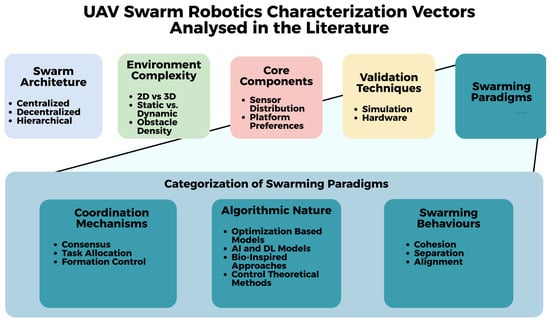
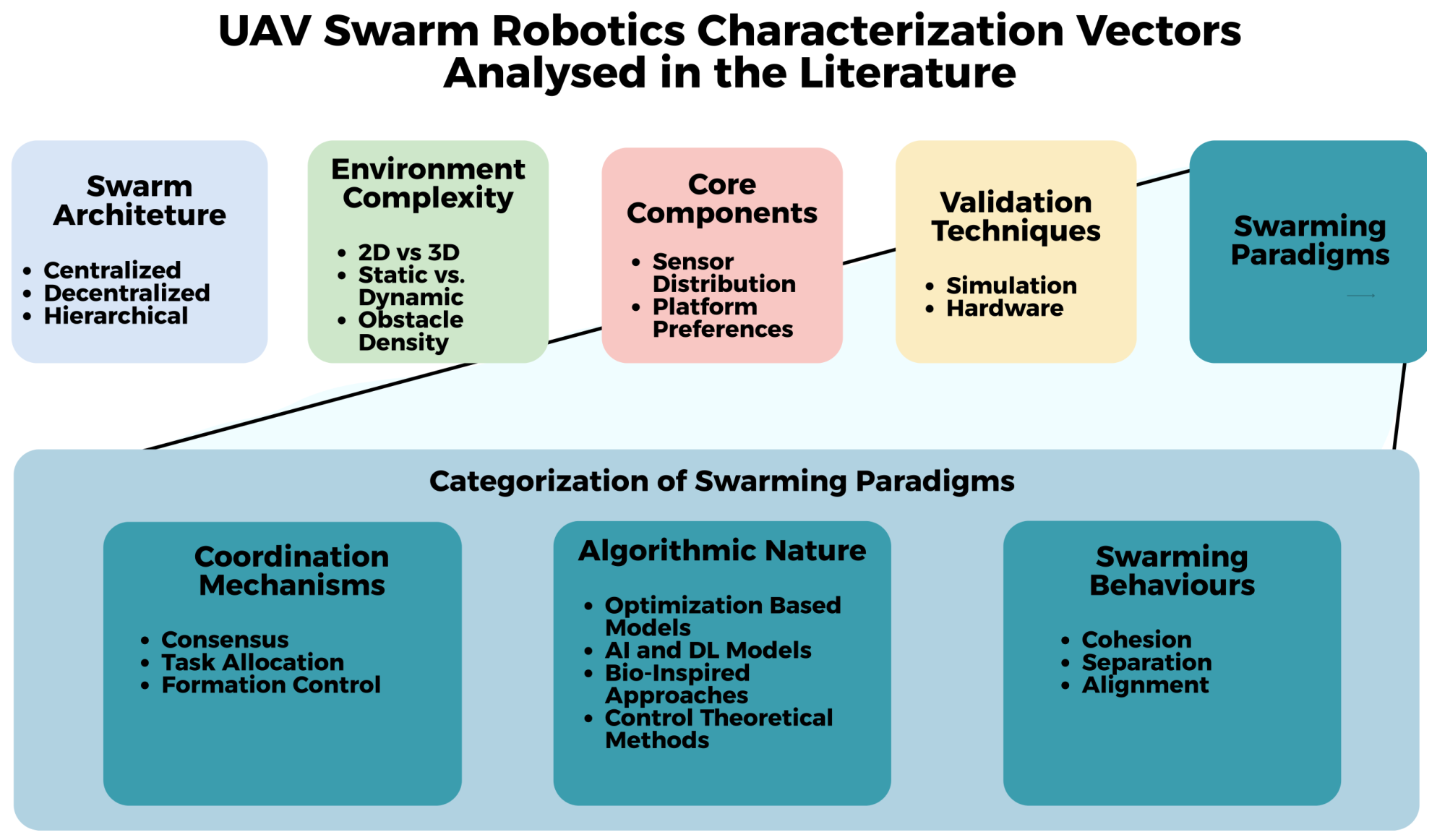
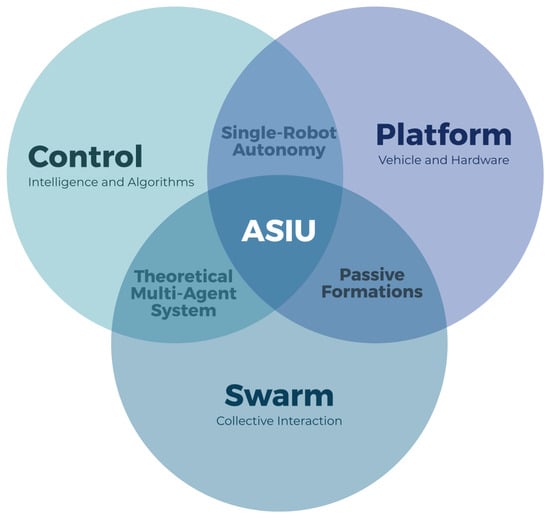
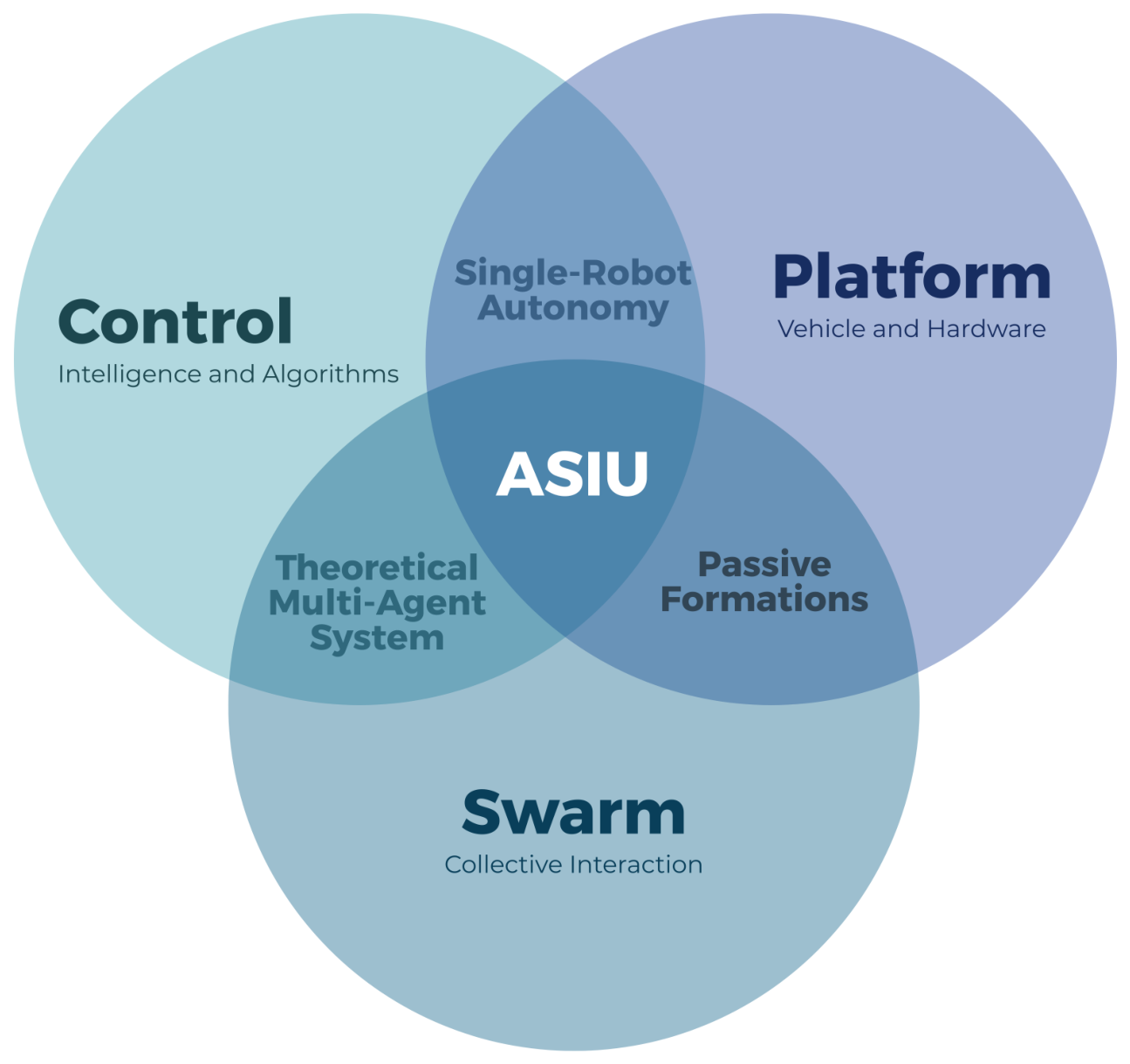
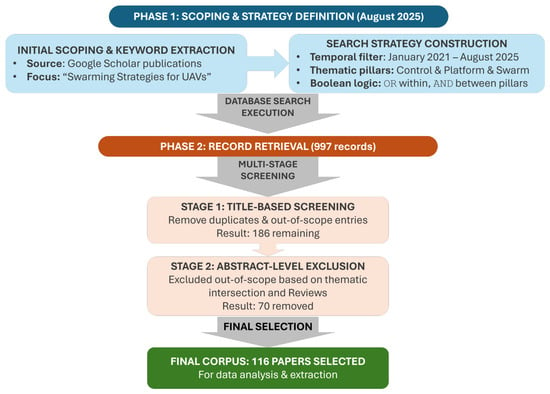
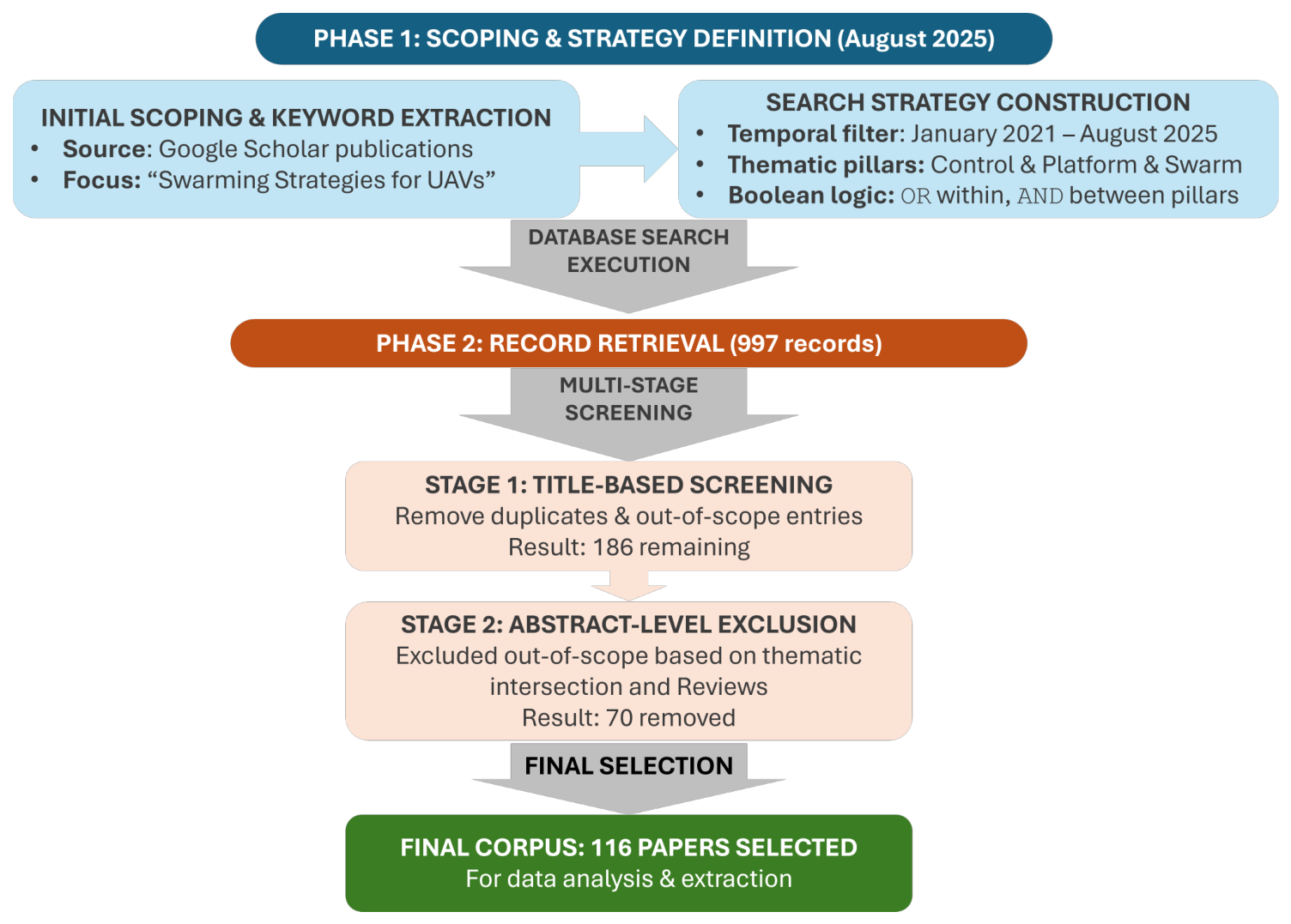
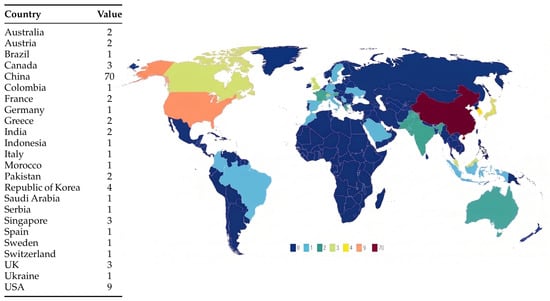
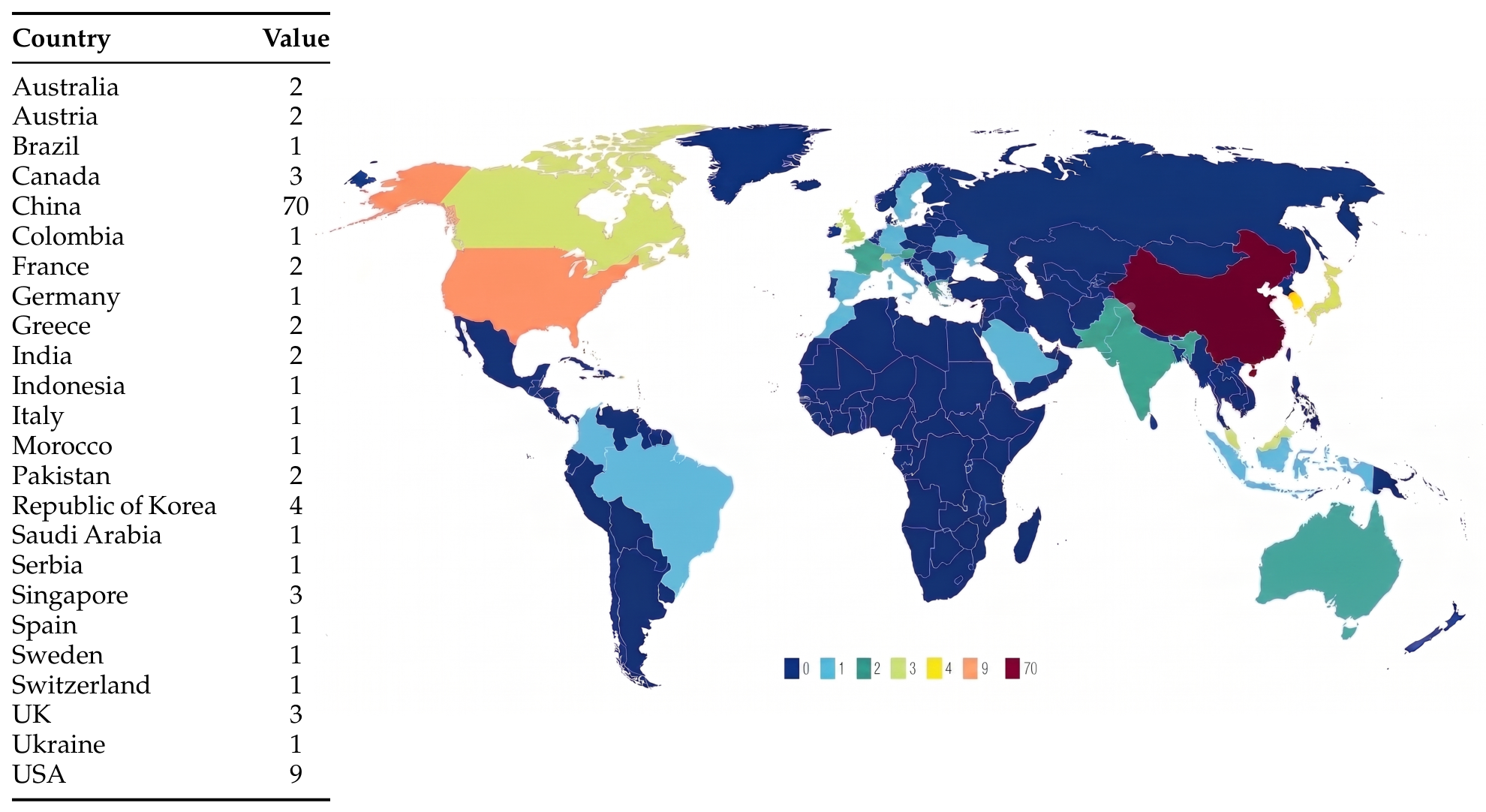
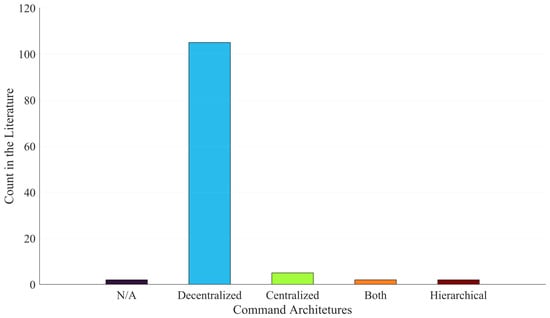
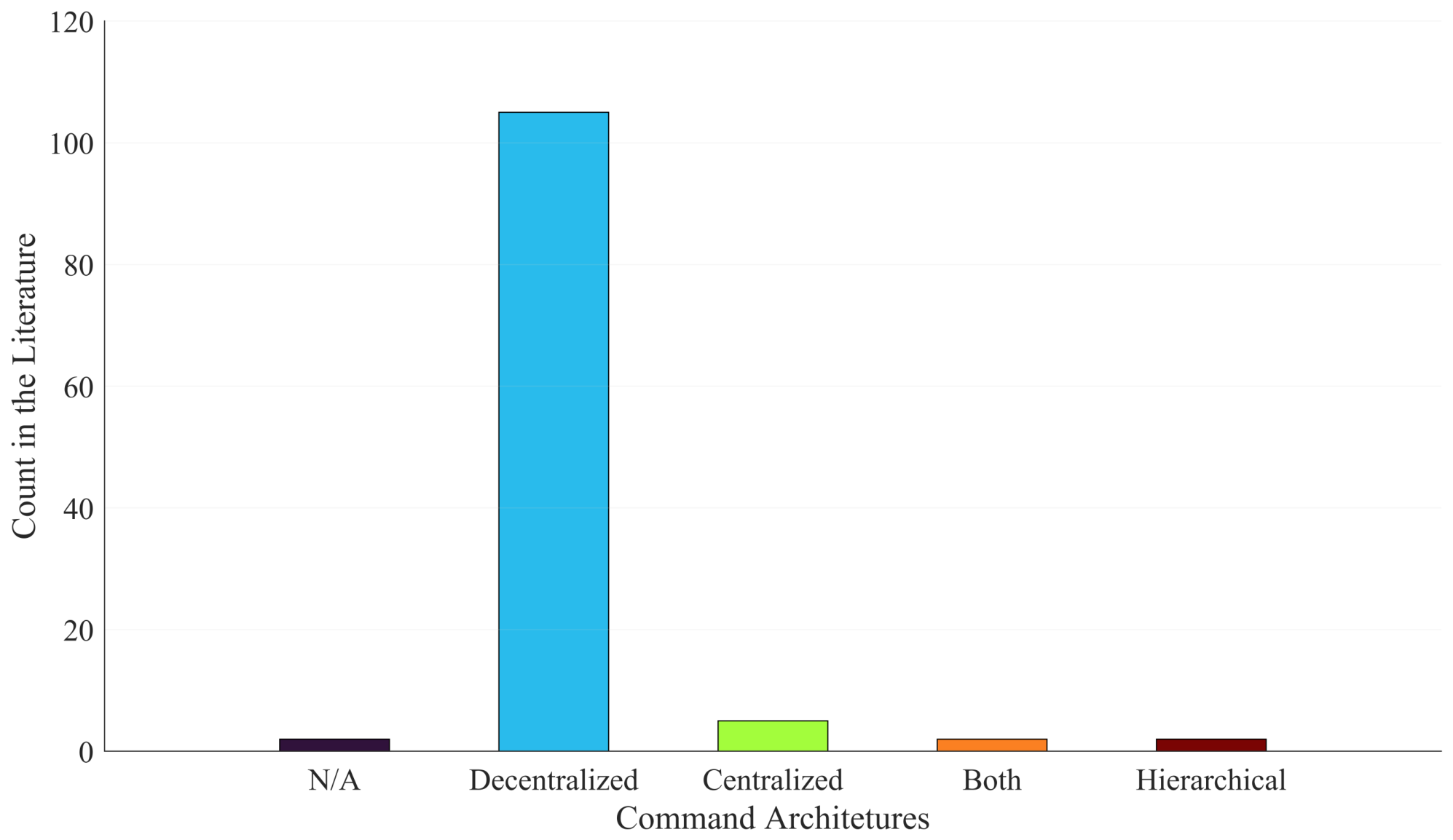
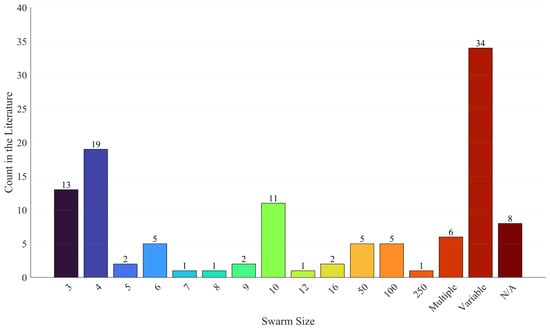
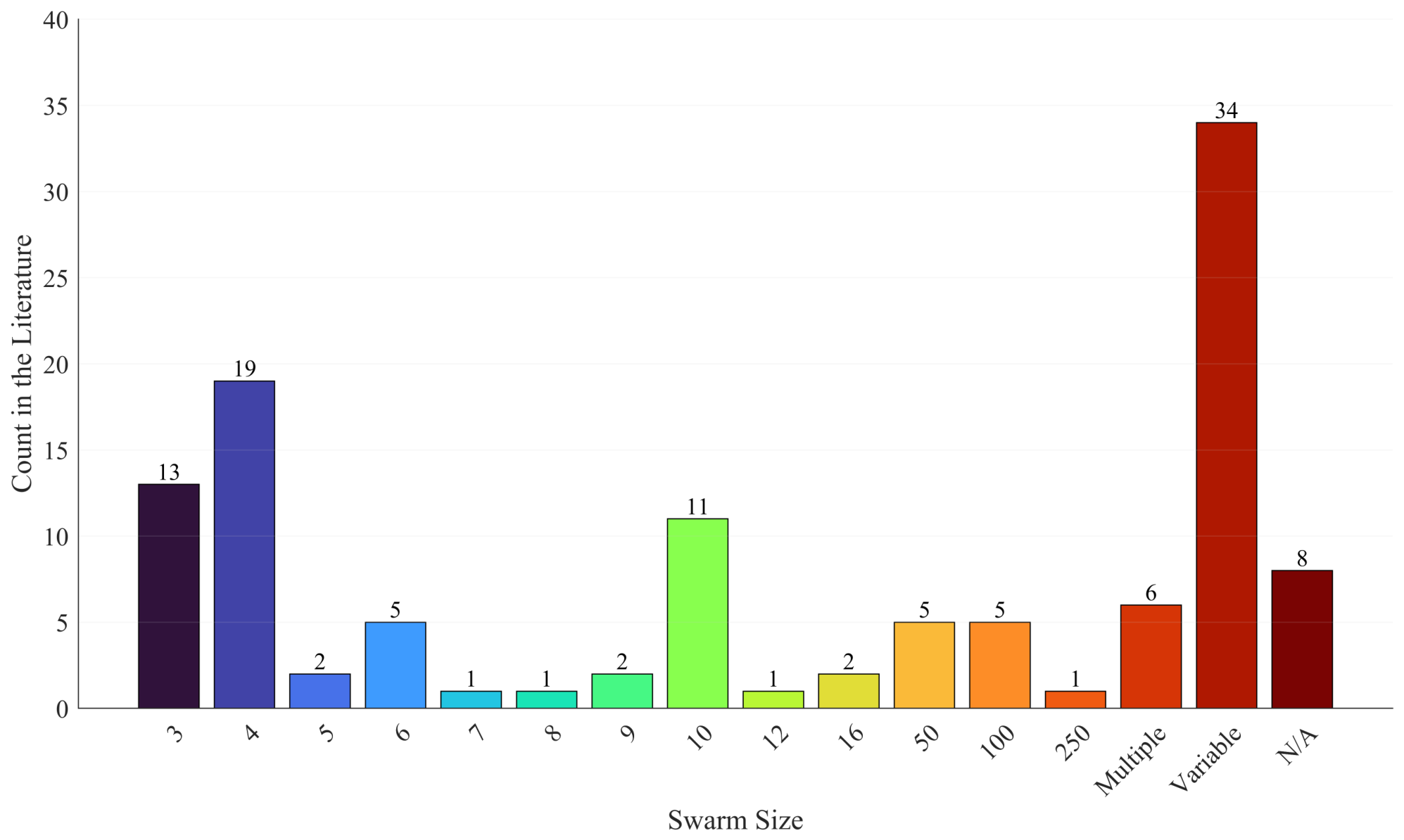
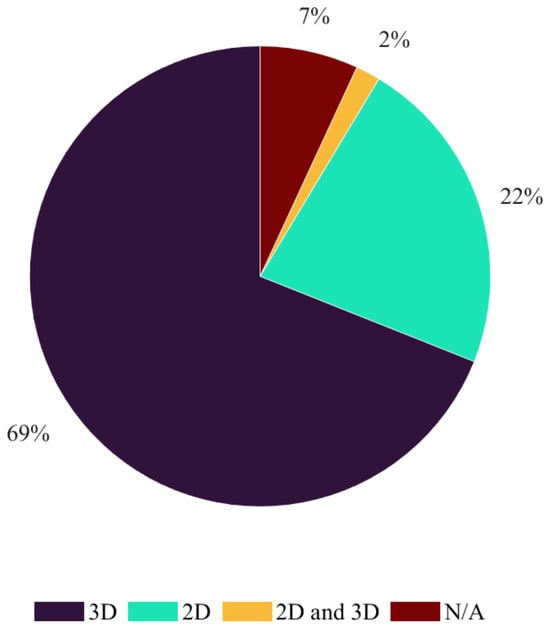
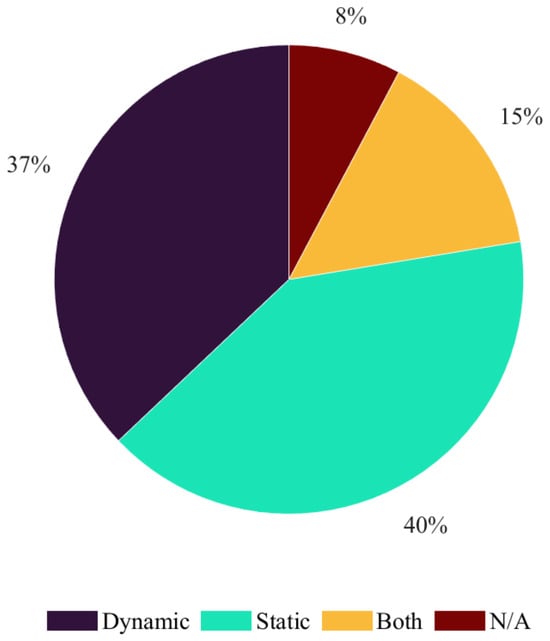
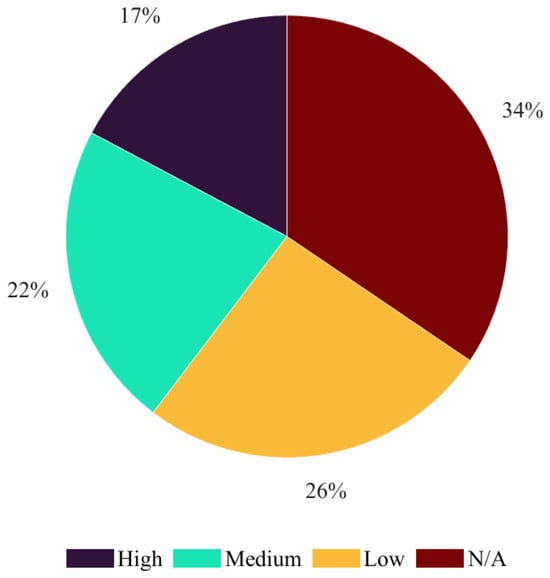
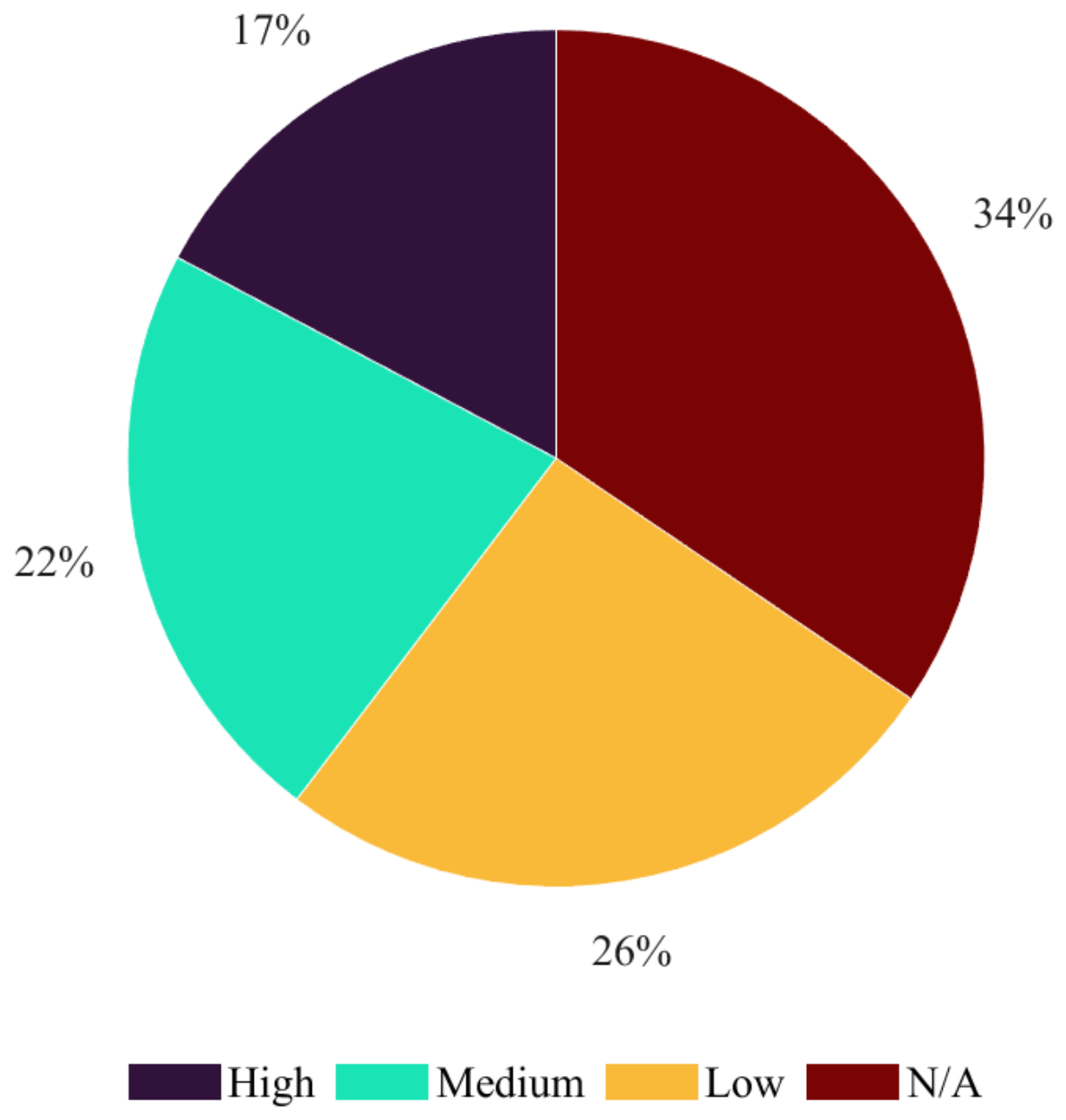
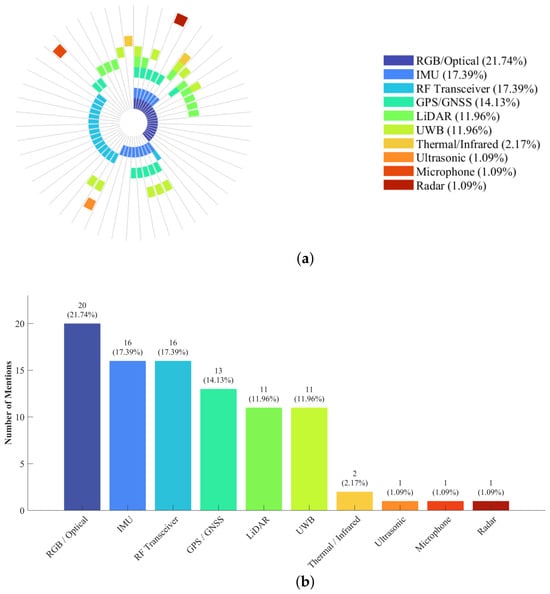
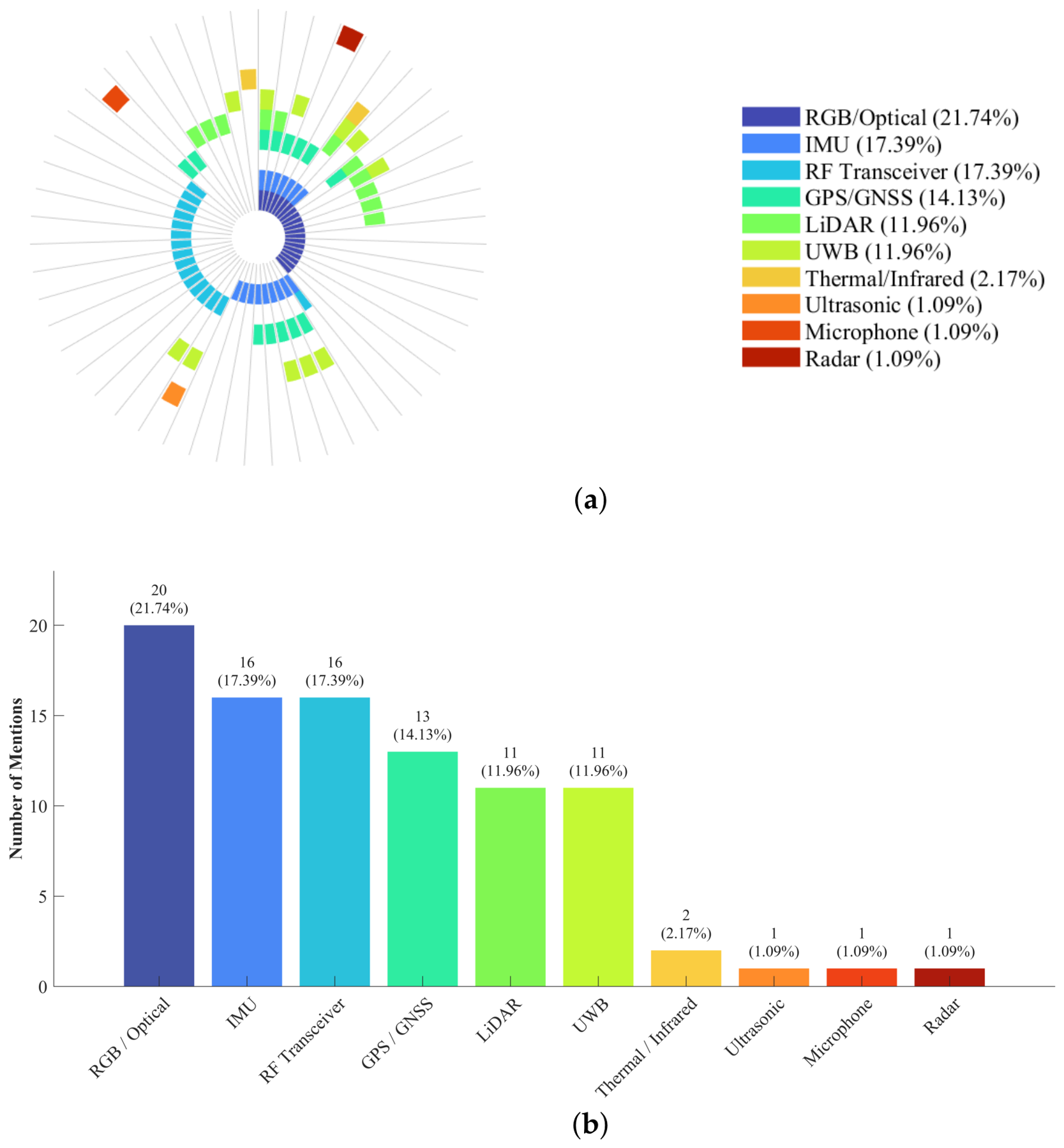
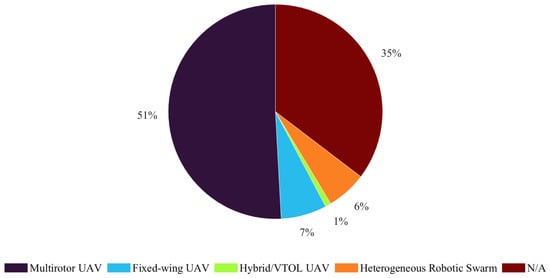
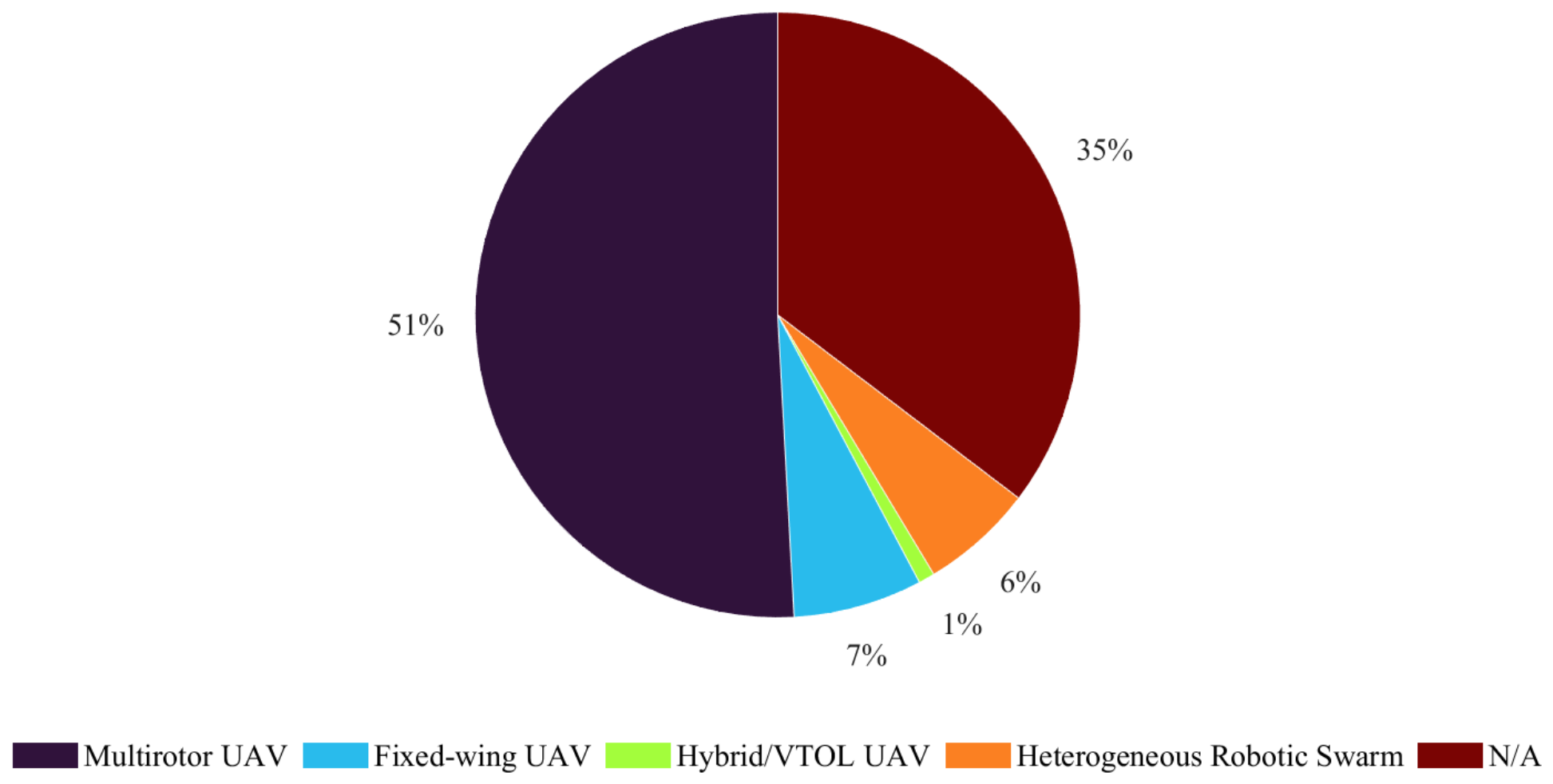
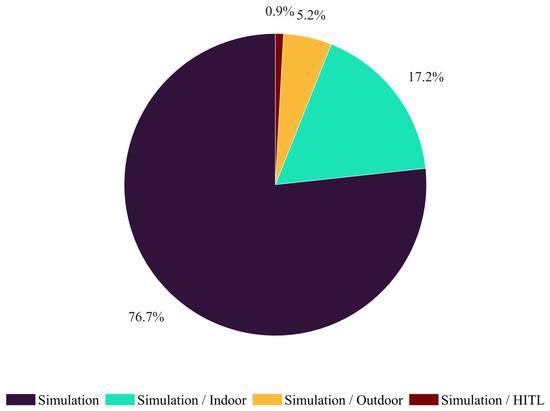
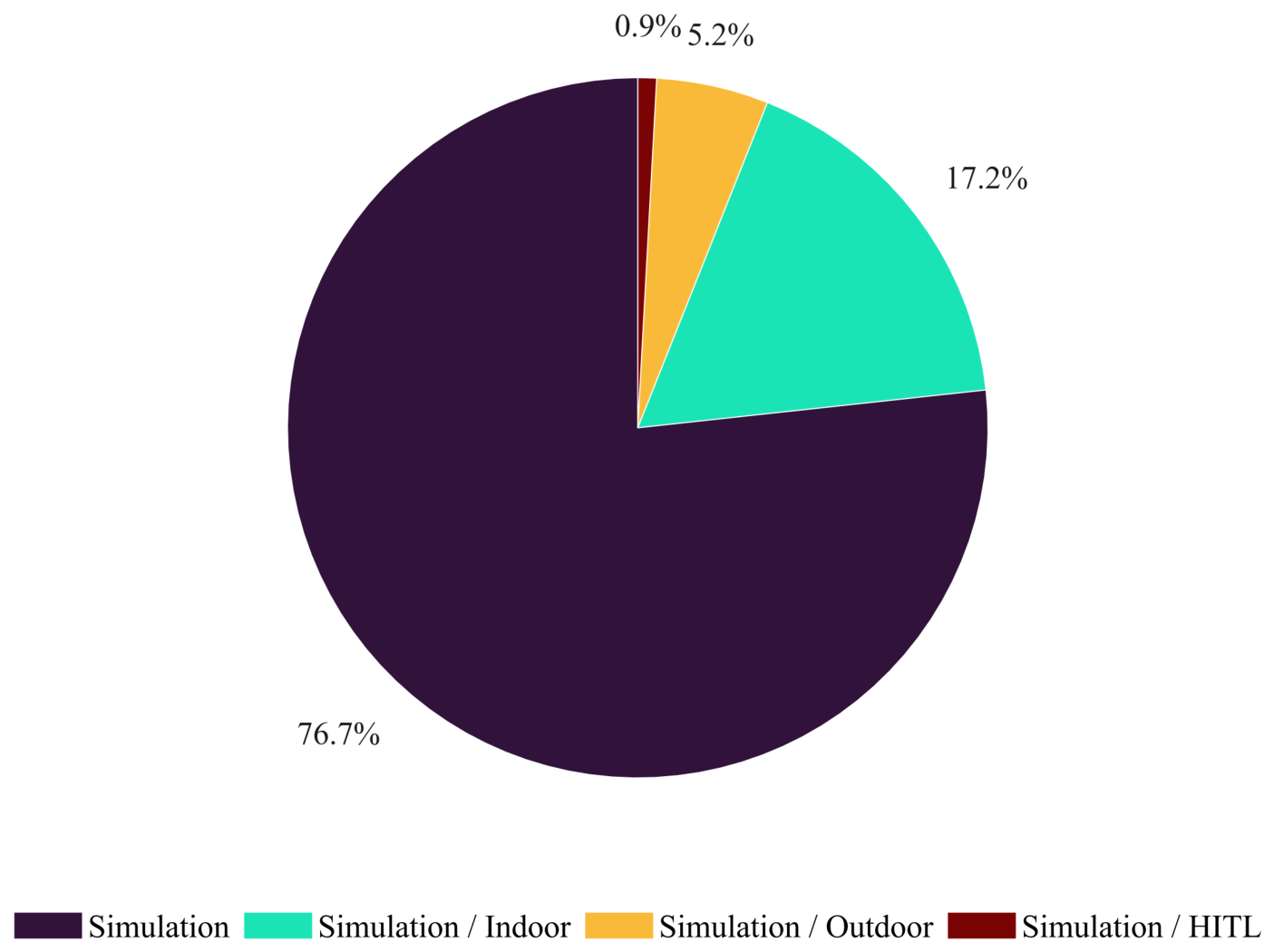
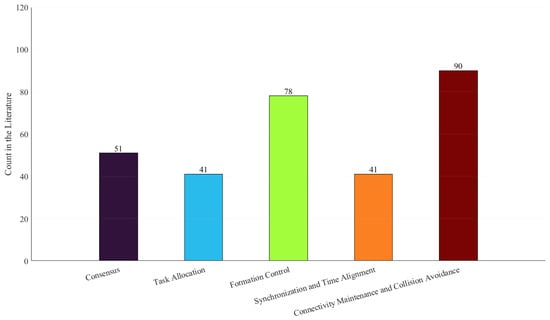
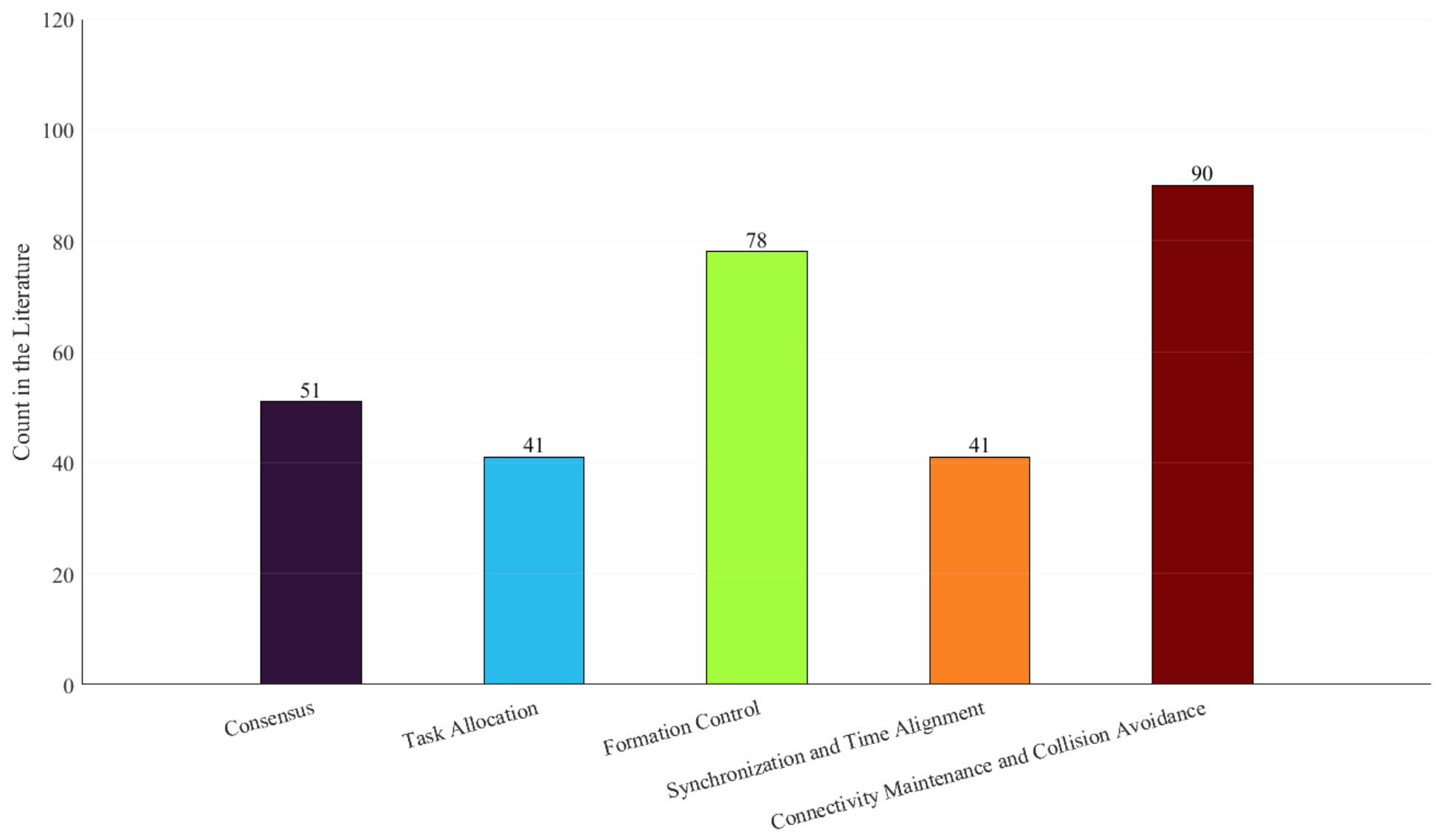
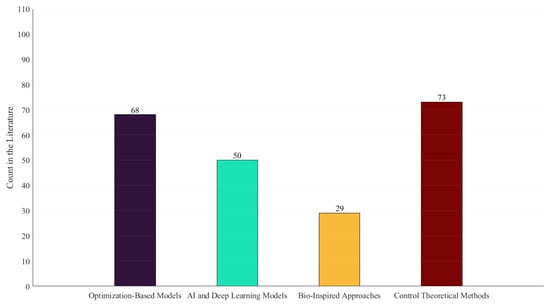
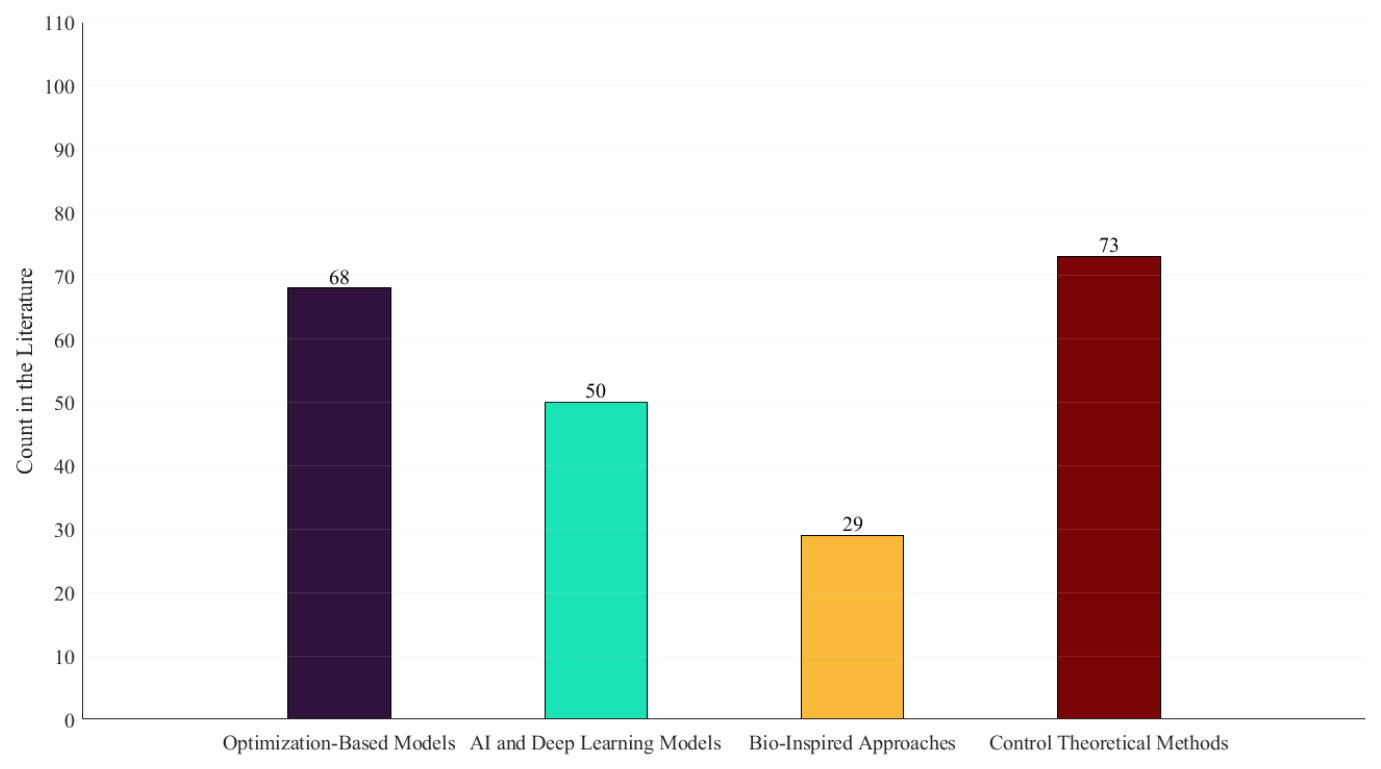
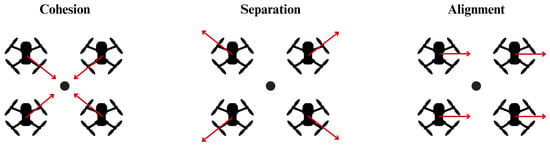
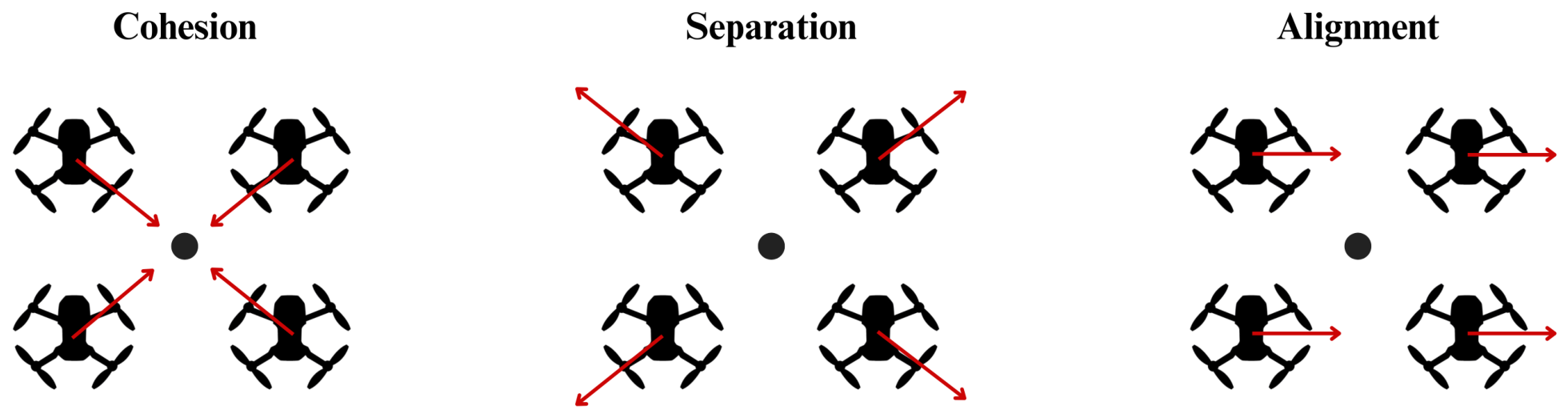

Disclaimer/Publisher’s Note: The statements, opinions and data contained in all publications are solely those of the individual author(s) and contributor(s) and not of MDPI and/or the editor(s). MDPI and/or the editor(s) disclaim responsibility for any injury to people or property resulting from any ideas, methods, instructions or products referred to in the content. |
© 2026 by the authors. Licensee MDPI, Basel, Switzerland. This article is an open access article distributed under the terms and conditions of the Creative Commons Attribution (CC BY) license.