


Abstract
Eutrophication driven by excess nitrogen (N) and phosphorus (P) remains a pervasive global water-quality challenge, necessitating scalable nutrient recovery strategies that extend beyond conventional treatment approaches. This review synthesizes the emerging literature on algae-based systems as dual-purpose platforms for nutrient mitigation and biomass valorization. We examine systems including seaweed bioextraction, integrated multi-trophic aquaculture, algal turf scrubbers, and wastewater phycoremediation, while highlighting reported nutrient removal efficiencies and operational constraints. Beyond remediation, the spectrum of valorization pathways considered ranges from biofertilizers, feed, bioenergy, and materials to nutraceuticals, cosmetics, biomedical materials, biomanufacturing, and methane-mitigating livestock additives. The review emphasizes the economic and logistical challenges linking remediation-scale biomass production to commercial markets, including the contamination risk, processing intensity, regulatory classification, and scale mismatch. We propose an integrated remediation–valorization framework to guide research, policy, and industry toward nutrient-circular, economically viable restoration strategies.
1. Introduction
Eutrophication impacts fresh, brackish, and marine systems alike. It is defined as the process by which an ecosystem becomes overly productive (in relation to normal levels) due to the overabundance of nitrogen (N) and phosphorus (P) from anthropogenic activity [1]. While nutrients are vital to aquatic ecosystems, the over-enrichment of N and P from eutrophication comes with many adverse side effects, such as algae blooms that quickly overwhelm ecosystems [2] and subsequently deplete the system of oxygen (otherwise known as “hypoxia/anoxia” [3], contributing to other adverse outcomes such as mass mortality events, loss of biodiversity, and an overall degradation of ecosystem services [4,5,6,7,8,9,10,11].
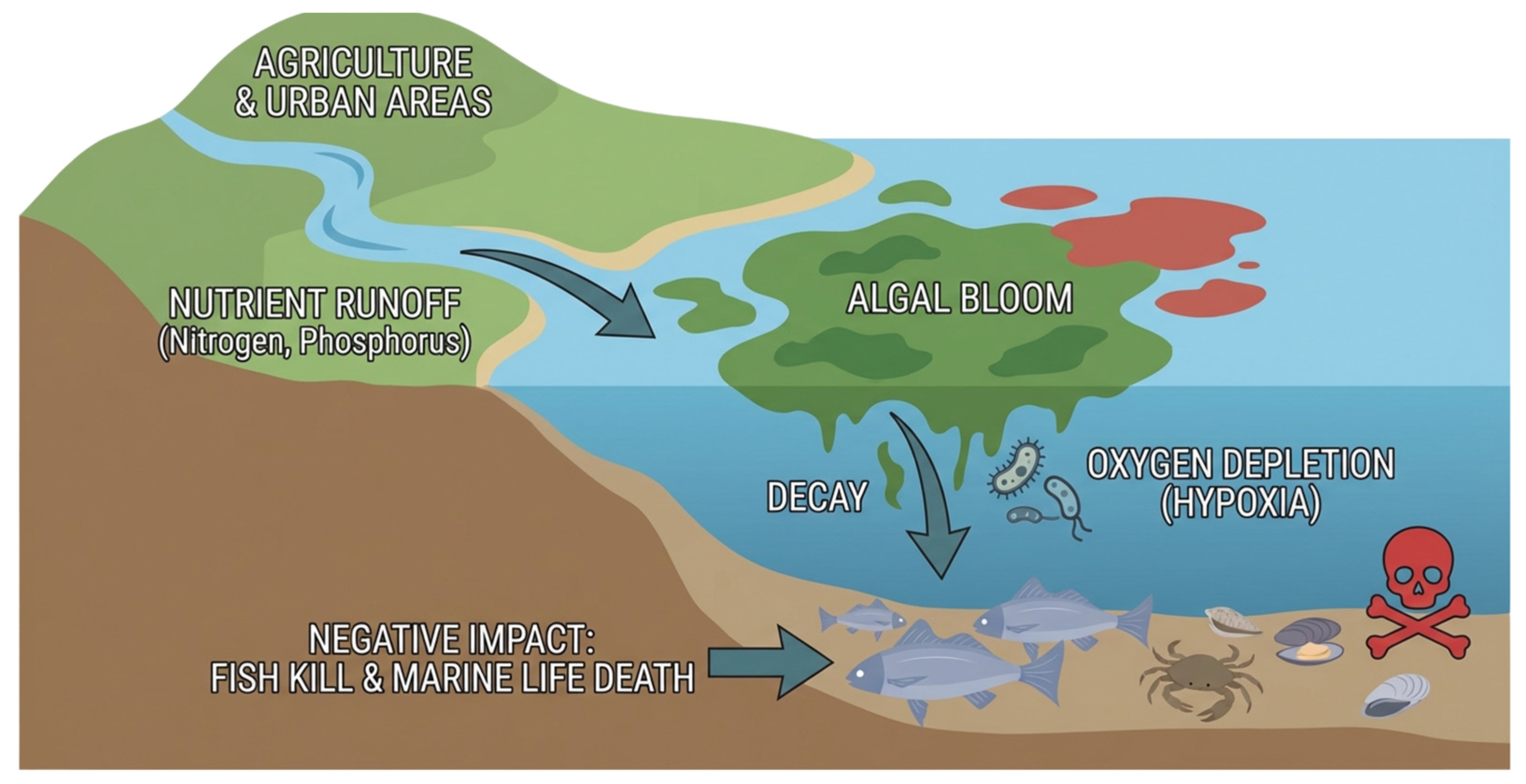
Figure 1 illustrates a simplified process of eutrophication in estuaries/coastal systems, leading to harmful algal blooms (HABs) and increased oxygen consumption [12,13,14]. N and P inputs stem from sources such as agricultural runoff, urban wastewater/stormwater, industrial effluents, and atmospheric deposition. These loads are modified during estuarine processing and exported seaward [12].
Even though algal blooms are typically characterized as a negative impact on ecosystems, the literature shows that bloom-forming algae can (i) take up excess nutrients from systems within hours to days, (ii) store nutrients internally, and (iii) release substantial fractions of assimilated nutrients back to the water column during decomposition [15,16,17,18].
Figure 1.
Conceptual schematic linking watershed nutrient and organic matter inputs to estuarine and coastal eutrophication, harmful algal blooms, and hypoxia. The diagram highlights key nutrient source pathways, along with mechanistic pathways, plume transport and mixing, primary production, organic matter remineralization, and coupled nitrogen and phosphorus cycling across the estuary/coastal ocean [19].
With proper infrastructure, algal blooms can be reframed as potential financially viable stocks for commercialization, with a net reduction to nutrient load upon the removal of biomass from the system. This reframing does not fully replace current watershed nutrient-remediation practices but instead proposes algae cultivation/harvest as a complementary intervention. Presently, research relevant to algal bloom harvesting to reduce eutrophic nutrient loads is distributed across two largely independent areas of the literature. Each has distinct success metrics and boundaries that obscure whether controlled algae cultivation and harvest produce or are capable of remediation-level nutrient export from eutrophic waters.
Algae are used as a tertiary or nutrient removal treatment within wastewater, which acknowledges algae’s ability to respond and grow quickly to remove nutrients (often included in this area of research are pilot studies/attempts to use algae to scrub natural waters). The research into the commercial use of different algae species is commonly referred to as “algae valorization.” The two fields of literature largely fail to connect and answer the following question: Did the harvest and export of algae in this system meaningfully reduce the amounts of N and P in a financially sustainable way?
This review’s contribution is to combine the bodies of literature into a comprehensive review, allowing for research in this area to move forward with a singular cohesive agenda that takes the limitations and considerations from each into account. This review focuses solely on the scientific literature. Though it is important to note that an interdisciplinary body of research, as such, is inevitably intertwined with policy, this review will not focus on the related policy; instead, it unifies the most relevant fields of study.
Therefore, this review has three main aims: (1) to review the principal algae valorization pathways discussed in the literature, (2) to assess how algae cultivation and harvesting intersect with nutrient recovery and restoration in eutrophic waters, and (3) to highlight the main limitations and opportunities in bridging remediation-focused systems with commercially relevant biomass use.
2. Review Methodology
This structured narrative review was intended to synthesize the scientific literature on algae valorization, nutrient recovery, and eutrophication mitigation. The review was developed to integrate bodies of literature that are commonly examined independently, including wastewater phytoremediation; seaweed bio extraction; integrated multi-trophic aquaculture; algal turf scrubbers; and downstream algal valorization pathways, such as biofertilizers, feed, food, nutraceuticals, biomaterials, cosmetics, and energy products. In keeping with the scope of this manuscript, the review focused primarily on peer-reviewed scientific publications and emphasized studies that could inform the remediation potential and downstream biomass use.
Relevant literature was identified through iterative searches using keyword combinations associated with algal nutrient removal, eutrophication control, wastewater-based cultivation, algal biomass utilization, and algae-derived commercial products. Studies were included when they contributed substantively to one or more of the following review themes: nutrient uptake or removal, biomass production, commercial application of algal biomass, contamination or quality constraints, economic feasibility, or the practical linkage between remediation-scale biomass generation and valorization. Recent review papers were used to establish a broader thematic context, while primary studies were used where quantitative evidence or pathway-specific case studies were needed. The resulting literature was synthesized thematically rather than statistically, and no formal meta-analysis was undertaken. This approach was selected because the aim of the paper was to provide an integrative assessment of opportunities and limitations across a diverse, interdisciplinary evidence base rather than to answer a narrowly bounded systematic review question.
3. Algae Valorization Pathways
Algae valorization is the idea of treating algal biomass, whether intentionally cultivated or harvested as nuisance biomass from nutrient-enriched waters, as a feedstock for converting it into marketable products (Figure 2). If algal growth (driven by excess N and P) creates valuable products, an economic lever is created that can help financially sustain nutrient removal and management, rather than treating the biomass simply as a disposal liability. In practice, however, valorization spans a spectrum from low-process bulk uses to high-value specialty products, each with different requirements and supply chains. Furthermore, current research is primarily focused on the products themselves and their effectiveness, as described in the following subsections.
Figure 2.
Algae valorization is the intentional processing of raw algae through various methods to create a product [20].
3.1. Biofertilizers and Biostimulants
Algal-derived biofertilizers and biostimulants provide one of the most practical routes for large-scale algae valorization. It recycles nutrients from biomass back into crops and farmland, positively impacting plant growth and soil health. Plant biostimulants are commonly defined functionally as substances used to stimulate plant nutrition processes, abiotic stress tolerance, and/or quality traits, independent of the product’s nutrient content [15]. Algal biofertilizers typically refer to applications in which the whole algal biomass contributes materially to nutrient supply and cycling. Algal biostimulants are more often low-dose seaweed or microalgal extracts whose primary function is to regulate plant physiological processes rather than deliver bulk nutrients [16,17].
On average, the yield benefit for crops that receive seaweed extracts is consistently ~16.5–18.0% across application methods [18]. Ascophyllum nodosum seaweed extract showed an increased fruit yield by 225% to 271% when compared with untreated plants [21]. Fermented seaweed extract used as foliar fertilizer achieved its highest reported yield at 5% concentration applied twice weekly (2.49 t ha−1), with 5–10% identified as the best-performing concentration range [22].
For biofertilizer nutrient addition, replacing 50% of urea with nitrogen-fixing cyanobacteria maintained rice yield while increasing the nitrogen-use efficiency from 34.7% to 47.7% and reducing the total dissolved nitrogen leaching by 37.2% [23]. For microalgae-based biofertilizers, a live microalgae formulation was shown to improve orchard fruit yield by 15.7–29.6% without any adverse effects observed [24]. Overall, seaweed extracts dominate established biostimulant deployment, while microalgae-based products remain in an earlier stage and are often constrained by production costs and standardization [16,17].
The glaring gap in the literature is the lack of a robust batch/season extraction method and an incomplete mechanistic understanding, underscoring the need for multi-season/multi-location trials and robust regulatory data packages (composition, toxicity/ecotoxicity, and efficacy under defined use conditions) to build farmer confidence and market access. The application of biofertilizers/stimulants offers many other benefits, such as reducing N losses across multiple soil types, application methodologies, and processes [16,23,24].
One additional synthesis that is useful in the long-term trajectory of combining the commercial use of algae to the remediation world is an understanding of the commonly used algae within “biofertilizers/biostimulants” (Table 1) [25].
3.2. Bioart/Bioluminescence
Bioluminescent dinoflagellates enable a high-value, low-mass valorization route in which the organism itself is the product, monetizing experience rather than tonnage. In contrast to bulk pathways, where value scales with mass processed, bioart/bioluminescence treats living cells as an interactive medium that emits visually salient blue light when appropriately stimulated, supporting gallery- and museum-facing installations, interactive exhibits, and science communication formats [26,27]. This pathway is directly relevant to eutrophication narratives because it demonstrates a credible and highly visible economic pull that does not require chemical refining.
Bioluminescent taxa are broadly distributed in surface waters worldwide [27,28]. Critically for bioart and interactive design, mechanical stimulation is among the best-characterized triggers of light emission, making these organisms unusually “hands-on” compared with most phototroph-based products. This species dependence becomes a practical design parameter for bioart and exhibit robustness. The best organism is not necessarily the brightest under all conditions, but the one with reliable, repeatable flashes under safe stimulation regimes that do not rapidly exhaust the culture; such an organism is further constrained by circadian gating that shapes the scheduling, lighting, and display protocols [29].
Pyrocystis lunula has been evaluated as a biological flow visualizer, where light emission patterns track coherent vortex features; in a stirred container, reported maximum tangential velocities near ~0.96–1.00 m s−1 at the vortex core radius corresponded to shear stresses of ~−0.34 to −0.36 N m−2, and the authors concluded that P. lunula bioluminescence can indicate zones of high shear and reveal vortex structure [30].
Consistent performance requires controlled culture health, appropriate diel light cycles, and containment to prevent unintended release; additionally, because bioluminescent dinoflagellates include harmful taxa, the species selection, sourcing, and disposal/containment practices become de facto regulatory and biosafety considerations [28]. While bioart/bioluminescence will rarely be a watershed-scale sink for nutrients, it can provide a high-visibility, revenue-positive “front end” for algae-to-product narratives, and residual or retired biomass from exhibits can be routed to downstream valorization to improve the whole-chain resource efficiency.
3.3. Engineered Microalgae in Biomanufacturing
Microalgae-based biomanufacturing, in the context of this review, refers specifically to the use of engineered phototrophic cells as production platforms for recombinant or other sequence-defined bioproducts. In this narrower sense, value is generated primarily through molecular specificity rather than biomass tonnage. A recent perspective highlights the gap between laboratory demonstrations and commercialization, noting that no genetically engineered microalgae-made biopharmaceuticals for human use have yet reached the market, despite substantial progress in engineering and bioprocess developments [29]. This statement should be distinguished from the broader use of algae and algae-derived compounds in medical, pharmaceutical, and health-related products, which are already represented in other established commercial pathways [31].
For vaccine-type concepts that reduce cold-chain and purification burdens, chloroplast expression has enabled “bioencapsulated” oral delivery prototypes. Freeze-dried Chlamydomonas cells producing a cholera-toxin B subunit fusion antigen were reported to be stable at ambient temperature and elicited positive responses upon oral administration in mice [32]. Beyond Chlamydomonas, Dunaliella salina has supported expression of a complex virus with demonstrated hemagglutination activity, illustrating feasibility but also highlighting that functional readouts may require enrichment, even at the proof-of-concept stage [33]. Collectively, the literature supports the idea that microalgae can produce biologically active recombinant proteins across multiple use cases, but the path to a regulated product remains yield- and quality-gated, with downstream purification as the main constraint. As a result, eutrophication-linked valorization only intersects this lane through purpose-built and contained cultivation [34,35].
3.4. Biomedical
Biomedical algae valorization is exemplified by clinically mature alginate-based wound-care and delivery hydrogels and emerging photosynthetic therapies, in which the value hinges on regulated material performance and safety rather than on biomass tonnage. Alginate is a naturally occurring, anionic polysaccharide predominantly extracted from brown seaweeds and widely used to fabricate biomedical hydrogels, dressings, and encapsulation matrices because it gels under mild conditions via ionic crosslinking and can be processed into porous fibers, films, foams, and composite systems [36,37,38]. Commercial alginate is commonly derived from Laminaria, Ascophyllum nodosum, and Macrocystis pyrifera, and the alginate performance is strongly process-dependent because the monomer composition, molecular weight, and viscosity vary across taxa and can shift with the thallus part/season and extraction conditions, altering the gel strength, permeability, and even immunogenicity propensity [36,37,39,40].
Consequently, as the end-use sensitivity increases, purification and traceability become non-negotiable. Impurities and compositional differences can drive inflammatory responses, and even alginates of the same name may behave differently during gelation and transport, motivating a controlled supply chain that is structurally incompatible with heterogeneous, nuisance-biomass harvesting as a primary feedstock for medical-grade materials [37,40].
Clinically, alginate wound dressings are among the most mature seaweed-to-healthcare valorization pathways. On contact with exudate, calcium alginate dressings undergo ion exchange, forming a conformable gel that supports moist wound healing [40,41].
A systematic meta-analysis of contemporary RCTs in burns and donor sites reported shorter healing times with alginate dressings compared with controls and lower pain scores, while highlighting substantial heterogeneity and the need for more standardized evaluation and longer-term studies [42]. Alginate persists as a workhorse polymer, as modern reviews emphasize tunable gelification and broad applicability from microbeads to macroscopic hydrogels for controlled release and barrier functions [37,38].
A distinct emerging biomedical pathway uses living microalgae as therapeutics, embedding photosynthetic cells in scaffolds to locally elevate oxygen under light. Chlamydomonas reinhardtii used on eight patients with full-thickness skin wounds was reported to have no deleterious local/systemic immune responses over a 90-day follow-up, supporting its feasibility in a tightly controlled clinical context [43].
Taken together, these biomedical routes clarify a cascading valorization pathway that can anchor premium healthcare applications, while off-spec polysaccharide streams and residual seaweed biomass are more realistically routed to downstream, lower-spec pathways, improving the whole-chain economics without compromising clinical requirements [40,44].
3.5. Macroalgal in Biotech
Agar/agarose-derived supports from red algae represent a mature, high-utility biotechnology valorization pathway in which polysaccharides, with agarose as the purified gelling fraction favored for biochemical/biotech uses, have a low charge and low impurity content, which supports predictable mass transport and low nonspecific interactions [41,45]. Microalgae also support important biotechnology applications, including the production of pigments, bioactive compounds, and recombinant products. This subsection focuses specifically on macroalgae-derived hydrocolloids because agar and agarose are used in some of the most established algae-to-biotechnology material pathways discussed in the literature.
In practice, agar/agarose is sourced predominantly from red seaweed genera, including Gelidium and Gracilaria, but feedstock and processing variability directly translate into gel performance, necessitating application-specific specifications and quality control [45,46].
For example, a “biotechnological grade” agarose preparation from Gelidium amansii reported an 11.3% agarose yield from prepared agar, with a gel strength of 853 g·cm−2 and sulfate content of 0.14%, illustrating achievable purity and sensitivity of performance metrics to the extraction/purification workflow [45]. Similarly, industrial agar extraction processes differ by genus and must be standardized per species to balance the yield versus gel degradation under acidic/pressure conditions [46].
In support selection, agarose is typically benchmarked against (i) agar, (ii) alginate, and (iii) higher-strength synthetic resins and inorganic supports, where mechanical robustness and pressure tolerance may improve at the expense of hydrophilicity/biocompatibility and sometimes catalytic performance; therefore, key attributes include the mechanical strength/pressure tolerance, porosity and diffusion limitations, surface and ligand chemistry, thermal/solvent stability, reusability and operational stability, cost and supply scalability, and biocompatibility for regulated processes [41,47].
Performance is governed not only by the base matrix but also by the immobilization chemistry and format. Agarose’s hydrophilic, largely inert network can be engineered via physical entrapment or covalent/affinity immobilization on activated beads, with orientation and multipoint contact controlling the activity–stability trade-offs [41,48,49]. Quantitatively, a carrier comparison relevant to continuous processing reported that enzymes immobilized on agarose supports were, on average, 2-fold more active than when immobilized on methacrylate materials, underscoring how hydrophilicity and the carrier microenvironment can dominate the observed biocatalyst productivity, even when the enzyme and coupling concept are similar [47].
Covalent strategies can yield higher stability but are more sensitive to reaction conditions: for penicillin G acylase on vinyl-sulfone agarose, immobilization was initially slow with low yield under low ionic strength, while increasing ionic strength enabled rapid adsorption-driven immobilization; after optimization, authors reported biocatalysts with stability comparable with a glyoxyl-agarose reference but with only just over 55% recovered activity versus ~80% for glyoxyl-PGA, highlighting the central design issue: chemistry that improves stability can impose an activity penalty if the orientation and multipoint attachment are not tuned [49].
Application formats span porous beads/microbeads and packed beds, gel monoliths/cryogels, membranes, and microcarrier-like constructs; however, explicit industrial operating scales and end-of-life metrics are frequently unspecified in the peer-reviewed immobilization literature [41,47].
Sequential extraction of R-phycoerythrin followed by agar recovery from Gracilaria birdiae residue produced an agar yield of 31.64%, demonstrating that agar/agarose supply can be integrated with upstream pigment recovery and downstream lower-spec uses of remaining solids; conversely, medical/regulated biotech uses will continue to demand tightly controlled feedstock sourcing and purification, limiting the direct reliance on heterogeneous nuisance biomass [46,50].
3.6. Cosmetics
Cosmetic valorization of algae is a high-value, low-tonnage route that upgrades photoprotective and antioxidant metabolites, especially mycosporine-like amino acids (MAAs) and microalgal astaxanthin. However, its translation into strong UV-protection claims is constrained by ingredient standardization and UV-filter regulatory status. MAAs are small, water-soluble, typically colorless UV-absorbing compounds with narrow-band absorption maxima between ~309 and 362 nm; they exhibit high molar extinction coefficients and dissipate absorbed radiation primarily as heat rather than generating radicals [51,52].
Their cosmetic relevance is sharpened by scalable purification approaches from red macroalgae: using aqueous extraction followed by high-performance countercurrent chromatography, one study isolated five MAAs from two red macroalgae and a marine lichen, reporting ~20% aqueous extraction yields and showing that Pyropia columbina extracts were dominated by porphyra-334 with co-occurring shinorine and porphyra-334 [53].
Performance evidence remains formulation- and dose-dependent: a review that compiled sunscreen-relevant data reported an exponential rise in SPF with increased MAA content and cited SPF 7.5 at the highest reported MAA yield for MAA mixtures from red algae; however, many abundant MAAs absorb strongly in the UVA region, implying that broad-spectrum protection typically requires combinations or pairing with conventional UV filters [52].
Mechanistically, beyond photon absorption, MAAs exhibit anti-photoaging potential in cellular systems and are generally considered stable across wide pH/temperature windows, supporting formulation feasibility but underscoring the need for MAA-specific stability and water-resistance strategies [51]. In parallel, astaxanthin is a flagship microalgal cosmetic/cosmeceutical antioxidant used to target photoaging-linked endpoints and oxidative-stress-associated skin damage [54,55].
Human evidence synthesized in a systematic review/meta-analysis indicates that oral astaxanthin supplementation significantly improved skin moisture content and elasticity versus a placebo, while effects on wrinkle depth were not statistically significant in a pooled analysis, highlighting the promise and current limits of clinical certainty for headline cosmetic claims [56].
The bioprocess optimization literature reports high biomass productivities and intracellular astaxanthin levels on the order of ~30 mg g−1 dry weight under specific stress/nutrient regimes, alongside reported astaxanthin productivities such as 15.45 mg L−1 d−1 in a dense two-stage strategy [54]. However, the same biology that enables high titers can create downstream costs: red-stage cells form a thick algeenan-containing wall that protects aplanospores under stress; this is beneficial for stability but plausibly increases the processing severity and cost for pigment recovery [54].
A pragmatic valorization approach for cosmetics most naturally fits a cascading biorefinery that extracts/standardizes premium photoprotectants and antioxidants first, and then the route-spent and lower-spec biomass streams to downstream pathways that align with purity and regulatory constraints [53,54].
3.7. Feed, Food, and Nutraceuticals
Microalgae- and microbe-derived “algal” ingredients constitute a high-value valorization pathway in which economic viability is driven by standardized nutritional composition, sensory acceptability, and safety/regulatory compliance, rather than by bulk biomass tonnage. In practice, this pathway spans (i) whole-biomass foods and feed meals, (ii) nutraceutical lipids, and (iii) high-value pigments used as functional ingredients and as quality enhancers in feeds. Regulatory status and safety assurance are central design constraints: only a subset of taxa and ingredient types have clear “food/feed-ready” dossiers, and these requirements effectively favor purpose-built cultivation and traceable processing over heterogeneous nuisance biomass sourcing [54,57,58,59].
Quantitatively, the strongest evidence of performance is for fermentation-type “algal oils” and for pigment streams whose yields and quality metrics can be operationally controlled. For DHA, a defined synthetic medium for Crypthecodinium cohnii shortened the culture period from 12 to 14 to 7–8 days, increased the OD_600 from 2.0 to 3.0, and increased the DHA in culture from 10 to 45 nmol per 300 μL batch, illustrating how defined media can accelerate production while improving the compositional consistency [60].
For combined EPA+DHA production, Schizochytrium process/strain engineering increased the EPA content from ~1.26% to 7.63% and achieved final titers of 2.25 g/L EPA and 9.59 g/L DHA, supporting the feasibility of microbial “omega-3 co-production” that can relieve pressure on fisheries-derived oils [61]. For carotenoid nutraceutical/feed markets, Haematococcus pluvialis two-stage cultivation remains the dominant method, with reports summarized in a recent review describing astaxanthin concentrations of ~29.62–30.07 mg/g dry weight under nitrogen-limitation strategies and noting that carotenoid accumulation can reach ~5% of dried biomass, with ~90% of that carotenoid pool comprising astaxanthin [54]. For phycocyanin, a key “food ingredient to refined nutraceutical-grade” example, reported extraction yields vary by method and solvent; recent synthesis produced yields up to 217.18 mg/g and provides widely used purity benchmarks, underscoring the idea that downstream fractionation quality largely determines value capture [59].
This pathway’s primary limitations are (a) safety risks from contaminants and toxin misidentification, (b) sensory and stability constraints, and (c) regulatory incompatibility of low-cost nutrient sourcing with the food chain. One regulatory-focused review notes that producing 100 tons of microalgae biomass can require on the order of 10 tons N and 1 ton P, motivating wastewater coupling, yet also emphasizes that biomass cultivated on wastewaters is generally not permitted for human applications and is constrained for feed uses, making “eutrophication-biomass-to-food” an exception rather than the rule [57,58].
In integrated algae biorefineries, nutraceutical/pigment/oil extraction can be prioritized for highest value, while defatted or spent biomass is more realistically directed to downstream valorization, aligning product purity requirements with circularity goals [58].
3.8. Industrial Energy and Materials
Industrial energy and materials valorize algae by converting cultivated or recovered biomass into fuels and functional materials, but viability is governed by integrated water–nutrient management, co-product strategy, and end-use safety/quality constraints rather than by biomass availability alone. In the biodiesel pathway, algae oils are attractive because microalgae can exhibit high oil contents and short growth cycles, yet scale-up is impeded by lipid extraction and conversion economics, infrastructure requirements, and policy/financing barriers, which present particularly explicit challenges in developing-country contexts [62].
A key industrial design response is coupling cultivation to wastewater phycoremediation to internalize environmental services and reduce nutrient costs: in one techno-economic case using Scenedesmus obliquus, wastewater-grown microalgae achieved removal efficiencies of 71.2 ± 3.5% COD, 81.9 ± 3.8% NH4+, ~100% NO3−, and 94.1 ± 4.7% PO43−, with a specific growth rate of 0.42 ± 0.02 d−1 and carrying capacity 0.88 ± 0.04 g L−1; furthermore, the biomass composition supported multi-output utilization and the reported cost–benefit analysis yielded a net profit of USD 16,885 y−1 and payback period of 14.8 years [63]. These data exemplify the broader industrial energy principle for algae: fuels rarely make financial sense based on fuel value alone, and thus, durable business cases typically require stacked value, with many system-level performance rates otherwise remaining unspecified across heterogeneous pilot reports [62,63].
On the materials side, seaweed and algae-derived polymers can displace petroplastics in selected applications, but performance is strongly formulation-dependent and is often traded off against moisture sensitivity and durability. A comparative study of seaweed-derivative films reported tensile strengths in the ~18.50–48.23 MPa range for specific formulations, with a semi-refined carrageenan-based film achieving a 45.98 MPa tensile strength, low water solubility, low water vapor permeability, and a high decomposition temperature, indicating how composite reinforcement can improve the barrier and thermal performance while leaving application-specific trade-offs [64].
A primary seaweed-based bioplastic demonstration using Sargassum wightii reported a moisture content of 21.16% and strong hydrophilicity, alongside biodegradability, as indicated by 40% weight reduction over 21 days in a soil burial test, which is beneficial for end-of-life processing but potentially limiting for durable-use cases unless modified [65].
3.9. Livestock
Algal feed additives, most notably the bromoform-containing red seaweed Asparagopsis taxiformis, represent a high-leverage livestock valorization pathway that can deliver large enteric methane reductions at low inclusion rates, but with adoption gated by dose–response consistency, residue/safety assurance, and scalable supply chains. In this scope, the key attributes to evaluate explicitly are the CH4 reduction efficacy, dose rate, delivery method, animal performance, residue and safety, scalability and cost/TEA indicators, and regulatory/market acceptance (feed additive approvals and consumer acceptance). In a 147-day beef steer trial with A. taxiformis at 0.25% and 0.5% of the organic matter intake, the methane yield decreased by 45% and 68% overall and the feed conversion efficiency increased, underscoring the idea that mitigation and productivity effects can be coupled and diet-dependent [66].
Mechanistically and comparatively, a meta-analysis of bromoform-containing seaweed ingredients estimated that at an average bromoform dose of ~28.3 mg/kg DM, the CH4 production, yield, and intensity declined by 47.3%, 43.3%, and 39.0%, respectively, with a greater efficacy in beef than dairy cattle and in higher-starch diets [67]. Whole-dried biomass remains common in trials, but controlled formulations are increasingly emphasized: oil carriers were associated with more pronounced mitigation, particularly for CH4 intensity, in the above meta-analysis, and oil-based processing has been proposed specifically to retain and deliver bromoform while avoiding energy-intensive freeze-drying [68,69].
A long-term controlled transfer study with lactating dairy cows receiving fixed daily A. taxiformis doses showed that bromoform was detected transiently in urine and milk, but not detected in milk/urine by day 17 or in feces or collected tissues. The study also reported feed refusal/selection against the seaweed and rumen wall abnormalities with histological inflammation in two animals, reinforcing the idea that “residue-free” and “harmless” cannot be assumed across doses, delivery modes, or exposure durations [70].
Reviews and systematic syntheses therefore emphasize that commercial practicality depends on the standardized bromoform potency, palatability management, mineral control, and containment of environmental co-risks, with only limited studies directly assessing the ozone-related implications of upscaling [71,72].
Beyond methane mitigation, algae contribute to livestock nutrition as proteins, omega-3 sources, pigments, and microbiome-active ingredients; however, these benefits and their interaction with rumen fermentation are species-, process-, and dose-dependent, and long-term, farm-scale trials remain comparatively sparse relative to the enthusiasm for rapid deployment [73].
In integrated algae/seaweed value chains, this “feed additive” pathway can sit at the high-value end, while off-spec or non-feed-grade fractions and spent processing streams are routed to downstream valorization pathways under appropriate specifications, sinking emissions mitigation into broader circularity rather than treating seaweed addition as a standalone fix [71,72].
Table 1 summarizes the representative algae taxa commonly associated with major valorization pathways discussed in the reviewed literature and is intended as an illustrative, rather than exhaustive, synthesis.
Table 1.
Valorization pathways for different algae species.
4. Nutrient-Rich Effluents as Substitutes for Commercial Growth Media
At scale, the use of chemically defined, commercial algal media (i.e., reagent-grade macronutrients and trace-element formulations) can become a major operational cost driver and sustainability burden because large cultivation volumes translate directly into high nitrogen/phosphorus demand and associated procurement, logistics, and water-management costs [77,78]. Nutrient-rich effluents provide a well-established alternative: municipal wastewaters contain readily assimilable inorganic nitrogen and phosphorus that can partially or fully replace commercial media while enabling simultaneous nutrient capture; agricultural waste streams and nutrient-bearing industrial side streams similarly offer “waste-as-feed” substrates for algal growth when managed to match the strain tolerance and reactor design [79,80,81,82]. In practice, this substitution is commonly framed as cultivation integrated with tertiary treatment that is implemented in open high-rate algal ponds and closed or semi-closed photobioreactors, where nutrient removal and biomass generation occur in the same process unit and the resulting biomass becomes a recoverable nutrient pool rather than a dilute effluent load [80,83].
The main advantages of using effluents as culture media are improved techno-economic feasibility (reduced freshwater and fertilizer inputs); process intensification via coupling of wastewater remediation with biomass production; and strengthened circularity because dissolved nitrogen and phosphorus are converted into harvestable biomass that can be valorized as biofertilizer/biostimulant, bioenergy feedstock, or other biobased products, positioning algal cultivation as a production platform and nutrient-recovery operation [79,81,84]. Economic analyses and field applications in agriculture further illustrate how treatment-coupled systems (e.g., algal turf scrubbers treating dairy manure effluent) can translate nutrient capture into quantifiable avoided-treatment costs and potentially monetizable biomass streams, albeit with strong site dependence [85]. Constraints remain non-trivial: effluent composition is variable (including suboptimal C/N and N/P ratios), and agricultural digestates may require dilution or pretreatment because turbidity/dark color and elevated ammonium can inhibit photosynthesis and growth [79,86]. Industrial effluents can also introduce inhibitory organics, salinity, or metals, and open systems are vulnerable to biological instability (e.g., grazers/pathogens), potentially increasing the operational risk and downstream processing complexity [82,83]. Finally, wastewater-grown biomass intended for downstream valorization must satisfy end-use quality and regulatory constraints since heavy metals and contaminants of emerging concern may partition into biomass; encouragingly, recent pilot-scale evidence indicates that some pharmaceutical mixtures can be substantially removed with low retention in biomass, while other studies emphasize the need for contaminant-specific monitoring and risk controls to ensure safe agricultural use [87,88]. Collectively, these considerations reinforce a core valorization principle: selecting the effluent, strain, cultivation system, and downstream pathway as a coupled design problem maximizes the remediation performance and feasibility of nutrient recovery into market-relevant algal products.
5. Algae Used in Restoration
Algae-based restoration operationalizes eutrophication control by converting dissolved nutrients into harvestable biomass (or verified removal credits), enabling measurable nitrogen (N) and phosphorus (P) reductions over management-relevant timescales where source controls alone cannot rapidly reverse legacy enrichment.
5.1. Eutrophic Water and Nonpoint-Source Nutrient Removal
In Long Island Sound and the Bronx River Estuary, field-scale “nutrient bioextraction” studies showed how seaweed aquaculture can function as an in-water, harvest-based N (and C) removal tool, where the cultivation of the warm-season red seaweed Gracilaria tikvahiae was estimated to remove up to 28 kg N ha−1 (Long Island Sound site) and 94 kg N ha−1 (Bronx River Estuary site) over a 90-day growing season, with contemporaneous tissue N contents of ~1.5% and ~3.7% (dry weight), respectively [89].
A follow-up winter–spring implementation using sugar kelp Saccharina latissima produced estimated removals of up to 180, 67, and 38 kg N ha−1 at three sites (Bronx River Estuary, western Long Island Sound, and central Long Island Sound, respectively) under a hypothetical farm geometry with a 1.5 m longline spacing, highlighting that performance is strongly conditioned by the site nutrient regime, depth, and farm spacing [90]. Importantly for restoration framing, Kim et al. projected that year-round alternation of Gracilaria (summer) and Saccharina (winter–spring) could reach ~98–274 kg N ha−1 yr−1 at the western Long Island Sound and Bronx River Estuary sites; scaling to regional-level nutrient-management, they estimated that 5100 ha could remove ~1.6–2.2 million kg N yr−1 relative to a 22 million kg N yr−1 target Total Max Daily Load (TMDL) [90].
A more engineered, nonpoint-source-adjacent variant is the algal turf scrubber (ATS)/filamentous algal nutrient scrubber (FANS), where attached algal biofilms are intentionally cultivated on floways so that nutrient-bearing waters (agricultural drainage, rivers, or aquaculture/wastewater side streams) drive rapid growth that is periodically harvested. In an agricultural drainage ditch application, ATS removal rates averaged 125 mg N m−2 d−1 and 25 mg P m−2 d−1, with projected nutrient removal costs of $90–$110 per kg N and $830–$1050 per kg P, illustrating that dilute nonpoint waters can be more expensive to treat per kg nutrient removed than high-strength effluents [91].
Conversely, when the nutrient supply is concentrated, observed areal removal rates can be orders of magnitude higher: ATS units deployed at a commercial oyster aquaculture facility in Chesapeake Bay achieved a mean algal productivity of 88.8 g m−2 d−1 (dry biomass), and the authors explicitly framed the harvested biomass as a potentially usable product [91]. Operationally, the harvest interval is a primary lever, and the relationship between timing and removal is not linear. A pilot FANS study reported higher average biomass productivity at <2-week harvest intervals than 3-week intervals, alongside single-pass reductions of >25% in nitrate-N and 35% in Dissolved Reactive Phosphorus (DRP), while longer intervals increased the biomass detachment [92]. Because seaweeds and algal biofilms can also accumulate iodine and heavy metals depending on the species, season, and water quality, elemental/contaminant characterization becomes essential when harvested restoration biomass is considered for feed or other sensitive markets; in many cases, downstream routing to lower-spec pathways is more realistic unless monitoring and processing controls are in place [93].
5.2. Wastewater Nutrient Removal and Intensified Reactor Designs
Microalgae-based wastewater treatment is increasingly framed as a multifunctional, circular process in which phototrophic communities assimilate dissolved inorganic nitrogen (N) and phosphorus (P); can contribute to reductions in organic load via symbiotic oxygen provision; and may co-remove select contaminants depending on wastewater type, hydraulic regime, and biomass handling [63].
Quantitatively, municipal wastewater phycoremediation using Scenedesmus obliquus achieved removal efficiencies of 71.2 ± 3.5% COD, 81.9 ± 3.8% NH4+, ~100% NO3−, and 94.1 ± 4.7% PO43− while generating biomass with lipid/protein/carbohydrate yields of 26.5 ± 1.5%, 28.5 ± 1.5%, and 27.5 ± 1.6% (dry weight), illustrating why treatment performance and downstream valorization are often co-optimized [63].
At the tertiary/nutrient-polishing end of the spectrum, an algae MPBR treating an urban WWTP effluent operated at 2-day hydraulic retention time (HRT) and reported 56.3% total nitrogen and 64.27% total phosphorus removal, producing an effluent positioned for reuse while retaining biomass behind an ultrafiltration barrier [94].
Full-scale “intensified” implementations are also emerging: a 568 m3·day−1 mixed-community microalgal tertiary P-removal configuration from Clearas Water Recovery combines photobioreactors with a membrane tank that separates HRT and solids retention time (SRT), achieving effluent total phosphorus of 0.03 ± 0.03 mg-P·L−1 over a 3-month winter monitoring period; this is evidence that microalgal nutrient recovery can meet stringent permit-level P targets when process control and solids management are engineered into the system [95].
Membrane photobioreactors (MPBRs) intensify microalgal wastewater treatment by coupling cultivation with membrane solid–liquid separation to retain biomass, decouple HRT/SRT, and deliver low-turbidity effluent; however, fouling and associated energy/maintenance remain the dominant engineering constraints, and thus, the operating strategy becomes economically decisive [96]. In Granada, an urban-effluent algae MPBR reported that after 80 days, the PVDF ultrafiltration membrane’s resistance increased by ~22% [94].
Under higher-strength streams, a novel MPBR used for anaerobically digested wastewater reported that Chlorella sorokiniana reached 1.15 g·L−1 biomass and achieved phosphate removal up to 66.2%, and an MPBR with 0.1 µm membrane pore size reported ammonia and phosphate removal efficiencies of 43.9% and 64.9%, respectively; these results underscore the combined role of biomass retention and light/solids management in nutrient removal regarding challenging matrices [97].
Finally, “intensification” is not limited to membranes: attached-growth and biofilm systems aim to simplify harvesting and increase areal productivity, as exemplified by pilot revolving algal biofilm (RAB) reactors treating sludge-thickening supernatant, where the 7-day HRT total P and total Kjeldahl N removal reached 80% and 87%, and the orthophosphate and ammonia removal reached 100%; at 1.3-day HRT, the TP removal per footprint was ~7× higher than an open pond control, highlighting the trade space between the footprint, harvestability, and process complexity for wastewater-linked valorization.
5.3. Integrated Multi-Trophic Aquaculture
Integrated multi-trophic aquaculture (IMTA) is a highly asymmetric but potentially high-impact algae valorization pathway in which seaweeds are cultivated in proximity to fed aquaculture to capture dissolved and particulate nutrient wastes, reducing the localized eutrophication pressure while generating additional harvestable biomass streams [98].
In practice, IMTA deployments span coastal, estuarine, and open-water contexts and differ by geometry: (i) adjacent longlines/rafts positioned downcurrent, (ii) land-based layouts where effluent is routed through seaweed and shellfish tanks, and (iii) pond or raceway co-culture in shrimp systems that combine fed ponds with macroalgal biofilters such as Gracilaria spp. [99].
Key performance attributes to consider are “percent reduction” analogs for water quality, but expressed more rigorously as areal nutrient capture and harvested nutrient mass, alongside the biomass yield; trophic coupling efficiency; and extent to which operations and permitting allow reliable placement, monitoring, and harvesting at the scale needed to materially offset farm nutrient footprints [99].
Quantitative evidence illustrates the promise and inherent constraints of trophic coupling. In land-based finfish IMTA using Gracilaria vermiculophylla, a pilot biofilter tank system produced 0.7 ± 0.05 kg dw m−2 month−1 and removed 40.54 ± 2.02 g N m−2 month−1, corresponding to only ~0.03% of the monthly fish N inputs in that pilot configuration, highlighting that meaningful nutrient offset generally requires substantial area/volume scaling relative to waste loads [100].
In shrimp–macroalgae IMTA with Gracilaria tikvahiae, algal growth averaged 98.6 g FW m−2 d−1 and N incorporation 0.83 g m−2 d−1, and a “rudimentary nutrient budget” suggested nearly 35% of feed N input could be recovered in shrimp plus algal biomass, with the study explicitly framing “performance envelopes” to capture seasonal and operational variability [101].
In open-water salmon-driven kelp IMTA, a numerical model for a 25 ha kelp installation estimated a total biomass production of ~1125 tons FW from February–June, with a simulated net uptake of ~1.6 tons DIN-N; this represented ~12% of the fish farm’s ~13.5 tons TAN-N effluent over the same period, and the model estimated that ~220 ha of kelp would be required to fully balance that N release, underscoring an often-binding limitation: dilution and temporal mismatch between fish nutrient release and seaweed nutrient uptake [102].
A land-based IMTA experiment combining finfish, mussels, and Ulva lactuca reported wastewater reductions of 92.2% ammonia, 44.6% nitrate, and 75% nitrite over 90 days, with Ulva mitigating ammonia/nitrate/nitrite by 90.8%/41.4%/66.7% in the study’s partitioning [103].
Across configurations, major knowledge gaps remain around multi-season stability; disease/ecological interactions; and critically for valorization, how to route harvested biomass when grown in nutrient-enriched waters. Seaweeds can accumulate iodine, arsenic species, and other contaminants, and may be exposed to biotoxins depending on the site conditions, making traceability and contaminant monitoring prerequisites for food/feed uses and often pushing the IMTA biomass toward lower-spec outlets unless rigorous QA/QC is in place [93].
These economics-and-specification realities naturally connect IMTA to downstream pathways: high-quality, compliant seaweed streams can enter food, feed, and hydrocolloid markets, while off-spec or low-demand volumes are more robustly valorized via bioenergy, composting/biofertilizers, or other local material uses that tolerate variability [98].
6. Discussion on Current Limitations and Future Opportunities to Bridge Nutrient Removal Remediation and Valorization
Algae valorization economics are highly bifurcated; most commercial traction and near-term profitability sit in high-specification food/feed and specialty-ingredient mar-kets, while bulk energy/materials pathways typically require co-product stacking, eco-system-service monetization, and/or policy support to overcome persistent cultivation and downstream-processing cost floors [76,77].
Across peer-reviewed syntheses, “how big is the algae industry?” depends strongly on definitions and market-report inputs embedded in reviews; nonetheless, reported orders of magnitude indicate growth in microalgae and seaweed commercialization. One recent review reports a “global algae market” valuation of USD 590 million (2018), with a projection to USD 970 million by 2025, and highlights that harvesting can contribute 20–30% of the total production cost [76].
For macroalgae, a peer-reviewed synthesis reports the global market for seaweed farming and its products at USD 5.9 billion (2019), with an expected 9.1% growth through to 2027, and explicitly notes that demand has escalated to the point that natural stocks are insufficient, motivating the expansion of seaweed mariculture and standardized supply chains [78].
The same source reports 2019 export earnings of USD 2.65 billion from macroalgae and hydrocolloids combined, underscoring that present-day algae commercialization is materially anchored in food value chains rather than fuels [78].
Demand drivers repeatedly emphasized in peer-reviewed discussions include functional-food and nutraceutical health positioning, sustainability/regulatory pressures, and feed-system constraints, but the economic attributes most determinative for project bankability remain as follows: market value and Compound Annual Growth Rate (CAGR); price per kg of the target molecule/product; value per ton of biomass processed; co-product revenue share; and scale-up bottlenecks related to QA/QC, logistics, and regulatory compliance [76,77].
Techno-economic and life-cycle studies sharpen where “demand for more algae” can realistically translate into profitable scale. High-value nutraceutical/pigment lanes can tolerate high biomass costs because the unit values are large: for example, an economic assessment of natural astaxanthin production from Haematococcus pluvialis reported modeled production costs “as low as” USD 718/kg astaxanthin and USD 18/kg biomass at scale, illustrating why pigments can support commercial cultivation, even when bulk-energy routes struggle [79].
By contrast, algal fuels remain structurally constrained by low incumbent fuel prices and capital/energy intensity: a global, spatially resolved estimate of minimum algal fuel prices of USD 1.89–2.15 per liter gasoline-equivalent in the best-performing regions, reinforcing that only select geographies and sustained performance improvements can narrow the competitiveness gap [80].
Even then, integrated biorefinery estimates show that co-product revenue is typically decisive; one estimate for high-protein microalgae conversion reports that achieving a USD 2.50/GGE fuel selling price implies a required residual solids selling price of USD 899–1033/ton (pathway-dependent), and explicitly cautions that reliance on “very high value, small-scale” niche products risks saturating limited markets at commodity fuel scale, implying that durable scale-up needs either large-volume co-products or policy instruments that value externalities [77].
This logic is consistent with recent algae-to-materials TEA: a wastewater-coupled microalgae biofilm system modeled an algae-based bioplastic minimum plastic selling price of USD 3520–4050/metric ton, whereas hydrothermal–liquefaction biocrude was not economically viable at the modeled scale, suggesting that, under realistic constraints, materials can outcompete fuels as an outlet for many algal feedstocks [81].
Seaweed economics also intersects policy and climate markets: a coupled biophys-ical–technoeconomic study estimated that under optimistic assumptions, sinking farmed seaweed for gigaton-scale CO2 removal could cost ~USD 480 per tCO2, while “avoid-ed-emissions” seaweed product pathways could return ~USD 50 per tCO2-eq profit; these values highlight not only when externality pricing might unlock demand beyond present food/hydrocolloid markets but also the scale-up burden [82].
Overall, economics strongly favors cascading routing: prioritize extraction or manufacture of high-value molecules/materials where the market size can absorb the volume and the QA/QC can be maintained; then, divert residual biomass to lower-value but larger sinks to maximize total value per ton while minimizing stranded byproducts [77,81].
The most credible bridge between eutrophic-water nutrient remediation and algae valorization is to treat nutrient removal as a verifiable co-product that is measured, audited, and quality-controlled so that the harvested biomass can enter commercial routes without compromising net N/P accounting [90,104].
Overall, the connections across the literature must combine the (i) removal of dissolved or particulate nutrients from eutrophic waters or nutrient-rich waste streams with (ii) saleable biomass-derived products, without assuming a particular region or regulatory regime. Key attributes to evaluate such projects, regardless of pathway, include removal verification, contaminant risk, monitoring burden, product specification and market fit, logistics, and scalability [93,105].
Practitioners are already making the remediation-to-valorization linkage most visibly in extractive aquaculture and bio-extraction framing, where the nutrient-removal function is quantified from harvested biomass composition and geometry-specific yields. In the Long Island Sound/Bronx River Estuary case work, sugar kelp cultivated in winter–spring was estimated to remove up to 180, 67, and 38 kg N ha−1 at three site classes and to sequester ~1100–1800 kg C ha−1; the authors further translated these fluxes into indicative monetary values for N sequestration if incorporated into a nitrogen credit trading context [90]. Importantly, the study also illustrated what “credible” verification can look like in practice: repeated measurement of tissue C/N, farm biomass yields, water-column nutrients, and even stable N isotope ratios to help interpret nutrient sources and create an evidence chain that begins to resemble product QA/QC rather than purely ecological monitoring [90].
Engineered “grow-and-harvest” systems, especially algal turf scrubbers (ATSs) and related benthic/algal-biofilm reactors, provide a second real-world bridge because nutrient capture is operationally explicit and the biomass is produced as an intentional byproduct that can be routed to energy/material outlets. For dilute nonpoint waters, Kangas and Mulbry report ATS removal rates averaging 125 mg N m−2 d−1 and 25 mg P m−2 d−1, with projected costs of $90–$110 per kg N and $830–$1050 per kg P, underscoring the idea that “nutrient removal at scale” can be cost-constrained when influent concentrations are low [104]. In contrast, where nutrients are concentrated and the system is co-located with an existing operation, rates can be much higher: an ATS deployed at a commercial oyster aquaculture facility showed 12.2 g-N m−2 d−1 and 0.25 g-P m−2 d−1 removal, with the authors explicitly positing downstream biomass uses [85]. The remediation to bioenergy bridge becomes concrete when the ATS biomass is anaerobically digested: Witarsa et al. reported methane yields of 158 ± 13 L CH4/kg VS for wet microalgae (TS ≈ 7%) in batch tests and 107 ± 15 L CH4/kg VS in a 7 m3 pilot digester, and estimated that scaling to 1 ha could remove ~8.7 kg N d−1 and ~1.18 kg P d−1 while producing ~1.13 kW; this is a small energy output, but is potentially meaningful as an on-site co-benefit that partially offsets the OPEX for nutrient capture [106].
Wastewater-coupled microalgae pathways represent a third bridge where the “remediation function” is inseparable from the feedstock supply; here, credibility at scale hinges on harmonized verification, contaminant control, and TEA/LCA that treats nutrient removal as either a paid service or a cost offset. Ansari et al. report high removal efficiencies in the wastewater cultivation of Scenedesmus obliquus, alongside reported biomass composition suitable for valorization and an economic analysis indicating $16,885 y−1 net profit and a 14.8-year payback under their assumptions, which is quantitative proof that “treatment + products” can make financial sense in at least some modeled contexts, while also highlighting long payout horizons that make financing and policy frameworks decisive [61]. However, these same systems foreground a core roadblock: biomass grown in nutrient-impacted waters can accumulate micro-elements and potentially problematic contaminants, and seaweeds in particular can exhibit variable and sometimes high iodine/heavy metal loads, implying that robust monitoring and/or processing steps are prerequisites for routing biomass into food/feed markets and may push many projects toward lower-spec outlets unless traceability and QA/QC are built in [63,93].
Across all bridge pathways, the science/engineering agenda is converging on the same bottlenecks: (i) verification for net removal; (ii) contaminant monitoring and product QA/QC; (iii) harvest-to-product logistics (dewatering/handling choices strongly affect downstream yields, as illustrated by methane performance differences with wet ATS biomass); and (iv) harmonized estimation with transparent functional units that include the environmental service (e.g., $/kg N removed) and product value so projects can be compared using a common basis [105,106].
A pragmatic near-term limitation is that many value-stacking strategies rely on small or specialized markets [105]. Prioritized recommendations therefore include pilot designs deliberately located at nutrient “hot spots” with existing infrastructure, development of shared monitoring/QA standards, policy pathways that recognize nutrient-removal credits when verification is robust, and engineered co-product cascades that preserve high-value options for clean fractions while ensuring low-spec outlets for the remainder. These design principles directly connect remediation-focused pathways to downstream valorization: the more consistently projects can certify “what was removed” and “what the biomass is,” the more confidently harvested material can be routed into food/feed, bioproducts, or energy/material pathways without eroding water-quality goals.
Framed this way, controlled cultivation harvesting becomes neither a silver bullet nor a purely cosmetic intervention: it is a potentially useful complement to nutrient-load reduction that must meet evidentiary thresholds for net extraction, safety, and system-scale feasibility consistent with what eutrophication science predicts about thresholds, feedbacks, and time lags [107,108,109,110].
7. Nutrient Uptake Rates
Across the studies summarized here, the nutrient removal performance varied widely with the species identity and wastewater context, but several broad patterns are apparent. First, the highest reported areal removal rate in the dataset came from the red macroalga Asparagopsis armata, which achieved total ammonia nitrogen (TAN) removal of up to 14.5 g TAN m−2 d−1 in commercial marine fish-farm effluent [98]. This result suggests that marine macroalgae can sustain very high nitrogen removal under nutrient-rich aquaculture conditions when the performance is expressed per unit cultivation area, highlighting their relevance for integrated aquaculture treatment systems.
Among the microalgal studies, the most consistently high-volumetric removal rates were reported for strains grown in autoclaved anaerobically digested swine wastewater [99]. In that context, multiple Chlorella taxa performed strongly, with the total nitrogen (TN) removal ranging from 14.12 to 15.55 mg L−1 d−1, total phosphorus (TP) removal from 4.07 to 4.33 mg L−1 d−1, and NH4+-N removal from 9.69 to 11.95 mg L−1 d−1 [99]. Within this group, Chlorella sp. and Chlorella vulgaris exhibited the highest TN and NH4+-N removal values, while C. vulgaris also showed the highest TP removal value reported for that wastewater matrix [99]. These results indicate that Chlorella-dominated systems may be particularly effective for recovering nitrogen and phosphorus from concentrated agricultural waste streams.
Other freshwater or wastewater microalgae in the dataset also demonstrated substantial removal, but generally at somewhat lower rates than the best-performing Chlorella strains. Chromochloris zofingiensis and Scenedesmus obliquus removed 12.46 and 13.37 mg TN L−1 d−1, respectively, with corresponding NH4+-N removal rates of 6.59 and 8.84 mg L−1 d−1 in the same swine wastewater context [99]. Likewise, Nannochloropsis gaditana achieved 35 mg N L−1 d−1 and 5.7 mg P L−1 d−1 in nutrient-rich wastewater, representing one of the highest volumetric nitrogen removal values in the compiled studies [102]. Taken together, these findings show that strong nutrient uptake is not limited to a single genus, although performance remains highly context dependent.
By contrast, the studies that used simulated marine aquaculture wastewater generally reported much lower dissolved nutrient removal rates. For Chlorella sp., Platymonas subcordiformis, and Dicrateria zhanjiangensis, NH4+-N removal was typically on the order of ~0.051–0.261 mg L−1 d−1, while PO43−-P removal ranged from ~0.012 to 0.239 mg L−1 d−1 [100,103]. These values are markedly below those observed in the swine wastewater and nutrient-rich wastewater studies [99,102]. This contrast likely reflects the strong influence of influent composition, nutrient concentration, and cultivation conditions on apparent removal rates. More specifically, lower rates in simulated aquaculture wastewater may indicate lower starting nutrient concentrations, lower nutrient availability, or a weaker overall driving force for uptake relative to more concentrated waste streams.
Ulva lactuca occupies an important intermediate position in this comparison because its performance is reported on a biomass-normalized basis rather than volumetric or areal terms. In reject water sidestreams, U. lactuca removed 22.7 mg N gDW−1 d−1 and 2.7 mg P gDW−1 d−1 [104]. Although these units prevent direct quantitative comparison with studies reporting mg L−1 d−1 or g m−2 d−1, the result still demonstrates that macroalgal systems can achieve substantial nutrient assimilation rates when normalized to biomass. This is particularly relevant for valorization-focused treatment strategies because biomass-normalized uptake directly connects nutrient removal capacity to potential downstream use of harvested algal material [104].
Overall, as Table 2 indicates, the nutrient removal capacity is governed not only by the taxonomic group but also by the waste stream being treated and the basis on which performance is reported. The strongest rates in this dataset were observed in concentrated agricultural or nutrient-rich wastewaters and in marine fish-farm effluent, whereas lower rates were typical of simulated marine aquaculture wastewater [98,99,100,101,102,103]. As a result, caution is needed when comparing studies directly across systems. Differences in the units, nutrient species measured, and wastewater characteristics limit strict rank-order comparisons. Even so, the compiled data clearly support the broader conclusion that microalgae and macroalgae can achieve meaningful nitrogen and phosphorus removal across a range of engineered wastewater contexts, with Chlorella spp., Nannochloropsis gaditana, Asparagopsis armata, and Ulva lactuca standing out as particularly promising taxa in their respective treatment environments [98,99,102,104].
High-performing systems appear possible, but removal rates depend heavily on the species selection, wastewater matrix, and reporting framework [98,99,100,101,102,103,104]. This reinforces the importance of evaluating algal remediation systems within the specific environmental and operational context for which they are intended, rather than relying on generalized uptake values alone.
Table 2.
Summary of the effects of method–source–species combinations for algae valorization.
8. Conclusions
Across the spectrum of algae valorization, peer-reviewed evidence supports multiple viable commercial endpoints, from bulk commodities to high-spec materials and health products, where the economic driver is either tonnage or molecular/material performance, depending on the pathway. At the same time, an emerging but still fragmented body of work is beginning to operationalize the idea that controlled algal cultivation in nutrient-enriched waters can serve dual purposes: (i) measurable N and P removal and (ii) generation of a usable feedstock, as illustrated by techno-economic analyses of wastewater phycoremediation and by downstream markets that already exist for algal-derived inputs and products. The literature remains notably split between remediation studies that optimize nutrient uptake/harvest logistics and valorization studies that optimize product performance and standardization. Therefore, this review argues that the field’s next step is not simply expanding the catalog of products, but building credible bridges between remediation and commercialization through traceable sourcing, contaminant and quality verification, and design of end uses that match the risk profile of eutrophic-water feedstocks, especially because the highest-impact opportunities demand strong performance alongside rigorous safety and supply chain control.
Author Contributions
Conceptualization, B.C. and A.F.; methodology, B.C.; software, B.C.; validation, B.C., A.F. and G.Z.; formal analysis, B.C.; investigation, B.C.; resources, A.F.; data curation, B.C.; writing—original draft preparation, B.C.; writing—review and editing, A.F. and G.Z.; visualization, B.C.; supervision, A.F.; project administration, G.Z.; funding acquisition, G.Z. All authors have read and agreed to the published version of the manuscript.
Funding
This research received no external funding.
Data Availability Statement
No data was created for this manuscript.
Acknowledgments
We would like to express our gratitude to all the individuals who aided in the completion of this review article.
Conflicts of Interest
The authors declare no conflicts of interest.
References
- Pannard, A.; Souchu, P.; Chauvin, C.; Delabuis, M.; Gascuel-Odoux, C.; Jeppesen, E.; Le Moal, M.; Ménesguen, A.; Pinay, G.; Rabalais, N.N.; et al. Why Are There so Many Definitions of Eutrophication? Ecol. Monogr. 2024, 94, e1616. [Google Scholar] [CrossRef] [Scilit]
- Wurtsbaugh, W.A.; Paerl, H.W.; Dodds, W.K. Nutrients, Eutrophication and Harmful Algal Blooms along the Freshwater to Marine Continuum. WIREs Water 2019, 6, e1373. [Google Scholar] [CrossRef] [Scilit]
- Paerl, H.W. Assessing and Managing Nutrient-Enhanced Eutrophication in Estuarine and Coastal Waters: Interactive Effects of Human and Climatic Perturbations. Ecol. Eng. 2006, 26, 40–54. [Google Scholar] [CrossRef] [Scilit]
- Dai, M.; Zhao, Y.; Chai, F.; Chen, M.; Chen, N.; Chen, Y.; Cheng, D.; Gan, J.; Guan, D.; Hong, Y.; et al. Persistent Eutrophication and Hypoxia in the Coastal Ocean. Camb. Prism. Coast. Futures 2023, 1, e19. [Google Scholar] [CrossRef] [Scilit]
- Kristiansen, K.D.; Kristensen, E.; Jensen, E.M.H. The Influence of Water Column Hypoxia on the Behaviour of Manganese and Iron in Sandy Coastal Marine Sediment. Estuar. Coast. Shelf Sci. 2002, 55, 645–654. [Google Scholar] [CrossRef] [Scilit]
- Grantham, B.A.; Chan, F.; Nielsen, K.J.; Fox, D.S.; Barth, J.A.; Huyer, A.; Lubchenco, J.; Menge, B.A. Upwelling-Driven Nearshore Hypoxia Signals Ecosystem and Oceanographic Changes in the Northeast Pacific. Nature 2004, 429, 749–754. [Google Scholar] [CrossRef] [Scilit] [PubMed]
- Diaz, R.J.; Rosenberg, R. Spreading Dead Zones and Consequences for Marine Ecosystems. Science 2008, 321, 926–929. [Google Scholar] [CrossRef] [Scilit]
- Cai, W.-J.; Hu, X.; Huang, W.-J.; Murrell, M.C.; Lehrter, J.C.; Lohrenz, S.E.; Chou, W.-C.; Zhai, W.; Hollibaugh, J.T.; Wang, Y.; et al. Acidification of Subsurface Coastal Waters Enhanced by Eutrophication. Nat. Geosci. 2011, 4, 766–770. [Google Scholar] [CrossRef] [Scilit]
- Rabalais, N.N.; Cai, W.-J.; Carstensen, J.; Conley, D.J.; Fry, B. Eutrophication-Driven Deoxygenation in the Coastal Ocean. Oceanography 2015, 27, 172–183. [Google Scholar] [CrossRef] [Scilit]
- Breitburg, D.; Levin, L.A.; Oschlies, A.; Grégoire, M.; Chavez, F.P.; Conley, D.J.; Garçon, V.; Gilbert, D.; Gutiérrez, D.; Isensee, K.; et al. Declining Oxygen in the Global Ocean and Coastal Waters. Science 2018, 359, eaam7240. [Google Scholar] [CrossRef] [Scilit]
- Pitcher, G.C.; Aguirre-Velarde, A.; Breitburg, D.; Cardich, J.; Carstensen, J.; Conley, D.J.; Dewitte, B.; Engel, A.; Espinoza-Morriberón, D.; Flores, G.; et al. System Controls of Coastal and Open Ocean Oxygen Depletion. Prog. Oceanogr. 2021, 197, 102613. [Google Scholar] [CrossRef] [Scilit]
- Malone, T.C.; Newton, A. The Globalization of Cultural Eutrophication in the Coastal Ocean: Causes and Consequences. Front. Mar. Sci. 2020, 7, 670. [Google Scholar] [CrossRef] [Scilit]
- Fennel, K.; Testa, J.M. Biogeochemical Controls on Coastal Hypoxia. Annu. Rev. Mar. Sci. 2019, 11, 105–130. [Google Scholar] [CrossRef] [Scilit]
- Glibert, P.M. Harmful Algae at the Complex Nexus of Eutrophication and Climate Change. Harmful Algae 2020, 91, 101583. [Google Scholar] [CrossRef] [Scilit] [PubMed]
- du Jardin, P. Plant Biostimulants: Definition, Concept, Main Categories and Regulation. Sci. Hortic. 2015, 196, 3–14. [Google Scholar] [CrossRef] [Scilit]
- Ali, O.; Ramsubhag, A.; Jayaraman, J. Biostimulant Properties of Seaweed Extracts in Plants: Implications Towards Sustainable Crop Production. Plants 2021, 10, 531. [Google Scholar] [CrossRef] [Scilit]
- Chabili, A.; Minaoui, F.; Hakkoum, Z.; Douma, M.; Meddich, A.; Loudiki, M. A Comprehensive Review of Microalgae and Cyanobacteria-Based Biostimulants for Agriculture Uses. Plants 2024, 13, 159. [Google Scholar] [CrossRef] [Scilit]
- Li, J.; Van Gerrewey, T.; Geelen, D. A Meta-Analysis of Biostimulant Yield Effectiveness in Field Trials. Front. Plant Sci. 2022, 13, 836702. [Google Scholar] [CrossRef] [Scilit]
- Crews, B. Conceptual Schematic Linking Watershed Nutrient and Organic Matter Inputs to Estuarine and Coastal Eutrophication, Harmful Algal Blooms, and Hypoxia. The Diagram Highlights Key Nutrient Source Pathways, Concurrent with Mechanistic Pathways; Plume Transport and Mixing; Primary Production; Organic Matter Remineralization; and Coupled Nitrogen and Phosphorus Cycling across the Estuary/Coastal Ocean. Created in BioRender. 2026. Available online: https://Biorender.com/f83v6lr (accessed on 3 March 2026).
- Crews, B. Algae Valorization Process. Created in BioRender. 2026. Available online: https://BioRender.com/bjqurr8 (accessed on 3 March 2026).
- Ahmed, M.; Ullah, H.; Piromsri, K.; Tisarum, R.; Cha-um, S.; Datta, A. Effects of an Ascophyllum nodosum Seaweed Extract Application Dose and Method on Growth, Fruit Yield, Quality, and Water Productivity of Tomato Under Water-Deficit Stress. South Afr. J. Bot. 2022, 151, 95–107. [Google Scholar] [CrossRef] [Scilit]
- Bangi, J.; Marajuli, F.S.M. Efficiency of Fermented Seaweed Extract as Foliar Fertilizer at Varying Frequency and Concentration in Peanut (Arachis Hypogaea L.) Production. BIOTROPIA 2024, 31, 76–86. [Google Scholar] [CrossRef] [Scilit]
- Song, X.; Zhang, J.; Peng, C.; Li, D. Replacing Nitrogen Fertilizer with Nitrogen-Fixing Cyanobacteria Reduced Nitrogen Leaching in Red Soil Paddy Fields. Agric. Ecosyst. Environ. 2021, 312, 107320. [Google Scholar] [CrossRef] [Scilit]
- Ma, F.; Li, Y.; Han, X.; Li, K.; Zhao, M.; Guo, L.; Li, S.; Wang, K.; Qin, K.; Duan, J.; et al. Microalgae-Based Biofertilizer Improves Fruit Yield and Controls Greenhouse Gas Emissions in a Hawthorn Orchard. PLoS ONE 2024, 19, e0307774. [Google Scholar] [CrossRef] [Scilit]
- Ammar, E.E.; Aioub, A.A.A.; Elesawy, A.E.; Karkour, A.M.; Mouhamed, M.S.; Amer, A.A.; EL-Shershaby, N.A. Algae as Bio-Fertilizers: Between Current Situation and Future Prospective. Saudi J. Biol. Sci. 2022, 29, 3083–3096. [Google Scholar] [CrossRef] [Scilit]
- Latz, M.I. The Artistry of Dinoflagellate Bioluminescence. Mater. Today Proc. 2017, 4, 4959–4968. [Google Scholar] [CrossRef] [Scilit]
- The Making of Infinity Cube, a Bioluminescence Art Exhibit—Latz—2019—Limnology and Oceanography Bulletin—Wiley Online Library. Available online: https://aslopubs.onlinelibrary.wiley.com/doi/10.1002/lob.10345?prg140729=26588495-2a0c-4aa6-b058-8b416623956b (accessed on 3 March 2026).
- Valiadi, M.; Iglesias-Rodriguez, D. Understanding Bioluminescence in Dinoflagellates—How Far Have We Come? Microorganisms 2013, 1, 3–25. [Google Scholar] [CrossRef] [Scilit]
- Hastings, J.W. Circadian Rhythms in Dinoflagellates: What Is the Purpose of Synthesis and Destruction of Proteins? Microorganisms 2013, 1, 26–32. [Google Scholar] [CrossRef] [Scilit] [PubMed]
- Castellani, L.; Ravazzani, G.; Passoni, G.; Gomarasca, S.; Paoletti, I.M.; Mancini, M. Revealing Vortex Structure with Pyrocystis Lunula Bioluminescence. Sci. Rep. 2025, 15, 45494. [Google Scholar] [CrossRef] [Scilit]
- Barolo, L.; Abbriano, R.M.; Commault, A.S.; George, J.; Kahlke, T.; Fabris, M.; Padula, M.P.; Lopez, A.; Ralph, P.J.; Pernice, M. Perspectives for Glyco-Engineering of Recombinant Biopharmaceuticals from Microalgae. Cells 2020, 9, 633. [Google Scholar] [CrossRef] [Scilit]
- Gregory, J.A.; Topol, A.B.; Doerner, D.Z.; Mayfield, S. Alga-Produced Cholera Toxin-Pfs25 Fusion Proteins as Oral Vaccines. Appl. Environ. Microbiol. 2013, 79, 3917–3925. [Google Scholar] [CrossRef] [Scilit] [PubMed]
- Castellanos-Huerta, I.; Gómez-Verduzco, G.; Tellez-Isaias, G.; Ayora-Talavera, G.; Bañuelos-Hernández, B.; Petrone-García, V.M.; Velázquez-Juárez, G.; Fernández-Siurob, I. Transformation of Dunaliella Salina by Agrobacterium Tumefaciens for the Expression of the Hemagglutinin of Avian Influenza Virus H5. Microorganisms 2022, 10, 361. [Google Scholar] [CrossRef] [Scilit] [PubMed]
- García-Silva, I.; Vimolmangkang, S.; Rosales-Mendoza, S. Microalgae-Made Biopharmaceuticals and Their Potential Role in the One Health Approach. Trends Biotechnol. 2025, S0167779925003555. [Google Scholar] [CrossRef] [Scilit]
- Ma, K.; Bao, Q.; Wu, Y.; Chen, S.; Zhao, S.; Wu, H.; Fan, J. Evaluation of Microalgae as Immunostimulants and Recombinant Vaccines for Diseases Prevention and Control in Aquaculture. Front. Bioeng. Biotechnol. 2020, 8, 590431. [Google Scholar] [CrossRef] [Scilit] [PubMed]
- Lee, K.Y.; Mooney, D.J. Alginate: Properties and Biomedical Applications. Prog. Polym. Sci. 2012, 37, 106–126. [Google Scholar] [CrossRef] [Scilit] [PubMed]
- Aderibigbe, B.A.; Buyana, B. Alginate in Wound Dressings. Pharmaceutics 2018, 10, 42. [Google Scholar] [CrossRef] [Scilit]
- Colin, C.; Akpo, E.; Perrin, A.; Cornu, D.; Cambedouzou, J. Encapsulation in Alginates Hydrogels and Controlled Release: An Overview. Molecules 2024, 29, 2515. [Google Scholar] [CrossRef] [Scilit] [PubMed]
- Abka-khajouei, R.; Tounsi, L.; Shahabi, N.; Patel, A.K.; Abdelkafi, S.; Michaud, P. Structures, Properties and Applications of Alginates. Mar. Drugs 2022, 20, 364. [Google Scholar] [CrossRef] [Scilit]
- Bojorges, H.; López-Rubio, A.; Martínez-Abad, A.; Fabra, M.J. Overview of Alginate Extraction Processes: Impact on Alginate Molecular Structure and Techno-Functional Properties. Trends Food Sci. Technol. 2023, 140, 104142. [Google Scholar] [CrossRef] [Scilit]
- Zucca, P.; Fernandez-Lafuente, R.; Sanjust, E. Agarose and Its Derivatives as Supports for Enzyme Immobilization. Molecules 2016, 21, 1577. [Google Scholar] [CrossRef] [Scilit]
- Lou, J.; Xiang, Z.; Zhu, X.; Song, J.; Huang, N.; Li, J.; Jin, G.; Cui, S.; Xu, P.; Le, X.; et al. Evaluating the Therapeutic Efficacy and Safety of Alginate-Based Dressings in Burn Wound and Donor Site Wound Management Associated with Burn Surgery: A Systematic Review and Meta-Analysis of Contemporary Randomized Controlled Trials. BMC Surg. 2025, 25, 215. [Google Scholar] [CrossRef] [Scilit]
- Obaíd, M.L.; Camacho, J.P.; Brenet, M.; Corrales-Orovio, R.; Carvajal, F.; Martorell, X.; Werner, C.; Simón, V.; Varas, J.; Calderón, W.; et al. A First in Human Trial Implanting Microalgae Shows Safety of Photosynthetic Therapy for the Effective Treatment of Full Thickness Skin Wounds. Front. Med. 2021, 8, 772324. [Google Scholar] [CrossRef] [Scilit]
- Lee, P.Y.; Costumbrado, J.; Hsu, C.-Y.; Kim, Y.H. Agarose Gel Electrophoresis for the Separation of DNA Fragments. JoVE 2012, 62, 3923. [Google Scholar] [CrossRef] [Scilit]
- Wang, T.-P.; Chang, L.-L.; Chang, S.-N.; Wang, E.-C.; Hwang, L.-C.; Chen, Y.-H.; Wang, Y.-M. Successful Preparation and Characterization of Biotechnological Grade Agarose from Indigenous Gelidium Amansii of Taiwan. Process Biochem. 2012, 47, 550–554. [Google Scholar] [CrossRef] [Scilit]
- Xiao, Q.; Wang, X.; Zhang, J.; Zhang, Y.; Chen, J.; Chen, F.; Xiao, A. Pretreatment Techniques and Green Extraction Technologies for Agar from Gracilaria lemaneiformis. Mar. Drugs 2021, 19, 617. [Google Scholar] [CrossRef] [Scilit]
- Benítez-Mateos, A.I.; Contente, M.L. Agarose vs. Methacrylate as Material Supports for Enzyme Immobilization and Continuous Processing. Catalysts 2021, 11, 814. [Google Scholar] [CrossRef] [Scilit]
- Melo, R.R.d.; Alnoch, R.C.; Vilela, A.F.L.; Souza, E.M.d.; Krieger, N.; Ruller, R.; Sato, H.H.; Mateo, C. New Heterofunctional Supports Based on Glutaraldehyde-Activation: A Tool for Enzyme Immobilization at Neutral pH. Molecules 2017, 22, 1088. [Google Scholar] [CrossRef] [Scilit]
- Rocha, T.N.d.; Morellon-Sterlling, R.; Rocha-Martin, J.; Bolivar, J.M.; Gonçalves, L.R.B.; Fernandez-Lafuente, R. Immobilization of Penicillin G Acylase on Vinyl Sulfone-Agarose: An Unexpected Effect of the Ionic Strength on the Performance of the Immobilization Process. Molecules 2022, 27, 7587. [Google Scholar] [CrossRef] [Scilit]
- Aguiar, A.L.L.d.; Araújo, M.L.H.; Benevides, N.M.B.; Mattos, A.L.A.; Araújo, I.M.d.S.; Silva, E.M.C. da Sequential Extraction Process and Physicochemical Characterization of R-Phycoerythrin and Agar from Red Macroalgae Gracilaria birdiae. Algal Res. 2023, 69, 102920. [Google Scholar] [CrossRef] [Scilit]
- Singh, A.; Čížková, M.; Bišová, K.; Vítová, M. Exploring Mycosporine-Like Amino Acids (MAAs) as Safe and Natural Protective Agents against UV-Induced Skin Damage. Antioxidants 2021, 10, 683. [Google Scholar] [CrossRef] [Scilit] [PubMed]
- Rosic, N.; Climstein, M.; Boyle, G.M.; Thanh Nguyen, D.; Feng, Y. Exploring Mycosporine-like Amino Acid UV-Absorbing Natural Products for a New Generation of Environmentally Friendly Sunscreens. Mar. Drugs 2023, 21, 253. [Google Scholar] [CrossRef] [Scilit] [PubMed]
- Vega, J.; Bárcenas-Pérez, D.; Fuentes-Ríos, D.; López-Romero, J.M.; Hrouzek, P.; Figueroa, F.L.; Cheel, J. Isolation of Mycosporine-like Amino Acids from Red Macroalgae and a Marine Lichen by High-Performance Countercurrent Chromatography: A Strategy to Obtain Biological UV-Filters. Mar. Drugs 2023, 21, 357. [Google Scholar] [CrossRef] [Scilit]
- Oslan, S.N.H.; Shoparwe, N.F.; Yusoff, A.H.; Rahim, A.A.; Chang, C.S.; Tan, J.S.; Oslan, S.N.; Arumugam, K.; Ariff, A.B.; Sulaiman, A.Z.; et al. A Review on Haematococcus pluvialis Bioprocess Optimization of Green and Red Stage Culture Conditions for the Production of Natural Astaxanthin. Biomolecules 2021, 11, 256. [Google Scholar] [CrossRef] [Scilit]
- Davinelli, S.; Nielsen, M.E.; Scapagnini, G. Astaxanthin in Skin Health, Repair, and Disease: A Comprehensive Review. Nutrients 2018, 10, 522. [Google Scholar] [CrossRef] [Scilit]
- Zhou, X.; Cao, Q.; Orfila, C.; Zhao, J.; Zhang, L. Systematic Review and Meta-Analysis on the Effects of Astaxanthin on Human Skin Ageing. Nutrients 2021, 13, 2917. [Google Scholar] [CrossRef] [Scilit] [PubMed]
- Martínez-Ruiz, F.; Andrade-Bustamante, G.; Holguín-Peña, R.; Renganathan, P.; Gaysina, L.; Sukhanova, N.; Puente, E. Microalgae as Functional Food Ingredients: Nutritional Benefits, Challenges, and Regulatory Considerations for Safe Consumption. Biomass 2025, 5, 25. [Google Scholar] [CrossRef] [Scilit]
- Su, M.; Bastiaens, L.; Verspreet, J.; Hayes, M. Applications of Microalgae in Foods, Pharma and Feeds and Their Use as Fertilizers and Biostimulants: Legislation and Regulatory Aspects for Consideration. Foods 2023, 12, 3878. [Google Scholar] [CrossRef] [Scilit]
- Fernandes, R.; Campos, J.; Serra, M.; Fidalgo, J.; Almeida, H.; Casas, A.; Toubarro, D.; Barros, A.I.R.N.A. Exploring the Benefits of Phycocyanin: From Spirulina Cultivation to Its Widespread Applications. Pharmaceuticals 2023, 16, 592. [Google Scholar] [CrossRef] [Scilit]
- Song, P.; Kuryatov, A.; Axelsen, P.H. A New Synthetic Medium for the Optimization of Docosahexaenoic Acid Production in Crypthecodinium Cohnii. PLoS ONE 2020, 15, e0229556. [Google Scholar] [CrossRef] [Scilit]
- Ma, W.; Liu, M.; Zhang, Z.; Xu, Y.; Huang, P.; Guo, D.; Sun, X.; Huang, H. Efficient Co-Production of EPA and DHA by Schizochytrium Sp. via Regulation of the Polyketide Synthase Pathway. Commun. Biol. 2022, 5, 1356. [Google Scholar] [CrossRef] [Scilit]
- Adewuyi, A. Production of Biodiesel from Underutilized Algae Oil: Prospects and Current Challenges Encountered in Developing Countries. Biology 2022, 11, 1418. [Google Scholar] [CrossRef] [Scilit] [PubMed]
- Ansari, F.A.; Ravindran, B.; Gupta, S.K.; Nasr, M.; Rawat, I.; Bux, F. Techno-Economic Estimation of Wastewater Phycoremediation and Environmental Benefits Using Scenedesmus obliquus Microalgae. J. Environ. Manag. 2019, 240, 293–302. [Google Scholar] [CrossRef] [Scilit]
- Wan Yahaya, W.A.; Azman, N.A.M.; Adam, F.; Subramaniam, S.D.; Abd Hamid, K.H.; Almajano, M.P. Exploring the Potential of Seaweed Derivatives for the Development of Biodegradable Plastics: A Comparative Study. Polymers 2023, 15, 2884. [Google Scholar] [CrossRef] [Scilit] [PubMed]
- Khan, N.; Sudhakar, K.; Mamat, R. Biodegradable Plastics from Marine Biomass: A Solution to Marine Plastic Pollution. J. Hazard. Mater. Adv. 2025, 17, 100559. [Google Scholar] [CrossRef] [Scilit]
- Roque, B.M.; Venegas, M.; Kinley, R.D.; Nys, R.d.; Duarte, T.L.; Yang, X.; Kebreab, E. Red Seaweed (Asparagopsis taxiformis) Supplementation Reduces Enteric Methane by over 80 Percent in Beef Steers. PLoS ONE 2021, 16, e0247820. [Google Scholar] [CrossRef] [Scilit]
- Kebreab, E.; Pressman, E.M.; Ramirez-Agudelo, J.-F.; Bannink, A.; van Gastelen, S.; Dijkstra, J. A Meta-Analysis of Effects of Seaweed and Other Bromoform-Containing Feed Ingredients on Methane Production, Yield, and Intensity in Cattle. J. Dairy Sci. 2025, 108, 11071–11093. [Google Scholar] [CrossRef] [Scilit]
- Min, K.H.; Kim, D.H.; Youn, S.; Pack, S.P. Biomimetic Diatom Biosilica and Its Potential for Biomedical Applications and Prospects: A Review. Int. J. Mol. Sci. 2024, 25, 2023. [Google Scholar] [CrossRef] [Scilit]
- Rupert, R.; Rodrigues, K.F.; Thien, V.Y.; Yong, W.T.L. Carrageenan From Kappaphycus Alvarezii (Rhodophyta, Solieriaceae): Metabolism, Structure, Production, and Application. Front. Plant Sci. 2022, 13, 859635. [Google Scholar] [CrossRef] [Scilit]
- Muizelaar, W.; Groot, M.; Duinkerken, G.v.; Peters, R.; Dijkstra, J. Safety and Transfer Study: Transfer of Bromoform Present in Asparagopsis taxiformis to Milk and Urine of Lactating Dairy Cows. Foods 2021, 10, 584. [Google Scholar] [CrossRef] [Scilit]
- Wasson, D.E.; Yarish, C.; Hristov, A.N. Enteric Methane Mitigation Through Asparagopsis taxiformis Supplementation and Potential Algal Alternatives. Front. Anim. Sci. 2022, 3, 999338. [Google Scholar] [CrossRef] [Scilit]
- Kelliher, M.; Bogueva, D.; Marinova, D. Scaling up Seaweed Production for Enteric Methane Reduction: A Systematic Literature Review on Environmental and Ozone Impacts in the Case of Asparagopsis macroalgae. Methane 2025, 4, 9. [Google Scholar] [CrossRef] [Scilit]
- Zhu, M.; Singer, S.D.; Guan, L.L.; Chen, G. Emerging Microalgal Feed Additives for Ruminant Production and Sustainability. Adv. Biotechnol. 2024, 2, 17. [Google Scholar] [CrossRef] [Scilit] [PubMed]
- Sedighi, M.; Pourmoghaddam Qhazvini, P.; Amidpour, M. Algae-Powered Buildings: A Review of an Innovative, Sustainable Approach in the Built Environment. Sustainability 2023, 15, 3729. [Google Scholar] [CrossRef] [Scilit]
- Gamal, R.; Shreadah, M.A. Marine Microalgae and Their Industrial Biotechnological Applications: A Review. J. Genet. Eng. Biotechnol. 2024, 22, 100407. [Google Scholar] [CrossRef] [Scilit]
- Bichiri, D.; Rente, A.R.; Jesus, Â. Safety and Efficacy of Iota-Carrageenan Nasal Spray in Treatment and Prevention of the Common Cold. Med. Pharm. Rep. 2021, 94, 28–34. [Google Scholar] [CrossRef] [Scilit]
- Arora, N.; Lo, E.; Legall, N.; Philippidis, G.P. A Critical Review of Growth Media Recycling to Enhance the Economics and Sustainability of Algae Cultivation. Energies 2023, 16, 5378. [Google Scholar] [CrossRef] [Scilit]
- Pittman, J.K.; Dean, A.P.; Osundeko, O. The Potential of Sustainable Algal Biofuel Production Using Wastewater Resources. Bioresour. Technol. 2011, 102, 17–25. [Google Scholar] [CrossRef] [Scilit]
- Li, K.; Liu, Q.; Fang, F.; Luo, R.; Lu, Q.; Zhou, W.; Huo, S.; Cheng, P.; Liu, J.; Addy, M.; et al. Microalgae-Based Wastewater Treatment for Nutrients Recovery: A Review. Bioresour. Technol. 2019, 291, 121934. [Google Scholar] [CrossRef] [Scilit]
- Mohsenpour, S.F.; Hennige, S.; Willoughby, N.; Adeloye, A.; Gutierrez, T. Integrating Micro-Algae into Wastewater Treatment: A Review. Sci. Total Environ. 2021, 752, 142168. [Google Scholar] [CrossRef] [Scilit] [PubMed]
- Alavianghavanini, A.; Shayesteh, H.; Bahri, P.A.; Vadiveloo, A.; Moheimani, N.R. Microalgae Cultivation for Treating Agricultural Effluent and Producing Value-Added Products. Sci. Total Environ. 2024, 912, 169369. [Google Scholar] [CrossRef] [Scilit]
- Castañeda, S.B.C.; Torres, R.E.A.; Vizcaíno, M.Á.D.; Melchor-Martínez, E.M.; Oyervides-Muñoz, M.A.; Hernandez, J.E.S.; Parra-Saldívar, R.; Bisgaard, T.; Tavakoli, O.; Angelidaki, I.; et al. Valorizing Industrial Side Streams through Microalgae Cultivation: A Roadmap for Process Scale-Up. Algal Res. 2023, 74, 103177. [Google Scholar] [CrossRef] [Scilit]
- Park, J.B.K.; Craggs, R.J.; Shilton, A.N. Wastewater Treatment High Rate Algal Ponds for Biofuel Production. Bioresour. Technol. 2011, 102, 35–42. [Google Scholar] [CrossRef] [Scilit]
- Abdelfattah, A.; Ali, S.S.; Ramadan, H.; El-Aswar, E.I.; Eltawab, R.; Ho, S.-H.; Elsamahy, T.; Li, S.; El-Sheekh, M.M.; Schagerl, M.; et al. Microalgae-Based Wastewater Treatment: Mechanisms, Challenges, Recent Advances, and Future Prospects. Environ. Sci. Ecotechnology 2023, 13, 100205. [Google Scholar] [CrossRef] [Scilit]
- Pizarro, C.; Mulbry, W.; Blersch, D.; Kangas, P. An Economic Assessment of Algal Turf Scrubber Technology for Treatment of Dairy Manure Effluent. Ecol. Eng. 2006, 26, 321–327. [Google Scholar] [CrossRef] [Scilit]
- Al-Mallahi, J.; Ishii, K. Attempts to Alleviate Inhibitory Factors of Anaerobic Digestate for Enhanced Microalgae Cultivation and Nutrients Removal: A Review. J. Environ. Manag. 2022, 304, 114266. [Google Scholar] [CrossRef] [Scilit]
- Álvarez-González, A.; Uggetti, E.; Serrano, L.; Gorchs, G.; Escolà Casas, M.; Matamoros, V.; Gonzalez-Flo, E.; Díez-Montero, R. The Potential of Wastewater Grown Microalgae for Agricultural Purposes: Contaminants of Emerging Concern, Heavy Metals and Pathogens Assessment. Environ. Pollut. 2023, 324, 121399. [Google Scholar] [CrossRef] [Scilit] [PubMed]
- Morillas-España, A.; López-Serna, R.; Rodríguez Chikri, L.Y.; Jiménez, J.J.; Lafarga, T.; Uggetti, E.; Acién, G.; González-López, C.V. Microalgae Wastewater Treatment: Pharmaceutical Removal and Biomass Valorization. J. Environ. Manag. 2025, 380, 124942. [Google Scholar] [CrossRef] [Scilit]
- Kim, J.K.; Kraemer, G.P.; Yarish, C. Field Scale Evaluation of Seaweed Aquaculture as a Nutrient Bioextraction Strategy in Long Island Sound and the Bronx River Estuary. Aquaculture 2014, 433, 148–156. [Google Scholar] [CrossRef] [Scilit]
- Kim, J.K.; Kraemer, G.P.; Yarish, C. Use of Sugar Kelp Aquaculture in Long Island Sound and the Bronx River Estuary for Nutrient Extraction. Mar. Ecol. Prog. Ser. 2015, 531, 155–166. [Google Scholar] [CrossRef] [Scilit]
- Ray, N.E.; Terlizzi, D.E.; Kangas, P.C. Nitrogen and Phosphorus Removal by the Algal Turf Scrubber at an Oyster Aquaculture Facility. Ecol. Eng. 2015, 78, 27–32. [Google Scholar] [CrossRef] [Scilit]
- Park, J.B.K.; Montemezzani, V.; Picken, C.; Rendle, D.; Sutherland, D.L.; Hariz, H.; Craggs, R.J. Optimizing Algal Harvest Interval to Enhance the Performance of Filamentous Algal Nutrient Scrubbers (FANS) Treating Agricultural Drainage. J. Environ. Manag. 2025, 393, 126868. [Google Scholar] [CrossRef] [Scilit]
- Cherry, P.; O’Hara, C.; Magee, P.J.; McSorley, E.M.; Allsopp, P.J. Risks and Benefits of Consuming Edible Seaweeds. Nutr. Rev. 2019, 77, 307–329. [Google Scholar] [CrossRef] [Scilit]
- Díaz, V.; Antiñolo, L.; Poyatos Capilla, J.M.; Almécija, M.C.; Muñío, M.d.M.; Martín-Pascual, J. Nutrient Removal and Membrane Performance of an Algae Membrane Photobioreactor in Urban Wastewater Regeneration. Membranes 2022, 12, 982. [Google Scholar] [CrossRef] [Scilit] [PubMed]
- Molitor, H.R.; Kim, G.Y.; Hartnett, E.; Gincley, B.; Alam, M.M.; Feng, J.; Avila, N.M.; Fisher, A.; Hodaei, M.; Li, Y.; et al. Intensive Microalgal Cultivation and Tertiary Phosphorus Recovery from Wastewaters via the EcoRecover Process. E T Contents 2024, 58, 8803–8814. [Google Scholar] [CrossRef] [Scilit]
- Yang, K.; Wang, J.; Zheng, J.; Cai, W. Microalgae-Based Wastewater Treatment: Advances and Challenges in Membrane Harvesting Technologies. Sep. Purif. Technol. 2025, 360, 130805. [Google Scholar] [CrossRef] [Scilit]
- Chen, X.; Li, Z.; He, N.; Zheng, Y.; Li, H.; Wang, H.; Wang, Y.; Lu, Y.; Li, Q.; Peng, Y. Nitrogen and Phosphorus Removal from Anaerobically Digested Wastewater by Microalgae Cultured in a Novel Membrane Photobioreactor. Biotechnol. Biofuels 2018, 11, 190. [Google Scholar] [CrossRef] [Scilit] [PubMed]
- Chopin, T.; Cooper, J.A.; Reid, G.; Cross, S.; Moore, C. Open-Water Integrated Multi-Trophic Aquaculture: Environmental Biomitigation and Economic Diversification of Fed Aquaculture by Extractive Aquaculture. Rev. Aquac. 2012, 4, 209–220. [Google Scholar] [CrossRef] [Scilit]
- Troell, M.; Joyce, A.; Chopin, T.; Neori, A.; Buschmann, A.H.; Fang, J.-G. Ecological Engineering in Aquaculture—Potential for Integrated Multi-Trophic Aquaculture (IMTA) in Marine Offshore Systems. Aquaculture 2009, 297, 1–9. [Google Scholar] [CrossRef] [Scilit]
- Abreu, M.H.; Pereira, R.; Yarish, C.; Buschmann, A.H.; Sousa-Pinto, I. IMTA with Gracilaria vermiculophylla: Productivity and Nutrient Removal Performance of the Seaweed in a Land-Based Pilot Scale System. Aquaculture 2011, 312, 77–87. [Google Scholar] [CrossRef] [Scilit]
- Samocha, T.M.; Fricker, J.; Ali, A.M.; Shpigel, M.; Neori, A. Growth and Nutrient Uptake of the Macroalga Gracilaria tikvahiae Cultured with the Shrimp Litopenaeus vannamei in an Integrated Multi-Trophic Aquaculture (IMTA) System. Aquaculture 2015, 446, 263–271. [Google Scholar] [CrossRef] [Scilit]
- Fossberg, J.; Forbord, S.; Broch, O.J.; Malzahn, A.M.; Jansen, H.; Handå, A.; Førde, H.; Bergvik, M.; Fleddum, A.L.; Skjermo, J.; et al. The Potential for Upscaling Kelp (Saccharina latissima) Cultivation in Salmon-Driven Integrated Multi-Trophic Aquaculture (IMTA). Front. Mar. Sci. 2018, 5, 418. [Google Scholar] [CrossRef] [Scilit]
- Batır, E.; Metin, Ö.; Yıldız, M.; Özel, O.T.; Fidan, D. Sustainable Land-Based IMTA: Holistic Management of Finfish, Mussel, and Macroalgae Interactions, Emphasizing Water Quality and Nutrient Dynamics. J. Environ. Manag. 2024, 372, 123411. [Google Scholar] [CrossRef] [Scilit]
- Kangas, P.; Mulbry, W. Nutrient Removal from Agricultural Drainage Water Using Algal Turf Scrubbers and Solar Power. Bioresour. Technol. 2014, 152, 484–489. [Google Scholar] [CrossRef] [Scilit]
- Wiatrowski, M.; Klein, B.C.; Davis, R.W.; Quiroz-Arita, C.; Tan, E.C.D.; Hunt, R.W.; Davis, R.E. Techno-Economic Assessment for the Production of Algal Fuels and Value-Added Products: Opportunities for High-Protein Microalgae Conversion. Biotechnol. Biofuels 2022, 15, 8. [Google Scholar] [CrossRef] [Scilit]
- Witarsa, F.; Yarberry, A.; May, P.; Kangas, P.; Lansing, S. Complementing Energy Production with Nutrient Management: Anaerobic Digestion System for Algal Turf Scrubber Biomass. Ecol. Eng. 2020, 143, 105618. [Google Scholar] [CrossRef] [Scilit]
- Carpenter, S.R. Phosphorus Control Is Critical to Mitigating Eutrophication. Proc. Natl. Acad. Sci. USA 2008, 105, 11039–11040. [Google Scholar] [CrossRef] [Scilit]
- Xu, H.; Paerl, H.W.; Qin, B.; Zhu, G.; Hall, N.S.; Wu, Y. Determining Critical Nutrient Thresholds Needed to Control Harmful Cyanobacterial Blooms in Eutrophic Lake Taihu, China. Environ. Sci. Technol. 2015, 49, 1051–1059. [Google Scholar] [CrossRef] [Scilit] [PubMed]
- Xu, H.; McCarthy, M.J.; Paerl, H.W.; Brookes, J.D.; Zhu, G.; Hall, N.S.; Qin, B.; Zhang, Y.; Zhu, M.; Hampel, J.J.; et al. Contributions of External Nutrient Loading and Internal Cycling to Cyanobacterial Bloom Dynamics in Lake Taihu, China: Implications for Nutrient Management. Limnol. Oceanogr. 2021, 66, 1492–1509. [Google Scholar] [CrossRef] [Scilit]
- Paerl, H.W.; Otten, T.G. Harmful Cyanobacterial Blooms: Causes, Consequences, and Controls. Microb. Ecol. 2013, 65, 995–1010. [Google Scholar] [CrossRef] [Scilit]
- Schuenhoff, A.; Mata, L.; Santos, R. The Tetrasporophyte of Asparagopsis armata as a Novel Seaweed Biofilter. Aquaculture 2006, 252, 3–11. [Google Scholar] [CrossRef] [Scilit]
- Chen, W.; Jia, Y.; Li, E.; Zhao, S.; Zhou, Q.; Liu, L.; Song, L. Soil-Based Treatments of Mechanically Collected Cyanobacterial Blooms from Lake Taihu: Efficiencies and Potential Risks. Environ. Sci. Technol. 2012, 46, 13370–13376. [Google Scholar] [CrossRef] [Scilit]
- Wang, B.; Lan, C.Q. Biomass Production and Nitrogen and Phosphorus Removal by the Green Alga Neochloris oleoabundans in Simulated Wastewater and Secondary Municipal Wastewater Effluent. Bioresour. Technol. 2011, 102, 5639–5644. [Google Scholar] [CrossRef] [Scilit]
- Choi, H.-J.; Lee, S.-M. Performance of Chlorella vulgaris for the Removal of Ammonia-Nitrogen from Wastewater. Environ. Eng. Res. 2013, 18, 235–239. [Google Scholar] [CrossRef] [Scilit]
- Sepúlveda, C.; Acién, F.G.; Gómez, C.; Jiménez-Ruíz, N.; Riquelme, C.; Molina-Grima, E. Utilization of Centrate for the Production of the Marine Microalgae Nannochloropsis gaditana. Algal Res. 2015, 9, 107–116. [Google Scholar] [CrossRef] [Scilit]
- Ma, P.; Li, X.; Wu, B.; Liu, Z.; Li, Z.; Sun, X.; Zhou, L.; Du, M. Evaluating Growth and Nitrogen and Phosphorus Removal of Four Microalgae in Different Nutrient Concentrations. Biology 2025, 14, 1155. [Google Scholar] [CrossRef] [Scilit]
- Tyler, R.M.; Brady, D.C.; Targett, T.E. Temporal and Spatial Dynamics of Diel-Cycling Hypoxia in Estuarine Tributaries. Estuaries Coasts 2009, 32, 123–145. [Google Scholar] [CrossRef] [Scilit]
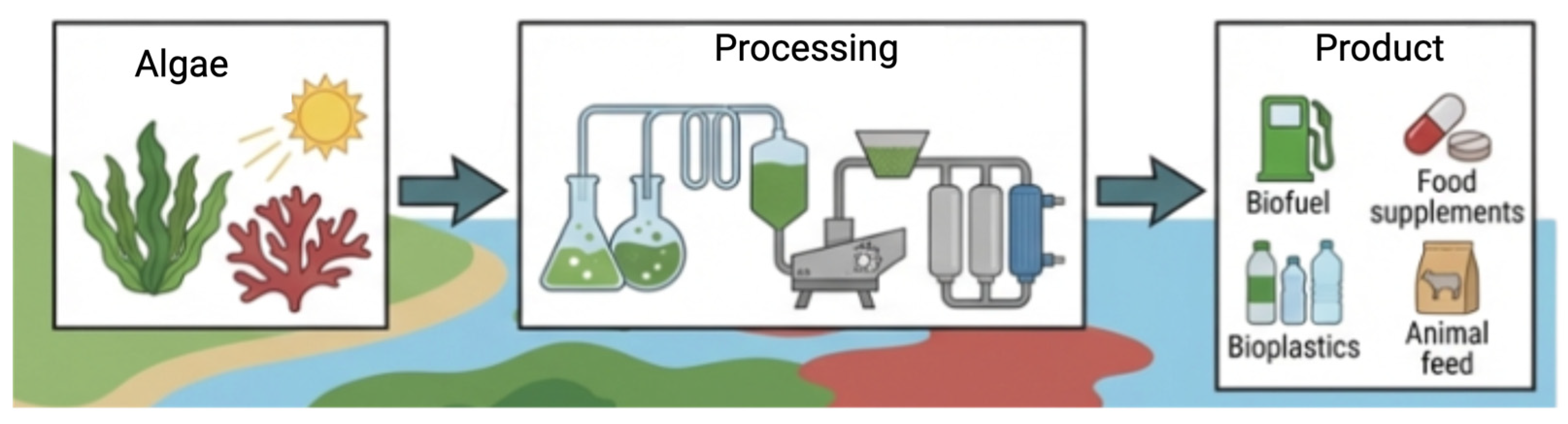
Disclaimer/Publisher’s Note: The statements, opinions and data contained in all publications are solely those of the individual author(s) and contributor(s) and not of MDPI and/or the editor(s). MDPI and/or the editor(s) disclaim responsibility for any injury to people or property resulting from any ideas, methods, instructions or products referred to in the content. |
© 2026 by the authors. Licensee MDPI, Basel, Switzerland. This article is an open access article distributed under the terms and conditions of the Creative Commons Attribution (CC BY) license.