


Abstract
Excessive nitrate accumulation in leafy vegetables presents significant health risks, requiring sustainable strategies to optimize yield while minimizing nitrogen-related anti-nutritional factors in controlled environments. This study investigated the effects of varying LED light intensities 236.9 µmol·m−2·s−1 (high), 189.8 µmol·m−2·s−1 (medium), and 117.6 µmol·m−2·s−1 (low) on nitrates (NO3−) dynamics, growth, and biochemical composition in two Lollo Rossa lettuce cultivars, Carmesi and Carnelian, grown in NFT hydroponic systems. Conducted under constant temperature (20/18 °C day/night) and CO2 (625 µmol·mol−1) to isolate light’s influence, the experiment used a replicated design with three replicates per treatment, each including two cultivars. Morphological traits (plant height, rosette diameter, leaf number, biomass, root development) and biochemical parameters (nitrate and sugar contents) were assessed via mean comparisons, trends, and correlations. Results demonstrated that higher light intensity significantly suppressed nitrate accumulation in lettuce through enhanced assimilation and dilution effects linked to increased growth. Nitrate levels dropped to 2091.67 mg kg−1 from 2443.33 mg kg−1 in Carmesi and 2013.33 mg kg−1 from 2515.00 mg kg−1 in Carnelian. Negative correlations were observed between nitrate content and growth parameters: nitrates vs. fresh biomass (r = −0.89); nitrates vs. plant height (r = −0.79). Concurrently, it boosted carbohydrate content (Carmesi: 3.03 °Brix; Carnelian: 3.08 °Brix) and promoted vigorous growth, with Carmesi achieving superior metrics under high light (height: 22.12 cm, rosette diameter: 29.87 cm, fresh biomass: 206.88 g, root biomass: 19.58 g) compared to low light (17.45 cm height, 183.42 g biomass). Carnelian exhibited similar trends but prioritized root elongation. These findings underscore light’s role in regulating nitrate transporters and assimilation enzymes (e.g., nitrate reductase), offering a low-cost approach to reduce nitrate risks, enhance nutritional quality, and improve yield in controlled horticultural systems (CHS).
1. Introduction
Hydroponic systems, particularly the Nutrient Film Technique (NFT), have revolutionized controlled environment agriculture (CEA) by enabling efficient, soilless cultivation of leafy greens like lettuce, optimizing resource use and minimizing environmental impacts [1]. In hydroponic cultivation, spectrally tunable LEDs are a powerful tool for optimizing leafy vegetable quality, as they regulate carbohydrate biosynthesis, providing the NADPH and carbon skeletons necessary to enhance nitrate reduction and its incorporation into amino acids and proteins [2,3]. In greenhouse based hydroponic system, nitrate is the primary nitrogen form absorbed from nutrient solutions to sustain rapid growth and high productivity [2,4,5]. After uptake, it is converted into organic nitrogen compounds essential for protein synthesis, chlorophyll formation, and nucleic acid production [2,4]. However, excessive nitrate fertilization often leads to poor nitrogen use efficiency (NUE), environmental concerns, and elevated nitrate accumulation in edible tissues [2,4,6].
Leafy vegetables, particularly lettuce, are highly prone to nitrate accumulation under protected cultivation, frequently exceeding 700 mg kg−1 fresh weight, posing health risks such as infant methemoglobinemia and potential long-term gastrointestinal effects [6,7,8]. As vegetables contribute nearly 80% of dietary nitrate intake, maintaining concentrations within established safety limits, including the FAO/WHO acceptable daily intake of 0.07 mg kg−1 body weight, remains essential for consumer protection [9]. Nitrate levels in plants arise from a balance between root uptake, transport to shoots, and enzymatic reduction into usable forms like ammonium and amino acids primarily via nitrate reductase (NR) [10]. While nutrient management helps, manipulating growing conditions in controlled environments (e.g., greenhouses or vertical farms) offers a promising, non-chemical route to lower nitrate by stimulating assimilation and diluting concentrations through greater biomass [11]. Hydroponic techniques, especially Nutrient Film Technique (NFT), excel in resource-efficient leafy green production under precise control, but though improper lighting strategy or nutrient management can worsen nitrate issues [12,13].
Among environmental factors, light intensity stands out for its strong influence on nitrate metabolism in CEA. LED light adjustments not only shape morphological traits (e.g., height, rosette diameter, leaf count, root traits) but also modulate biochemical profiles, including reduced nitrates and elevated sugar contents [14,15]. Elevated photosynthetic photon flux density (PPFD) boosts carbon fixation, supplying energy and substrates that activate NR and favor nitrate conversion over storage, often yielding lower leaf nitrate alongside higher sugars and antioxidants [6,16]. Recent investigations confirm that LED systems, with their customizable spectra and efficiency, outperform conventional sources by enabling tailored intensities (typically 100–400 µmol·m−2·s−1) that limit nitrate content while promoting growth and bioactive compounds in hydroponic lettuce [14,17,18,19]. Under red LED light (638 nm, 150–160 µmol·m−2·s−1, 21/17 °C), continuous light (CL) for 22 days reduced nitrate in ‘Solvano’ baby-leaf lettuce but increased it markedly in red-leaf cultivars ‘Multired 2’ and ‘Multired 4’ [20]. Similarly, 48 h of CL using red: blue LEDs (4:1) at 200 µmol·m−2·s−1 PPFD significantly lowered nitrate in hydroponic lettuce [21].
Despite these advances, cultivar-level variations in curly-leafed Lollo Rossa types (such as Carmesi and Carnelian) under NFT-specific LED gradients remain insufficiently studied, especially concerning integrated impacts on nitrate content, vegetative development, and overall quality in protected environment [22,23]. Broader lettuce research indicates moderate-to-high intensities favor biomass and nutrient profiles, but leaf architecture in frilled varieties may alter light capture and photosynthetic outcomes [14]. Interactions between light and nitrate pathways (including sugar contents support for assimilation) merit deeper exploration in NFT contexts, where factors like root oxygenation add complexity [23]. Standards call for robust, repeatable trials combining physiological, biochemical, and production metrics [24], while spectral fine-tuning holds promise for sustainable protocols tailored to premium crops [18].
This study investigates the influence of varying LED light intensities (117.6, 189.8, and 236.9 µmol·m−2·s−1) on nutritional composition (nitrates and sugar contents) and the growth parameters (plant height, diameter, leaf count, shoot biomass, root length, root biomass, and volume) of two Lollo Rossa lettuce varieties (Carmesi and Carnelian) in NFT hydroponic systems. By employing a controlled experimental design with replicated treatments, we aim to elucidate cultivar-specific responses, providing data-driven insights for optimized cultivation protocols [25]. The significance lies in advancing sustainable horticulture, minimizing nitrate accumulation while maximizing yield and quality [14]. This research contributes to global efforts in precision agriculture, offering implications for commercial growers and policymakers in enhancing nutritional security through innovative lighting strategies [26]. These findings could inform broader applications in controlled environment agriculture, promoting resource-efficient production of high-value crops.
2. Materials and Methods
2.1. The Experimental Site, Biological Sample, Treatments, and Cultivation Methods
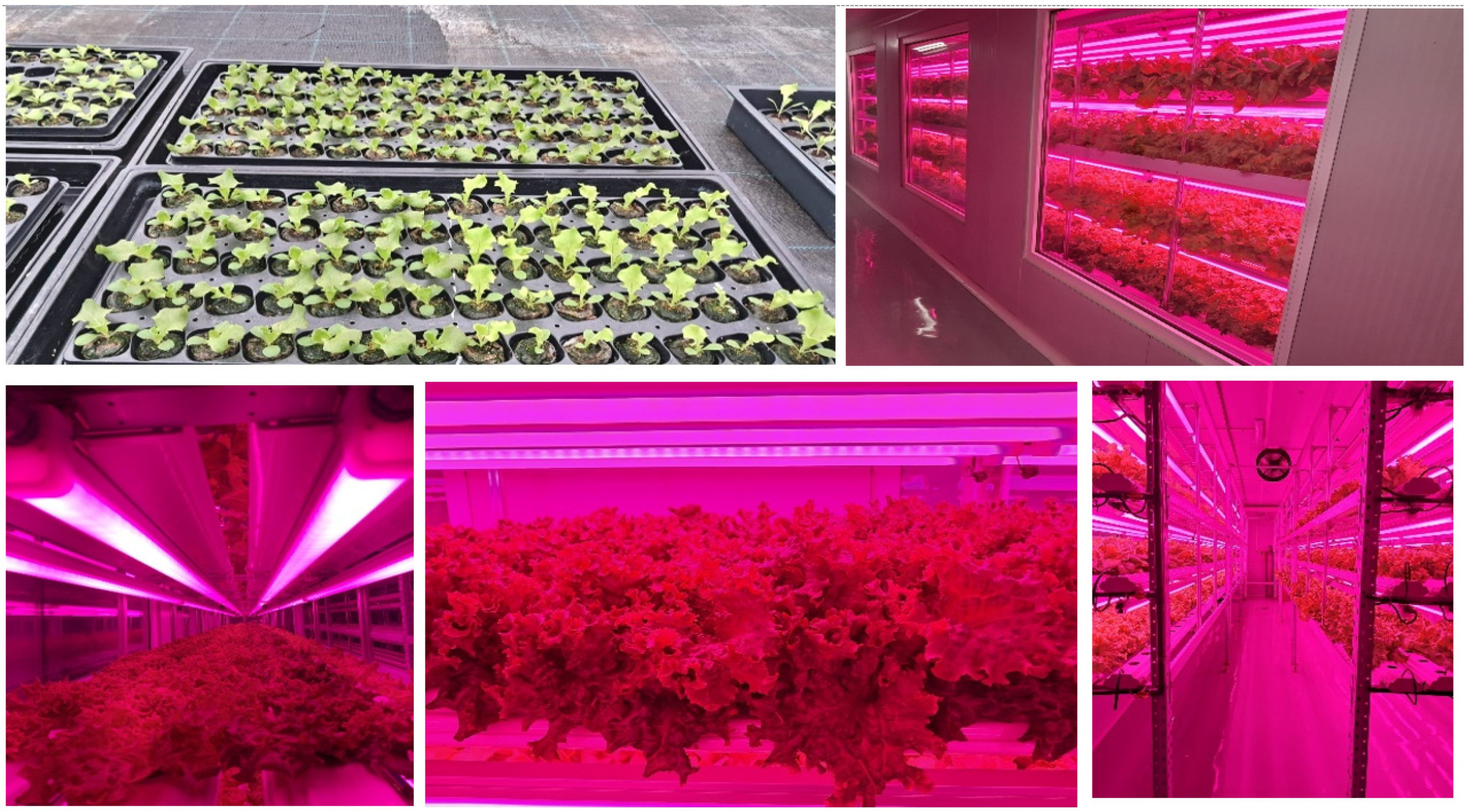
This study evaluated the nitrate dynamics in response to different light intensities on the growth of two red-pigmented lettuce cultivars (‘Carmesi’ and ‘Carnelian’) in an NFT hydroponic system, conducted at the China–Romania Agricultural Science and Technology Demonstration Park (a collaboration between the Chinese Academy of Agricultural Sciences and USAMV Bucharest). Conducted over two growing seasons (January–February 2024 and 2025), the experiment utilized certified seeds sown in early December, with 8-day-old seedlings transplanted into 24 mm diameter peat-based Jiffy pellets (Figure 1) pre-amended with steam-sterilized sphagnum peat, starter fertilizers, and pH buffers (target pH 5.5–6.0) to ensure low mortality and synchronized canopy establishment over a 14-day nursery phase. The nutrient solutions were prepared at two electrical conductivity levels: EC 1.5 and EC 2.5 dS m−1. Tank A contained calcium nitrate (675 and 1125 mg L−1), potassium nitrate (225 and 375 mg L−1), and iron chelate (30.8 and 51.3 mg L−1). Tank B contained monopotassium phosphate (165 and 275 mg L−1), magnesium sulfate (327 and 545 mg L−1), and potassium sulfate (57.5 and 95.8 mg L−1). Micronutrients included boric acid (2.05 and 3.42 mg L−1), manganese sulfate (2.32 and 3.87 mg L−1), zinc sulfate (0.12 and 0.2 mg L−1), copper sulfate (0.29 and 0.48 mg L−1), and molybdenum (0.08 and 0.13 mg L−1).
The fully enclosed experimental site was equipped with integrated LED lighting, precision cooling, drip irrigation, and active ventilation systems to maintain strict environmental control, with air temperature held constant at 20 °C day/18 °C night and CO2 enriched to 625 µmol·mol−1 to isolate the influence of light intensity. Sole-source illumination was delivered via 100 W Kathay IP67-rated waterproof LED arrays (220 V AC, 50/60 Hz) emitting a full spectrum (380–840 nm) with a 1:1 blue:red photon ratio (peaks ≈ 450 nm and 660 nm) under a 16 h photoperiod and 8 h photoperiod; three photosynthetic photon flux density (PPFD) treatments 236.9 µmol·m−2·s−1 (control, maximum), 189.8 µmol·m−2·s−1 (intermediate), and 117.6 µmol·m−2·s−1 (minimum). These levels were selected to set the typical winter PPFD values (~200 µmol·m−2·s−1) recorded inside Romanian greenhouses. Treatments were precisely applied across vertically stacked NFT channels using calibrated neutral-density attenuation, with root-zone electrical conductivity maintained at 1.8–2.2 mS·cm−1 and relative humidity at 65–75%.
Figure 1.
Growth and development of red-pigmented Lactuca sativa L. cultivars under varying LED light intensities in a continuous-flow NFT hydroponic system.
2.2. Experimental Design and Statistical Analysis
A replicated experimental design was implemented with three replicates per treatment, each including two cultivars, resulting in 36 observations across two cultivars subjected to three light intensities (117.6, 189.8, and 236.9 µmol·m−2·s−1). The study followed a randomized complete block design (RCBD) with defined experimental and control rows to minimize variability. Morphological traits (plant height, diameter, leaf number, biomass, and root development) and biochemical parameters (nitrate and sugar content) were evaluated. Data were summarized as mean ± standard error and analyzed using two-way ANOVA to assess the effects of cultivar, light intensity, and their interaction, with percentage changes calculated relative to the low-light control. Statistical analyses were performed using Python (3.14.3) and JAMOVI (v2.5.5), and treatment differences were determined using Tukey’s HSD test at p < 0.05, confirming significant cultivar differences across measured parameters.
2.3. Data Collection
This study involved the continuous monitoring of plant growth, with data collected every seven days for five weeks until the lettuces were ready to harvest (average 25 to 40 days after transplant). Biochemical parameters such as nitrate and sugar con-tents were analyzed, alongside key morphological traits including plant height, plant diameter, number of leaves, biomass accumulation, and root length. These variables were analyzed using mean values and trend assessments. Environmental and physiological measurements, including light intensity, nitrate levels, sugar content, and temperature, were recorded using specific instruments: an Apogee Instruments MQ-500 (Apogee Instruments, Logan, UT, USA) full-spectrum quantum meter (handheld PAR meter with detachable sensor) to measure photosynthetic photon flux density (PPFD, µmol·m−2·s−1); a Greentest ECO 6 portable (Greentest, Shenzhen, China) digital nitrate tester (color touchscreen device) to quantify nitrate in hydroponic solutions and plant tissues; a Vee Gee Scientific BX-1 handheld Brix refractometer (VEE GEE Scientific, Vernon Hills, IL, USA) to determine soluble solids (°Brix) in leaf extracts; and a Hanna Instruments Checktemp 1 digital thermometer (Germany based waterproof probe) (Hanna Instruments, Woonsocket, RI, USA) to monitor ambient temperature. Measurements were conducted after seven days of growth. Light intensity treatments were categorized as low (117.6), medium (189.8), and high (236.9) µmol·m−2·s−1.
3. Results
3.1. Nitrate Accumulation and Sugar Content
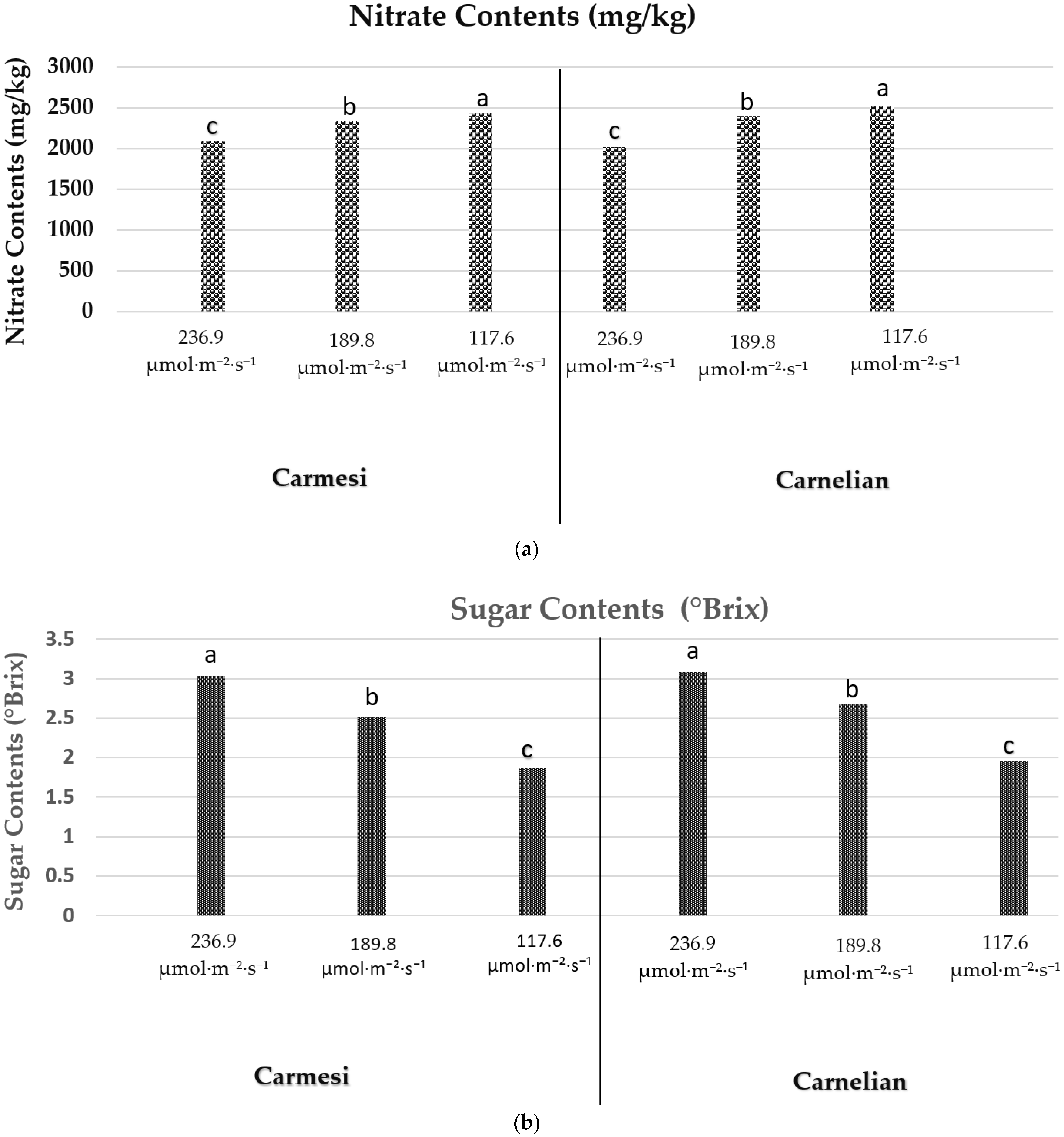
In both lettuce cultivars, nitrate accumulation showed a clear inverse relationship with light intensity. Higher light levels significantly suppressed the nitrate content through enhanced assimilation and dilution effects associated with increased plant growth. A strong significant interaction was observed between the applied treatments and nitrate content (p < 0.005). For the Carmesi cultivar, the highest nitrate content was recorded under the lowest light intensity (117.6 µmol·m−2·s−1), reaching approximately 2440 mg kg−1 (Figure 2a). Nitrate levels decreased with increasing light intensity, dropping to about 2330 mg kg−1 under medium light (189.8 µmol·m−2·s−1) and reaching the lowest value of approximately 2090 mg kg−1 under the high light intensity (236.9 µmol·m−2·s−1). A similar pattern was observed in the Carnelian cultivar. The highest nitrate content occurred under the low light intensity, at approximately 2520 mg kg−1. Levels declined to about 2400 mg kg−1 under the medium light intensity and reached the minimum of approximately 2010 mg kg−1 under high light intensity. This consistent pattern across both cultivars demonstrates that low light promotes nitrate accumulation in lettuce leaves, whereas higher light intensities effectively reduce nitrate concentrations.
In contrast, the sugar content showed the opposite trend, increasing with the higher light intensity due to enhanced photosynthetic activity and carbohydrate accumulation. A strong significant interaction was observed between the treatments and sugar content (p < 0.005). In the Carmesi cultivar, the highest sugar content was recorded under high light intensity (3.033 °Brix), followed by medium light intensity (2.517 °Brix), with the lowest value under the low light intensity (1.867 °Brix) (Figure 2b). The Carnelian cultivar exhibited a similar pattern. The sugar content reached its maximum under high light intensity (3.083 °Brix), decreased under medium intensity (2.683 °Brix), and was lowest under low light intensity (1.95 °Brix). These results highlight those elevated light levels not only suppress undesirable nitrate buildup but also simultaneously enhance desirable sugar accumulation, improving the overall nutritional and sensory quality of both Carmesi and Carnelian lettuce varieties (Figure 2b).
Figure 2.
(a) Nitrate contents (mg/kg) and (b) sugar contents (°Brix) in Carmesi and Carnelian lettuce under three light intensities (high: 236.9, medium: 189.8 and low: 117.6 µmol·m−2·s−1). Different letters indicate significant differences between light intensity treatments based on Tukey’s HSD test at p < 0.05.
3.2. Growth and Morphological Responses to Light Intensity in Both Cultivars
The growth and morphological parameters of the two Lollo Rossa lettuce cultivars, Carmesi and Carnelian, were significantly influenced by light intensity (low: 117.6, medium: 189.8, and high: 236.9 µmol·m−2·s−1). Across both cultivars, higher light intensities promoted greater vegetative growth, including increases in the plant height, stem diameter, number of leaves, fresh biomass, and root traits. For the Carmesi cultivar, the high-light treatment produced the tallest plants (22.12 cm), the highest leaf count (25.33), and the greatest fresh biomass (206.88 g). Root traits were also enhanced under high light. In contrast, the Carnelian cultivar showed more pronounced root development under high light intensity, with the longest roots (52.00 cm), while its aboveground growth remained comparatively lower. Under low light, both cultivars exhibited reduced vigor. Carmesi showed a 21% decrease in plant height and a 10% decrease in fresh biomass relative to high light, whereas Carnelian’s root length declined by only 7% and its stem diameter by 18%. These patterns indicate cultivar-specific adaptations, with Carmesi favoring aboveground biomass accumulation and Carnelian prioritizing root elongation under elevated light (Table 1). The observed relationships among growth parameters, growth performance, and biochemical components are critical for understanding plant responses to environmental or treatment conditions. Evaluating the correlations among these parameters reveals how resource allocation, physiological processes, and developmental plasticity are coordinated to optimize plant fitness and productivity.
Table 1.
Growth and Morphological Parameters of Two Lollo Rossa Lettuce Cultivars (Carmesi e Carnelian) Grown Under Different Light Intensities.
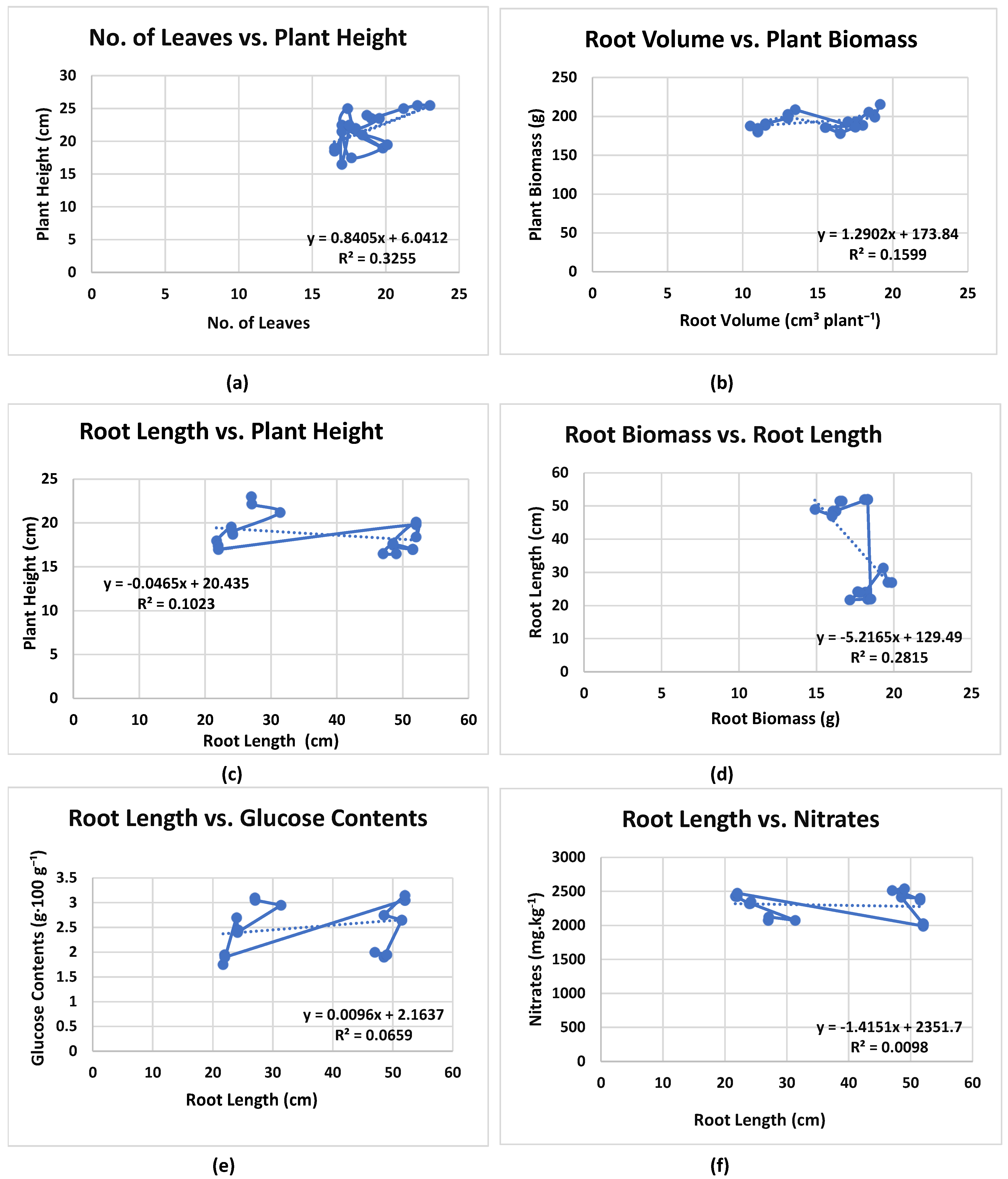
A positive trend was observed between the plant height and the number of leaves, indicating that plants with a greater number of leaves tended to attain an increased height (Figure 3a). Similarly, root volume showed a direct association with total plant biomass, suggesting that a more developed root system supported higher biomass accumulation (Figure 3b). Root length exhibited only a weak relationship with plant height (R2 = 0.1023), suggesting that increases in root elongation did not substantially translate into greater shoot growth; this indicates that factors other than root development likely played a more dominant role in determining overall plant heigh (Figure 3c). The relationship between root length and root biomass exhibited some variation, implying that increases in root length did not always correspond proportionally to increases in root biomass, likely due to differences in root thickness (Figure 3d). Root length also demonstrated a slight positive association with glucose content, indicating that enhanced carbohydrate availability may have contributed to root elongation (Figure 3e). In contrast, an inverse relationship was recorded between root length and nitrate concentration, where higher nitrate accumulation appeared to be accompanied by reduced root extension (Figure 3f). Collectively, these results demonstrate that growth traits and biochemical parameters were closely interrelated and were influenced by applied treatments.
3.3. Comparative Analysis of Light Effects on Cultivars
Two-way ANOVA revealed significant main effects of both cultivar and light intensity on most measured parameters with interactions evident in selected traits (Table 2). Light intensity exerted the strongest overall influence, driving highly significant increases (p < 0.001) in plant height, stem diameter, number of leaves, fresh biomass, root length, root biomass, and root volume across cultivars. Cultivar effects were also pronounced (p < 0.001 for most traits), with Carmesi outperforming Carnelian in leaf number, root biomass, and root volume, while Carnelian exhibited superior stem diameter and root length. No significant cultivar difference was observed in fresh biomass. Interactions between the cultivar and light were significant for the stem diameter and approached significance for the plant height. The two cultivars underscored differential responses where Carmesi showed steeper gains in height under high light, whereas Carnelian’s root elongation was more light-responsive. These findings indicate that light optimization could enhance yield, particularly for Carmesi in aboveground traits.
Table 2.
Summary of Two-Way ANOVA (p-values) for the effects of Cultivar (C), Light Intensity (L), and their Interaction (C × L) on Lettuces Measured Parameters.
Figure 3.
The interplay of growth parameters with growth metrics and biochemical components. (a) Relationship between number of leaves and plant height (cm), (b) relationship between root volume (cm3 plant−1) and plant biomass (g), (c) relationship between root length (cm) and plant high (cm), (d) relationship between root biomass (g) and root length (cm), (e) relationship between root length (cm) and glucose content (g·100 g−1), and (f) relationship between root length (cm) and nitrate content (mg.kg−1) in the lettuce plants.
3.4. Magnitude of Light-Induced Changes Relative to Low-Light Control
To quantify the practical benefits of elevated light, percentage changes in key traits were calculated relative to the low-light control, revealing gains of 2–33% under medium and high intensities (Table 3). Carmesi demonstrated the most substantial improvements under high light, with notable increases in the plant height, stem diameter, and root length, indicating robust photosynthetic scaling. Carnelian showed moderate gains in height and stem diameter but exhibited a clear increase in root biomass under high light, suggesting enhanced nutrient uptake potential. Fresh biomass increases were modest for both cultivars (around 11–13%), underscoring light’s primary role in structural rather than biomass expansion. Negative shifts were minimal, limited to a slight decrease in the Carmesi root biomass under medium light, likely due to transitional acclimation.
Table 3.
Percentage changes in morphological traits relative to the low-light control (117.6 µmol·m−2·s−1), positive values denote enhancements under higher light.
3.5. Inter-Trait Correlations and Associations with Biochemical Components
Pearson correlation analysis across the dataset (n = 36) illuminated relationships among morphological traits and biochemical markers (nitrates and carbohydrate contents) (Table 4). Strong positive correlations dominated growth parameters: plant height with fresh biomass (r = 0.82) and root biomass (r = 0.83), and number of leaves with root volume (r = 0.94), reflecting coordinated biomass allocation. Root traits showed trade-offs, with root length negatively correlated to plant height (r = −0.32) and root volume (r = −0.83), indicative of resource partitioning. Biochemical linkages were inverse for nitrates very strong negative with fresh biomass (r = −0.89) and plant height (r = −0.79) suggesting light-driven dilution of nitrate accumulation. Conversely, carbohydrate contents exhibited strong posiive ties to biomass (r = 0.83) and height (r = 0.71), aligning with enhanced carbohydrate synthesis under higher light. Root biomass emerged as a pivotal integrator, positively correlating with aboveground vigor (height: r = 0.83; leaves: r = 0.76) and root volume (r = 0.85), but strongly negatively with nitrates (r = −0.73). These patterns imply that optimized light favors growth–biochemical synergies, with root mass as a key mediator of overall plant performance.
Table 4.
Pearson correlation matrix for morphological and biochemical parameters in Lollo Rossa lettuce. Values range from −1.00 (perfect negative) to +1.00 (perfect positive); |r| > 0.70 indicates strong correlations.
4. Discussion
This study reveals the deep influence of light intensity on the growth, morphology, and biochemical composition of two Lollo Rossa lettuce cultivars, Carmesi and Carnelian. The observed responses of nitrate and sugar contents to varying light intensities in Carmesi and Carnelian lettuce varieties align closely with established physiological mechanisms governing nitrogen and carbon metabolism in leafy vegetables, particularly under controlled or greenhouse conditions where light availability often limits growth and nutritional quality. In greenhouses, structural occlusion can reduce daylight by 30% or more, making low light intensity a primary constraint on vegetable growth and nutrient optimization, especially during winter or periods of overcast skies in summer [27,28]. Increasing light intensity within an appropriate range enhances the activity of nitrate metabolism enzymes, such as nitrate reductase (NR), while supplying additional energy and reducing power from photosynthesis to drive efficient nitrate assimilation [29]. This is consistent with the present study’s findings, where nitrate levels were markedly suppressed under the higher light intensity, dropping to approximately 2090 mg kg−1 in Carmesi and 2010 mg kg−1 in Carnelian, compared to elevated accumulations of approximately 2440 mg kg−1 and 2520 mg kg−1, respectively, under the lowest intensity. The EU regulation 1258/2011 fixed the upper limits for fresh lettuce (Lactuca sativa L.), such as the cultivars used in this experiment, to 4000–5000 mg kg−1 under cover [30], In this work, nitrate leaf content was always below the EU regulation limits for both cultivars. Comparable effects have been reported in lettuce and related crops. For instance, Fu et al. demonstrated that raising red:blue LED light intensity from 60 to 210 µmol·m−2·s−1 significantly decreased nitrate concentration in butterhead lettuce leaves across different nitrogen regimes [28]. Zheng et al. found that supplemental blue LED light reduced nitrate in greenhouse-grown pak choi as intensity increased from 0 to 150 µmol·m−2·s−1, while promoting overall growth and quality [29]. In Brassica microgreens [31], observed nitrate reductions of 37.7–84.5% were observed as LED irradiance rose from 110 to 545 µmol·m−2·s−1 using mixed wavelengths.
The inverse nitrate-sugar relationship further underscores the tight coupling between light-driven carbon fixation and nitrogen assimilation. Higher light intensities boost photosynthetic rates, generating surplus carbohydrates that serve as carbon skeletons for ammonium assimilation via the glutamine synthetase-glutamate synthase (GS-GOGAT) cycle, thereby alleviating negative feedback from ammonium accumulation and facilitating greater nitrate reduction [32]. In the current experiment, sugar contents peaked at 3.03 °Brix in Carmesi and 3.083 °Brix in Carnelian under the high-light treatment, declining to 1.867 °Brix and 1.95 °Brix under low light, reflecting enhanced CO2 assimilation and carbohydrate storage. This pattern mirrors findings by [19], who reported that increasing light intensity from 400 to 700 µmol·m−2·s−1 under ambient CO2 reduced nitrate by 25% in green-leaf and 86% in red-leaf lettuce cultivars, while soluble sugars increased by 241% and 41%, respectively. Elevated CO2 amplified these benefits, likely due to synergistic effects on photosynthetic products that regulate NR expression [19]. Indeed, light-induced NR transcripts in Arabidopsis are sustained under low light when sucrose is supplied exogenously, but not in darkness, highlighting the role of photosynthetic carbohydrates in modulating nitrogen metabolism [33]. These interconnected processes, enhanced enzyme activity, biomass dilution, and carbon-supported assimilation, explain the superior nutritional profile (low nitrate, high sugar content) achieved under higher light in the studied lettuce varieties. This study offers practical implications for optimizing protected cultivation systems to improve both safety and sensory attributes of leafy greens vegetables.
These results demonstrate that light is not merely an energy source but a central regulatory signal that orchestrates plant architecture and metabolic partitioning in a cultivar-specific manner [34]. In our study, both cultivars exhibited consistent increases in plant height, stem diameter, leaf number, fresh biomass, and root parameters with rising light intensity. This response aligns with the fundamental role of light in photosynthesis, where higher photon flux densities enhance the photosynthetic photon flux density (PPFD), leading to greater carbon assimilation and carbohydrate production [34,35]. The resulting increase in photo-assimilates supports the enhanced biosynthesis of structural components, thereby promoting vegetative growth and biomass accumulation. Notably, Carmesi showed the most substantial gains in key growth traits such as the plant height and stem diameter under high light, highlighting a robust photosynthetic scaling effect where increased energy capture efficiently translates into structural growth [34,36,37].
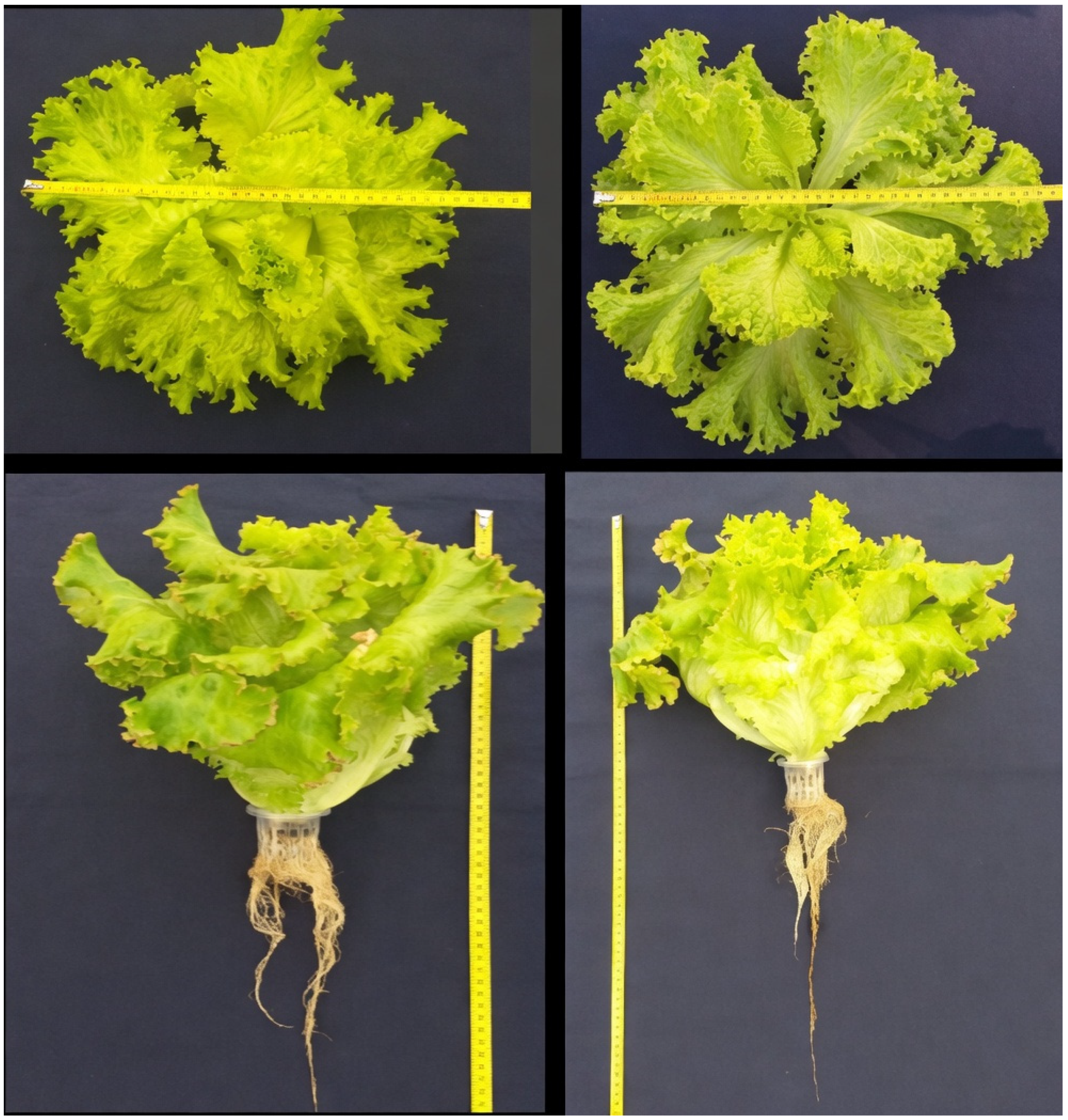
The underlying mechanism involves the activation of photoreceptors such as phytochromes and cryptochromes, which perceive light intensity and quality, subsequently modulating transcriptional networks that control cell division and elongation [38]. Positive correlations were observed between the plant height and number of leaves, as well as between the root volume and total biomass, reflecting coordinated resource allocation to aerial and subterranean organs to meet the increased metabolic demand under high-light conditions [39]. A key finding of this study is the divergent growth strategies employed by the two cultivars. Carmesi consistently prioritized aboveground biomass accumulation, showing a superior leaf count, root biomass, and root volume (Figure 4). In contrast, Carnelian invested significantly in root elongation and achieved a thicker stem. This is strongly evidenced by the significant cultivar-by-light interaction for the root length and stem diameter.
Figure 4.
Visual representation of morphological differences in Carmesi and Carnelian Lollo Rossa lettuce cultivars under low (117.6 µmol·m−2·s−1), medium (189.8 µmol·m−2·s−1), and high (236.9 µmol·m−2·s−1) light intensities, highlighting aboveground biomass, root systems, and general vigor (scale bars: 10 cm).
This divergence can be explained by differential genetic programming in resource partitioning. Carmesi’s strategy aligns with maximizing light interception capacity through increased leafiness, a common acclimation to high light intensity [40,41,42]. Conversely, Carnelian’s pronounced root elongation suggests a strategy geared towards potentially enhanced water and nutrient uptake, which may be an adaptation to support sustained growth under high transpiration demands associated with elevated light [43]. The strong negative correlation between root length and both plant height (r = −0.32) and root volume (r = −0.83) further highlights this trade-off, indicating a physiological decision to either invest in deep, exploratory roots (Carnelian) or dense, resource-storing roots and shoots (Carmesi) [43,44].
Biochemical correlations offer a clear metabolic explanation for the morphological changes observed in this study. Strong positive correlations between the sugar content and key growth parameters, such as fresh biomass and plant height, reflect the central role of enhanced photosynthesis under high light intensity. Glucose and sucrose, as primary products of photosynthesis, function both as metabolic energy sources and signaling molecules that actively promote cell division, expansion, and overall plant development [45]. In contrast, the very strong negative correlations between nitrate concentrations and growth parameters indicate a pronounced dilution effect. As light intensity rises and photosynthetic carbon assimilation accelerates, biomass accumulation outpaces nitrate uptake and assimilation, resulting in significantly lower nitrate levels in the plant tissue [46]. Additionally, elevated sugar levels under high light can downregulate nitrate transporter gene expression while stimulating nitrate assimilation pathways, further contributing to reduced nitrate accumulation [47]. This represents a significant quality improvement for lettuce, given the health concerns associated with high dietary nitrate intake. Although only the light intensity was varied, plant responses are also influenced by the light spectrum and photoperiod.
Morphological adaptations such as compact growth and stem thickening are typical photomorphogenic responses frequently triggered by a high red-to-far-red (R:FR) ratio, characteristic of direct, high-intensity sunlight [48]. It is therefore likely that the light source employed in this study produced a spectral composition that reinforced these responses. Conversely, the low light intensity triggered classic shade avoidance syndrome (SAS) features, including stem and petiole elongation, thinner leaves, and reduced root development. These changes represent an adaptive strategy aimed at outgrowing neighboring vegetation to reach more favorable light conditions [38,49]. The overall reduction in plant vigor under low light results primarily from carbon starvation caused by an insufficient photosynthetic photon flux density (PPFD). Under these conditions, plants reallocate limited resources toward stem elongation at the expense of root growth and biomass accumulation [50]. Had the low-light treatment also included a low R:FR ratio (mimicking vegetative canopy shade) or a shortened photoperiod, the shade avoidance responses and associated decline in biomass would likely have been even more severe [51].
Greenhouse and hydroponics structures are the most vibrant and productive systems for cultivating leafy vegetables now days. Future research should integrate light spectrum variations using advanced greenhouse structures, conduct genetic analyses of cultivar differences, and explore interactions with CO2 and climate factors to optimize leafy vegetables beyond lettuce. Practical implementation involves using dynamic LED systems in greenhouses and vertical farms to maintain 200–250 µmol·m−2·s−1 PPFD, significantly reducing nitrate while increasing sugar content. Growers should select cultivars like Carmesi for high aboveground yield or Carnelian for robust rooting based on production goals. Synchronizing reduced nitrogen fertilization with higher light regimes and adopting energy-efficient LEDs will enhance sustainability and economic returns, especially in controlled environment agriculture (CEA).
5. Conclusions
In NFT hydroponic systems, LED light intensity acts as the master regulator of nitrogen dynamics in Lollo Rossa lettuce cultivars Carmesi and Carnelian, directly controlling nitrate assimilation, biomass dilution, and carbon partitioning. High intensity maximized growth (superior shoot traits in Carmesi, root/stem vigor in Carnelian), increased sugar content (3.03–3.08%), and minimized nitrate accumulation through enhanced nitrate reductase activity, photosynthetic supply of reducing power and carbon skeletons, and dilution via rapid biomass gain. Low light conversely promoted nitrate accumulation and restricted sugar synthesis. Nitrogen metabolism is the most important part of light-mediated quality improvement with high light intensity, which optimizes yield, structural development, food safety (low nitrates), and sensory/nutritional value (high sugars) while revealing strong cultivar-specific plasticity. Implementing this intensity in controlled environments enables precise, sustainable, low-nitrate lettuce production. Future advances in dynamic spectral–light–nutrient feedback and multi-omics will further boost nitrogen-use efficiency and commercial scalability in vertical farming and controlled environment agriculture.
Author Contributions
Conceptualization, E.C.J. and E.M.D.; methodology, E.M.D., G.F. and A.A.; software, E.C.J.; validation, E.M.D., A.A., Y.T. and I.O.J.; formal analysis, E.M.D., F.C. and A.A.; investigation, E.C.J.; resources, E.M.D., F.C., G.F. and I.O.J.; data curation, E.C.J.; writing—original draft preparation, E.C.J. and A.A.; writing—review and editing, E.M.D., F.C., A.A. and Y.T.; visualization, A.A.; supervision, E.M.D. and I.O.J.; project administration, E.C.J.; funding acquisition, F.C., E.M.D. and I.O.J. All authors have read and agreed to the published version of the manuscript.
Funding
This research did not receive external funding; the funding was provided by the funds allocated for doctoral studies within USAMV Bucharest.
Data Availability Statement
The original contributions presented in this study are included in the article. Further inquiries can be directed to the corresponding authors.
Acknowledgments
The authors gratefully acknowledge the collaborative contributions of the University of Agronomic Sciences and Veterinary Medicine, 011464 Bucharest, Romania; the Institute of Environment and Sustainable Development in Agriculture, the Chinese Academy of Agricultural Sciences (CAAS), Beijing, China; and the Faculty of Horticulture for their institutional support and resources that facilitated this research.
Conflicts of Interest
The authors declare no conflicts of interest.
References
- Mullins, C.; Vallotton, A.; Latimer, J.; Sperry, T.; Scoggins, H. Hydroponic Production of Edible Crops: Nutrient Film Technique (NFT) Systems; SPES-463NP; Virginia Cooperative Extension Publication: Blacksburg, VA, USA, 2023; Available online: https://www.pubs.ext.vt.edu/SPES/spes-463/spes-463.html (accessed on 7 April 2026).
- Agostini, F.; Tei, F.; Silgram, M.; Farneselli, M.; Benincasa, P.; Aller, M. Decreasing nitrate leaching in vegetable crops with better N management. In Genetic Engineering, Biofertilisation, Soil Quality and Organic Farming; Lichtfouse, E., Ed.; Springer: Berlin/Heidelberg, Germany, 2010; pp. 147–200. [Google Scholar]
- Li, Y.; Chang, D.; Yang, H.; Wang, J.; Shi, H. Metabolome and molecular basis for carbohydrate increase and nitrate reduction in burley tobacco seedlings by glycerol through upregulating carbon and nitrogen metabolism. Sci. Rep. 2018, 8, 13300. [Google Scholar] [CrossRef] [Scilit] [PubMed]
- Crawford, N.M. Nitrate: Nutrient and signal for plant growth. Plant Cell 1995, 7, 859–868. [Google Scholar] [PubMed]
- Ju, X.T.; Xing, G.X.; Chen, X.P.; Zhang, S.L.; Zhang, L.J.; Liu, X.J.; Cui, Z.L.; Yin, B.; Christie, P.; Zhu, Z.L. Reducing environmental risk by improving N management in intensive Chinese agricultural systems. Proc. Natl. Acad. Sci. USA 2009, 106, 3041–3046. [Google Scholar] [CrossRef] [Scilit]
- Gruda, N. Impact of environmental factors on product quality of greenhouse vegetables for fresh consumption. Crit. Rev. Plant Sci. 2005, 24, 227–247. [Google Scholar] [CrossRef] [Scilit]
- Wang, Y.Y.; Tsay, Y.F. Arabidopsis nitrate transporter NRT1.9 is important in phloem nitrate transport. Plant Cell 2011, 23, 1945–1957. [Google Scholar] [CrossRef] [Scilit]
- Iglesias-Bartolomé, R.; González, C.A.; Kenis, J.D. Nitrate reductase dephosphorylation is induced by sugars and sugar-phosphates in corn leaf segments. Physiol. Plant. 2004, 122, 62–67. [Google Scholar] [CrossRef] [Scilit]
- Busch, F.A.; Sage, R.F.; Farquhar, G.D. Plants increase CO2 uptake by assimilating nitrogen via the photorespiratory pathway. Nat. Plants 2018, 4, 46–54. [Google Scholar]
- Ruan, Y.L.; Jin, Y.; Yang, Y.J.; Li, G.J.; Boyer, J.S. Sugar input, metabolism, and signaling mediated by invertase: Roles in development, yield potential, and response to drought and heat. Mol. Plant 2010, 3, 942–955. [Google Scholar] [CrossRef] [Scilit]
- Miller, A.J.; Fan, X.; Orsel, M.; Smith, S.J.; Wells, D.M. Nitrate transport and signalling. J. Exp. Bot. 2007, 58, 2297–2306. [Google Scholar] [CrossRef] [Scilit]
- Sabir, N.; Singh, B. Protected cultivation of vegetables in global arena: A review. Indian J. Agric. Sci. 2013, 83, 123–135. [Google Scholar]
- Bindraban, P.S.; Dimkpa, C.; Nagarajan, L.; Roy, A.; Rabbinge, R. Revisiting fertilisers and fertilisation strategies for improved nutrient uptake by plants. Biol. Fertil. Soils 2015, 51, 897–911. [Google Scholar] [CrossRef] [Scilit]
- Gherghina, E.; Luță, G.; Dobrin, E.; Drăghici, E.M.; Bălan, D.; Sanmartin, A.M. Biochemical changes under artificial LED lighting in some Lactuca sativa L. varieties. AgroLife Sci. J. 2020, 9, 141–148. [Google Scholar]
- Calatayud, Á.; Gorbe, E.; Roca, D.; Martínez, P.F. Effect of two nutrient solution temperatures on nitrate uptake, nitrate reductase activity, NH4+ concentration and chlorophyll a fluorescence in rose plants. Acta Hortic. 2008, 797, 305–310. [Google Scholar] [CrossRef] [Scilit]
- Walker, B.J.; Strand, D.D.; Kramer, D.M.; Cousins, A.B. The response of cyclic electron flow around photosystem I to changes in photorespiration and nitrate assimilation. Plant Physiol. 2014, 165, 1124–1134. [Google Scholar] [CrossRef] [Scilit]
- Jayamanne, N.R.; Abhayarathne, U.; Gayan, N.; Liyanage, G.S. Comparative evaluation of the effectiveness of sunlight and artificial grow lights on the growth and biochemical properties of hydroponically cultivated leafy vegetables. J. Appl. Learn. 2025, 3, 1–11. [Google Scholar]
- Soufi, H.R.; Roosta, H.R.; Hamidpour, M. The plant growth, water and electricity consumption, and nutrients uptake are influenced by different light spectra and nutrition of lettuce. Sci. Rep. 2023, 13, 20766. [Google Scholar] [CrossRef] [Scilit]
- Perez-Lopez, U.; Miranda-Apodaca, J.; Munoz-Rueda, A.; Mena-Petite, A. Interacting effects of high light and elevated CO2 on the nutraceutical quality of two differently pigmented Lactuca sativa cultivars (Blonde of Paris Batavia and Oak Leaf). Sci. Hortic. 2015, 191, 38–48. [Google Scholar] [CrossRef] [Scilit]
- Neely, H.L.; Koenig, R.T.; Miles, C.A.; Koenig, T.C.; Karlsson, M.G. Diurnal fluctuation in tissue nitrate concentration of field-grown leafy greens at two latitudes. HortScience 2010, 45, 1815–1818. [Google Scholar] [CrossRef] [Scilit]
- Zhou, W.; Liu, W.; Yang, Q. Quality changes in hydroponic lettuce grown under pre-harvest short-duration continuous light of different intensities. J. Hortic. Sci. Biotechnol. 2012, 87, 429–434. [Google Scholar] [CrossRef] [Scilit]
- Kotsiras, A.; Vlachodimitropoulou, A.; Gerakaris, A.; Bakas, N.; Darras, A.I. Innovative harvest practices of Butterhead, Lollo rosso and Batavia green lettuce (Lactuca sativa L.) types grown in floating hydroponic system to maintain the quality and improve storability. Sci. Hortic. 2016, 201, 1–9. [Google Scholar] [CrossRef] [Scilit]
- Nițu, O.A.; Ivan, E.S.; Arshad, A. Optimizing microclimatic conditions for lettuce, tomatoes, carrots, and beets: Impacts on growth, physiology, and biochemistry across greenhouse types and climatic zones. Int. J. Plant Biol. 2025, 16, 100. [Google Scholar] [CrossRef] [Scilit]
- Kumar, K.; Kumari, K.; Acharya, S.; Tsewang, T.; Mishra, A.; Verma, A.; Chaurasia, O.P. Evaluation of spinach and lettuce production (growth, morphological characteristics, biomass yield, and nutritional quality) in NFT hydroponic system in greenhouse, room, and open environment at Leh, India. Eur. Chem. Bull. 2023, 12, 5421–5435. [Google Scholar]
- Gent, M.P.N. Effect of degree and duration of shade on quality of greenhouse tomato. HortScience 2007, 42, 514–520. [Google Scholar] [CrossRef] [Scilit]
- Bhatti, J.S.; Sharma, H.; Sudha, S.; Kaur, K.; Sidhu, I.S.; Singh, S.; Bhatti, G.K. Synergizing Science and Technology for Sustainable Development. In Biotechnology Innovations for a Sustainable Future: Integrating Clean Energy, Life on the Planet, Clean Water, and Climate Action; Sobti, R.C., Ed.; Springer: Singapore, 2026; pp. 63–113. [Google Scholar] [CrossRef] [Scilit]
- Demšar, J.; Osvald, J.; Vodnik, D. The effect of light-dependent application of nitrate on the growth of aeroponically grown lettuce (Lactuca sativa L.). J. Am. Soc. Hortic. Sci. 2004, 129, 570–575. [Google Scholar] [CrossRef] [Scilit]
- Fu, Y.; Li, H.; Yu, J.; Liu, H.; Cao, Z.; Manukovsky, N.; Liu, H. Interaction effects of light intensity and nitrogen concentration on growth, photosynthetic characteristics and quality of lettuce (Lactuca sativa L. var. youmaicai). Sci. Hortic. 2017, 214, 51–57. [Google Scholar] [CrossRef] [Scilit]
- Zheng, Y.J.; Zhang, Y.T.; Liu, H.C.; Li, Y.M.; Liu, Y.L.; Hao, Y.W.; Lei, B.F. Supplemental blue light increases growth and quality of greenhouse pak choi depending on cultivar and supplemental light intensity. J. Integr. Agric. 2018, 17, 2245–2256. [Google Scholar] [CrossRef] [Scilit]
- European Commission (EU). Commission Regulation (EC) No 1258/2011 of 2 December 2011 Amending Regulation (EC) No1881/2006 as Regards Maximum Levels for Nitrates in Foodstuffs Setting. Off. J. Eur. Union 2011, 320, 15–17. Available online: https://eur-lex.europa.eu/legal-content/EN/TXT/HTML/?uri=CELEX:32011R1258 (accessed on 9 April 2026).
- Samuolienė, G.; Brazaitytė, A.; Jankauskienė, J.; Viršilė, A.; Sirtautas, R.; Novičkovas, A.; Sakalauskienė, S.; Sakalauskaitė, J.; Duchovskis, P. LED irradiance level affects growth and nutritional quality of Brassica microgreens. Open Life Sci. 2013, 8, 1241–1249. [Google Scholar] [CrossRef] [Scilit]
- Fait, A.; Sienkiewicz-Porzucek, A.; Fernie, A.R. Metabolomics approaches to advance understanding of nitrogen assimilation and carbon–nitrogen interactions. In Nitrogen Metabolism in Plants in the Post-Genomic Era; Wiley-Blackwell: Oxford, UK, 2018; pp. 249–268. [Google Scholar]
- Cheng, C.L.; Acedo, G.N.; Cristinsin, M.; Conkling, M.A. Sucrose mimics the light induction of Arabidopsis nitrate reductase gene transcription. Proc. Natl. Acad. Sci. USA 1992, 89, 1861–1864. [Google Scholar] [CrossRef] [Scilit]
- Poorter, H.; Niinemets, Ü.; Ntagkas, N.; Siebenkäs, A.; Mäenpää, M.; Matsubara, S.; Pons, T.L. A meta-analysis of plant responses to light intensity for 70 traits ranging from molecules to whole plant performance. New Phytol. 2019, 223, 1073–1105. [Google Scholar]
- Walters, R.G.; Horton, P. Acclimation of Arabidopsis thaliana to the light environment: Changes in composition of the photosynthetic apparatus. Planta 1994, 195, 248–256. [Google Scholar] [CrossRef] [Scilit]
- Veronica, B.; Arshad, A.; Elena Maria, D. Comparative analysis of growth dynamics and biochemical composition of lettuce cultivars in nutrient film technique and ebb and flow hydroponic systems. Int. J. Adv. Multidiscip. Res. Stud. 2025, 5, 136–143. [Google Scholar] [CrossRef] [Scilit]
- Nitu, O.A.; Ivan, E.Ş.; Tronac, A.S.; Arshad, A. Variety-specific lettuce responses to oxygen-enriched water and LED light in a controlled greenhouse: A multivariate analysis across two cycles. Int. J. Plant Biol. 2025, 16, 29. [Google Scholar] [CrossRef] [Scilit]
- Franklin, K.A.; Whitelam, G.C. Phytochromes and shade-avoidance responses in plants. Ann. Bot. 2005, 96, 169–175. [Google Scholar] [CrossRef] [Scilit] [PubMed]
- Kurepin, L.V.; Emery, R.J.; Pharis, R.P.; Reid, D.M. The interaction of light quality and irradiance with gibberellins, cytokinins and auxin in regulating growth of Helianthus annuus hypocotyls. Plant Cell Environ. 2007, 30, 147–155. [Google Scholar] [CrossRef] [Scilit]
- Ionuț, O.J.; Cîmpeanu, S.M.; Teodorescu, R.I.; Drăghici, E.M.; Nițu, O.A.; Sannan, S.; Arshad, A. A comprehensive assessment of the morphological development of inflorescence, yield potential, and growth attributes of summer-grown, greenhouse cherry tomatoes. Agronomy 2024, 14, 556. [Google Scholar] [CrossRef] [Scilit]
- Arshad, A.; Cîmpeanu, S.M.; Jerca, I.O.; Sovorn, C.; Ali, B.; Badulescu, L.A.; Drăghici, E.M. Assessing the growth, yield, and biochemical composition of greenhouse cherry tomatoes with special emphasis on the progressive growth report. BMC Plant Biol. 2024, 24, 1002. [Google Scholar] [CrossRef] [Scilit]
- Nitu, O.A.; Ivan, E.Ş.; Tronac, A.S.; Arshad, A. Optimizing lettuce growth in nutrient film technique hydroponics: Evaluating the impact of elevated oxygen concentrations in the root zone under LED illumination. Agronomy 2024, 14, 1896. [Google Scholar] [CrossRef] [Scilit]
- Lynch, J.P. Root phenotypes for improved nutrient capture: An underexploited opportunity for global agriculture. New Phytol. 2019, 223, 548–564. [Google Scholar] [CrossRef] [Scilit]
- Bloom, A.J.; Chapin, F.S.; Mooney, H.A. Resource limitation in plants—An economic analogy. Annu. Rev. Ecol. Syst. 1985, 16, 363–392. [Google Scholar] [CrossRef]
- Lastdrager, J.; Hanson, J.; Smeekens, S. Sugar signals and the control of plant growth and development. J. Exp. Bot. 2014, 65, 799–807. [Google Scholar] [CrossRef] [Scilit] [PubMed]
- Steingröver, E.; Ratering, P.; Siesling, J. Daily changes in uptake, reduction and storage of nitrate in spinach grown at low light intensity. Physiol. Plant. 1986, 66, 550–556. [Google Scholar] [CrossRef] [Scilit]
- Wang, Y.Y.; Hsu, P.K.; Tsay, Y.F. Uptake, allocation and signaling of nitrate. Trends Plant Sci. 2012, 17, 458–467. [Google Scholar] [CrossRef] [Scilit]
- Pierik, R.; de Wit, M. Shade avoidance: Phytochrome signalling and other aboveground neighbour detection cues. J. Exp. Bot. 2014, 65, 2815–2824. [Google Scholar] [CrossRef] [Scilit]
- Smith, H.; Whitelam, G.C. The shade avoidance syndrome: Multiple responses mediated by multiple phytochromes. Plant Cell Environ. 1997, 20, 840–844. [Google Scholar] [CrossRef] [Scilit]
- Vandenbussche, F.; Pierik, R.; Millenaar, F.F.; Voesenek, L.A.; Van Der Straeten, D. Reaching out of the shade. Curr. Opin. Plant Biol. 2005, 8, 462–468. [Google Scholar] [CrossRef] [Scilit] [PubMed]
- Gommers, C.M.; Visser, E.J.; St Onge, K.R.; Voesenek, L.A.; Pierik, R. Shade tolerance: When growing tall is not an option. Trends Plant Sci. 2013, 18, 65–71. [Google Scholar] [CrossRef] [Scilit] [PubMed]

Disclaimer/Publisher’s Note: The statements, opinions and data contained in all publications are solely those of the individual author(s) and contributor(s) and not of MDPI and/or the editor(s). MDPI and/or the editor(s) disclaim responsibility for any injury to people or property resulting from any ideas, methods, instructions or products referred to in the content. |
© 2026 by the authors. Licensee MDPI, Basel, Switzerland. This article is an open access article distributed under the terms and conditions of the Creative Commons Attribution (CC BY) license.